西乌素图村民中心,呼和浩特/建筑
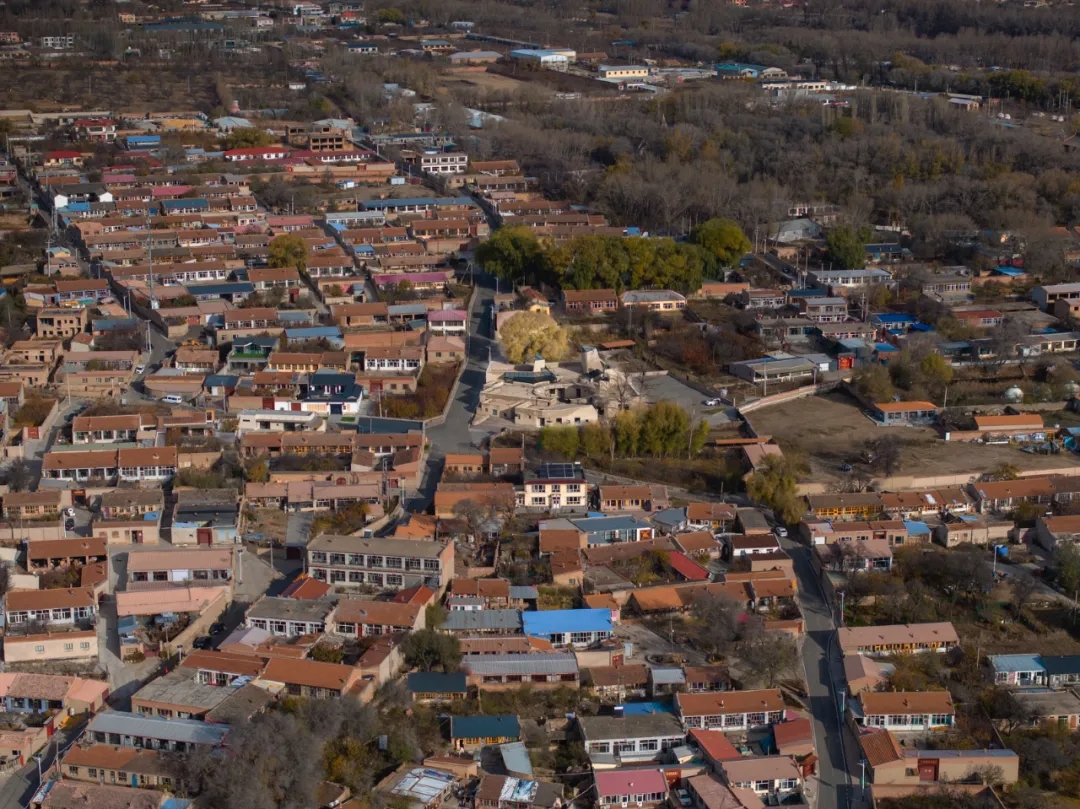
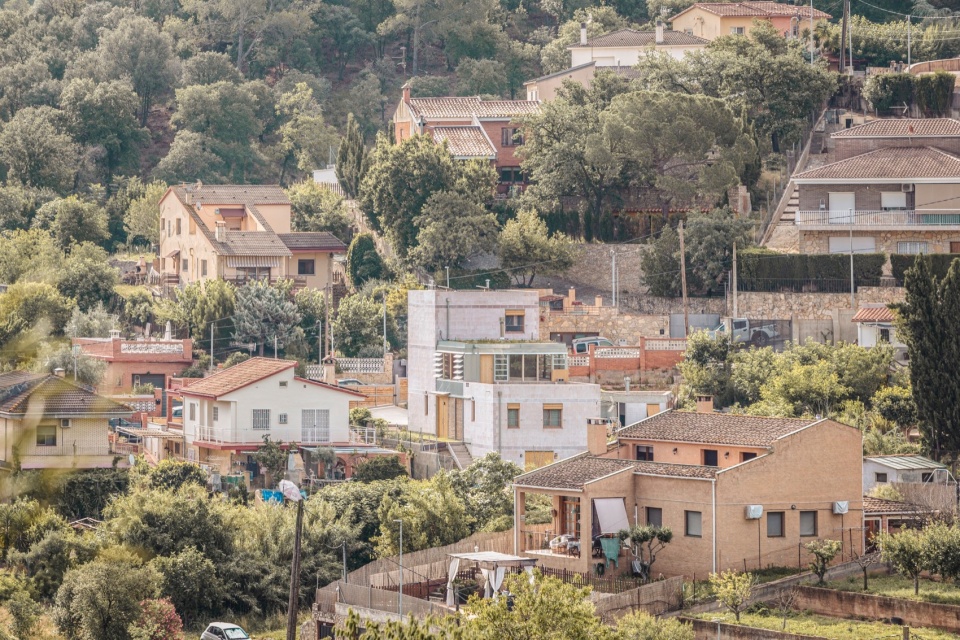
西乌素图村蜷在呼和浩特大青山南麓,是个被正式认定的少数民族特色村落,汉、蒙、藏、回多个民族在这里留下共生的痕迹。尽管自然环境优美、文化交融深厚,村子里却一直缺少让人们自然相聚的公共场所。年轻劳力多数外出务工,而漫山杏花与宁静山色,反而吸引了不少艺术家前来驻足。
Xiwusutu Village is nestled at the southern foot of Daqing Mountain in Hohhot. It is an officially recognized ethnic minority village, where multiple ethnic groups including Han, Mongolian, Tibetan, and Hui have left traces of coexistence. Despite the beautiful natural environment and profound cultural integration, the village has always lacked a public place for people to gather naturally. Most young laborers go out to work, but the blooming apricot blossoms and peaceful mountain scenery have attracted many artists to come and stop.
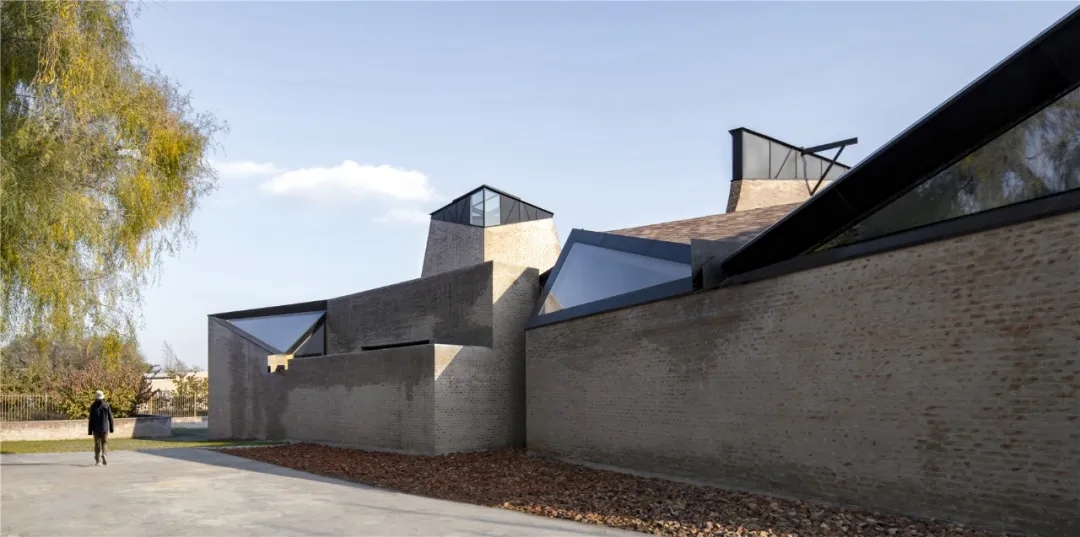
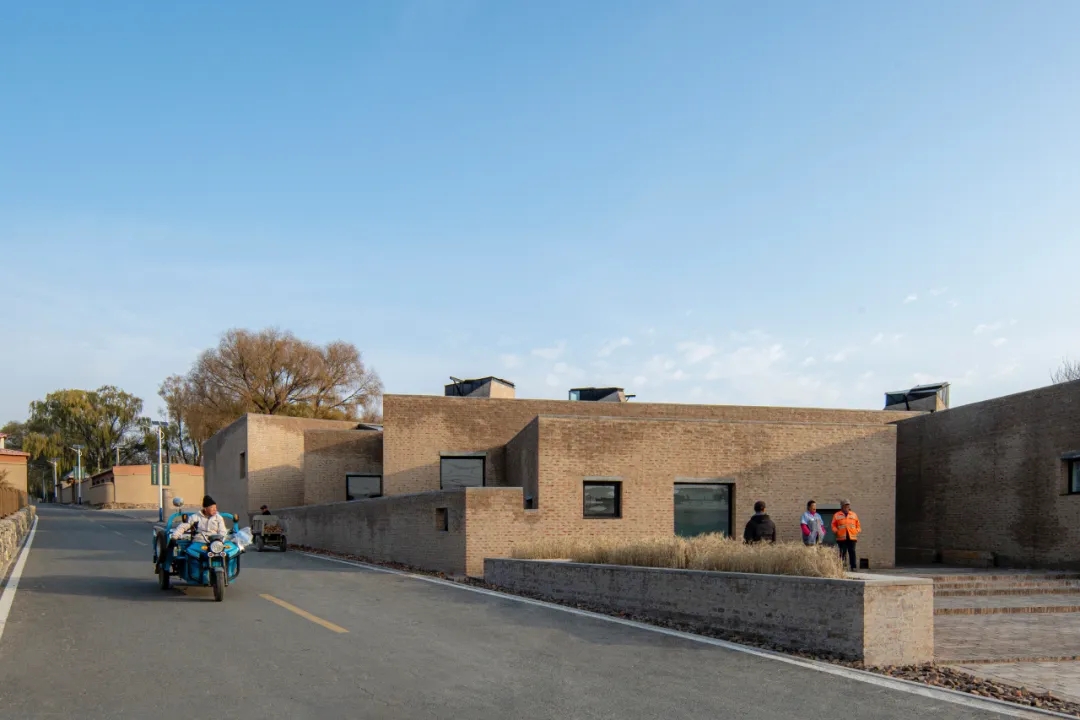
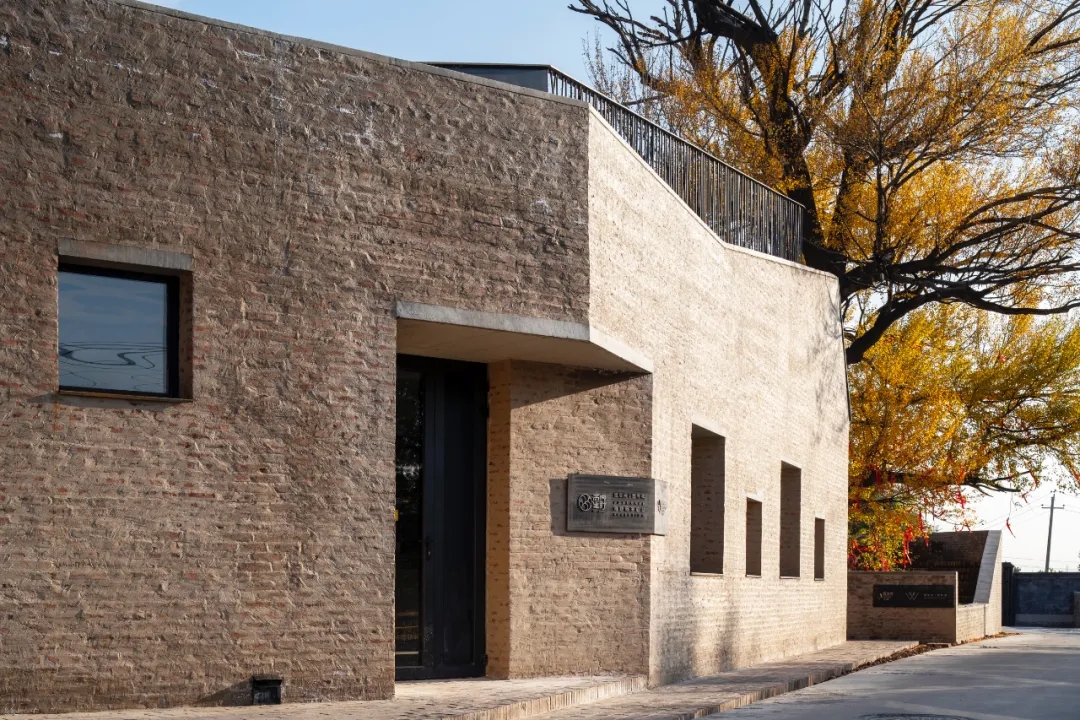
2018年起,伴随乡村振兴的推进,村里一些老房子被改成了艺术工作室,也有一些被拆掉。正是在这个过程中,建筑师张鹏举慢慢赢得了村民们的信任。后来村里决定在旧庙原址建一座新的文化公建,他自然成了最佳人选。整个项目从设计到落地只用了七个月,资金由村集体和艺术家共同凑齐。他们大量使用回收旧砖,最终造价甚至比原本紧张的预算还要低。
Since 2018, with the promotion of rural revitalization, some old houses in the village have been converted into art studios, while others have been demolished. It was during this process that architect Zhang Pengju gradually gained the trust of the villagers. Later, the village decided to build a new cultural public building on the site of the old temple, and he naturally became the best candidate. The entire project took only seven months from design to implementation, and the funds were jointly raised by the village collective and artists. They extensively use recycled old bricks, and the final cost is even lower than the originally tight budget.
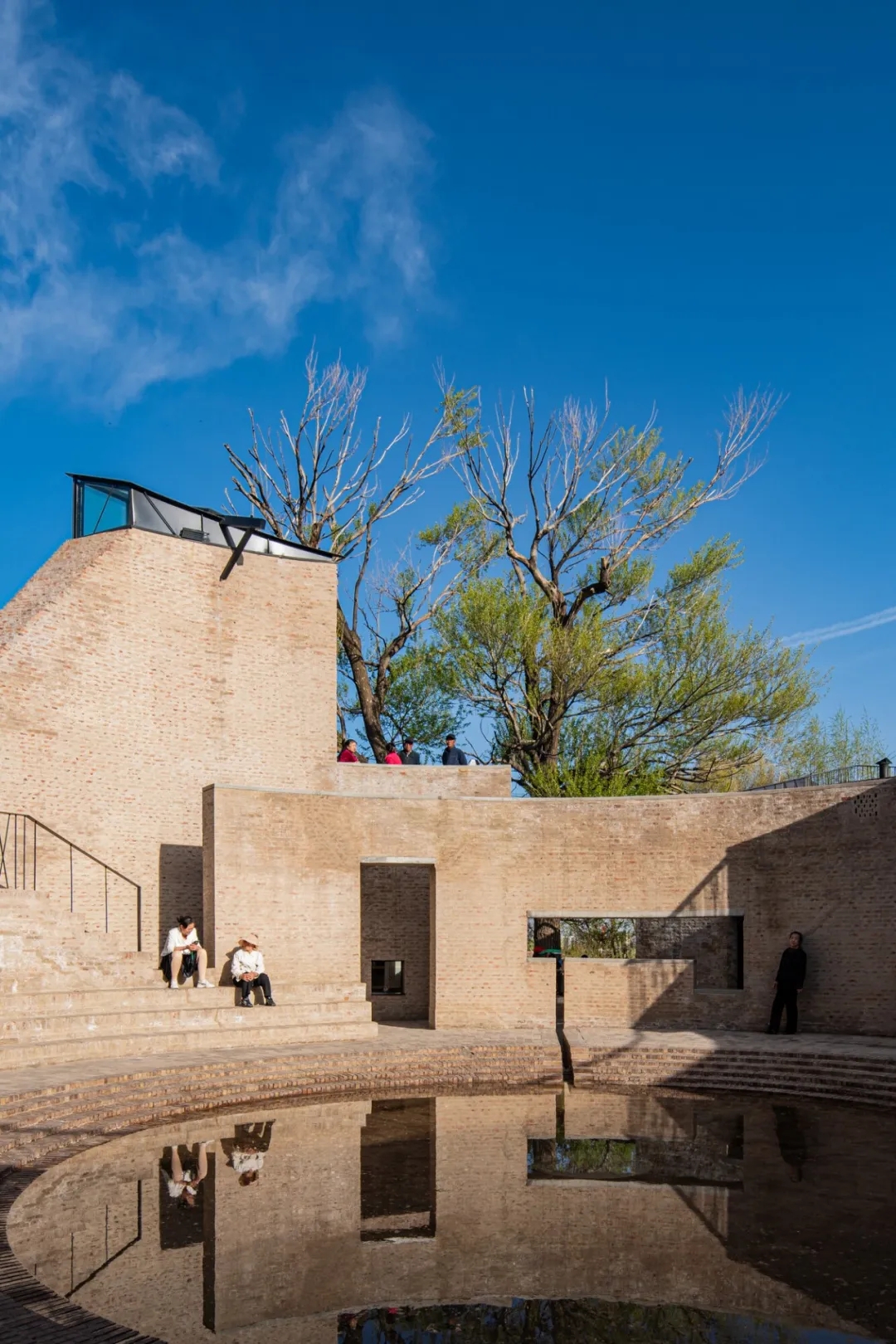
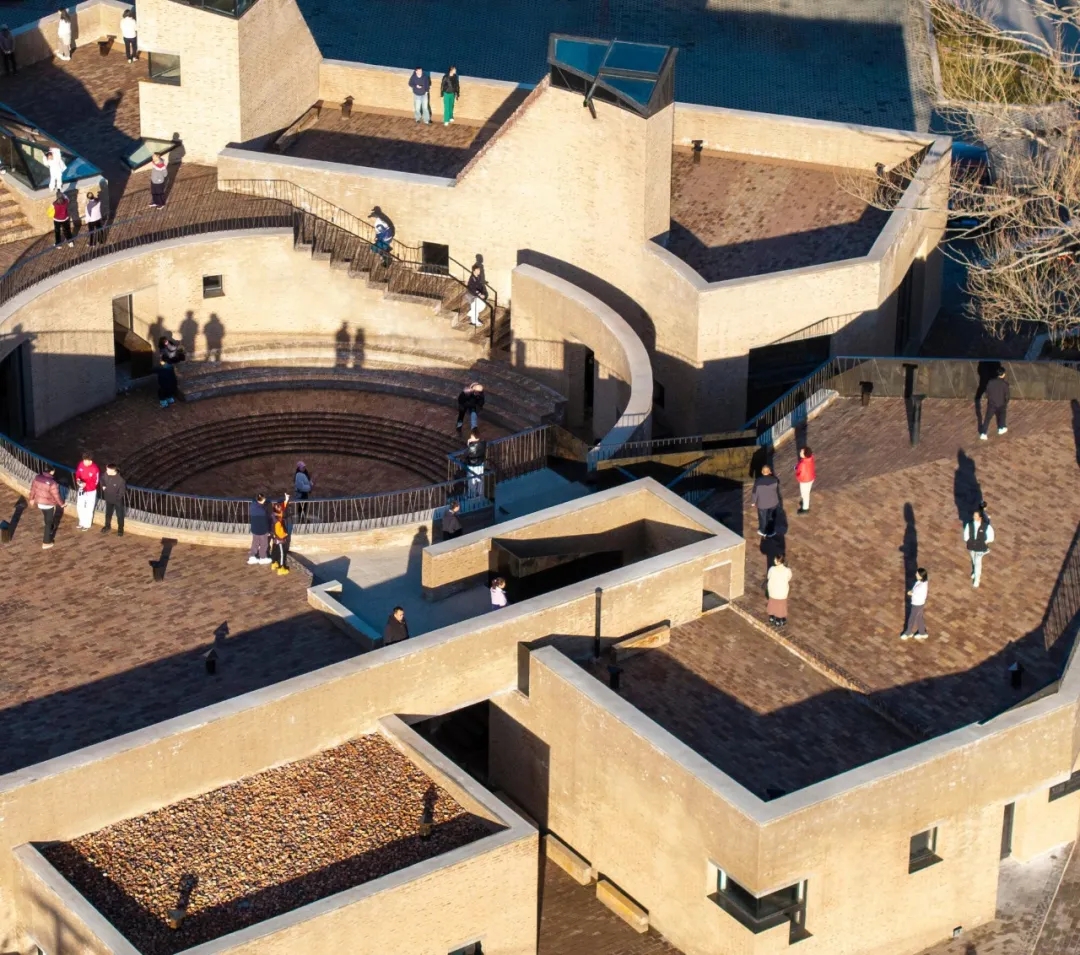
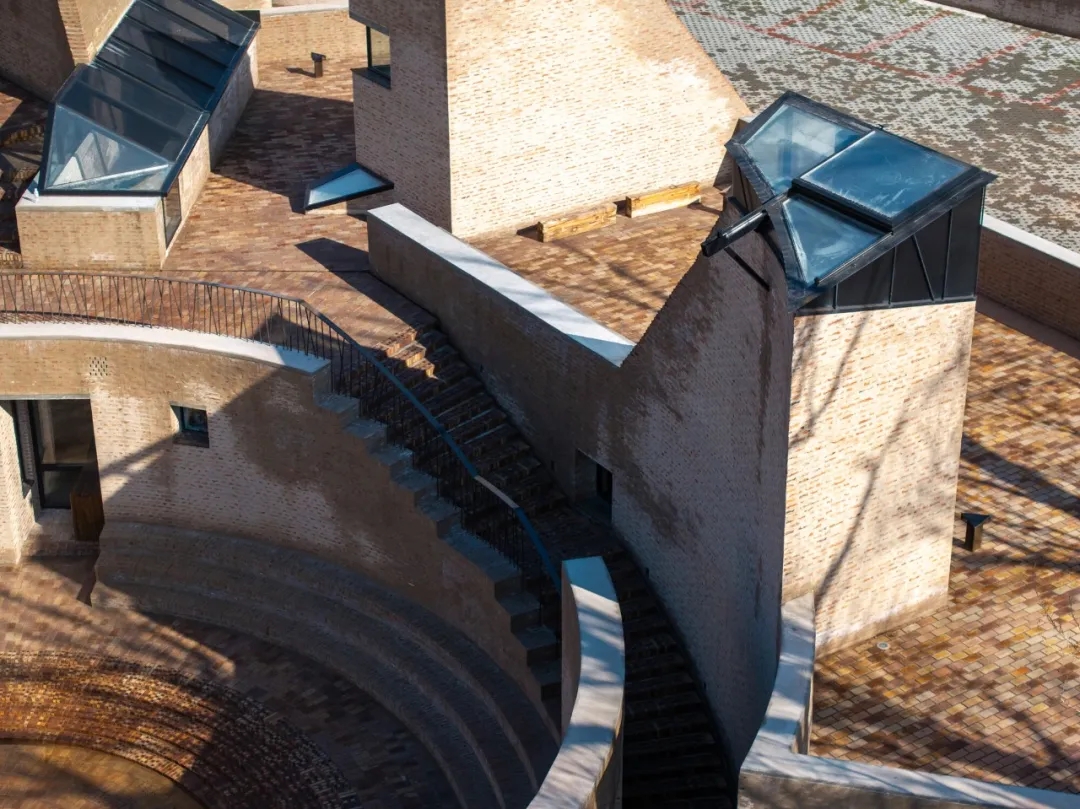
项目建成后不仅为村民日常聚会活动提供了便利,还促使村民们自发启动了“西乌素图艺术村”的运营,被自治区政府作为一种老村更新模式向全区推广,而建筑师本人也深入参与到了项目后期的运营之中。
After the completion of the project, it not only provided convenience for villagers' daily gatherings, but also prompted them to spontaneously launch the operation of the "Xiwusutu Art Village", which was promoted by the autonomous region government as an old village renewal model to the whole region. The architect himself was also deeply involved in the later operation of the project.
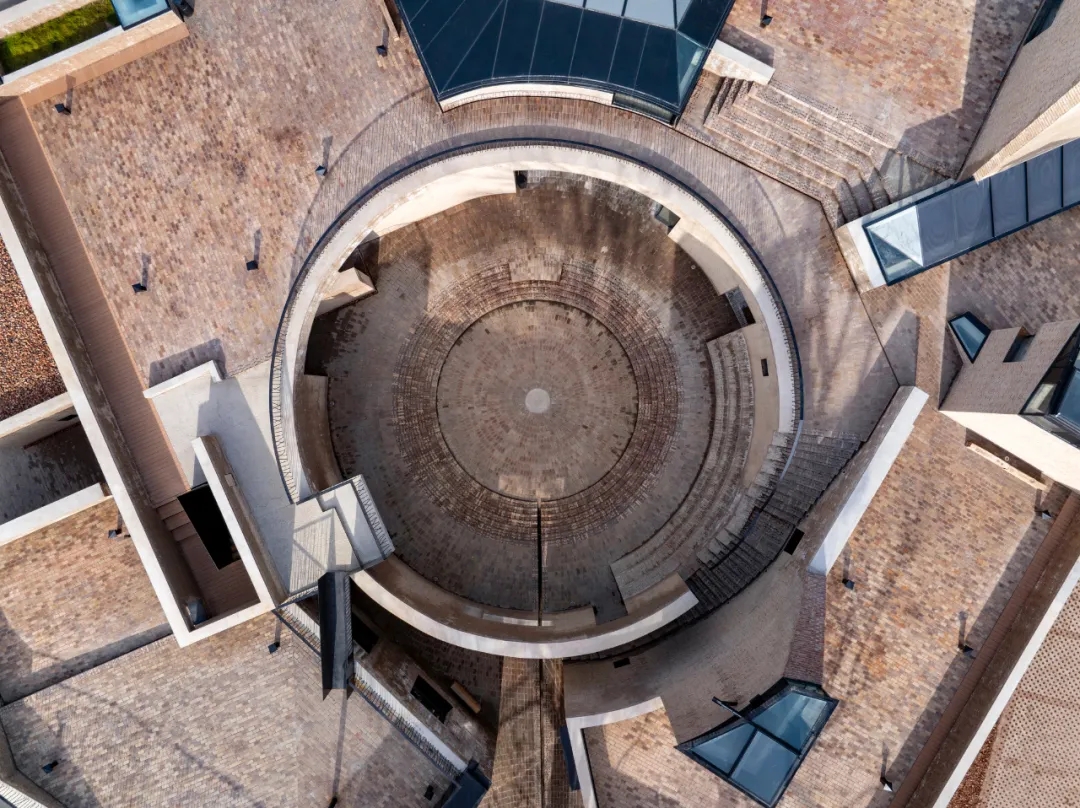
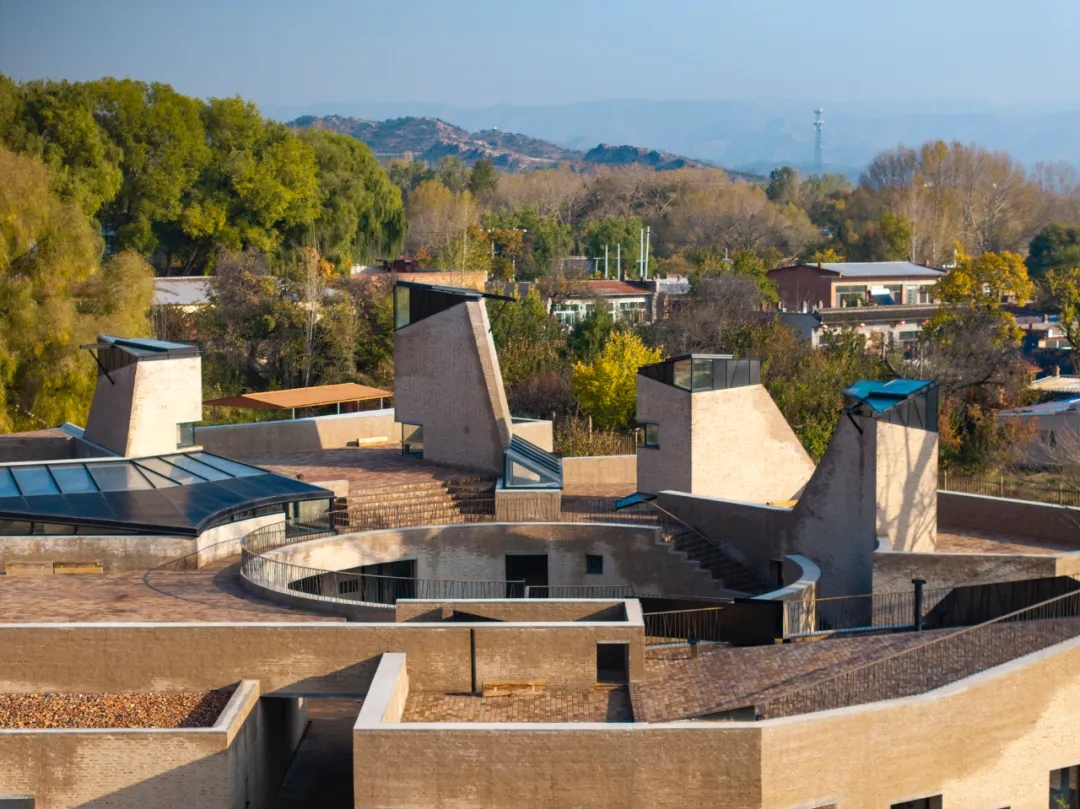
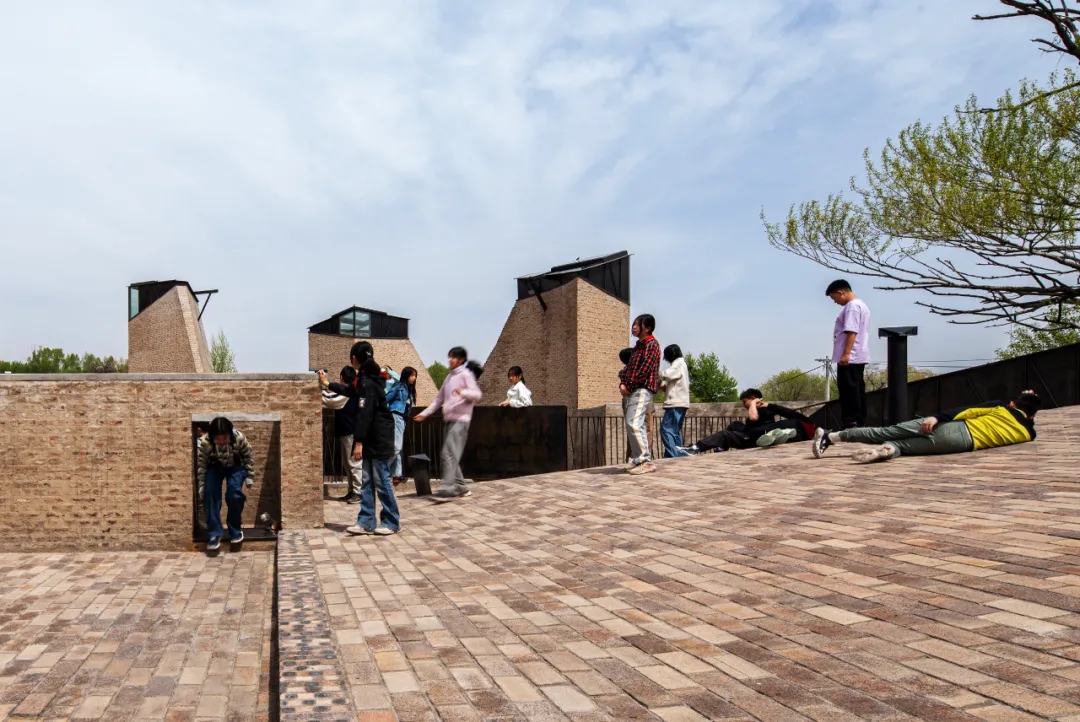
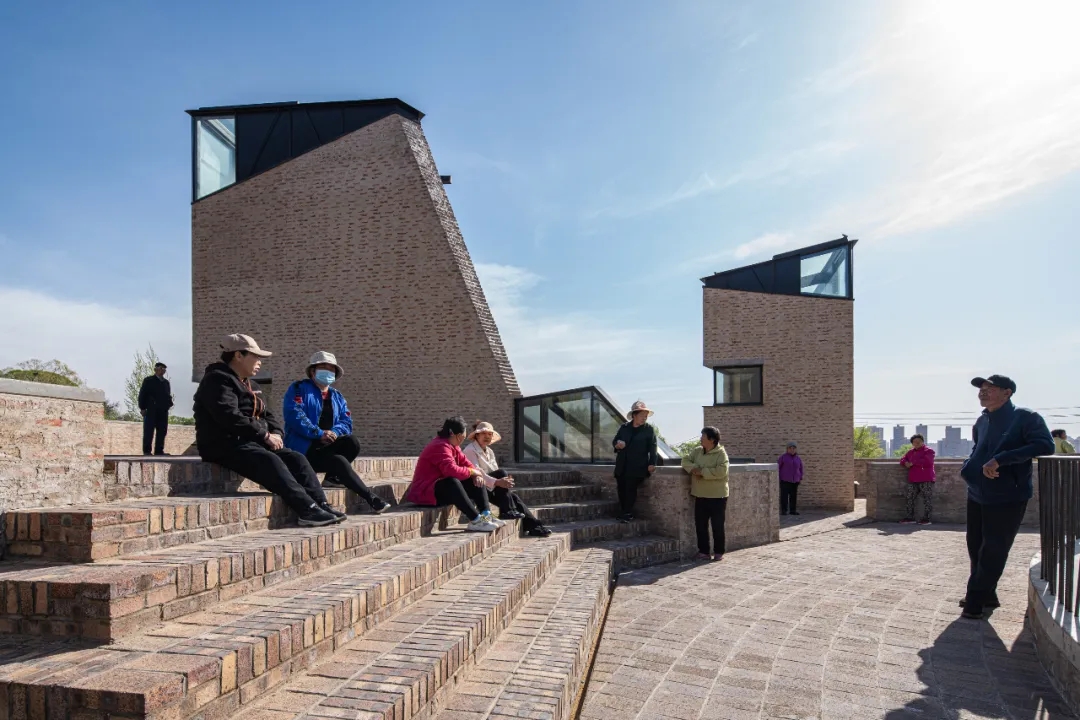
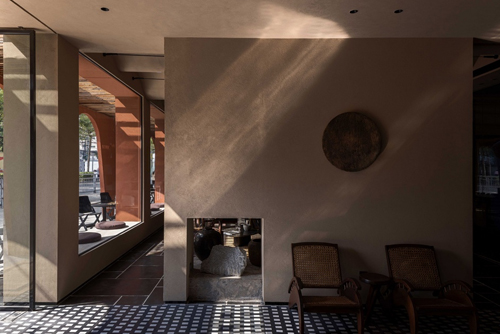
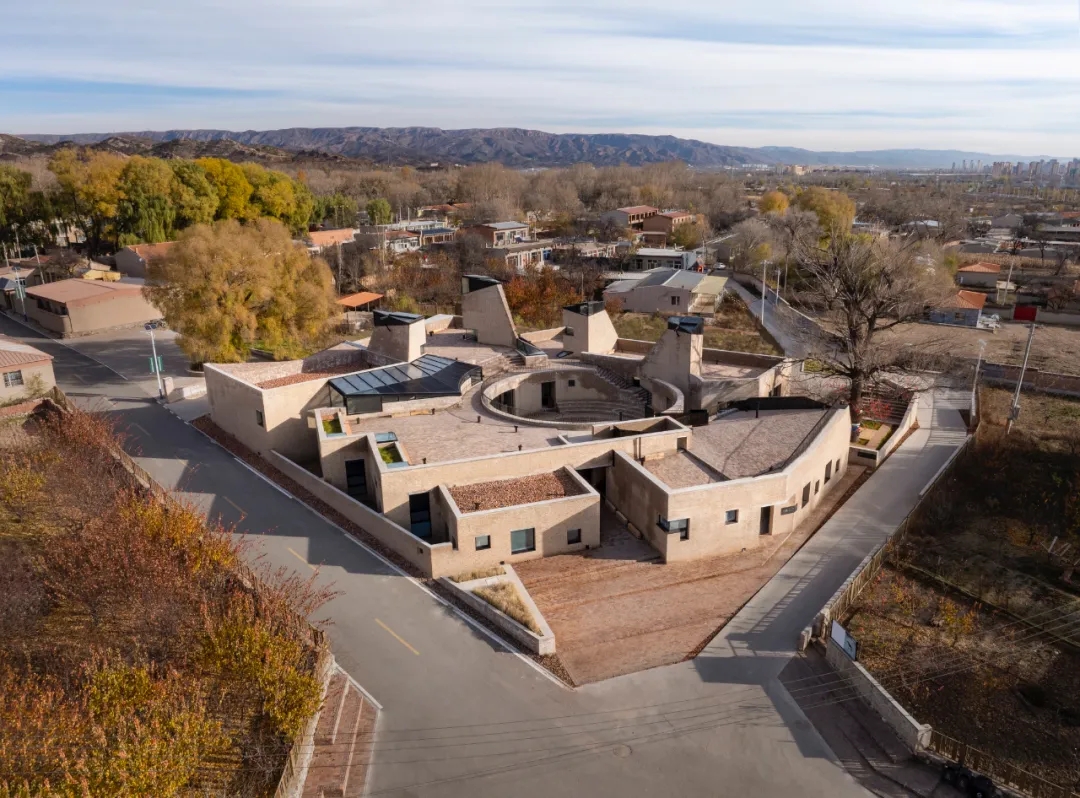
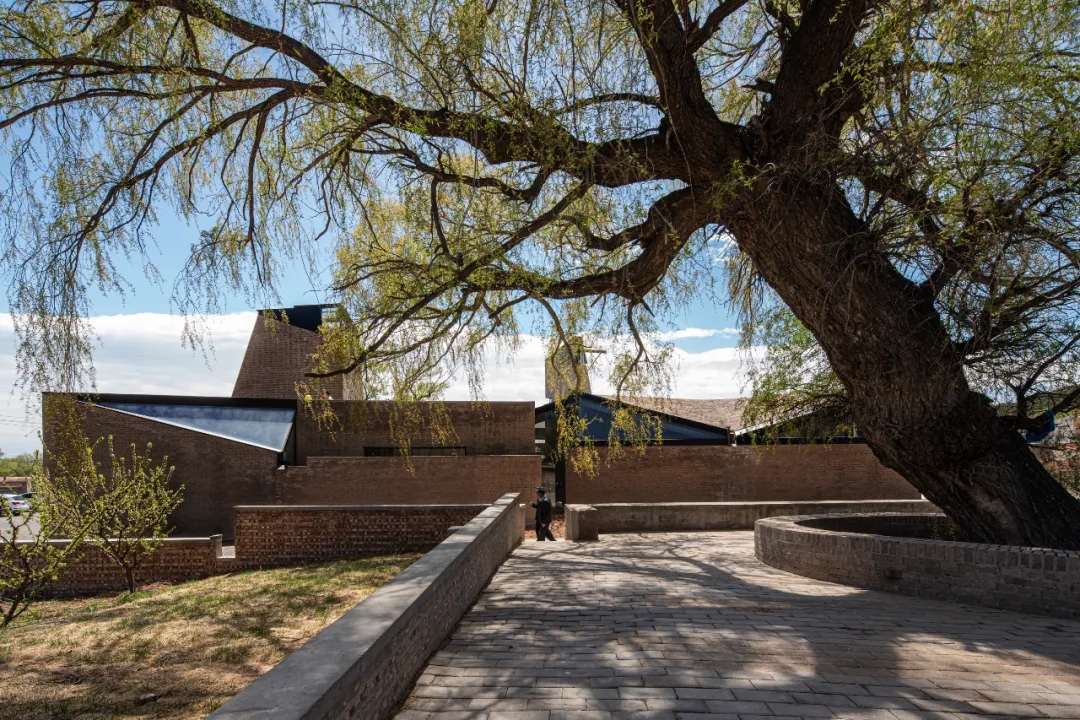
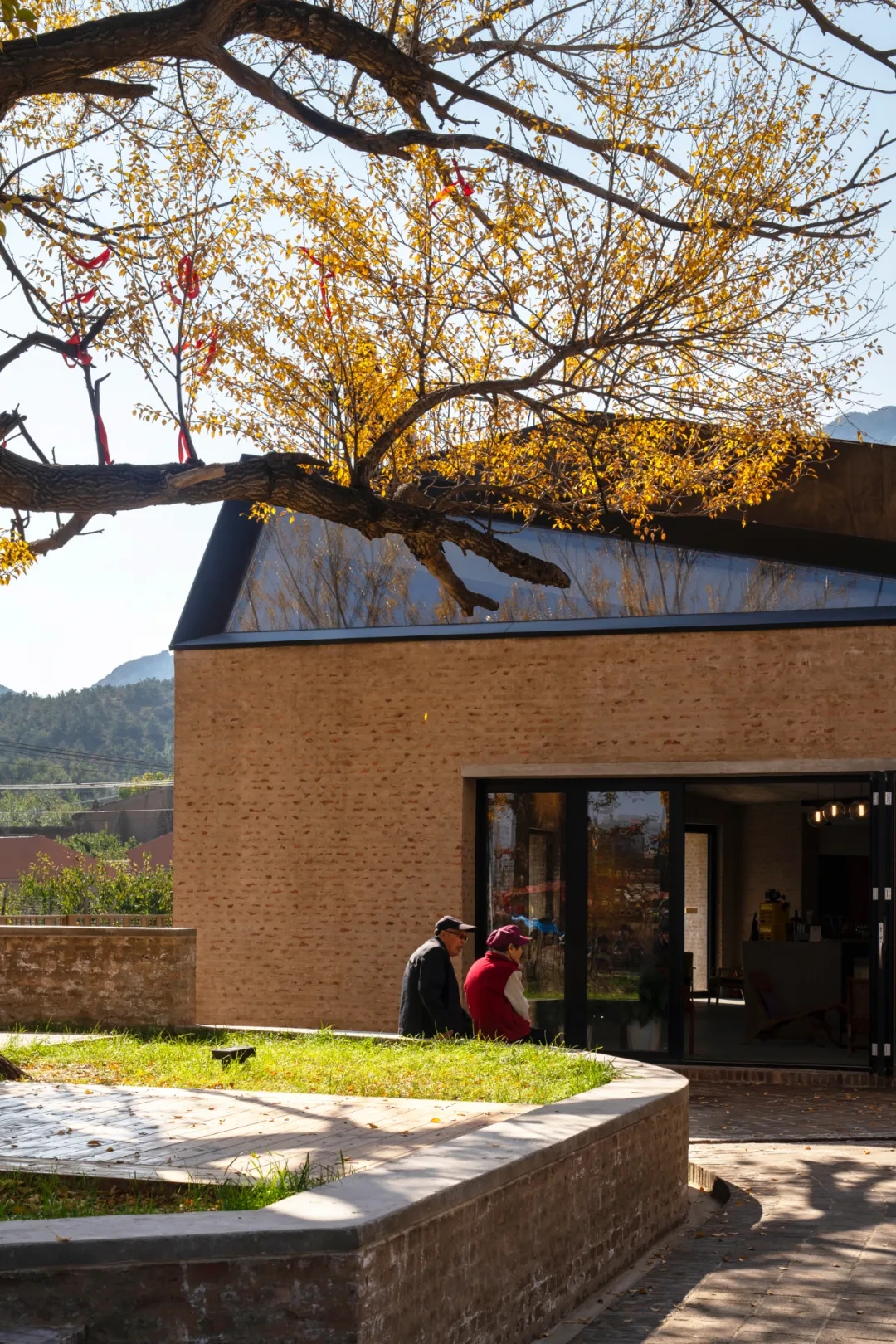
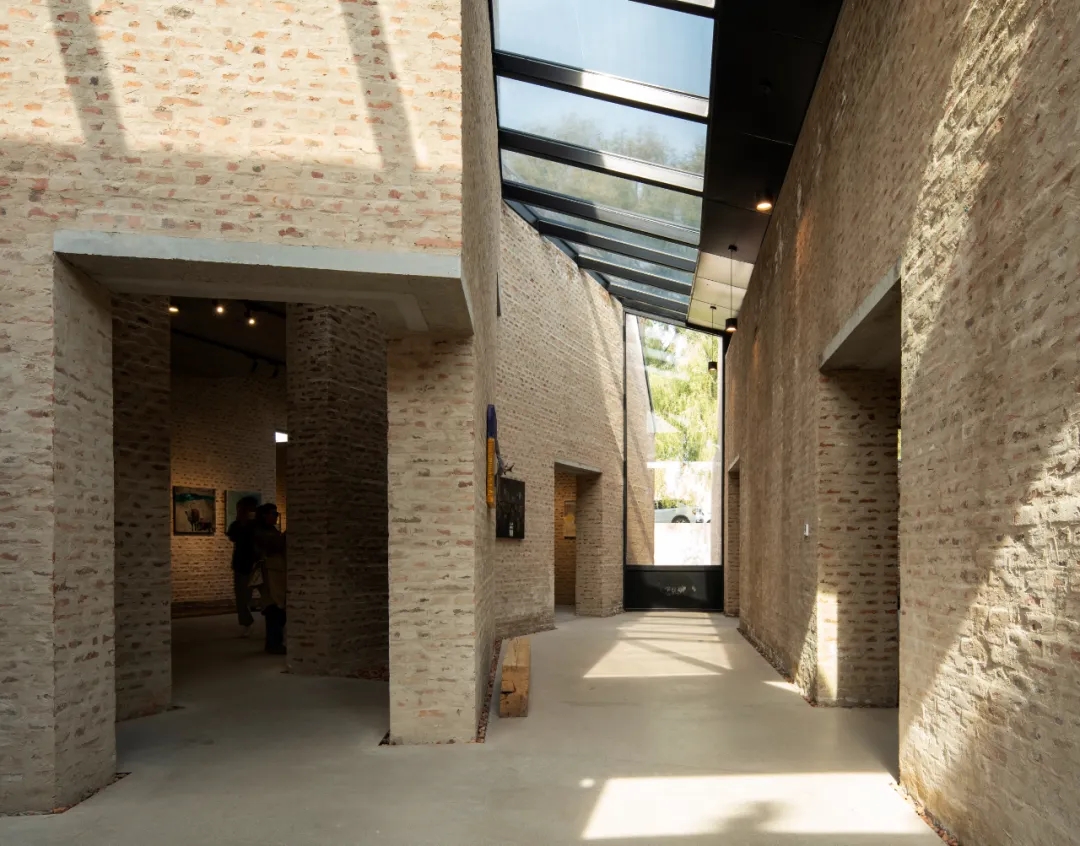
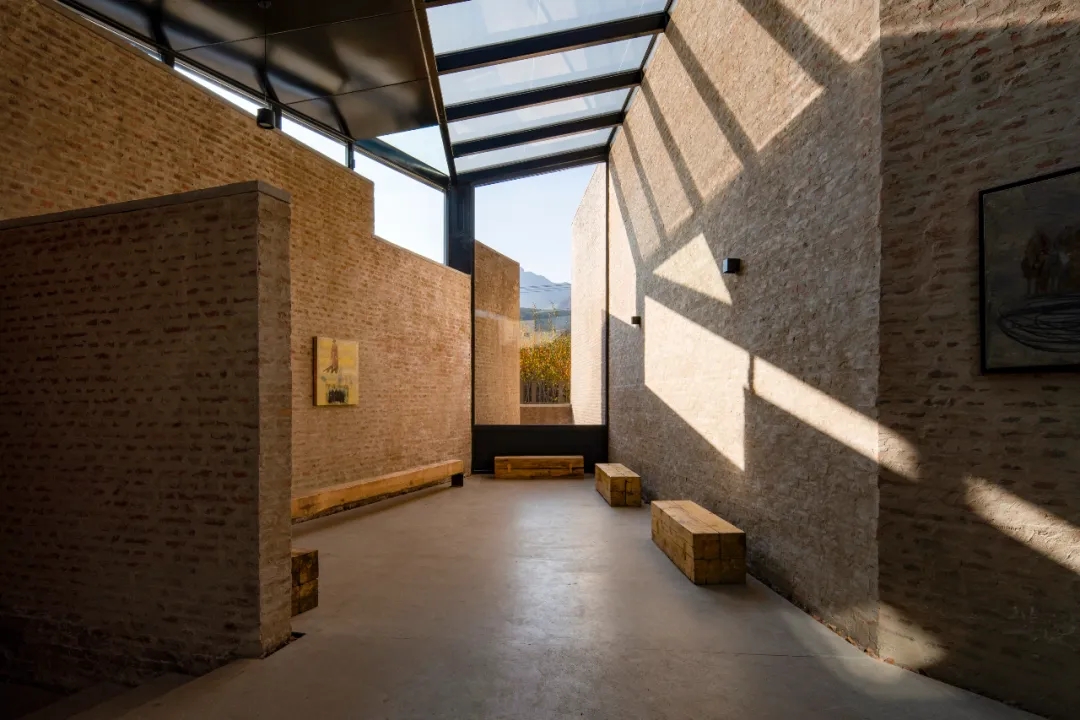
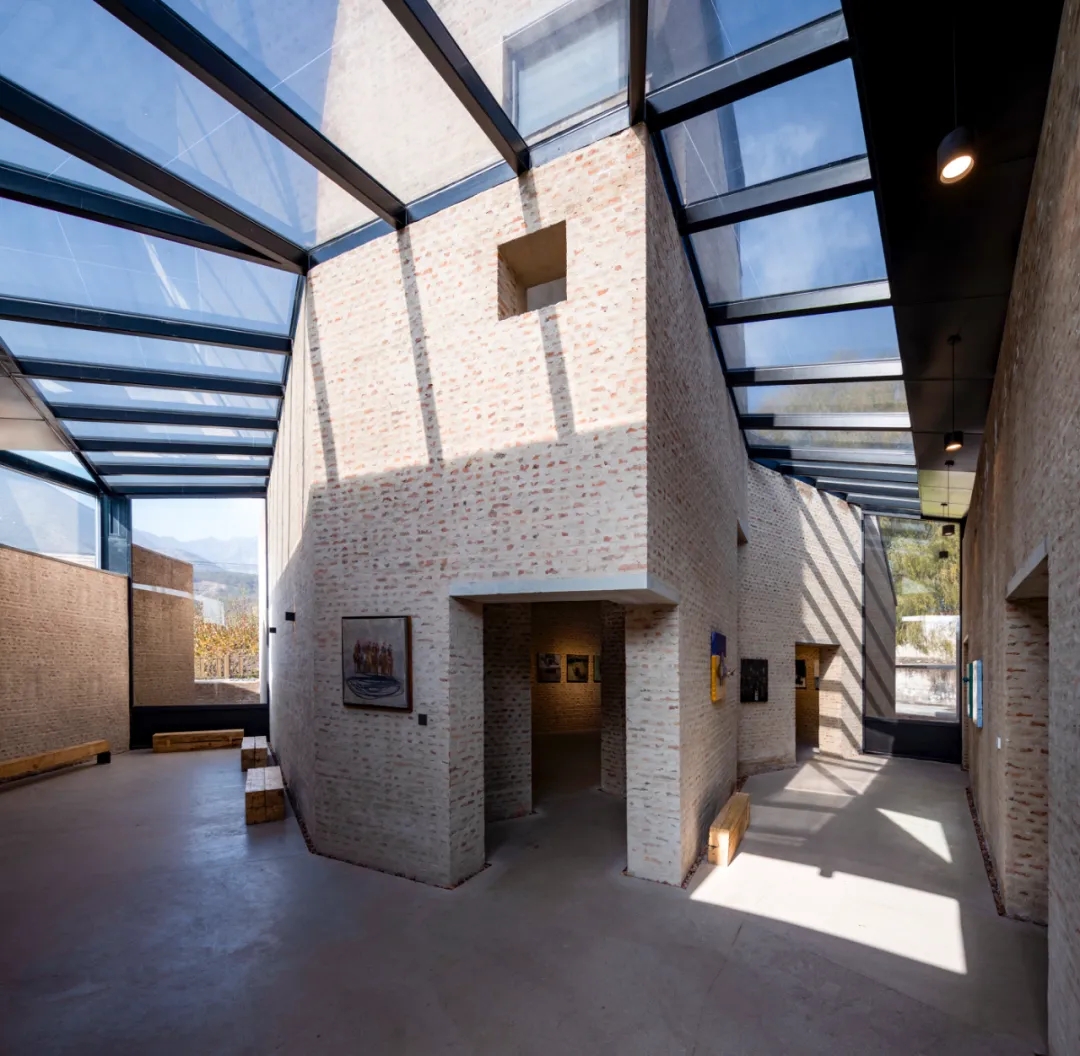
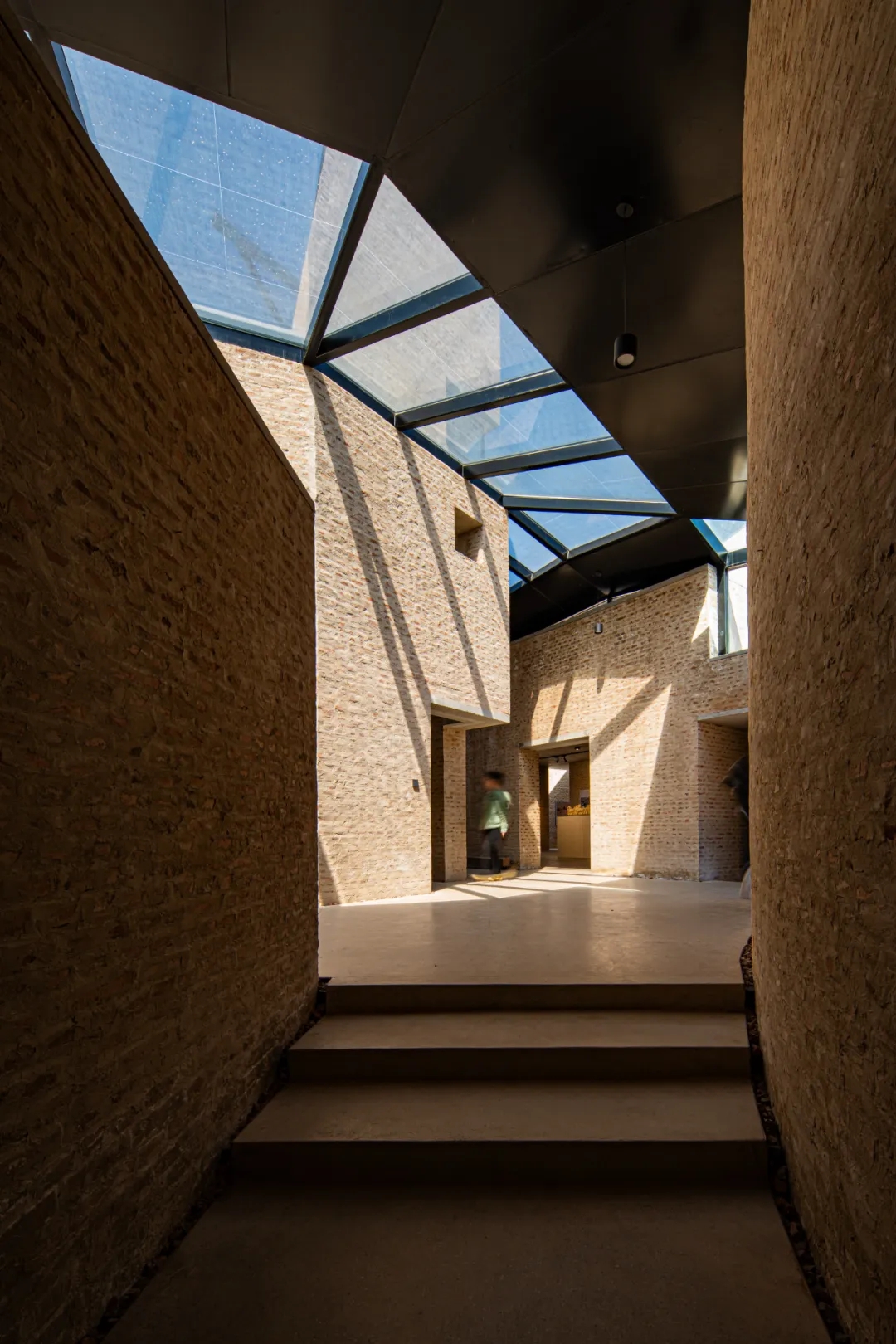
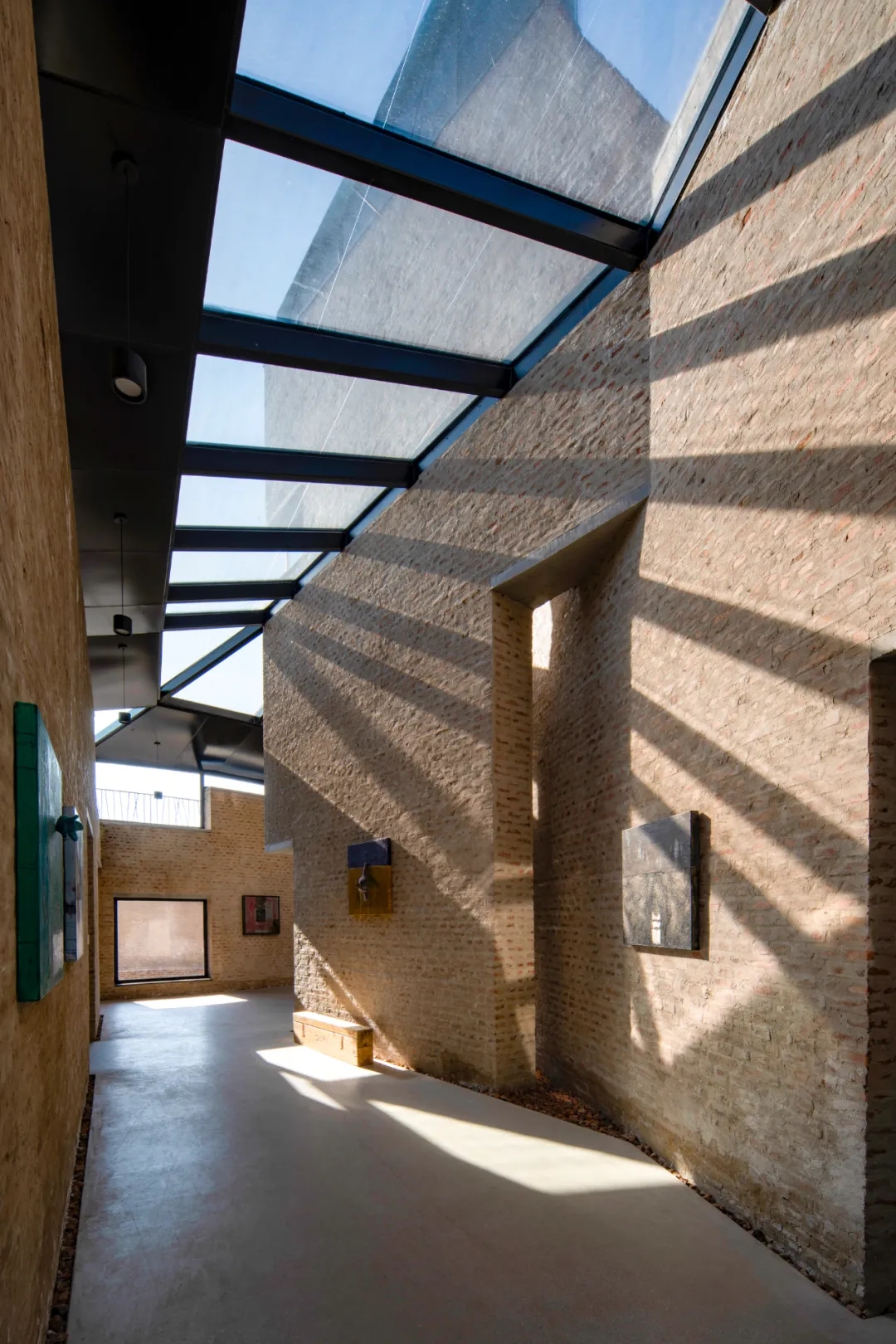
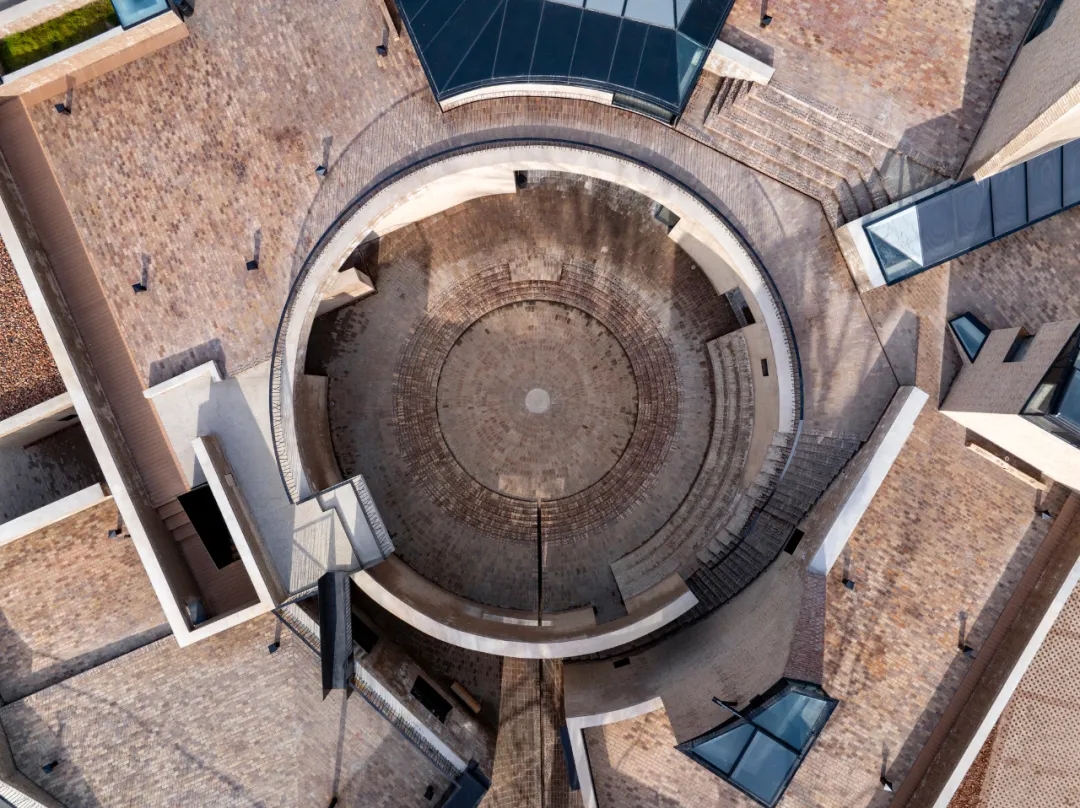
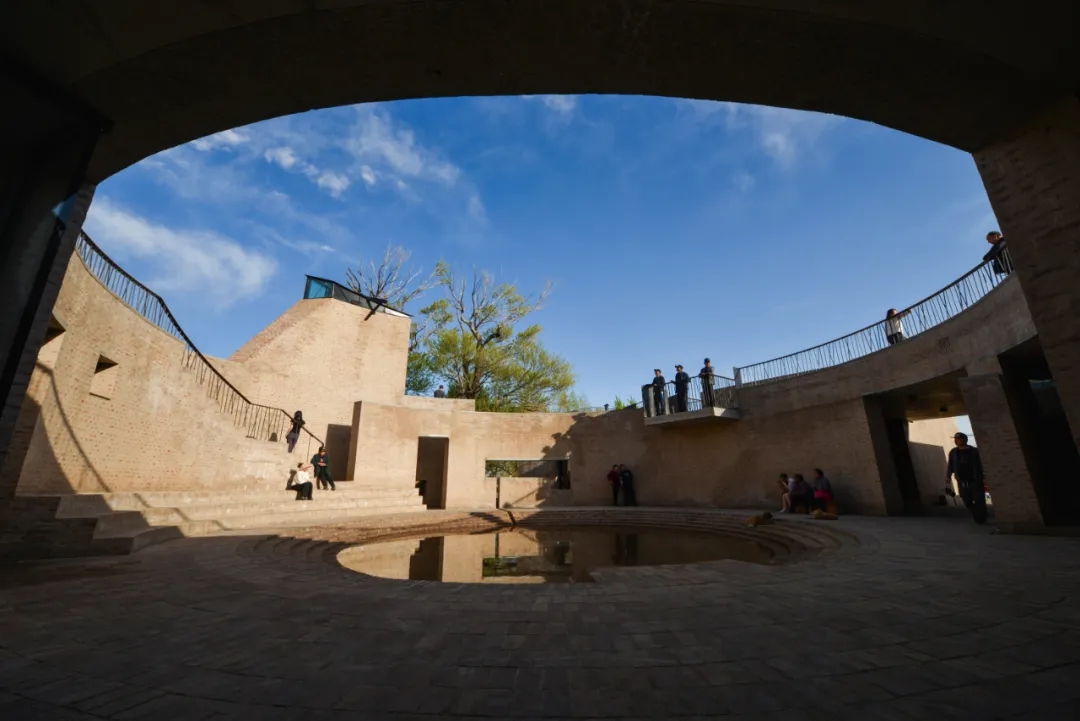
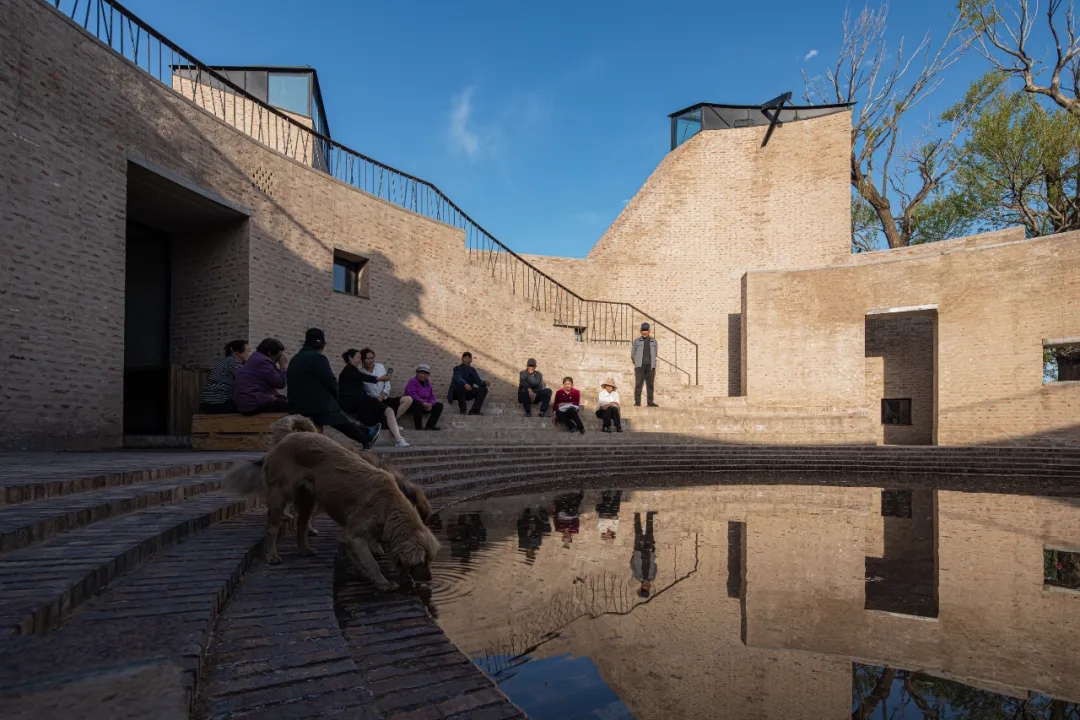
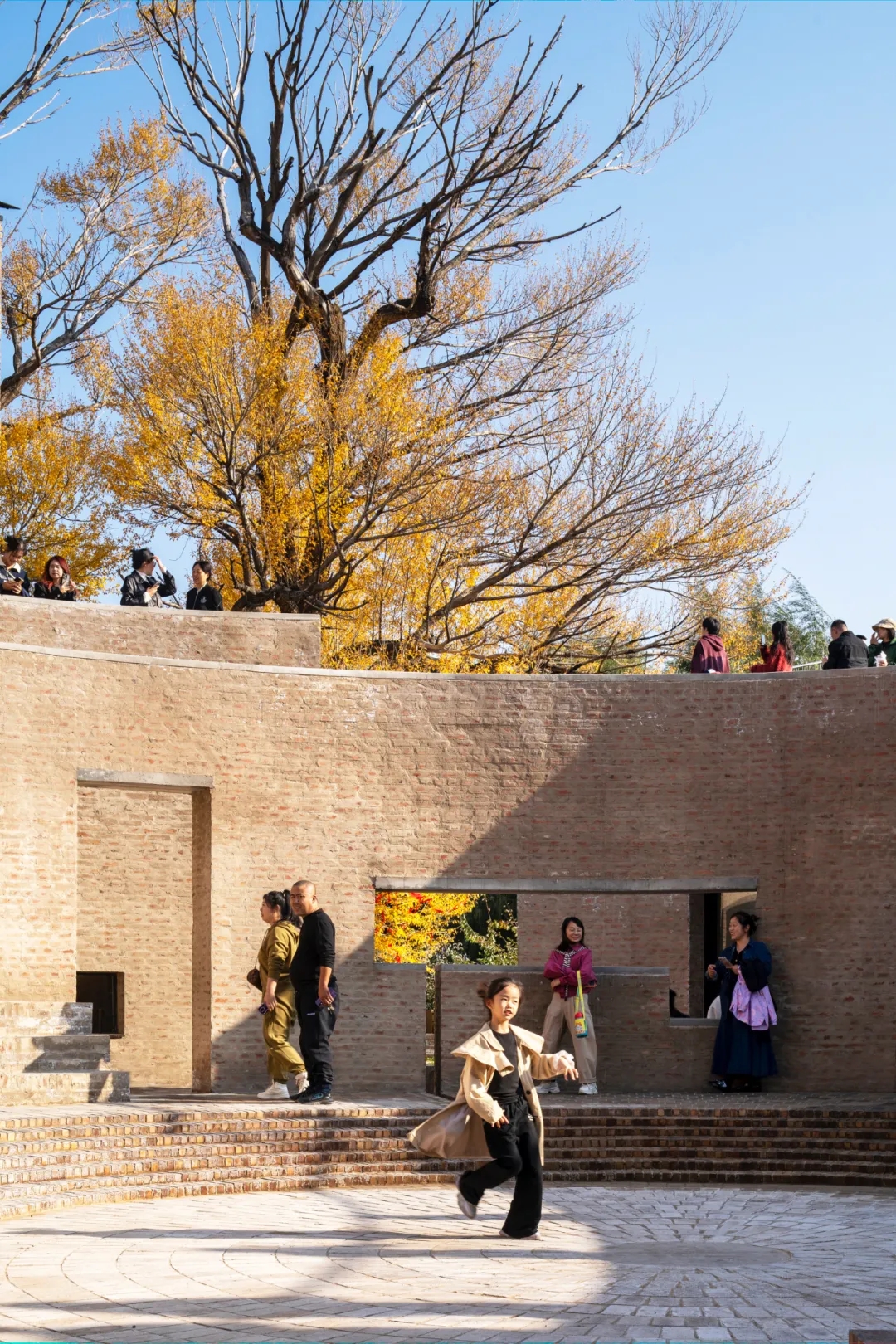
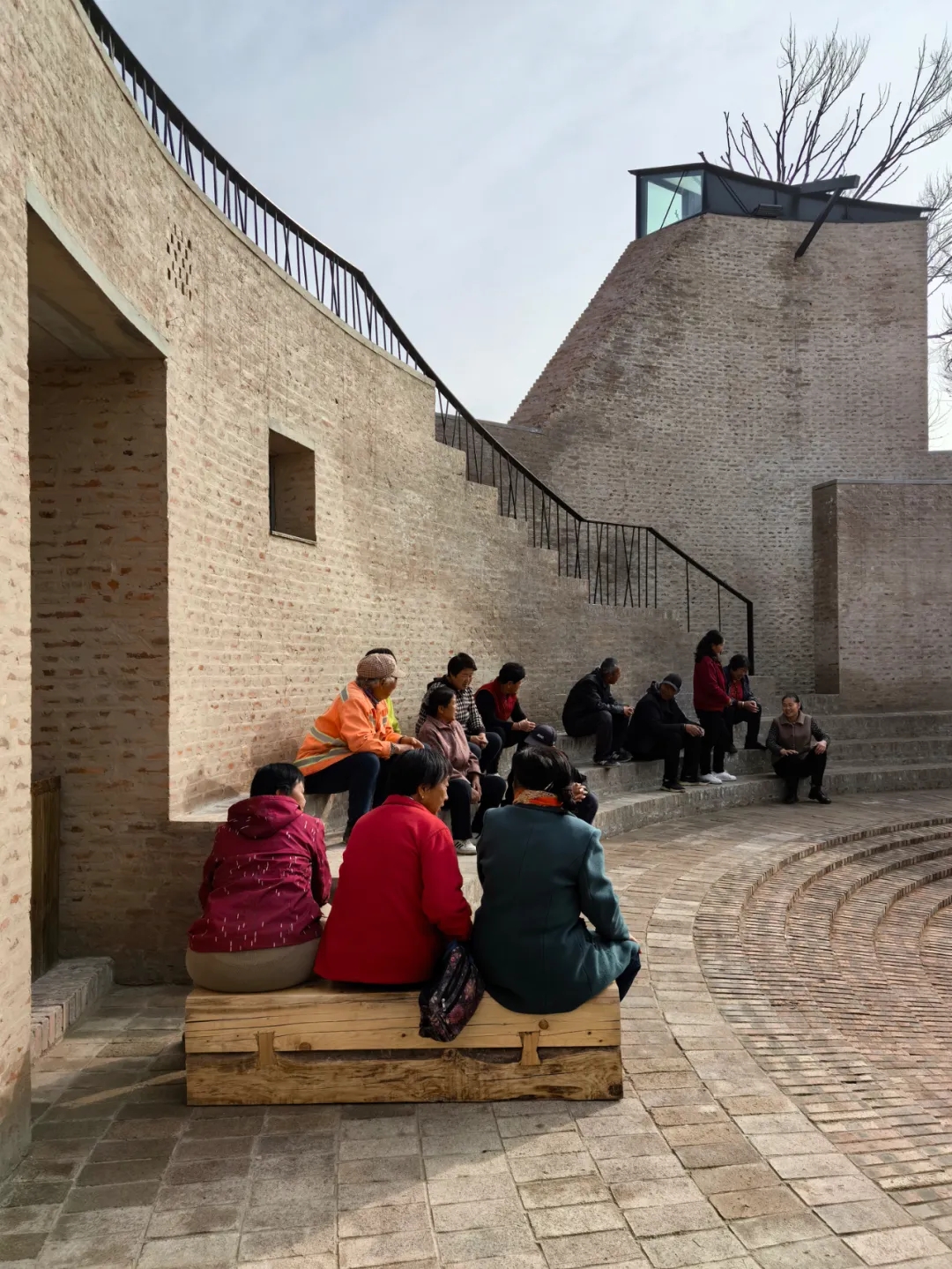
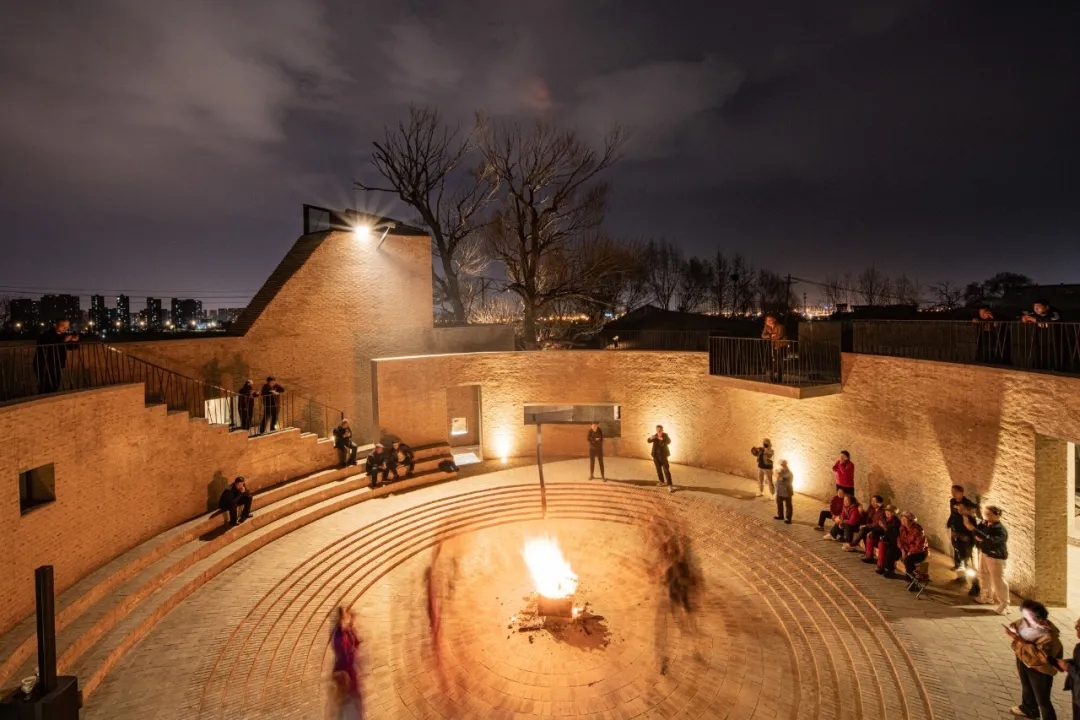
建筑一角嵌着咖啡馆和餐厅,朝小街敞开。其他房间则要通过一条细长的走廊才进得去,走廊尽头藏着一处圆院,微微偏离中心。院子中央凹陷,通过截住排水还能暂时积成浅池,成为整个空间流动的核心。来访路线虽开放连贯,却巧妙避开了村民日常聚集的角落——老人打牌搓麻将,年轻人做陶艺,都不被打扰。
A caf é and restaurant are embedded in one corner of the building, opening onto a small street. The other rooms can only be accessed through a slender corridor, with a circular courtyard hidden at the end of the corridor, slightly off center. The central depression of the courtyard can temporarily accumulate into a shallow pool by intercepting the drainage, becoming the core of the entire space flow. Although the visiting route is open and coherent, it cleverly avoids the corners where villagers gather in their daily lives - the elderly play cards and mahjong, while the young do pottery, without being disturbed.
张鹏举:
“这个村民中心的运营模式是村民、艺术家、回村创业者共同商议、摸索出来的结果。同时在项目后期的整个运营过程中我保有一票否决权,我始终认为一定的引导性‘控制’是必要的,否则很多空间经过一两年就会变得面目全非。”
Zhang Pengju:
The operating model of this village center is the result of joint discussions and explorations among villagers, artists, and entrepreneurs returning to the village. At the same time, I have a veto power throughout the entire operation process of the project in the later stage. I always believe that a certain degree of guiding 'control' is necessary, otherwise many spaces will become unrecognizable after one or two years
张鹏举扎根内蒙古 40 多年,主持设计的 200 余个项目也都位于内蒙古地区。他构建了“融自然、低建造、承传统”的多维设计路径,强调在建筑设计中传承传统文化、融入自然环境、采用低成本建造技术,并独创性地提出用 “平实建造” 的理念以及“适洽生成”的设计方法,“平实建造”设计理念强调建筑并非孤立存在,而是与特定地域的文化底蕴和自然环境紧密相连。在“适洽生成”设计理念中,“适”即适应地域气候、资源、地貌地形及人的需求等,“洽”则包含了这些维度策略内部、之间以及与外部力量及人的“自洽”“他恰”与“通洽”,凸显了一种内在的逻辑关联性。
Zhang Pengju has been rooted in Inner Mongolia for over 40 years and has led the design of more than 200 projects located in the region. He constructed a multidimensional design path of "integrating nature, low construction, and inheriting tradition", emphasizing the inheritance of traditional culture, integration into the natural environment, and the use of low-cost construction techniques in architectural design. He also creatively proposed the concept of "plain construction" and the design method of "appropriate generation". The design concept of "plain construction" emphasizes that architecture does not exist in isolation, but is closely connected to the cultural heritage and natural environment of a specific region. In the design concept of "adaptive generation", "adaptive" refers to adapting to regional climate, resources, topography, and human needs, while "adaptive" includes the "self consistency", "other consistency", and "communication" within and between these dimensional strategies, as well as with external forces and people, highlighting an inherent logical correlation.
张鹏举:
“长期在内蒙古一地工作,使我可以专注于解决该地域的特定问题,这样不知不觉形成了稳定的思想与设计体系,并随着成熟度和话语权的提升,开始对这个地方产生影响。”
Zhang Pengju:
Working in Inner Mongolia for a long time has allowed me to focus on solving specific problems in that region. This has unconsciously formed a stable system of ideas and design, and with the increase of maturity and discourse power, it has begun to have an impact on this place
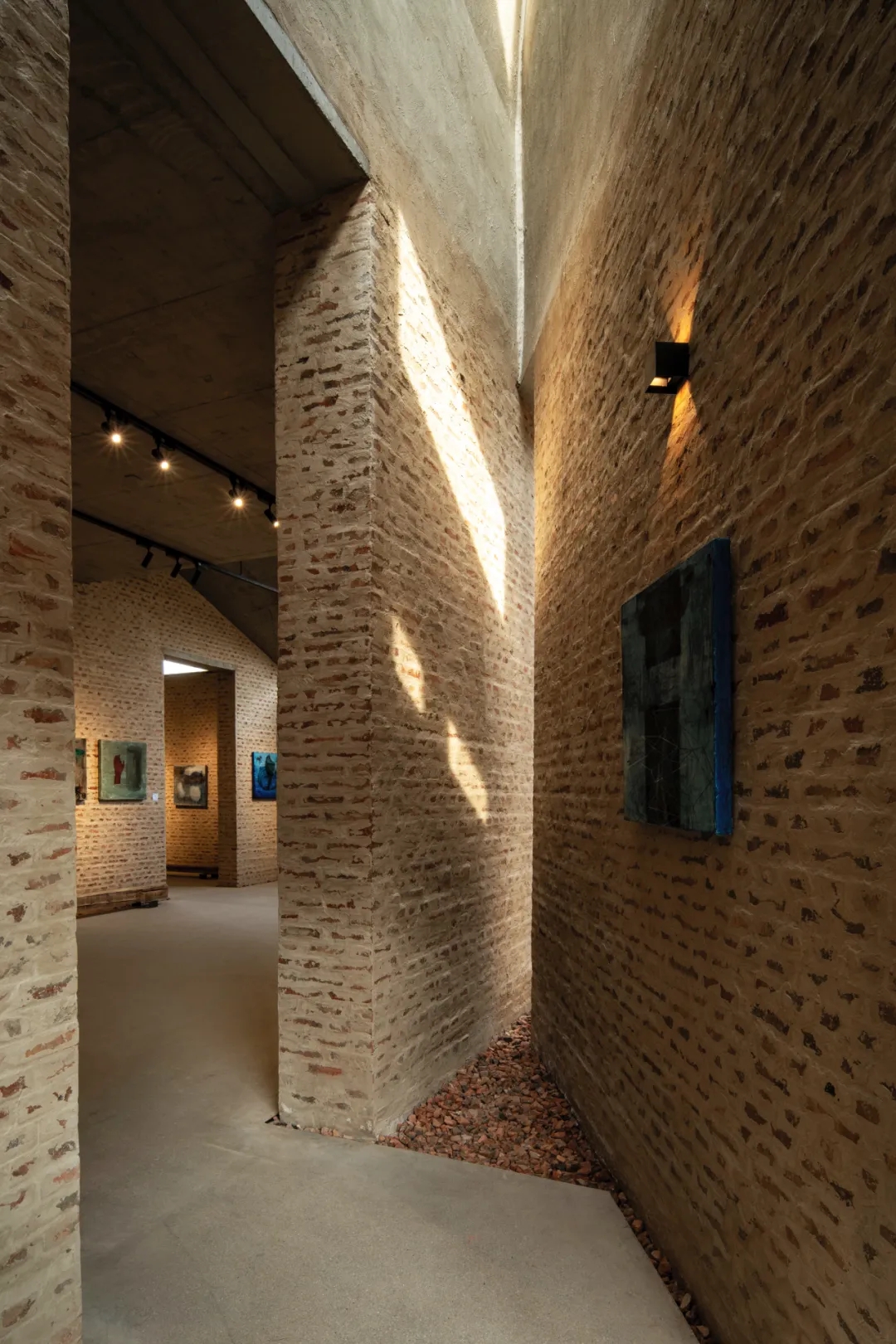
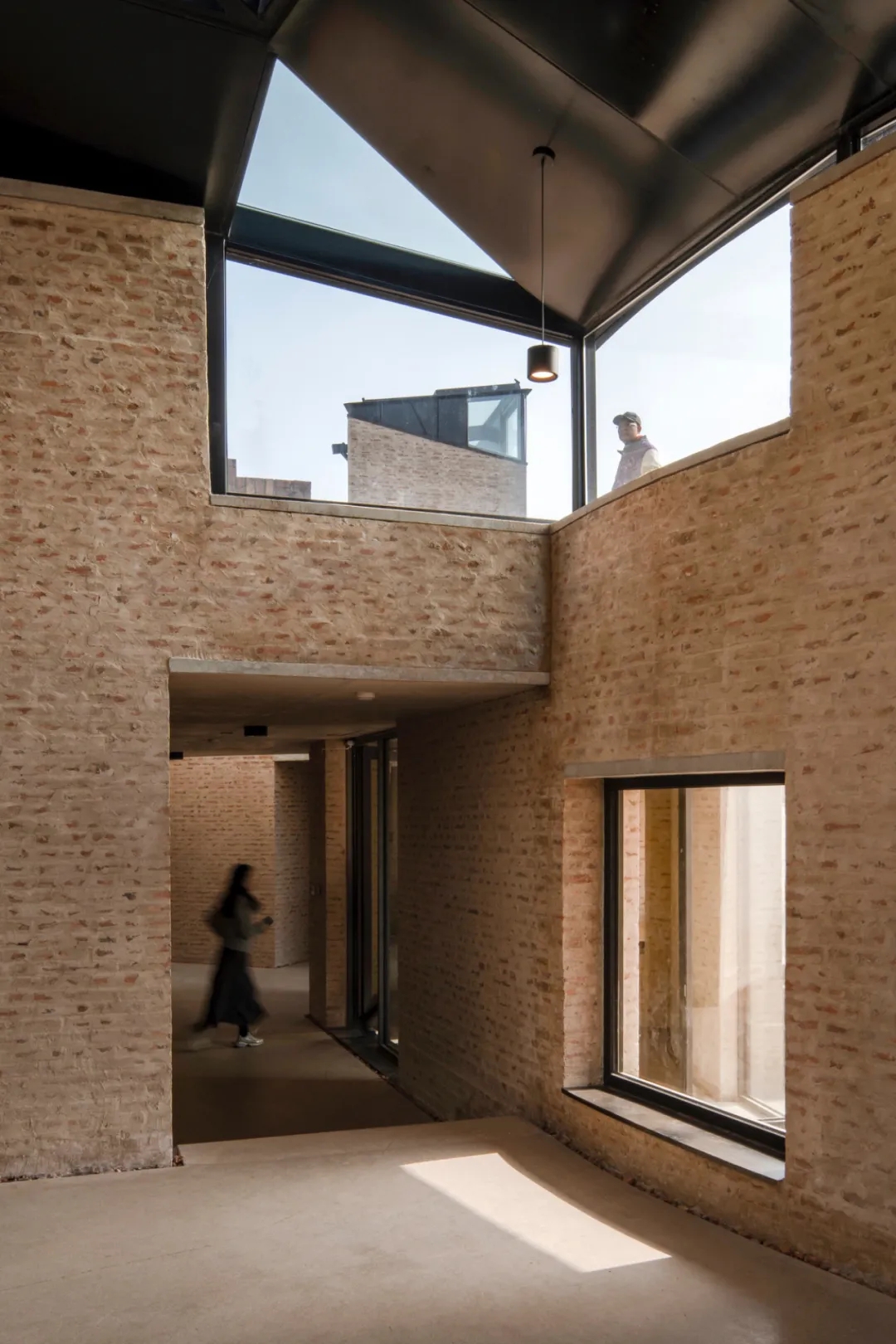
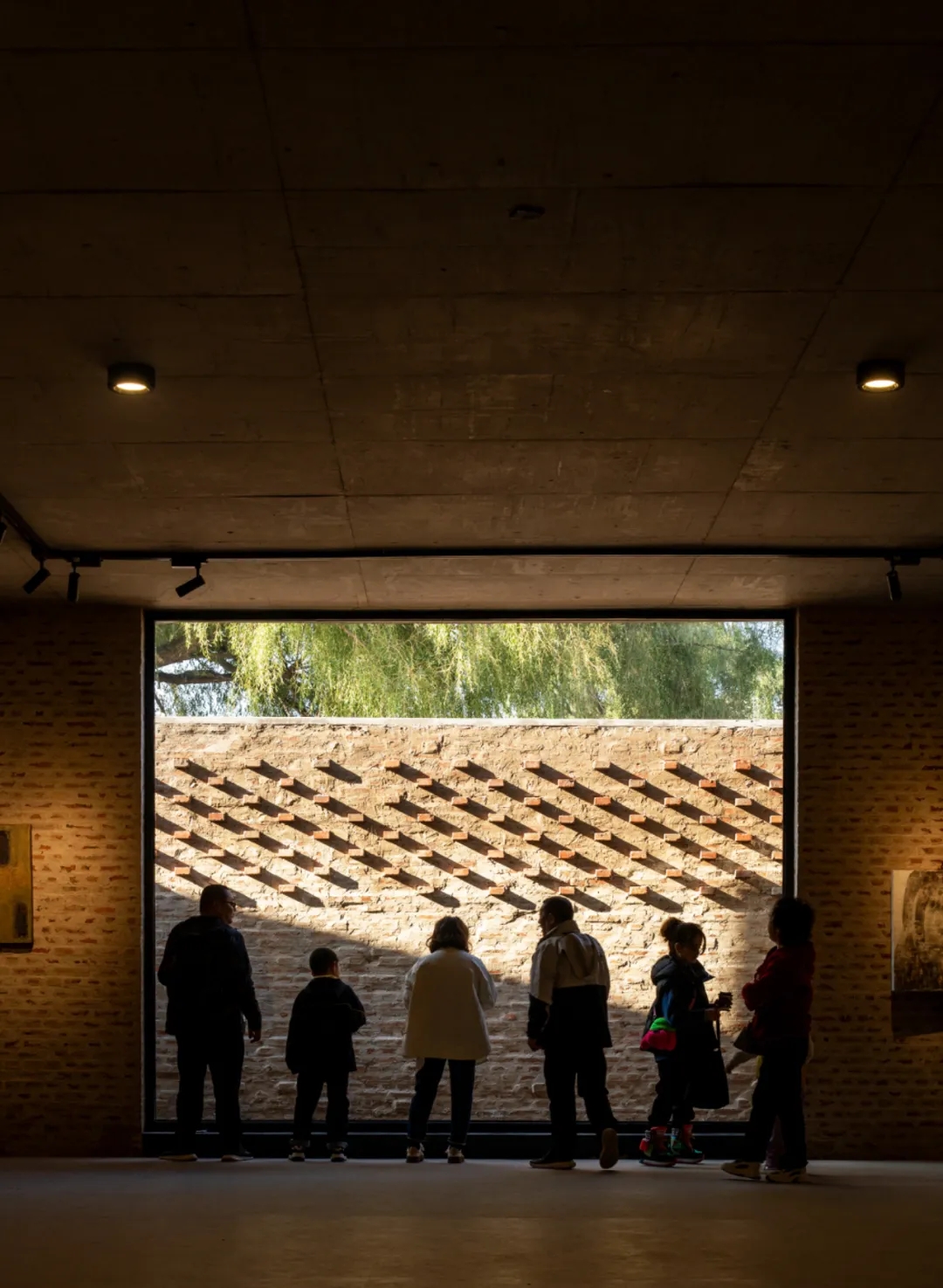
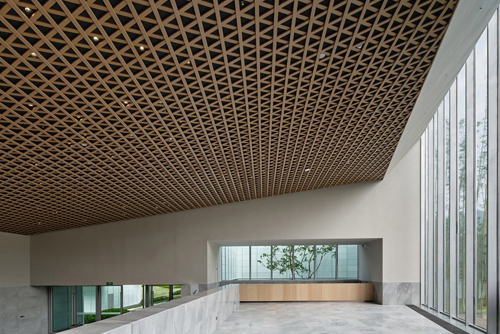
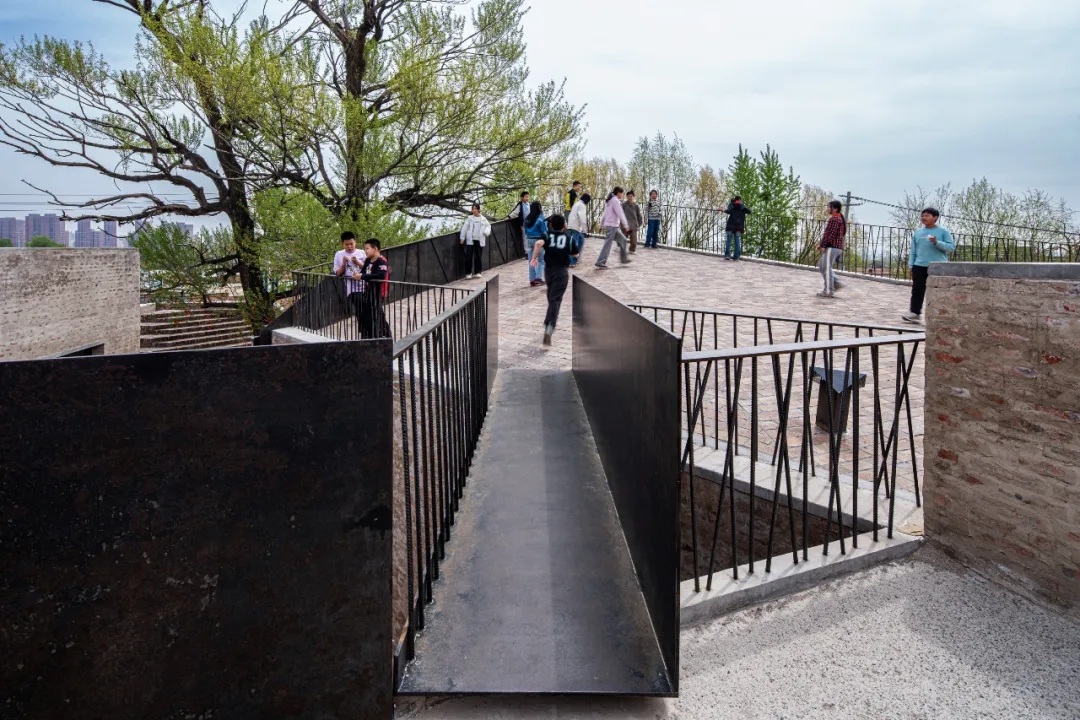
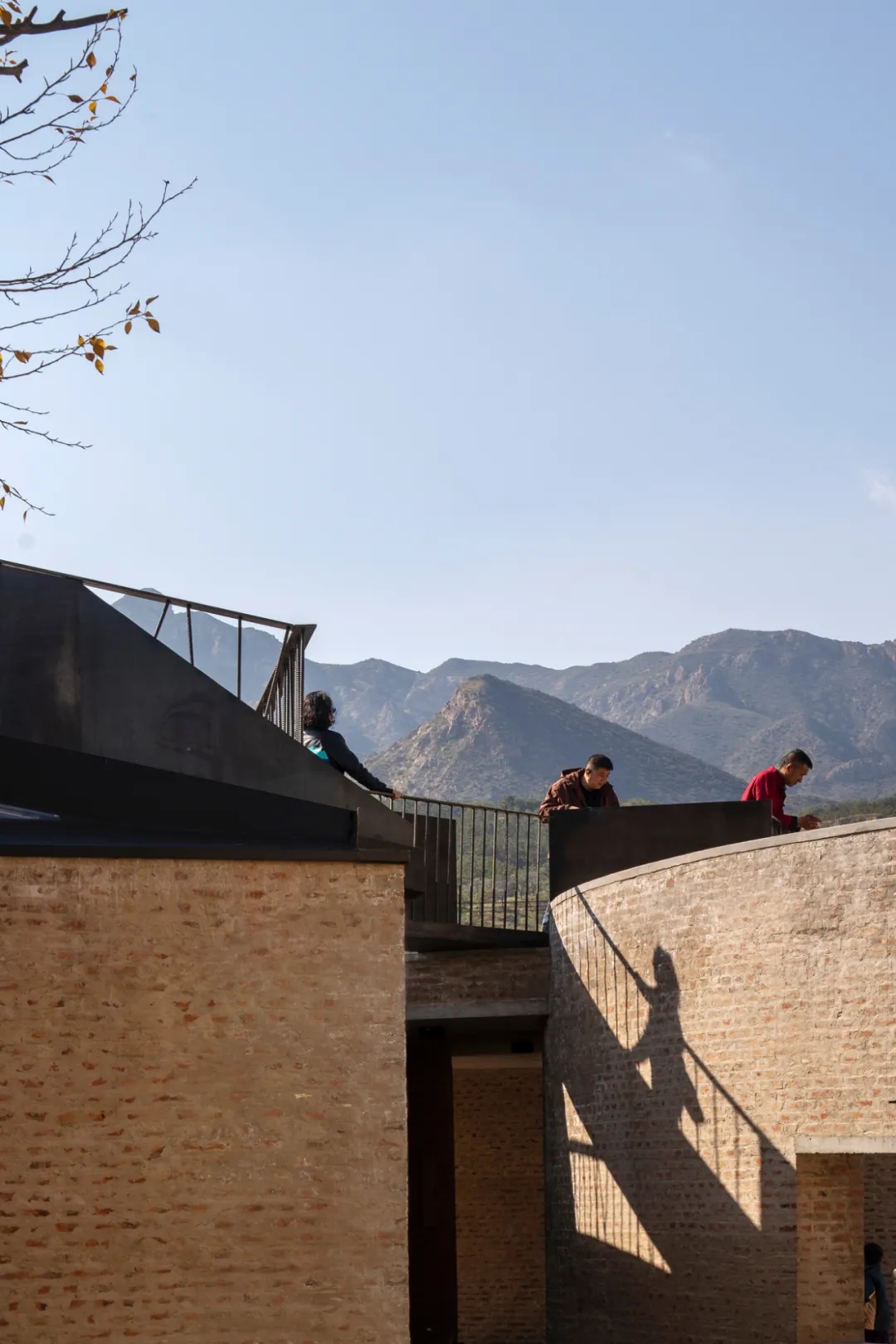
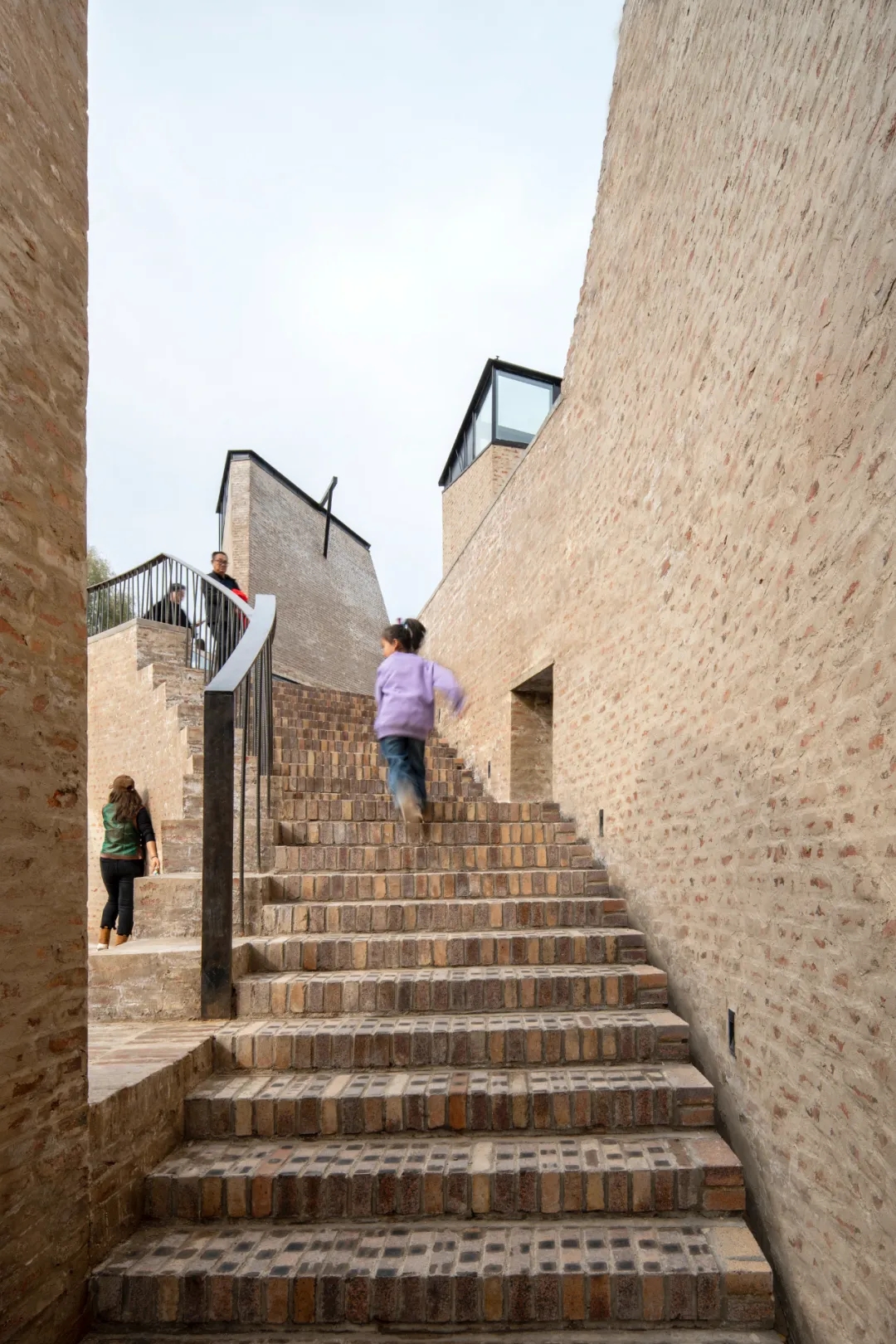
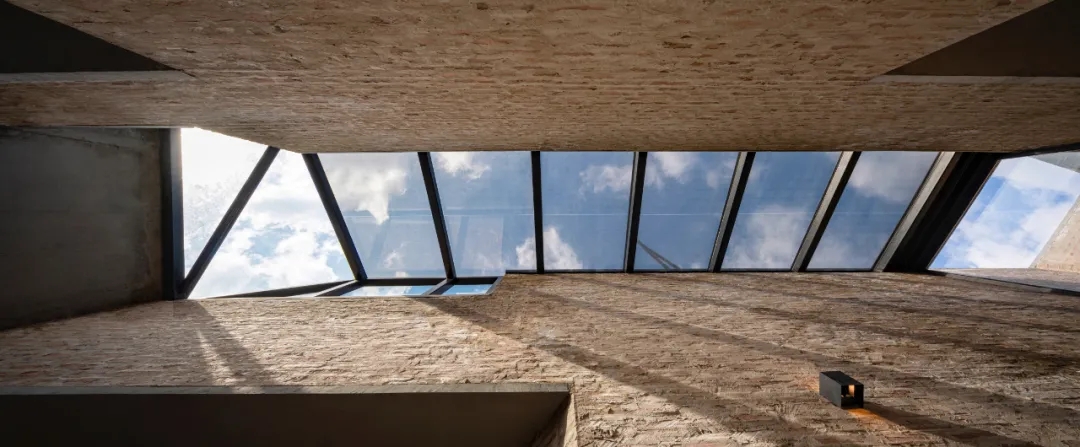
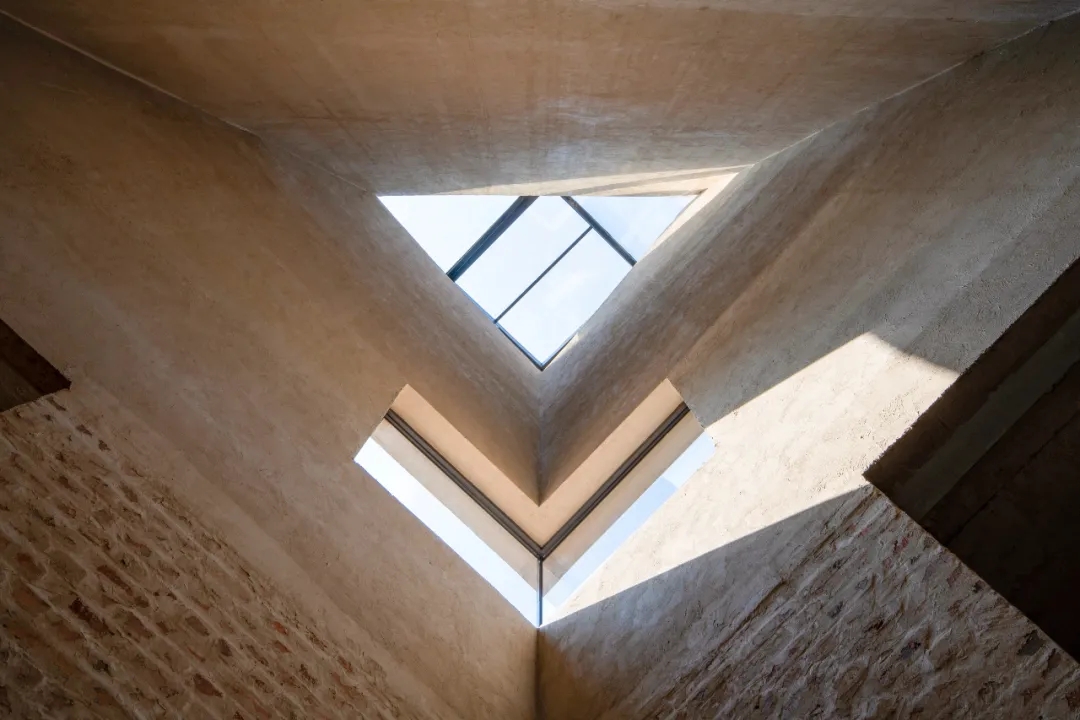
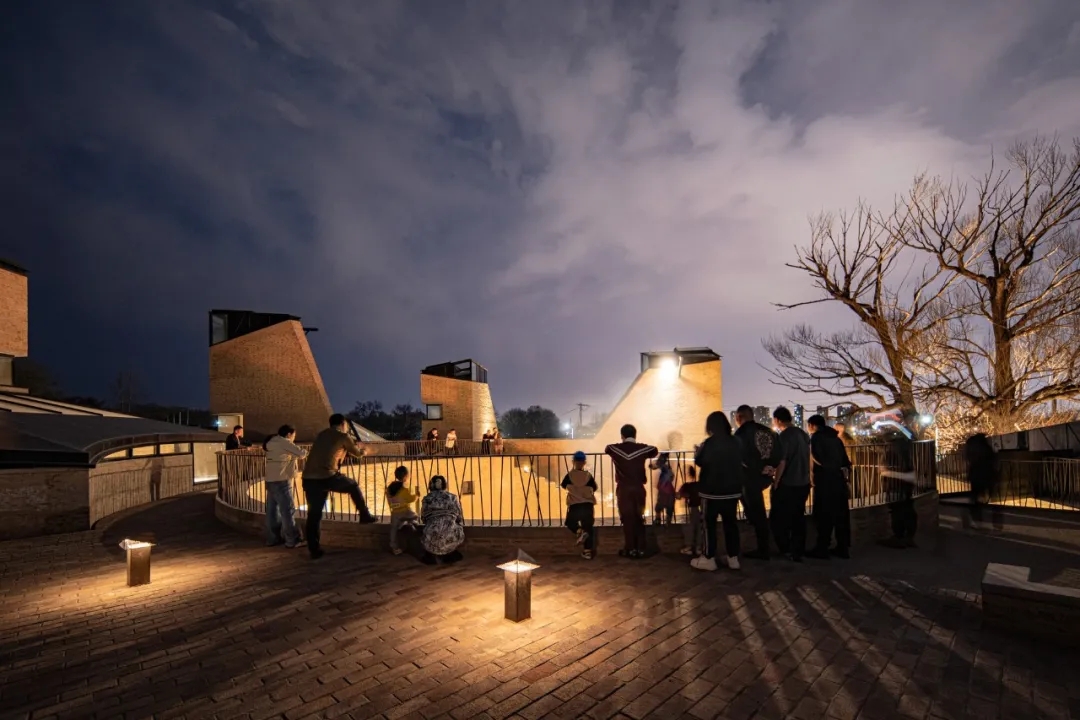
除了运营模式上的创新,此次获奖的西乌素图村民中心也很好地体现了张鹏举一以贯之的设计理念和手法。该项目建筑表现摒弃了僵化的功能分区与封闭空间布局,以一座渗透性圆形庭院为核心整合多元社区活动。该庭院不仅具象存在,更组织起连续流线与空间指向,将多个开放连通房间纳入整体。一条从首层延伸至屋顶的坡道,形成连续公共空间,让建筑重新定义并重构公共与私密边界,突破传统层级界限。独创的导拔风系统、回收的旧砖、延续原有村落肌理的空间布局、丰富的立体流线系统都体现了张鹏举在设计中对地域乡土的尊重、以及对“平实建造”、“适洽生成”的持续探索。
In addition to innovative operational models, the award-winning Xiwusutu Village Center also reflects Zhang Pengju's consistent design philosophy and techniques. The architectural performance of this project abandons rigid functional zoning and enclosed space layout, integrating diverse community activities with a permeable circular courtyard as the core. This courtyard not only exists concretely, but also organizes continuous flow lines and spatial directions, integrating multiple open connected rooms into the whole. A ramp extending from the ground floor to the roof forms a continuous public space, allowing the building to redefine and reconstruct the boundary between public and private, breaking through traditional hierarchical boundaries. The original ventilation system, recycled old bricks, spatial layout that continues the original village texture, and rich three-dimensional streamline system all reflect Zhang Pengju's respect for the local land and his continuous exploration of "flat construction" and "appropriate generation" in his design.
评审团评语
“西乌素图村民中心突破了当代建筑设计以物质形态与审美结果为导向的范式,转而关注如何将社区日常需求转化为得当的建筑载体。该项目的运作显著增强了社会互动、文化体验与环境韧性。通过对多元使用者的整合,以及以流动空间实现的高度复合功能表达,该项目在乡村人居的宏观环境中创造了一个兼具共享性与包容性的社区微观世界。”
Review panel comments
The Xiwusutu Village Center has broken through the paradigm of contemporary architectural design that is guided by material form and aesthetic results, and instead focuses on how to transform the daily needs of the community into appropriate architectural carriers. The operation of this project significantly enhances social interaction, cultural experience, and environmental resilience. Through the integration of diverse users and the highly complex functional expression achieved through flowing spaces, this project creates a community micro world that combines sharing and inclusiveness in the macro environment of rural living
项目信息
Information
项目设计方:内蒙古工大建筑设计有限责任公司
项目地点:内蒙古自治区呼和浩特市西乌素图村
项目建成/启用时间:2023年9月
主创设计师:张鹏举
业主方项目负责人:李海峰
项目业主方:西乌素图村村委会
摄影师:窦俞钧
编辑:俞裕林、吉文 | 视觉:慕熙 胡音
Project Designer: Inner Mongolia University of Technology Architectural Design Co., Ltd
Project location: Xiwusutu Village, Hohhot City, Inner Mongolia Autonomous Region
Project completion/commissioning date: September 2023
Lead designer: Zhang Pengju
Owner's project leader: Li Haifeng
Project owner: Xiwusutu Village Committee
Photographer: Dou Yujun
Editor: Yu Yulin, Ji Wen | Visual: Mu Xi and Hu Yin