海南东寨港国家级自然保护区实验区科研观测塔项目,海南海口 / 华南理工大学建筑设计研究院有限公司
概况: Project overview:
海南东寨港国家级自然保护区位于海口市东部,是我国第一个以红树林为主要保护对象的湿地类型自然保护区,保持着我国红树林连片面积最大、树种最多、保育最好、生物多样性最丰富的领先地位,具有重要的生态、科研、科普价值。为发挥红树林生态资源的优势,海口市正在开展红树林生态修复、红树林旅游等工作,观测塔的建成兼具科研、观测、游赏、防灾等多重功能。
The Hainan Dongzhaigang National Nature Reserve, located in the eastern part of Haikou City, is China’s first wetland-type nature reserve primarily protecting mangrove forests. It maintains a leading position in China with the largest contiguous area of mangrove forests, the most diverse tree species, the best conservation efforts, and the richest biodiversity. It holds significant ecological, scientific research, and educational value. To leverage the advantages of mangrove ecological resources, Haikou City is carrying out work such as mangrove ecological restoration and mangrove tourism. The observation tower serves multiple functions, including scientific research, observation, sightseeing, and disaster prevention.
▼全景照片,Panorama photo
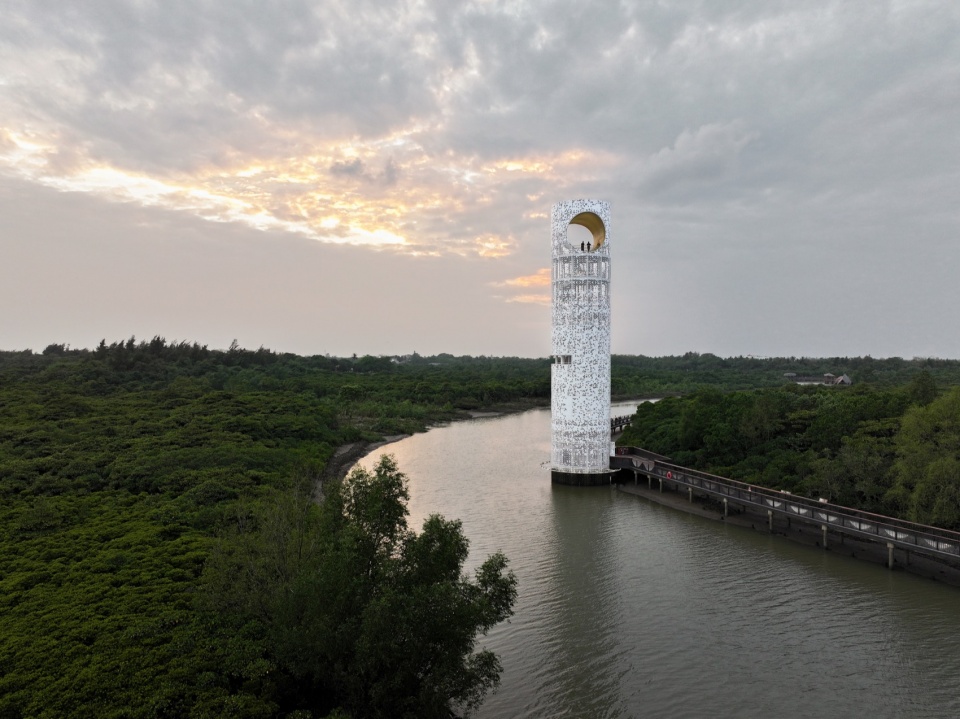
观测塔位于红树林生态园区的东端,近入海口,是观测红树林生态区的制高点,站在塔的最高处观景平台,可远眺琼州海峡。
The observation tower is located at the eastern end of the mangrove ecological park, near the estuary. It serves as the commanding vantage point for observing the mangrove ecological zone. Standing on the observation platform at the top of the tower, one can overlook the Qiongzhou Strait.
▼清晨照片,Early morning photo
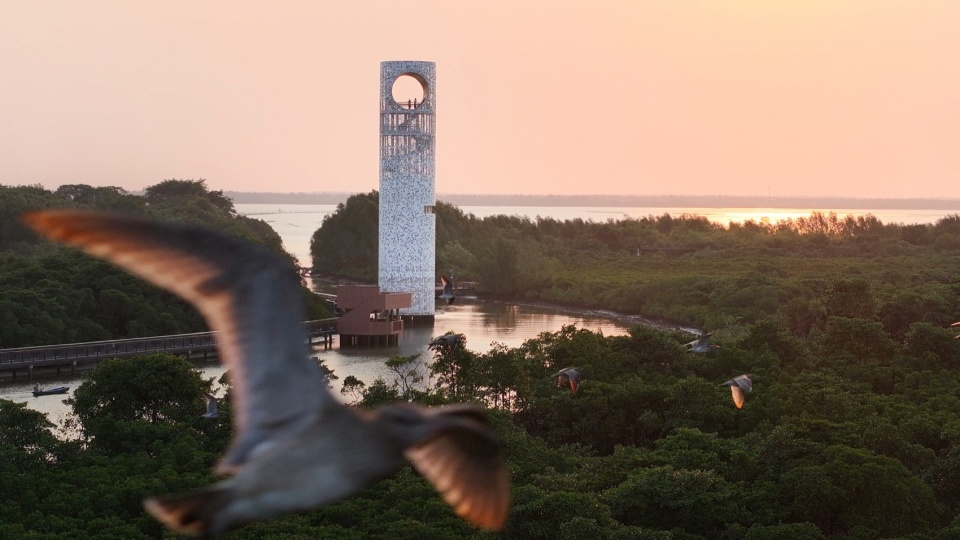
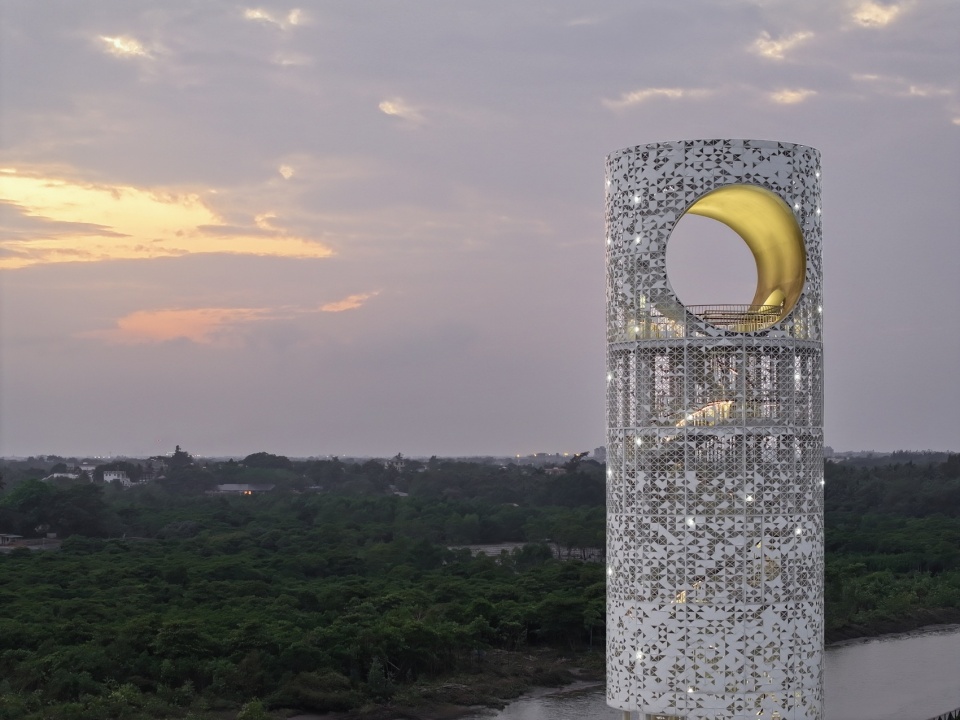
观测塔取名“月之塔”,充分反应了设计“梢间明月”的设计意境。
Earning it the poetic moniker ” The Lunar Tower “, This name reflects its dual role: evoking the serene presence of the moon amidst the surrounding mangrove forest.
▼融入红树林自然环境,Integrate into the natural environment of mangrove
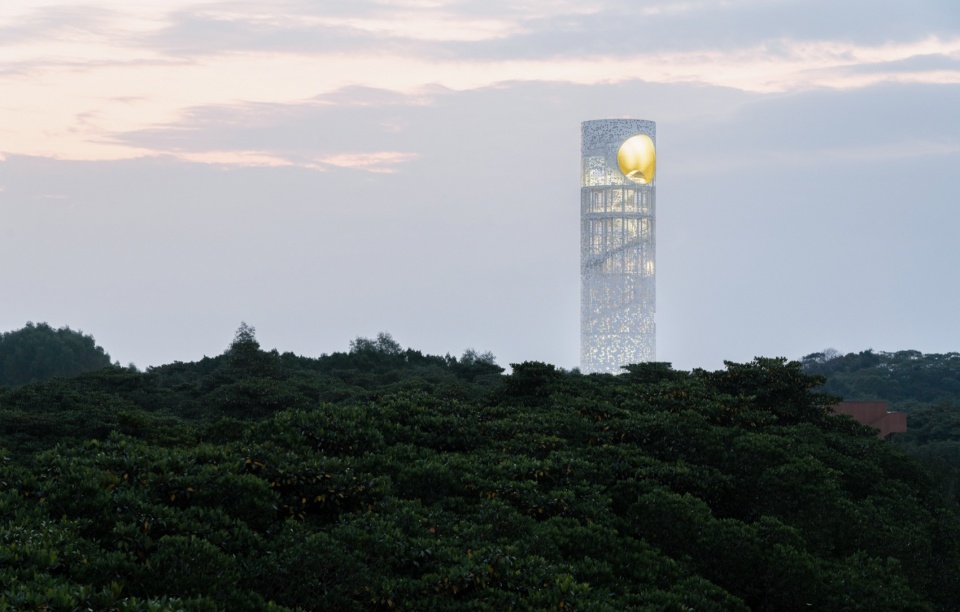
标识 ▪ 节制而微妙的标识性 Architectural form design: Subtle lconography and Synergetic Integration
由于观测塔位于红树林生态保护区,需要在不影响环境生态的同时,又能成为自然保护区的标识。塔体采用了简洁的竖向圆柱体的造型,尽量减少对生态的干扰,减少对湿地的占用,并能成为生态区具有高度意义的场所空间。
Since the observation tower is located within a mangrove ecological reserve, its design must minimize environmental impact while serving as a landmark for the protected area. The tower features a simple vertical cylindrical form to reduce ecological disturbance, minimize wetland occupation, and create a highly meaningful spatial experience within the ecological zone.
▼海边照片,Seaside photo
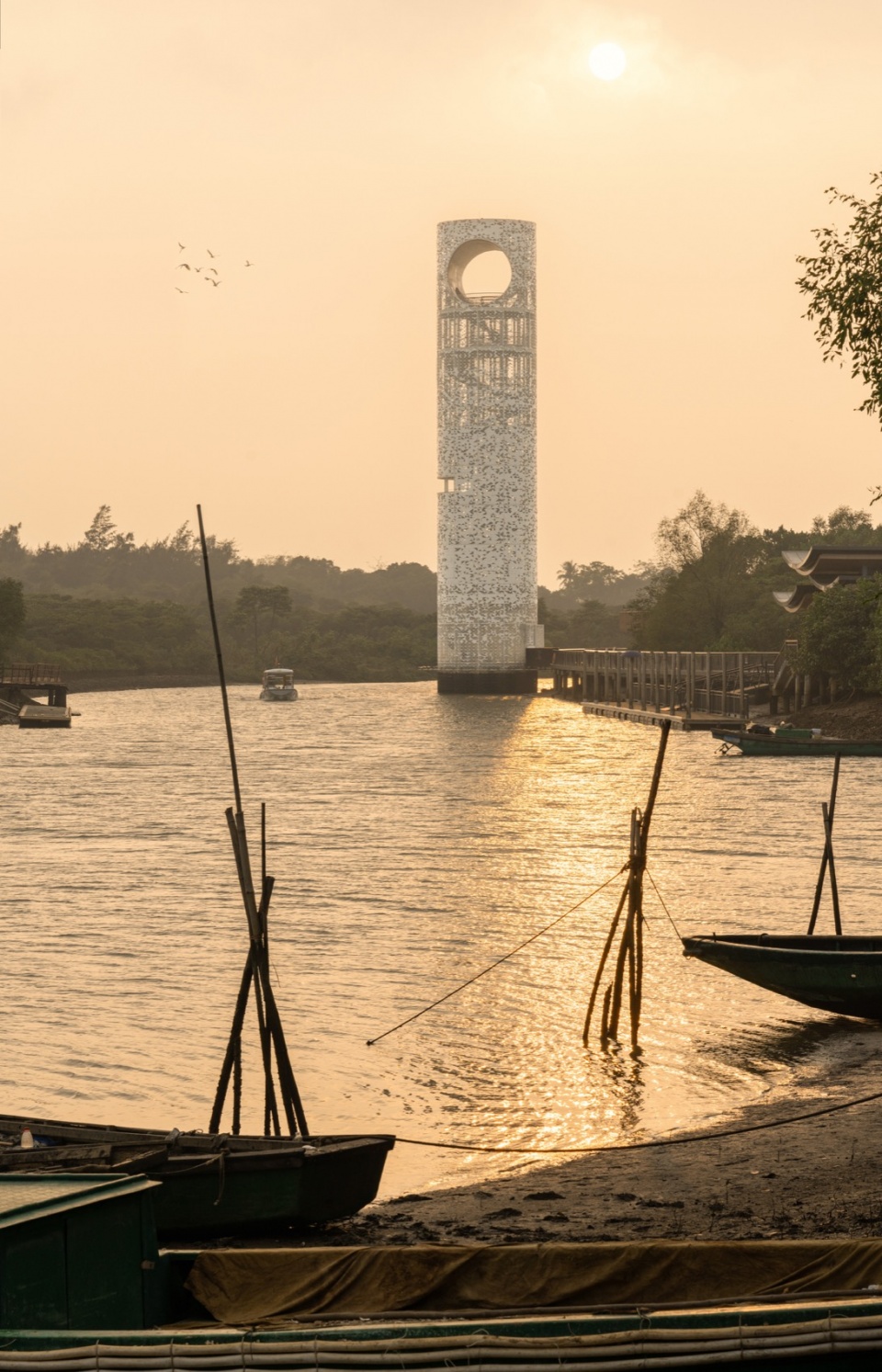
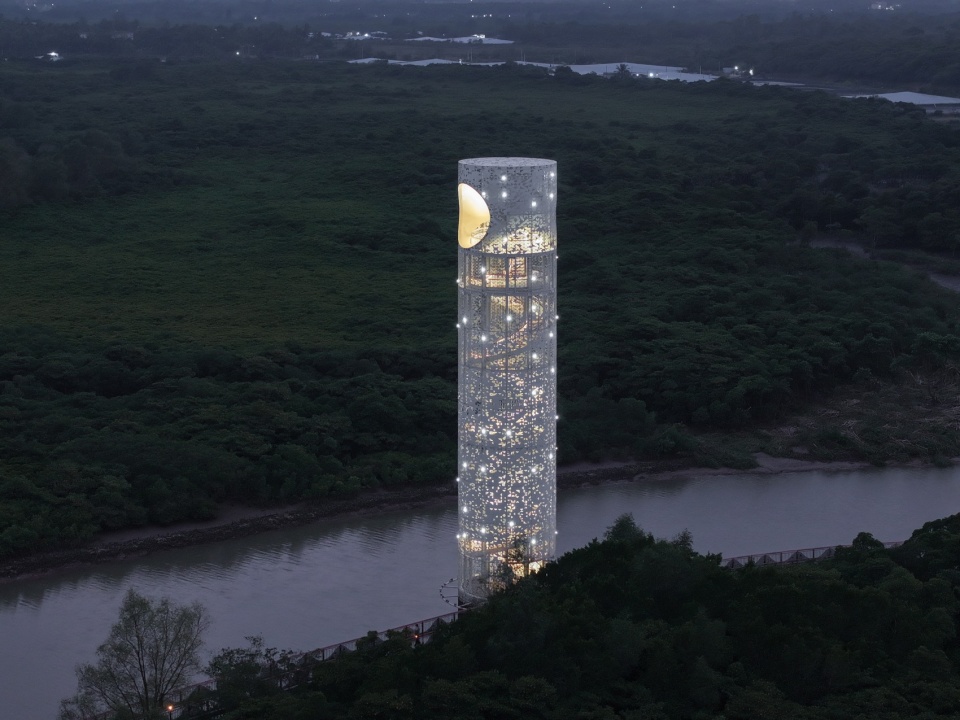
顶部的圆形观景窗口,意在“月亮”的造型,随着天色渐暗,月亮慢慢显现,与树林、海面相互映衬。团队希望营造一种静谧、自然的场所意境。
The circular observation window at the top is designed to resemble a “moon,” gradually revealing itself as the sky darkens, complemented by the trees and the sea. The team aims to create a serene and natural ambiance.
▼沿水,Along the water
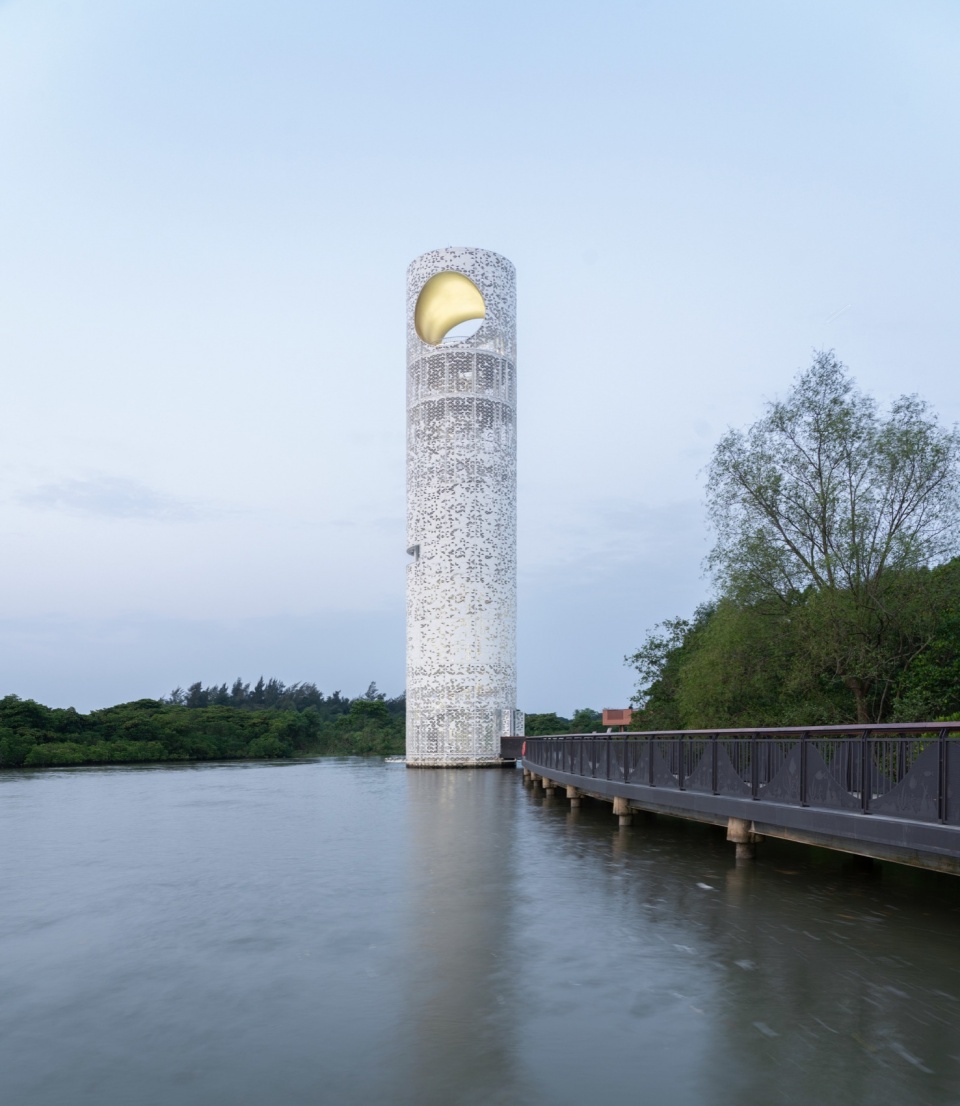
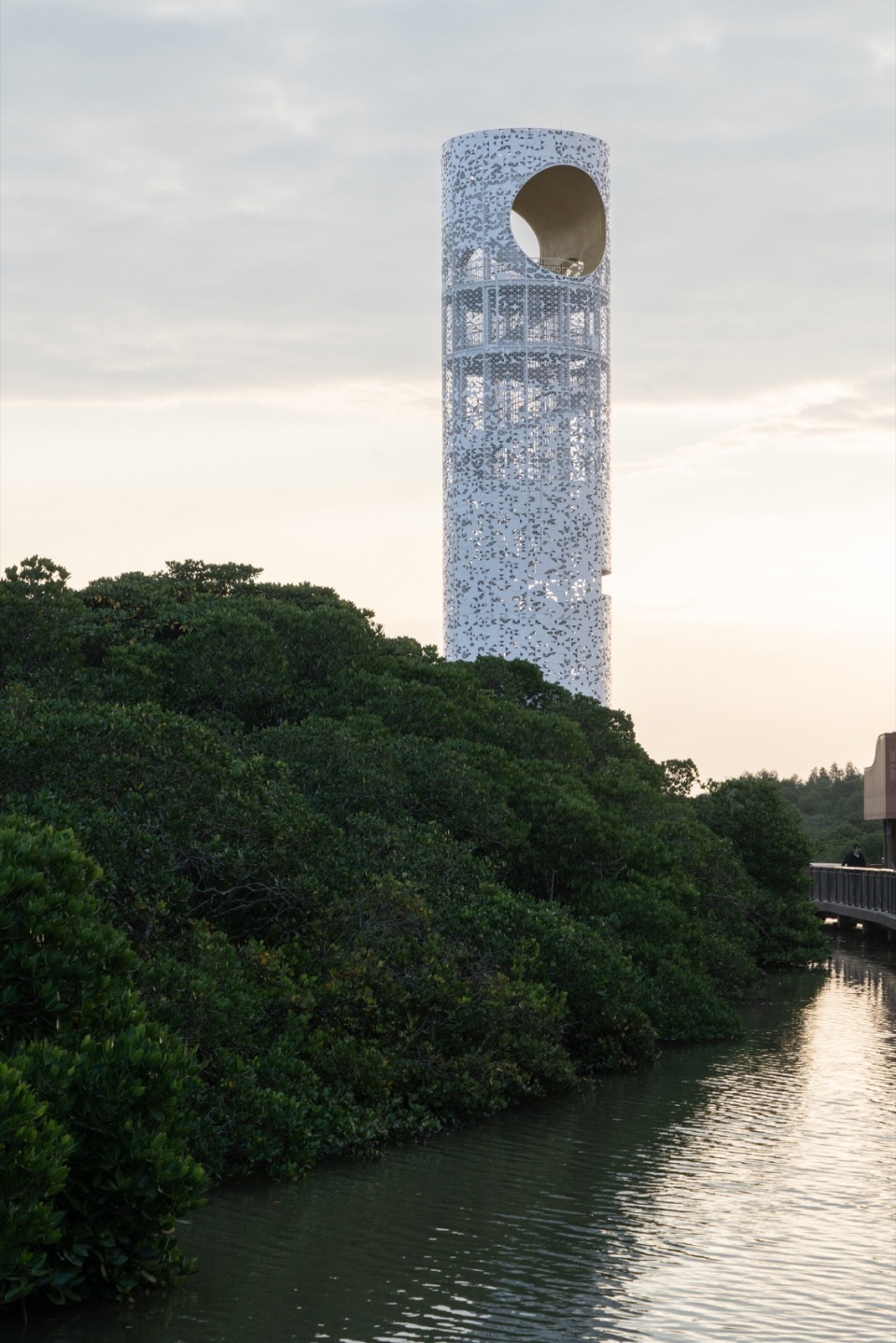
肌理 ▪ 与环境相契合的肌理 Facade design: An Eco-Adaptive building skin
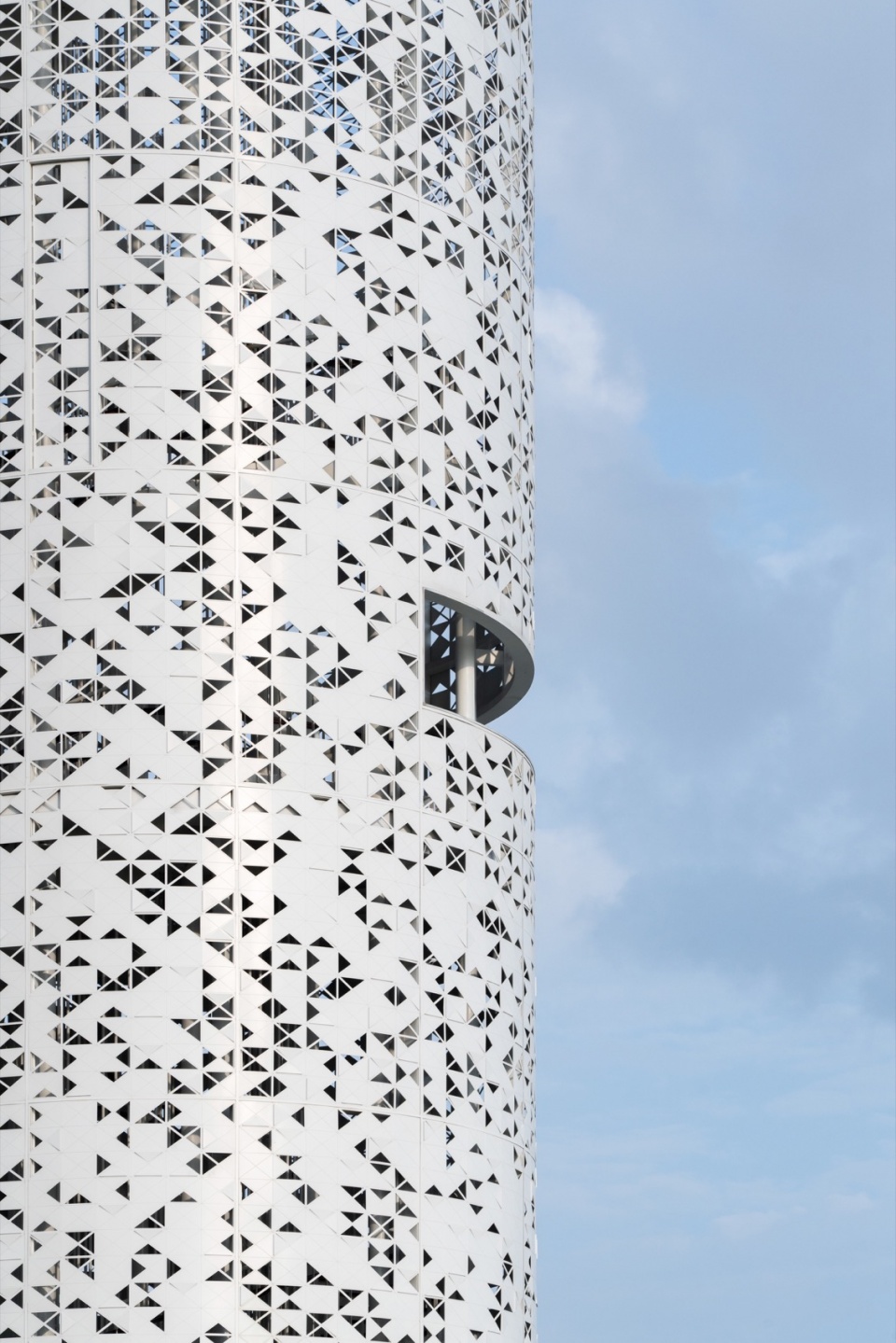
立面设计提取当地特色红树林树叶形态,以富有动态的排布方式散布于整个塔身,模仿自然向上的生长趋势,融入场地环境之中。表皮于楼梯之间留有适宜的间距,作为生态缓冲层,能减弱人类活动对鸟类的影响。材质采用穿孔少反光的白色铝板,顶部眺望平台选用木色铝板,尽量减少对鸟群的影响,为候鸟提供一个安全、绿色的场所空间。力求塔身更加通透,在不同标高观景平台进行细微的肌理变化,提供尽量大的观景面。
The facade design extracts the local characteristics of mangrove tree leaves and spreads them throughout the tower in a dynamic arrangement, imitating the natural upward growth trend and integrating into the site environment. The appropriate spacing between the epidermis and the stairs serves as an ecological buffer layer, which can reduce the impact of human activities on birds. The material is made of perforated and low reflective white aluminum plate, and the top viewing platform is made of Wood-colored aluminum panel to minimize the impact on the bird flock and provide a safe and green space for migratory birds. Striving for a more transparent tower body, subtle texture changes are made on viewing platforms at different elevations to provide the largest possible viewing surface.
▼顶部观海平台照片,Top sea viewing platform
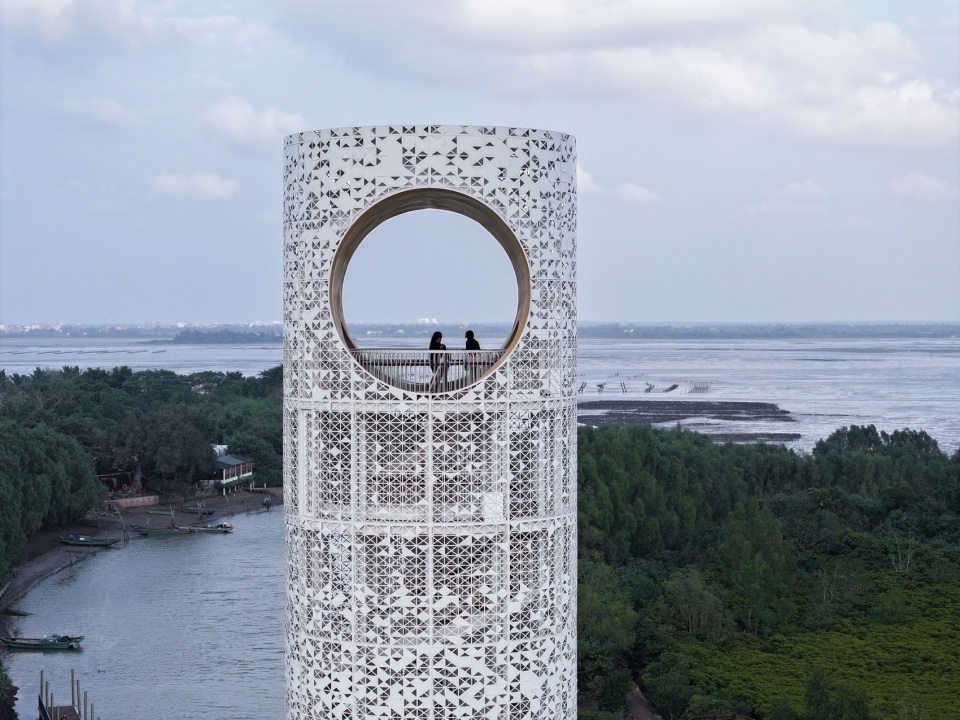
空间 ▪ 丰富有趣的观景平台 Spatial design: evolving interior space and Panoramic Vista Platforms
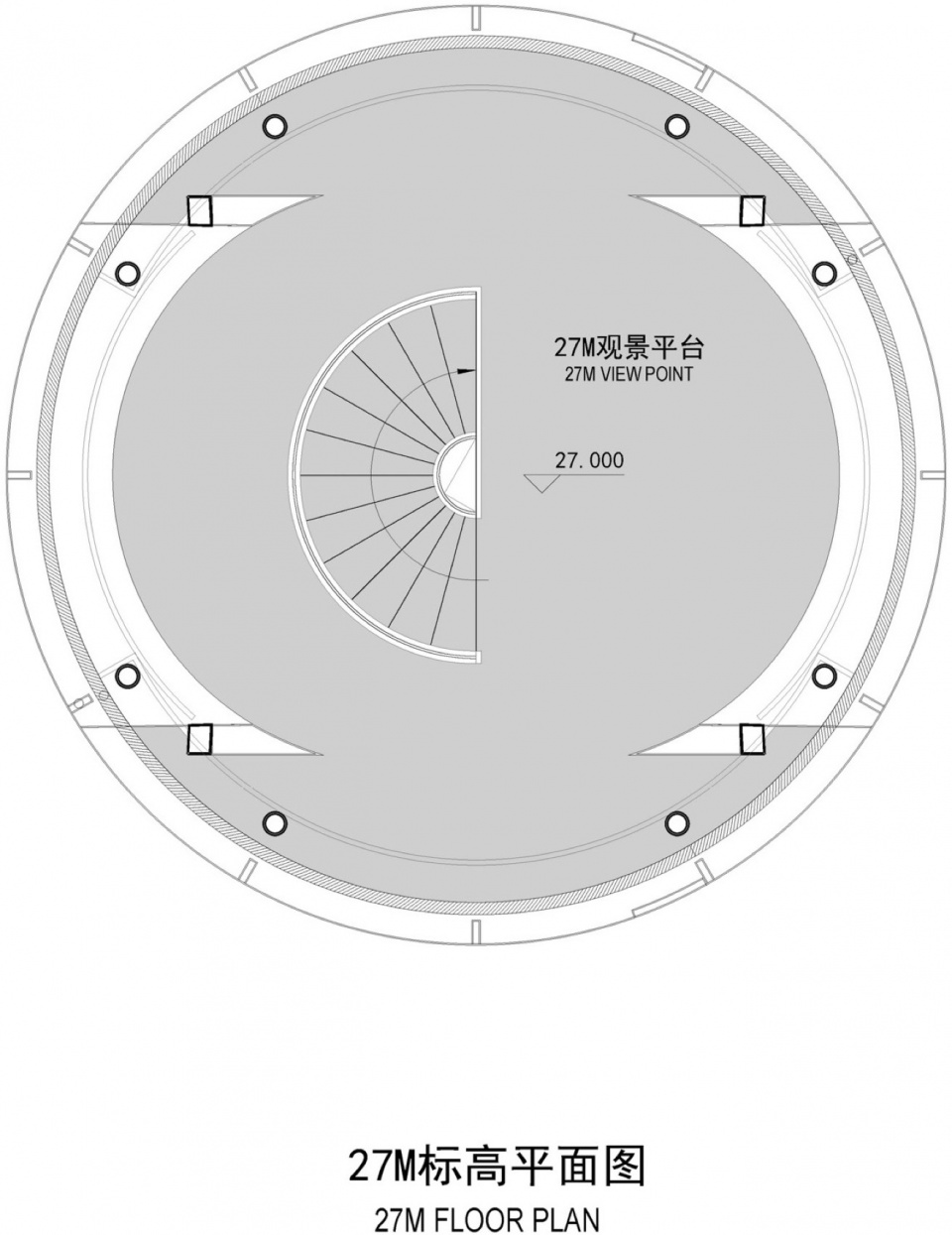
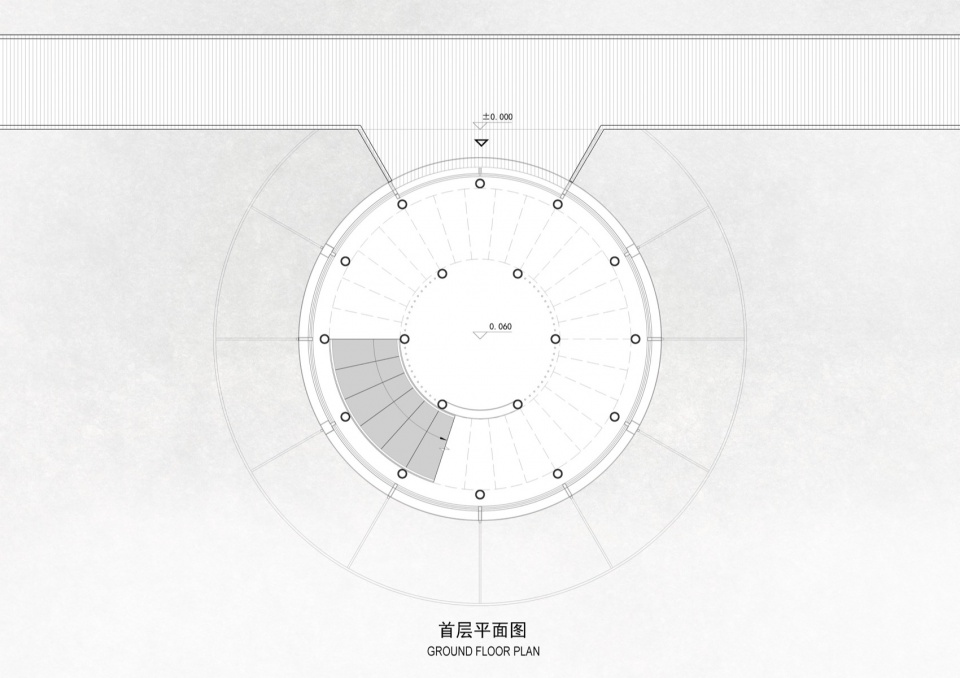
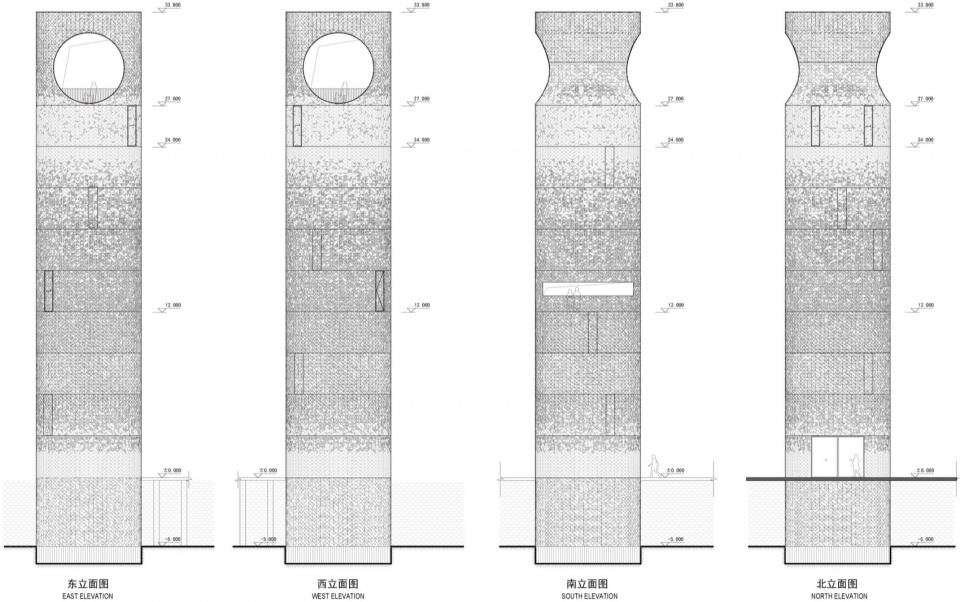
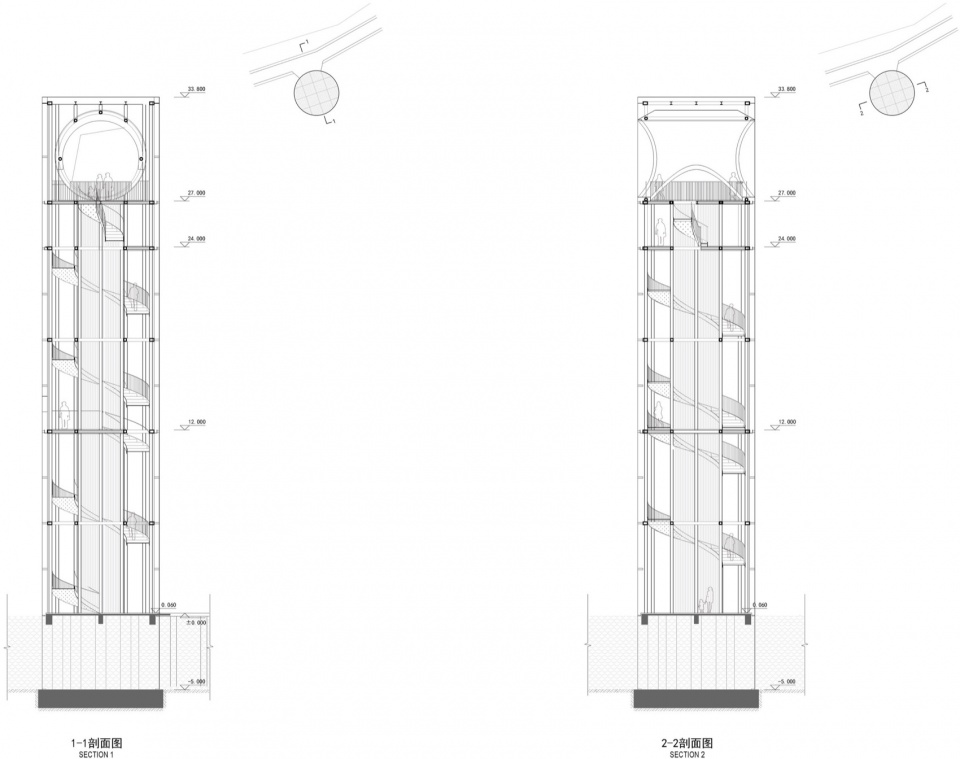
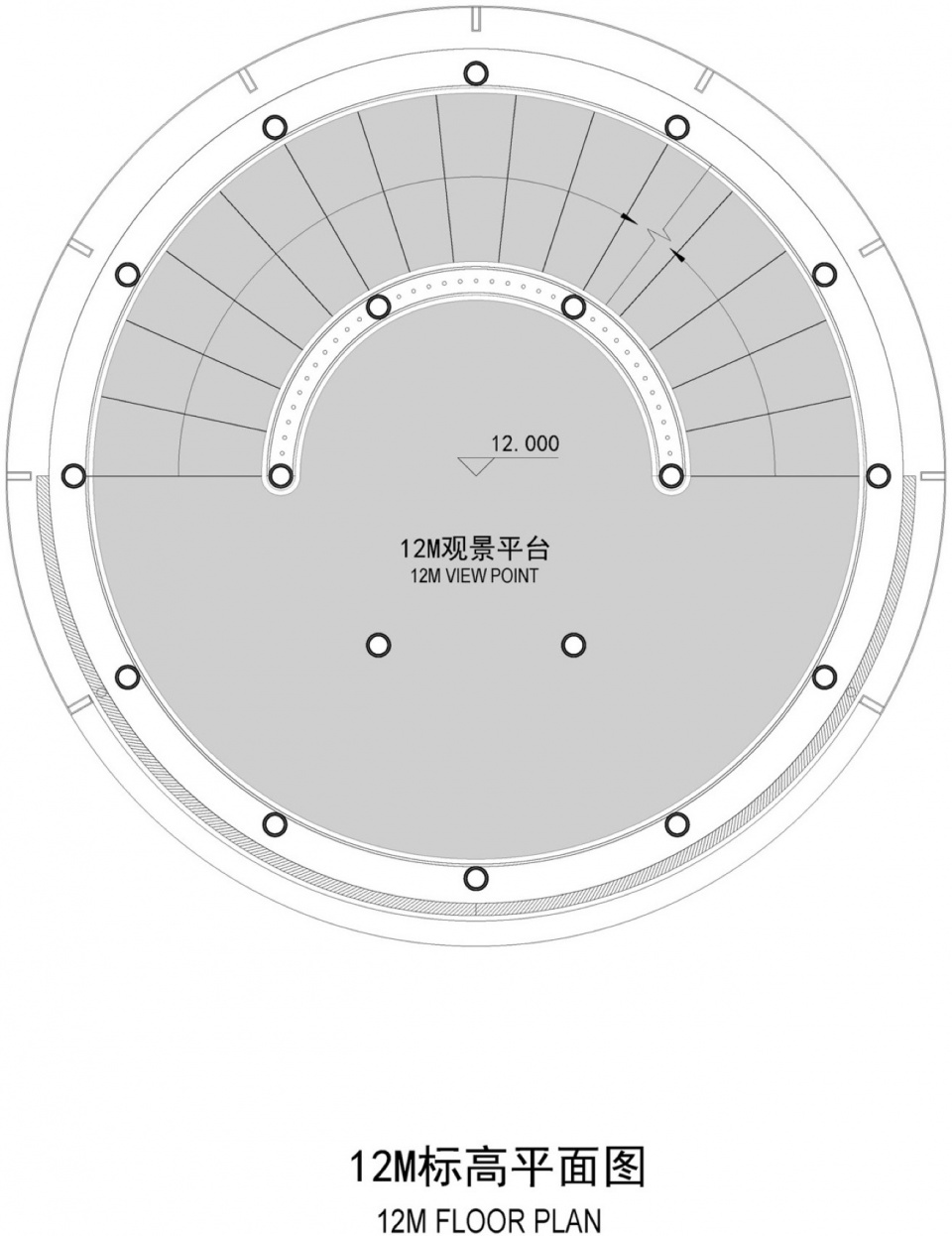
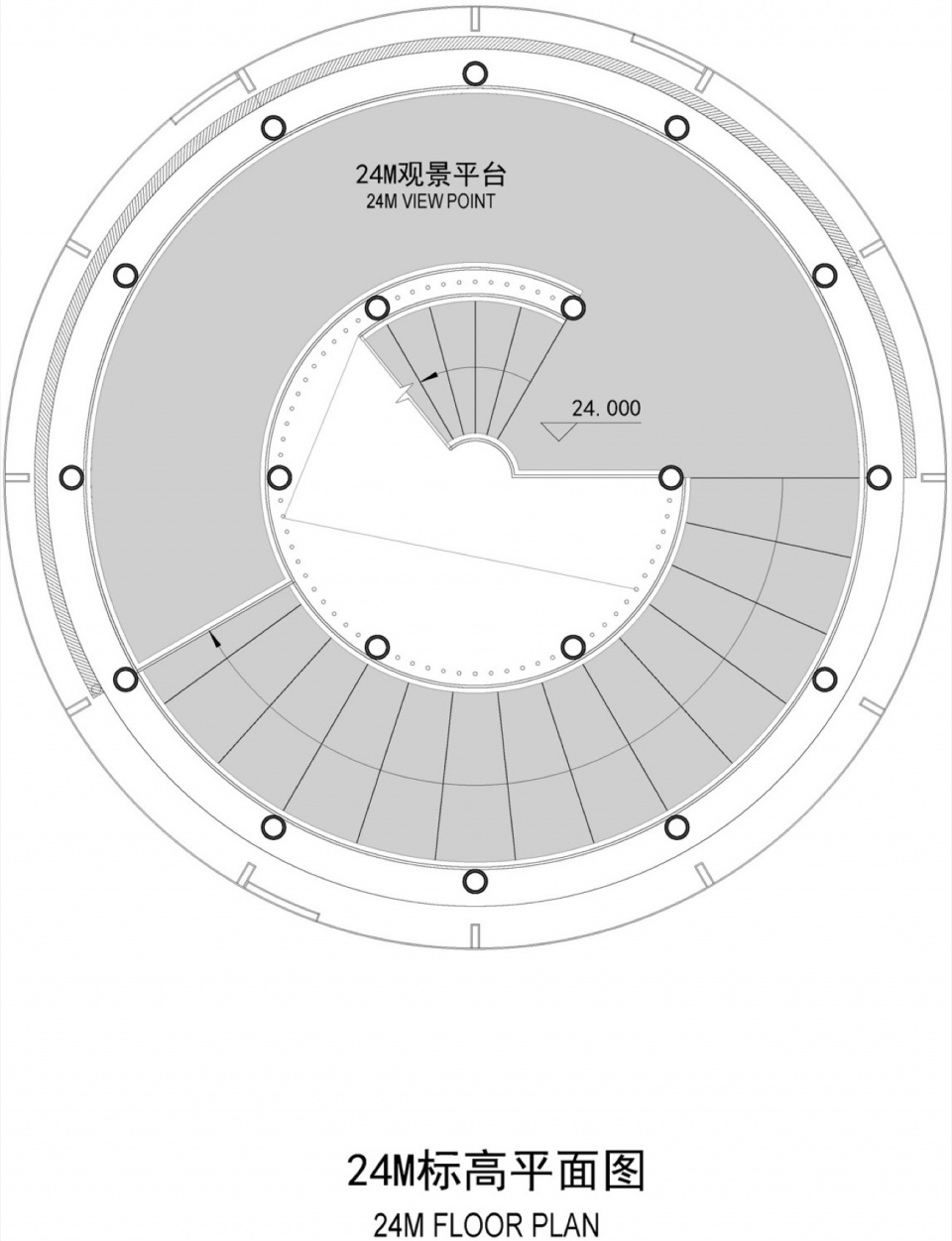
塔首层设计为门厅,贴临海面的最高涨潮位。并在12M、24M、27M处设置观景休息平台,通过旋转楼梯串联。在人们攀爬的过程中,从不同标高对周边环境进行观赏与感知。不同的平台具有不同意义:12M标高平台面向场地西侧的大片红树林,成为青少年科普研学,观察生态红树林和候鸟的重要场所;长条形的开窗面向红树林一览无余。24M平台透过设计特意稀疏的肌理和可开启外窗面向旅游区和城市村庄;27M达到塔体顶部,景观豁然开朗,圆形的观景窗口将远处的海面纳入。
The ground level of the tower serves as a foyer, strategically positioned at the highest tide level near the sea. Ascending from this point, three distinct observation and rest platforms emerge at heights of 12m, 24m, and culminating at 27m, interconnected by gracefully spiraling staircases. This deliberate arrangement offers visitors a multifaceted experience, allowing them to engage with the surrounding environment from diverse elevations. Upon reaching the tower’s zenith at 27m, a breathtaking panorama unfolds through a circular observation aperture, revealing the charming village, lush mangrove canopy, and expansive seascape beyond.
▼黄昏照片,Twilight photo
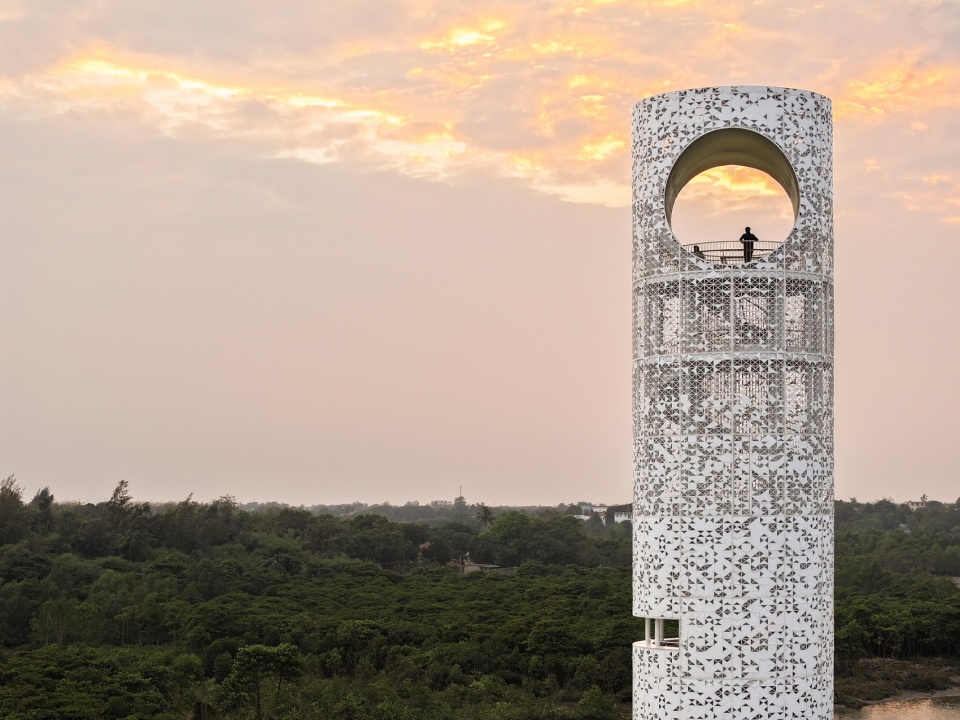
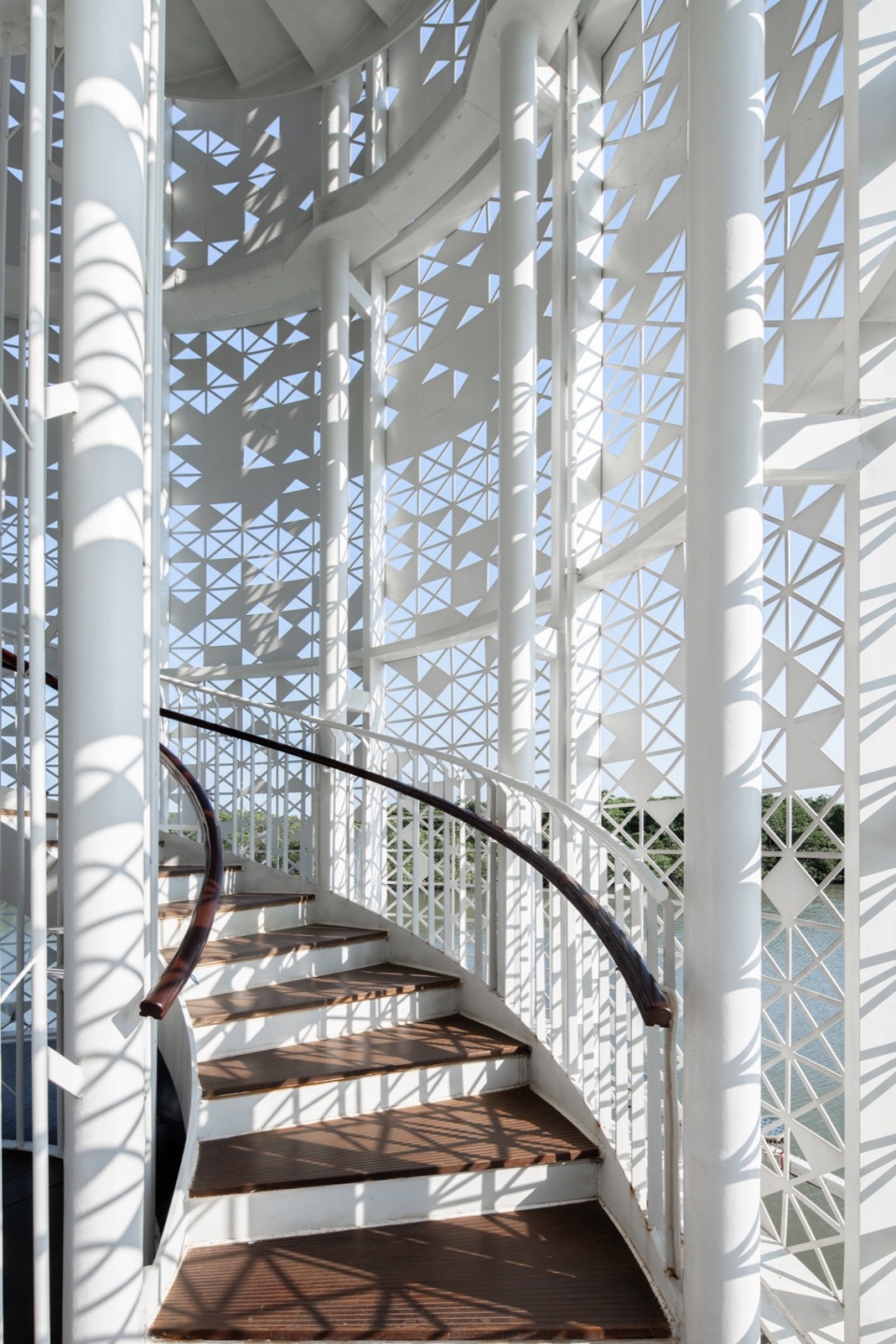
内部空间的设计,力求为游客观景、专业摄影等不同功能需求提供多样的视角与体验,同时也能营造出一种步移景异的效果。室内采用白色结构和木色地板的搭配,更显轻盈与舒适感。阳光撒入塔内地面,仿若置身于一片斑驳的树影之中,与红树林相得益彰。
The interior space design is meticulously crafted to accommodate various functionalities, including sightseeing, surveying, and professional photography. Each ascent presents visitors with evolving spatial encounters, as the façade’s patterns dynamically shift. The interior adopts a combination of white structure and wooden flooring, which makes it more lightweight and comfortable. Furthermore, the interplay of light throughout the day bestows upon the structure a tapestry of perspectives, ensuring an ever-evolving spatial journey for visitors.
▼室内螺旋楼梯,Indoor spiral staircase
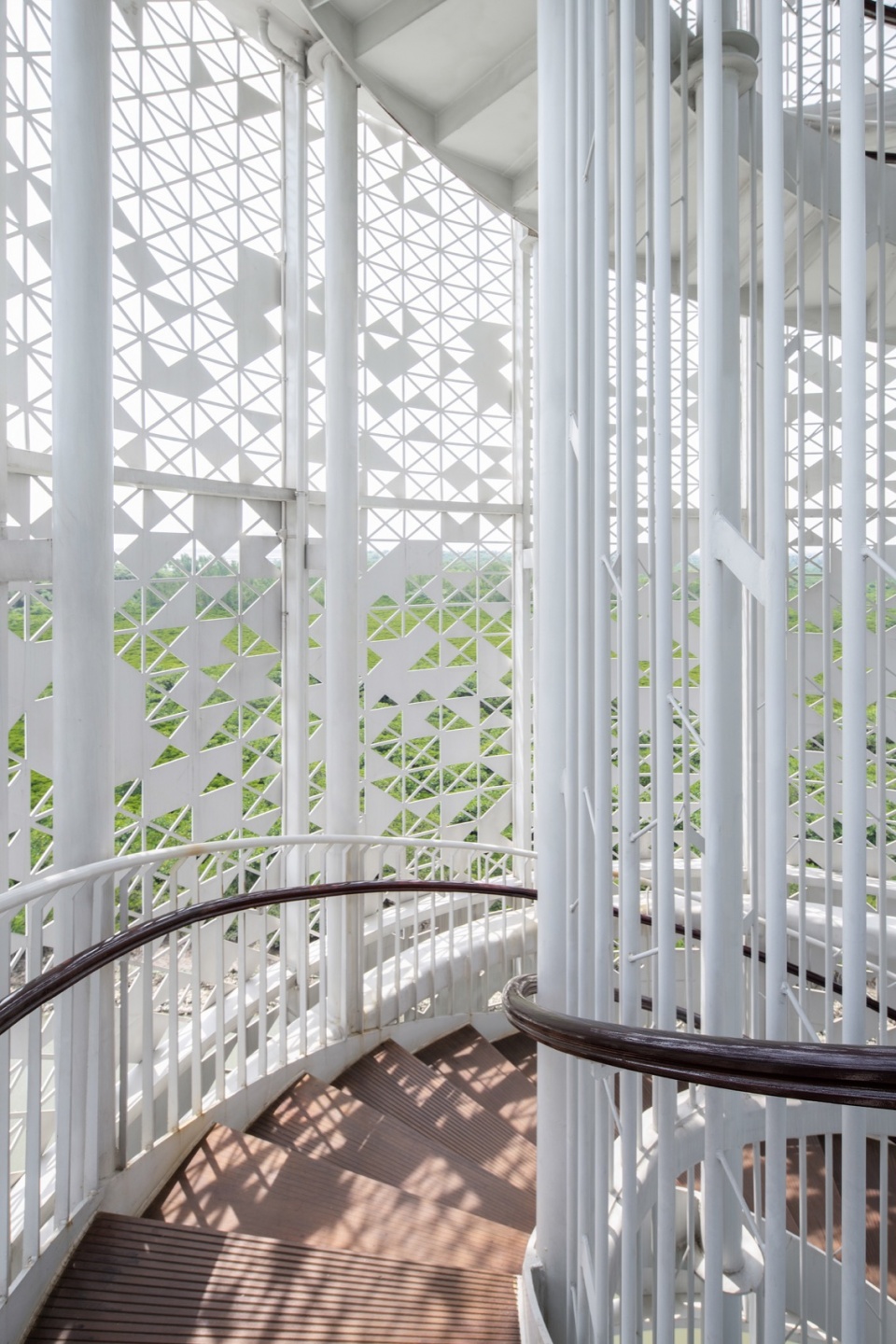
灯光 ▪ 星空与大海的映衬 Lighting Design: Enchanting Celestial Ambiance
塔体的灯光设计的要求是不影响候鸟活动的同时展现出自身的特点。设计通过降低塔体内部的光源,在外表面设计了随机的点灯,同时照亮顶部空间,实现了星空月梢的意境,展现了塔体自身挺拔空灵的特点,也将塔融入在了大海和红树林之中。
The requirement for the lighting design of the tower is to not affect the activities of migratory birds while showcasing its own characteristics. The design reduces the internal light source of the tower and randomly illuminates the outer surface while illuminating the top space, achieving the artistic conception of the starry sky and moon tips, showcasing the tower’s upright and ethereal characteristics, and integrating the tower into the sea and mangrove forest.
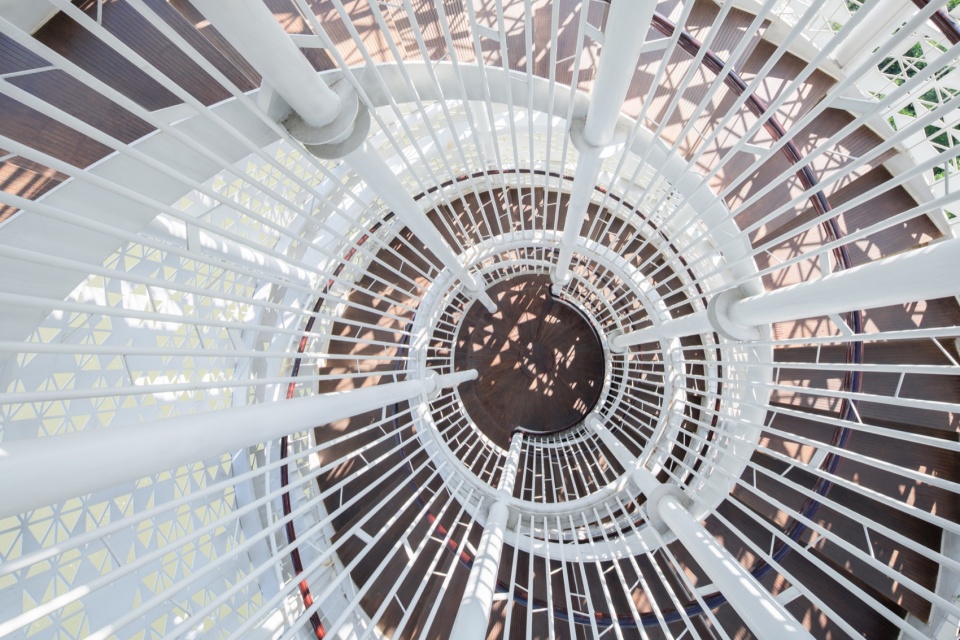
▼室内螺旋楼梯,Indoor spiral staircase
建造 ▪ 结构与造型间的契合 Structural Design: Balancing Strength and Grace
“月之塔”地处海口市红树林景区入海口处的离岸地带,结构高度33.5m,外径约6.5m,含旅游观光及科研观测的建筑使用功能,在设计过程中,设计团队需要考虑抵抗巨大的风荷载和结构轻盈性之间的矛盾,通过对抗风能力、使用舒适度、工程造价、耐久性及施工便捷性等技术问题的权衡考虑,最终决定采用空间环向直立细柱的高耸钢框架结构和外覆菱形渐变造型穿孔铝板的处理方式,同时采用围堰、桩船等措施进行钻孔灌注桩的施工。环向平行布置的18个直立细钢管柱截面为D194×12,利用休息平台处的环梁及螺旋楼梯肋板把直立细柱连结到一起,约束并协调各柱之间的受力和变形,形成有效的整体空间刚度,满足七级以下大风天气时的旅游观光功能,同时在12米标高休息平台以下的钢管柱内填C40混凝土,整体结构可抗15级强台风。
The tower is located in the offshore area at the mouth of the Mangrove Scenic Area in Haikou City, with a structural height of 33.5 meters and an outer diameter of about 6.5 meters. It includes building functions for tourism, sightseeing, and scientific research observation. In the design process, the design team needs to consider the contradiction between resisting huge wind loads and structural lightness. After weighing technical issues such as wind resistance, comfort, engineering cost, durability, and construction convenience, the final decision was made to adopt a high-rise steel frame structure with spatially oriented vertical thin columns and a diamond shaped gradually shaped perforated aluminum plate covering it. At the same time, measures such as cofferdams and pile boats were used for the construction of drilled cast-in-place piles. The 18 upright thin steel pipe columns arranged in parallel in the circumferential direction have a cross-section of D194 × 12. The upright thin columns are connected together using the ring beams and spiral staircase ribs at the rest platform to constrain and coordinate the forces and deformations between the columns, forming an effective overall spatial stiffness that meets the tourism and sightseeing functions during strong winds below level 7. At the same time, C40 concrete is filled in the steel pipe columns below the 12 meter elevation rest platform, and the overall structure can withstand a strong typhoon of level 15. In addition, the structural components of this project are finely analyzed based on actual spatial effects, and the cross-sectional dimensions of the components are relatively small.
▼生态表皮肌理,Ecological skin texture
此外,本工程结构构件按实际空间效应精细化分析,构件截面尺寸均较小,对称的直立细柱、“内藏”的螺旋楼梯肋板梁和休息平台环梁,也最大限度弱化了结构的笨重感。
The symmetrical upright thin columns, the “hidden” spiral staircase rib beams, and the rest platform ring beams also minimize the heaviness of the structure.
▼夜景,Night View
结语 Brief conclusion
月之塔设计之初的构想就是达到人与自然、建筑与自然之间的互动连接。海上树影、梢间明月,设计的成果很好的映衬了这一目的。
The Lunar Tower epitomizes the ethos of facilitating human-nature interaction and harmonizing architecture with the natural surroundings. Moonrise Over Mangroves by the Celestial Shoreline, serving as a beloved public space and cultural landmark, the design outcome serves as a fitting illustration of this objective.
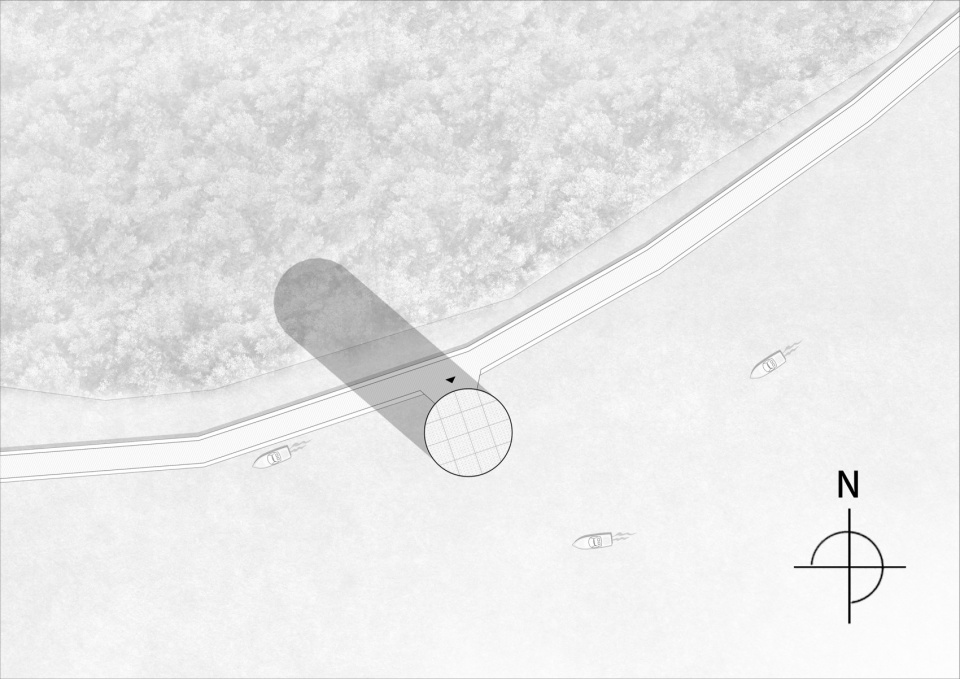
▼总平面图,Master plan
▼首层平面图,Ground floor plan
▼立面图,Evelation
▼剖面图,Section
▼12米标高景观台平面图,12m platform plan
▼24米标高景观台平面图,24m platform plan
▼27米标高景观台平面图,27m platform plan