扎耶德国家博物馆,阿拉伯联合酋长国 / Foster + Partners
扎耶德国家博物馆已正式向公众开放。位于阿布扎比萨迪亚特文化区的核心,这座阿拉伯联合酋长国(UAE)新的国家博物馆回溯了酋长国从最早的人类居住证据,到塑造其文化与身份的文明演变历程,并以阿联酋建国之父谢赫·扎耶德·本·苏丹·阿勒纳哈扬的价值观为根基。建筑形态回应了在沙漠环境中维持生命的挑战,同时呼应了阿联酋深厚的文化传统。
Zayed National Museum has opened its doors to the public. Located at the heart of the Saadiyat Cultural District in Abu Dhabi, the new national museum of the United Arab Emirates (UAE) traces the history of the Emirates, from the earliest evidence of human habitation to the civilisations that shaped its culture and identity, rooted in the values of the UAE’s Founding Father, the late Sheikh Zayed bin Sultan Al Nahyan. The building’s form addresses the challenge of sustaining life in a desert environment and the strong cultural traditions of the UAE.
▼项目概览,overview of the project
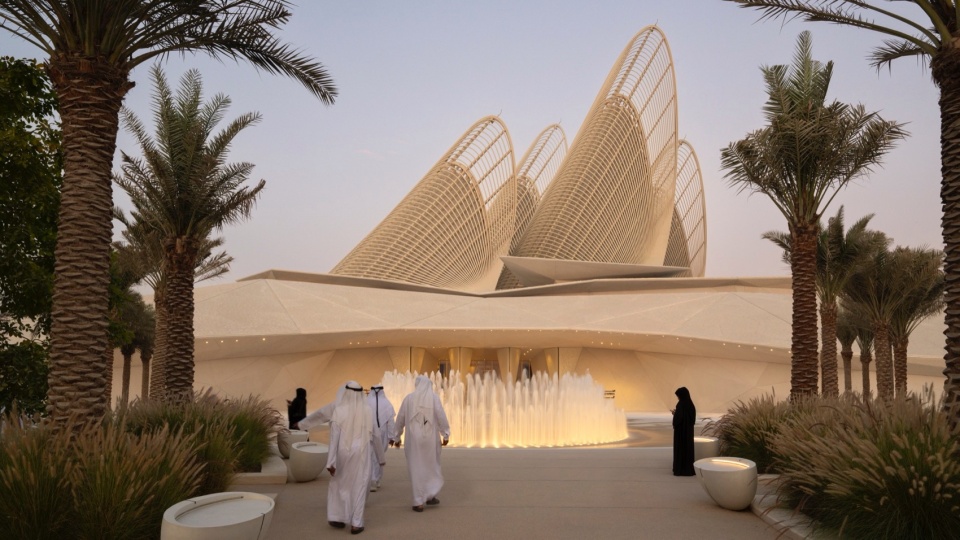
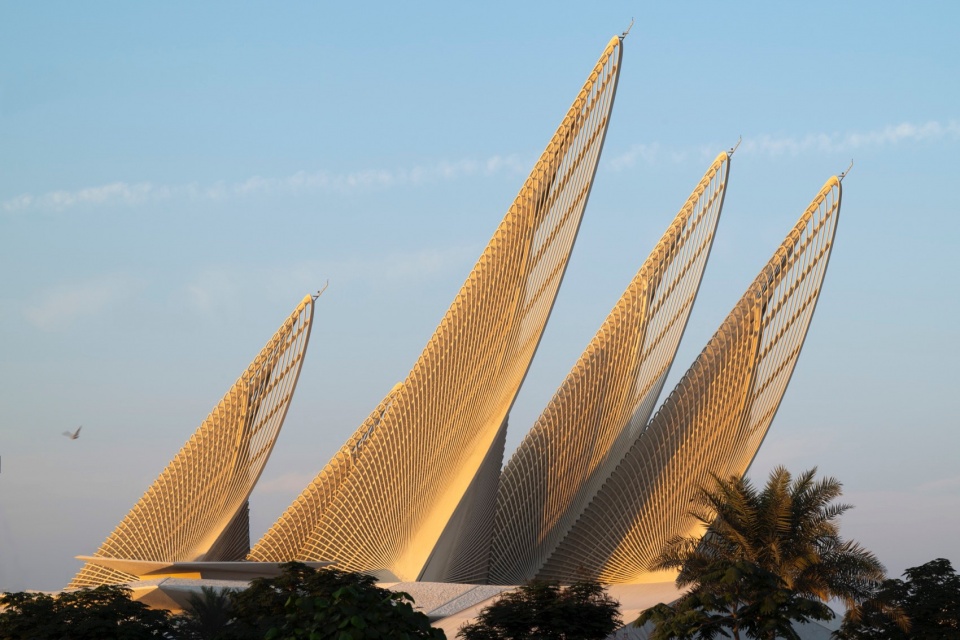
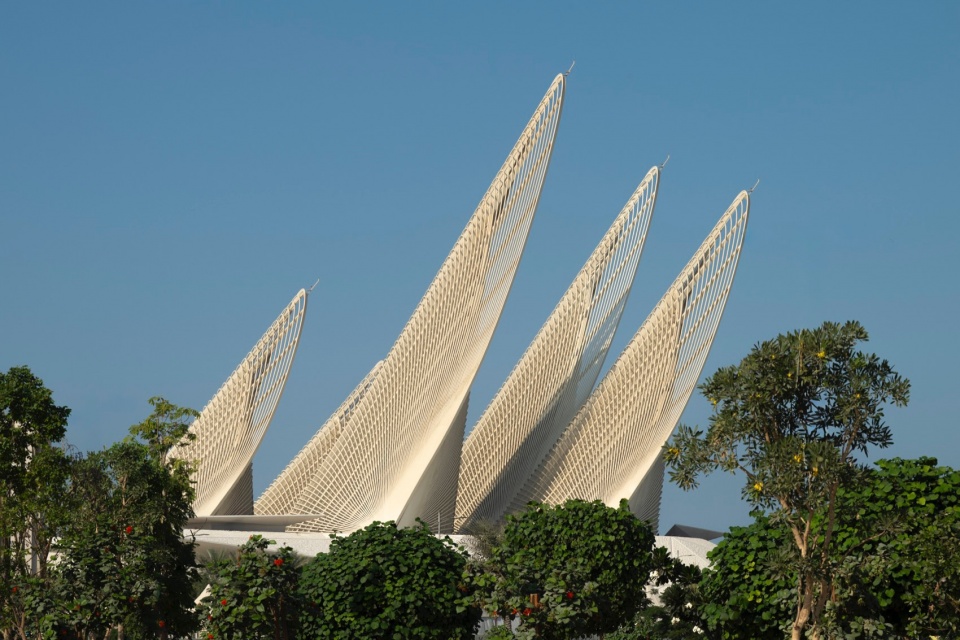
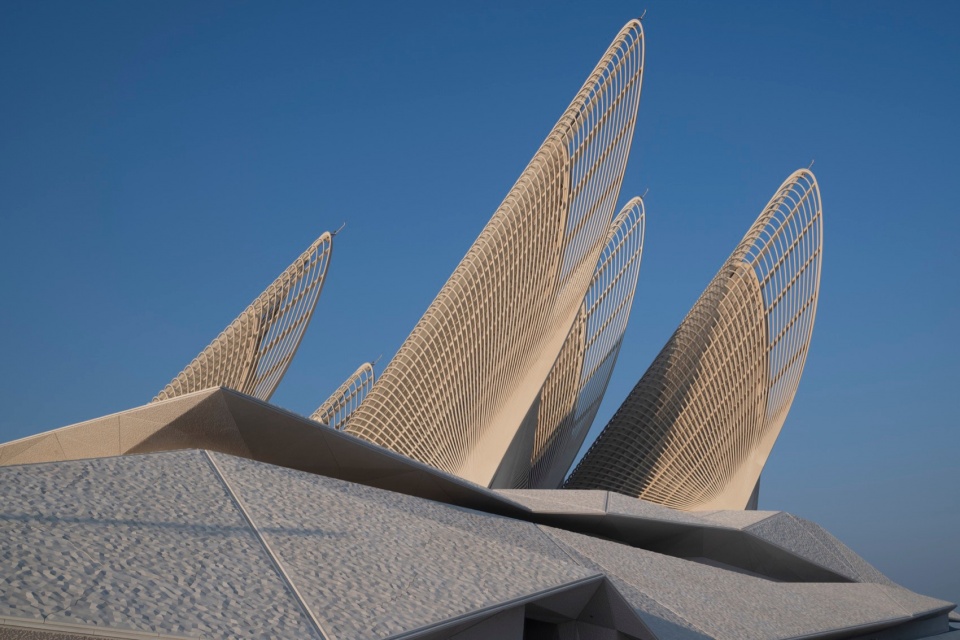
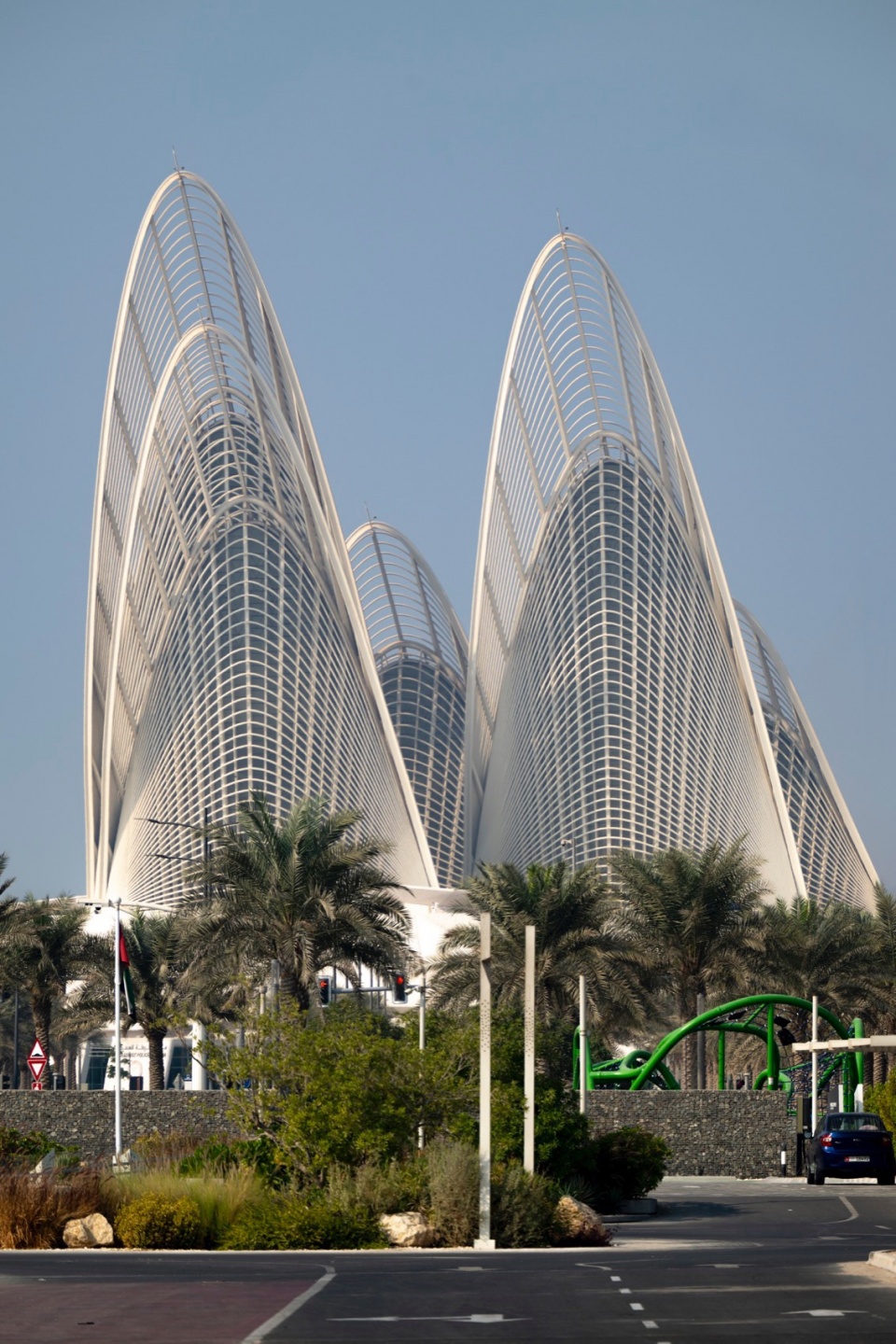
Foster + Partners 创始人兼执行主席诺曼·福斯特表示:“扎耶德国家博物馆讲述了谢赫·扎耶德创建阿联酋的故事,以及他遗产的多重面向,包括其让沙漠变绿的愿景。建筑本身表达了可持续理念,五个流线型翼塔构成环境系统的重要部分,作为热烟囱,将凉爽空气引入公共空间。它们也象征着谢赫·扎耶德对传统猎鹰运动的热爱,并成为城市天际线的标志。”
Norman Foster, Founder and Executive Chairman, Foster + Partners, said: “Zayed National Museum tells the story of Sheikh Zayed’s creation of the Emirates and the many facets of his legacy, including his vision of greening the desert. The building itself is an expression of sustainability, with five aerodynamic wings that are an integral part of the environmental system, acting as thermal chimneys and drawing cool air through the public spaces. They are also symbolic of Sheikh Zayed’s love of the traditional sport of falconry and have become markers on the city skyline.”
▼五个流线型翼塔,five aerodynamic wings
阿布扎比文化与旅游部主席穆罕默德·哈利法·阿勒穆巴拉克阁下表示:“扎耶德国家博物馆为我们国家的故事提供了永久的家园。我们的国家博物馆旨在保存并分享我们的过去,同时连接不同世代。在这里,我们的孩子与孙辈将了解建设这个国家的价值观:团结、谦逊、开放以及对文化遗产的尊重。这些是持续引领我们的生活准则。当来自全球的访客走入这些展厅,他们将更深入地理解阿拉伯联合酋长国——无论是过去、现在还是未来。”
His Excellency Mohamed Khalifa Al Mubarak, Chairman of the Department of Culture and Tourism – Abu Dhabi, said: “Zayed National Museum gives our nation’s story a permanent home. Our national museum serves to preserve and share our past while connecting generations. It is where our children and grandchildren will discover the values that built this country: unity, humility, openness, and respect for heritage. These are lived principles that continue to guide us, and when visitors from around the world walk through these galleries, they will gain a deeper understanding of the United Arab Emirates—past, present and future.”
▼项目外观,project appearance
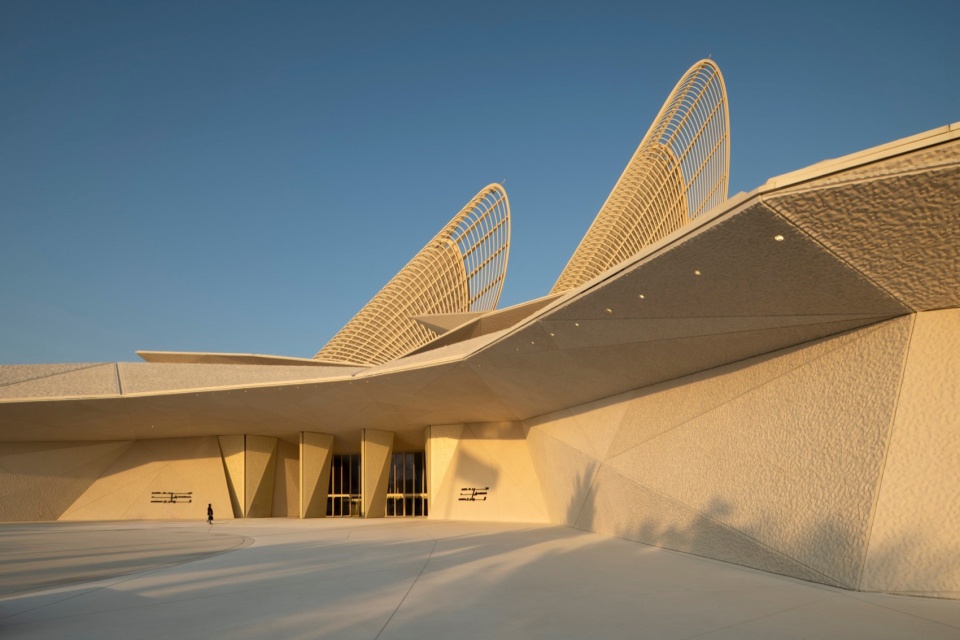
Foster + Partners 工作室主管 Gerard Evenden 表示:“该项目让我们得以在宏大的尺度上实践那些数十年来一直处于我们工作核心的建筑与可持续设计议题。很荣幸能与具有远见的合作伙伴协作,他们对区域的深厚知识为我们的设计奠定了基础。”
Gerard Evenden, Head of Studio, Foster + Partners, said: “This project has allowed us to realise – on a grand scale – many of the issues relating to architecture and sustainable design that have been central to the practice’s work for decades. It has been a pleasure to collaborate with such visionary stakeholders, whose extensive knowledge of the region grounded our work.”
▼翼塔与太阳,wings and sun
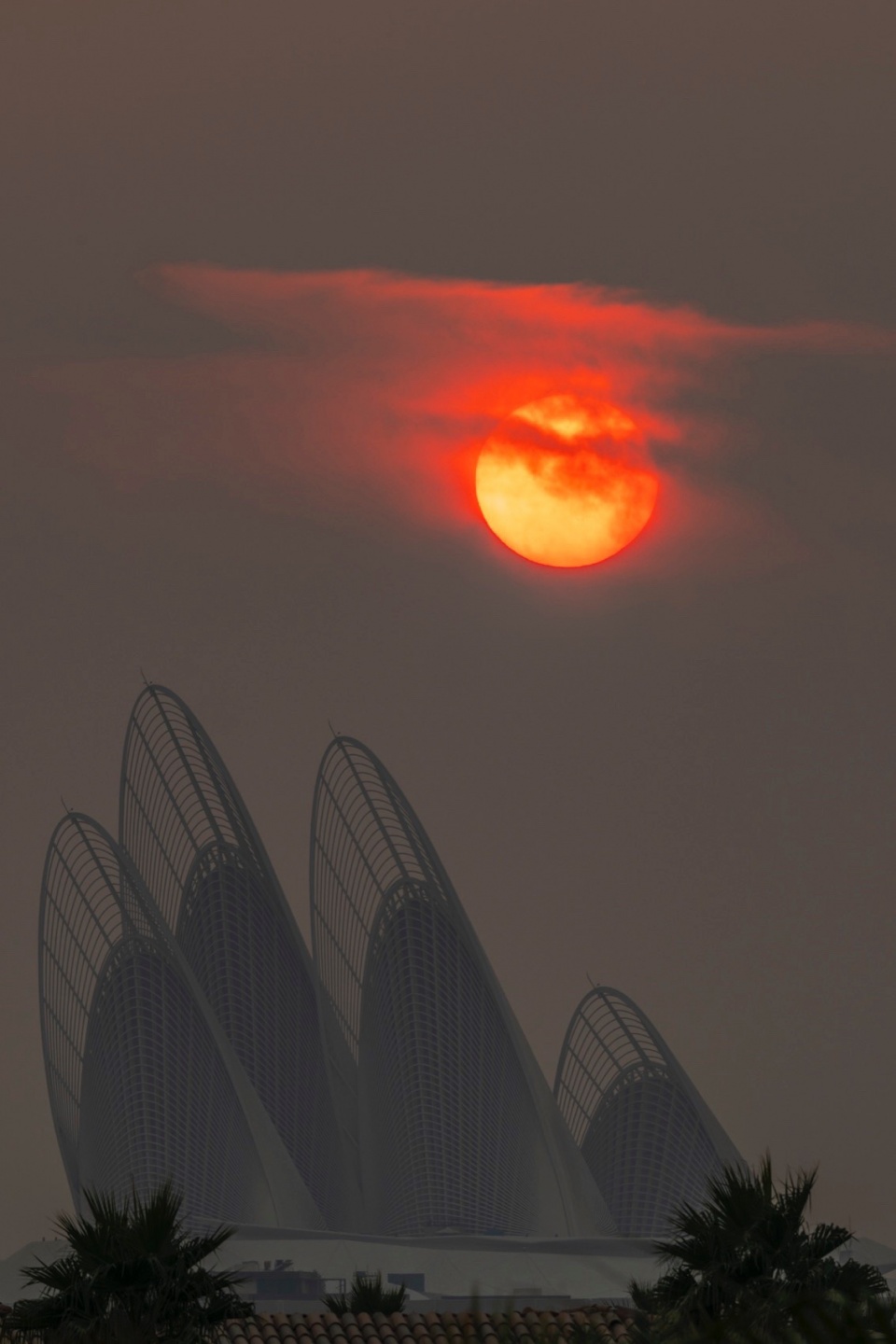
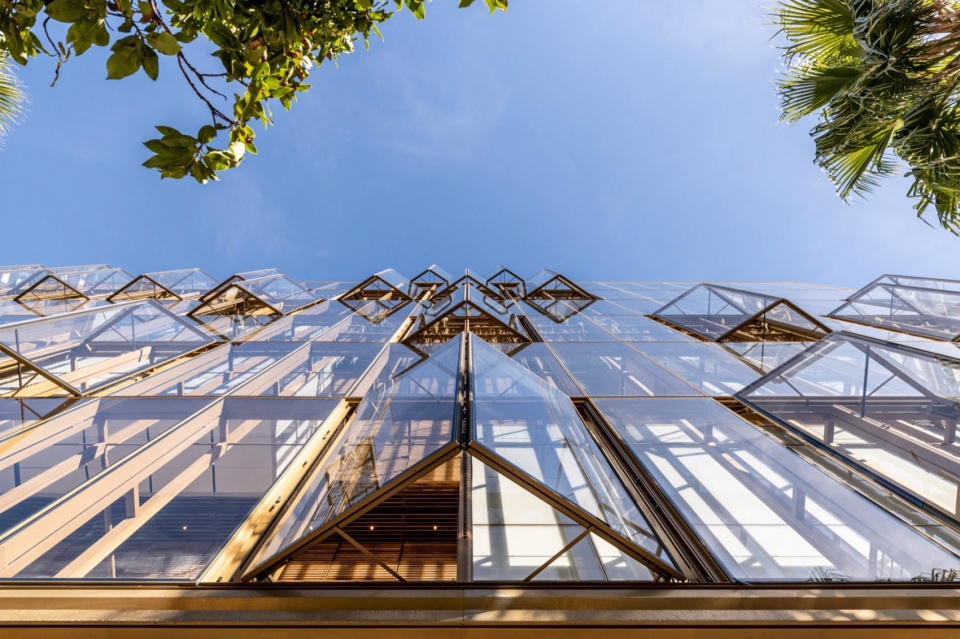
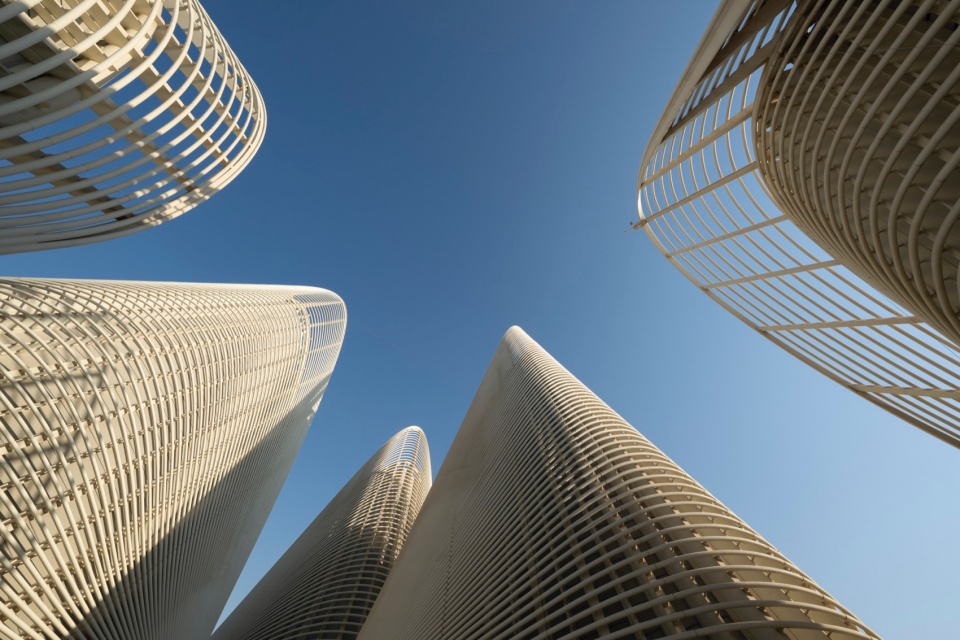
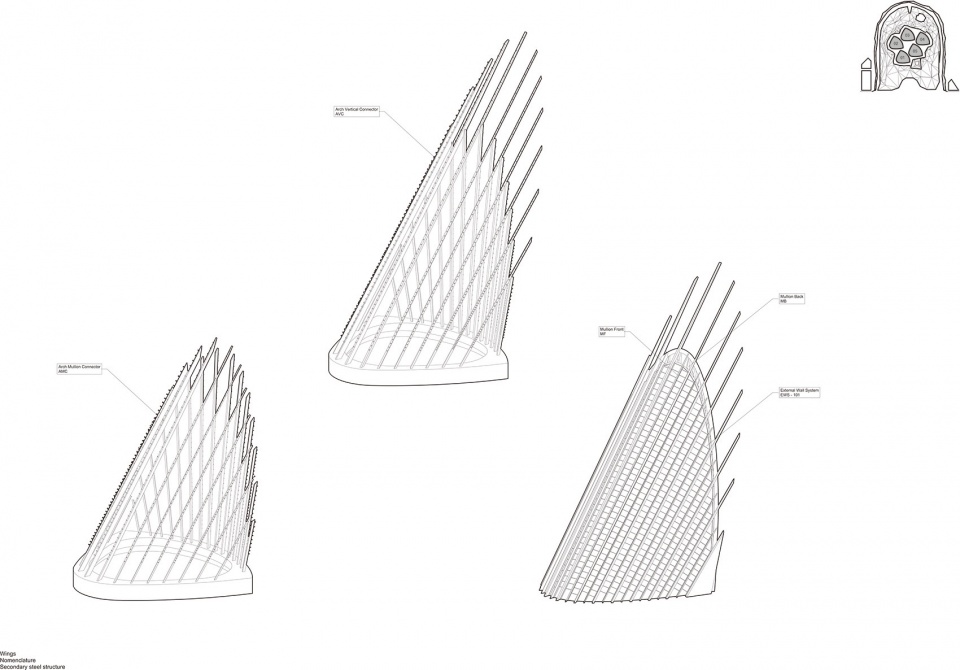
博物馆的五个轻质钢结构翼塔是自然通风系统的一部分。塔顶的通风口开启后,利用翼塔背风侧产生的负压,将中庭中的热空气抽离;翼尖的热量积聚所产生的热效应进一步增强排热效果。从沙漠深层地底埋设的管道中自然冷却的空气随后通过低位通风系统进入中庭。翼塔采用玻璃幕墙,将自然光引入下方展厅,并且每个翼塔都可独立调节。
The museum’s five lightweight steel wings are part of the system of natural ventilation. Air vents open at the top of the towers, taking advantage of the negative pressure on the lee-side of the profile to draw hot air out from the atrium, assisted by the thermal effect of the heat build-up on the tips of the wings. Air that has been naturally cooled through pipes buried deep below the desert floor then flows into the atrium through a low-level ventilation system. The wings are glazed to channel natural light into the galleries below, and each one is individually tuneable.
▼翼塔采用玻璃幕墙将自然光引入下方展厅,
the wings are glazed to channel natural light into the galleries below
▼翼尖,the tips of the wings
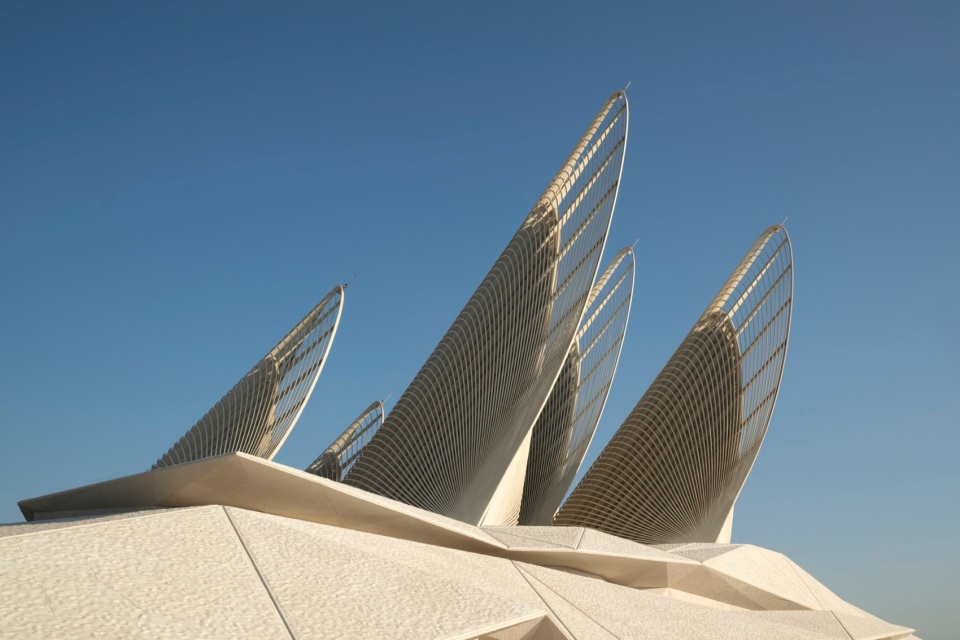
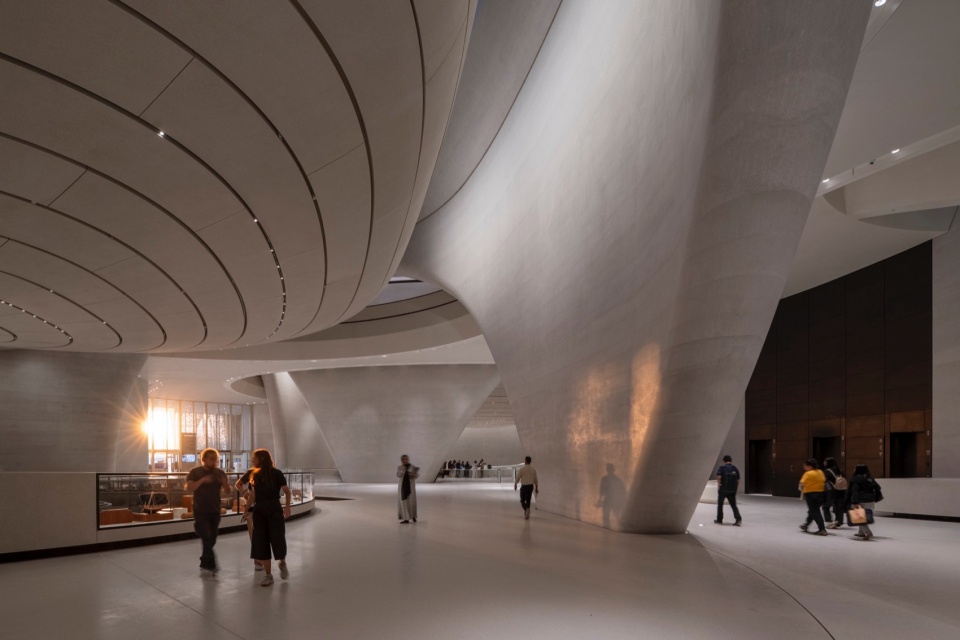
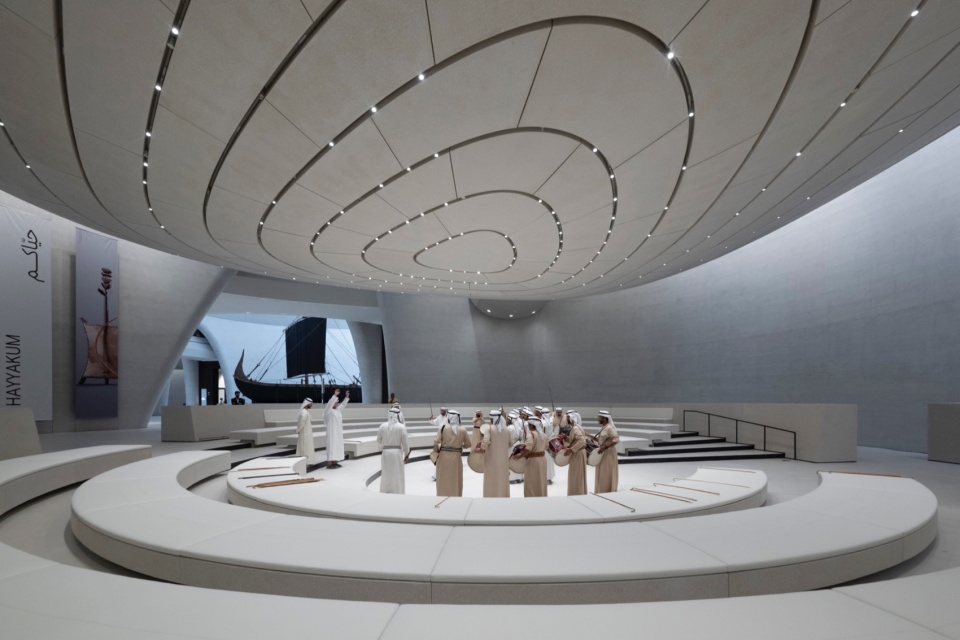
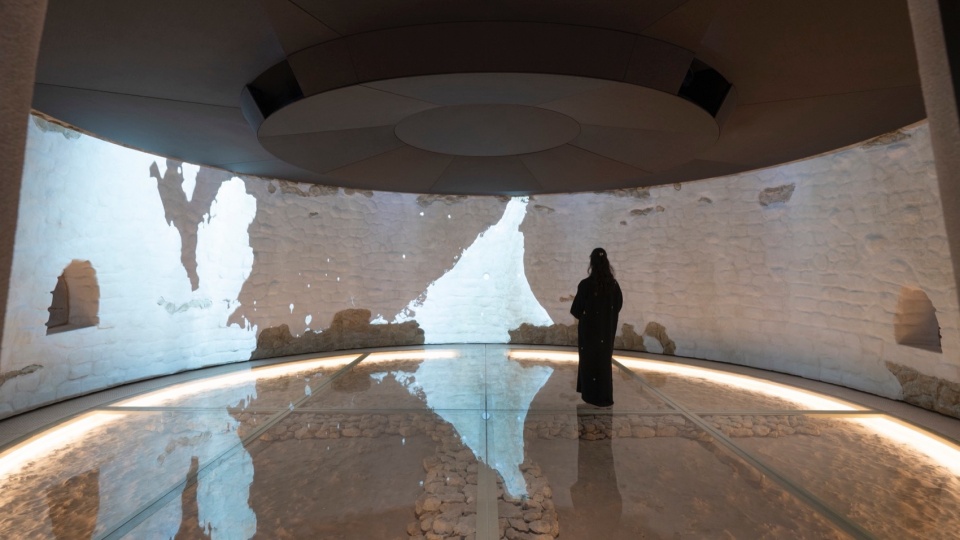
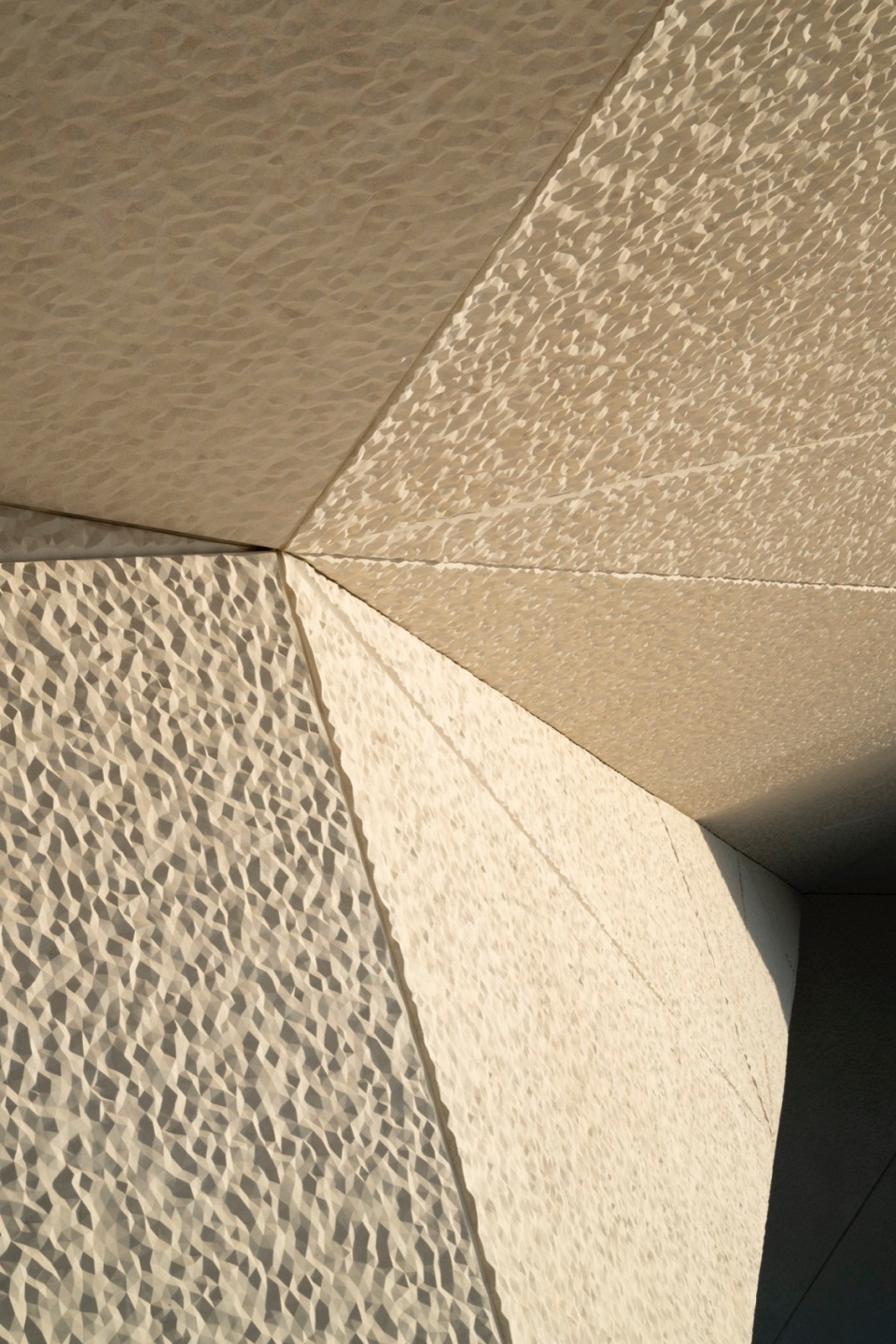
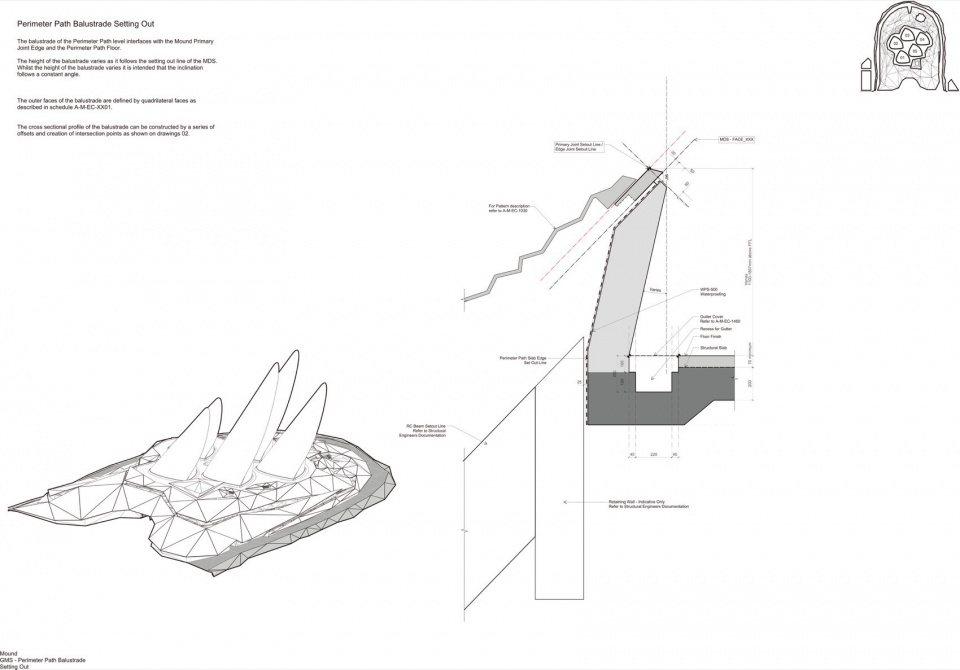
博物馆空间位于一座土丘之中,其表面采用多面纹理面板,抽象呈现阿联酋的地貌。土丘为室内空间提供隔热保护,阻隔太阳辐射带来的热量进入建筑。当访客踏入博物馆时,他们将进入充满自然光的中庭(Al Liwan)。这一空间同时是会面与方向引导空间,也用于举办传统舞蹈、诗歌等表演。
The museum spaces are located within a mound, which has textured faceted panels that are an abstraction of the UAE’s topography. The mound insulates the interior spaces from solar gain, forming a protective shield that prevents heat from entering the building. When visitors step inside the museum, they enter the light-filled atrium, or Al Liwan, which serves as both a meeting and orientation space, hosting performances such as traditional dance and poetry.
▼中庭, atrium
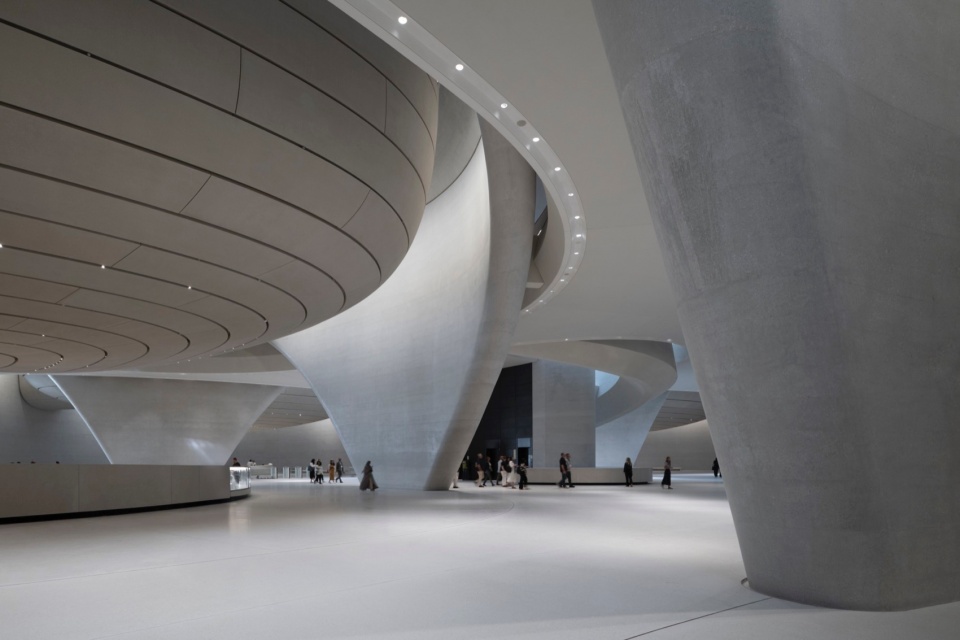
▼中庭细部, atrium details
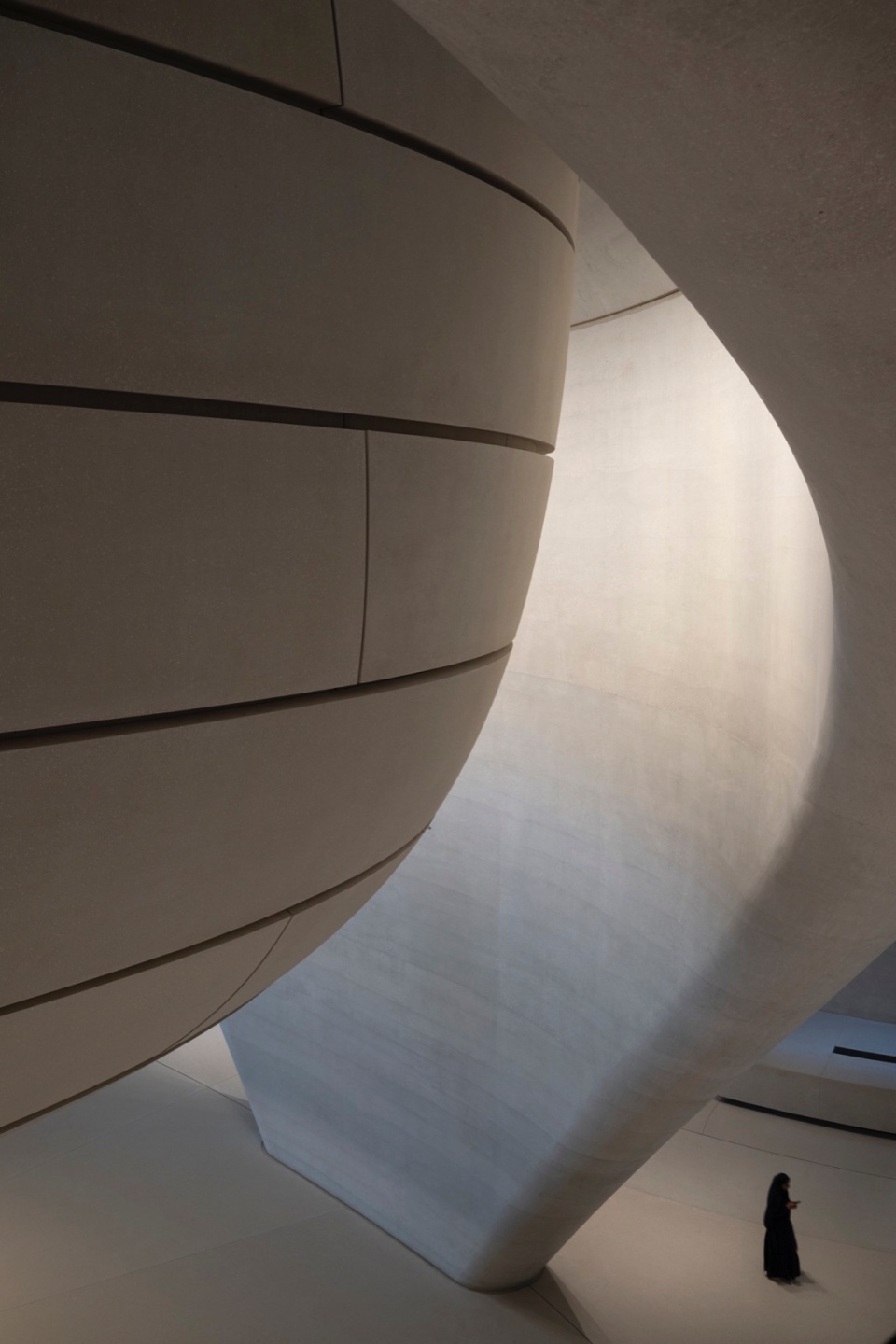
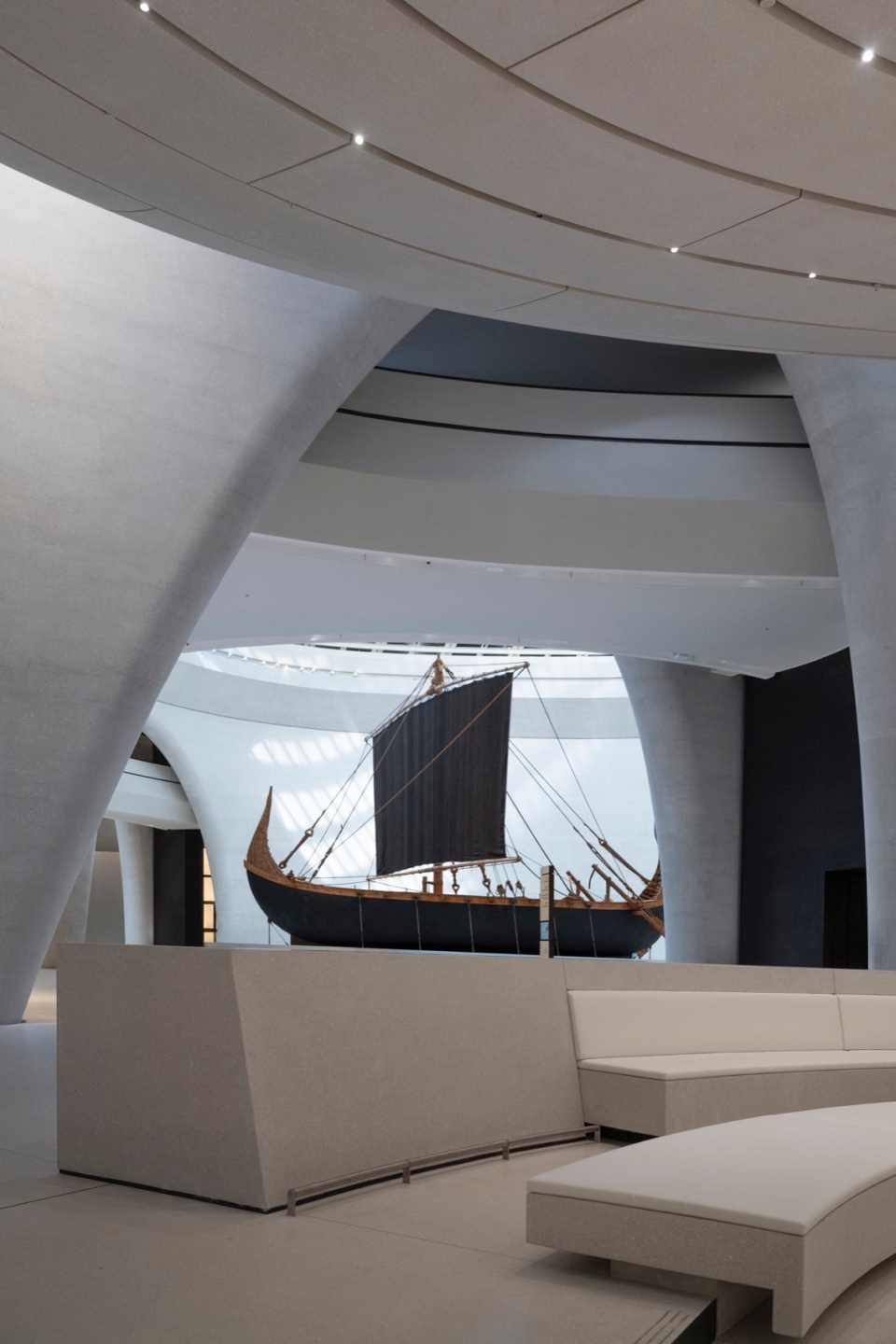
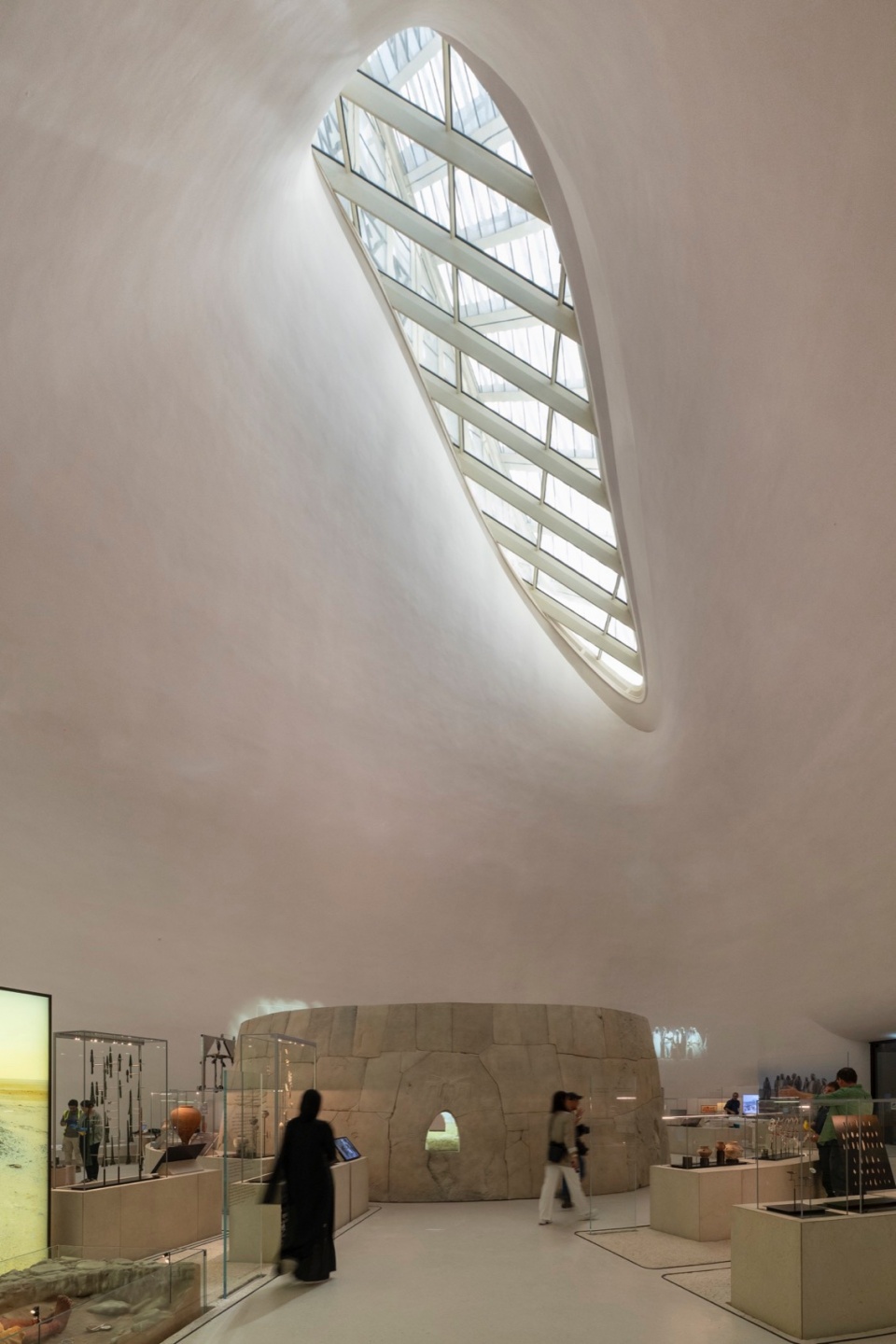
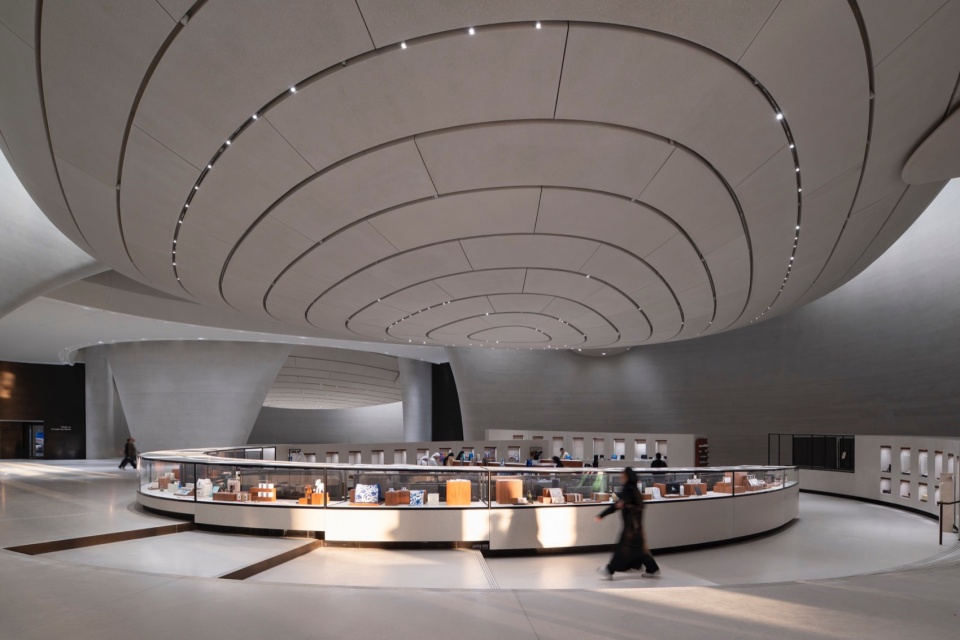
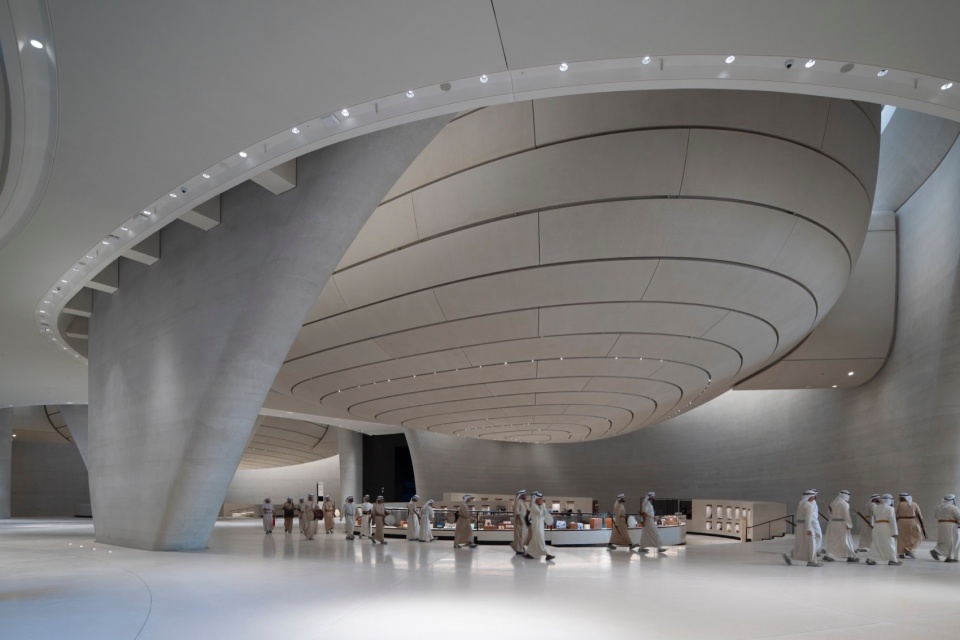
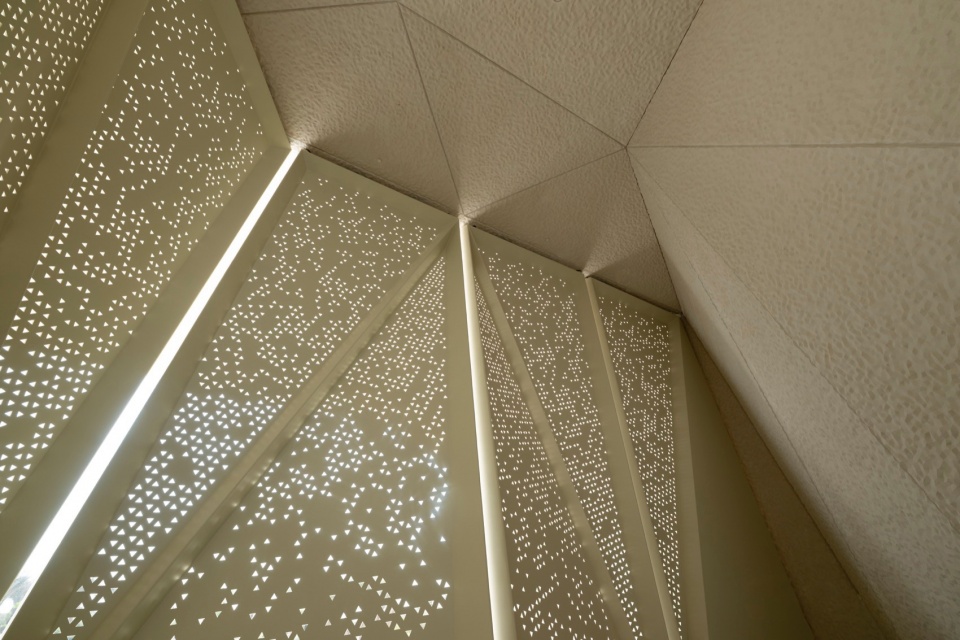
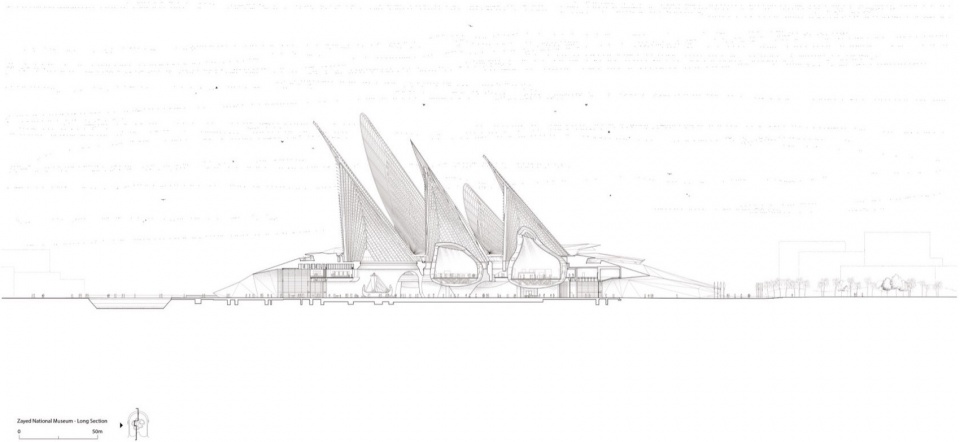
六个常设展厅中,有四个舱状展厅悬挂于 Al Liwan 上方,提供受控的环境以保护展出的敏感文物。翼塔的三层夹胶玻璃调节进入大厅及展厅的自然光量,中间层包含密集网层。每个舱状展厅设有由电致变色玻璃制成的天窗,可根据外部光线变化自动调整透明度。
▼舱,pod
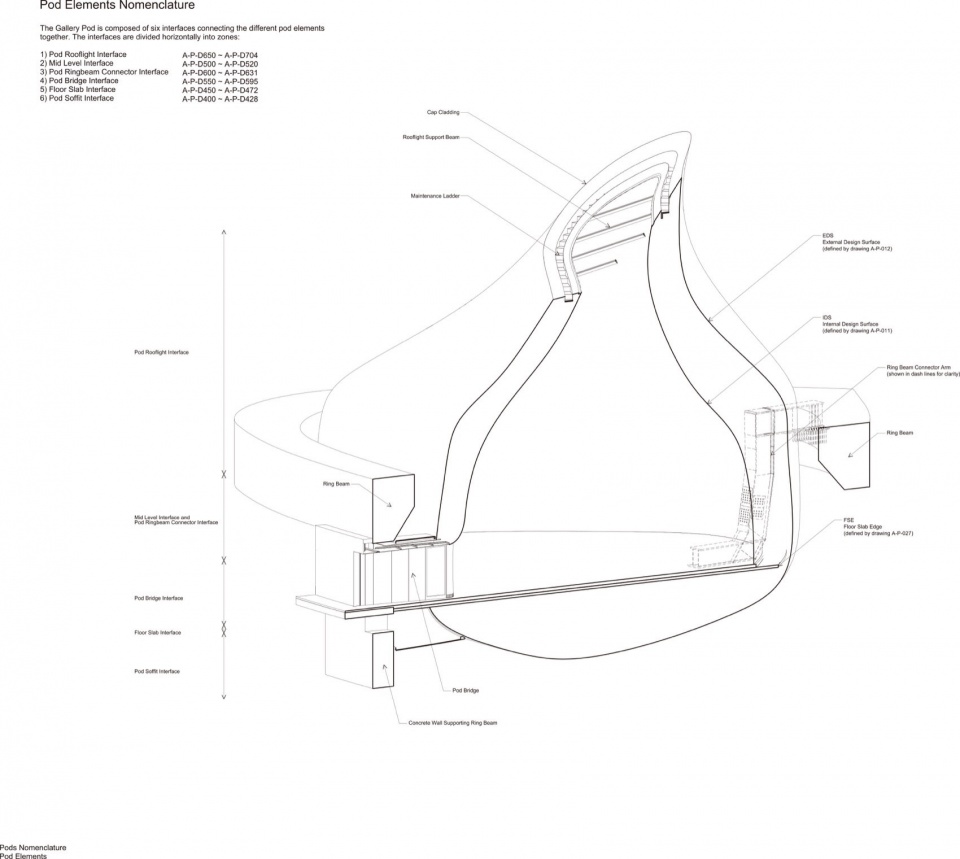
Of the six permanent galleries, four pod-shaped galleries are suspended above Al Liwan, and provide controlled environments to protect the sensitive artefacts on display. The towers’ triple-laminated glazing moderates the amount of daylight entering the lobby and the gallery spaces. The glazing includes a dense mesh interlayer, and each pod has a rooflight made of electrochromic glass that changes its transparency in response to outside light levels.
▼舱状展厅,the pod-shaped galleries
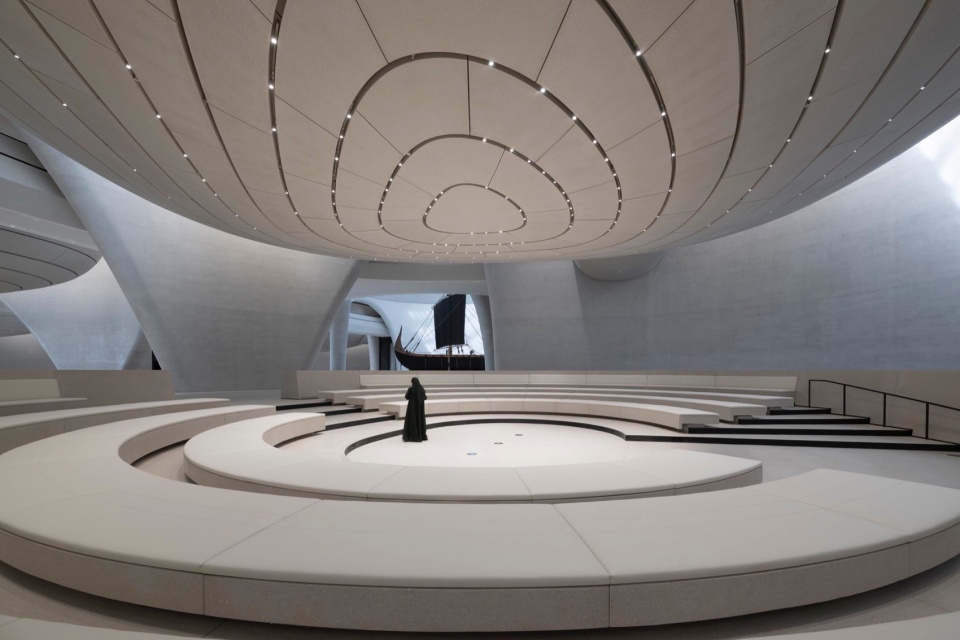
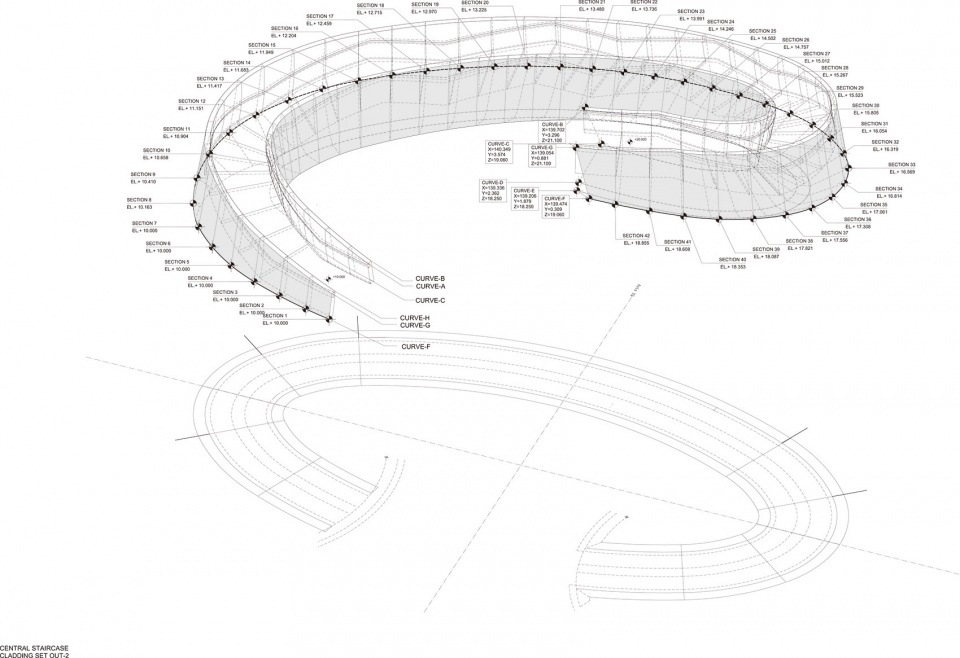
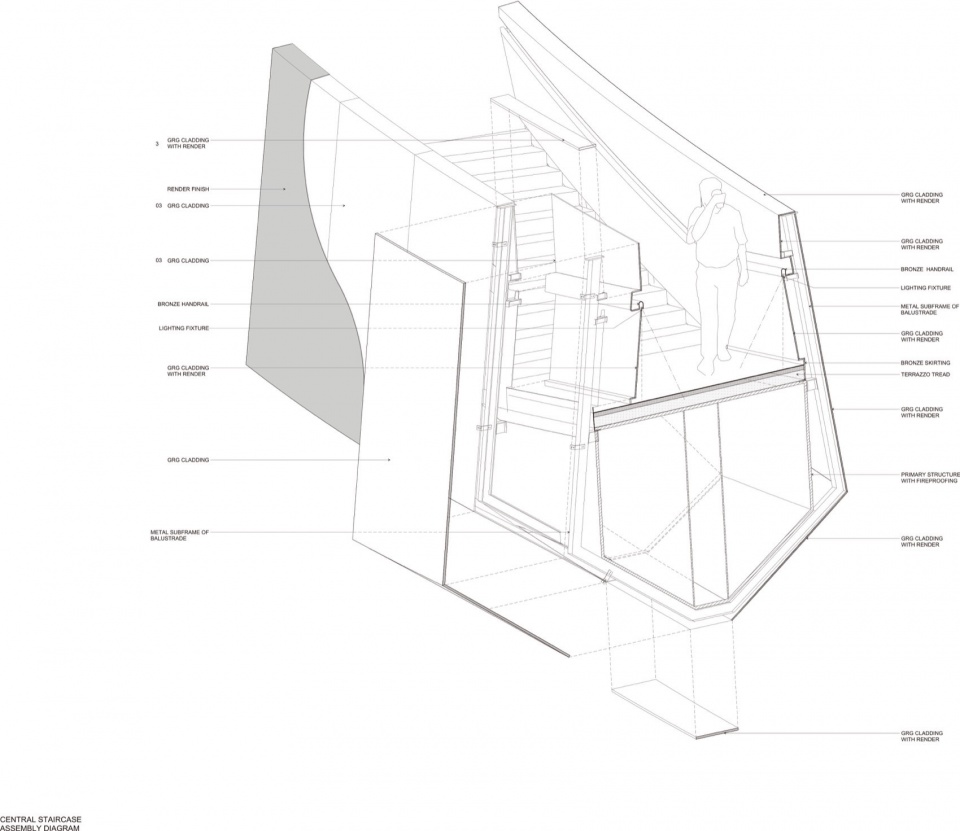
每个舱状展厅围绕特定主题策展,而连接节点空间提供上下文信息,将展厅之间关联起来。访客可自由选择参观路线,并通过雕塑般的螺旋楼梯或电梯到达上层。地面层靠近入口的区域还设有另外两个常设展厅、一个临展空间、一家高级餐厅与一间咖啡厅。
Each of the pod-shaped galleries is curated to reflect a specific theme, while the connecting nodal spaces provide contextual information that tie them together. Visitors can choose their own route through the different galleries and make their way to the upper level via a sculptural spiral staircase or lifts. At ground level, there are also two more permanent gallery spaces that are near to the museum’s entrances, as well as a temporary exhibition space, a fine dining restaurant, and a cafe.
▼螺旋楼梯和电梯,spiral staircase and lifts
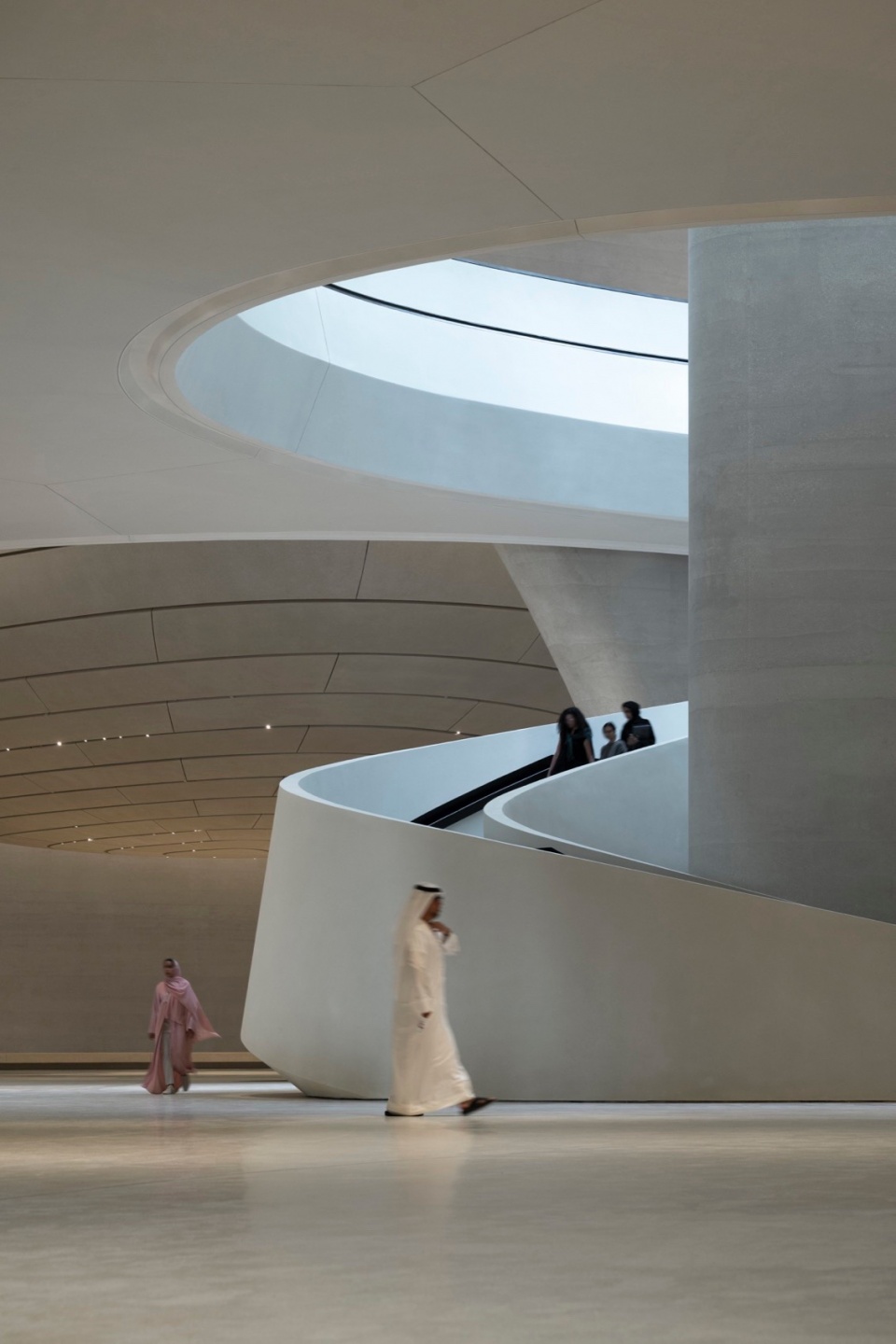
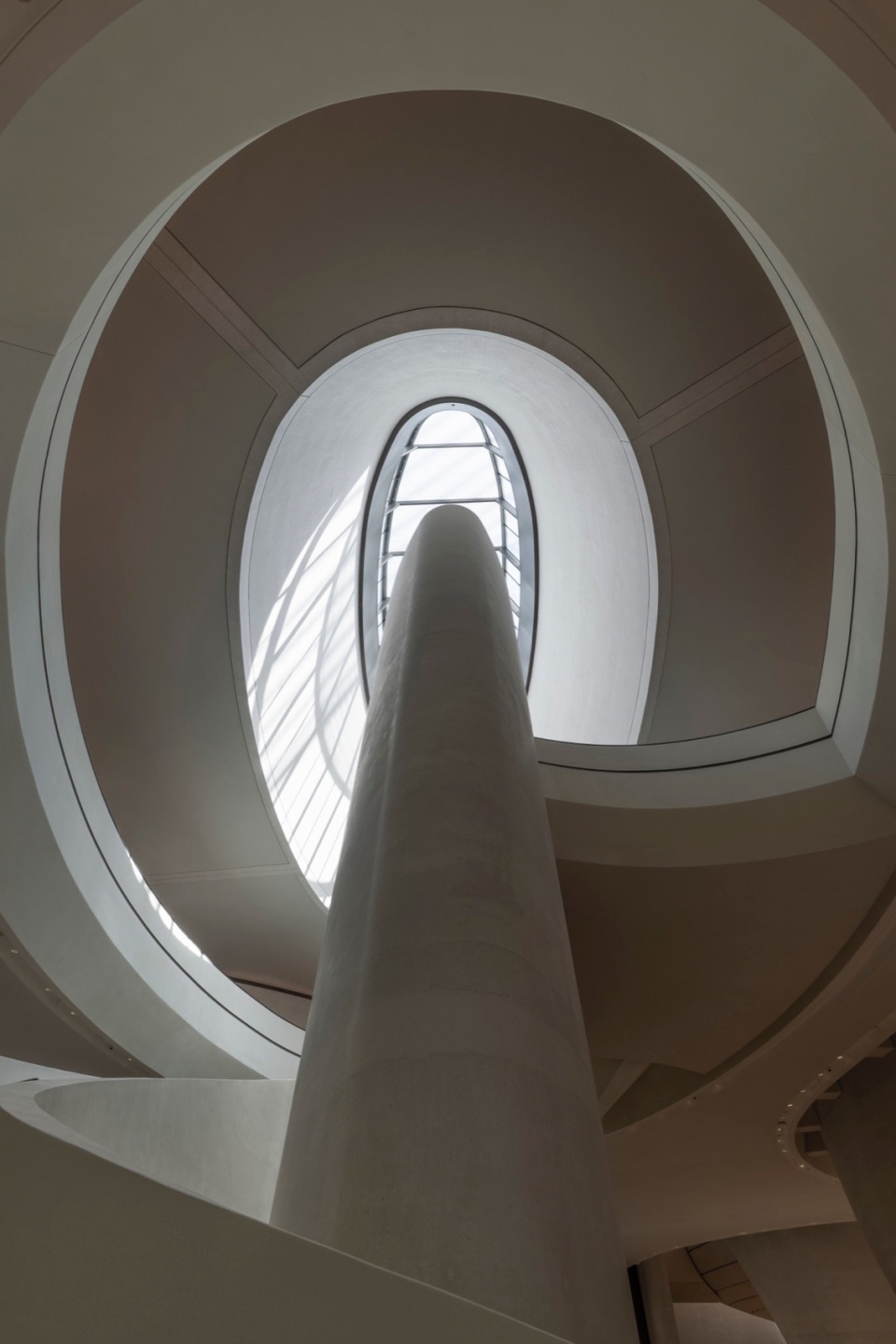
▼中央楼梯,central staircase
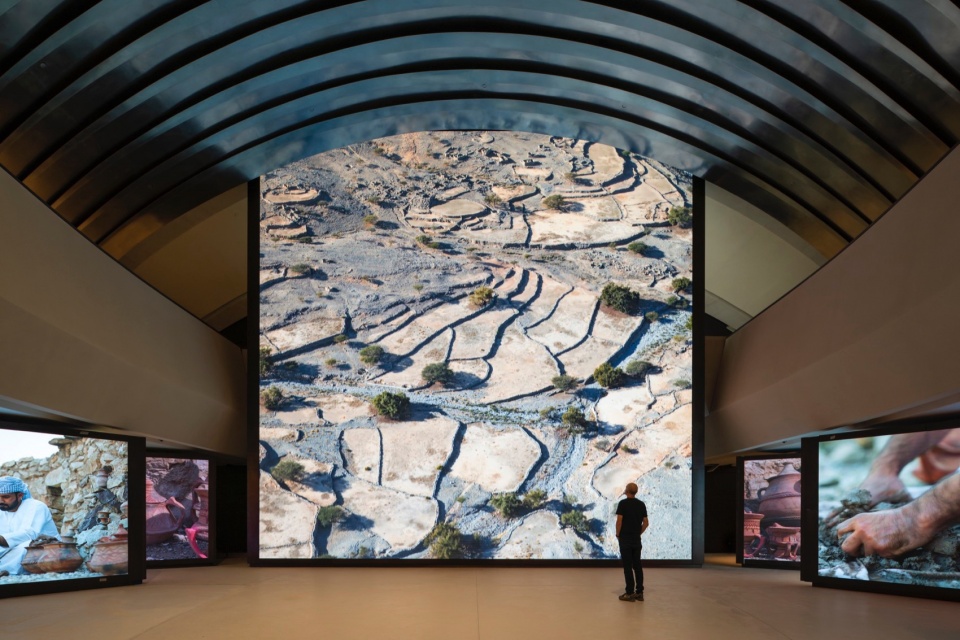
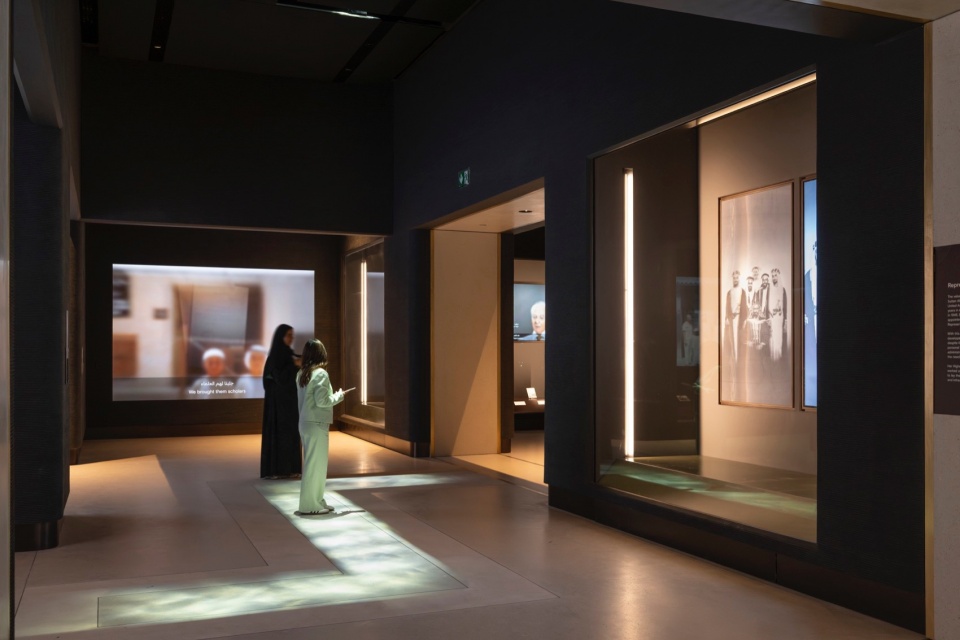
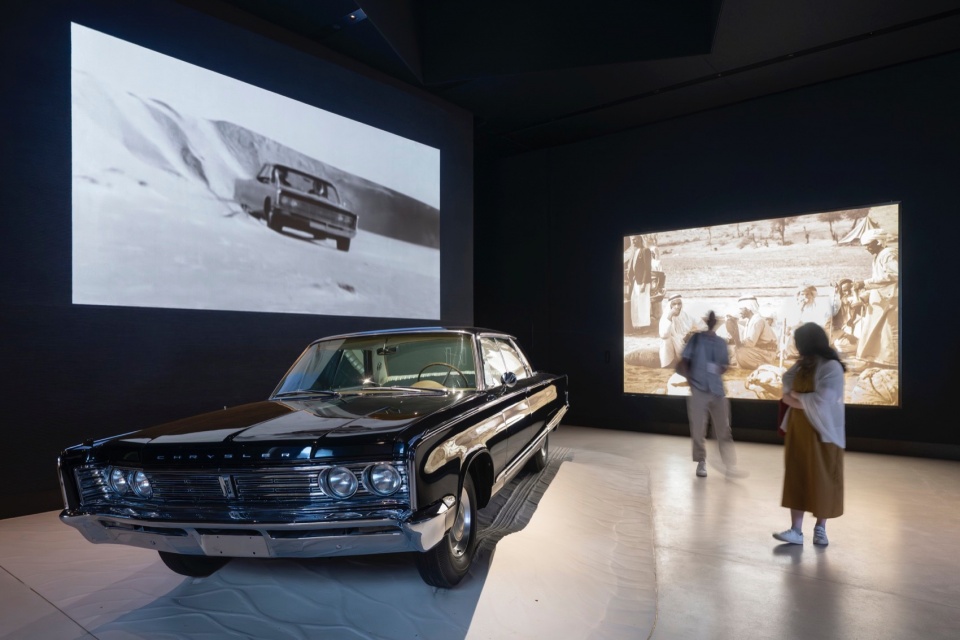
▼展览空间,exhibition space
在博物馆建筑外围,谢赫·扎耶德对自然的热爱体现在阿尔马萨尔花园(Al Masar Garden)中,它将建筑与海岸连接起来。花园融合景观与文化遗产,被设计为新的社区资源,提供社交、玩乐与静思的场所。访客也可沿着遮荫步道,从地面走至土丘顶部、翼塔基座处的观景平台,在此欣赏周边区域的全景景观。
▼流线型翼塔,aerodynamic wings
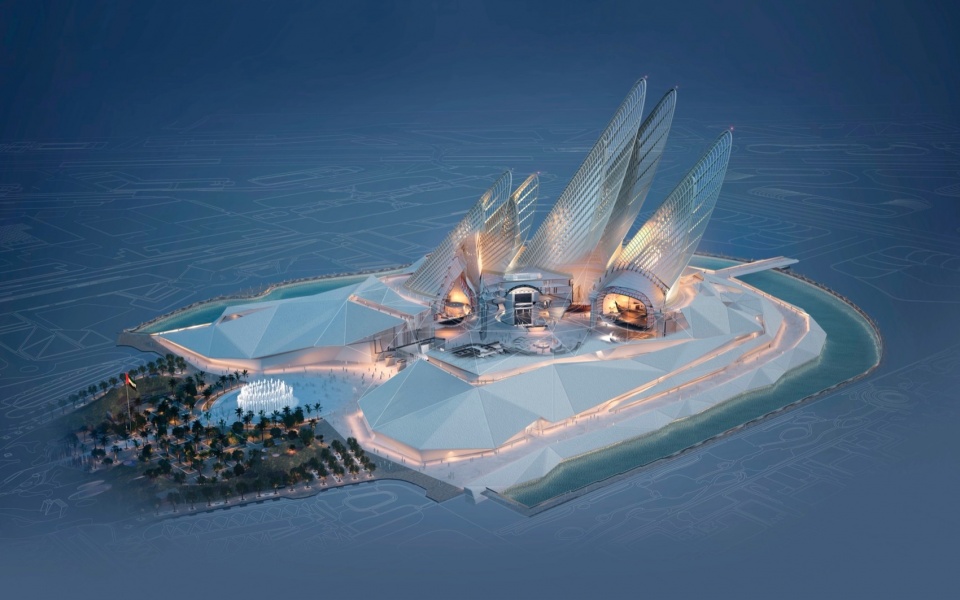
Outside the museum building, Sheikh Zayed’s love of nature is represented by the Al Masar Garden, which links the building to the coast. Integrating landscape and heritage, the garden is intended as a new community asset, with spaces for socialising, play, and reflection. Visitors are also invited to take a shaded route from ground level to a viewing platform at the top of the mound, at the base of the steel towers, which offers panoramic views of the surrounding area.
▼花园,garden
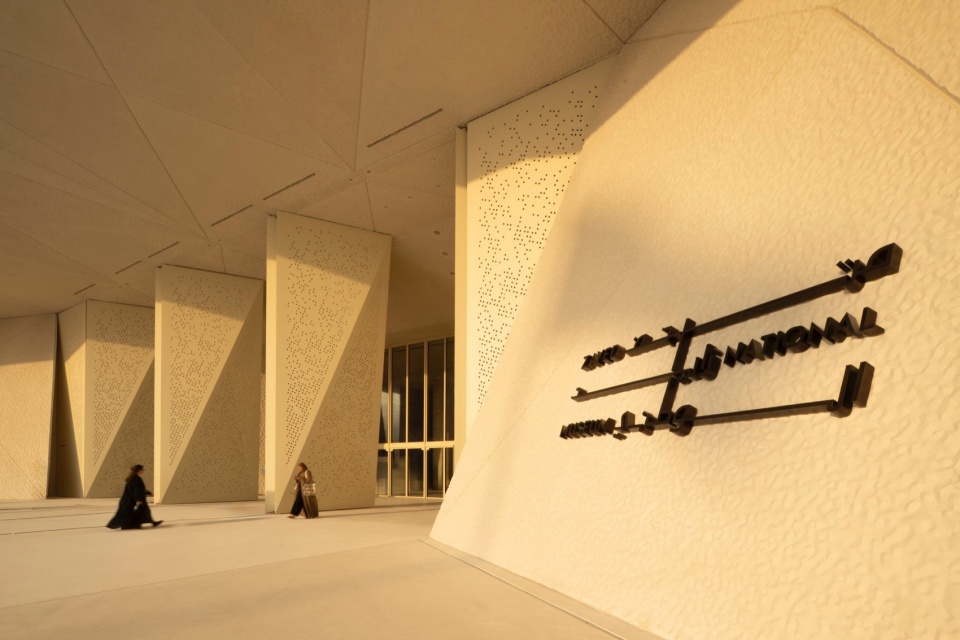
项目材料经过精心选择,以与当地环境产生共鸣,同时呼应七个酋长国的历史建筑,这些建筑会因所在地区沙色的变化而呈现不同色调。延续这一传统,博物馆的外立面与内部空间均采用萨迪亚特岛特有的暖白色沙色。
Materials have been carefully selected to resonate with the local surroundings and mirror historic buildings across the seven Emirates, which reflect the changing colour of the sand in different locations. Building on this tradition, both the museum’s exterior and its interior spaces mirror the distinctive warm-white shade of sand that is found on Saadiyat Island.
▼暖白色沙色外立面,warm-white shade of sand facade
▼密集网层和多面纹理面板,dense mesh interlayer and textured faceted panels
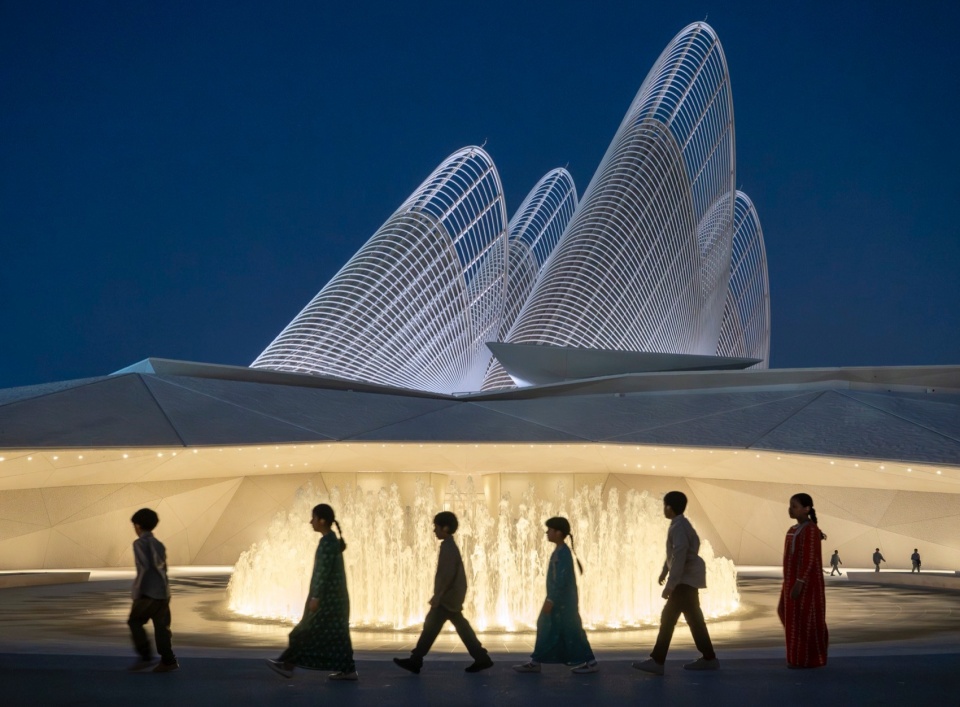
▼项目夜景,night view of the project
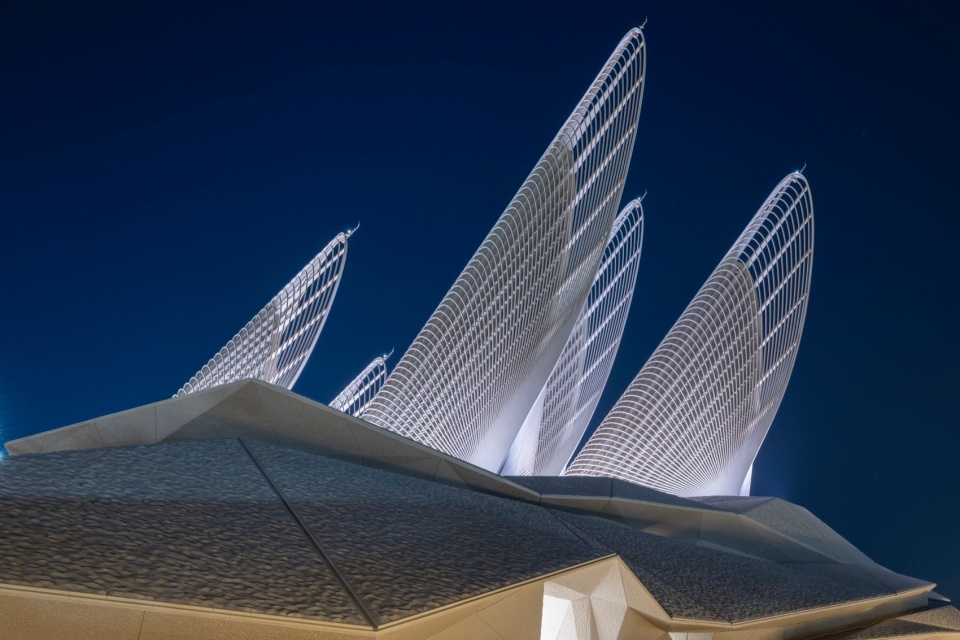
该项目在与阿布扎比文化与旅游部的密切合作下完成。
The project has been delivered in close collaboration with the Department of Culture and Tourism in Abu Dhabi.
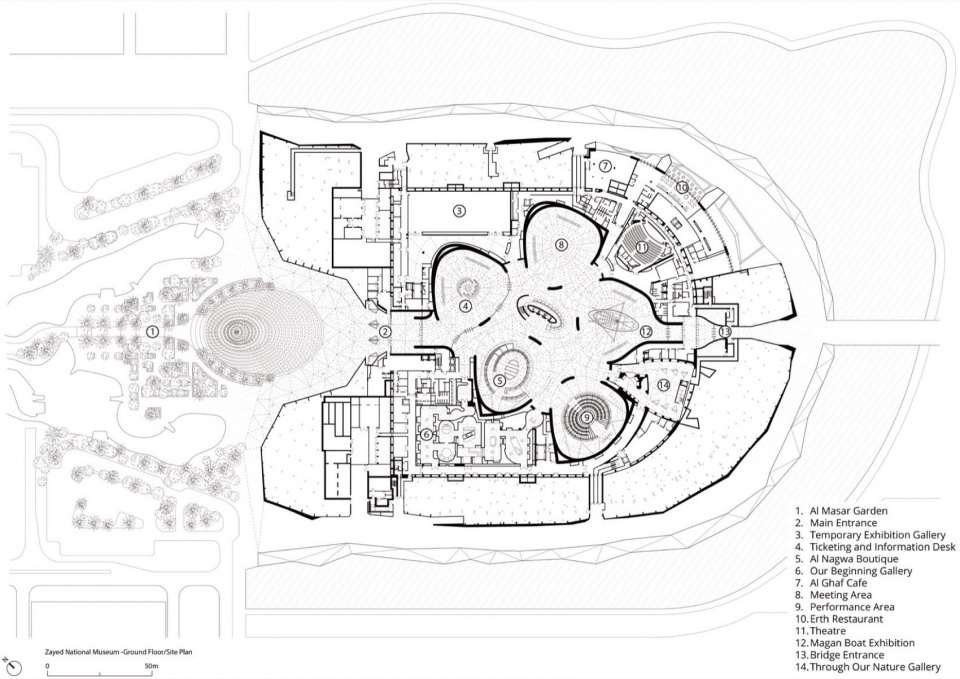
▼首层平面,ground floor plan
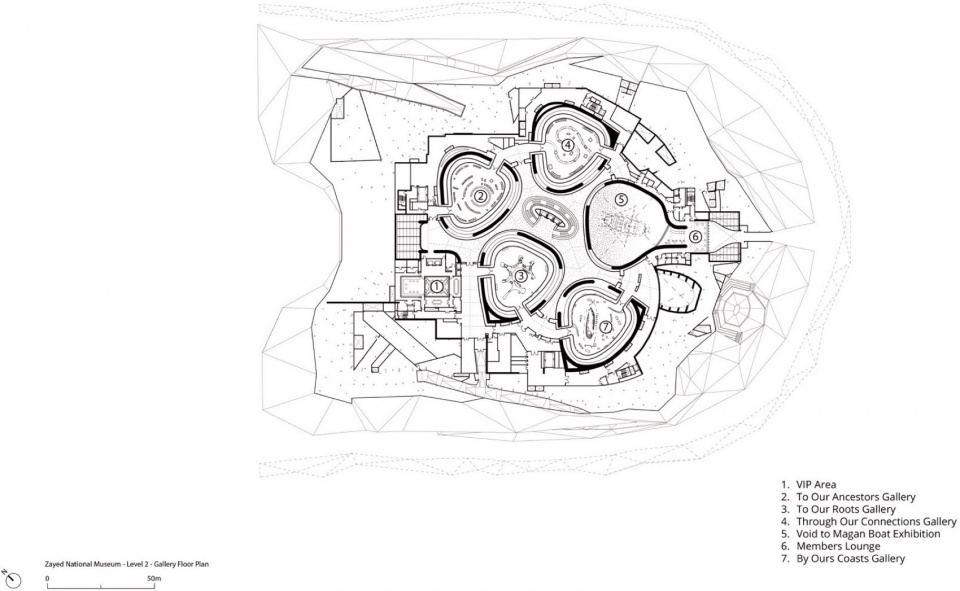
▼二层平面,level 2 floor plan
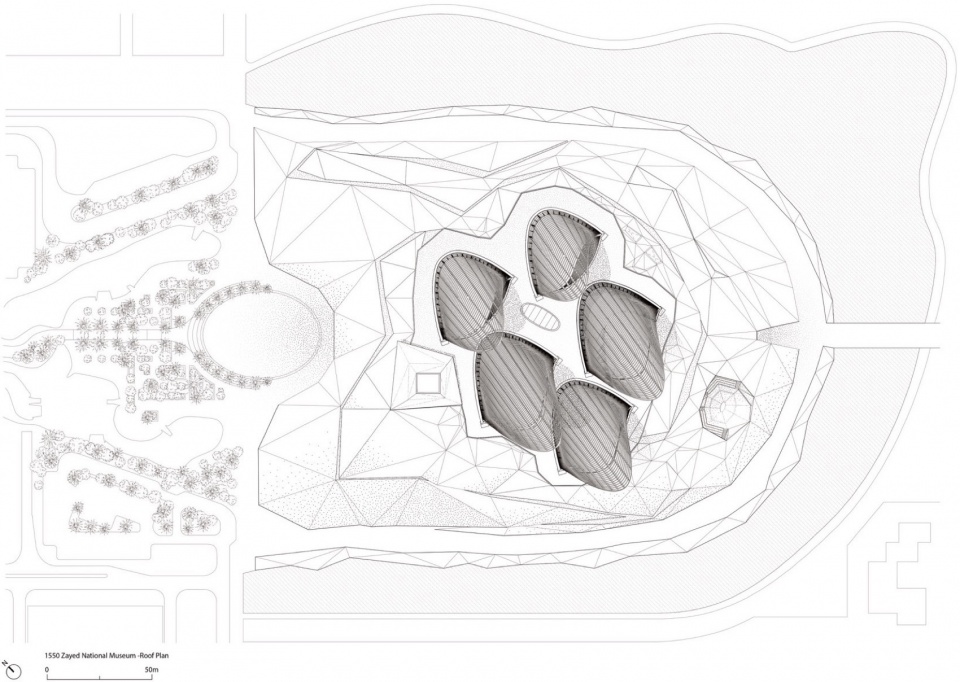
▼屋顶平面,roof plan
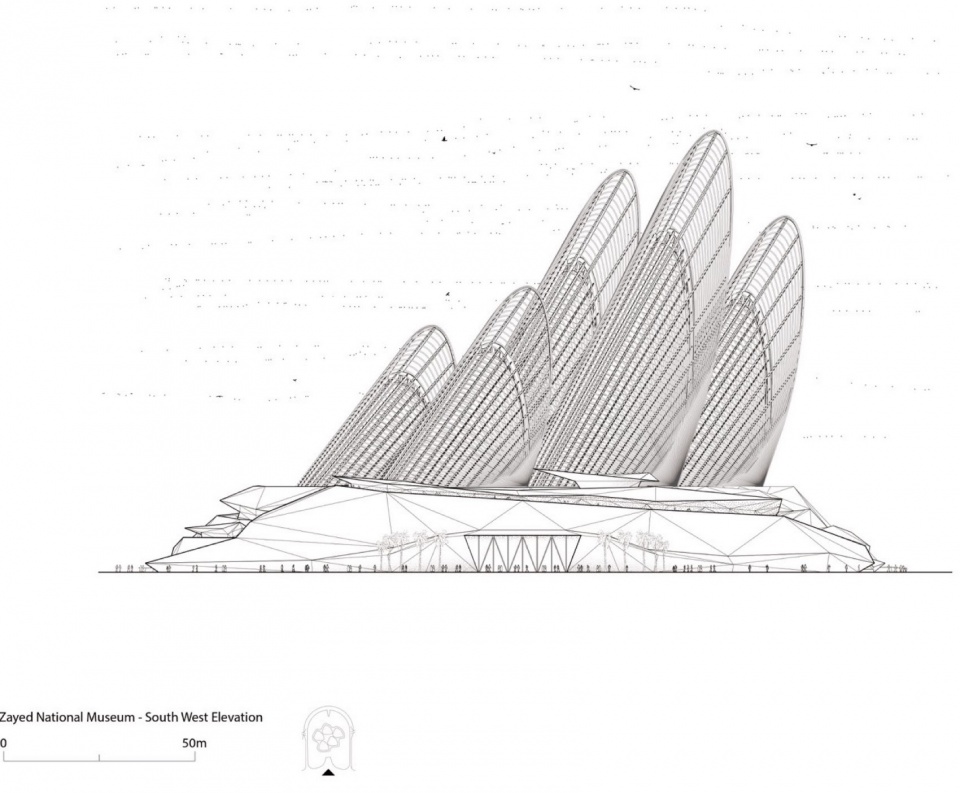
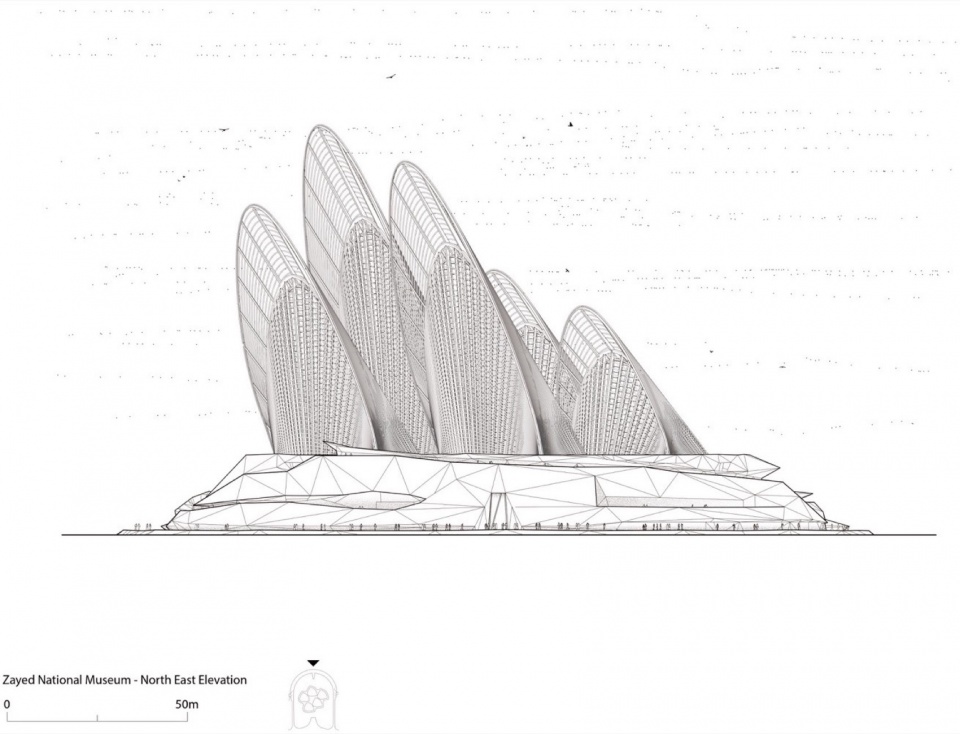
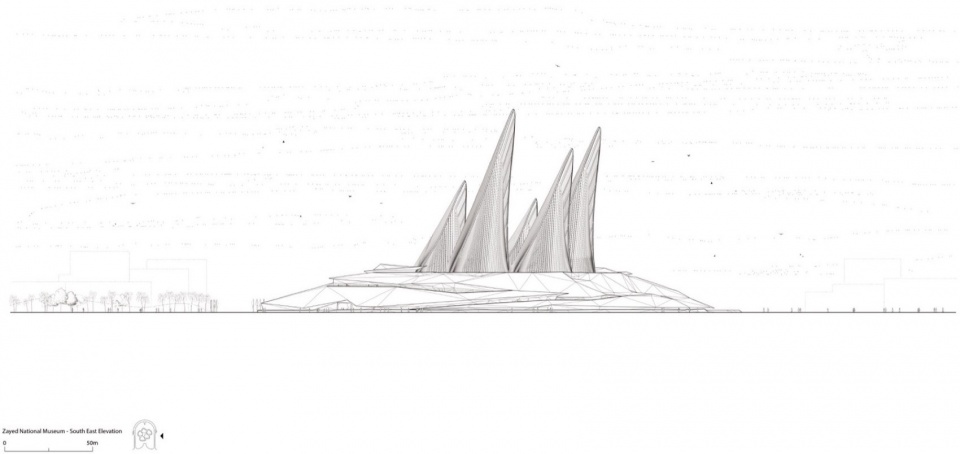
▼立面,elevation
▼剖面,section
▼翼塔,wings
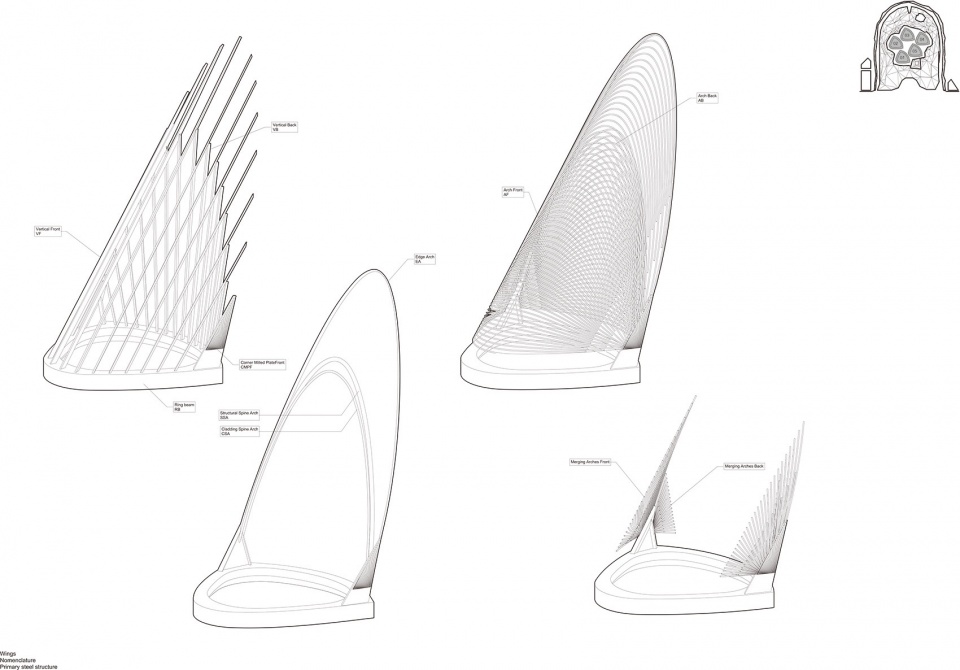
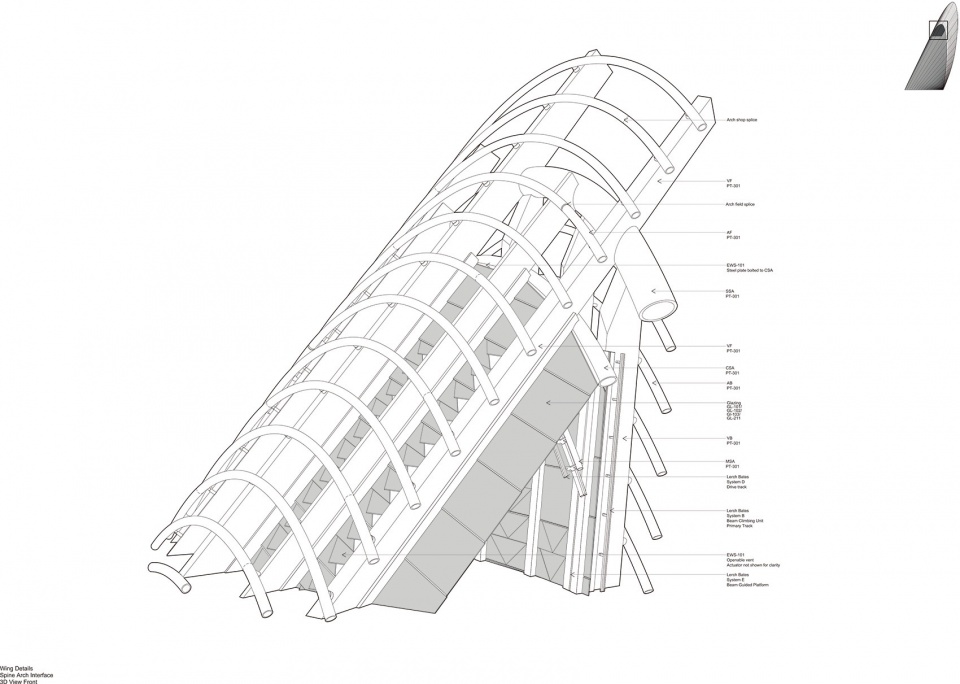
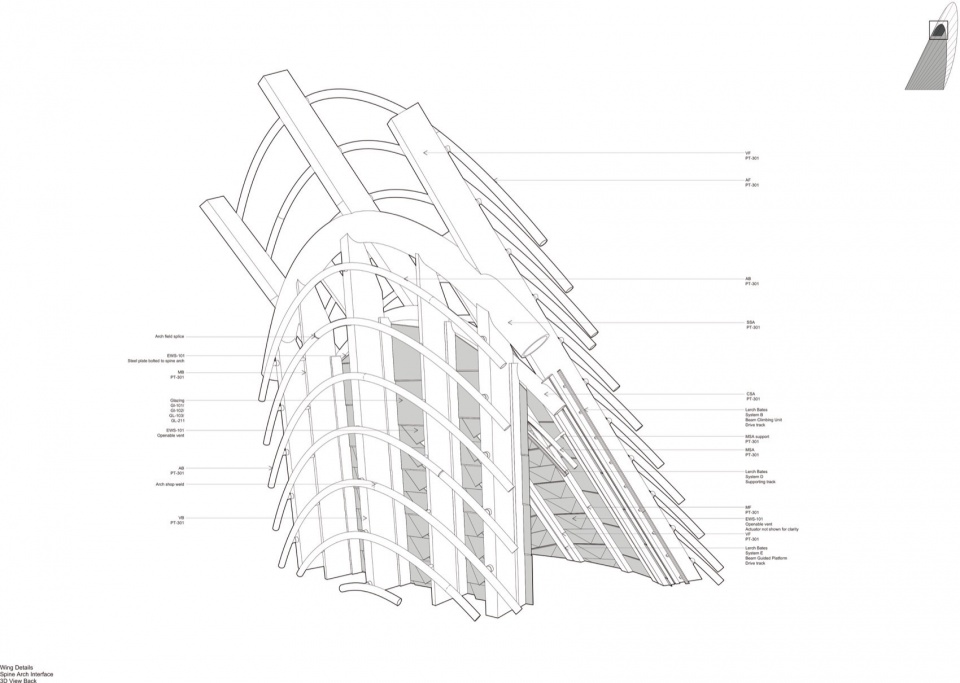
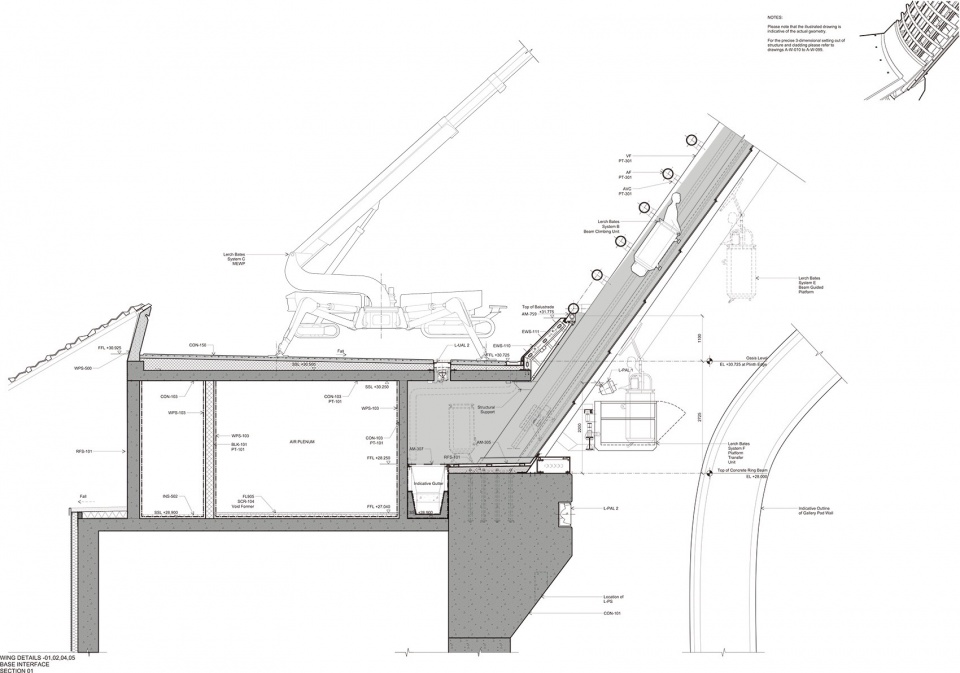
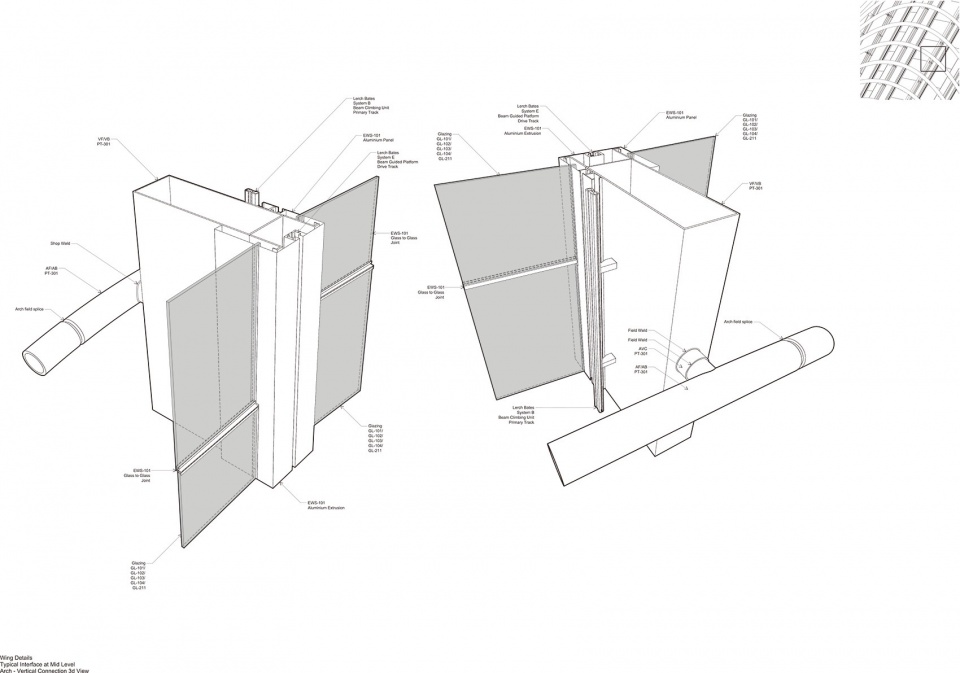
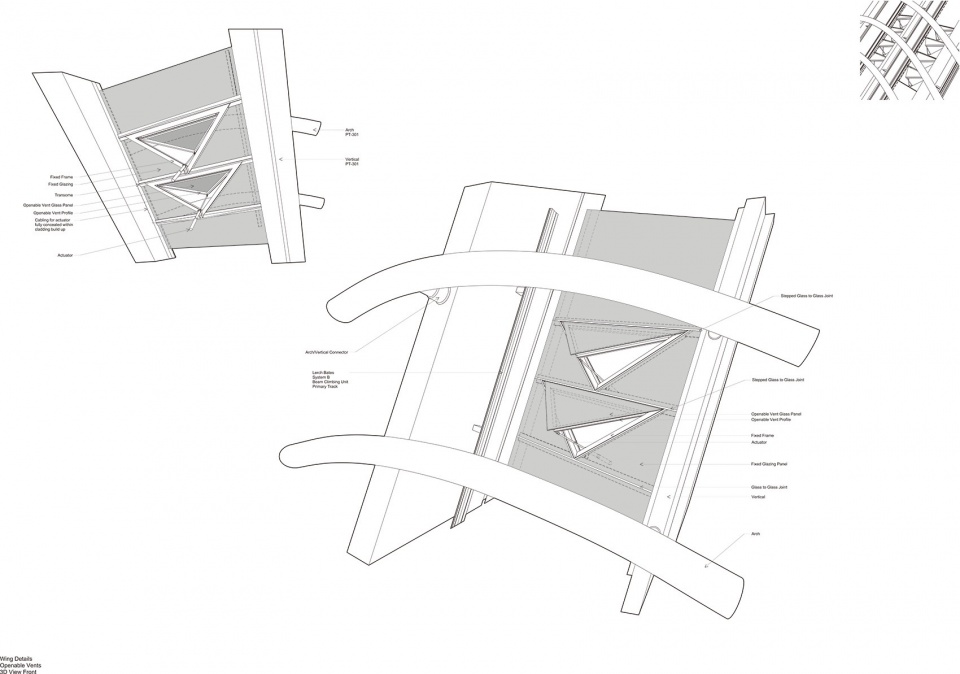
▼翼塔细节,wings details
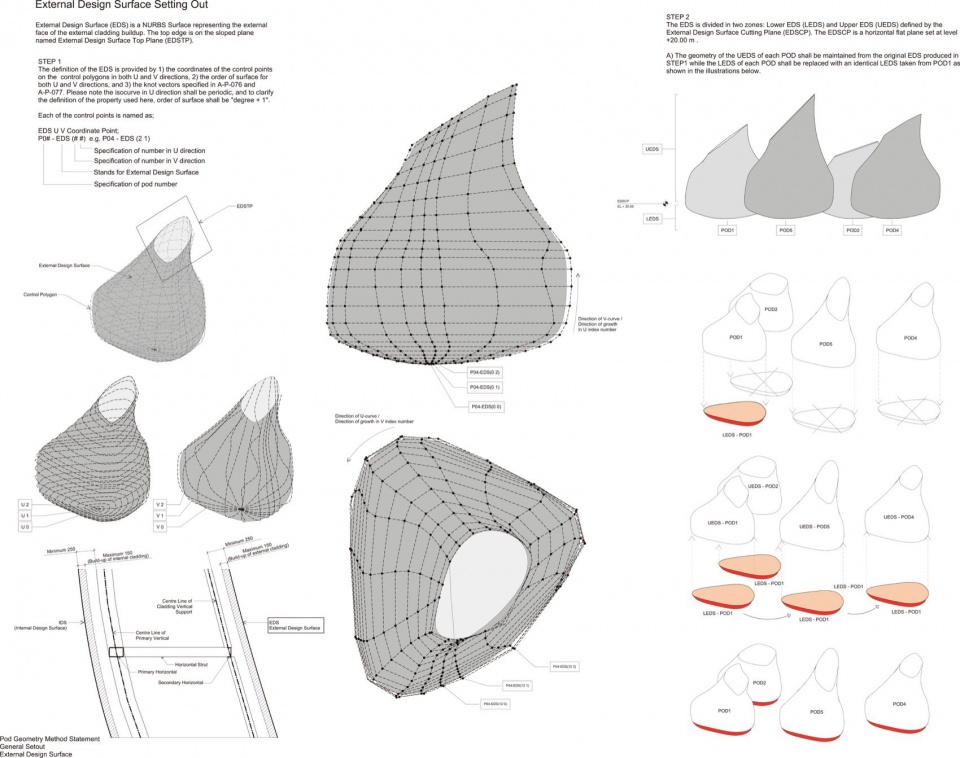
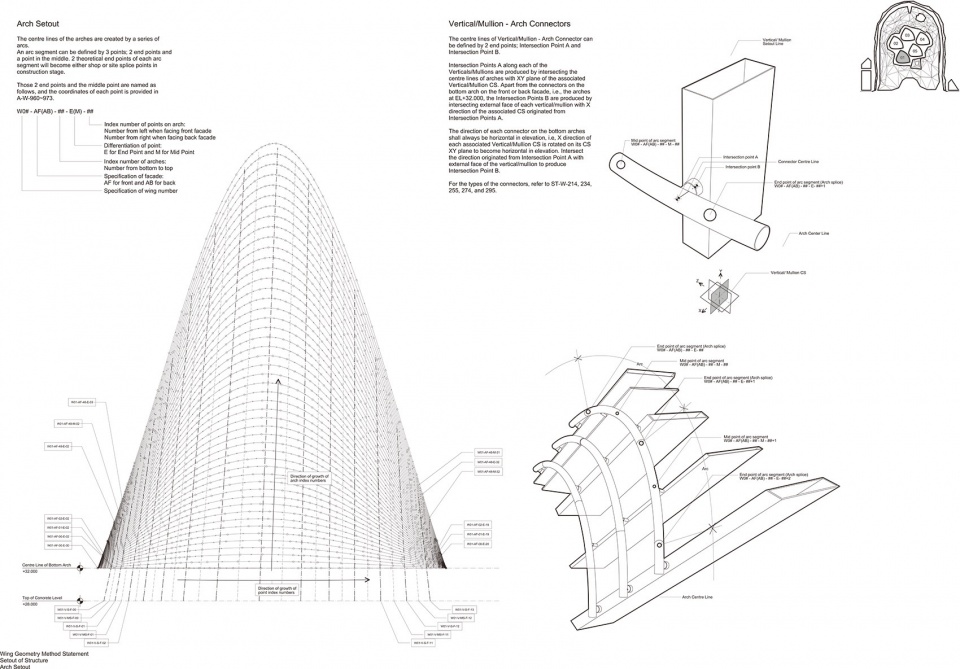
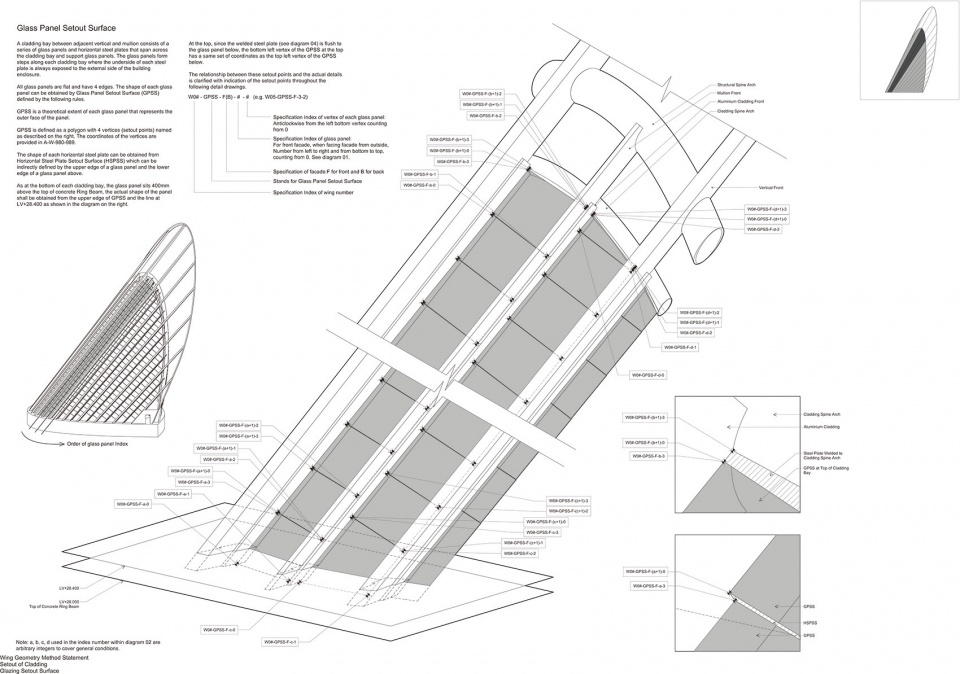
▼翼塔几何方法,wing geometry method statement
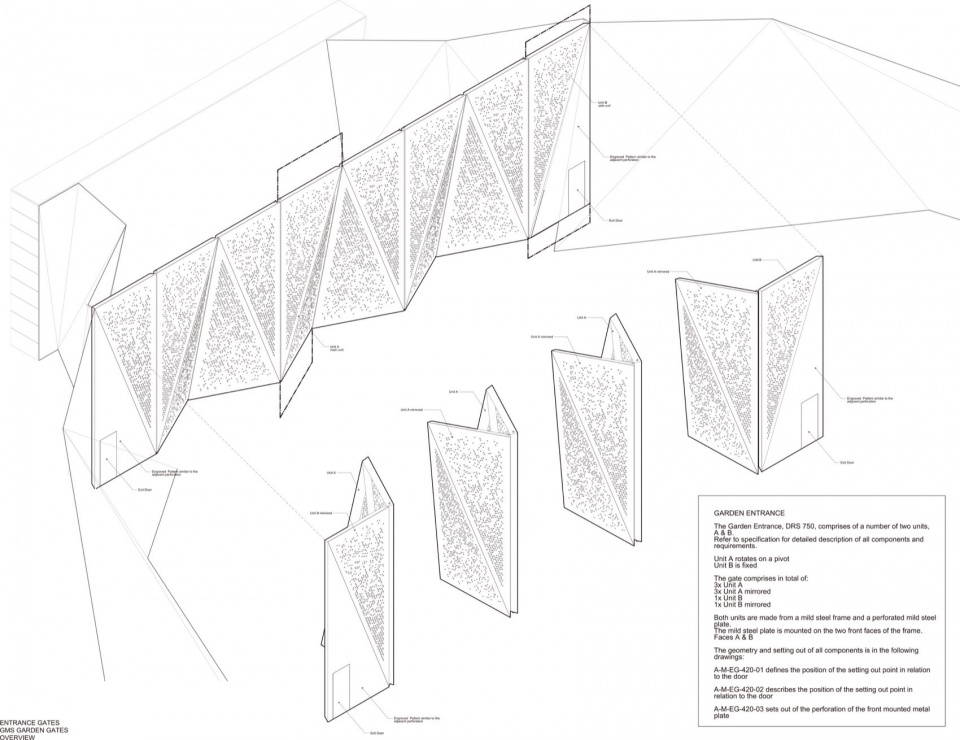
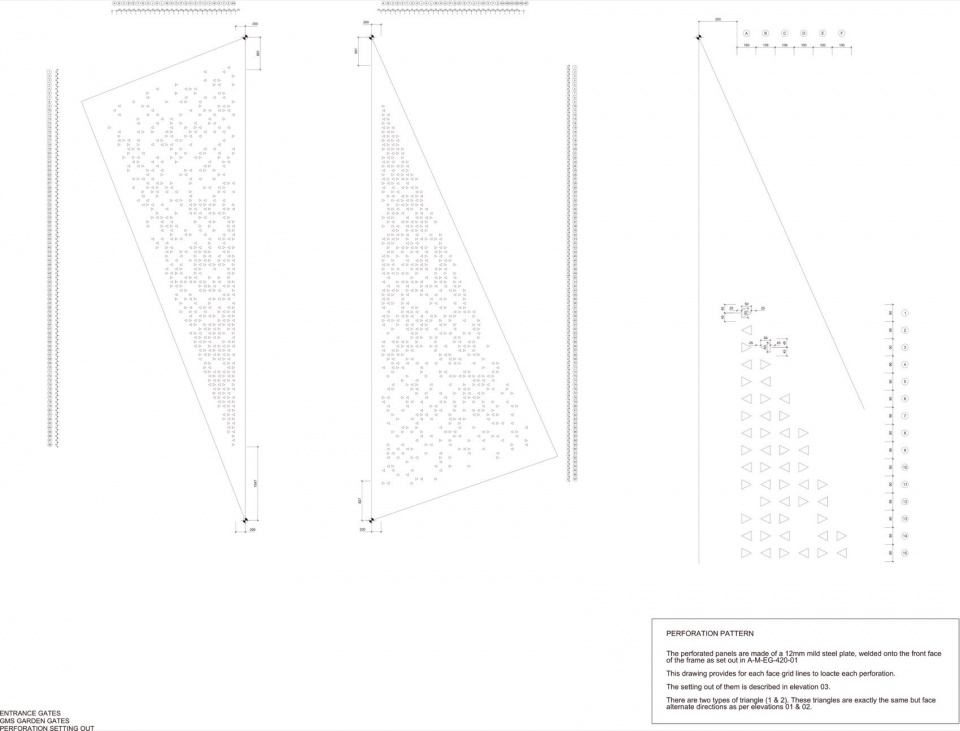
▼入口大门,entrance gates
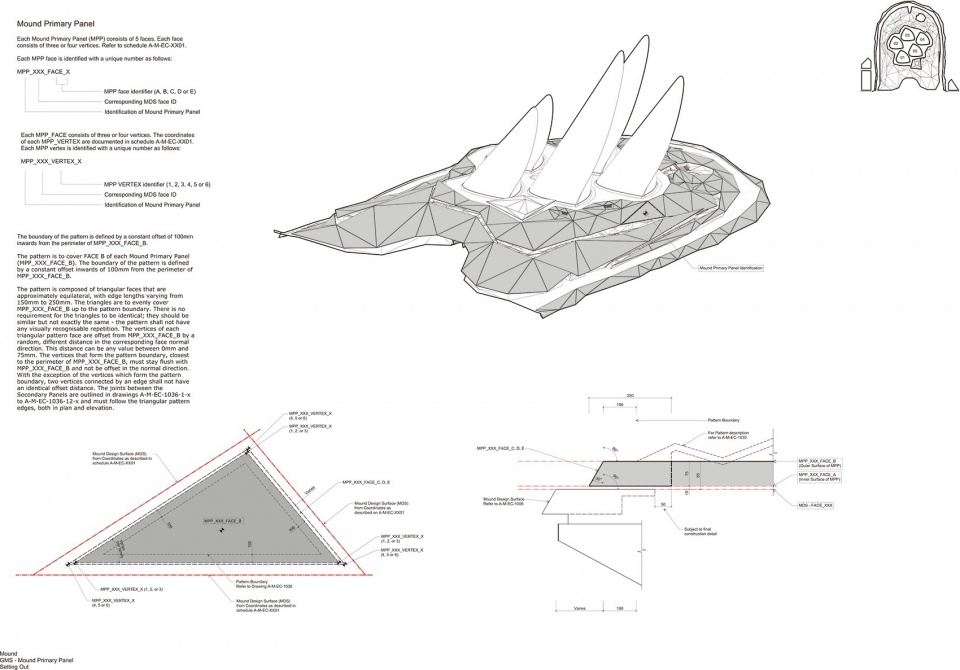
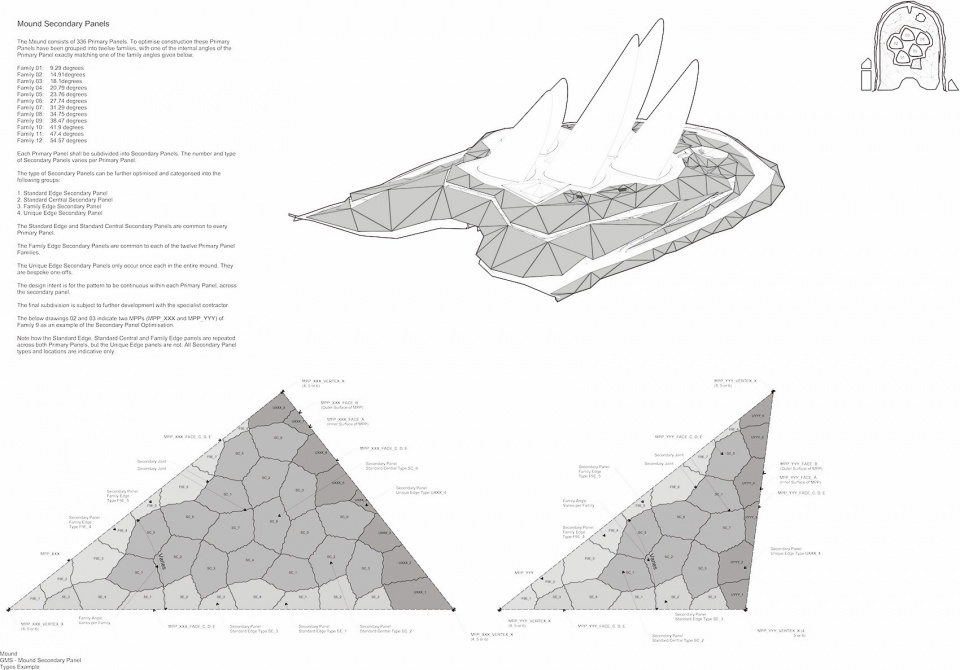
▼土丘, mound
Credits
Client: Department of Culture and Tourism
Architect: Foster + Partners
Foster + Partners Team:
Norman Foster、
Gerard Evenden、
David Nelson、
Emily Phang、
Ross Palmer、
Marilu Sicoli、
Toby Blunt、
Adam Newburn、
Irene Gallou、
Martin Castle、
Martha Tsigkari、
Andrew King、
Wolfgang Muller、
Barrie Cheng、
Dara Towhidi、
Nicholas Arthurell、
Cristine Castilhos Balarine、
Jefferson Barnes、
Giovanni Betti、
Ho Ling Cheung、
Harvey Cullis、
Miriam Dall’Igna、
Marta Diego、
Alejandra Florez-Estrada Diaz、
Hamza Farooq、
Oscar Gil、
Alexandra Kogia、
Angeliki Koliomichou、
Joliette Lange、
Won Suk Lee、
Paul Leo、
Richard Maddock、
Elizabeth Miller、
Alessandro Milazzo、
Isshin Moroto、
Josef Musil、
Hossein Naser Vafai、
Irina Nazarova、
Eleonora Neri、
Mouzo Ntagkala、
Chan Ik Park、
Jose Pedro Santiago Da Silva、
Ezmira Peraj、
Javier Perez Torrejon、
Laura Podda、
Luca Poian、
Sladjana Putnik、
Merino Ranallo、
Alfie Recarte Olaran、
Emanuele Renzi、
Florian Rieger、
Ramit Saksena、
Laura Suico、
Chris Storie、
Takashi Tsurumaki、
Karsten Vollmer、
Dominic Williams、
Simon Wing、
Xiaoming Yang、
Munehiko Yokomatsu、
Bo Yoon
Consultants
Structural Engineers: AKT II, WSP
Main Contractor: Arabtec, Six Construct-Trojan JV
Enabling Works Contractor: Swissboring
Civil Engineers: Philip Habib + Associates
Piling Contractor: NSCC
Sub-structure Contractor: Al Habtoor Murray Roberts
MEP Engineer: BDSP, WSP
Cost Consultant: RLB
Lighting Consultant: Lerch Bates
Landscape Consultant: Atelier Dreiseitl, WATG
Specification Writers: Schumann Smith, Foster + Partners
Air Flow Consultant: RWDI
Environmental Engineer: Transsolar
Auditorium Consultant: Shen Milsom & Wilke
People Movement Consultant: Intelligent Space