哥本哈根健康中心,丹麦 / Dorte Mandrup
哥本哈根健康中心以充足的自然采光、天然材料、绿意景观,以及鼓励运动与社群交流的空间组织,为生活方式相关疾病的康复与治疗提供支持。项目由丹麦建筑事务所 Dorte Mandrup 设计,其核心亮点是一处令人印象深刻的中央空间:由高达 15 米的木结构拱架所形成的富有雕塑感的节奏序列。
The new Centre for Health in Copenhagen combines plenty of daylight, natural materials, greenery, and room for movement and community to support rehabilitation and treatment of lifestyle-related diseases. Designed by Danish architecture studio Dorte Mandrup, the building features an impressive central space, formed by the sculptural rhythm of 15-metre-high timber arches.
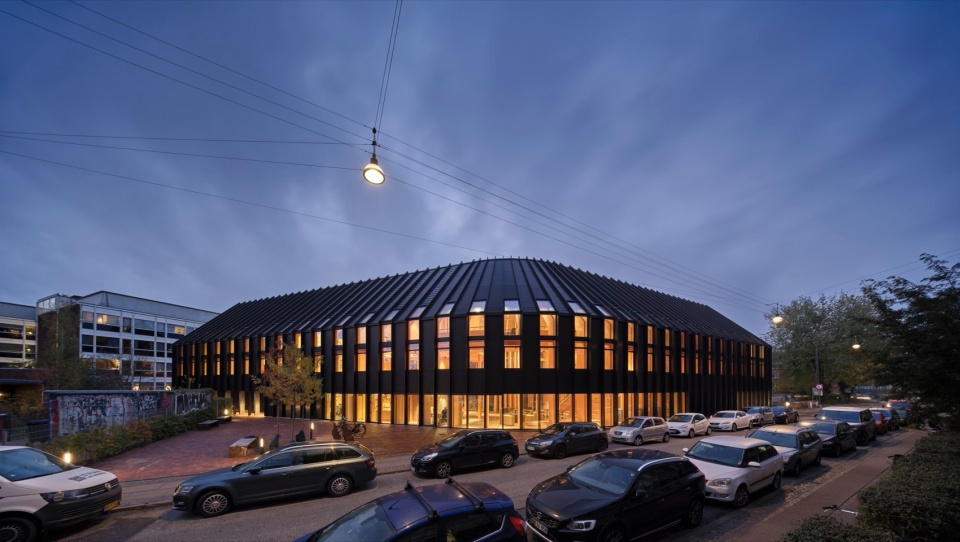
▼外观夜景,night view of the project
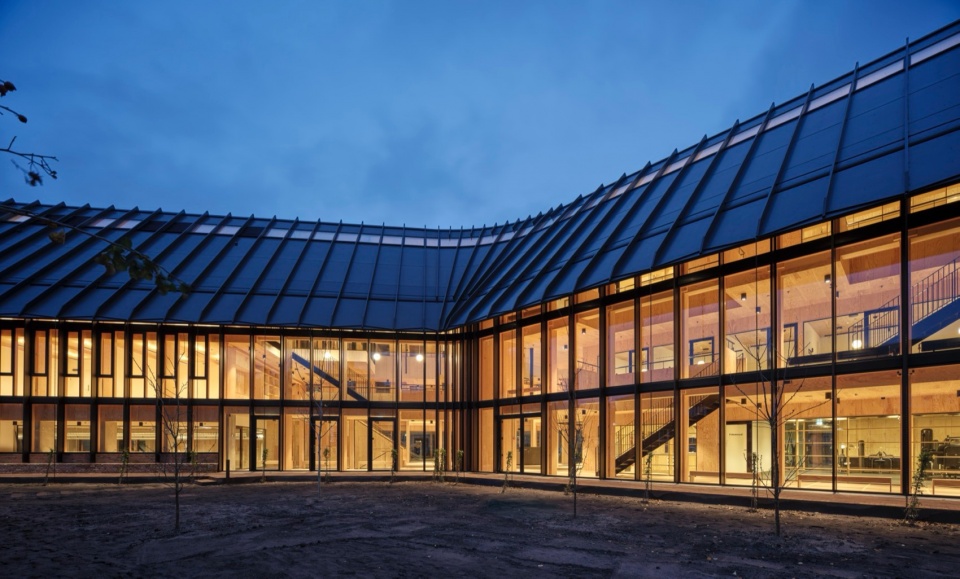
▼通透的玻璃立面,transparent glazing facade
▼街巷视角,views from the alley
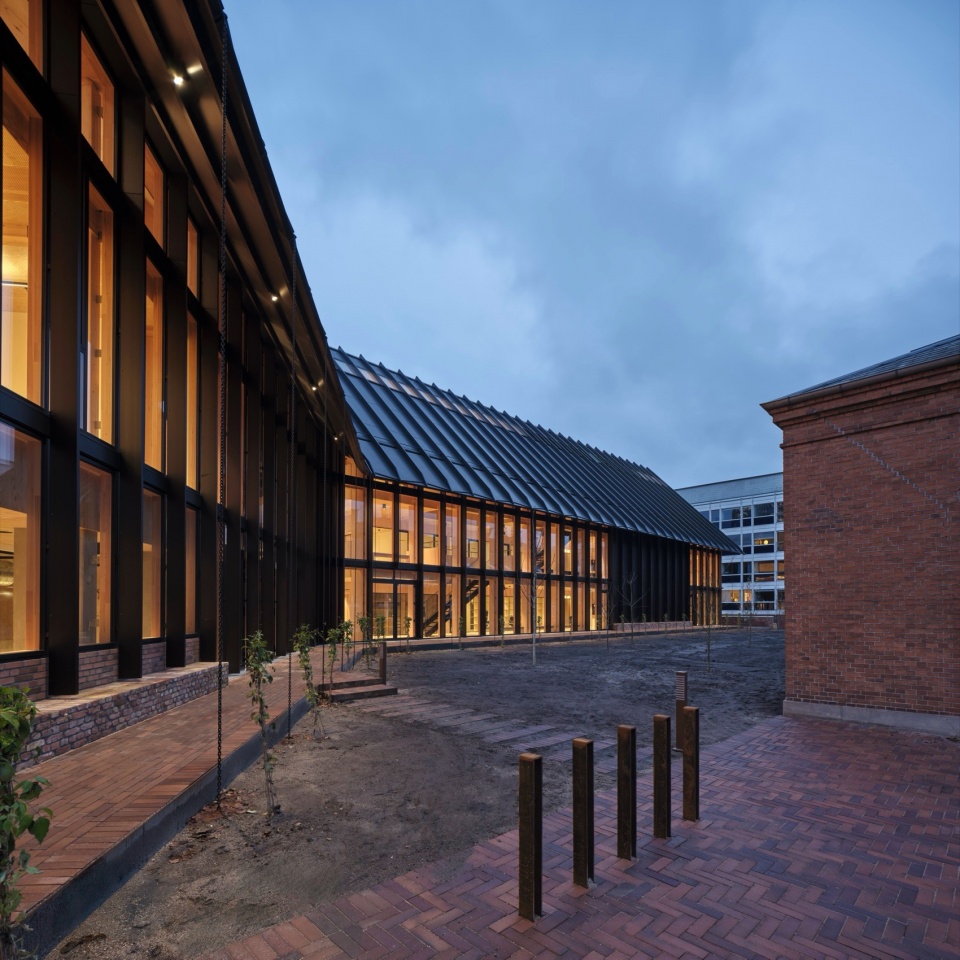
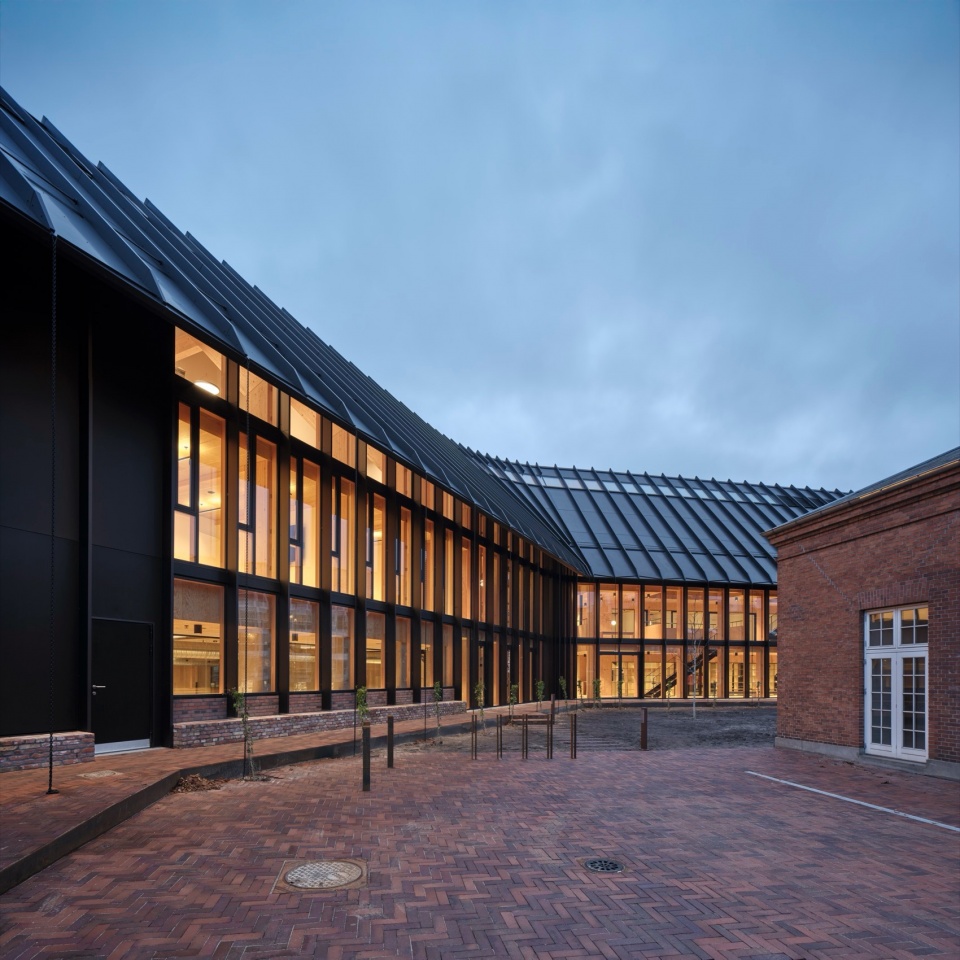
我们所处的建筑与景观环境,能够在深层次上影响人的行为、情绪与身体健康。基于这一认知,Dorte Mandrup 为哥本哈根健康中心提出了一种以促进身体活动、提升生活质量为目标的建筑回应,面向正受生活方式相关疾病困扰的人群。通过优先引入绿地、自然采光、温润的天然材料,以及鼓励运动与交流的空间节点,建筑营造出一种开放而宁静的氛围,刻意回避传统医疗机构常见的冷漠与临床感。
The buildings and landscapes that surround us can affect our behaviour, emotions, and physical health in profound ways. With this in mind, Danish architecture studio Dorte Mandrup has designed Centre for Health in Copenhagen to promote physical activity and improve quality of life for people struggling with lifestyle-related diseases. By prioritising green spaces, plenty of daylight, natural warm materials, movement and places for people to meet and interact, the architecture forms an inviting and calming place that eschews the often impersonal and clinical character of traditional health institutions.
▼室内空间概览,overall of interior
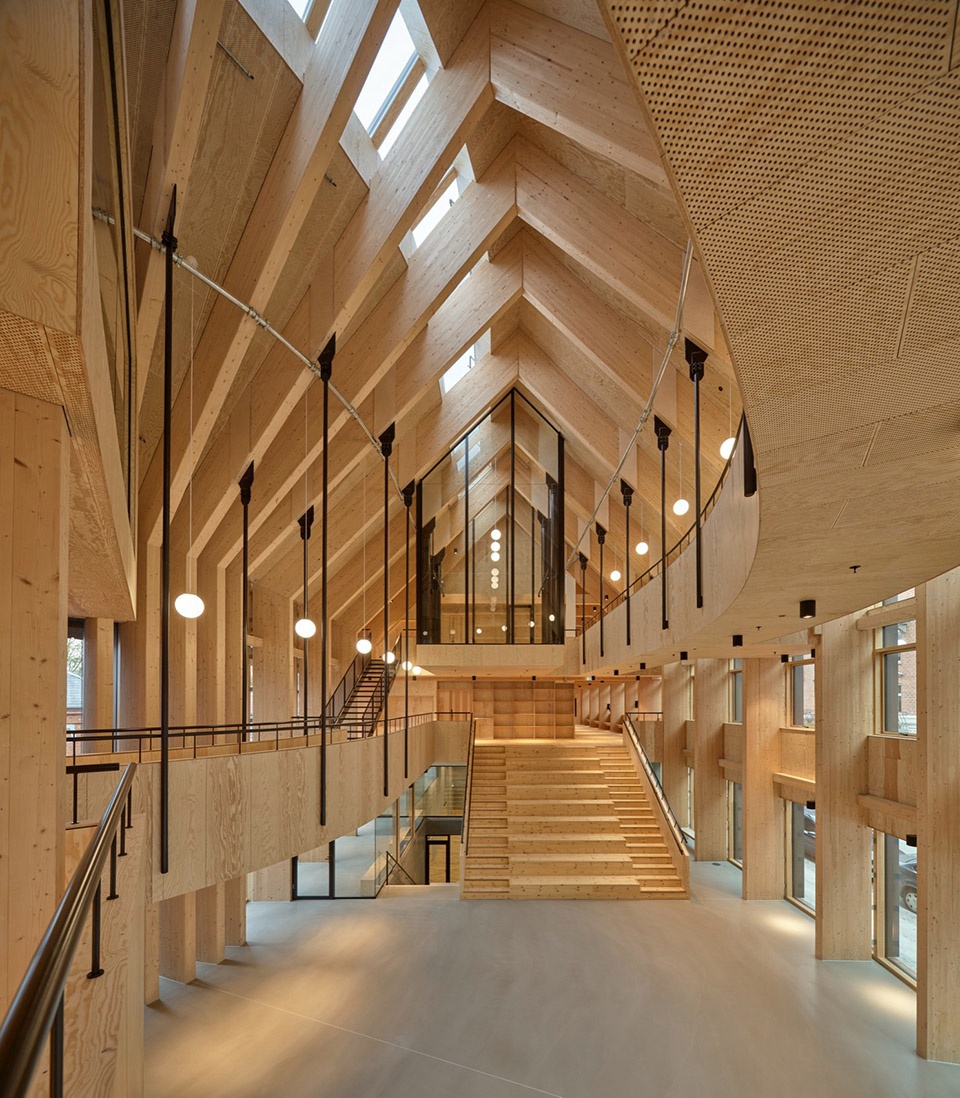
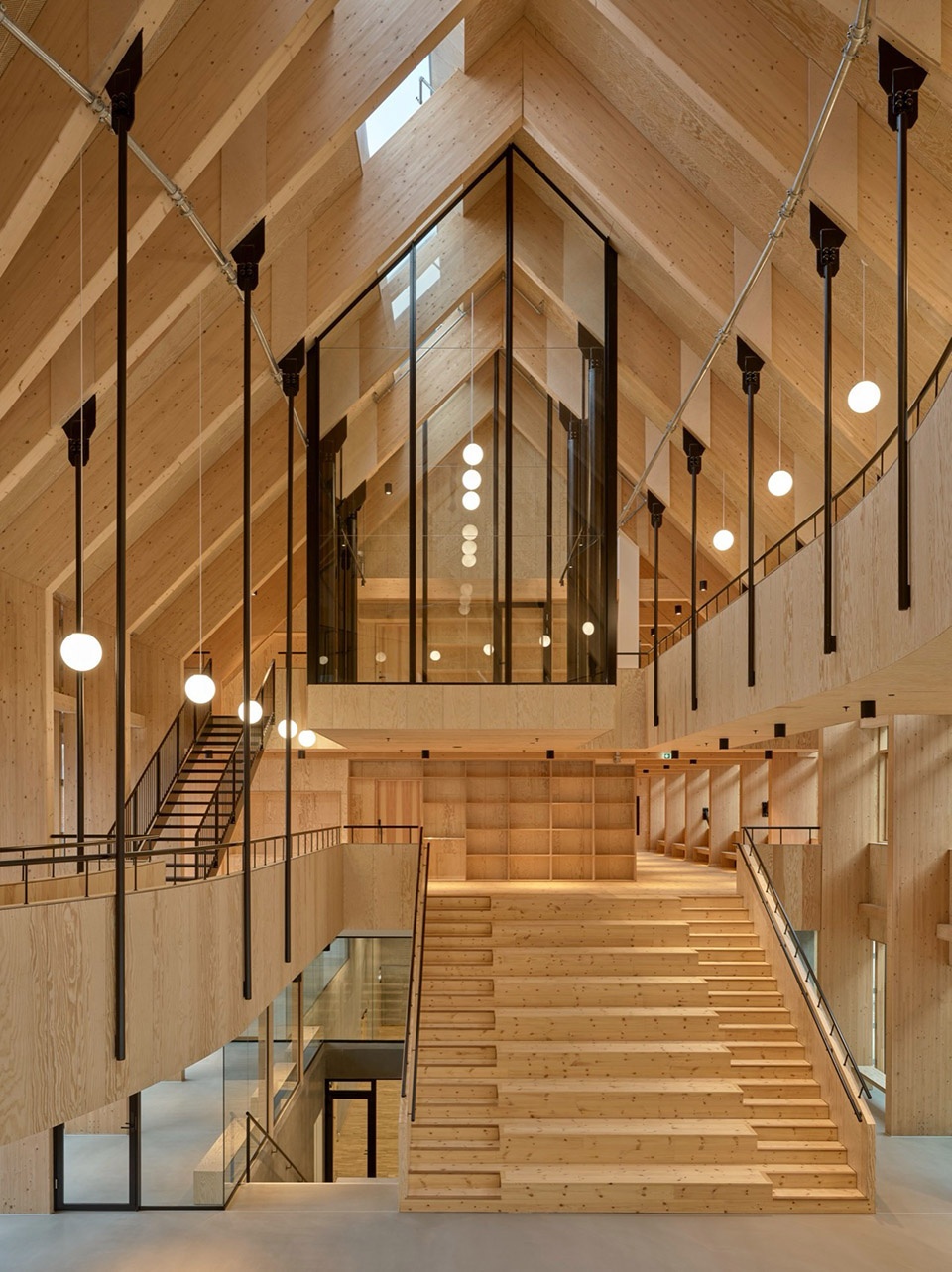
▼中庭,atrium
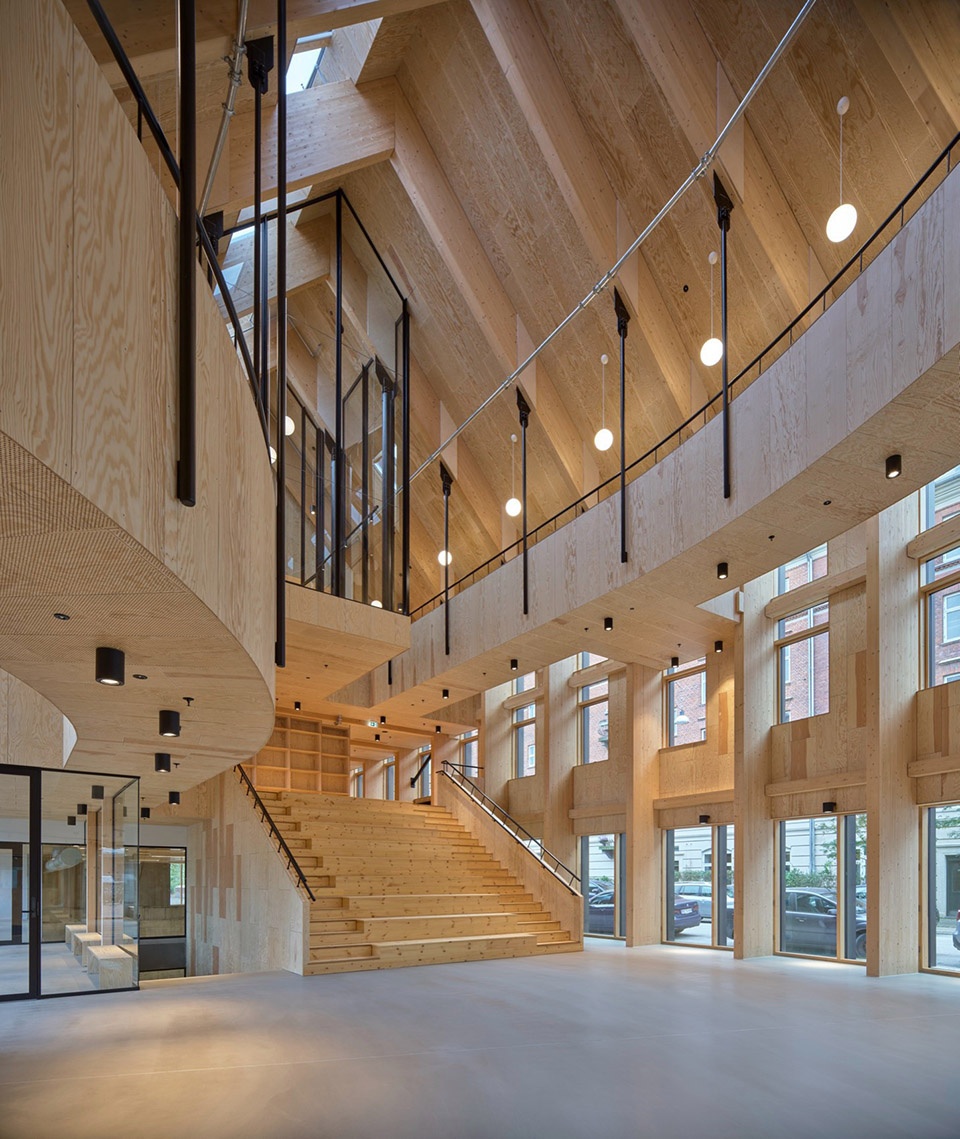
▼木质结构,wooden structure
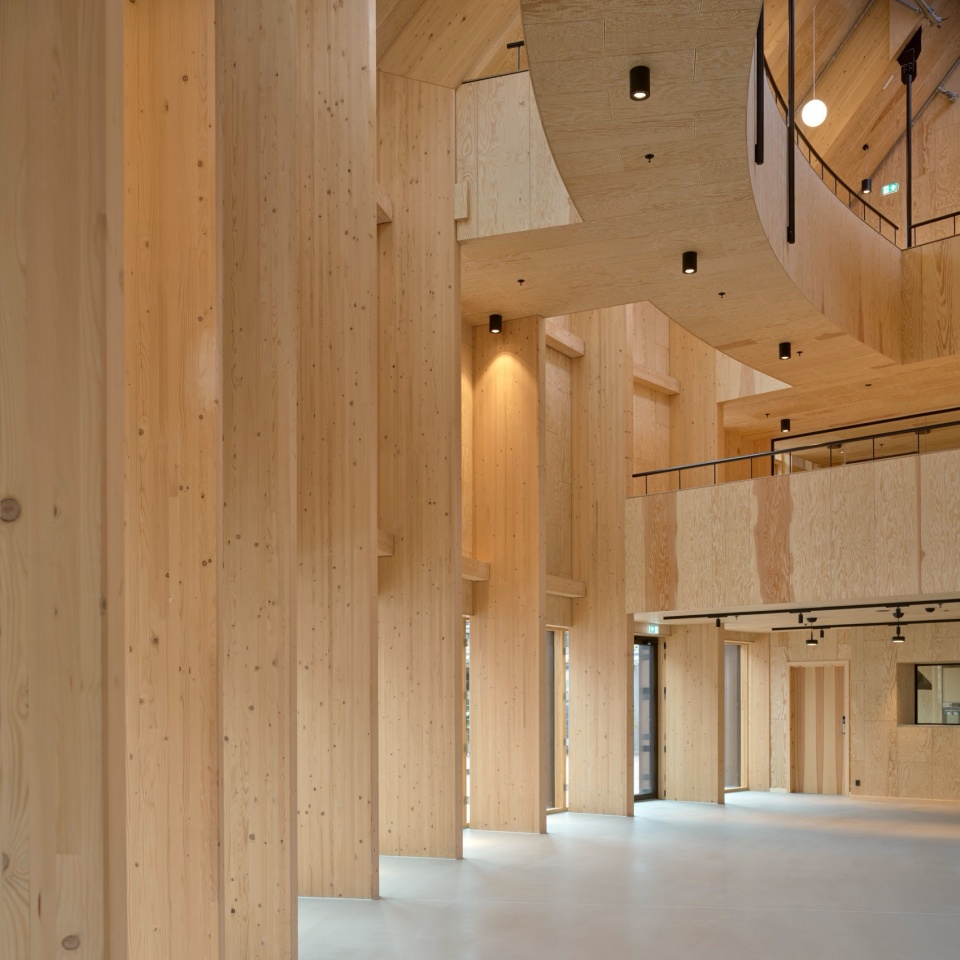
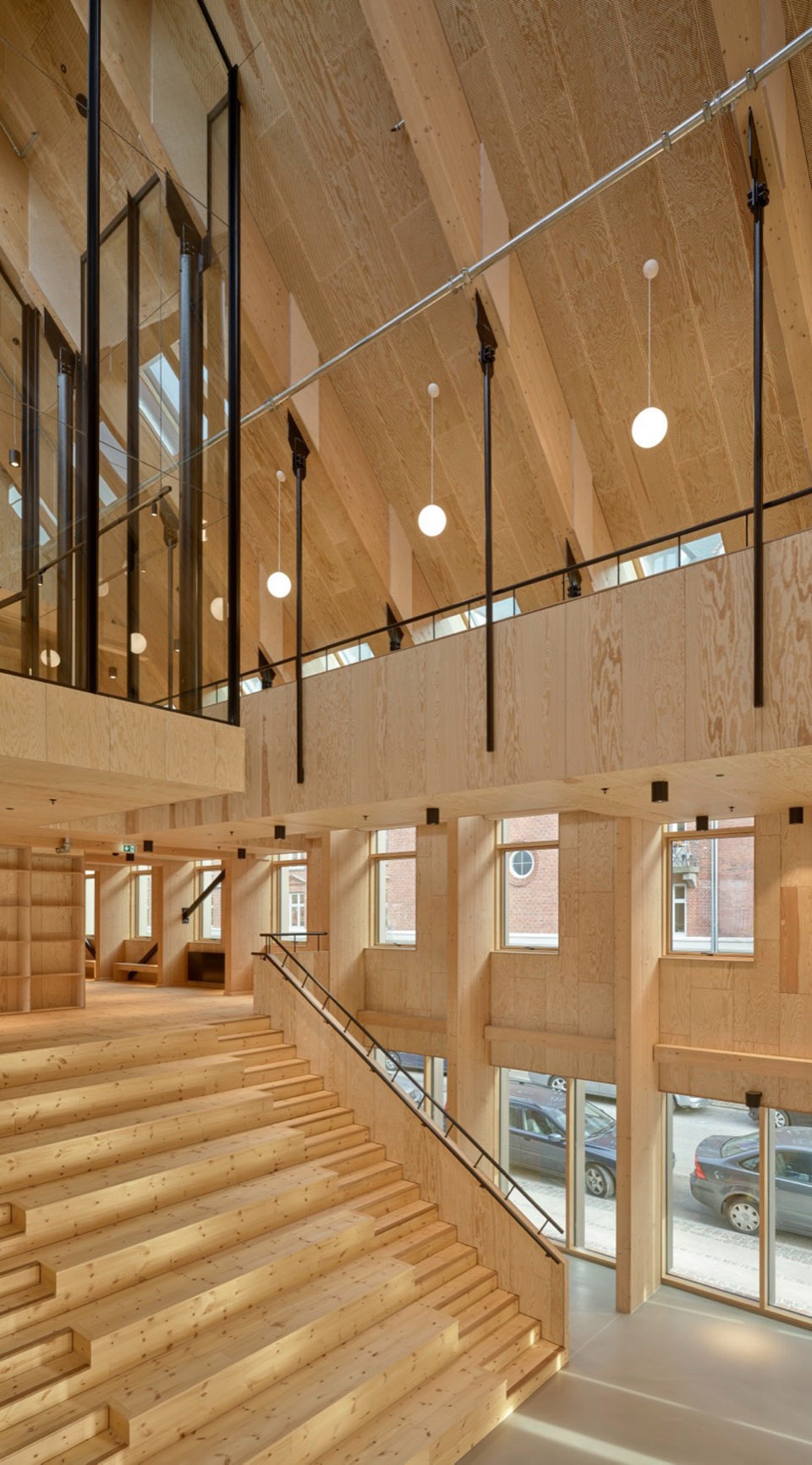
▼使用场景,using scenario
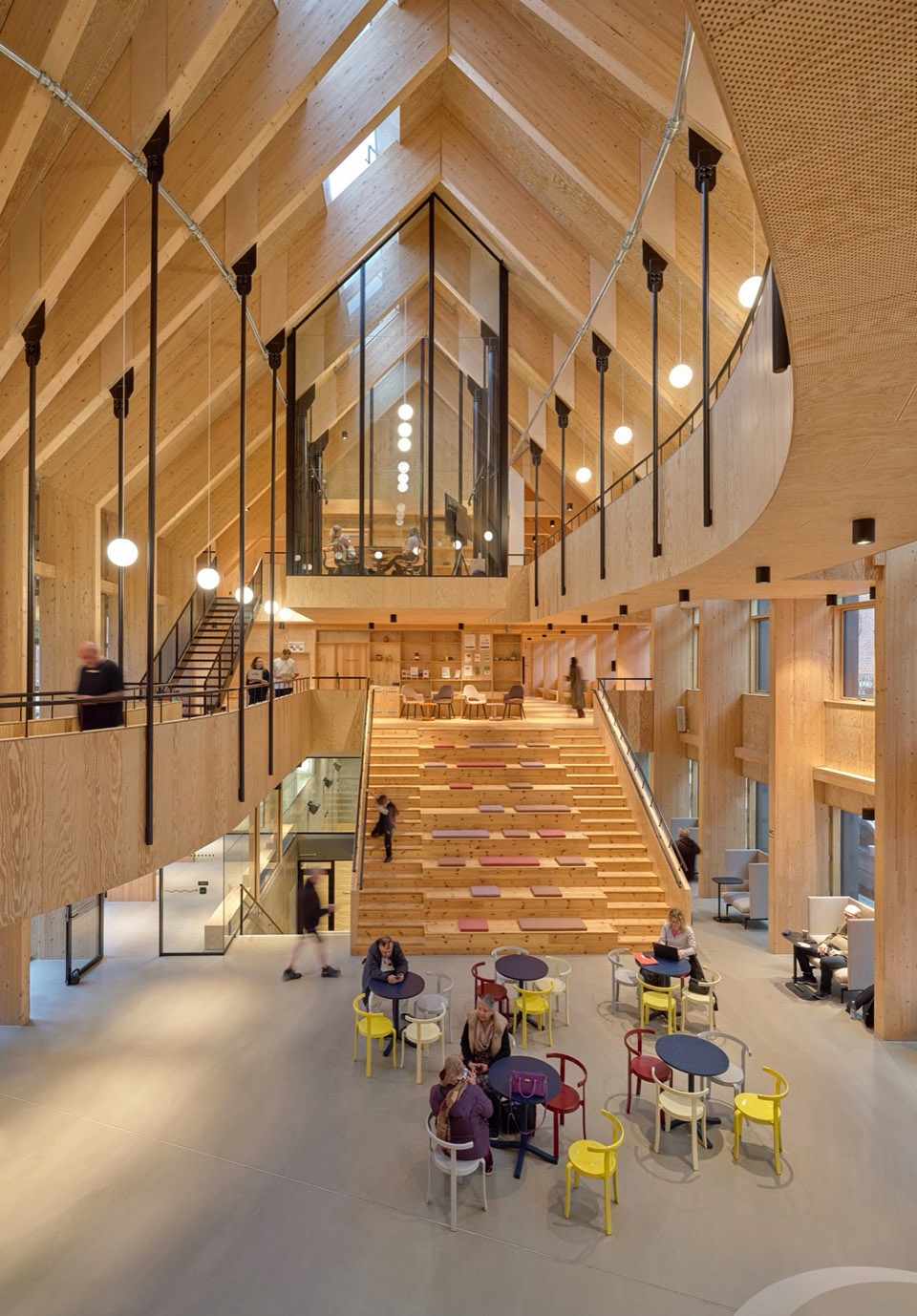
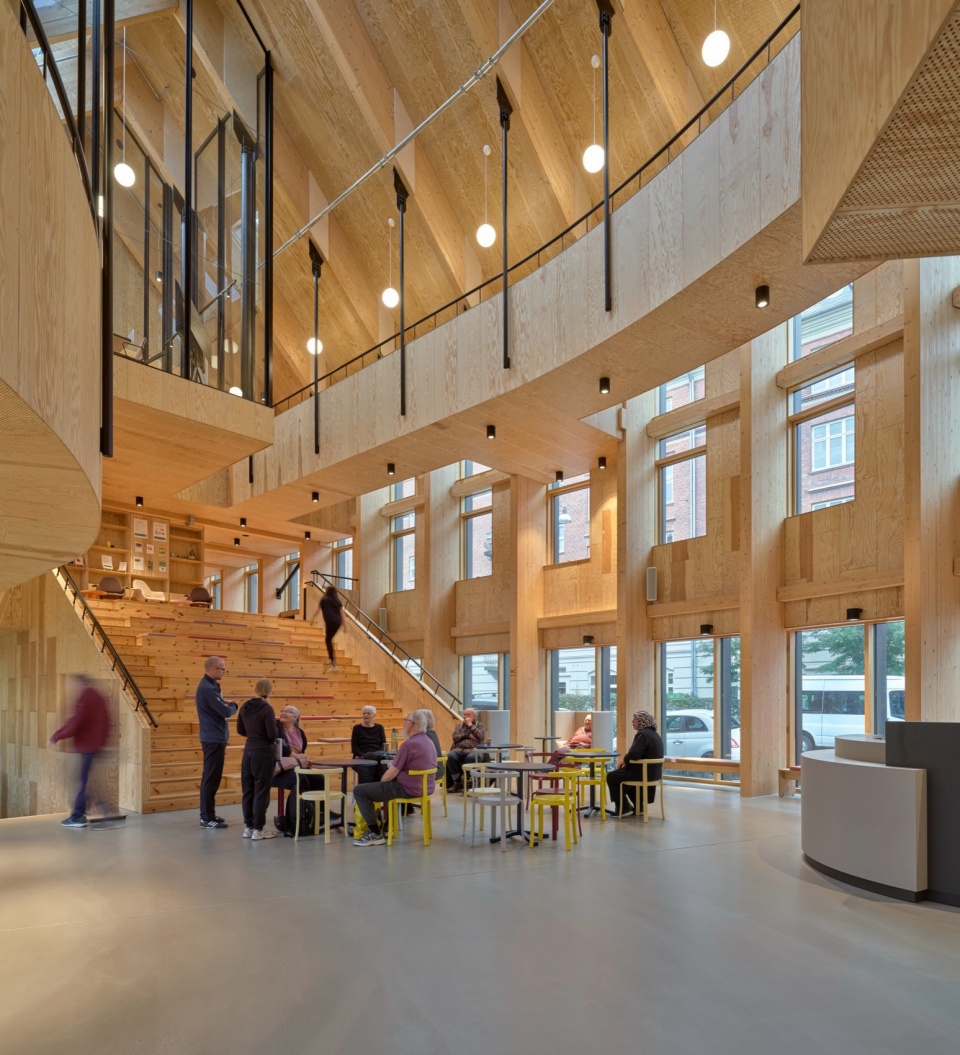
▼阶梯式座位,stepped seating area
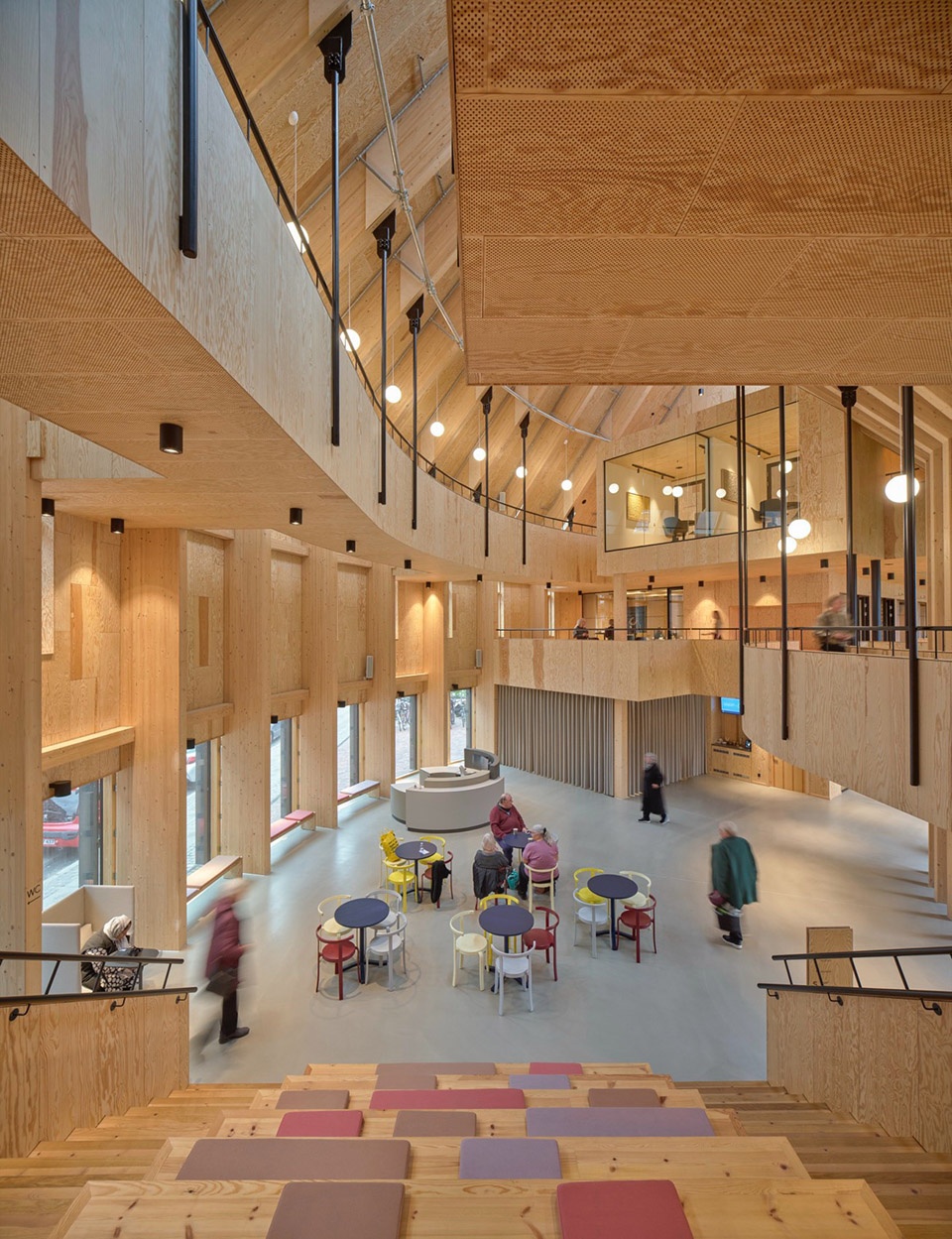
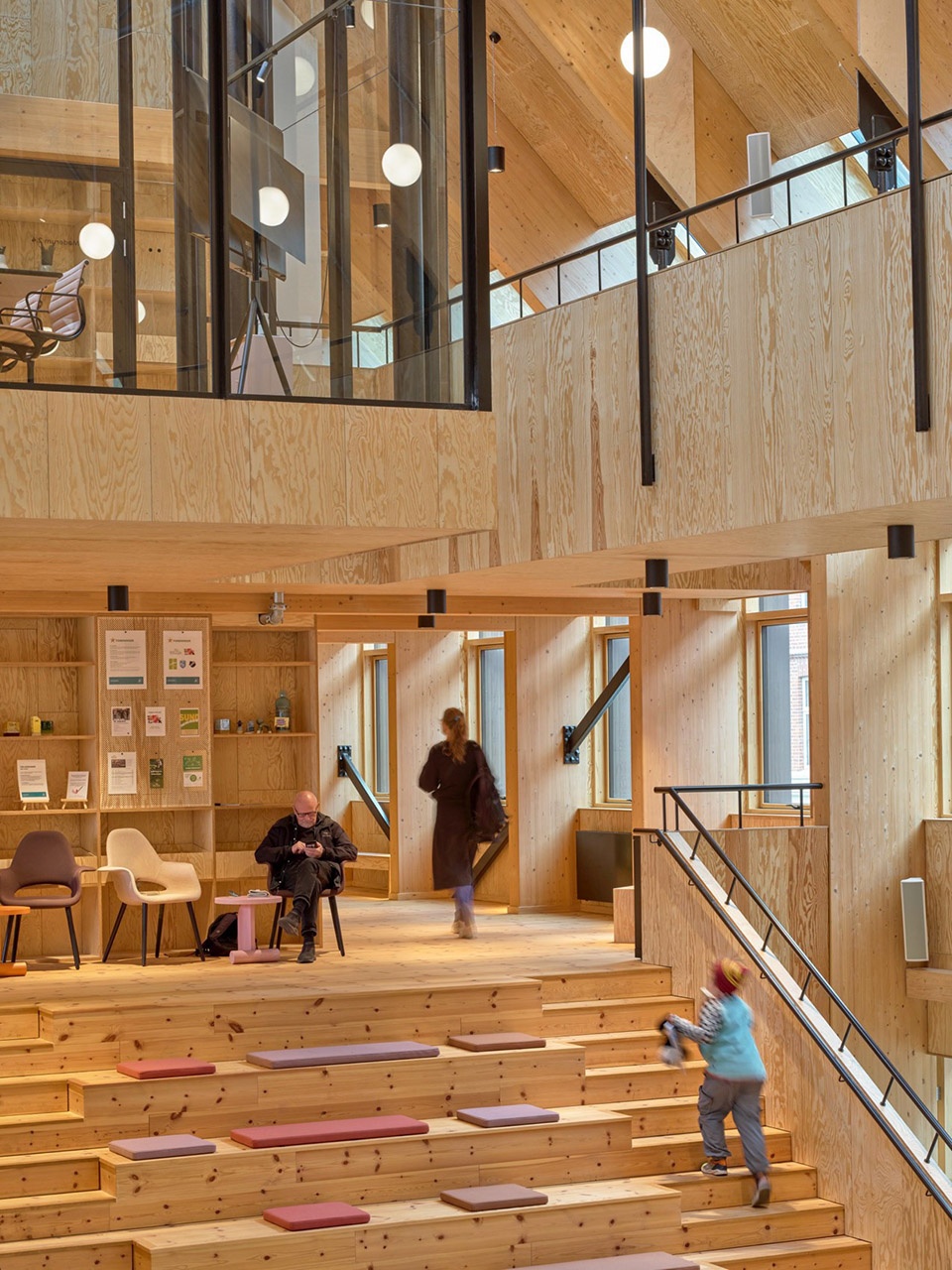
▼细部,details
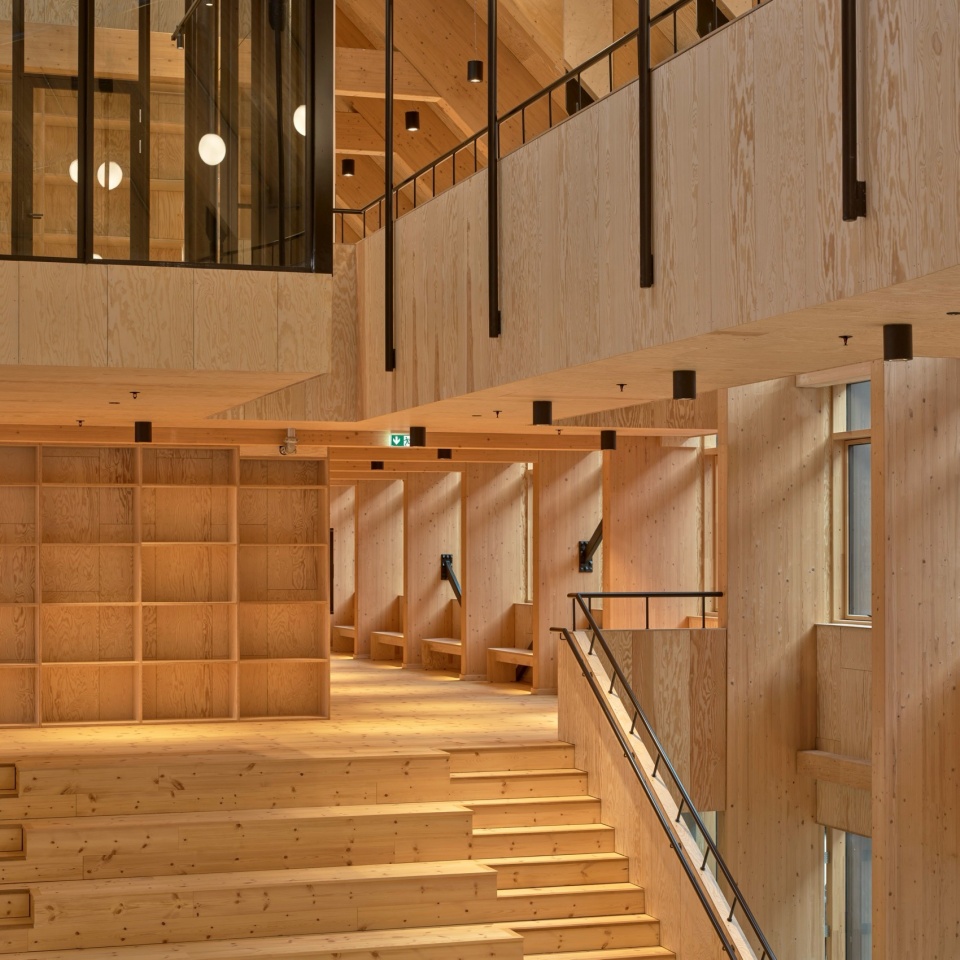
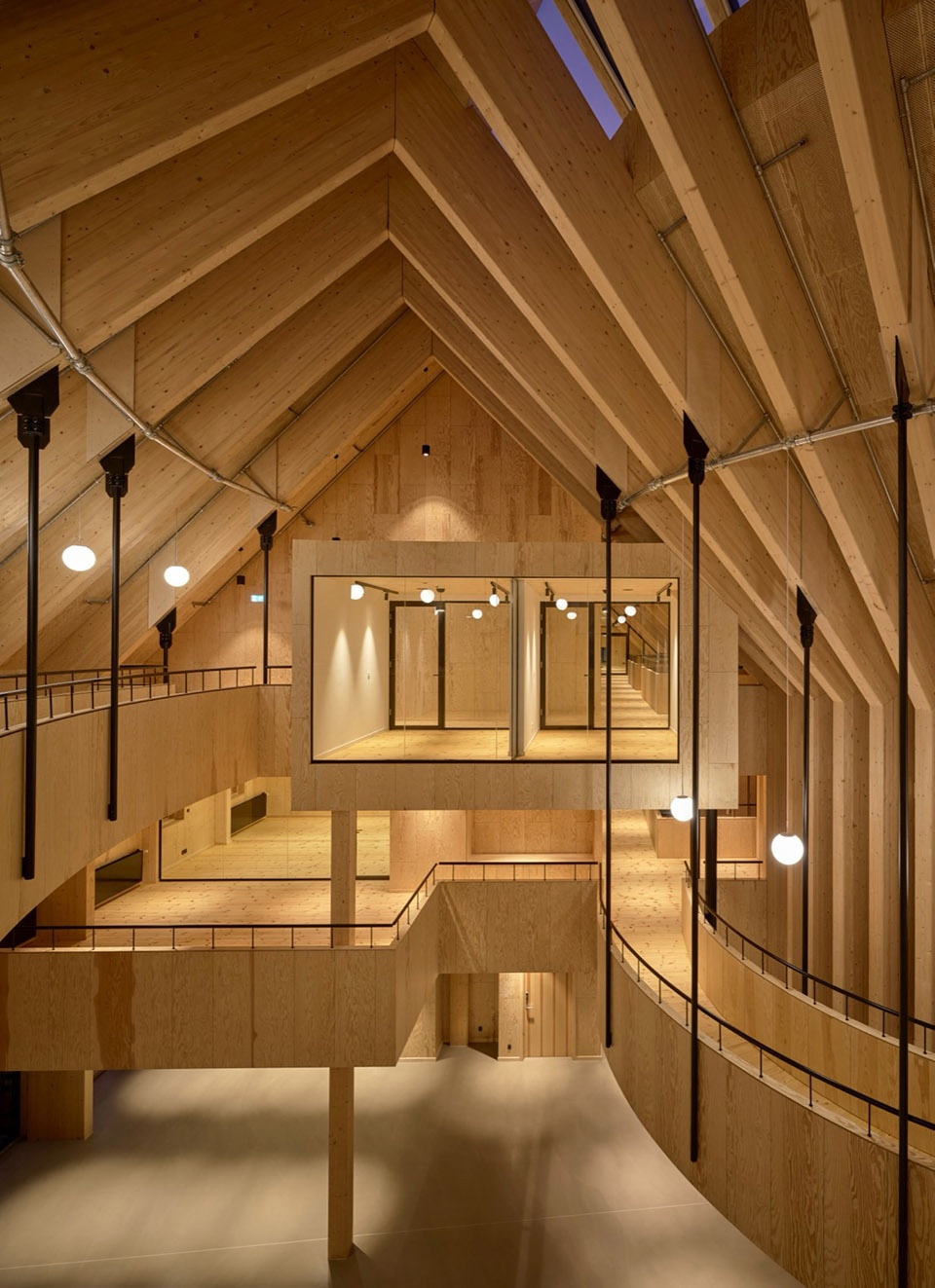
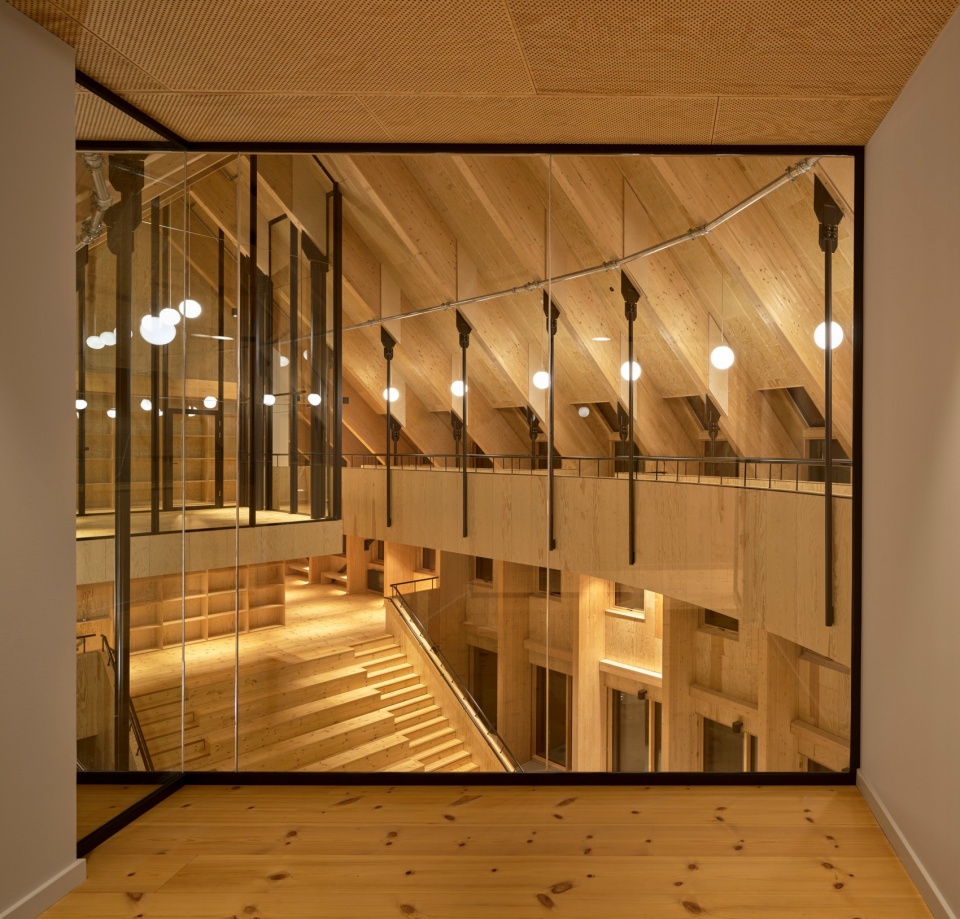
▼悬挑的体量,cantilevered volume
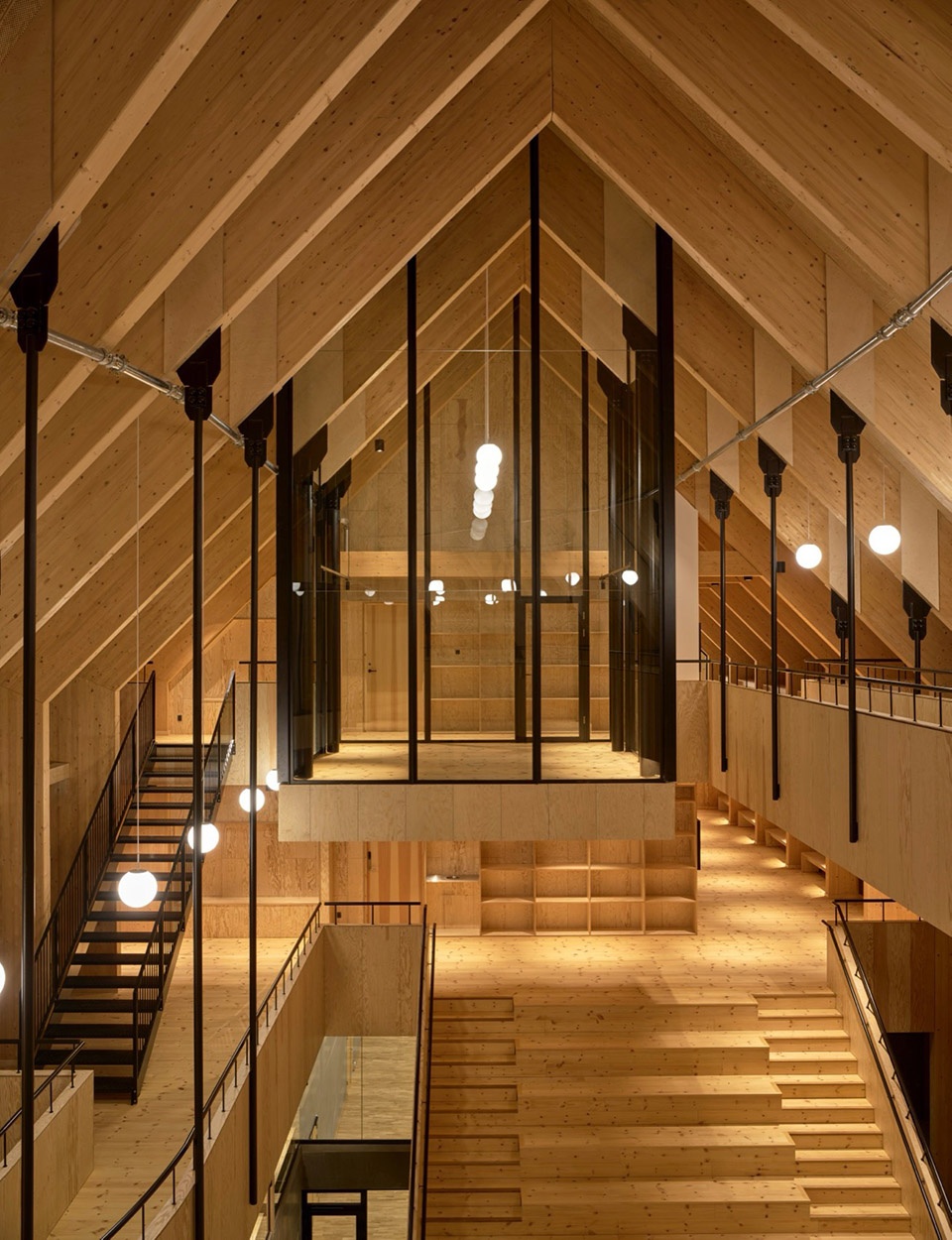
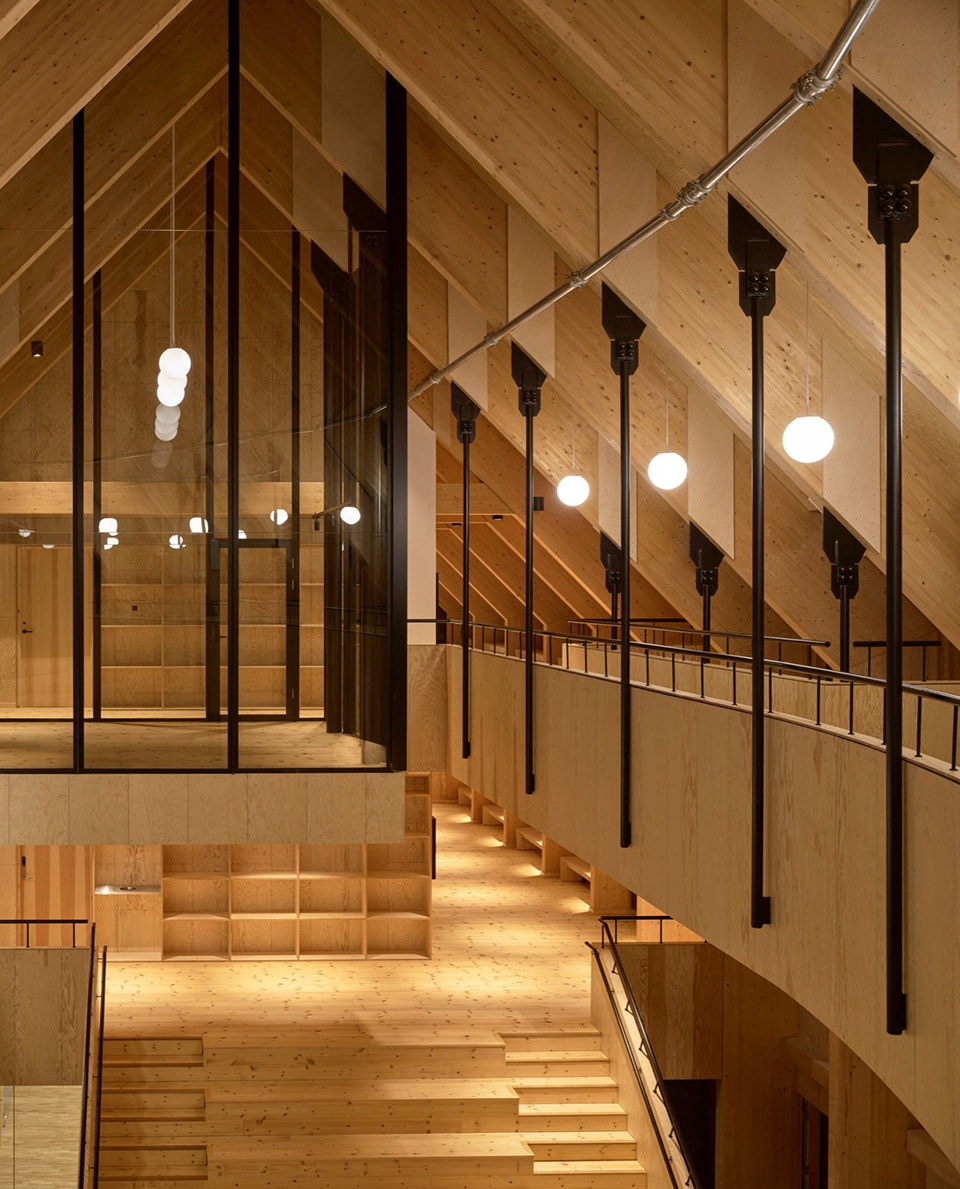
▼悬挑体量内外视角,outside and inside view of the cantilevered volume
▼阶梯式座位区,stepped seating area
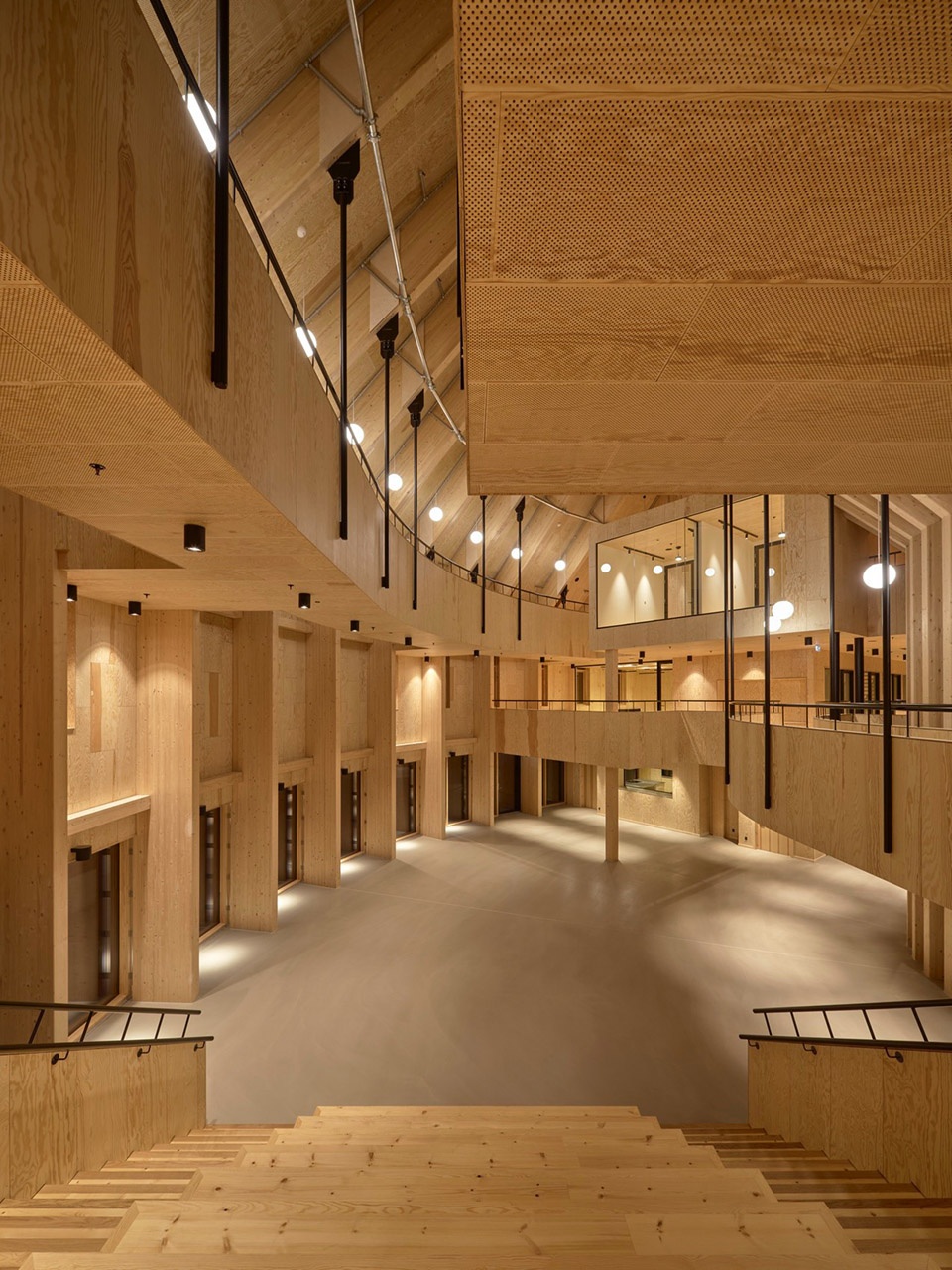
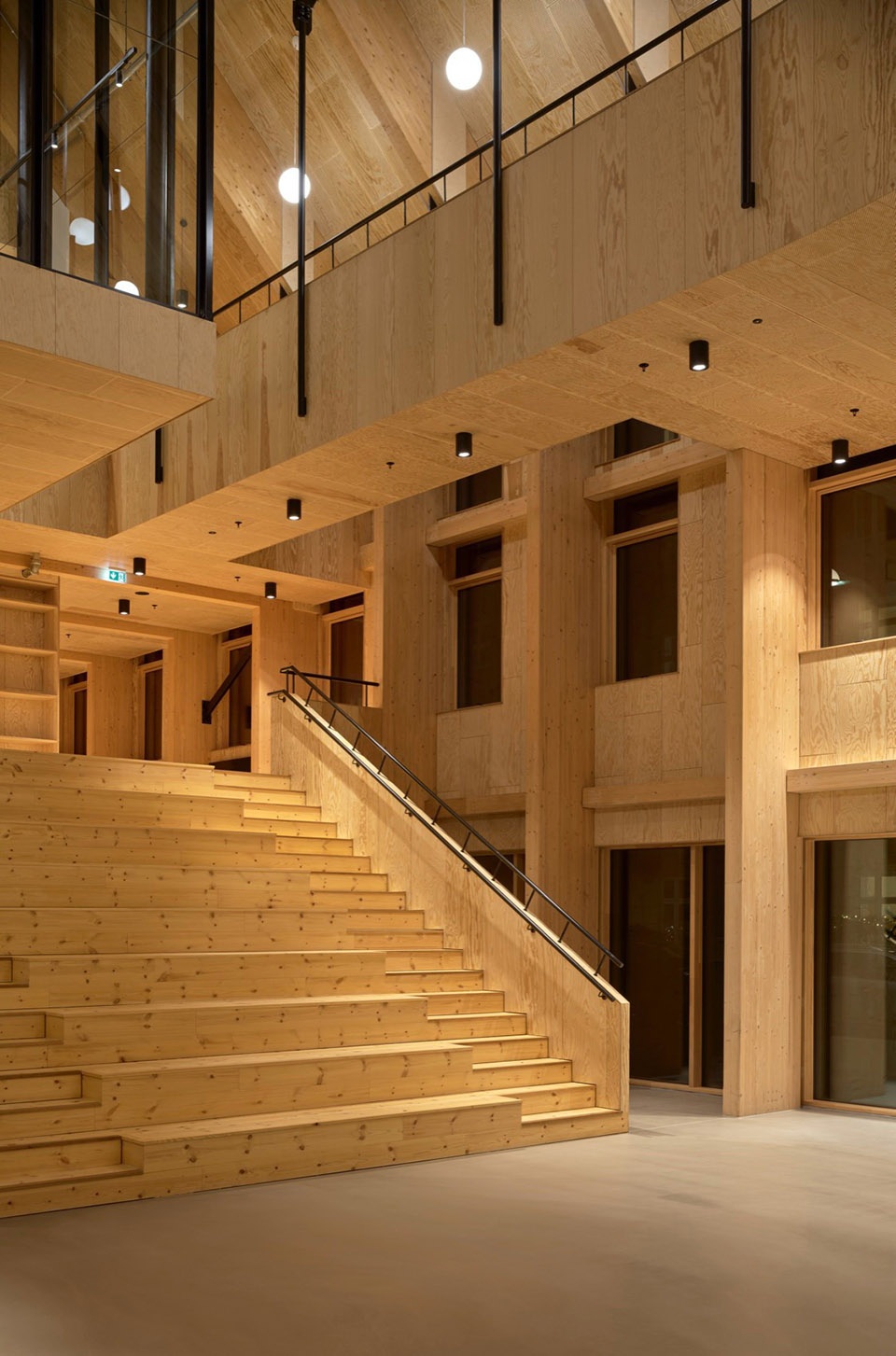
▼楼梯,staircase
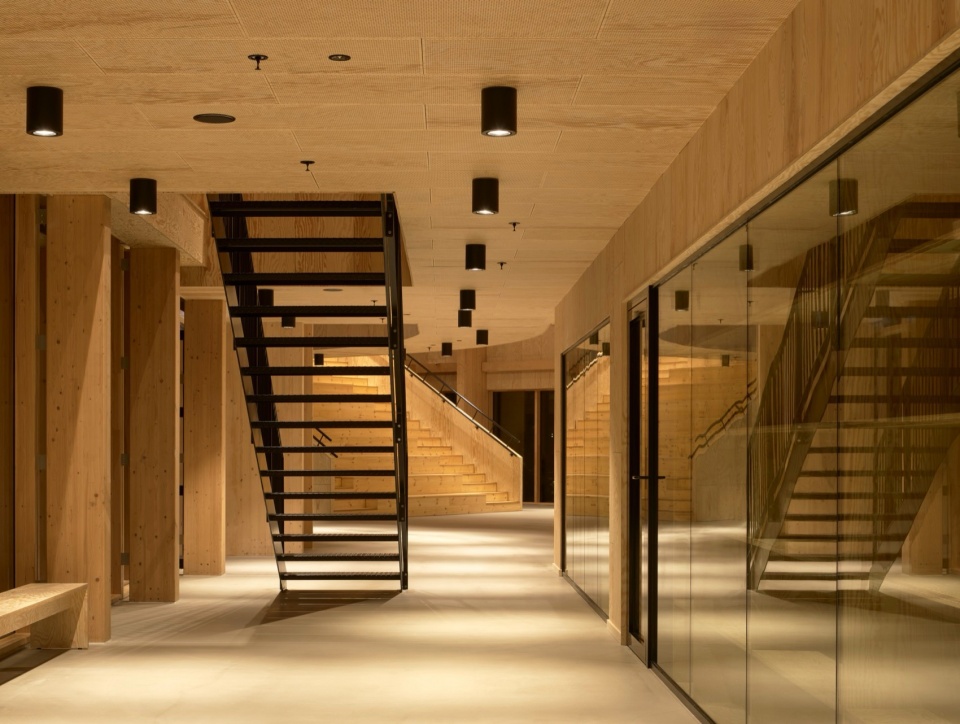
▼仰视屋顶与天窗,looking up to the ceiling and skylight
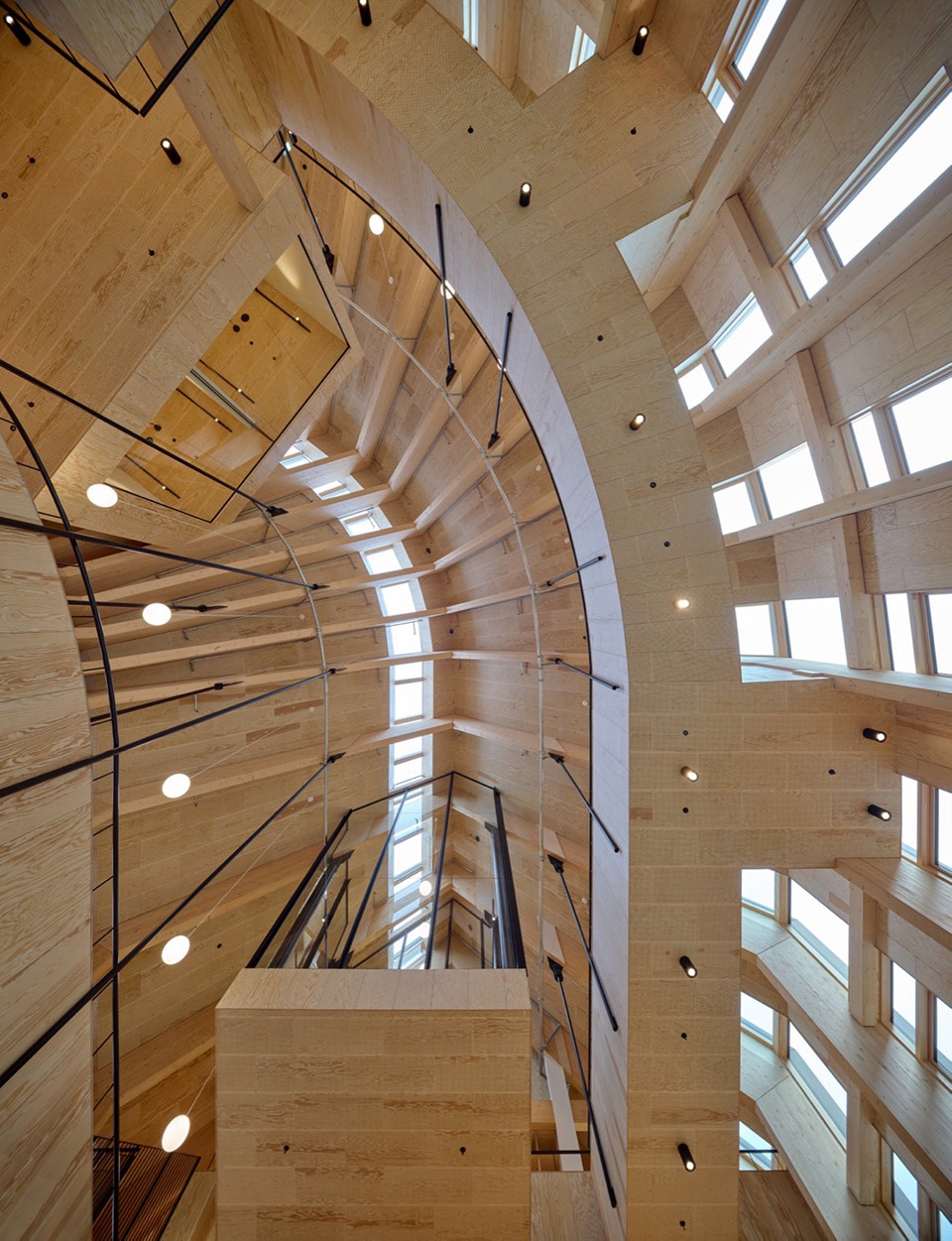
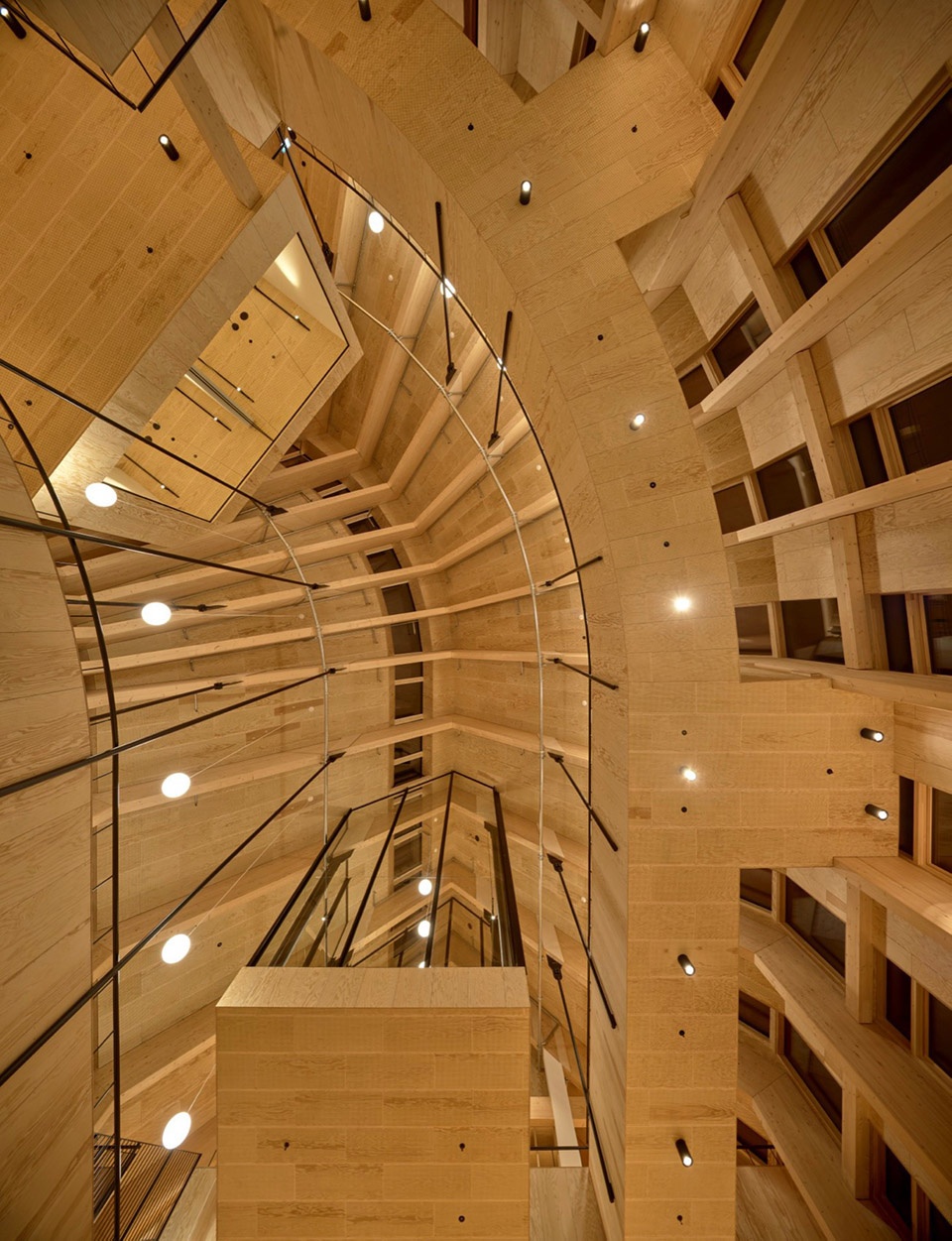
▼细部,details
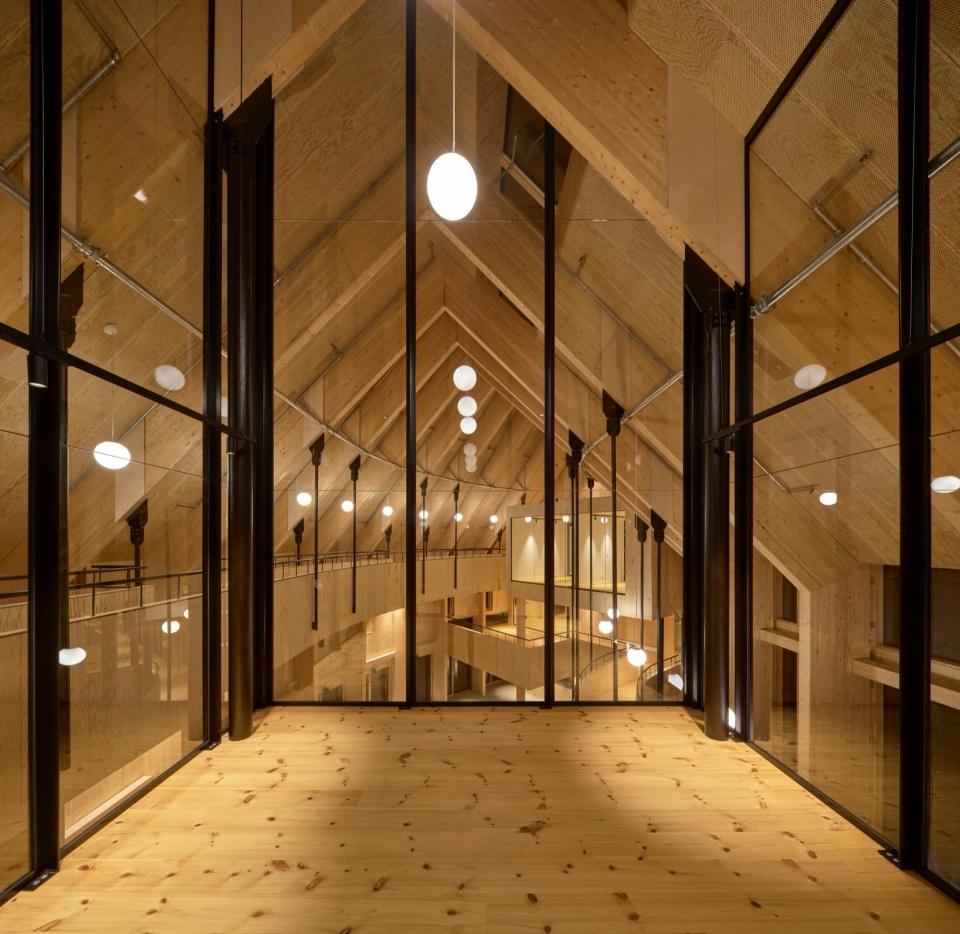
▼走廊,hallway
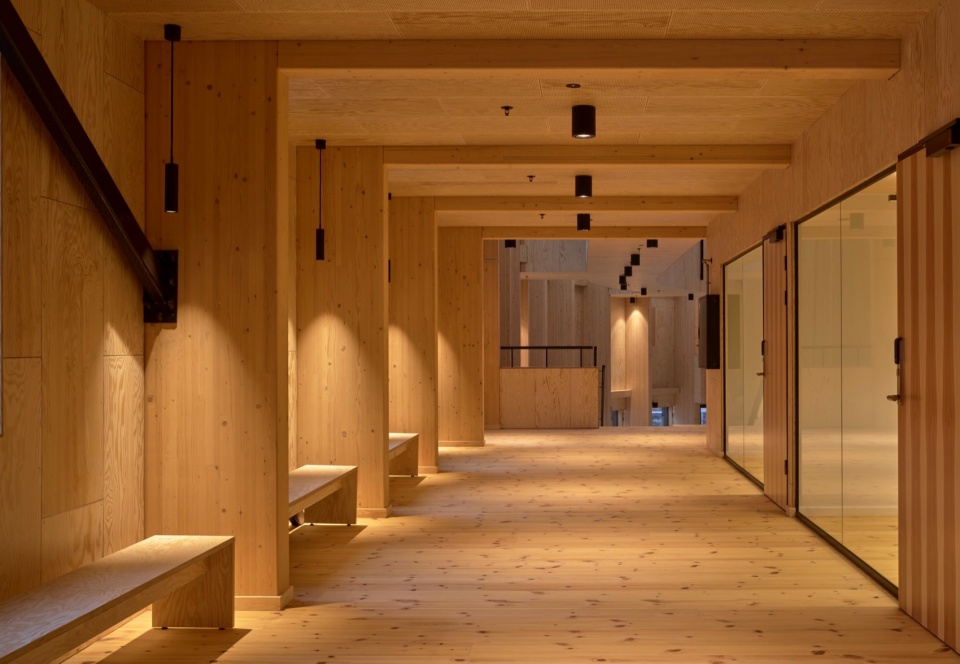
▼顶层走廊,top floor hallway
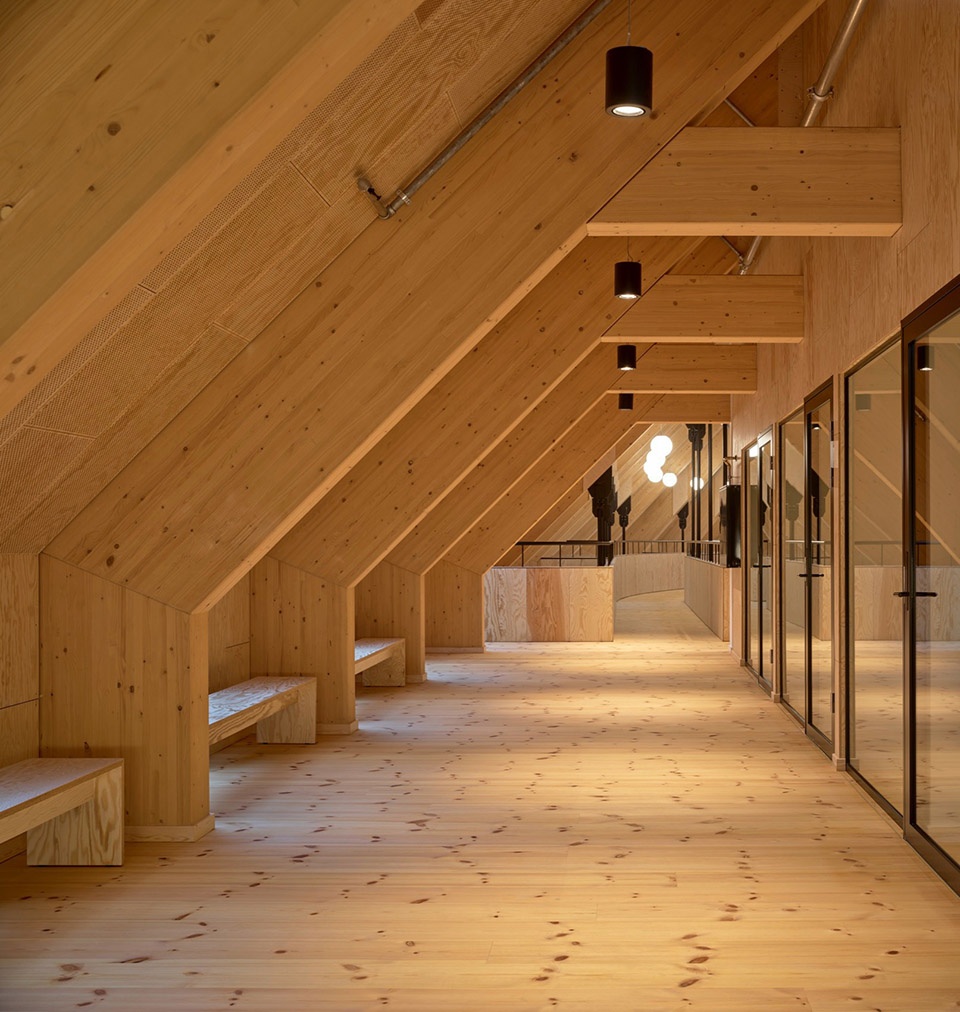
▼细部,details
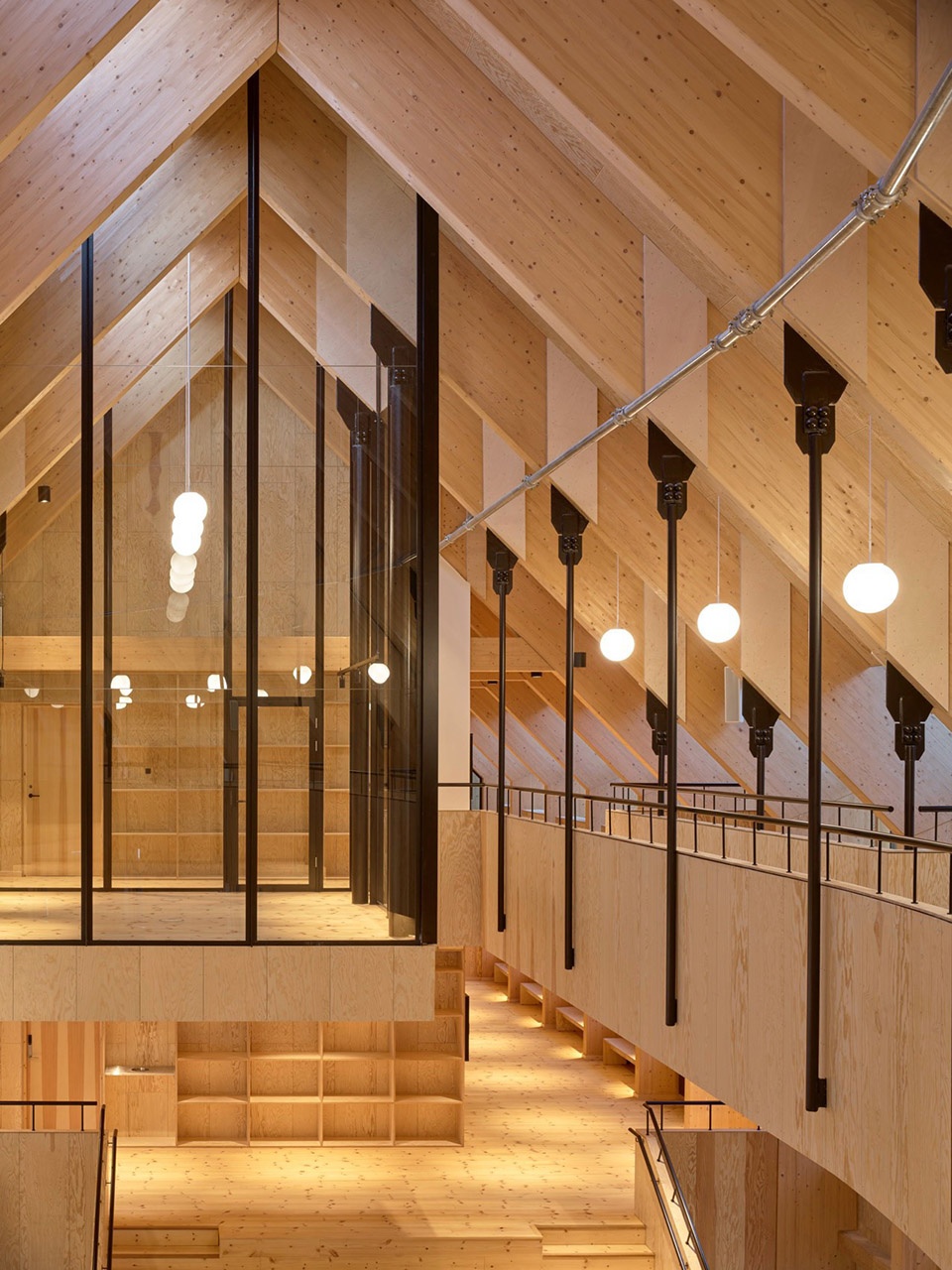
▼连廊,corridor
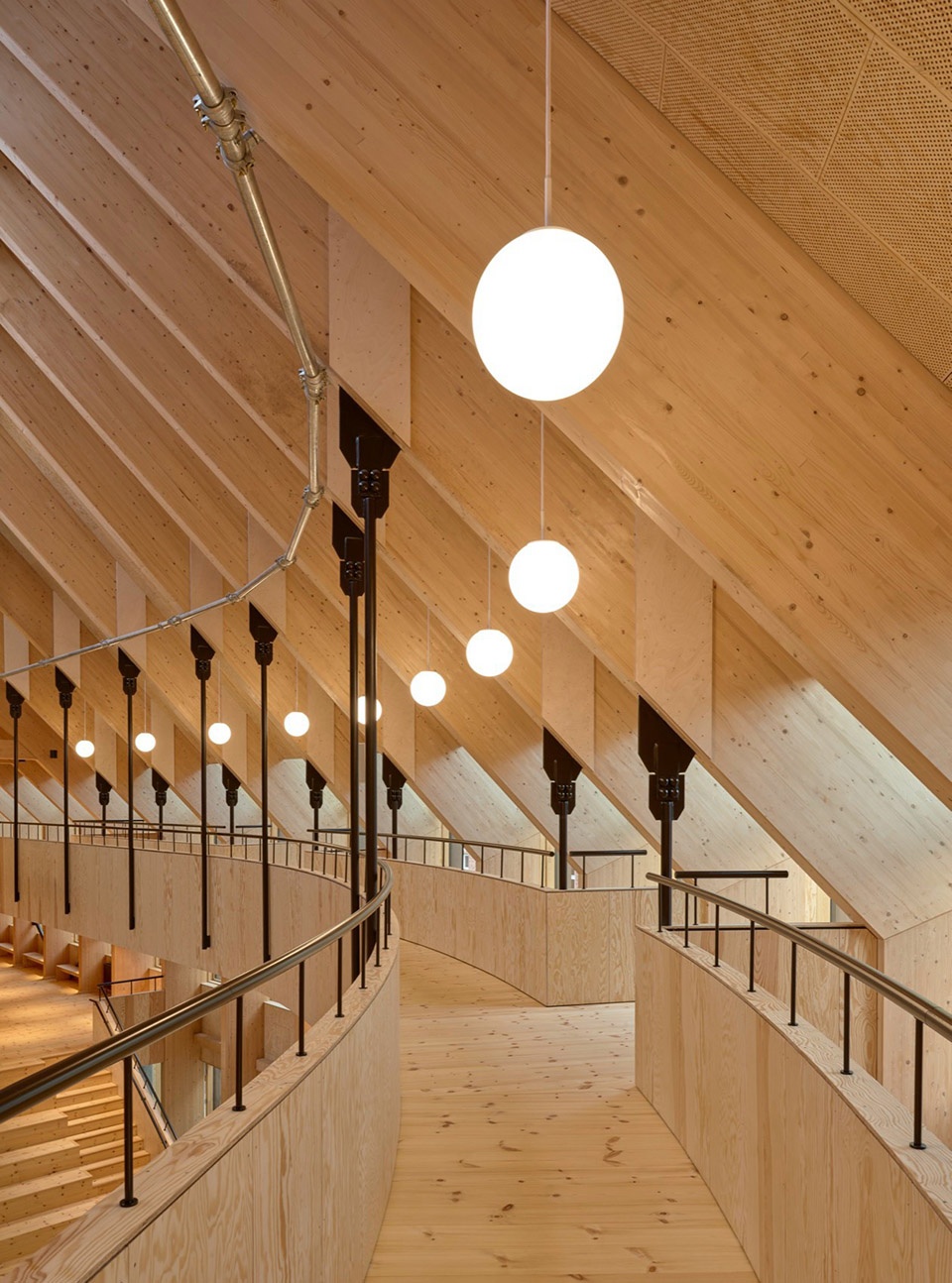
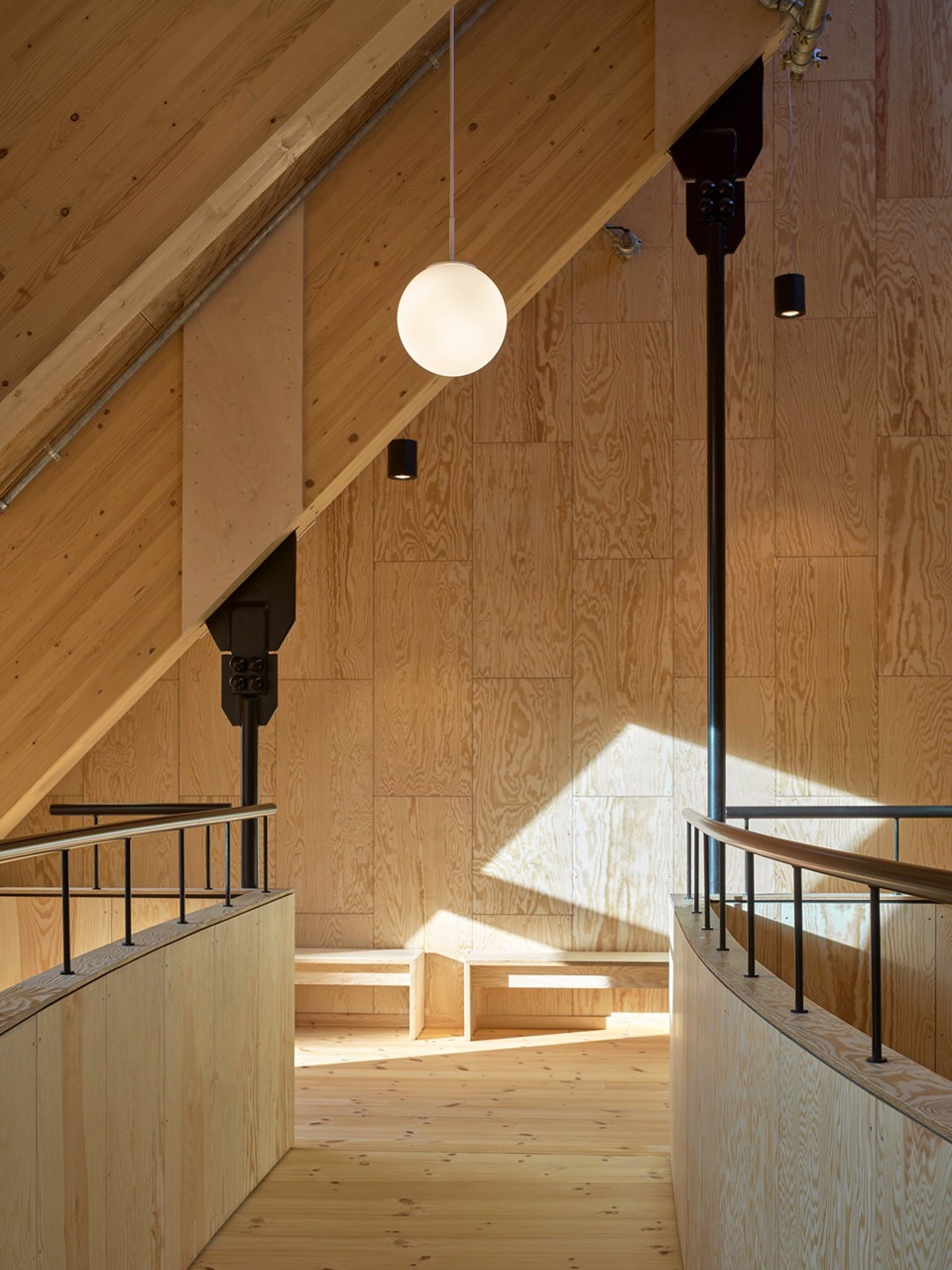
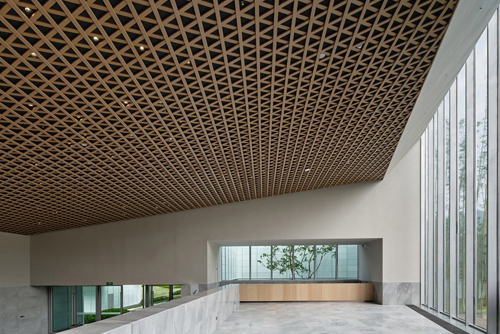
室内空间通过裸露的木饰面墙体与天花贯穿出温暖而居家的氛围,其中部分木板经过穿孔处理以改善声学表现。木材因其带来舒适感、提升室内空气质量并缓解压力的特性而被选用。进入建筑后,迎面而来的是一处开放式中庭,其结构核心由高达 15 米的三铰胶合木拱架构成。这一中央共享空间被命名为“心室(Heart Room)”,如同心脏一般,连接着建筑的“循环系统”,将不同功能有机整合在一起。由此可通往教室、体能训练区、诊疗室、开放式交流空间,以及用于健康烹饪课程的厨房。中央中庭内,一座带有阶梯式座椅的大型木楼梯成为重要的聚集场所,促进人们的相遇与交流,激发自发性的活动与社交互动。室内空间通过立面与屋顶的大面积开窗引入柔和而持续变化的自然光,在一天之中不断呈现新的光影体验。
▼概念图,concept
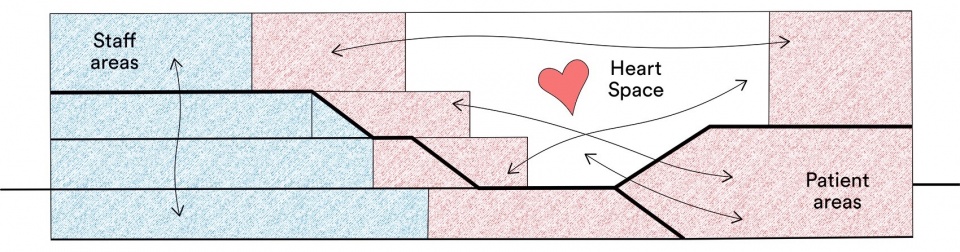
Warmth and homeyness are drawn through the interior spaces by exposed wooden cladding on walls and ceiling – some perforated for acoustic regulation – chosen for its ability to provide comfort, enhance indoor air quality, and reduce stress. Upon arriving, you are met by an open atrium, shaped by a striking loadbearing structure consisting of 15-metre high three-hinged glulam arches. This central, communal area has been named the Heart Room, and like a heart, it connects to the buildings circulatory system and binds the different functions together. From here, there is access to classrooms, areas for physical training, consultation rooms, open meeting spaces, and a kitchen for healthy cooking workshops. A large wooden staircase with integrated seating forms a meeting place in the central atrium where people can gather and interact with each other, enabling spontaneous, impromptu activities and social encounters. The interior spaces are illuminated by a gentle natural light influx through large windows in the façade and roof which continuously offer new impressions throughout the day.
▼底层空间,ground floor space
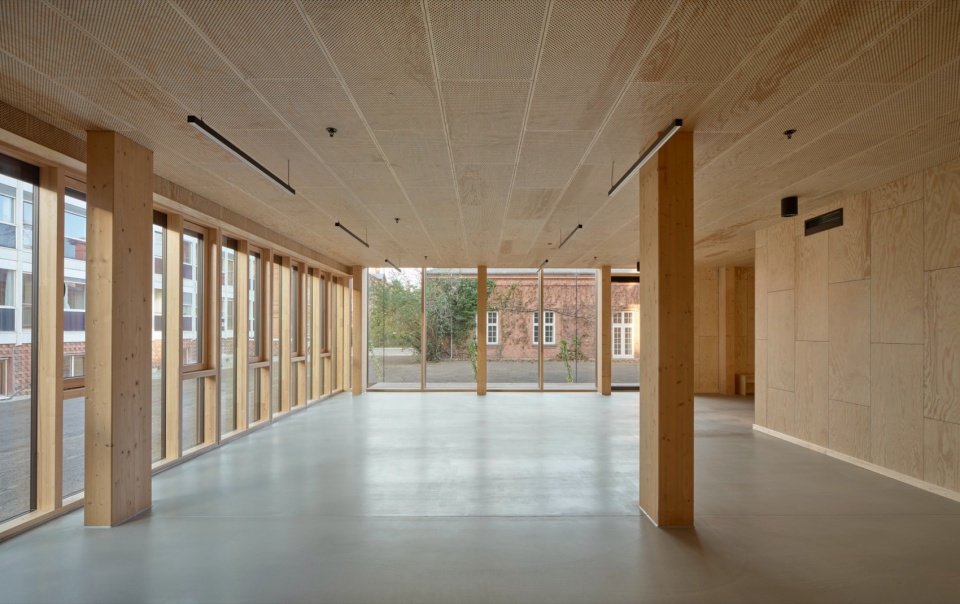
▼天窗,skylight
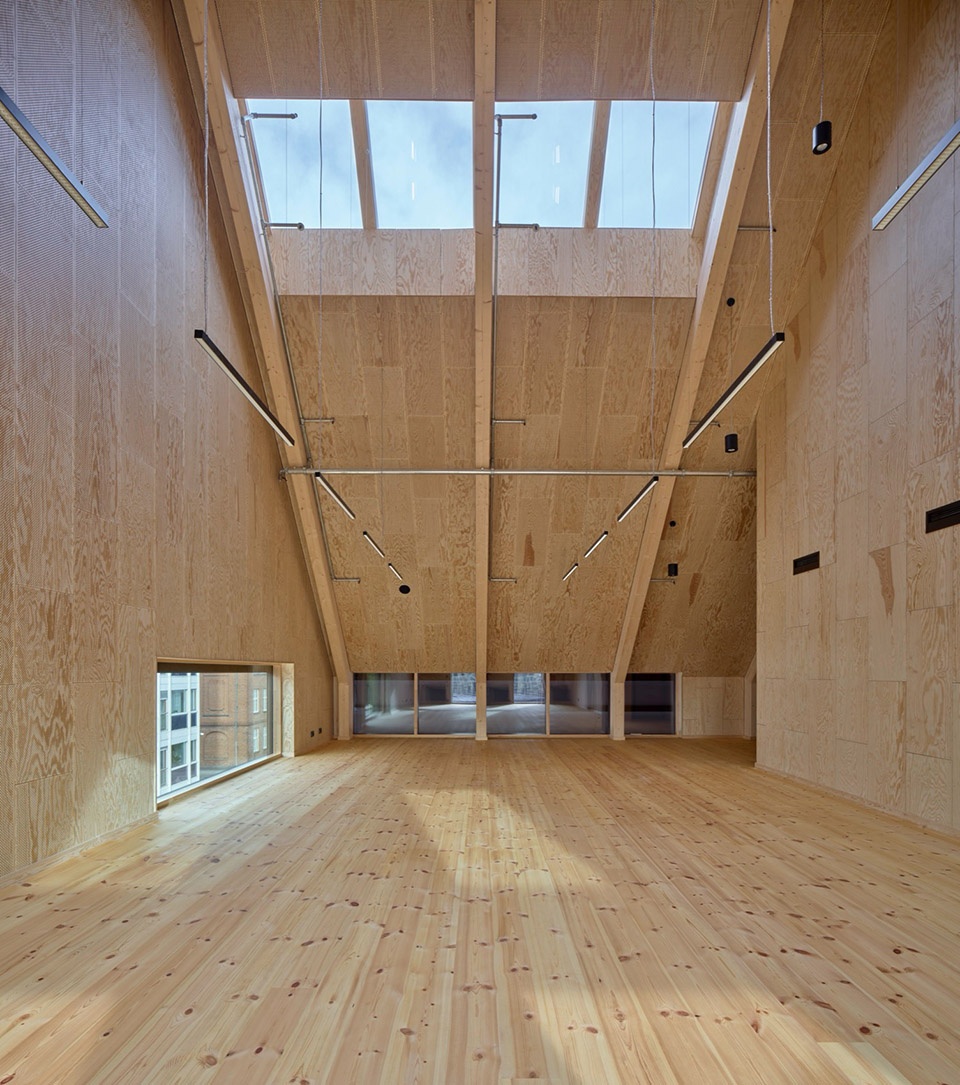
▼活动室,activity room
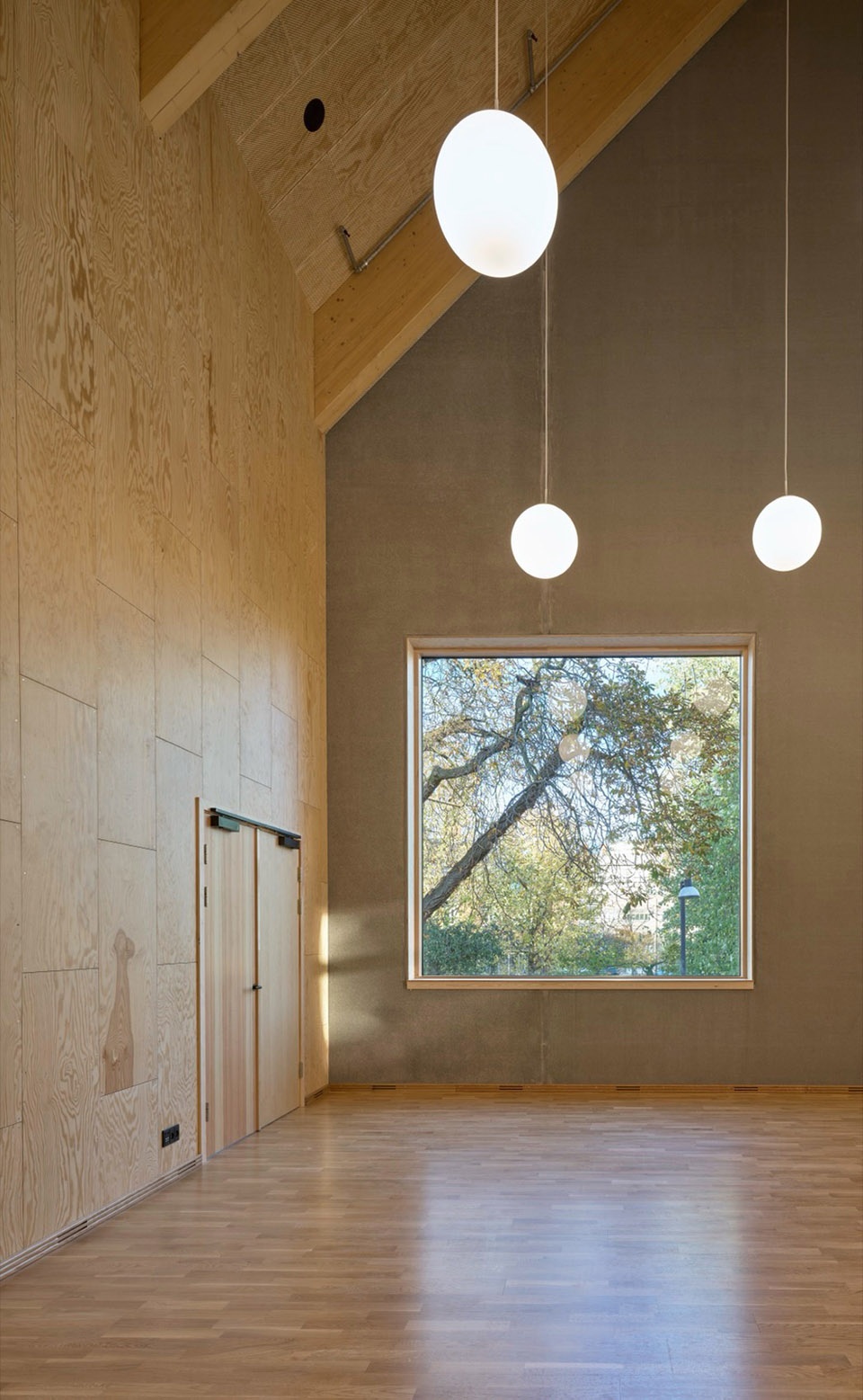
▼地下层,basement floor
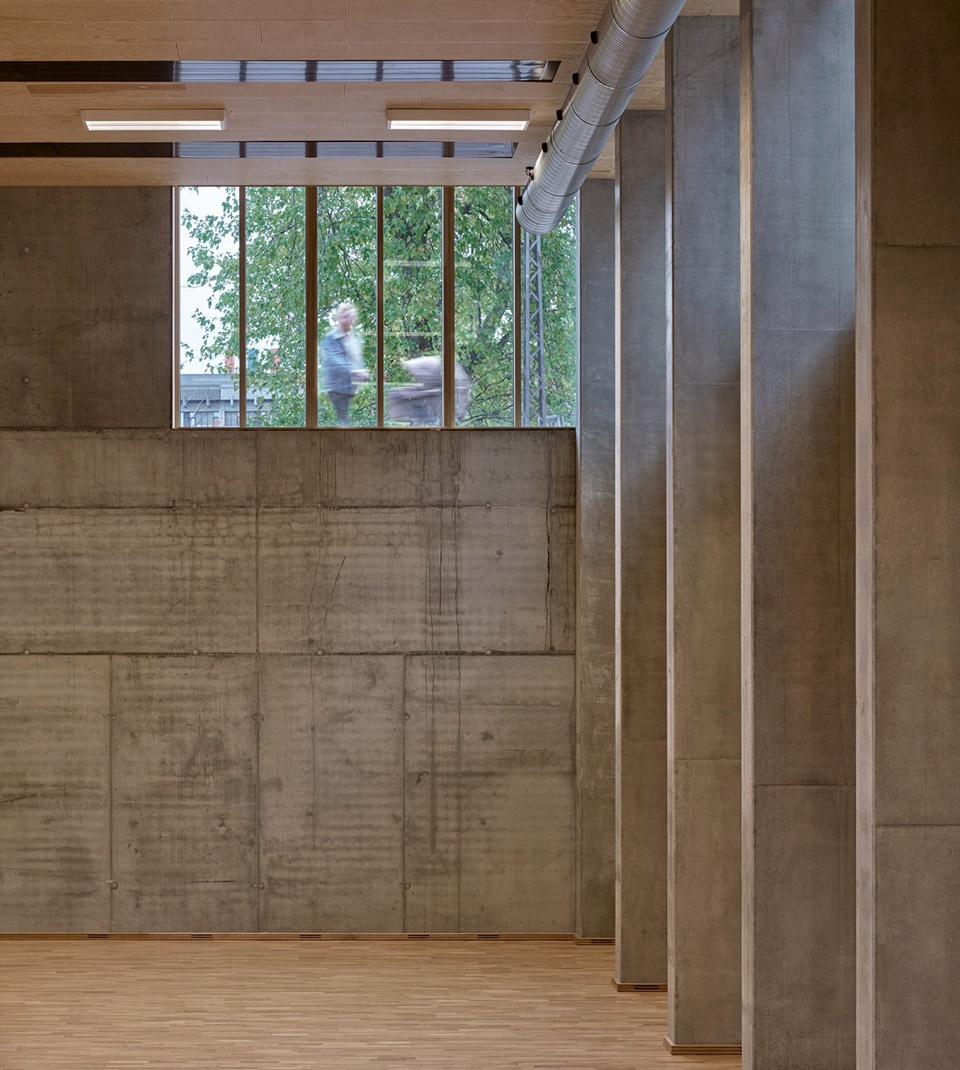
▼使用场景,using scenario
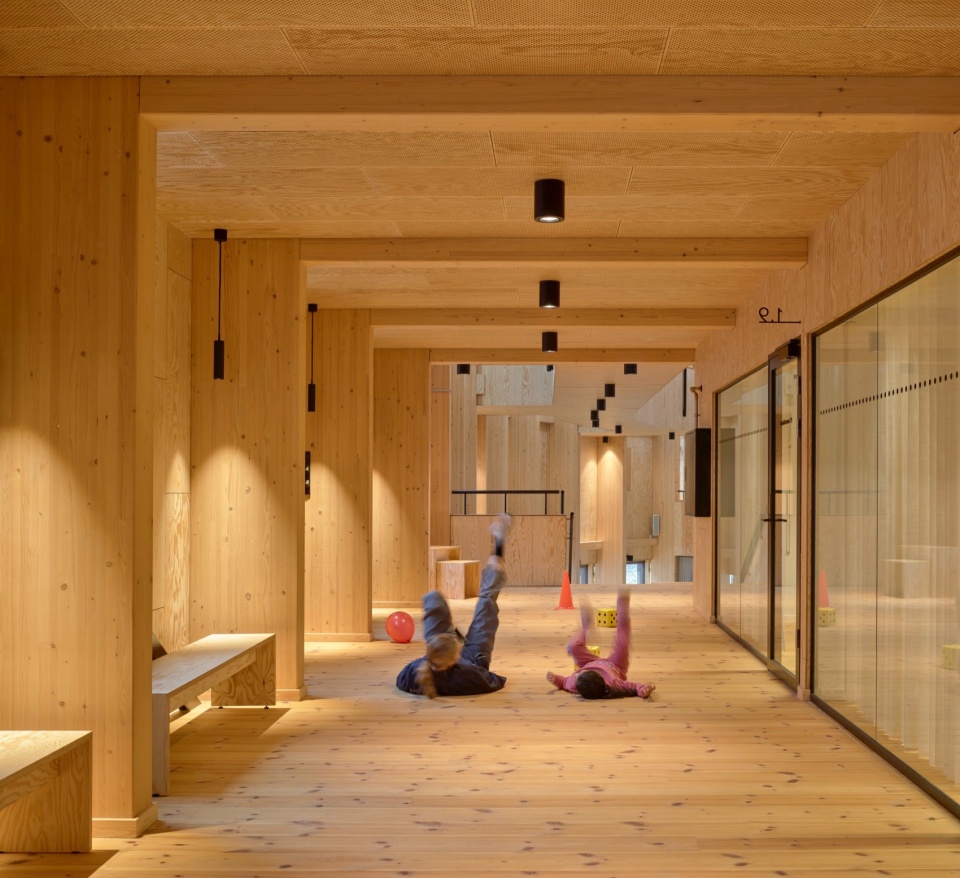
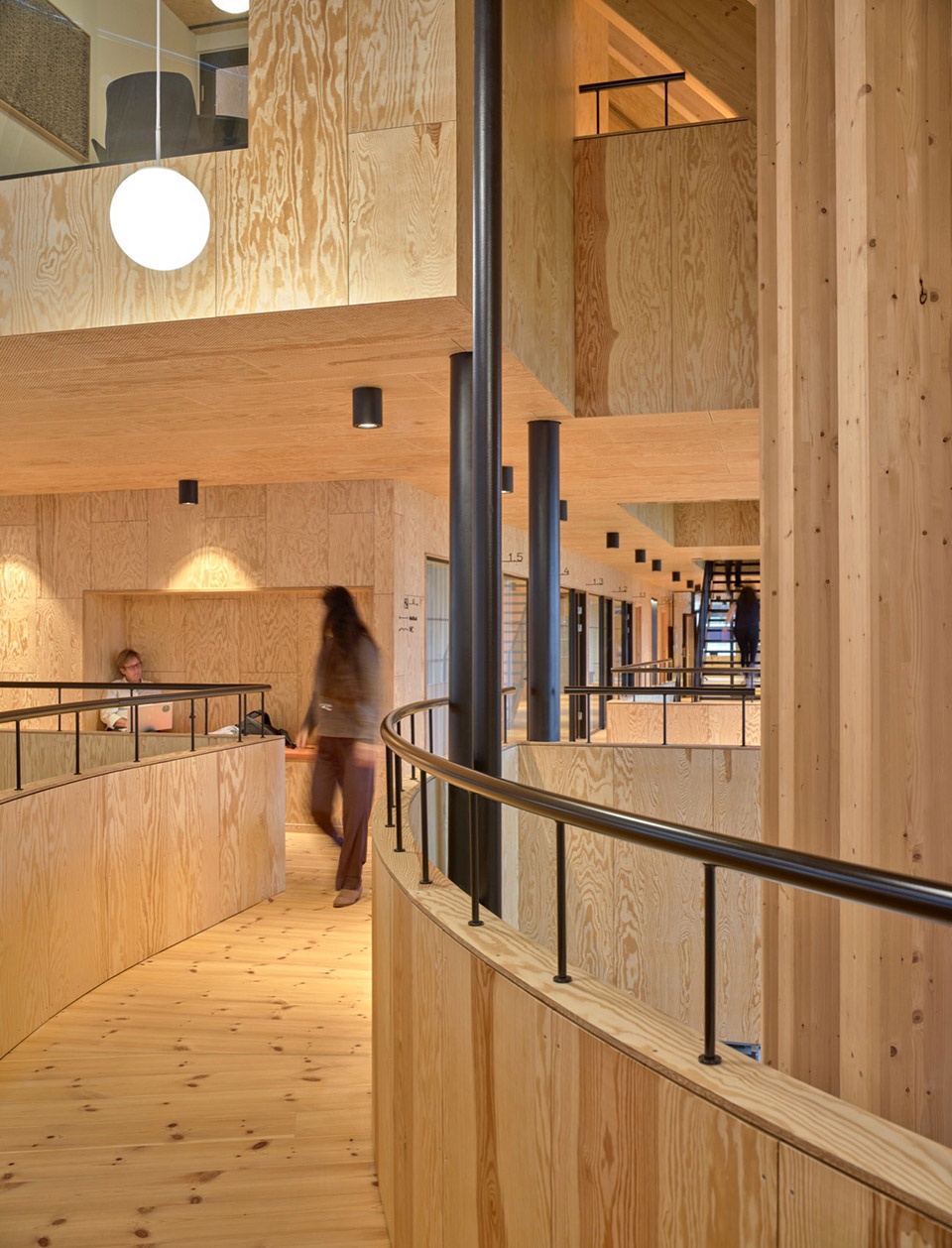
▼运动室,sports hall
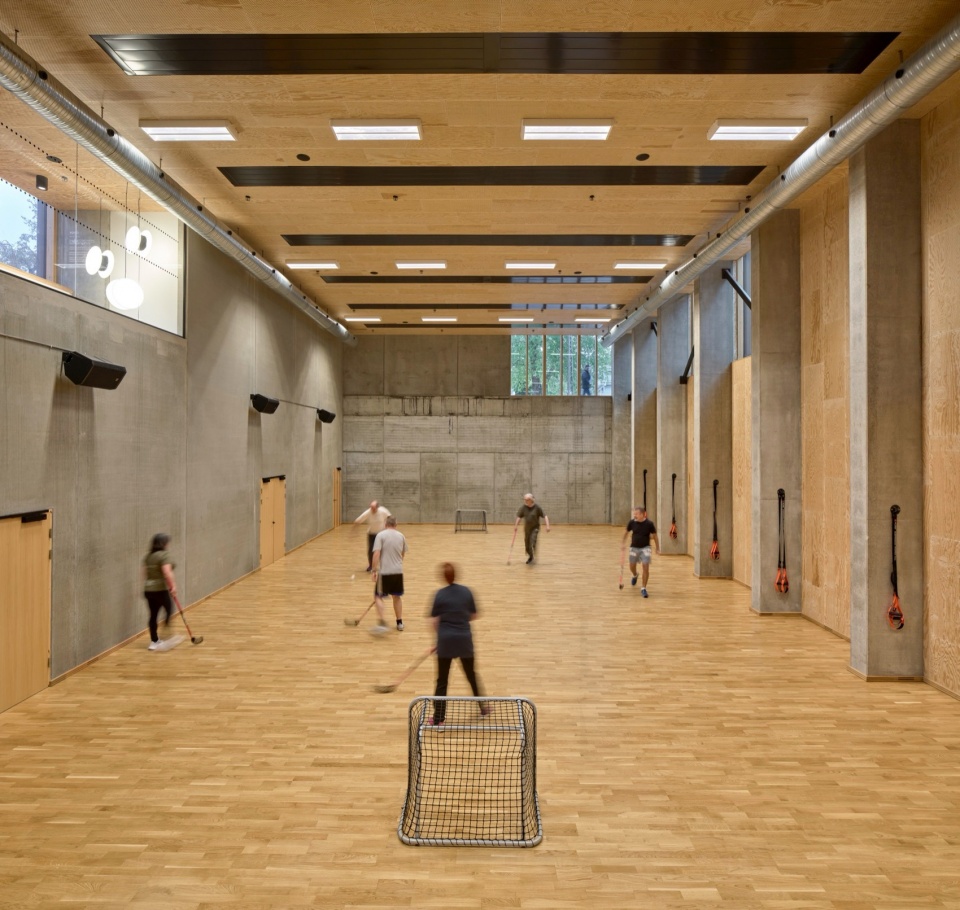
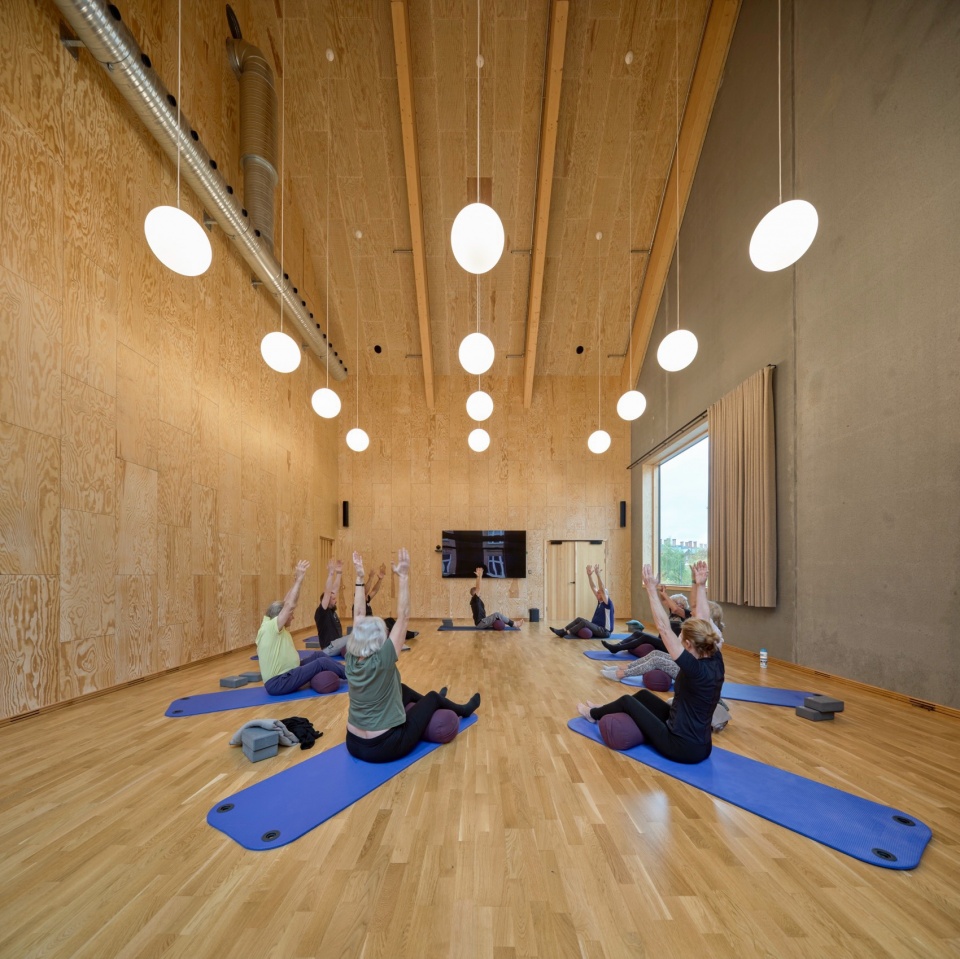
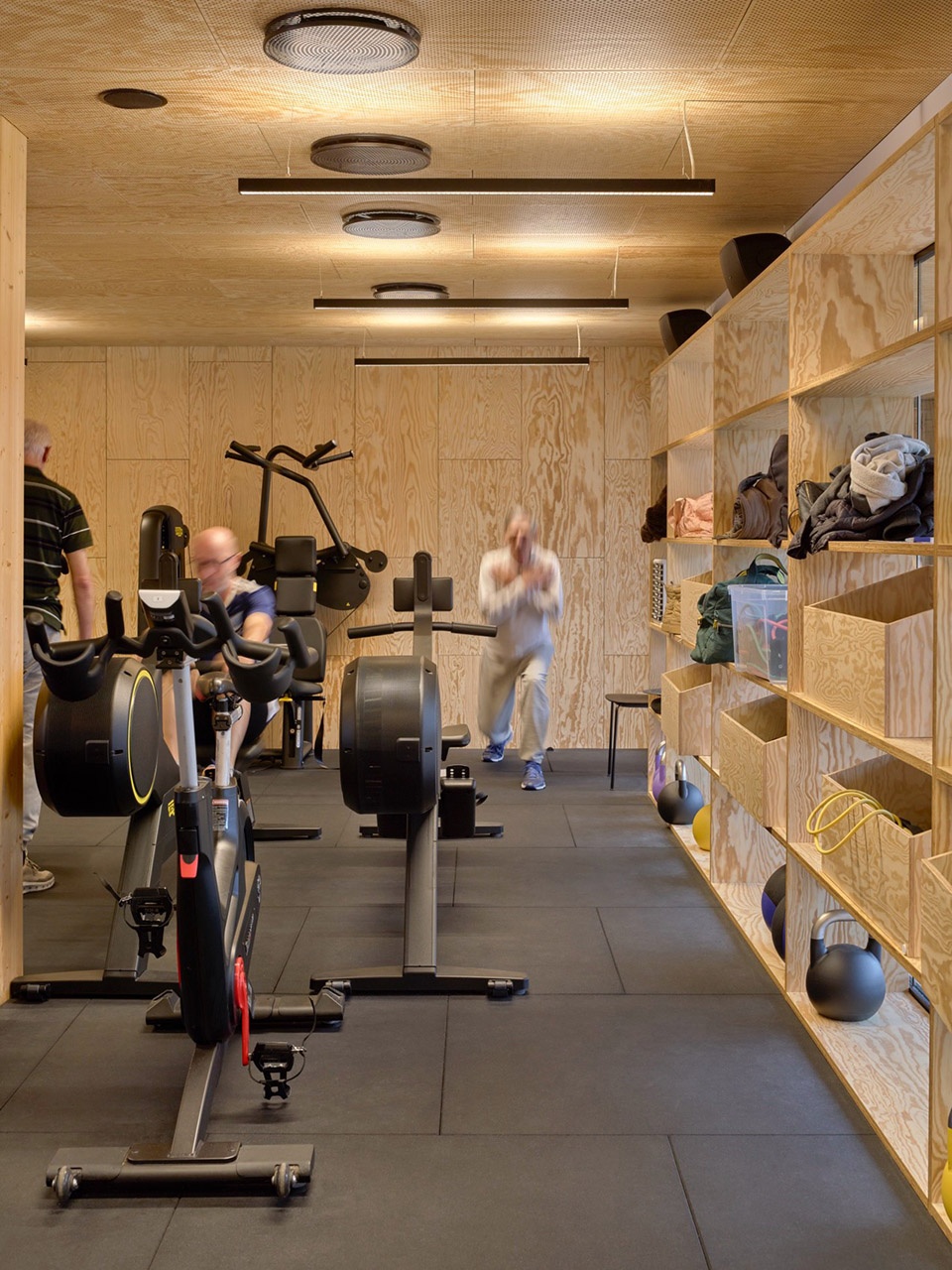
▼健身房,gym
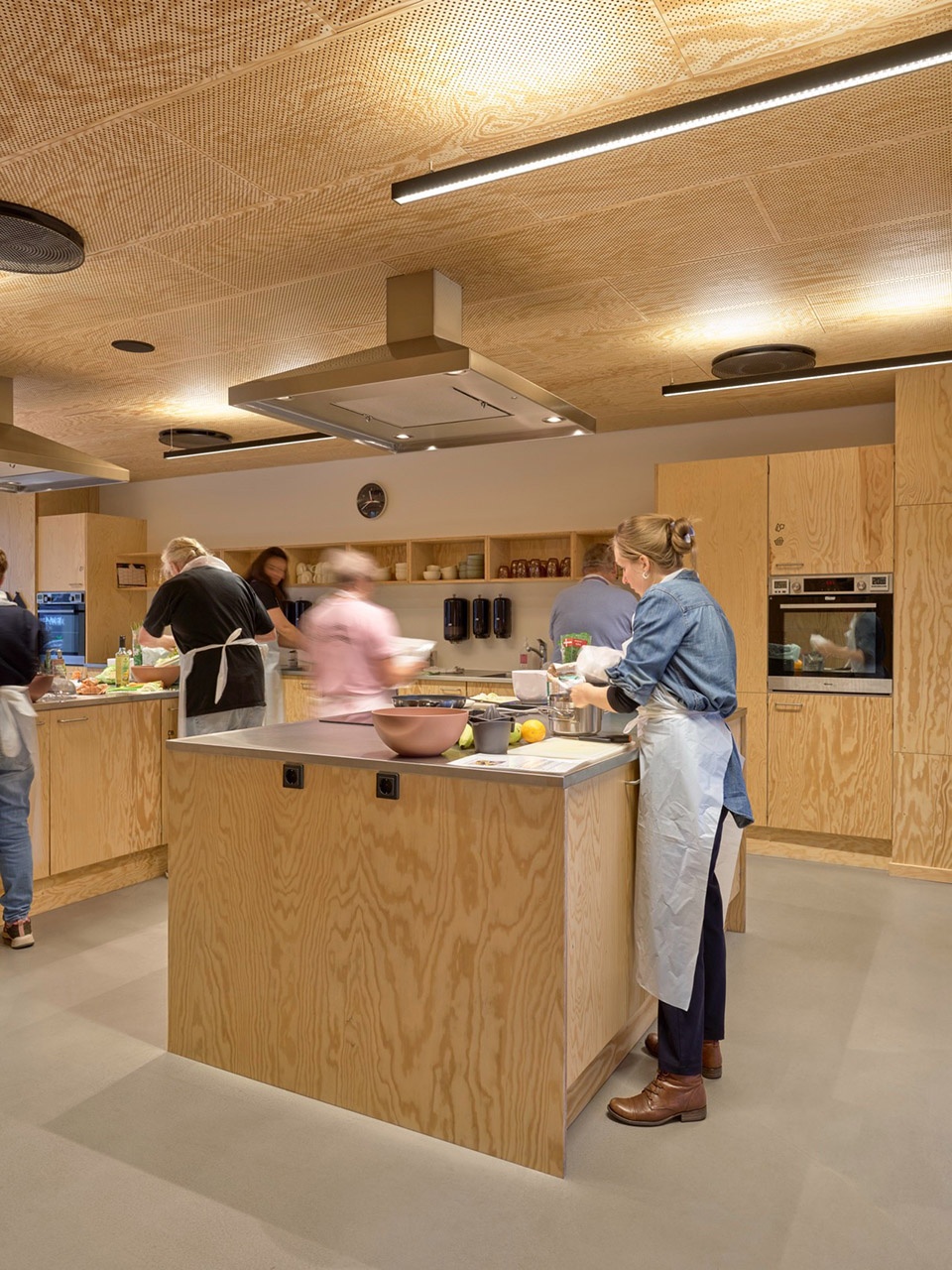
▼厨房,kitchen
回应并对话场地语境Reflecting and contrasting the context
项目坐落于深受喜爱的哥本哈根社区“De Gamles By(老人之城)”入口处。该区域长期以来与照护、健康与福祉密切相关,最初于 1892 年建成,作为医院及老年人居所,其建筑与景观旨在营造一种平静、自足的“村落式”环境,体现对无法自理人群的集体生活愿景。如今,“De Gamles By”被重新塑造为一个开放的公共环境,提供多样的社区服务,并在高密度的诺尔布罗(Nørrebro)城区中形成一处独特的休闲绿洲。
Nestled by the entrance to the beloved Copenhagen neighbourhood ‘De Gamles By’ (City of the Elderly), the new Centre for Health is part of an area that has long been synonymous with care, health, and wellbeing. Originally built in 1892 as a hospital and home for the city’s elderly, the architecture and landscapes of ‘De Gamles By’ were designed to provide a calming, self-contained village atmosphere, embodying a vision of communal living for those who were no longer able to care for themselves. Today, the neighbourhood has been reimagined as an open, public environment, offering different community services and a unique recreational pocket within the dense Nørrebro district.
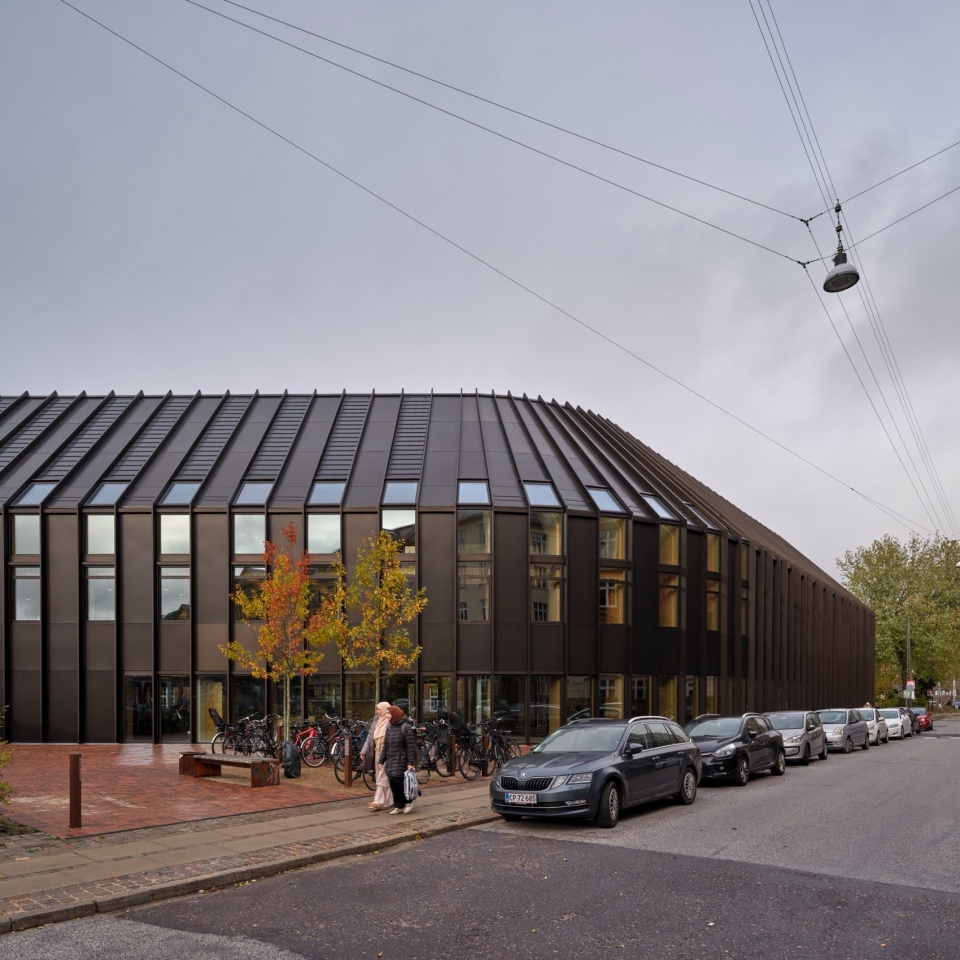
▼沿街视角,street view
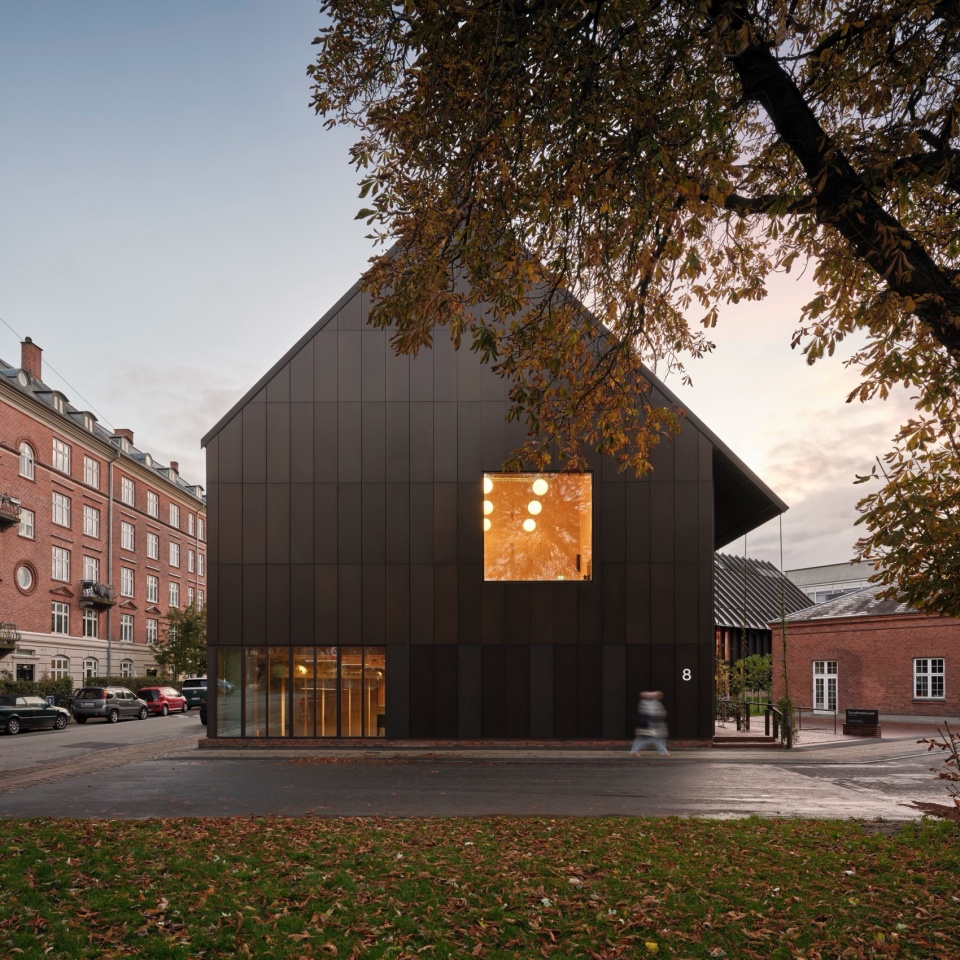
▼山墙立面,the gable facade
▼庭院,courtyard
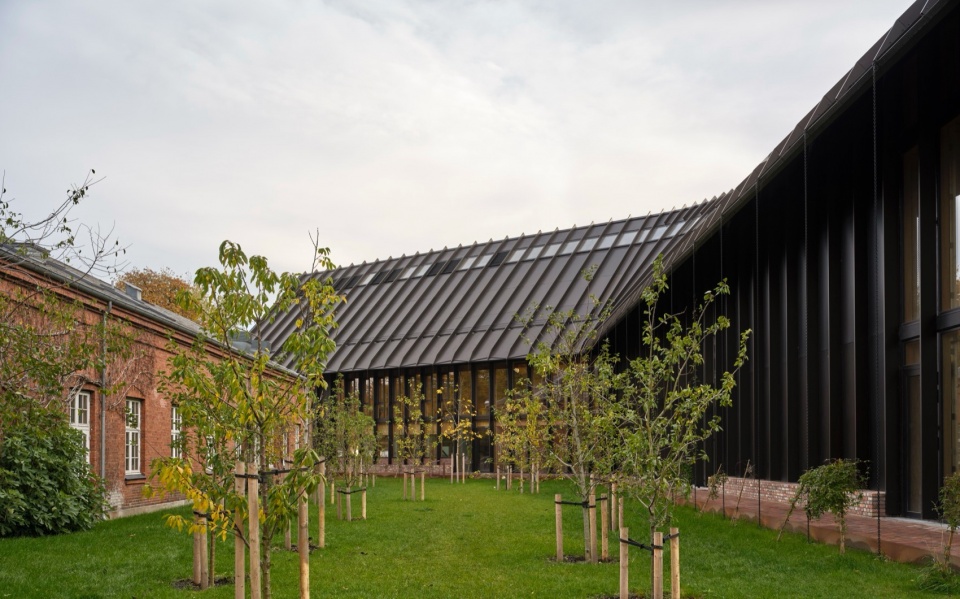
▼庭院立面,facade facing the courtyard
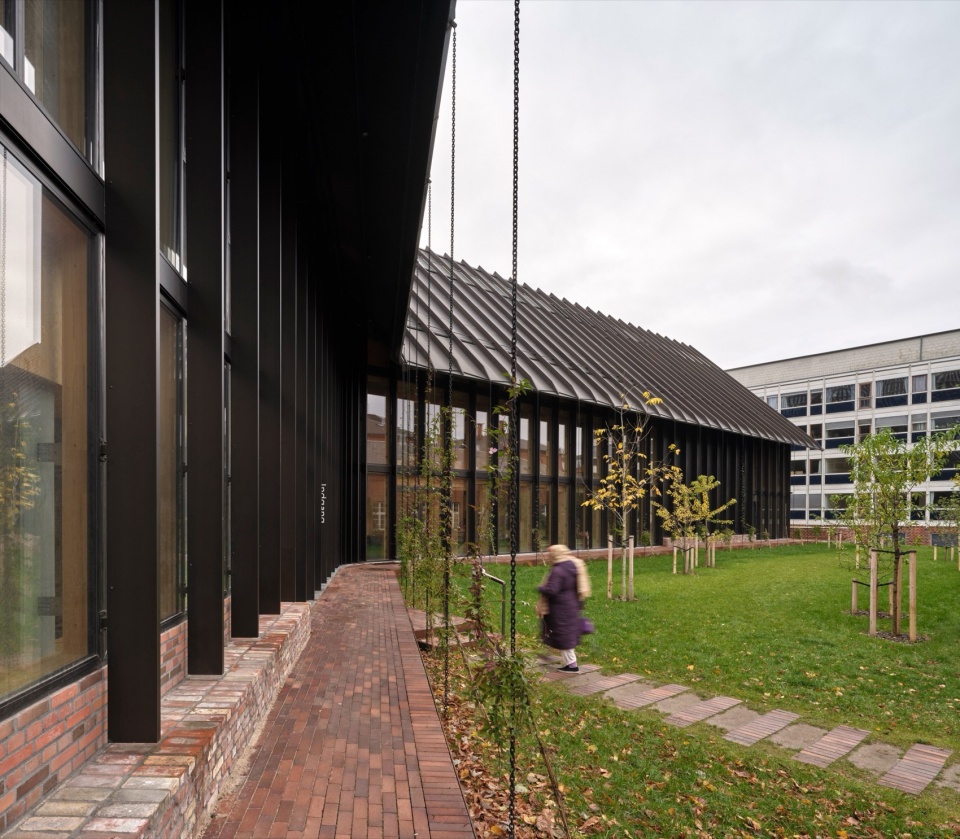
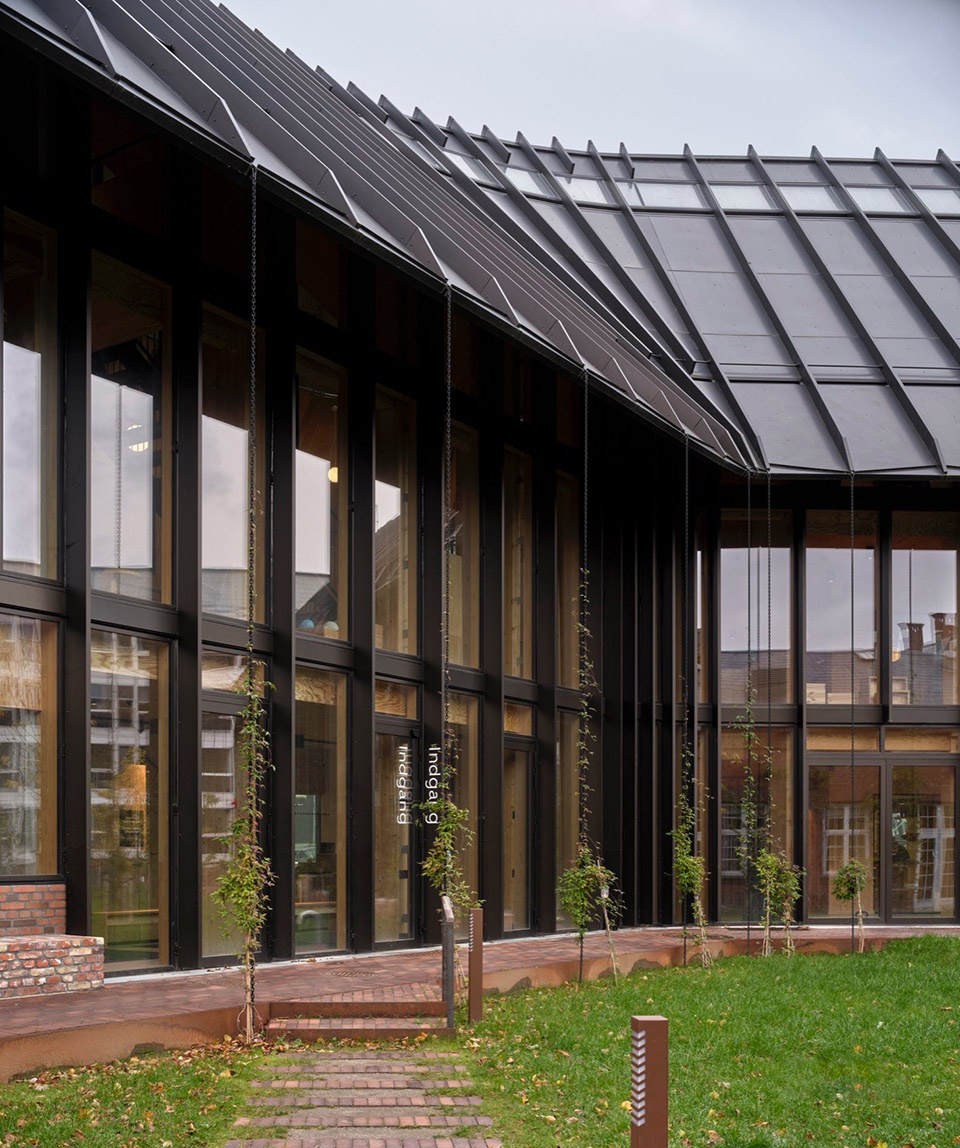
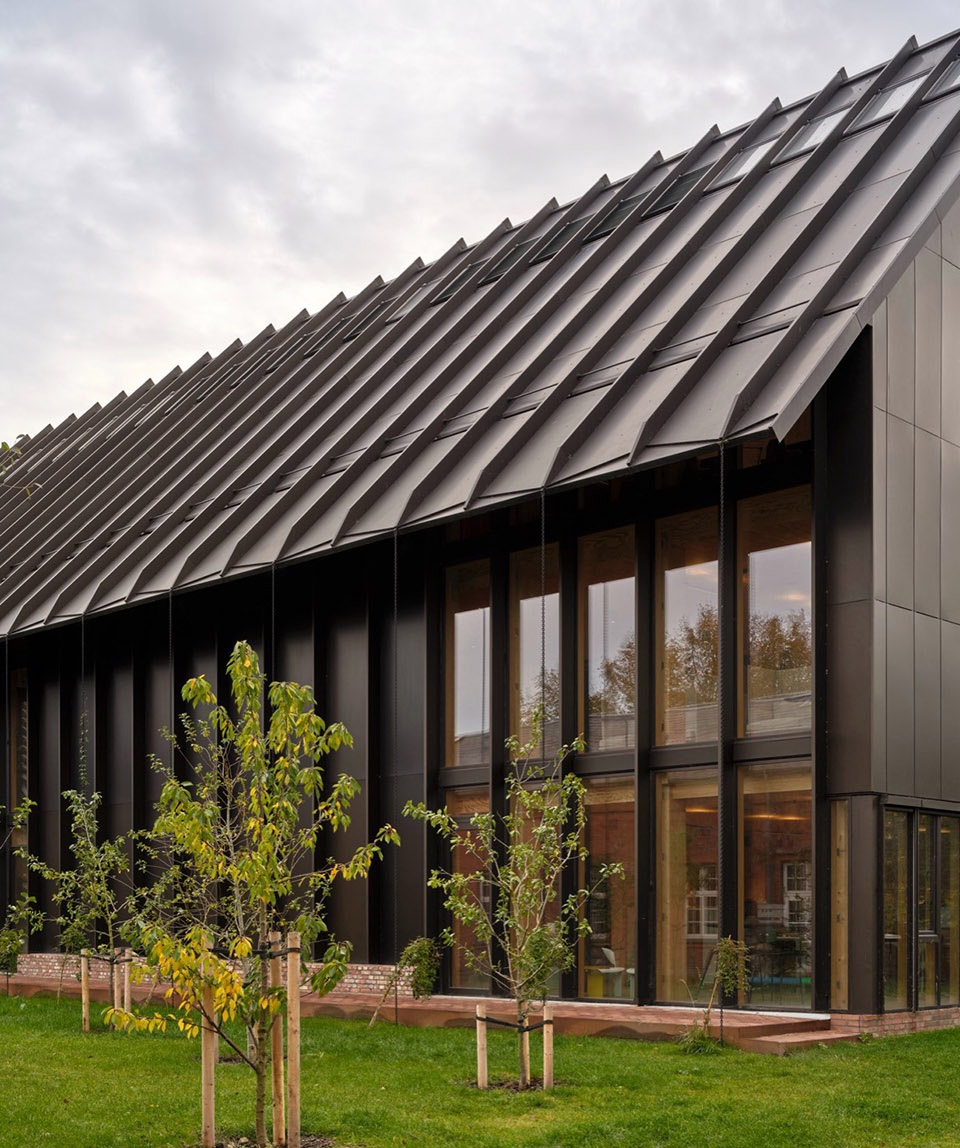
▼立面细部,details of the facade
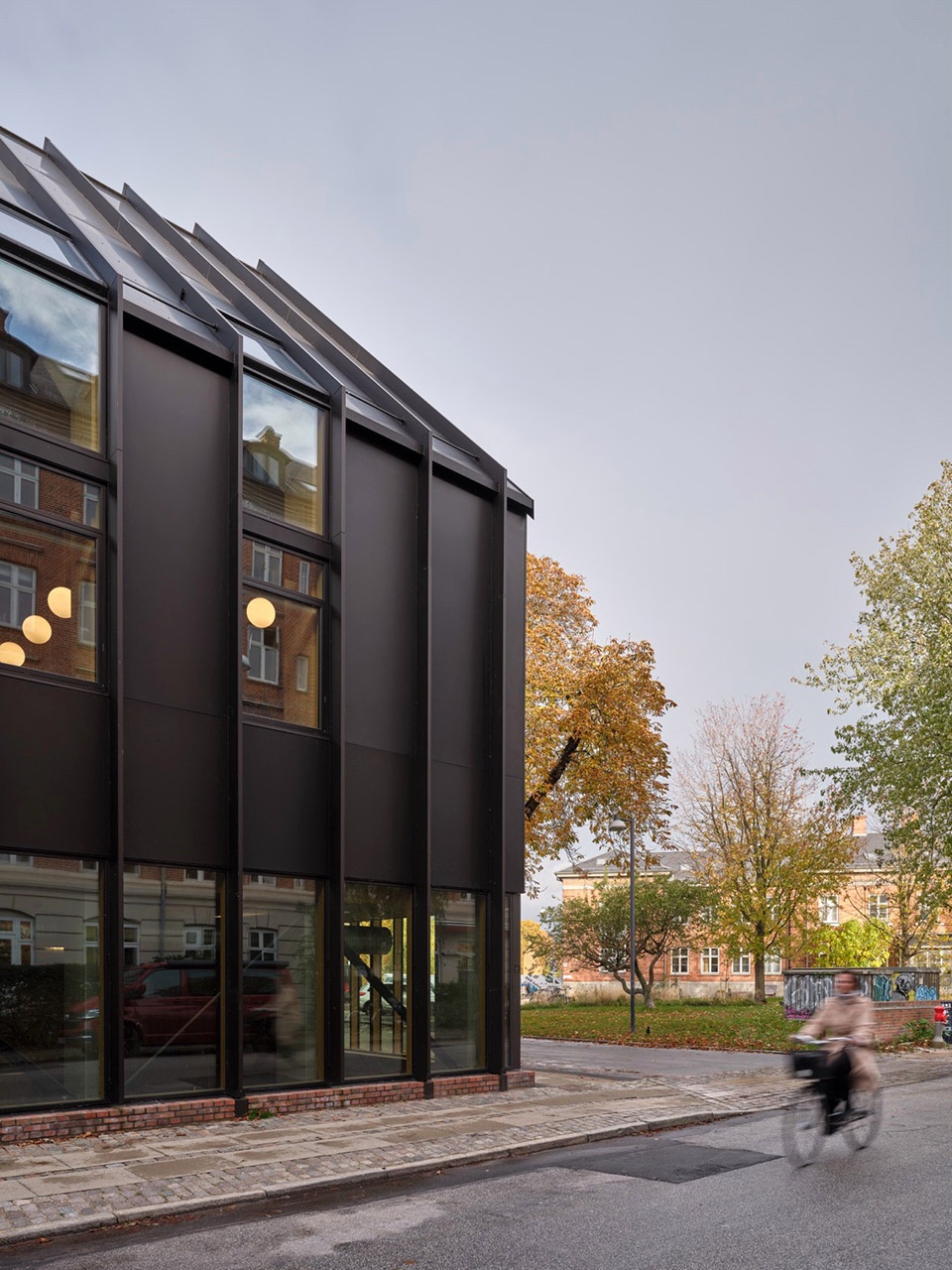
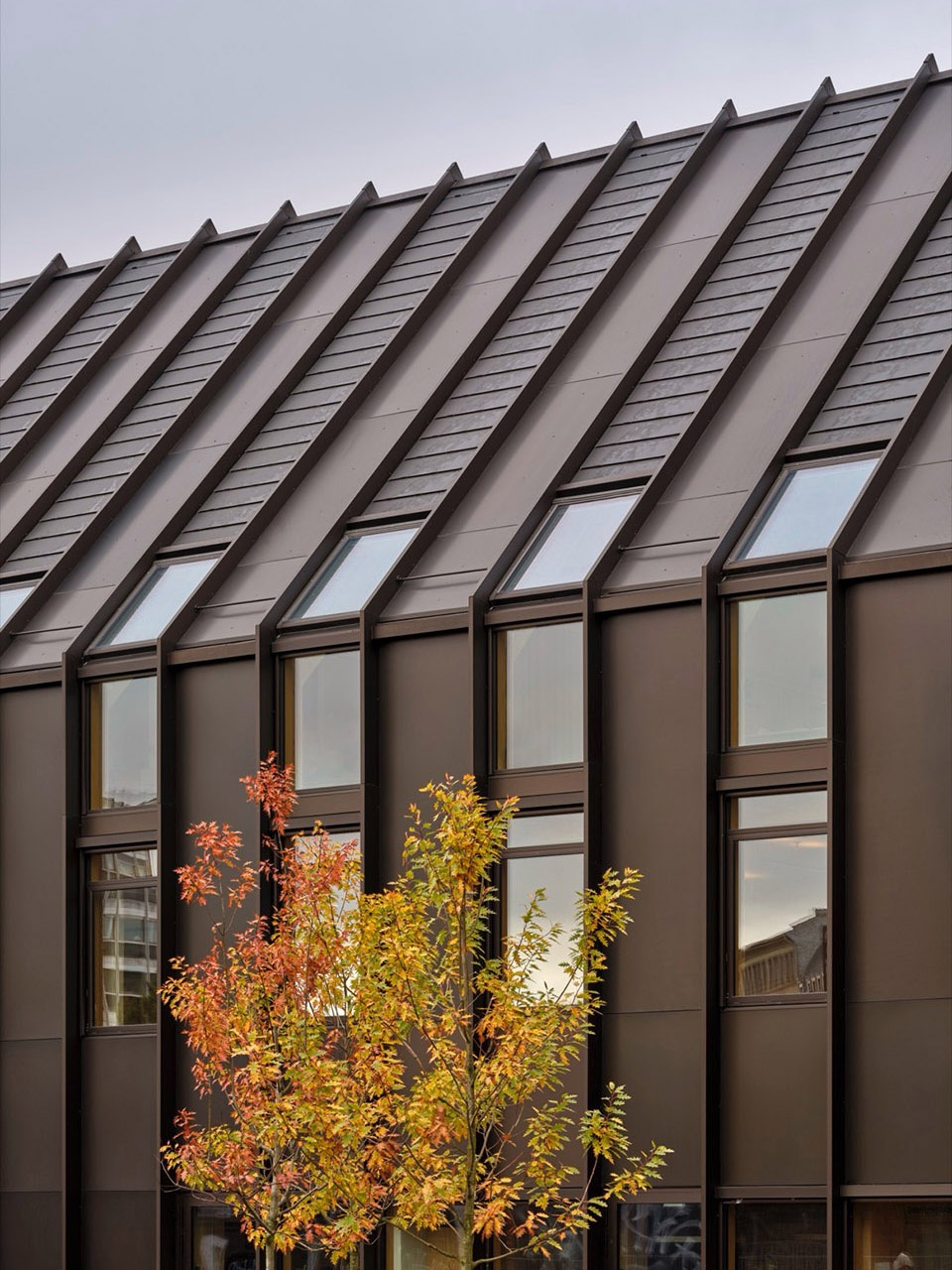
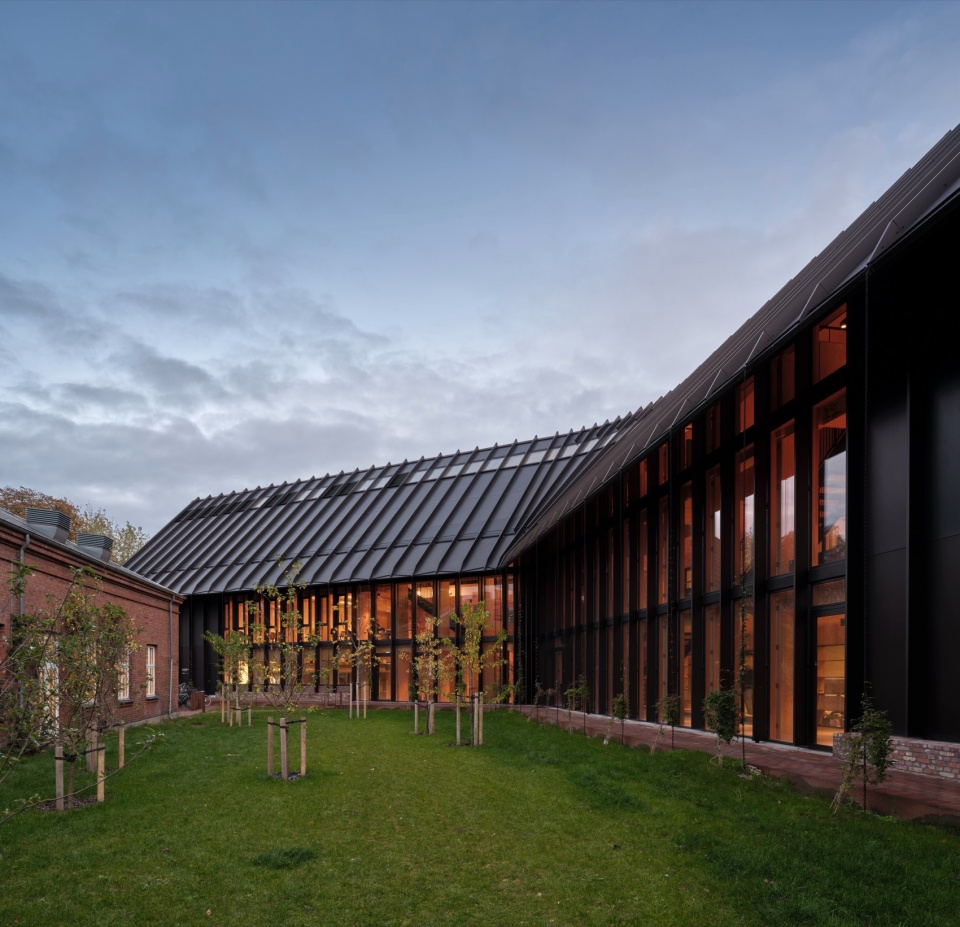
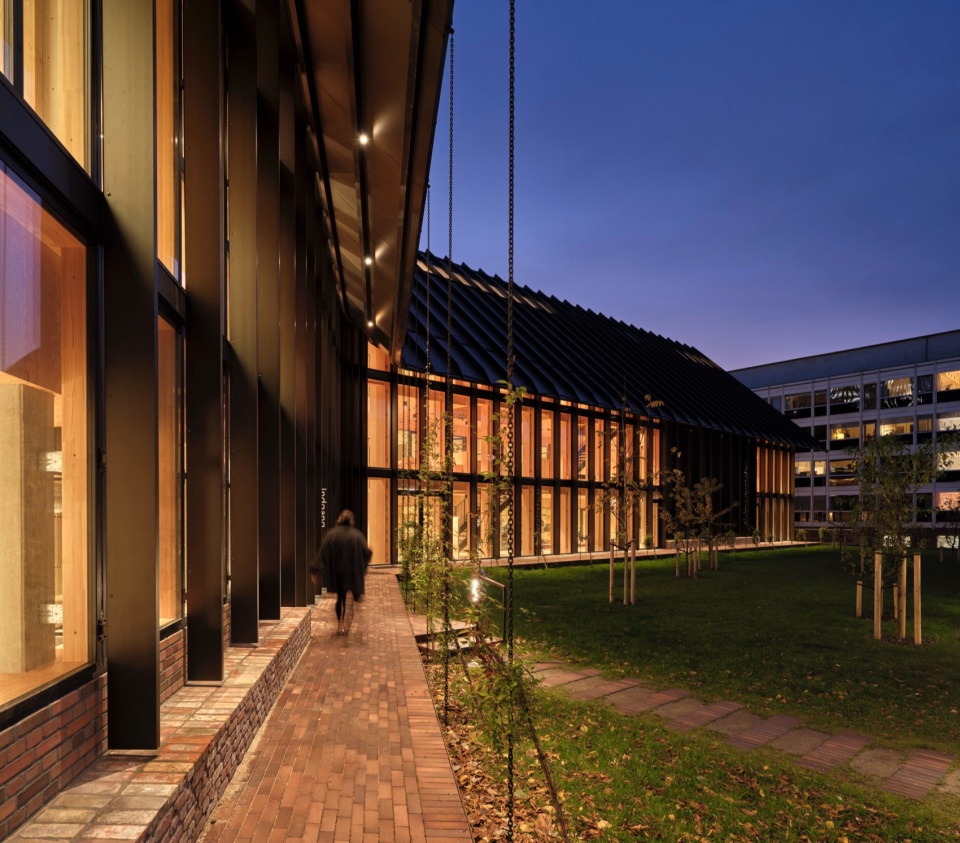
新的健康中心在形式上汲取了周边地区典型的山墙母题与马鞍形屋顶,同时以当代建筑语言形成对既有环境的回应与对比。建筑整体呈柔和弧形,向花园方向敞开。面向街道的一侧,黑褐色金属板如同一层自屋顶延展而下的“保护性外皮”,包裹并庇护着内部空间。屋顶无缝整合了 164 平方米的太阳能板,用于生产并储存可再生能源。内部木结构在外立面中清晰可读,并通过深挑檐与竖向木格栅延伸至街道层面,在提供遮阳的同时降低太阳辐射。朝向花园的一侧则完全打开为玻璃立面,将充足的自然光引入室内,并在视觉上将建筑与绿色户外空间紧密连接。
The new Centre for Health draws inspiration from the gable motifs and saddle roofs characteristic of the surrounding area yet forms a contemporary contrast to the existing. The building is shaped as a softly curved arch that opens towards a garden. Black-brown metal sheets embrace and shelter the interior spaces towards the street – like a protective skin pulled from the roof over the façade. Seamlessly integrated into the roof are 164 square metres of solar cells that will produce and store renewable energy. The interior timber structure is a readable feature in the exterior façade as well as in the deep slats that continue down to street level, providing protection from solar gain. Towards the garden, the building opens with a full glass façade, inviting natural daylight and visually connecting the interior with the green, outdoor spaces.
▼夜景,night views
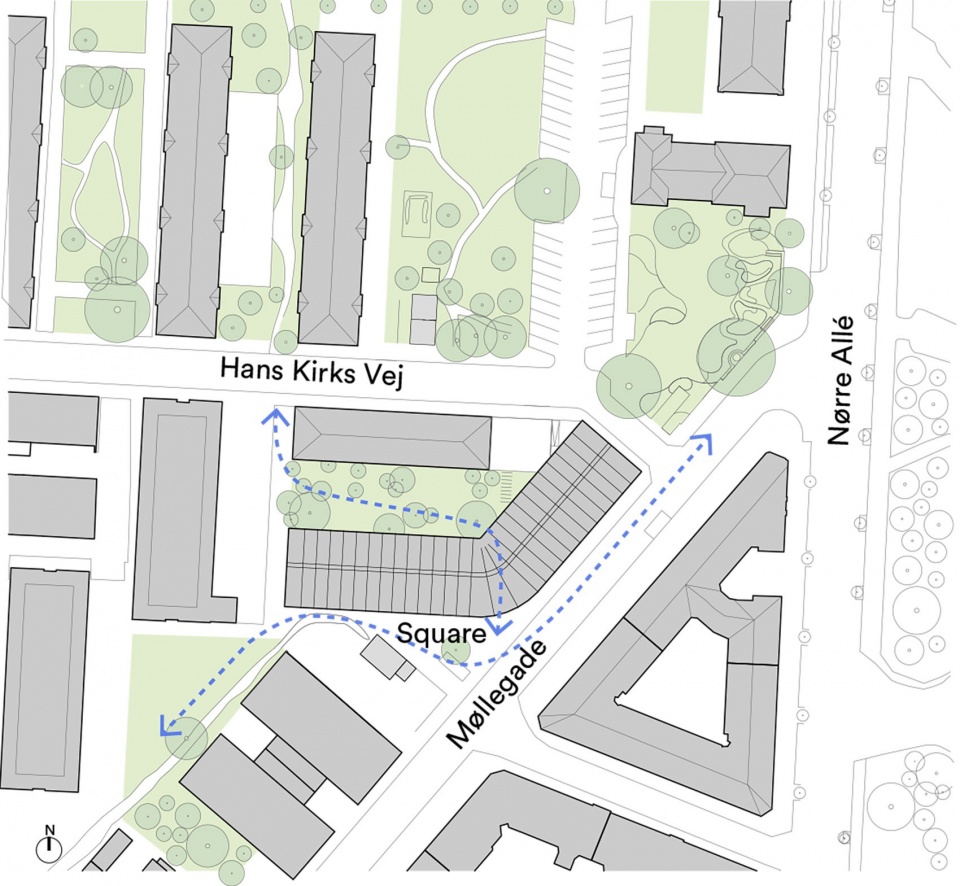
▼场地平面图,site plan
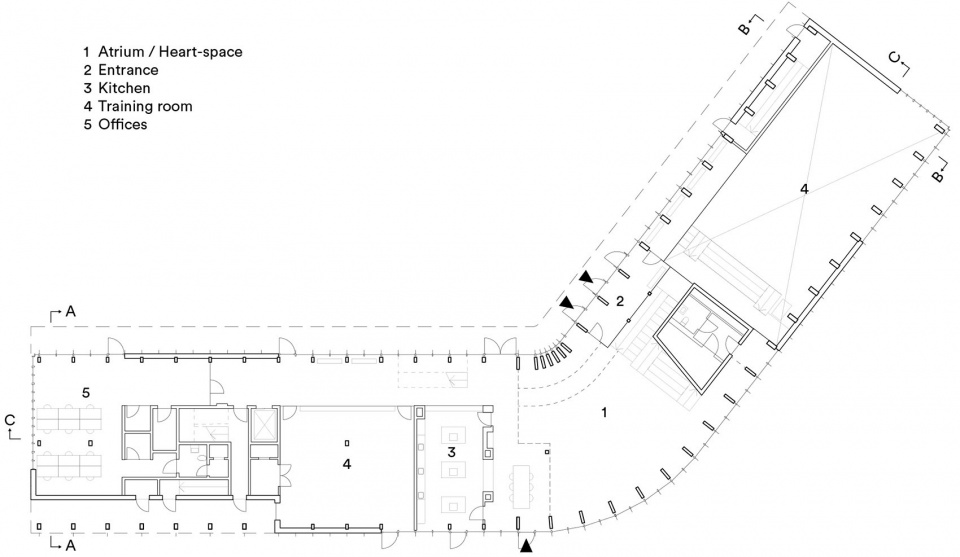
▼一层平面图,ground floor plan
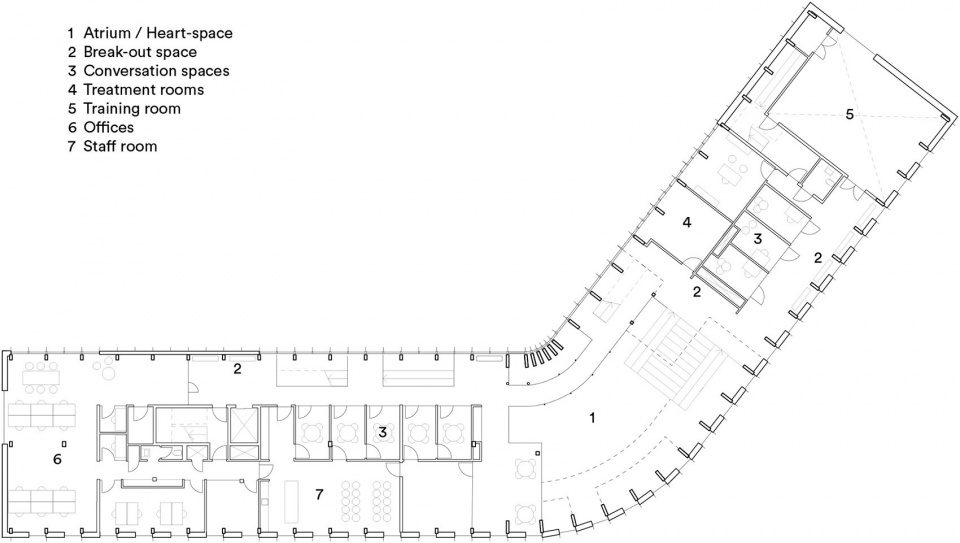
▼二层平面图,first floor plan
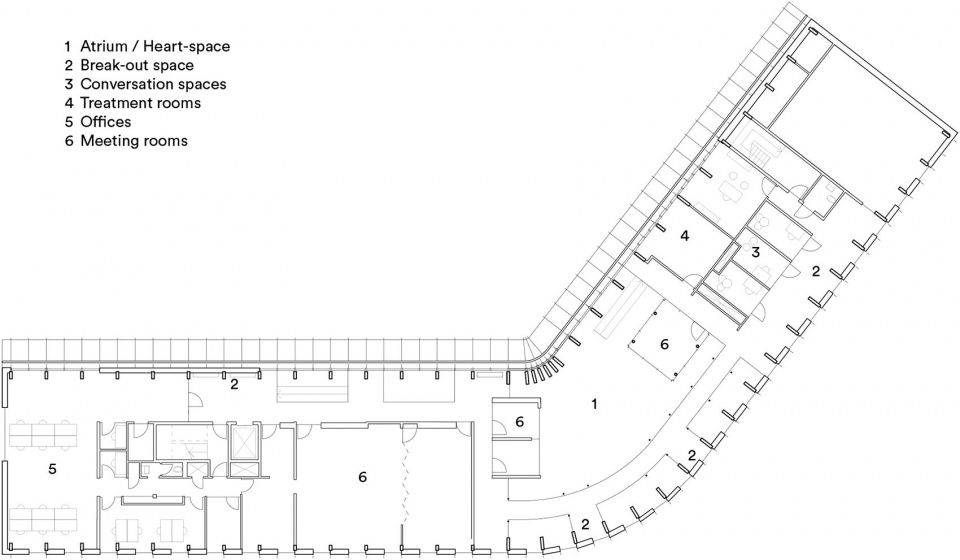
▼三层平面图,second floor plan
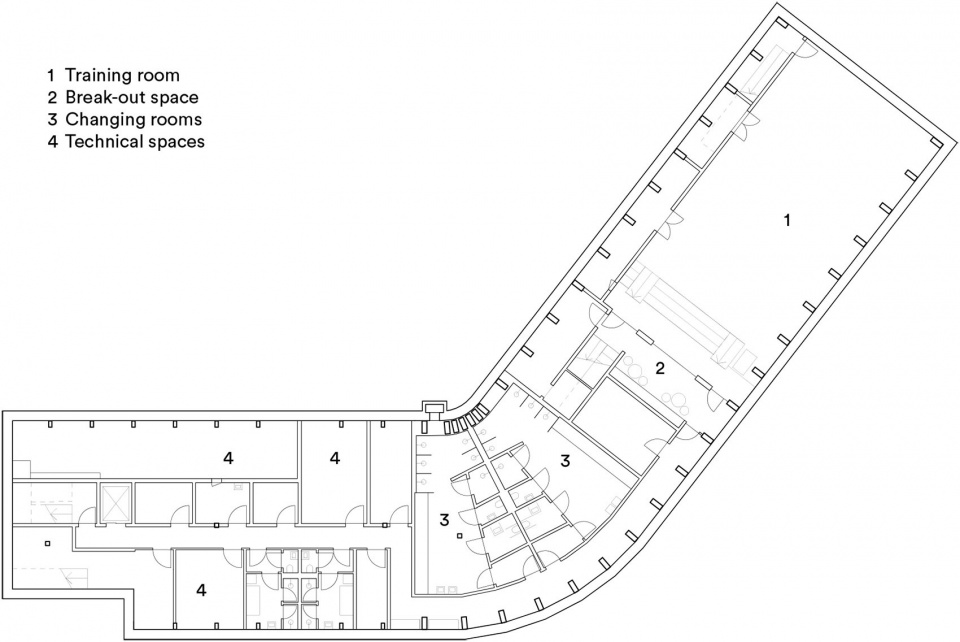
▼地下层平面图,basement floor plan
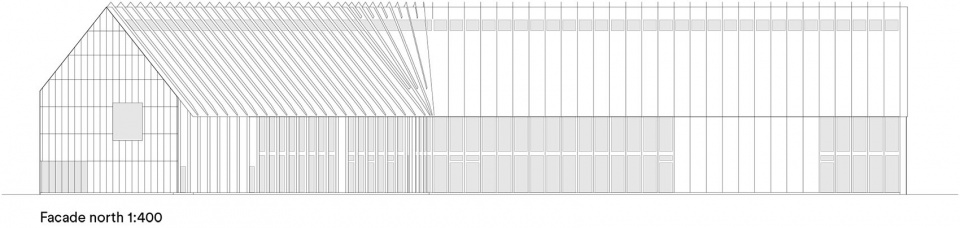
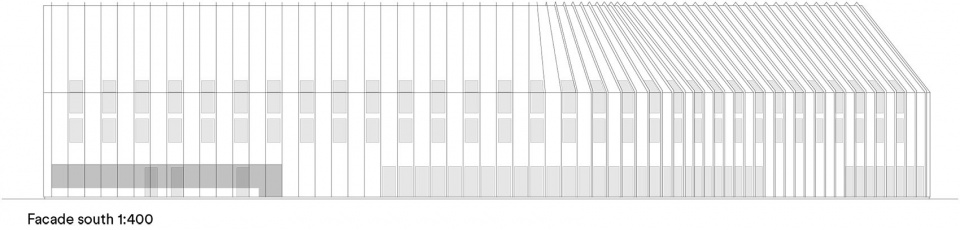
▼立面图,elevations
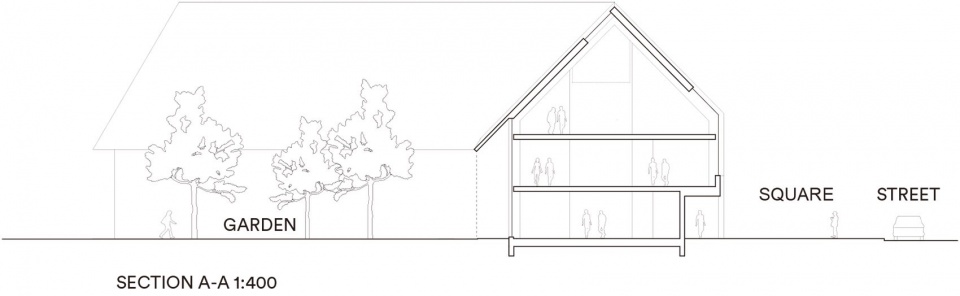
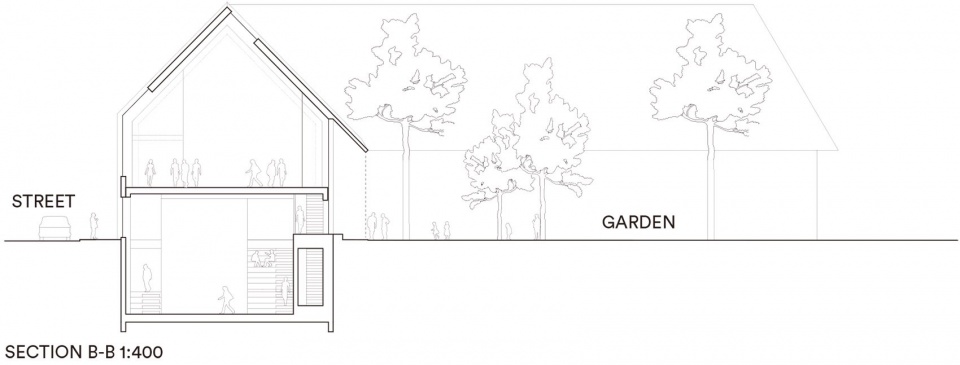
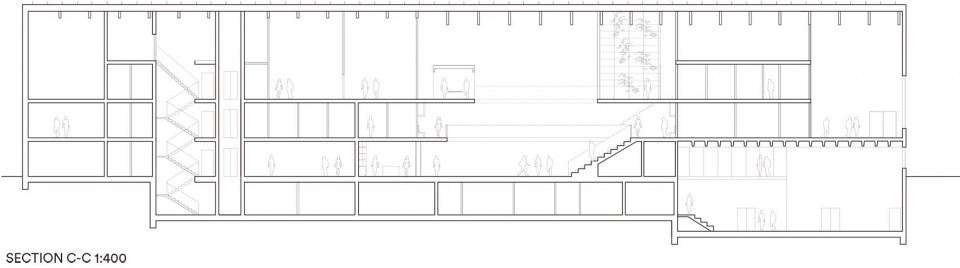
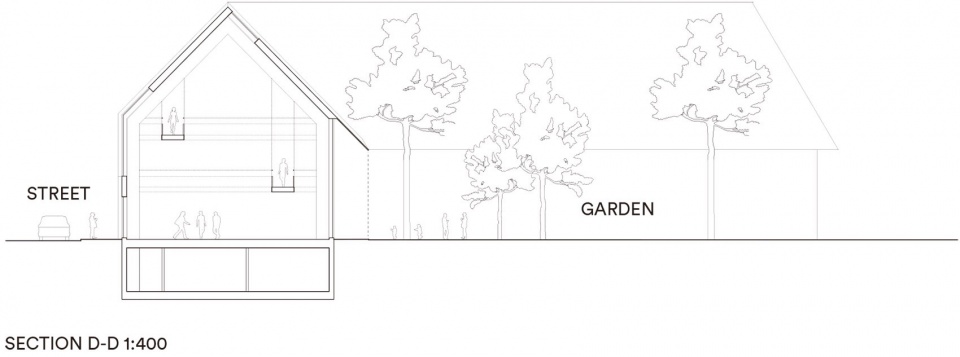
▼剖面图,sections
Client: City of Copenhagen
Architect: Dorte Mandrup
Engineer: AB Clausen and Spangenberg & Madsen
Landscape architect: Bisgaard Landscape
Photos credit: Adam Mørk