哈伊尔Peacock咖啡馆,沙特阿拉伯 / movs studio
在壮丽的自然背景之中,这家位于哈伊尔的Peacock咖啡馆通过围绕一处直接从真实岩石中凿出的庭院展开手工打造的室内空间,重新诠释了当代沙特的待客之道。
Set against a dramatic natural backdrop, this Peacock café in Hail redefines contemporary Saudi hospitality by weaving handcrafted interiors around a courtyard carved directly into a real rock formation.
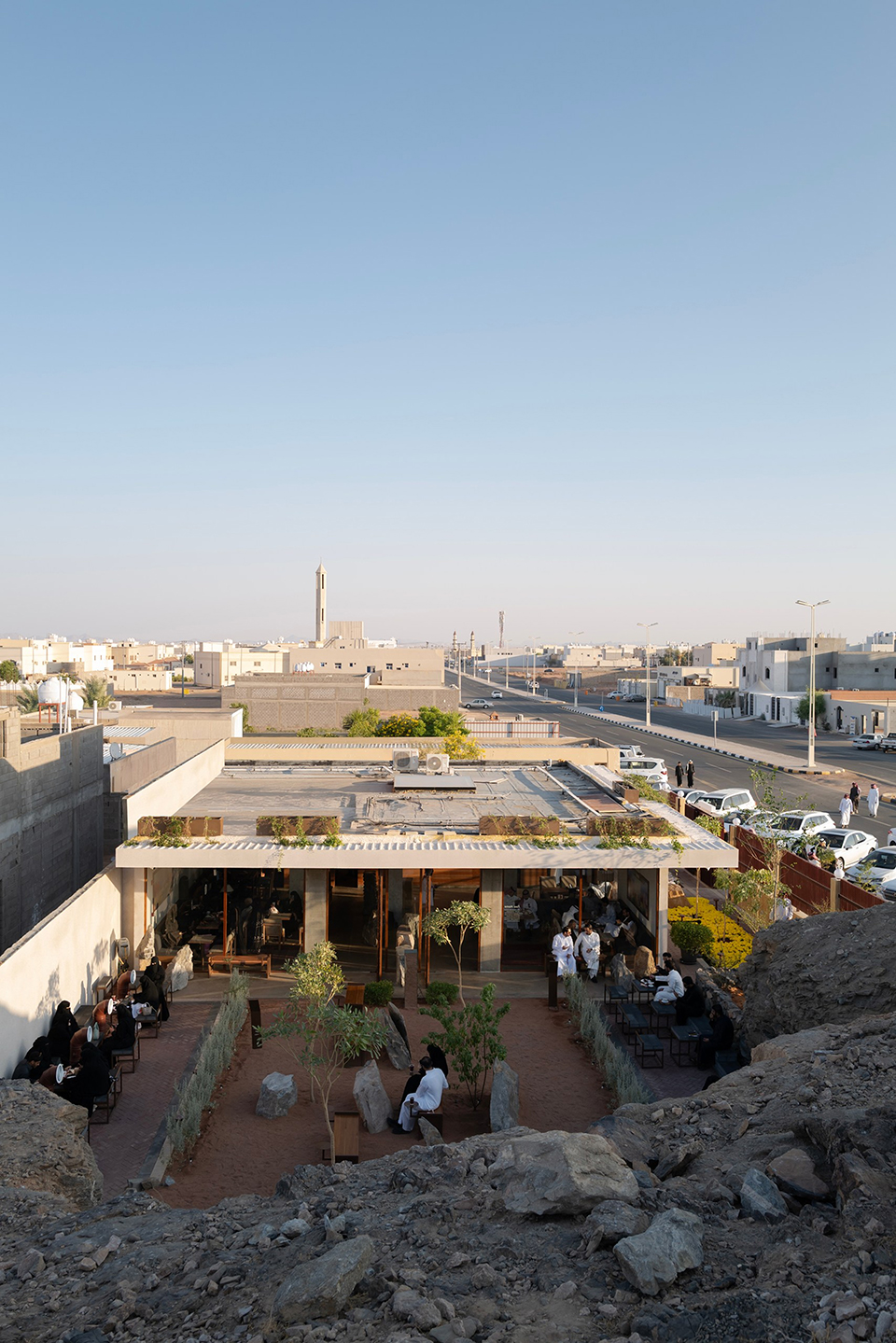
▼项目鸟瞰,aerial view
背景与挑战Context and Challenge
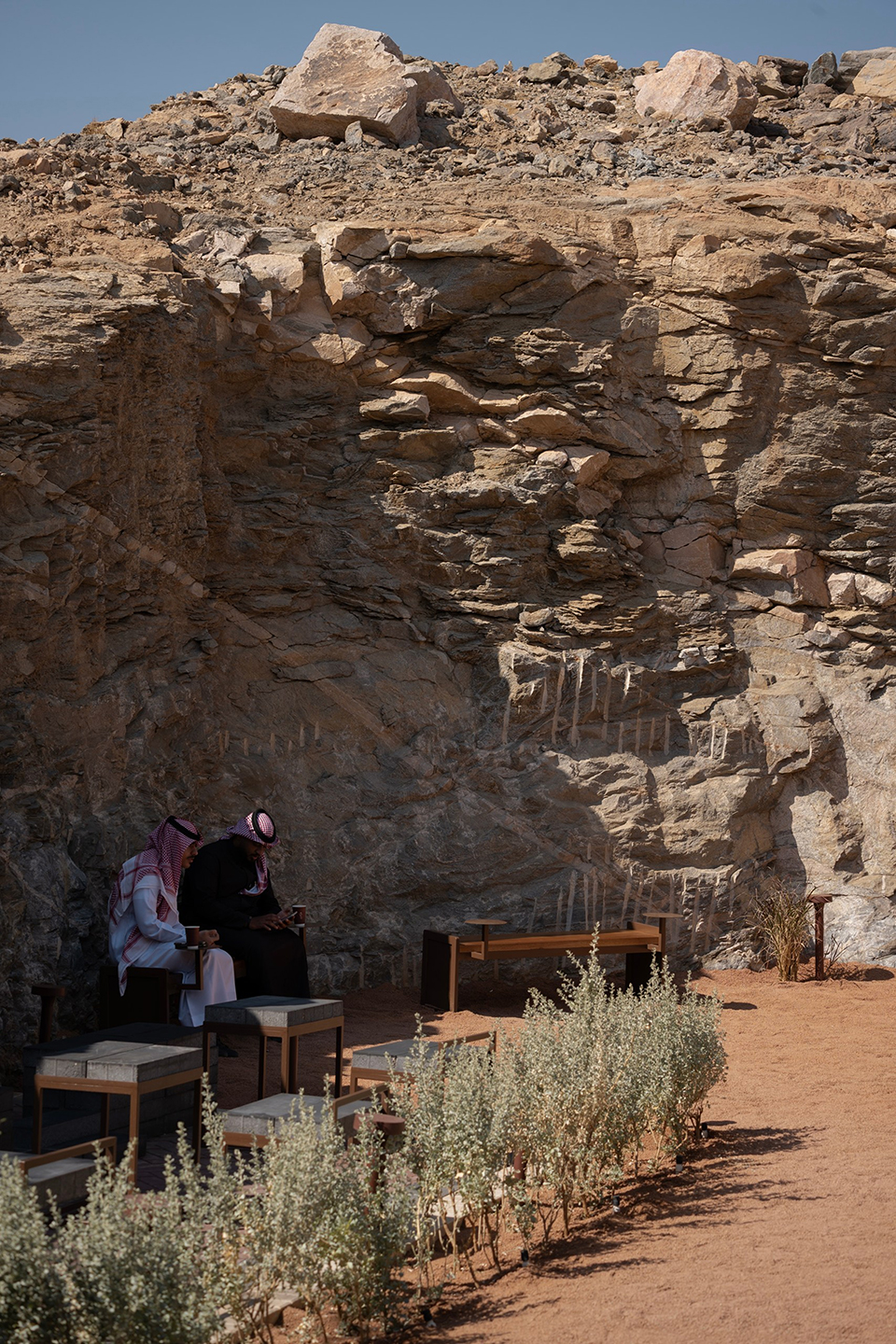
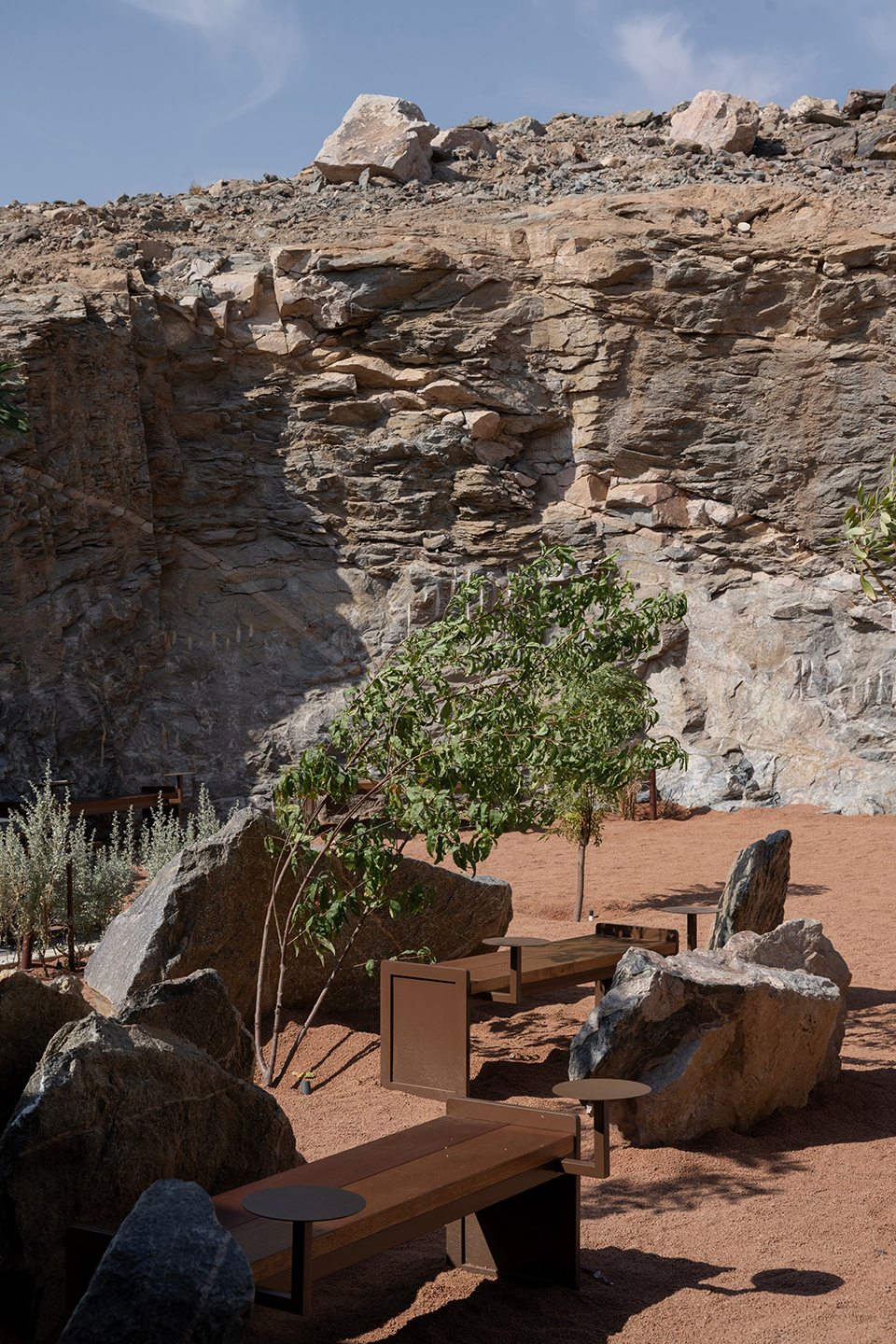
该项目位于沙特阿拉伯哈伊尔,处在一个快速发展的城市环境之中,这里既有现代建设,也拥有极具震撼力的自然景观。场地最初是一处未完成的混凝土框架结构建筑,毗邻一座高耸的岩石地貌,这一岩体很快成为项目最具决定性的特征,同时也是主要的建筑挑战。业主为不断发展的咖啡连锁品牌Peacock,希望打造一个既温馨又亲切的空间,同时仍然能够被识别为品牌体系的一部分。与其追求高度装饰化或主题化的室内风格,设计任务书更强调真实感、温度感,以及与场地之间的紧密联系。其中一个主要挑战在于如何将现有岩石融入空间体验,而不将其简单地处理为表层化的视觉景观。在施工过程中,设计团队小心移除了一部分岩体,从而创造出一个带有树木的小型隐秘内庭院。该介入需要在建筑设计意图与结构可行性之间进行精确协调,同时对自然环境保持足够的敏感度。
▼轴测图,axonometric drawing
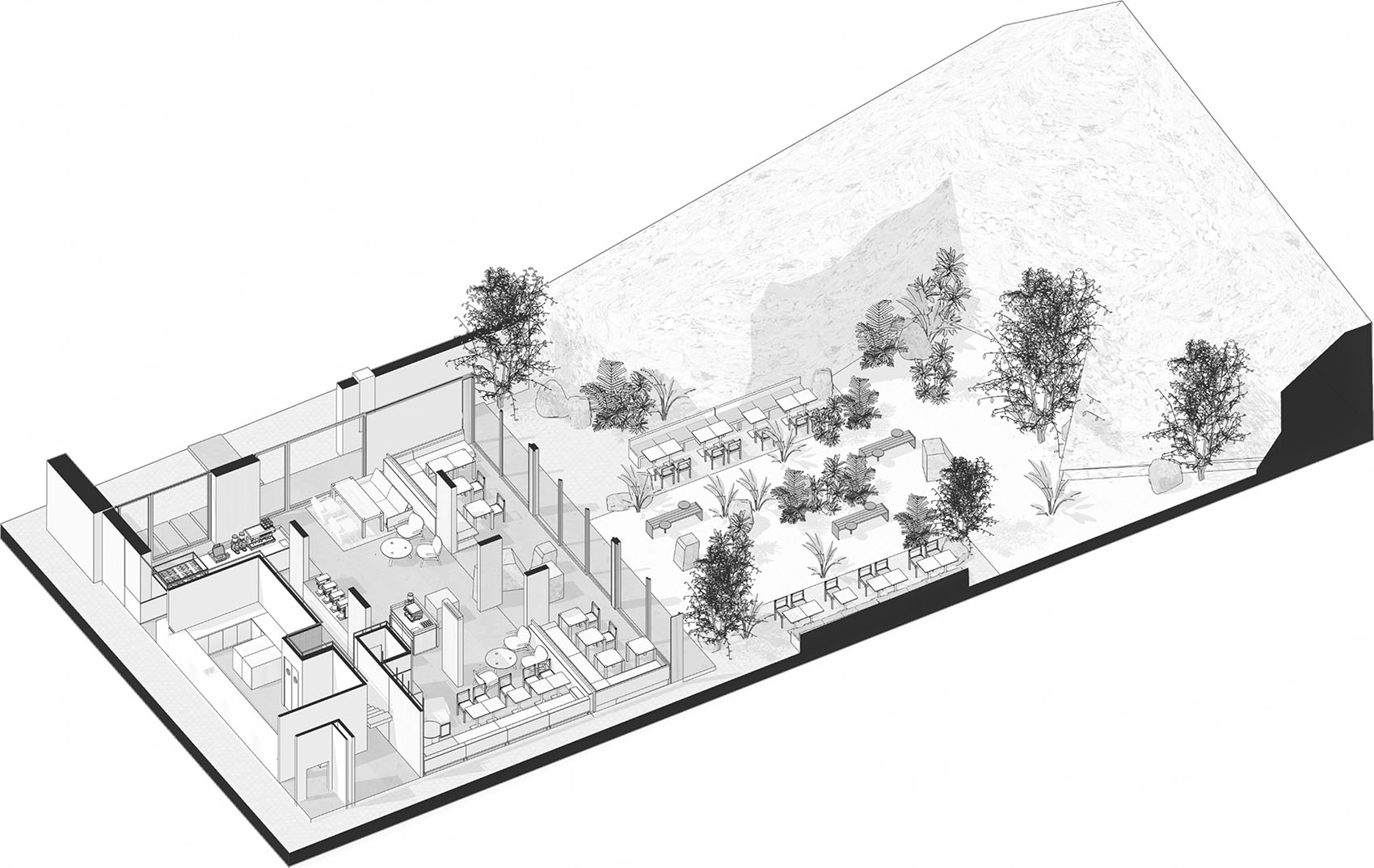
The project is located in Hail, Saudi Arabia, within a rapidly developing urban fabric shaped by both modern construction and striking natural landscapes. The site initially consisted of an unfinished concrete frame adjacent to a tall rock formation, which immediately became the project’s defining feature and primary architectural challenge. The client, Peacock — a growing café chain — sought to create a space that would feel welcoming and intimate while remaining recognizable as part of the brand. Rather than pursuing a highly decorative or theme-driven interior, the brief emphasized authenticity, warmth, and a strong connection to place. One of the main challenges was integrating the existing rock into the spatial experience without turning it into a superficial visual attraction. During construction, part of the rock was carefully removed to create a small, secluded inner courtyard with trees. This intervention required precise coordination between architectural intent and structural feasibility, as well as sensitivity to the natural context.
▼高耸的岩石地貌,tall rock formation
设计概念与策略Design Concept and Solution
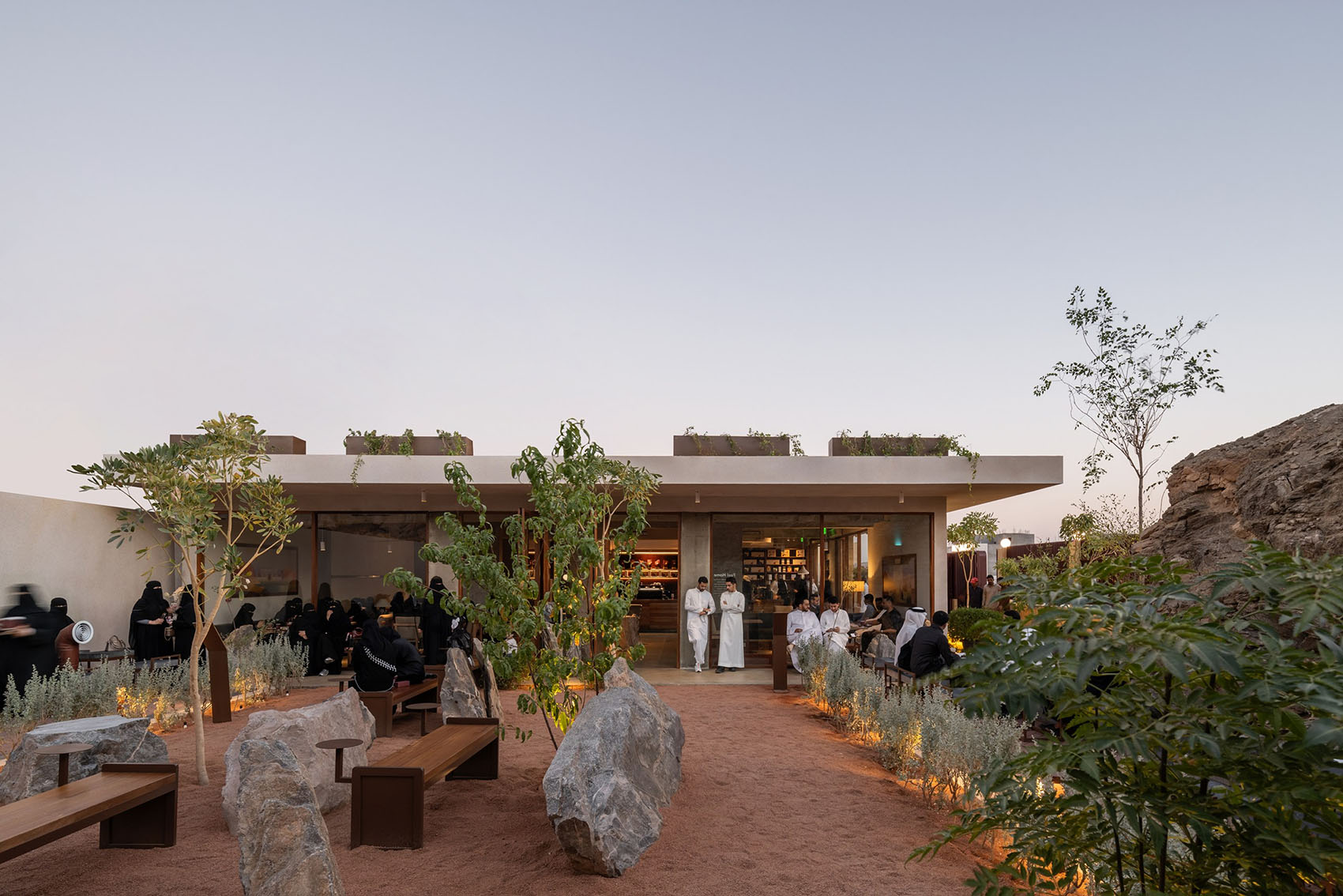
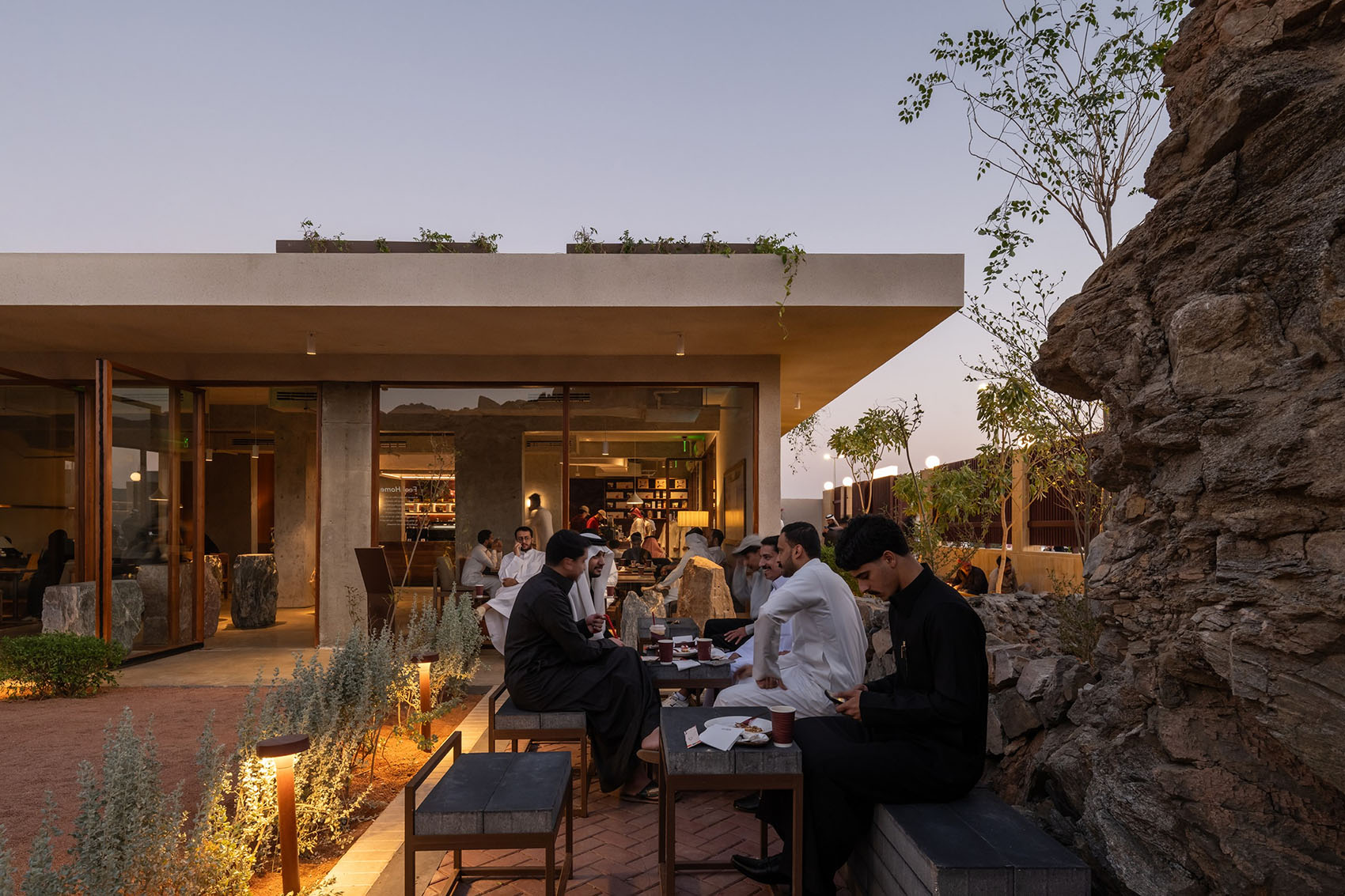
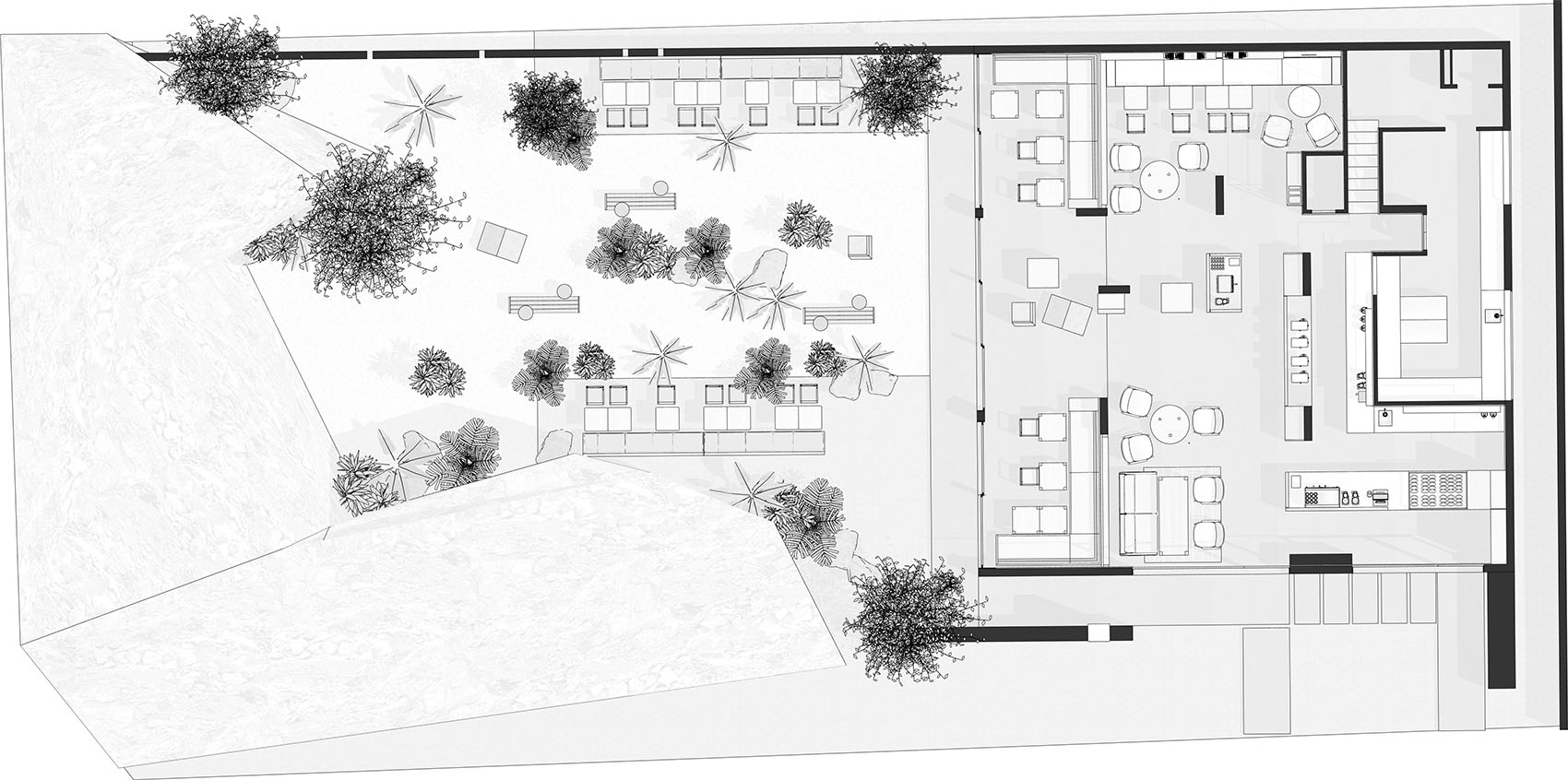
设计的核心理念在于营造一种诚实而纯粹的建筑室内空间,在承认岩石存在的同时,不试图与之竞争。庭院成为整个项目的核心,通过大面积全景窗与室内空间形成视觉联系,使自然光得以深入室内,同时模糊了室内与室外之间的界限。
The core design idea was to create an honest, architectural interior that acknowledges the presence of the rock without attempting to compete with it. The courtyard became the heart of the project, visually connected to the interior through large panoramic windows that bring daylight deep into the space and blur the boundary between inside and outside.
▼项目外观概览,overall view
▼项目外观近景,exterior close view
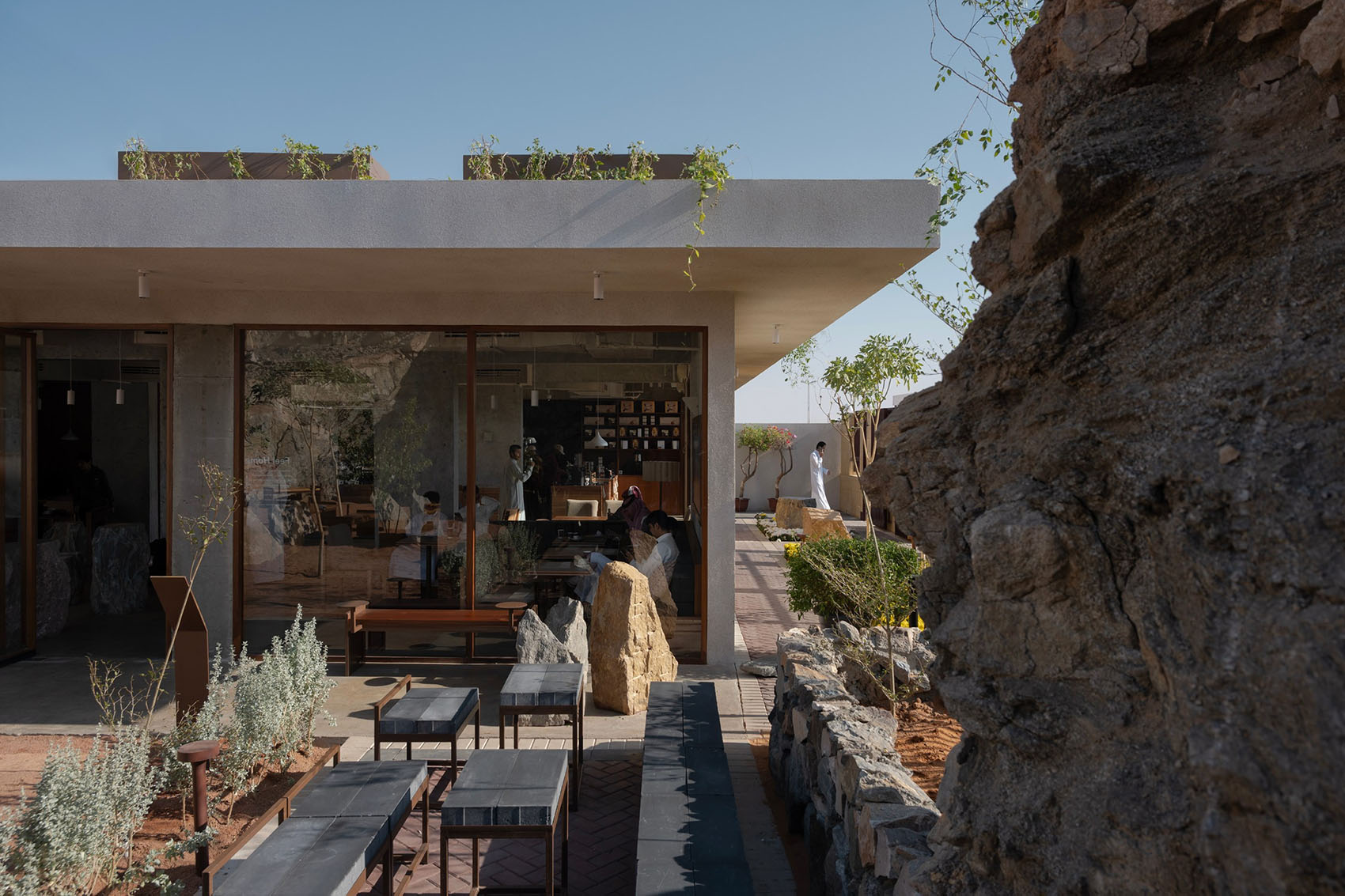
▼岩石庭院一角,a corner of the rock courtyard
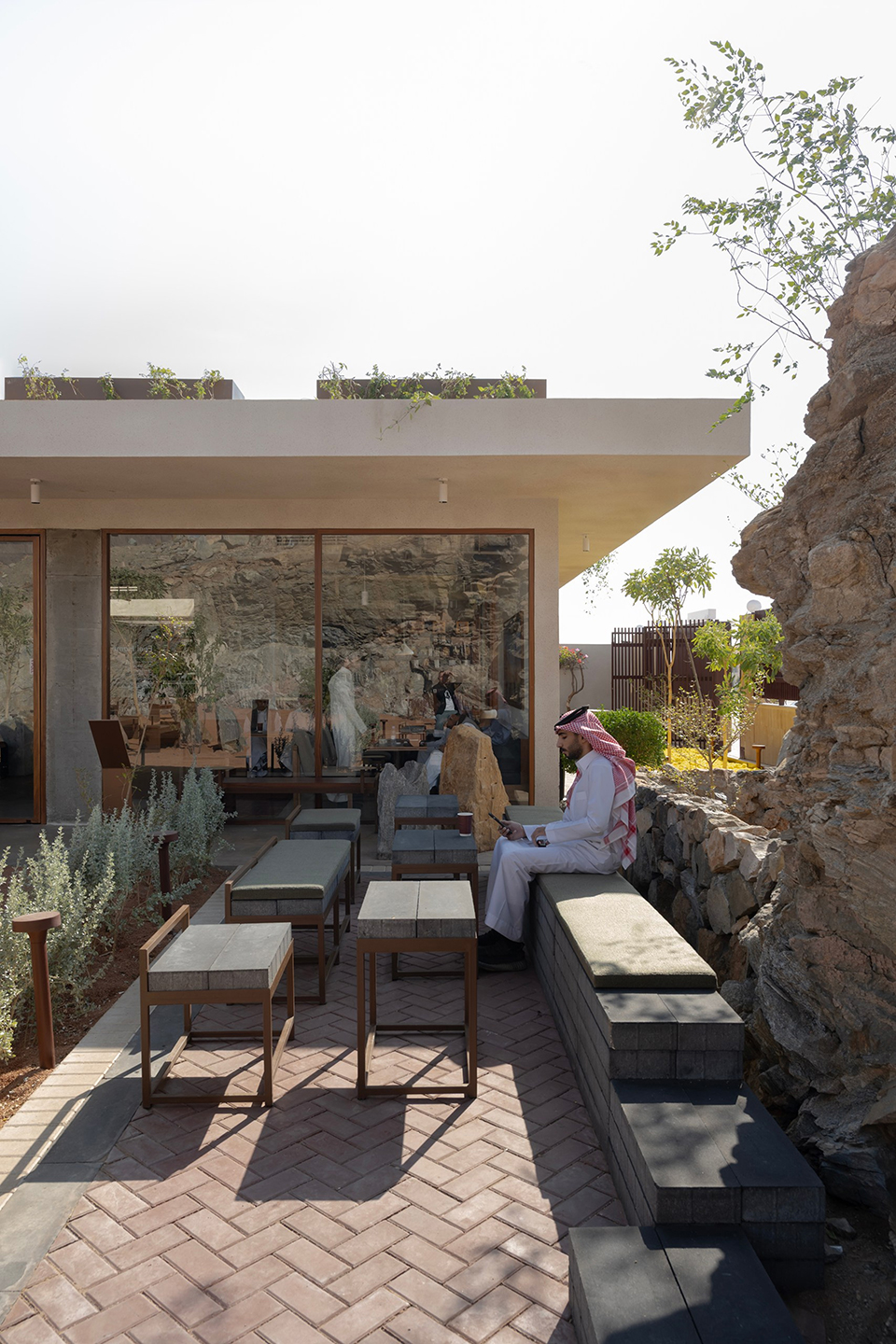
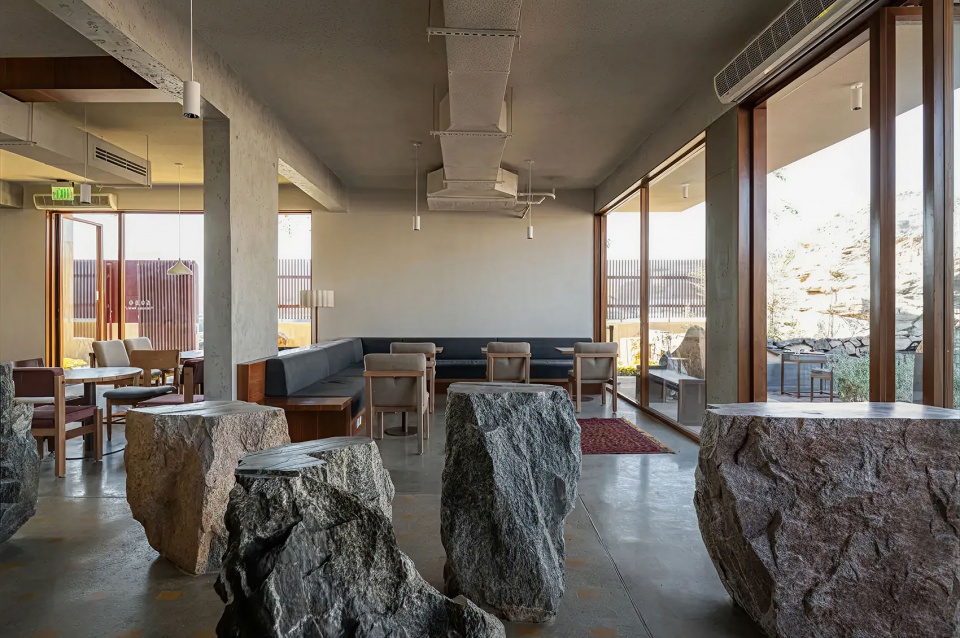
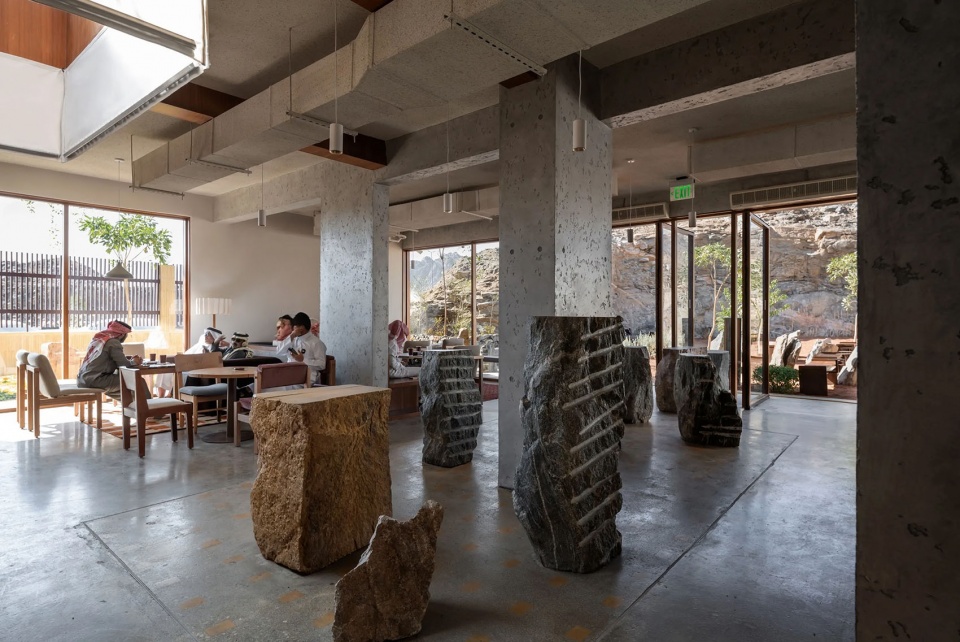
在岩体局部拆除过程中留下的若干石块被有意重新引入室内空间。通过在石块的顶部与底部打磨出平整的表面,这些石块被转化为具有雕塑感的元素,同时也作为适合短暂停留的高桌使用,从而强化自然与建筑之间连续性的叙事。
▼施工过程,construction process
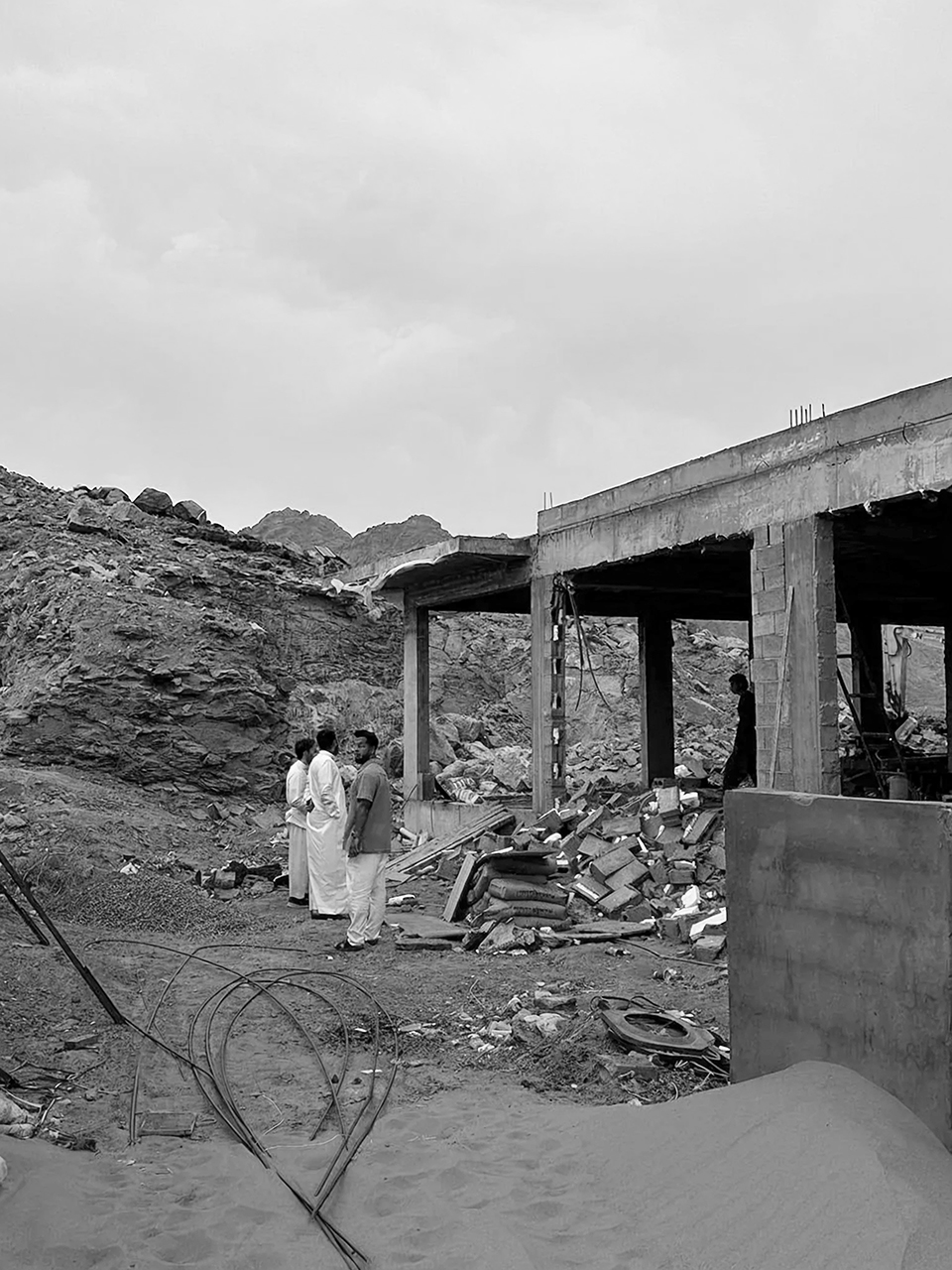
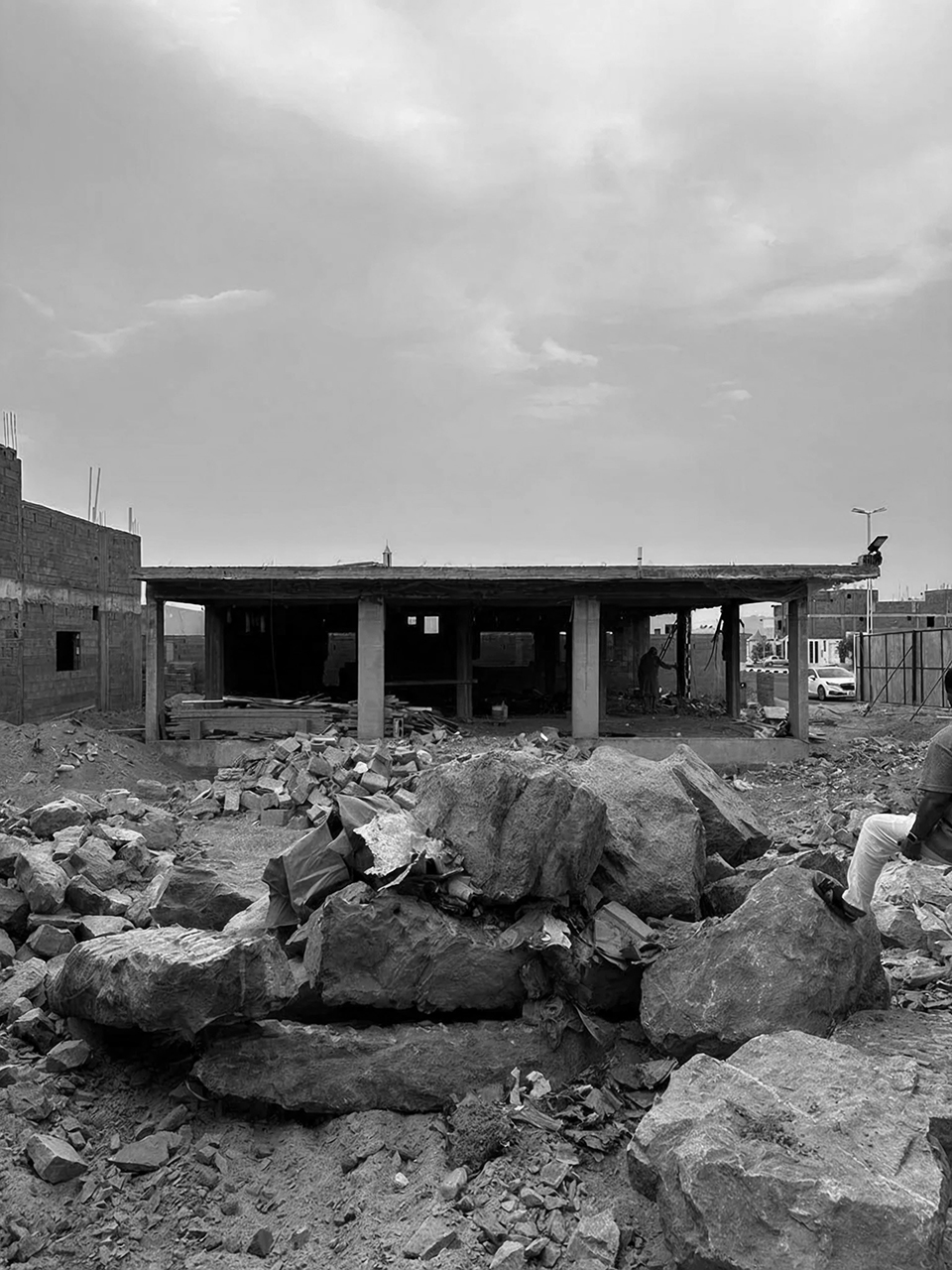
Several stones left over from the partial demolition of the rock were intentionally reintroduced into the interior. By polishing flat surfaces on their tops and bases, these stones were transformed into sculptural elements that function both as art objects and as high tables for short coffee breaks, reinforcing the narrative of continuity between nature and architecture.
▼室内空间概览,interior overview
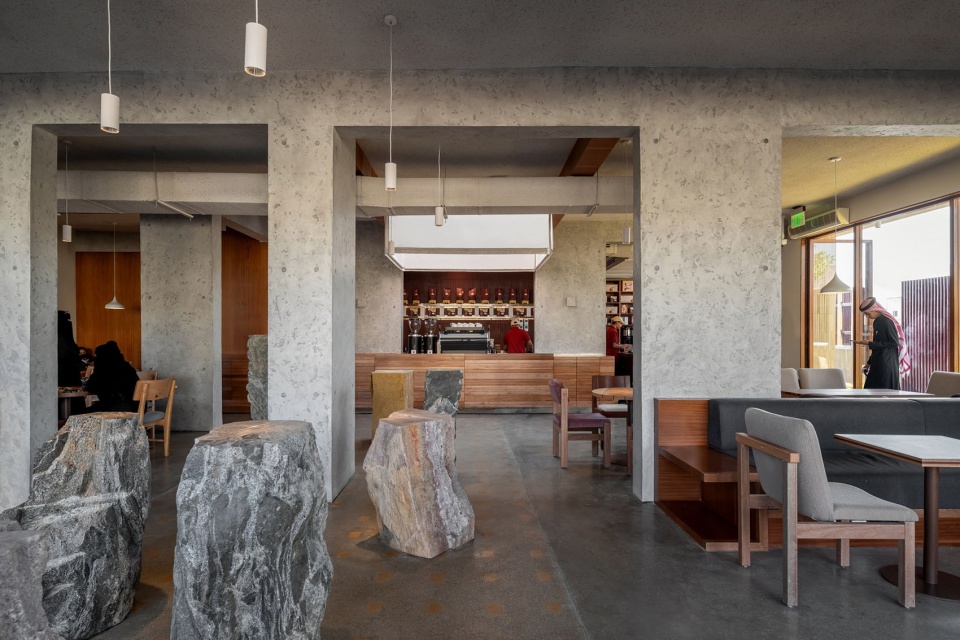
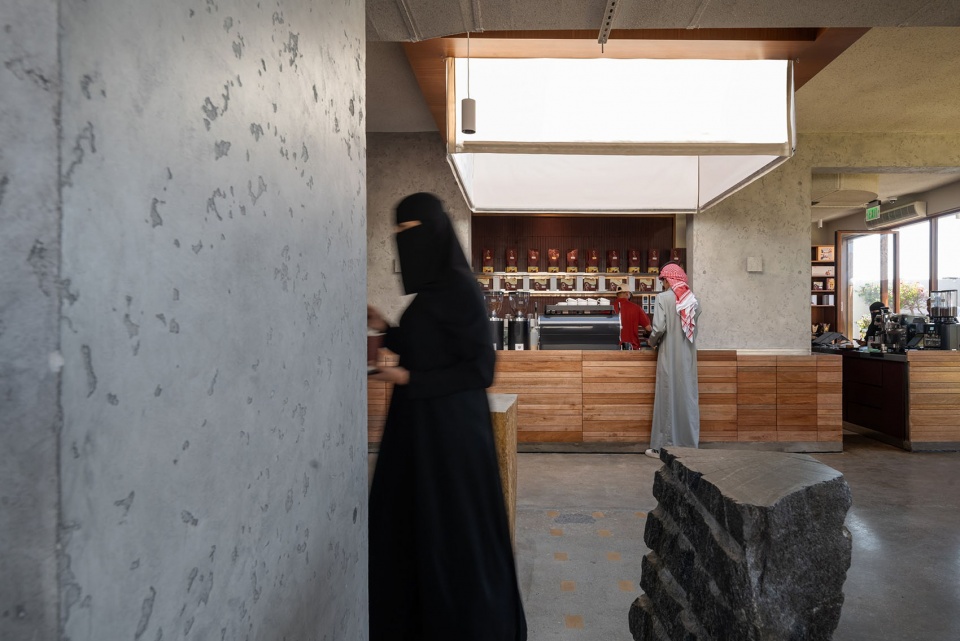
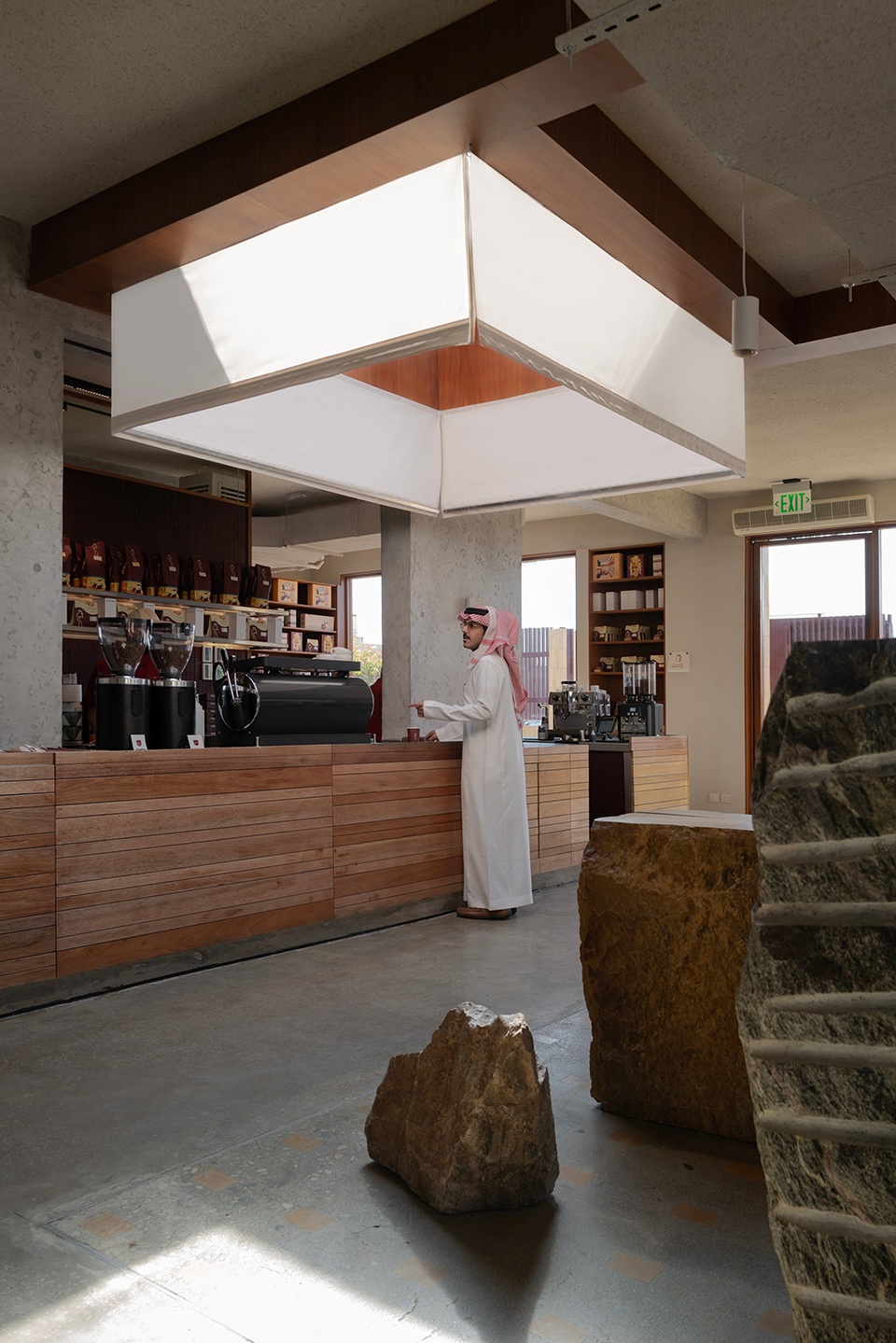
▼吧台区域,bar area
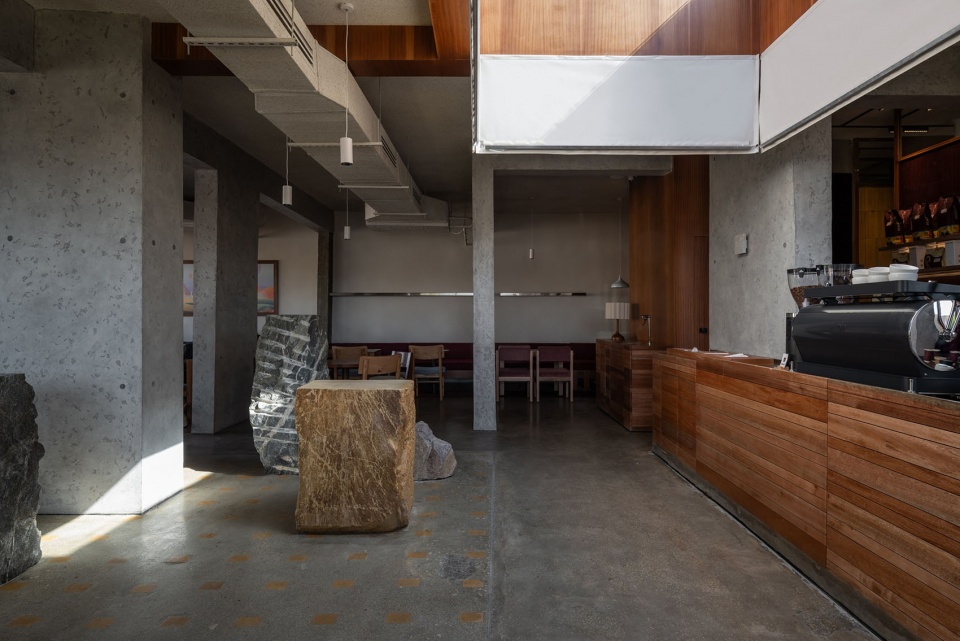
▼石块引入室内空间,stones reintroduced into the interior
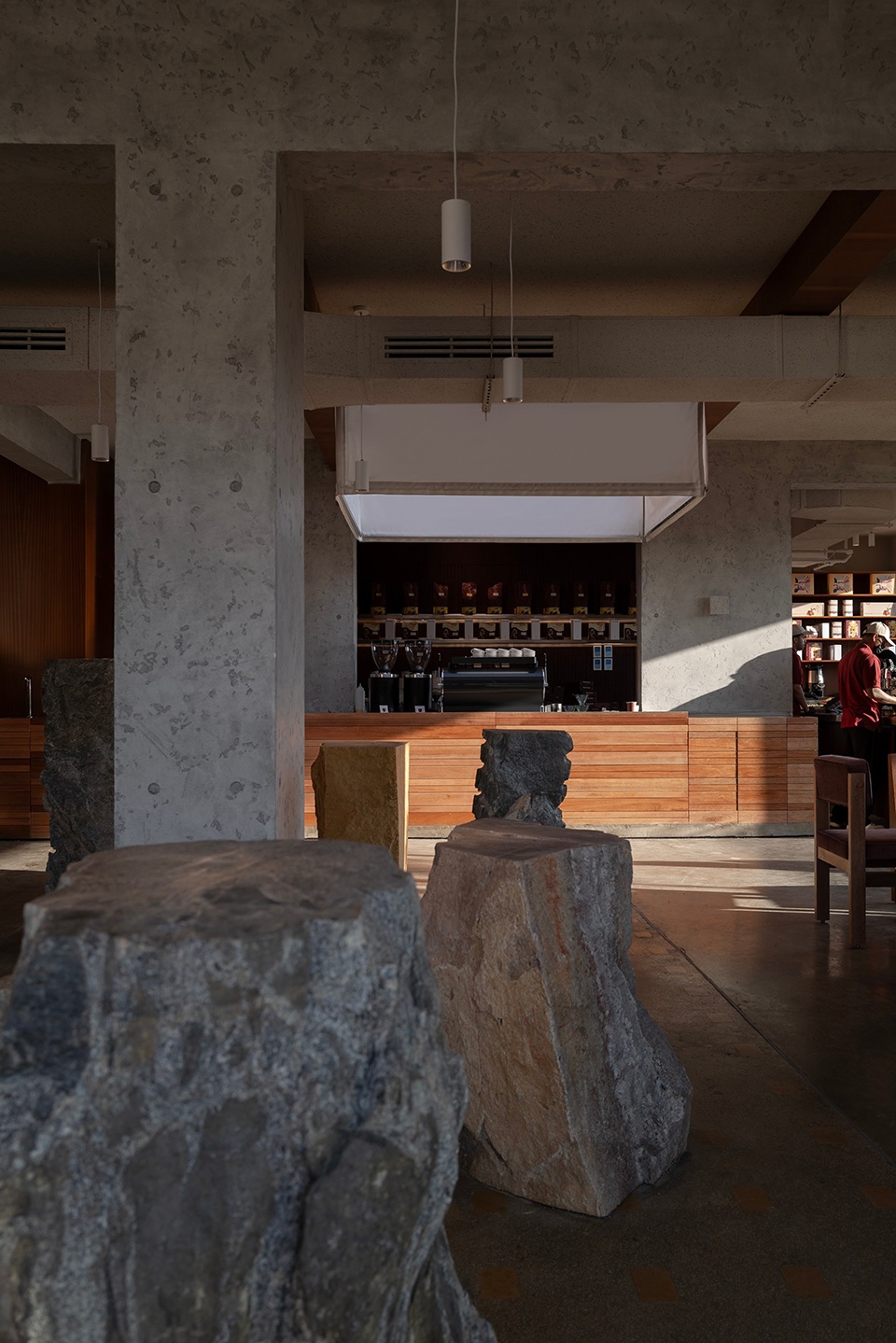
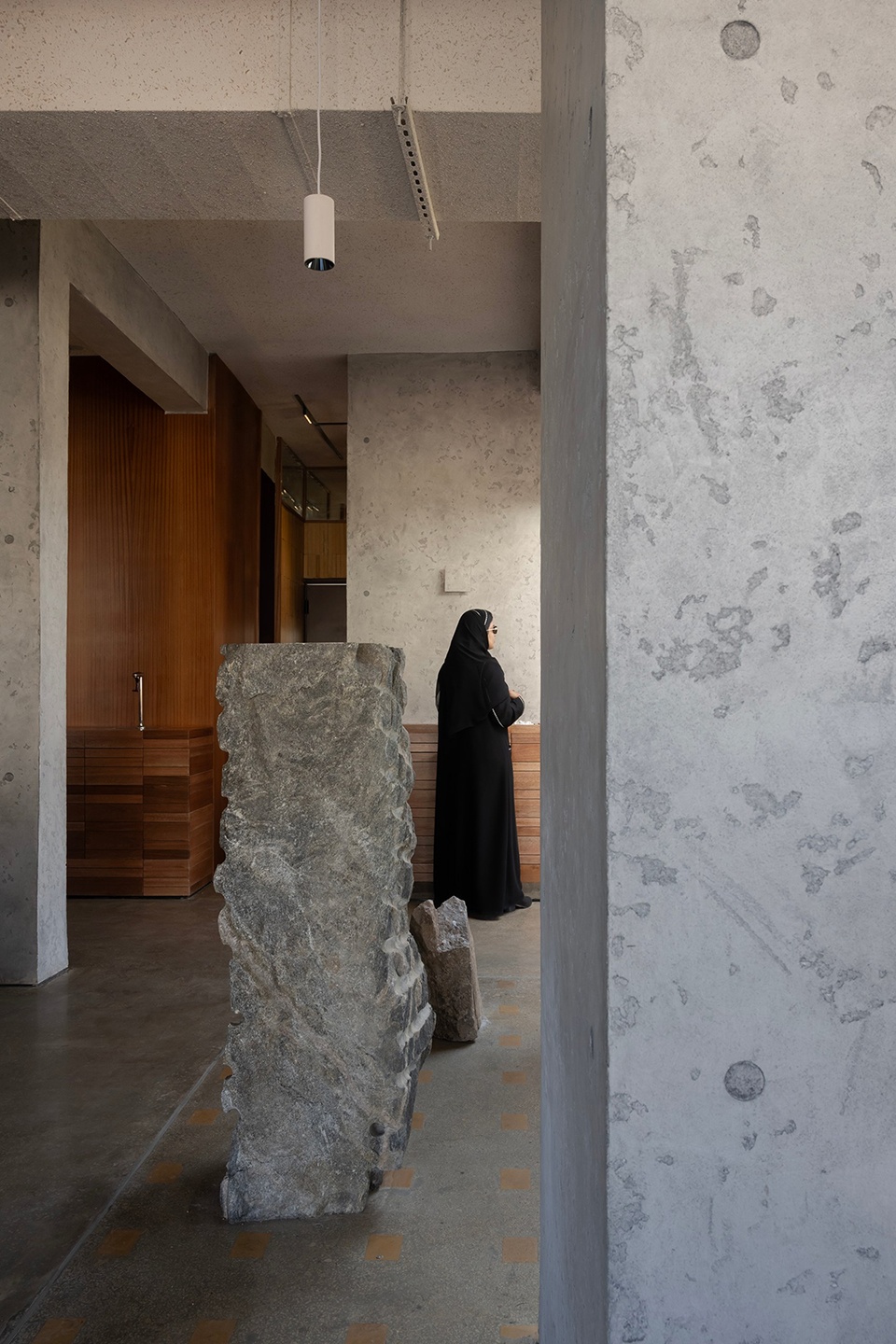
为了营造一种友好而居家的氛围——仿佛是在拜访朋友而非进入一个商业空间——室内设计刻意避免过度装饰与复杂的定制细节。相反,几乎所有家具均由当地工匠手工制作。设计团队从一开始就将当地的制作工艺纳入考虑,发展出一种刻意带有功能主义特征的家具语言。最终呈现的家具简洁而富有表现力,在满足人体工学需求的同时保持了清晰的视觉秩序。
To support a friendly, home-like atmosphere — as if visiting a friend rather than a commercial venue — the interior avoids excessive decoration and complex bespoke details. Instead, almost all furniture was handcrafted by local artisans. The design team developed a deliberately utilitarian furniture language, taking into account local fabrication methods from the outset. The result is simple yet expressive furniture that meets ergonomic requirements while maintaining visual clarity.
▼手工家具,handcrafted furniture
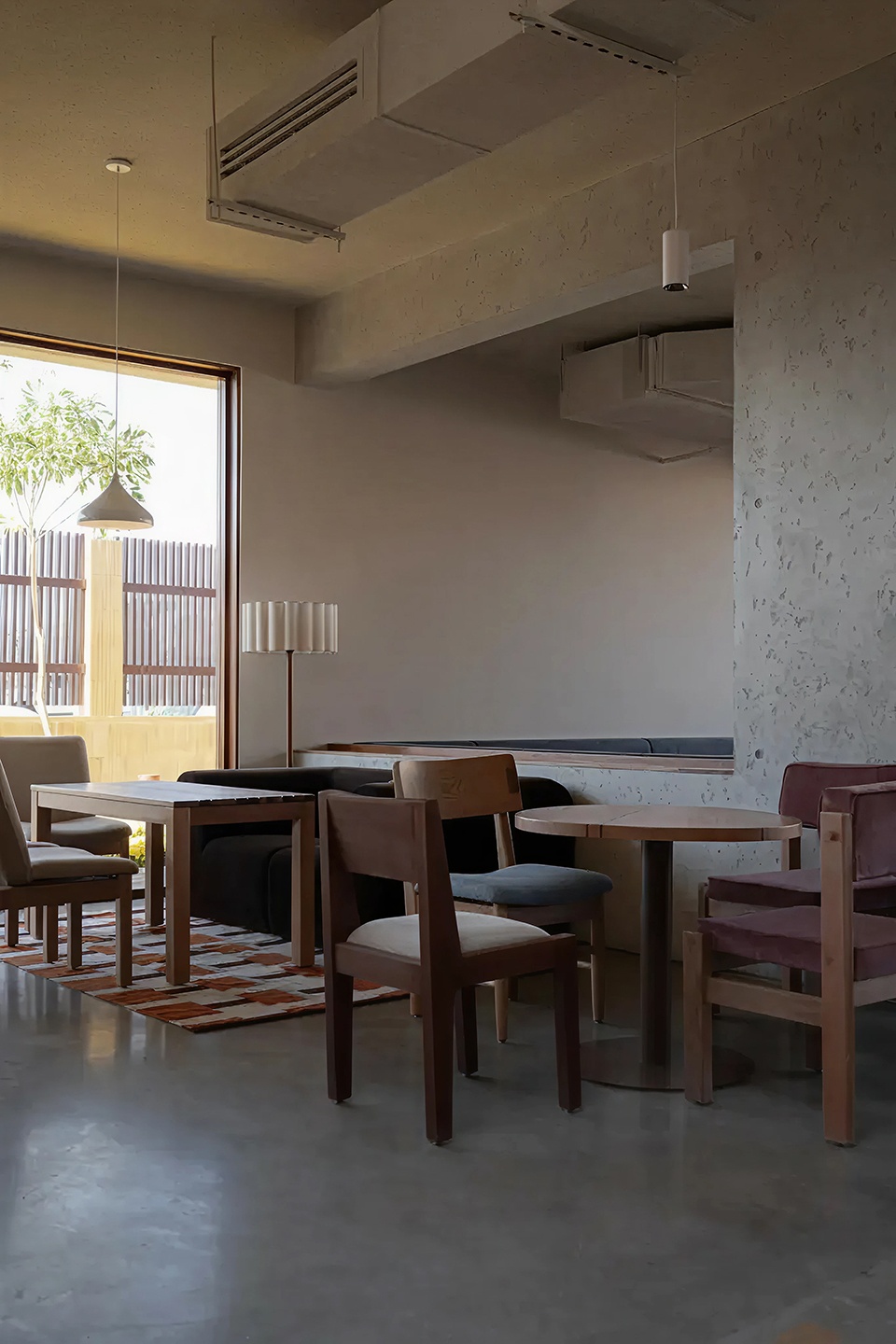
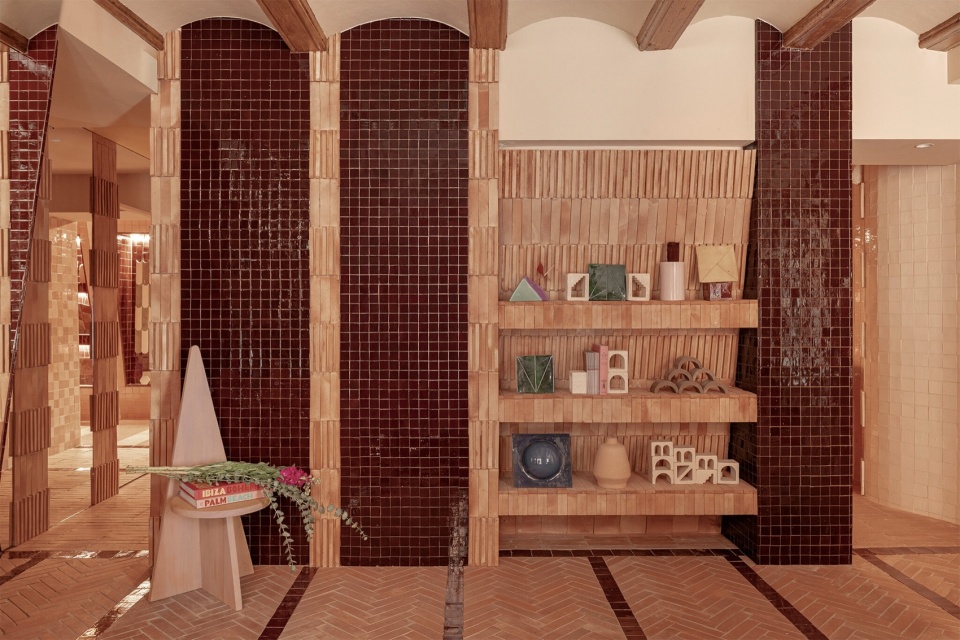
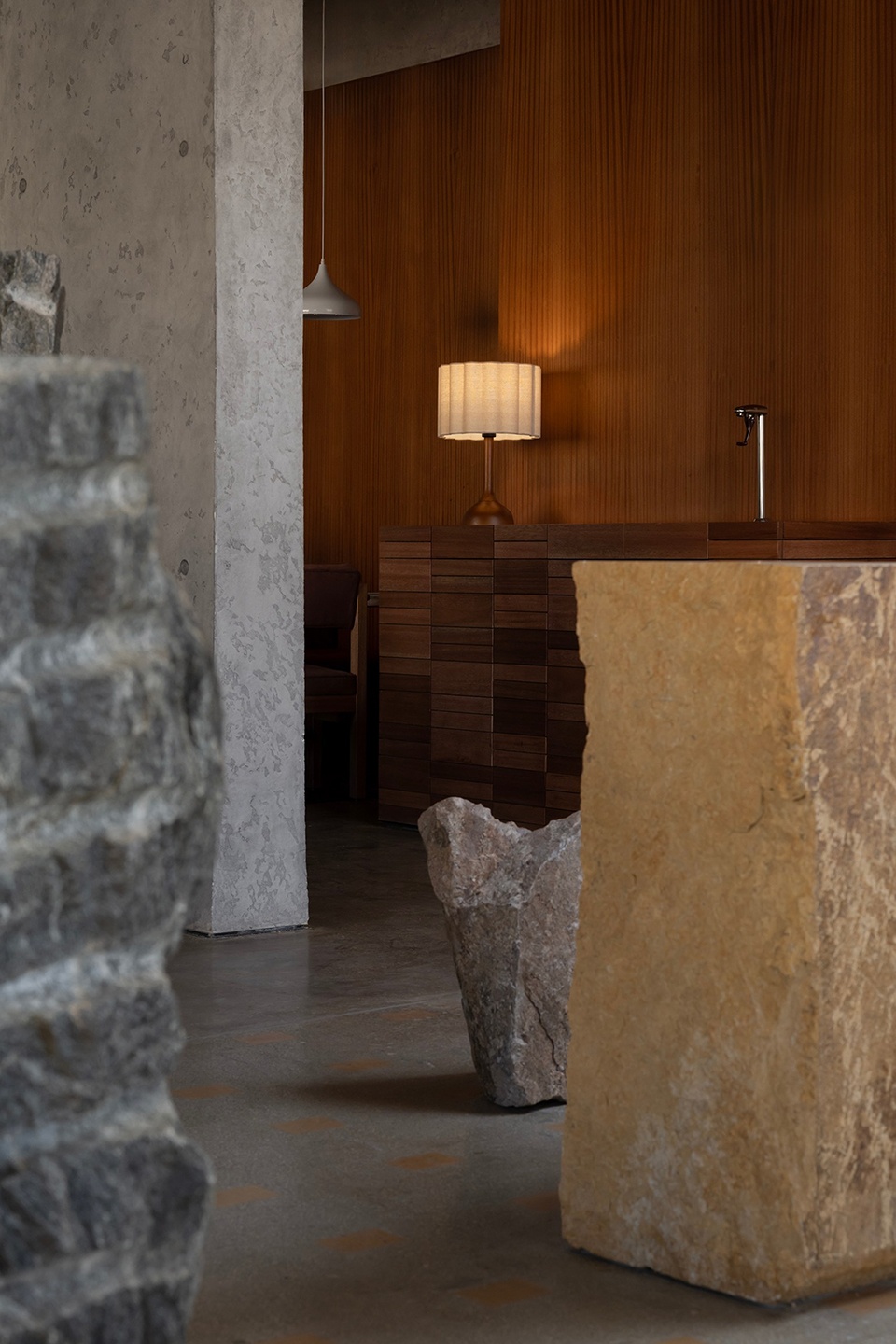
材料的选择进一步强化了这一策略:裸露的天花与可见的通风管道、光滑的灰色抹灰墙面、深色木材、带有黄铜嵌条的抛光混凝土地面,以及家具软装与吧台区域瓷砖中的深酒红色点缀。这些元素共同构成了一种克制而鲜明的材料与色彩体系。
Material choices further emphasize this approach: exposed ceilings and visible ventilation, smooth gray plaster walls, dark-toned wood, polished concrete floors with brass inlays, and deep burgundy accents in upholstery and bar-area tiles. Together, these elements form a restrained yet distinctive palette.
▼克制而鲜明的材料与色彩体系,restrained yet distinctive palette
影响与总结Impact and Conclusion
建成后的咖啡馆营造出一种平静而亲密的环境,彰显了材料的真实表达、当地工艺以及场地独特的地质特征。通过将岩体整合进空间布局与室内叙事之中,该项目不仅确立了鲜明而令人难忘的空间身份,也在简洁与人尺度之中,提出了一种扎根于场所的当代阿拉伯待客空间诠释。
The completed café offers a calm, intimate environment that celebrates material honesty, local craftsmanship, and the unique geological character of the site. By integrating the rock into both the spatial layout and the interior narrative, the project establishes a memorable identity while contributing a contemporary interpretation of Arabian hospitality rooted in place, simplicity, and human scale.
▼夜景,night view
▼平面图,layout plan
▼剖面图,section

Peacock Hail | Coffeeshop
Hail, Saudi Arabia | 2025 | 480 sq.m
Movs.studio (instagram)
Architects: Ruben Movsisian, Catherine Tarasova, Artem Lebedev, Ivan Gorbunov, Tatiana Kurochkina
Photo: Ilya Ivanov