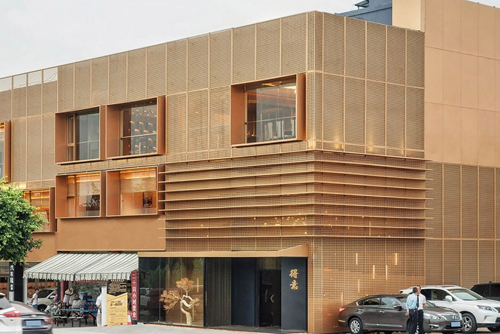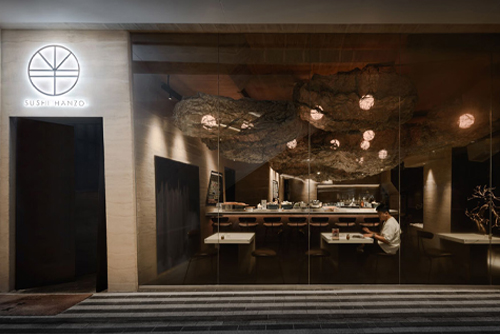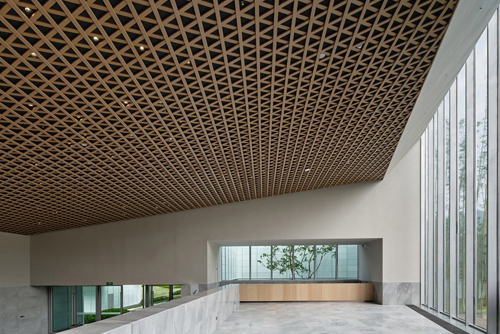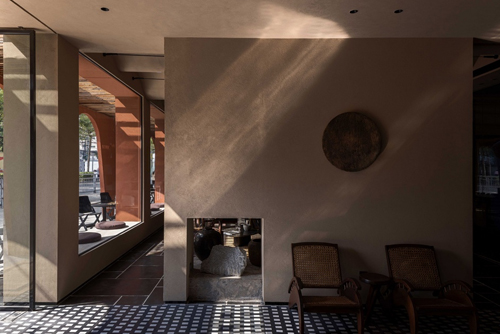
苏州姑苏桥文人苏式面馆,江苏 / 无设建筑
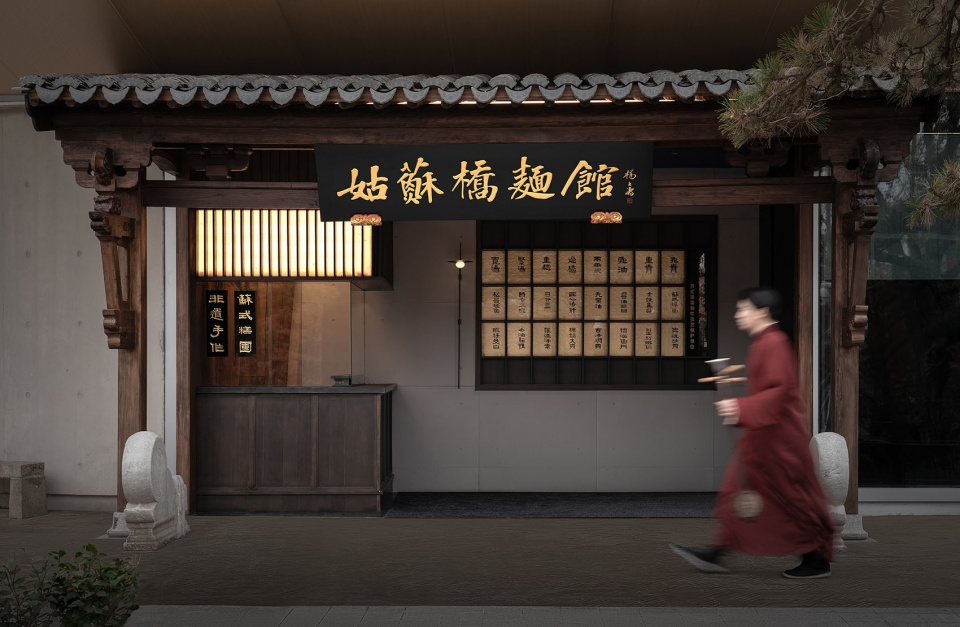
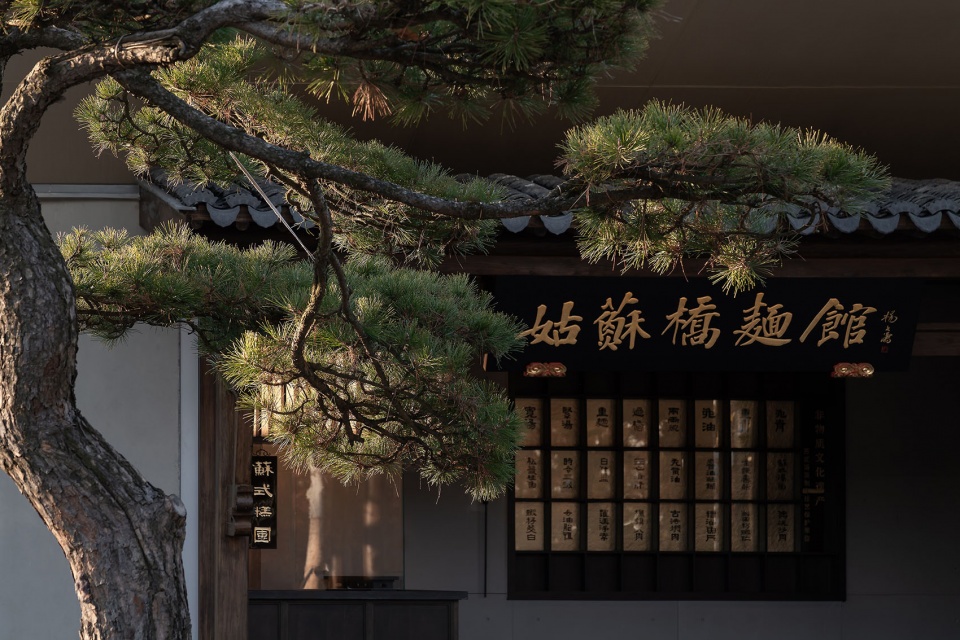
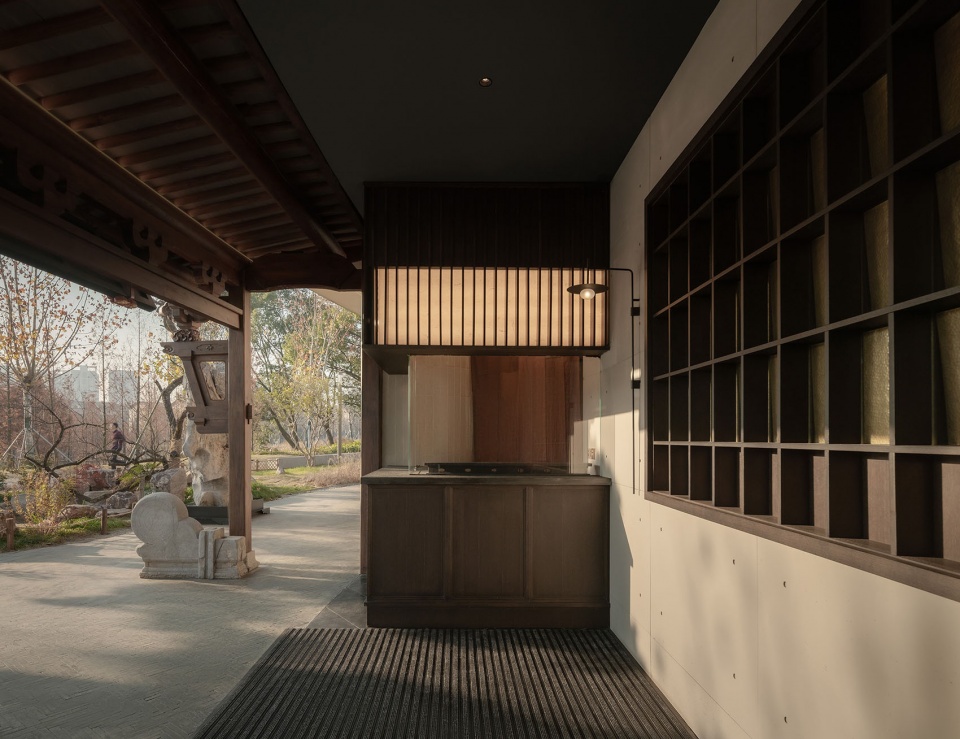
第一景:回头望虎丘来到姑苏桥狮山店,最先看到的是一座明代风格的山门,上悬“姑苏桥”匾额,两侧有美人靠围合,此处借用“驿站”迎八方来客的寓意,供游人歇脚之用。山门旁配有明代上马石,后置一座石狮、一座清代平桥,分植黑松老梅,青枝虬干,写下古代桥亭之趣。无论是明代唐寅的《农训图轴》,还是在清代画家徐扬描绘的《姑苏繁华图》中,我们都能看见江南水乡溪田交错的景致。姑苏桥入口处的叠山理水,就是借此手法还原古画中的意境。
Looking back at Tiger Hill, visitors to the Gusu Bridge Shishan Branch are first greeted by a mountain gate in the style of the Ming Dynasty, bearing the inscribed plaque “Gusu Bridge”. Railed benches known as “beauty seats” line both sides, embodying the symbolism of a courier station that welcomes travelers from all directions and provides a place for visitors to rest. Beside the gate stands a MingDynasty mounting stone, with a stone lion behind it and a QingDynasty flat bridge nearby. Black pines and aged plum trees are planted on either side; their green branches and gnarled trunks capture the elegant charm of ancient bridge pavilions. In both The Scroll of Agricultural Instructions by Tang Yin of the Ming Dynasty and The Prosperous Scene of Gusu painted by Xu Yang of the Qing Dynasty, one can behold the intertwined scenery of streams and fields typical of Jiangnan’s water towns. The rockeries and water features at the entrance of Gusu Bridge are designed to recreate the artistic conception depicted in these ancient paintings.
▼山门入口,entrance gate
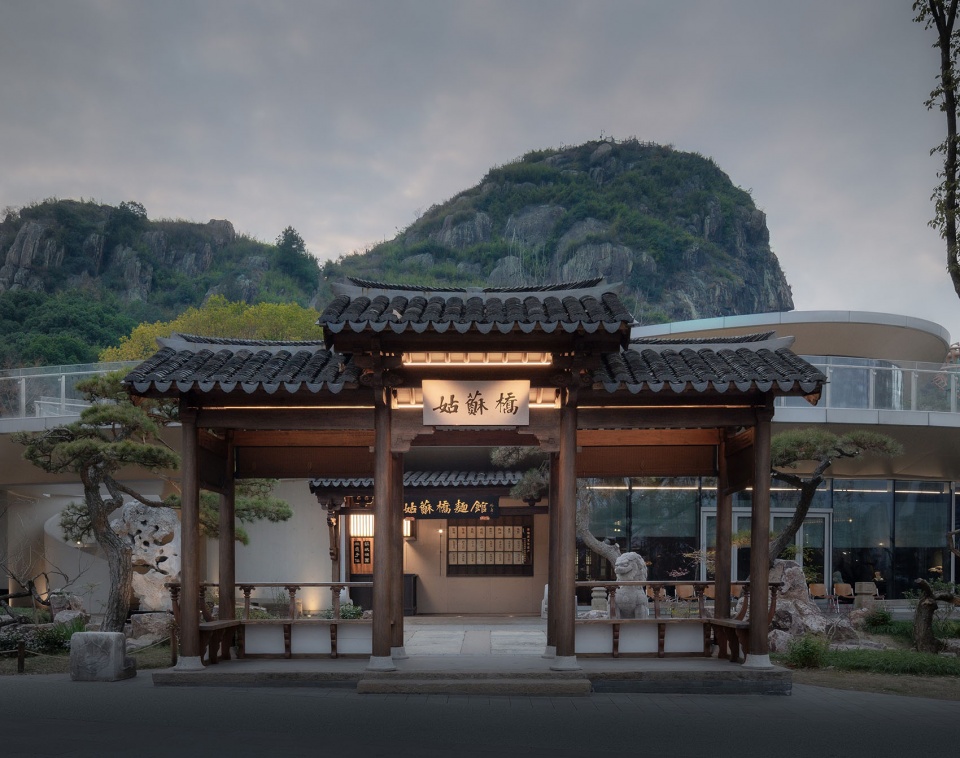
▼入口近景,entrance close view
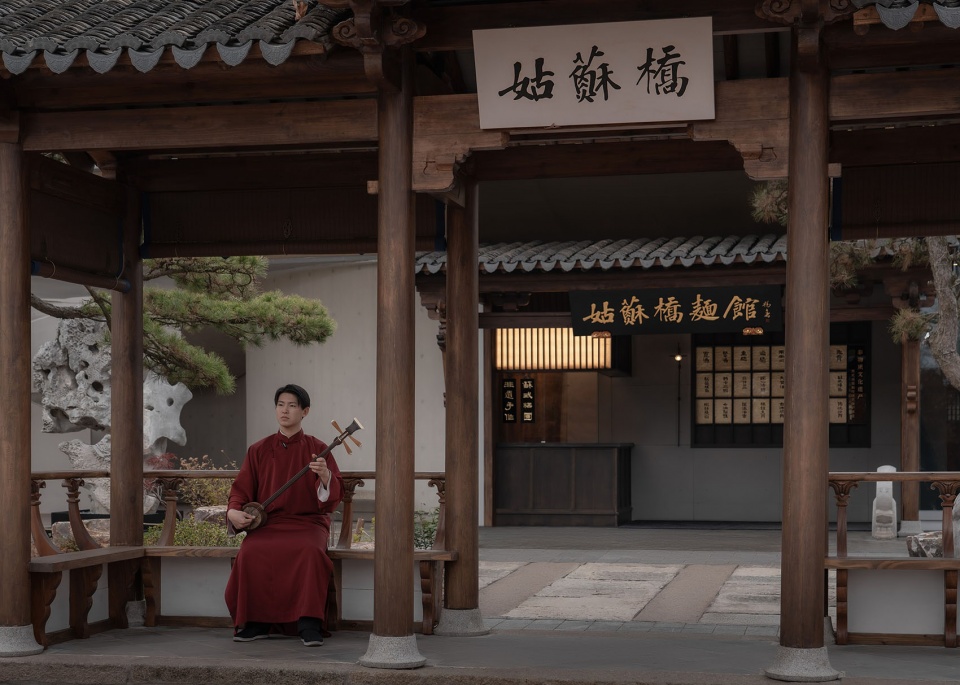
▼匾额细部,inscribed plaque detail
▼入口灰空间,threshold space
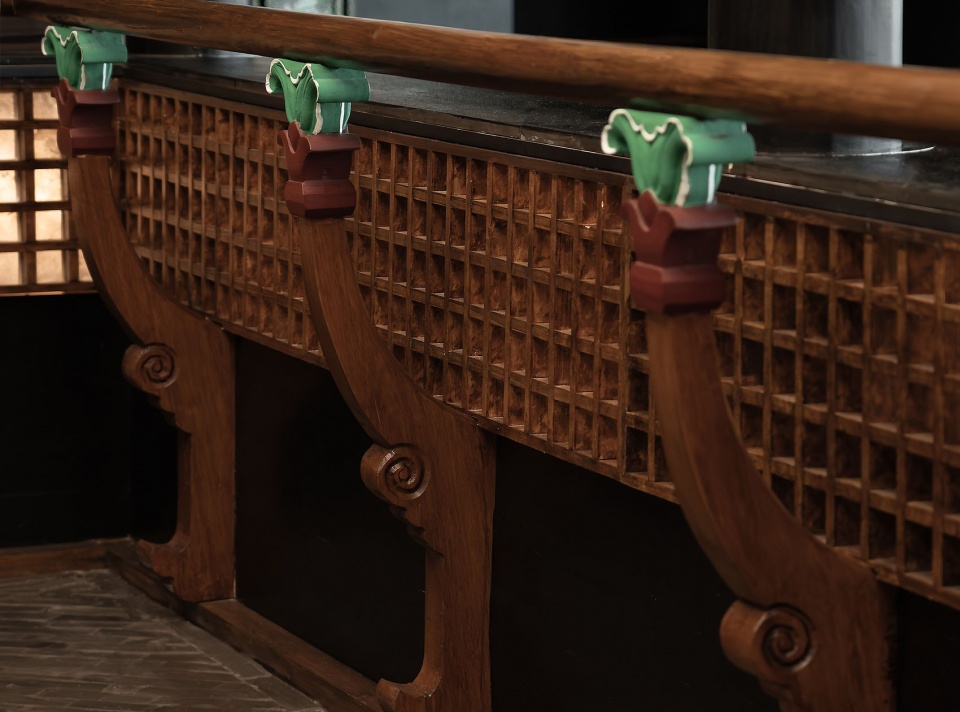
第二景:思益庭的缘起,来自狮山脚下的唐代寺院“思益寺”。我们在一楼辟出了一块区域,顶部模拟天光映照,用明式木构搭建了一座思益庭。庭旁有一廊,名曰“三山廊”。所谓三山,就是蓬莱、瀛洲和方丈,是中国古代神话中的三座仙山。山以黄石垒砌而成,仿若此处仙居,可与狮子山气象相通。池中铺地的青砖是苏式的旱地水作。涟涟水波间,倚靠手工雕花的明清园林款红木座椅,在一长条“状元读书台”上吃一碗姑苏桥匠心制作的汤面,看山坐忘片刻,体验生活在别处的一番文心雅趣。
Siyi Courtyard takes its name from the Siyi Temple, a TangDynasty Buddhist monastery at the foot of Shishan Hill. On the first floor, a dedicated space has been created, with a ceiling designed to simulate natural daylight, housing a Siyi Courtyard constructed with Mingstyle wooden structures. Adjacent to the courtyard lies a corridor named Sanshan Corridor. The term “Sanshan” refers to Penglai, Yingzhou, and Fangzhang—the three legendary immortal mountains in ancient Chinese mythology. Built from yellow stones, the rock formations evoke an otherworldly abode that resonates with the grandeur of Shishan Hill. The blue bricks paving the pond are laid in the Suzhoustyle dryland water arrangement. Amid gentle ripples, one may lean against handcarved mahogany seating in the manner of Ming and Qing gardens, enjoy a bowl of carefully crafted soup noodles from Gusu Bridge at the long “Top Scholar’s Reading Desk”, gaze at the hills, and lose oneself in quiet contemplation, savoring the refined literary pleasure of living momentarily in a tranquil retreat.
▼思益庭概览,Siyi Courtyard overview
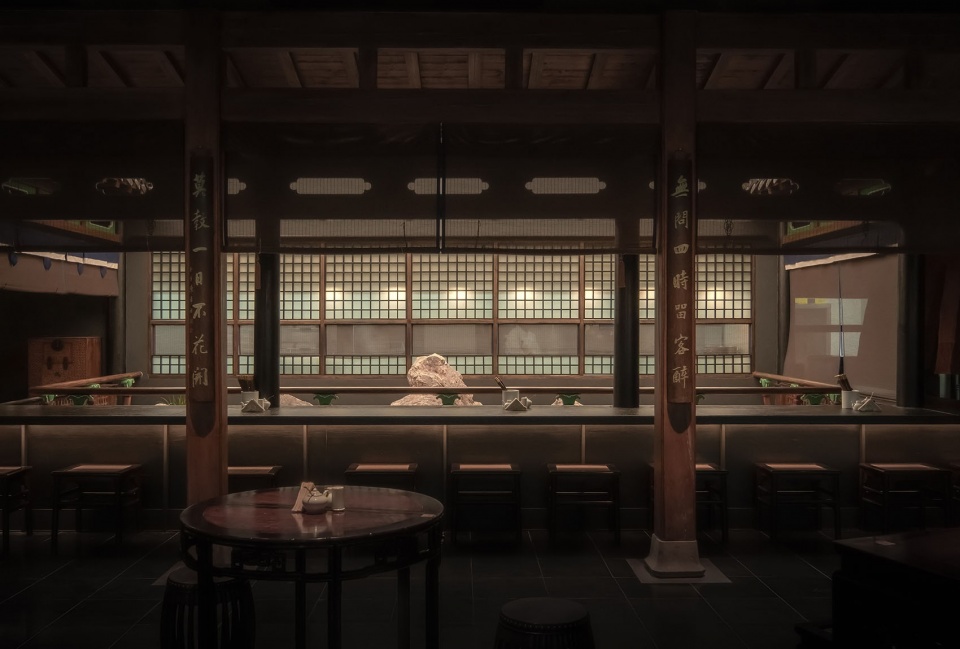
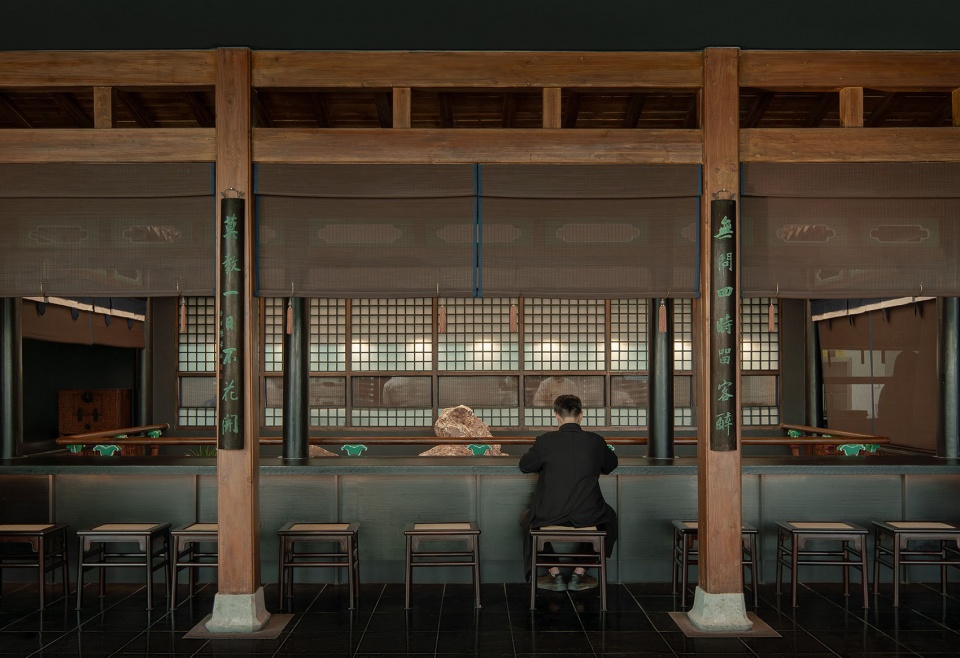
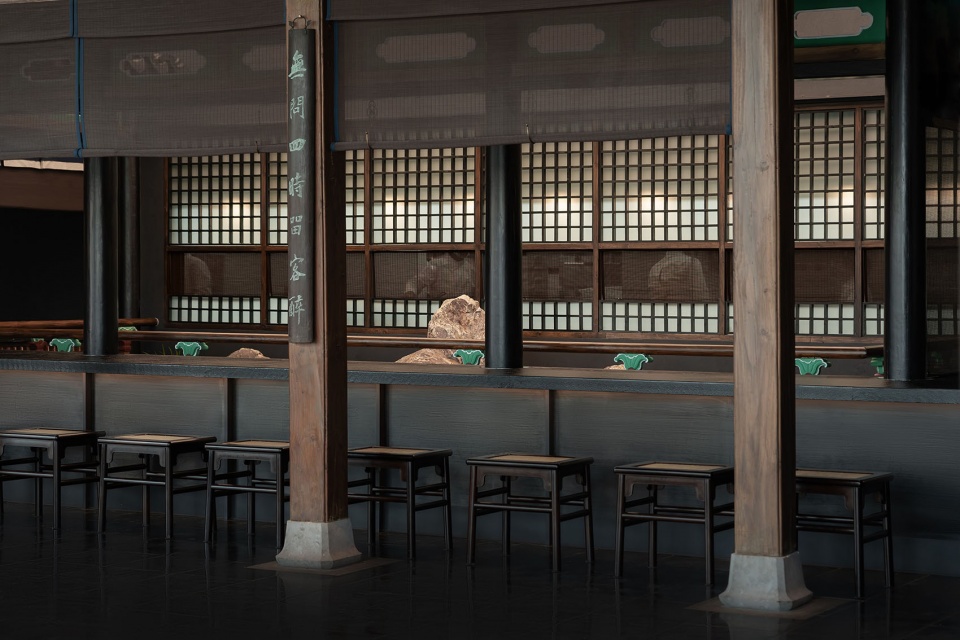
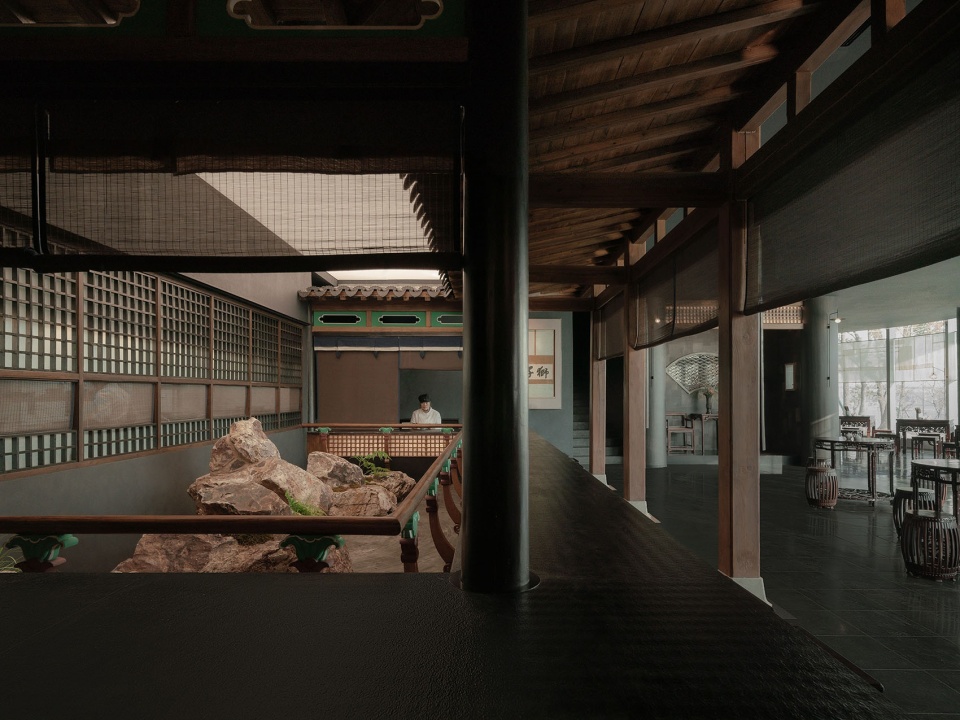
▼三山廊,Sanshan Corridor
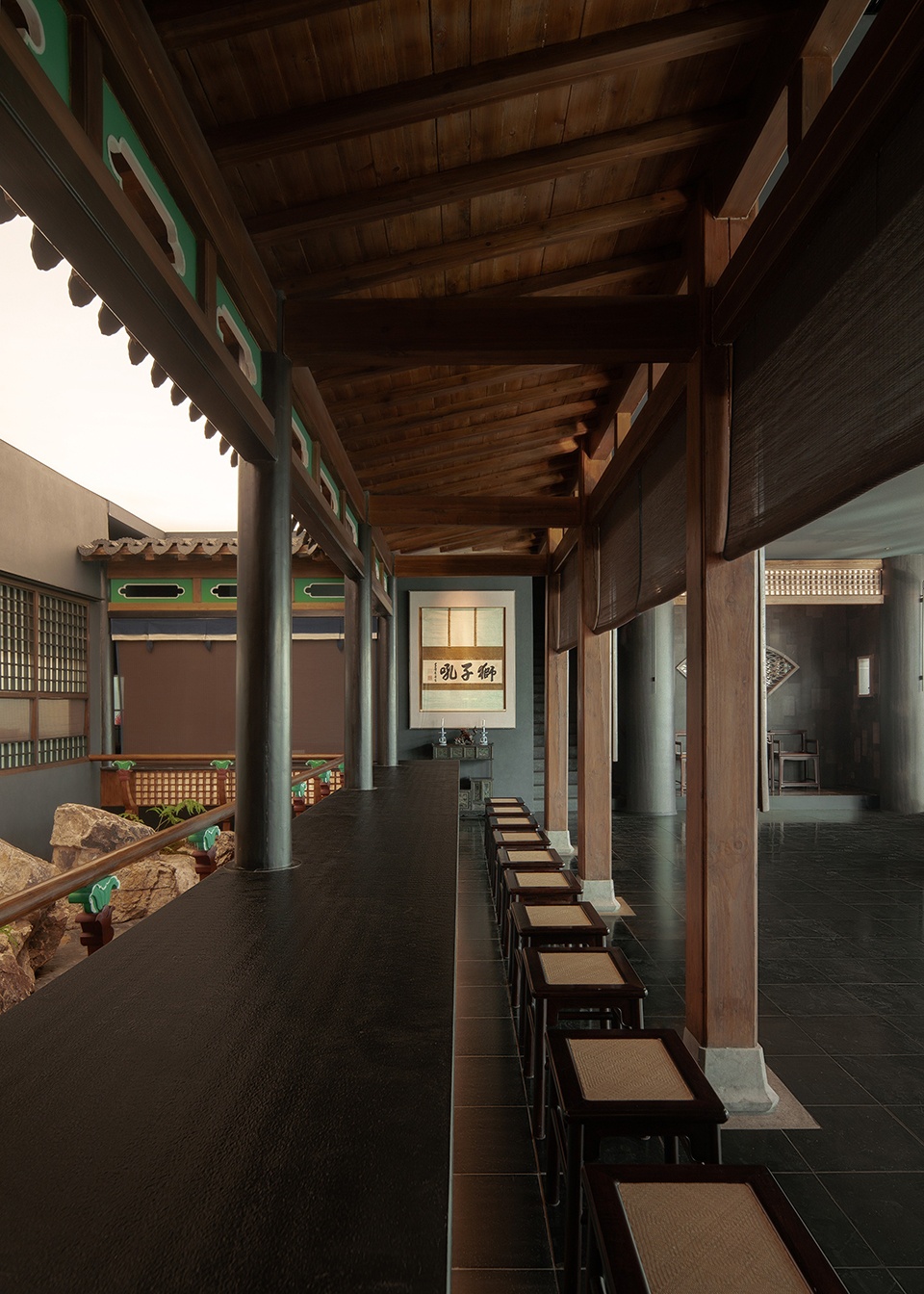
▼思益庭一角,A corner of Siyi Courtyard
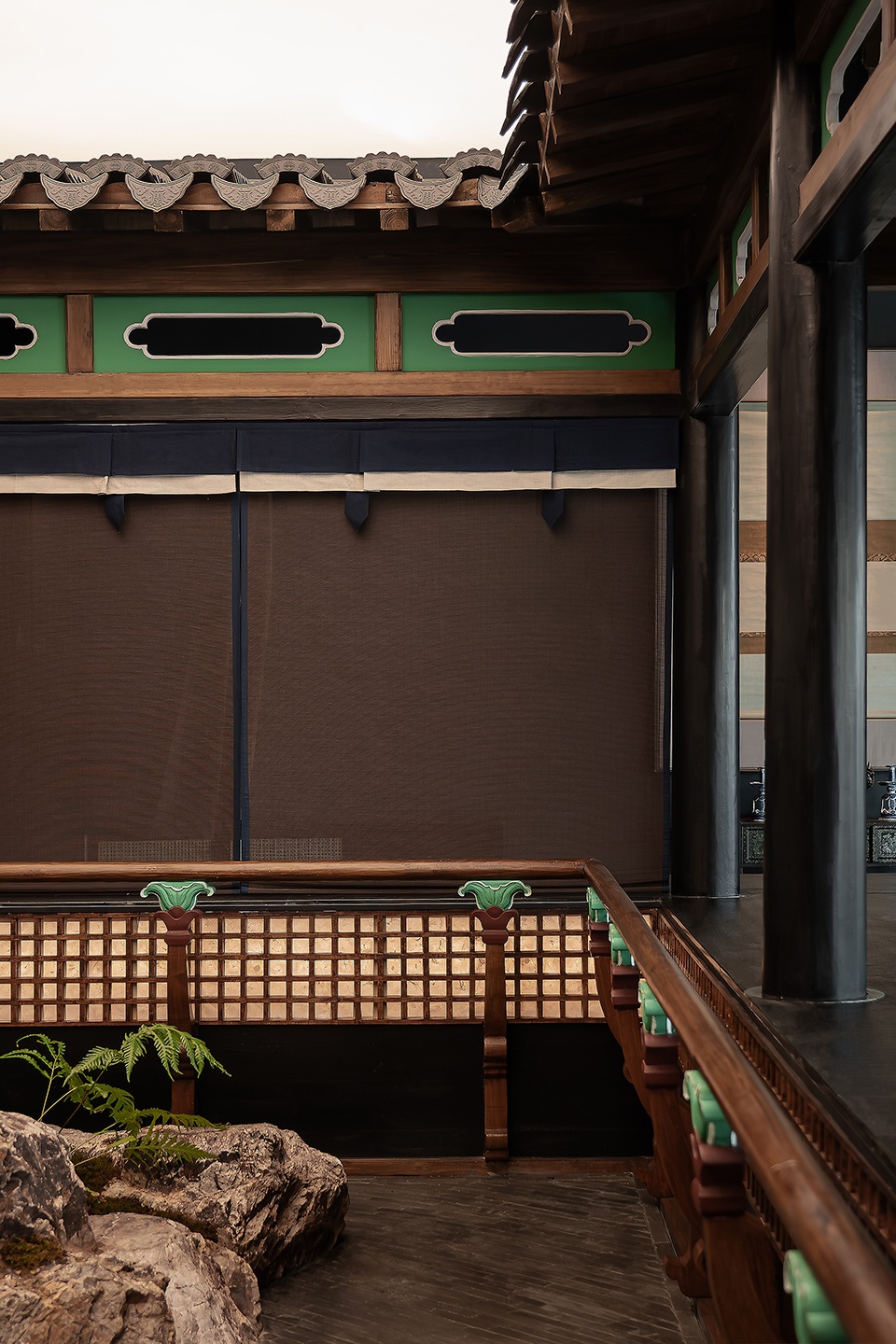
▼思益庭细部,Siyi Courtyard detail
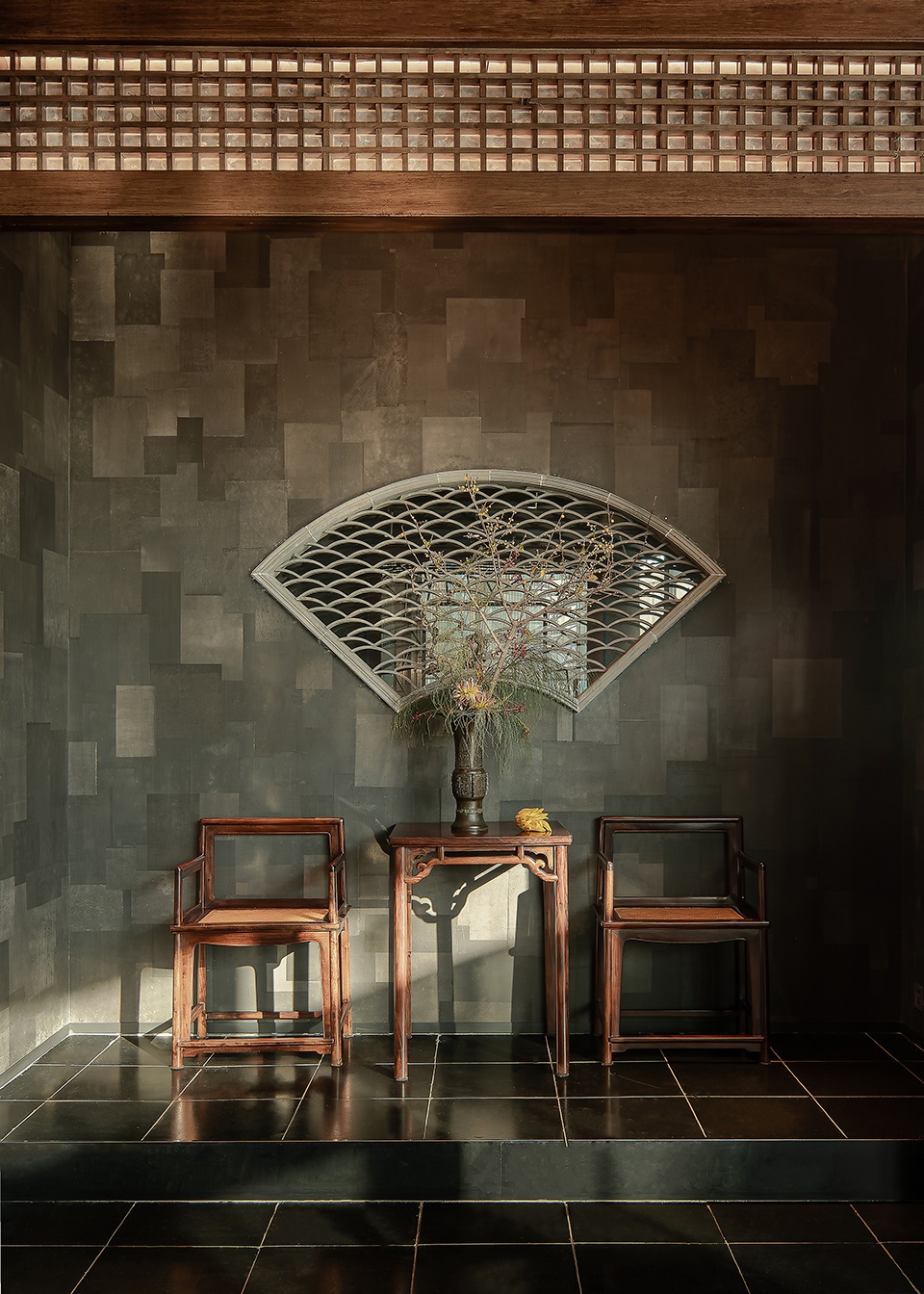
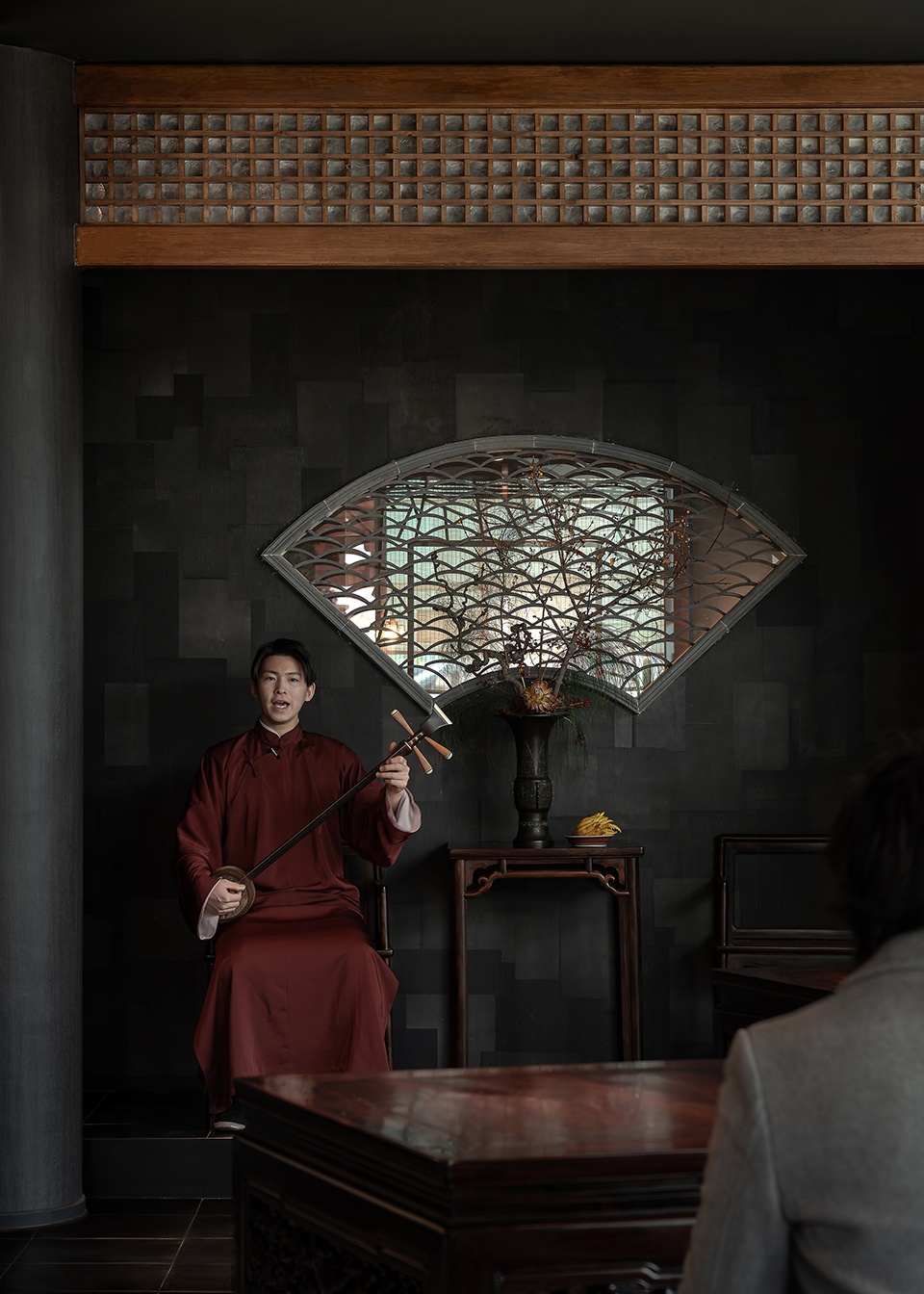
第三景:獅岩眠松因为狮山多山石,少泥土,松树多长于石缝间,松姿横卧斜出,便有了“狮岩眠松”的一景,自古与“虎丘古杉”齐名。“姑苏桥”以山石为线,寻山的路中,搭建了一座苏州评弹的坐唱之所,这也是“姑苏桥”一贯延续的苏州味道。苏州弹词有说有唱,以“双档”为主,亦如狮岩与眠松的坚挺与悠然。当然,此处少不了苏州园林的窗棂之美。扇形、方形、菱形等各色窗棂,被布置于面馆的各个包间内,透风漏月,洞门观景别有韵味。
Lions’ Rocks and Reclining Pines
Shishan Hill is characterized by exposed rocks and thin soil, where pine trees often take root in crevices and stretch horizontally or slantingly, giving rise to the scenic view known as “Lions’ Rocks and Reclining Pines”, which has been as celebrated as “Ancient Firs of Tiger Hill” since ancient times. Following the natural lines of the rocks, Gusu Bridge has built a venue for Suzhou Pingtan performances along the hillside path, preserving the authentic Suzhou charm that defines the establishment. Suzhou Tanci features storytelling and singing, usually performed by a twoperson ensemble, embodying both the fortitude of the rocky cliffs and the tranquility of the reclining pines. Naturally, the beauty of Suzhou garden window lattices is also present here. Fanshaped, square, diamondshaped, and other decorative windows adorn every private dining room, allowing breezes and moonlight to filter through; views framed by round moon gates further enhance the serene elegance of the space.
▼评弹表演空间,performance space
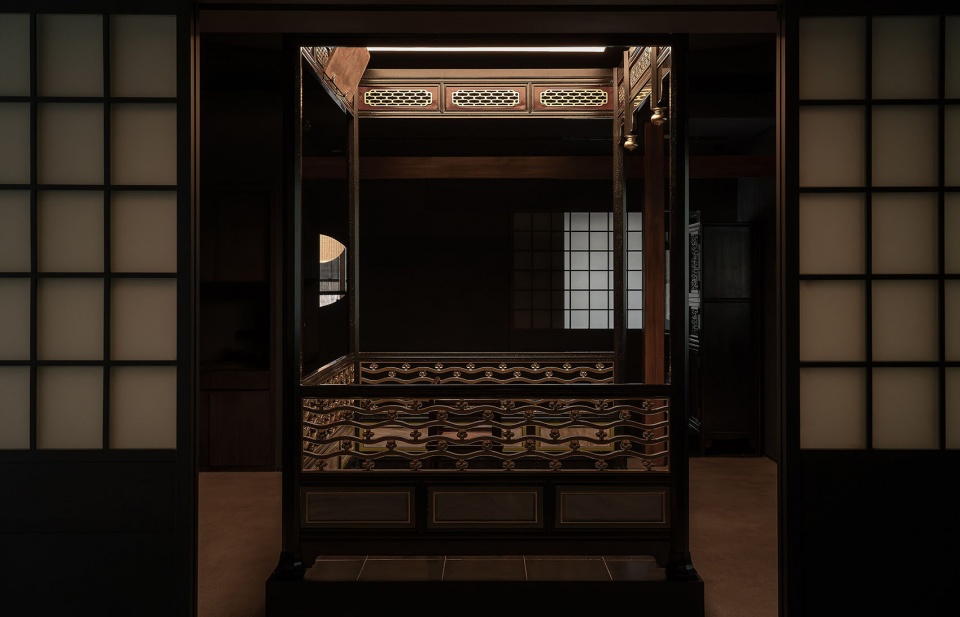
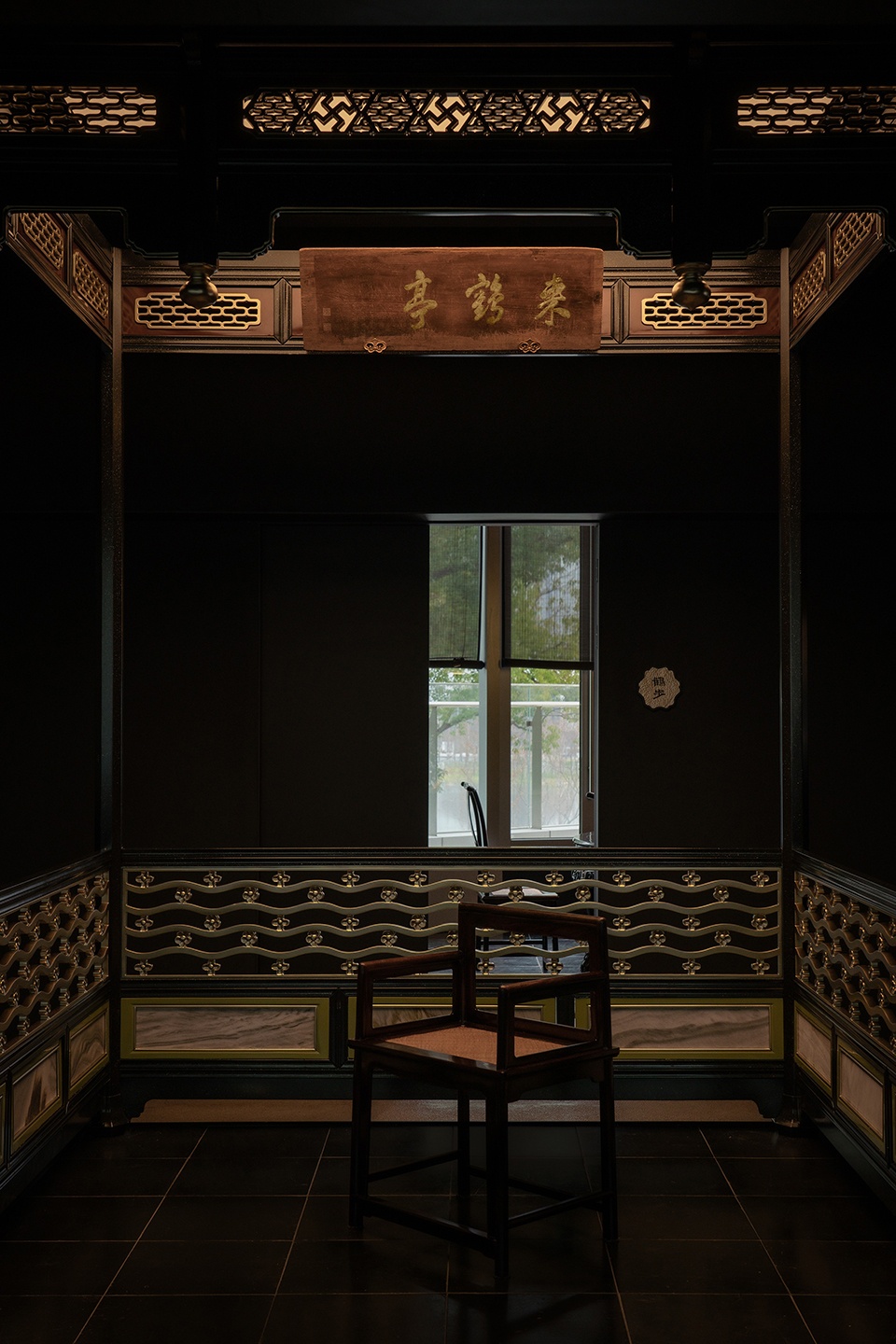
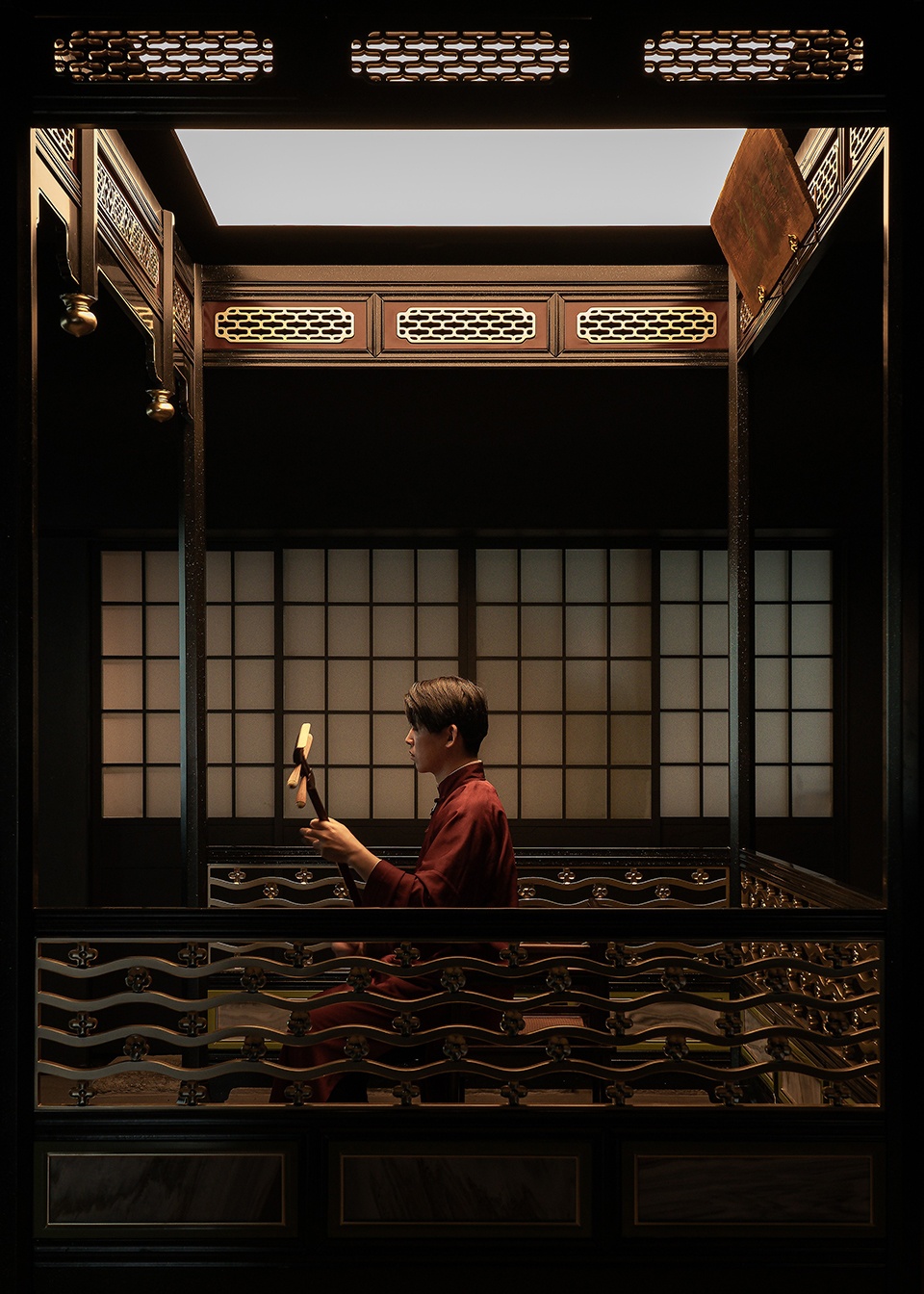
第四景:来鹤亭沿楼梯上二楼,便可见一座四方围合的来鹤亭。明式苏作,用大漆螺钿的传统工艺镶嵌而成。可欣赏,也可作评弹说唱。“酒酣亭上来看舞,有客新名唤作耽。”苏轼名作《来鹤亭》中,寄托了作者对隐居生活的无限向往。岁暮清寒之时再读此诗,雪月交辉的景象更让人不禁感慨,纷繁复杂的世事中,若能时时饱有一份自在、洒脱是何等幸事。
Laihe Pavilion
Ascending the stairs to the second floor, one encounters an enclosed square pavilion known as Laihe Pavilion. Crafted in the Suzhou style of the Ming Dynasty, it is inlaid using the traditional lacquer and motherofpearl technique. It serves both as an ornamental structure and a stage for Pingtan performances. “Intoxicated, I ascend the pavilion to watch the dance; a new friend finds joy in seclusion.” In his classic poem Laihe Pavilion, Su Shi expressed his profound longing for a reclusive life. Reading this poem amid the quiet chill of late winter, one cannot help but reflect on the scene of glistening snow and moonlight. In a chaotic and bustling world, it is a rare blessing to always remain free and unrestrained in spirit.
▼来鹤亭,Laihe Pavilion
▼来鹤亭近景,Laihe Pavilion close view
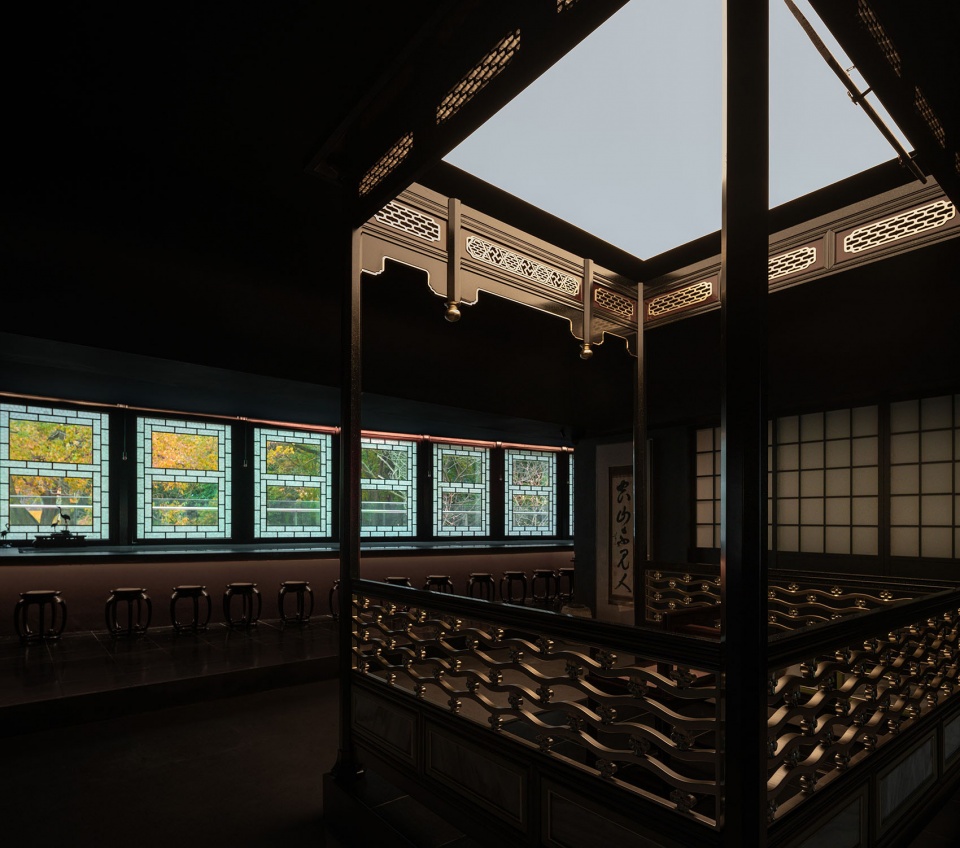
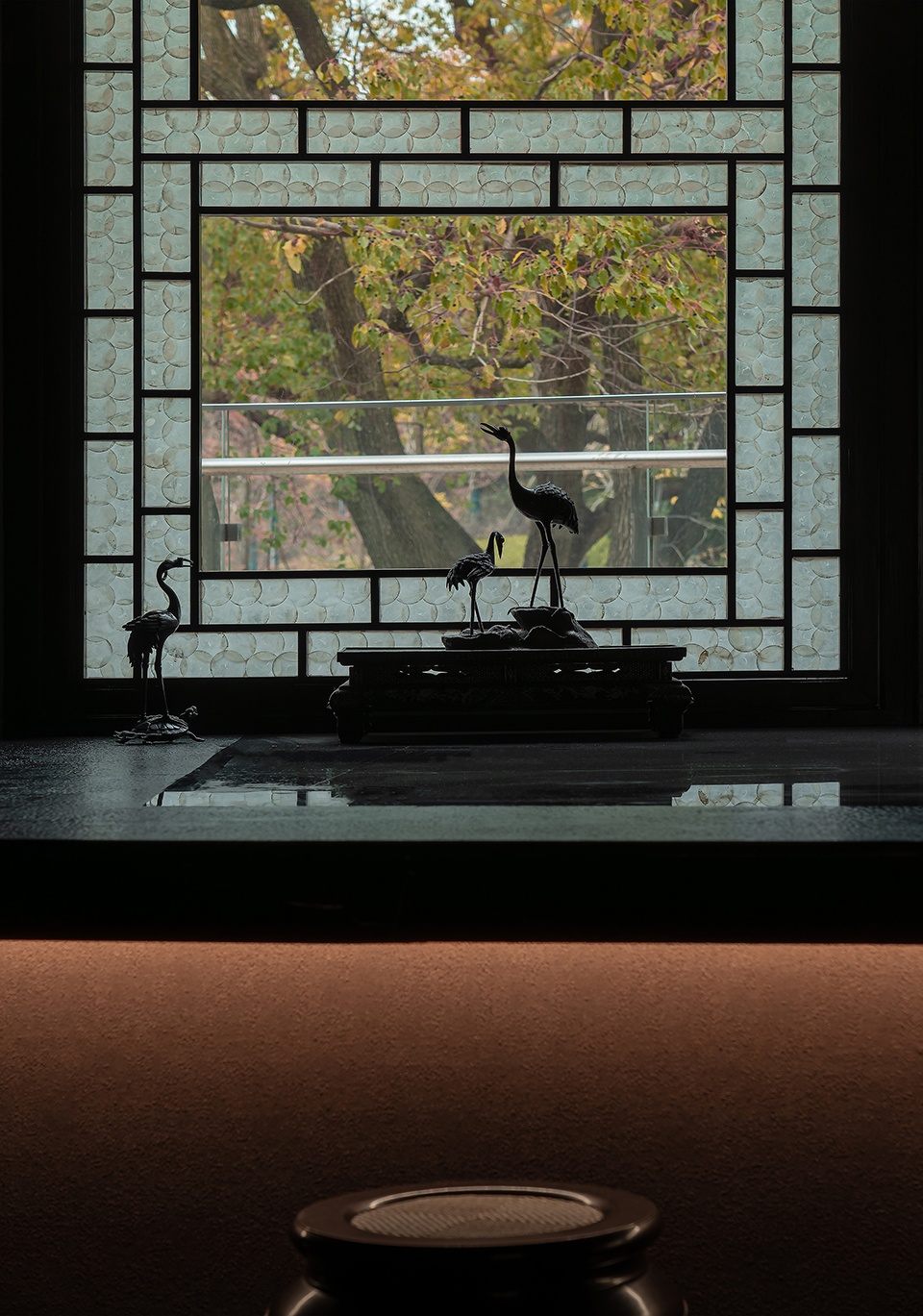
第五景:明镜台一楼有思益寺演化而来的思益庭,二楼继续以“明镜台”点景,以禅宗机锋点释,劝诫世人,当留一颗清净心,摒弃尘中纷扰,获得一片禅境。于是,采用苏州传统蠡壳工艺制成的一整片“琉璃光院”,由晨至暮,收入四季草木之色。光影在蠡壳的折射下呈现出不同的色彩,天光流动如画。“明镜台”旁,悬挂了黄檗宗的鼻祖隐元大师的一幅立轴,书曰“空山不见人”。原来是,本来无一物,何处惹尘埃。
Mirror Platform
While the first floor features Siyi Courtyard, derived from the ancient Siyi Temple, the second floor continues the poetic theme with the Mirror Platform. Drawing inspiration from Chan Buddhist philosophy, it reminds people to keep a pure mind, free from worldly distractions, and attain a state of serene enlightenment. A full hall named “Glazed Light Courtyard” is made using the traditional Suzhou shellinlay technique, capturing the colors of plants and foliage across all seasons from dawn till dusk. Light refracts through the shells in shifting hues, with natural daylight flowing like a living painting. Beside the Mirror Platform hangs a vertical scroll by Master Yinyuan, founder of the Huangbo sect of Buddhism, inscribed with the line “Empty mountains show no trace of men”. It echoes the timeless Chan wisdom: “Originally, nothing exists; where can dust settle?”
▼明镜台,Mirror Platform
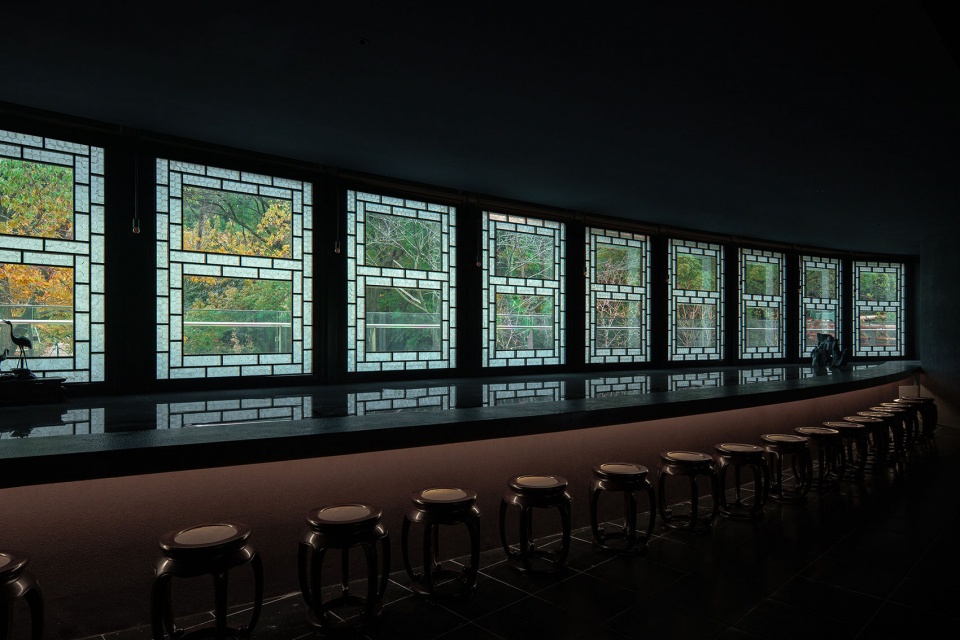
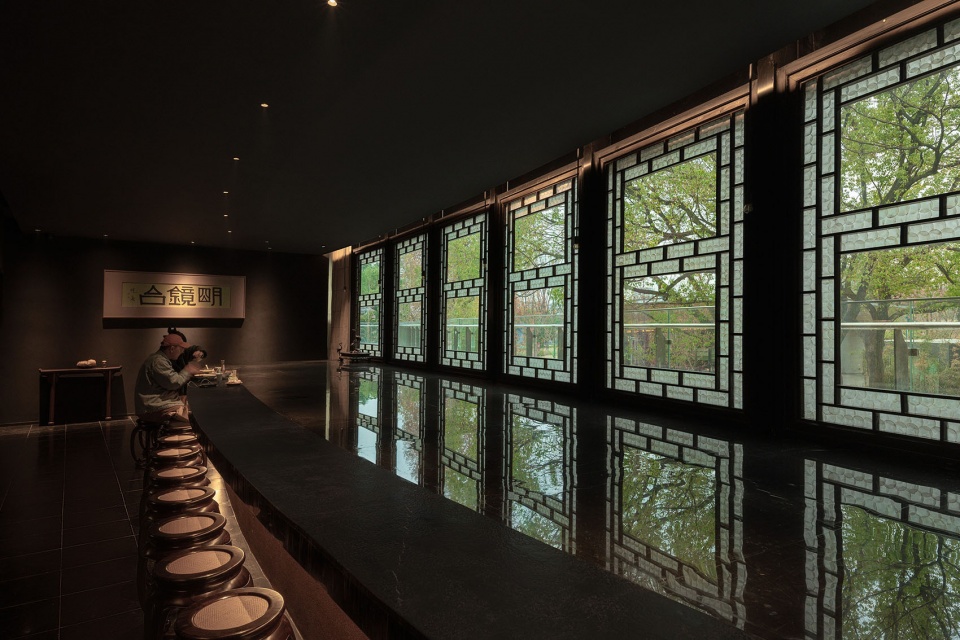
▼明镜台近景,Mirror Platform close view
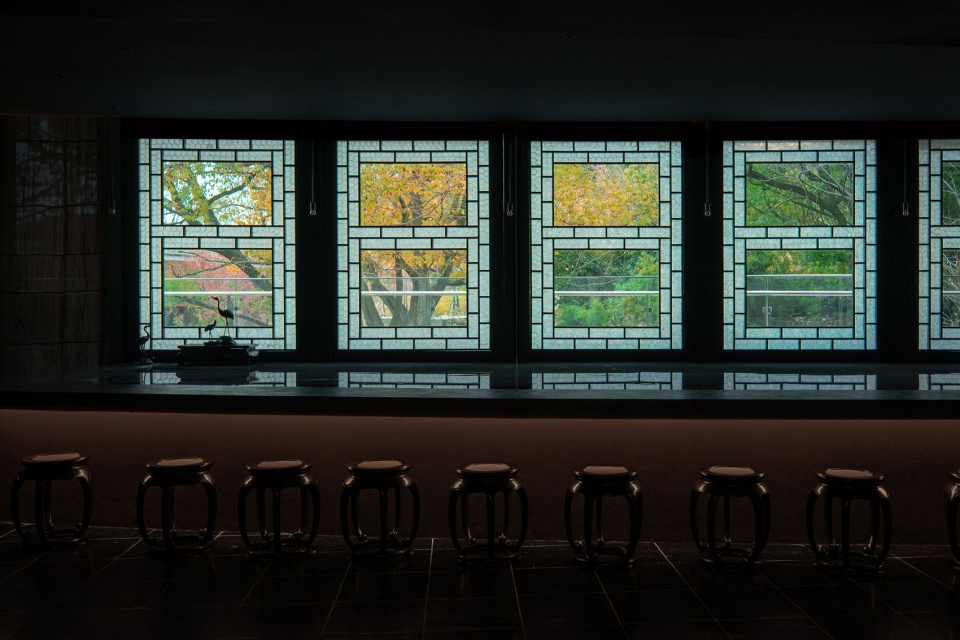
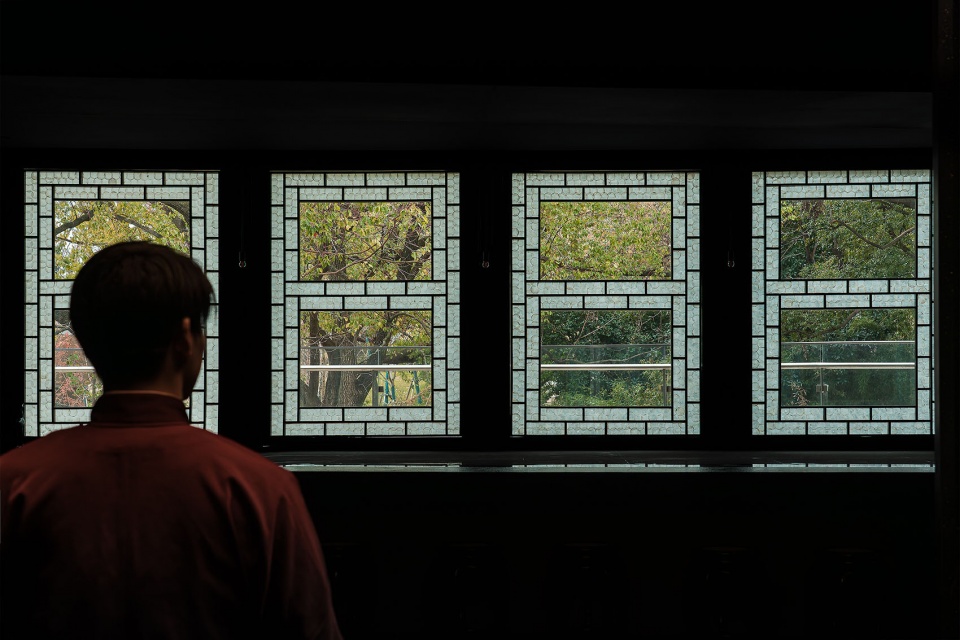
▼明镜台细部,Mirror Platform detail
设计难点 Design Challenges
1. 传统美学与现代功能的平衡 1. Balance between traditional aesthetics and modern functions
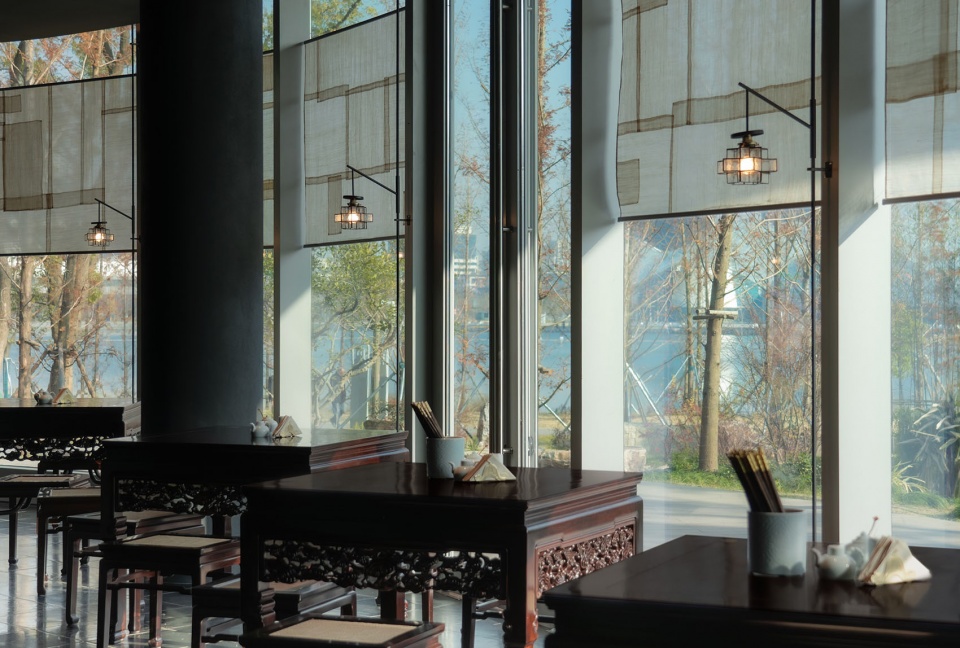
空间叙事与动线设计:设计试图复刻苏州园林 “移步换景” 的意境,如 “一池三山” 的庭院、“明镜台” 的窗景。但作为面馆,必须保证高效的人流、清晰的点餐与出餐动线、合理的座位排布。如何在不破坏诗意氛围的前提下,解决翻台率、消防疏散、后厨物流等现实问题,是巨大的挑战。光影与氛围的精准营造:蠡壳窗的妙处在于其独特的光影效果,但现代建筑的采光、空调、隔音等需求,会对传统开窗方式造成限制。设计需要在保留 “天光流动” 的同时,用现代技术(如双层玻璃、智能遮阳)解决能耗与舒适度问题。
Spatial narrative and circulation design: The design attempts to recreate the artistic conception of “scenery changing with each step” in Suzhou gardens, such as the courtyard of “one pond, three hills” and the window view of “Mirror Platform”. As a noodle restaurant, it must ensure efficient customer flow, clear ordering and food delivery circulation, and reasonable seating arrangement. The great challenge is to solve practical problems including table turnover rate, fire evacuation and kitchen logistics without destroying the poetic atmosphere. Precise creation of light, shadow and atmosphere: The beauty of mussel-shell windows lies in their unique light and shadow effects, but modern building requirements for lighting, air conditioning and sound insulation will restrict traditional window designs. The design needs to retain the “flow of natural light” while solving energy consumption and comfort issues with modern technologies such as double glazing and intelligent sun shading.
▼一层用餐区,ground floor dining area
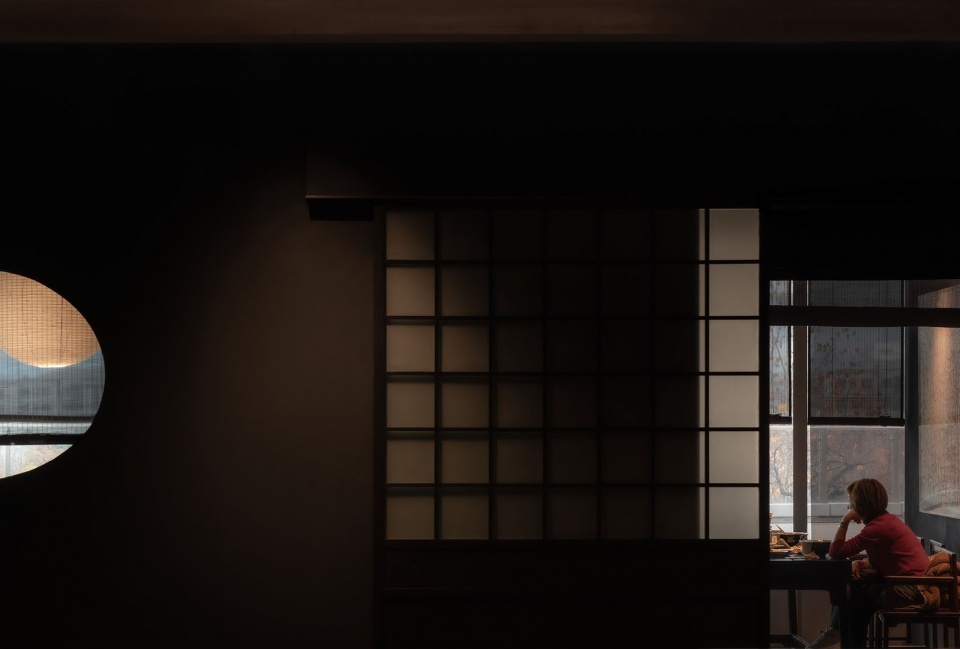
▼包间用餐,private dining
2. 在地文化的深度转译而非符号堆砌 2. In-depth translation of local culture instead of symbolic stacking
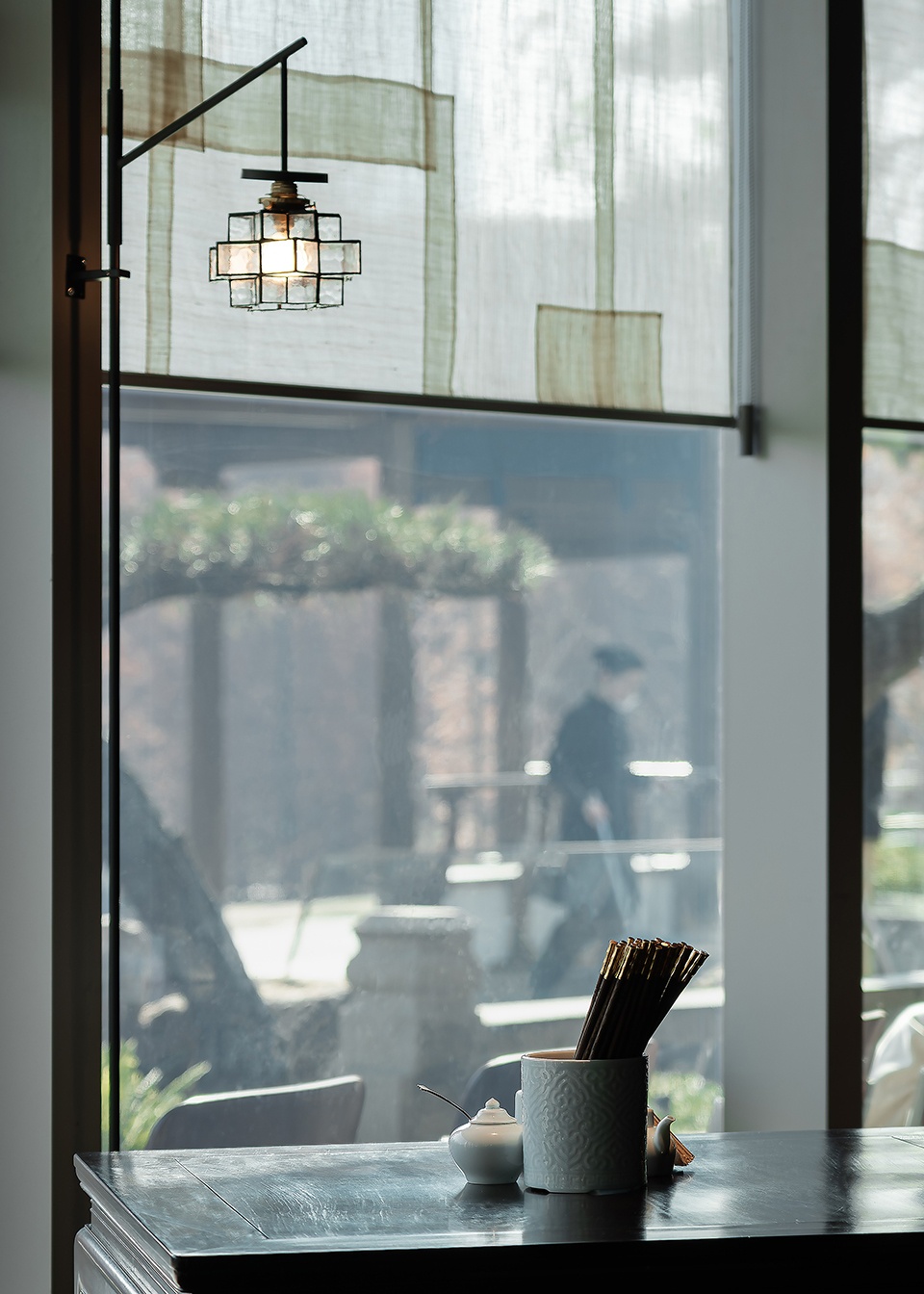
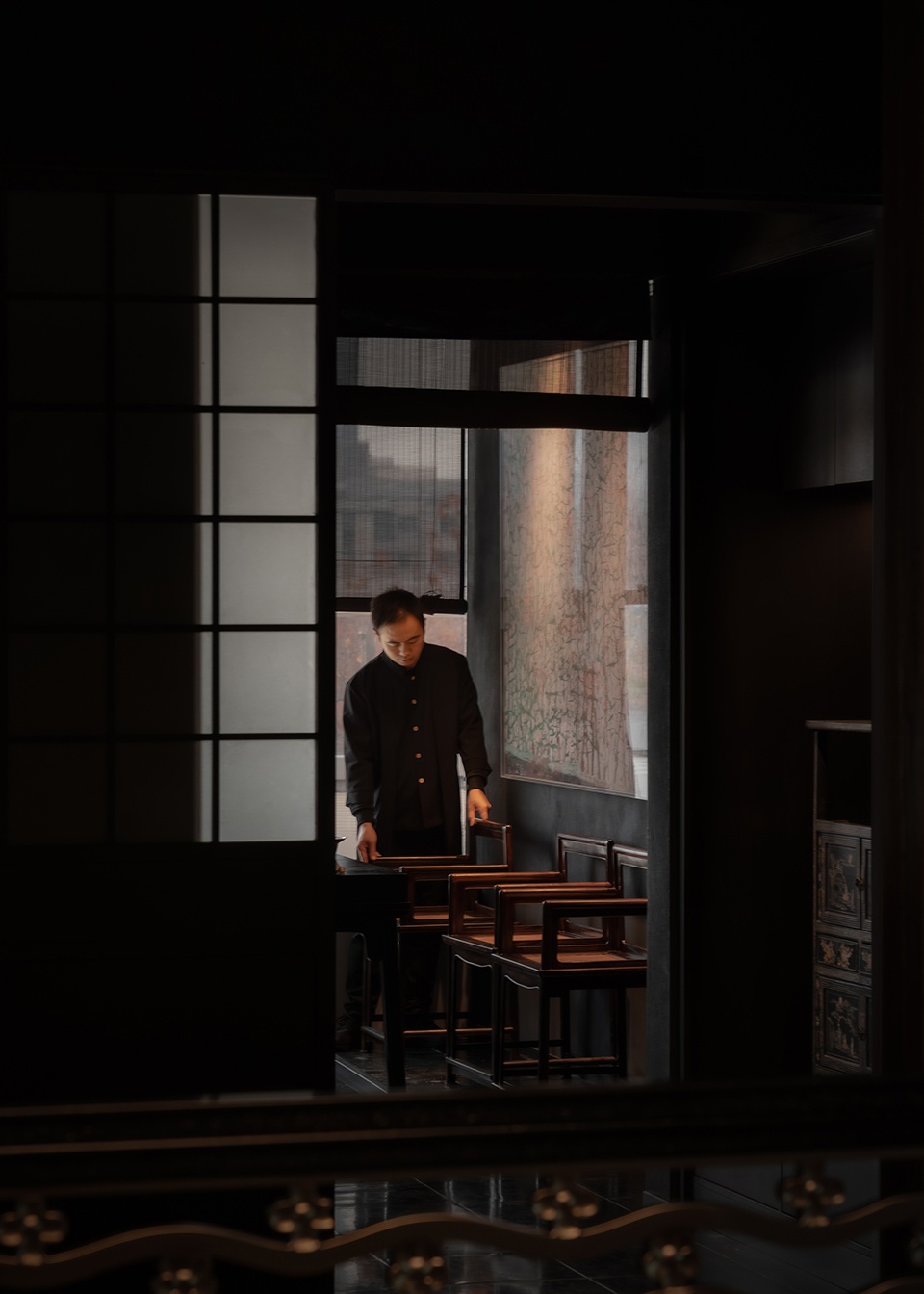
避免 “伪中式” 的陷阱:项目没有简单地使用飞檐、斗拱等符号,而是提炼了苏州园林的 “造园逻辑”,如借景、框景、留白。例如,通过蠡壳窗将窗外的四季景色 “框” 入室内,让食客在吃面时感受山水意趣。难点在于:如何让这些文化表达自然融入,而不是成为突兀的装饰。这需要设计师对苏州的历史、文人精神有深刻理解,而非表面化的元素拼接。当代审美的适配:空间整体采用了低饱和度的深色调,配合明式家具的简洁线条,既符合传统文人的审美,又能被当代年轻人接受。这种 “克制的奢华”,需要在材料选择、灯光设计、软装搭配上进行大量推敲,避免显得陈旧或压抑。
Avoiding the trap of “pseudo-Chinese style”: The project does not simply use symbols such as upturned eaves and brackets, but extracts the “garden-making logic” of Suzhou gardens, such as view borrowing, frame scenery and blank space. For example, the four seasons scenery outside the window is “framed” into the interior through mussel-shell windows, allowing diners to feel the charm of landscapes while eating noodles. The difficulty is how to integrate these cultural expressions naturally instead of becoming abrupt decorations. This requires designers to have a profound understanding of Suzhou’s history and literati spirit, rather than superficial element collage. Adaptation to contemporary aesthetics: The space adopts low-saturation dark tones as a whole, matched with the simple lines of Ming-style furniture, which conforms to the aesthetics of traditional literati and can be accepted by contemporary young people. This “restrained luxury” requires much refinement in material selection, lighting design and soft furnishing to avoid being old-fashioned or depressing.
▼一层空间一角,A corner of ground floor interior
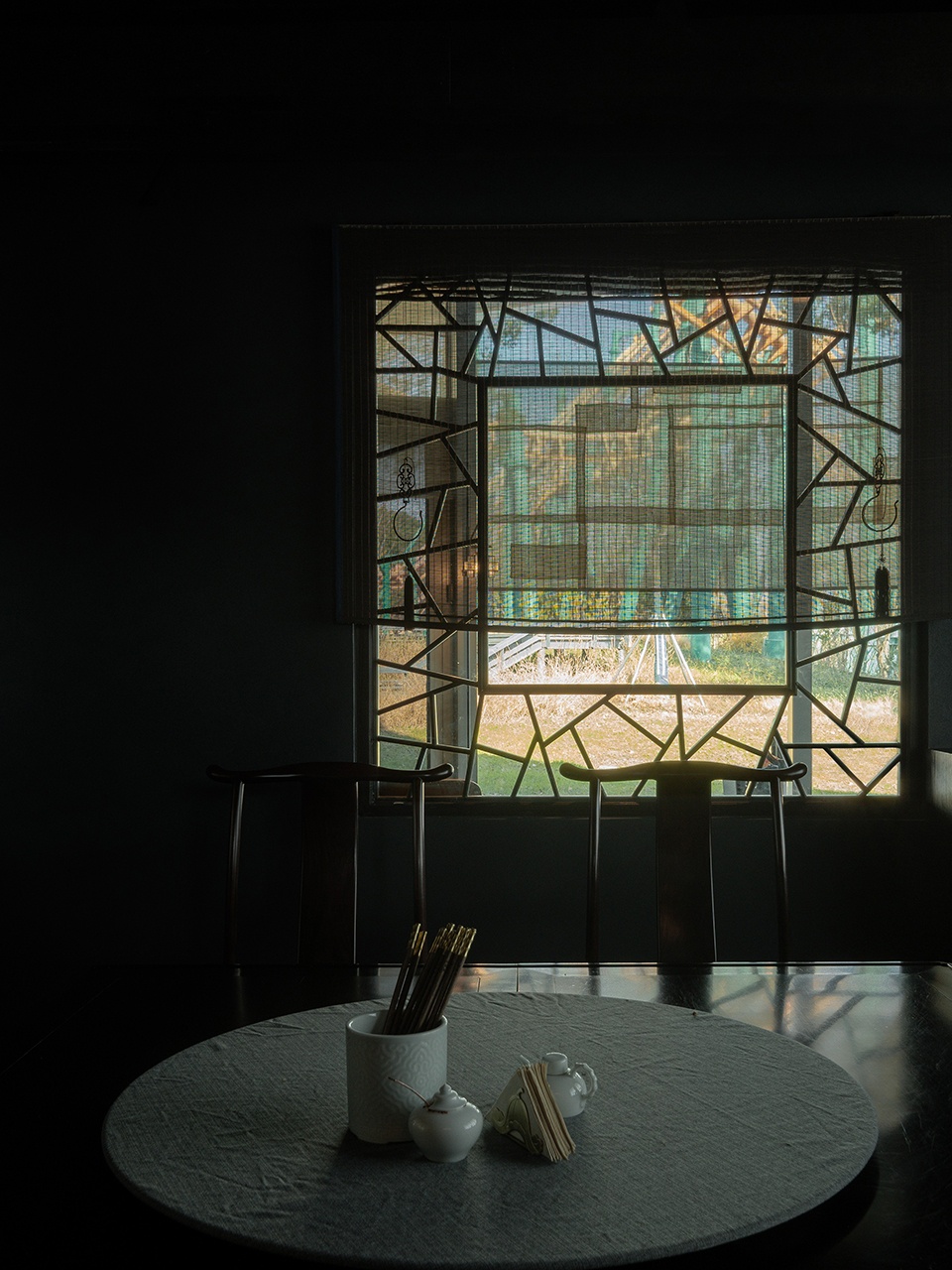
▼窗边细部,window detail
3. 商业与艺术的共生 3. Symbiosis between commerce and art
体验感与运营效率的平衡:作为米其林入选餐厅,它需要提供超越普通面馆的沉浸式体验,但又不能因此牺牲运营效率。例如,大面积的镜面和深色石材,虽然提升了美学质感,但也增加了清洁和维护的难度。文化 IP 的可持续性:姑苏桥的设计不仅是一个空间,更是一个文化 IP。如何通过兰花展、弹词表演等活动,让空间持续产生文化价值,而不仅仅是一个网红打卡点,考验着主理人和设计师的长期运营智慧。
Balance between experience and operational efficiency: As a Michelin-selected restaurant, it needs to provide an immersive experience beyond ordinary noodle shops, but cannot sacrifice operational efficiency. For example, large-area mirrors and dark stone materials improve aesthetic texture, but also increase the difficulty of cleaning and maintenance. Sustainability of cultural IP: The design of Gusu Bridge is not only a space, but also a cultural IP. How to make the space continuously generate cultural value through activities such as orchid exhibitions and Tanci performances, rather than just an internet-famous check-in spot, tests the long-term operation wisdom of the proprietor and designers.
▼二层空间一角,A corner of ground floor interior
Photographer: GU SU QIAO,Y³ STUDIO External Cube Space Imaging
Project Name: GU SU QIAO
Location: Suzhou Shishan Cultural Plaza
Design Company: Not A Studio
Designer: Su Meina, Ma Dawei, Ou Shuqin
Completion time: October 2024
Main Materials: Wood, grey brick, artistic paint, metal, fabric
Client Name: GU SU QIAO