成都青羊大悦城 / reMIX临界工作室+中国建筑西南设计研究院
为存量时代,造一处“社交空间” Building a “Social Space” for the Urban Stock Renewal Era
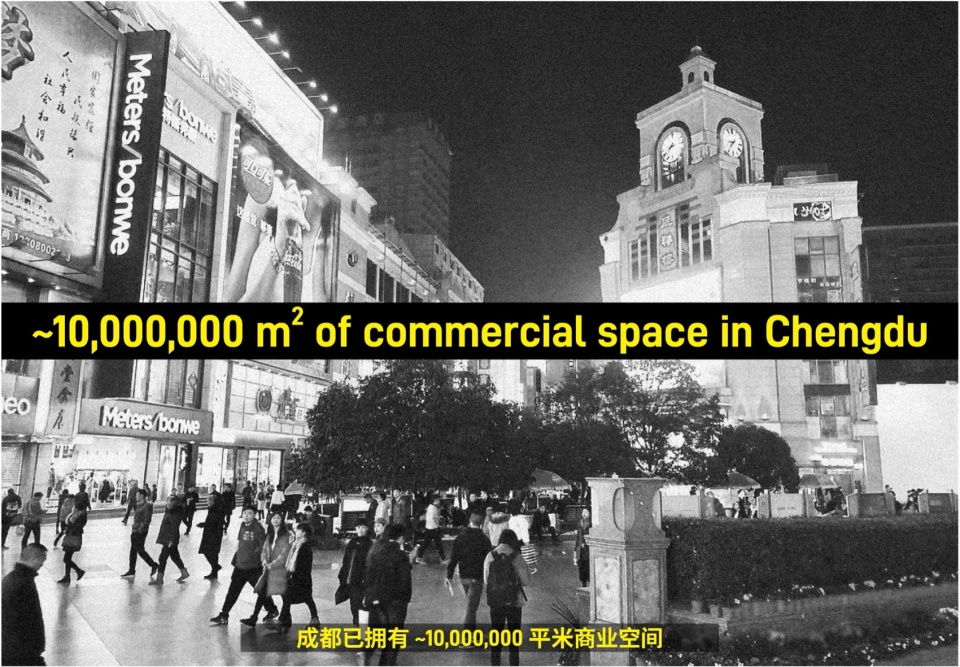
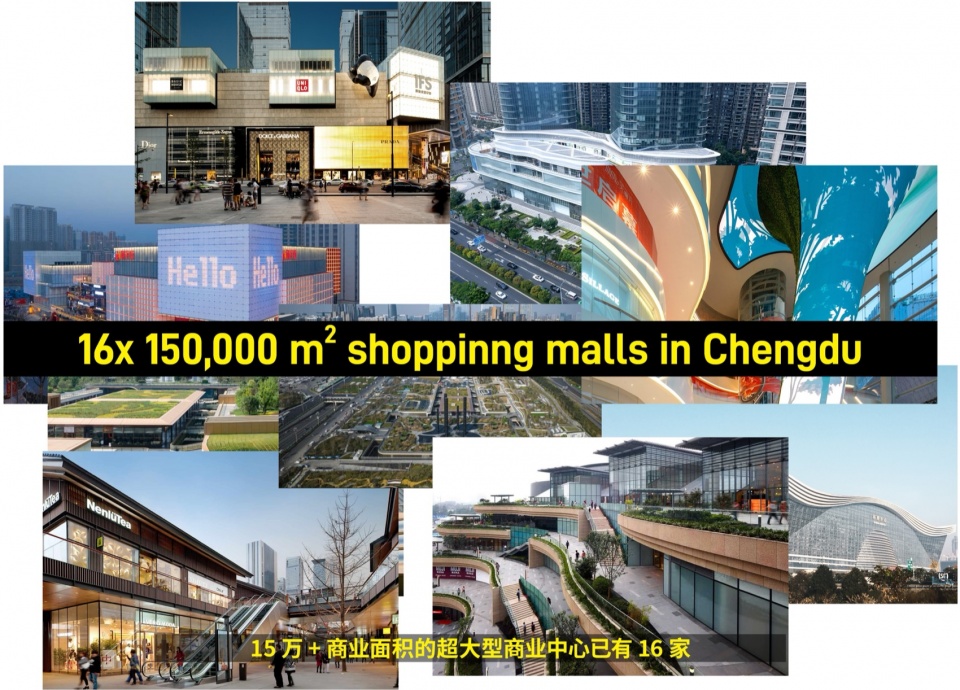
在成都,逛商场的新方式,可能是“登山”。成都已拥有超1000万平米的商业空间,人均0.5平米,而15万平方以上的超大型商业中心已有16家,商业竞争早已白热化。在这样的背景下,一座20万平米的巨型商业体该如何突围?
In Chengdu, a new way to go shopping might just be “mountain hiking”. With over 10 million square meters of commercial space — 0.5 square meters per person — and 16 mega-malls exceeding 150,000 square meters each, commercial competition in the city has reached a fever pitch. Against this backdrop, how can a massive 200,000 square meter commercial complex find its breakthrough?
▼成都已有超过100万平方米的商业空间,1000000 m² of commercial space in Chengdu
▼超过15万平方米的商业中心,成都已有16家,16x 150000 m²shopping malls in Chengdu
▼何为新型的商业空间?,what next?
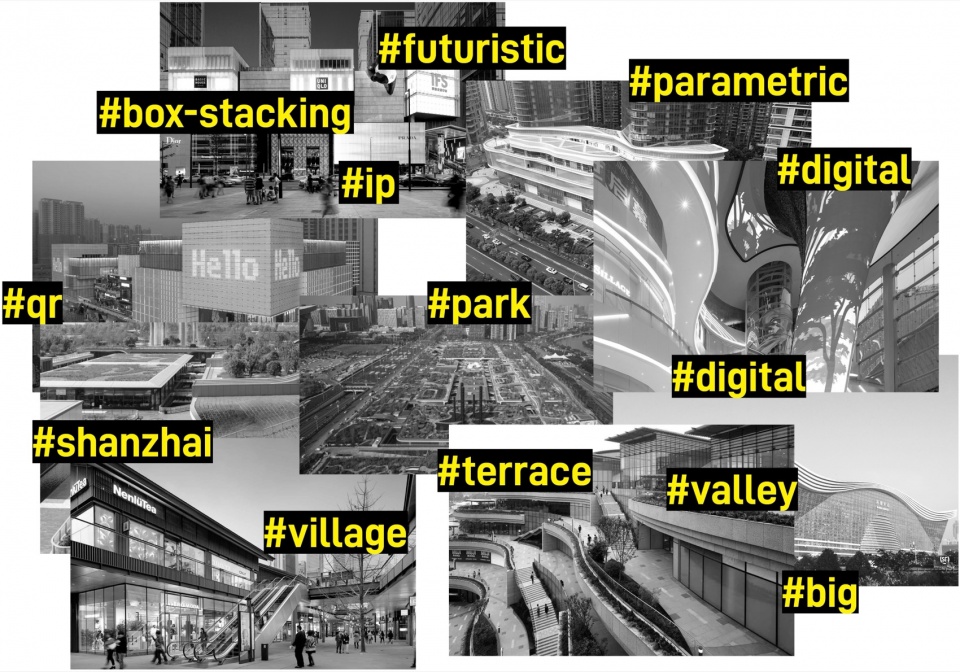
我们的答案是:与其在封闭的“盒子”里堆砌品牌,不如为这座城市造一座“山”,一处开放公园,一座可攀登、有呼吸的、能将远山纳入日常的社交空间。
▼作为城市公园的大悦城,mall as an urban park
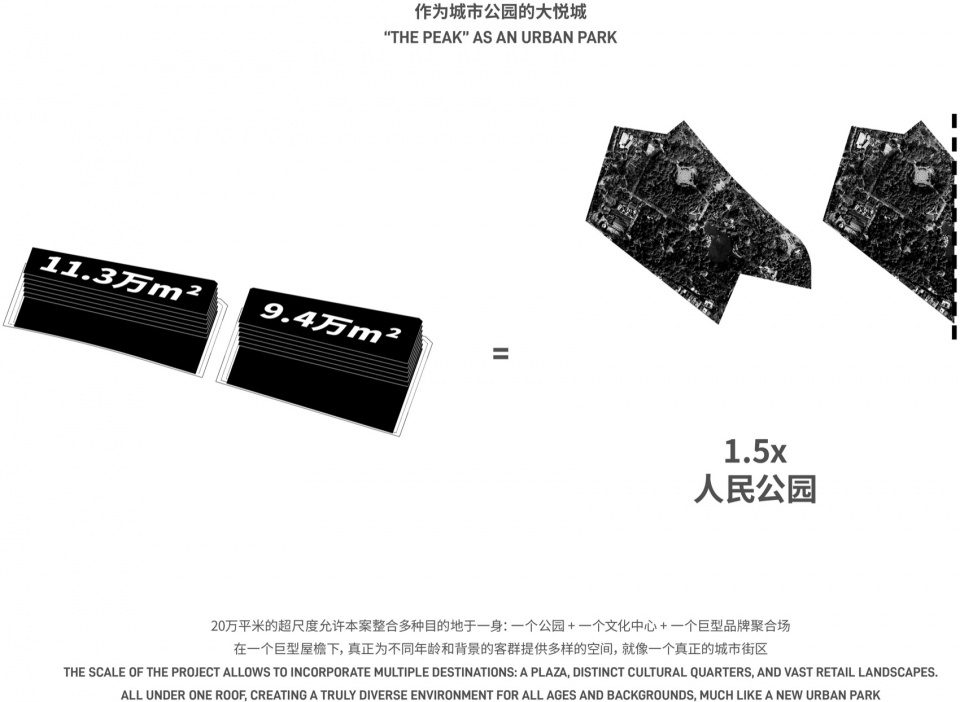
Our answer: Rather than stacking brands inside a sealed “box”, why not build a “mountain” for the city — an open park, a climbable, breathable social space that brings the distant peaks into everyday life.
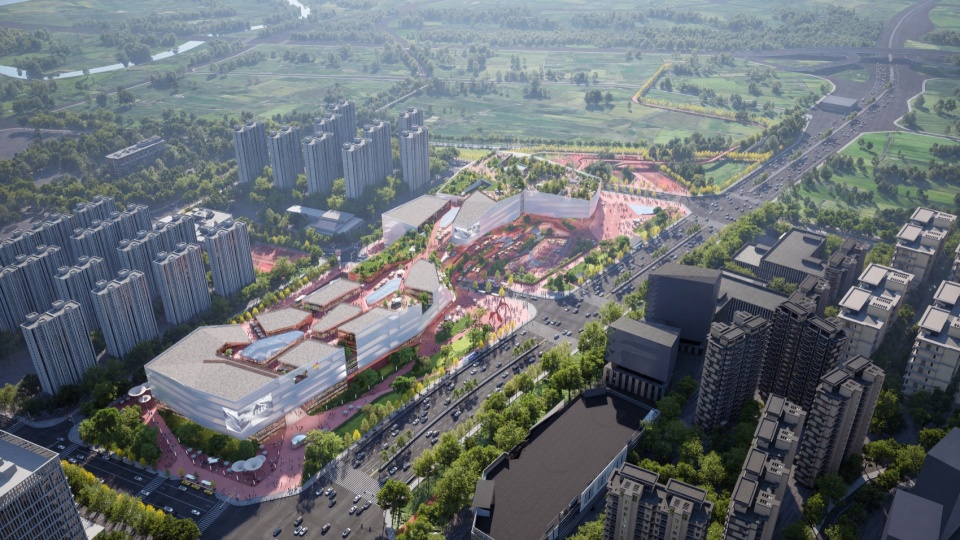
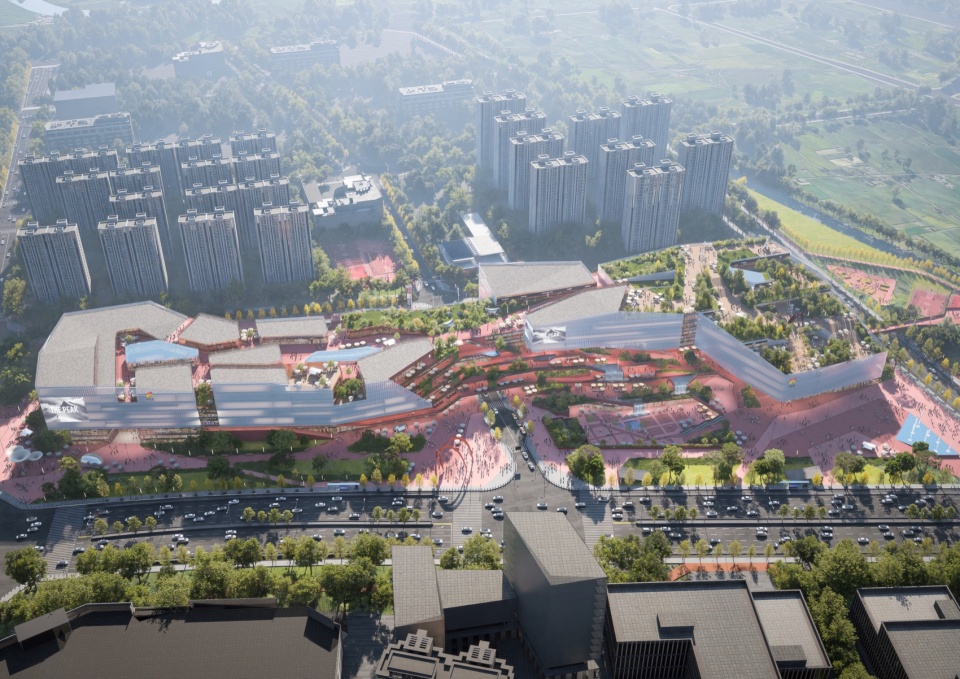
▼鸟瞰图与周边绿地,bird-view with surrounding green spaces
从购物中心到生活枢纽 From Shopping Center to Urban Life Hub
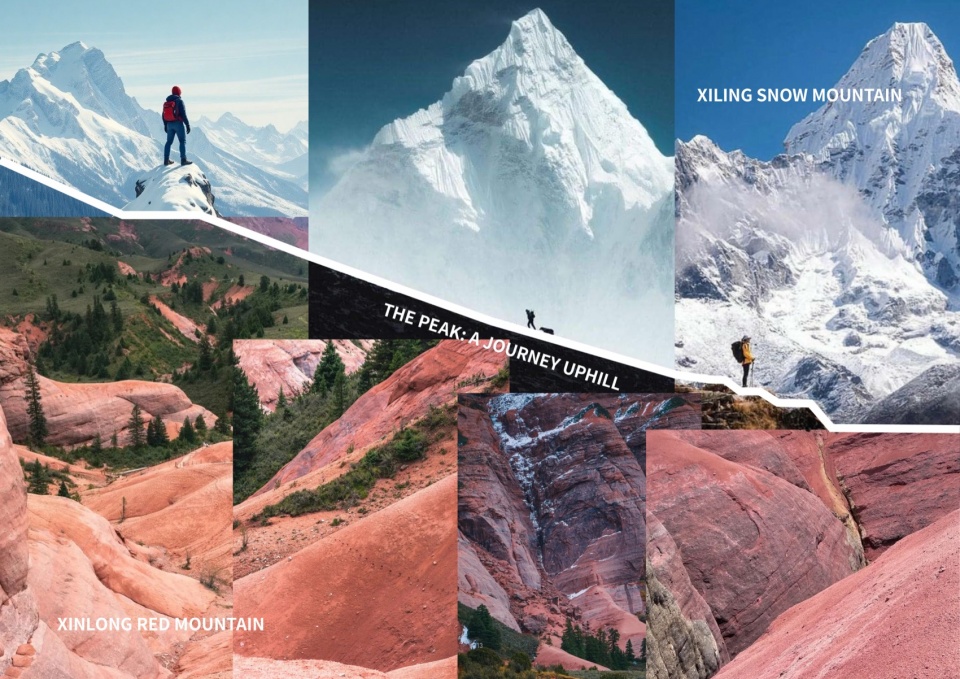
设计从成都独特的城市气质中萃取两极意象:来自雪山脚下的白与冰,市井生活的红与火,两种力量碰撞交织,建筑犹如一道冰川裂开的缝隙,里面长满了蓬勃的绿意与火热的生活。
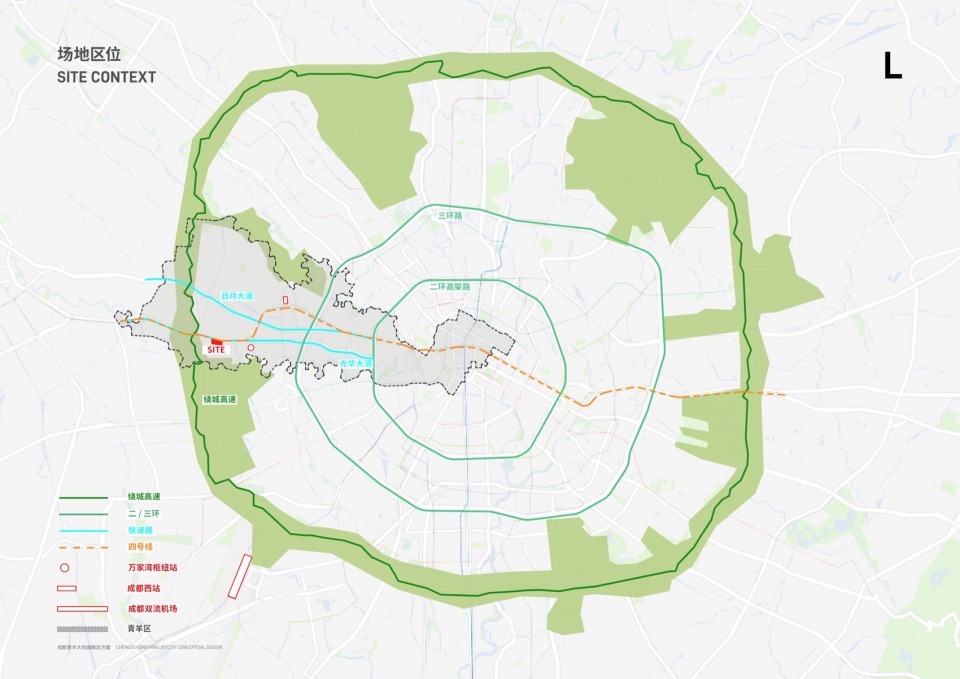
▼场地区位,site context
The design distills two polar extremes from Chengdu’s unique urban temperament: the white and ice of the snowy mountains, and the red and fire of its vibrant street life. These two forces collide and intertwine. The architecture resembles a fissure carved by a glacier, from which lush greenery and dynamic life emerge.
▼从成都周边的自然景观汲取灵感,inspiration from the natural landscapes around Chengdu
然而,快餐式的城市奇观生产无法产生持续生命力,仅仅成为地标,还远远不够。真正具有生命力的空间,必然根植于公共性。项目紧邻城市绿带,接驳地铁,应该创造出与城市怎样的联系?这不仅是交通与景观资源的叠加,更是重塑城市公共生活、融入更大的城市景观脉络的契机。方案试图成为一个全新的、功能复合的都市生活枢纽—— 一个公园、一座文化中心、一个品牌聚合场,在同一片屋檐下,为不同年龄和背景的市民,提供如同城市街区般的多元空间。
However, the rapid production of urban spectacles cannot generate lasting vitality. Being a landmark is far from enough. A truly vibrant space must be rooted in publicness. Located adjacent to the city’s green belt and connected to the subway, what kind of relationship should this project forge with the city? It is not merely a superposition of transport and landscape resources, but an opportunity to reshape urban public life and integrate into the broader urban landscape. Our proposal aspires to become a new kind of multifunctional urban life hub — a park, a cultural center, a brand aggregation — all under one roof, offering diverse spaces reminiscent of an urban block for citizens of all ages and backgrounds.
▼鸟瞰图,公共的广场,bird-view, plaza for the public
可攀登的建筑,可游逛的街巷 A Climbable Architecture, Wanderable Alleys
成都人生性喜欢户外。这种生活趣味,被转化为项目的核心空间逻辑:从“逛街“到“户外徒步”的行为转换。
Chengdu locals have a natural affinity for the outdoors and a fondness for “getting onto the rooftops”. This lifestyle preference is translated into the project’s core spatial logic: a shift from “strolling through shops” to “mountain hiking”.
▼登山路径,the journey uphill
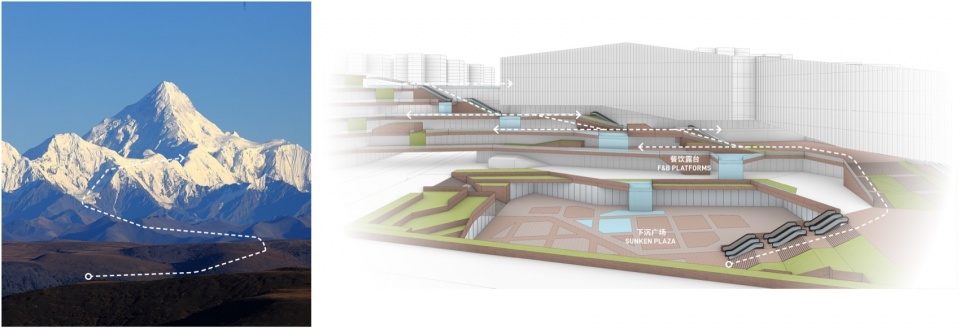
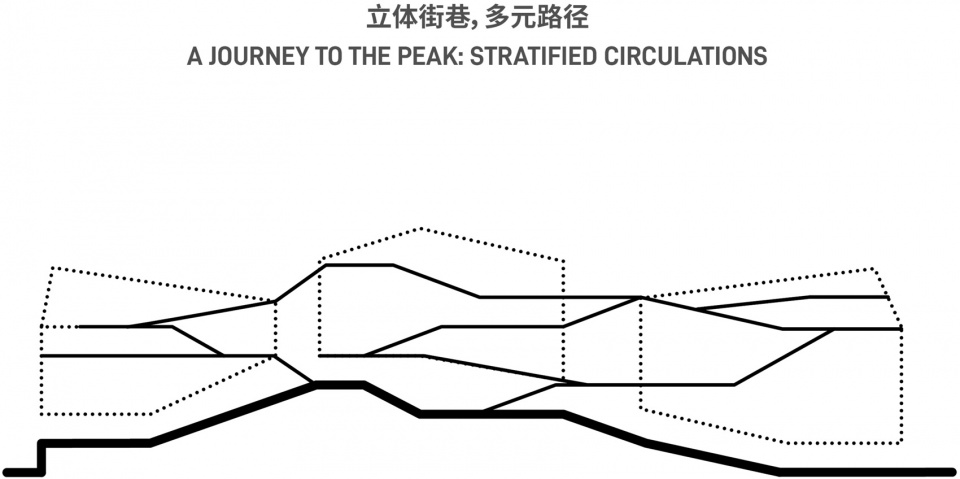
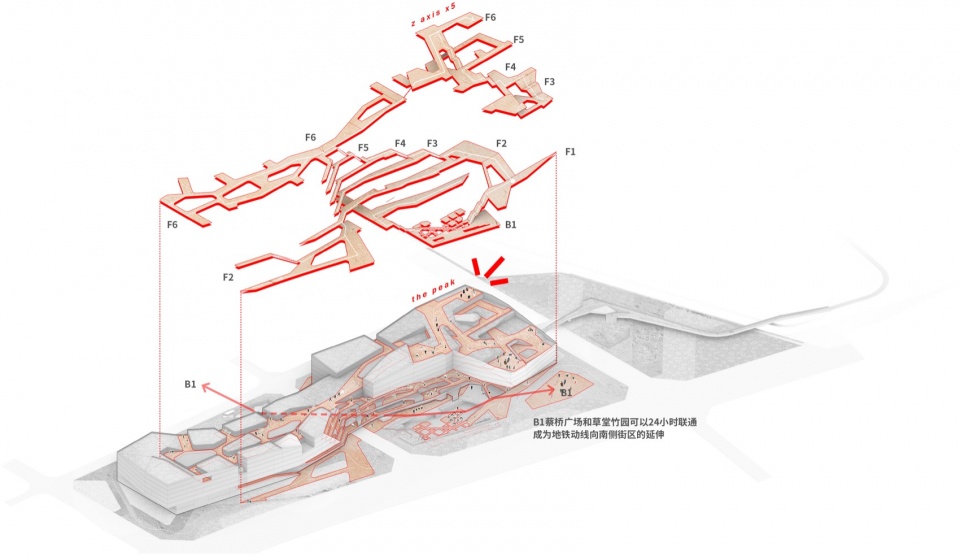
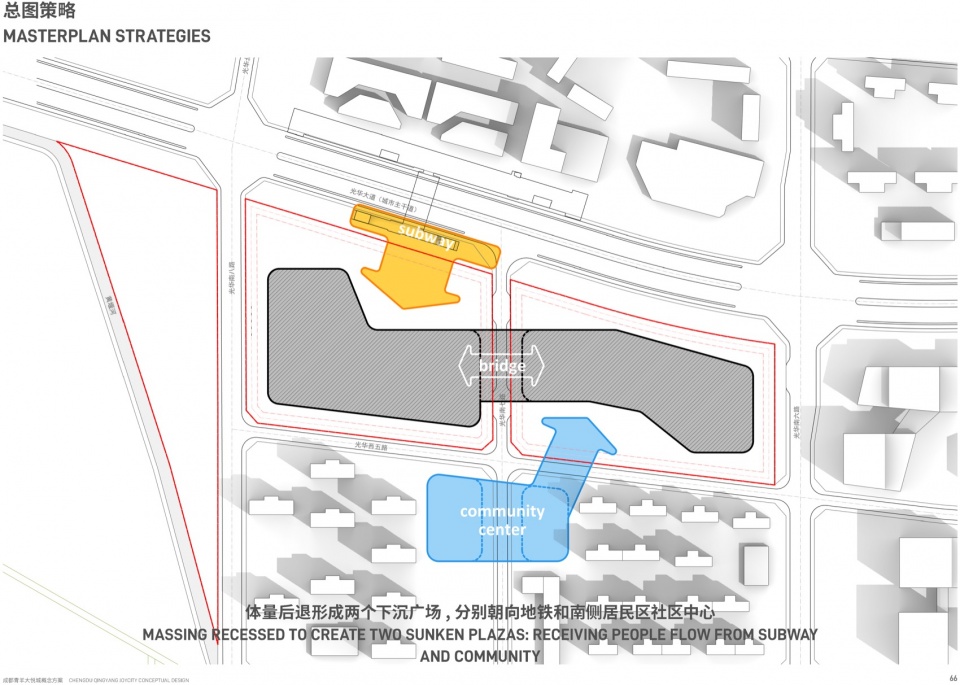
我们构建了一座“可攀登的建筑”。通过体块的堆叠与高差的处理,一条从地面自然延伸至屋顶的漫游系统被创造出来,立体街巷撕开了建筑的厚重体量,形成一条条向上的“登山路径”,将人流自然引向天空。无论是东侧的空中小镇,还是远眺雪山的商业退台,或者位于登山径上的餐饮平台,多层地面的空间策略,将巨型商业中心转化为立体的社交聚落。我们将首层的建筑主体后退,为周边的居民营造出公共的活动广场。
▼体型生成,massing process
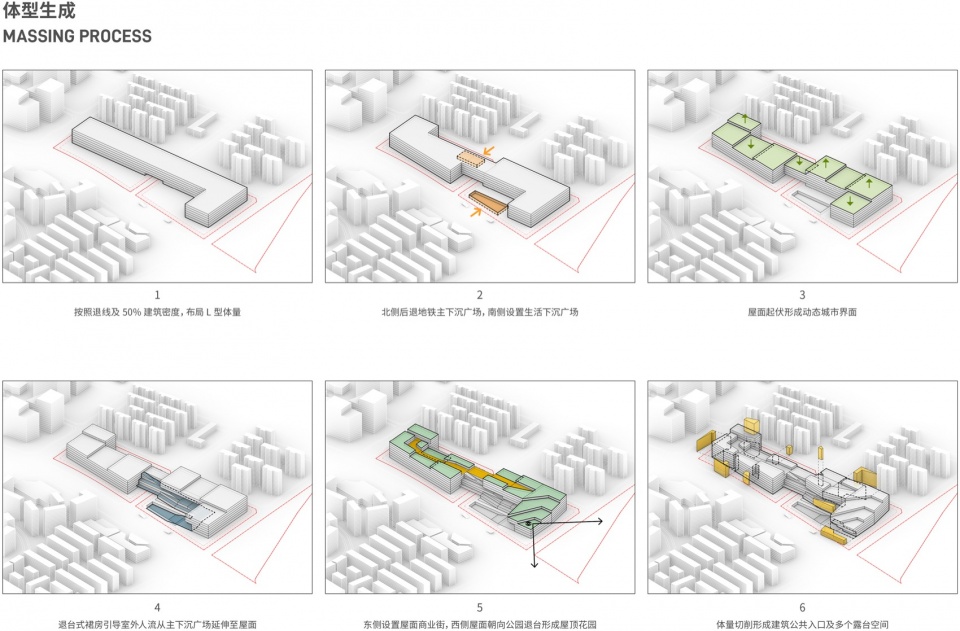
We have constructed a truly “climbable architecture”. Through the stacking of volumes and the manipulation of height differences, a ramping system that naturally extends from the ground to the rooftop is created. Three-dimensional alleys tear through the building’s heavy mass, forming upward “hiking paths”, we naturally channel people flow skyward. Whether it’s the “sky town” on the east side, the commercial terraces overlooking the distant mountains, or the dining platforms along the hiking routes, this multi-ground-floor strategy transforms the mega-mall into a three-dimensional social hub. We set back the main volume on the ground floor to create a public activity square for the surrounding residents.
▼二层运动天桥连接公园,connection to the park
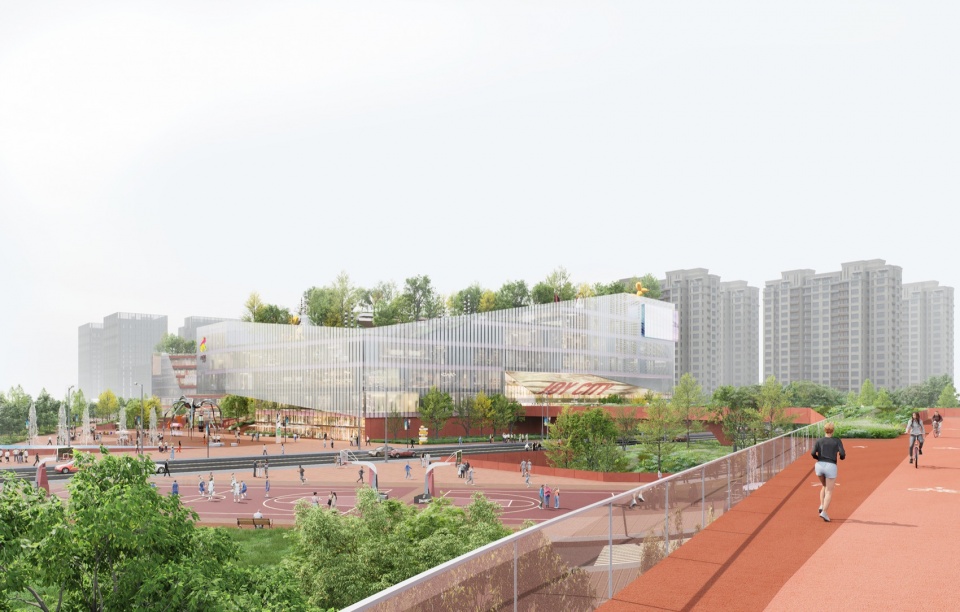
建筑不再是封闭的盒子,而是向城市敞开的公共走廊,引导着人们自然地向上探索。我们相信,原本以效率与利率为标尺的商业项目,同样具有广泛的公共价值;而这些被让渡出来 的公共空间,最终也将反哺商业本身,赋予建筑更长久的生命力。
▼进化型的商业体,the evolutionary mall
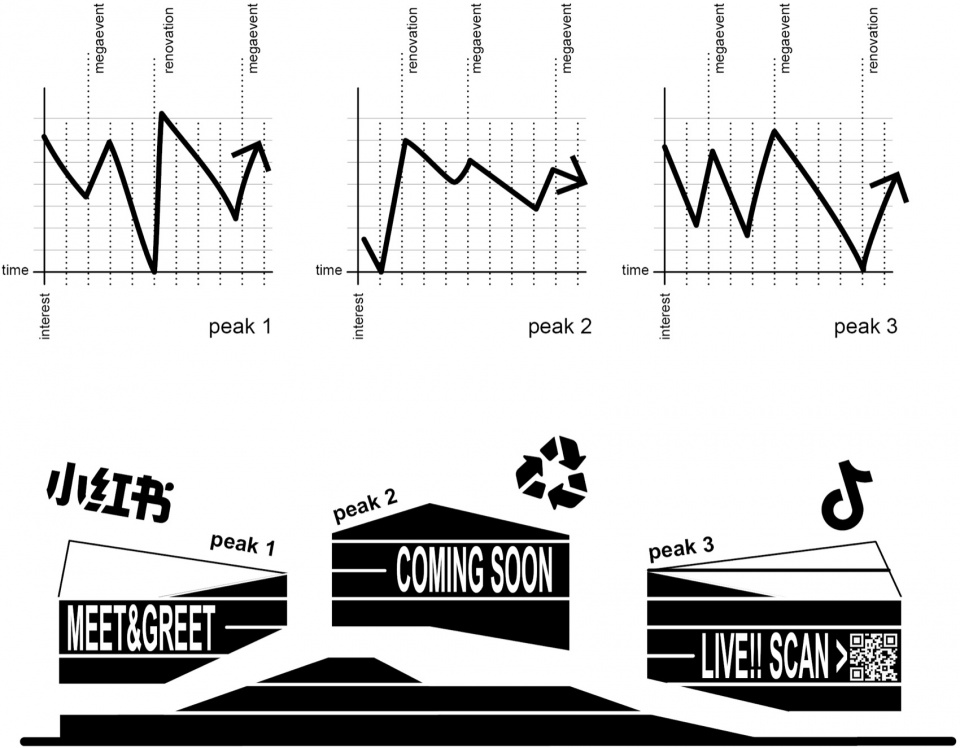
Here, the boundary between indoor and outdoor dissolves. The building is no longer a sealed box, but a public corridor open to the city, guiding people on a natural journey of upward exploration. We believe that commercial projects, typically measured by efficiency and yield, can also possess profound public value. These generously ceded public spaces will, in turn, nourish the commercial activities, endowing the architecture with greater longevity.
▼“山体”与地形,the mountain and the terrain
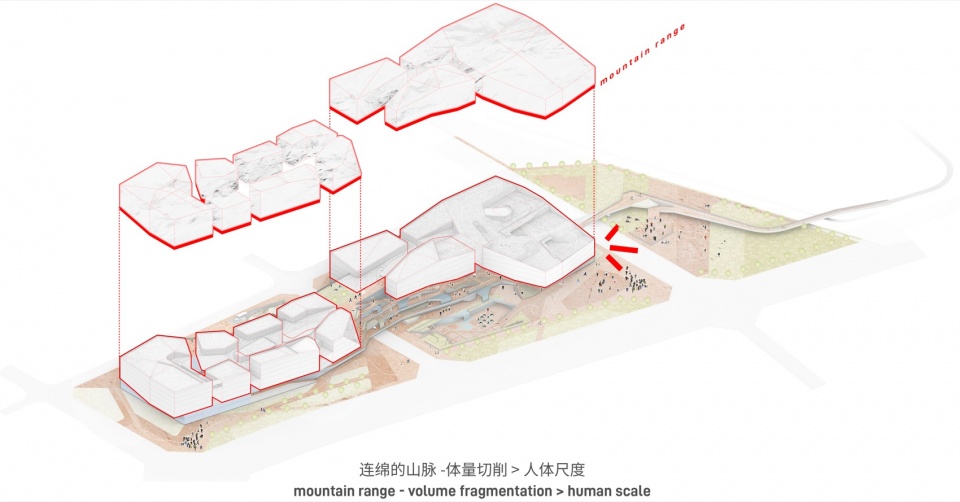
▼“上山”的不同路径,multiple trails to the peak
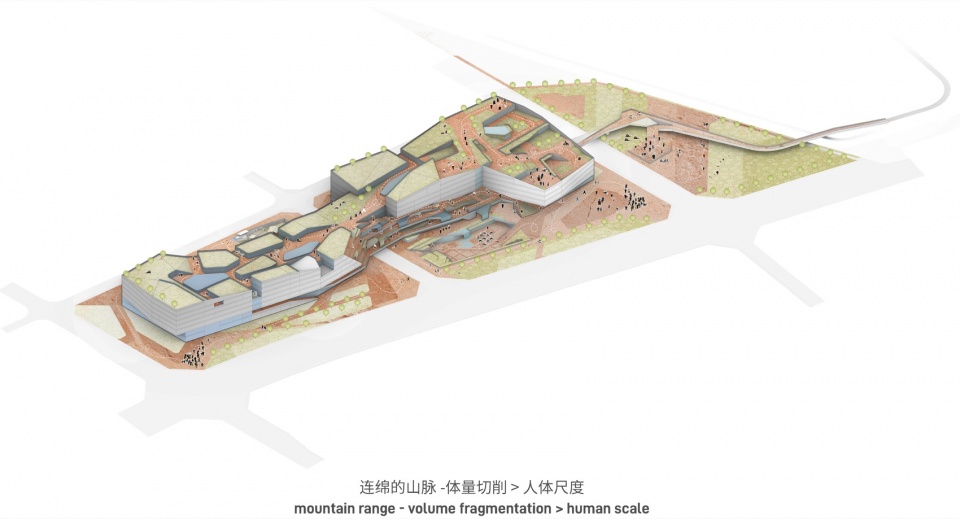
双面生活,24小时烟火 Dual Life, 24/7 Vibrancy
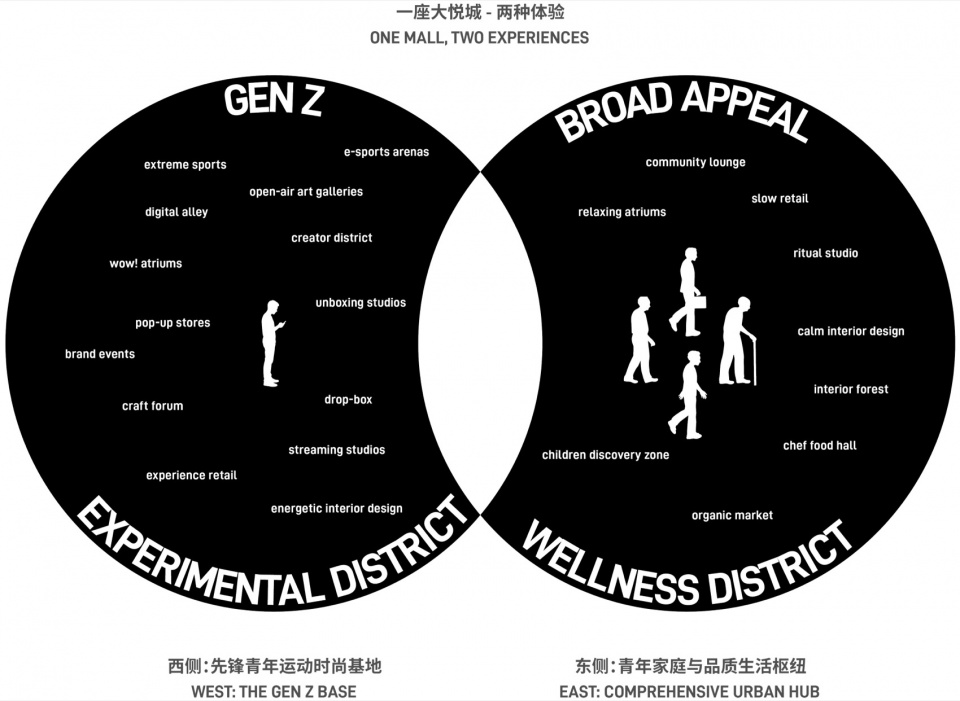
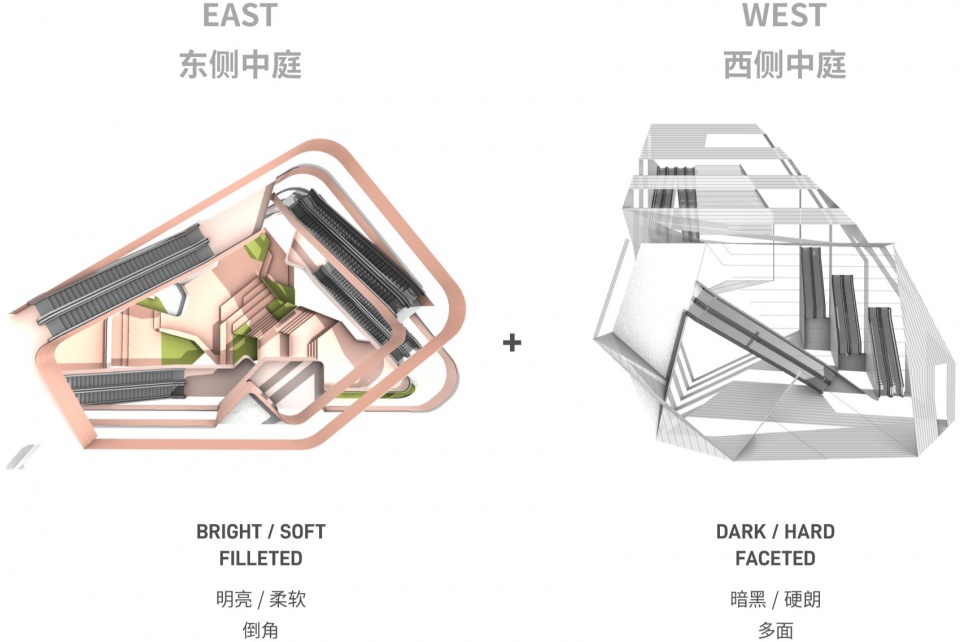
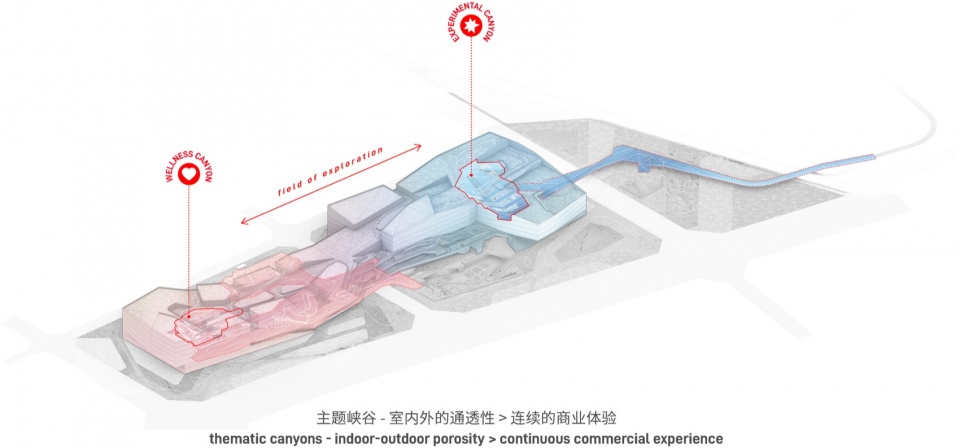
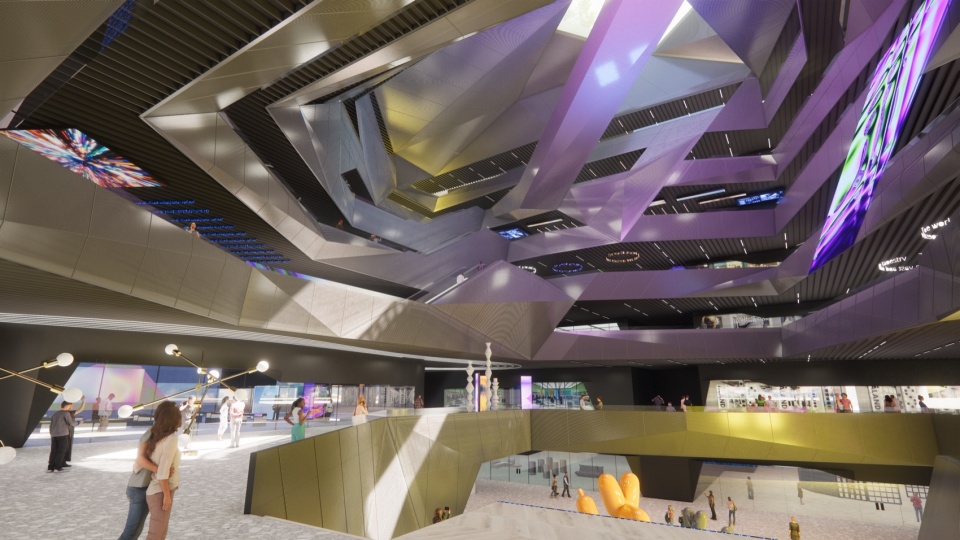
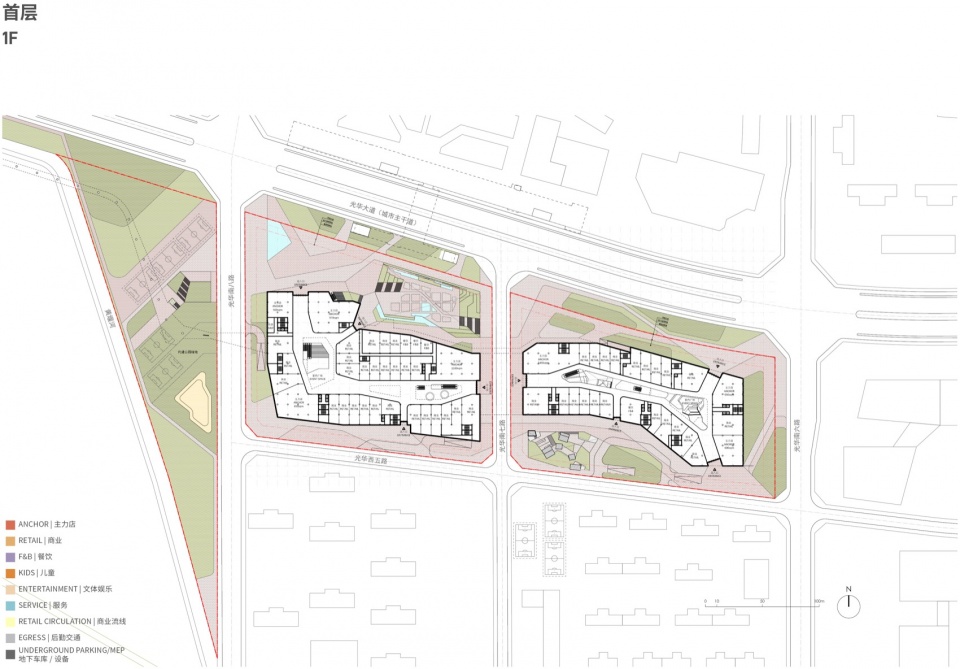
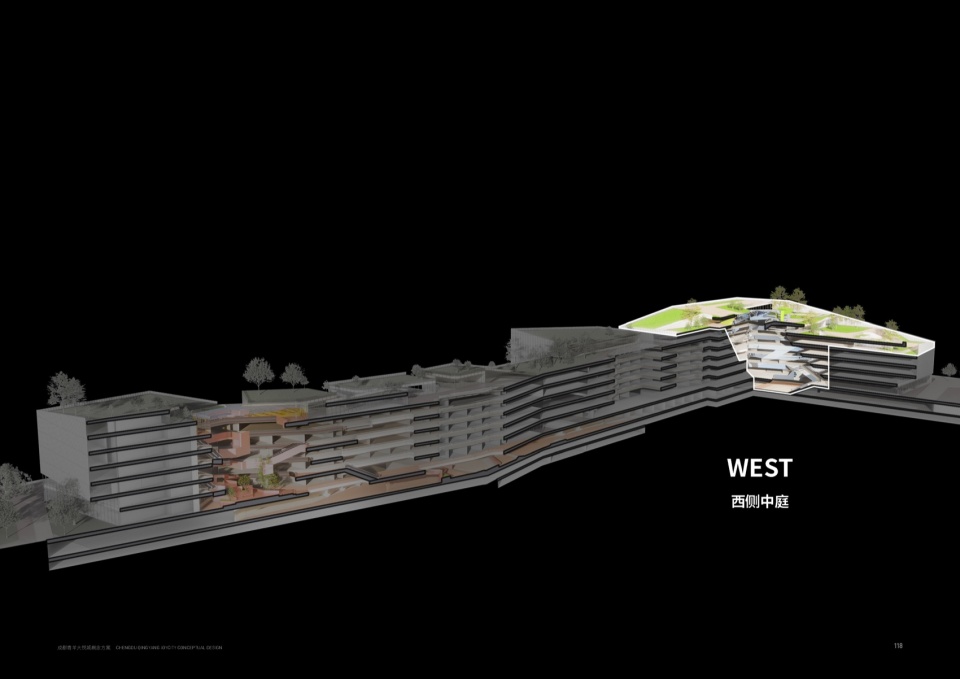
一座大悦城,两种体验。东西两区呈现出截然不同的性格剖面。西区紧邻运动公园,是潮流、时尚、运动与科技的秀场;东区靠近住区,则更偏向家庭、亲子、精致与生活的温情。迥异的设计风格创造着行走的新鲜感,而东西两大主题中庭则如同空间的调节器,激活了超长的动线,也构成了垂直交通的锚点。
▼一座大悦城,两种体验,one mall, two experiences
▼立体街巷,多元路径,stratified circulations
▼两个不同风格的中庭,two different atriums
▼东区 vs 西区:业态分布,program layout
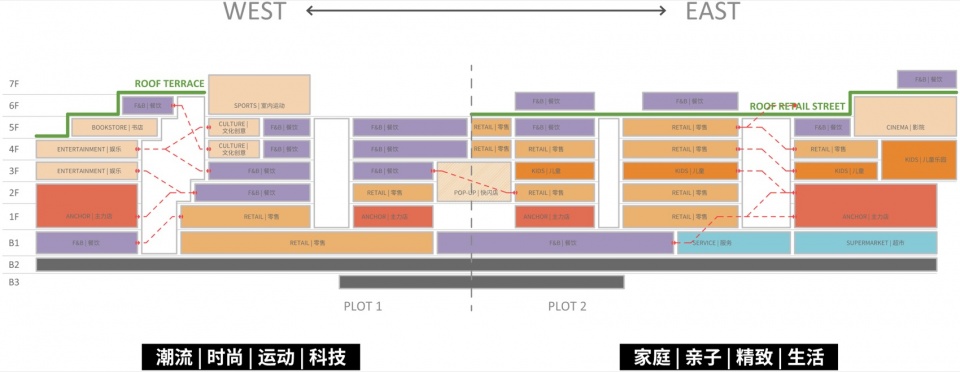
One Joy City, two distinct experiences. The eastern and western zones present contrasting characters. The west zone, adjacent to a sports park, becomes a stage for trends, fashion, sports, and technology. The east zone, closer to residential neighborhoods, leans towards family, refinement, and the warmth of daily life. The distinct design styles create a sense of freshness as one walks through, while the two themed atria act as spatial regulators, activating the extended circulation and serving as anchors for vertical movement.
▼主题公共空间,thematic public spaces
▼西侧中庭,west atrium
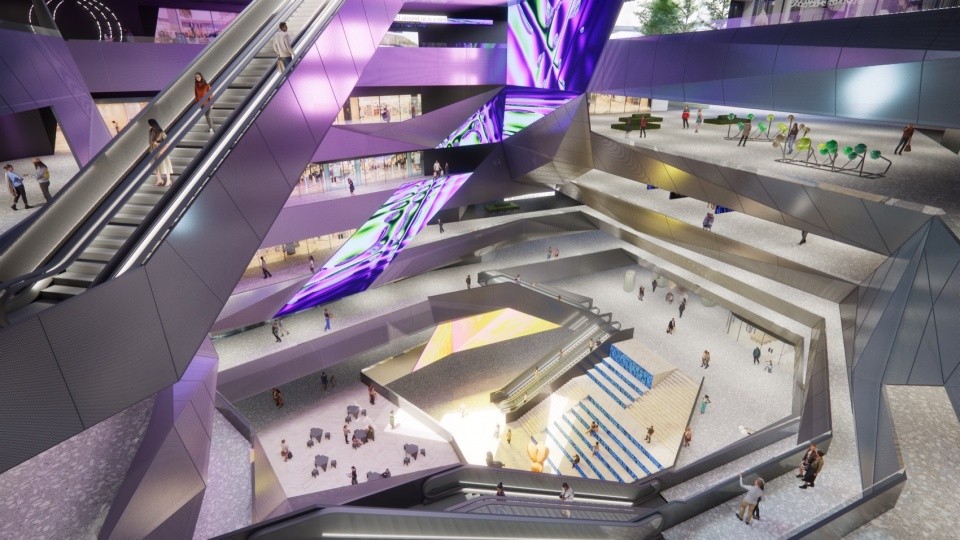
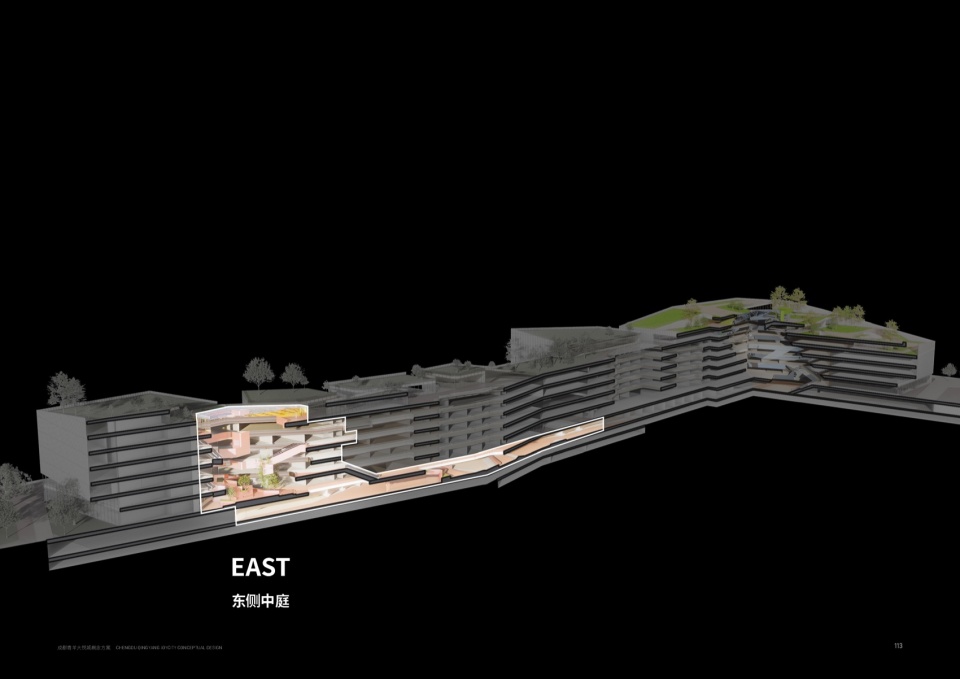
▼东侧中庭,east atrium
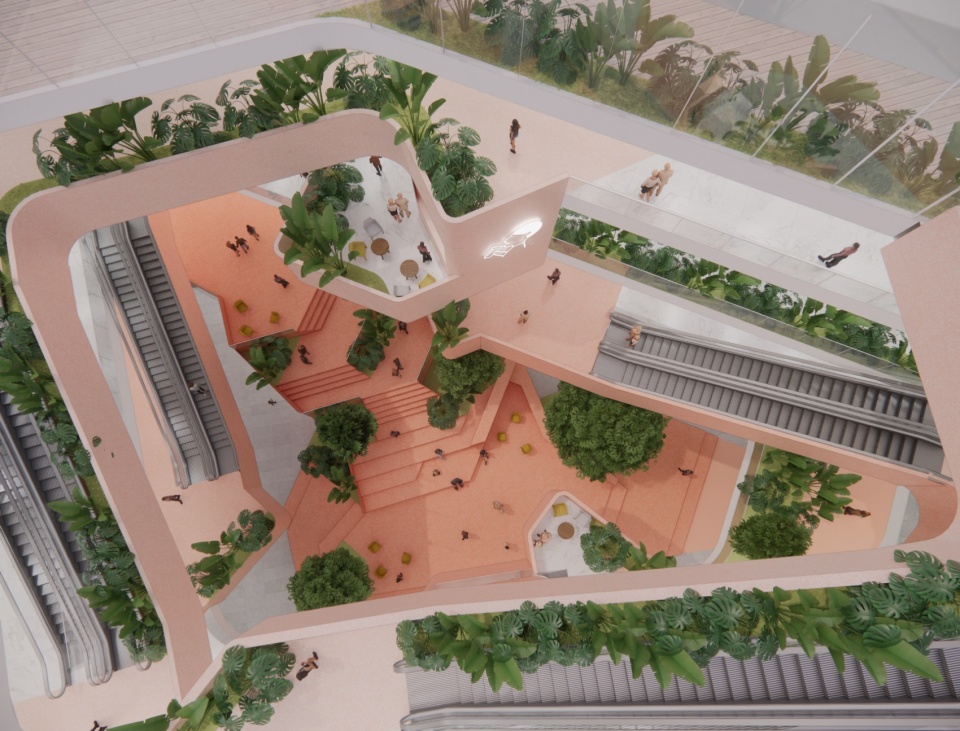
▼中庭两侧连廊快闪区,bridge connection
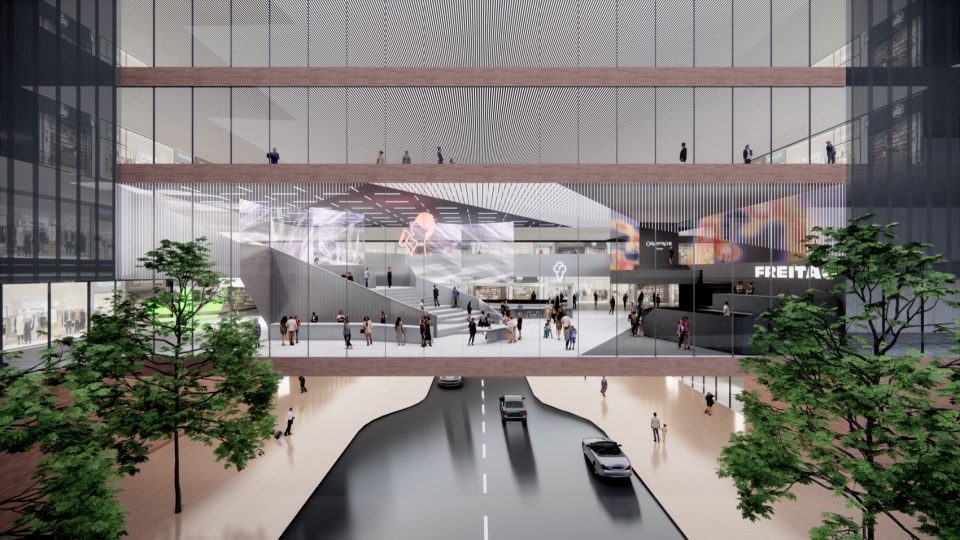
我们采用了“上升商街+MALL”的模式。街区商业与室内商业并非简单的并置,而是多维度的交互——室内外的融合在每一个楼层发生。室外平台串联起屋顶花园、下沉庭院与空中街巷,形成一套独立于室内商场运作的系统。
We have adopted a “Rising High Street + Mall” model. The street-level commerce and the indoor mall are not simply juxtaposed but engage in multi-dimensional interaction — indoor-outdoor integration occurs on every floor. External terraces connect roof gardens, sunken courtyards, and sky-high alleys, forming a system that operates independently of the indoor mall.
▼室外平台,outdoor and multiple platforms
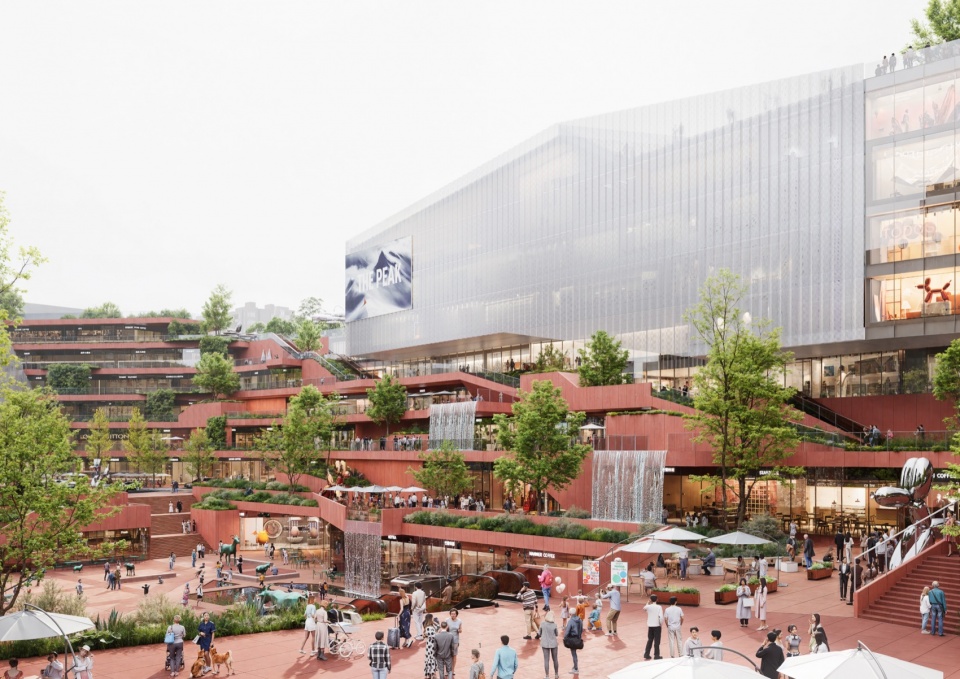
▼层层退台,terraced podium
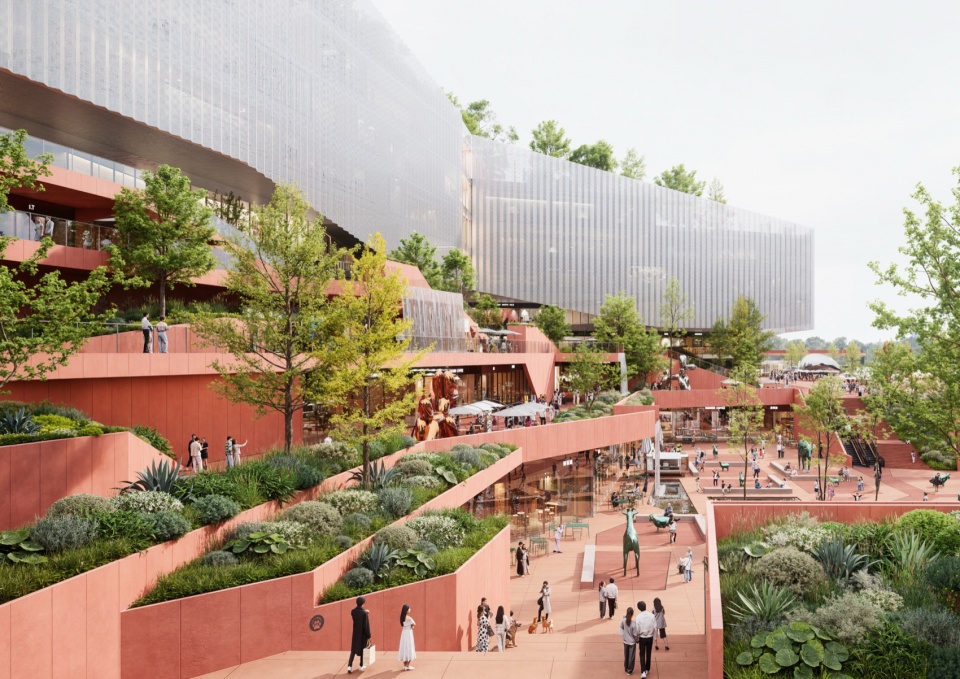
▼屋顶平台花园,the roof park: panoramic view of west Chengdu
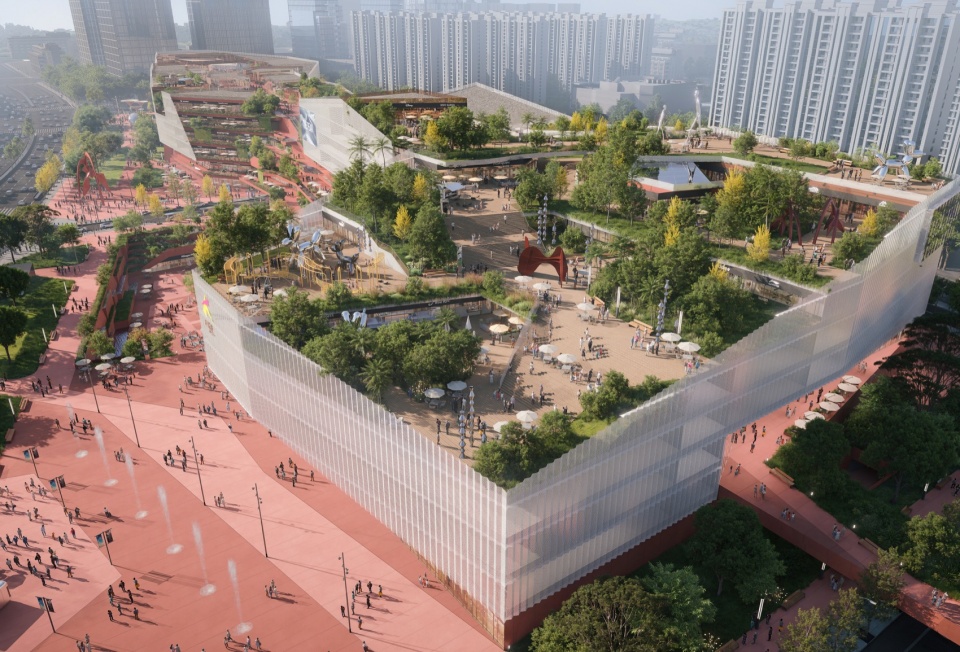
这让弹性管理成为可能。未来,屋面、下沉广场、空中街巷等亮点空间可以拥有独立的营业时间,甚至实现24小时运营。3200平方米的主下沉广场与地铁直接连通,构成一个天然的TOD商业节点。当深夜室内商场结束营业,屋顶的酒吧、露台的餐厅、下沉广场的喧嚣依然可以灯火通明,建筑将无缝融入成都充满烟火气的夜生活,成为城市夜晚公共空间的自然延伸。
This enables flexible management. In the future, key spaces like the rooftop, sunken plaza, and sky alleys can have independent operating hours, potentially achieving 24-hour activation. The 3,200 square meter main sunken plaza is directly connected to the subway, forming a natural TOD node. When the indoor mall closes late at night, the rooftop bars, terrace restaurants, and the bustling sunken plaza can remain brightly lit. The building seamlessly integrates into Chengdu’s vibrant nightlife, becoming a natural extension of the city’s nocturnal public space.
▼多层级室外平台与24小时立体街区,multilayers offer operational flexibility
▼室外广场夜景,outdoor plaza at night
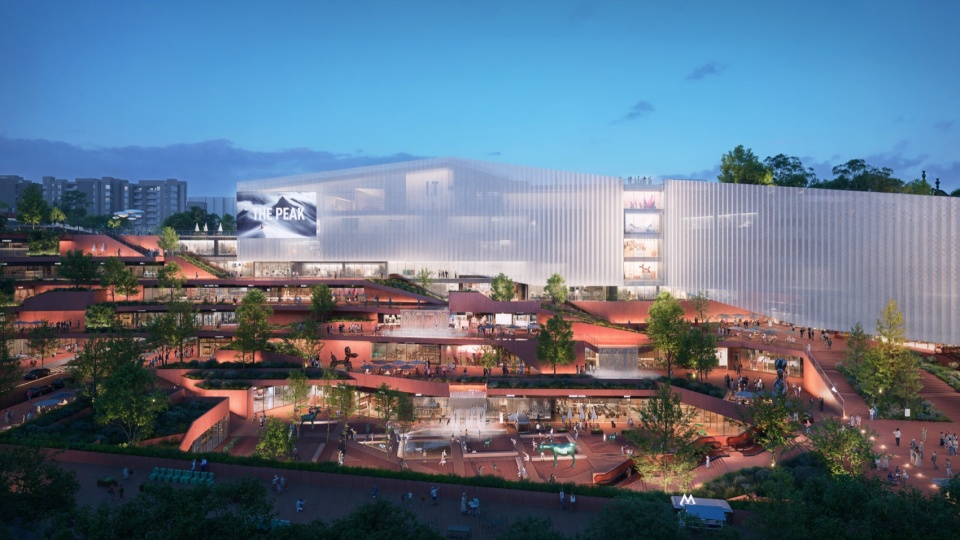
当购物不再只是购物,当逛街可以与逛公园自由流动,当商业空间成为可攀登、可停留、可社交的活力阵地,青羊大悦城便不再只是一个项目案名,而是一张属于成都、关于未来都市生活的新名片。
When shopping is no longer just shopping, when strolling through stores freely combines with wandering through a park, when commercial space becomes a dynamic terrain for hiking, lingering, and socializing — then Joy City Qingyang transcends its project name to become a new city card for Chengdu, a vision of future urban life.
▼总图策略,体量后退形成的两个广场,masterplan strategies
▼首层平面,first floor plan
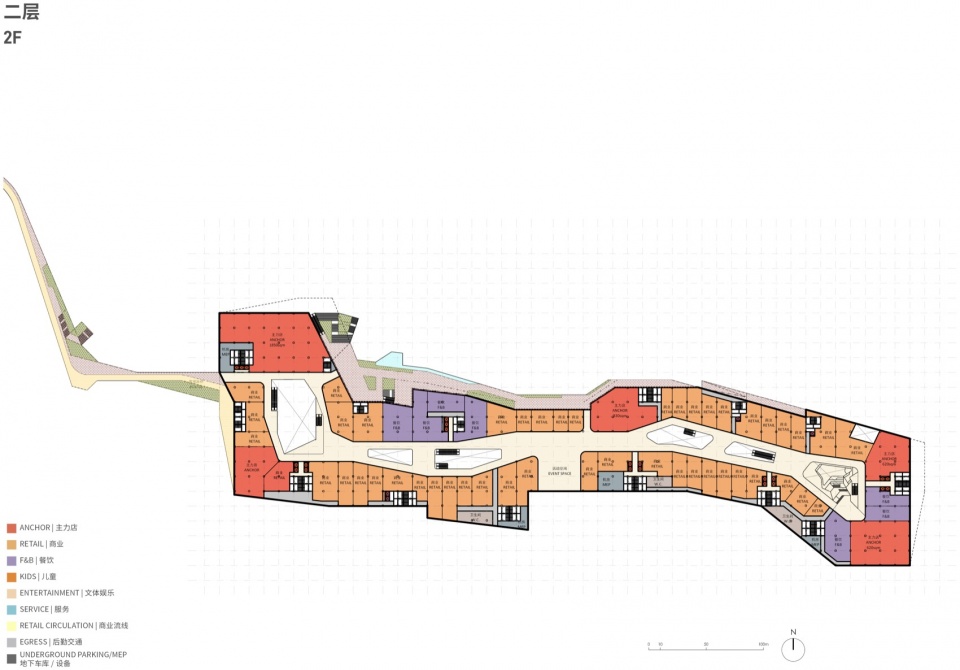
▼二层平面,second floor plan
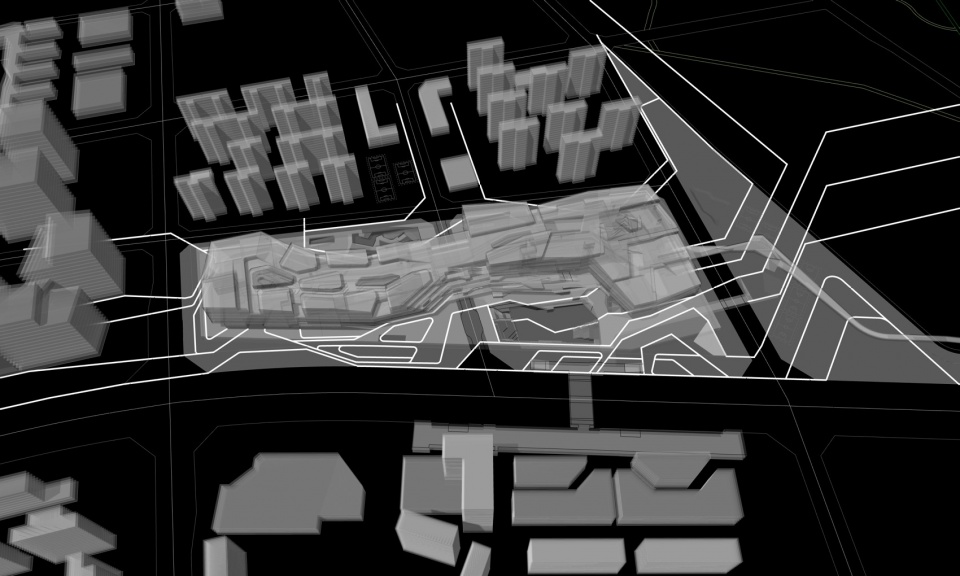
▼唤起场地原始力量,让建筑融入更大的城市景观脉络,integrating the architecture into the broader urban landscape
▼西侧中庭剖面,section of west atrium
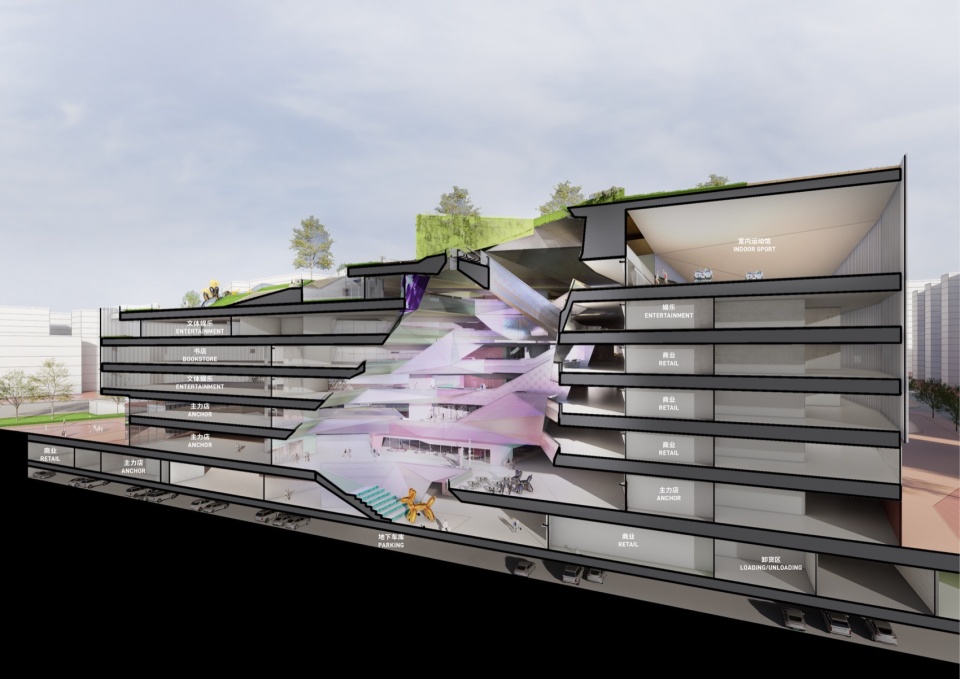
▼东侧中庭剖面,section of east atrium
项目信息
Project Data
Project: Chengdu Qingyang Joy City Design
Year: 2025
Size: 303,184 m2
Type: Commercial Architecture
Status: Finalist in International Competition (top 4)
Location: Chengdu, Sichuan Province, China
Client: Chengdu Tianfu Chenyue Real Estate
Design Team: reMIX Studio + China Southwest Architectural Design and Research Institute
Partners in charge: Chen Chen, Nicola Saladino, Shoutuo Lyu
Team Members: Xinran Zheng, Javier Pelaez, Marco Navarro, Litian Cheng, Lichao Zhang, Lin Zhuang
Commercial Design Consultant: Muzhi Chen