金丝雀码头“The Cube”,伦敦 / Baranowitz + Kronenberg
国际知名设计事务所Baranowitz + Kronenberg正式发布位于伦敦核心地带的金丝雀码头“The Cube”项目,将这一经典英国电视游戏节目转化为一个沉浸式的现实游戏场域,标志着其正式进入现场娱乐领域。自2009年首播以来,《The Cube》凭借其对身体与心理的高强度挑战持续吸引观众,每一项挑战均在一个精确为13英尺×13英尺的玻璃立方体中进行。受Mellors Group委托,将这一原本局限于演播室的节目形式转化为一个充满活力的“竞技社交”目的地,Baranowitz + Kronenberg 面临了一项极具挑战性的任务:在将熟悉的电视体验转译为现实空间的同时,重新思考情绪、游戏机制、建筑与社交互动如何在空间中共存。
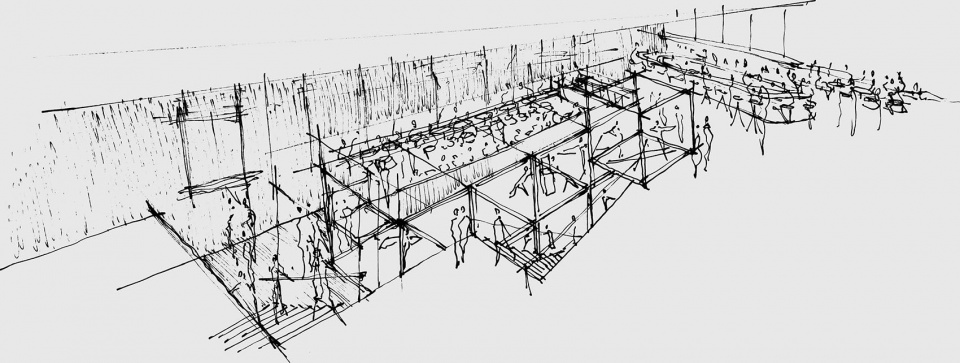
▼概念草图,Concept sketch
Internationally acclaimed design studio Baranowitz + Kronenberg has entered the world of live entertainment with the unveiling of The Cube Canary Wharf, bringing the iconic UK television game show to life as an immersive, real-world gaming arena in the heart of London. First aired in 2009, The Cube has long captivated audiences with its exacting physical and mental challenges, each played within a precise 13-foot-by-13-foot glass cube. Commissioned by Mellors Group to transform this studio-bound format into a vibrant destination for competitive socialising, Baranowitz + Kronenberg were presented with an intriguing brief: to translate a familiar broadcast experience into a live environment—while reimagining how emotion, gameplay, architecture and social interaction might coexist in space.
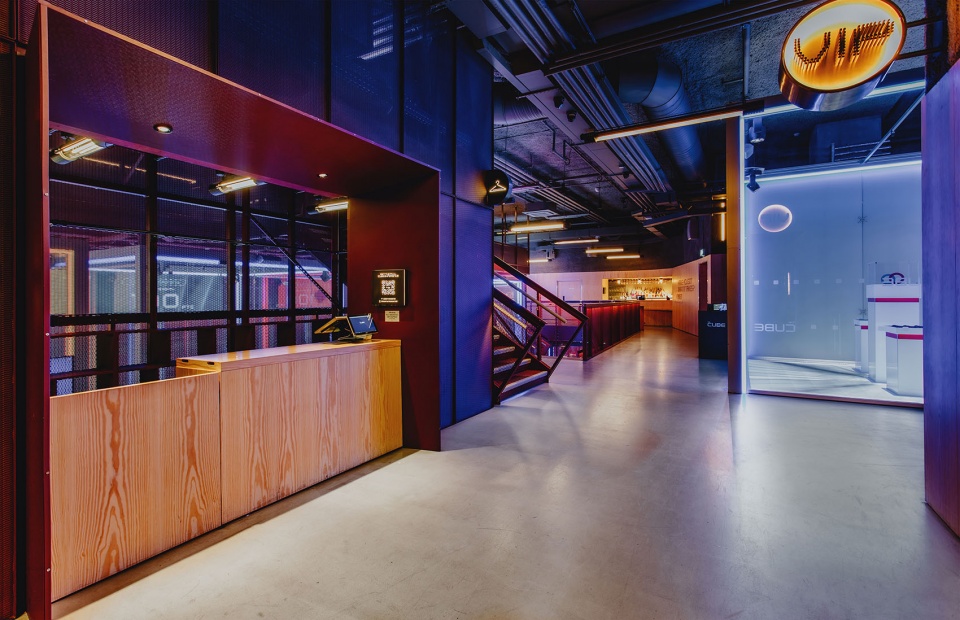
▼接待处,Reception
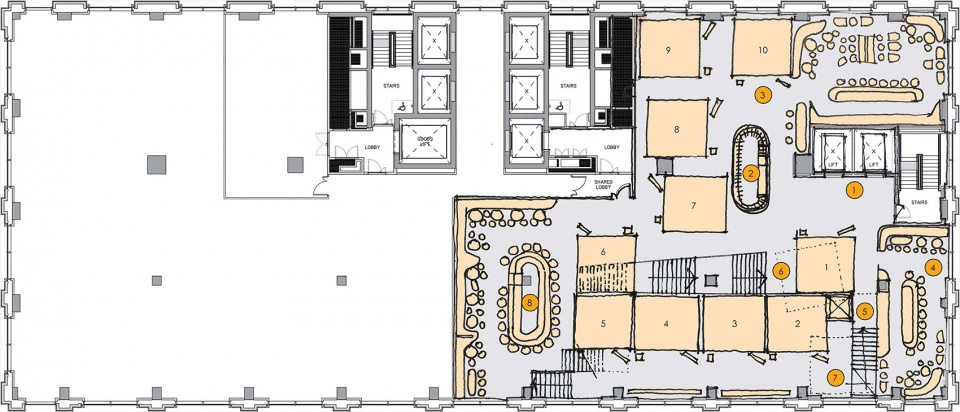
▼玻璃立方体分布,Arrangement of glass cube
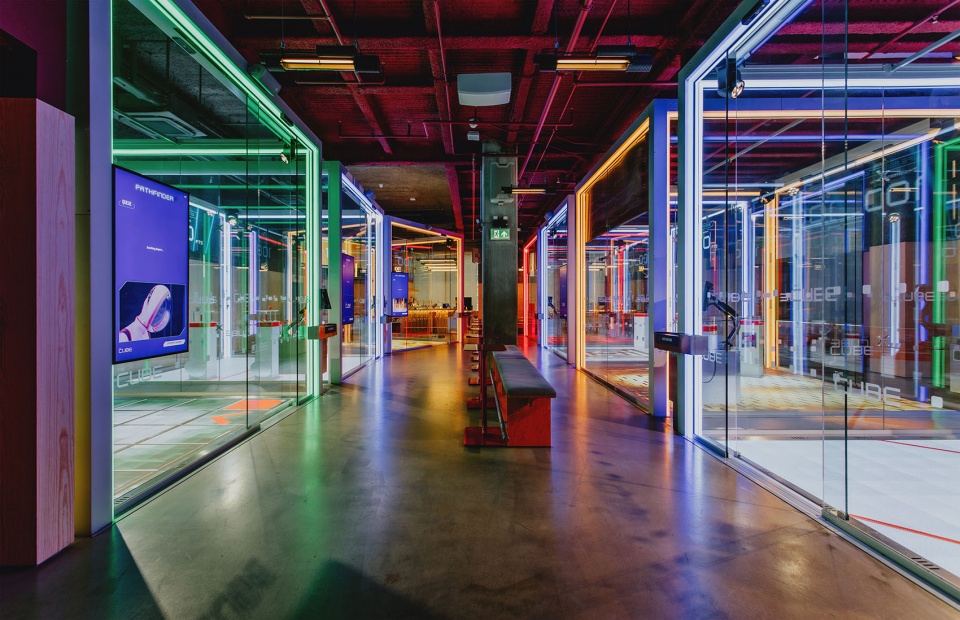
对于设计团队而言,该项目成为一次关于“转化”的实践。从虚拟走向现实,要求对人们如何在空间中停留、参与与表现进行细致考量。Baranowitz + Kronenberg 以“以人为本”的方法论指导每一项设计决策,将“竞技社交”视为空间规划、技术系统与人类行为之间的互动关系。最终呈现的建筑超越了单纯的功能需求,既服务于参与者,也服务于观众,使互动、参与与游戏过程能够在场所中自然展开。
For the studio, the project became an exercise in transformation. Moving from virtual to real demanded a considered approach to how people inhabit and perform within space. Baranowitz + Kronenberg’s people-first methodology shaped every decision, treating competitive socialising as an interplay between spatial planning, technology and human behaviour. The result is architecture that extends beyond programmatic need, supporting both players and spectators, and allowing interaction, engagement and gameplay to unfold intuitively throughout the venue.
▼上下层贯通空间,Double-height space
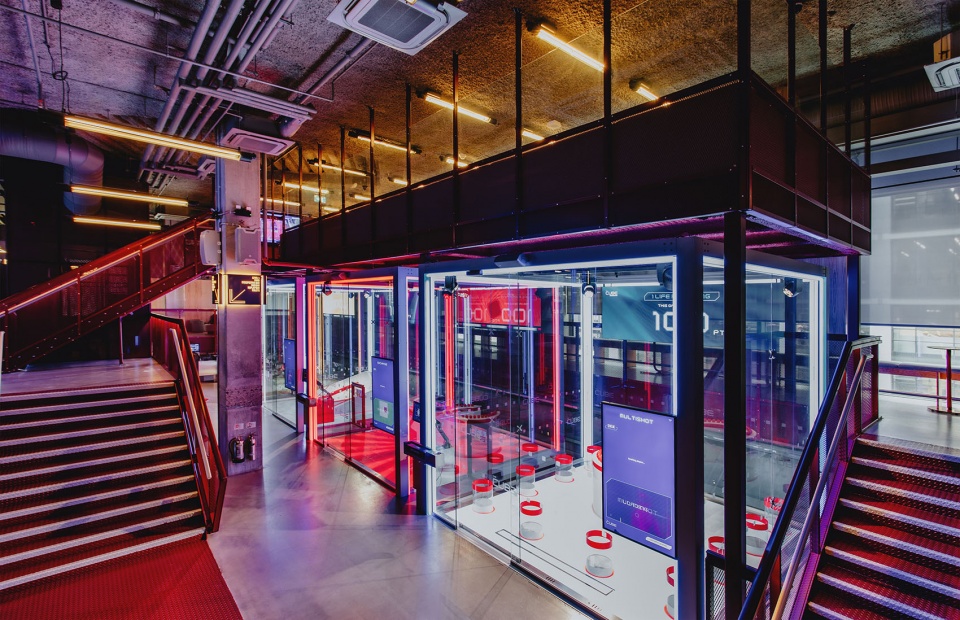
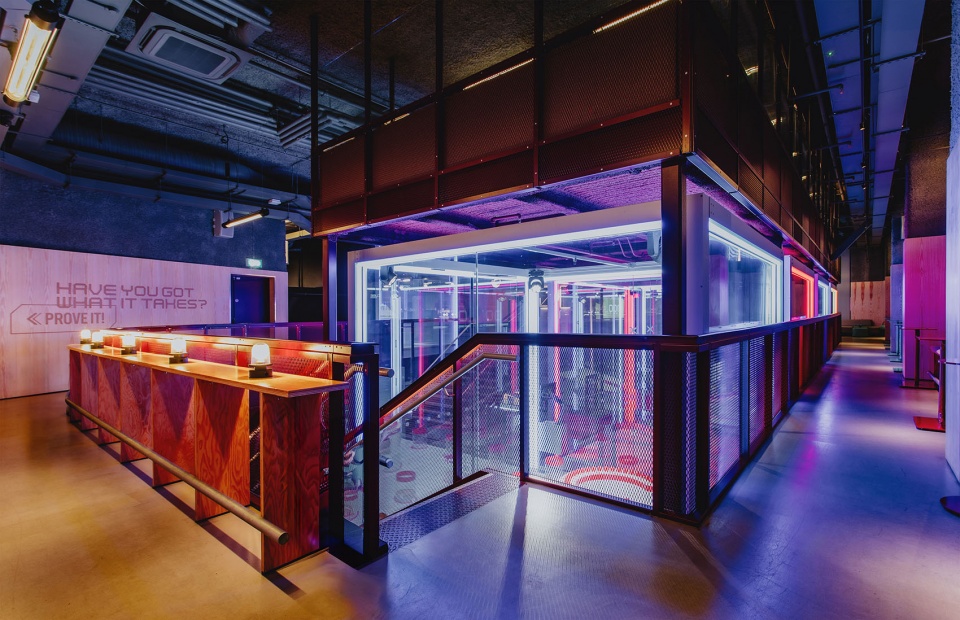
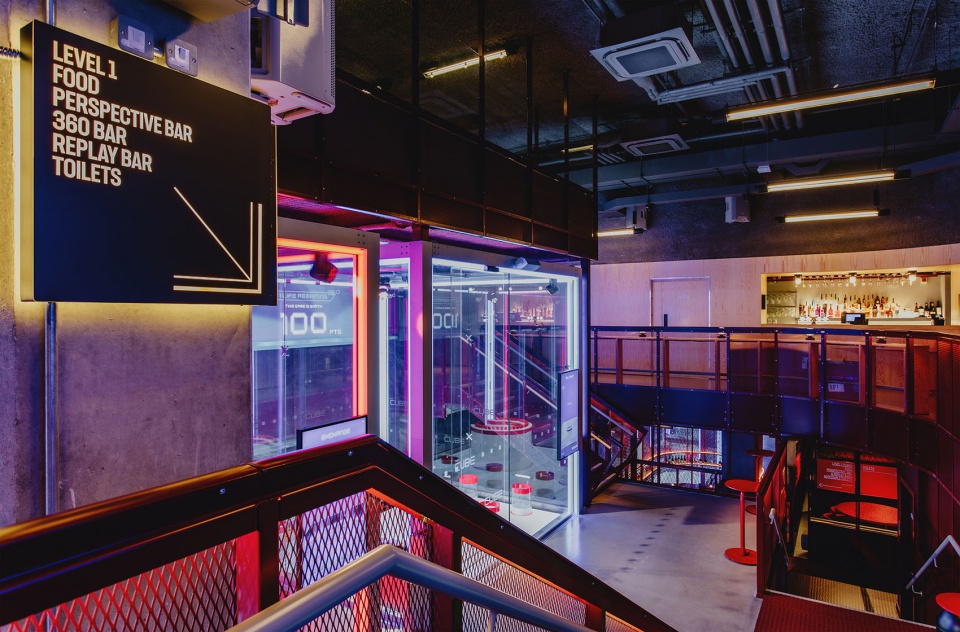
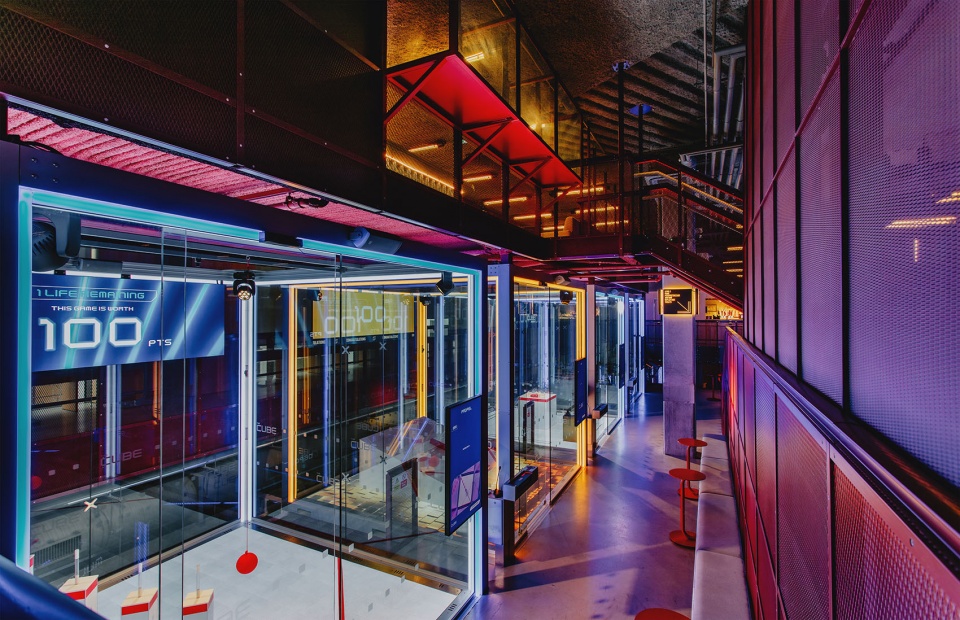
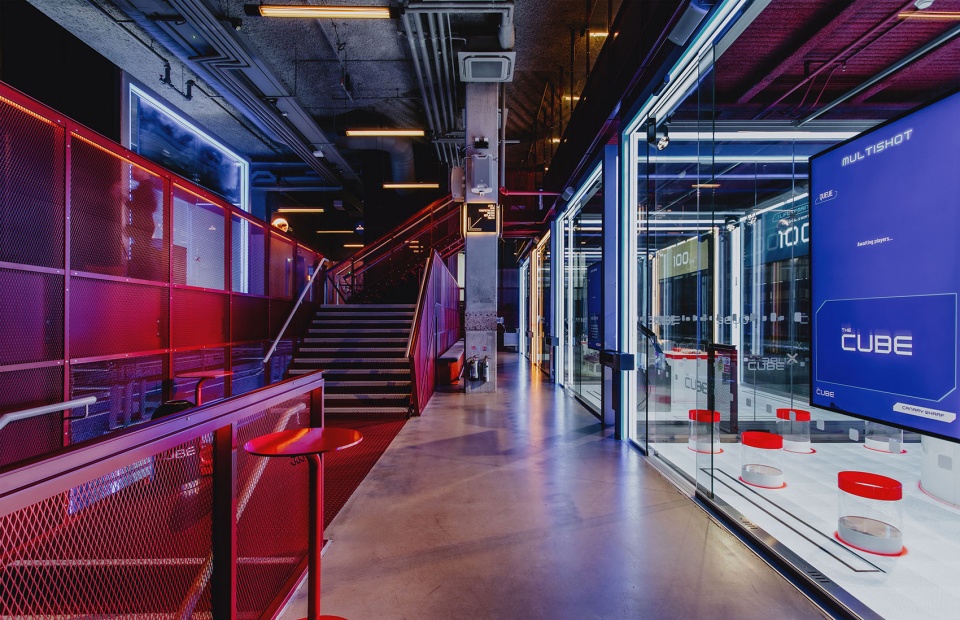
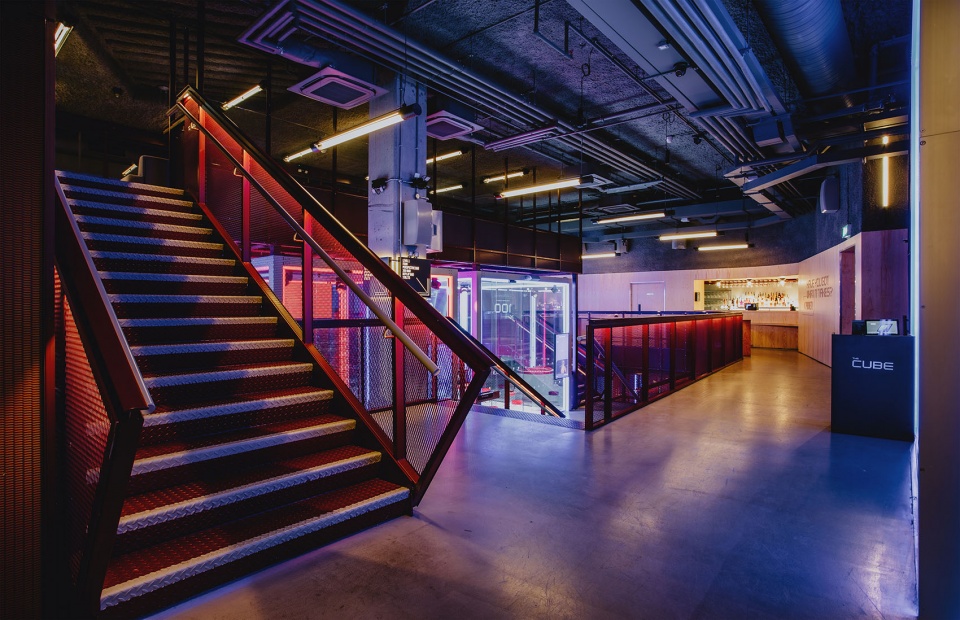
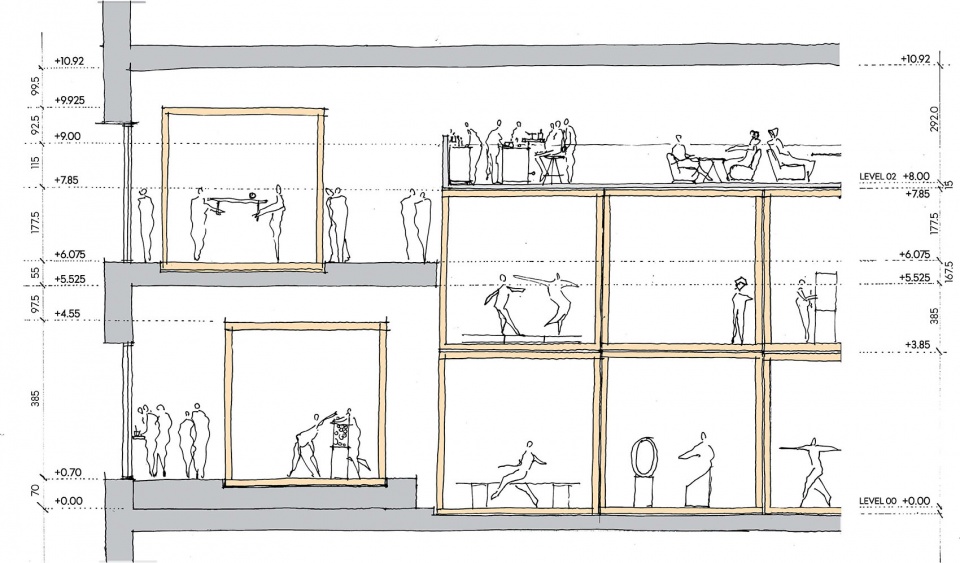
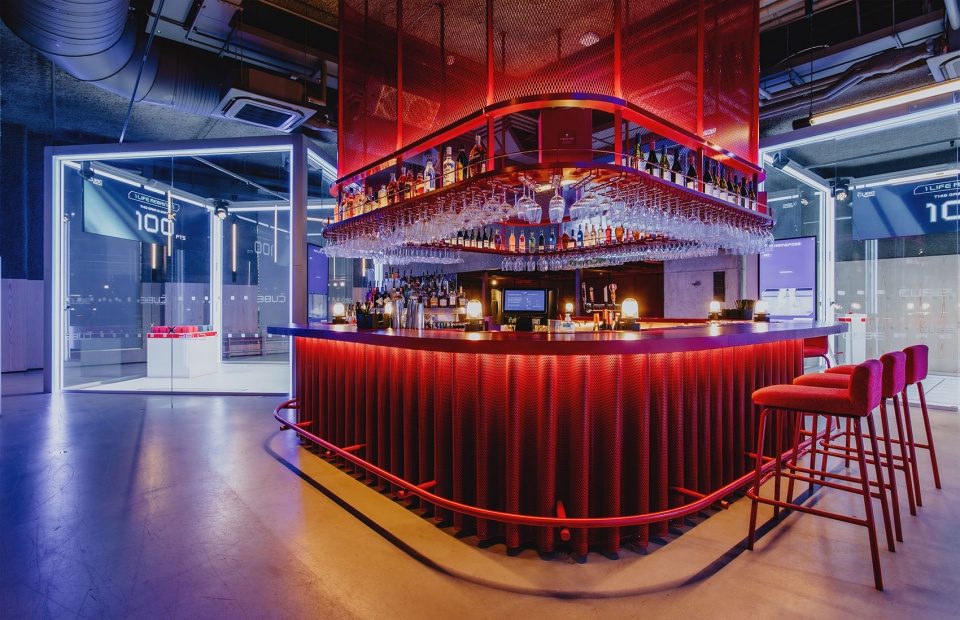
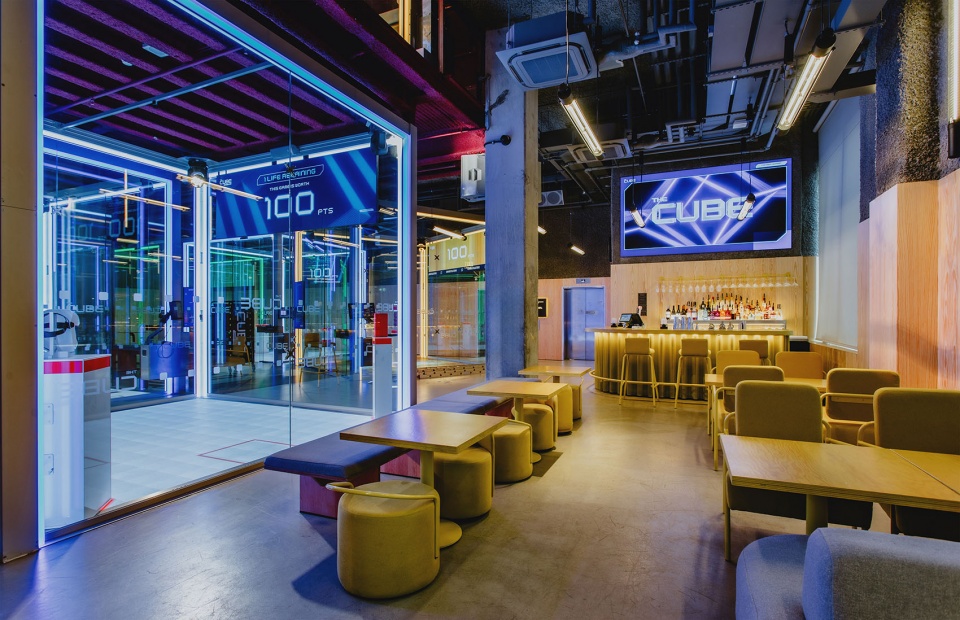
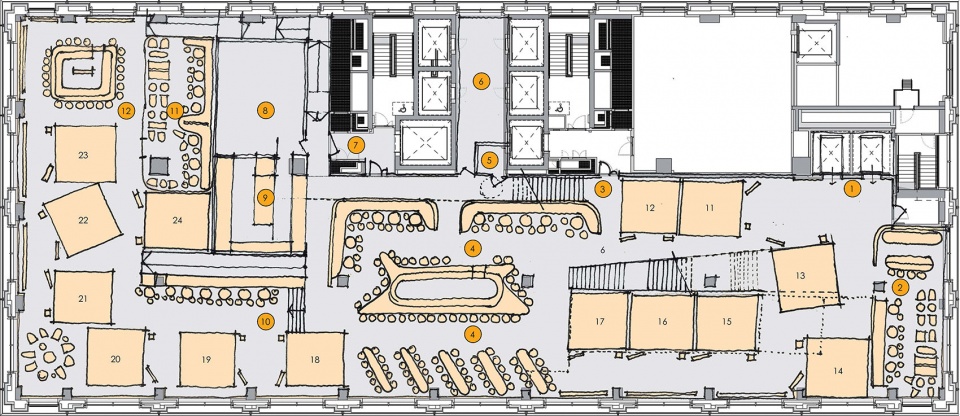
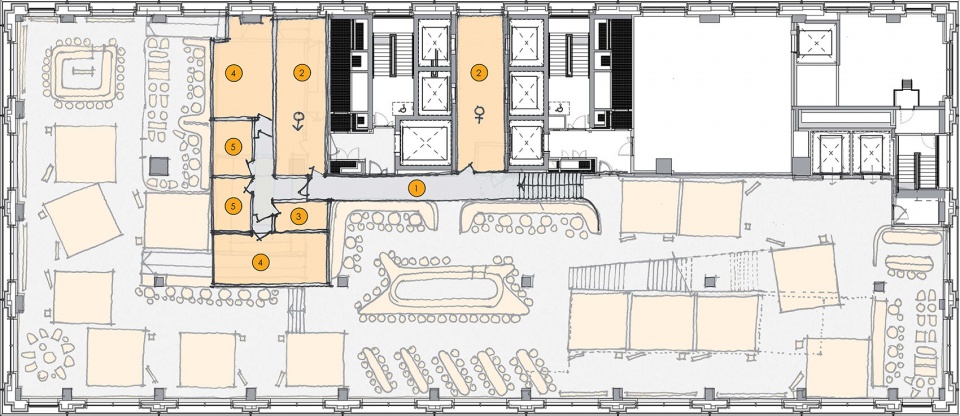
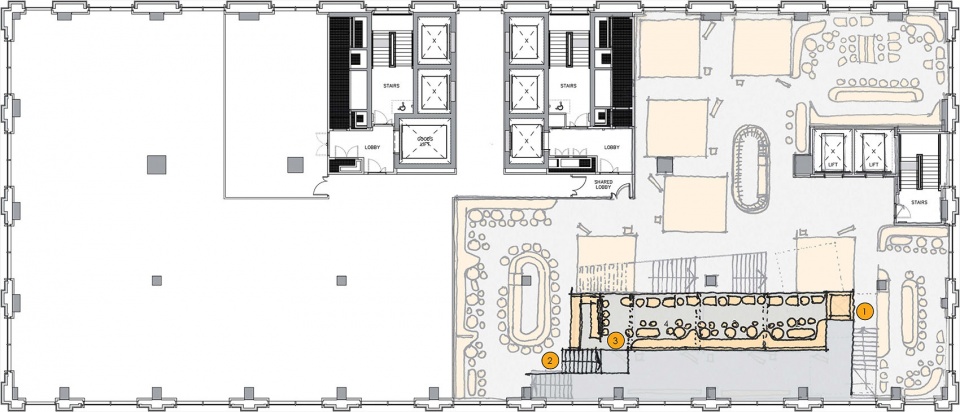
进入The Cube,访客首先感受到一种亲切而熟悉的空间语言——这种语言在直觉上易于识别,同时又在关键节点引入惊喜与探索。项目位于Charter 街道一座新建的综合用途建筑中,占地27,000平方英尺,分布于上下两层,被构想为一个统一且连续的空间体验。为实现这一目标,设计团队拆除了约1,500平方英尺的钢筋混凝土楼板,从视觉与动线上将上下层连接起来,促进人群聚集、流动以及能量的有效分配。21个立方体结构、7个酒吧及一个餐厅被精细组织,构建出一个以直觉与发现为主导的环境,使观众与玩家能够轻松转换角色。多个“立方体”被堆叠、分层并分散布置于空间之中,而色彩丰富的酒吧与休闲区则在高强度氛围中提供片刻的停留与社交空间。
Upon entering The Cube, guests encounter a sense of welcoming familiarity—an architectural language that feels instinctively recognisable—punctuated by moments of surprise and discovery. Spanning 27,000 square feet across two floors in a newly built mixed-use building on Charter Street, the venue is conceived as a single, cohesive spatial experience. To achieve this, 1,500 square feet of reinforced concrete slab were carved away, visually and physically linking both levels and encouraging gathering, flow and the conservation of human energy. A meticulous arrangement of 21 cubical structures, seven bars and a restaurant creates an environment where intuition and revelation prevail, allowing spectators and players to exchange roles with ease. Cubes are stacked, layered and dispersed throughout the space, while colourful bars and lounges punctuate the buzz with moments of retreat and social connection.
▼俯瞰酒吧与餐厅空间,Aerial view of bar and restaurant area
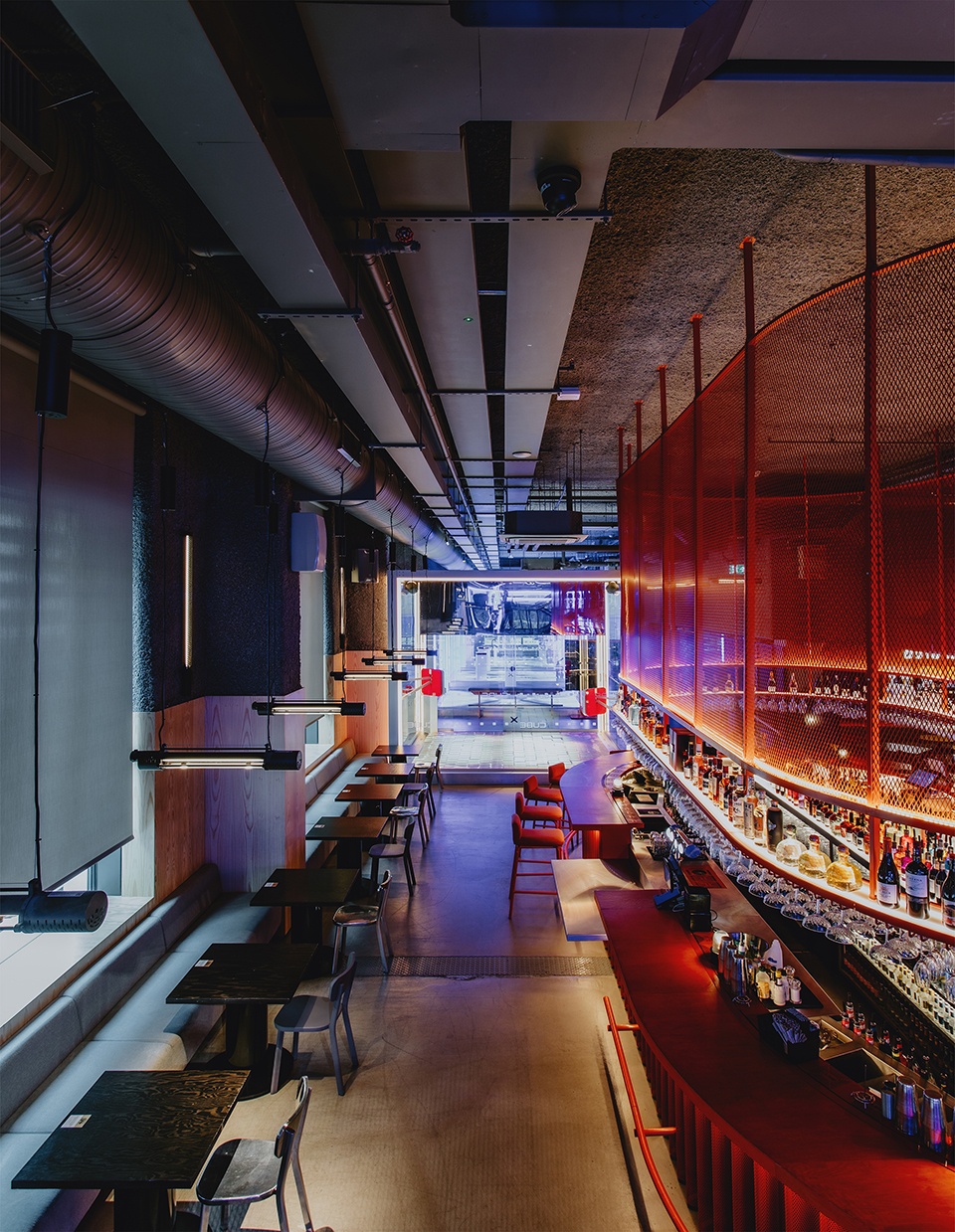
▼酒吧与餐厅空间概览,Bar and restaurant area overview
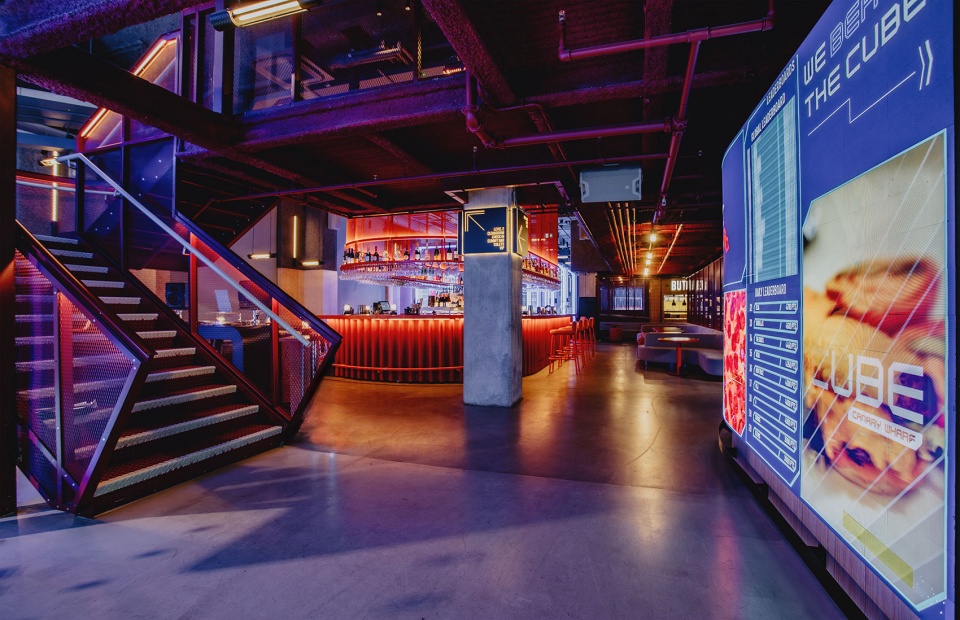
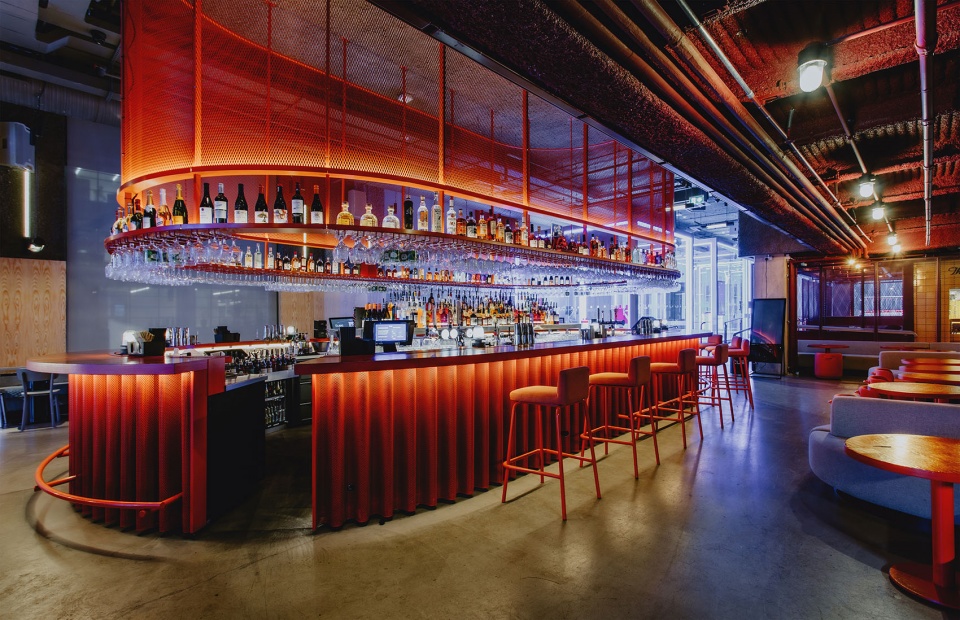
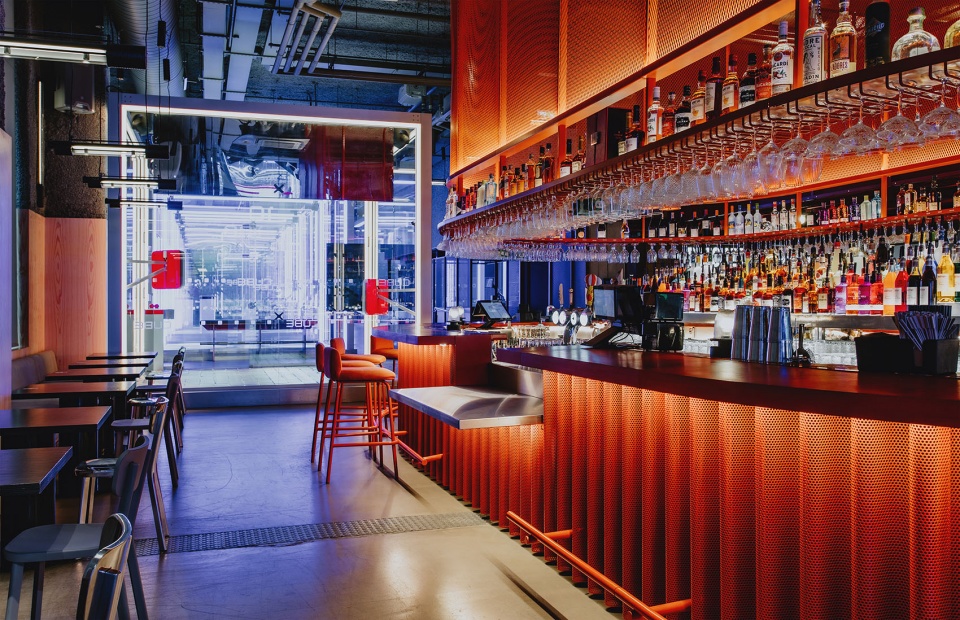
金丝雀码头“The Cube”的设计围绕“人、品牌与场所”这一三元关系展开,其中尤为强调“场所”。项目扎根于金丝雀码头,其设计灵感源自该区域从港口作业区到全球金融与数字商业中心的历史演变。这一转变构建出一系列对比关系:粗粝与精致、模拟与数字、手工艺与技术。这些对立元素在空间中被交织整合,模糊彼此边界,从而创造出一个既契合品牌又回应场地的独特体验。过去与当下之间的对话通过材料得以表达:具有时间痕迹的质朴材料与前沿技术并置——混凝土、钢材与道格拉斯杉木胶合板唤起码头工业的坚固特质,与超现代的LCD地面与墙体、铝材及玻璃形成鲜明对比。
The design of The Cube Canary Wharf is guided by a triad of people, brand and context, with particular emphasis on the latter. Rooted in Canary Wharf, the project draws on the area’s layered history—from working port to global centre of finance and digital commerce. This evolution informs a narrative of contrasts: raw and refined, analogue and digital, craftsmanship and technology. These opposing forces are interwoven throughout the venue, blurring boundaries to create a singular, place-specific experience that resonates with both brand and setting. The dialogue between past and present is expressed through materiality, where noble, time-worn surfaces meet state-of-the-art technology. Concrete, steel and Douglas fir plywood recall the industrial robustness of the docks, set in deliberate contrast to ultra-modern LCD floors and walls, aluminium and glass.
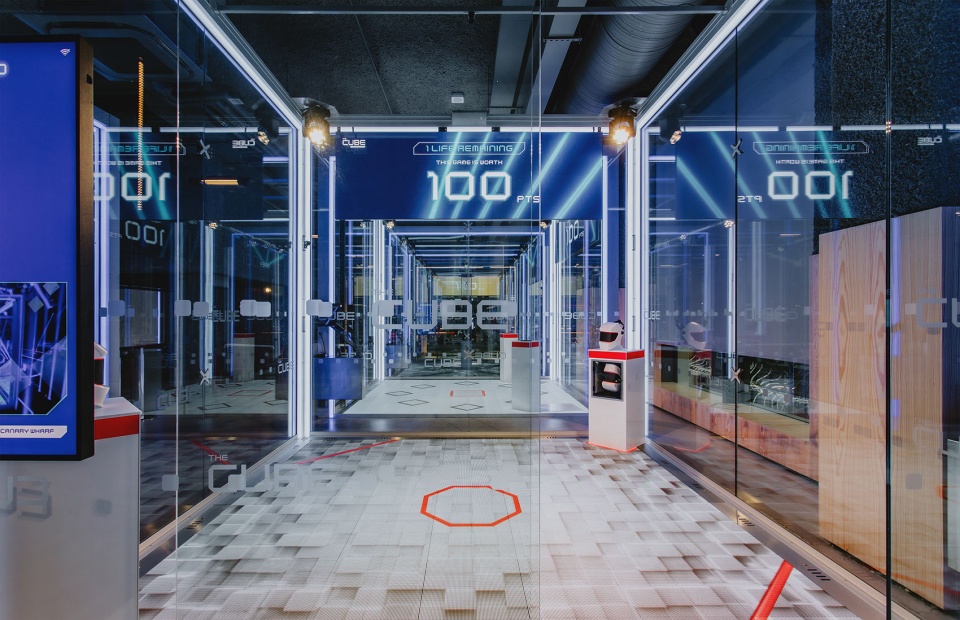
▼沉浸式游戏空间,
Immersive gaming space
▼平面图,Plans
▼剖面图,Section