潜行之屋,浙江杭州 / SpActrum谱观建筑
黑色,潜行的色彩。
黑色木屋以五边形柱体为基础,切削两个面取得同一物体的非连续性立面间的张力,是为潜行的形式。
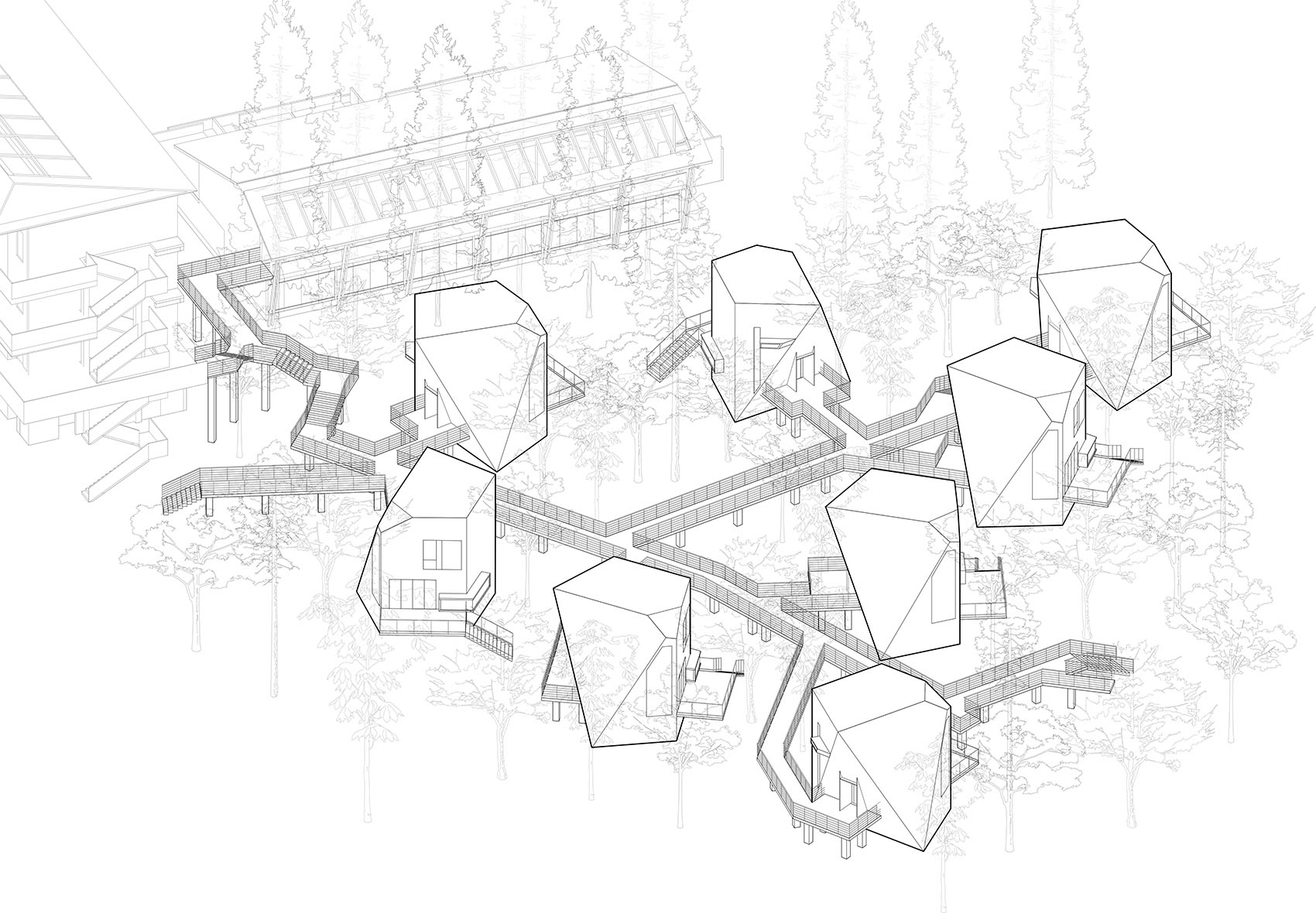
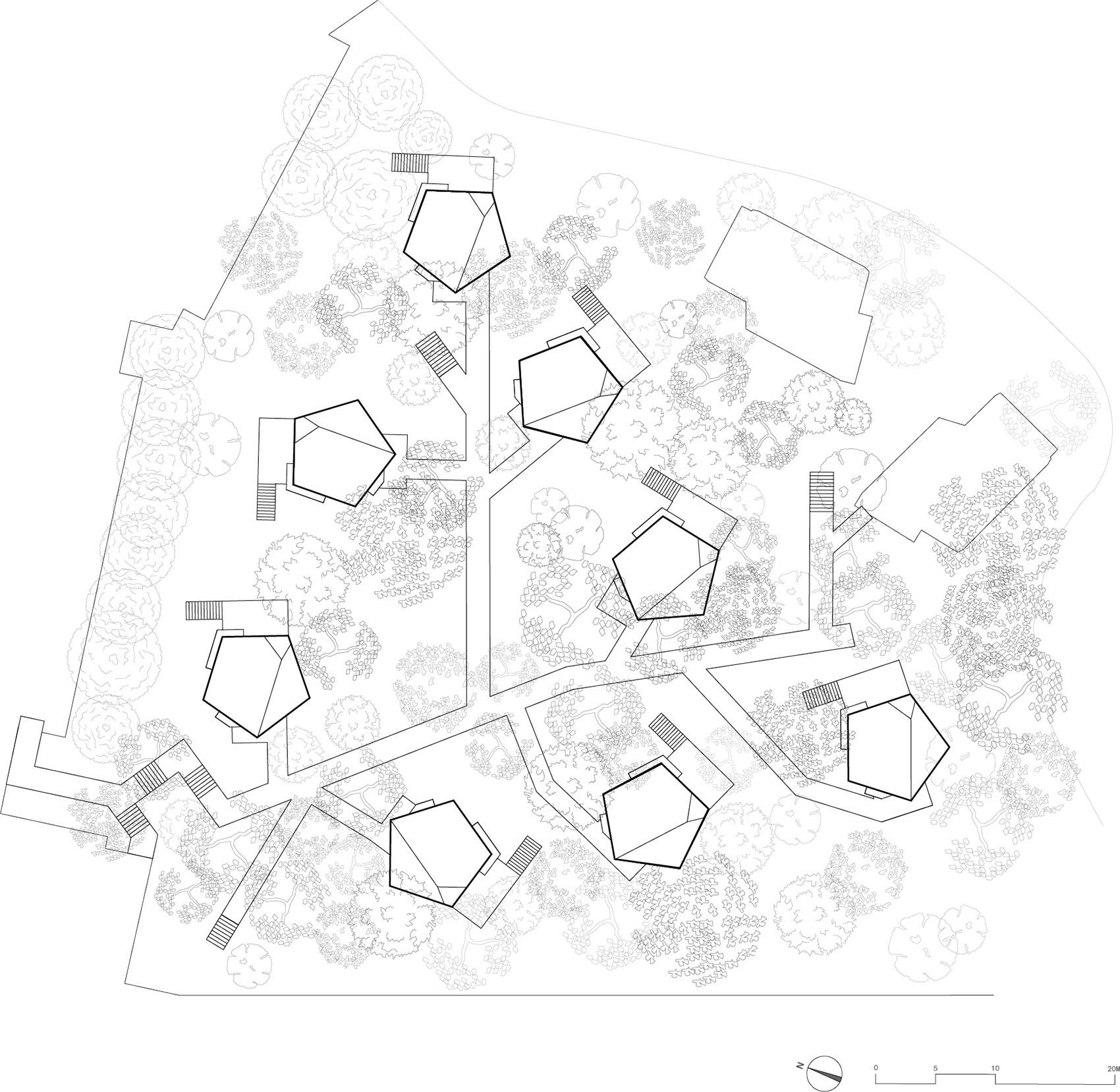
保留原建筑占位的极小占地,尽量保留了原生树林的完整,栈道架空保留自然系统的连贯和不被打扰,是为生态潜行。
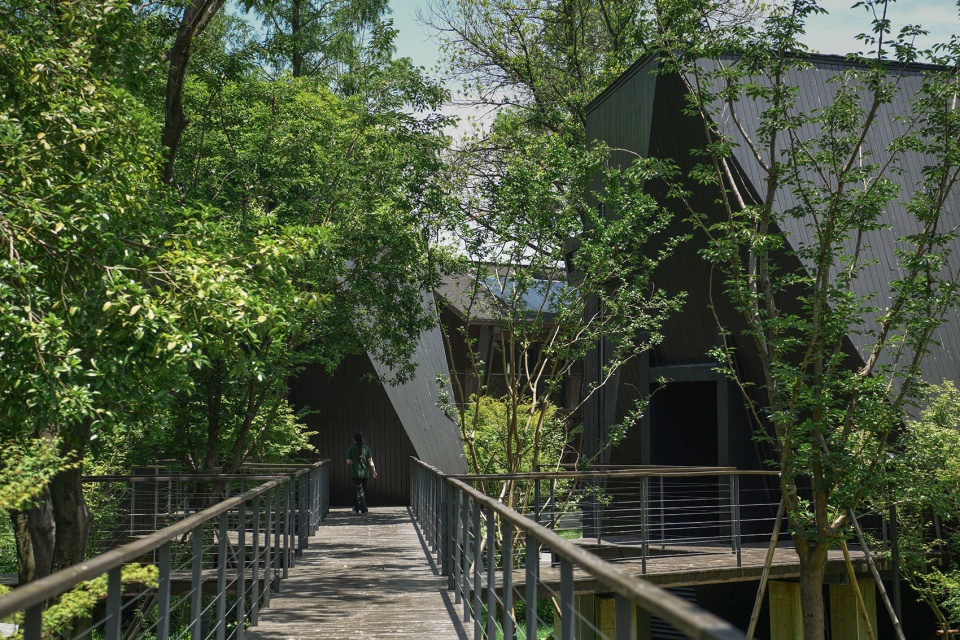
架空的栈道系统在自觉限制人的行为范围内,带领客人,穿行在树林中,寻找被掩映其间的黑色木屋,潜行,回归到动词。
Black, the colour of stealth.
The black cabins are based on pentagonal prisms, with two faces cutaway to create tension between discontinuous perceptions of one entity from each angle – a form of stealth.
By keeping a minimal footprint that preserves the original building’s position, and leaving the native forest largely intact, the elevated walkways maintain the continuity of the natural system without disturbance – ecological stealth.
The elevated walkway system, while consciously limiting human intervention, leads guests through the trees in search of the black cabin hidden among them. Stealth – returning to a verb.
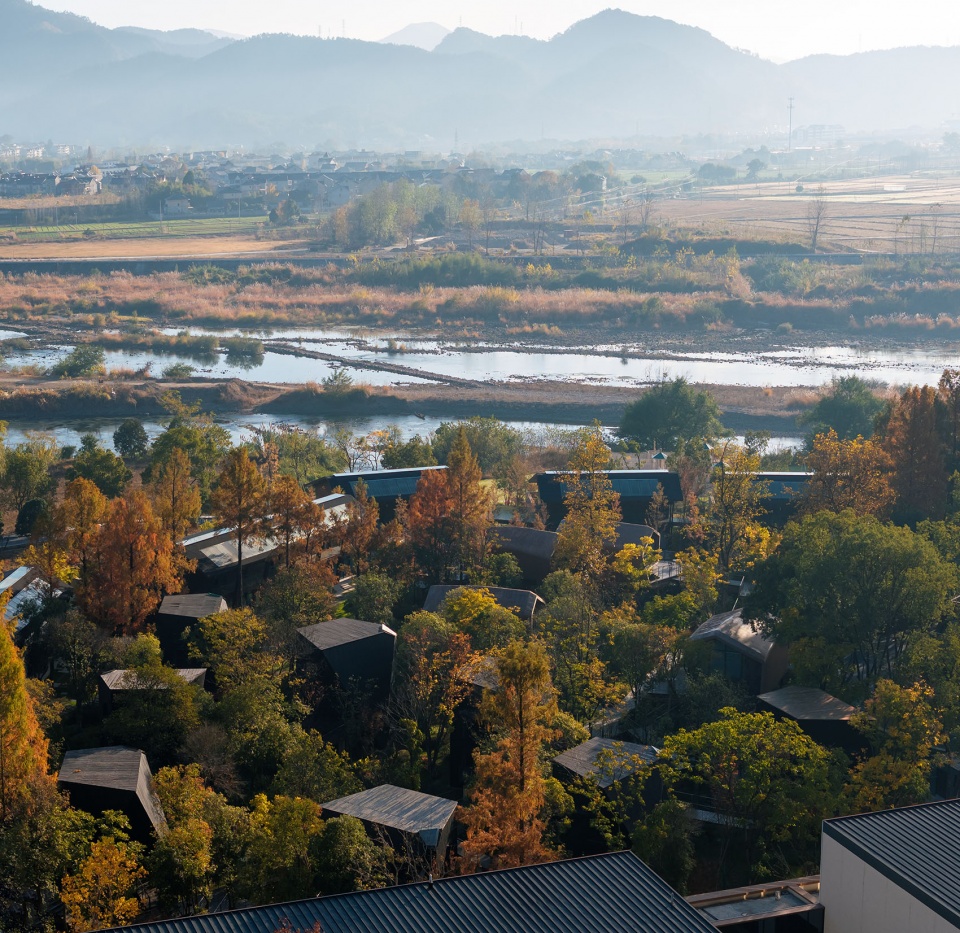
▼场地鸟瞰,原生树林和桐庐分水江,aerial view with native forest and Fenshui River in Tonglu
潜行之道,尊重共生树林的更新策略 The Way of Stealth: A Renewal Strategy That Respects Coexistence with the Forest
踩着掉落的枯枝败叶, 在架空走廊下穿行,草丛、苔藓在随地形起伏延续,这是属于这片场域的终极召唤。2022年开始,位于原杭州桐庐外婆家的这片山水迎来了自1990年以来最大规模的整体改造。中国变化最为激烈的20几年过去后,度假的内涵与形式外延都产生了极其巨大的变化,但经过对场地的认真探查,谱观建筑认为原初的场地策略尽管在具体形式,材质层面均已失效,但建筑与二十多年间共生的树木则凸显为一种有效的自然生长的场地策略。
▼潜行之屋建成后保留了场地大多数原生树木,most native trees preserved after construction
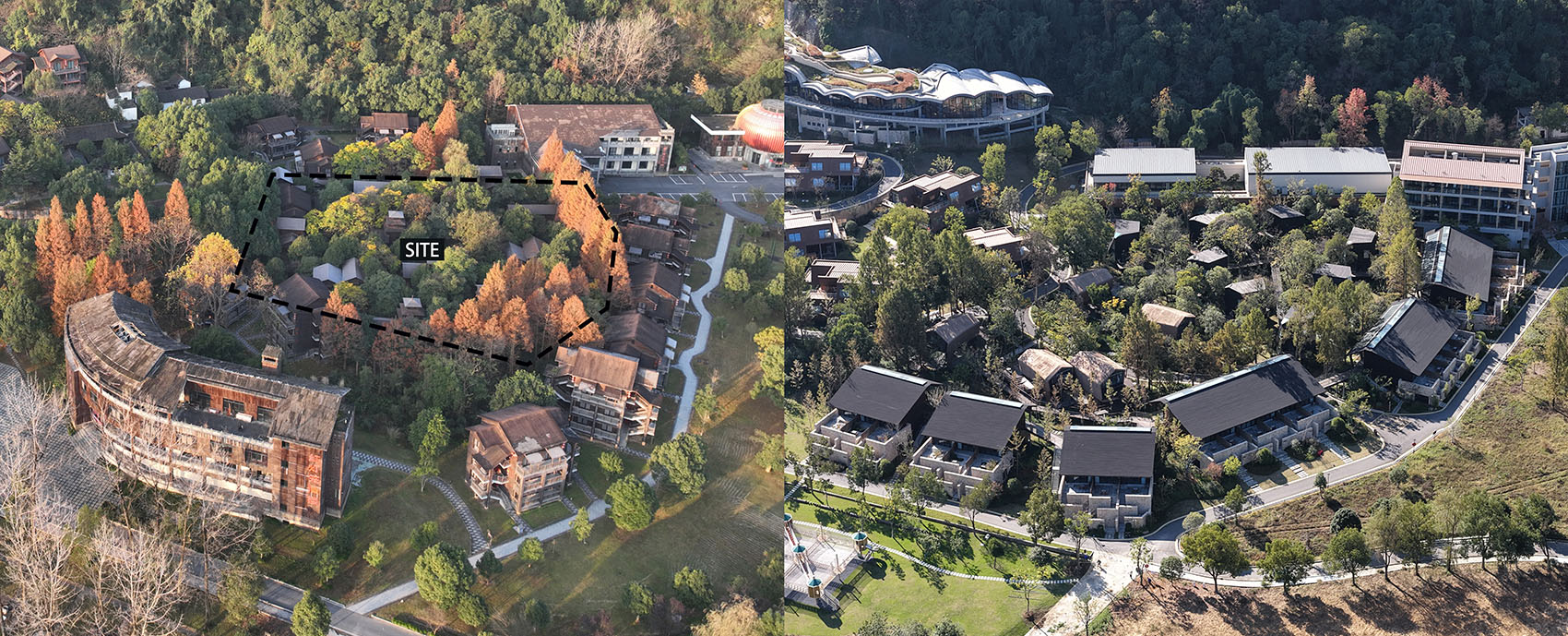
▼原场地架高的人行栈道,original elevated walkway
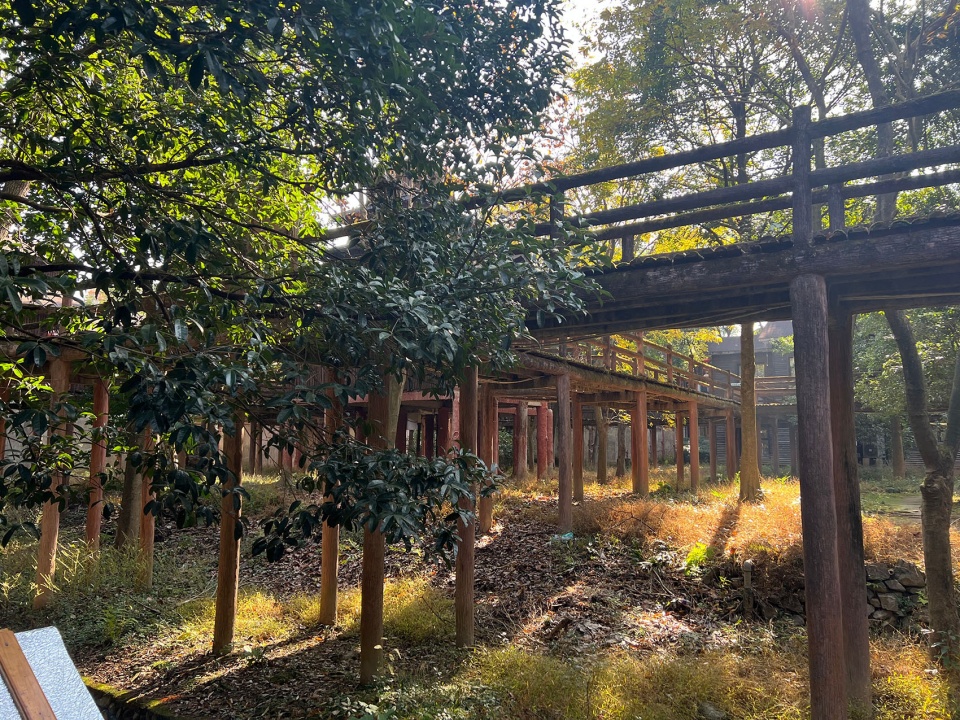
▼原场地架高的人行栈道和木屋,original walkway and cabins
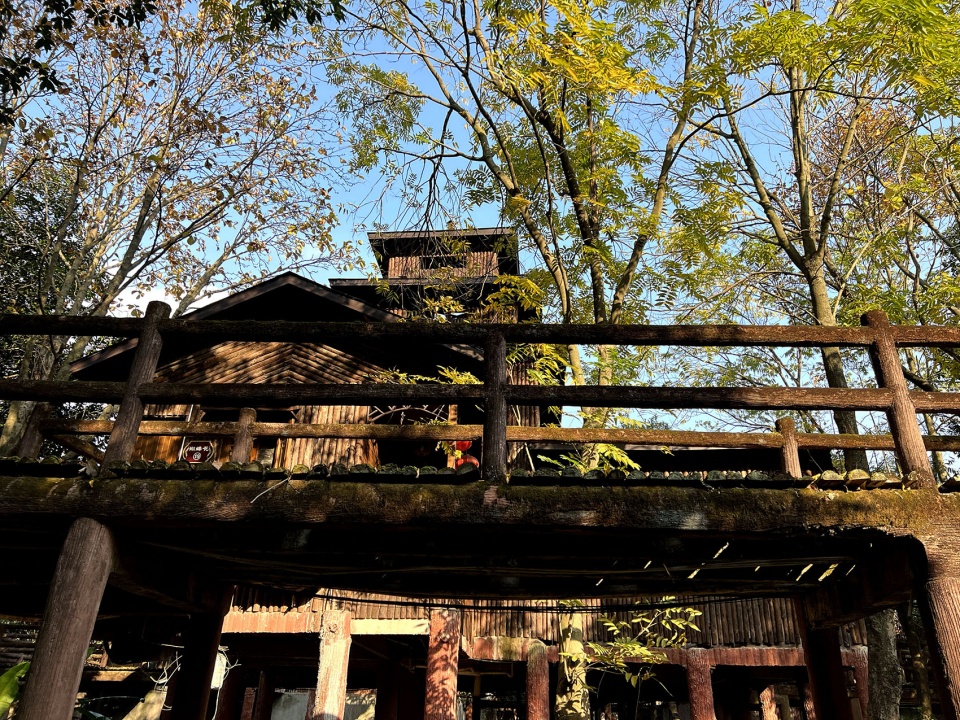
▼场地原生树林&地面丰富的原生植被在项目中被最大限度的保留,
native forest and ground vegetation preserved
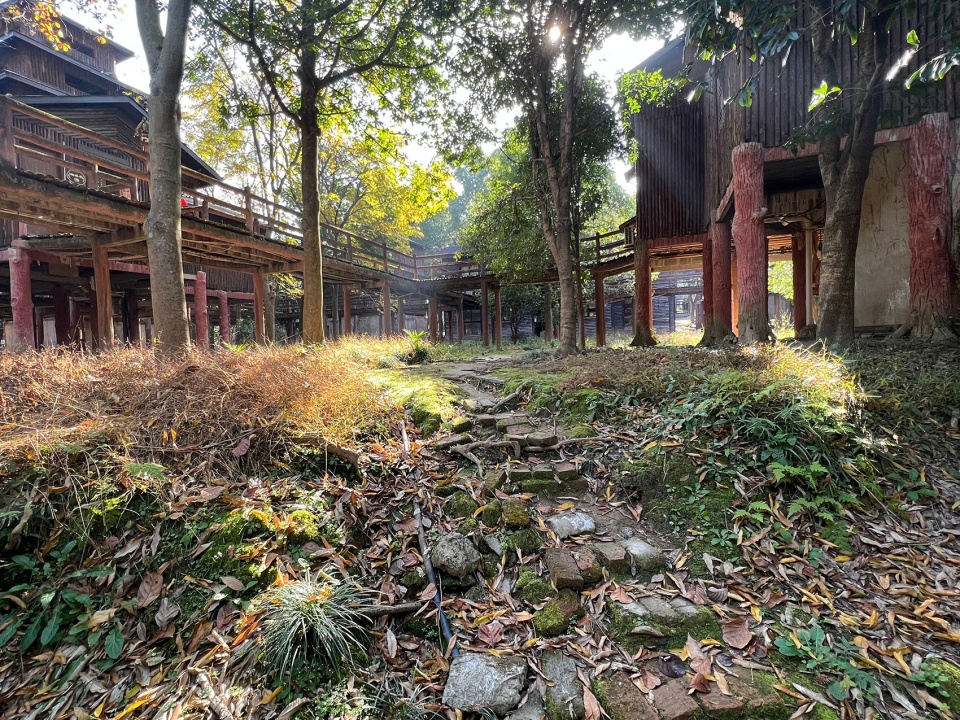
Stepping on fallen twigs and withered leaves, walking beneath the raised walkways, the grass and moss continue their undulating rhythm across the terrain – this is the ultimate call of the site. Since 2022, this landscape in Hangzhou Tonglu’s “Grandma’s Home” resort area has undergone its largest transformation since 1990. Over more than two decades of dramatic change in China, the meaning and outward forms of retreat have evolved enormously. Yet after careful site investigation, SpActrum concluded that while the original site strategy had failed in terms of specific forms and materials, the trees that have grown alongside the buildings over the past twenty years stood out as an effective, naturally grown site strategy.
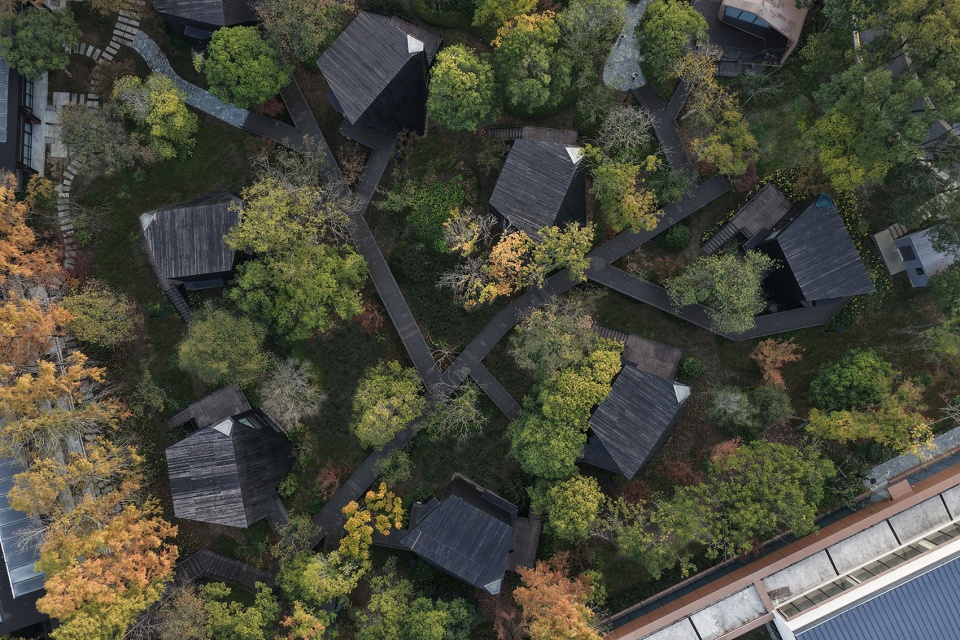
▼潜行之屋组团顶视航拍,top view aerial of the cabin cluster
于是,谱观的第一个工作就是与业主协商,放弃“焕然一新”,彻底变样的念头,转而替换具体的建筑,以当下的技术重造木屋,栈道系统,让建筑语言不再受某种既定“风格”辖制,如果借用Valerio Olgiati的建筑名词,就是回归一种“非参照的”状态,直面场地状况,来产生感知。
Thus, SpActrum’s first task was to persuade the client to abandon any ambition for a “radically refreshed” or completely transformed look. Instead, they replaced the specific buildings, rebuilding the cabins and walkway systems with contemporary techniques, freeing the architectural language from any fixed “style.” Borrowing a term from Valerio Olgiati, this is a return to a “non-referential” state – confronting the site’s conditions directly to generate perception.
▼晨光中的潜行之屋组团,cabins in the morning light
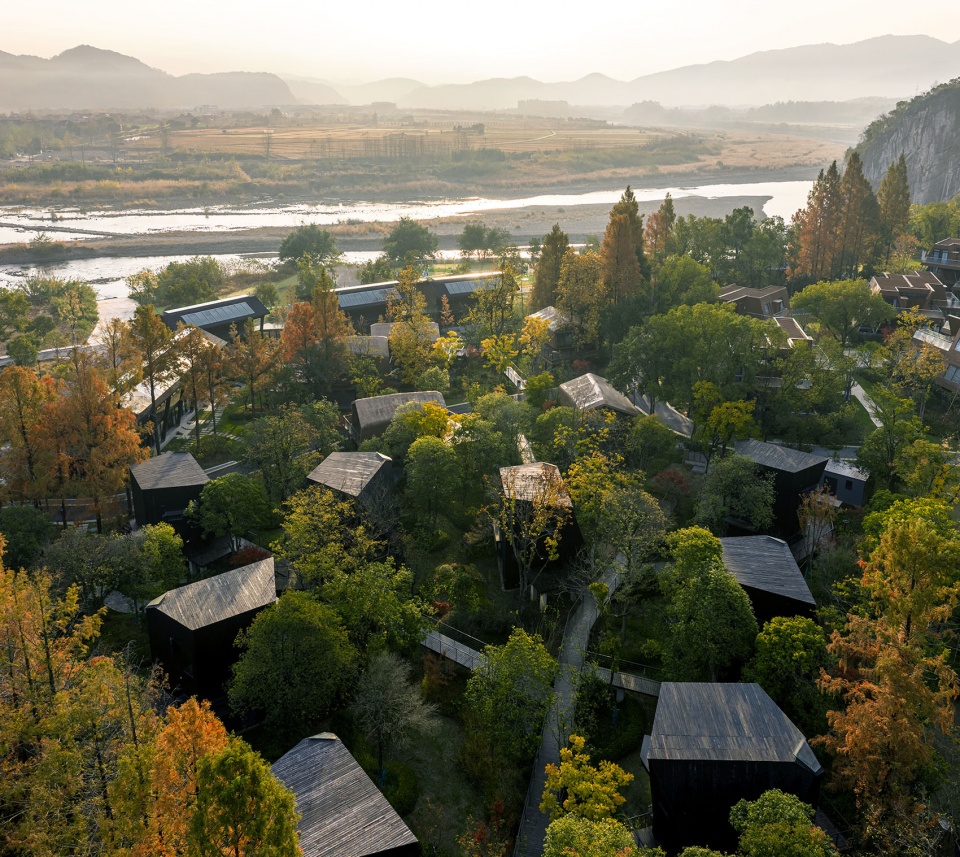
▼林间的潜行之屋组团,cluster of stealth cabins in the forest
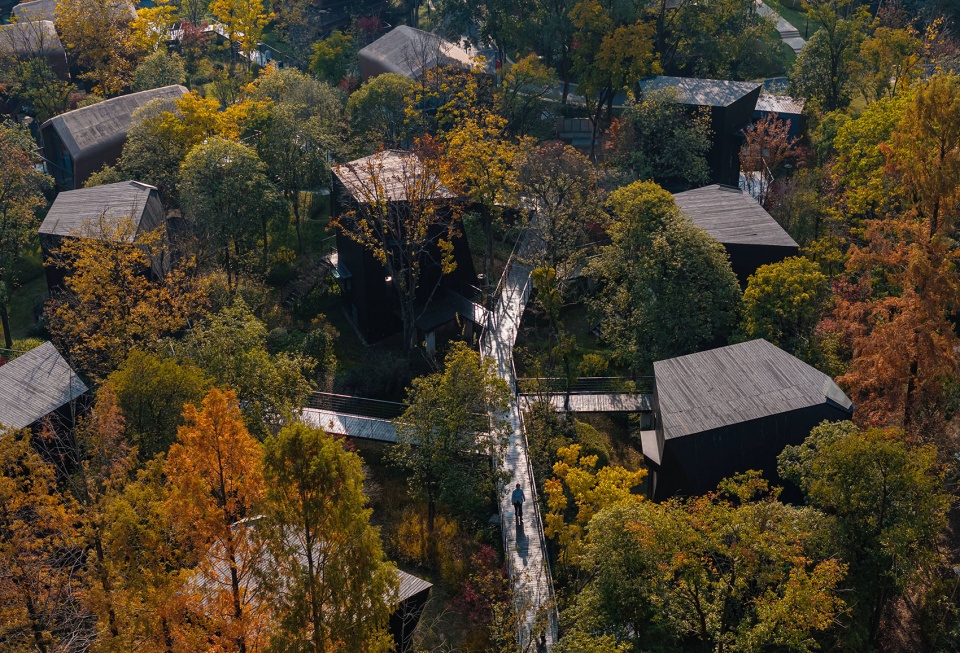
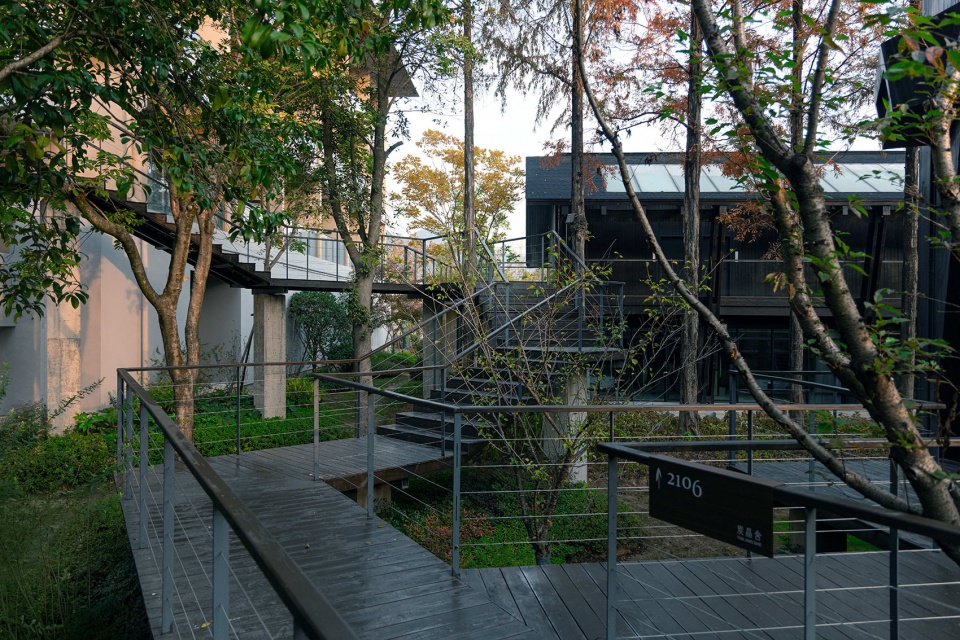
客人在栈道上行走,连接栈道以新的轻质钢木结构降低高度,降低危险感,但保留客人通道与地面的分离。栈道平齐木屋入口,木屋的设备空间隐藏在入口下地面上的高度内。地面是一个连贯的生态系统。两者互相交错穿插,但彼此独立,互不打扰。除了必要的因为消防通道的砍伐,树林得以最大幅度的保留。在施工中,我们甚至观察到依然栖居在此的鹰隼。
Guests walk along the pathways. The connecting walkway, built with a new light-weight steel-and-timber structure, are lowered to reduce any sense of risk, while still keeping the guest route separate from the ground. The height of walkway align with the cabin entrances; the cabins’ service spaces are hidden within the height between the entrance and the ground below. The ground remains a continuous ecosystem. The two systems intertwine and intersect, yet remain independent – undisturbed by each other. Beyond the necessary clearing for fire-access routes, the forest is preserved to the greatest extent possible. During construction, the architects even observed that falcon still inhabit the site.
▼密林中的黑色潜行之屋,black stealth cabins within dense forest
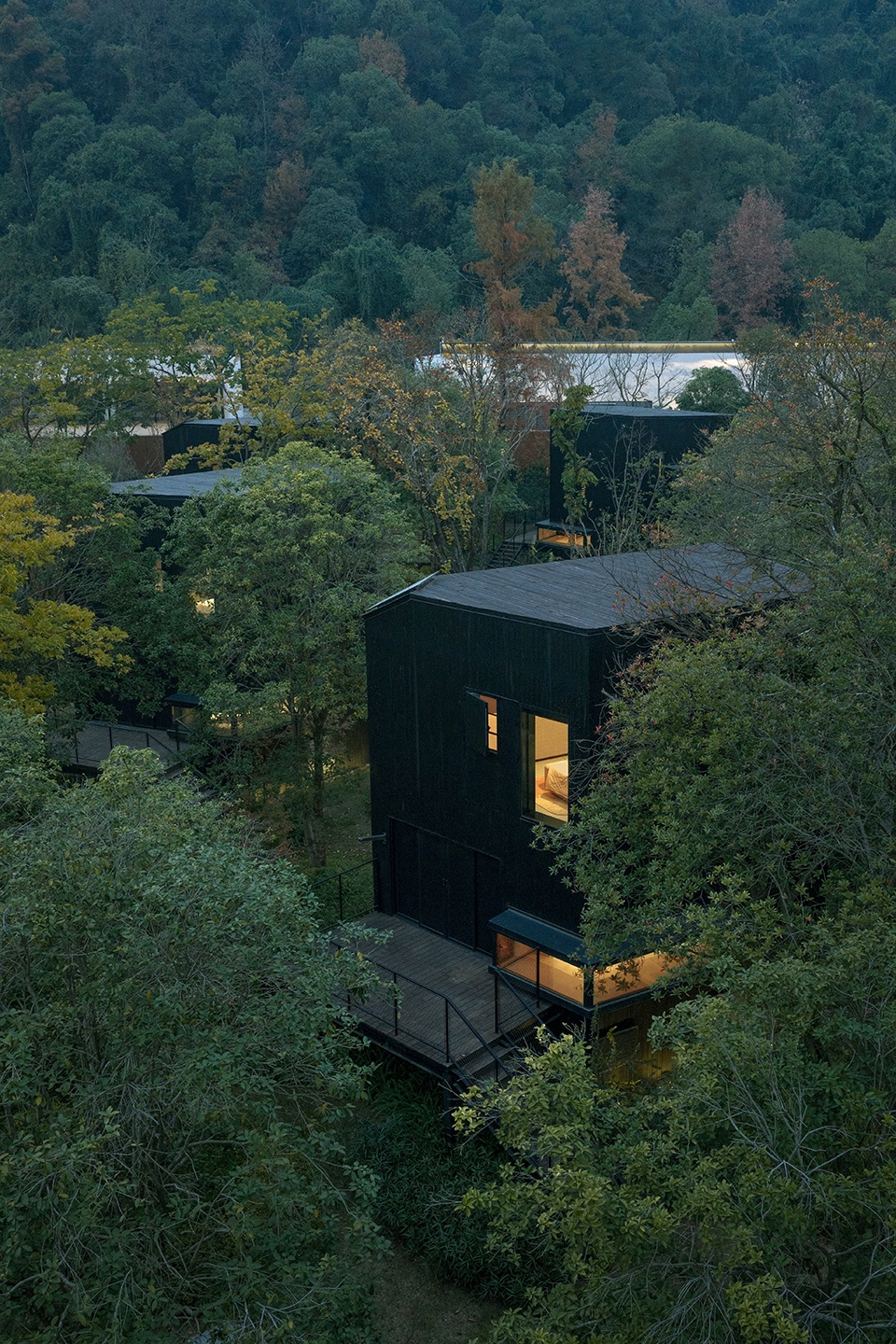
在项目设计的2022年,保护原生树木,有限建筑,进而追求建筑与自然的更有趣味的关系在刚刚结束地产狂潮的时期还是一个鲜少被采用的路径,我们欣喜地看到,从设计到建成的这些年,这慢慢成为一批建筑师的普遍自觉和人们可以越来越接受并欢迎的策略。
Back to 2022 and the project was first conceived, protecting native trees, building with moderation, and fostering a more playful relationship between building and nature was still a rarely taken path when the real estate frenzy was just coming to an end. We are delighted to see that, over the years from design to completion, this approach has gradually become a conscious choice for many architects, as well as a strategy that people increasingly embrace and welcome.
▼与周遭树林融为一体,cabins blending into the surrounding forest
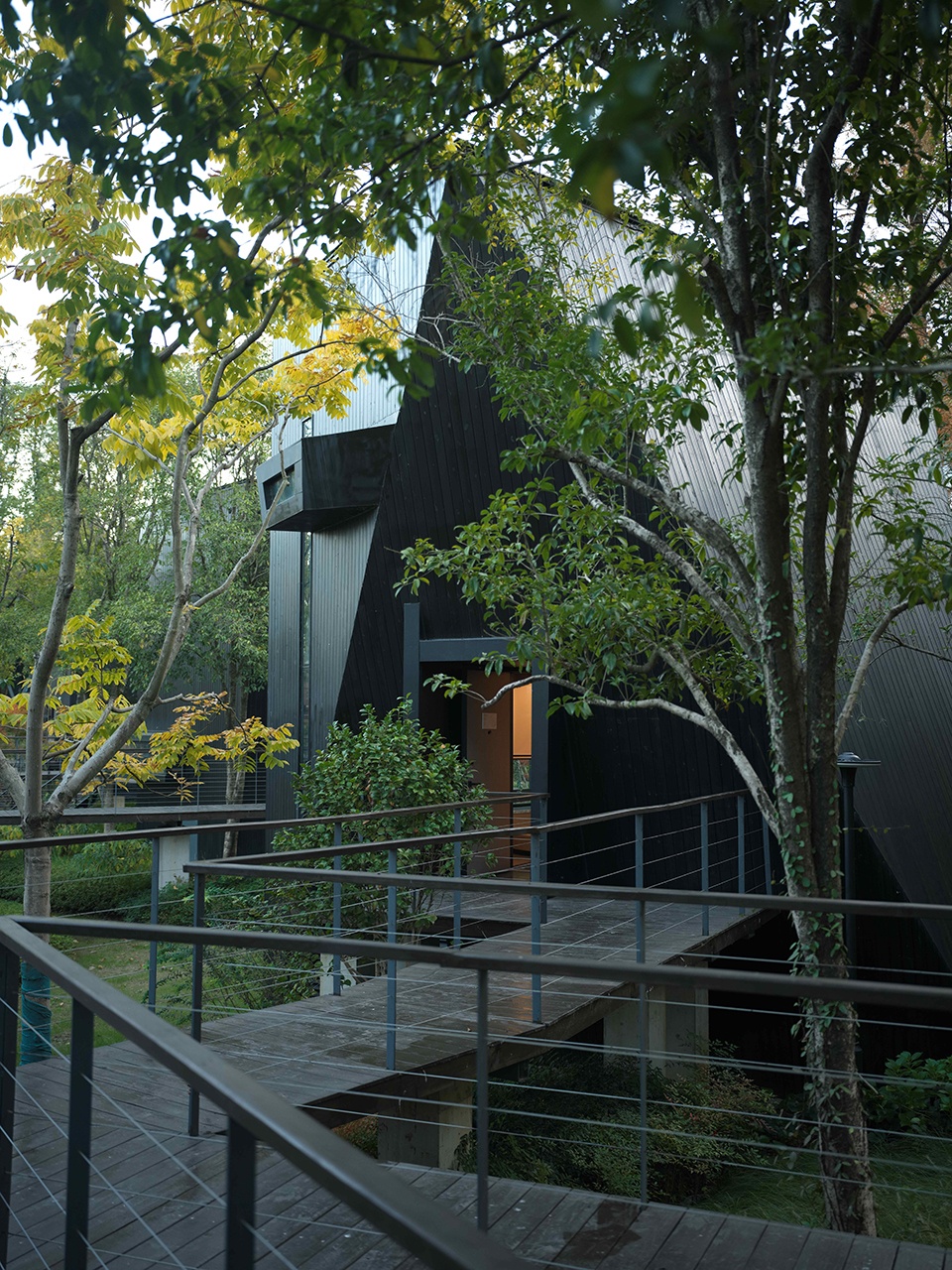
潜行之形,创造破除建筑统一性的几何原型 The Form of Stealth: A Geometric Prototype that Breaks Architectural Uniformity
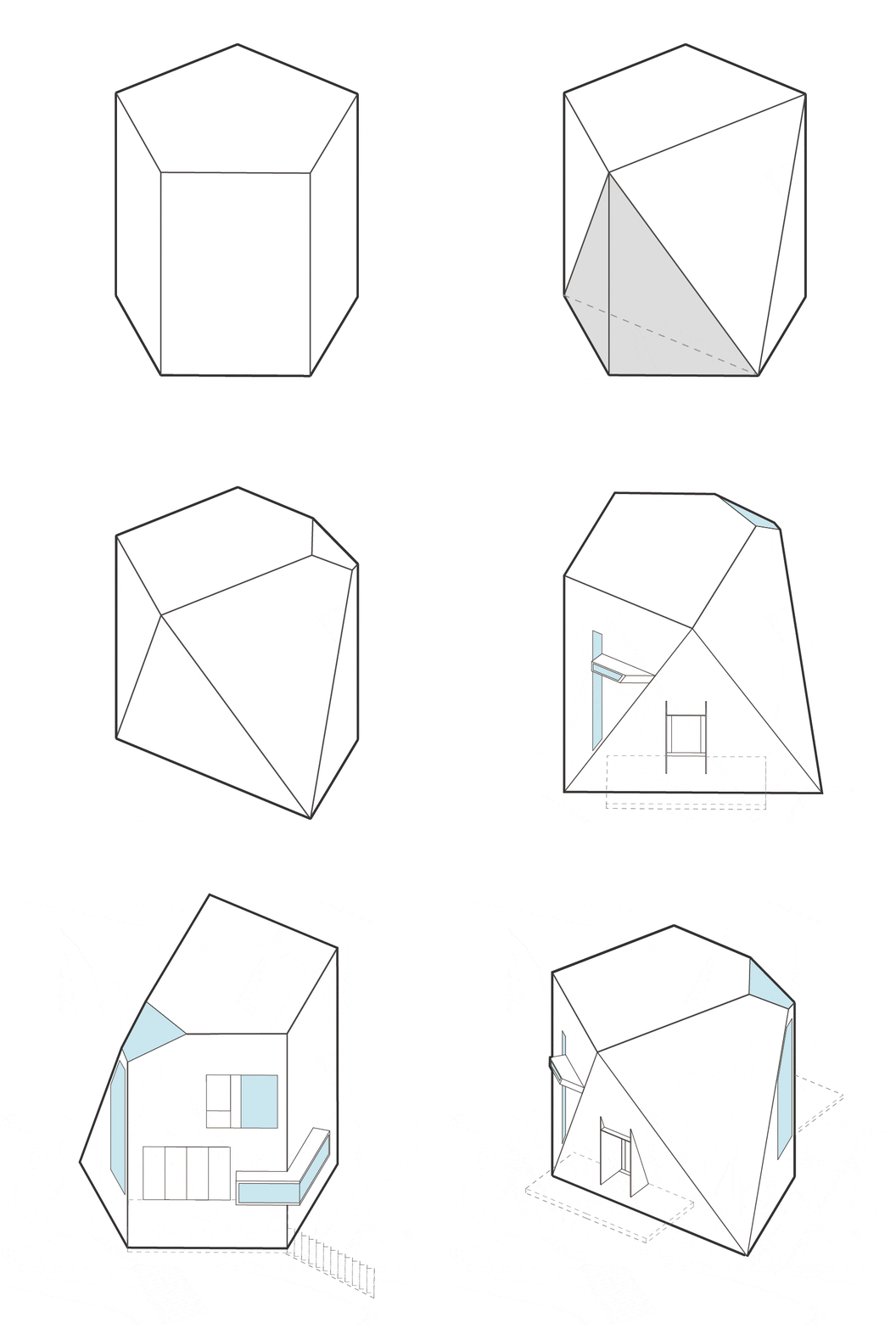
在这样的策略之下,新的黑色度假屋原位替换了泰式木楼,设计希望挑战的一点:建筑中的连续统一必须?能否以最简单的形式操作创造出一种形式,在同一个形体上造成多种表情。三角形过于简单,同样边长围合空间最小,四边形关于轴线和中心双重对称,过于板正,缺乏发展潜力。五边形是除这两者外最简单的形体,且具有一个中心对称轴和一个种轴对称方式,接下来就在这个形体上进行切削,地面、天空各自去除一角造成一种类似刚布兹体的在不稳定和稳定间切换的几何形体,让静止的形体具有了动态倾向。
▼潜行之屋五边形体块生成过程,pentagonal volume generation process

▼五边形体块生成动图,pentagonal volume generation animation
▼潜行之屋五边形单体的不同变体,variations of pentagonal cabin unit
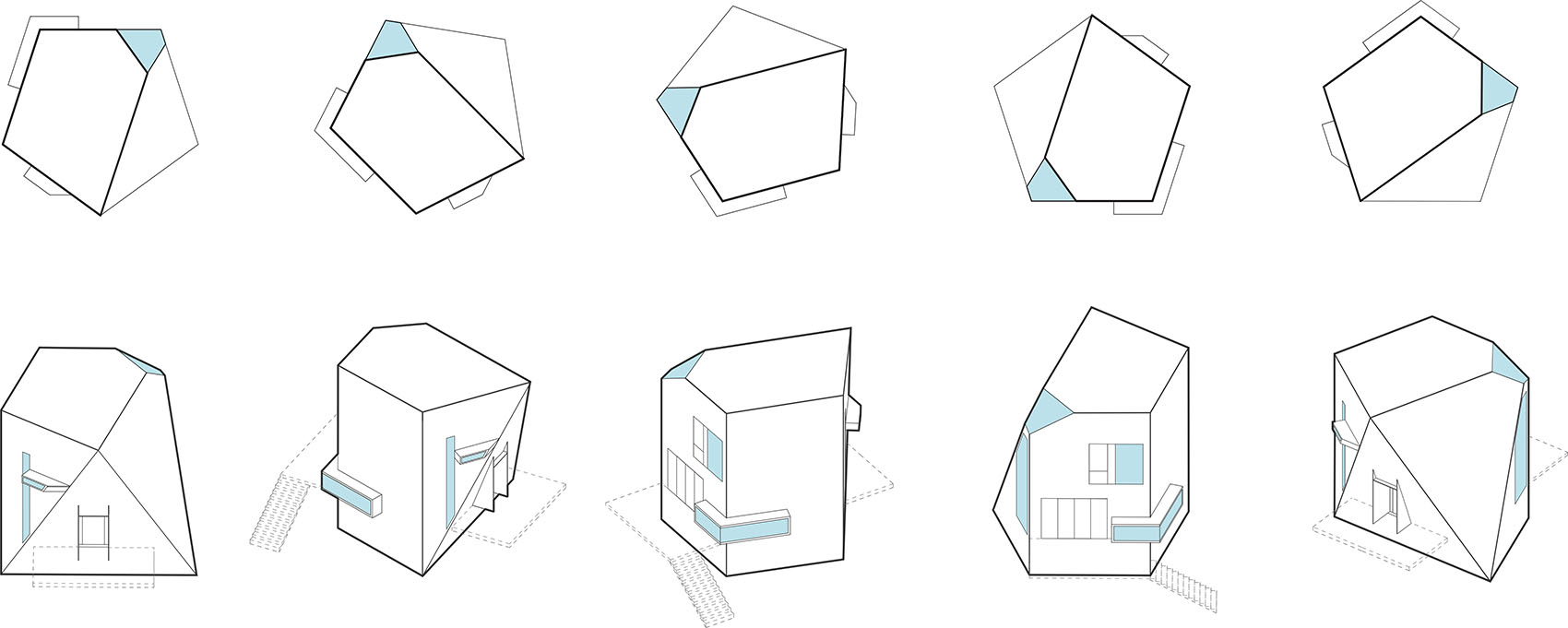
Under this strategy, the new black cabins replace the former Thai-style wooden lodges in situ. One challenge the design seeks to address: is architectural continuity always necessary? Can a single form be given multiple expressions through the simplest formal operations? The triangle is a simple geometry, enclosing the smallest space for a given perimeter. The quadrilateral, with double symmetry about both two axis and centre, is too much regulated and lacks developmental potential. The pentagon is the simplest form beyond these two, possessing one central axis of symmetry and one bilateral symmetry. From there, the design cuts into the volume – removing one corner toward the ground and another toward the sky – creating a Gömböc-like geometry that oscillates between instability and stability, giving the still form a tentency of movement.
▼木屋的三角面体和树木的倒三角形式呼应,
triangular cabin form echoing inverted tree geometry
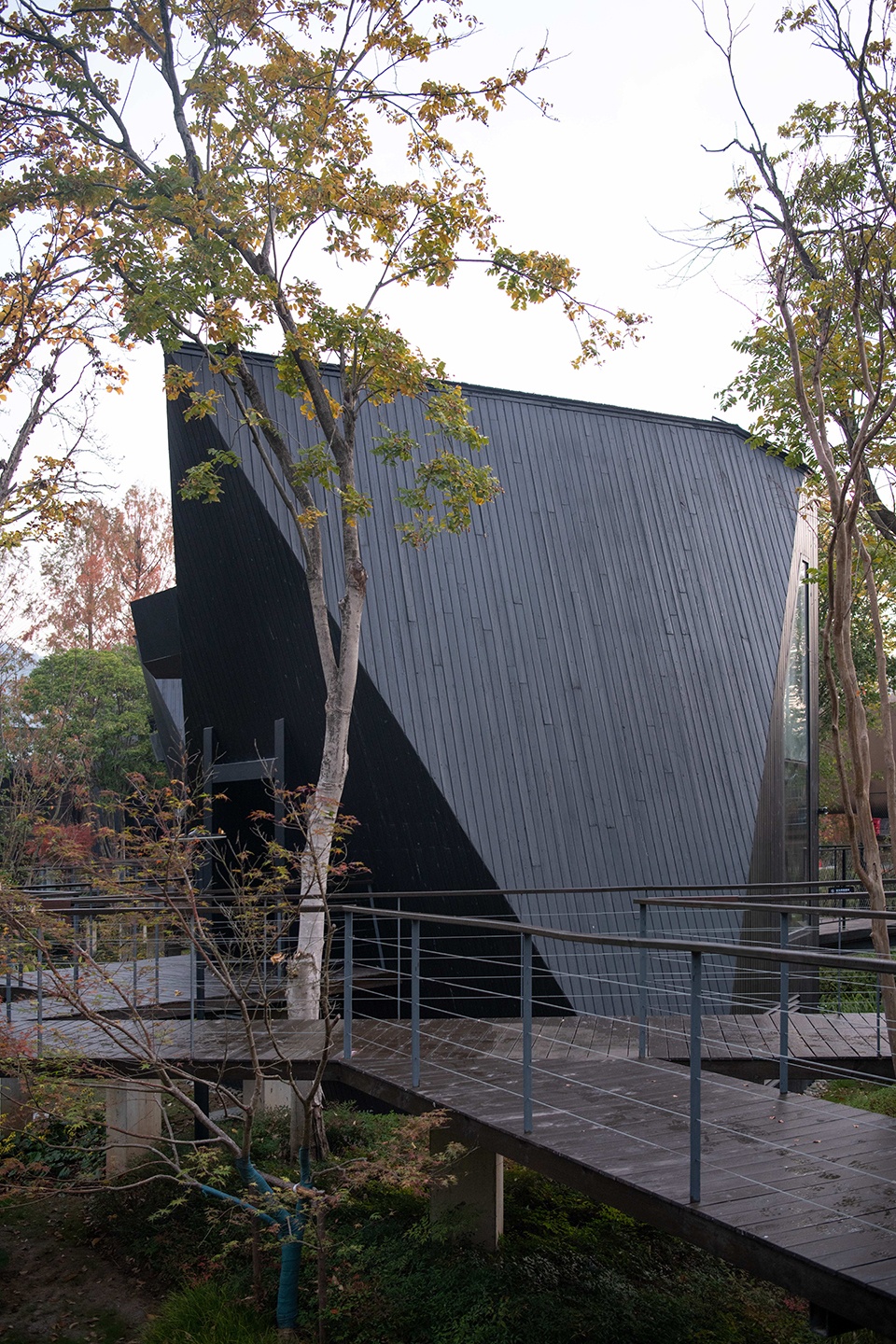
▼木屋封闭而倾斜的三角面,closed and sloping triangular façade
▼从树林的草地地平面看人行栈道和小木屋,walkway and cabins from forest ground level
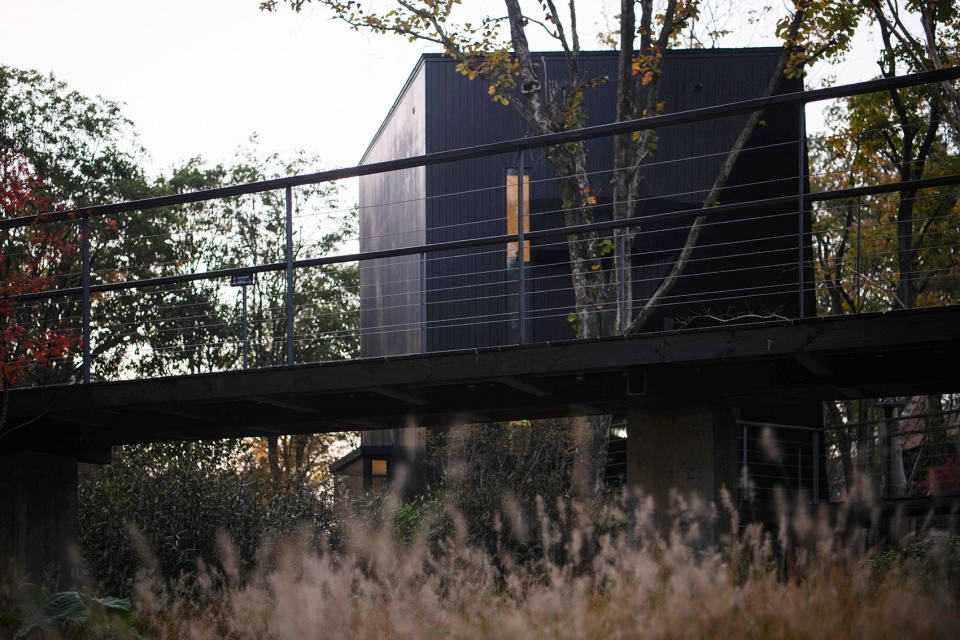
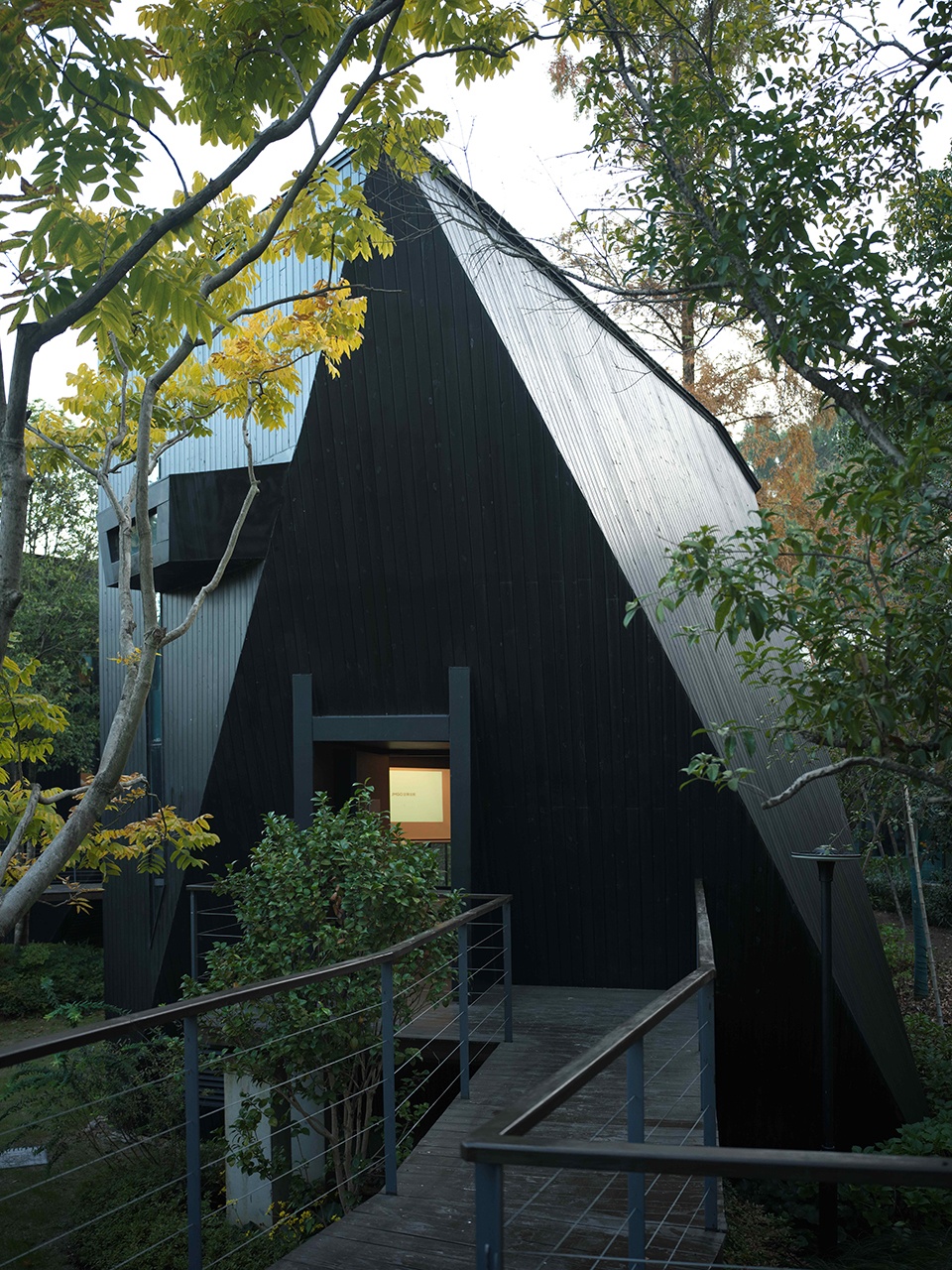
▼潜行之屋的不同面向像是表情各异的黑色精灵,
multiple facets of cabins like expressive black spirits
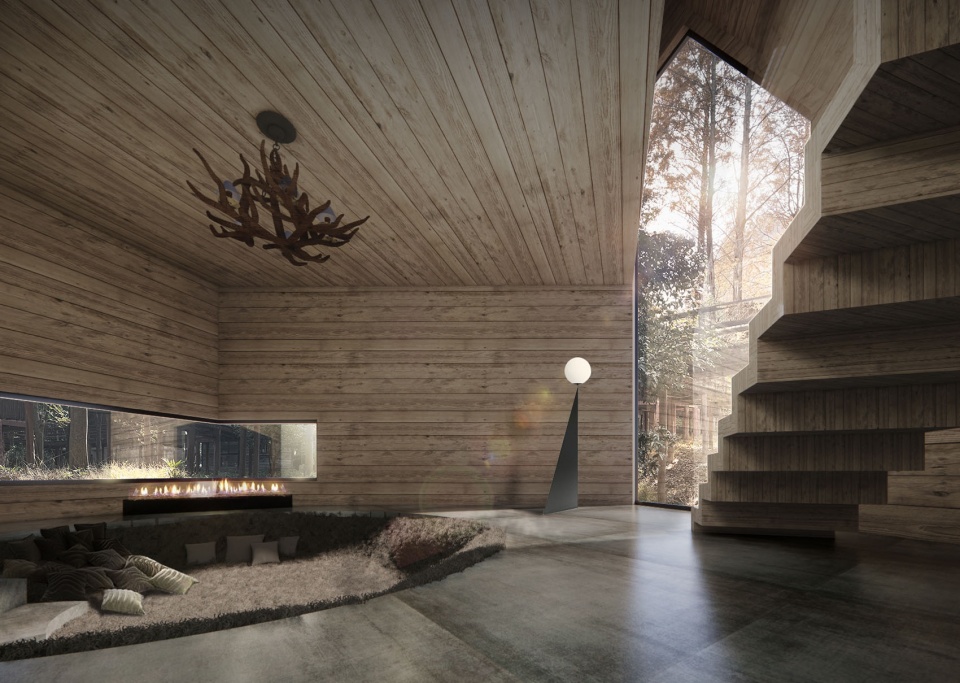
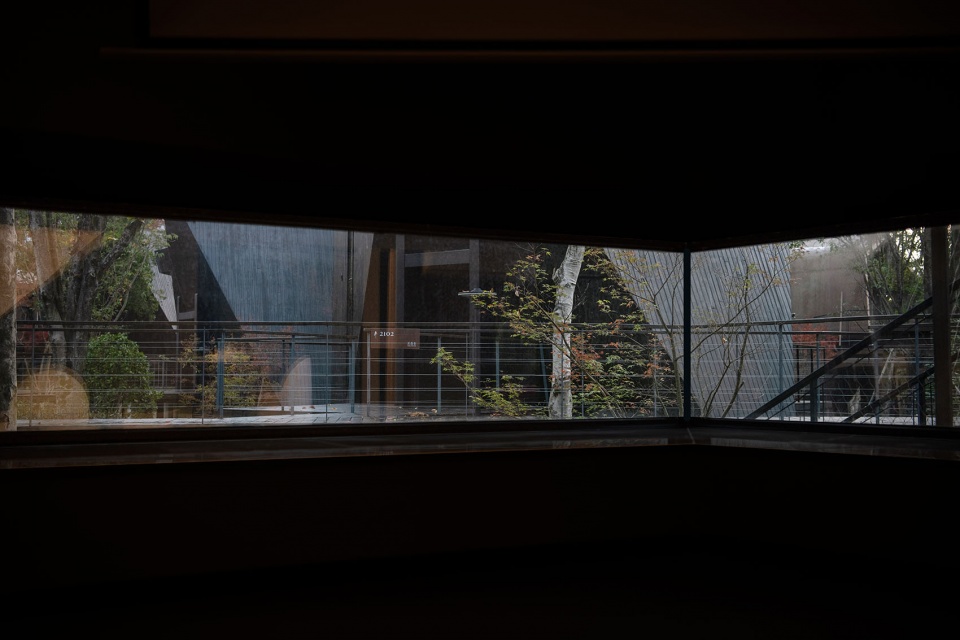
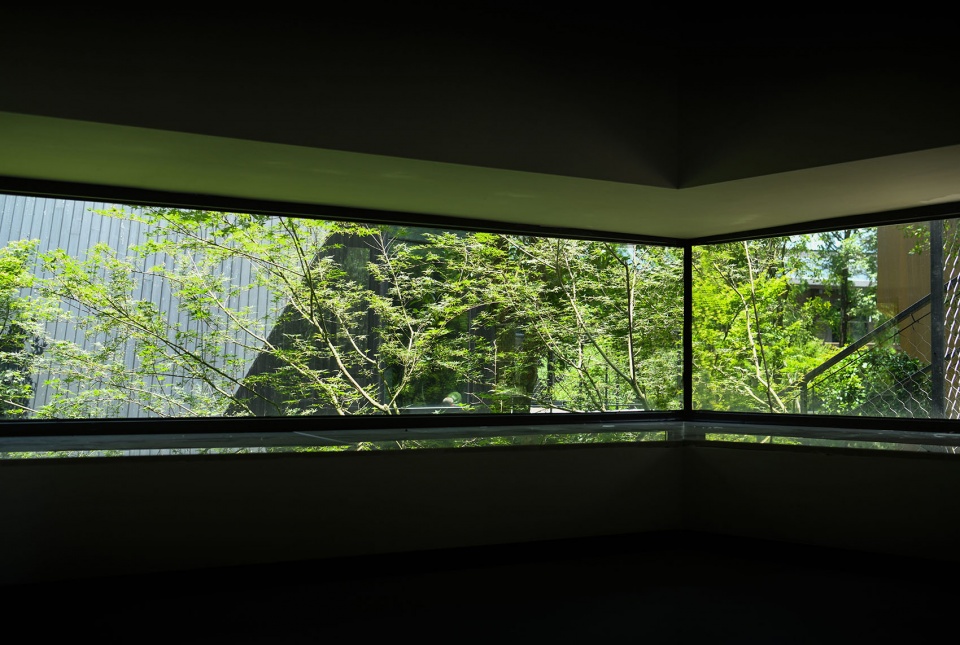
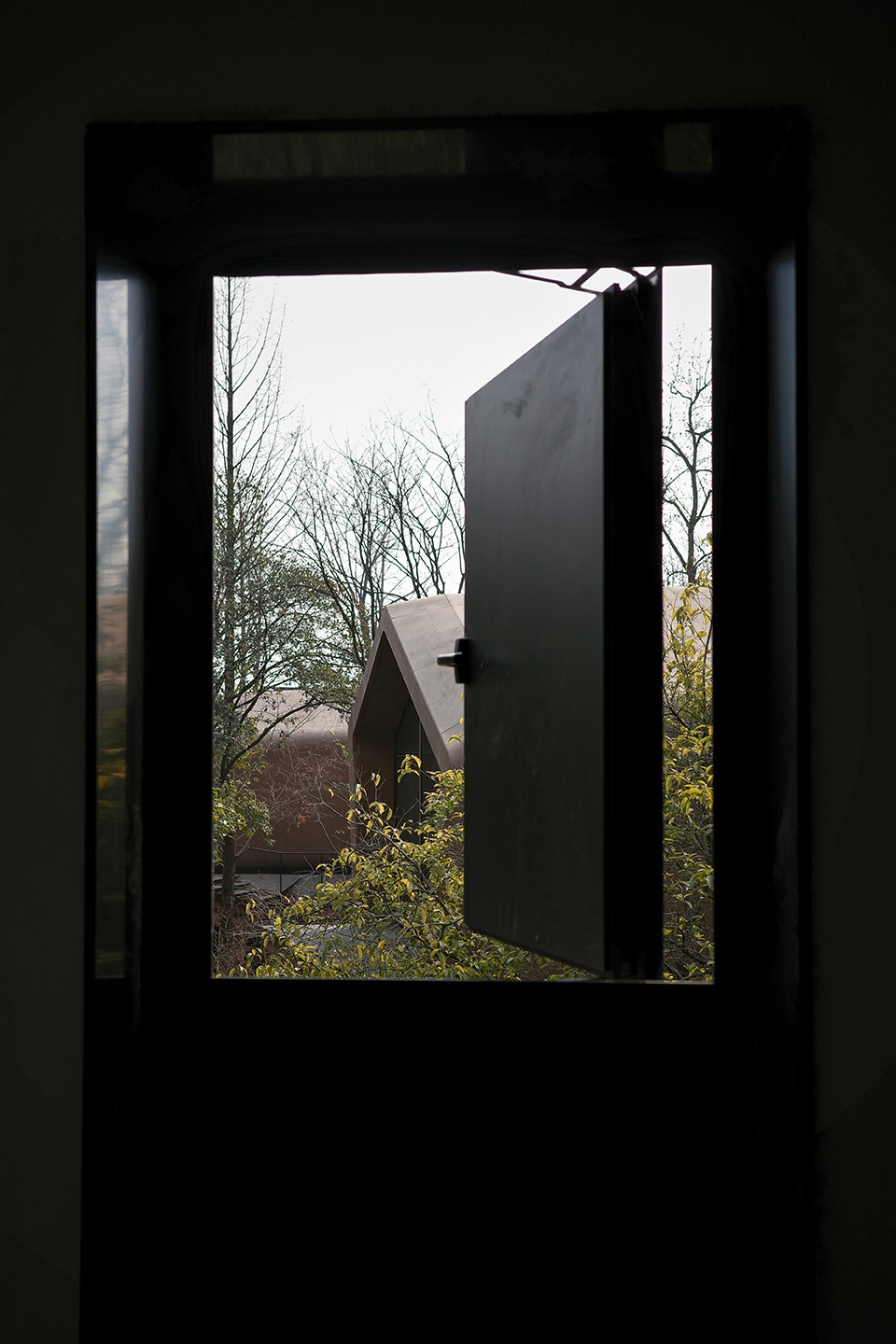
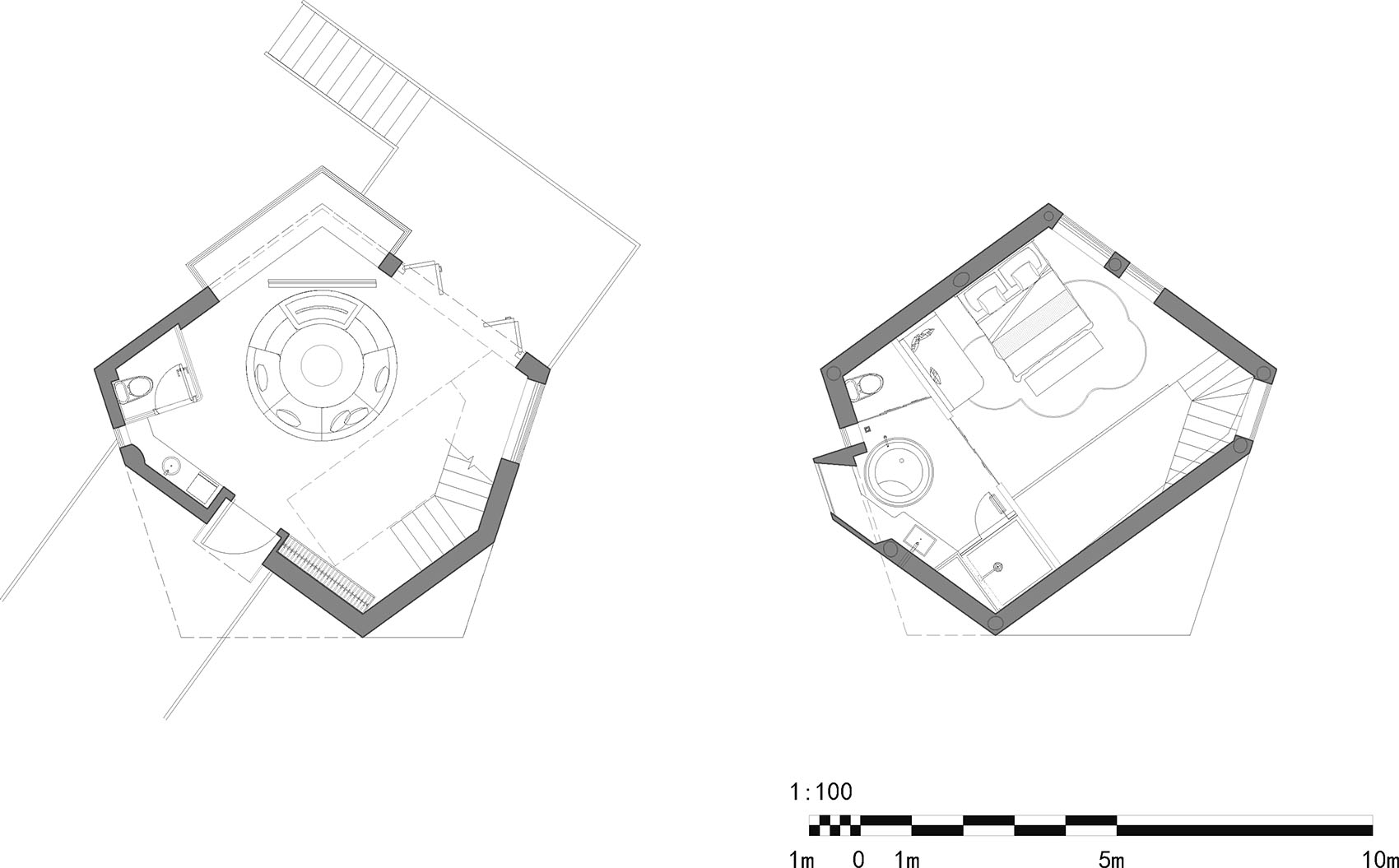
形在运动状态和静止中取得一种具有张力的平衡。在切角后的几何形体上,开窗考虑到串联的设置,主要分布在垂直面上。开孔试图在室内呈现极致向度的最大化,面对挑空部分的垂直玻璃窗成竖条状,面对室内下沉沙发区的玻璃水平延展,将户外的森林转化为条幅与长卷。二层对着床的窗将采光和通风分解开,让对外的景窗纯粹干净,与通风的窗组合成一个大的系统。卫生间的窗对着在浴缸里躺卧的视线位置,户外以突出的水平形状约束视线,只能从室内瞭望外部,从外部则无法窥探室内。
▼潜行之屋剖切内透视图,sectional interior perspective
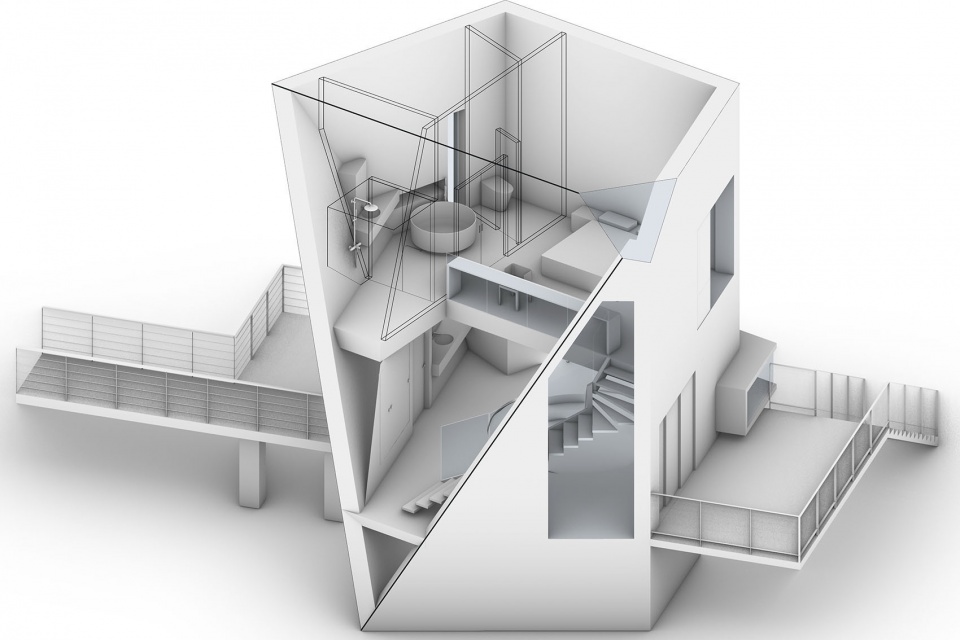
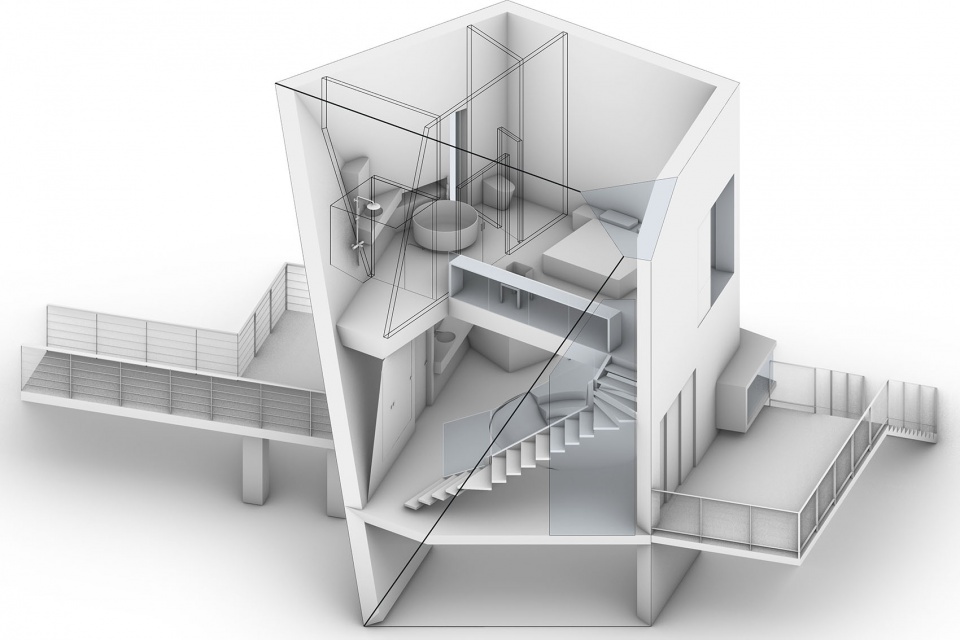
The form achieves a tense balance between motion and stillness. On this faceted geometry, window openings are arranged in series, mainly distributed across vertical planes. The apertures aim to maximise the internal dimensions of the interior. The vertical glazing facing the double-height void appears as narrow slits, while the horizontal glazing facing the sunken seating area extends outward, transforming the forest outside into scrolls and panoramic landscapes. On the second floor, the window facing the bed separates daylight and ventilation – leaving the outward-viewing glazing pure and unobstructed, while integrating the ventilation window into a larger window system. The bathroom window aligns with the line of sight when lying in the bathtub; a protruding horizontal element outside restricts the view, allowing only outward glances from inside while preventing any view in from the outside.
▼潜行之屋室内意向图,interior concept of the cabin
▼潜行之屋的条带窗景宛若展开的画卷,strip window framing panoramic forest view
▼由通风小窗向外看,view outward through ventilation window
▼由客厅看向私属木栈台,view from living room to private deck
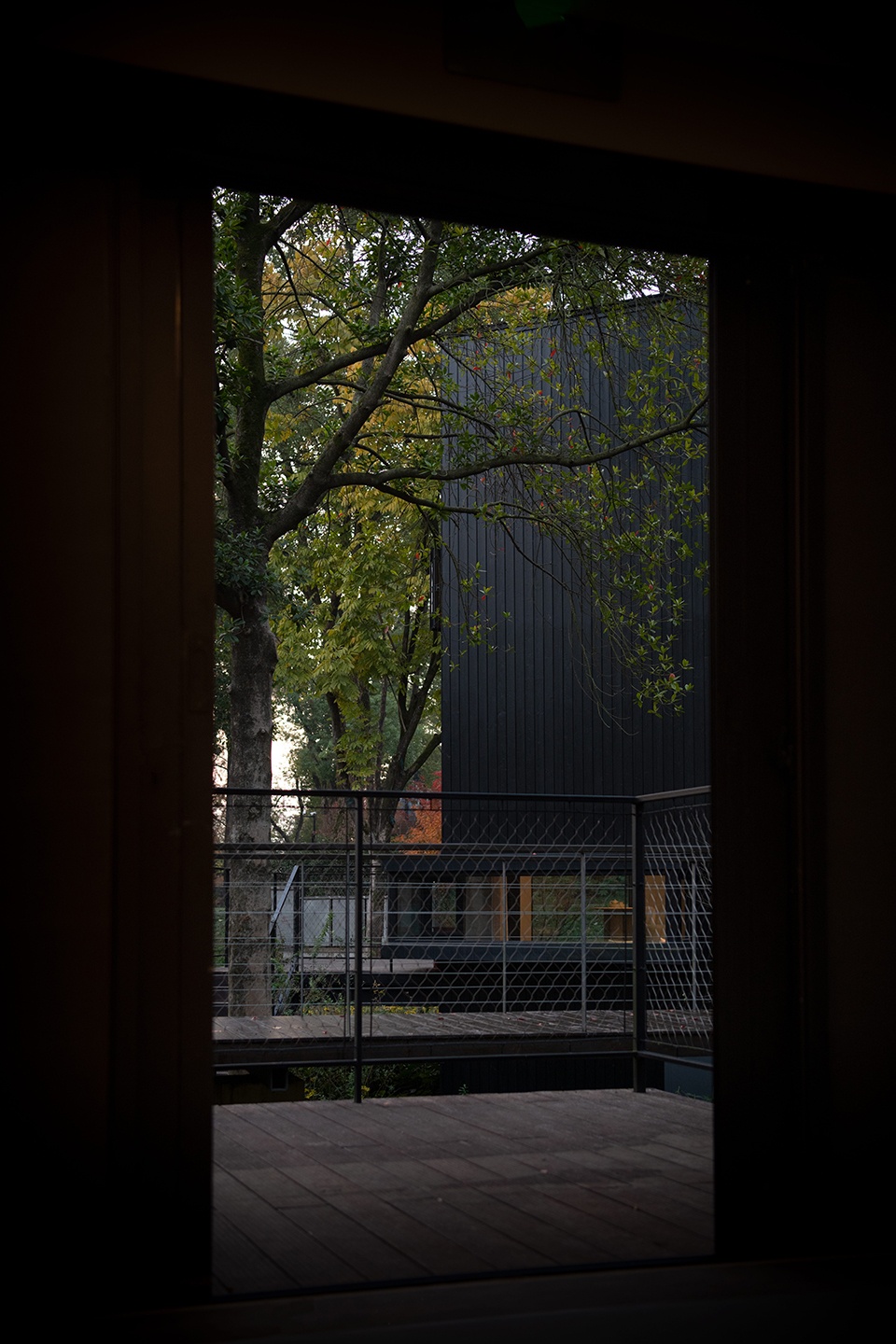
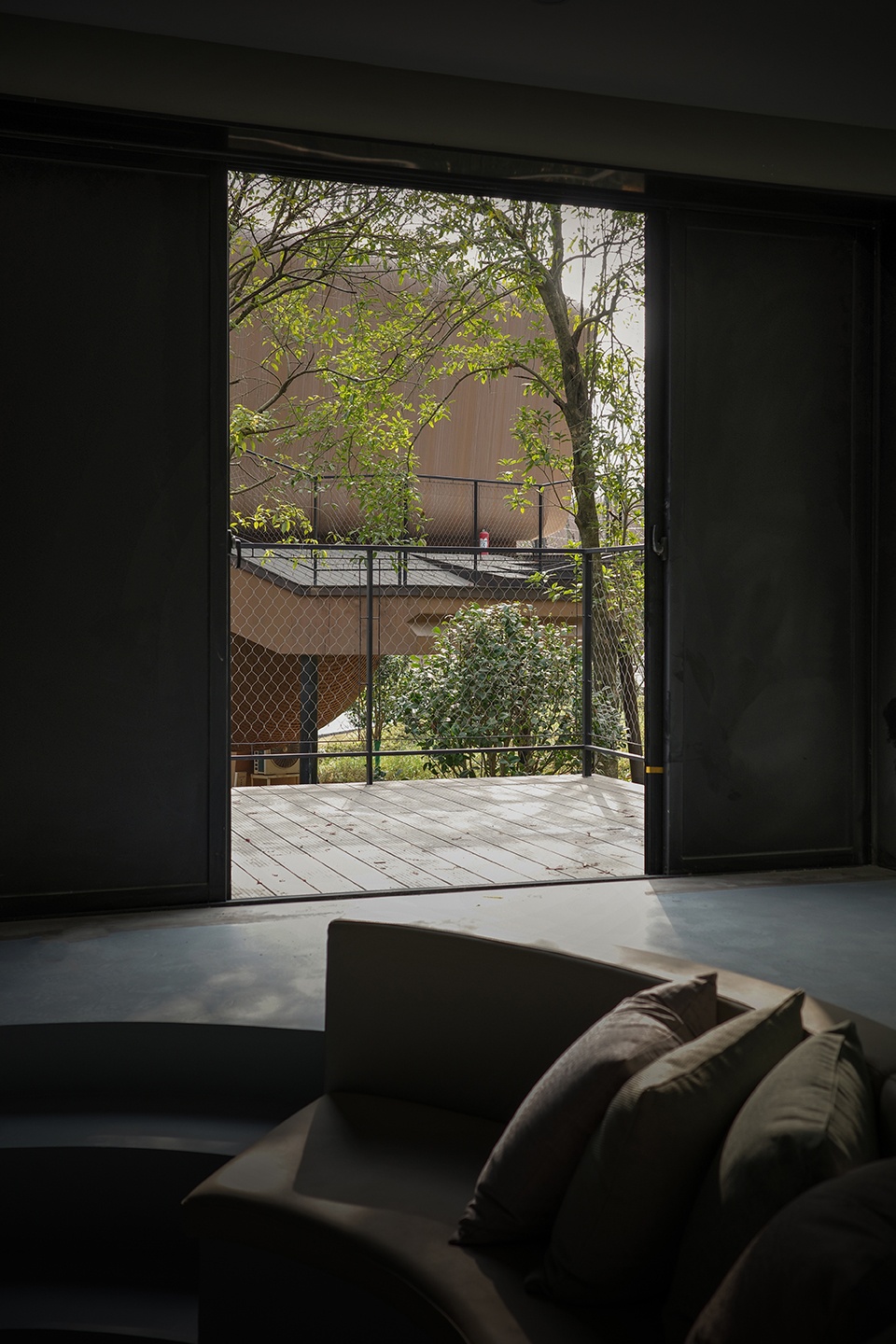
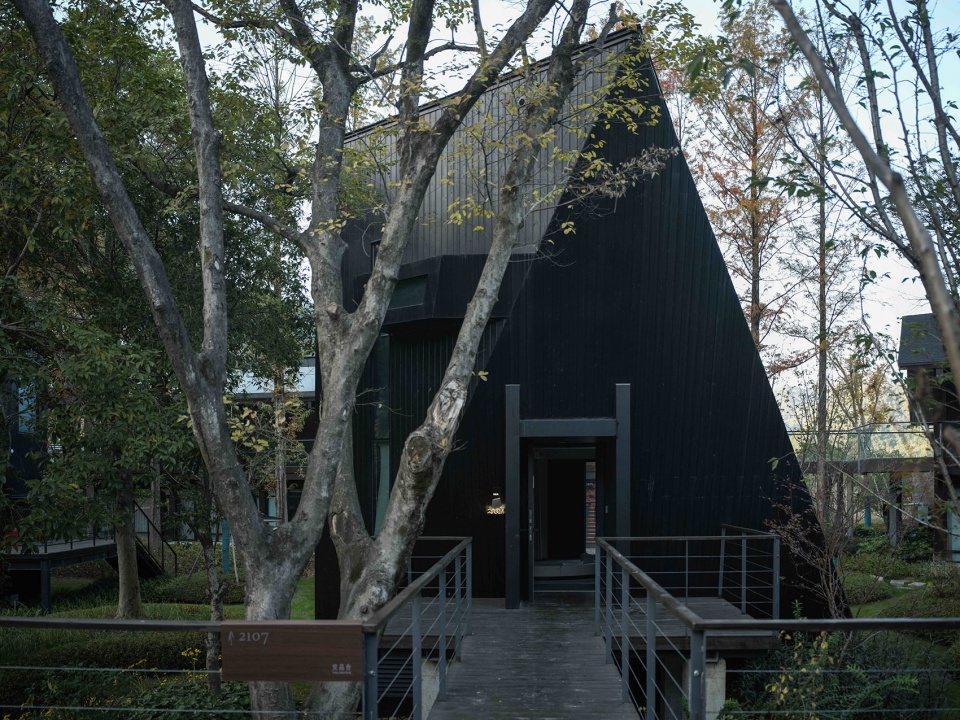
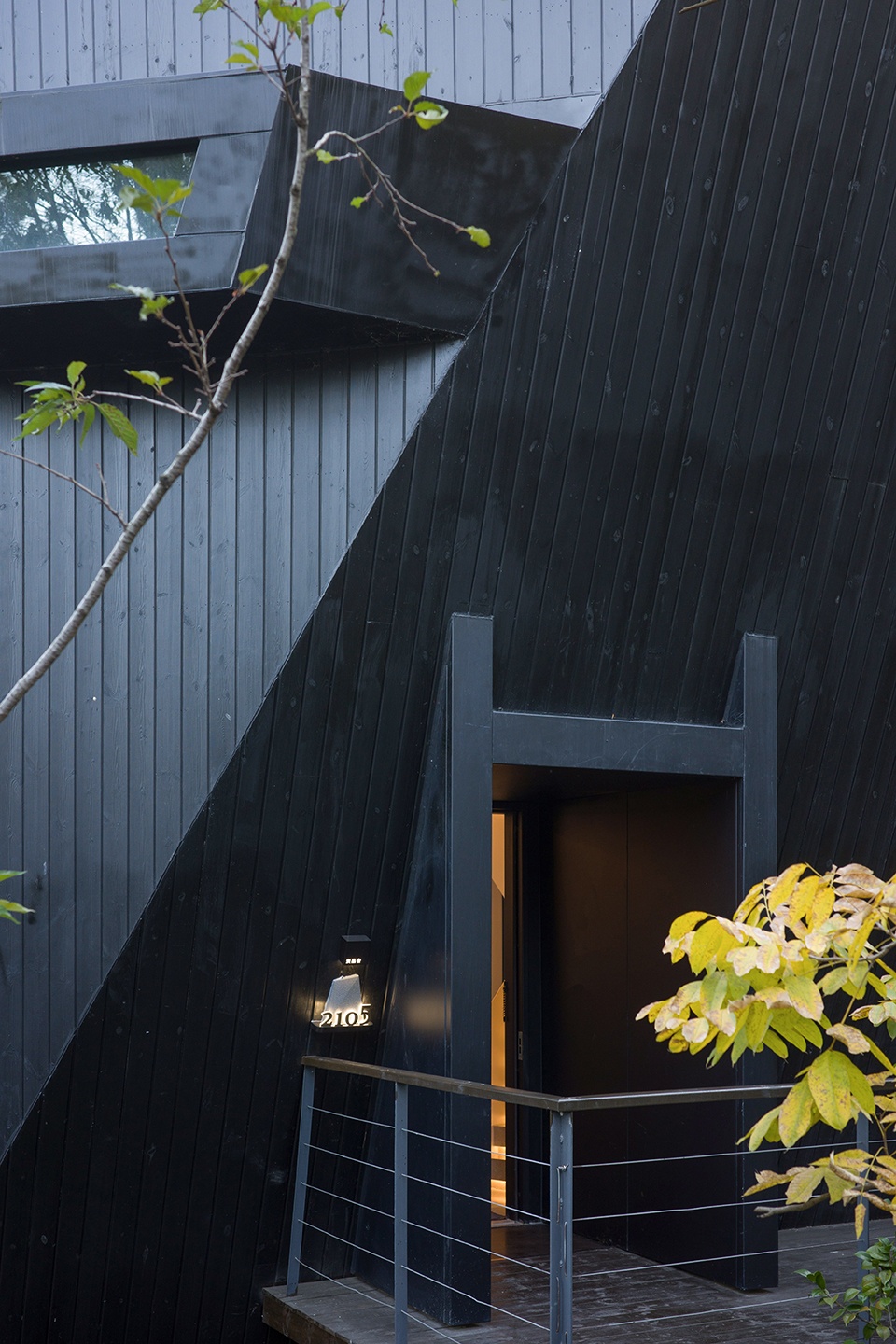
木屋的门有两处,在入口的斜面上搭建出H形的框架,以强调消隐底色上的大门。另一扇门则设置在私属平台上,可大面积打开,让室内在合适的气候下和平台连为一体。
The cabin has two doors. One is set into the slanted entry face, framed by an H-shaped structure that emphasises the doorway against the recessive dark body of the house. The other door opens onto a private terrace and can be swung open wide, allowing the interior to merge with the terrace in suitable weather.
▼潜行之屋的木栈道入口,entrance to timber walkway
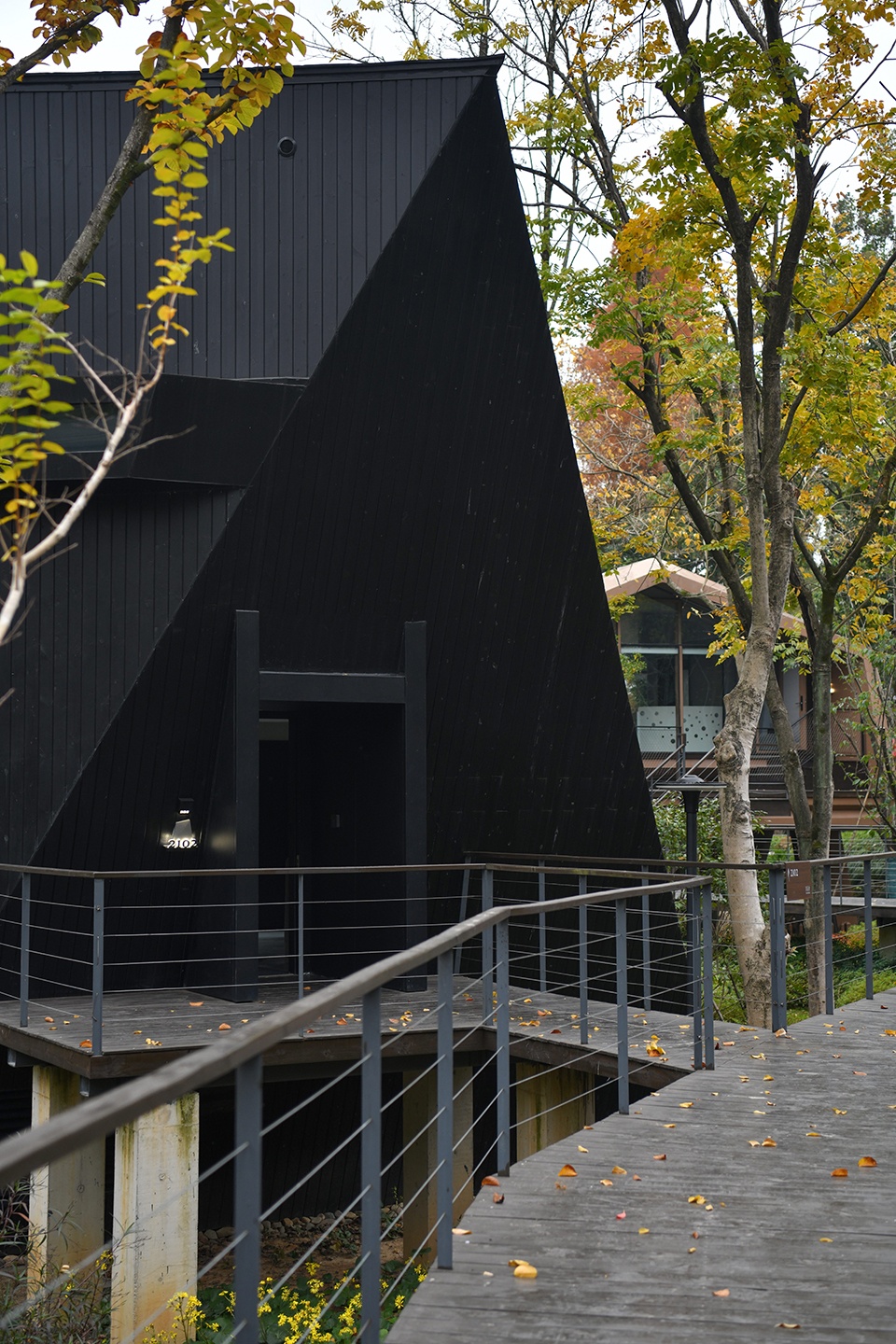
▼入口斜面上的H形框架,H-shaped frame at entrance slope
树林、栈道、黑屋:共振的感知发生器 Forest, Walkways, Black Cabins: A Resonant Perception Generator
栈道与木屋之间的视线关系成为木屋非连续性的揭示装置。木屋的相位考虑他们之间和与周边建筑间最小的对望和最大化的私密。
The visual relationship between the walkways and the cabins become a device that reveals the cabins’ non-continuity. The orientation of each cabin is calibrated to minimise mutual sightlines with neighbouring cabins and surrounding buildings while maximising privacy.
▼秋日里的潜行之屋,cabins in autumn
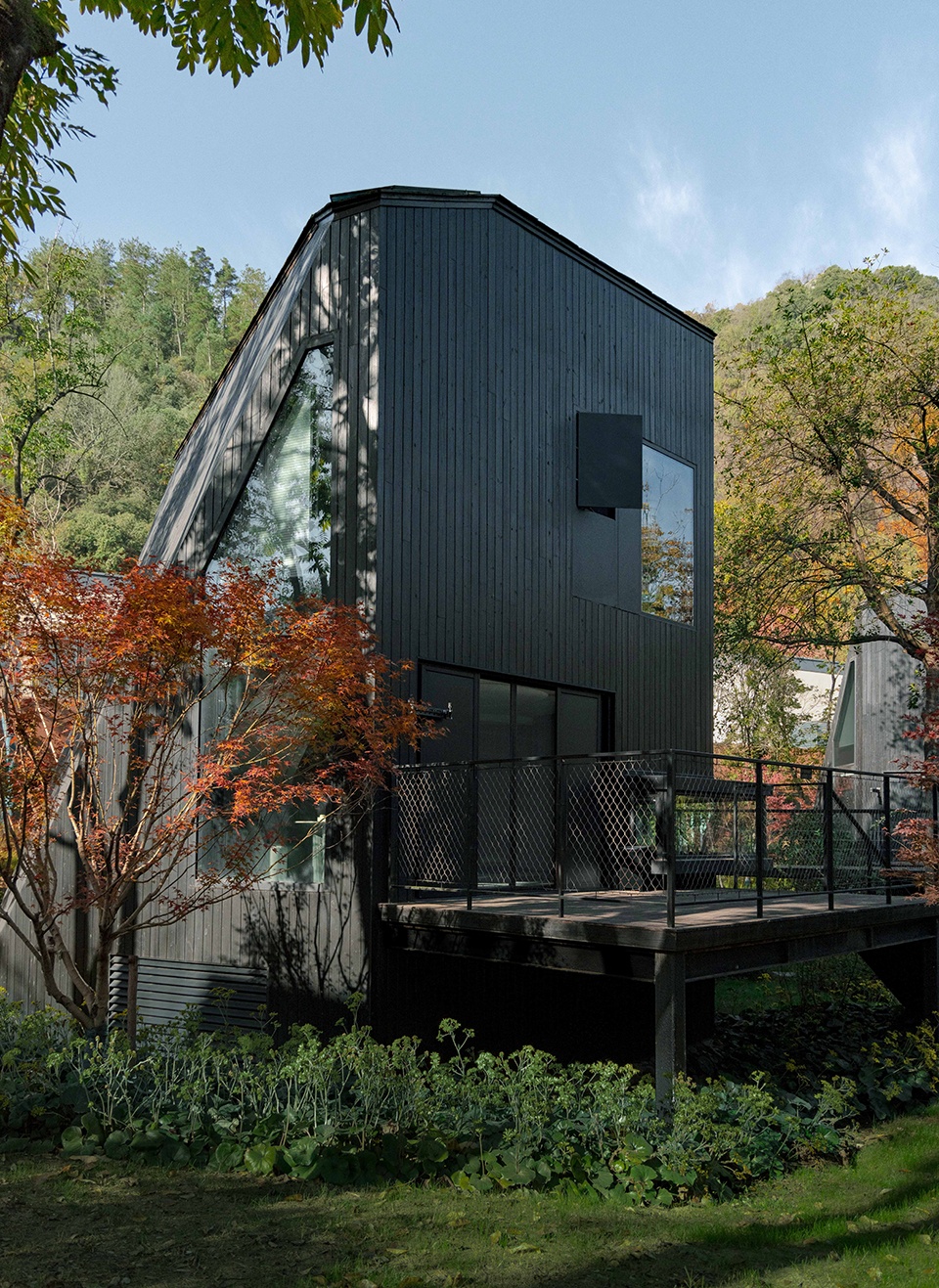
▼架高的人行栈道,elevated walkway
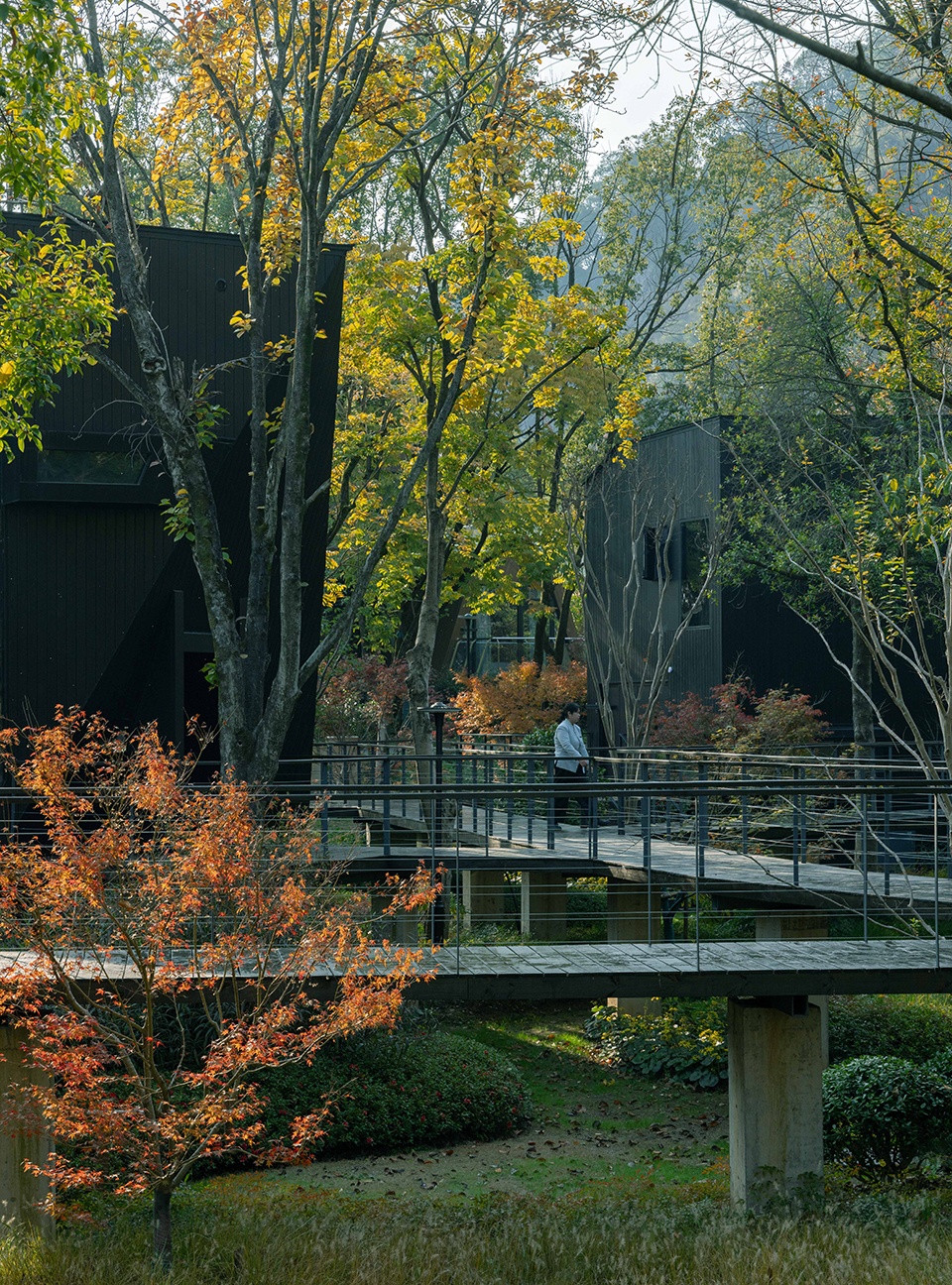
▼树林在人行栈道投下斑驳的树影,dappled shadows on walkway
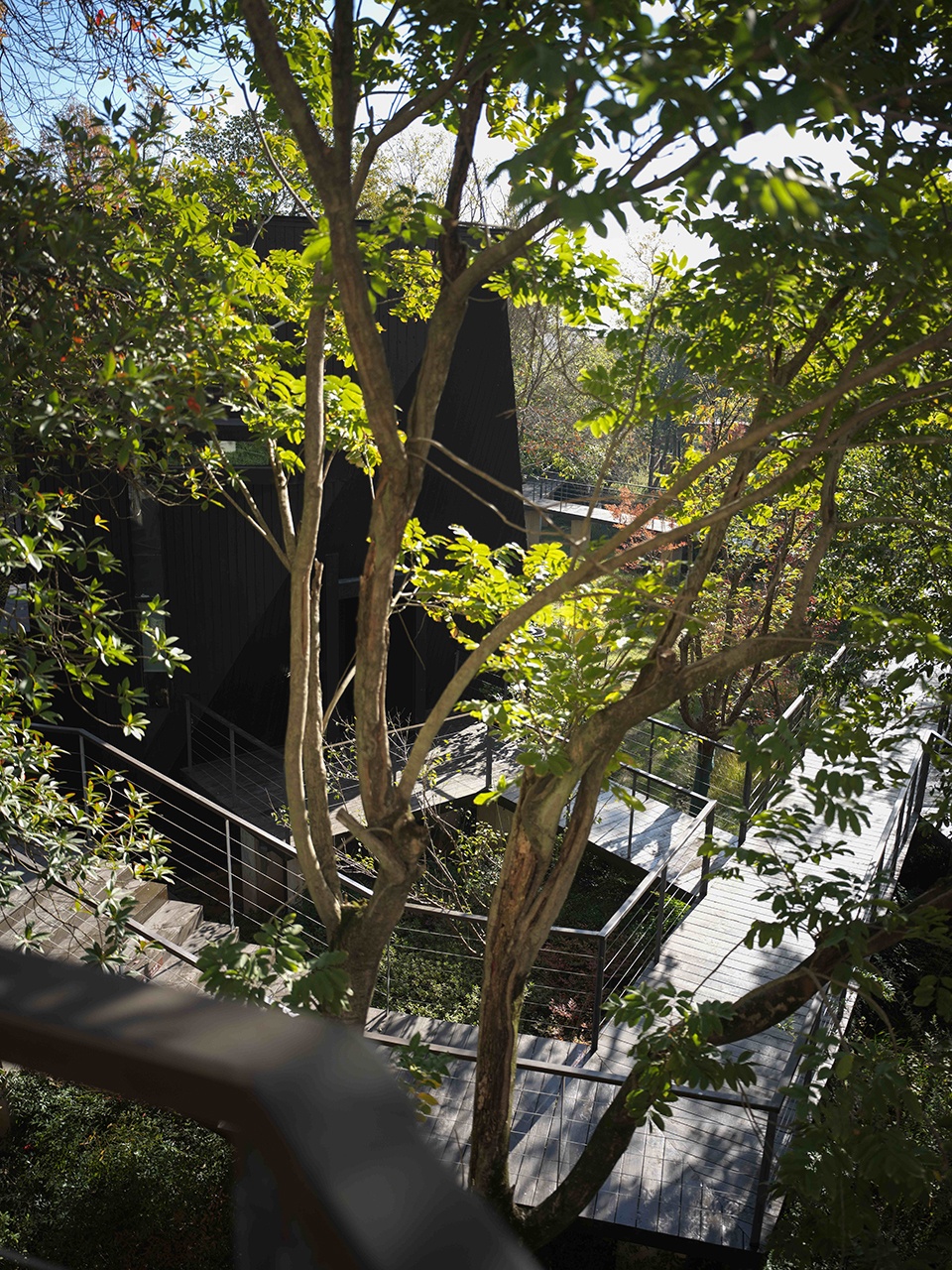
▼场地原生植被和潜行之屋之间的掩映关系消解了小屋的固定形态,
native vegetation dissolving cabin form
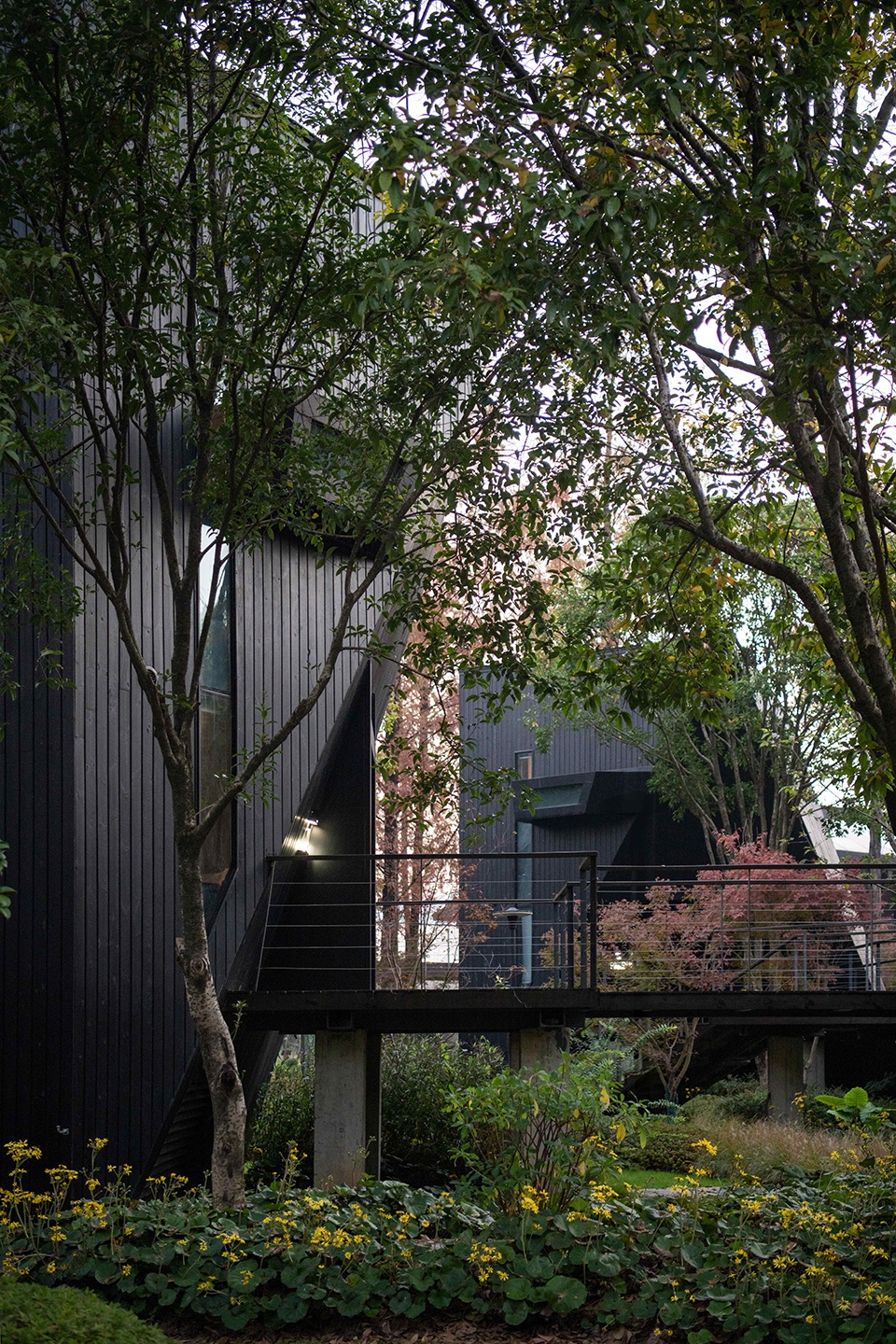
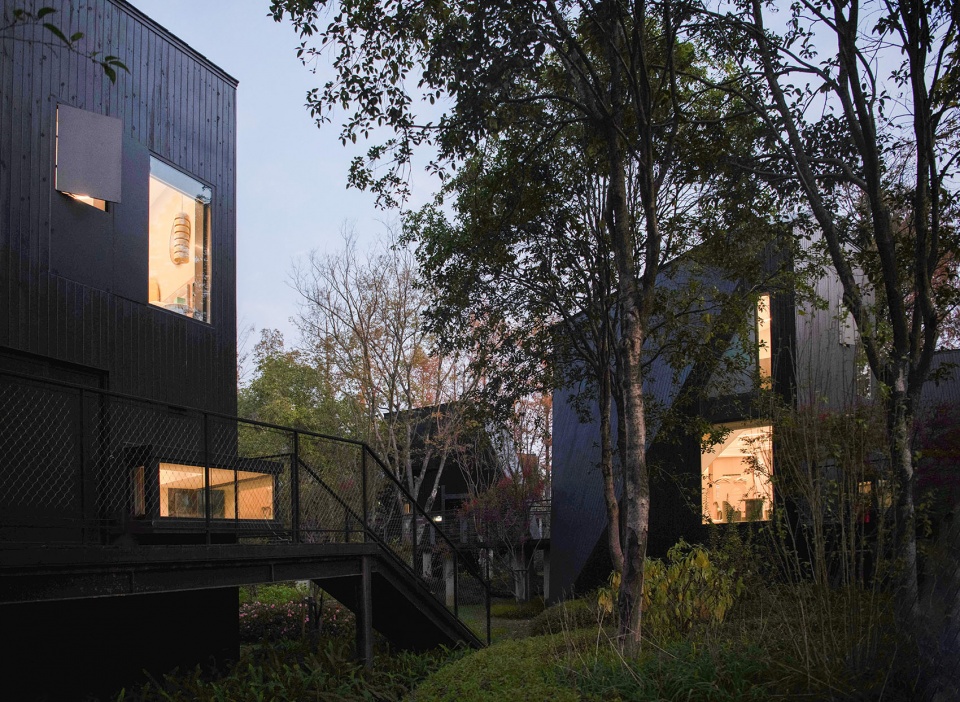
行进在栈道中,建筑仿佛瞬移至此,定格在不同表情的黑色精灵。在行走中,同时面对着隐现的不同侧面的木屋,封闭而倾斜的三角面,三角与四边形拼接的面,两个三角形对接的面,纯粹方正的四边形面,一个小小的体块在栈道引领的视角中仿佛有了无穷多的面向。
▼原生树林中的潜行之屋&人行栈道,cabins and walkways within native forest
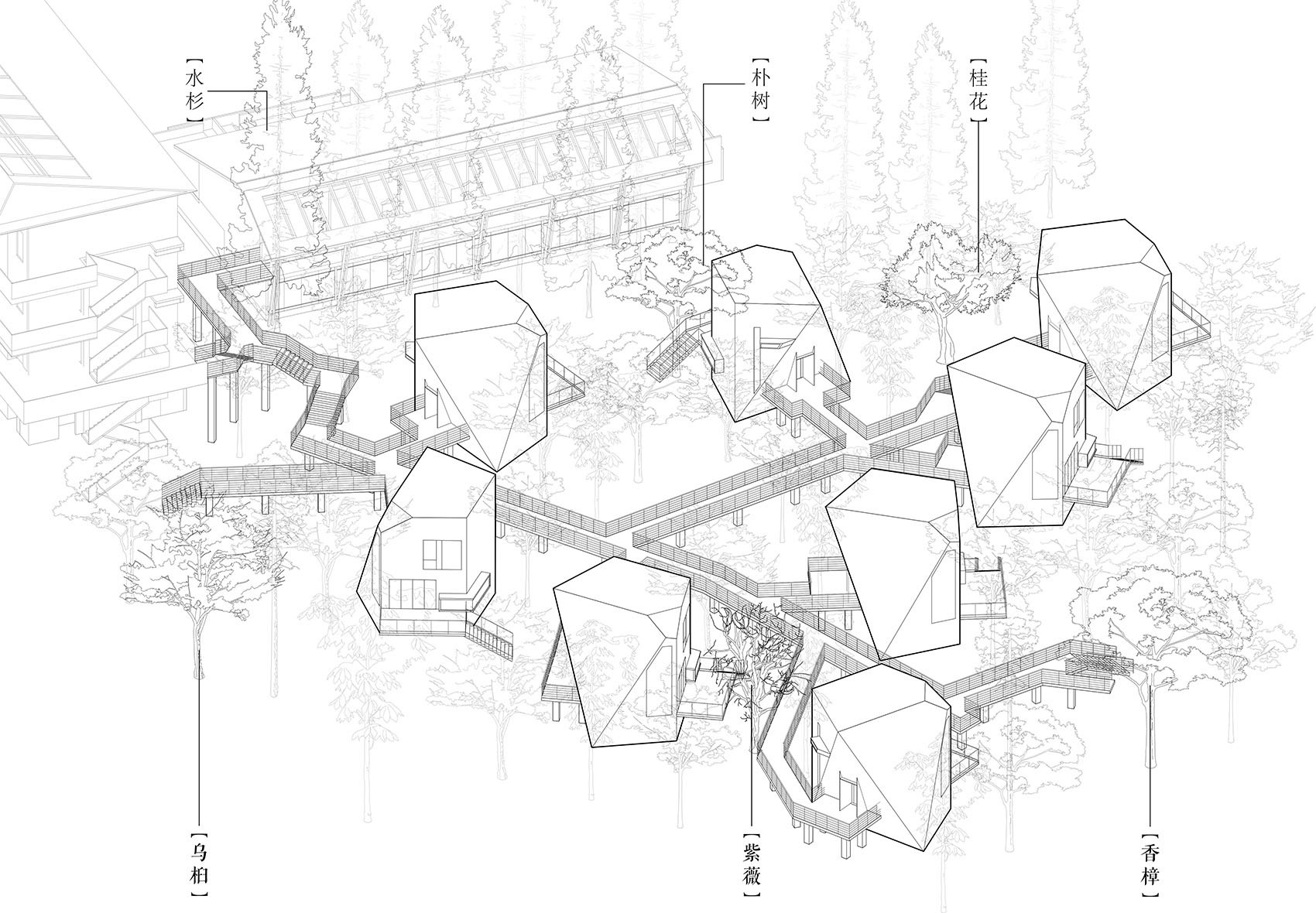
▼潜行之屋组团片区树种一览,tree species diagram of the site
Walking along the raised paths, the buildings seem to teleport into place – black spirits frozen in different expressions. As one moves, the cabins reveal themselves in fragments: a closed, sloping triangular face; a surface pieced together by triangles and quadrilaterals; two triangles meeting edge to edge; a purely orthogonal quadrilateral face. A small volume, seen from the perspective guided by the walkway, appears to possess an infinite number of facets.
▼人行栈道通向不同表情的黑色小屋,walkway leading to cabins with varied expressions
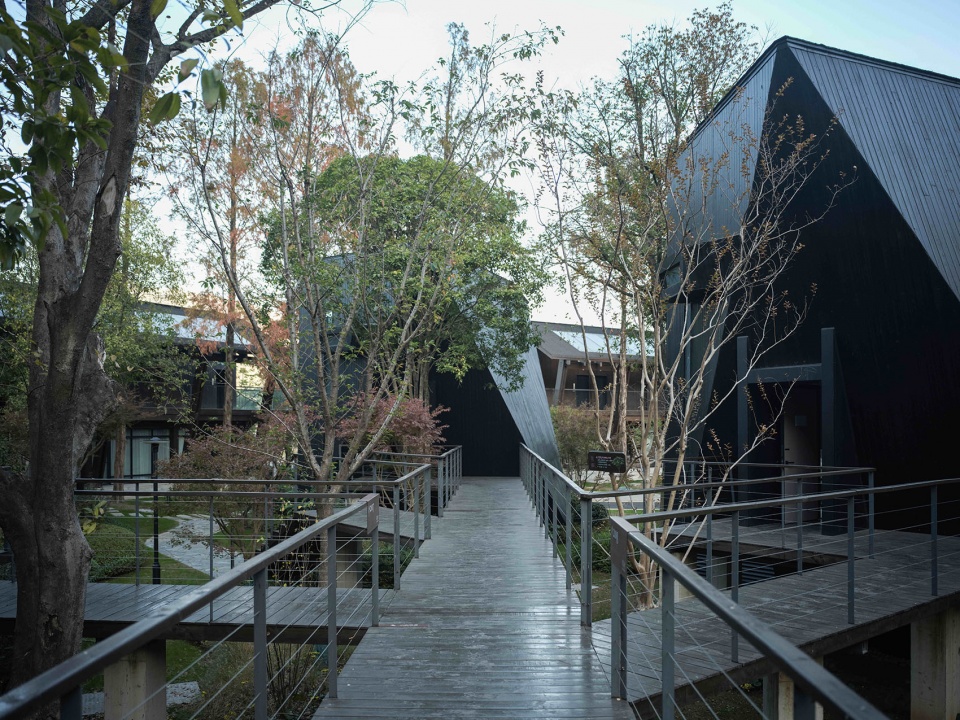
▼树林中架高的人行栈道,elevated walkway within forest
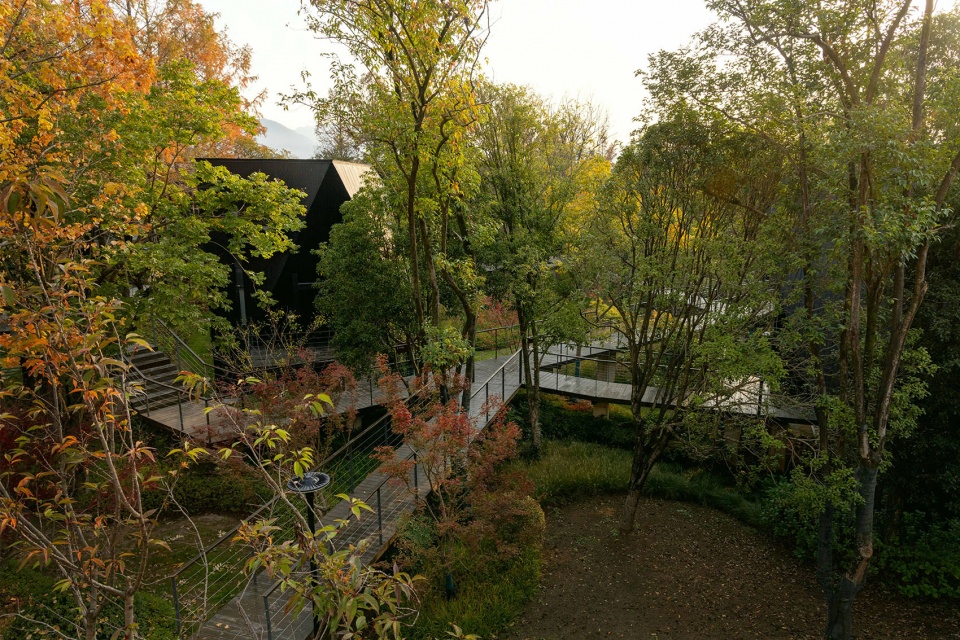
▼架高的人行栈道参考了场地原有的栈道系统,walkway referencing original system
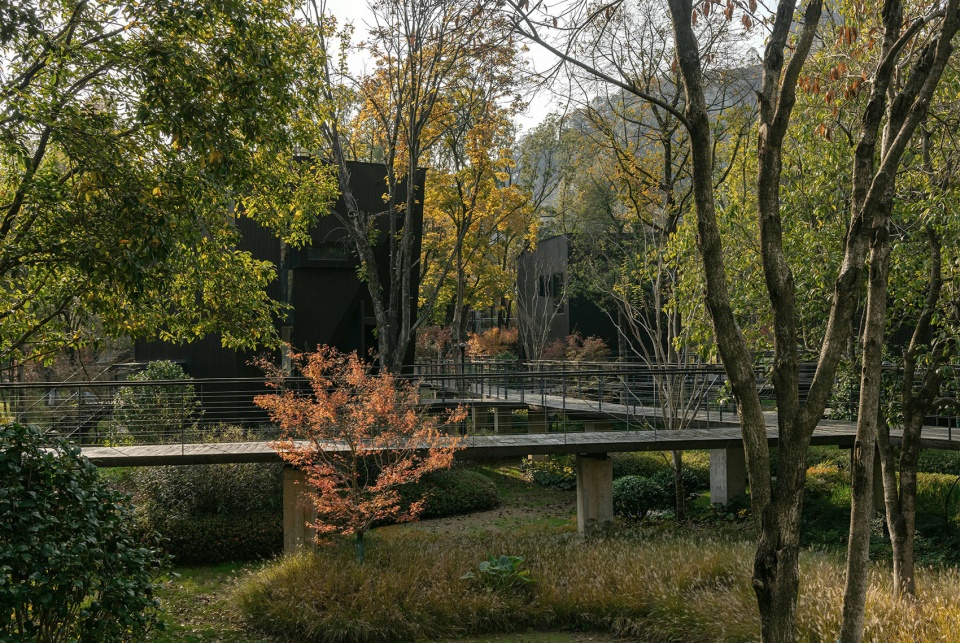
▼连接先导区各区块的立体栈道,multi-level walkway connecting zones
▼盛夏木栈道将客人引向树木掩映中的潜行之屋,summer walkway leading to hidden cabins
树林与黑色的木屋发生着更复杂的相互作用。树林是倒立的三角,它的枝干是放射状的虬劲线条,他的叶片的随季节变化的斑驳小片,它的边界是模糊的。木屋是黑色的,它的色彩沉浸在每一种自然的色调背后,它的形状被树木的自然形态遮掩着,被树影局部的加深。
The forest and the black cabins engage in an even more complex interplay. The forest is an inverted triangle – its branches radiate as vigorous, twisting lines; its leaves form dappled, shifting patches with the seasons; its boundaries are blurred. The black cabins, in turn, are immersed behind every natural tone. Their shapes are partially obscured by the organic forms of the trees, deepened locally by shifting shadows.
▼雨后的人行栈道,walkway after rain
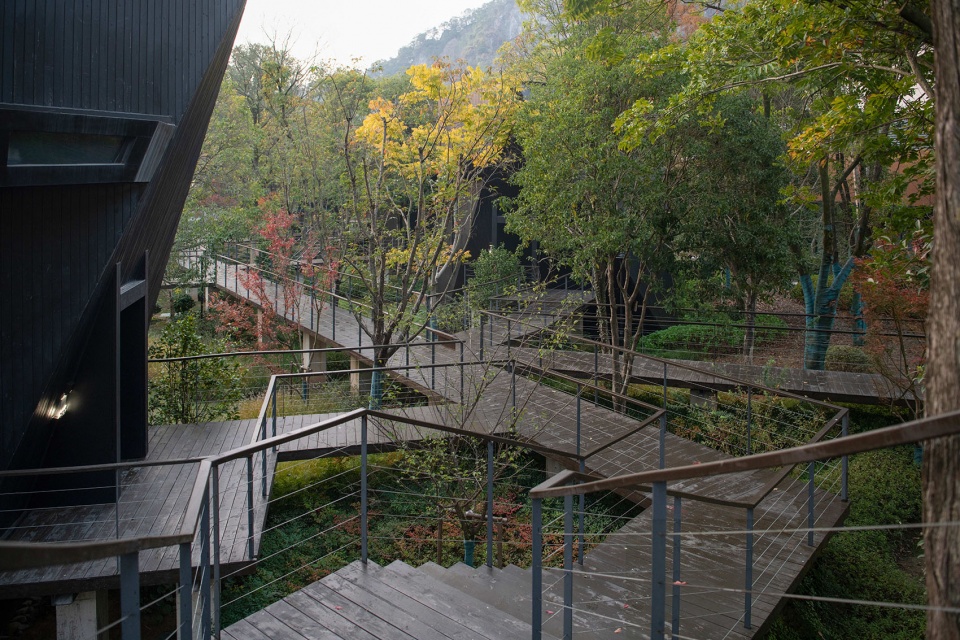
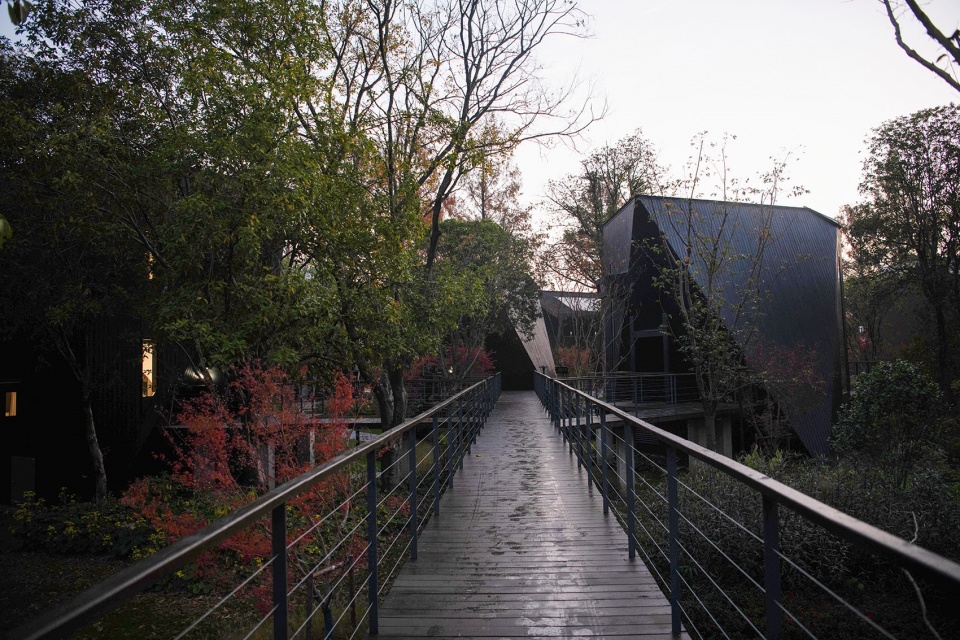
▼雨后的潜行之屋,cabins after rain
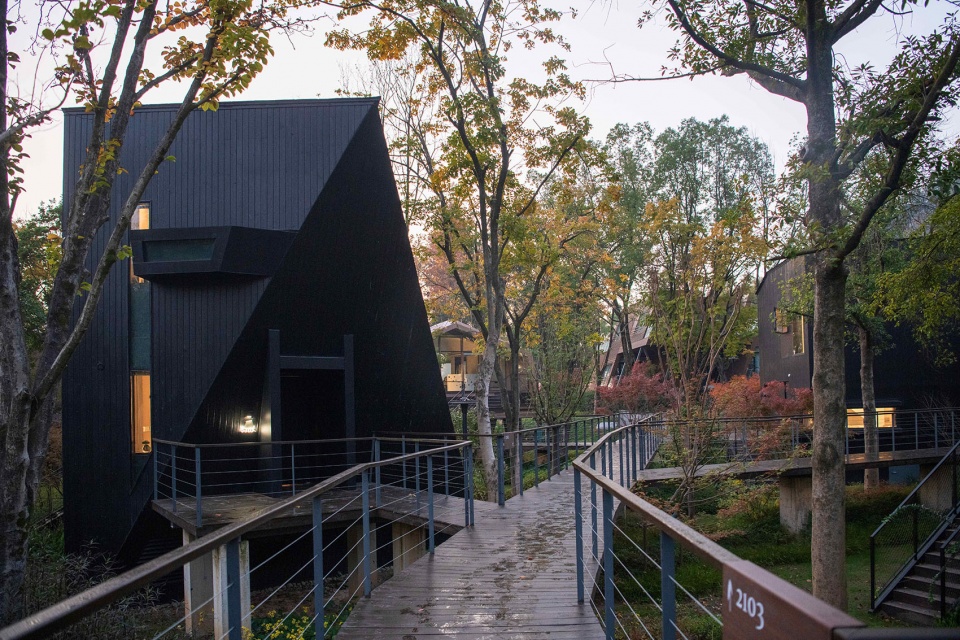
栈道造成的游历过程,木屋与树林的影影绰绰,在此时,交织成一个生态的、激发感知的居住系统。
The journey orchestrated by the walkways, the interwoven silhouettes of cabins and forest – all of this coalesces into an ecological, perception-awakening dwelling system.
▼潜行之屋的表情各异的立面并置在一起,juxtaposition of varied façades
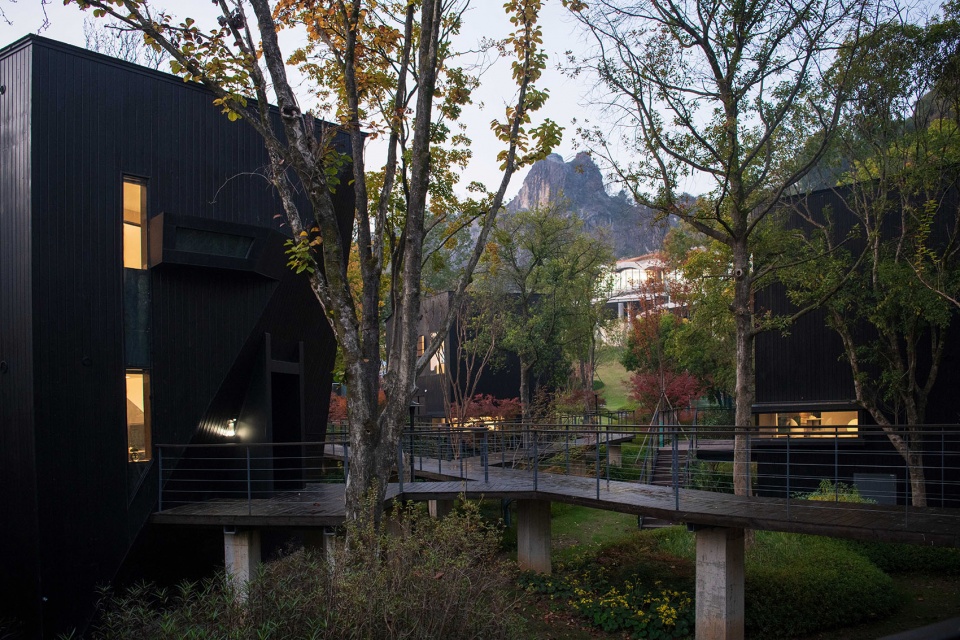
▼暮色中的潜行之屋,cabins at dusk
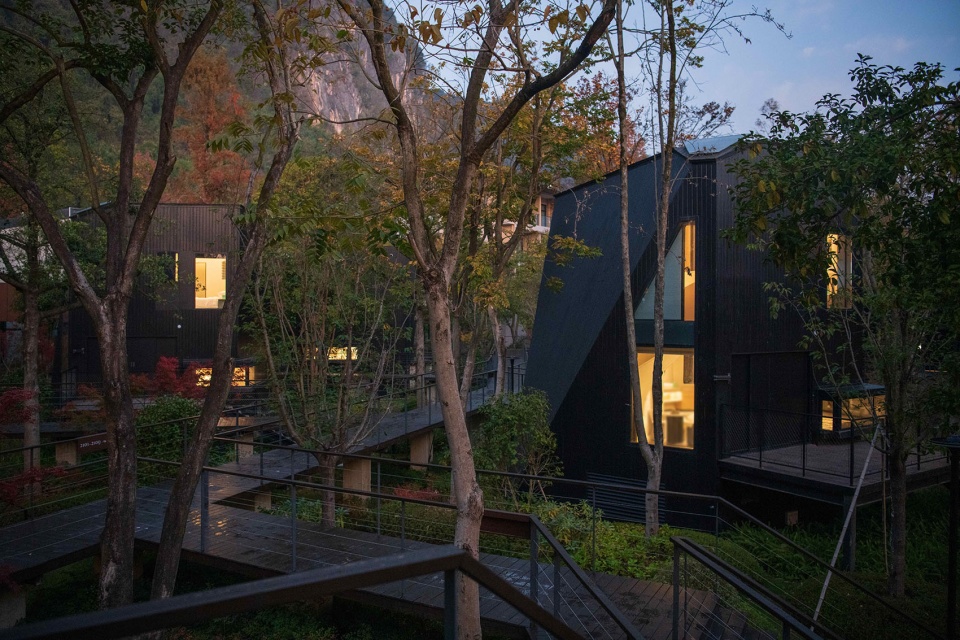
▼潜行之屋总平面图,site plan
▼潜行之屋平面,plan
▼潜行之屋立面,elevation
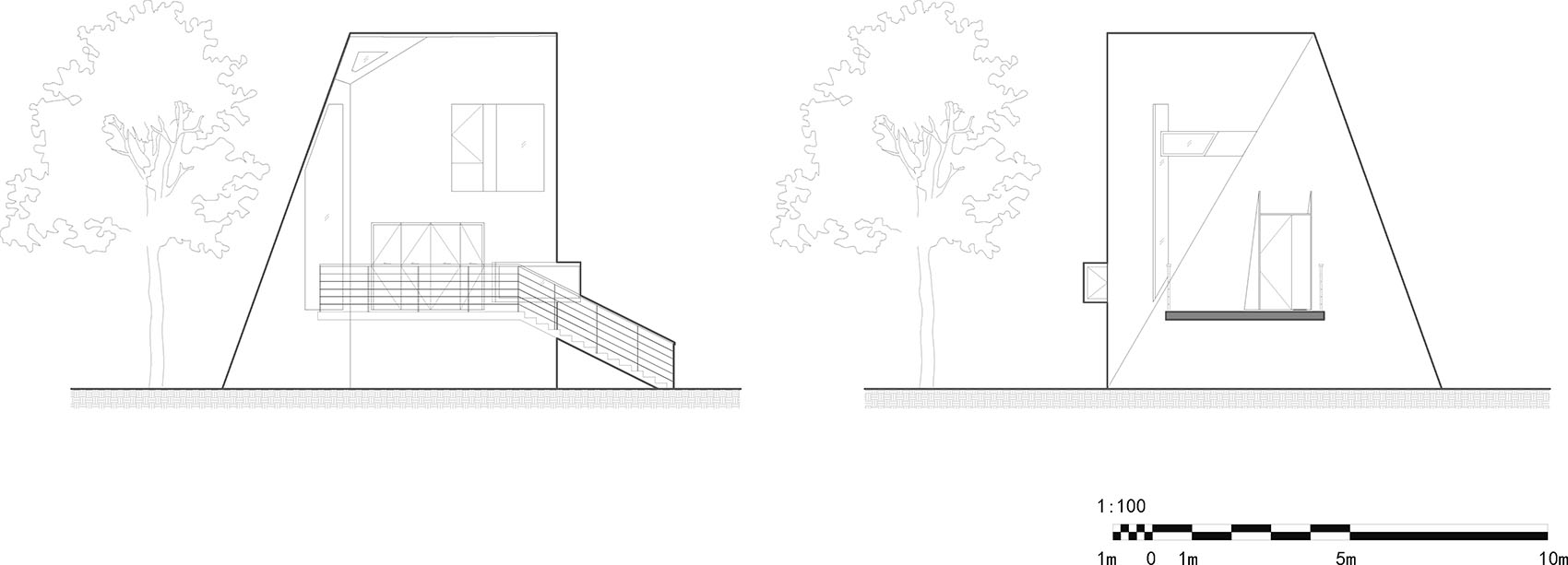
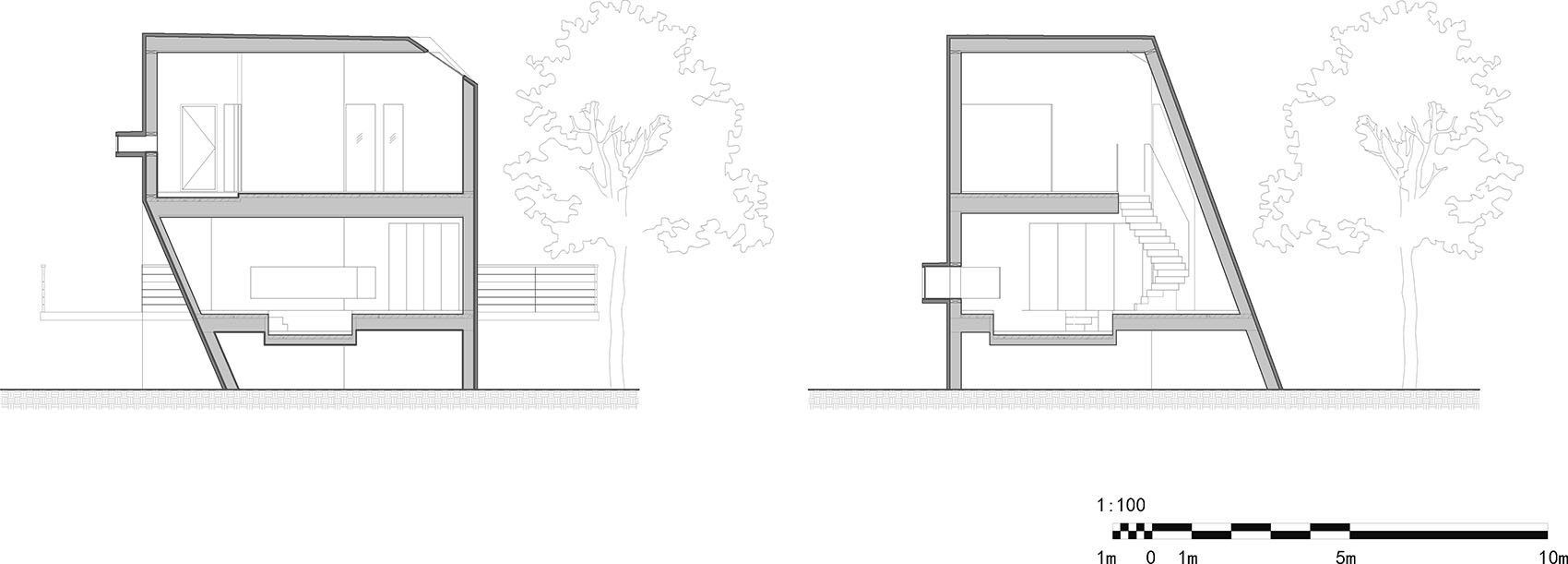
▼潜行之屋剖面,section
项目信息: