Croco Charlemagne住宅,卢森堡 / 2001
在卢森堡市一条安静的街道上,一座建于1957年的转角住宅,曾被改造为儿童日托中心,如今呈现出支离破碎的状态,原有的居住气息几乎被剥离殆尽。厚重的防火门将空间割裂,花园被混凝土与橡胶安全铺装封闭。在规范之名下,这座战后住宅被“无菌化”为一个机构式的“照护”场所,日常生活的亲密性被彻底抹去。
On a quiet street in Luxembourg City, a corner house from 1957, once converted into a children’s day care centre, stood fragmented and stripped of its domestic soul. The rooms were carved up by heavy fire doors, the garden sealed under concrete and rubber safety tiles. In the name of regulation, the post-war home had been sterilised into a place of institutional “care”, its everyday intimacy erased.
▼住宅概览,overview of the house
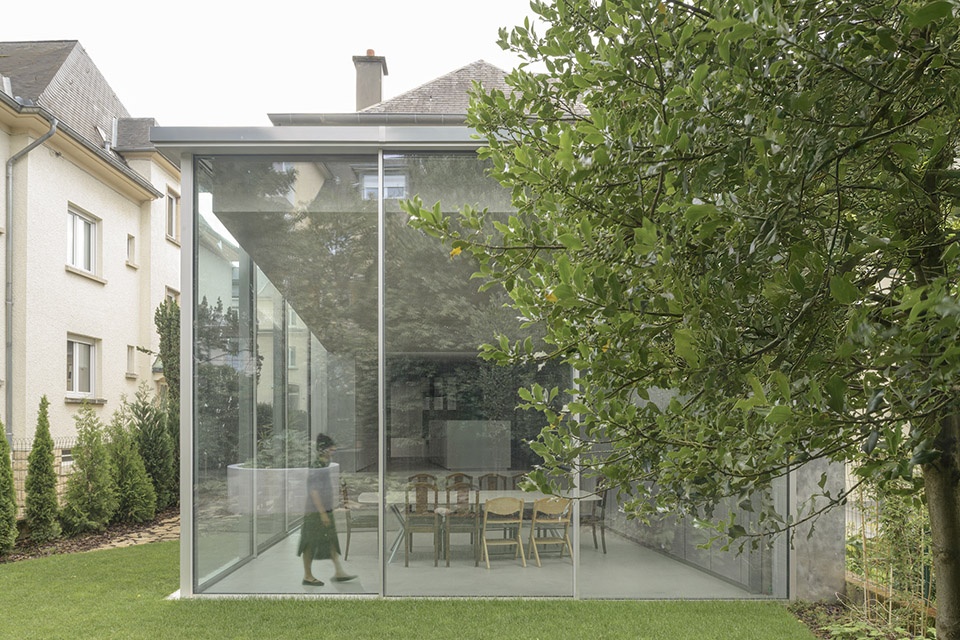
▼住宅概览,overview of the house
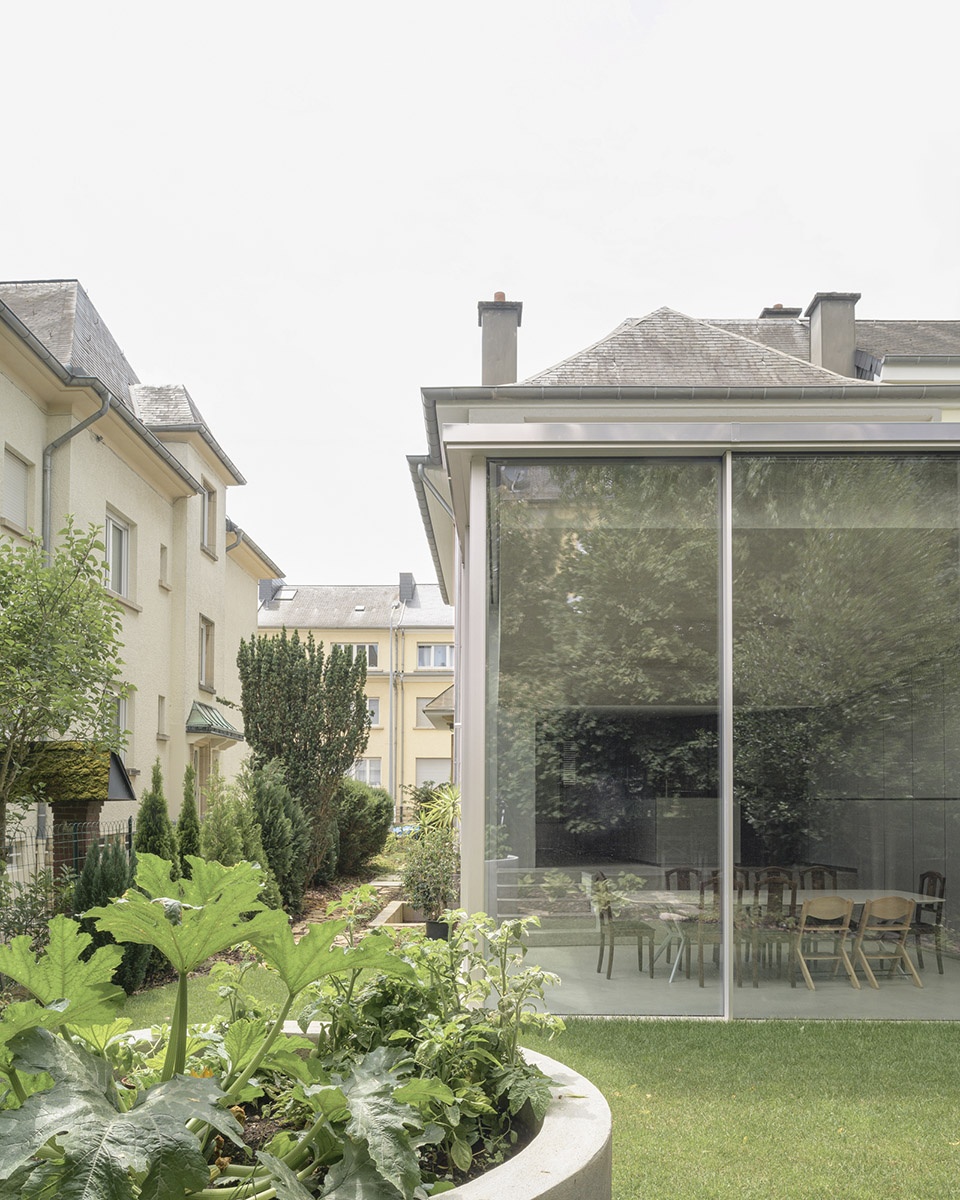
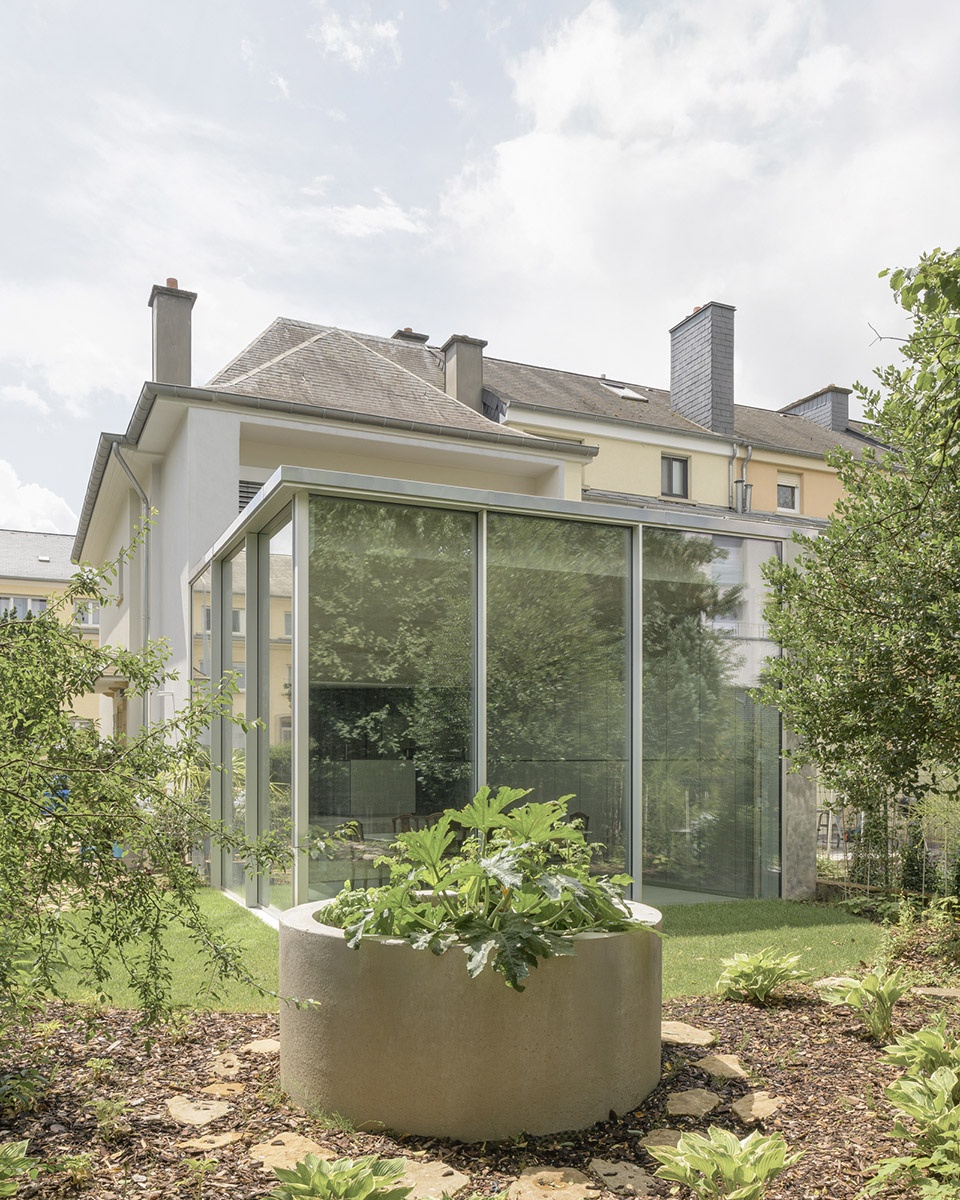
业主是一位年轻女性、她的孩子,以及她的母亲——一位艺术家——他们希望重新找回这座房子的灵魂。他们的愿景是:将祖母的居所转化为一种能够重新凝聚分散于不同国家的家庭成员的空间装置,同时让室内不仅重新连接花园,也重新联通街区内部那片破碎却潜藏可能的景观腹地。
The clients, a young woman, her children, and her mother, an artist, sought to reclaim the house. Their ambition: to transform the grandmother’s home into a spatial device capable of reuniting a family scattered across countries, while reconnecting the interior not only to the garden but also to the heart of the neighbourhood block; a large, fractured landscape waiting to be reinterpreted.
▼让室内重新连接花园,reconnecting the interior to the garden
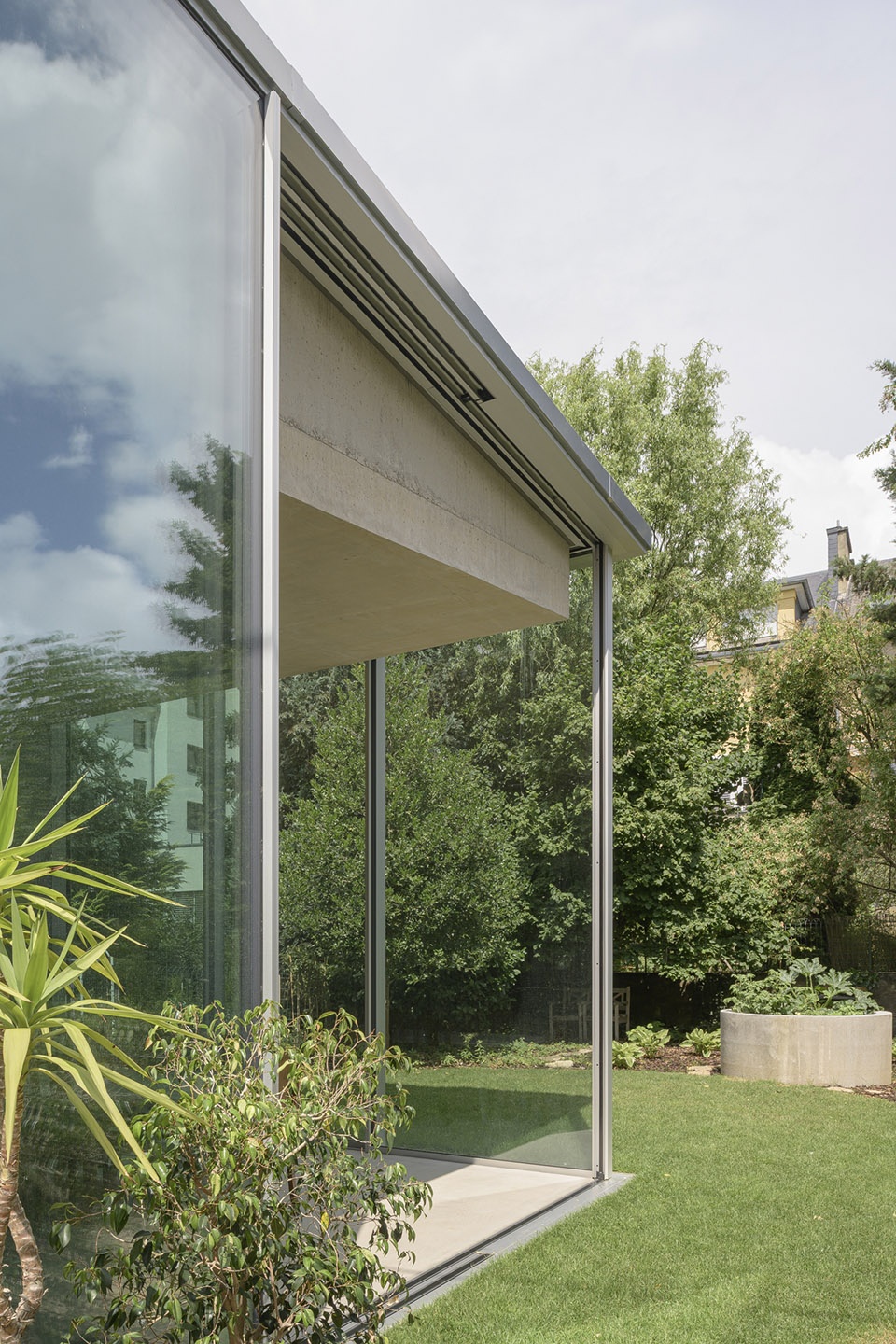
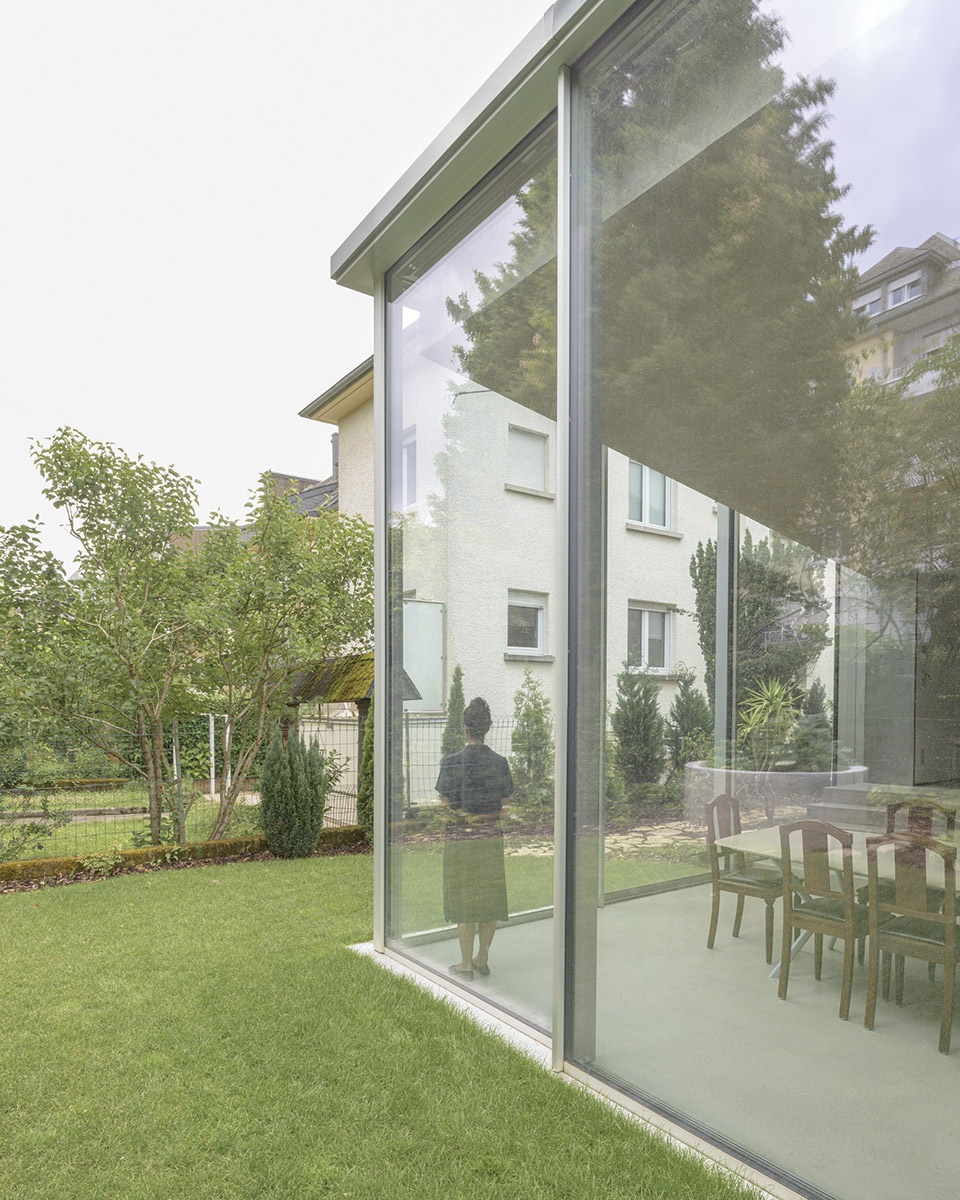
建筑策略围绕“修复”与“重塑”展开。面向街道的一侧采取克制而修复性的介入,对立面与室内空间进行温和更新;而面向花园的一侧,则展开了更为激进的改造。
The architectural strategy focused on repair and reinvention. Towards the street, the approach was restorative: facades and internal rooms were gently renovated. Towards the garden, however, a more radical intervention unfolded.
▼面向花园的一侧,towards the garden
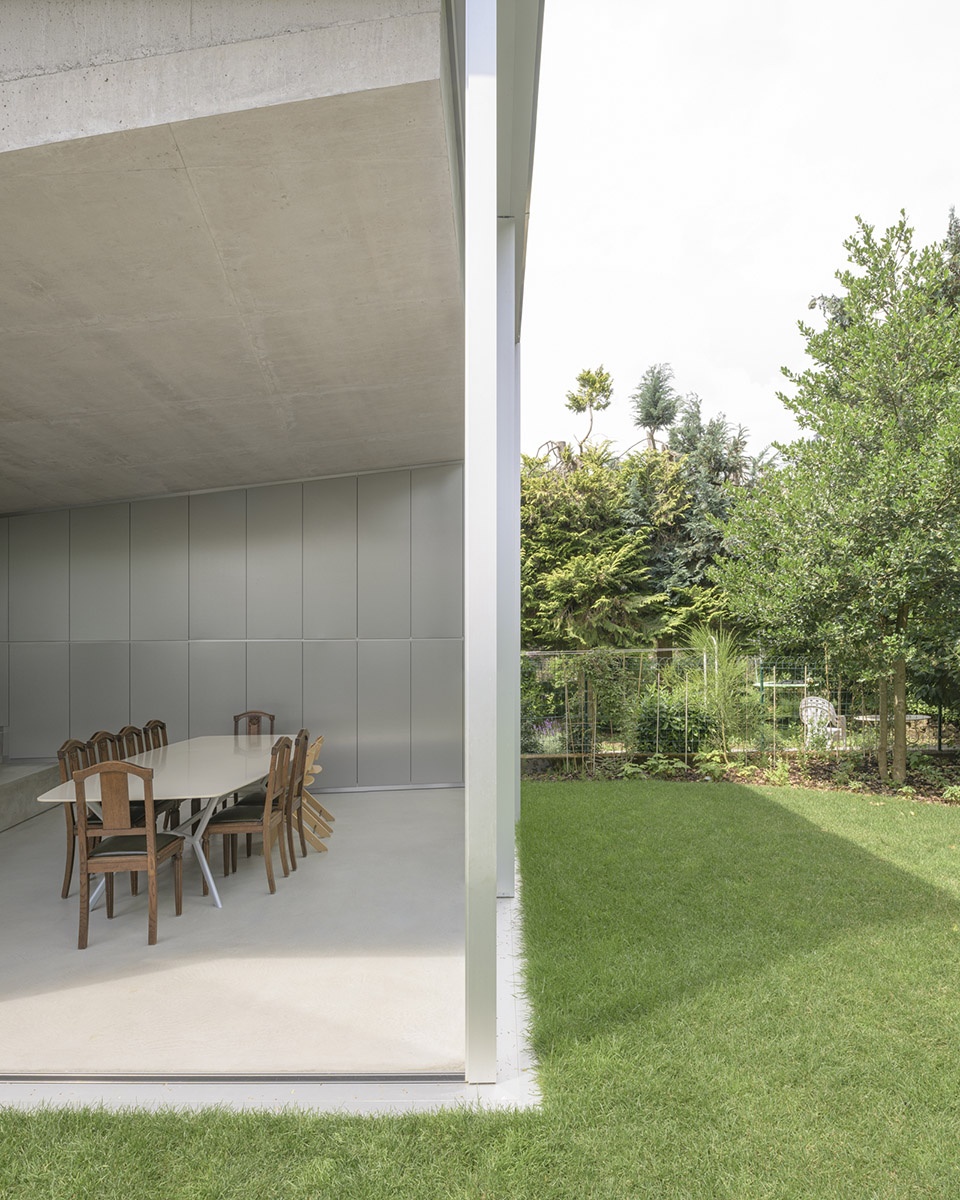
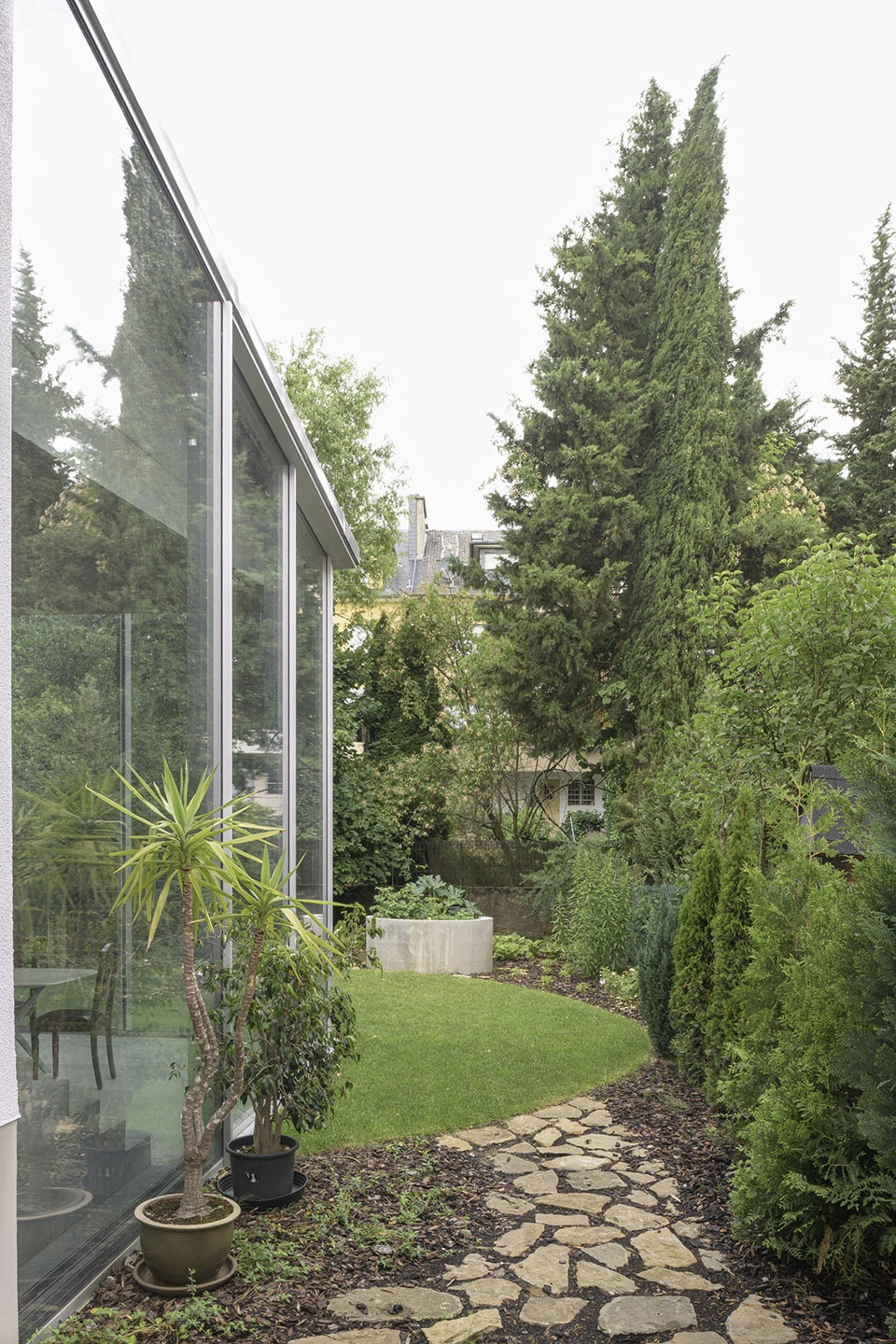
原有的露台与冬季花园被拆除,连同后侧部分楼板一并移除。在其位置上,嵌入了一个简洁的立方体体量。其内部地面被组织为三个逐级下降的层次:从客厅开始,经由厨房,最终抵达位于花园标高的餐厅与第二起居空间。
▼轴测图,axonometric
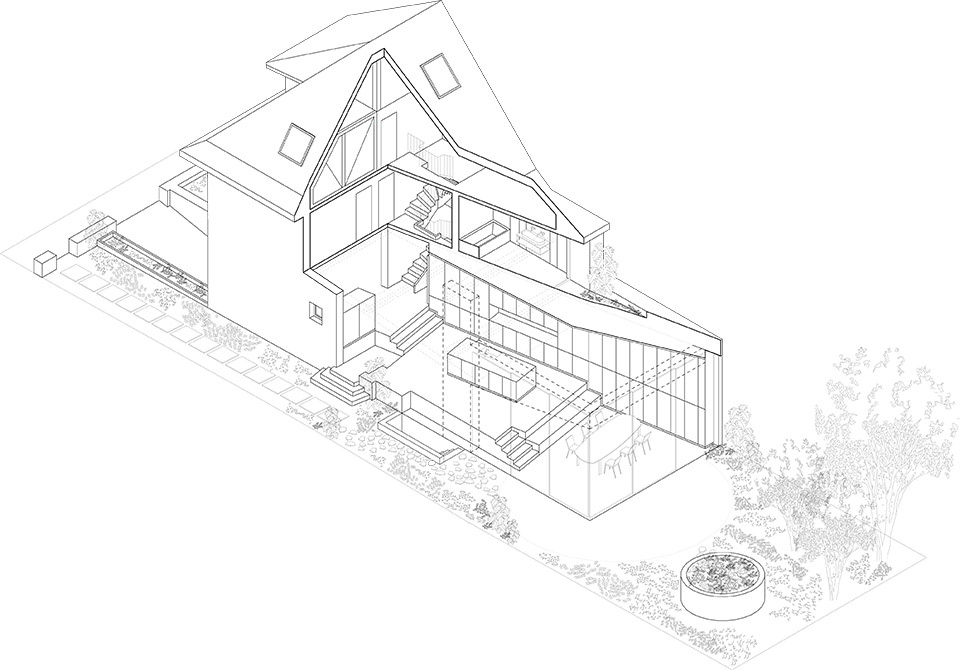
The modest terrace and winter garden were removed, along with a portion of the rear floor slab. In their place, a simple cubic volume was inserted. Inside, the new floor was articulated as a sequence of three stepped levels; descending from the living room, through the kitchen, and down to a dining and second living area on the garden level.
▼逐级下降的层次,a sequence of three stepped levels
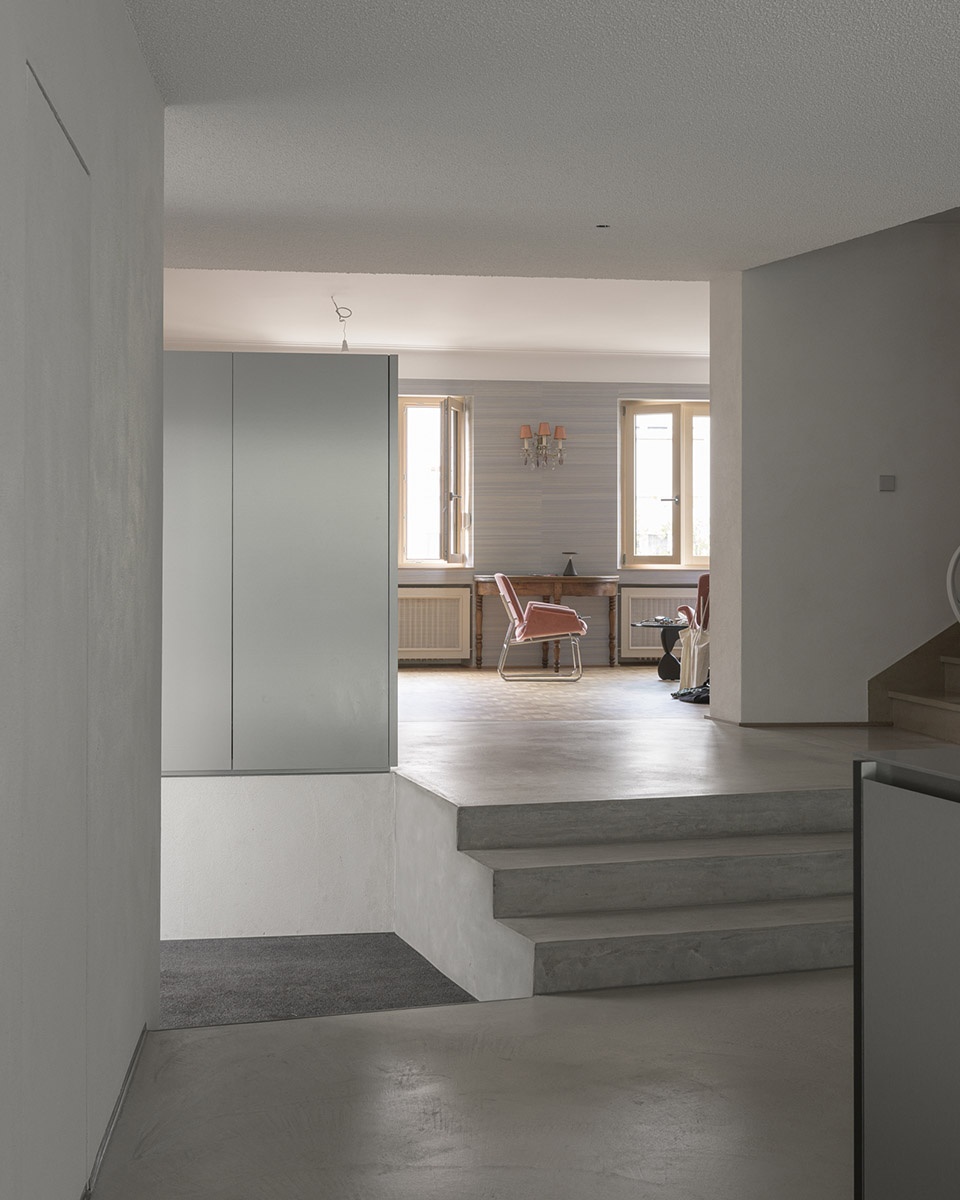
▼逐级下降的层次,a sequence of three stepped levels
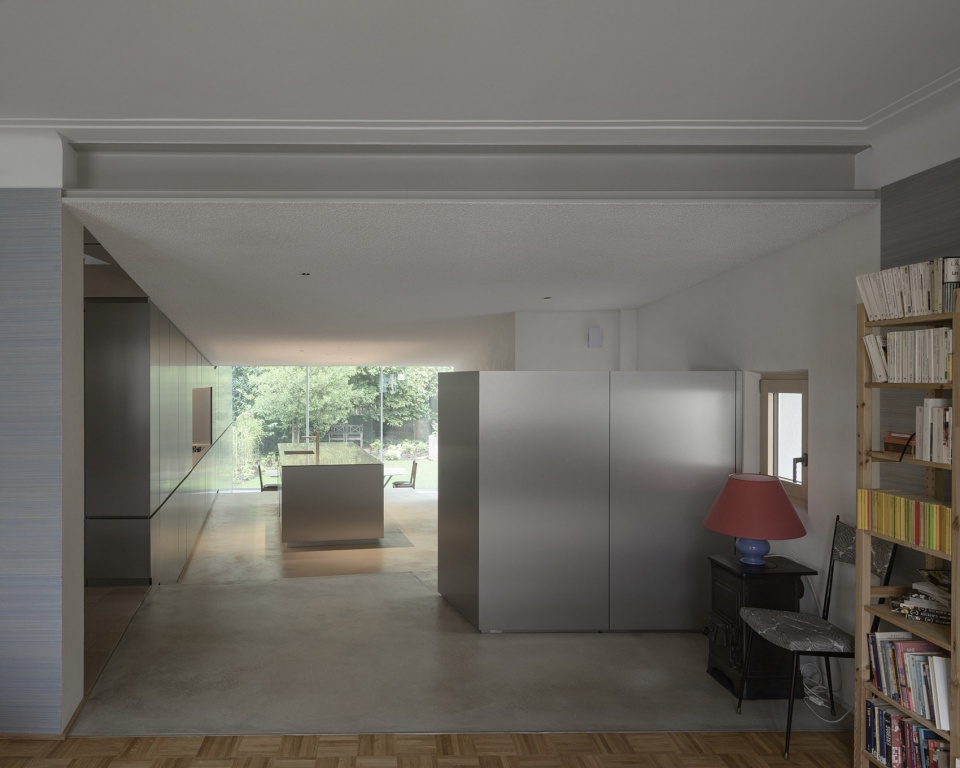
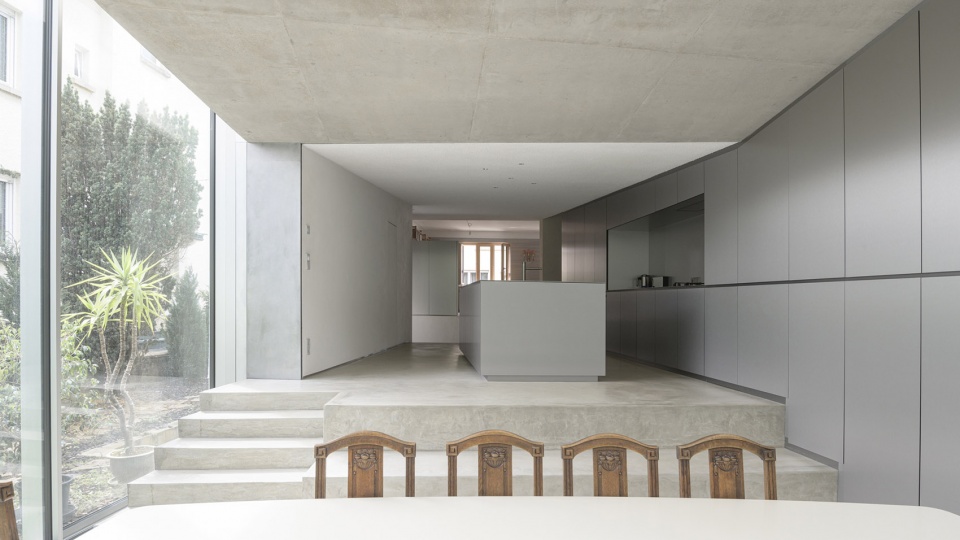
▼逐级下降的台阶连接厨房与餐厅,
a sequence of three stepped levels connects the kitchen and dining area
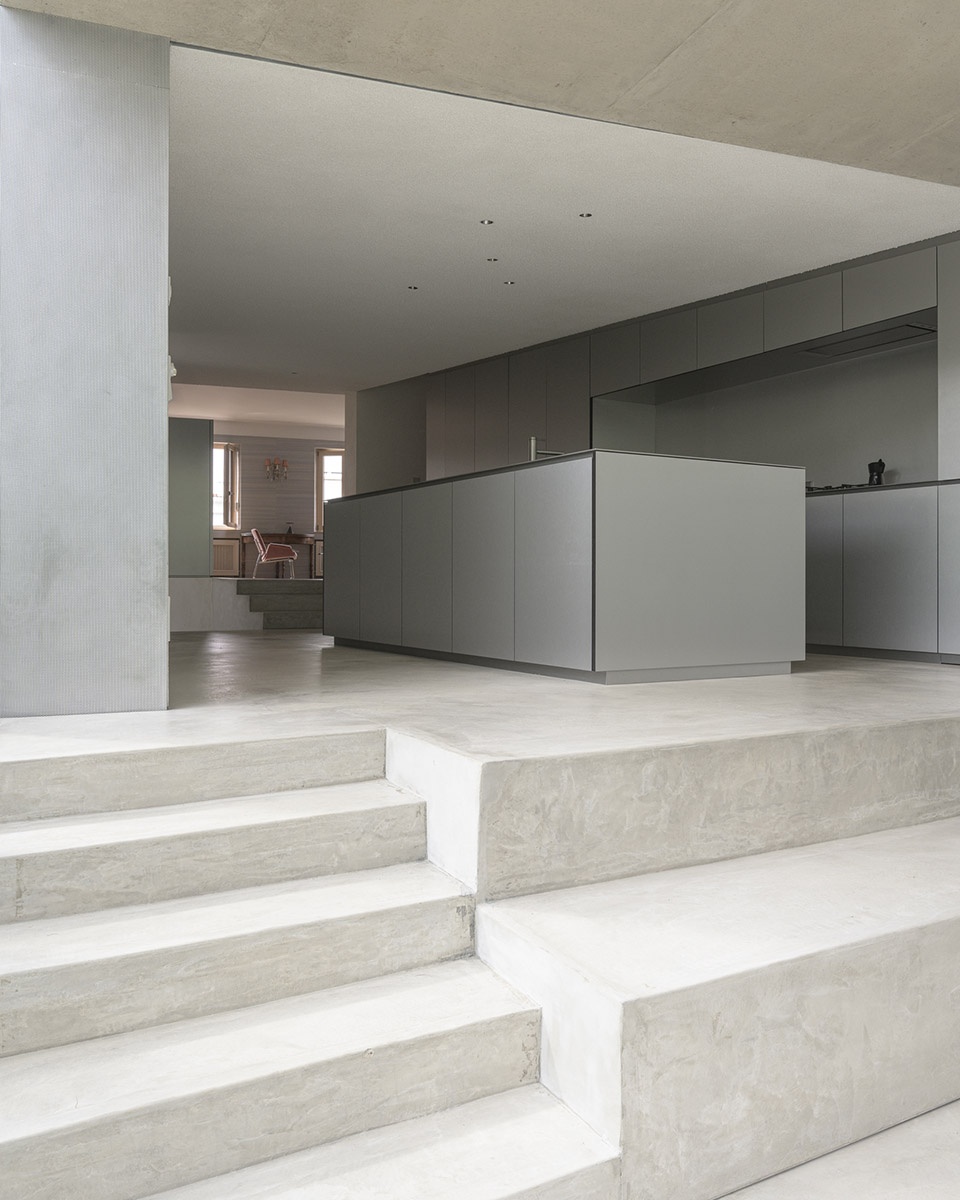
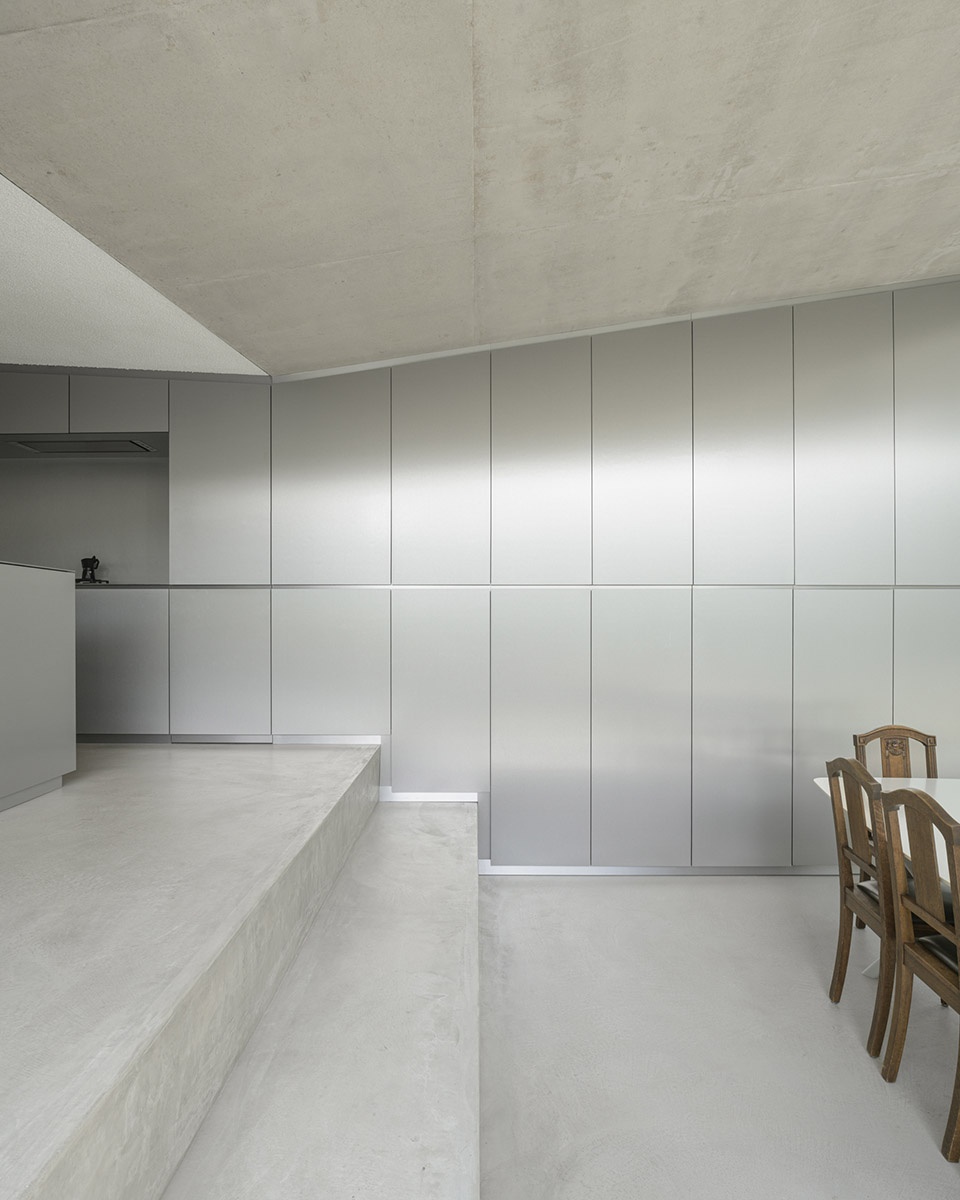
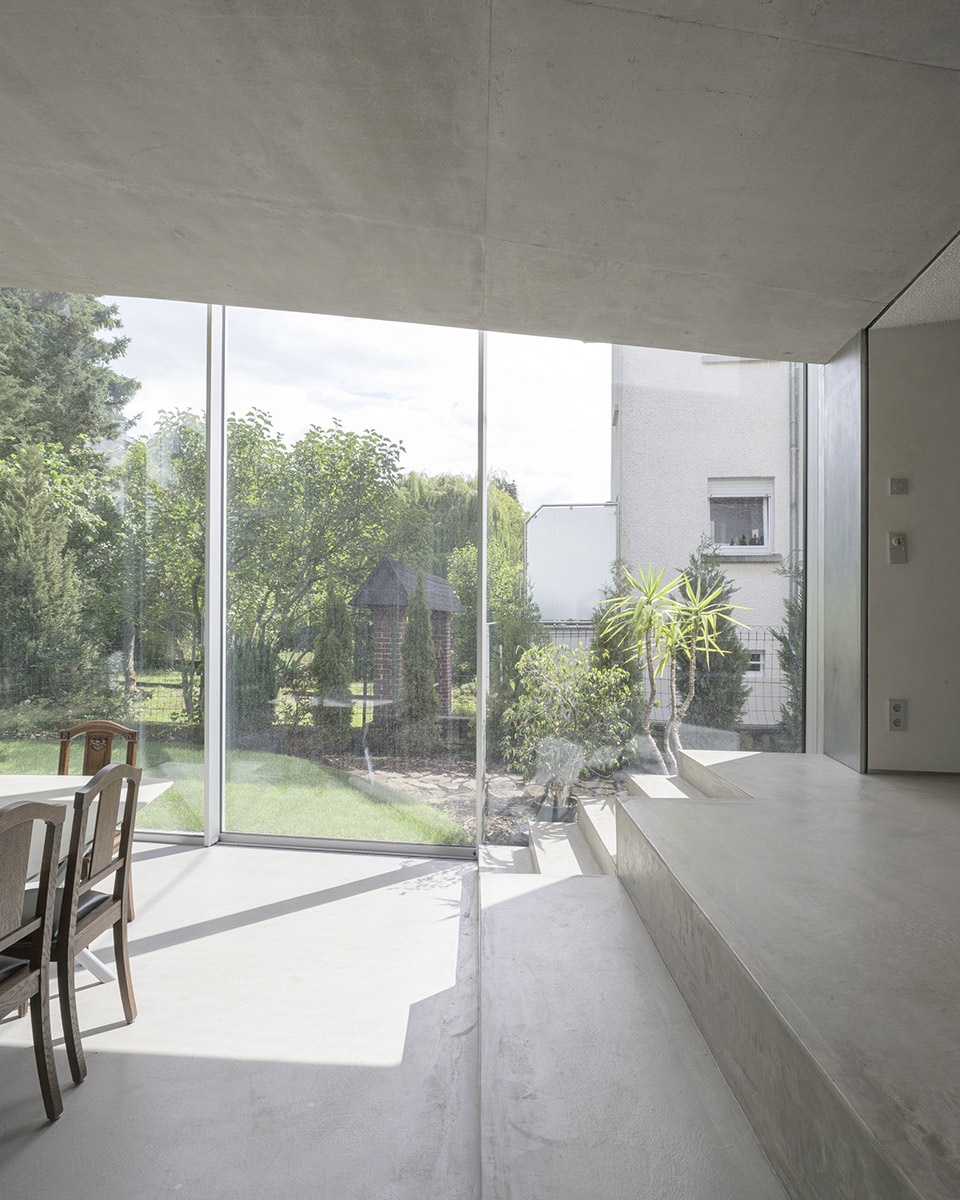
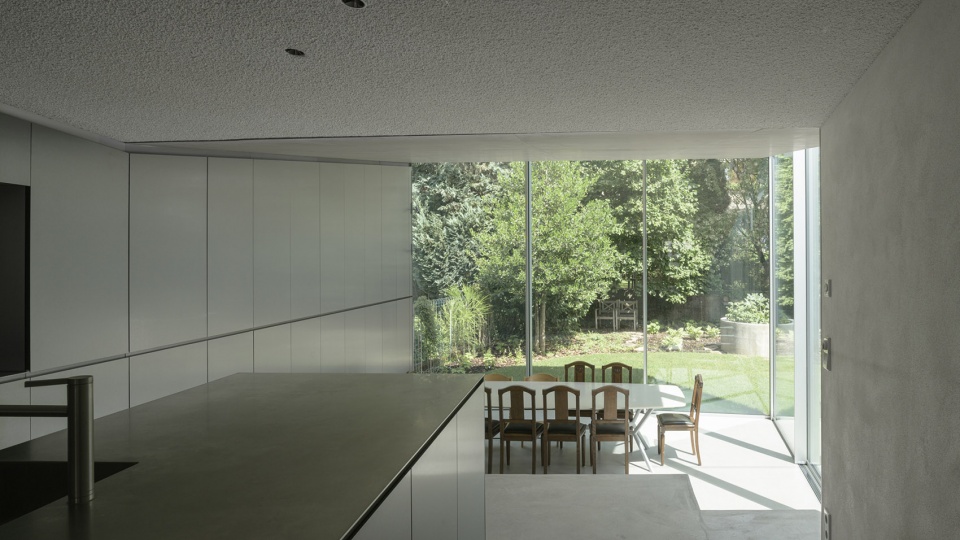
▼厨房与餐厅, the kitchen and dining area
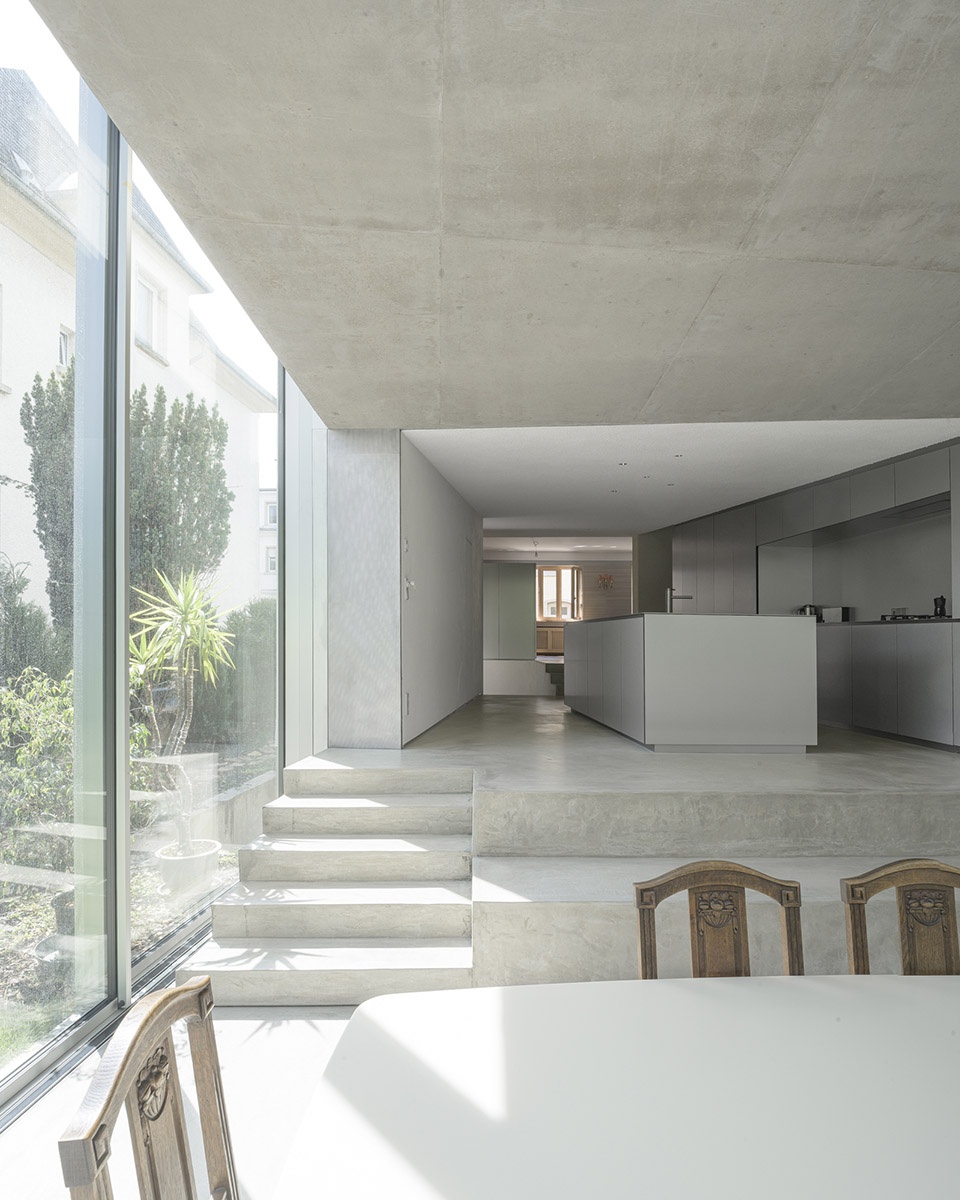
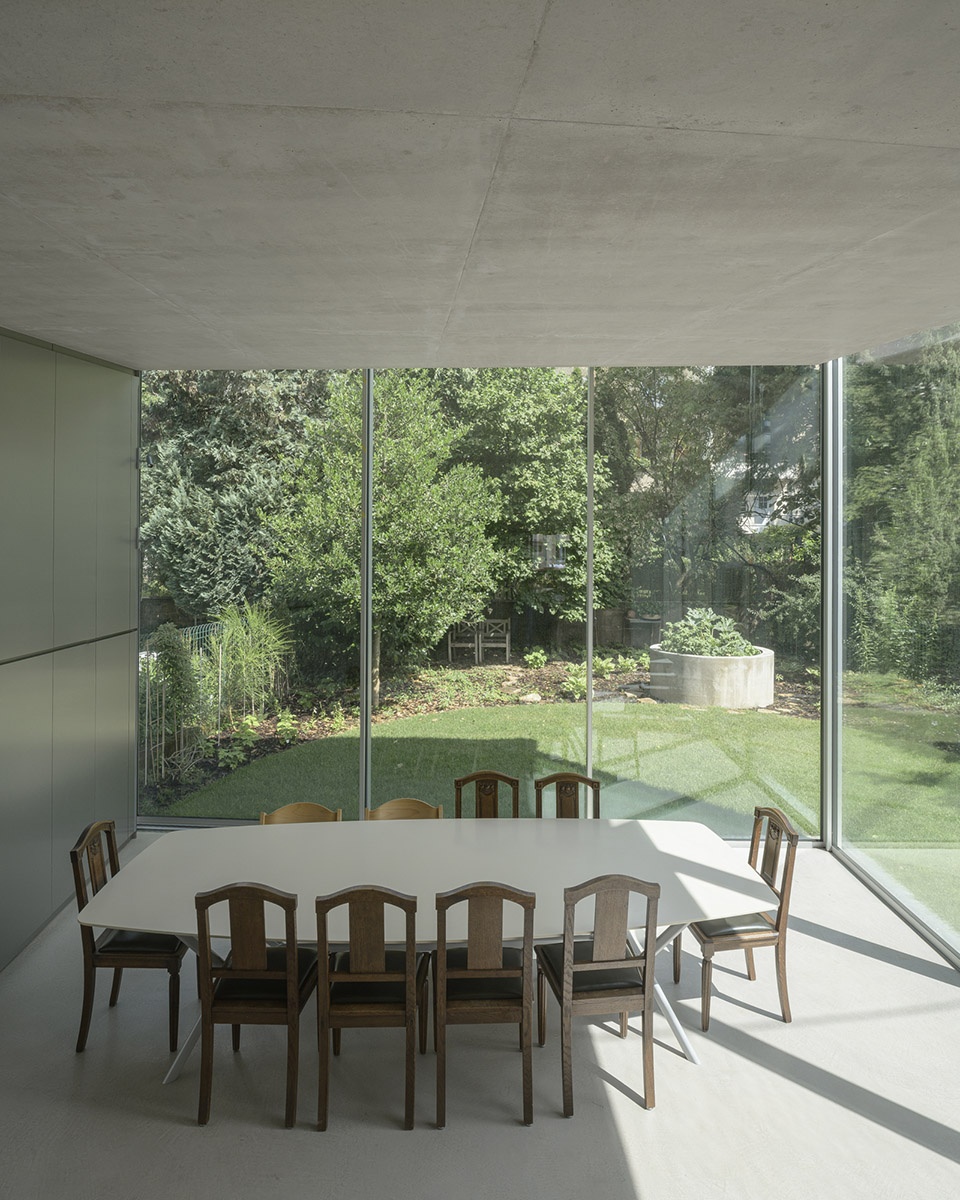
▼以细致而克制的方式整合了厨房设施,
the plan integrates kitchen fittings with subtle precision
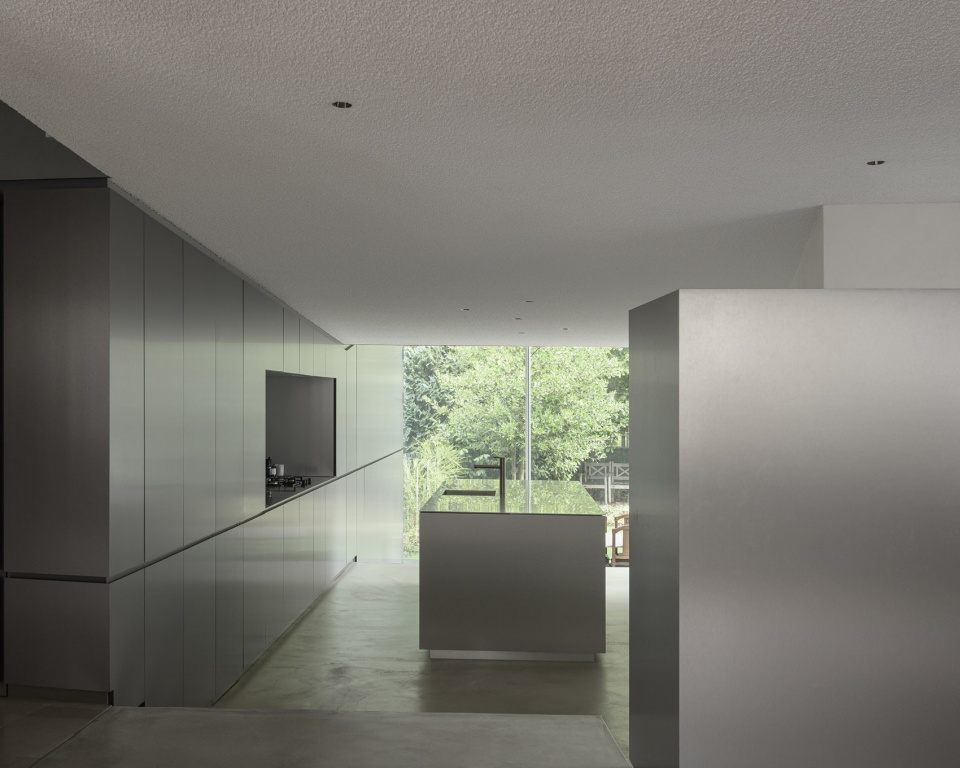
▼以细致而克制的方式整合了厨房设施,
the plan integrates kitchen fittings with subtle precision
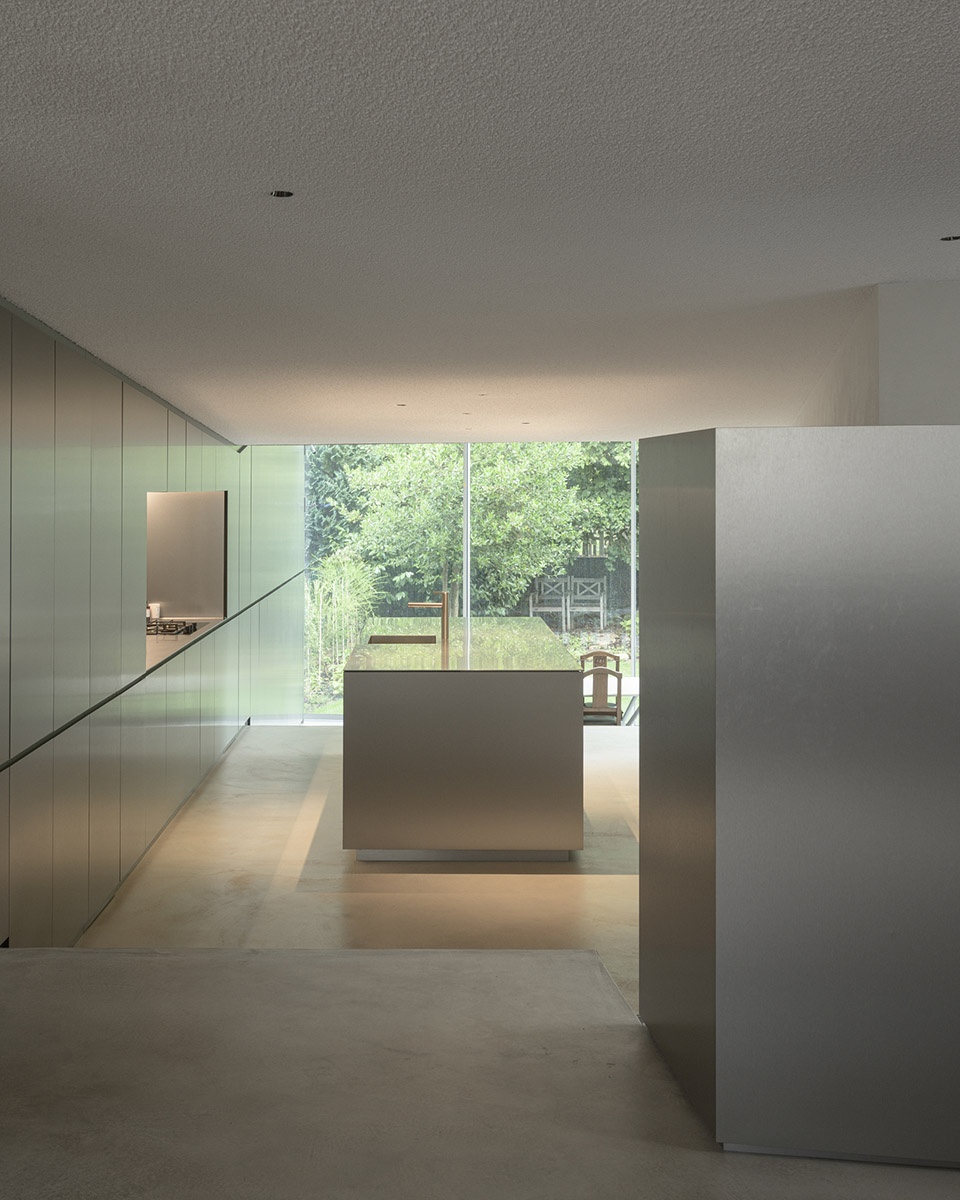
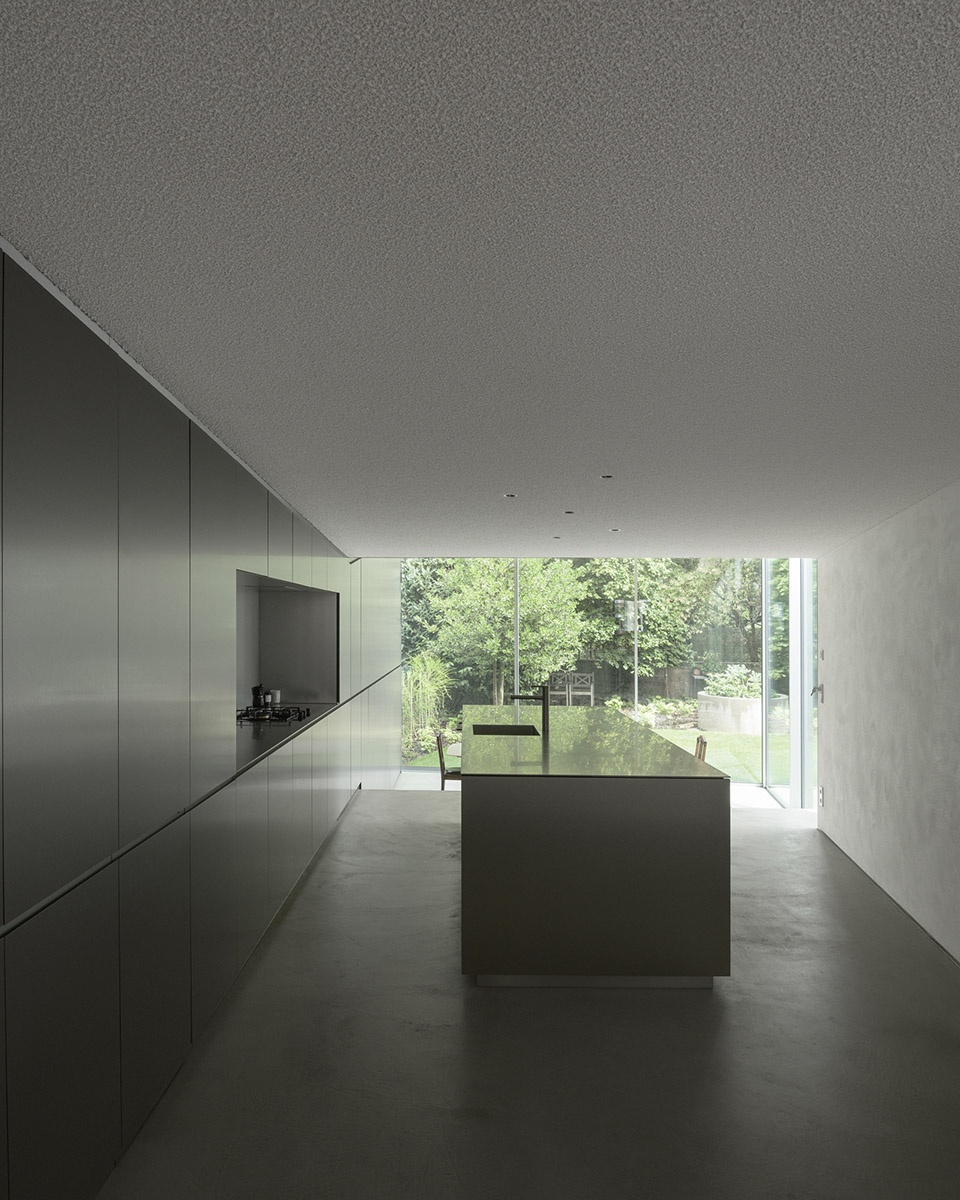
如同一只张开巨口的鳄鱼,这座住宅在平面与剖面上同时向北侧花园延展。倾斜的屋顶既容纳了设备系统,也回应了结构需求;平面则以细致而克制的方式整合了厨房设施及次要功能(储藏、卫生间)。最终呈现的是一个干净、开放的空间序列,终点指向一处郁郁葱葱的私密花园,其上方悬浮着一体化的混凝土体量。
Like a crocodile opening its mouth wide, the house stretches out toward the north-facing garden, both in plan and in section. Sloped ceilings accommodate technical systems and resolve structural challenges, while the plan integrates kitchen fittings and secondary functions (storage, toilet) with subtle precision. What remains is a clean, open space, culminating in a lush, private garden, sheltered beneath a hovering concrete volume.
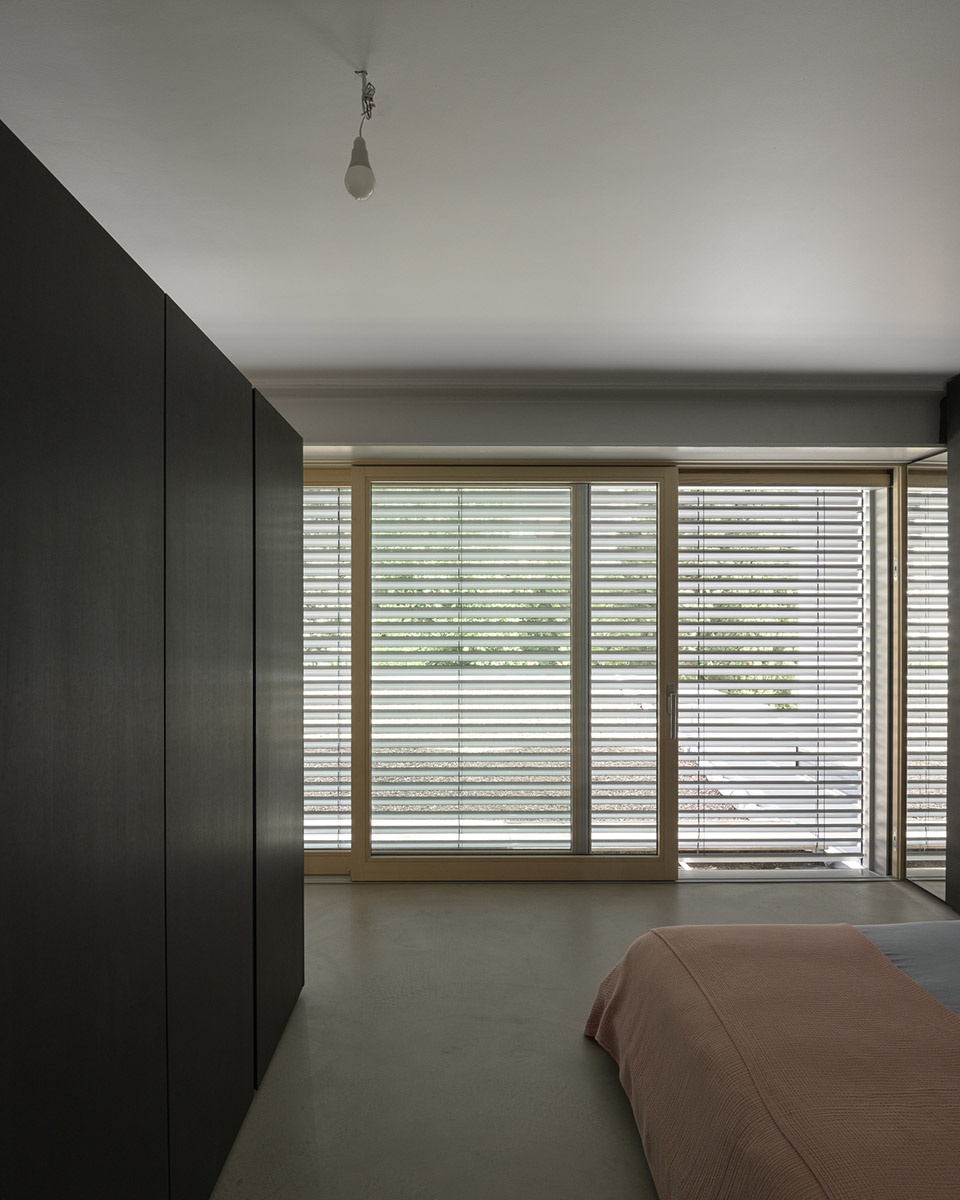
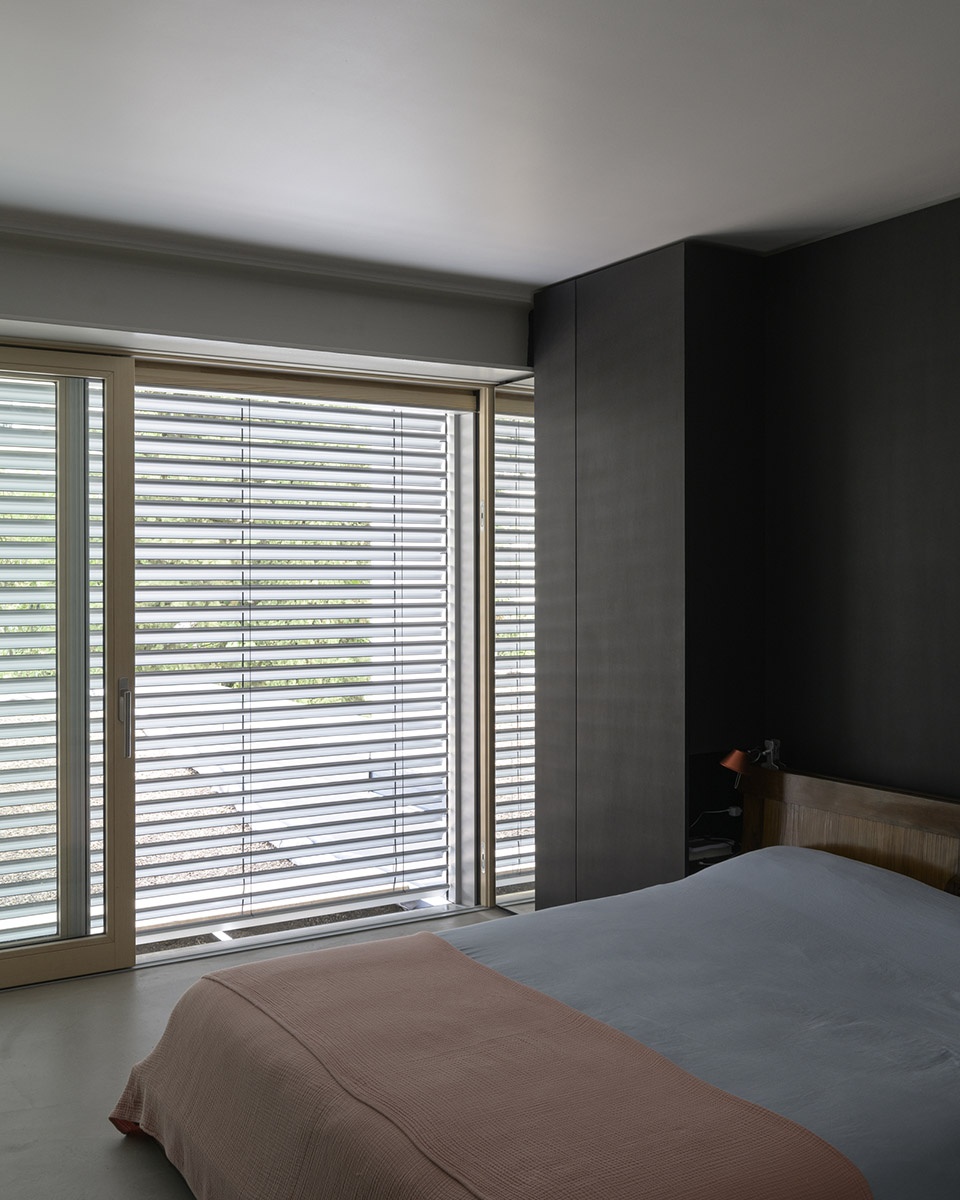
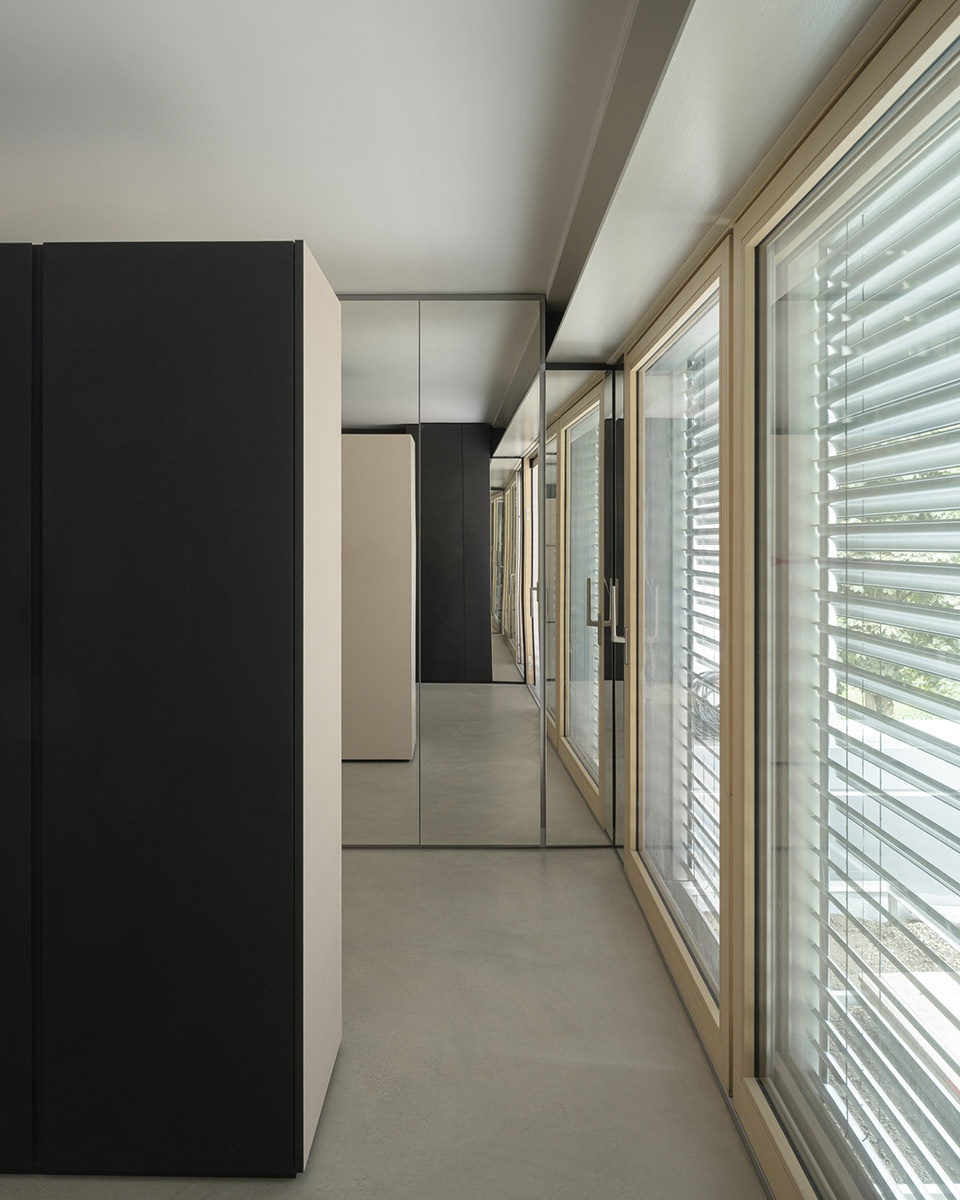
▼卧室区域,bedroom area
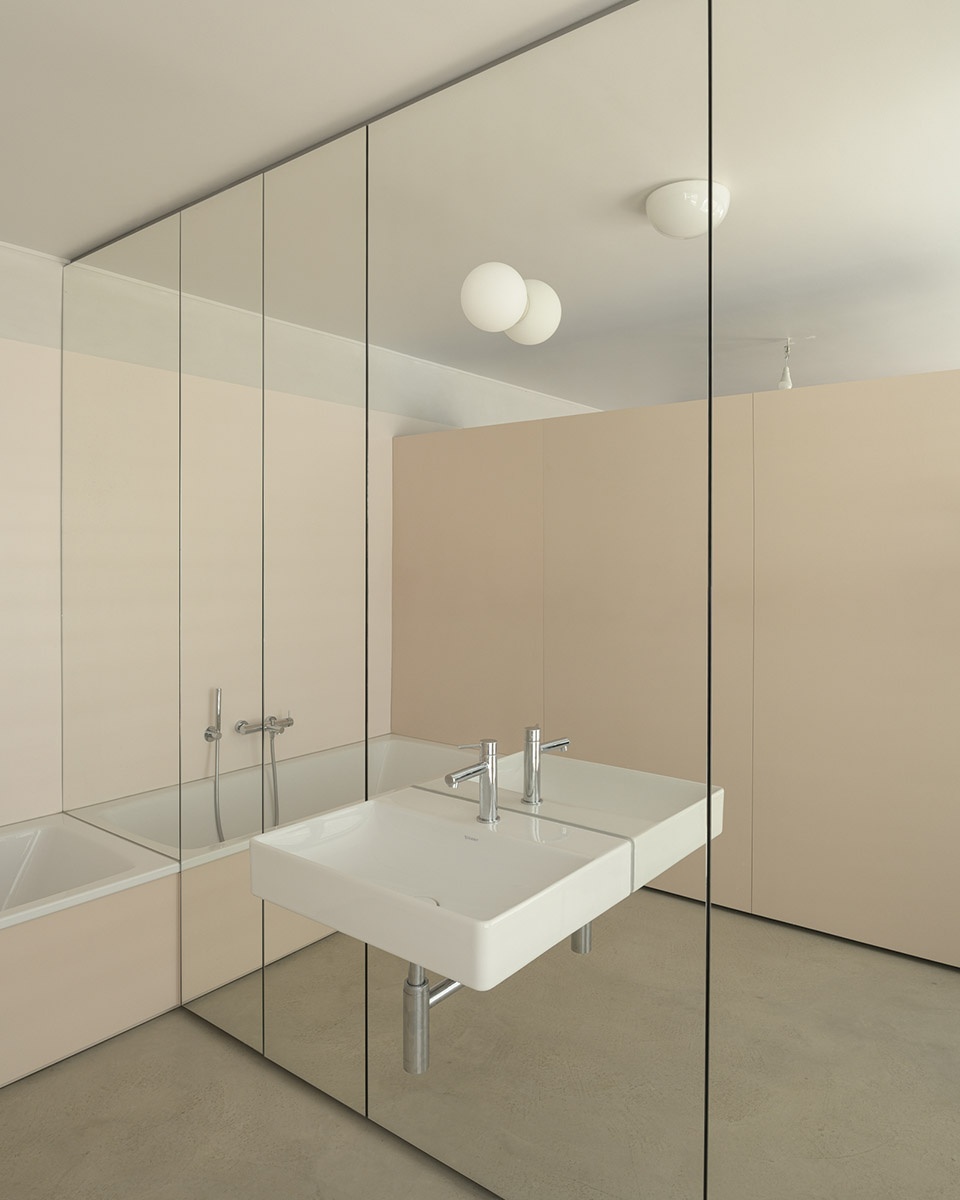
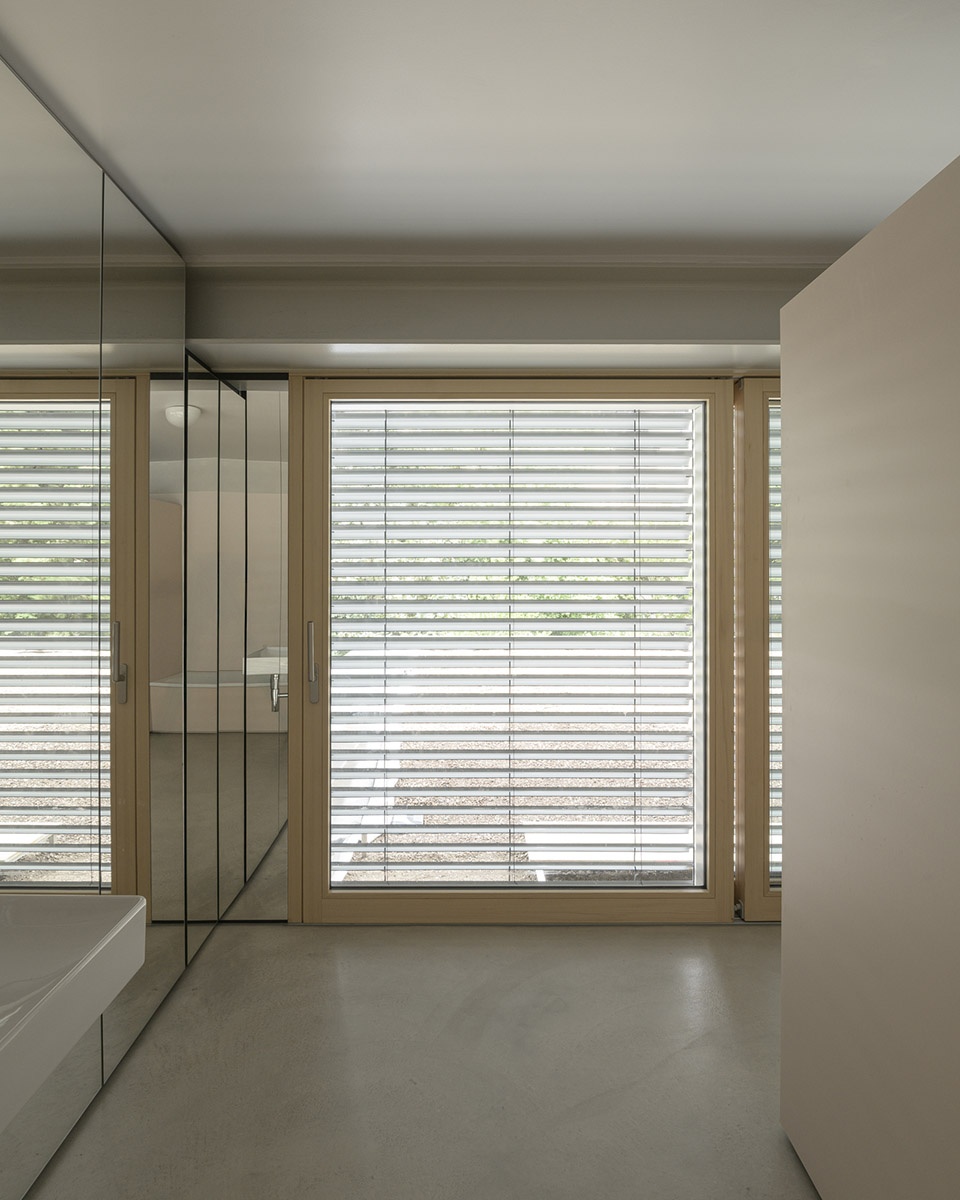
▼浴室区域,bathroom area
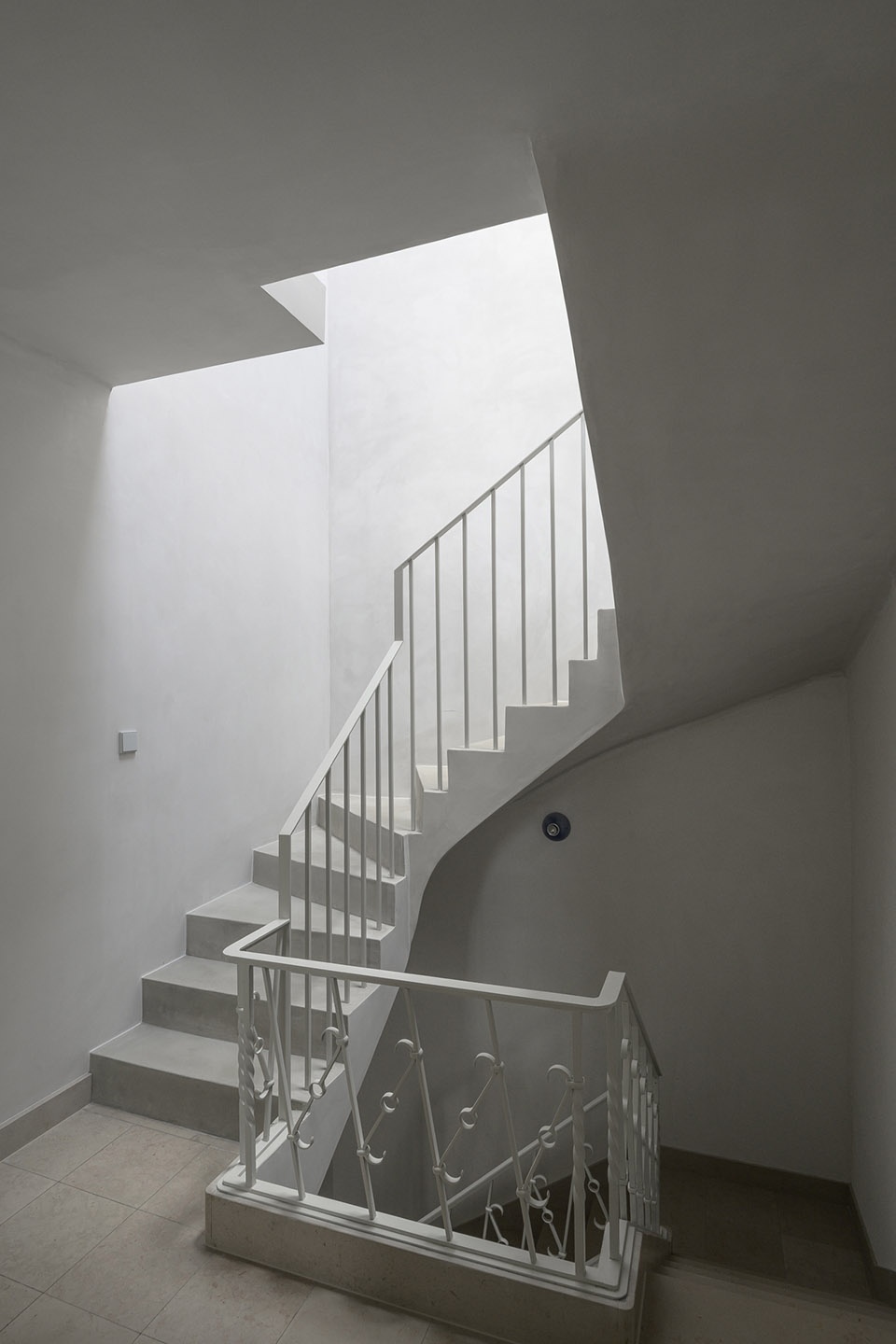
▼通往顶层的楼梯,the staircase towards the upper level
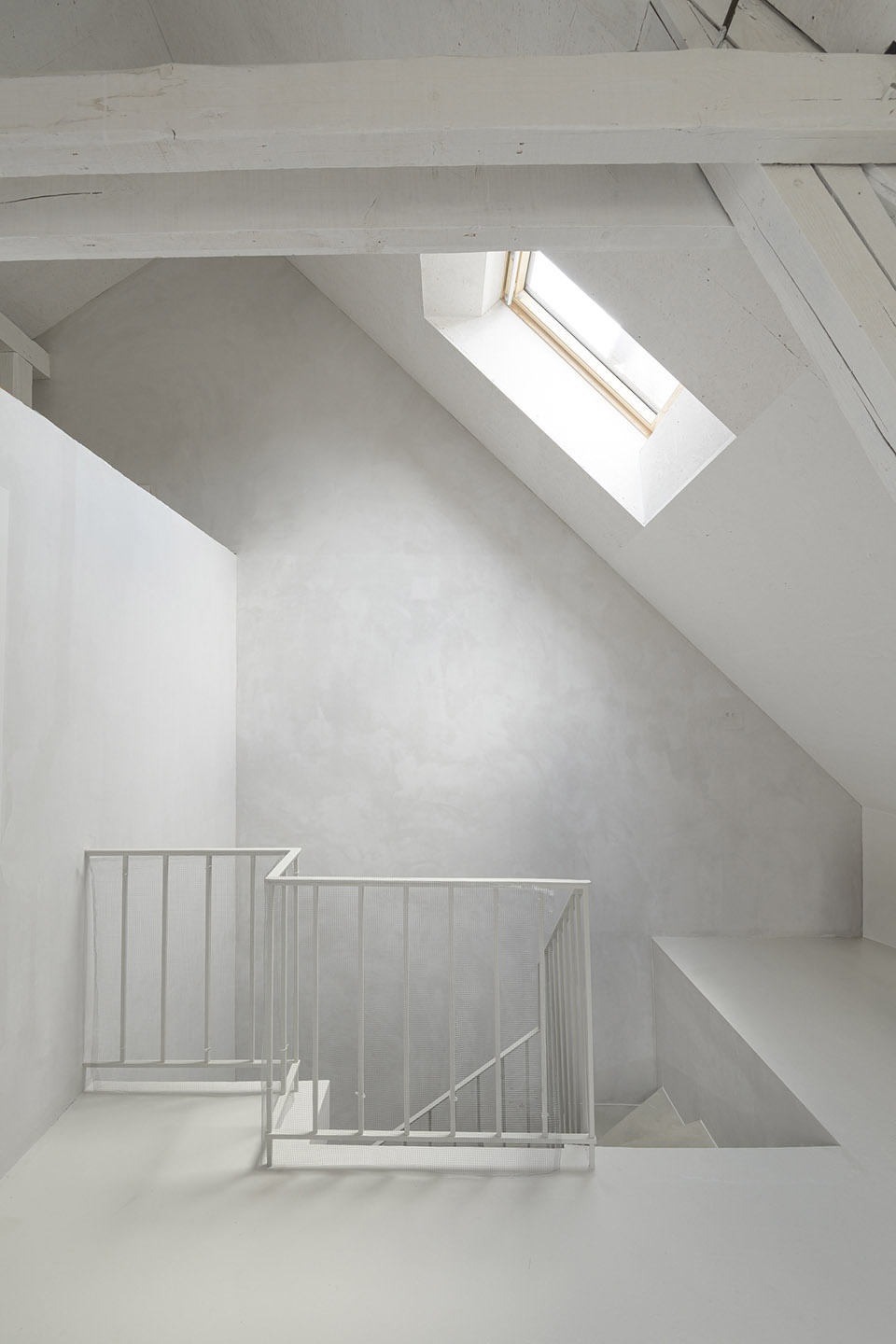
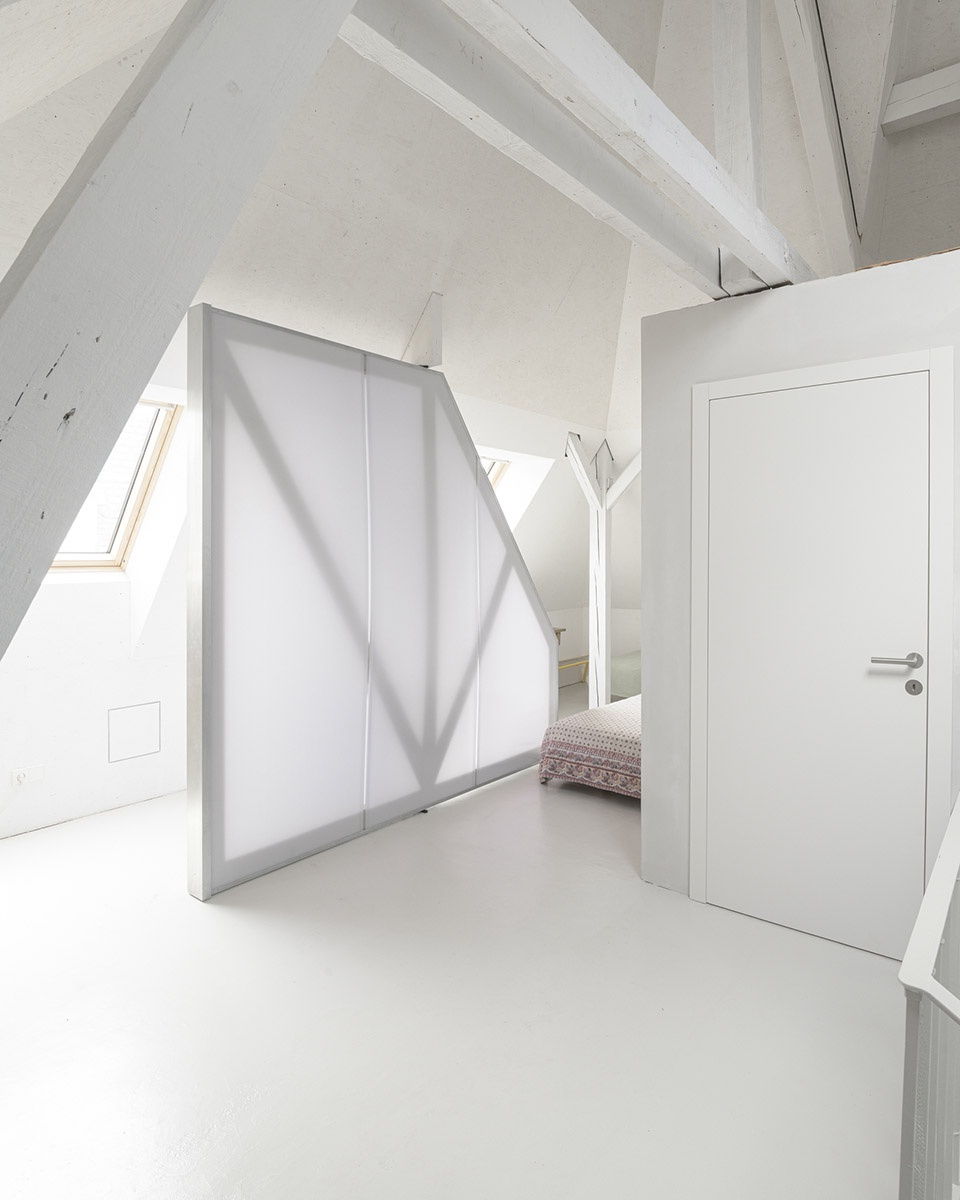
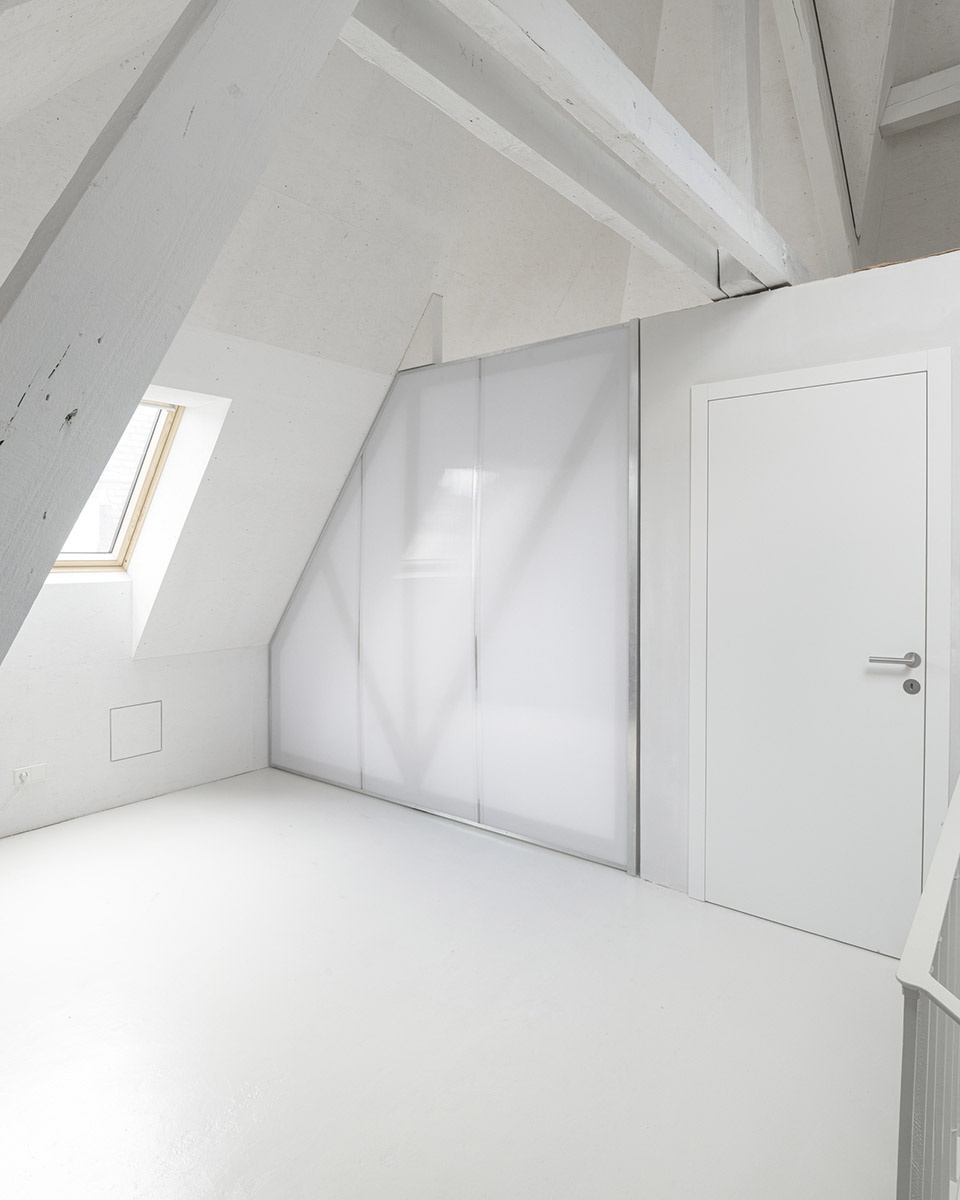
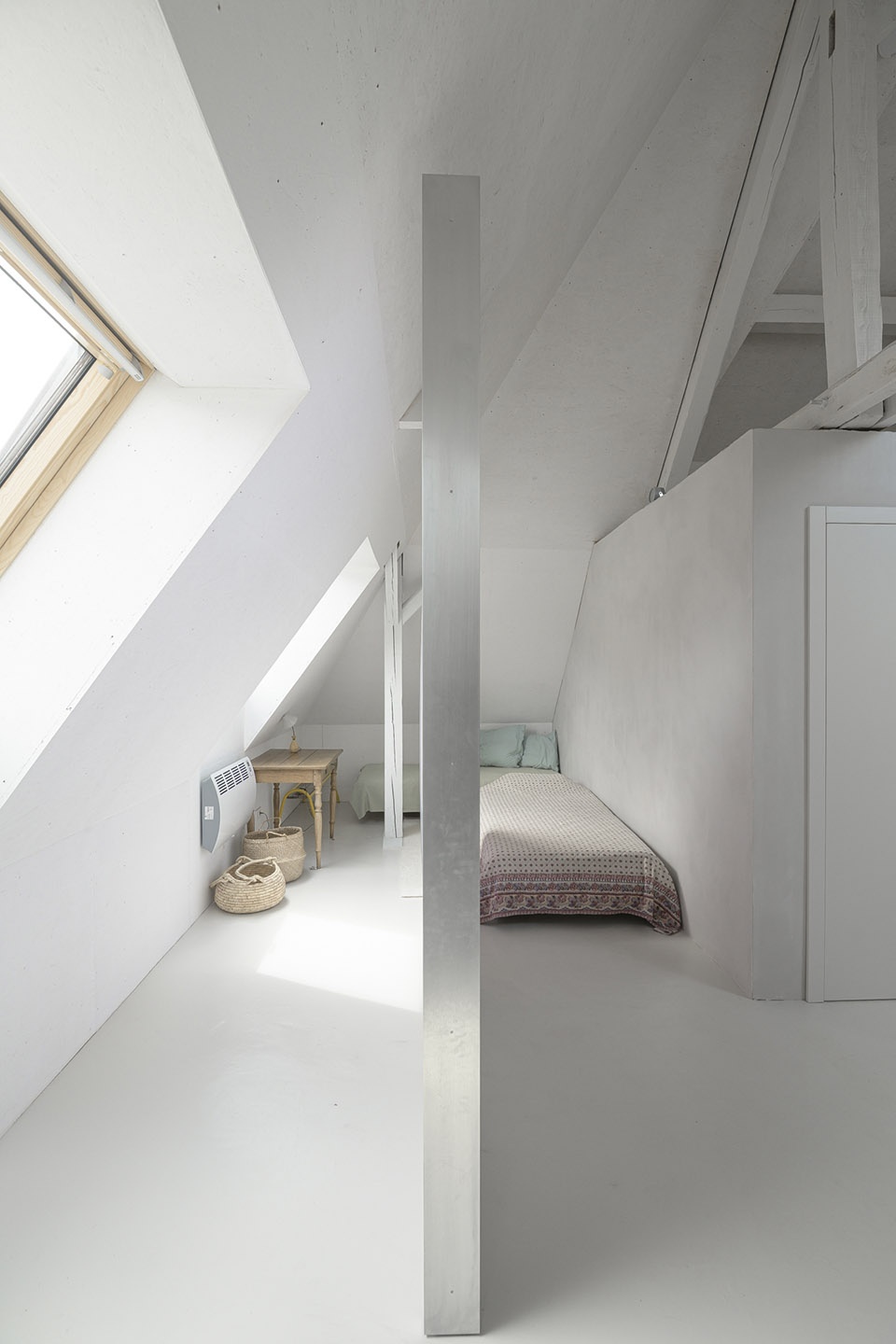
▼阁楼空间,attic space
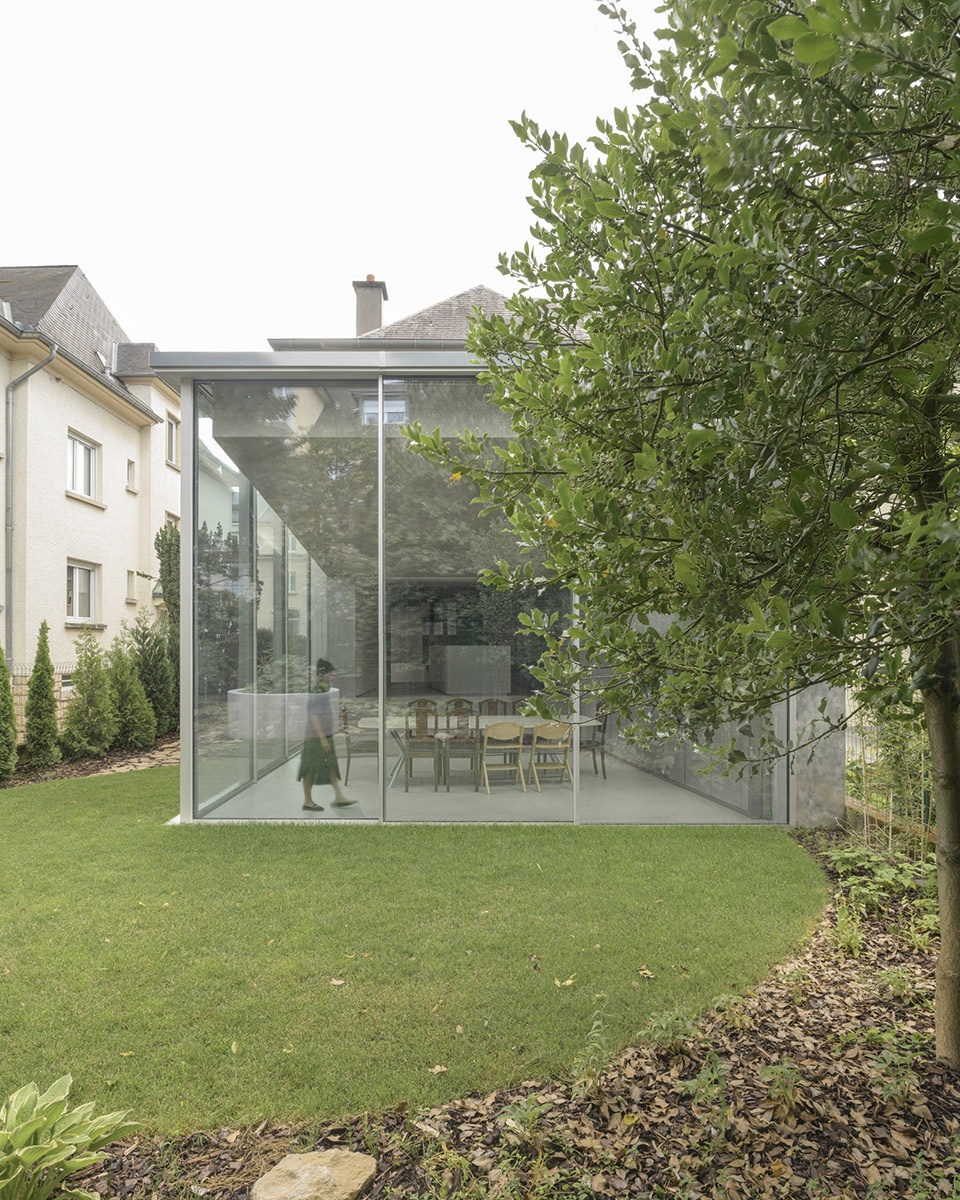
后立面由六块高达4.5米的滑动玻璃面板构成,模糊了室内与室外的界限。在这段悬挑体量之上,第二个花园悄然生长,作为主卧与浴室的延伸景观,将居所锚定于亲密与开阔之间。
The rear façade is composed of six sliding glass panels, each 4.5 metres high, blurring the boundary between inside and out. Above this cantilevered mass, a second garden takes root; an elevated landscape extension to the master bedroom and bathroom, anchoring the home in both intimacy and expanse.
▼模糊了室内与室外的界限,
blurring the boundary between inside and out
▼概念图,concept