2024年成都世界园艺博览会主展馆 / 中国建筑西南设计研究院有限公司前方工作室设计三院
引言 Introduction
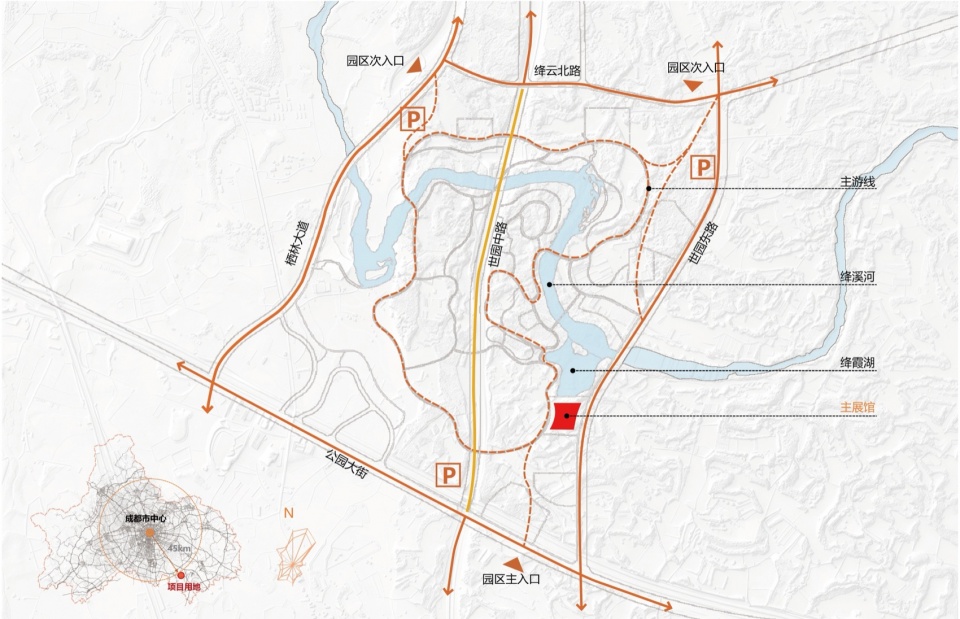
2024年成都世界园艺博览会主展馆坐落于成都东部新区,北临绛霞湖,南倚自然浅丘,西临园区内道路,东接世园东路。作为本届世园会的核心建筑,承担博览会期间的闭幕式、国际花卉竞赛展、会时论坛等重要活动功能。会后主展馆做局部功能调整,可持续作为成都东部新区文化活动中心使用。
The Main Pavilion of the International Horticultural Exhibition 2024 Chengdu is located in the Chengdu Eastern New Area, bordered by Jiangxia Lake to the north, natural hills to the south, inner park roads to the west, and Shiyuan East Road to the east. As the core building of the exposition, it is programmed to host significant events such as the closing ceremony, the international flower competition exhibition, and various forums. Following the event, the pavilion will undergo localized functional adjustments to serve as a civic cultural center for the Chengdu Eastern New Area.
▼东南侧鸟瞰,Aerial view from the southeast
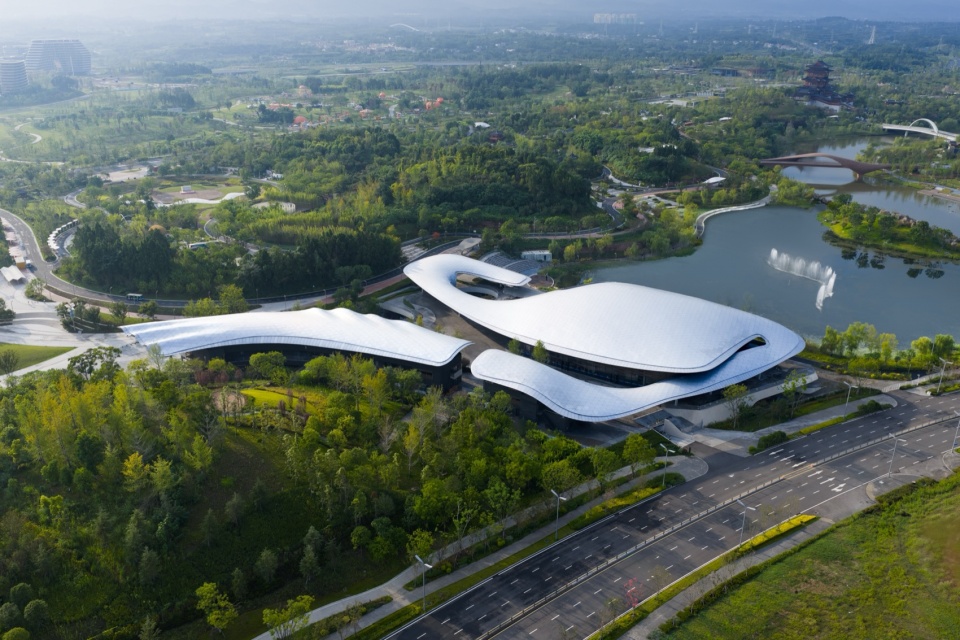
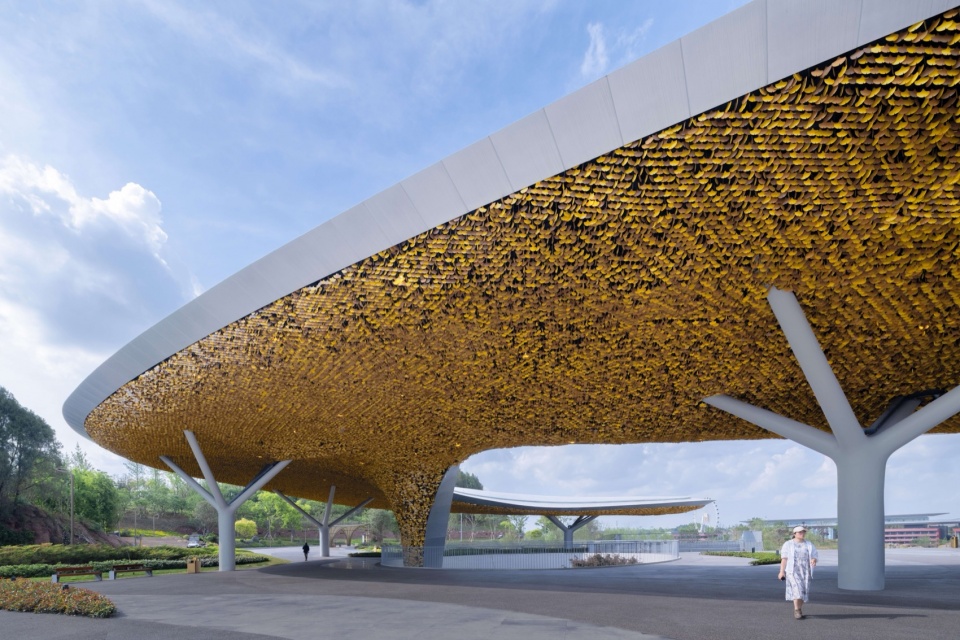
▼西侧入口广场,West entrance plaza
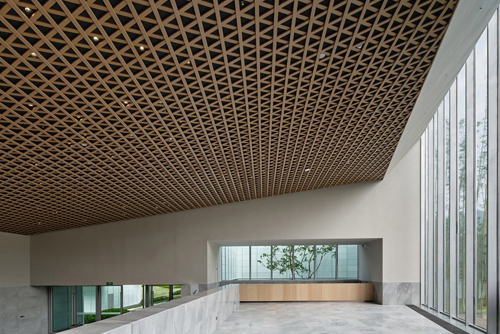
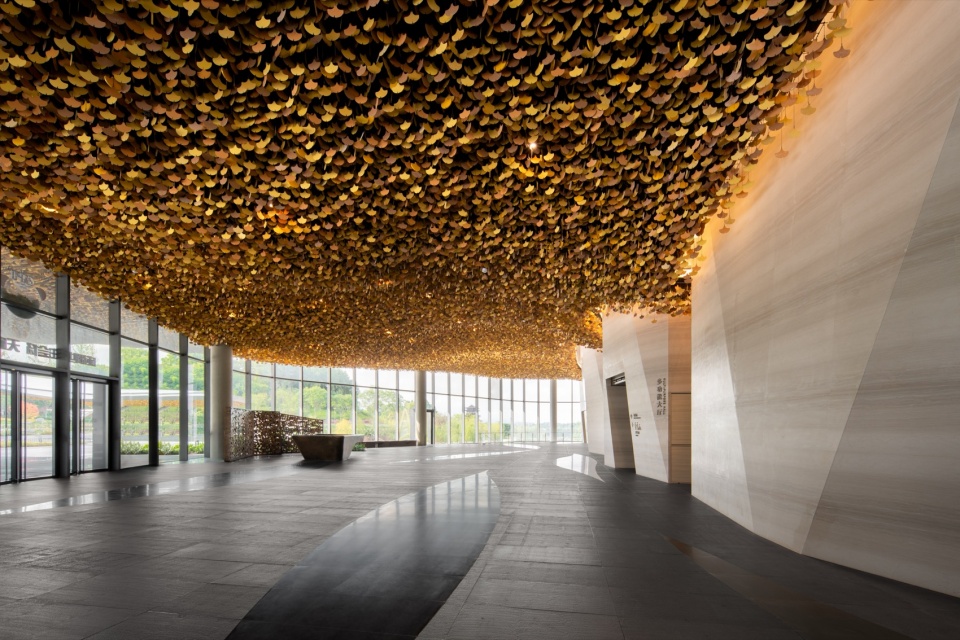
▼演艺大厅入口休息厅,Entrance lounge of the performing arts hall
项目总建筑面积约2.3万㎡,主要包含容纳1000人的多功能演艺厅、展览、配套商业及办公用房等功能。主展馆不仅是一座承载国际盛会的功能场所,更是一次现代人对川蜀自然与人文环境认知的在地性建构。设计尊重场地的自然环境,以贴近自然的尺度和形体语言,融历史人文要素,积极呈现现代公共建筑的社会属性。
▼用地区位,Site location
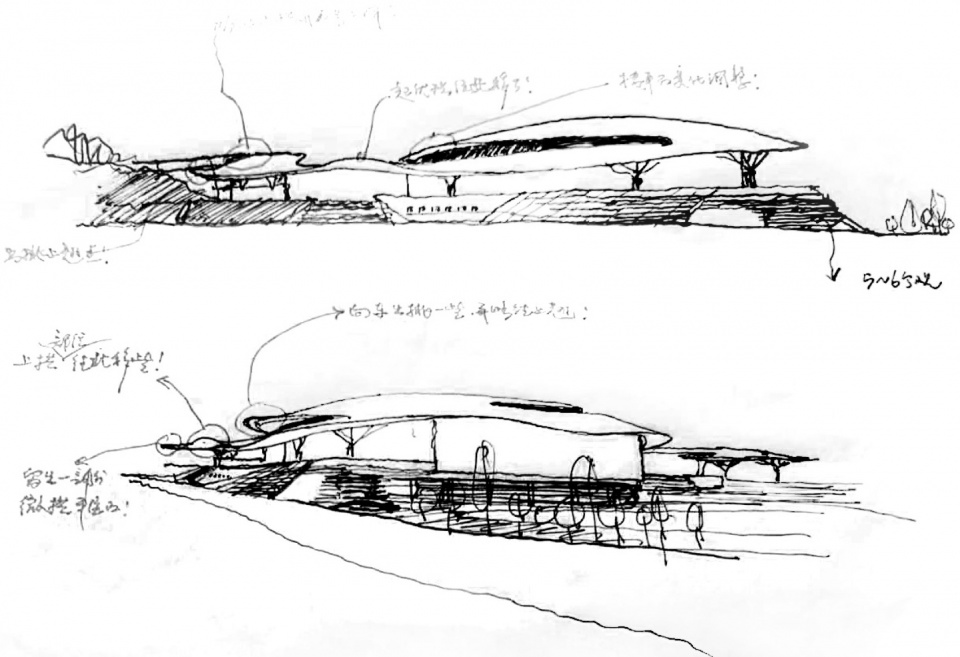
▼概念设计草图,Conceptual design sketch
With area of approximately 23,000 square meters, the project primarily encompasses a multi-functional performing hall accommodating 1,000 people, exhibition spaces, commercial areas, and office facilities. The Main Pavilion is not merely a functional venue for international gatherings; it represents a localized construction of the modern understanding of Sichuan’s natural and humanistic environments. The design respects the site’s natural context, adopting a scale and formal language that closely relates to nature, integrates historical and cultural elements, and actively manifests the social attributes of modern public architecture.
▼世园东路侧入口,Entrance on Shiyuan East Road
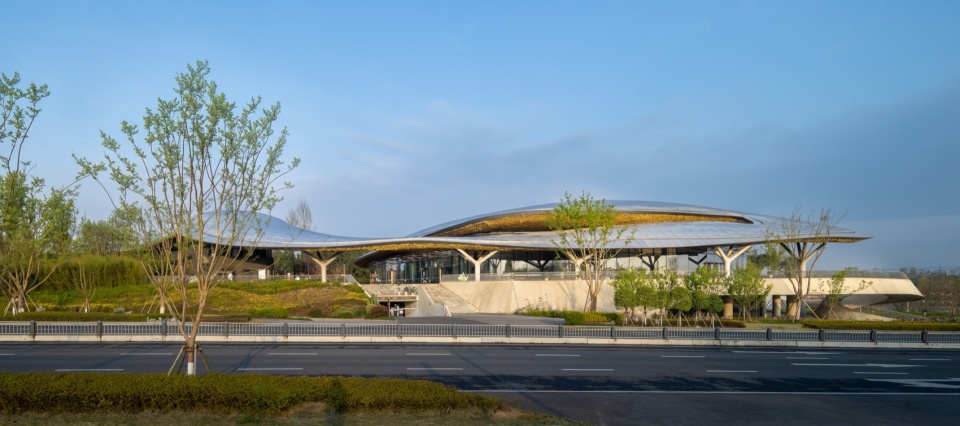
消解形体,建筑融入式嵌进自然 Dissolving Form: Architecture Embedding into Nature
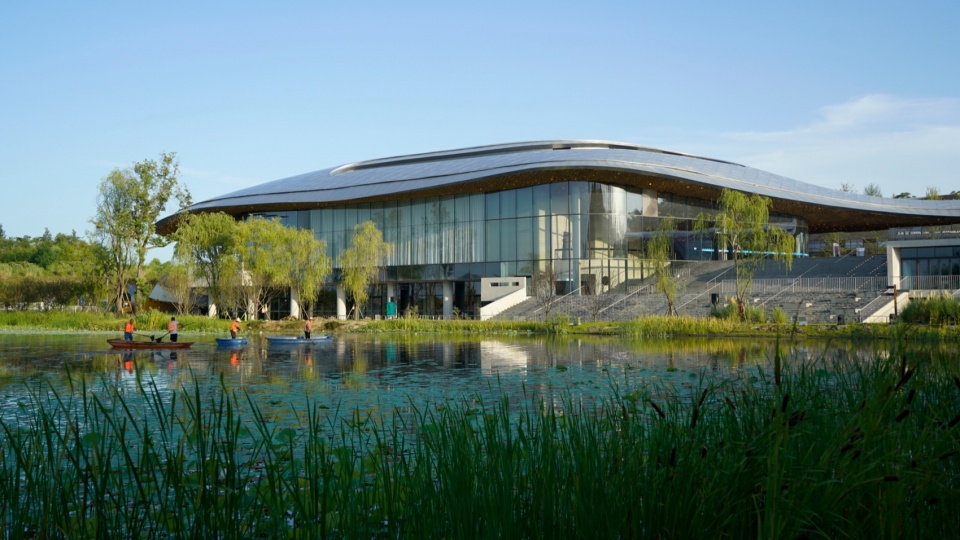
主展馆项目用地位于两山之间的浅丘谷地,北侧绛霞湖湖面最窄处仅为85m,场地内最大高差达26m。在相对狭窄的山水环境中,建筑体量无疑是一个“巨构”,设计基于环境融合理念、尺度控制要求、滨水建筑亲水特点及对现状自然环境资源的理性分析,将约1.2万㎡的展厅、文化艺术活动、配套车库等功能滨水(绛霞湖为人工泻湖)设置于场地北侧的滨水处,节省土方填挖的同时形成北侧亲水界面,并以多级观景台阶看台过渡,形成多个不同标高的观景平台。在东侧结合地形形成“双首层”入口,为城市提供多场景使用的交通流线。消解的形体以更好的尺度嵌入原始地形中,看见建筑也见山水。
▼主展馆位于园区视线中心位置,The Main Pavilion is located at the visual center of the park
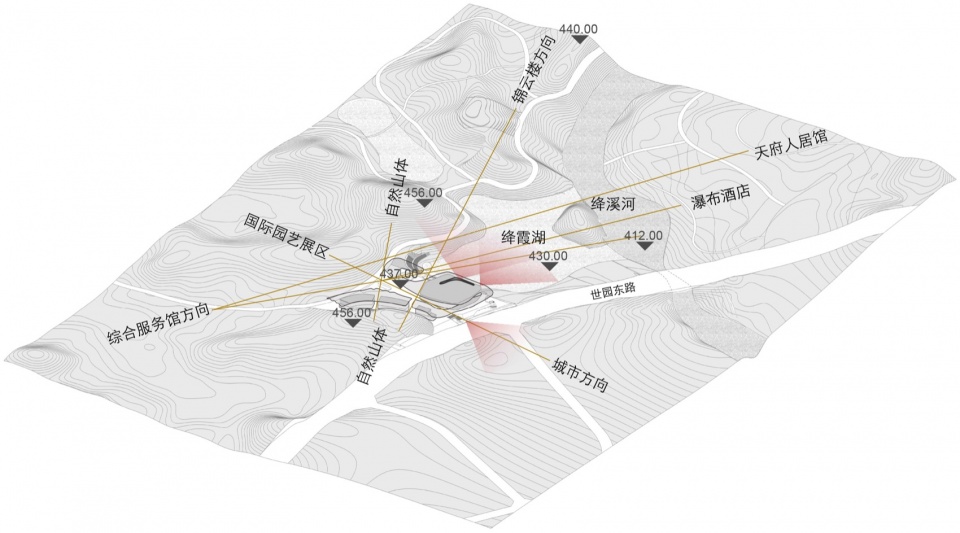
The project site is situated in a shallow hilly valley between two hills. To the north, the narrowest point of Jiangxia Lake is merely 85 meters wide, and the site features a maximum elevation difference of 26 meters. In such a landscape, the building’s volume could easily become an overwhelming “megastructure”. Based on the philosophy of environmental integration, requirements for scale control, the hydrophilic nature of waterfront architecture, and a rational analysis of existing natural resources, the design strategically embeds approximately 12,000㎡ of exhibition halls, cultural and artistic activity spaces, and supporting garages along the northern waterfront (Jiangxia Lake is an artificial lagoon). This approach minimizes earthwork while creating a northern hydrophilic interface, utilizing multi-tiered viewing steps and grandstands to form several observation platforms at different elevations. On the eastern side, a “double ground floor” entrance is integrated with the topography, providing a traffic circulation system suitable for multi-scenario urban use. The dissolved architectural form embeds itself into the original terrain with an appropriate scale, allowing observers to appreciate both the architecture and the natural landscape.
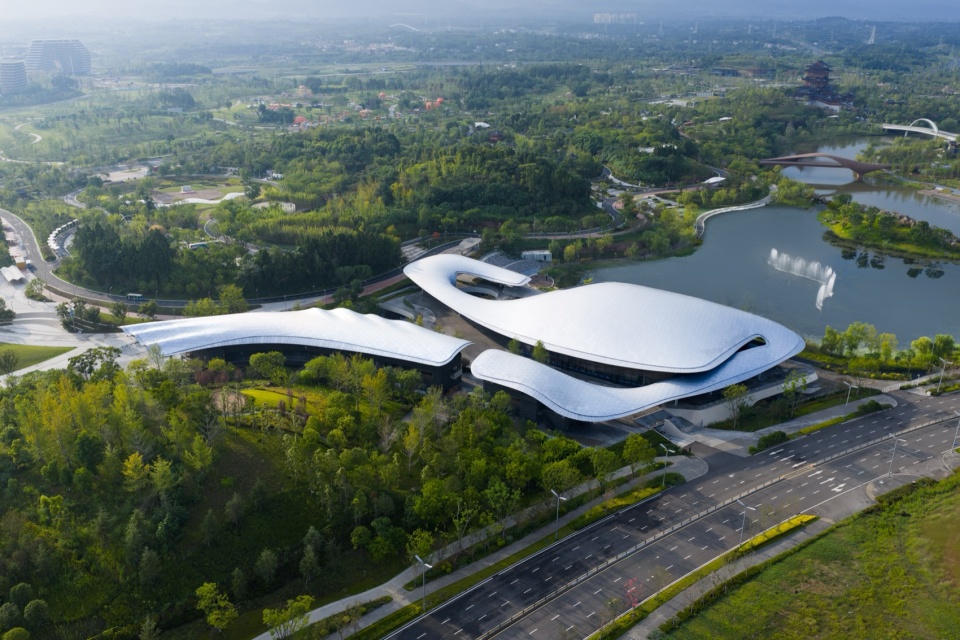
▼南侧鸟瞰,Aerial view from the south
▼穿过建筑架空区域看向北侧湖面,Looking towards the north lake through the building’s piloti area
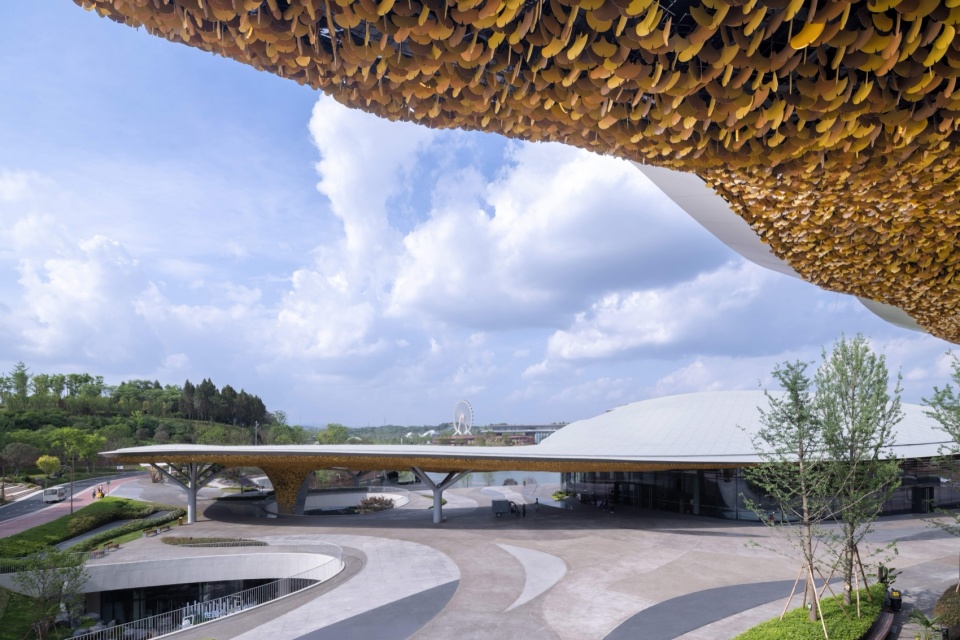
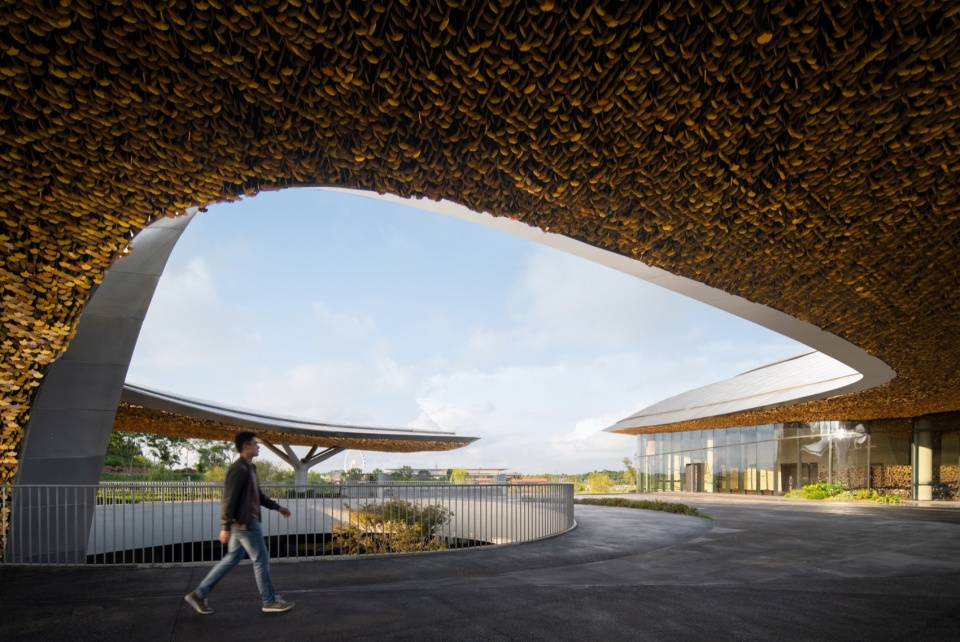
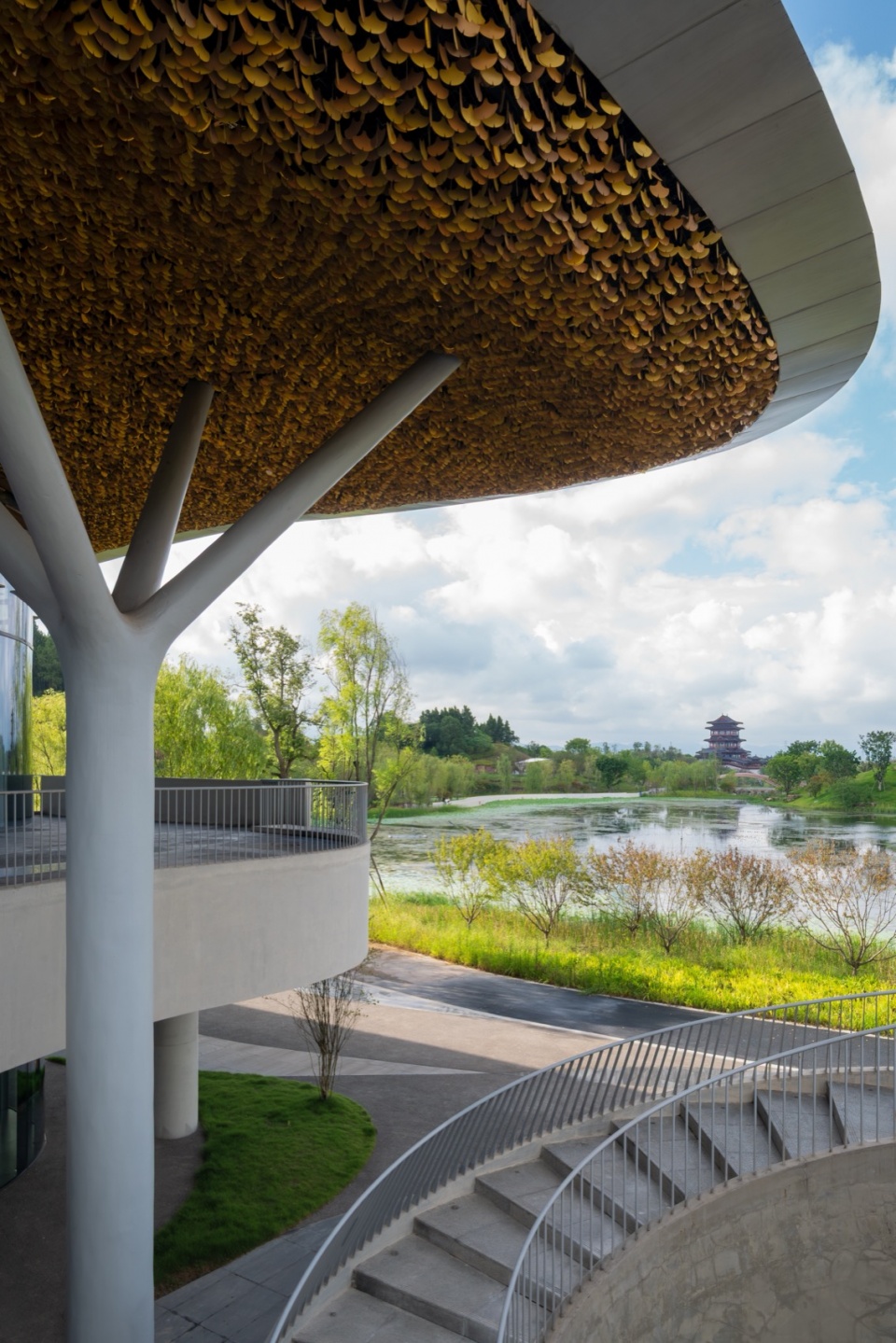
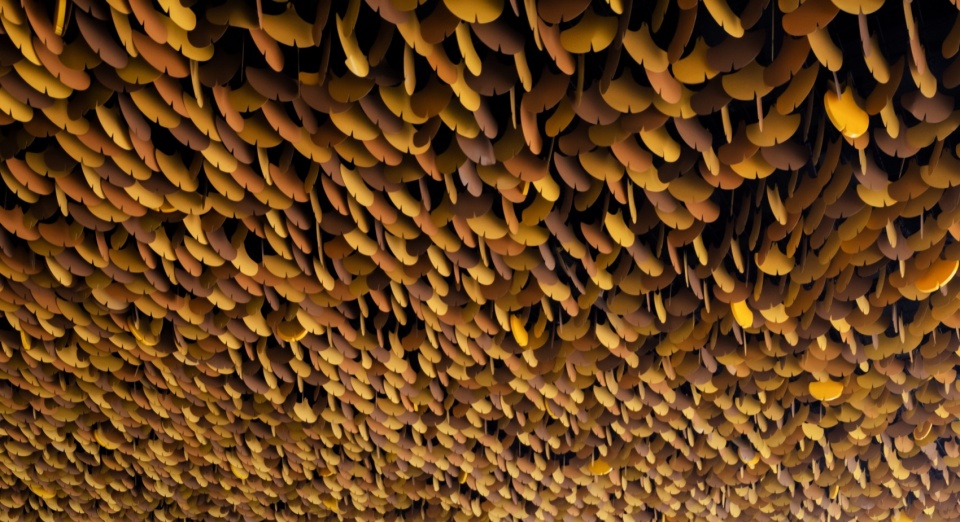
▼银杏天幕,Ginkgo canopy
▼从湖面看向主展馆,View of the Main Pavilion from the lake
模糊边界,体验空间的流动性 Blurring Boundaries: Fluidity of Experiencing Space
设计的拓扑构成源自四川民居空间的流动性,以建筑本体为锚点,将空间流动的视觉体验聚焦于环境景观,使体验关注于空间形体与景观场景的交互过程,而非其中一方面。根据功能需求对空间进行开孔,形成多处室内外的贯通空间。流动性形体的屋面整合被分解的建筑体量,水平展开匍匐于环境之中。视觉体验在山水之间展开和游走。
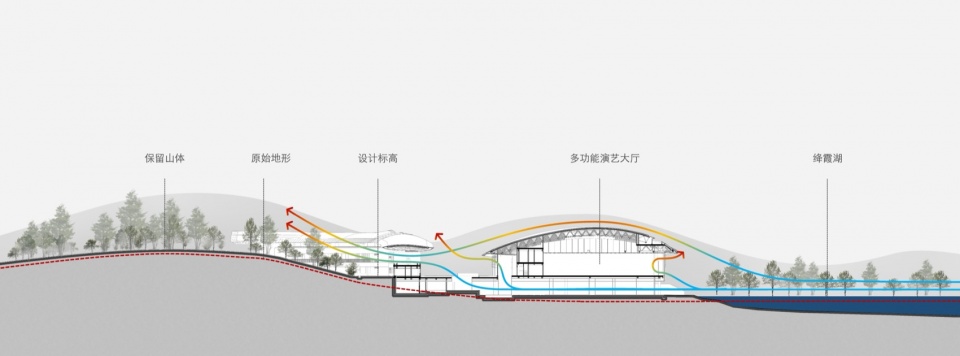
▼剖面分析,Sectional analysis
The topological composition of the design originates from the spatial fluidity characteristic of traditional Sichuan residences. Using the architectural body as an anchor, it focuses the visual experience of flowing space onto the environmental landscape, thereby directing the experiential focus toward the interactive process between spatial form and landscape scenes, rather than isolating either aspect. Punctures are introduced into the space according to functional requirements, creating multiple penetrating areas that bridge the indoors and outdoors. A dynamically flowing roof integrates the decomposed building volumes, expanding horizontally within the environment. Consequently, the visual experience unfolds and wanders seamlessly among the mountains and waters.
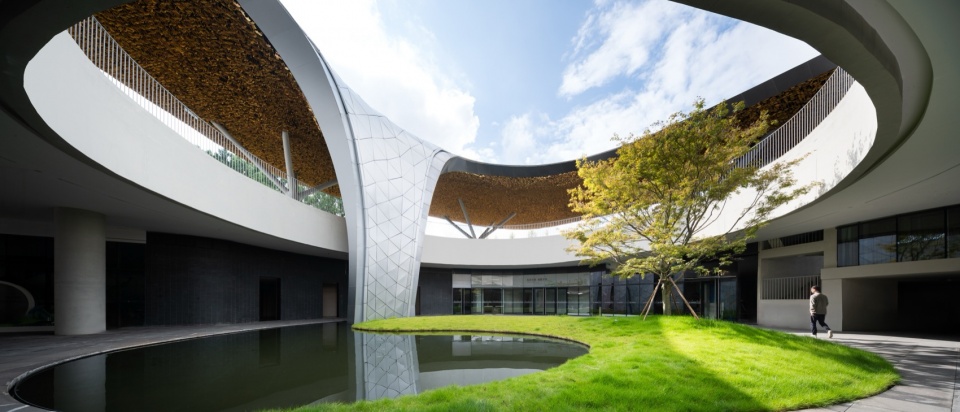
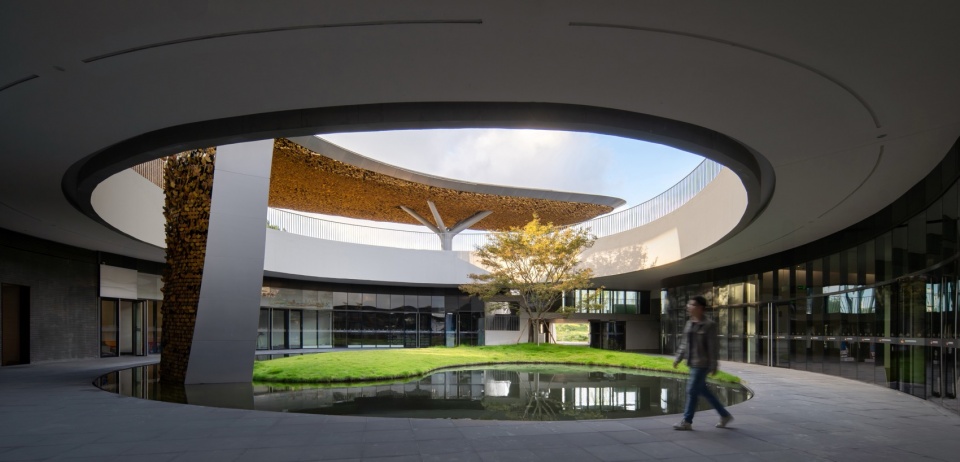
▼下沉庭院,Sunken courtyard
Hydrophilic grandstand by the lake
▼临湖的亲水看台,Hydrophilic grandstand by the lake
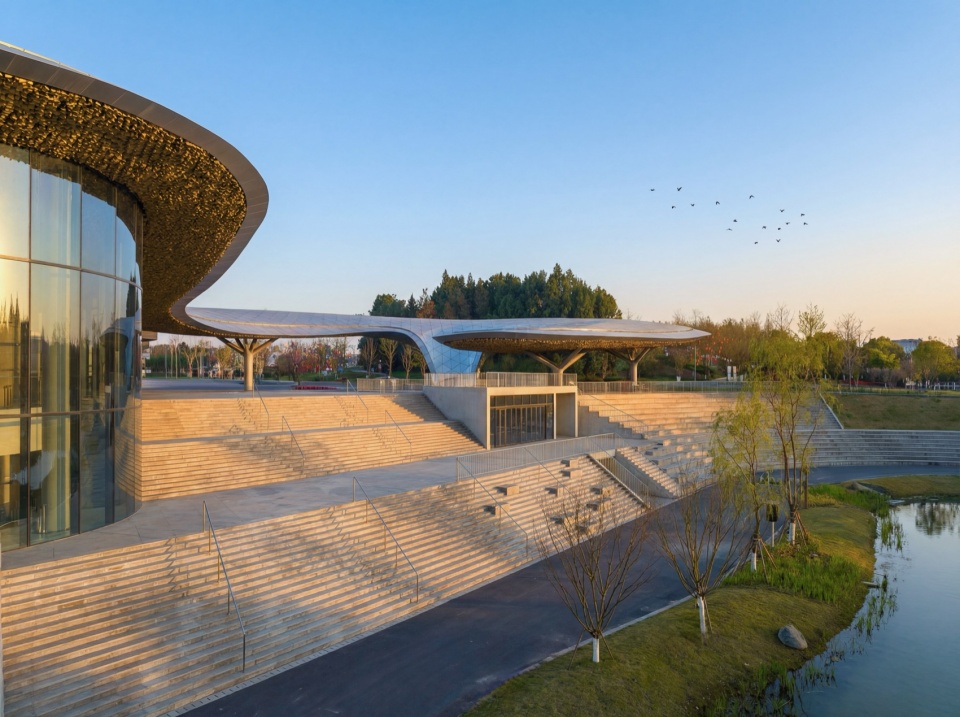
▼临湖的檐廊空间,Veranda space by the lake
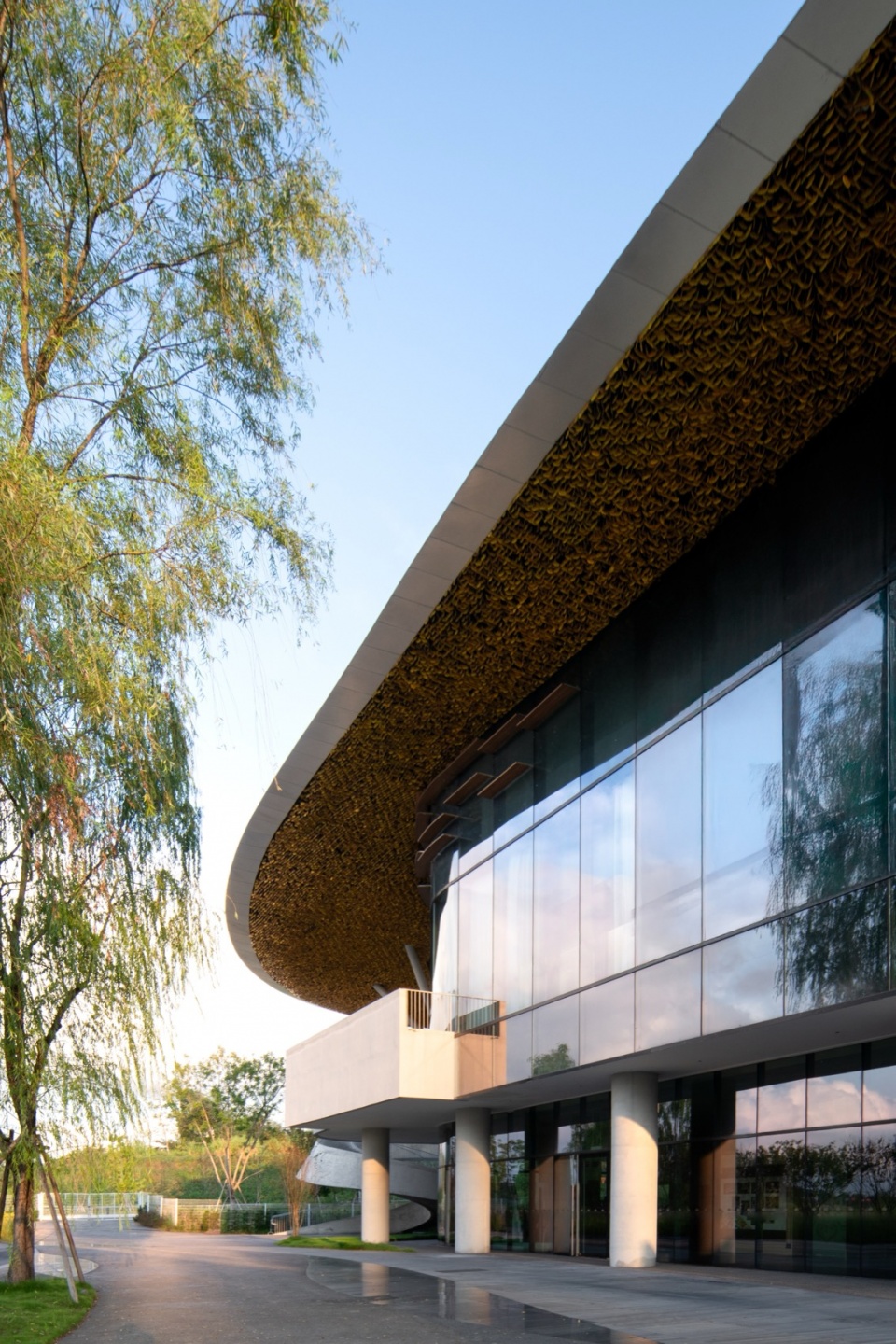
书写人文,成都人文符号的在地性提炼 Humanities Writing : The Localized Extraction of Chengdu’s Cultural Symbols
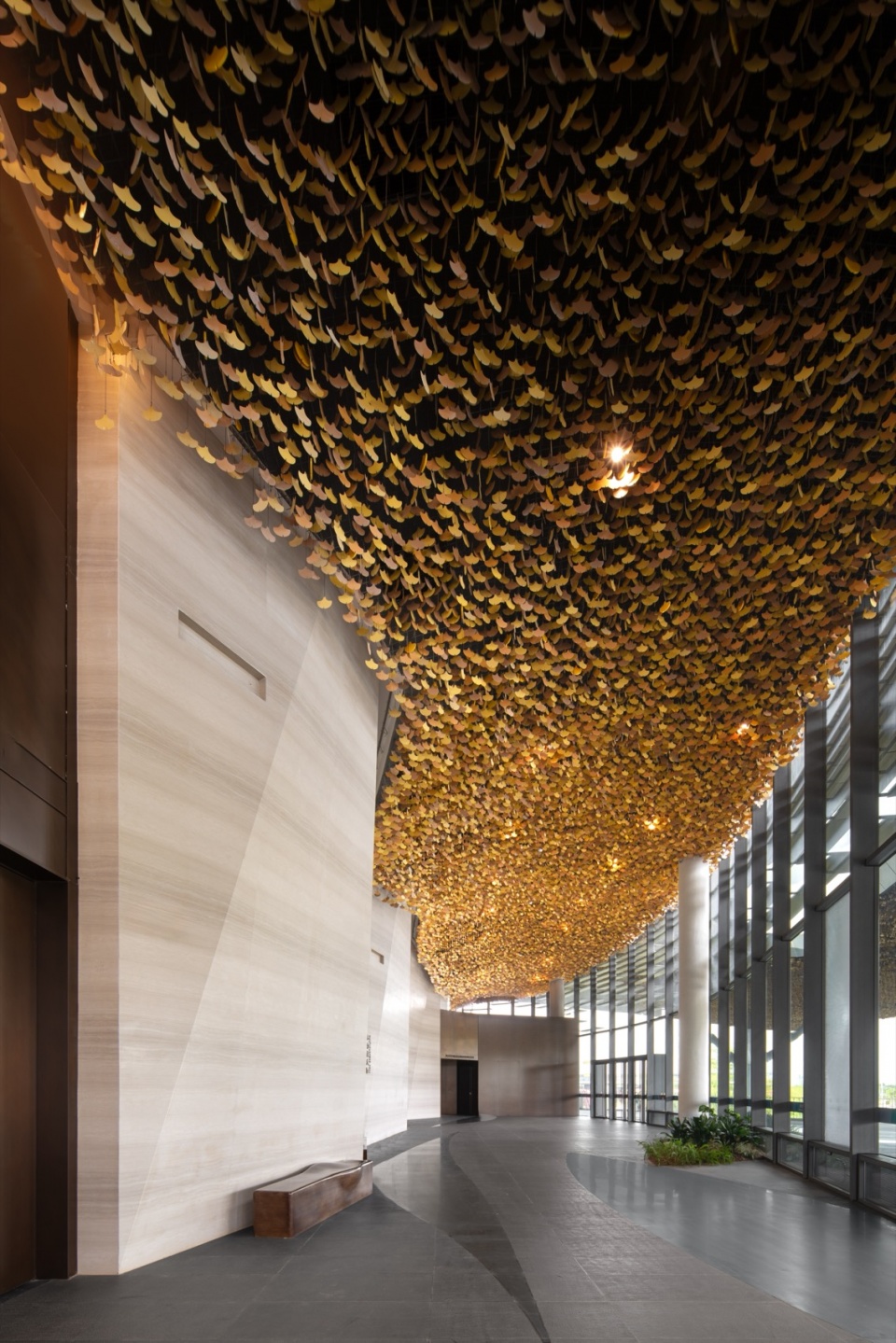
与建筑的“地域性”强调某一地理区域共享的自然人文环境共性不同,建筑的“在地性”与建筑场地所处地方的特点特征、自然环境和人文环境有着紧密相关的特性,它强调的是一种与众不同的个性特征,即独特的融入环境的方式。设计从众多关联成都人文要素的关键词入手,选取三星堆“神鸟”及市树“银杏”为人文表达元素,进行空间形式书写。“神鸟”古拙曲线构成婉转灵动的屋顶姿态,体现“神鸟衔花”的意向;漫延室内外的“银杏天幕”以朴素的语言回应与自然的对话,在银杏树下,风动、叶动、心动,自然与人文的有机结合,给空间体验一个在地性唤醒。
▼在地性意向的汇集与提取,Collection and extraction of localized motifs
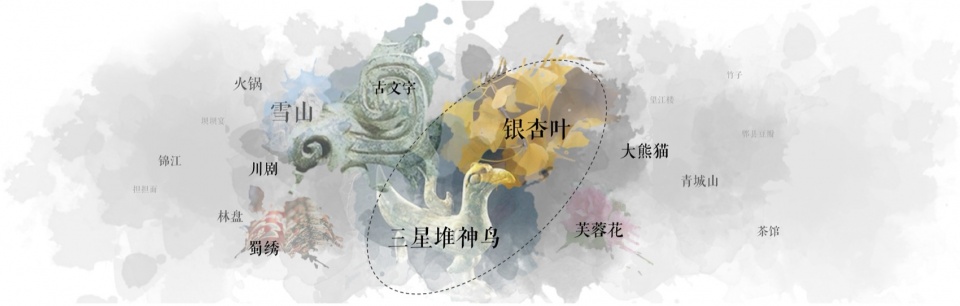
Unlike “regionalism,” which emphasizes the shared natural and cultural commonalities of a broader geographical area, “site-specificity” is intimately tied to the specific traits, natural setting, and humanistic context of the site itself. It highlights a distinct, individualized character—a unique way of integrating into the environment. Drawing from numerous keywords associated with Chengdu’s cultural elements, the design selects the Sanxingdui “Divine Bird” and the city tree, the “Ginkgo,” as elements for humanistic expression to dictate the spatial form. The primitive and unadorned curves of the “Divine Bird” shape the graceful and dynamic roof, embodying the motif of the “divine bird carrying flowers”. Meanwhile, the “Ginkgo Canopy” which spreads across both indoor and outdoor spaces, responds to the dialogue with nature through a modest architectural language. Beneath the “Ginkgo Canopy”, as the wind blows and the leaves flutter, the heart is moved; this organic fusion of nature and humanities provides a localized awakening to the spatial experience.
▼东侧鸟瞰,Aerial view from the east
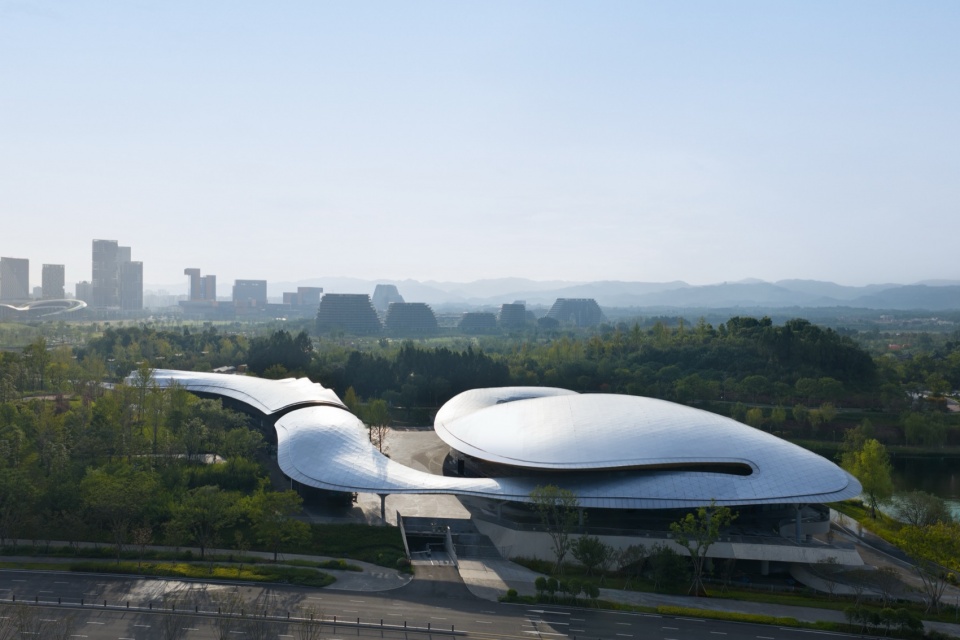
▼随风摇动的银杏天幕,Ginkgo canopy swaying in the wind
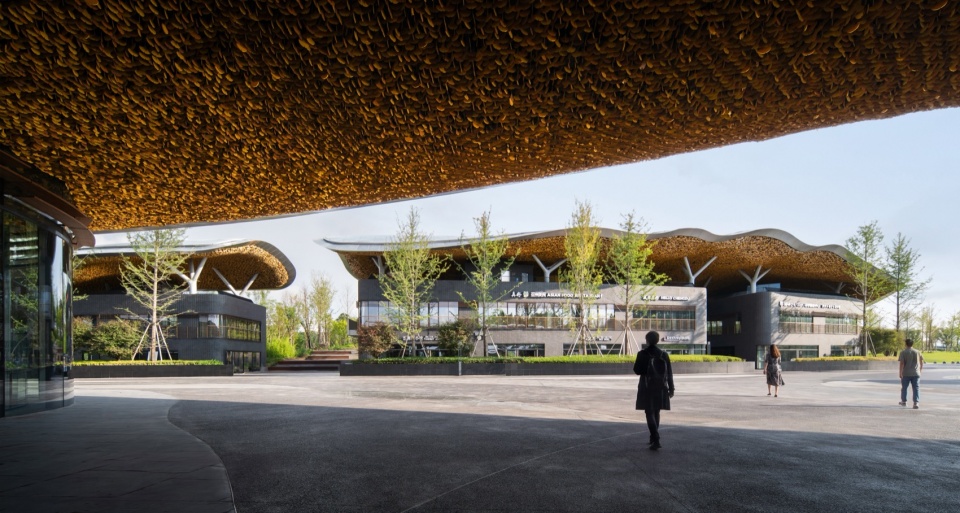
▼银杏天幕下的建筑,Architecture beneath the Ginkgo canopy
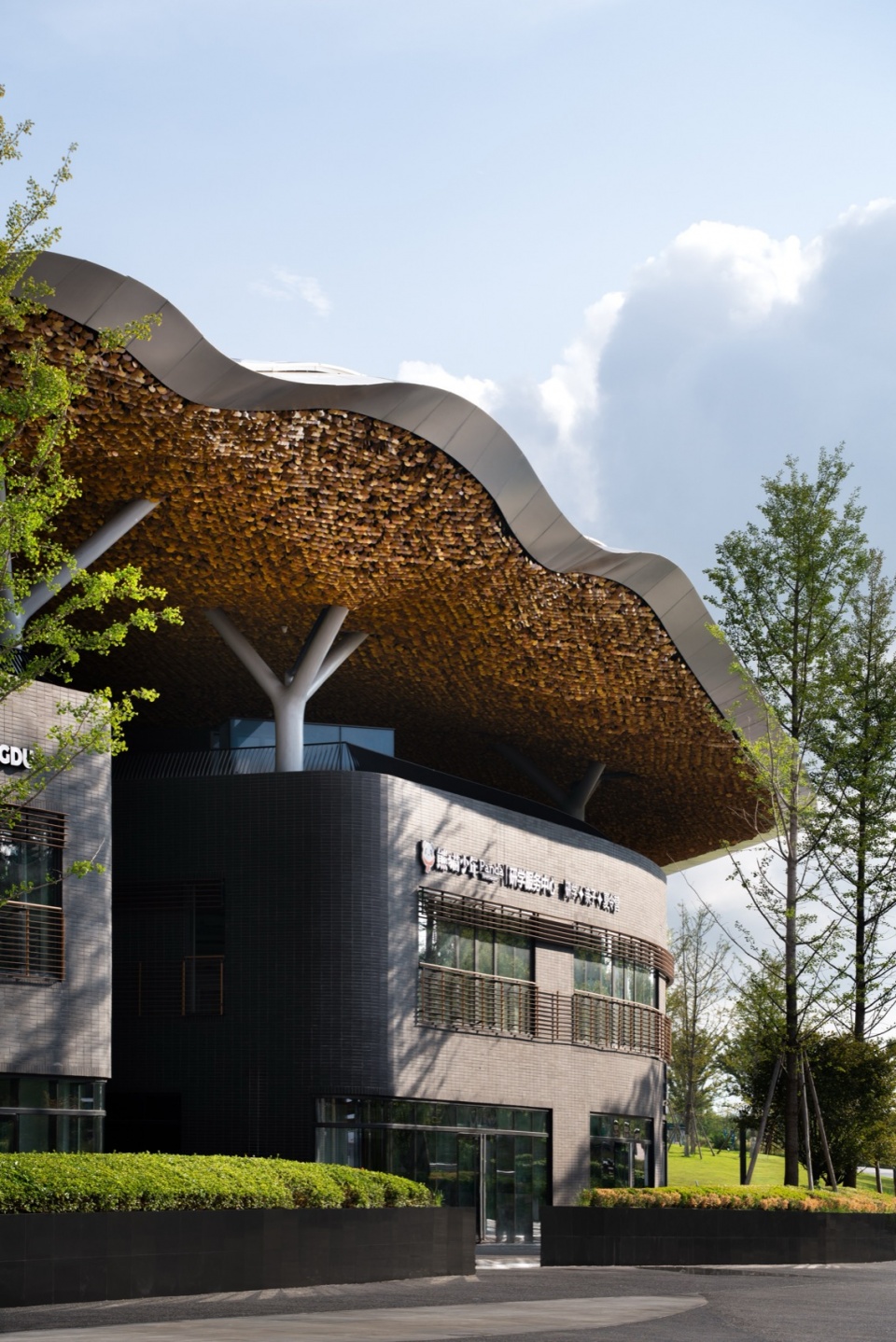
▼商业顶层架空休息区域,Piloti lounge area on the top floor of the commercial zone
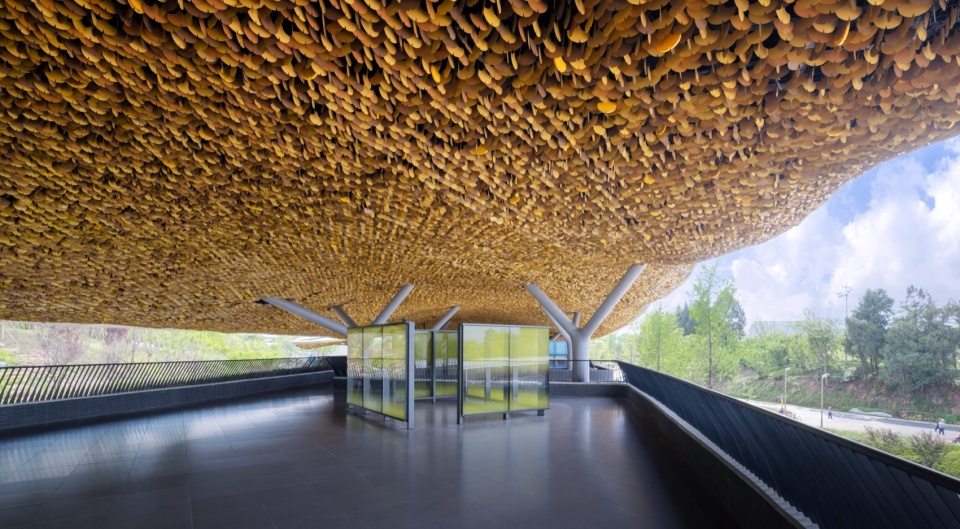
▼木纹石与金属银杏叶片、古铜色铝板的组合,Combination of wood-grain stone, metal ginkgo leaves, and bronze aluminum panels
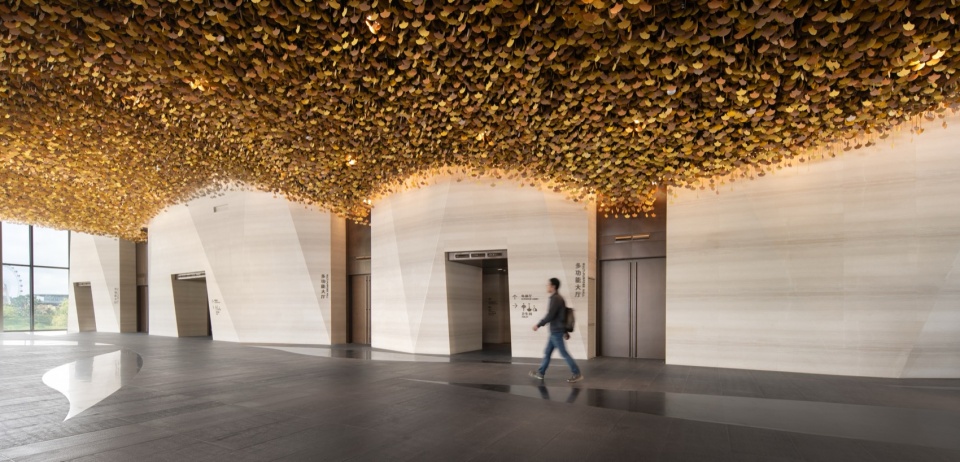
▼东侧休息厅,East lounge
工于技巧,系统性解决工程难点的智慧实践 Mastering Techniques: Intelligent Practice Systematically Solving Engineering Difficulties
绿色建筑的核心内涵在于通过被动技术实现功能的需求与目标,而外延则是将承载功能目标的相关空间构件及设备系统赋予审美的形式。设计结合地形地貌、成都气候特点及建筑功能的使用场景工况需求,优先采用被动绿色节能技术,系统性采用适宜的主动技术手段,实现建筑本体(绿色)目标。被动式技术包含通过空间组织实现土方平衡,为自然通风及采光提供便利,同时考虑会后功能的低资源消耗平顺转换。
▼负一层会时会后功能的转换,Transformation of basement level functions during and after the exposition
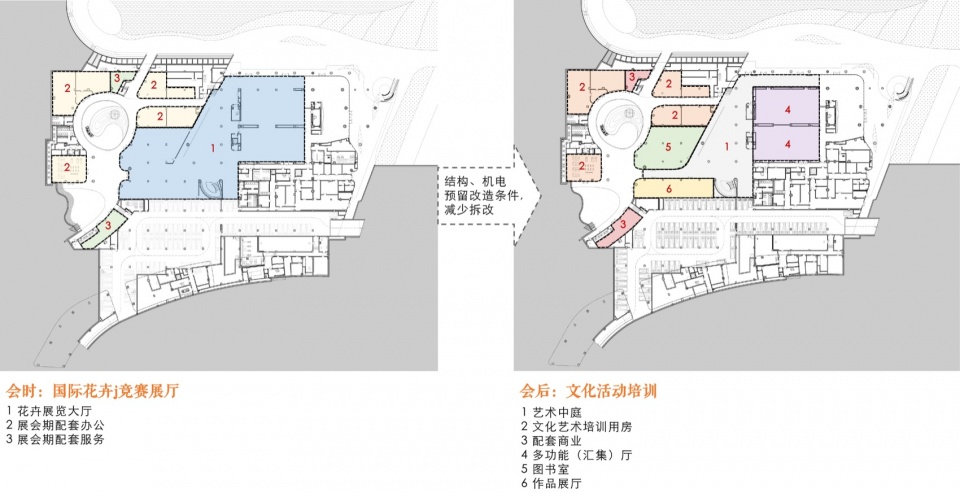
The core connotation of green building lies in achieving functional needs and goals through passive technologies, while its extension involves endowing the spatial components and equipment systems that carry these functional goals with aesthetic forms. By combining the topography, Chengdu’s climatic characteristics, and the operational requirements of the building’s functions, the design prioritizes passive green energy-saving technologies and systematically adopts appropriate active technical measures to realize the building’s intrinsic green objectives. Passive techniques include achieving earthwork balance through spatial organization, facilitating natural ventilation and daylighting, and considering a smooth, low-resource-consumption transition for post-expo functions.
▼负一层多功能(汇集)厅,Basement level multi-functional (gathering) hall
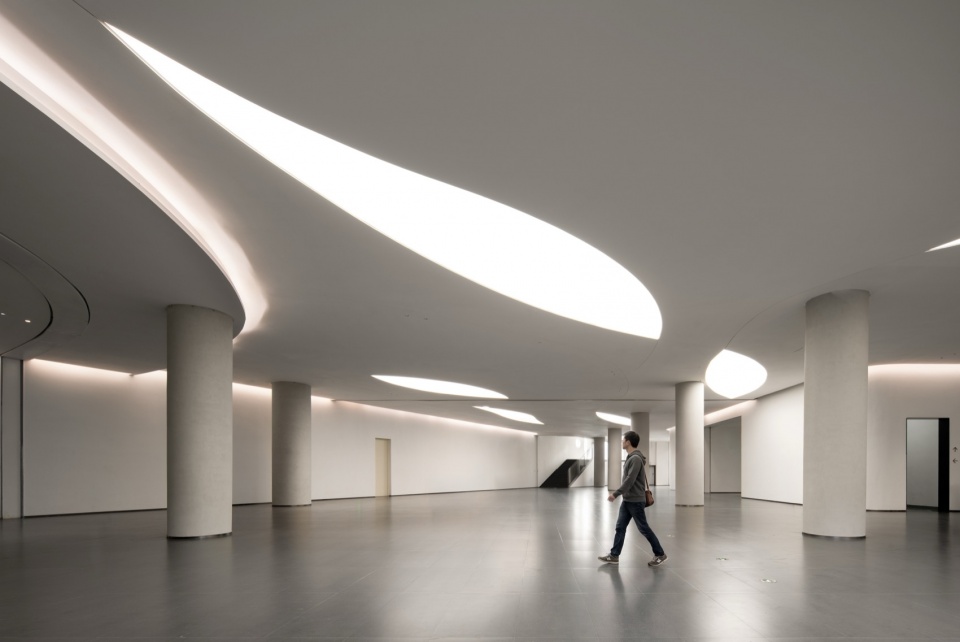
北侧主导风向来风经湖面降温后通过负一层通廊及下沉庭院进入建筑,提高建筑空间的舒适性。下沉庭院为下部空间带来阳光雨露,60%的使用空间日均能够获得6小时以上的自然光照,平均照度达300lx。
LED
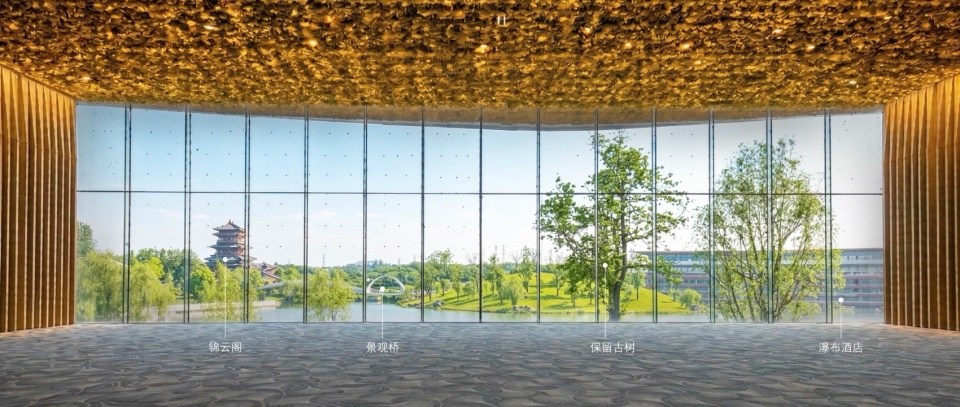
▼可滑动LED屏打开后,青山绿水成为演艺大厅的背景画卷,With the sliding LED screen opened, the green mountains and clear waters become the backdrop of the performing arts hall
The prevailing northern wind is cooled as it passes over the lake surface, entering the building through the basement corridor and the sunken courtyard, thereby enhancing the comfort of the interior spaces. The sunken courtyard introduces sunlight and rain into the lower levels, ensuring that 60% of the usable space receives more than 6 hours of natural light daily, with an average illuminance of 300lx.
▼细雨留客,View in the drizzle
结合施工技术、造价、工期及地域文化表现等因素的综合考量,对 “金属银杏叶片”的尺度、疏密、层次、颜色、灯光、构造方式等进行设计,以和谐出彩的方式呈现人文新景观。通过对材料性能的熟悉掌握,用铝单板材料实现屋面多变曲面的塑形。主动技术包含化小空调系统,提供运维节能的灵活控制;采用电动开启通风窗进行气流组织,实现自然通风等。广场铺地大量使用透水混凝土,立体化布置形态丰富的草坡与树池,融入自然的同时提供微环境的韧性和舒适。
▼银杏天幕构造,Construction Details of the metal roof and “Ginkgo Leaf” ceiling system
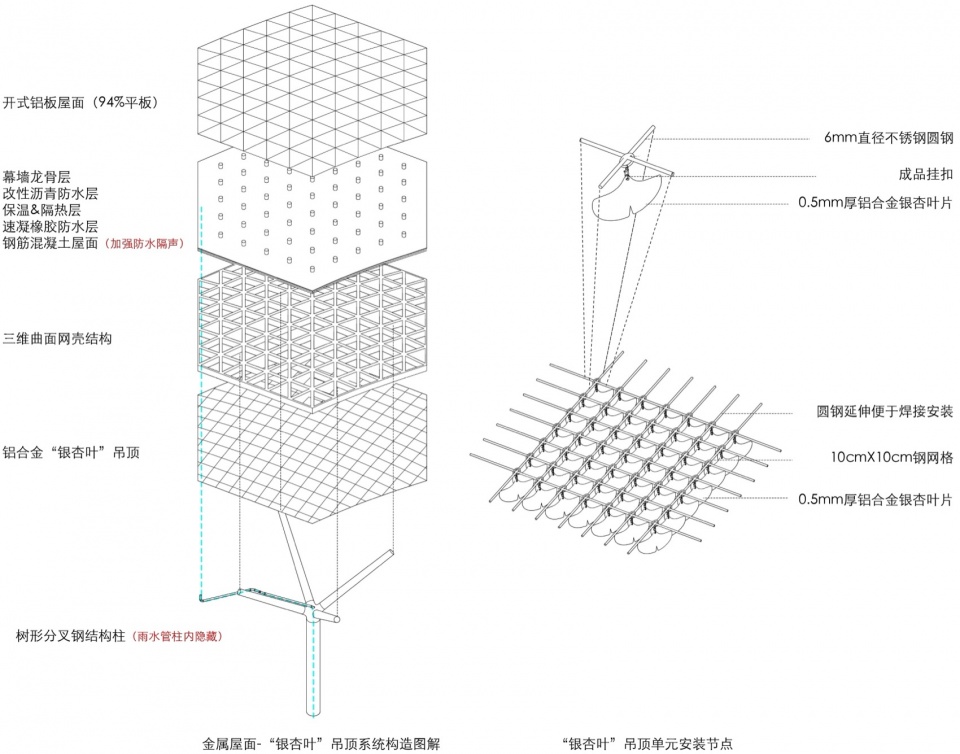
Taking into account a comprehensive range of factors—including construction technology, cost, schedule, and regional cultural expression—the design carefully calibrates the scale, density, hierarchy, color, lighting, and tectonic methods of the “metal ginkgo leaves,” presenting a new humanistic landscape in a harmonious manner. Leveraging a profound understanding of material properties, aluminum panels are utilized to sculpt the diverse, complex curved surfaces of the roof. Active technologies include downsizing the HVAC system to provide flexible control for energy-efficient operation and maintenance, as well as utilizing electrically operated ventilation windows for airflow management to achieve natural ventilation. The plaza paving extensively employs permeable concrete, with richly formed grassy slopes and tree planters arranged three-dimensionally, providing resilience and comfort to the micro-environment while integrating the architecture with nature.
▼源于自然的树形柱设计,Nature-inspired tree-like column design
▼被动式节能构造结合立面整体设计,Passive energy-saving structure integrated with the overall facade design
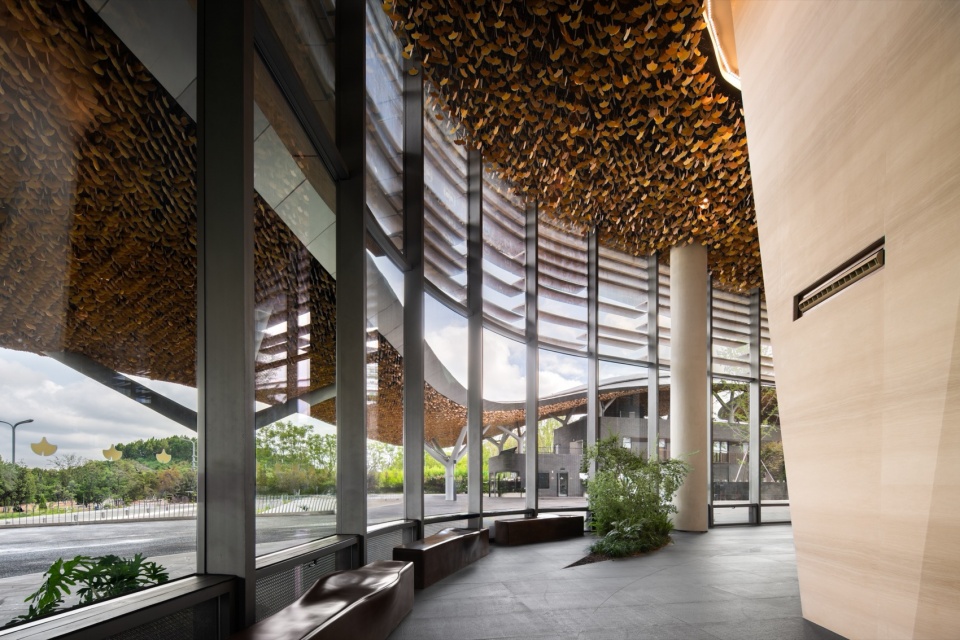
▼金属银杏叶片,Metal ginkgo leaves
结语 Conclusion
建筑是动态生长的,空间柔性设计的外延效应也在变化之中。随着世园会的圆满落幕,这座建筑将回归日常,成为一座服务于市民的文化活动中心。我们相信,随着时间的流转,这座建筑将会如同它身处的自然环境一样,生长共融,和谐相生,成为城市自然与文化不可或缺的一部分。
Architecture grows dynamically, and the extended effects of flexible spatial design are constantly evolving. Following the successful conclusion of the World Horticultural Exposition, this building will return to daily life, serving as a civic cultural center. We believe that, as time flows on, this pavilion will parallel the natural environment it inhabits—growing in communion, coexisting in harmony, and ultimately becoming an indispensable part of the city’s nature and culture.
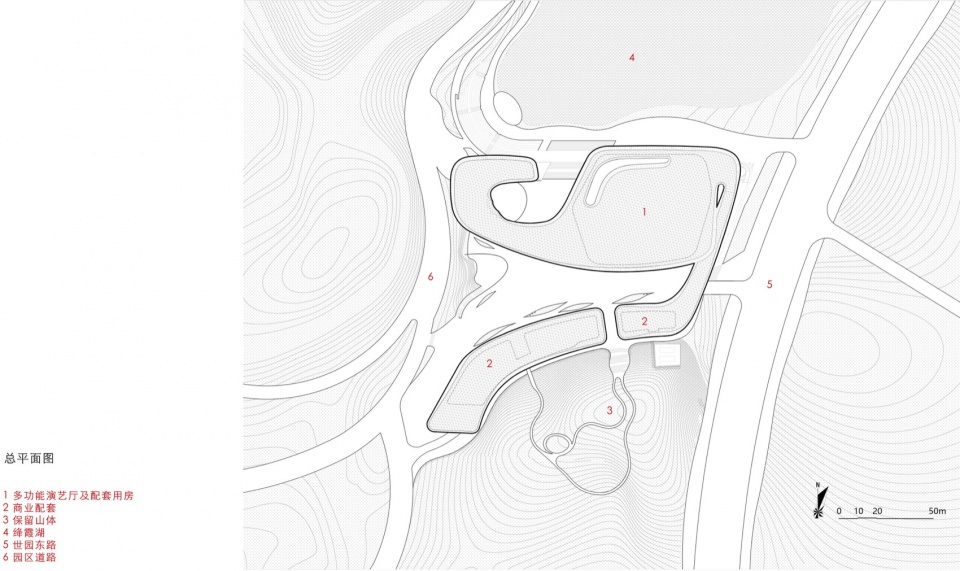
▼总平面,master plan
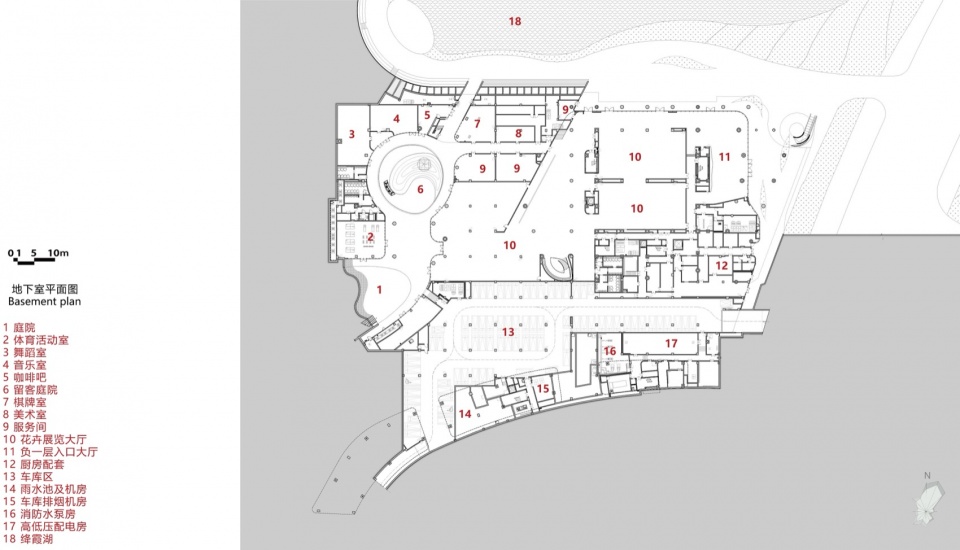
▼地下室平面图,basement floor plan
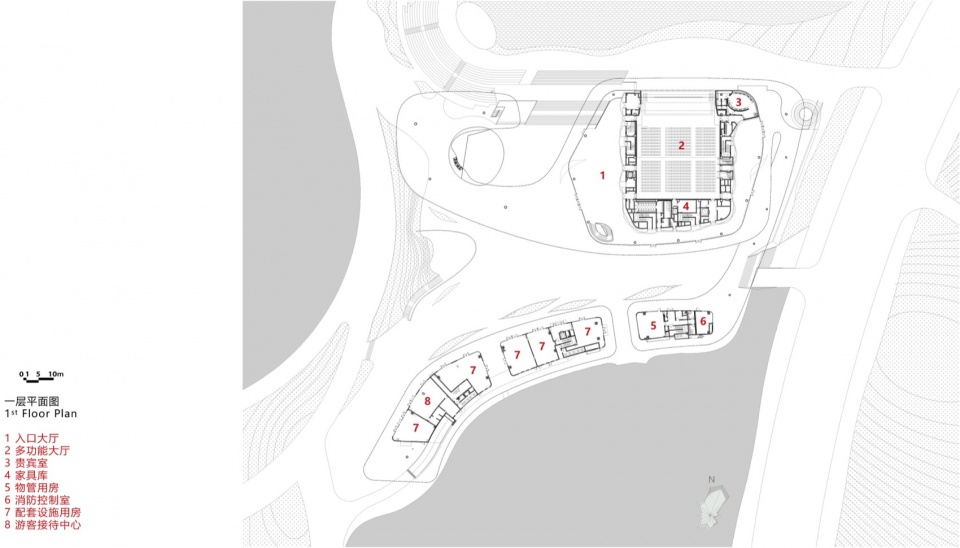
▼首层平面图,ground floor plan
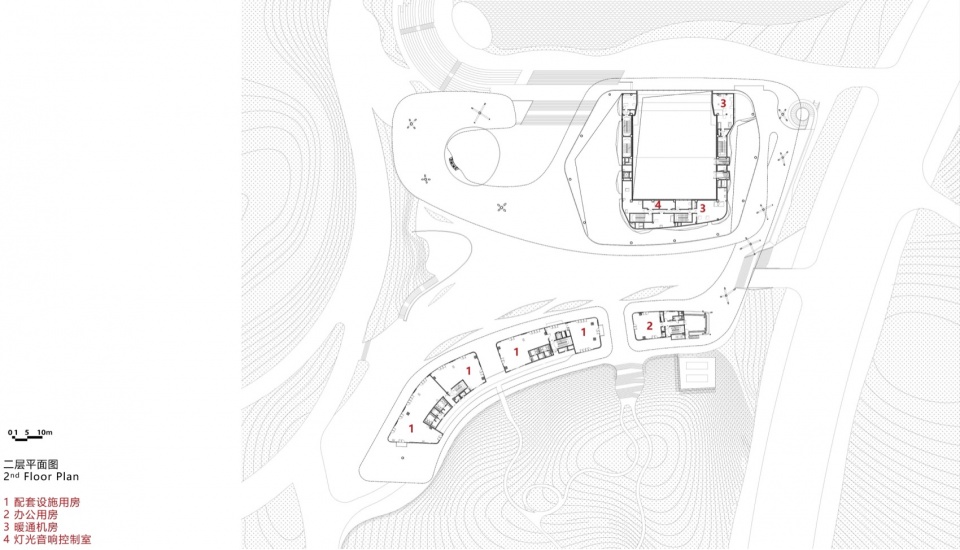
▼二层平面图,first floor plan
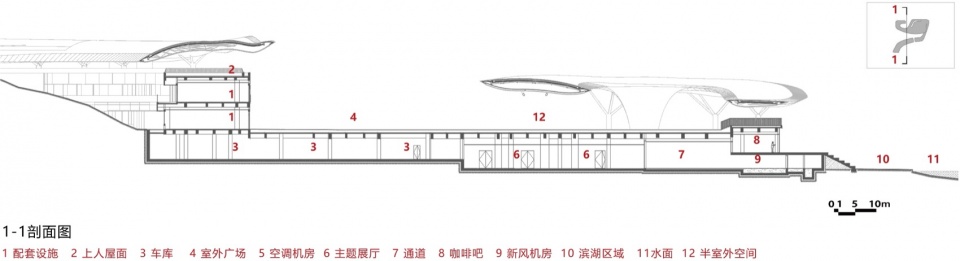
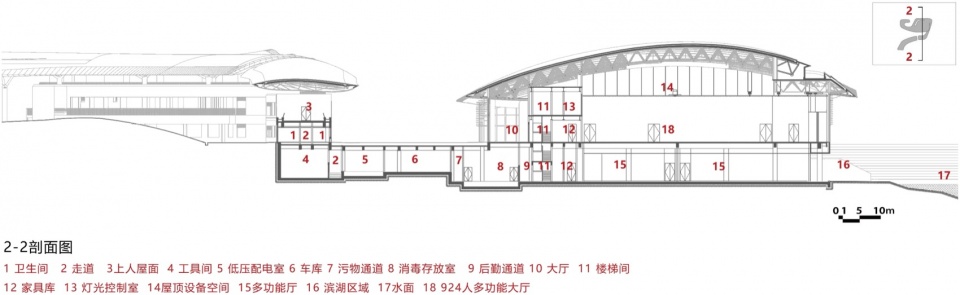
▼剖面,section
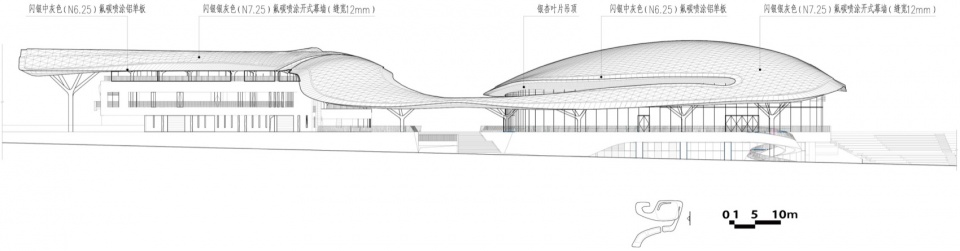
▼东立面,east elevation