Cosimo Piovasco之家,西班牙 / Mariana de Delás
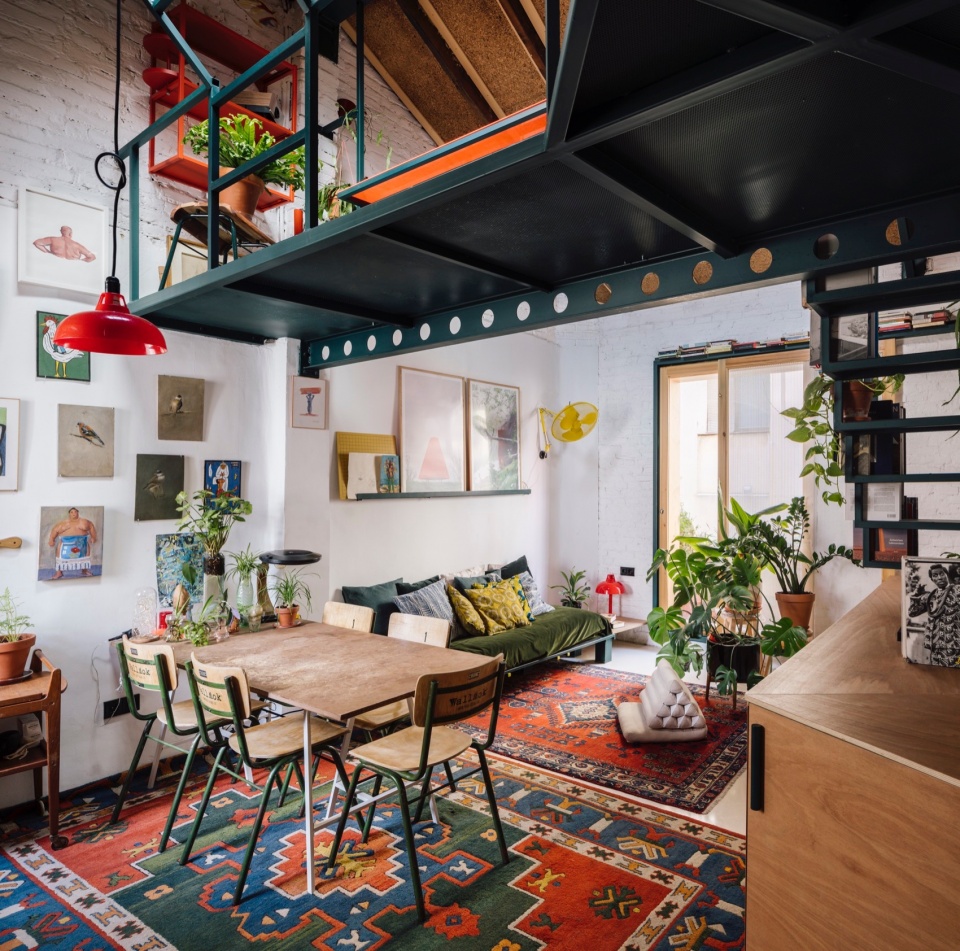
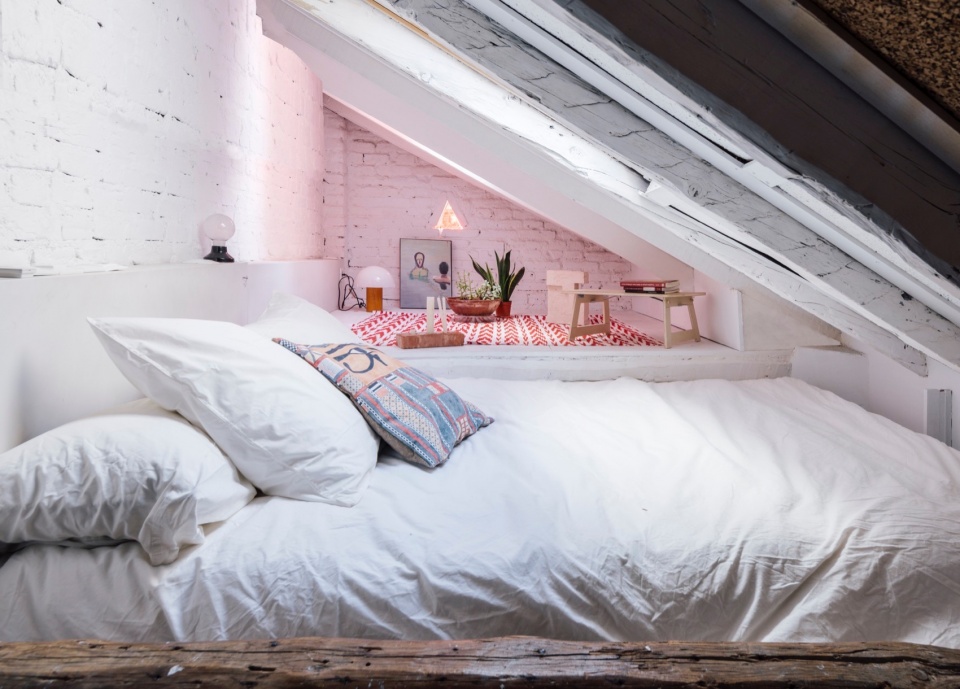
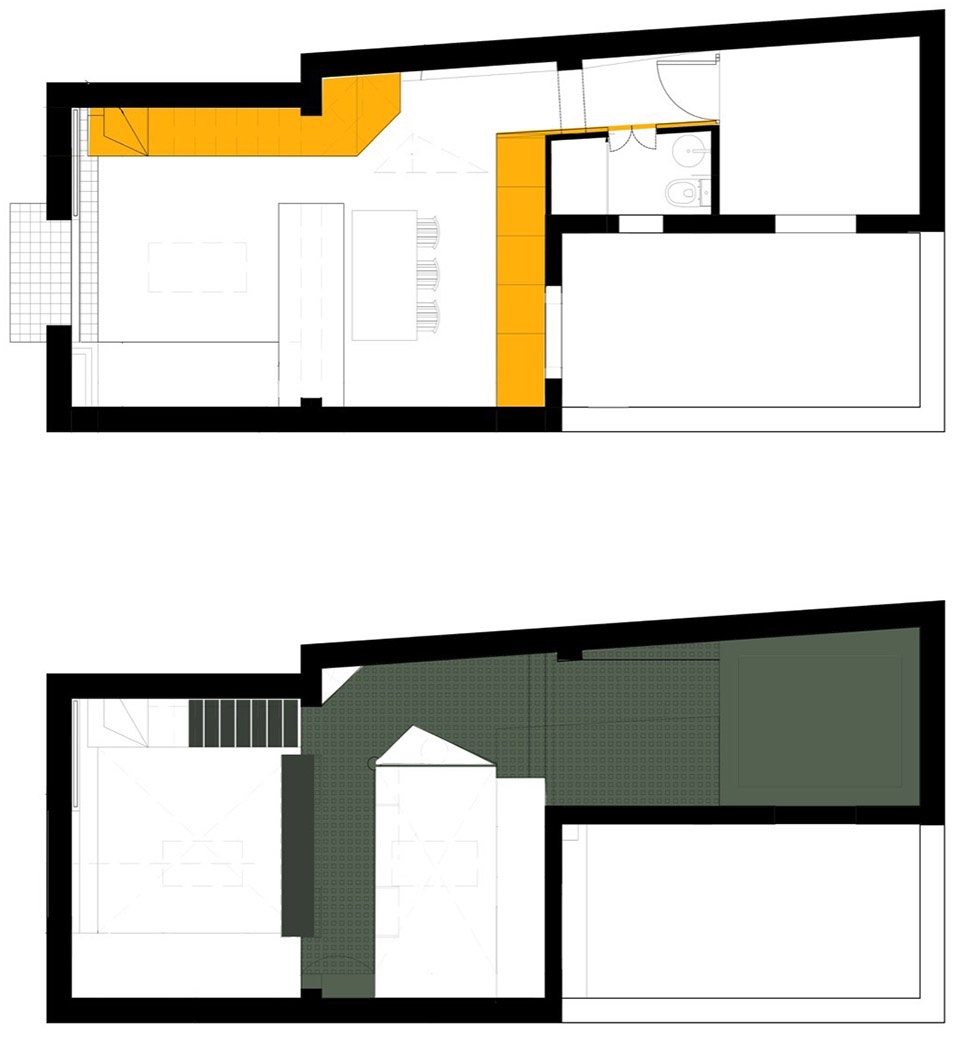
Cosimo Piovasco之家是一个“可生长住宅”的第一阶段实践。项目希望在不久的将来获得许可,在现有最小6×4米的平面基础上向上生长,最终扩展为三层建筑。正如设想所言:“我们将在树上建立一支队伍,让大地与其上的人重新觉醒。”在这一阶段,设计通过“释放”原有的最小平面,将其转化为主要的公共空间(厨房与起居室)。同时引入一条抬升的金属结构廊道,其上容纳了辅助储物空间、一个俯瞰主要空间的学习台,以及一个嵌入式卧室——该卧室位于卫生间与入口过道之上。
House for Cosimo Piovasco is the first step of an ongrowing house that will (hopefully) soon get license approval to grow in height reaching a total of three stories over the minimal 6x4m existing surface plan. “We’ll make an army in the trees and bring the earth and the people on it to their senses” In this first phase, the proposal executed involved freeing up the existing minimal plan to host the main common spaces (kitchen + living room) by creating a lifted metal structure gangway that hosts a relief panic storage space with an extra study table overlooking the main area and a tucked in bedroom which sits on top of the bathroom and entry hallway.
▼项目概览,overall of the project
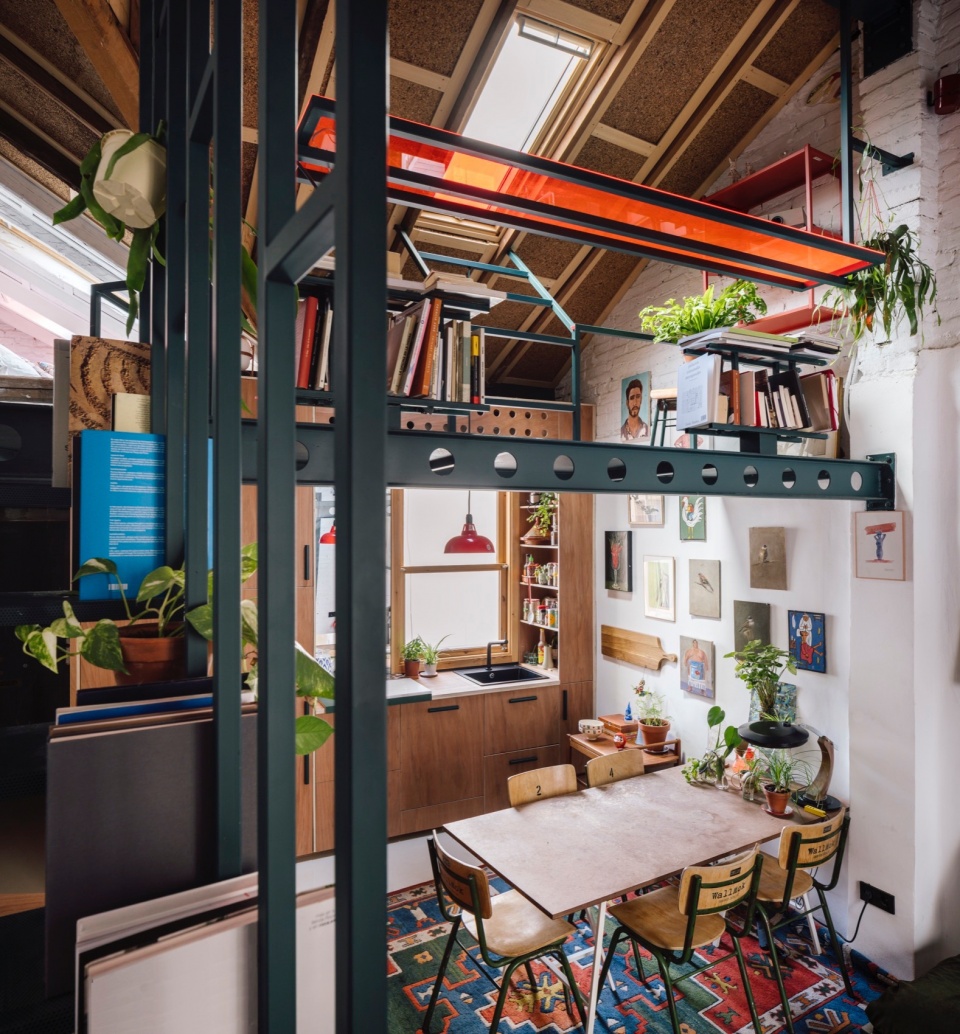
▼厨房餐厅,kitchen and dining
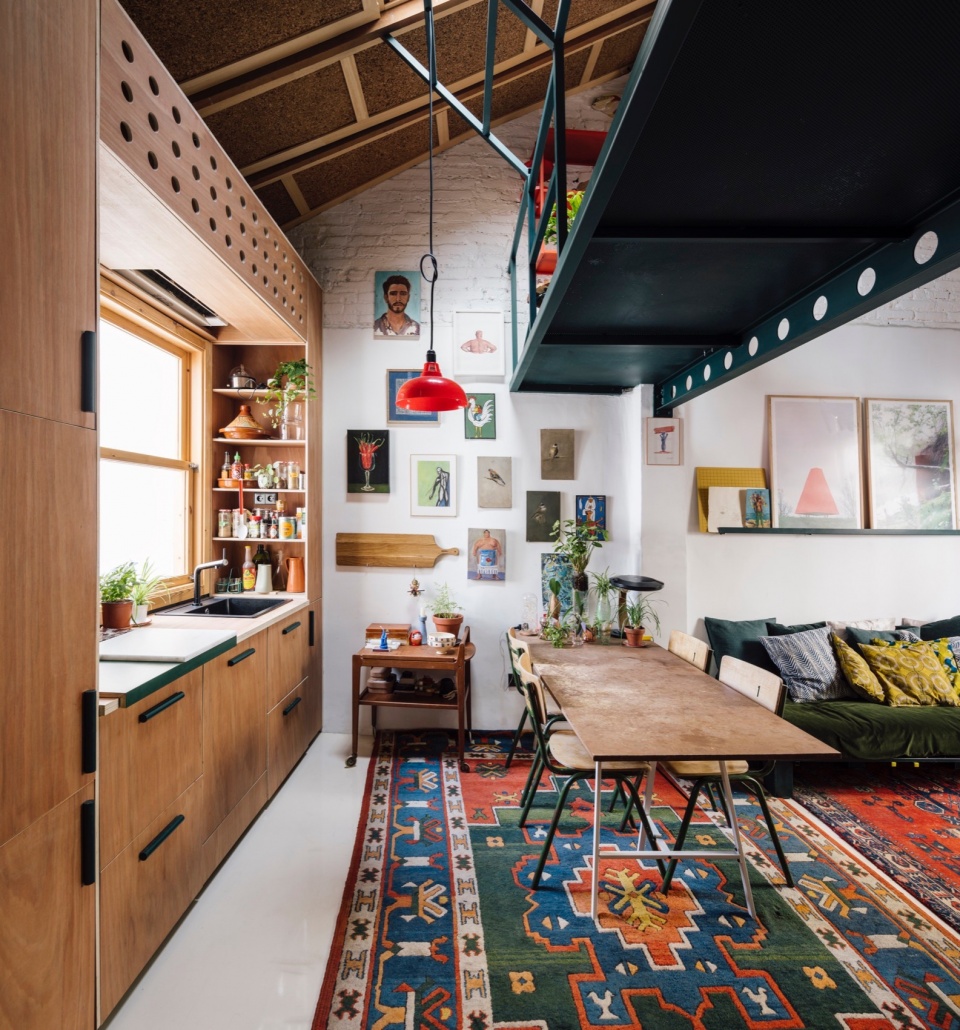
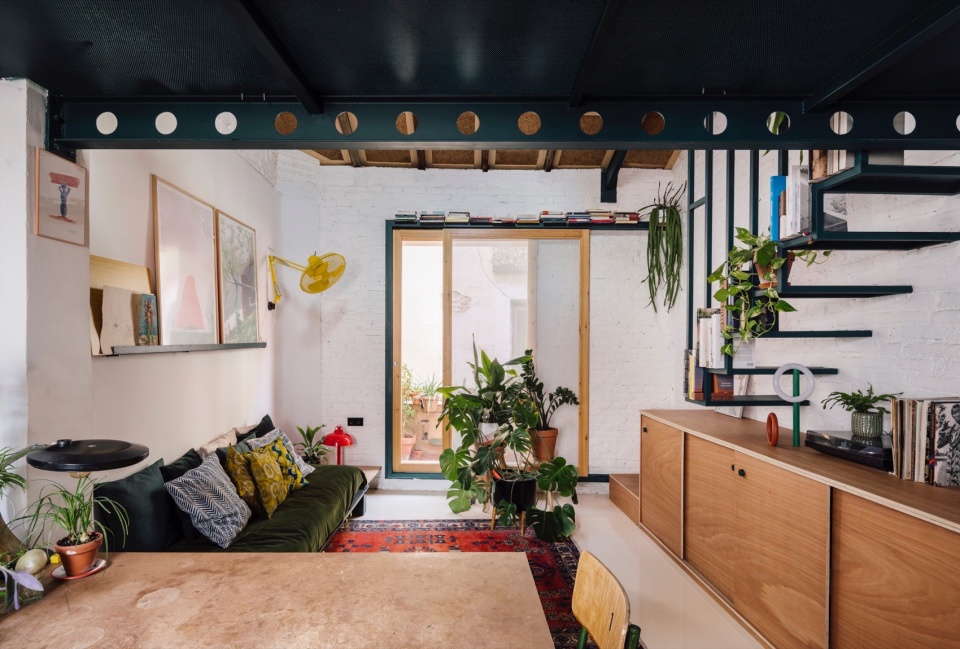
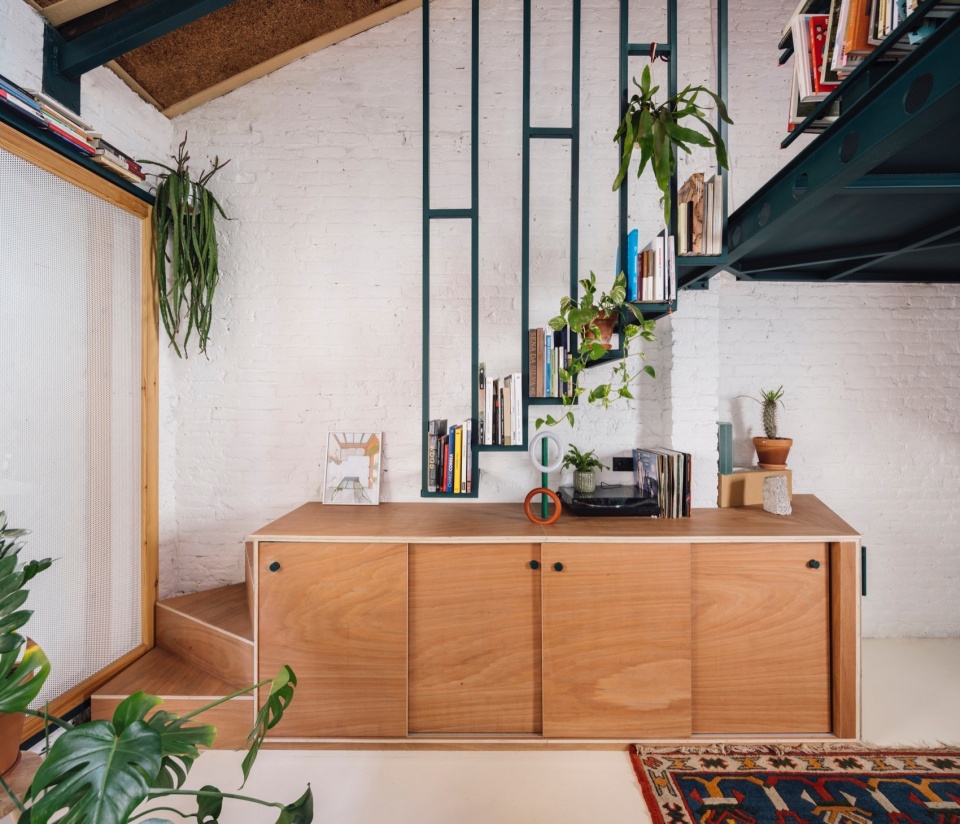
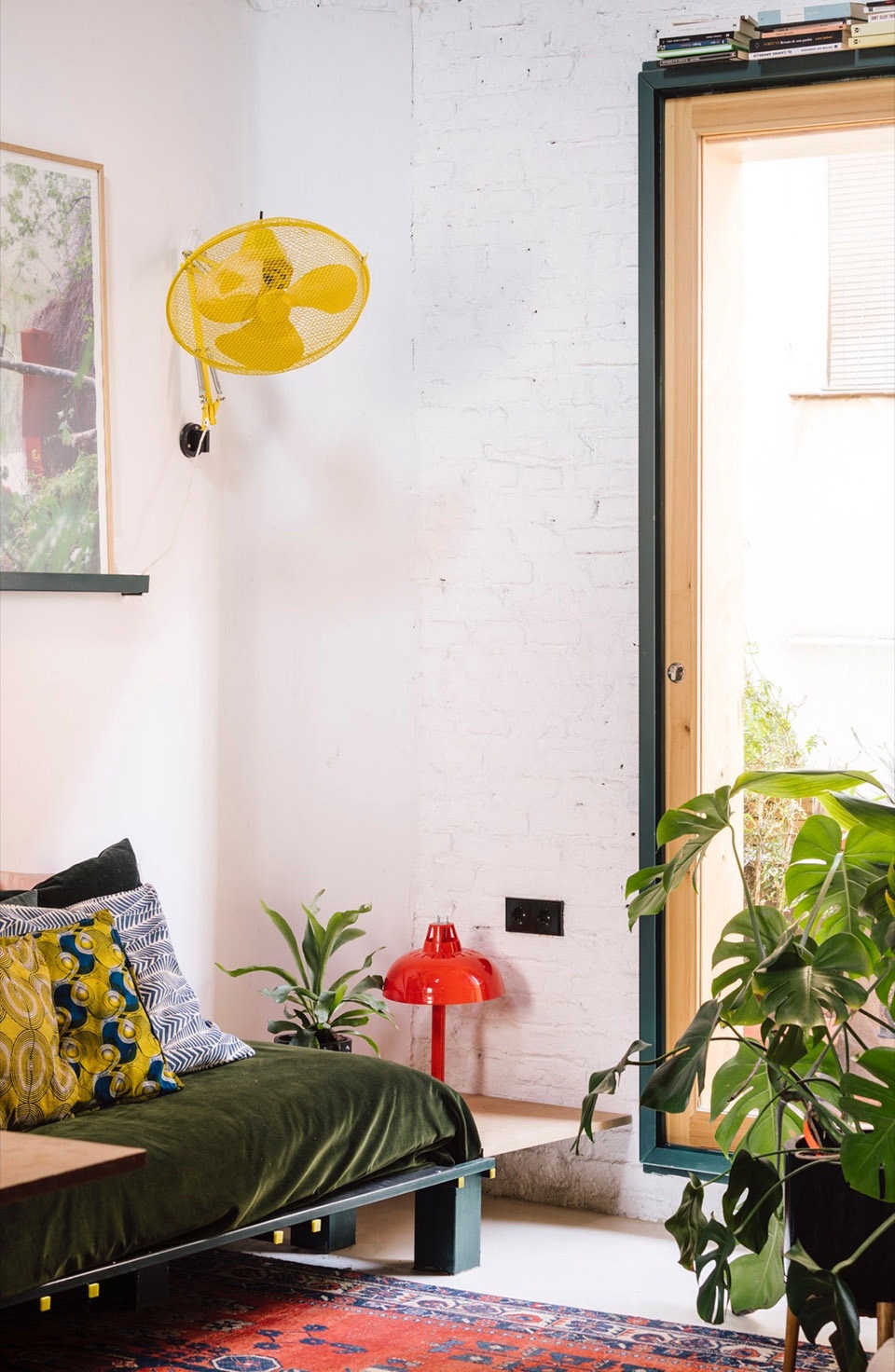
这条金属廊道通过一段轻盈的3×3管状悬挂楼梯抵达,其涂装结构如同树枝般,从地面生长并向上延伸至空中。 这些“枝条”被赋予多重用途:可用于存书、晾晒衣物、悬挂植物、安装灯具等。项目中的细部及大部分家具均由设计团队定制并自行制作,采用方形与圆形截面的钢管焊接完成,并在楼下的本地钢构作坊加工喷涂。这些构件包括沙发、台灯、书架、门把手、窗框、楼梯、储物柜、风扇等,既是对钢材及其边角料的实验,也是一种对有限空间的极致利用。
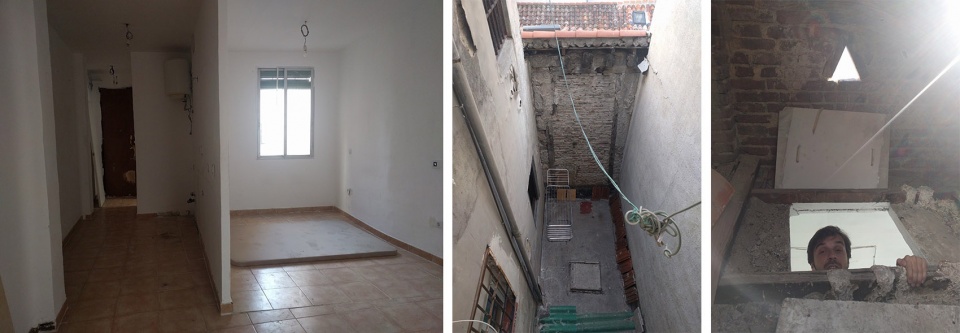
▼改造前,before renovation
This metallic gangway is accessed by a light 3×3 tubular hanging staircase and painted structure that could resemble the branches of trees, growing from solid ground below and lifting into the sky above. Cosimo can use these branches for multiple uses such as storing books, drying the laundry, hanging plants, creating lamps…. Details and most of the furniture is designed and self-built to measure by our studio using square and circle section tubular bars welded and painted by the local steel shop located at street level below. These include the sofa, table lamps, bookshelves, door handles, window frames, stairs, storage cabinets, the flexofan.. all serve as a way to experiment with the material (steel), its off-cuts, and the maximization of the space.
▼抬升的金属结构廊道,the elevated metal structure corridor
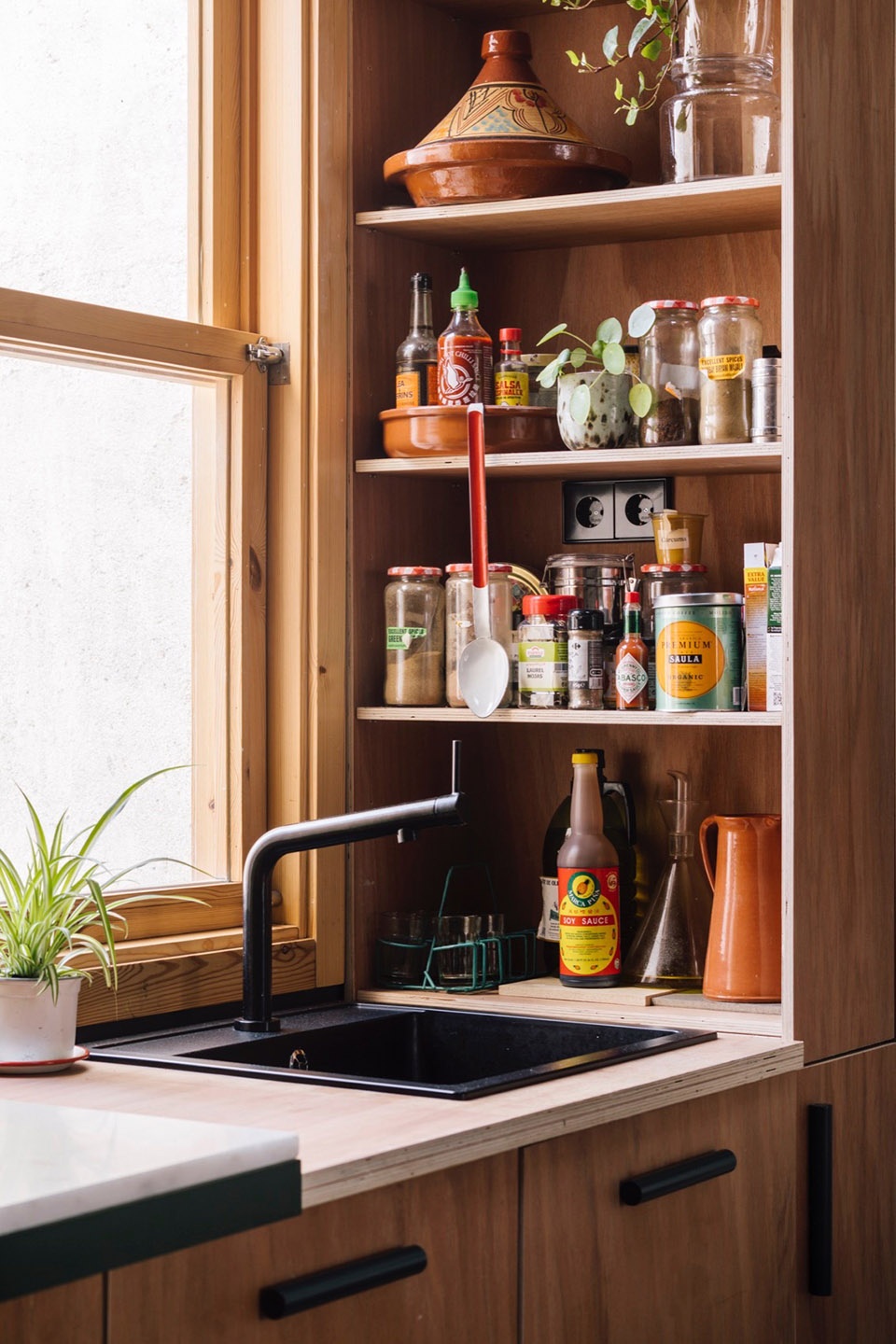
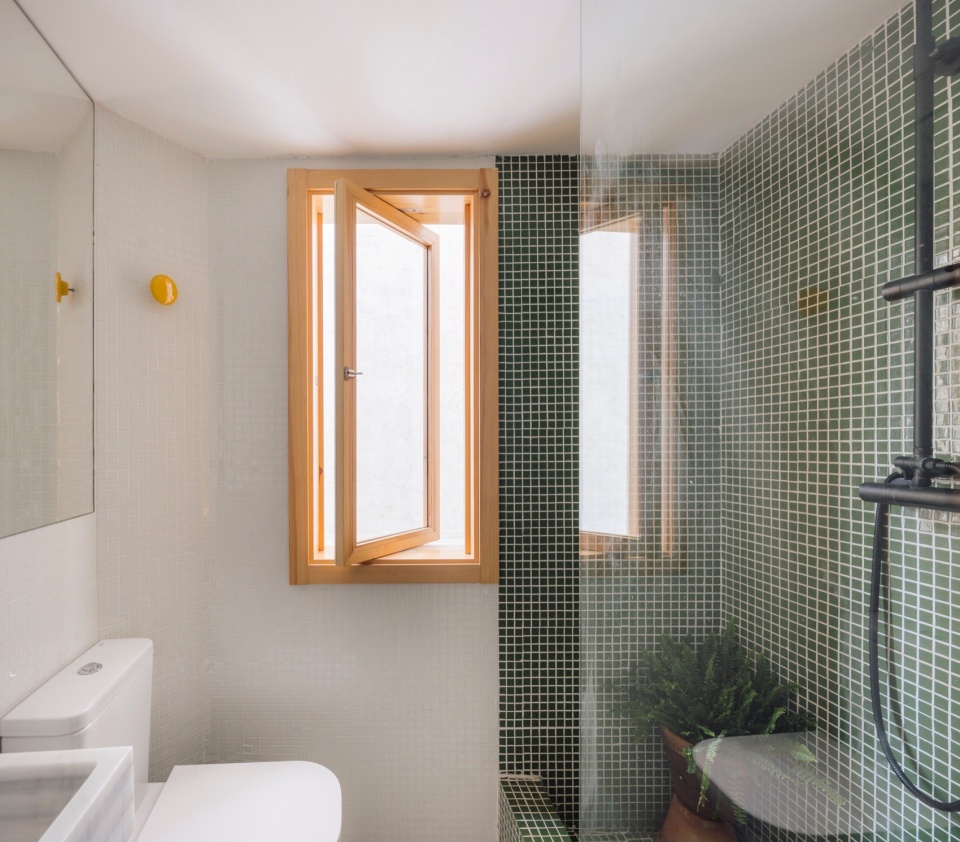
滑动窗、旋转窗与升降窗同样由当地木匠定制,以优化玻璃界面并进行多样化实验。在临街立面上设置了一块可移动的穿孔金属遮板,在保证一定隐私的同时引入光线。厨房柜体通过木质面板隐藏所有设备,以增强使用的灵活性。这些面板同时延伸至走廊,并覆盖卫生间入口,形成一扇“隐藏门”。
▼分析图,analysis diagram
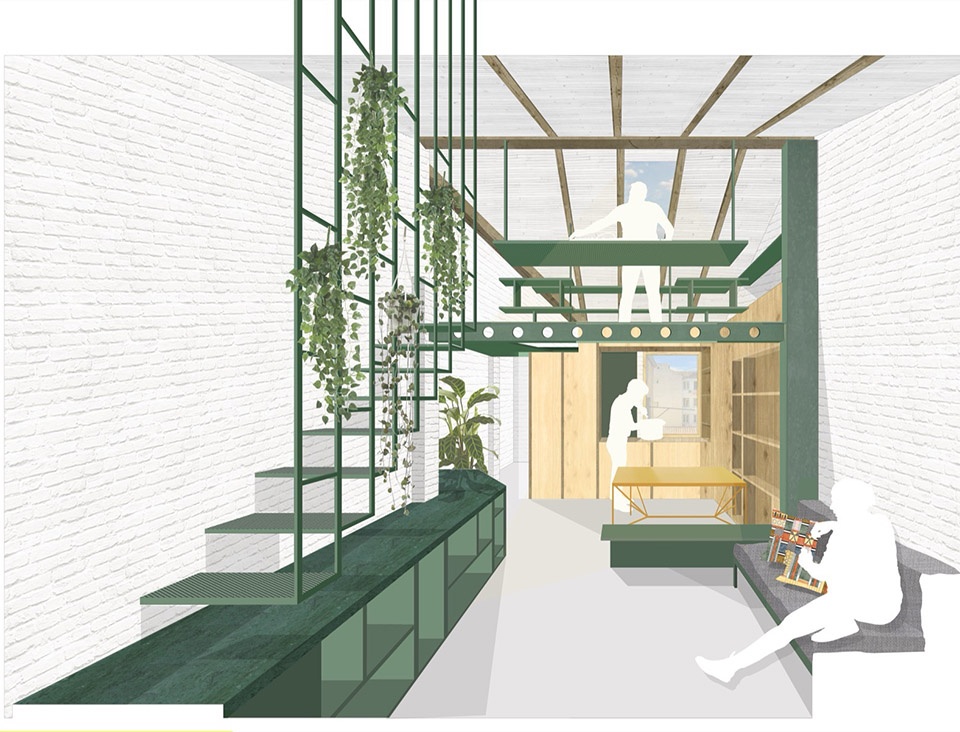
Sliding, pivoting and guillotine windows are also designed and made to measure by a local carpenter to optimize and experiment with the glass surface whilst creating a solution on the street wall of a movable blind panel made out of perforated metal sheet that brings in some privacy while letting some light pass in. Kitchen cabinetry is made to hide all appliances as a way to promote flexibility in its use. These wooden panels are further used throughout the hallway covering the bathroom which is accessed by a secret paneled door.
▼客厅,living room
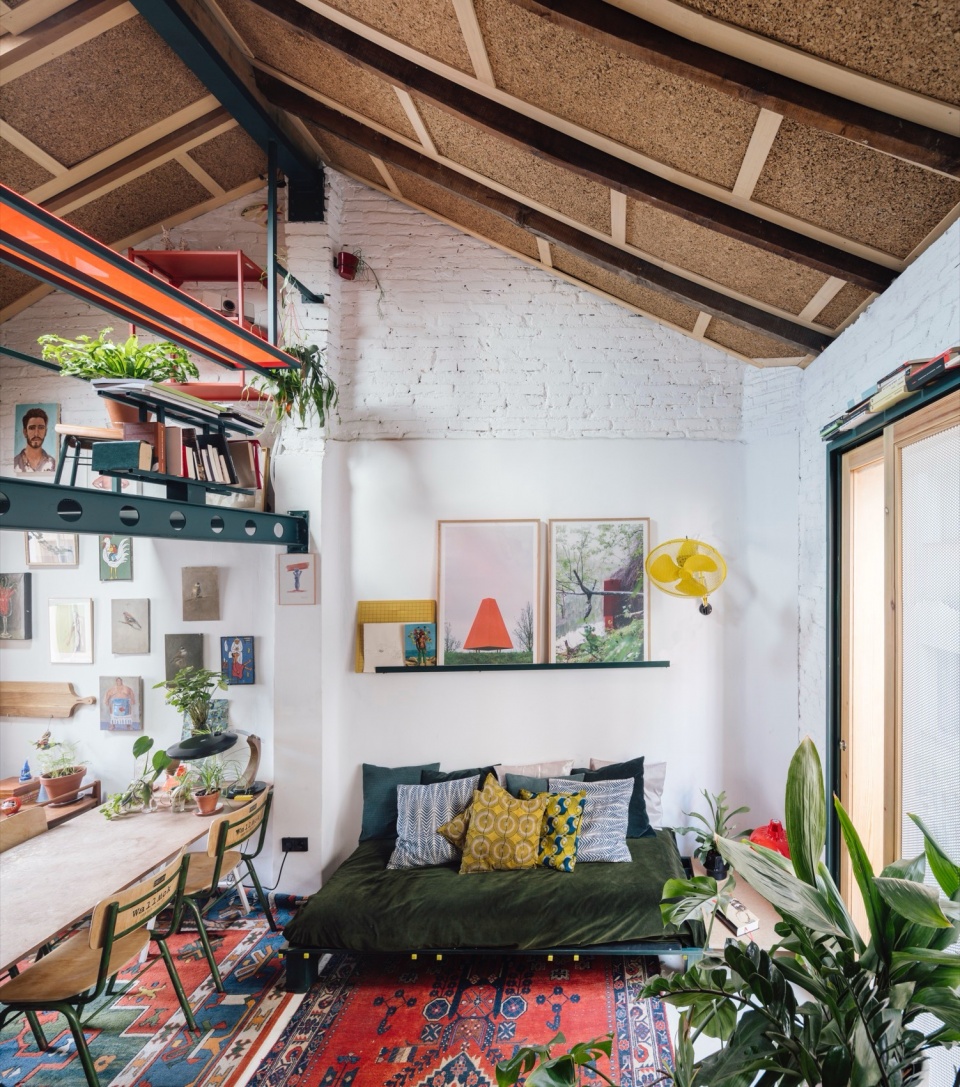
▼由餐厅看客厅,
viewing the living room from the dining
▼楼梯与橱柜的结合,
combination of the staircase and the cabinets
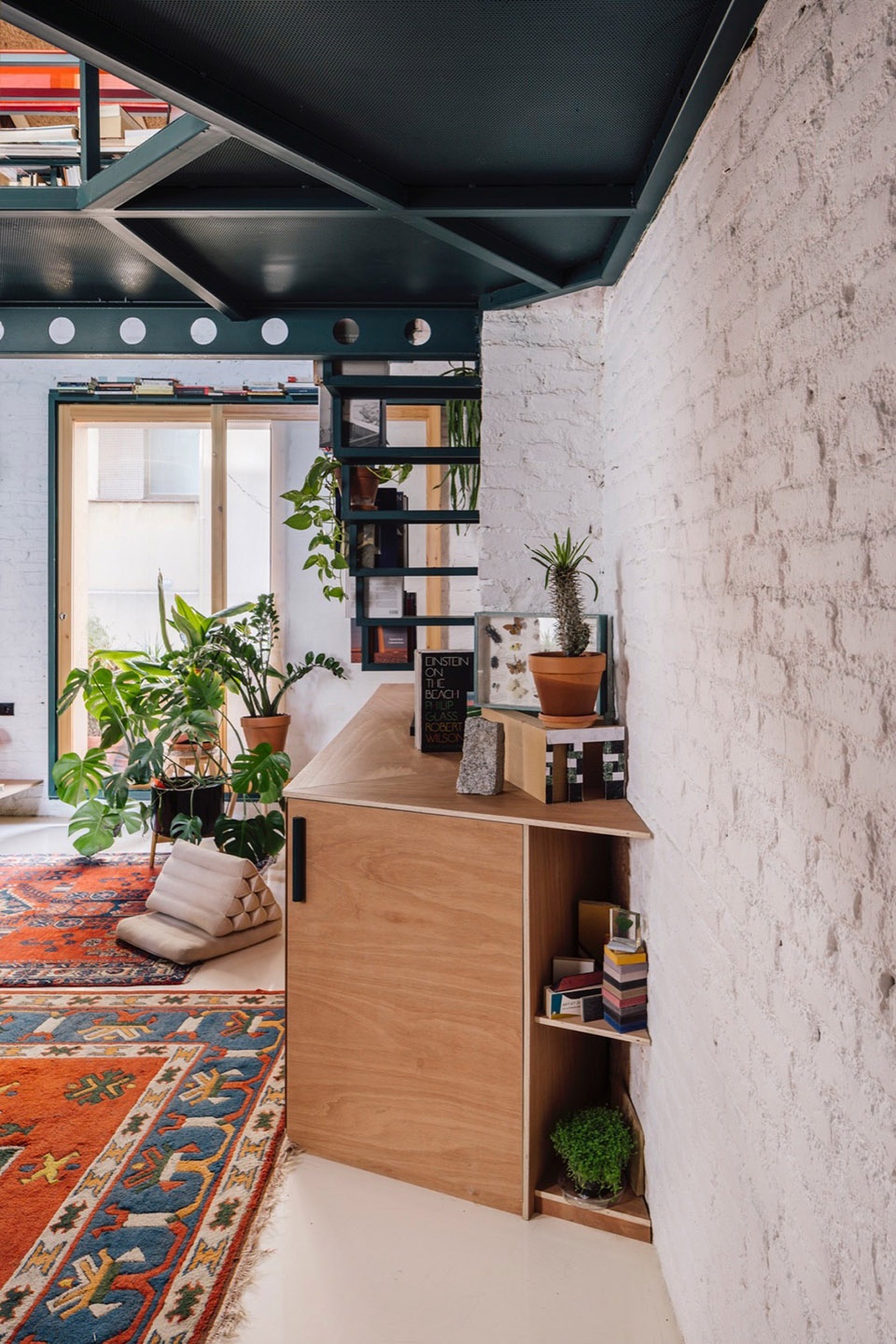
▼走廊下的橱柜,
the cabinet under the corridor
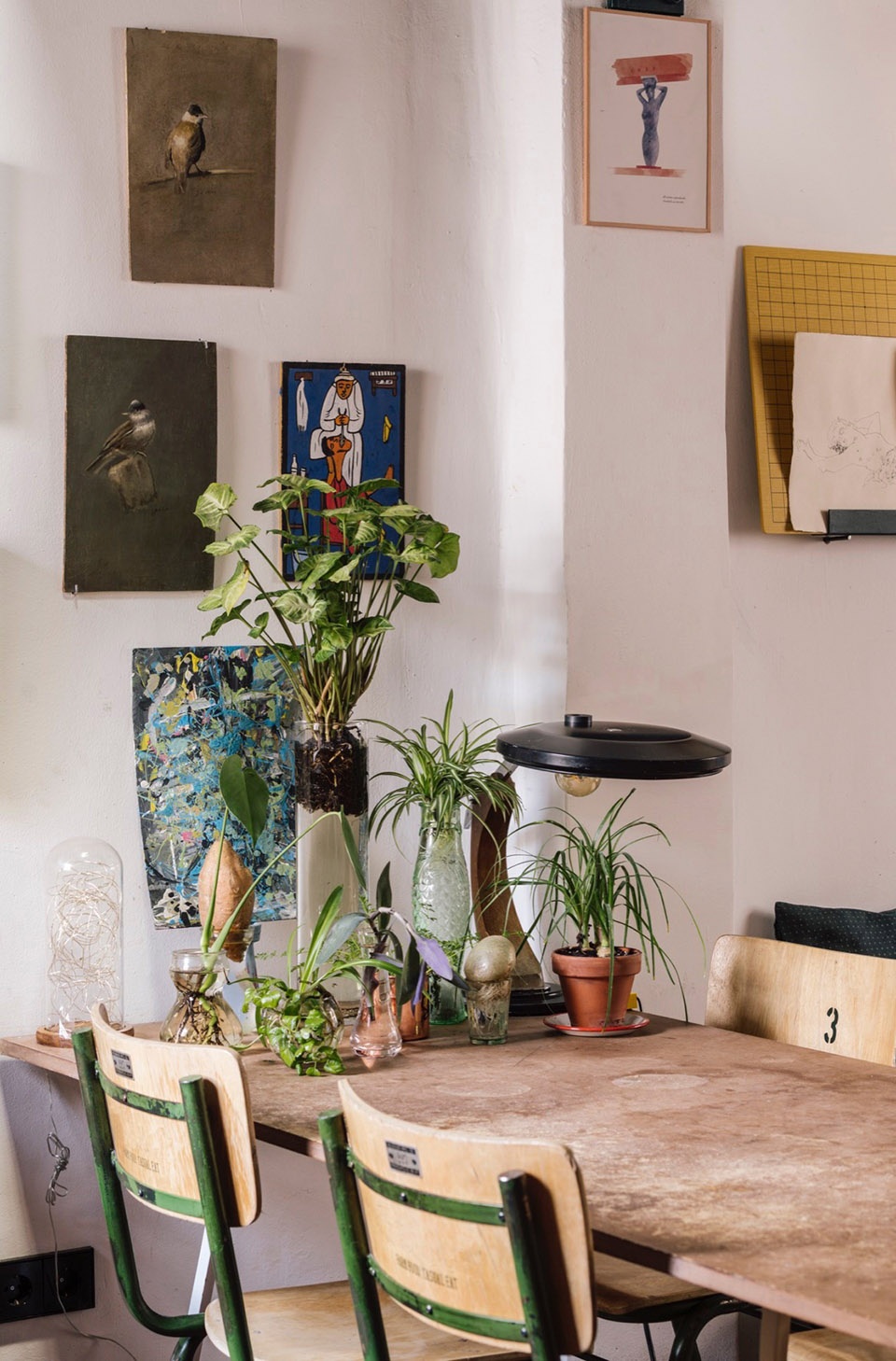
空间的个性化在最后阶段通过业主的艺术收藏得以实现——这些作品来自一个名为“cinco tejas madrid”的新兴艺术家与收藏者对接项目,旨在绕开传统艺术体系的高门槛,使私人收藏者能够直接接触高质量艺术作品。
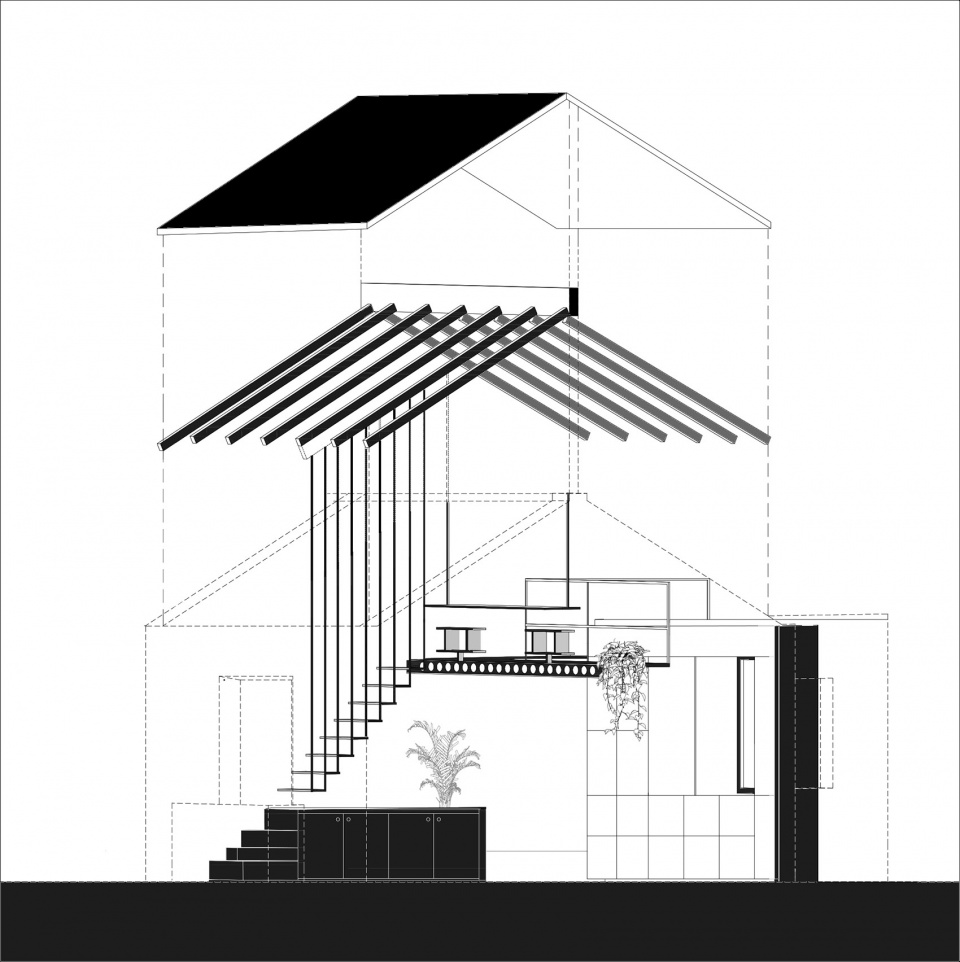
▼分析图,analysis diagram
Personalization is achieved by the latter step of the clients great art collection as a result of their involvement with an emerging artist-to-collector initiative (cinco tejas madrid) that promotes a direct contact between emerging artists and collectors as the means for bringing high quality art available to private collectors by surpassing the intensity of the art circuit.
▼轻盈的3×3管状悬挂楼梯,
light and graceful 3×3 tubular suspended staircase
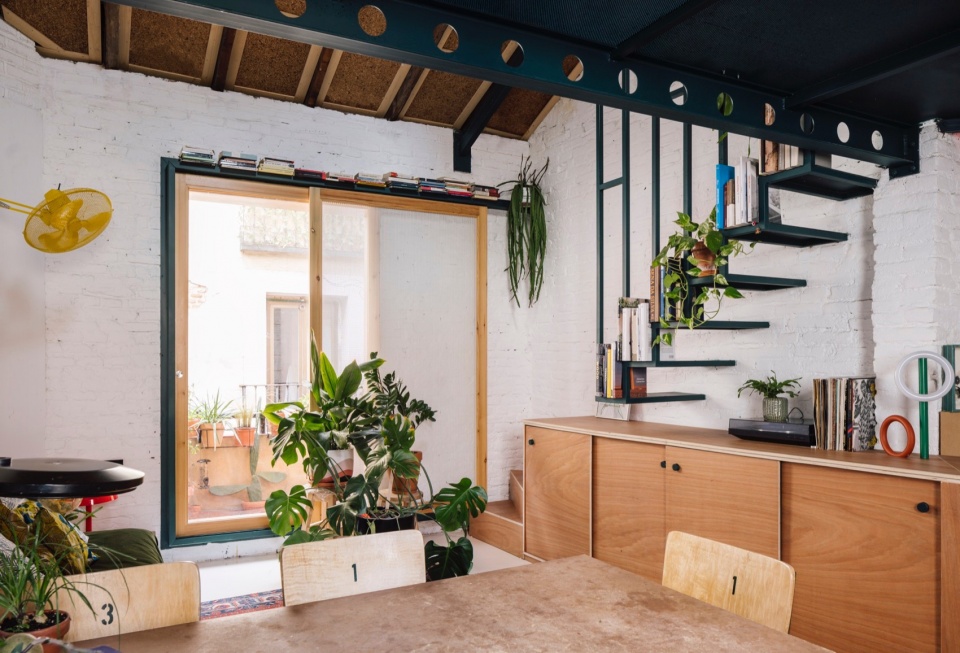
▼楼梯与橱柜的结合,
combination of the staircase and the cabinets
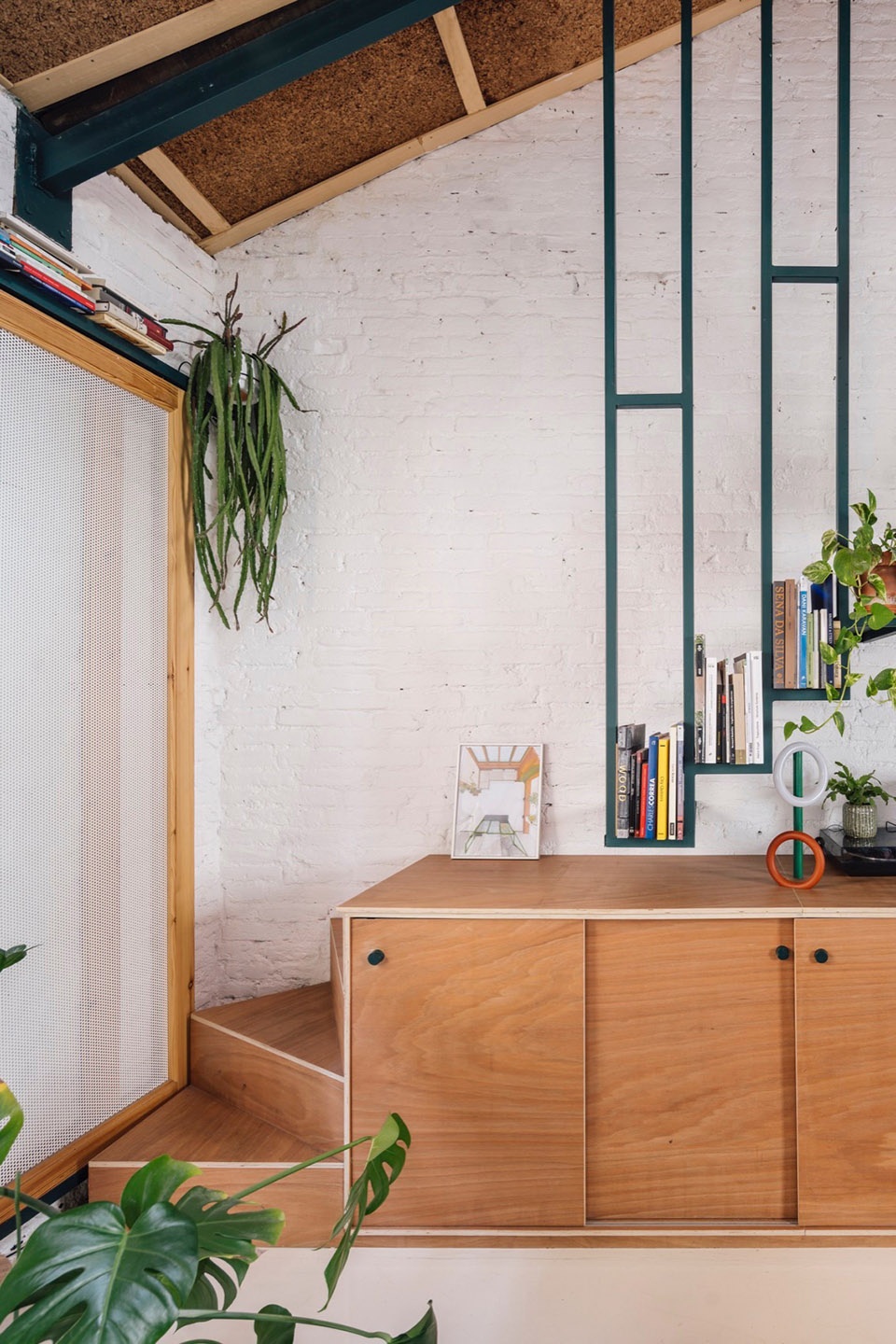
▼细部,details
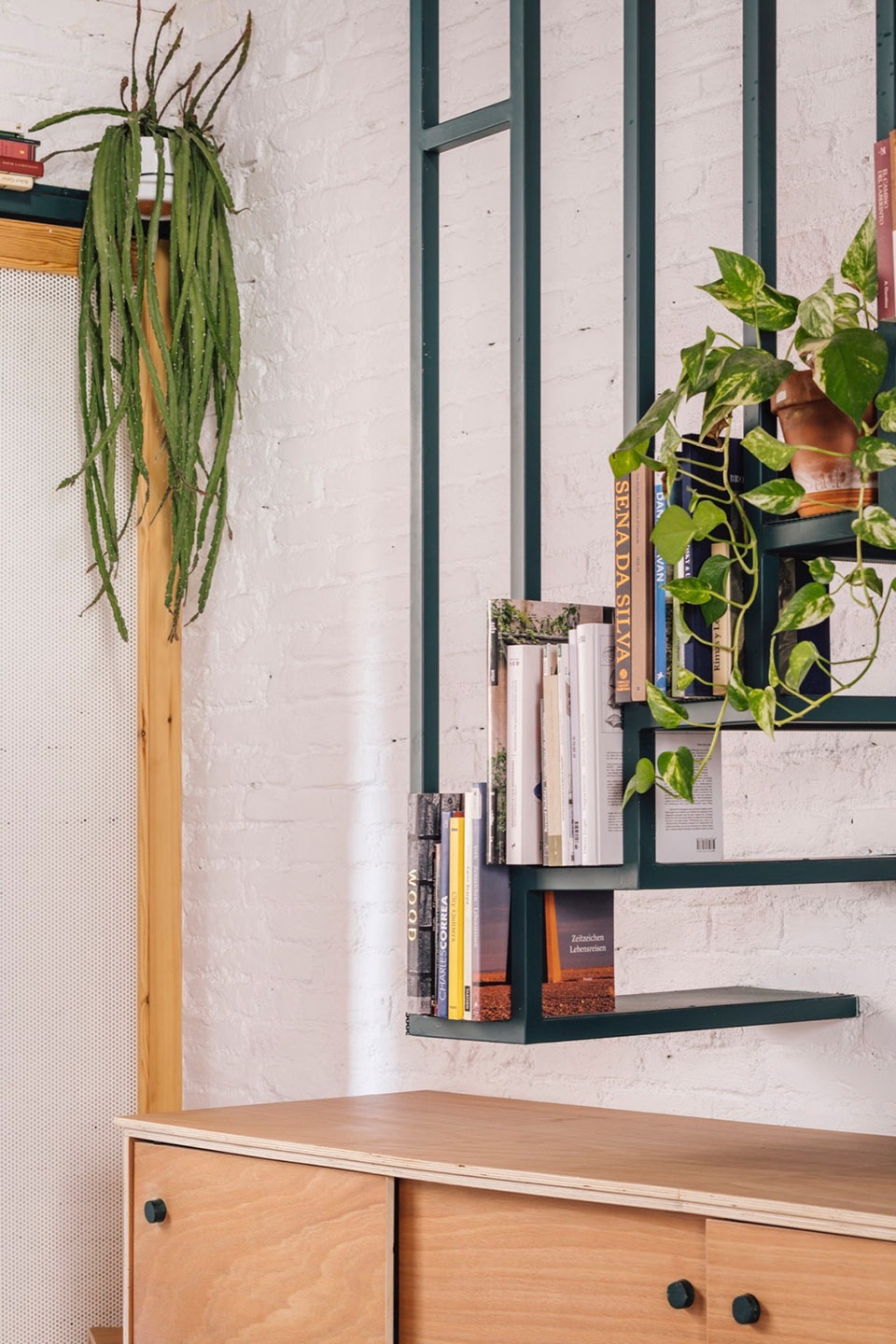
▼细部,details
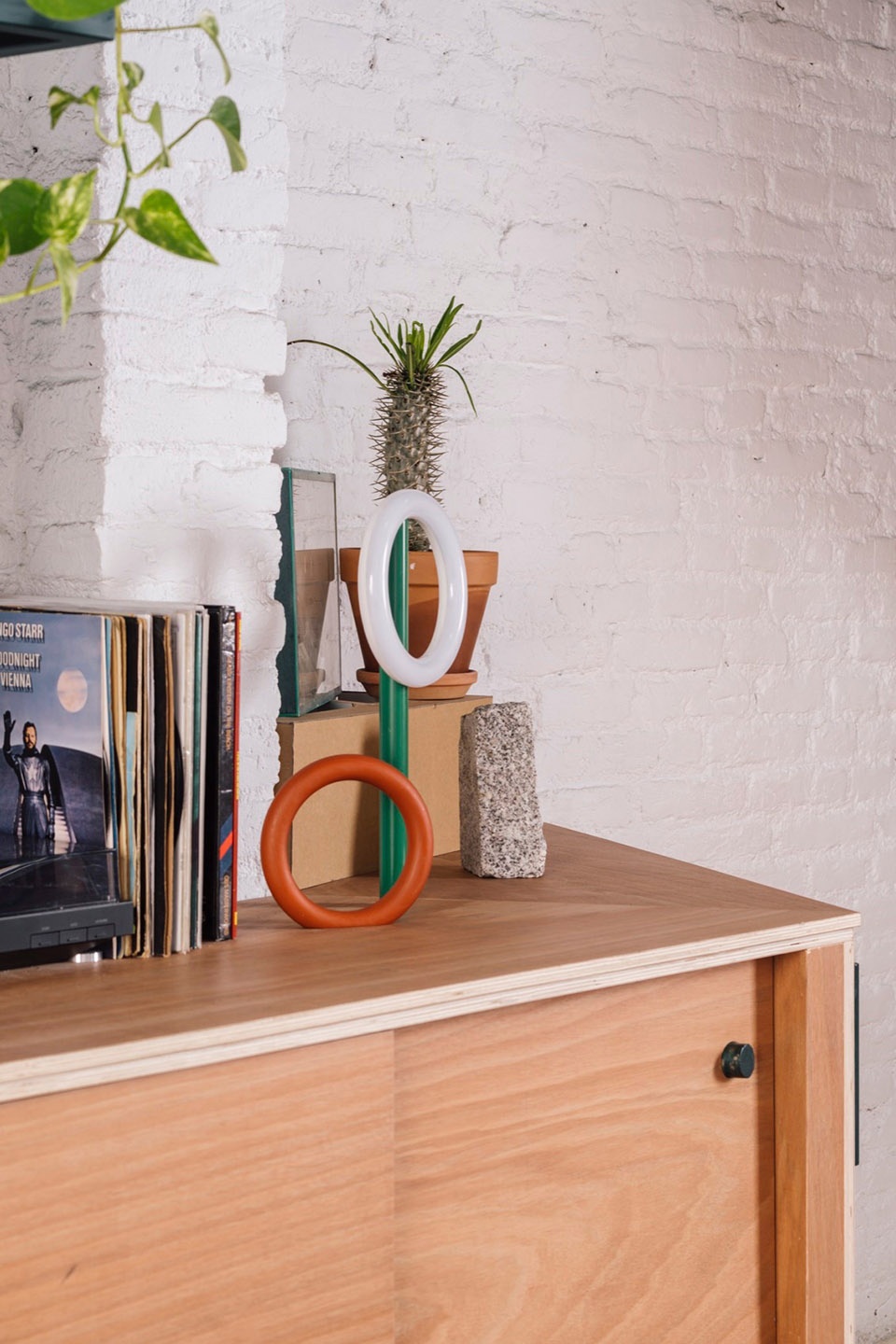
▼餐厅与客厅细部,
details of the dining area and the living room
▼厨房细部,details of the kitchen
抬升廊道的表面采用穿孔金属板,使光线穿透,在一天与四季的变化中形成不同的光影层次。悬挂的桌面采用橙色有机玻璃制成,使天窗光线透过台面,并在夜间转化为散发温暖橙光的灯具。其他定制灯具同样采用橙色有机玻璃与钢材组合,在白天或使用时营造出类似“木漏日”的光影体验——即阳光穿过树叶的斑驳效果。屋顶内侧暂时以软木板覆盖,以在短期内提供基本的保温性能。这一处理是临时性的,因为建筑仍将继续向上生长——持续向上延展、汇聚光线,并从更高处观看世界。
The surface of the lifted gangway is finished by a perforated metal sheet that lets the light pass through creating different light shades throughout the course of the day and year. The hanging table top is finished with orange plexiglass which lets the skylights shine through the surface and doubles as a lamp that floods the space with a warm orange light at night. Other personalized lamps are designed and built in different corners and solid limits with the same orange pexiglass and steel to give a sense of Komorebi (light that passes through trees) throughout the house when both in use or in daylight. The roof was clad provisionally in its interior face with cork panels to provide sufficient insulation for a short period of time as it is intended for it all to go; to keep on growing vertically; to keep on gathering light, to keep on looking from above.
▼阁楼卧室,bedroom on the mezzanine
▼浴室,bathroom
▼平面图,plans
Project Name/ Nombre del Proyecto:
House for Cosimo Piovasco (Baron in the trees) // Understanding Komorebi
Architecture studio : Mariana de Delás
Web:http://www.marianadelas.com/
E-mail: hello@marianadelas.com
Location/Ubicación: Spain
Year/Año: 2021
Lead Architect: Mariana de Delás
Team: Pedro Von Bingen, Ines Bonet
Surface/Superficie construida: (m2) – 45m2
Fotógrafo/Photography: Imagen Subliminal (Miguel de Guzman + Rocio Romero) –http://www.imagensubliminal.com/
ART: Cinco Tejas http://www.cincotejas.com @cinco.tejas + Felipe Martinez – Villalba http://www.felipemartinezvillalba.com/