罗西学院Philo科学中心,瑞士 / Bernard Tschumi Architects
2026年3月:Bernard Tschumi Architects欣然宣布,位于瑞士日内瓦附近的国际寄宿学校罗西学院(Institut Le Rosey)全新学生创新建筑Philo正式竣工。
March 2026: Bernard Tschumi Architects is pleased to announce the completion of Philo, a new building for student innovation at Institut Le Rosey, an international boarding school near Geneva, Switzerland.
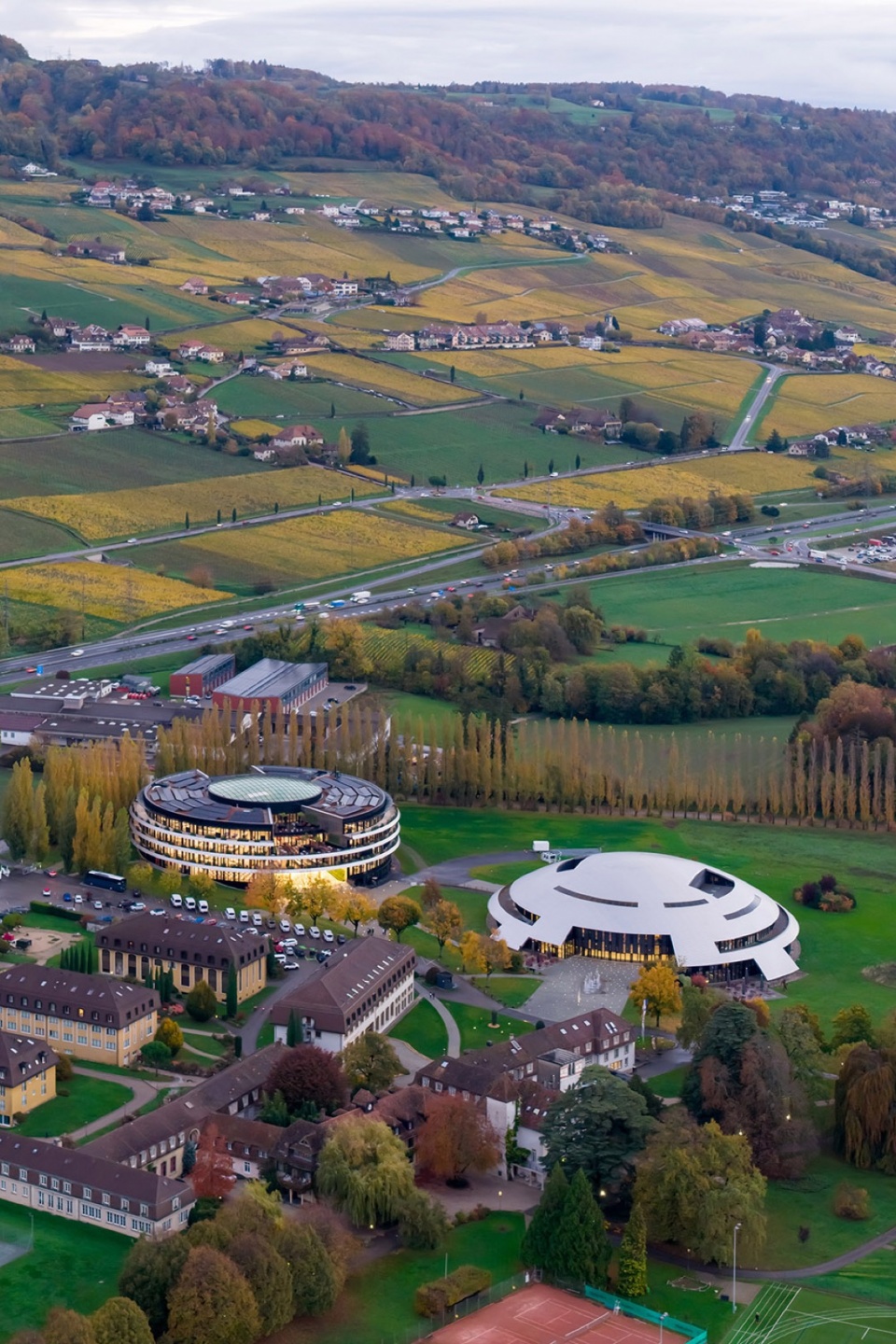
▼鸟瞰,aerial view
流动向量 MOVEMENT VECTORS
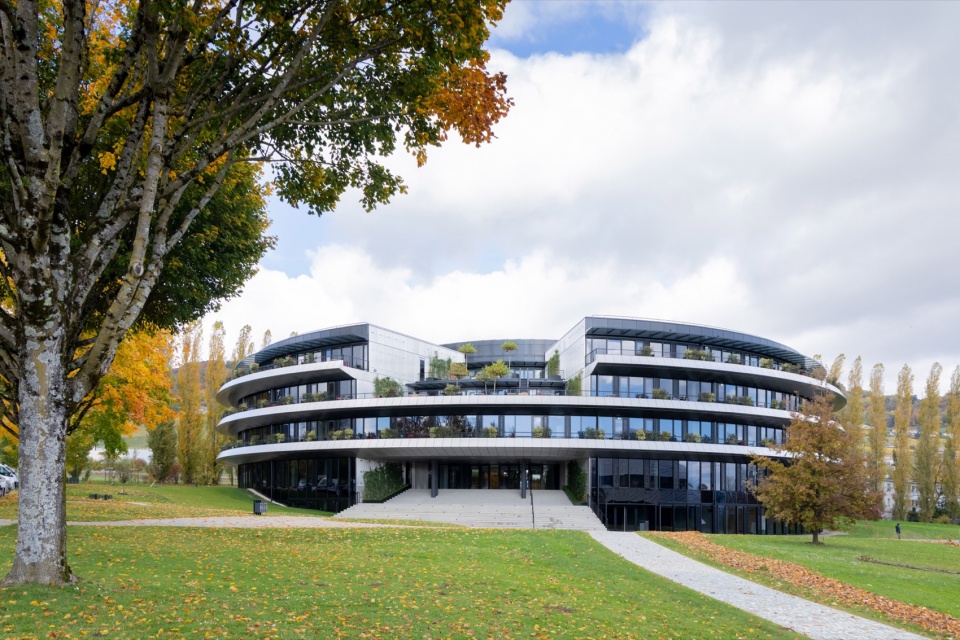
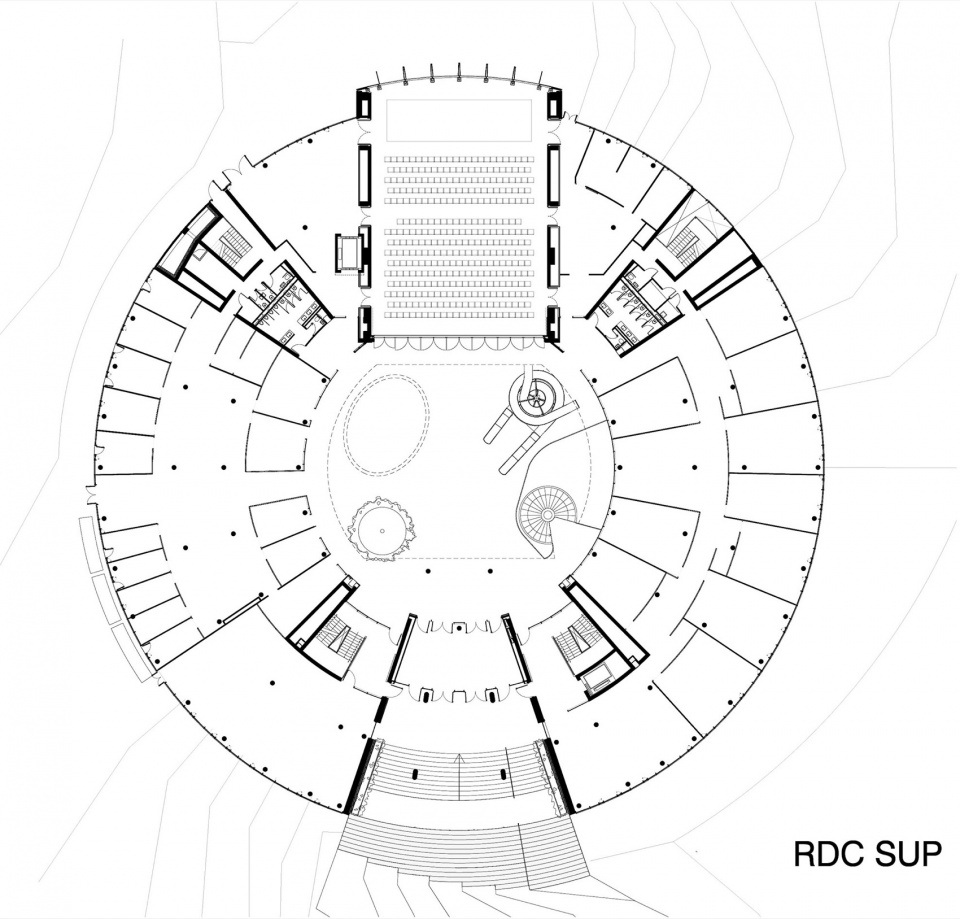
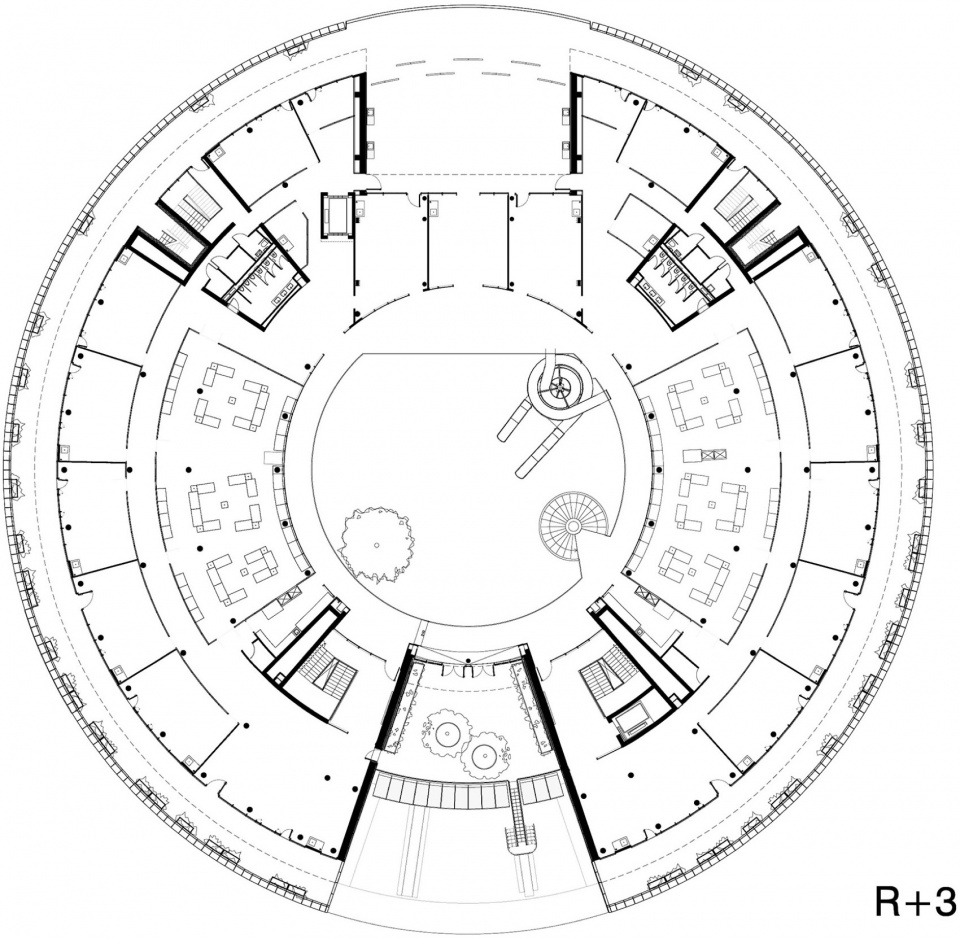
新建筑的一大核心特征在于其动态流线概念。垂直与水平路径生成空间的运动,并在中央中庭交汇;该中庭如同一个被覆盖的公共广场。中庭周围环绕着三层同心步道:第一层沿中庭四个楼层直接展开;中间一层将各类教室进行分配与连接;最外侧步道则作为连续的环形阳台,在天气良好时为教室提供向外延展的使用空间。
A key feature of the new building is its dynamic circulation concept. Vertical and horizontal pathways generate movement and intersect the central atrium, which acts like a covered public square. The atrium is surrounded by three concentric walkways. The first walkway runs directly along the four levels of the atrium; the middle one distributes the various classrooms, while the outer walkway acts as a continuous balcony, providing an extension to the classrooms in good weather.
▼建筑外观,building appearance
功能 PROGRAM
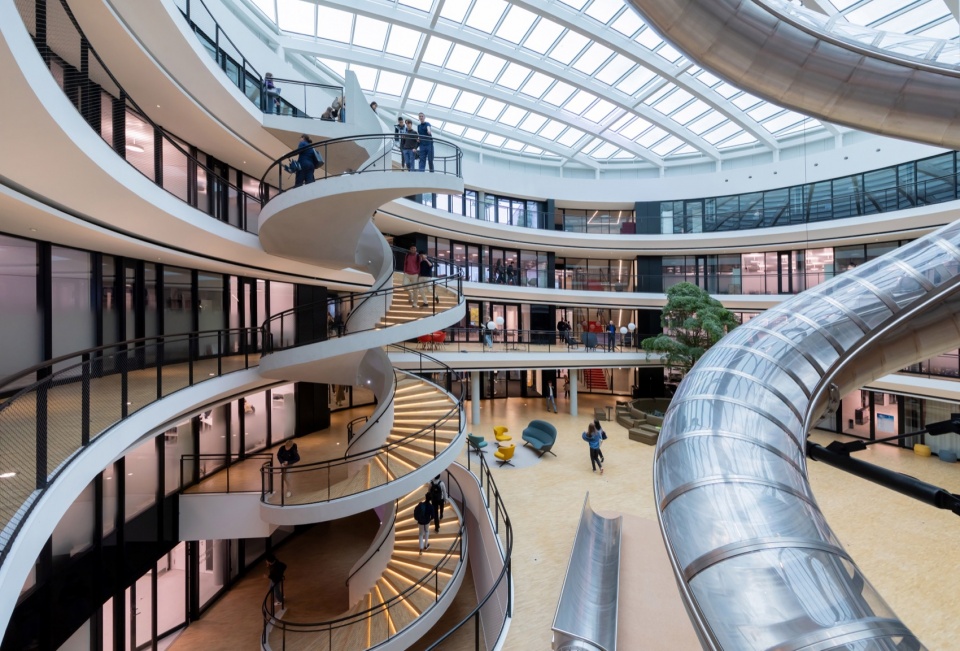
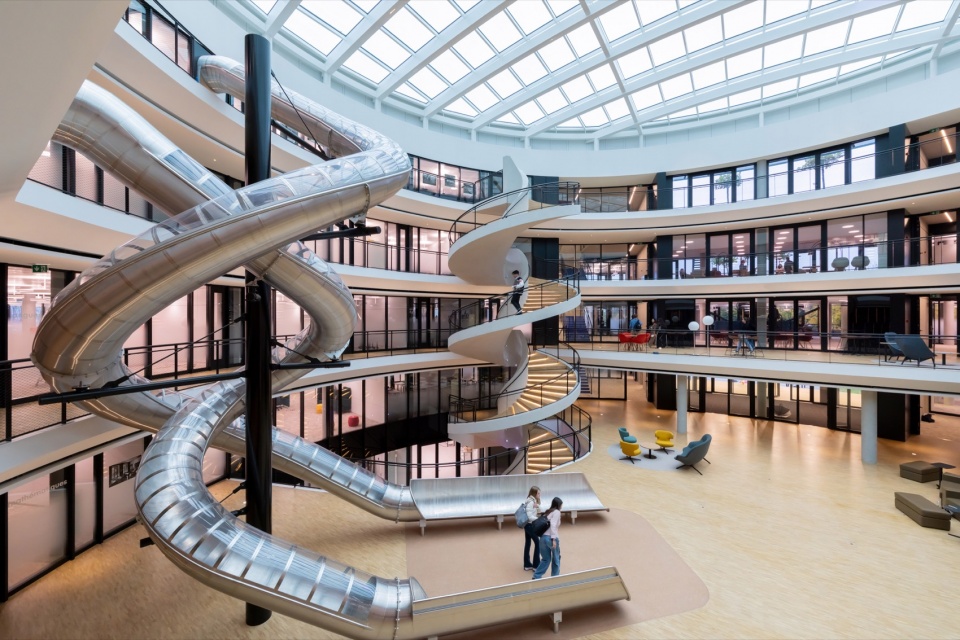
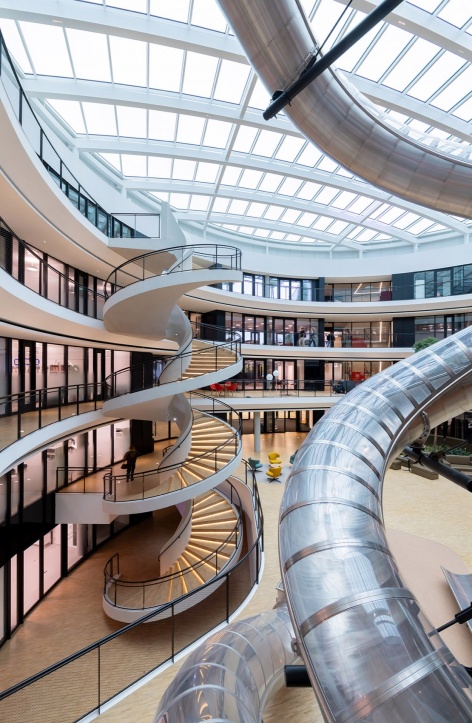
Philo设有五个层级的教室、实验室以及支持学生创新的功能空间,包括一个制造实验室(Fabrication Lab)、一个创业或孵化空间(Start-up / Incubator Space)以及一个用于活动展示的路演空间(Pitch Room)。这些功能围绕一个宏大的中庭组织,中庭内设有一部螺旋楼梯以及两条以双螺旋结构布置的滑梯。
Philo hosts five levels of classrooms, laboratories, and programs to support student innovation, including a Fabrication Lab, a Start-up or Incubator Space, and a Pitch Room for events, organized around a grand atrium with a spiral staircase and two toboggan slides in a double-helix configuration.
▼中庭,atrium
▼两条以双螺旋结构布置的滑梯,two toboggan slides in a double-helix configuration
▼螺旋楼梯,spiral staircase
灵活学习 FLEXIBLE LEARNING
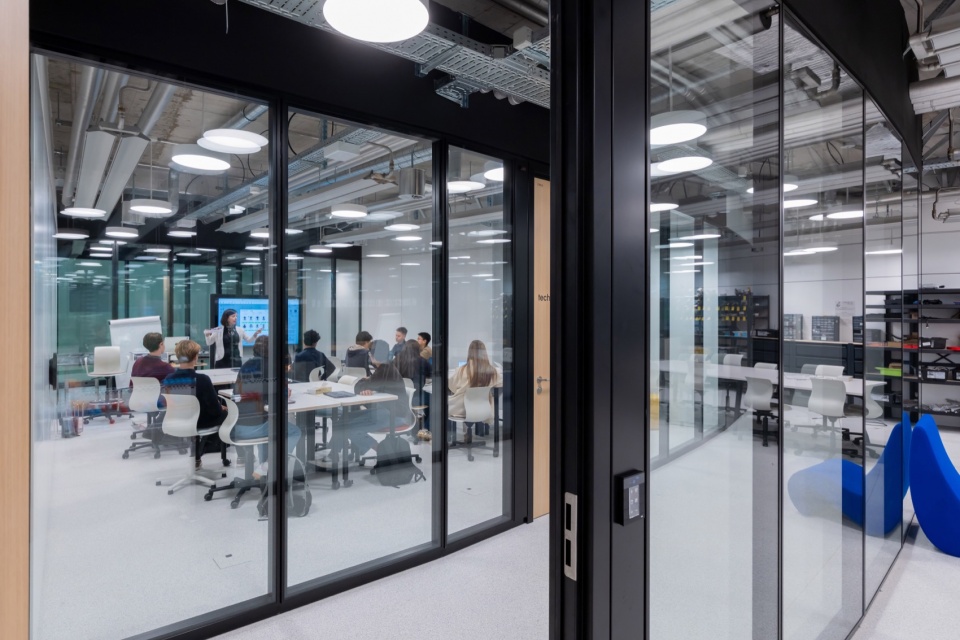
教室、实验室及交通空间均以最大化灵活性为设计目标。隔墙可移动或拆除,使90间教室能够形成多种组合配置。这种灵活性不仅提升了建筑未来的使用价值,也有助于降低隐含碳。
Classrooms, labs, and circulation spaces are designed to maximize flexibility. Partitions can be moved or removed to allow for multiple configurations of 90 classrooms. Such flexibility will maximize the building’s future utility and limit embodied carbon.
▼教室,classrooms
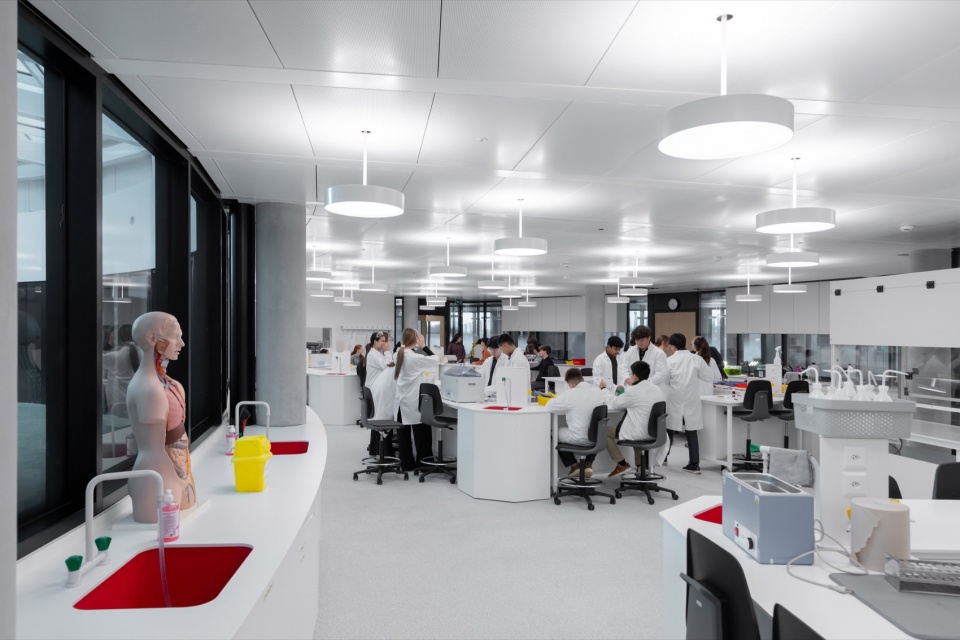
建筑内部散布的非正式空间促进学生、教师、驻校创业者及访客之间的自发交流。在外围区域,教室面向阳台与小型花园开放,从而鼓励交流与协作。
Informal zones scattered throughout the building promote spontaneous interactions among students, teachers, resident entrepreneurs, and guests. On the perimeter, classrooms open onto balconies and small gardens that encourage exchange and collaboration.
▼实验室,labs
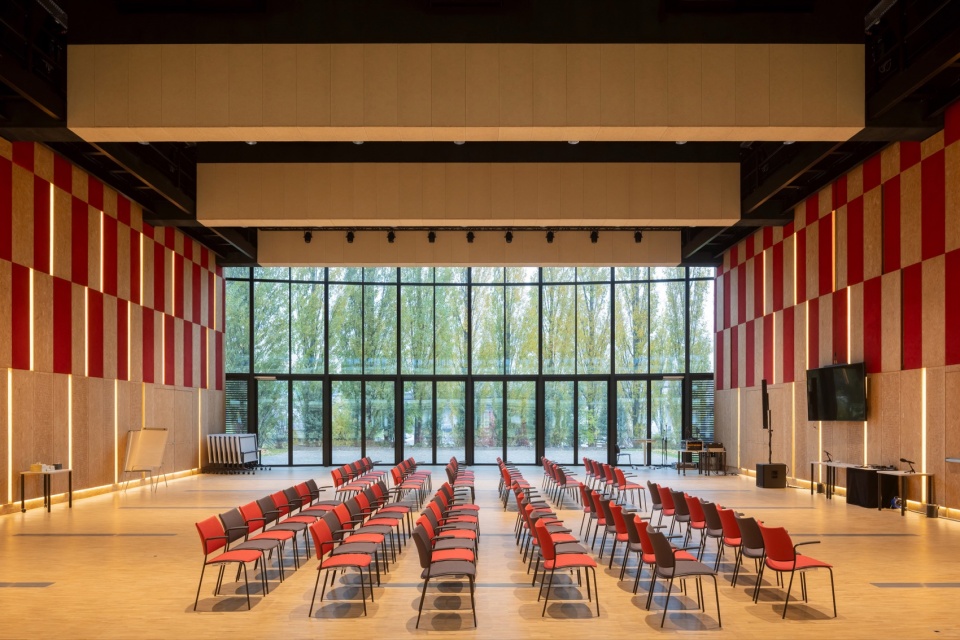
这一环形结构与历史校园以及Bernard Tschumi于2014年完成的邻近金属穹顶音乐厅形成对话。作为艺术中心的科学与创业对应体,新建筑提出了一个建筑问题:如何在不使一方压倒另一方的前提下建立对话,使整体大于部分之和?
The circular structure enters into a conversation with the historical campus and the adjacent metal-domed concert hall completed by Bernard Tschumi in 2014. The new scientific and entrepreneurial counterpart to the arts center raises the architectural question: How to establish a dialogue without one building overshadowing the other, so that the whole becomes greater than the sum of its parts?
▼音乐厅,concert hall
材料与技术特征 MATERIALITY AND TECHNICAL FEATURES
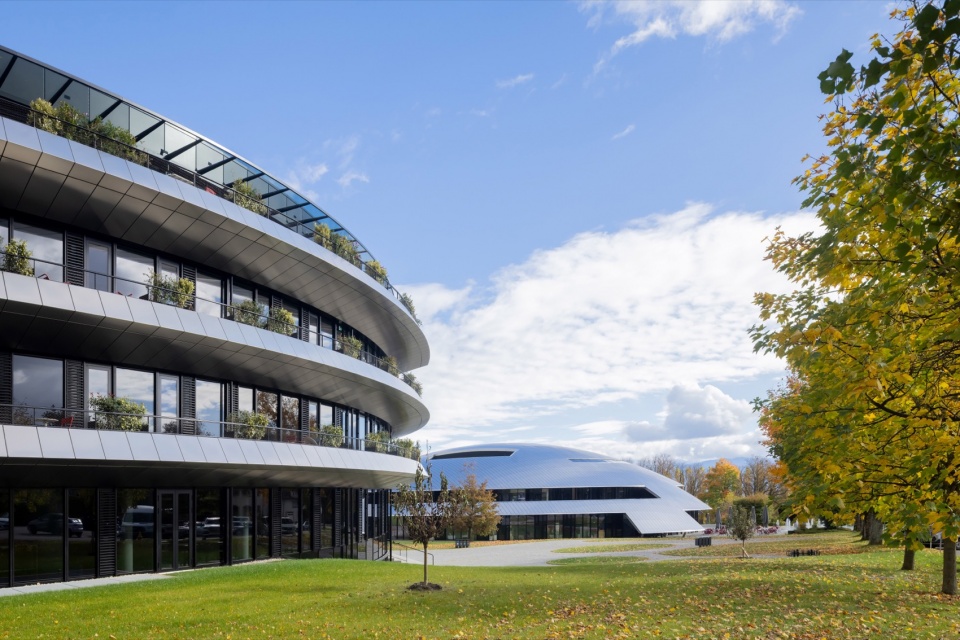
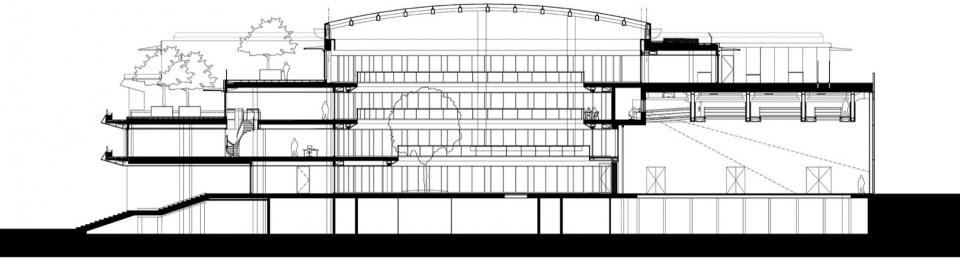
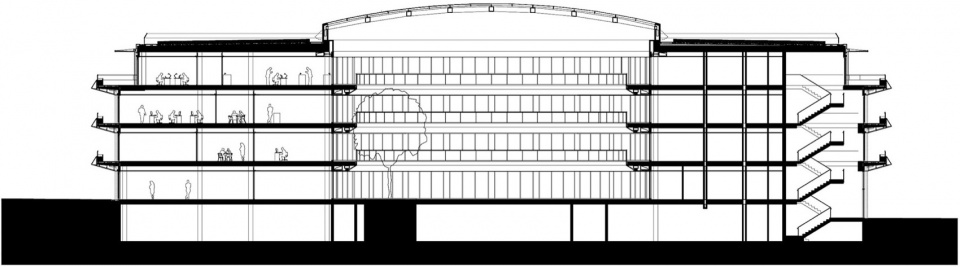
Philo采用与此前Carnal Hall相似的材料体系:钢、混凝土、木材与玻璃。这种共享的语言在统一两座建筑的同时,也使各自能够表达自身的身份以及与共同语境之间的关系。一个显著差异在于Philo外部种植步道的设置,其色彩会随季节变化。铝制立面采用三层玻璃,并配以厚度为2毫米的不锈钢边框面板。由种植阳台形成的水平带状构造,结合有色玻璃与外部卷帘,有助于保护建筑围护结构。穹顶覆盖直径30米的中庭,其结构由最小化的弯曲钢管体系构成。曲线形态带来轻盈感,而电致变色玻璃使建筑保持对天空的开放,在夏季减少太阳热增益的同时,也允许阳光进入中庭。
Philo uses a similar material palette to the earlier Carnal Hall: steel, concrete, wood, and glass. The shared vocabulary unifies the two buildings yet allows each to express its own identity and relationship to their common context. A notable difference is Philo’s planted exterior walkways, which change color with the seasons. The aluminum façade uses triple glass and 2 mm-thick stainless steel-edged panels. The horizontal bands of planted balconies, combined with the tinted glass and exterior roller blinds, help protect the envelope. The cupola covers the 30 m diameter atrium with a minimal curved-steel tube structure. The curvature allows for lightness, and electro-chrome glass keeps the building open to the sky, reducing solar heat gains in summer while allowing sunlight into the atrium.
▼铝制立面,aluminum façade
可持续性 SUSTAINABILITY
在可持续策略方面,圆柱形设计本身具有较高效率,在围护结构面积相对较小的情况下提供更大的内部空间体量。虽然自然通风是可行的,但空气更新通过机械系统进行控制,以限制能量损失。供暖与制冷通过热泵实现,利用邻近的日内瓦湖水作为能源。绿色屋顶上的光伏板为建筑的大部分能源需求提供支持。总体而言,正如业主所言,这座建筑是一种“面向未来的教育工具,体现了罗西学院在探索学习新路径方面的雄心”。
Regarding its sustainability features, cylindrical designs are inherently efficient, offering a high internal volume relative to the total envelope area. While natural ventilation is possible, air renewal is mechanically controlled to limit energy loss. Heating and cooling are achieved via heat pumps using water from the adjacent Lake Geneva. Photovoltaic panels on the green roof provide much of the energy used throughout the building. Overall, in the words of the client, the building is “a forward-looking educational tool that embodies Le Rosey’s ambition to pioneer new pathways in learning.”
▼RDC平面,RDC floor plan
▼R+3平面,R+3 floor plan
▼剖面,section
NAME
φlo (“Philo”)
SCHEDULE
Commission 2019; Completion 2025
SIZE
16,222 sq. meters (175,000 sq. feet)
CLIENT
Institut Le Rosey / Etablissements du Rosey SA
General Director: Christophe Gudin
Client Representative: Jean Brugger Architecte
TEAM
Architect: Bernard Tschumi Architects
Bernard Tschumi, Joel Rutten, Sonia Grobelny, Christopher Ball, Valeria Paez Cala, Wenjun Yu, Kai Blatt, Tina Marinaki, Clement Luk Laurencio
Associate Architect: Fehlmann Architectes SA (incl. Construction Administration)
Serge Fehlmann, Nicolas Engel, Christophe Faini, Pascal Visinand, Samuel Nugues, Jerome Hoffman
Consultants: Alberti (structural engineering), Arup (structure cupola), SRG (MEP and fire security), Karakas & Francais (civil engineering), BCS SA (facade engineer), EcoAcoustique SA (acoustic), Lumière Electrique (lighting), Forster (landscape)
CONTRACTORS
Concrete: Marti-Perrin; Facades: Sottas; Cupola: Pahud-Meyer; Wood: Schwab Systems
Mechanical and photovoltaic panels: Romande Energie; Interior partitions: Lindner; Electrochrome glass: Sage; Lighting: SmartLux SA, Iguzzini SA, Zumtoel, Luce MS
PHOTOGRAPHS
Iwan Baan