比得哥什音乐学院新校区,波兰 / plus3 architects
新落成的费利克斯·诺沃维耶伊斯基音乐学院总部,已成为波兰北部城市比得哥什一座极具象征意义的建筑地标。这座城市拥有深厚的音乐传统,而新校区则由华沙建筑事务所plus3-architekci精心设计完成。比得哥什音乐学院新校区的启用,标志着plus3-architects历时多年构想的最终实现。这座建筑不仅重塑了城市肌理,也开启了音乐教育发展的新篇章,将先锋声学工程与最先进技术无缝融合。项目的核心理念源于学院师生群体的共同诉求——此前,他们分散于城市不同区域、多栋建筑之中。如今,这座将所有功能整合于同一屋檐下的校园,以优雅而完整的方式回应了当代音乐教育的多重需求。
The inauguration of the Academy of Music campus in Bydgoszcz stands as the definitive culmination of a multi-year vision by plus3-architects. The building transforms the urban fabric and heralds a defining chapter in music education, seamlessly synthesizing pioneering acoustic engineering with state-of-the-art technologies. The newly realized headquarters of the Feliks Nowowiejski Academy of Music stands as a resonant architectural landmark in Bydgoszcz, a city in northern Poland deeply steeped in musical tradition. The campus was masterfully conceived by the Warsaw-based architectural practice plus3-architekci. The conceptual framework is distilled from the singular aspirations of the Academy community – faculty and students previously fragmented across multiple buildings, in disparate quarters of the city. The campus, which unifies all activities under a singular roof, elegantly addresses the multifaceted requirements of contemporary musical training.
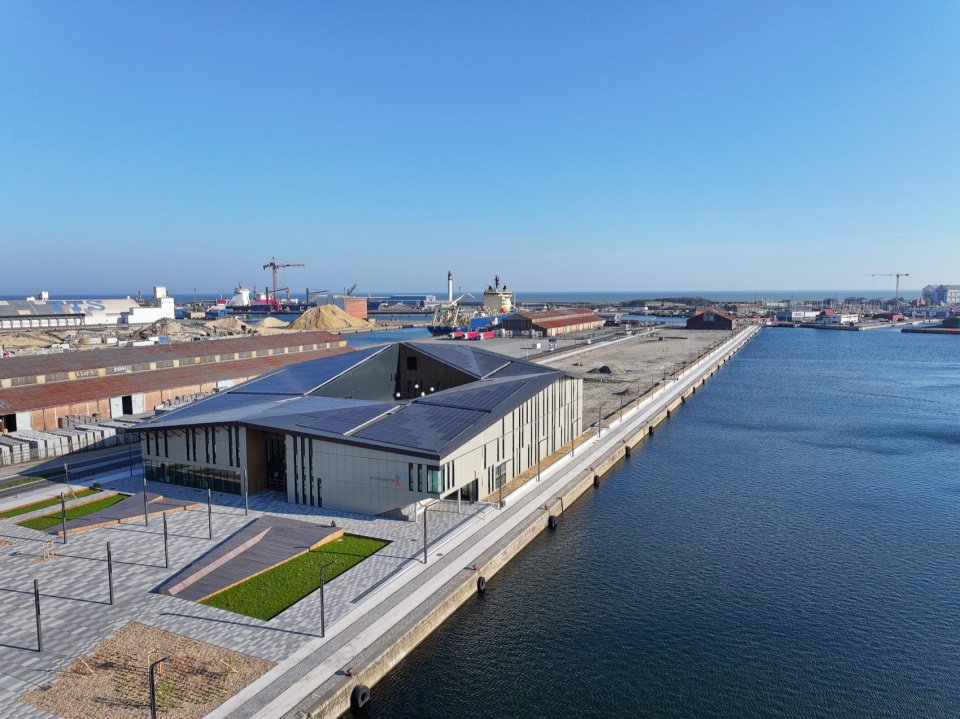
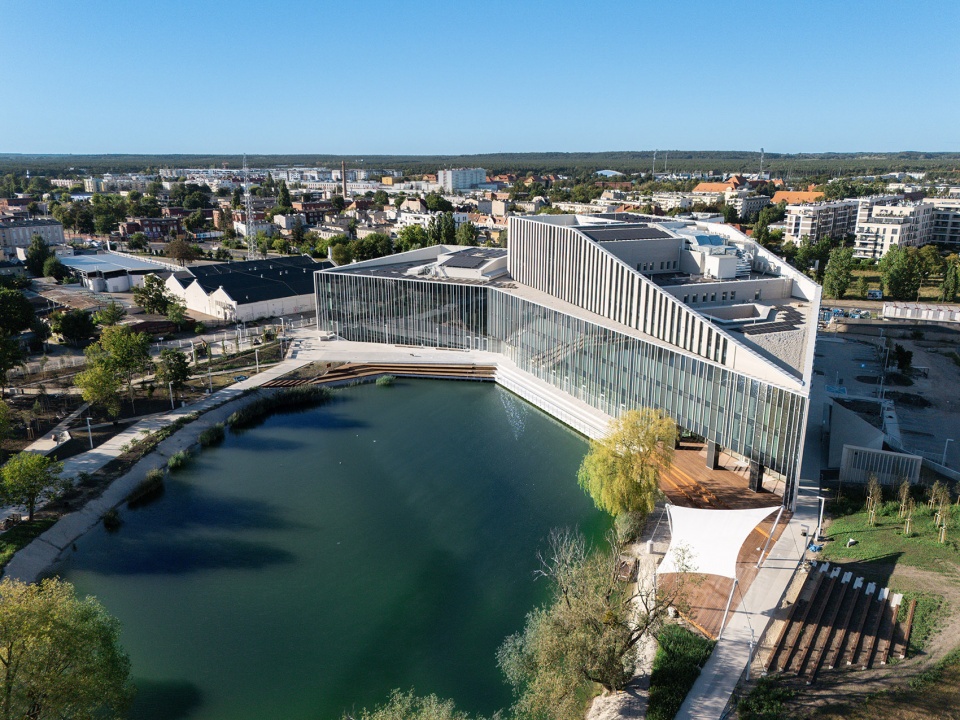
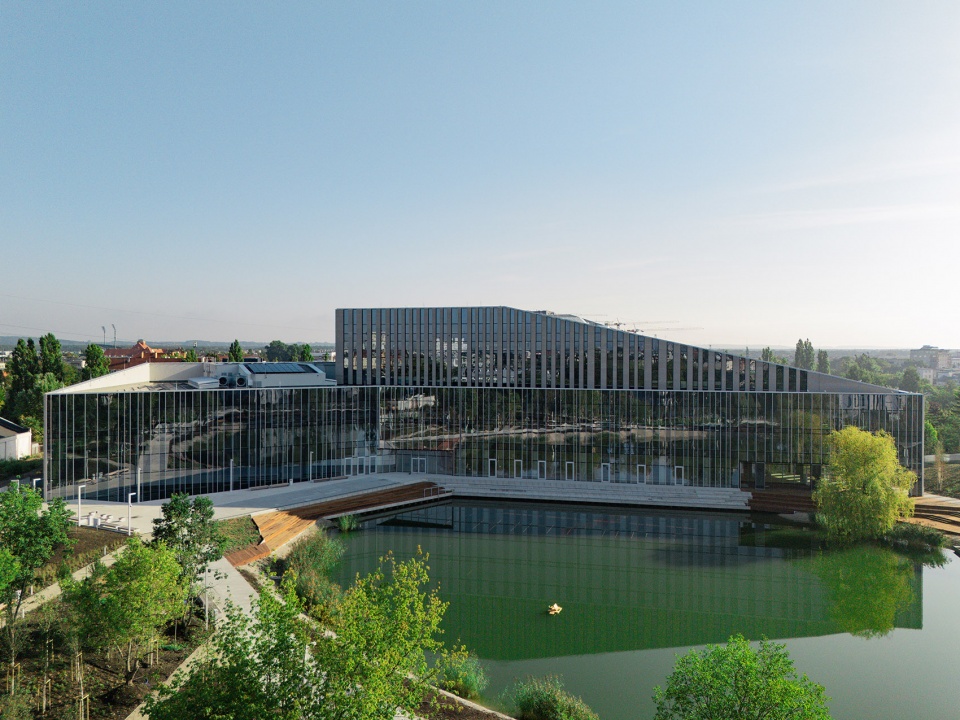
▼项目鸟瞰,Aerial view of the project
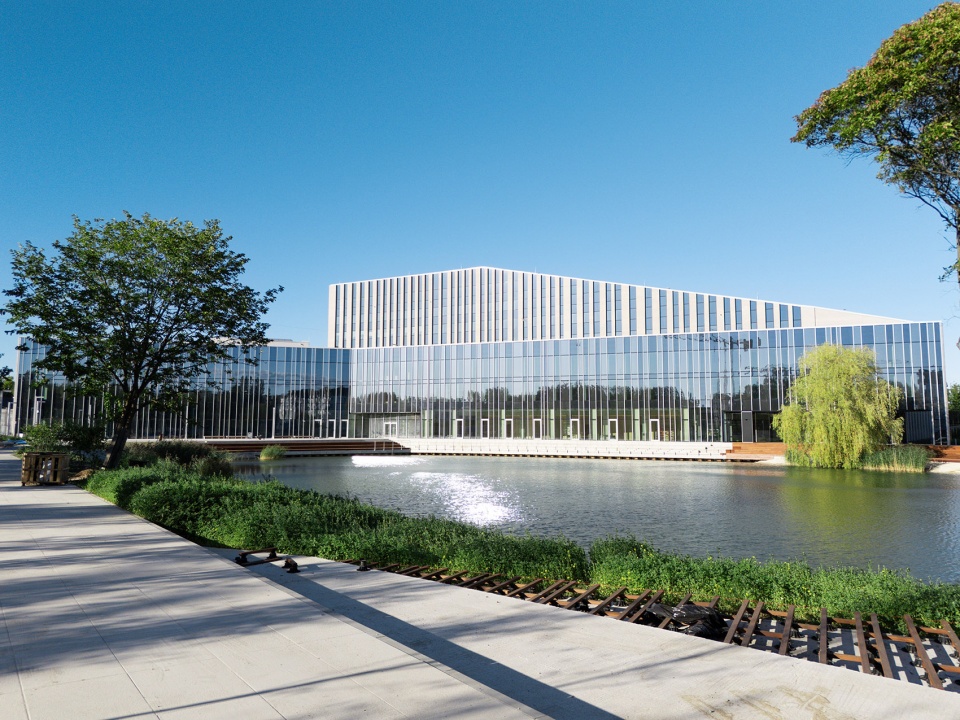
▼建筑外景,Exterior of the building
深植场所精神的建筑Architecture profoundly anchored in the singular spirit of its place
比得哥什音乐学院坐落于一处旧砖厂遗址之上——这里曾长期被忽视与遗忘,尽管它距离市中心近在咫尺。如今,这片蕴藏巨大潜力的区域被重新激活,而这一战略性投资也成为推动整个街区全面复兴的重要催化剂。建筑位于“音乐区”轴线的终点,该轴线串联起爱乐音乐厅、音乐学校、剧院及大学行政楼,使其在城市景观中占据极具标志性的地位。这座以水平展开为主的建筑,体量虽超过16万立方米,却通过精细的体量塑造,使其在不同视角下呈现出富有动态感的姿态,并与周边环境尺度相协调。
The Academy of Music in Bydgoszcz emerges from the site of a former brickyard – a landscape long surrendered to neglect and obscurity, despite its immediate proximity to the city center. A district of immense, previously untapped potential has been masterfully reanimated, and this strategic investment now serves as a potent catalyst for the holistic revitalization of the entire neighborhood. The building’s position at the culmination of the axis defining the Music District, which integrates the philharmonic hall, the music school, the theater and the university’s rectorate, underscores its commanding prominence in the urban landscape. The horizontally oriented building, despite a monumental volume exceeding 160,000 cubic meters, is sculpted so that its formal dynamism, perceived from varying perspectives, harmonizes with the scale of its surroundings.
▼建筑入口,Building entrance
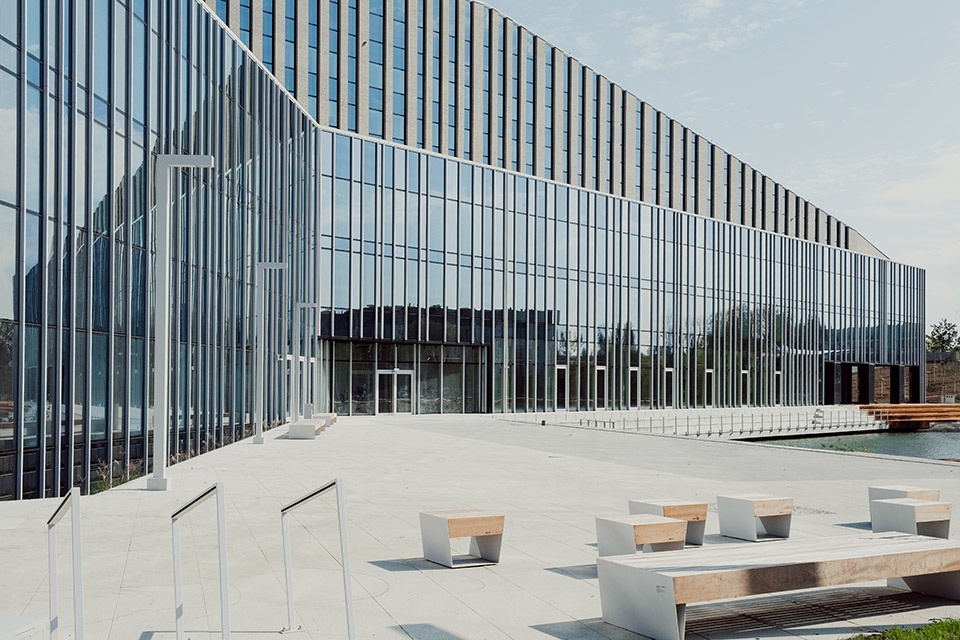
开放式舞台与沉浸式休闲空间被巧妙嵌入河岸郁郁葱葱的绿化景观之中。沿着繁忙的Kamienna街,建筑则呈现出更具都市感的姿态,成为城市文化轴线自然而然的终点。
An open-air stage and immersive recreational zones have been artfully woven into the lush, verdant fabric of the river bank. Along the bustling Kamienna Street, the building assumes a metropolitan stature, serving as the intuitive culmination of the city’s cultural axis.
▼建筑入口映射周边城市景观,Building entrance reflecting the surrounding urban landscape
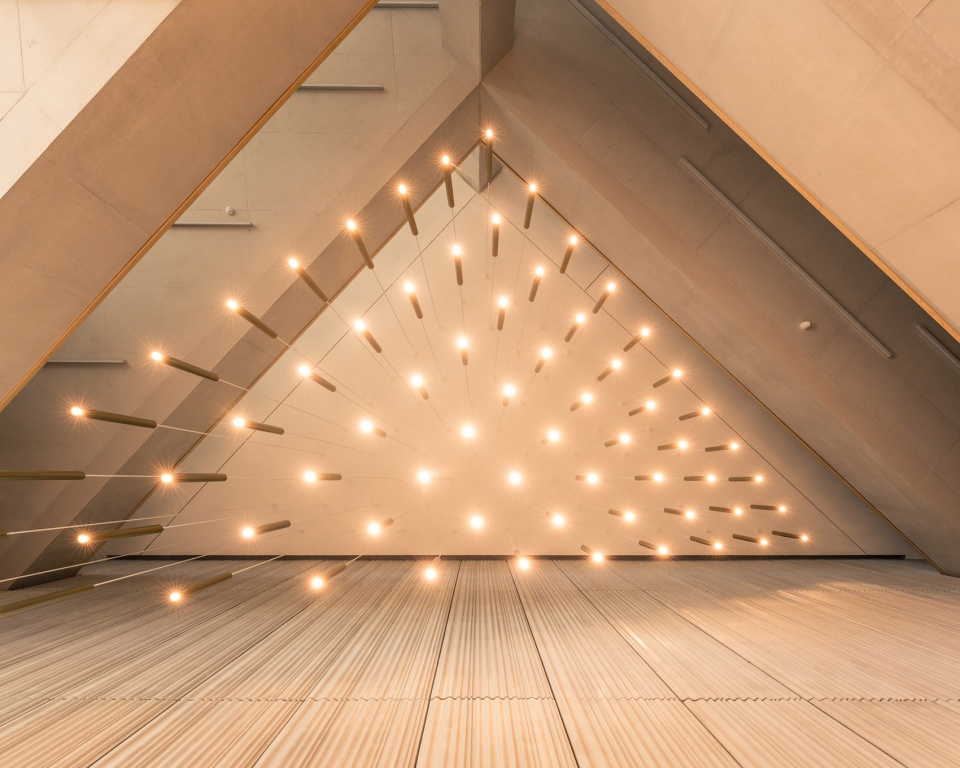
▼放射状灯具与三角形顶部空间,Radiating light installation beneath the triangular ceiling
节奏感的二重奏A rhythmic duet
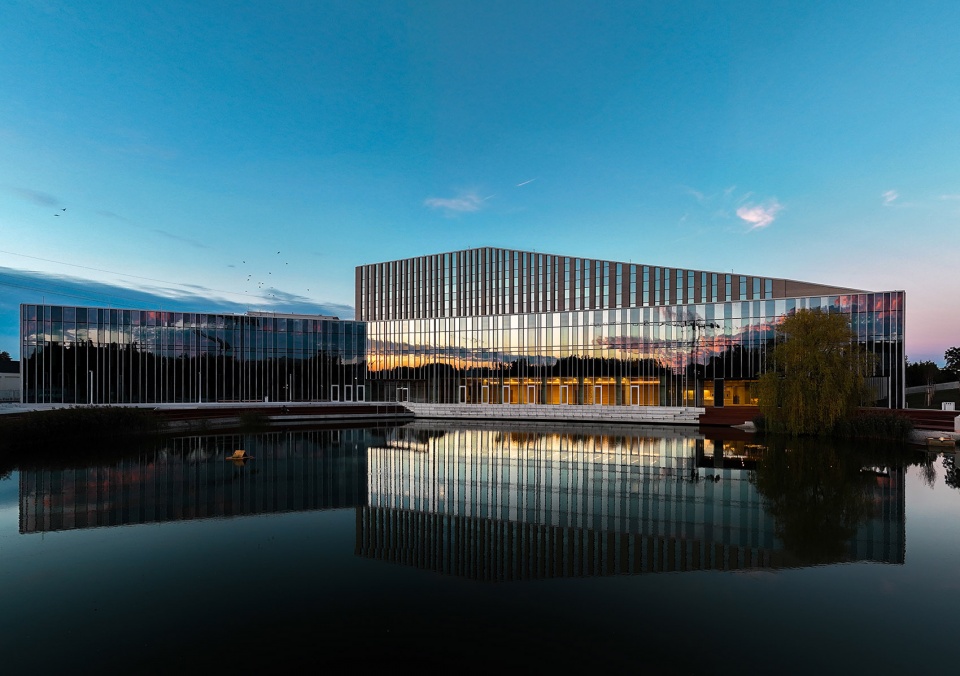
建筑立面呈现出玻璃轻盈通透感与砖材厚重质感之间的精彩对话。晶莹的玻璃幕墙与垂直陶瓷百叶交织,共同构成富有节奏感的动态界面。大面积玻璃立面模糊了室内与景观之间的边界,将湖泊与公园的全景引入室内,同时为空间带来充沛的自然光。立面并非静态而均质的表皮,而是由镜面与透明界面构成的富有韵律的节拍,与水面、绿意与流动的环境产生对话,使建筑自然嵌入场地景观之中。
The building’s facade presents a compelling dialogue between the diaphanous clarity of glass and the tactile weight of brick. Crystalline glass planes interlace with vertical ceramic fins, orchestrating a composition of rhythmic dynamism. Expansive glass facades dissolve the boundaries between the interior and the landscape, framing panoramic views of the lake and park while suffusing the spaces with an abundance of natural light. The facade transcends the static nature of a homogeneous sheet, unfolding as a syncopated rhythm of mirrored and transparent apertures that dialogue with their surroundings: water, greenery and motion, seamlessly anchoring the structure within the visceral fabric of the landscape.
▼木质墙面与通高玻璃界面,Timber wall surfaces and full-height glazing
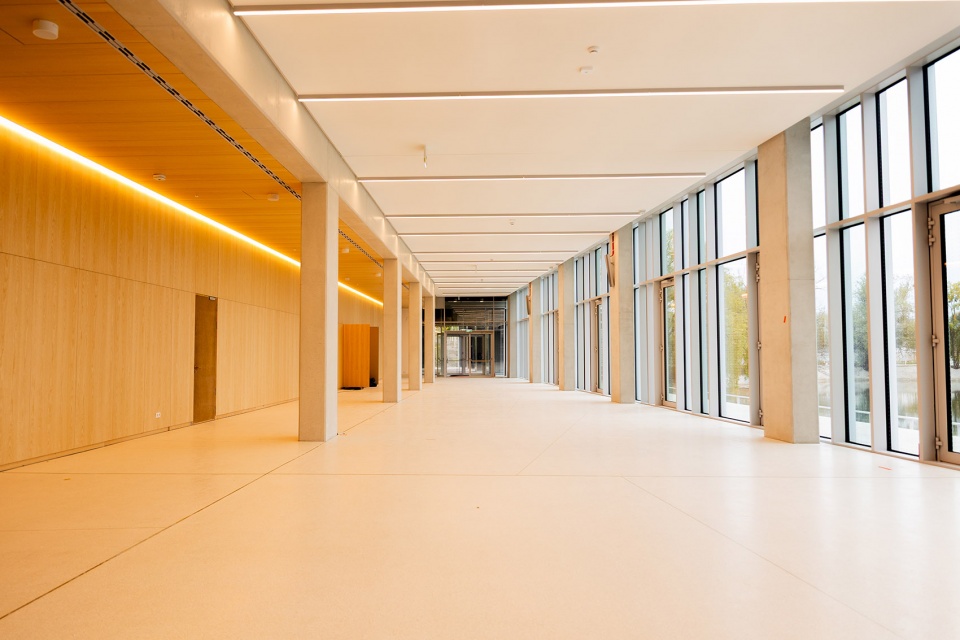
▼教学区走廊的线性照明系统,Linear lighting system in the teaching corridor
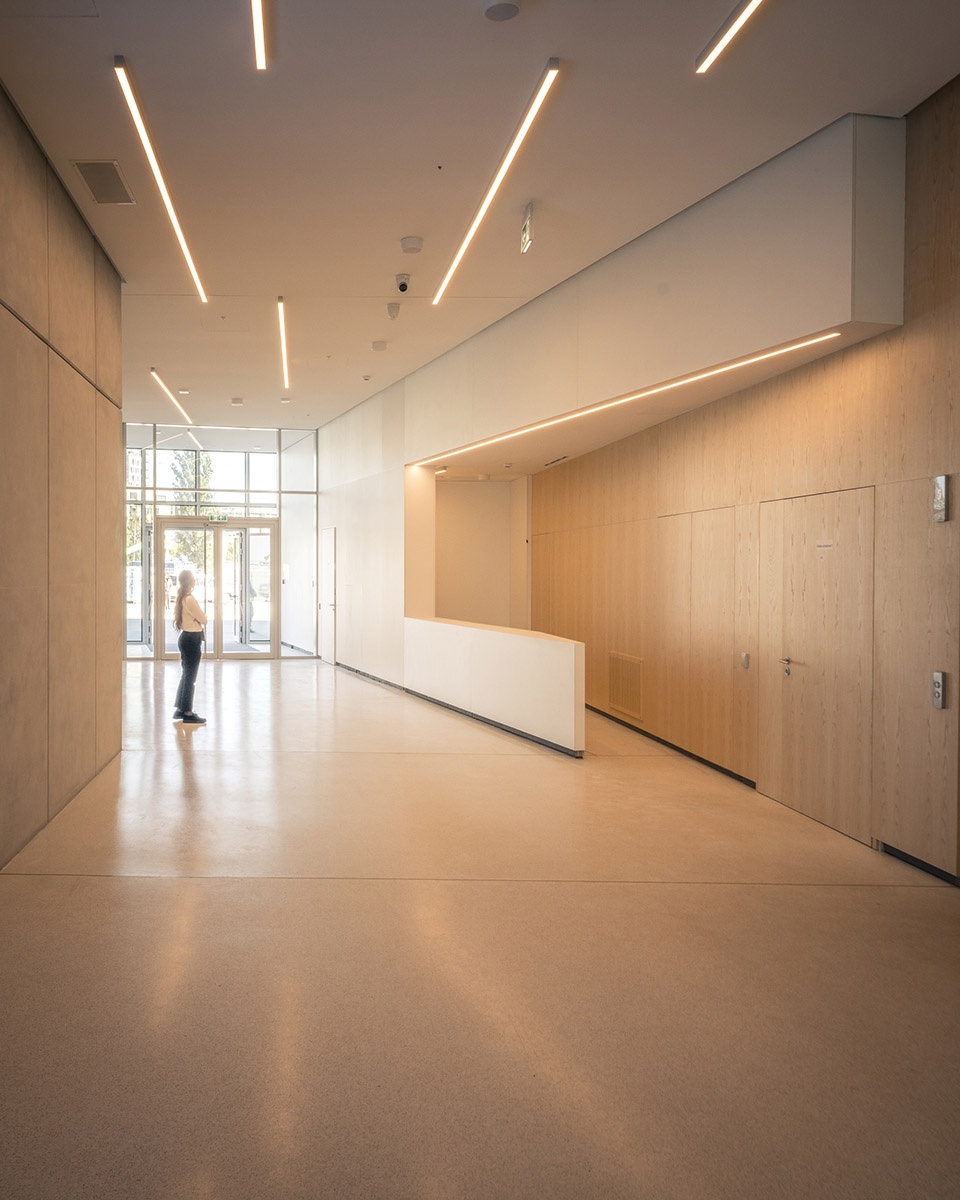
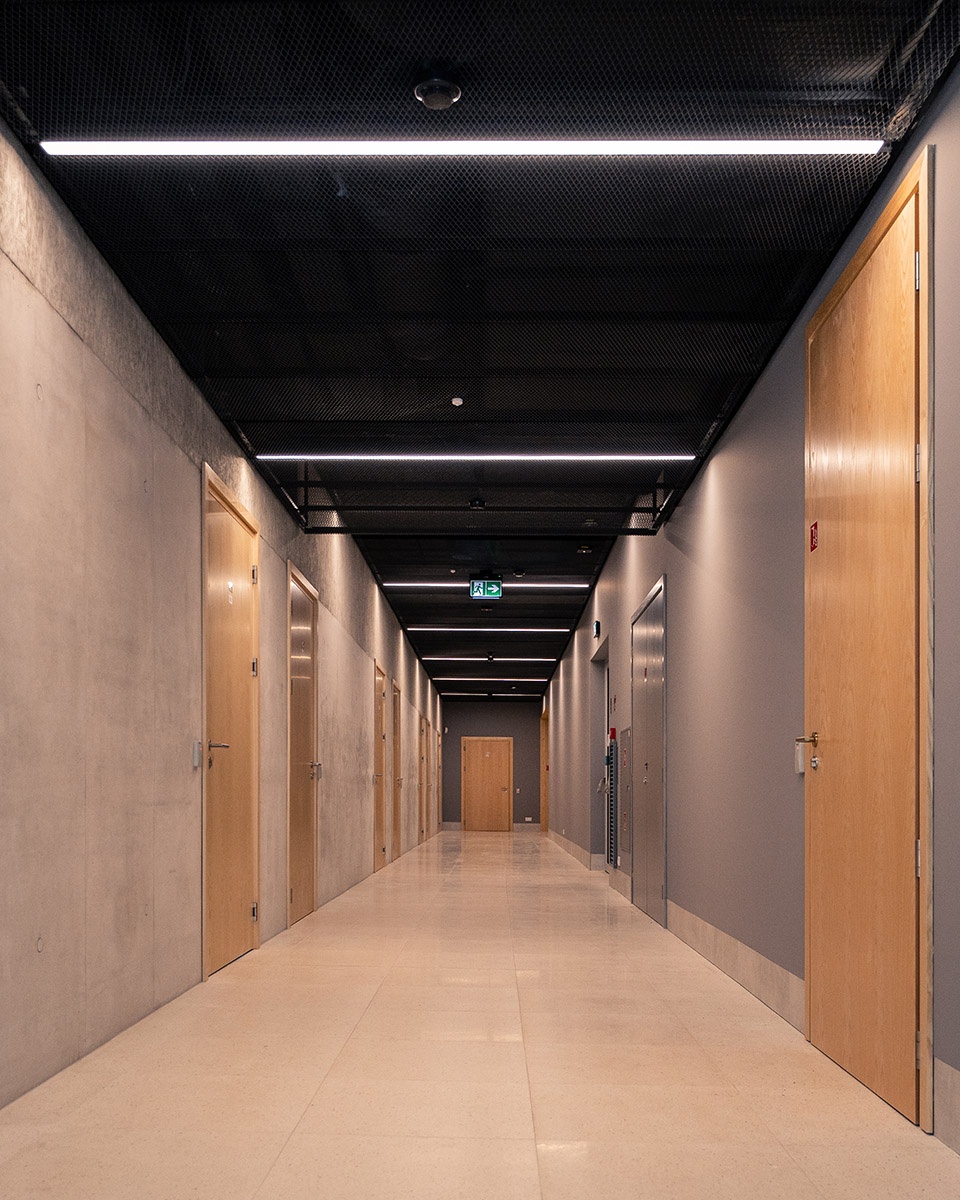
砖材的使用并不仅仅出于审美考虑,更是对场地工业历史——旧砖厂遗址——的一种致敬。这种富有触感的材料赋予建筑独特的表现力,使建筑真正“产生共鸣”。
The selection of brick transcends mere aesthetic intent, serving as a profound homage to the site’s industrial heritage as a former brickworks – a tactile medium that imbues the structure with a singular expressiveness, allowing the architecture to truly “resonate.”
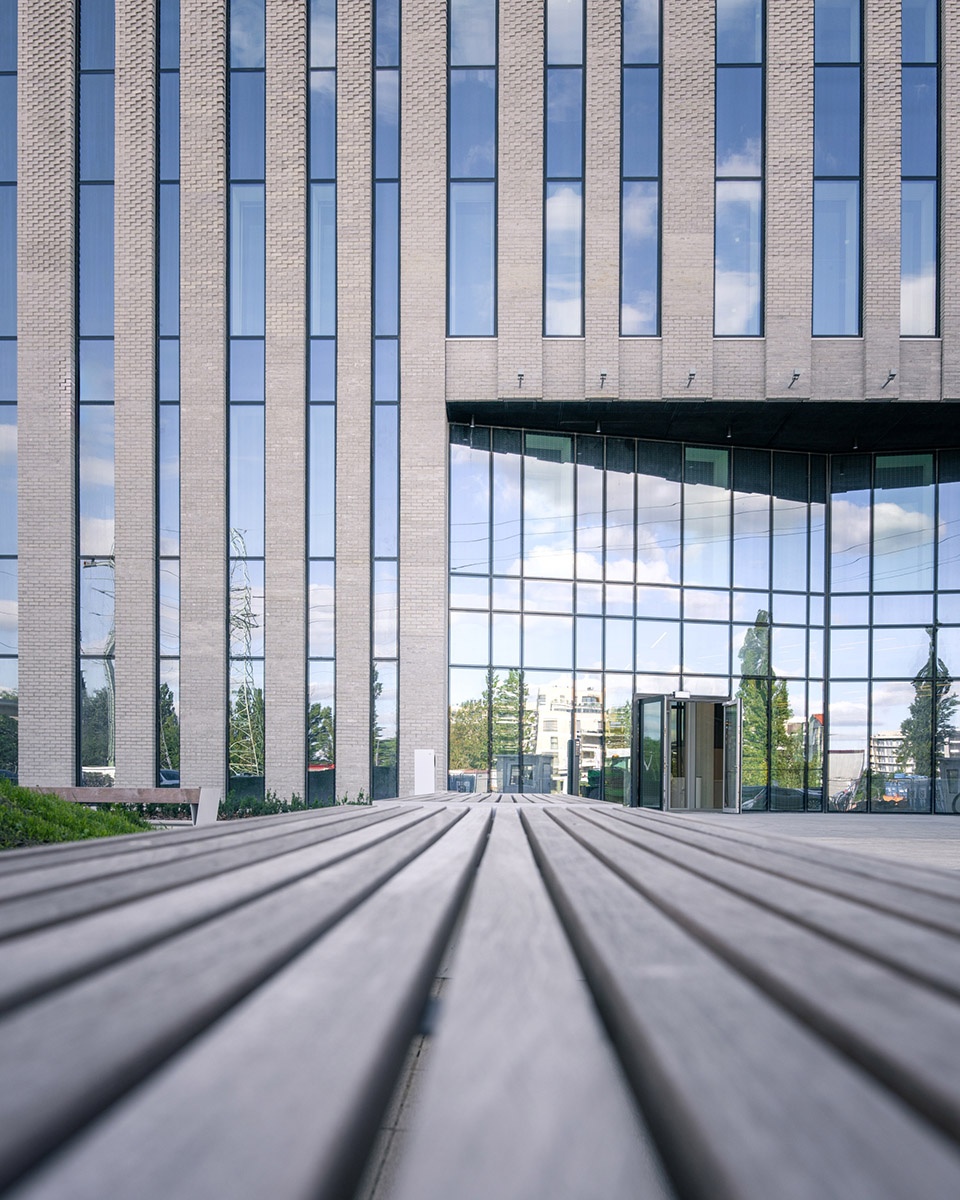
▼垂直砖纹强化建筑节奏感,Vertical brick texture reinforcing the rhythm of the facade
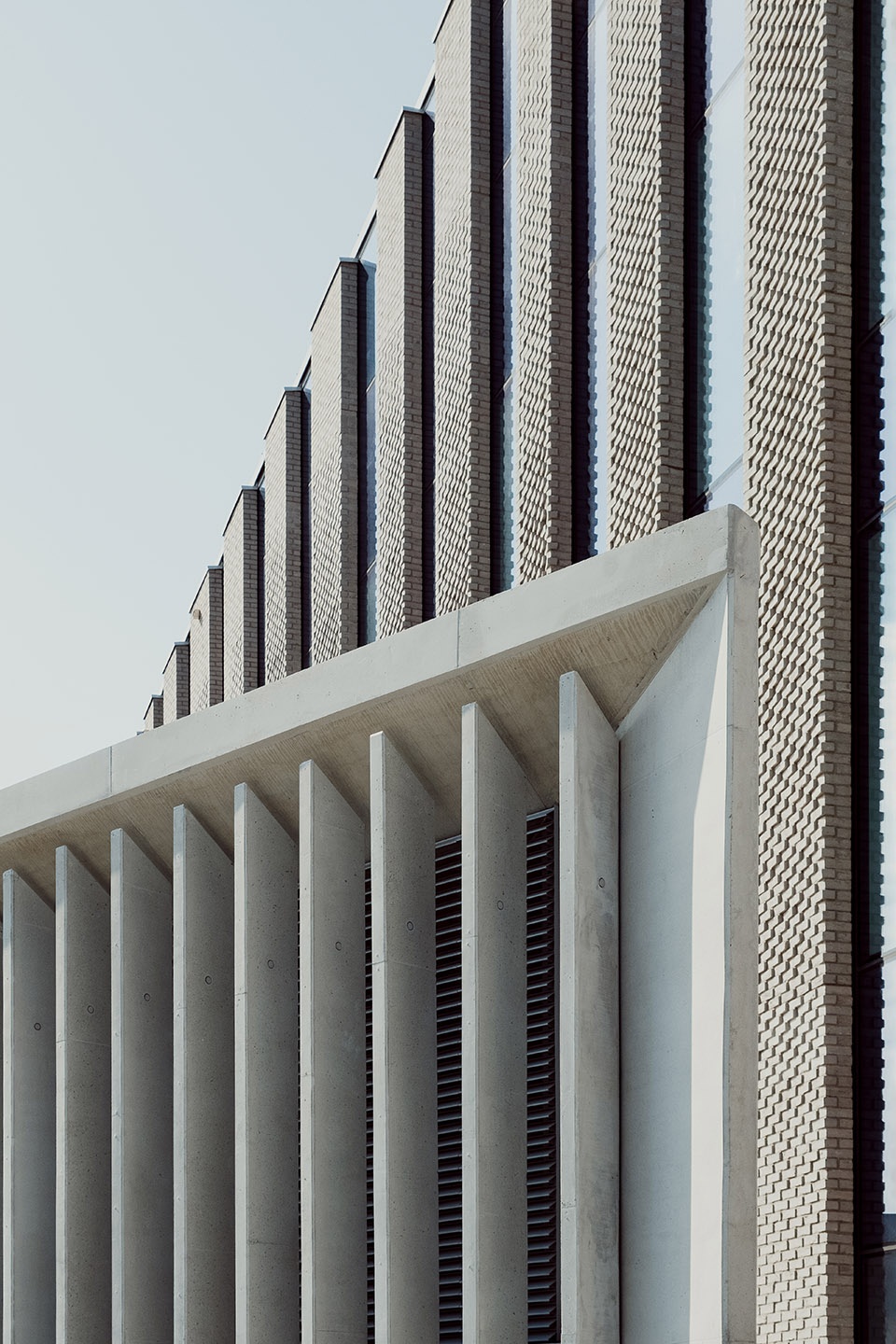
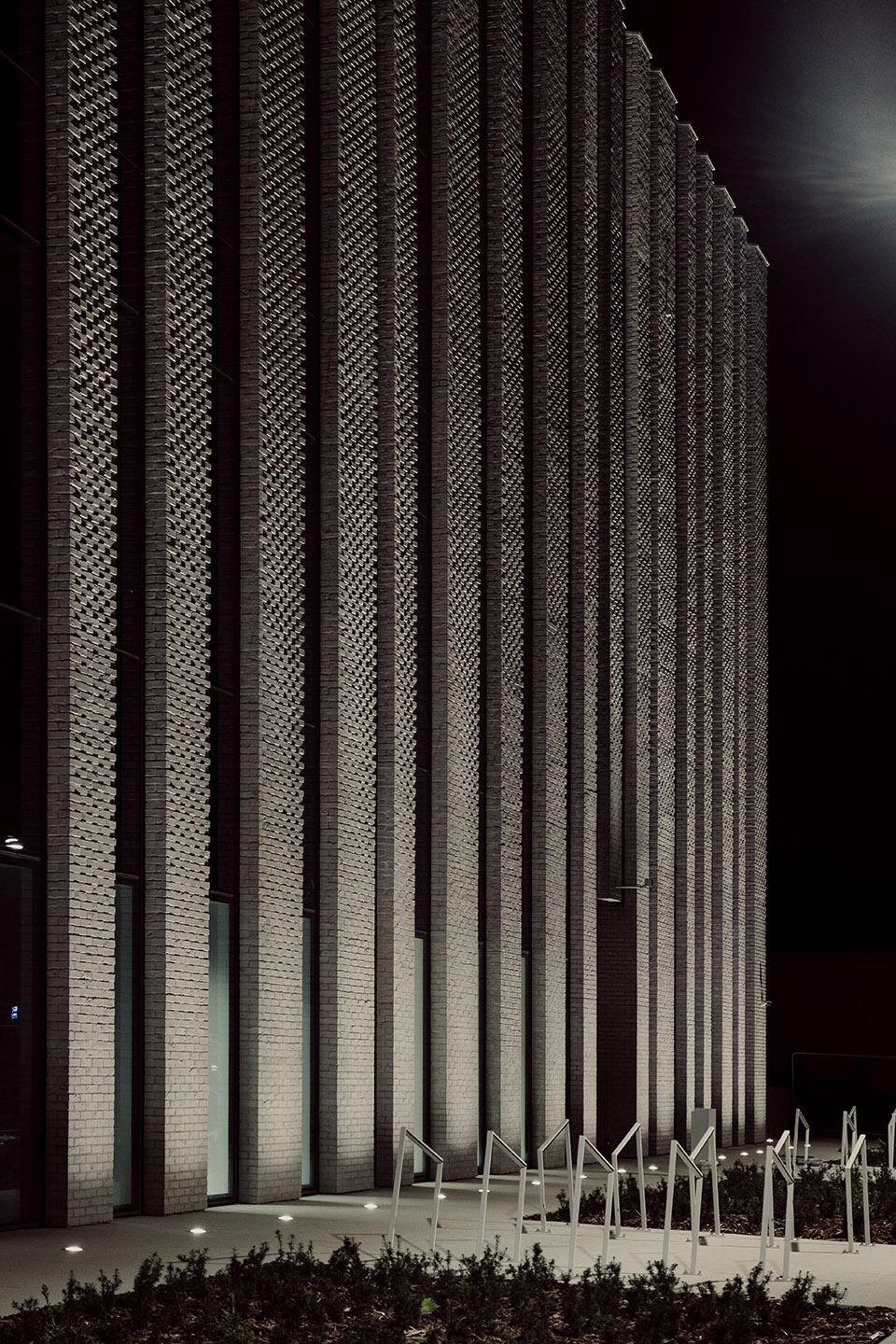
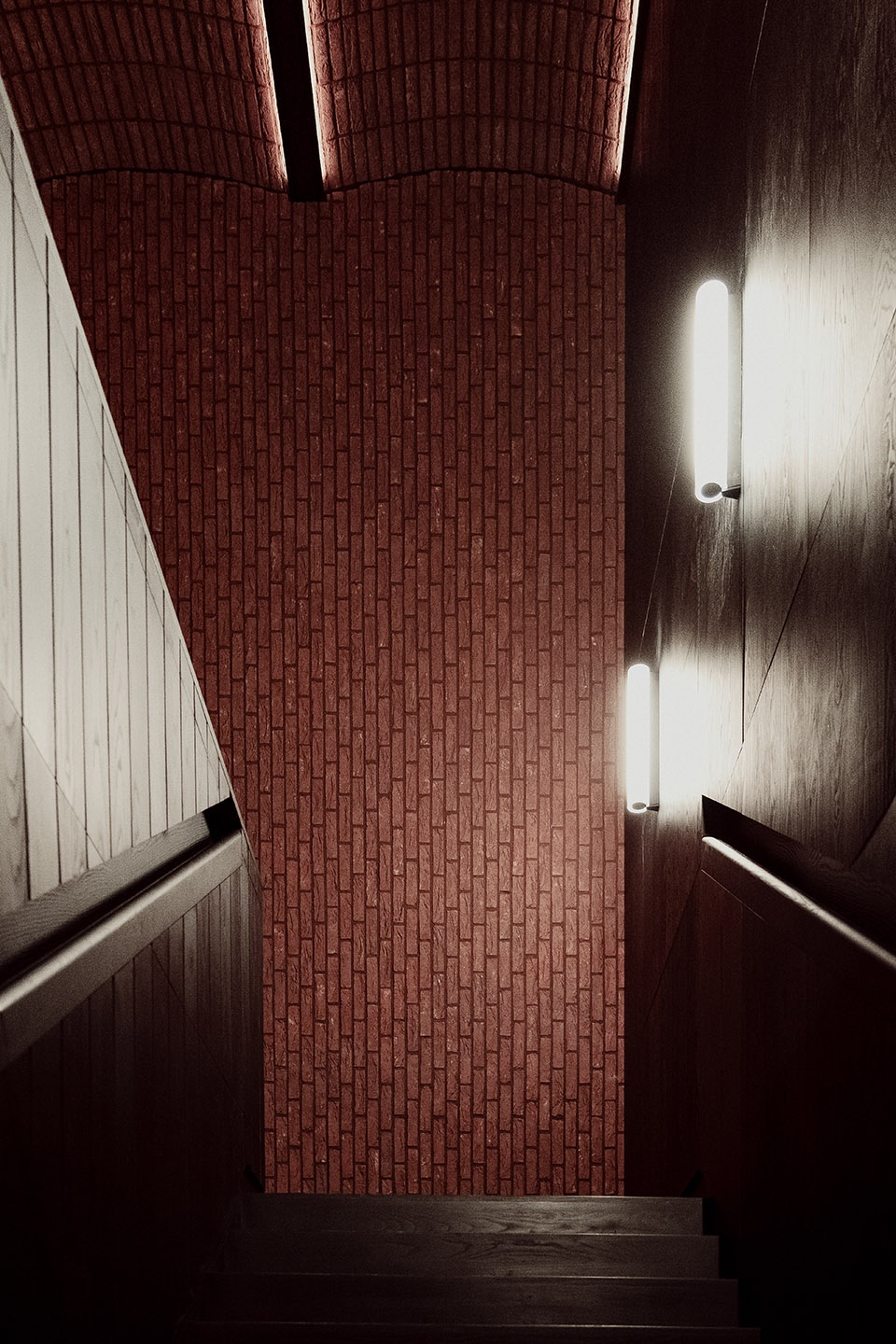
富有节奏感的砖砌方式,使立面呈现出雕塑般的深度与触觉质感,令人联想到振动中的声波。在室内空间中,砖材还承担着明确的声学功能——帮助声音扩散,从而营造出类似宗教建筑般深远而悠长的回响效果。这种墙面处理被运用于管风琴音乐厅,与橡木块地板及砖砌穹顶共同构成一个极适宜音乐演出的空间。
The rhythmic orchestration of the masonry imbues the facade with a sculptural depth and tactile granularity, evocative of a vibrating sound wave. Within interior spaces, brick assumes an intentional acoustic dimension – facilitating sound dispersion to evoke a rich reverberance reminiscent of the hallowed echoes of ecclesiastical architecture. Such wall finishes articulate the organ concert hall, where, harmonized with the oak cobble floor and brick cradle vault, they create a space ideally attuned to music.
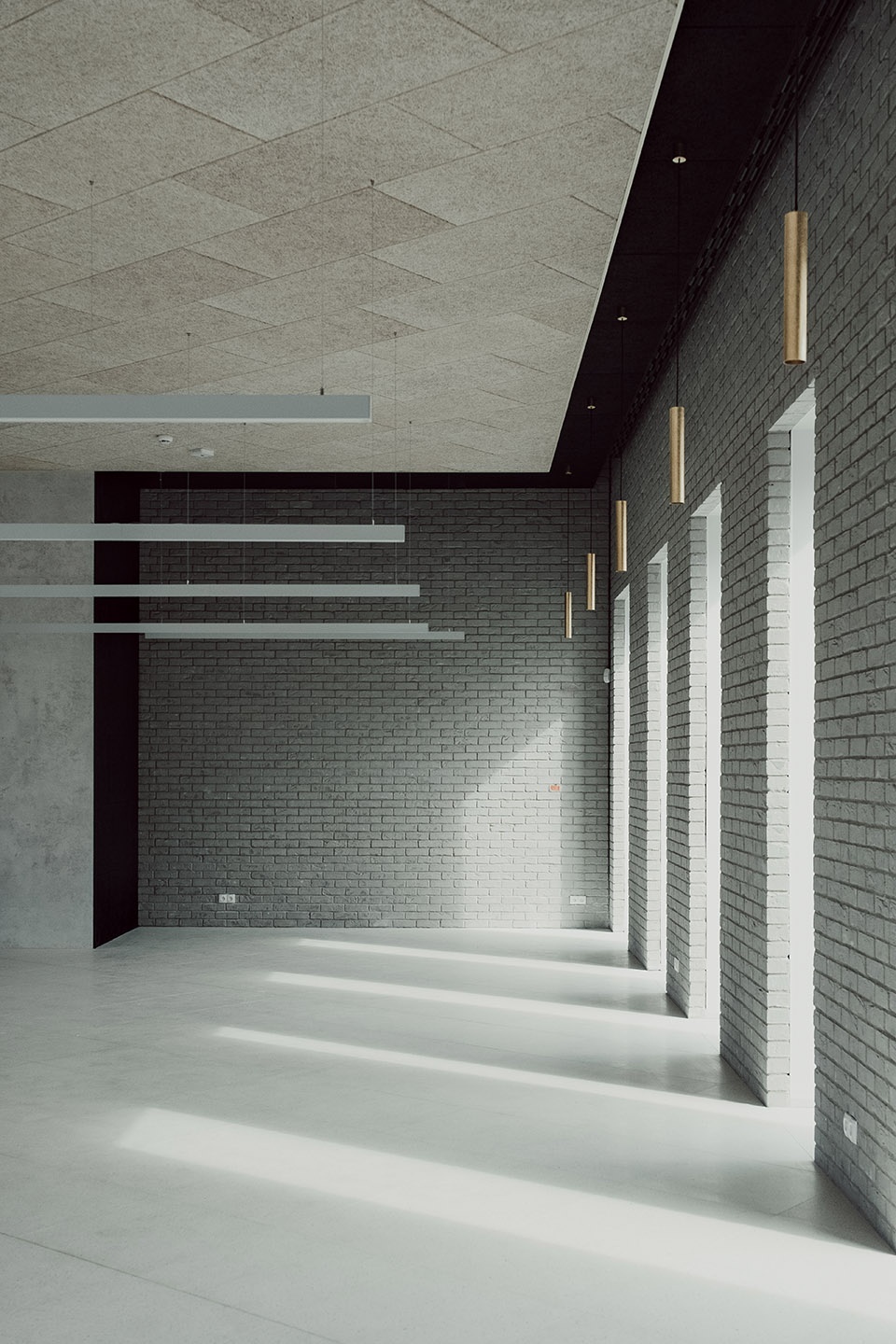
▼灰砖墙面与自然光形成明暗变化,Gray brick walls articulated by shifting daylight
卓越的声学表现Acoustic virtuosity
校园设计成功平衡了两项看似矛盾的需求:既要将大学复杂多样的功能整合于同一建筑之中,又必须确保每一个音乐厅都具备绝对的隔音效果与卓越的声学品质。这座标志性建筑包含超过一百间教室、报告厅、学术图书馆、专业录音室、Dolby录音棚、学生宿舍,以及最重要的四座世界级音乐厅:交响乐厅、歌剧厅、室内乐厅与管风琴厅。
The design of the campus reconciles two seemingly contradictory imperatives: to unify the university’s multifaceted functions within a singular, cohesive hub, while simultaneously ensuring that each music hall possesses absolute soundproofing and acoustic brilliance. The landmark edifice encompasses over a hundred classrooms, auditoriums, a scholarly library, professional recording studios, Dolby Studio, student residences and, most significantly, four world-class concert halls: symphony, opera, chamber and organ.
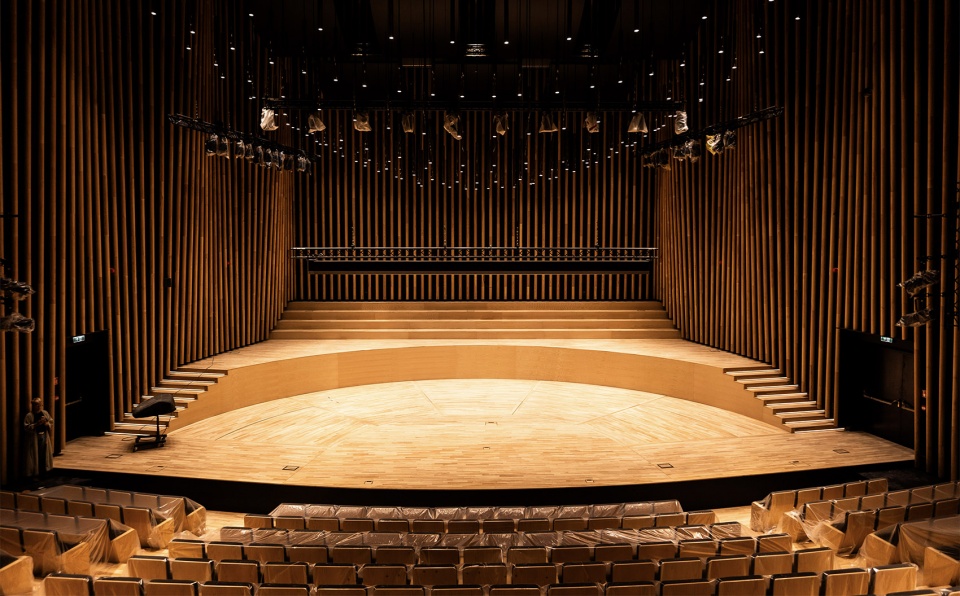
▼木质声学界面围合交响乐厅,Timber acoustic surfaces enclosing the symphony hall
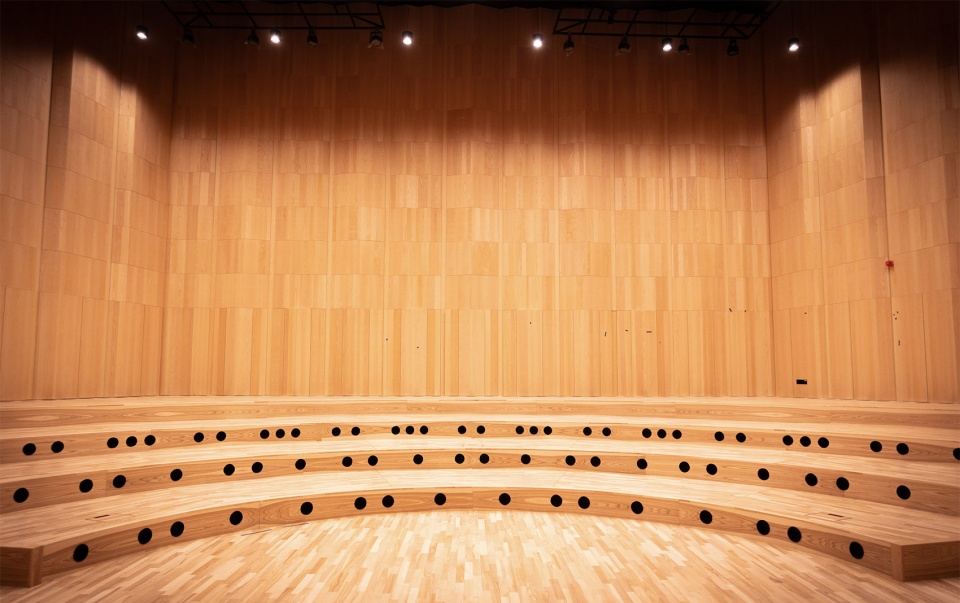
▼阶梯式排练空间强化声音扩散,Tiered rehearsal space enhancing sound diffusion
▼钢琴演奏激活交响乐厅空间,Piano performance activating the symphony hall interior
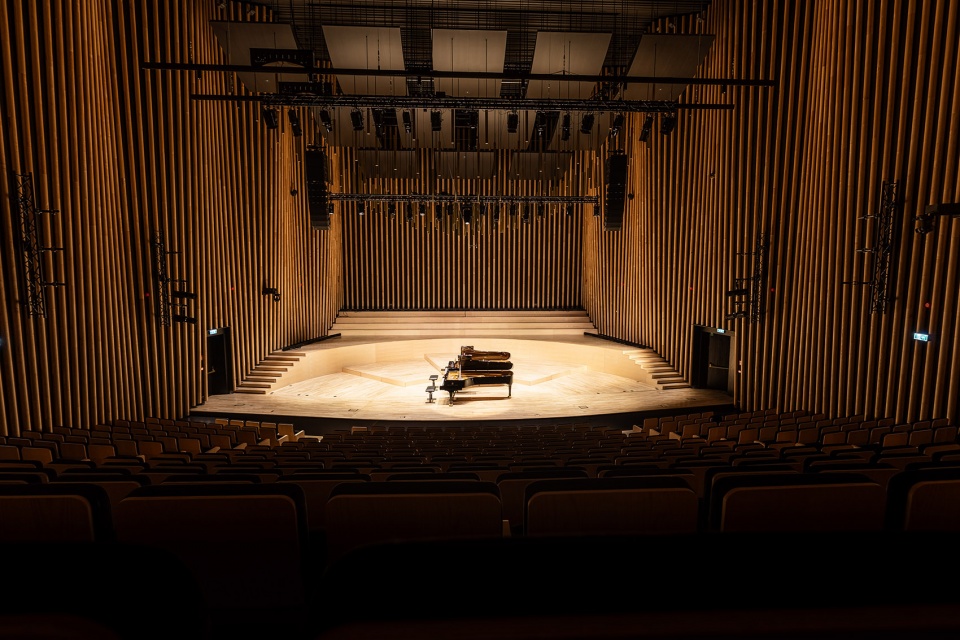
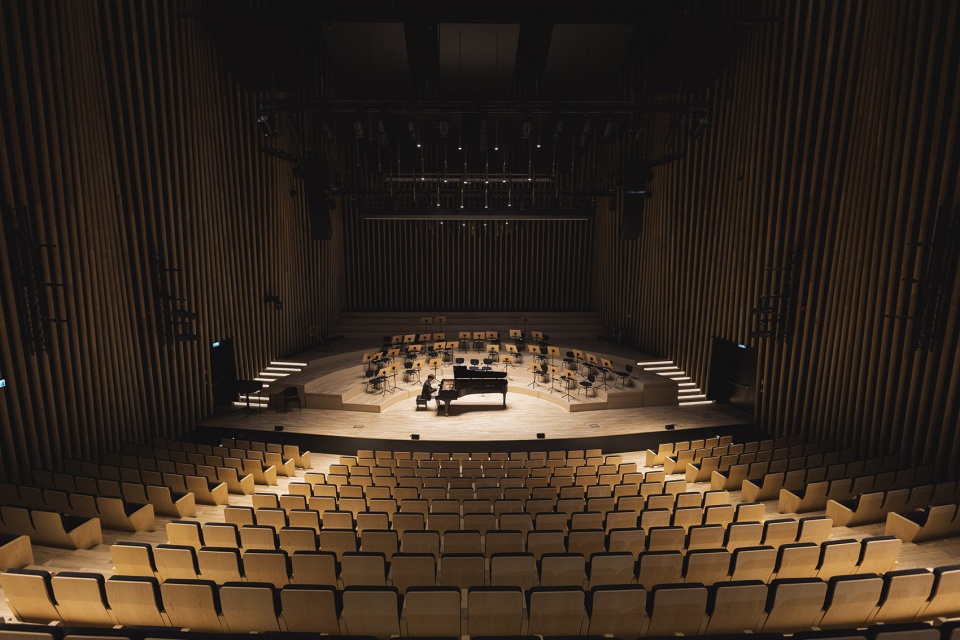
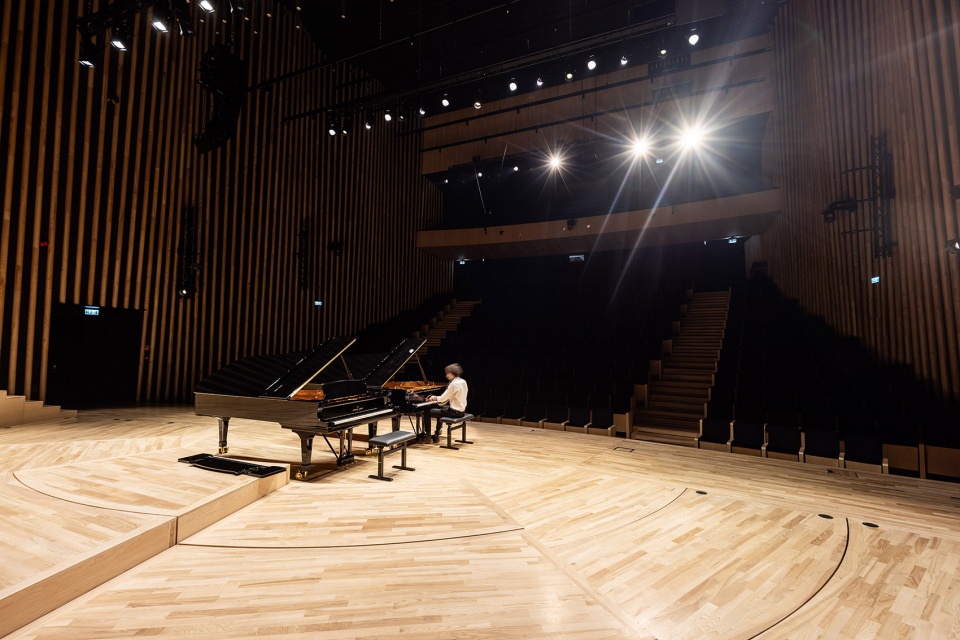
因此,每个“盒体”的墙面、天花与地面都通过弹性悬挂或结构脱离的方式与主体结构分离。包含重型橡胶垫与矿棉的减震层能够有效抑制振动,而三层墙体、浮筑地面及吊顶系统的精密构造,则确保了每一个空间都拥有绝对完整的声学环境。通风系统同样是设计中的关键课题。为避免声音通过空气流通系统传播,音乐厅与录音室均采用独立的通风系统。
Consequently, the walls, ceilings and floors of each “box” are elastically suspended or structurally decoupled from the primary building structure. Enhanced damping layers, incorporating heavy rubber mats and mineral wool, decisively attenuate vibrations, and the meticulous assembly of the triple-layer walls, floating floors and suspended ceilings ensures that each space achieves absolute acoustic integrity. Ventilation emerged as a similarly rigorous design imperative. To mitigate acoustic crosstalk, the unwanted leakage of sound through air distribution networks, independent ventilation systems were engineered for the concert and recording halls.
▼深色墙面营造沉浸式听觉环境,Dark wall surfaces creating an immersive acoustic environment
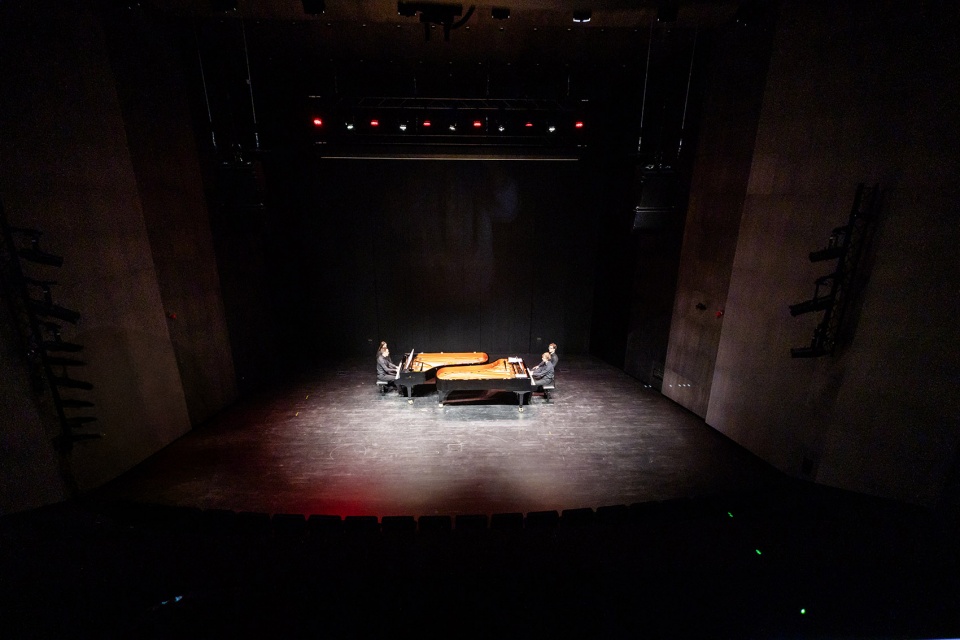
▼红色剧场空间中的舞台界面,Stage interface within the red theater interior
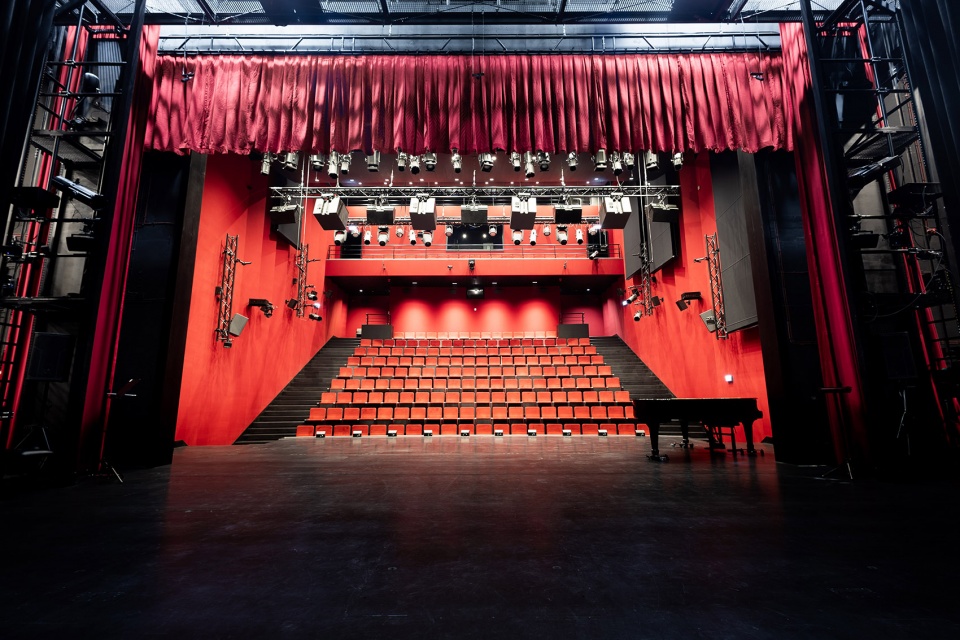
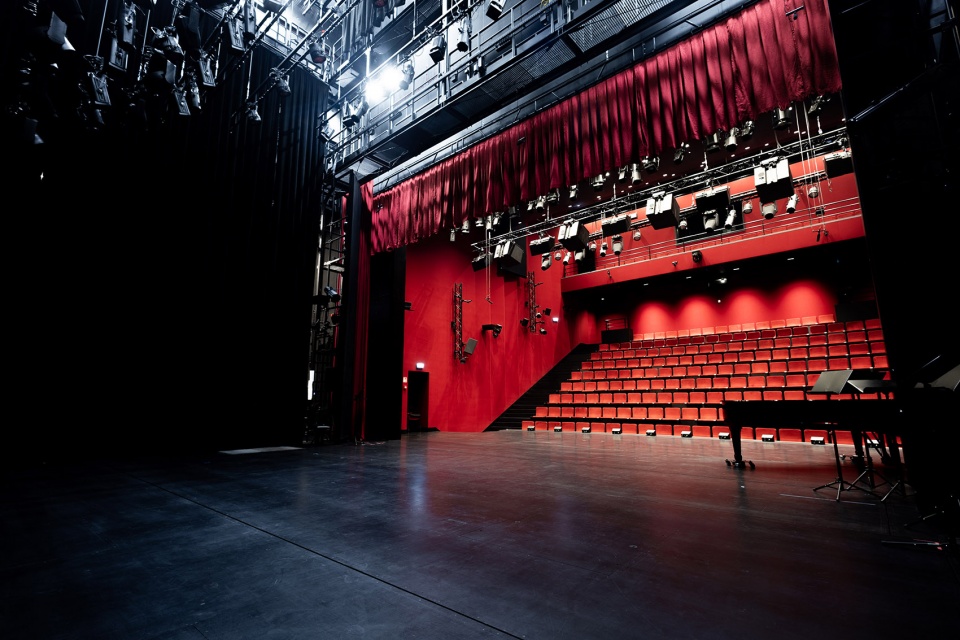
▼从观众视角看观演空间,Audience seating viewed
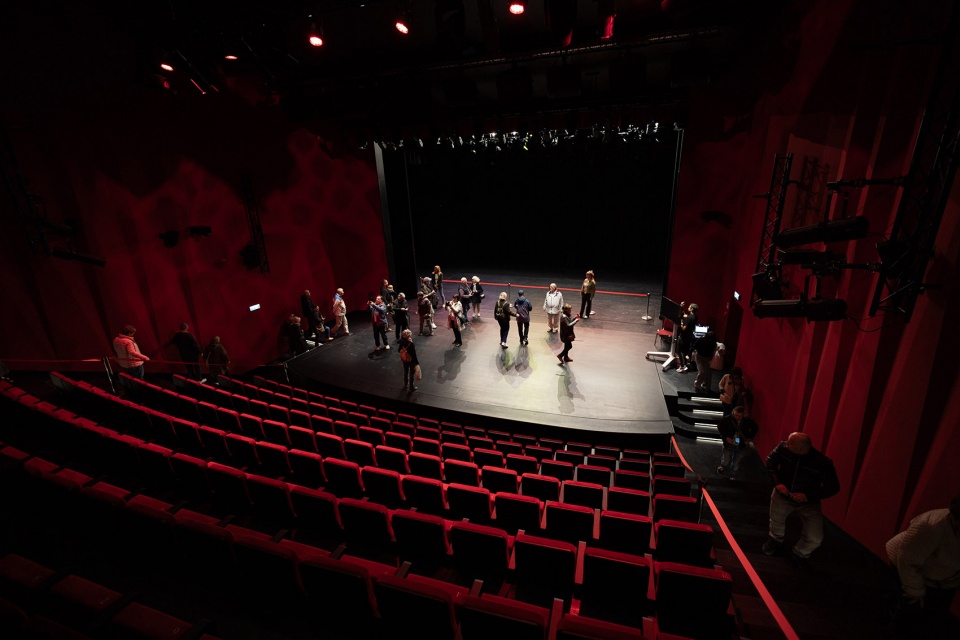
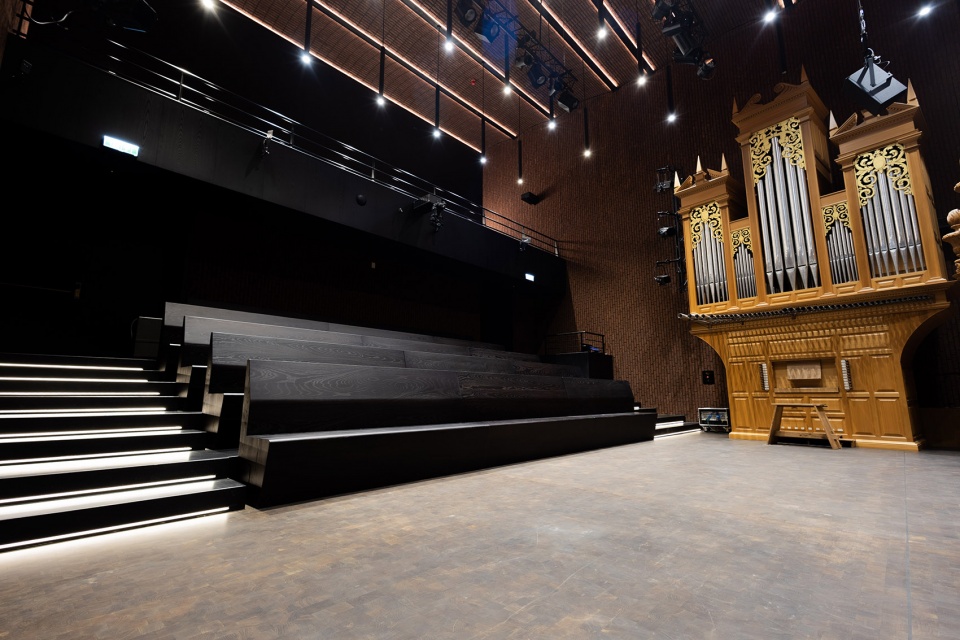
▼观众席围绕管风琴舞台展开,Audience seating arranged around the organ stage
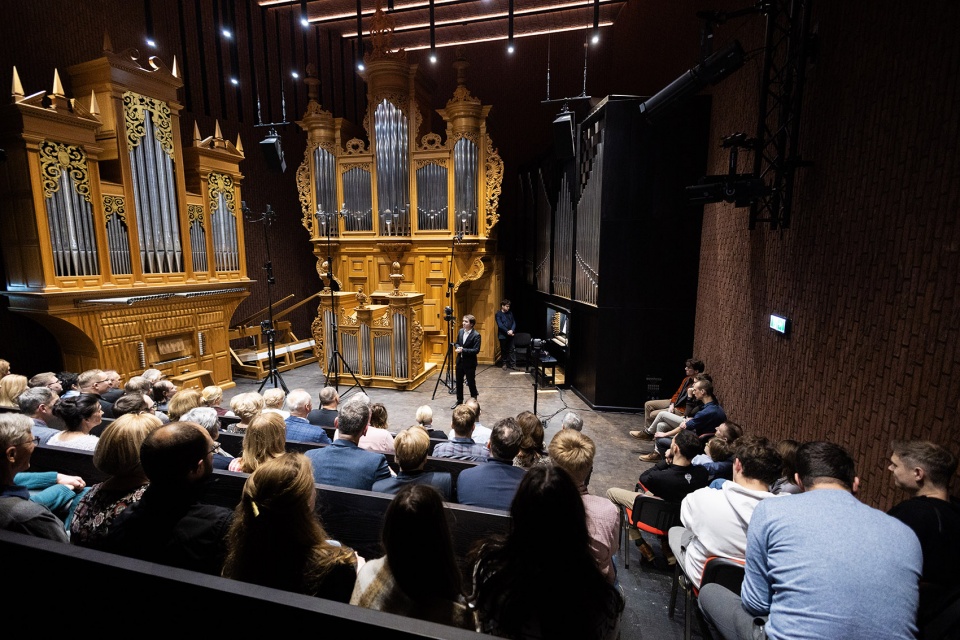
▼木质管风琴细部与演出空间,Pipe organ details within the performance space
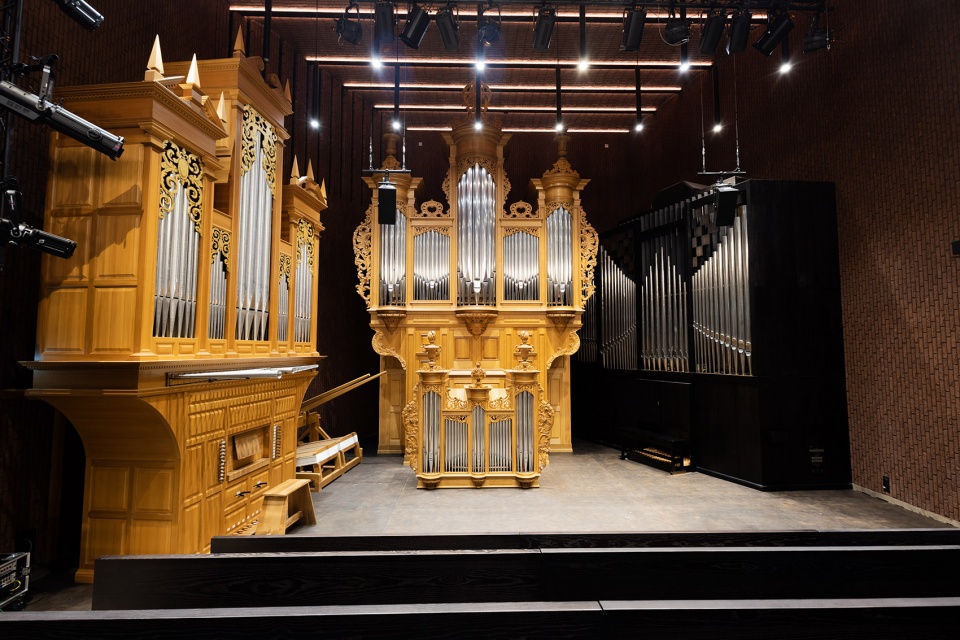
此外,项目还设置了双层隔音门,以进一步减少声音传递。甚至连位于地下、通过座椅下方送风的通风系统,也经过精密设计,以确保绝对安静。
Furthermore, dual-layered acoustic doors were integrated to meticulously mitigate sound transmission. Even the subterranean ventilation system, which diffuses air from beneath each seat, is meticulously engineered for absolute acoustic silence.
▼从舞台视角看阶梯式观众席,Tiered audience seating viewed from the stage
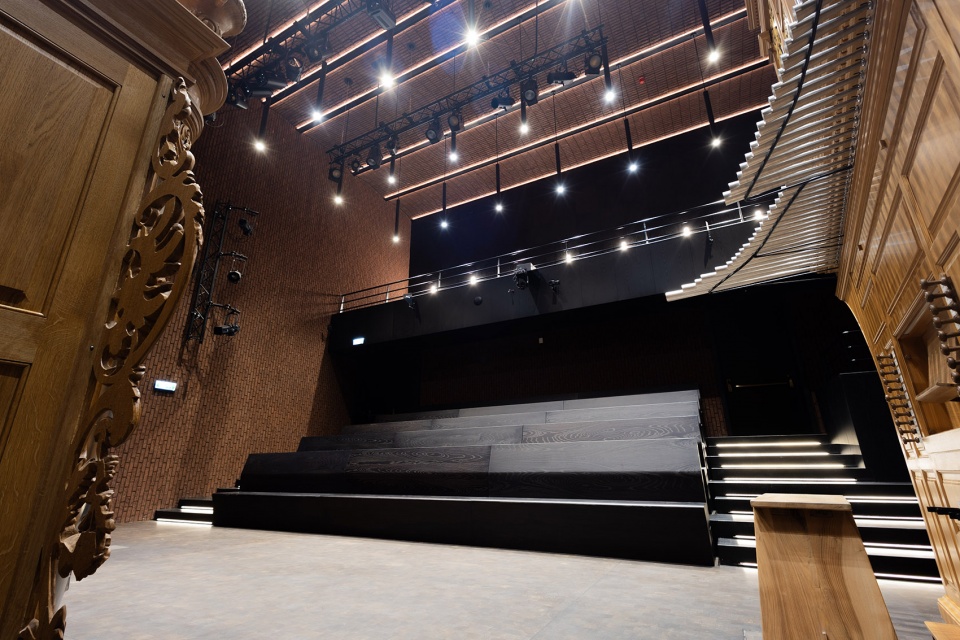
能源自主性Energy autonomy
校园同样以极高标准践行可持续建筑理念。建筑通过可再生能源与先进技术系统的综合运用,实现了高度能源自主。高性能光伏阵列与储能系统用于优化能源获取与分配,而地源热泵则利用地下热惯性实现高效的季节性供暖与制冷。只有在极端气候条件下,建筑才会接入城市集中供热系统。项目完全摒弃了被动式重力通风与可开启窗户,而是通过高性能热回收新风系统持续输送经过过滤的新鲜空气。因此,学生、教师与访客始终处于一个经过精准调控的微气候环境中——温度稳定、湿度适宜。
The campus is also meticulously engineered to exemplify the most rigorous benchmarks of sustainable construction. The structure achieves profound energy autonomy, leveraging a sophisticated synthesis of renewable resources and state-of-the-art technological systems. High-performance photovoltaic arrays and energy storage systems optimize power harvesting and distribution, while ground-source heat pumps leverage the earth’s thermal inertia to provide efficient seasonal heating and cooling. Only in instances of climatic extremity, the building draws upon the support of the city’s district heating network. Passive gravity ventilation and operable windows have been entirely eschewed. A constant flow of fresh, filtered air is seamlessly delivered via high-performance heat recovery air handling units. Consequently, students, faculty and visitors inhabit a meticulously calibrated microclimate – characterized by thermal consistency and optimal humidity.
▼观众席与舞台构成完整听觉空间,Audience seating and stage forming an integrated acoustic environment
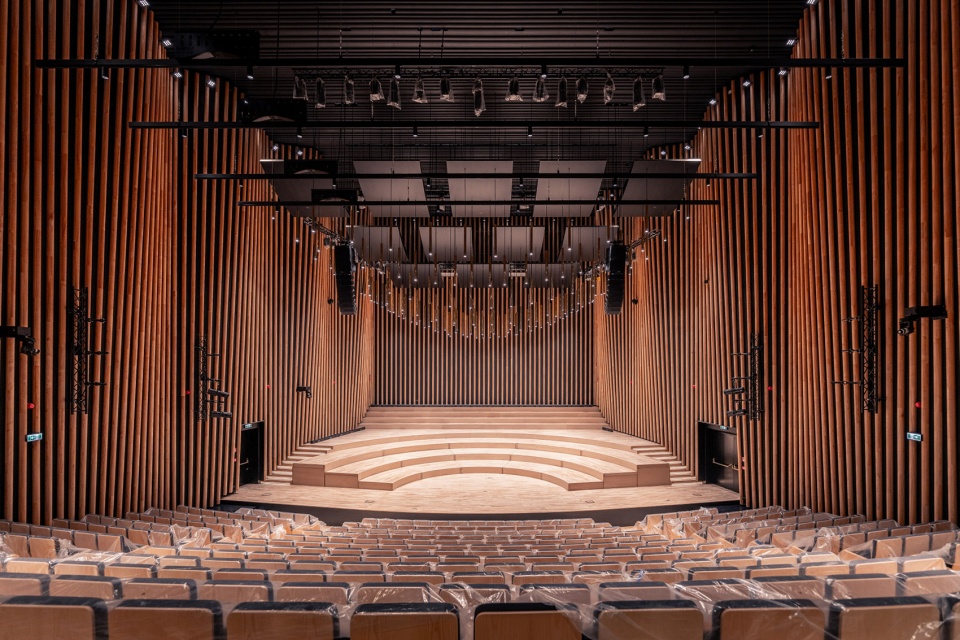
▼演奏控制区隐藏于木构界面中,Performance control area embedded within the timber enclosure
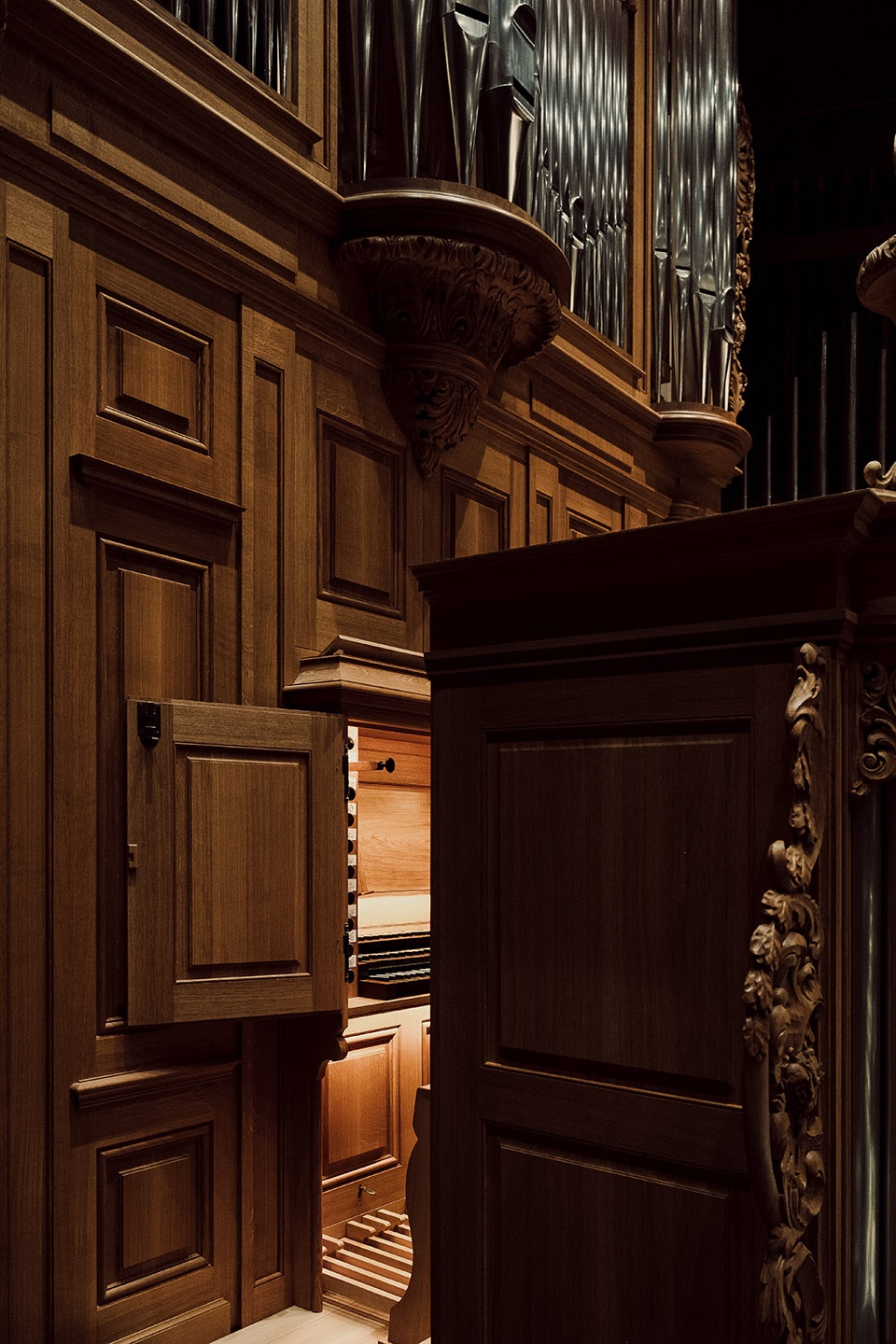
▼木饰面纹理强化音乐厅质感,Timber textures reinforcing the atmosphere of the concert hall

机械制冷仅用于服务器机房与风机房等高热负荷区域,而这些空间回收的热能则被重新利用于车库与楼梯间供暖。比得哥什新音乐学院融合了卓越建筑品质与整个艺术社群的共同愿景,成为一座具有里程碑意义的建筑。校园为音乐教育与艺术建筑树立了新的标准,为学生提供了可与欧洲顶级院校媲美的学习环境。
Mechanical cooling is strategically reserved for high-thermal-load zones, such as server and fan rooms, and the energy harvested from these spaces is repurposed to heat garages and stairwells. The new Academy of Music in Bydgoszcz stands as a landmark synthesis of architectural excellence and the collective aspirations of the entire artistic community. The campus establishes a new benchmark for musical pedagogy and the architecture of the arts, providing students with a caliber of facility that rivals the most prestigious institutions across Europe.
▼金属吊灯形成富有节奏感的光阵,Metal pendant lights forming a rhythmic lighting composition

▼砖砌拱顶与灯光构成纵向空间,Brick vault and lighting shaping the vertical circulation space
▼细节,Detail


▼夜景,Night view
BUILDING PARAMETERS:
Site area: 33,000 m2
Volume: 168,000 m3
Gross area: 31,500 m2
Usable area: 23,300 m2
Maximum above-ground height: 30 m
Above-ground storeys: 6 + technical rooms
Subterranean levels: 2
Aggregate spectator capacity: 840 in 4 concert halls
ARCHITECTURE & LANDSCAPE DESIGN
plus3 architekci | chłopickiego 7/9 lok. 62, 04-314 Warsaw
ARCHITECTS
Katarzyna Głażewska
Krzysztof Bagiński
Grażyna Woźniak-Głażewska
Jadwiga Trzeciakowska
Patryk Rosiński
Katarzyna Najberg
ACOUSTICS
ewkAkustika | Anny Jagiellonki 4, 01-989 Warsaw
DESIGNERS
Ewa Więckowska-Kosmala
Magda Czechowska
Radosław Ciszewski
STAGE TECHNOLOGIES
Manufaktura Technologiczna | Puławska 38, 05-500 Piaseczno
DESIGNERS
Wojciech Kostrzewa
Aleksander Bobynko
DESIGN TEAM
Urszula Brzozowska
Małgorzata Srebrzyńska
Łukasz Gorczyca
Mateusz Pałgan
STRUCTURE
kuban&salak design and engineering | Piaskowa 6 lok. U3, 01 -067 Warsaw
CHIEF DESIGNER
Krzysztof Pęczkowski
SANITARY ENGINEERING
INTEC Projekt | Rydygiera 15, 01-793 Warsaw
CHIEF DESIGNER
Tomasz Jeziorski
ELECTRICAL ENGINEERING
INTEC Projekt | Rydygiera 15, 01-793 Warsaw
CHIEF DESIGNER
Marcin Pociech