Sota la Mola之家,西班牙 / Twobo Arquitectura
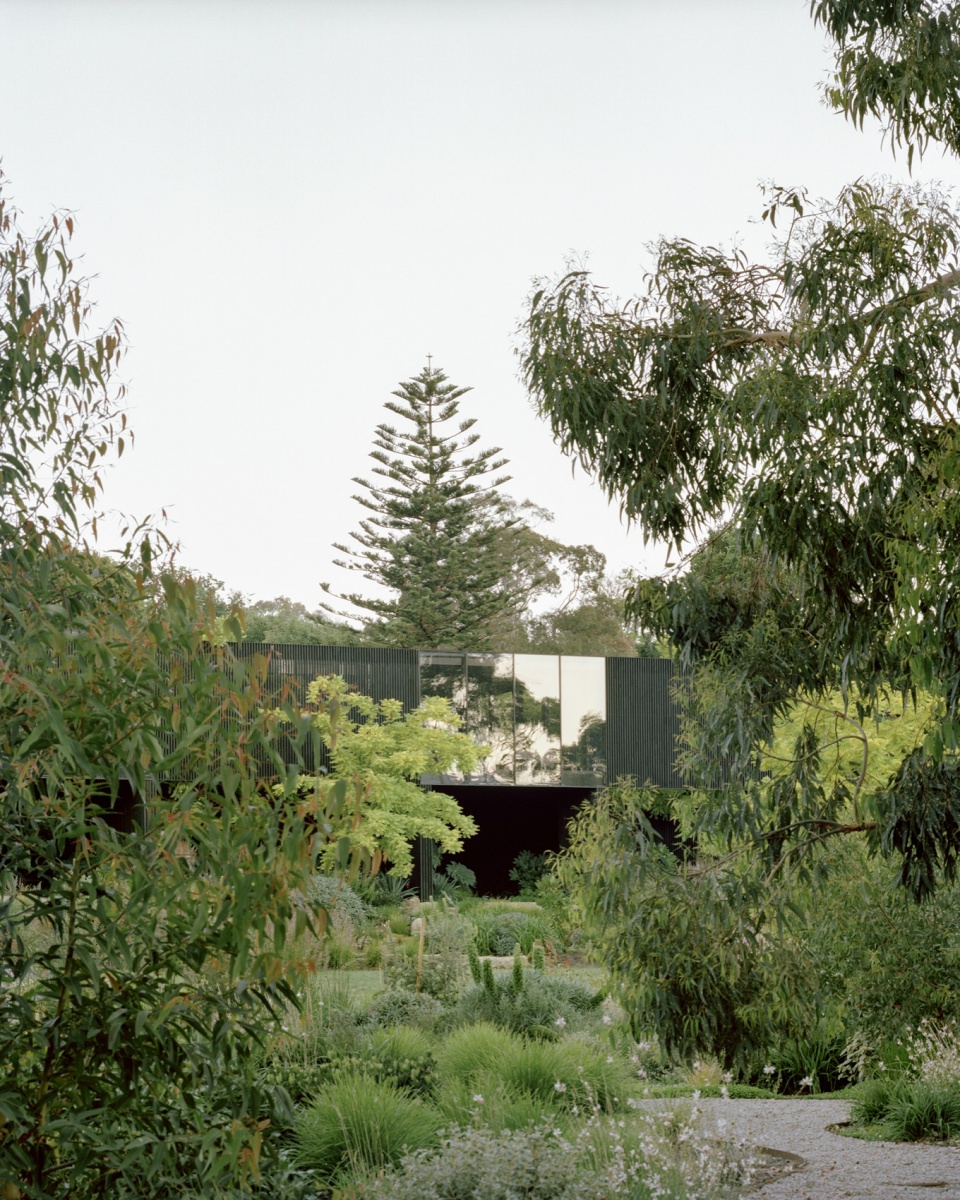
由María Pancorbo、Alberto Twose与Pablo Twose组成的巴塞罗那建筑事务所Twobo,呈现了Casa Sota la Mola住宅项目。项目位于巴塞罗那Matadepera,坐落于Sant Llorenç del Munt i l’Obac自然公园山脚下,其设计建立在对周边环境细致解读的基础之上,并以低调融入场地特有的红色地貌为目标。最终呈现的是一座单色调住宅,与地形融为一体,在家庭生活与自然宁静之间取得平衡。
Barcelona-based architecture studio Twobo, formed by María Pancorbo, Alberto Twose and Pablo Twose, presents Casa Sota la Mola. Situated in Matadepera, at the foot of the Sant Llorenç del Munt i l’Obac Natural Park in Barcelona, the project is rooted in a careful reading of its surroundings and designed to blend unobtrusively with the characteristic red hues of the landscape. The result is a monochromatic home that merges with the terrain, combining family life with the tranquillity of nature.
▼项目概览,overview of the project
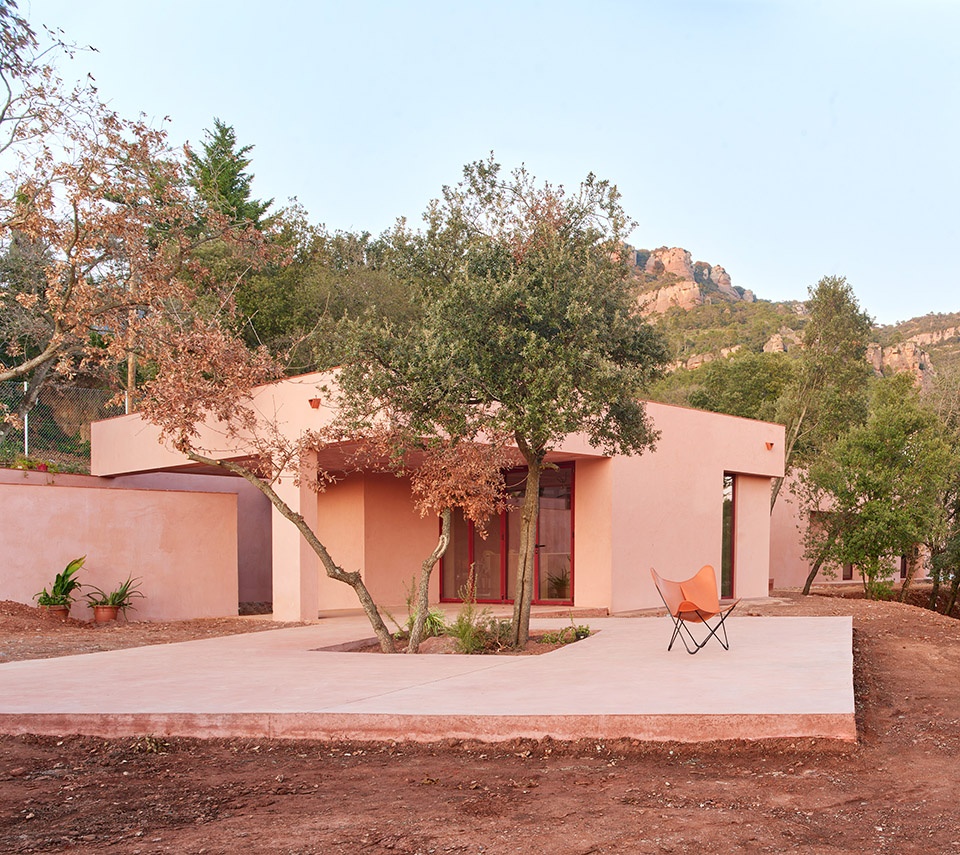
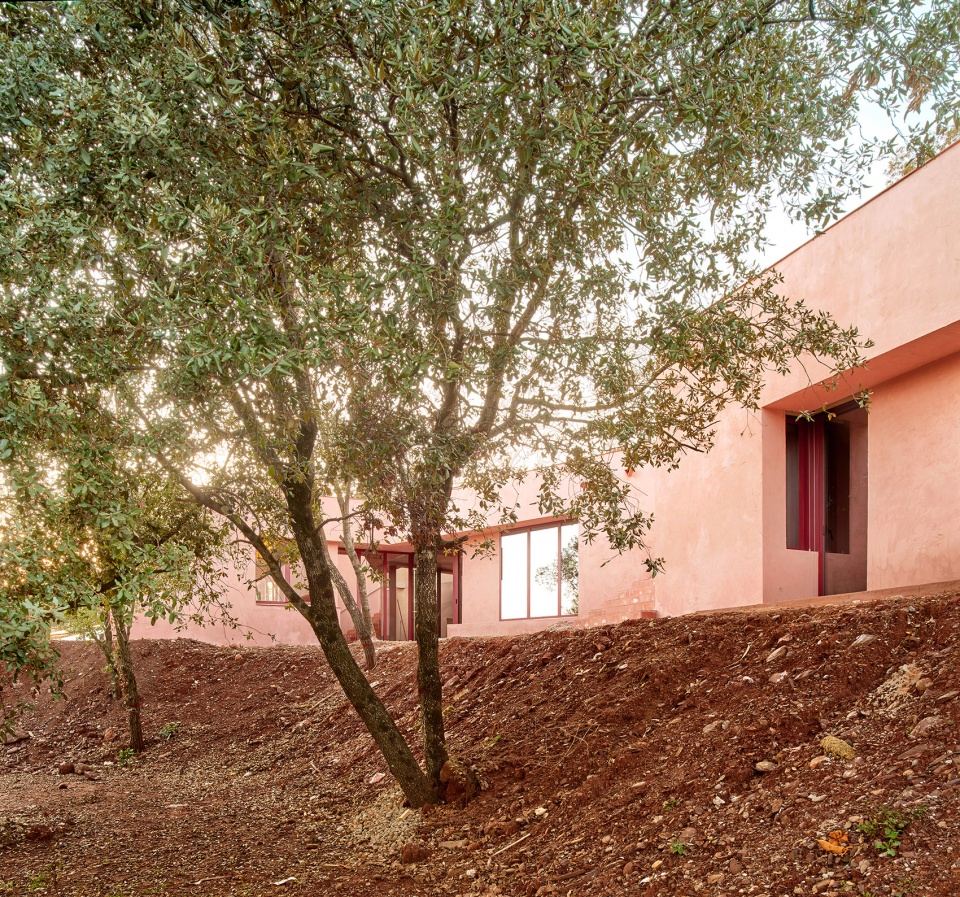
▼项目概览,overview of the project
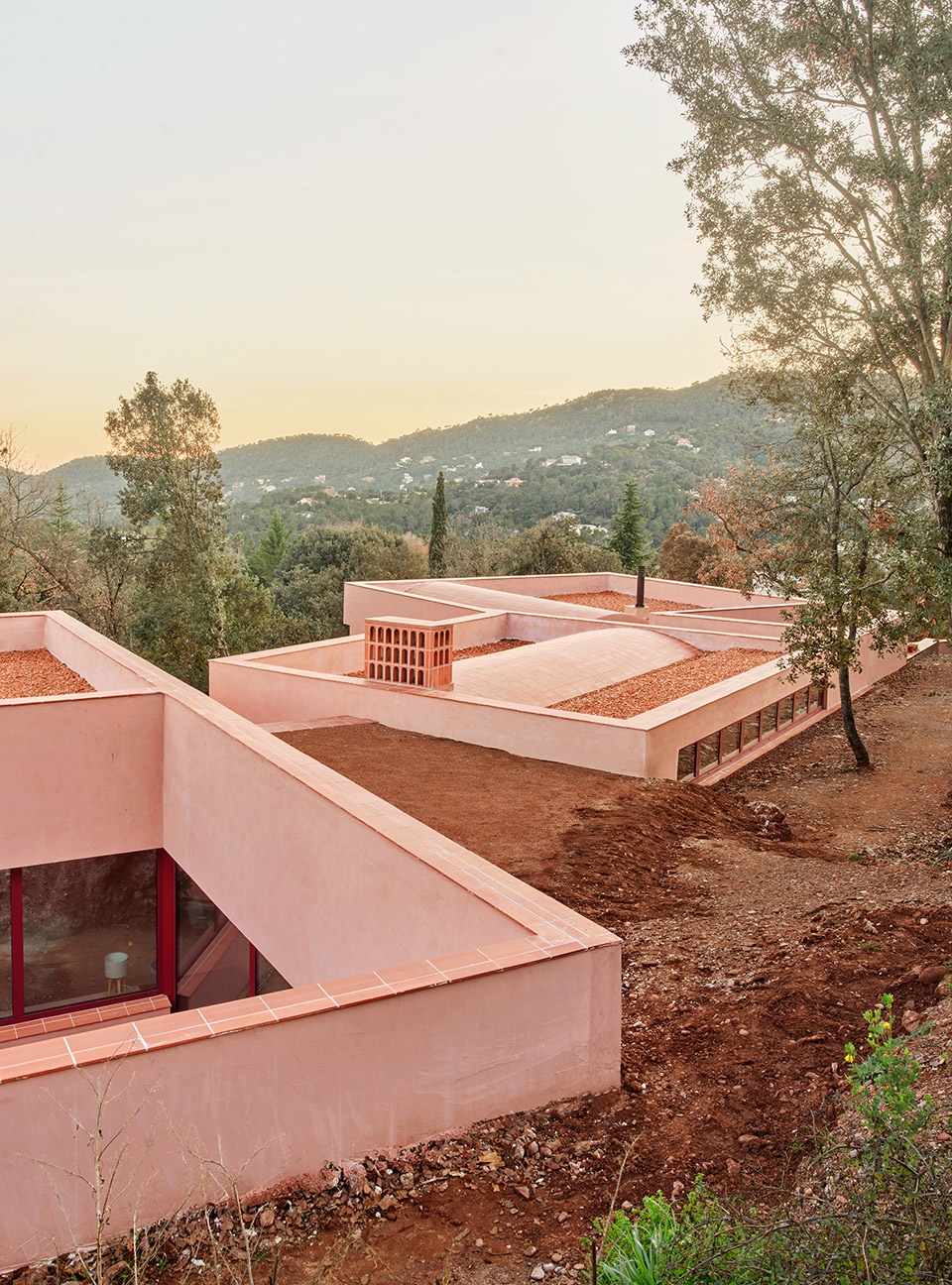
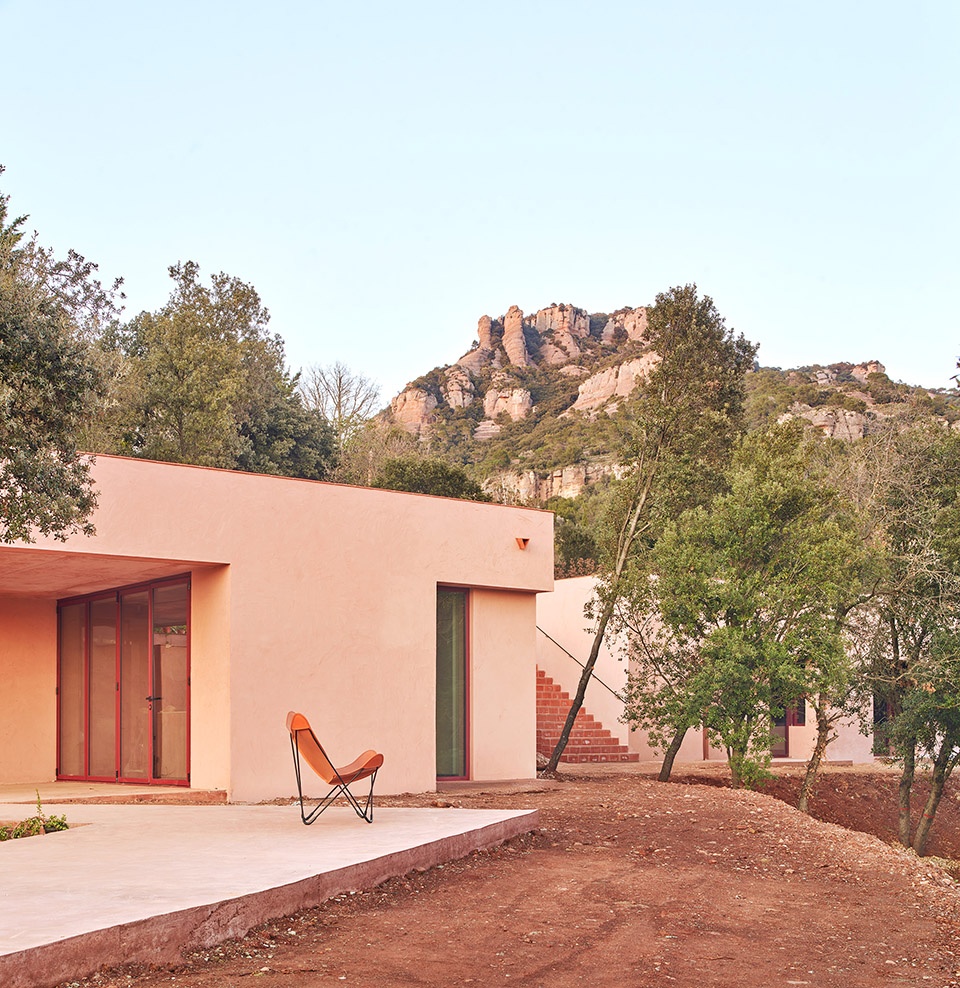
项目为一对育有两个年幼孩子的夫妇而设计,他们希望拥有一座能够体现设计敏感度与建筑融合性的住宅。其中一位业主与Matadepera有着深厚的个人情感联系,其童年夏天正是在这里度过。经过十五年澳大利亚生活后——在那里,户外生活是日常的重要组成部分——这个家庭希望重新与土地建立联系,因此选择了这片场地作为新家的所在地。
The project was conceived for a couple with two young children, who wanted a home that reflected a sensitivity to design and architectural integration. One of the owners has a deep personal connection to Matadepera, where they spent childhood summers. After fifteen years in Australia – where outdoor living is central to daily life – the family sought to reconnect with the land, selecting this site for their new home.
▼对地形的细致适应,careful topographical adaptation
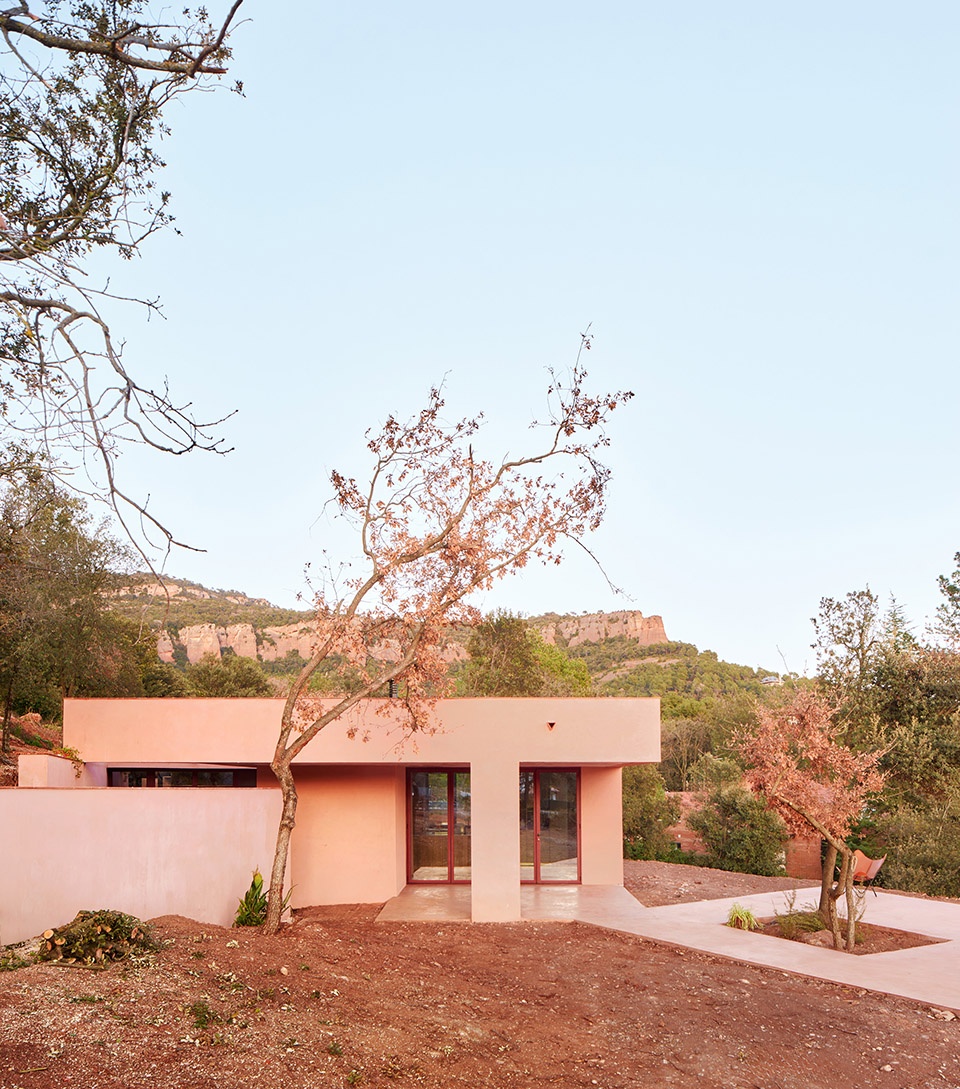
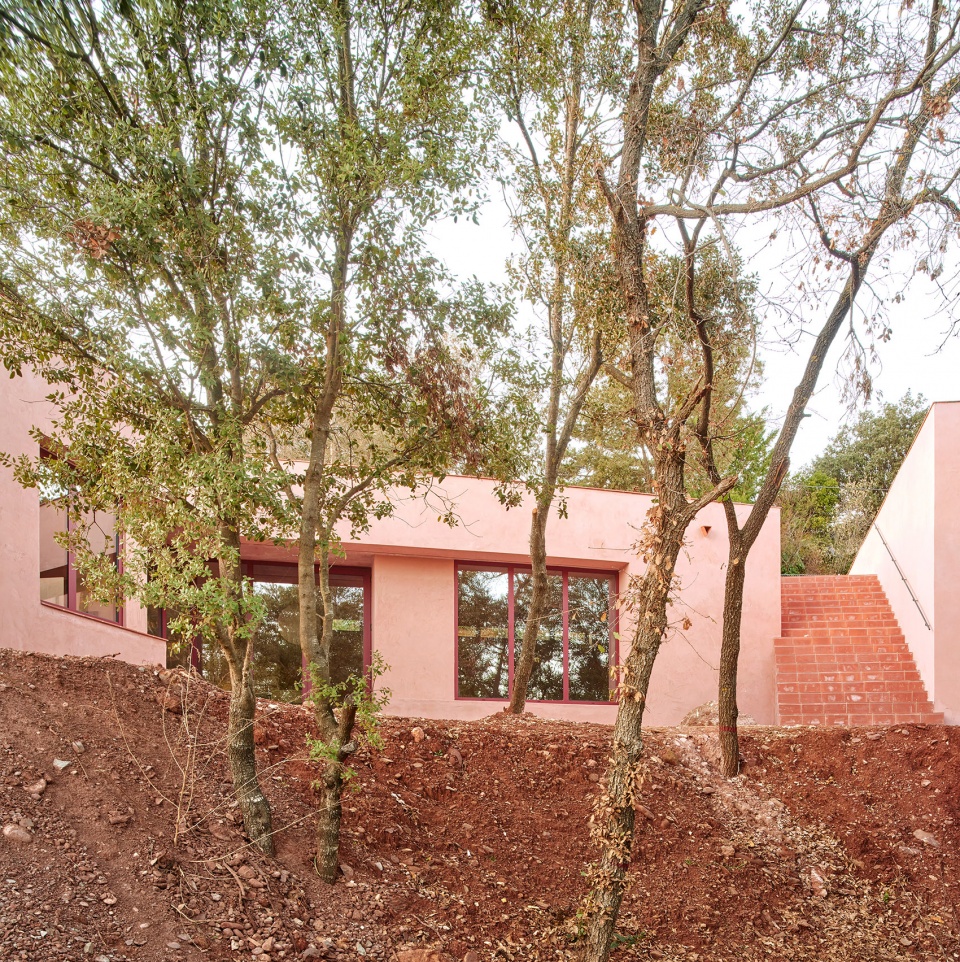
▼与周边景观的密切对话,a close dialogue with the surrounding landscape
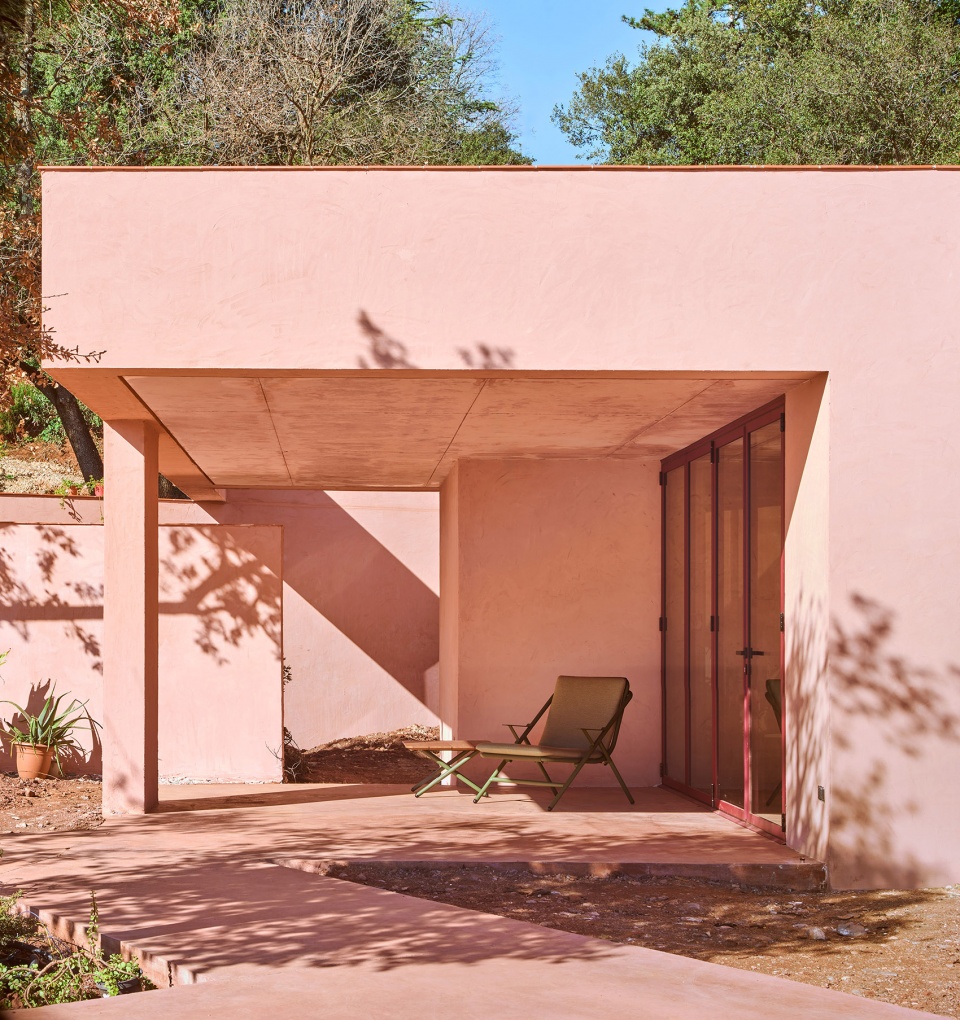
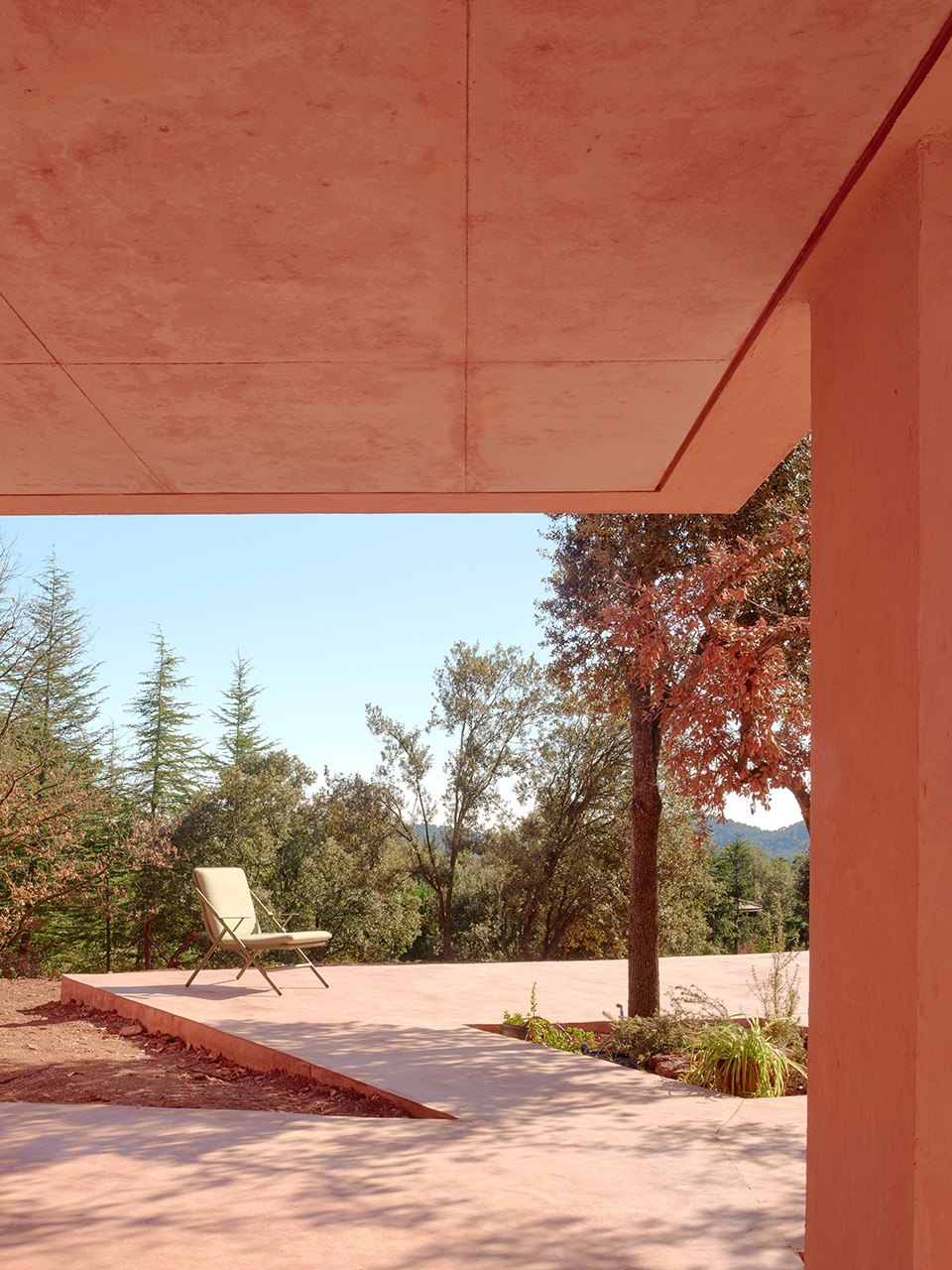
Twobo将这一个人故事转化为空间设计,通过对地形的细致适应以及与周边景观的密切对话,使建筑融入La Mola山体轮廓之中。项目由两个核心策略定义:体量的碎片化处理,以及与场地红色地貌相协调的材料运用。最终,这座住宅既是一处家庭避居之所,也成为景观的延续,并清晰呼应了阿尔瓦·阿尔托(Alvar Aalto)著名的穆拉察洛实验住宅(Muuratsalo Experimental House)。
▼灵感来源,inspiration
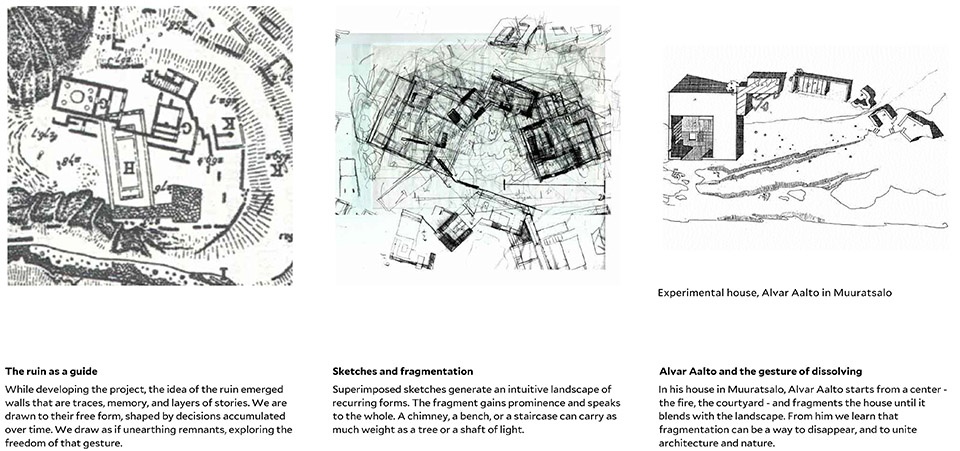
Twobo translated this personal story into a design that blends with the profile of La Mola through careful topographical adaptation and a close dialogue with the surrounding landscape. Two key strategies define the project: the fragmentation of volumes and the use of materials that harmonise with the terrain’s reddish palette. The result is a house that serves both as a family retreat and an extension of the landscape, with clear references to Alvar Aalto’s famous Muuratsalo Experimental House.
▼使建筑融入山体轮廓中,building blends with the profile of La Mola
▼室内空间,interior space
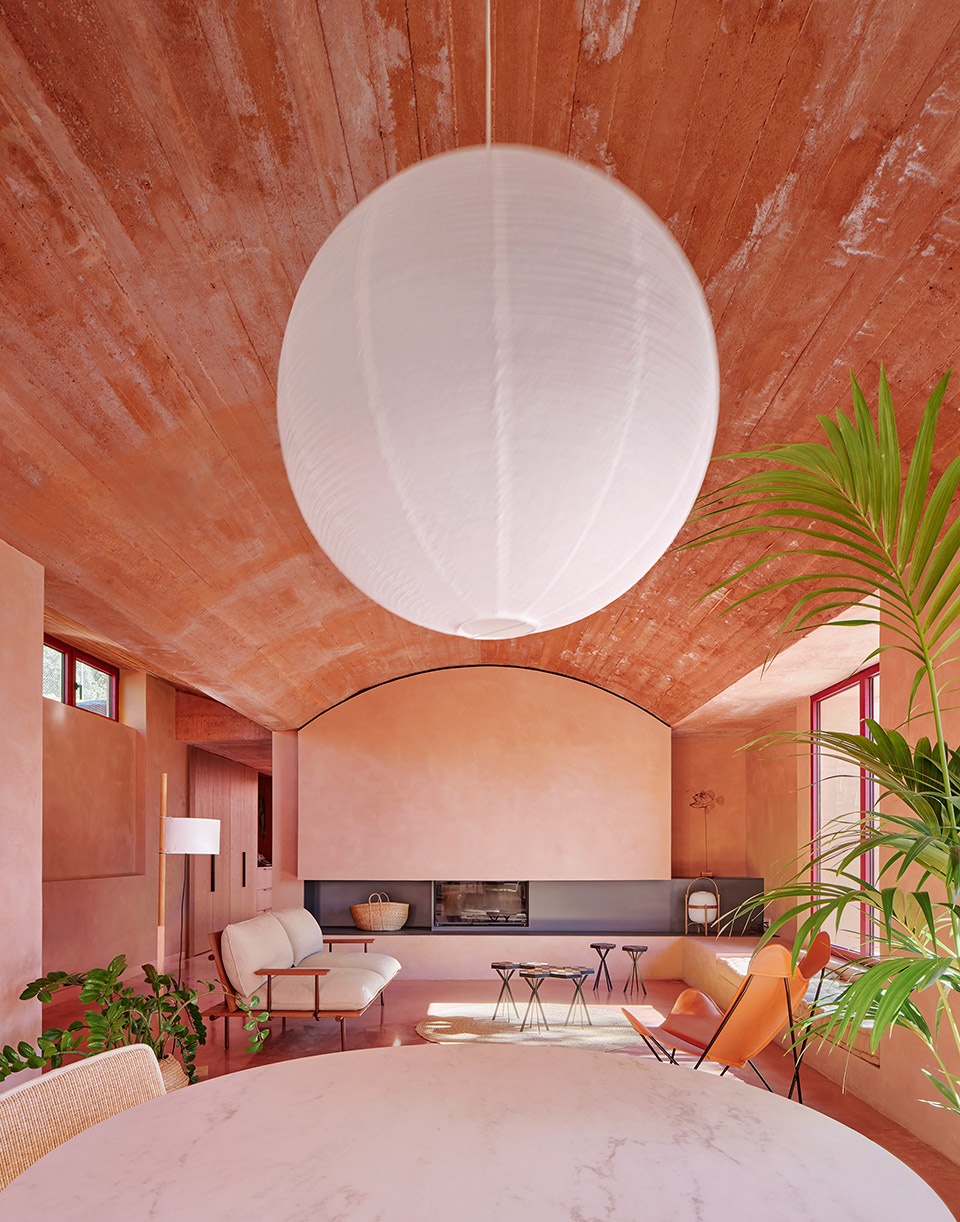
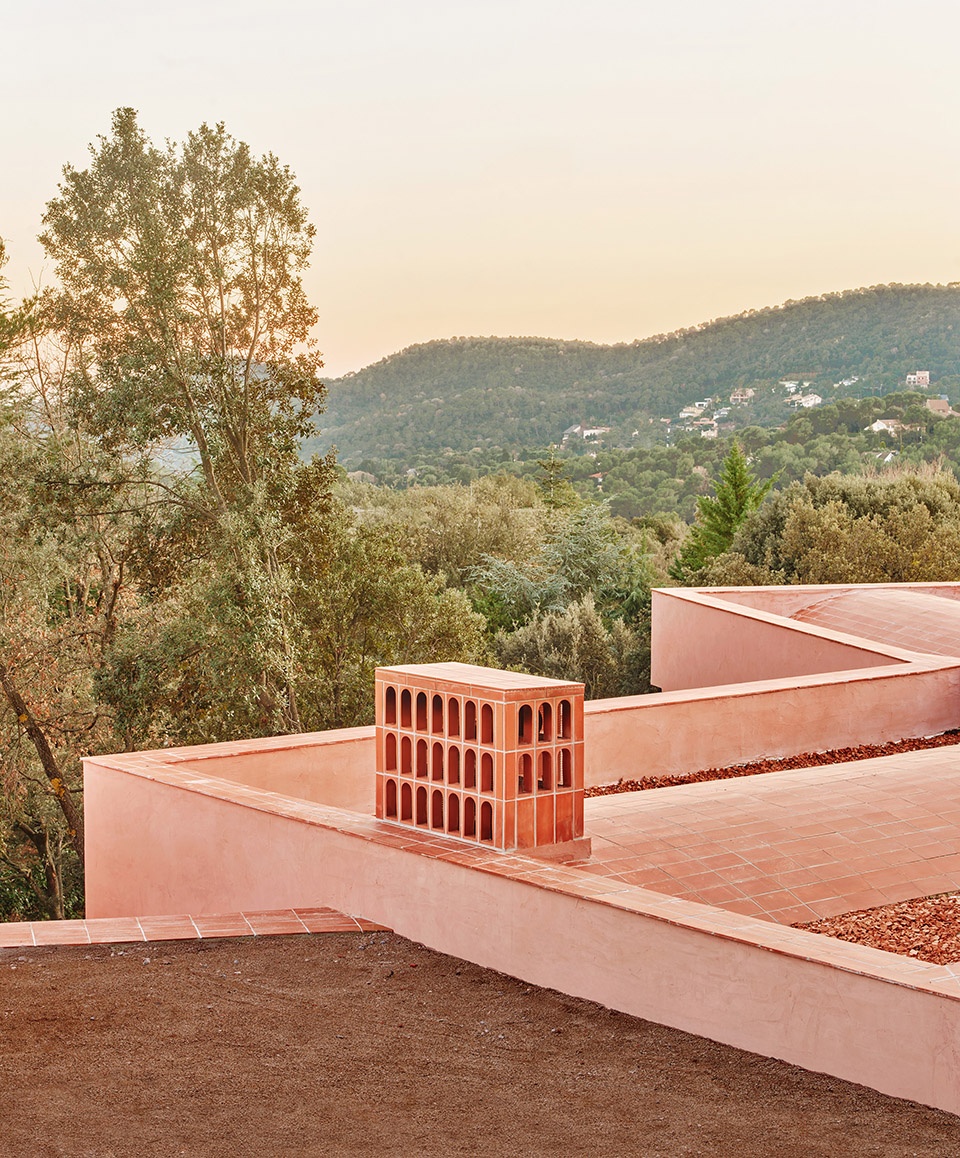
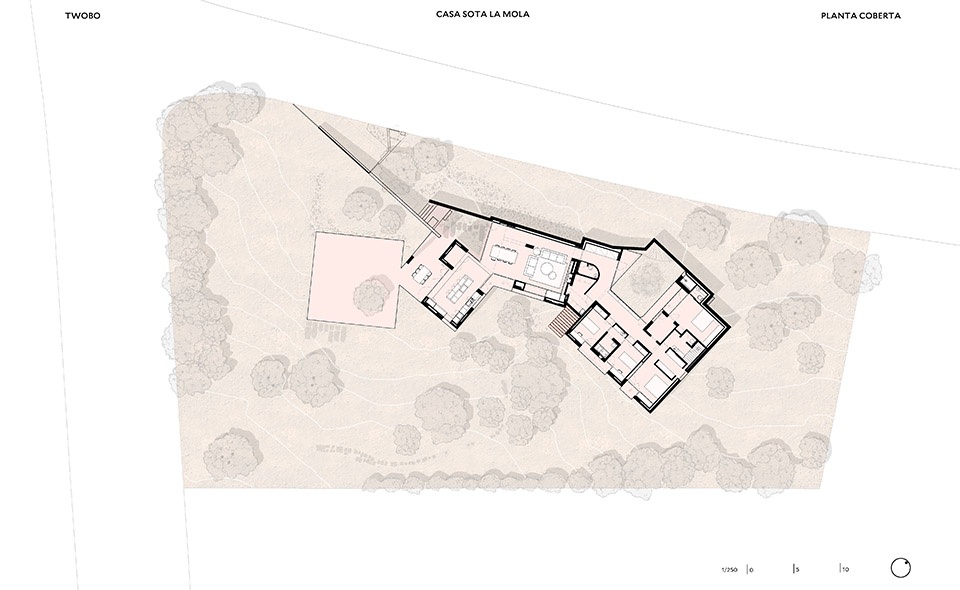
住宅整体为单层布局,由两个体量组成:其中一个为公共生活区域,包含厨房、餐厅与客厅;另一个围绕内部庭院展开,容纳卧室等私密空间。这种清晰的功能分区创造出两种截然不同的空间氛围:朝向午后阳光并面向景观的抬高区域,自然成为主要生活空间;而位于中央、更为阴凉且受遮蔽的区域,则提供了安静与休憩的场所。建筑的布局避免了对邻近建筑的视线干扰,将重点放在与周边自然环境的联系之上。
The house extends across a single storey and is organised into two volumes: one for communal living, containing the kitchen, dining room and living room; the other, arranged around an inner courtyard, accommodates the private areas with the bedrooms. This clear functional division creates two distinct atmospheres: the elevated section, oriented towards the afternoon sun and open to the views, naturally becomes the main living space, while the central, cooler, shaded area provides seclusion and rest. Its positioning avoids views of neighbouring buildings, prioritising a connection with the immediate natural surroundings.
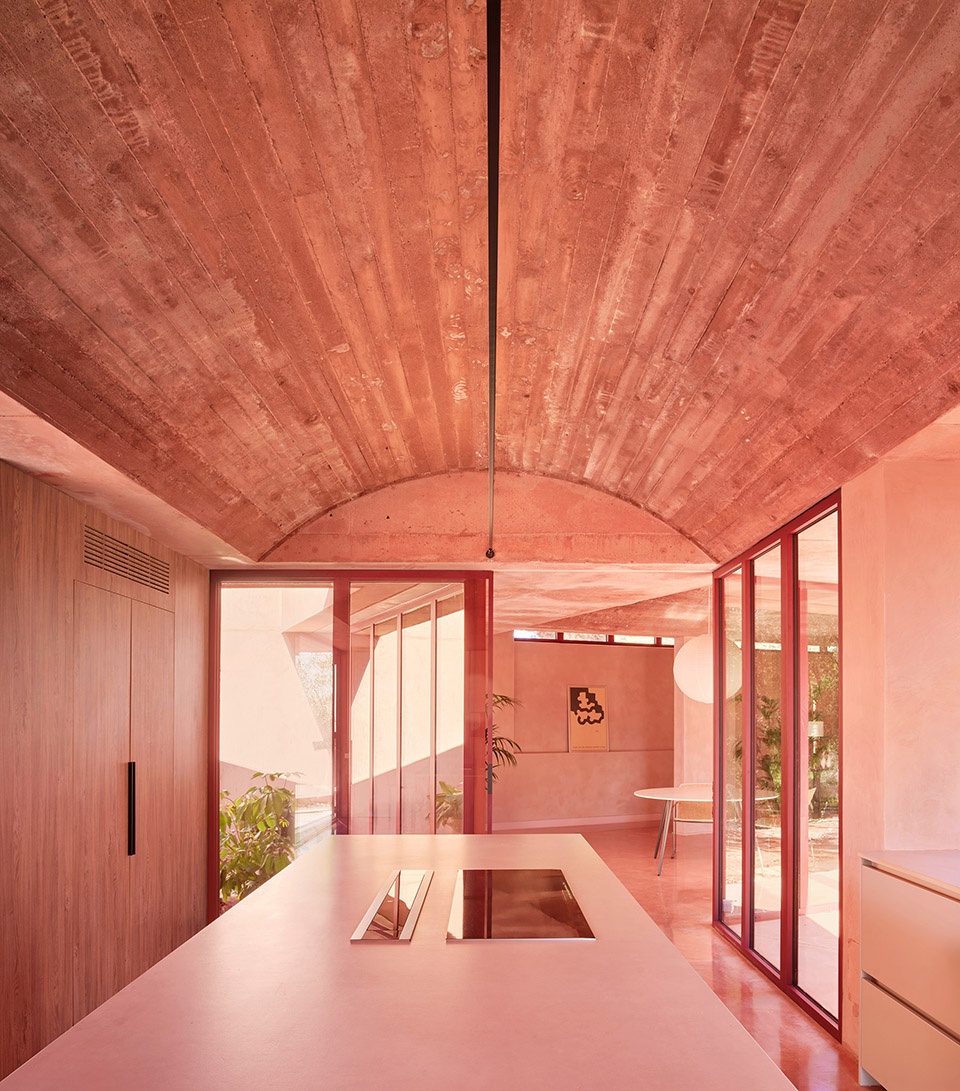
▼厨房,kitchen
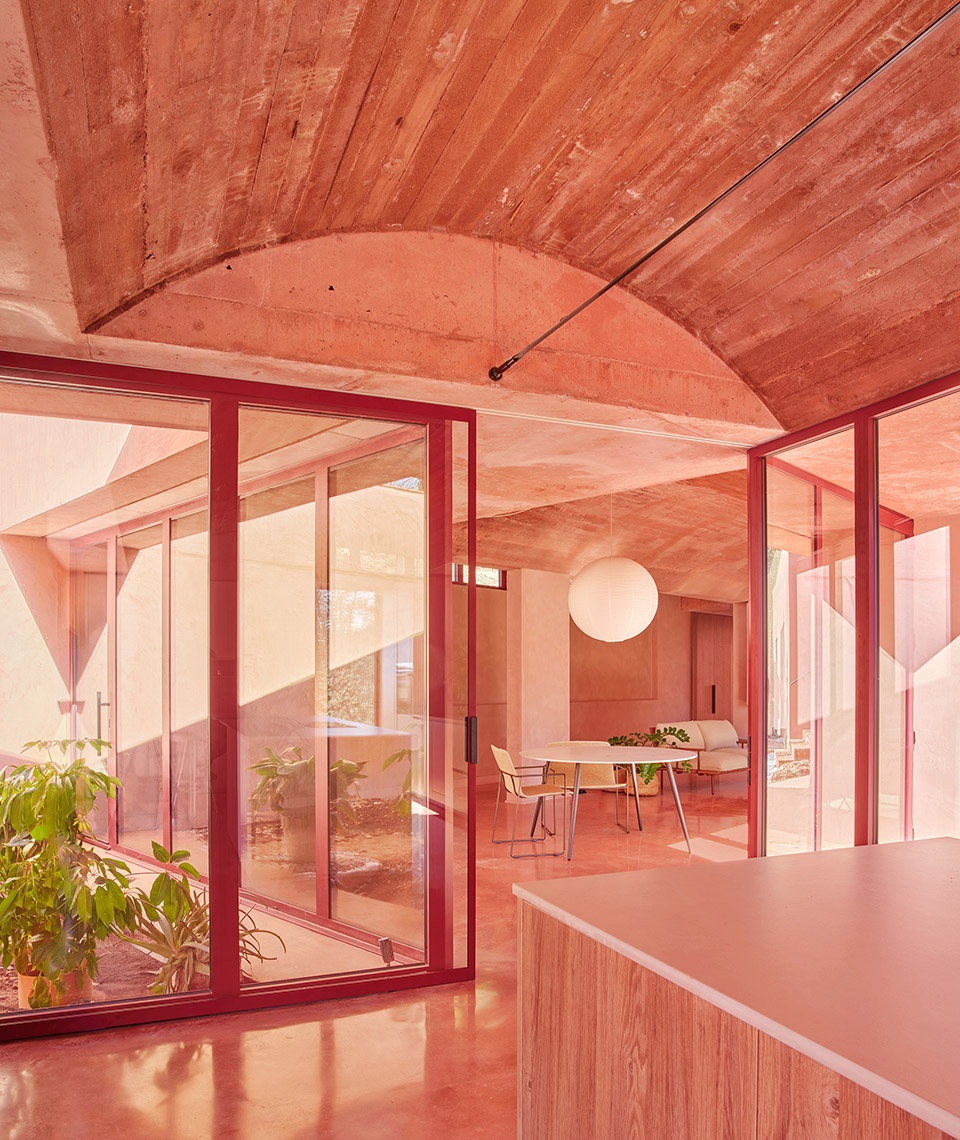
▼围绕内部庭院展开,arranged around an inner courtyard
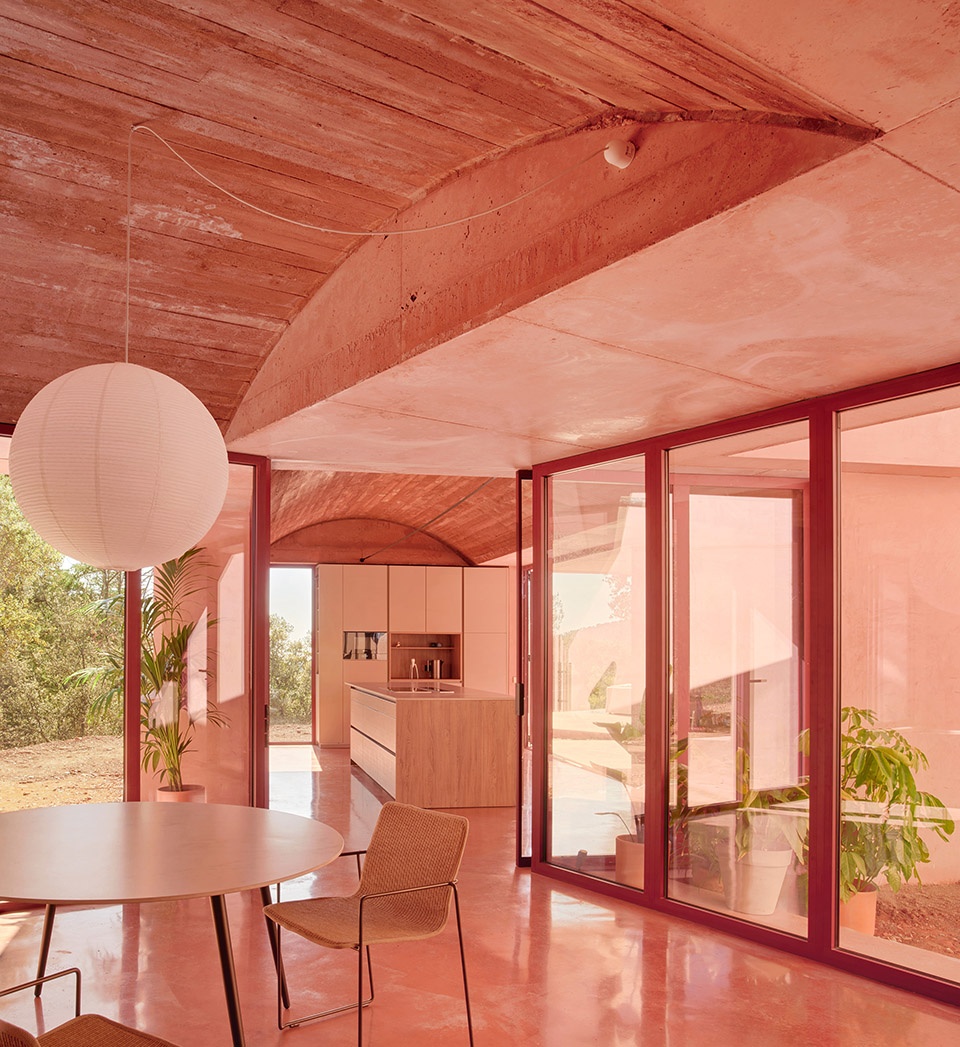
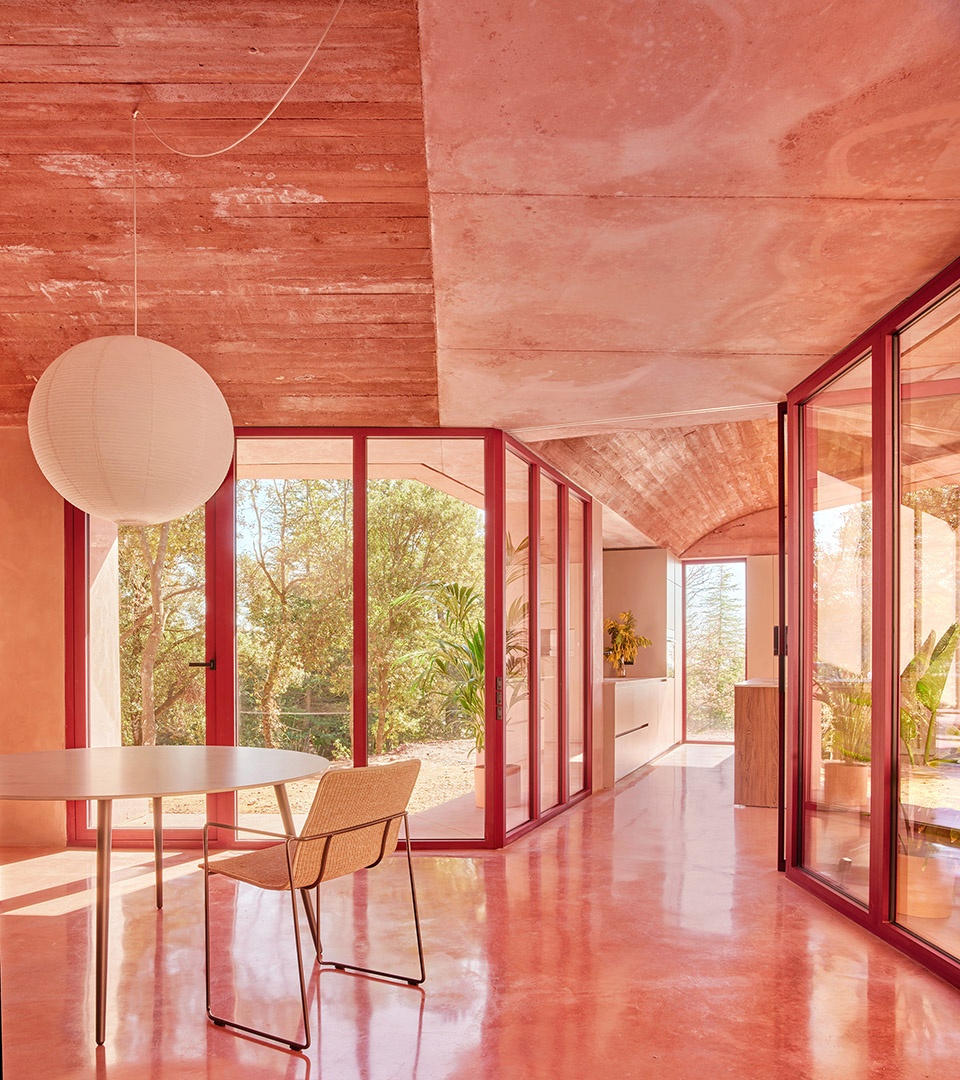
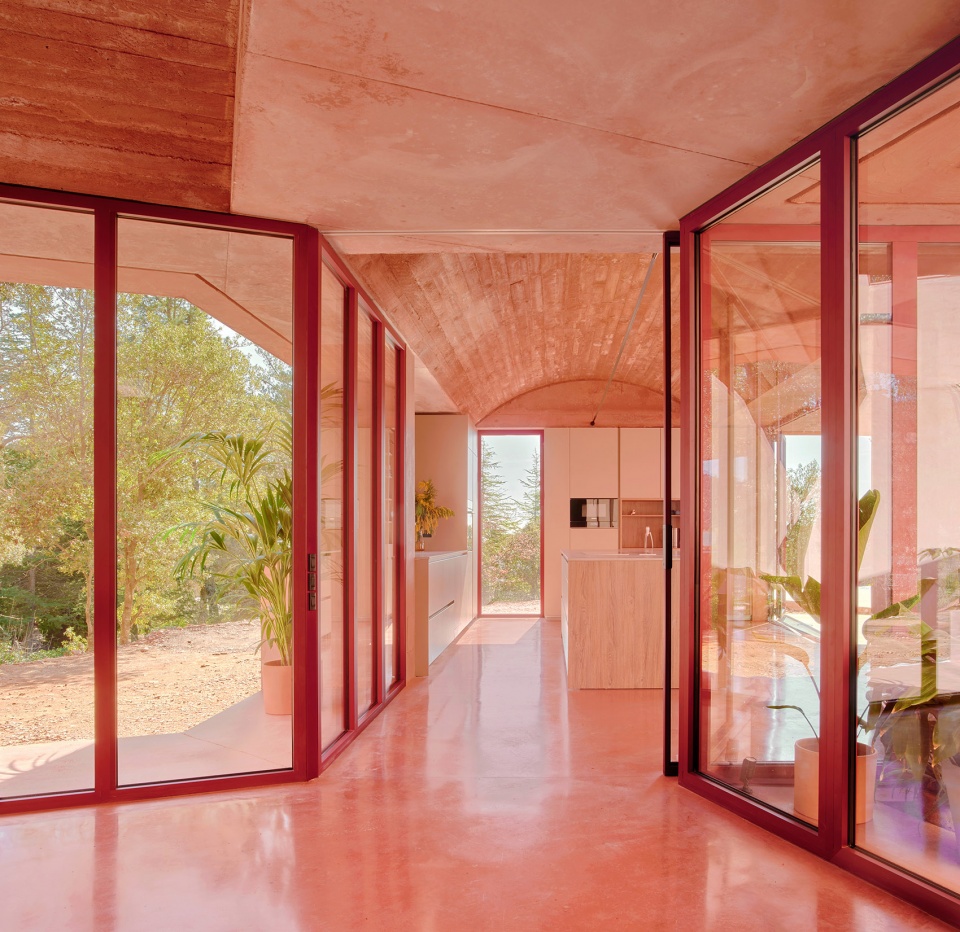
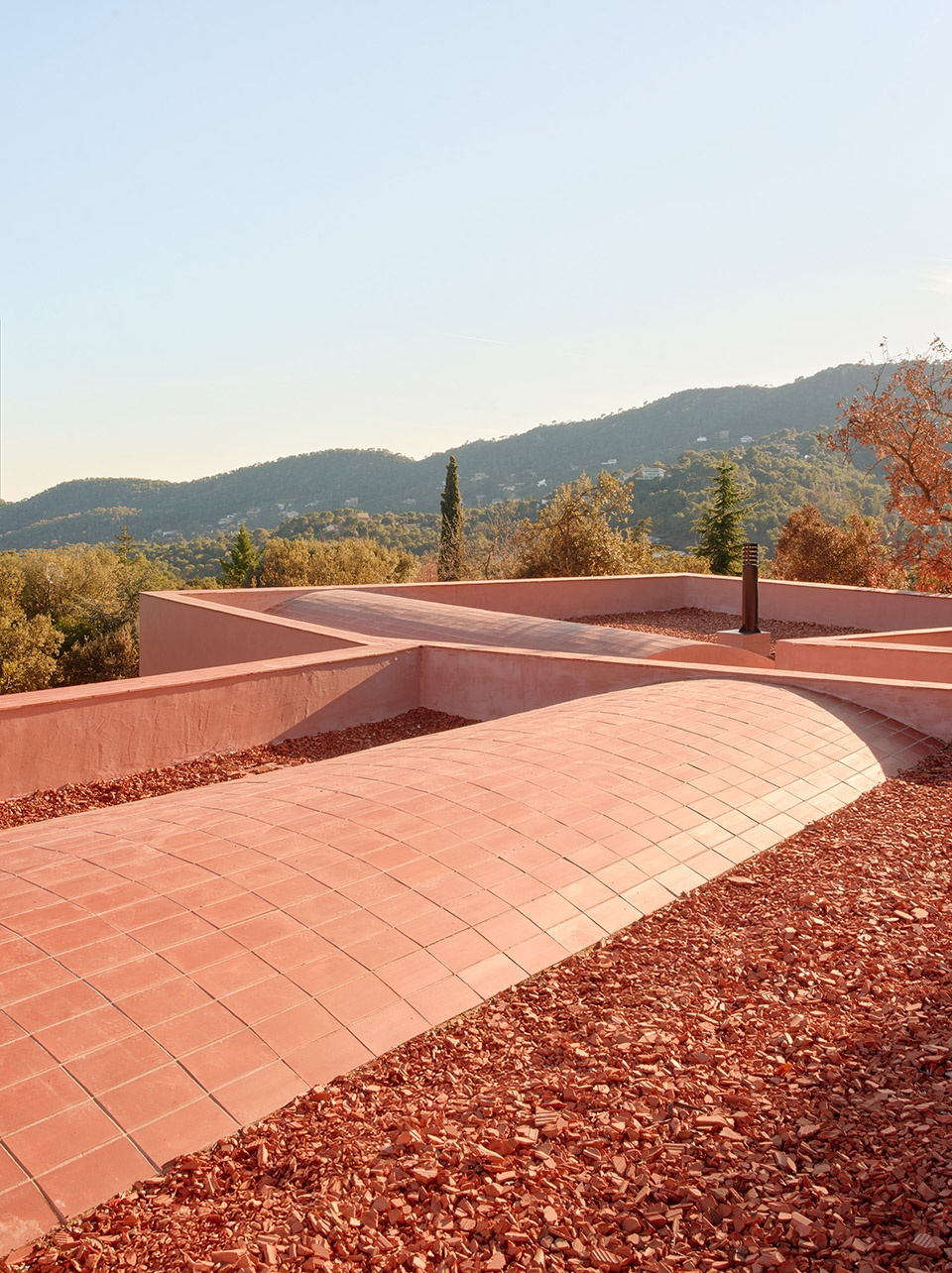
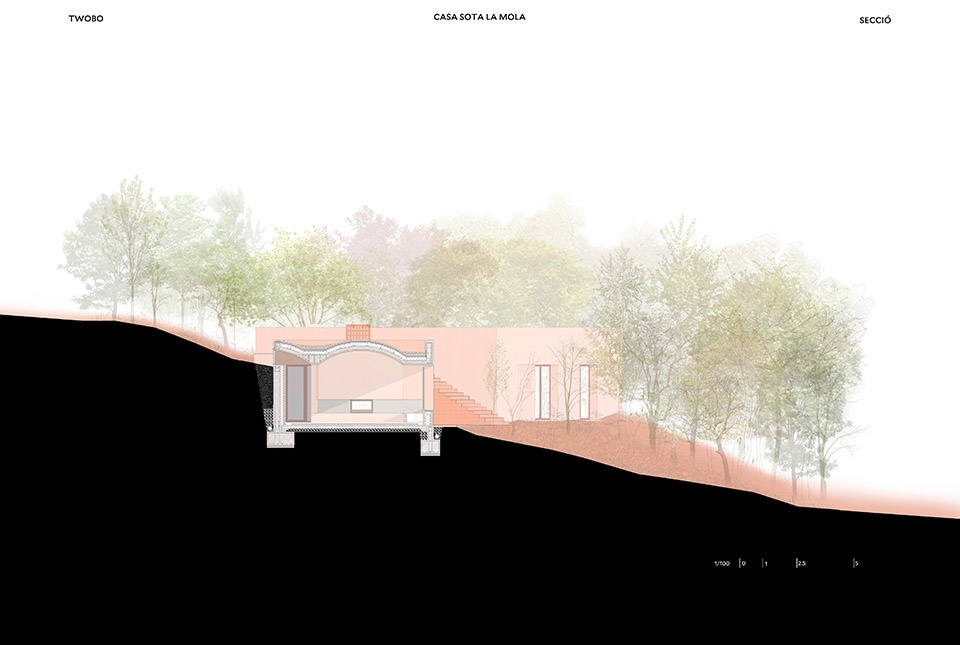
室内设计遵循一个核心原则:结构本身即为最终饰面。因此,建筑师选择了带有红色颜料的混凝土,以无需额外覆层的方式赋予住宅独特身份。其表面保留了木模板的肌理痕迹,这种可见的印记为空间增添了手工般的温度,也展现出建造过程本身。结构采用加泰罗尼亚拱(volta catalana)形式,定义了主要空间,使整个室内具有连续性、纹理感以及近乎雕塑般的氛围。
▼墙体和拱顶,walls and vaults
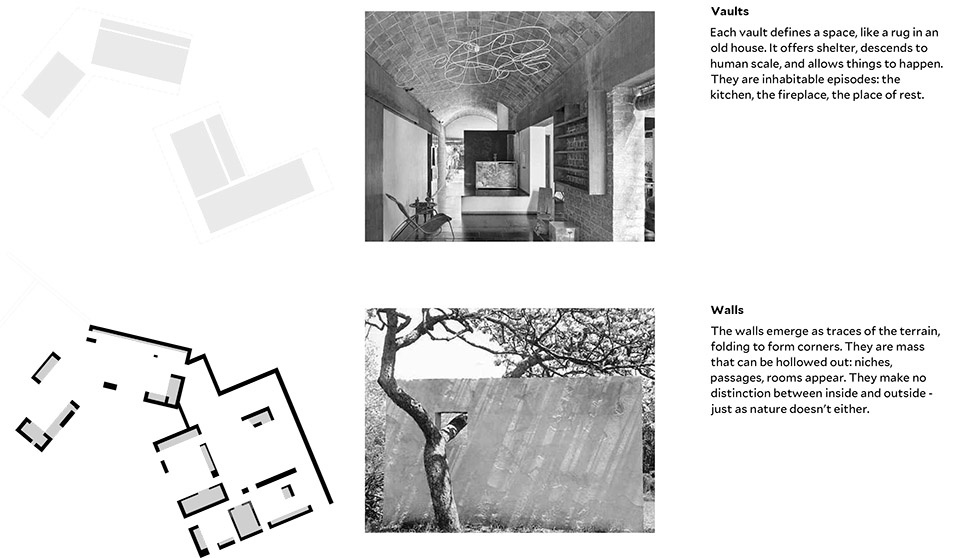
The interior is guided by a single principle: the structure itself serves as the final finish. Accordingly, the architects chose pigmented concrete in a reddish tone, giving the house its identity without additional cladding. Its surface retains the texture of the wooden formwork, a visible trace that adds a sense of handcrafted warmth and reveals the construction process. The vaulted form of the structure – the volta catalana –defines the main rooms, lending continuity, texture and an almost sculptural atmosphere throughout.
▼结构采用加泰罗尼亚拱,The vaulted form of the structure – the volta catalana
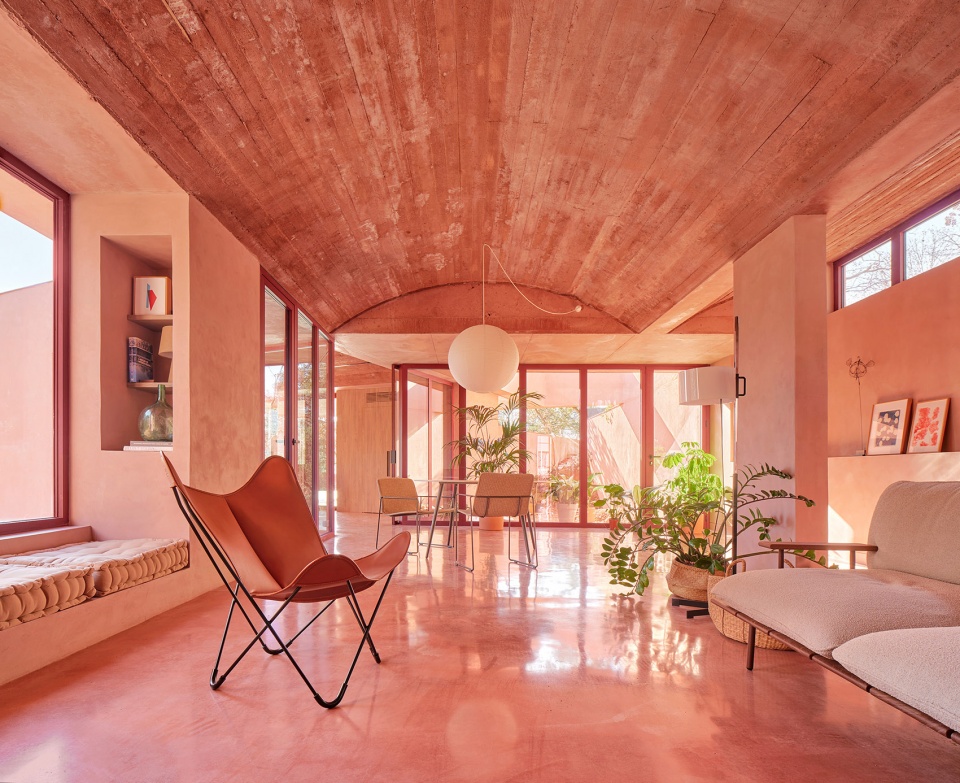
▼结构采用加泰罗尼亚拱,The vaulted form of the structure – the volta catalana
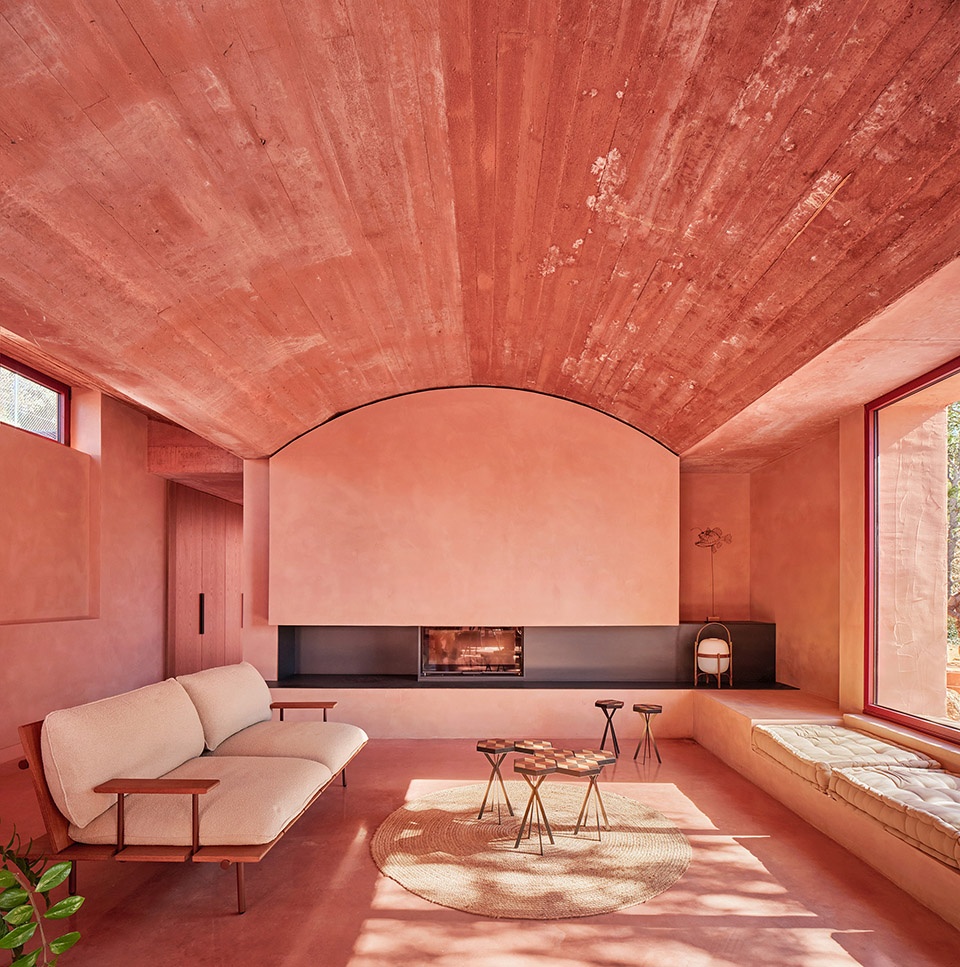
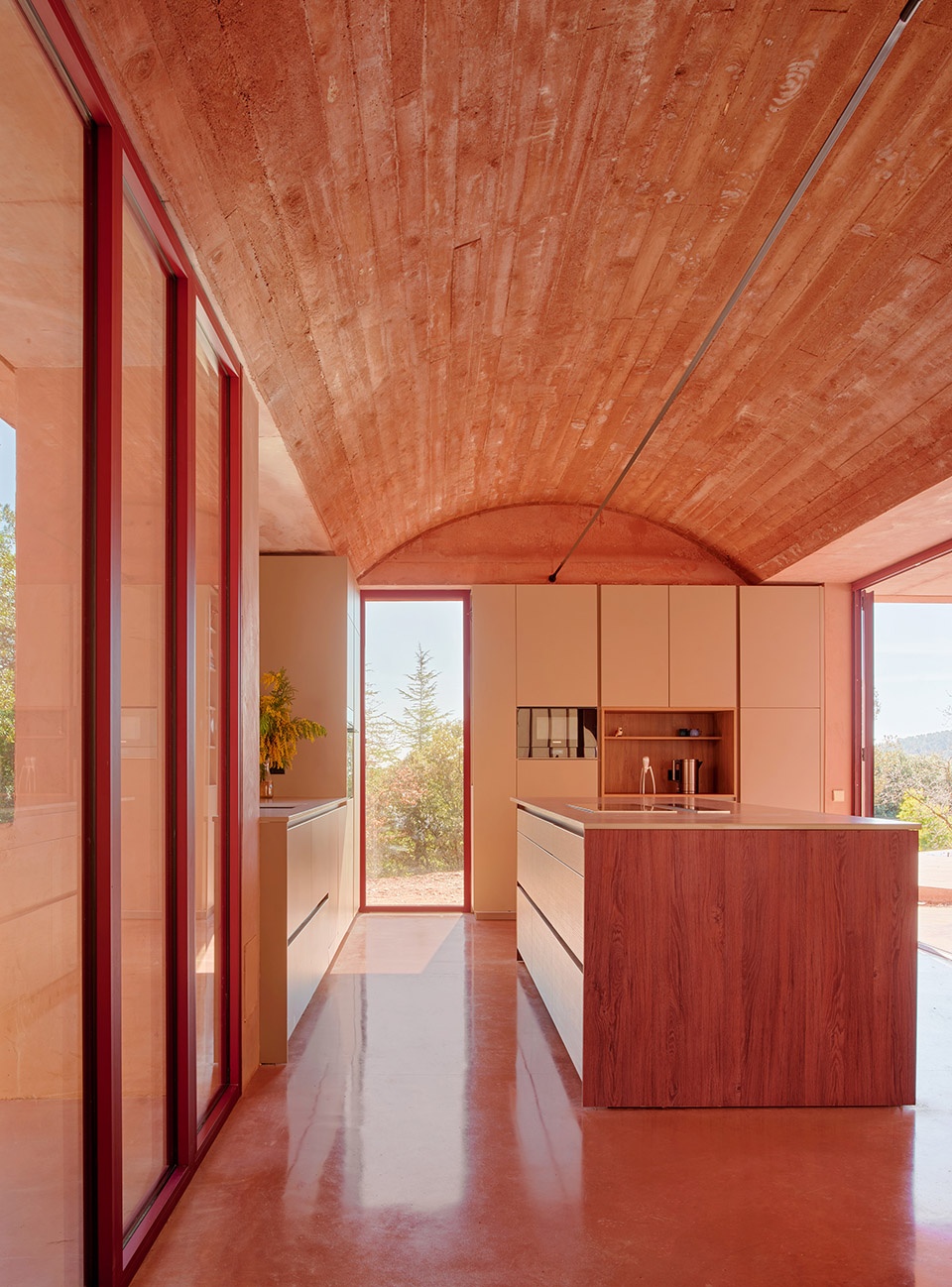
▼室内采用带有红色颜料的混凝土,the architects chose pigmented concrete in a reddish tone
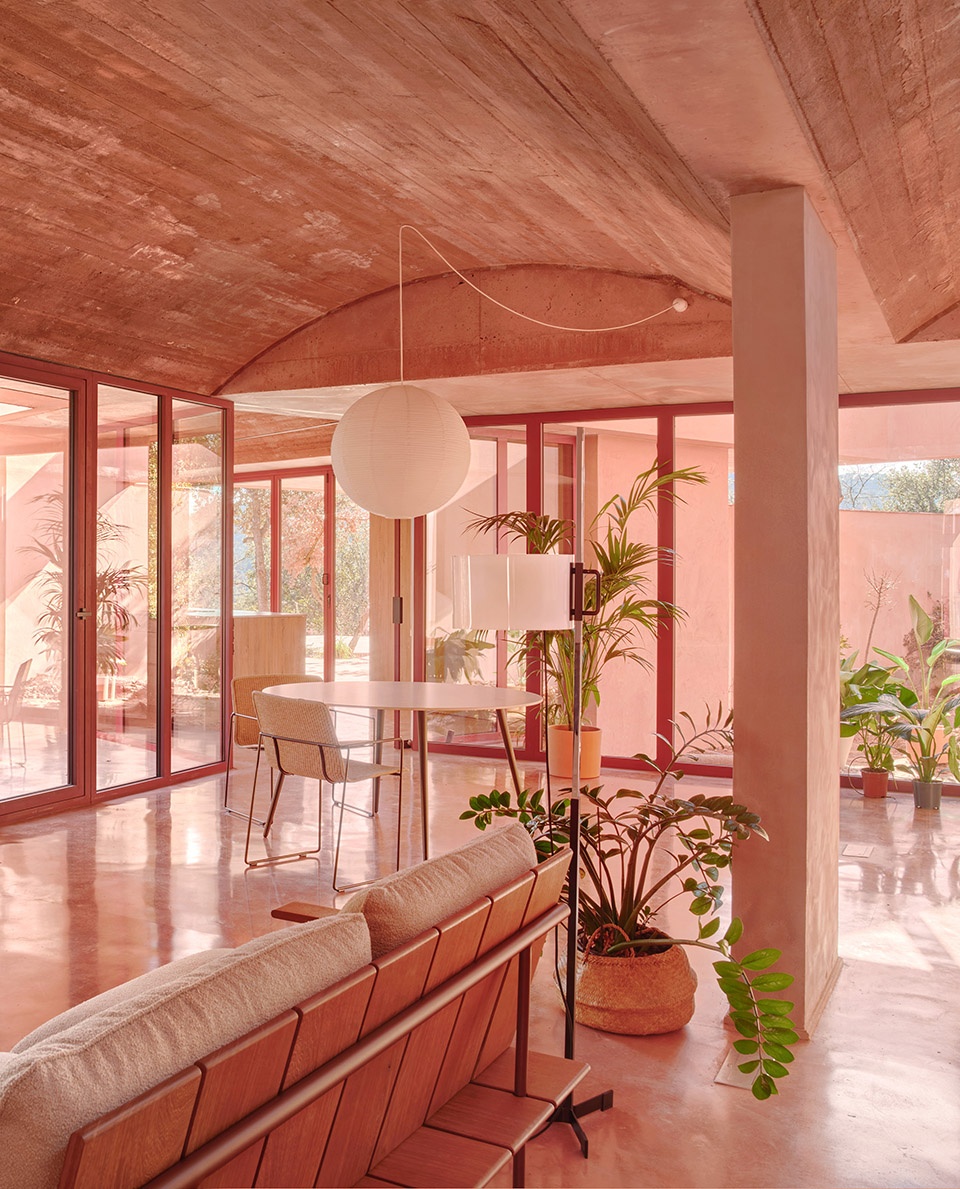
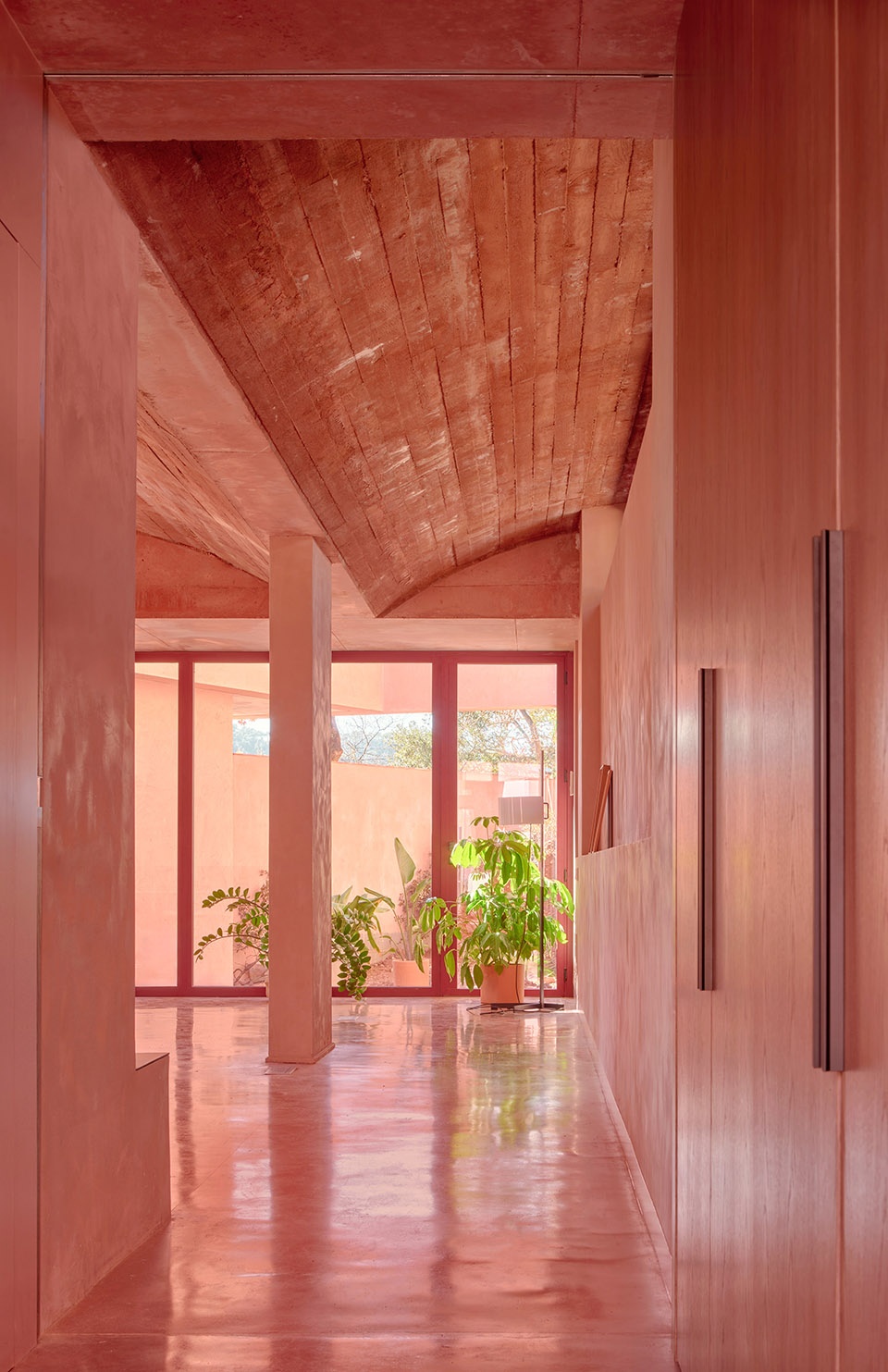
▼面向内庭院,facing the inner courtyard
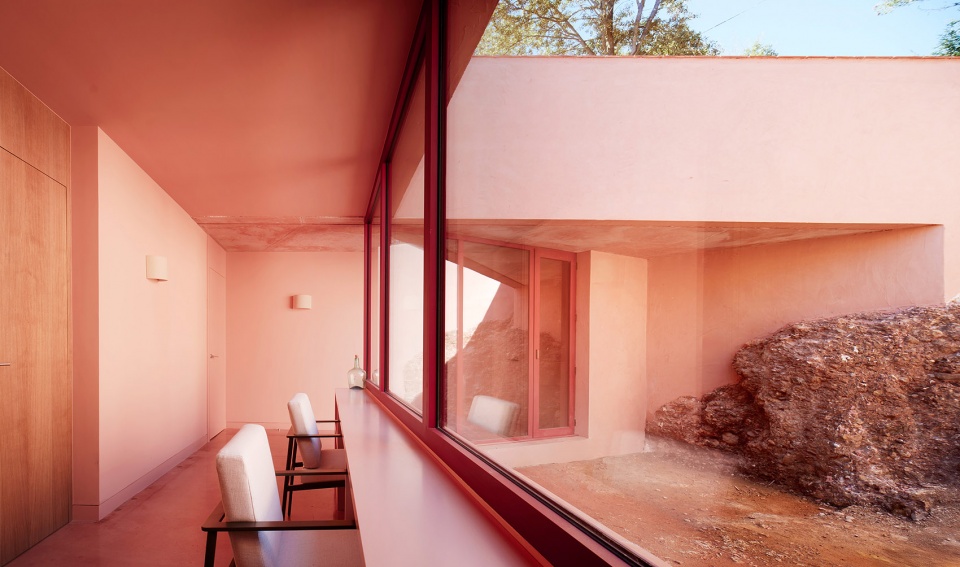
▼面向内庭院,facing the inner courtyard
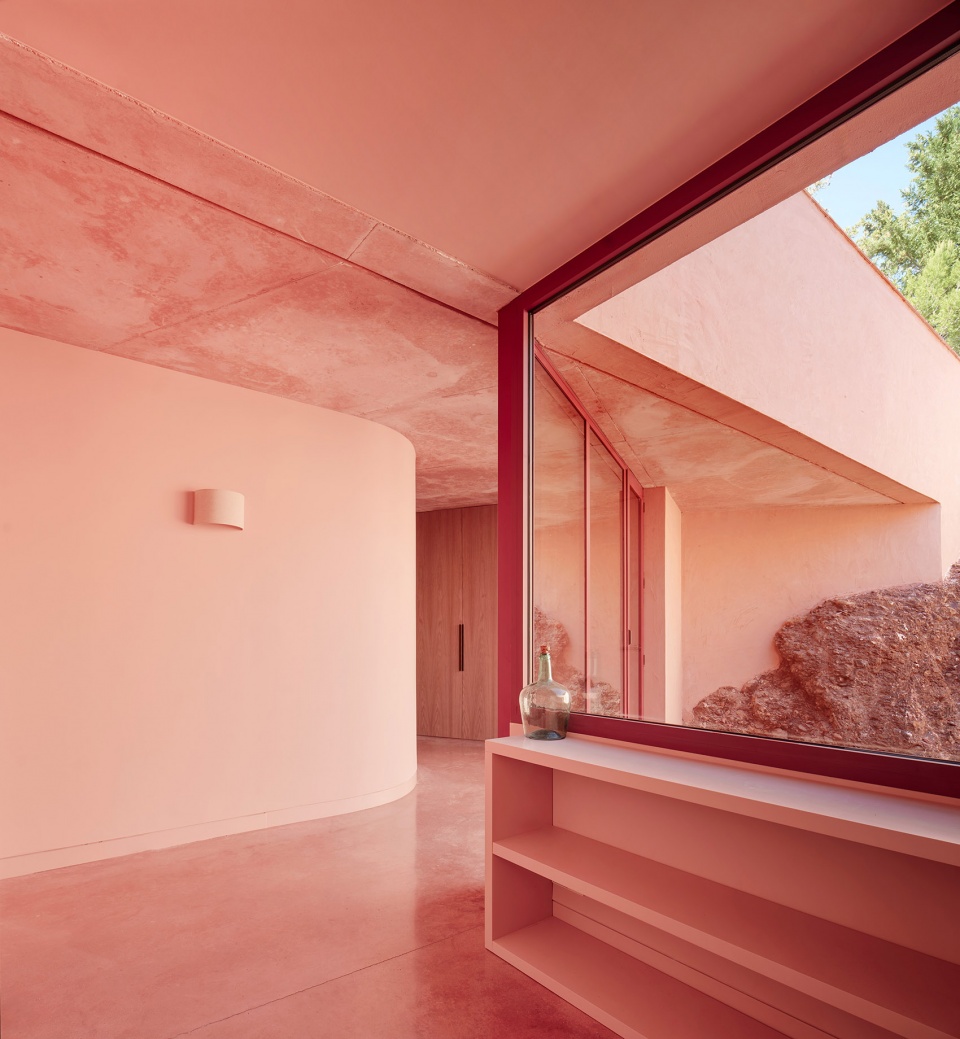
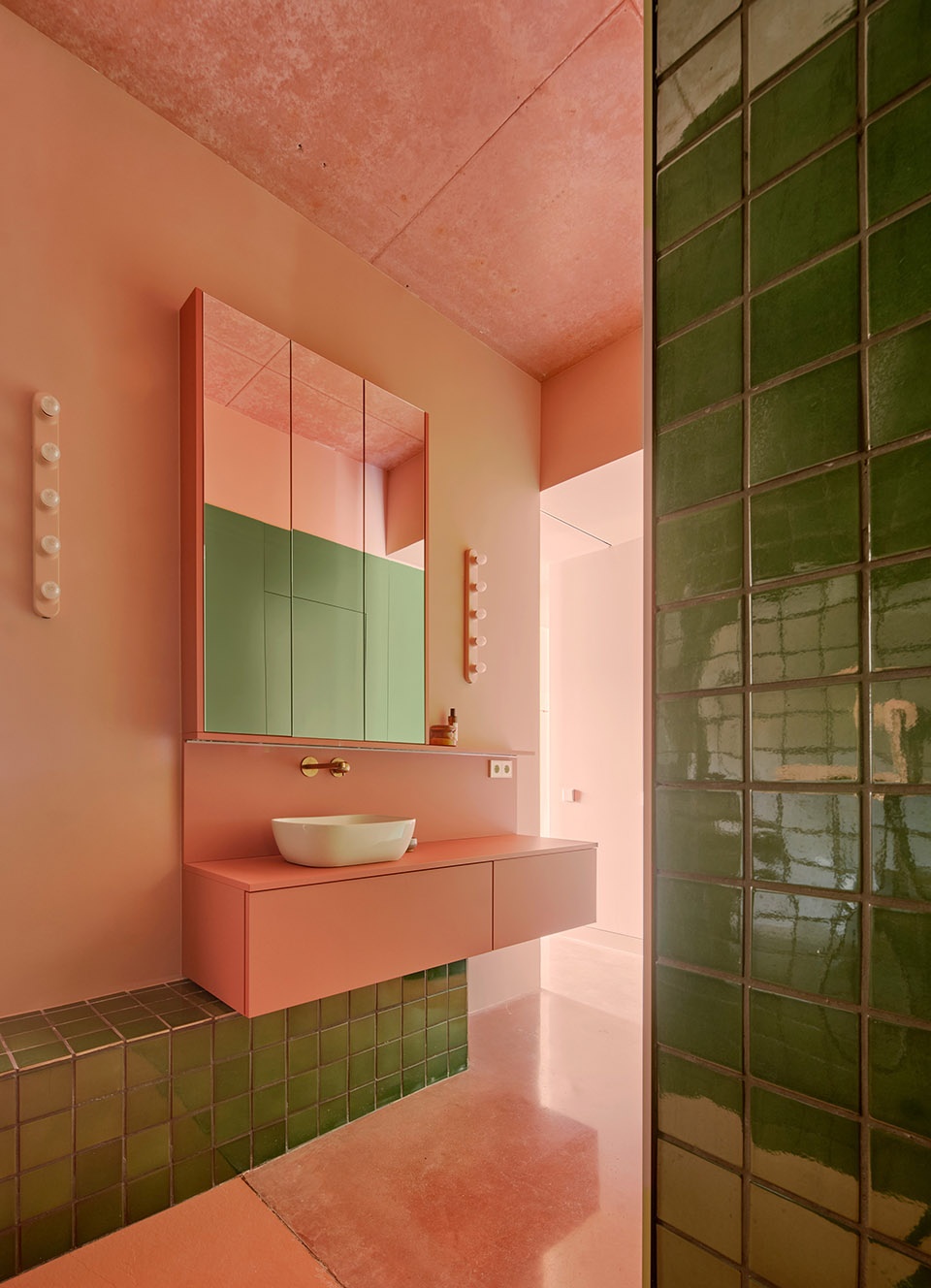
这种带有泥土气息的红色材料,与周围景观的绿色形成互补关系。绿色通过大面积窗户流入室内,与内部色调形成鲜明对比。色彩、光线与材料之间的互动同样延续至主卧浴室:绿色陶瓷与红色饰面相互映衬,呼应了室外软木栎树与住宅本身之间的关系。
This earthy, reddish material is complemented by the green of the surrounding landscape, which flows in through the large windows, creating a striking contrast with the interior tones. This interplay of colour, light and material continues into the master bedroom bathroom, where green ceramics set against red finishes echo the contrast between the cork oaks outside and the house itself.
▼带有泥土气息的红色材料,the earthy, reddish material
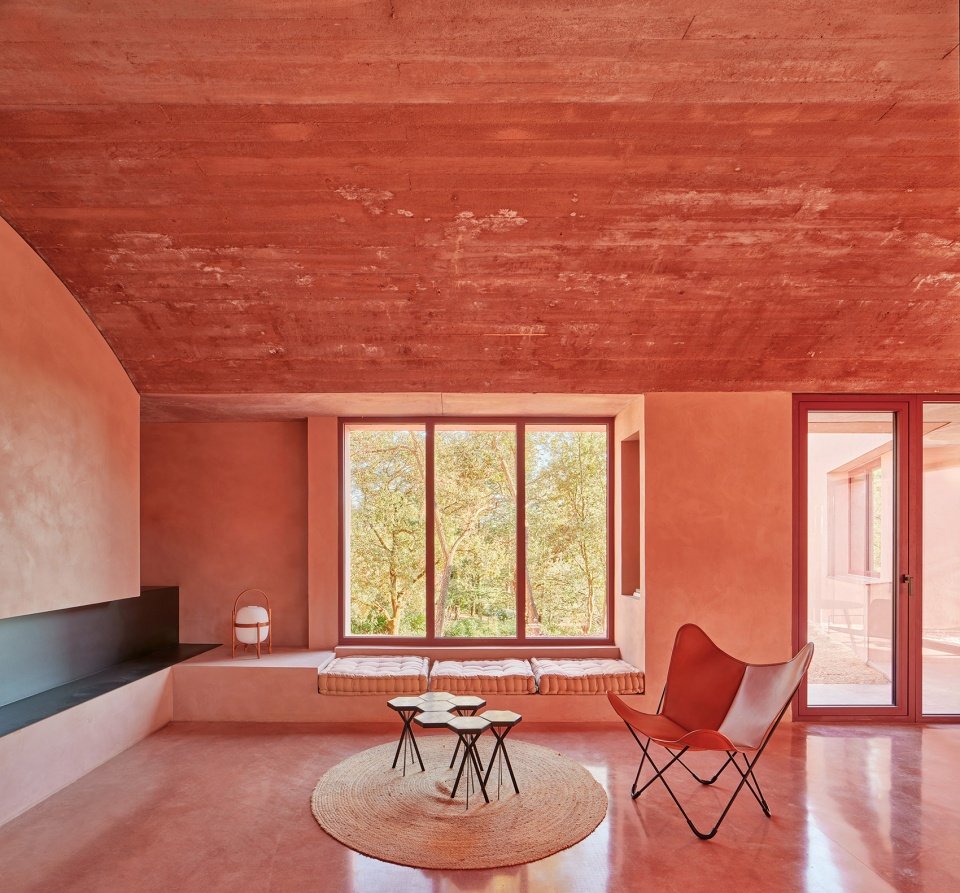
▼红色材料与周围景观的绿色形成互补关系,the earthy, reddish material is complemented by the green of the surrounding landscape
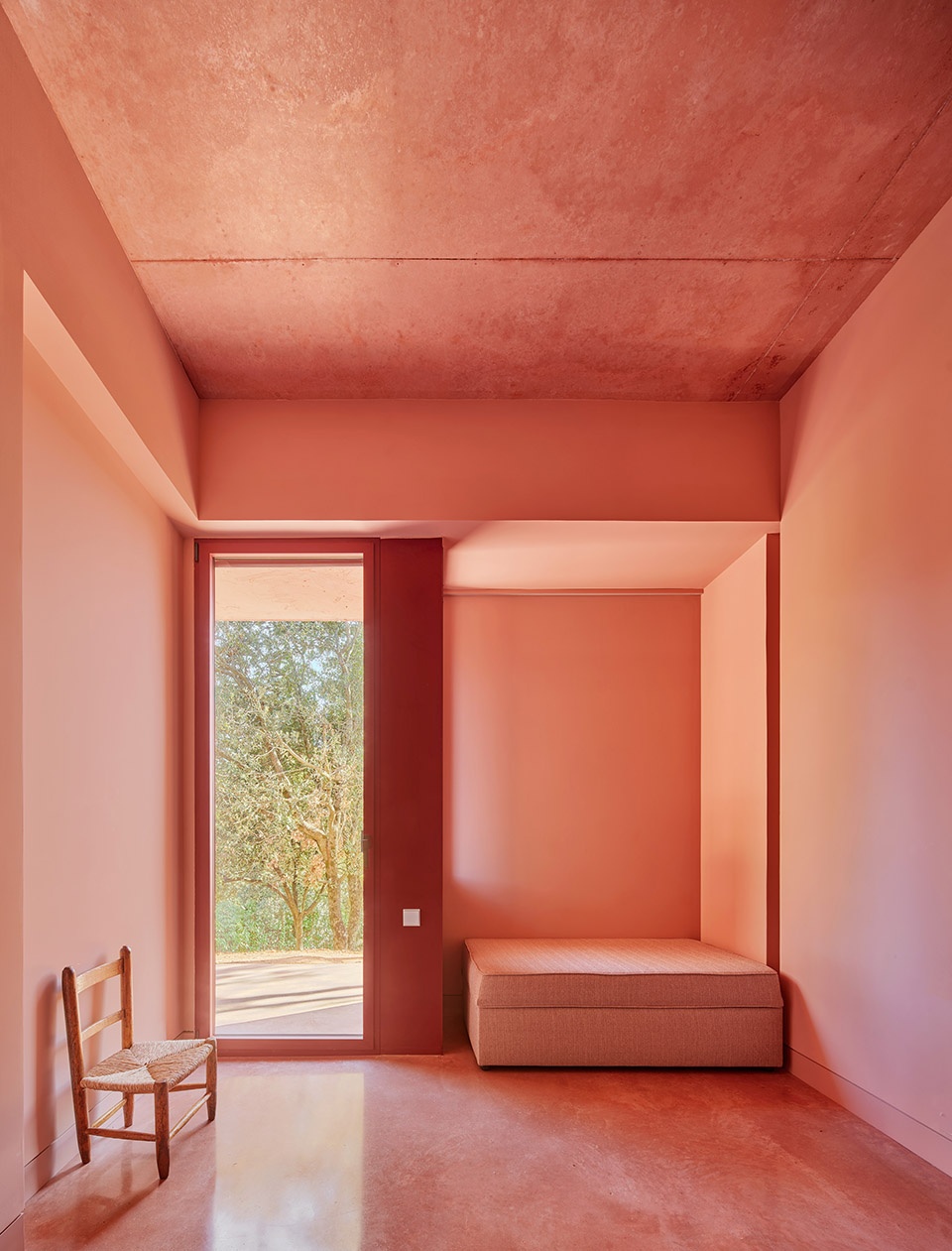
▼卧室空间,bedroom space
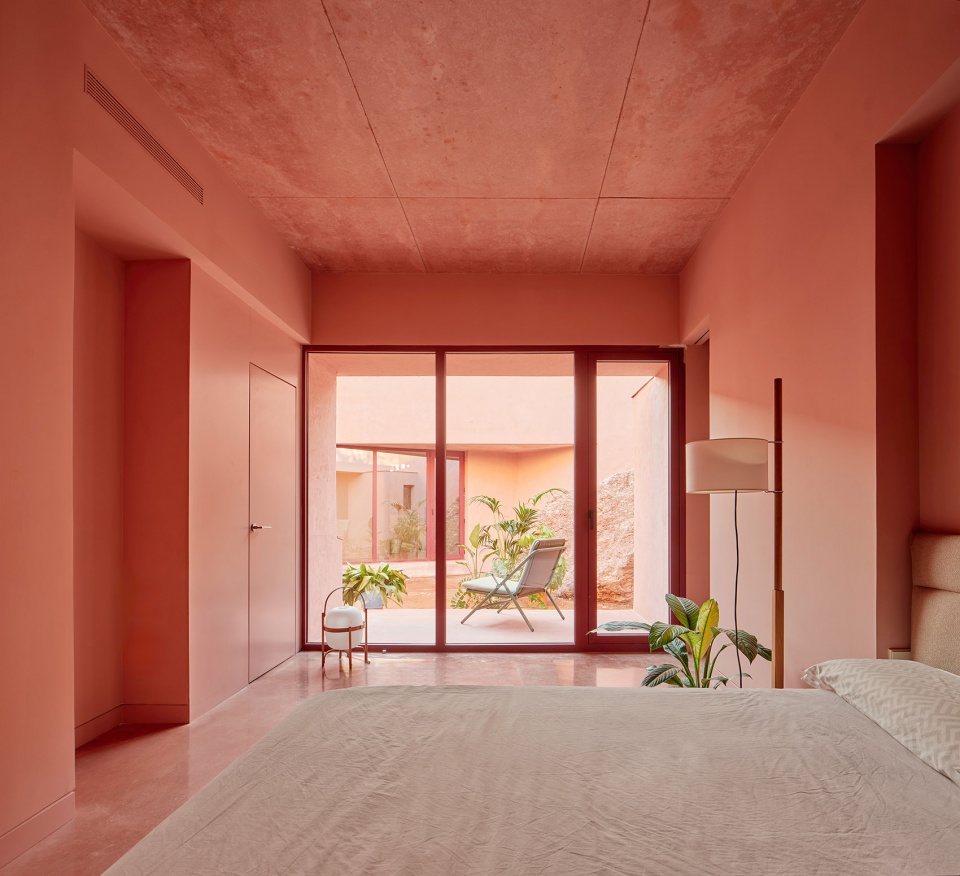
▼卧室空间,bedroom space
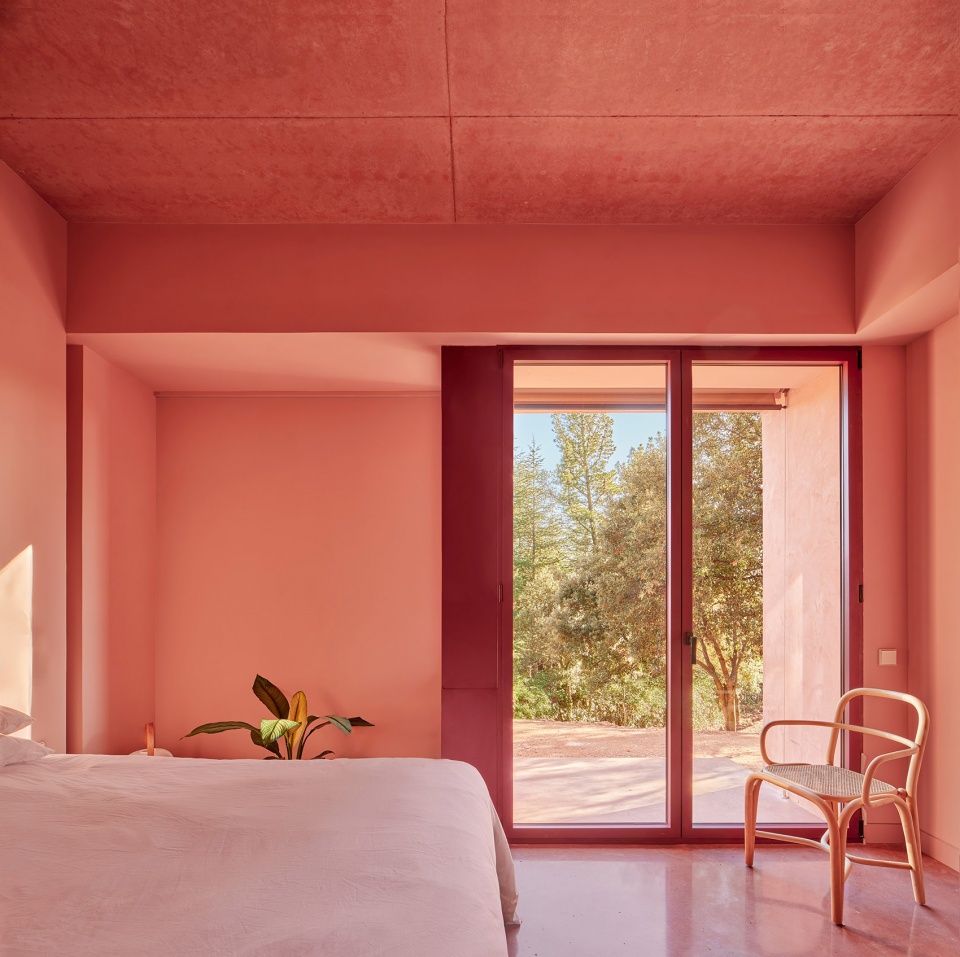
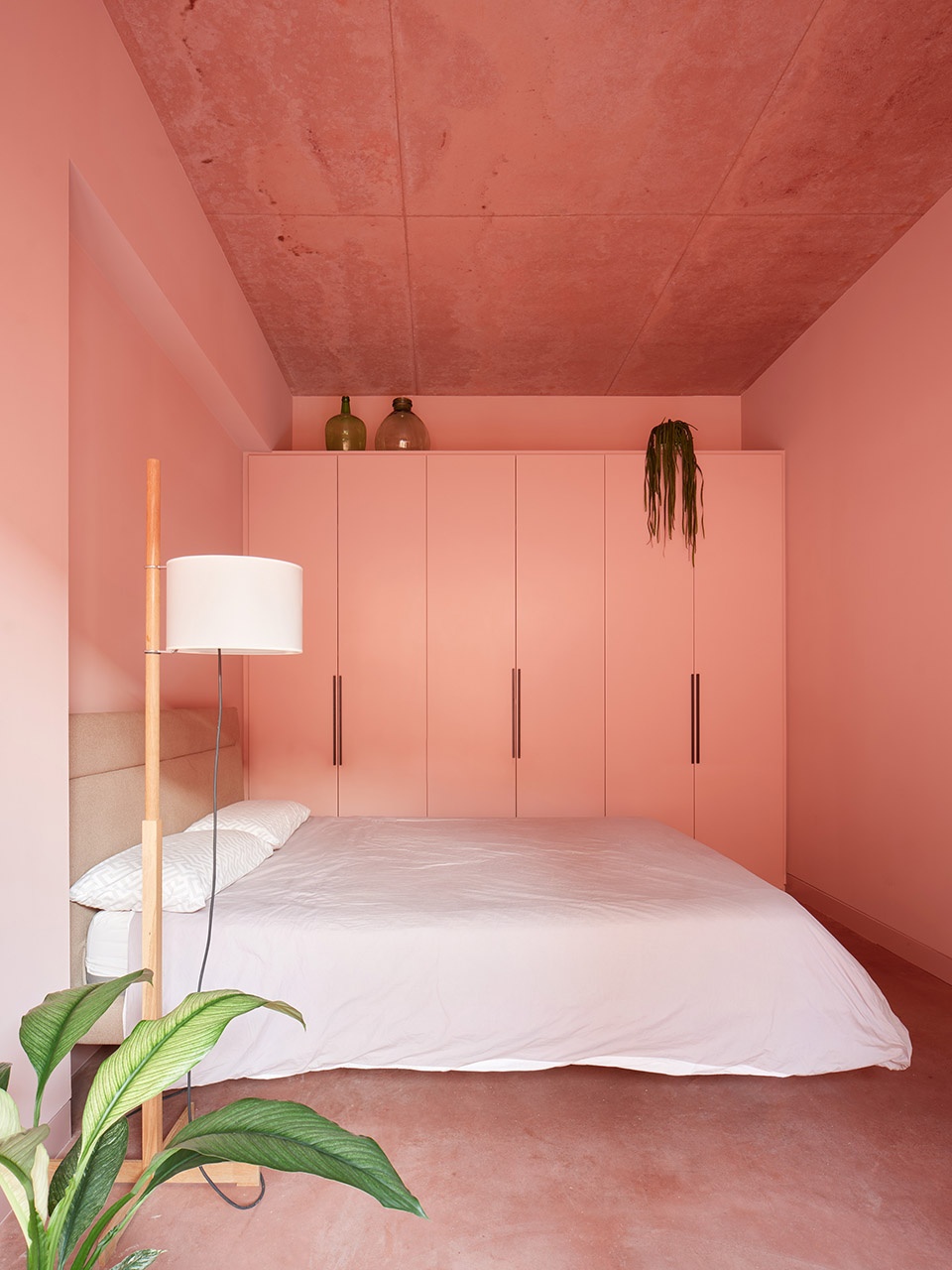
▼卧室面向内庭院,bedroom facing the inner courtyard
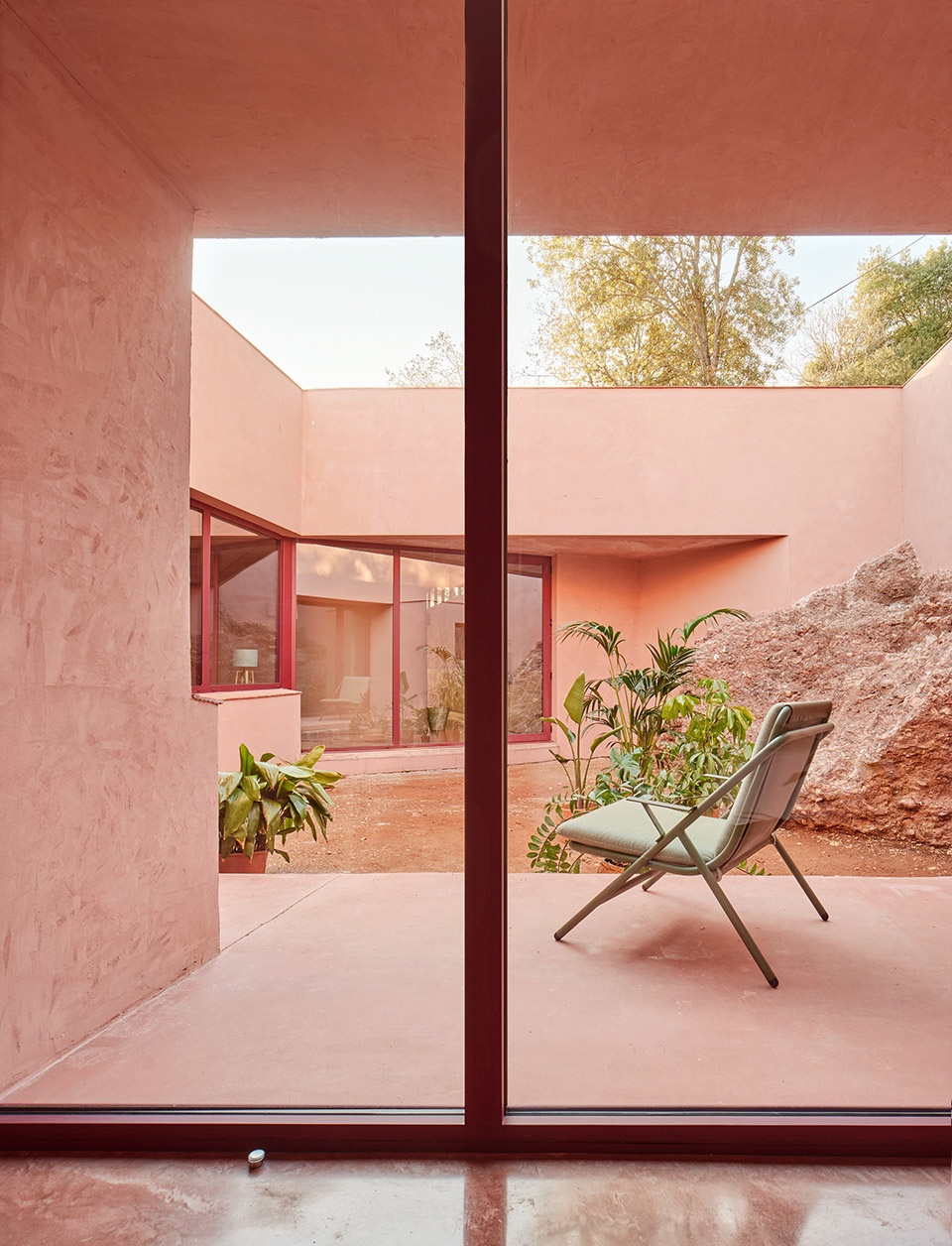
为了进一步回应地形,设计中的这种对话被延伸至室外空间。在内部庭院中——可直接由主卧进入——一块在开挖过程中发现的大型岩石被保留下来,并整合进墙体之中,成为最终设计的一部分。室外植被则几乎未被触动:原始地面仅为容纳建筑体量而进行了最小程度的调整。
In keeping with the aim of engaging with the terrain, the design extends this dialogue beyond the interior. In the inner courtyard, directly accessible from the master bedroom, a large rock uncovered during excavation has been retained and integrated into the walls, becoming part of the final design. Outside, the vegetation remains virtually untouched: the original ground has been altered only to accommodate the footprint of the house.
▼浴室,bathroom
Twobo创造出一种仿佛从土地中自然生长而出的建筑,强化了其与场地鲜明且不断变化的地形之间的联系。Casa Sota la Mola坐落于潮湿径流与光影斑驳之间,在橡树与圣栎树的阴影,以及午后阳光的温暖之间取得平衡,将家庭生活与深层的自然宁静融为一体。
Twobo has created architecture that rises organically from the land, reinforcing its connection with the site’s pronounced and ever-changing topography. Nestled between damp run-offs and pockets of light, Casa Sota la Mola balances the shade of oaks and holm oaks with the warmth of the afternoon sun, combining family living with the profound serenity of nature.
▼一层平面图,ground floor plan
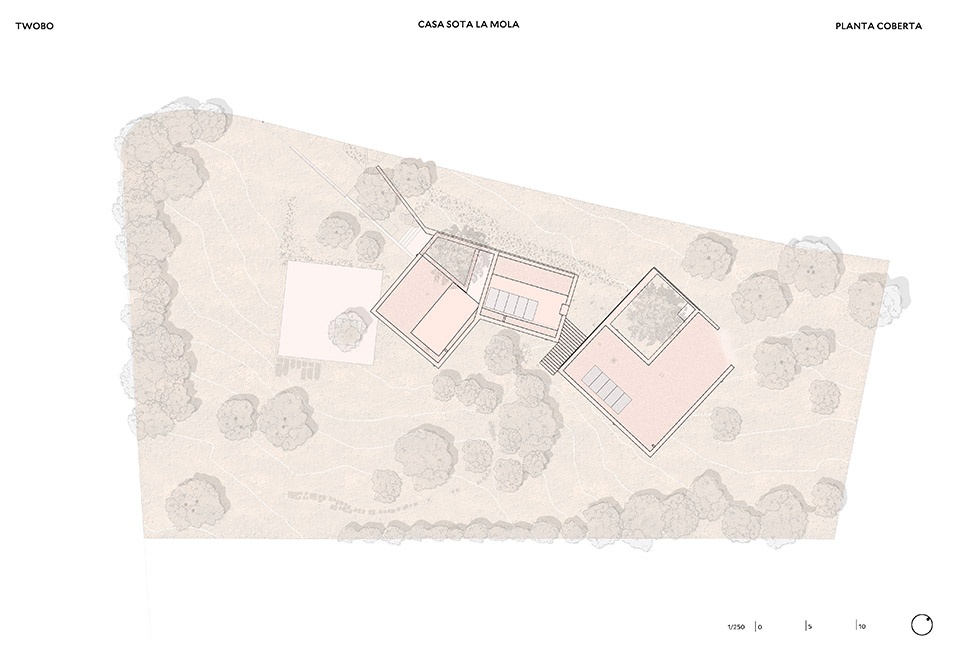
▼屋顶平面图,roof plan
▼剖面图,section
Project: Casa Sota la Mola
Location: Matadepera, Barcelona, Spain
Architect: Twobo Arquitectura
Project team: María Pancorbo, Alberto Twose and Pablo Twose
Collaborators: Claudia Canalda, Sara Alves, Javi Comadrán, Víctor Díaz-Asensio and Ourania Chamilaki
Construction company: Prismatic 360 + Coterm (facilities)
Furniture: Bivaq, ISIST atelier, Joan Gaspar and Francesc Rifé
Use: Single-family house
Site area: 250m²
Design: 2021~2022
Construction: 2023~2024
Completion: July 2023
Photograph: ⓒ José Hevia (courtesy of the architect)