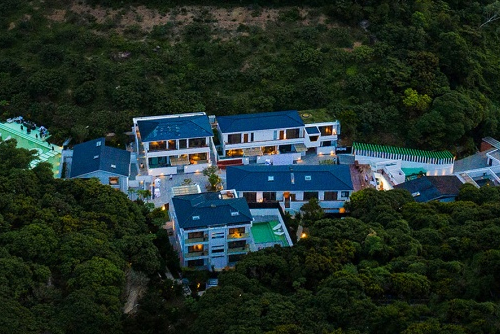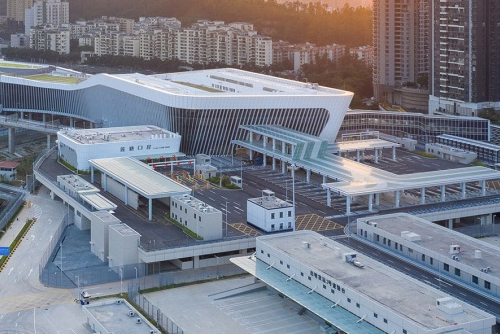
深圳九围湖湿地公园 / 中国电建集团华东勘测设计研究院有限公司
项目概述 Project Overview
九围湖湿地公园位于深圳市宝安区铁岗-石岩水库库尾区域。它不是一座从空地开始的公园,而是一道面向饮用水源地的生态屏障:上游社区、工业区和道路汇水不断进入库区,周边水质一度降至V类;若以传统保护区逻辑处理,直接清退所有工业区和社区,水源安全、城市发展和居民生活会被推向彼此对立的选择。项目将铁岗-石岩水库水质保障工程(二期)中的生态工程、湿地修复和公共景观整合起来,以“隔离—净化—补水—修复—共享”的方式,把入库前的最后界面转化为一处隔绝污染,且可运行、可监测、可游憩的城市湿地。
▼鸟瞰效果图,aerial view rendering
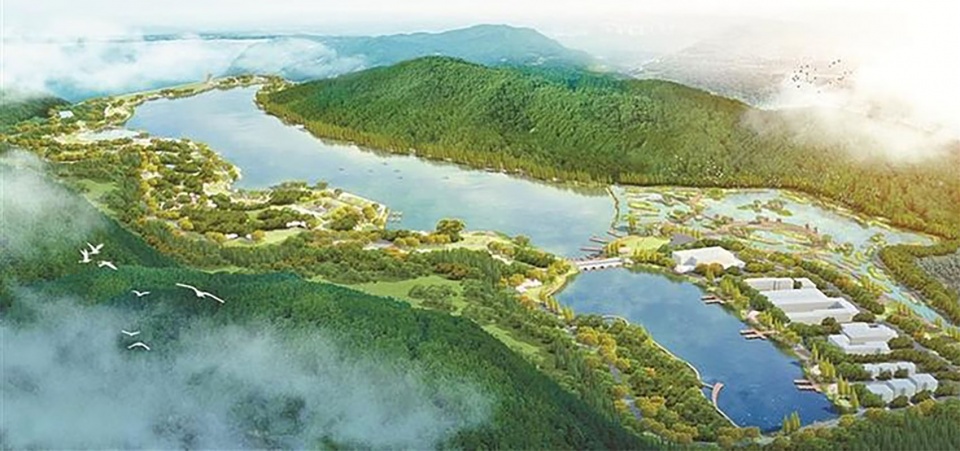
Jiuwei Lake Wetland Park is located at the reservoir-tail area of Tiegang-Shiyan Reservoir in Bao’an District, Shenzhen. Rather than being conceived as a park on vacant land, it functions as an ecological barrier for a critical drinking-water source. Runoff from upstream communities, industrial areas and roads continuously entered the reservoir area, with surrounding water quality once falling to Class V. If handled under a conventional protection-zone logic that directly clears all industrial areas and communities, water security, urban development and everyday life would have been forced into conflict. The project integrates ecological engineering, wetland restoration and public landscape within the second phase of the reservoir water-quality protection works, transforming the last interface before water enters the reservoir into an urban wetland that isolates pollution while remaining operational, monitorable and accessible.
▼项目概览,general view
从水源保护困境到城市生命屏障 From a Water-Source Dilemma to an Urban Lifeline
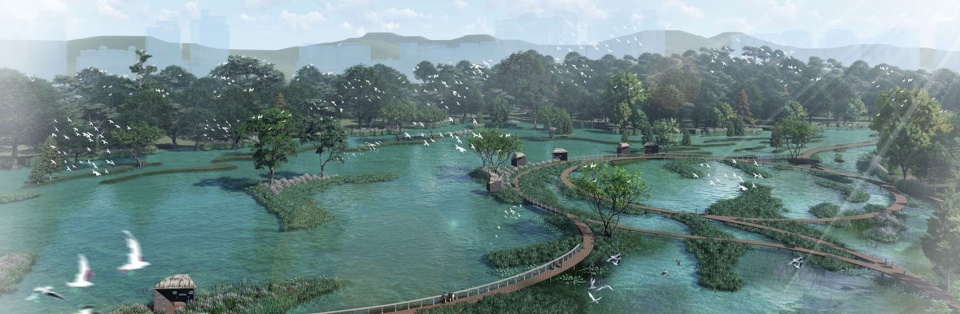
项目首先建立包含水文、地形、生态敏感性与城市可达性的分析框架,并以GIS和MIKE水动力模型识别库尾来水路径、滞流区和污染扩散风险,确定生态堤、连通涵洞、补水点和湿地单元的位置。生态堤将九围河来水从饮用水源区前置分流,形成独立调蓄与净化界面;连通涵、排出隧洞和补水系统组织水体循环,减少“死水”滞留。湿地以生态岛、深潭、浅滩和表流湿地串联,借助植物、微生物和基质协同削减污染负荷。数据显示,系统日净化能力约41,500m³,COD和氨氮去除率约20%~40%,出水水质由V类提升至准IV类。
▼湿地净化系统效果,wetland purification system rendering
▼改造前后对比,before and after
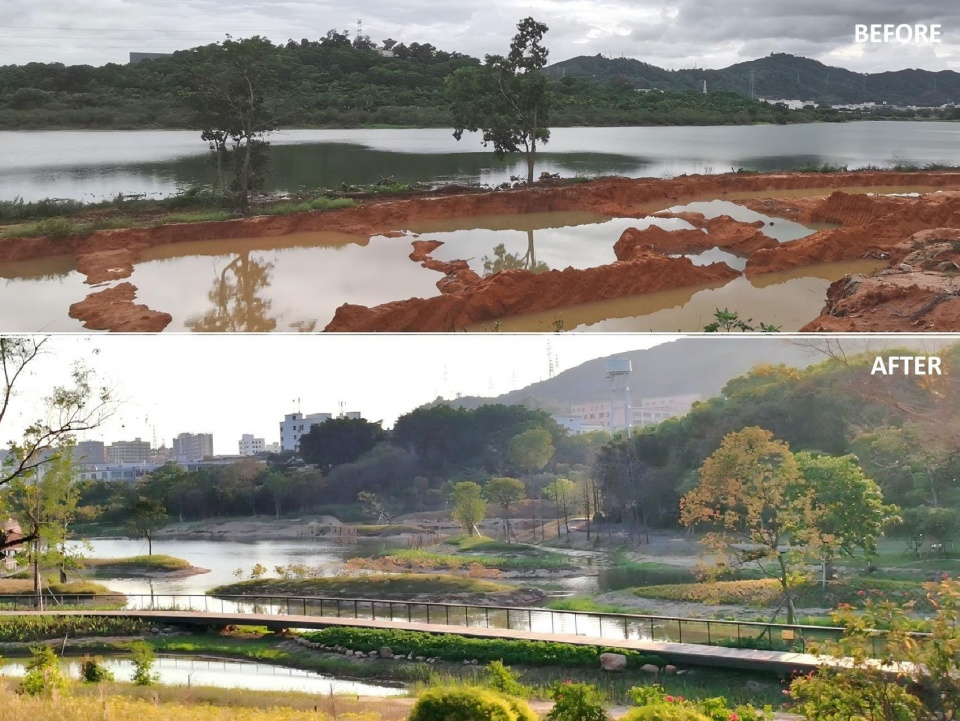
The project first established an analytical framework covering hydrology, topography, ecological sensitivity and urban accessibility. GIS analysis and MIKE hydrodynamic modelling were then used to identify inflow routes, stagnant zones and pollution-diffusion risks at the reservoir tail, guiding the placement of the ecological dyke, connecting culverts, replenishment points and wetland units. The dyke diverts the Jiuwei River inflow before it reaches the drinking-water source, creating an independent interface for detention and purification. Culverts, discharge tunnels and replenishment facilities organise water circulation and reduce stagnant pockets. Ecological islands, deep pools, shallows and surface-flow wetlands work together through plants, microorganisms and substrates. Data indicate a daily purification capacity of about 41,500m³, COD and ammonia-nitrogen removal rates of approximately 20% to 40%, and an improvement in water quality from Class V to quasi-Class IV.
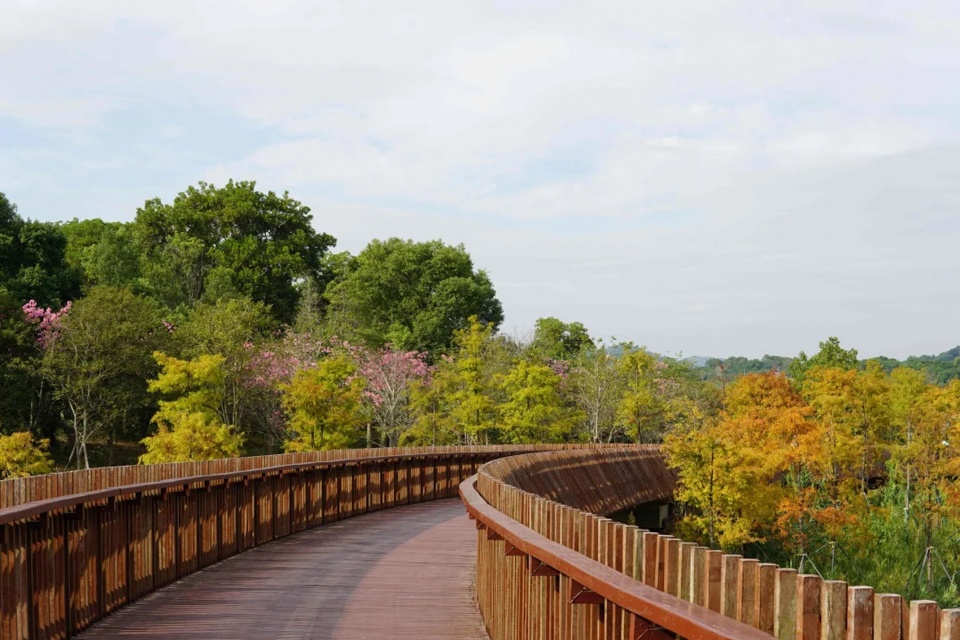
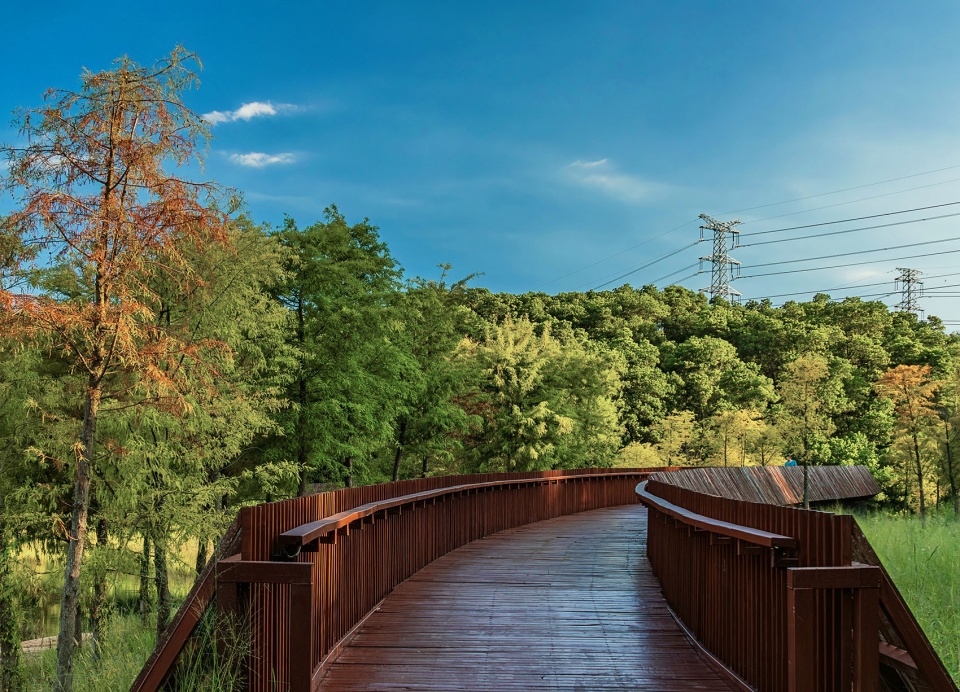
▼水岸栈道与杉林,waterfront boardwalk and cypress woodland
低干预空间:在生态敏感与公共使用之间 Low-Intervention Space Between Ecological Sensitivity and Public Access
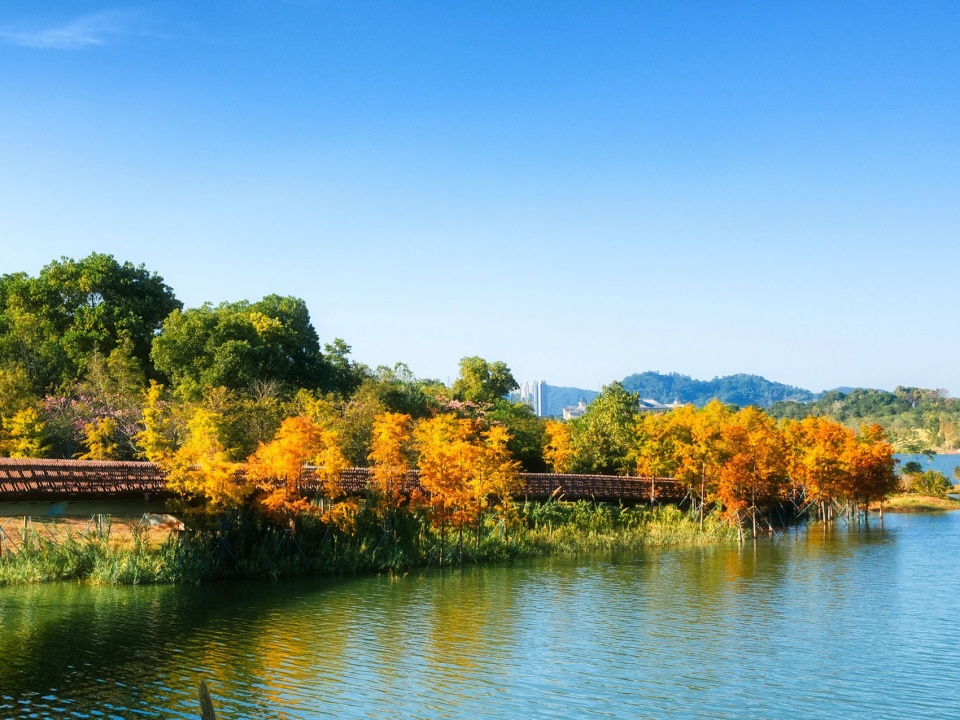
与常见的硬质水利工程不同,九围湖的空间组织来自对生态敏感性和城市可达性的叠合判断。设计在高生态价值区域采取低干预修复,通过生态岛、自然岸线和水位响应型植物群落提升生境完整性;在低敏感、高可达节点布置栈道、观鸟屋、水岸舞台和科普停留点,使公共活动被约束在可承载范围内。6.5km碧道串联林地、湖湾、湿地和城市界面,形成从研学、交流、运动到静心观鸟的连续体验。
Unlike conventional hard waterworks, the spatial organisation of Jiuwei Lake is derived from an overlay of ecological sensitivity and urban accessibility. Low-intervention restoration is applied in areas of high ecological value, where islands, naturalised shorelines and water-level-responsive planting improve habitat integrity. Boardwalks, bird hides, waterfront stages and educational pauses are located in low-sensitivity and highly accessible nodes, keeping public use within the site’s carrying capacity. A 6.5-kilometre blueway links woodlands, lake bays, wetlands and urban edges, creating a continuous experience that moves from learning and social exchange to exercise, retreat and birdwatching.
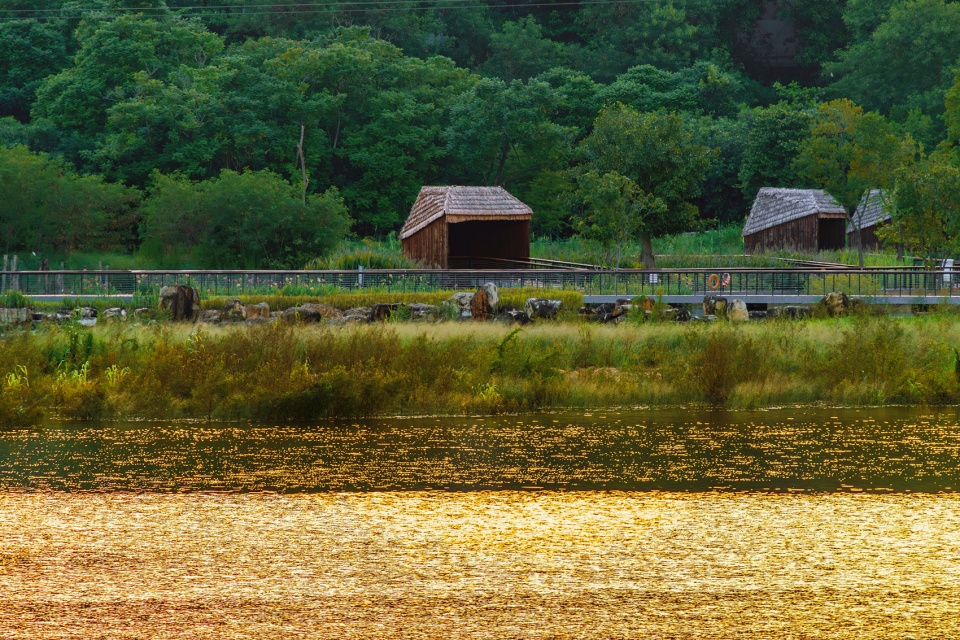
▼湿地水岸与观鸟屋,wetland waterfront and bird hide
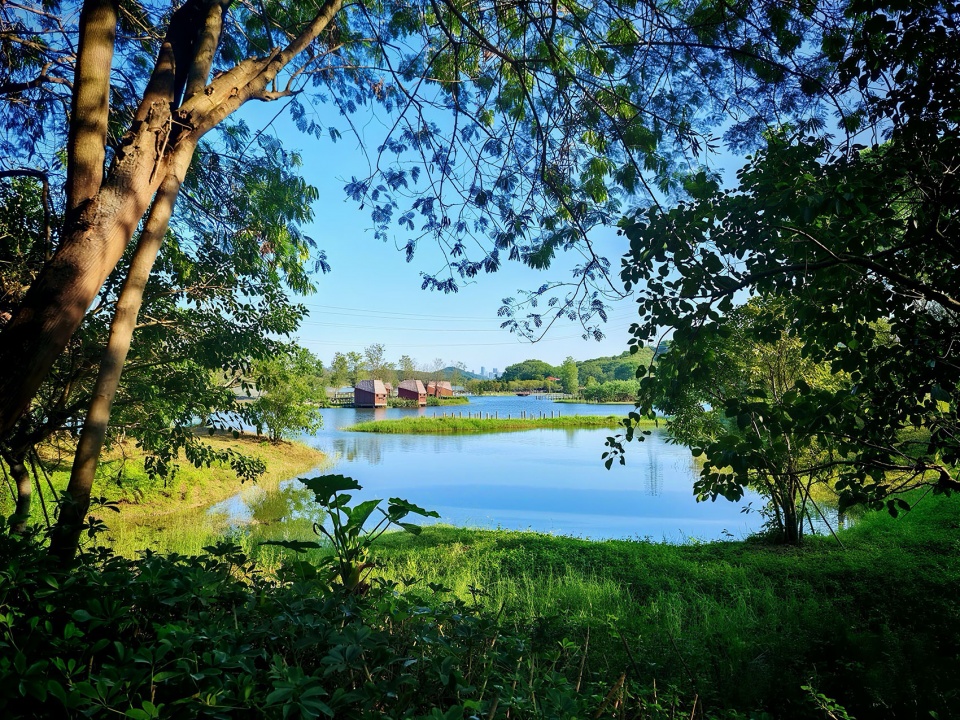
▼林下望湖与湿地边界,framed lake view from the woodland edge
▼杉林栈道与水岸慢行,boardwalk through the riparian woodland
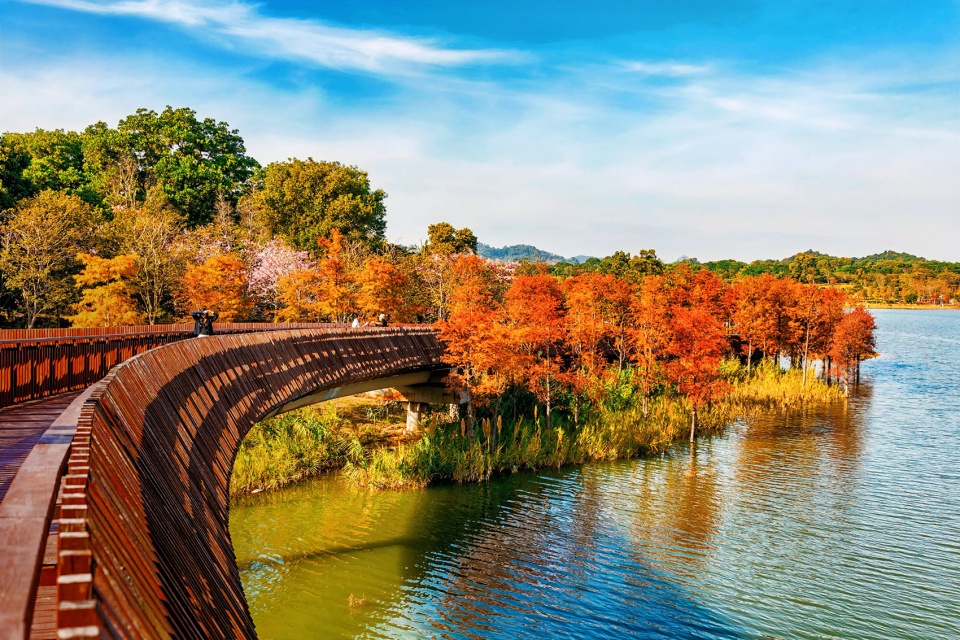
▼生态堤与湿地栈桥,ecological dyke and wetland boardwalk
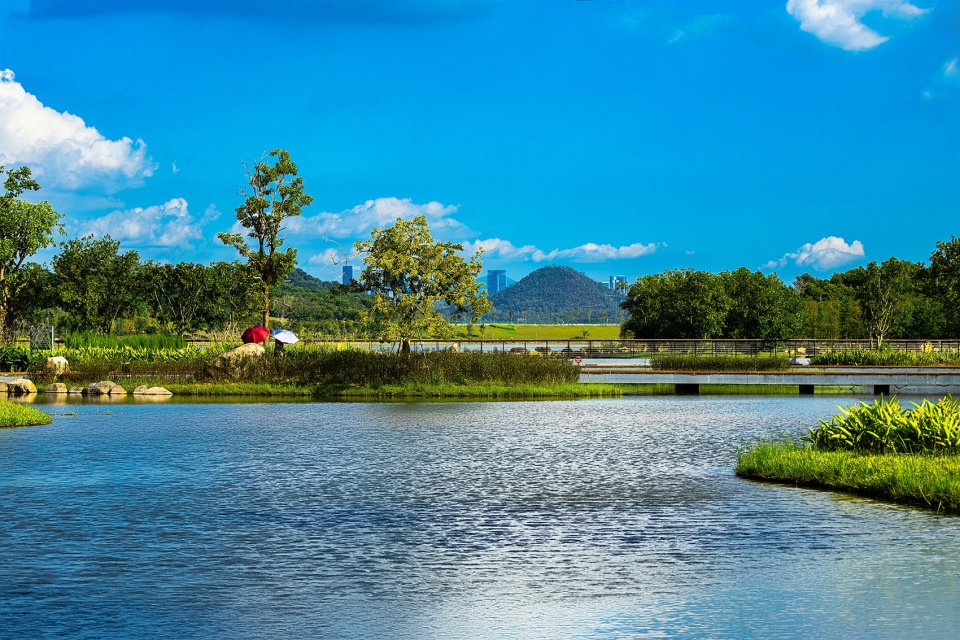
▼湿地水岸与远山,wetland waterfront and distant hills
▼鸟类栖息地与生态岸线,bird habitat and ecological shoreline
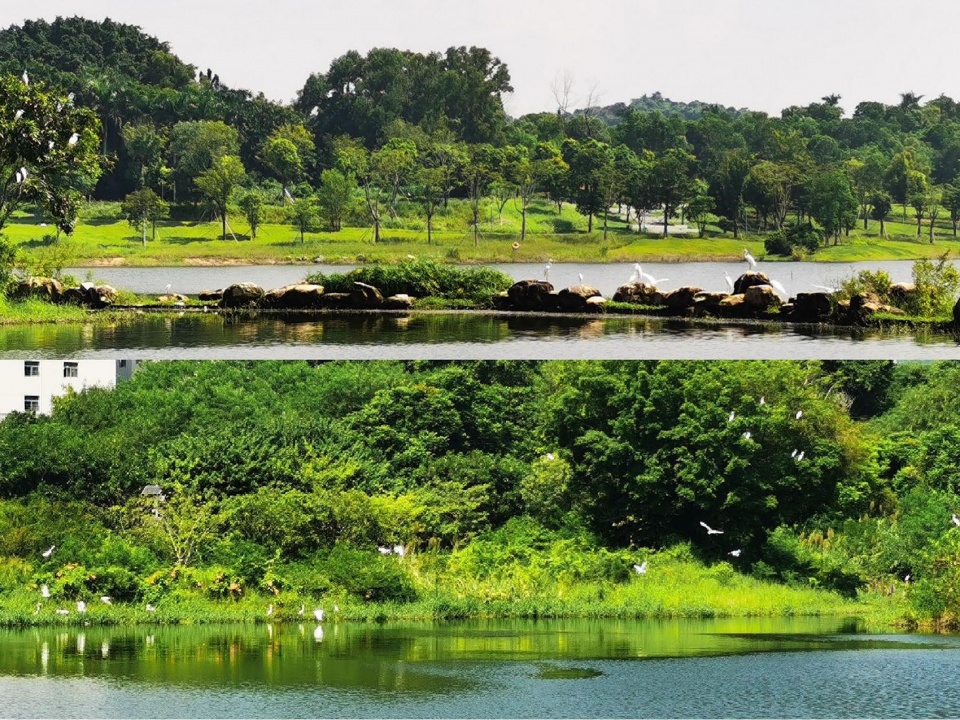
水位响应、生境修复与观鸟日常 Water-Level-Responsive Restoration and Everyday Birdwatching
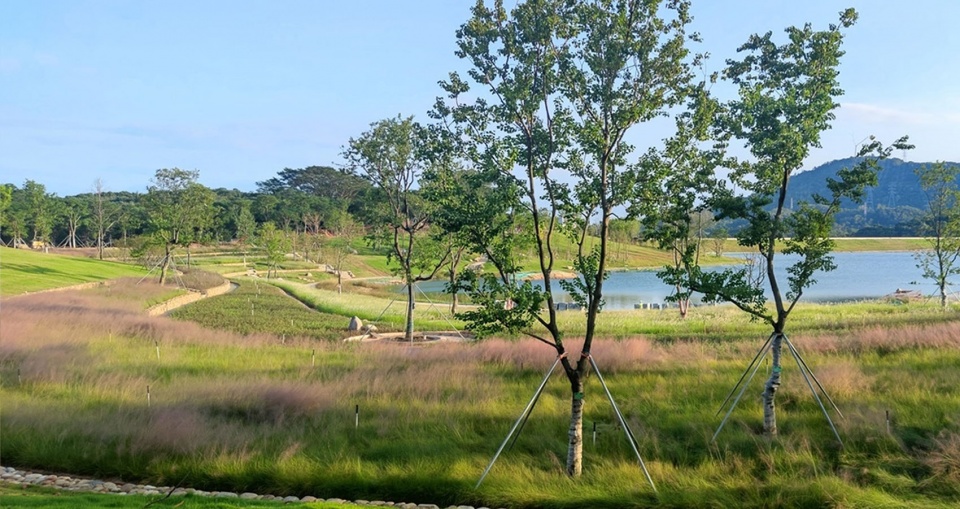
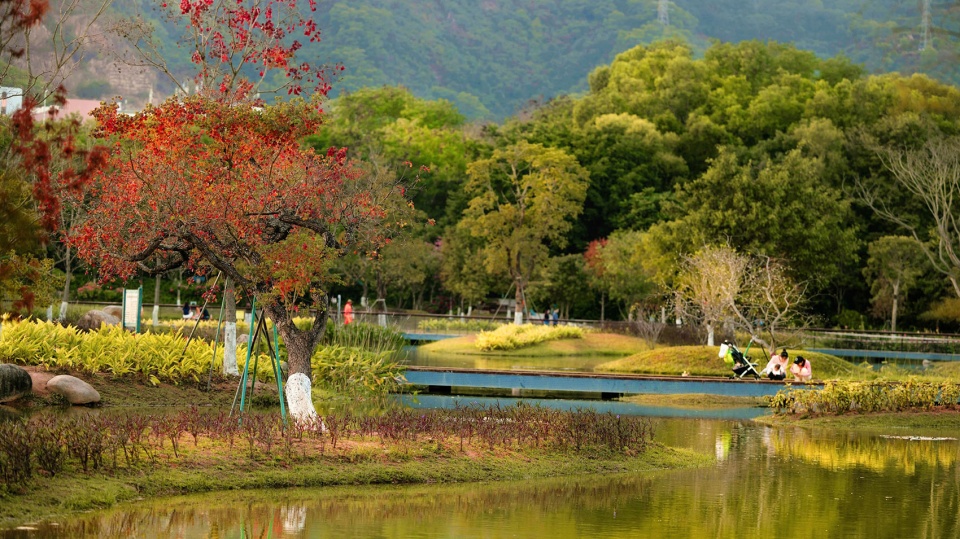
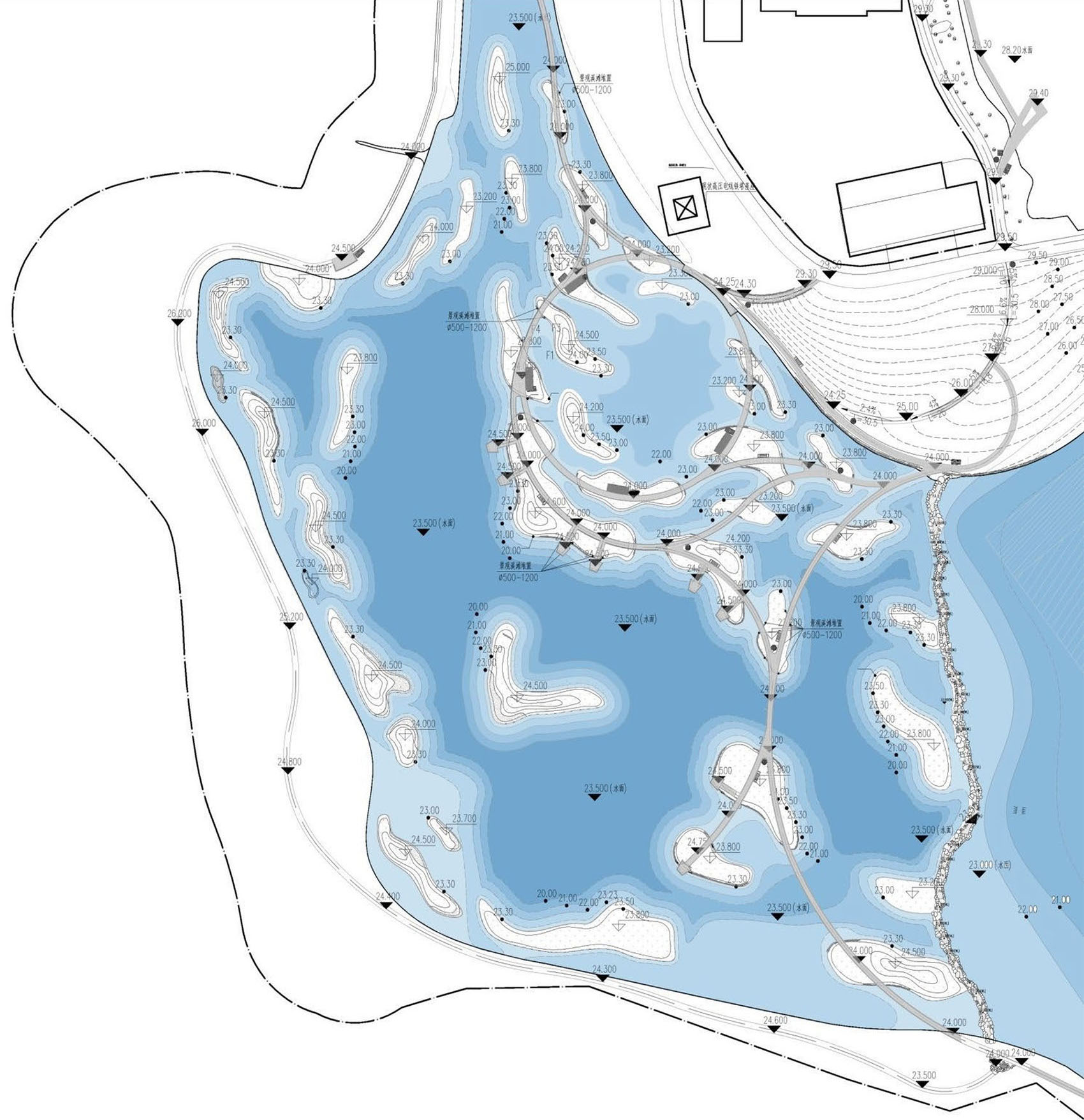
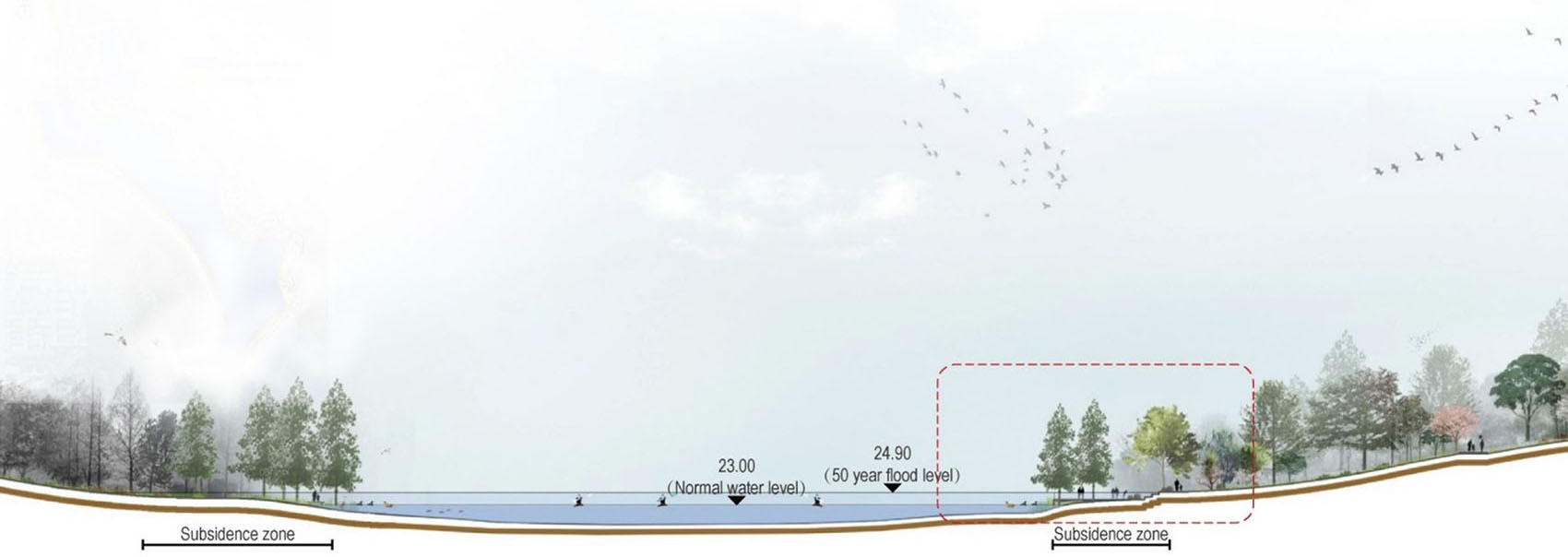
在库岸修复中,设计以水位变化作为植物和地形选择的依据:常水位附近配置沉水、挺水和浮叶植物,消落带选择耐水位波动的池杉、落羽杉、水翁等乡土树种,非淹水区保留并补强原有林地。深潭、浅滩、鸟桩、密林和开敞水面共同构成多层生境,为白鹭、池鹭、灰鹭、野水鸭等鸟类提供觅食、停歇和繁殖空间。经统计,场地已支撑500余种生物和80余种鸟类,水源地保护也因此从单一的“隔离”转向可感知的生态恢复。
Reservoir-edge restoration responds directly to fluctuating water levels. Submerged, emergent and floating-leaved plants are arranged around the normal water level; native trees tolerant of changing wet and dry conditions, such as pond cypress, bald cypress and Cleistocalyx operculatus, are planted in the drawdown zone; existing woodland is retained and strengthened in non-inundated areas. Deep pools, shallows, bird perches, dense woodland and open water form layered habitats for little egrets, Chinese pond herons, grey herons, wild ducks and other species. According to statistics, the site now supports more than 500 species and over 80 bird species, shifting water-source protection from pure separation toward visible ecological recovery.
▼湿地草甸与开敞水面,wetland meadow and open water
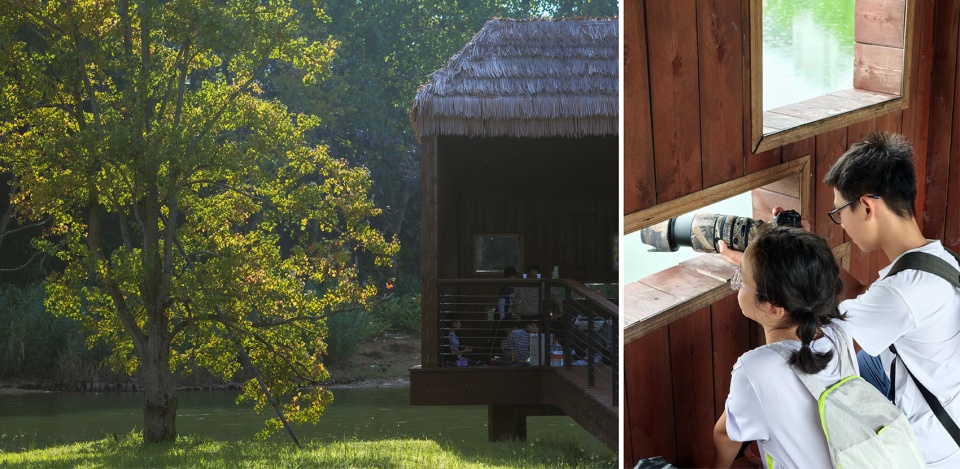
▼观鸟屋与公众观鸟体验,bird hide and public birdwatching experience
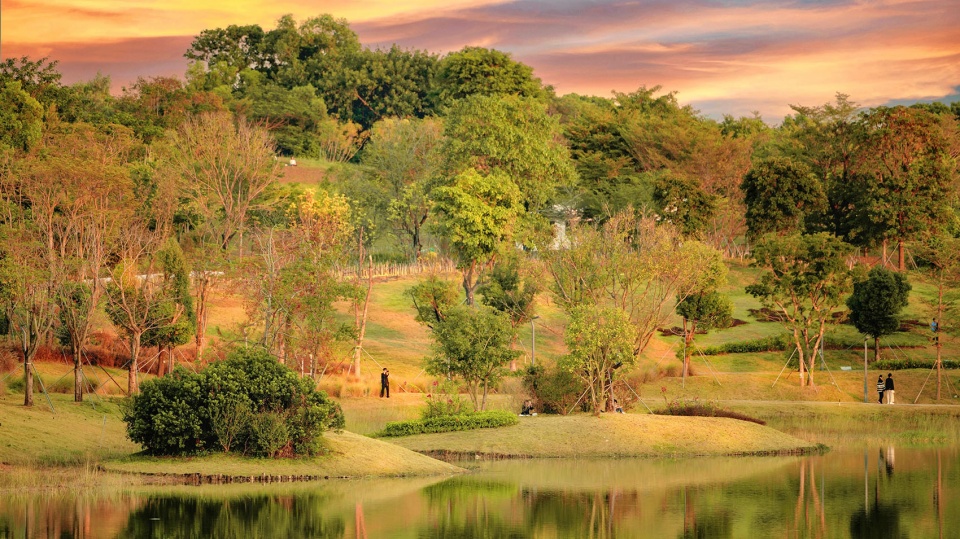
▼黄昏水岸与林地,waterfront woodland at dusk
▼水岸植物群落,riparian planting community
把水利工程转化为可参与的公共资产 Turning Water Infrastructure into a Shared Public Asset
九围湖湿地公园最终回应的是高密度城市中水源地的共生问题。它没有把公共性排除在保护之外,而是以清晰的边界、可控的路径和低干预设施组织进入:市民在栈道上看见湿地净化过程,在观鸟屋中观察迁徙鸟类,在水岸节点参与科普和慢行活动。项目避免了以大规模搬迁换取水源保护的路径,守住约750万人饮水安全,也把水利工程转化为城市日常生活中可以被理解、被参与的开放空间。
Ultimately, Jiuwei Lake Wetland Park responds to the question of how a water-source landscape can coexist with a high-density city. Publicness is not excluded from protection; instead, access is organised through clear boundaries, controlled paths and low-intervention facilities. Visitors can read the wetland purification process from the boardwalk, observe migratory birds from the hide, and take part in educational and slow-mobility activities along the waterfront. By avoiding the path of large-scale relocation while safeguarding drinking-water security for roughly 7.5 million residents, the project turns water infrastructure into an open space that can be understood and shared in daily urban life.
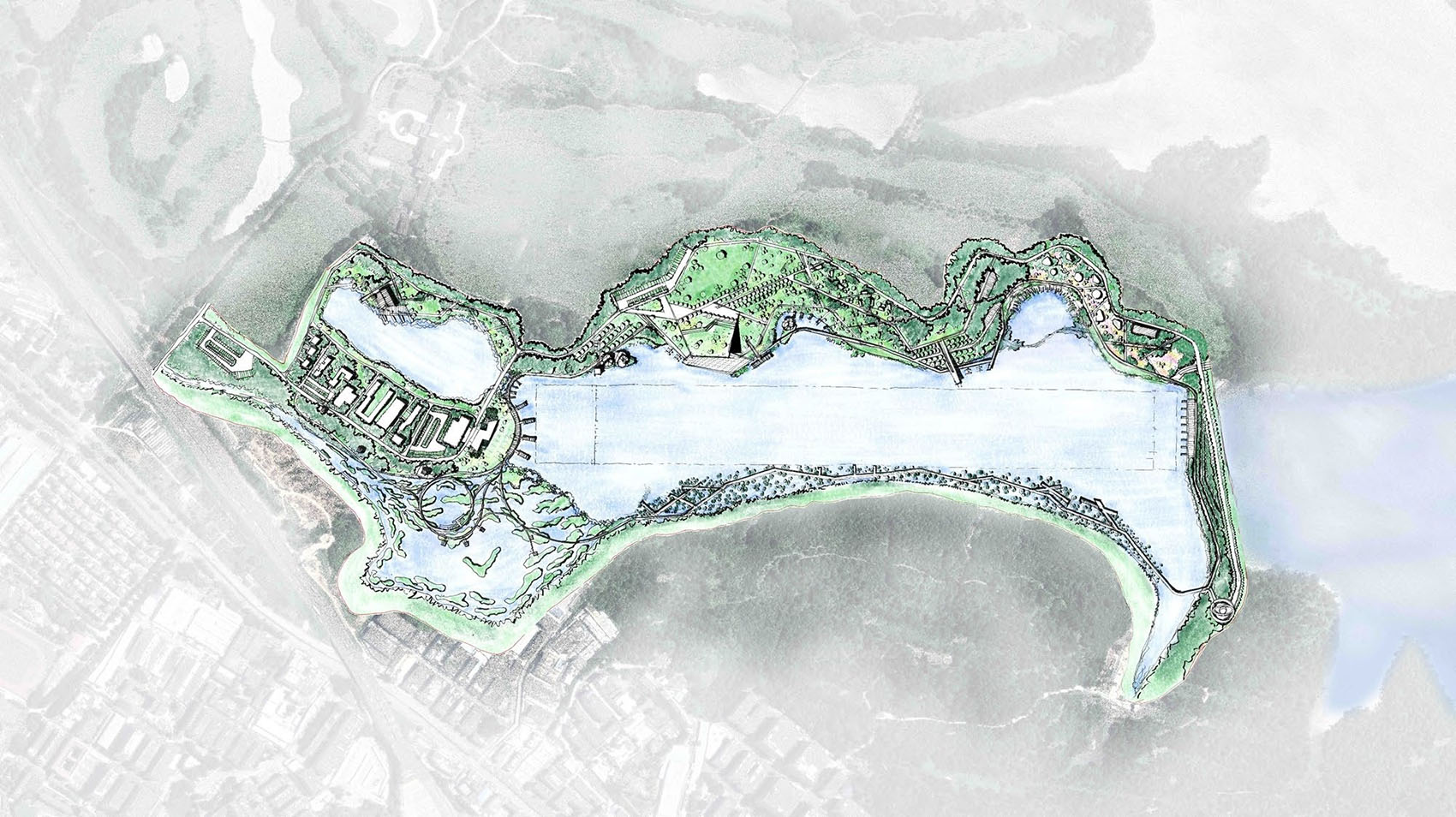
▼平面布局,site plan
▼湿地栖息地系统平面,wetland habitat system plan
▼水位响应型库岸剖面,water-level-responsive reservoir-edge section
项目信息
Project Information
Project name: Jiuwei Lake Wetland Park, Shenzhen
Project type: Public Landscape
Design: PowerChina HuaDong Engineering Corporation Limited
Owner: Water Authority of Bao’an District, Shenzhen
Website: https://www.hdec.com/cn
Contact e-mail: xie_h3@hdec.com
Design year: 2020-2023
Completion Year: 2024
Leader designer & Team: Hu Jiandong, Gao Zhumin, Che Jinhui, Yang Yumei, Xie Hui, Liang Jie, Wu Bing, Lin Huini, Chen Pengyu, Jiang Yuqin, Lv Fengjin, Shen Xiaorong
Project location: Baoan District, Shenzhen, Guangdong Province
Photo credit: Gu Gugu, Yaohu, Xianyu Zhaozhao, Weisen, Minsun, Dashu’s Album, Meng Shenshen, Asong for you, PowerChina HuaDong Engineering Corporation Limited