野海岸住宅,澳大利亚 / Pandolfini Architects
坐落于莫宁顿半岛海岸一侧起伏的沙丘与茂密的Moonah树林之间,野海岸住宅深深扎根于其自然环境之中。项目建于库林民族(Kulin Nations)布努隆族(Bunurong Country)的土地之上,由三道弧形墙体构成,为居者提供了一处远离海岸环境侵扰的私密居所。
Set amongst the undulating sand dunes and dense moonah trees on the ocean side of the Mornington Peninsula, the Wildcoast House is rooted in its environment. Built on Bunurong Country of the Kulin Nations, the home is composed of three curving walls which provide a private retreat from the coastal environment.
▼项目概览,overview of the project
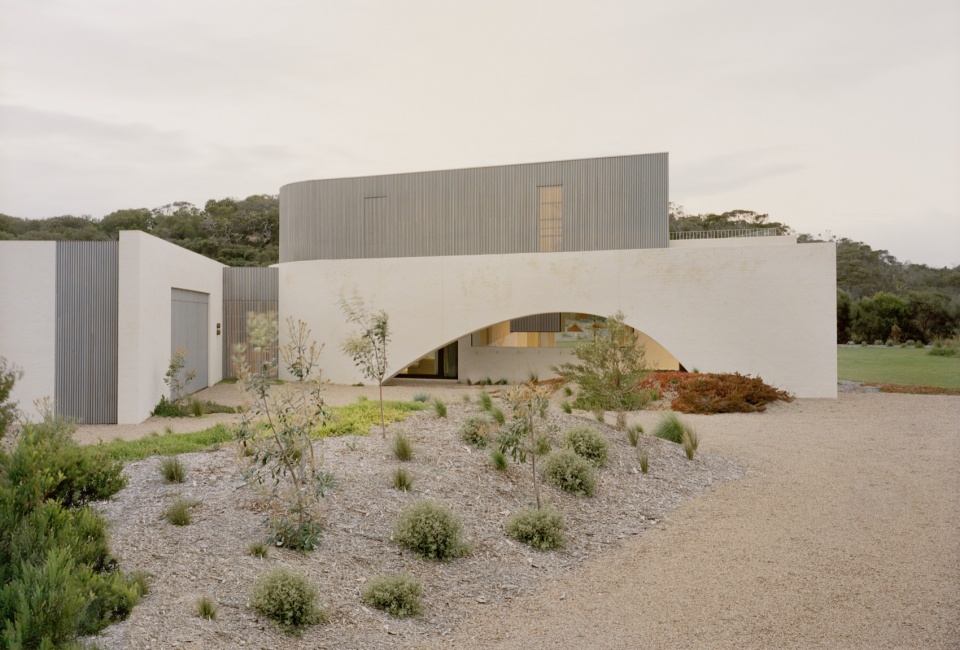
▼建筑外观,building appearance
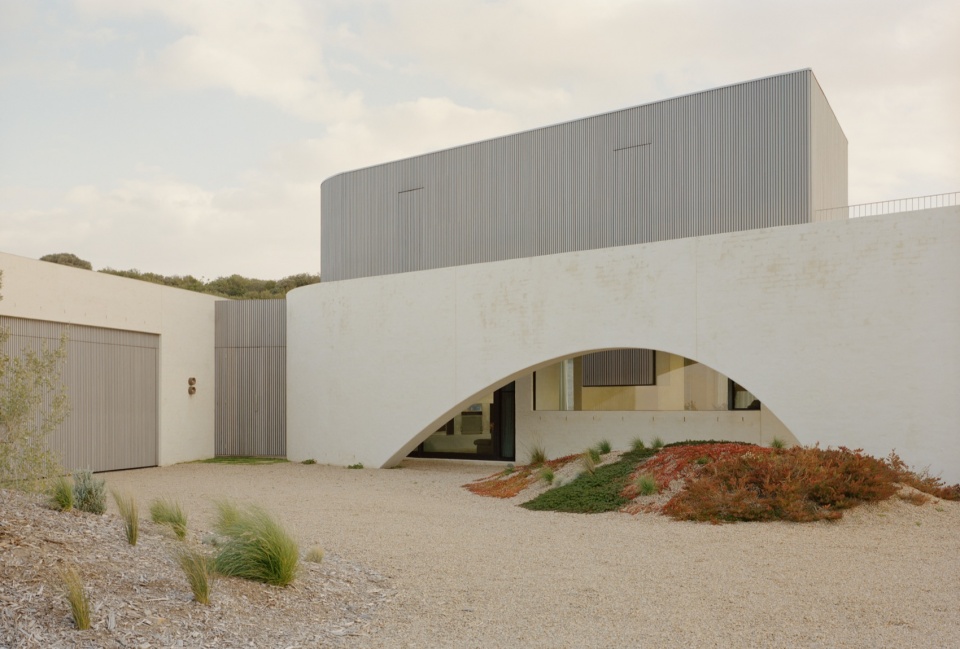
▼项目周边,surrounding of the project
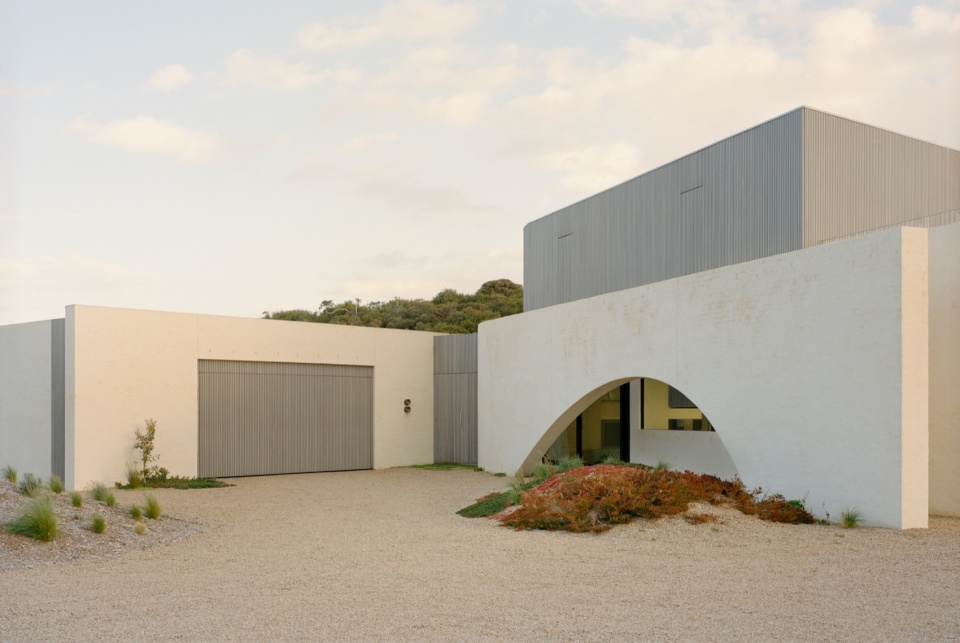
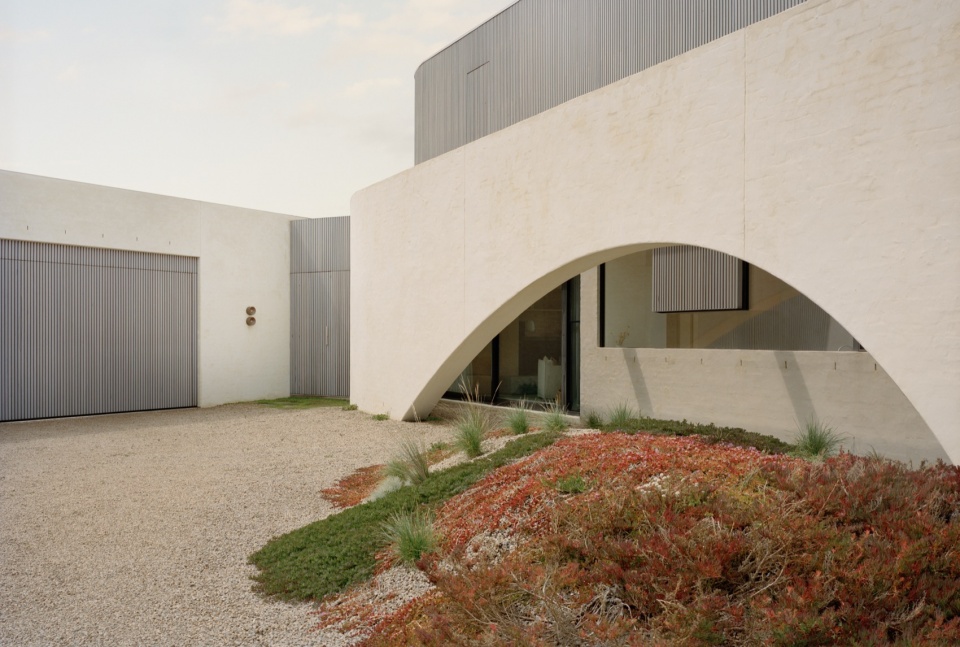
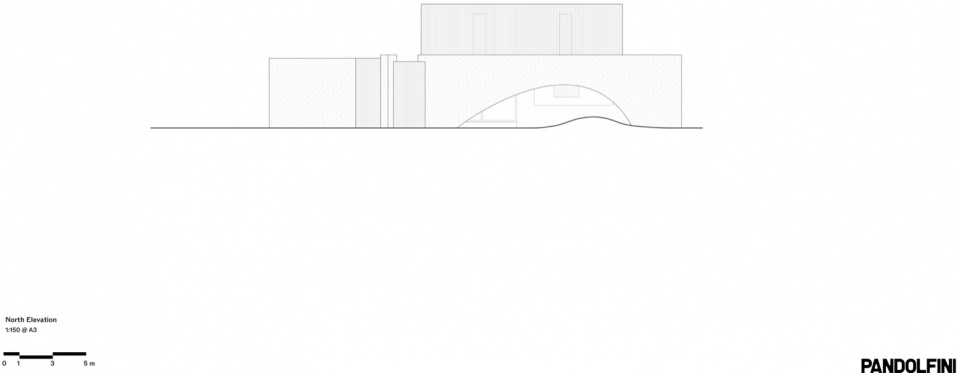
一条弧形碎石车道穿行于由本土植物构成的景观土丘之间,引导访客抵达一处抽象的立面。整体感极强的粉刷砖墙被一个有机形态的拱门穿透,拱门从基部原生植物中轻轻抬起。这一元素既隐约透露出住宅的存在,也营造出一种既沉稳又神秘的到达感。拱门从建筑主体中缓缓剥离,将室内视线引向低处,在避开邻近住宅视线的同时,也将北侧光线引入起居空间。
A curved gravel driveway weaves through landscaped mounds of native vegetation, guiding visitors toward an abstract façade. A monolithic rendered brick wall is punctured by an organic archway that lifts gently from the native planting nestled at its base. This motif teases a glimpse of the home whilst establishing a sense of arrival that is both grounded and enigmatic. Peeling away from the home, the arch guides interior views low, away from neighbouring properties, simultaneously allowing northern light into the living spaces.
▼建筑外观细部,building appearance details
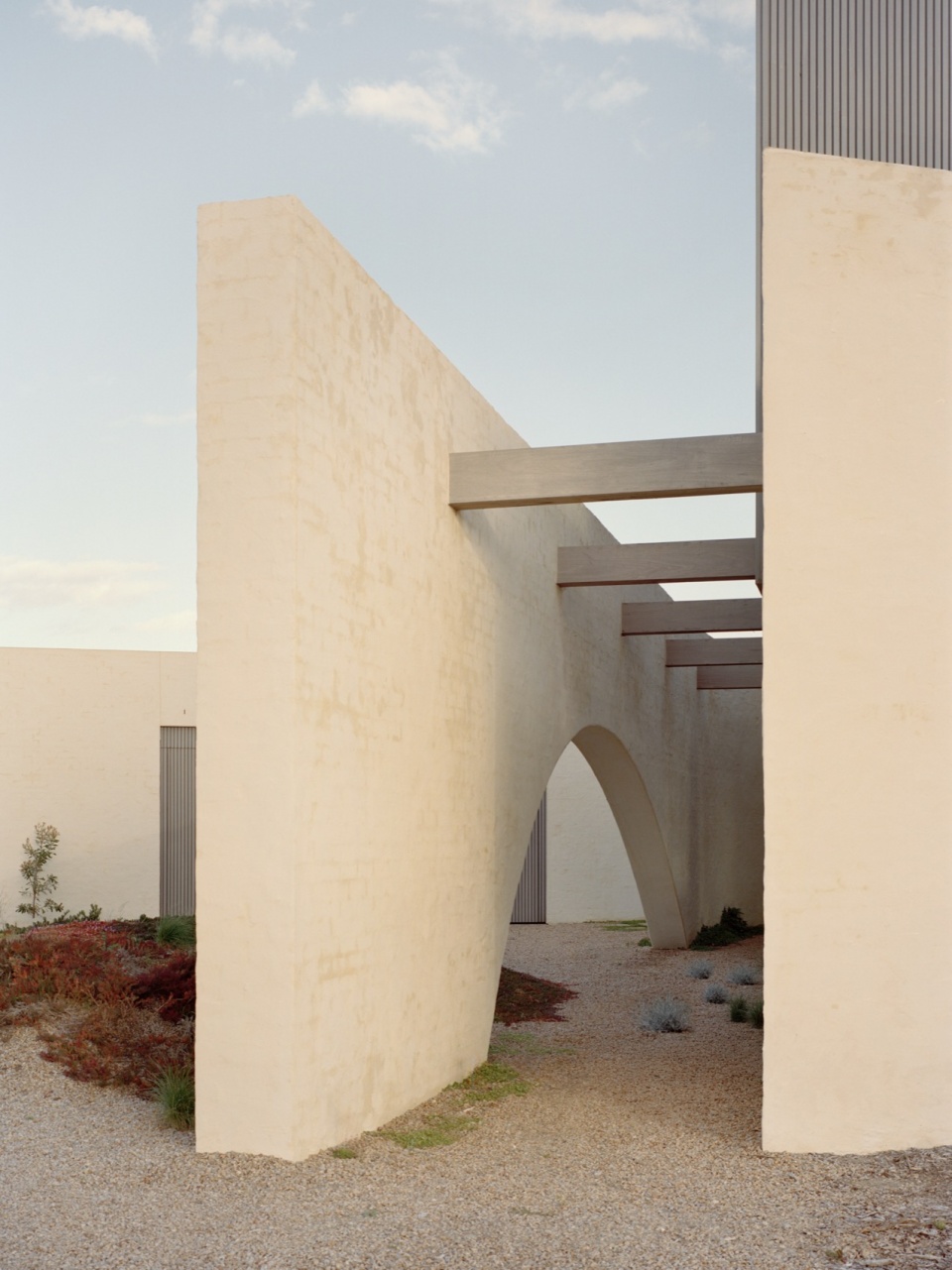
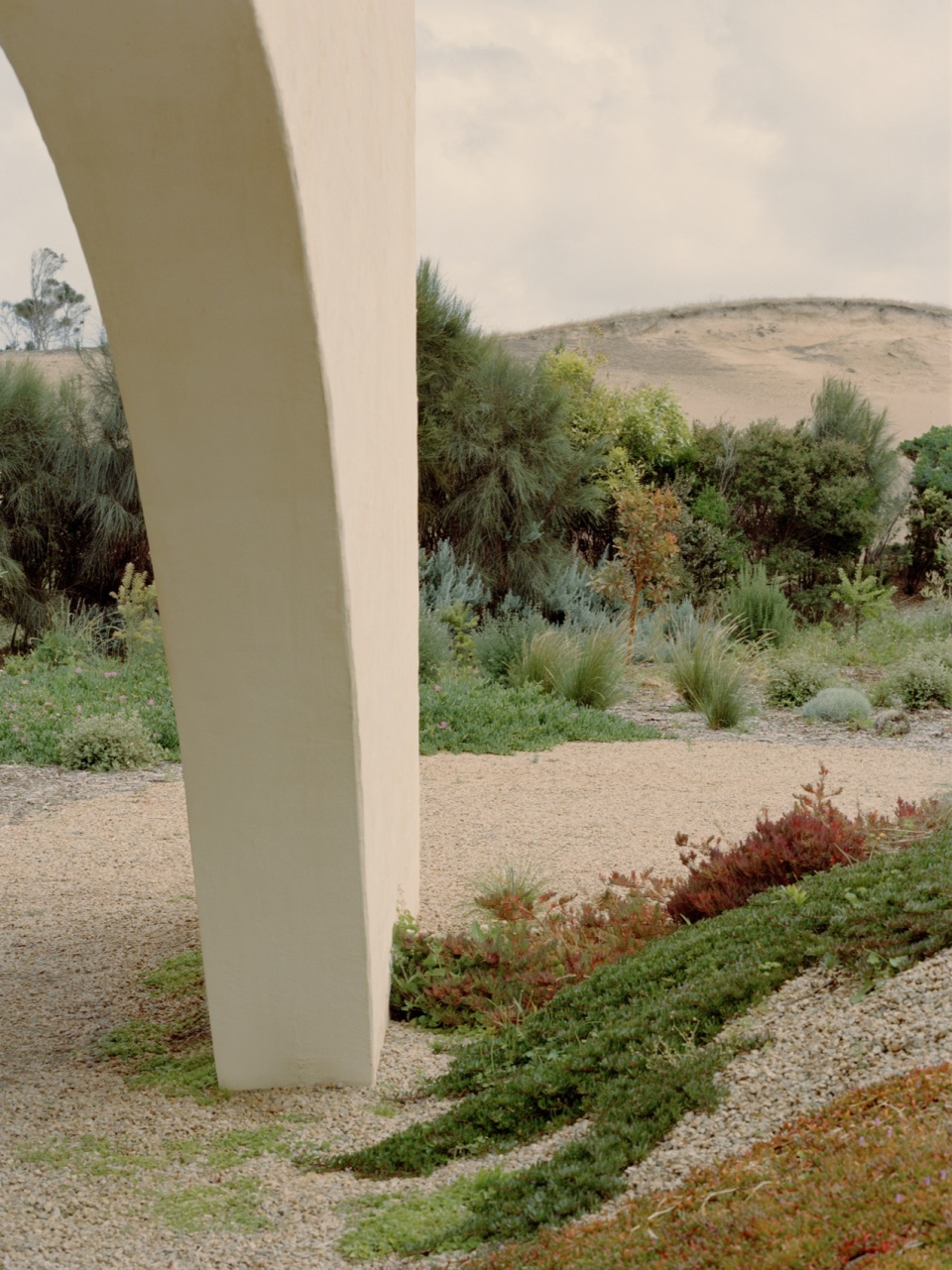
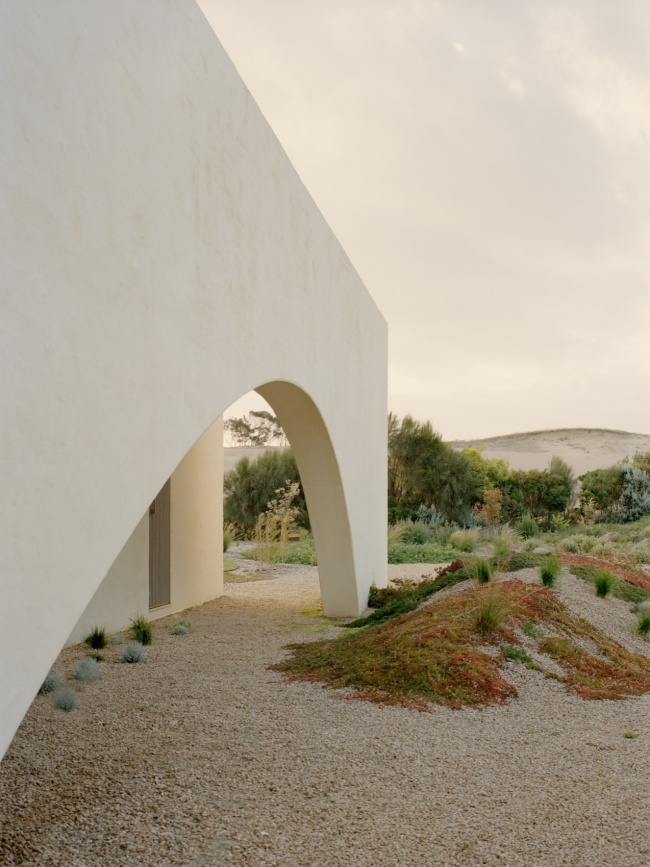
▼拱门, archway
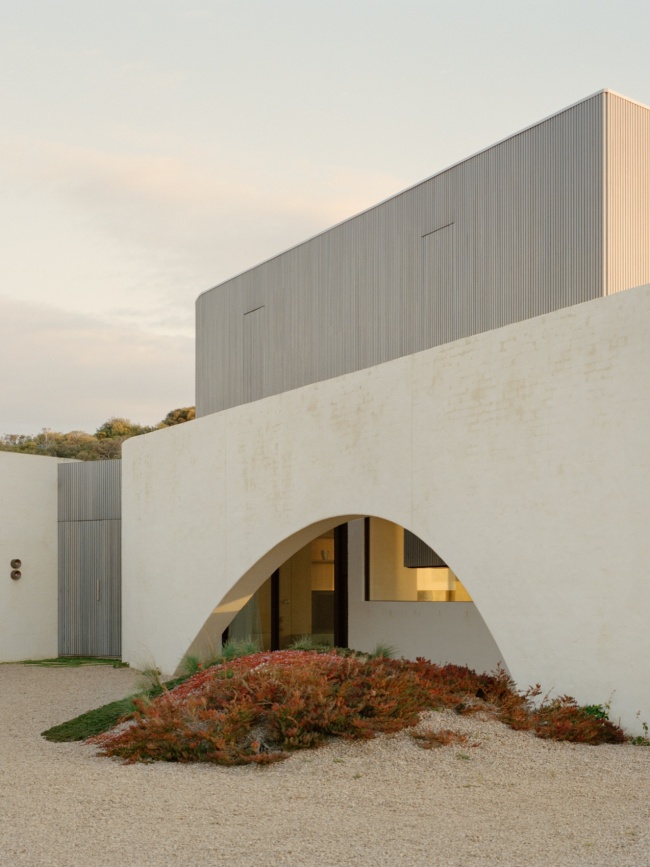
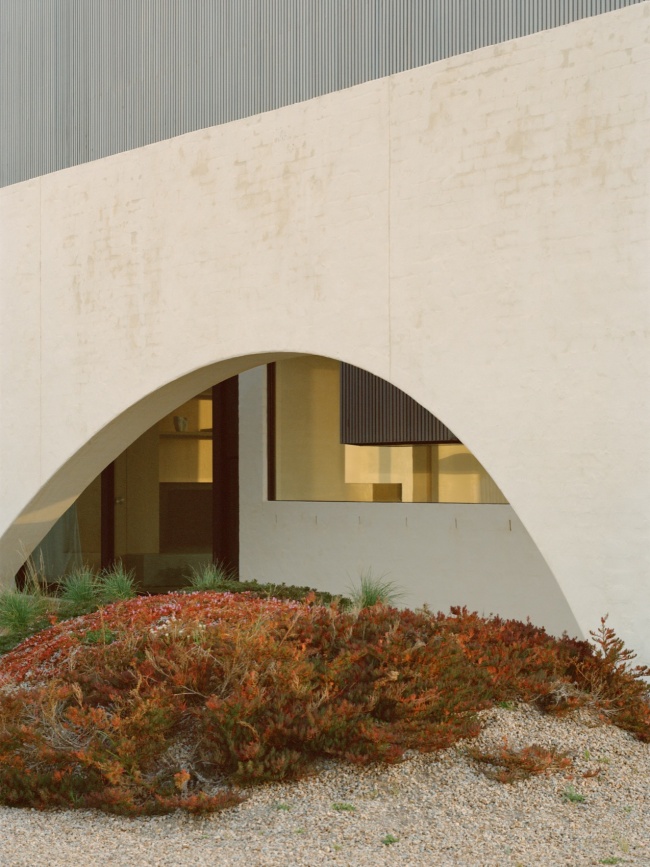
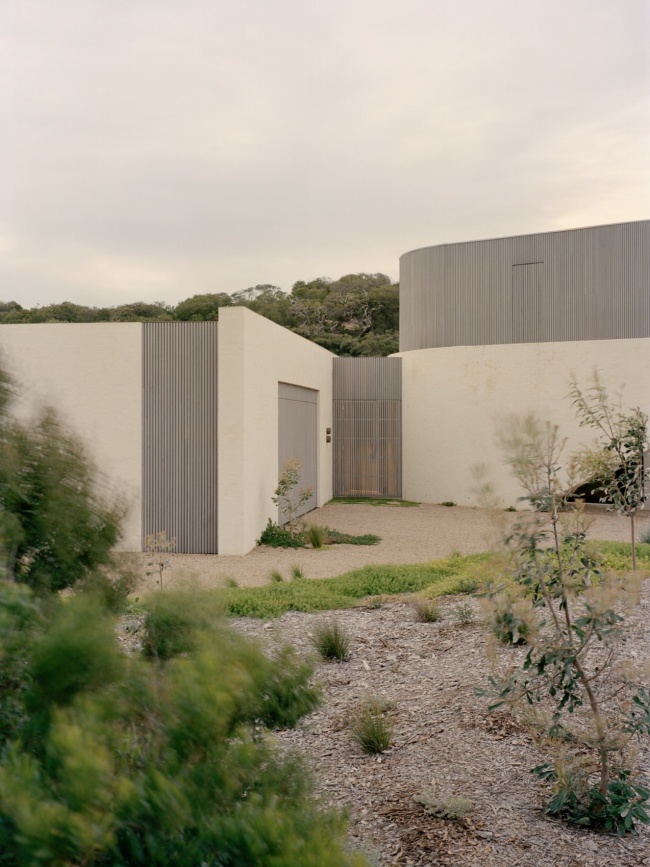
定义住宅空间的三道板状墙体经过精心布置,以抵御强烈的海岸风,并组织通往周边景观及远处粗犷国家公园的视线。每一道墙体围合出住宅中的一个独立功能翼,并最终汇聚形成中央交通空间。
The home’s three defining blade walls are carefully set out to protect from harsh coastal winds and curate views to the surrounding landscape and rugged national park beyond. Each blade bounds a separate wing of the home and converge to form the central circulation.
▼立面细部,facade details
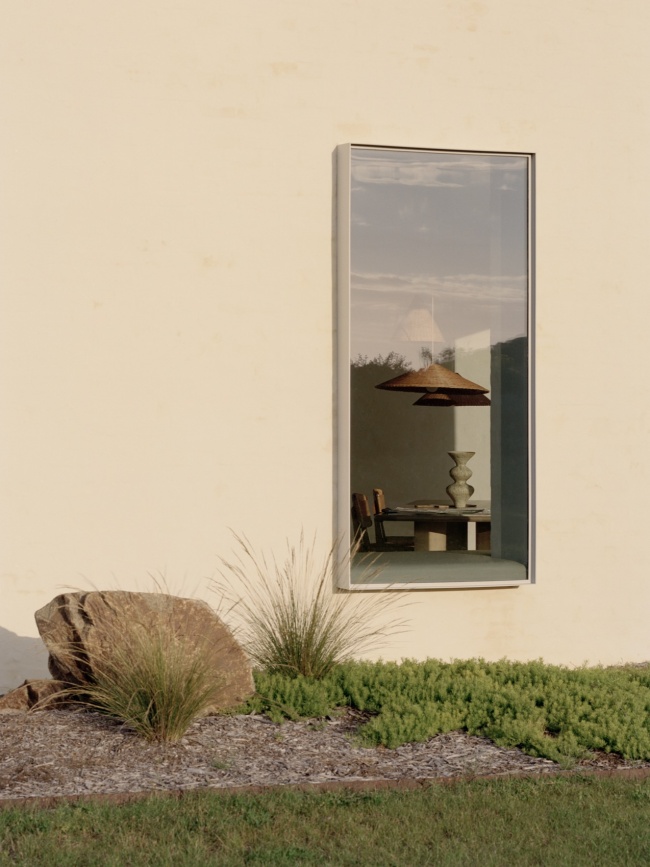
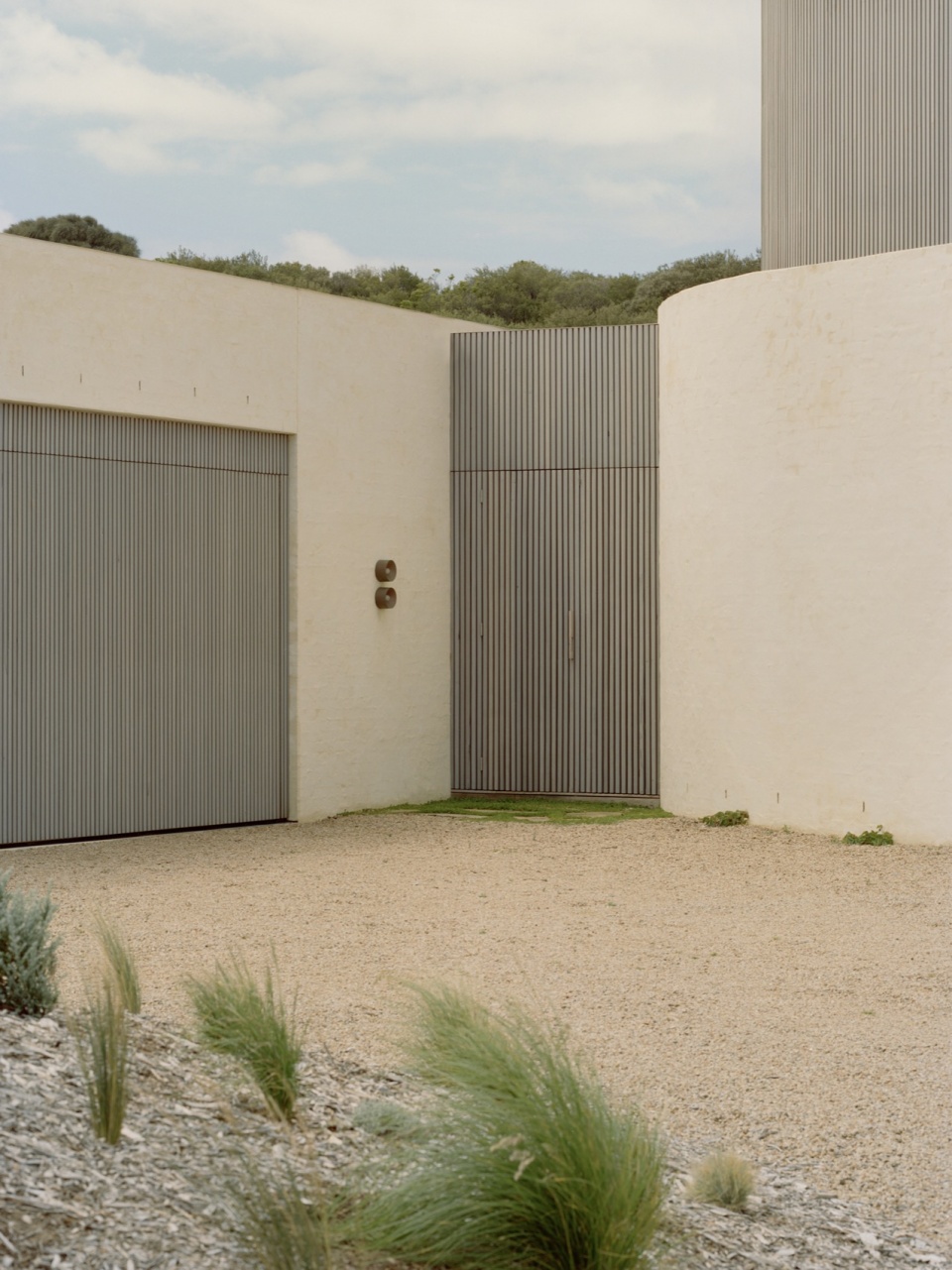
这种三分式布局使家庭活动区域能够相对独立地运作,而客房区域则为住宅未来适应多代同居生活提供了灵活性。从外部看,每个功能翼都如同独立的亭子,通过统一的材料语言联系在一起,共同回应海岸环境。浅白色粉刷覆盖于高肌理砖墙之上,砖墙由不规则的D级再生砖砌筑而成,呼应着公园之外的砂岩峭壁。灰化木饰面与贯穿整体的弧形墙体,则映射出Moonah树灰色扭曲的树干形态。
This tripartite configuration allows family-zones to operate independently while the guest wing provides flexibility for multigenerational use as the home evolves. Externally, each wing reads as a distinct pavilion, unified by a consistent material language embodying the coastal setting. The off-white render sits over heavily textured brickwork constructed using irregular D grade recycled bricks, referencing the sandstone-cliffs just beyond the parkland. Greyed timber cladding and curved walls throughout echo the grey twisting trunks of the Moonah trees.
▼自由形态的洞石地砖,Freeform travertine floor tiles
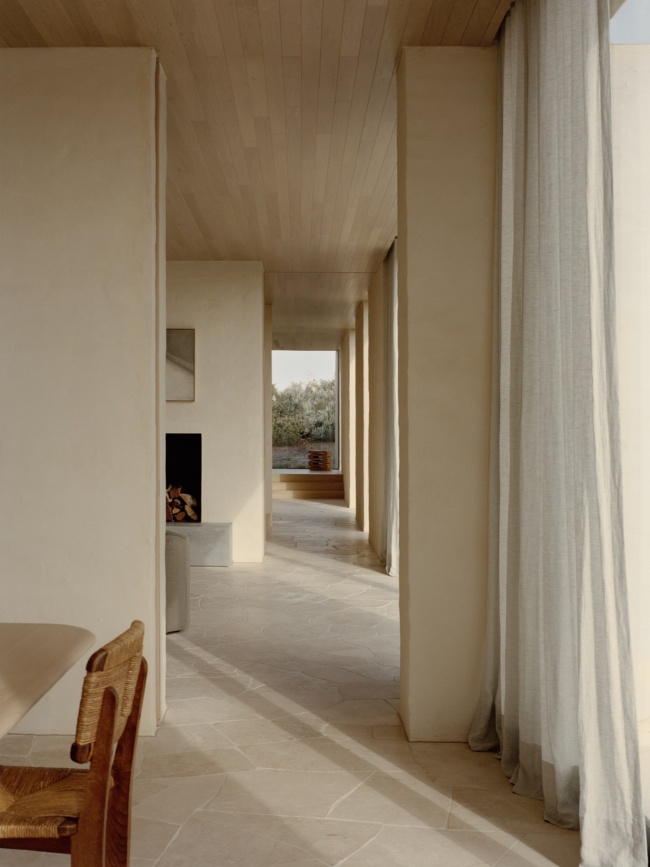
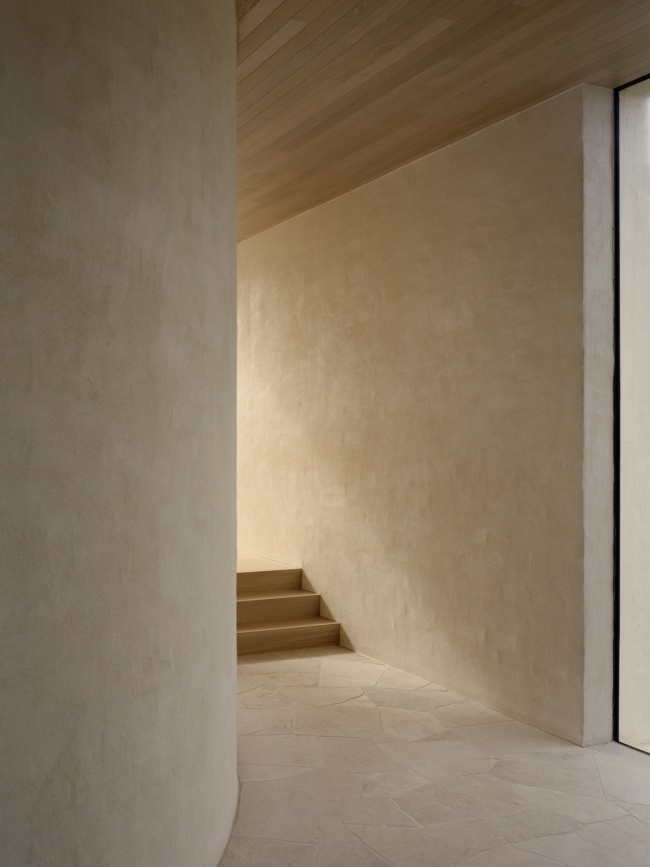
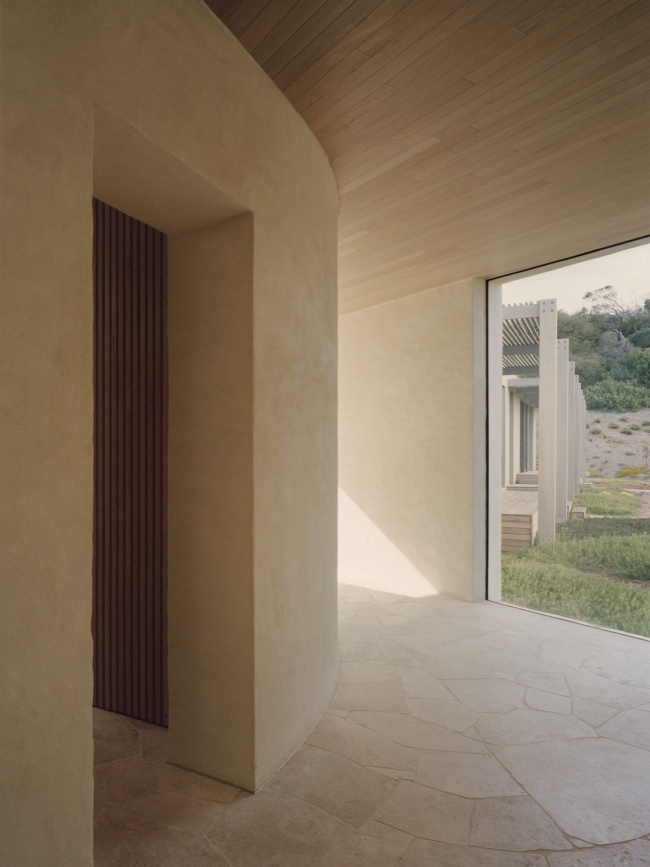
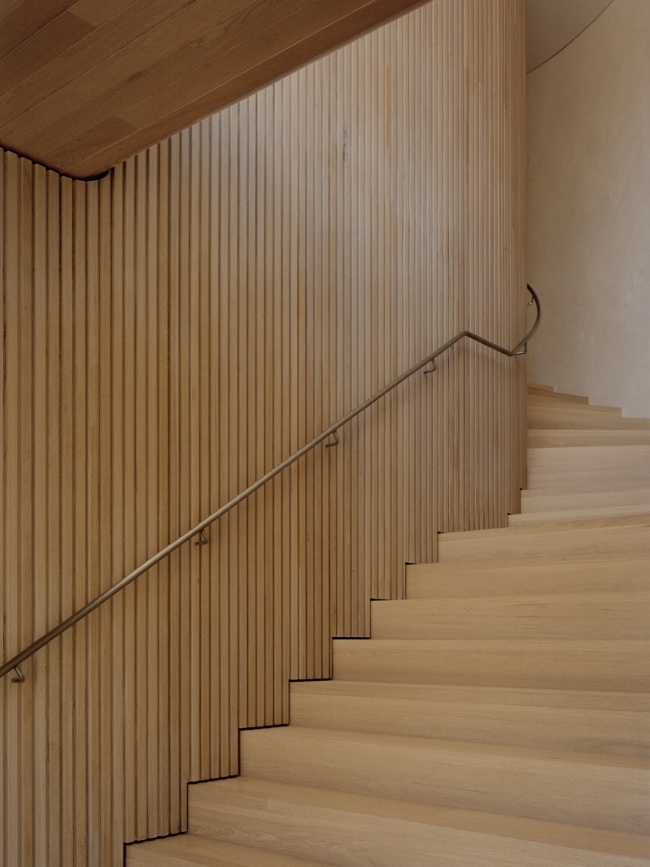
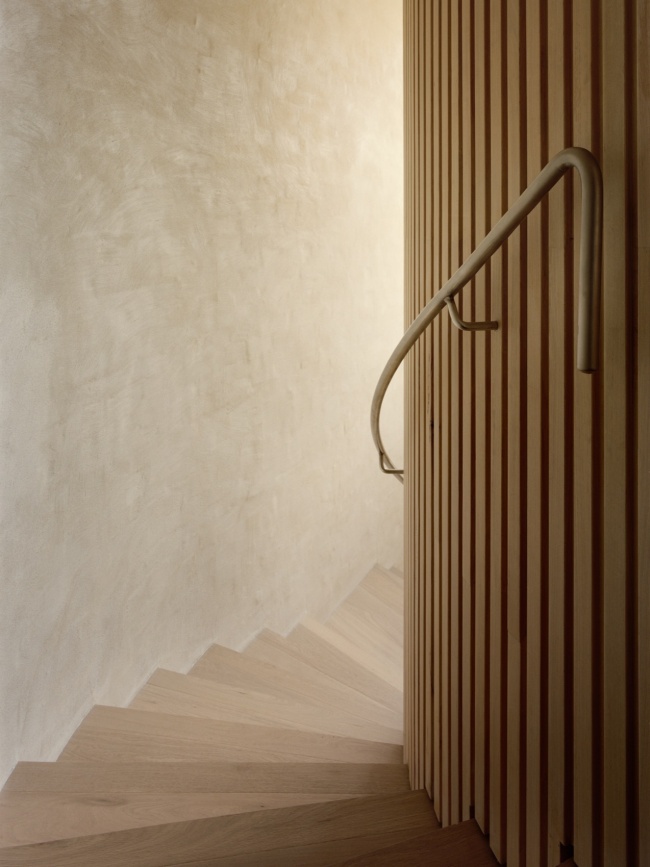
高肌理砖墙延续至室内板状墙体之上,访客在高低错落的流线空间中缓缓穿行,唤起漫步于沙丘之间的体验。自由形态的洞石地砖定义了主要起居区与客房区域,并与温暖的木饰天花相互呼应。美国白橡木饰面柜体、天然石材与粉刷砖墙点缀于室内各处,共同营造出富有触感的空间氛围。
The heavily textured brickwork continues internally along the blade walls, where visitors meander through the split-level circulation space, evoking the experience of walking through sand dunes. Freeform travertine floor tiles define the main living and guest wings and are complemented by warm timber-lined ceilings. American oak veneer joinery, natural stone, and rendered brickwork puncture interior areas, creating a tactile atmosphere.
▼起居区,living area
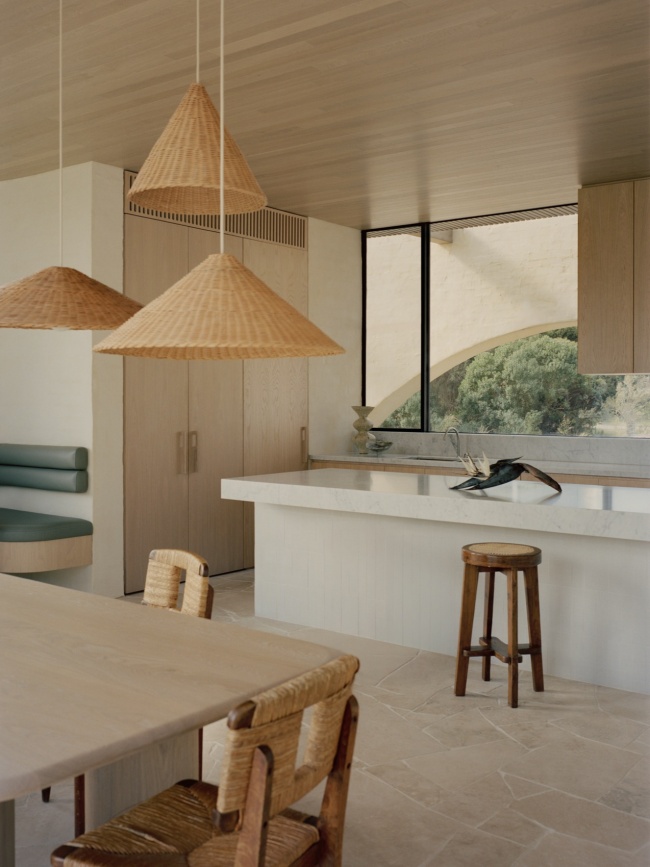
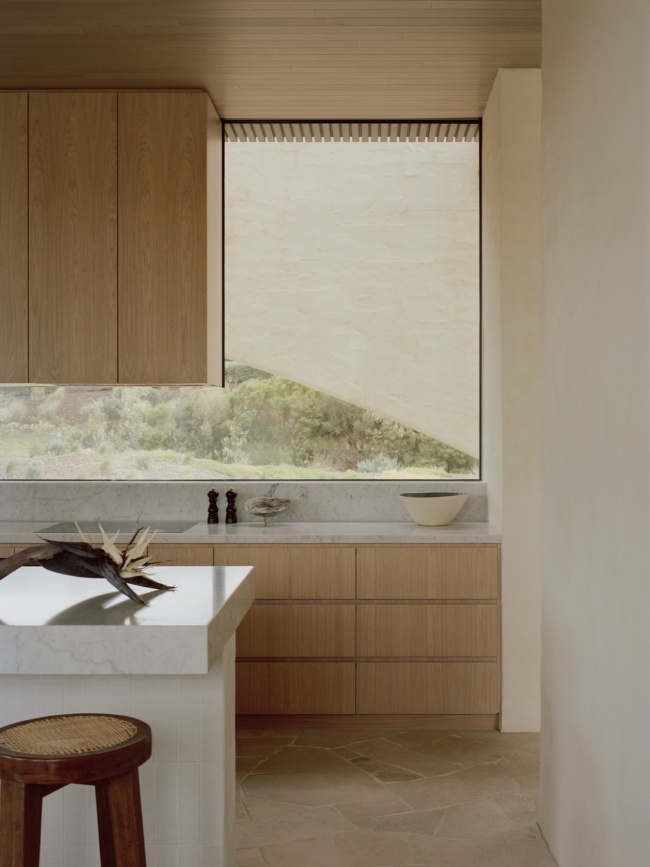
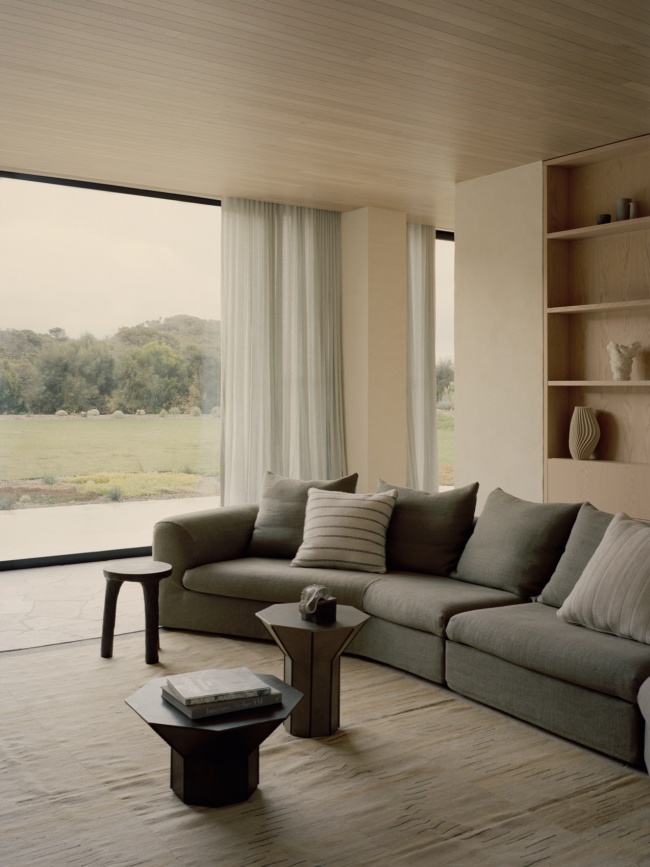
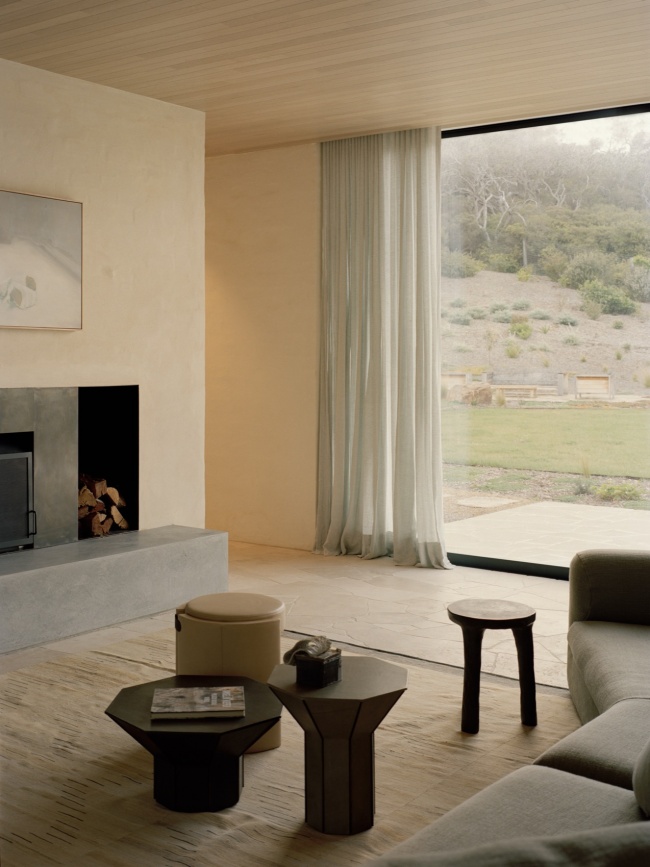
▼美国白橡木饰面柜体、天然石材与粉刷砖墙点缀于室内各处,living area
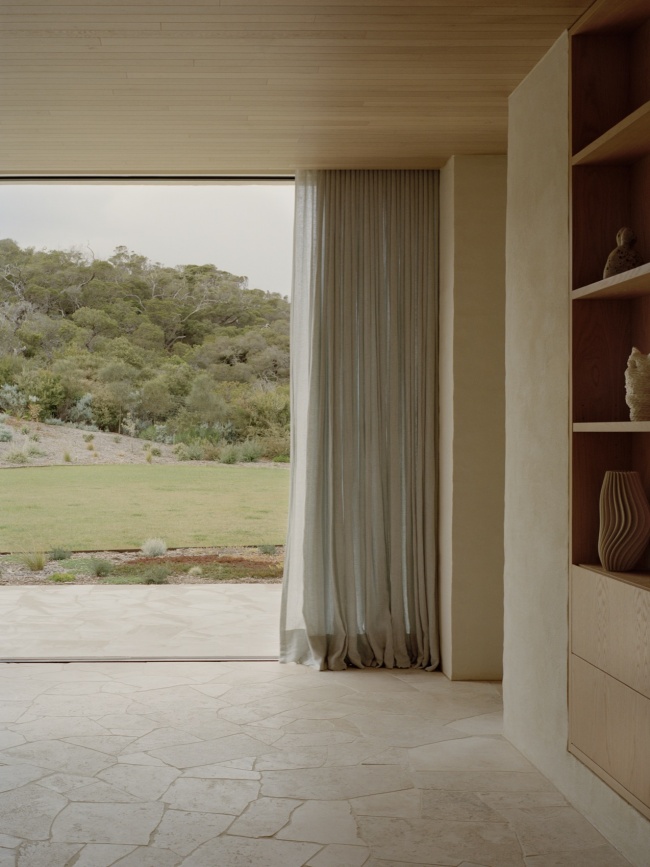
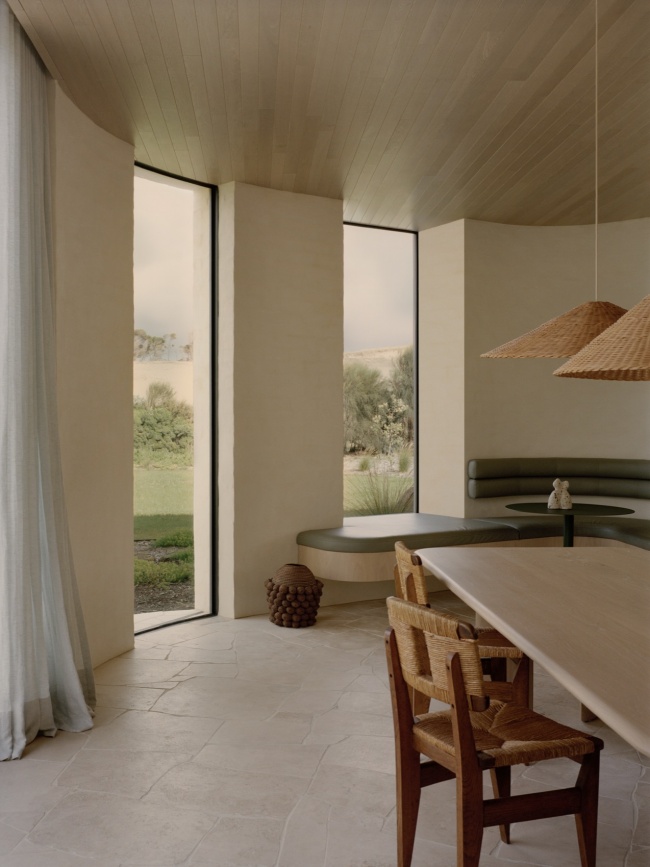
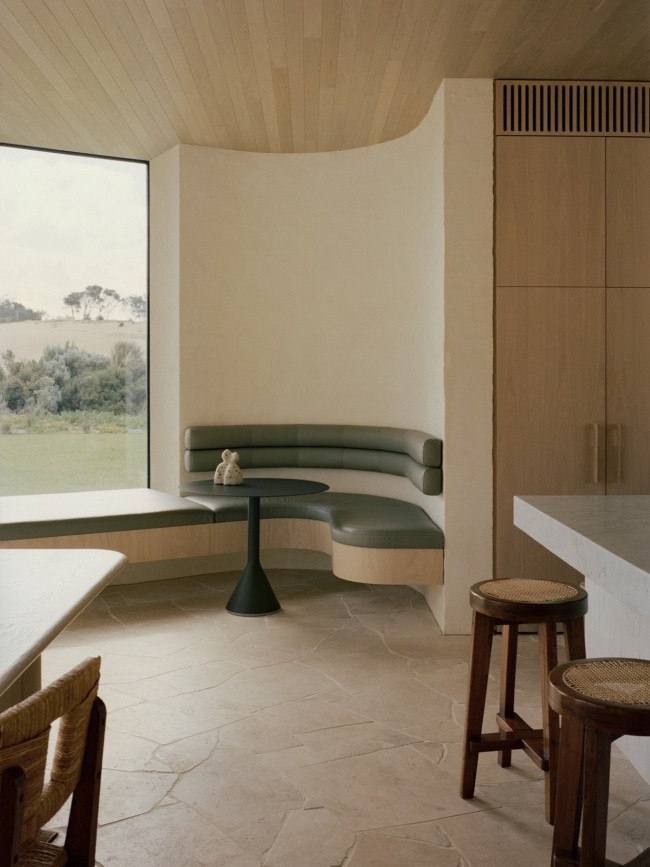
再生砖的使用降低了项目的隐含碳排放,而砖体自身的热质量则帮助建筑在全年范围内调节温度波动。每个功能翼狭长的平面布局配合精心设置的开口,不仅形成穿堂通风,实现被动降温,同时也让室内获得被精心框取的景观视野——既包括人工整理的景观,也包括自然野生景观。在首层,这种空气流动是全年唯一的降温方式;门上方设置的可开启气窗,则确保空气能够持续流通而不被阻断。
The recycled brickwork reduces the embodied carbon footprint of the project while their thermal mass moderates temperature fluctuations year-round. The narrow floor plates of each wing offer carefully located openings, providing cross ventilation for passive cooling, while enriching the interiors with framed views of both curated and wild landscapes. On the ground floor, this airflow is the sole source of cooling year-round, with operable transom panels located above doors to allow for uninterrupted airflow.
▼走廊,corridor
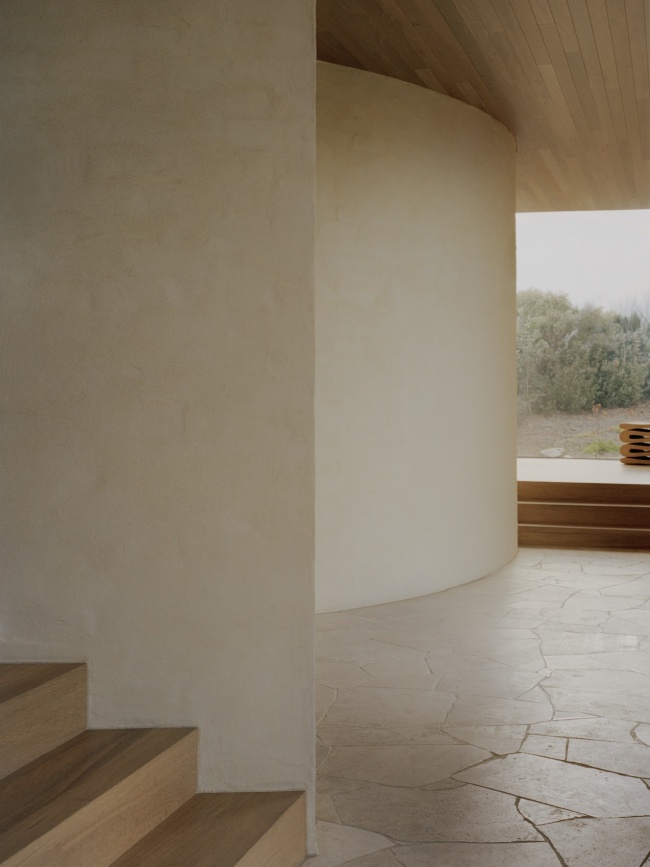
▼楼梯,staircase
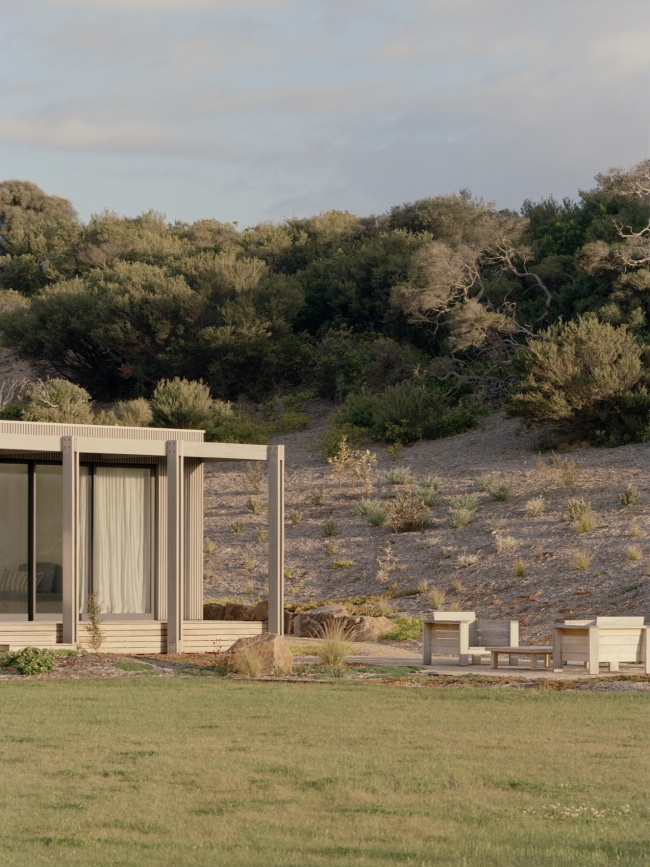
场地景观与建筑之间形成了深度交织的关系。建筑形体顺应场地自然等高线展开,向相邻公园倾斜延伸,并在地形之上以细微的高差变化缓缓铺陈;经过设计的本土花园逐渐融入更远处的原生灌木林地。通过重新引入本土植物,项目致力于将原本的农耕土地恢复至其原始生态状态,并模糊与国家公园之间的边界。
The site’s landscape and architecture are deeply intertwined. The built form follows the site’s natural contours, leaning into the neighbouring parkland and stepping subtly across the terrain where curated native gardens bleed into the wild bushland beyond. Regenerating the landscape from the former farming land back to its original state was paramount by reintroducing native plants, blurring the boundary with the national park.
▼卫生间,bathroom
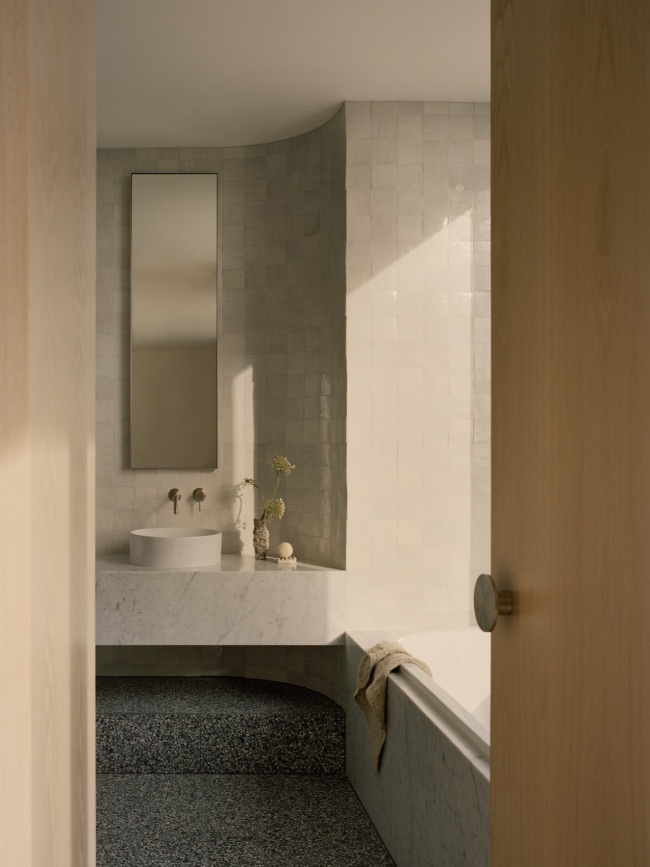
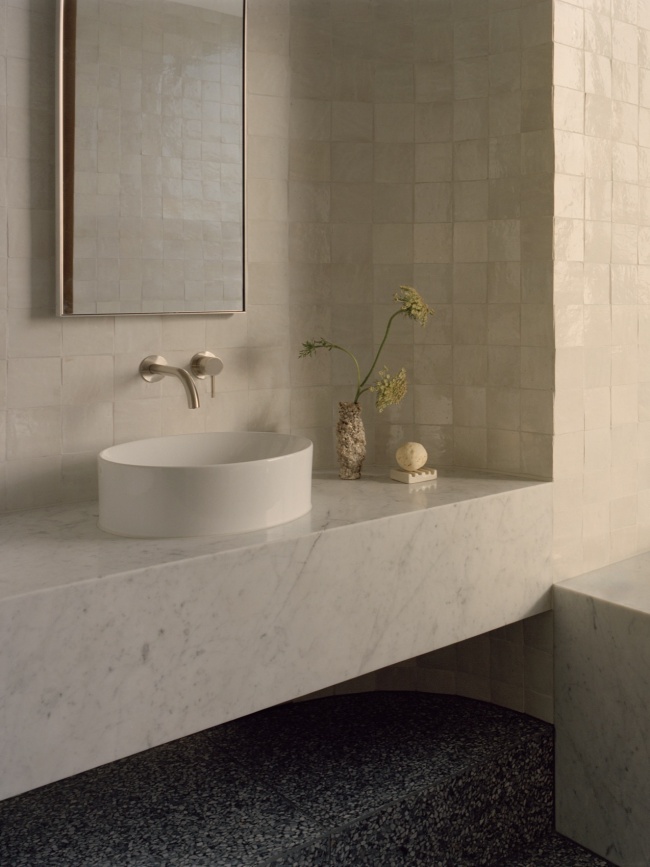
▼材料细部,metrical detail
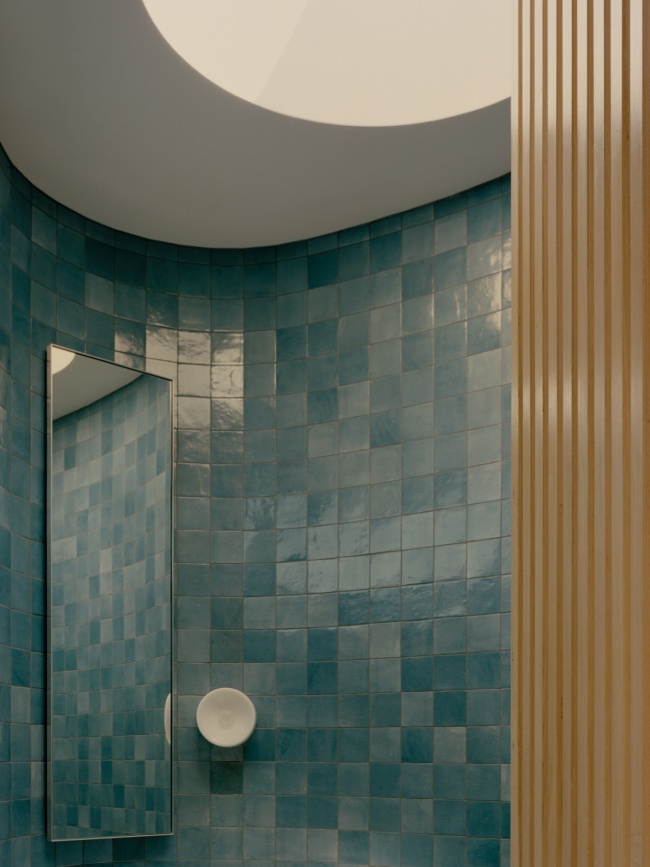
野海岸住宅是一项关于粗犷优雅的研究——三座彼此交织的亭状体量,通过克制的材料体系被统一在一起,并在不断变化的海岸光线中凸显其雕塑般的形态。它安静而从容地栖息于场地之中,成为一处关于隐居、连接与持久海岸生活的居所。
Wildcoast House is a study in rugged elegance – three intertwined pavilions grounded by a reductive material palette that accentuates its sculptural form in the shifting coastal light. It is a home that settles into its site with quiet composure, offering a place of retreat, connection, and enduring coastal living.
▼首层平面图,ground floor plan
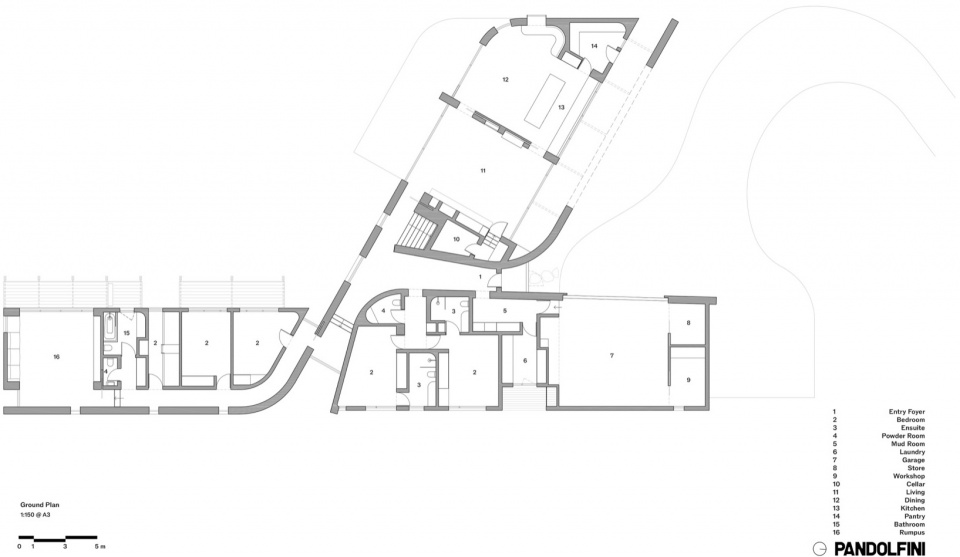
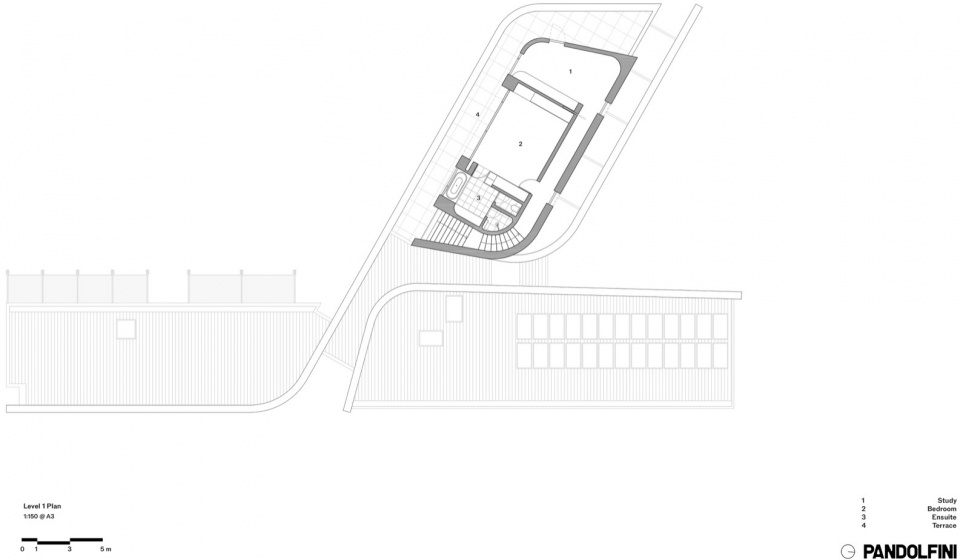
▼二层平面图,first floor plan
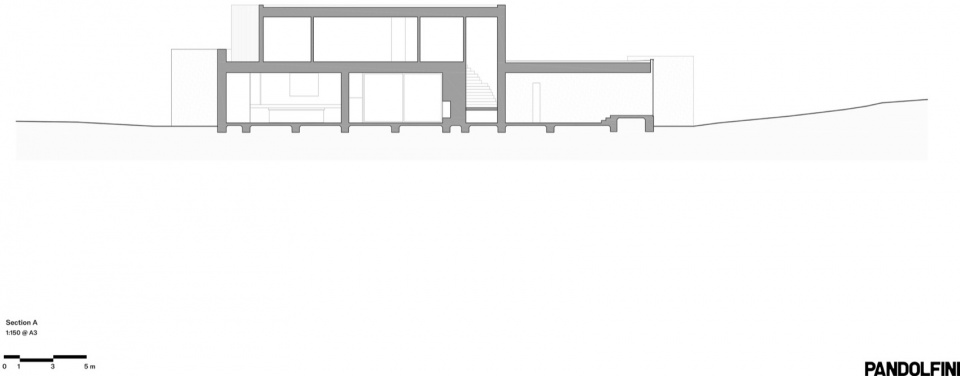
▼剖面,section
▼立面,elevation
Credits:
Builder – Turn Group
Photographer – Tasha Tylee
Landscape Architect – Robyn Barlow
Engineer – Meyer Consulting