Louis Pergaud Wood学校,法国 / Guinée*Potin architects
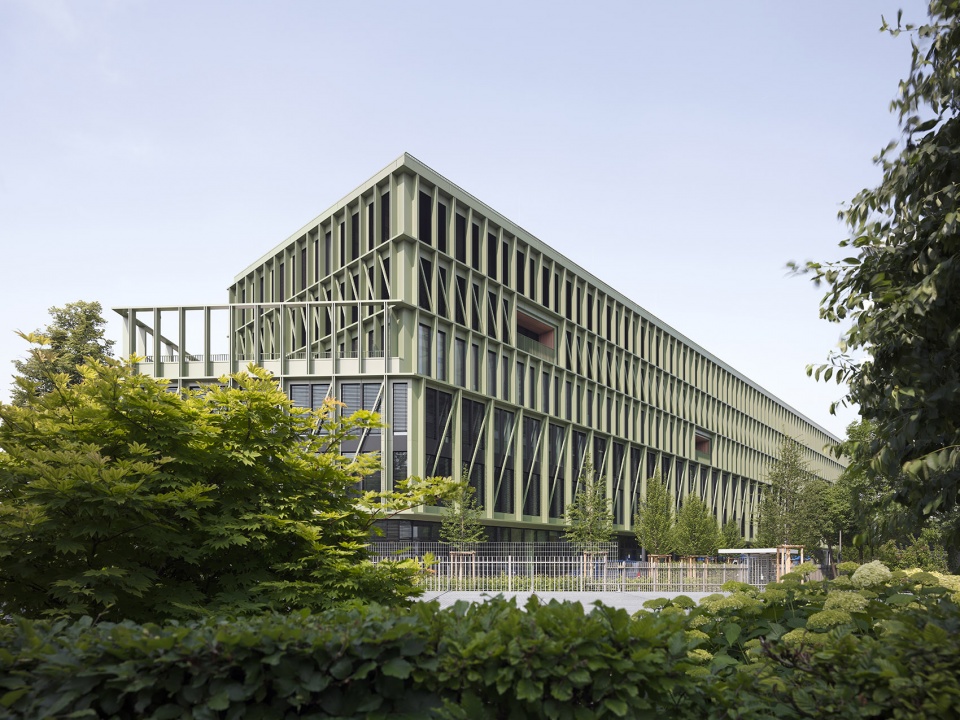
内恩叙尔伯夫龙翻新后的中学可容纳最多400名学生。卢瓦-谢尔省(Loir-et-Cher)提出的目标描绘出一所“未来中学”的愿景:既向世界开放,又深深扎根于本地社区。建筑布局强调不同功能区域之间的连续性、部分功能的独立性以及使用者的舒适体验。对场地环境的关注,尤其是周边林地的存在,共同塑造了学校的整体身份。
The refurbished secondary school in Neung-sur-Beuvron will accommodate up to 400 pupils. The objectives set by the Loir-et-Cher department paint a picture of the secondary school of the future: open to the world and rooted in its local community. The layout of the building emphasises the continuity between different areas, the autonomy of certain functions, and user comfort. Awareness of the context, and in particular the neighbouring woodland, shapes the school’s identity.
▼秋日树影下的校园前广场,Forecourt beneath autumn trees
▼中央大厅与校园主入口,Central hall and main school entrance
项目需要在校园持续使用的情况下分阶段施工,并配合“错峰式”搬迁,因此教学与行政功能被布置在场地南侧一片没有现存建筑的区域内。因此,行政、校园生活与教学等不同功能区域的布局被设计为兼具清晰性与流动性的空间体系,以中央宽敞大厅为核心,形成一个“三翼星形”结构,将各部分紧密连接。
The programme constraint of carrying out works on an occupied site, with ‘staggered’ relocations, led to the placement of teaching and administrative premises in the southern part of the site, free of any existing buildings. Consequently, the layout of the various zones (administration, school life, teaching) is designed to ensure functional clarity and fluidity of space, taking the form of a ‘three-pointed star’ with a spacious hall at its centre that connects each area.
▼校园内部庭院立面全景,Panoramic view of the inner school courtyard façade
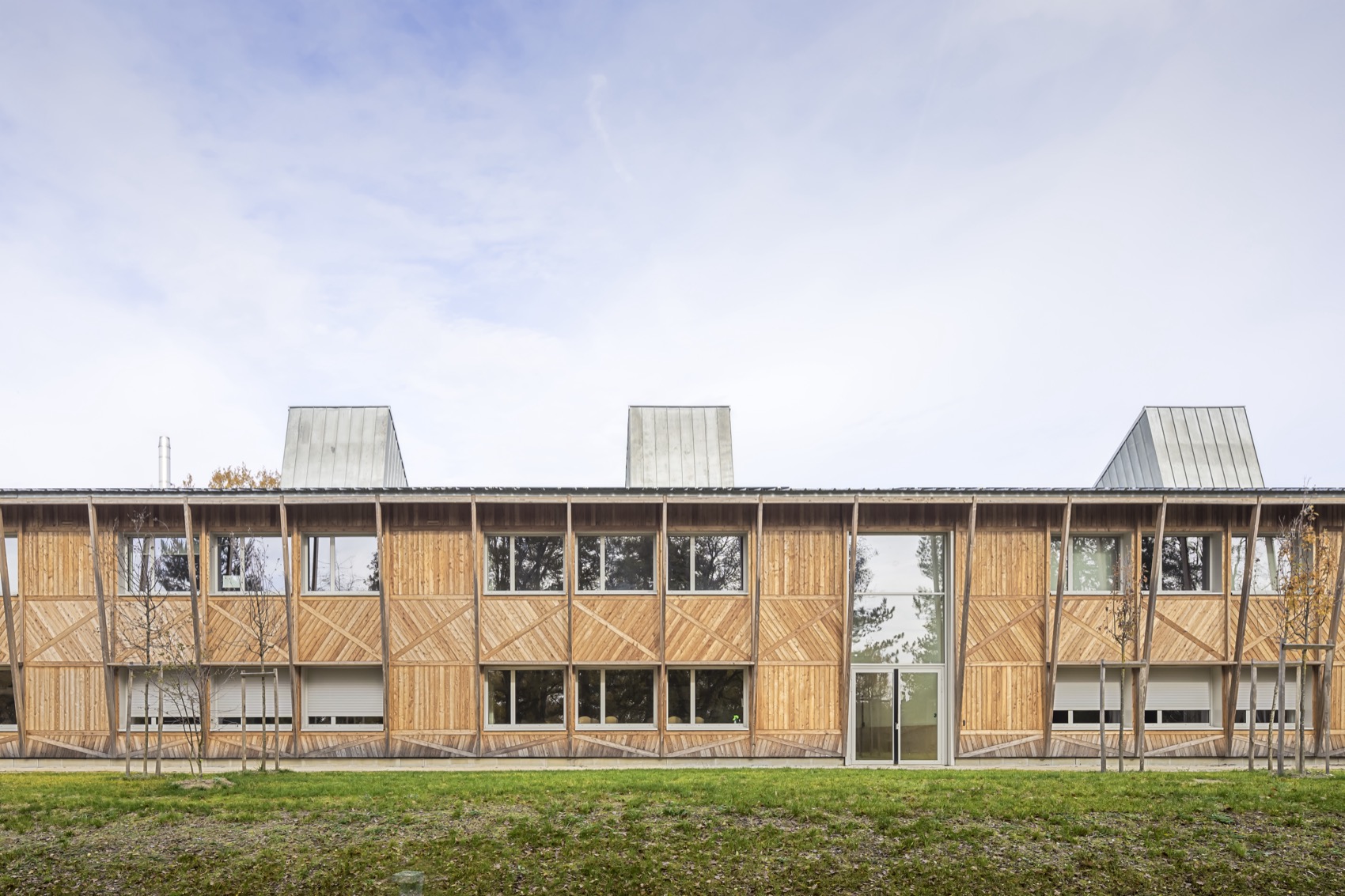
▼连续斜撑结构与步行空间,Diagonal timber bracing and circulation path
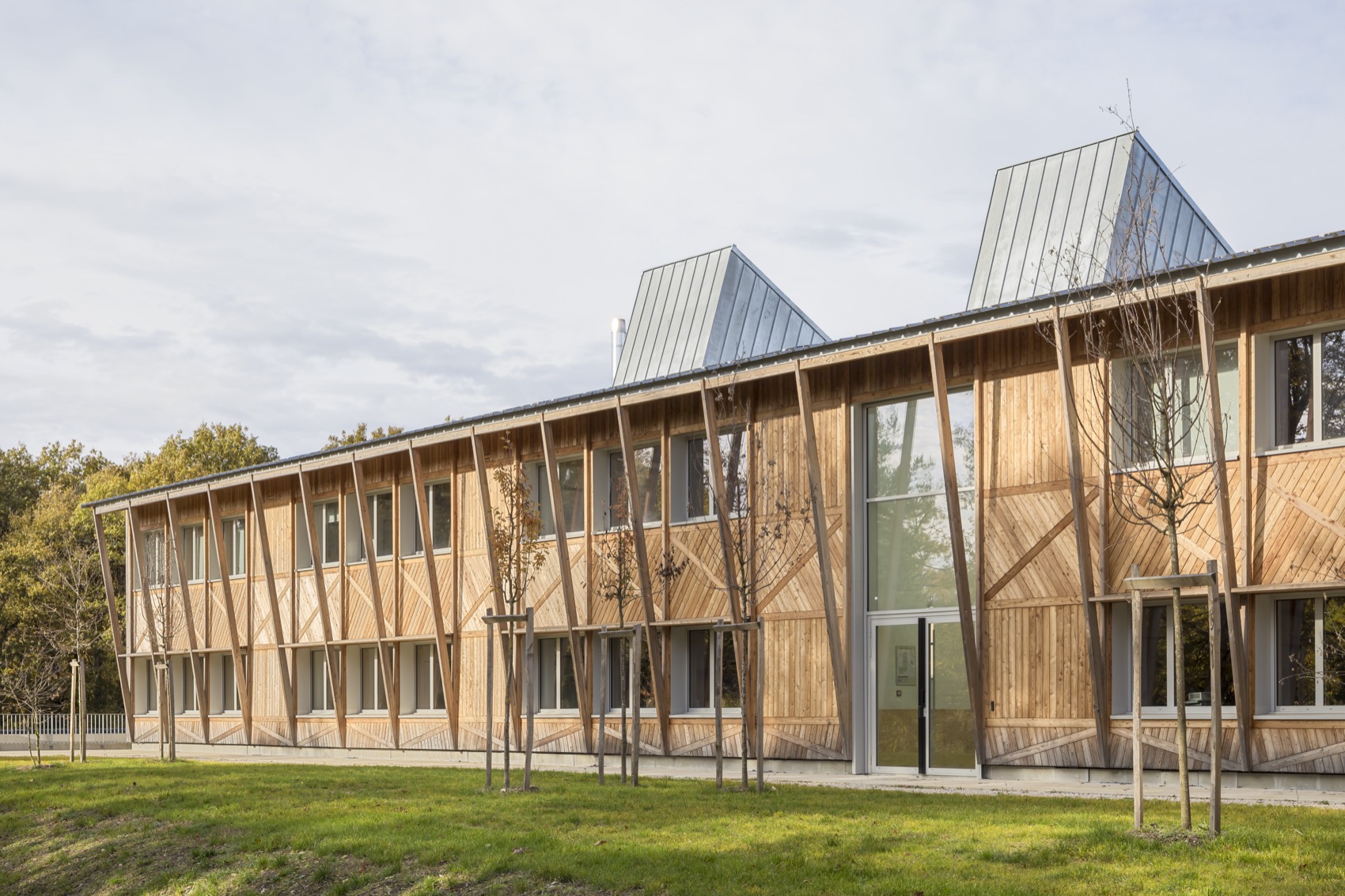
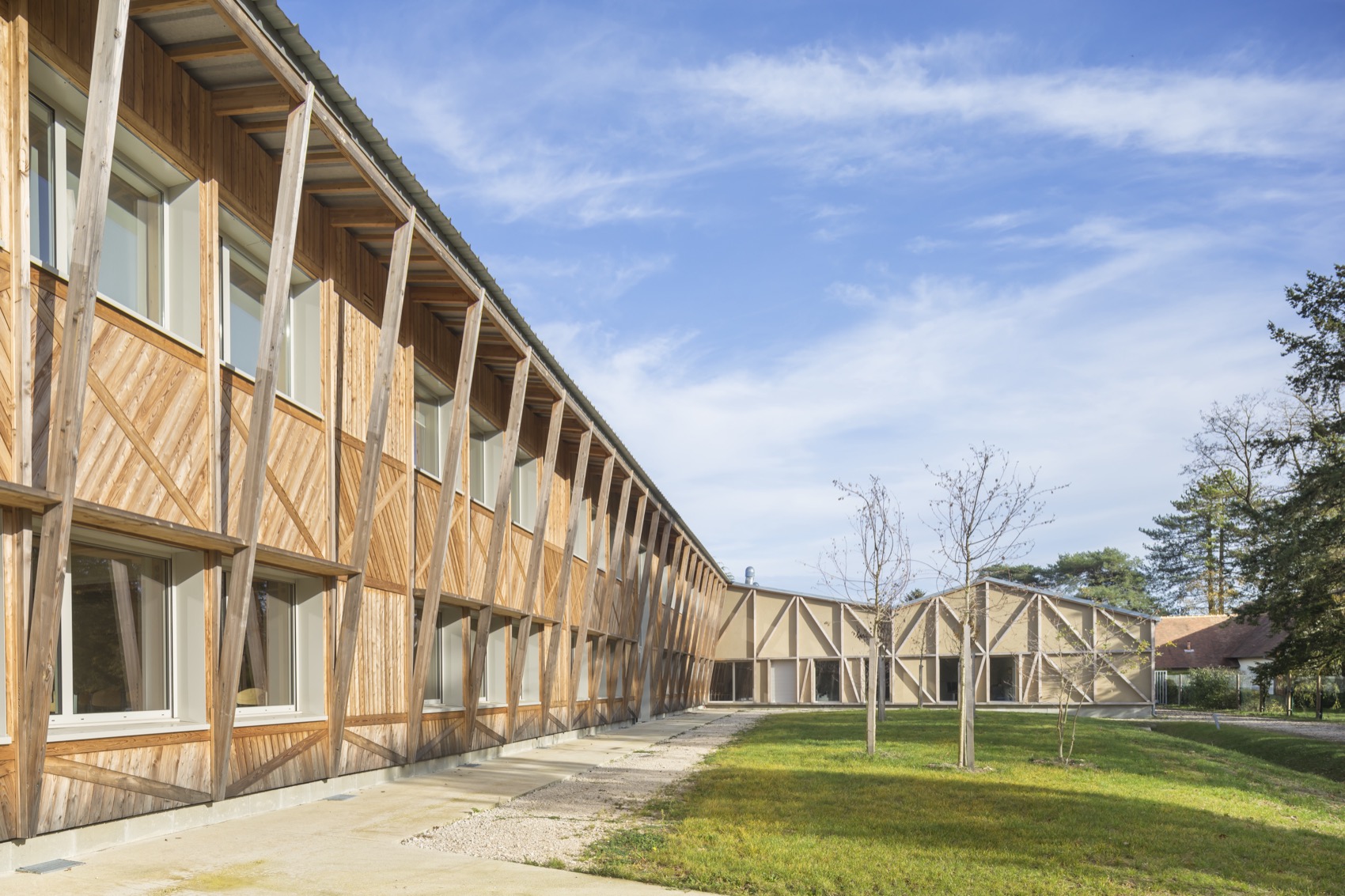
▼教学翼外部连廊与坡道,External gallery and ramp beside the teaching wing
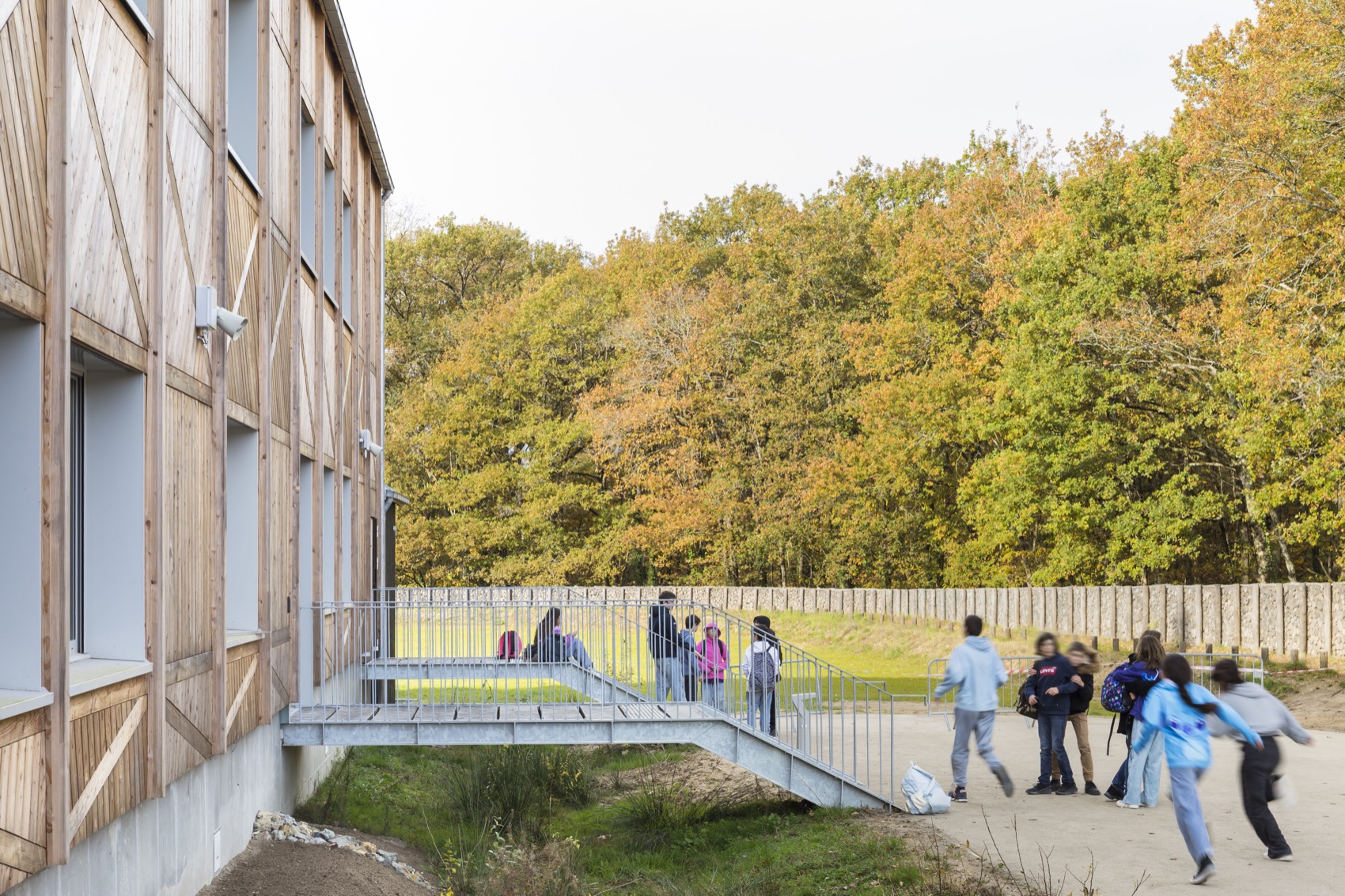
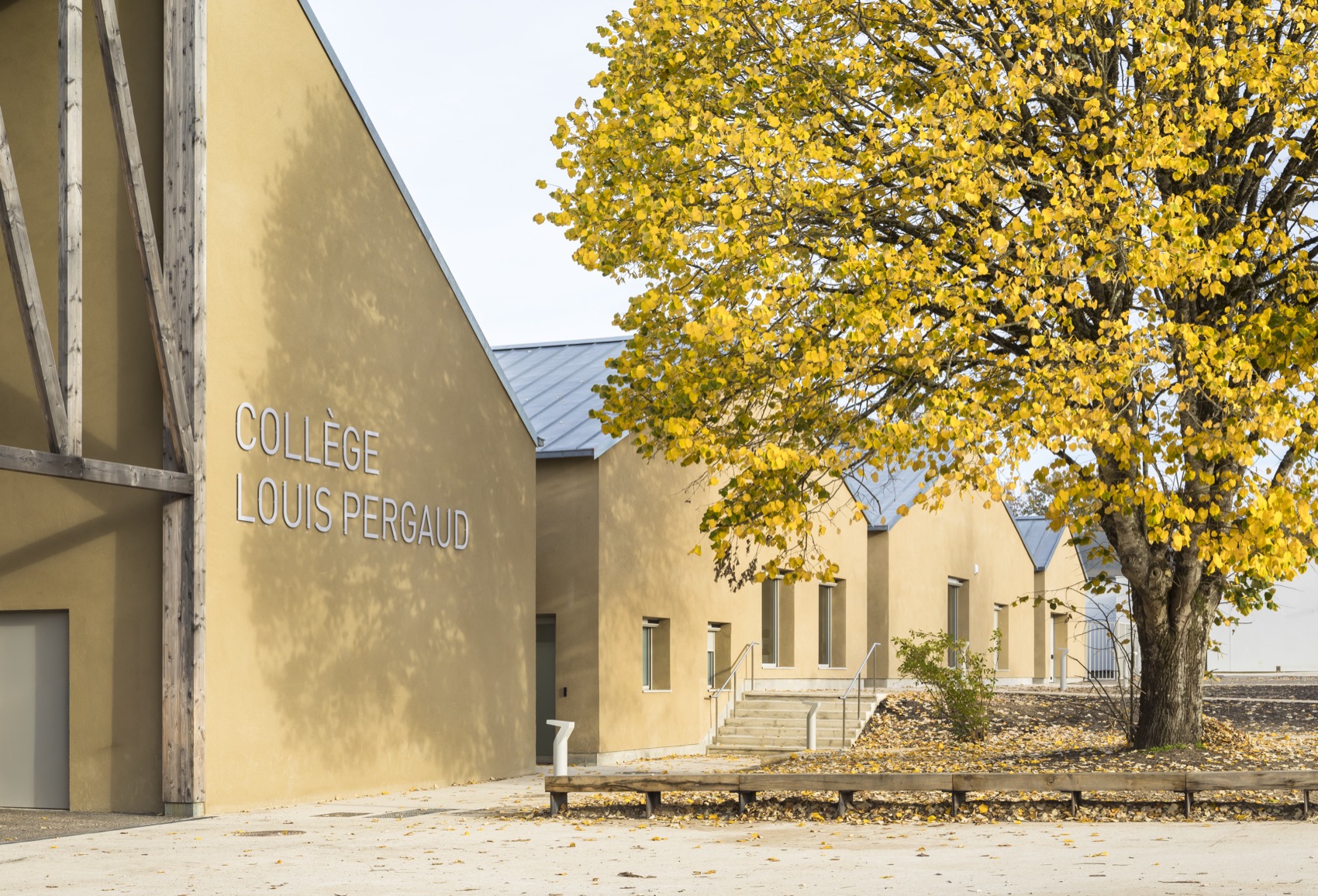
“行政”功能翼沿东西向布置,因此位于“校园生活”与“教学”两个功能翼的交汇位置。位于建筑核心位置的“教学”功能翼既为庭院阻挡来自西侧的主导风向,同时采用南北向布局,为学生提供朝向林地边缘的优美框景视野。从街道望去,主立面呈现出亲切且令人安心的尺度感,呼应了索洛涅(Sologne)地区典型农舍的建筑特征。这里容纳了“行政”与“校园生活”两大功能翼:山墙形成连续起伏的天际线,单色调的石灰抹灰与木质覆层立面共同界定了学校面向前广场及内恩叙尔伯夫龙村庄一侧的边界。
The ‘Administration’ hub is oriented east-west and is therefore situated at the intersection of the ‘School Life’ and ‘Teaching’ hubs. The ‘Teaching’ hub, situated at the heart of the complex, shields the courtyard from the prevailing westerly winds and is oriented north-south, offering pupils beautiful, framed views of the wooded edge. The main façade, as seen from the street, has a homely and reassuring scale, echoing the characteristic farmhouses of the Sologne region. It houses the ‘Administration’ and ‘School Life’ wings: these wings feature a skyline of gables, with a monochrome façade of lime-plastered and timber cladding, marking the boundary of the school on the side facing the forecourt and the village of Neung-sur-Beuvron.
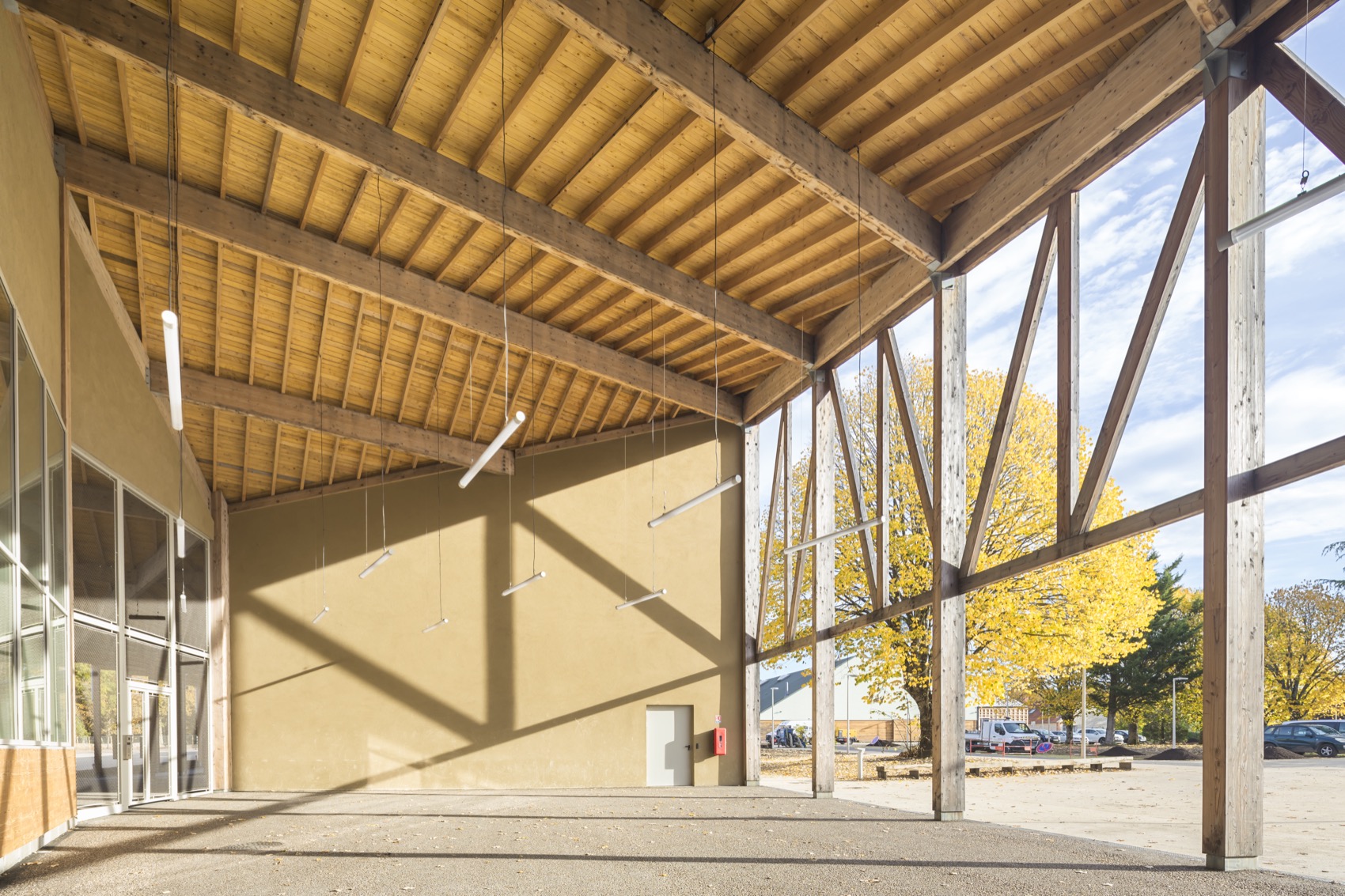
▼木结构门廊与校园入口空间,Timber entrance canopy and arrival space
▼入口大厅连接校园不同功能翼,Entrance hall connecting the school wings
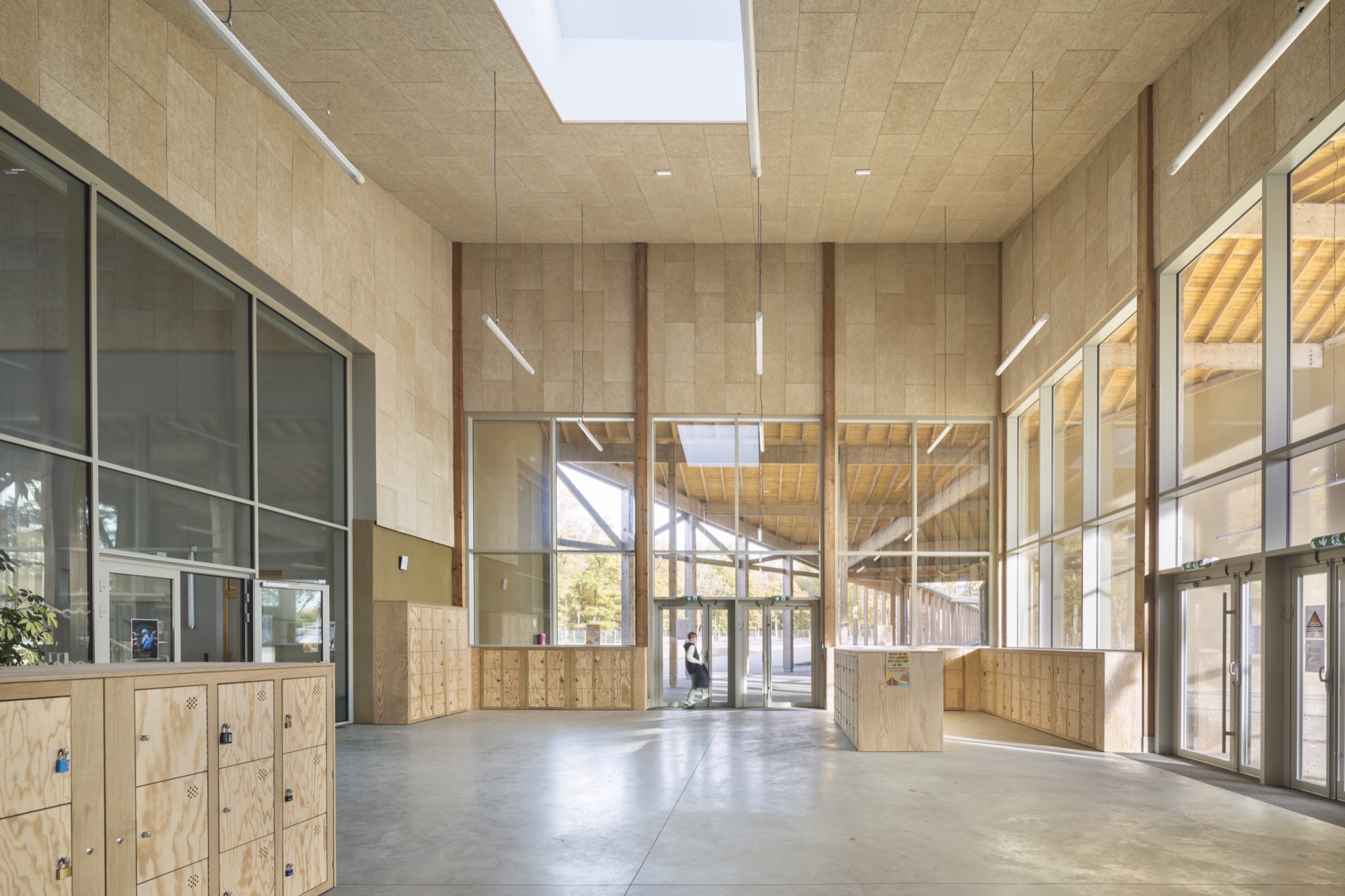
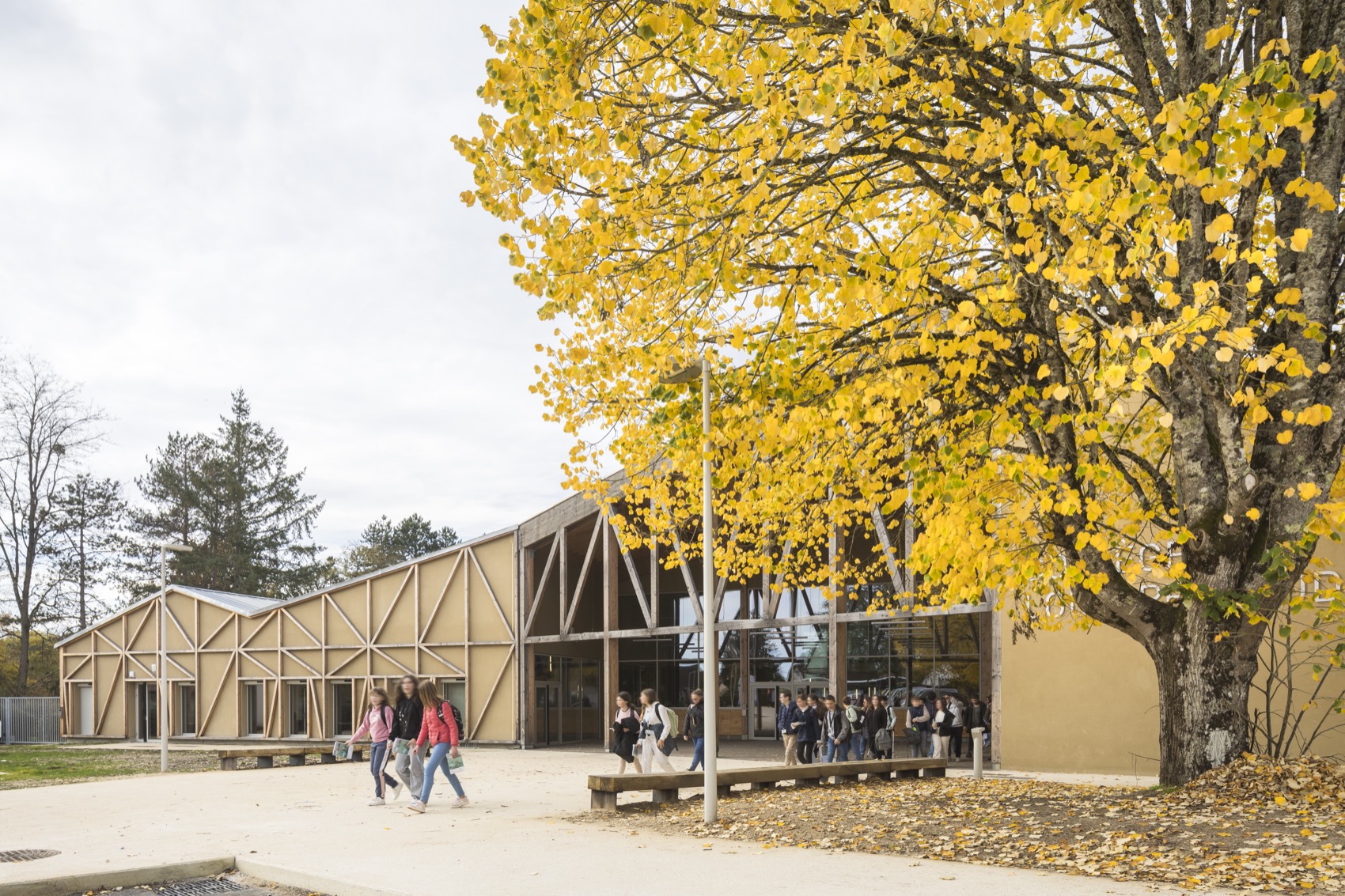
双层通高的中央大厅标示出学校入口,并串联起各个功能翼,同时组织了一系列由东向西展开的迎接空间:包括带顶前庭、封闭式生物气候庭院,以及通向校园内部的有顶庭院。这种“三翼式”的空间构成使自然光能够深入室内核心区域,并通过通透性的层层变化营造出开放感。项目的建筑语言以当代方式重新诠释了索洛涅地区的乡土建筑传统。
The double-storey central hall marks the entrance and connects each wing by organising the reception areas, which run from east to west: a covered forecourt, a closed bioclimatic courtyard, and a covered courtyard leading to the school grounds. This formal ‘three-wing’ layout allows light to enter the heart of the interior spaces and creates a sense of openness through a play of transparencies. The project’s architectural language offers a contemporary interpretation of the vernacular architecture of Sologne.
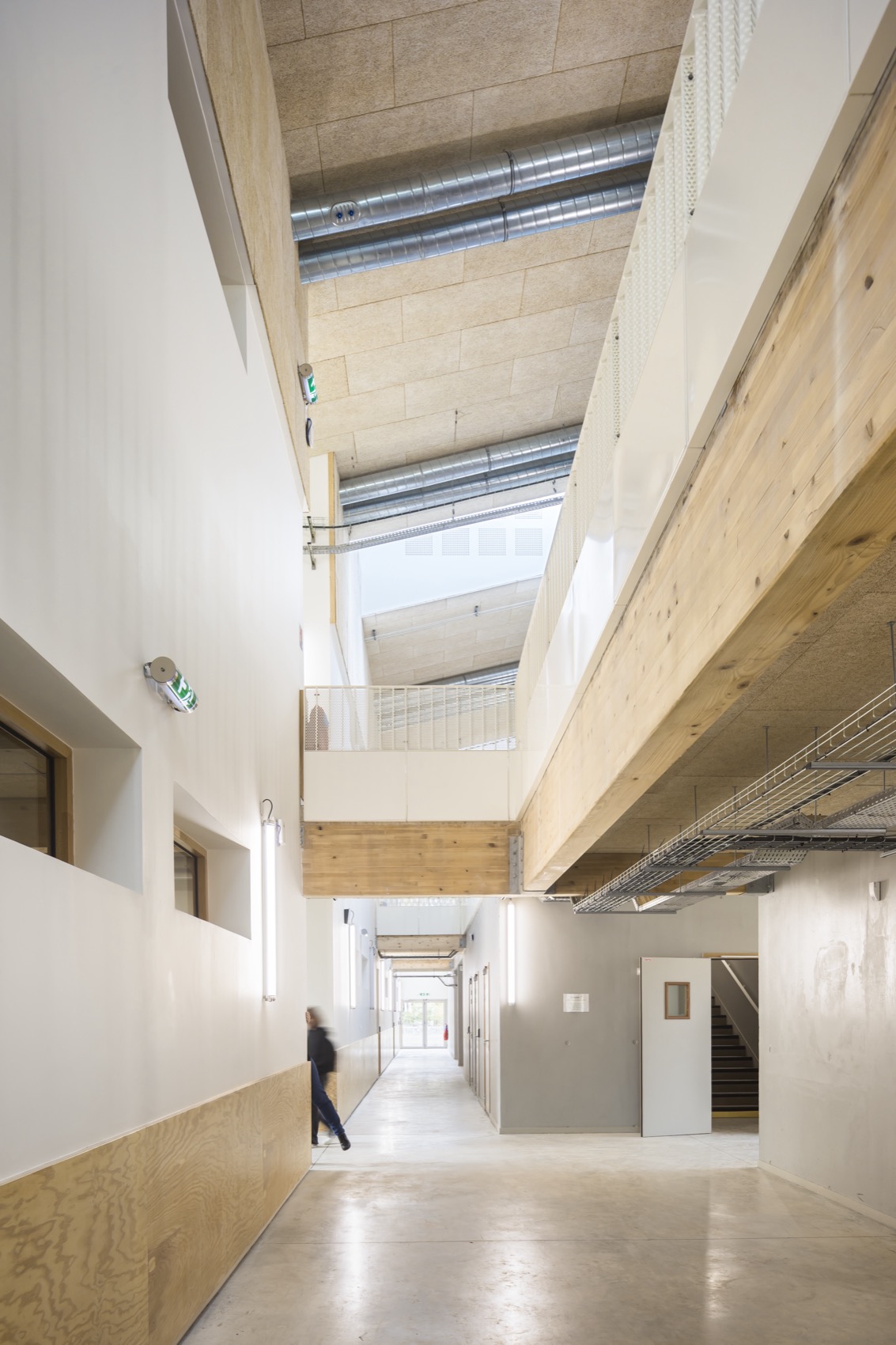
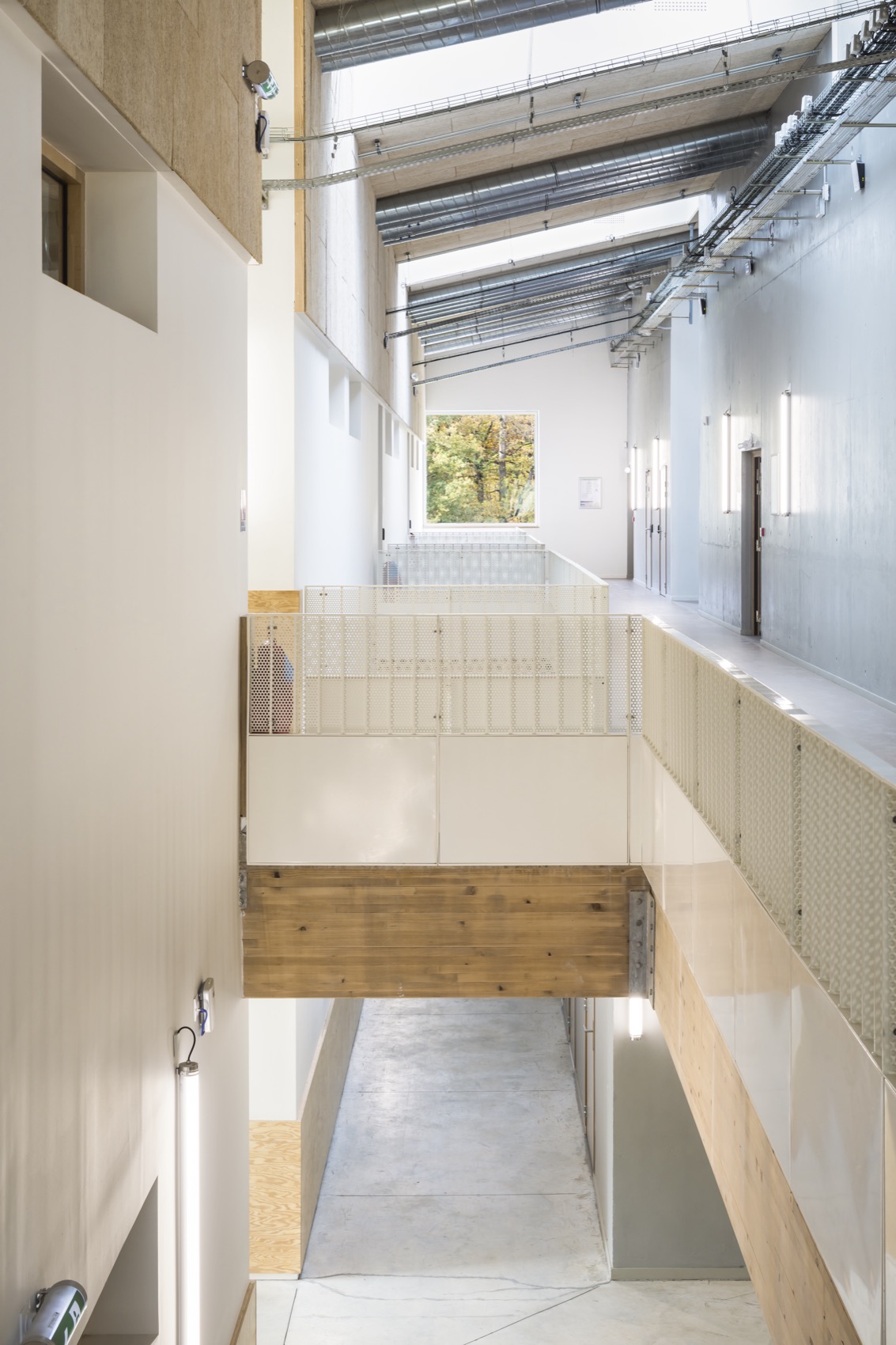
▼内部连廊空间,Internal circulation space
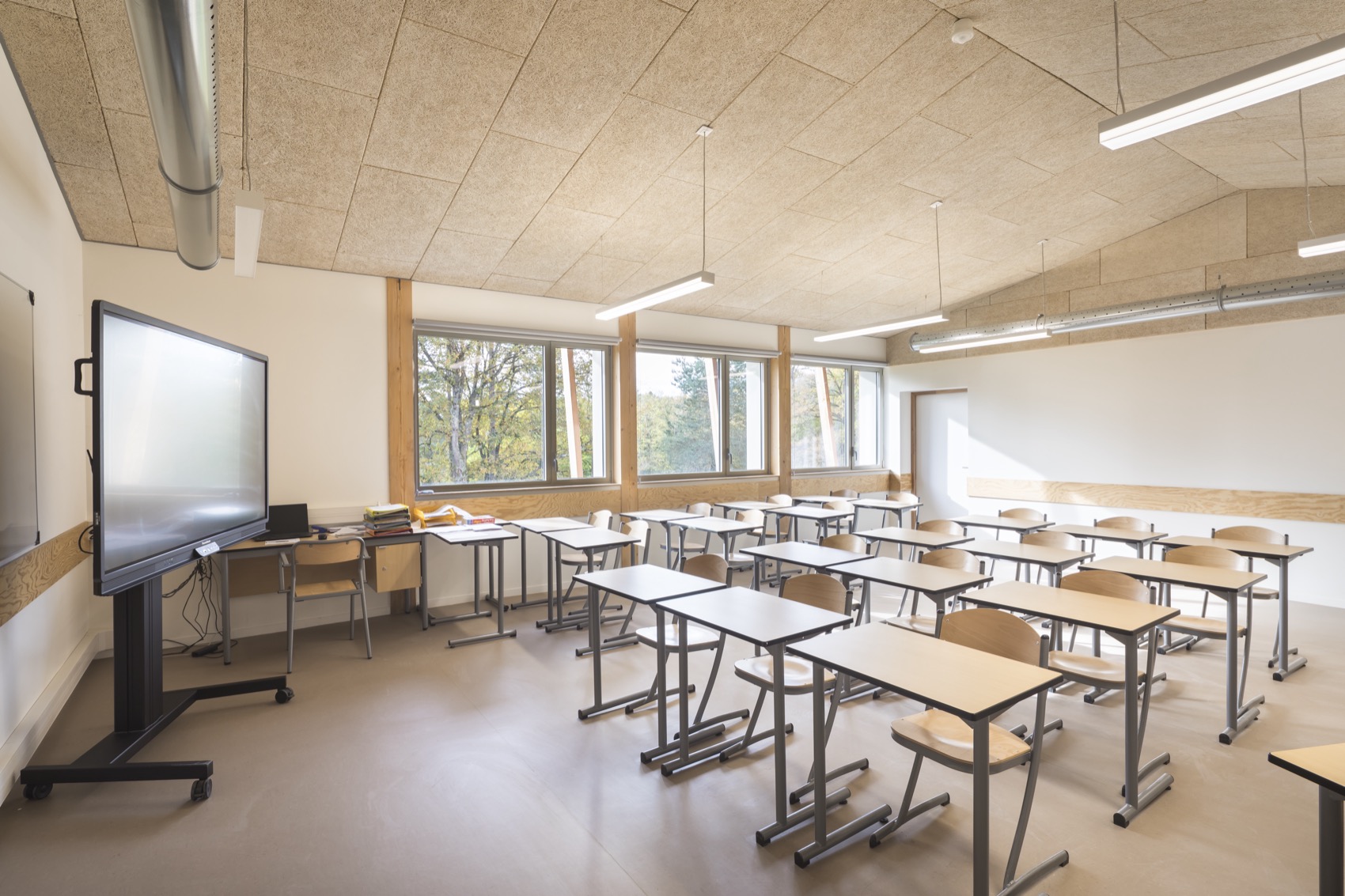
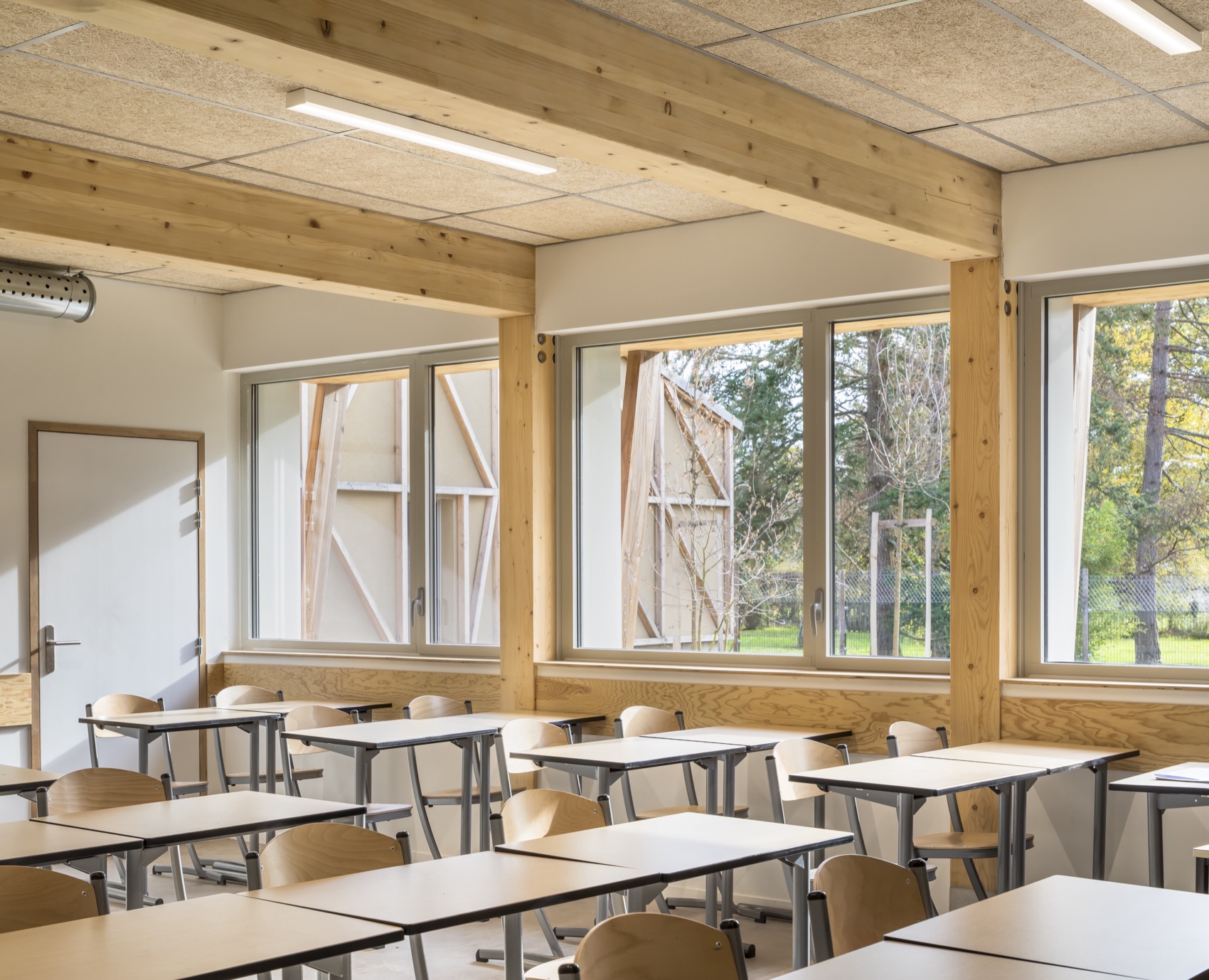
▼木结构教室与简洁学习环境,Timber classroom and simple learning environment
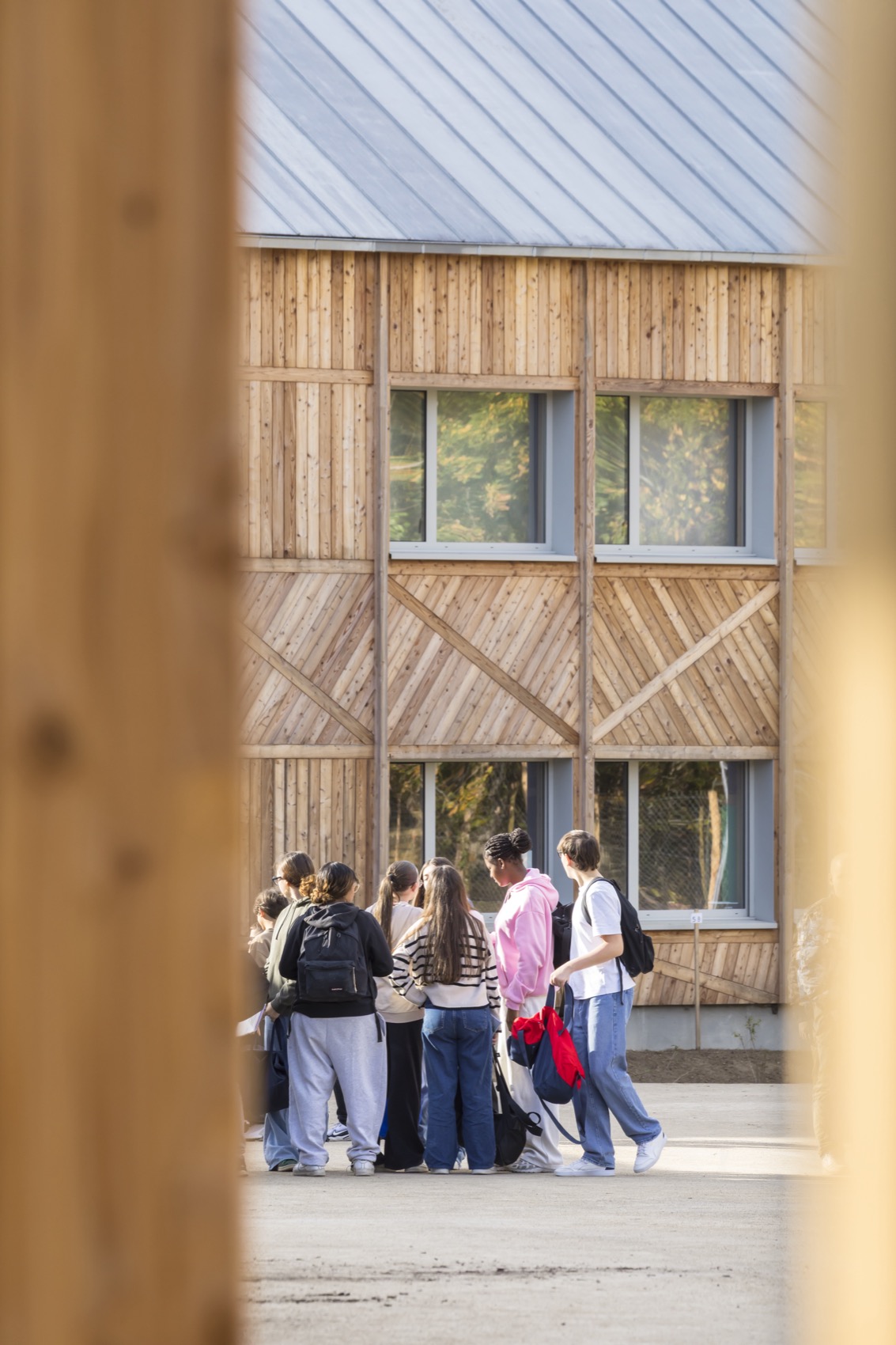
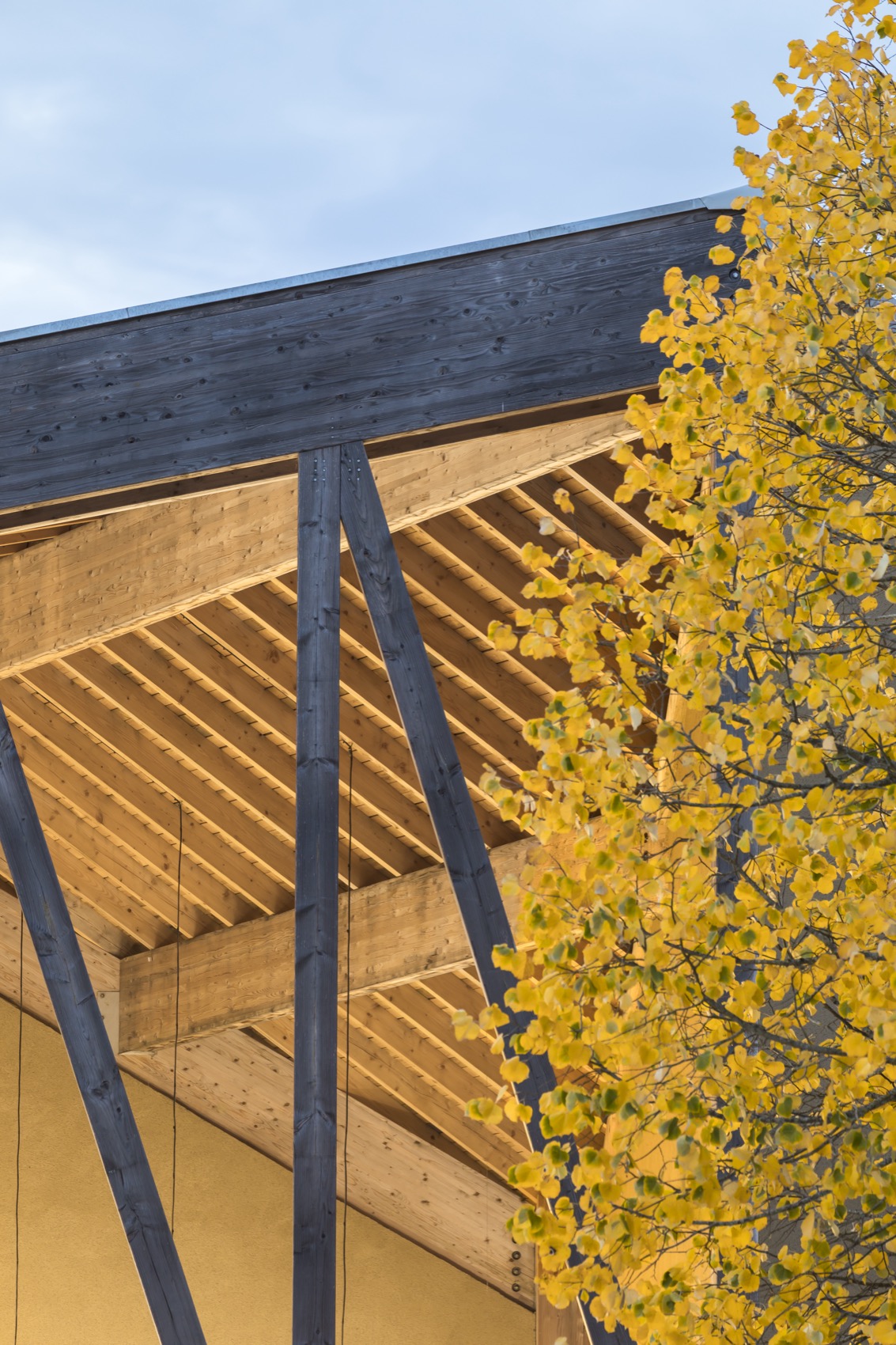
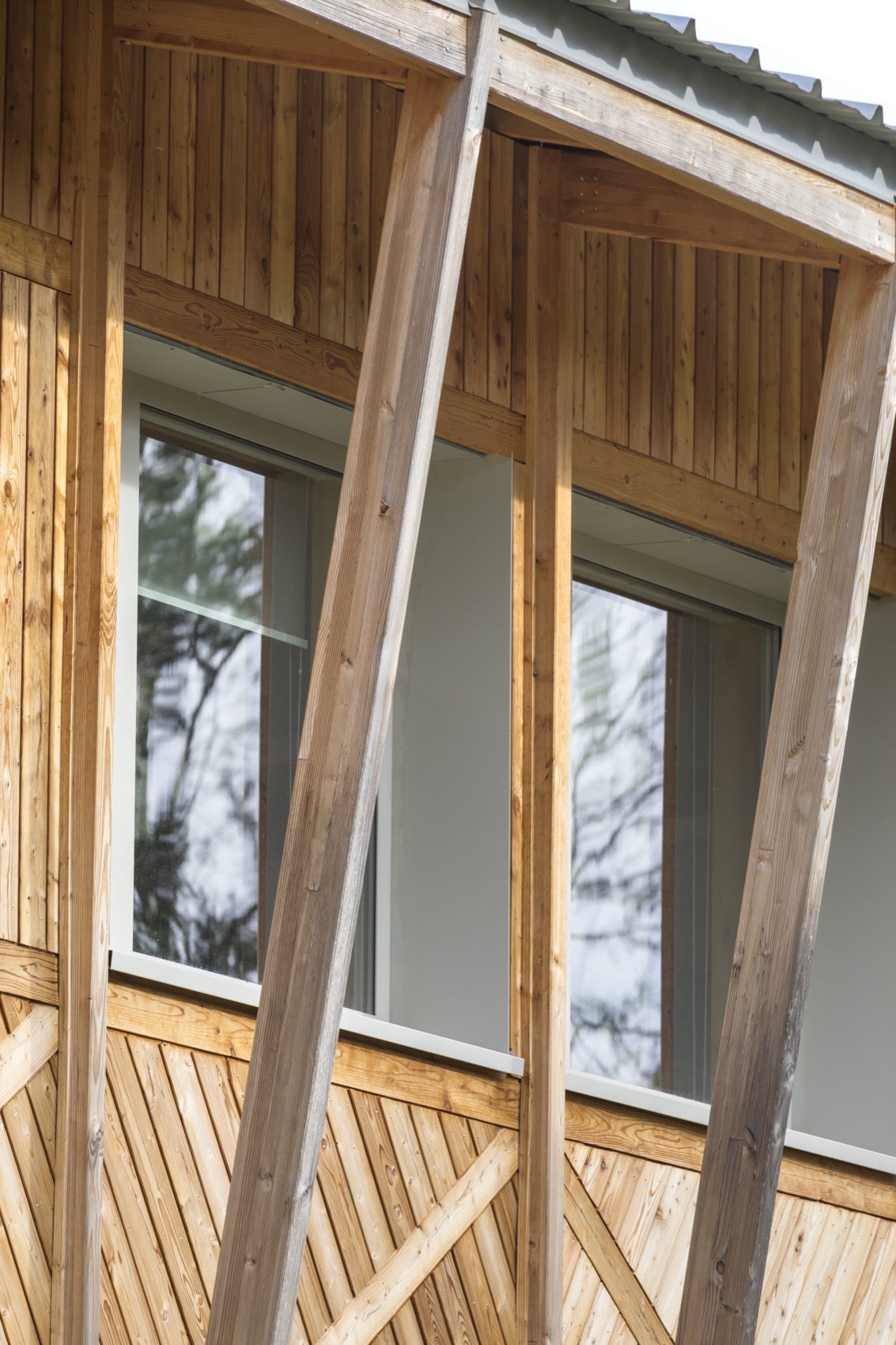
面向卡米耶·索特体育场街(Rue du Stade Camille Saute)的主立面容纳了行政与校园生活功能。山墙形成连续的“天际线”,立面材质则由北向南从石灰抹灰逐渐过渡为木构半木结构与石灰抹灰的组合,呼应索洛涅地区典型农舍的建筑特征。统一的山墙立面形象,以及行政翼与校园生活翼之间微妙的布局转折,自然地引导使用者进入中央开放空间。一处巨大的双层门廊标示出学校入口。教学翼位于学校核心区域,并相对退让于街道,其立面采用人字形木质覆层,以呼应周边受保护林地以及索洛涅地区传统半木结构建筑的特色。有顶庭院与连廊同样延续了这种“林地”意象,通过木结构框架与倾斜屋面,让鸟类能够继续在场地建筑结构中筑巢栖息。
The main façade, facing Rue du Stade Camille Saute, houses the administration and school life departments. It features a ‘skyline’ of gables, with a façade that transitions from north to south from lime render to timber half-timbering and lime render, echoing the characteristic farmhouses of the Sologne region. The unified appearance of the gable façades and the inflection in the layout between the administration and school life wings naturally guide users towards the central, open-plan area. A vast double-height porch marks the entrance to the school. The teaching wing, set back from the street and situated at the heart of the school, varies this façade with timber cladding featuring a herringbone pattern, echoing the surrounding listed woodland and the half-timbered architecture of the Sologne region. The covered courtyards and galleries echo this woodland aesthetic with timber frames and sloping structures, allowing birds to continue nesting within the site’s structures.
▼学生停留于教学楼之间的开放空间,Students gathering within the open campus spaces
▼山墙立面与半木结构细部,Gabled façade and half-timbered details
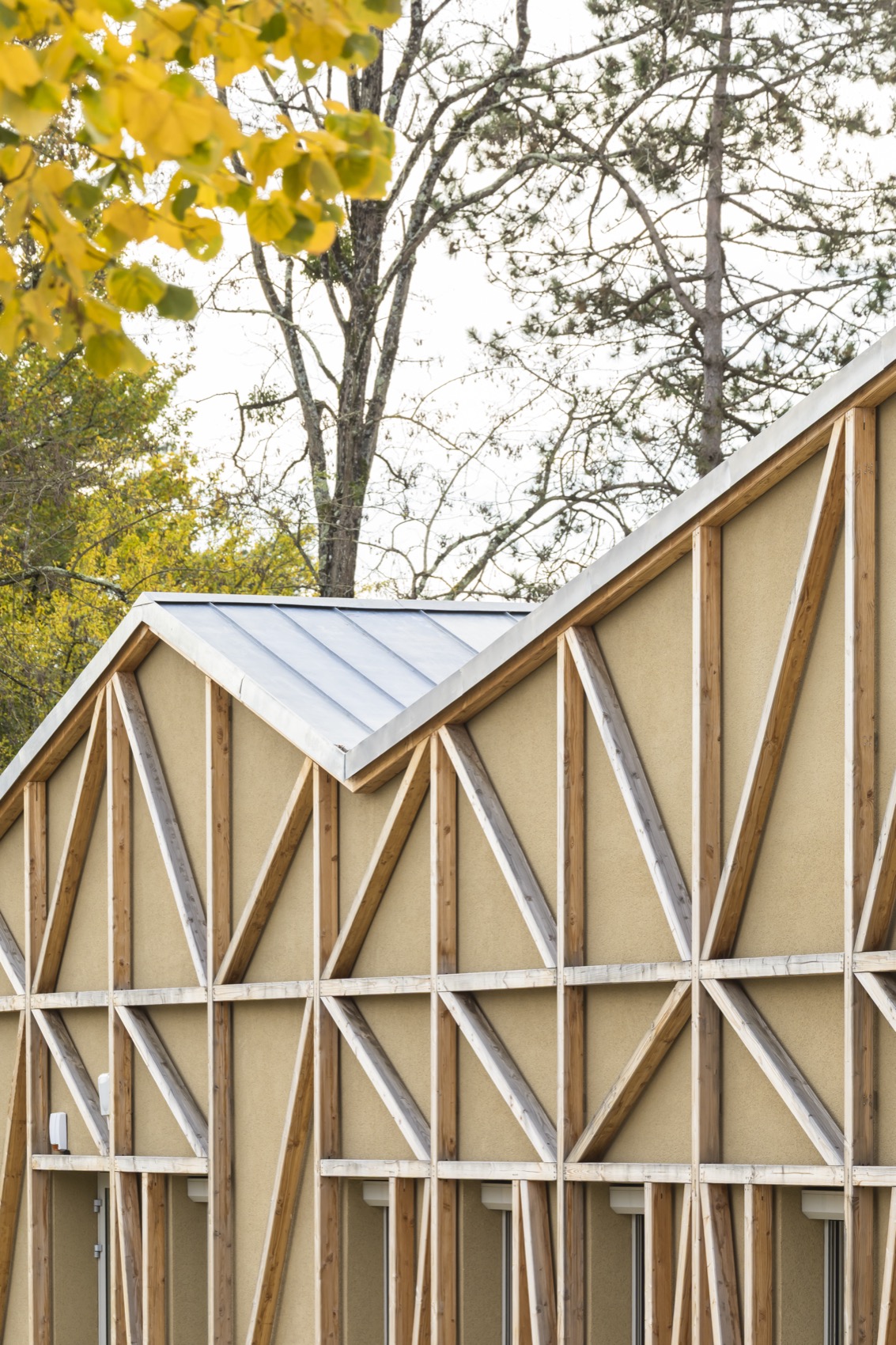
▼木屋架结构细部与檐下空间,Timber roof structure and sheltered outdoor space
生物气候策略Bioclimatic approach
因此,项目将环境策略置于优先位置,并采用了生物气候建筑的核心原则:
1.建筑朝向充分考虑场地气候条件、风向以及日照情况(尤其注重抵御西南风);
2.建筑整体采用紧凑布局与高保温、高热惰性的构造体系,在冬夏两季均提供优异的热舒适性(通过“烟囱效应”实现通风),同时保护场地土地资源,尤其是林地;
3.通过材料选择降低对景观的影响:包括形成半木结构效果的木质覆层与石灰抹灰;
4.被动利用冬季日照并在夏季进行遮阳保护;
5.采用“干式”建造方式(木结构框架与稻草保温),从而保证施工现场整洁、减少对场地的干扰,并提升空间的适应性与灵活性;
6.通过合理组织物流与技术区域的交通流线,优化不透水地面的面积;
7.在西侧保留土地储备用地。
Consequently, the project prioritises an environmental approach and adopts the key principles of bioclimatic architecture:
1.Orientation that takes into account the site’s climatic conditions, wind patterns and sunlight exposure (particularly protection from south-westerly winds),
2.Compactness and high insulation of the building complex with high thermal mass, providing excellent thermal comfort in both winter and summer (‘chimney’ ventilation), and preservation of the land, particularly the woodland,
3.Low impact on the landscape through the choice of materials: timber cladding forming half-timbering, lime render,
4.Passive use of winter sunlight and summer protection,
5.Use of a ‘dry’ construction method (timber framing and straw insulation) ensuring a clean building site, site preservation, and the adaptability/flexibility of the premises,
6.Optimisation of impervious surfaces through the rationalisation of access routes to logistics and technical areas,
7.Retention of a land reserve to the west
▼半木结构立面的材料表达,Material expression of the half-timbered façade
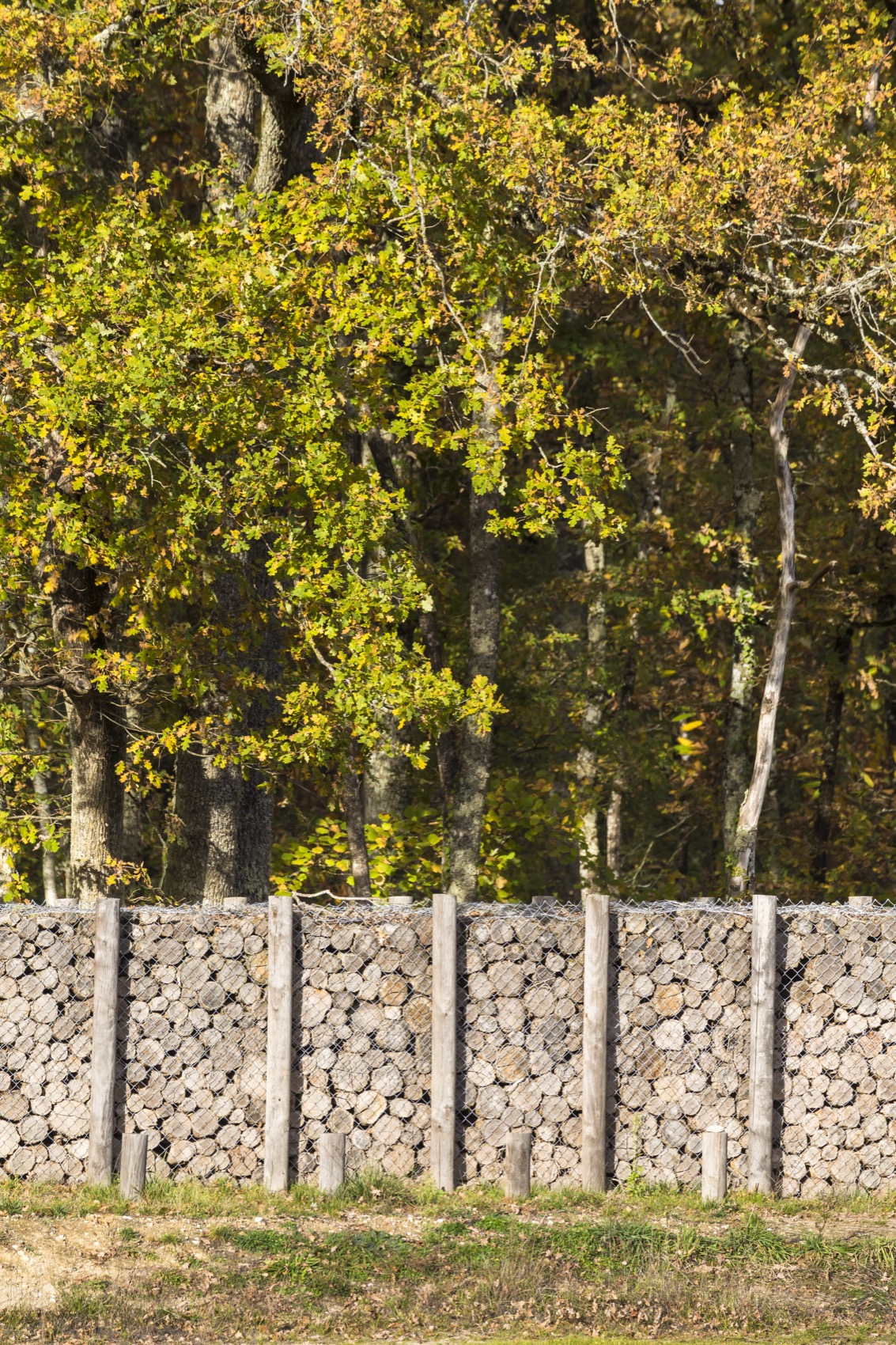
▼校园边界与林地景观关系,Relationship between the campus edge and woodland landscape
除了在形式上为教学功能翼的交通空间提供采光与通风之外,四座大型烟囱还强化了这一功能翼倾斜的几何形态与富有居住感的体量特征。这些烟囱不仅成为屋顶上的标志性元素,同时承担多重功能:
1.通过通风实现热环境调节:包括夏季或过渡季节的“自然”通风,以及夏季夜间的“强化排热通风”;
2.提供自然采光:烟囱中的天窗均朝北设置。
Apart from an obvious formal intention to provide light and ventilation for the circulation areas of the Education hub, four large chimneys emphasise the hub’s sloping geometry and domestic volume. These chimneys form a distinctive feature on the roof and serve several purposes:
1.thermal regulation through ventilation: ‘natural’ in summer or mid-season, and ‘night-time over-ventilation’ in summer,
2.natural light: the skylights in this chimney are north-facing.
▼项目区位图,Site plan
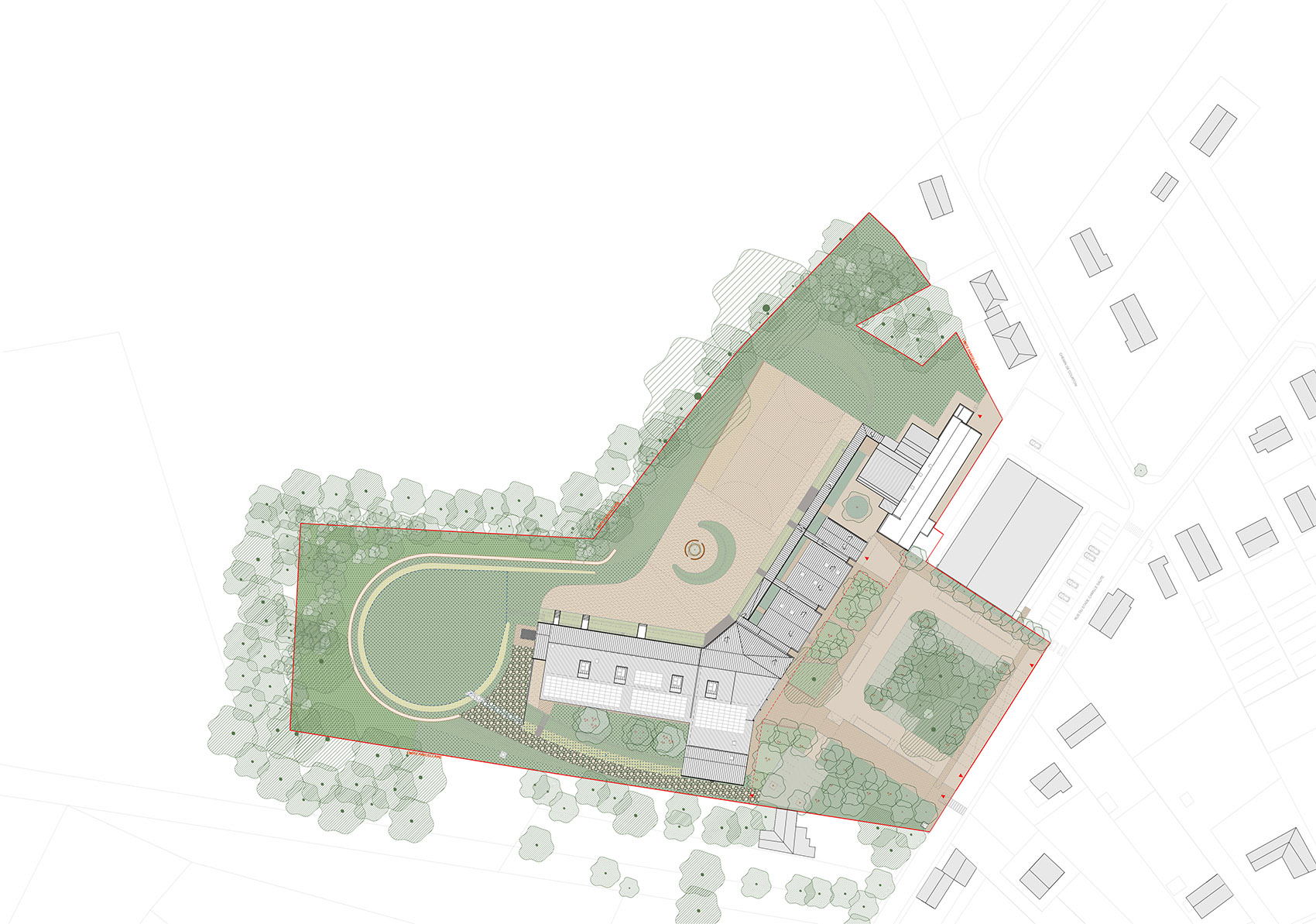
▼顶层平面图,Roof plan
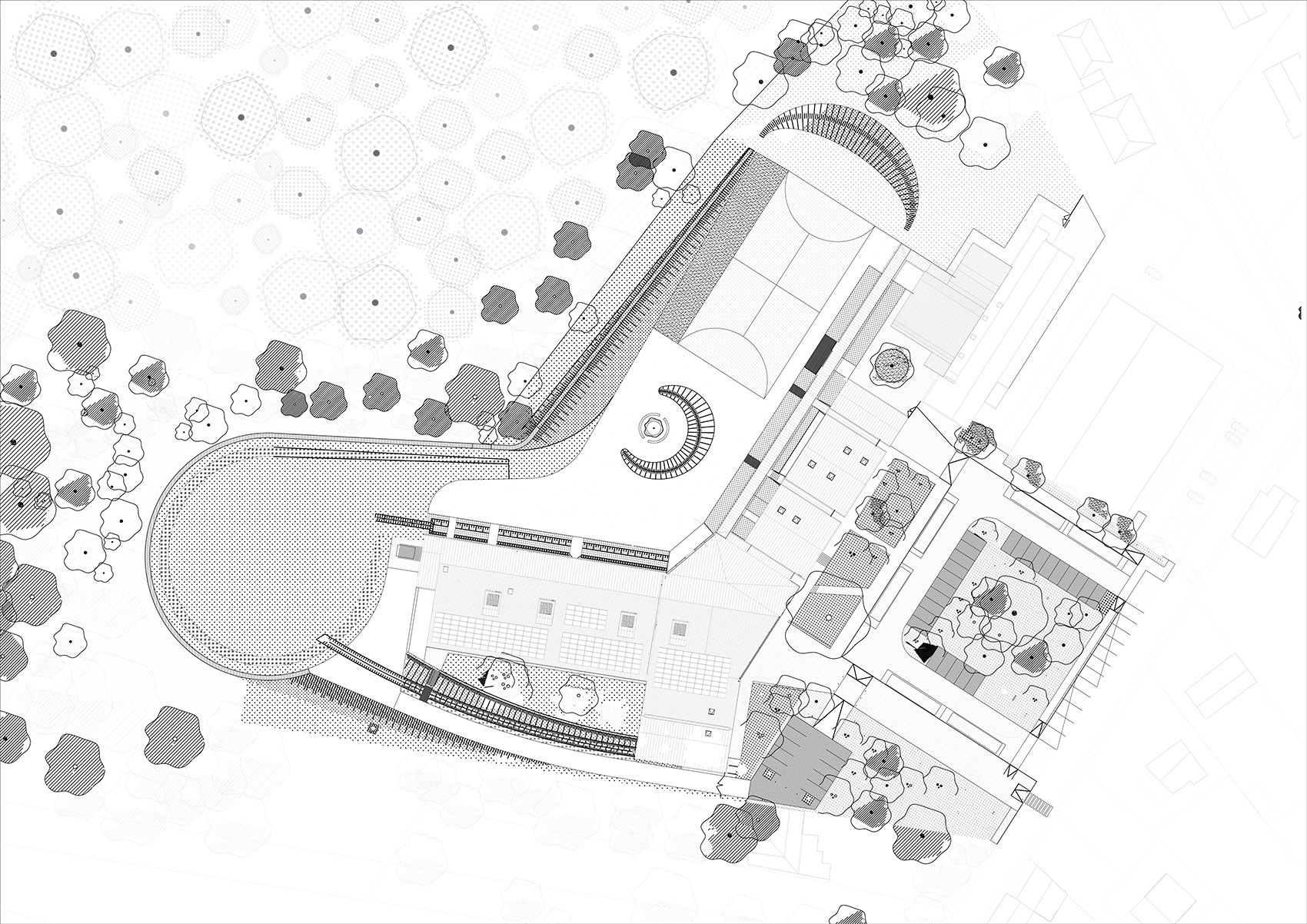
▼一层平面,Ground floor plan
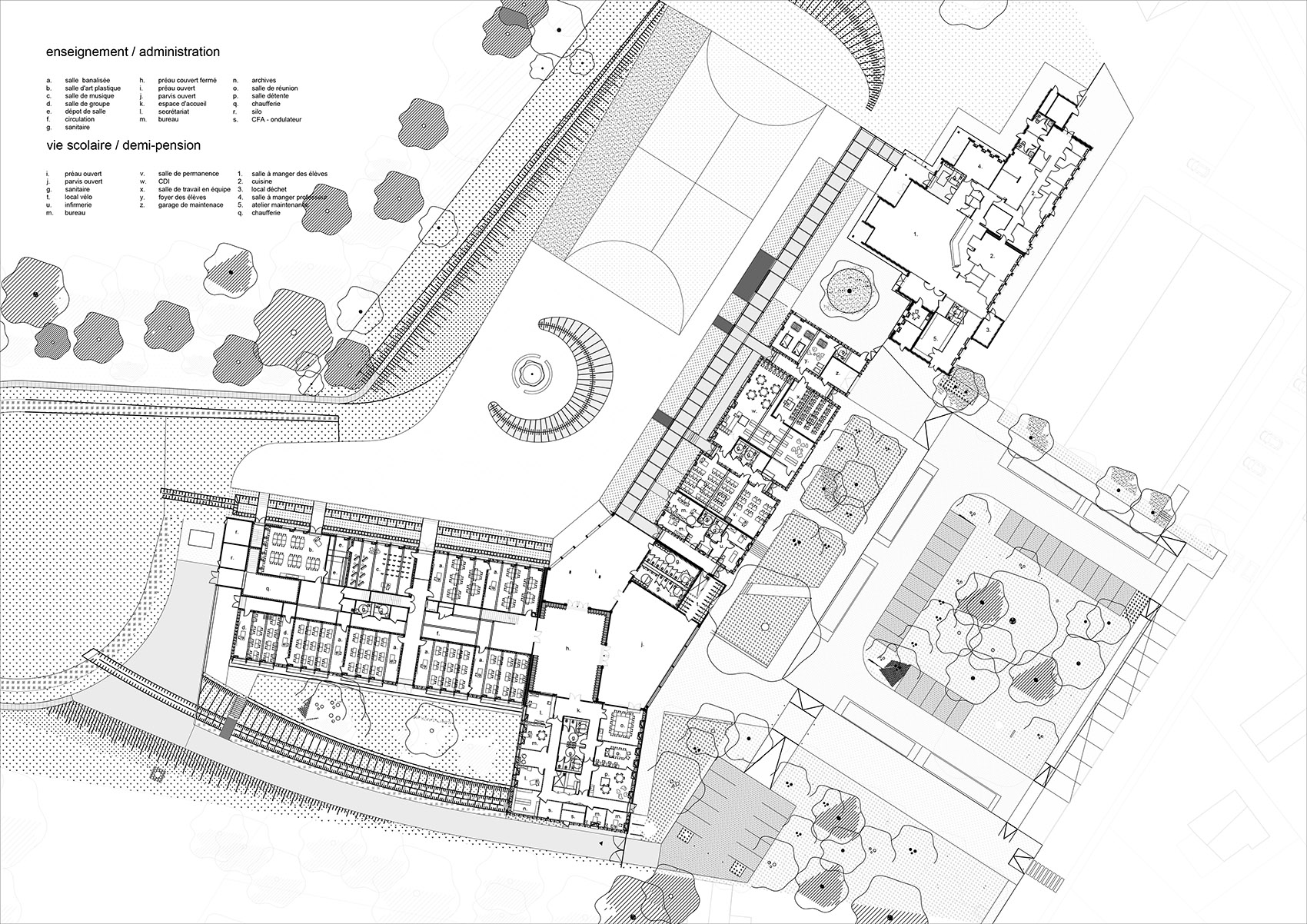
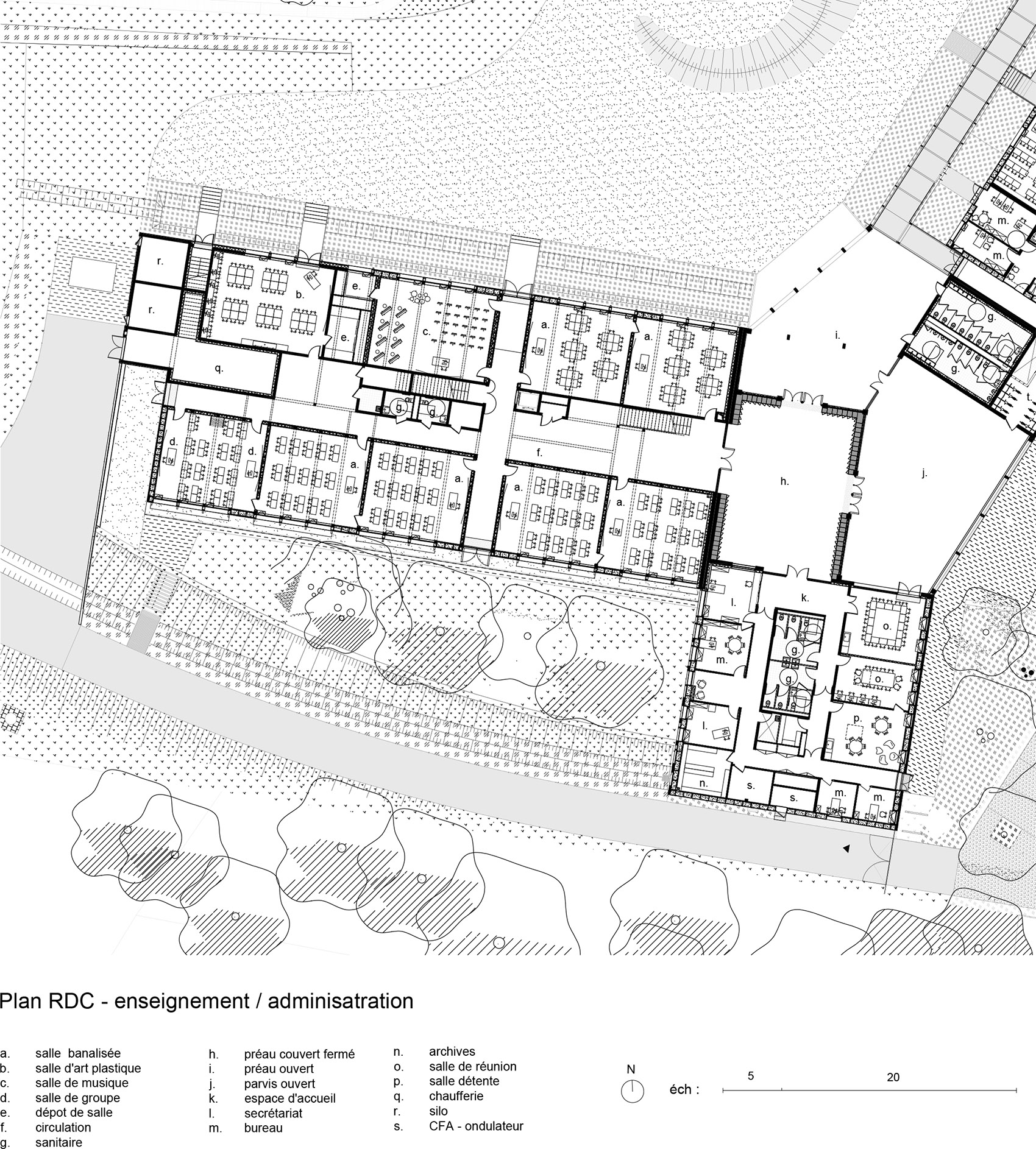
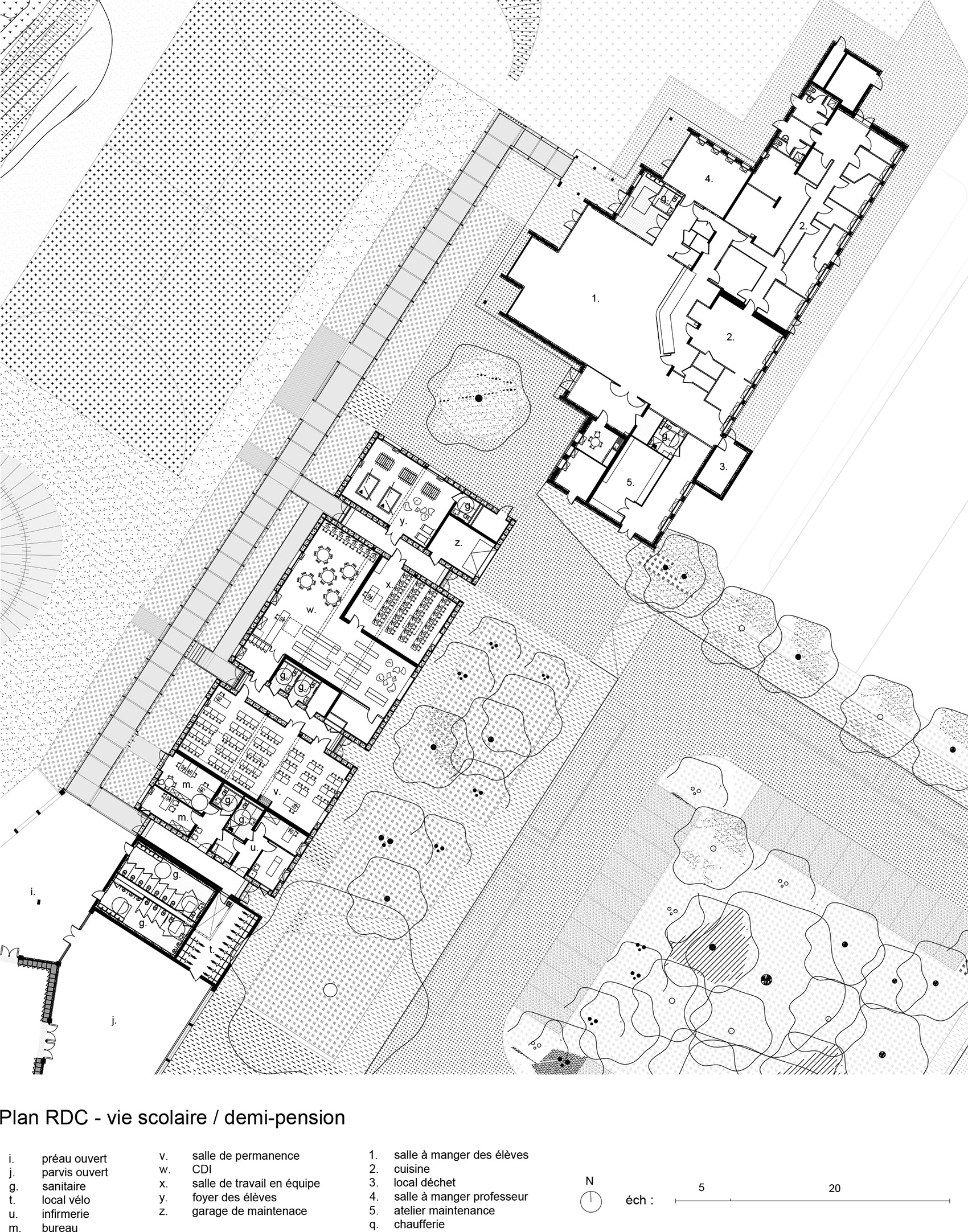
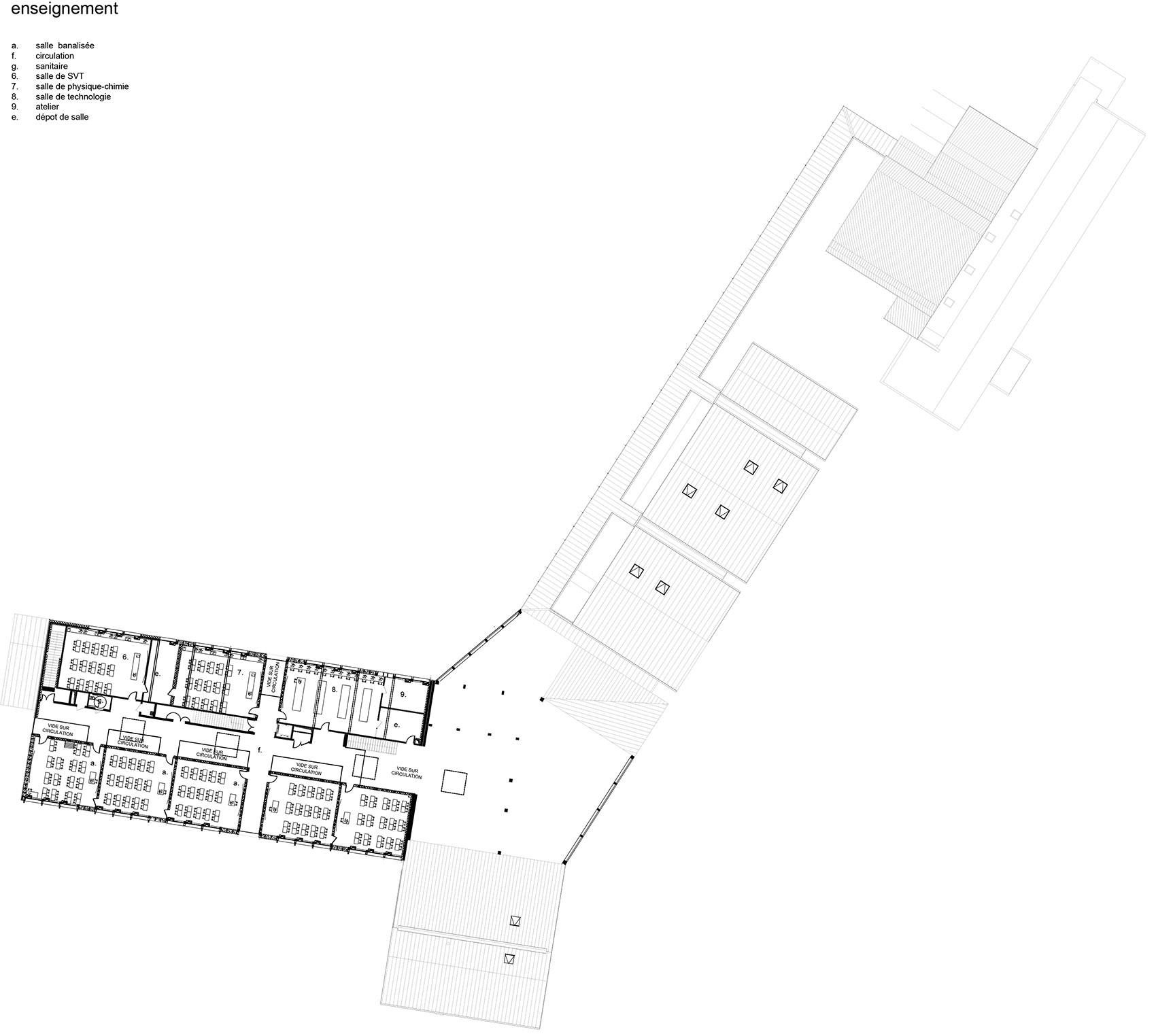
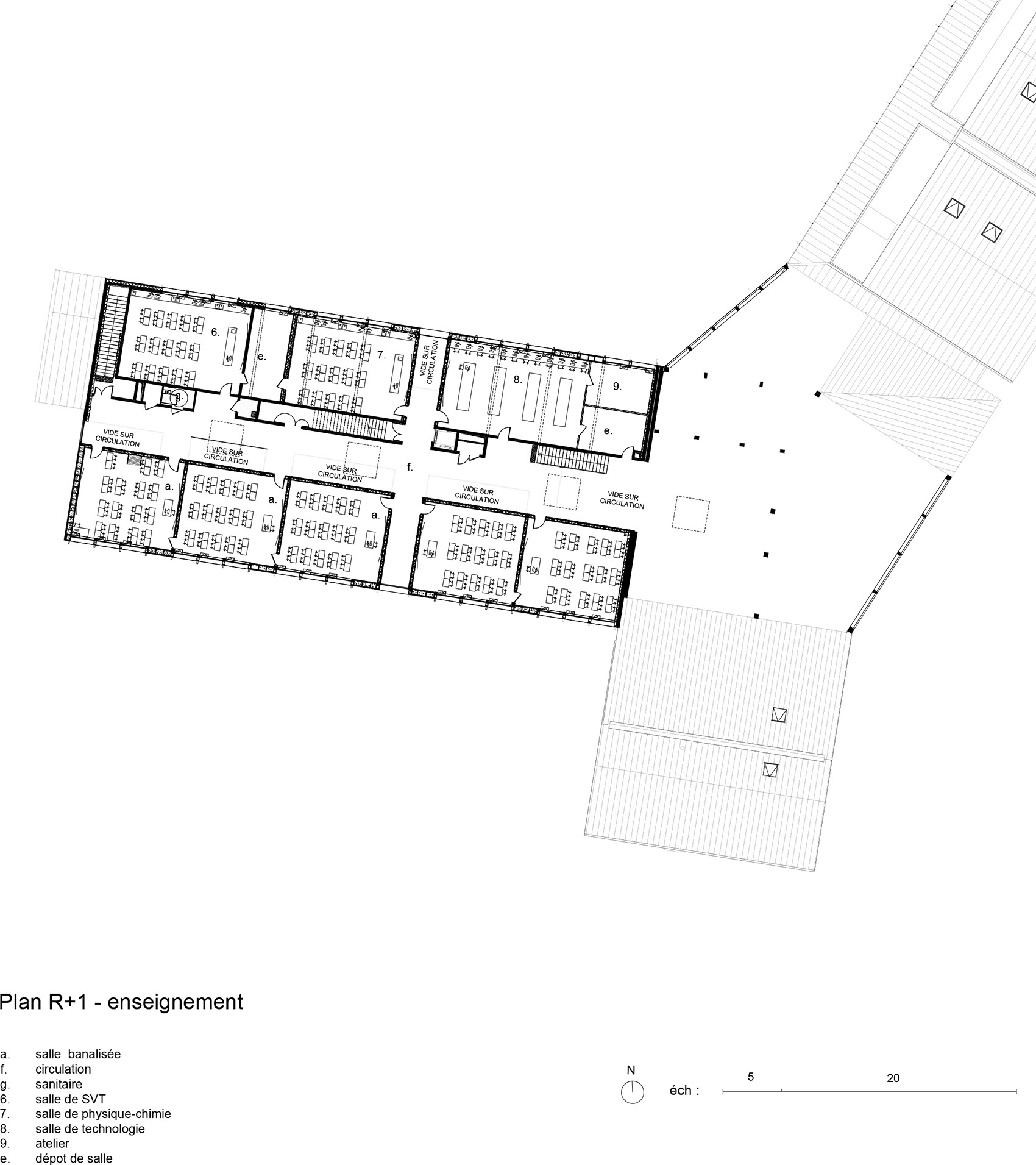
▼二层平面,Second floor plan
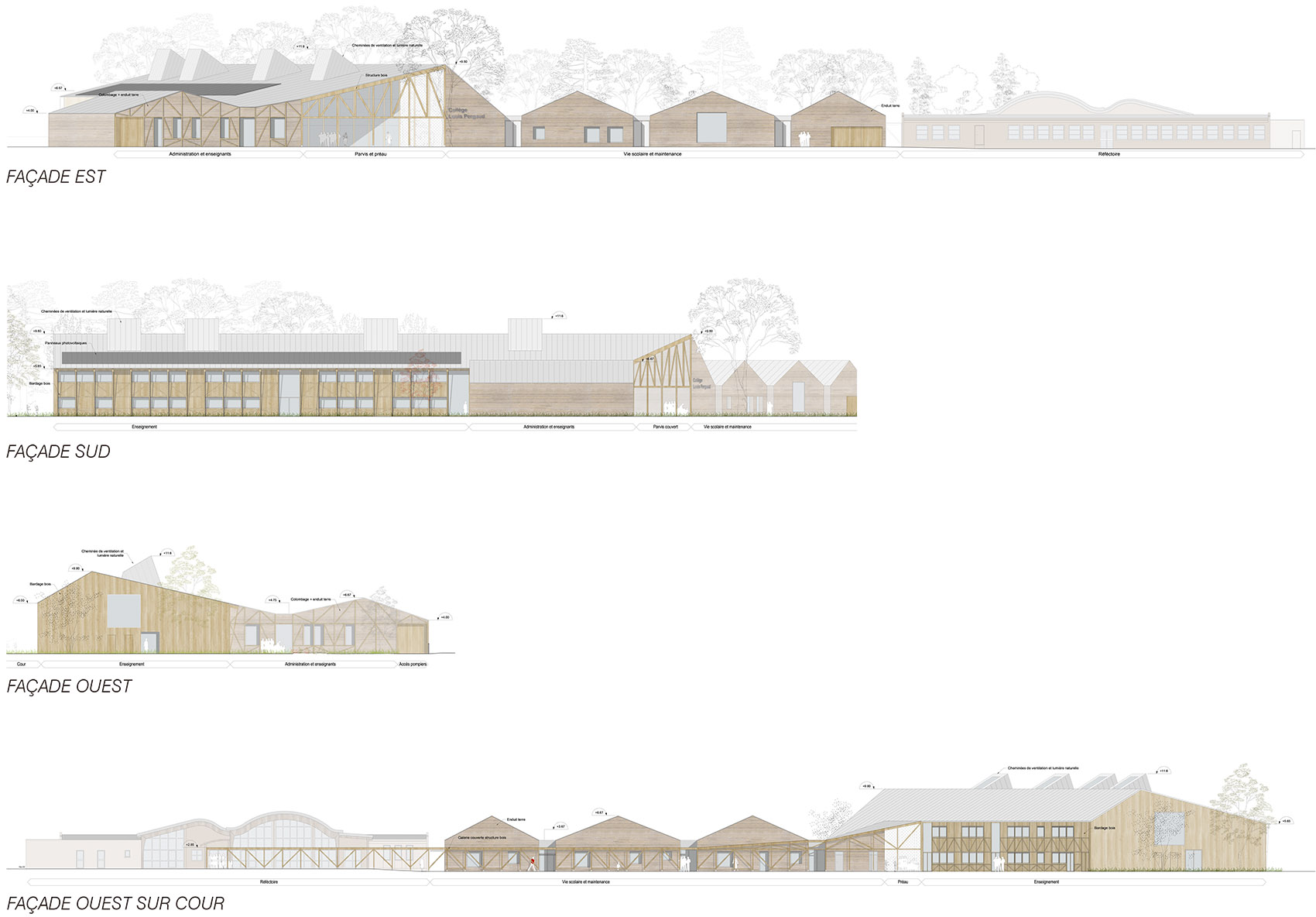
▼立面图,Elevation
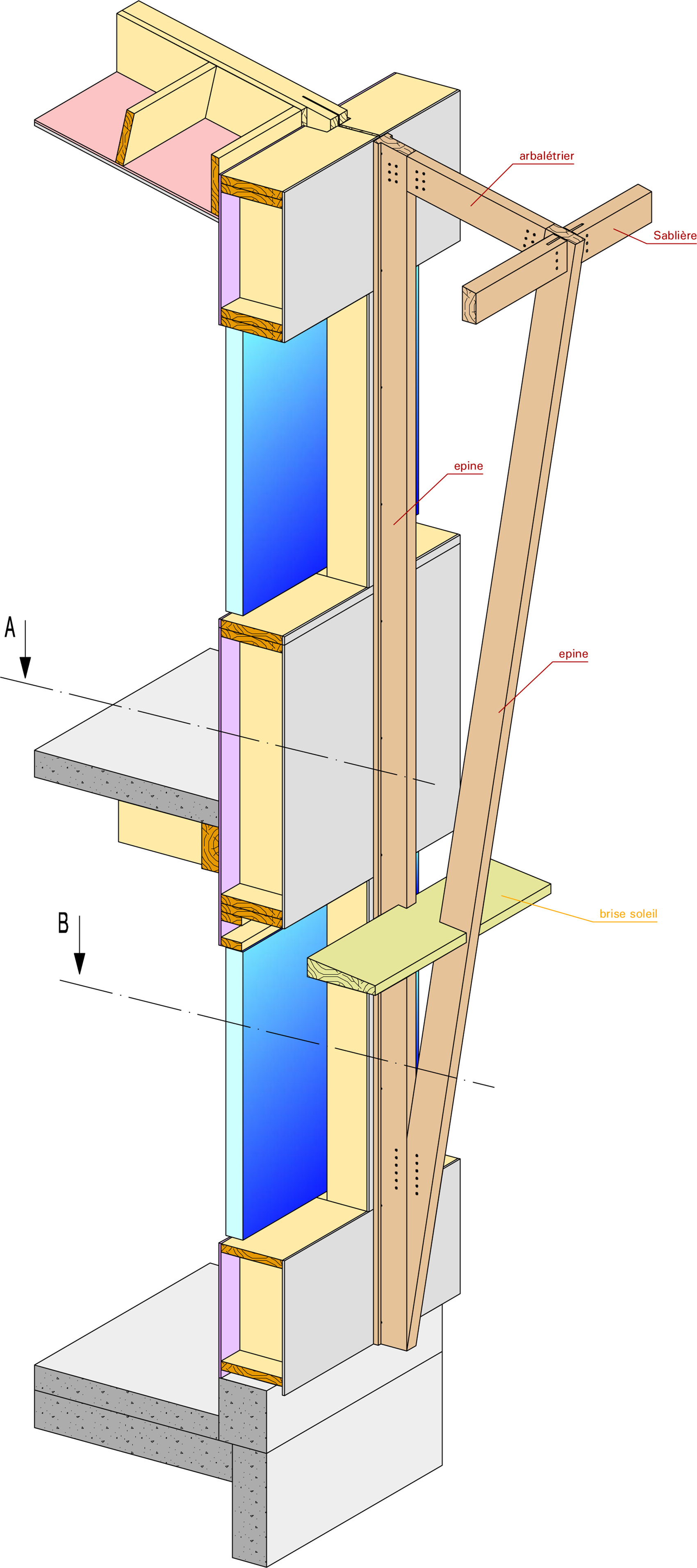
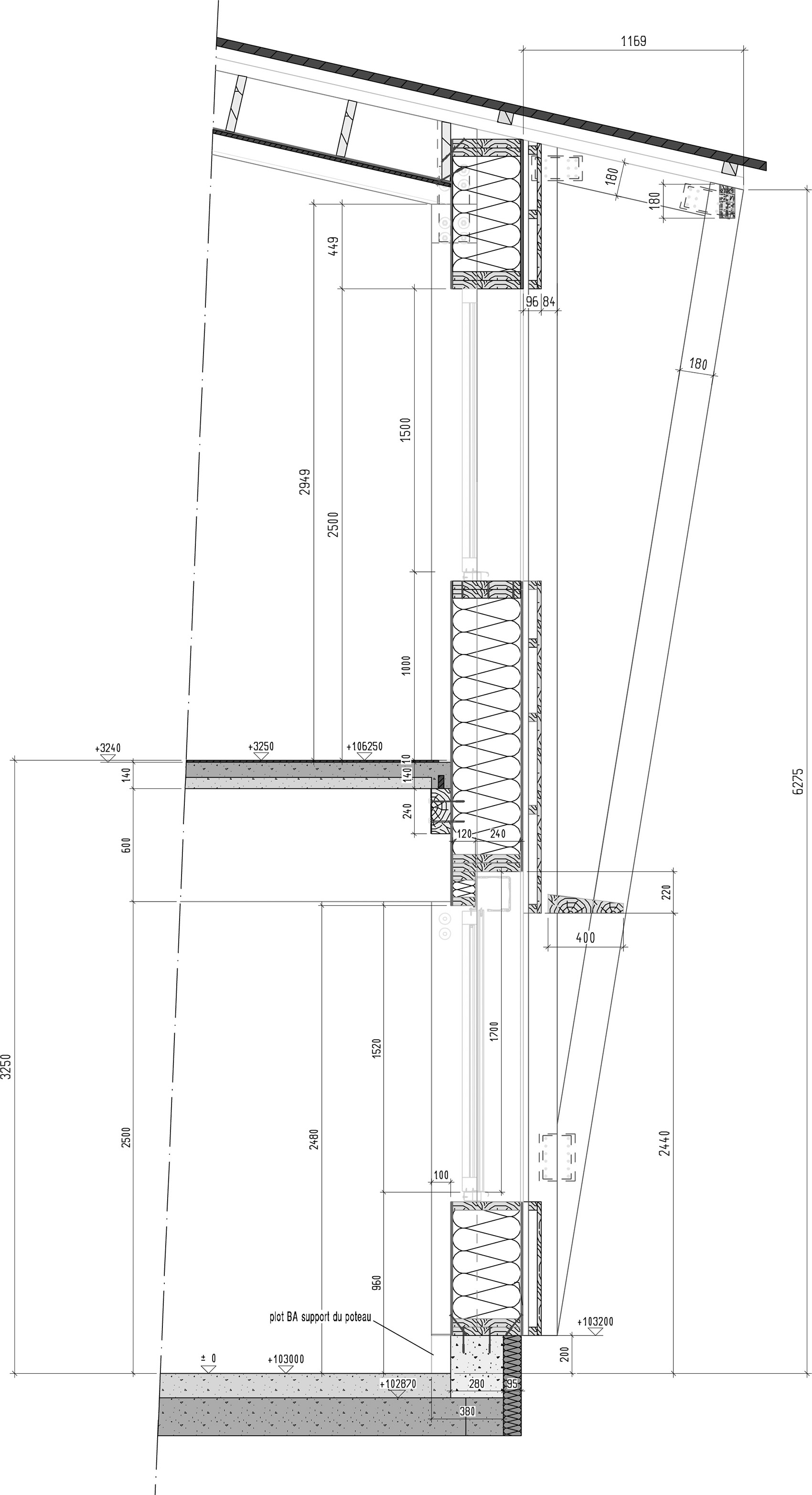
▼细节大样图,Detail
Project name: Louis Pergaud wood-straw school, in Neung sur Beuvron, France
Company name: Guinée*Potin architects
Website: www.guineepotin.fr
Contact e-mail: contact@guineepotin.fr
Completion Year: 2026
Other participants:
(collaborators, consultants, etc) LALU, landscape architects
Photo credits: Sergio Grazia