紧急住宿中心,法国 / FBAA, François Brugel Associates + Atelier RITA
400张并排摆放的双层床,曾作为电影《苏莱曼的故事》(La vie de Souleymane, 2024)的拍摄场景。这部影片讲述了一位年轻几内亚难民申请者(Abou Sangaré)48小时的生活:为了每天能够获得一个睡觉的位置,他必须不断努力争取……自2004年冬季因“严寒应急计划(Grand Froid)”而被改造为紧急住宿中心以来,位于Ney大道的前军事面包房一直以极其简陋的条件接纳无家可归者。开放近20年后,为了让如今法国约35万名无固定住所者能够在更加体面且安全的环境中生活,其运营方Adoma决定将原有两层空间改造为共享房间,并在首层增设公共空间。这一项目由François Brugel(Silver T-Square Award获得者)与Rita(First Work Award获得者)负责设计,如今已正式完成。
Its 400 bunk beds, lined up side by side, had served as the setting for the film *La vie de Souleymane* (2024), which depicts 48 hours in the life of a young Guinean asylum seeker (Abou Sangaré) who, every day, must earn his place to sleep in an Emergency Accommodation Centre… Since it was converted into an emergency accommodation centre as part of the ‘Grand Froid’ plan for the winter of 2004, the former military bakery on Boulevard Ney had offered conditions that were more than spartan to people in need. Nearly 20 years after it opened, to cope with an (350,000 people without a fixed abode in France today) in more dignified and secure conditions, its manager, Adoma, has decided to convert its two floors into shared rooms, and to create communal spaces on the ground floor. This project, entrusted to François Brugel (Silver T-Square Award) and Rita (First Work Award), is now complete.
▼项目概览,overall of the project
长130米、宽30米、高5米:从物流空间到居住空间130 m long, 30 m wide, 5 m high: from logistics to accommodation
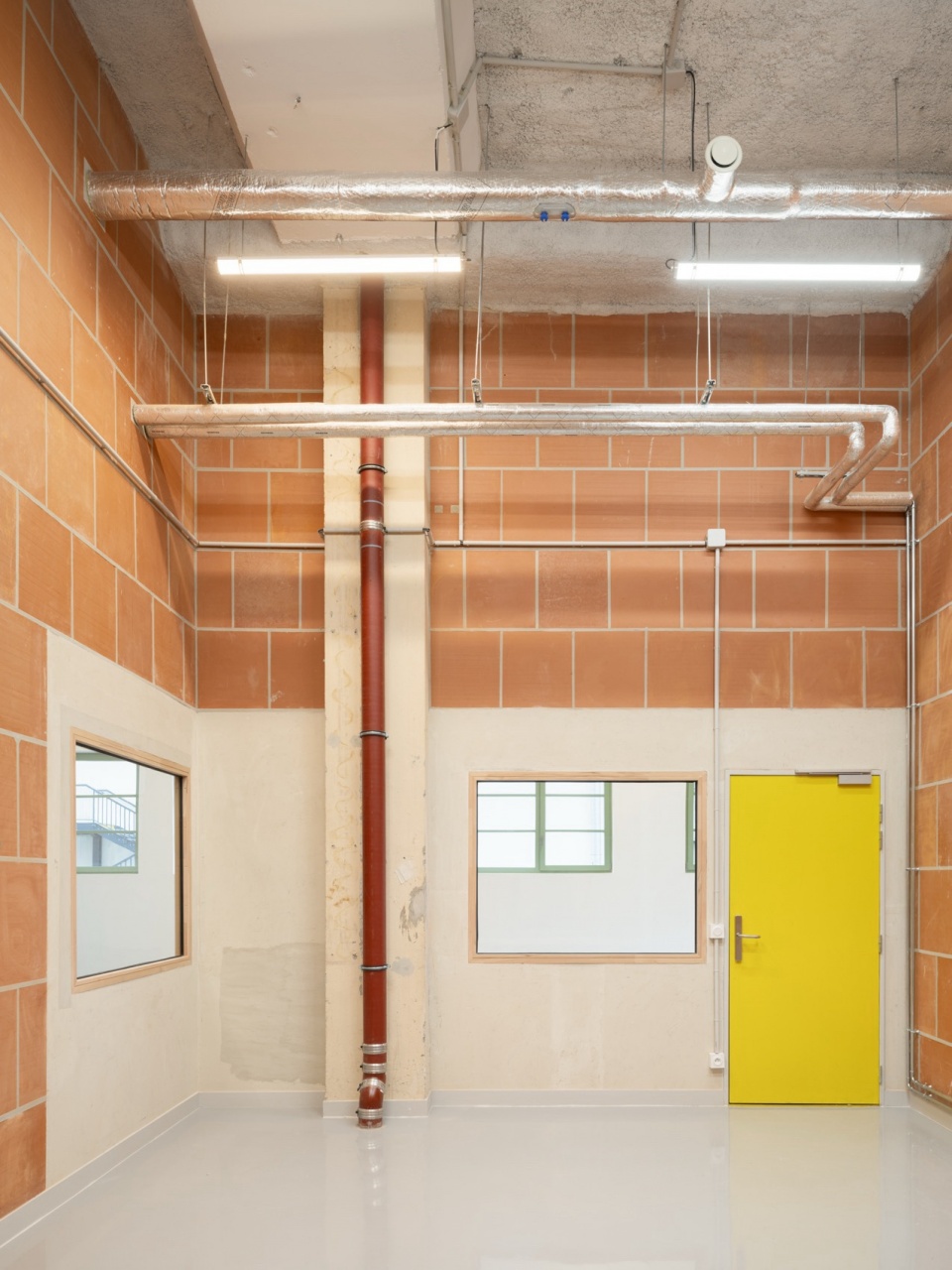
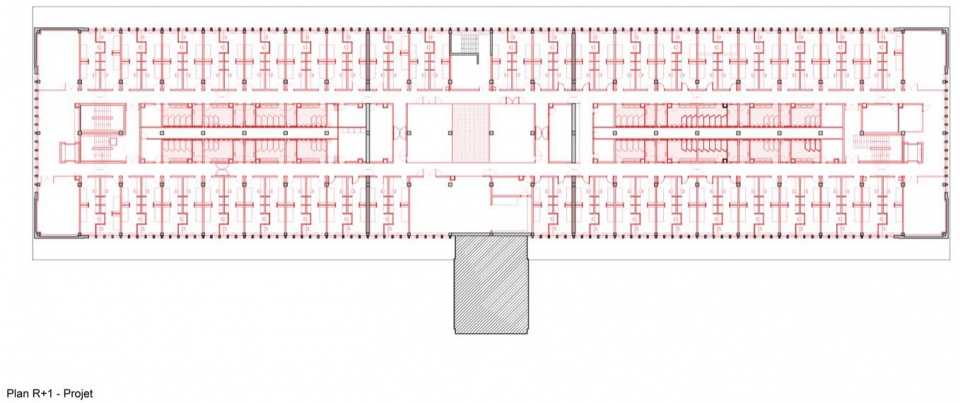
被改造为居住中心后,原Gley兵营仍保留了其原有建筑特征:建筑长130米、宽30米、高5米,由尺度生硬的柱梁结构支撑,底层曾杂乱地布置着集体宿舍。在场地持续有人居住的情况下,改造工程在原有结构单元中新增了172间住宿房间。出于经济、生态与美学层面的考虑,项目仅采用一种隔墙材料——陶土砖。这也意味着,今天形成的空间布局,在未来能够被轻松调整与重新组织。
Converted into a residential centre, the former Gley barracks had retained its original architectural features: measuring 130 m long by 30 m wide and 5 m high, supported by a post-and-beam framework of uninviting proportions, where dormitories were haphazardly arranged on the ground floor. Carried out whilst the site remained occupied, the conversion involves creating 172 new accommodation rooms within the structure’s cells. For economic, ecological, and aesthetic reasons, a single partitioning material is used: terracotta brick. This means that the layouts established today can be easily modified tomorrow.
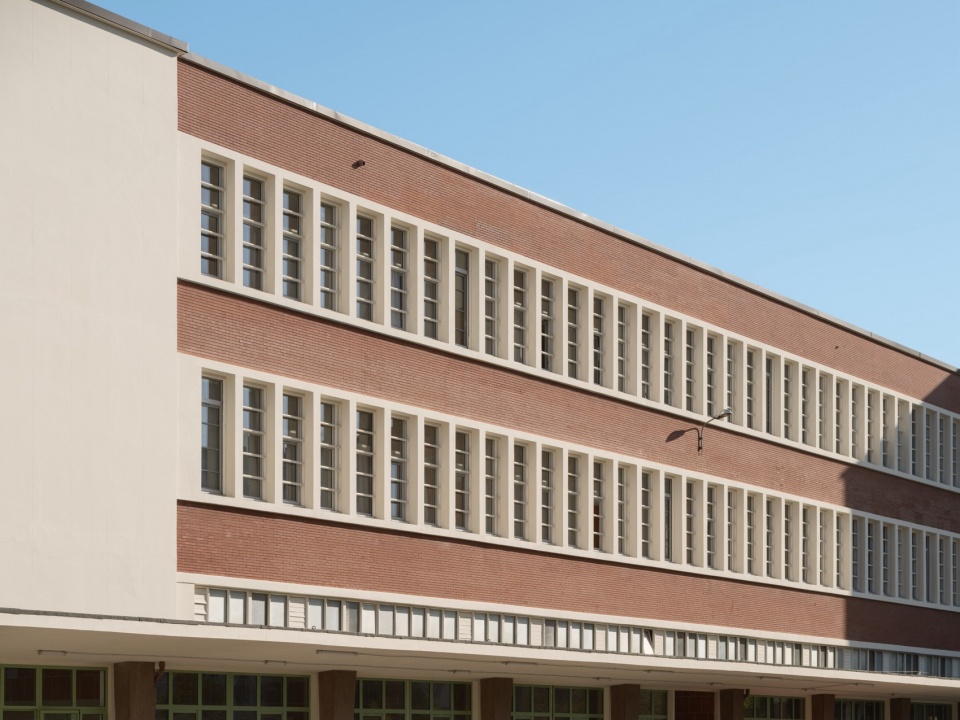
▼外观,exterior
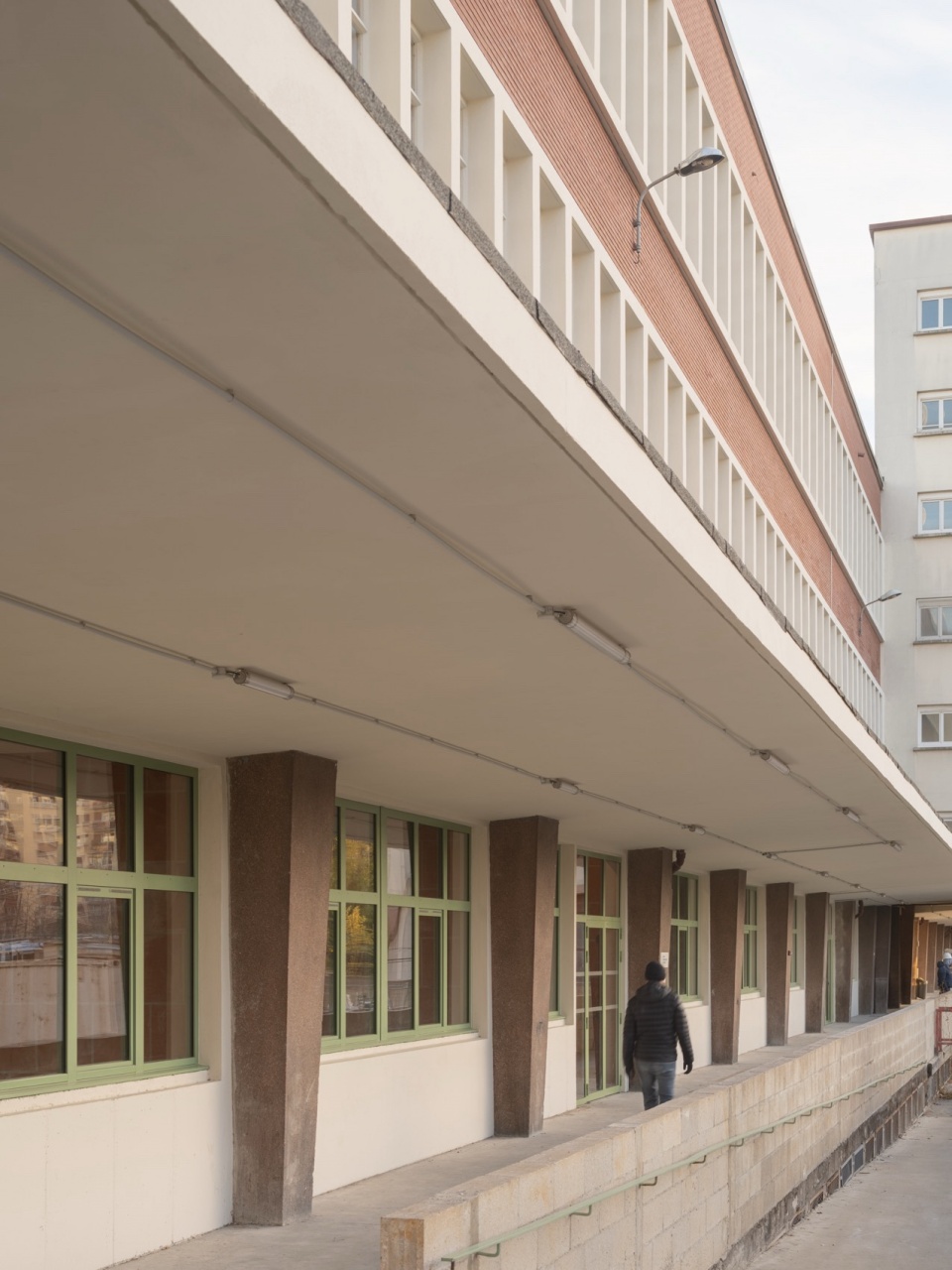
▼底层外部走廊,ground floor outdoor corridor
▼改造后的内部空间,interior space after renovation
协调细节,保留最根本的东西:尊严Negotiating the details, preserving the essential: dignity
面对异常高挑的层高与缺乏保温的问题,建筑师选择仅对卧室区域进行供暖,同时利用砖体本身的热惰性来提升热舒适性——砖块在冬季储存热量,在夏季则保持凉爽。新的双层玻璃窗为两至三人共住的房间过滤噪音与热量。床铺、书桌与储物单元则在有限空间中构建出属于每位居住者的私密边界。
Faced with exceptionally high ceilings and a lack of insulation, the architects chose to heat only the bedrooms, relying also on the thermal comfort provided by the thermal mass of the brick, which retains heat in winter and cools in summer. New double-glazed windows filter noise and heat in rooms shared by two or three residents. The beds, desks, and storage units create within these spaces as many thresholds of privacy as there are residents.
▼走廊,hallway
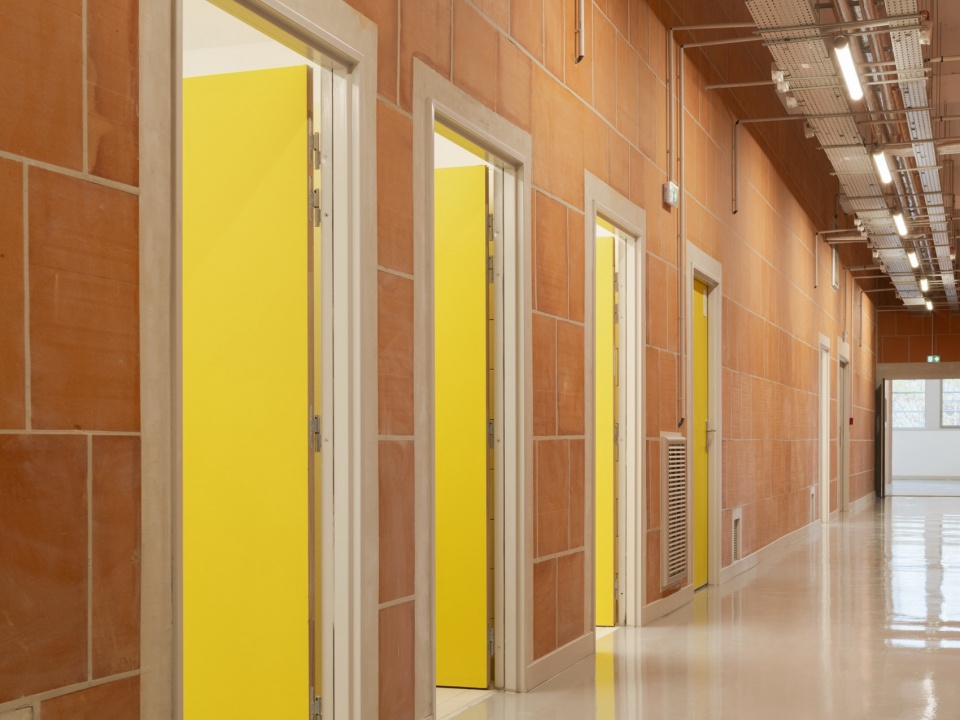
▼宿舍内部,interior space of the dormitory
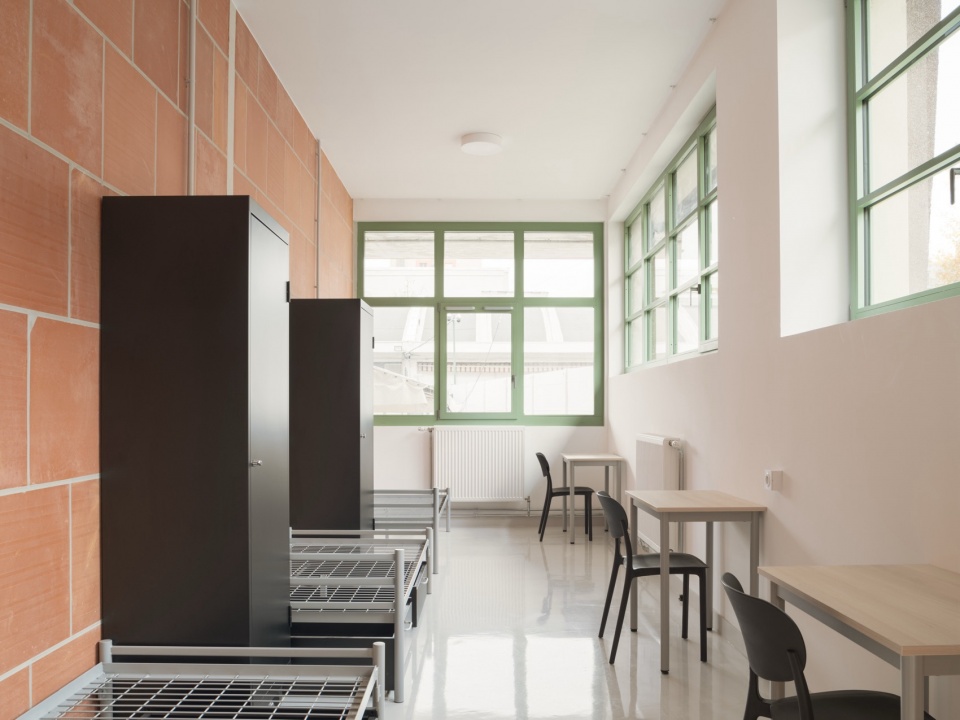
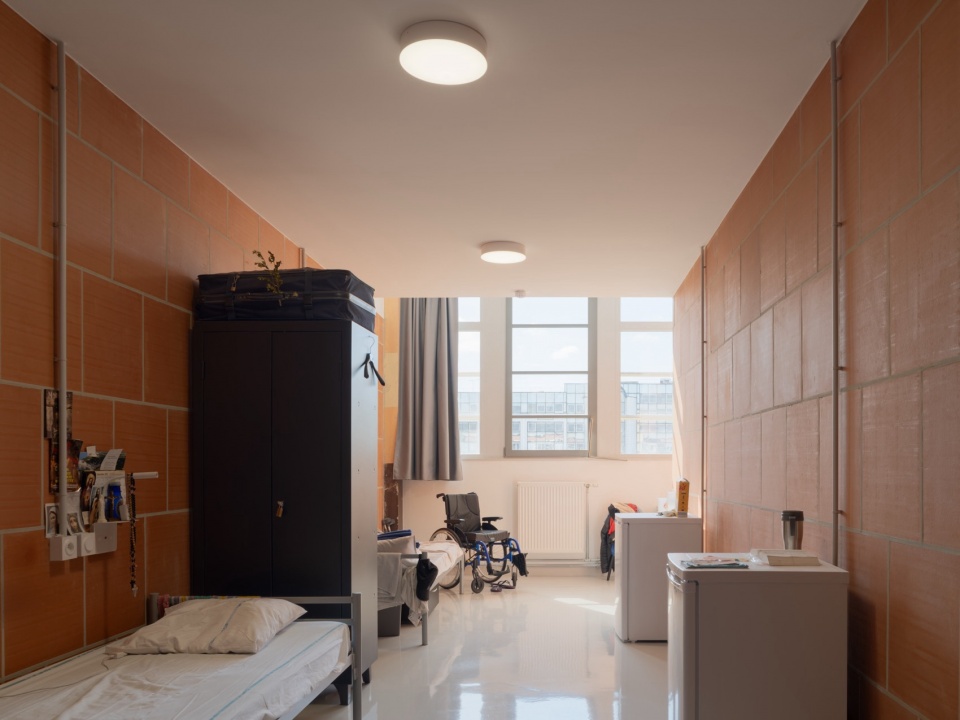
紧急住宿:一项长期性的工作Emergency accommodation: a long-term endeavour
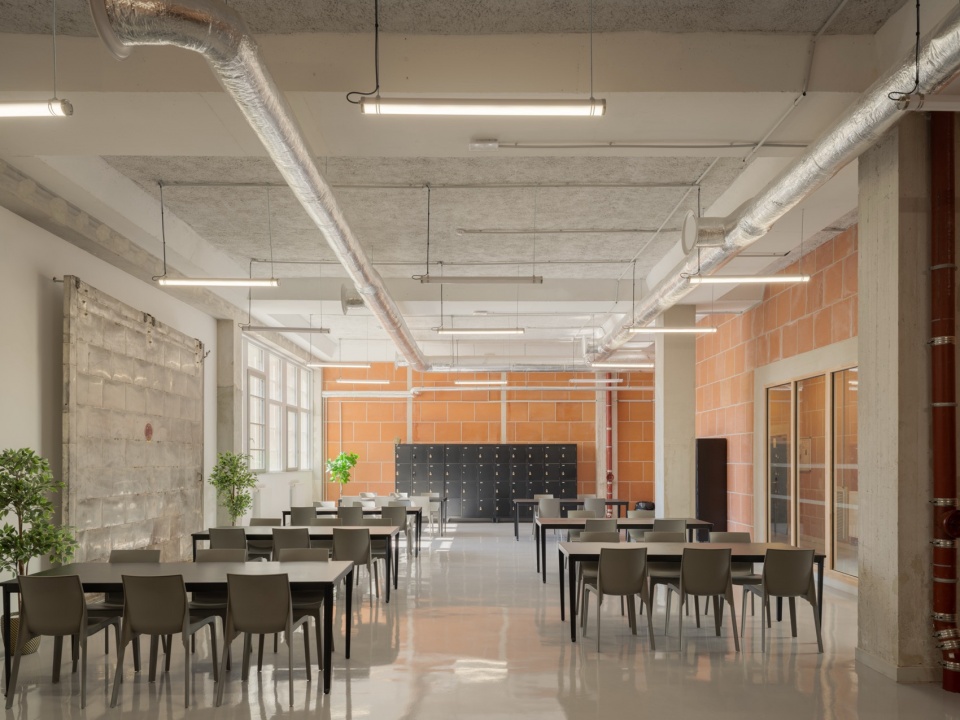
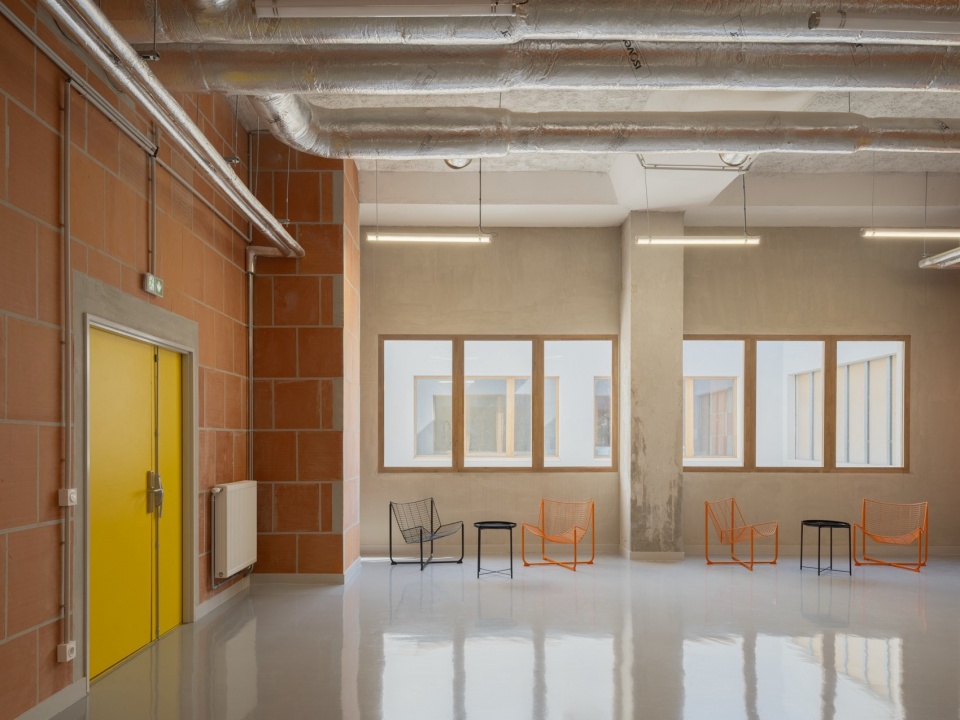
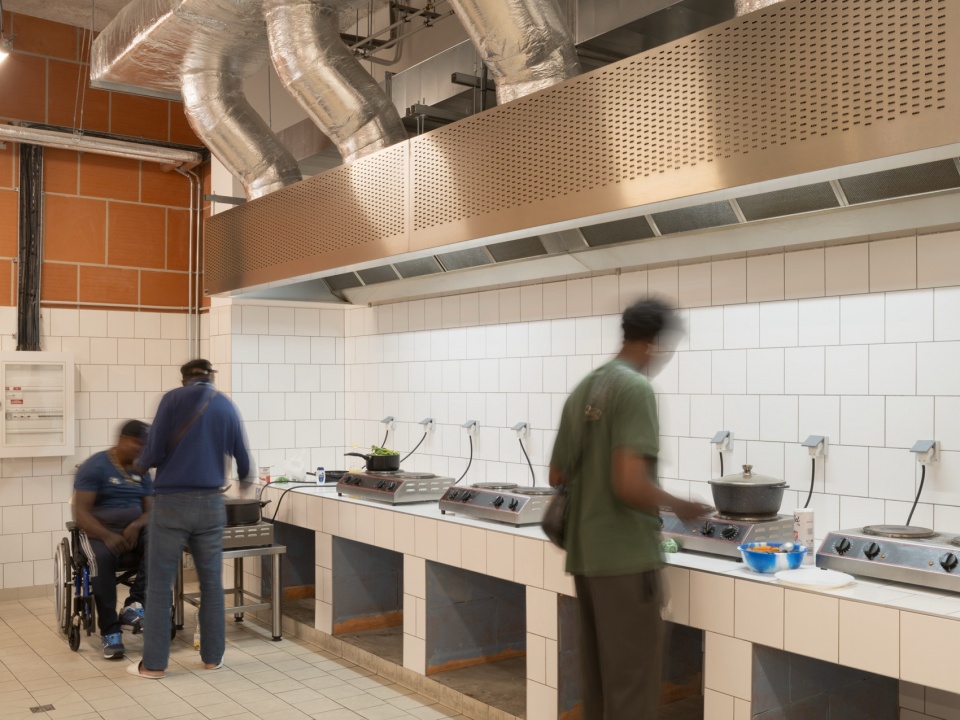
首层空间如今更多地被重新归还给公共生活。餐厅、厨房、工作室与休息区均改善了声学条件,使其成为更加活跃而宜人的场所。因为尽管住宿本身是临时性的,但工作人员却全年都在此工作与维护。项目同时也提升了后期维护效率:设备管线外露、地面平整、服务管井易于检修。
The ground floor has largely been reclaimed for communal life. The dining hall, kitchens, workrooms, and lounges all benefit from improved acoustics, transforming them into vibrant spaces. For whilst the accommodation is temporary, the staff work there all year round. Maintenance and upkeep are made easier: the services are exposed, the floors are smooth, and the service ducts are easily accessible.
▼首层大堂,ground floor lobby
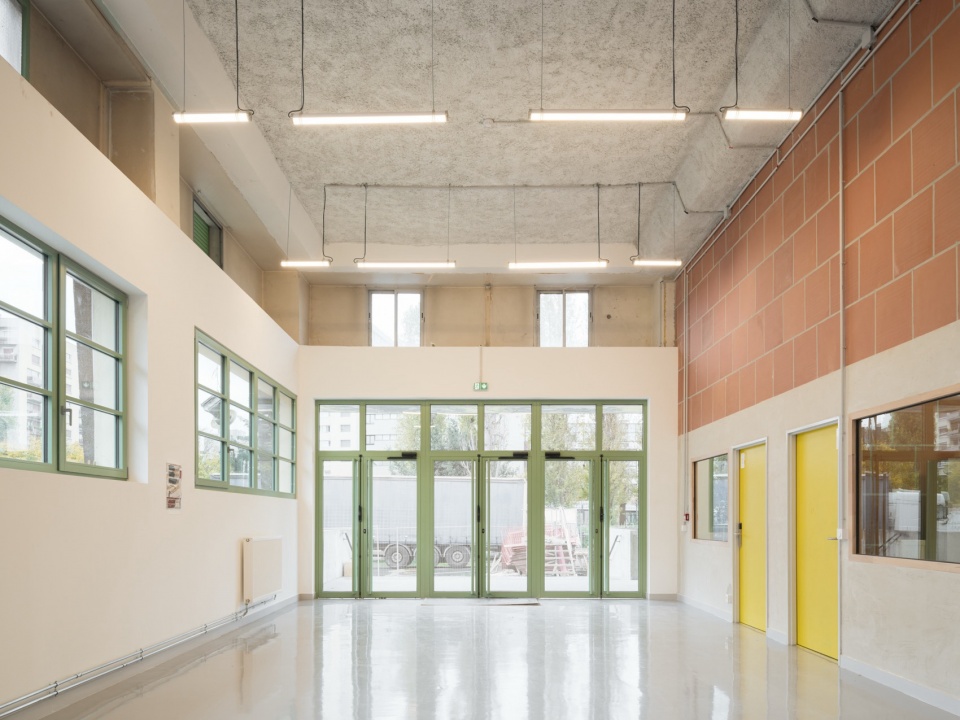
▼公共空间,public space
▼共享厨房,sharing kitchen
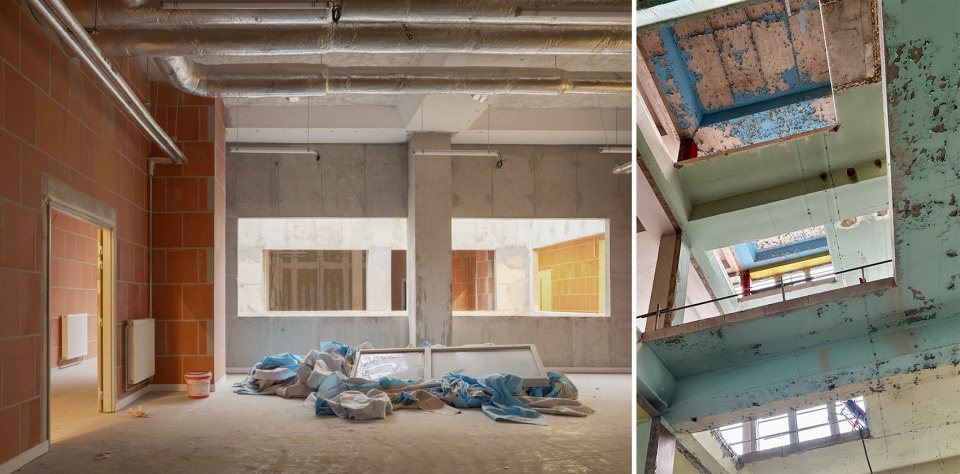
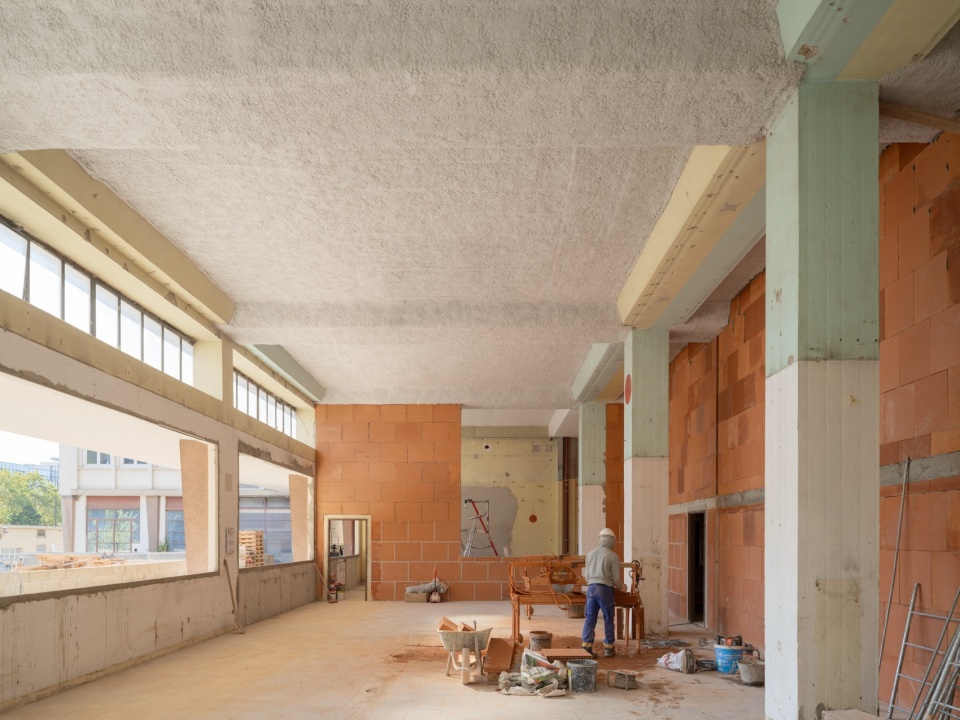
▼施工过程,construction process
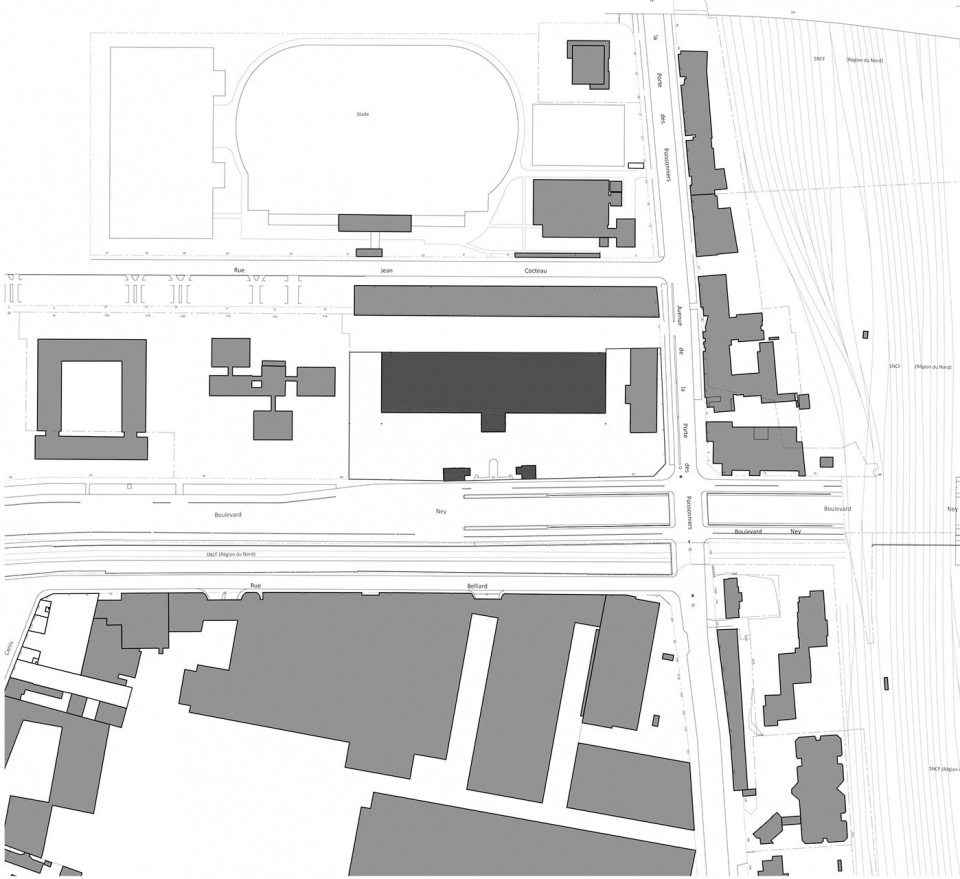
▼总平面图,master plan
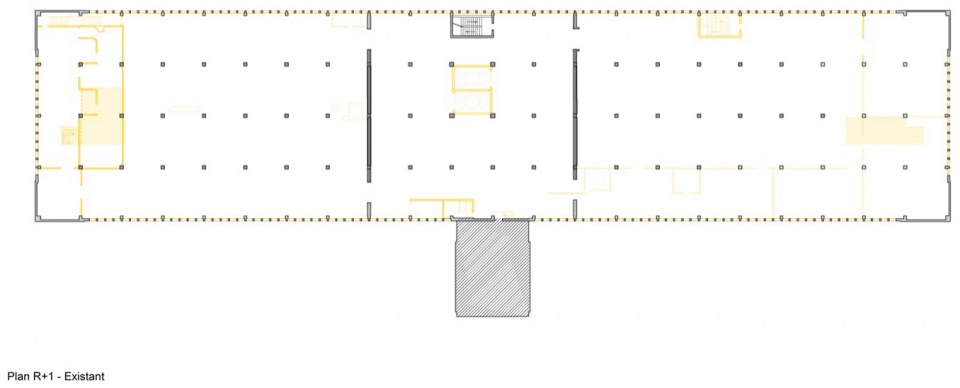
▼改造前二层平面图,first floor plan before renovation
▼改造后二层平面图,first floor plan after renovation
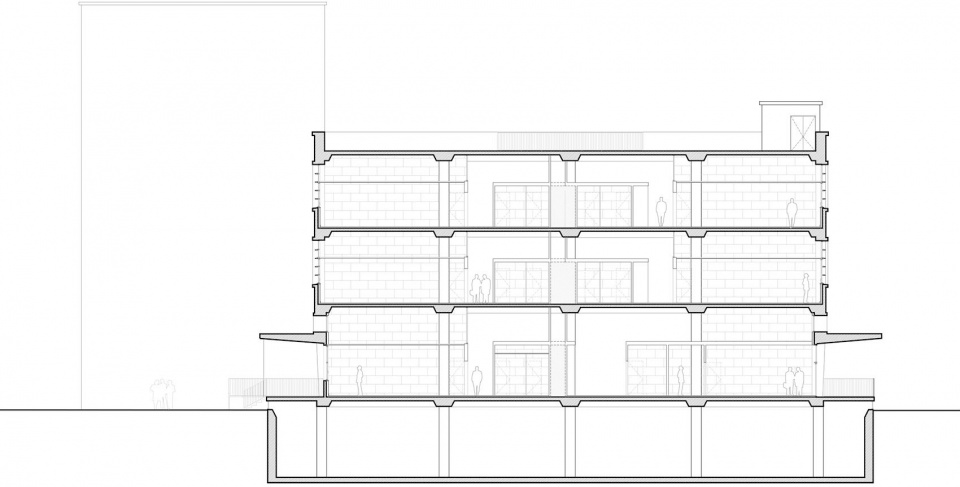
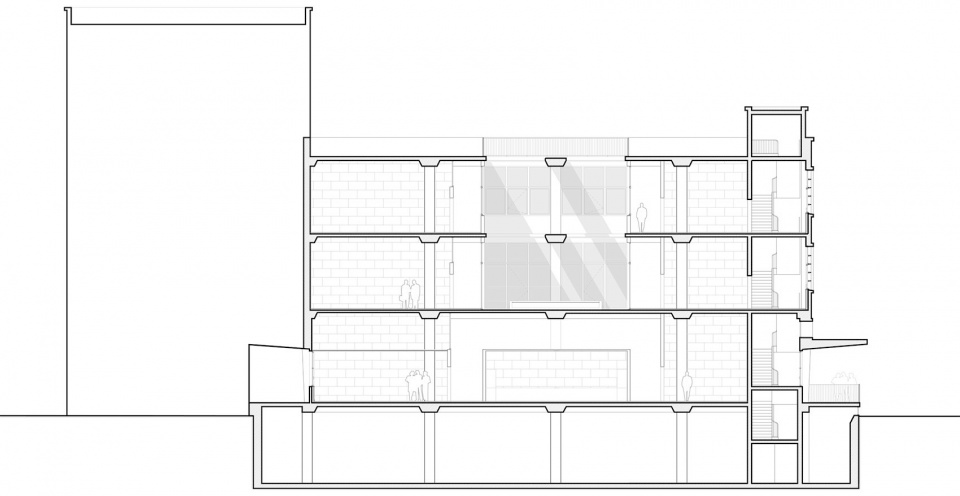
▼剖面图,section