CERDEIRAS宅邸酒店,葡萄牙 / Tiago do Vale Architects
建于1773年的塞尔代拉斯宅邸酒店,其基础可追溯至一座献给圣额我略一世的17世纪初小教堂。毗邻葡萄牙圣雅各之路、俯瞰拉布鲁雅河谷的圣殿——“救世主之主圣殿”(Sanctuary of Senhor do Socorro)至今仍是上米尼奥地区最重要的朝圣地之一,而塞尔代拉斯宅邸酒店正栖居于这片土地,并与这座圣殿共享着部分历史记忆。如今的建筑形态,是历经多次未被完整记录的建造、废弃、重建与改造过程后形成的结果。最初的建筑核心可追溯至1747年,是一座简洁的单层平行六面体体量,其痕迹至今仍可从保留下来的立面中辨识出来。立面采用花岗岩与片岩混合砌筑,精细的工艺回应了场地特殊的地质条件。
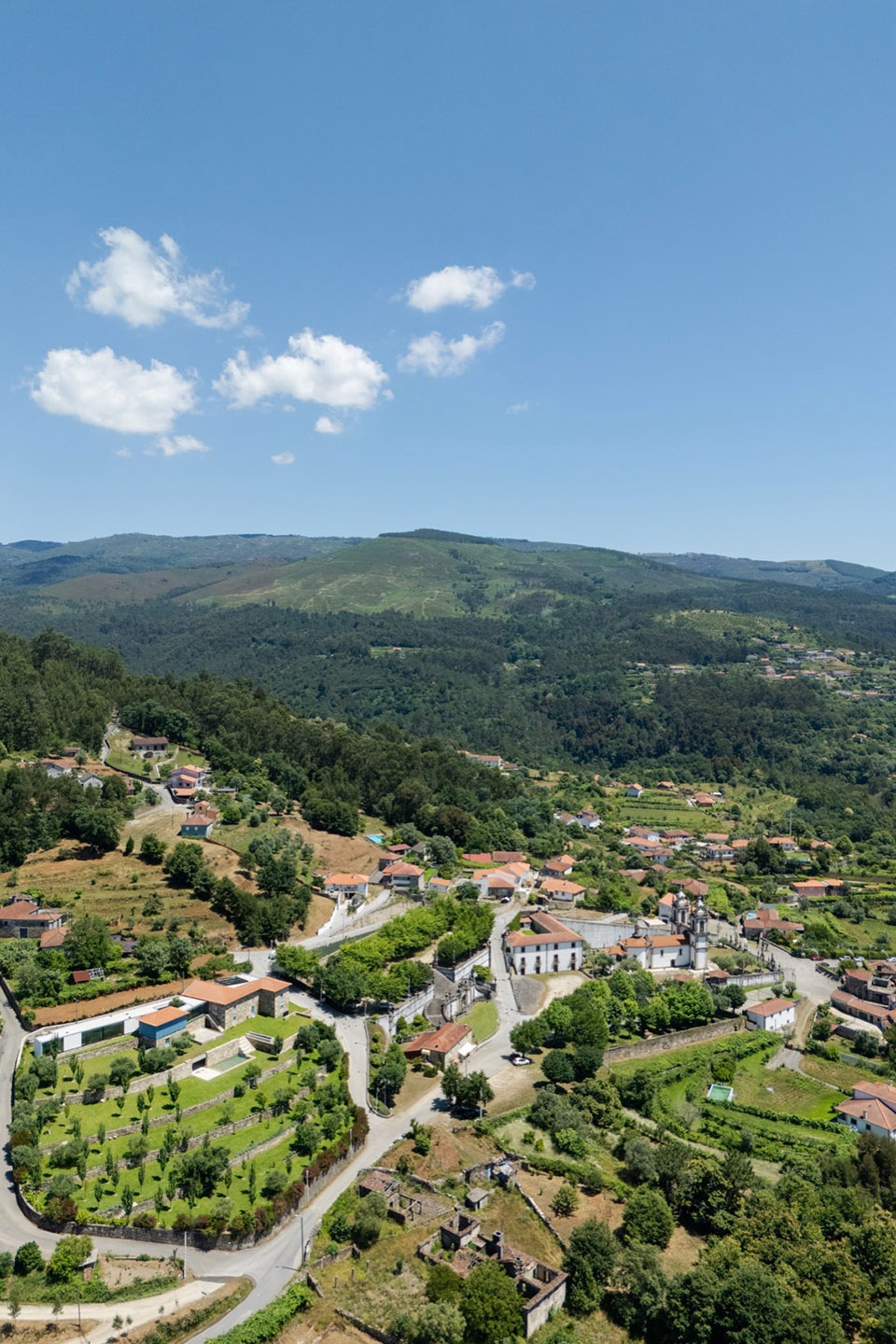
Erected in 1773 on the foundations of a chapel dedicated to Saint Gregory the Great (dating from the early 17th century), the Sanctuary of Senhor do Socorro remains one of the most important pilgrimage destinations in the Alto Minho region. Situated on the slopes of the Labruja Mountain Range, neighbouring the the Portuguese Way of Saint James and commanding wide views over the Labruja River valley, the Cerdeiras House Hotel inhabits this territory and shares part of its history with the Sanctuary. The house as it stands today is the result of successive, undocumented cycles of construction, abandonment, reconstruction, and transformation. The original core, with elements dated to 1747, would have been a simple, single-storey parallelepiped structure, whose presence can still be discerned in the surviving façades, carefully built in a combination of granite and schist that reflects the site’s particular geology.
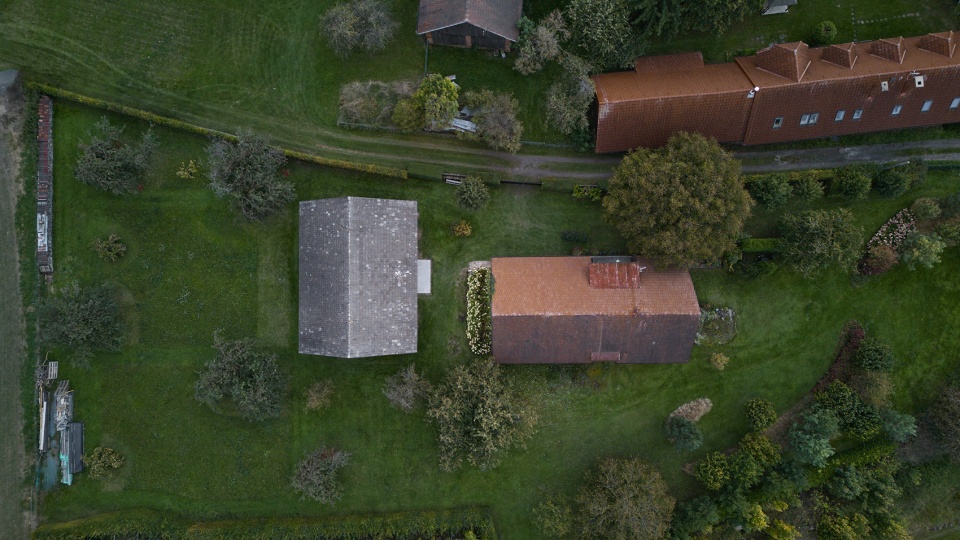
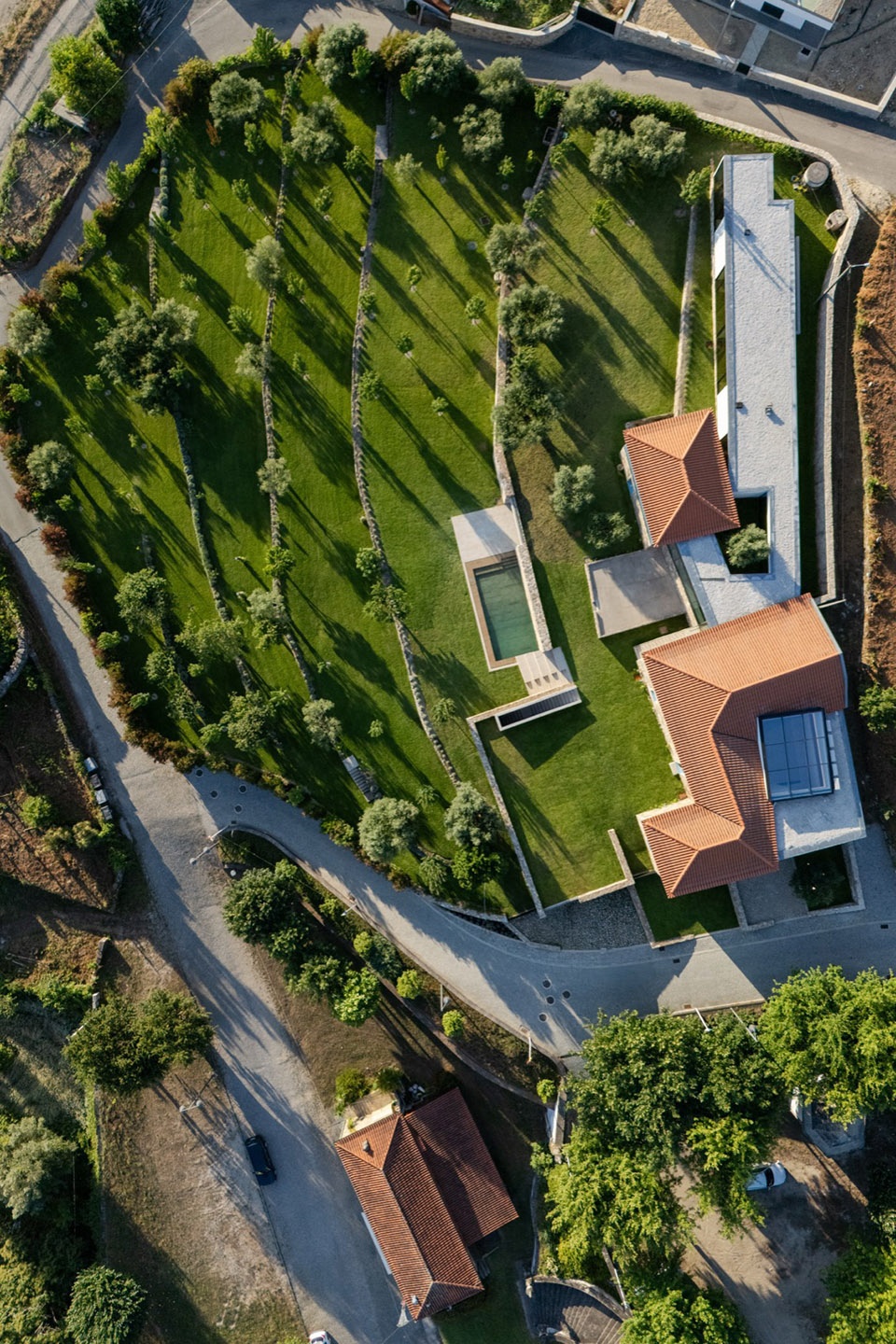
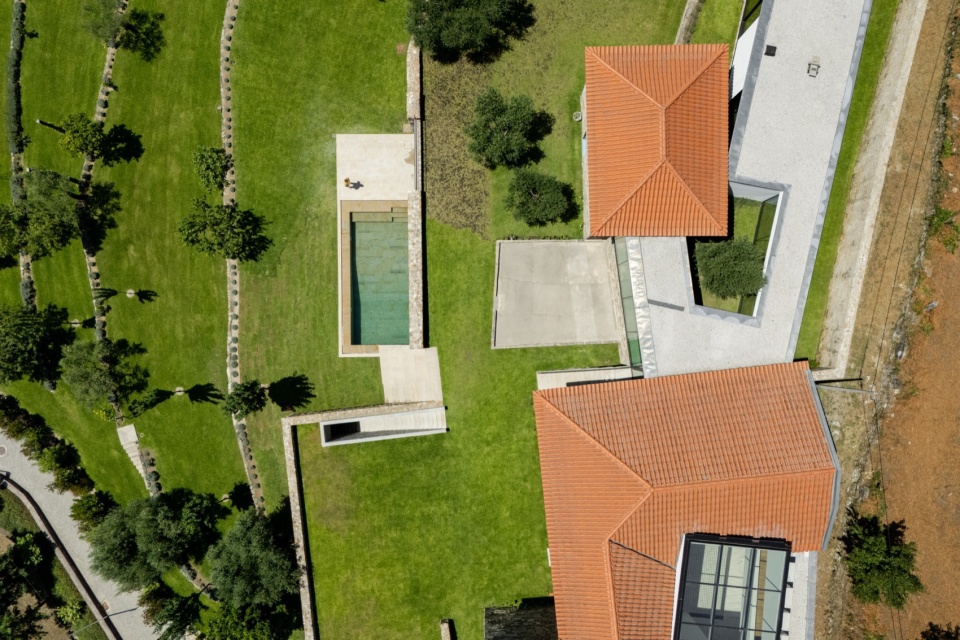
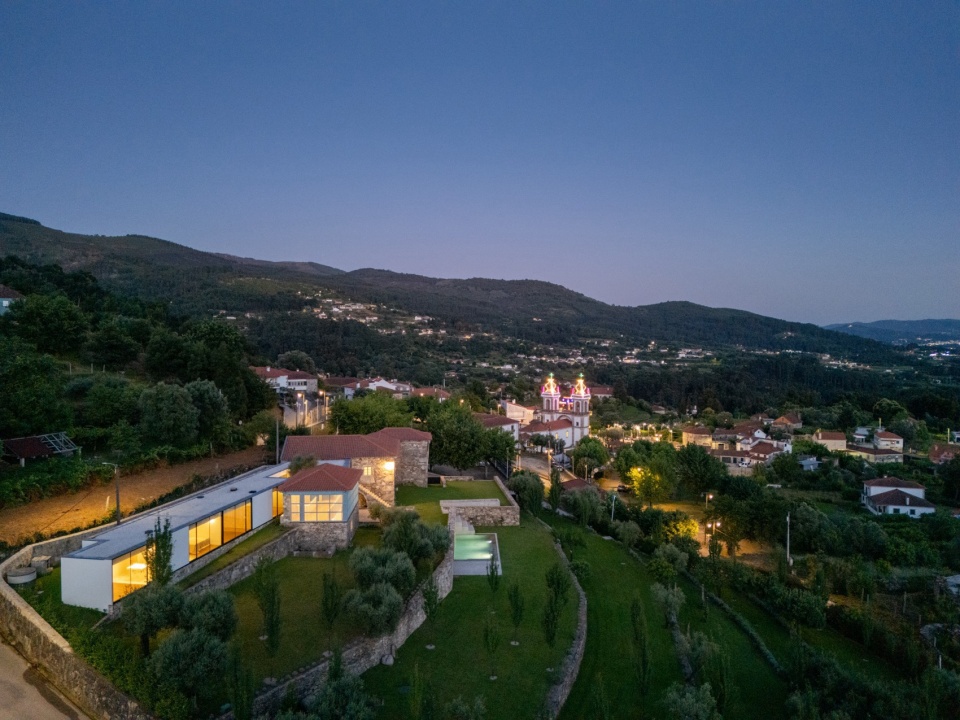
▼项目鸟瞰,aerial view of the project
整个建筑群正是在这一原始核心基础上逐渐生长而成:它既代表了一种具有农业根基的乡土建筑类型,同时又展现出超越周边环境的丰富性与庄重感。如同葡萄牙乡村景观中的许多建筑一样,它通过连续扩建不断增长,无论在平面尺度还是建筑高度上都呈现出有机演化的特征。20世纪上半叶,建筑再次被重建:内部加入钢筋混凝土门式结构,在保留原有体量(当时已成废墟)的基础上,形成围合街道入口庭院的L形布局。原始建筑如今仅剩部分立面得以保存,但其中仍可辨识出若干细部元素,其材质与工艺暗示着这里曾是圣殿教区长的居所。
▼场地原状,original state of the site
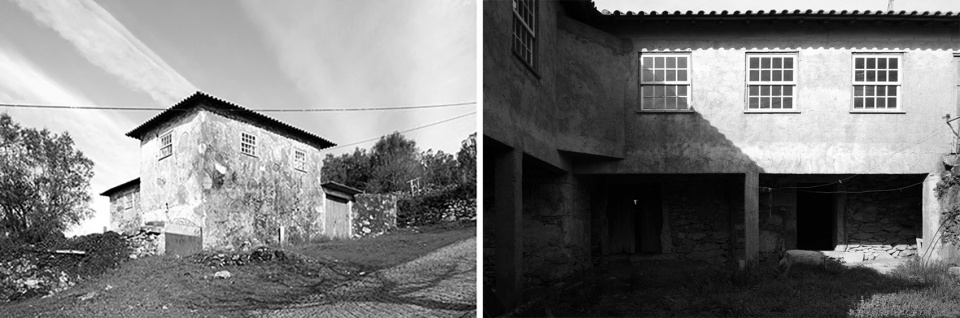
The built ensemble develops from that primitive core: a structure representative of a rural architecture with agricultural roots, yet also displaying a richness and dignity that sets it apart from its immediate context. Like so many buildings in the Portuguese rural landscape, it grew organically, both in footprint and height, through successive extensions. It was reconstructed once again during the first half of the 20th century, by then incorporating a reinforced concrete portico structure internally, maintaining the previously existing volumetry (by then in ruins), and forming an L-shaped body enclosing a courtyard with access from the street. Of the original construction, only parts of the façades survive, yet within these, there remain elements which, by their nature and finish, reflect the building’s former status as the property of the Rector of the Sanctuary.
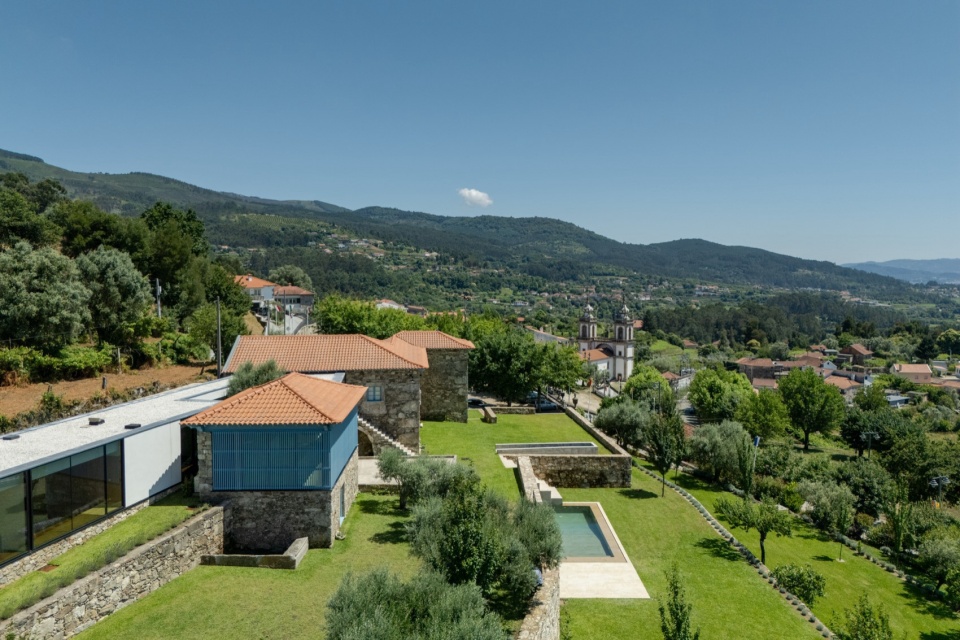
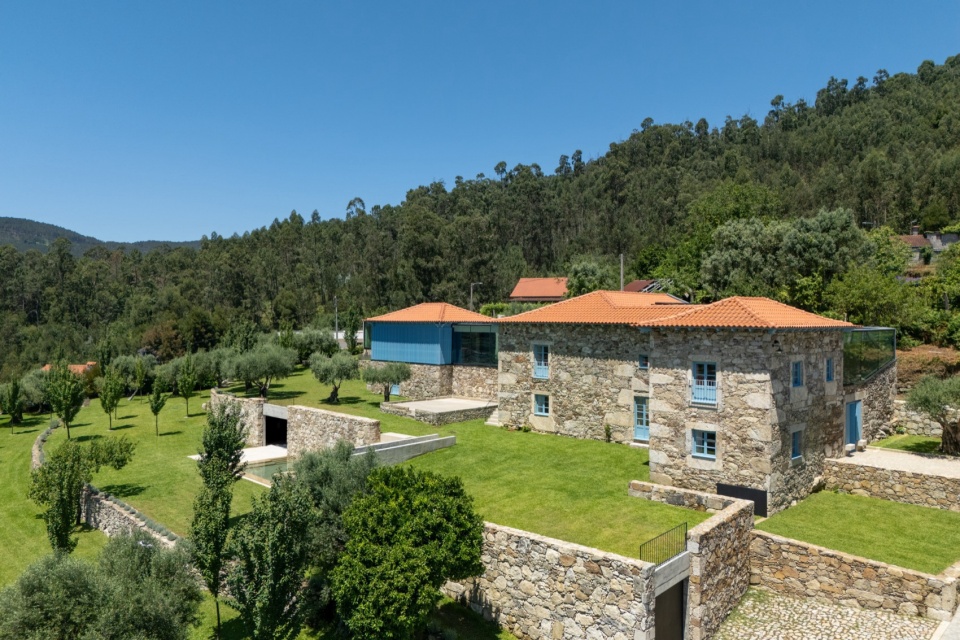
▼建筑外观,exterior view of the project
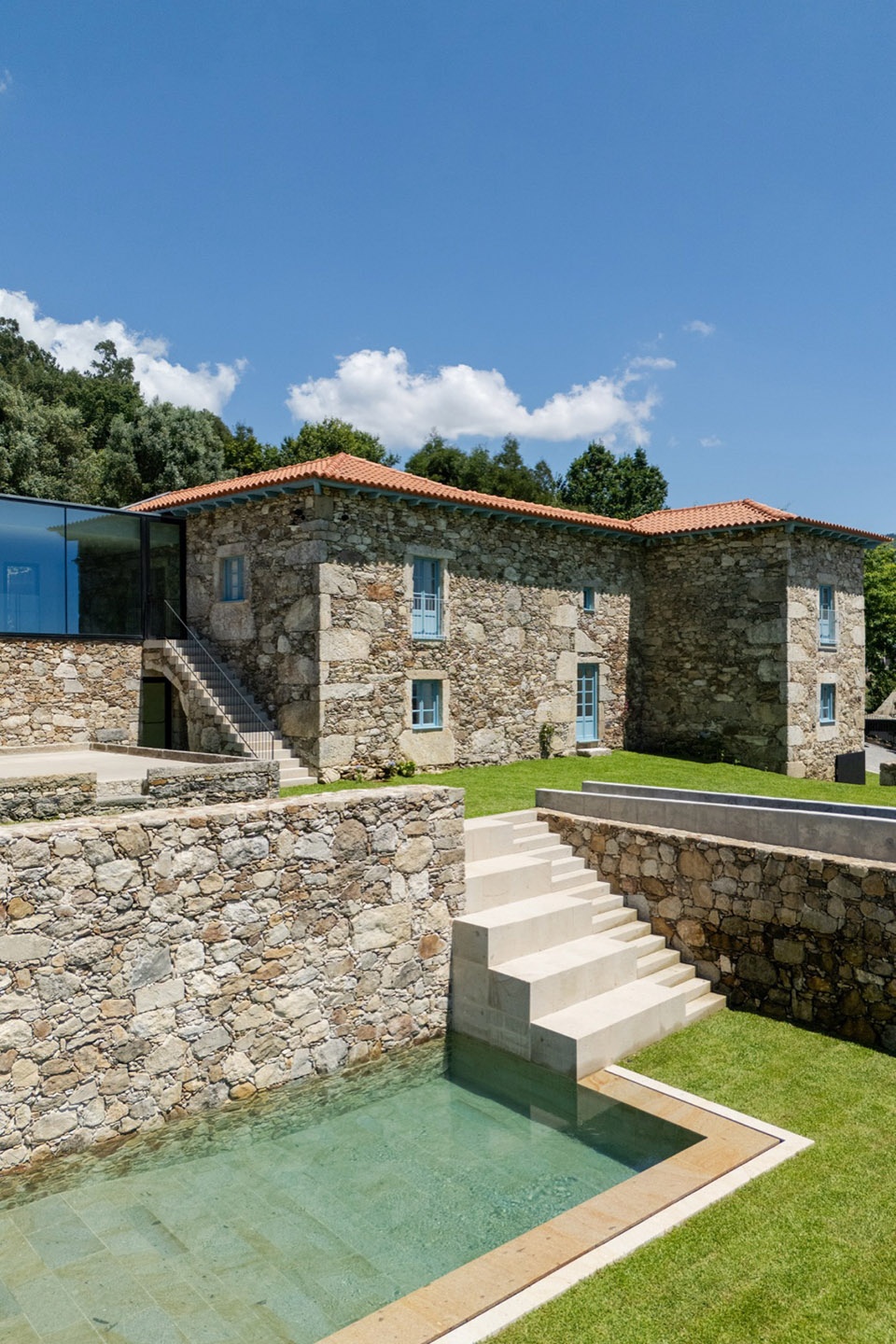
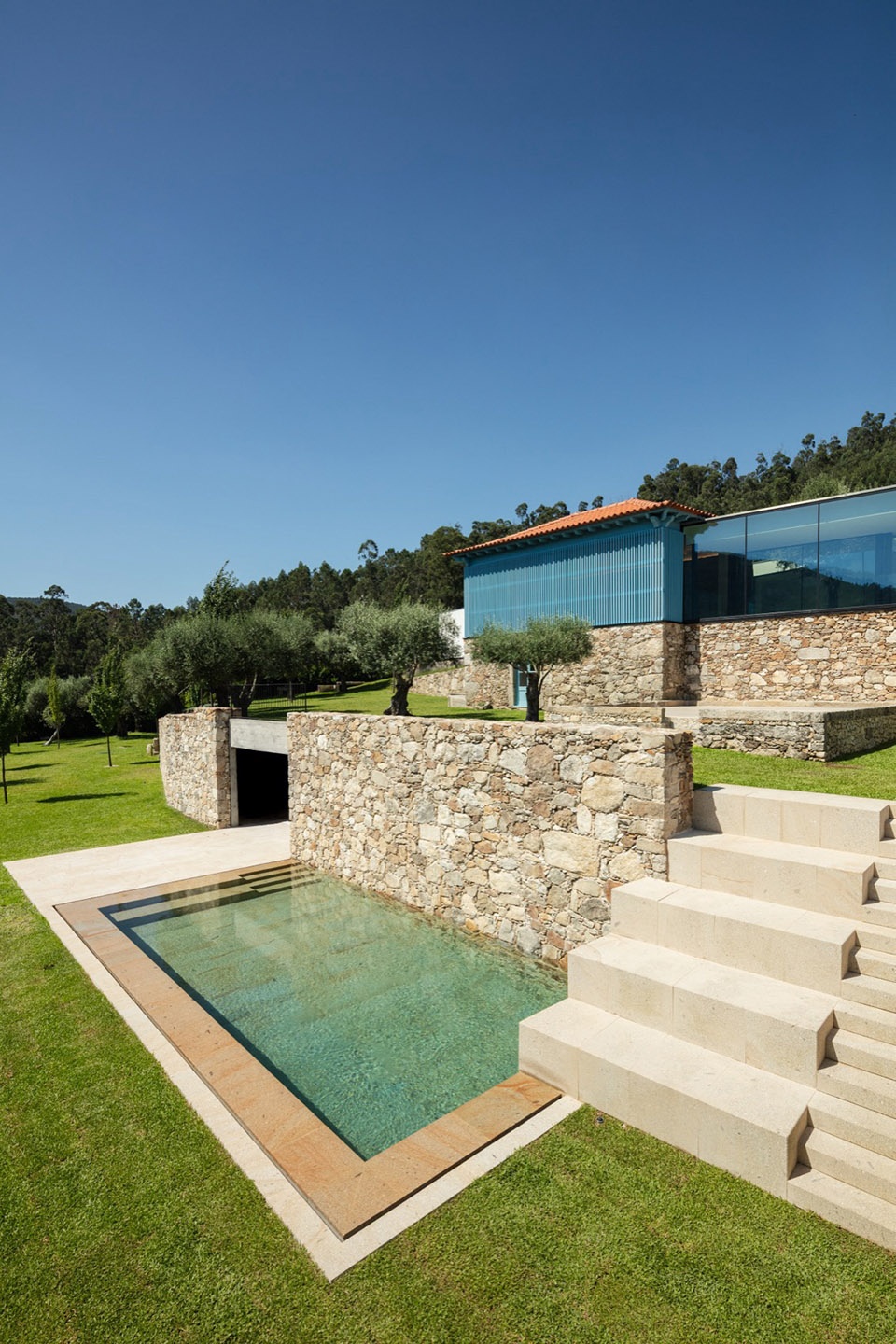
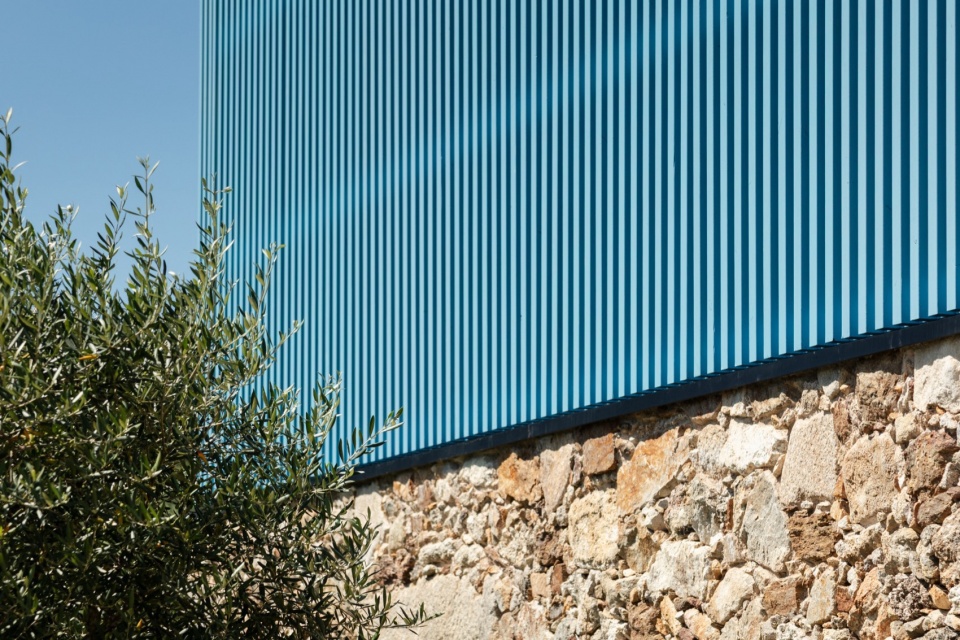
因此,塞尔代拉斯宅邸的修复与酒店化改造,需要采取多重并置的策略:既尊重历史,又避免将其神话化,使不同时间、用途与记忆在建筑各部分中共存。设计对已经消失的传统元素——如踢脚、屋面、窗框与百叶——进行了适度重建,但以简化且明确区别于“推测性修复”的方式完成,旨在强化既有建筑本身,并尽可能减少后期附加构件对整体阅读造成的干扰。
The rehabilitation of the Cerdeiras House and its adaptation to a hotel programme therefore required distinct approaches, respecting the past without mythologising it, in a coexistence of different times, uses, and memories, dispersed throughout various parts of the built fabric. The reinstatement (albeit simplified and clearly distinct from speculative restoration) of traditional elements that had since disappeared (such as skirtings, roof coverings, window frames and shutters) on the surviving façade planes sought to enhance the pre-existing structure, minimising distractions caused by later additions.
▼塞尔代拉斯宅邸的修复与酒店化改造,
rehabilitation of the Cerdeiras House and its adaptation to a hotel programme
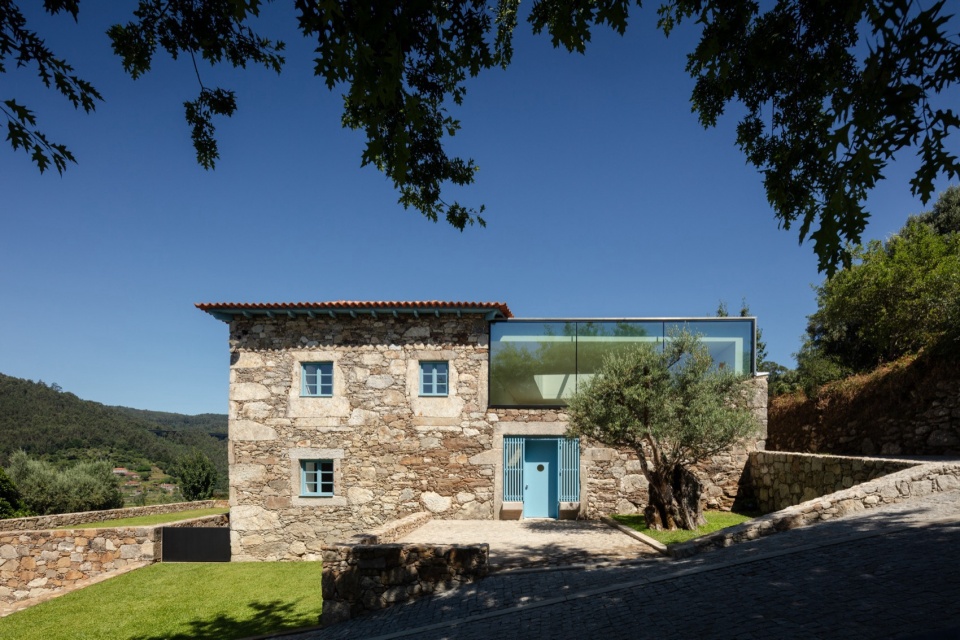
与此同时,部分已经消失的建筑构件(如粮仓)也被重新建造。这些重建并非复原性的复制,而是以一种能够直接唤起其原有形象、同时又不会混淆干预时代性的方式进行重新诠释。最后,为补充既有建筑而新增的体量——以满足新酒店功能在空间与性能上的需求——同样明确呈现出当代特征。它们以简化的水平体量展开,并始终从属于原有建筑,通过对比关系凸显后者的存在感。
Simultaneously, partially lost components (such as the granary) were reconstructed. These were reinterpreted in a way that directly references their former appearance without creating ambiguity as to the time of the intervention. Finally, the newly built volumes that complement the pre-existing constructions (addressing both the spatial and performance needs of the new programme) are also clearly contemporary in character. They develop horizontally in a simplified volumetry that remains subordinate to the original structures, allowing these to assert themselves through contrast.
▼材料的新旧并置,juxtaposition of new and old materials
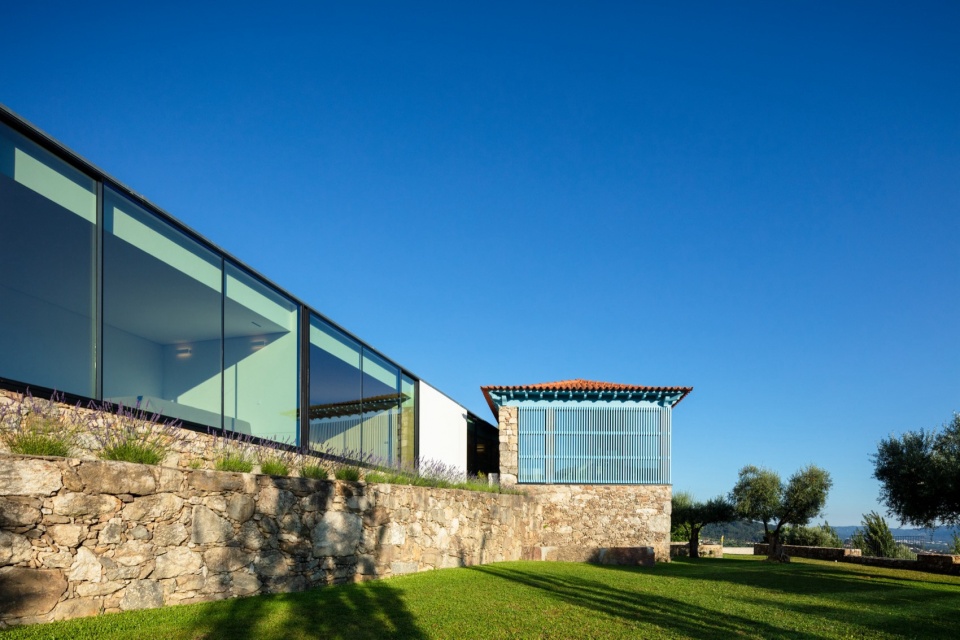
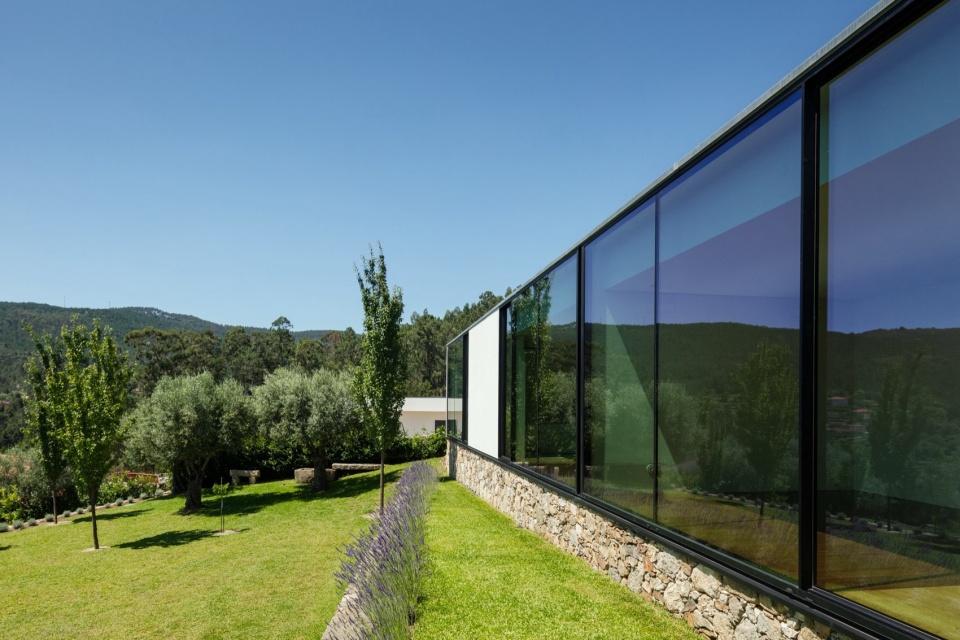
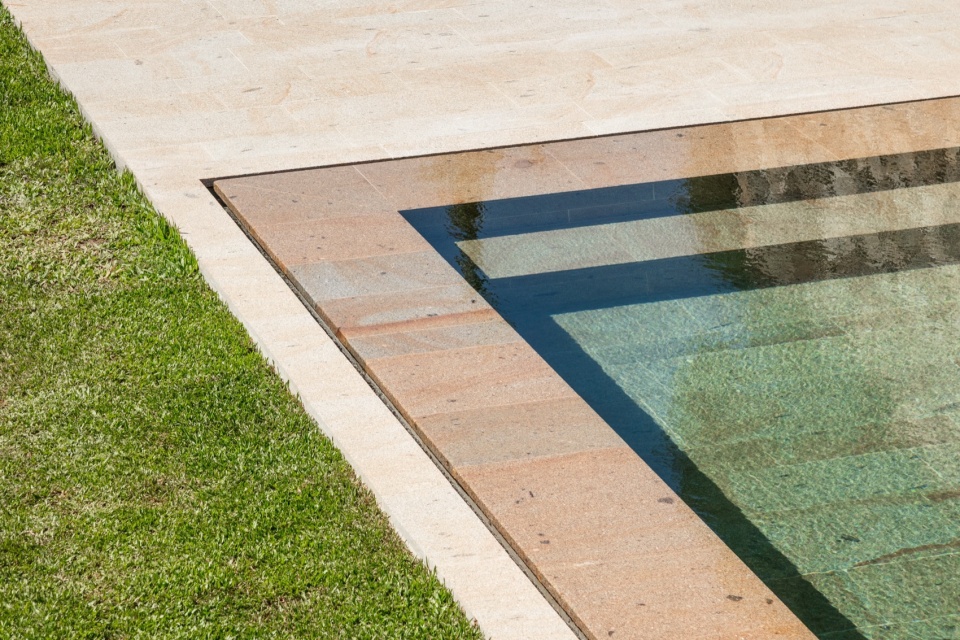
整个建筑群的组织方式根植于场地自身逻辑:沿既有石墙重新建立住宅与粮仓之间的联系,并由此引出通往新客房翼的连接系统。曾经的庭院被转化为宅邸的主要起居空间,而附属建筑则隐藏于花岗岩挡土墙之后,回应了场地中传统地形处理方式。层层退台之间通过零散插入的楼梯相互连接。在住宅露台与花岗岩泳池之间——后者唤起米尼奥地区传统灌溉水池的记忆——展开了一处小型露天剧场,可供人们驻足观赏日落。
▼草图,sketch
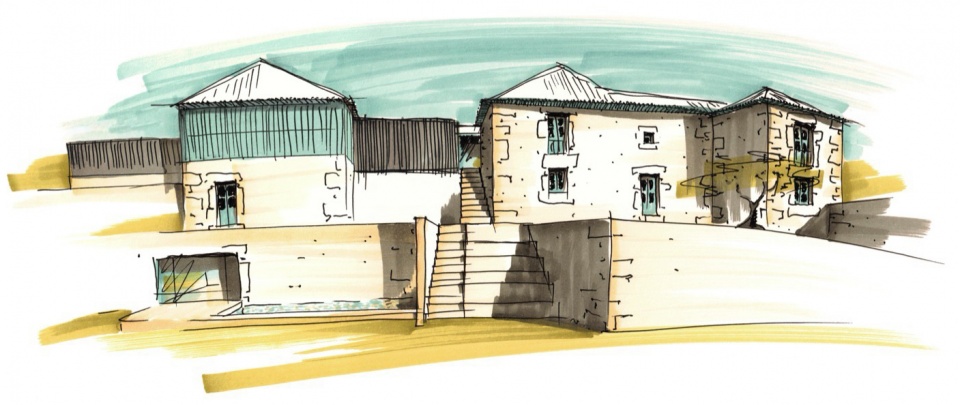
The organisation of the built complex is rooted in the principles of the site, re-establishing the link between the house and the granary along a pre-existing wall, from which the connections to the new bedroom wing are drawn. The former courtyard becomes the main living room of the house, while the outbuildings are set behind granite retaining walls, echoing the solutions traditionally employed across the House’s terrain. The successive terraces are connected by the introduction of occasional staircases. Between the terraces of the house and the granite swimming pool (a memory of the Minho irrigation tanks) unfolds a small auditorium, a place from which to contemplate the sunset.
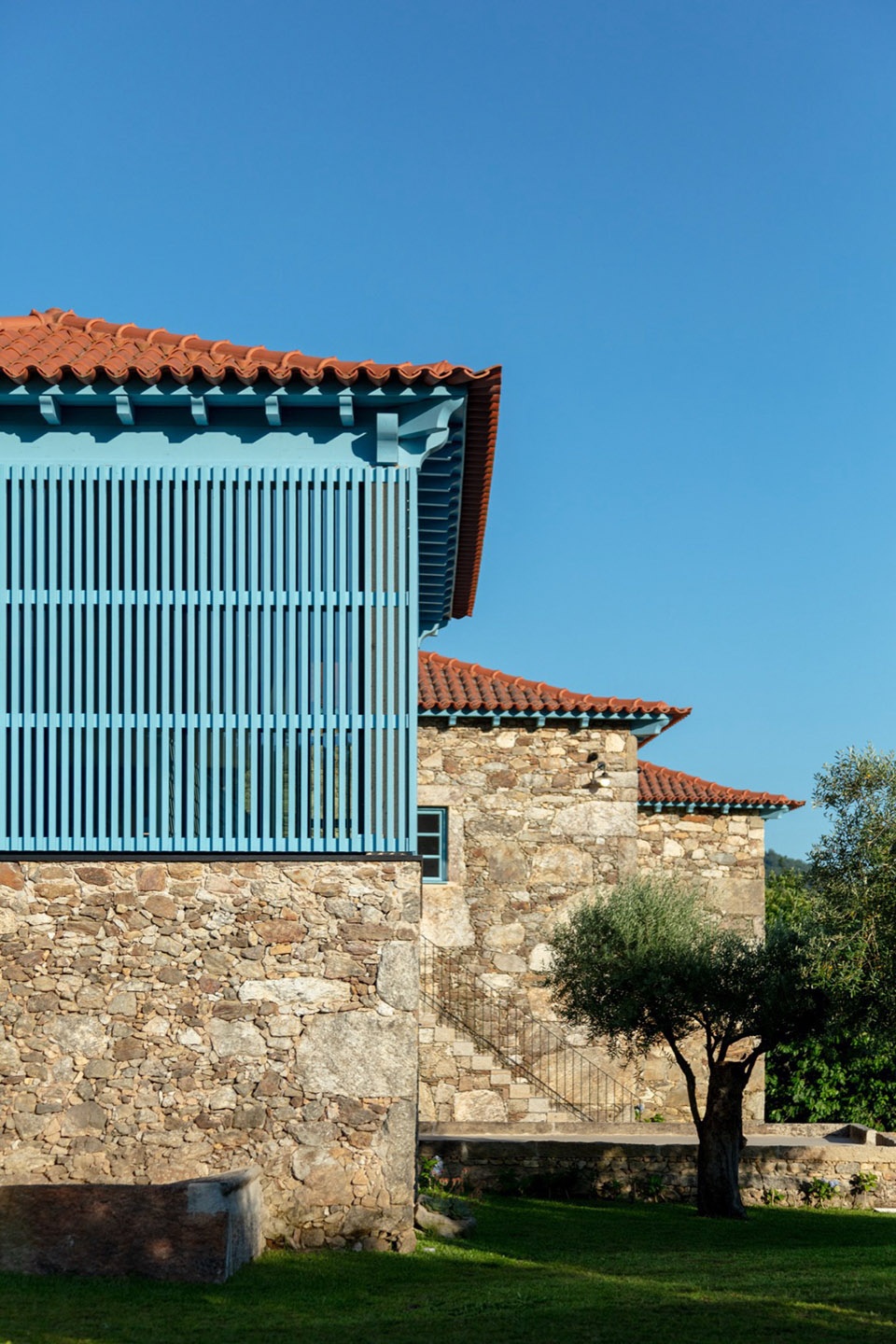
▼蓝色木质格柵,blue wooden grille
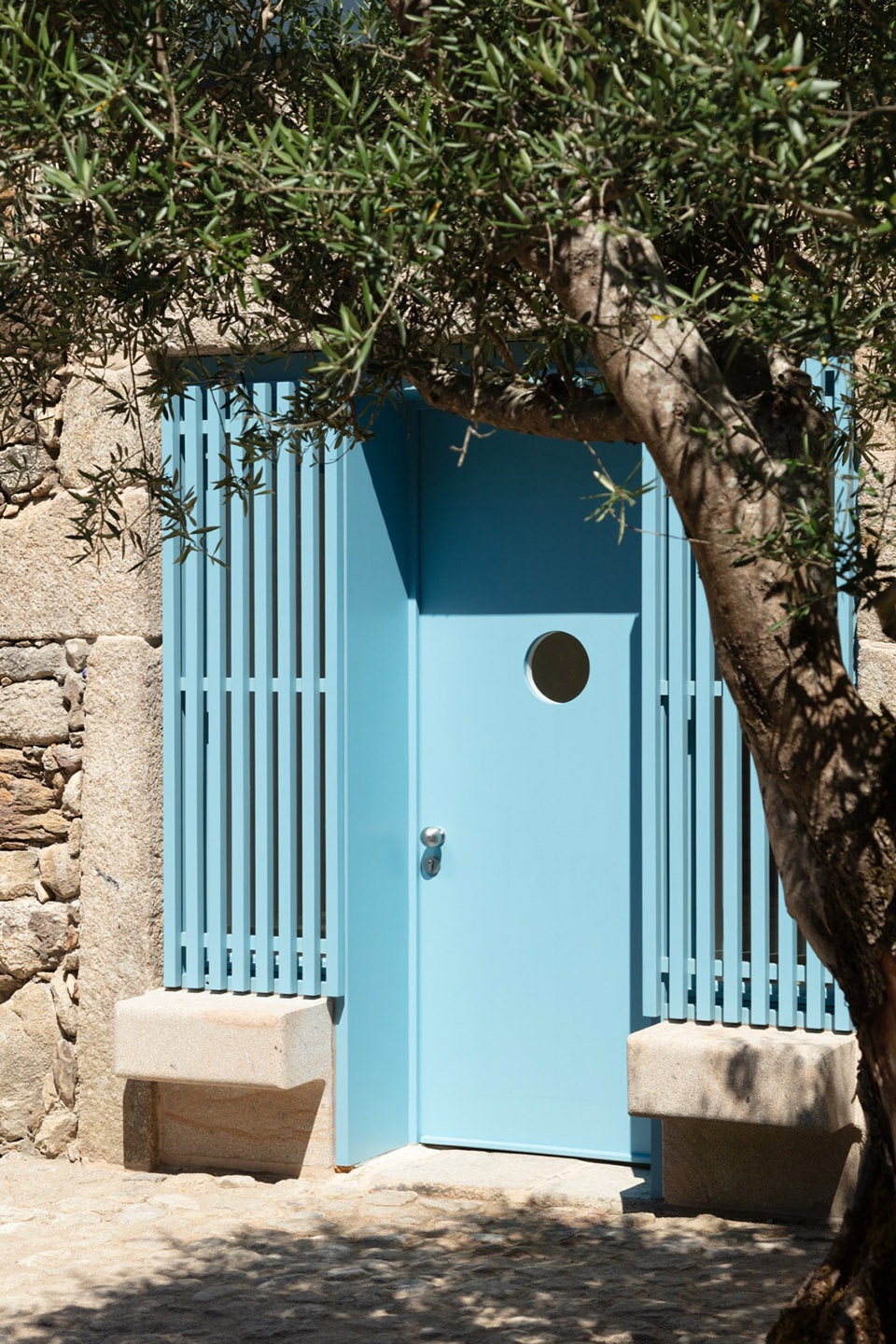
▼细部,details
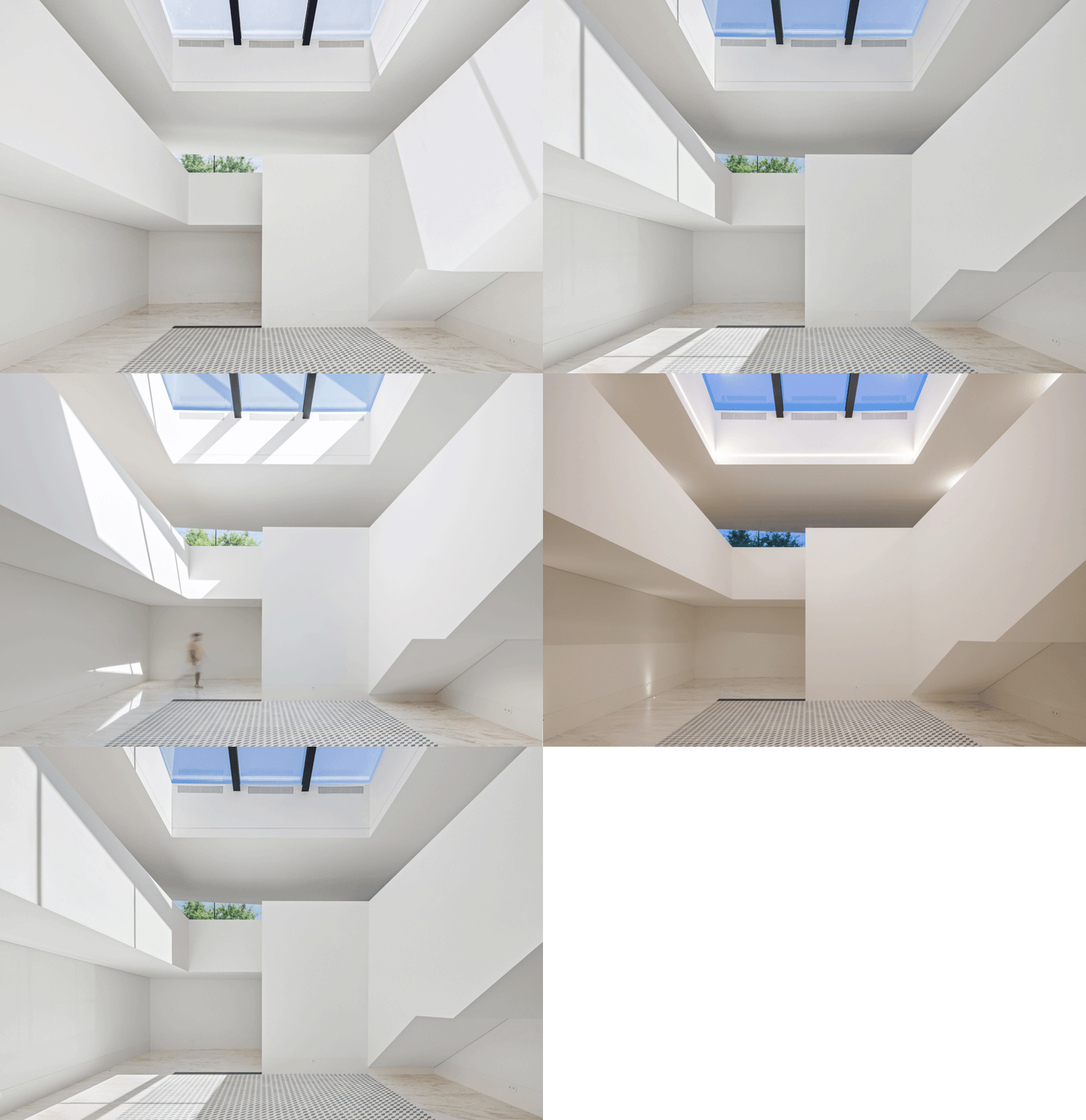
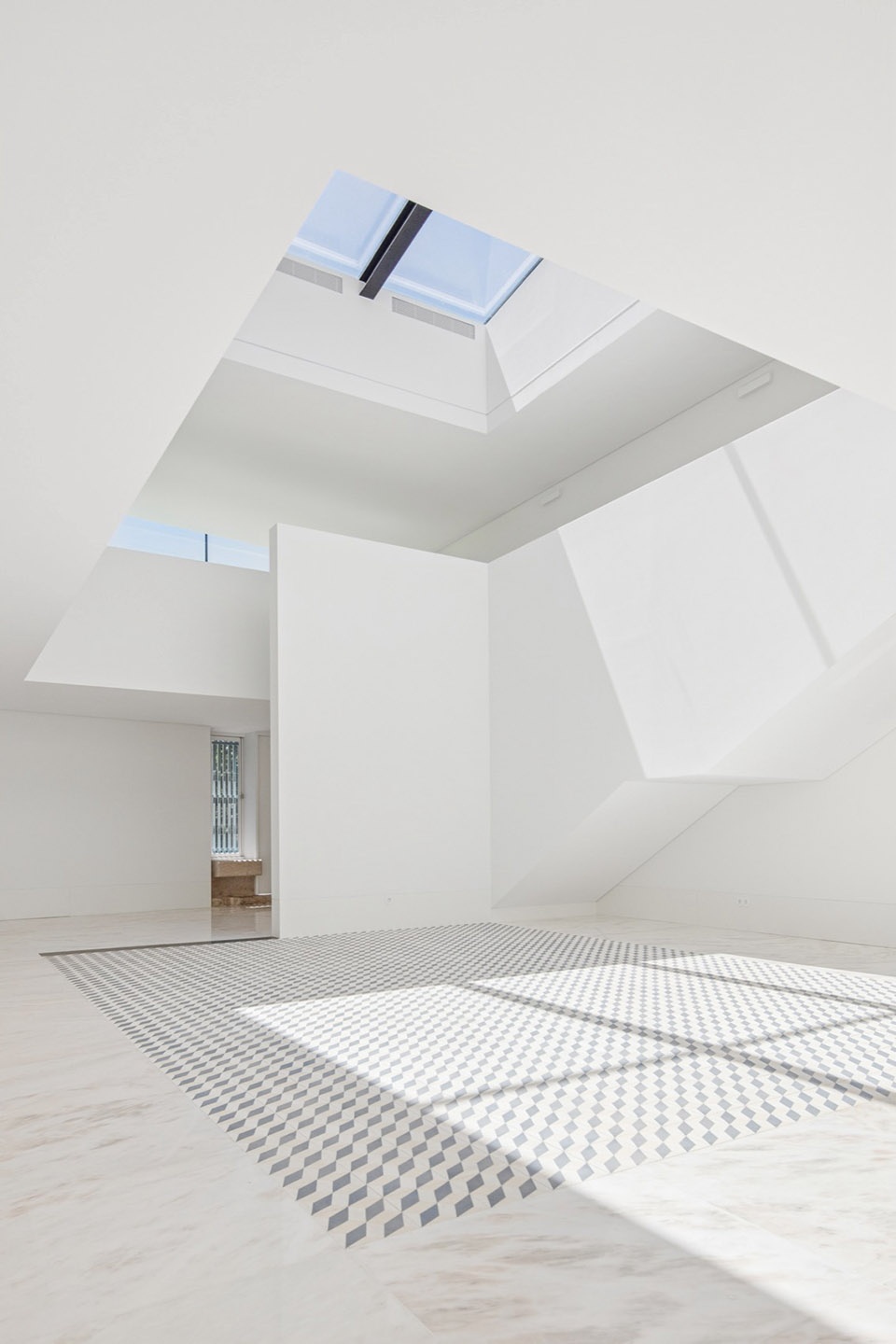
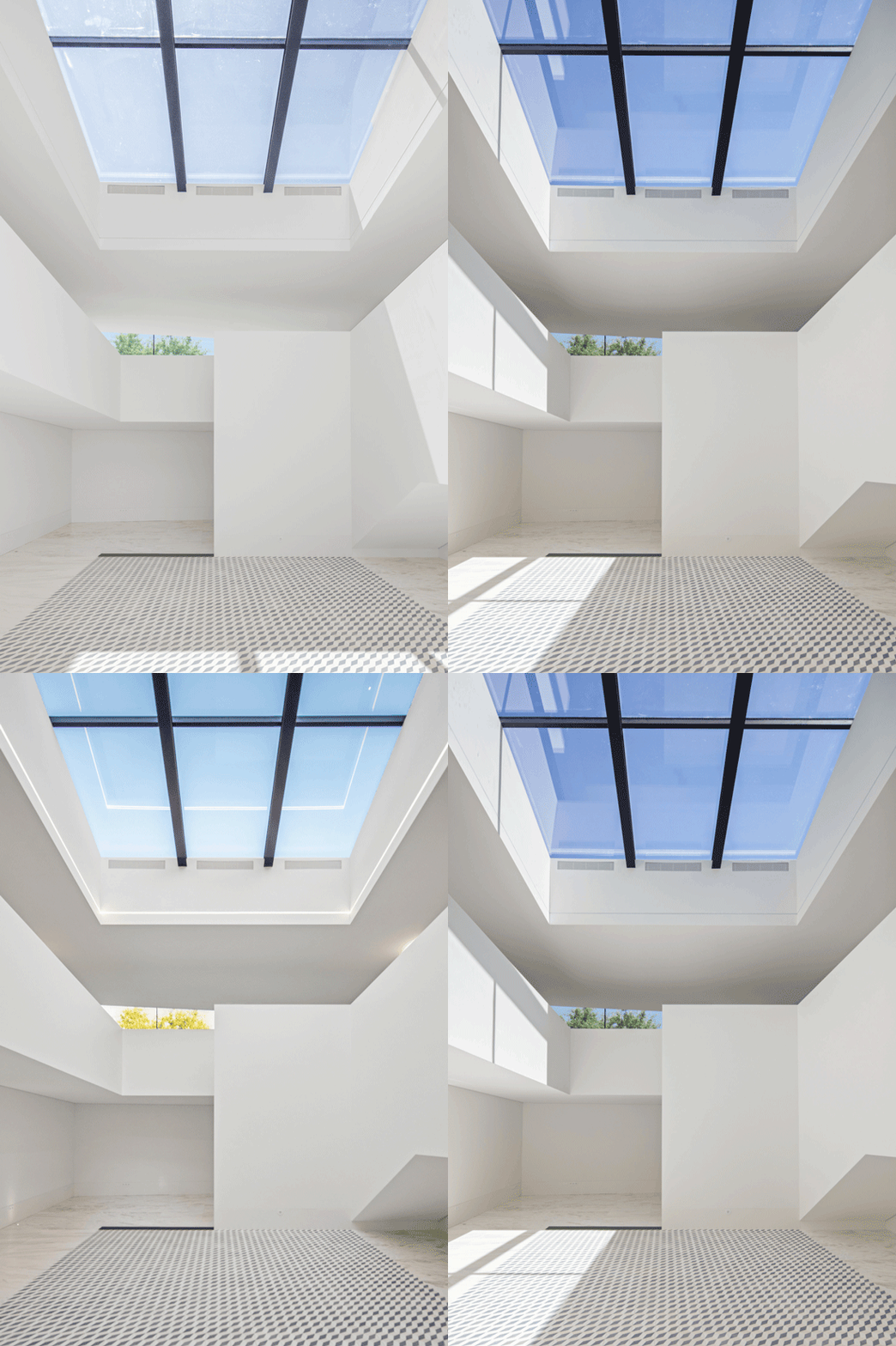
如今的入口通过旧庭院大门进入,成为整个建筑群的“名片”。原本巨大的开口被重新诠释为更具居住尺度的门厅,其中尝试融入了Alto Minho地方建筑中的元素,例如“namoradeiras”窗边双人座、令人联想到传统粮仓的木格栅,以及以硫酸铜调制的颜料色彩等,在共享同一种语言的基础上生成一种新的设计表达。穿过这一门槛后,访客会被一道垂直旋转的界面所迎接,它既组织了流线,也过滤了视线,保护着住宅最核心的空间:一间保留了露天庭院体验的房间。空间以带有图案的水磨砖地面与大型天窗定义,使太阳的轨迹——以及夜晚的月光与米尼奥内陆的星空——被铭刻进空间中心。
The entrance, now made through the old gate of the courtyard, acts as the ensemble’s calling card. The large opening is reinterpreted as a domestic-scale doorway, in which references to the vernacular architecture of the Alto Minho (such as the namoradeiras window side seats, timber slatting reminiscent of traditional granaries, or copper sulphate pigmented paints) are tested to produce, sharing the same language, a new design. Beyond this threshold, the visitor is welcomed by a vertical spiral plane that organises circulation and filters views, protecting the heart of the house: a room that preserves the experience of an outdoor patio, defined by a patterned hydraulic tile floor and a large skylight, inscribing the path of the sun (and, at night, the moonlight and starlit skies of the Minho interior) into the core of the space.
▼入口,entrance
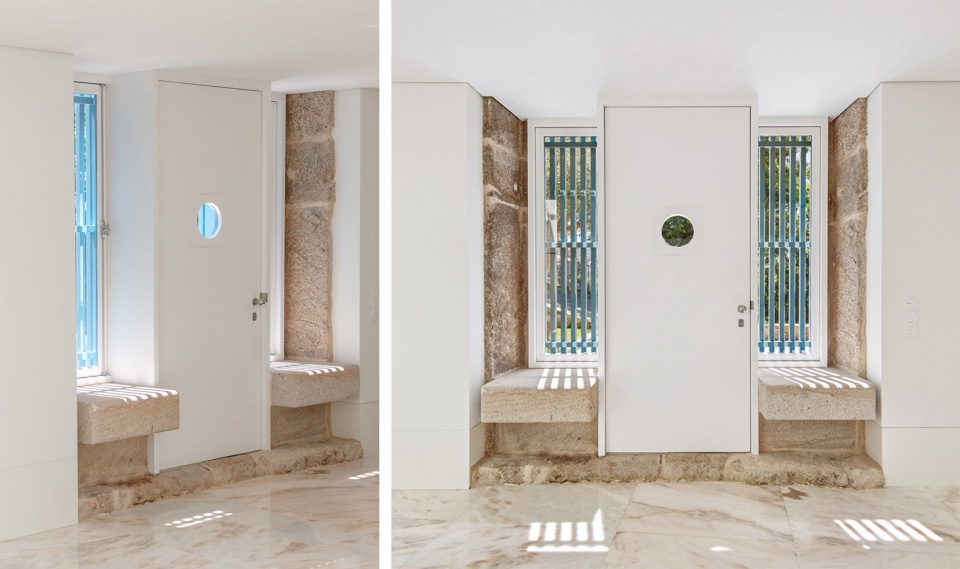
▼大堂,lobby
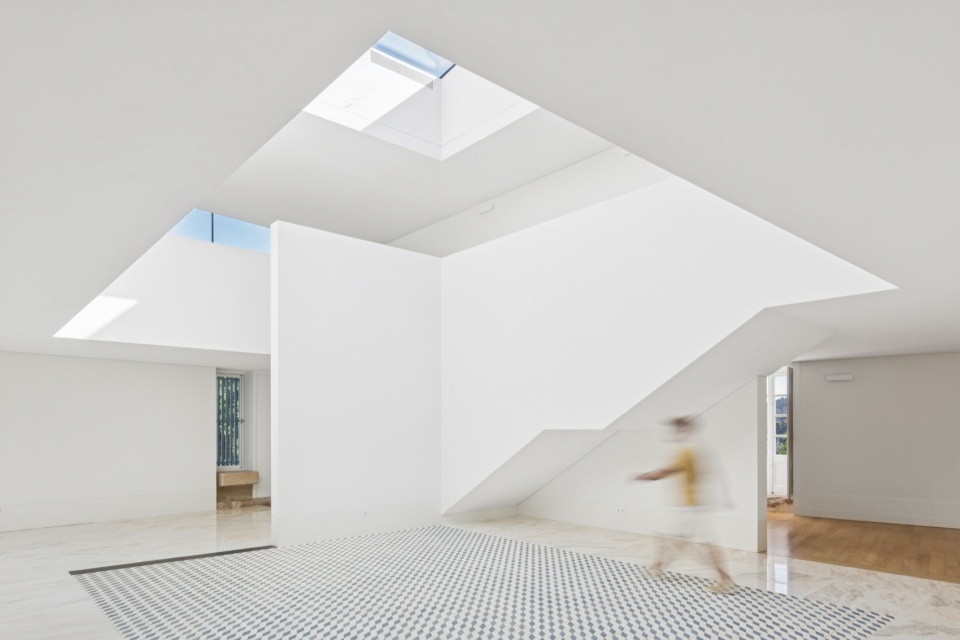
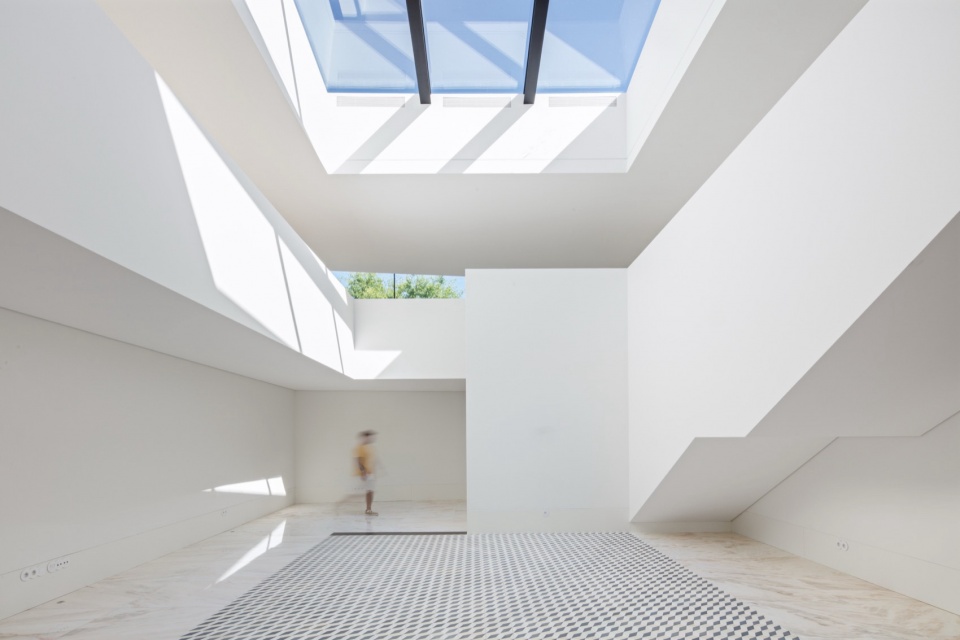
▼天窗与光影,skylight and lighting design
▼楼梯与扶手栏杆,staircase and handrail
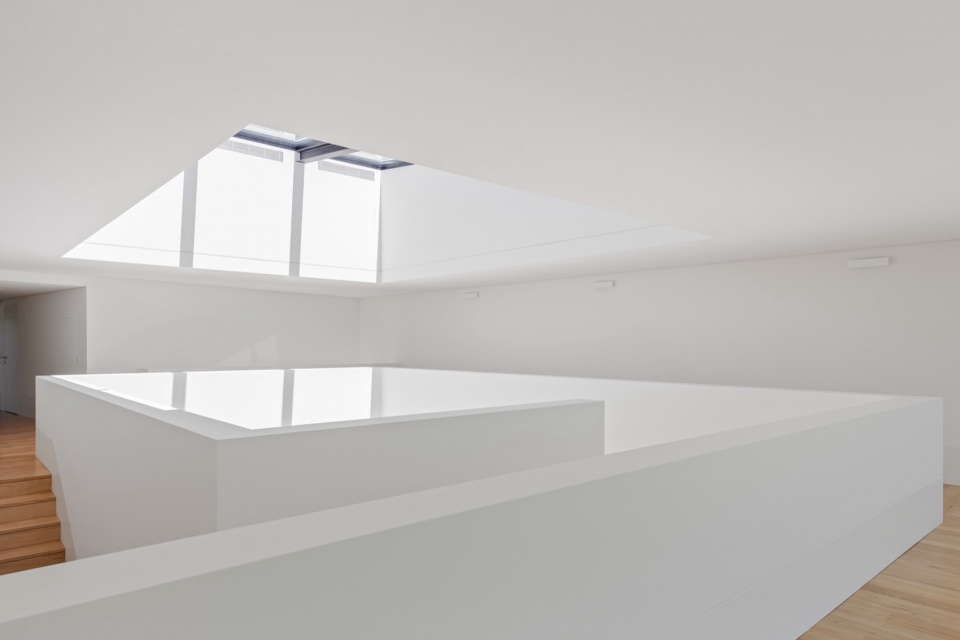
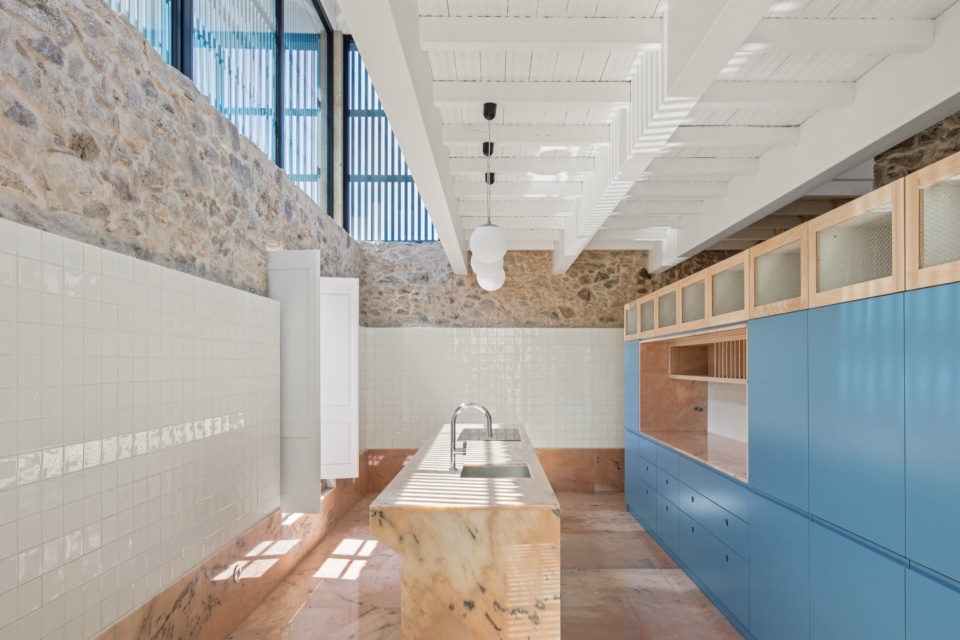
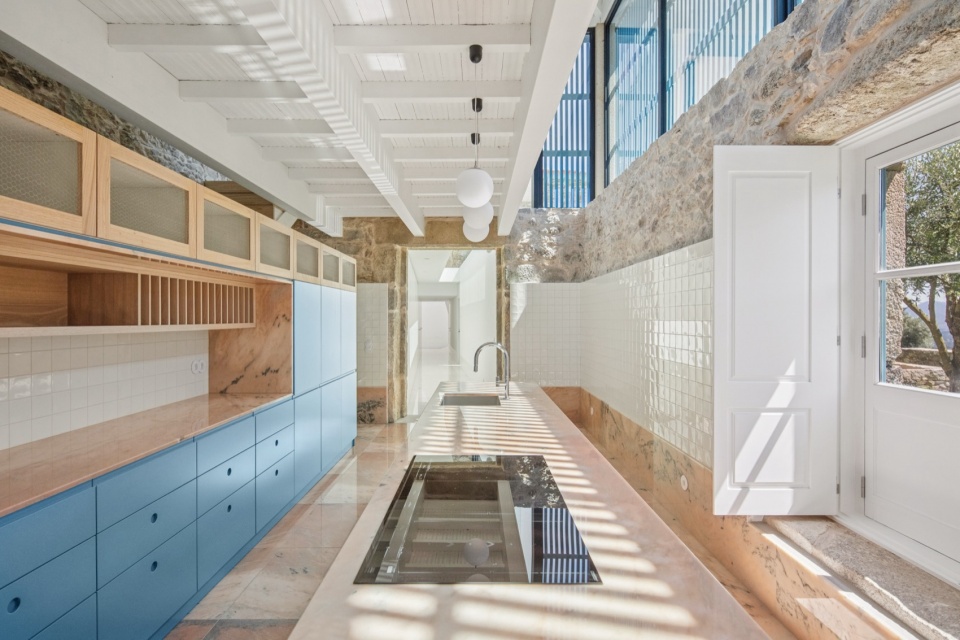
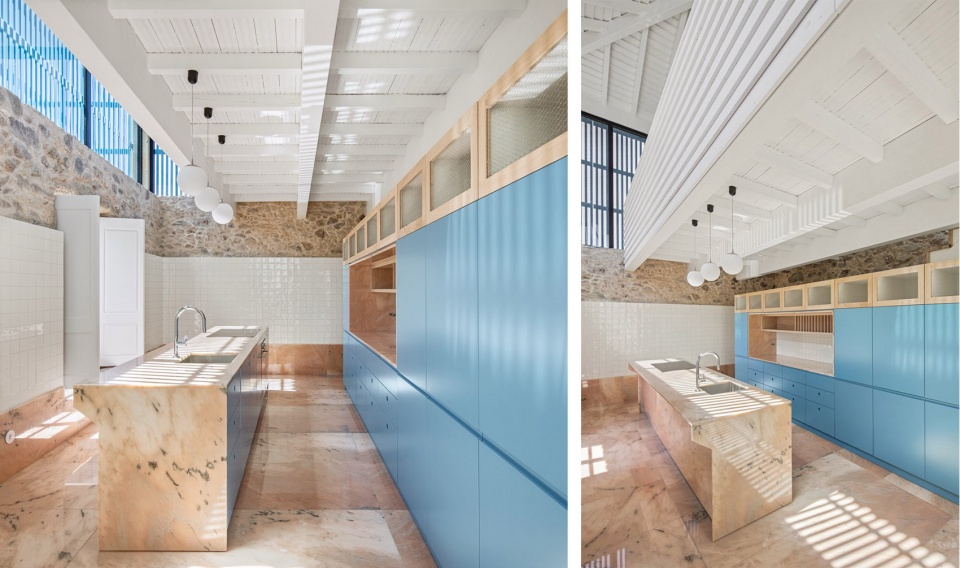
沿着由同一垂直界面控制的楼梯向上攀登,最终抵达顶部一处开阔的观景口,可以无遮挡地眺望圣殿与周围树冠。清晨时分,穿过枝叶过滤后的光线洒满整个空间。酒店的公共空间被布置于首层,包括原有住宅中的起居室、餐厅以及一间小型冬季休息室。此外,还配置了一间无障碍客房、洗衣房、酒窖与卫生间。沿着一条连接住宅与重建粮仓的新走廊前行,便可抵达位于粮仓底层的厨房。尽管厨房属于当代建造,但其材料、细部与设计选择——如橱柜、粉色大理石以及手工瓷砖——均唤起了米尼奥地区民间建筑的记忆,在这里,记忆本身成为一种建造材料。
Climbing the stair, governed by that same vertical plane, one reaches, at the top, a wide opening offering an unimpeded view of the Sanctuary and surrounding tree canopy, flooding the space with light filtered through the foliage at daybreak. The Hotel’s social spaces are organised on the ground floor, which includes, within the pre-existing house, the living room, dining room, and a small winter room. These are complemented by an accessible bedroom, a laundry room, a wine cellar, and a bathroom. Following a new corridor that links the house to the reconstructed granary, one finds the kitchen, occupying the ground floor of that structure. Though of contemporary construction, the kitchen employs materials, details and design choices that evoke the popular architecture of the Minho (cupboards, pink marble, hand-made tiles) with memory here serving as a constructive material.
▼厨房,kitchen
▼二层,upper floor
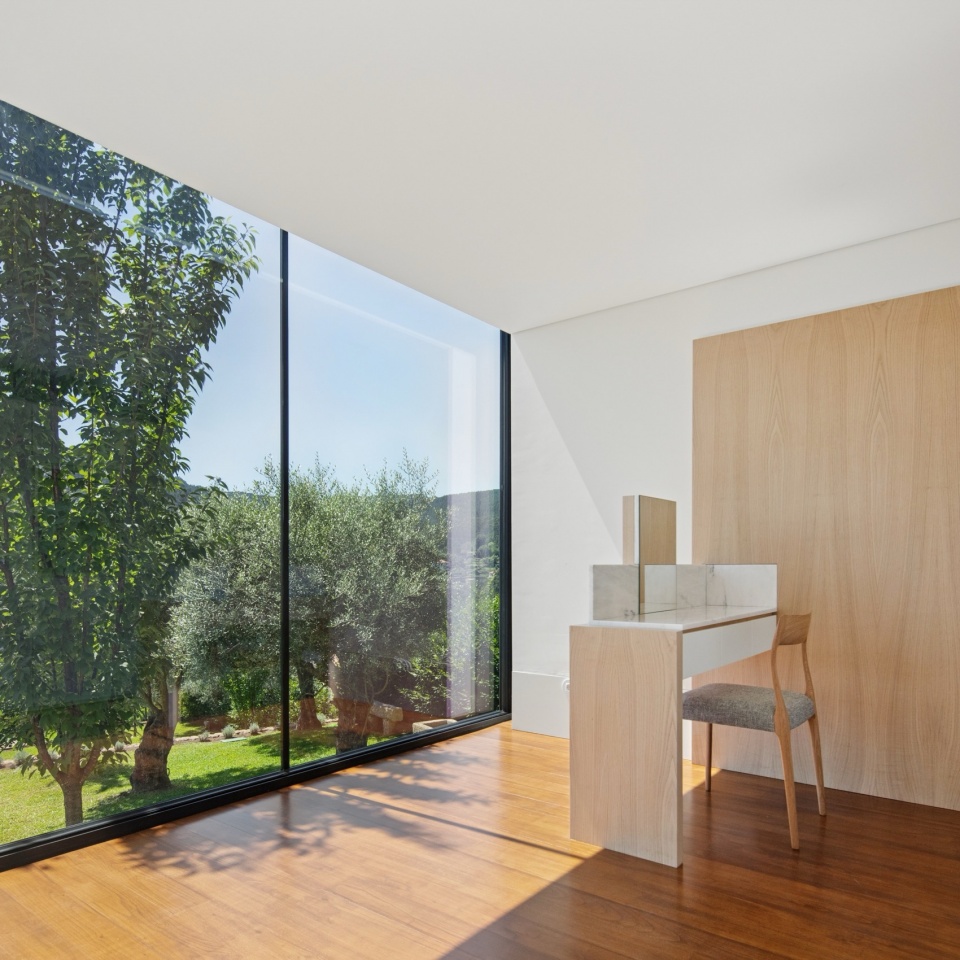
▼书桌与壁橱,desk and closet
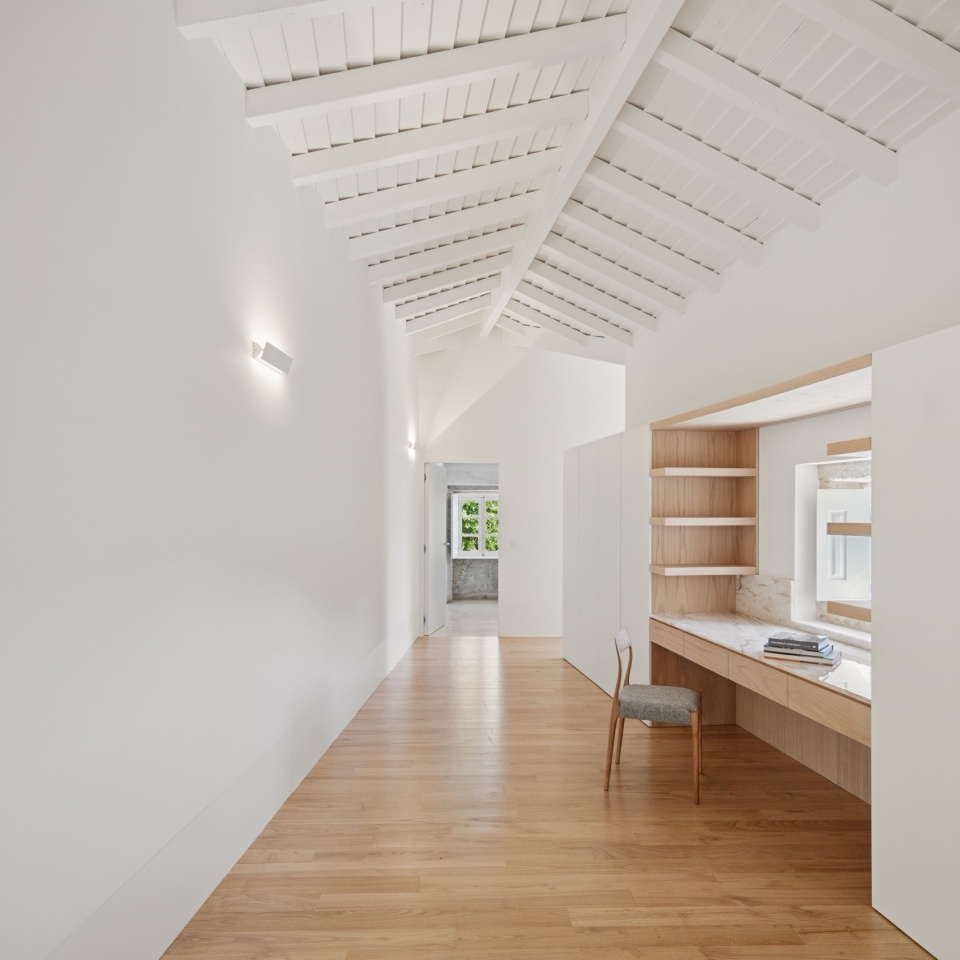
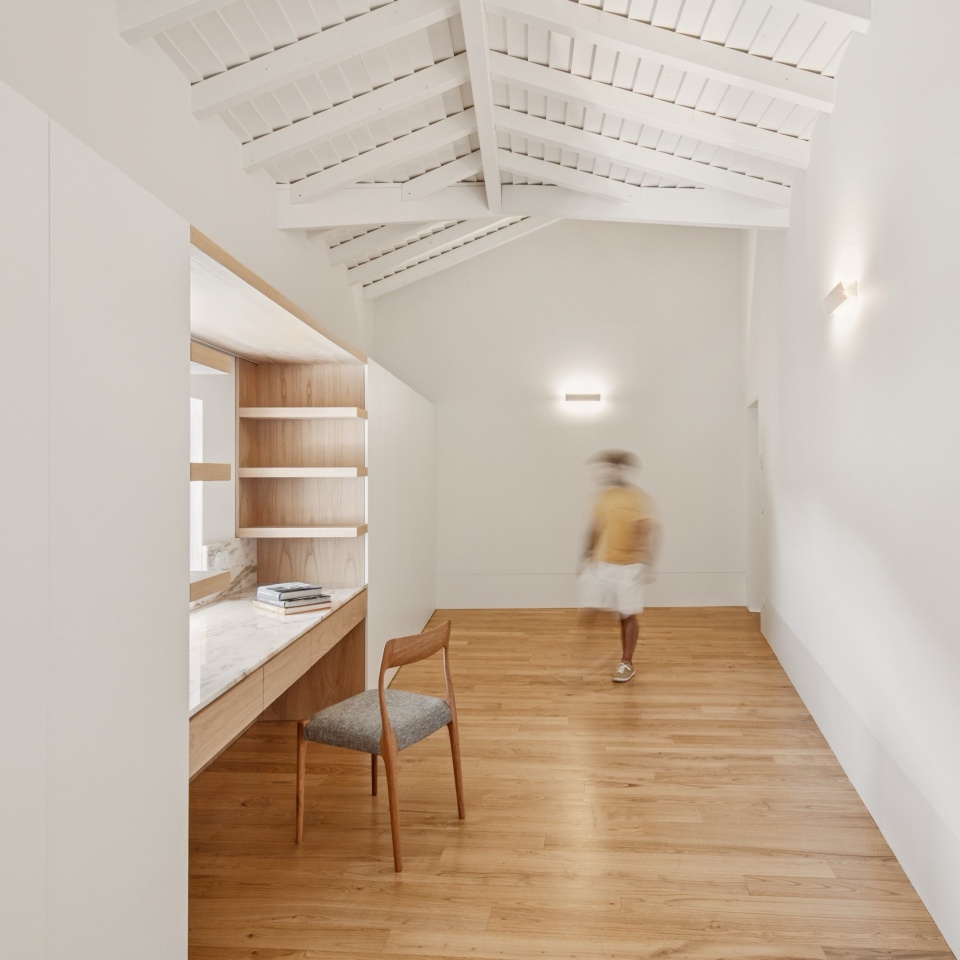
▼客房,guest room
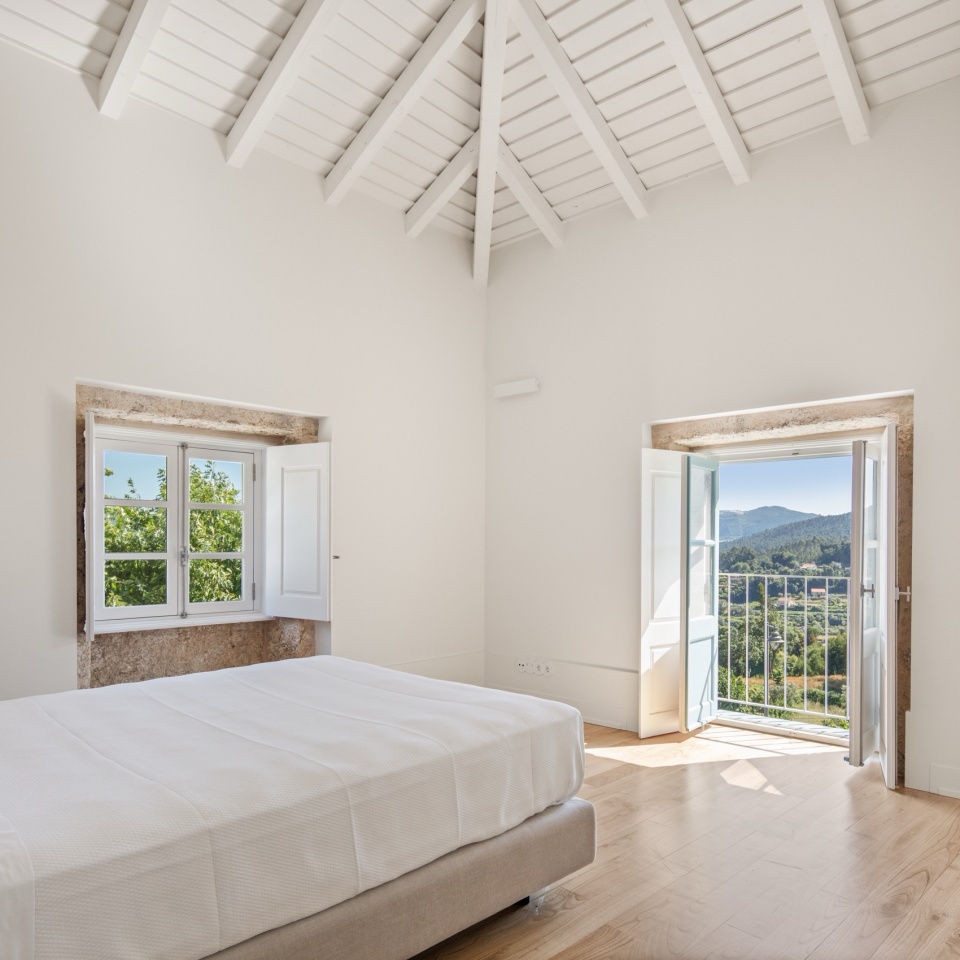
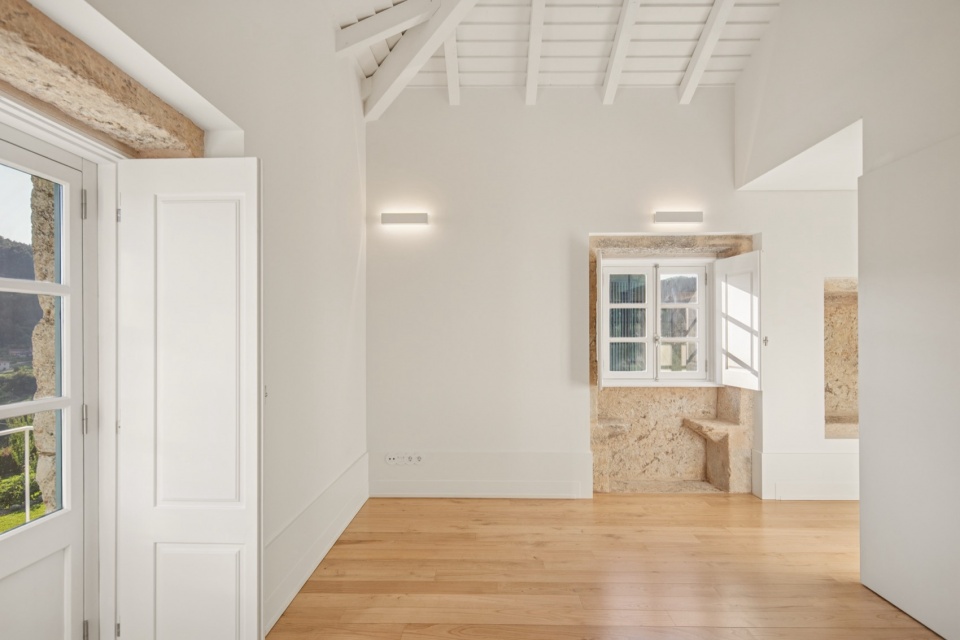
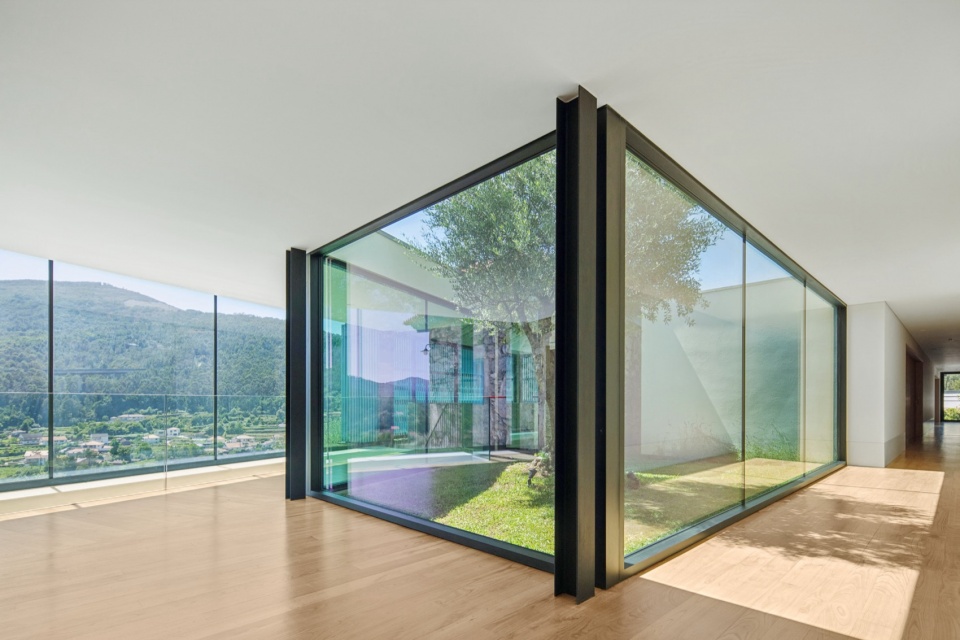
▼走廊与天井庭院,hallway and patio courtyard
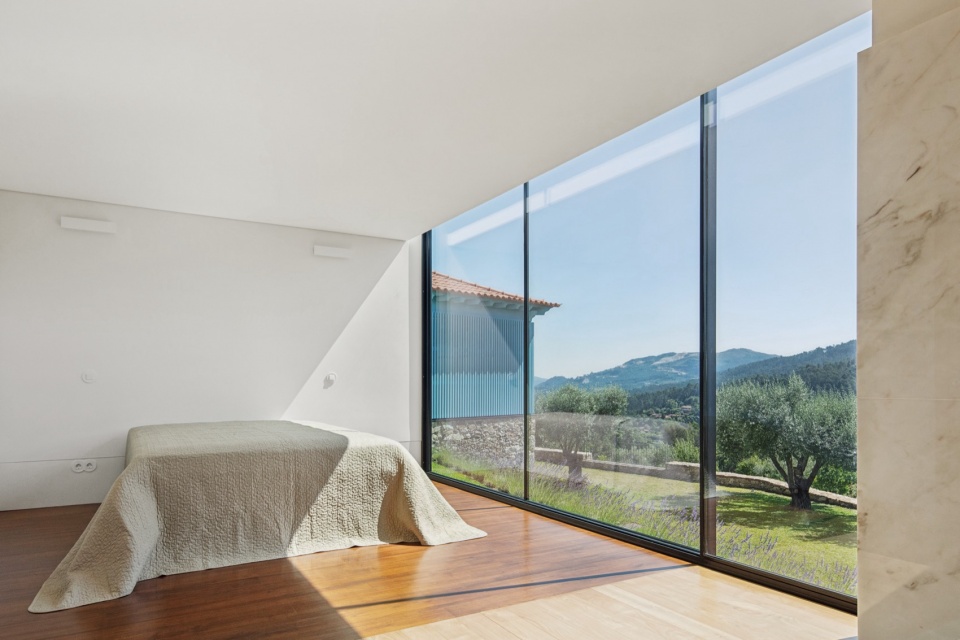
▼客房,guest room
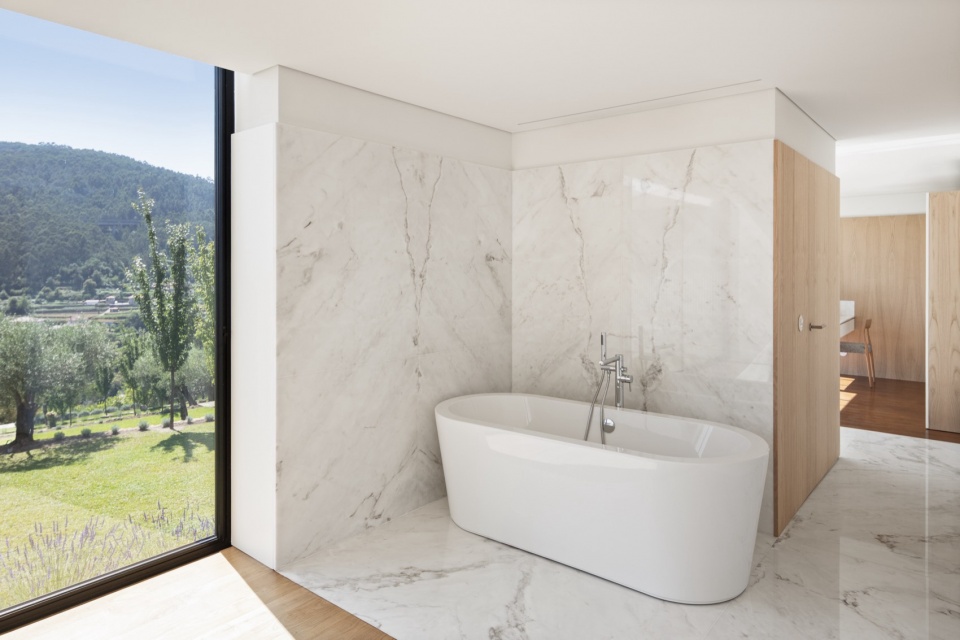
▼浴室,bathroom
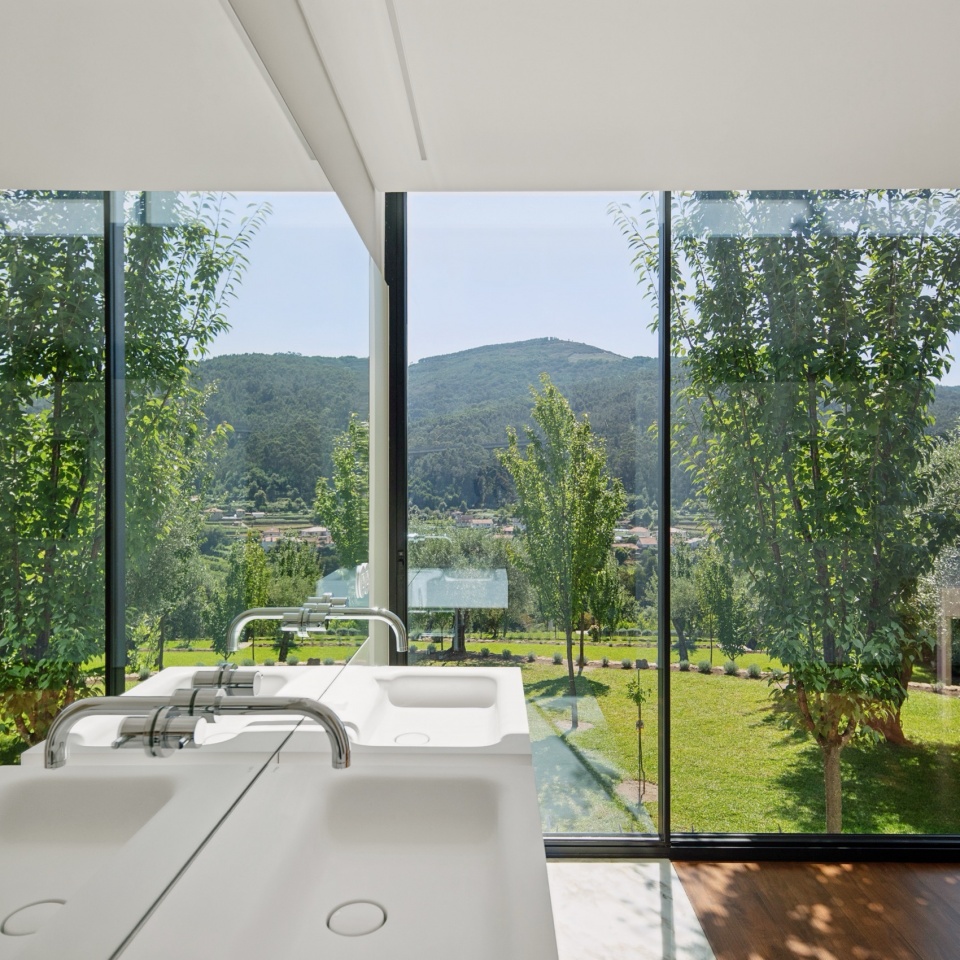
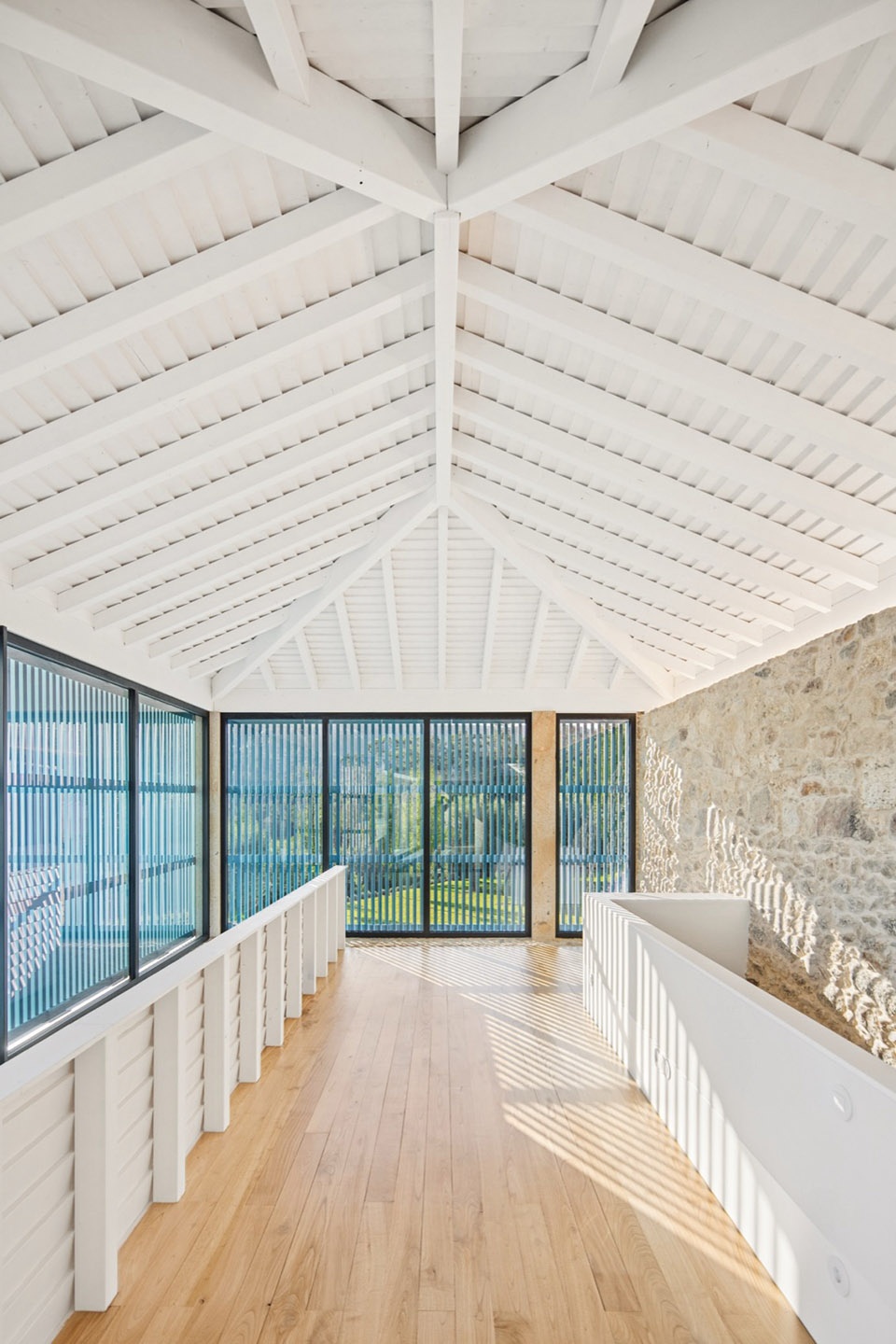
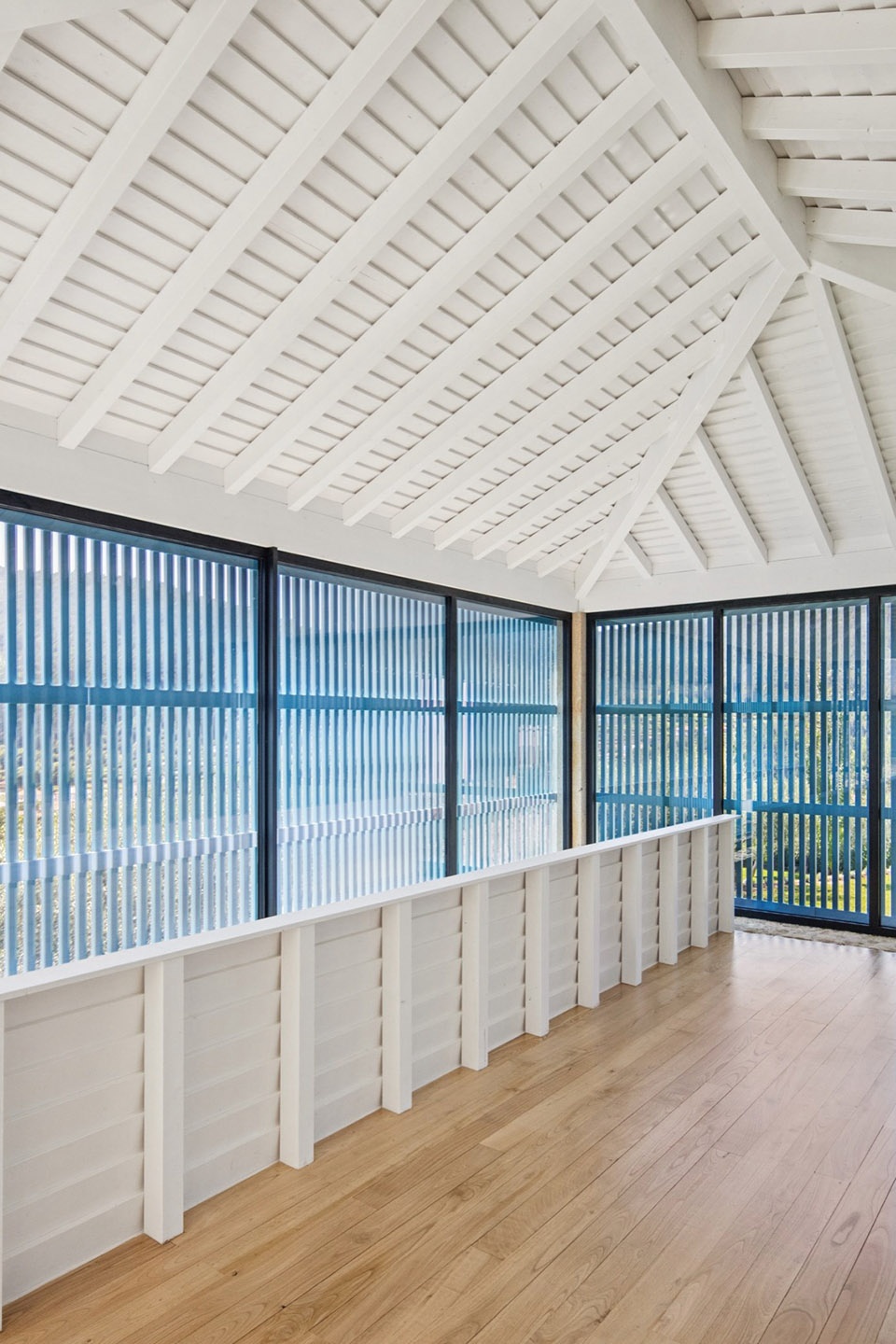
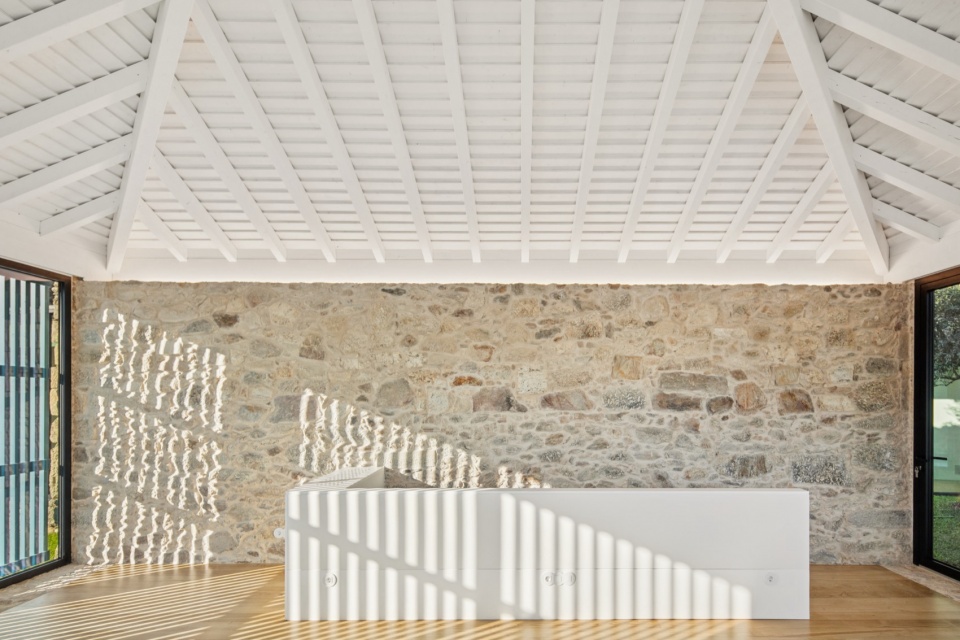
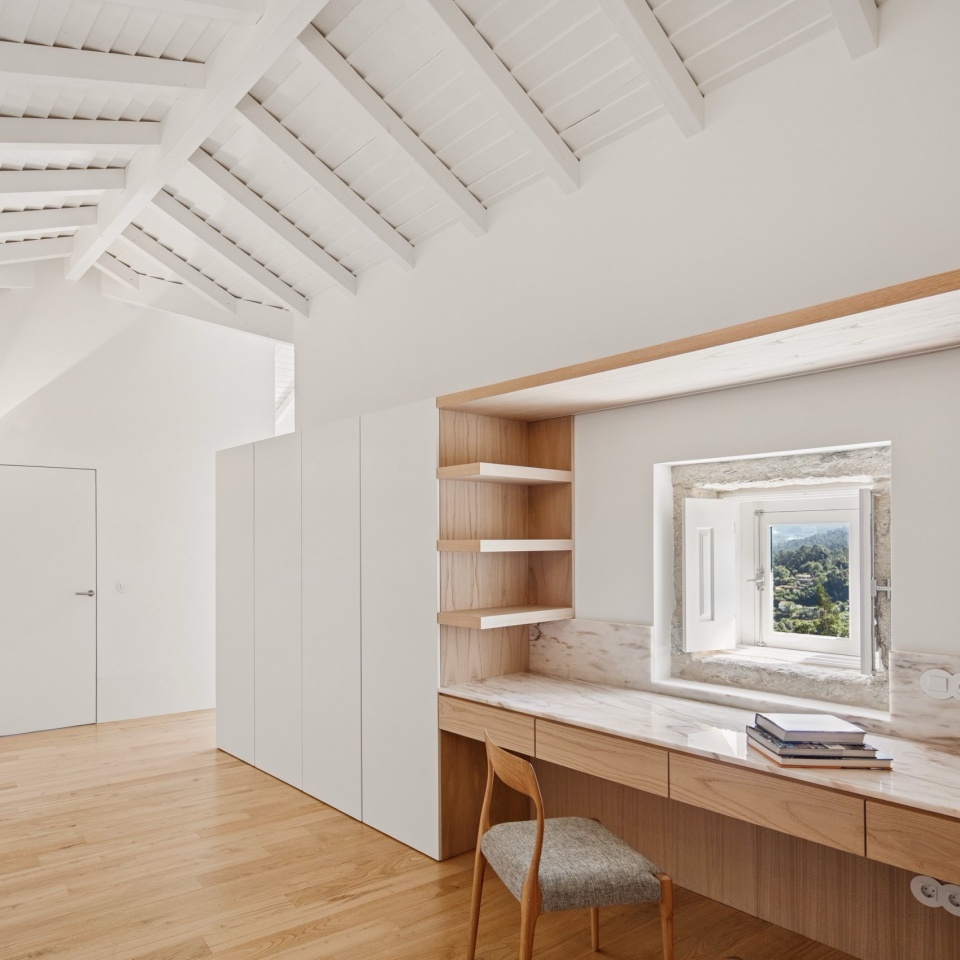
楼仓上层设置了与厨房相配套的餐饮空间,向南侧山谷展开,并通过木质格栅遮阳屏风过滤视线、调节日照。此次重建延续了传统结构体系:以橡木梁柱与搁栅支撑栗木地板,屋顶同样采用这一构造逻辑——在瓦片下增设经过处理的松木板,同时结合保温与防水层。客房因此被布置于上层空间。原有住宅中设置了一间大型套房及另外两间卧室。在保留的立面之后,高踢脚线以简洁细部重新演绎此类住宅常见的空间语言,木窗框与百叶窗也遵循同样的逻辑。屋顶则与谷仓一致,恢复了当地传统的建造方式。在这些空间中,传统细部与当代元素——例如新隔墙中嵌入式的极简踢脚线——自然交织,形成平滑而连贯的过渡。
On the upper floor of the granary, a dining area complements the kitchen and opens to the valley to the south, protected by a slatted timber screen that filters views and regulates solar gain. This reconstruction reproduces a traditional structural system, with oak beams and joists supporting a chestnut floor, and the same solution (with treated pine boarding under roof tiles, now including insulation and waterproofing) applied in the roof. The bedrooms are thus located on the upper floor. Within the pre-existing house are a large suite and two further bedrooms. Behind the surviving façades, one finds high skirtings, with simple details but clearly inspired by typologies common to houses of this kind, and timber frames and shutters following the same logic. The roof, like that of the granary, recovers the vernacular construction system of the region. In these spaces, traditional details intersect with contemporary elements (such as recessed, minimal skirtings in the new partitions) in a smooth, seamless transition.
▼建筑外观,exterior views of the project
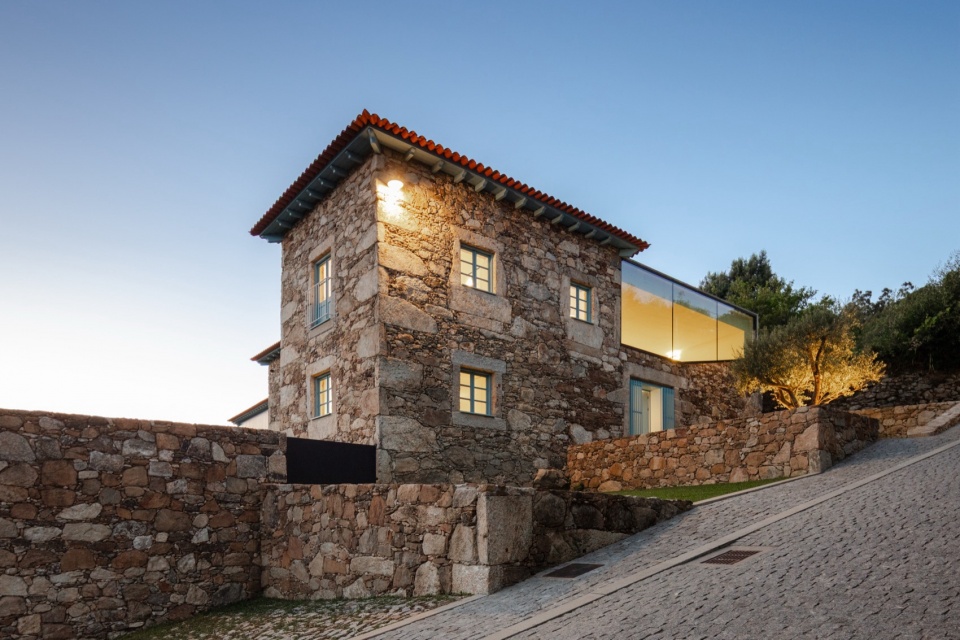
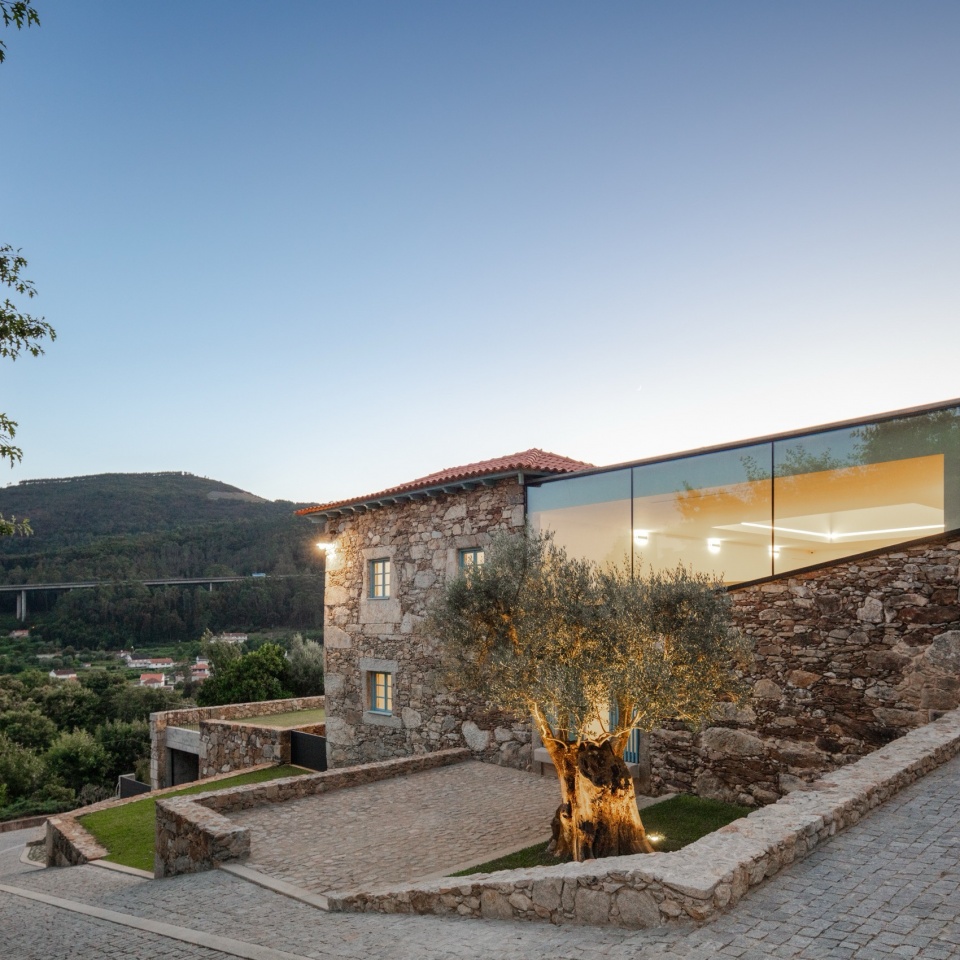
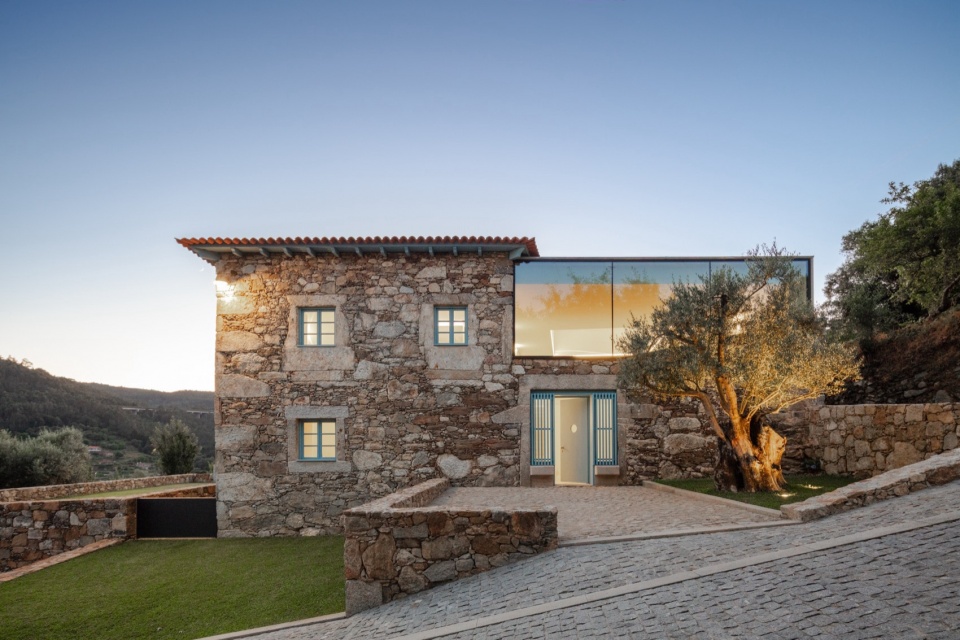
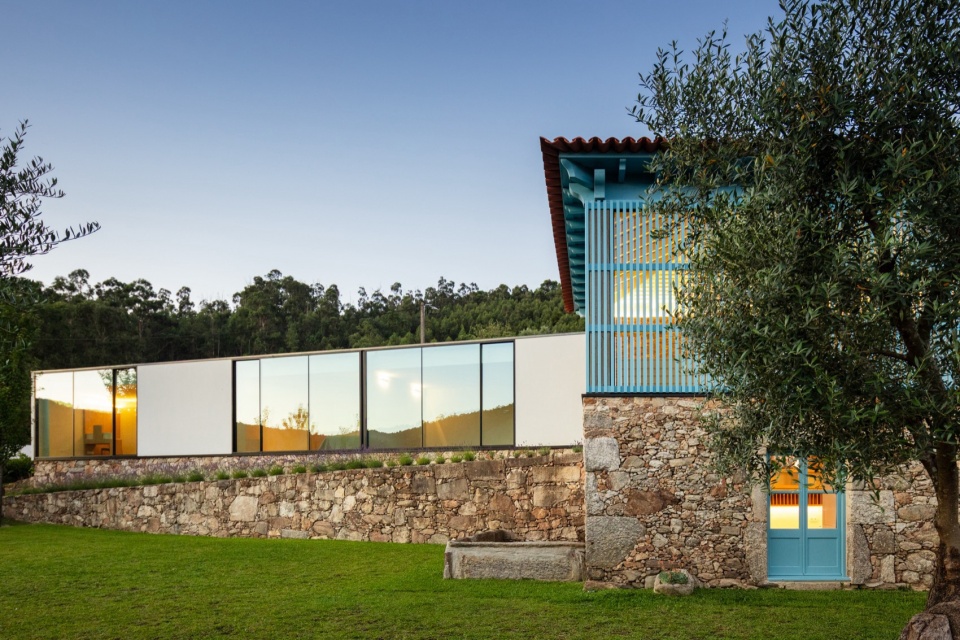
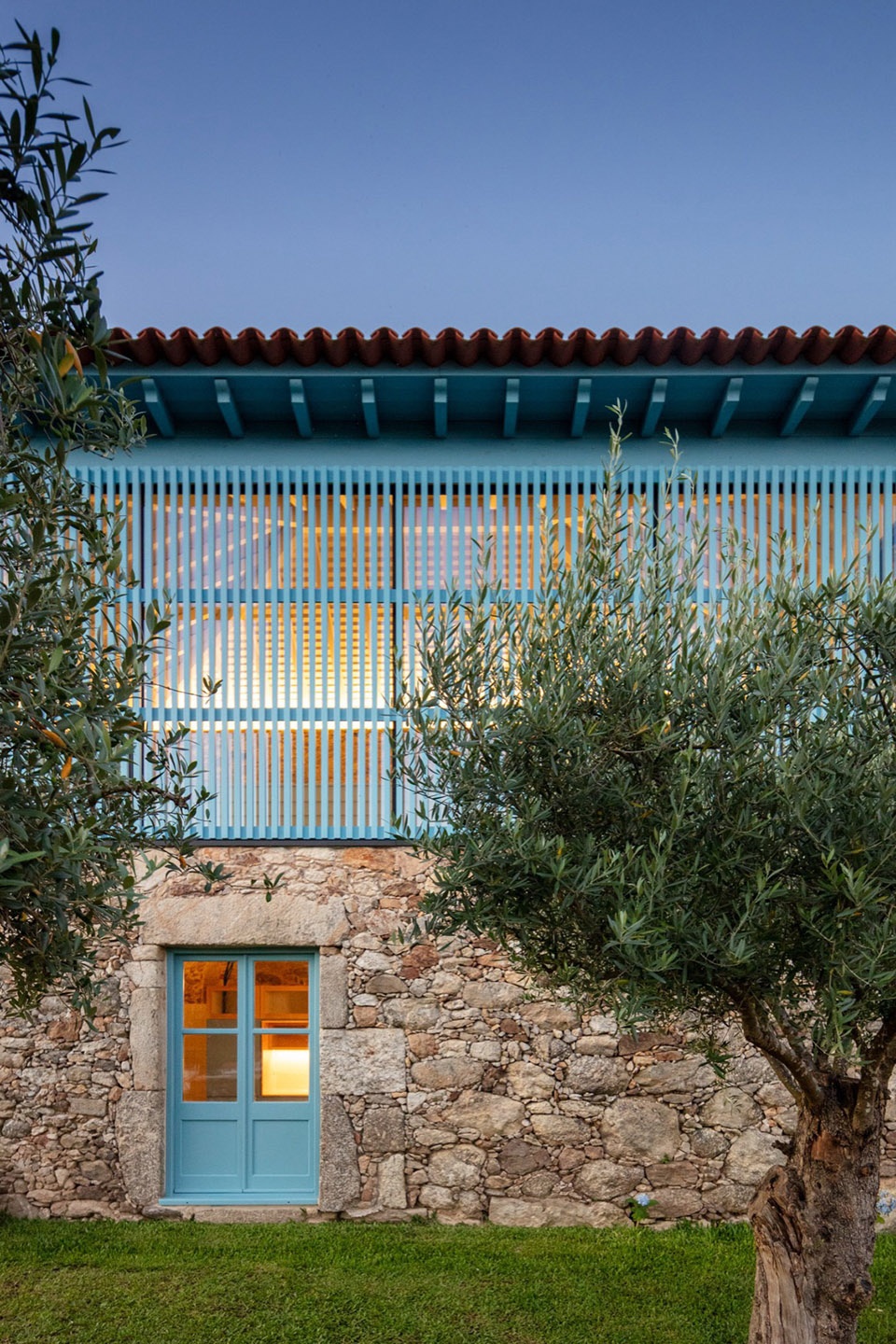
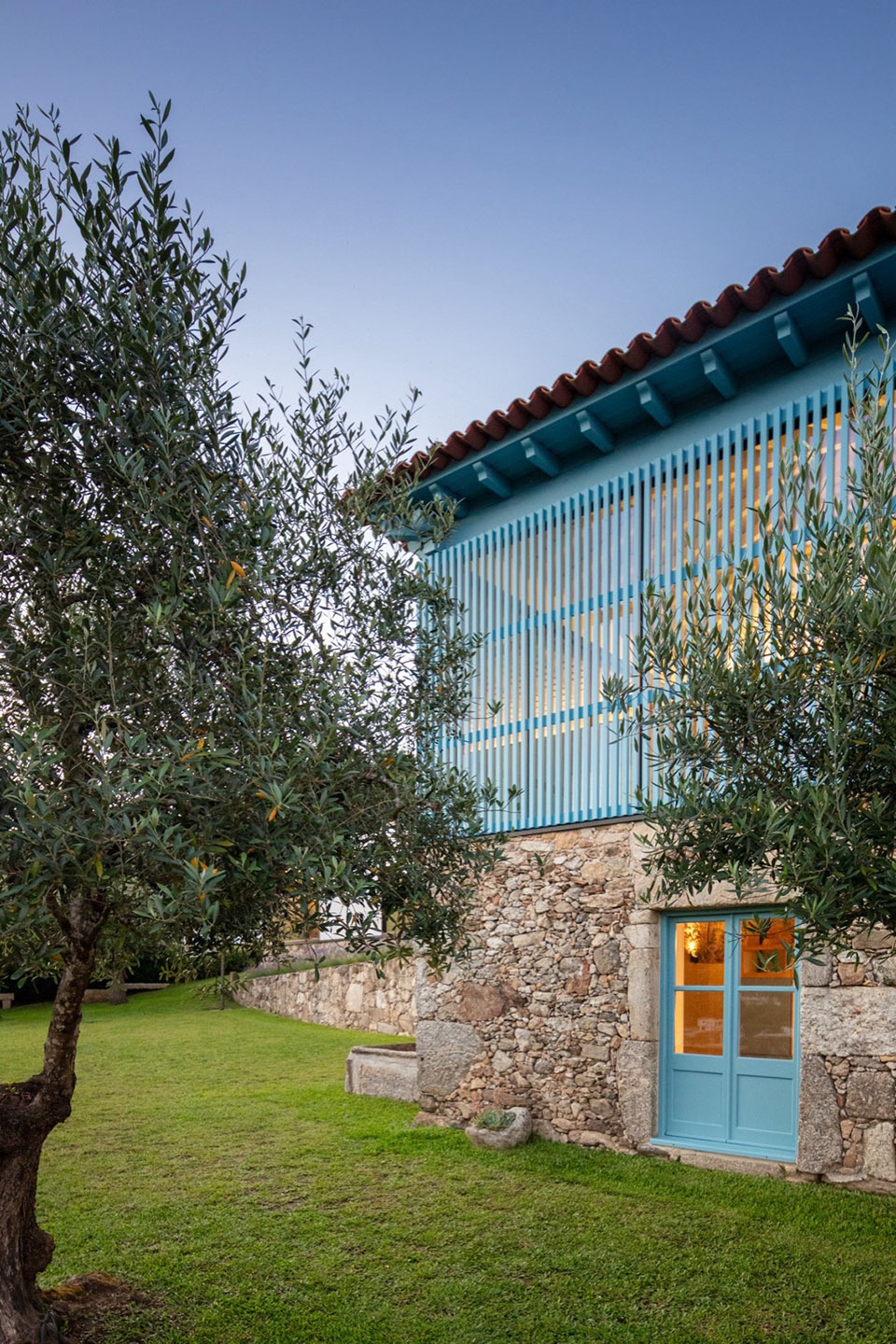
通往谷仓上层的走廊最终抵达一个由露天庭院界定的过渡空间,庭院中央框景一棵橄榄树。这个庭院组织着原有住宅、谷仓餐厅与新增客房翼之间的流线关系。新增翼楼中的客房保持简洁克制,使Labruja山谷的景观成为空间真正的主角。因此,项目延续了这一由多个独立而彼此联结体量构成的聚落逻辑:它们共同坐落于由层层台地与厚重花岗岩挡墙塑造的地形之上,构成一段关于叠加与延续的场所叙事,深深植根于当地的材料、传统与建造方式之中。CERDEIRAS HOUSE HOTEL因此成为这座宅邸自1747年建立以来漫长重建与更新过程中的又一章节,延续着其关于持续与转化、留存与新生的历史。
The corridor leading to the upper floor of the granary culminates in a threshold space marked by an outdoor patio framing an olive tree. This patio distributes circulation between the pre-existing house, the dining space in the granary, and the new bedroom wing. This new wing houses simple bedrooms where the relationship with the landscape of the Labruja valley emerges as the main protagonist. The project thus preserves the logic of a fragmented ensemble, composed of autonomous yet interconnected volumes, crowning a terrain shaped by terraces and robust granite walls: a story of overlapping layers, all rooted in the place, its materials, its traditions, and building practices. The Cerdeiras House Hotel is, therefore, another episode in the long process of reconstruction and adaptation that has shaped the House’s history since its foundation in 1747, another chapter in its legacy of continuity and transformation, of permanence and renewal.
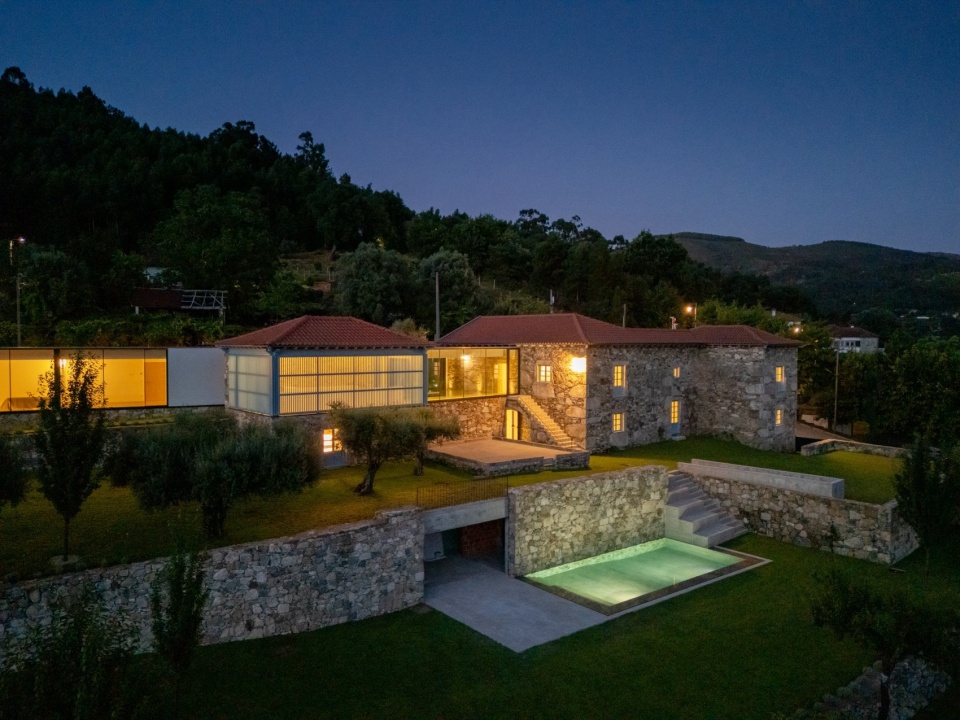
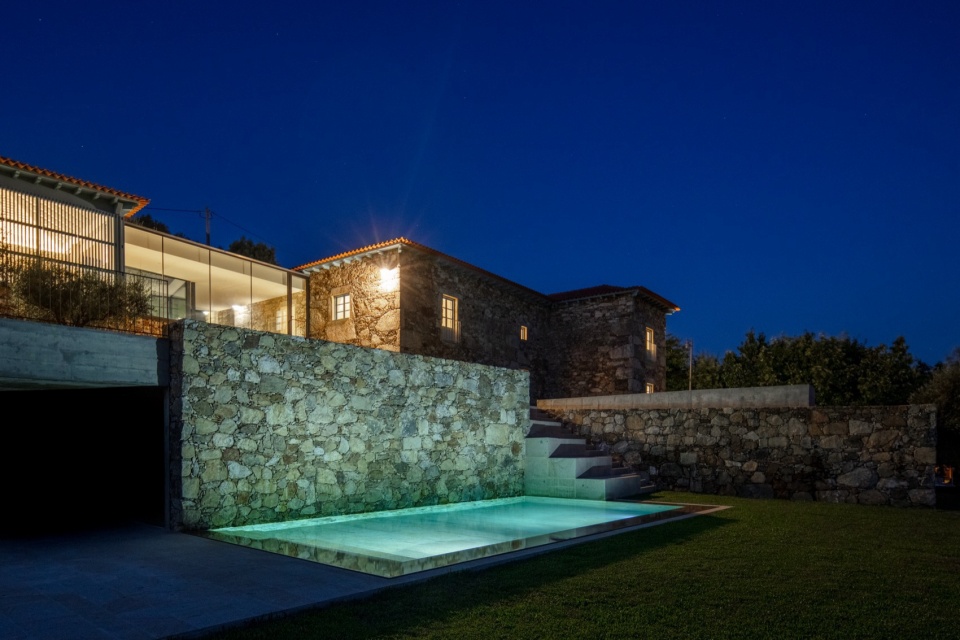
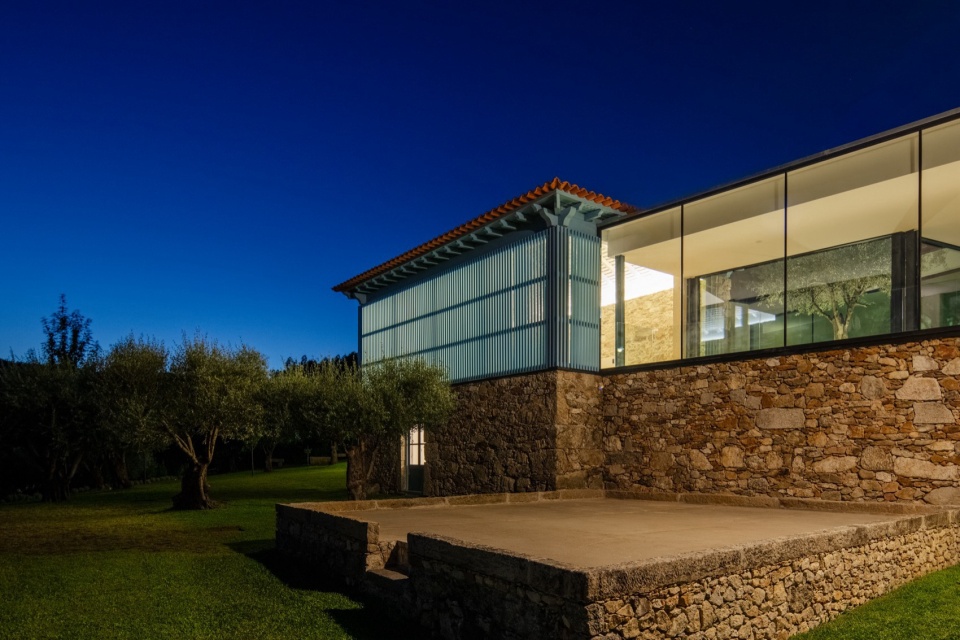
▼夜景,night views
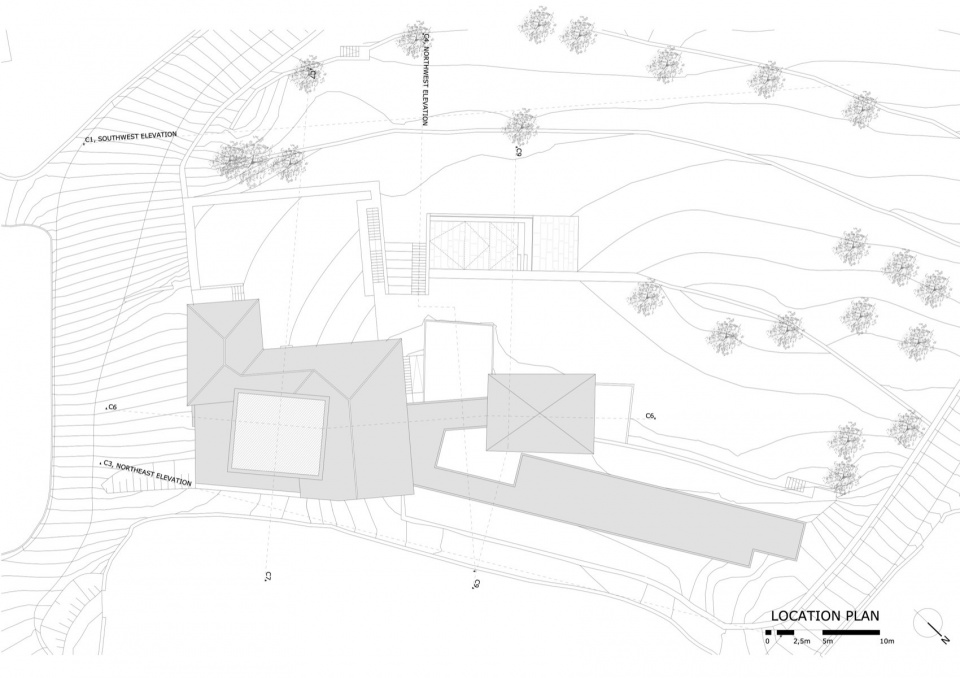
▼区位平面图,location plan
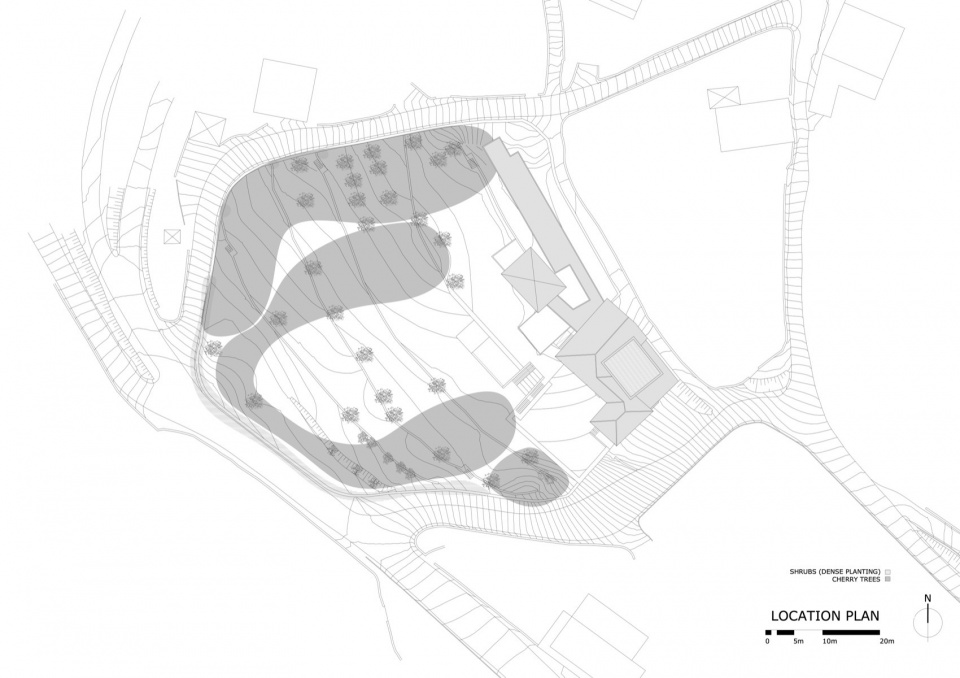
▼总平面图,master plan
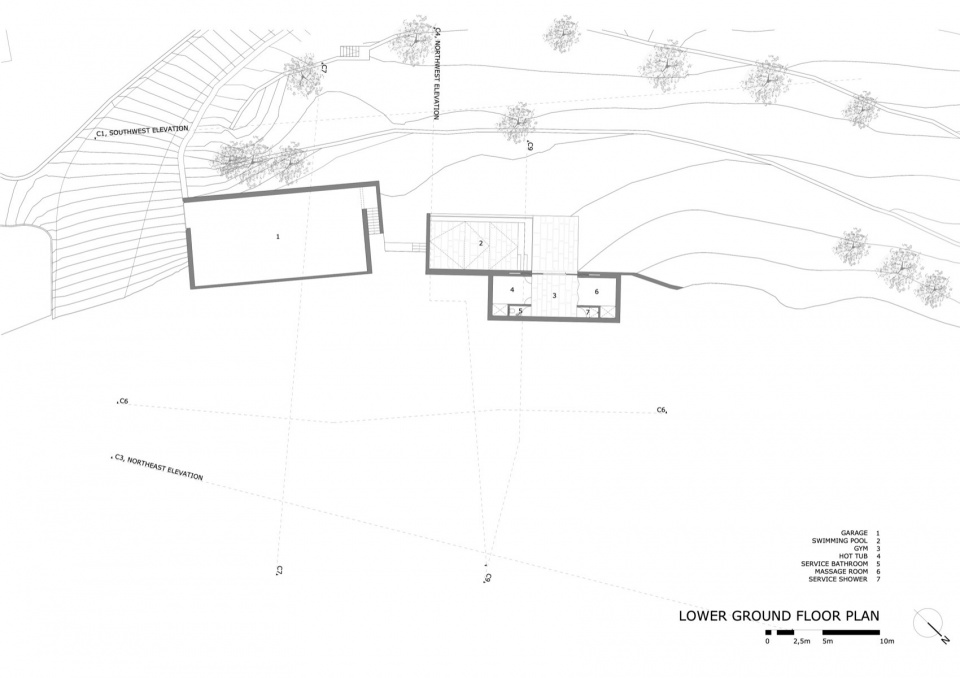
▼底层平面图,lower ground floor plan
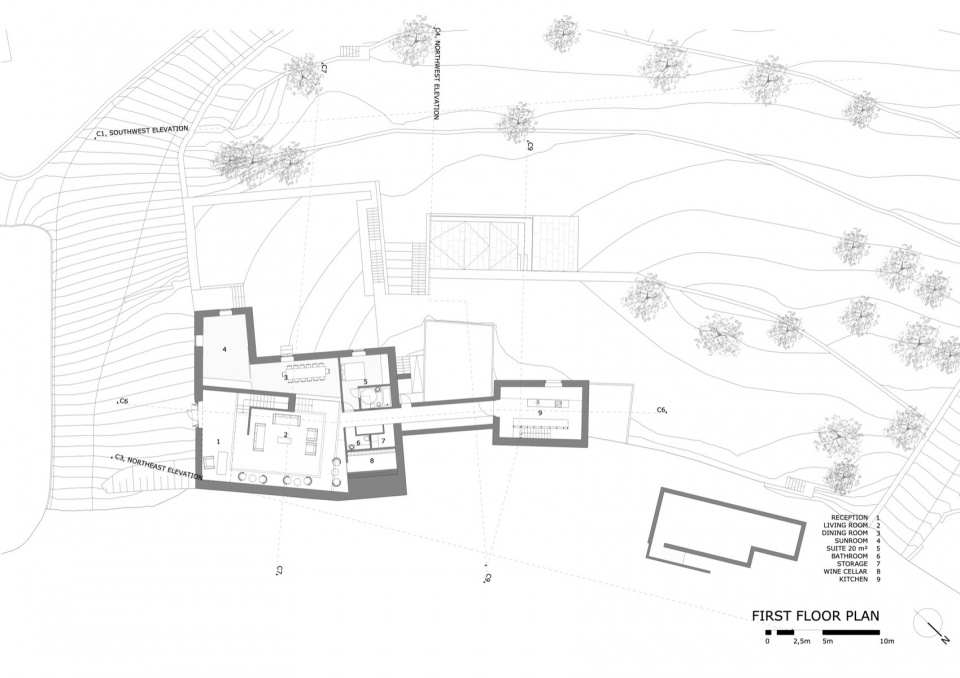
▼一层平面图,first floor plan
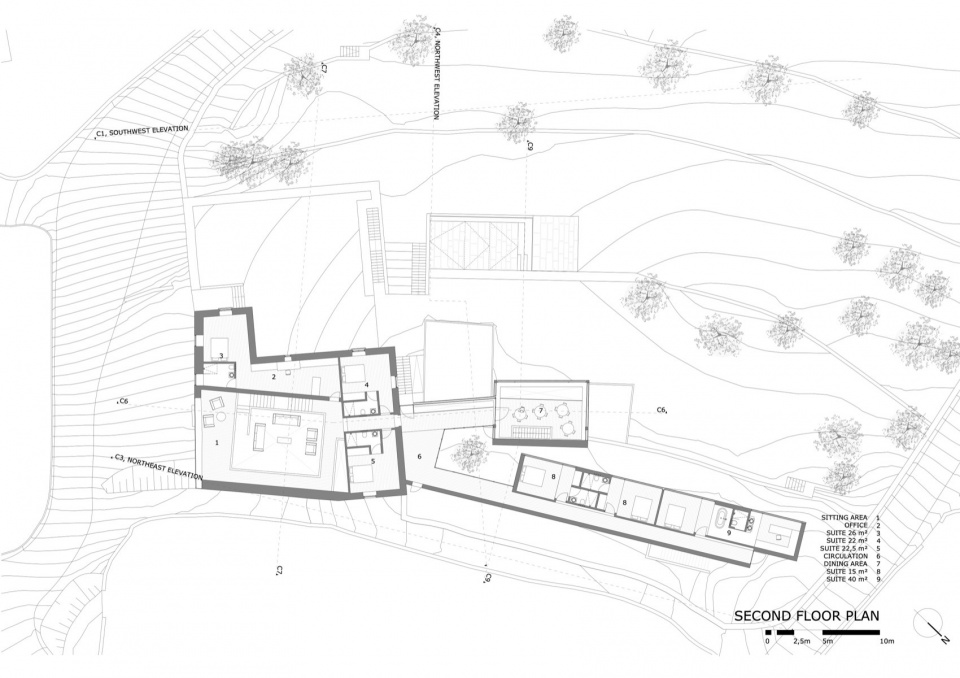
▼二层平面图,second floor plan
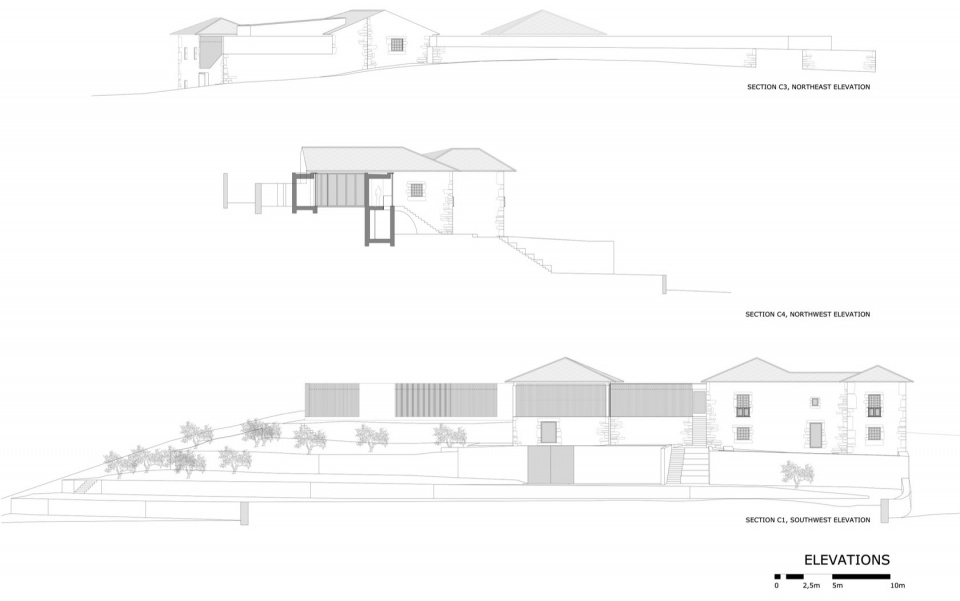
▼立面图,elevations
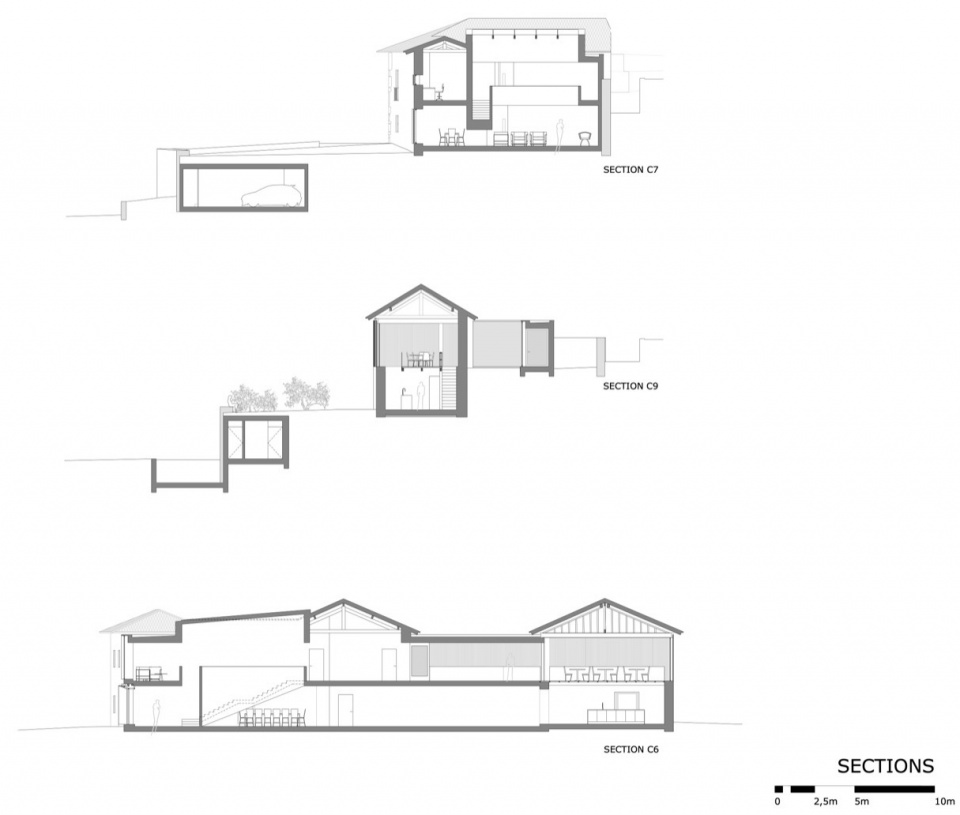
▼剖面图,sections
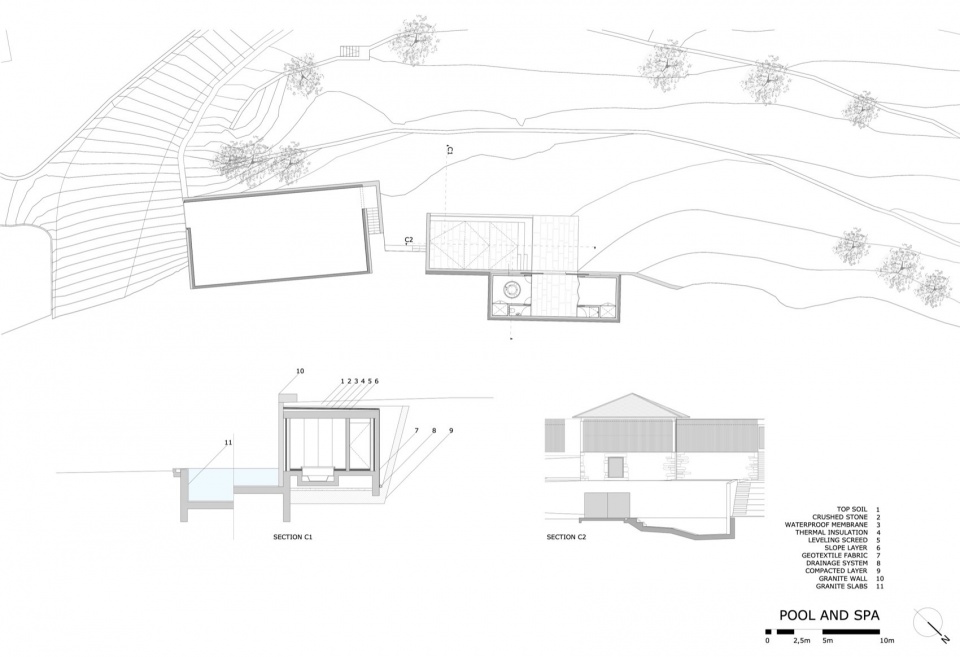
▼泳池与spa图纸,drawings of the pool and spa
▼厨房家具图纸,drawings of the kitchen furniture
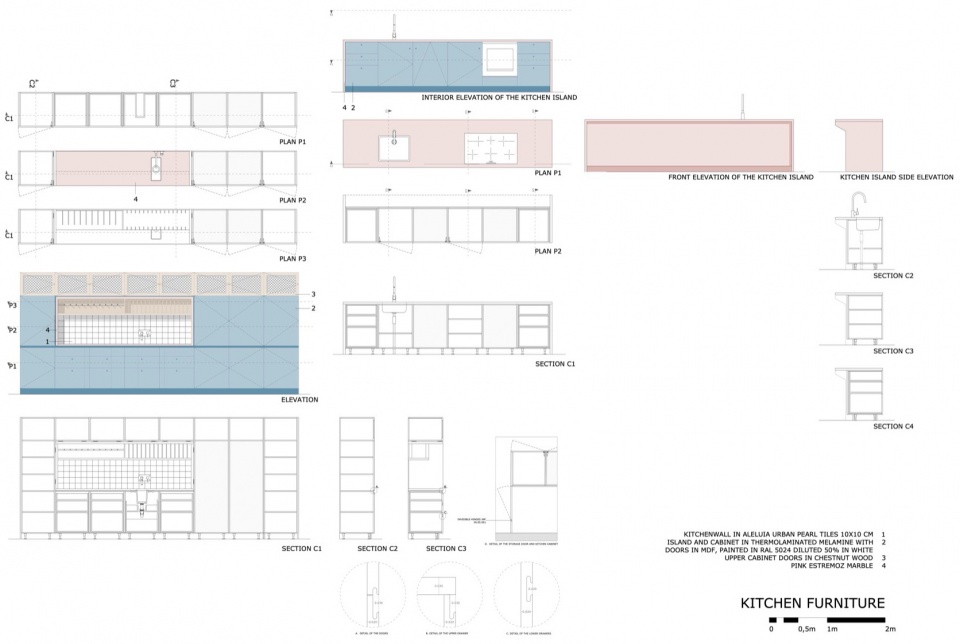
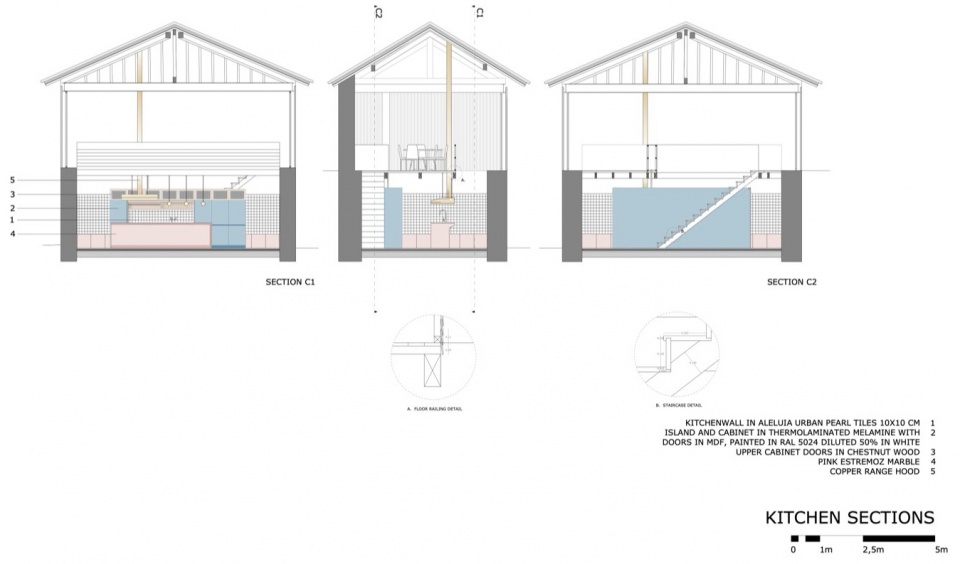
▼厨房剖面图,kitchen sections
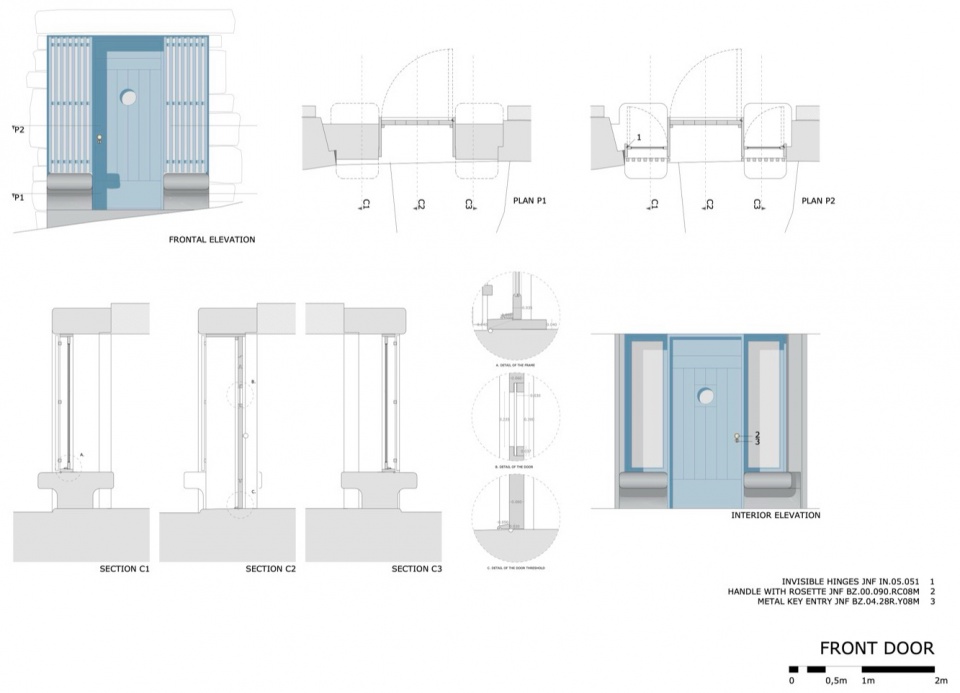
▼大门细部详图,drawings of the front door
TECHNICAL SHEET
PROJECT NAME: Cerdeiras House Hotel
ARCHITECTURE : Atelier Tiago do Vale, Architects (http://tiagodovale.com)
ARCHITECTURE TEAM: Tiago do Vale, María Cainzos Osinde, Paula Campos; with Maria João Araújo, Louane Papin, Nil Kokulu, Margarida Bogas; and Clementina Silva, Adriana Gomes,Hugo Quintela, Joanna Jakimiuk, Kamila Legat, Adele Pinna, Laetitia Alves, Thuy Thu Nguyen, Camille Martin, Eva Amor, Karolina Zuba, Priscilla Moreira, Núria Gonzalez, Coraline Pothin, Florisa Novo Rodrigues, Riddhi Varma, Teresa Vilar, Dora Troha, Alara Çağla, Marija Matozan, Anabela Couto, Jan Momot, Nona Stoycheva, Carola Calogiuri, Saša Alekseja Kristavčnik, Naomi Fonseca.
PROJECT YEAR: 2015-2019
PROGRAM: Hotel
LOCATION: Ponte de Lima, Portugal
CLIENT: Montenegro & Fiuza L.da, Capim Limão Country House
CONSTRUCTION: Vodul – Sociedade de Construções Civis L.da
ENGINEERING: CIPC L.da; Sprenplan L.da
CONSTRUCTION YEAR : 2021-2025
FOOTPRINT: 655 m2 / 7050 ft2
CONSTRUCTION AREA: 902 m2 / 9710 ft2
PHOTOGRAPHY: João Morgado (http://joaomorgado.com)