Sailom之家,曼谷 / Anonym Studio
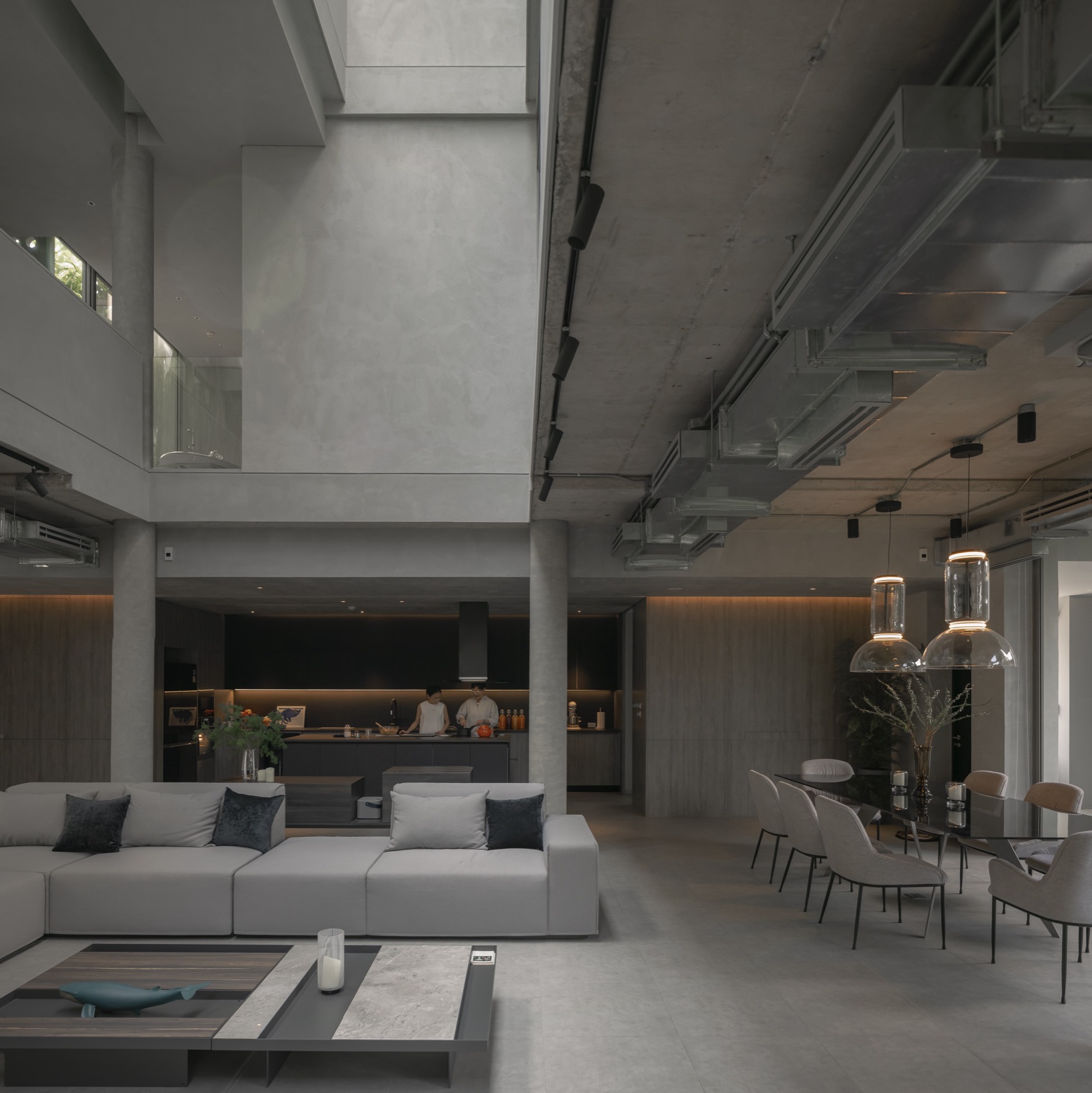
Sailom house是一座四层住宅,容纳了来自三个家庭的成员共同居住。Anonym将室内设计成类似服务式公寓的形式,使每位家庭成员都能够在不同楼层自由且独立地使用各自的功能空间。一层主要设置了客厅、厨房等公共区域,而上层则布置了卧室、起居空间以及小型水吧。两个贯穿建筑内部的庭院将所有楼层串联起来,形成从地面一直延伸至四层顶部的垂直挑空空间。
Sailom house is a four-story home that accommodates members from three families. Anonym designs the inside to look and feel like a service apartment with functional spaces that each family member can use freely and separately on each floor. The first floor consists of common areas such as the living room and kitchen, while the upper floors house bedrooms, more living areas and small pantries. Every story is linked together via two internal courtyards that open up into the void running from the ground to the fourth floor.
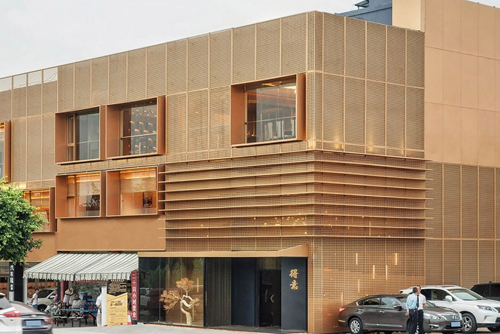
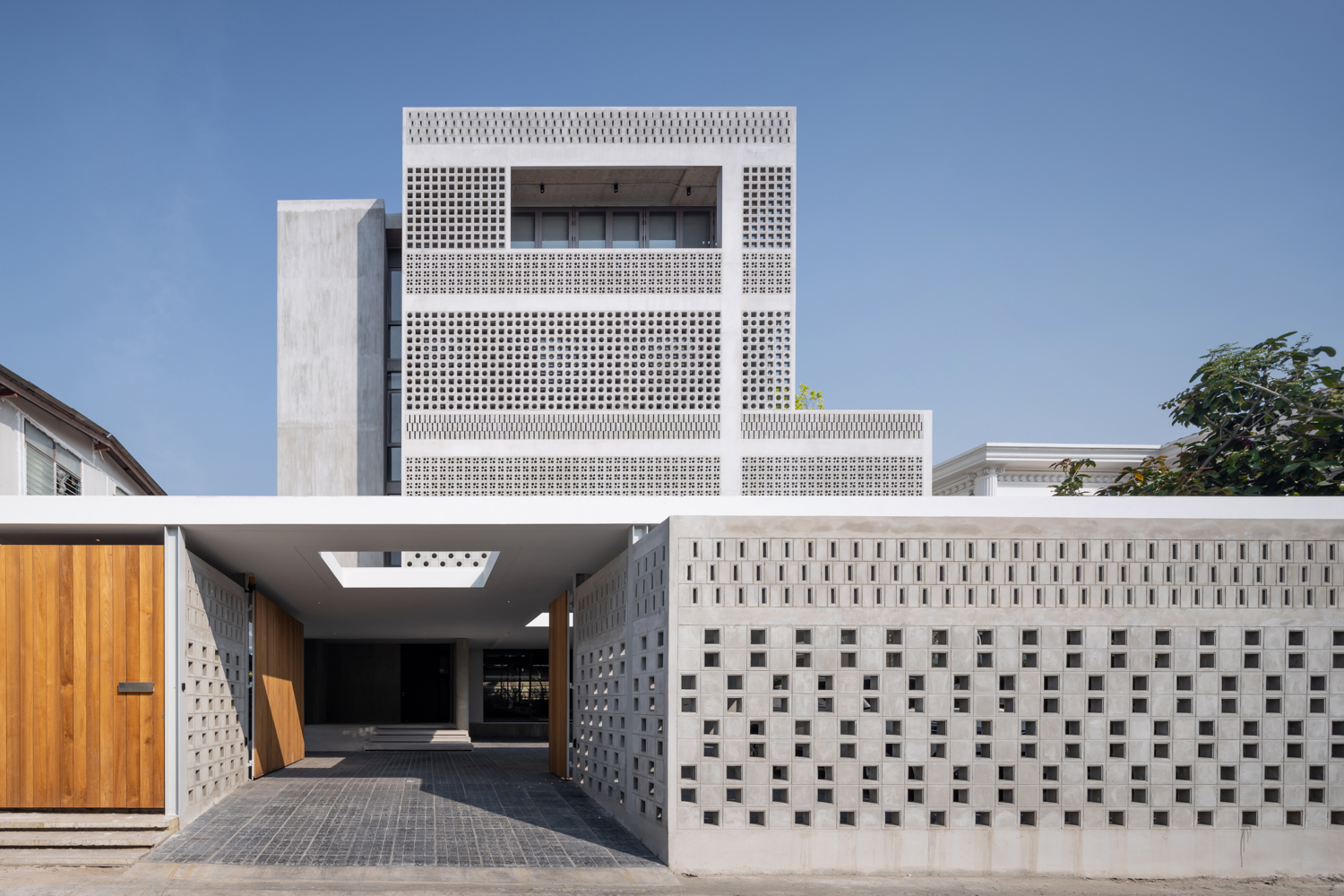
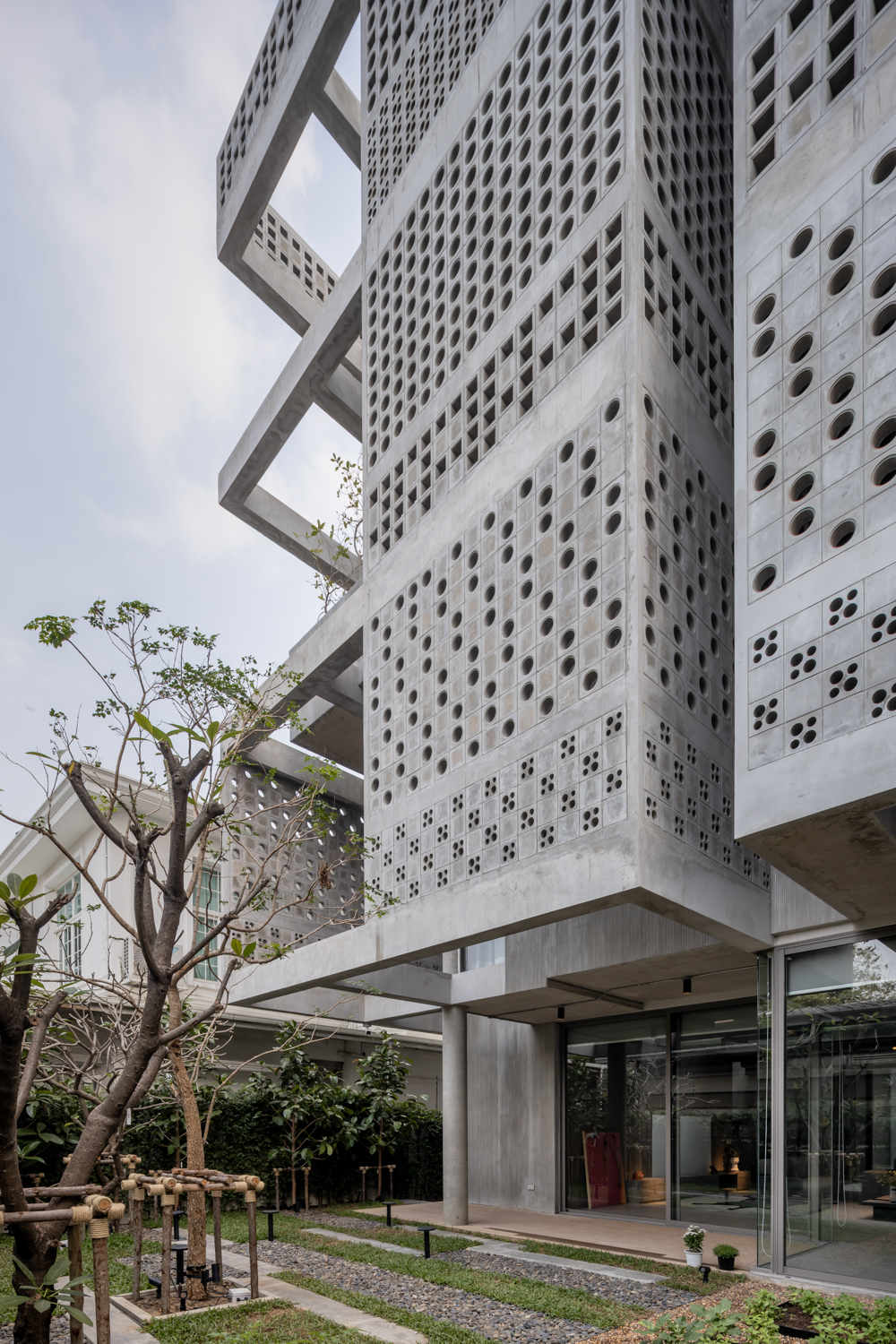
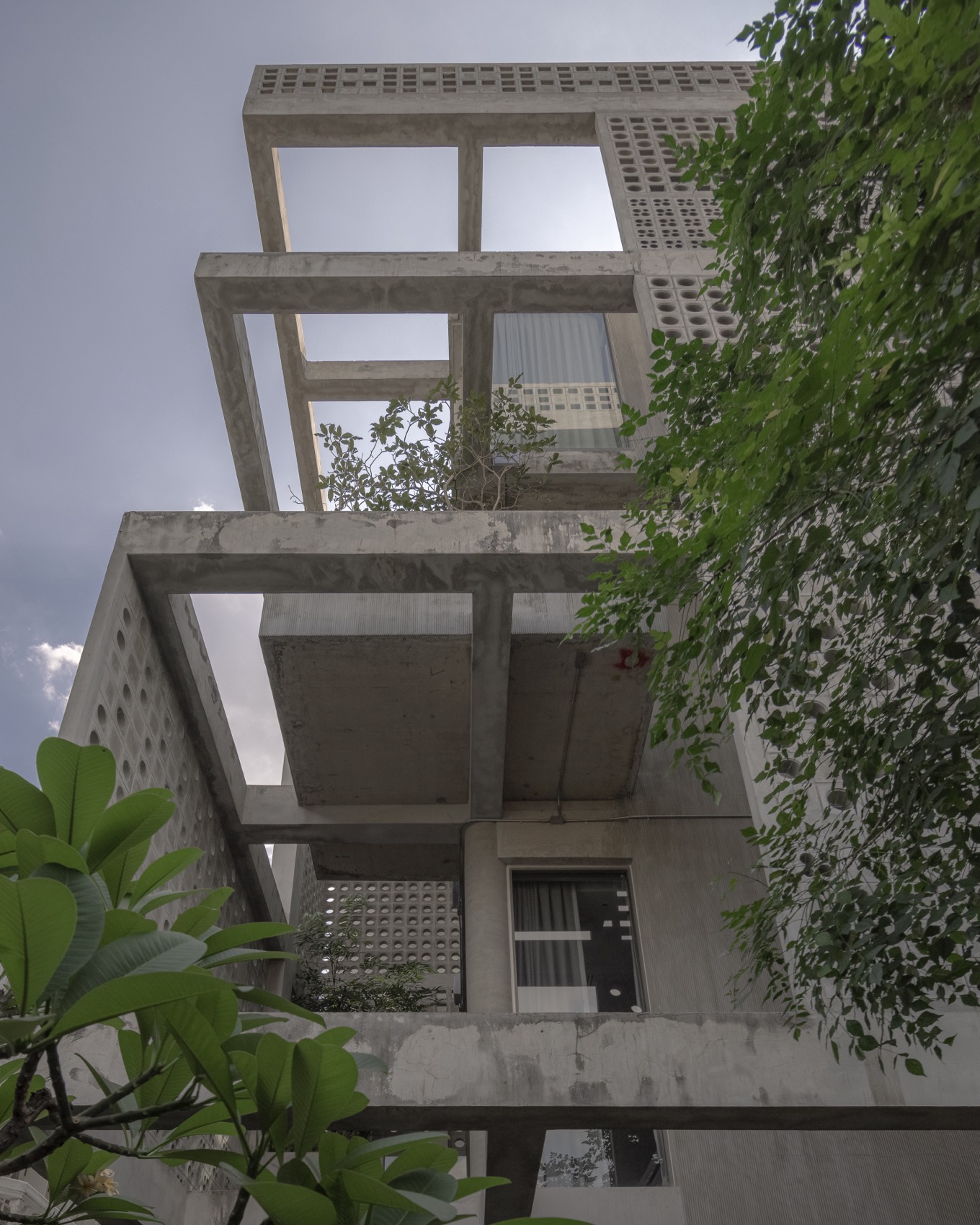
▼建筑外立面与穿孔砖表皮,Architectural facade and perforated brick skin
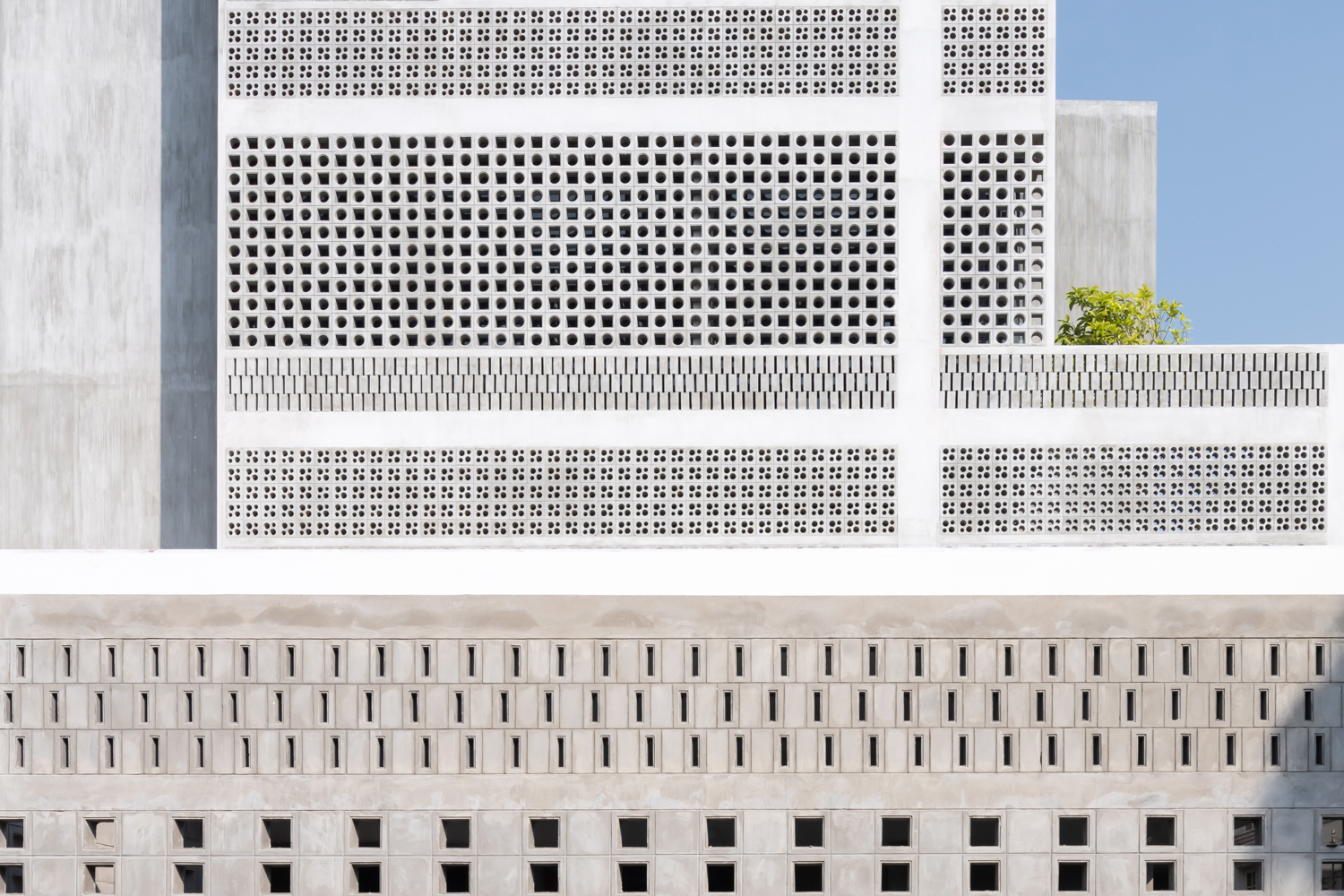
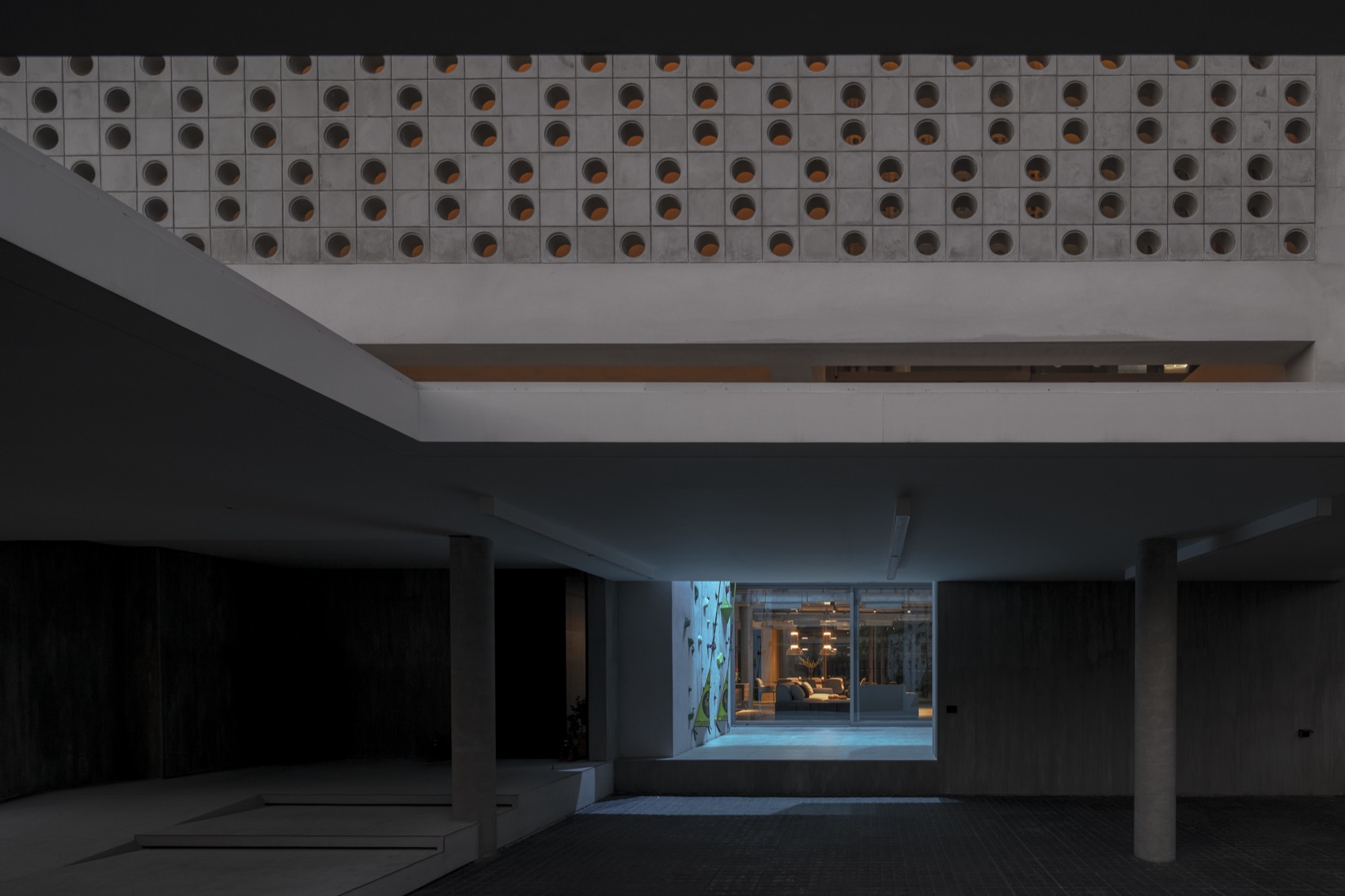
▼砖立面细部与孔洞变化,Brick facade details and perforation variations
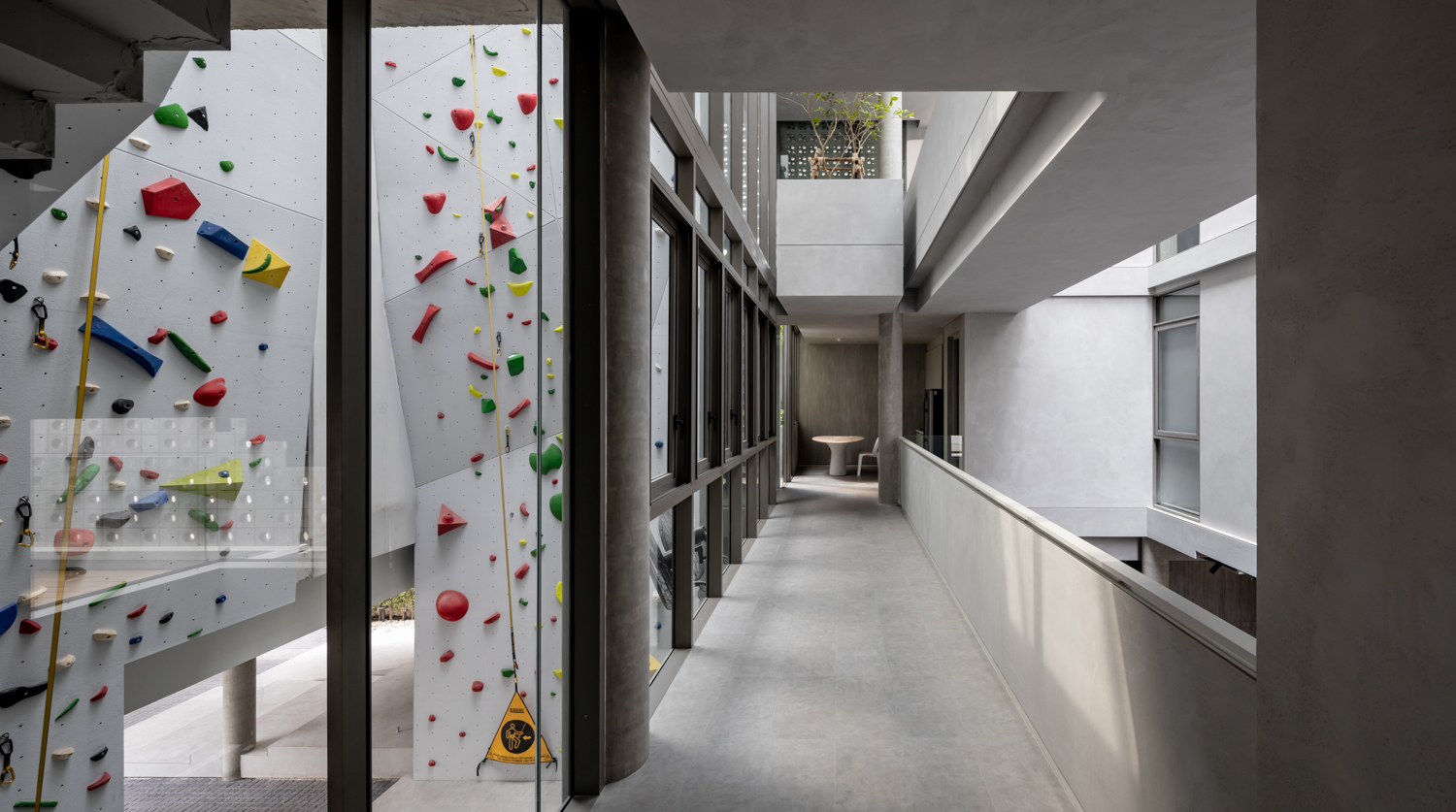
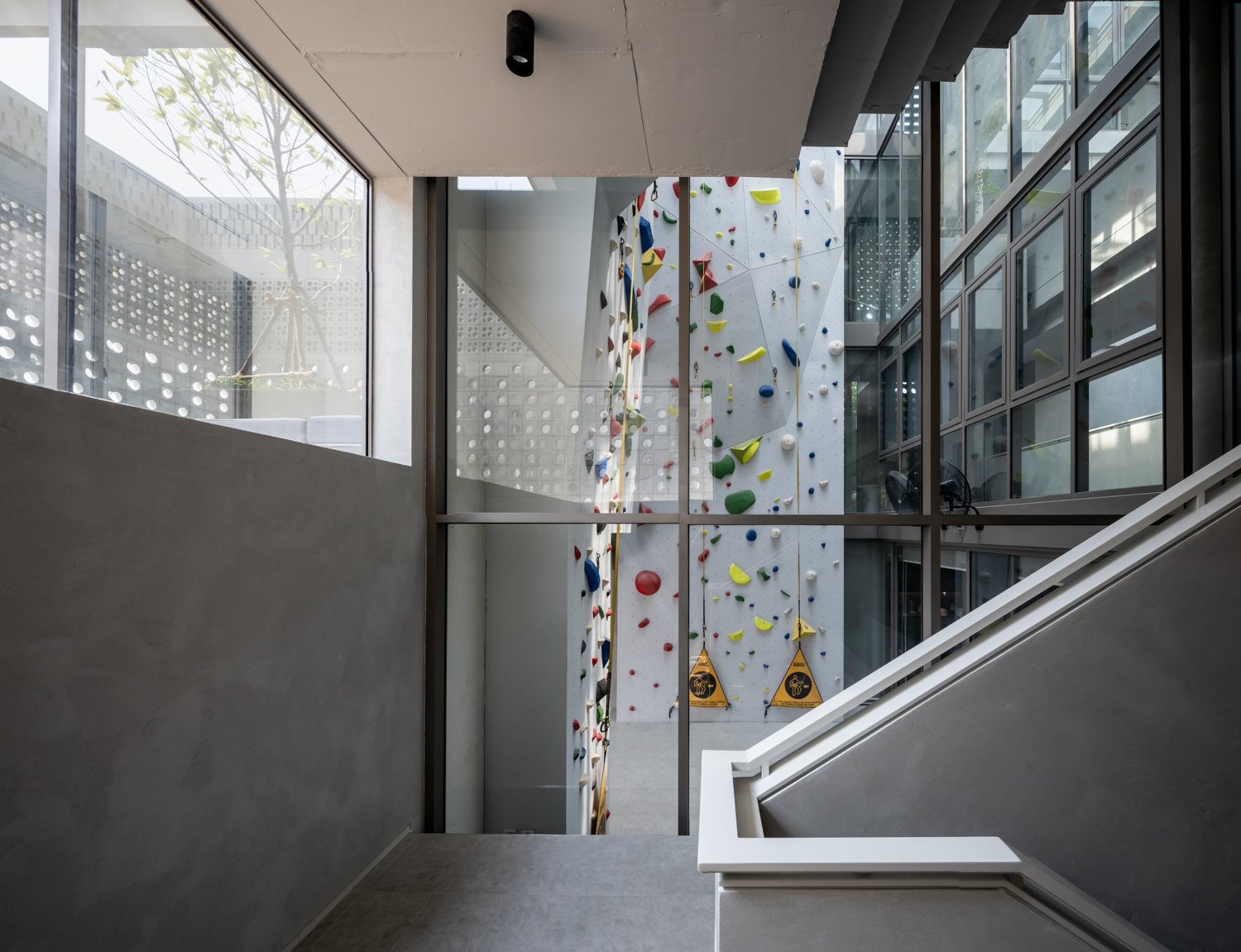
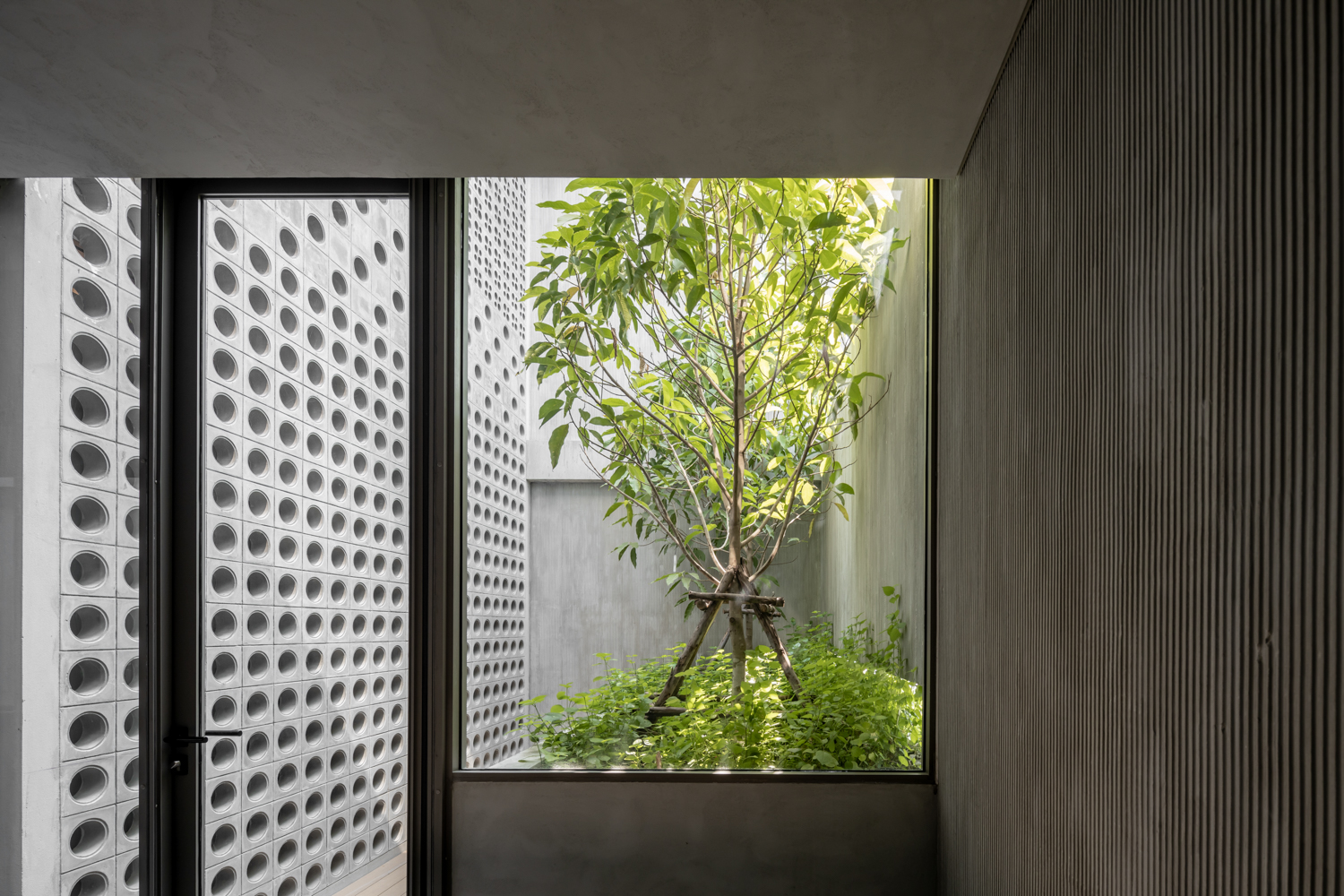
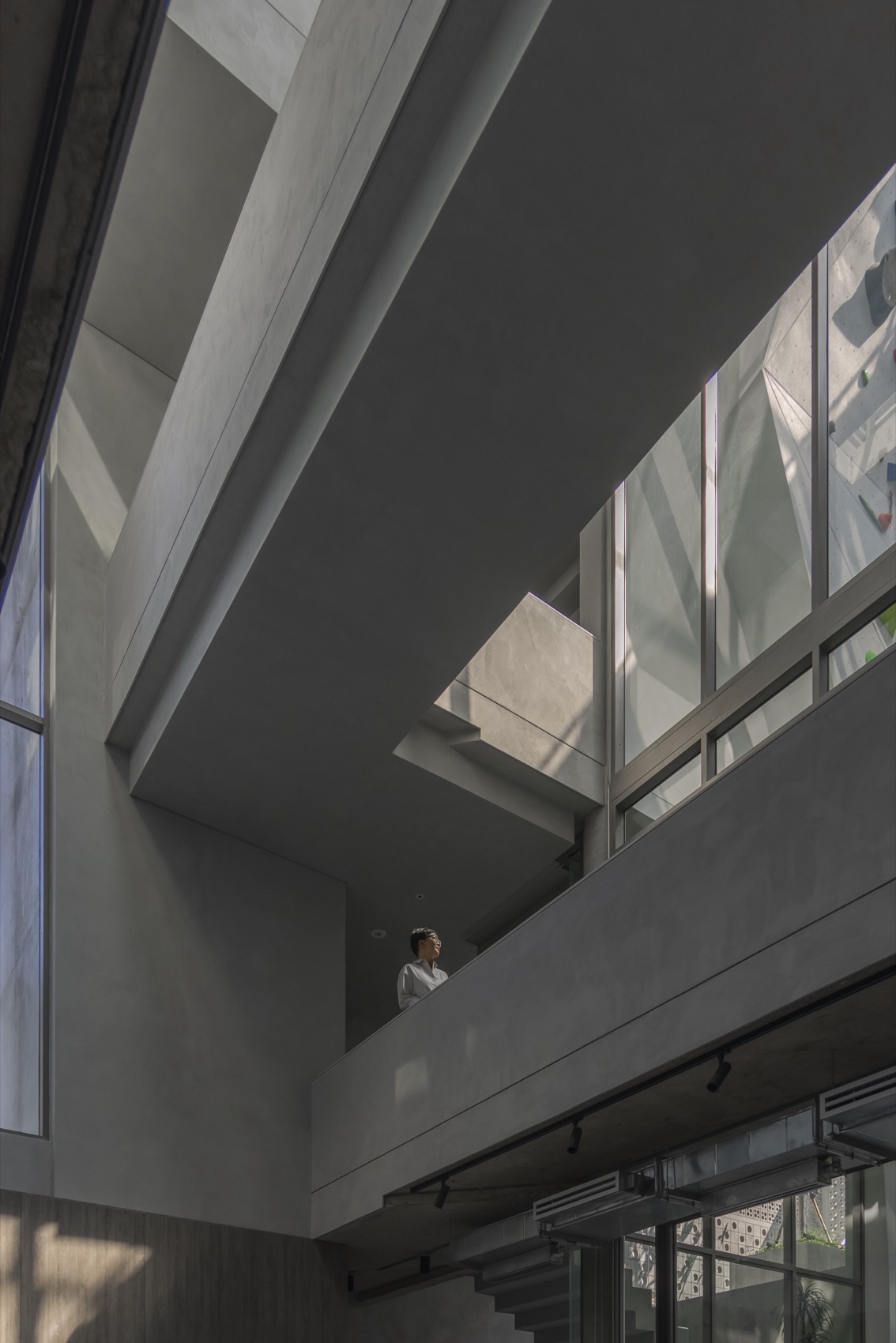
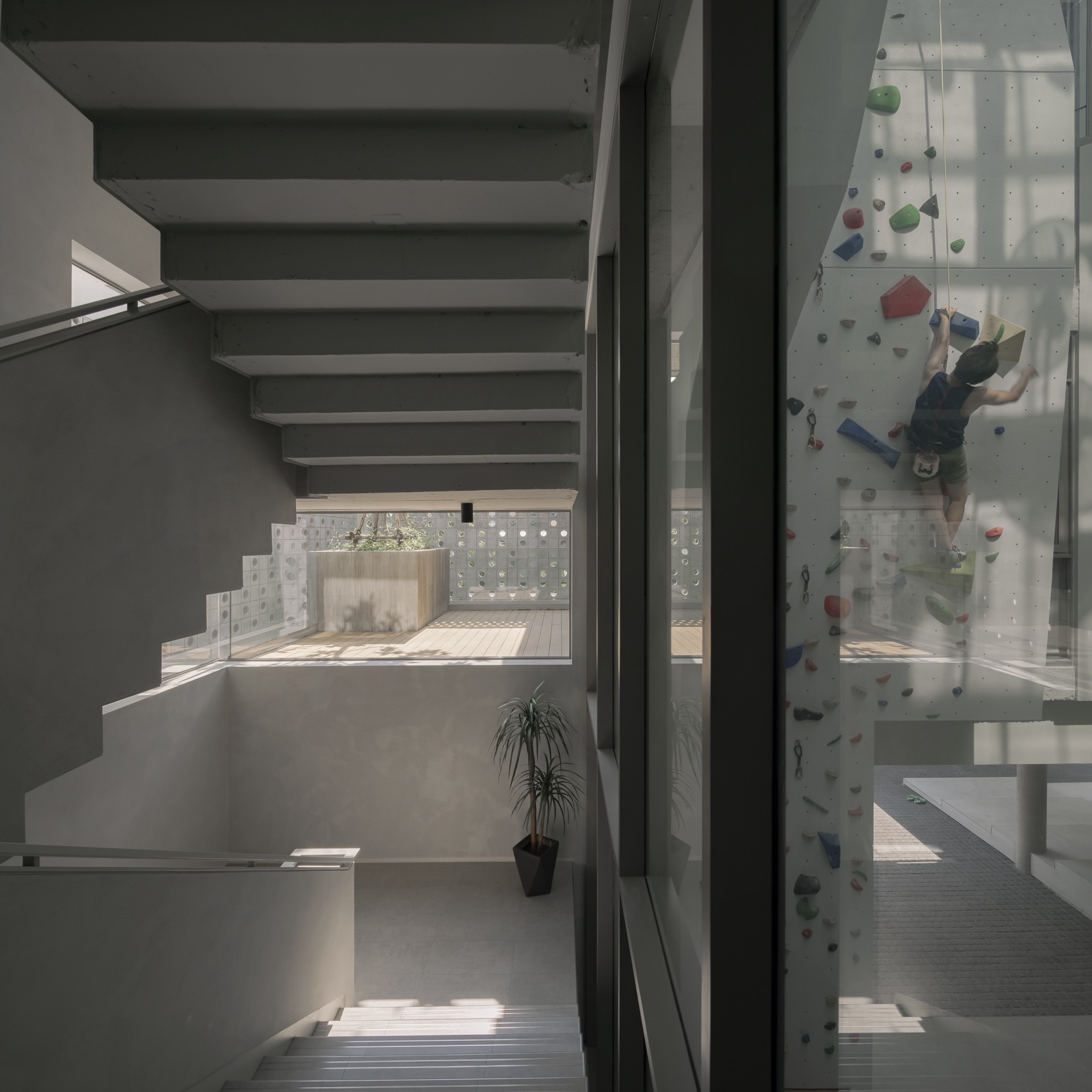
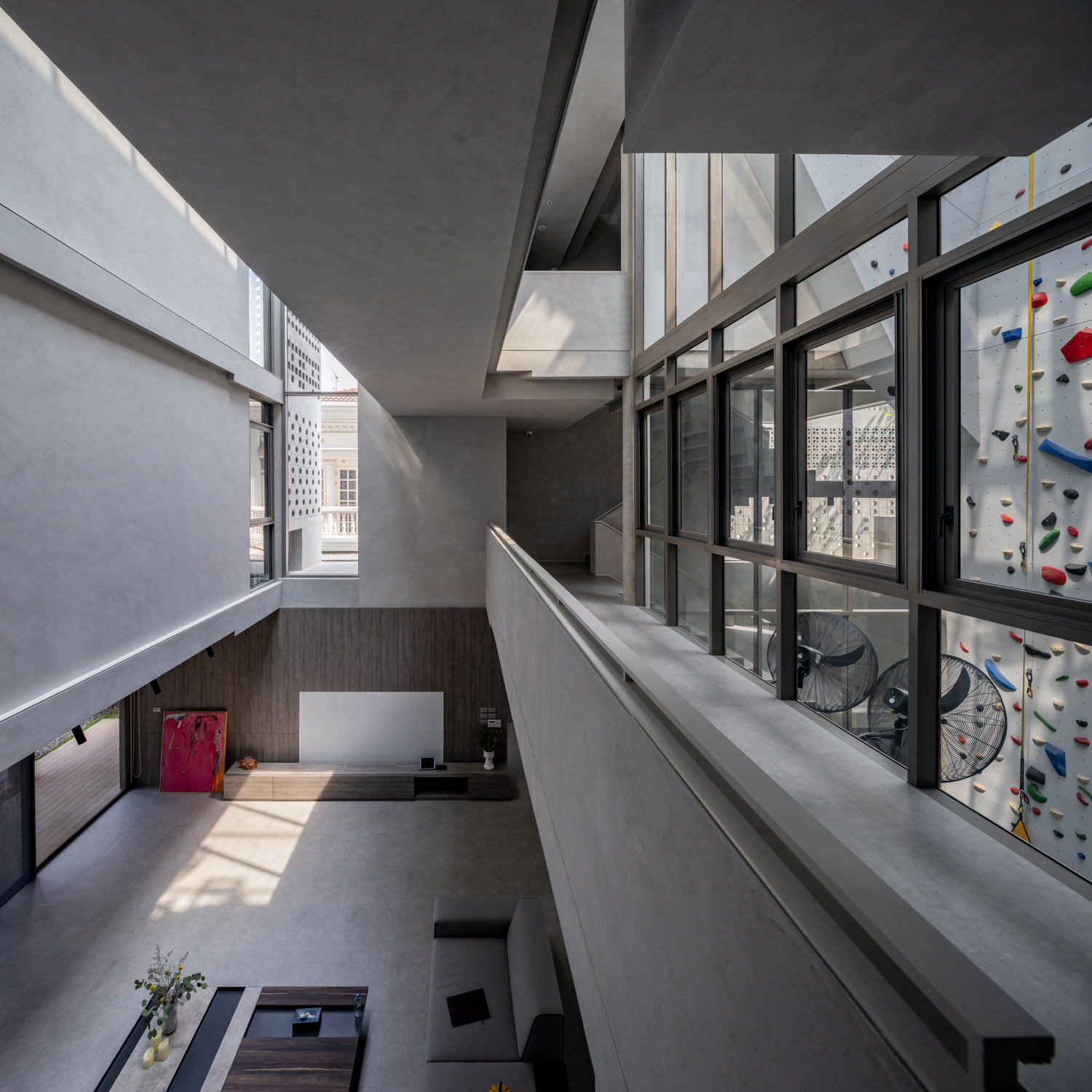
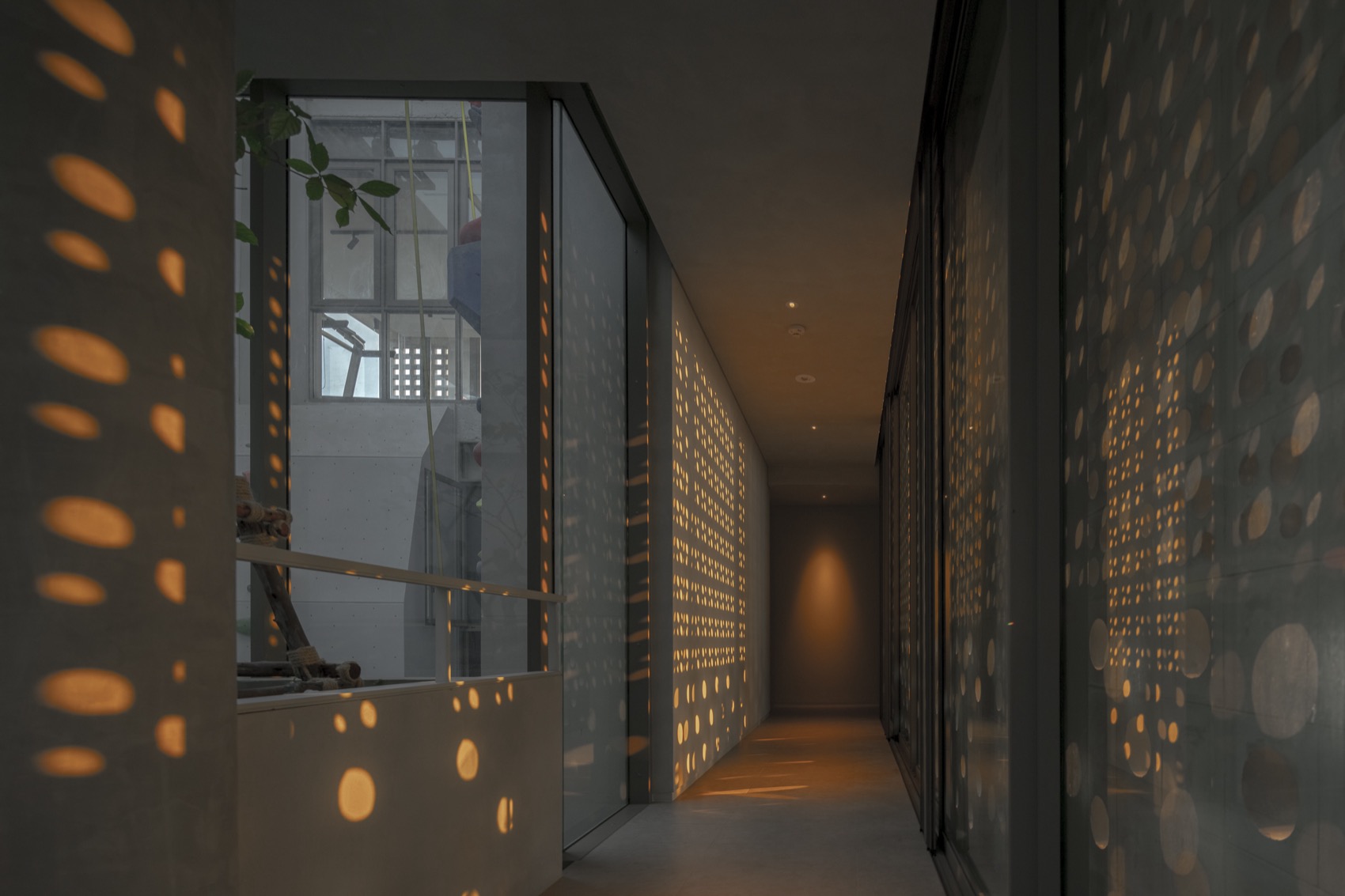
第一个庭院是一个室外空间,设置了攀岩墙,这是热爱攀岩的业主提出的需求。另一个庭院则布置了连接各层的步道,通过层层交叠形成富有变化的空间体验。庭院上方的屋顶局部被抬高,形成有助于空气流动的挑空区域,并采用透明材料引入自然光。虽然庭院属于室内空间的一部分,但这些能够引导风与光进入住宅的开口,为空间带来一种朦胧而舒适的氛围,使室外感自然渗透至室内。
The first court is an outdoor space with a climbing wall, a requirement from the owner who climbs as a hobby. The remaining court hosts a walkway for each floor, designed to overlap and bring interesting space variations. The roof is elevated at the upper part of the court, creating a void to facilitate airflow with a transparent material used to welcome natural light. While the courts exist as a part of the house’s interiors, the openings that lead the wind and light into the living space creates a pleasant obscurity, adding the outdoor element to the indoor area.
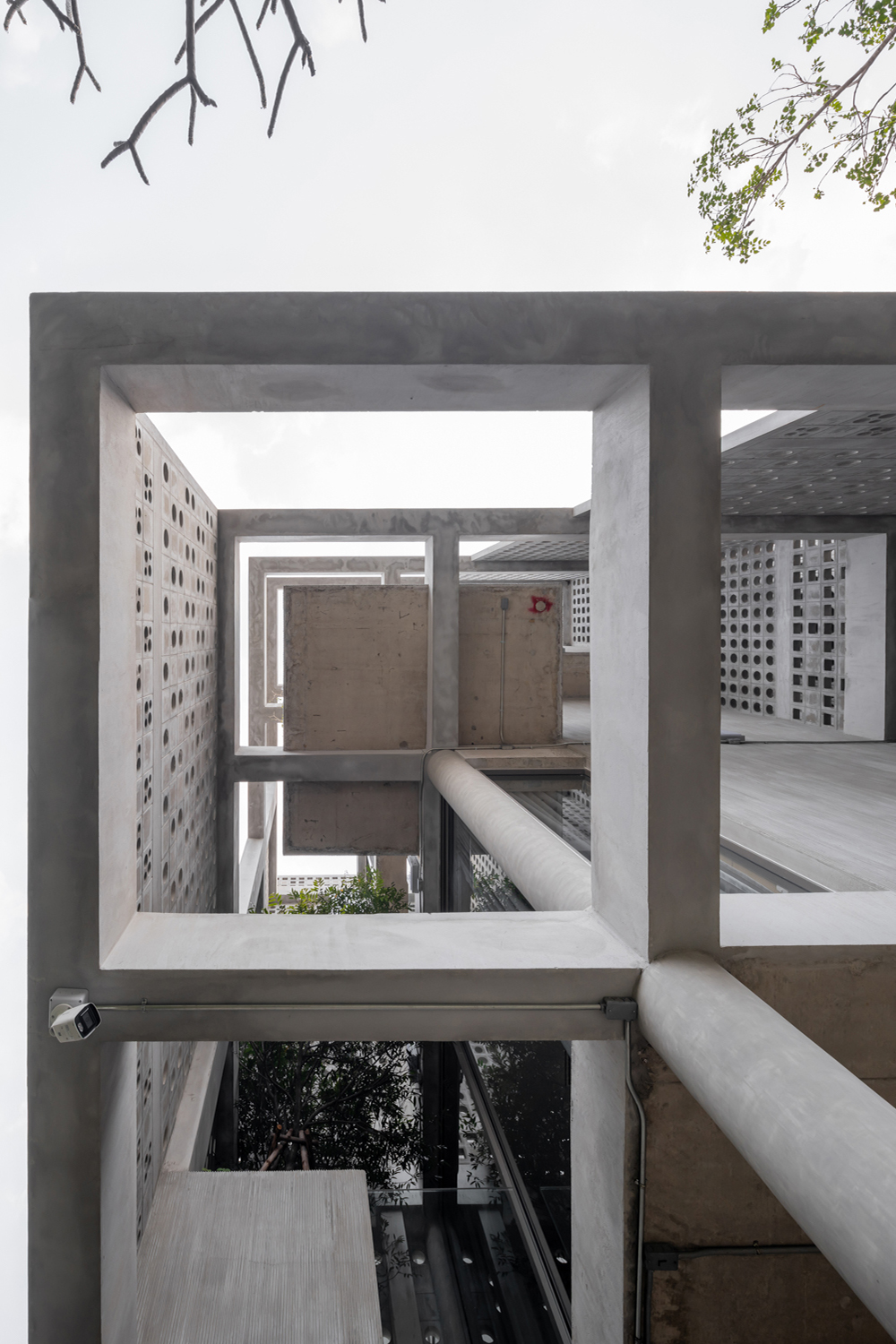
▼立体框架中的通风表皮,Ventilated skin within the structural frame
▼攀岩庭院与室内连廊,Climbing courtyard and interior corridor
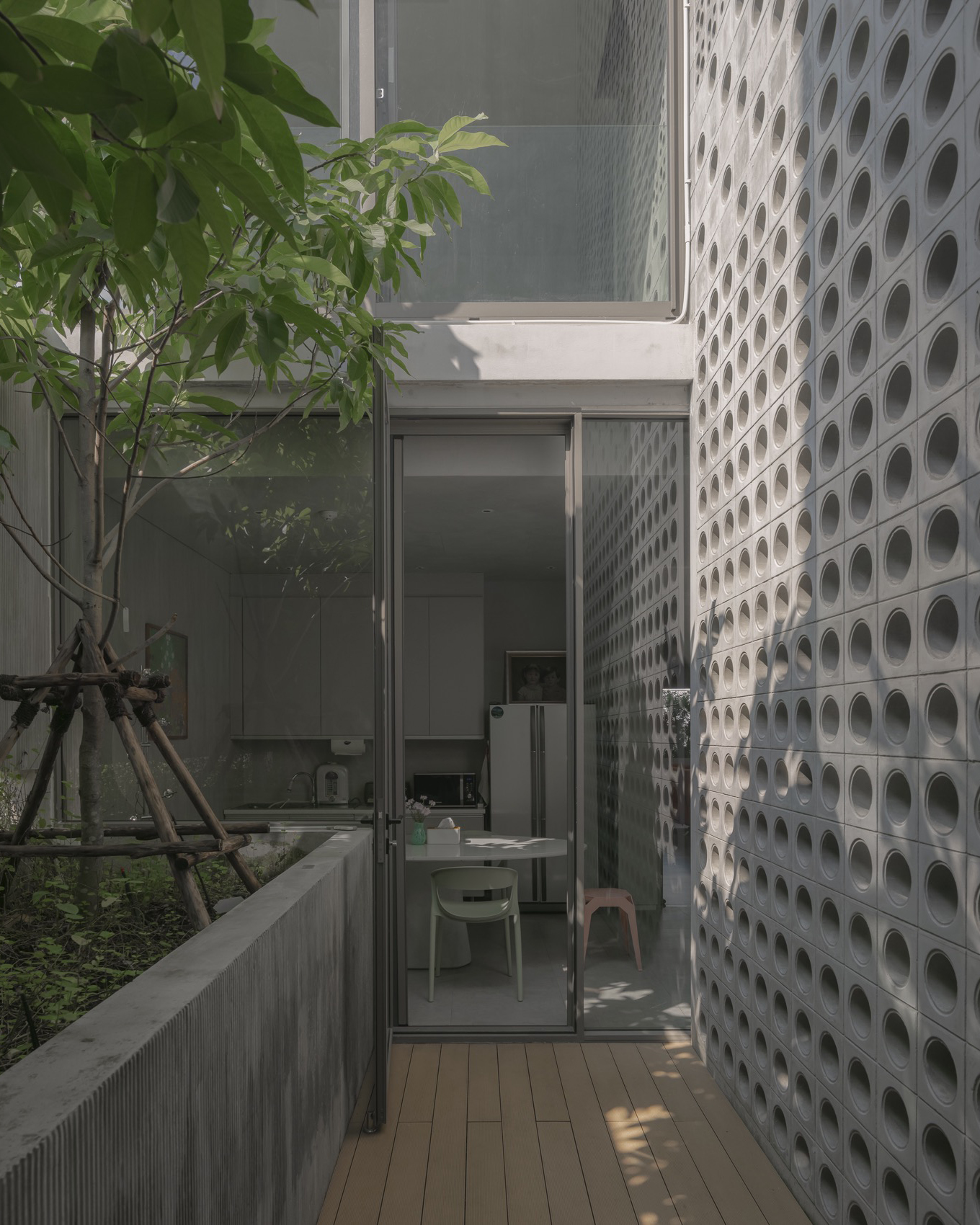
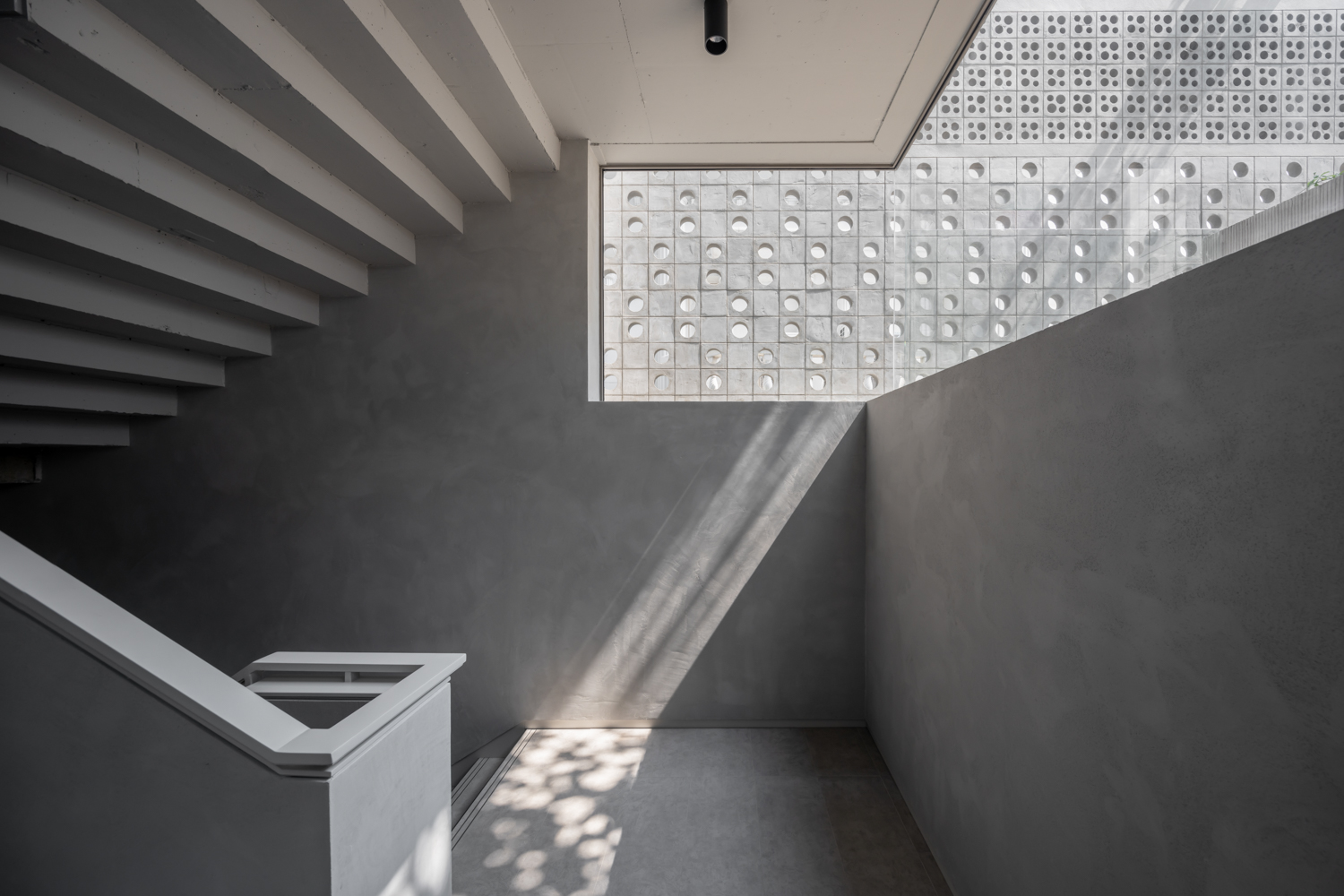
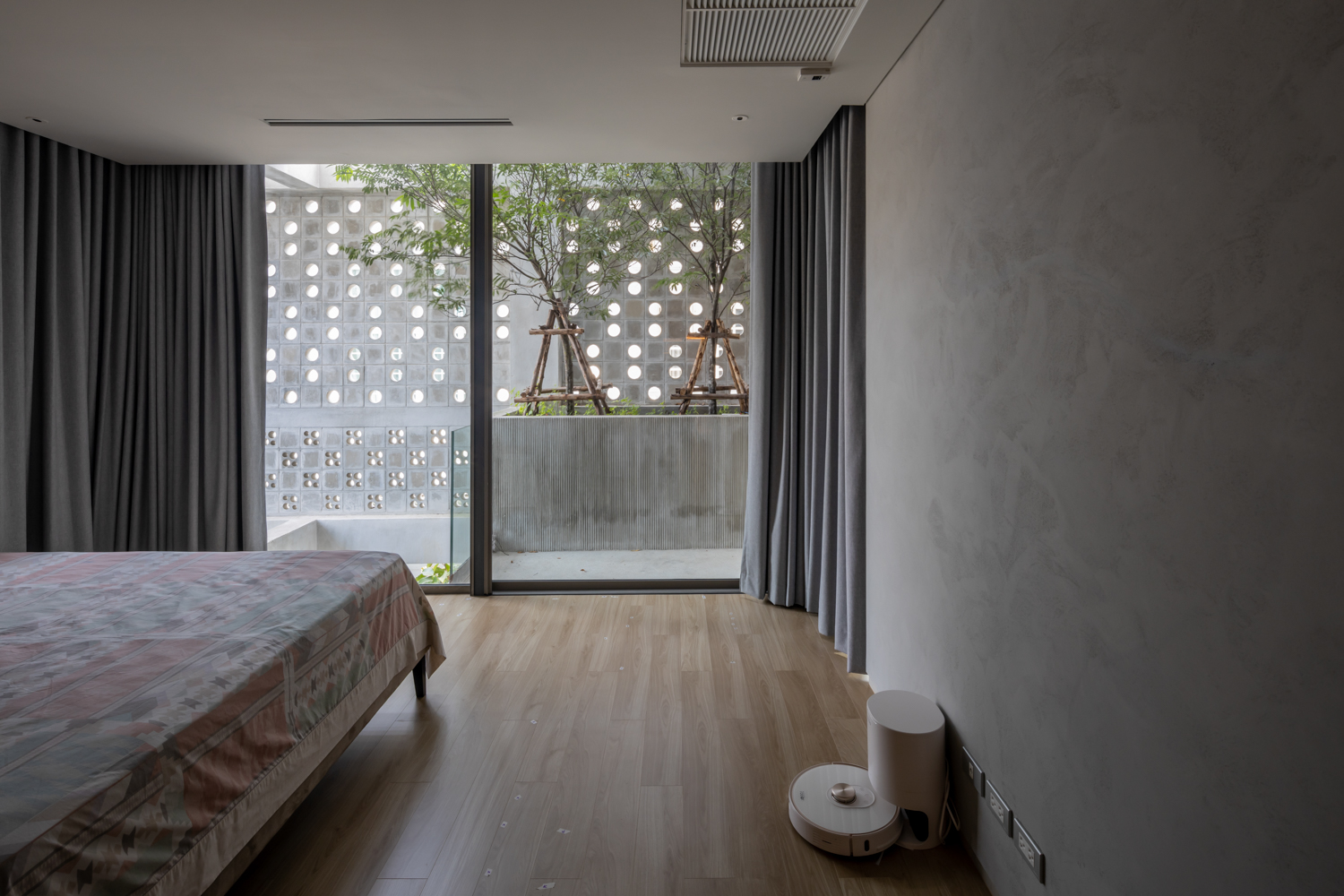
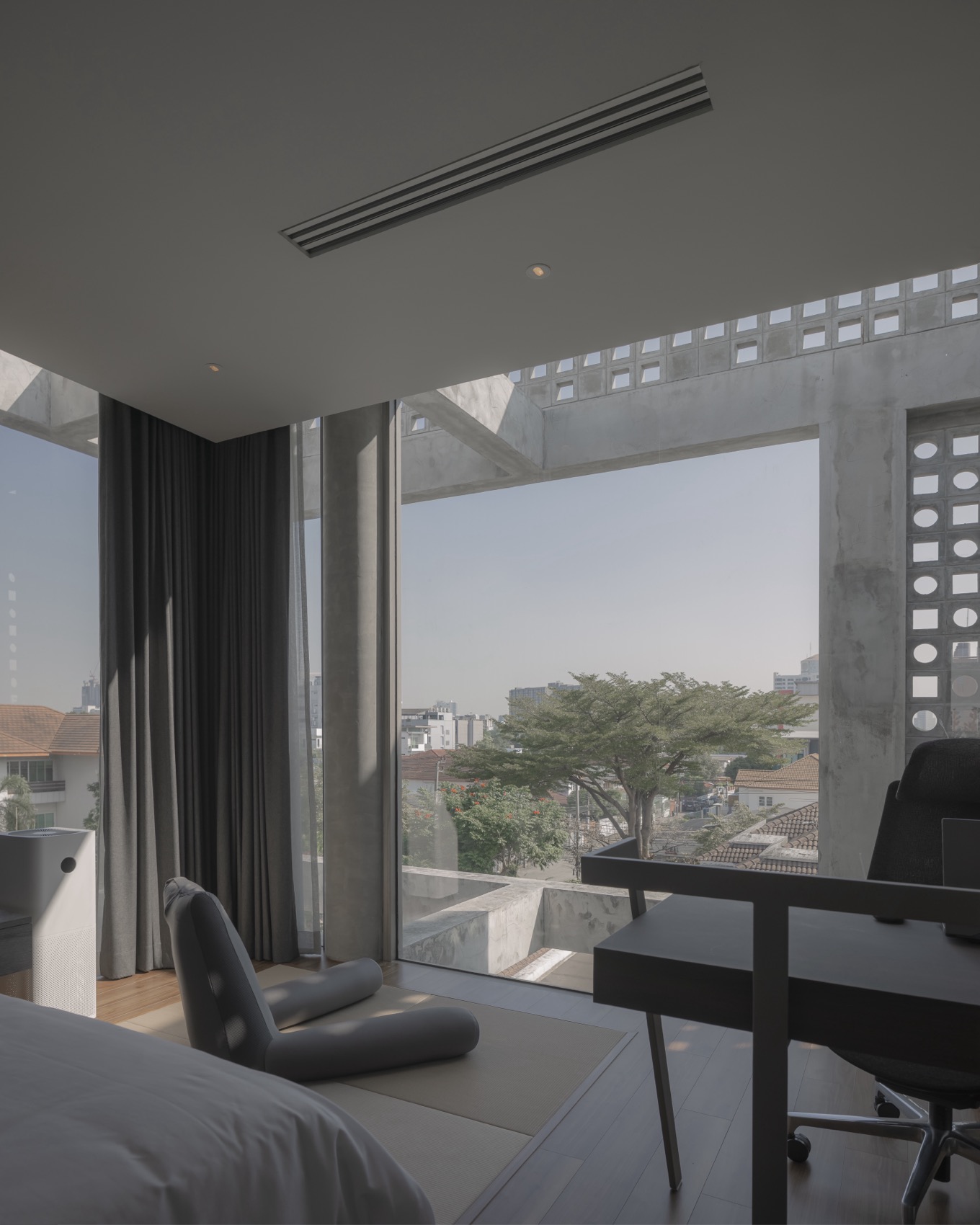
住宅外立面最突出的特征,是采用了砖构表皮,通过不同变化的砌筑方式实现自然通风。设计使用穿孔砖不仅因为其良好的通风性能,同时也考虑到其安全性、经济性,以及材料在设计自由度与居住私密性上的优势。立面主要覆盖住宅中受到强烈日照的区域。在一层需要更高私密性的部分,砖的孔隙率较低;而在立面的上部及较高楼层,砖的排列则更加通透轻盈,以呼应更加开敞无遮挡的周边环境。立面与主体建筑之间形成了带有盆栽植物的阳台空间,为居住环境增添了宜人的绿色景观。不同视角下产生的变化,也让住宅形成了更加丰富的平面布局与功能空间,同时弱化了四层建筑原本可能带来的厚重感。
The highlight of the house’s exterior is the brick facade that offers natural ventilation with the material having been arranged in various dynamic patterns. The perforated bricks are used not only because of their ventilation properties but also for their safety, affordable price, including the freedom they offer the design and the privacy they can bring to dwellers. The facade is designed to cover the parts of the house exposed to an excessive amount of sunlight. The brick pattern is less perforated in the areas on the ground floor where more privacy is required. For the top part of the facade and higher floors, the patterns become more perforated and airier, corresponding to the surroundings that are more open and unobstructed. The space between the facade and the house is designed into a veranda with potted plants, adding a visually pleasant green area to the living space. The variations of perspective result in the house’s diversified floor plans and functional spaces as the facade diminishes the four-story structure’s rigidity.
▼庭院绿植与穿孔砖墙面,Courtyard planting and perforated brick wall
▼室内空间望向绿植庭院,Interior view toward the planted courtyard
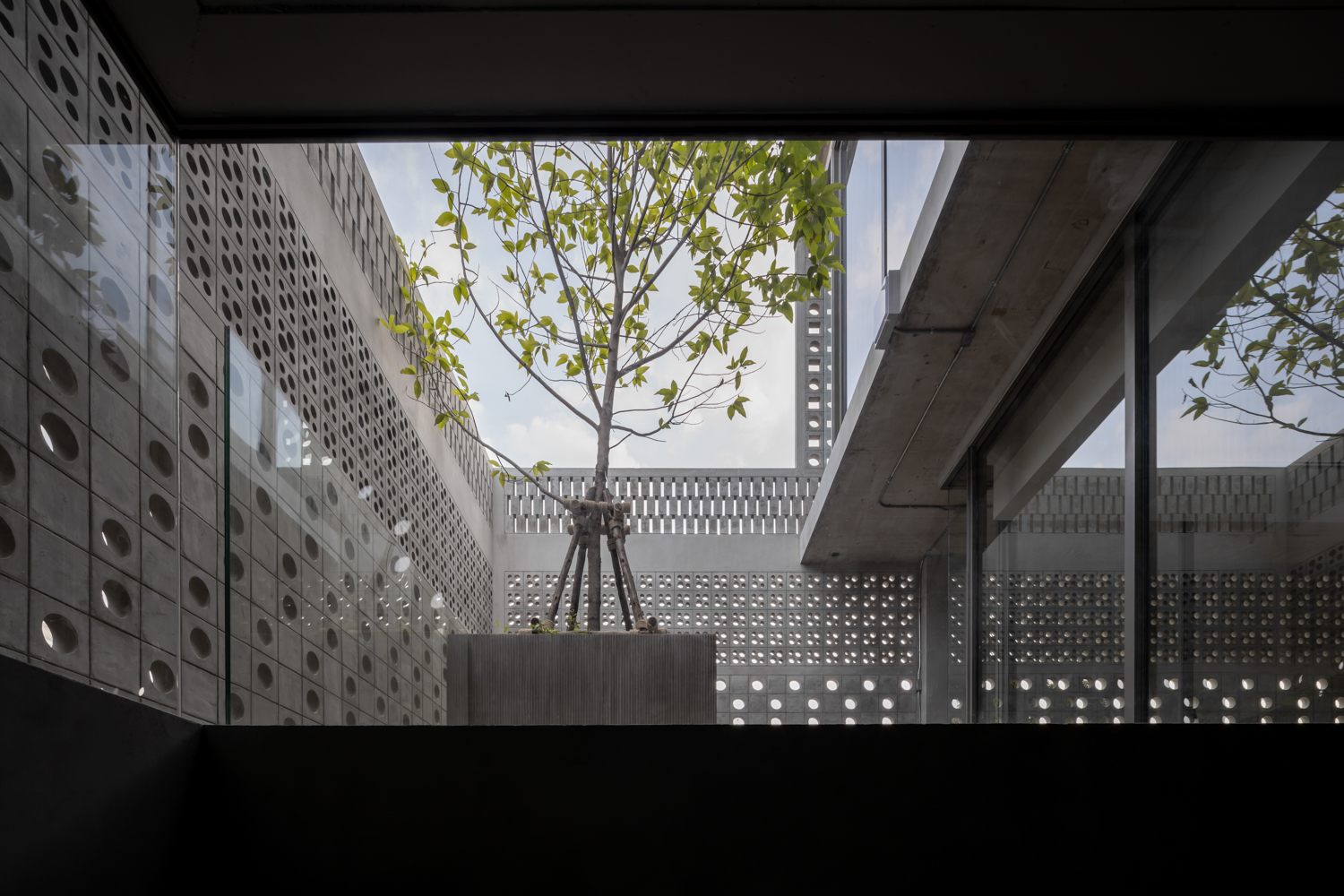
▼挑空空间中的光影变化,Light and shadow within the double-height void
▼穿孔砖墙引入自然采光,Perforated brick wall bringing in natural light
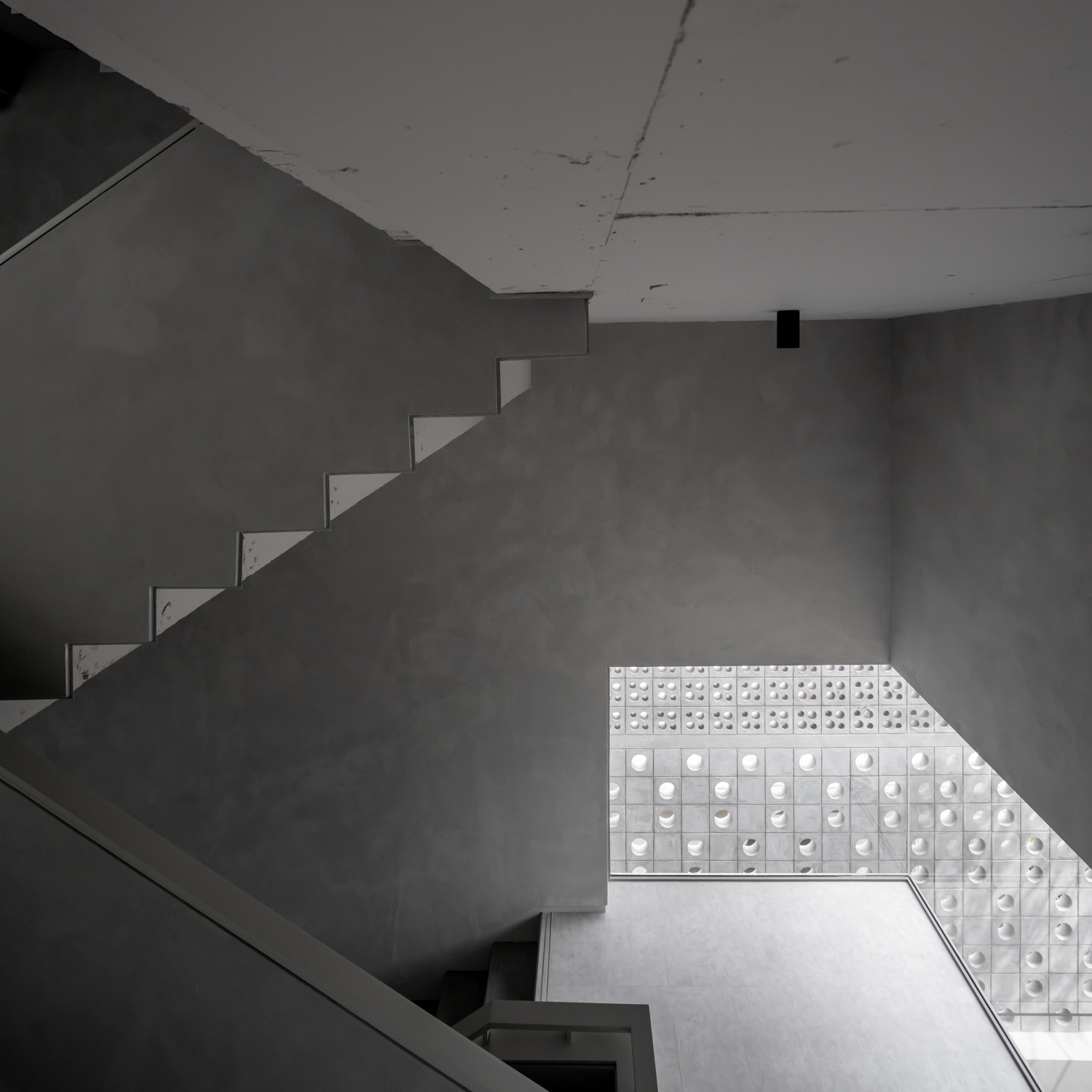
弱化建筑实体感,是该设计最鲜明的特征之一。这种特质体现在开口、内部庭院,以及不同材料肌理的运用之中,无论是穿孔砖,还是通过定制预制抹刀在混凝土表面塑造出的纹理。建筑师提到,他最初并不知道如何实现这种特殊的肌理效果,直到与施工团队在现场不断实验,才最终形成如今这种富有层次感、并减轻混凝土墙面单调感的纹样。
Desolidifying the architectural structure is one of the design’s strong characteristics. It’s expressed in the forms of openings, internal courtyards, or the play with textures on different materials, be there the perforated bricks or the concrete surface whose customized patterns were crafted using a prefabricated trowel. The architect mentioned that he didn’t know how to create that particular texture at first until the experimentation took place on-site with the builders’ help, creating a pattern that brings interesting dimension and lessens the rigidity of the concrete walls’ plain.
▼挑空空间中的家庭活动场景,Family living scene within the double-height interior
▼连廊围绕中庭展开,Corridors organized around the central void
▼卧室空间与庭院景观相连,Bedroom connected to the courtyard garden
▼大面积玻璃界面连接室内外,Large glazing connecting interior and exterior
在Sailom house中,风不仅为住宅带来了舒适感,也为建筑师自身的设计身份注入了新的维度。
With Sailom house, the wind does not only bring comfort to the home but adds a new dimension to the architect’s identity.
▼光影变化中的流动空间,Circulation space animated by shifting light and shadow
Project name : Sailom house
area : 1,200 sq.m.
location : Bangkok, Thailand
Architect : anonym
Interior designer : anonym
Photo credit : Ketsiree Wongwan, Soopakorn Srisakul