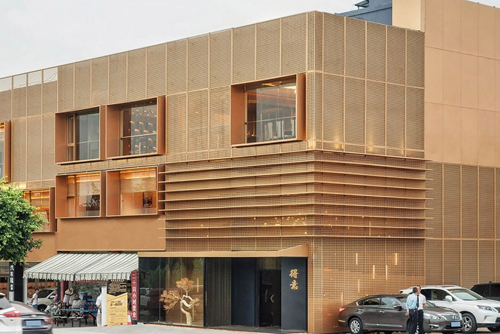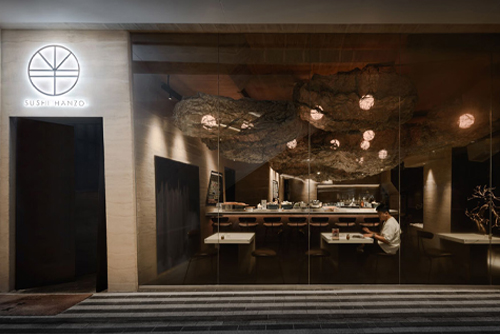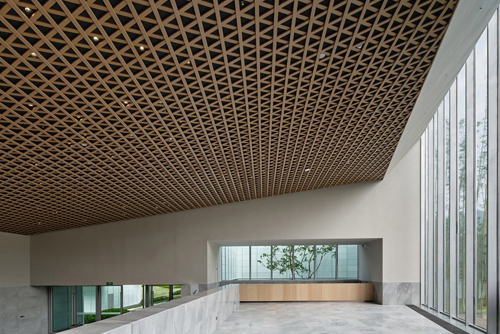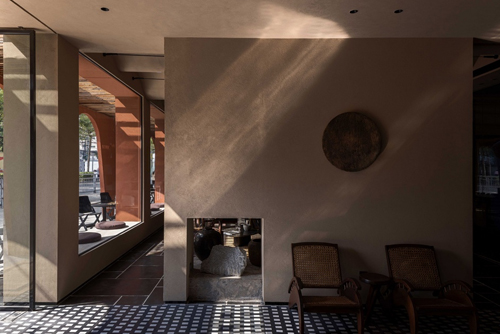
惠州中心村古榕驿站,广东 / 旭可建筑
惠州中心村 Zhongxin Village
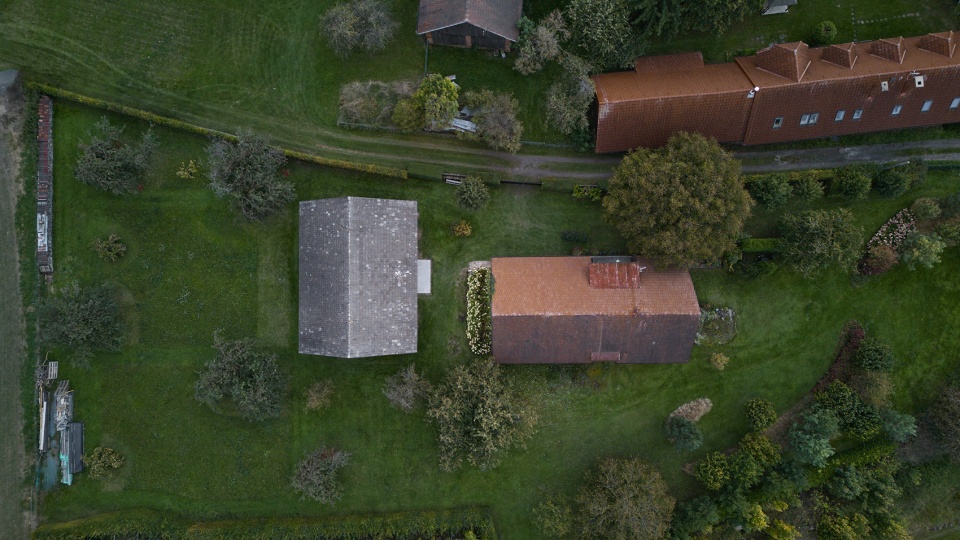
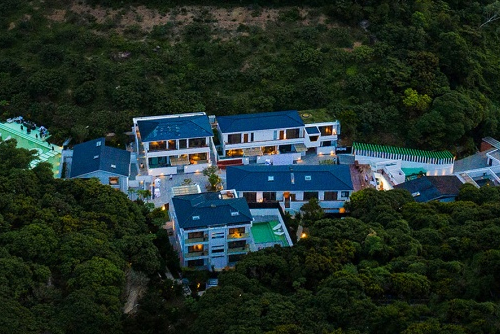
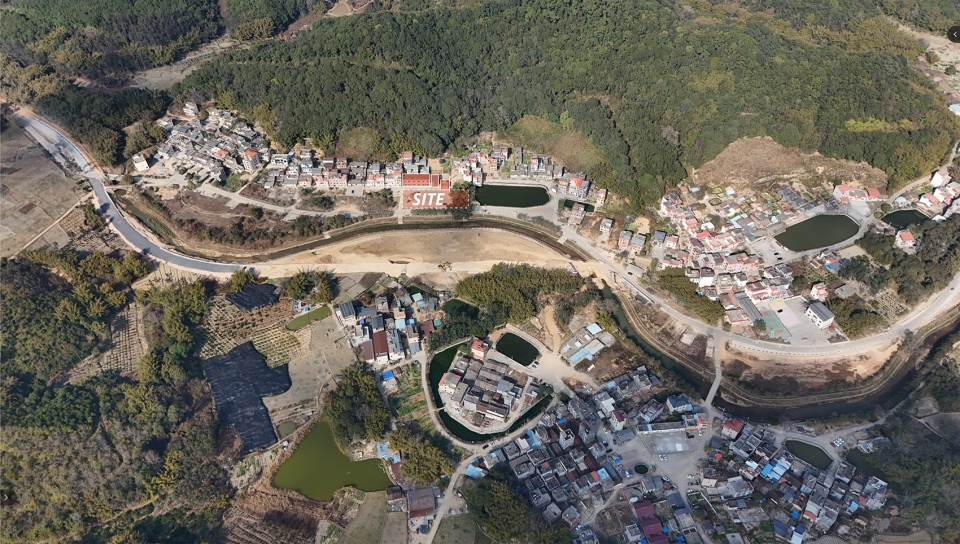
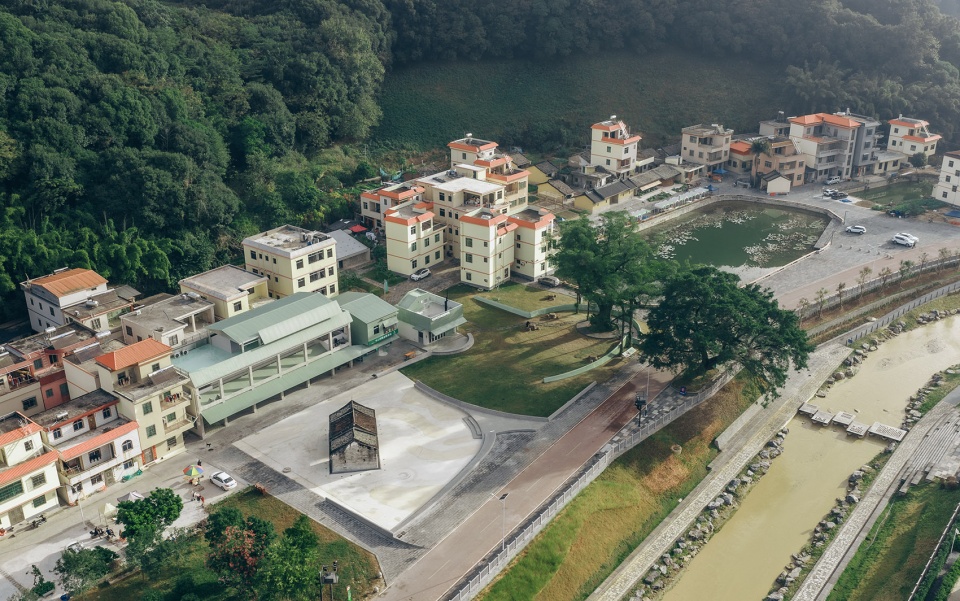
麻榨镇中心村地处鳌溪河谷盆地核心,河水自西向东穿流而过。村落始建于明末清初,有七百余年历史,是承载“红色记忆”的重要革命纪念地。村口两棵千年古榕如盖,凝聚着村民的公共记忆。
Zhongxin Village is located in a mountain basin in Huizhou, Guangdong, China, where a river flows through a valley. The village has a history of over 700 years and is marked by two ancient banyan trees at its entrance.
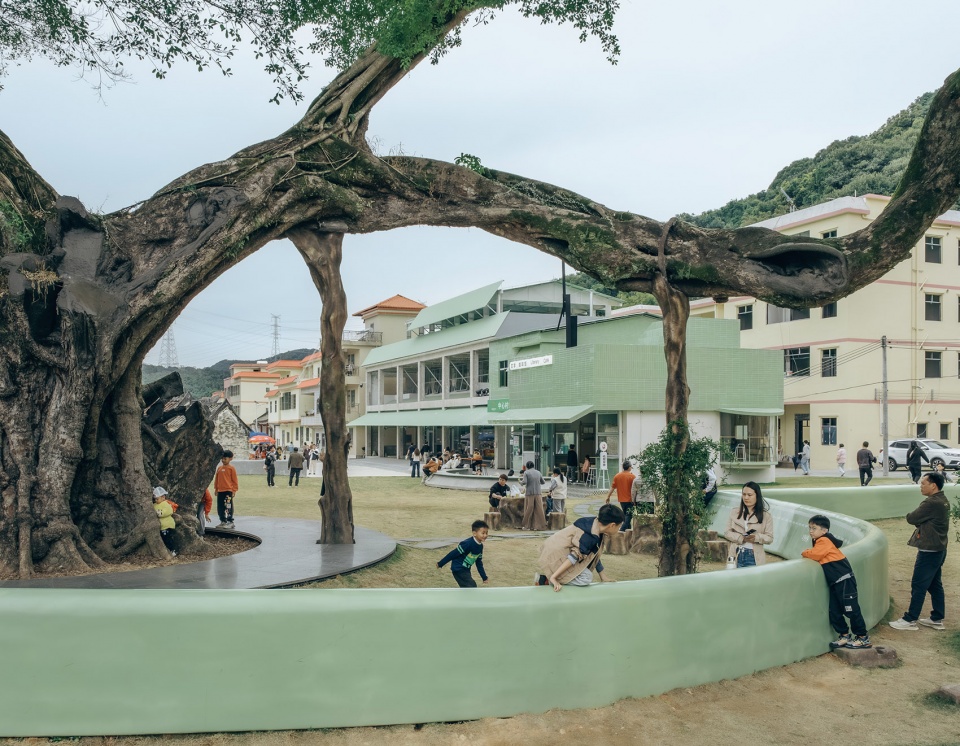
▼惠州中心村古榕驿站,Zhongxin Village banyan plaza station
▼惠州中心村古榕驿站,Zhongxin Village banyan plaza station
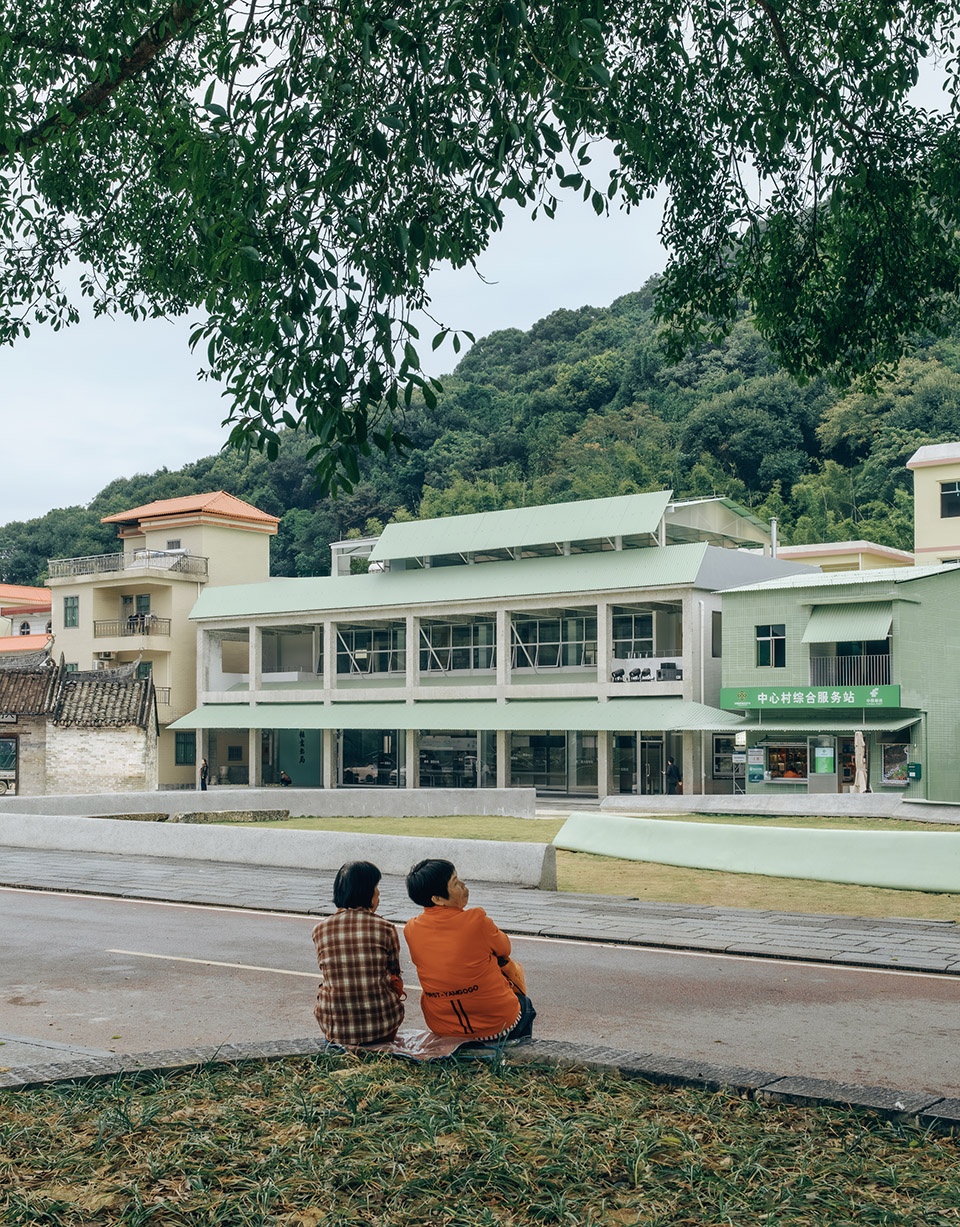
中心村现存村屋大量建于上世纪90年代,砖混外墙、预制或者现浇的砼楼板和屋面,在几次乡村美化运动中,统一做了粉刷,加了粉红的金属板材批檐,让村子整体显得世俗而有烟火气。中心村因千年古榕和地处要道,成为大文旅计划“环两山建筑艺术计划”中不可或缺的节点。面对以上局面,风语筑采用强策划的介入方式,围绕“文学”IP,给中心村打造新的传播性。
Most existing buildings were rebuilt in the 1990s using brick-concrete construction. In recent years, they were uniformly renovated with painted facades and added metal eaves, giving the village the texture of contemporary rural daily life of China. Because of its ancient banyan trees and prominent location, Zhongxin Village became a key node within the “Nankunshan-Luofushan Rim Pioneer Zone (Huizhou) Architectural Art Project,” a large-scale cultural tourism initiative. Under a strong curatorial framework centered on a literary theme, the project sought to establish a new cultural identity for the village.
▼中心村风貌,aerial view of the Zhongxin Village
强策划下的功能微调 Functional Adjustment within a Curatorial Framework
在中心村介入项目中,旭可建筑的角色是村落总体规划,以及村口建筑群和景观的具体设计。
▼旭可调整策划,schematic planning
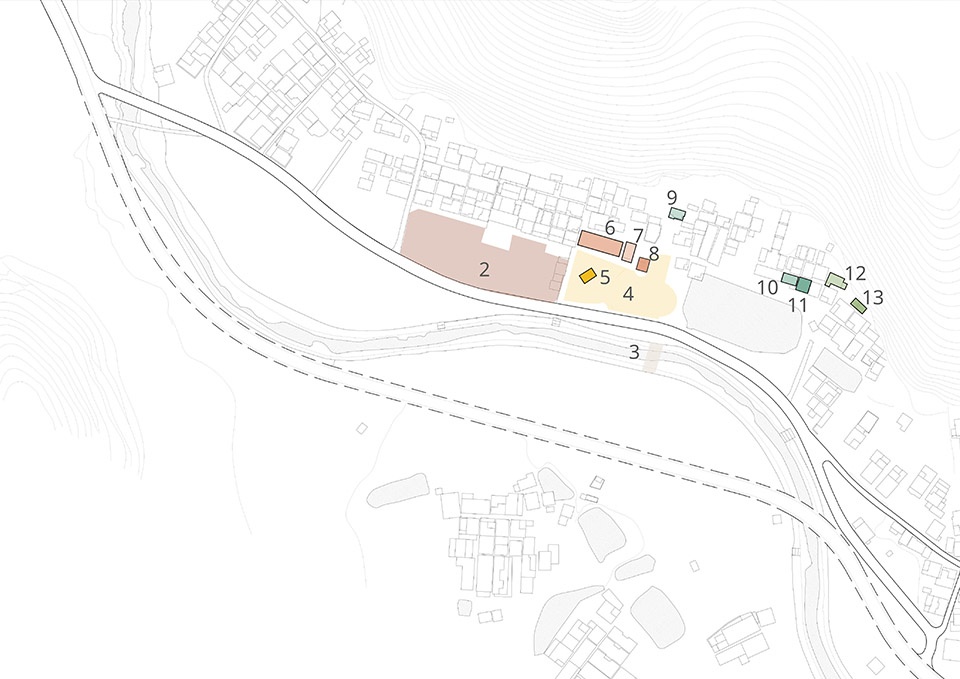
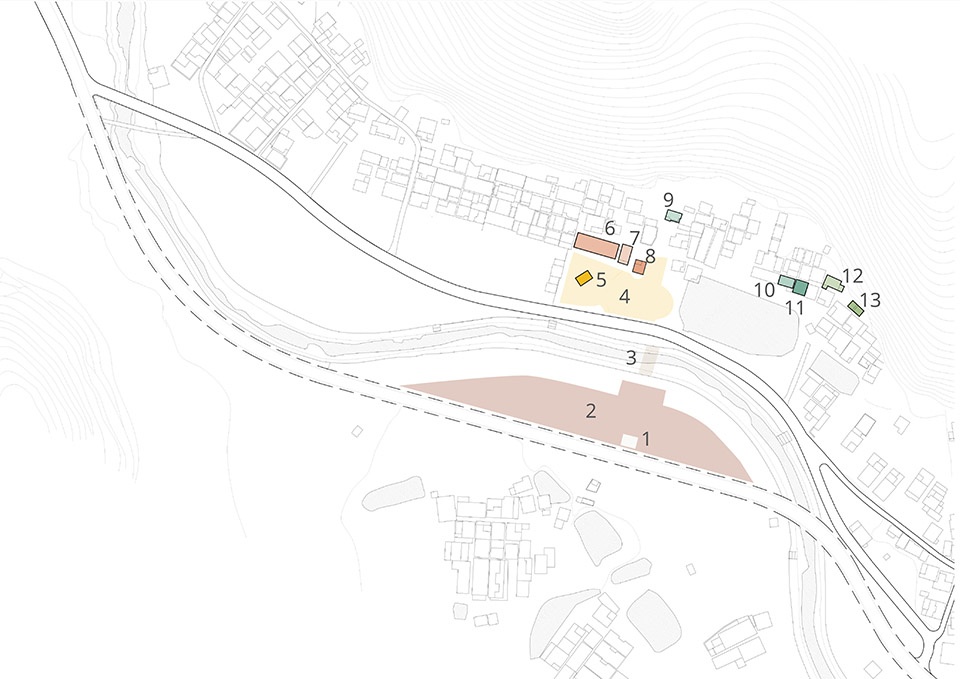
Atelier XÜK was responsible for the village masterplan and the architectural and landscape design of the entrance complex. Rather than pursuing iconic forms, the project focused on coordinating tourism and everyday village life.
▼中心村改造后,Zhongxin Village after renovation
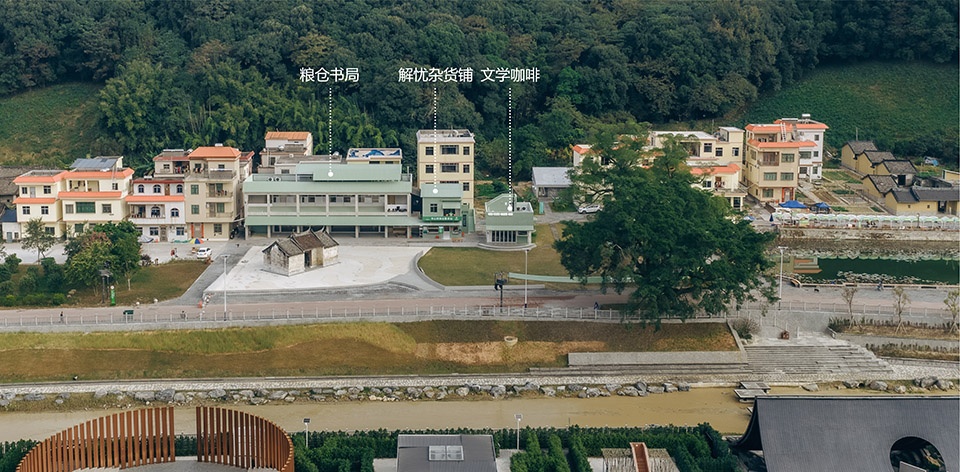
在强策划介入的大逻辑下,旭可建筑的规划工作主要在于具体协调空间,从兼顾游客使用和村民便利的角度出发,织补在地关系。例如将策划中的“人生迷宫”,从村口榕树广场挪动在河的空地;以及积极推动邮政综合服务社在“忘忧杂货铺”落地等。这些操作都在面对传播的策划框架下装入了具体的空间和使用的内容。
▼中心村改造前,Zhongxin Village before renovation
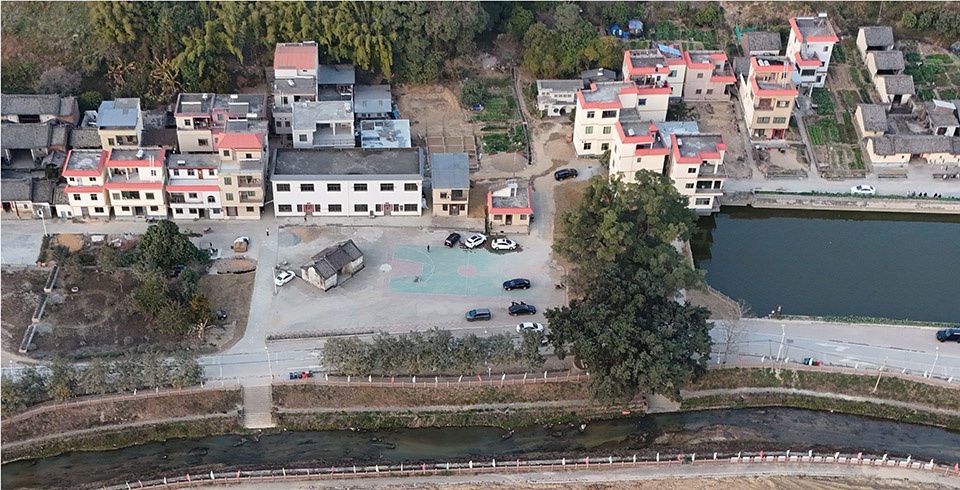
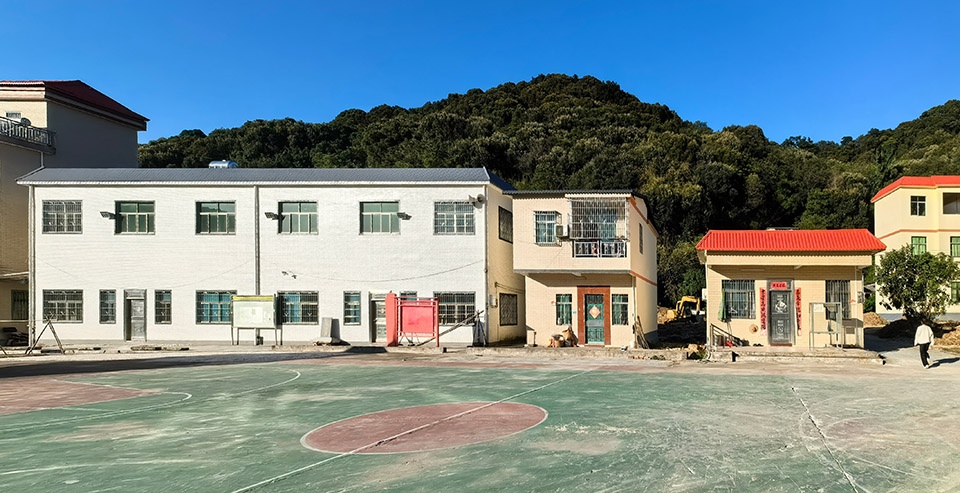
Programmed elements were adjusted accordingly: the planned “Maze of Life” was relocated across the river, while a community service station was integrated into the “Miracle of General Store,” translating cultural programming into practical spatial use.
▼中心村改造后,Zhongxin Village after renovation
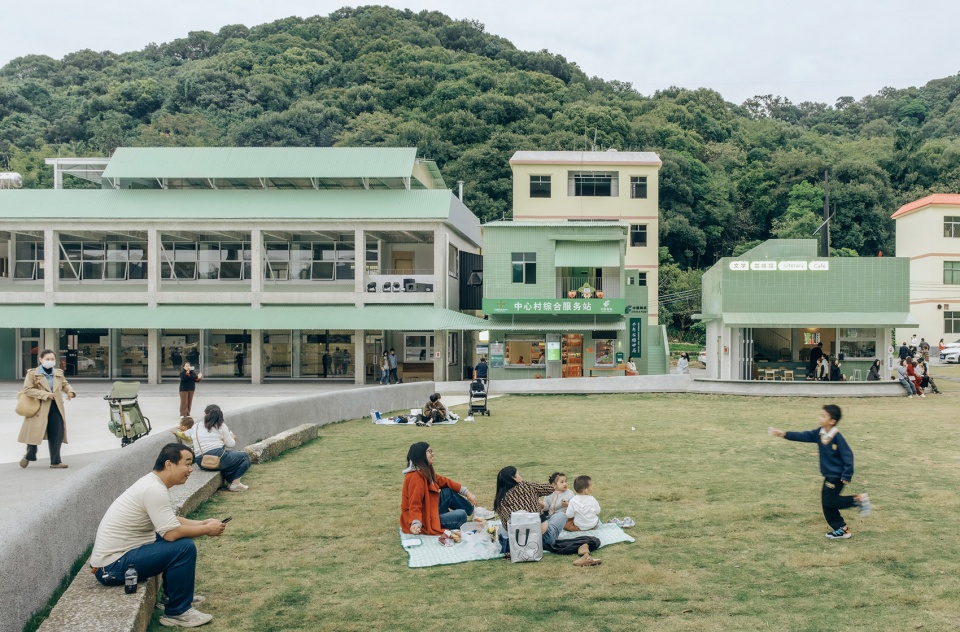
打开与连接 Opening and Connecting
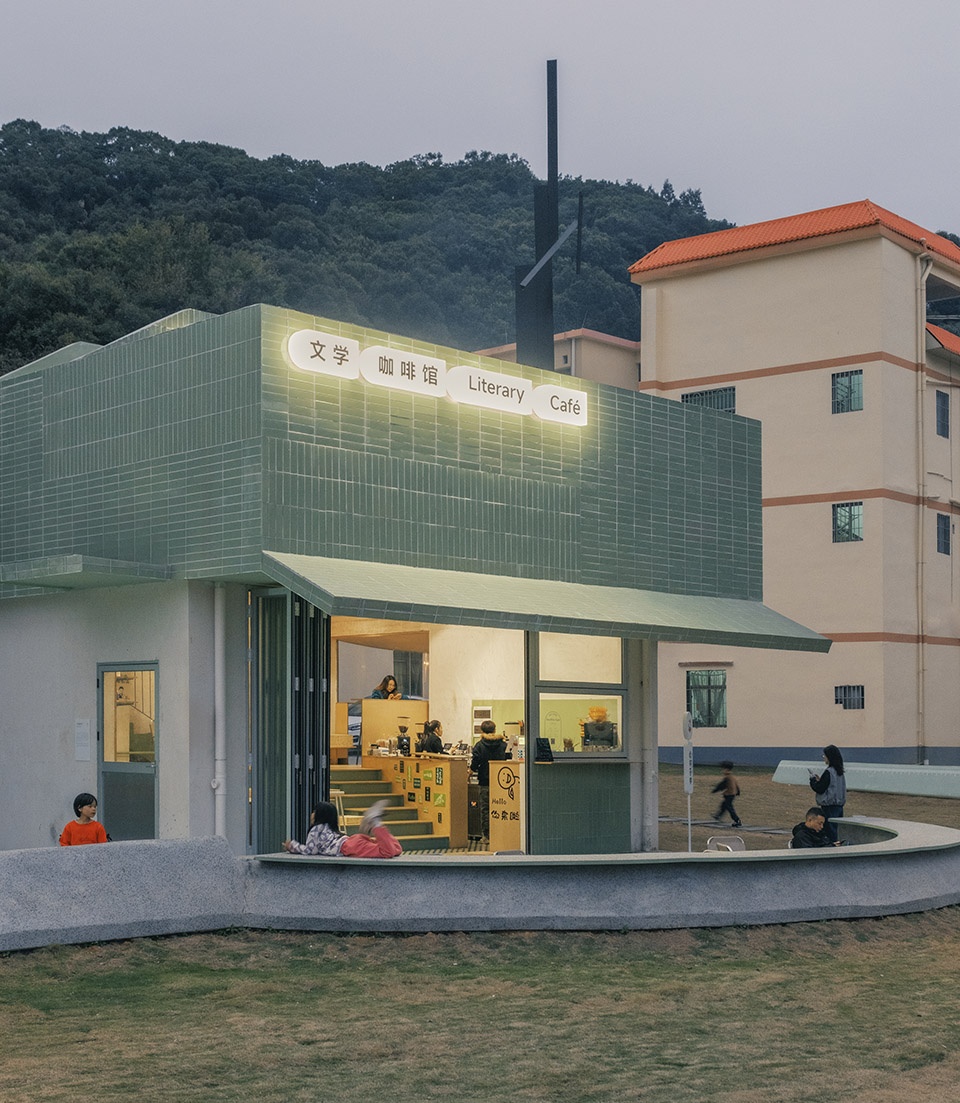
本次改建涉及三栋既有建筑,原为一处粮仓及两栋村屋。依据策划功能定位,分别更新为:以多用文化空间为核心功能,并以檐下空间作为室外延伸的“粮仓书局”,整合邮政、银行及供销社服务的“解忧杂货铺”,以及提供咖啡与休闲阅读空间的“文学咖啡”。
▼拆改策略,renovation strategy
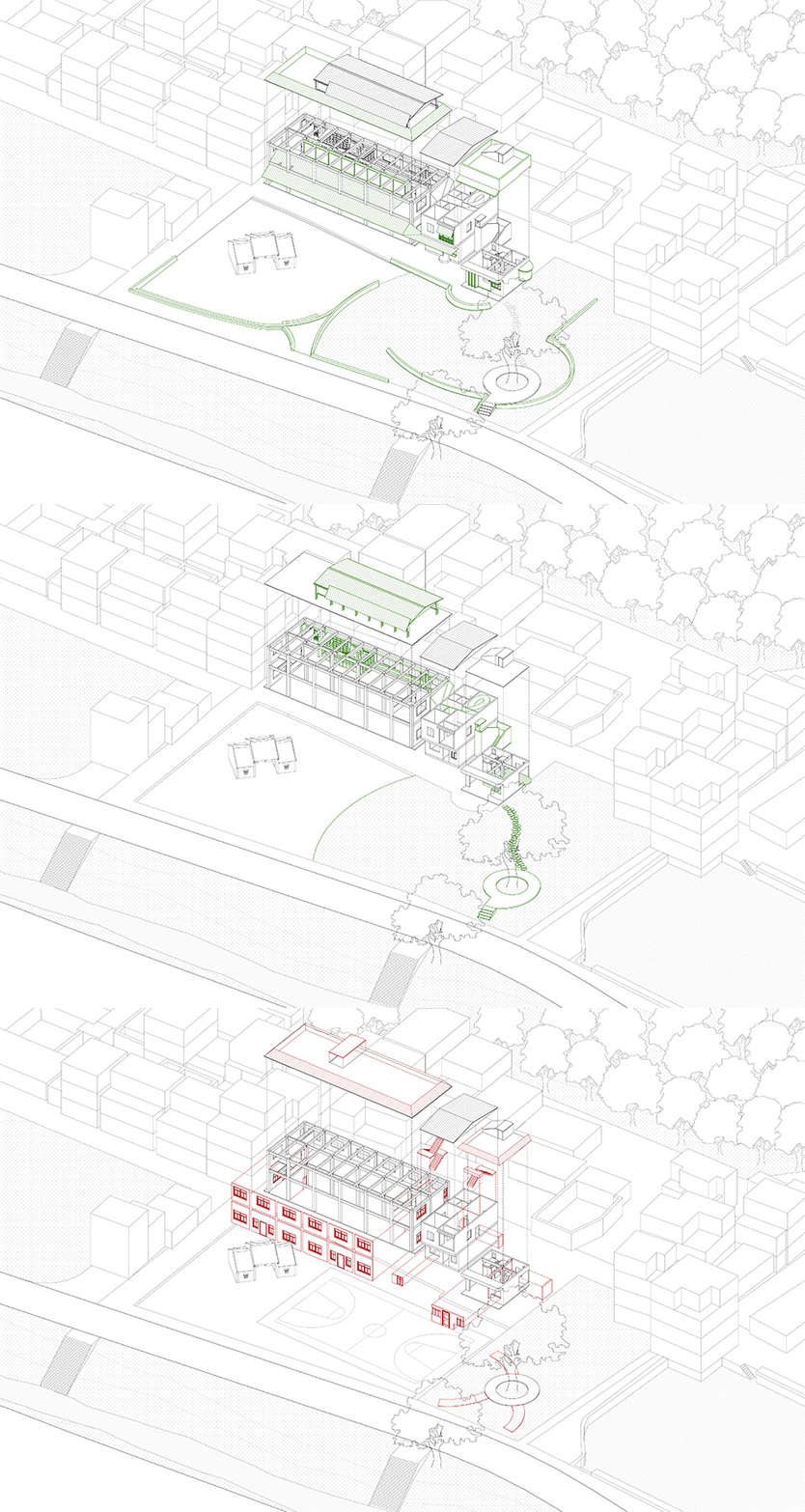
The renovation focuses on three existing structures: a granary and two village houses.They were transformed into the “Granary Bookstore,” the “Miracle of General Store,” and the “Literary Café.”
▼改造后,after renovation
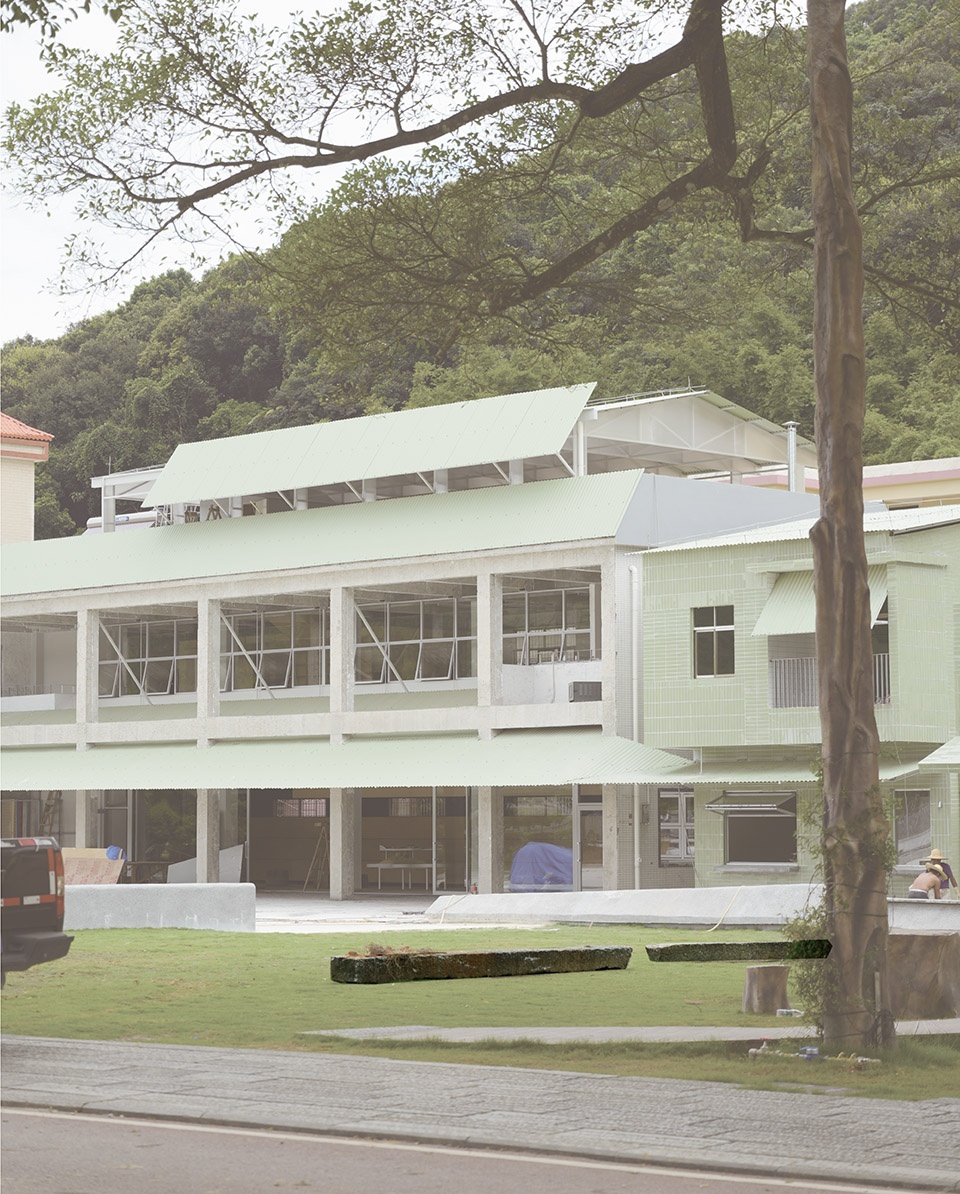
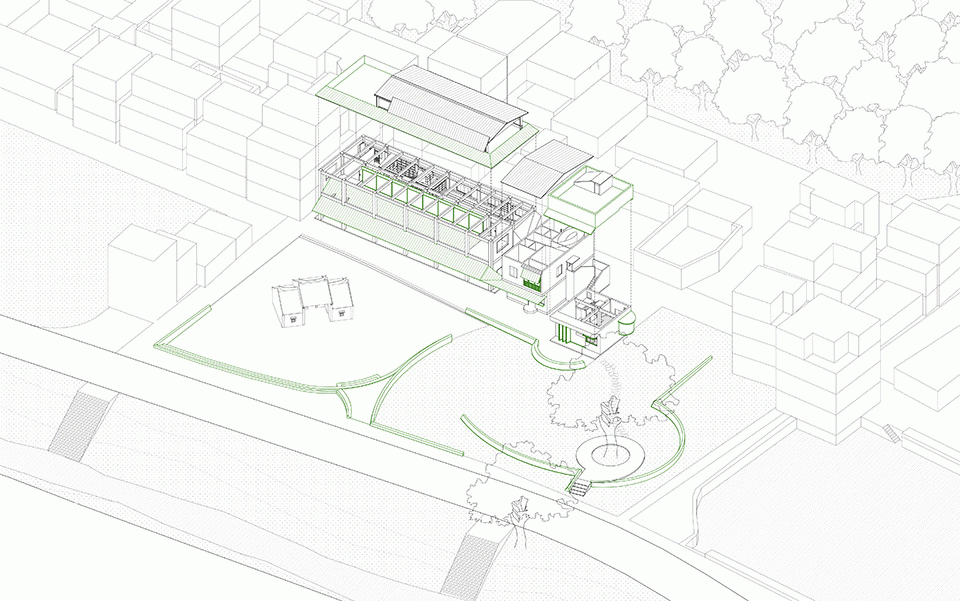
方案通过拆除部分内隔墙和楼梯,整合出通透、灵活的内部空间。以新建的楼梯、连桥重新组织交通。首层加建单坡屋檐,并以弧形景观墙划分场地,重塑室外空间。大面积拆除南面外墙后,粮仓原有的封闭立面被打开,内外空间被联系起来,以更加公共开放的姿态面向使用者。
▼粮仓改造前,barn before renovation
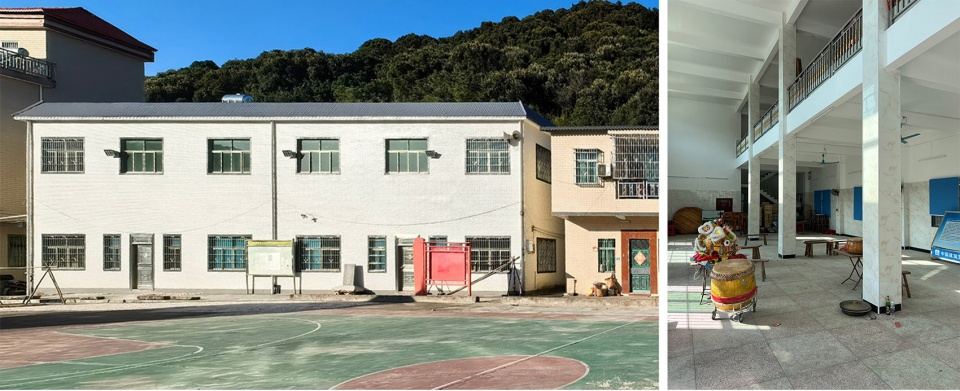
Partitions and stairs were removed to create flexible interior spaces and reconfigure circulation. The south facade of the granary was largely opened, while a continuous eave and new curved walls reshape the surrounding outdoor spaces.
▼粮仓改造后,barn after renovation
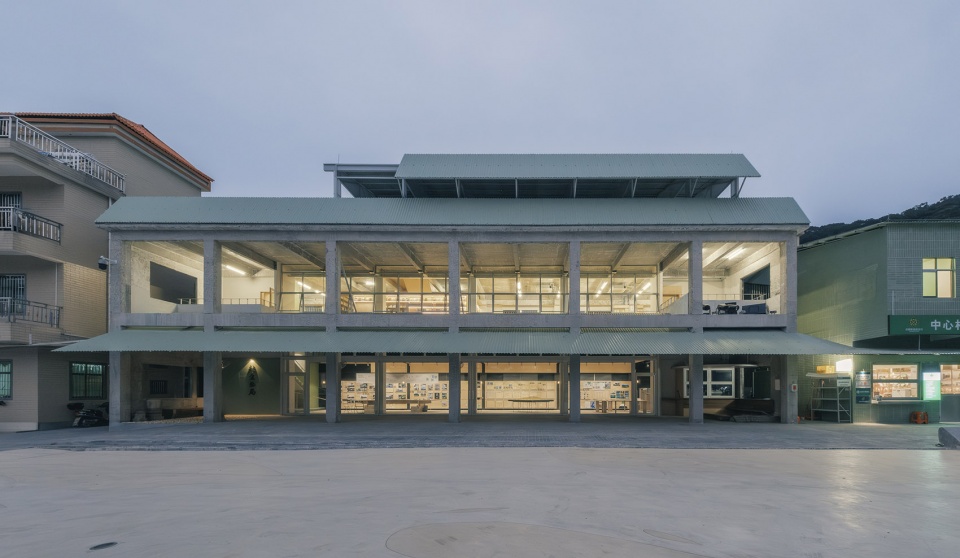
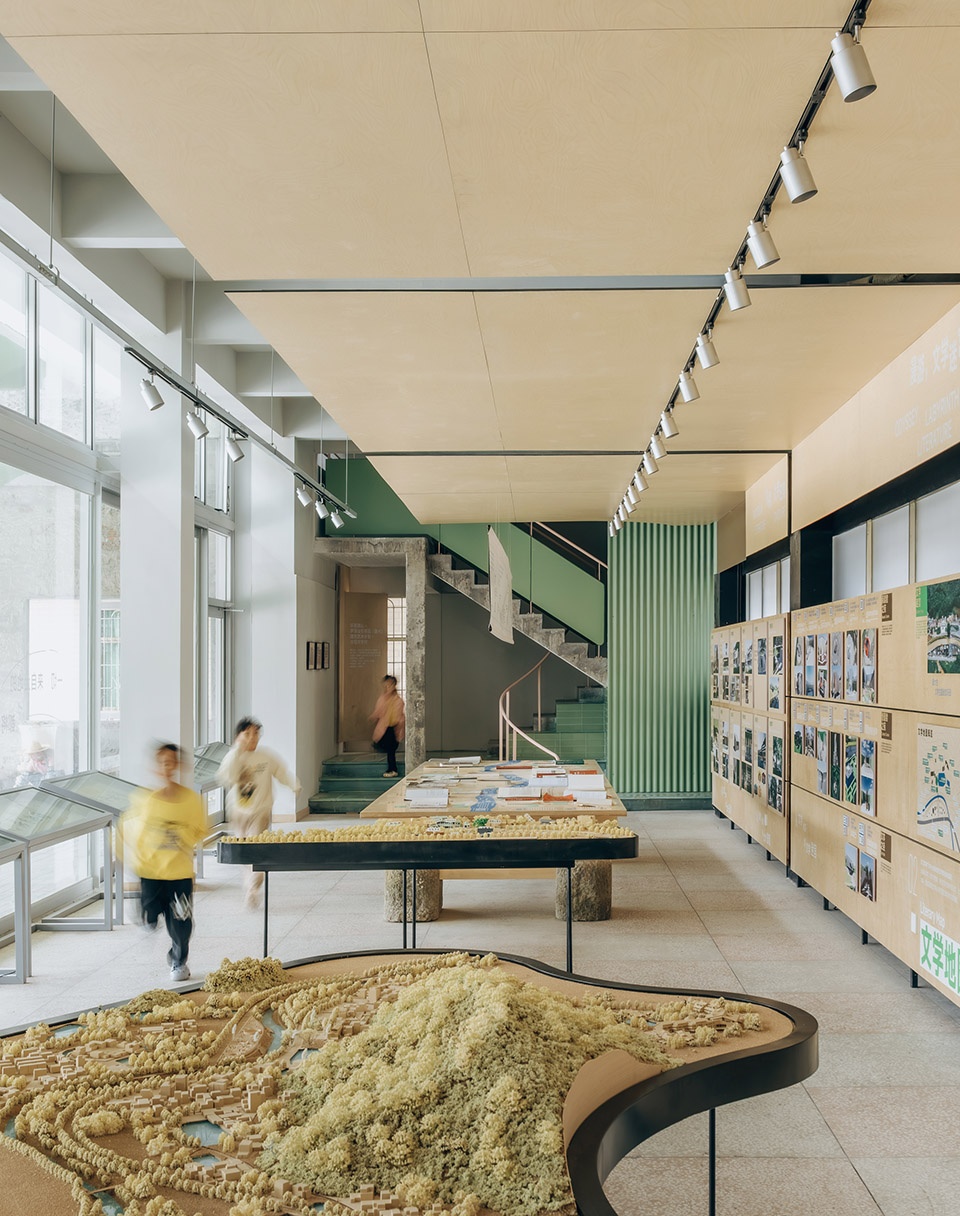
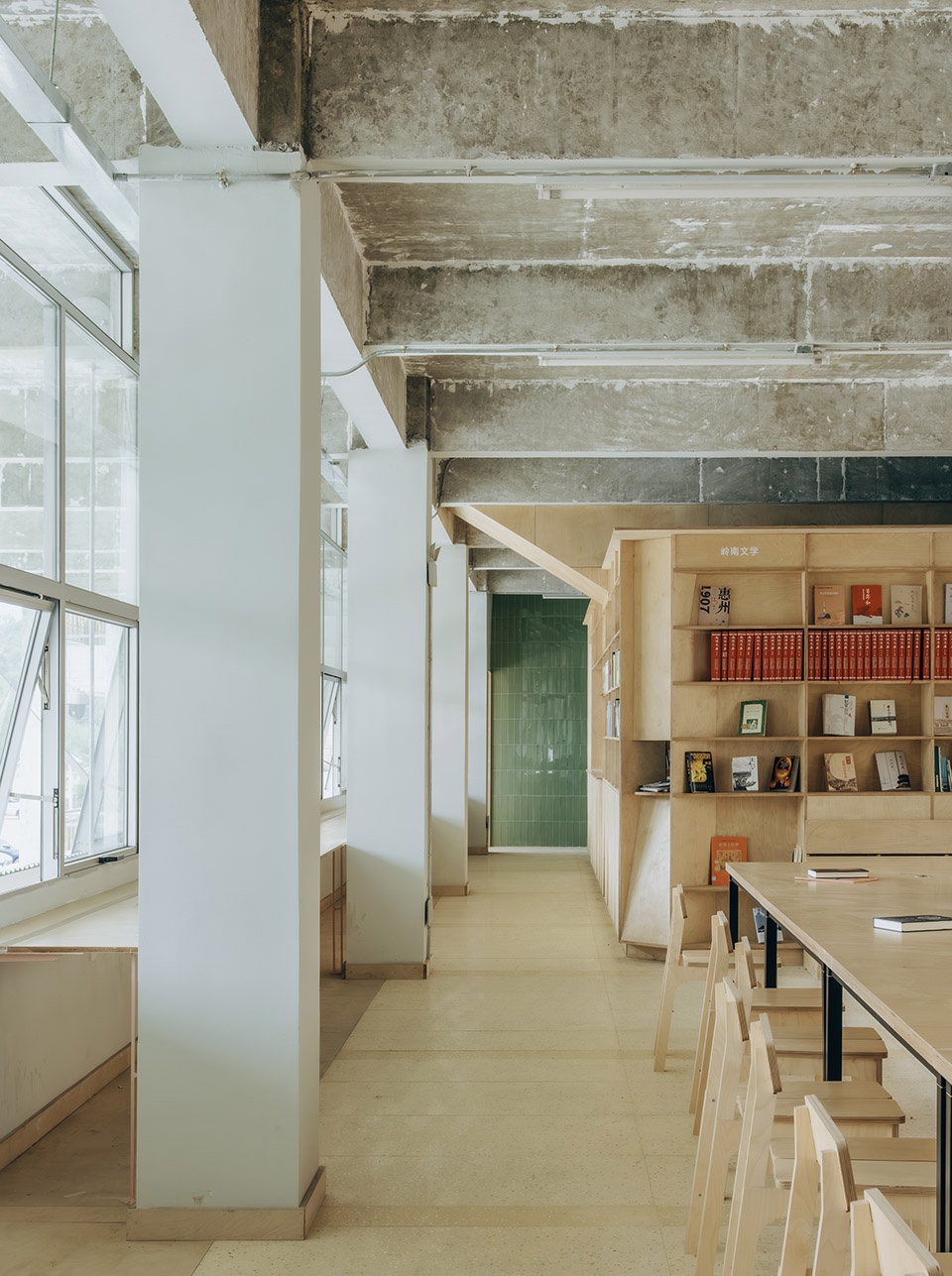
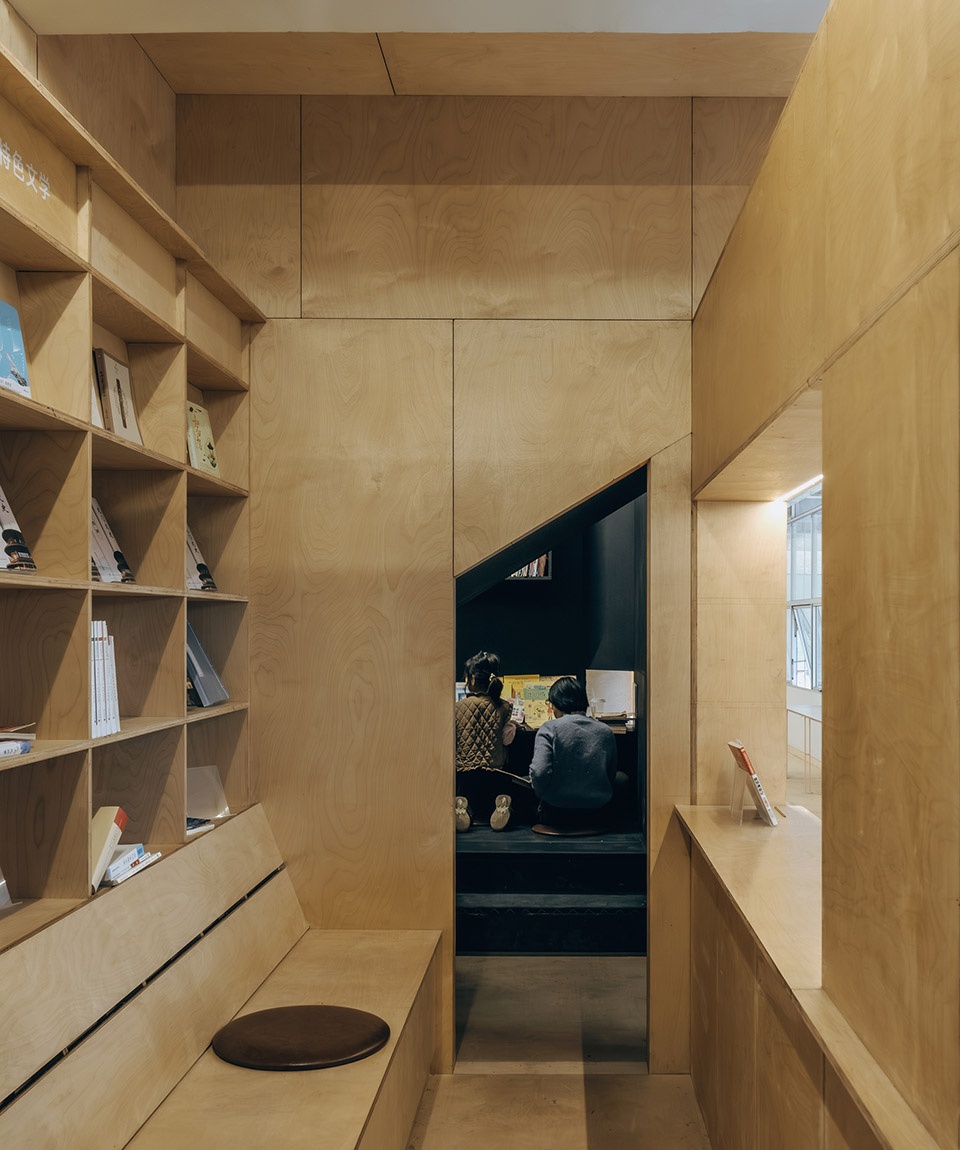
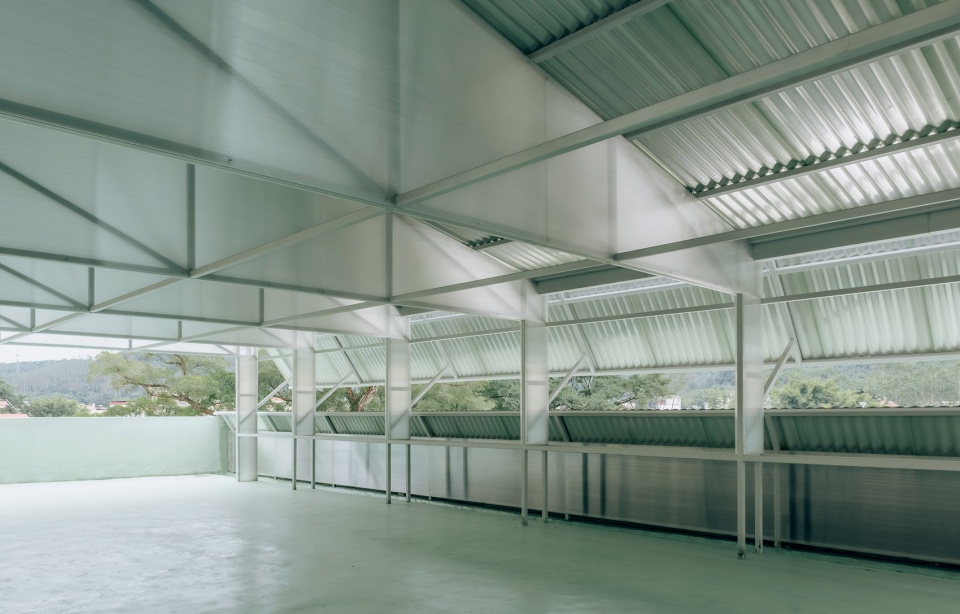
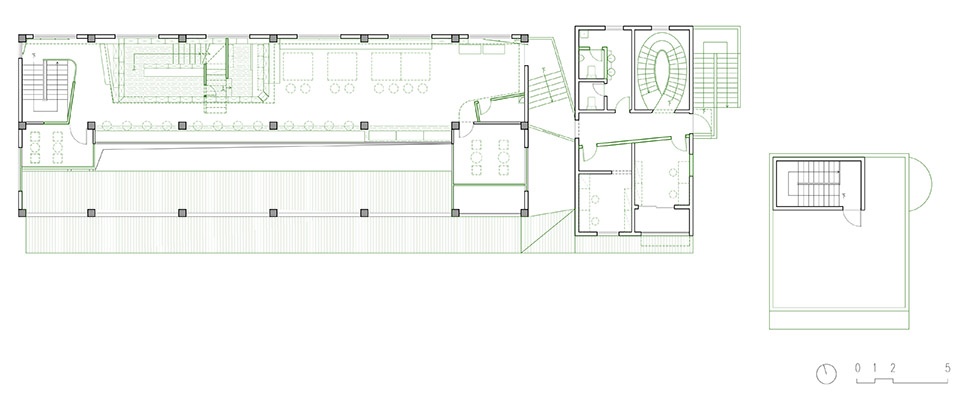
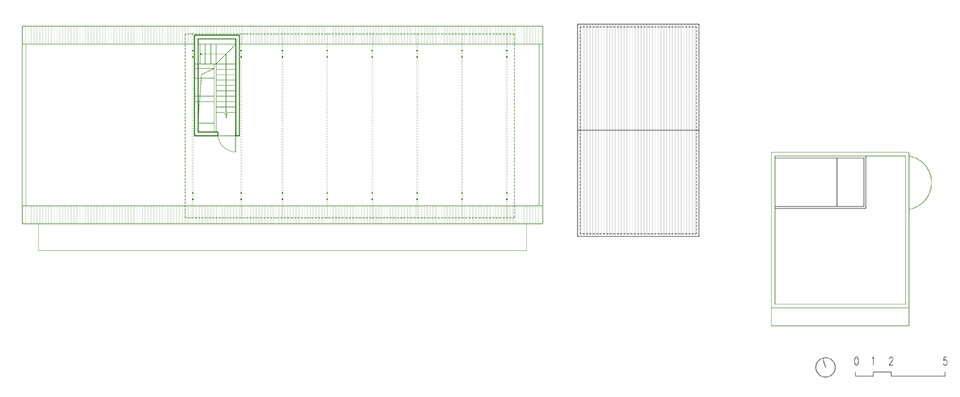
“粮仓书局”以公共活动为核心功能。一层为村史馆;二层设有不同尺度的阅读空间,可开会、小聚,也可静下心来读书;顶层新建钢结构凉棚,既是纳凉场所,亦可作多功能会议厅。东侧加建天桥连通两个办公空间,供驻地团队临时使用。粮仓书屋为所有人提供可停留的角落——村民与游客、相约与偶遇,都能在此寻得片刻安定。
The bookstore features a local history display on the ground floor and reading spaces above, with a new rooftop shaded structure for flexible use. The integrated service station combines retail with daily services such as parcel collection and basic financial functions. The café frames views of the banyan trees, with expanded windows and stepped seating that create informal gathering spaces.
▼粮仓首层村史馆,local history display area
▼粮仓二层阅读空间,library on the upper level
▼顶层多功能会议厅,Top-floor multi-functional conference hall
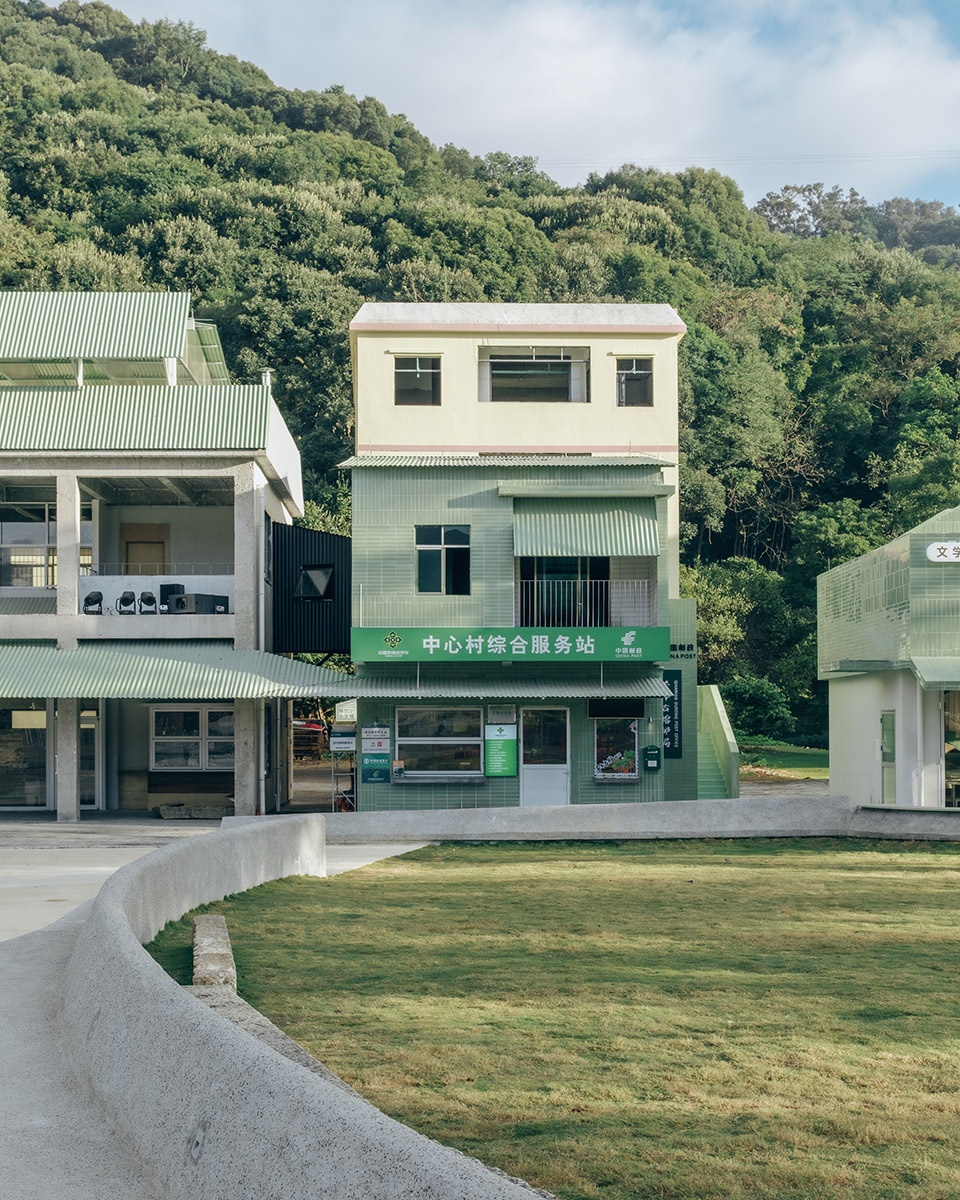
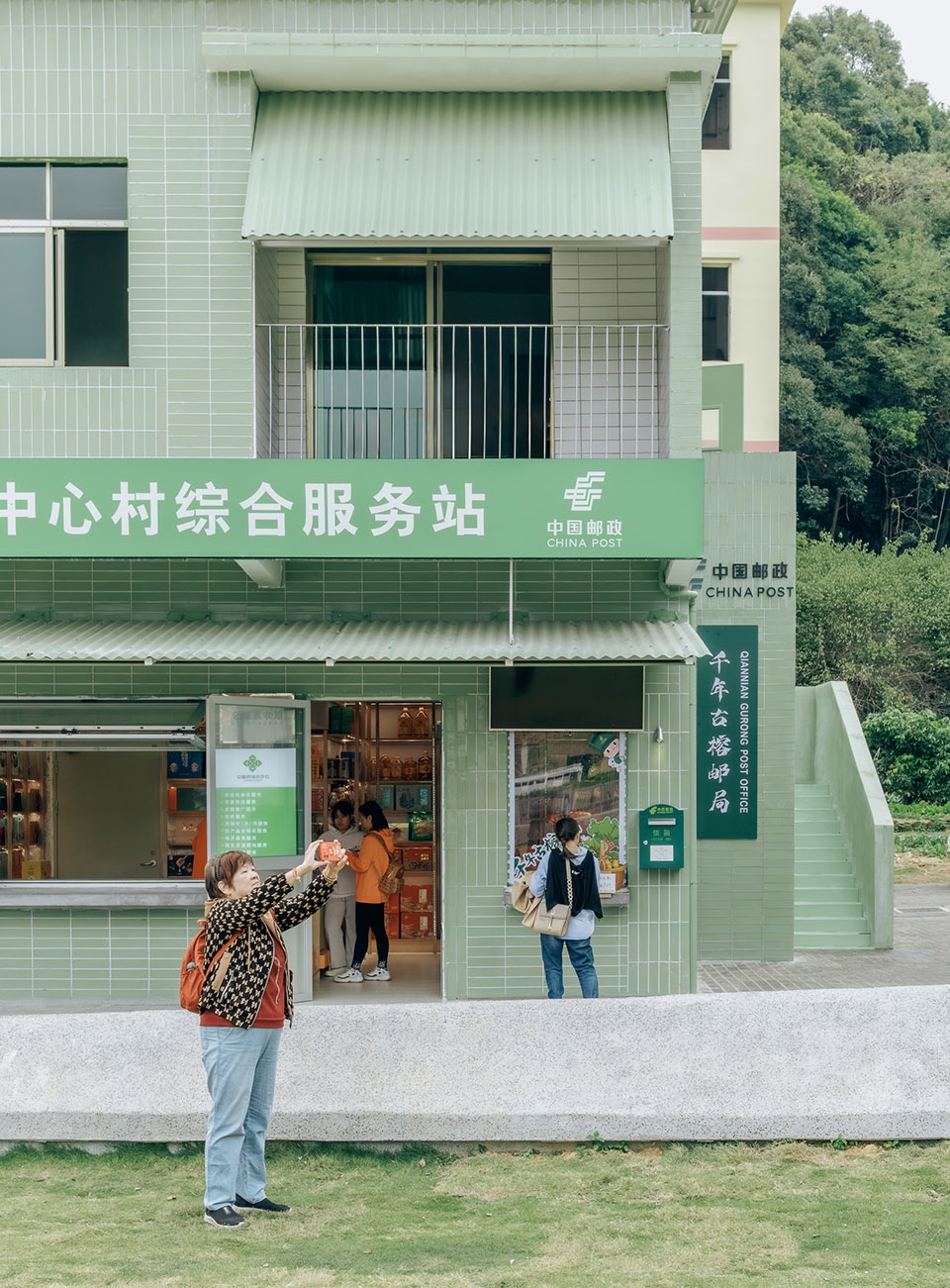
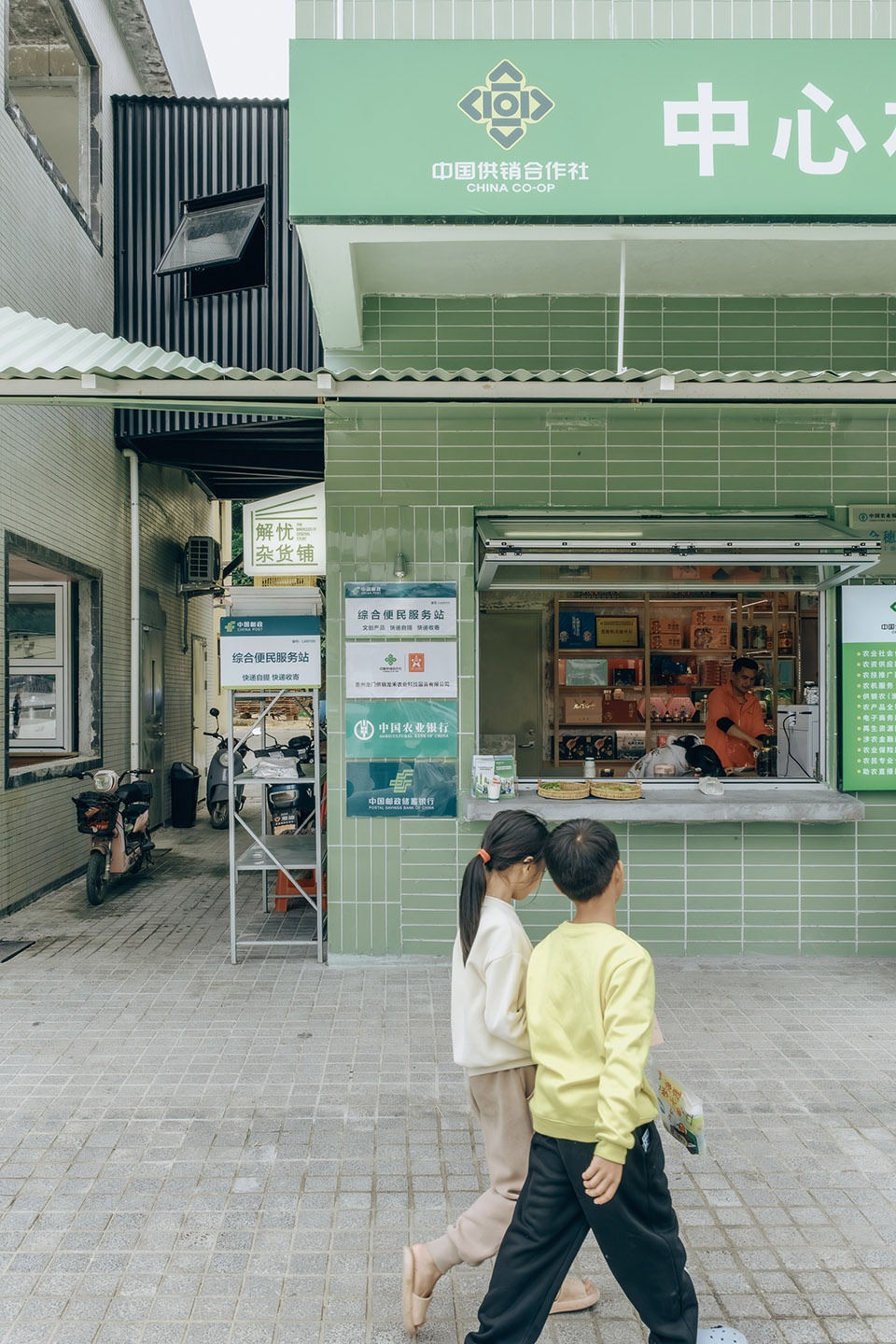
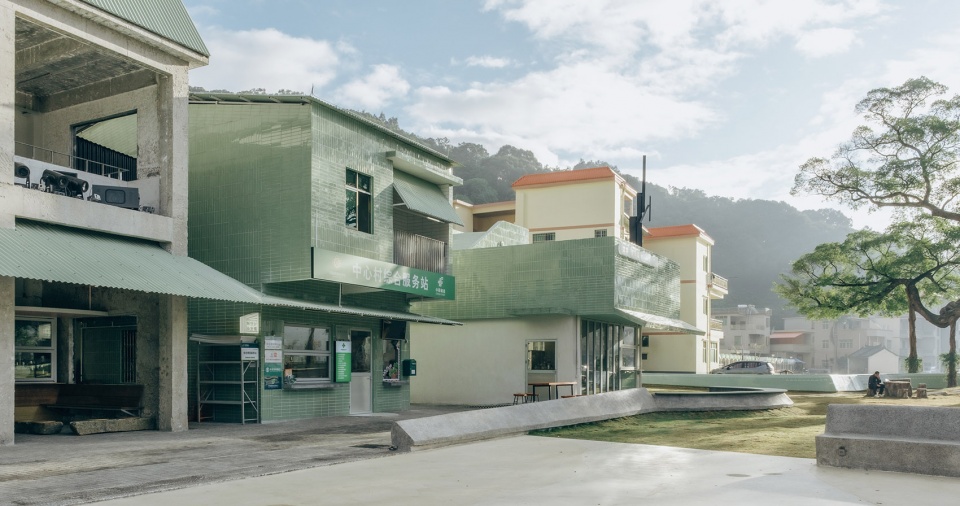
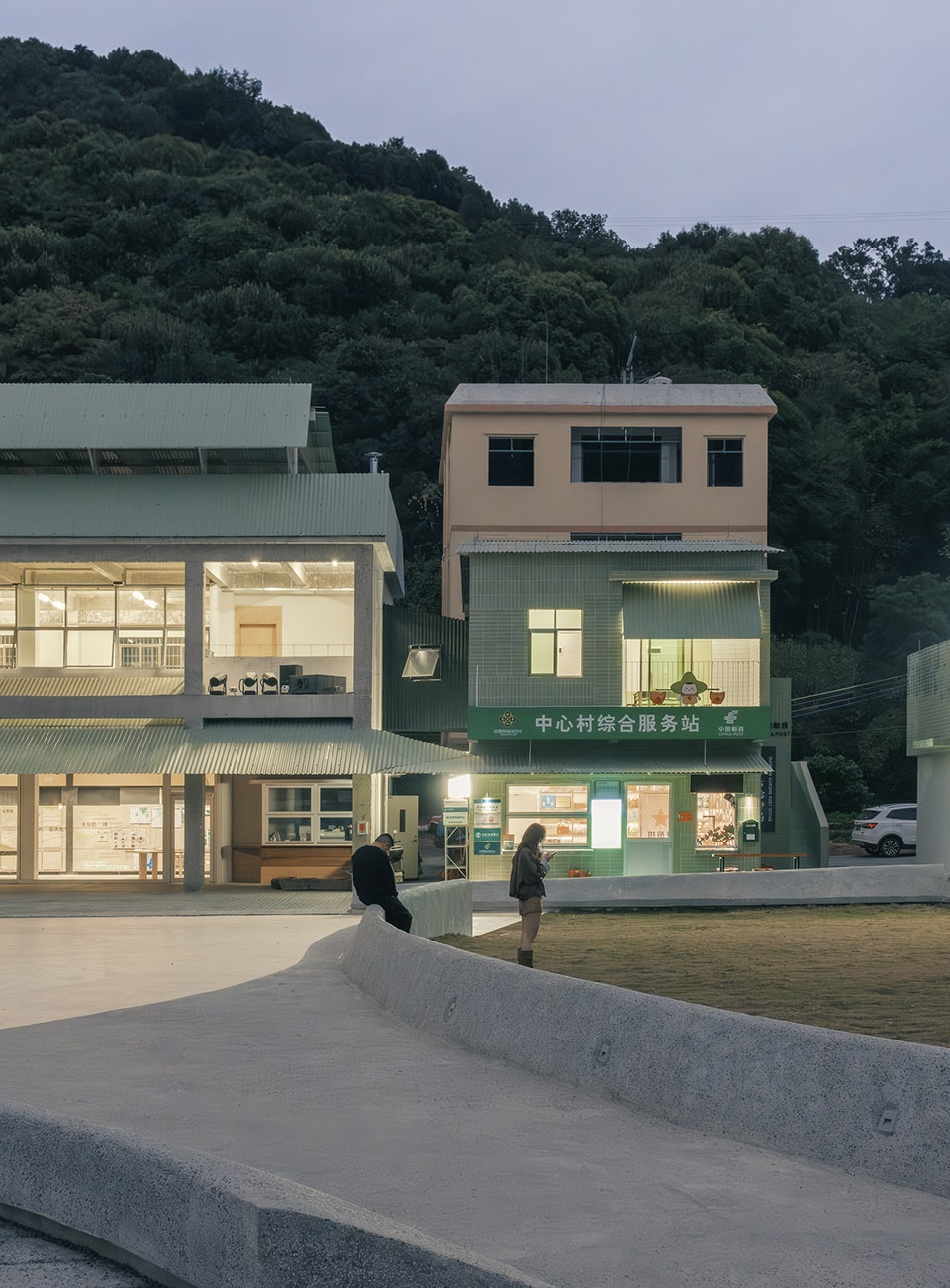
从村民的日常需求出发,设计将粮仓东侧民房一层的窗洞口扩大,改作中心村综合服务站。服务站不仅负责日常零售,还提供快递收发,农产品收购、金融与生活等服务。一层同时售卖土特产和惠州文创产品,成为游客到达中心村后落脚的第一站。
Starting from villagers’ daily needs, the design enlarges the window openings on the first floor of a residential house on the east side of the granary, transforming it into a central village comprehensive service station. The service station not only handles everyday retail but also provides express delivery, agricultural product procurement, financial services, and other community amenities. On the ground floor, local specialties and Huizhou cultural and creative products are sold, making it the first stop for visitors arriving at the central village.
▼中心村综合服务站,a central village comprehensive service station
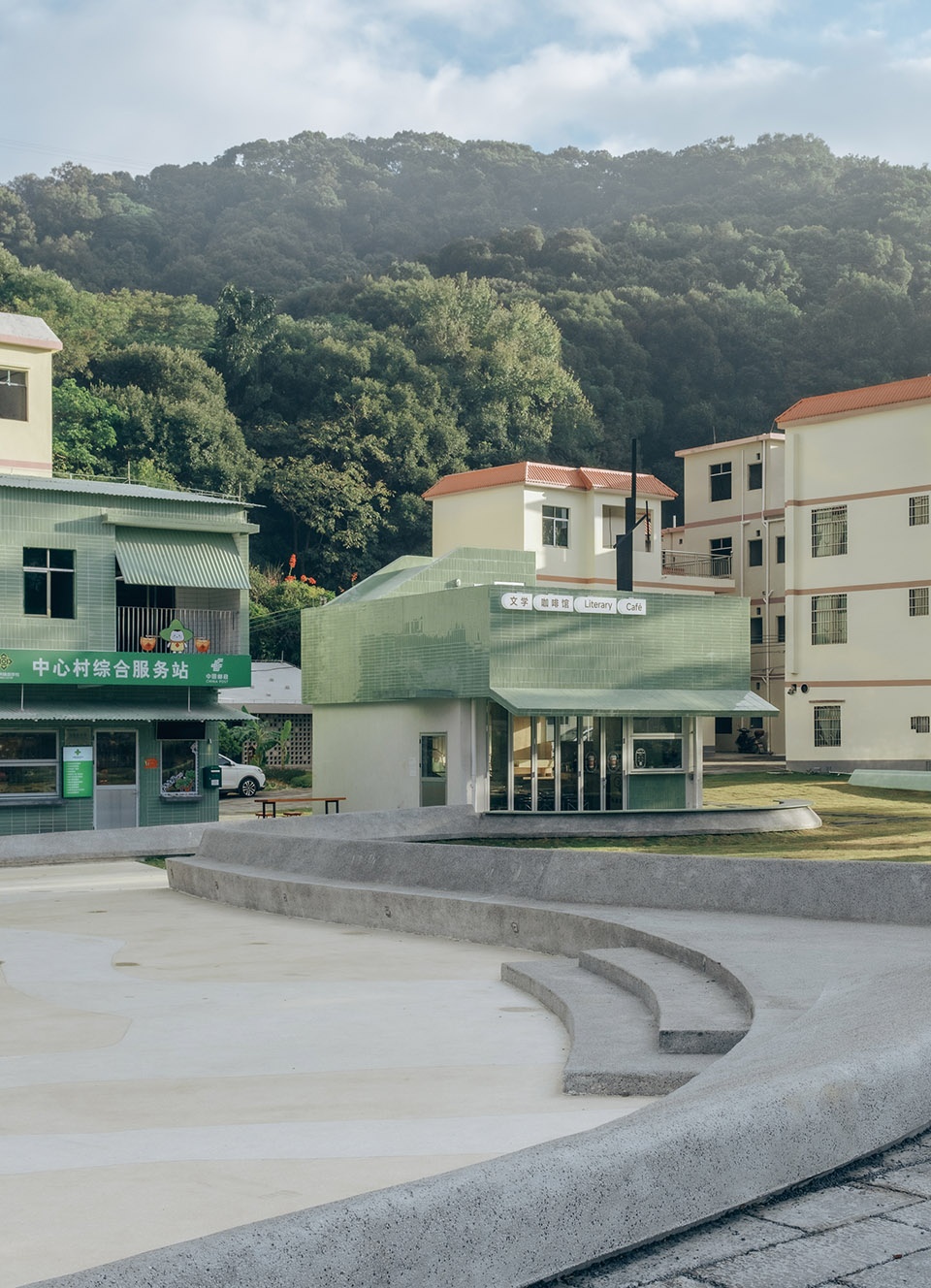
面向古榕,最东侧的民房被改作咖啡馆。拆除原有门窗和部分墙体后,设计将古榕“引入”室内。设计新建平台以最大化利用首层空间,平台向东挑出,可远眺村落景致。连接平台的大台阶正对古榕,游客可以在这里发发呆、看看树。室外半圆形矮墙桌台的围合让这里成为坐望古榕的最佳位置。本村老旧建筑拆下的石件也被纳入设计之中。门枕石、柱础、条石被重新置入场地,或成为家具的一部分,或单独成为座凳,散落在檐下、路边。它们带着旧时的痕迹,在新的位置上继续服务于村民。
Facing the ancient banyan tree, the easternmost residential house has been transformed into a café. After removing the original doors, windows, and parts of the walls, the design brings the banyan tree “inside.” A new platform was constructed to maximize the use of ground-level space, extending eastward to offer sweeping views of the village landscape. A large staircase leading to the platform is directly aligned with the banyan tree, inviting visitors to linger and gaze at it. The semi-circular low stone tables and walls surrounding the area create an ideal spot for sitting and enjoying the view of the tree. Stone elements salvaged from demolished old buildings in the village have also been incorporated into the design—doorstep stones, column bases, and paving stones are repositioned either as part of furniture or as standalone benches scattered beneath eaves and along pathways. Carrying traces of their past lives, these stones continue to serve the villagers in their new locations. Please provide the text you would like to be translated.
▼新建平台向东挑出,The newly-built platform protrudes towards the east
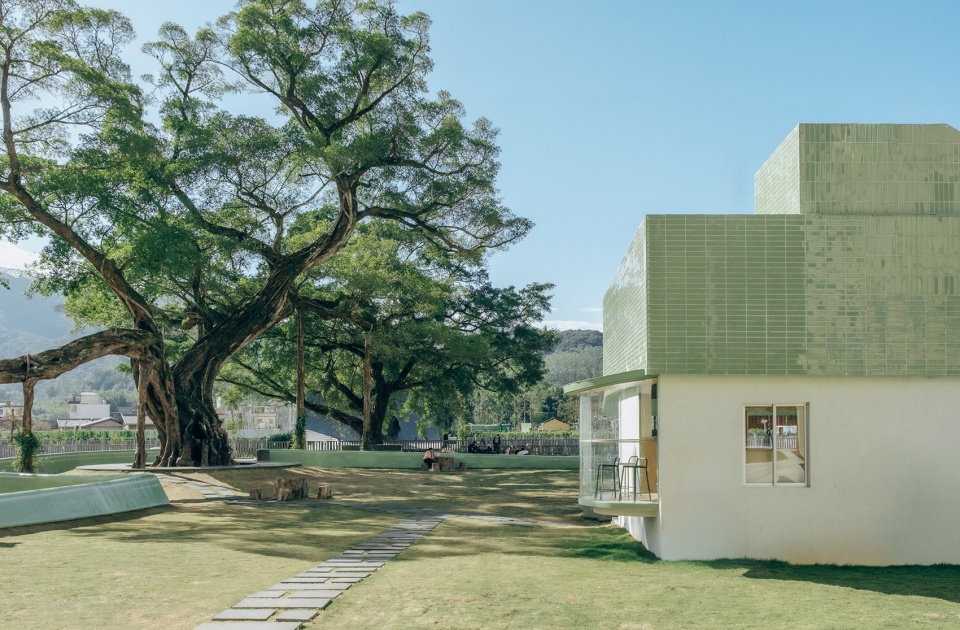
▼改造后,after renovation
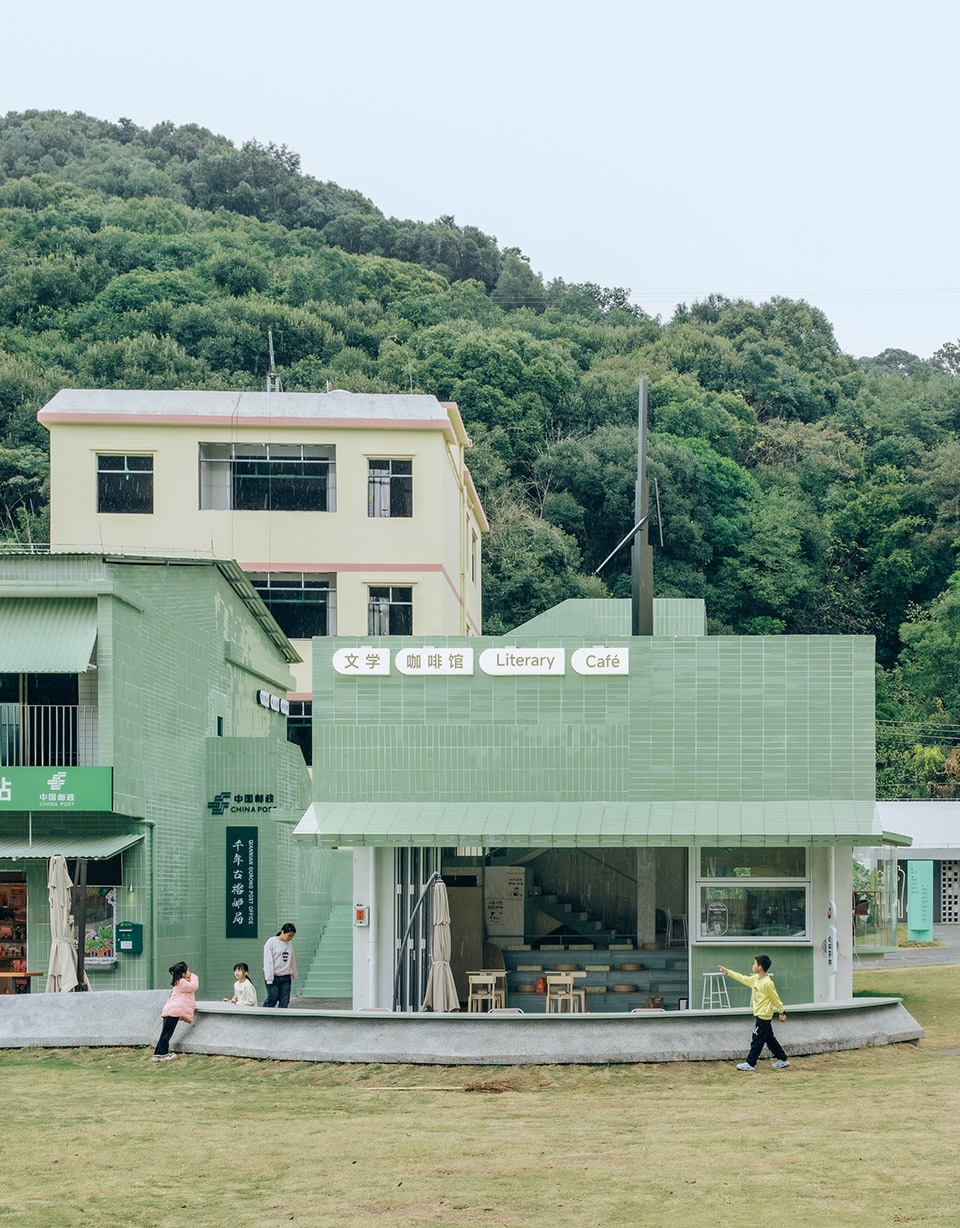
▼新建平台向东挑出,The newly-built platform protrudes towards the east
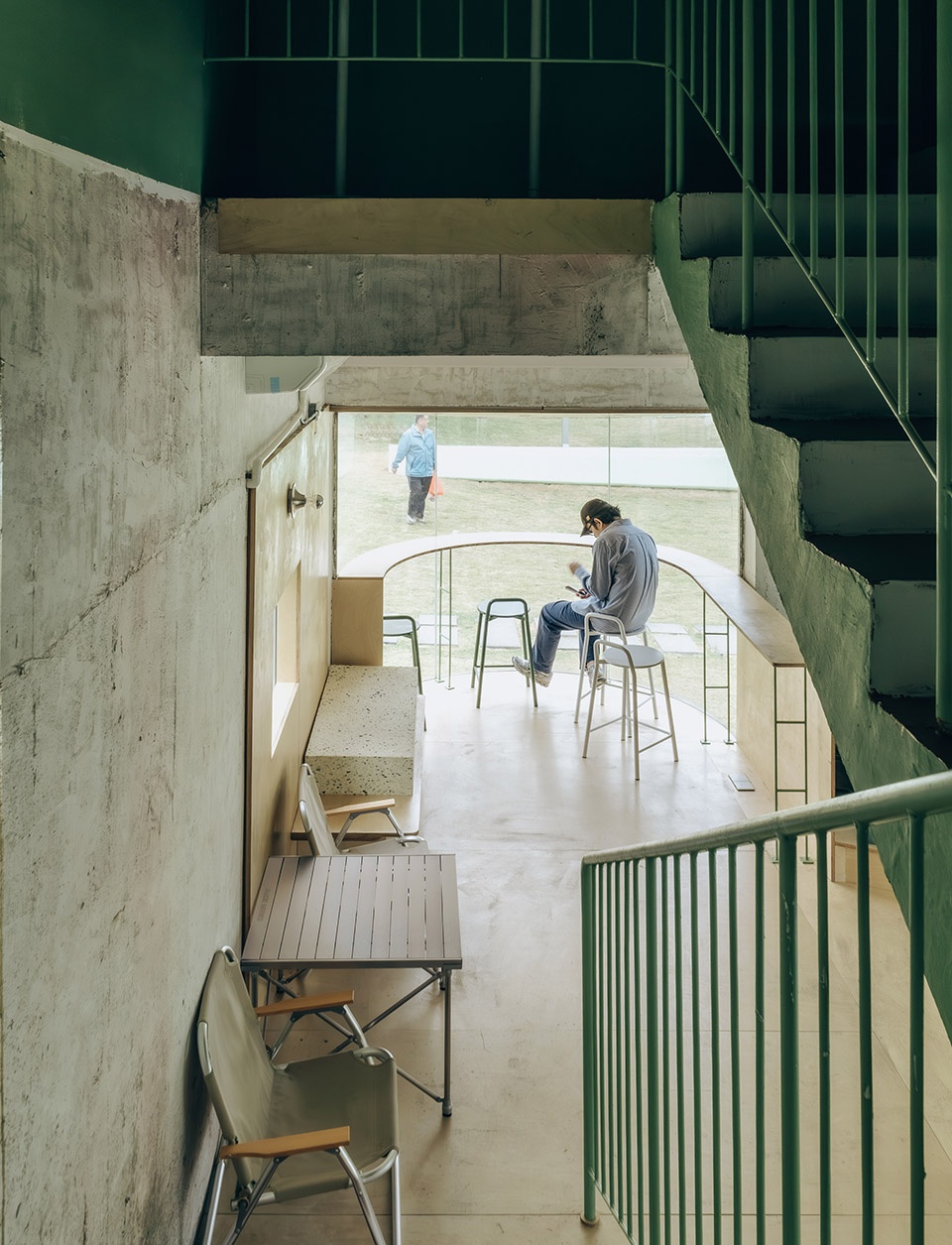
▼咖啡与古榕 ,cafe and banyan tree
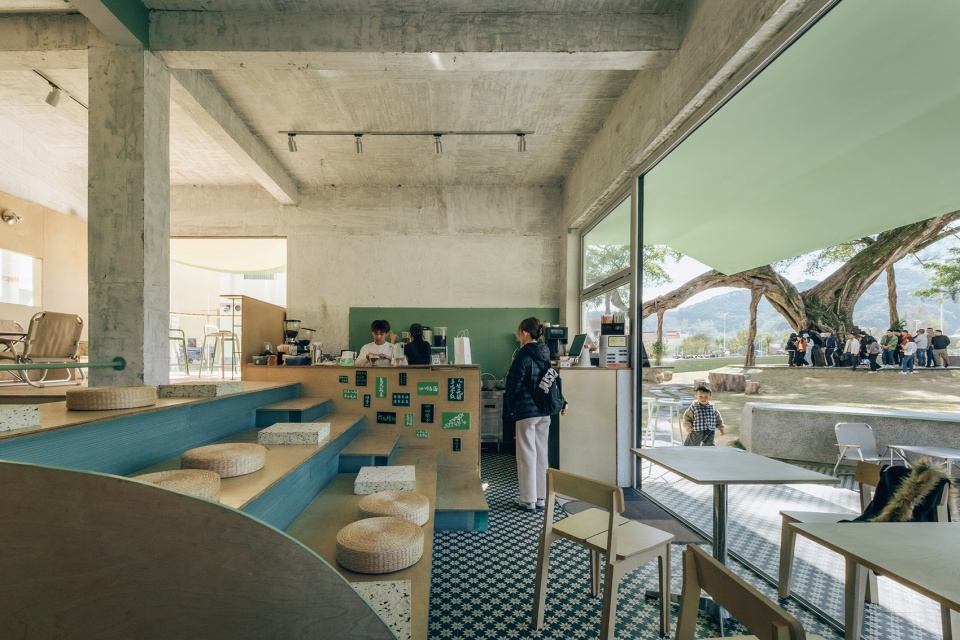
▼文学咖啡馆,cafe & library
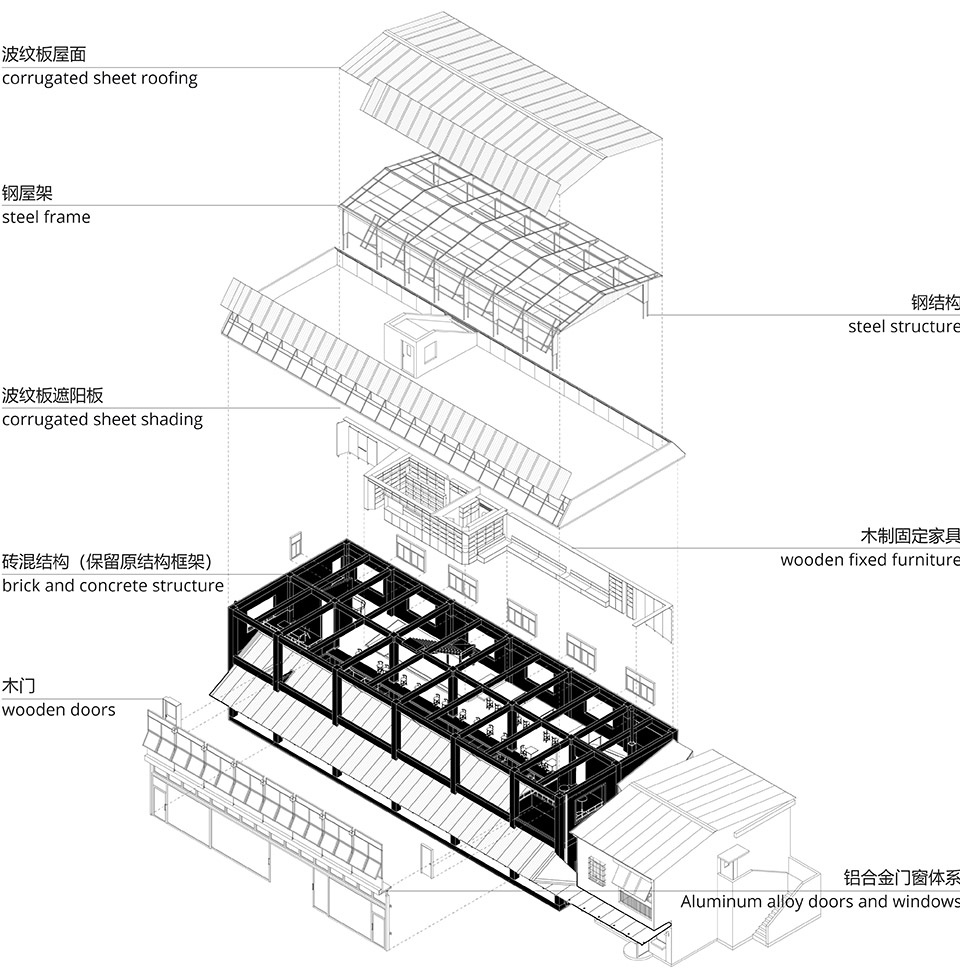
本次改建使用混凝土、钢管、金属波纹板、铝合金门窗等初级工业产品作为基础材料,这些曾代表“工业化”的材料如今已成为当地建造的日常。这一现象的源头,可追溯至1978年乡村改革后乡镇企业的兴起。随着工业建造体系不断向乡村拓展,标准化的工业产品与灵活的地方工艺相互渗透,编织出具有地方特色的建造网络,共同塑造当下中国的乡镇景观。
▼本村回收建筑构件,recycled construction material
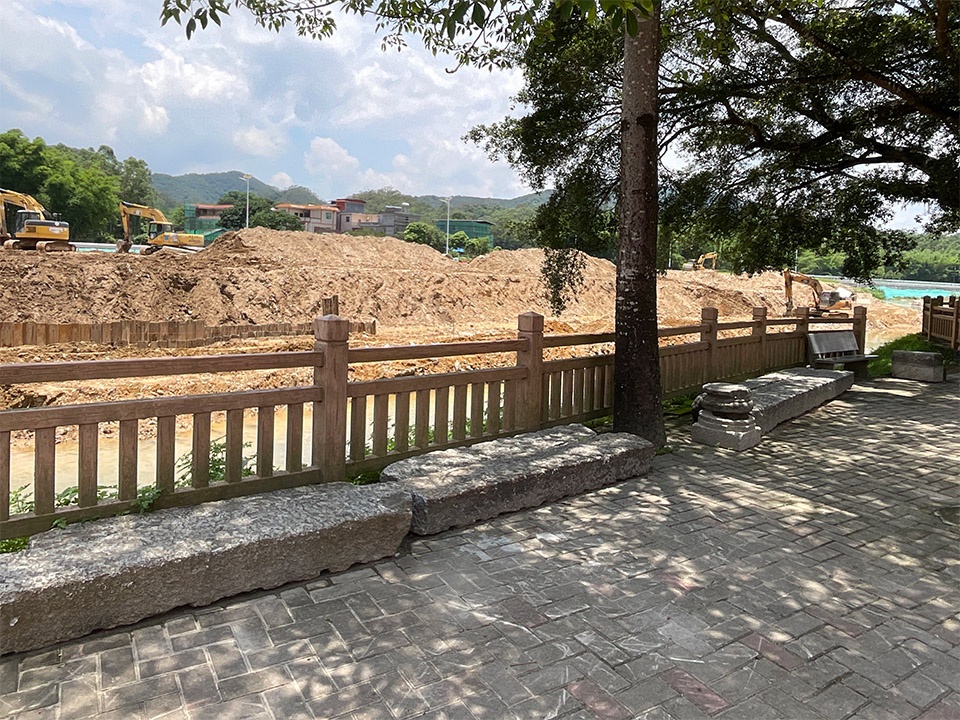
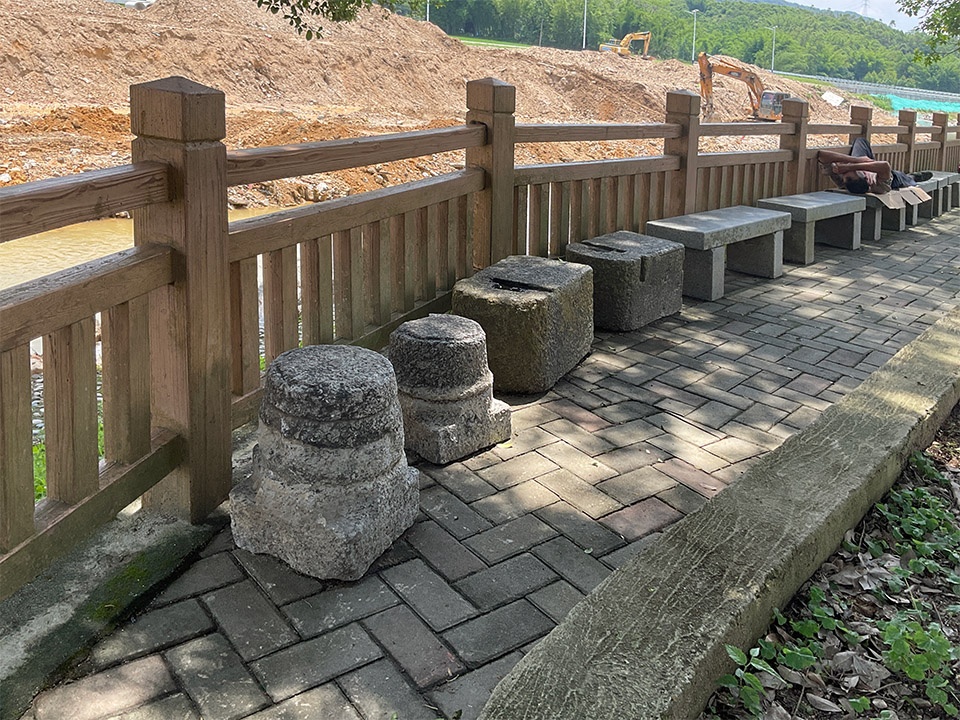
Materials such as steel pipes and corrugated metal panels—once emblematic of industrialization—are now common in local construction. Since the 1978 rural reforms, industrial systems have merged with local techniques, together forming a distinctive vernacular that shapes China’s contemporary countryside. Stone elements salvaged from demolished village buildings were also reused as well.
▼回收石件再利用,reuse of the recylecsed stone
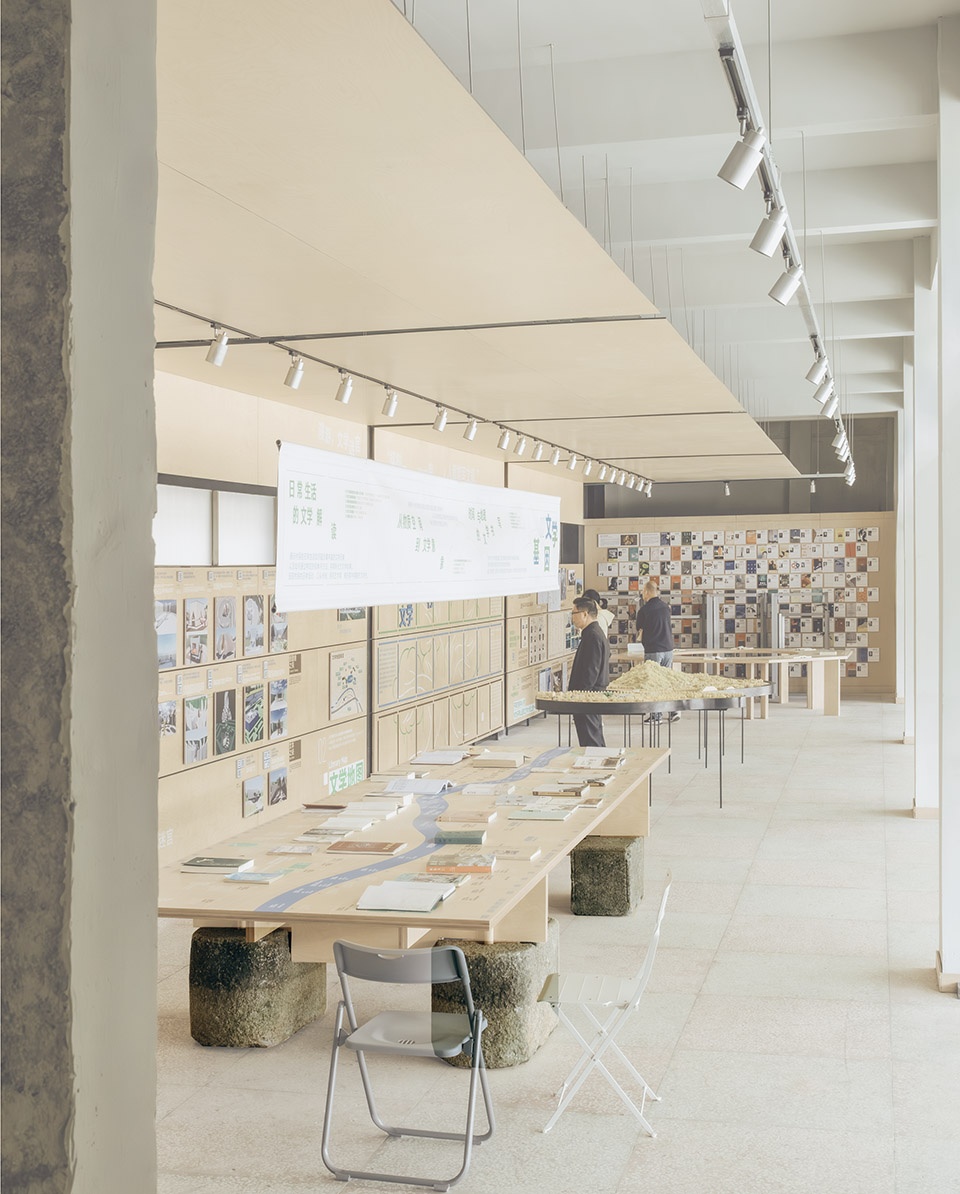
▼改造使用的多种材料,A variety of materials used in the renovation
檐下与生活 Eaves and Everyday Life
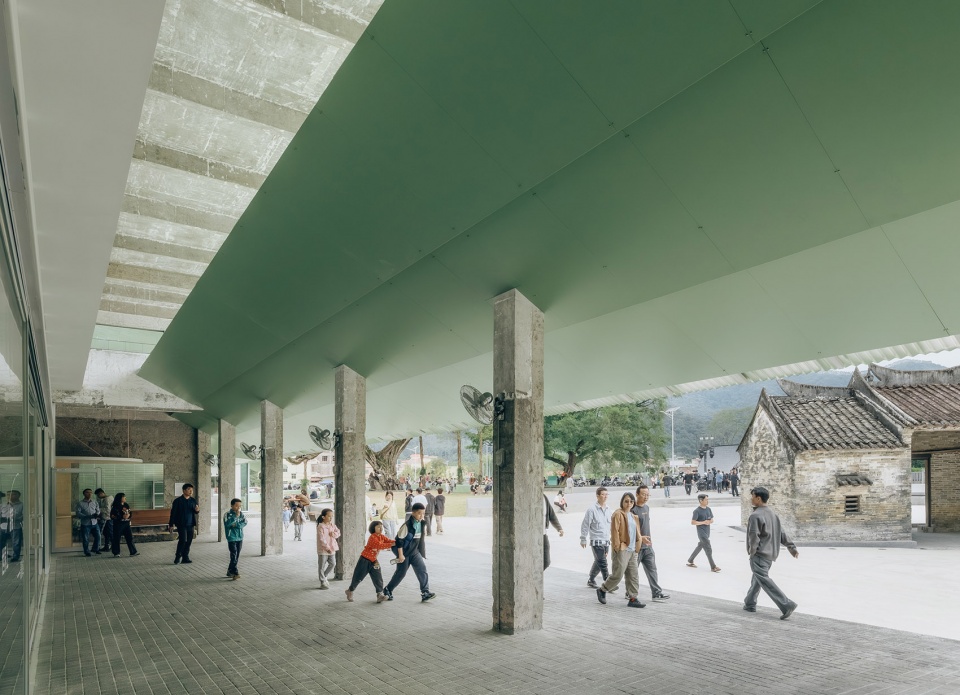
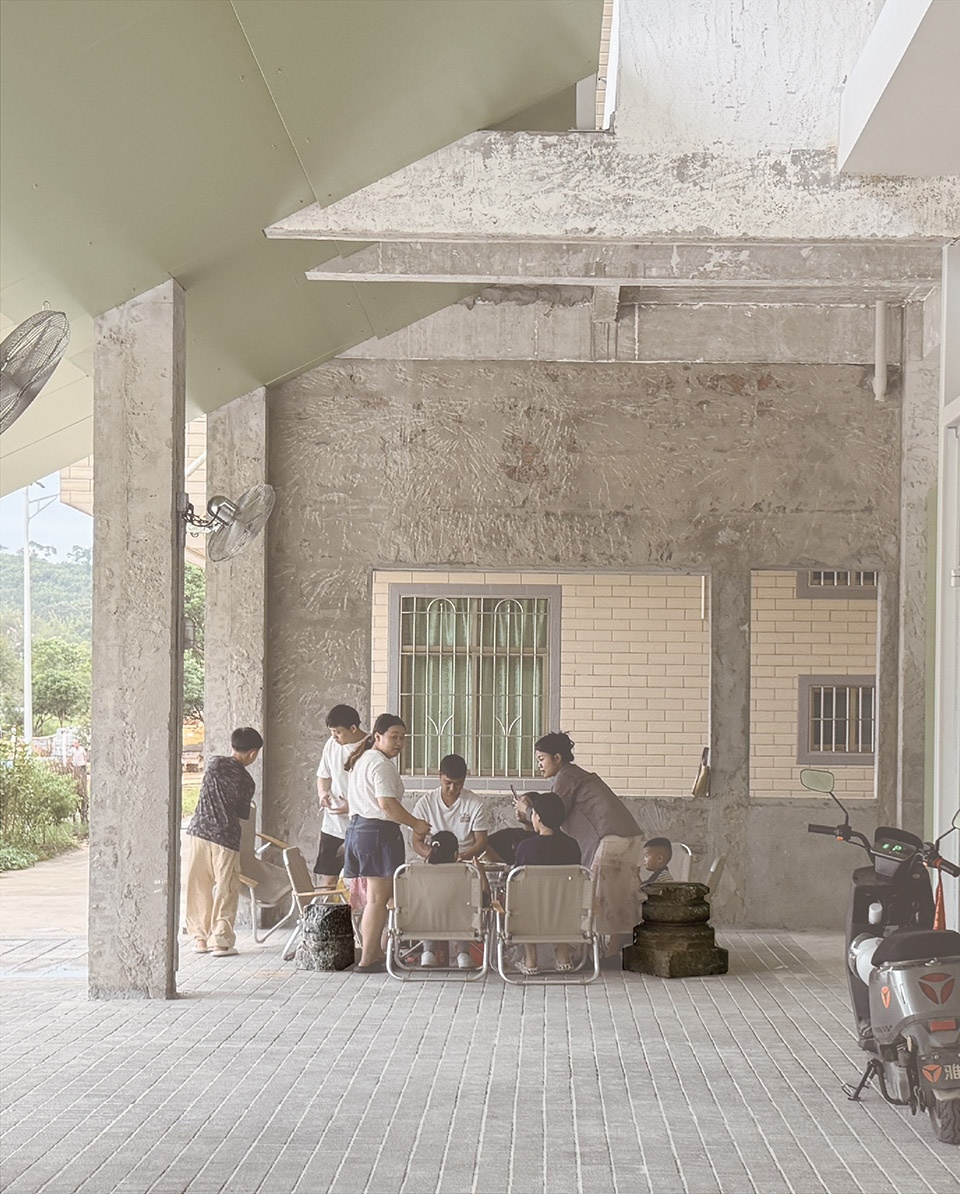
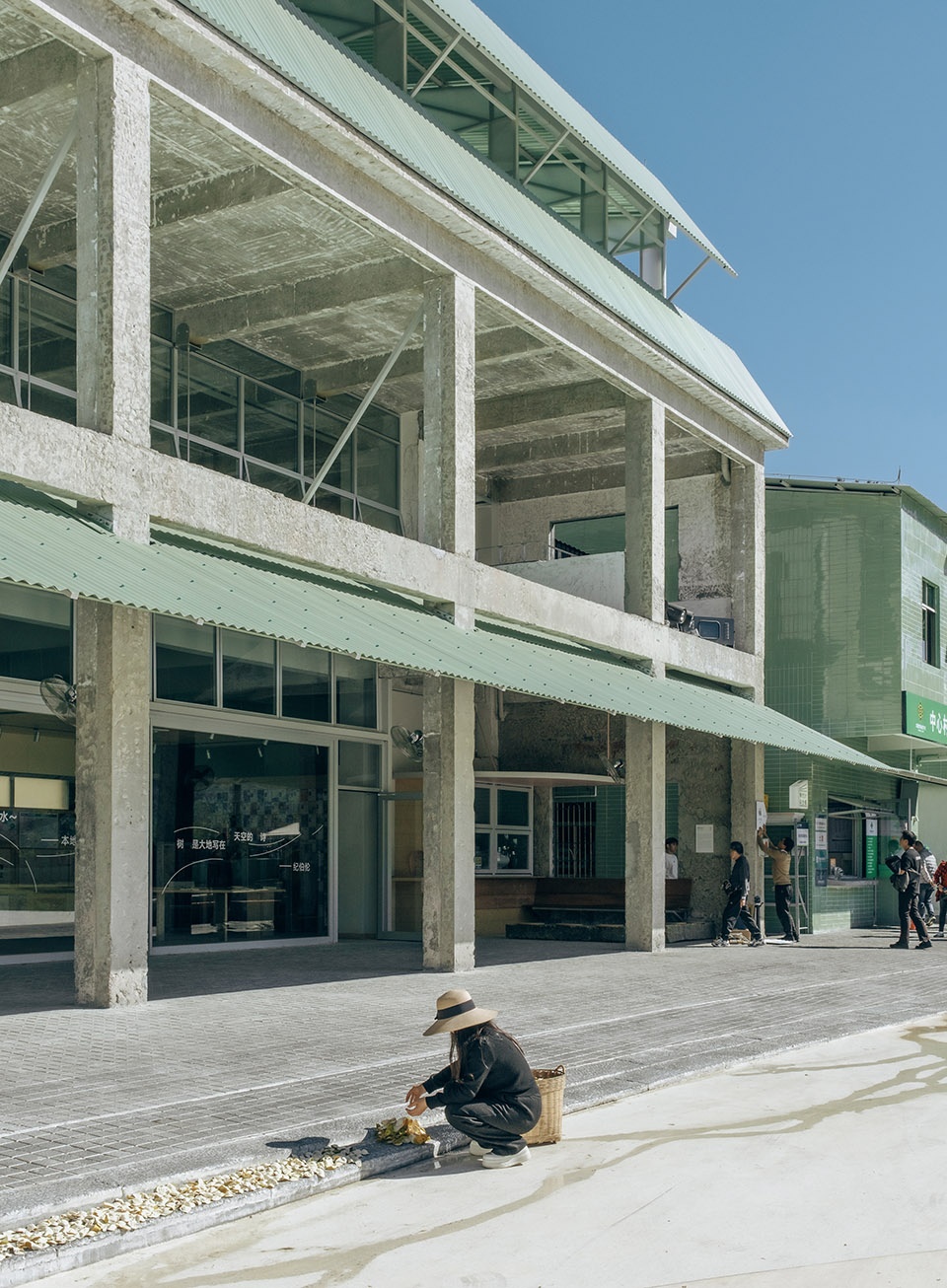
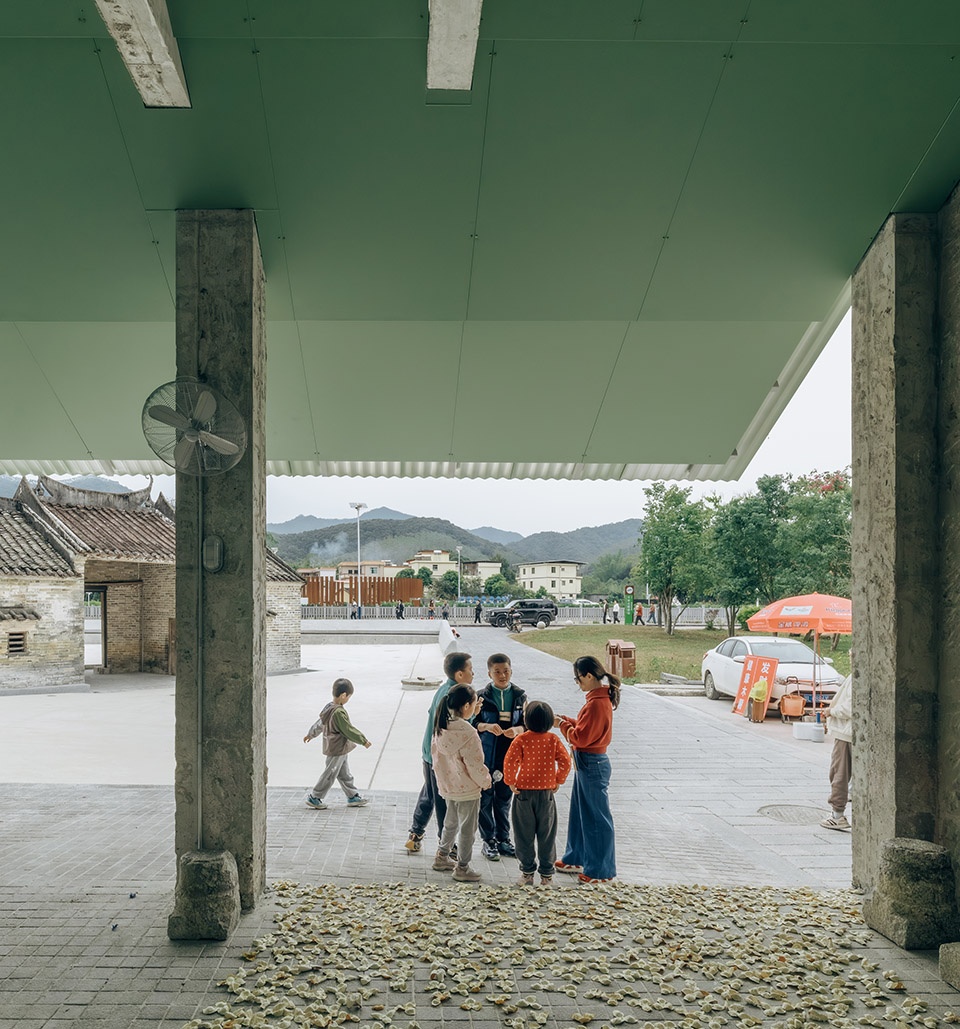
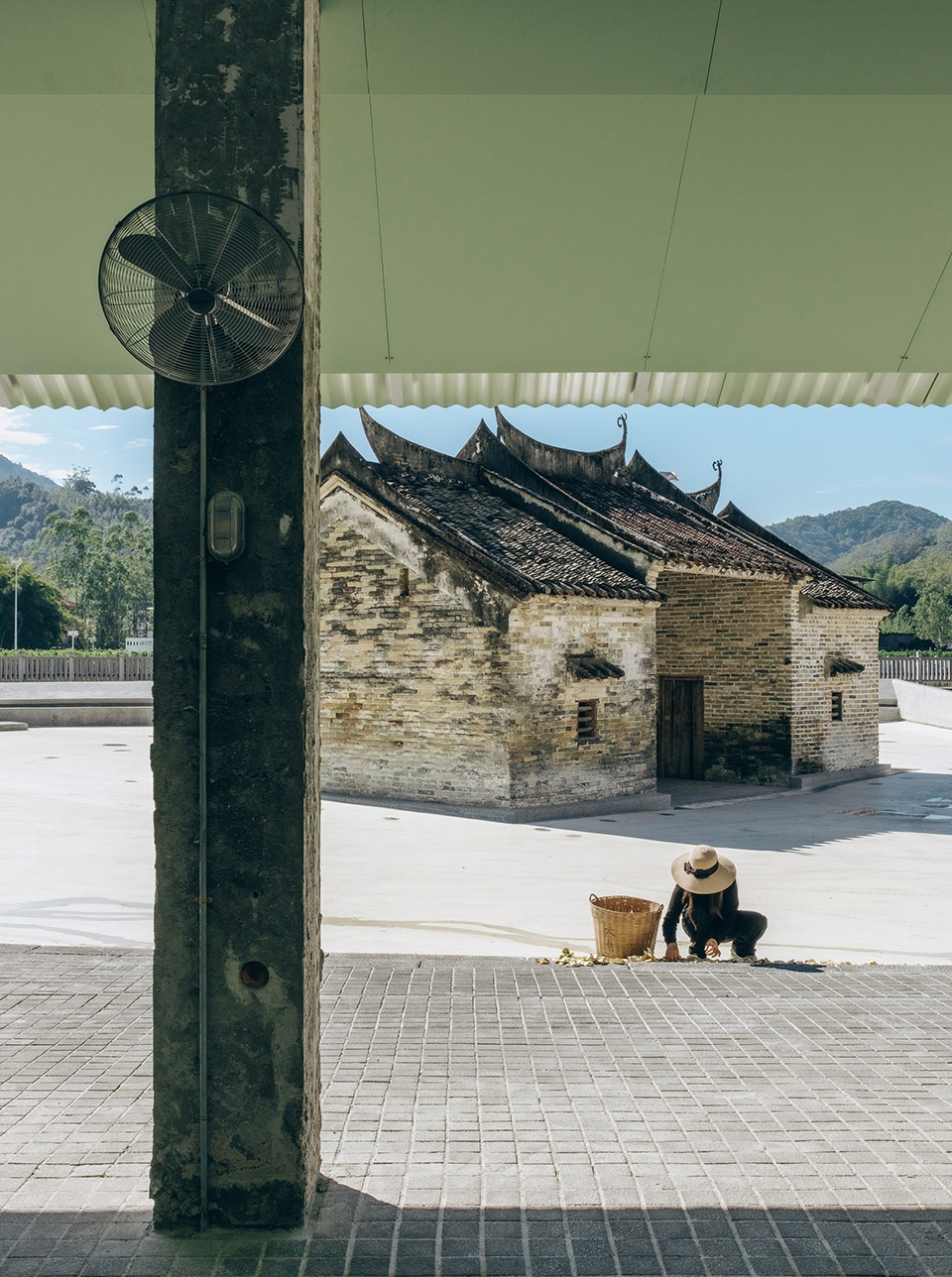
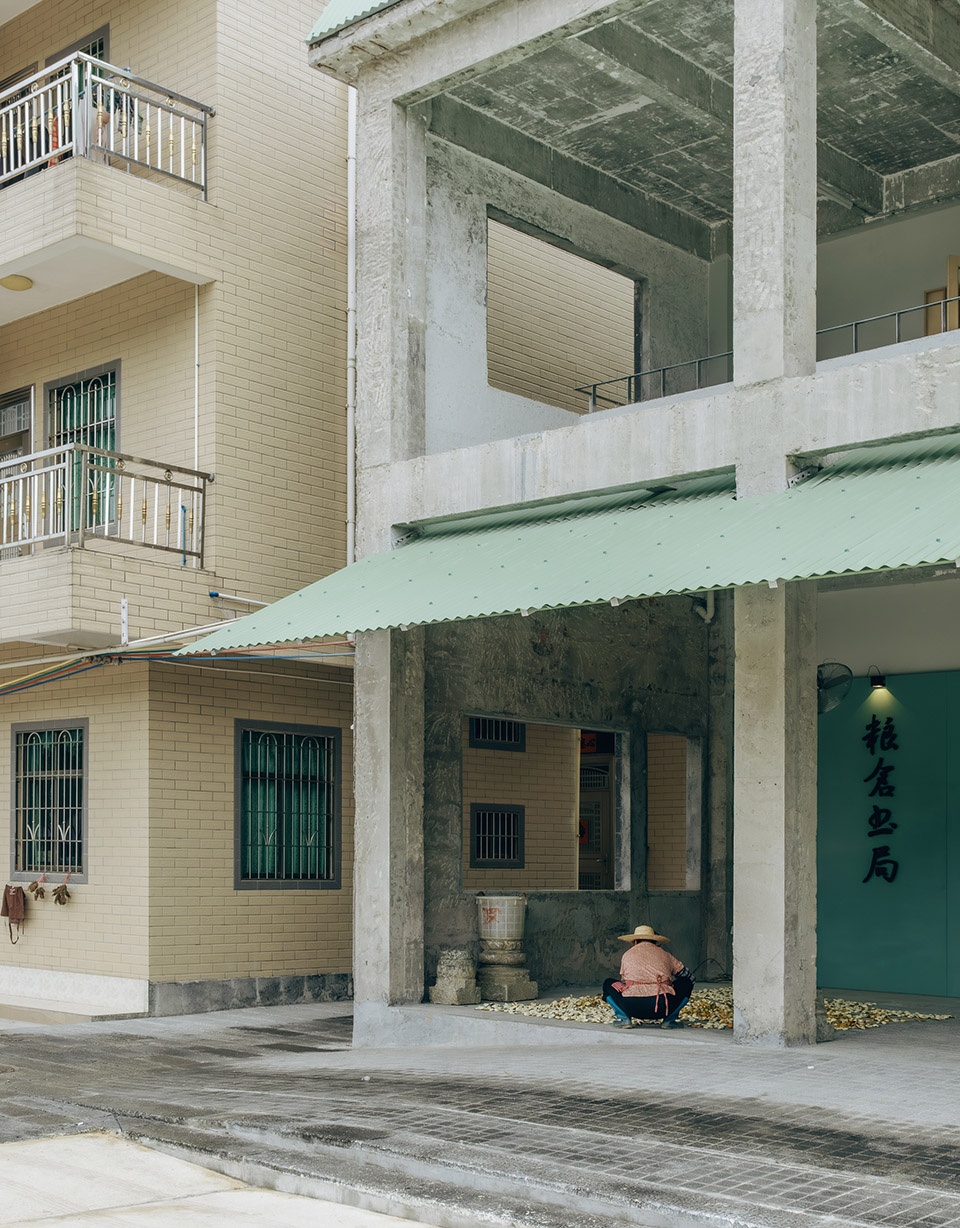
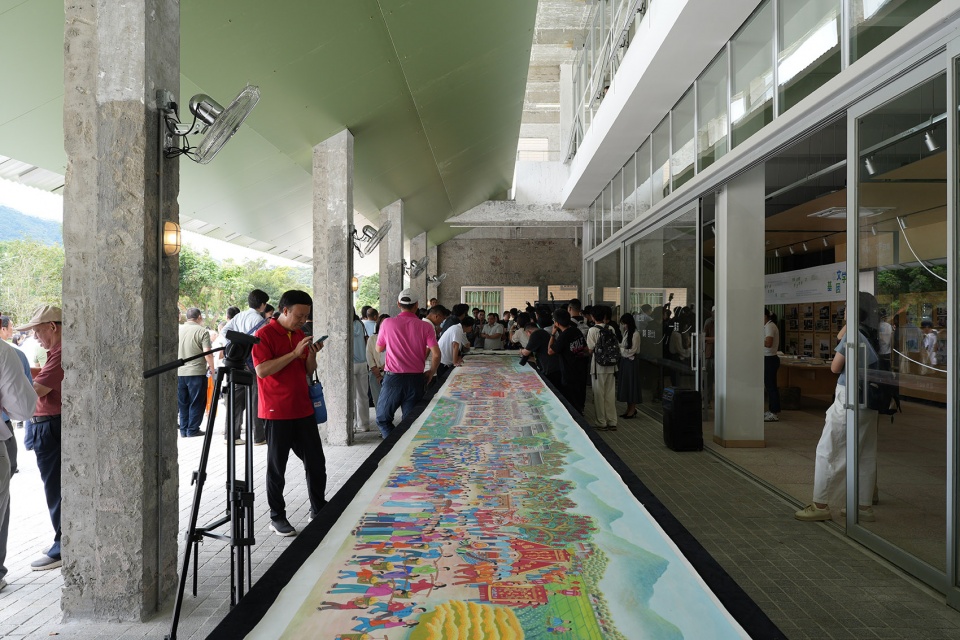
一层加建的单坡大屋顶一直延伸至东侧民居,形成完整的檐下空间。屋檐之下,粮仓首层半遮半敞。屋檐为歇脚而设;也为家务而留。作为集会的延伸空间,檐下空间连接广场与室内,让日常与集会再次自然过渡。
▼粮仓书局混合建造体系 ,Warehouse Bookstore Hybrid Construction System
A continuous eave at ground level creates a new open public space for both villagers and visitors.
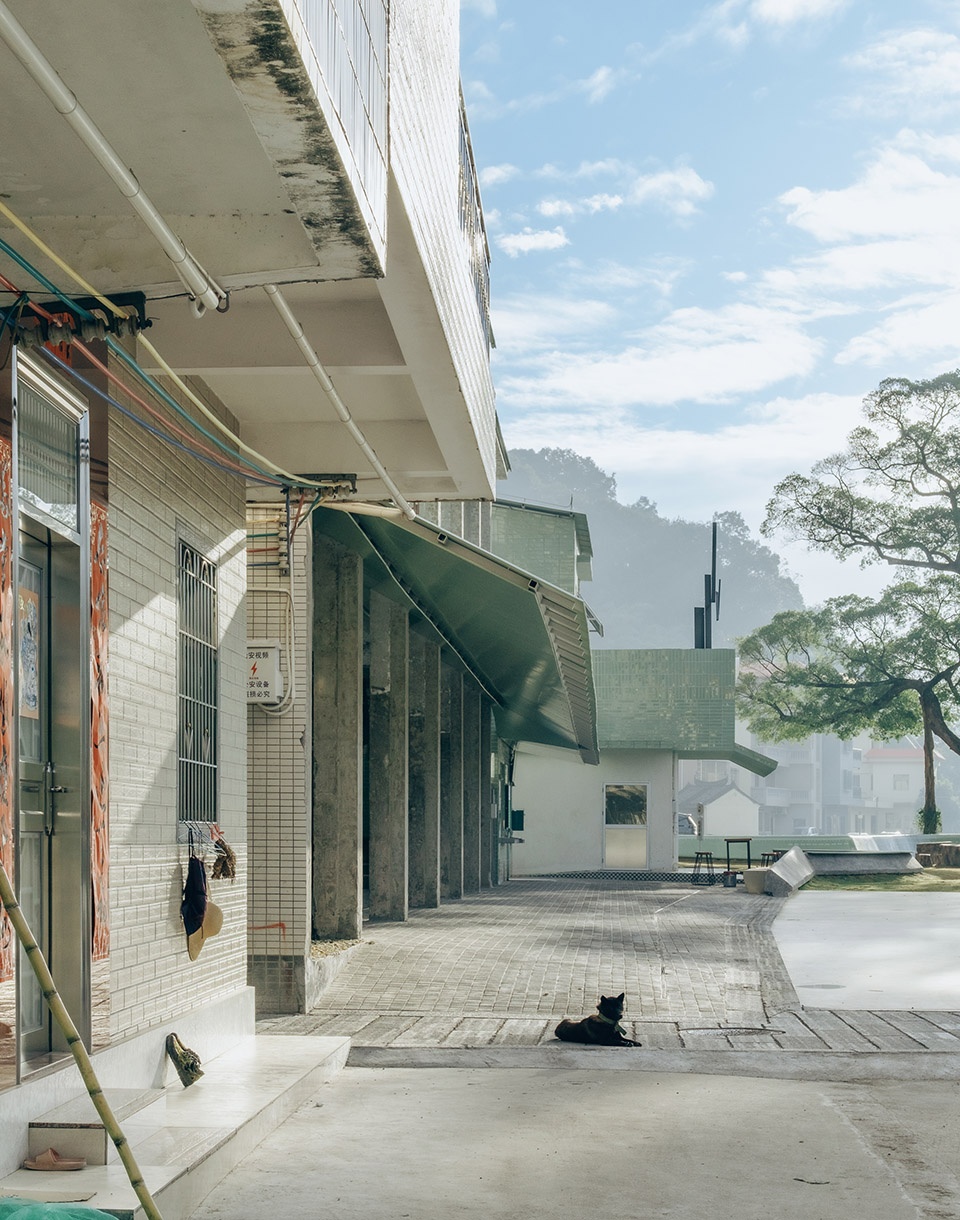
▼檐下空间日常,daily life under the eaves
▼檐下空间日常,daily life under the eaves
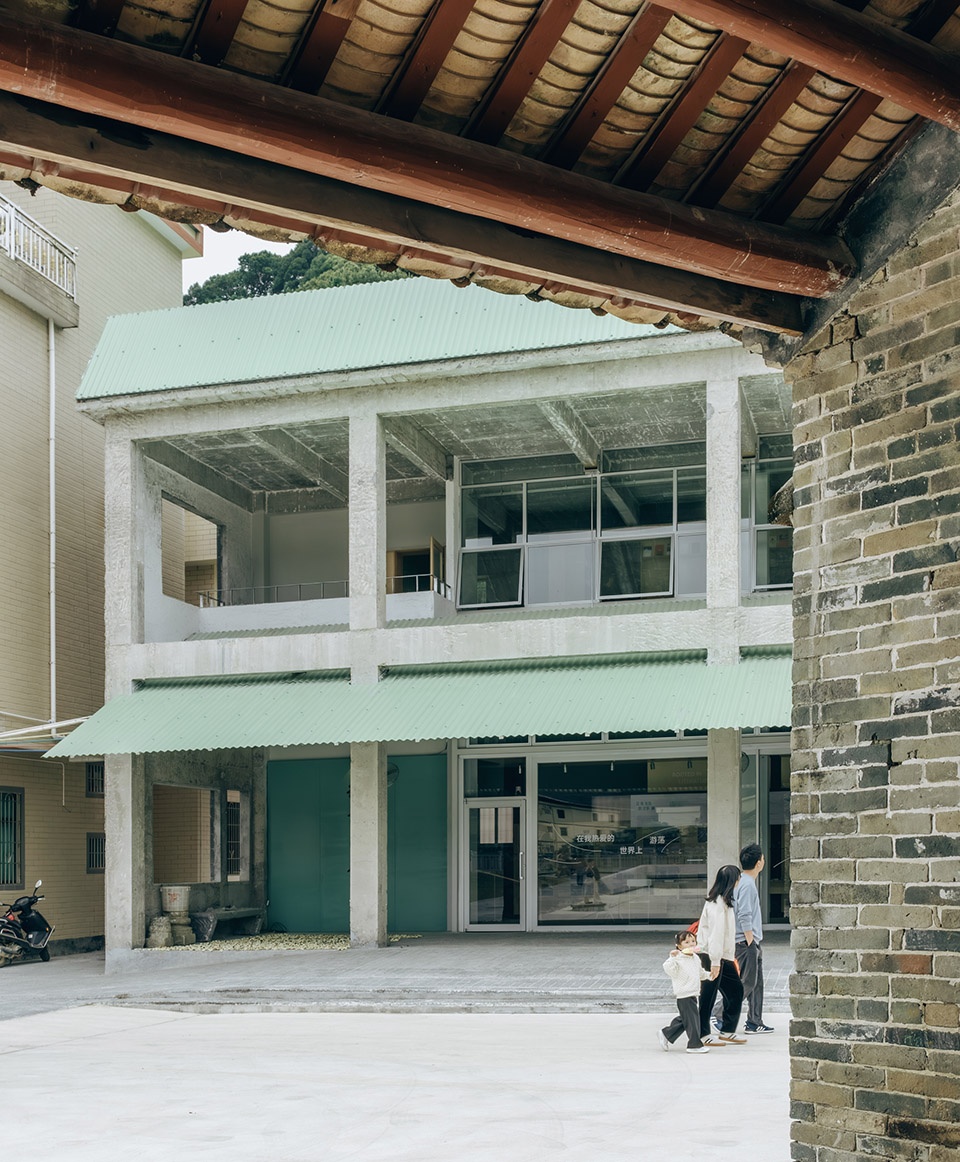
▼作为集会的延伸空间,as an extension space for the gathering
弧墙与身体 Curved Walls and Spatial Experience
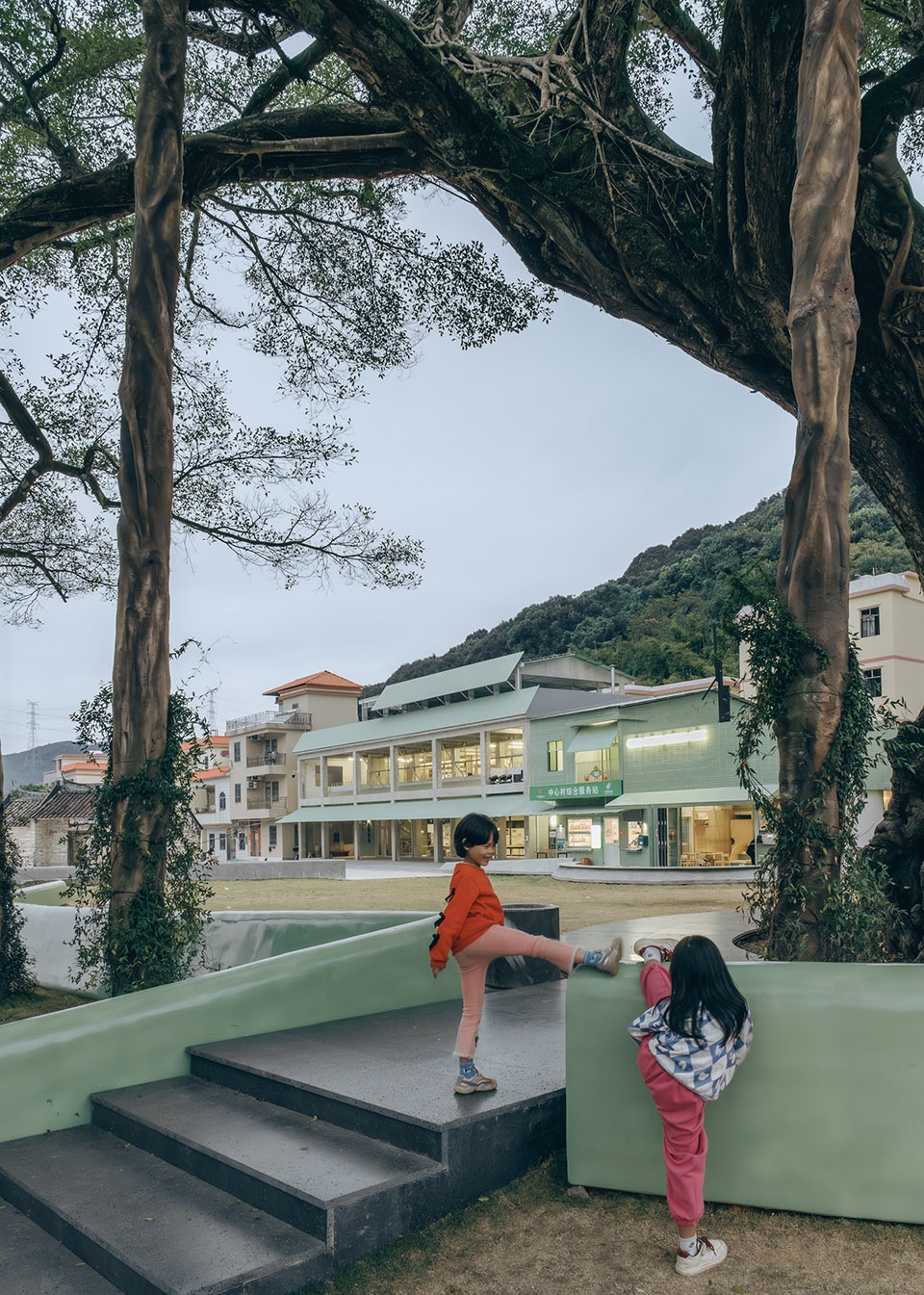
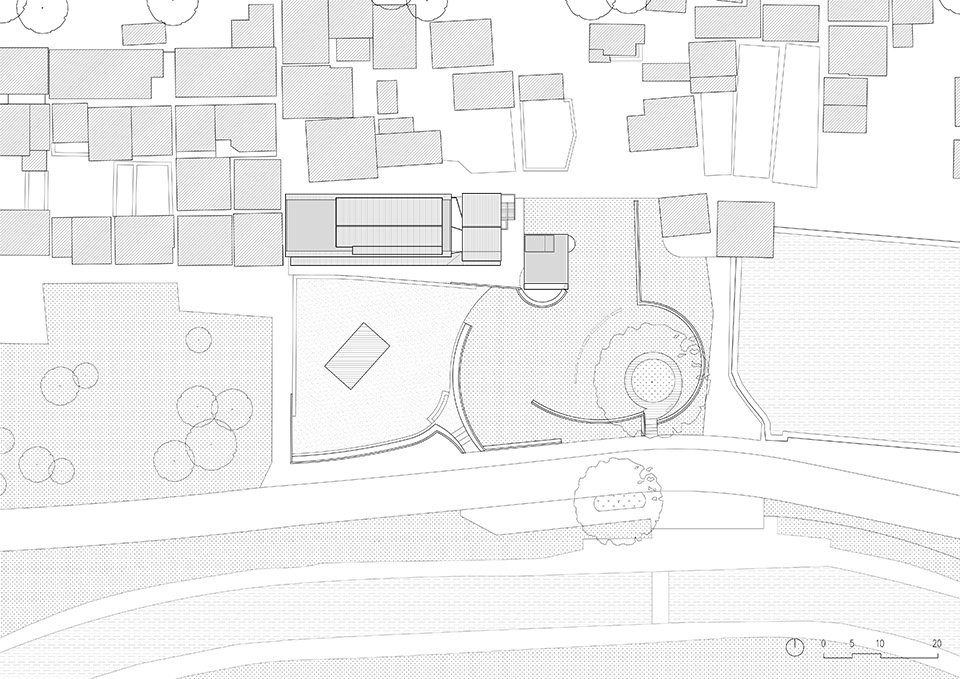
方案将榕树辐射的绿地范围向外扩展。围绕门楼与古榕,建筑前广场被划分为“艺术晒谷场”与“榕树下栖息地”两个部分。弧墙的引入为场地注入了可依附的空间秩序,挡土墙、台阶与座椅层层过渡,柔化广场、绿地与道路的高差与边界。老门楼前的积水问题也在场地平整后得以解决。
The plan expands the green area radiated by the banyan tree outward. Around the gatehouse and the ancient banyan tree, the front square of the building is divided into two parts: “Artistic Sun-Drying Ground” and “Rooftop Habitat of the Banyan Tree”. The introduction of the arc wall injects a dependent spatial order into the site, with retaining walls, steps and seats gradually transitioning, softening the height differences and boundaries between the square, the green area and the road. The water accumulation problem in front of the old gatehouse was also resolved after the site was leveled.
▼作为集会的延伸空间,as an extension space for the gathering
▼道路、弧墙、台阶与座凳,Roads, arc-shaped walls, steps and benches
▼弧墙,curved wall
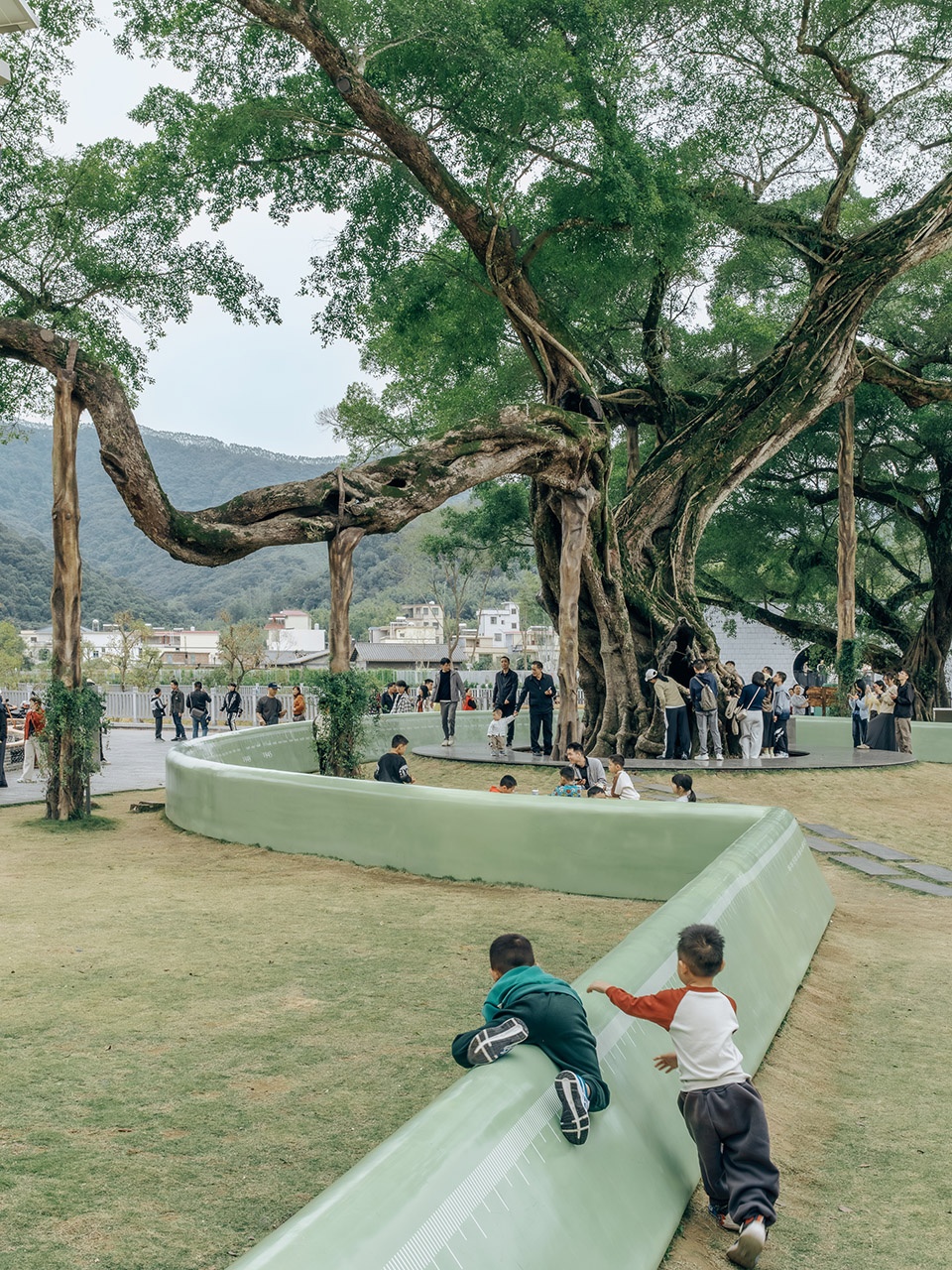
顺延晒谷场的弧墙形式,榕树两侧的矮墙表情不同。东面,东侧以完整弧线围合,与风水池呼应,如同时装裱两件古物。西面则向晒谷场张开怀抱,将老门楼、粮仓书局、小卖部和咖啡屋一并纳入,以圆弧的旋转与错位协调场地上的轴线对位和观看关系。晒谷场上的弧墙主体为混凝土,在榕树根系范围内则改用玻璃钢,局部点式固定,减少对古树的干扰。弧墙重新定义了古榕和门楼的关系,其适宜的尺度在划定场地边界的同时又释放了空间,使广场与绿地得以灵活承载各类活动。
Following the arc wall form of the drying grain field, the low walls on both sides of the banyan tree have different expressions. On the east side, the east side is enclosed by a complete arc, corresponding to the feng shui pool, as if framing two ancient objects at the same time. On the west side, it opens its arms towards the drying grain field, incorporating the old gatehouse, grain storage bookstore, small store, and coffee house, coordinating the axis alignment and viewing relationship on the site with the rotation and displacement of the circular arc.
The main body of the arc wall on the drying grain field is made of concrete. Within the root system of the banyan tree, it is replaced with fiberglass. Point-like fixation is used for local points, reducing interference with the ancient tree. The arc wall redefines the relationship between the ancient banyan and the gatehouse. Its appropriate scale delineates the boundary of the site while releasing space, enabling the square and green area to flexibly accommodate various activities.
▼晒谷场日常,the drying grain field
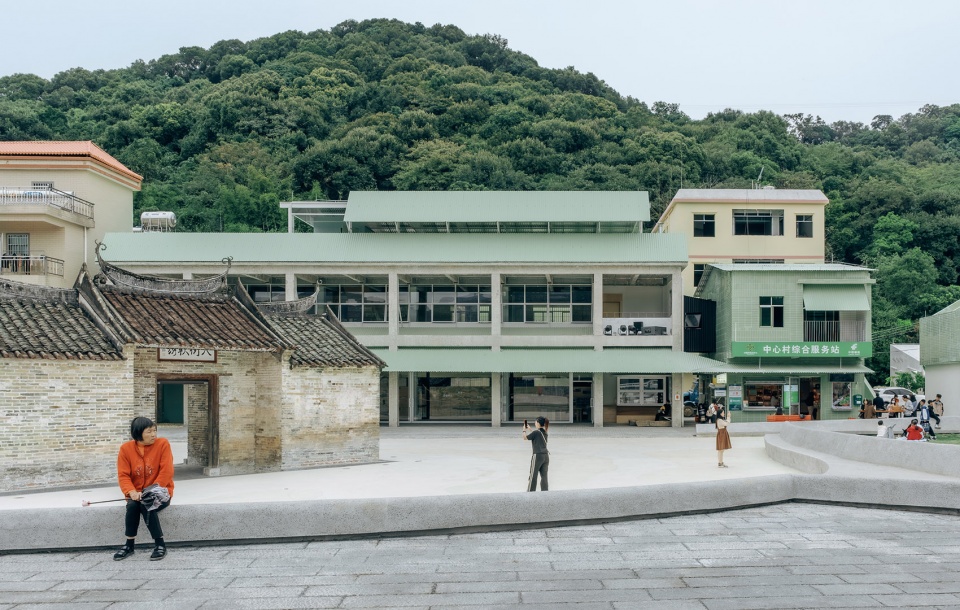
▼弧墙向西开敞,The arc-shaped wall opens towards the west
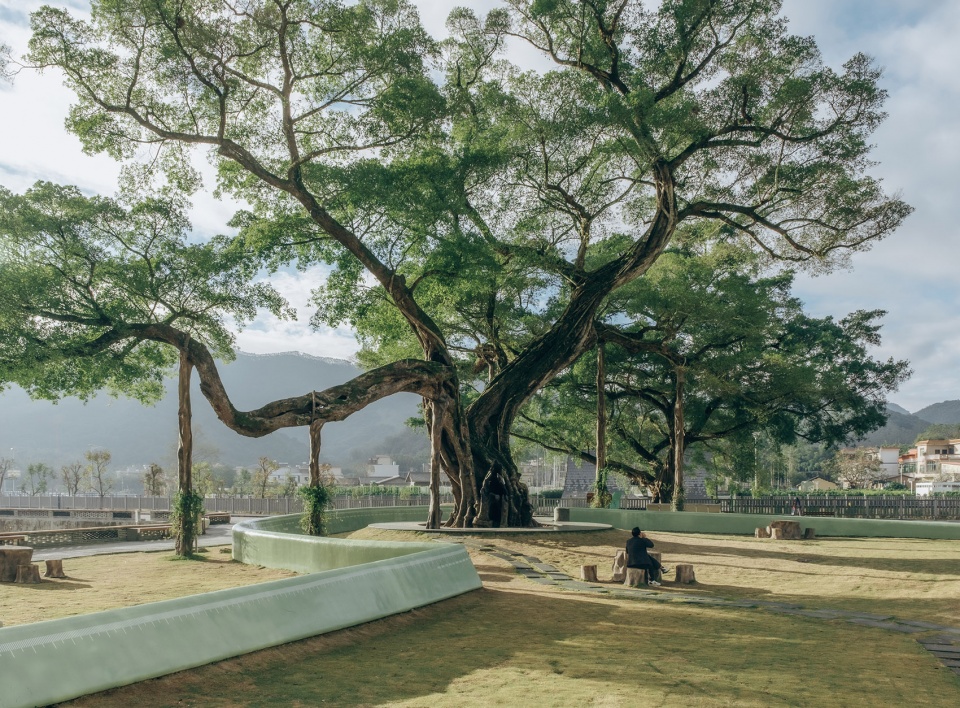
▼东侧弧墙与风水池,The arc wall on the east side and the feng shui pool
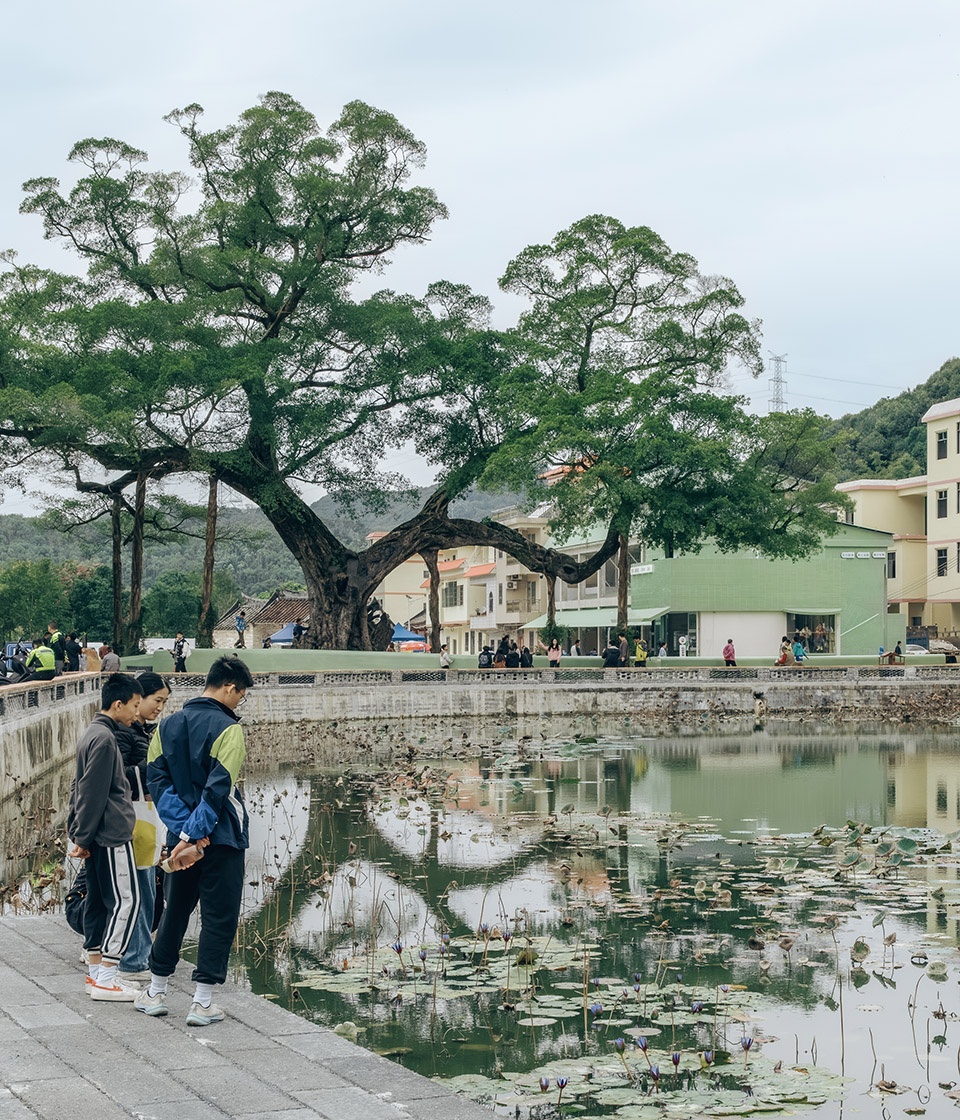
方案翻新原有树下栈道,沿弧墙自然过渡至路边。古榕树是中心村的象征与灵魂,方案翻新栈道、以矮墙围合来将树托举,既是对千年生命力的致敬,也复原了场地原有的场所感。
The landscape design extends the shaded area around the banyan trees and reorganizes the entrance plaza into different zones for activity and rest. Curved elements guide movement and define flexible outdoor areas. Fiberglass is used within the banyan root zones to minimize excavation, while reclaimed stone elements are integrated into furniture and landscape details.
▼弧墙向西开敞,The arc-shaped wall opens towards the west
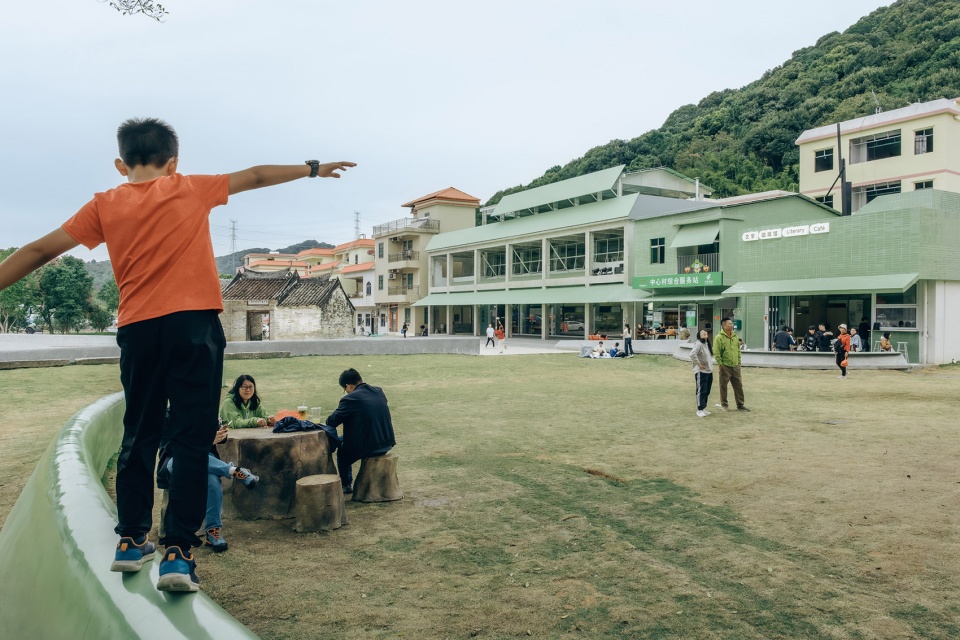
▼弧墙、榕树与门楼,Arc-shaped walls, banyan trees and gate towers
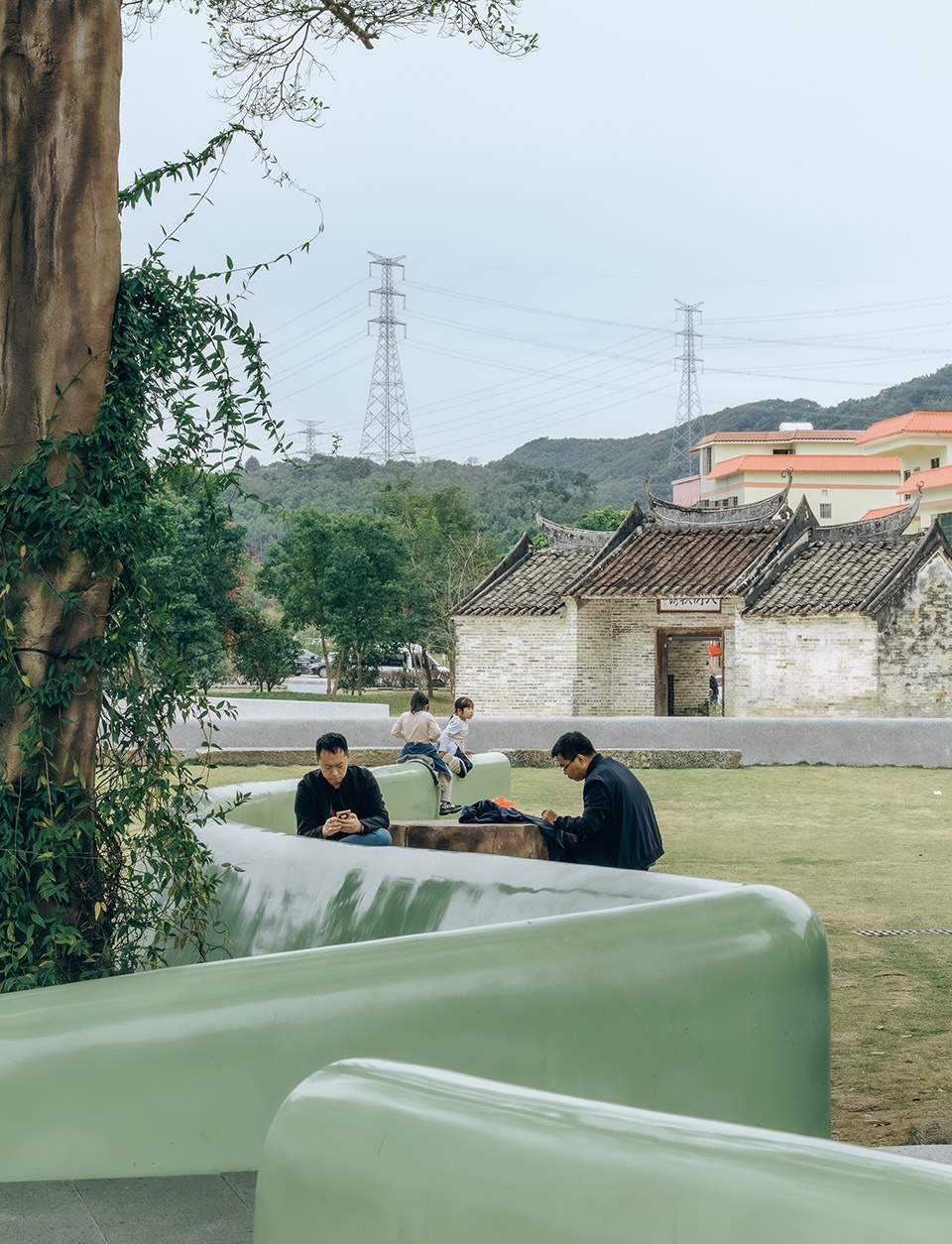
▼榕树下日常,Under the Banyan Tree
冲天人气 Renewed Public Life
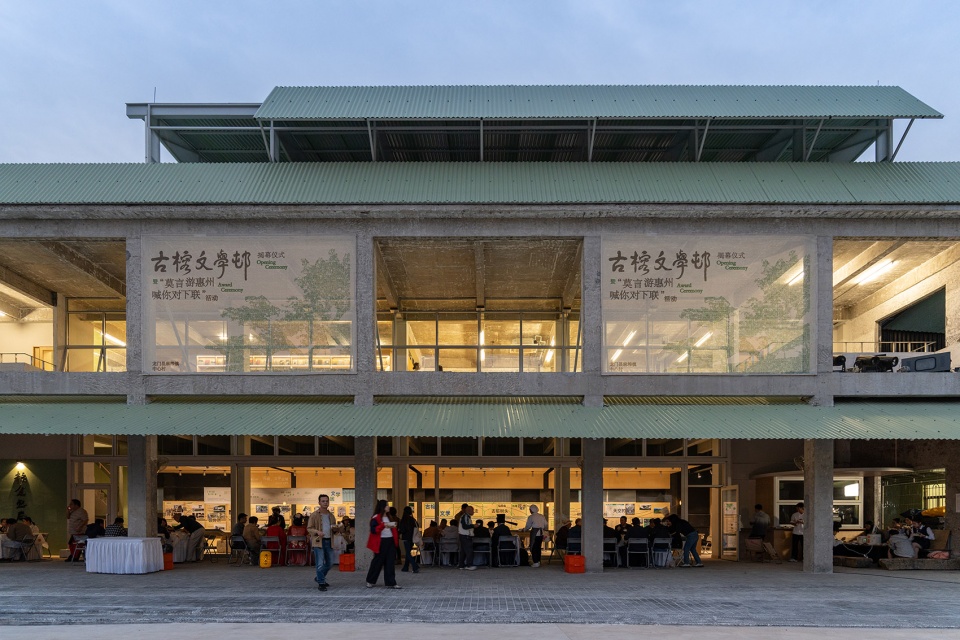
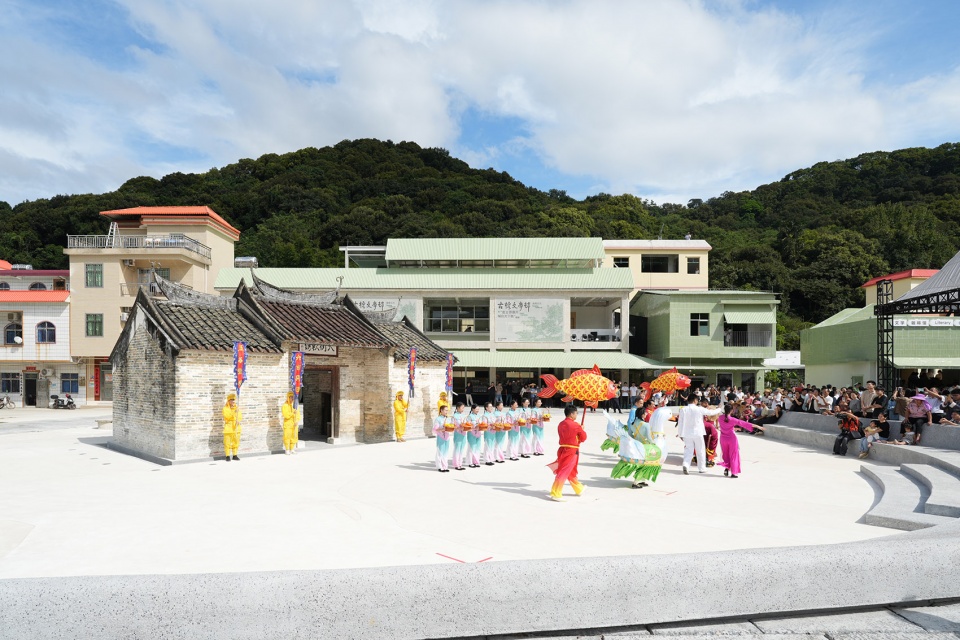
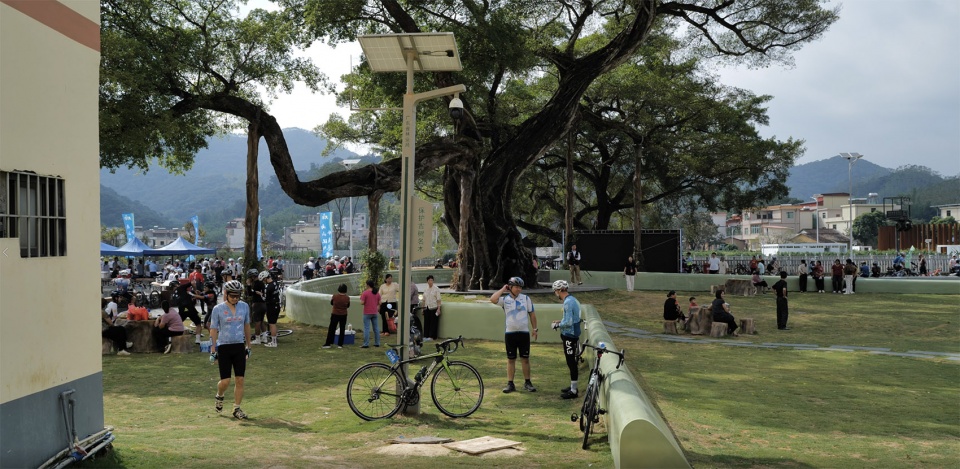
2025年10月,古榕文学村正式揭幕。莫言、欧阳江河等众多知名学者来到中心村,在古榕下开展文化对谈,引来十里八乡乡亲的围观,引爆了中心村的人气。在镇政府的持续推动下,民俗节庆、惠农活动在晒谷场上轮番开展,游人往来如织。人气带来商机,村民开始在风水塘前的空地摆摊卖土特产,现场热闹而鲜活。我们希望这不是一时的热度,而能成为一个契机,成为中心村新的一页。愿这活力能持续下去,也愿文学村IP能在中心村生根茁壮。
In October 2025, the Ancient Banyan Literary Village officially opened, bringing cultural events, festivals, and growing public activity to Zhongxin Village. Increased visitors also created new economic opportunities, with villagers selling local products around the fengshui pond. The project hopes to become not a temporary spectacle, but a long-term catalyst for village life.
▼古榕文学村揭幕仪式,The opening ceremony of Gu Rong Literature Village
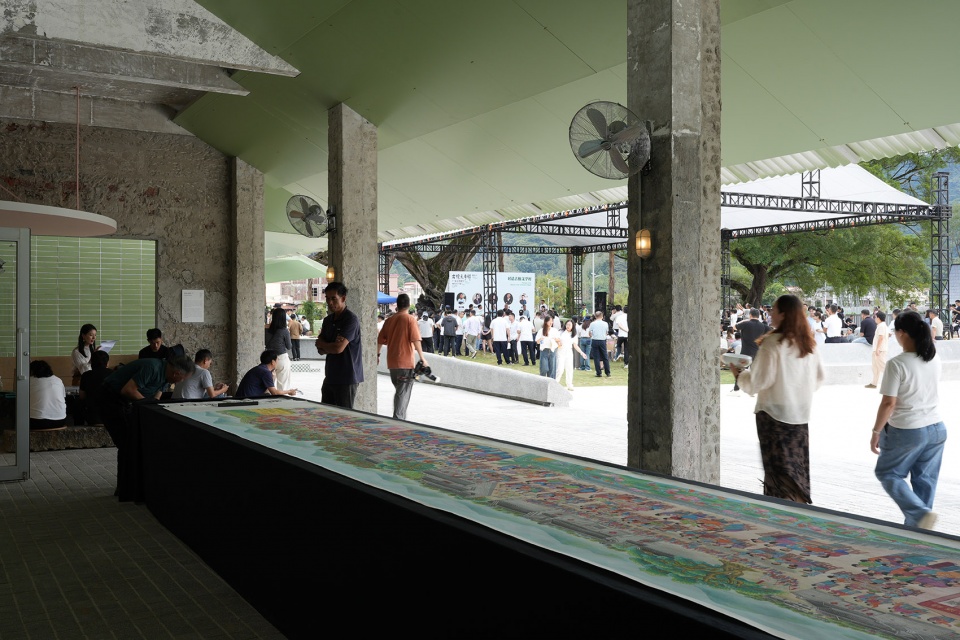
▼惠农活动,Farmers’ Benefit Program
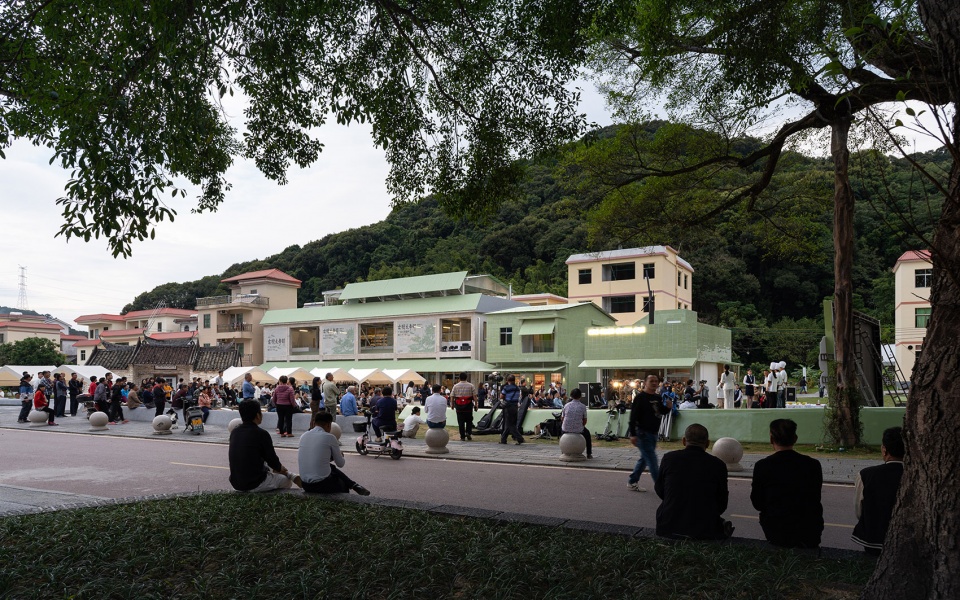
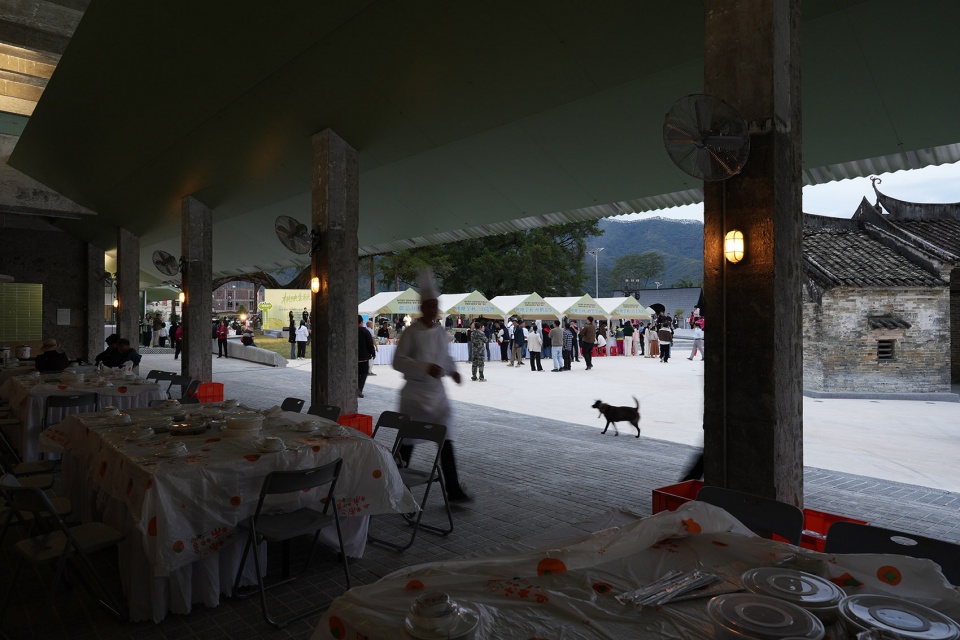
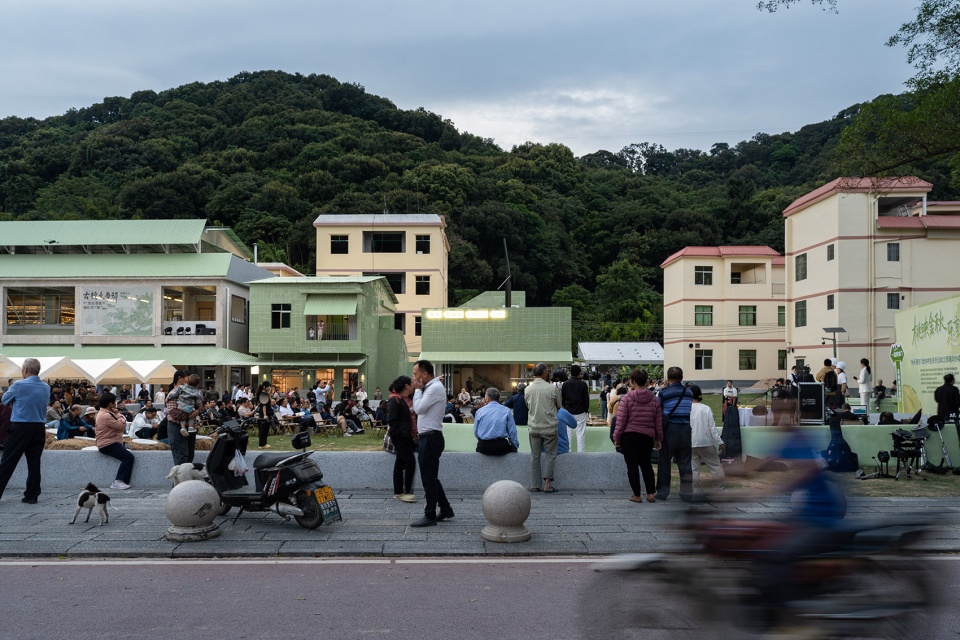
▼节庆活动,festival
▼骑行活动,riding activity
▼轴测图,axonometric
▼总平面图,site plan
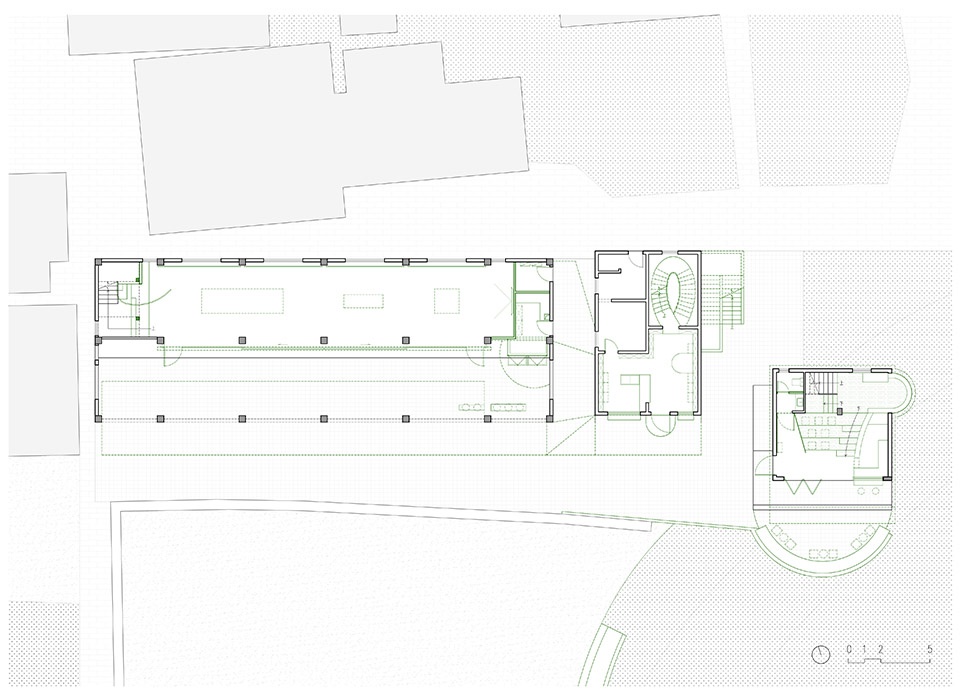
▼首层平面图,ground floor plan
▼二层平面图,first floor plan
▼屋顶平面图,roof plan
Ancient Banyan Plaza Renovation, Zhongxin Village, Huizhou
Location: Zhongxin Village, Huizhou, Guangdong Province
Type: Architecture / Renovation
Land Area: 3100㎡
Total Area: 615㎡
Status: Completed
Architectural and Interior Design: Atelier XÜK
Architects in Charge: LIU Kenan, ZHANG Xu
Design Team: DENG Tian, GU Chao, LIU Xinyue, CUI Chenlong, ZHOU Yihang (Intern)
On-Site Architect: DENG Tian
Structural Design: Guangzhou Urban Renewal Planning & Design Institute Co., Ltd.
MEP Design: Guangzhou Urban Renewal Planning & Design Institute Co., Ltd.
Time of Design: 2023.2-2025.6
Time of Completion: 2025.10
Photograph: ZHU Yumeng, Atelier XÜK