北京森与天成社区中心 / PLAT ASIA
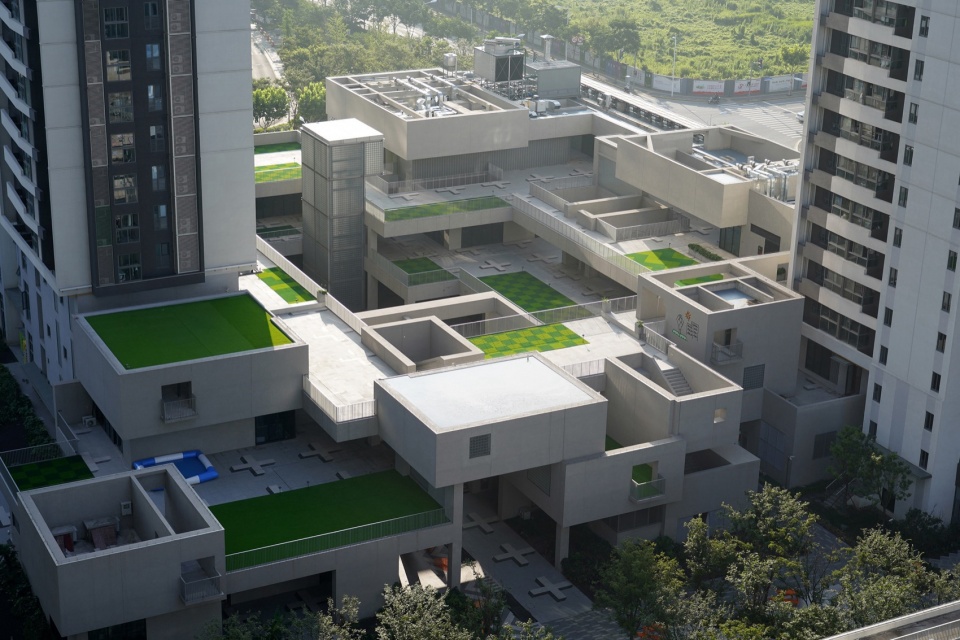
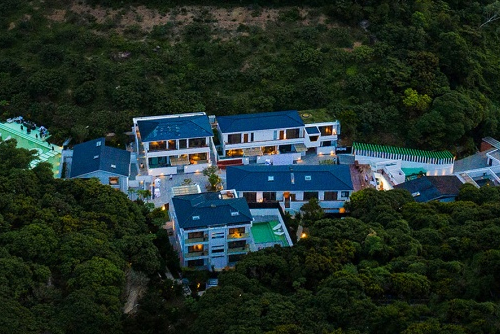
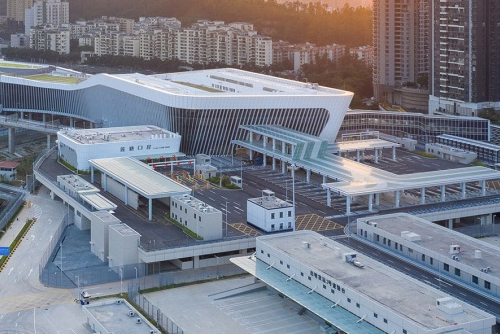
项目位于北京南四环公园环绕的森与天成社区,服务社区居民的共享生活,促进邻里交流、以汇聚、回归作为体验空间能量的核心。设有健身房、儿童中心、餐厅、咖啡厅、艺术商店等功能。
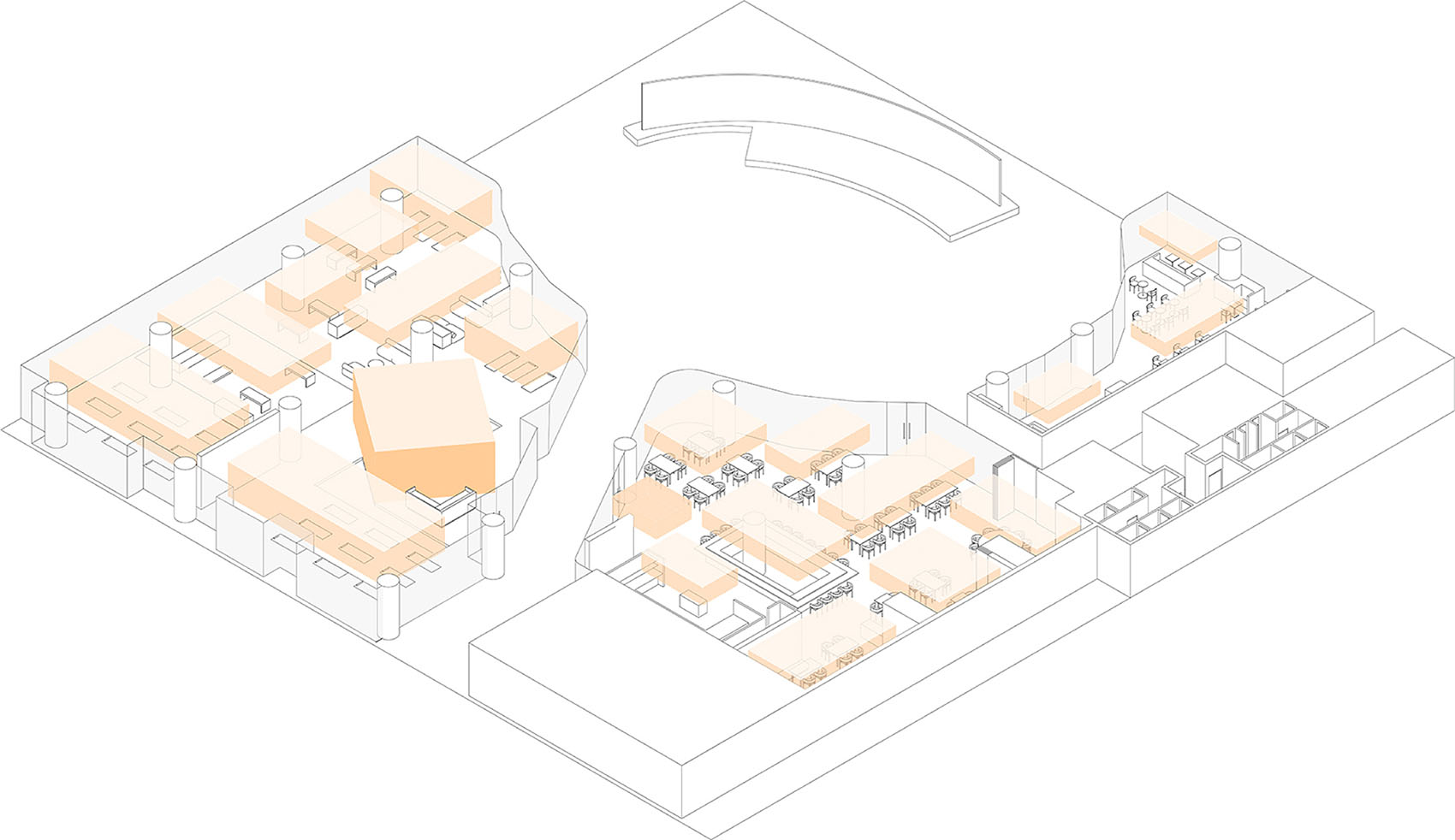
▼轴测图,Axonometric diagram
The project is situated in the Foresky Community on the South Fourth Ring in Beijing, surrounded by parks. It serves as a community center that fosters a shared living place—a communal space among neighbors. Its design is based on the concepts of Gathering and Return, which focus on spatial experience. The center provides a gym, a children’s center, a restaurant, a café, and an art shop.
▼健身房休息区,Gym lounge area
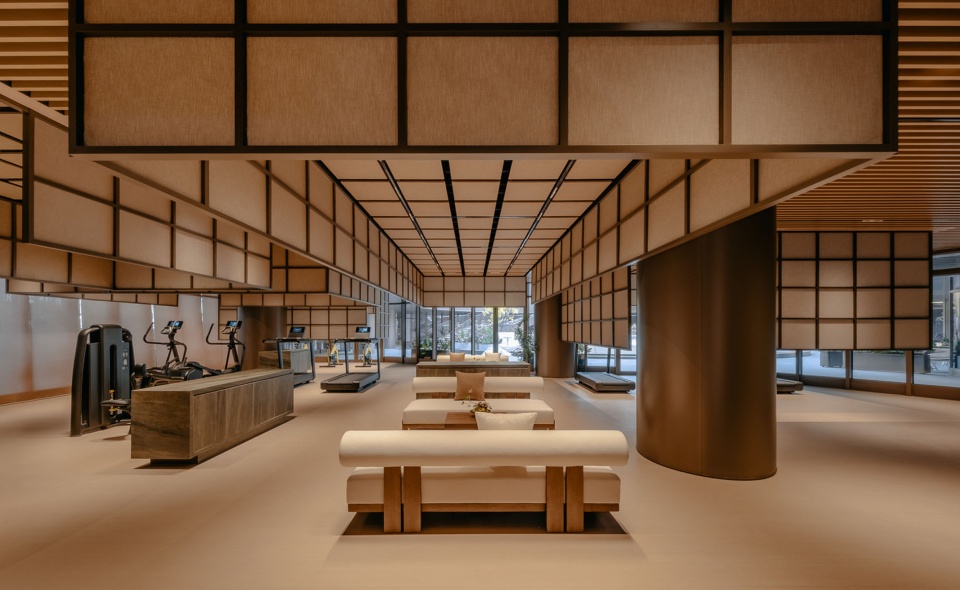
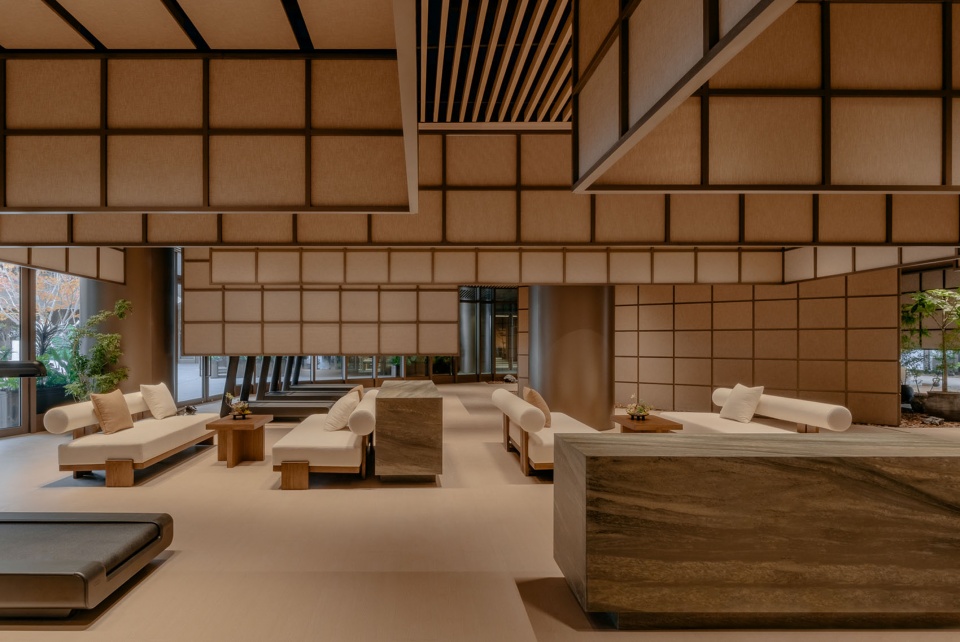
▼健身房休息区局部,Gym lounge area partial view
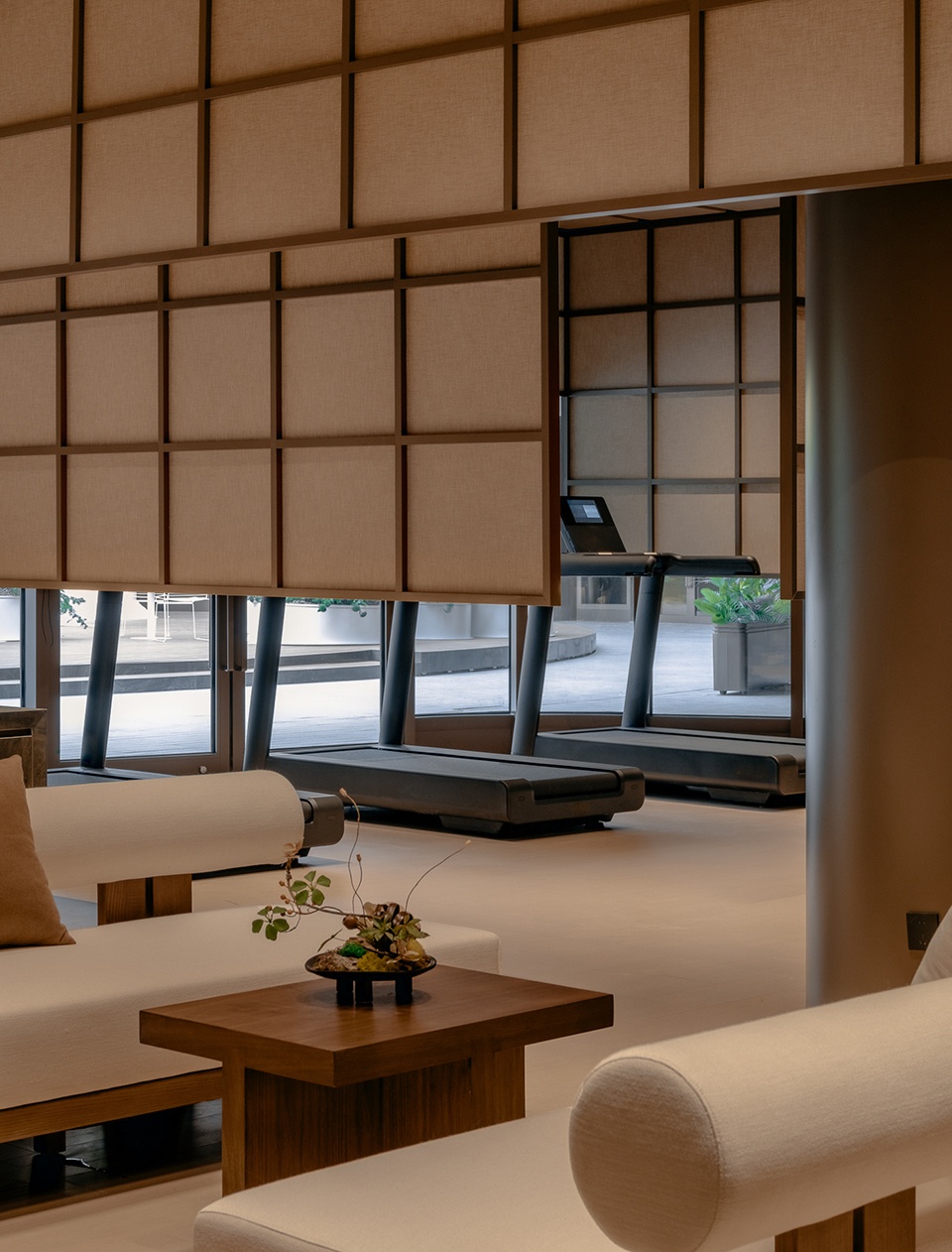
▼健身房有氧训练区,Cardio training area
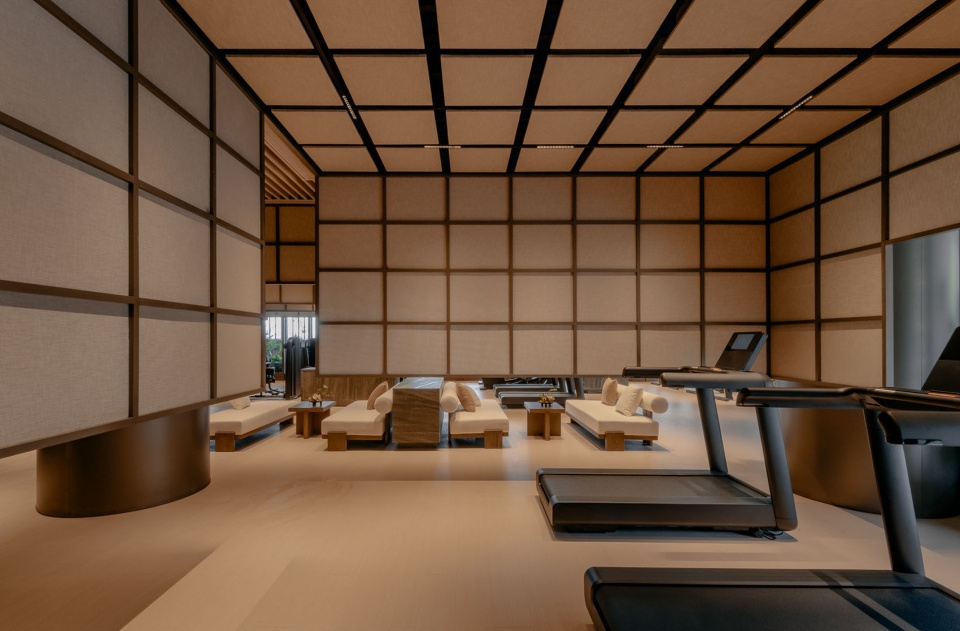
▼健身房有氧训练区局部,Cardio training area partial view
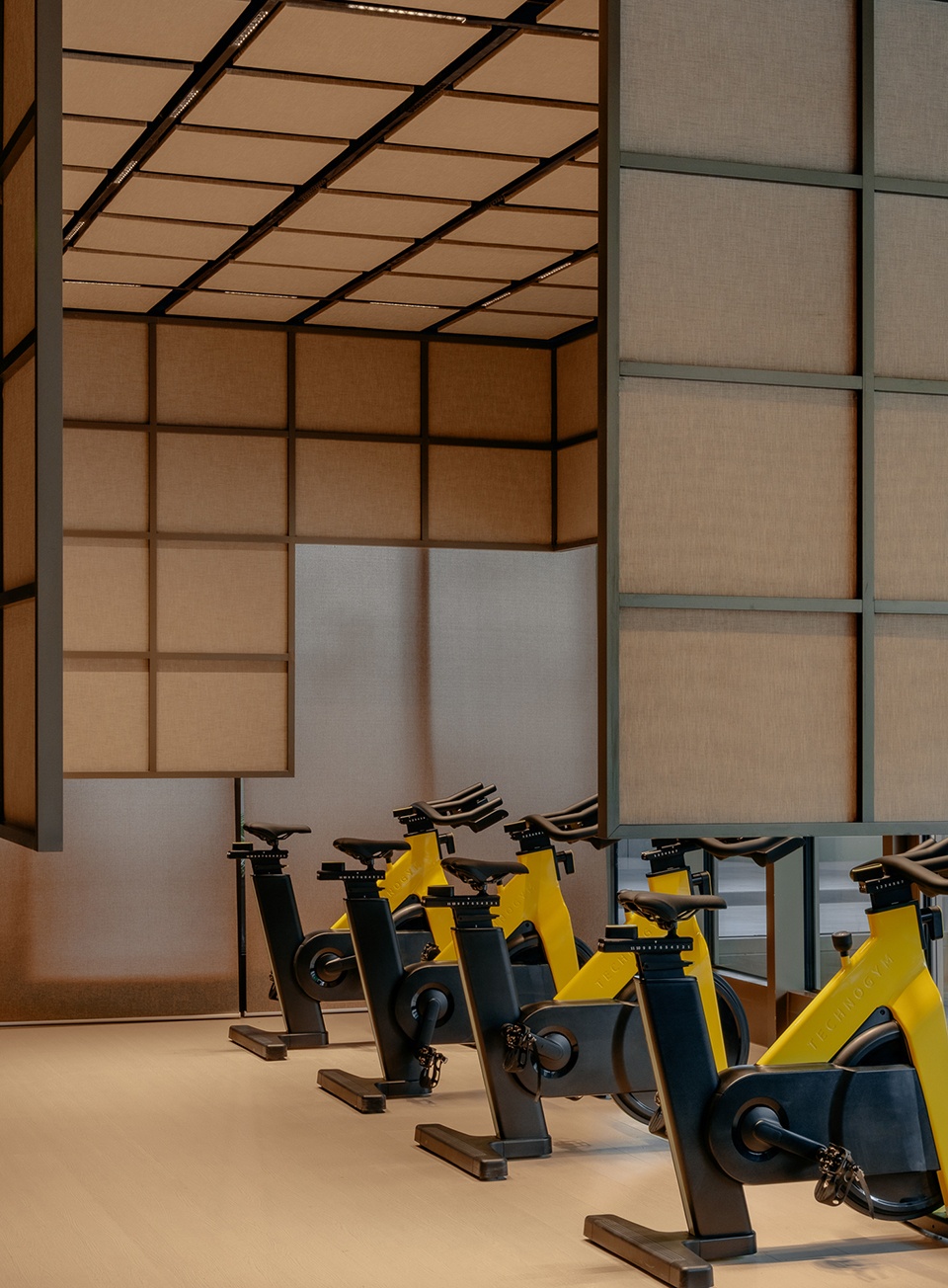
▼健身房力量训练区,Strength training area
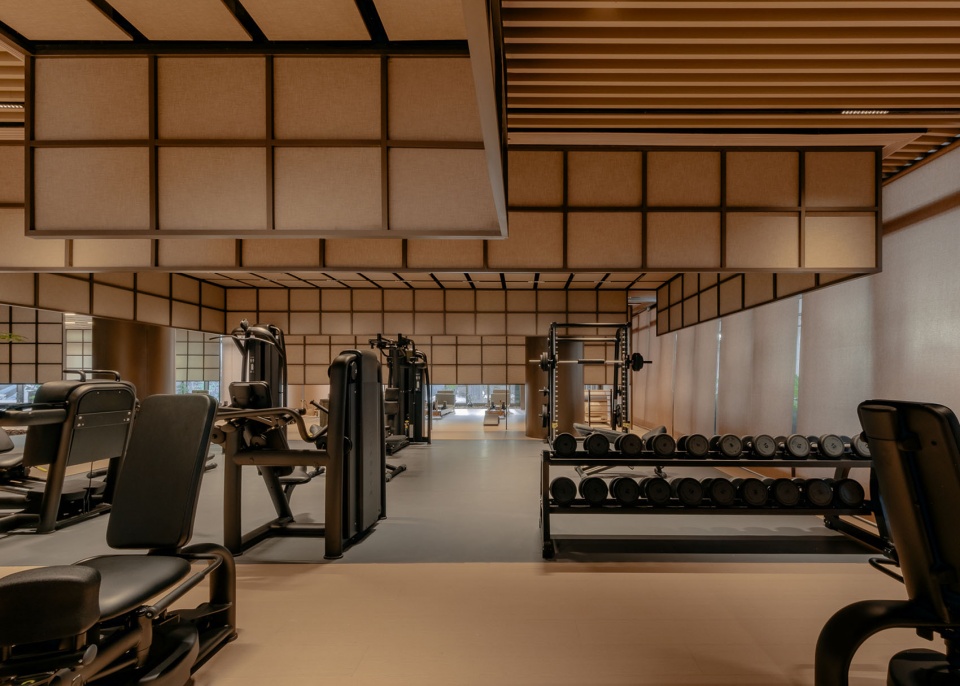
▼健身房普拉提区,Pilates area
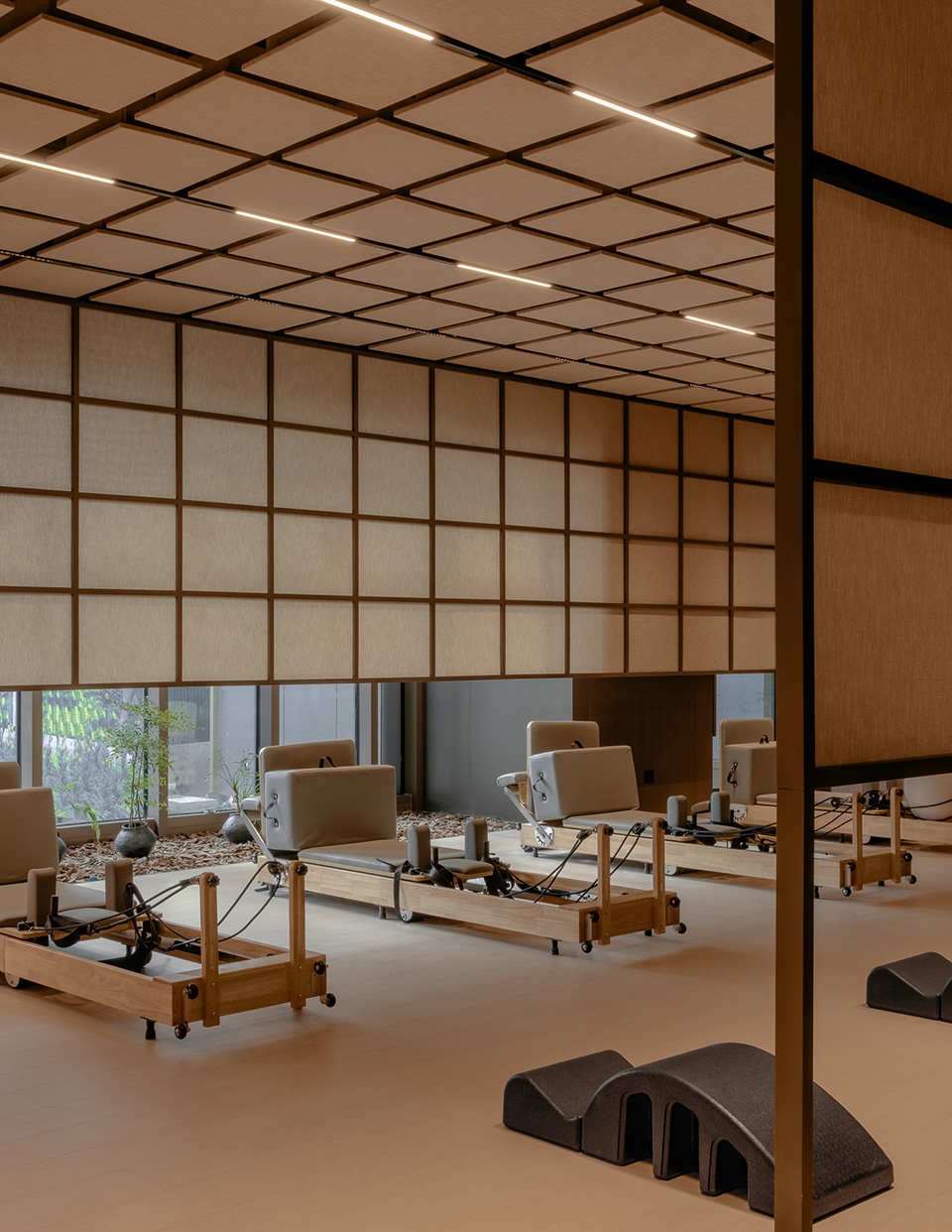
▼瑜伽区入口,Yoga area entrance
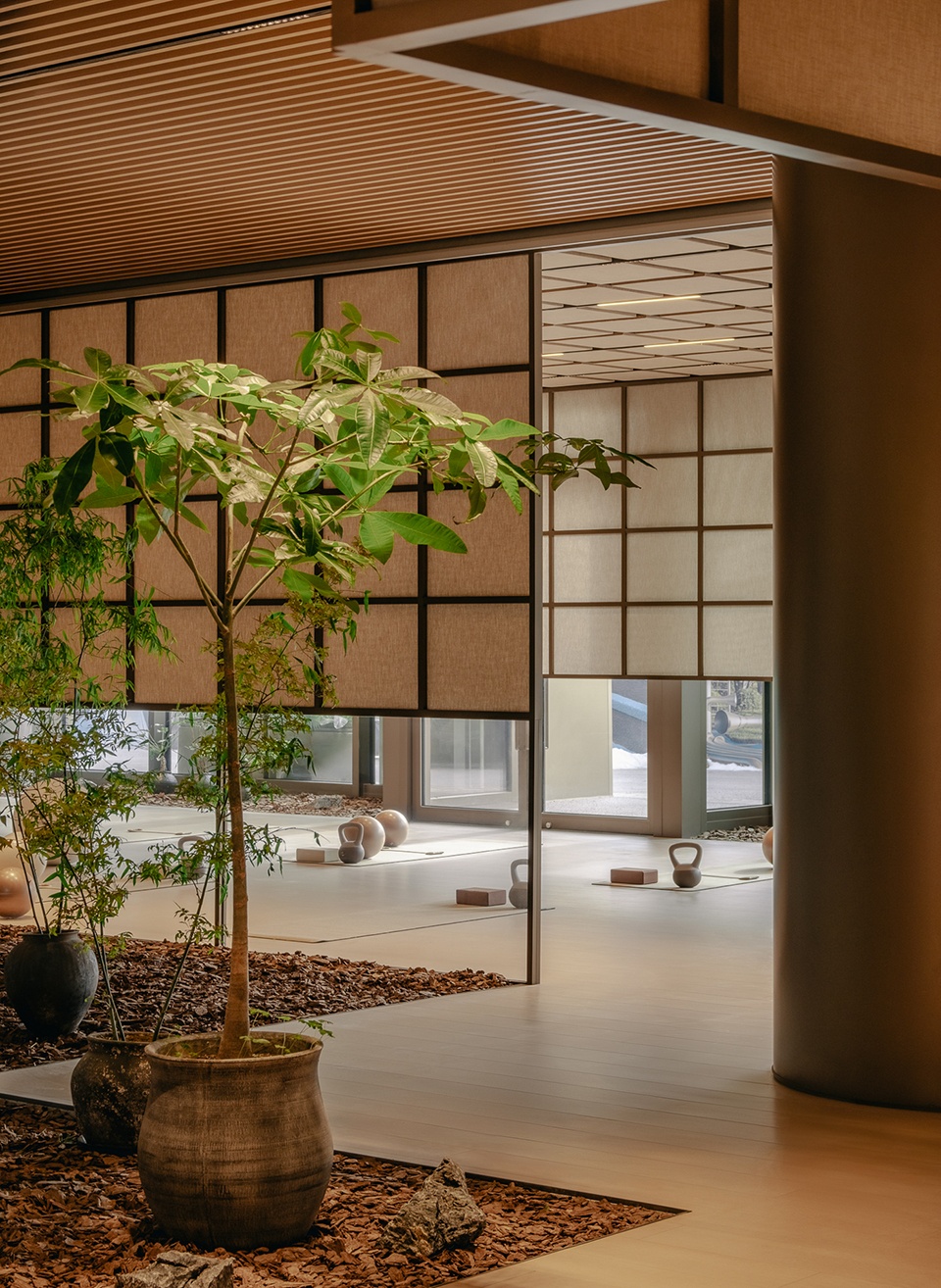
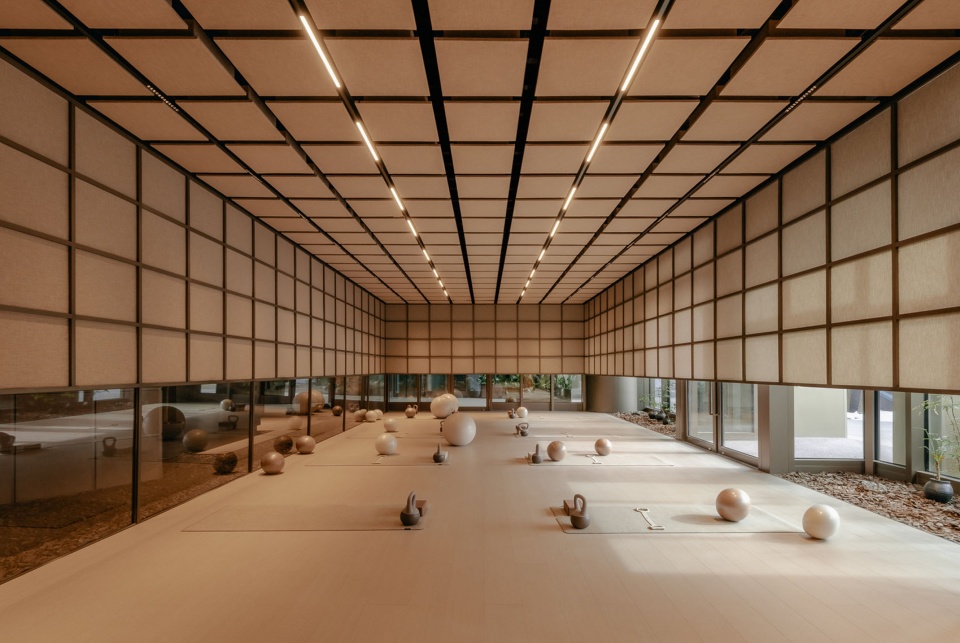
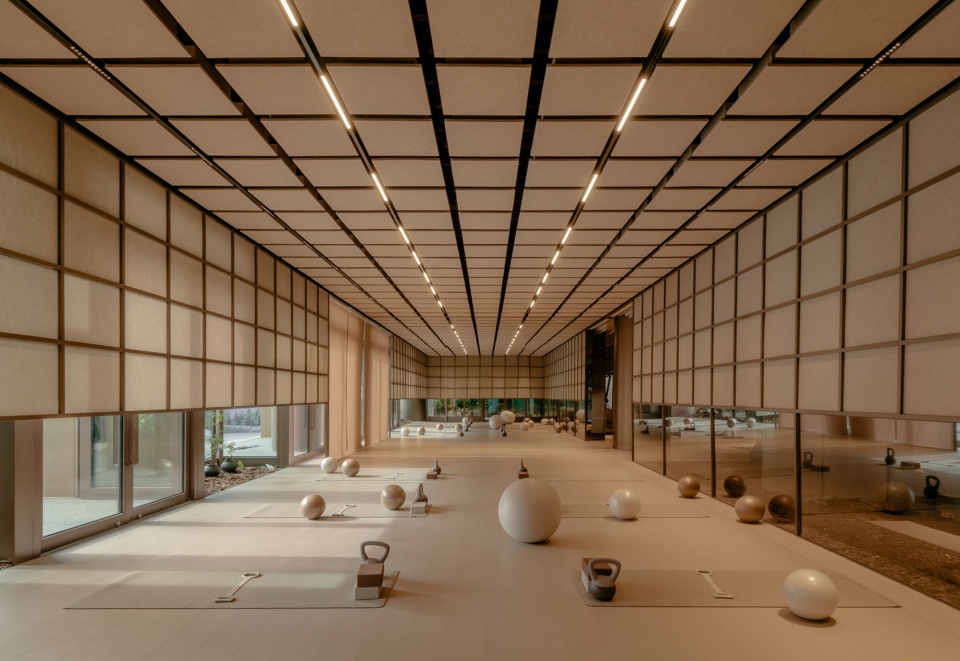
▼健身房瑜伽区,Yoga area
汇聚场域 Gathering Field
社区中心位于森与天成西北的园林区,经下沉广场螺旋台阶进入,各功能空间围绕椭圆广场环形布局,面向庭院的轮廓呈弧形,室内和庭院的交错视野凝聚社区居民归家的向心性。建筑师郑东贤以空间的“汇聚”精神为设计核心,提取构成家庭单元的盒子作为设计语言,塑造空间的汇聚构型,场景的各异体验。
▼概念手稿,Concept sketch

The community center is set in the northwest of Foresky’s garden area, with the entrance through a spiral staircase descending into a sunken courtyard. The functional area around the oval square features a circular layout facing the courtyard, with a curved outline; the interior and courtyard engage in a dialogue, creating a central axis for returning residents. Architect JUNG Donghyun takes “Gathering” from the spatial spirit as the design core, and derives the frame box as the design language and a composite element—the basic family unit in the urban environment for residents—shaping the gathering space and various scenic experiences.
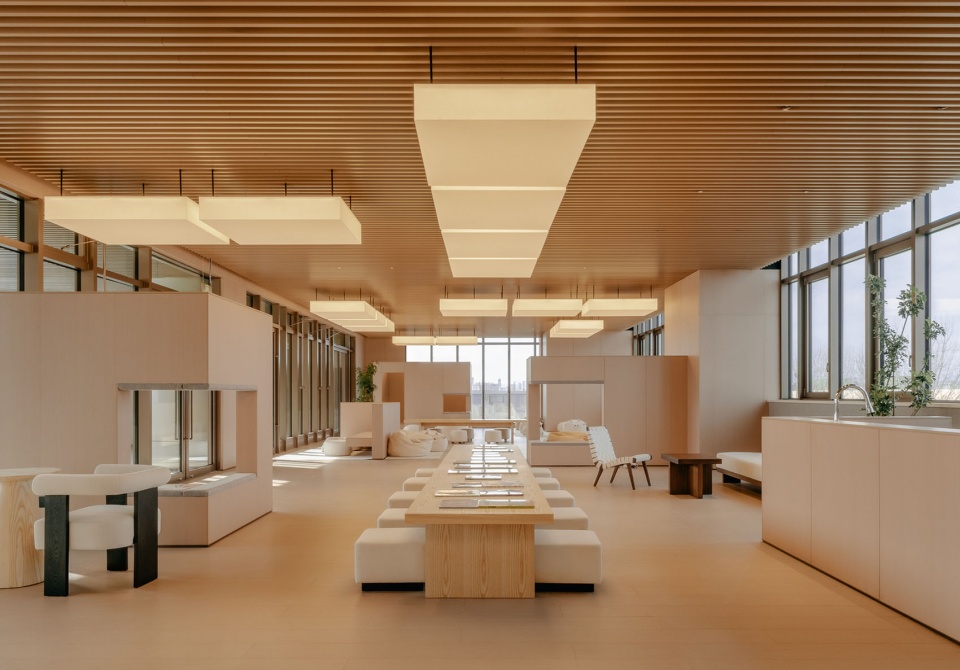
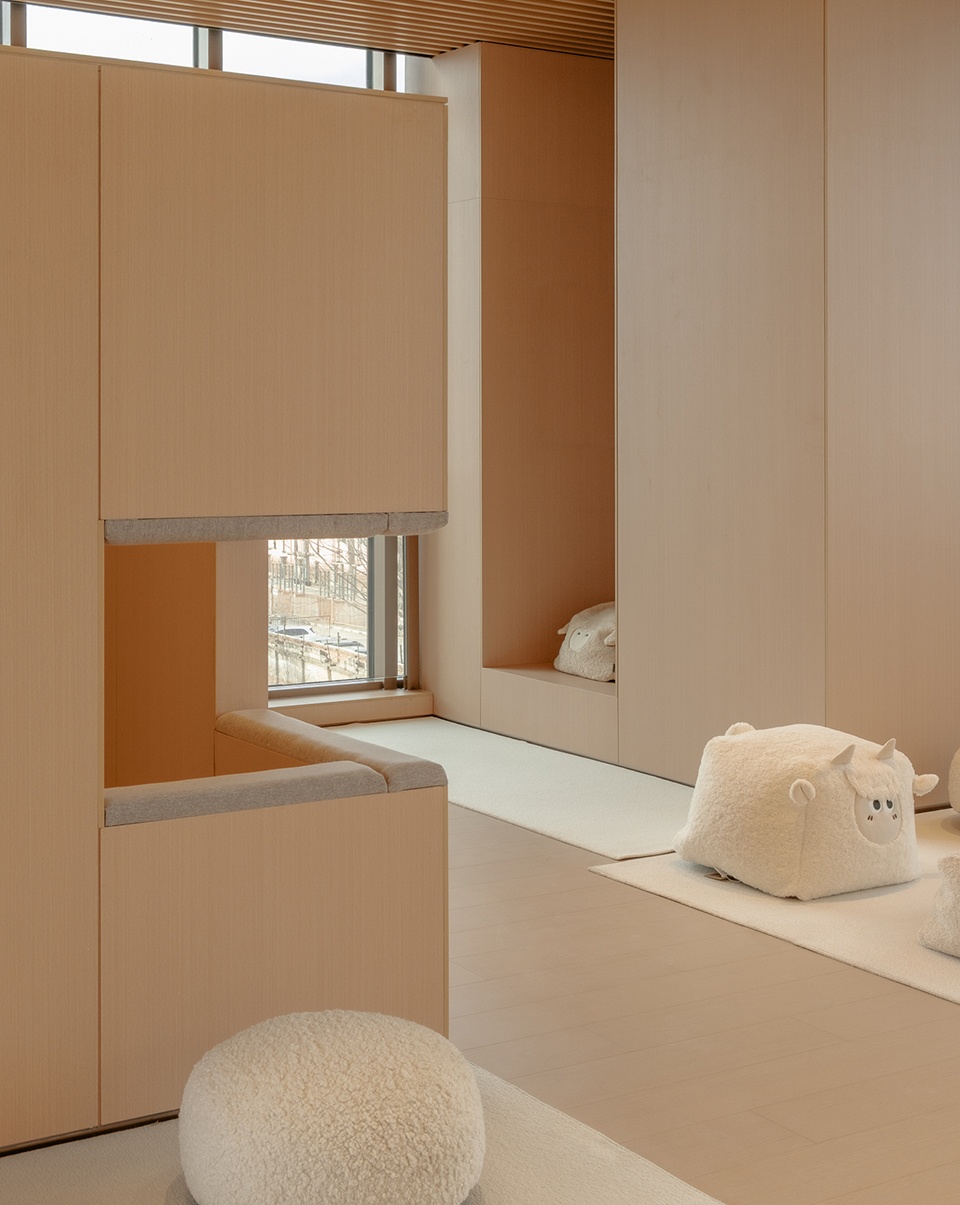
▼亲子中心与艺术商店,Children’s Center and art shop
▼亲子中心活动区,Children’s activity area
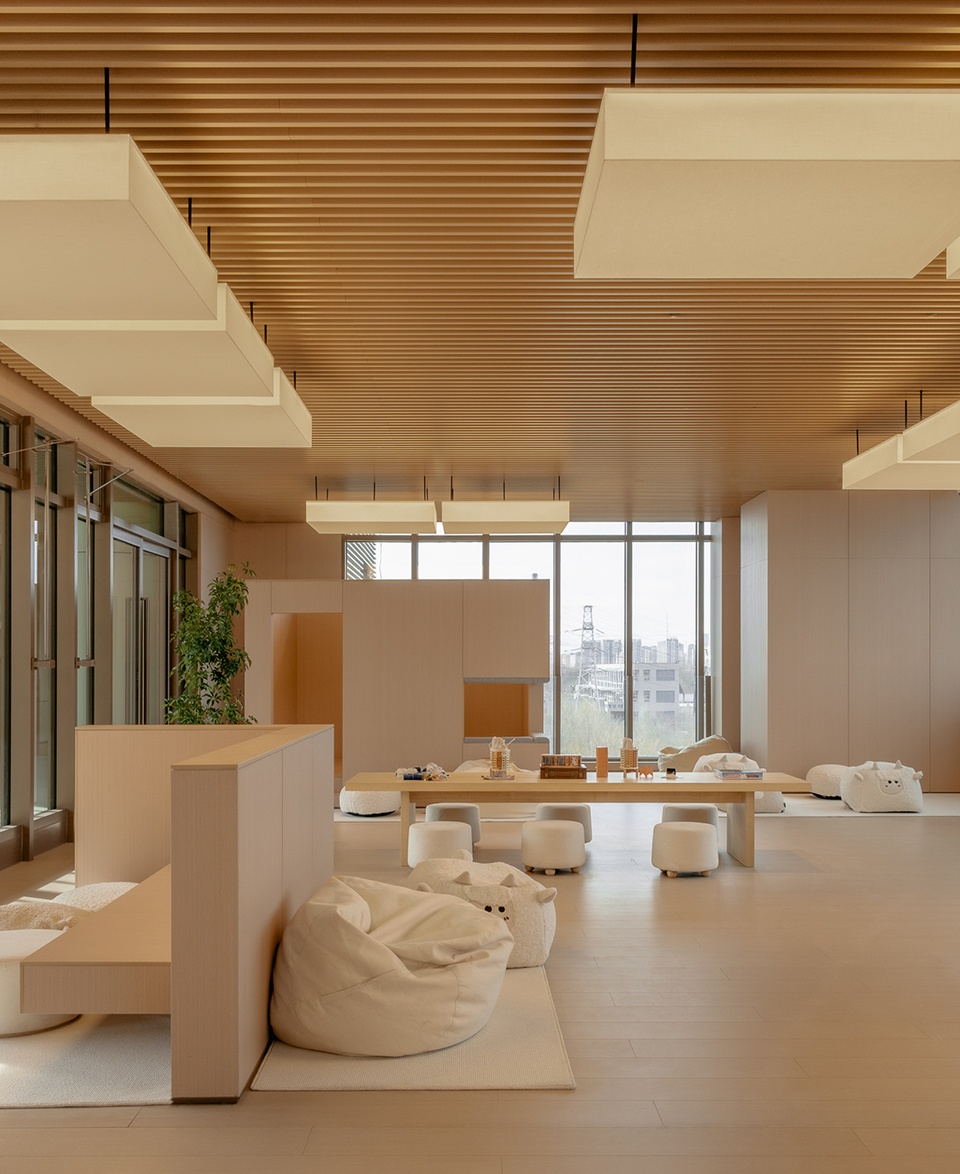
▼亲子中心局部,Children’s Center partial view
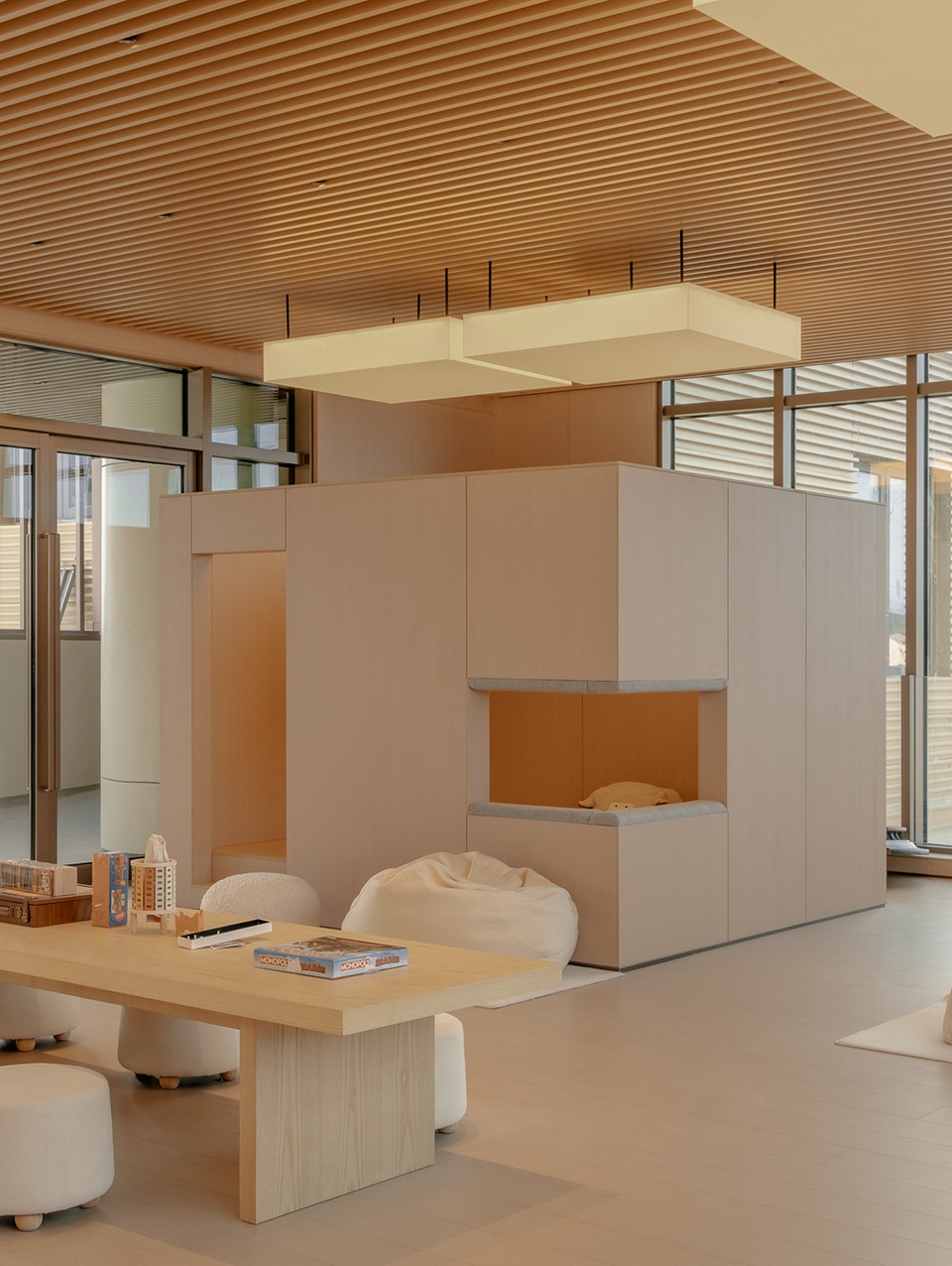
▼亲子中心一角,A corner of Children’s Center
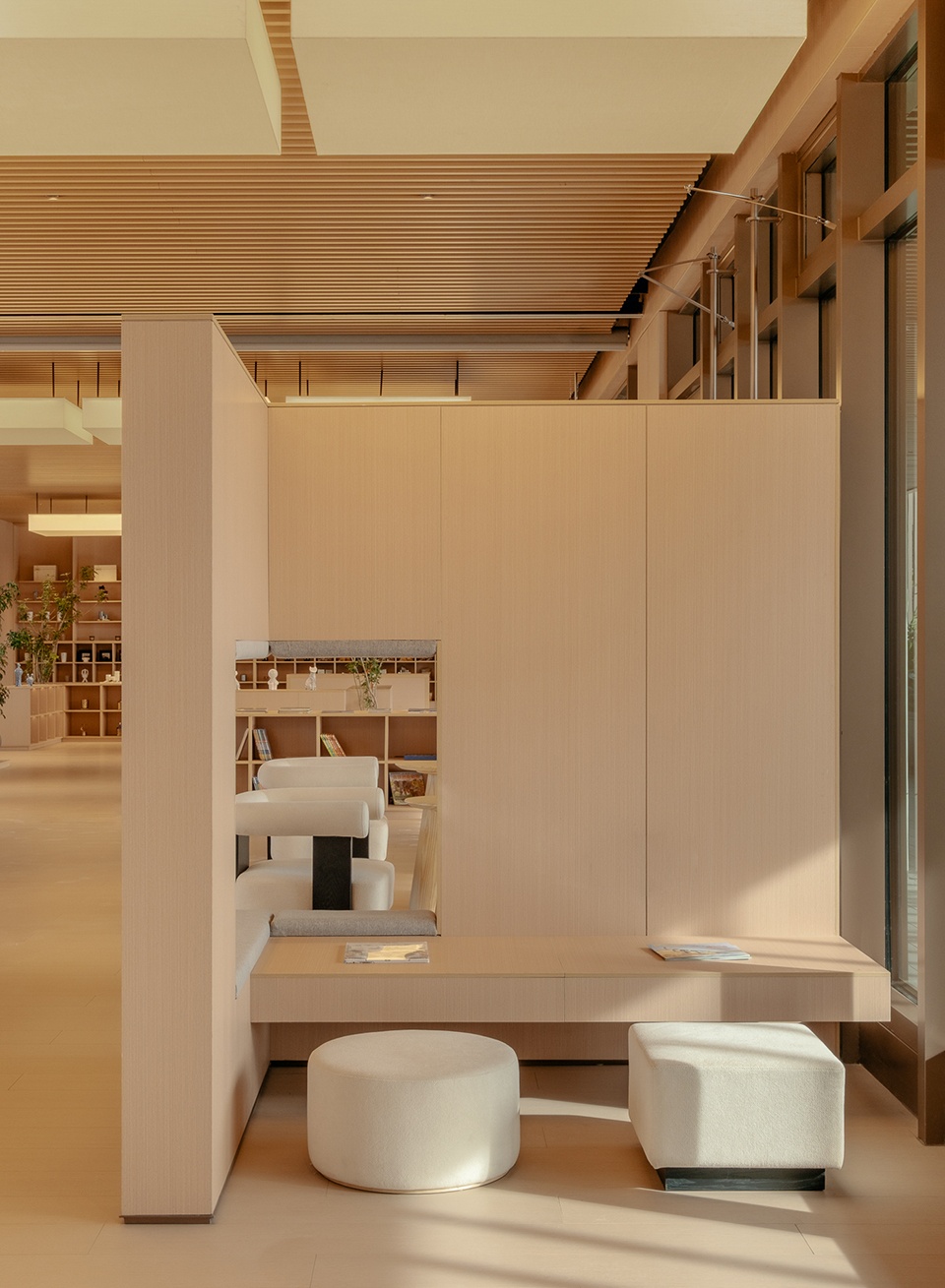
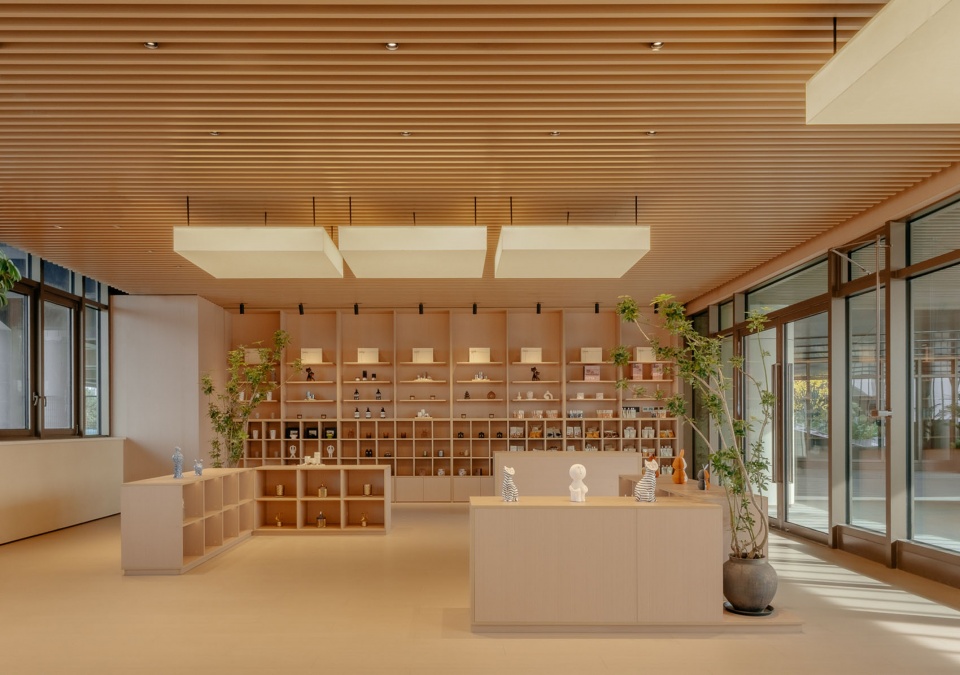
▼艺术商店,Art shop
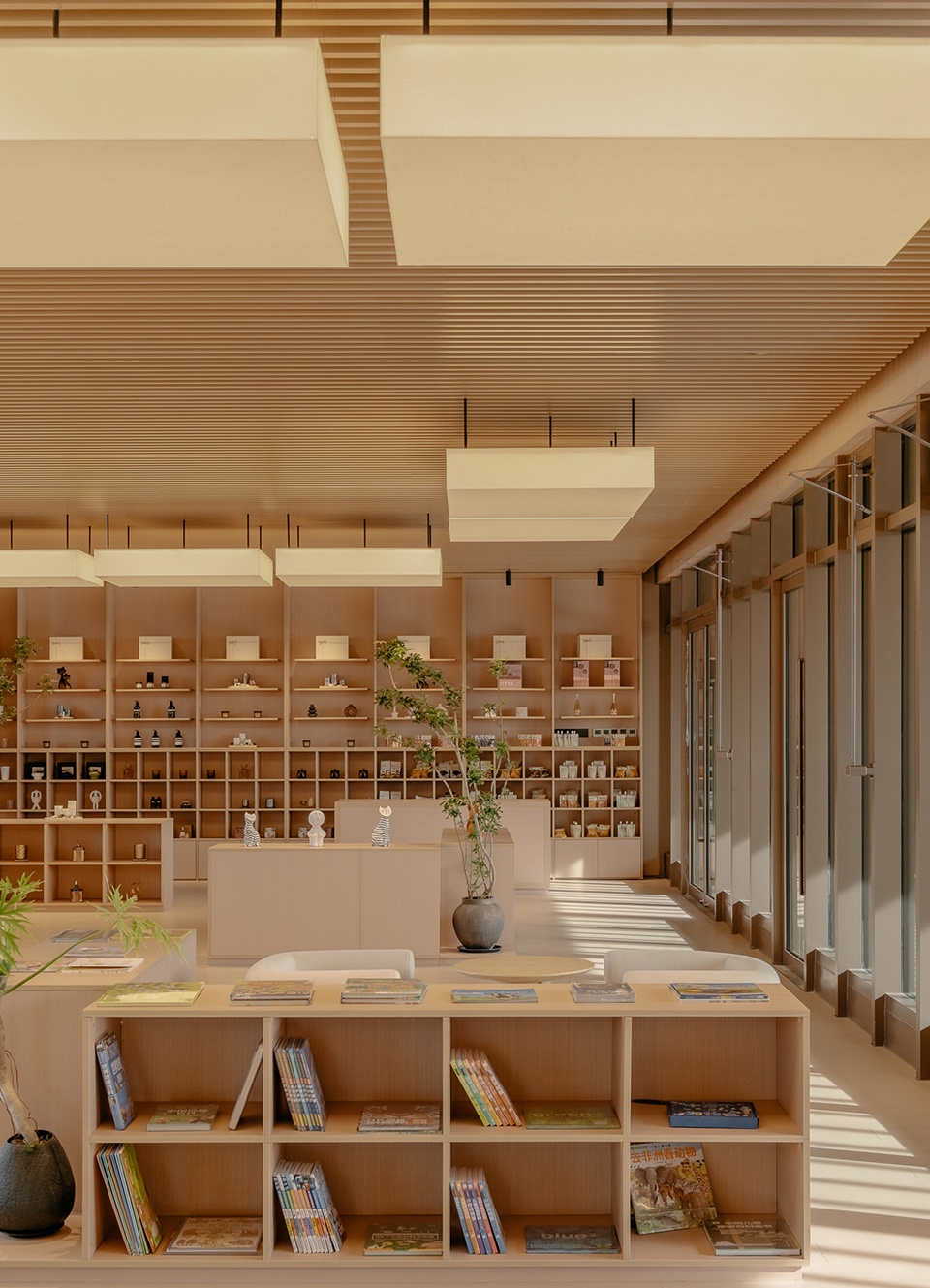
▼艺术商店局部,Art shop partial view
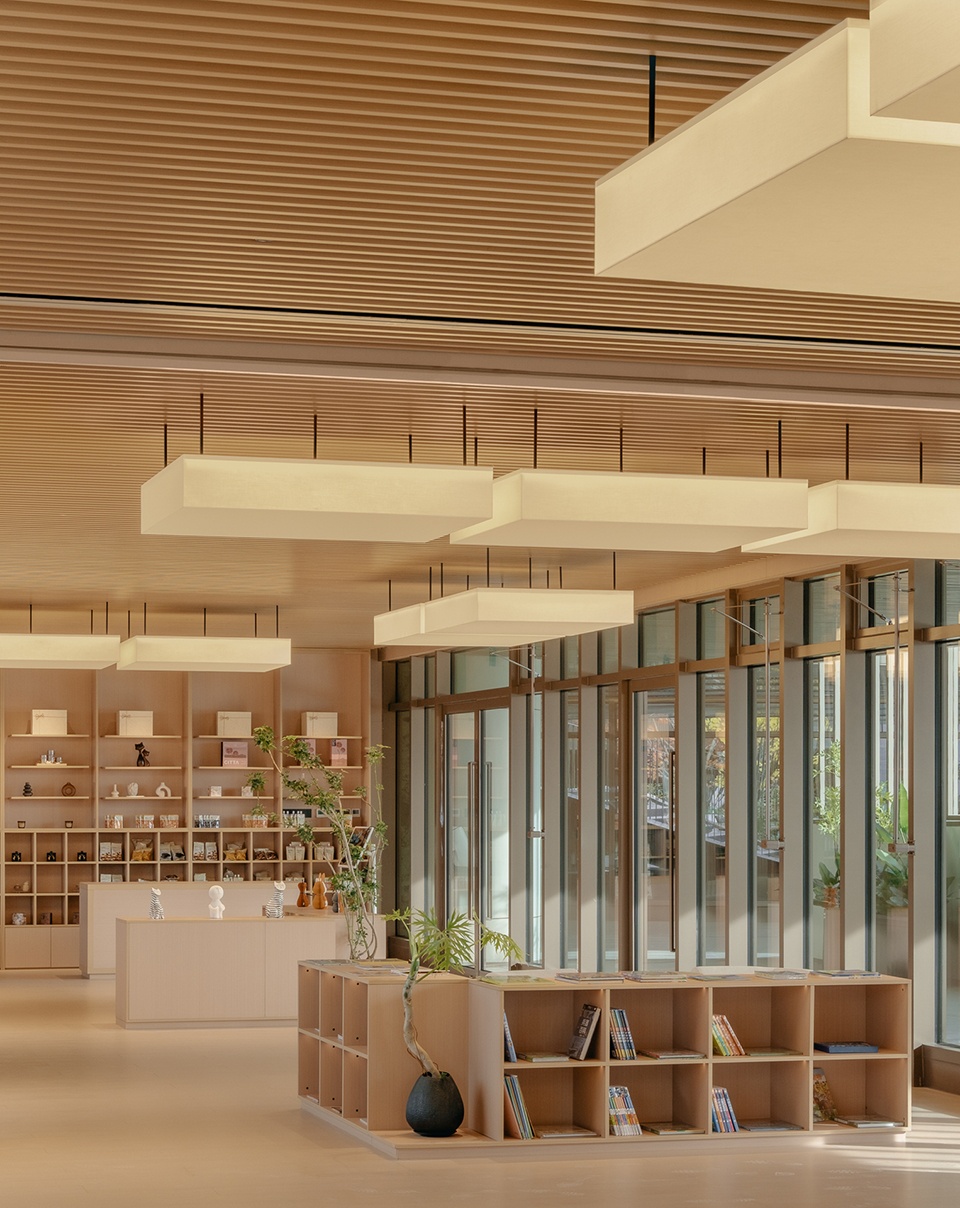
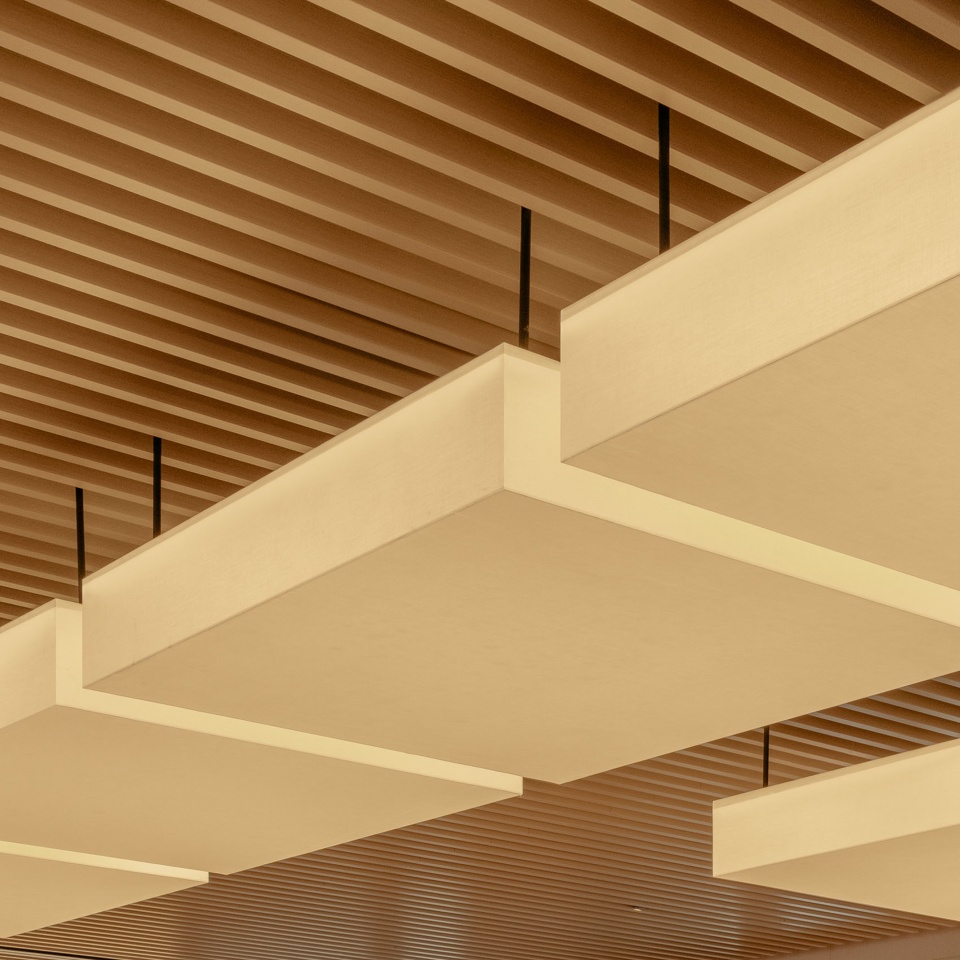
▼空间细部,Interior detail
功能之外 Beyond Function
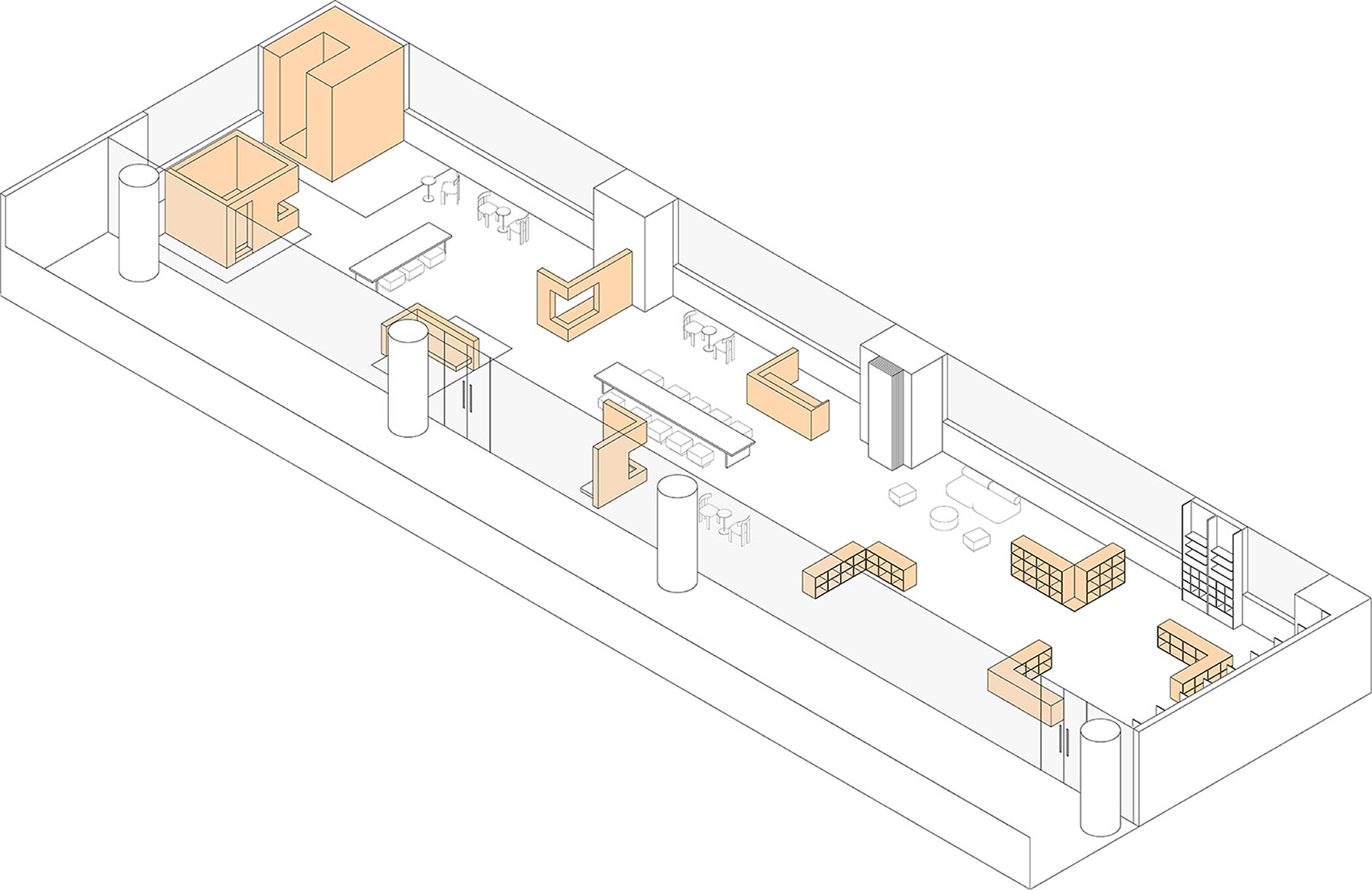
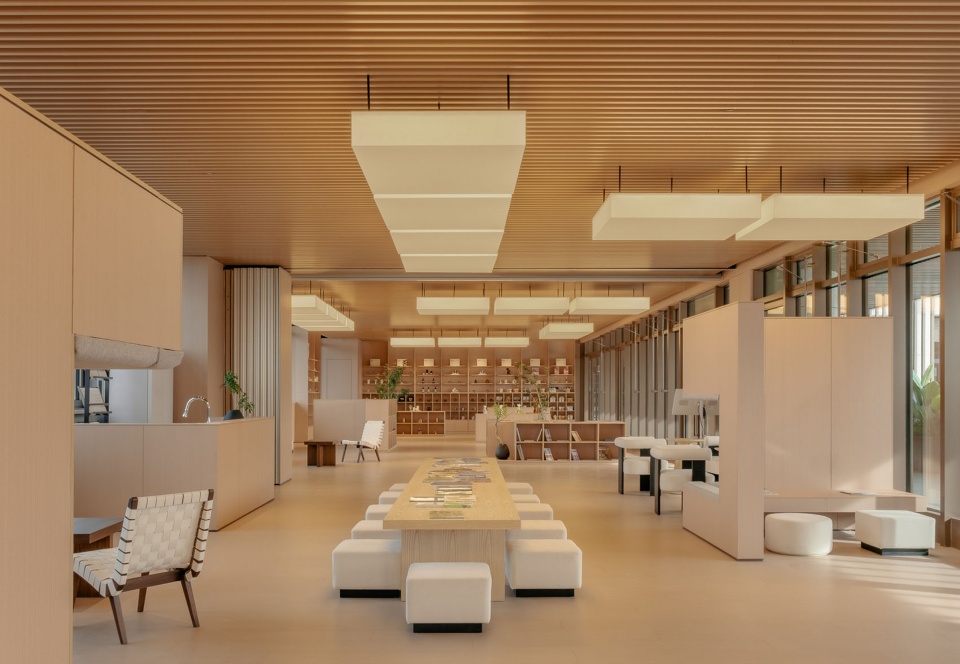
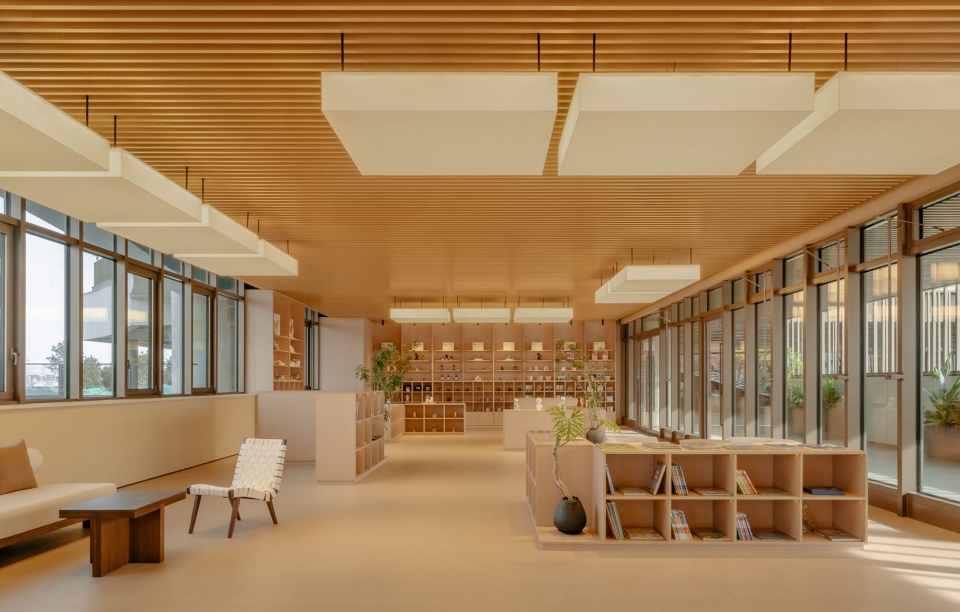
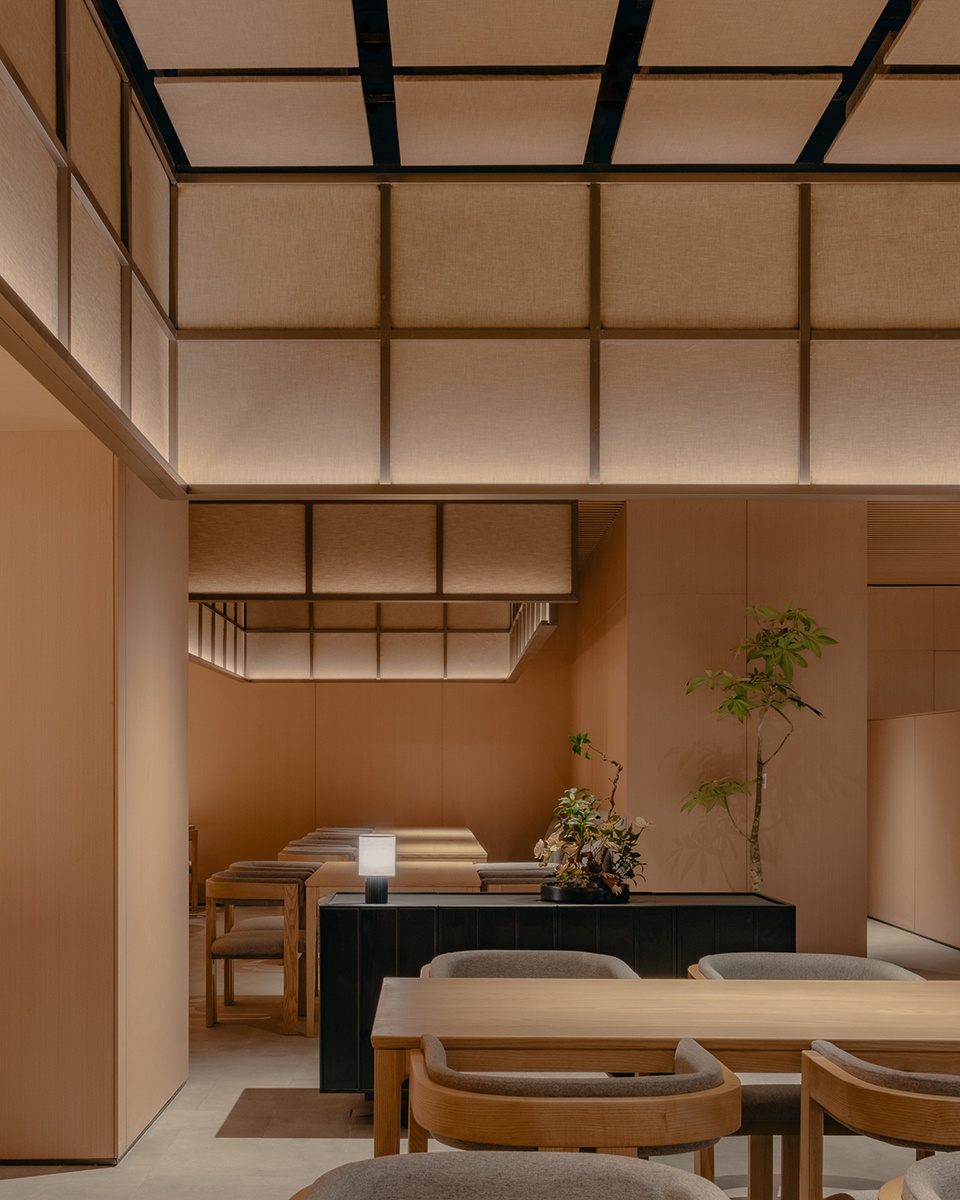
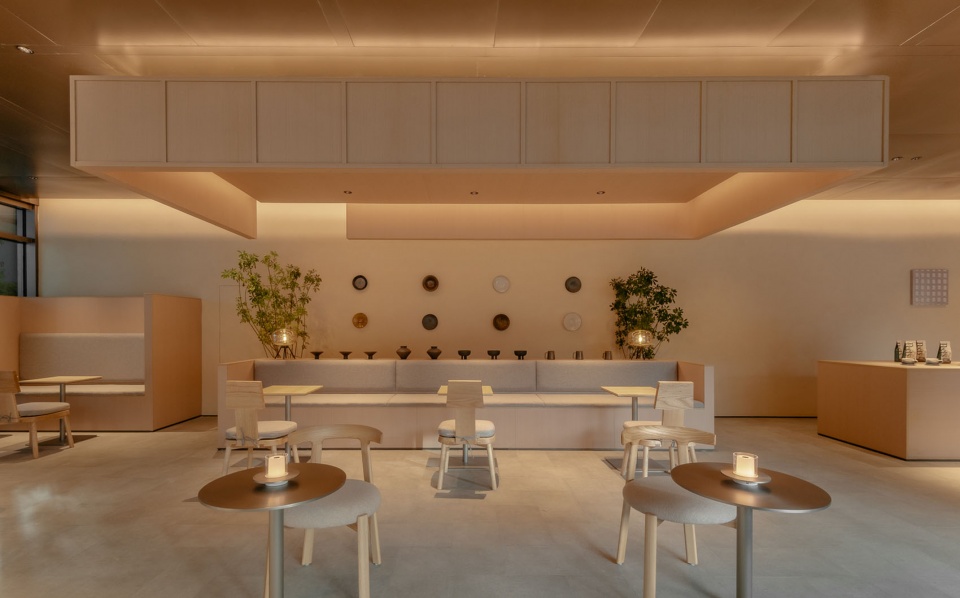
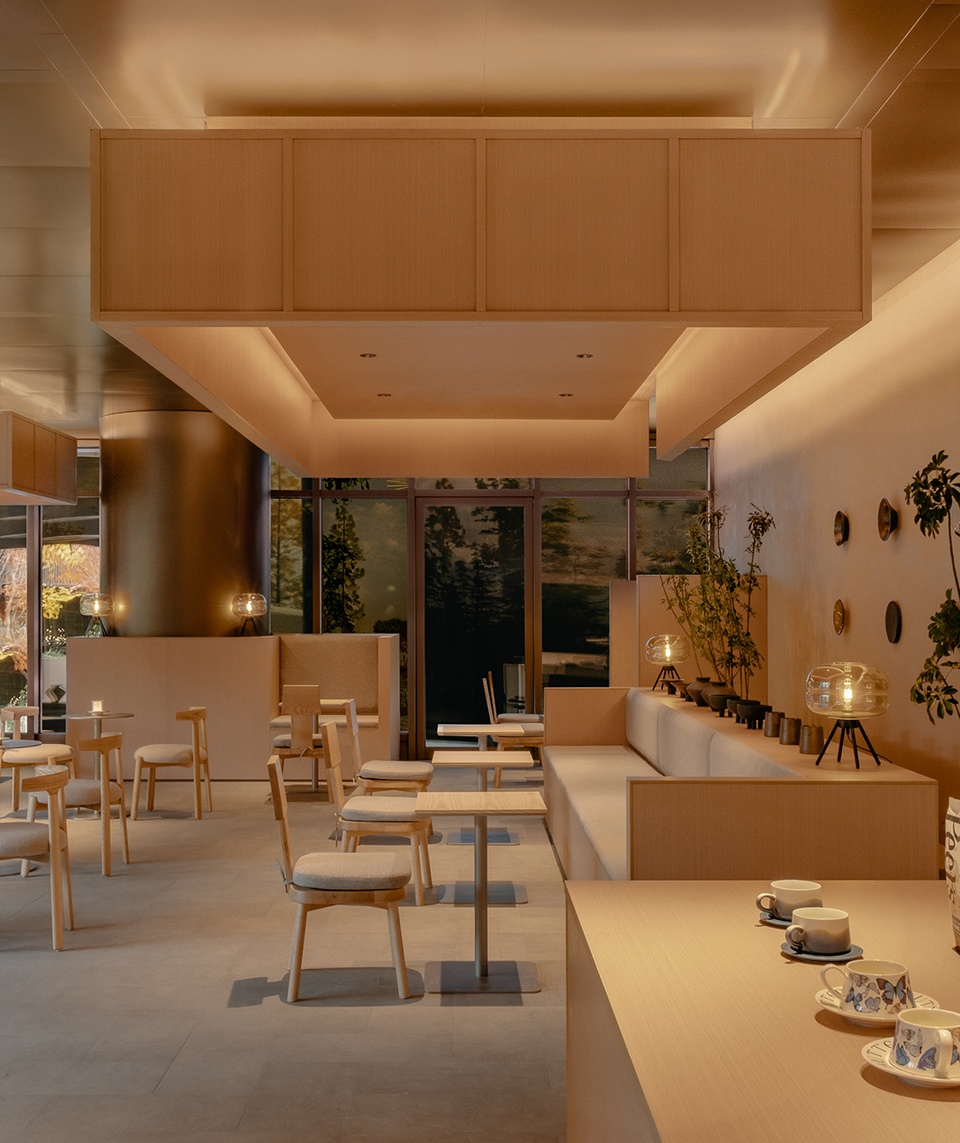
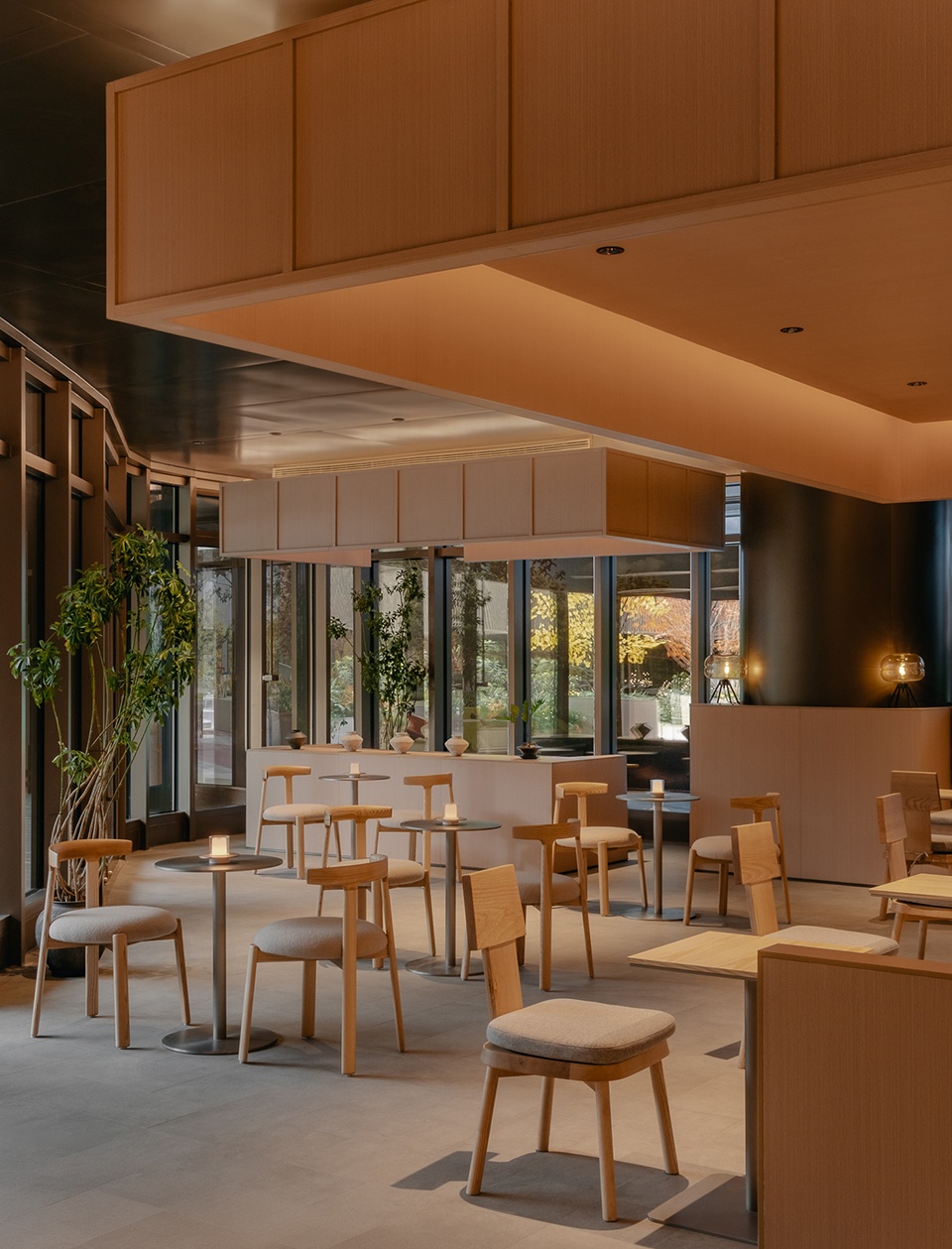
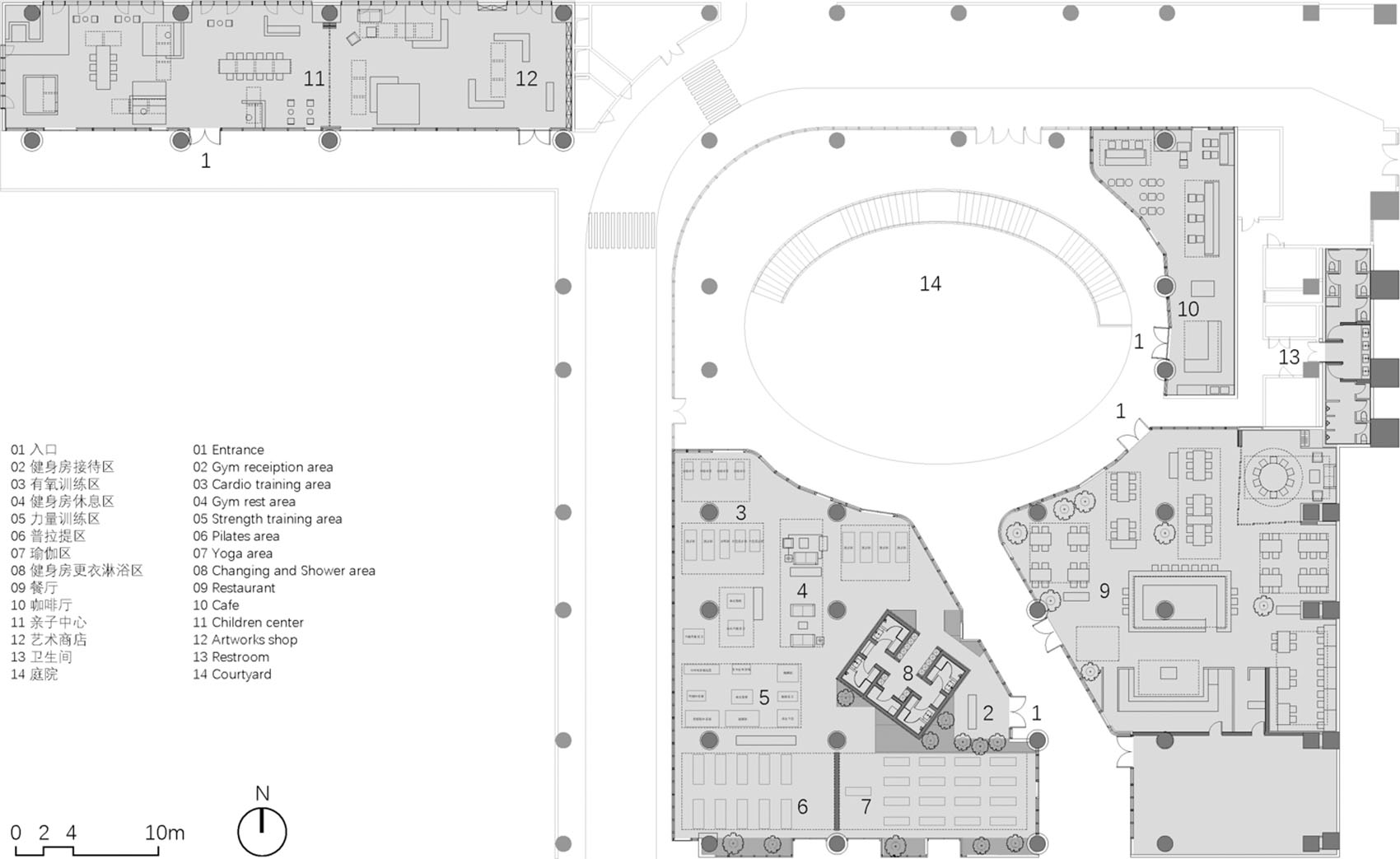
社区中心探究邻里社交空间的本质,寻求功能之外的社区精神。健身房由不同尺度和高程的盒空间组成,接待区、有氧训练区、力量训练区、普拉提区、瑜伽区、更衣淋浴区以环形围绕中心的休息区,提供健身之外,社区社交的汇聚核心。根据运动形式的不同身体行为构成站立、坐卧、仰躺的视野风景,各盒空间设置从吊顶悬置而下的不同高程,构成私密与开放变奏的空间体验。儿童中心的盒空间则以从地面向上生长的儿童视角出发,不同开孔和尺度的盒子模块散置在三面临窗的开放空间,满足趣味互动。餐厅以中心吧台为核,不同餐桌布局环绕分置,由盒空间吊顶划分区域的开敞与聚合,家具灯具整合其中,满足多元用餐需求。咖啡厅以大块面实心盒空间创造简洁明快的生活节奏。
The project explores the nature of social space between neighbors and discovers community spirit beyond its normal function. The gym is composed of frames of different scales and heights, with box spaces that include a reception area, cardio training area, strength training area, Pilates area, yoga area, changing and shower area, and, above all, enclose the rest area in the center, which supports an experience beyond fitness—a social center that gathers the residents. Based on different exercise types and physical behaviors, such as standing, sitting, lying, and different exterior viewpoints, the frame boxes have varying heights from the ceiling to create a private or public feel. The children’s center features frame boxes that grow from the ground and respond to a child’s scale; the modules, with different voids, are scattered across the open space, with windows on three sides, providing interesting views and opportunities for communication. The restaurant is centered around a central bar, with different dining areas surrounding it, and distinguishes between privacy and publicity through a ceiling of different frame boxes, creating an open, gathering experience. The consistent language integrates the furniture and lighting into the frame boxes, satisfying diverse dining areas. The café selects a whole veneer to decorate the box for efficiency, clarity, and a lively pace.
▼餐厅入口区域,Restaurant entrance area
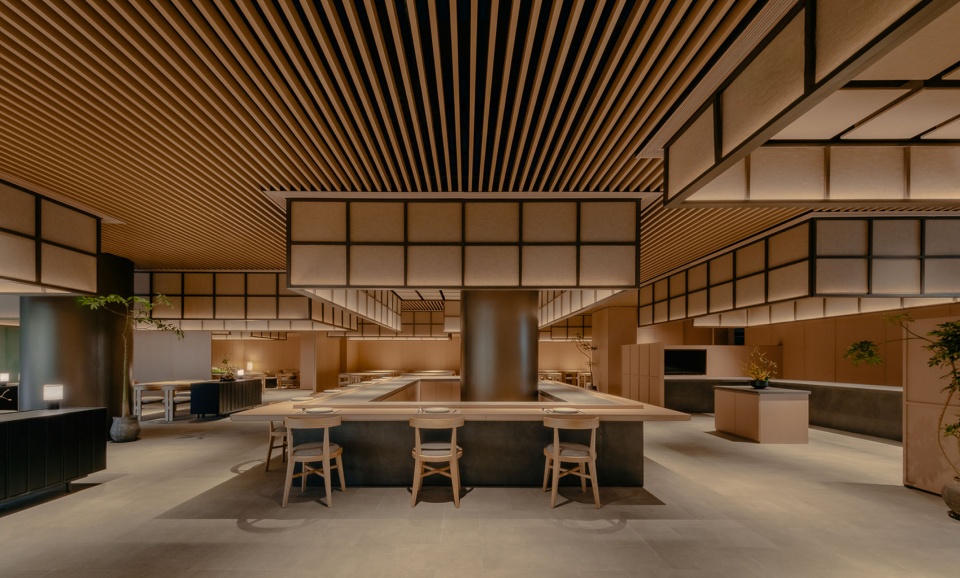
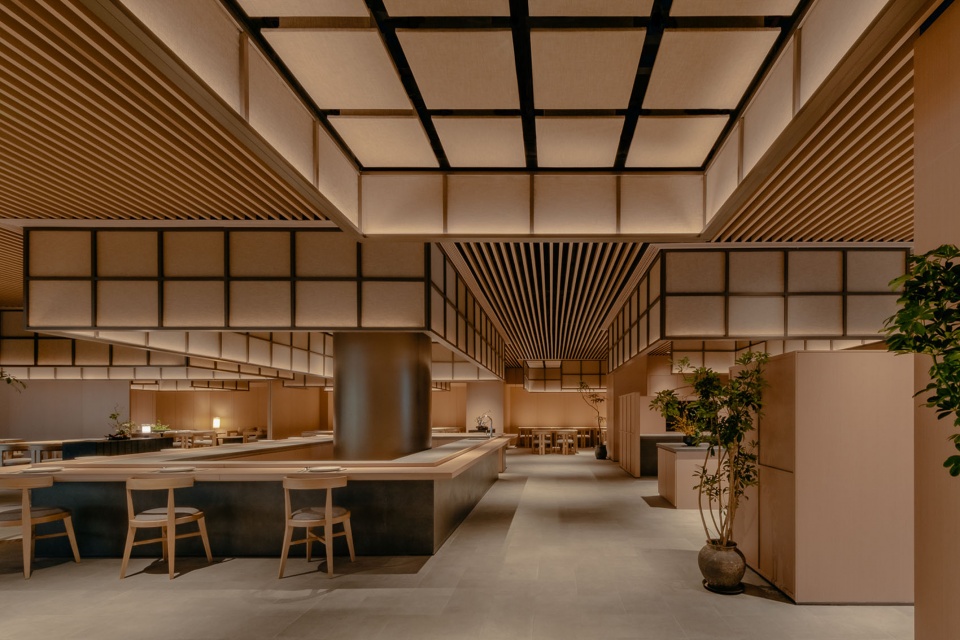
▼餐厅室内概览,Restaurant interior overview
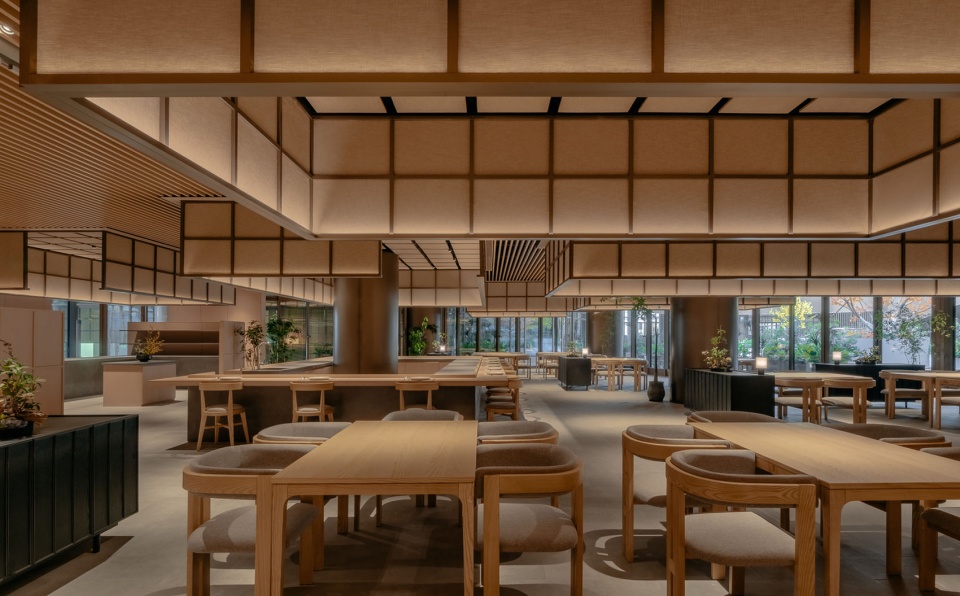
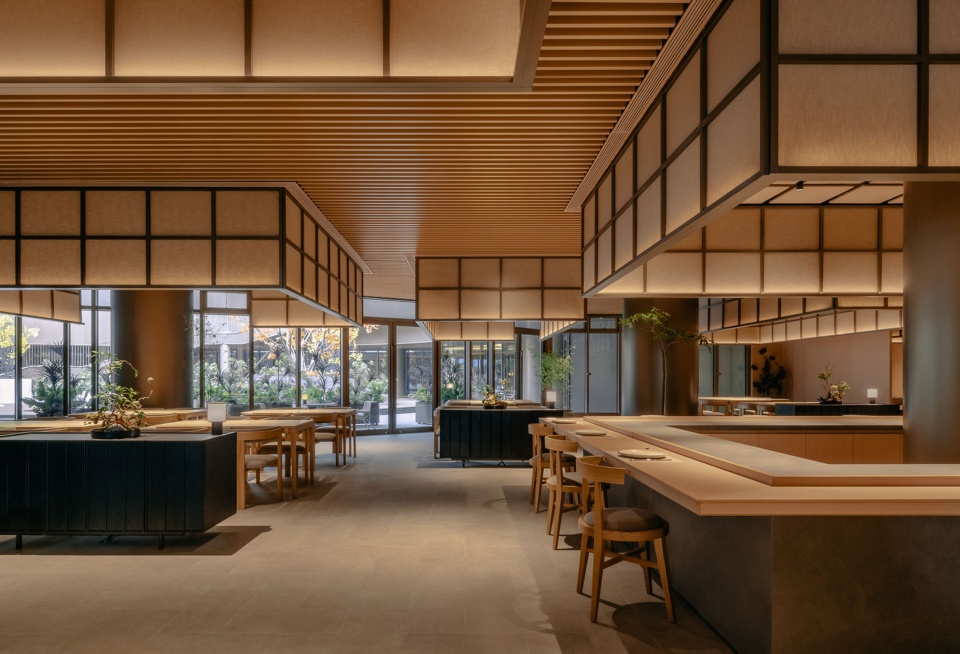
▼临窗用餐区,Dining area by the window
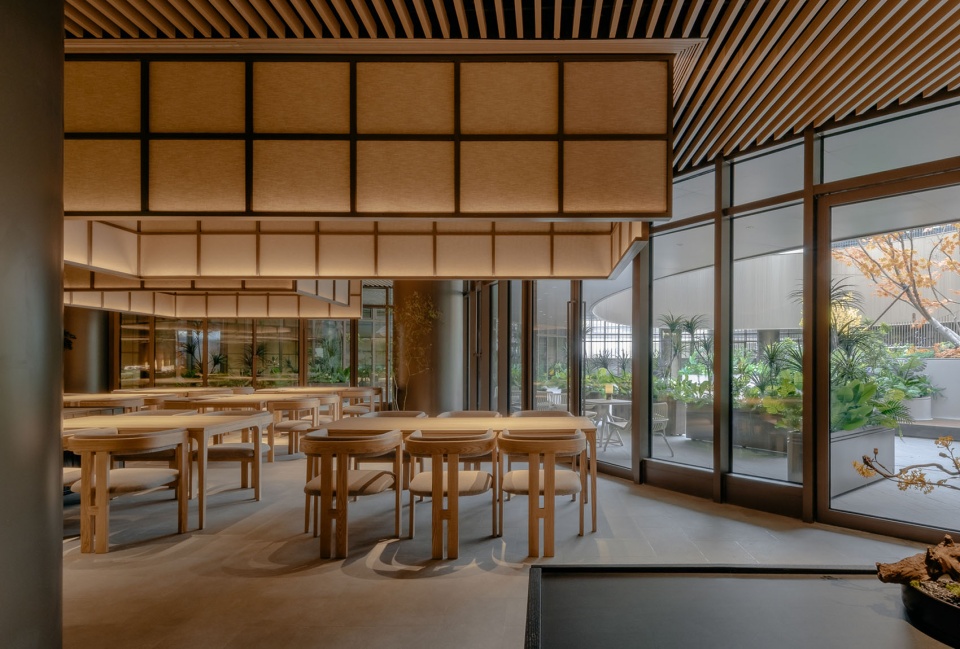
▼餐厅吧台区域,Restaurant bar area
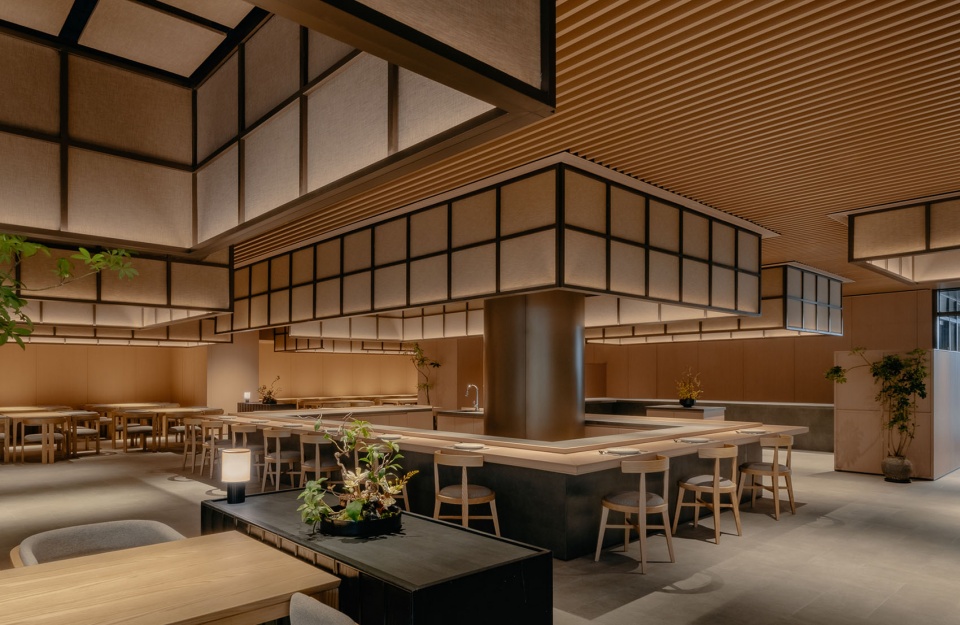
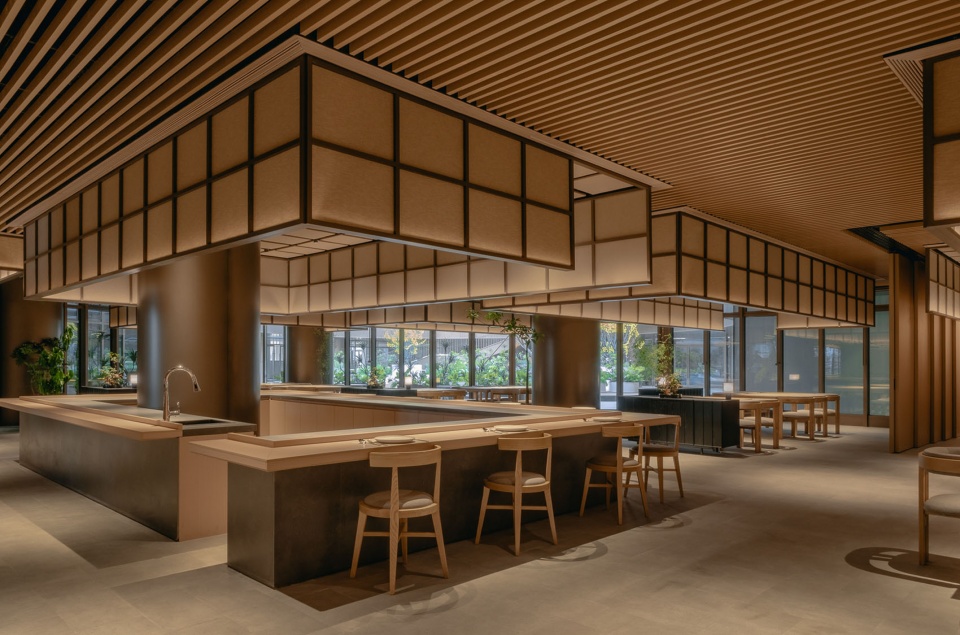
▼餐厅吧台近景,Restaurant bar area close view
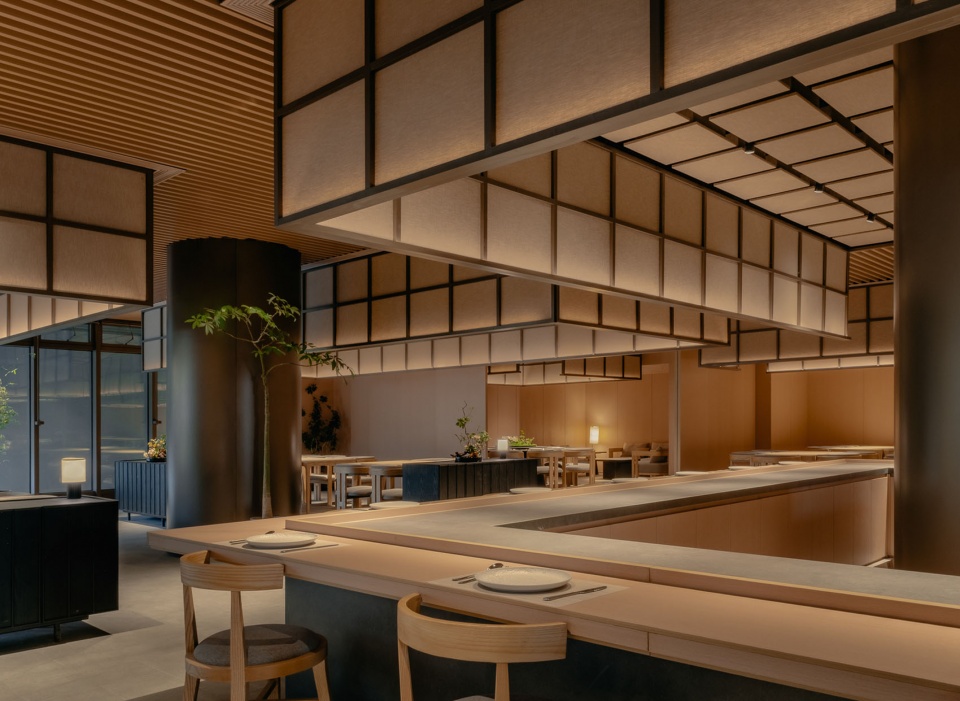
▼餐厅局部,Restaurant partial view
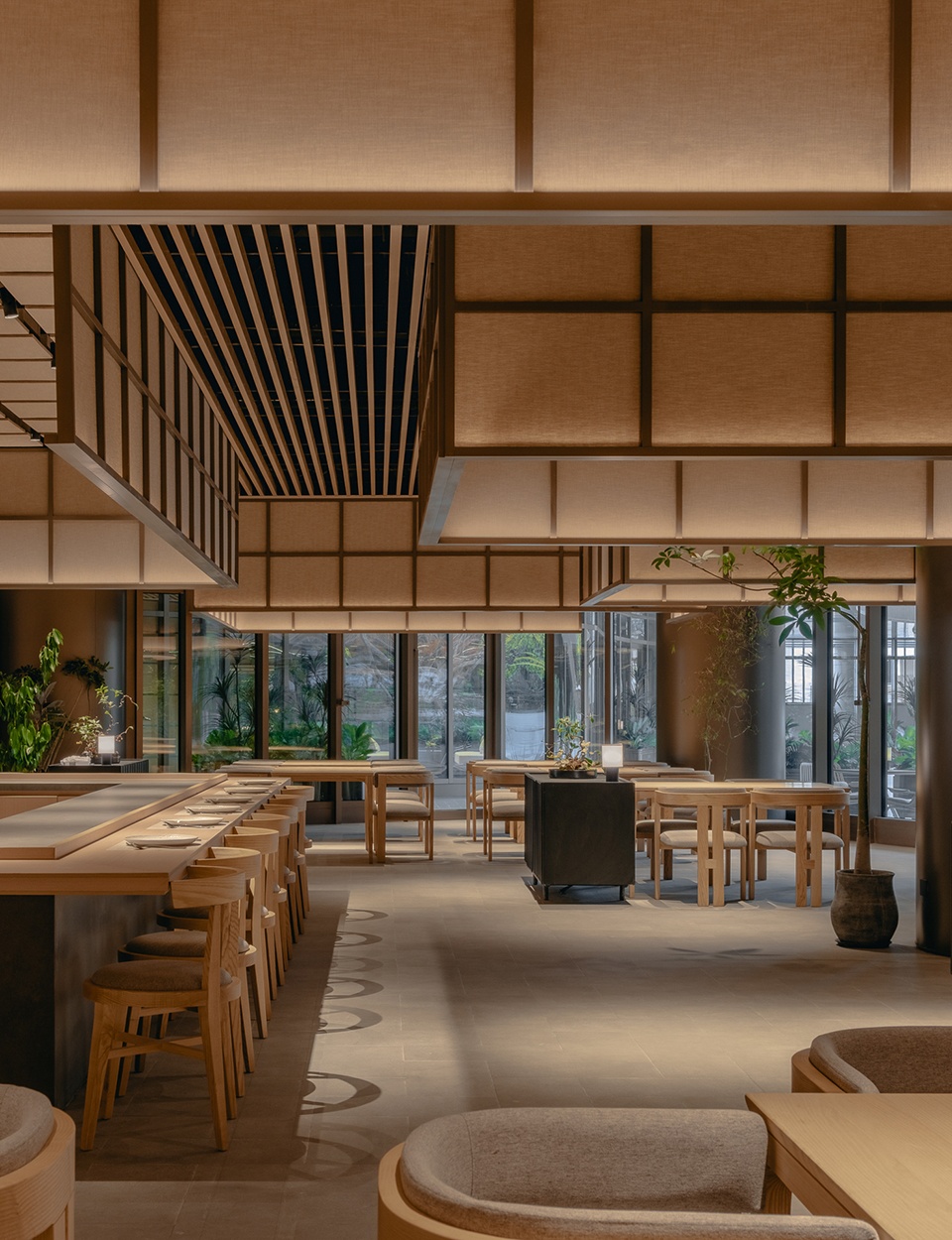
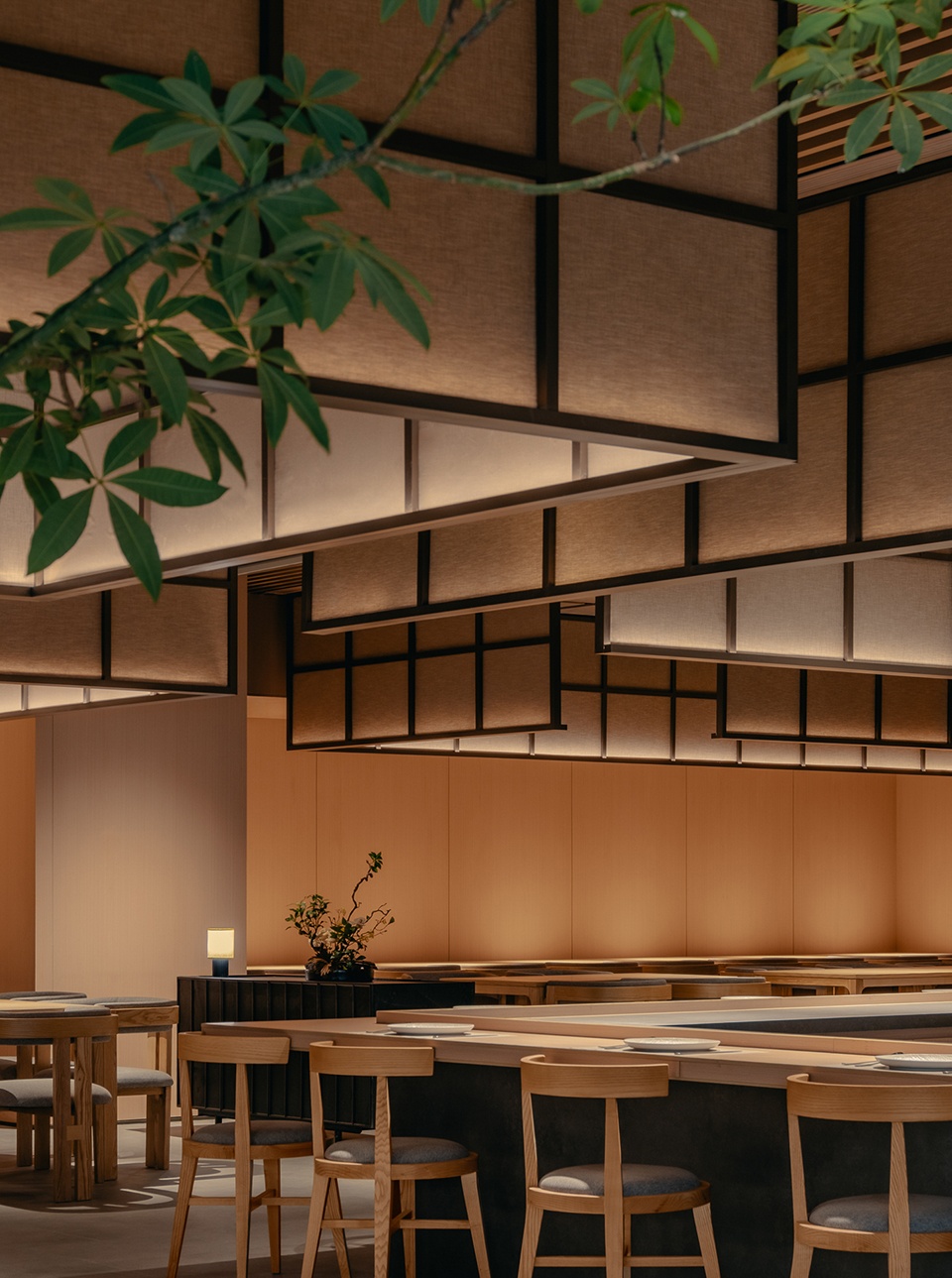
▼用餐区局部,Dining area partial view
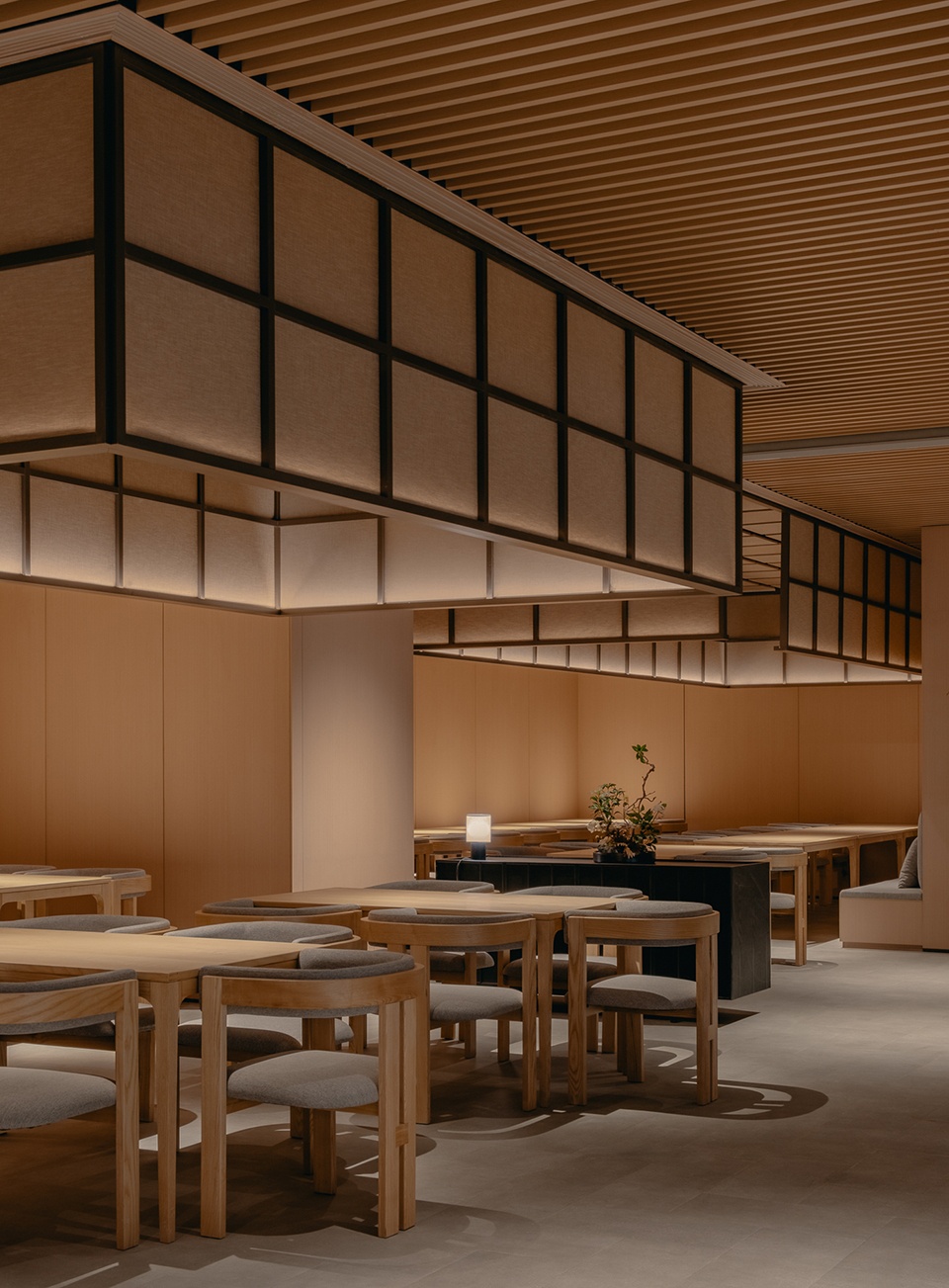
空间物性 Spatial Substance
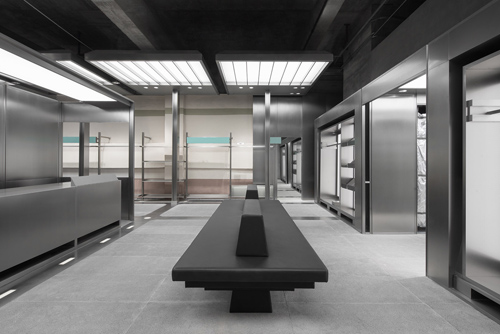
社区中心在光、界面、材料、游线的设计策略中探索空间的物性和归属感。空间的高色温赋予儿童中心跃动与活力,低色温的健身房则实现差异化、异于商业空间,属于家的运动体验。盒空间由金属框架及布、网格模块、木饰面等构成,在健身房和餐厅采用网格模块的呼吸感,在儿童中心和咖啡厅感知柔和块面的温暖感。室内构件特别延用与建筑表皮相同的不锈钢材质,形成室内与建筑彼此延伸的整体性和体验的一致性。室内景观由绿植、碎石、木屑铺地点缀,和错落汇聚的盒空间共同营造自然亲和的空间游线,呼应社区环境的园林属性。
The community center explores spatial substance and belonging through a design approach to lighting, surfaces, materials, and routes. A higher color temperature creates a vigorous, dynamic atmosphere in the children’s center. While the gym with a lower color temperature has a different character from a typical commercial gym, the former evokes a home-like sense. The box is composed of a metal frame, cloth, modules, and veneer. The frame provides a breathable feel for the gym and restaurant, and the block provides a soft, warm feel for the children’s center and café. The design specifically selects the interior frame elements to match the architectural facade material—stainless steel—to achieve consistency and integration from exterior to interior. The interior landscape uses greenery, rubble, and bits of wood to pave the floor, complementing the box space and creating a natural route that echoes the garden context in the community.
▼咖啡厅,Café
▼咖啡厅局部,Café partial view
▼平面图,Plan
项目信息
Project information
Project name: Beijing Foresky Community Center
Location: Fengtai District, Beijing
Clients: Metro Land Corporation LTD
Architects: PLAT ASIA
Design scopes: Interiors, Decoration, Lighting
Principal architect: Donghyun JUNG
Partner architect: Liu Guowei
Design director: Lian Jingyun
Project designer: Wang Haiyu
Scheme design team: Zhou Qinyuan, Shang Anqi, Li Shu
Interior LDI: YiBoChuan (Shandong) Design Institute
Lighting consultant: Tang Qiubao
Photo: Zhu Yumeng
Area: 1,600 sqm
Interior materials: glazed tiles, timber flooring, timber veneer, paint coating, stainless steel, frame-retardant semi-transparent veil, wood grain aluminum rectangular tube
Design period: Jun 2025 – Sep 2025
Construction period: Sep 2025 – Dec 2025
Completion time: Dec 2025