阡集莘社区,上海 / 非寻建筑
引言Preface
在过去,我们习惯于定格客群的画像,却忽略环境的演变。租赁住宅作为社会住宅的一种新兴类型提供了反思的契机:建筑是否可以跨越代差,为一个不断迭代的群体而服务?在阡集莘社区的设计实践中,非寻建筑试图跳出惯性思维,让建筑成为一个载体,去容纳变化的人群和不可预知的生活。
In the past, we were accustomed to defining target user group while overlooking the change of the times. Rental residence, as an emerging typology of social housing, offer an opportunity for reflection: can architecture transcend the generation gap to serve constantly changing populations? In the design practice of CHANGE·U Community, Fusion Architects seek to break free from conventional thinking, allowing architecture to become a vehicle that accommodates shifting populations and unpredictable lifestyles.
▼清晨的阡集莘社区,Morning at Qianji Xinshe Community
01属于Z世代的社区01 A Community for Generation Z
项目地处上海市西南片区——闵行区的莘庄商务区板块,位于虹桥综合交通枢纽辐射区内,与地铁十二号线七莘路站仅一街之隔,东侧毗邻甲级办公园区,南侧对望开阔的城市景观春申湖,如同嵌入复杂城市底色中的一枚斑块。
The project is located at Xinzhuang Business Center of Minhang District, the southwestern part of Shanghai. It lies within the circle of Hongqiao Integrated Transportation Hub, one block away from Qixin Road Station of Metro Line 12. Embedded into the complex urban fabric, the site adjoins a business campus of headquarters in the east and faces the expansive urban landscape of Chunshen Lake in the south.
▼阡集莘社区沿街入口,Street Entrance of Qianji Xinshe Community
▼阡集莘社区内街,Inner Street of Qianji Xinshe Community
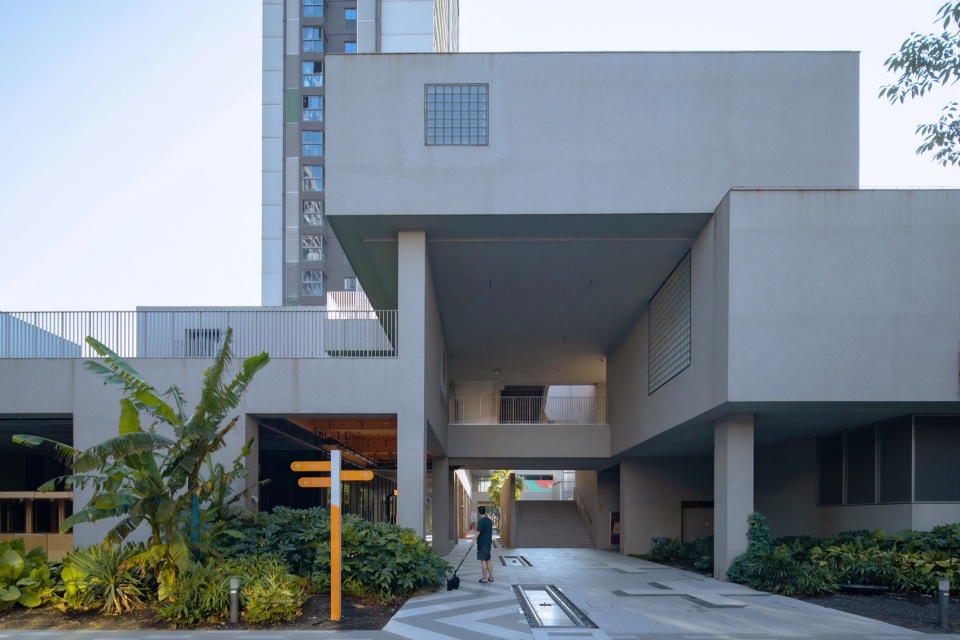
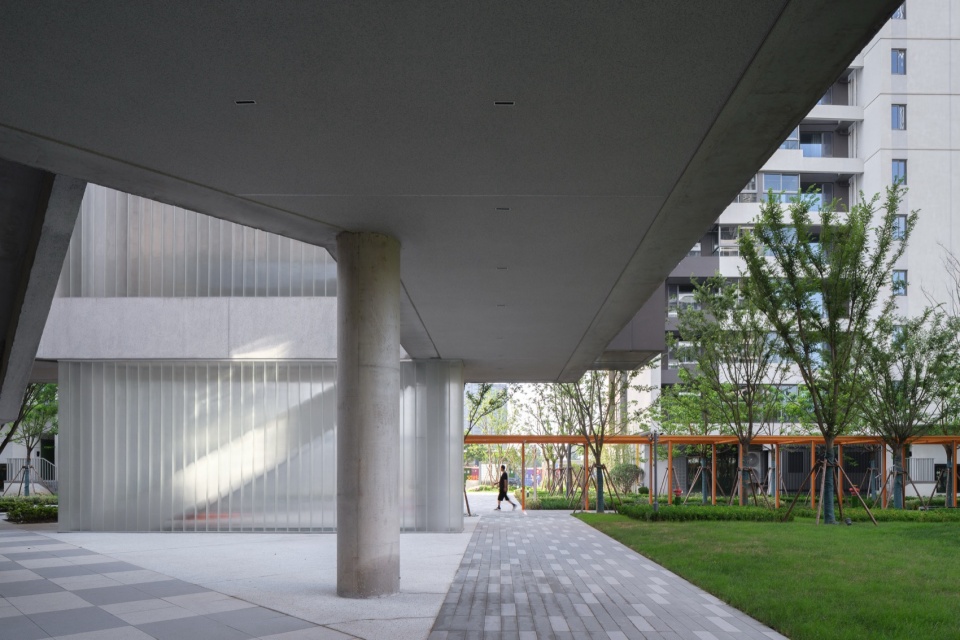
▼阡集莘社区架空层,Stilt Floor of Qianji Xinshe Community
行色匆匆的早晚高峰人流为这个区域输入了持久的活力,而活力主要来自于初入职场的年轻人:尚未组建家庭,也没有足够资产用以置业,乐于接纳新事物,生活方式多样化,既对新的生活充满憧憬,也对不确定的未来心存迷惘。这些出生于上世纪90年代中叶至千禧年的年轻人被称为Z世代,他们拼成了莘社区的客群画像。
The bustling morning and evening rush hours bring sustained vitality to the area, a vitality largely driven by young people shortly after graduation—those who are not married, not able to afford high-end housing, and yet open-minded to accept diverse lifestyles. Their minds are filled with both anticipations and unknowns for the future. These young people, born from the mid-1990s to the early 2000s, known as Generation Z, form the majorities of residents in CHANGE·U Community.
▼住宅架空层空间,Stilt Floor Space of Residential Building
无论是建筑师还是业主团队,都与Z世代存在代差,如果仅凭生活经验做设计,无异于刻舟求剑;此外,租赁住宅比普通商品住宅存在更大的用户流动性,从Z世代到未来的Alpha世代,客群本身也是一个动态的集合。为一个全新且不断变化迭代的群体做设计,不仅需要深入了解其生活方式,还要在时间维度上预留变化的可能性。
Either the team of architects or the developer are the different generation from the residents of the community. Designing based solely on personal life experience can’t keep up with the times. Moreover, rental residence has much higher mobility of residents than those residential properties for sale. From Generation Z to Alpha in the future, the target user group itself is a dynamic cohort. Designing for a new and constantly changing population requires not only a deep understanding of their lifestyles but also a foresight to allow for possibilities of change over time.
▼住宅首层入口,Ground Floor Entrance of Residential Building
▼社区商业架空层,Stilt Floor of Community Commercial Space
于是我们描绘出一张更为清晰的社区图景:友善同频的居住环境,松弛的社区氛围,各种类型的亚文化都平等地占有一席之地。活力、多元、包容、有尊严,成为未来不断变化的客群的共同期待。
Therefore, we paint a clearer picture of the community: a friendly and harmonious living environment; a relaxed community atmosphere; and a space where all kinds of subcultures are equally embraced. Vitality, diversity, inclusivity, and dignity have become the shared aspirations of the changing residents in the future.
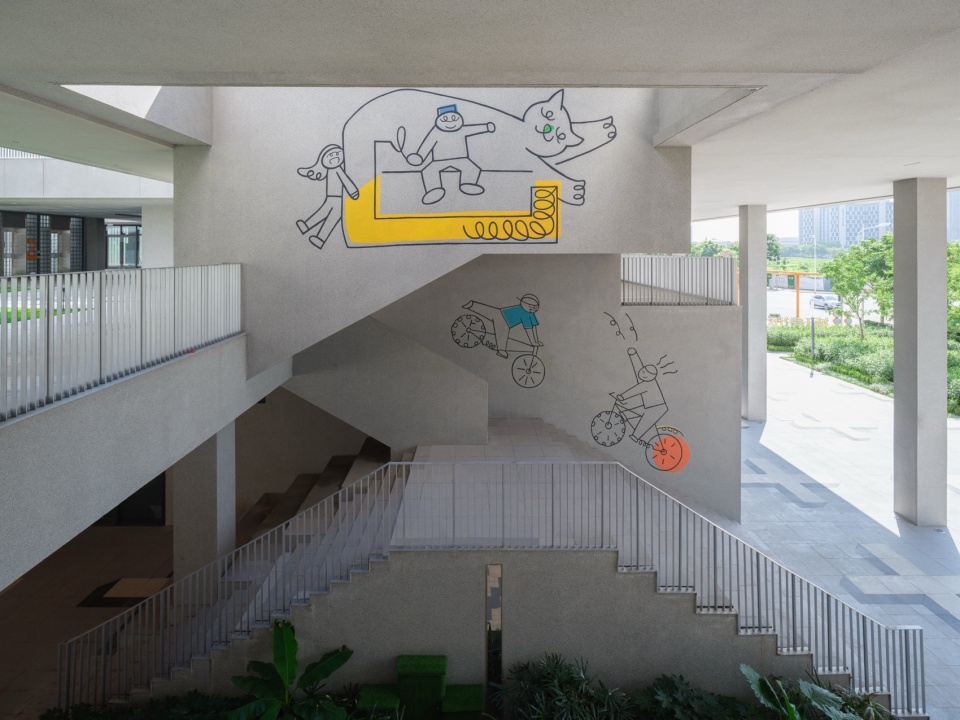
▼室外楼梯空间,Outdoor Staircase Space
02场所|自由生长的平台02 Place | A Platform for Free Growth
“公”和“私”的关系一直是居住类空间中重要的关注点。在做传统商品住宅时,“公”的部分往往会被充分挤压,从城市界面到入户玄关,中间只有相当有限的社区空间作为过渡。“公”的缺失会导致对“私”的渴望,更会导致社区氛围和归属感的弱化。在规划设计之初,力争社区自由开放的布局是最根本的策略。
The relationship between “public” and “private” has always been a key focus in residential spaces. In typical residential projects, the public realm is often heavily compressed. There is only a limited amount of communal space serving as a transition from city streets to home. This lack of “public” space fuels a desire for “privacy” and further weakens the sense of community and belonging. At the beginning of planning and design, establishing an open and inclusive community is the fundamental strategy.
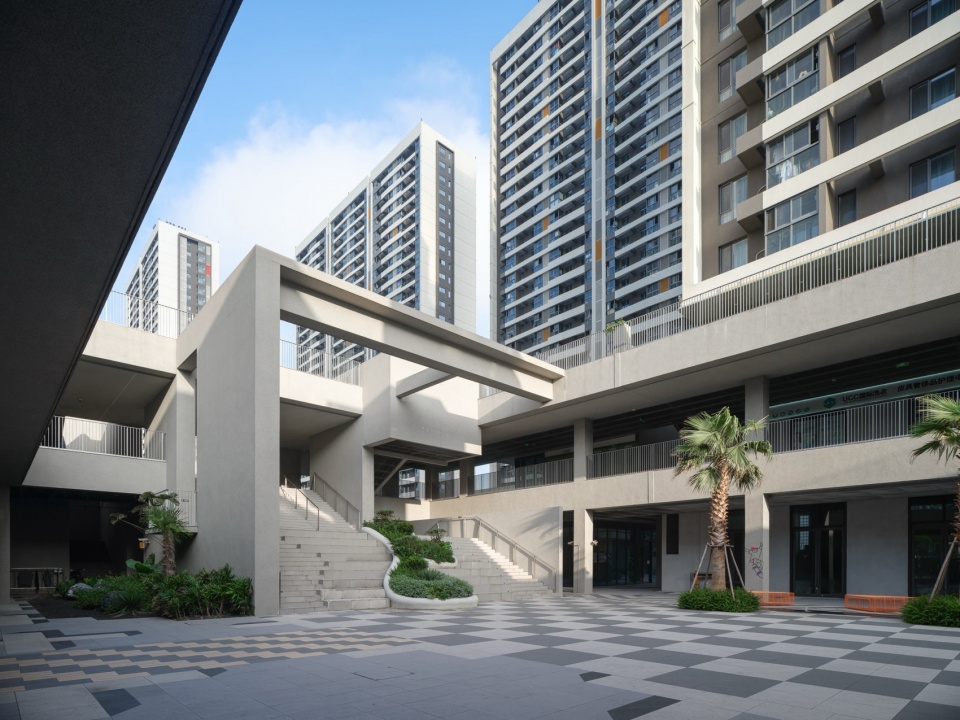
▼露天广场和公共台阶,Open Plaza and Public Steps
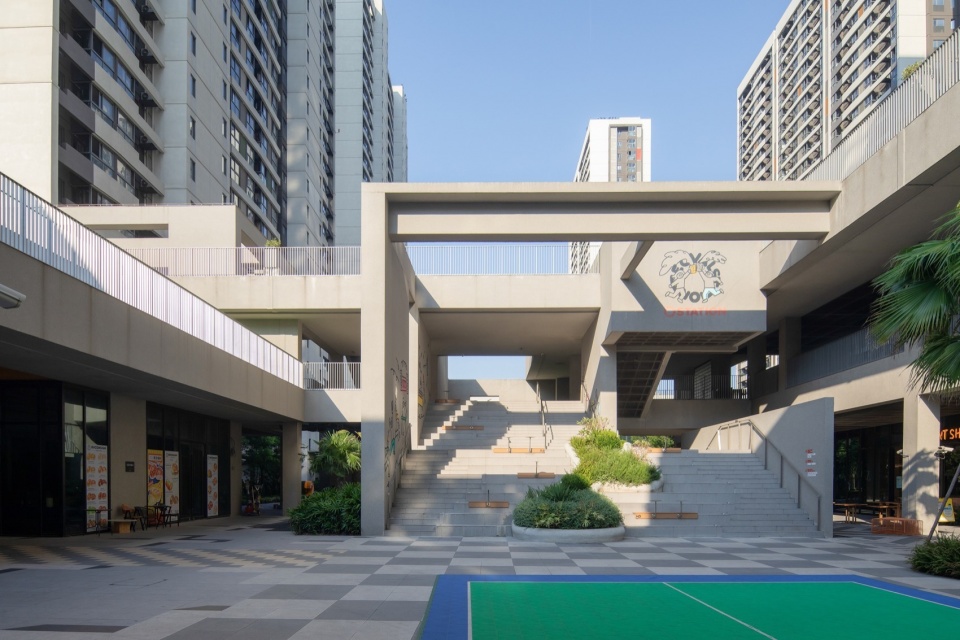
▼露天广场和公共空间,Open Plaza and Public Space
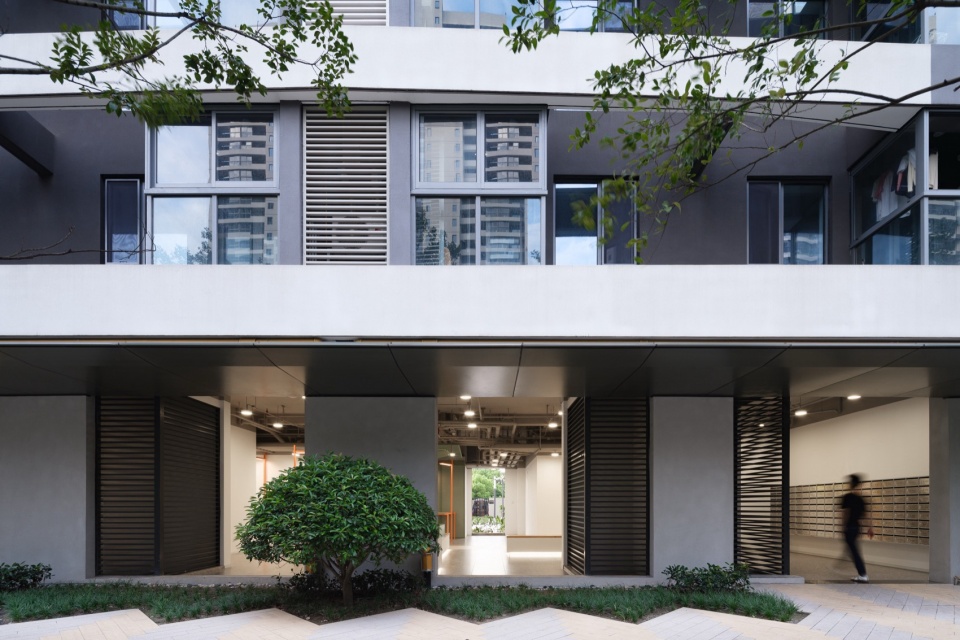
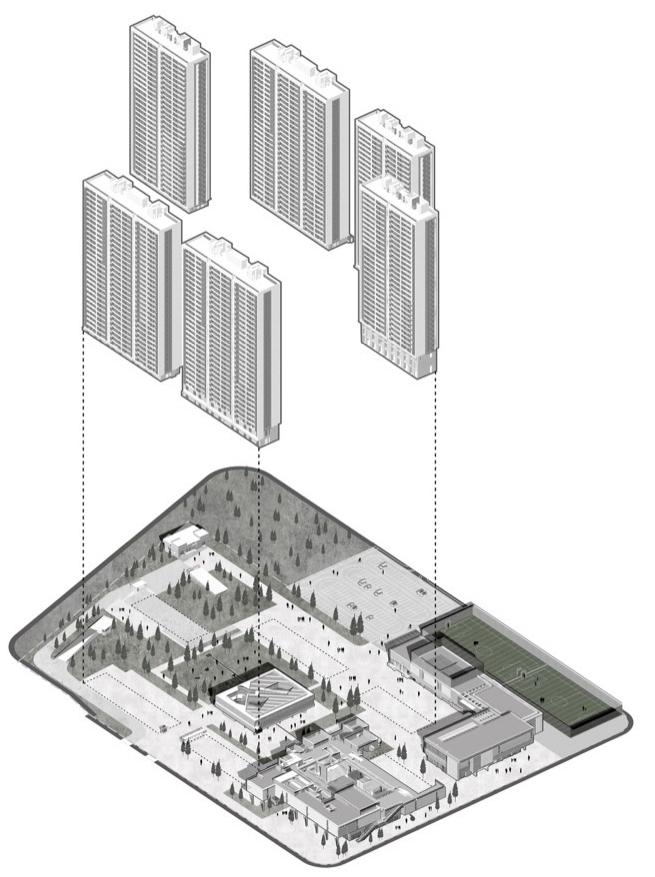
整体规划不设置围墙,仅在各栋住宅单体保留楼宇门禁系统,并在所有塔楼下设置架空层,充分释放首层空间,成为横向自由延展的公共活动广场。
There are no fences on the boundary of the site. Access control systems are installed only at the entrance of each residential buildings. Open piloti spaces are designed on the ground floor, extending to the public pedestrian spaces of the community.
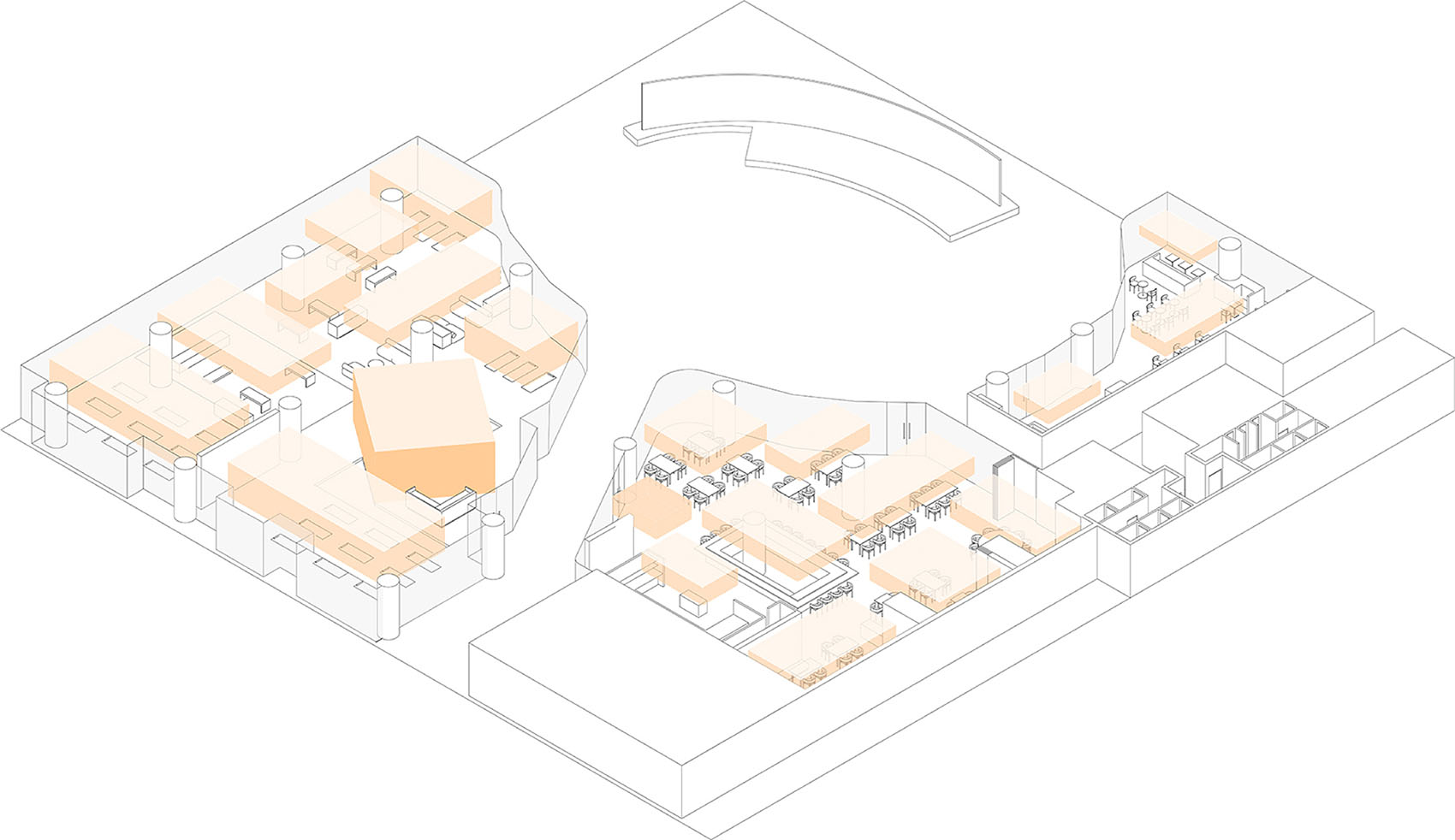
▼轴测图,Axonometric Drawing
▼公共台阶和景观,Public Steps and Landscape
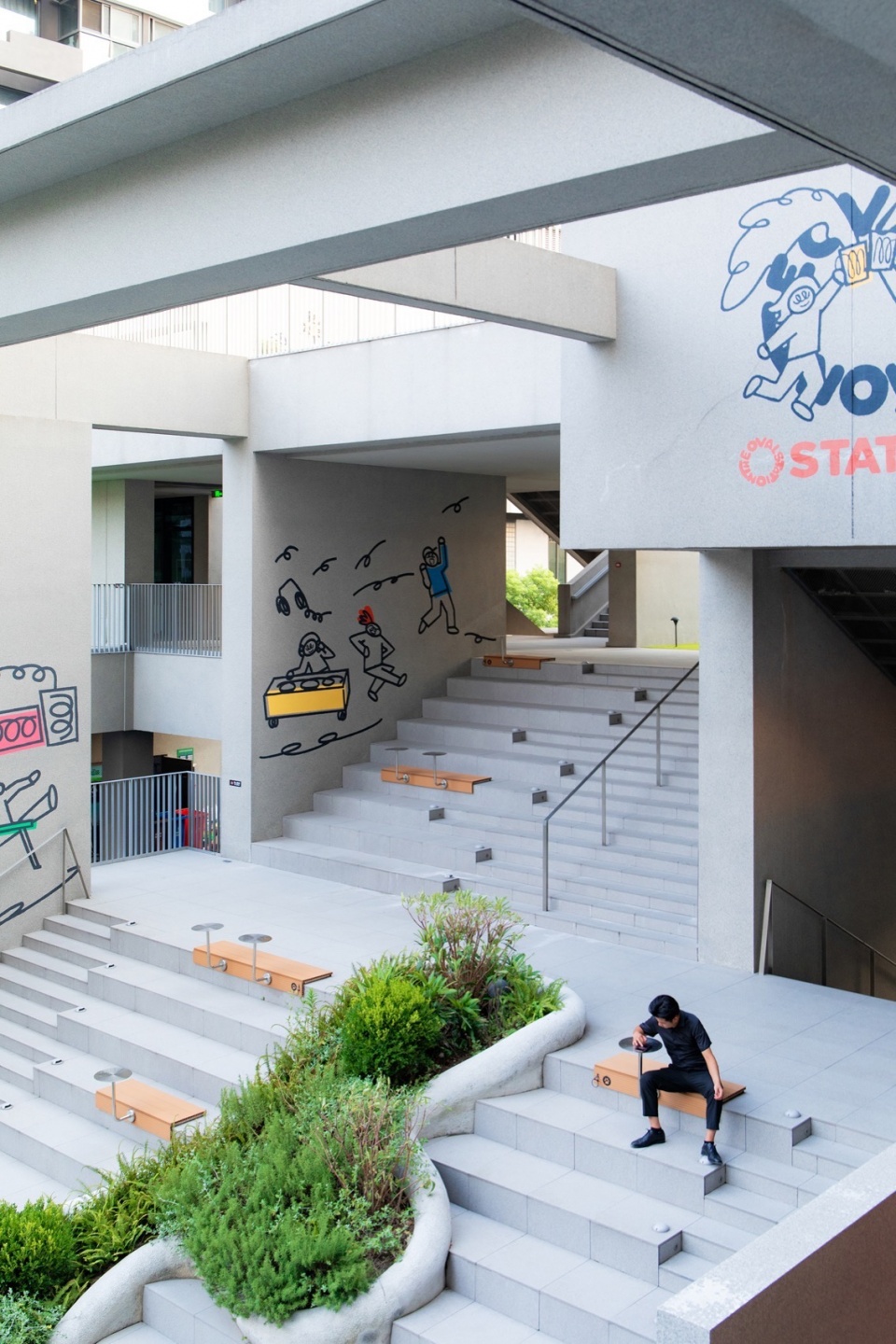
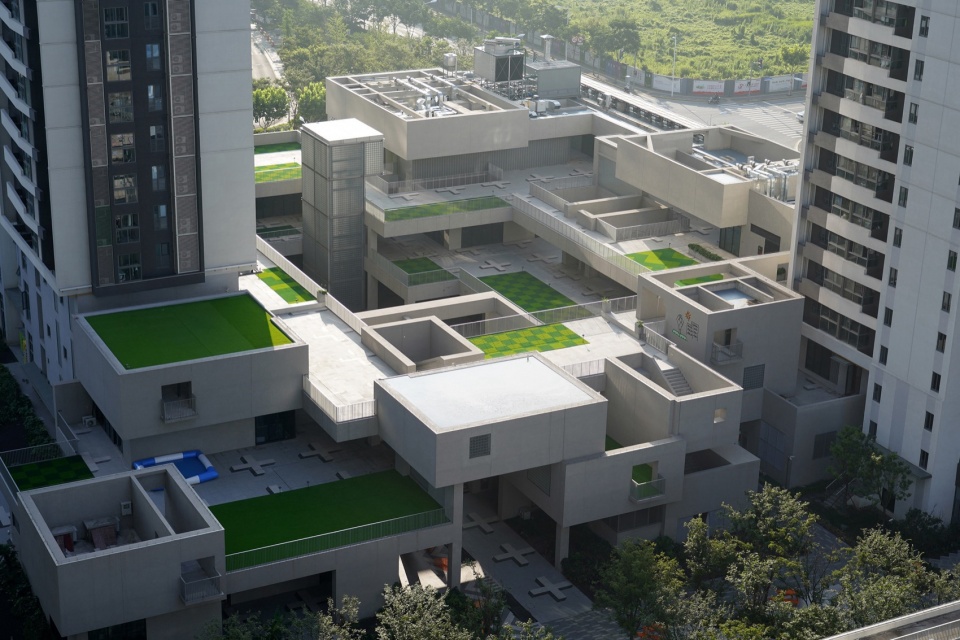
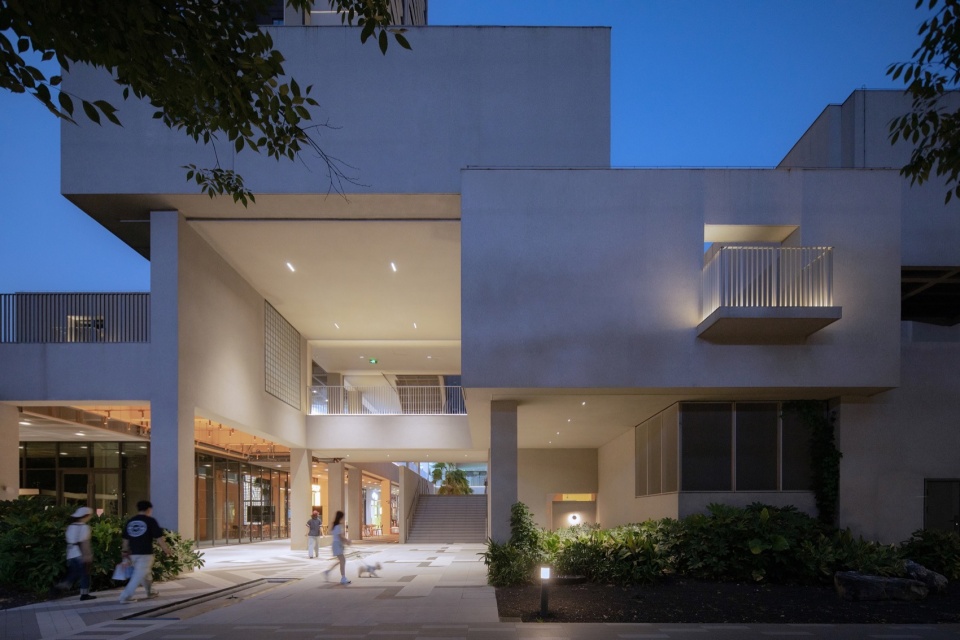
依托裙房延展开的是贯穿公共空间的开放平台,水平向的开放空间在不同的高度组成一连串社区共享客厅序列,模糊社区内外与楼栋间的空间界限,并消解人与人之间的心理边界,以期为社区整体开放和鼓励社交的氛围铺下底色。
Attached to the podiums, an open platform forms a sequence of public spaces at different levels, blurring the boundaries between the inside and outside of the community, while also dissolving psychological barriers among people. The aim is to create an atmosphere of openness and social interaction throughout the community.
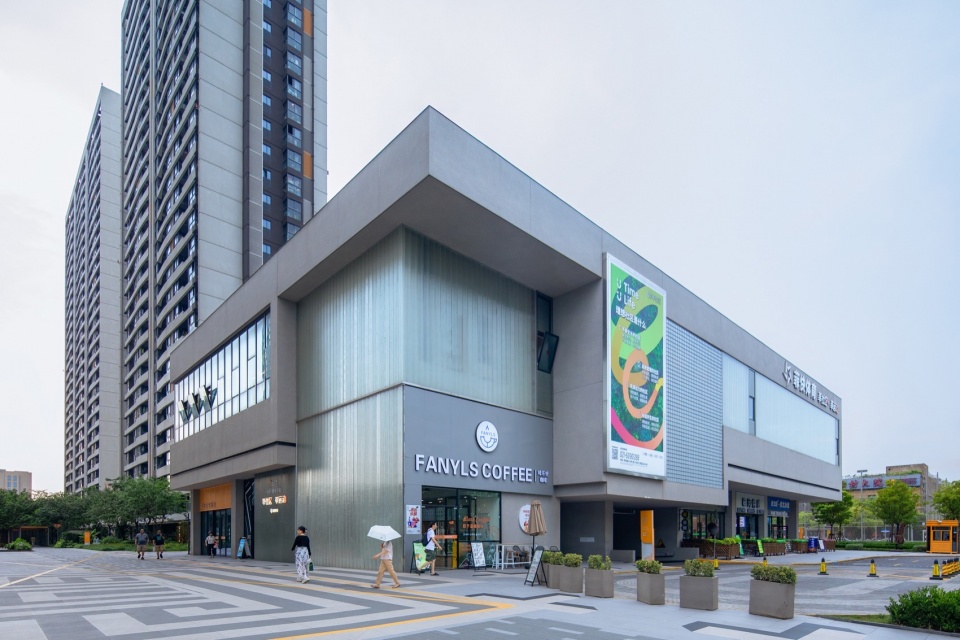
▼社区商业沿街灰空间,Street-Facing Gray Space of Community Commercial Area
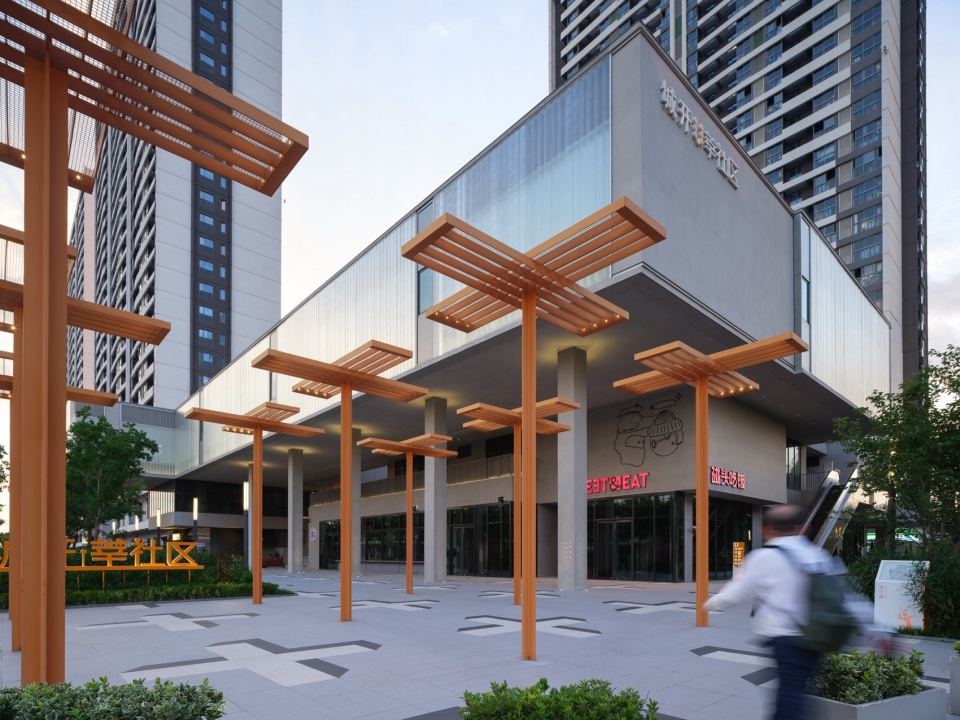
▼社区商业首层架空层,Ground Floor Stilt Space of Community Commercial Area
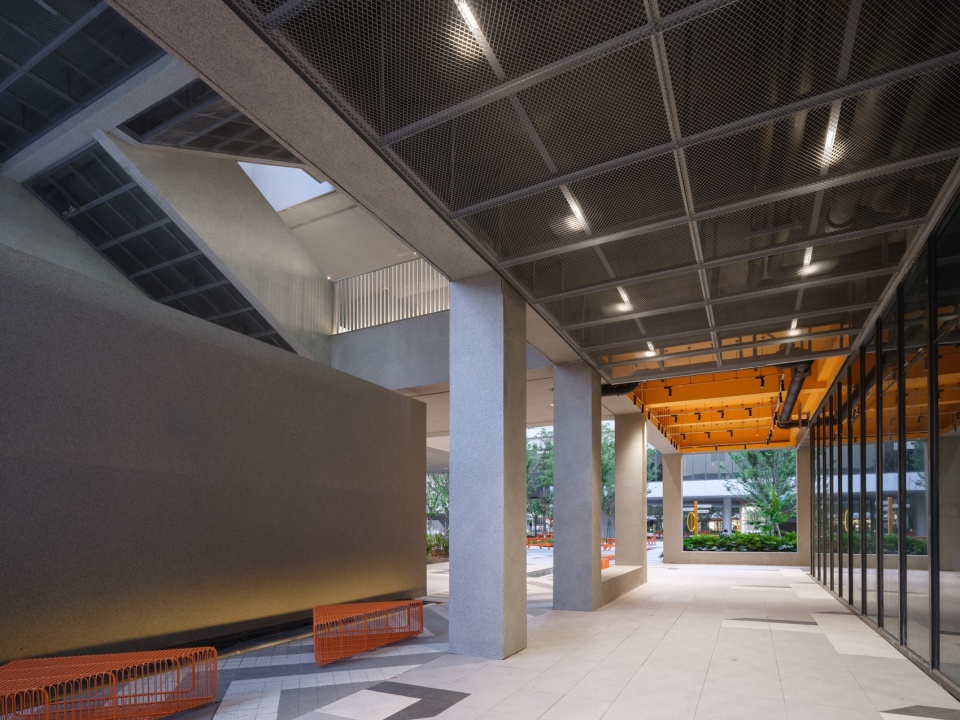
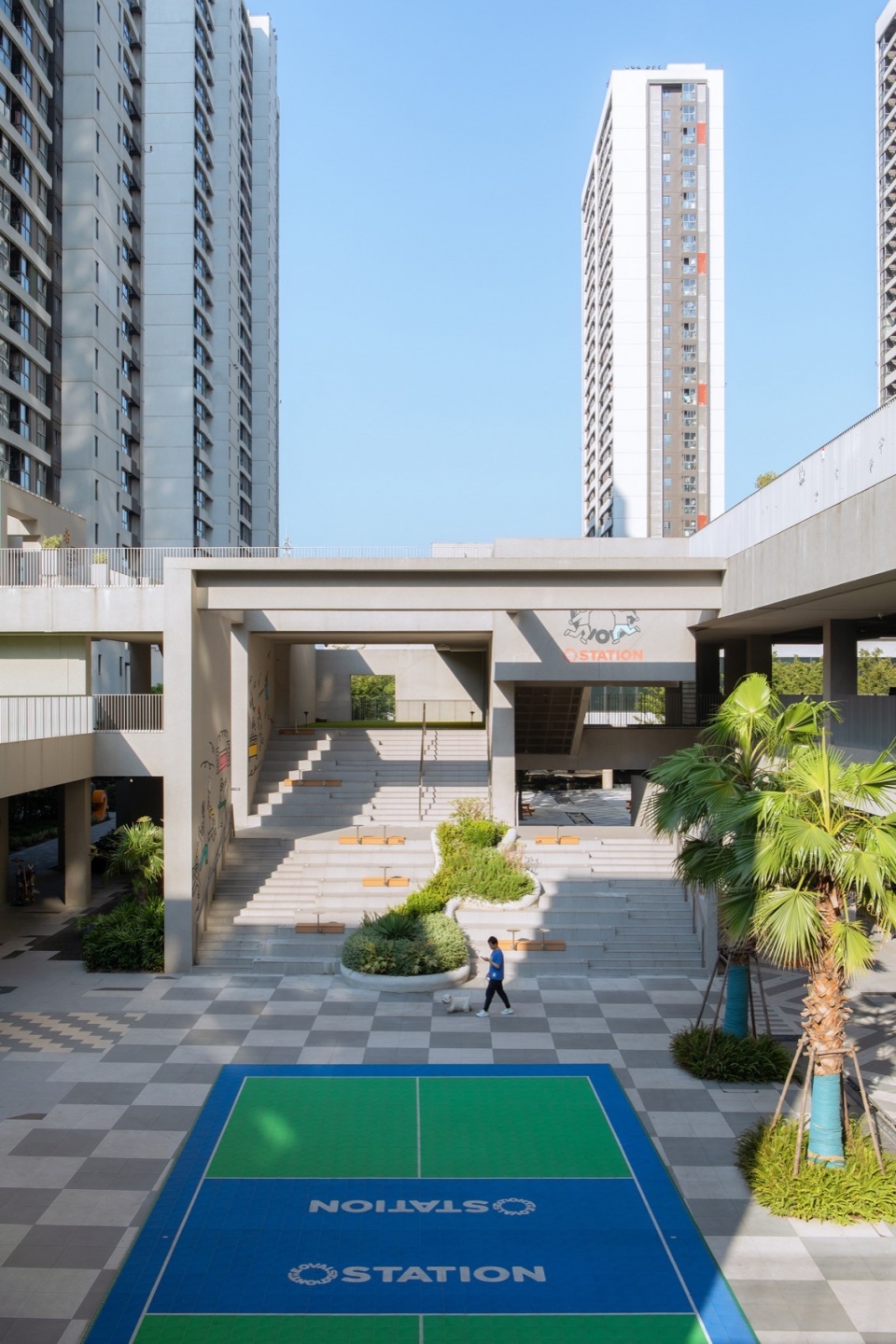
室外台阶和楼梯在承担垂直交通和疏散功能的同时,也成为塑造场景的关键元素: 不同朝向的台阶和楼梯设置,不仅为各类公共活动的发生提供可能,也自然地框定出一簇簇适合停留的小尺度空间,既是鼓励人群交互的室外看台,也可以是适合独处发呆的休憩点。而被各层平台和台阶围合的露天广场,则是社区活动和集会的理想舞台。
Outdoor steps and staircases, while serving as vertical circulation and evacuation, also become key elements in shaping scenes. Steps and stairs in different orientations not only make it possible to host various public activities but also naturally frame small-scale spaces suitable for lingering. It serves both as an outdoor viewing area that encourages social interaction and a quiet spot for solitary relaxation. The open plaza enclosed by the platforms and steps on different levels becomes an ideal stage for community events and gatherings.
▼社区商业二层平台,Second Floor Platform of Community Commercial Area
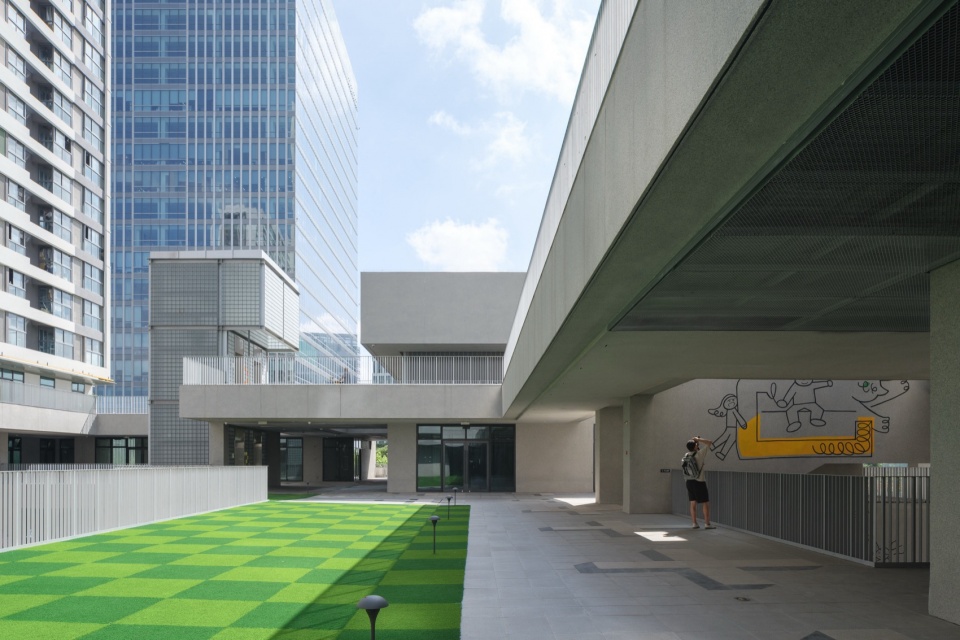
▼社区商业二层平台,Second Floor Platform of Community Commercial Area
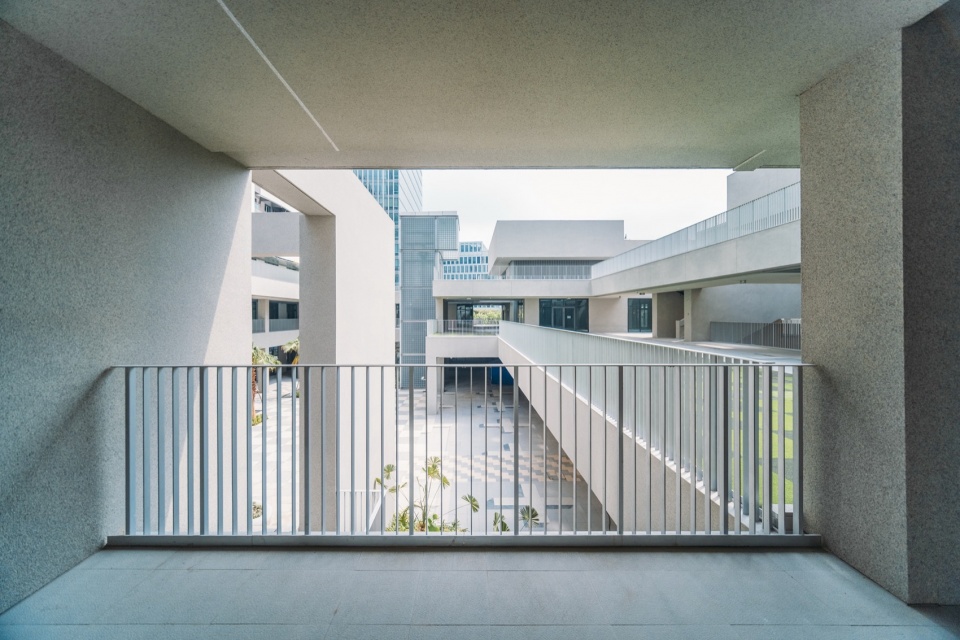
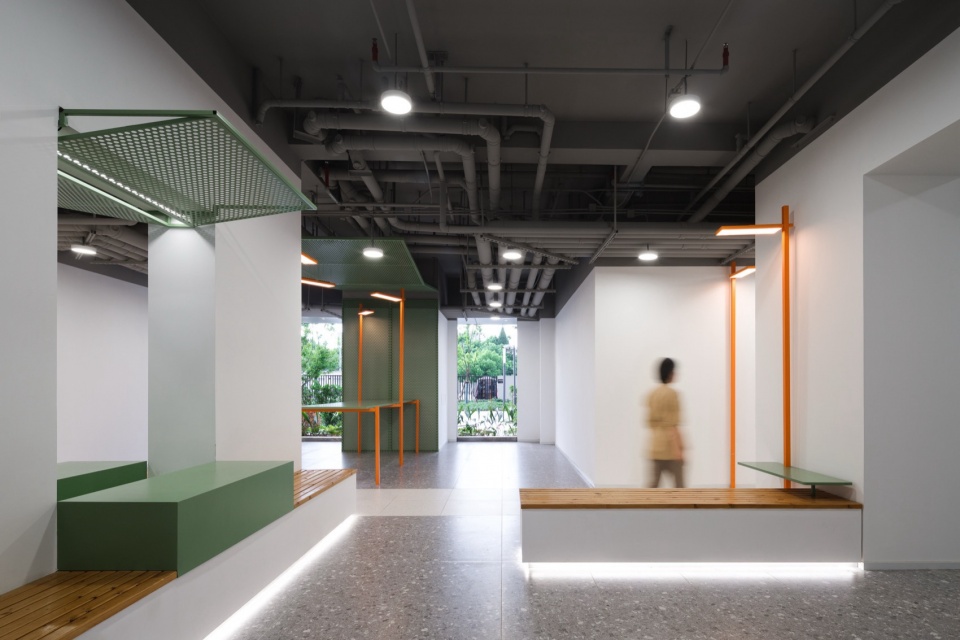
作为室内空间的延展与城市界面的过渡,灰空间的存在是空间感知中的一层“帷幕”。多层级的立体灰空间设置,缓解了城市道路与建筑的对立,亦为社区的公共平台与架空层组成更丰富的视觉与体验互文。更重要的是,它为租户和运营者预留了拓展和灵活定义功能的场所,使社区能够永远适应未来的使用者需求。
As extensions of interior space and transitions to the urban interface, semi-open spaces act as a kind of “veil” in spatial perception. The multi-level of semi-open spaces eases the tension between streets and buildings, while also creating a richer visual and experiential interplay between the community’s public platforms and open piloti spaces. More importantly, it reserves room for tenants and operators to expand and flexibly define the spaces, ensuring that the community can always adapt to the needs of future users.
▼阡集莘社区内庭,Inner Courtyard of Qianji Xinshe Community
03功能|多元主题的成长之地03 Function | A Place for Growth with Diverse Themes
社区是承载生活的容器,而灵动真实的生活片段也是社区活力的核心来源,成为社区氛围的重要组成部分。设计通过多元主题的植入,让社区成为“更好玩”、“更有生活气”的场所,让住所不仅仅满足安全和舒适需求,更能成为年轻人的成长之地。
The community shapes lives. Vibrant, authentic moments of daily life are the core source of its vitality, forming an essential part of the vibe of the community. By incorporating diverse themes, the design transforms the community into a place that is “more fun” and “more vibrant,” ensuring that homes not only meet basic needs for safety and comfort but also serve as a place where young people can grow.
▼运动中心立面和屋顶网球场,Facade of Sports Center and Rooftop Tennis Court
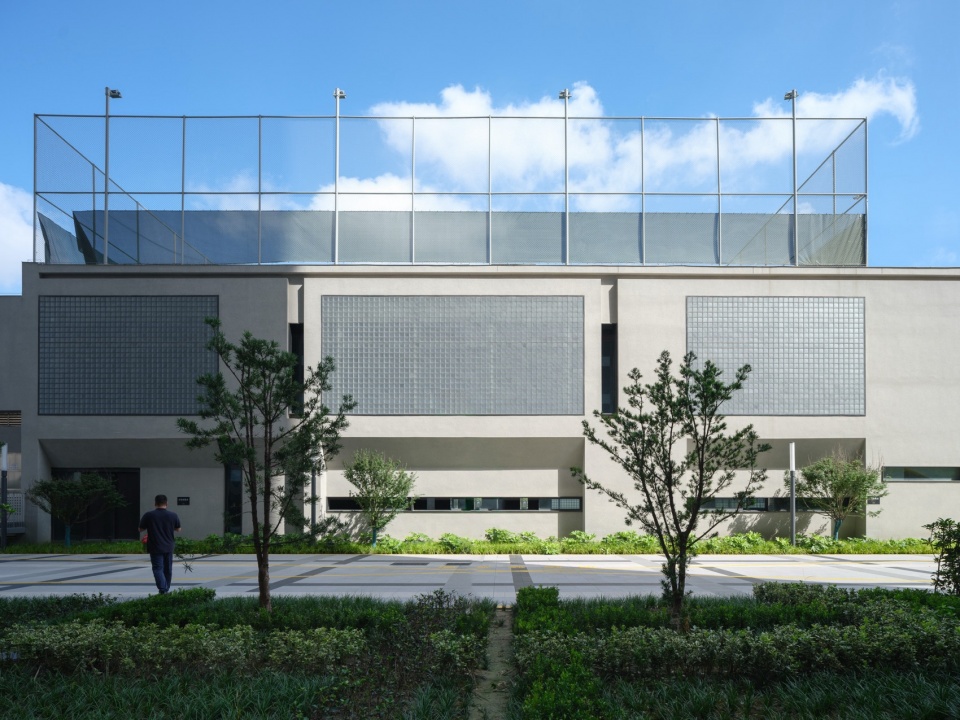
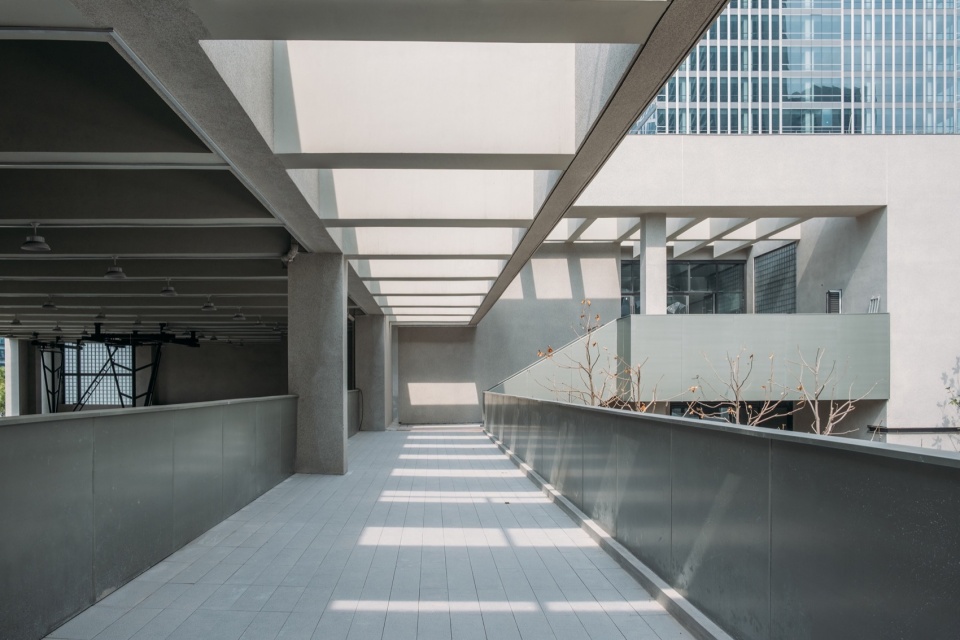
▼风雨外廊,All-Weather External Corridor
▼风雨球场楼梯和看台,Stairs and Bleachers of the All-Weather Court
通过数个月的调研,业主与设计团队共同选取宠物友好、运动健身、公共艺术作为现阶段社区的核心主题。与此同时,商业和餐饮等配套功能则补齐社区在7×24全时间周期所需要的基本功能,为社区活力续航。
Following several months of research, the developer and design team jointly selected pet-friendliness, sports and fitness, public art as the core themes of the current community. At the same time, supporting amenities such as retails and restaurants provide the essential services the community needs around the clock, helping to sustain its vitality.
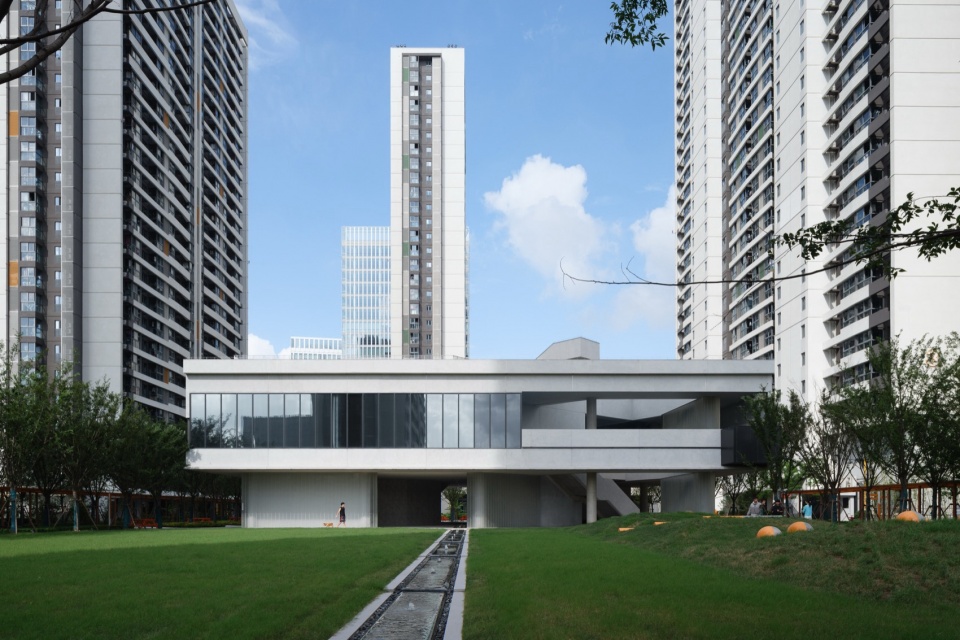
▼艺术中心正立面,Front Facade of the Art Center
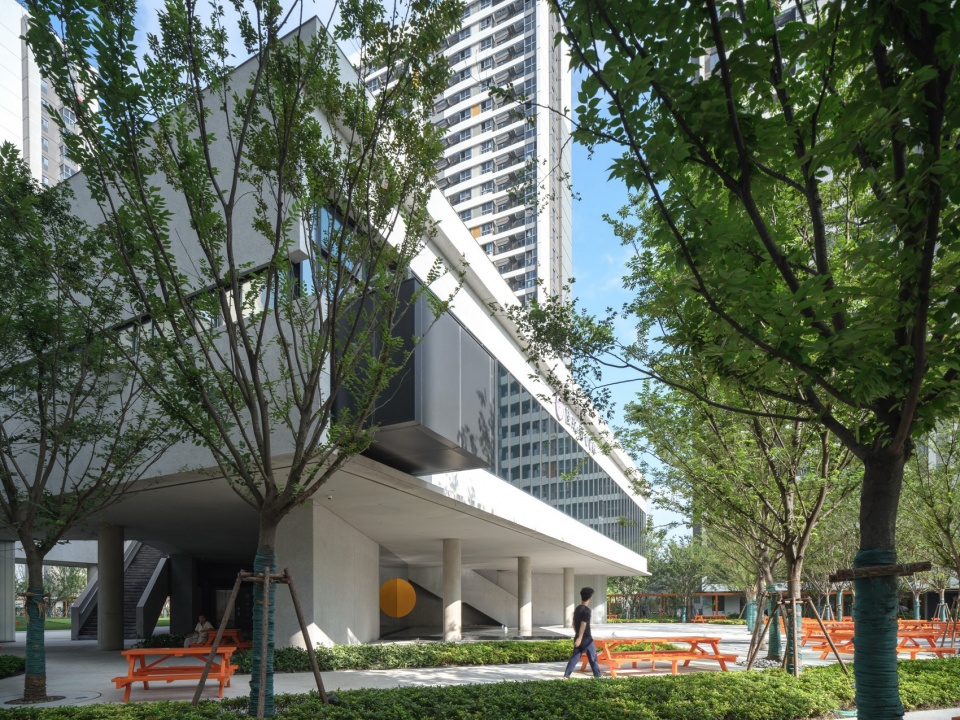
▼艺术中心转角,Corner of the Art Center
▼艺术中心架空层,Stilt Floor of the Art Center
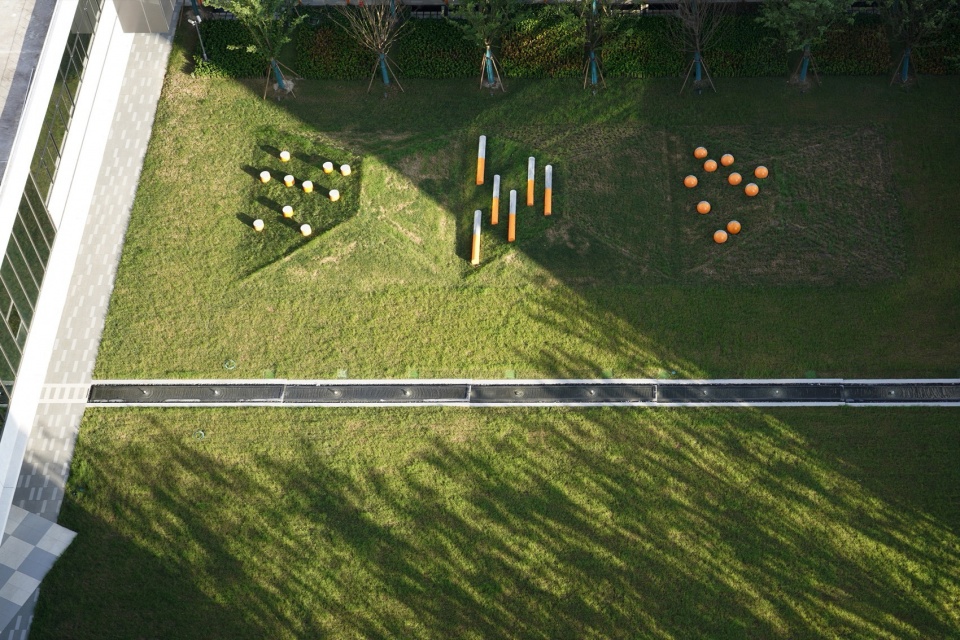
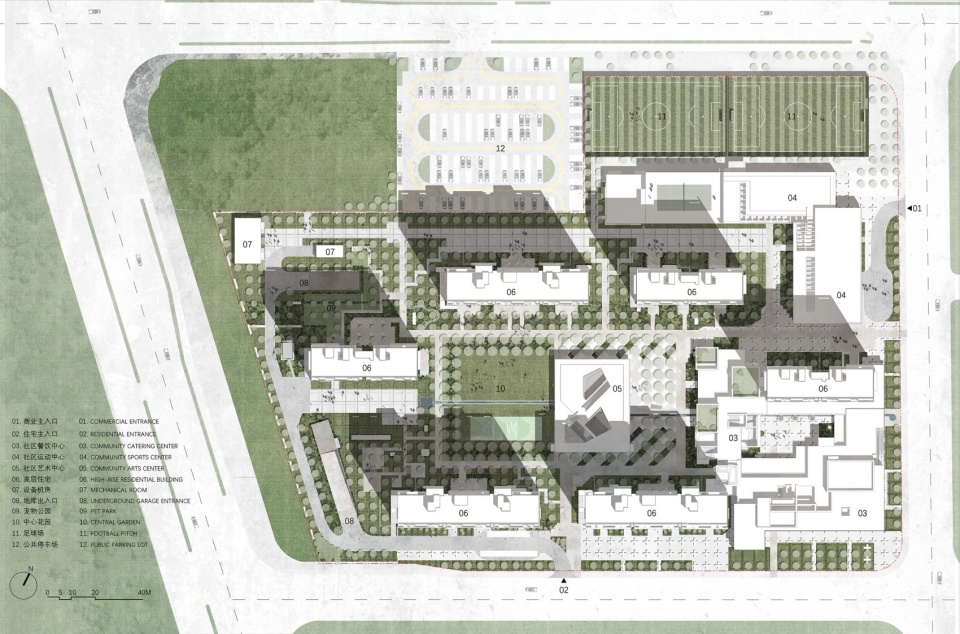
位于场地西北侧的高层塔楼被定义为宠物友好主题住宅,相比其他五栋住宅楼增添套内宠物设施,首层入口处设置宠物乐园,而由社区艺术中心和三栋住宅塔楼围合而成的中央草坪,则为小动物们提供了自由奔跑的场所。而在其他地上和地下空间,宠物友好这一理念依旧得到了延展。架空层内设置的喂食装置,散落在裙房内的萌宠商业,地下车库一侧的宠物寄养点,以及每个季度围绕宠物开展的市集和社群活动,都让宠物友好成为一种社区化的场域特征,鼓励人们带“毛孩子”入住的同时自然地聚集起一群同好,自发形成宠物社群;
The high-rise tower located on the northwest side is designated as a pet-friendly residential building. Compared to the other five residential towers, it includes additional in-unit pet facilities. A pet park is located at the ground-floor entrance, while the central lawn, enclosed by the community art center and three residential towers, provides a space for small animals to run freely. The concept of pet-friendliness extends to other floors and underground spaces as well. Feeding devices installed in the piloti spaces, pet-oriented shops scattered throughout the podiums, a pet boarding center in the underground parking garage, and quarterly markets and social activities centered around pets all make pet-friendliness a distinctive, community-wide characteristic. This encourages residents to move in with their “fur children” while naturally bringing together like-minded individuals to form spontaneous pet-focused communities.
▼中央草坪和宠物装置,Central Lawn and Pet Installation
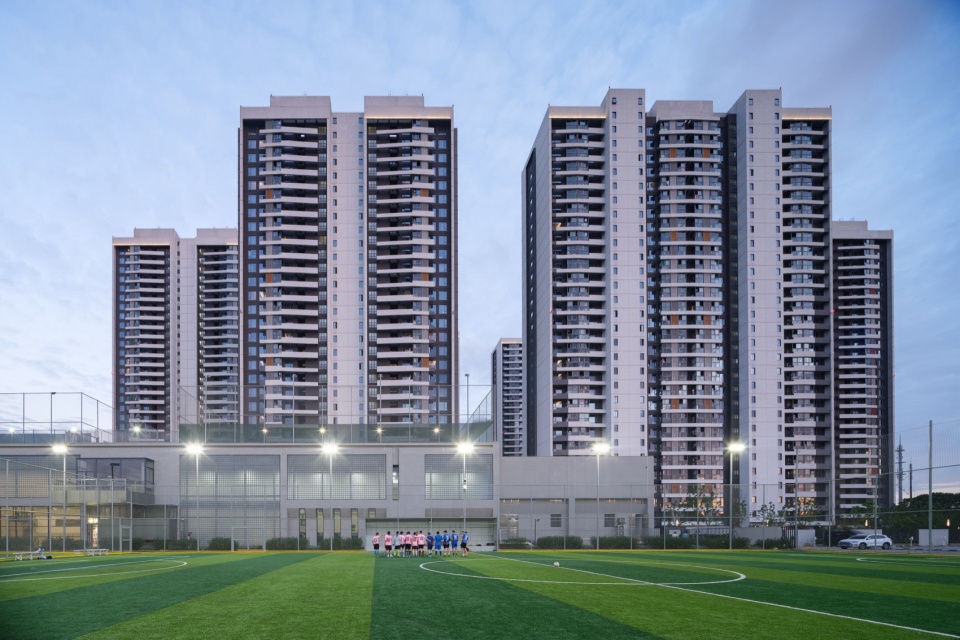
基地东北侧存在一块地铁轨道建筑退让区,这片不允许有建筑物的空地被规划为两片八人制室外足球场,和与之毗邻的篮球馆、多功能风雨球场及健身中心,共同形成运动聚落。
On the northeast side of the site, there is a setback area required for the subway lines. This zone, where no buildings are permitted, has been planned as two outdoor football pitches. An adjacent basketball gym, an all-weather court and a fitness center form a sports complex in the community.
▼室外足球场,Outdoor Football Field
▼室外足球场,Outdoor Football Field
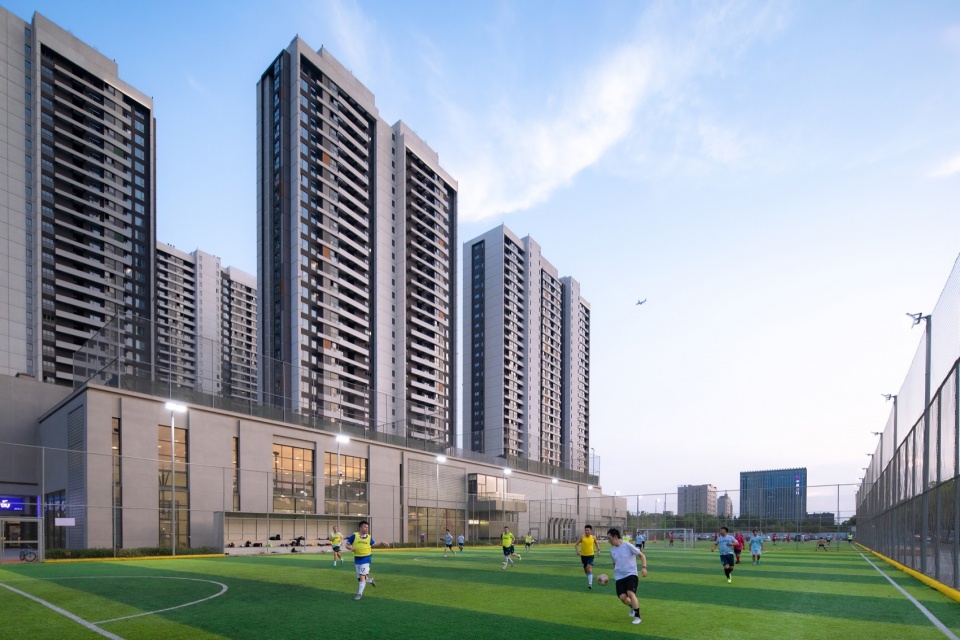
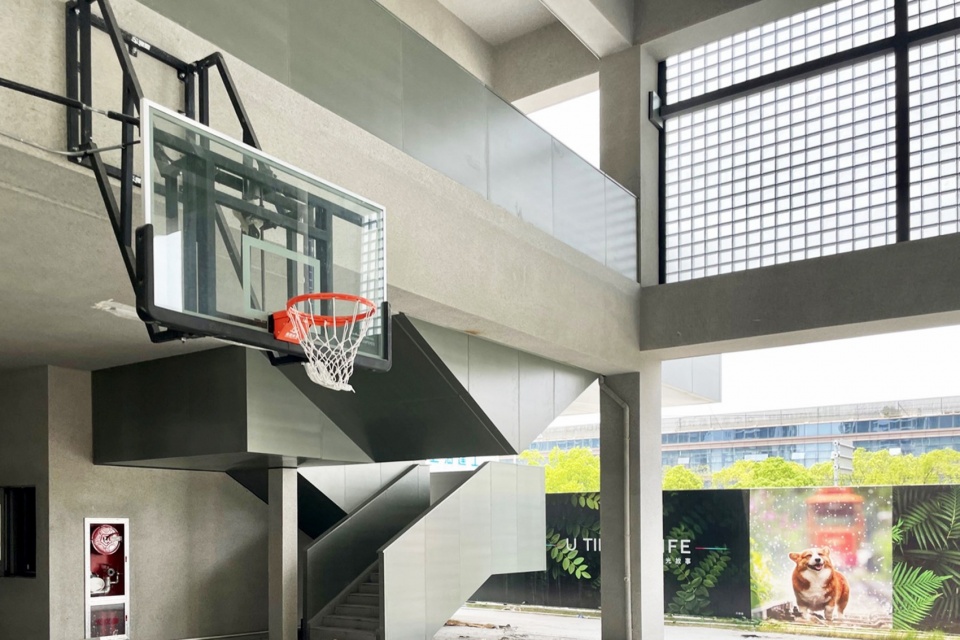
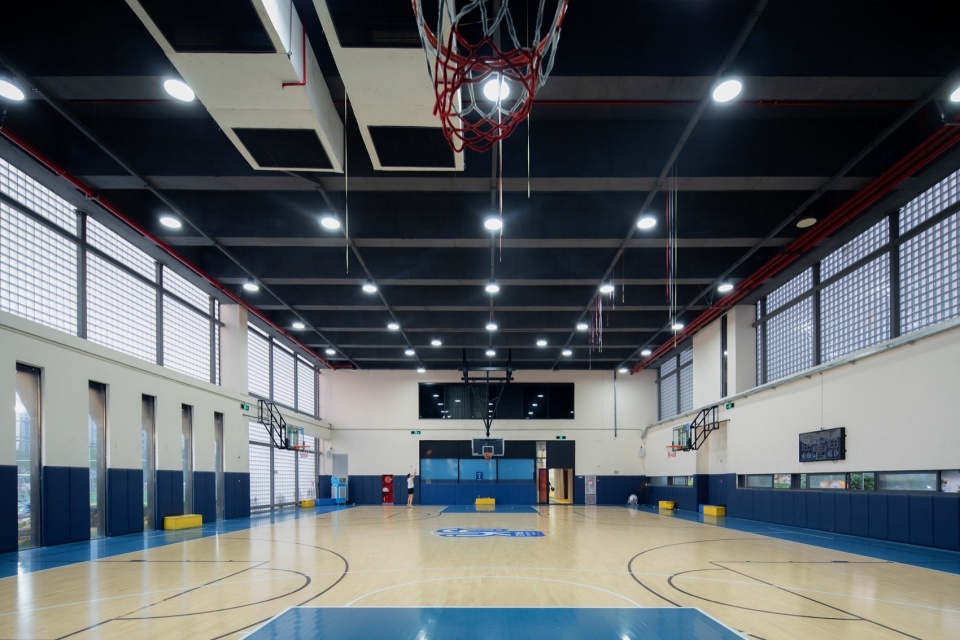
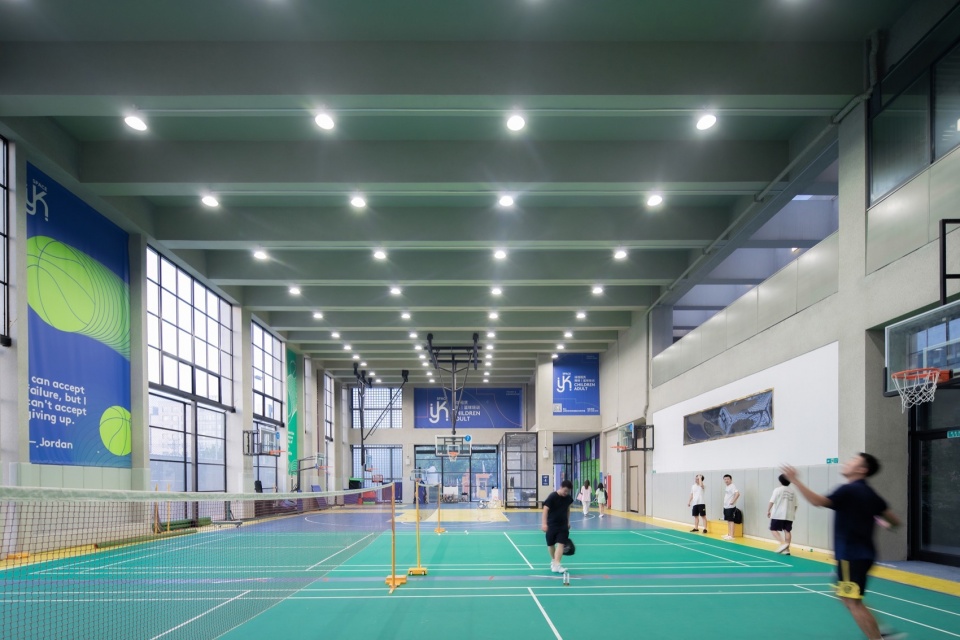
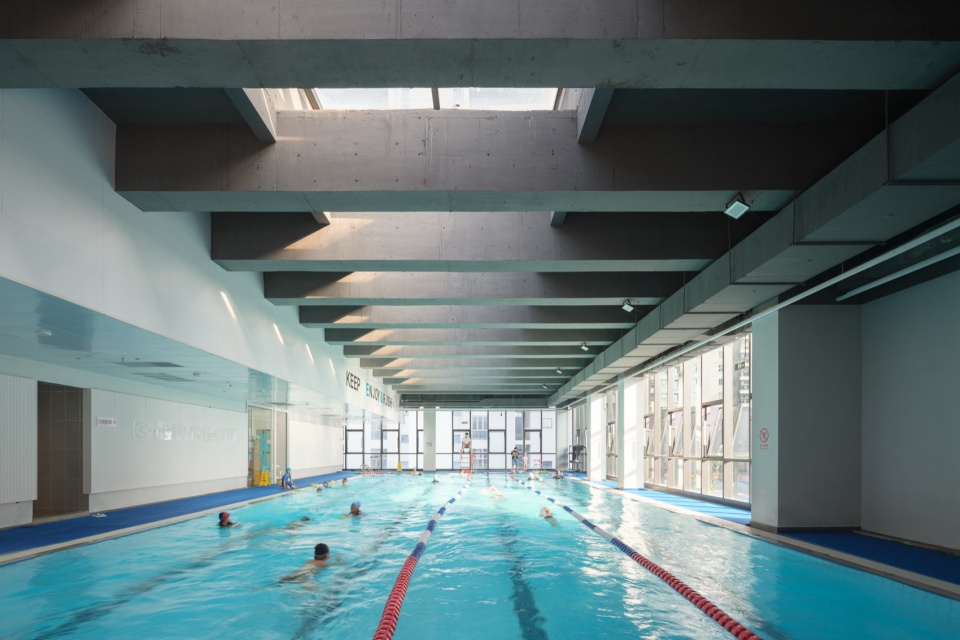
被抬高的四季恒温阳光泳池成为运动聚落的空间核心,与诸多运动和健身功能共同定义“高能和多元”的社区生活品质,运动中心采用错层设计,用来平衡不同体育功能的层高差异,同时也为健身中心和屋顶网球场提供了一条相隔半层的便捷路径,并与二层风雨外廊贯通。除了承载串联各运动场馆的交通功能,风雨外廊也是每一片球场的公共看台。
The elevated indoor swimming pool serves as the spatial core of the sports complex. Along with the various sports and fitness functions, it defines a community lifestyle that is both energetic and diverse. The sports center features a split-level design to accommodate the differing ceiling height requirements of various sports functions. It also provides a convenient, half-level path connecting the fitness center and the rooftop tennis court, which links to the covered second-floor external walkway. In addition to serving as a circulation route connecting the various spots, this covered walkway also acts as public grandstands for each of the playing fields.
▼室内篮球馆,Indoor Basketball Gymnasium
▼风雨球场,All-Weather Court
▼恒温阳光泳池,Constant-Temperature Sunlit Swimming Pool
公共艺术也同样是设计关注的重点:不同IP的全龄化走红证明曾经被认为阳春白雪的当代艺术正在成为新一代人日常生活的重要组成。
Public art is also a key focus of the design. The widespread popularity of various intellectual properties across all age groups demonstrates that contemporary art, once considered elitist, is becoming an important part of daily life for the new generation.
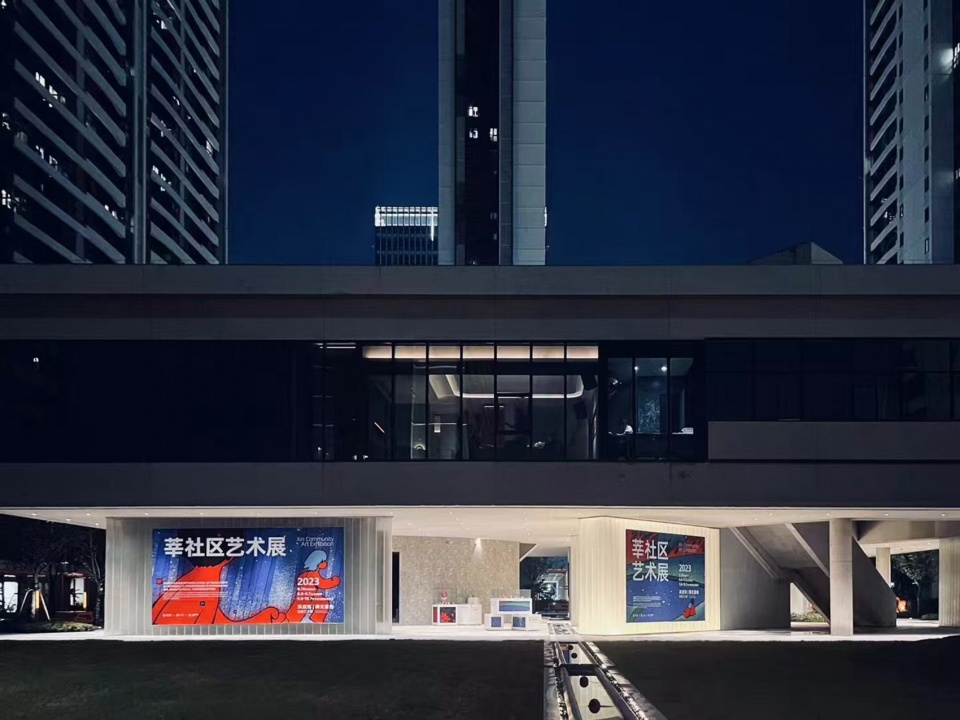
▼艺术中心公共画廊夜景,Night View of the Public Gallery in the Art Center
▼艺术中心公共看台,Public Bleachers of the Art Center
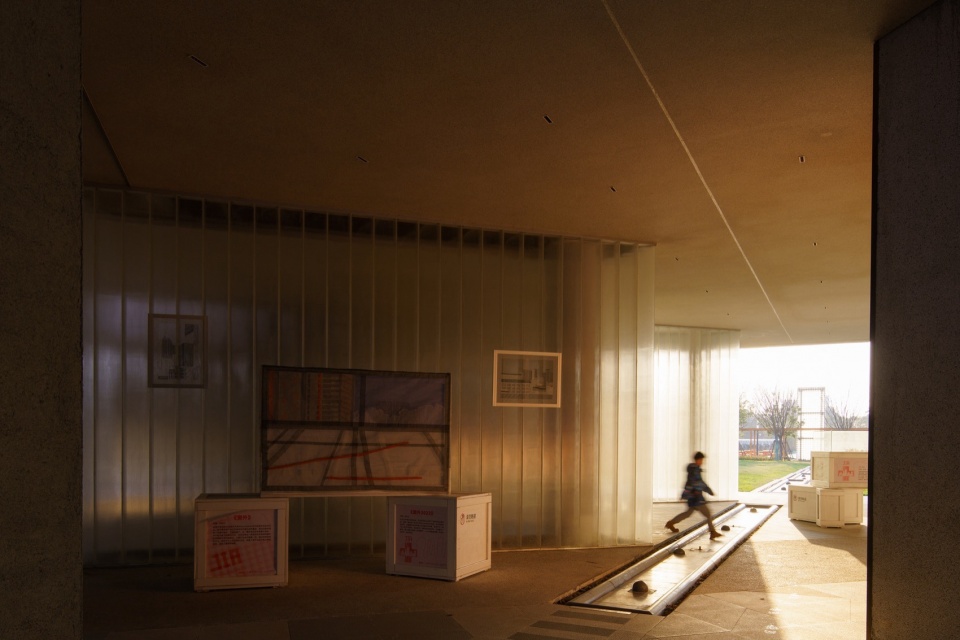
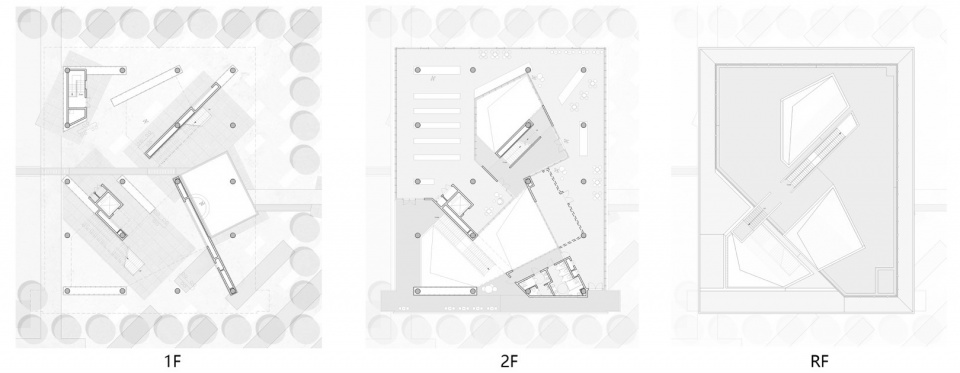
位于基地核心位置的艺术中心也采用底层架空处理,在顺延地下室正交柱网体系的基础上,通过减柱和斜墙的引入消解原本高效却略显乏味的正交空间,使架空层和二层室内空间呈现出更为自由和无序的状态。
The art center, located at the core of the site, also features an open, raised ground floor. While following the orthogonal column grid system of the basement below, the introduction of the angled walls dissolves the efficient yet somewhat monotonous orthogonal space, resulting in a more free-form and less ordered condition in both the piloti space and elevated interior spaces.
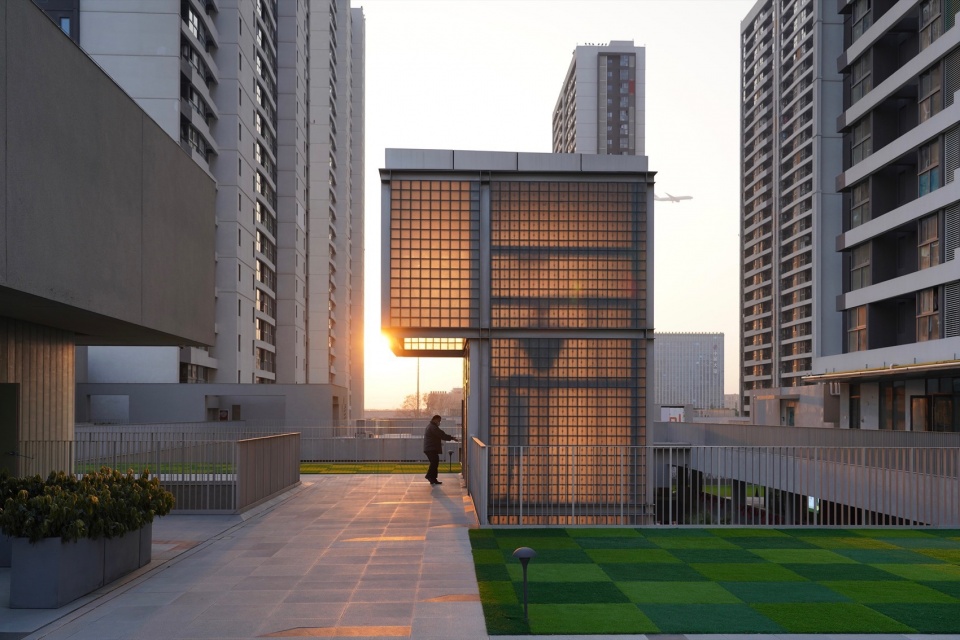
▼夕阳下的景观电梯,Scenic Elevator at Sunset
旁逸斜出的镜面墙结合水景,进一步模糊场所的方向感,成为公共艺术中心“打破常规和边界”的空间化表达。架空层被定义为公共画廊,社区定期邀请驻留艺术家与住户共创来激发对艺术的关注,也让当代艺术成为人人皆可参与的公共生活的一部分。以建筑墙体为背景的涂鸦和海报,则是公共艺术的具象化体现,在视觉上让社区整体呈现出年轻、亚文化、和自由的性格。
The diagonal mirrored wall, combined with water features, further blur the sense of orientation within the space, serving as a spatial expression of the public art center’s mission to “break conventions and boundaries.” The piloti space is defined as a public gallery. The community regularly invites resident artists to co-create with residents, sparking interest in art and making contemporary art a part of public life accessible to everyone. Graffiti and posters using the building walls as backdrops provide a tangible manifestation of public art, visually endowing the entire community with a character that is youthful, subcultural, and free-spirited.
▼日常的社区一隅,A Corner of Daily Community Life
04居住|让空间适应生活04 Living | Adapting Space to Life
居住单元是每一个住户的生活界面,即使被贴上“Z世代”等标签,也并不存在完全一样的个体。在属于私人的生活空间中,每个人也都会有自己的个性化需求。
A residential unit serves as the living environment for each household; even when labeled as “Generation Z,” there are no individuals exactly alike. Within their private living spaces, everyone has their own unique needs.
▼南向主力户型布局模式A,Layout Mode A of South-Facing Main Unit Type
▼南向主力户型布局模式B,Layout Mode B of South-Facing Main Unit Type
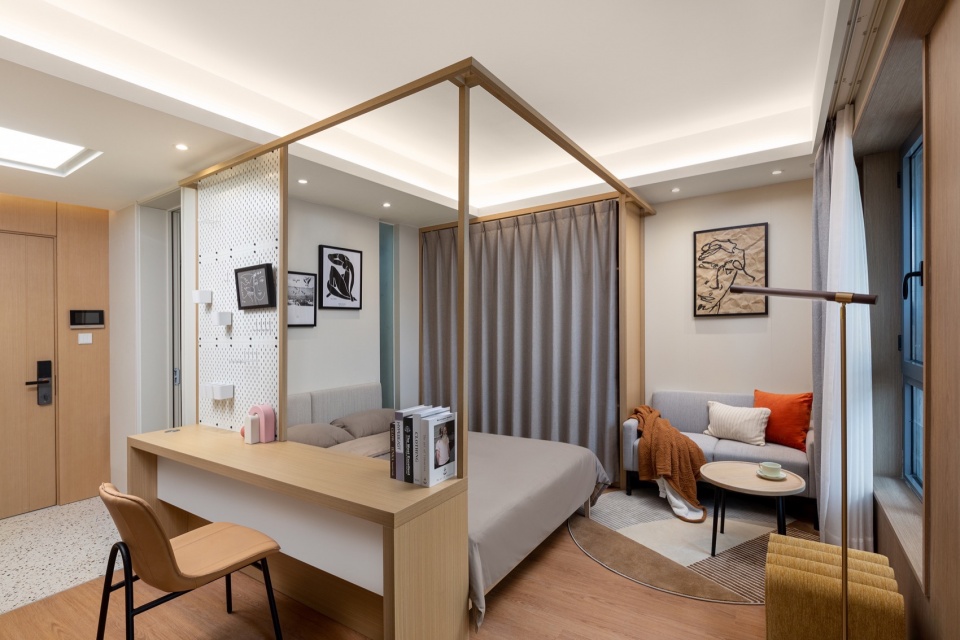
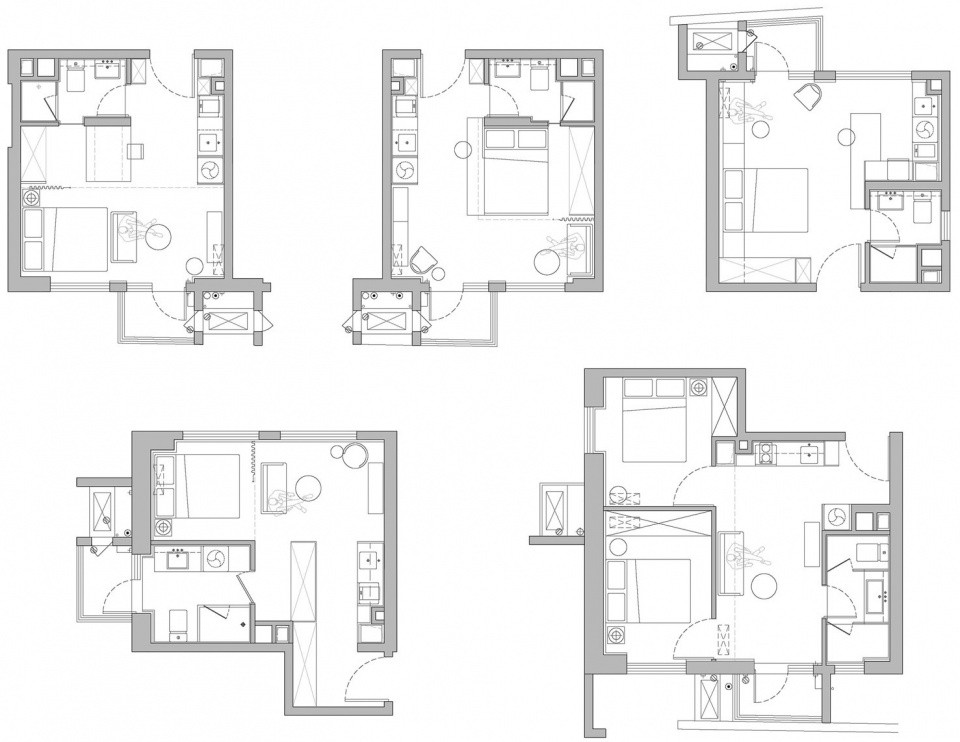
通过空间为生活丰容,并为各种场景预留窗口,是户型设计的核心策略。非寻建筑抛弃常规的小面宽大进深模式,主力户型采用5.5米进深,5米面宽的几近方形轮廓,带来更优的自然采光与景观视野;数量较少的北向户型更是将进深和面宽尺寸置换,以获取更大的窗地比,弥补北侧朝向直接日照的缺失。
Enriching life through spatial design and creating room for various scenarios is the core strategy of the floor plan design for the units. Breaking away from the conventional narrow-front, deep-plan model, Fusion Architects has adopted a nearly square footprint for its main unit type—5.5 meters deep and 5 meters wide—to improve natural lighting and views. For the fewer north-facing units, the depth and width dimensions are effectively swapped to achieve a higher window-to-floor ratio, compensating for the lack of direct sunlight.
▼宠物友好住宅室内,Interior of Pet-Friendly Residential Unit
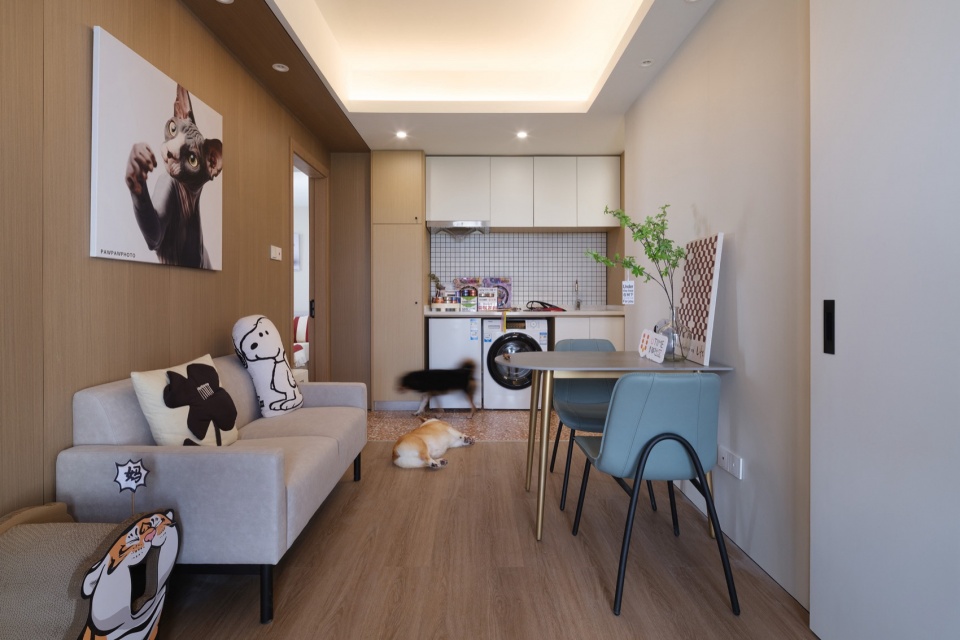
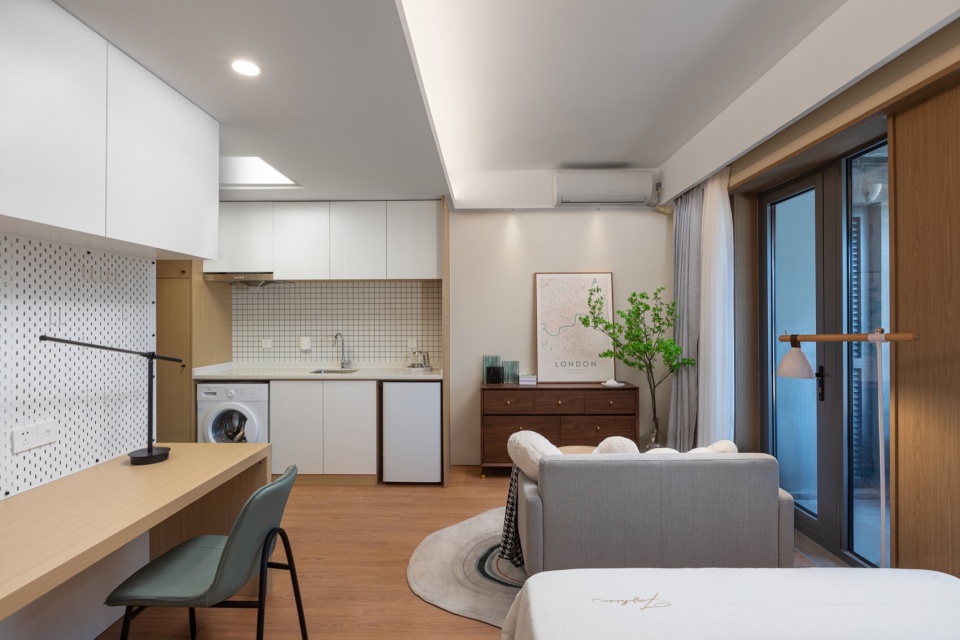
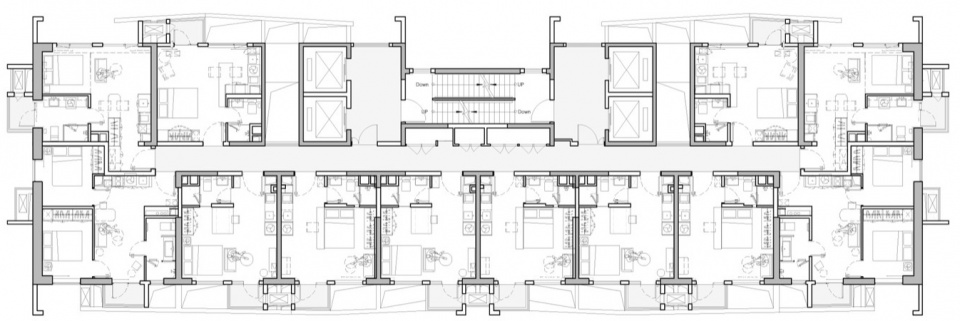
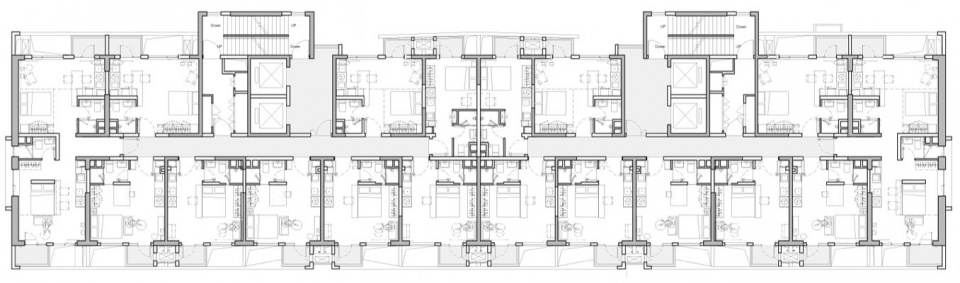
这种近似方形的一室户单元,占据了住宅塔楼两种标准层中除核心筒、公共走廊和两侧端套的全部空间。得益于方形布局,每个单元的套内空间皆可被切分成四个象限,卫浴模块独占一角,餐厨、起居和卧室功能分别占据剩余空间。于是,传统公寓长方形户型中的带状交通空间被消解,而餐厨和起居、起居和卧室又能两两合并成完整的生活功能模组。
These near-square, one-bedroom units occupy the entire space of two typical residential tower floor plans, excluding the staircase and elevator core, public corridors, and corner units on both ends. Precisely because of the square layout, the interior space of each unit can be divided into four quadrants: the bathroom occupies one corner, while the kitchen-dining, living, and bedroom functions take up the remaining spaces. This dissolves the linear circulation found in traditional rectangular apartments, while allowing the kitchen-dining and living areas, as well as the living and bedroom areas, to be paired into fully functional living modules.
▼餐厨一体空间A,Integrated Kitchen and Dining Space A
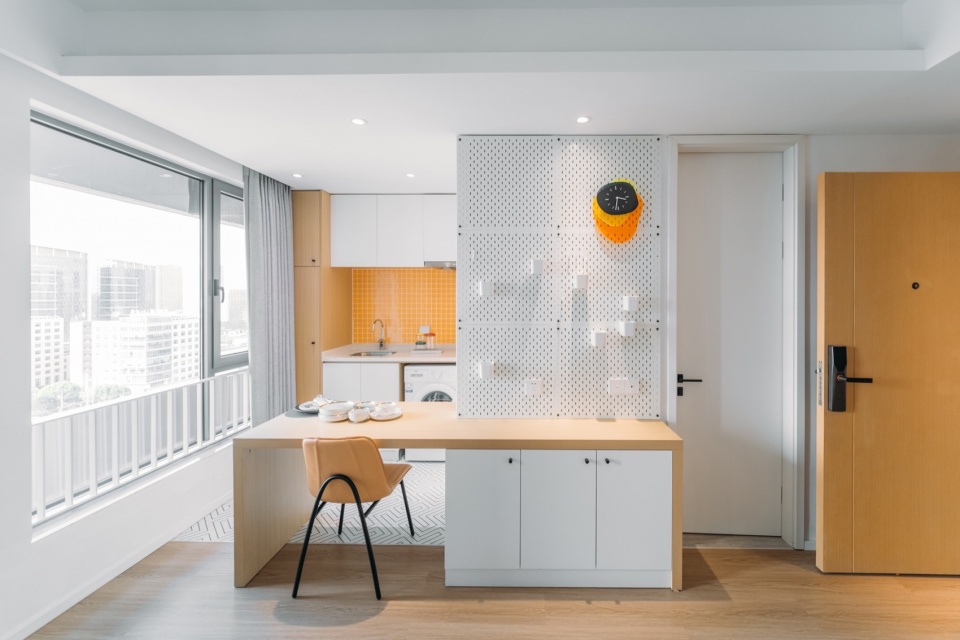
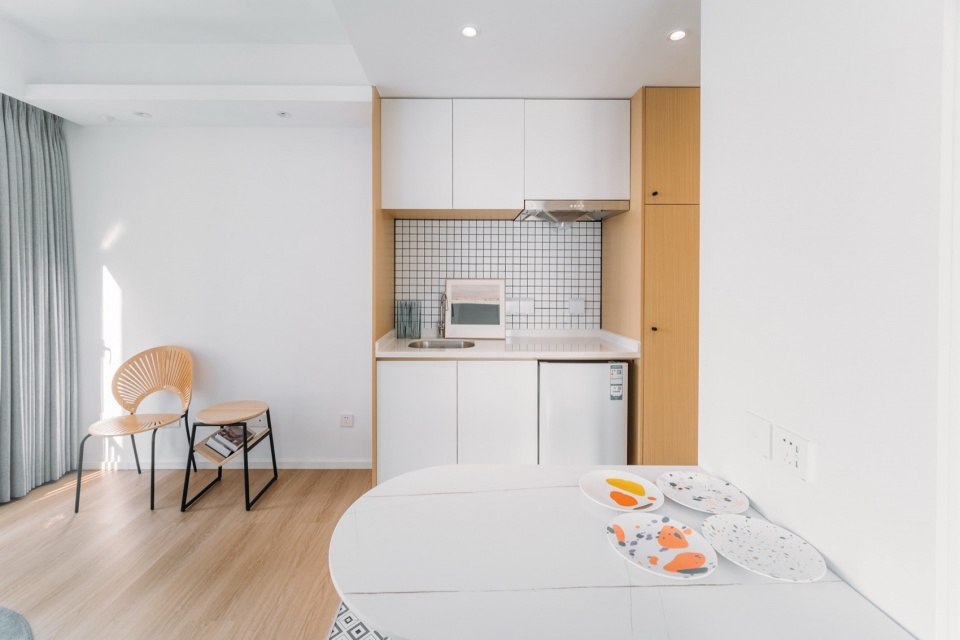
此外,针对比例最高的南向主力户型,建筑团队曾提出多种平面布局设想,但在后续室内设计深化中,因考虑装配率和装修标准化等诸多因素,只采纳了两种布局模式。但对于住户来说,一定程度上仍然保留了自定义空间的可能性,以满足个性化的生活需求,并让空间可持续地适应未来生活方式的变迁。
For the most common south-facing units, the architects explored multiple layout options. However, during subsequent interior design development, factors such as prefabrication ratios and finishing standardization led to the adoption of only two configurations. Nevertheless, for residents, a degree of customizable spatial flexibility is retained—allowing them to meet personalized living needs and enabling the space to sustainably adapt to future lifestyle changes.
▼餐厨一体空间B,Integrated Kitchen and Dining Space B
05 材料和场景|空间即立面05 Material and Scene | Space as Façade
社交媒体的席卷全球,让场景化和图片化的空间审美成为一种新的趋势。也代表着年轻群体对场所的审视是微观而具象的:阡集莘社区创造了许多有质感和趣味的场景,为项目注入了更多近人尺度的可读细节。
The global rise of social media has made scene-driven, image-conscious spatial aesthetics a new trend. It also reflects how younger generations perceive places in a micro and tangible way: CHANGE·U Community has created a series of textured and playful scenes, infusing the project with more human-scaled details.
▼社区商业立面玻璃砖和水包砂,Glass Brick and Sand-Coated Finish on Community Commercial Facade
▼社区商业立面U玻和水包砂,U-Glass and Sand-Coated Finish on Community Commercial Facade
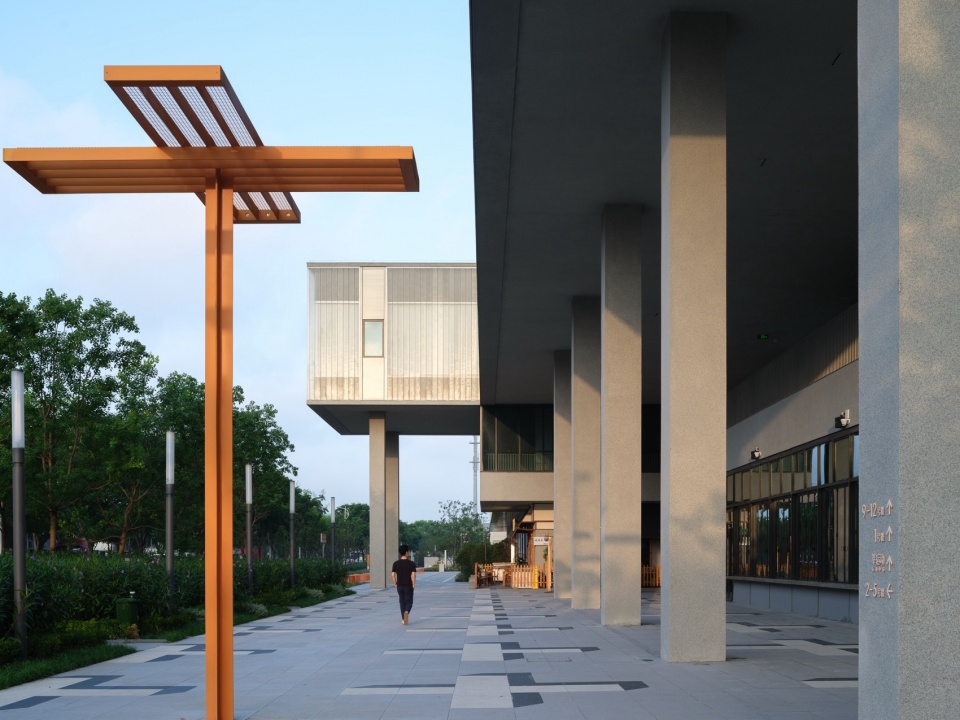
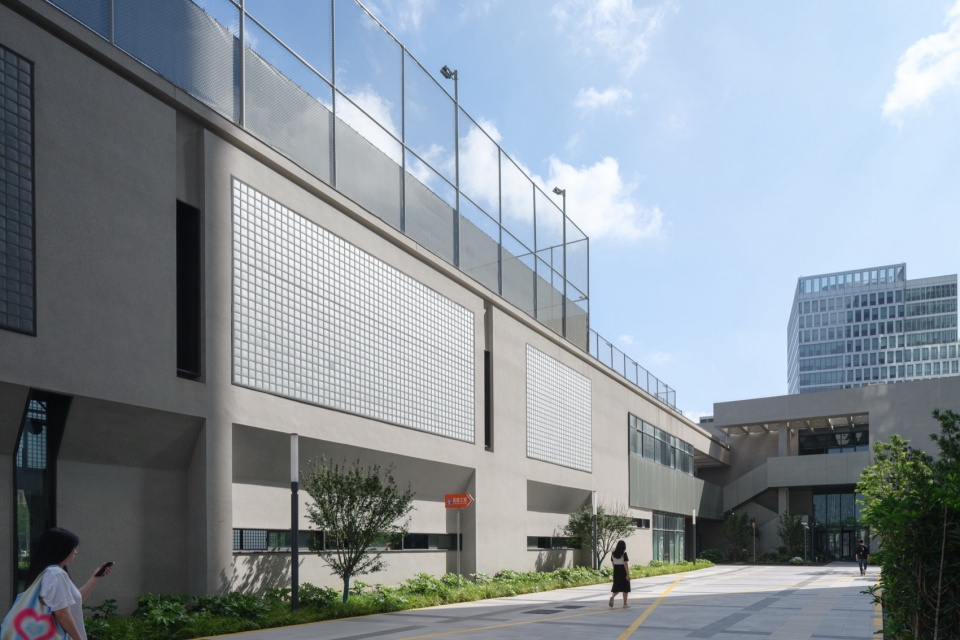
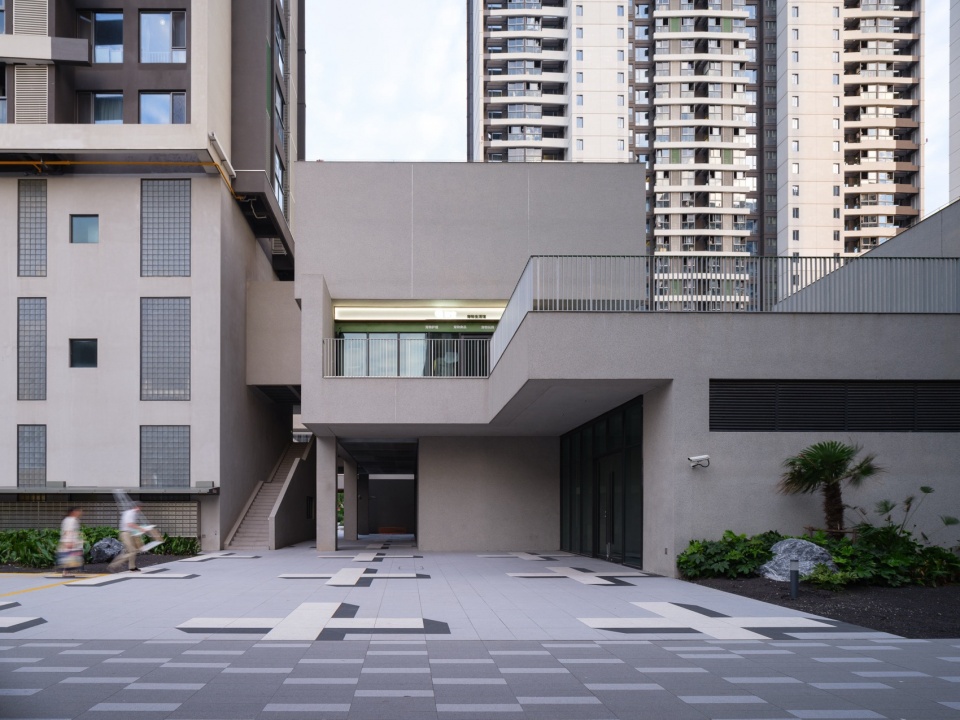
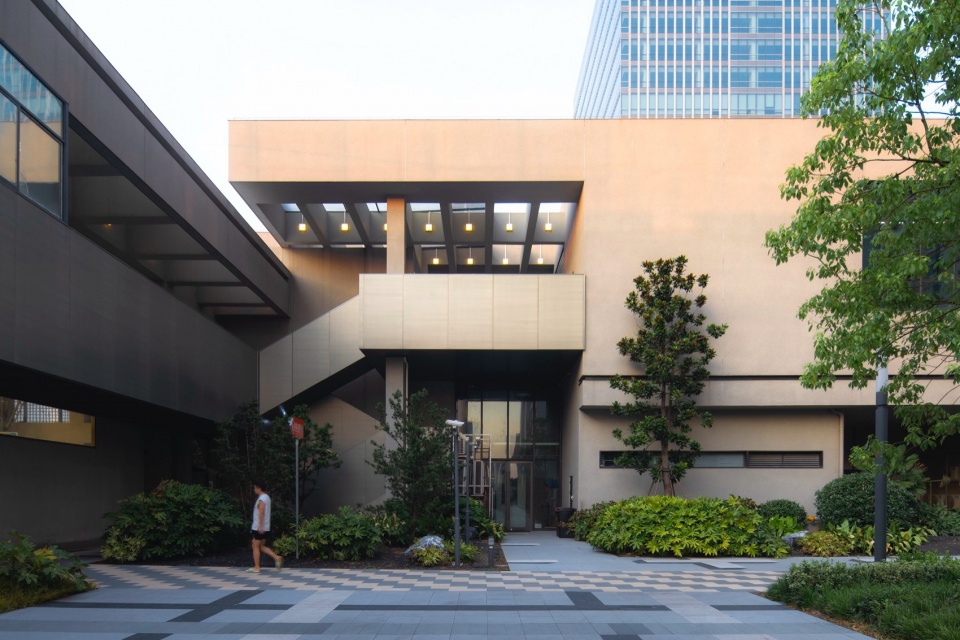
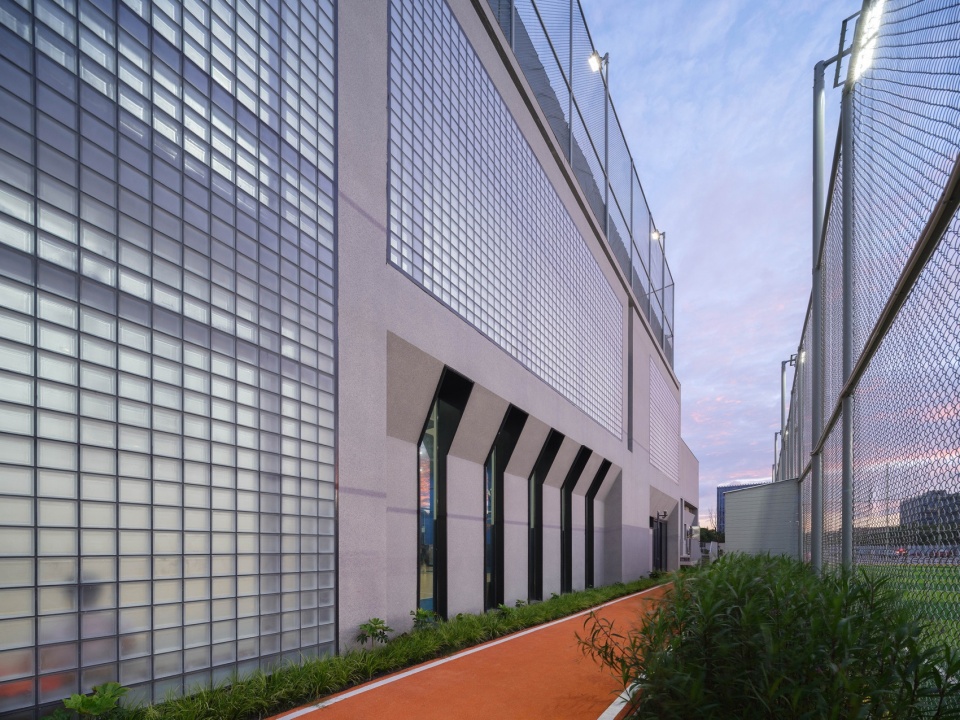
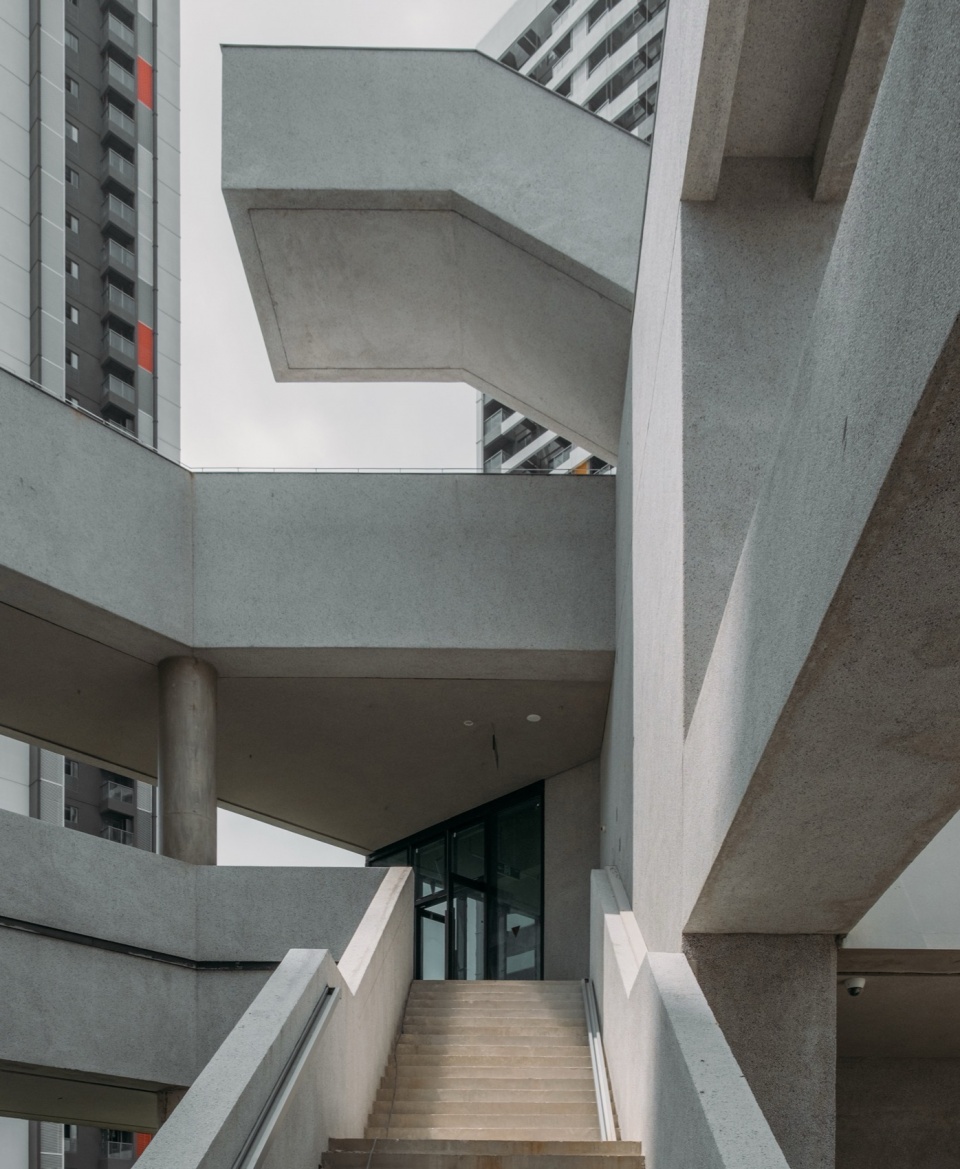
公共建筑立面以水刷石和水包砂涂料为主材,在可控成本之下营造出一种朴素怀旧的视觉基调,水刷石尤以特有的温度构建友好的触感记忆,并模糊墙面和地面、建筑和景观的边界;半透明的玻璃砖和U玻的大范围应用,则在传统玻璃幕墙和实体墙之间定义了第三种透明性,在诸如篮球馆和健身中心的室内空间,有效避免了直射阳光,创造出更舒适均匀的光照环境;而在室外一侧,又与室内灯光叠加出丰富的立面光影效果,在晚霞映衬下朦胧而柔和,室内被模糊的人影也成为建筑立面的动态要素。
The public building facades use washed stone and sand textured coating as primary materials, creating a modest, nostalgic visual tone within a controlled budget. Washed stone, in particular, offers a distinctive texture that builds a warm, tactile memory while blurring the boundaries between wall and ground, architecture and landscape. The extensive use of translucent glass blocks and channel glass introduces a third form of transparency between traditional glass curtain walls and solid walls. In indoor spaces such as the basketball gym and fitness center, this effectively avoids direct sunlight and creates a more comfortable, evenly diffused lighting environment. On the exterior side, it combines with interior lighting to produce layered facade effects—soft and hazy against the evening glow, with blurred human figures inside becoming dynamic elements of the building’s elevation.
▼运动中心立面水包砂,Sand-Coated Finish on Sports Center Facade
▼运动中心立面玻璃砖和水包砂,Glass Brick and Sand-Coated Finish on Sports Center Facade
站在餐饮空间和艺术中心架空层,一眼望去,被U玻模糊的外部景色如同落笔后微微晕开的水墨画,在残阳的映照之下亦真亦幻。
Standing in the piloti spaces of the dining area and the art center, the view filtered through the channel glass resembles an ink painting gently bleeding at the edges—dreamlike yet real under the sunset.
▼艺术中心立面U玻和水刷石,U-Glass and Scrubbed Finish on Art Center Facade
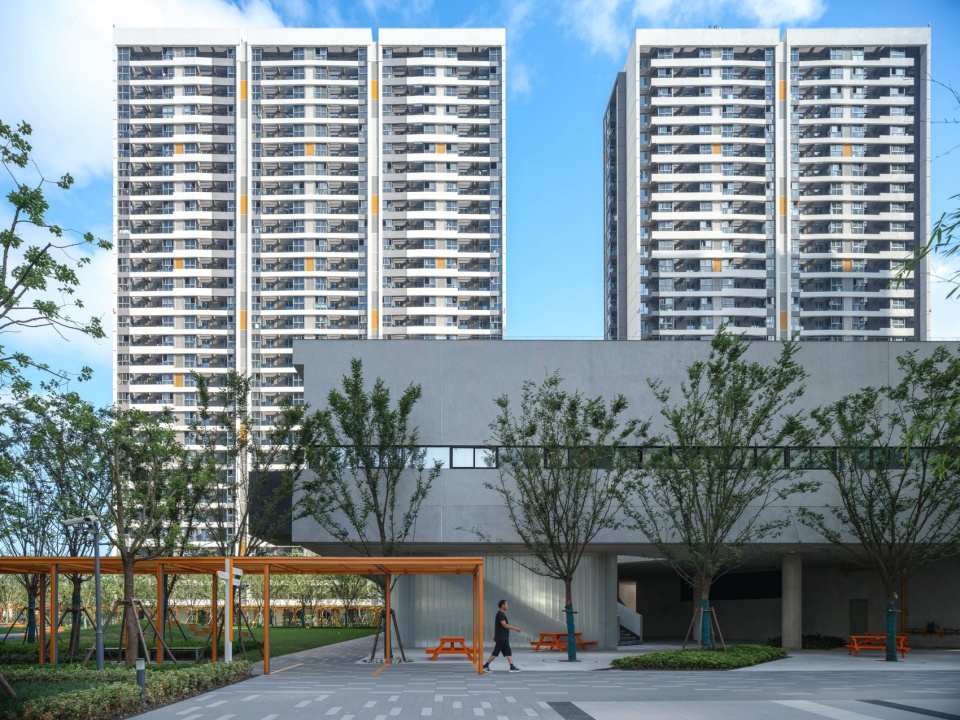
▼艺术中心立面水刷石,Scrubbed Finish on Art Center Facade
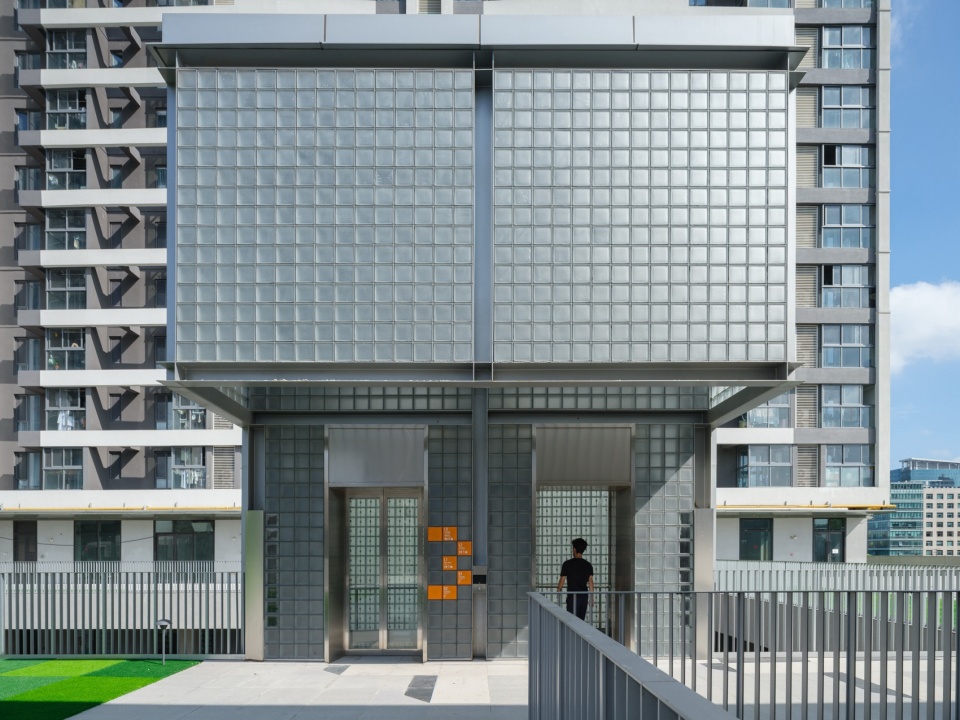
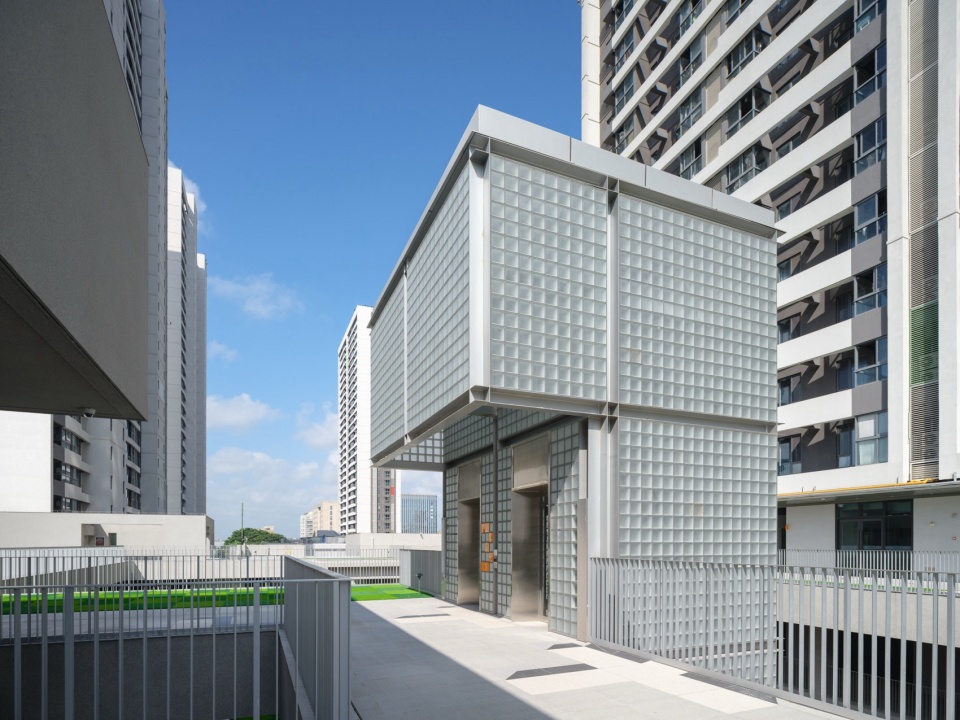
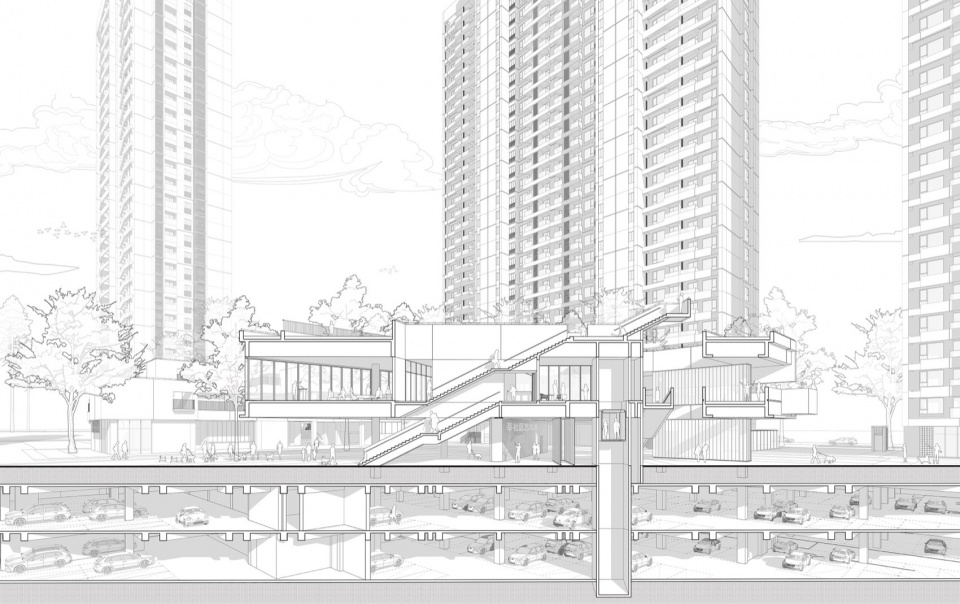
在社区商业的内庭,还设计了一座由玻璃砖搭建的景观电梯,透明度随朝夕阳光入射角的移动而变化,内侧的LED光源使景观电梯的每一块玻璃砖化身为像素点,勾绘出定制的字符、图案、或动态影像,仿佛夜晚闹市深处的霓虹。
In the inner courtyard of the community center, a glass-block elevator has been designed. Its transparency shifts with the changing angle of sunlight from morning to evening. Embedded LED light sources turn each glass block into a pixel, rendering custom characters, patterns, or even dynamic images—like neon signs deep in a bustling night district.
▼玻璃砖景观电梯,Glass Brick Scenic Elevator
▼玻璃砖景观电梯,Glass Brick Scenic Elevator
在公共建筑的立面设计中,设计团队试图颠覆社区商业的固有印象,采用空间即立面的逻辑,而明露的结构构件也是重要且诚实的建筑语言。由片墙围合而成的高低错落的立方体,可隐藏大量屋顶设备。同时空间和墙面的留白处理,更是为场所构建了无处不在的舞台背景和涂鸦画布。
In designing the public building facades, the architects sought to overturn conventional impressions of community centers, adopting a logic of “space as facade.” Exposed structural elements also serve as an important and honest architectural language. The staggered volumes enclosed by freestanding walls conceal extensive rooftop equipment. Meanwhile, the voids in both space and wall surfaces provides an omnipresent backdrop and graffiti canvas for the site.
▼社区商业背立面,Rear Facade of Community Commercial Area
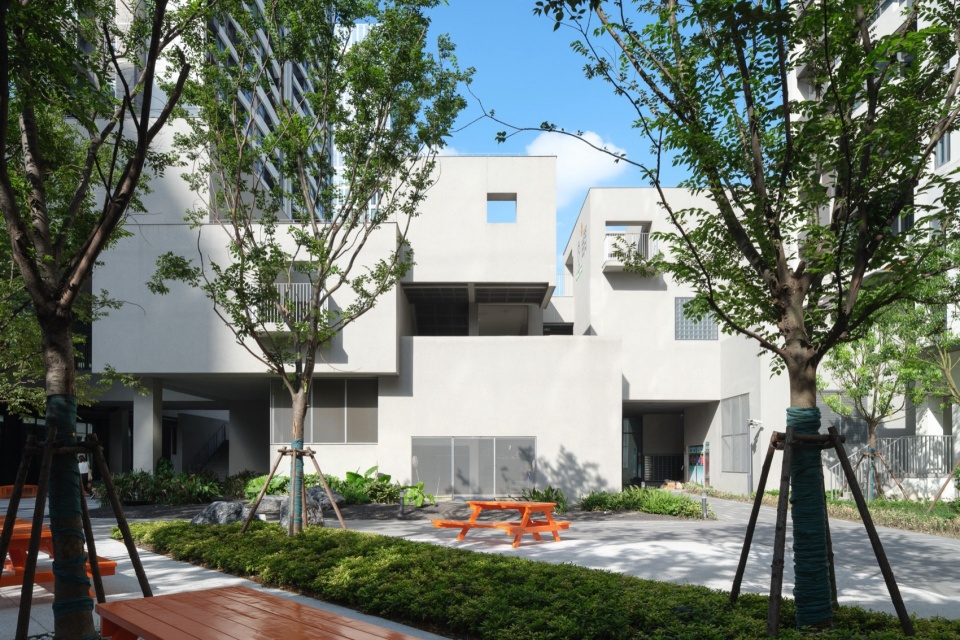
▼社区商业的空间留白,Spatial Void of Community Commercial Area
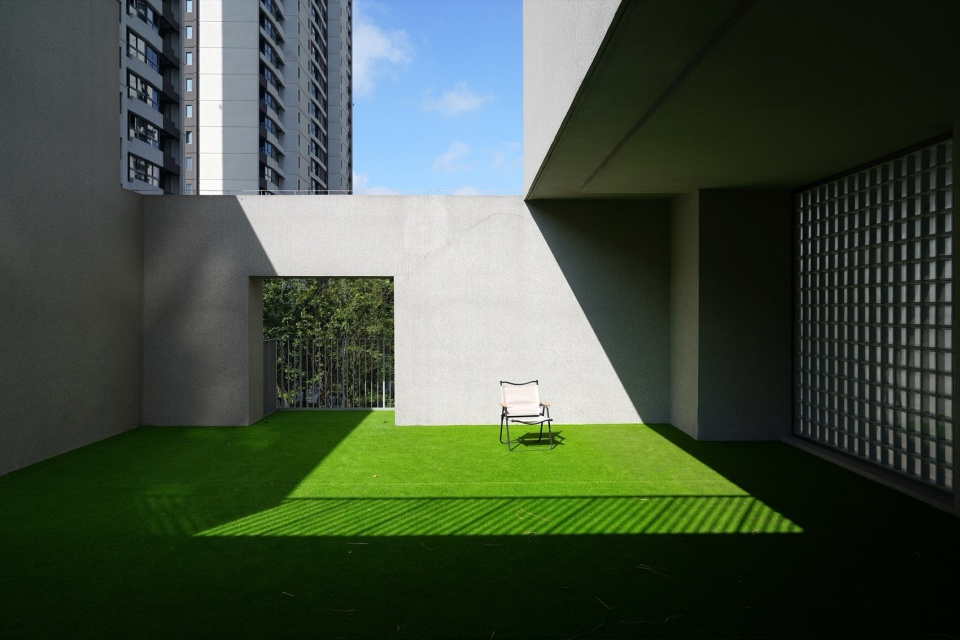
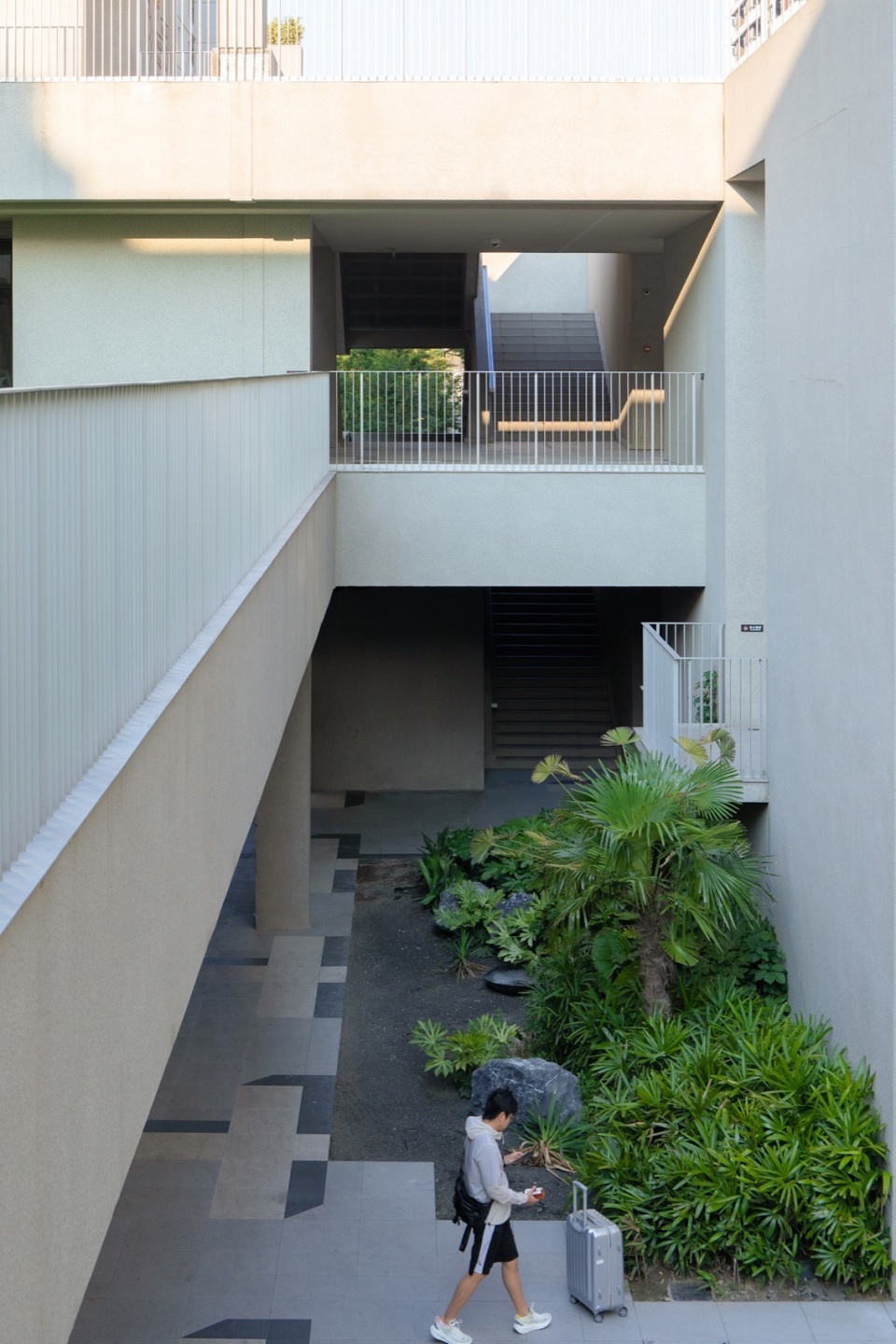
台阶和内庭成为一处户外社区剧场,一边横陈的带状水体、树木与其他景观元素,和素色墙体共同构筑了丰富的社区生活背景;漂浮的艺术中心呈现简约而有力的视觉印象,从二层内庭拾级而上,来到为看夕阳下起落的飞机而设置的屋顶观景楼台。阳光洒进中庭,投射出楼梯的阴影。
The steps and inner courtyard form an outdoor community theater space, where a horizontal strip of water, trees, and other landscape elements—together with the muted-toned walls—constitute a rich backdrop for community life. The elevated art center presents a simple yet powerful visual impression. Ascending the stairs from the second-floor courtyard leads to the rooftop viewing staircase, designed for watching planes take off and land against the sunset. Sunlight pours into the atrium, casting the staircase’s shifting shadows.
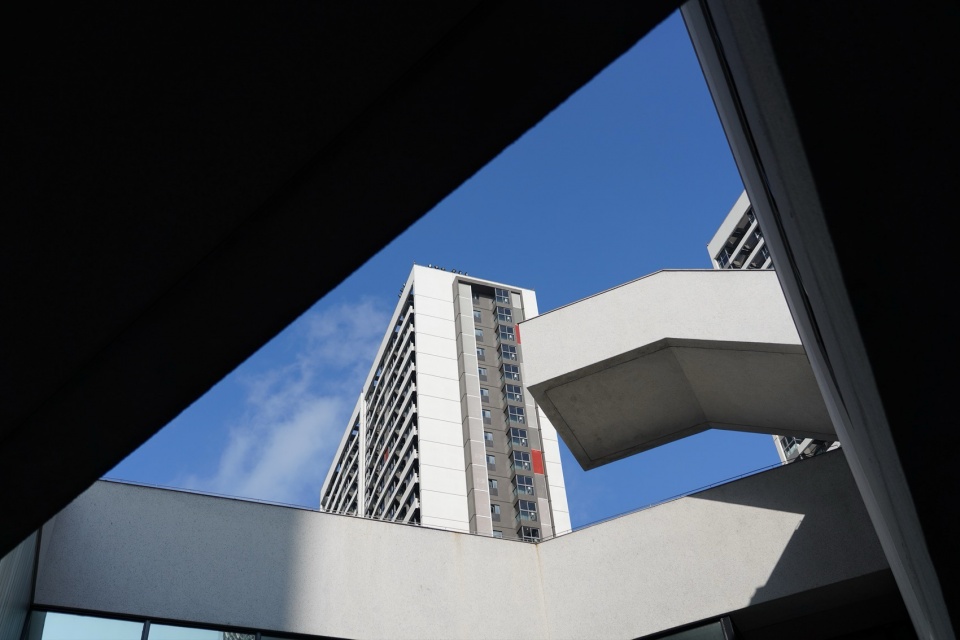
▼艺术中心天井,Patio of the Art Center
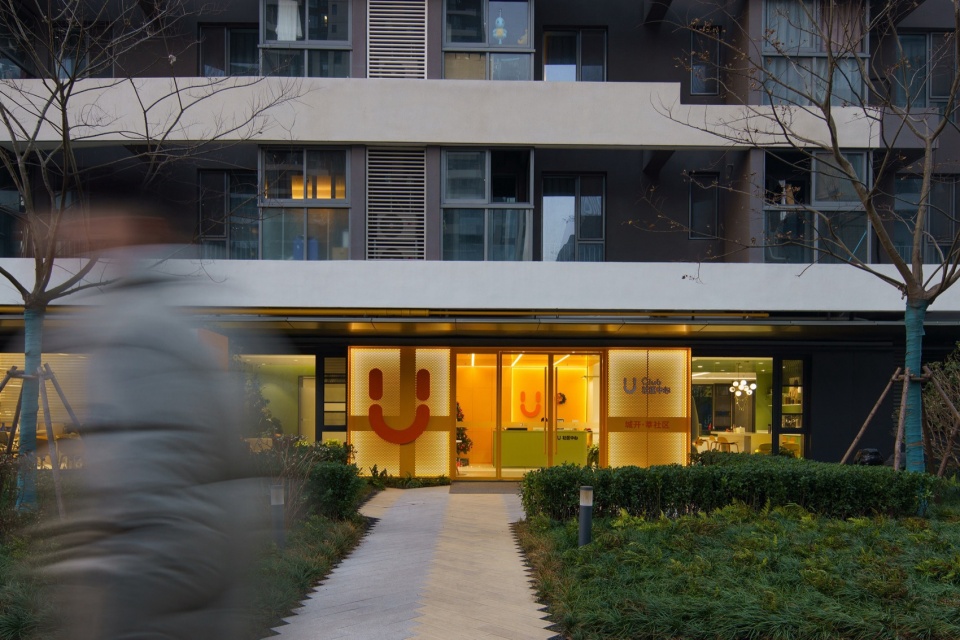
▼社区活动中心,Community Activity Center
06结语——新陈代谢的城市缩影06 Conclusion – An Urban Model of Metabolism
2022年夏,阡集莘社区迎来了一期建成后的首批住客,一年之后两千五百多套精装住房全部完成交付,陆续开业的社区商业也持续将街坊内外的活力注入这城市新区的一角。业主运营团队通过各类主题市集、艺术共创和一系列的社群活动维系着社区内部的粘合,并将社区的影响延展至更大范围的城市片区,至此阡集莘社区的公共建筑完成了从社区中心到邻里中心的转身。
In the summer of 2022, CHANGE · U Community welcomed its first residents after the completion of Phase I. A year later, over 2,500 fully furnished residential units had all been delivered, and the community center, opening in phases, continued to inject vitality into the new neighborhood of the city, from both within and beyond the community. Through various themed markets, collaborative art initiatives, and a series of community-building activities, the owner’s operations team has sustained a strong sense of connection within the community while extending its influence into the wider urban area. By this point, the public buildings of CHANGE · U Community had completed their transformation from a community hub into a neighborhood center.
▼阡集莘社区夏日市集,Summer Market at Qianji Xinshe Community
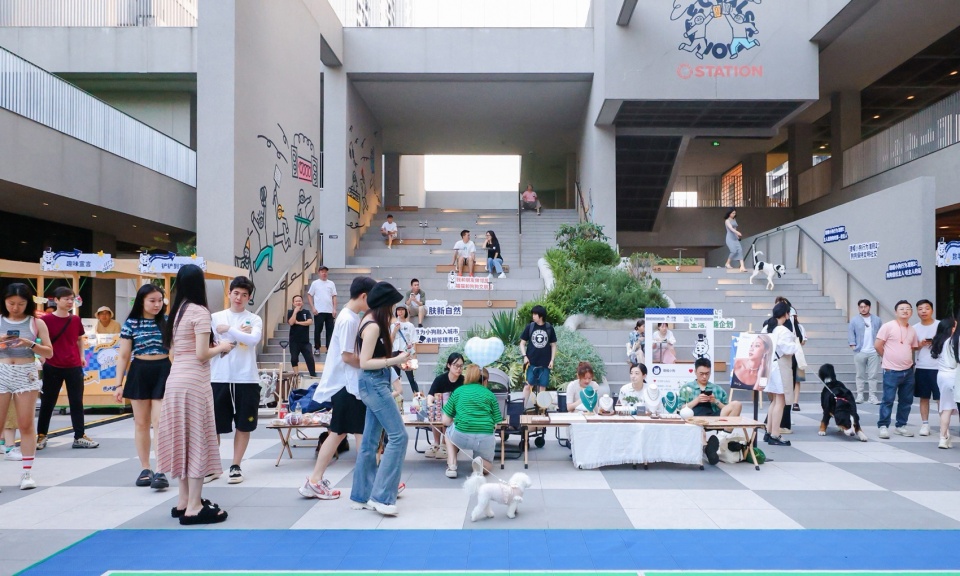
而设计团队的最后一次回访,也留意到了相比初始运营阶段,如今更复杂的租客群像,更大年龄跨度的运动人群,更多样的商业业态和更拥挤的地下车库。既有预期之内的欣慰,也有意料之外的唏嘘——舒适的居住体验,良好的社区氛围,以及可控的生活成本,使住宅仍然维持着满租率;宠物友好住房供不应求,需要在后期运营过程中调整楼栋比例。商铺在持续变化,夜晚多了深夜食堂和酒吧,白天却少了精致的咖啡店和小酒馆,取而代之的是更接地气的连锁快餐和早餐铺;艺术中心的二层空间引入了高端私宴,完成了从公共到私密的转换,同时也切断了通往屋面的开放动线;商业和住宅架空层嵌入了更多的共享功能和设施……可以预见的是,公共空间的功能与内容随着时间的推进而更替,将成为莘社区的一种日常。自上而下的设计终会过渡为自下而上的生长,直至下一个周期的干涉与轮回。而这,也是整座城市新陈代谢的缩影。
During the latest site visit, the design team observed a more complex demographic of renters, a wider age range among those using the sports facilities, a greater diversity of retail formats, and a more congested underground parking garage compared to the beginning. There was both expected satisfaction and unexpected sense of regret for the architects. The comfortable living experience, strong community atmosphere, and affordable cost of living have kept residential occupancy at full capacity. Pet‑friendly housing remains in short supply, requiring adjustments to building allocations during later operations. The storefronts continue to evolve — late‑night eateries and bars have appeared, while the daytime sees fewer boutique coffee shops and bistros, replaced by more accessible chain fast‑food outlets and breakfast stalls. On the second floor of the art center, an upscale restaurant has been introduced, shifting the space from public to private while also cutting off the open route to the rooftop. More shared functions and facilities have been integrated into the piloti spaces beneath the residential towers. It is foreseeable that the functions and programs of the public spaces will continue to change over time, becoming a daily reality for CHANGE · U Community. Top‑down design will eventually give way to bottom‑up growth, until the next cycle of intervention and renewal. And in this, we see a model of the entire city’s metabolism.
▼总平面图,Master Plan
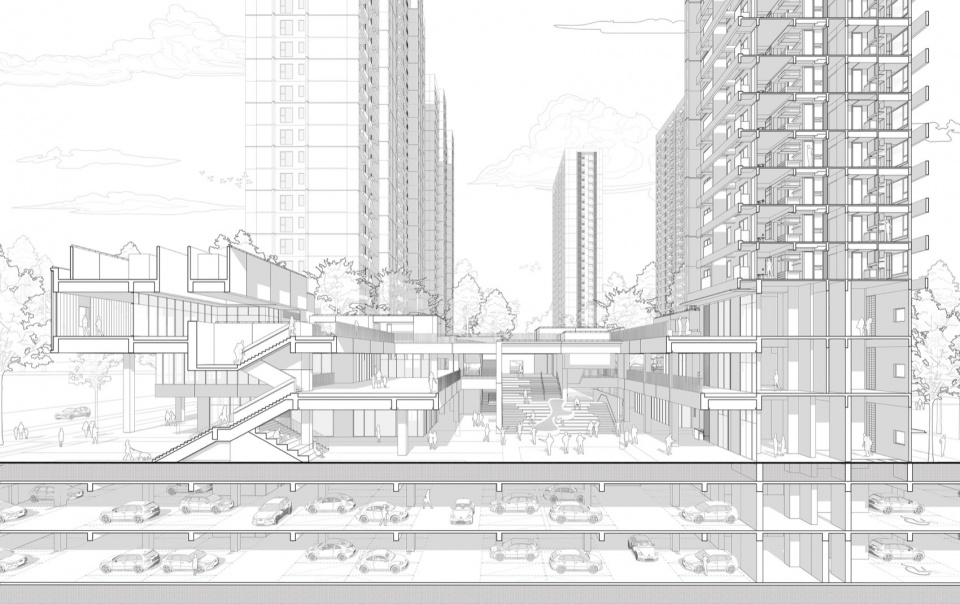
▼社区商业剖面,Section of Community Commercial Area
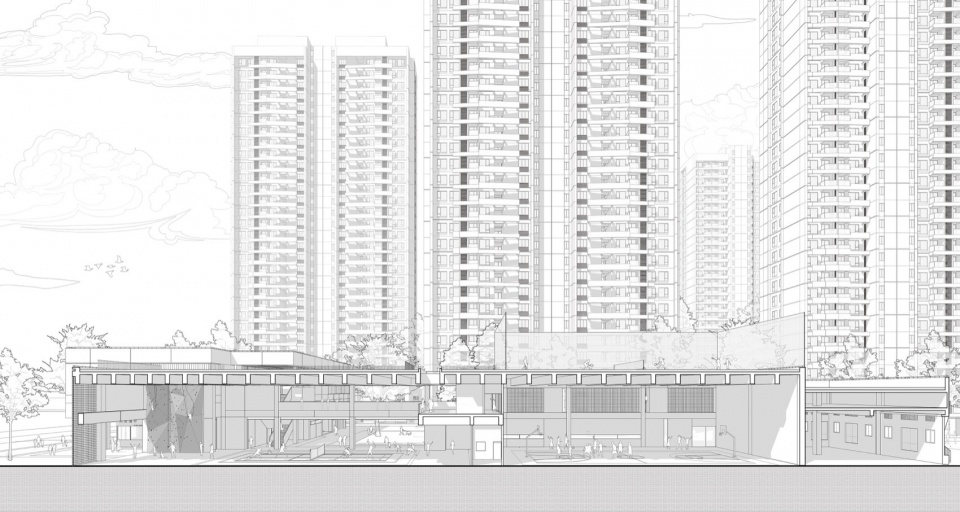
▼运动中心剖面,Section of Sports Center
▼艺术中心平面图,Plan of Art Center
▼艺术中心剖面,Section of Art Center
▼住宅标准层平面图A,Standard Floor Plan of Residential Building A
▼住宅标准层平面图B,Standard Floor Plan of Residential Building B
▼户型平面,Unit Plan
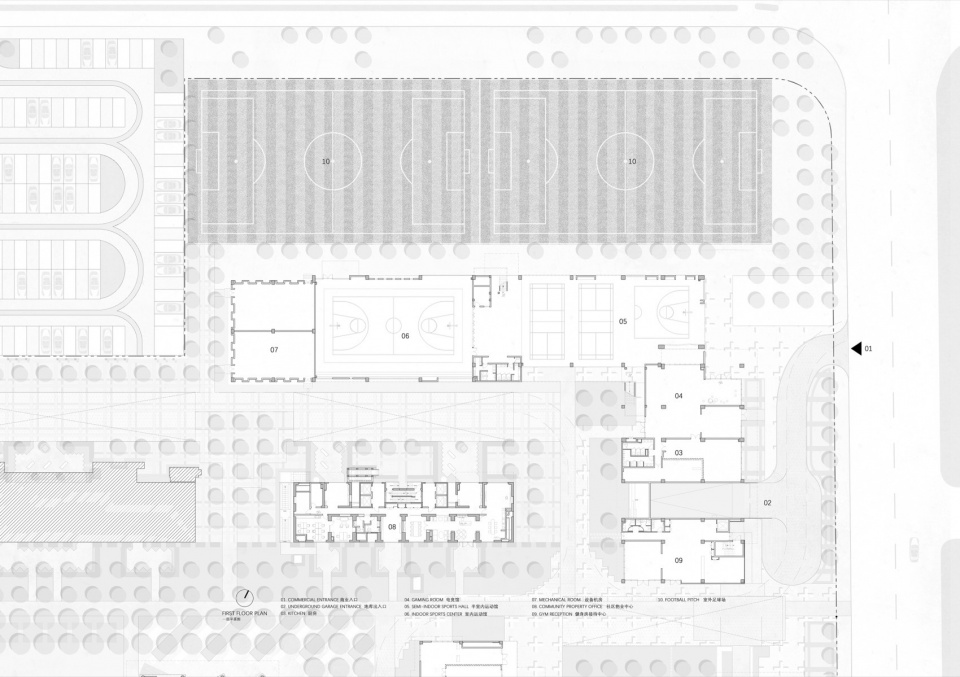
▼一层平面图-北区,Ground Floor Plan – North Zone
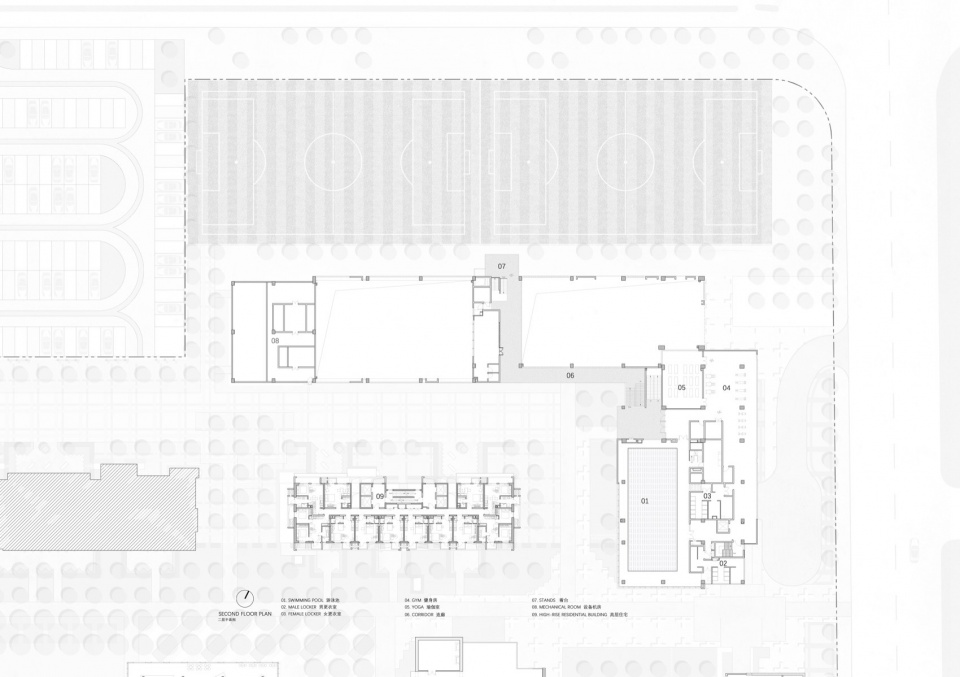
▼二层平面图-北区,Second Floor Plan – North Zone
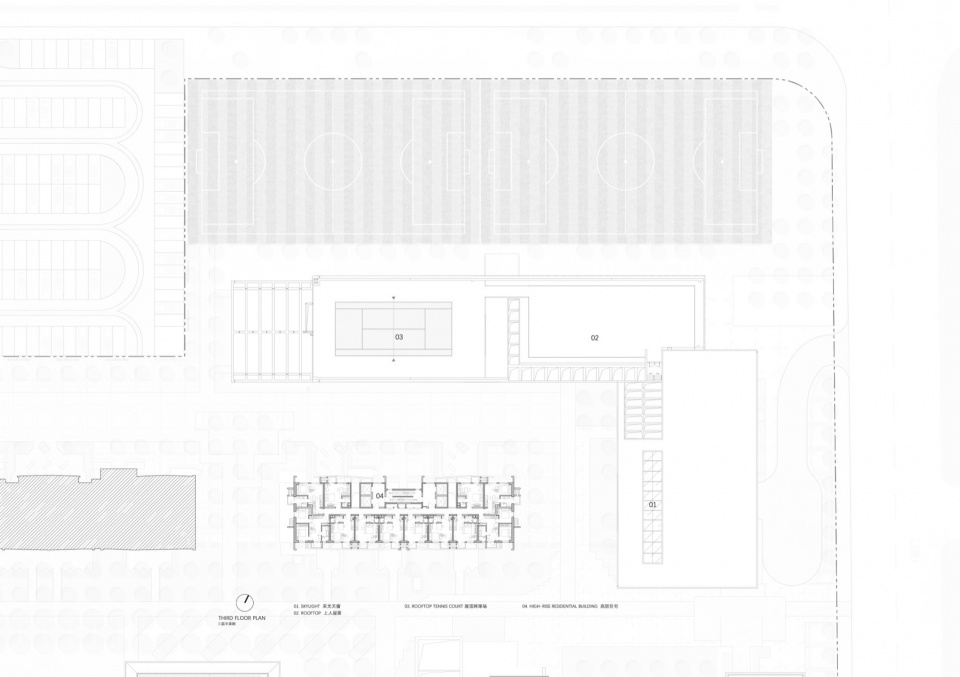
▼三层平面图-北区,Third Floor Plan – North Zone
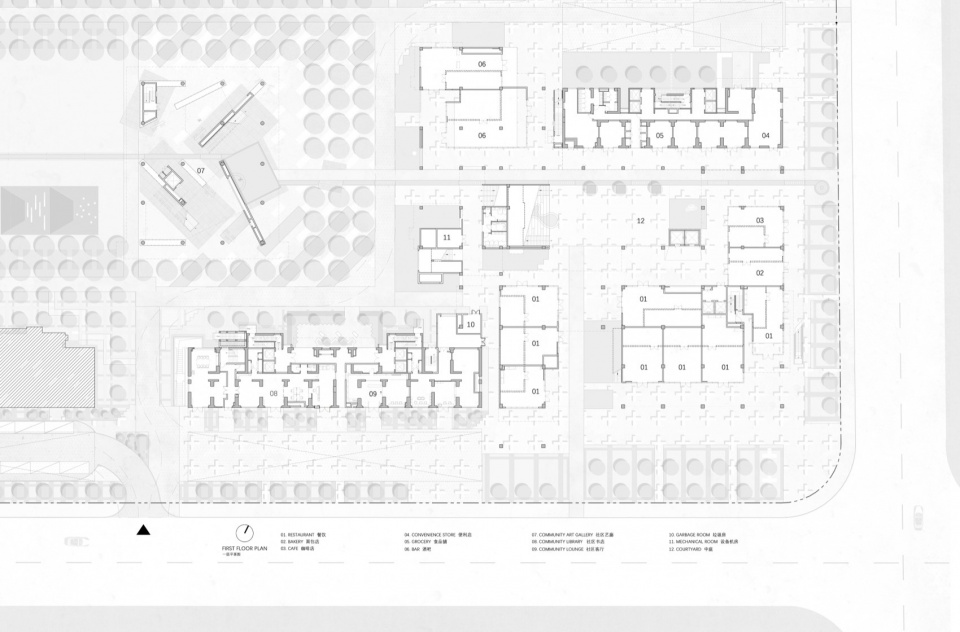
▼一层平面图-南区,Ground Floor Plan – South Zone
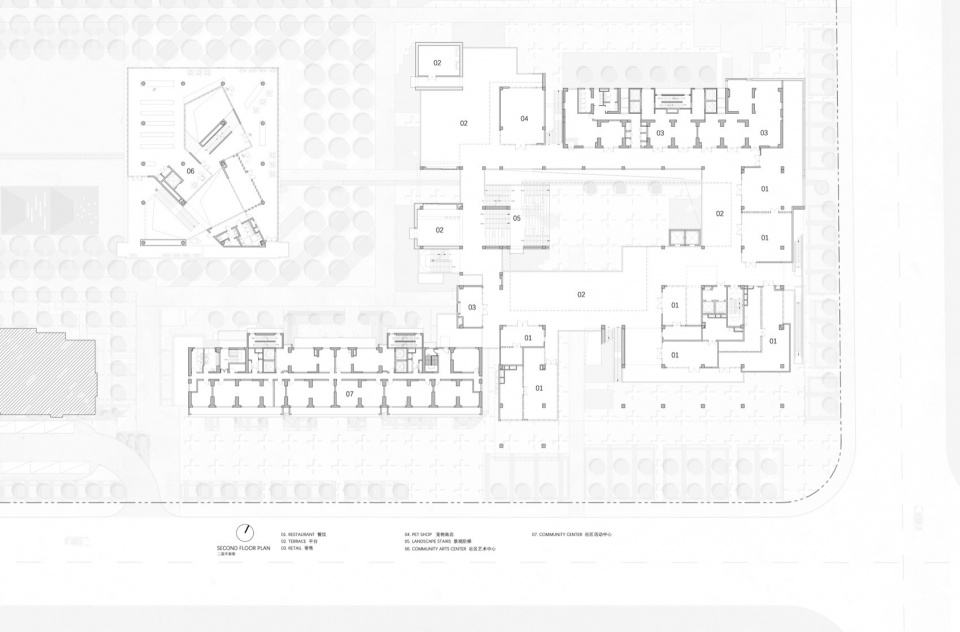
▼二层平面图-南区,Second Floor Plan – South Zone
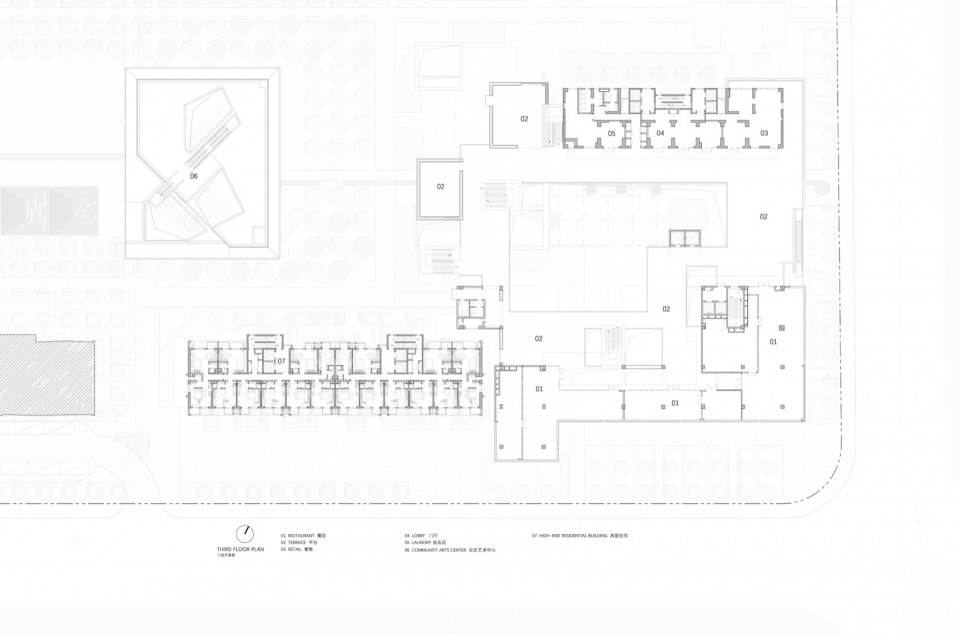
▼三层平面图-南区,Third Floor Plan – South Zone
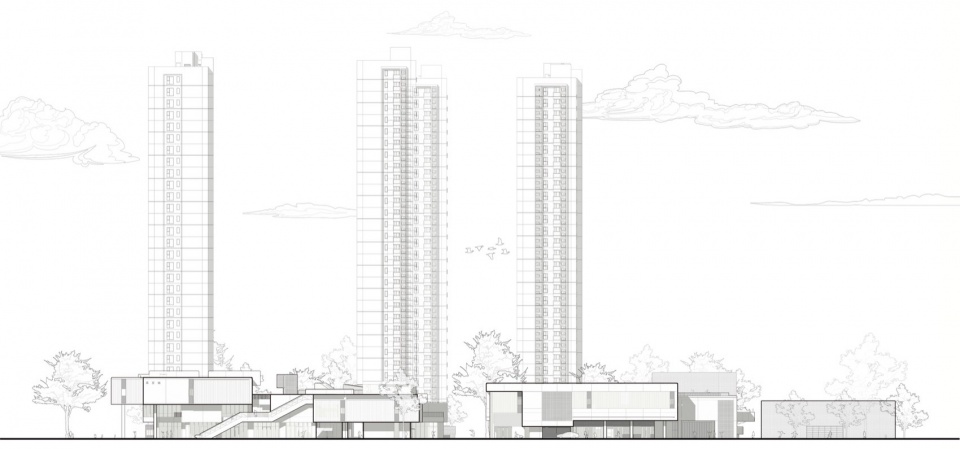
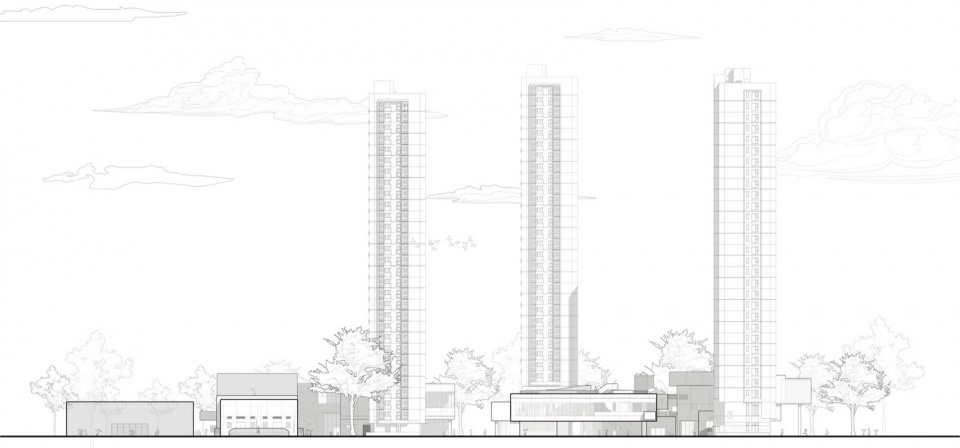
▼东立面图,East Elevation
▼西立面图,West Elevation
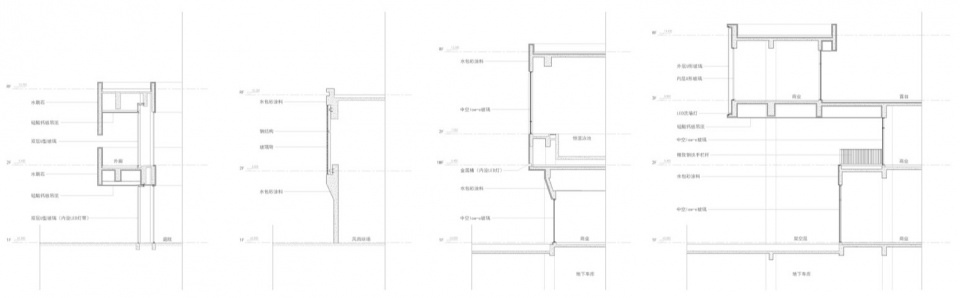
▼墙身剖面,Wall Section
Project name: CHANGE · U Community
Project type: Social Housing
Design: Fusion Architects
Website: http://www.fusion-arch.com/
Contact e-mail: brett.gu@fusion-arch.com.cn
Design year: 08/2018-08/2022
Completion Year: 06/2023
Leader designer & Team: Gu Zheng, Wang jin, Tang Wei, Tian Ping, Lu Ye, Zhao Ying, Zhang Yi, He Qin, Yu Xingyue, Li Lingbo (intern), Ye Zi (intern), Luo Shilan (intern), Lu Yuling (Intern)
Project location:Lane 555, Xiulian Road, Minhang District, Shanghai
Gross built area: 126,000㎡
Photo credit: Zhu Runzi, Arch-Exist, Xiaoxi, Gu Zheng
Partner:Shanghai Zhongfang Architectural Design Co., Ltd., XU Studio, BAM, LUMIA Lighting, HYDER, SPD
Clients:Shanghai Industrial Urban Development Group Ltd.
Materials:Washed stone, Sand textured coating, Glass block, Channel glass, Aluminum composite panel, Ultra-precision steel
Written by Wang Peiqing and Gu Zheng