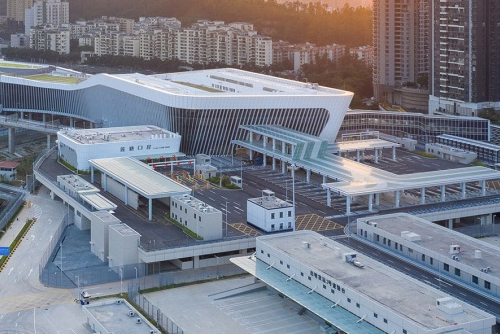
办公室真相 NO.59 & 谱观建筑
出品人:向玲 / Producer: Xiang Ling编辑:石安、司源、翁畅妍、张笑然、闫帅朗 / Editor: Shi An, Si Yuan, Weng Changyan, Zhang Xiaoran, Yan Shuailang
____________
“谱观”的含义
About SpActrum
我们理解的建筑包含多个层面,我们并不推崇那种统一、一致的所谓建筑风格实践。同时,我们也看到,在不同的建筑维度上,存在着大量不同的信息,以及多样的建筑发生方式。这让我们联想到“光谱”,这也是最初选用“谱”字的原因。“谱观”蕴含“谱写”与“观察”双重含义。我们认为,这种“谱写”与“观察”——或者说“观察”与“谱写”——非常贴合我们的行动方式,也成为了我们实践中最重要的一个层面。
SpActrum来自于构词法里光谱(Spectrum)与空间(Space)的结合,由于光谱带来对于类型学空间谱系的感知,光也是一种魅影,我们拥抱这种不确定性的灵韵。
▼SpActrum谱观logo与获得过的奖项,SpActrum logo and the awards received
We understand architecture as something that operates across multiple dimensions. We do not advocate for a singular, unified architectural style or methodology. At the same time, we recognize that within different architectural dimensions there exists a vast range of information, as well as diverse modes through which architecture comes into being. This led us to the idea of the “spectrum,” which is also why we originally chose the character “谱” (pu). “谱观” carries the dual meanings of “composition” and “observation.” We believe that this process of “composing” and “observing” — or rather, “observing” and “composing” — closely reflects the way we operate, and has become one of the most important dimensions of our practice.
SpActrum is a coined term combining “Spectrum” and “Space.” The notion of spectrum evokes a perception of spatial typologies and genealogies, while light itself also possesses a ghostly, elusive quality. We embrace the spiritual resonance of this uncertainty.
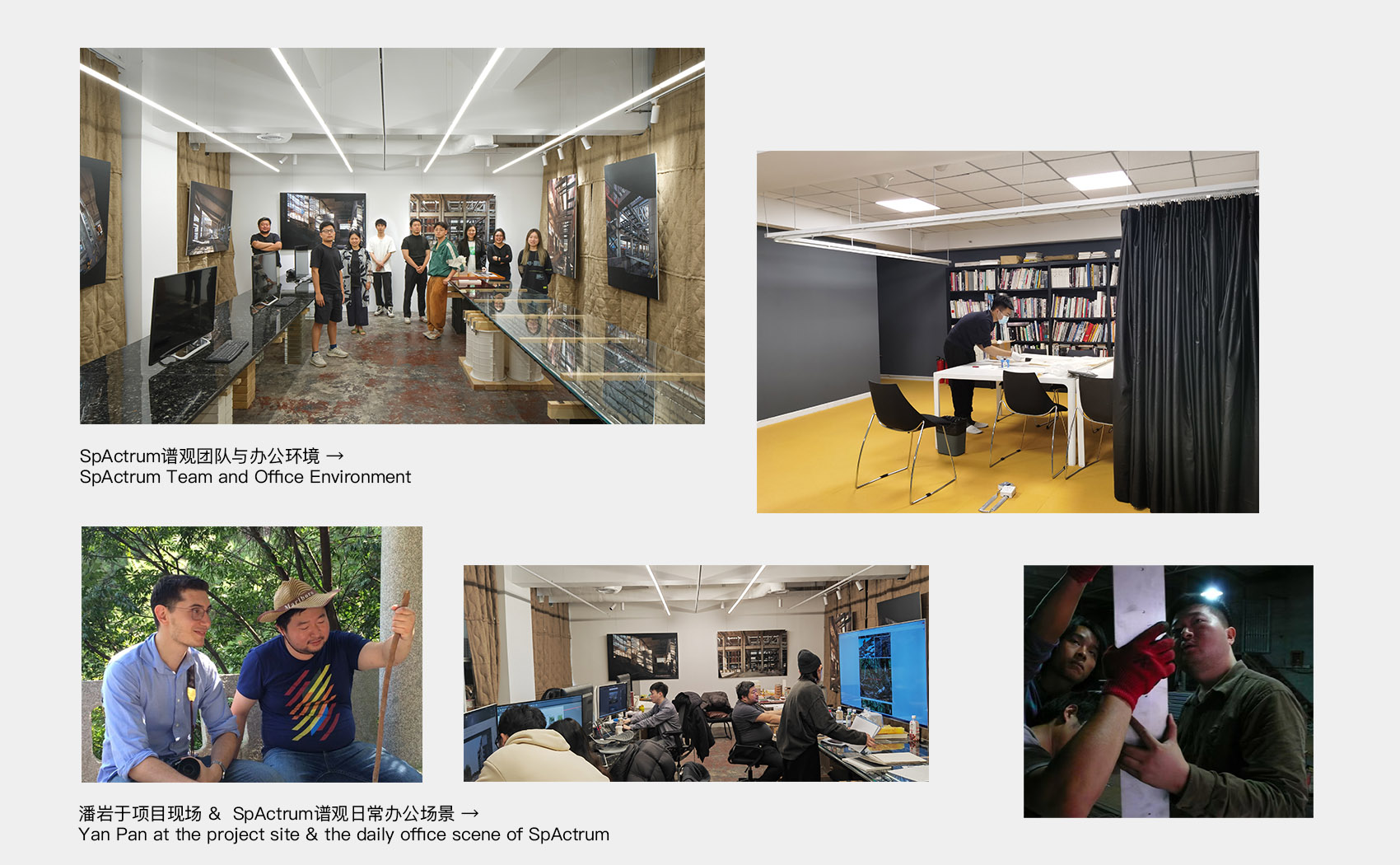
▼谱观团队日常工作时的场景,SpActrum’s team at daily work
_____________
深邃的真实性
Profound Reality
李真:什么是有意义的建筑?我们一直不断在世界各地探访各种各样的建筑杰作,有些建筑让我们感受到了一种我们称之为“深邃的真实性”的东西。这些建筑,某种程度上能让你更加觉知——这个世界是如何真实运作的,让许多藏在表象背后的东西被揭示出来。我们对这些建筑的评判标准,很大程度上在于它是否具有揭示性,是否能让人的意识更加觉知。这是我们判断一个作品好坏的一个非常重要的标准。
Zhen Li: What constitutes meaningful architecture? We have continuously traveled around the world, visiting architectural masterpieces of many different kinds. Some buildings evoke in us something we call “Profound Reality.” In a certain sense, these works make you more aware of how the world truly operates, revealing many things hidden beneath appearances. Our criteria for evaluating architecture largely lie in whether it possesses this revelatory quality — whether it can heighten human consciousness and perception. This has become one of the most important standards by which we judge the value of a work.
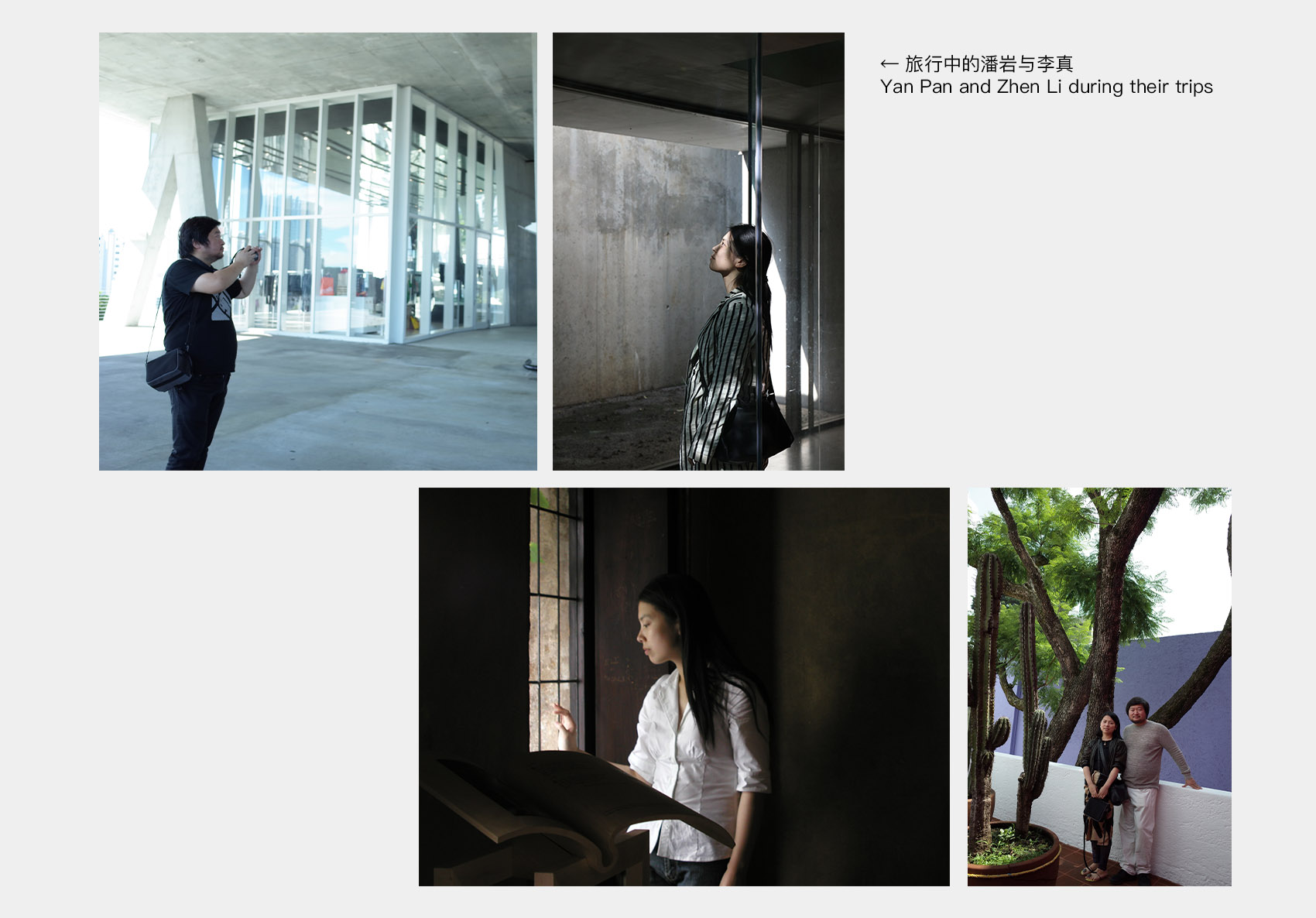
▼潘岩与李真旅游时的照片,Photographs of Yan Pan and Zhen Li during their travels
潘岩:“深邃的真实性”包含两个层面:一是“深邃”,二是“真实性”。我们所探寻的真实性,是对我们所处时代的一种真诚表达。我们信奉的建筑学,永远是直面当下的建筑学。这种只属于当代的建筑,意味着我们要直面当代、当下的技术、当下那些鲜活的人的真实情感,而不是回归到一种所谓的古典的宁静、庄重或平和的理想状态中去。当下,我们有压力,有抗争,也有观念上的冲突。我们希望自己的建筑能够体现出这样一种状态。让每一个元素的复杂性都自行显现出来,并让这些复杂性之间交织出一种独特的场景。而这种复杂性的交织,恰恰展现了我们当下社会的真实状况。
我们所说的“深邃的真实性”中的“深邃”,它并非一种浅表的、对周边环境或既有问题的直接回答,而是一种穿透力——穿透到我们建筑建成之后的未来。那时,我们的建筑将作为场地上一个有意义的变量,去主动塑造一种新的现实,而不仅仅是给某个既定的方程式求解。
Yan Pan: “Profound Reality” contains two dimensions: “profoundness” and “reality.” The reality we seek is a sincere expression of the era in which we live. The architecture we believe in is always architecture that confronts the present directly. This architecture, belonging only to the contemporary moment, means that we must engage with the genuine emotions of people living today and current technology, rather than returning to some idealized classical state of tranquility, solemnity, or harmony. Today, we experience pressure, struggle, and ideological conflict. We hope our architecture can embody such conditions — allowing the complexity of each element to reveal itself naturally, and enabling these complexities to intertwine into a unique spatial condition. It is precisely through this entanglement of complexities that the true condition of contemporary society becomes visible.
The “profoundness” in what we call “Profound Reality” is not a superficial or immediate response to the surrounding environment or existing problems. Rather, it is a kind of penetrating force — one that extends into the future after the building is completed. At that moment, our architecture becomes a meaningful variable within the site, actively shaping a new reality, rather than merely solving for a predetermined equation.
▼谱观部分代表作品,Selected representative works of SpActrum
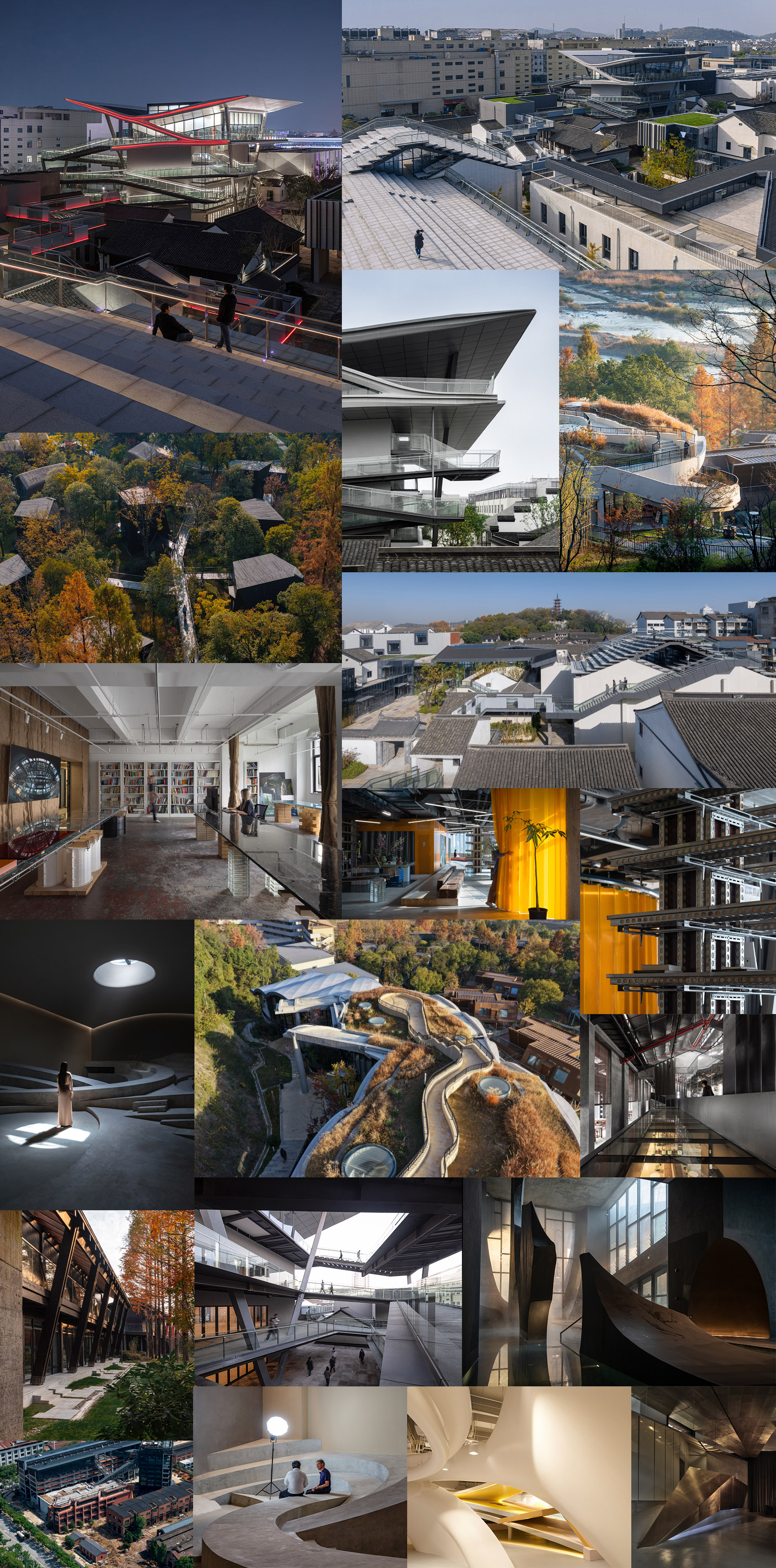
我们所说的“在途中”(En Route)“模糊”(Blur)等概念,正是我们开始用被沾染后的头脑,在掌握建筑学及其理论框架之后主动观察世界时,所发现的一些有趣之处。 “在途中”,就我个人而言,我曾在英国、澳洲与中国之间辗转生活了十几年,期间进行了大量不同类型的旅行。包括以英国为中心考察欧洲的现代建筑,前往亚洲其他地区旅行,以及赴美国和中南美洲等地进行考察。这些旅行,使我长期在运动的状态中进行观察。
The concepts we speak of, such as “En Route” and “Blur,” emerged from the moment we began observing the world through minds already shaped and contaminated by architecture and its theoretical frameworks. They reflect the intriguing conditions we discovered through this mode of perception. For me personally, the idea of “En Route” is deeply connected to my own experience. I spent more than a decade moving between the UK, Australia, and China, while undertaking extensive travels of many different kinds — from studying modern architecture across Europe with the UK as a base, to traveling throughout other parts of Asia, as well as conducting research trips in the United States and across Central and South America. These journeys placed me in a prolonged state of movement, through which observation itself became inseparable from being in transit.
▼“观”“模糊”“在途中”,“Guan”“Blur”“En Route”
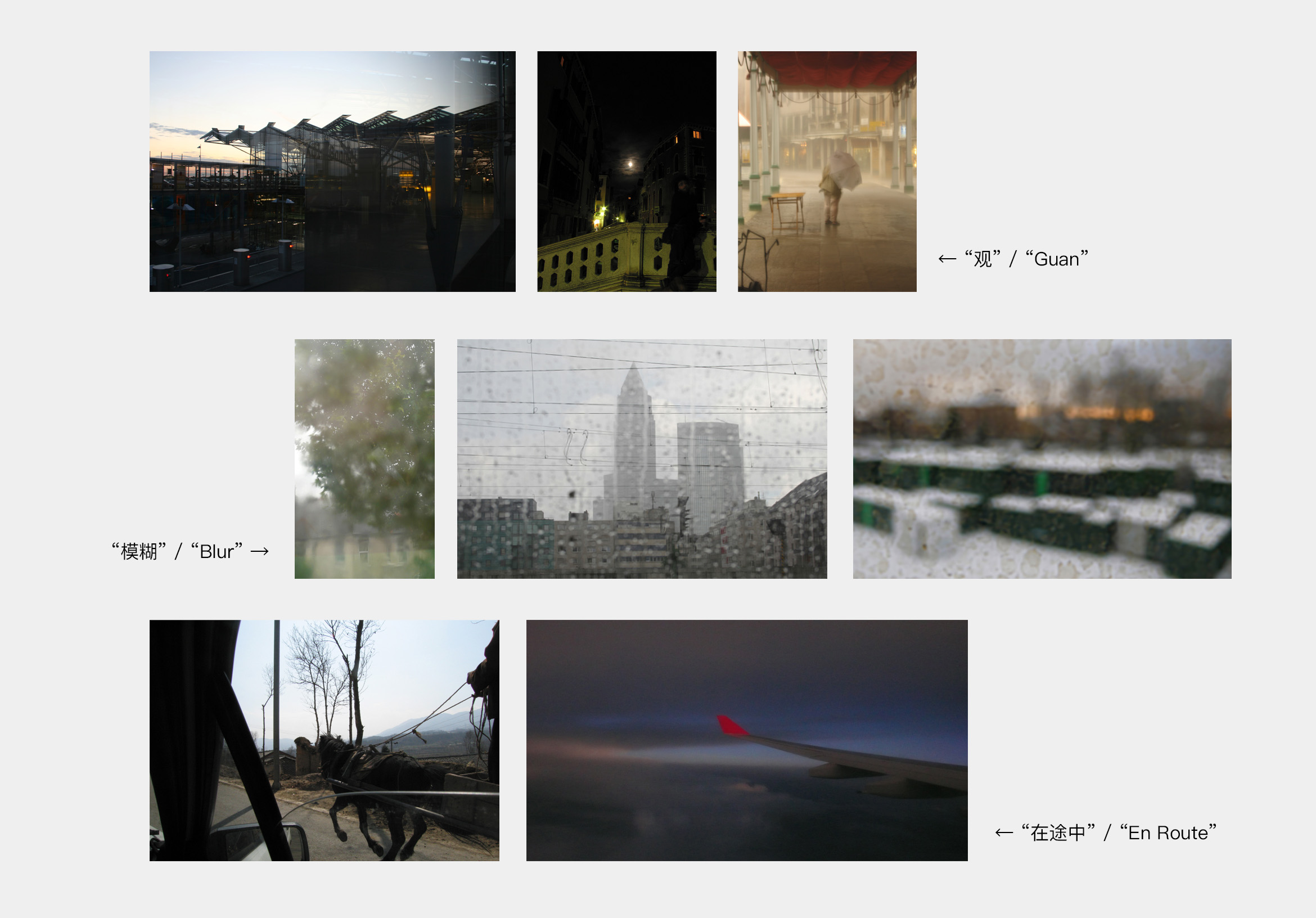
此外,我们所说的“模糊”也在一定程度上源于一种发展与观察的现象,模糊不一定是不清晰,相反,他有时会成为对于当代的技术背景的揭示。例如,你可以看到雨水打在玻璃上,有时由于车辆快速运动,我们拍摄出的照片便不会呈现出一个非常清晰的图像状态。无论是在“潜行之屋”还是在柴场弄中,我们的建筑都像一位导游,或是一种带有交通工具属性的媒介,带着你穿透场地的多个不同层次,同时也给予你足够的选择性。
我们所希望探讨和表达的建筑,能够呈现出一种当代状态。其中一种当代状态,便是存在大量像我们这样在运动中观察的经验——以运动着的、包围自身的空间作为界面去观察周围世界。我们所观察到的这些现象——我们称之为“小词”或有趣的细节点——实际上是许多此类对当代生活保持敏感的点位。正是这些点位,共同构成了我们对所谓“深邃的真实性”的探讨。
In addition, what we refer to as “Blur” also partly originates from certain phenomena of development and observation. Blur is not necessarily unclear. On the contrary, it sometimes becomes a revelation of the contemporary technological context. For example, when rain hits a sheet of glass, or when a vehicle is moving at high speed, the images we capture often no longer appear in a sharply defined state. Whether in House of Stealth or the projects of Chaichang Lane, our architecture acts almost like a guide — or a medium with the qualities of a vehicle — leading you through multiple layers of the site while simultaneously offering you sufficient freedom of choice.
The kind of architecture we hope to explore and express is one capable of embodying a contemporary condition. One aspect of this contemporary condition is precisely the prevalence of experiences like ours: observing while in motion, using moving and surrounding space itself as the interface through which we perceive the world around us. The phenomena we observe — what we call “small words” or intriguing fragments of detail — are in fact numerous points of sensitivity to contemporary life. It is these points, taken together, that form our exploration of what we call “Profound Reality.”
▼星屿,绍兴,Stellar Isle, Shaoxing
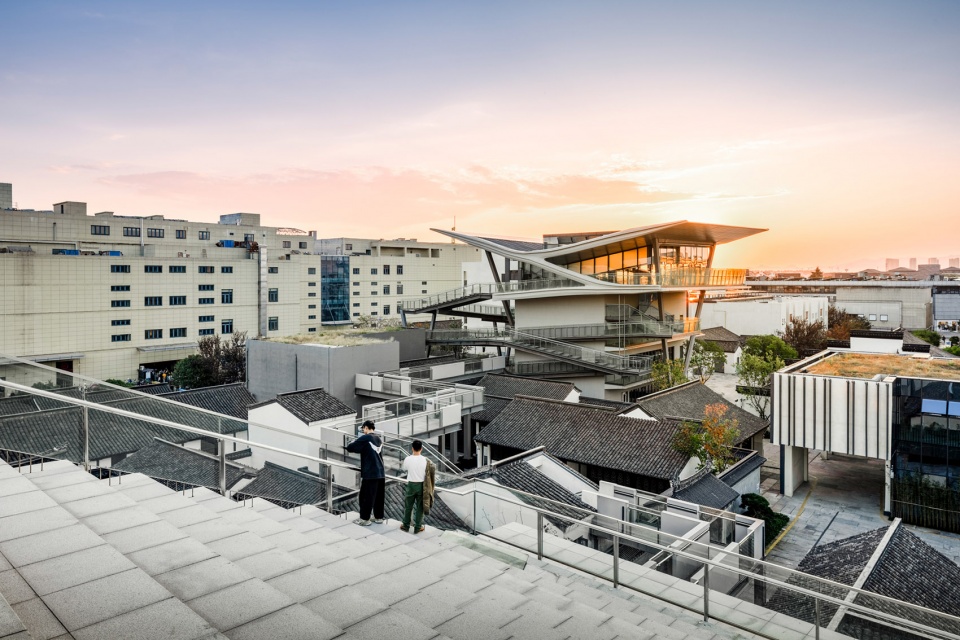
▼大周画室,绍兴,Dazhou Atelier, Shaoxing
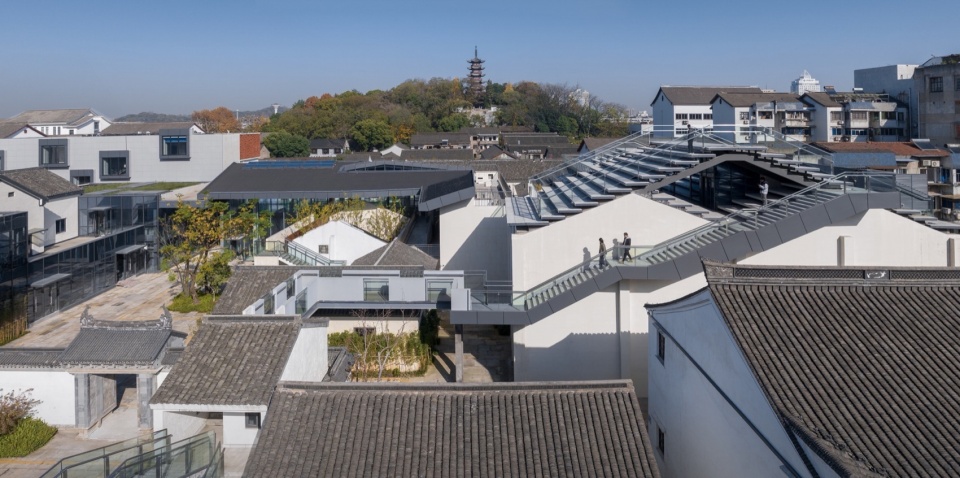
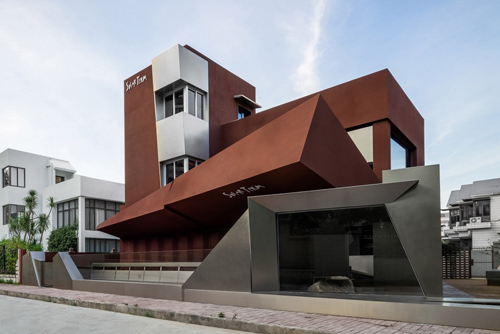
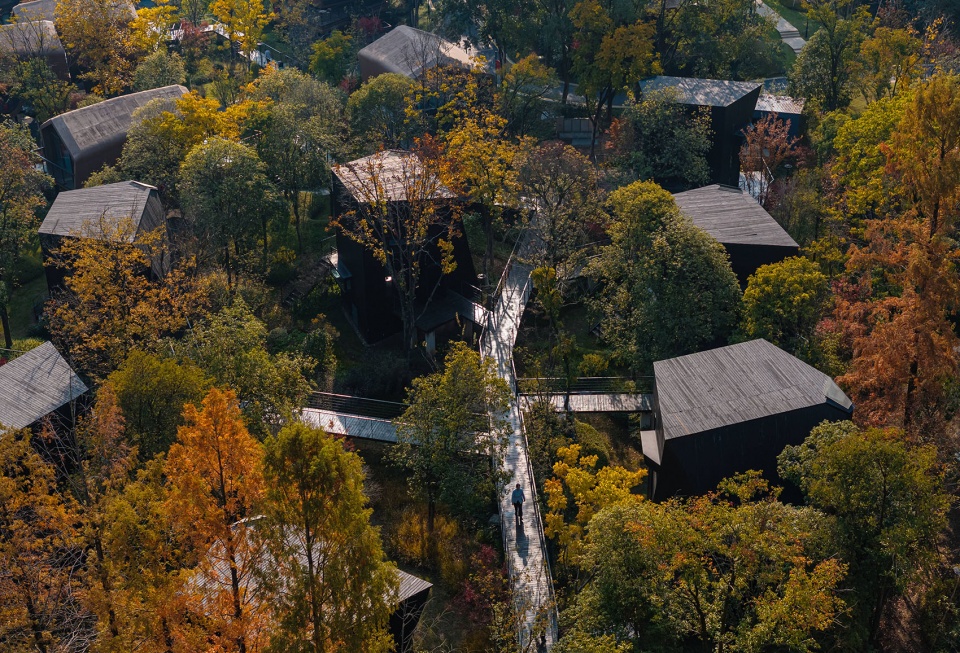
▼潜行之屋,浙江杭州,Houses of Stealth, Hangzhou Zhejiang
__________________
当代建筑该有的形状
The shape that contemporary
architecture should have
所谓的文化,在我们看来是一种短期的、对环境的适应性变化。而我们所希望追寻的东西,是能够超越具体文化束缚、直抵人心深处的那种本质。我们不想参照任何一个之前的案例,也不想参照过去建筑中的任何一个中间状态。只有回归到当下、最相关的最新技术,以及对这个事物本质的需求、明确要达成的目标,回到这个层次,才是真正有效的。
从这个层面上来说,我们具有一定的反文化特征。反文化,在一定程度上是为了超越某种具体的、已经形成自身教义体系的文化,从而回归到真正对人有所助益的、属于人本质层面的内心诉求。我们认为,建筑具有非常长远的影响力。在这种影响力之中,如果说“文化”这个层次是存在的,那么它应该位于建筑之下的一个层次,而不是在建筑之上的一个层次。换句话说,这正是我们认为建筑是“文化的生成器”的原因。建筑建构了文化,而不是文化建构了建筑。
What is commonly referred to as “culture,” in our view, is a short-term adaptive response to a particular environment. What we seek instead is something that can transcend the constraints of specific cultures and reach directly into the deeper essence of human experience. We do not want to reference any previous precedent, nor any intermediary condition inherited from past architecture. Only by returning to the present — to the most relevant contemporary technologies, to the essential needs of the matter itself, and to the precise goals we aim to achieve — can we arrive at something truly effective.
In this sense, our approach possesses a certain anti-cultural character. To be “anti-cultural” is, to some extent, an attempt to move beyond specific cultures that have already developed their own doctrinal systems, and instead return to the inner demands that genuinely benefit people at the level of human essence. We believe architecture exerts a profoundly long-term influence. Within this influence, if “culture” exists as a layer at all, then it should exist beneath architecture rather than above it. In other words, this is precisely why we regard architecture as a “generator of culture.” Architecture builds culture, rather than culture builds architecture.
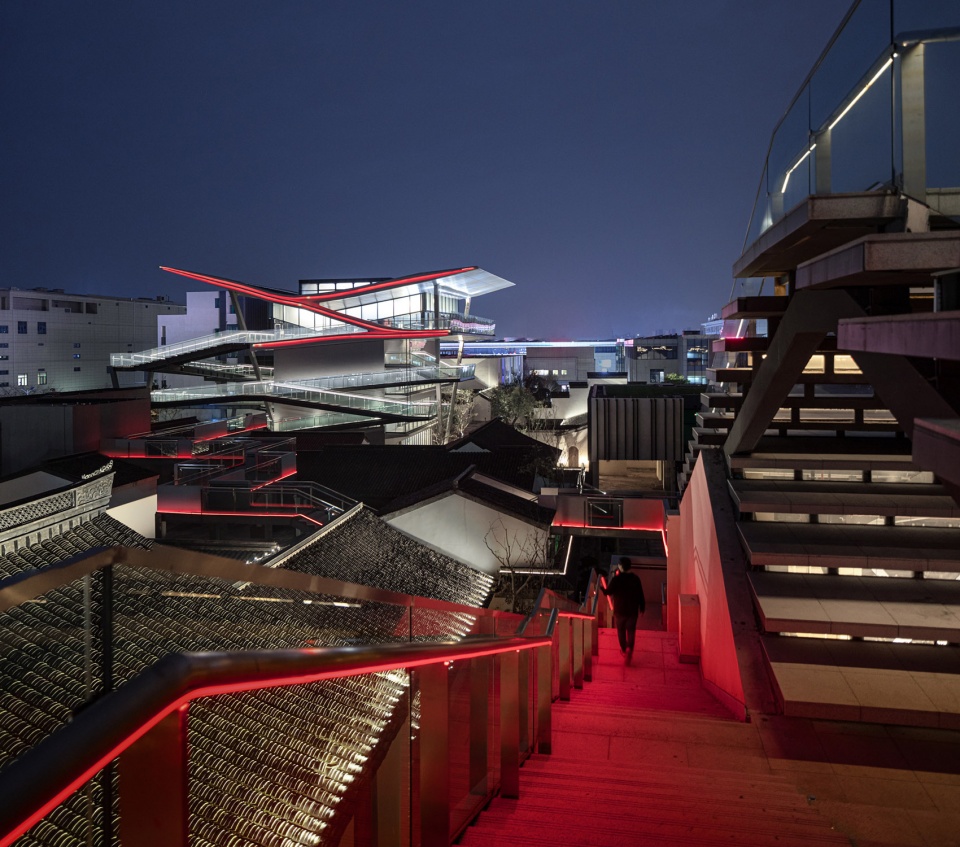
▼星屿,绍兴,Stellar Isle, Shaoxing
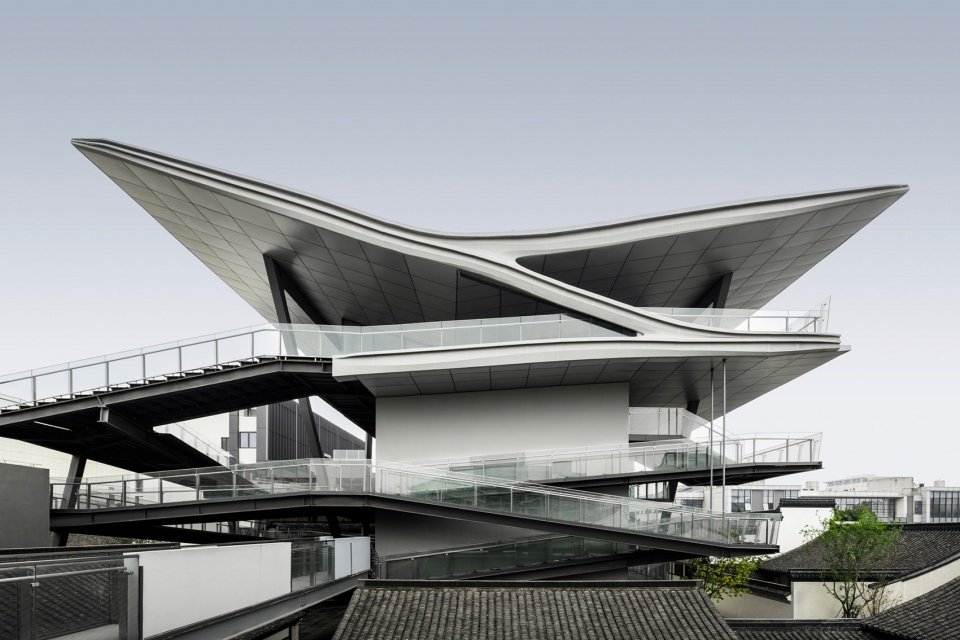
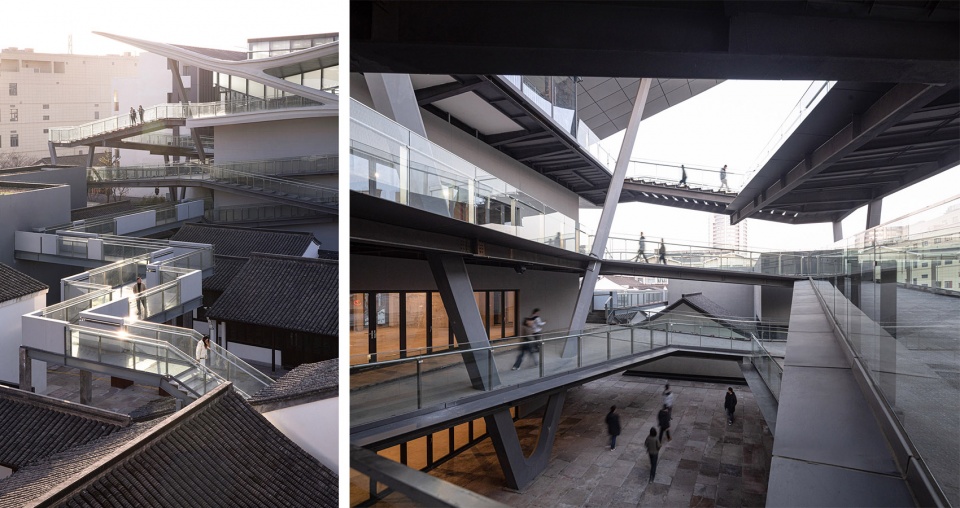
▼大周画室,绍兴,Dazhou Atelier, Shaoxing
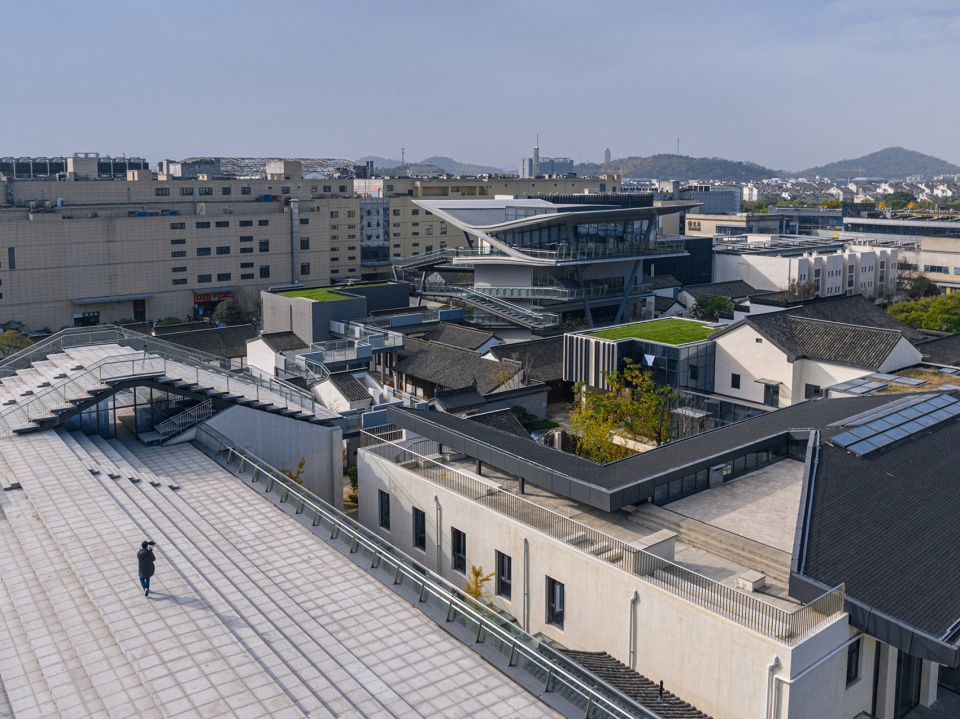
▼从大周画室通往星屿的天廊,Viewing the Sky corridor from the project at night
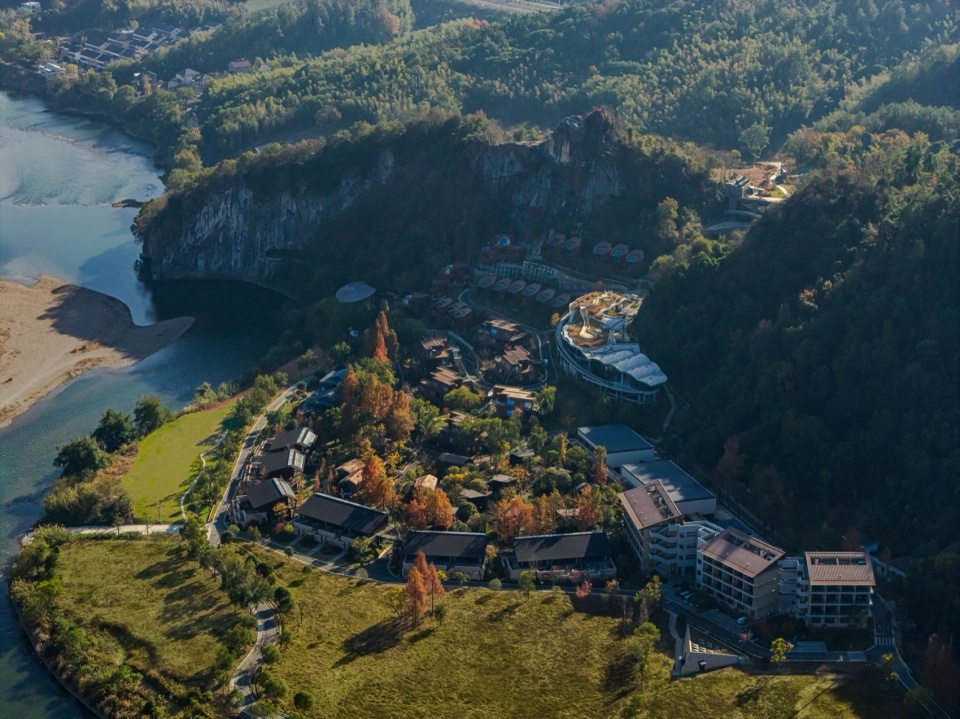
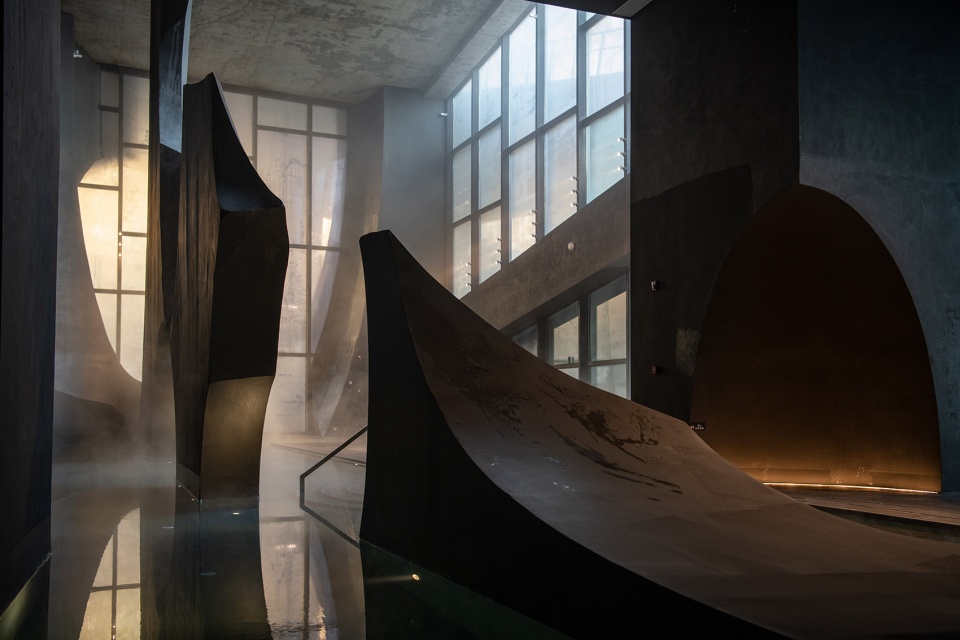
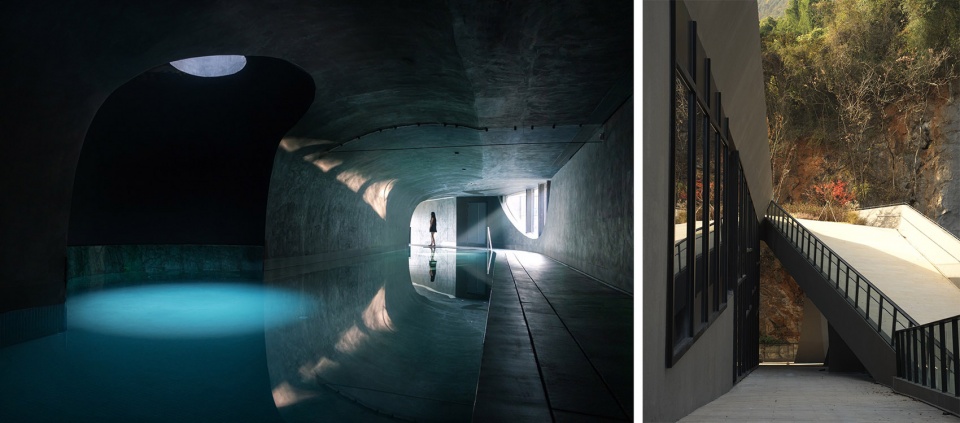
回到建筑本身来说,我们需要考虑很多现实因素。再进一步,具体到与场地的真实互动。例如我们在桐庐设计的SPA项目,场地为两座山谷之间,前后两个山谷的视觉体验截然不同,而之间的部分则形成了独特的马鞍形。于是,我们设计了一个半埋入土中的半地下泳池及SPA系统。人们可以从前山进入,在水中泡浴时欣赏前山的风景,再游到后山,观赏后山的景致。由此,我们将人的身体、水的体验以及整个地形的体验串联起来,找到了一个桥接点。而这个桥接的关键起点,就在于能够将这些表面上的因素剥离出去,发现这片场地最重要的特色。
Returning to architecture itself, we must consider many practical realities. More importantly, we focus on the building’s actual interaction with the site. Take, for example, the SPA project we designed in Tonglu. The site lies between two valleys, where the visual experience of the front valley and the rear valley is entirely different, while the space in between forms a distinctive saddle-shaped terrain. In response, we designed a semi-subterranean swimming pool and SPA system partially embedded into the earth. Visitors enter from the front valley, soak in the water while viewing the scenery of the front mountain, then swim through toward the rear valley to experience an entirely different landscape. In this way, we connected the human body, the sensory experience of water, and the experience of the terrain itself, discovering a point of mediation between them. The crucial starting point of this mediation lay in stripping away superficial factors in order to uncover the site’s most essential qualities.
▼桐庐双谷酒店,Site of the Tonglu Twin-Valley Hotel
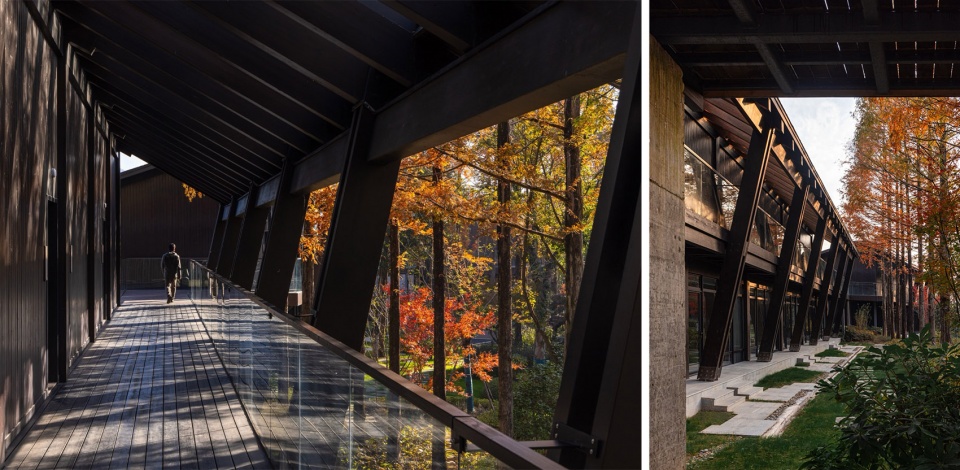
▼桐庐双谷酒店SPA,SPA of the Tonglu Twin-Valley Hotel
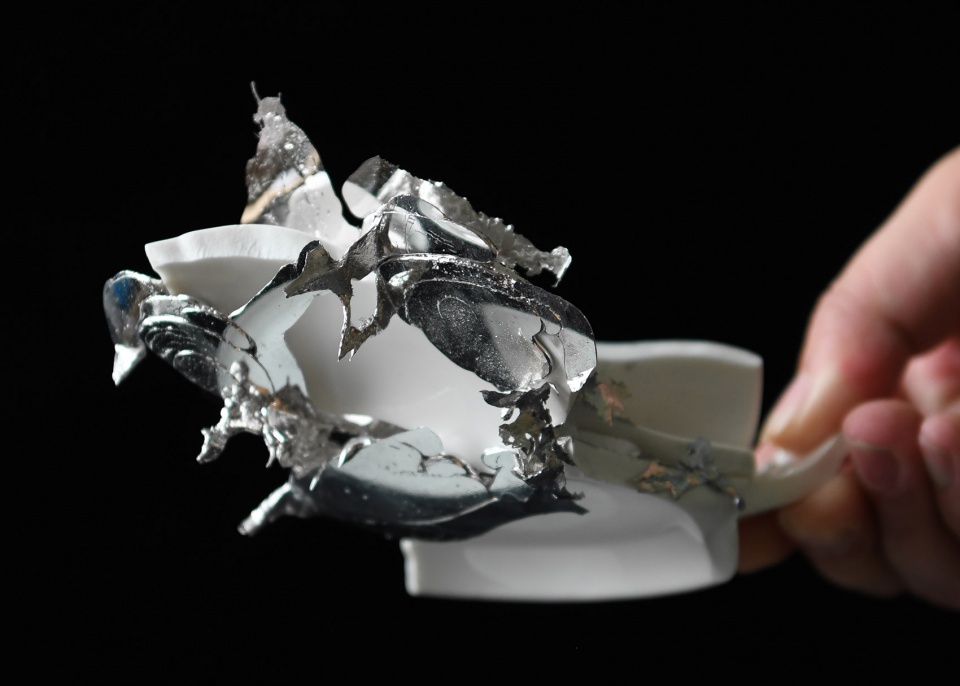
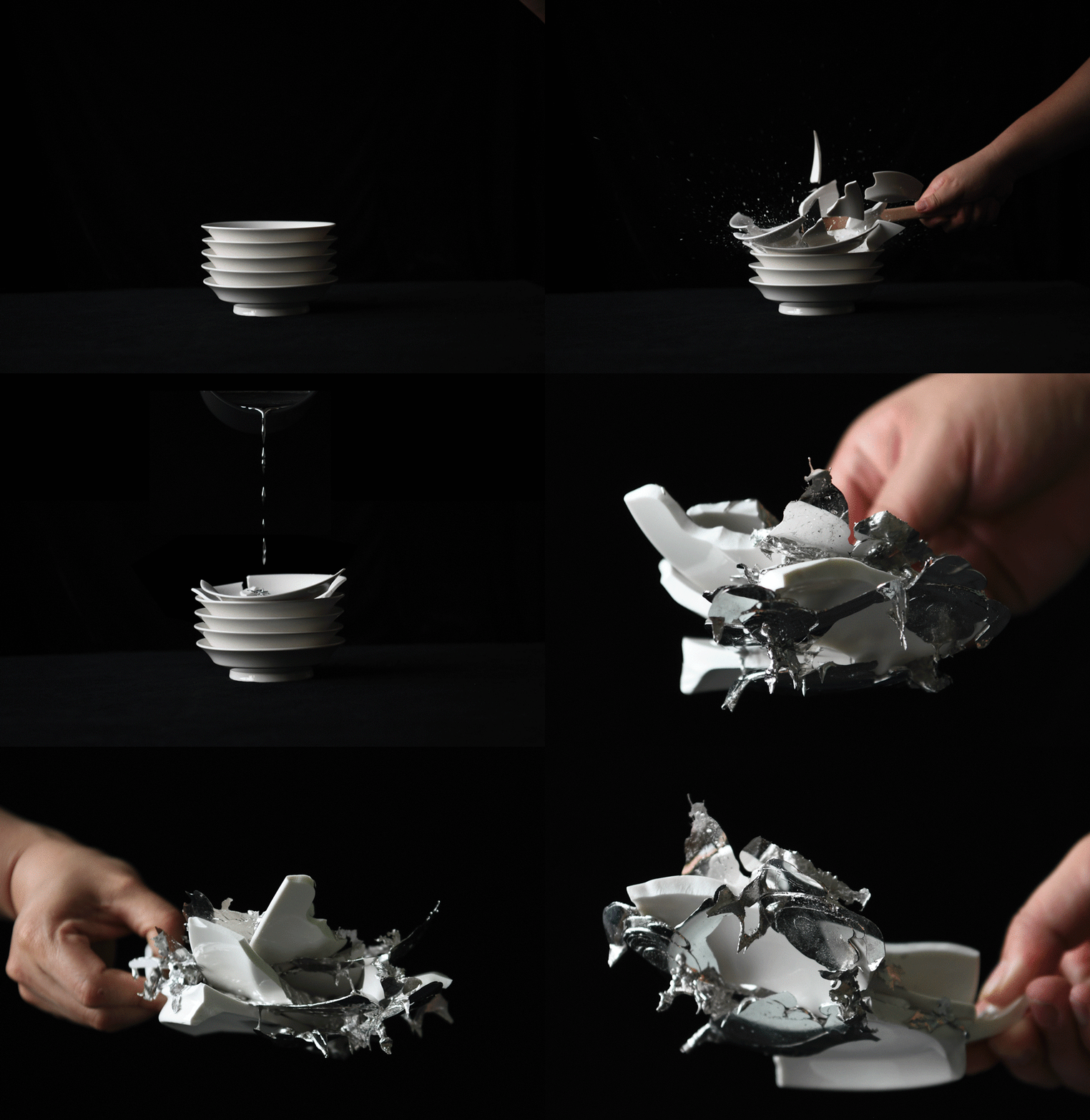
我们总是需要从社会对建筑提出的各种要求中,去寻找建筑生存的空间。这些要求包括各种法规、客户的需求、当代人们生活的需求,以及其背后的商业逻辑等等。基于此,我们进行了一个思想实验:我们将这一系列管制的逻辑看作是一叠叠在一起的盘子,每个盘子上印刻着不同的花纹。这些花纹代表了每一种逻辑之下的管制规则及其具体细节。而我们作为建筑师,就像拿起一把大锤,将这些盘子全部击碎,然后向碎片之间注入液态金属。当金属凝固后,我们再将那些盘子碎片移开,便会看到一个浇铸而成的金属形体。这个形体穿越了各个层次的管制逻辑,同时印刻了每一个层次的花纹,却又不被任何一个单一的管制逻辑所束缚。它穿刺了所有逻辑,最终生成属于自己的形态。我们认为,这就是当代建筑该有的形状。
We always need to find the space in which architecture can exist within the various demands that society places upon it. These demands include regulations, client requirements, contemporary lifestyles, and the underlying logic of commerce, among others. Based on this, we conducted a thought experiment: we imagine these layers of regulatory logic as a stack of plates, each inscribed with different patterns. These patterns represent the rules and detailed constraints embedded within each system of governance. As architects, we are like someone lifting a heavy hammer, shattering all these plates, and then pouring liquid metal into the fragments. Once the metal solidifies, we remove the broken shards of the plates, revealing a cast metallic form. This form passes through all layers of regulatory logic, bearing the imprints of each layer, yet is not bound by any single one of them. It pierces through all systems and ultimately generates its own form. We believe this is the shape that contemporary architecture should take.
▼SpActrum谱观的思想实验,Conceptual experiment by SpActrum
我们并不认为只有建造完成后的最终状态才称得上“形式”(Form);在建造过程中所呈现出的每一个中间状态,我们都视其为具有意义的形式。在这样的视角下,整个建造现场的形式始终在变化,不断为我们提供新的视觉素材。我们认为,建造的这一过程,应当成为建筑师构想最终成品所必须经历的一个阶段,并且应当对最终的成品形态、以及对建筑师构想的内容产生实际的作用。
为了在我们的办公室里迅速地将观察到的要点表达出来,我们重新审视了自己在建筑场地上拍摄的照片,回顾使用了哪些材料,并主动联系这些材料的生产厂商——那些参与建筑生产过程中材料加工环节的厂商。我们试图寻找这些材料与我们办公室的物理条件、物理需求以及视觉表达之间的结合点。
We do not believe that “form” exists only in the final built state. We regard every intermediate state that emerges during construction as a meaningful form in itself. From this perspective, the form of the construction site is constantly changing, continuously providing new visual material. We believe that the construction process itself should become a necessary stage in the architect’s conception of the final building, and that it should actively inform both the final architectural outcome and the content of the design thinking.
In order to quickly express key observations within our office, we revisited photographs taken on site, reviewed the materials we had used, and proactively contacted the manufacturers of those materials—those involved in the fabrication stages of the construction process. We attempted to identify points of connection between these materials and the physical conditions, spatial needs, and modes of visual expression within our office.
▼SpActrum谱观上海办公室,SpActrum Shanghai Office
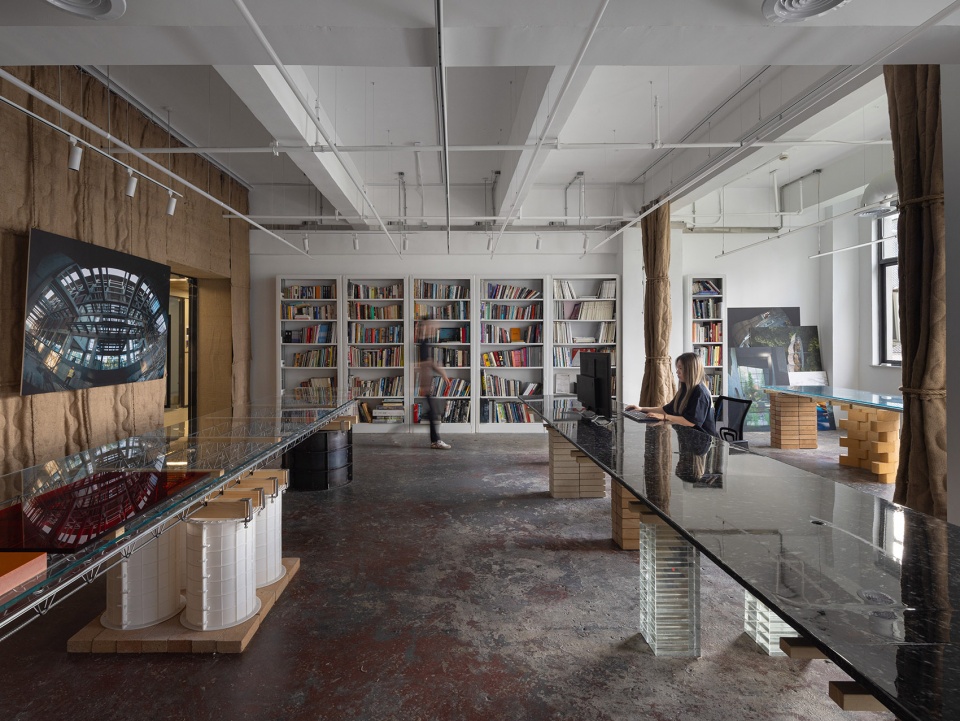
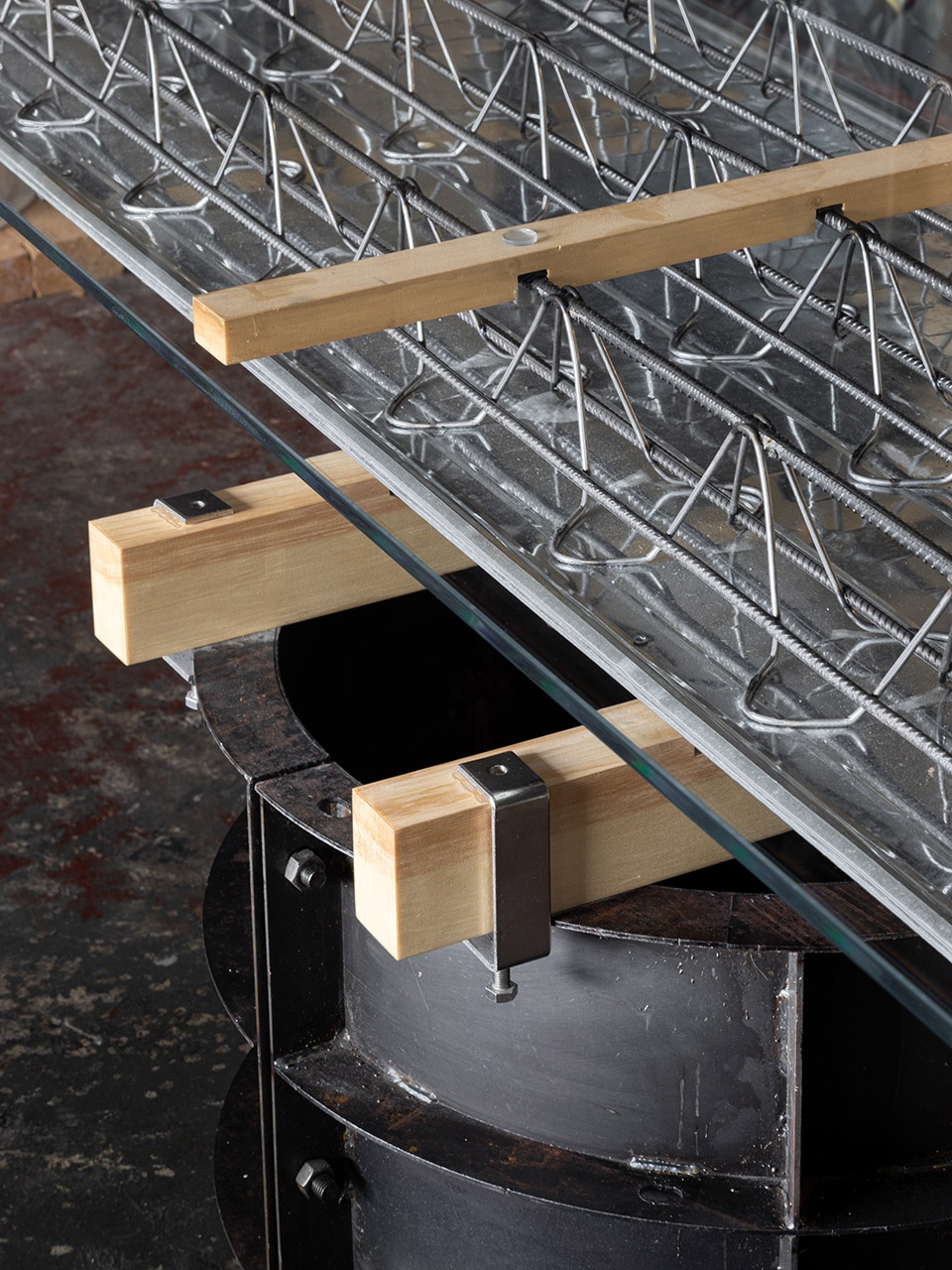
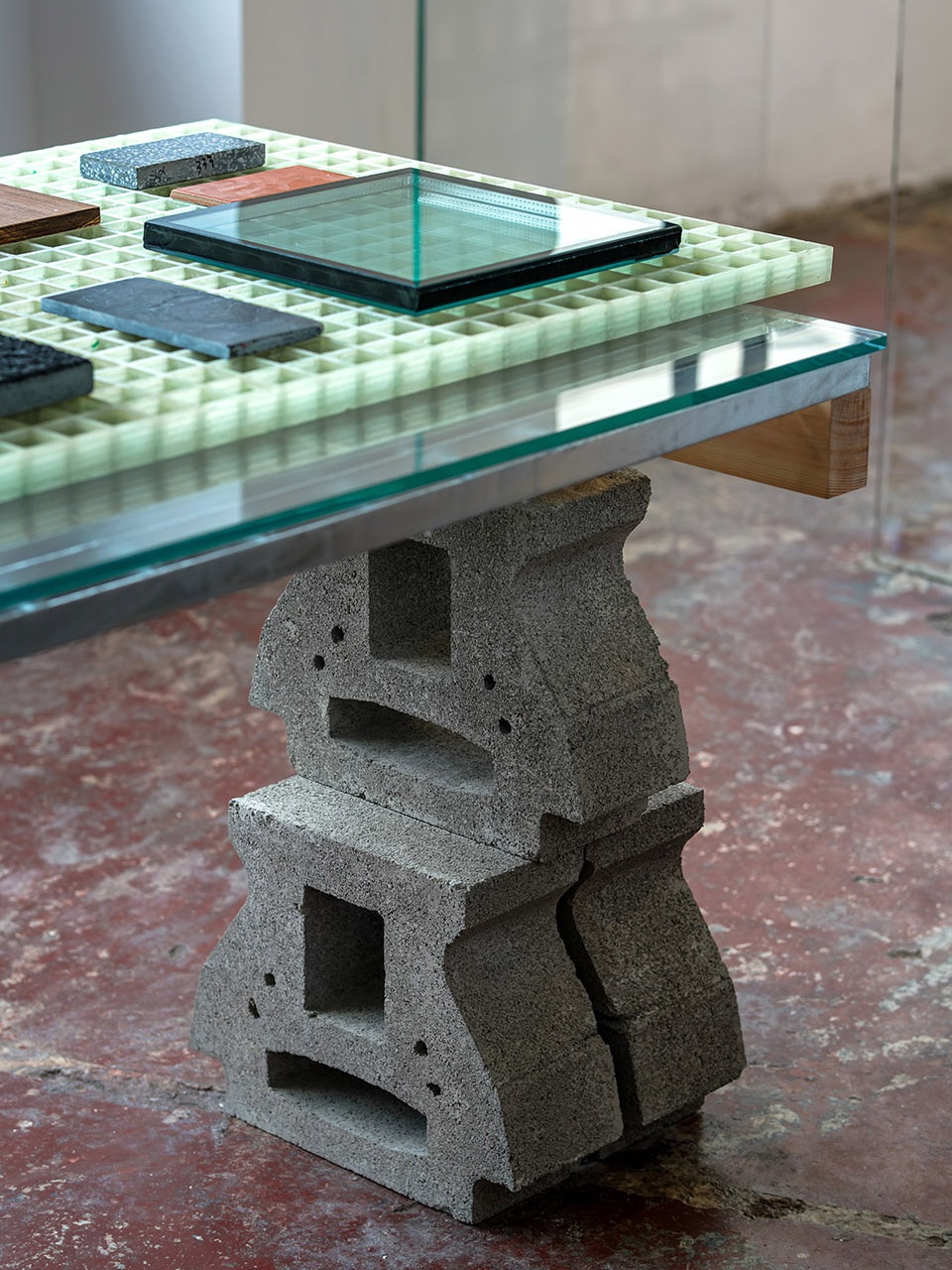
以我们办公室内的桌子为例,它的桌面材质被称为“砖机托板”。砖机托板是烧制砖块时使用的材料,它是一种玻璃纤维板,主要作用是在多层砖之间起到间隔作用。该材料具有防火性能,不会被烧坏。但同时,它也会释放有害物质。我们在办公室设计中发现,如果使用一层树脂将其封装起来,首先可以避免人体直接接触,从而保障安全性;其次,封装之后,材料内部玻璃纤维所形成的纹理——其丰富程度堪比大理石——便会显现出来。我们认为这是一种非常有意思的材料,因此将其应用于办公空间。而桌子下方的支撑结构,则使用了“楼承板”这种材料。楼承板用于快速浇筑楼面,成品宽度约为60公分。这样一种材料显然具备跨越一定跨距的承载能力。基于这样的思路,我们通过发掘这些材料与办公室物理条件及视觉需求的契合点,最终完成了这个办公空间的设计。
Take our office table as an example. Its tabletop material is called “brick machine pallet board.” This is a fiberglass board used in the firing of bricks, primarily serving as a spacer between layers of stacked bricks. It is fire-resistant and does not burn under high temperatures. At the same time, however, it may release harmful substances. In our office design, we found that by coating this material with a layer of resin, we could first prevent direct human contact and thus ensure safety. Second, once encapsulated, the internal fiberglass texture—whose richness is comparable to marble—becomes visible. We found this to be a very interesting material, and therefore used it in the office space. The supporting structure beneath the table uses another material called “composite floor deck.” This material is used for rapid casting of floor slabs, with a standard width of about 60 centimeters. It clearly possesses load-bearing capacity across certain spans. Based on this approach, we ultimately completed the design of the office space by identifying points of convergence between these materials and the physical conditions as well as visual requirements of the workspace.
▼SpActrum谱观上海办公室 – 工作台与展桌,SpActrum Shanghai Office – the work table and the exhibition table
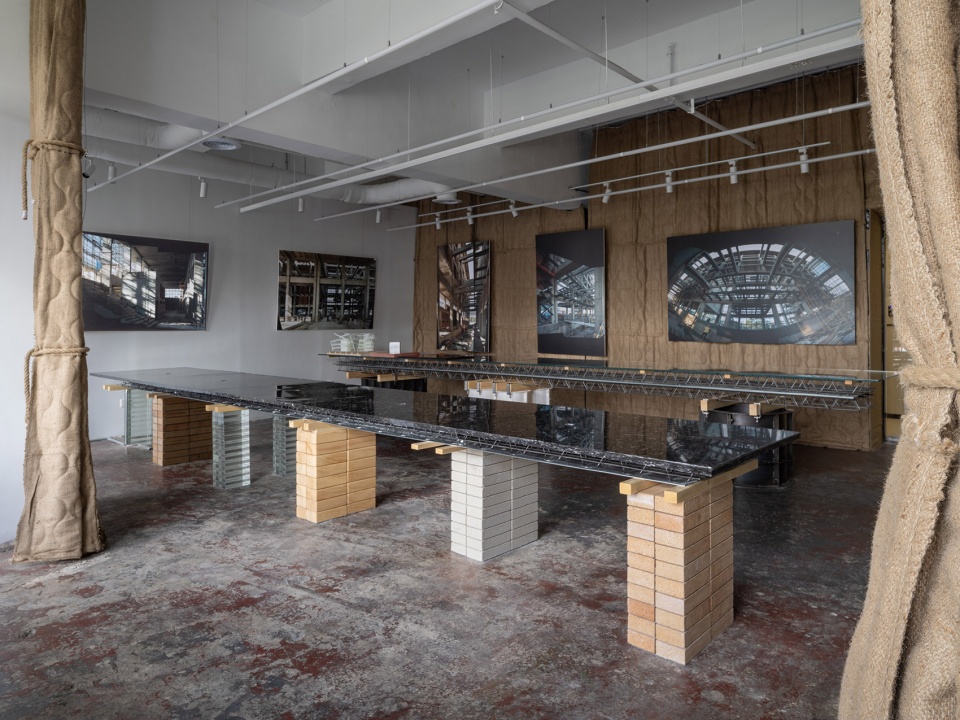
▼展桌细节与工作桌台面花纹与地面机理的对比,Exhibit table detail & Comparison of work table top pattern with floor mechanism
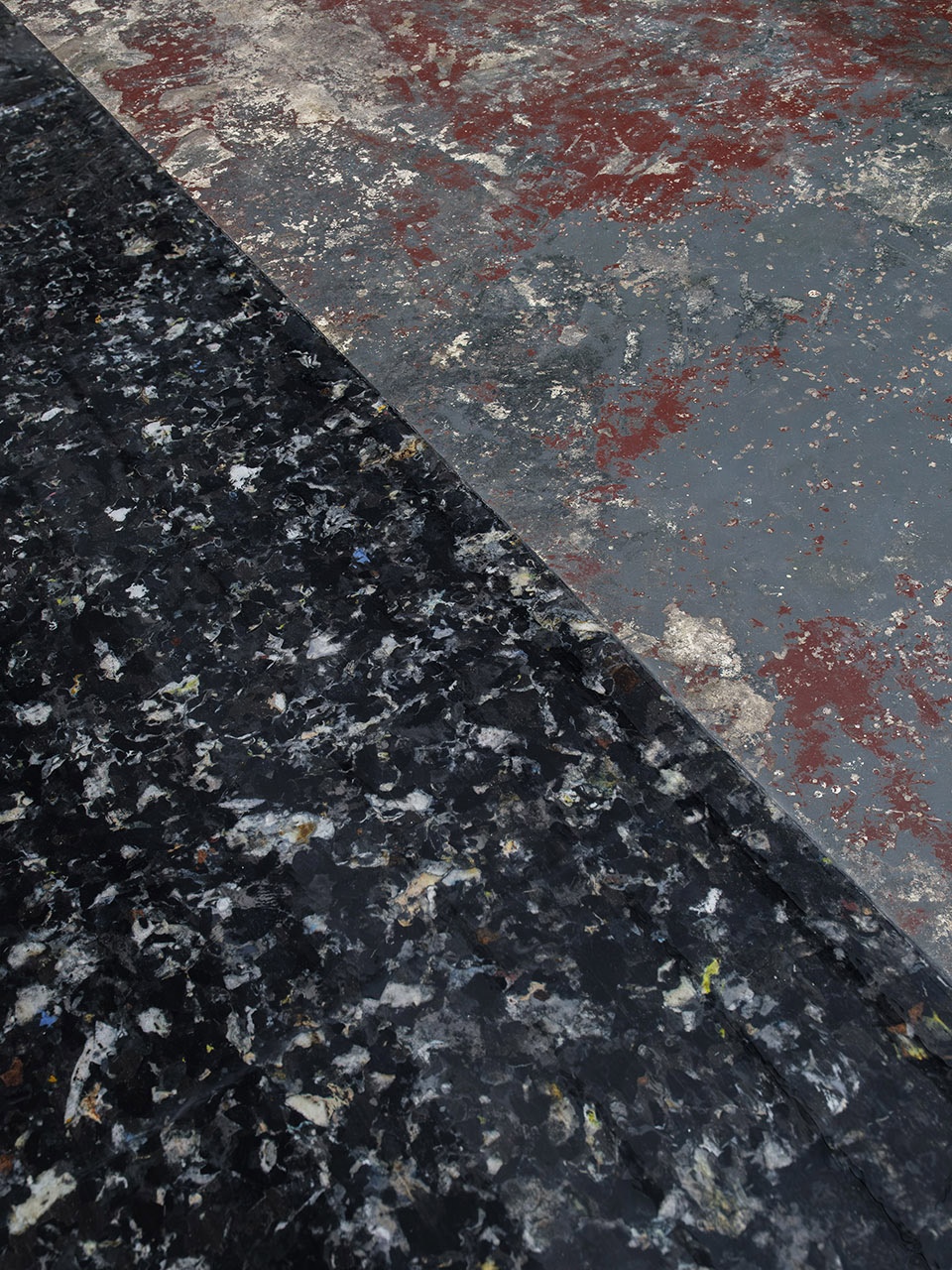
此外,在整个打造我们办公室的过程中,我们实际上对它进行了一次“考古”。这个想法与我们当时在柴场弄项目中“秘密花园”的理念有些相似。我们保留了原来所有的痕迹——包括所有人们使用过的痕迹,以及之前装修的痕迹。你会看到有些地方贴着瓷砖,有些地方瓷砖已经剥落。贴瓷砖的地方显然原来是卫生间或厨房。我们希望让人们看到,每个地方的这些痕迹,都在诉说着一个事实:我们今天所存在的这些空间,很多时候都是许多个年代下,人们曾经生活过的地方。
In addition, during the entire process of creating our office, we actually conducted a kind of “archaeology” on it. This idea is somewhat similar to the concept of the “secret garden” in our Chai Chang Nong project at that time. We preserved all the existing traces—including the marks left by people’s use over time, as well as traces from previous renovations. You can see that in some areas tiles are still attached, while in others they have peeled off. The places where tiles remain were clearly once bathrooms or kitchens. We want people to see that these traces in each space are telling a simple truth: many of the spaces we inhabit today are, more often than not, places that have been lived in by multiple generations across different periods of time.
▼独立办公空间家具细部,Furniture detailing for freestanding office space
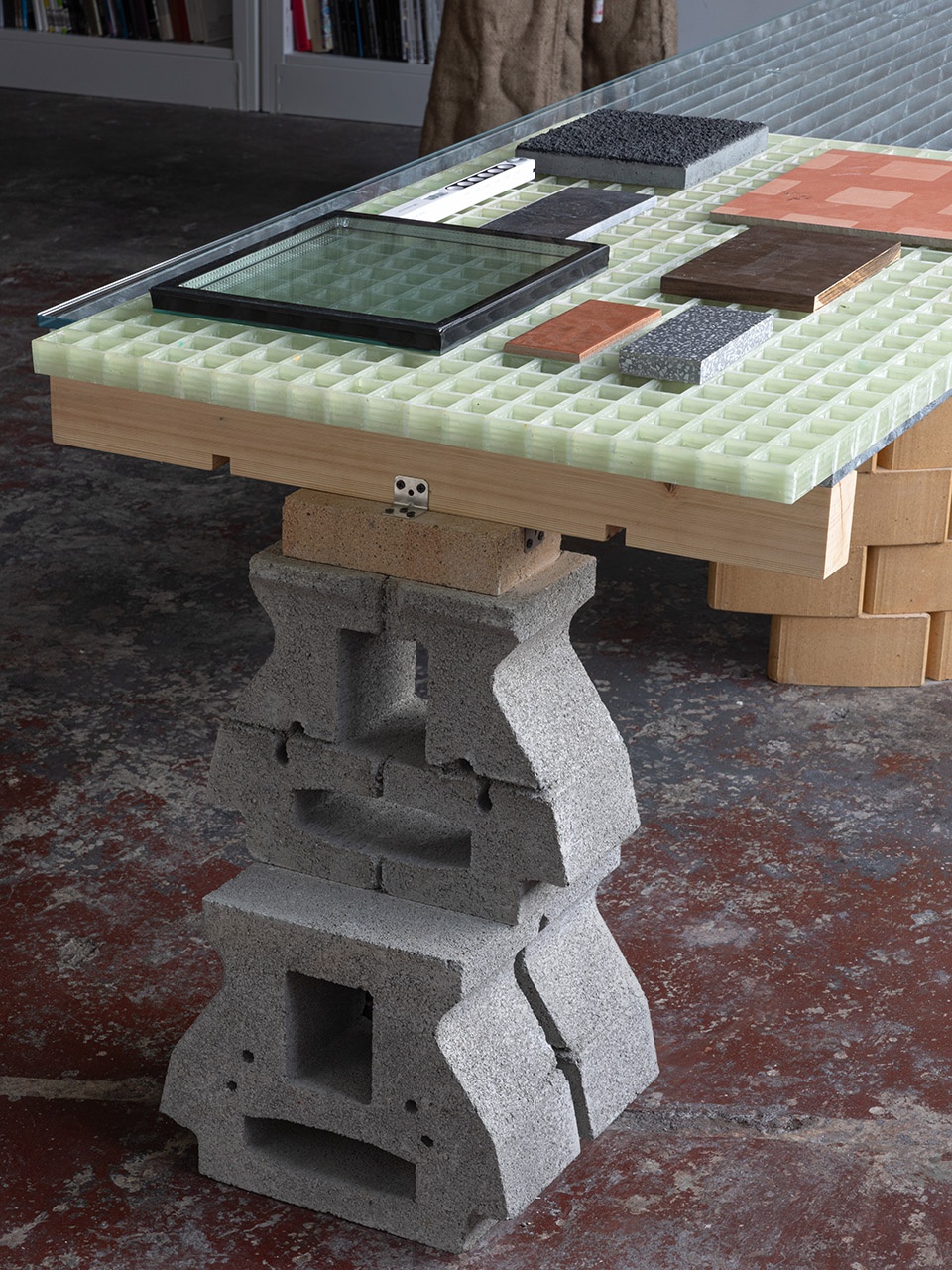
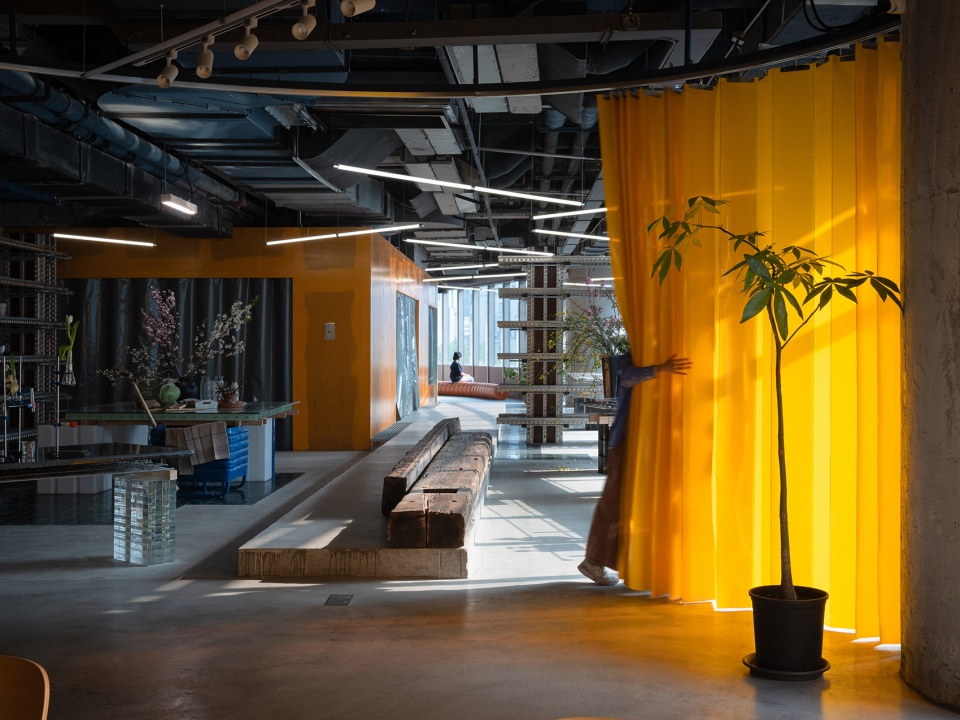
我们现有的空间在一定程度上可以被称为“建造的风景”。它所对应的,是建筑师在创造与建造层面的实践,因此我们选用的都是建筑工地的材料。因此,除了“建造的风景”之外,我们还希望体验“消费的风景”。于是在889的设计中,我们找到了一些这样的材料。例如,一进门处上方悬挂的蓝色吊灯,是用冷却塔中的冷凝格栅制作而成的。。再比如黄色帘子,它实际上是在工厂生产中用于快速形成隔断的材料。此外,还可以看到一些支座,它们是用大型塑料桶制成的。由此可以看到,我们在设计中大量运用了这些来自消费行为背后的支撑性材料。我们希望将一个清醒、不加伪装的世界展现给人们——这也秉承了我们前面所说的“深邃的真实性”的一系列理念。
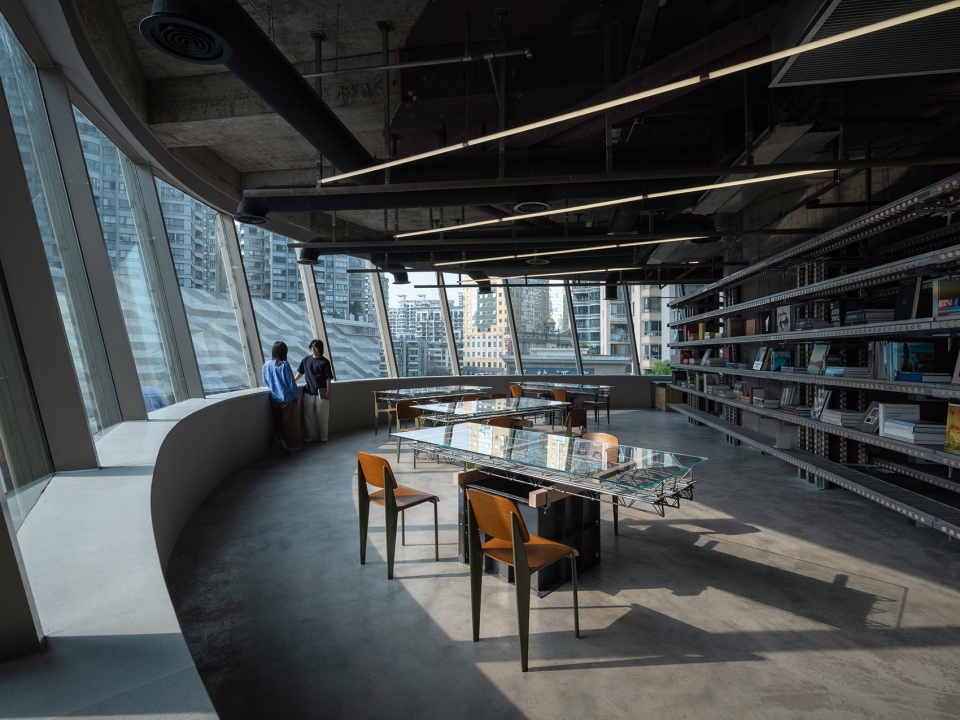
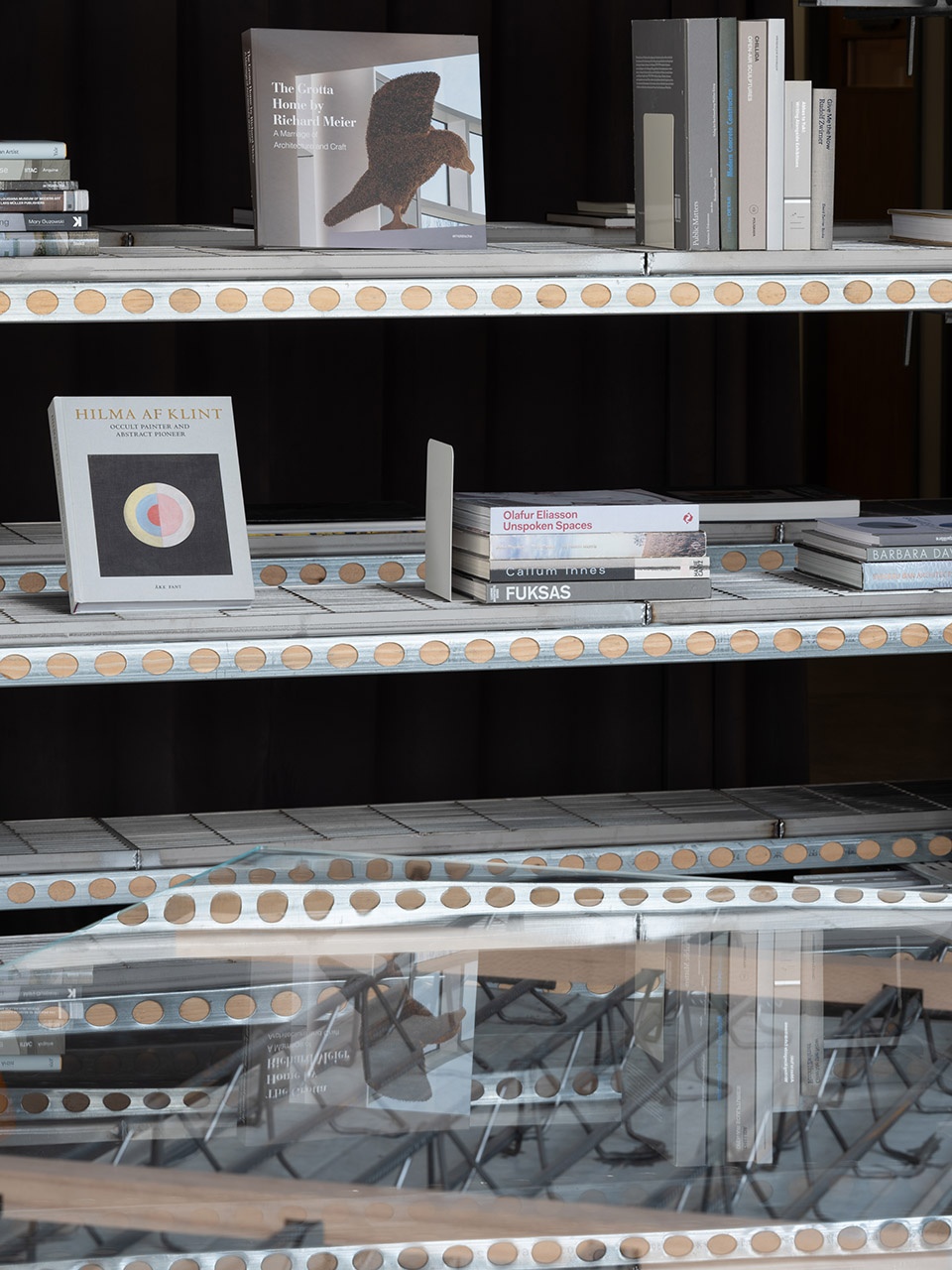
我们所理解的“肌理”,并不是指刻意做出某种漂亮的表面效果,而是所有那些不可或缺的复杂元素在相互交织之后自然形成的样子,这便是我们所说的“肌理”。这种肌理在很大程度上并不仅仅指材质的纹理。例如,在我们办公室里,你所看到的书架、各种构件,以及它们上面所呈现出的纹理,实际上都是我们这个时代、在当前技术条件下,以及当下人们的生产工艺与生产关系中所确定的一种社会肌理。
Our existing spaces can, to some extent, be described as a “constructed landscape.” What this corresponds to is the architect’s practice at the level of creation and construction, which is why we primarily use materials from construction sites. Beyond this “constructed landscape,” however, we also want to experience a “consumed landscape.” In the design of 889GLO Art Space, we therefore identified a number of such materials. For example, the blue pendant lamp at the entrance is made from condenser grilles taken from cooling towers. Another example is the yellow curtain, which is actually a material used in industrial production lines to rapidly form partitions. We can also see certain supports made from large plastic barrels.
In this way, our design makes extensive use of these infrastructural materials that lie behind processes of consumption. We aim to present a clear, unembellished world to people—an approach consistent with the series of ideas we previously described as “Profound Reality.” What we understand as “texture” does not refer to deliberately crafted surface effects, but rather to the way all these indispensable and complex elements naturally interweave. This is what we call texture. In many ways, this texture is not merely about material grain. For instance, in our office, the bookshelves, various components, and the patterns they carry are all, in fact, expressions of our time—shaped by current technological conditions, as well as the production methods and production relations of contemporary society.
▼889GLO艺术空间,上海,889GLO Art Space, Shanghai
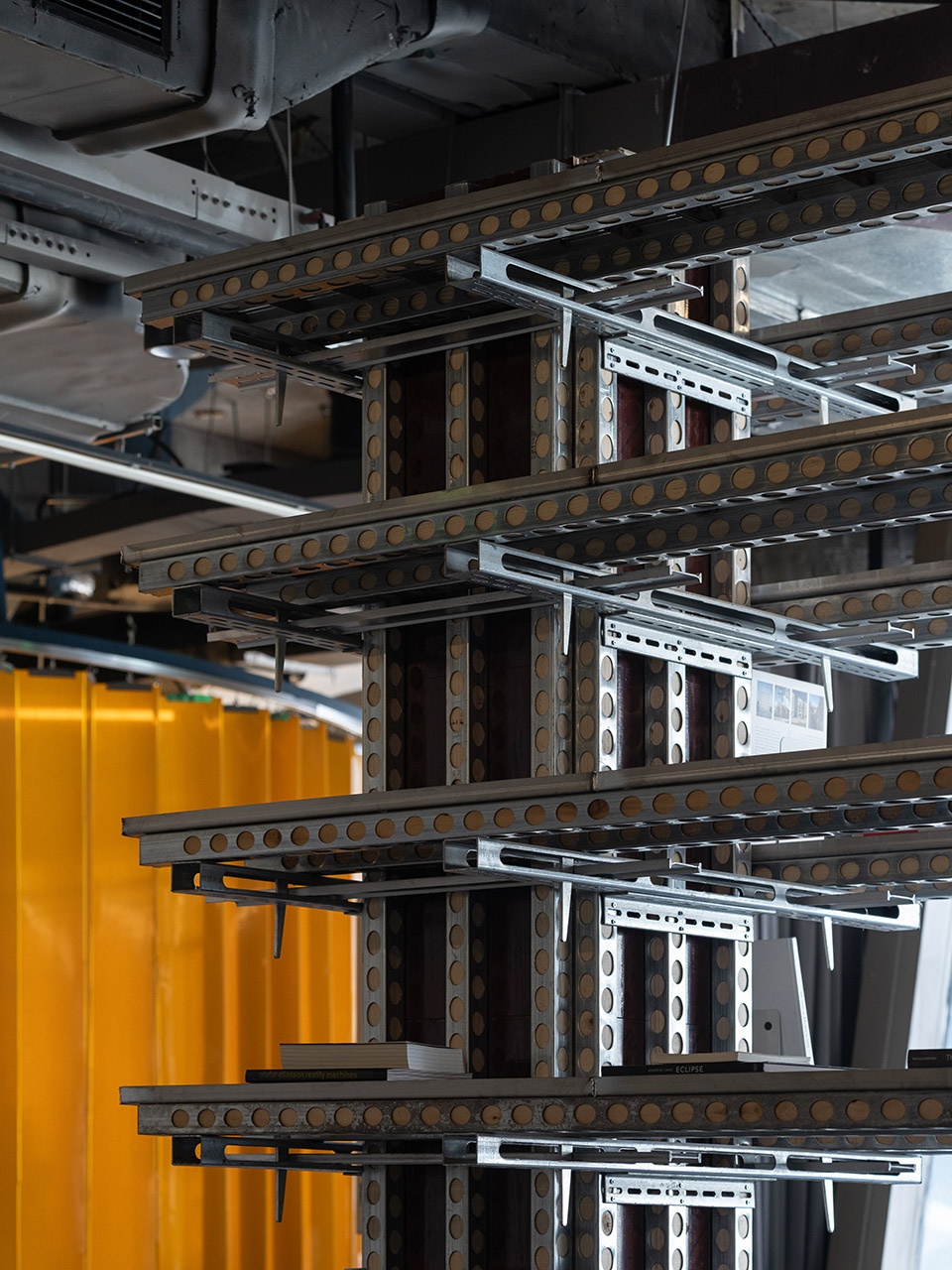
▼10.8米长的由混凝土模具集成系统搭建的书架 ,10.8 m long bookshelf constructed from an integrated system of concrete moulds
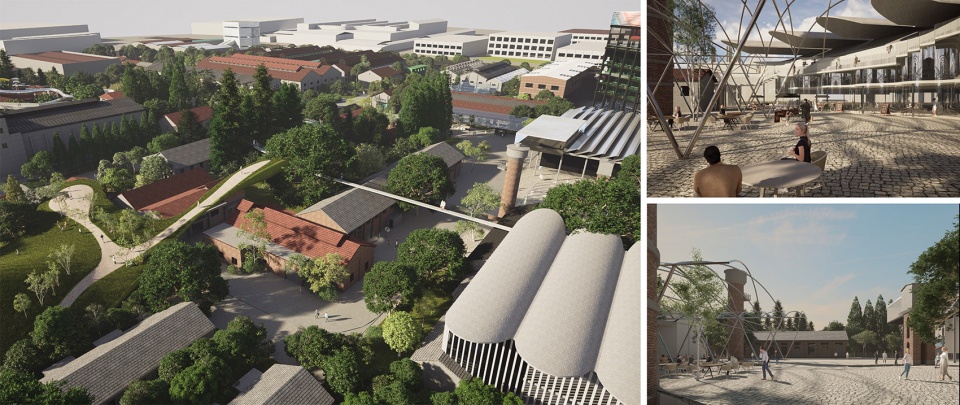
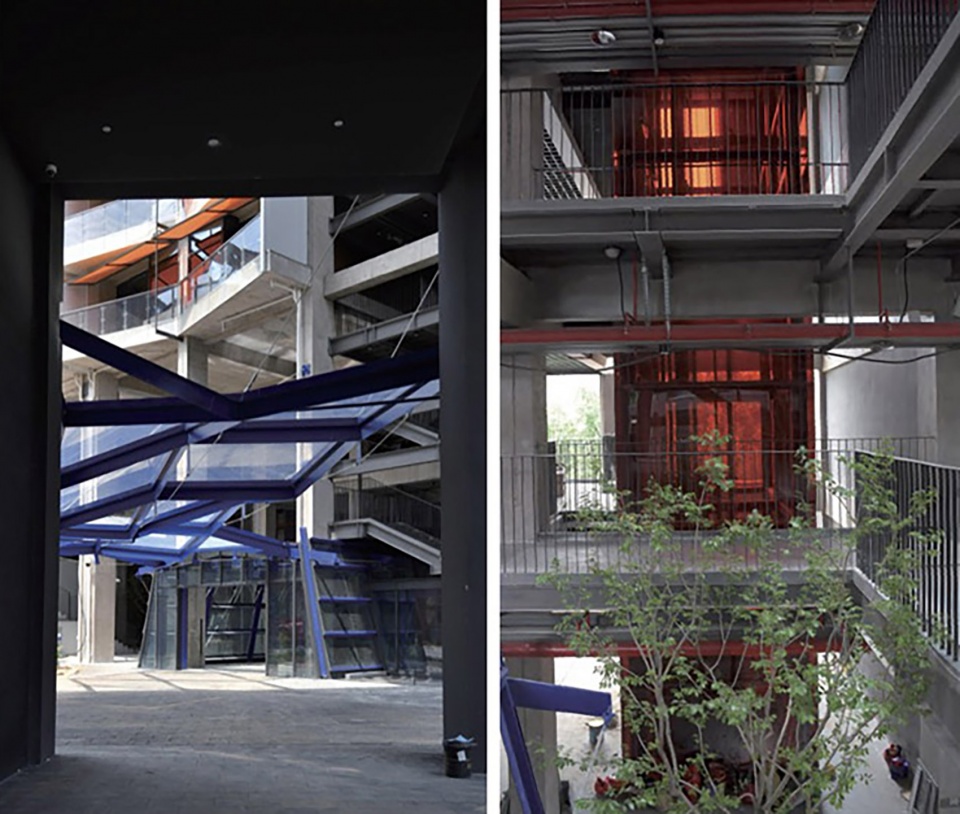
金华项目是一个老工业厂区再利用的一部分,因其地理位置邻近横店,被用作影视拍摄基地。包括陈凯歌导演的《志愿军》在内的许多影视作品,都有大量镜头在此取景。厂区始建于20世纪50年代,整体保存较为完整。在厂区的一角,尚有一块空地。因此,我们第一期的计划是在此建设一座酒店建筑,旨在为该地区的旅游发展提供一个支撑节点。整体目标是将这一工业区转型为旅游区。
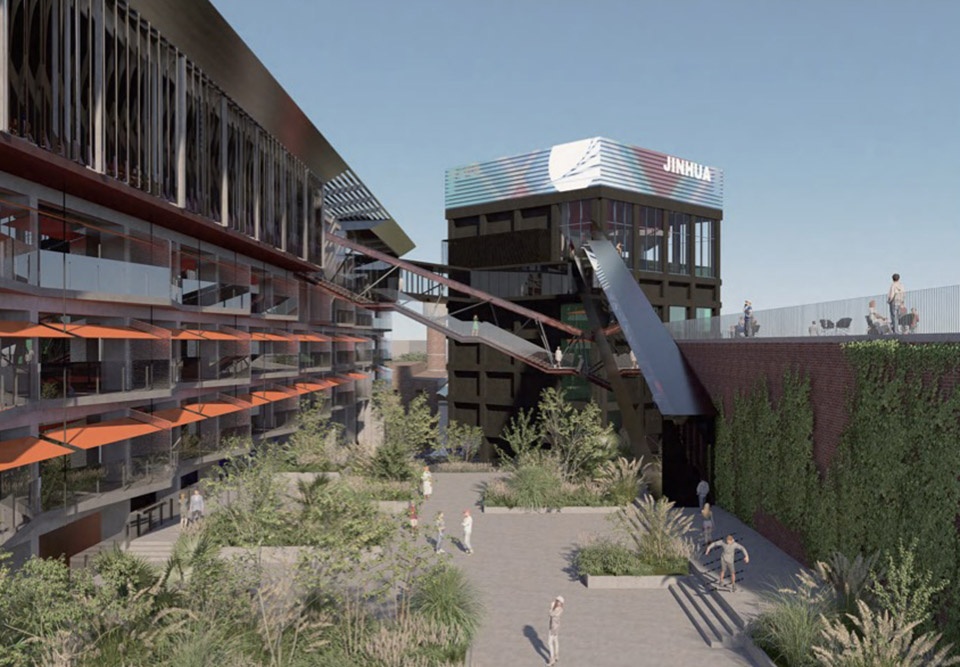
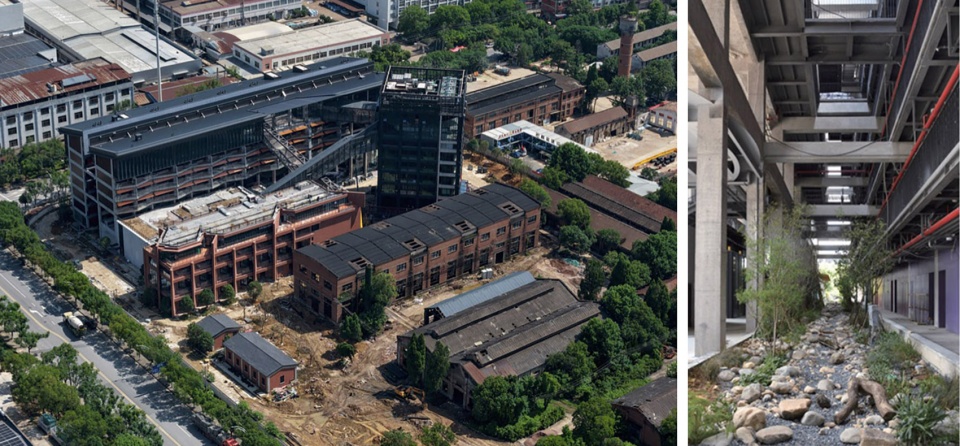
项目结合了工业厂区与精品酒店的功能。我们保留了厂区内原有的大跨度厂房,这些厂房条件非常出色。我们利用厂区一角的一处空地,新建了一座大尺度的酒店建筑。同时,该建筑与周边若干厂房建立了直接联系。其中,我们将一座较高的厂房改造为项目的宴会厅和餐厅。
此外,在紧邻酒店的几个厂房片区中,还包括三座国家级文保水塔。我们在拆除了水塔周边那些对其存在构成威胁的破旧钢棚等设施后,采用新的钢结构恢复了场地的记忆,并将这一区域整体纳入片区规划。我们保留了该片区原始的场地格局,同时加入了新的游乐与体育功能,将部分空间改造为极限运动场、篮球场和网球场。与此同时,厂区内品质最高的一批厂房,我们目前尚未进行改动。我们曾提出一个概念性规划,希望该地区未来的旅游发展方向可以成为一个“机械嘉年华”式的度假地。因此,我们将这些厂房视为“机械的孵化器”,持续从厂房中输出新的内容。
The Laotangchi Industrial Cultural Park project in Jinhua is part of the adaptive reuse of an old industrial complex. Due to its proximity to Hengdian, the site has been used as a film production base. Many films and television works, including director Chen Kaige’s The Volunteers, have shot extensive scenes here. The industrial complex was originally built in the 1950s and remains relatively well preserved. At one corner of the site, there is still an empty plot of land. Our first-phase plan was therefore to build a hotel here, intended to serve as a supporting node for the area’s tourism development. The overall goal is to transform this industrial zone into a tourism-oriented district. The project combines the functions of an industrial site and a boutique hotel. We preserved the original large-span factory buildings within the site, which are of excellent quality. On the vacant plot at the corner, we constructed a new large-scale hotel building. At the same time, this building establishes direct connections with several surrounding factory structures. One of the taller factory buildings was converted into the project’s banquet hall and restaurant.
In addition, within the adjacent factory clusters near the hotel, there are three nationally protected historic water towers. After removing deteriorated steel sheds and other structures that threatened their integrity, we introduced new steel structures to restore the spatial memory of the site and integrated this area into the overall masterplan. We preserved the original spatial layout of the site while adding new recreational and sports functions, converting parts of the area into extreme sports facilities, basketball courts, and tennis courts. Meanwhile, the highest-quality factory buildings within the site have not yet been altered. We previously proposed a conceptual vision suggesting that the future tourism development of this area could become a kind of “mechanical carnival” resort. In this sense, we treat these factory buildings as “incubators of machinery,” continuously generating new content from within the industrial fabric.
▼金华老汤齿工业文创园区有机更新改造(二期)策划,Laotangchi Industrial Cultural Park Organic Regeneration Plan Phase II
▼金华老汤齿工业文创园精品酒店,Laotangchi Industrial Cultural Park Boutique Hotel
___________
关于材料
About Materials
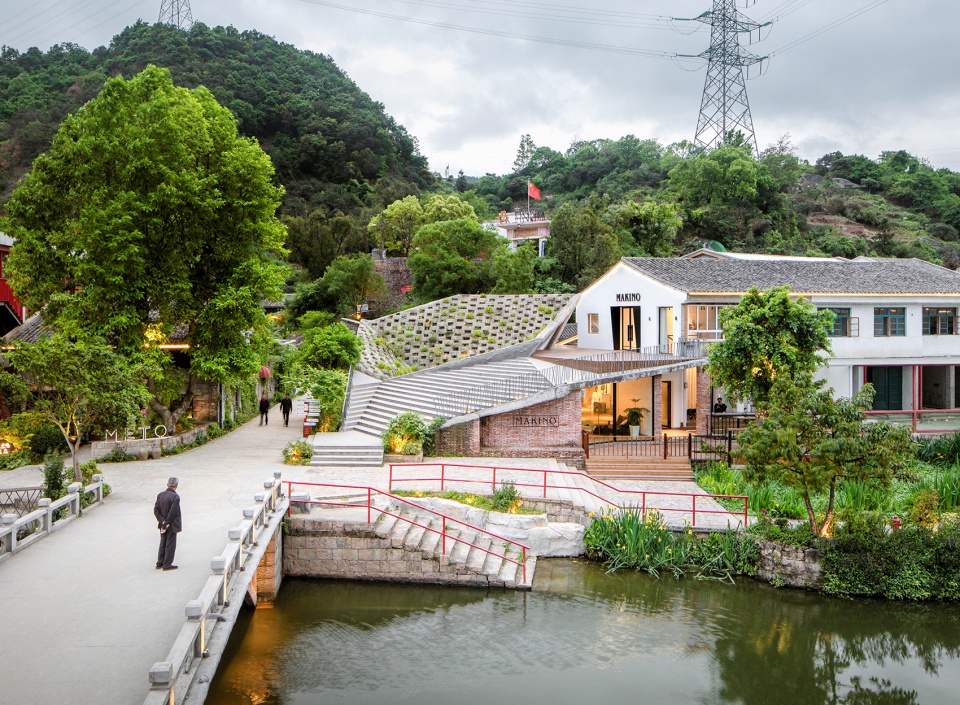
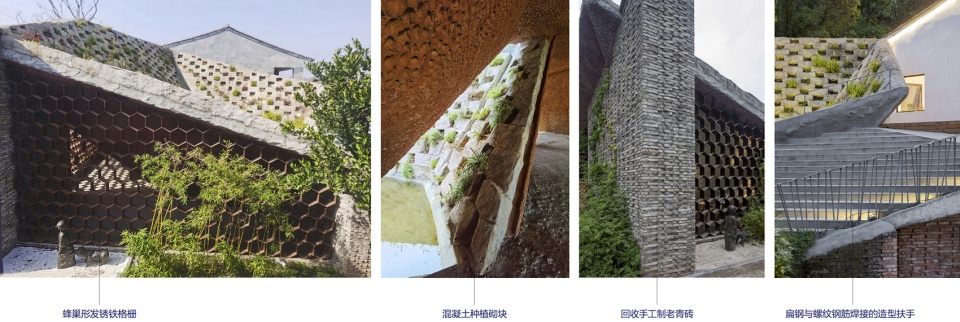
我们倾向于将传统材料平等地视作材料本身,不会固守所谓的现代主义教条,而是回归到问题本身。同时,我们将每一种材料还原到其基础的几何特征,以及这些几何特征所带来的感受。例如,瓦片本身具有一定的弧度;而现代替代瓦片的材料,如石棉瓦、油毡瓦,以及铝镁锰屋面板等,我们所关注的是它们各自带来的视觉特性,以及材料与建造之间的关系。因此,我们看待材料时,都将其还原到材料、几何、色彩等基本层面。当我们认为某个场景下使用传统材料——例如瓦——更为合适时,我们就使用瓦;当我们认为铝镁锰屋面板更为合适时,就使用铝镁锰屋面板;如果混凝土可能更合适,我们也会采用混凝土。这就是我们对待材料的态度。
We tend to regard traditional materials simply as materials in their own right, without adhering rigidly to so-called modernist doctrines, but instead returning to the problem itself. At the same time, we reduce each material to its fundamental geometric properties and the sensory experiences these properties produce. For example, roof tiles inherently have a certain curvature; while modern substitutes for tiles—such as asbestos cement sheets, bituminous shingles, or aluminum–magnesium–manganese roofing panels—are understood in terms of their respective visual characteristics and the relationship between material and construction. Therefore, when we consider materials, we always bring them back to basic dimensions such as materiality, geometry, and color. When we determine that a traditional material like tile is more appropriate for a given context, we use tile; when aluminum–magnesium–manganese roofing panels are more suitable, we use those; and if concrete is more appropriate, we will adopt concrete as well. This is our attitude toward materials.
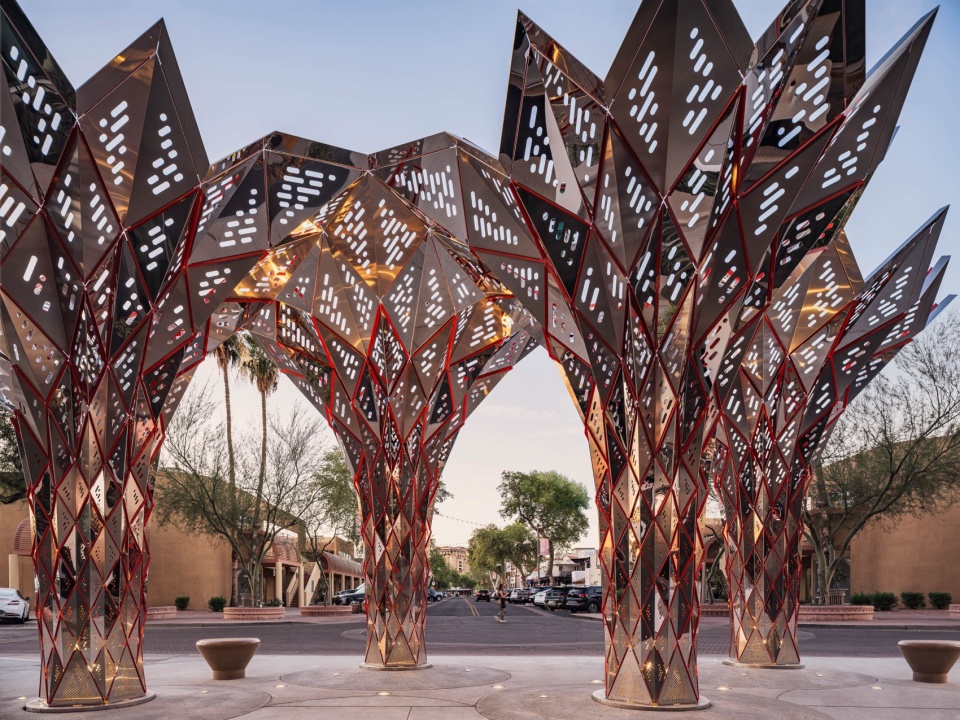
▼山根之花,温州,Shangen Blossom Pavilion, Wenzhou
我喜欢钢结构的原因有两个:首先,它是一种清晰的结构;其次,它具有很强的组合逻辑。此外,钢结构的造型能力远超其他结构形式——这得益于它的跨度能力,以及自重轻与跨度大之间的良好关系。与混凝土结构不同,在混凝土中如果倾斜角度稍大,就会变得很不合理;而在钢结构中,倾斜角度可以大得多,也更容易实现斜向支撑。有时,如果能够与其他斜向支撑之间形成三角形关系,那会是一个有利的条件。我们在这些方面有很多可探索的空间。关于木结构,我们认为其原理与钢结构基本相同,只是钢材的抗拉能力更强,而木材则主要结合抗压与抗拉性能,不易受扭转等力的影响——这些力主要通过节点来处理。
I have two main reasons for my preference for steel structures. First, it is a structurally legible system; second, it has a strong combinatorial logic. In addition, steel offers far greater formal capacity than most other structural systems—thanks to its spanning ability and the favorable relationship between light self-weight and large spans. Unlike reinforced concrete, where even a slight inclination quickly becomes inefficient or unreasonable, steel allows much steeper angles and makes inclined bracing much easier to achieve. In some cases, when these inclined members can form triangular relationships with one another, it becomes an advantageous structural condition. There is considerable room for exploration in these directions. As for timber structures, we consider their principles to be fundamentally similar to those of steel. The difference lies in material performance: steel has greater tensile strength, whereas timber combines both compressive and tensile behavior and is less susceptible to torsion and similar forces—these are primarily resolved through the joints.
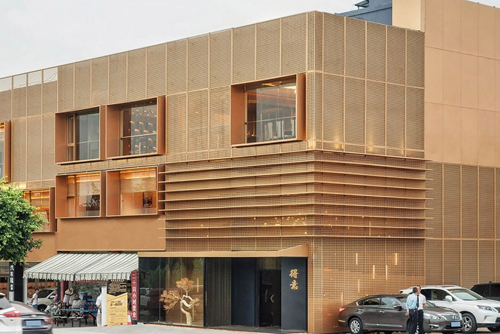
▼JLW558艺术家住宅,JLW558 ARTIST HOUSE
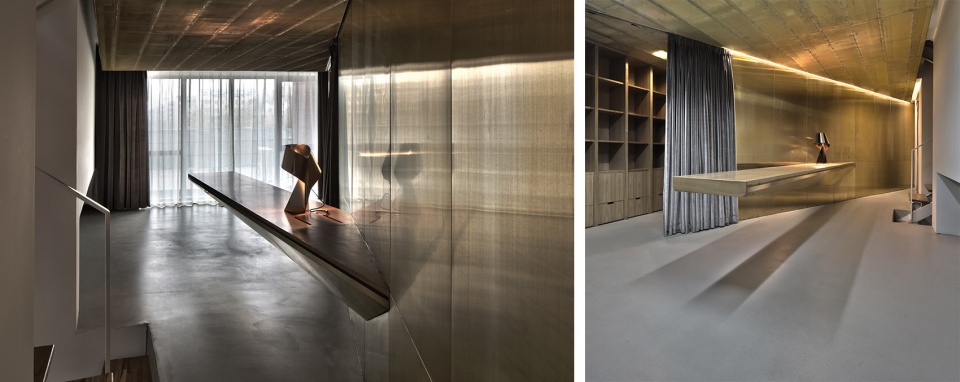
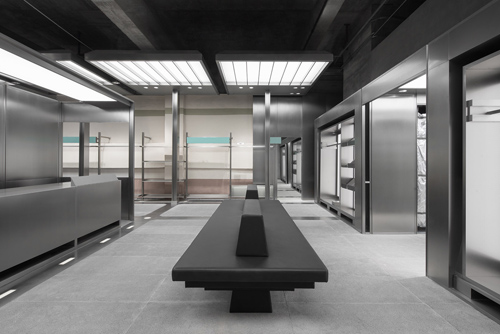
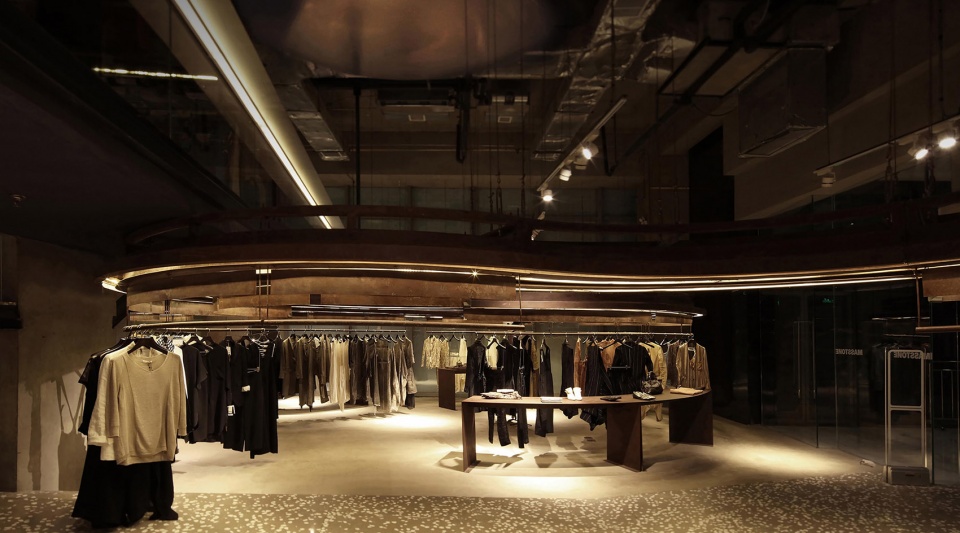
▼MASSTONE国际品牌集合店,MASSTONE Fashion Boutique
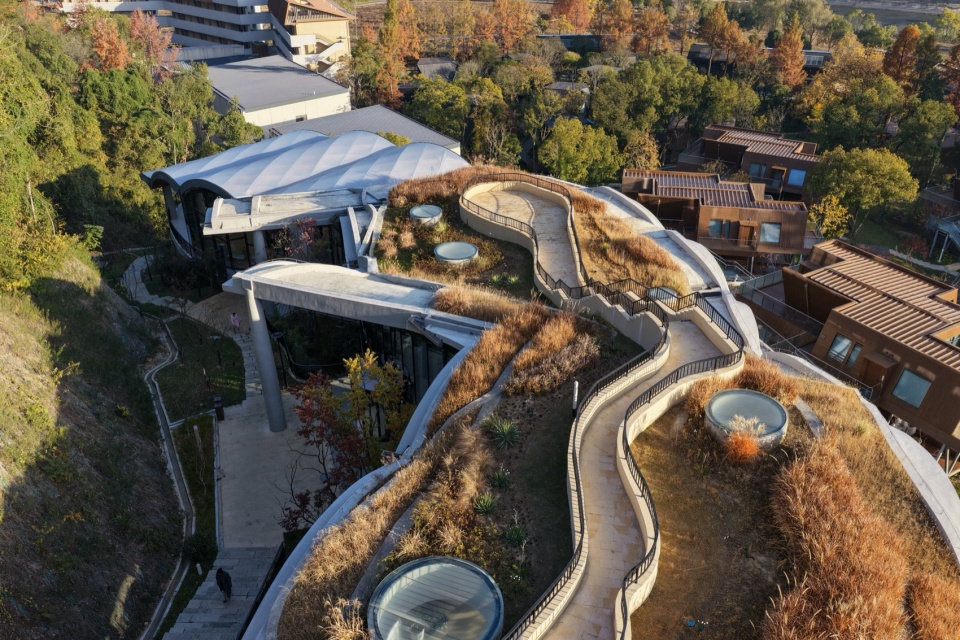
需要说明的是,我们秉持“深邃的真实性”这一理念,观察到当今社会的一个显著特征就是混合与不纯粹。因此,在我们的许多建筑中,结构往往是多种体系的组合。例如,金华项目以混凝土作为主结构体系,钢结构作为次要结构体系,用于更具表现性的内部构件以及连接的廊道——这些部分都是通过钢结构向外挑出的,从而形成另一个层次的特点。在桐庐项目中,由于项目位于山地,混凝土相对便于运输到各个位置,因此我们采用了部分混凝土结构。在桐庐项目的大堂中,我们希望做出属于我们这个时代的拱结构——不仅在形式上通过几何操作使其呈现出碎裂、飞动的感觉,打破传统拱带来的稳定,经典的刻板印象属性,同时也在材料上进行了混合。木拱部分采用木梁之间加设钢节点的方式连接,形成的木质拱结构具有透光、轻盈、暖色调的特点;而混凝土部分则是冷色调、沉重、密实、不透光的体系。我们将这两者完全交织在同一座建筑之中。
It should be noted that we operate with the concept of “Profound Reality.” One clear condition of contemporary society is hybridity and impurity. As a result, many of our buildings employ multiple structural systems in combination. For example, in the Laotangchi Industrial Cultural Park project, reinforced concrete serves as the primary structural system, while steel is used as a secondary system for more expressive interior components and connecting corridors—elements that are cantilevered outward through steel construction, forming another layer of spatial articulation. In the Tonglu project, due to its mountainous context, concrete is relatively easy to transport to various points on site, so we adopted it in parts of the structure. In the lobby of the Tonglu project, we aimed to create a kind of arch structure belonging to our time—not only through geometric operations that give it a fragmented and dynamic sense of motion, break the stability brought by traditional arches and the inherent stereotypical attributes but also through material hybridity. The timber arch is constructed with steel nodes inserted between wooden beams, producing a structure that is translucent, lightweight, and warm in tone. In contrast, the concrete portions are cold, heavy, dense, and opaque. These two systems are fully interwoven within a single building.
▼桐庐双谷酒店大堂,Lobby of Tonglu Twin-Valley Hotel
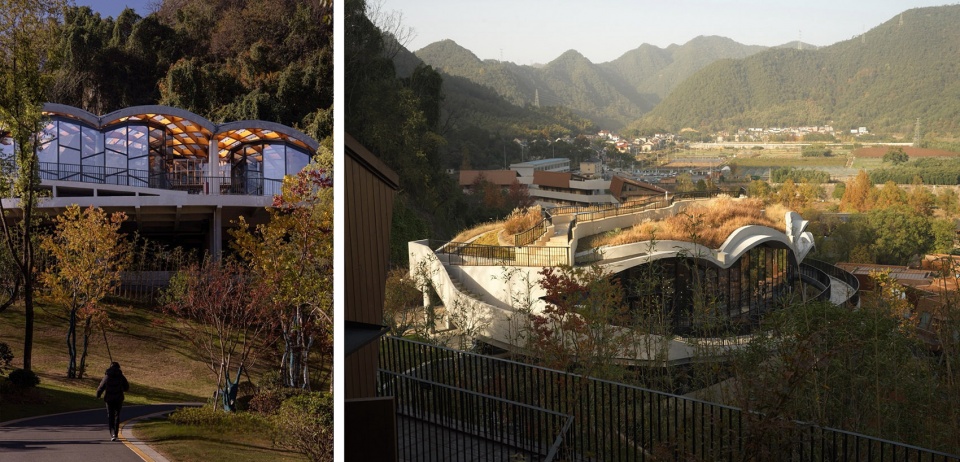
▼M2培训中心,杭州,M2 Training Centre, Hangzhou Zhejiang
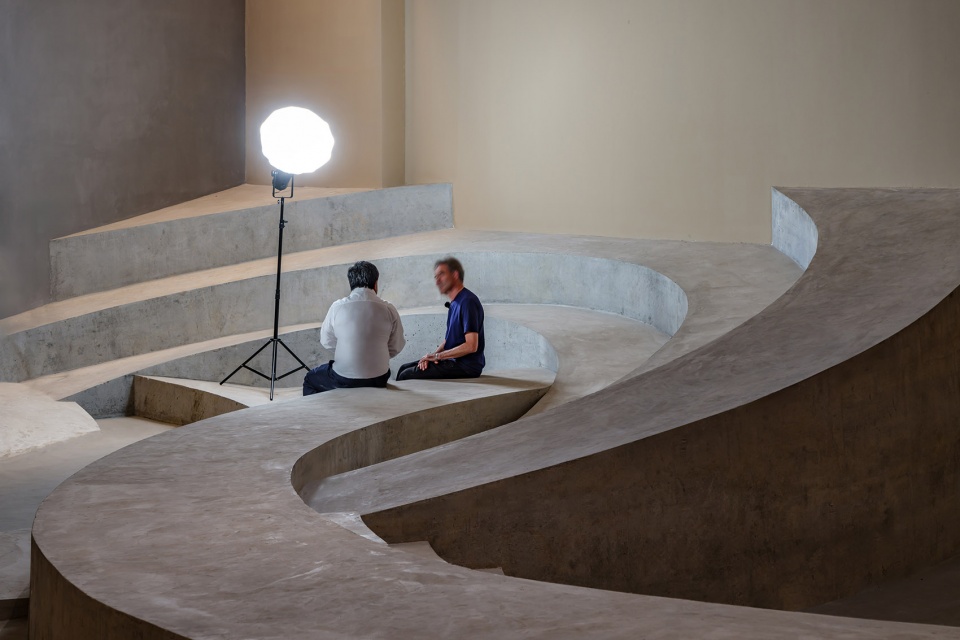
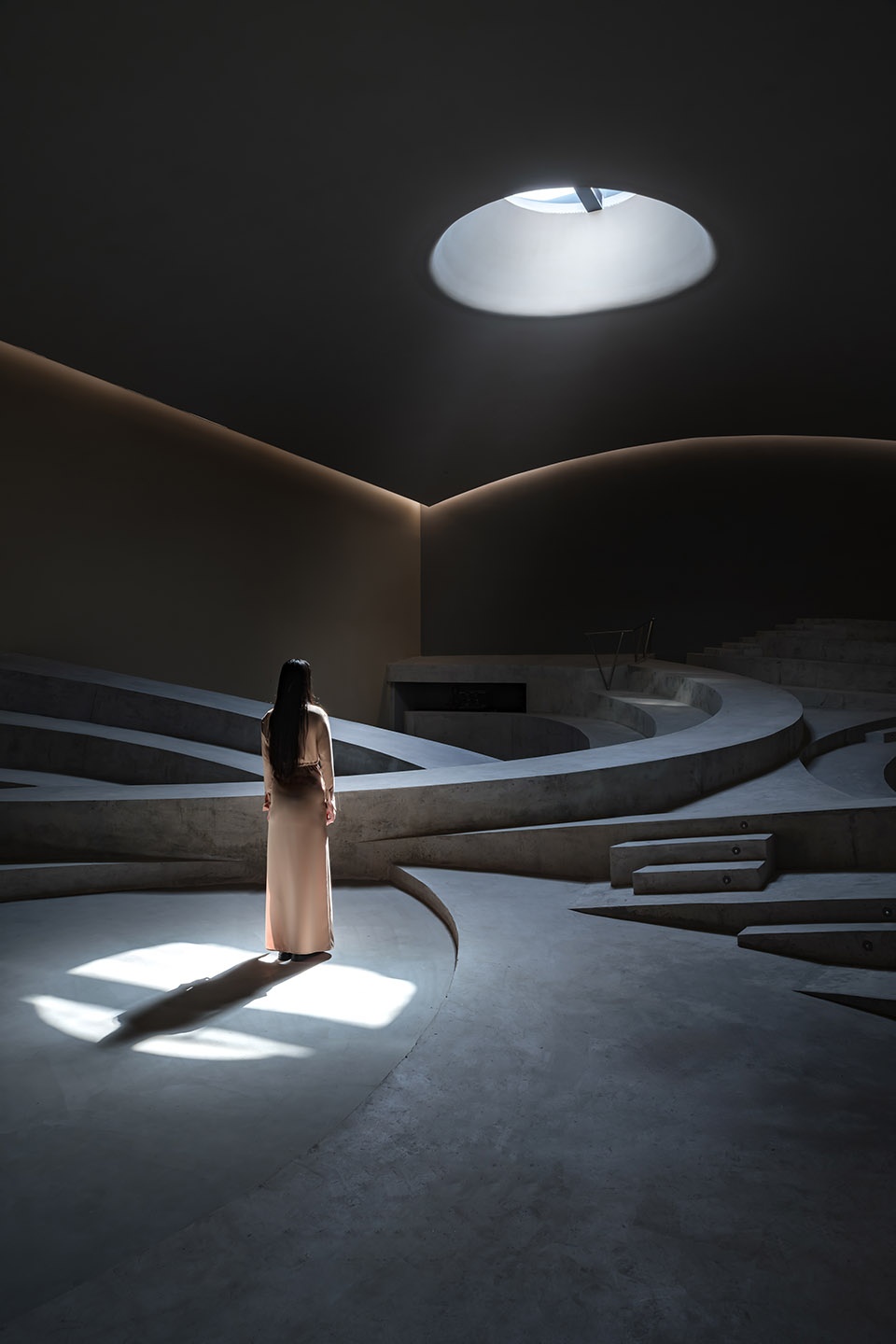
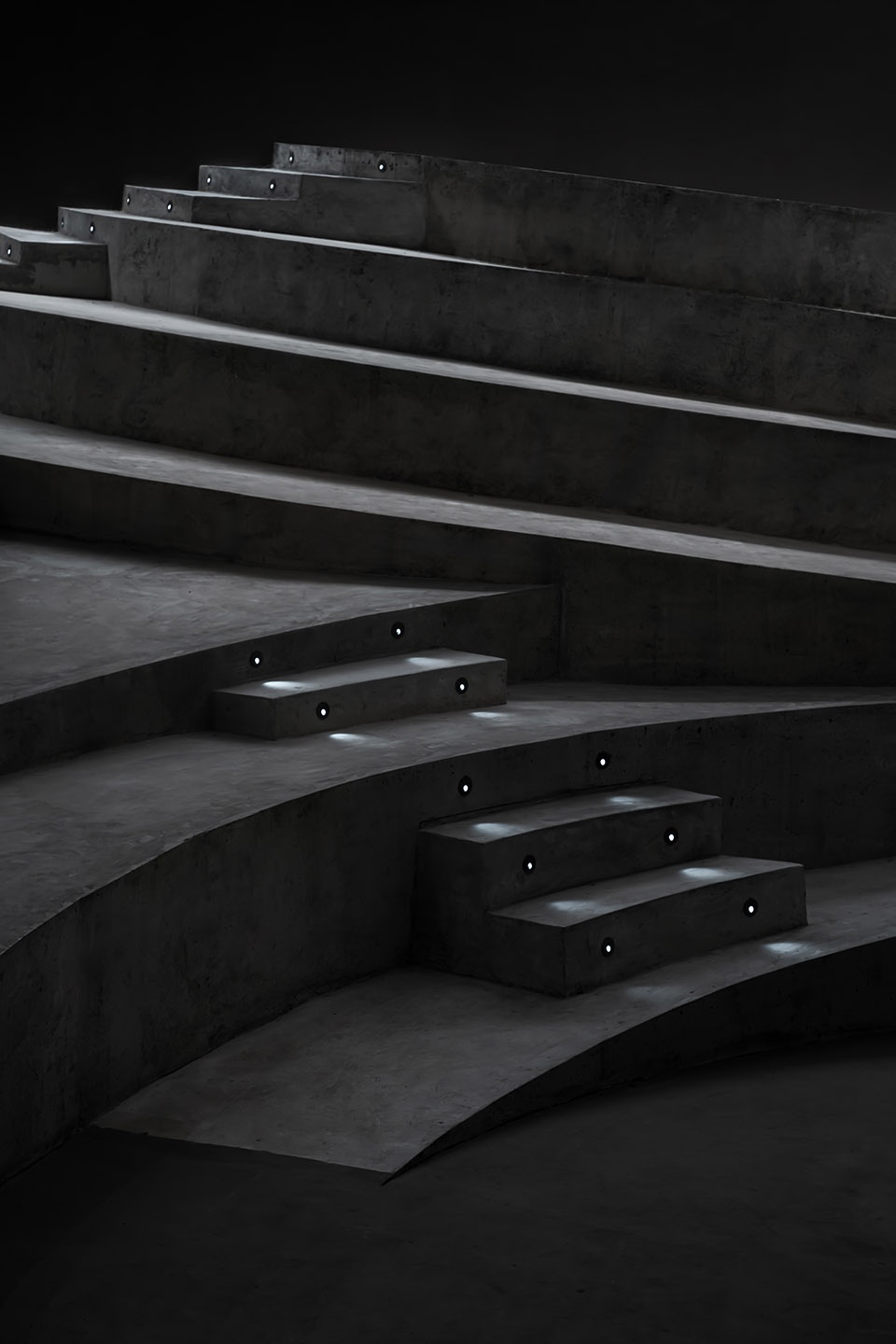
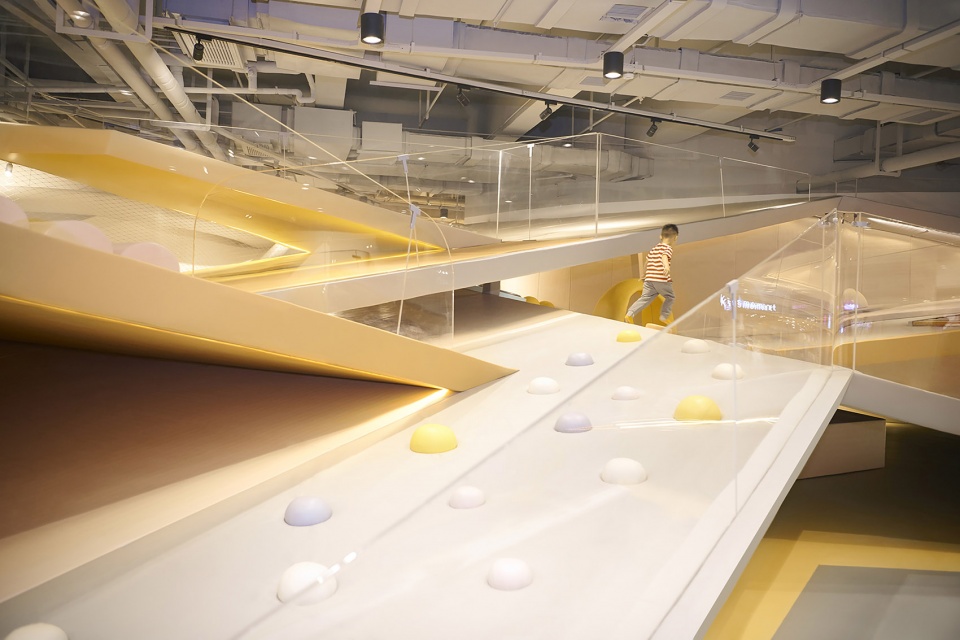
▼海沛儿童创想乐园,武汉,HPKidSpace, Wuhan Hubei
_____________
观察与跨“界”
Observation and
Crossing “Boundaries”
在我们心中并不存在一个明确的“界”。我们只是在不同的时刻,采用了不同的方式进行表达。做建筑、造一栋房子,并不是我们的终极目标,这仅仅是我们用以传递的一种方式。我们最终想做的,是在人们的精神世界里留下一些东西,通过我们的实践以及其他形式的输出——无论是文字的输出还是思想的输出——能够让人们对于某一事物的认知产生不同的理解。在这个终极目标下,我们有时采用建筑这一渠道和媒介,但也可以运用其他媒介来传递我们的认知。实际上,在我们刚成立事务所的时候,就曾有过这样的想法:如果有一天,大众对某件事情的认知是由我们来塑造的——哪怕只是很小的一点——由于我们的工作,让人们对某个情况产生了一点不同的认识,那么我们就觉得自己的实践算是做得还不错了。
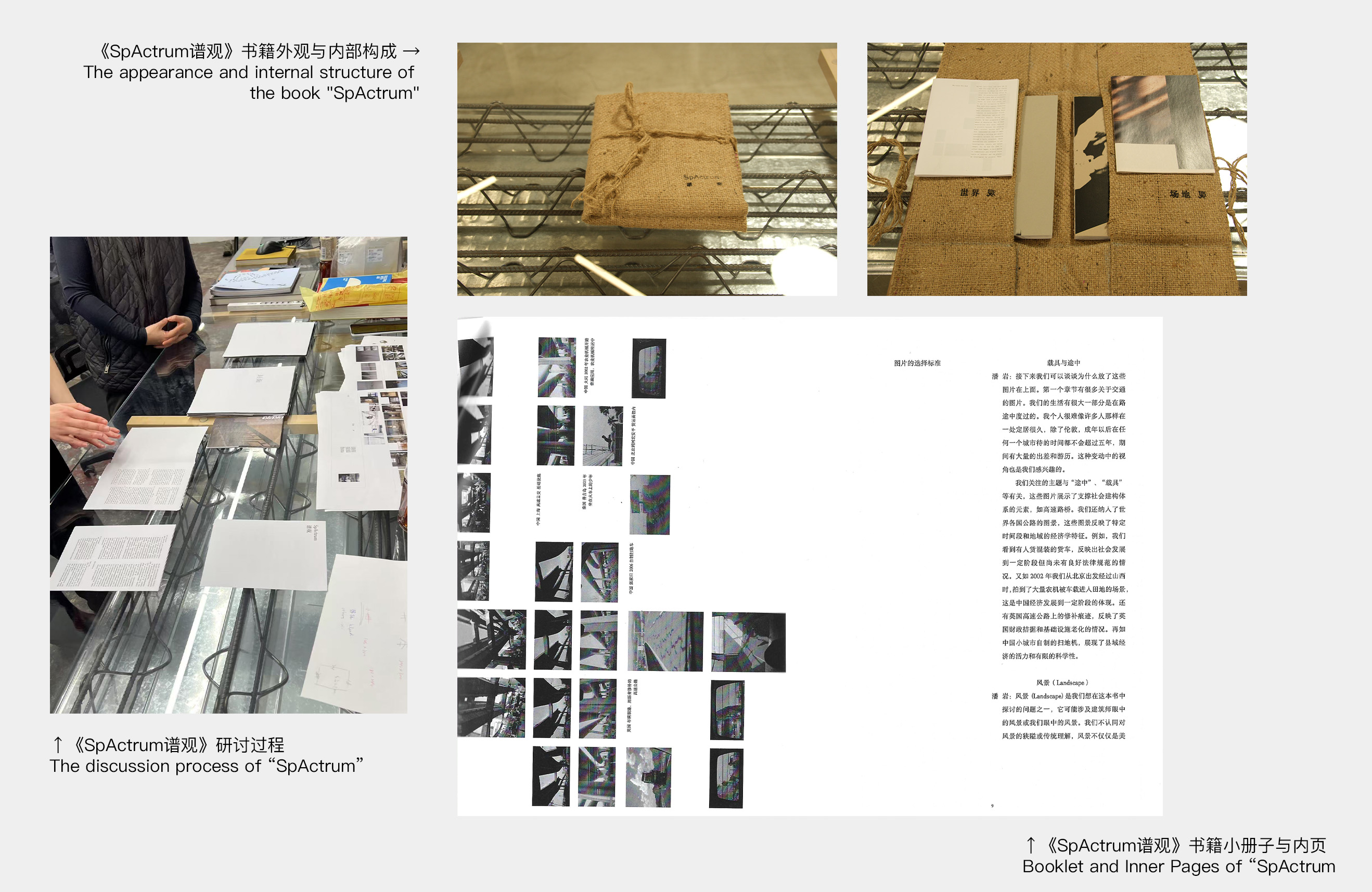
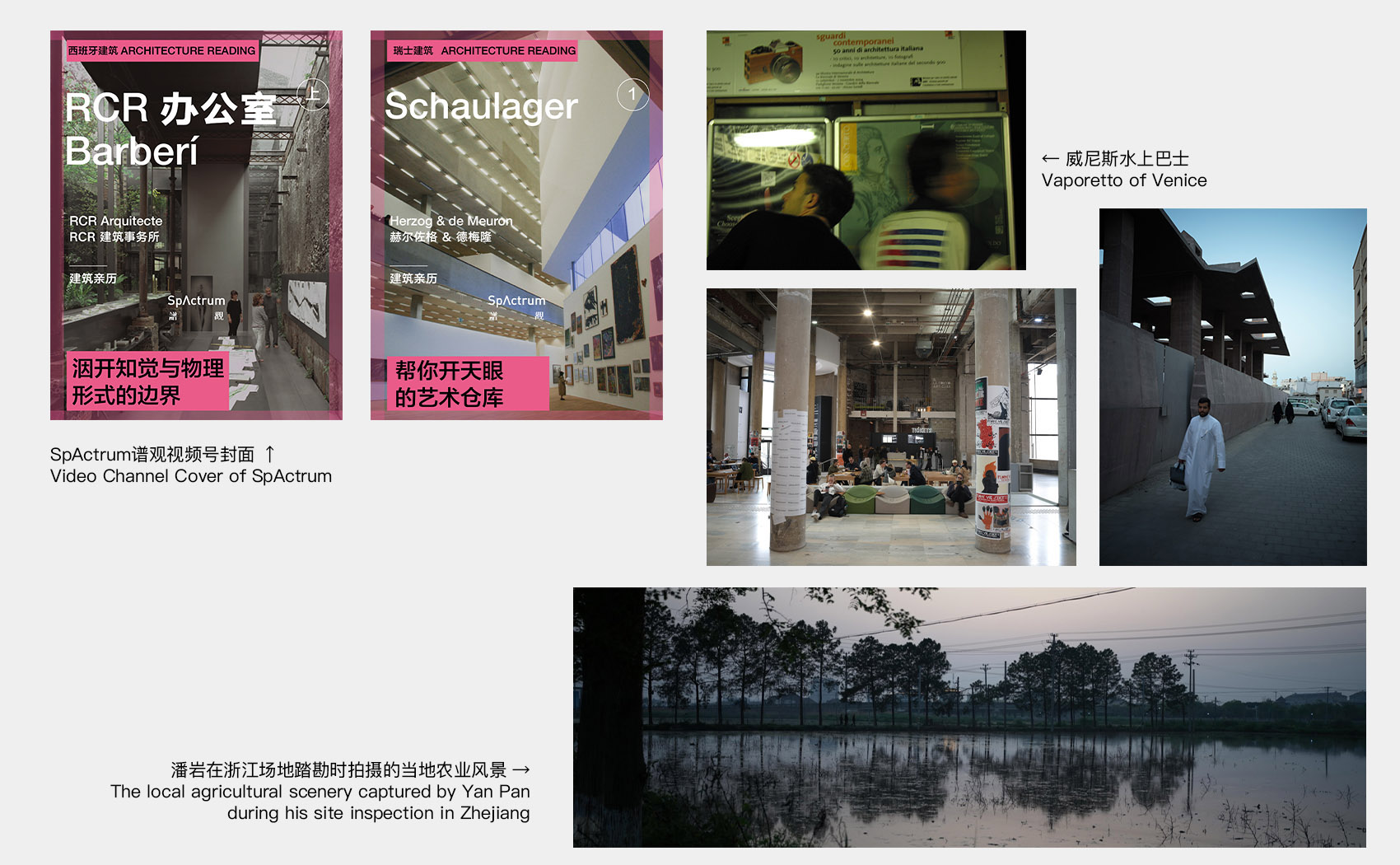
那么在实践的过程中,我们发现我们这样的观察并不是所有的观察都能够被纳入到我们的实践中去,都能够作为一个建筑的作品能够体现出来,所以我们后来就编了这本书。这本书主要包含我们对两个方向的观察:一是前面所涉及的对世界的观察;二是我们这些年对各类场地的观察。这些场地包括我们实际介入过的项目场地、具有自然倾向的场地、工业遗产场地,以及已建成但需要进行城市更新的城区。
In our minds, there has never been a clearly defined “boundary.” At different moments, we simply choose different forms of expression. Practicing architecture or constructing a building is not our ultimate goal; it is merely one of the ways through which we communicate. What we ultimately hope to do is leave something within people’s spiritual and intellectual worlds. Through our practice and other forms of output — whether through writing or through the transmission of ideas — we hope to shift the way people understand certain things. Under this larger objective, architecture sometimes becomes the channel or medium we employ, but other media can equally serve to convey our perceptions. In fact, when we first established the studio, we already had this thought: if one day people’s understanding of something could be shaped by us — even in the slightest way — if, because of our work, people came to perceive a situation differently, then we would feel that our practice had achieved something meaningful.
As our practice developed, we realized that not all of our observations could be incorporated into architectural projects or manifested directly through built work. This realization eventually led us to compile this book. The book primarily contains our observations in two directions: first, observations of the world itself; and second, our observations over the years of various kinds of sites. These include project sites we have directly intervened in, sites with strong natural characteristics, industrial heritage sites, and already-built urban districts requiring renewal.
▼谱观作品集封页/内页/小册设计,Cover, interior pages, and booklet design of SpActrum’s portfolio publication
___________
未来与挑战
Future and Challenges
潘岩:我们刚回国时,恰逢扎哈·哈迪德去世不久。有人问过扎哈,她认为建筑中最重要的品质是什么。她回答:“自由。”这句话对我影响很大。我没想到,一个创作出那么多曲线、那么多看似偏执作品的建筑师,最终想用这些作品唤醒的,并不是“我是最大的造物主”这样的幻想。这让我很激动,因为现在很少有人这样去做。我们需要唤醒的是每一个具有觉知的人。我们想让每一个人能够成为独立的、自由的人。如果我们的建筑在这方面能有一点点帮助,那我觉得,这就是建筑最应该追求的事情。
Yan Pan: When we first returned to China, it happened to be not long after Zaha Hadid had passed away. Someone once asked her what she believed was the most important quality in architecture. Her answer was: “freedom.” That statement had a profound impact on me. I never expected that an architect who created so many curves and so many seemingly radical works was ultimately not trying to awaken the fantasy of “I am the supreme creator.” That realization moved me deeply, because very few people work in that way today. What we truly need to awaken is every individual who possesses awareness and consciousness. We hope each person can become an independent and free individual. If our architecture can contribute even a little to that, then I believe that is precisely what architecture should strive for most.
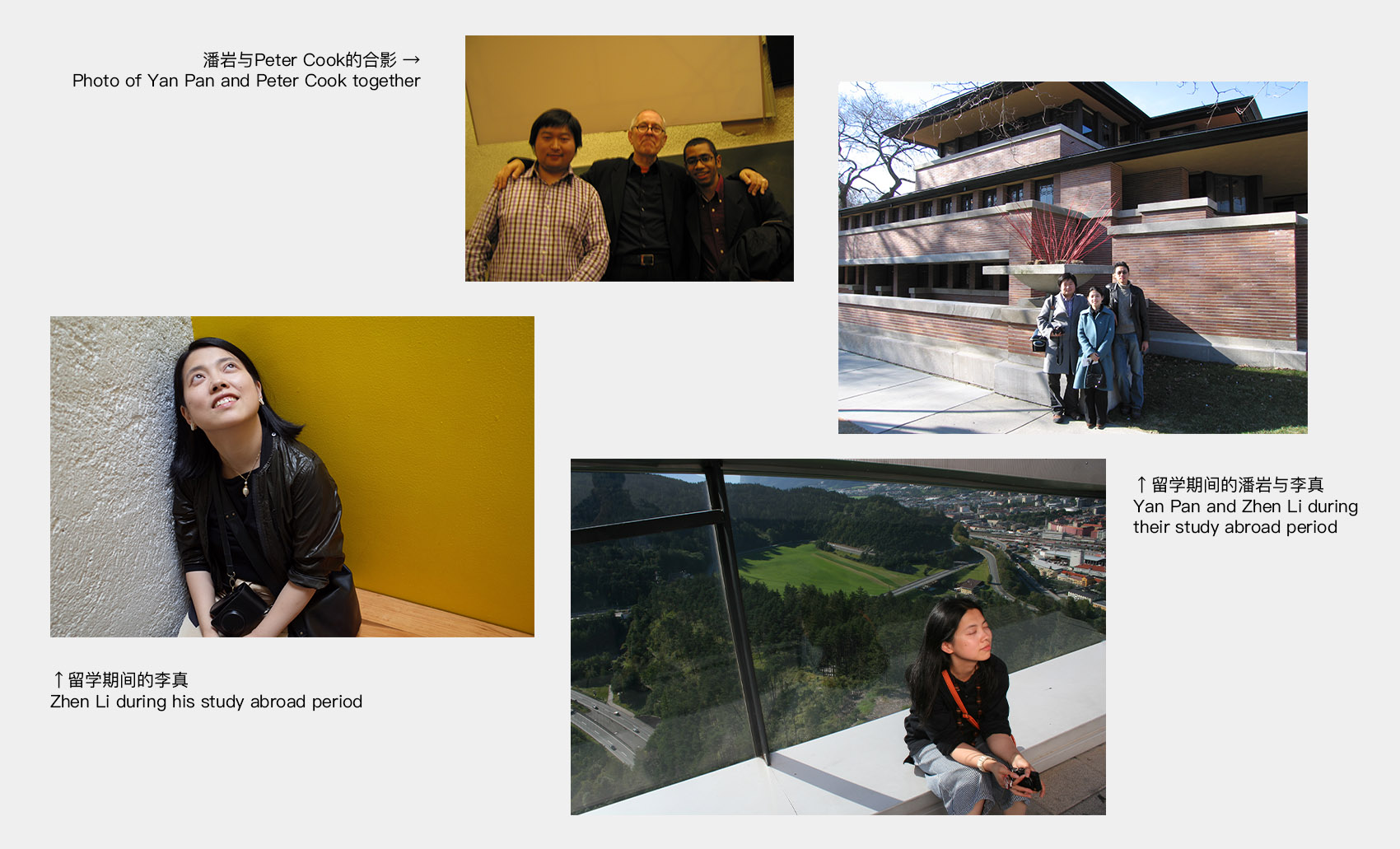
▼潘岩与李真在留学与海外期间照片,Photographs of Yan Pan and Zhen Li during their years studying and living abroad
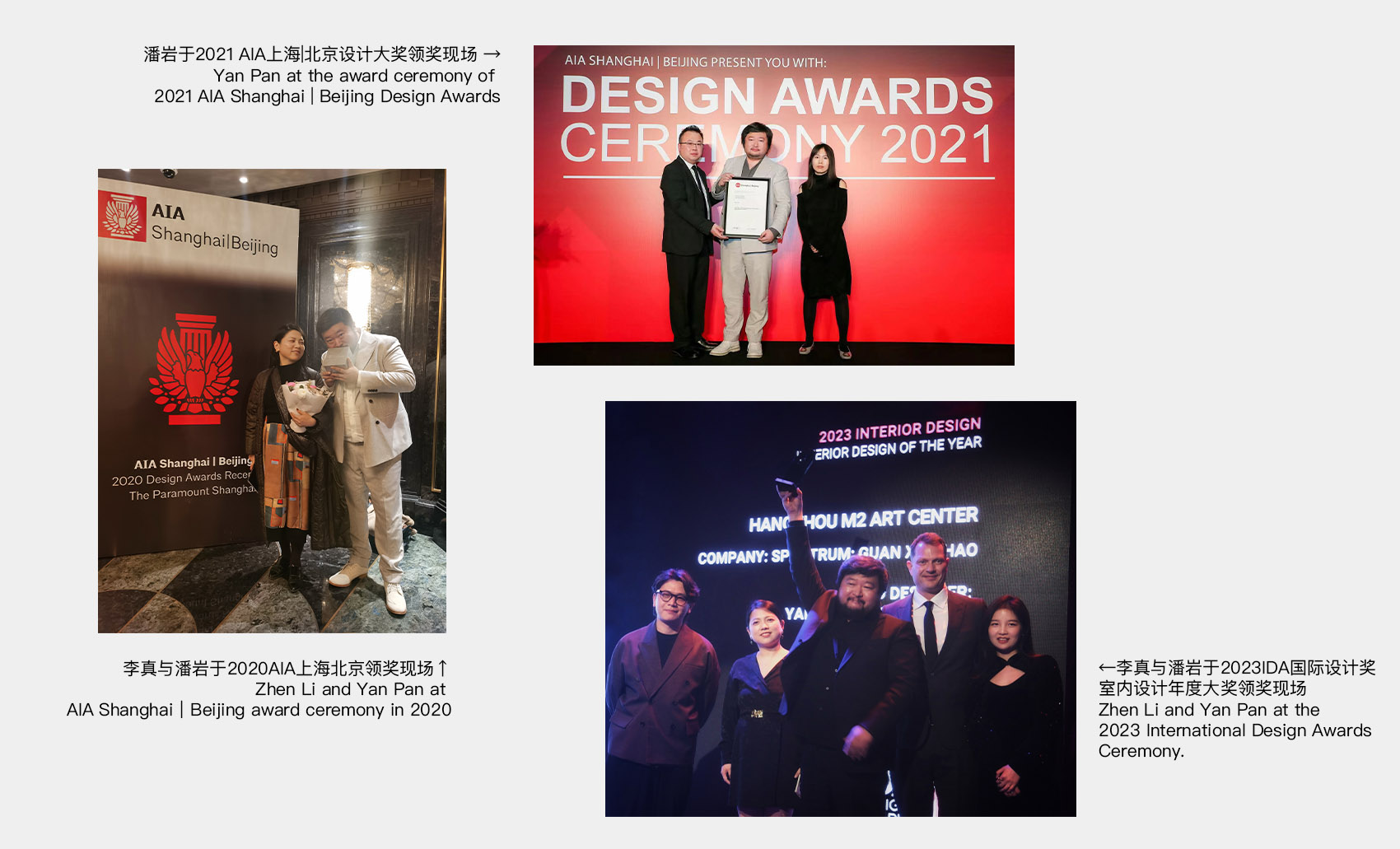
▼ SpActrum谱观团队屡屡获奖,SpActrum team has won numerous awards
李真:我希望用更多的时间去剖析和让人们看到这个错综复杂、不断变化的时代,而不是用某种大家既有的美好幻想,去满足人们长期建立起来的某种观点。如何发展出某种属于自己的创造力和设计方法。对我们而言,有一个非常重要的理念,这也是我从AA(建筑联盟学院)的教学思路中学到的,那就是:珍视自己的知识(value your own knowledge)。我们看到了大量的所谓文化转译、形式转译、风格转译。但实际上,在我自己的建筑探索和知识探索的道路上,我发现有一些非常重要的东西,恰恰来自于你自己在比较个人化的观察和实践中发现的一些很小的生活上的点,或是你自己逐渐发展出来的一些观察。
我们也希望我们的建筑,能够让每一个人去发现自己,能够让他成为一个更自由的、不被任何所谓别人的理念所塑造的人——甚至包括某些理论和知识体系。因为当你看得更多、实践得更多的时候,你会发现,很多所谓的理论或别人发展出来的东西,其实也是千疮百孔、无法自洽整合的。而你自己的实践,从细微处着手,从你自己的观察出发,反而可能更为真实和有力。
Zhen Li: I hope to spend more time dissecting and revealing this intricate and constantly changing era, rather than satisfying long-established viewpoints through some kind of collectively imagined ideal. The real question is how to develop one’s own creativity and design methodology. For us, there is one particularly important idea — something I learned from the teaching philosophy of Architectural Association School of Architecture — which is to “value your own knowledge.” We have seen countless examples of so-called cultural translation, formal translation, and stylistic translation. Yet in my own architectural and intellectual explorations, I discovered that some of the most important insights actually emerge from very small observations in everyday life, from highly personal experiences and practices, and from modes of observation that gradually develop over time.
We also hope that our architecture can help people discover themselves — allowing them to become freer individuals, not shaped by anyone else’s imposed ideas, including certain theoretical or intellectual systems. Because when you see more and practice more, you eventually realize that many so-called theories or systems developed by others are themselves fragmented, full of contradictions, and incapable of complete coherence. By contrast, your own practice — beginning from subtle details and grounded in your own observations — may ultimately prove to be more truthful and more powerful.
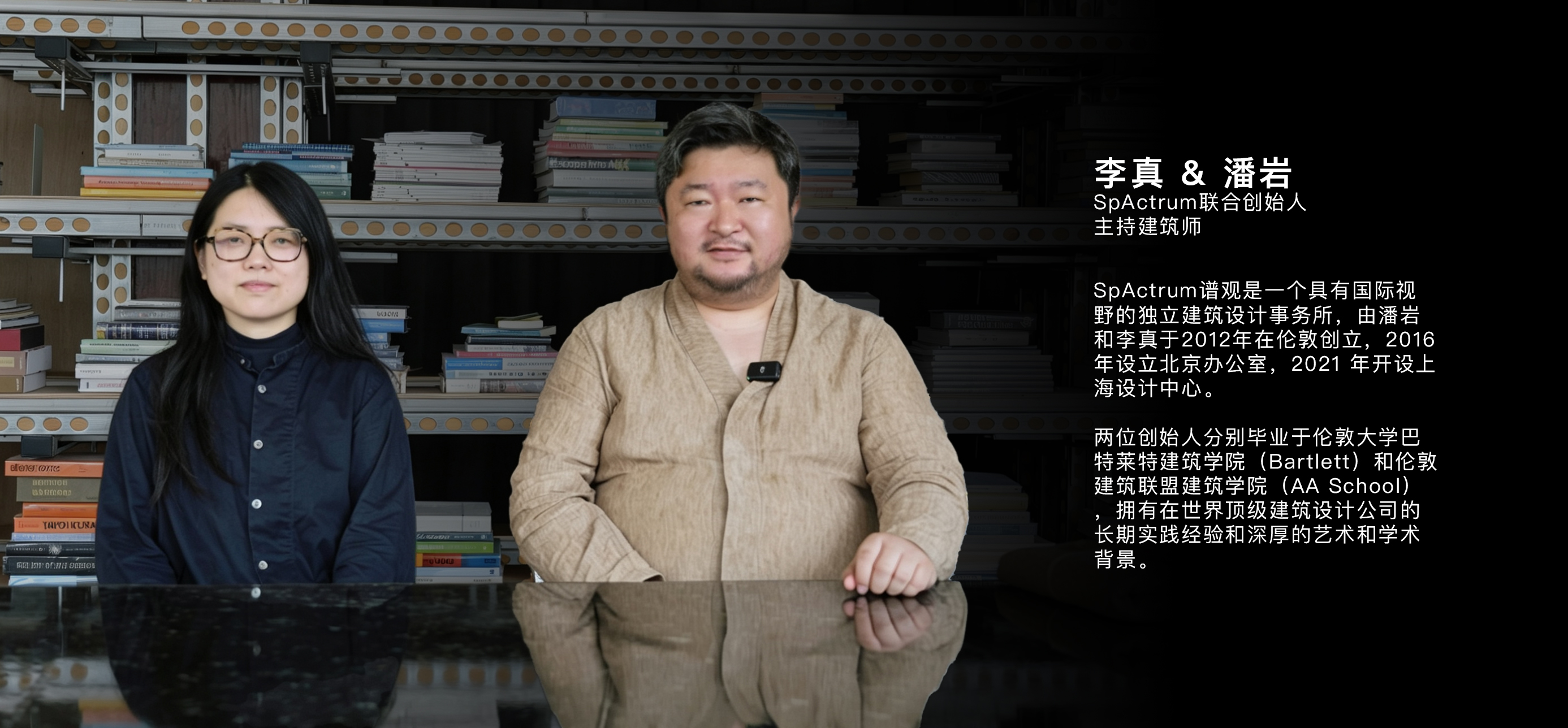
▼潘岩与李真合照,Portraits of Yan Pan and Zhen Li