TH+住宅,越南 / ODDO architects
TH+ House坐落于河内密集的城市肌理之中,隐身于纵横交错的狭窄巷道网络和非正式生长的垂直住宅之间。项目占据了一块条件极为受限的用地,场地宽度仅2.5米,只能通过狭窄的步行巷道抵达。
Woven into the dense urban fabric of Hanoi, TH+ House is located within a network of narrow alleyways and informal vertical houses. The project occupies an extremely constrained plot just 2.5 meters wide, accessible only by tight pedestrian alleys.
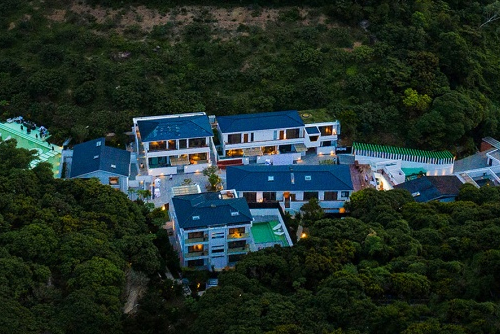
▼项目鸟瞰,aerial view of the project
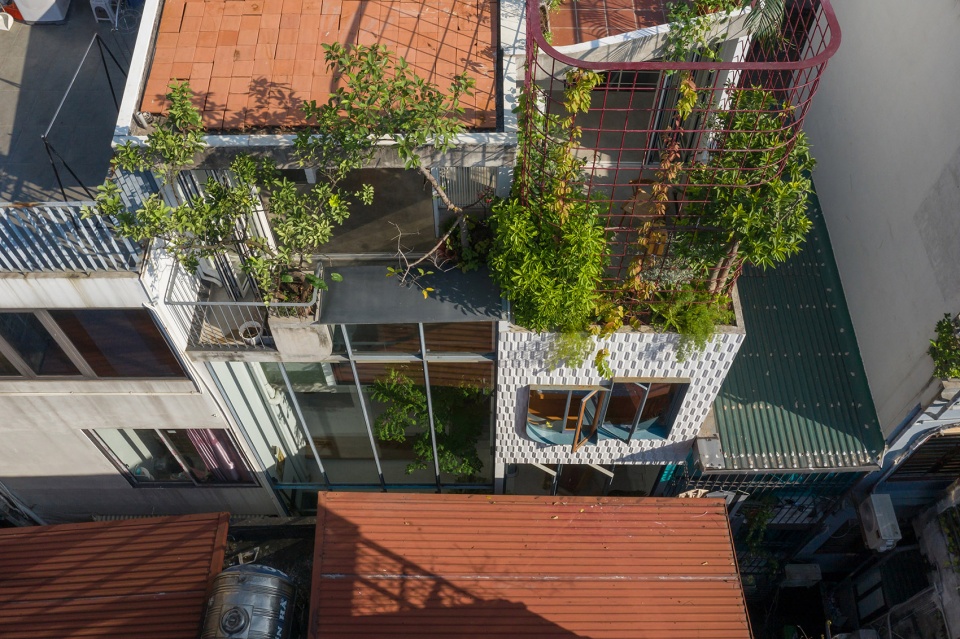
▼项目外观,facade of the project
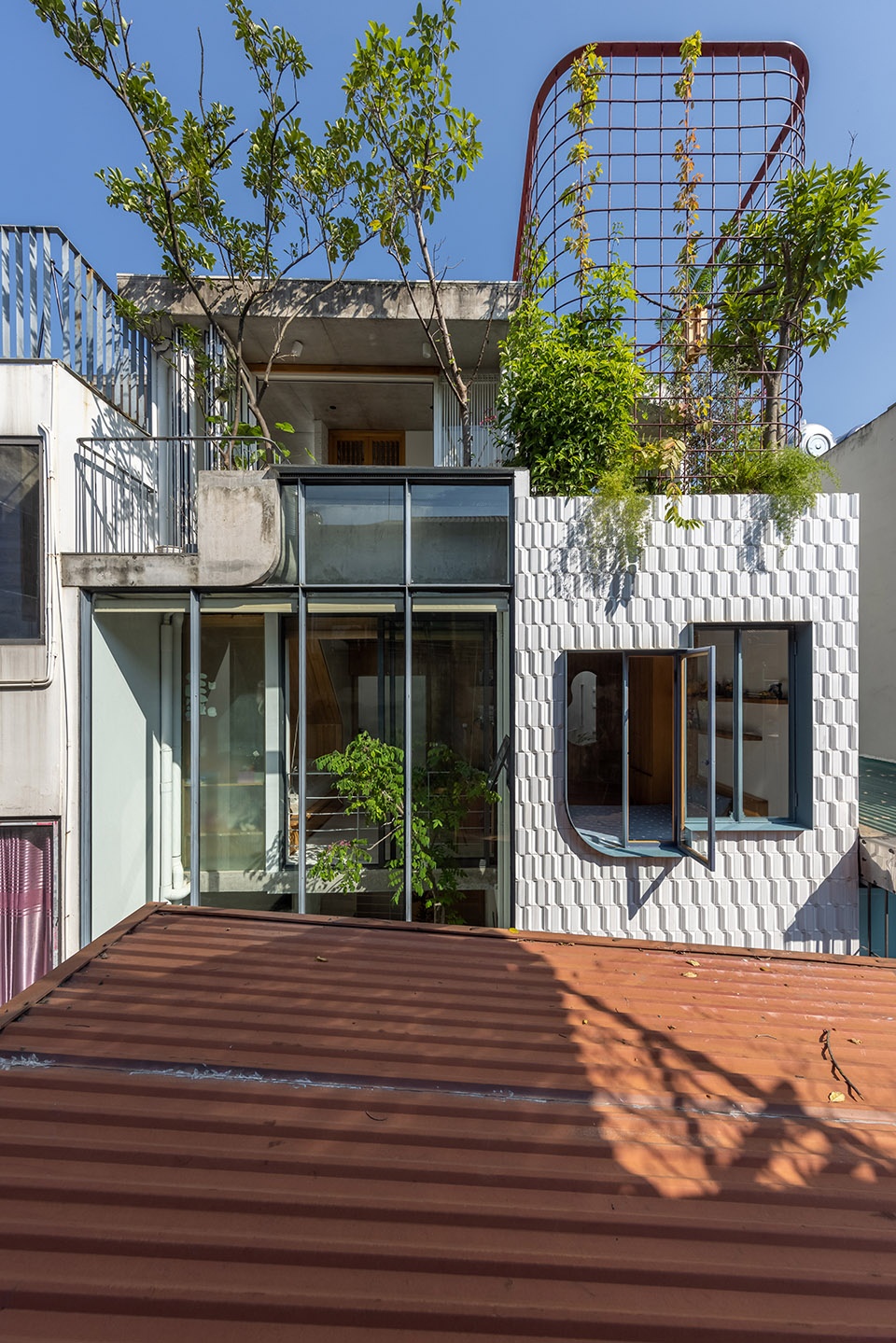
在这座拥有约850万人口的城市中,高密度往往被视为一种限制。然而在河内的巷道社区中,高密度反而孕育出充满活力的社区生活:共享茶饮、小型商铺、街头游戏以及自发的邻里交流构成了日常景象。这种高度社会化的生活状态成为TH+ House设计的重要出发点。
▼概念示意,concept diagram
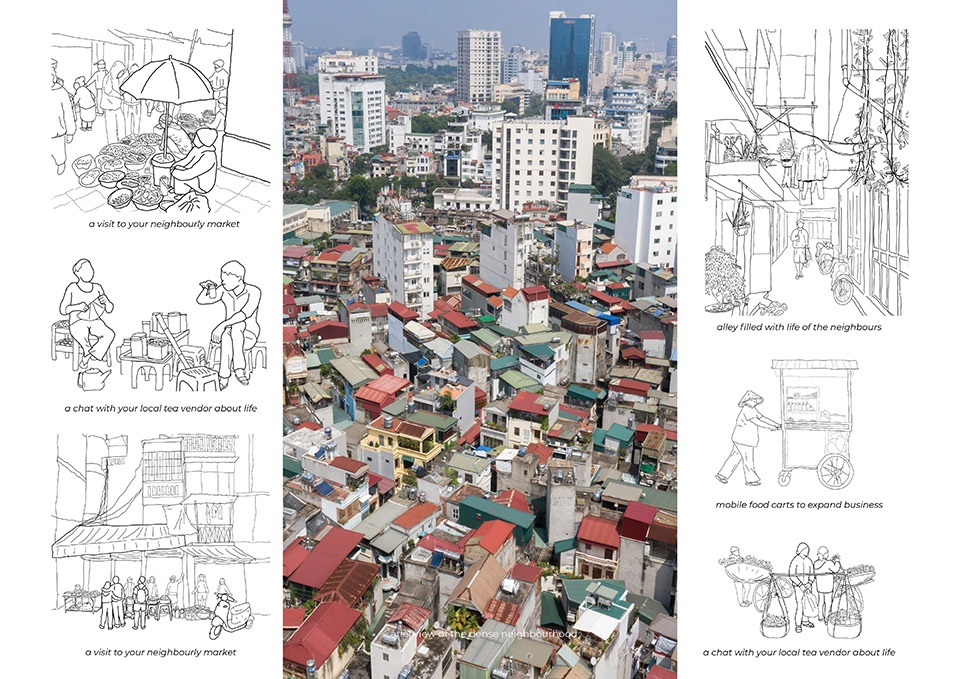
In a city of approximately 8.5 million inhabitants, density is often perceived as a limitation. In Hanoi’s alley neighborhoods, however, it fosters a vibrant community life shaped by daily interactions—shared tea, small businesses, street games, and spontaneous social exchanges. This social intensity became a key premise for the design of TH+ House.
▼住宅鸟瞰,aerial view of the house
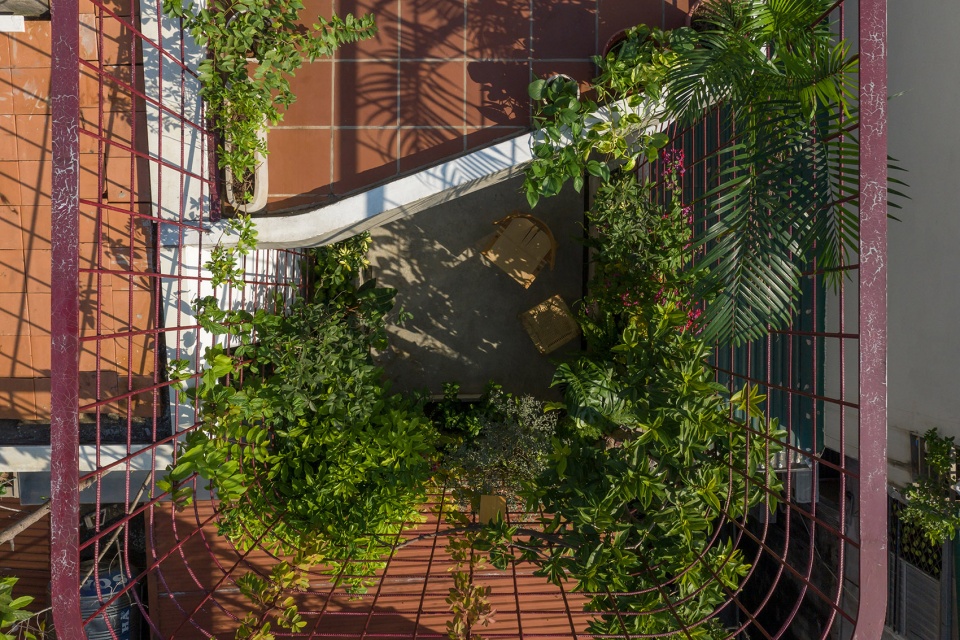
▼强调开放性的设计,promoting openness
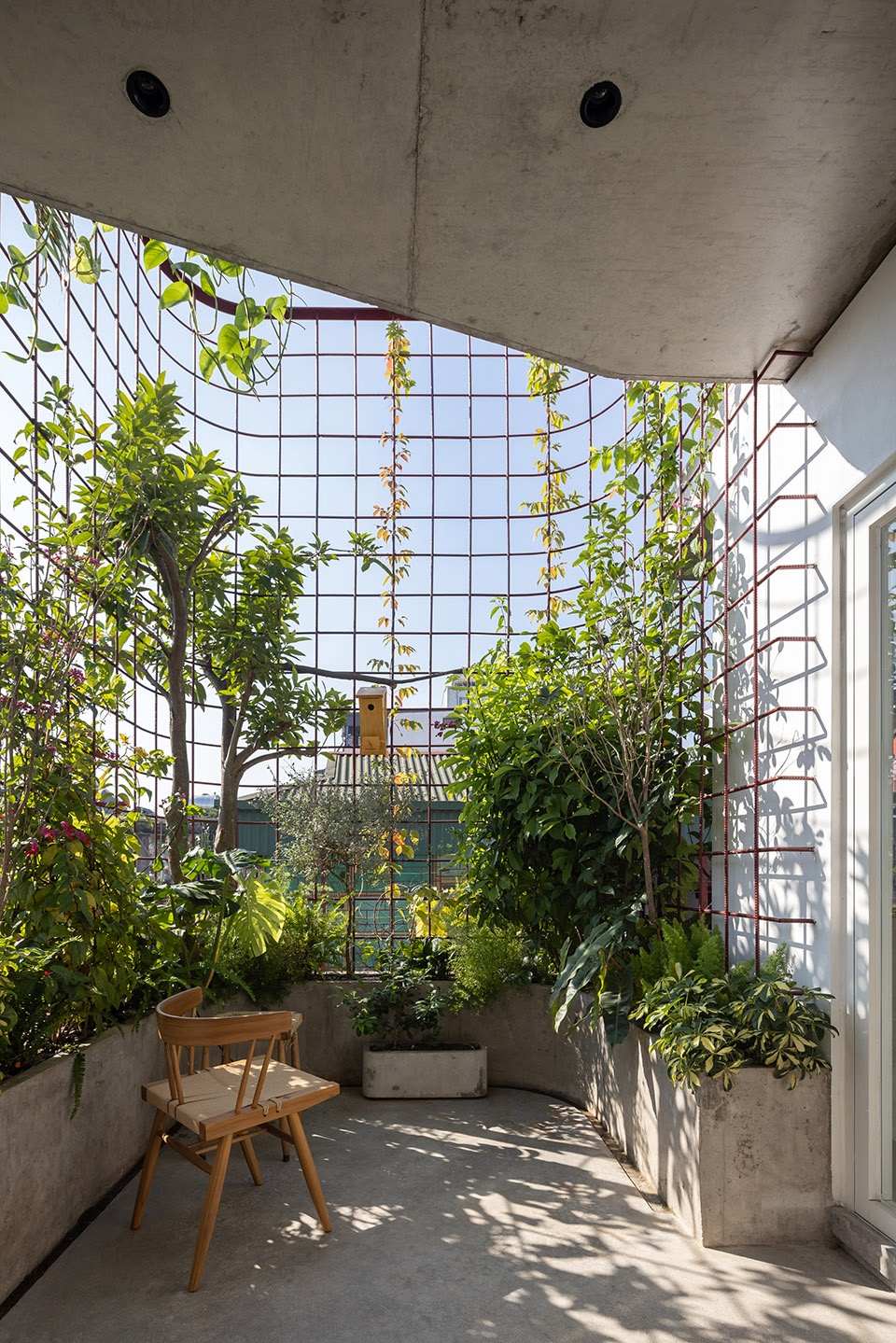
高密度环境为住宅建筑带来了诸多挑战,尤其体现在自然采光不足、通风条件较差,以及封闭分隔的空间布局容易造成家庭成员之间的疏离。TH+ House通过强调开放性和促进共享活动来回应这些限制。尽管占地狭窄,项目依然试图创造开放而丰富的居住体验。设计并非依赖空间尺度,而是通过空间多样性、视觉联系以及灵活使用方式来营造空间的宽裕感。一系列性质各异的空间为家庭成员提供了不同选择,使他们能够根据一天中不同的需求、情绪和私密程度,自由选择适合的环境。
▼概念模型,concept model
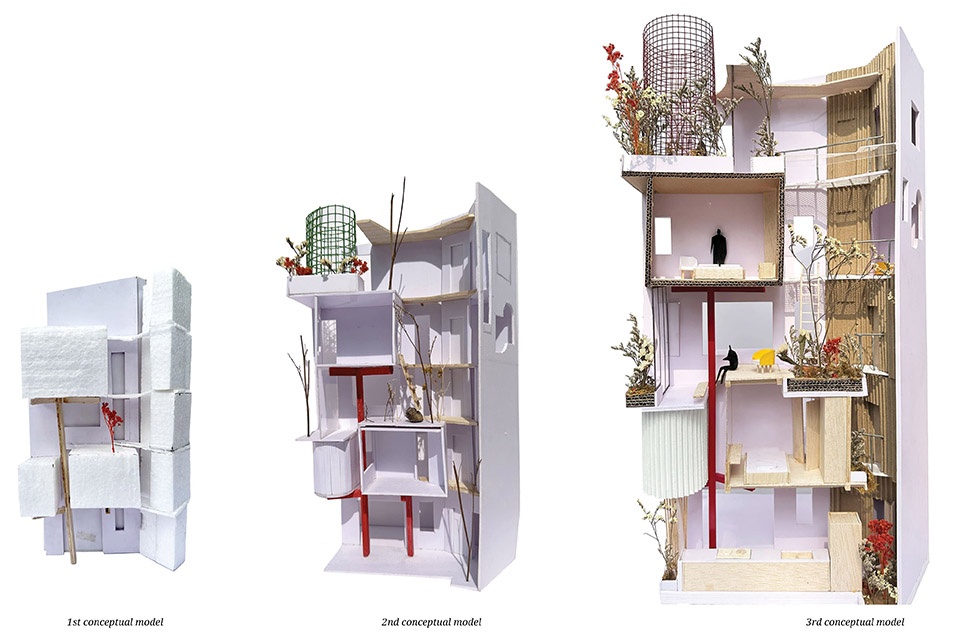
High density presents significant challenges for residential architecture, particularly limited daylight, poor ventilation, and compartmentalized layouts that separate family members. TH+ House addresses these constraints by promoting openness and encouraging shared activities despite the narrow footprint. Rather than relying on size, the project explores spatial generosity through diversity, visual connections, and flexible use. A sequence of varied spaces allows family members to choose environments that suit different needs, moods, and levels of privacy throughout the day.
▼创造开放而丰富的居住体验,
Create an open and rich living experience
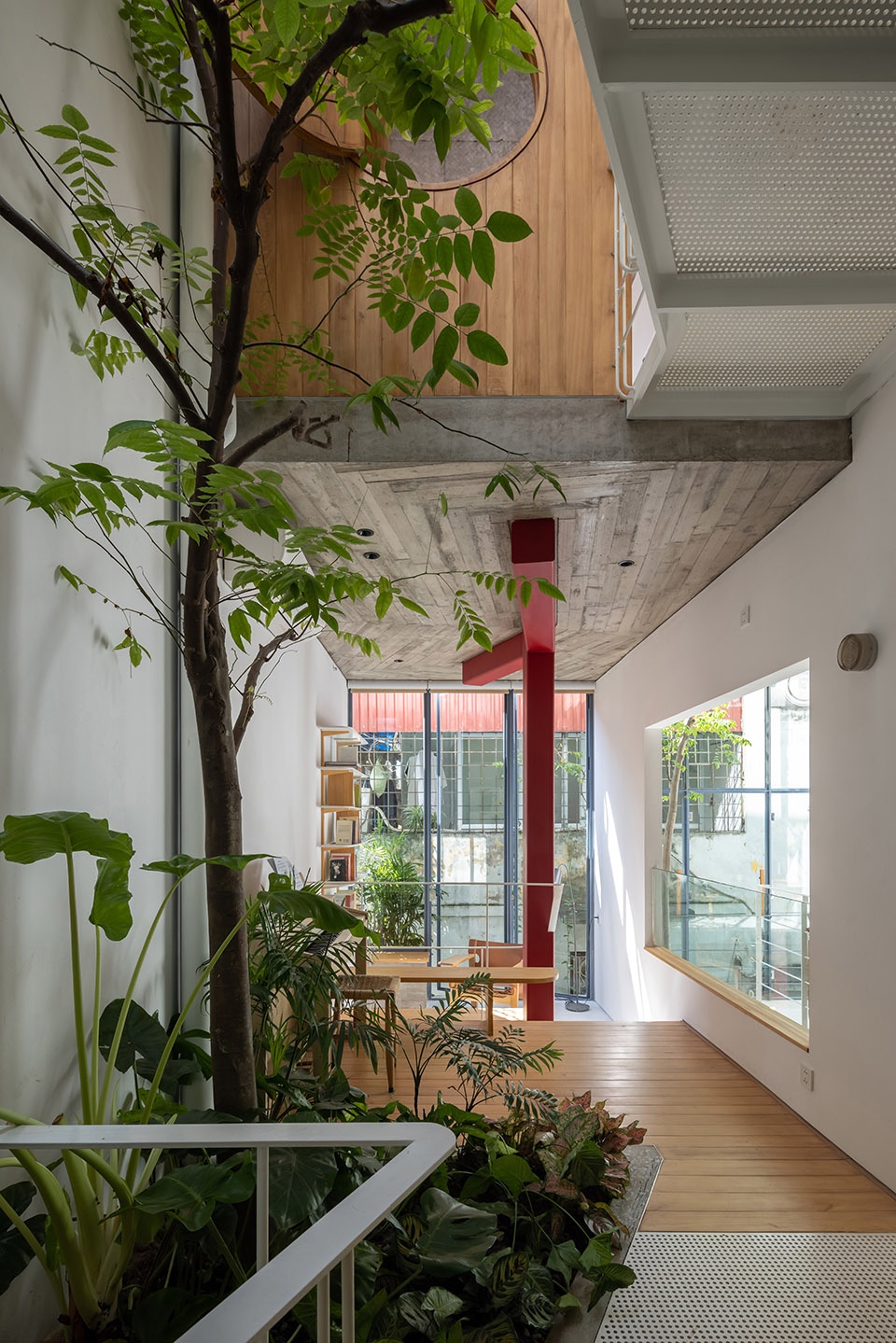
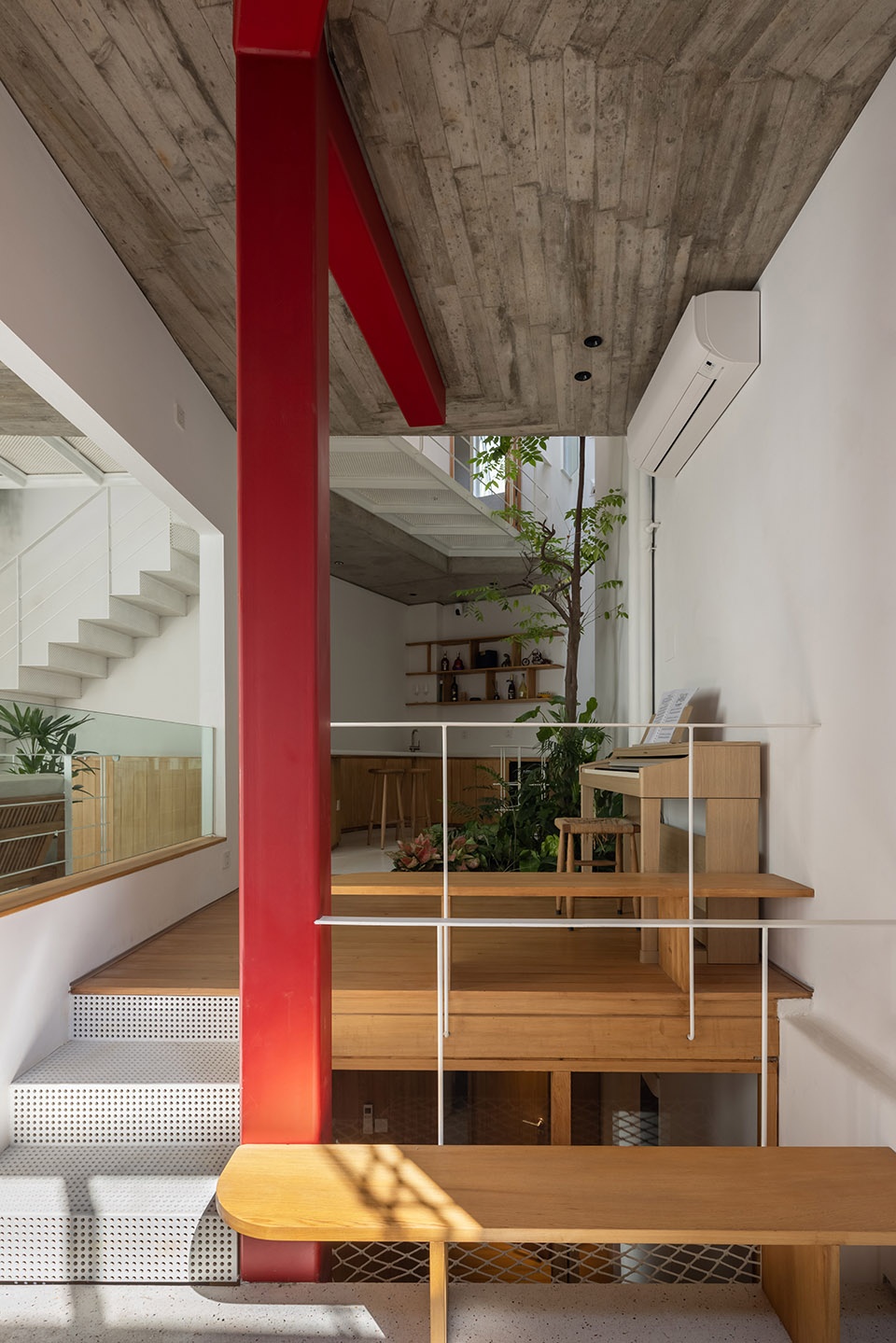
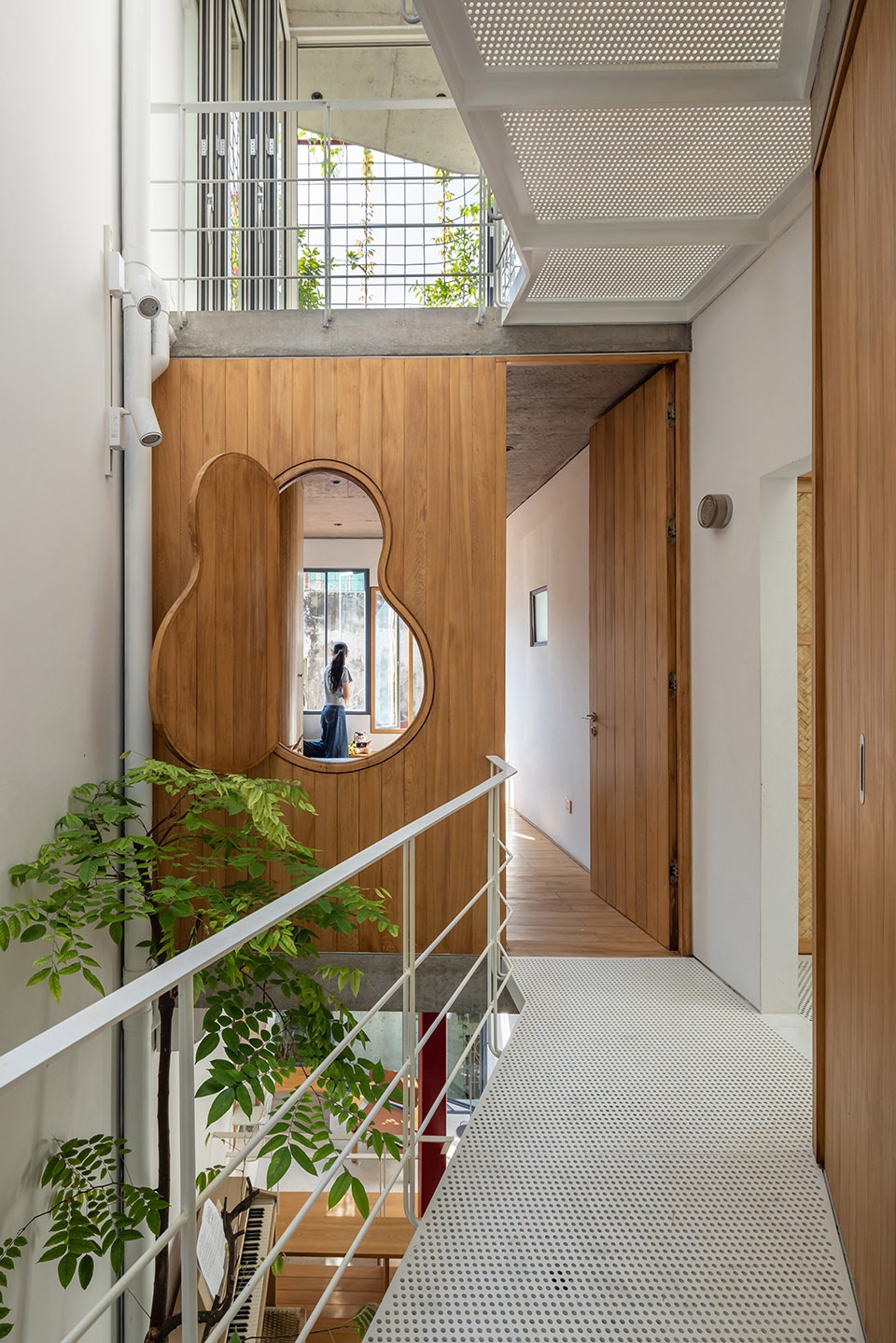
虽然TH+ House被设计为一个独立项目,但它实际上是对TH House的延伸。TH House于2021年建成,位于相邻地块,同样服务于这一家庭。两栋建筑共同构成了一座垂直发展的住宅体系,以适应不断成长和变化的家庭需求。项目并未拆除原有建筑,而是在其基础理念之上继续发展,使住宅能够以渐进式方式扩展,同时保持身份特征和空间逻辑的连续性。
Although conceived as an independent project, TH+ House extends the original TH House, built in 2021 on an adjacent plot for the same family. Together, the two structures form a combined vertical home that adapts to the evolving needs of a growing household. Instead of replacing the existing building, the extension builds on its principles, allowing the house to expand incrementally while maintaining continuity of identity and spatial logic.
▼住宅入口玄关,lobby at the entrance
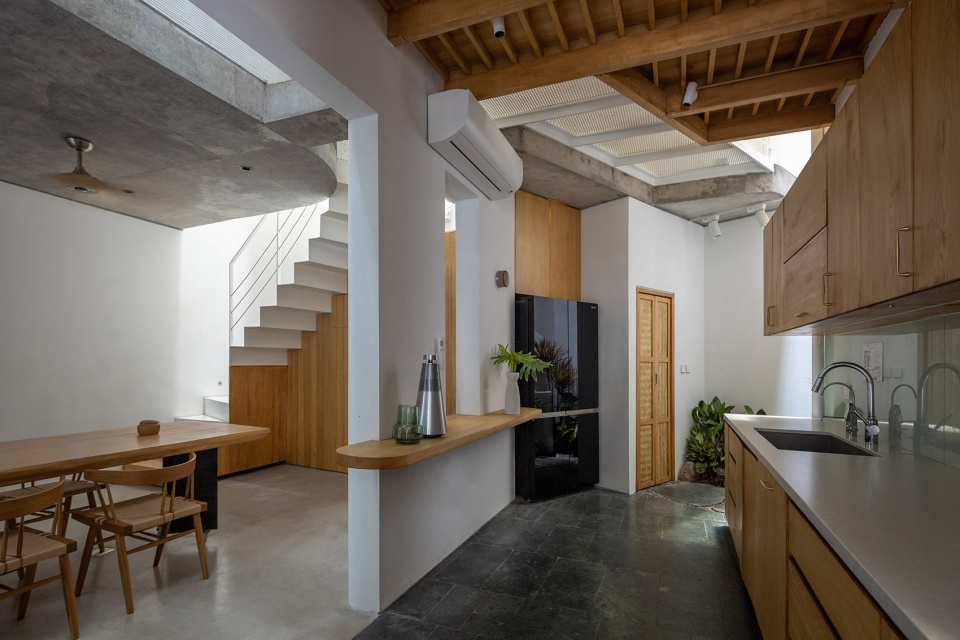
▼住宅入口玄关,lobby at the entrance
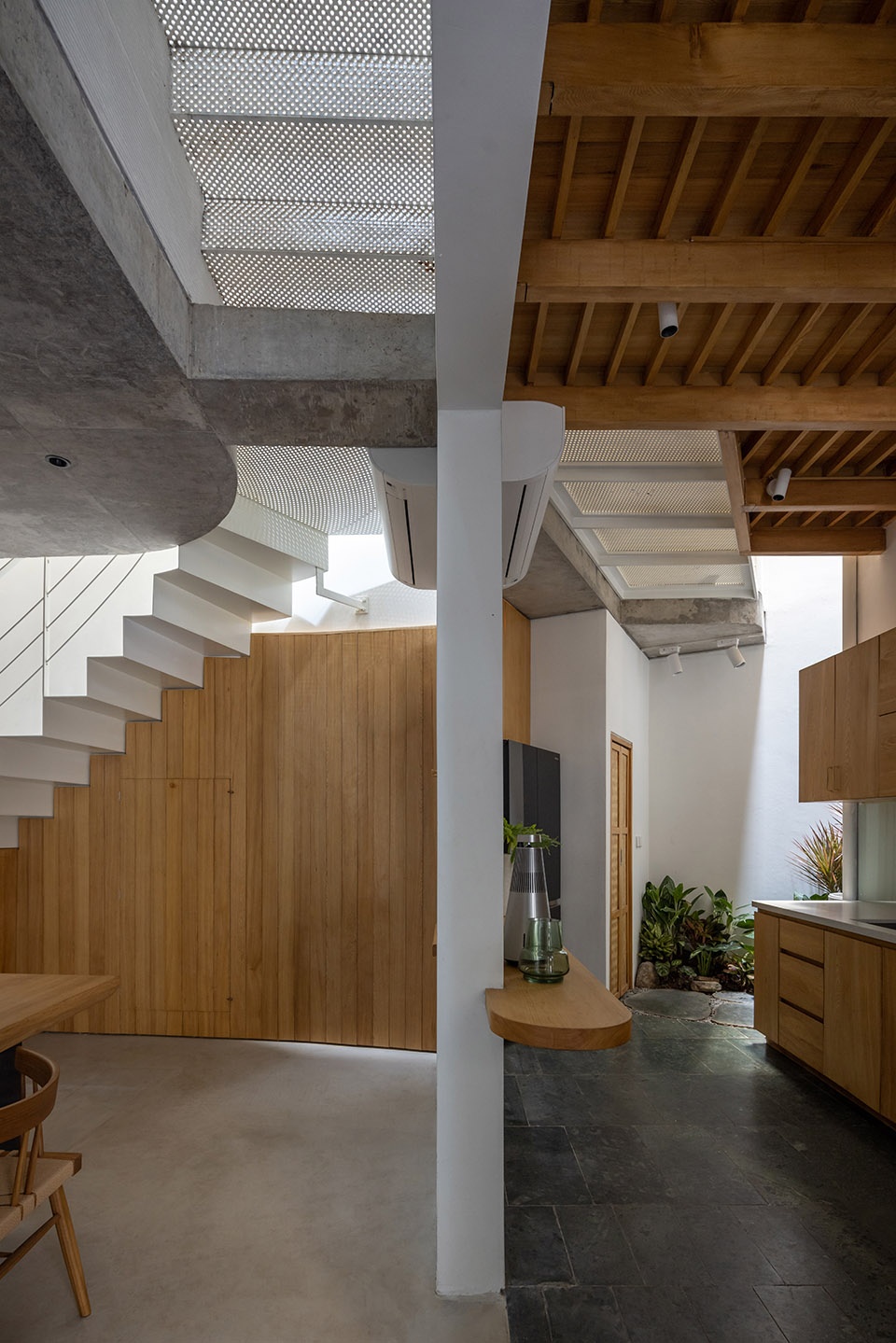
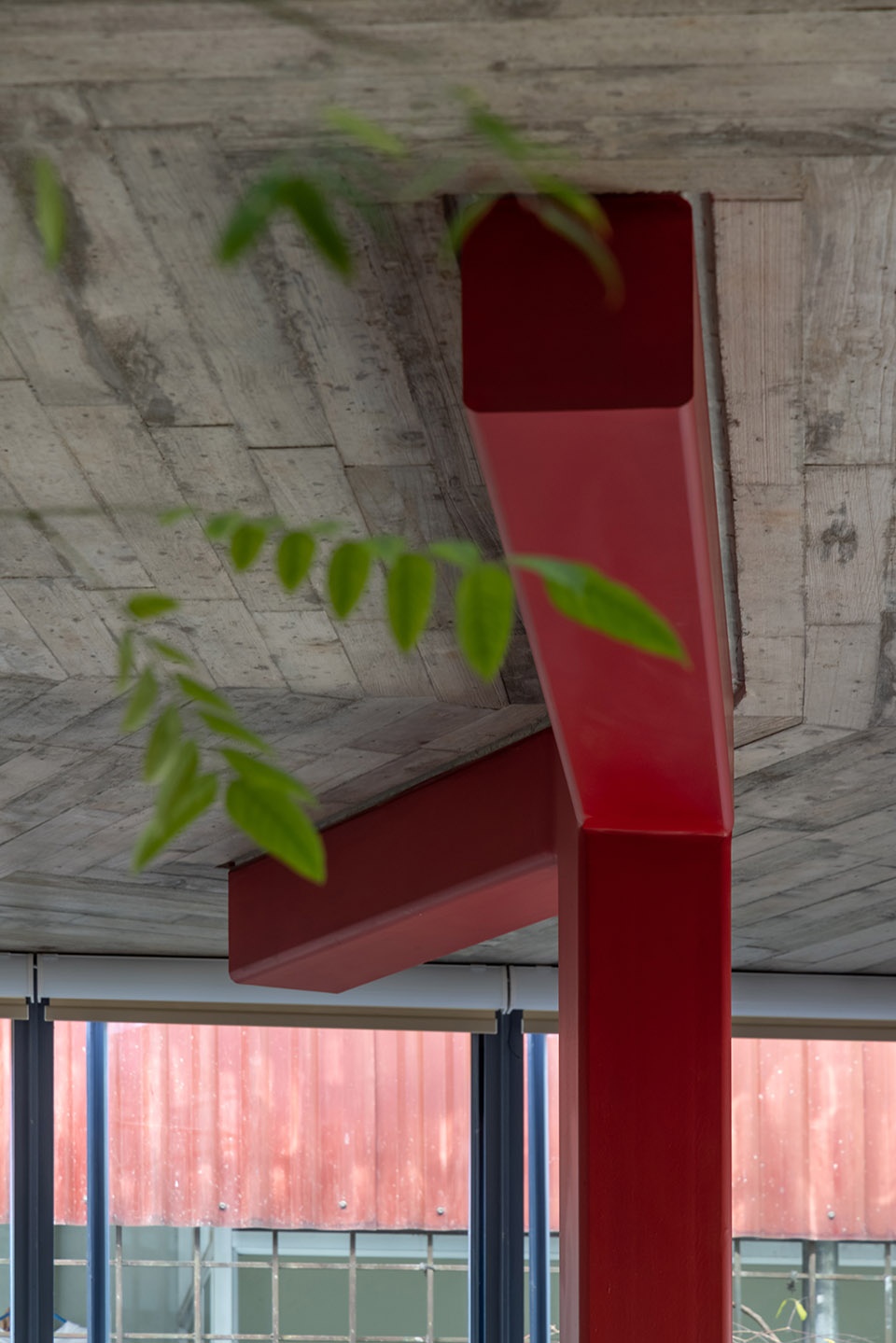
由于场地宽度有限,加之存在一面与邻建筑共用的承重墙,传统厚重外围护墙的做法并不可行。因此,建筑结构围绕一根从首层贯穿至四层的红色钢柱展开。这根钢柱既是主要的结构骨架,也成为最具辨识度的建筑元素。它支撑着茶室、客房、起居室以及儿童房等关键空间,使建筑能够采用更薄的墙体、更大的跨度以及更加开放的内部布局。
▼概念示意,concept diagram
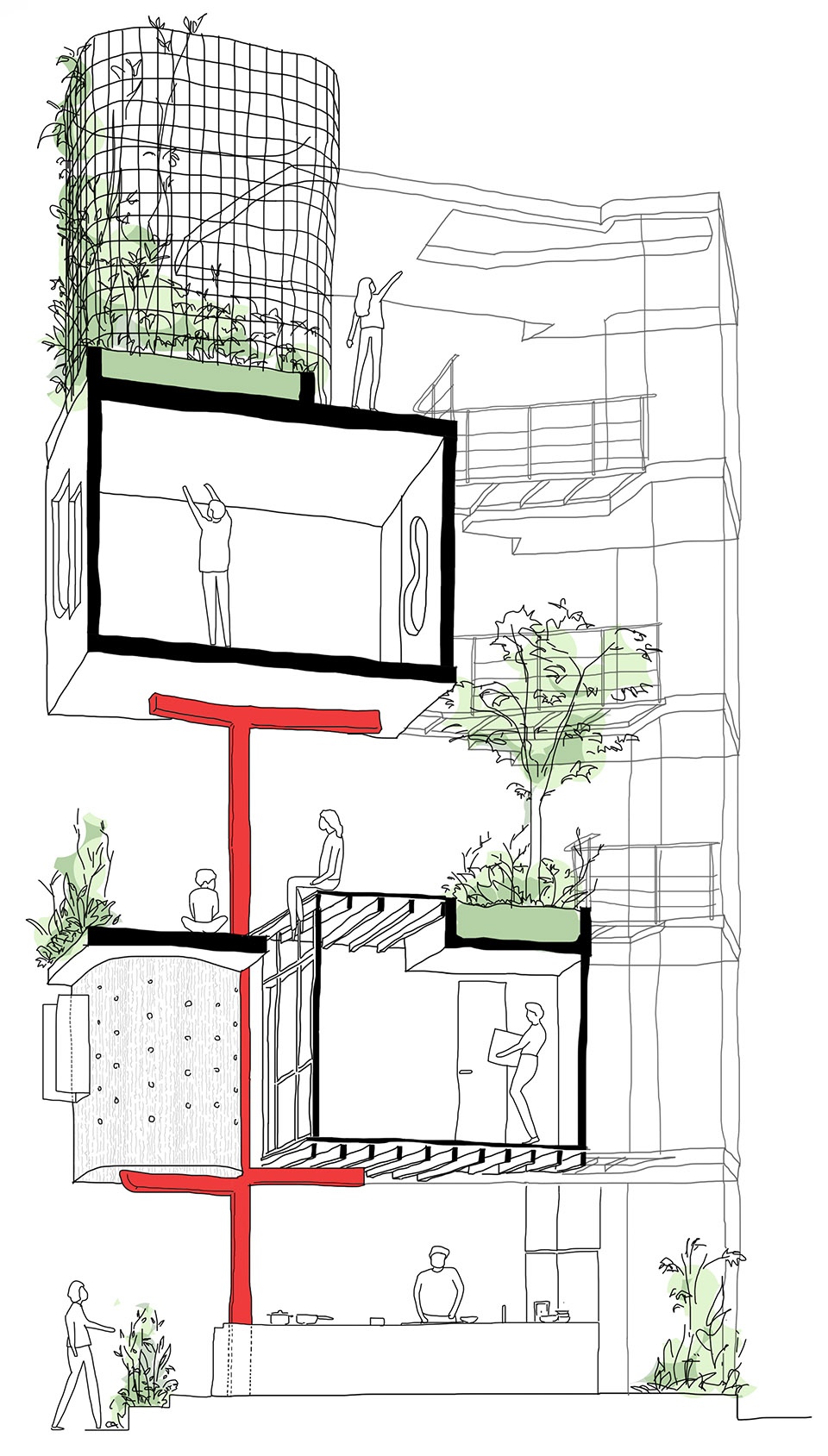
Due to the limited width and the presence of a shared load-bearing wall, thick perimeter walls were not feasible. The structure is therefore organized around a single central red steel column running from the ground to the fourth floor. This column acts as the primary structural backbone and becomes a defining architectural element. It supports key spaces—including the tea room, guest room, living room, and children’s room—allowing thinner walls, wider spans, and greater openness throughout the interior.
▼从首层贯穿至四层的红色钢柱,The structure is therefore organized around a single central red steel column
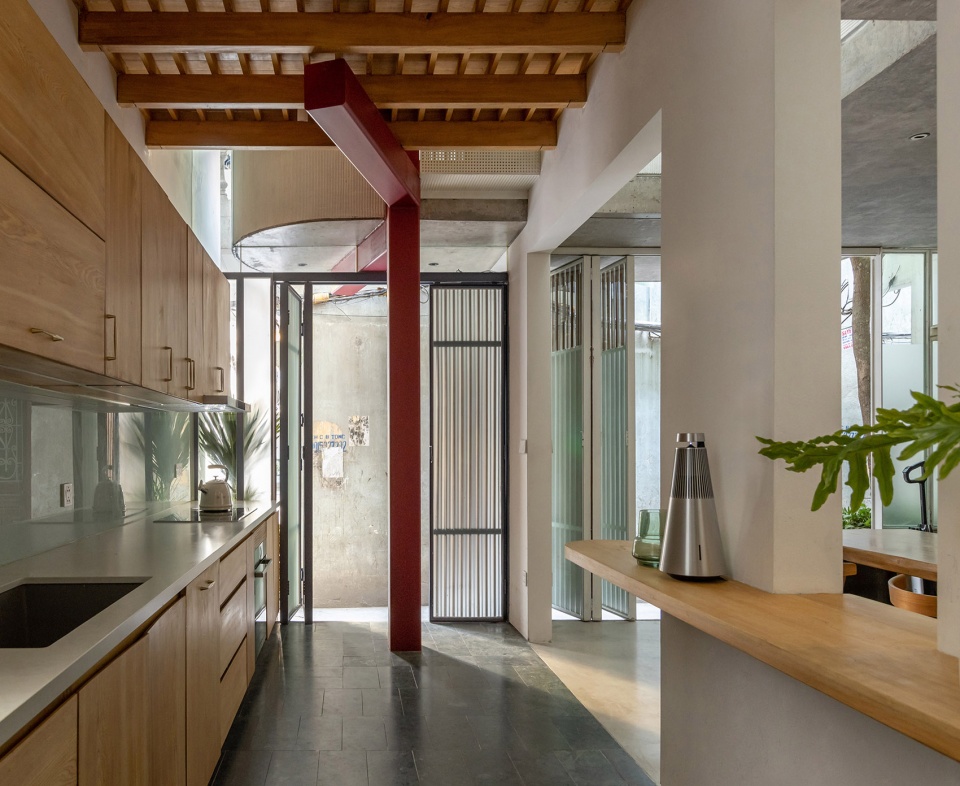
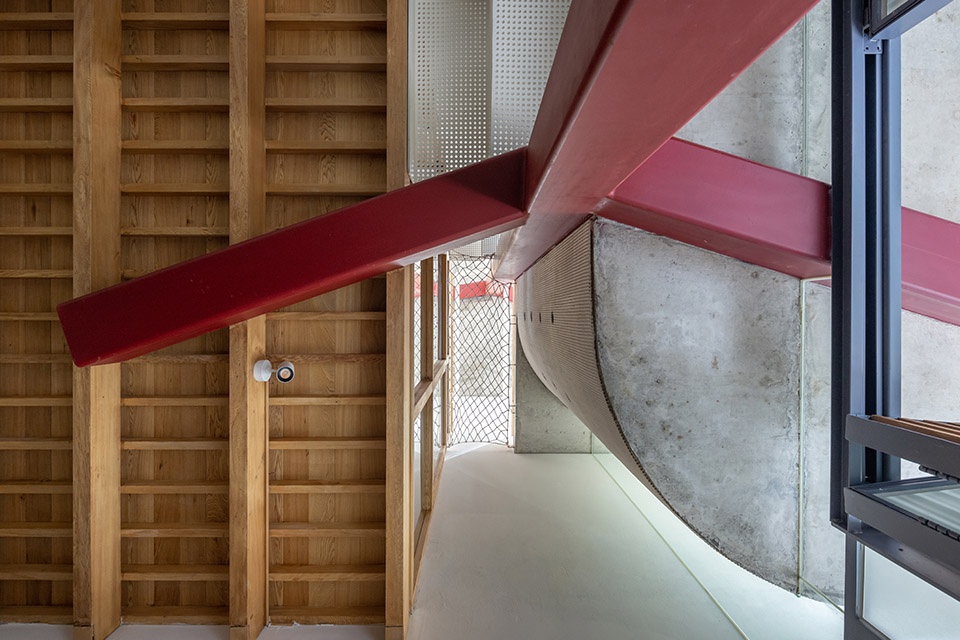
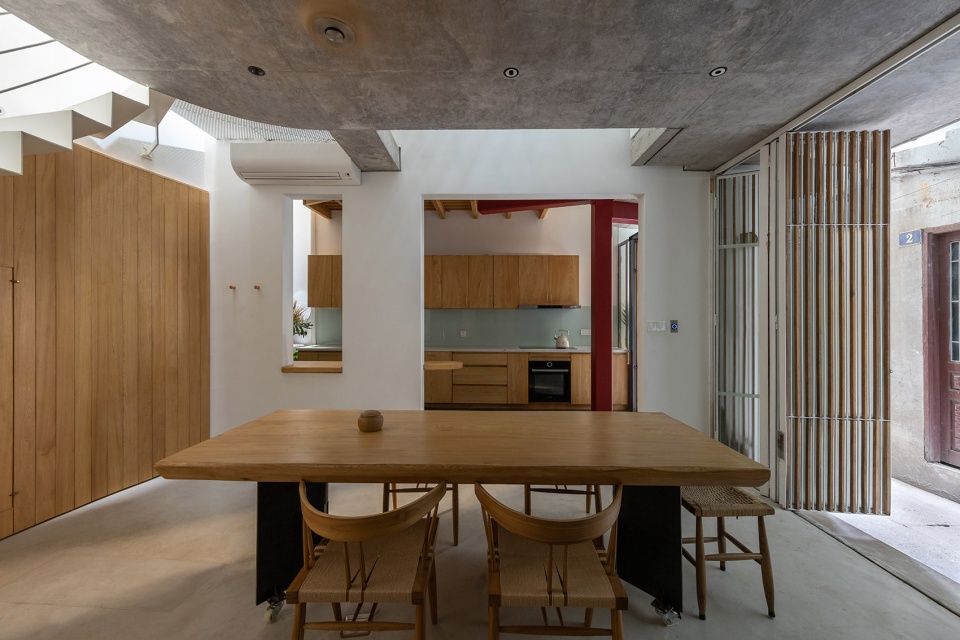
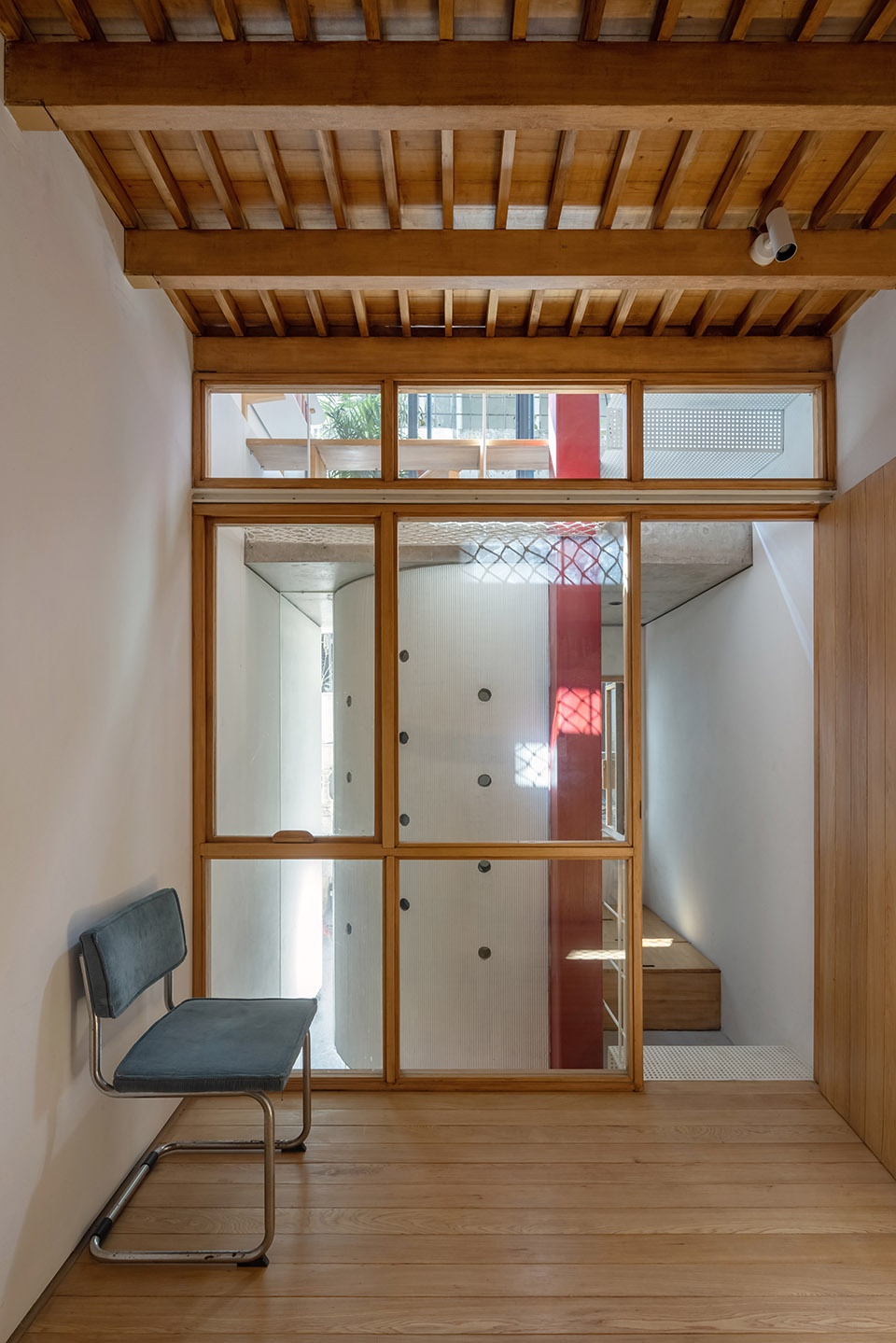
这一策略使建筑能够设置更大的立面开口,形成充满自然光的挑空空间,并在狭窄场地条件下实现有效的穿堂通风。层叠组织的空间体系最大限度提升了使用效率,容纳了茶室、阅读室、灵活起居空间、小型露台以及吧台等多种功能。为了弥补采光条件的不足,项目采用了一系列被动式设计策略。朝南立面引入柔和而稳定的自然光,而天窗、通透楼板以及垂直挑空空间则将光线深入引入建筑内部,同时强化自然通风效果。
This strategy enables larger façade openings, light-filled voids, and effective cross-ventilation despite the tight context. Layered spatial organization maximizes usability, accommodating a range of functions such as a tea room, reading room, flexible living areas, a small terrace, and a bar. Passive design strategies compensate for limited daylight: a south-facing façade provides soft, consistent light, while skylights, porous floors, and vertical voids bring daylight deep into the interior and enhance ventilation.
▼餐厅及厨房,kitchen and dining hall
▼朝南立面引入柔和而稳定的自然光,
a south-facing façade provides soft, consistent light
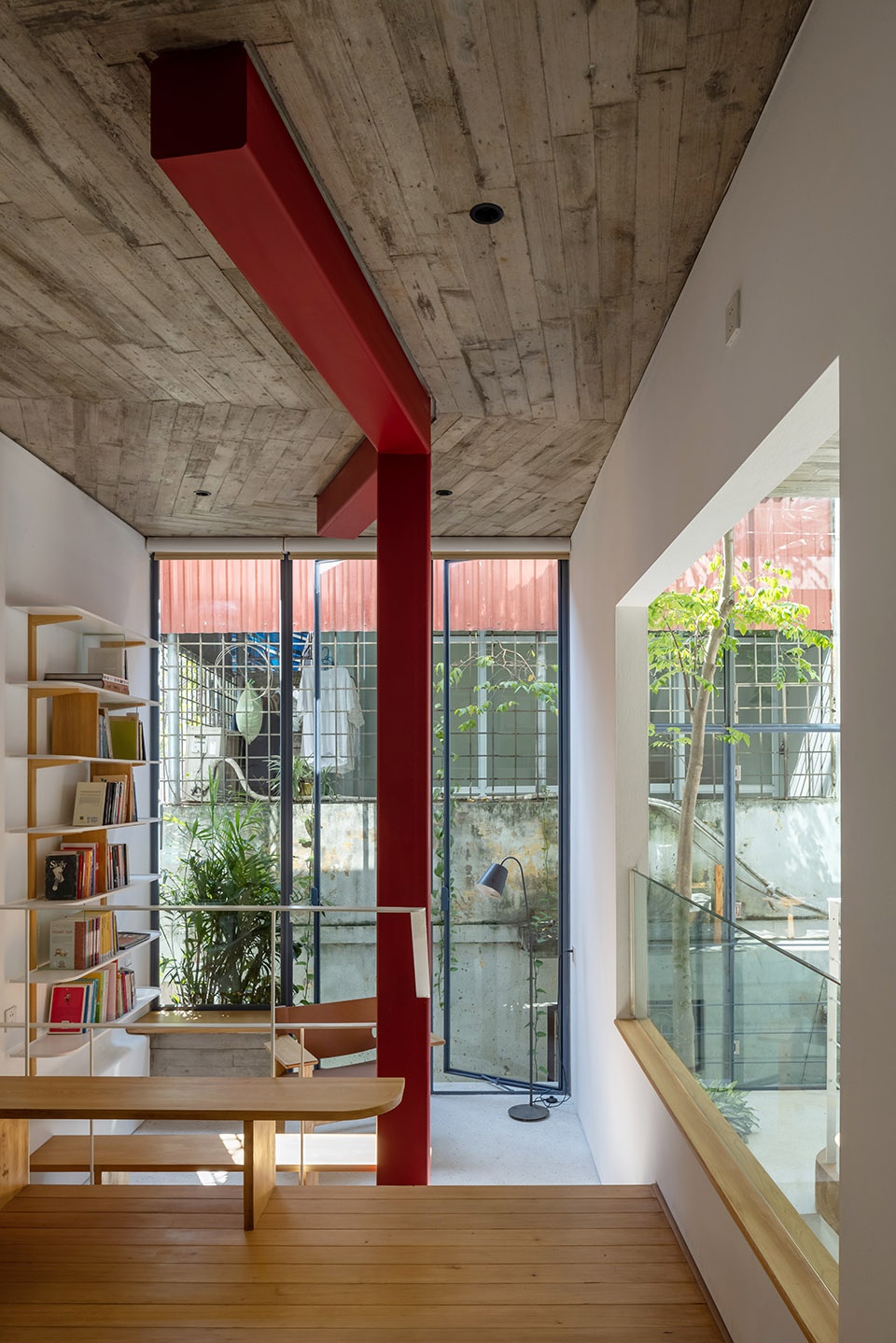
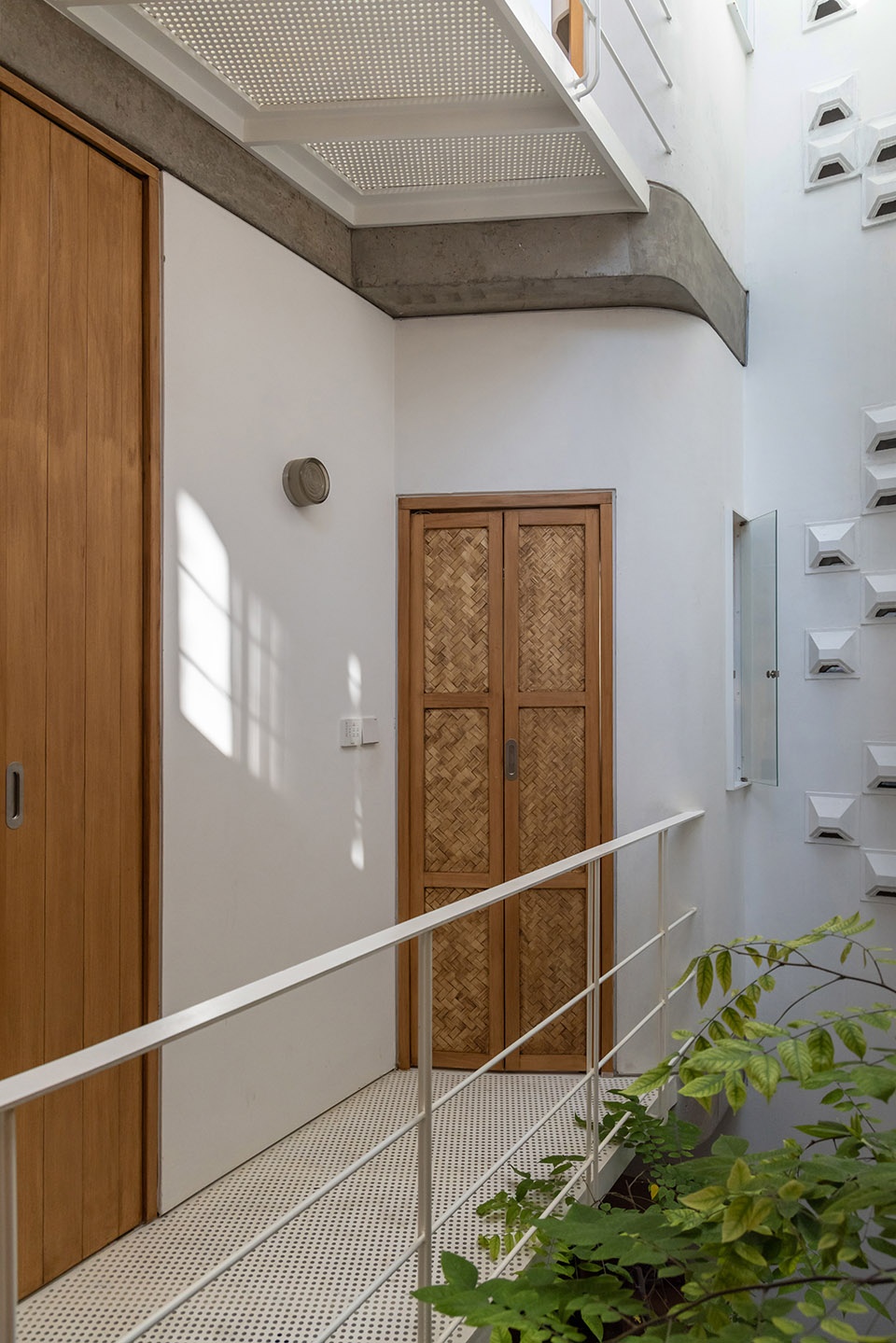
材料的选择在塑造空间体验方面同样发挥着重要作用。项目有意识地混合运用多种材料,以避免单调感,并在紧凑的建筑体量中营造丰富的层次感,从而增强空间的触觉体验与视觉深度。
Material selection plays a key role in shaping the spatial experience. A deliberate mix of materials avoids monotony and creates a sense of richness within the compact volume, enhancing both tactile and visual depth.
▼结构细部,structure detail
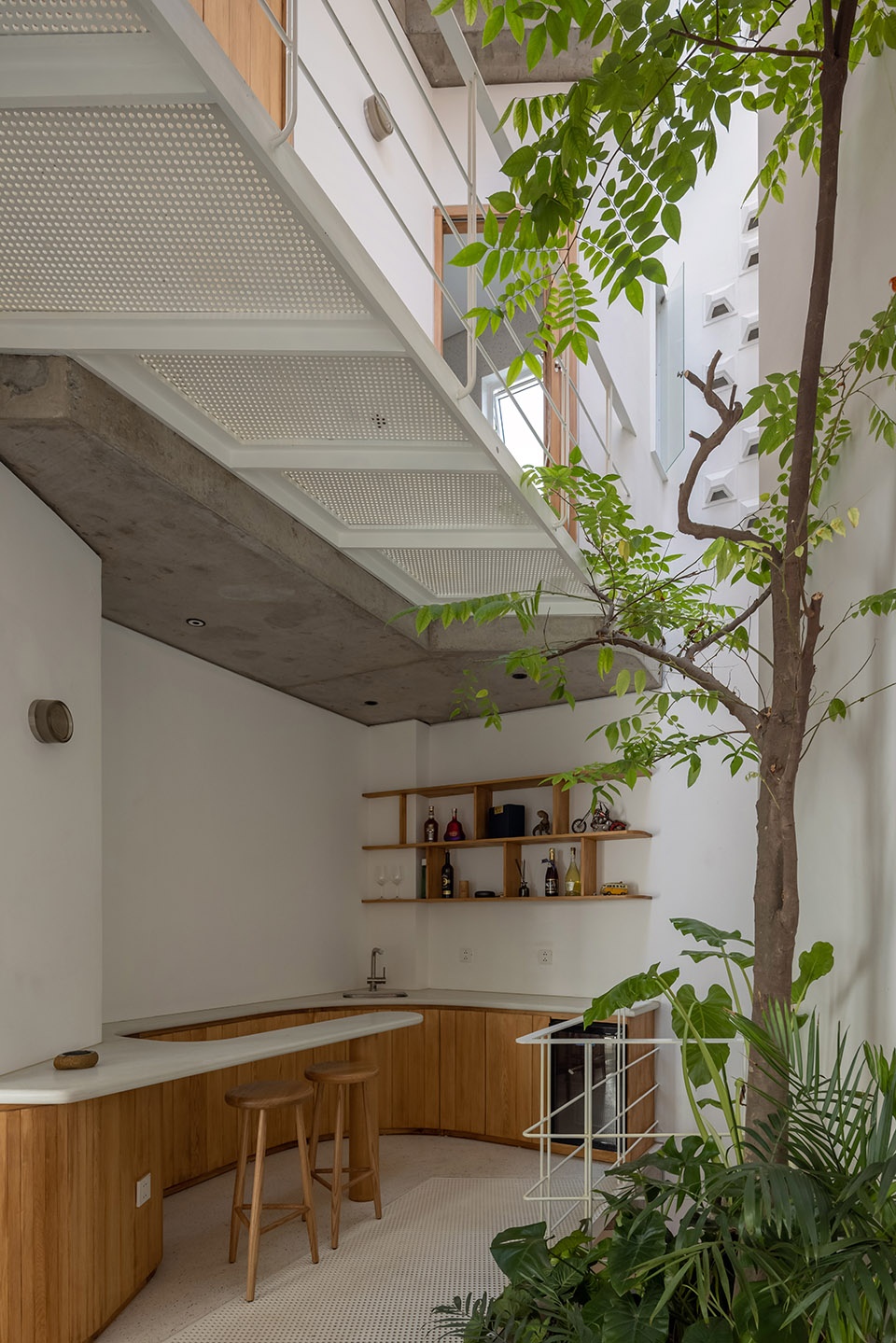
绿色露台与种植区域被整合进住宅的各个部分,以改善微气候环境,并弥补周边社区绿化不足的问题。除了环境层面的表现之外,项目同样回应了巷道生活所具有的社会属性。共享空间与私密空间在垂直方向上的组织既强化了家庭成员之间的联系,也为个人提供了独处和休憩的机会。与此同时,面向巷道保持的视觉开放性,则使住宅始终与社区生活保持紧密联系。
Green terraces and planted areas are integrated throughout the house to improve the microclimate and compensate for the lack of greenery in the surrounding neighborhood. Beyond environmental performance, the project responds to the social realities of alley living. The vertical arrangement of shared and private spaces strengthens family relationships while allowing moments of retreat. At the same time, visual openness toward the alley maintains a strong connection with the community.
▼种植区域改善微气候环境,
planted areas improve the microclimate
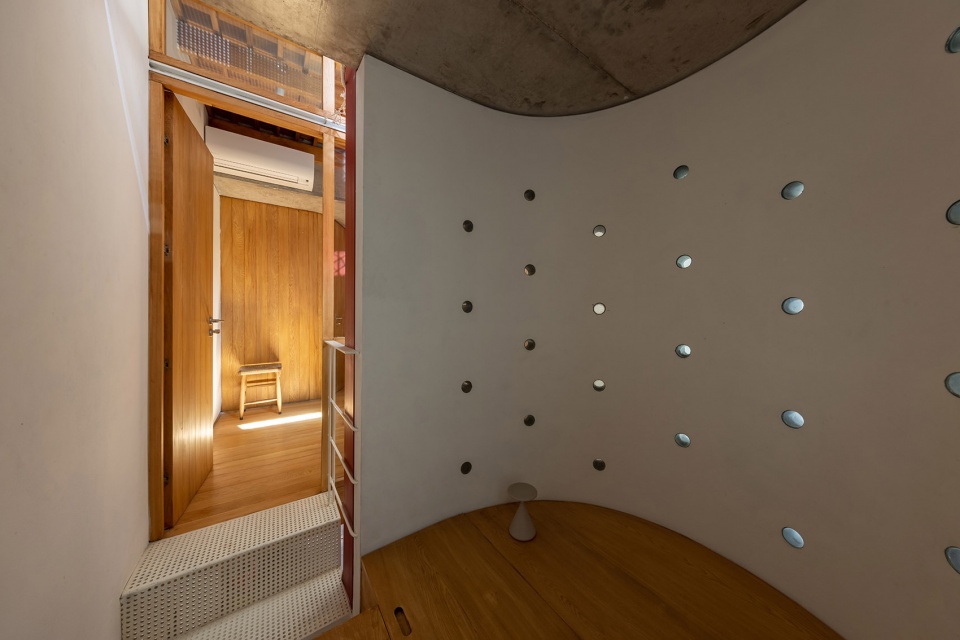
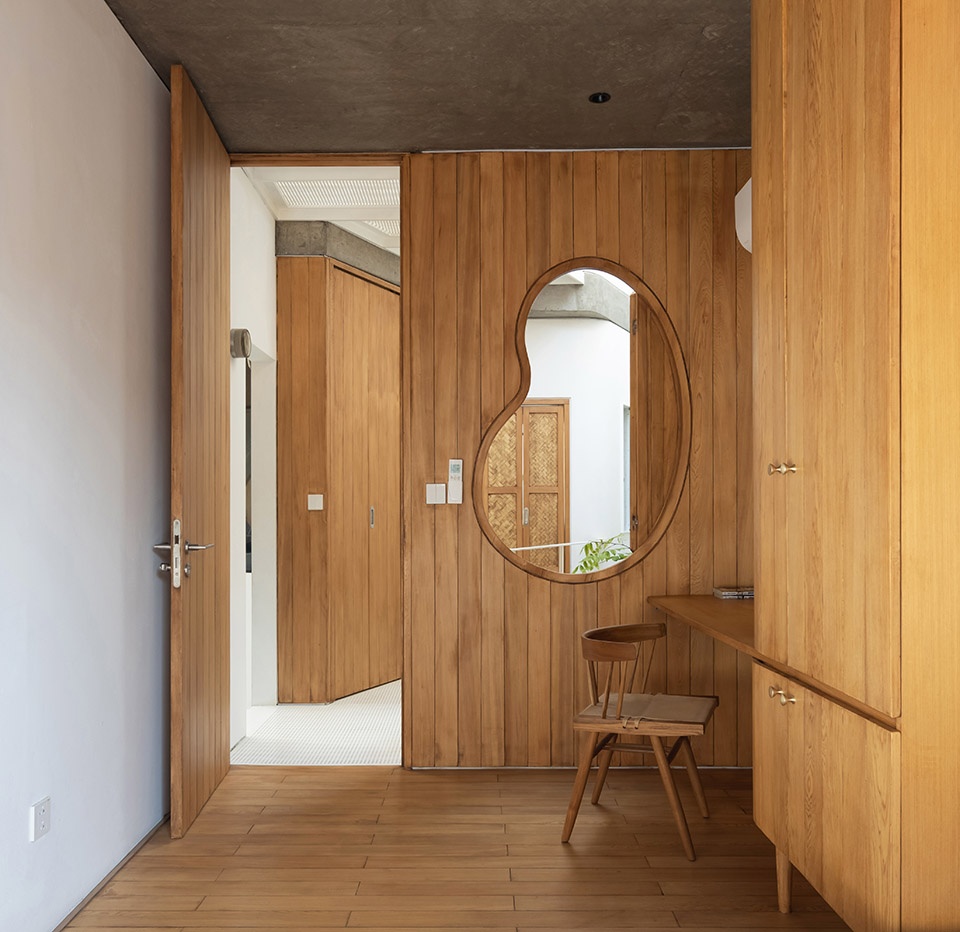
▼卧室空间,bedroom space
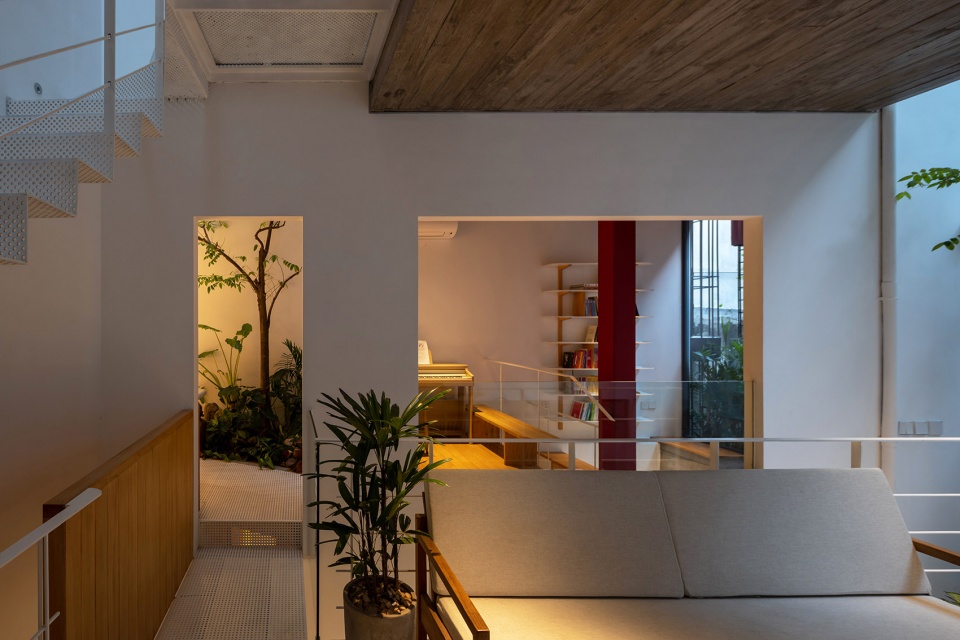
▼夜晚室内空间,interior space at night
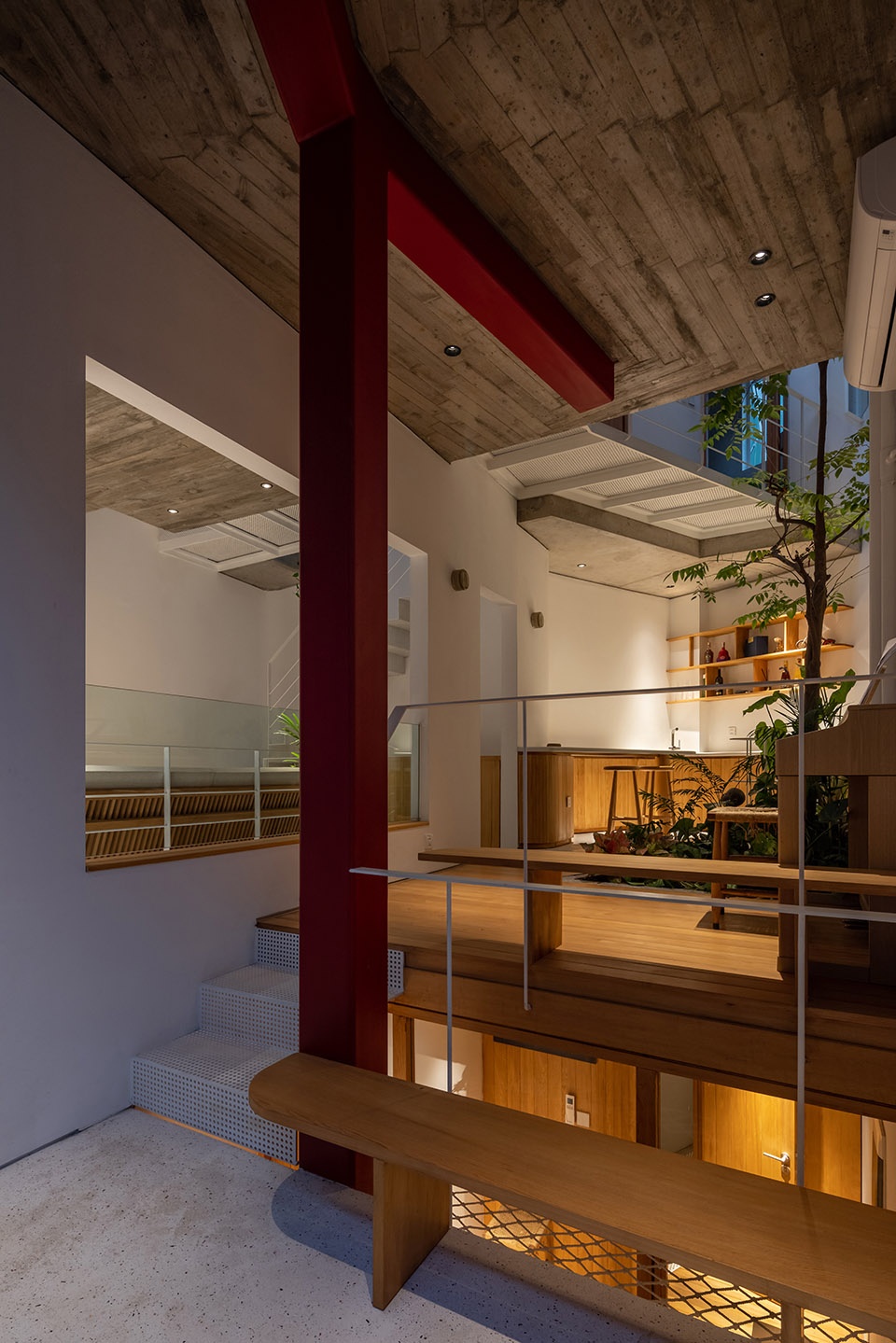
▼夜晚室内空间,interior space at night
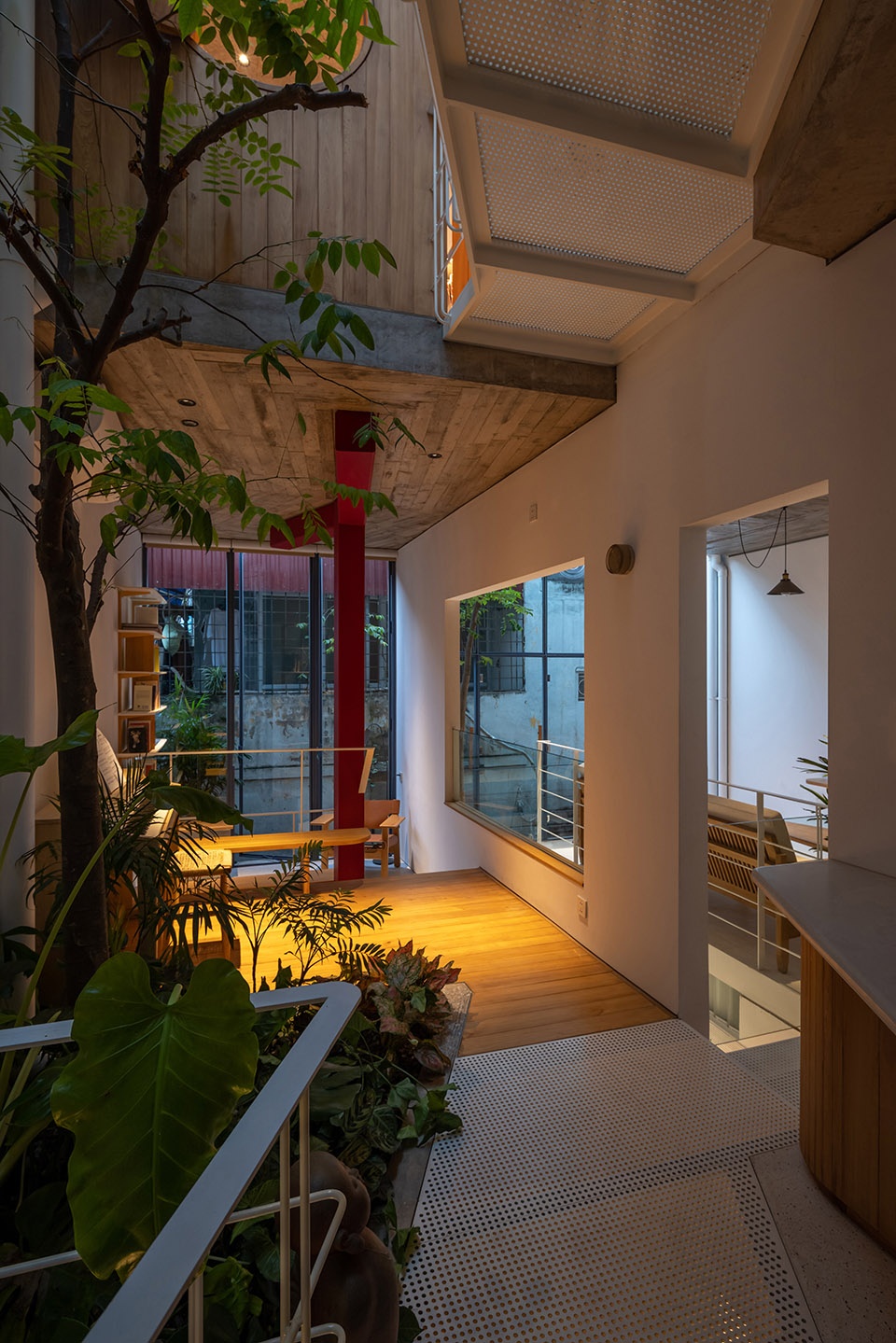
最终,TH+ House展示了一种河内城市住宅随时间不断生长与演变的可能性。它能够适应家庭结构的变化,同时延续社区关系的连续性。项目将建筑视为一种关怀、适应与韧性的工具,在高密度城市环境中探索更加可持续的居住方式。
Ultimately, TH+ House demonstrates how urban homes in Hanoi can evolve over time, adapting to changing family needs while reinforcing social continuity. It proposes architecture as a tool for care, adaptability, and resilience within the city’s dense urban landscape.
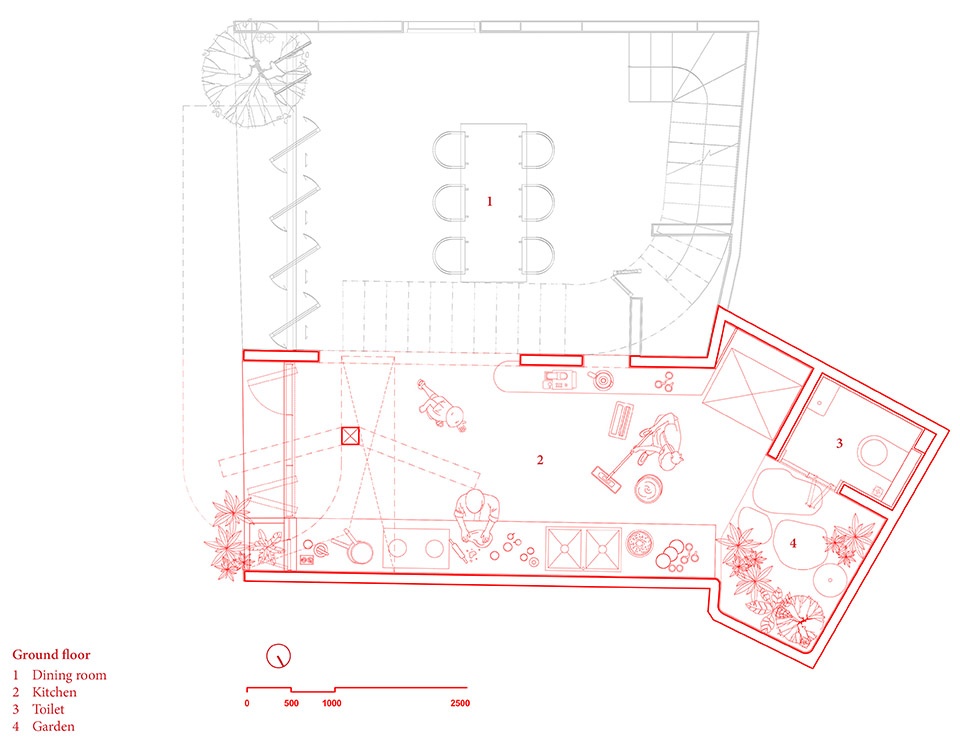
▼一层平面图,ground floor plan
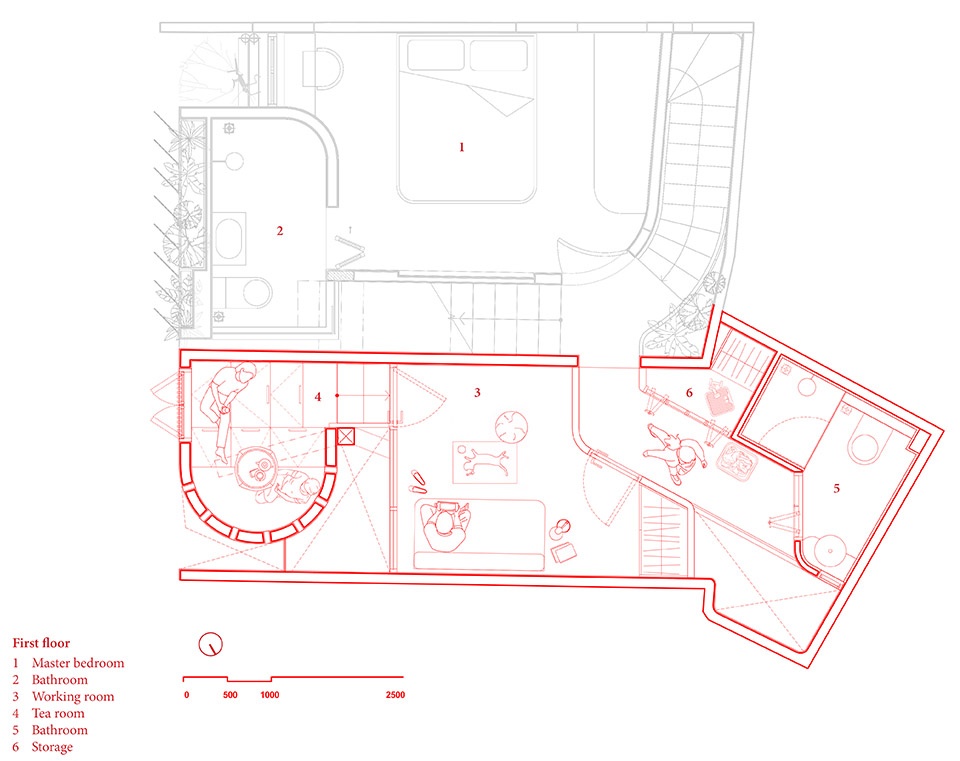
▼二层平面图,first floor plan
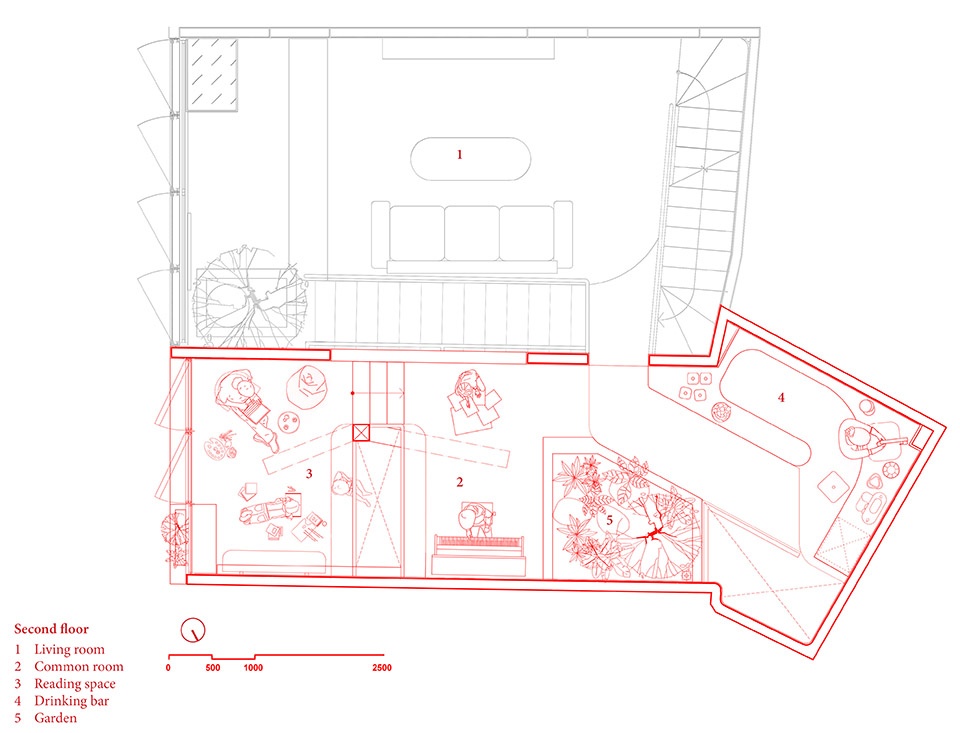
▼三层平面图,second floor plan
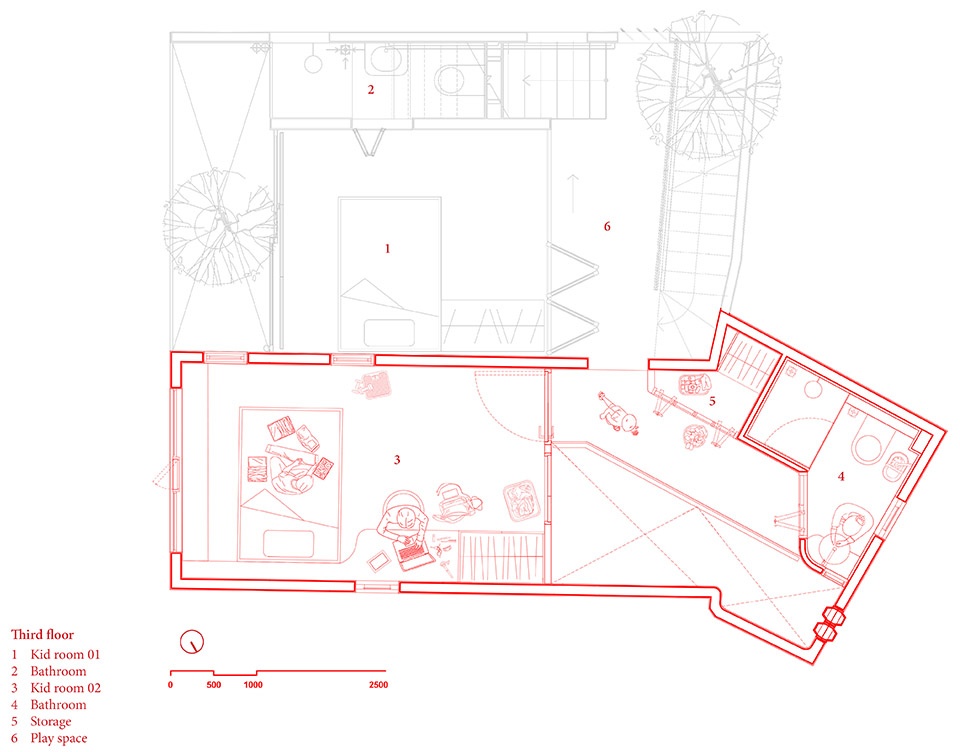
▼四层平面图,third floor plan
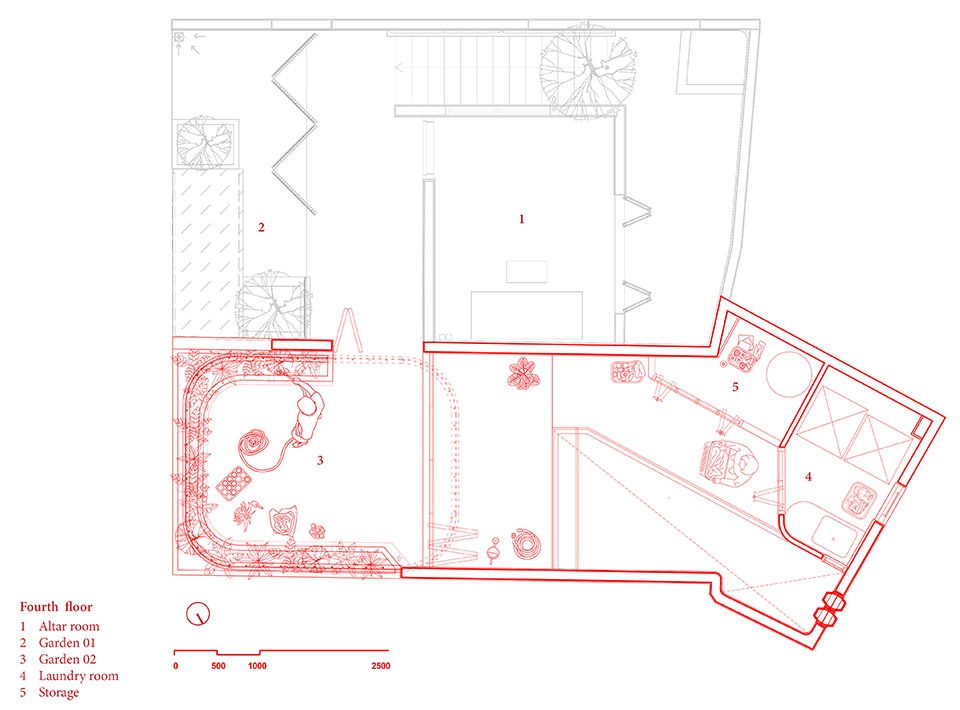
▼五层平面图,fourth floor plan
Project Name: TH+ house
Author: ODDO architects / Marek Obtulovič, Mai Lan Chi, Nguyen Duc Trung
Office Website: http://www.oddoarchitects.com
Contact email: oddoarchitects@gmail.com
Firm Location: Add1: 61 Ly Thuong Kiet, Hanoi, Vietnam
Completion Year: 2025
Gross Built Area (m2/ ft2): 124m2
Project location: Hanoi, Vietnam
Program: House
Lead Architects: Marek Obtulovič, Mai Lan Chi, Nguyen Duc Trung
Lead Architects e-mail: oddoarchitects@gmail.com
contractor: B-Up Construction
Photographer
Photo Credits: Hoang Le photography