缙云石宕,浙江 / 景观
缙云县非常规空间资源
Unconventional Spatial Resources in Jinyun County
浙江省西南部的缙云县,简称缙,隶属于丽水市管辖。缙云北部,蜿蜒的好溪,和饱经岁月风景如画的古火山地貌,呈现独特的景观风貌。仙都风景名胜区是280个国家5A级旅游景点之一,已经吸引了众多游客。自宋朝(960-1279)以来,文人墨客对仙都的旖旎风景赞不绝口。如今,缙云县占地面积1503平方公里,有人口46.7万,分布在18个乡镇。
Jinyun County in the southwest of Zhejiang Province is located only a few kilometres to the east of Songyang County, both of which are administered by the prefectural city of Lishui. In the northern part of Jinyun, the landscape is characterized by the meandering loops of the Hao River and by weathered, picturesque, ancient volcanic landscapes. The Xiandu Scenic Area is one of 280 tourist destinations rated 5A by the national administration and already attracts many tourists. Famous scholars have extolled the stunning scenery for its unique beauty since the Song Dynasty (960–1279). Today, Jinyun County has a population of over 467,000 in its eighteen towns.
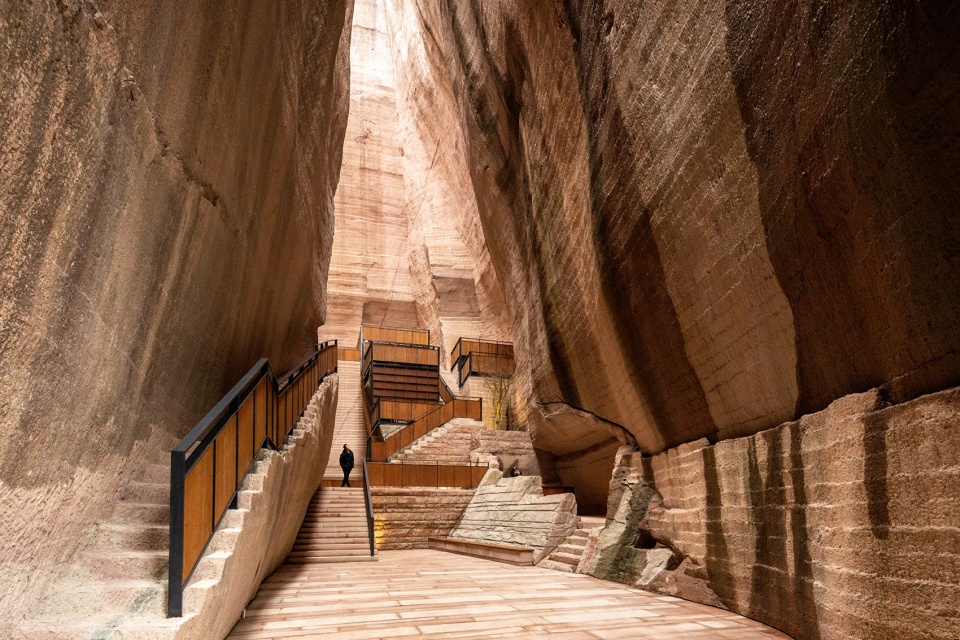
▼8号石宕概览,General view of Quarry#8
缙云县在春秋(公元前722 – 481年)和战国时期(公元前475 – 221)被认为是三大神话之中黄帝的所在地,黄帝被尊为中华民族的祖先已经有5000多年历史。河堤上矗立着世界上最高的石柱鼎湖峰,高170多米。然而,这座献给他的祠宇在明朝(1368-1644)期间被毁,直到1994年才重建。从那以后,它经常被用于祭祖,并从2011年被列为国家非物质文化遗产。在仙都景区发现的岩石书法碑文是该地区的另一个文化景点。有石刻125件,其中唐代(617/18-907)刻2件,宋代(960-1279)刻55件,明代(1368-1644)刻28件,清代(1644-1911)刻8件,民国(1912-1949)刻16件,近代刻10件。自2001年起,石刻被列为文物保护单位,因为石刻跨越了悠久历史,展现了多种多样的书法风格,具有重要的历史和艺术价值。
Jinyun County was already mentioned in the Spring and Autumn Annals (722–481 BC) and the Warring States Period (475–221 BC) as the site of one of the three great palaces of the legendary Yellow Emperor (Huangdi), who has been revered as the founder of the Chinese nation for over 5000 years. On the riverbank stands the world’s tallest monolithic stone pillar, Dinghu Peak, at over 170 metres, from where, according to legend, the Yellow Emperor flew to heaven on a dragon. The temple dedicated to him was, however, destroyed during the Ming Dynasty (1368–1644) and was not rebuilt until 1994. Since then, it has regularly been used for commemorative ceremonies, and has been listed as National Intangible Cultural Heritage since 2011. The calligraphic rock inscriptions found in the Xiandu Scenic Area are another cultural attraction in the region. There are 125 rock inscriptions, two of which date from the Tang Dynasty (617/18–907), fifty-five from the Song Dynasty (960–1279), twenty-eight from the Ming Dynasty (1368–1644), eight from the Qing Dynasty (1644–1911), sixteen from the Republican Period (1912–1949), and ten from modern times. The rock inscriptions have been protected as cultural monuments since 2001 and are of great historical and artistic significance, since they span a long period of time and display a wide range of calligraphic styles.
▼9号石宕概览,General view of Quarry#9
缙云县80%的土地被森林覆盖,与其他7个县接壤。属温暖湿润的亚热带季风气候,四季分明。仙都风景区拥有令人印象深刻的自然景观,一直以来都是学者和道家灵感的重要来源,近年来已经有200多部电影在这里拍摄。由于其巨大的文化意义,许多诗意的象征被赋予。因此,在汉语中,这个地区被称为“仙都”,翻译过来就是“仙境”。如今,该地区以生态旅游闻名,并且未来将进一步扩展。
Jinyun County, almost 80 per cent of whose landscape is forested, borders seven other counties. It has a warm and humid subtropical monsoon climate with four distinct seasons. The Xiandu Scenic Area encompasses an impressive natural landscape that has always been a significant source of inspiration for scholars and Taoists, and has served as a setting for over 200 films that have been shot in recent years. Because of its great cultural significance, many poetic attributes have been assigned to the area. Hence, in Chinese, the area is called Xiandu, which translates as ‘fairyland’. Today, the region is also known for ecological tourism, which will be expanded further in the future.
▼10号石宕概览,General view of Quarry#10
缙云石宕
The Quarries of Jinyun
在这个地区,有3000多个被遗弃的小型石宕,直至今日,除了少数的例外情况,这些采石场都是在没有机器辅助的情况下手工开采的。徐甜甜和她的团队正在研究的9个石宕位于仙都风景区的一个山谷中。该项目旨在改善生态环境,以此支持地区发展。与此同时,措施的实行为当地居民和游客创造了社交、文化场所。经过改造和再利用的石宕将成为公共基础设施的一部分,把可以追溯到1000多年前的历史遗产和民俗文化并置成为新的语境。
In the region, there are more than 3000 small abandoned quarries, which until recently—with few exceptions—were exploited by hand without the assistance of machines. The nine quarries that Xu Tiantian and her team are working on are located in a valley that is part of the Xiandu Scenic Area. In order to support regional development, the project aims at ecological improvements. At the same time, the measures being realized create social and cultural locations that serve both the local population and visitors. The converted and repurposed quarries will become part of a public infrastructure that puts historical aspects and everyday cultural heritage dating back over a thousand years in a new context.
▼仙都风景区概览,General view of the Xiandu Scenic Area
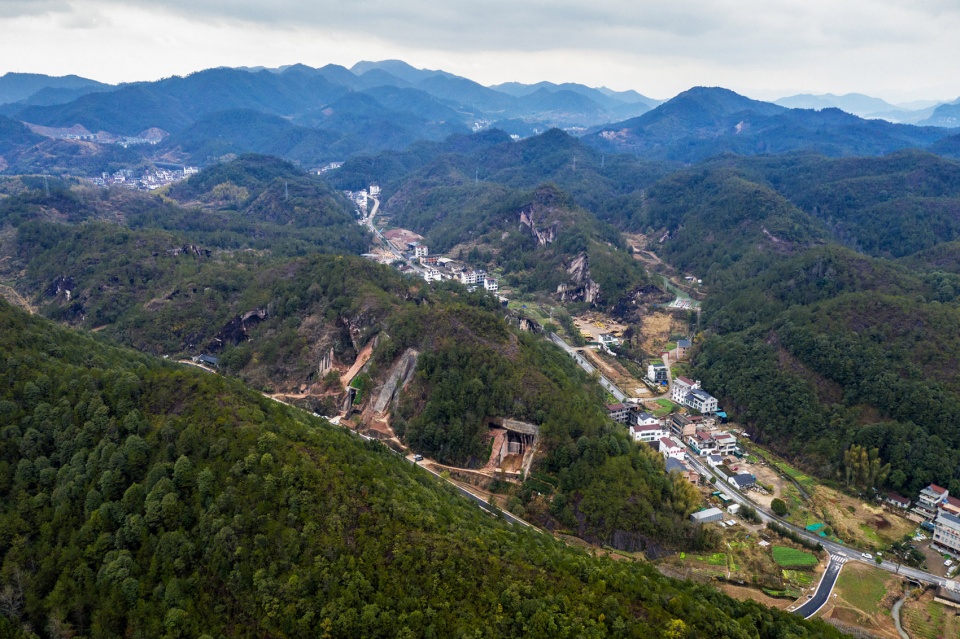
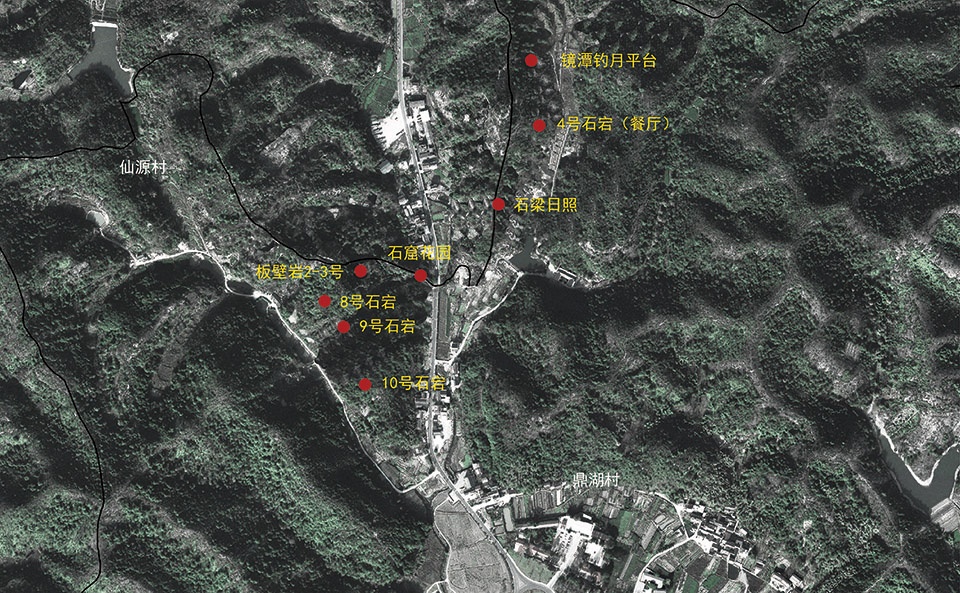
石宕位于鼎湖村北部一条约一公里的山谷中,这条山谷从西南到东北沿对角线划分了两条山脉。一条乡间道路穿过山谷,两旁是一个个小村庄。其中六个采石场位于西部山脉,三个位于东部山脉,它们通过一条路径联接并形成一系列空间体验。在项目的未来阶段,将直接在山谷的道路边建造一个信息中心。
The quarries are located north of Dinghu village along a route of about one kilometre in a valley that divides two mountain ranges diagonally from the southwest to the northeast. A country road lined with small hamlets runs through the valley. Six of the quarries are located in the western mountain range and three of them in the eastern range, and are interlinked conceptually by a path that forms a space of experience. An information centre will be built directly on the road in the valley in a future stage of the project.
▼区位图,location plan
石宕的潜在价值
Potential of the Quarries
凝灰岩是一种全世界普遍可见的火山岩,其颜色可以从灰色到黄色、棕色、红色到鲜红色,在该地区已经开采了1000多年。这些岩石在当地被用作凿制的砖石或用于建造和石雕的材料。由于小型家庭作坊式开采的生态影响,采石业走向没落,其闲置遗产成为一种消极资源,似乎没有被开发的潜力。石宕被弃置多年甚至数十年,因为岩层会一次又一次地坍塌,再利用这些石宕还需要清理碎石和加固岩石。毕竟,在选择可以更新的区域时,安全是决定性的指标。
Tufa, an igneous volcanic rock that is found around the world and whose colour can vary from grey to yellowish, brownish, and reddish to bright red, has been quarried in the region for over 1000 years. The rock was used regionally as hewn masonry stone or tuff for construction as well as stone sculpture. Due to the ecological impact of the small family-owned quarries, stone quarrying came to an end and its heritage became a negative resource whose potential did not seem to be exploitable. The quarries had been left on their own for many years and sometimes decades, and reusing them also made it necessary to secure loose stones and boulders, since rock formations simply collapse again and again. After all, safety was a decisive criterion in the selection of the places where a new use would be possible.
▼8号石宕入口,entrance of Quarry#8
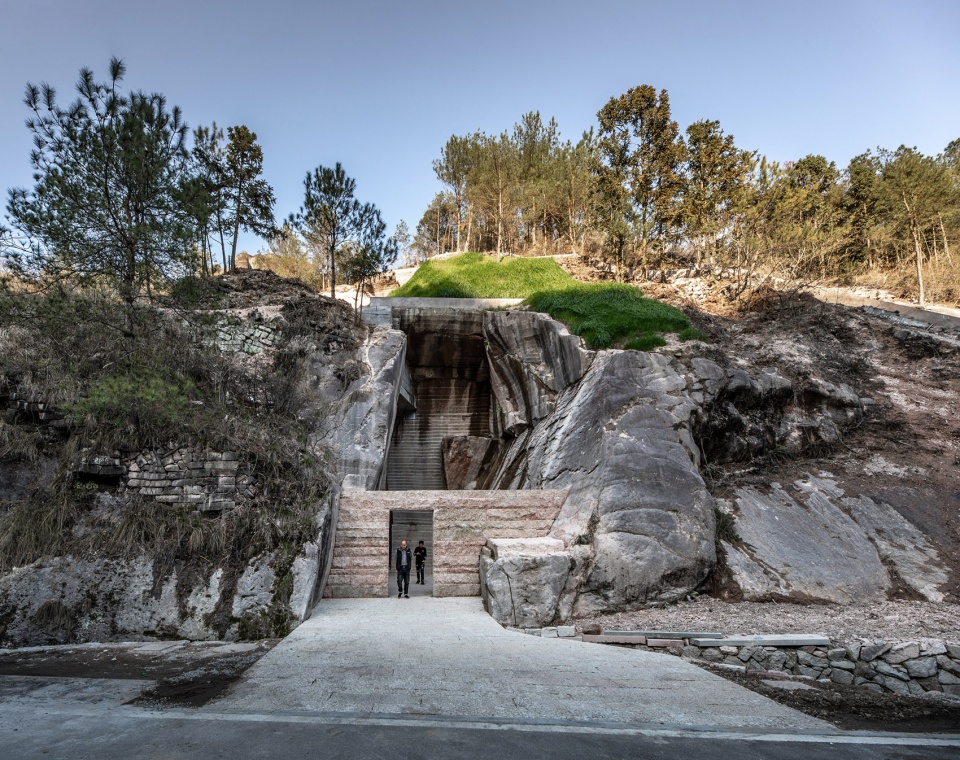
岩宕中的每个空间都不同,它们被各自的采石方式随机塑造。根据石头的质量,有些是自上而下开采的,有些则从山的中间向上或向下开采。这就造成了向外或向上破开的错综复杂的空间序列,如今可以带来巨大的空间潜力。
The Each of the spaces in the rock s are individually is different, having been and shaped at randomly by the particular mining strategy. Some were quarried from the top down, and others from the middle of the mountain upwards or downwards, depending on the quality of the stones. This gave rise to created complex sequences of spaces with breakthroughs towards the outside and above, which today represent the great spatial potential.
▼8号石宕入口近景,closer view of the entrance of Quarry#8
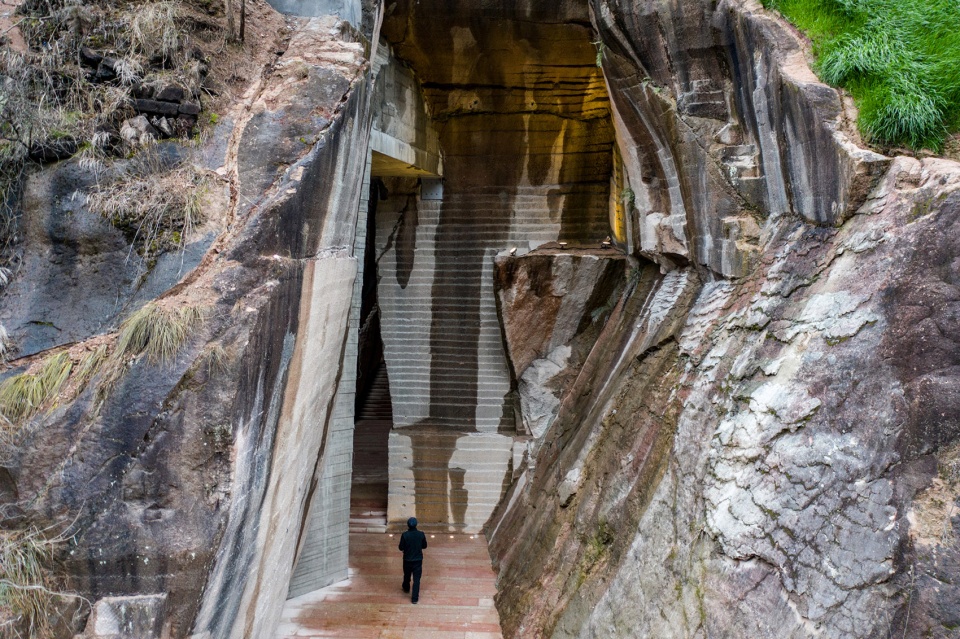
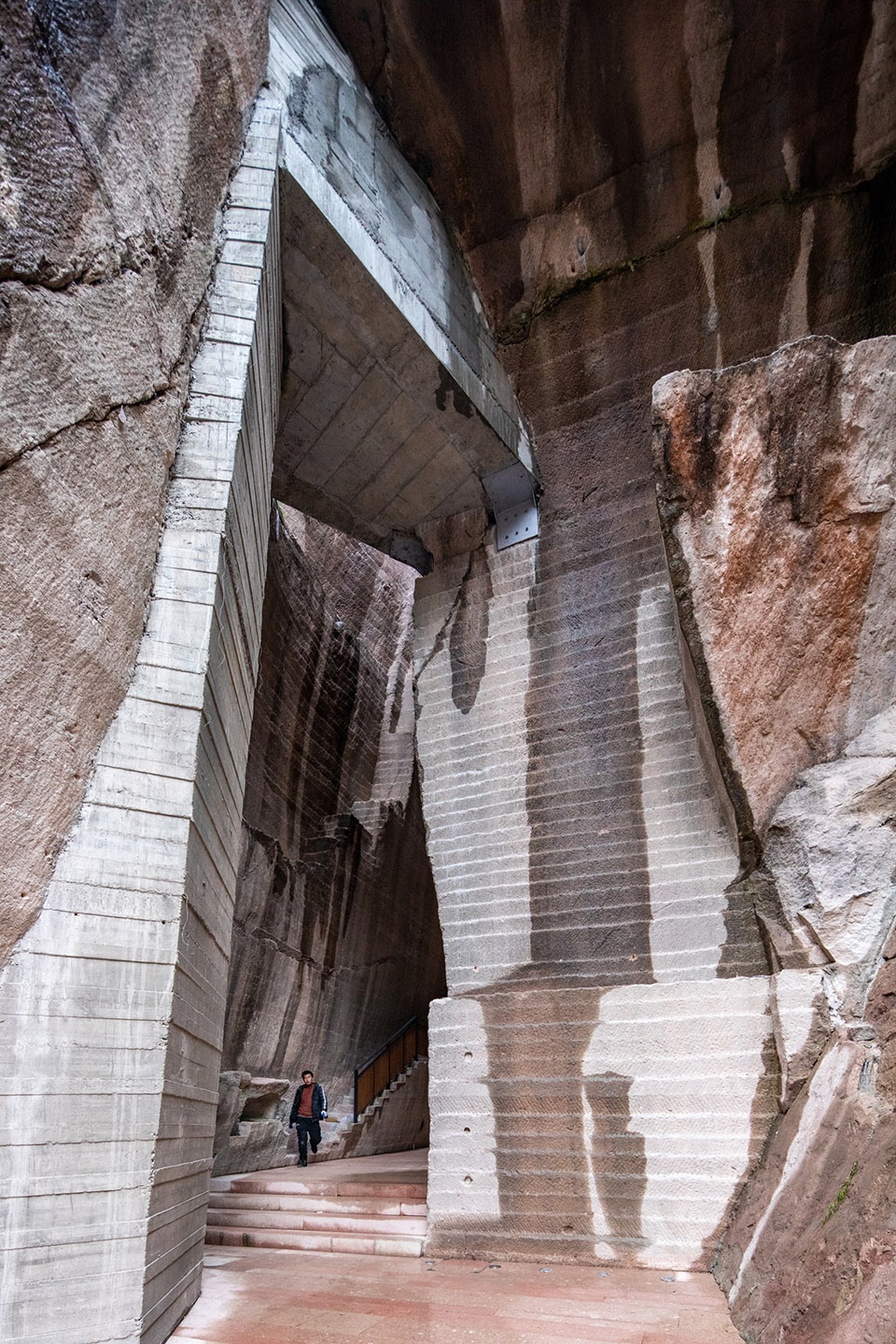
8号石宕:书山
Quarry No. 8: Book Mountain (Shushan)
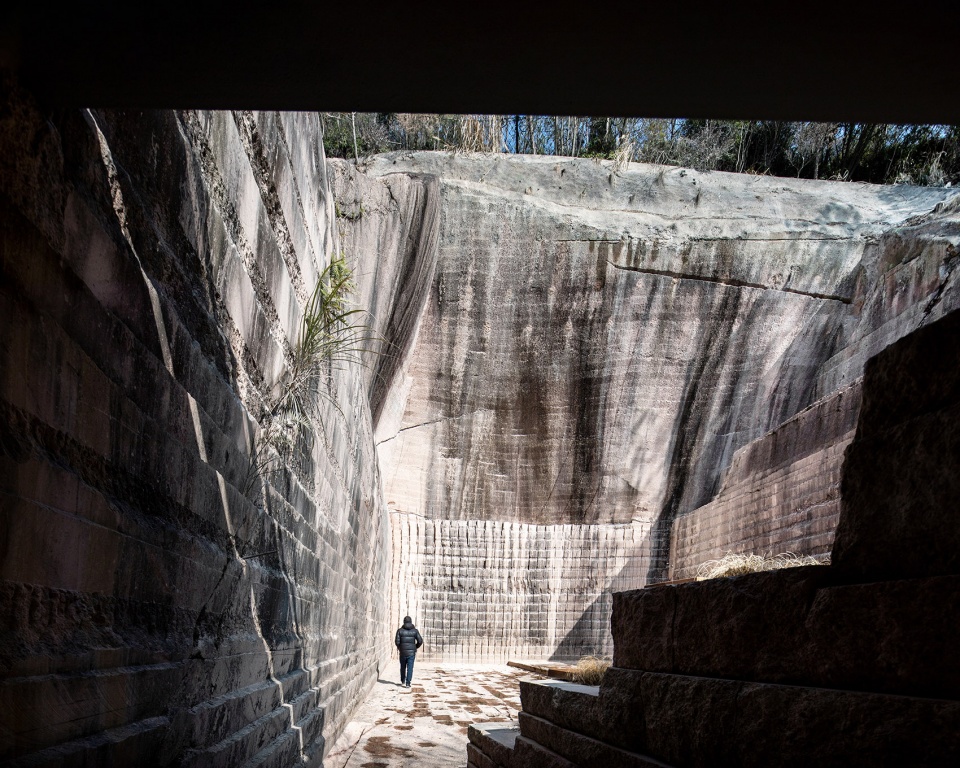
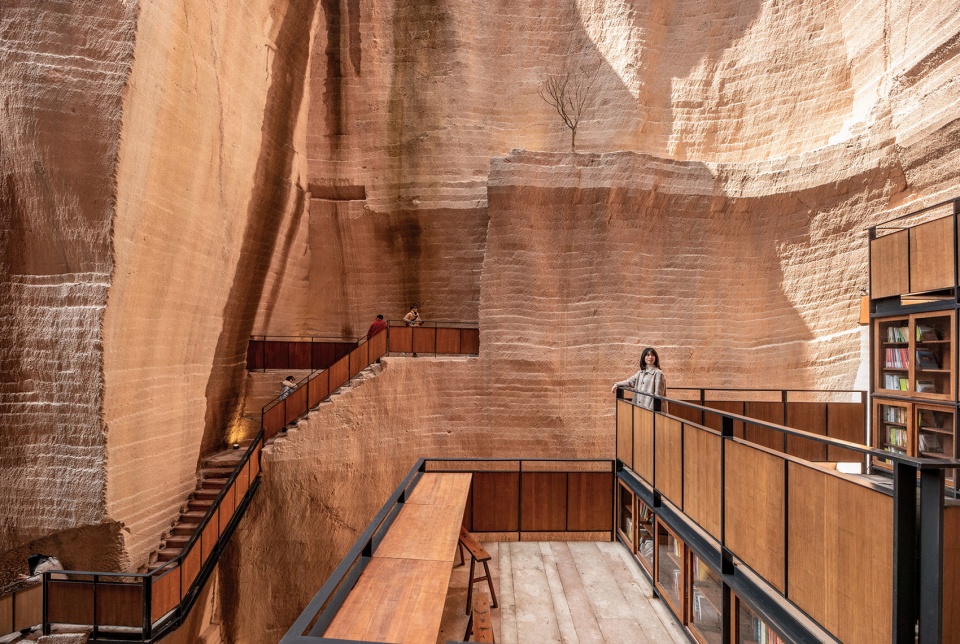
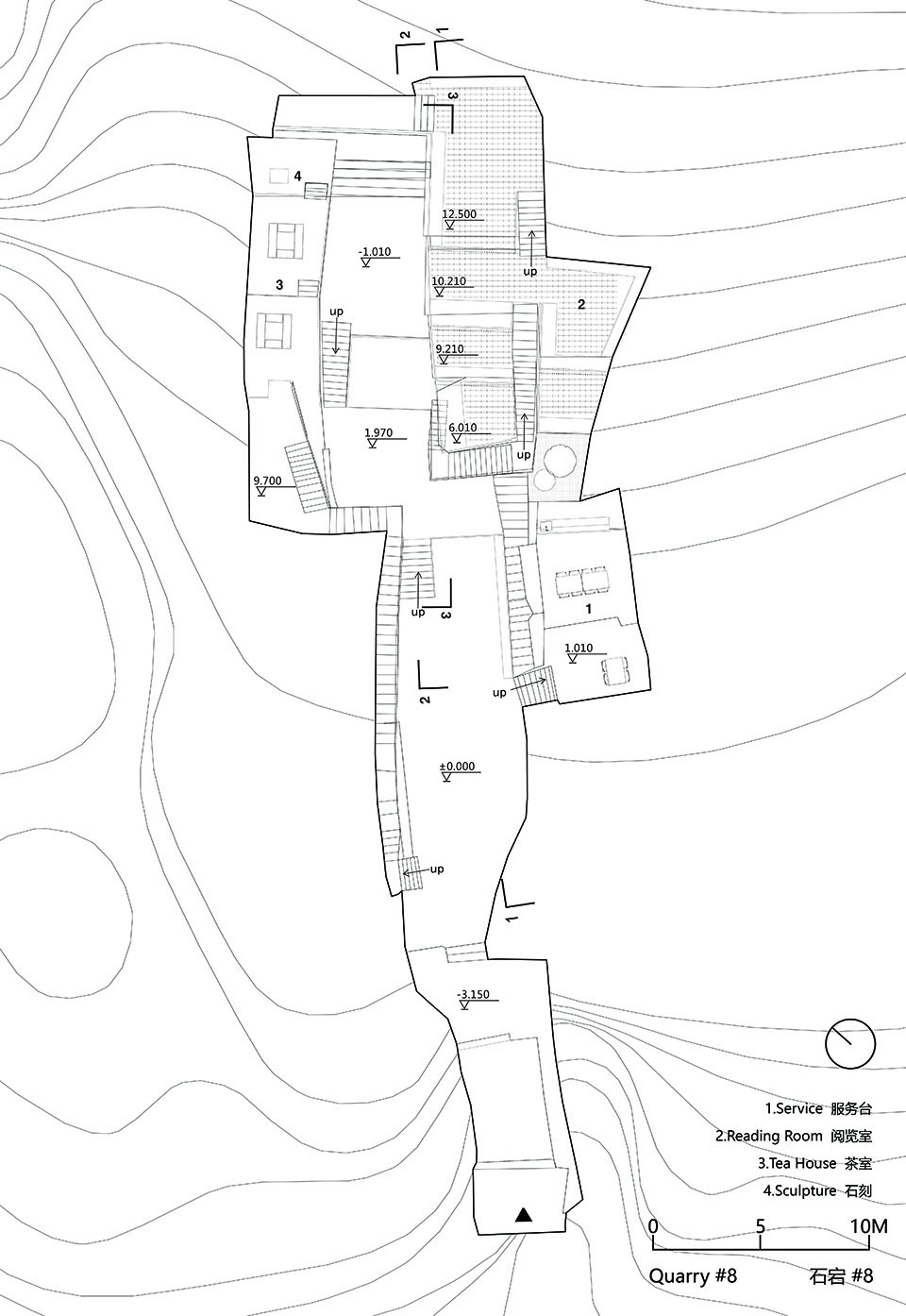
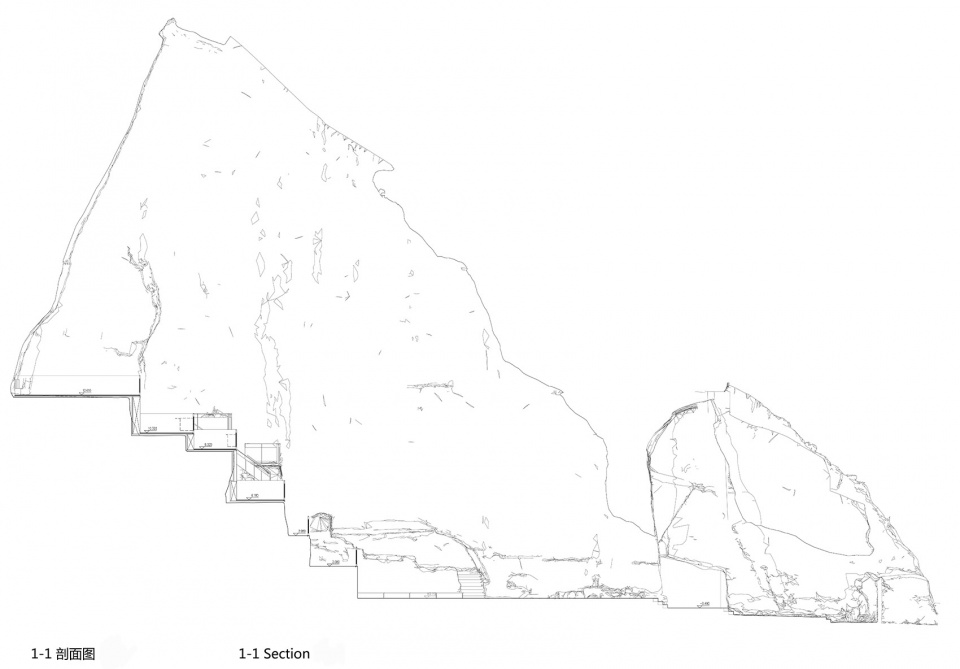
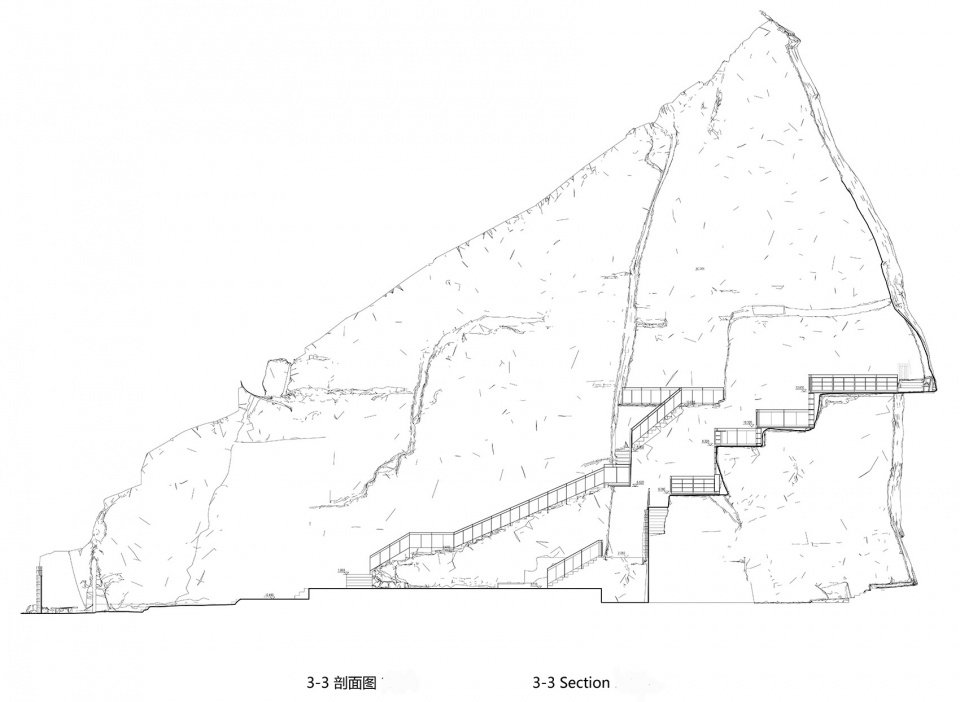
8号石宕的入口距离9号石宕仅几米远,石宕内部的不同平台被利用,成为阅读、学习的场所。这个空间向山谷中延伸约50米,净高度接近40米。这个洞穴形态也是从上部往下方手工开采的结果。这些侧向平台展现采石的截断层,采石禁止后,石宕里这些被废弃的采石区块构成了一个随机的内部空间地形。
Only a few metres from Quarry No. 9, one finds the entrance to Quarry No. 8, which houses a location for reading and studying that is distributed over various platforms in the interior. The space extends about 50 metres into the mountain and reaches a height of nearly 40 metres. This cave, too, was created as a result of stones being quarried by hand from the top down. The lateral terraces are evidence of faulty rock, which is why the quarrying of blocks was abandoned and a random interior topography was created.
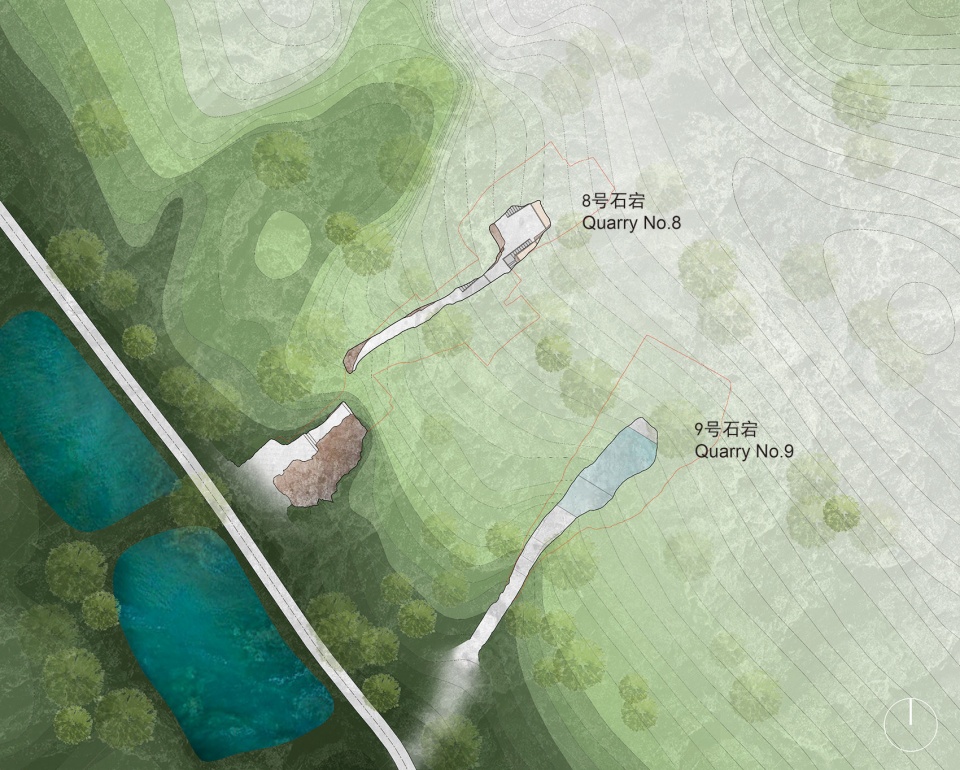
▼8号与9号石宕总平面图,master plan of Quarry#8 & Quarry#9
▼空间向山谷中延伸约50米,净高度接近40米
The space extends about 50 metres into the mountain and reaches a height of nearly 40 metres
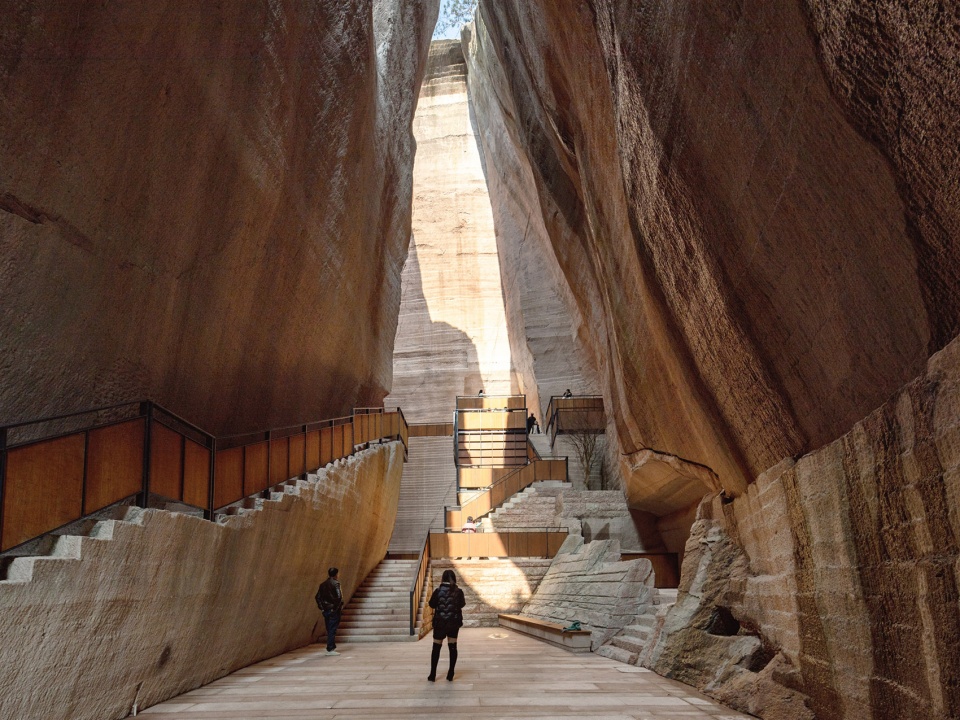
▼废弃的采石区块构成了随机的内部空间地形,the quarrying of blocks was abandoned and a random interior topography was created
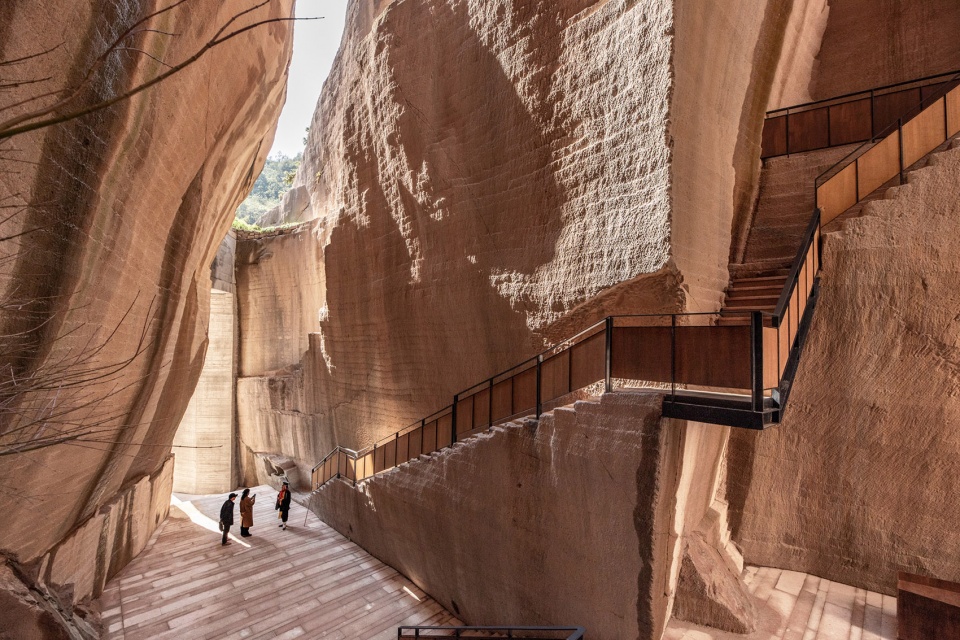
石宕附近曾经是古代文人聚会雅集的地方。唐代诗人韩愈有云:“书山有路勤为径。”相关的文化内涵也让8号石宕成为主要空间,中国每一个学子都能意会的传统人文教育理想,被转译铭刻在这个空间的场景里。
Nearby this quarry are places where scholars met in historical times to debate their ideas. The Tang Dynasty poet Han Yu spoke of how the path through the Mountain of Knowledge (Shushan) is only made possible through diligence. With its cultural connotation, this space is thus the most important one in the group, since, here, a cultural and educational ideal that every schoolchild in China immediately recognizes is inscribed in the found situation.
▼“书山有路勤为径”,the path through the Mountain of Knowledge (Shushan)
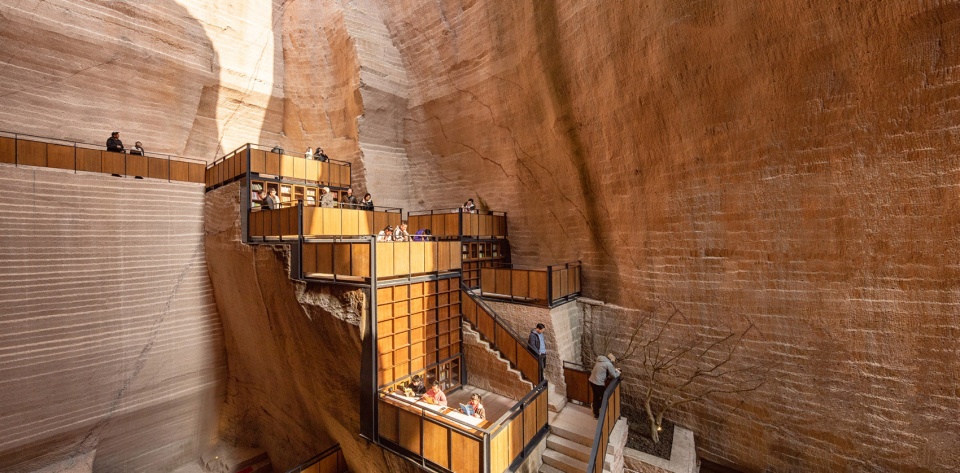
▼层叠的楼梯与平台形成“书山”,Stacked stairs and platforms form the Mountain of Knowledge
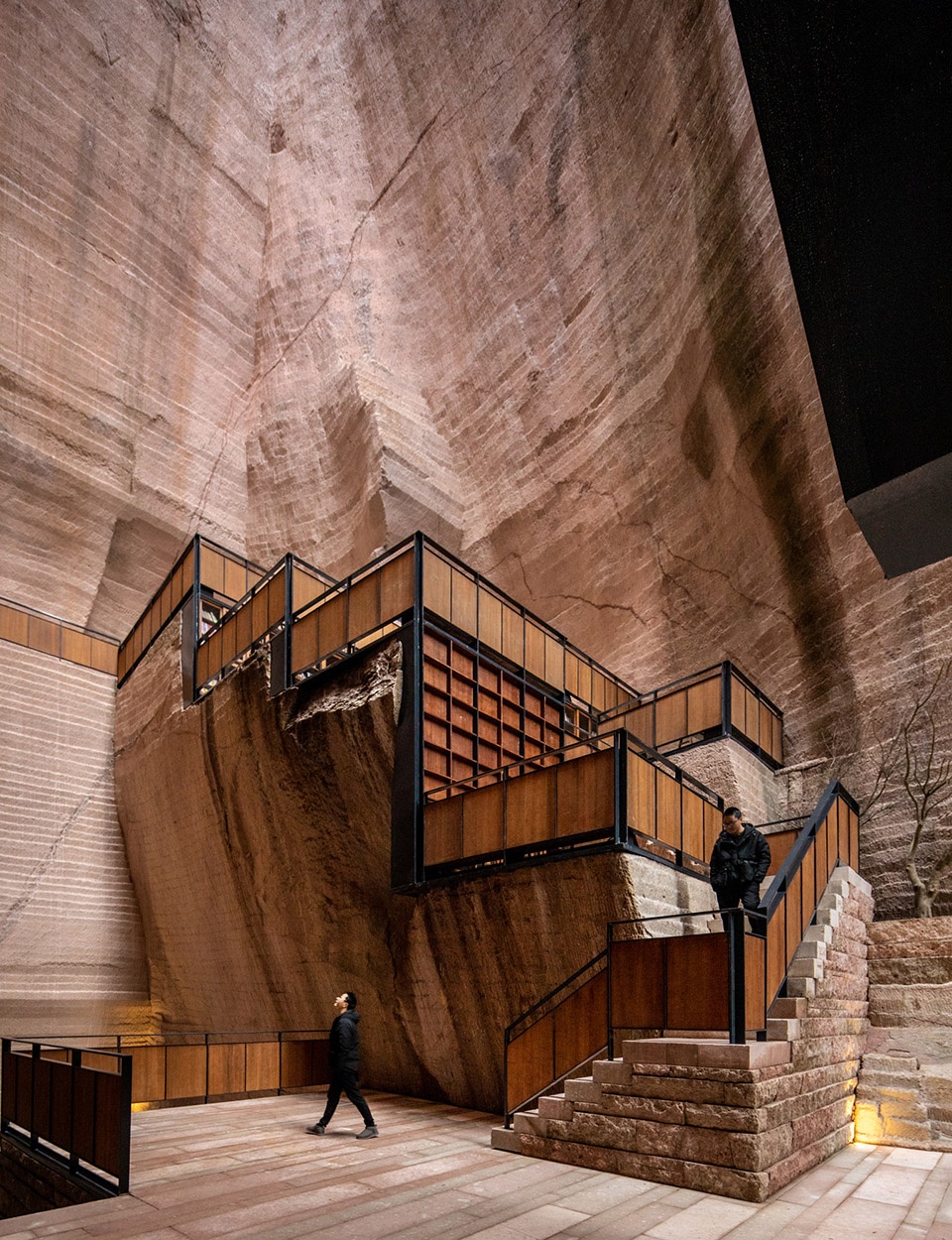
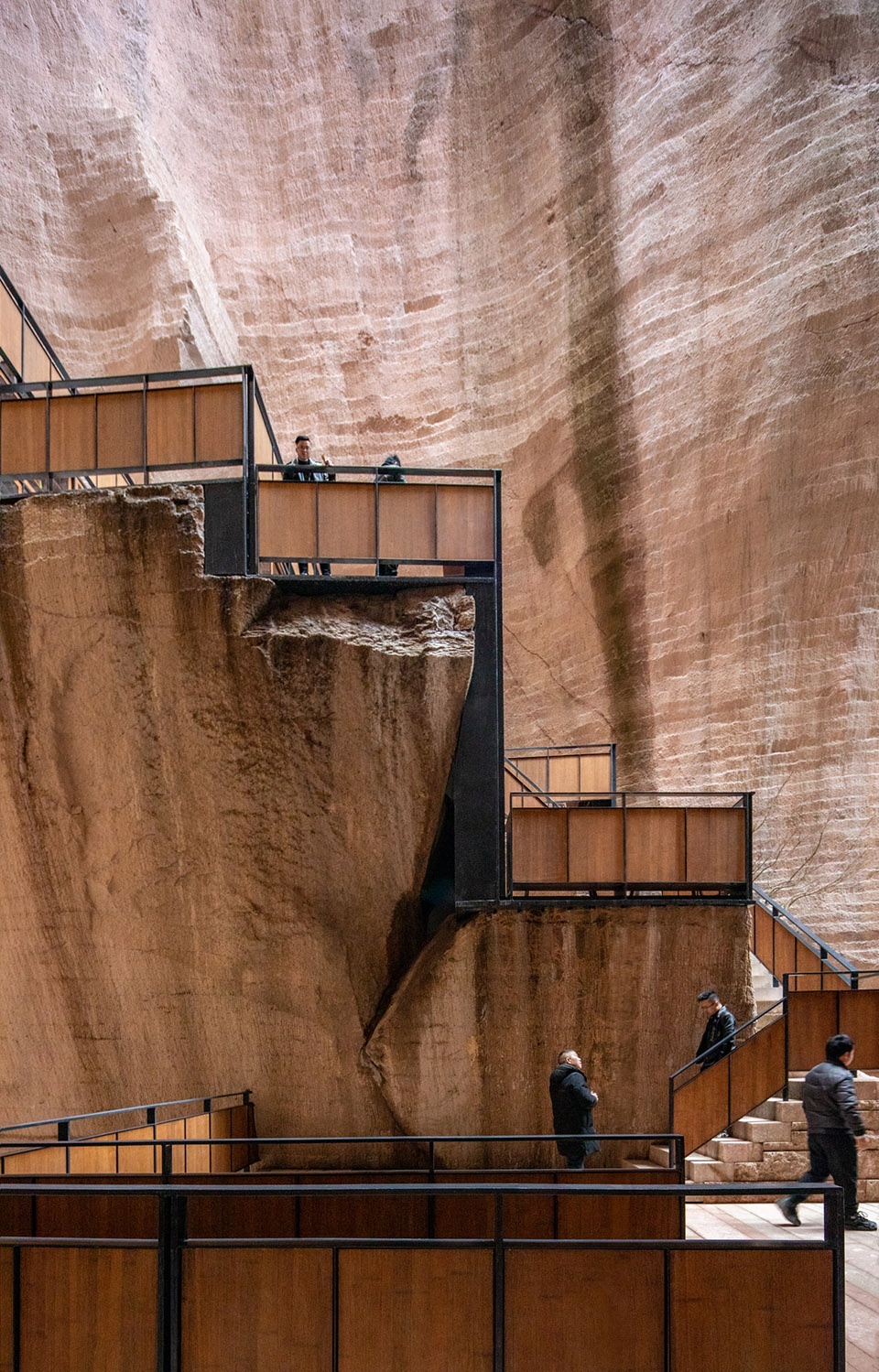
▼楼梯、平台与地形的结合,Stairs and platforms merge into the terrain
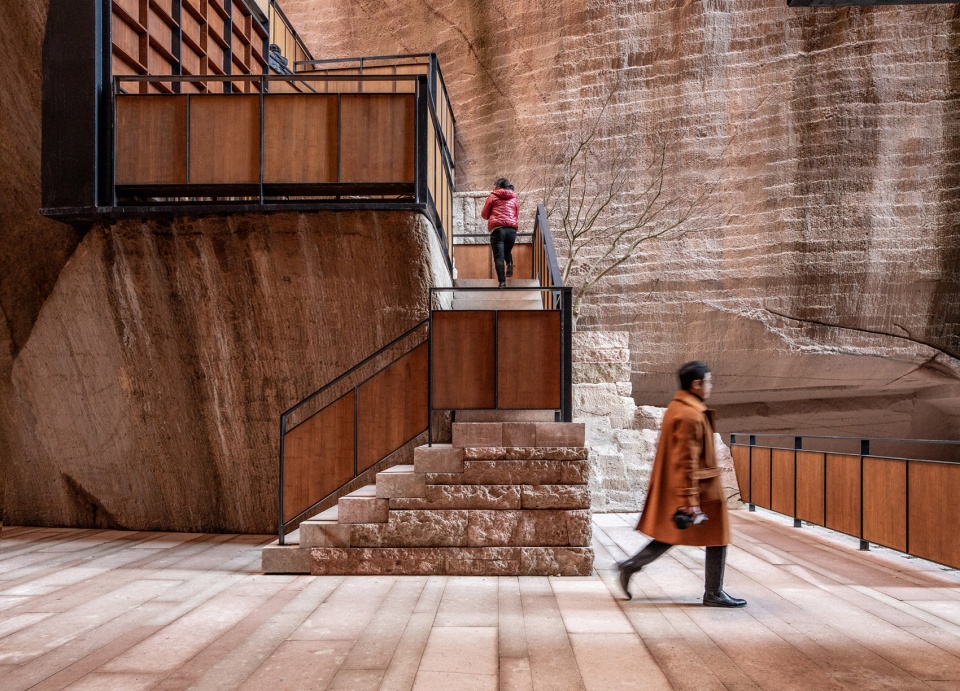
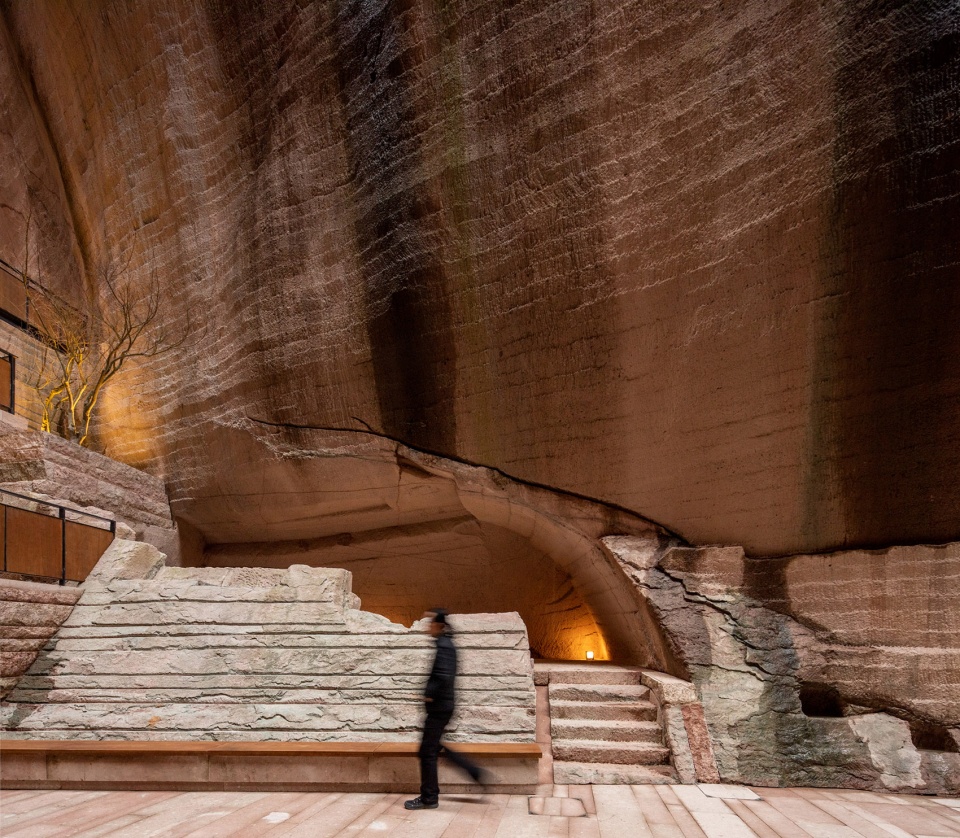
▼书房平台在梯道上层层展现,Positioned on these platforms, which are accessible by stairs, are shelves of books and places for studying
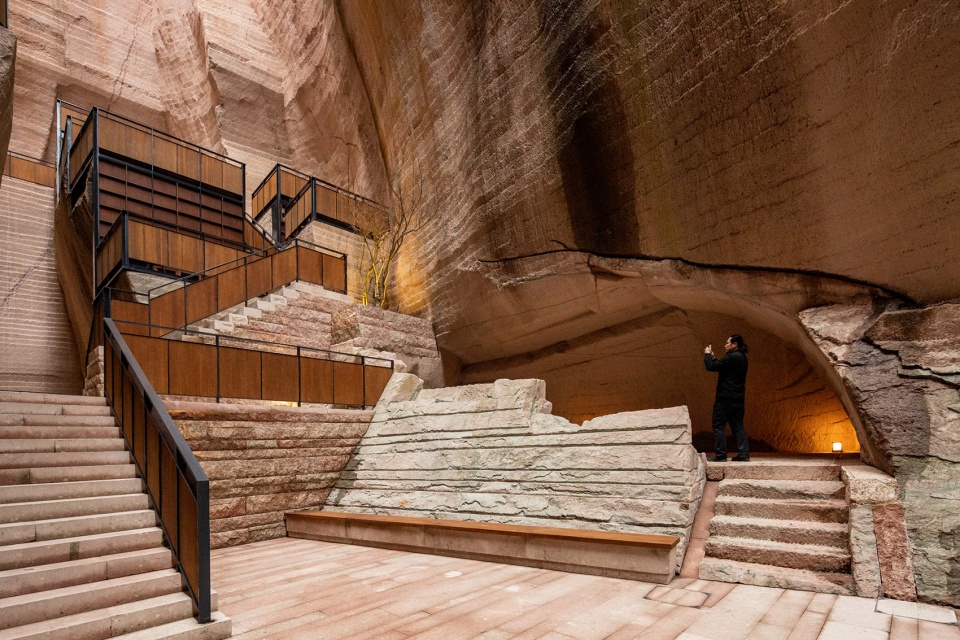
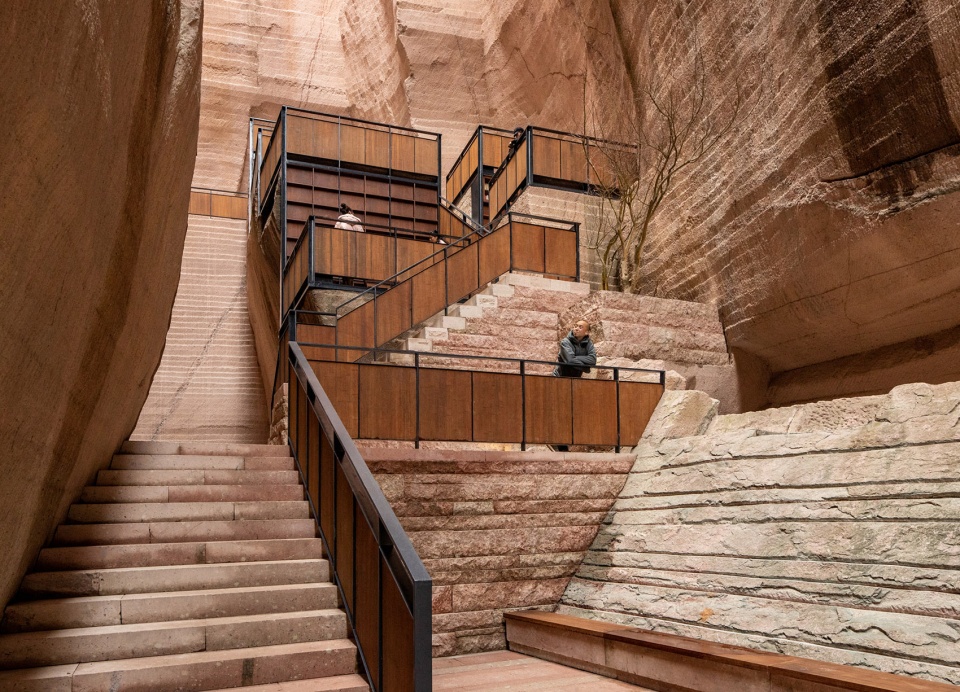
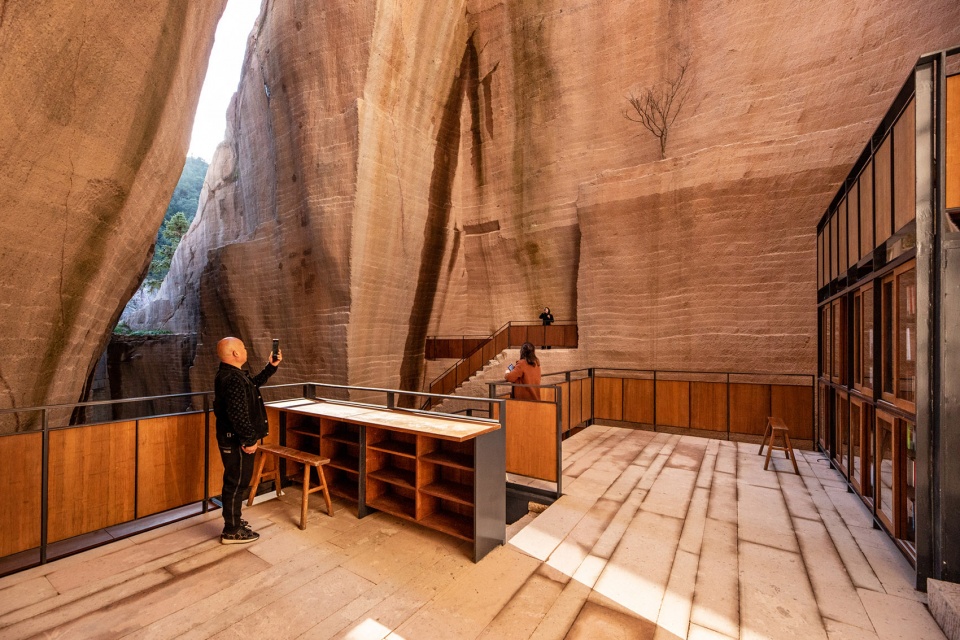
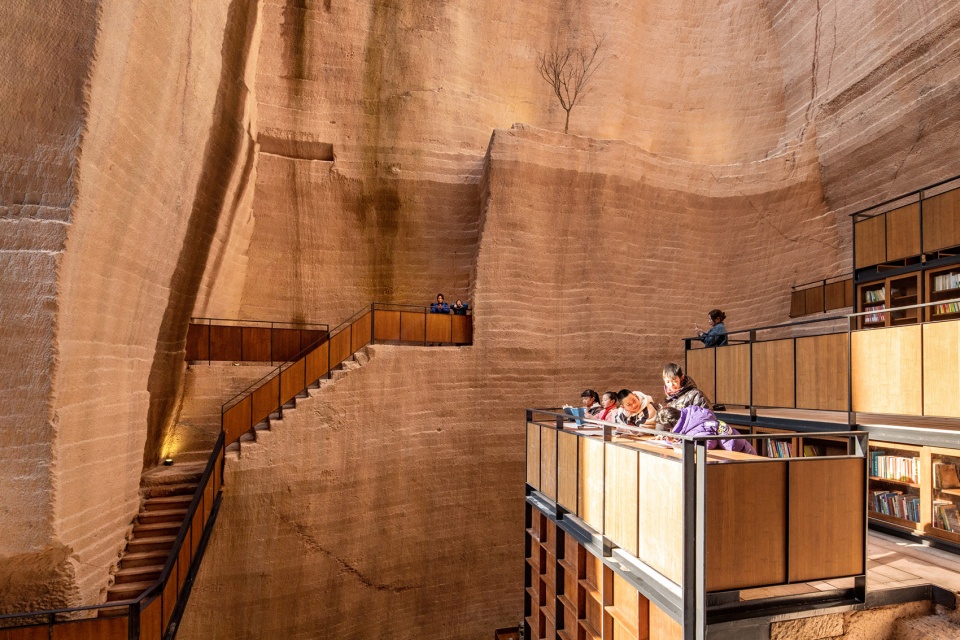
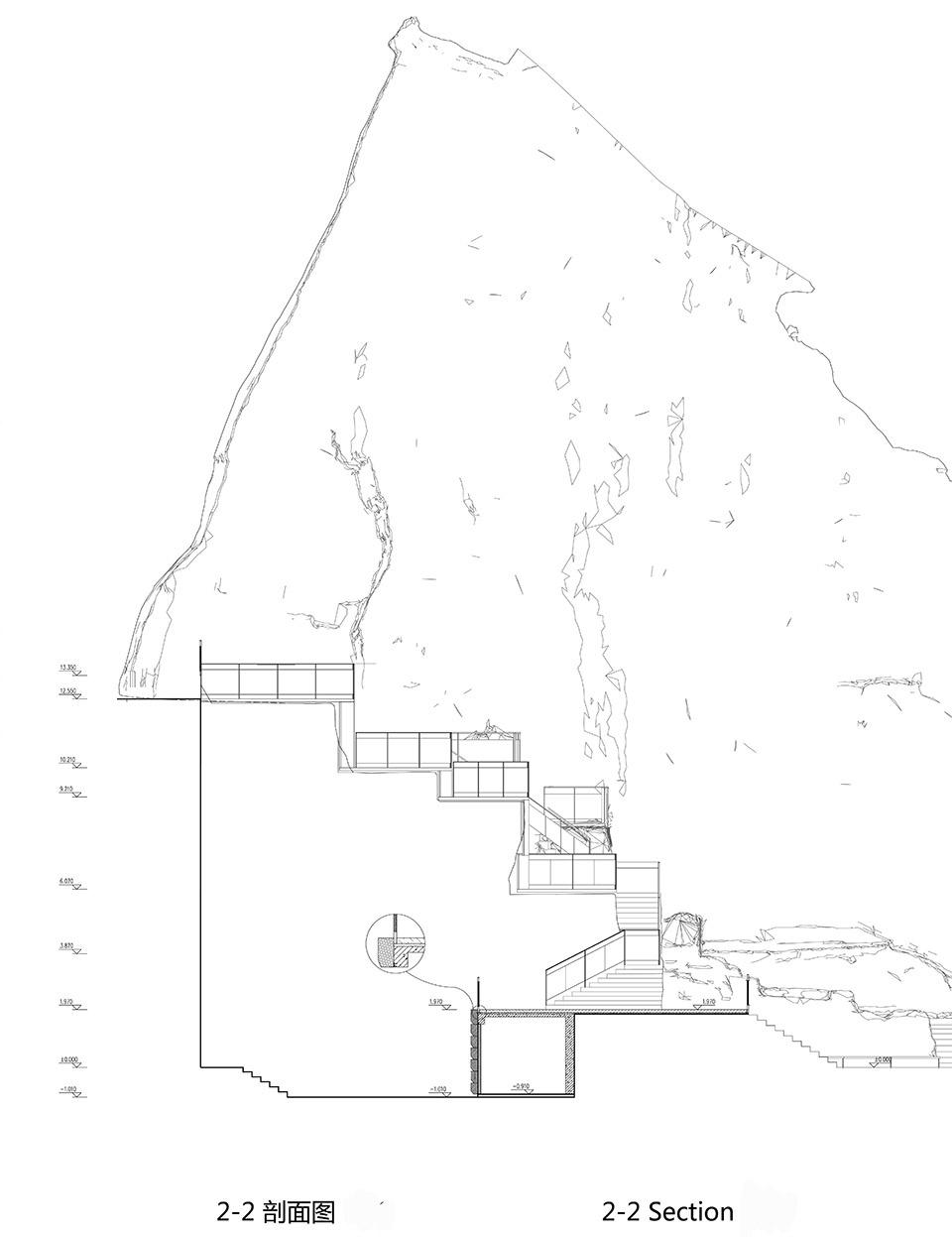
室内的横向石阶超过5层,高达12米,需要一定努力才能攀登。这些平台通过楼梯到达,设置有书架和学习的地方,访客可以沉浸在石刻和书法的世界里。就像是攀登知识的山峰一样,这些书房平台在梯道上层层展现,通往顶层。在那里,有一个27m长的通往2号石宕的隧道。10号、9号和8号石宕已于2022年春季完工,其他石宕仍在建设中。
The lateral stone terraces in the interior develop over five levels up to a height of 12 metres, which can only be climbed with a certain amount of effort. Positioned on these platforms, which are accessible by stairs, are shelves of books and places for studying, where visitors can immerse themselves in the world of stone inscriptions and calligraphy. Like the proverbial mountain of knowledge, the galleries that must be climbed on the way to the top level pile up in front of the visitor. From there, a 27-metre-long tunnel leads to Quarry No. 2. While Quarries No. 10, No. 9, and No. 8 are scheduled for completion in the spring of 2022, the other stations are still under construction.
▼顶层平台与走道,platform and walkway on the top level
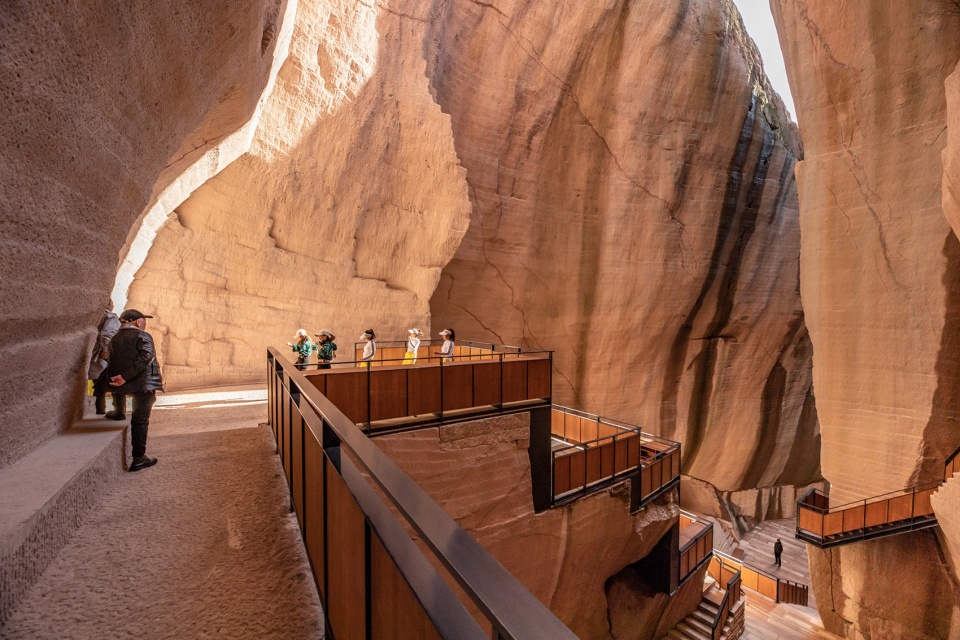
▼由平台眺望石宕外的景观,overlooking the landscape outside the quarry from the platform
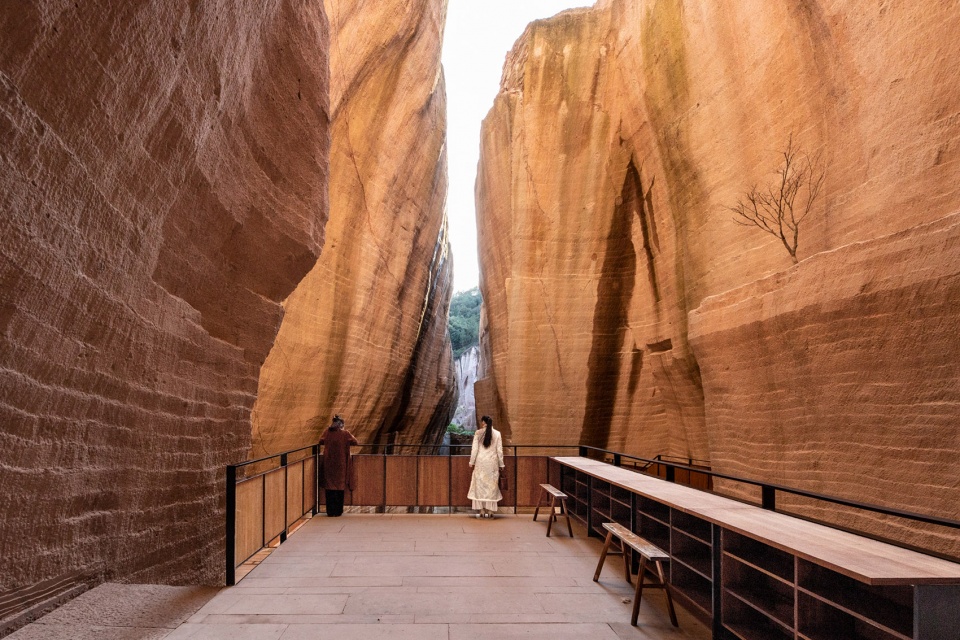
▼由平台仰视石宕上空,looking up to the quarry from the platform
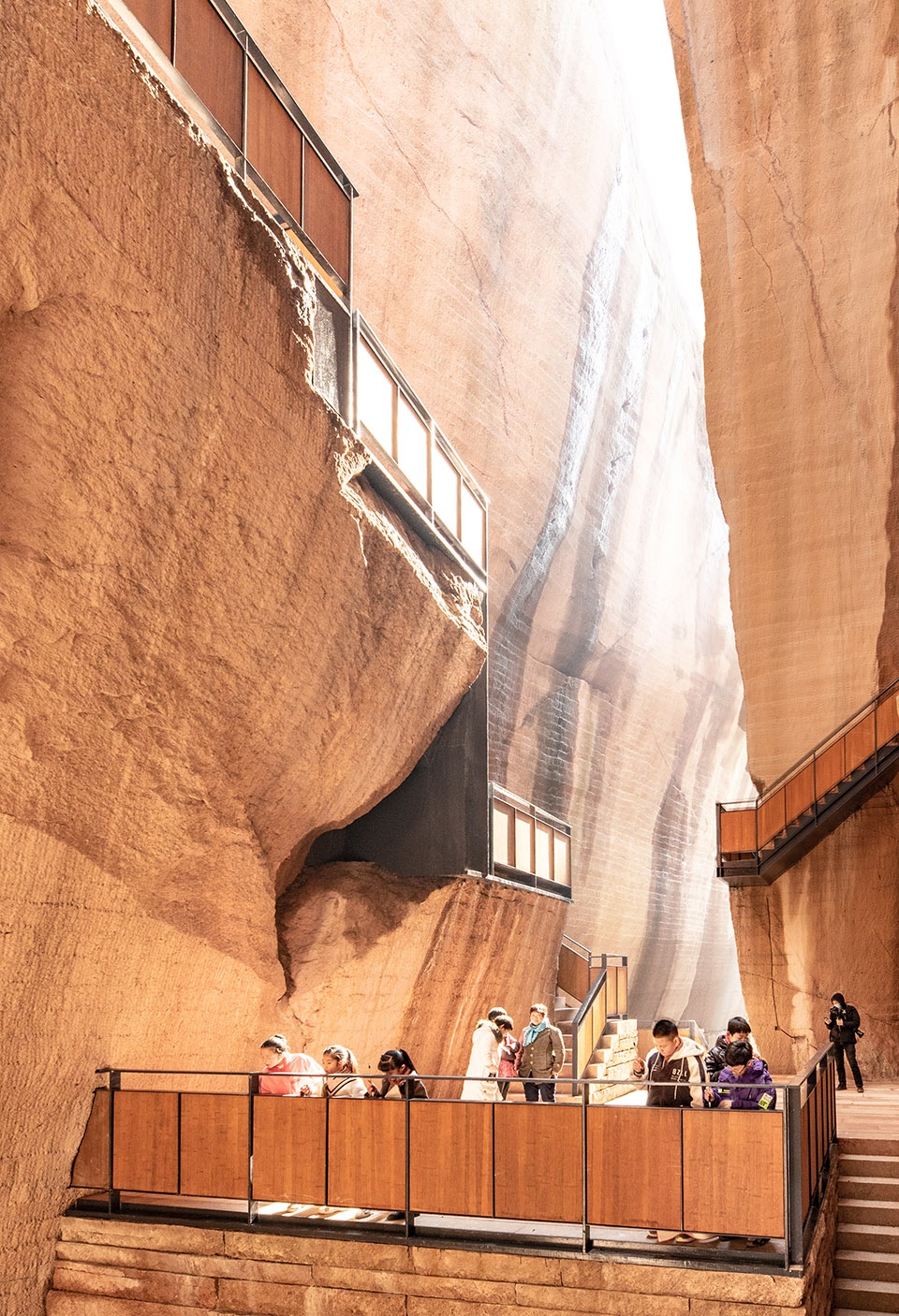
徐甜甜和她的团队在这个一系列改造中有一个共同特征,那就是它们都通过简单并且尽可能小的干预来实现。一方面,保留原始特征,另一方面,设计促进了可持续的、面向未来的发展,改善了紧张的生态系统。所有地方的组装细节都是相同的,混凝土仅仅用于必要的安全加固。扶手由钢带制成,书架和栏杆的填充材料由压缩形成的竹楠木制成,相较于木材,更适合当地气候。观念化的立场,和对当地资源的利用,决定了这些措施方式。这种小心谨慎的策略,符合当地需求,将对自然资源的开发而遗留的消极遗产转换为乡野大地上的希望象征。
What Xu Tiantian and her team’sThe projects of Xu Tiantian and her team for the to transformation of the quarries all have in common is that they were are all being created realized with simple means, and that the interventions in each case remains as small minimal as possible in every case. On the one hand, this makes it possible to preserve allows the original character to be preserved, and, on the other hand, the design stimulates sustainable, future-oriented development that brings an improvements for the stressed ecosystem. The details of the installations fixtures are the same at all the siteseverywhere, and concrete was is only used solely for the necessary safety measures. The handrails are made of steel strips and, the infill of shelves and railings are made of pressed bamboo, which is more suitable for this climate than wood. The conceptual position attitude and the use of local resources determined the approach. The sensitive strategy, adapted to local needs, transforms the negative legacy of the natural exploitation of natural resources into a symbol ign of hope in the rural hinterland.
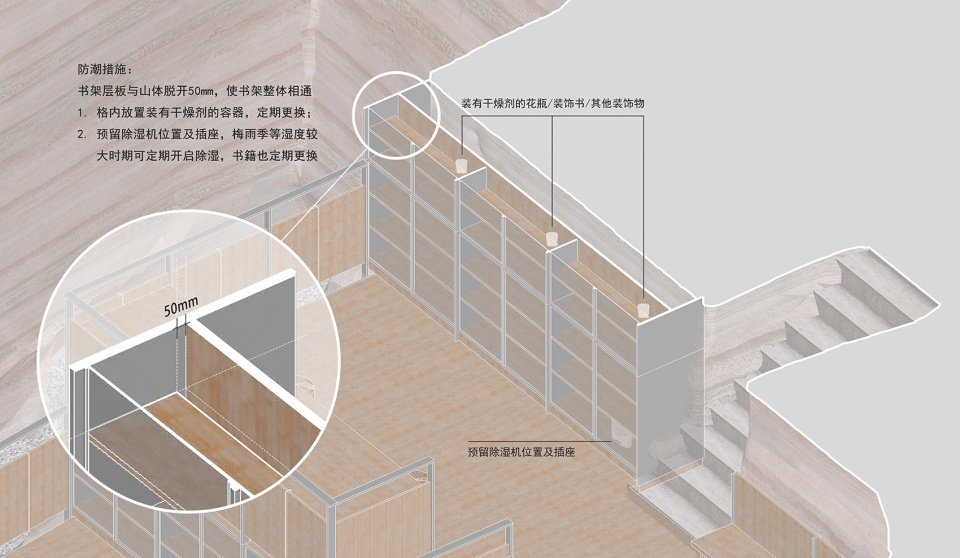
▼防潮措施,Moisture protection
▼石宕书房,shelves of books and places for studying
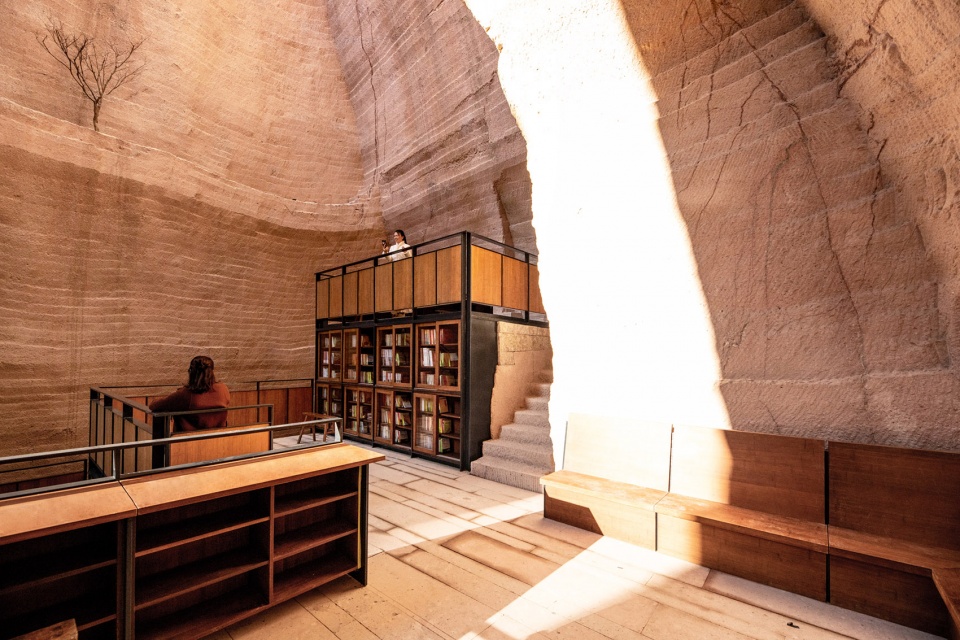
▼孩子们在阳光与自然中学习,延续了千年前文人墨客题词于山水的意境
The children learn in the sunshine and nature, continuing the artistic conception that the literati wrote on the landscape thousands of years ago
▼8号石宕平面图,plan of Quarry#8
▼8号石宕剖面图,sections of Quarry#8
9号石宕:舞台空间
Quarry No. 9: Stage Space
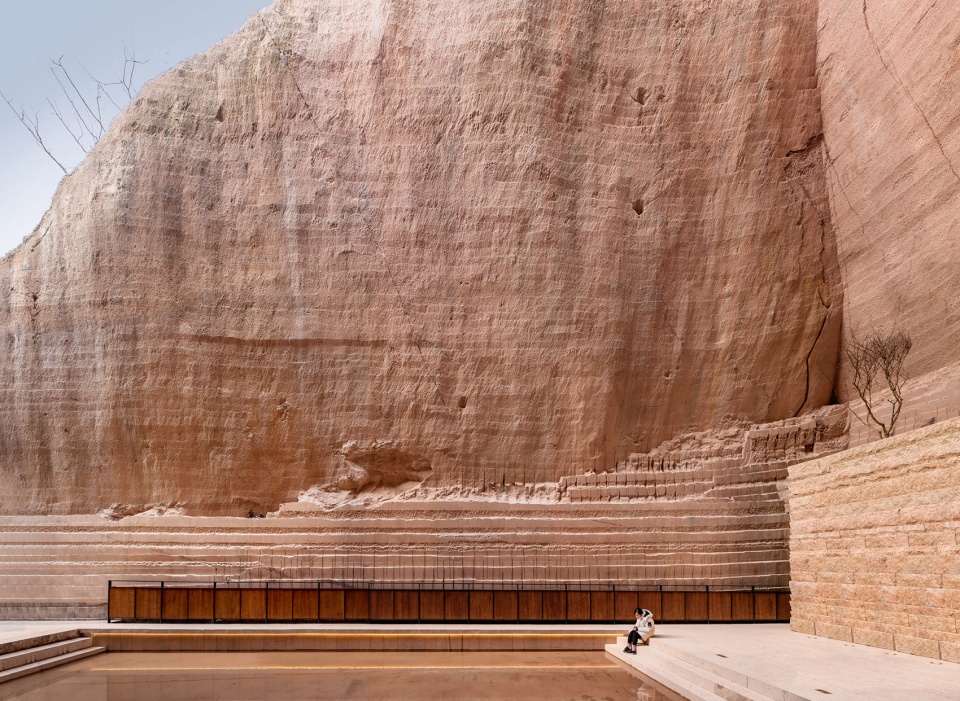
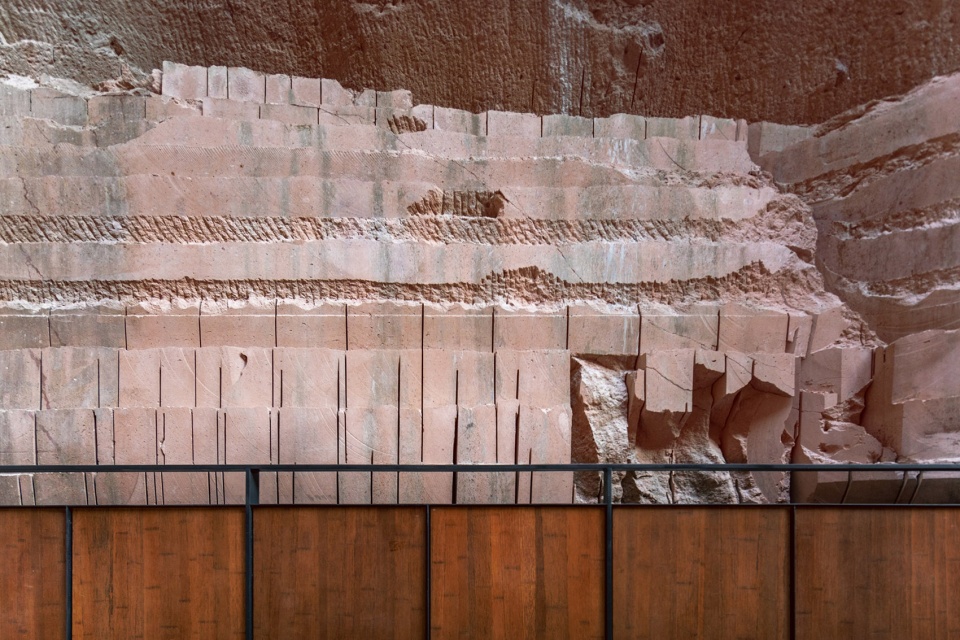
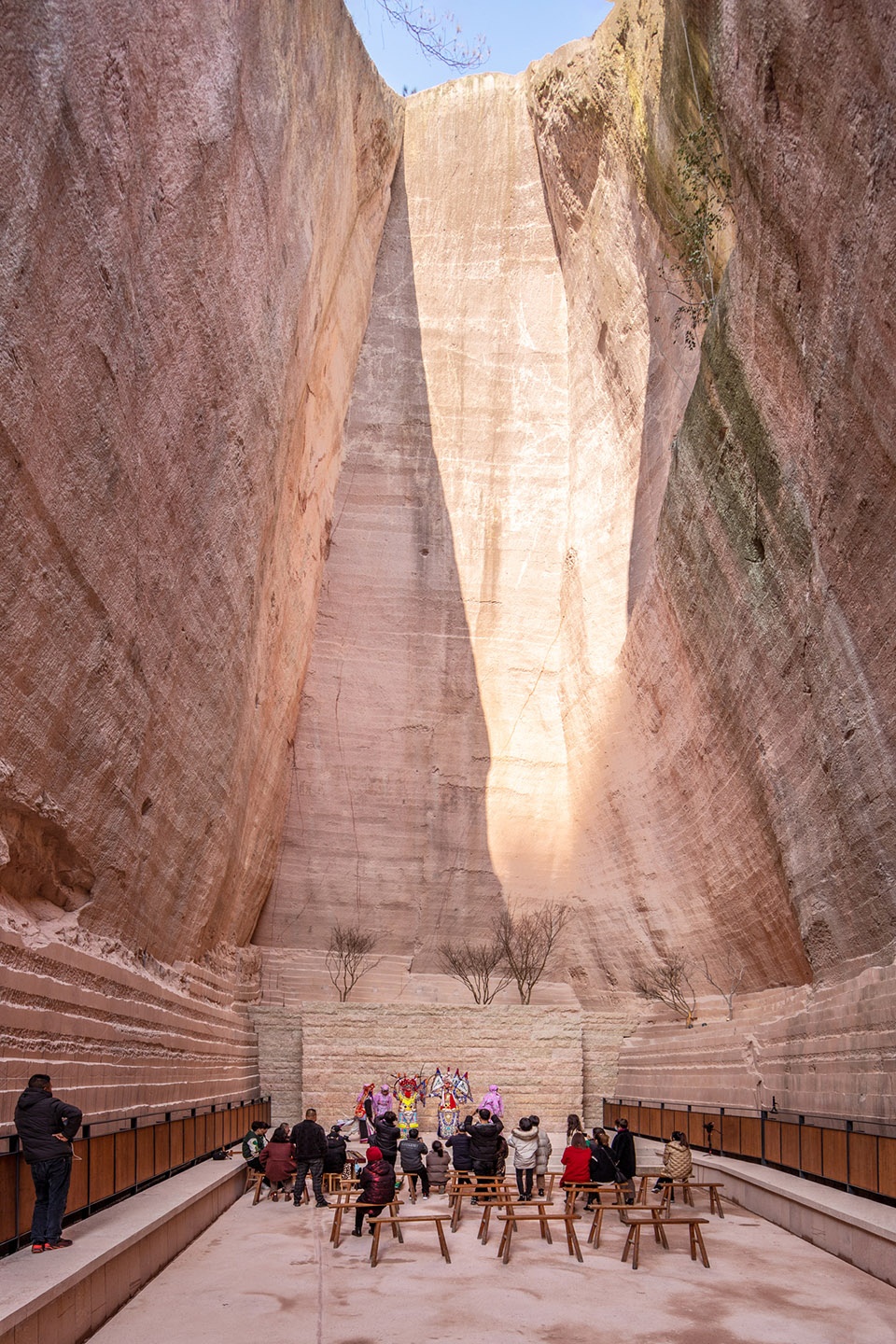
9号石宕就像用一把利刃切割过岩石一样,在狭窄的入口后扩展成了一个近似于矩形的区域,内部承锥型向上,就像一个陡峭的倾斜屋顶,狭窄的裂缝间洒进阳光。这个石宕是自上而下开采的一个典型例子。但是,不同于顶部手工开采的形状,石宕底部可以看到机器挖掘的部分。机器的使用使得墙体的底部近乎垂直,而顶部人工开采则呈现出了圆锥形。采石过程中偶然形成的后部部分覆盖的教堂形空间具有良好的声学效果。在进行了各种测试后,地板、侧栏杆的面板和吸声措施使声学环境得到了改善,方便空间多功能使用。
Quarry No. 9 is cut into the rock as if with a knife and after a narrow entrance widens into an approximately rectangular area that tapers upwards in the interior like a very high-pitched roof with a narrow slit that lets daylight in. This quarry is a typical example of top-down mining. But, here, the fact the lower part that was created by means of machine excavation is also visible, since it differs in shape from the hand-worked parts above it. The lower area has a vertical wall structure due to the use of machines, while the conical shape above is the result of manual work. The cathedral-like space, the rear part of which is partly covered, has excellent acoustics, even though its shape was created by chance during the quarrying of stones. After various tests were performed, the acoustic qualities were improved by means of the flooring, panels in the side railings, and sound-absorption measures to facilitate versatile use.
▼9号石宕内部承锥型向上,Quarry #9 is a typical example of top-down mining
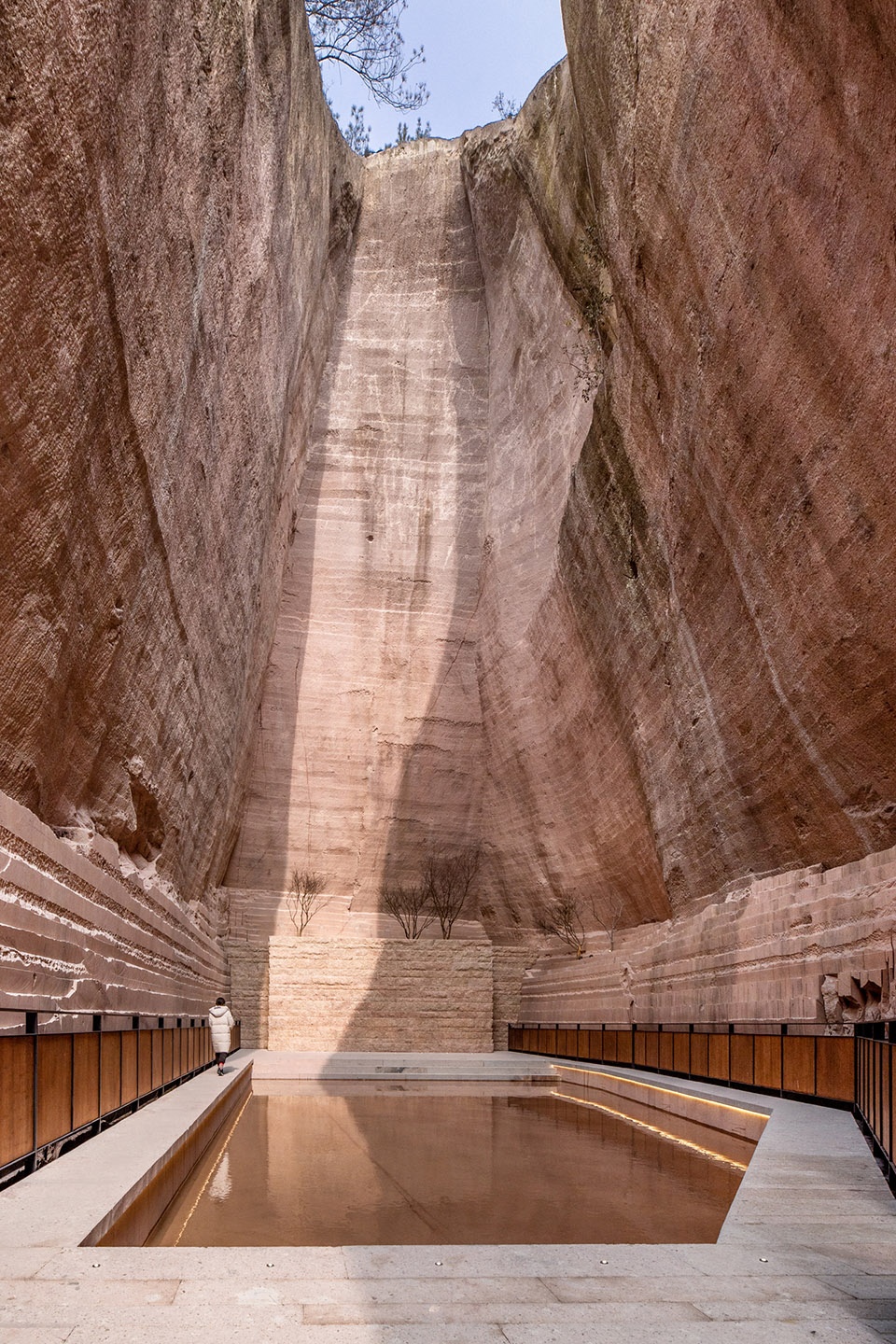
▼9号石宕内部氛围概览,Overview of the atmosphere inside Quarry #9
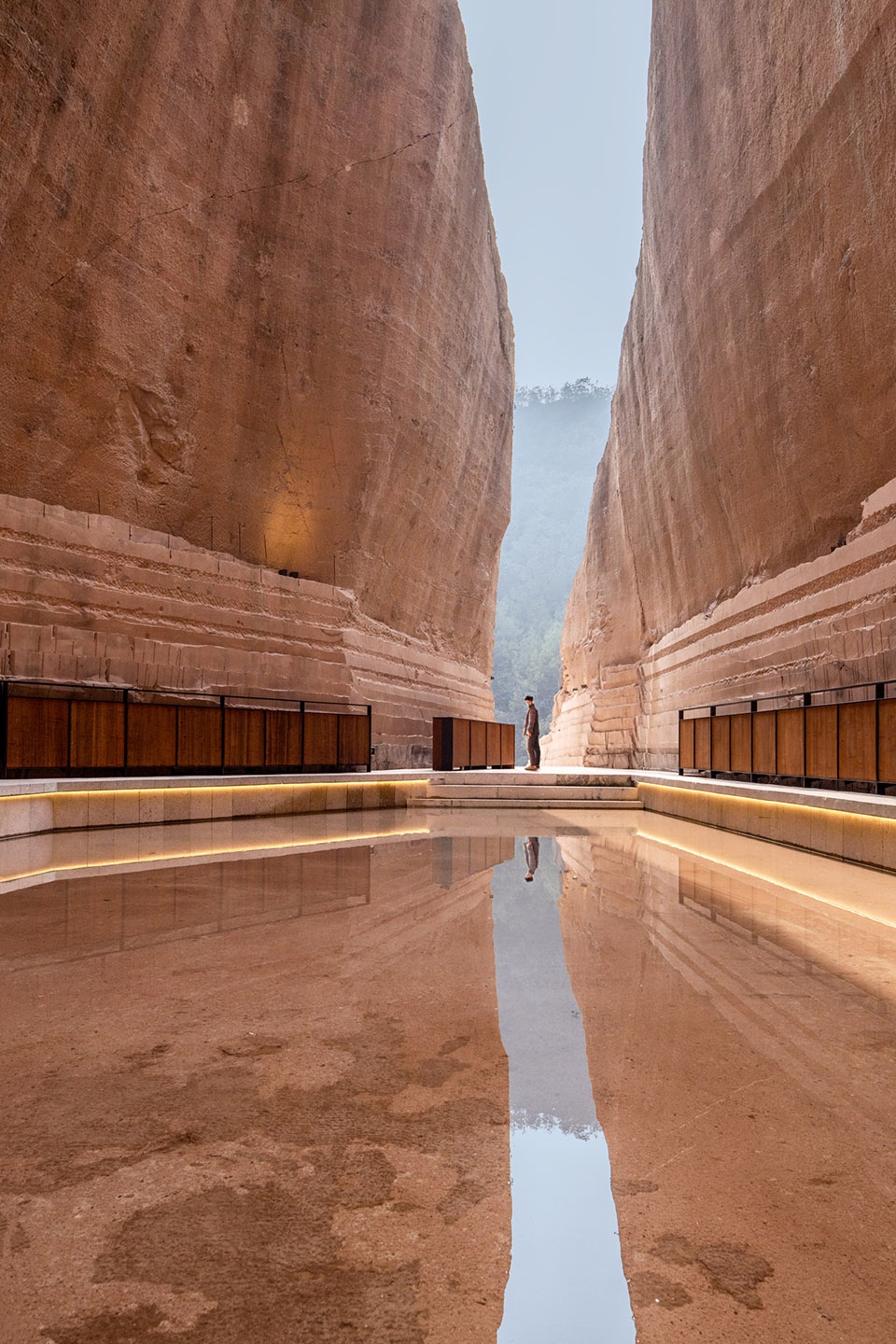
▼9号石宕:舞台空间,Quarry No. 9: Stage Space
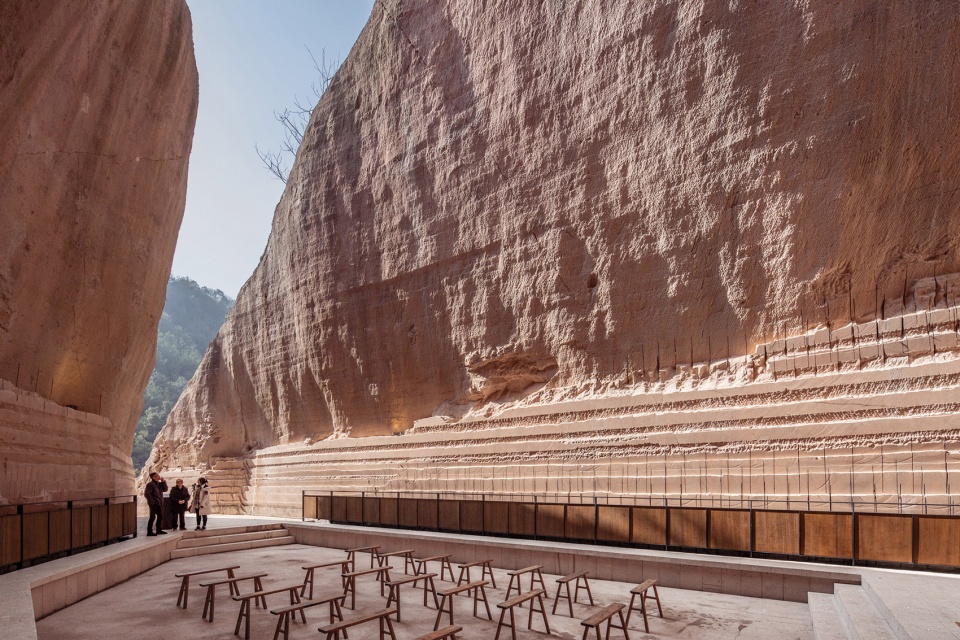
▼雄伟的、带有自然裂纹的石窟墙面,the massive, cracked wall surfaces
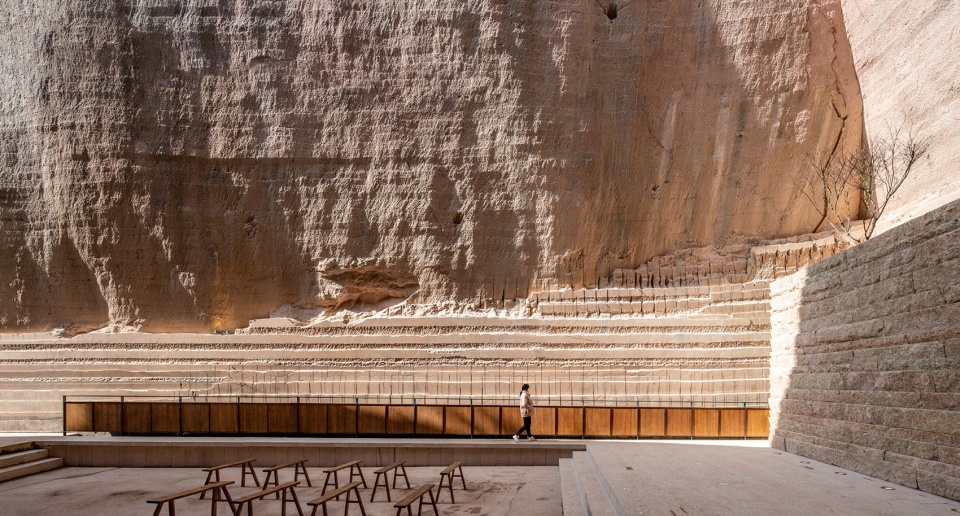
▼侧栏杆的耐候钢面板有利于石宕的声学改善,Weathering steel panels on the side railings help improve the acoustics of the quarry
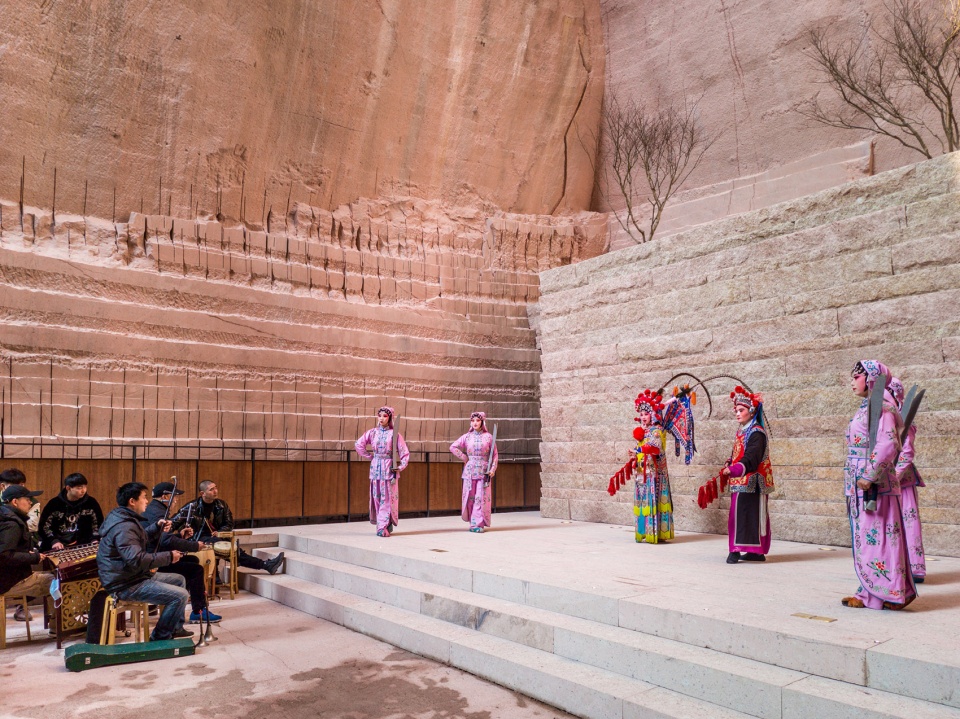
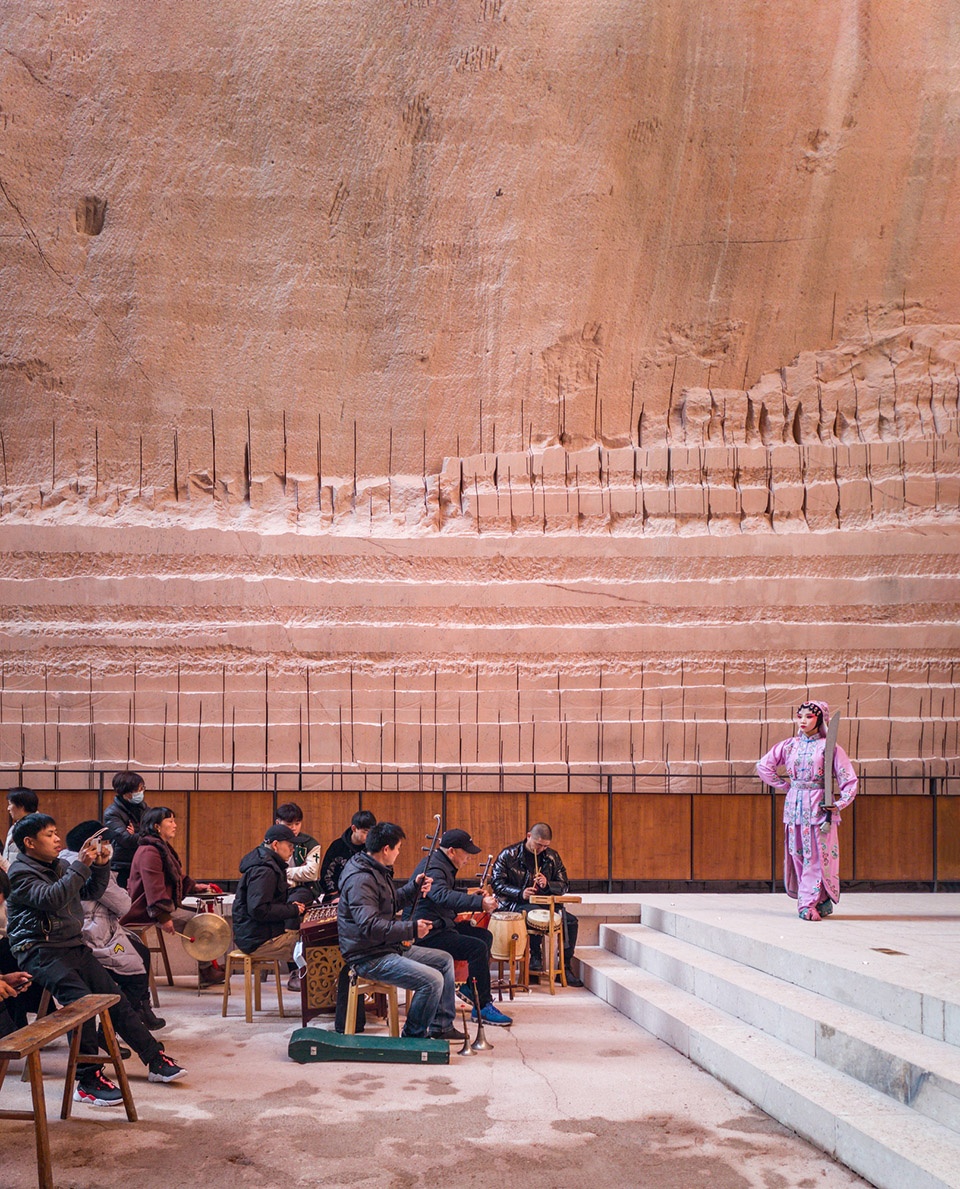
原本优异的声学条件加上后期技术的优化使这里更适用于讲座、表演或上演传统的婺剧,婺剧是地方特色剧目,同时可以吸引当地观众和游客。巧妙的照明设计,营造出一种节日气氛,强调了空间的性质,并突出了雄伟的、带有自然裂纹的石窟墙面。
The existing conditions along with the technical optimization make this location suitable for lectures, performances, or the staging of traditional Wuju opera, which is common solely in this region and appeals to both local audiences and visitors. Cleverly staged artificial lighting creates a festive atmosphere that emphasizes spatial qualities and brings the massive, cracked wall surfaces into focus.
▼地方传统婺剧表演场景,Local traditional Wuju opera performance scene
▼剧场表演吸引了当地观众和游客,The theater shows attract local audiences and tourists
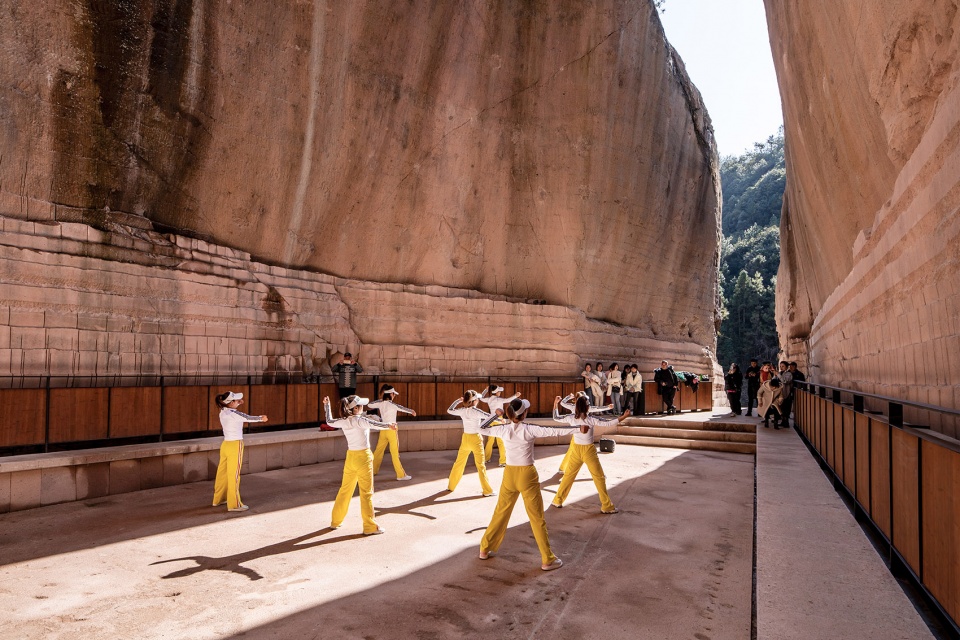
▼其他活动场景,Other Activity Scenes
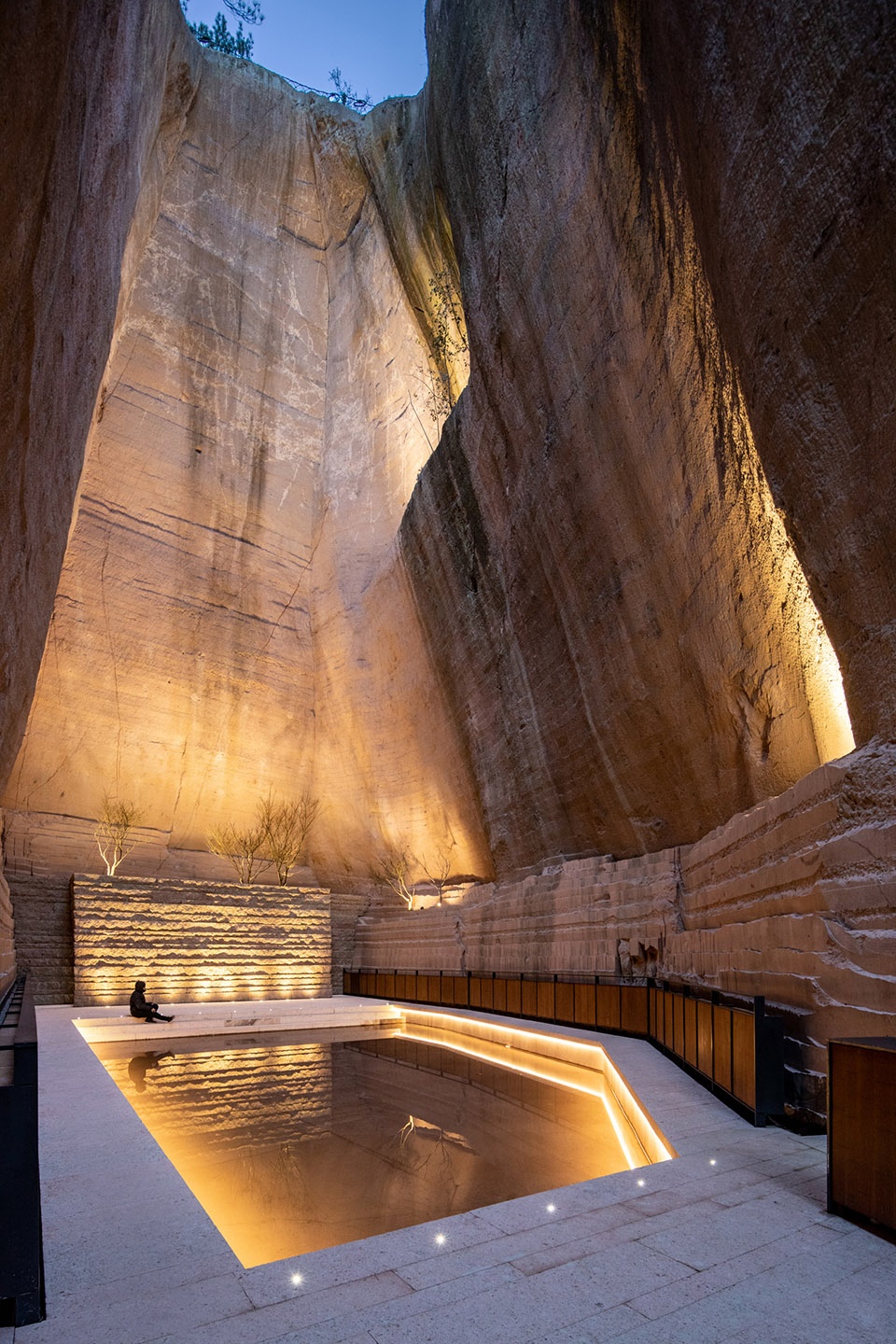
下雨时,雨水会在内部中央的下沉处聚集,水面反射出周围的环境;在光的照射下,水的波光映射在墙面,而滴水声提供一种别样的的声学体验。
When it rains, the water collects in the slightly lower interior surface and mirrors the surroundings. Slight undulations are reflected on the walls of the space depending on the incidence of light, and the sound of dripping water can be heard as an additional acoustic experience.
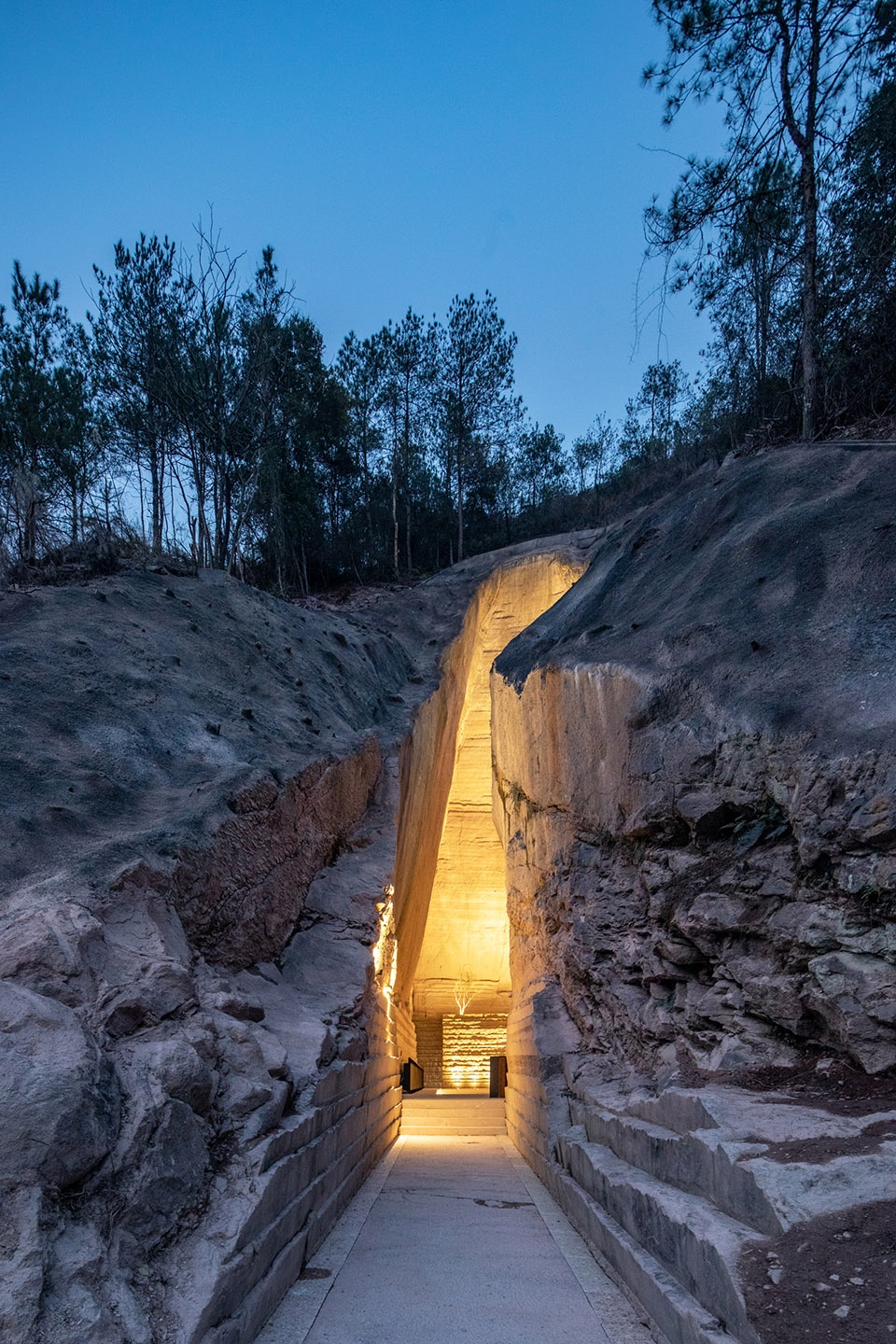
▼入口夜景,night view of the entrance
▼在雨后,剧场转变为水池,After the rain, the theater is transformed into a pool
▼9号石宕平面图,plan of Quarry#9
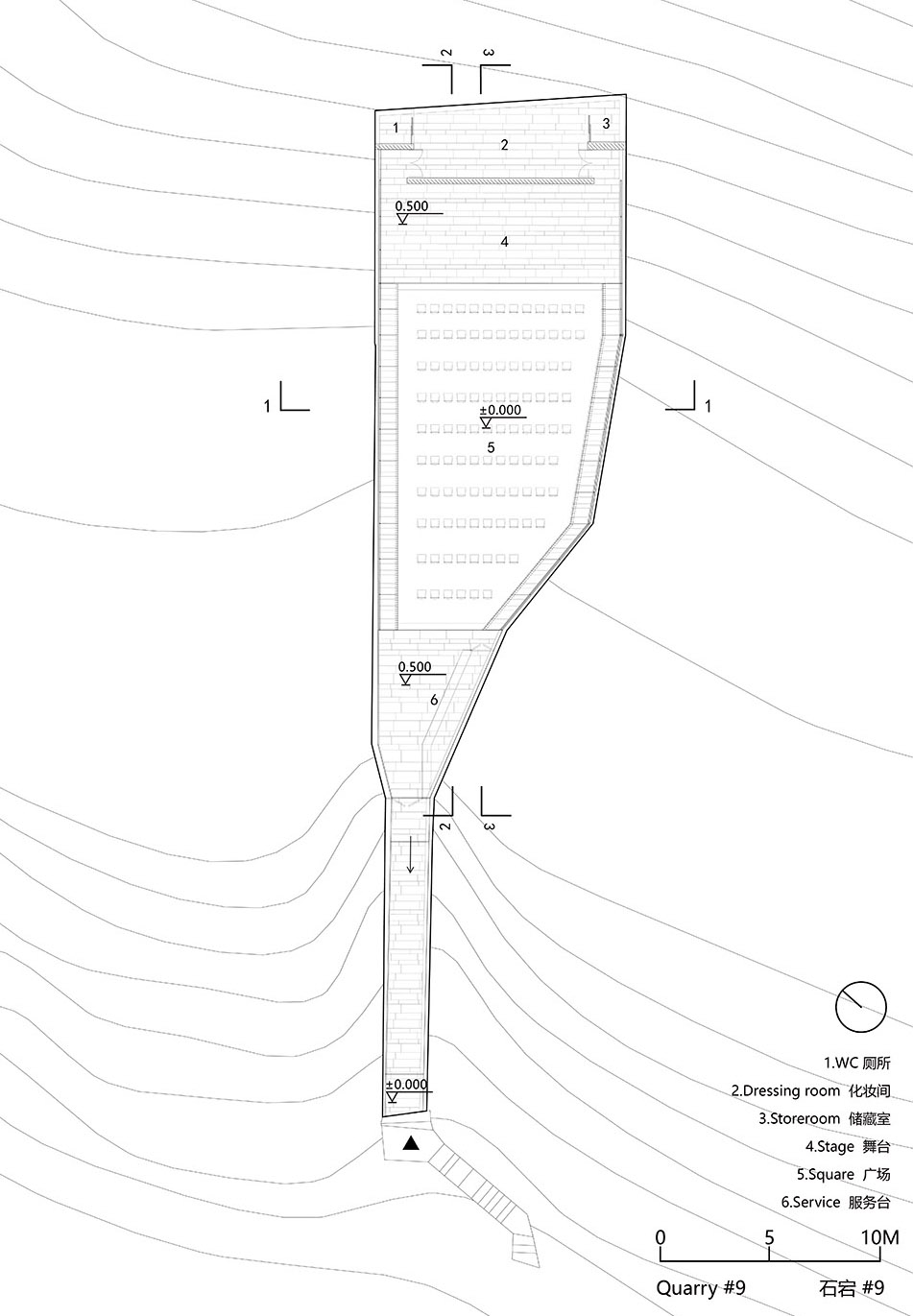
▼9号石宕剖面图,sections of Quarry#9
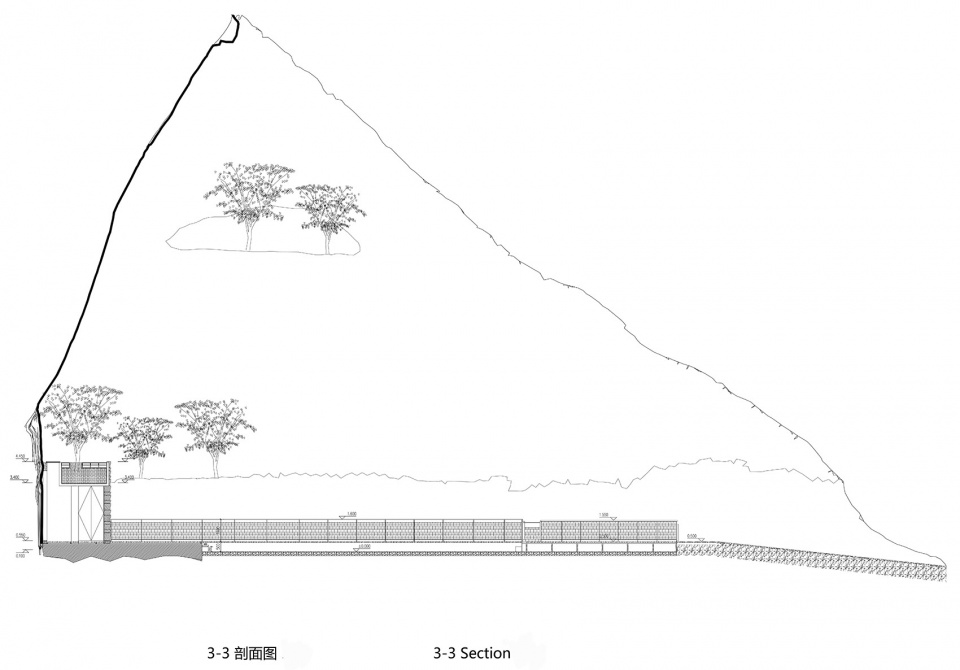
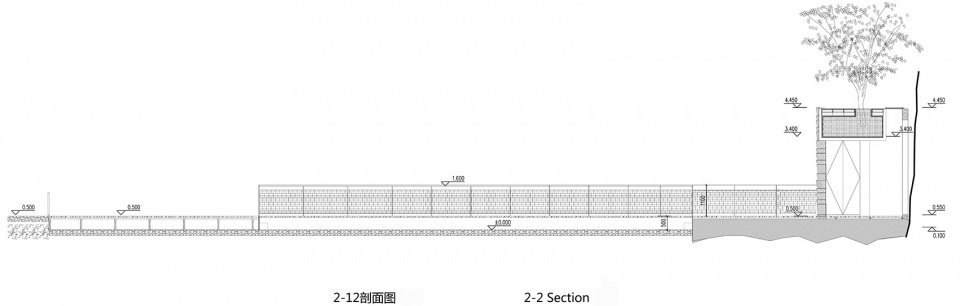
10号石宕: 现场采石表演
Quarry No. 10: Live Performance
石宕组团里的第一个石宕,被编号为10号石宕,位于道路的西侧,是通往其他石宕的出发点。周边植被繁茂,由于采石开发,它几乎是一个面朝天空的矩形区域。午后,三面围合的石宕正面受光。当地石匠在石宕中向观众演示活态采石,这种长期主导影响该地区的产业和技艺,已逐渐消失。
The first quarry, which has been assigned the number 10, is located on the western side of the access road and is the starting point for a path to the other sites. The quarry is located in a wooded area with an almost rectangular area open to the sky that was created by the quarrying of stone blocks. In the early afternoon, the three-sided space is bathed in sunlight. In a live performance here, local stonemasons demonstrate to visitors the work that shaped the region for such a long time, but has now disappeared.
▼午后,三面围合的石宕正面受光,In the early afternoon, the three-sided space is bathed in sunlight
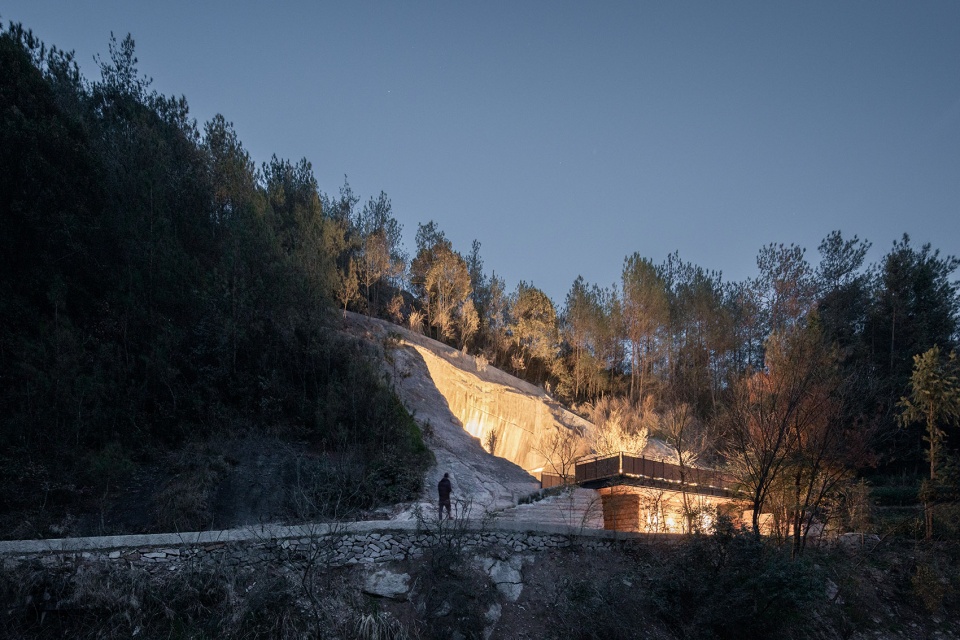
▼10号石宕为面朝天空的矩形区域,The quarry is located in a wooded area with an almost rectangular area open to the sky
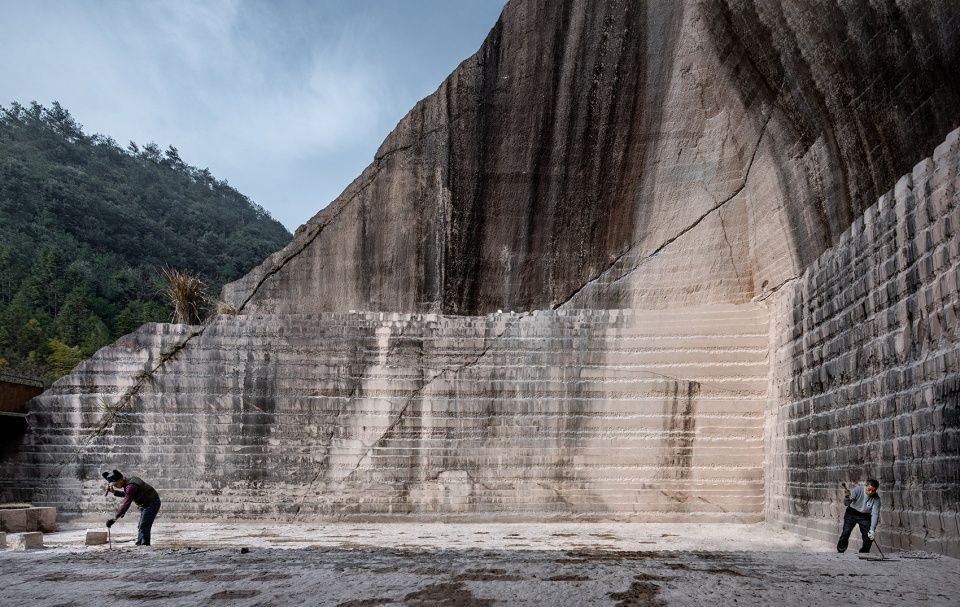
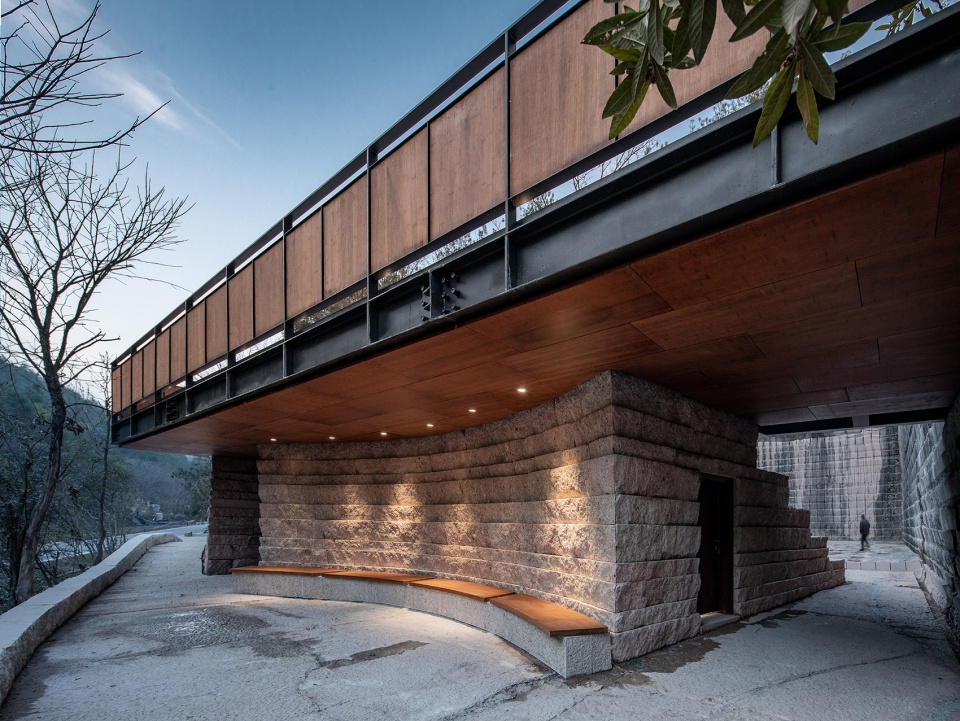
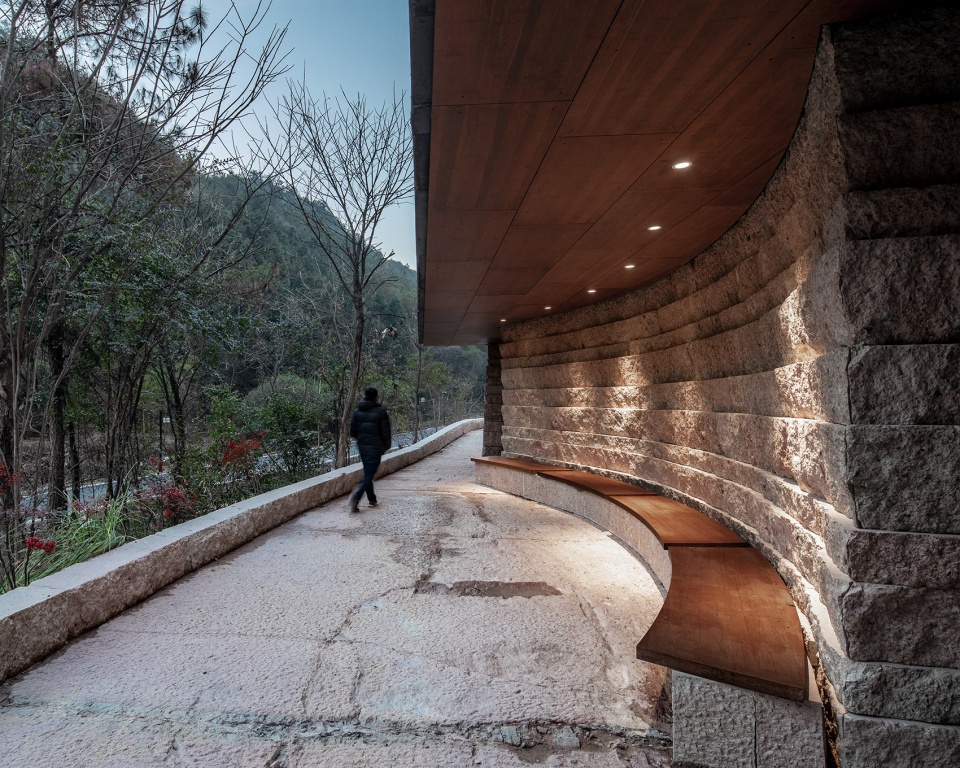
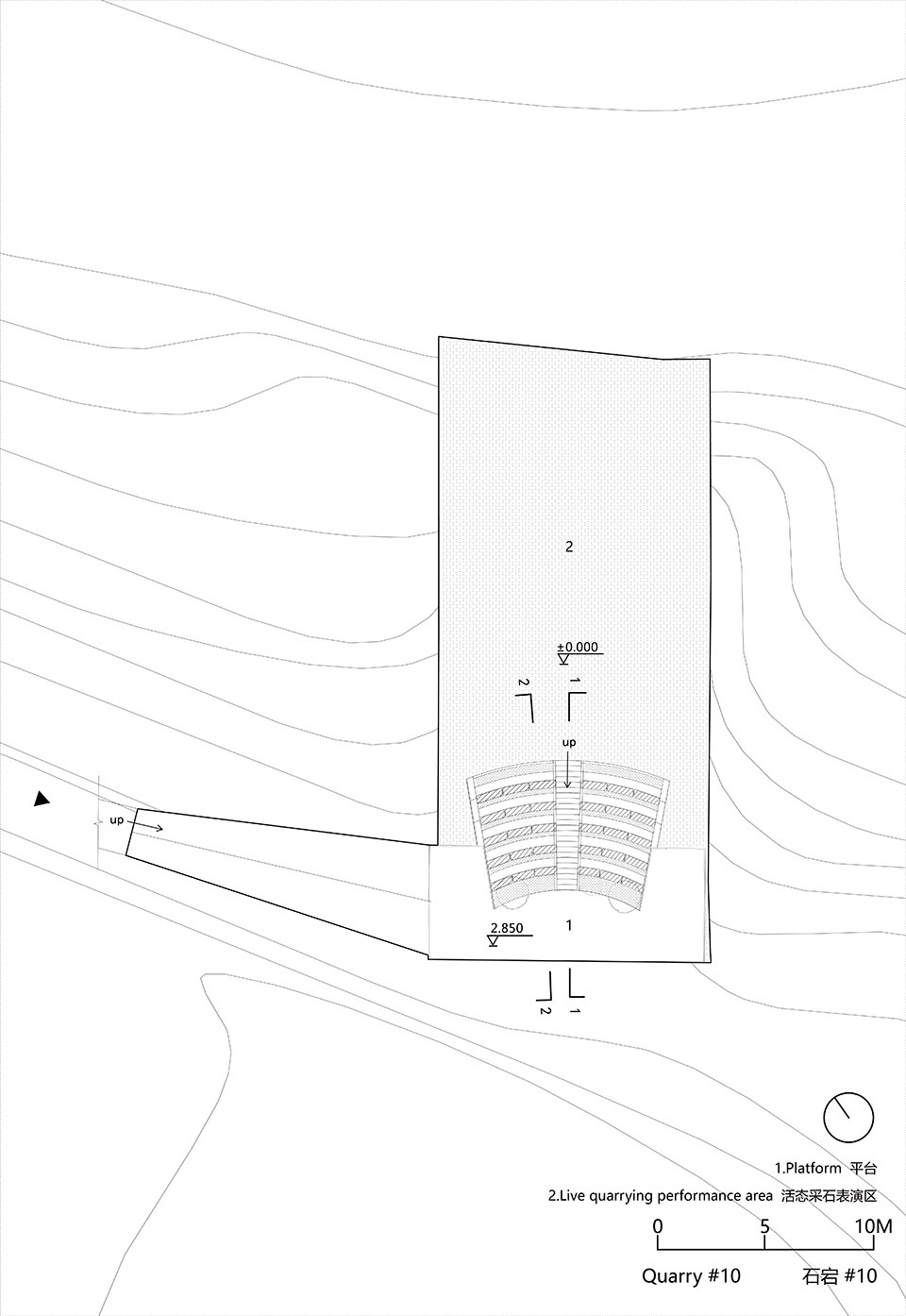
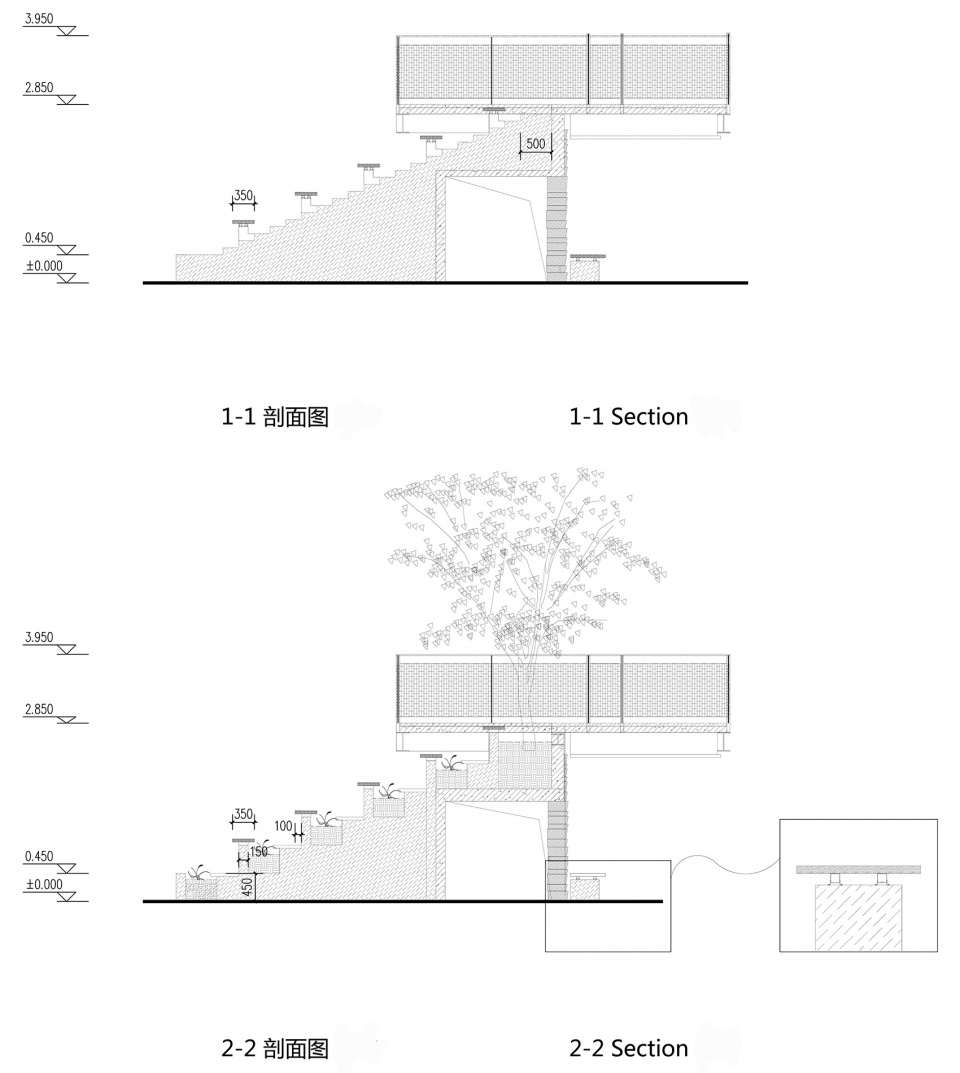
植被蔓延至石宕的上边缘。为了防止高空坠物,宕口的植被被移除,边缘被固定,这一措施在其他石窟同样可见。入口的坡道通向了一个近三米高的观景台,弧形观众席向下延伸至采石场。观景台上,观众可以观看表演或俯瞰周边风景。平台下是一个放置开采工具的储藏间。观景台用当地的石头建造,中央的平台被踏步隔开。10号石宕的小路通向北侧80m处的9号石宕。
Vegetation had grown to the upper edges of the quarry. In order to secure the interior against falling materials, the vegetation was removed and the edge secured, as in the case of all the other sites as well. From the access path, a ramp leads to an almost three-metre-higher viewing platform, from which a circular spectator stand extends down to the quarry. From the stand, visitors can watch the performance or enjoy a view of the landscape from the upper platform. Below the platform is a small room for the workers’ tools. The tribune is finished with local stone and divided by a central staircase to the platform. The path leads from this quarry to Quarry No. 9, which is situated 80 metres to the north.
▼入口的坡道通向了一个近三米高的观景台,From the access path, a ramp leads to an almost three-metre-higher viewing platform
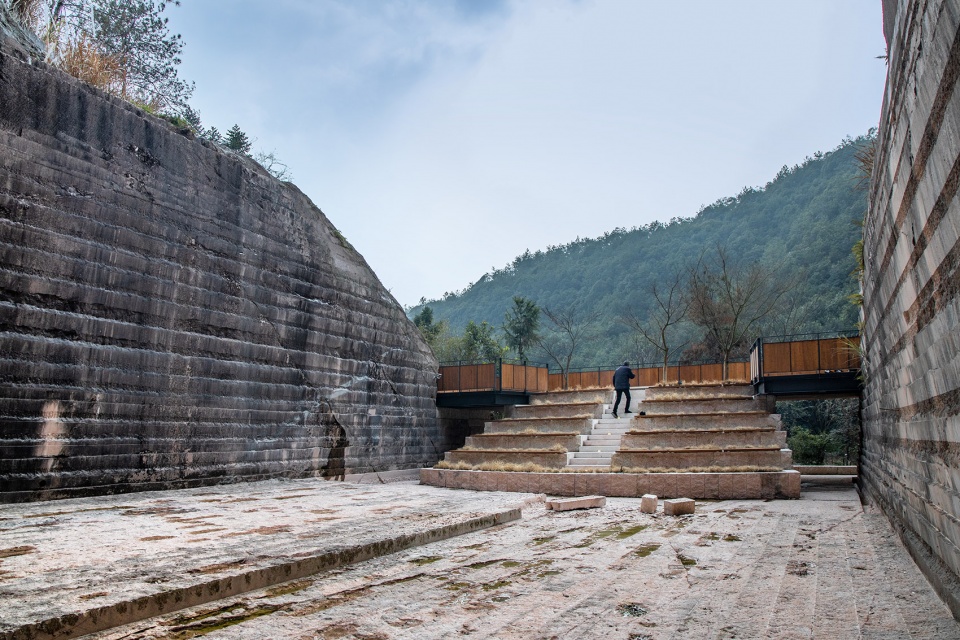
▼观景台,The viewing platform
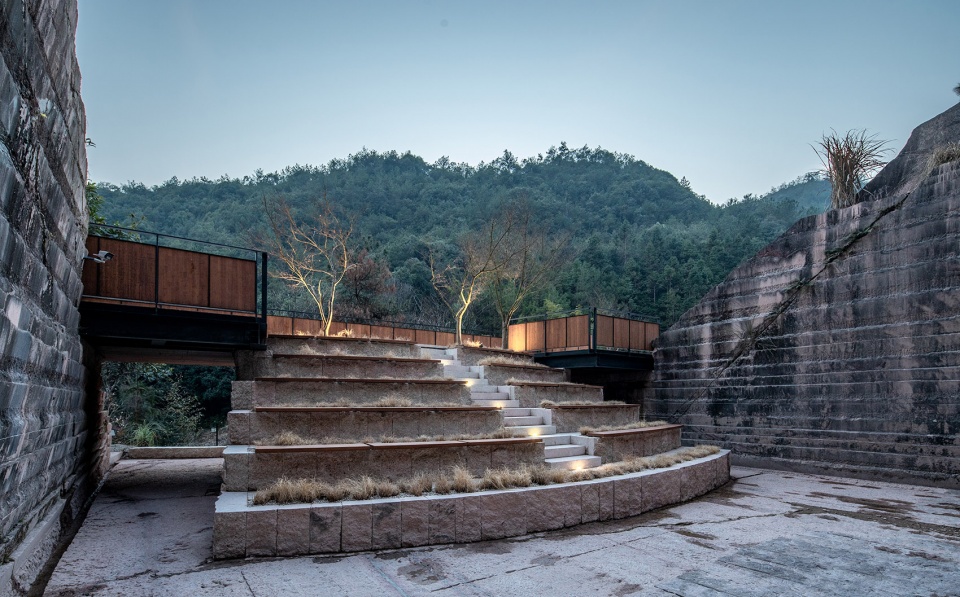
▼平台下方为放置开采工具的储藏间,Below the platform is a storage room for mining tools
▼10号石宕平面图,plan of Quarry#10
▼10号石宕剖面图,sections of Quarry#10
Aedes展览 — 缙云石宕化身洞天舞台
Aedes“Jinyun Quarries — The Quarry as a stage”
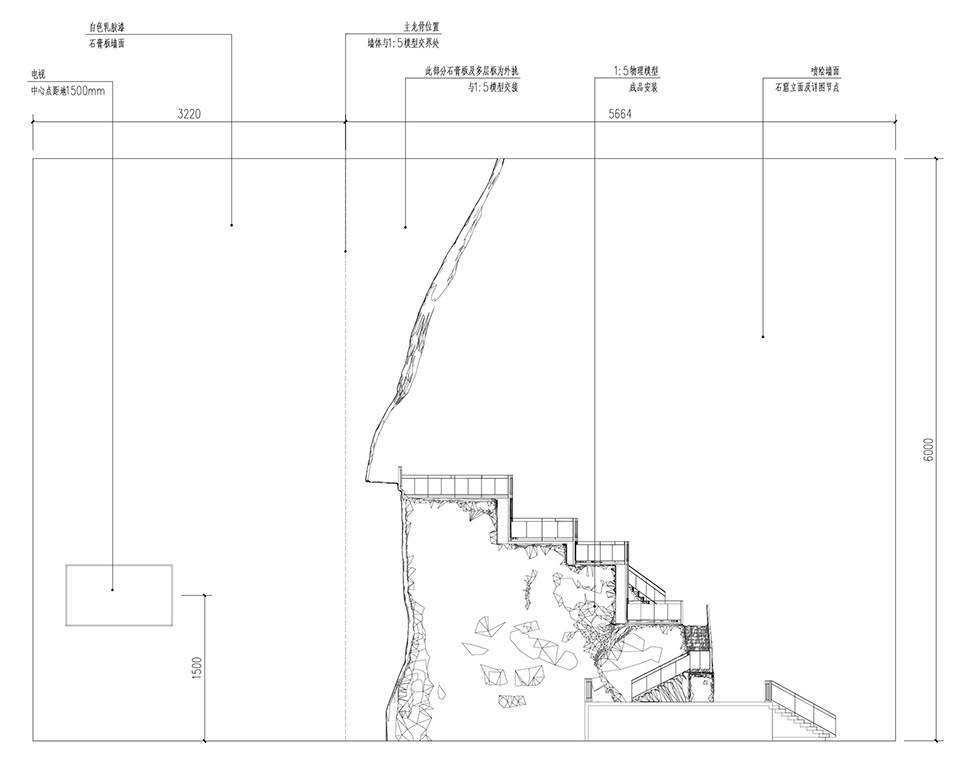
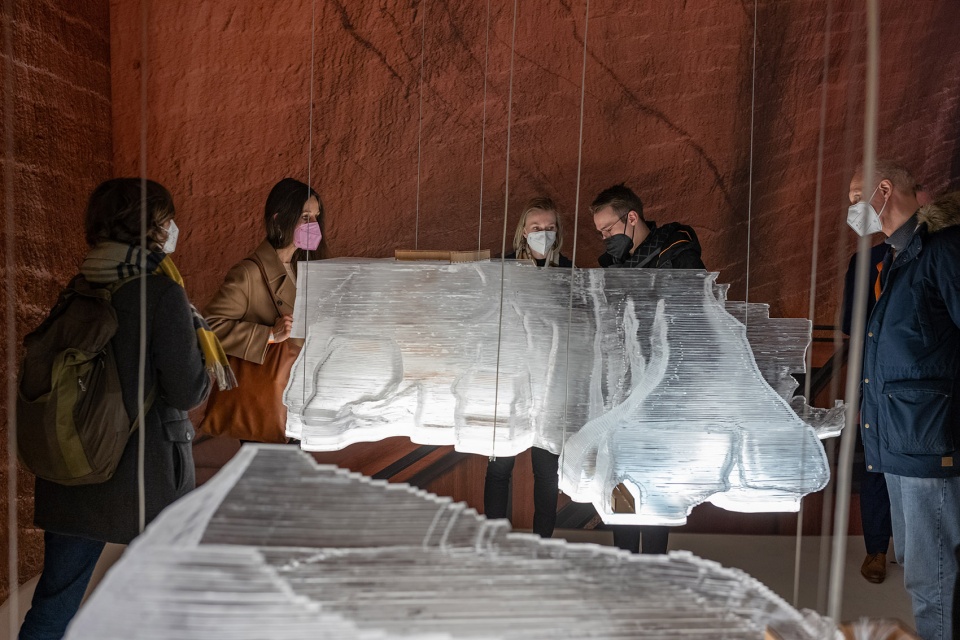
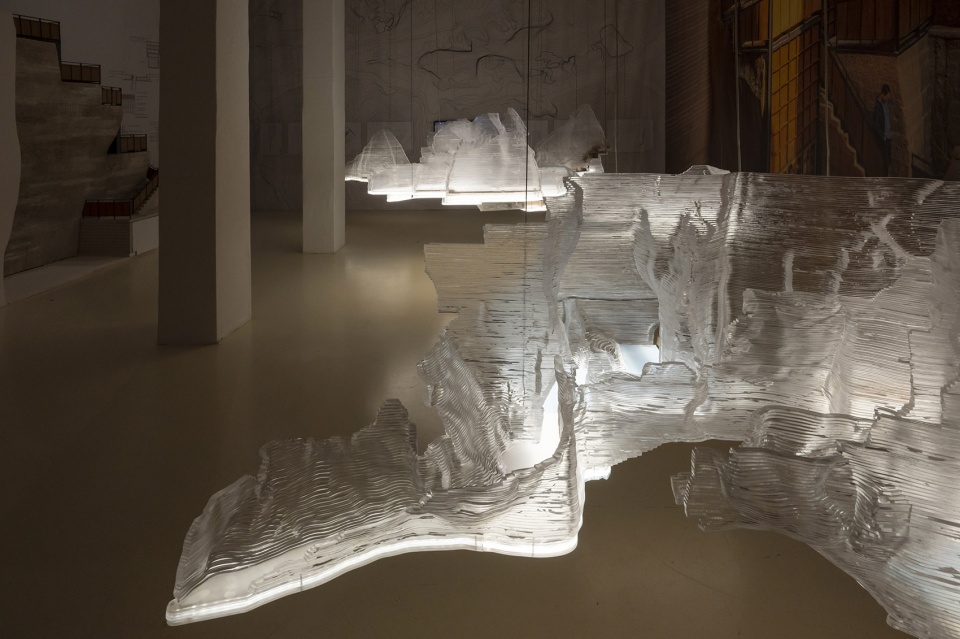
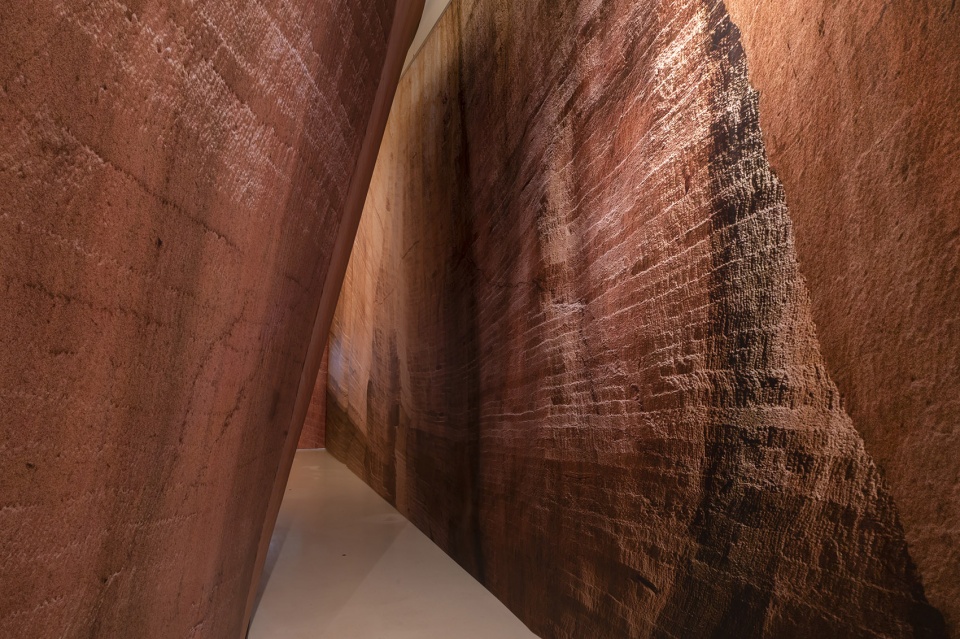
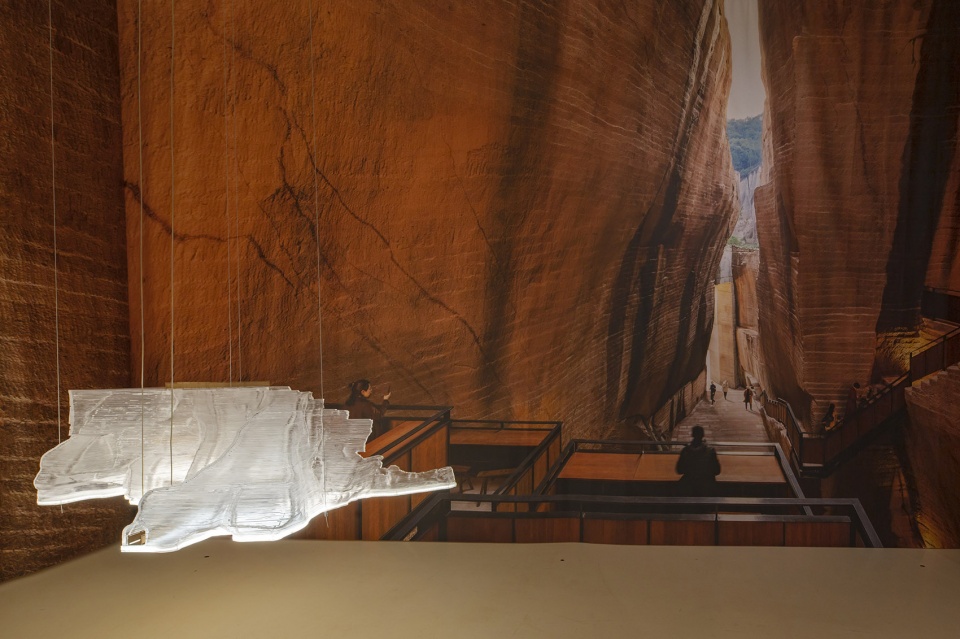
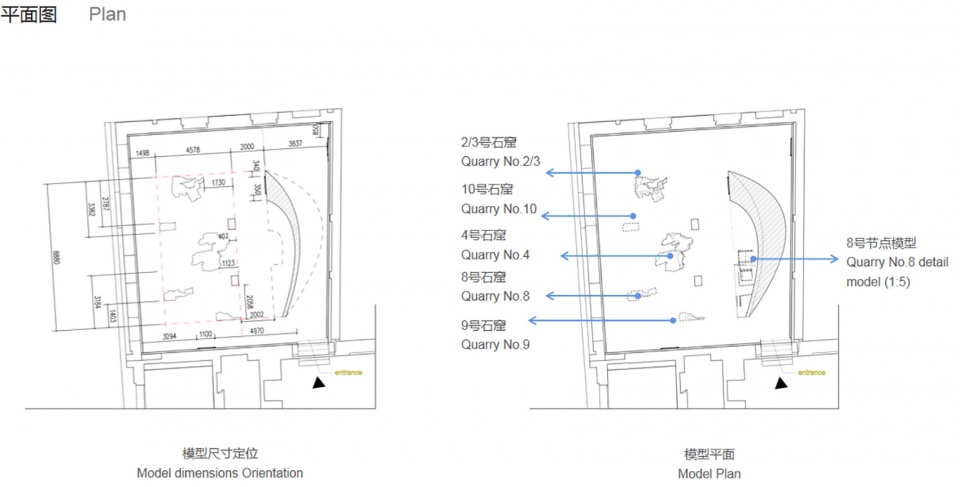
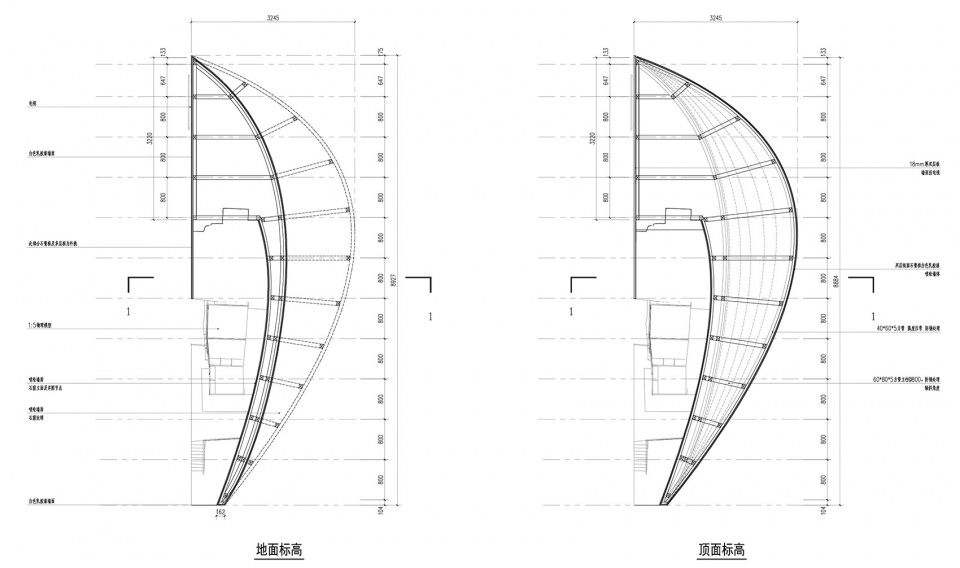
2022年3月18日,Aedes“Jinyun Quarries — The Quarry as a stage”展览在柏林发布,展出了DnA在缙云石宕的活化利用项目。参观者通过视频、模型和图片,身临其境的感受了缙云石宕震撼的生态景观和巧妙的活化设计。进入展厅,首先经过墙体与弧墙装置形成的狭长通道,通道两侧的石宕照片以及近似于9号石宕锥形的空间还原了缙云石宕的生态景观。经过较暗的通道,可以看到一组1:30的自发光模型。玻璃钢组成的岩体模型和建筑模型直观的体现了轻运维的干预下,建筑之于环境的尺度和作用。展厅中央,1:5的8号石宕节点模型更加具体的展现了活化方案。模型嵌入曲面墙体,人们可以驻足参观模型的材料、尺度以及墙体上的做法详图。展出当天,吸引了大批当地居民和游客参观。
On March 18, 2022, Aedes "Jinyun quarries - the quarry as a stage" exhibition was released in Berlin, showing the activation and utilization project of DNA in Jinyun Shidang. Through videos, models and pictures, visitors feel the shocking ecological landscape and ingenious activation design of Jinyun stone. After entering the exhibition hall, we first pass through the narrow channel formed by the wall and arc wall device. The photos of Shidang on both sides of the channel and the conical space similar to No. 9 Shidang restore the ecological landscape of Jinyun Shidang. Through the darker channel, you can see a group of 1:30 self luminous models. The rock mass model and building model composed of FRP intuitively reflect the scale and function of the building to the environment under the intervention of light operation and maintenance. In the center of the exhibition hall, the 1:5 Shidang node model of No. 8 shows the activation scheme more specifically. When the model is embedded in the curved wall, people can stop and visit the material, scale and detailed drawing of the model on the wall. On the day of exhibition, it attracted a large number of local residents and tourists.
▼Aedes展览现场,Exhibition site
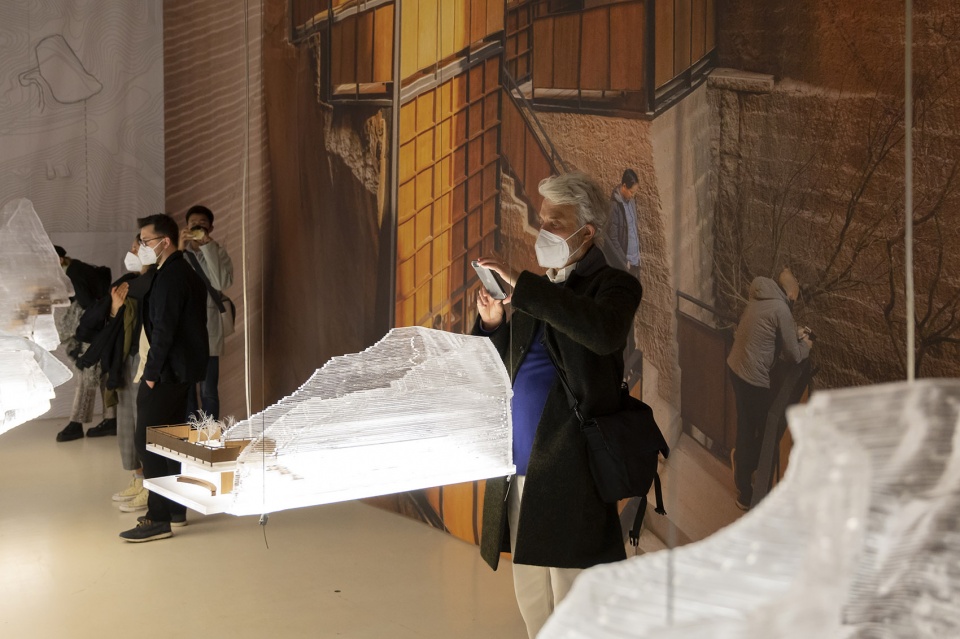
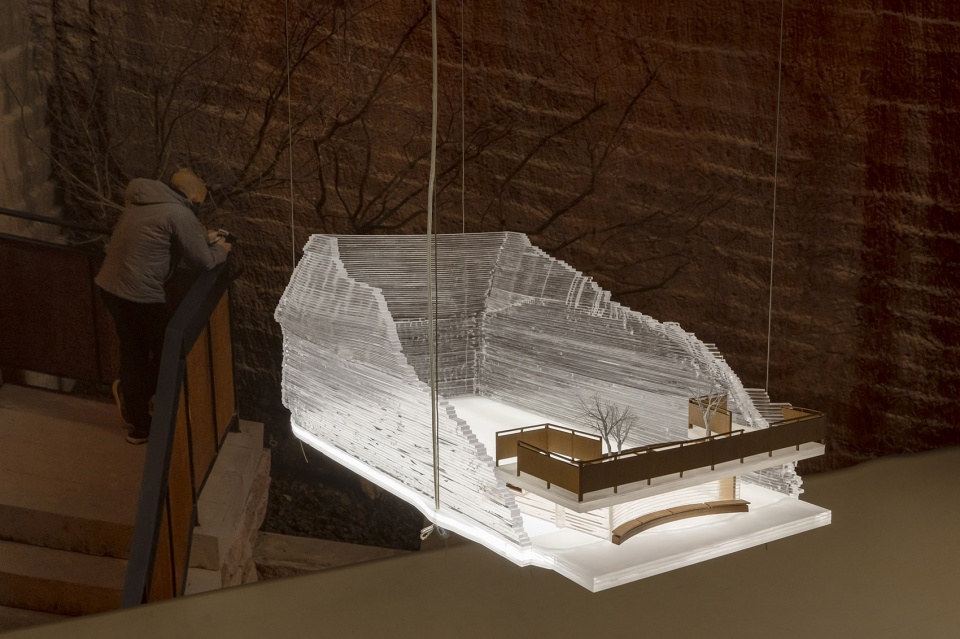
▼8号石宕楼梯平台模型,Model of Quarry#8
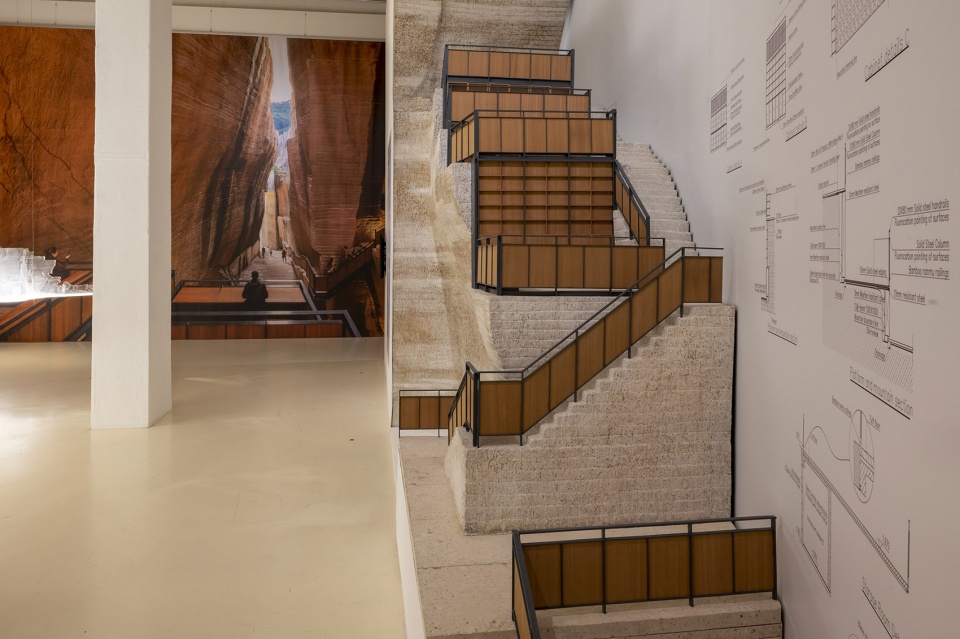
▼展览空间细部,details of the exhibition space
▼展览平面,plan of the exhibition
▼弧形墙面平面详图,Detailed plan of arc-shaped wall
▼弧形墙面立面详图,Detailed elevation of curved wall