卜石艺术馆,上海/室内
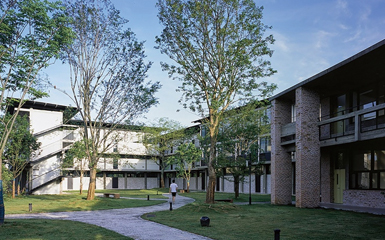
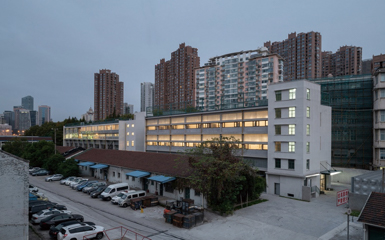
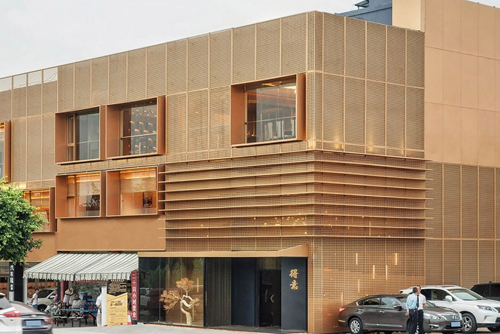
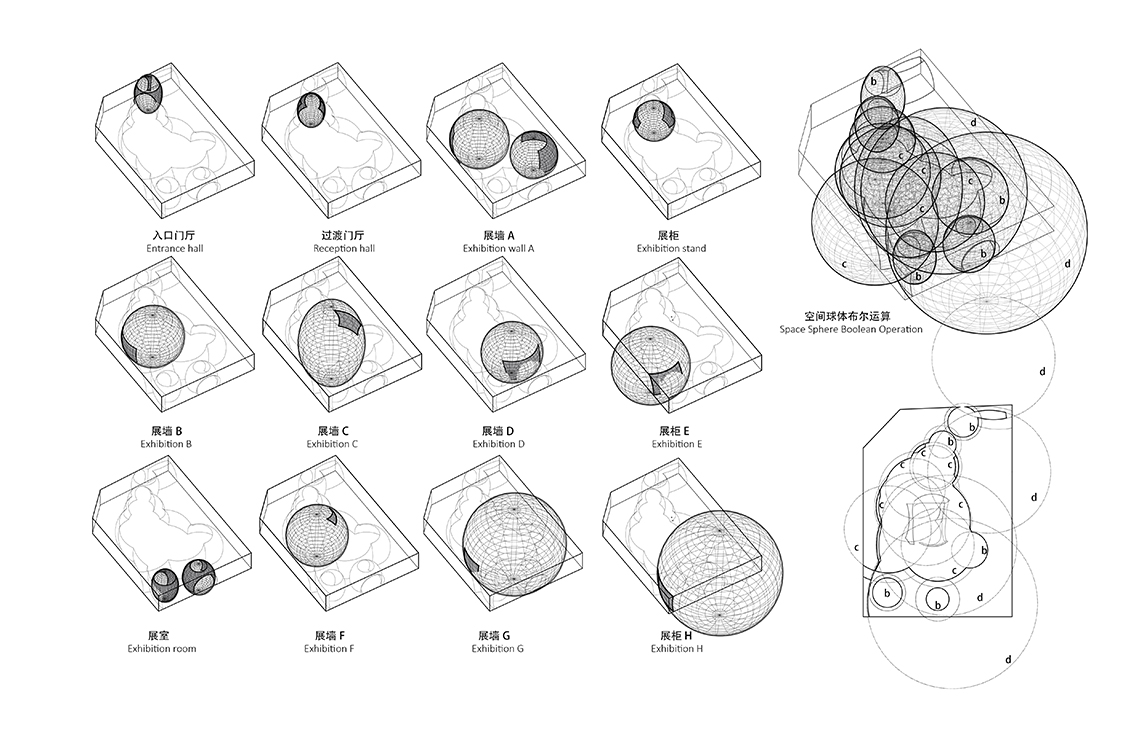
卜石艺术馆位于上海徐汇的城市高密度复合区域中,由办公空间改建而成。我们的设计构思试图在不破坏原有建筑外部结构的前提下,将原本单一的办公空间打造成一个集合展览、会所、办公等多功能的艺术交流展示空间。面对建筑这一内部功能的置换,我们首先打散了整个建筑空间的叙事逻辑来模糊其使用界面,并将数字几何的概念引入建筑内部,通过从动线折叠到空间折叠,来完成对于空间逻辑的重塑。
Located in the urban high-density compound area of Xuhui, Shanghai, Boshi art museum is reconstructed from office space. Our design concept attempts to build the original single office space into a multi-functional art exchange and exhibition space integrating exhibition, club, office and other functions without damaging the external structure of the original building. Facing the replacement of the internal function of architecture, we first broke up the narrative logic of the entire architectural space to blur its use interface, and introduced the concept of digital geometry into the interior of the building to complete the remodeling of the spatial logic by folding from moving line to space.
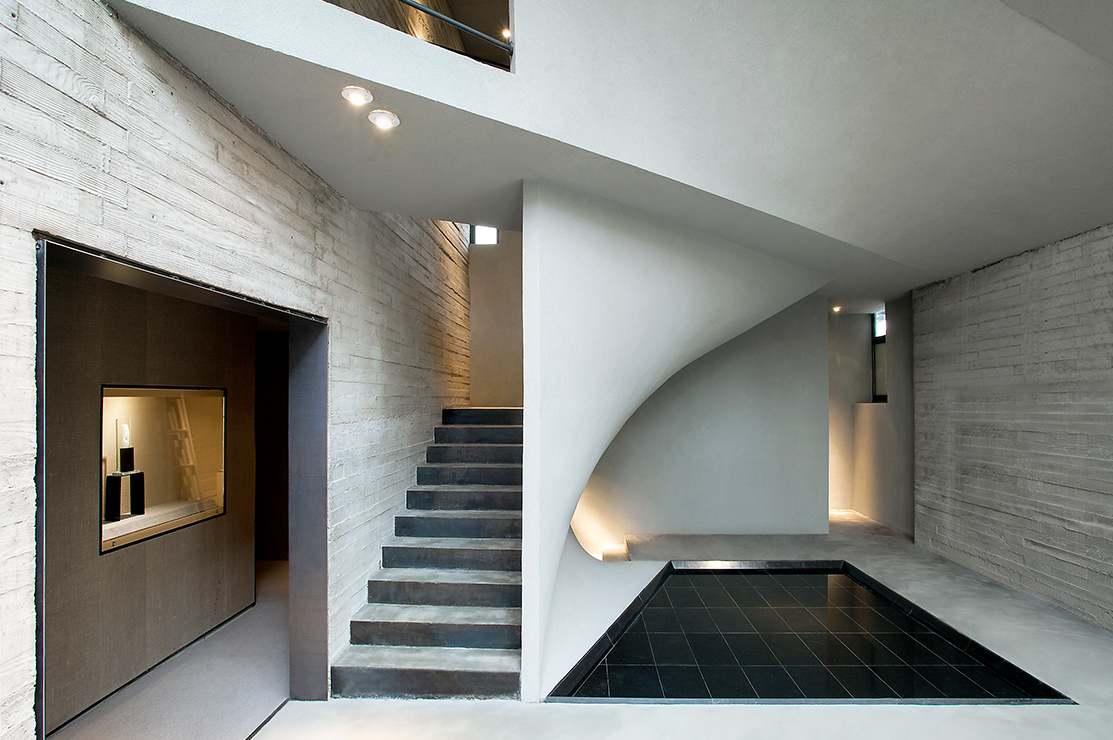
多层次的内容通过面向庭院的中央交通空间而得以组织,老建筑原有的单调线性平层模式被一个重新置入的非线性空间所重塑。艺术馆中简单的竖向和横向交通动线在这个空间中交会而彼此影响,相互之间边界的模糊带来了空间的折叠与揉和。连续一体的几何相位的切换带来的同时是人运动体验的重新定义,倾斜与平衡,连续与边界,对空间的体验转化为几何性的探讨,复杂的几何关系逻辑打破了传统点线面的层级关系,但又不是一种简单的失控的随意化处理:踏步、门洞、扶手、板梁,这些可识别的建筑构件彼此之间构成了微妙而又合理的对位关系,每一个可感知的线条都在空间中有其逻辑意义上的必然性。而扭转的曲面又将这样的一种必然性弱化,使得参与者始终在一种“必然/偶然”的中间状态,在一种多元矛盾中感受着体验的趣味。
The multi-level content is organized through the central traffic space facing the courtyard. The original monotonic linear flat model of the old building is reshaped by a re placed nonlinear space. The simple vertical and horizontal traffic lines in the art museum intersect and influence each other in this space. The blurring of the boundaries between them brings about the folding and blending of the space. At the same time, the switching of geometric phases of continuous integration brings about the redefinition of human movement experience, inclination and balance, continuity and boundary. The experience of space is transformed into geometric discussion. The complex geometric relationship logic breaks the hierarchical relationship of traditional points, lines and surfaces, but it is not a simple uncontrolled random treatment: steps, door openings, handrails, plate beams, These recognizable building components constitute a subtle and reasonable counterpoint relationship with each other. Every perceptible line has its logical inevitability in space. The twisted surface weakens such an inevitability, making participants always in an intermediate state of "necessity / contingency" and feeling the taste of experience in a variety of contradictions.
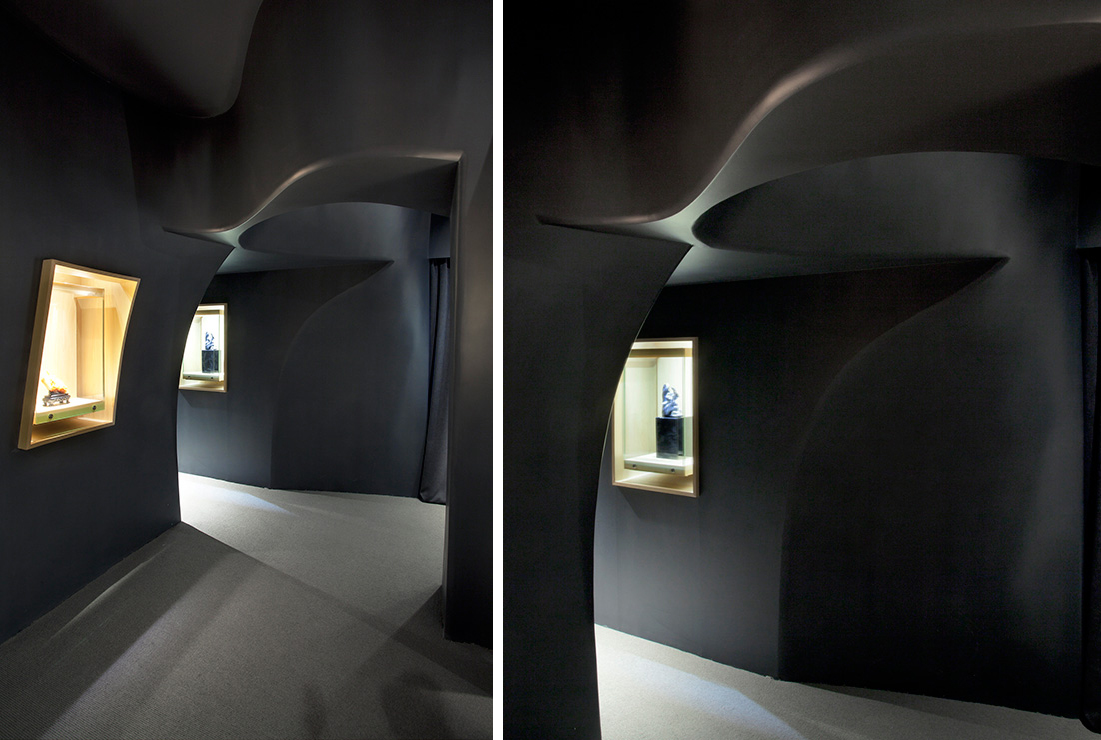
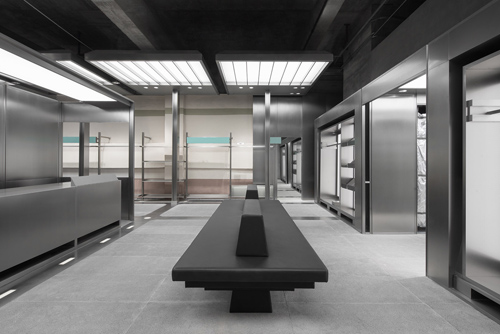
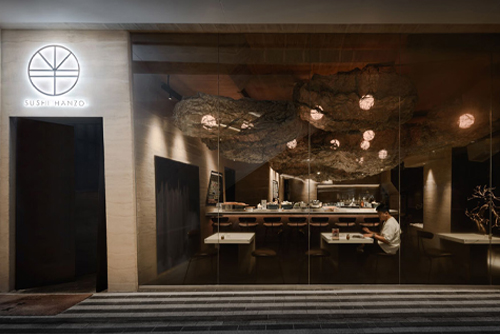
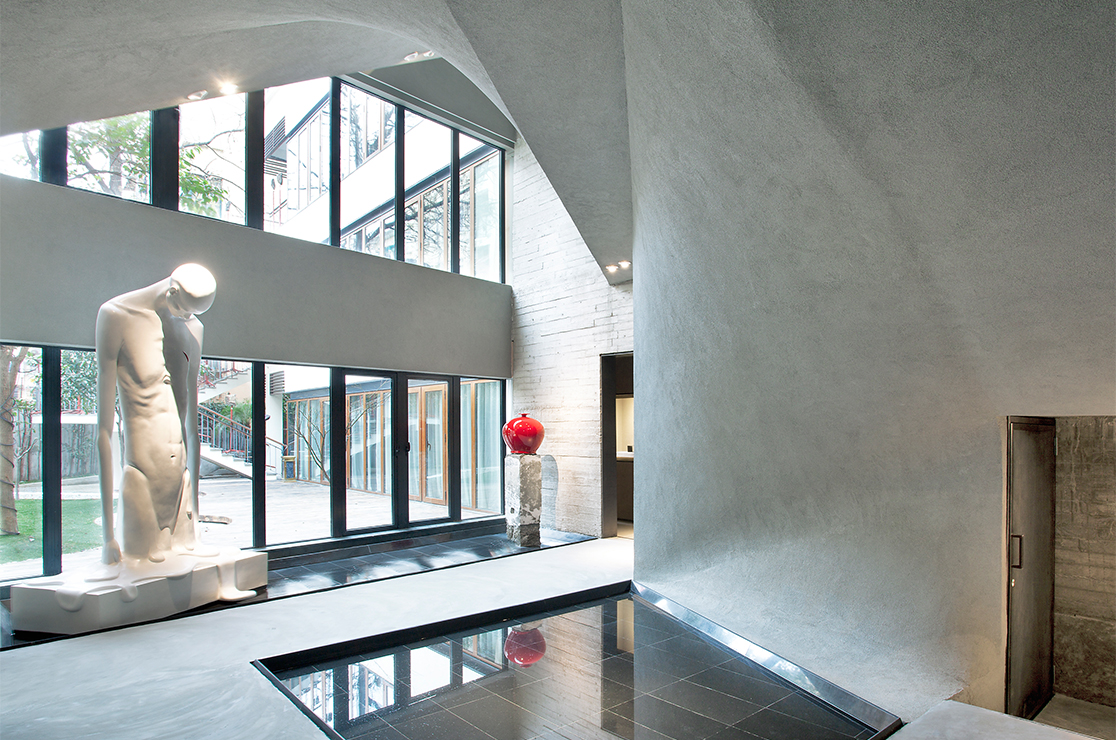
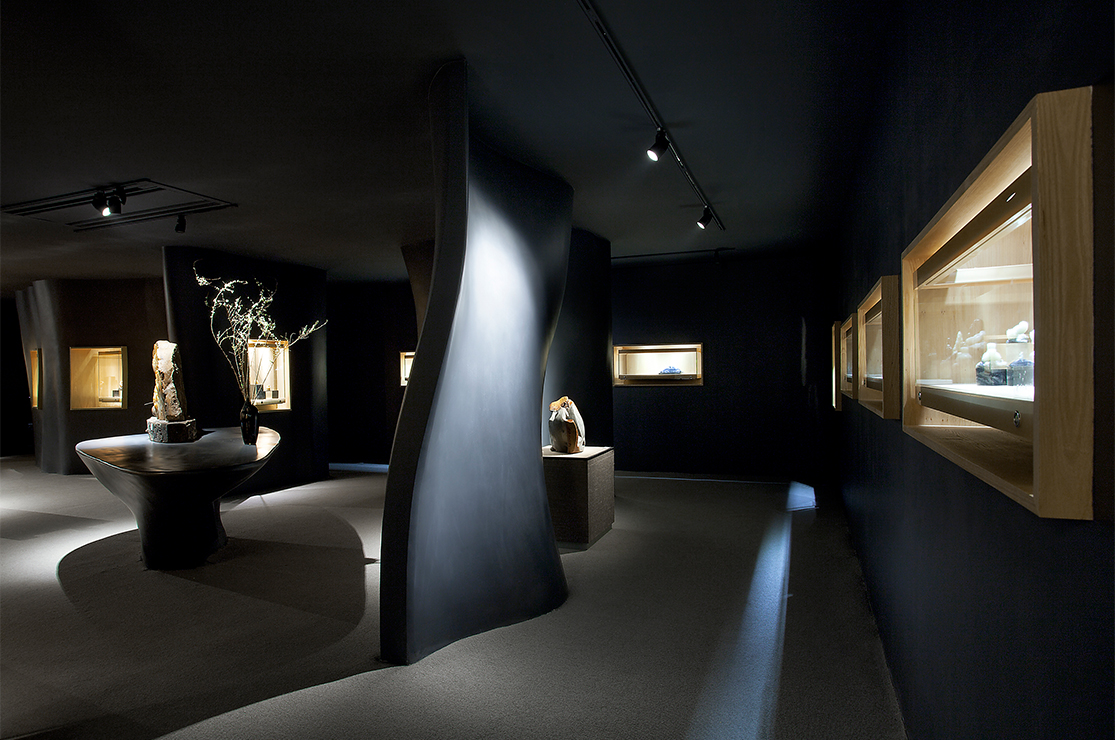
折叠的动线与旋转而上的形体为艺术馆的底层留出了一个面向庭院的入口大厅,大厅前方是卜石艺术馆的常规作品展厅,由位于展厅入口旁的楼梯拾级而上是VIP展览空间,曲面墙体将展厅分成了若干个微空间,也定义了观展的流线,展品被散落地嵌在了这些流线形的墙体中,在若隐若现之间出现的休憩交流空间满足了VIP展览的功能需求。展览空间的对面则是与二层室外露台连通的茶室。
The folded moving lines and rotating shapes leave an entrance hall facing the courtyard for the bottom floor of the art museum. In front of the hall is the conventional works exhibition hall of Boshi Art Museum. The VIP exhibition space rises from the stairs next to the entrance of the exhibition hall. The curved wall divides the exhibition hall into several micro spaces and defines the flow lines for viewing. The exhibits are scattered and embedded in these streamlined walls, The leisure and communication space between the looming and looming meets the functional requirements of VIP exhibitions. The opposite side of the exhibition space is a teahouse connected with the outdoor terrace on the second floor.
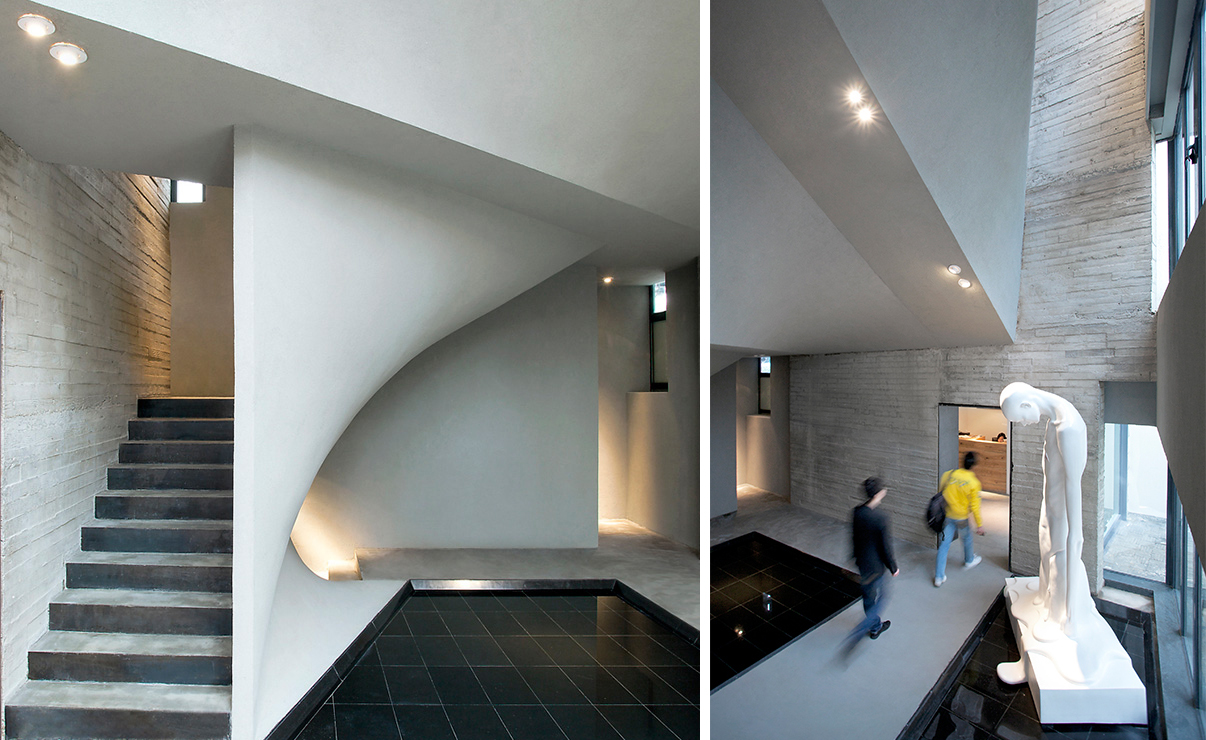
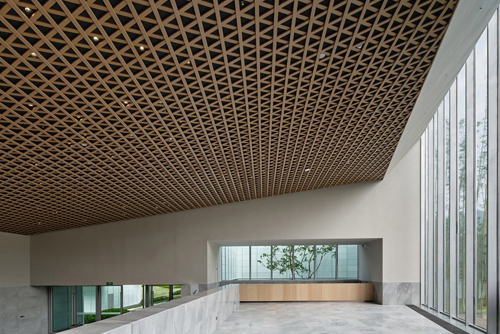
数字化建造的手段贯穿整个设计。非线性的度量和几何分解成为建造内容的核心所在,计算机中抽象的多向度曲面被分解为可控制的CNC可加工片段,而立体的拼接则通过精确的定位加以控制。曲面化的造型在符合其几何规律的前提下被转化为线性的加工逻辑。传统二维图纸无法实现的空间表达转化为建造逻辑的表达,整个过程使得设计思路被从始到终的加以贯彻,而这种数字化放样与CNC加工结合的模式也大大降低了建造的成本,提高了设计完成的质量和速度。
The means of digital construction run through the whole design. Nonlinear measurement and geometric decomposition become the core of the construction content. The abstract multi-dimensional surface in the computer is decomposed into controllable CNC Machinable segments, and the stereo splicing is controlled by accurate positioning. Curved surface modeling is transformed into linear processing logic on the premise of conforming to its geometric laws. The space expression that cannot be realized by traditional two-dimensional drawings is transformed into the expression of construction logic. The whole process makes the design idea implemented from beginning to end. This mode of combining digital lofting with CNC processing also greatly reduces the construction cost and improves the quality and speed of design completion.
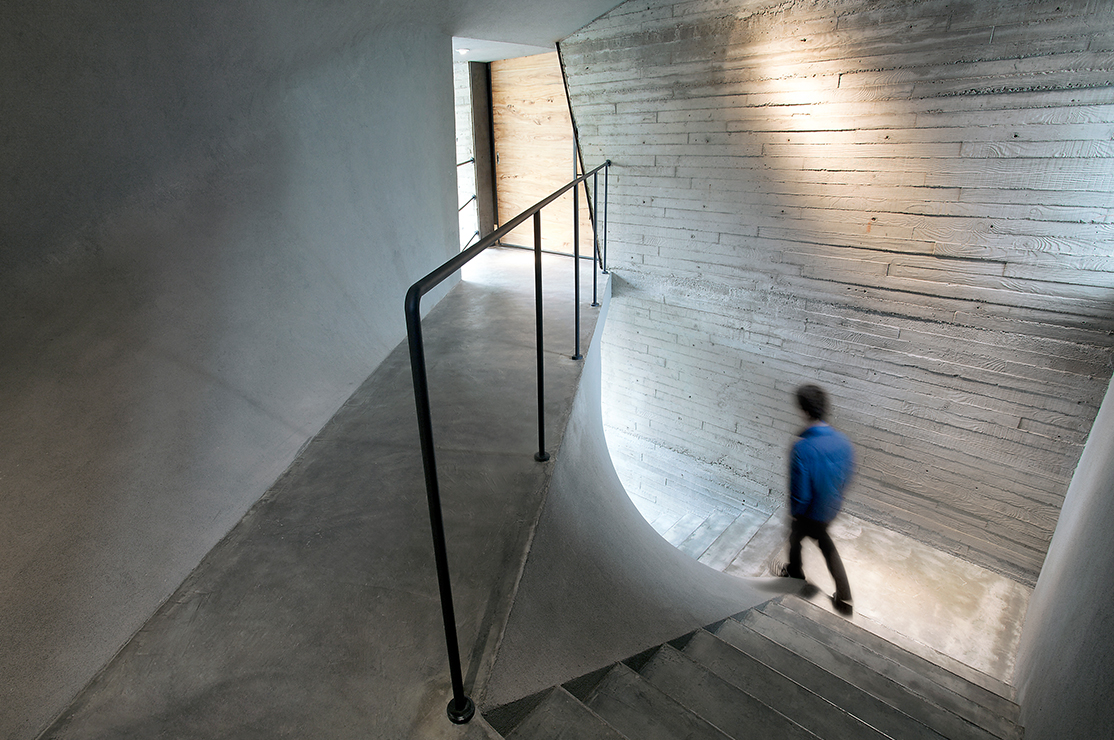
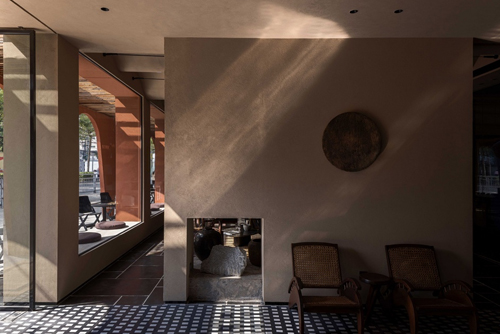
在这个项目中,光作为游离于几何和建造以外的第三要素,配合折叠的不规则的空间模块和流线型展厅设计,增加了空间的纬度体验。
In this project, light, as the third element apart from geometry and construction, combined with folded irregular space modules and streamlined exhibition hall design, has increased the latitude experience of space.
项目地点:上海市徐汇区
建筑面积:约1000平方米
设计/竣工时间:2012年/2013年
业主:卜石艺术馆
建筑师:袁烽 / 创盟国际
设计团队:韩力,何福孜
摄影:夏至
Project location: Xuhui District, Shanghai
Building area: about 1000 square meters
Design / completion time: 2012 /2013
Owner: Boshi Art Museum
Architect: Yuanfeng / chuangmeng International
Design team: Han Li, hefuzi
Photographer: Summer Solstice