富阳·阳陂湖湿地接待中心, 浙江/建筑
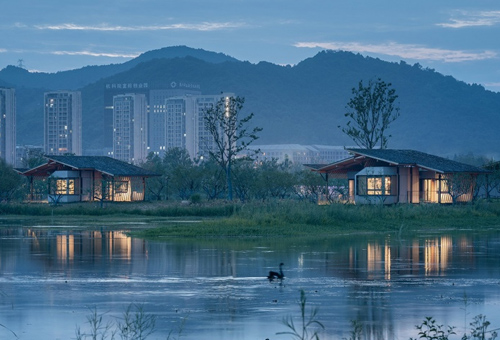
项目位于杭州市富阳区的阳陂湖湿地公园,阳陂湖在很早的时候就是一片天然的湖泊,上世纪八十年代被填湖造田,变成了水稻研究所的研究基地,近些年随着城市发展观念的变化,政府希望有更多的自然生态环境被还原,给城市提供可呼吸的窗口,也为城市周边的居民带来免费开放的湿地公园。在项目施工之时就有很多珍稀的鸟类在此栖居,现在更是随处可见白鹭停留于绿岛之上。
The project is located at Yangbei lake wetland park in Fuyang District, Hangzhou. Before a wetland park, Yangbei lake used to be a natural lake, empoldered into an experimental paddy field for rice cultivation research in the 80s. The environmental impact of this administrative decision was revised after drastic changes in recent urban-development philosophies, which involve the re-naturalization of previously cultivated lands, providing urban areas with breathable intervals, and suburb-living households with accessible nature-themed public spaces. Various rare birds can be easily spotted within the park’s perimeter during the project’s construction. The sight is even more prominent now, with egret seen throughout the islands in the park.
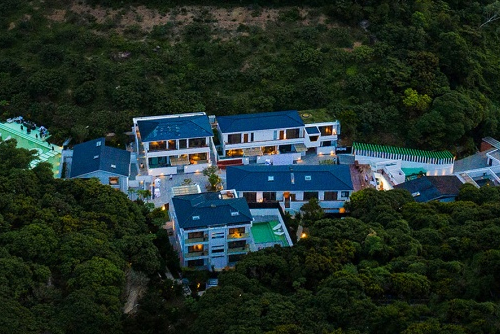
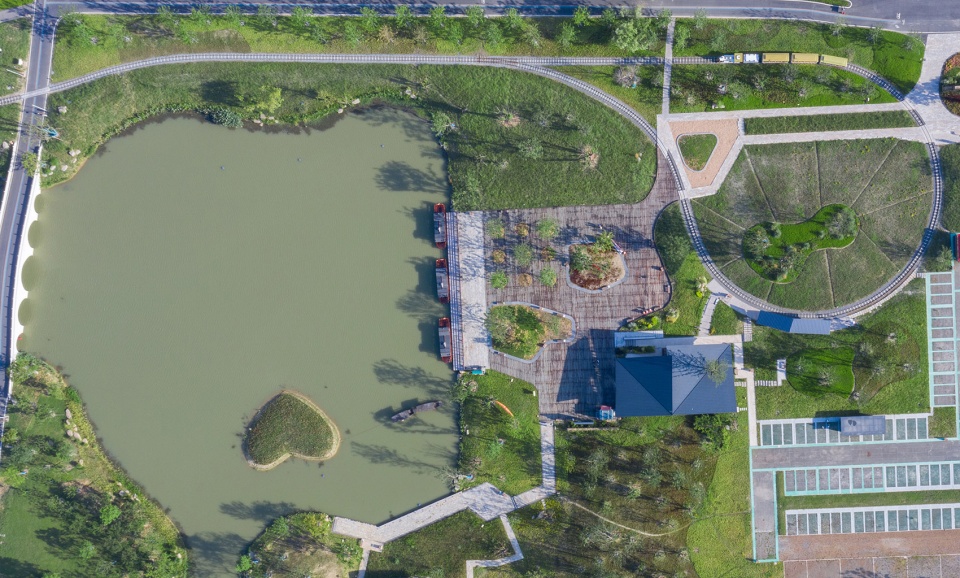
▼鸟瞰场景,Bird-Eye view of the site
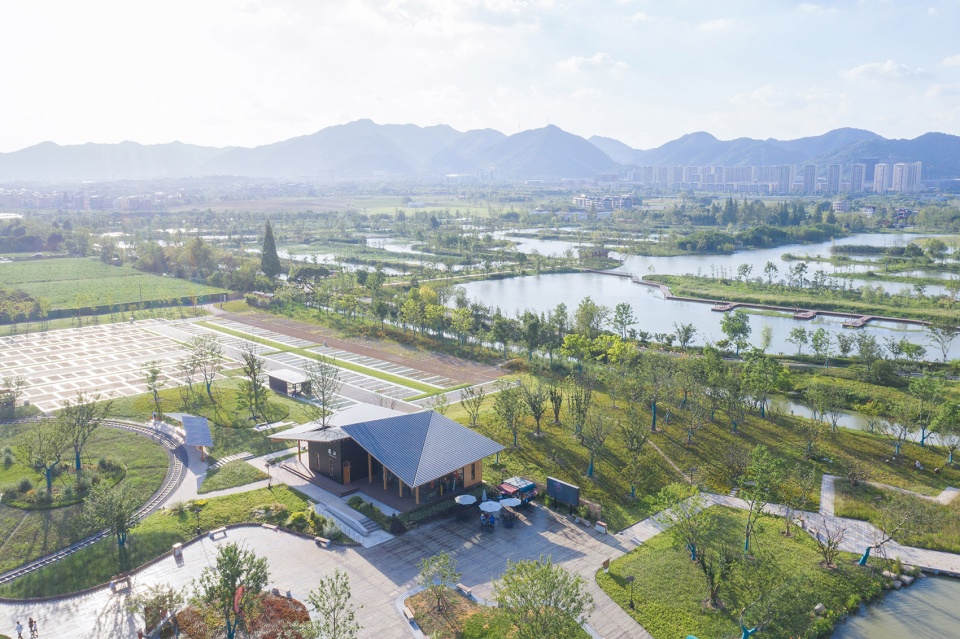
政府委托我们设计的时候,整个湖区的景观都已经在施工,给我们的时间非常紧张,需要在三个月把房子建造好投入使用,极不充分的时间对我们来说是很大的挑战,好在跟我们合作的施工方非常给力,合理的安排施工过程和周期,一起配合完成了这个艰巨的任务。
接待中心位于阳陂湖湿地公园南侧停车场附近,靠近富阳市中心,人流量较为集中,有很强的集散和接待性功能,建筑里面需要配套接待、咨询、售票、管理、办公、医务室、同时具备洗手间、母婴室、水饮售卖、休息等功能。虽然面积不大,但是功能的复合型很强。附近也设有游船和观光小火车停靠点,是阳陂湖湿地公园的重要集散地点和接待中心。
When the government assigned the project, the construction of the general park area had already started, resulting in an extremely tight time frame of three months. This inadequate time budget imposed a severe challenge for us. Luckily, we successfully solved the hurdle with our construction partner’s effective building planning and project timing.
The reception center is located near the south parking lot of the wetland park, at the side close to the downtown area of Fuyang District. With its close proximity to the city’s center of human and potentially tourist traffic, the reception center is expected to fulfill the demanding role of visitor accommodation. The relatively compact building needs to provide a variety of functions, including visitor reception, information booth, ticketing, management, office space, and medical services. Visitor amenities like restrooms, nursing rooms, vending facilities, and resting areas are also expected to be incorporated by the design. Once constructed, together with the nearby sight-seen train station and pedal boat dock, the building will serve as a vital tourist traffic node for Yangbei lake wetland park, facilitating visitors’ needs.
▼接待中心位于阳陂湖湿地南侧,The reception center relative to the wetland part
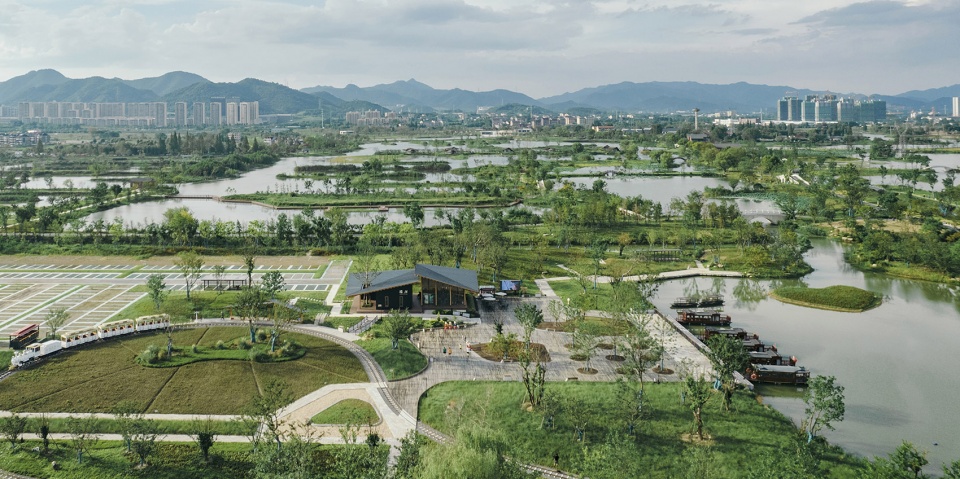
▼西侧残疾人入口,West-side accessible entrance
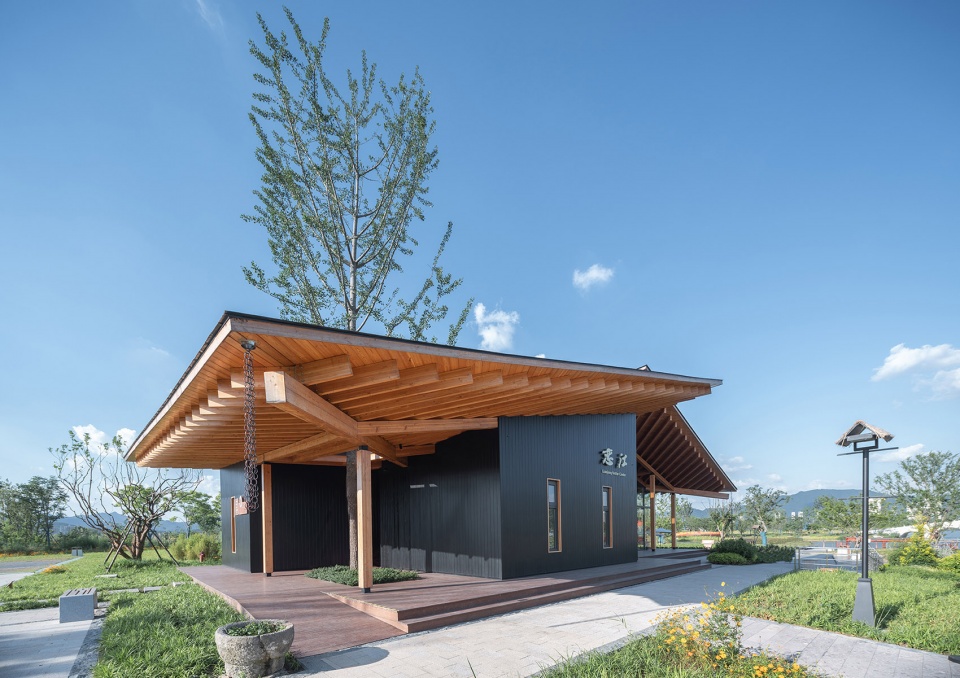
▼场地鸟瞰,Site overview
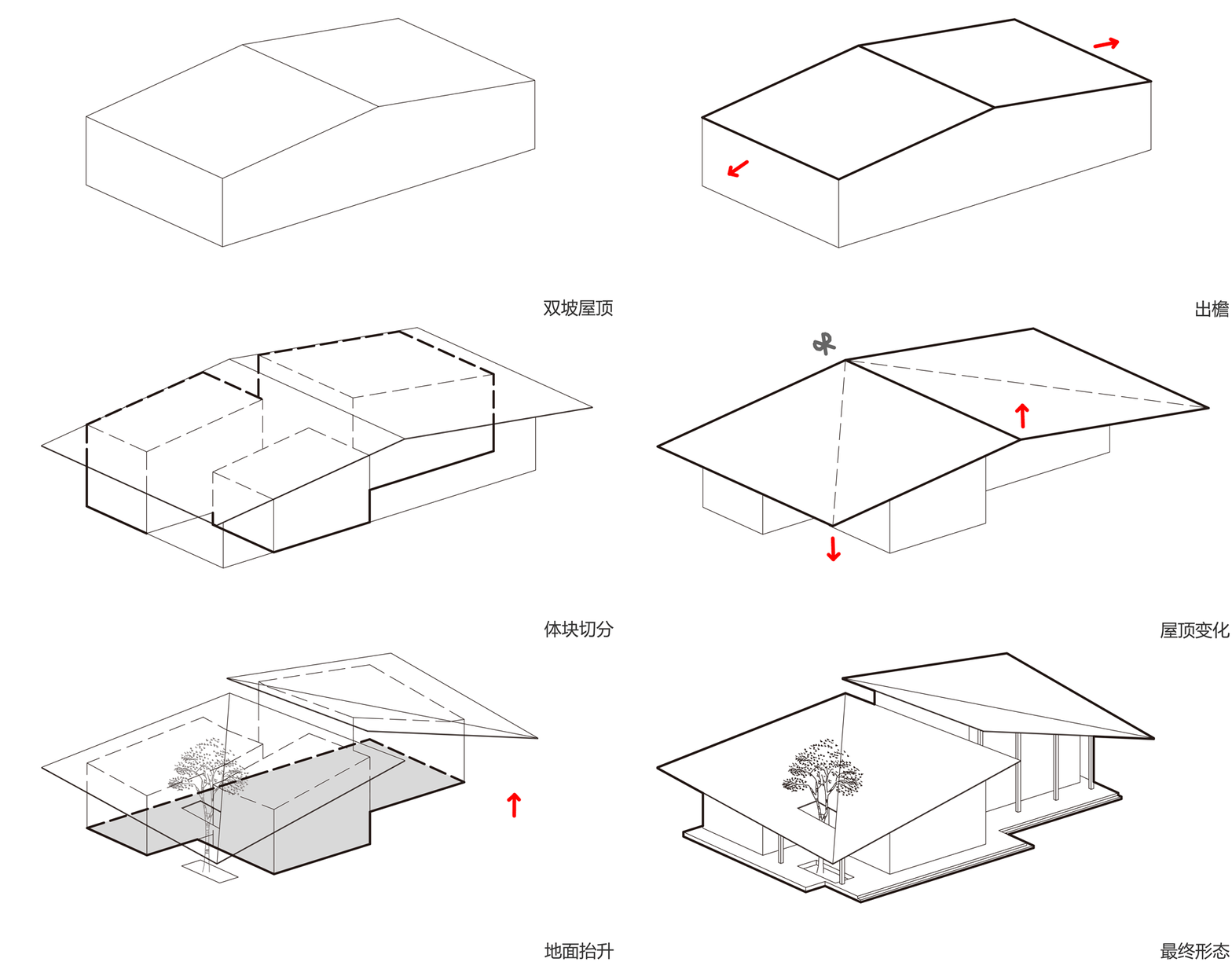
▼设计策略,Design strategy
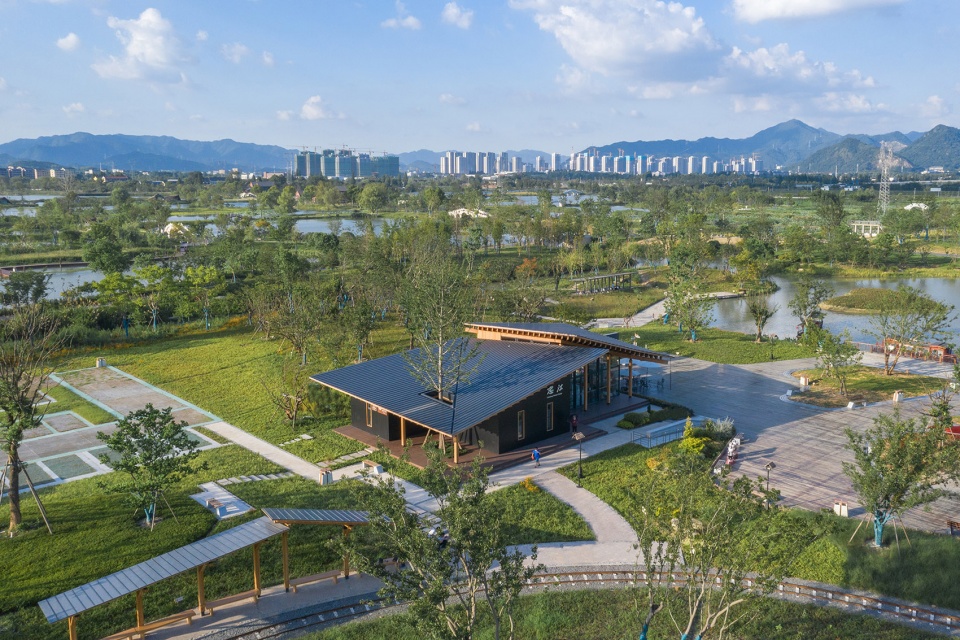
▼两片折叠起翘的屋顶,Two folded roof warping upward, resembling wings
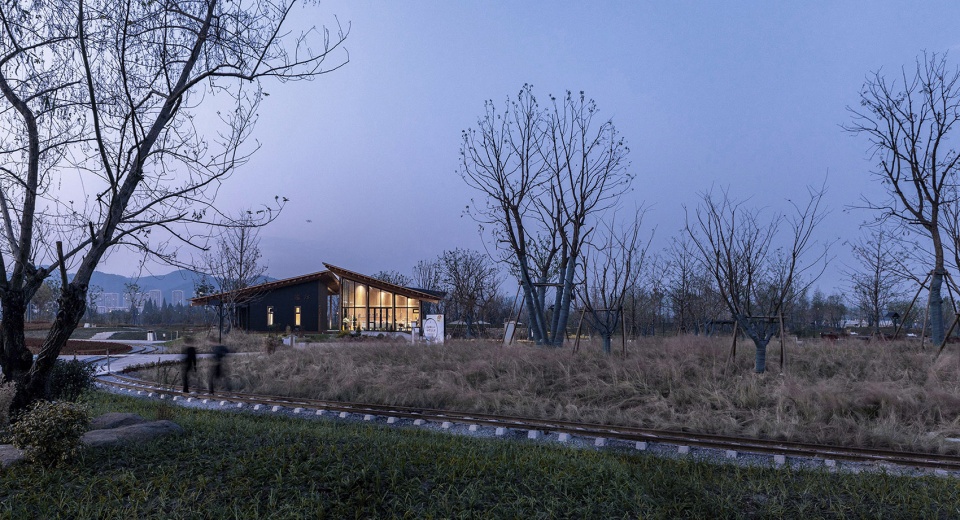
▼傍晚的接待中心,Reception center at dusk
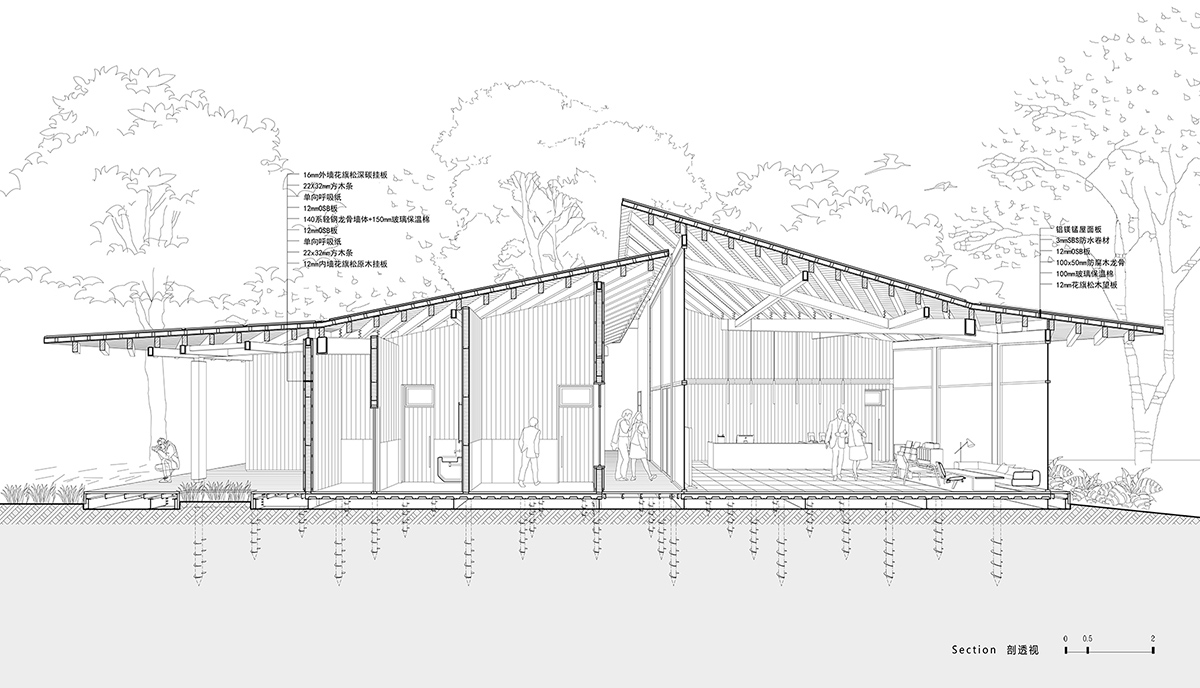
▼剖透视图,Sectional perspective
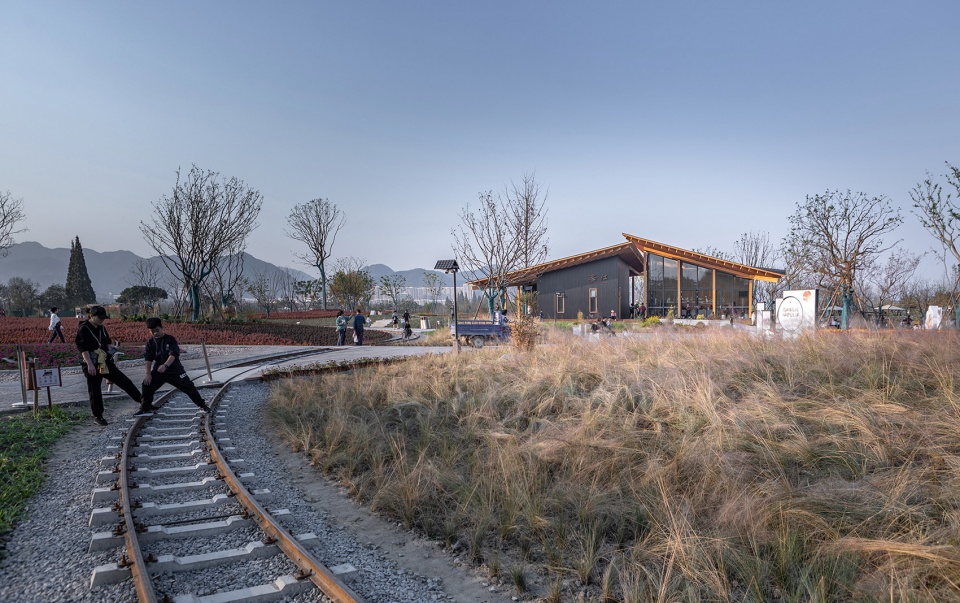
▼从铁轨看向接待中心,The reception center looking from the rail tracks
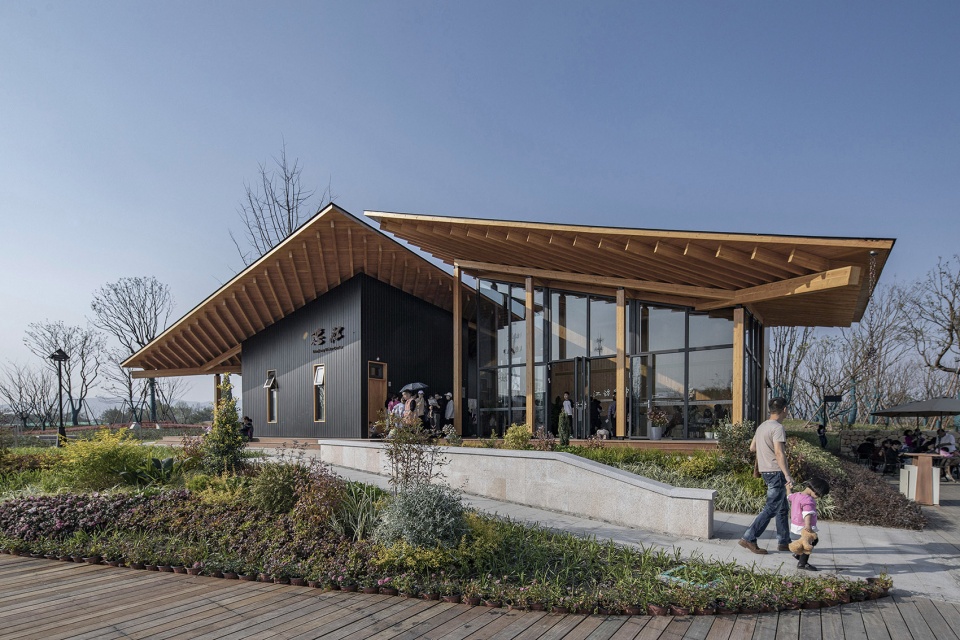
▼一虚一实的体量关系,Vague boundaries compliment with vivid spacings
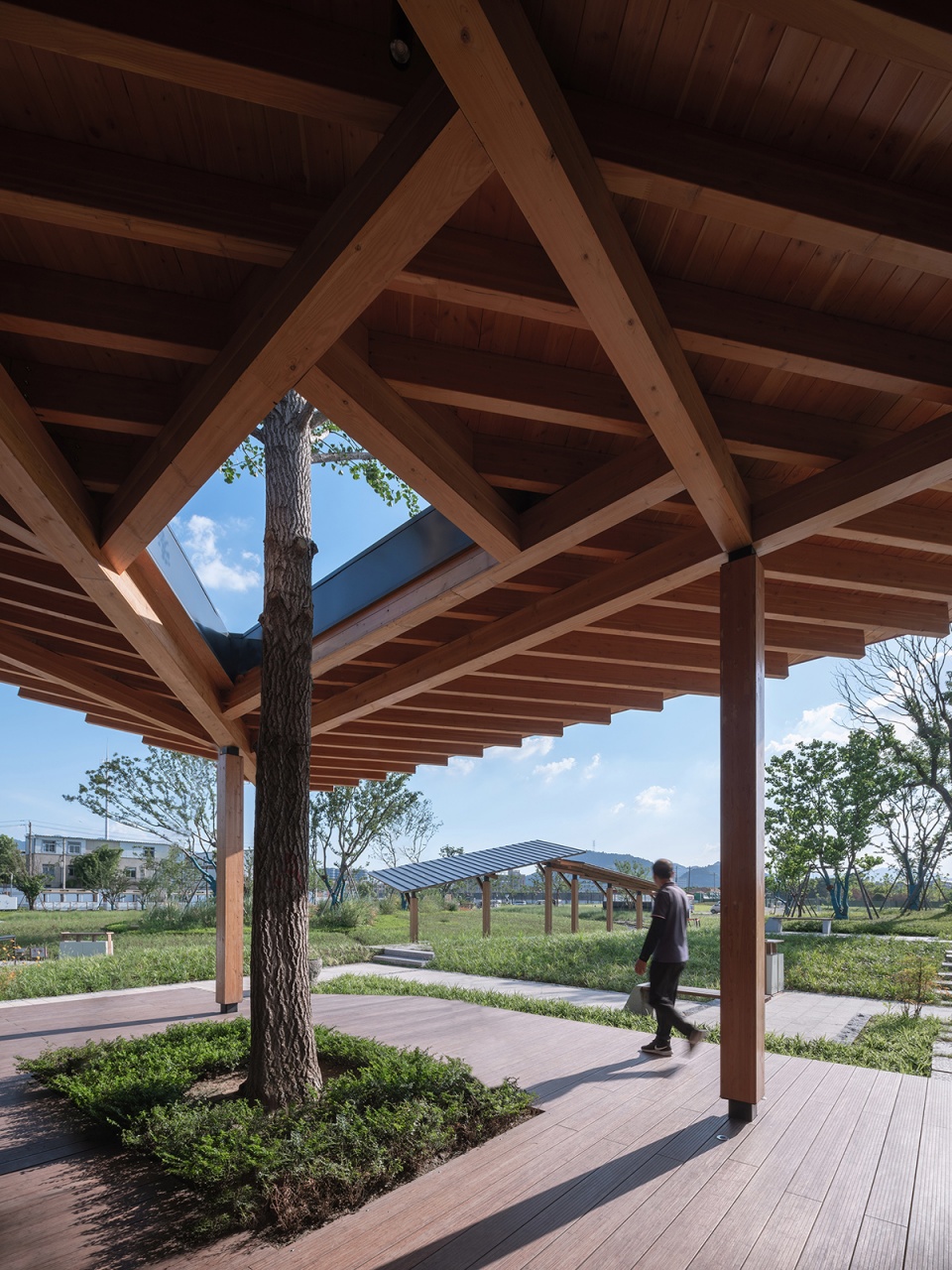
▼围绕树院的灰空间,Gray space surrounding the tree yard
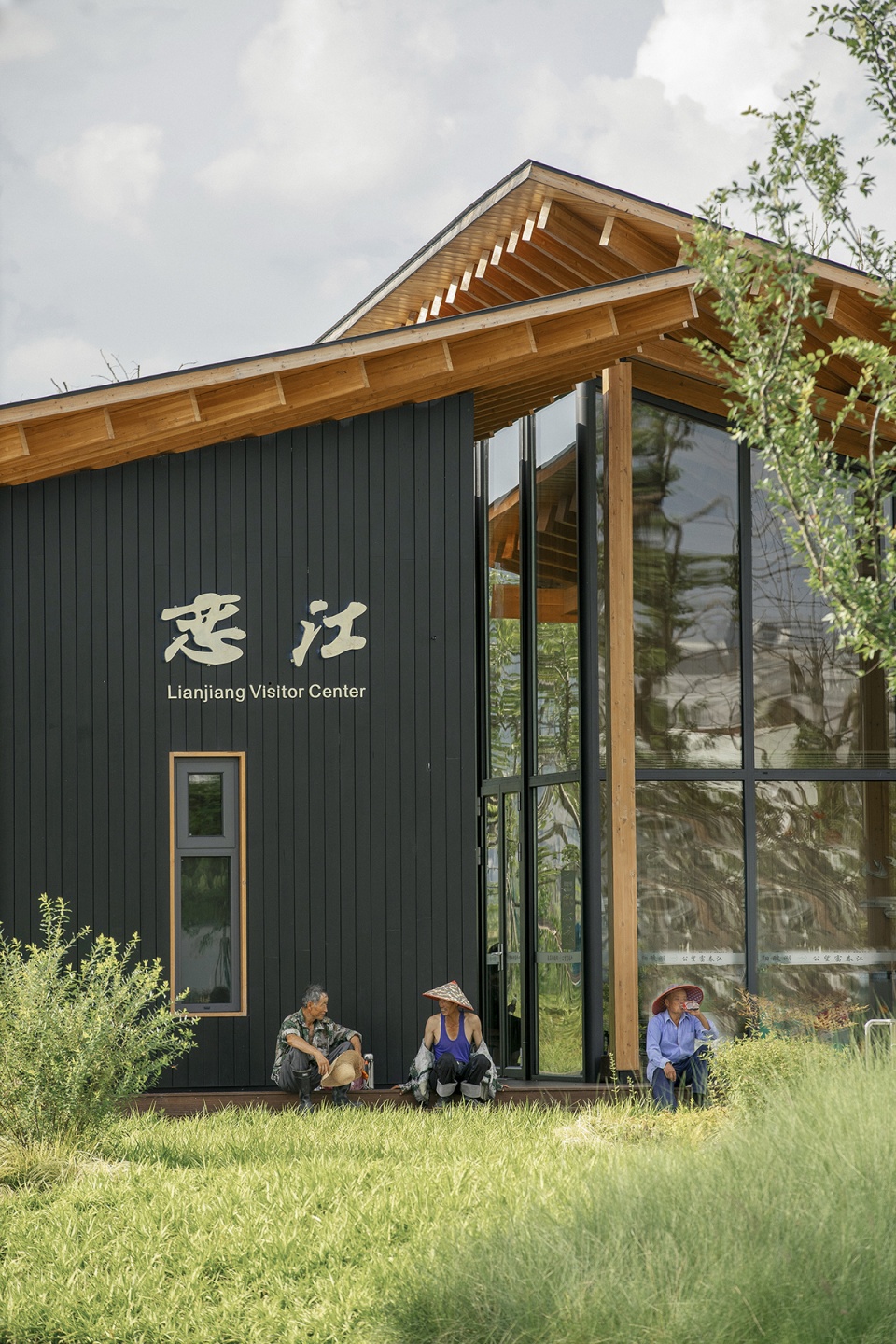
▼园丁在大屋顶下休憩,Gardeners resting under roof’s shelter
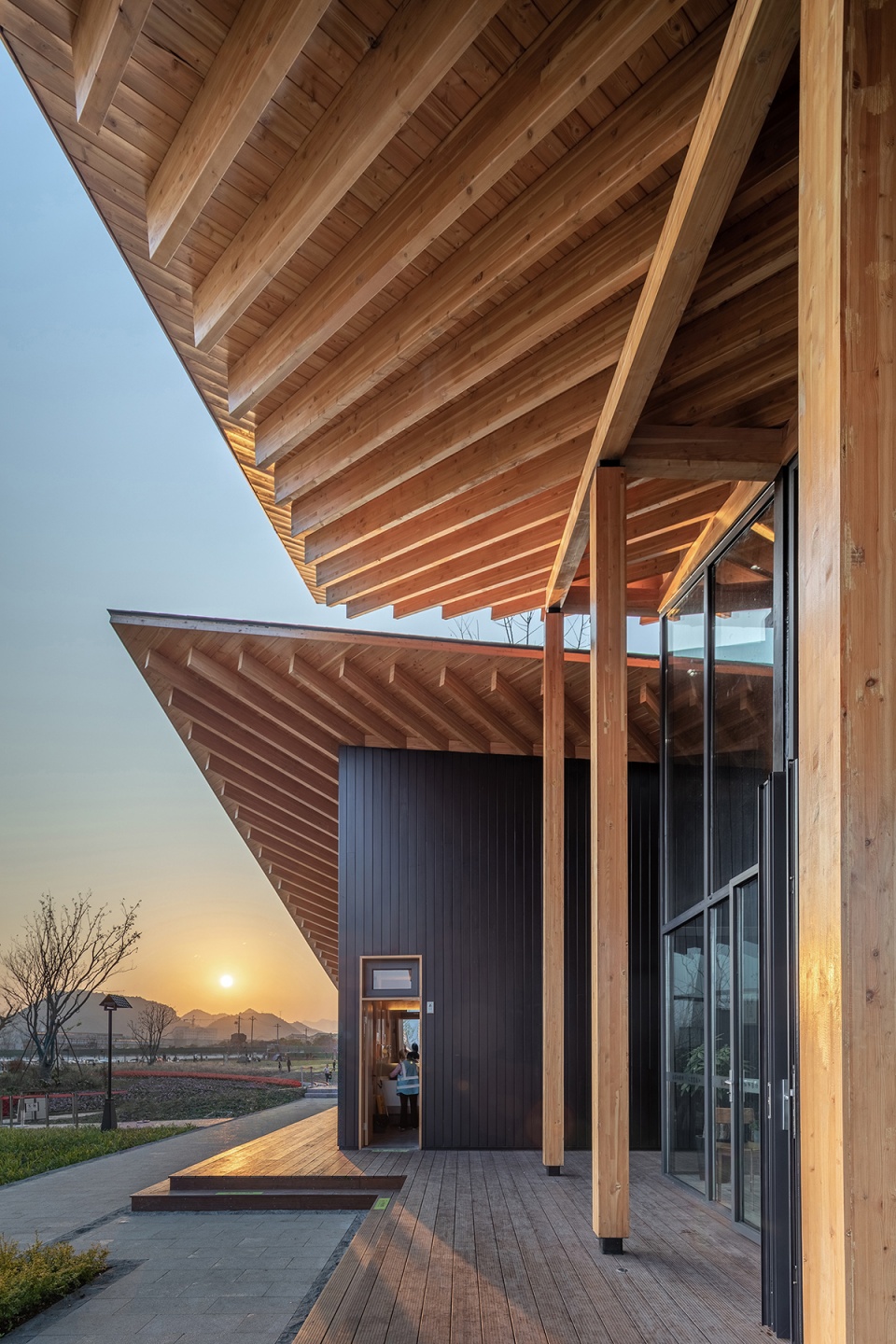
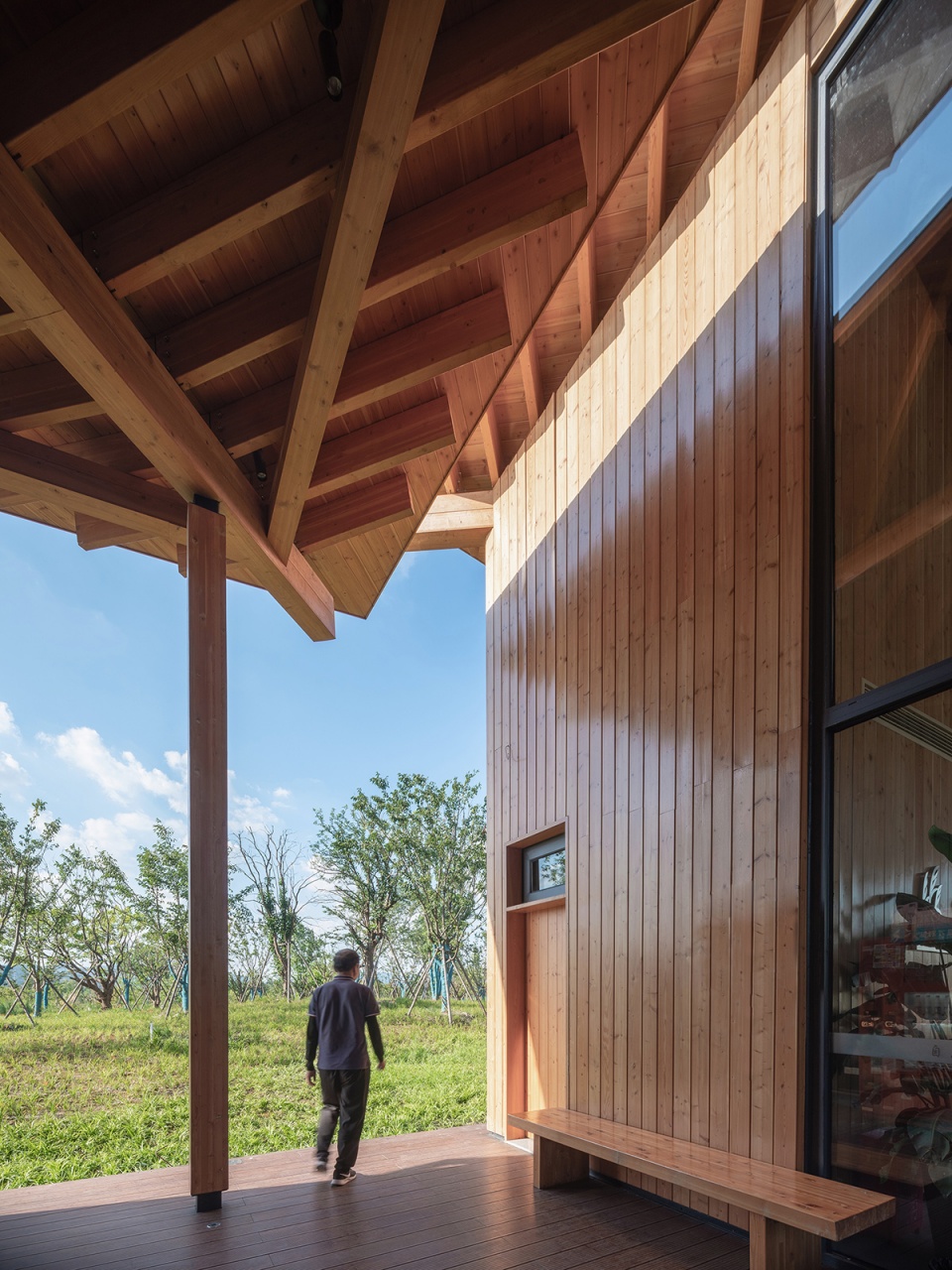
▼南侧屋顶下的灰空间,Gray space under the south side roof
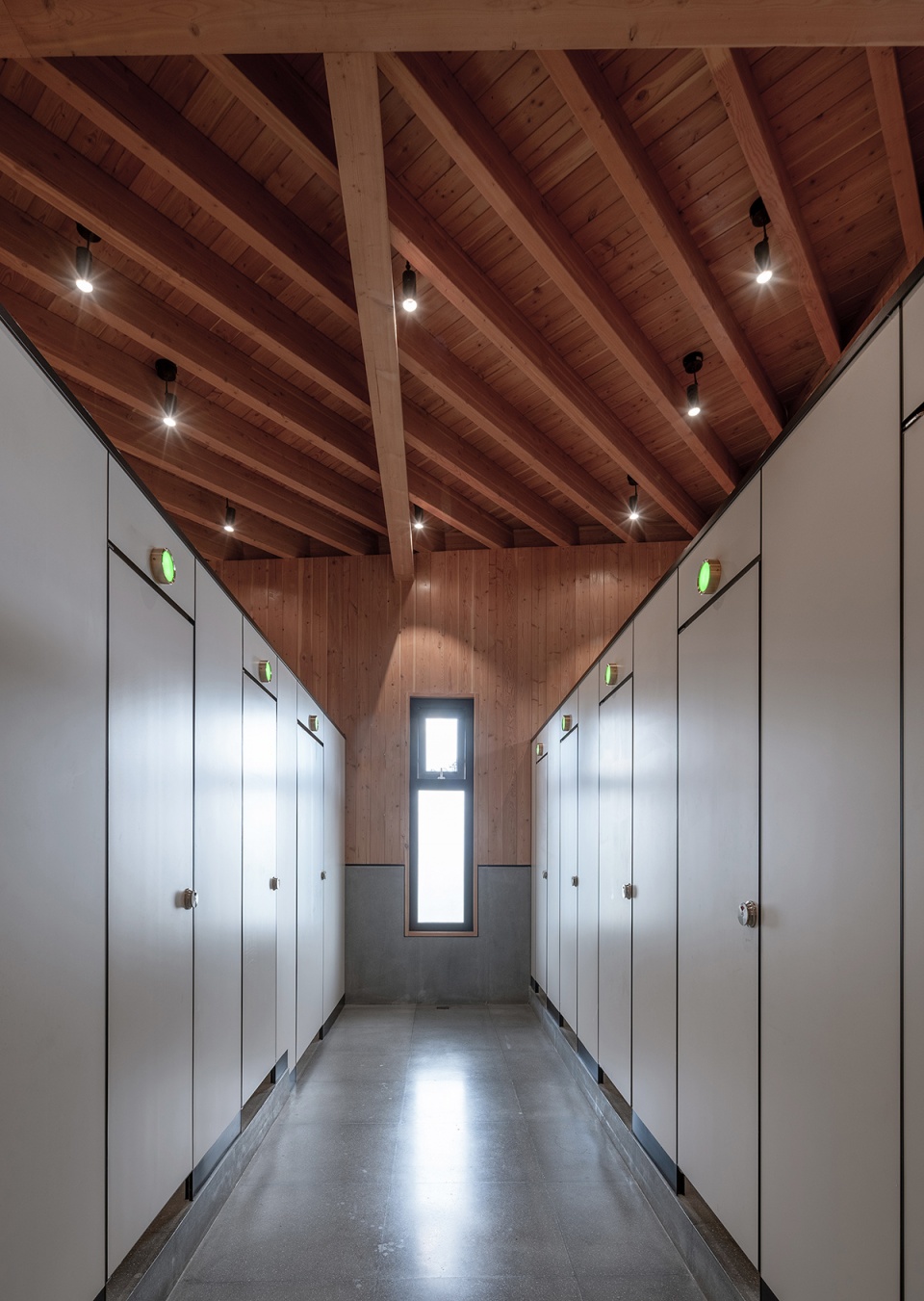
▼卫生间室内 ,Lavatory interior
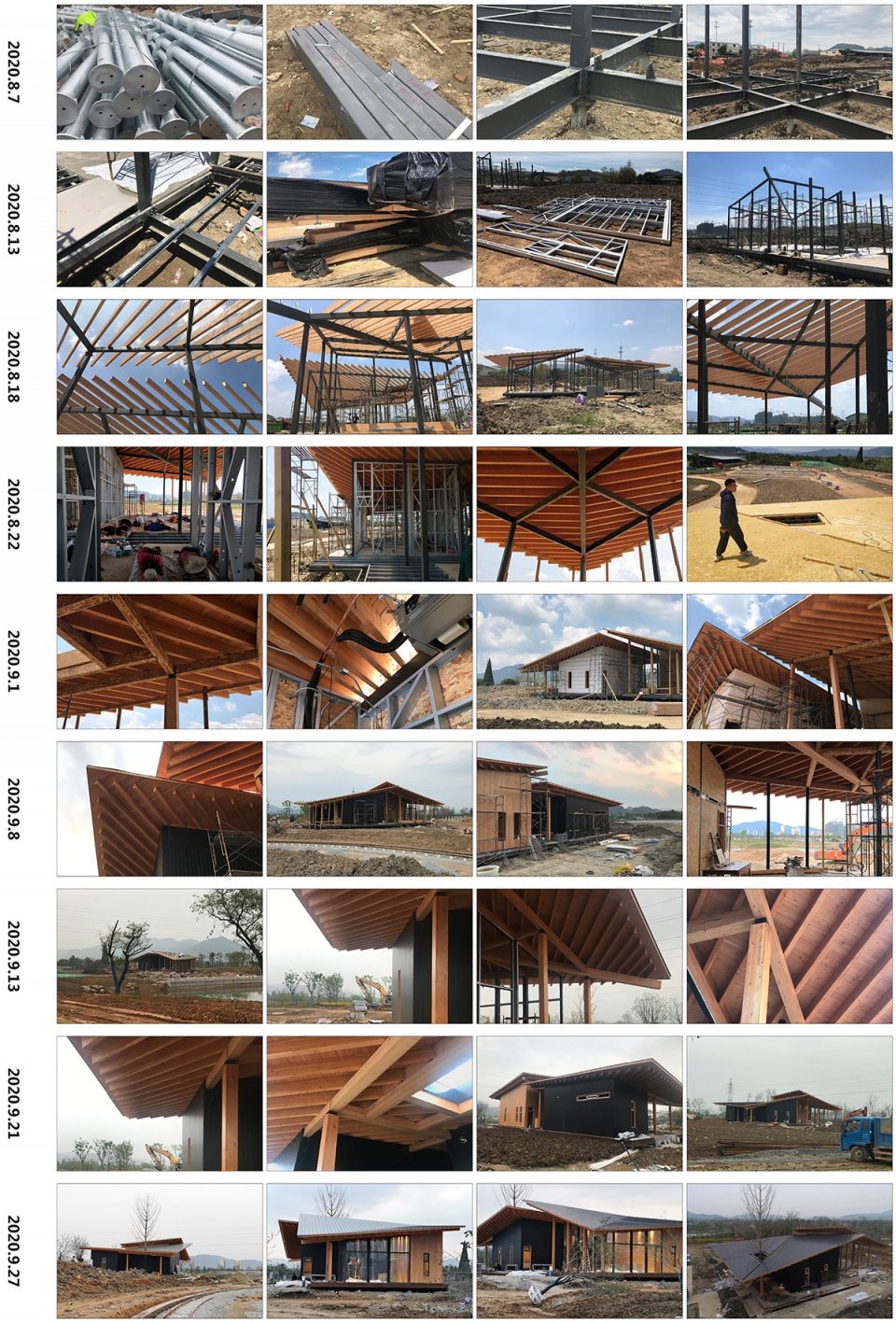
整个项目只用了两个月就完成了从无到有的建造,建造速度很快,工序流程清晰,设计施工同步推进,经验和用心作用巨大,团队的力量非常重要。
We finished the construction of the project from scratch within two months. This incredible efficiency results from valuable experiences, attention to detail, and, most importantly, teamwork, which allows a well-planned building procedure and synchronizes the design process with on-site construction.
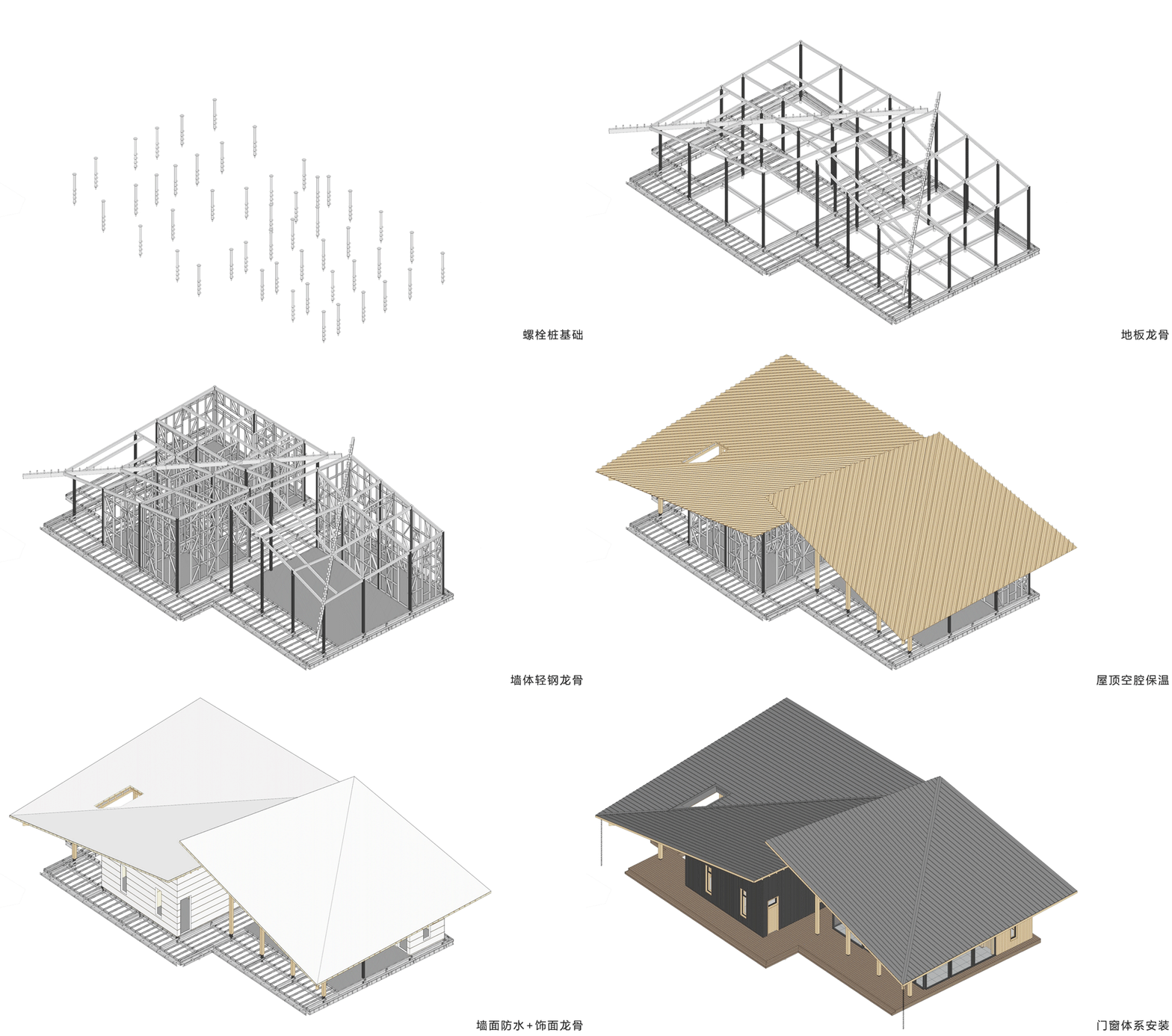
▼施工流程,Construction procedure
▼现场建造记录,On-site construction record
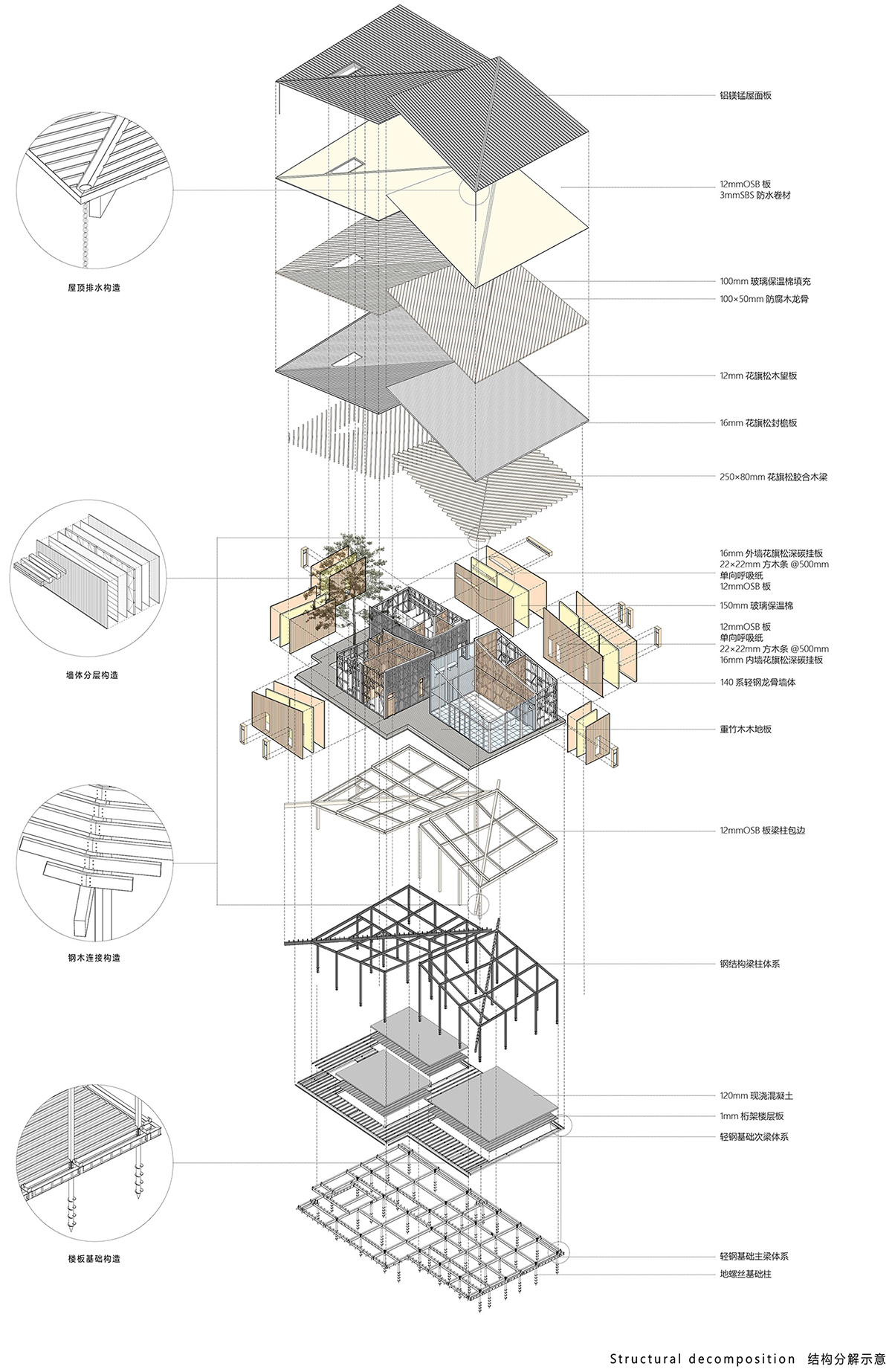
▼结构分解示意图,Structure composition
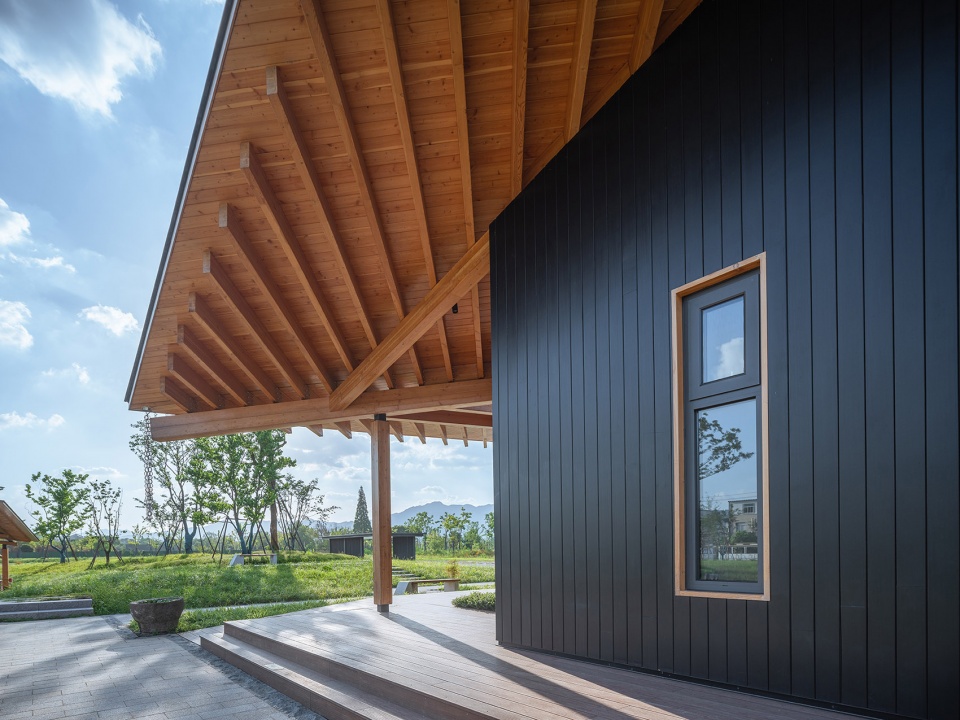
▼出挑的大屋檐下 ,Space under the overhanging eave
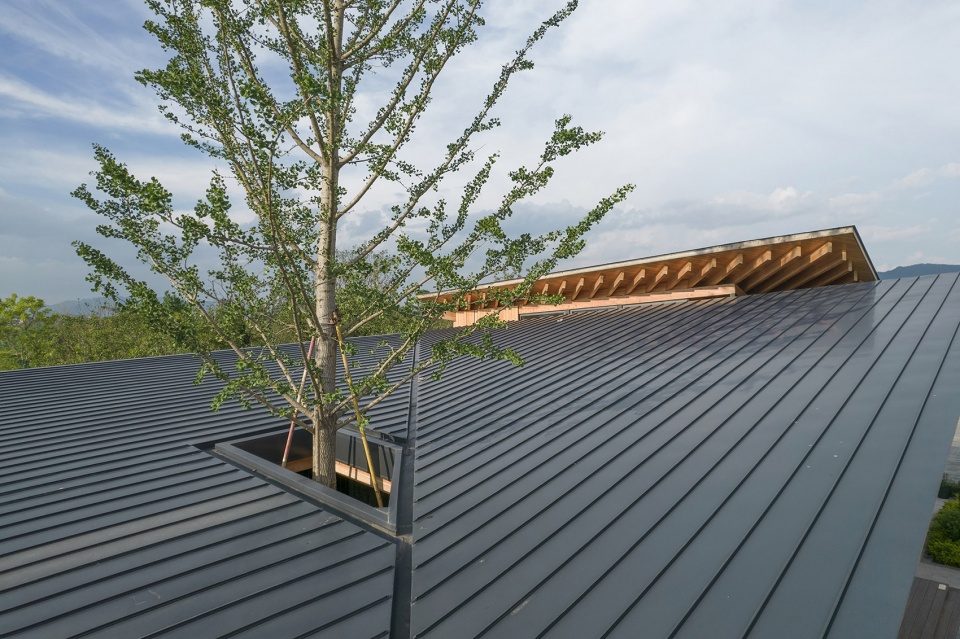
▼金属屋面,Metal roofing
▼屋顶交接处的灰空间,Gray space under roofs’ intersection
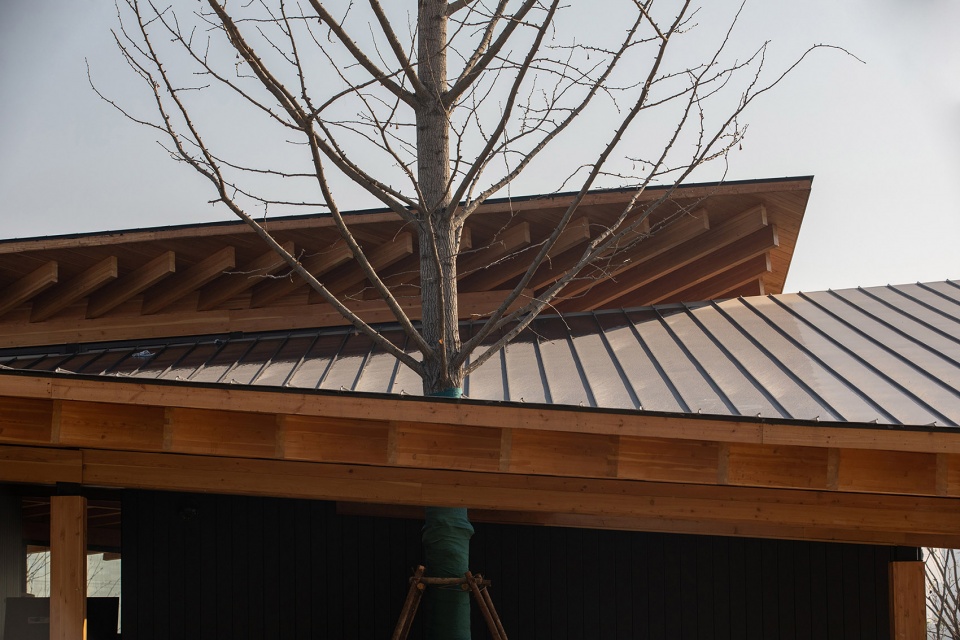
▼树穿过屋面细部,Details of the tree passing through the roof
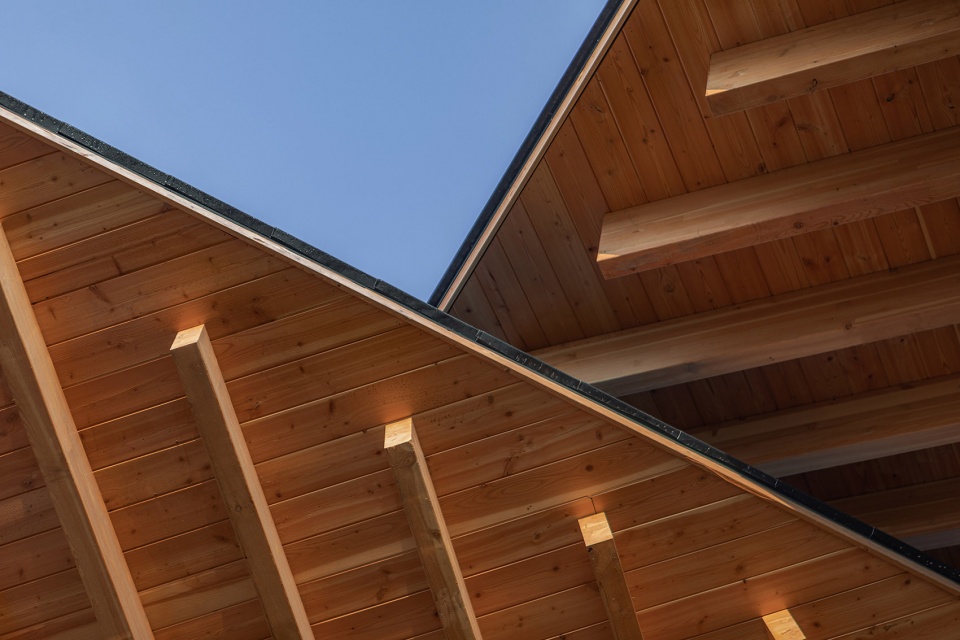
▼上下叠合的屋顶,Overlaying roof
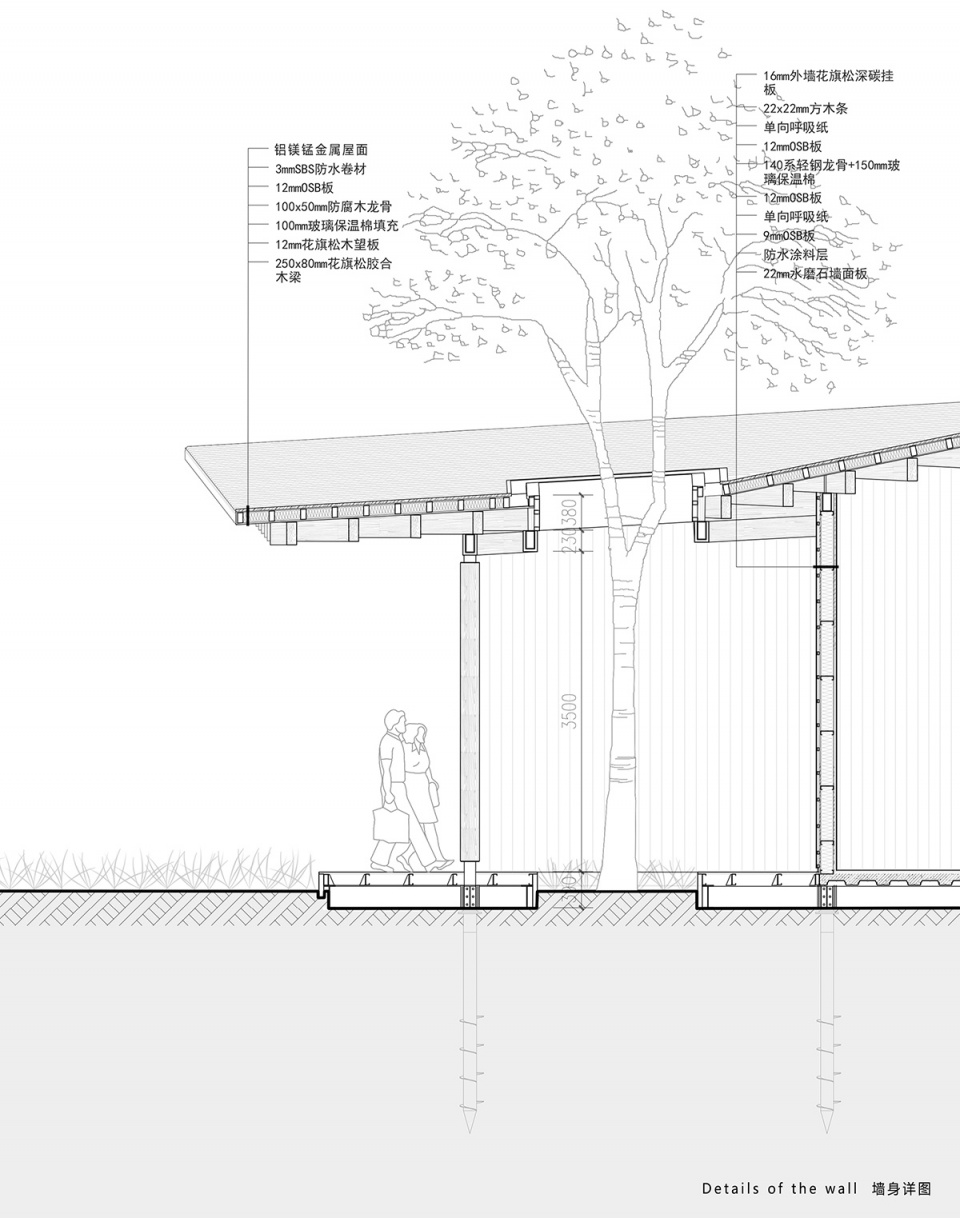
值得一提的是整个建筑没有用一块砖,全部是轻质做法,工厂预制现场安装,除了地面基层的混凝土现浇和贴水磨石砖,其他都是无水工程,用板材轻钢重钢胶合木这些构件化材料组装。
It is worth noticing that not a single brick was used during the whole construction — everything was done through modularized lightweight parts pre-fabricated in factories. Via the nature of the modularized construction method incorporating light/heavy steel parts and laminated wooden panels, besides the concrete base and the terrazzo tile application, the rest of the construction process did not require any water-activated adhesive.
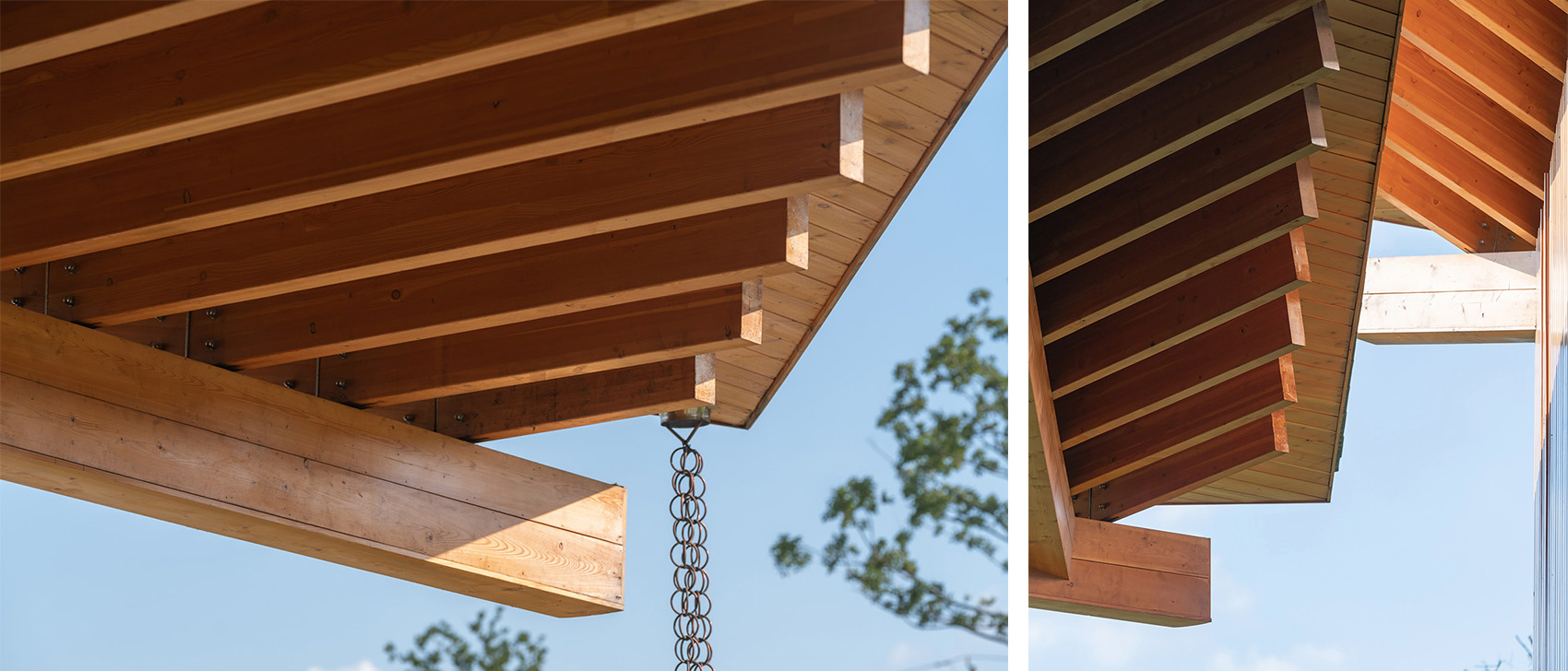
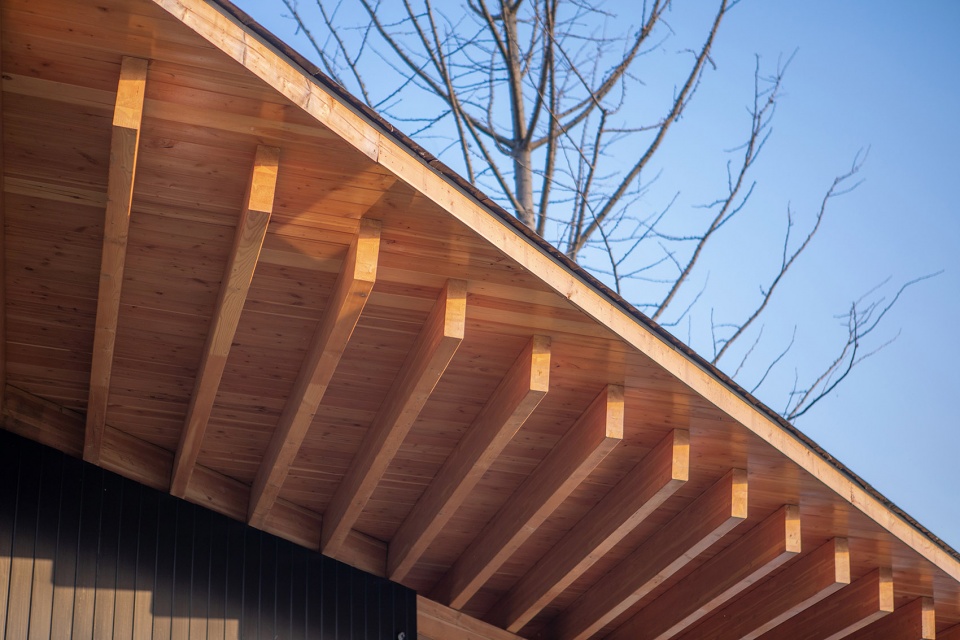
▼出檐木结构屋顶细节,Details of the roof with overhanging eaves
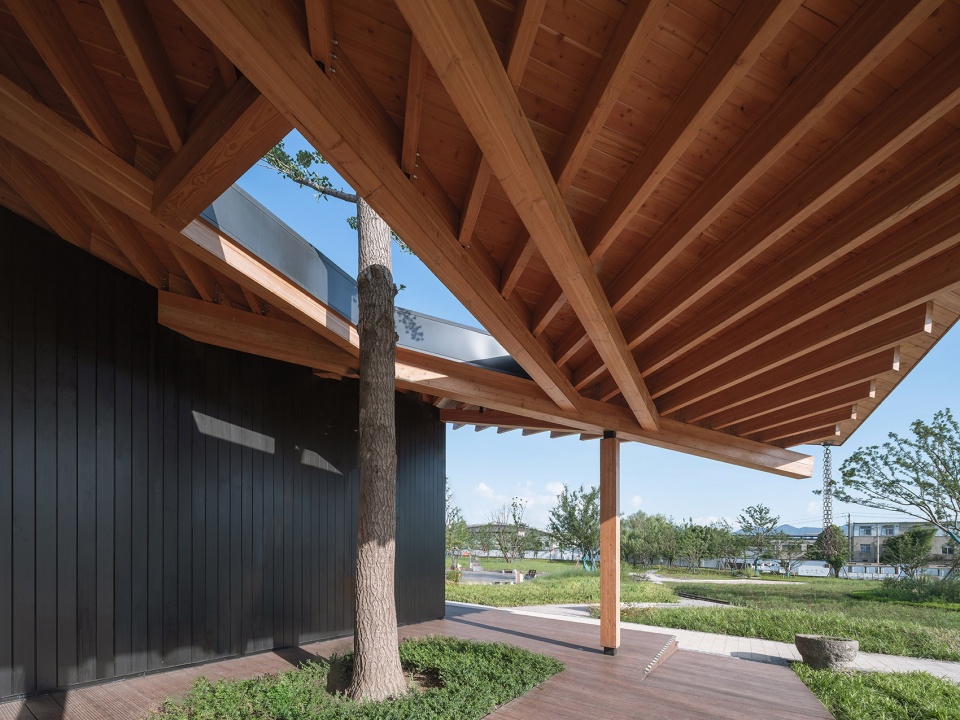
▼大屋顶下的院子,The patio under the roof
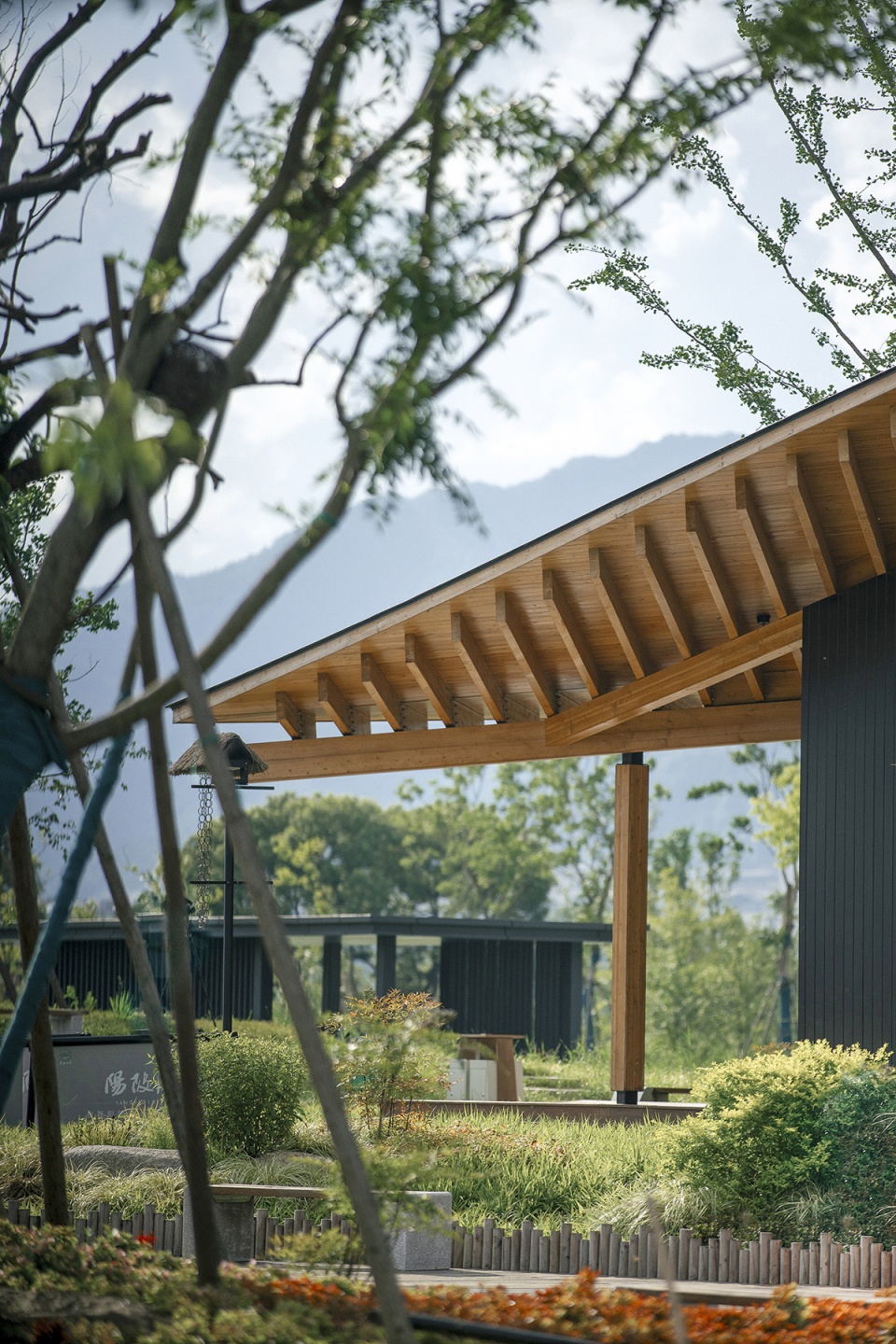
▼大出挑的屋檐,Eave with significant overhanging area
▼墙身详图,Wall structure details
其次是对环境的可持续的考量,用地性质的回应,常规的建造方式在施工时对土地破坏较大,建筑拆除时耗费人力物力,而装配式建筑架空的形式不破坏土地,建筑拆走之后马上可以复绿,拆下来的材料也可以被二次利用,也可以被重装二次建造。
The second reason is modular construction’s minimal environmental impact. Conventional construction methods inevitably involve tremendous destructions of the land area within projects’ close proximity; structures built with such method also require significant labor and capital to demolish. With modularized structure comes with none of those issues: being built on stilts, modularized buildings would not impose permanent land damage. After the removal of a modular structure, the land it used to sit on can be reseeded instantaneously, while the parts collected from the disassembling can be recycled or reconstructed as is.
▼从停车看向接待中心,The reception center from parking lot
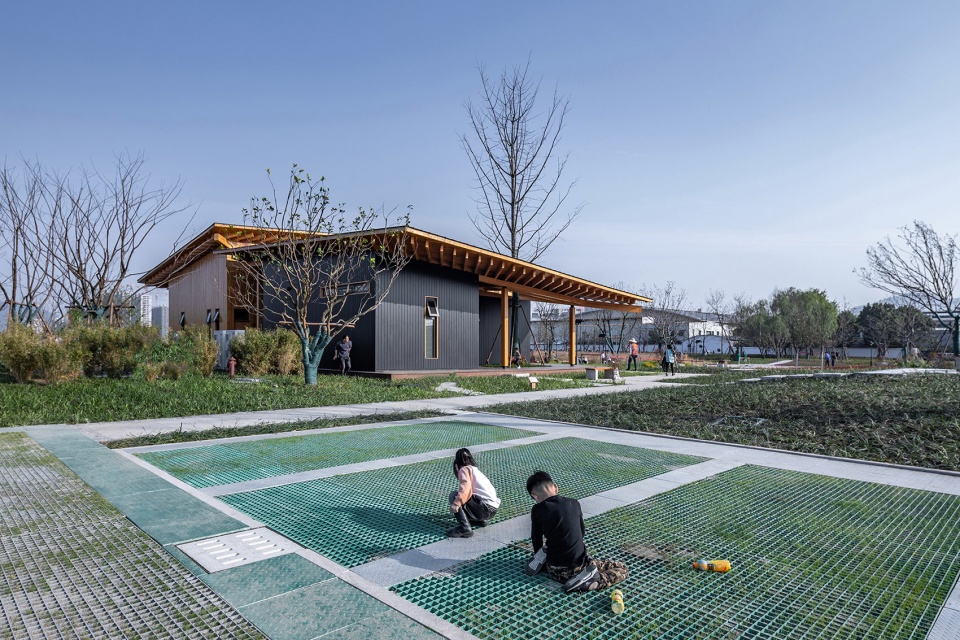
最后是对传统建筑智慧的提取,与中国的传统木构建筑的呼应不仅仅是在形式上,也在于建造的内部逻辑上。中国传统木构建筑的精髓就在于的装配式概念,所有独立的构件都用隼卯的方式连接,可拆装重组,可更换翻新,可修复迁移,属于最纯粹的最早的最灵活的装配式建筑,包括木构建筑外围砖瓦材料,同样都是可以非常轻便的单元式构件材料,可以被组织被重构被二次利用。建筑与大地的连接方式也是轻巧的,直接是放置在大地上,房子被拆除之后,原来的宅基地就可以直接变成自然地,耕种作物,这都是中国传统文化中最高级的智慧。
The last reason of the three is the treasuring of classic architectural wisdom. Modular construction resembles the construction of traditional Chinese wooden constructs not only in its procedure but also in its core philosophy. Modularity and cement-free construction are the essences of Traditional Chinese wooden structures; all individual components are interlinked with tenon joints, allowing them to be disassembled and reassembled. Structural parts can be replaced, renewed, or removed — the Chinese wooden constructs are some of the earliest iterations of versatile modular buildings. The versatility does not end at the structural parts, as exterior components such as roof tiles and bricks are also highly maneuverable and easy to transport building units that can be easily regrouped and utilized elsewhere. The way traditional wooden structures connect with the ground is also non-intrusive and non-destructive, as the houses are placed on the surface. After the house has been removed, the basis of the construct can easily be transformed back to its natural state or be converted into a farm field. The modularity in building construction represents the ancient wisdom passed on through generations from China’s glorious history.
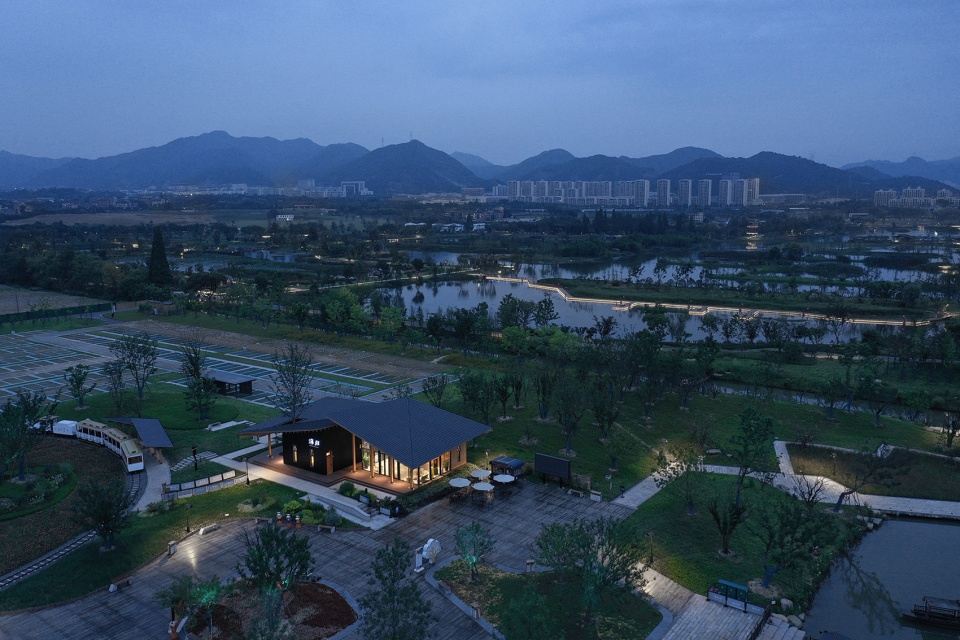
▼清晨鸟瞰,Bird-Eye view in dawn
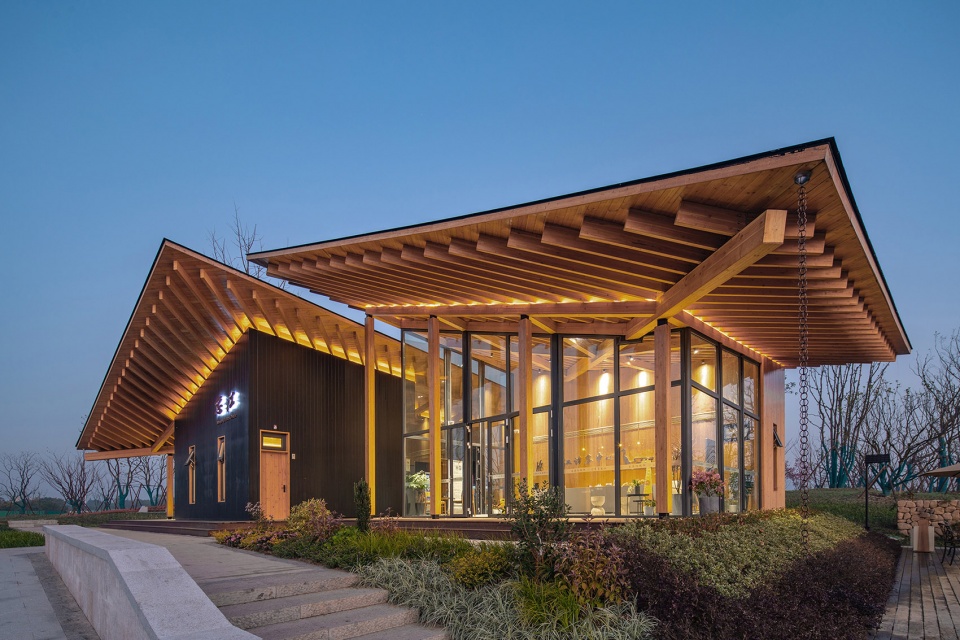
▼两片大屋顶,Two pieces of roof
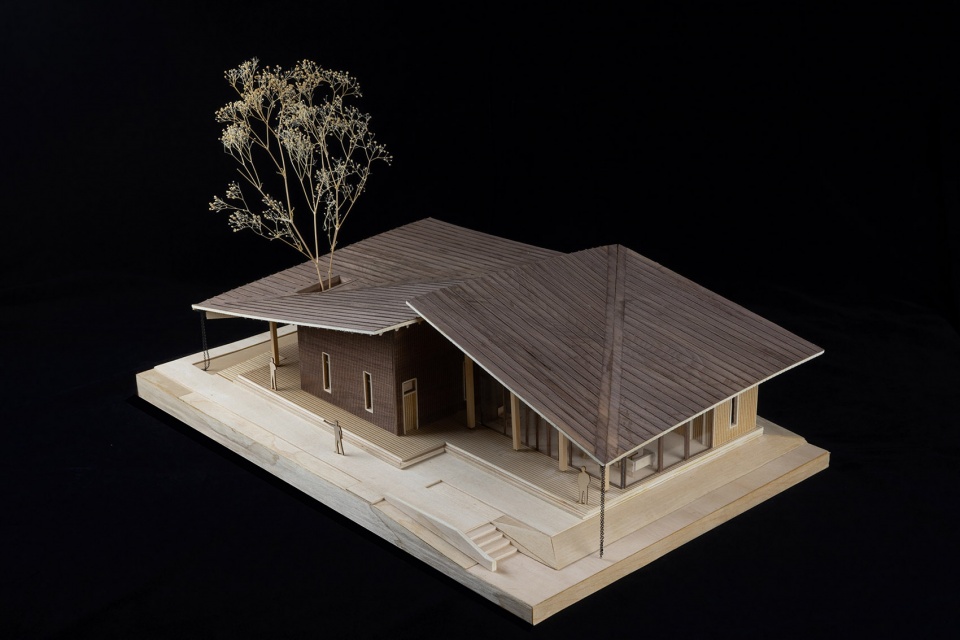
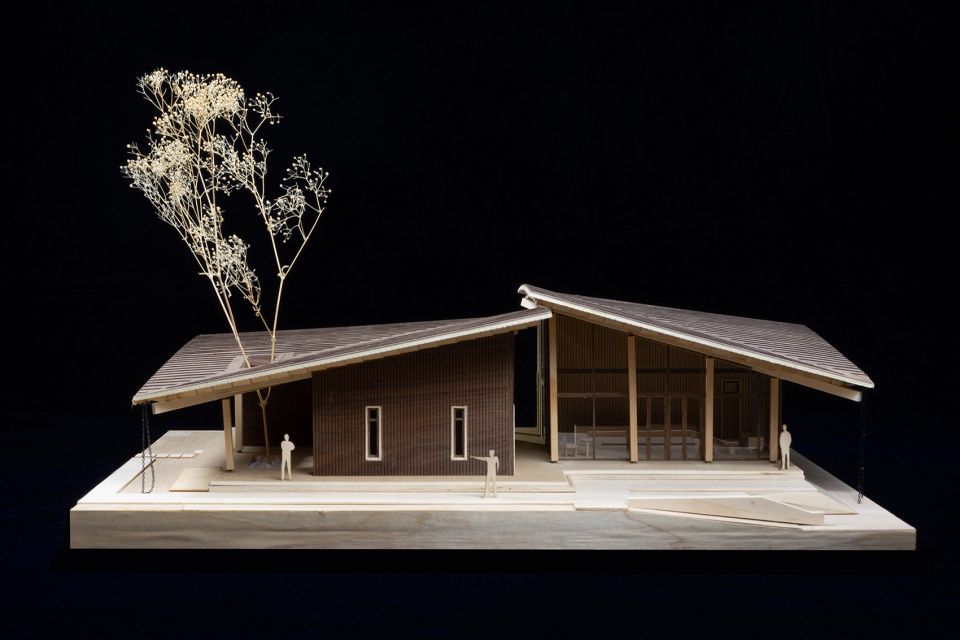
▼手工模型,Manual model
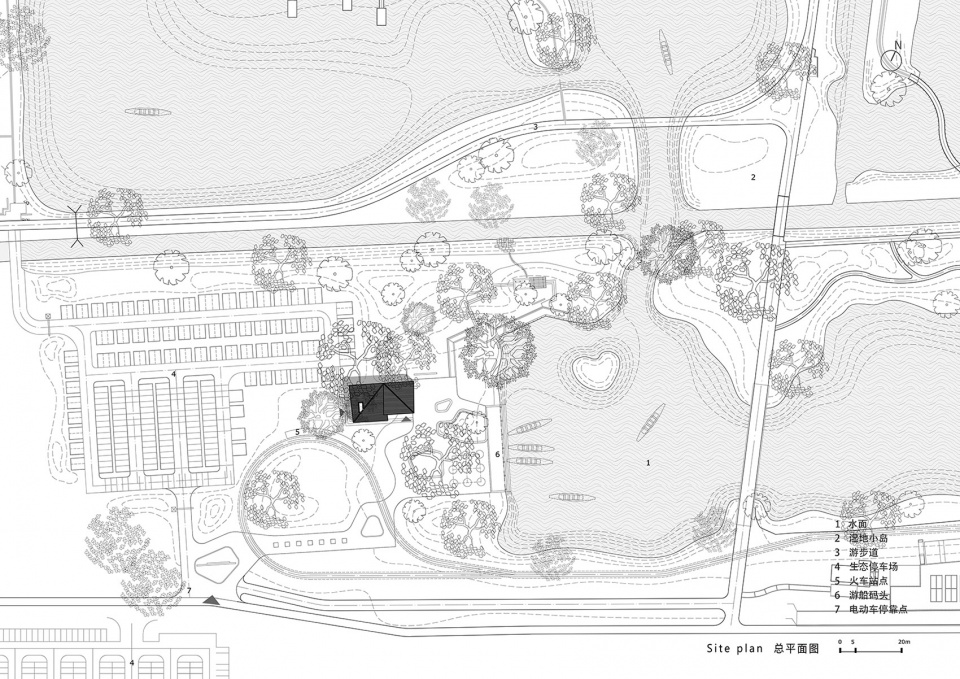
▼总平面图,Site plan
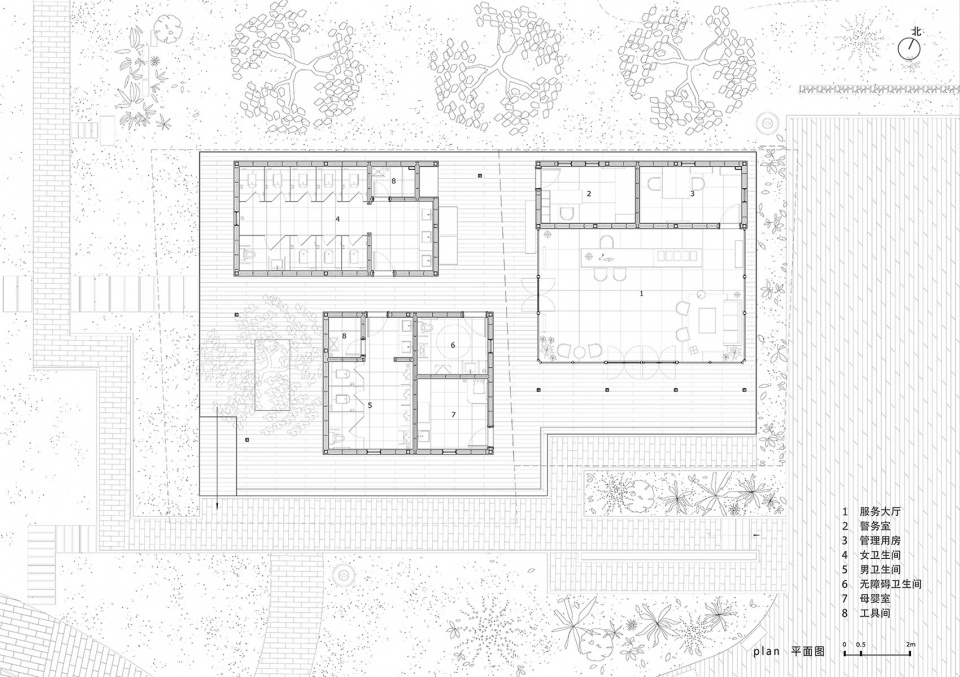
▼平面图,Floor plan
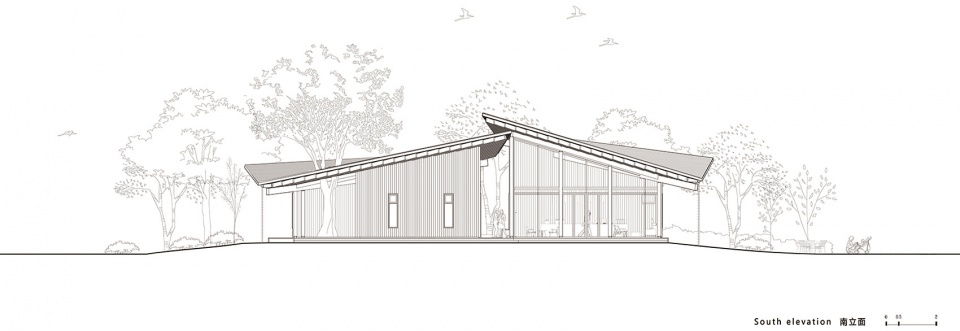
▼南立面图,South elevation view
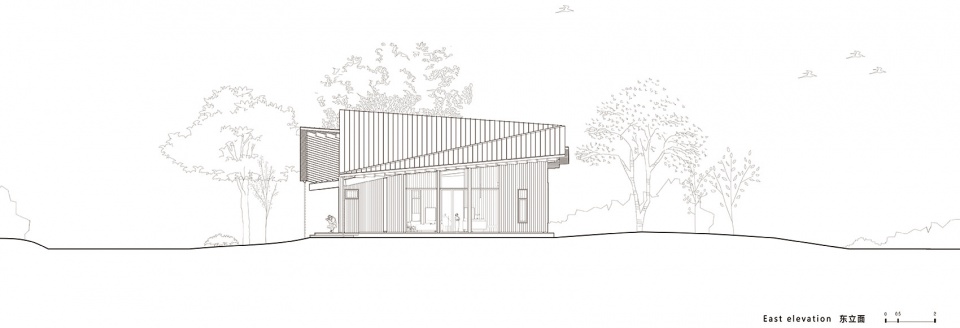
▼东立面图,East elevation view
项目名称:富阳·阳陂湖湿地公园南接待中心
项目地点:杭州市富阳区阳陂湖湿地公园
项目业主:杭州富春山居集团有限公司
施工单位:杭州中普建筑科技有限公司
设计单位:尌林建筑设计事务所
项目类型:配套接待类·公共建筑
设计时间:2020.7-2020.8
建造时间:2020.8-2020.10
设计单位:尌林建筑设计事务所
主持建筑师:陈林、刘东英
参与设计师:陈伊妮、王嘉欣、崔佳伟(实习)、黄伟斌(实习)
结构形式:钢木结构轻钢装配
建筑材料:花旗松胶合木、炭化木烧杉板、铝镁锰板、竹木地板、轻钢墙体、水磨石
建筑面积:300㎡
建筑摄影:嵒建筑-赵赛、赵奕龙
Project Name: Fuyang, Yangbei Lake Wetland Park North Reception Center
Project Location: Yangbei Lake Wetland Park, Fuyang,Hangzhou, Zhejiang Province
Project Owner: Hangzhou Fuchunshanju Group Co., Ltd
Construction Constractor: Hangzhou Zhongpu Construction Technology Group Co., Ltd
Design Agency: Shulin Architectural Design
Project Type: Supporting Reception, Public Building
Design Period: Jul. 2020 – Aug. 2020
Construction Period: Aug. 2020 – Oct. 2020
Design Agency: Shulin Architectural Design
Lead Architect: Lin Chen, Dongying Liu
Architectural design: Yini Chen, Jiaxing Wang, Jiawei Cui (Intern), Weibin Huang (Intern)
Structural Type: Steel-wood structure, lightweight assembly
Construction Materials: Douglas fir Laminated Timber, Burned fir, Al-Mg-Mn Alloy Sheeting, Bamboo and Wood Floor, Light Steel Wall, Terrazzo
Construction Area: 300㎡
Photography: Sai Zhao (Yan Architecture), Yilong Zhao