道家中心,台湾/建筑
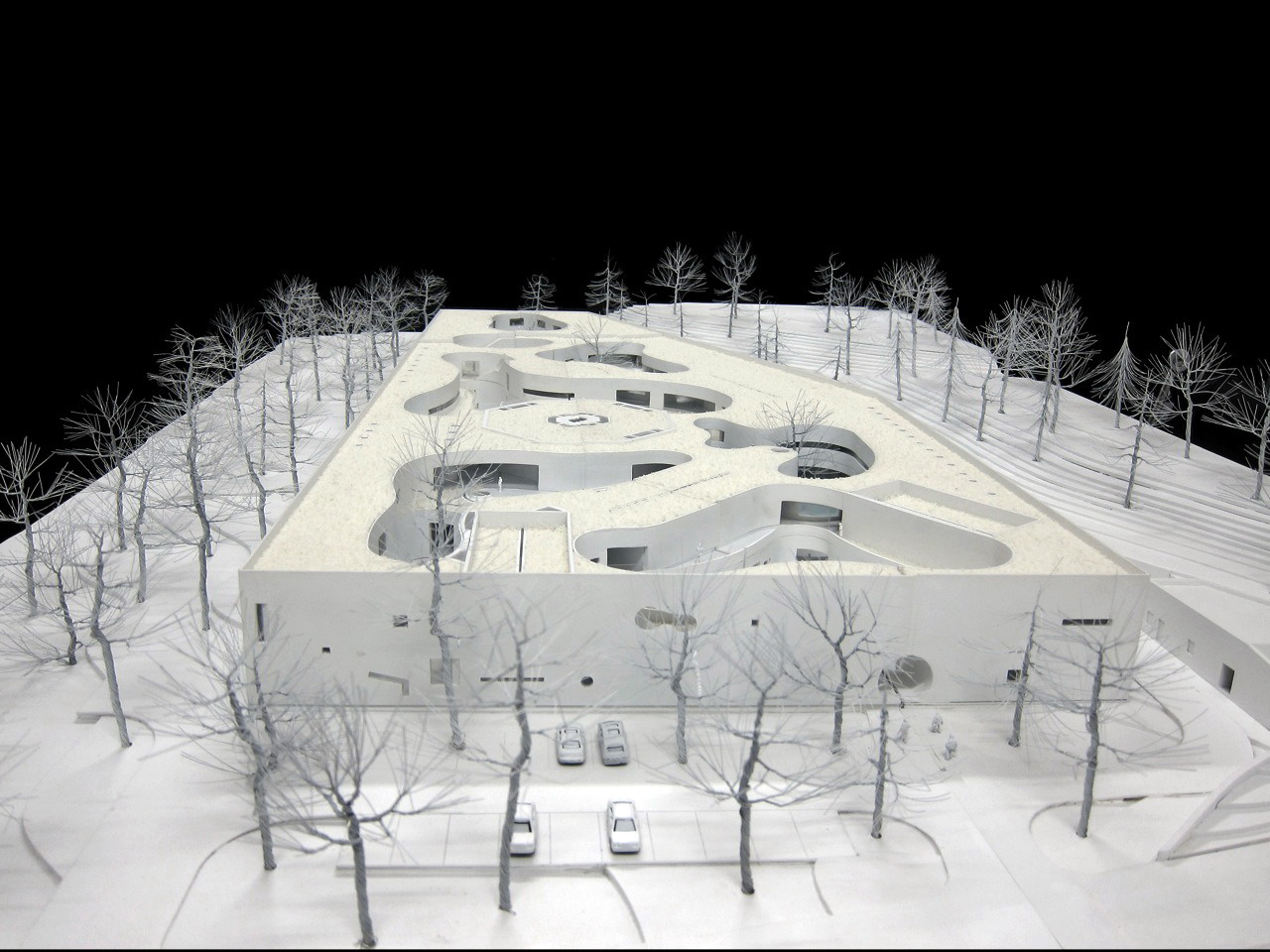
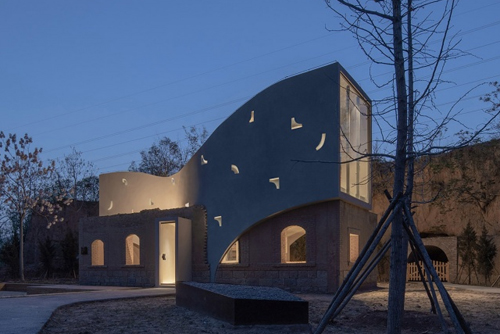
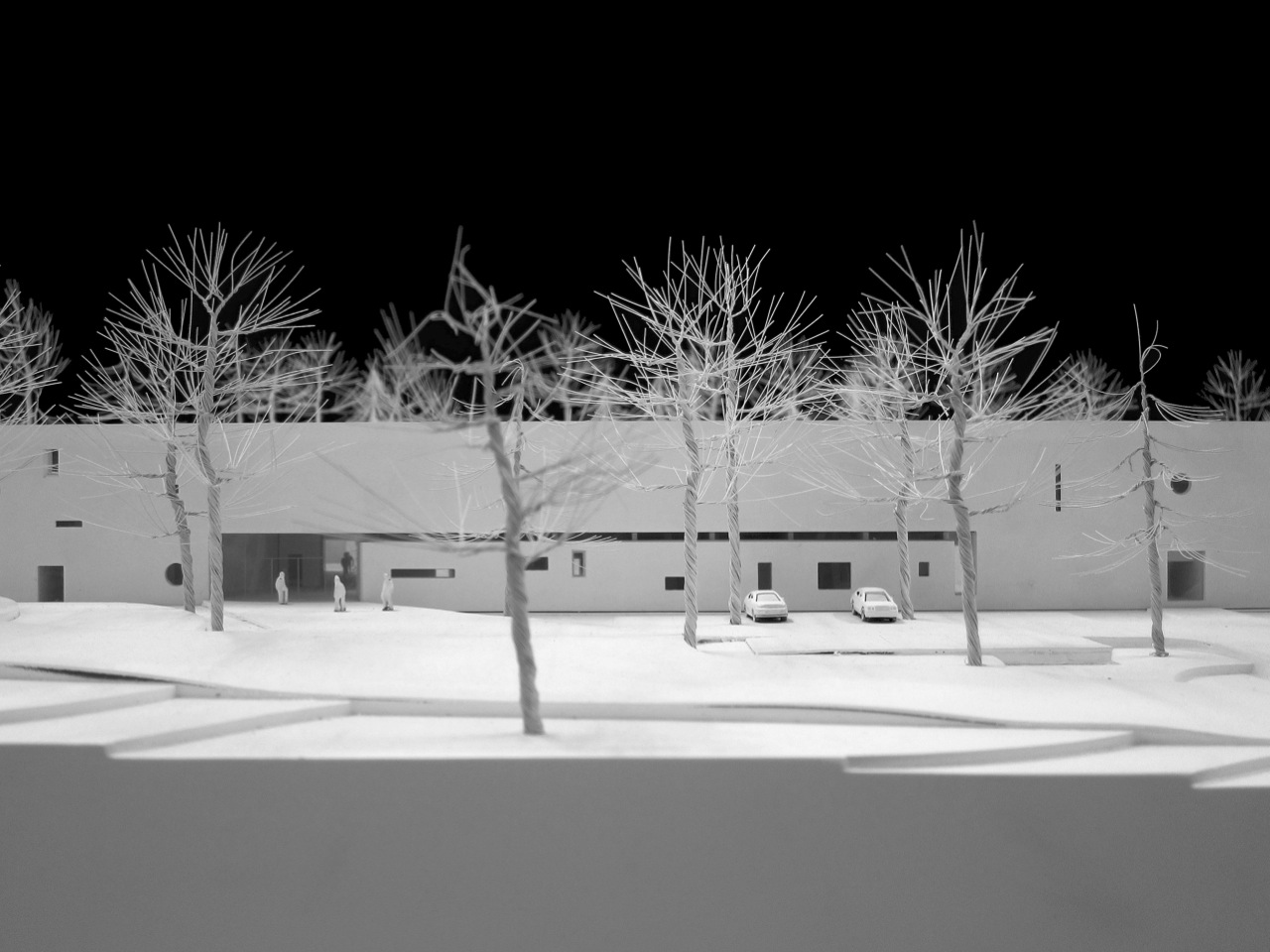
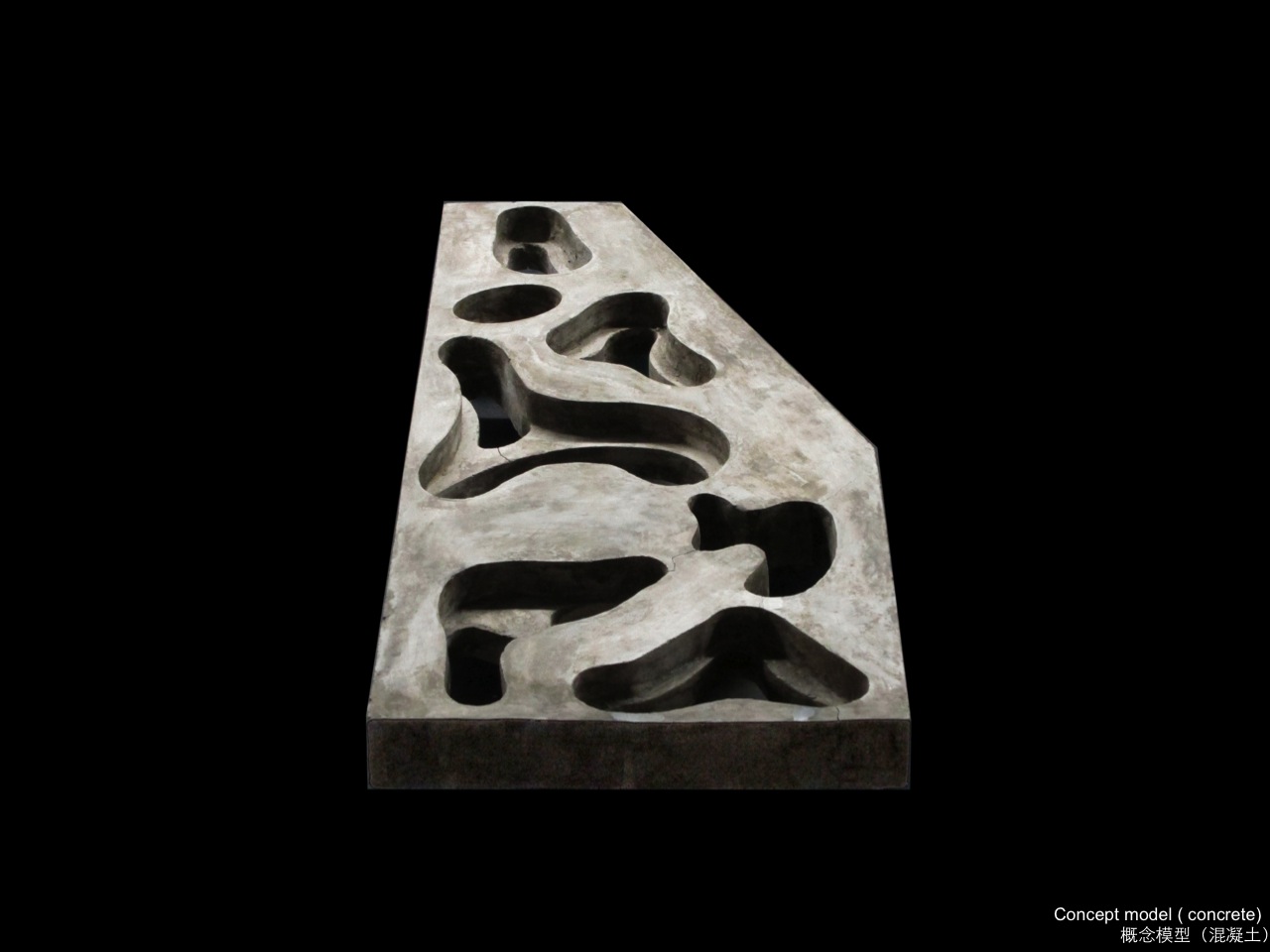
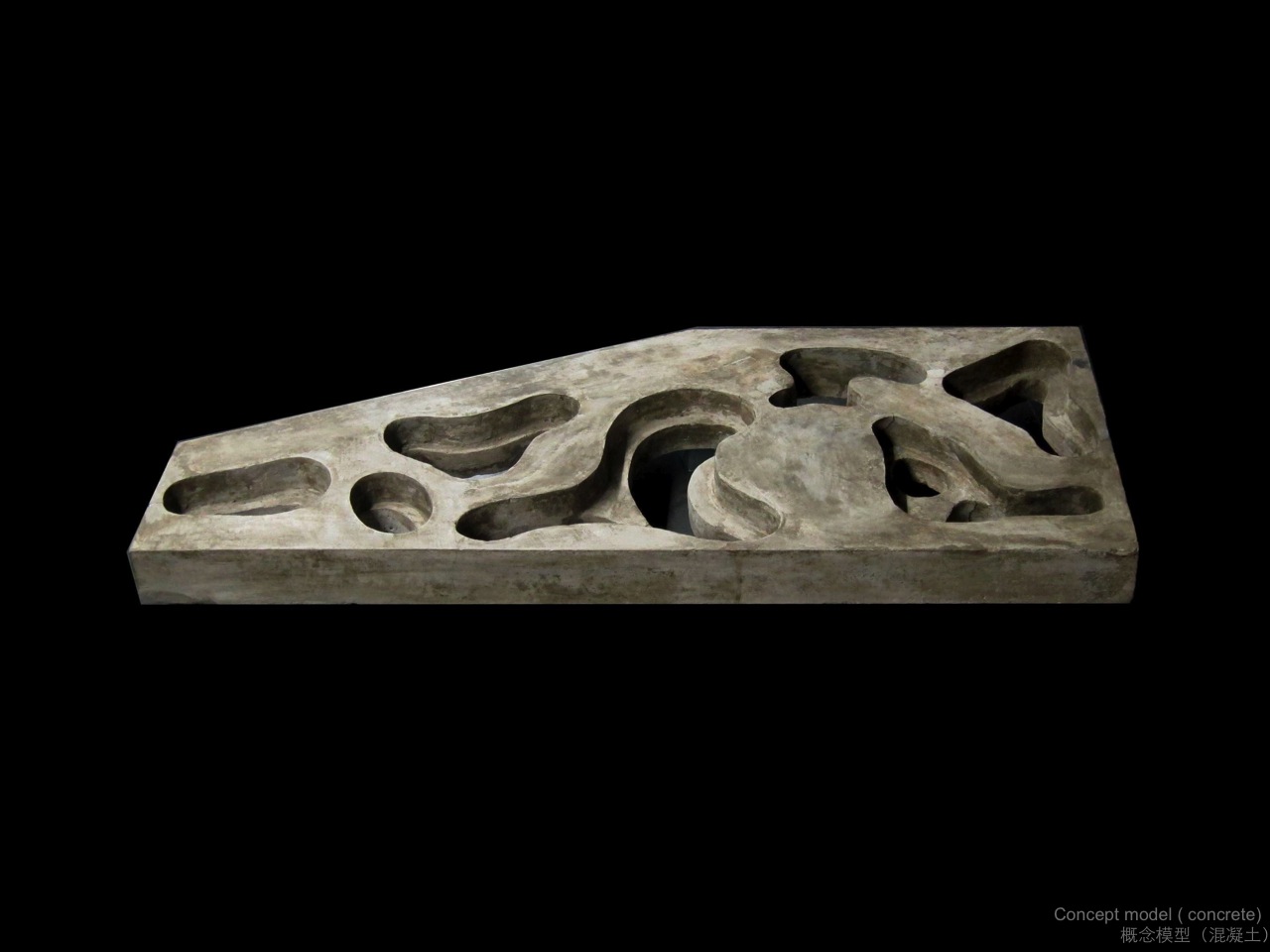
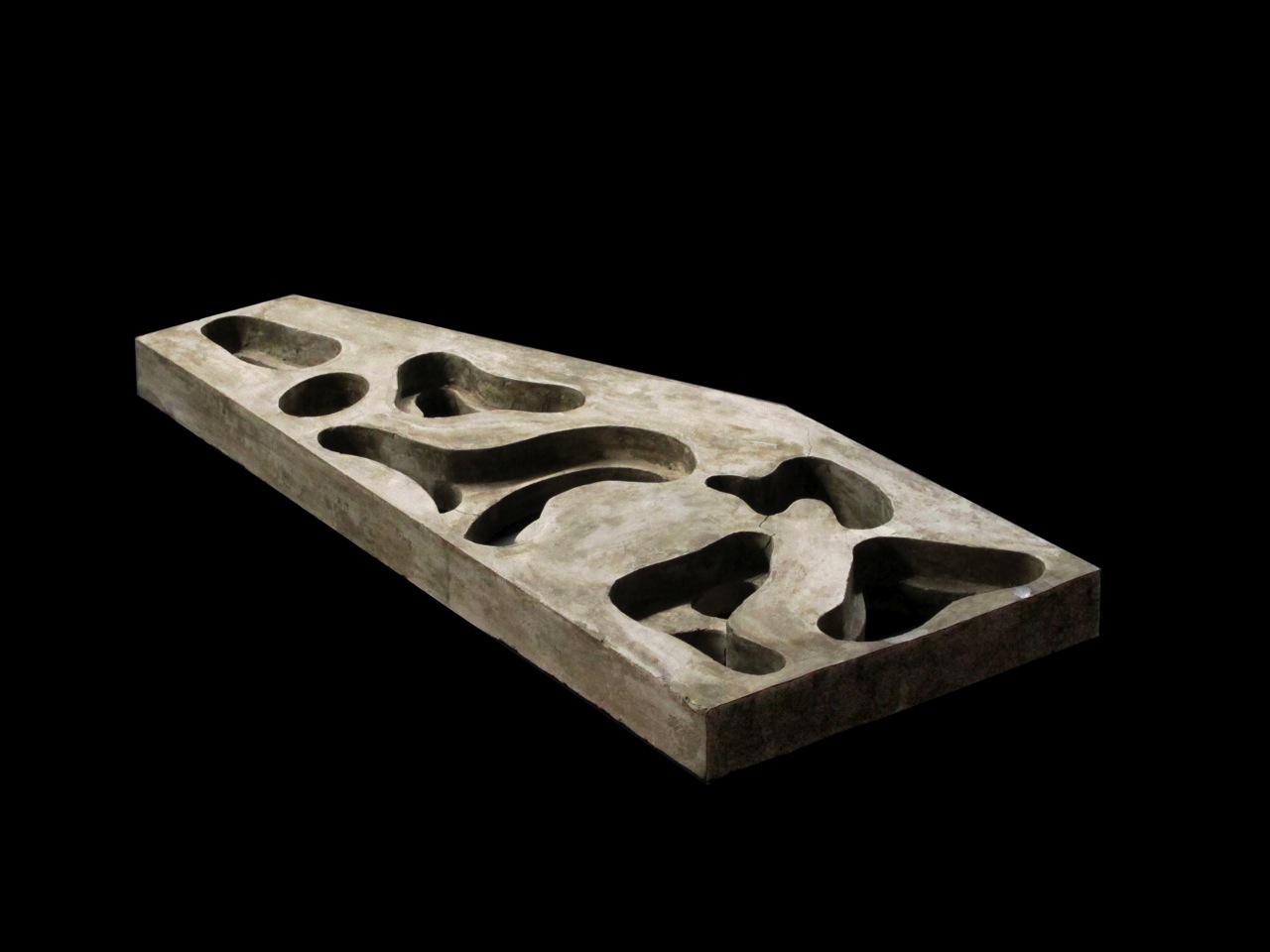
项目位于龙庆峡燕山山脉脚下,主要功能由道观及道家养生中心两部分组成。设计从道家“一”的思想出发将建筑视为一个浑然的整体,从老子的“凿户牖以为室,当其无”出发在整体上开凿 出庭院与空间来,此过程犹如一生万物。而庭院的形式产生则选择具有象形特征的古汉字“道”作为形式来源,通过水流冲刷获得一种具有偶发性的形式,这一实验性策略则体现了“无为”的思想,即顺其自然。建筑形体由基地形状生成,外表简肃而内部丰富,形成内向性的园林式建筑,可称之为“有内而无外”,与道家注重内在的理念相合。
The project is located at the foot of the Yanshan Mountains in Longqing Gorge, and its main functions are composed of Taoist temple and Taoist health center. The design starts from the Taoist "one" thought and regards the building as a complete whole. It starts from Laozi's "chiseling windows and doors as a room, when there is nothing" to carve out the courtyard and space on the whole. This process is like everything in life. The form of the courtyard is generated by selecting the ancient Chinese character "Tao" with pictographic characteristics as the form source, and obtaining an occasional form through water scouring. This experimental strategy reflects the idea of "inaction", that is, let it be. The shape of the building is generated from the shape of the base. The exterior is simple and the interior is rich. It forms an introverted garden-style building, which can be called "with the inside but without the outside", which is consistent with the Taoist concept of focusing on the inside.
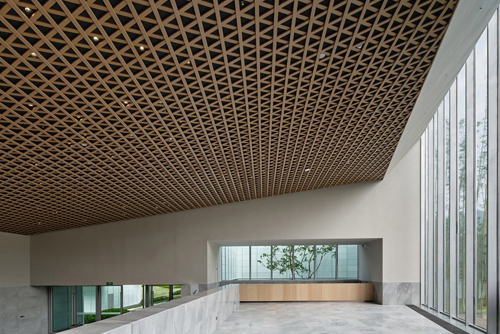
建造方式采用现浇清水混凝土,结构与建筑合而为一,以塑造纯粹抽象的空间感和建筑的整体感。屋面设置太阳能和屋顶绿化,热源采用整个基地范围内的地源热泵系统,亦有采集天地之能量的含义。
The construction method is cast-in-place fair-faced concrete, and the structure and building are integrated to create a pure abstract sense of space and the overall sense of the building. The roof is equipped with solar energy and roof greening, and the heat source is the ground-source heat pump system within the whole base, which also has the meaning of collecting the energy of heaven and earth.
建筑师尝试使这一道教建筑成为道家哲学思想中抽象概念的“物”的载体,作为一种新的形式策略,不同于传统符号式的中国宗教建筑形式(尤其是剥离了传统建造基础而用现代技术模仿的形式空壳)。
Architects try to make this Taoist architecture the carrier of the abstract concept "thing" in Taoist philosophy, as a new form strategy, different from the traditional symbolic form of Chinese religious architecture (especially the form shell that peels off the traditional construction foundation and uses modern technology to imitate).
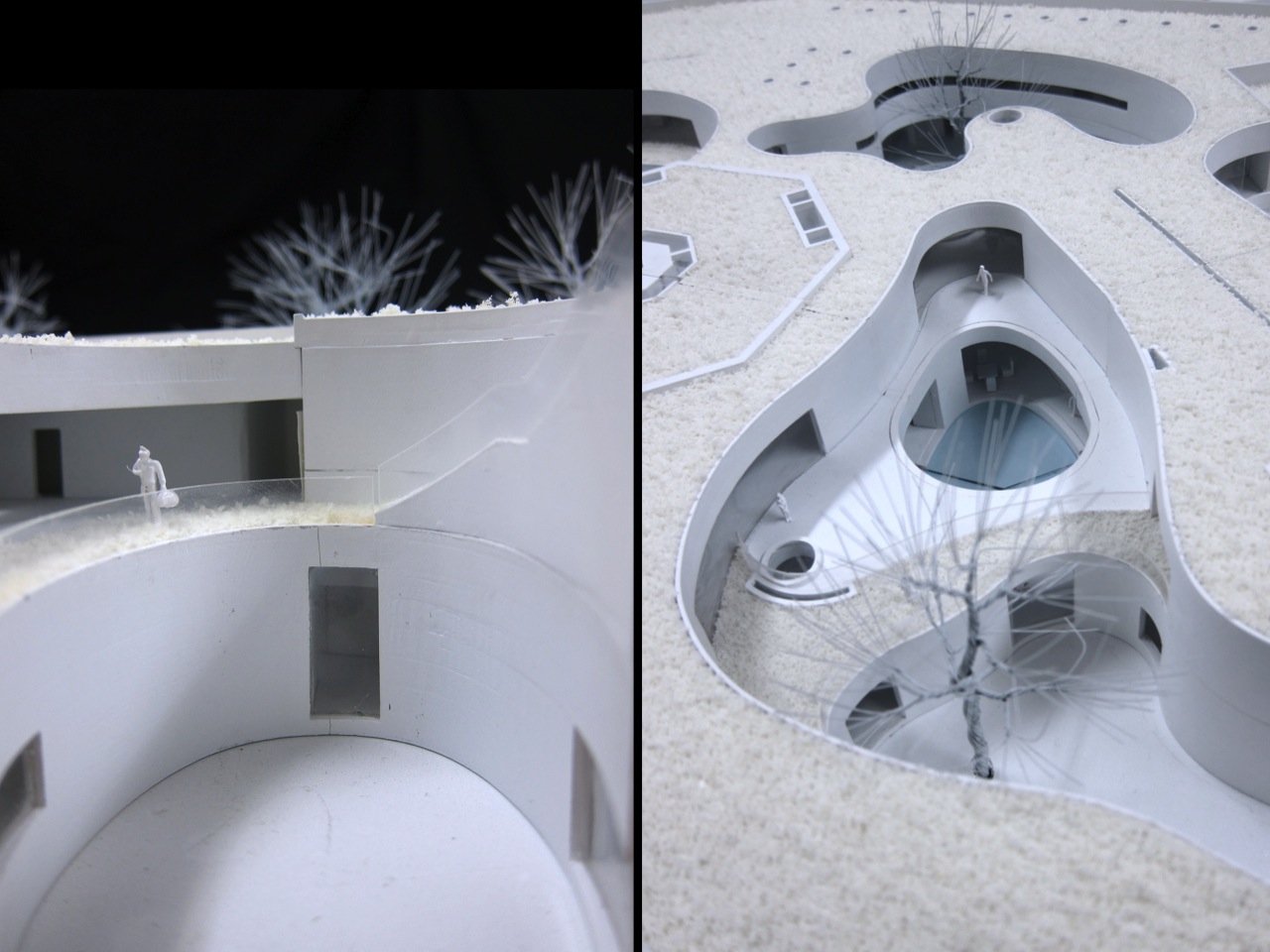
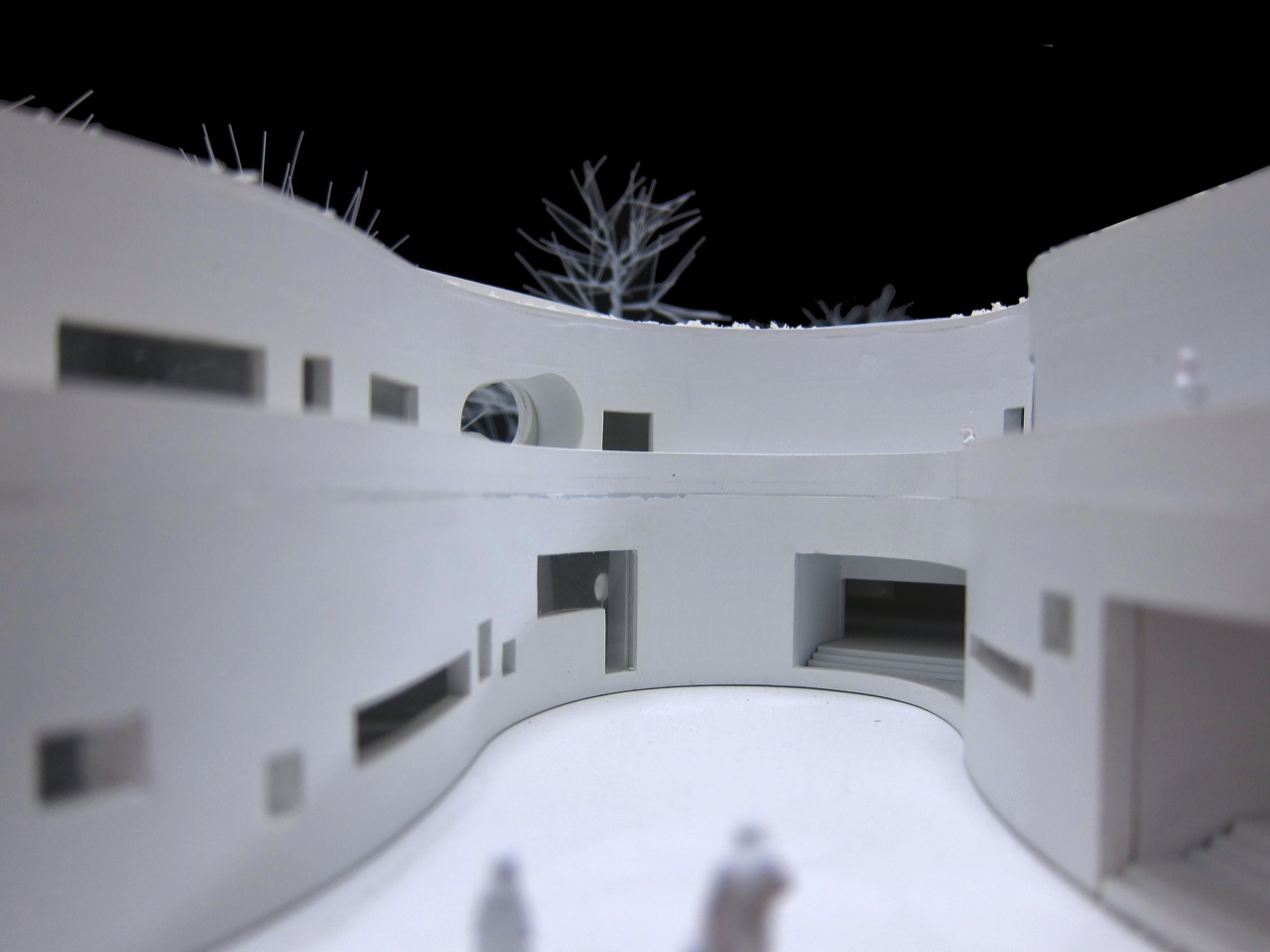
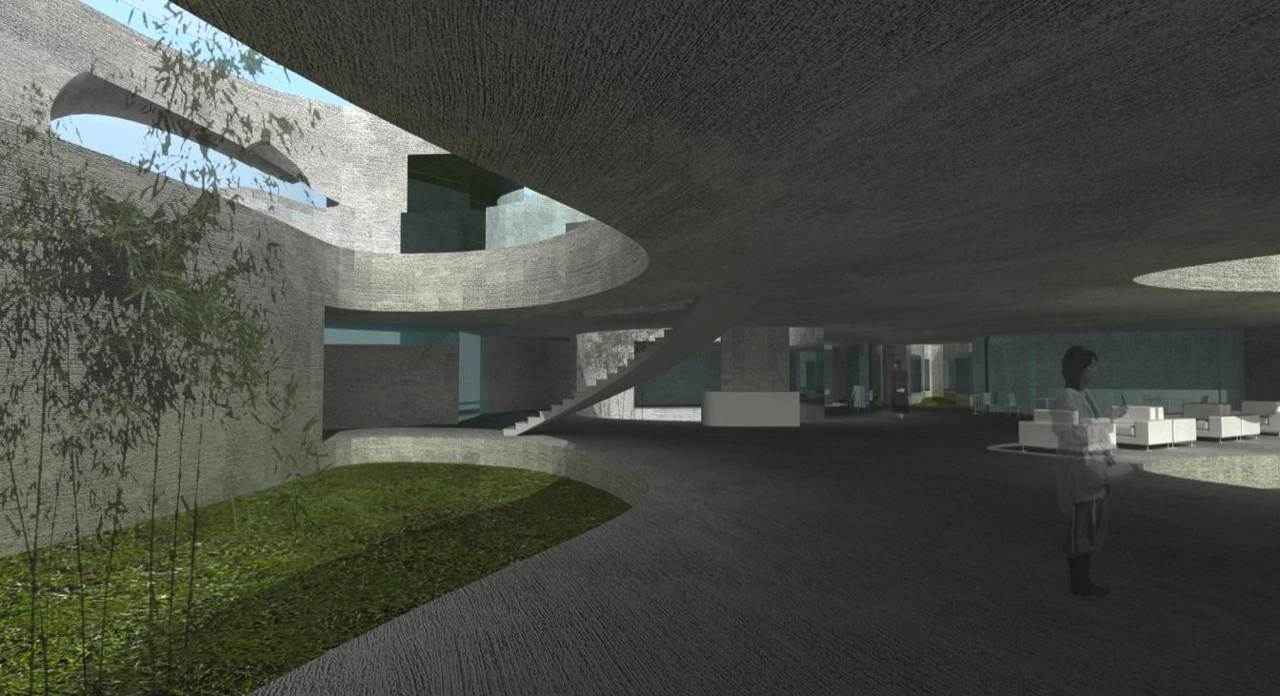
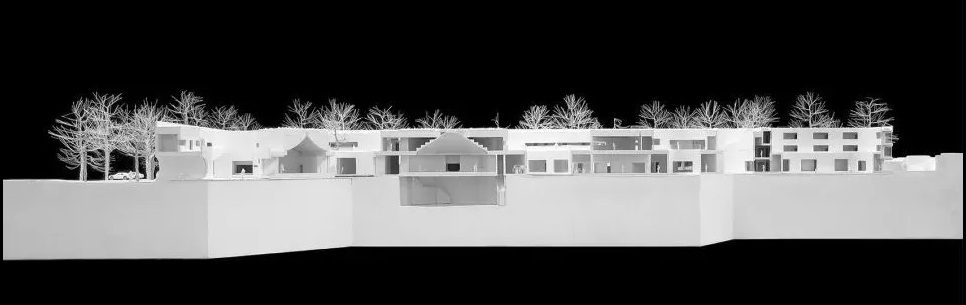
道家中心是个宗教建筑,营造出具有内省性质的空间是自然而然的,内向式、包裹感、光的幽明变化、都是为了实现这种空间属性。项目在北京延庆,也受到附近从山体上开凿而成的古崖居的启发,道家中心整个建筑个浑然的整体,空间也如从一个实体上开凿出来的。
The Taoist Center is a religious building, and it is natural to create a space with introspective nature. Introversion, envelopment, and the dim change of light are all designed to achieve this spatial attribute. In Yanqing, Beijing, the project is also inspired by the ancient cliff dwellings cut from the mountains nearby. The whole building of the Taoist Center is a whole, and the space is also cut from a solid.
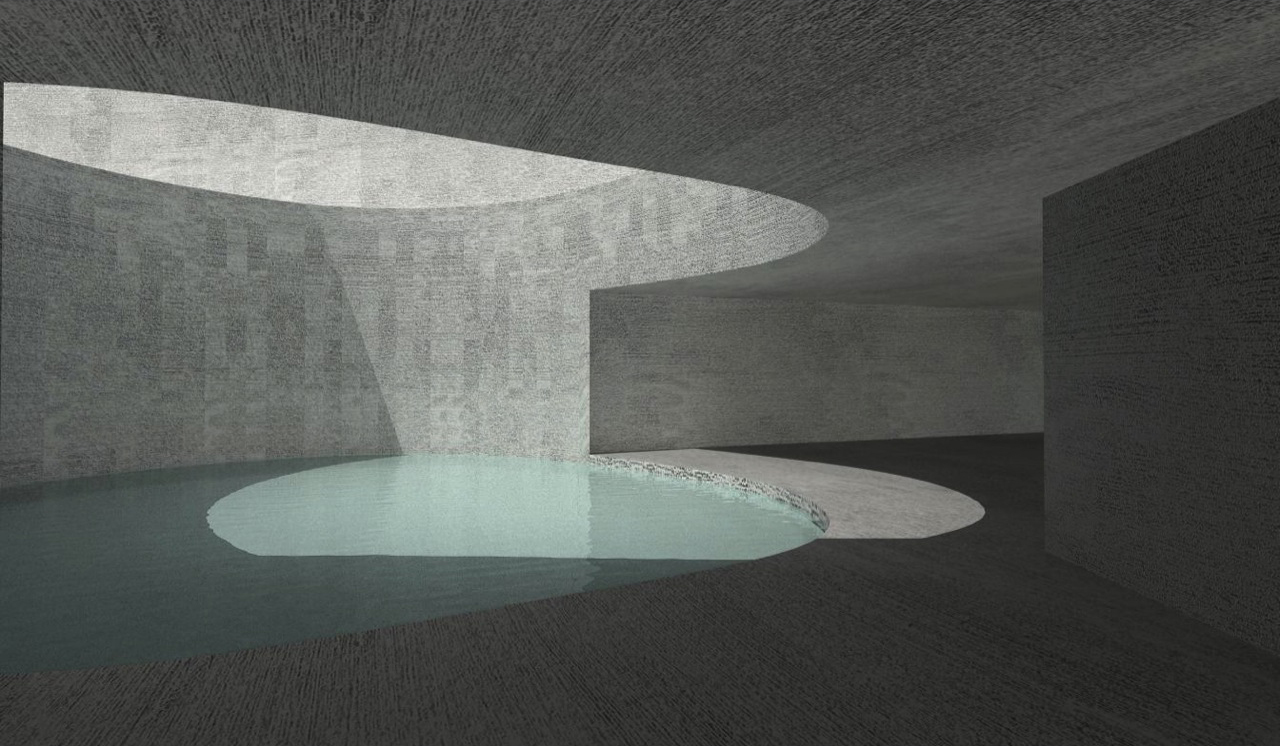
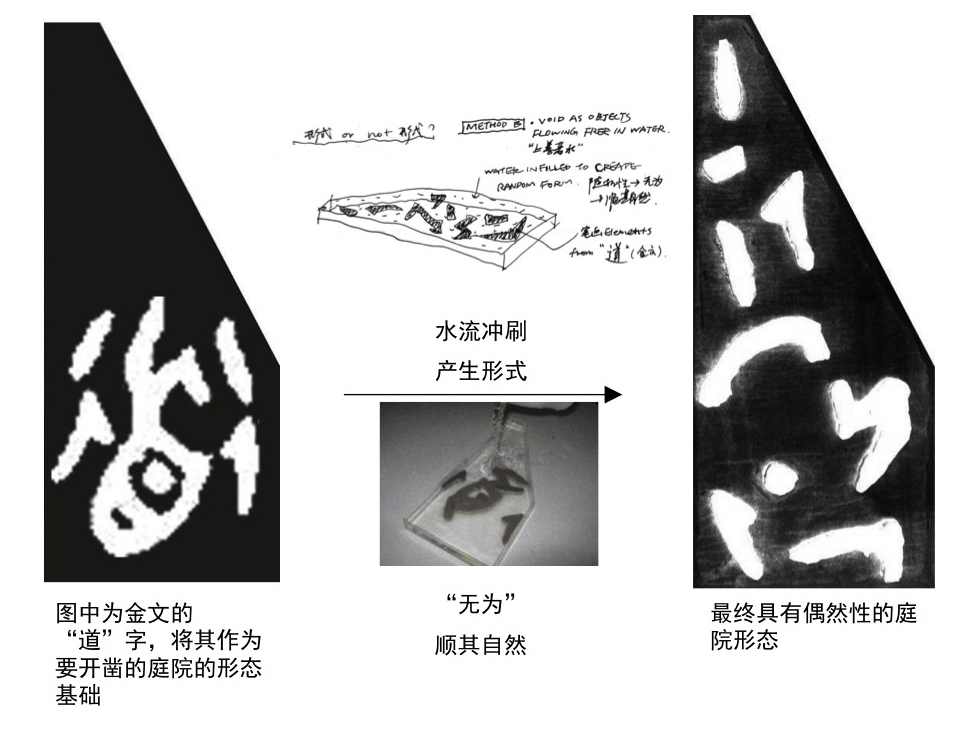
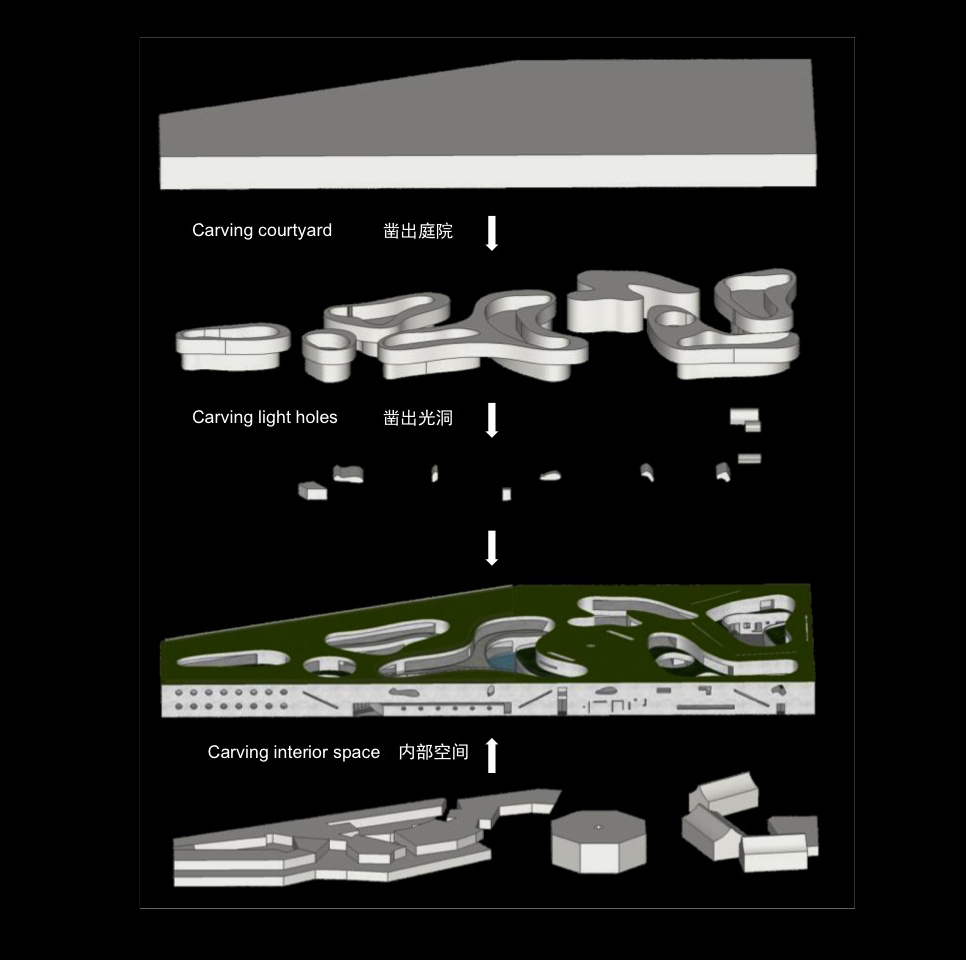
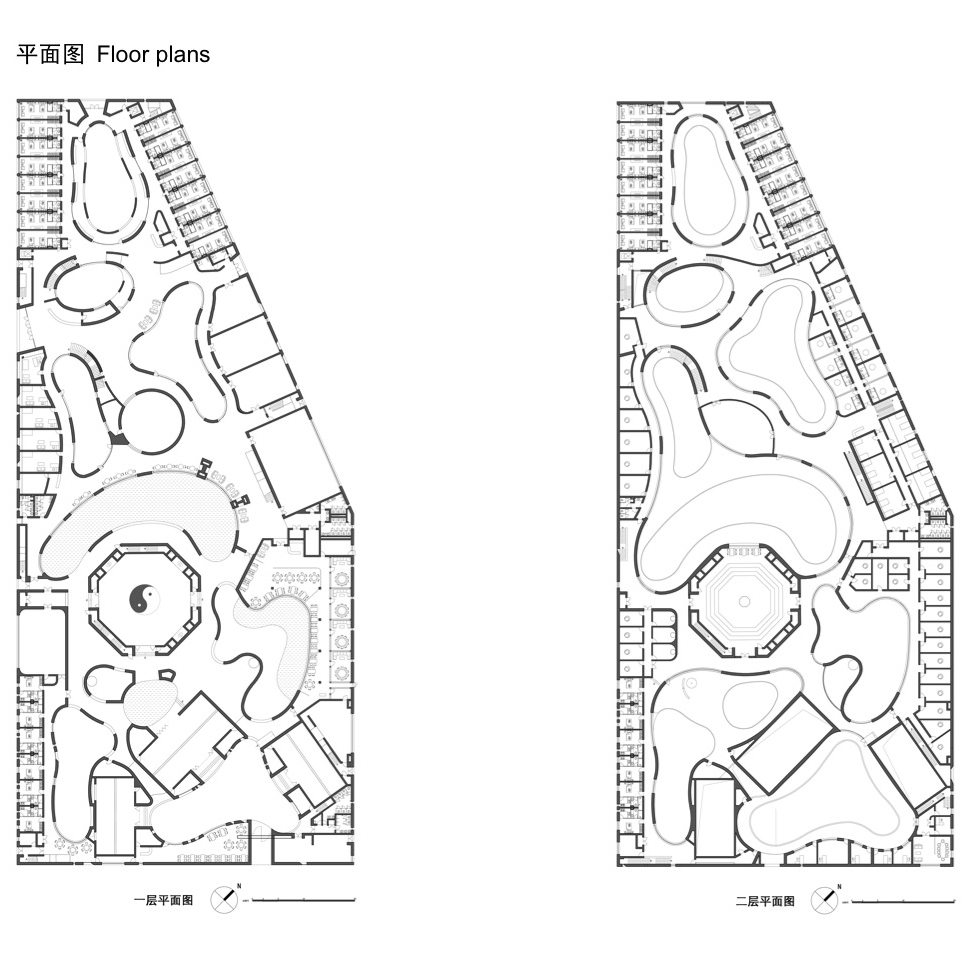
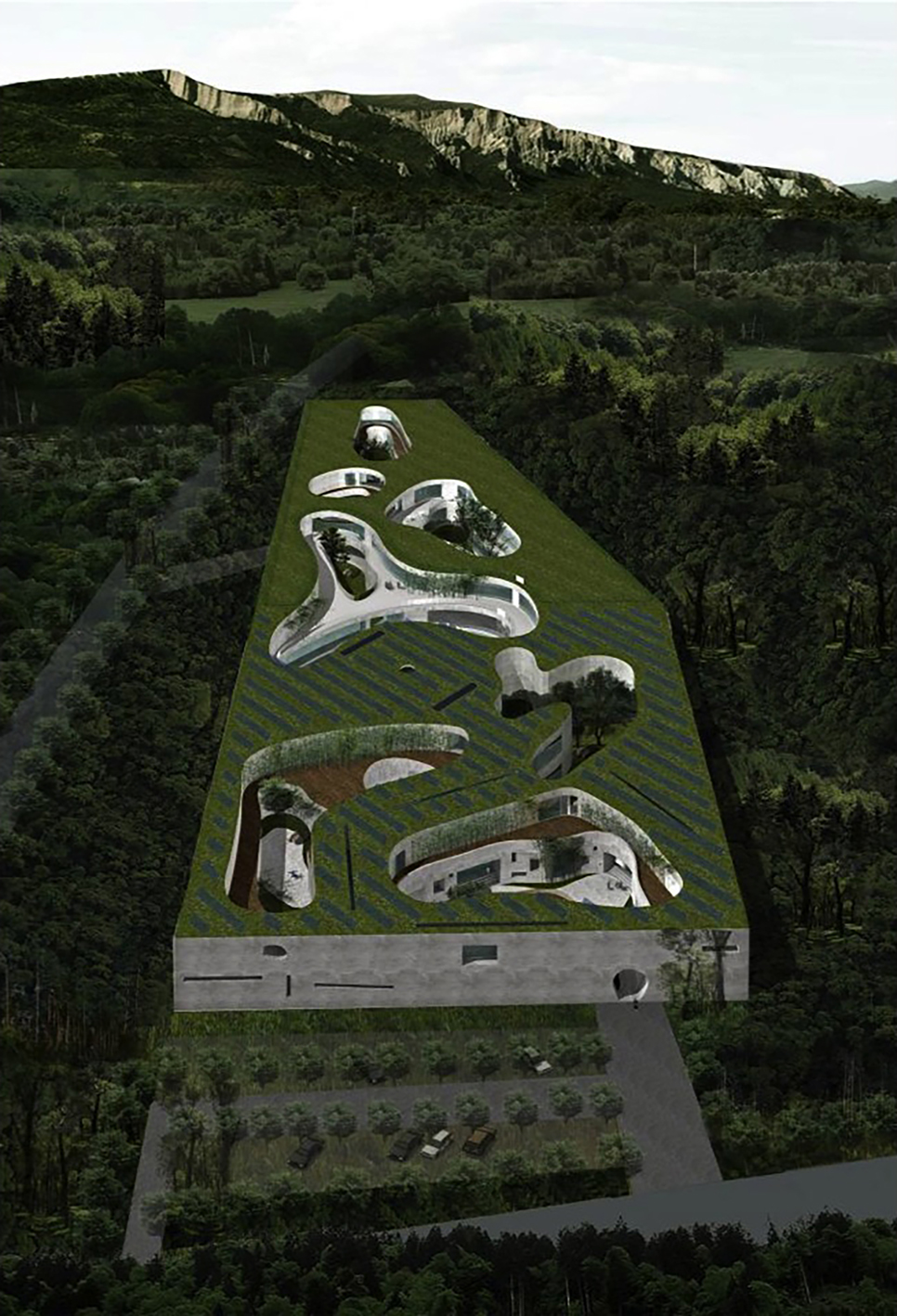
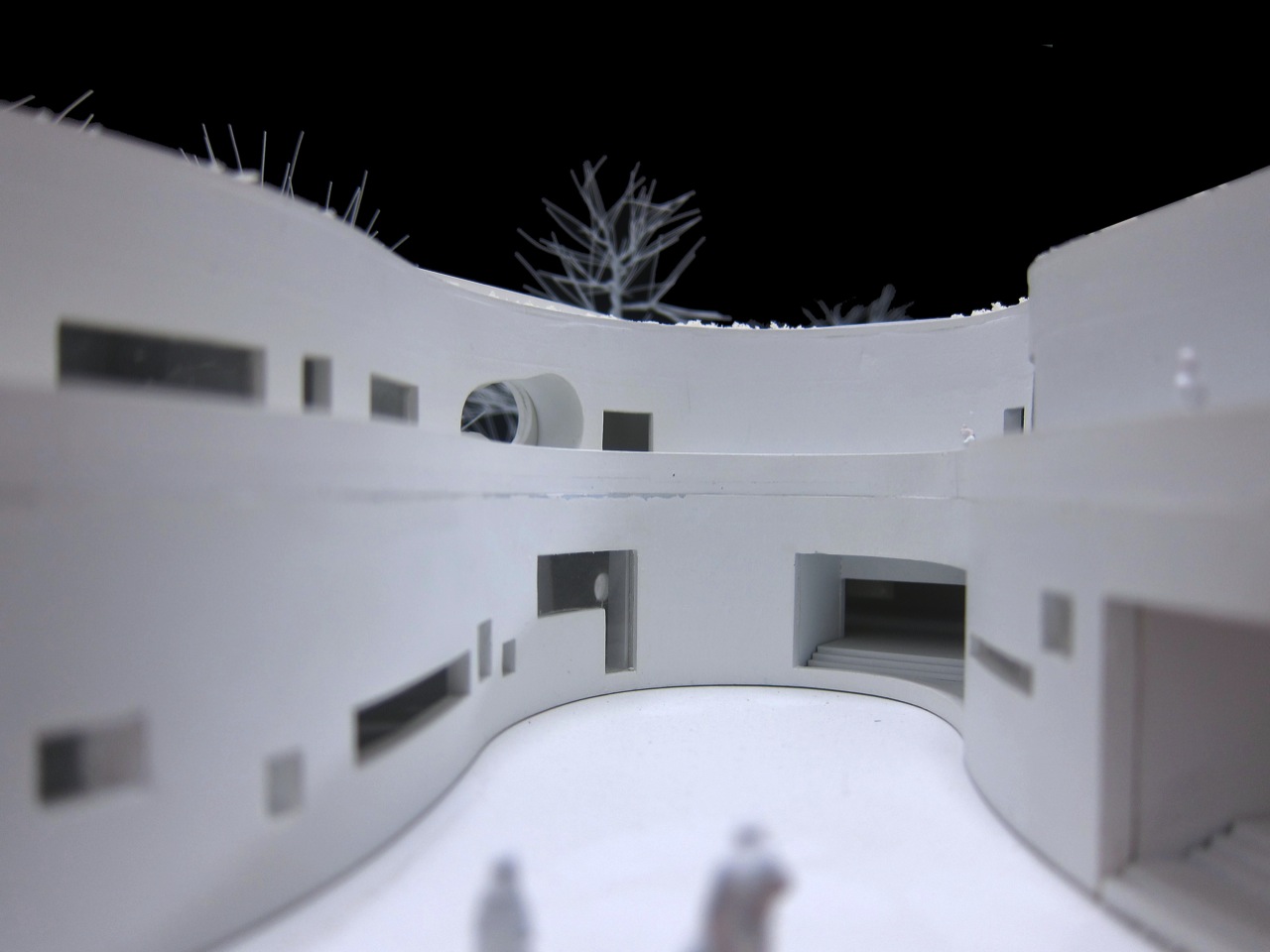
▼道家中心概念草图,Conceptual sketch of Taoist Center
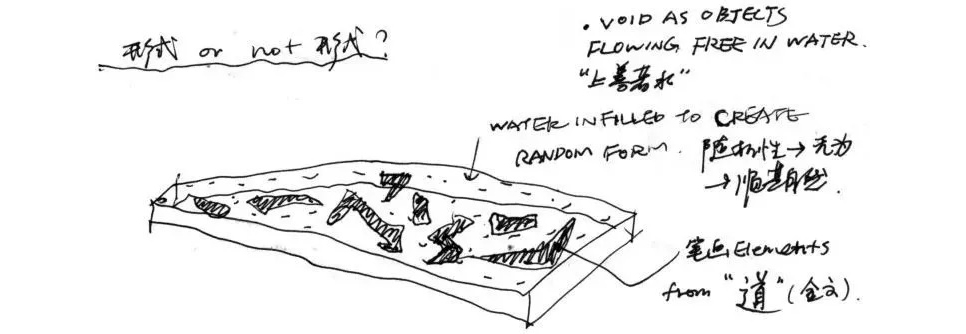
▼道家中心概念草图2,Conceptual sketch of Taoist Center 2
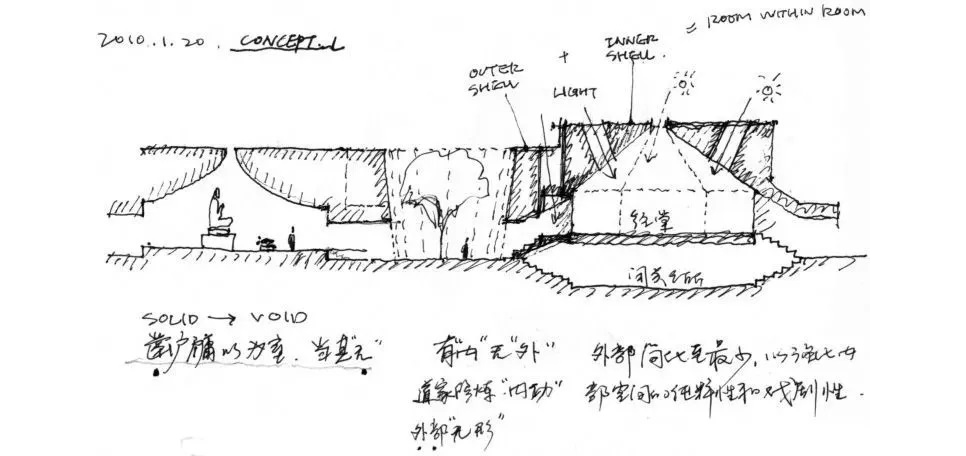
▼概念模型 (迹·建筑事务所——TAO),Conceptual model (Trace · Architecture Firm - TAO)
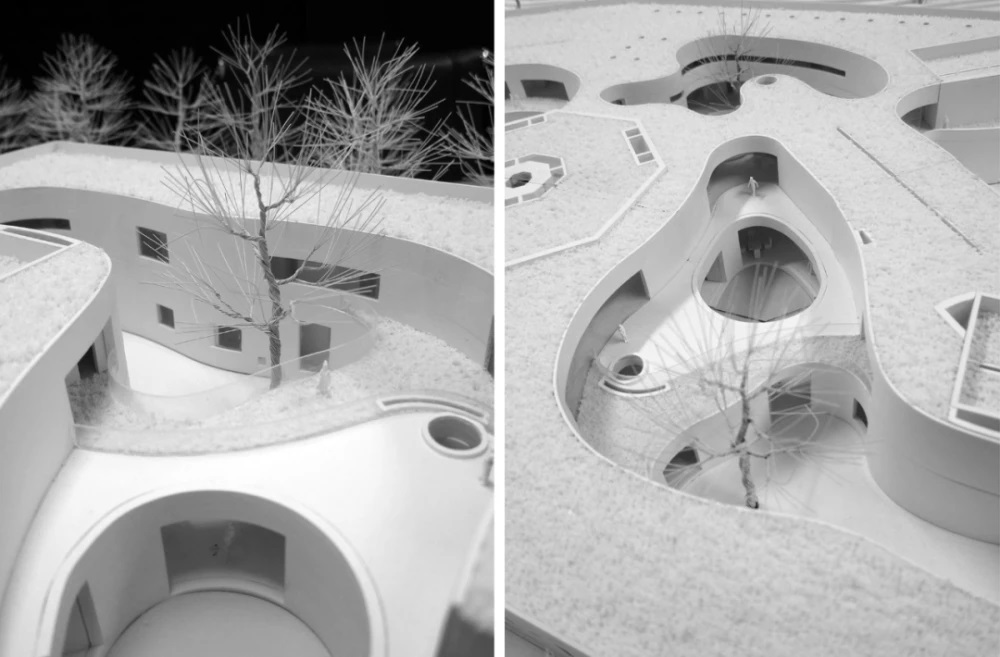
▼1:150手工模型 (迹·建筑事务所——TAO),1:150 manual model (Trace · Architecture Firm - TAO)
项目名称:道家中心
设计师:华黎
设计方:TAO迹•建筑事务所
位置: 北京
开工:2010
分类:文化建筑
建筑面积: 12000平方米
Project name: The Taoist center
Designer: Hua Li
Designer: TAO Trace • Architecture Firm
Location: Beijing
Commencement: 2010
Classification: cultural buildings
Building area: 12000 square meters