街亩城市,成都/建筑
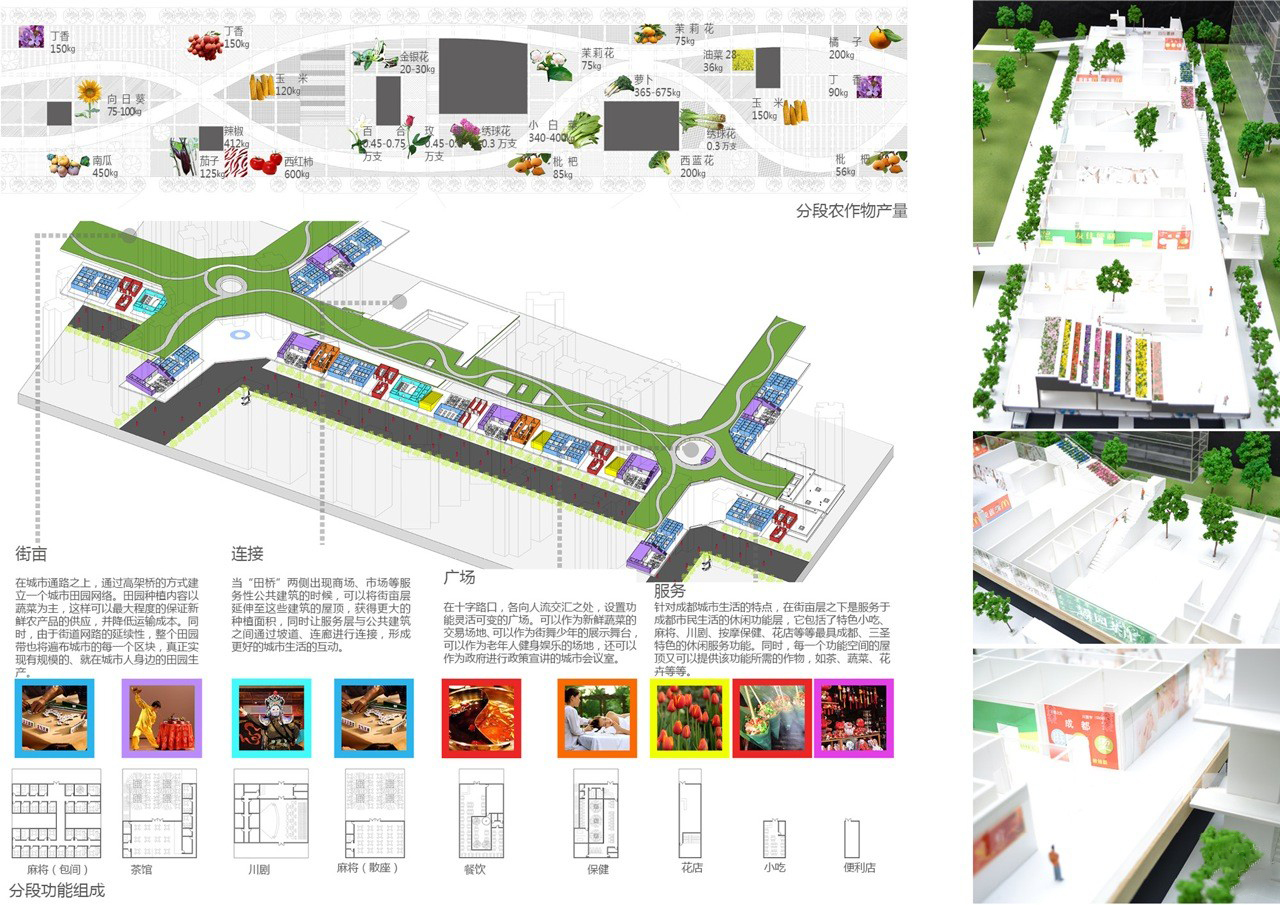
街亩城市是TAO事务所回应2011年成都双年展“田园城市”主题,针对成都东部新城三圣片区提出的一种全新的城市设计策略。利用现有街道,一座立体分层的,混合了农业、休闲、商业和循环设施等诸多功能的“田桥”体系在城市中延伸、编织,形成了新的城市基础设施和公共空间界面。街亩城市将农业等田园要素积极引入城市内部并借此激发与之相关的服务业和城市生活。它以就近、混合、自治为核心理念,将从根本上改变现行土地开发机制导致的高密度城市公共生活过于单一的现状。
Street-mu city is a brand new urban design strategy proposed by TAO in response to the theme of "idyllic city" at the 2011 Chengdu Biennale. Utilizing the existing streets, a three-dimensional and layered "Tianqiao" system with many functions such as agriculture, leisure, commerce and recycling facilities is extended and woven in the city, forming a new urban infrastructure and public space interface. Street-mu cities actively introduce rural elements such as agriculture into the interior of the city and stimulate the related service industry and urban life. It takes proximity, mixing and autonomy as its core concept, and will fundamentally change the current situation that the high-density urban public life is too single caused by the current land development mechanism.
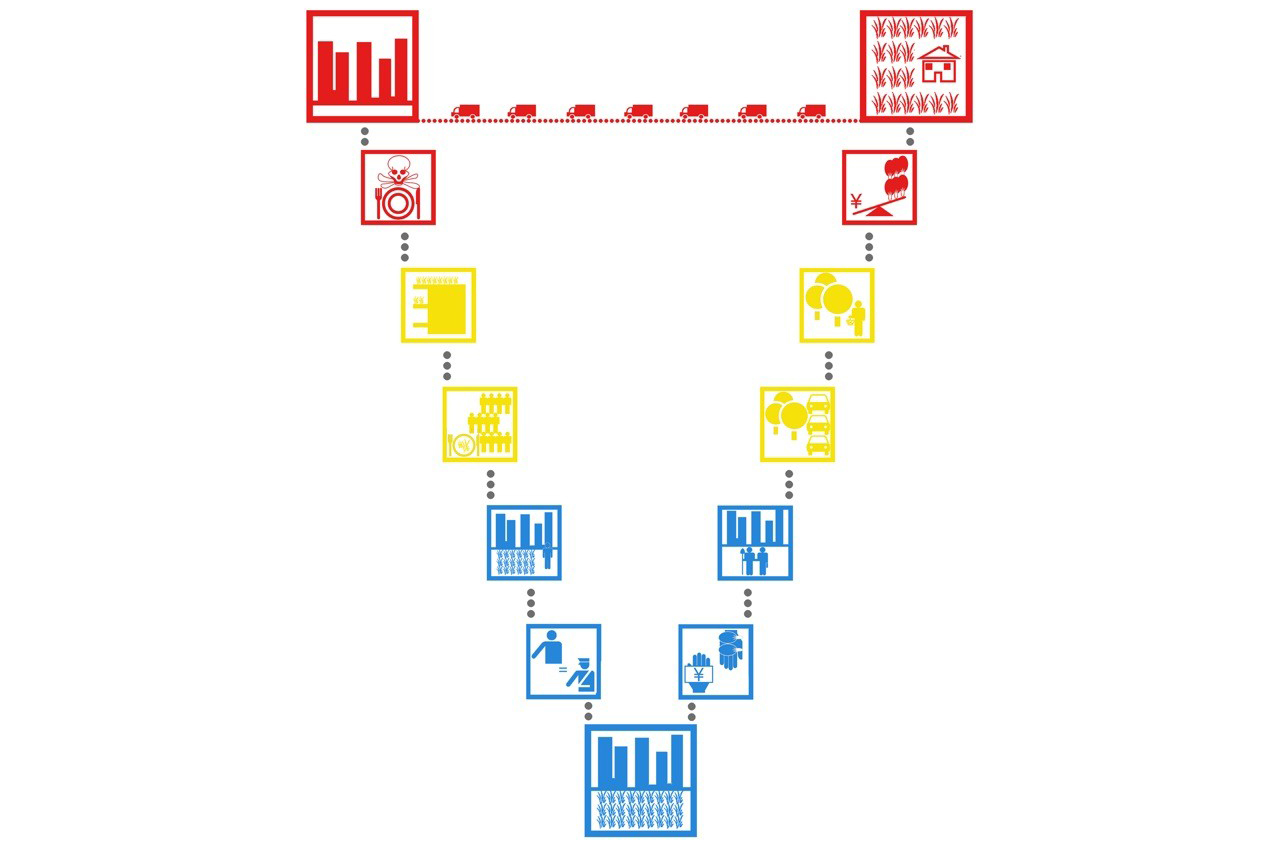
街亩城市的提出,针对的是成都东部新城三圣区(也是现在很多中国城市普遍存在的)城市过于单一而缺乏活力的问题。具体体现在:由目前以利益最大化为驱动的城市土地开发机制导致的空间类型同质化;公共空间和商业服务空间的缺乏导致城市生活的单调;而过高的居住密度和公共空间的缺失又必然导致大量出行带来的交通和污染问题。
The proposal of "street mu city" is aimed at the problem that the city is too single and lacks vitality in Sansheng District, a new city in the east of Chengdu (which is also common in many Chinese cities now). It is embodied in the following aspects: the homogenization of space types caused by the current urban land development mechanism driven by the maximization of interests; The lack of public space and commercial service space leads to the monotony of urban life; However, the high residential density and the lack of public space will inevitably lead to traffic and pollution problems caused by a large number of trips.
TAO的工作开始于对成都三圣片区的调研,从实地调研建筑类型与市民生活,到各种讯息的搜索整理。面对这样一片以居住建筑为主要建筑类型、并且建筑密度极高的城区,几乎每个人的第一反应都会是:在这样一种几乎没有空地的城区,建设田园城市真的还有可能么?经过对“田园城市”相关的各种建筑理论的整理,我们开始寻求答案。
TAO's work began with the investigation of Sansheng District in Chengdu, from the field investigation of building types and civil life to the search and sorting of various information. Facing such an urban area with residential buildings as the main building type and high building density, almost everyone's first reaction will be: Is it really possible to build an idyllic city in such an urban area with almost no vacant land? After sorting out various architectural theories related to "idyllic city", we began to seek answers.
田园城市的意义显然不能仅从形态、景观等表象因素来思考,它既不应仅仅是一种视觉上的城市绿化,亦不应简化为一种田园风情的异地体验。现代田园城市应当根植于此时此地的城市,此时此地的中国,寻求一种真正可以与现有城市融为一体的田园经济模式,通过一种新的机制的建立,自内而外地促发城市的活力。 正如当年霍华德提出田园城市其实是提出了一种社会组织和分配的模式,其具体的城市规模、格局、形态和尺度则是为了使这种模式行之有效。
Obviously, the significance of an idyllic city cannot be considered only from the form, landscape and other visual factors. It should not be just a visual urban greening, nor should it be simplified as an idyllic exotic experience. Modern garden cities should be rooted in the cities at this time and here. China at this time and here should seek a real garden economic model that can be integrated with the existing cities. Through the establishment of a new mechanism, it can promote the vitality of the city from the inside out. Just as Howard put forward a model of social organization and distribution when he proposed the garden city, its specific urban scale, pattern, form and scale are to make this model effective.
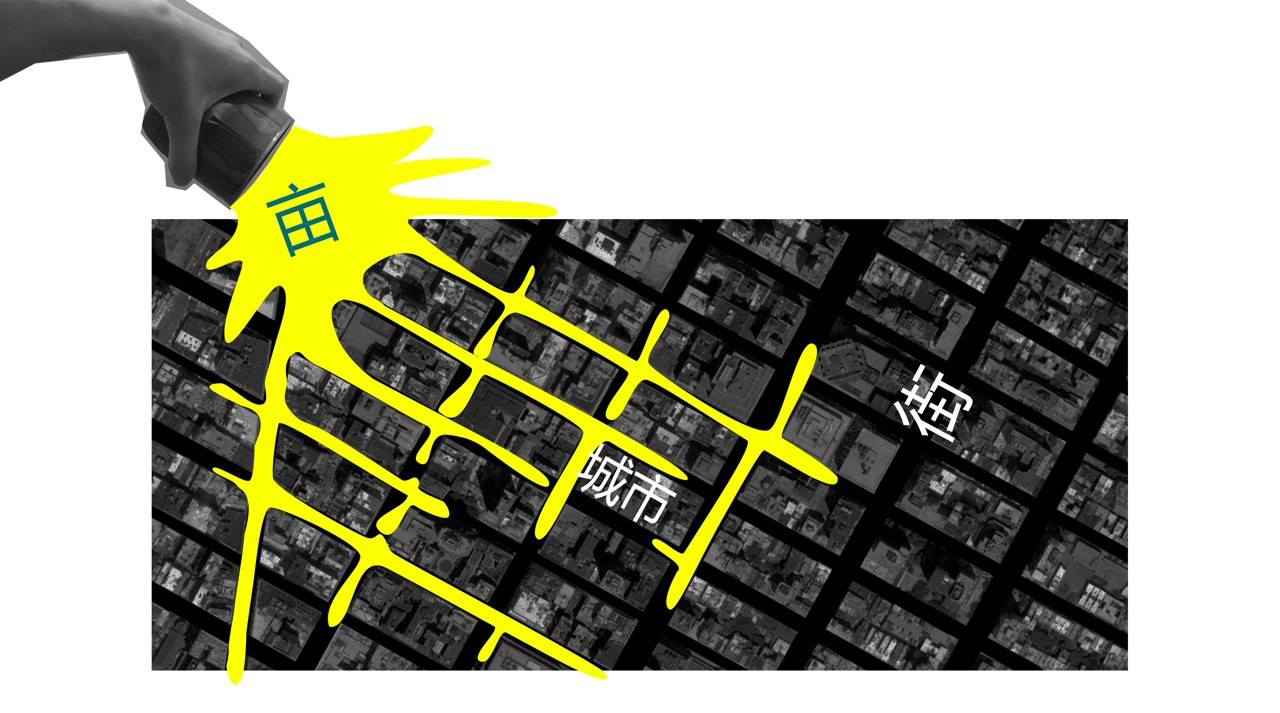
作为建筑师,我们需要为这一模式的实现去探索空间上的落脚点。街亩城市进行的就是这样的一种探索。一种将农业引入城市内部当中,形成“城市中的田园”的探索。
As architects, we need to explore the foothold in space for the realization of this model. Such an exploration is carried out in the city of street mu. An exploration to introduce agriculture into the interior of the city and form a "garden in the city".
当代的中国城市,哪里还有留给田园的空间呢?直面成都三圣片区的现实,我们发现,可能只有街道还是属于公众的、可以利用的空间。尽管街道的尺度有限,但是,街道自身的延续性却可以赋予田园一种扩张感、蔓延感——这种无限延伸的绿色美或许正是田园之所以迷人的一个重要原因。这样的张力也是远非在阳台上种几棵菜或是周末去郊区体验那些伪农家所能够提供的。
In contemporary Chinese cities, where is there space left for rural areas? Facing the reality of the Sansheng District in Chengdu, we found that perhaps only the street is still a public and usable space. Although the scale of the street is limited, the continuity of the street itself can endow the countryside with a sense of expansion and spread - this infinite green beauty may be an important reason why the countryside is charming. Such tension is far from what can be provided by planting a few vegetables on the balcony or going to the suburbs to experience those fake farmhouses on the weekend.
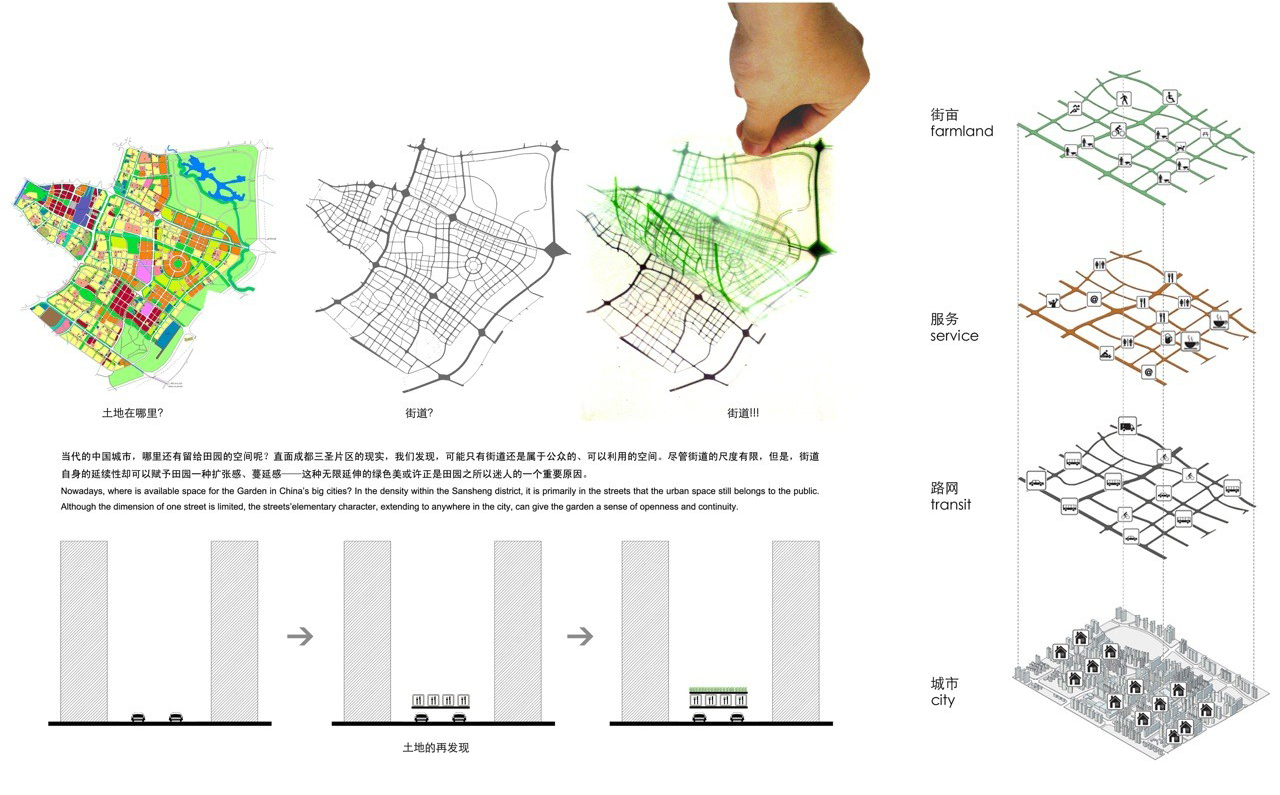
接下来,如果我们单纯从物质需要的层面去解读城市对于农业的需要,我们会发现得到了空间基础的田园经济在城市中的生根发芽是那么顺理成章:城市对于高品质且安全的农产品的需要、农民对于转变为农业产业工人的城市人的渴望、城市中对于田园景观与减少汽车的要求(如果能像街亩城市这样一举两得岂不是更好?)……
Next, if we simply interpret the needs of cities for agriculture from the perspective of material needs, we will find that it is reasonable for the rural economy with spatial basis to take root and sprout in cities: the needs of cities for high-quality and safe agricultural products, the farmers' desire for urban people to become agricultural workers The requirements for rural landscape and reduction of cars in the city (wouldn't it be better to kill two birds with one stone like the street city?)
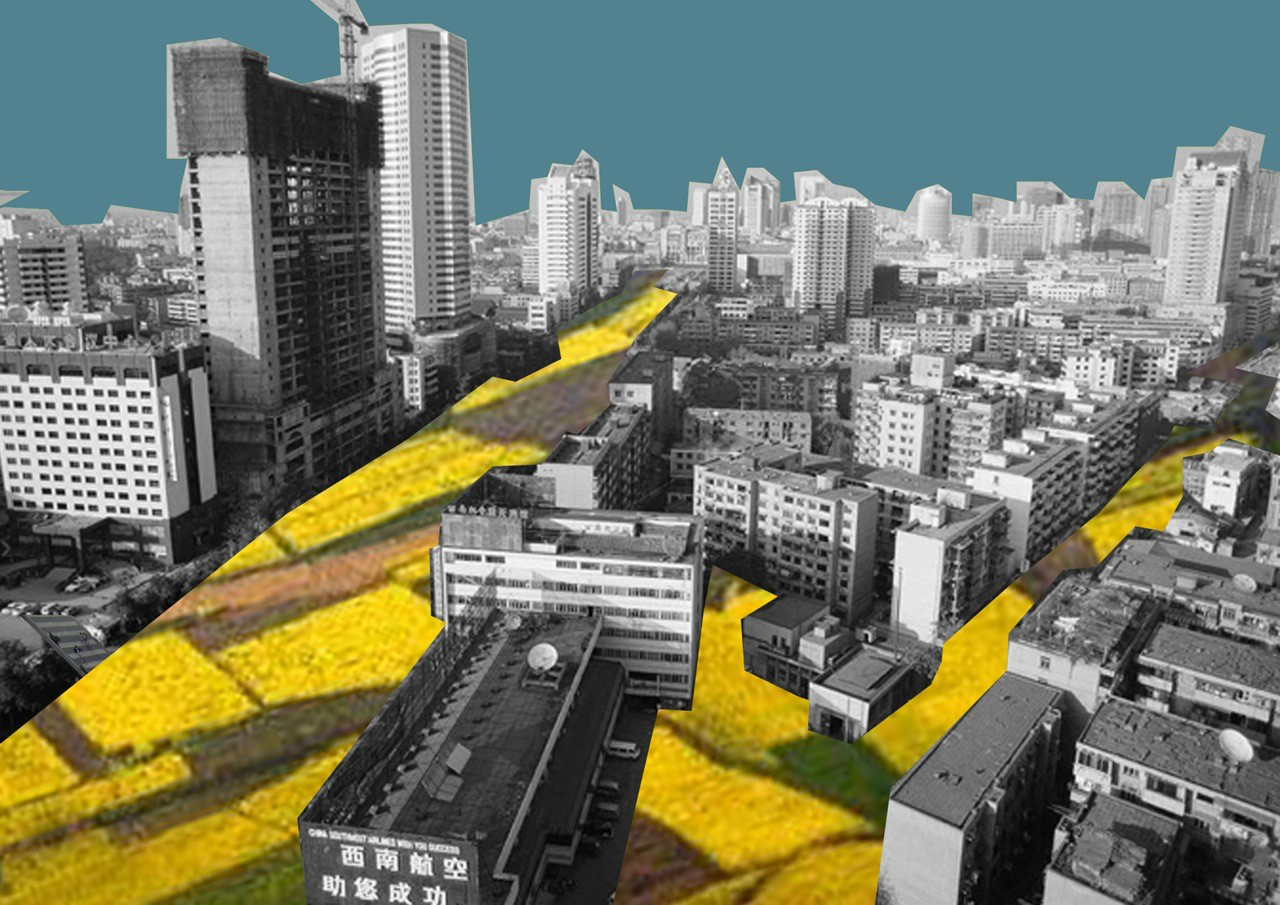
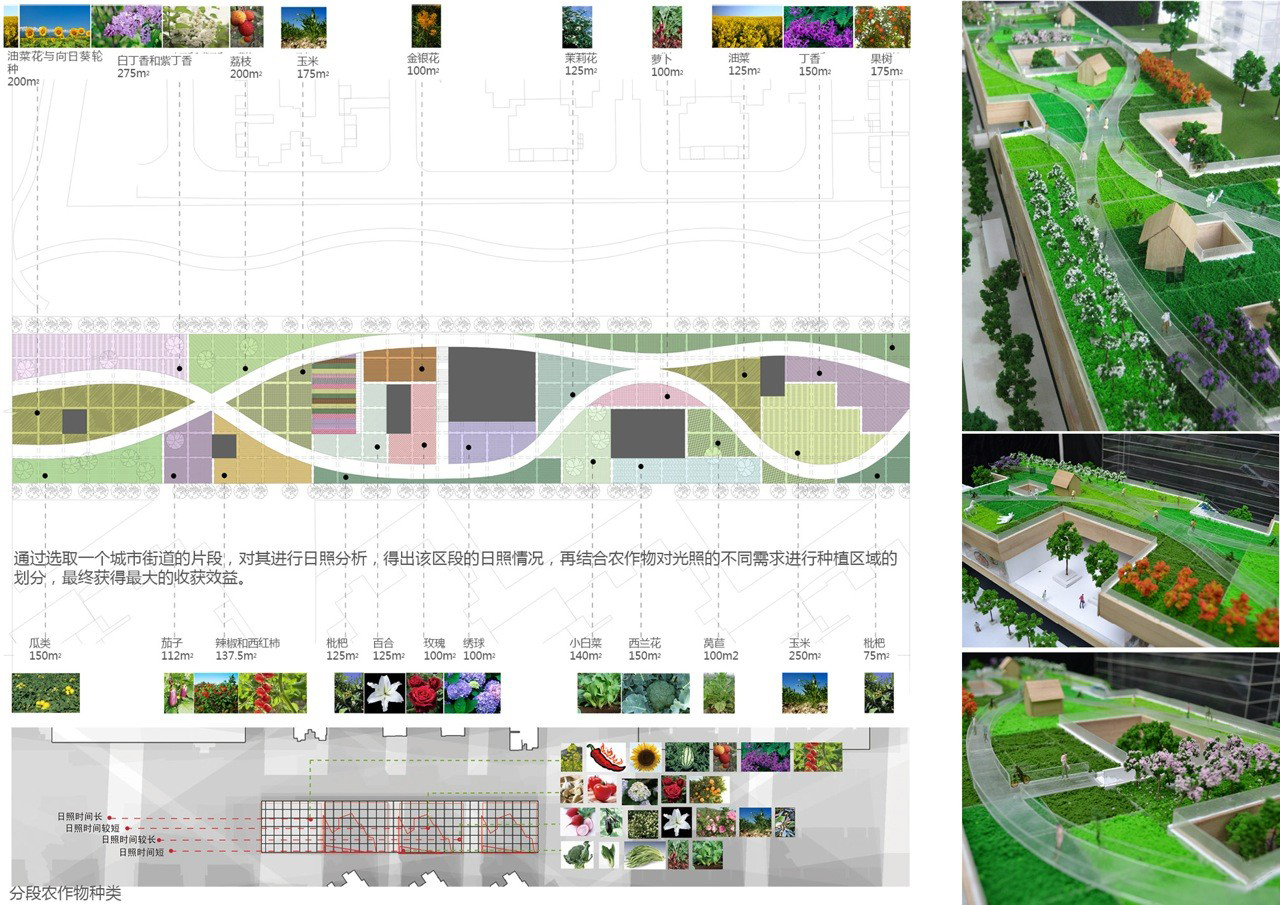
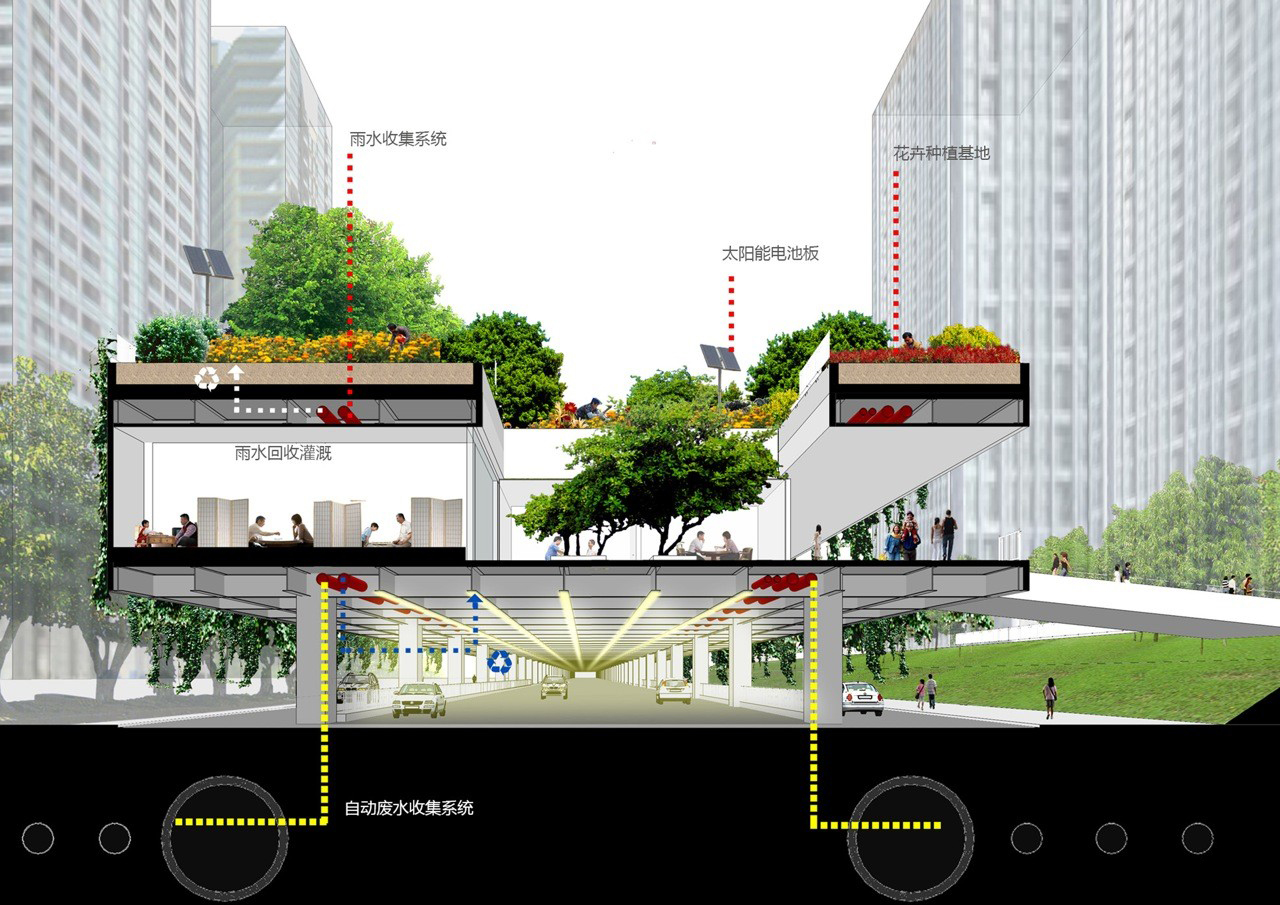
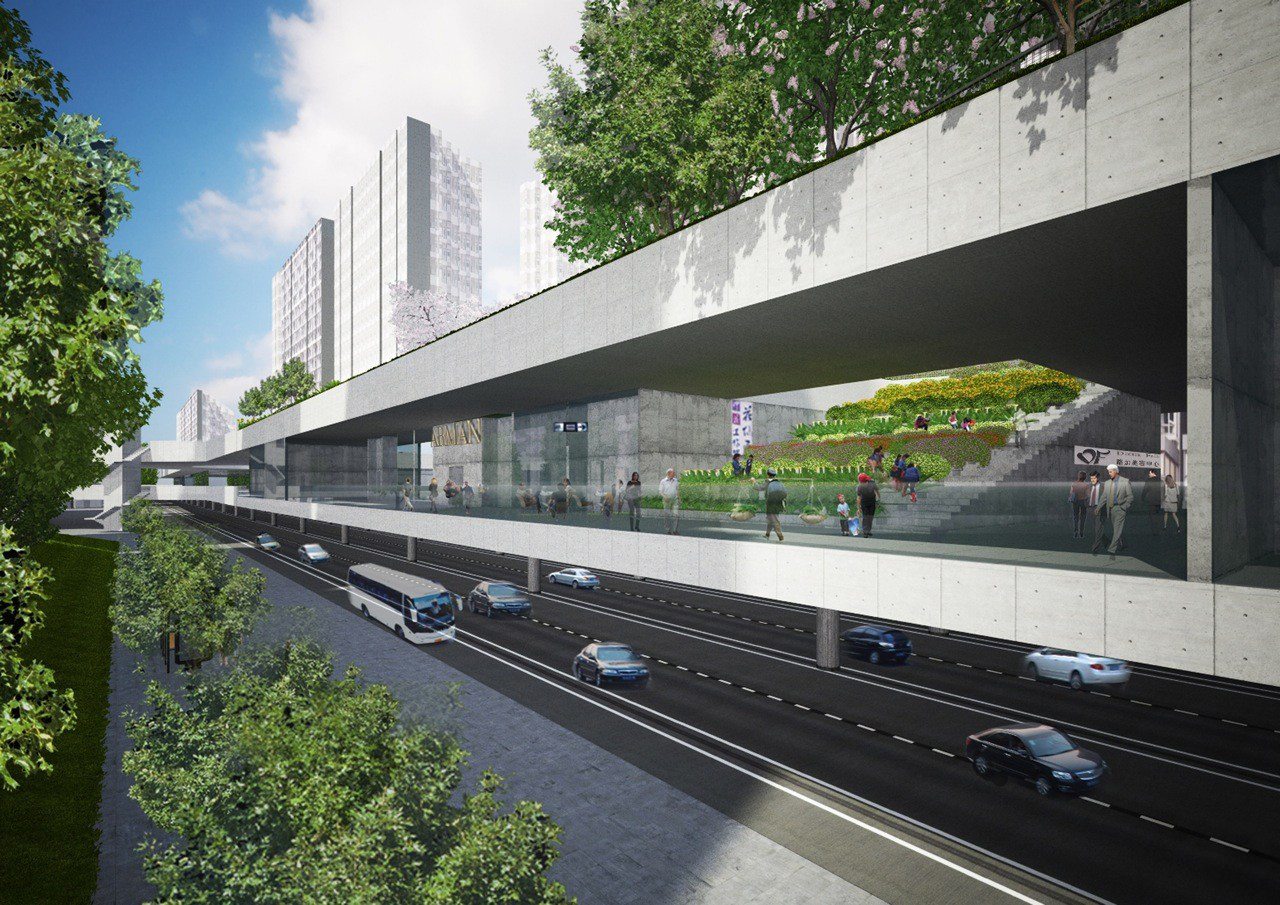
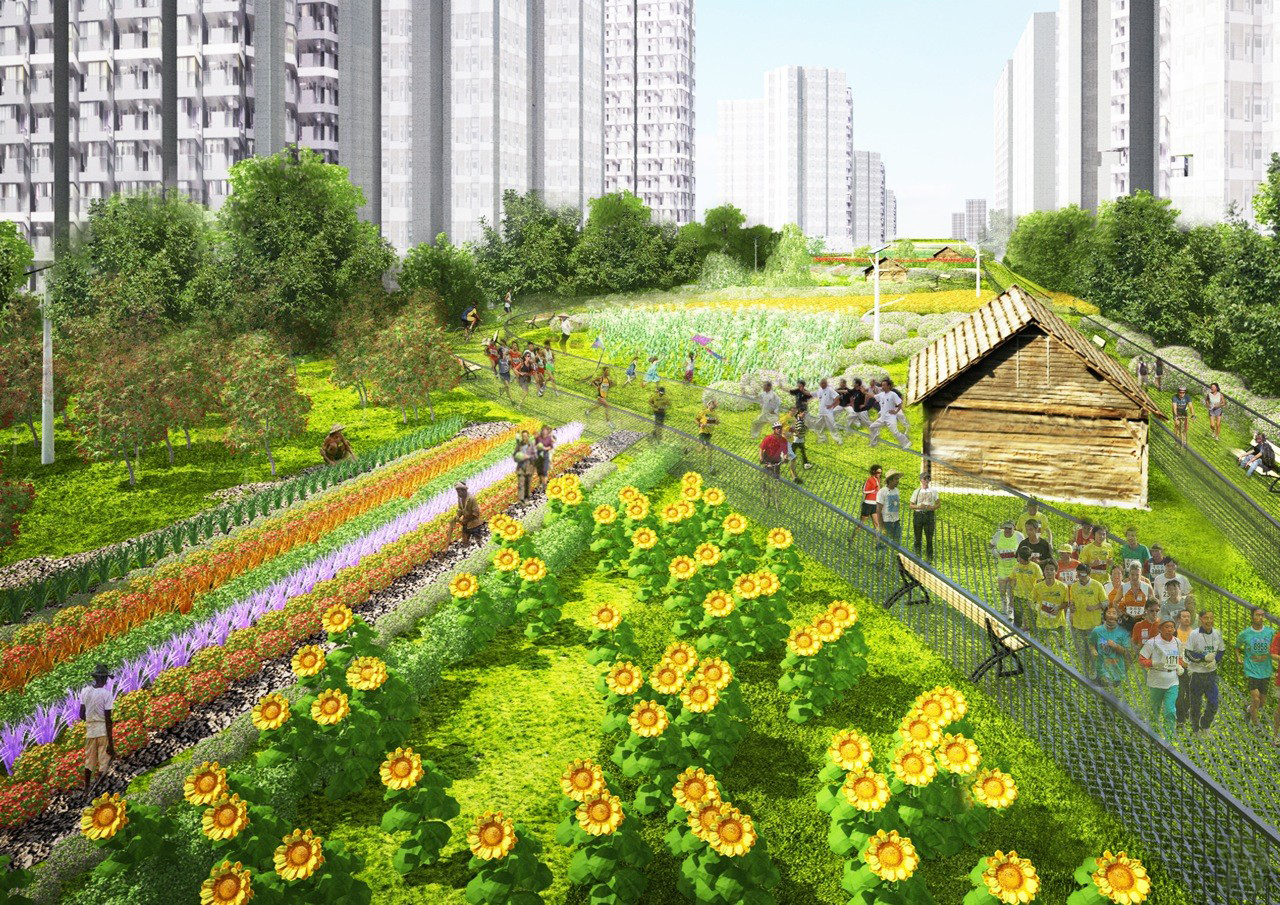
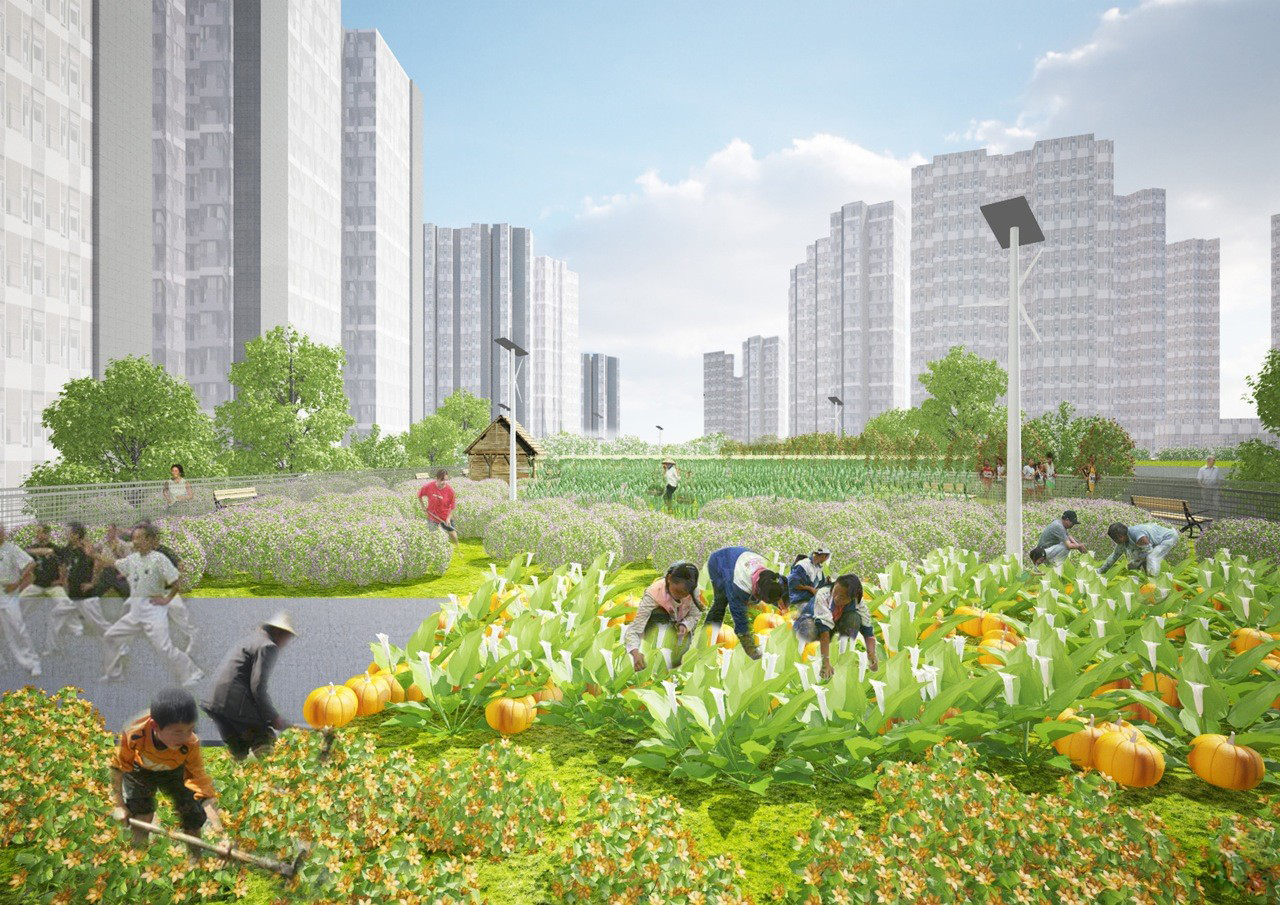
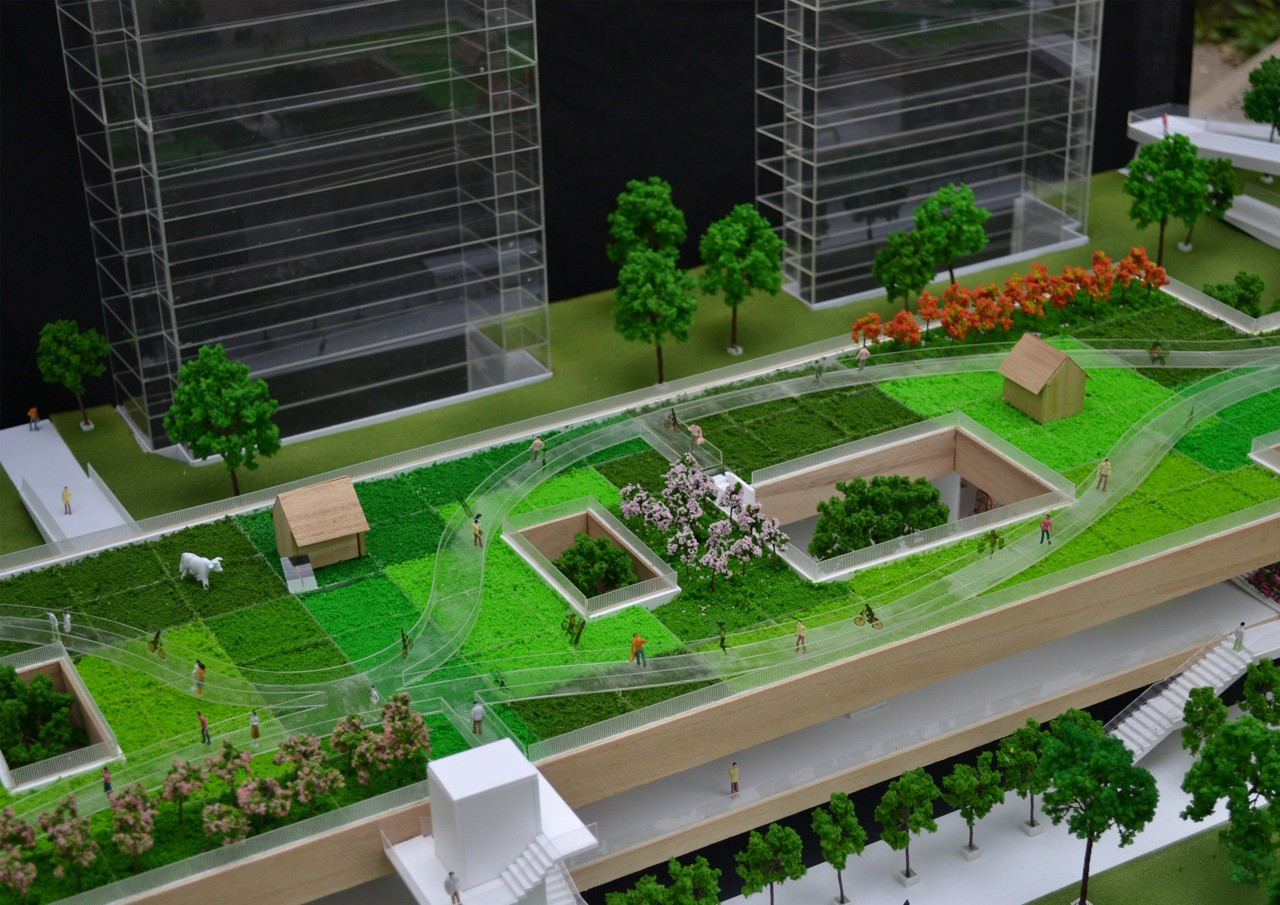
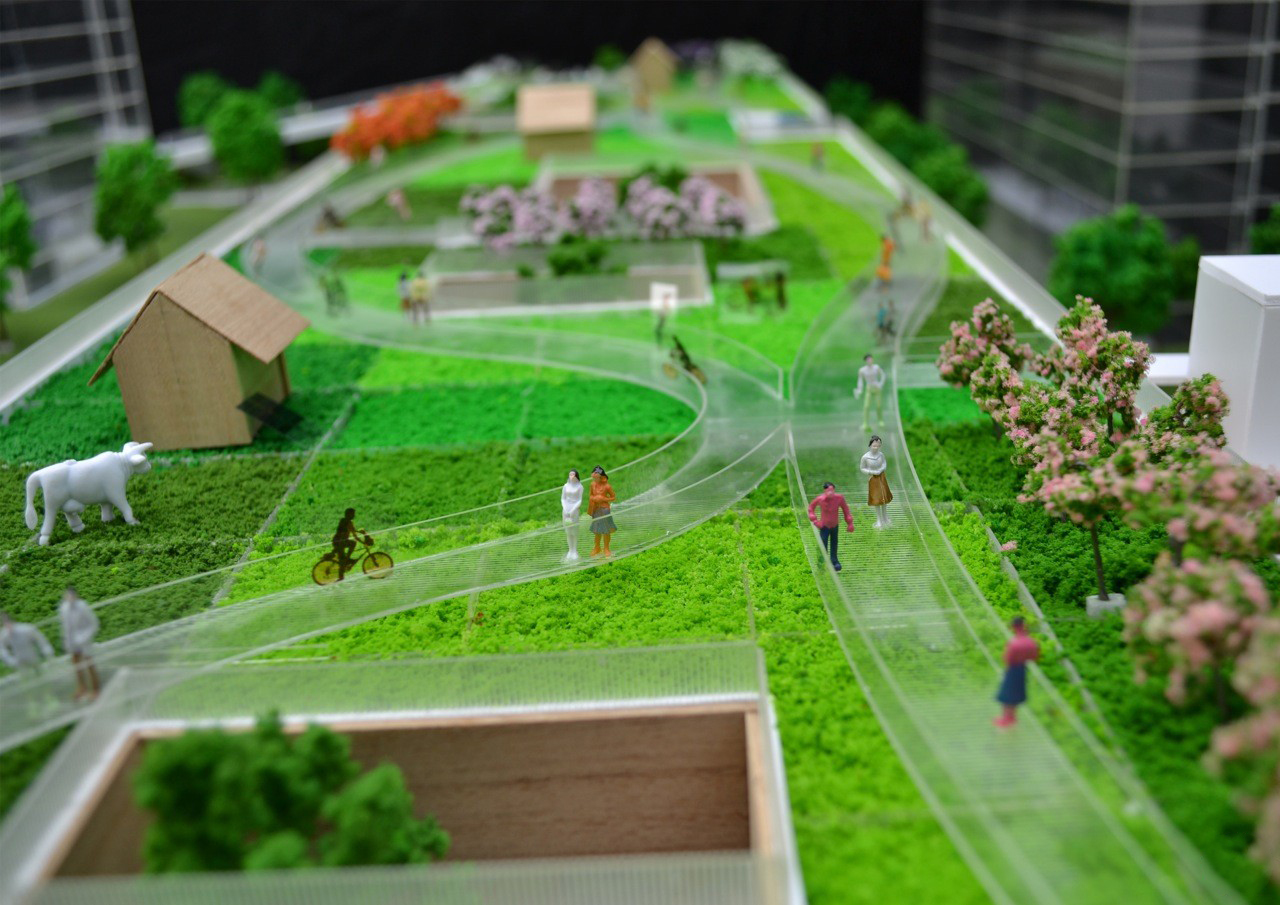
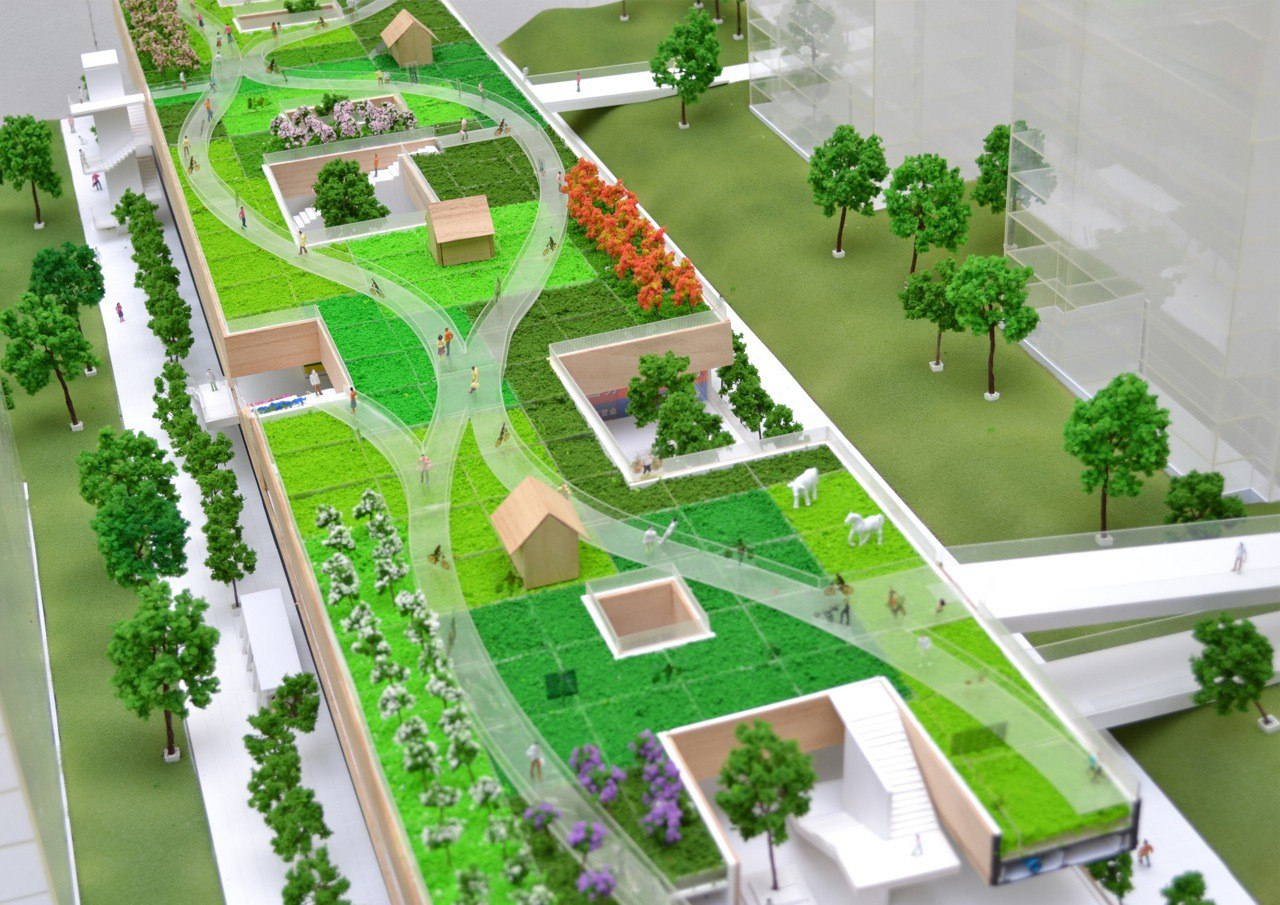
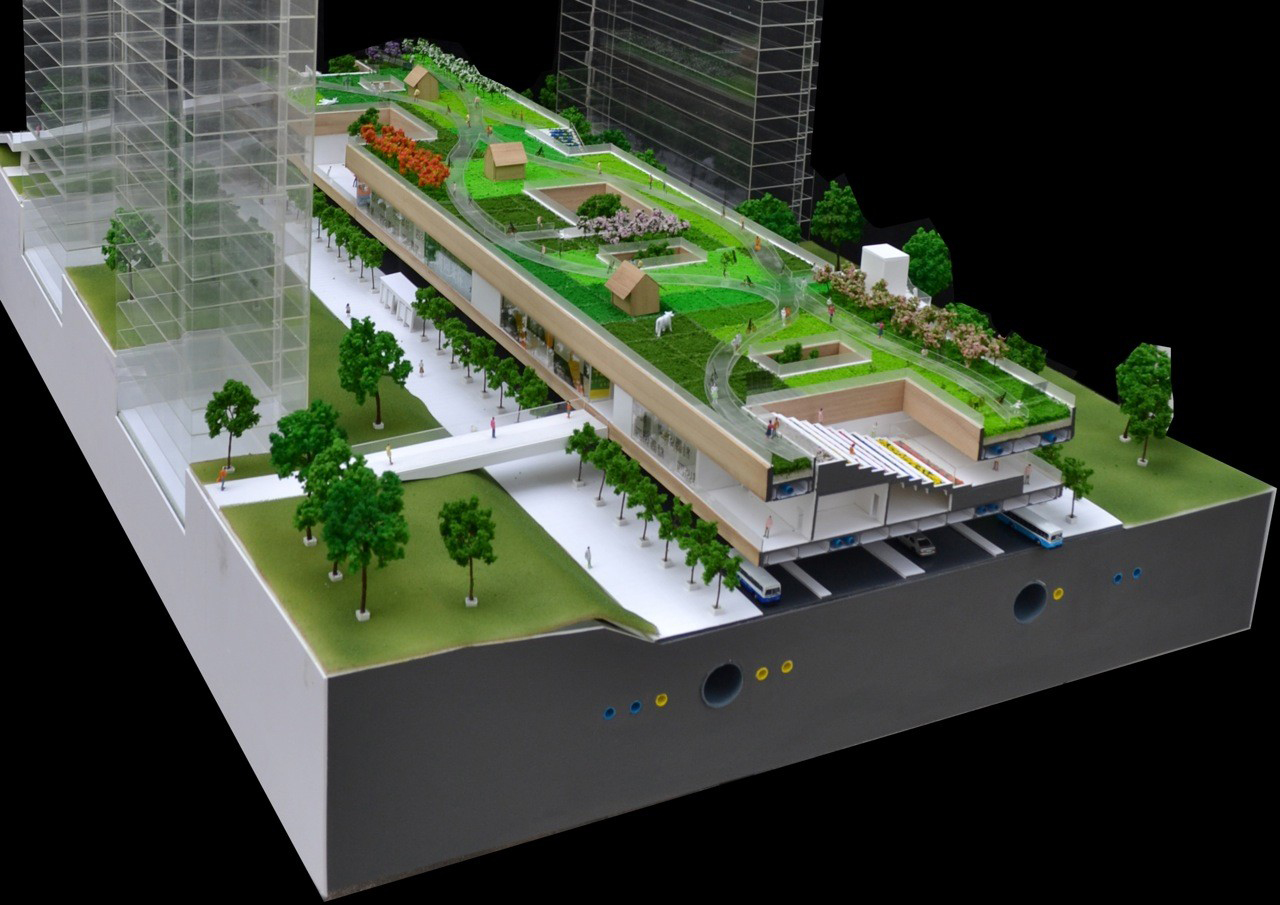
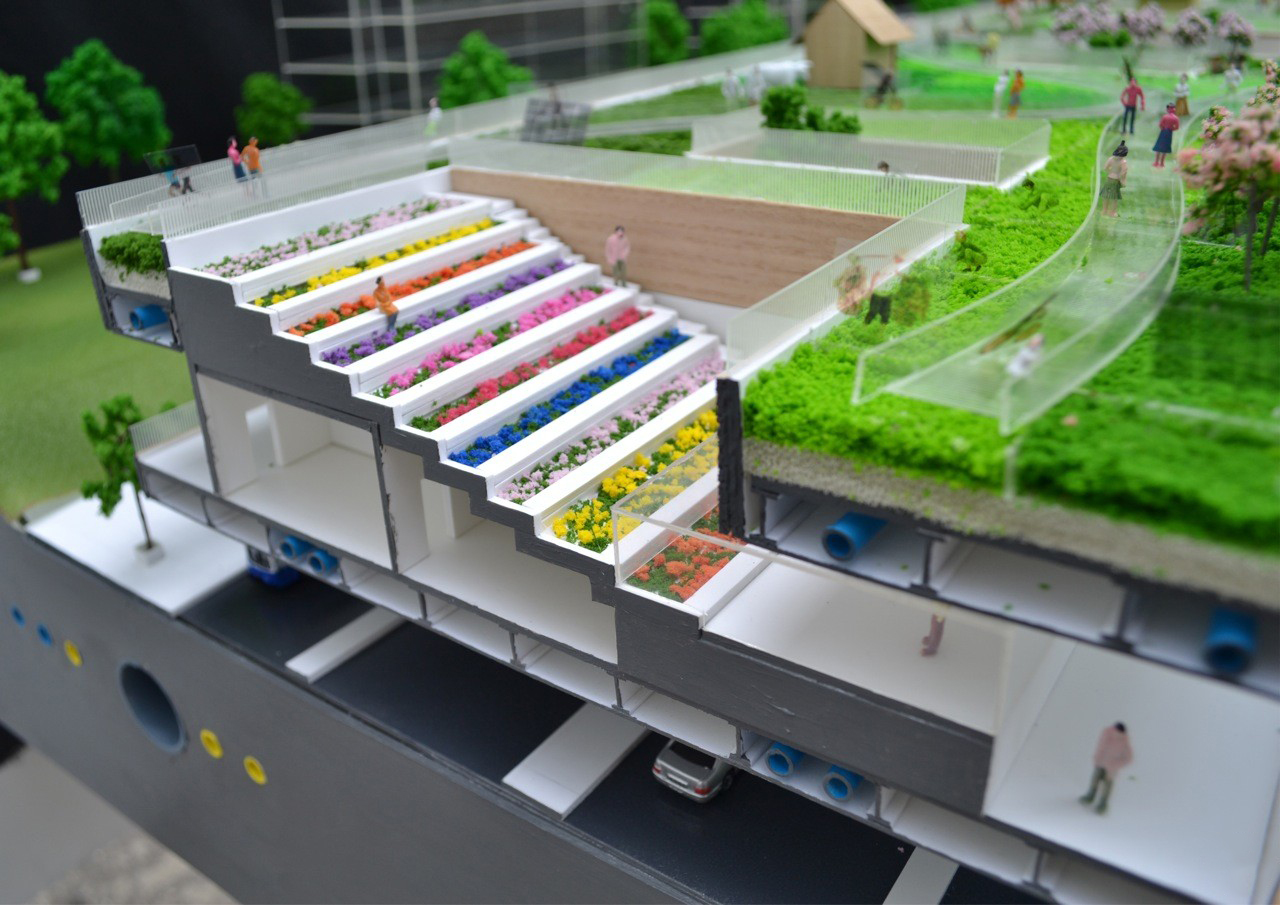
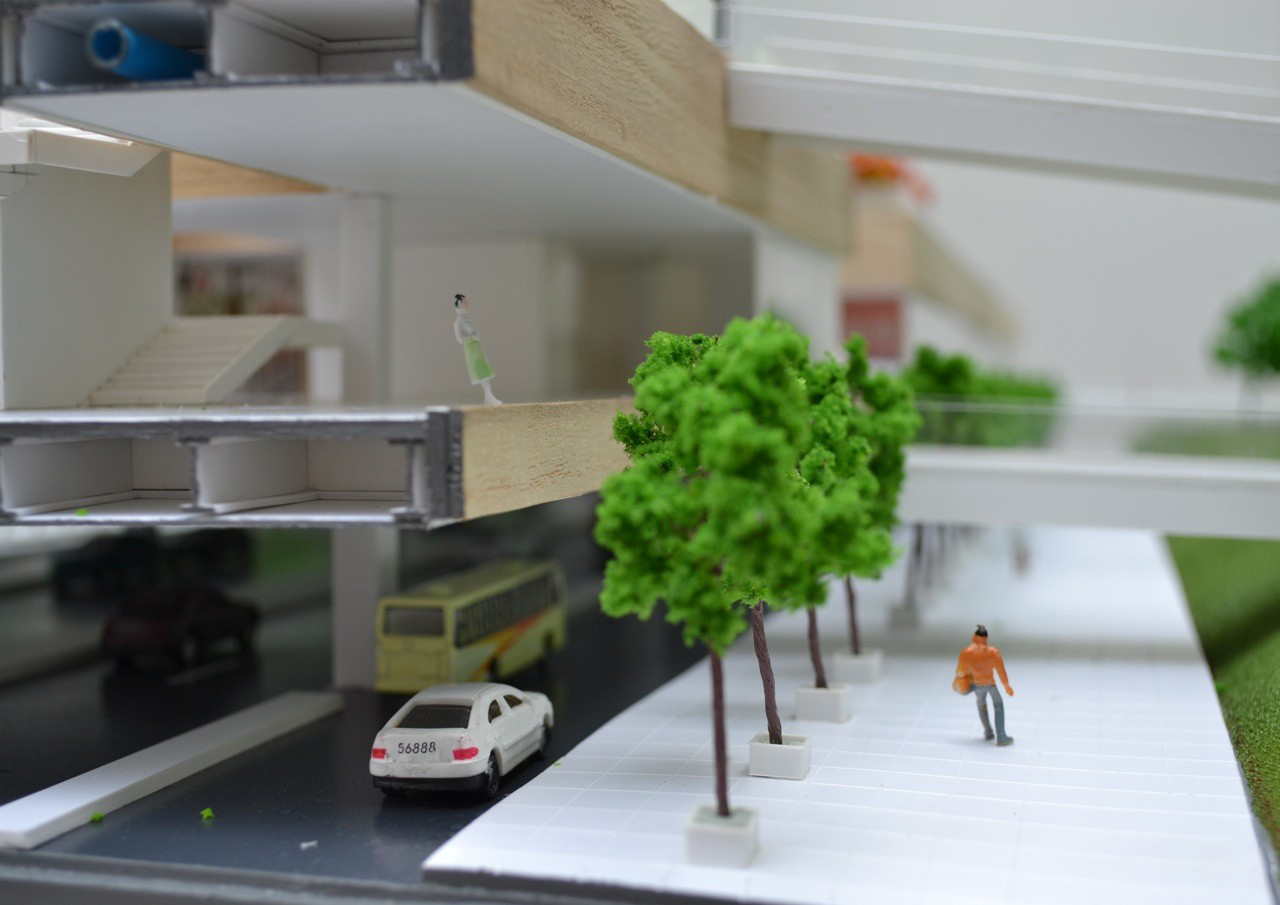
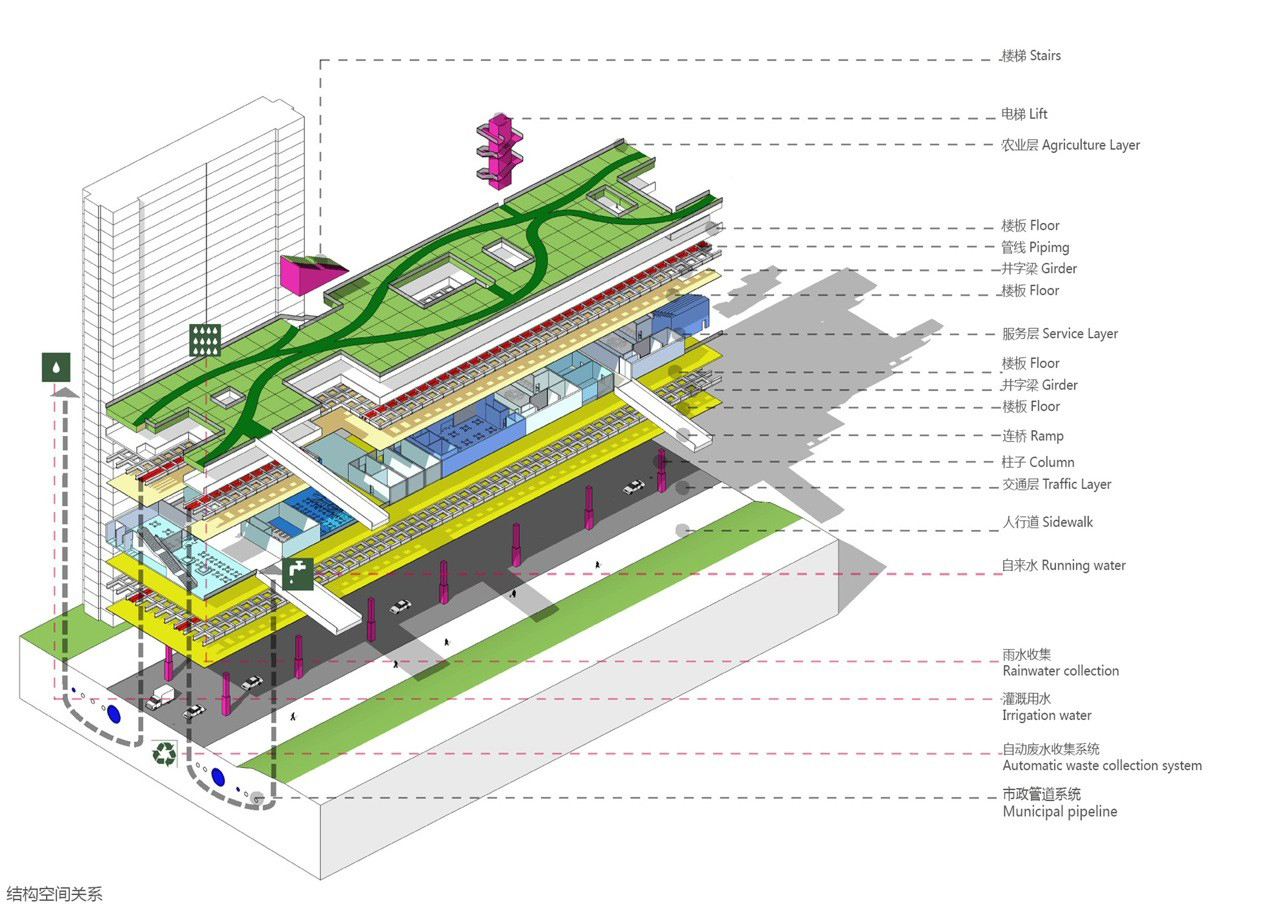
针对成都三圣片区的现状,我们在街道之上建立了一个全新的立体分层的“田桥”系统,像高架桥一样架设于现有街道之上。在田桥的顶层是平均30米宽可以随现有路网无限延伸的农田,它以5米网格为模数,划分为不同的种植单元,蔬菜、瓜果、花卉(三圣区的传统)、玉米、茶叶,不一而足。在这里,都市居民可以有机会来自己种菜体验农业生活,农民可以经营都市农园,转变为都市里的“农业工人”。这里的农产品是安全的,其价格符合市场经济。而且因为不需要远距离运输减少了污染。
In view of the current situation of Sansheng District in Chengdu, we have built a new three-dimensional and layered "Tianqiao" system on the streets, which is built on the existing streets like a viaduct. On the top of the Tianqiao is a farmland with an average width of 30 meters that can be infinitely extended with the existing road network. It is divided into different planting units based on a 5-meter grid, including vegetables, fruits, flowers (traditional in the Sansheng District), corn, tea, and so on. Here, urban residents can have the opportunity to grow vegetables and experience agricultural life by themselves, and farmers can operate urban agricultural parks and become urban "agricultural workers". The agricultural products here are safe and their prices are in line with the market economy. And because there is no need for long-distance transportation, pollution is reduced.
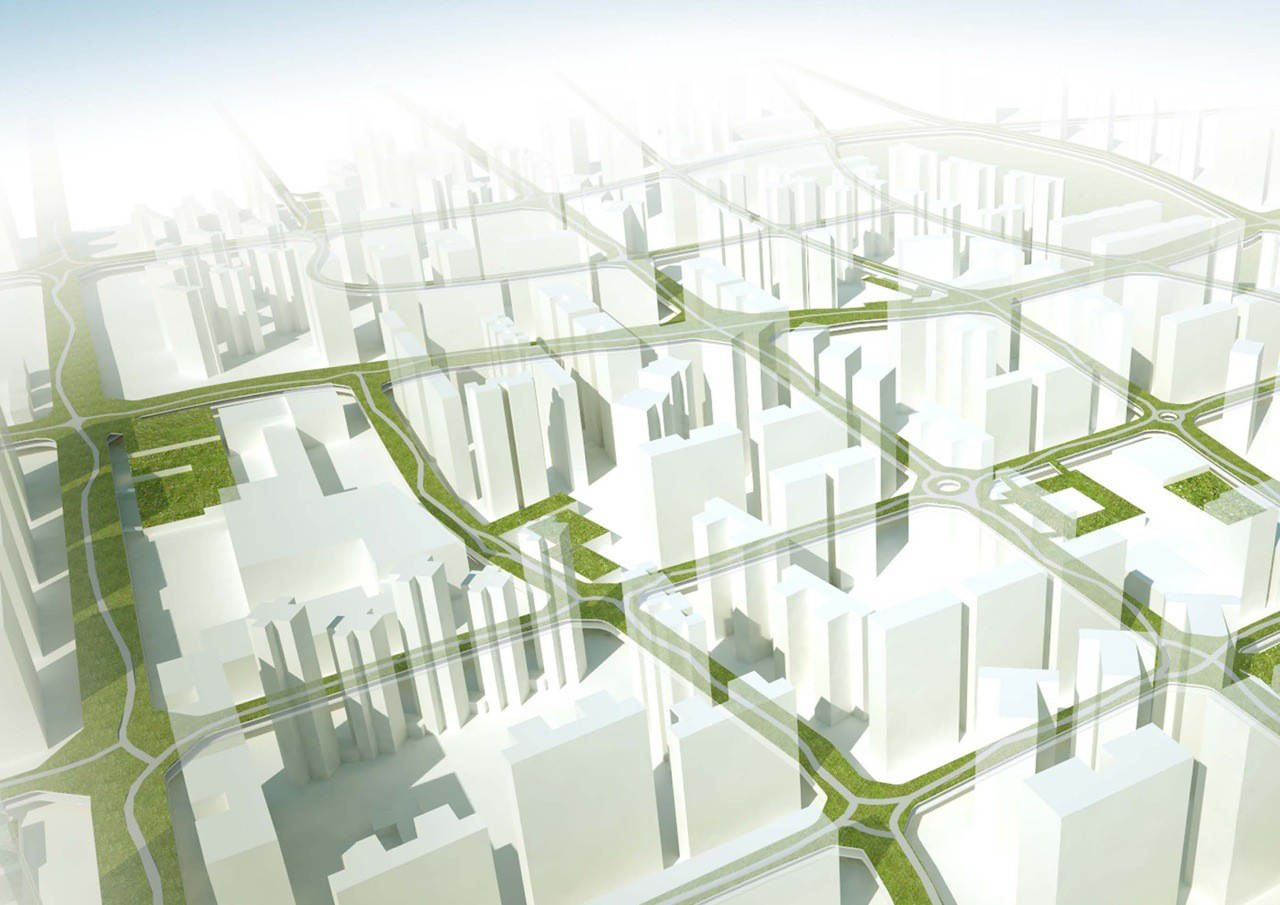
农田除了农业的功能,也是一个公园,居民可以在这里跑步、骑车、健身、游憩、观光。它给城市提供了一个新的步行系统和户外运动和休闲的去处。它还使原本各自封闭的住宅小区相互连接起来,而且不受汽车的干扰。当你从住宅的窗户望出去,它使得城市街道被绵延的绿色覆盖,而看不到灰暗的路面与汽车。
In addition to agricultural functions, farmland is also a park where residents can run, ride bicycles, exercise, relax and sightseeing. It provides the city with a new walking system and a place for outdoor sports and leisure. It also makes the originally closed residential areas connected with each other, and is not disturbed by cars. When you look out of the window of the house, it makes the city streets covered by continuous green, and you can't see the gray roads and cars.
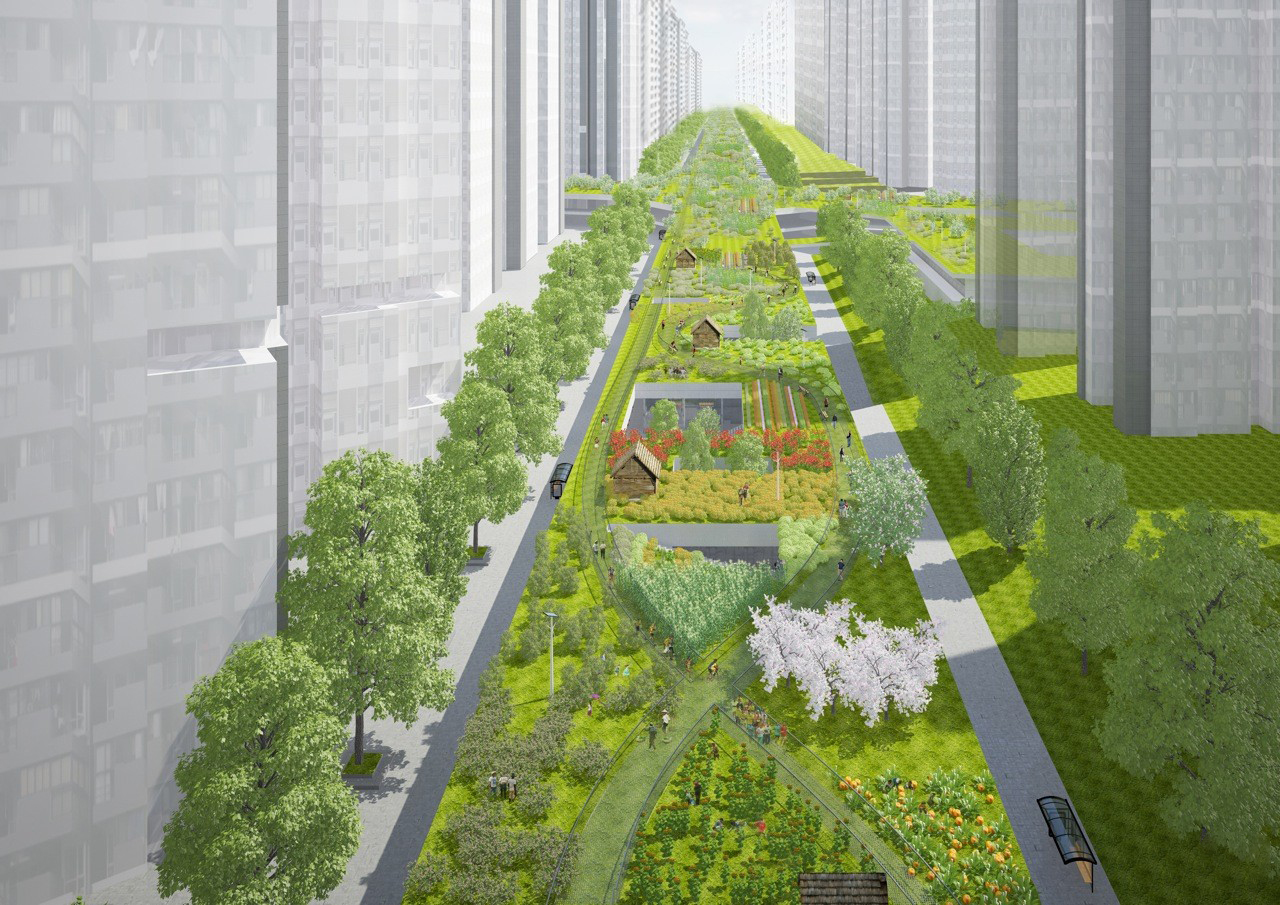
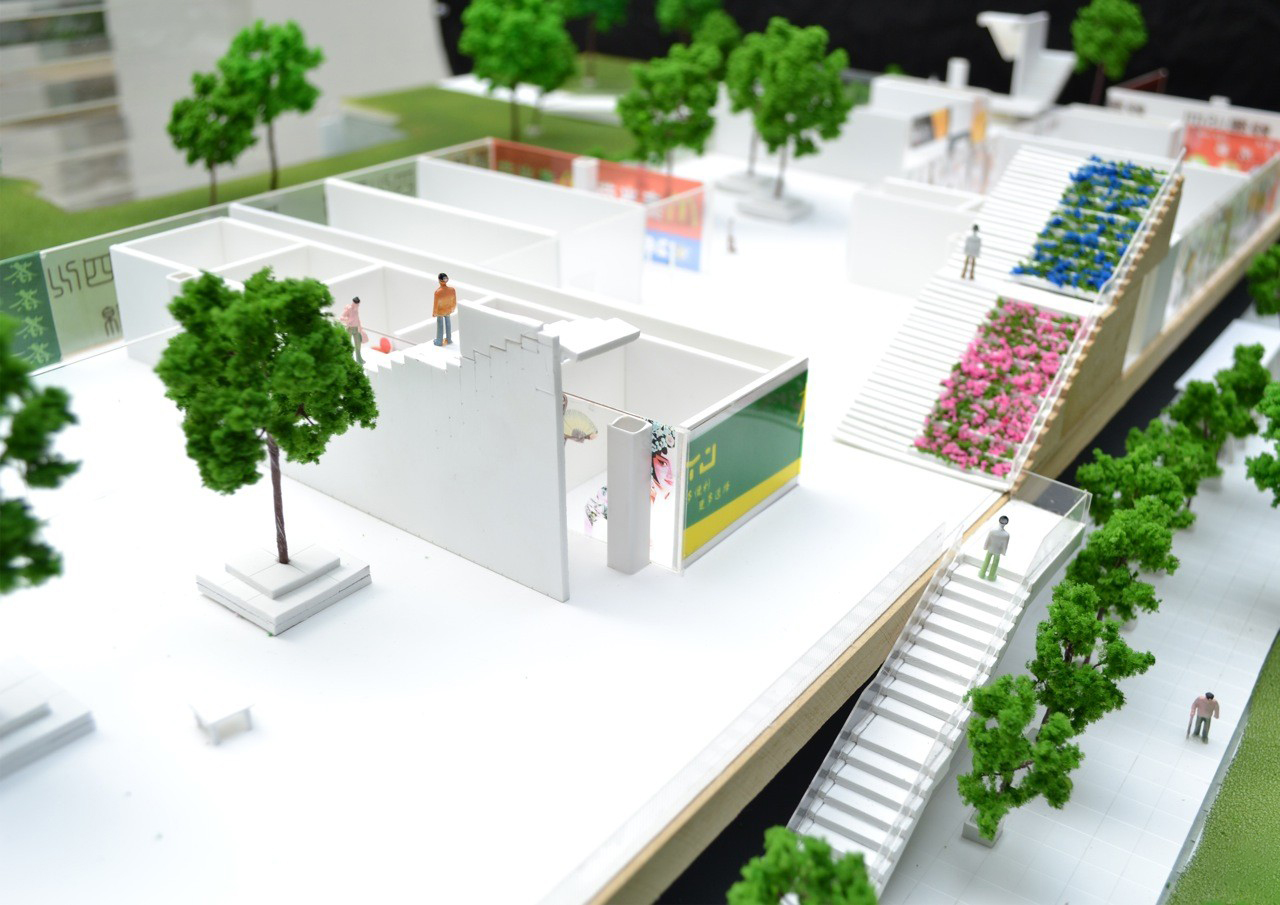
我们在农田之下还加入了一个服务层,一方面,来缓解现在的三圣区服务设施不足而住宅却又高度集中的矛盾,另一方面,更是为了在我们所能够控制的空间内,最大限度的激活田园与城市的互动:最新鲜的菜市场、餐厅、茶馆、花店……所有出售的农产品都是在市民的眼前生长、成熟、收获,而且最为便捷地获取。 日常生活的就近解决亦将使乘车出行大为减少并降低污染。混合了上述诸功能的“天桥”系统在城市中可以无限制的延伸,成为一种全新的城市基础设施。
We have also added a service layer under the farmland, on the one hand, to alleviate the contradiction between the lack of service facilities in the Sansheng District and the high concentration of residential buildings, on the other hand, to maximize the interaction between the countryside and the city within the space we can control: the freshest vegetable markets, restaurants, teahouses, flower shops... all agricultural products sold are grown, matured and harvested in the eyes of the citizens, And the most convenient access. The nearby solution of daily life will also greatly reduce the number of trips by car and reduce pollution. The "overpass" system, which combines the above functions, can be extended unlimited in the city and become a new urban infrastructure.
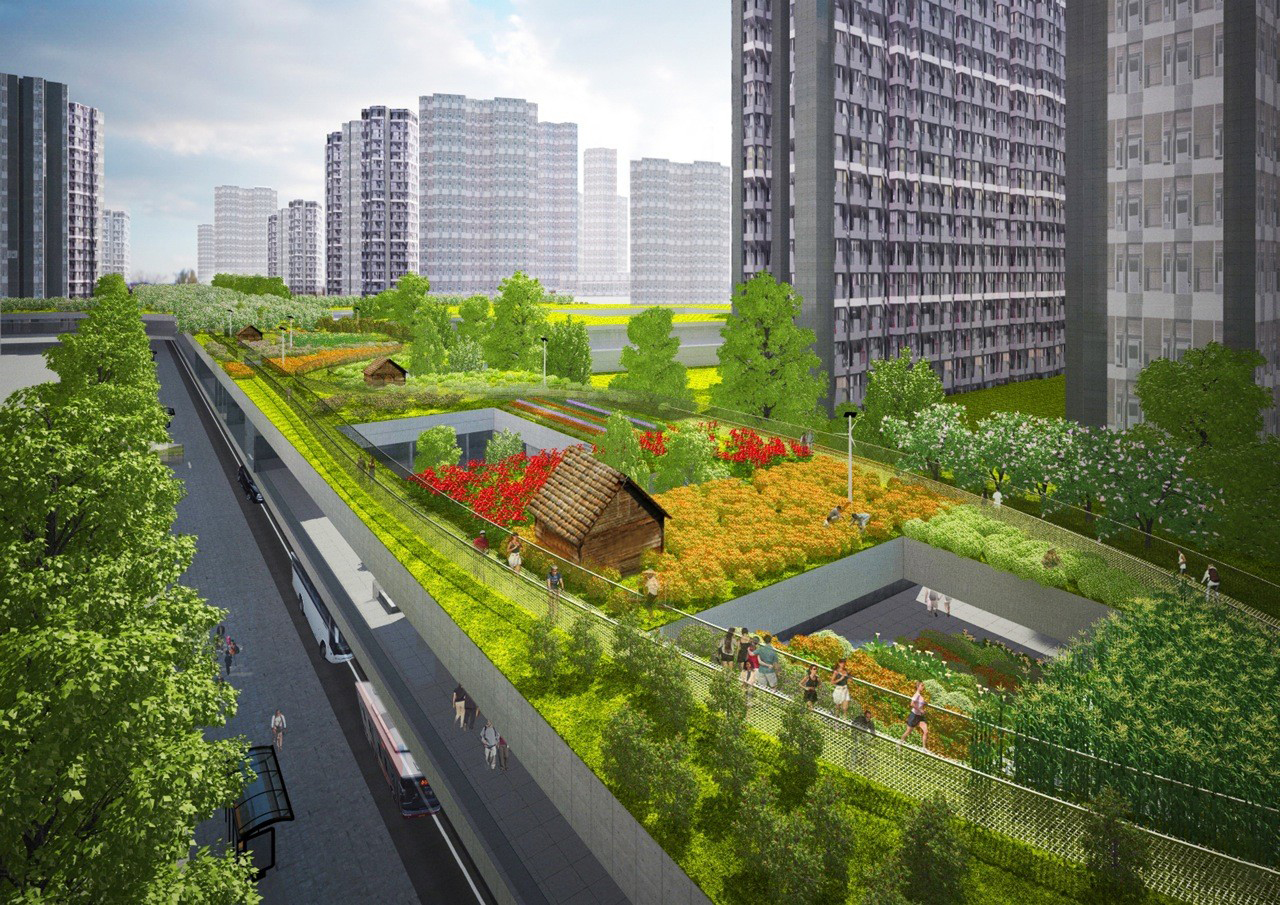
最后要说的是,我们期待的是引入“田桥”之后,城市与田园获得了沟通与互动的全新城市形态,并且能够实现一种真正基于市场需求的内在活力。我们设计的不是一座用来种菜的桥,我们设计的是一座(一种)城市——街亩城市。
Finally, what we expect is that after the introduction of "Tianqiao", the city and the countryside will gain a new urban form of communication and interaction, and can realize an intrinsic vitality that is truly based on market demand. What we designed is not a bridge for planting vegetables, but a city of street mu.
项目年份:2011
展览场所:成都双年展 东村策略展
设计团队:华黎,杨鹤峰,刘蕴涵,Andrew Perkins,吕兆杨,梁辛艾,Clémence Pybaro,王璐,张芝明,Victor Gomez Camara,赵刚
Project year: 2011
Exhibition venue: Chengdu Biennale East Village
Design team: Hua Li, Yang Hefeng, Liu Yunhan, Andrew Perkins, Lv Zhaoyang, Liang Xinai, Cl é mence Pybaro, Wang Lu, Zhang Zhiming, Victor Gomez Camara, Zhao Gang