下坝坊村水塘景观提升,东莞 / 梓集fabersociety
东莞万江坝头社区的下坝坊,地处万江、南城与莞城的交界处,占地不到一平方公里,是一个很典型的南粤小村,也是广东省历史文化名村。下坝坊于明代立村,是以詹姓为主的宗族聚居村落,村中目前还保留有詹氏宗祠等历史建筑以及三座水塘。
Xiaba Village, located in Wanjiang, Dongguan, is a typical southern Guangdong village, covering less than one square kilometre. It is a historically significant village in Guangdong Province, situated at the intersection of Wanjiang, Nancheng, and Guancheng. Established during the Ming Dynasty, the Zhan clan primarily inhabits Xiaba, and the village still retains historical structures such as the Zhan Clan Ancestral Hall and three ponds.
▼2009年的下坝坊,Xiaba Village in 2009
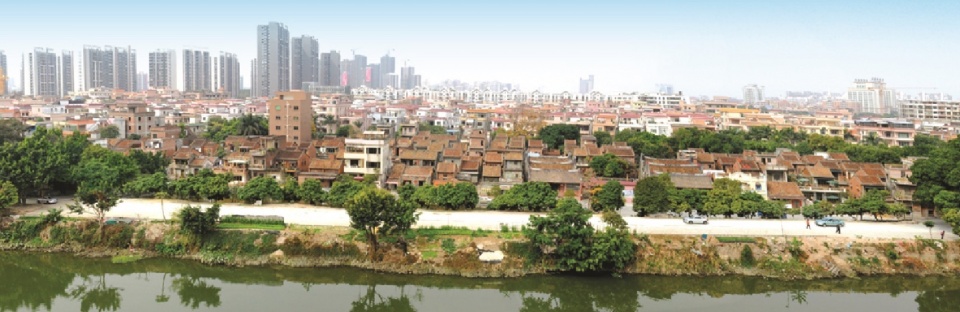
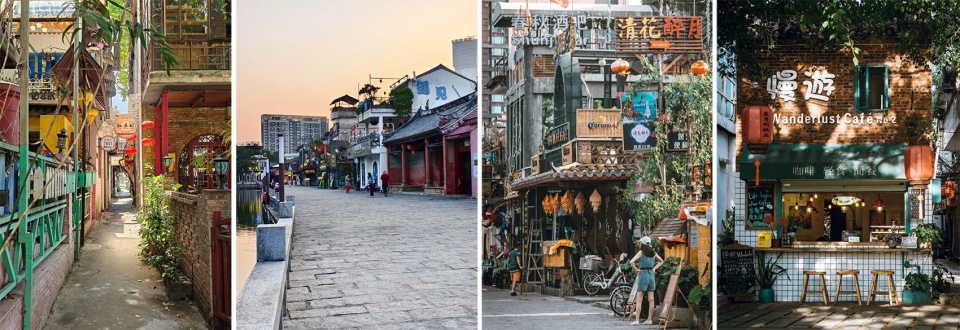
早年的下坝坊界面很朴素,坊前的水塘主要用于饲养经济鱼类,两岸则是自然堤岸和植被。随着一位画家的进驻,越来越多的餐厅、酒吧、咖啡厅、特色小店选择在这里落地与生根。水塘边鳞次栉比的老屋逐渐被霓虹灯和广告字包装一新,华灯初上时分,俨然成为市民夜生活的好去处。
In its early days, Xiaba was a simple village. The pond in front of the village was mainly used for raising fish, with natural embankments and vegetation on both sides. However, with the arrival of a painter, more and more restaurants, bars, cafes, and speciality shops began to settle here. The old houses by the pond were gradually transformed by neon lights and signage, making the area a vibrant nightlife destination for locals.
▼夜经济进入下坝坊,night economy prospers
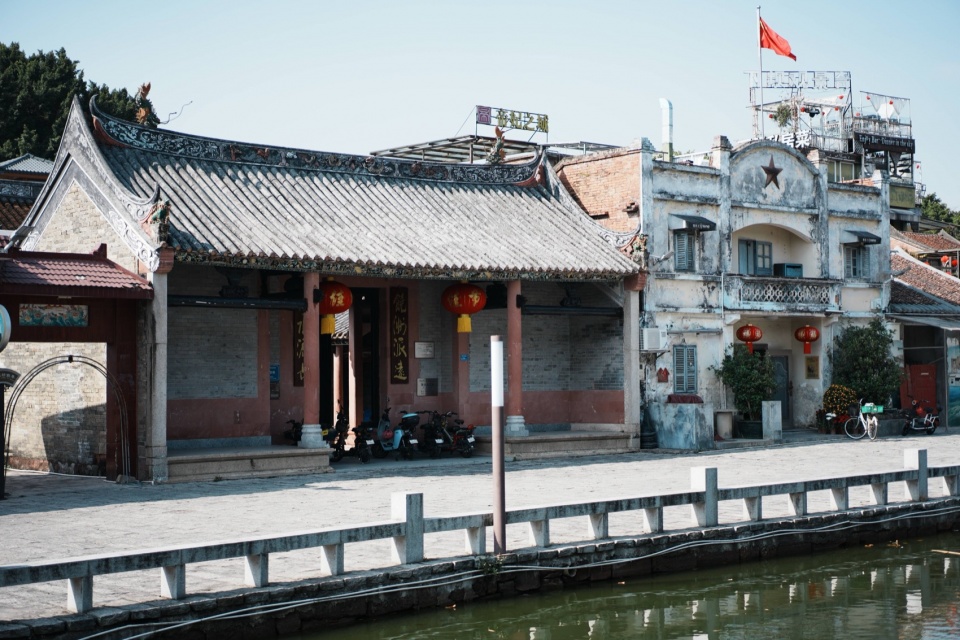
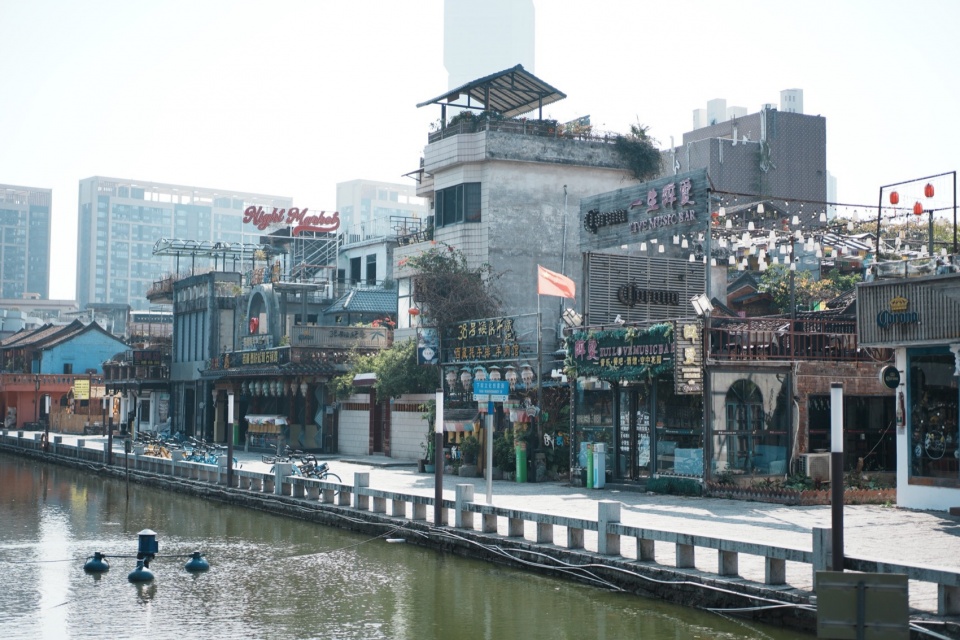
在岭南村落中,门前有塘是件重要的事,水塘除了寄托村民最质朴的调风理水愿望之外,也为实际生活生产提供便利:洗涤、灌溉、养鱼、禽畜饮用、火灾取水、节庆活动、平日休闲……当塘畔被商业和游客逐渐占领后,日复一日地生活场景也被迫让位。然而,随着这里商业热度的消褪,留下的则是进退两难的境地。因此,附近需要被重构,新的日常需要发生。
Having a pond in front of the village is of great importance in Lingnan villages. Besides symbolizing the villagers’ simple wishes for harmony with nature, the pond also serves practical purposes: washing, irrigation, fish farming, livestock drinking, firefighting, festive activities, and daily leisure. However, as commercial activities and tourists gradually took over the pondside, the daily life of the villagers was forced to retreat. With the decline in commercial activity, the area now faces a dilemma. Thus, there is a need to reconstruct the surroundings and create a new daily life.
▼下坝坊塘前界面与詹式祠堂,urban context
▼下坝坊1975-2020,Xiaba Village 19775-2020
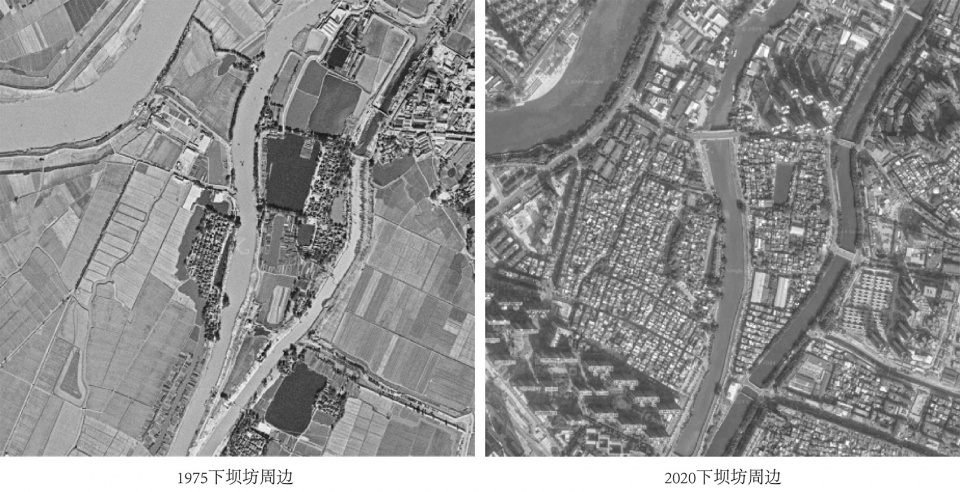
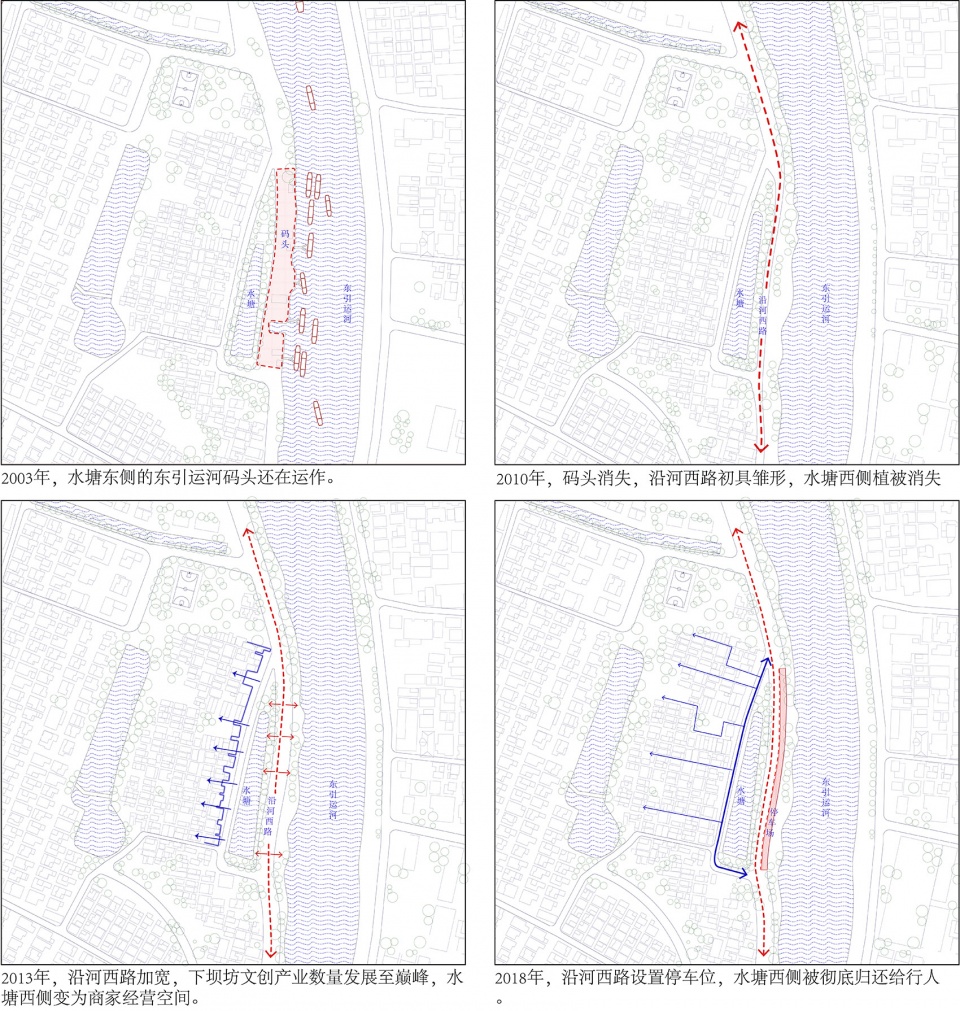
新的设计任务,希望我们以相对低成本的方式,对下坝坊入口的公共环境做一些提升,具体介入方式则由我们自行选择。东侧的东引运河在60年代修通之后,下坝坊一直与水相处, 坊前的运河码头也忙碌运作了四十多年。我们仔细阅读了坊前自1975年起的环境变迁,也发觉它与水塘的使用方式息息相关,新知旧识间,决定聚焦于此处,为当地社区提供一份重回水边的契机。
Our new proposal is to enhance the public environment at the entrance of Xiaba Village in a relatively low-cost manner, with the specific approach left to our discretion. Since the completion of the Dongyin Canal in the 1960s, Xiaba has always been closely connected to water, and the canal wharf in front of the village has been in operation for over forty years. After studying the environmental changes around the pond since 1975, we realized that its usage is closely tied to the pond. Drawing on old and new knowledge, we decided to focus on this area, providing the local community an opportunity to reconnect with the water.
▼水塘的使用方式与环境变迁,environmental changes around the pond
萦塘以行,筑亭以顾Walking Along the Pond, Building a Pavilion for Reflection
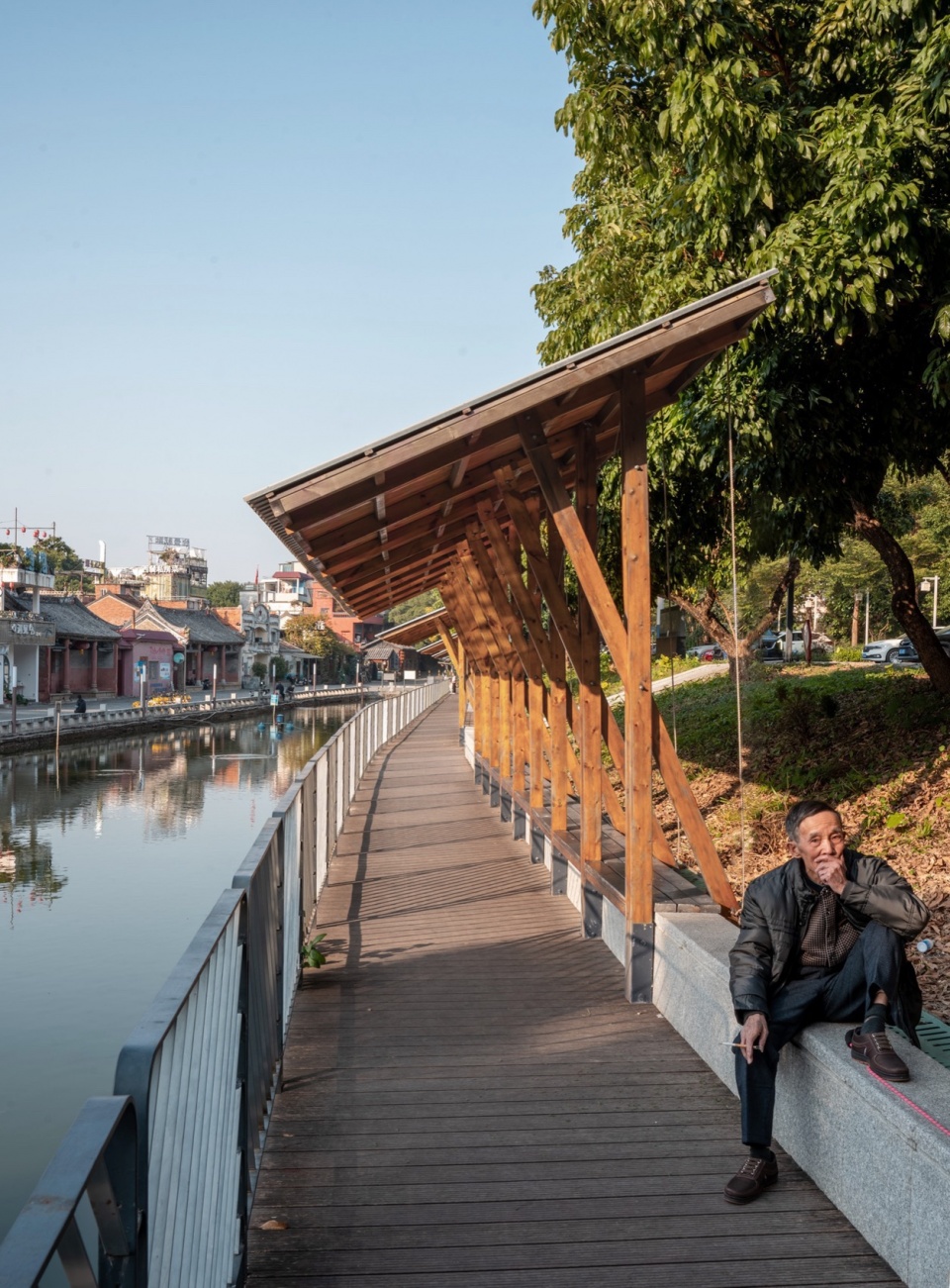
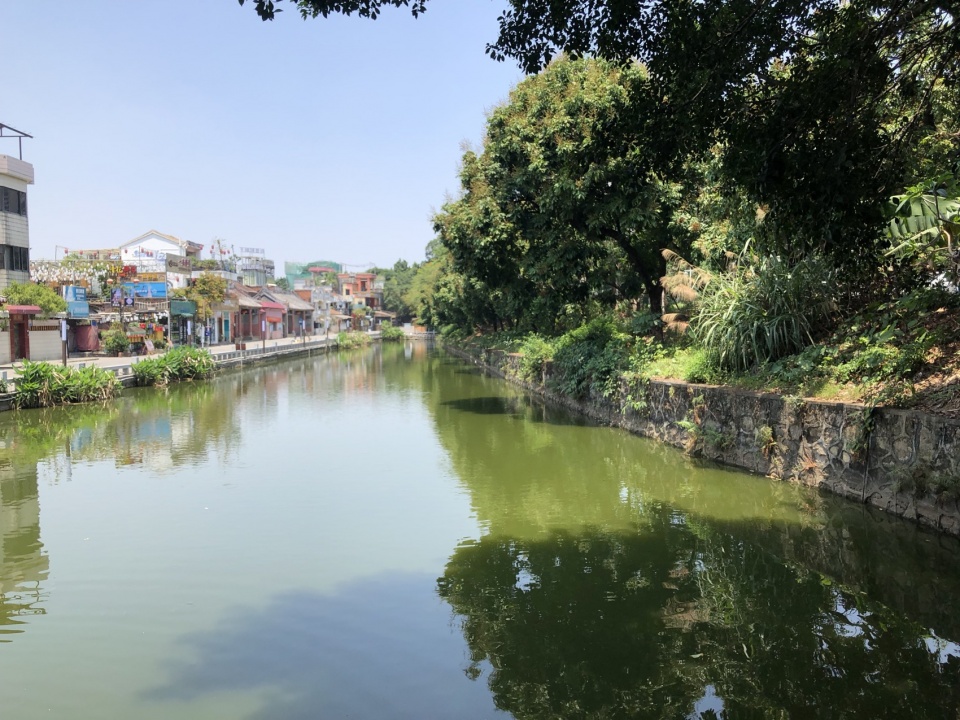
局促的预算,让我们将目光锁定在水塘东岸。东岸现状杂草丛生,但树木繁茂,与东引运河一路之隔,比起商业盘根错节的西侧,也自然是居民更好的去处。既然有的放矢,答案也一目了然,我们整理干净东岸的植被,沿塘堤植入一条细细的廊道,廊道端头与北侧的活动广场和南侧的空地连接,与西岸共同围绕水塘,组成了步行的滨水环线。
With a limited budget, we turned our attention to the east bank of the pond. Currently overgrown with weeds but lush with trees, the east bank is separated from the Dongyin Canal by a road. Compared to the commercially dense west bank, it naturally offers a better space for residents. With a clear goal, we cleaned up the vegetation on the east bank and introduced a narrow walkway along the pond embankment. This walkway connects to the activity square in the north and an open space in the south, forming a circular waterfront path around the pond along with the west bank.
▼改造前的东岸,east bank before rehabilitation
▼设计生成策略,strategy scheme
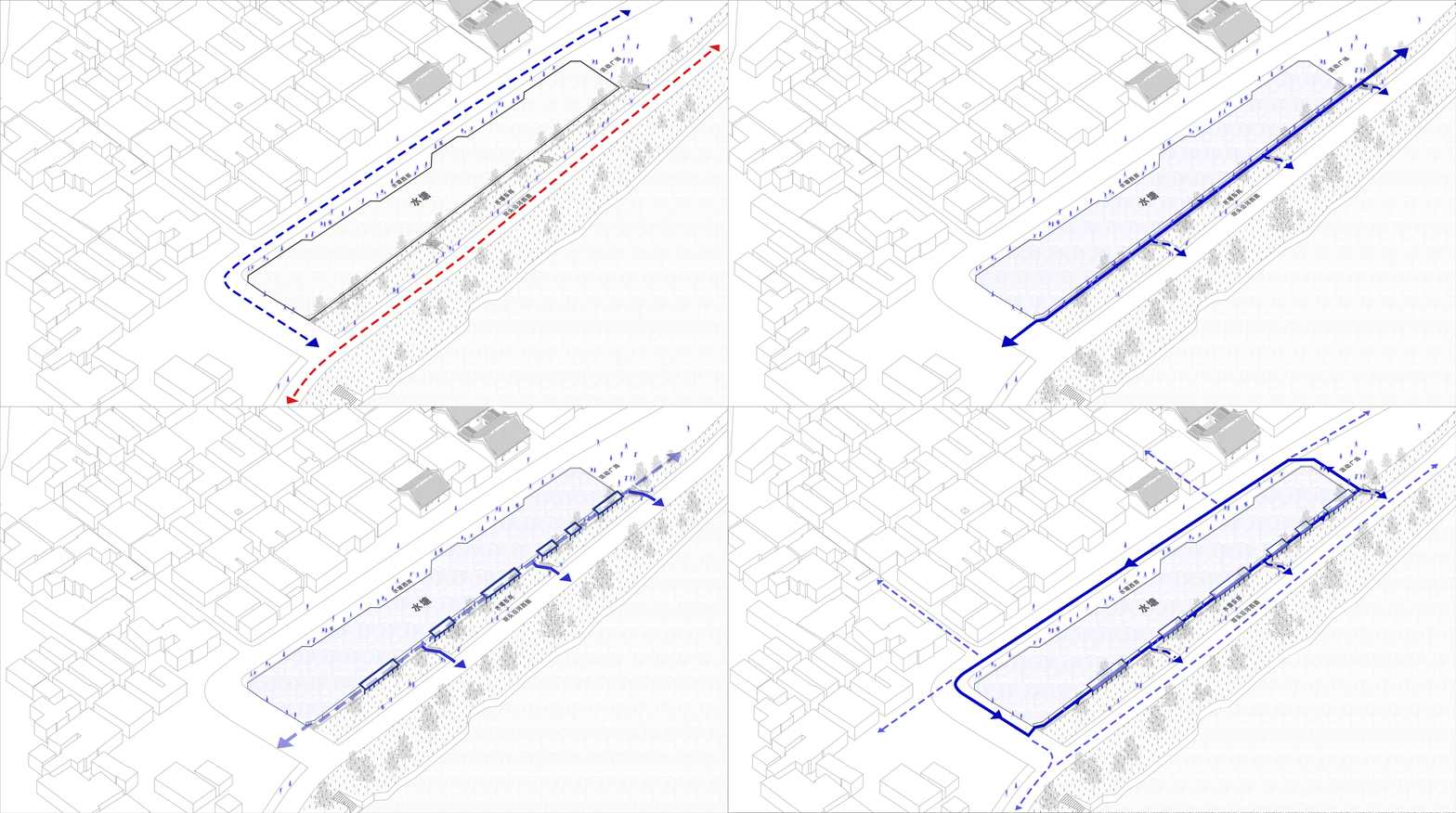
环形的动线不仅增加了水塘周边可活动的空间,也重新营造了滨水新的体验方式,为游客与村民的共处提供了可能。水塘西侧依旧让渡给游客和商业,而重新开放的东侧置入可供人休憩的长亭,背倚绿树,前望古村。一塘水的距离,渲染着两侧并不遥远的对望,湿润的视野里,相互也便成了陪伴。
This circular path increases the usable space around the pond and creates a new waterfront experience, allowing for coexistence between tourists and villagers. The west bank remains dedicated to tourists and commercial activities, while the reopened east bank features a pavilion for rest, backed by greenery and facing the ancient village. The distance across the pond creates a subtle connection between the two sides, with the moist scenery fostering a sense of mutual companionship.
▼改造后的水塘与长亭,pond and pavilion
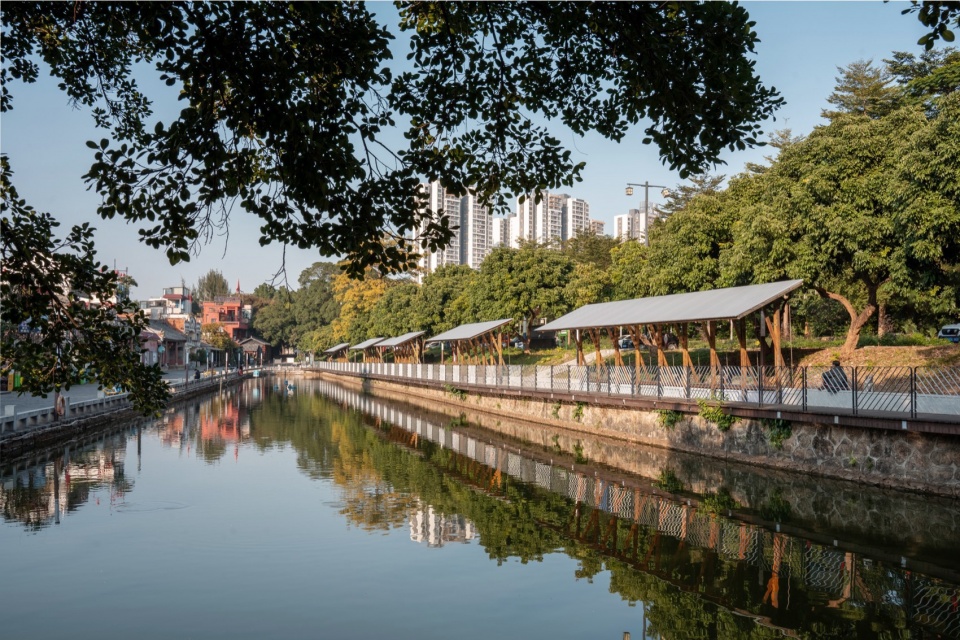
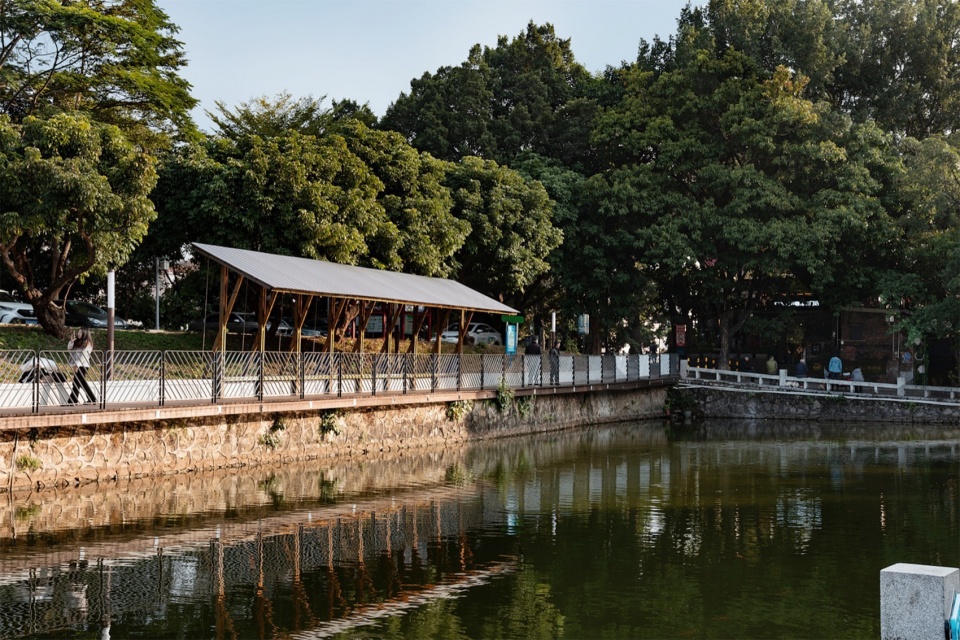
廊亭The Pavilion
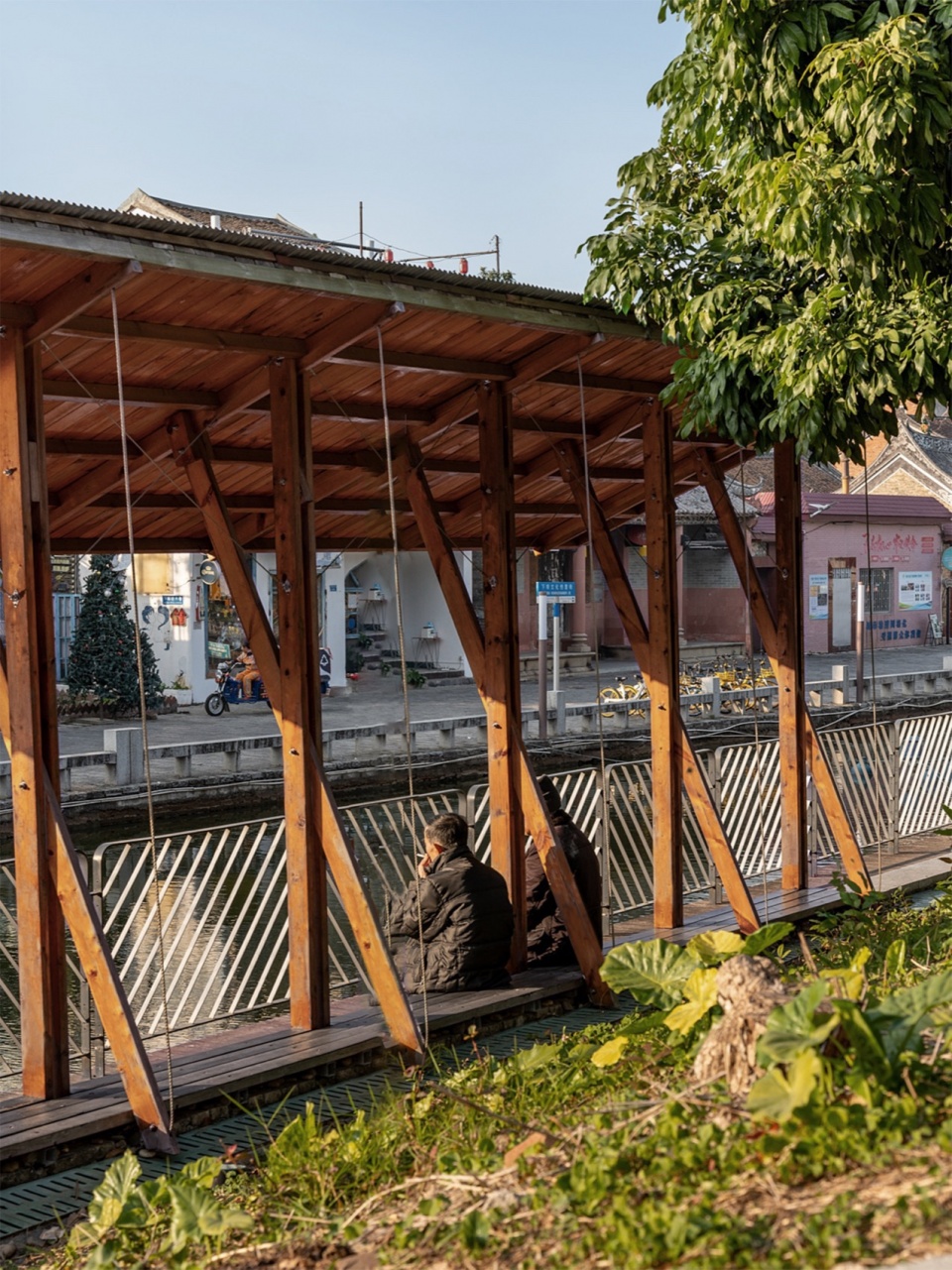
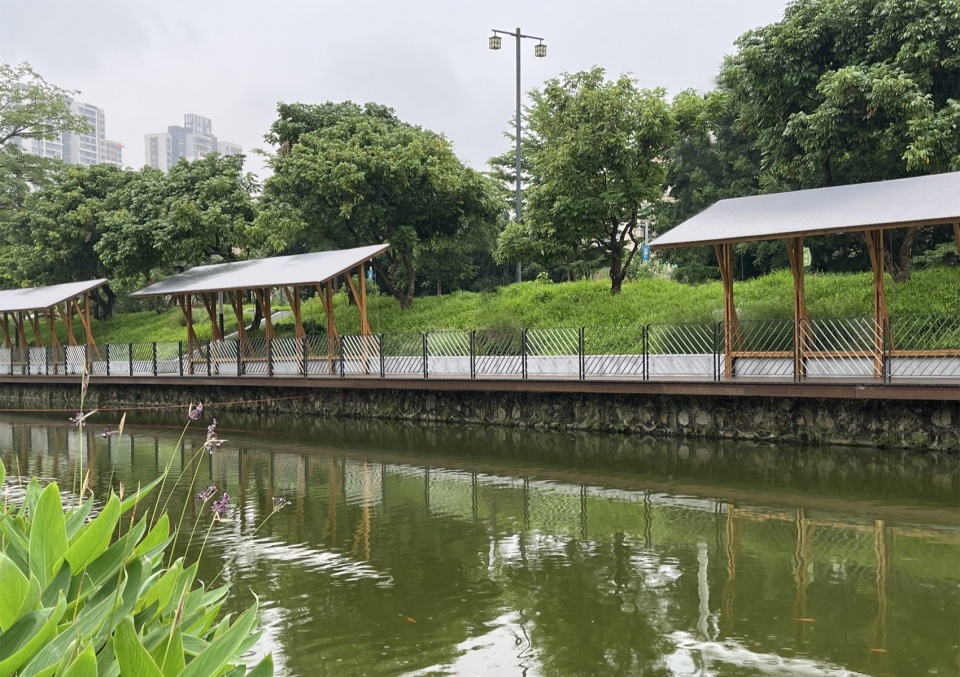
满堤的绿植是水塘西岸的重要视觉记忆,因此这条水边狭窄的线性长亭,为了给视线留出开口,没有做成连续屋面的构筑物。在乔木的间隙之处,我们沿廊道内侧放置了五个长短不一的小亭子,毫无悬念地次第展开。亭子的高度被限制在树冠以下,遵循着场地的尺度参照,也让屋檐上下皆是绿意。
The lush greenery along the embankment is a key visual memory of the pond’s west bank. The linear pavilion by the water was not designed as a continuous structure. Excessive intervention would obscure the beautiful scenery behind it, which is not what we desire. Instead, we placed five small pavilions of varying lengths along the inner side of the walkway, spaced between the trees. The height of the pavilions was kept below the tree canopy, respecting the scale of the site and ensuring that the space beneath the eaves remained green.
▼长亭的开口与沿河西路通过台阶连接,pond bank and staircase
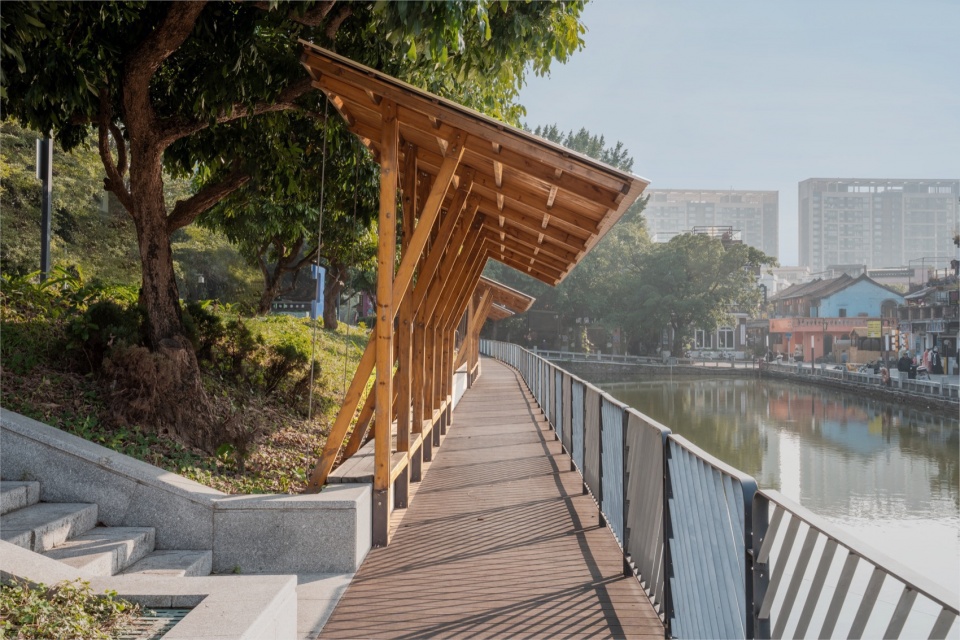
▼亭下的场景,space beneath the eaves
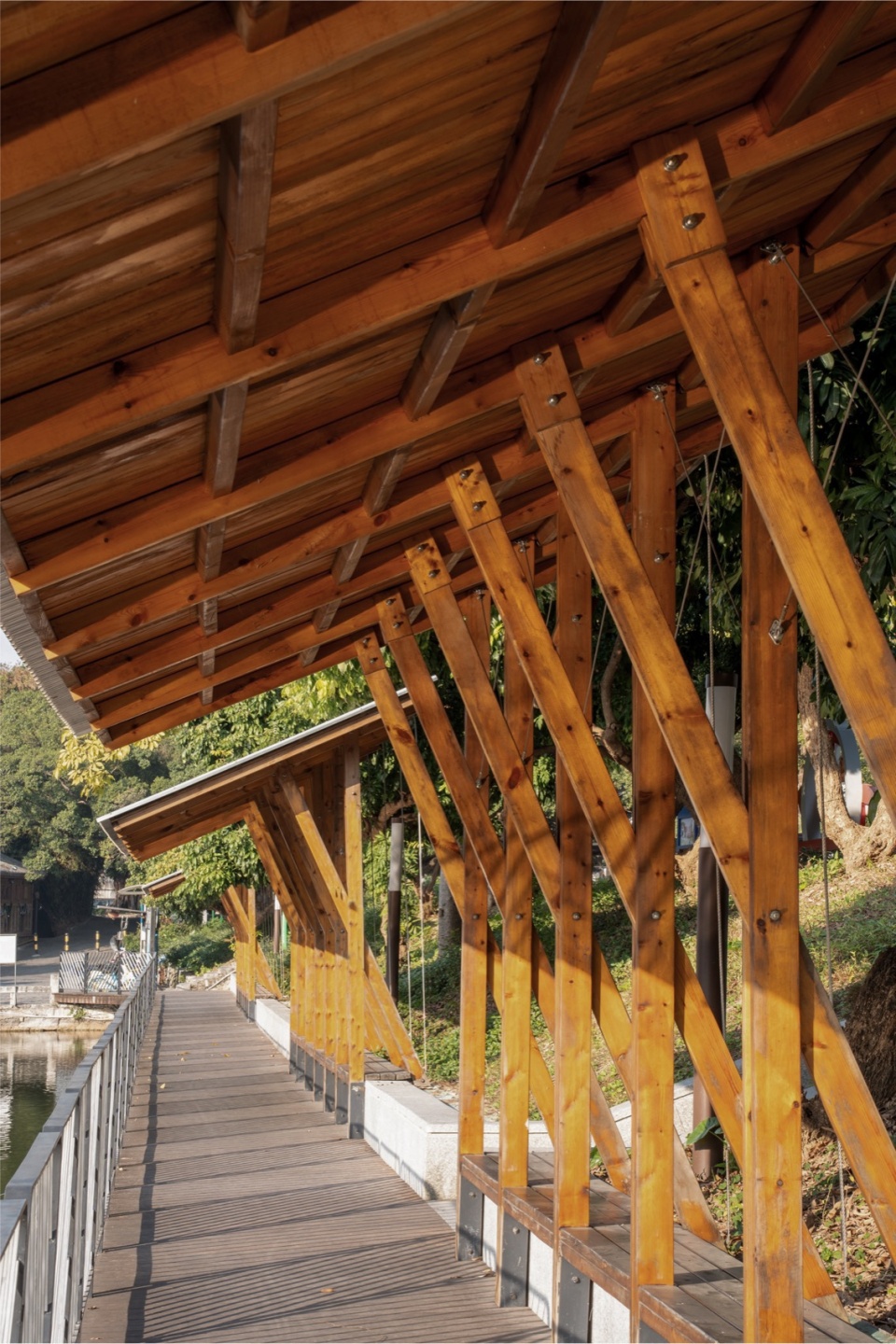
▼屋檐上下皆为绿意,that the space beneath the eaves remained green
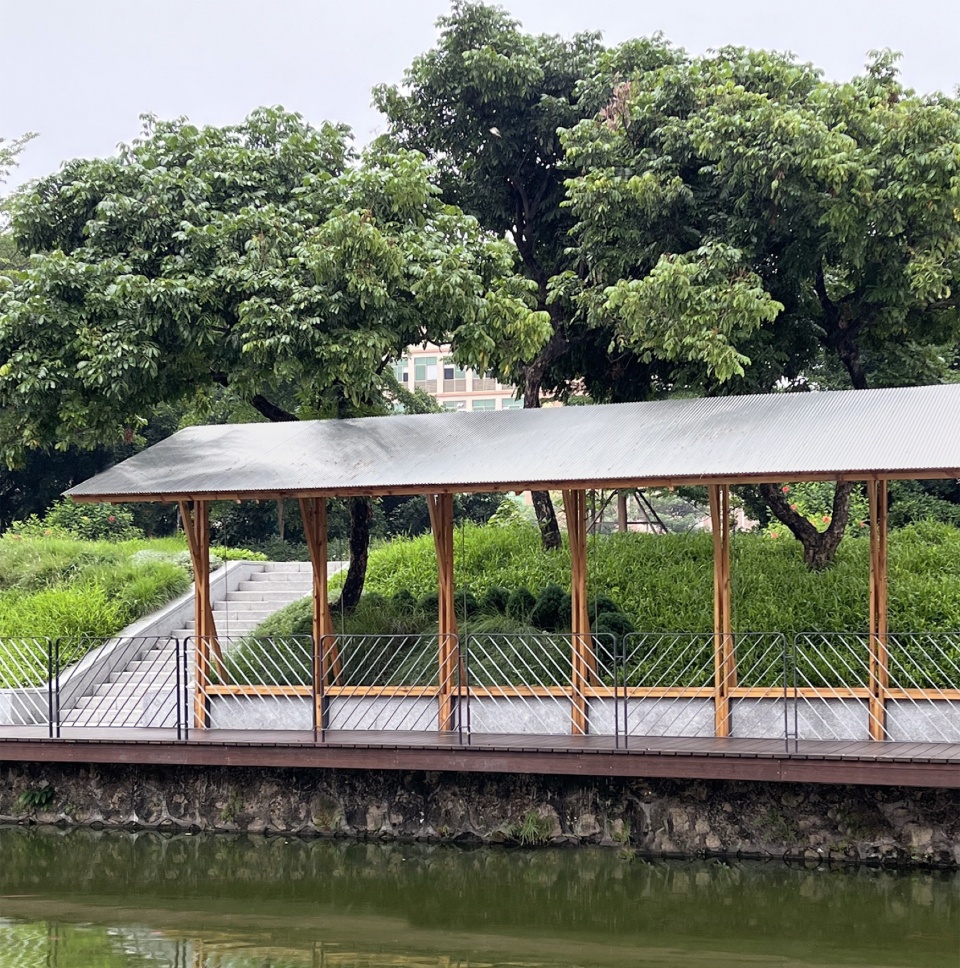
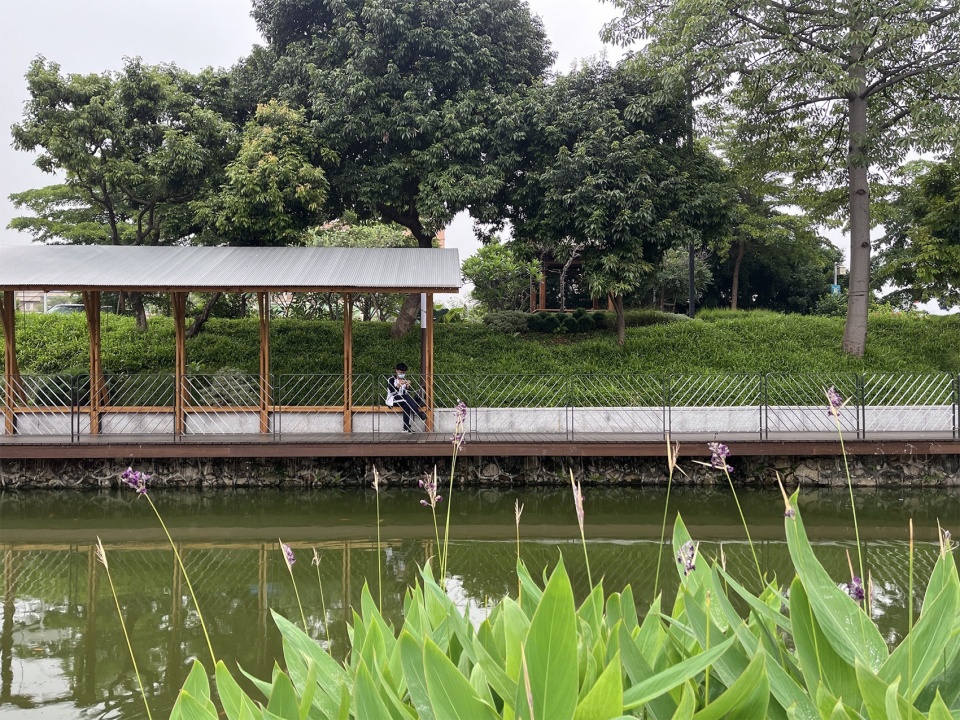
西岸已然琳琅纷繁,东岸便不宜过多瞩目。亭子的单坡悬挑,提供荫蔽的同时,也是视觉的必要:一旁的坝头沿河西路较高,视线俯看过来,倾斜的屋檐露出木色的底面,融入自然和树影;而面对西岸的宰制,则呈现内敛的檐下空间,提示公共场景的借地发生。
With the west bank already bustling, the east bank should not draw too much attention. The pavilions’ single-slope overhang provides shade while serving a visual purpose. From the higher vantage point of Batou Yanhe West Road, the tilted eaves reveal a wooden underside, blending into the natural surroundings and tree shadows. Meanwhile, facing the dominance of the west bank, the pavilions present a modest space beneath the eaves, hinting at the potential for public activities.
▼水塘两岸屋面的繁与简,different roof styles
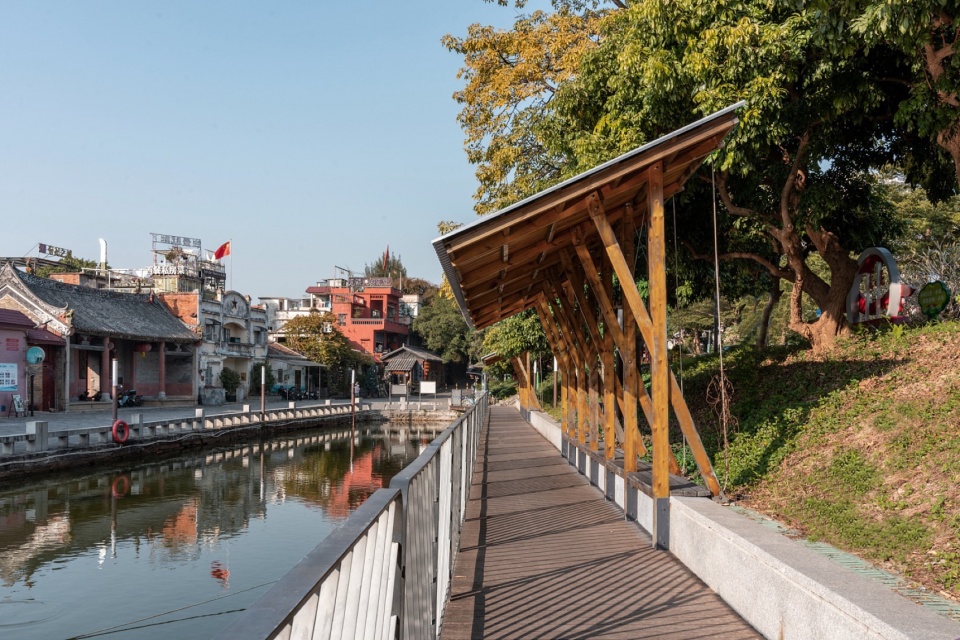
▼沿河西路看向老村,waterscape view
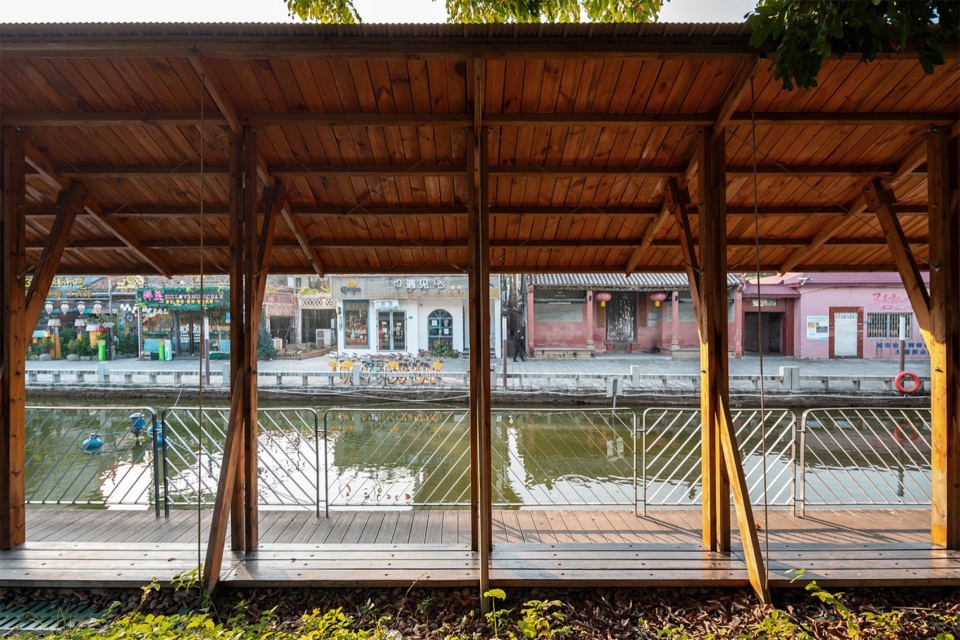
低成本建造Affordable construction
为了成本的进一步控制,我们选择在悬挑的基础之上,以模块化的方式进行建造。单个模块包括与基础的连接、栏杆、立柱、座椅、钢拉索和屋檐,模块化的结构横向展开,嵌入线性的空间廊道,并选择在完整直线段落位,避开场地的自然曲线。钢龙骨上铺设防腐木路面,木柱和斜撑架起倾斜的木梁,结合拉锁共同稳定上覆金属波纹铝板的屋面。
▼长亭模块的最小单元,module of the pavilion
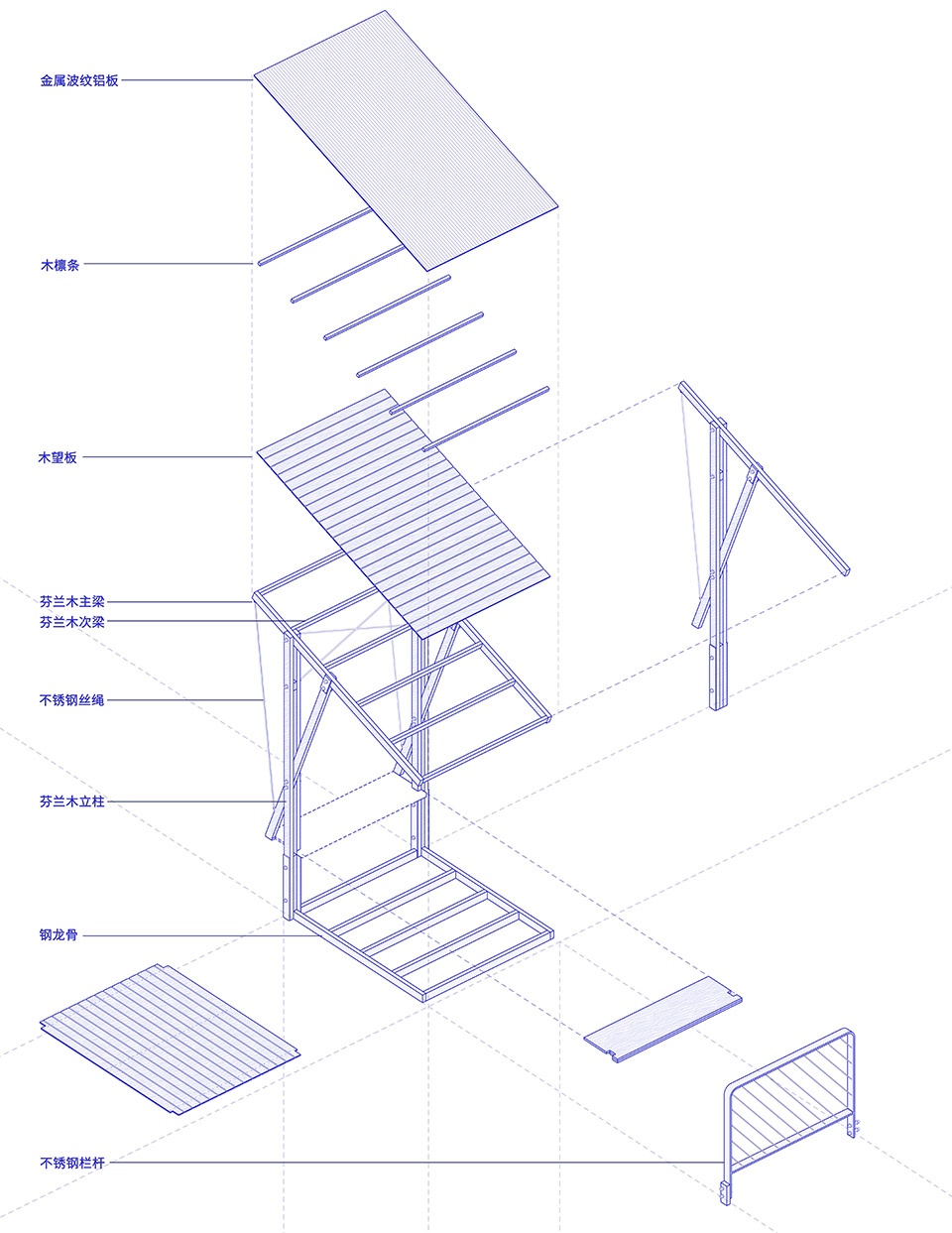
We opted for modular construction based on the overhang design to control costs further. Each module includes connections to the foundation, railings, columns, seating, steel cables, and the roof. These modular structures are arranged linearly along the walkway and placed in straight sections to avoid the natural curves of the site. Steel frames support the anti-corrosion wooden deck, with wooden columns and diagonal braces holding up the sloping wooden beams, stabilized by steel cables and covered with corrugated aluminium panels.
▼六个单元组成的一组长亭,six modules form a pavilion
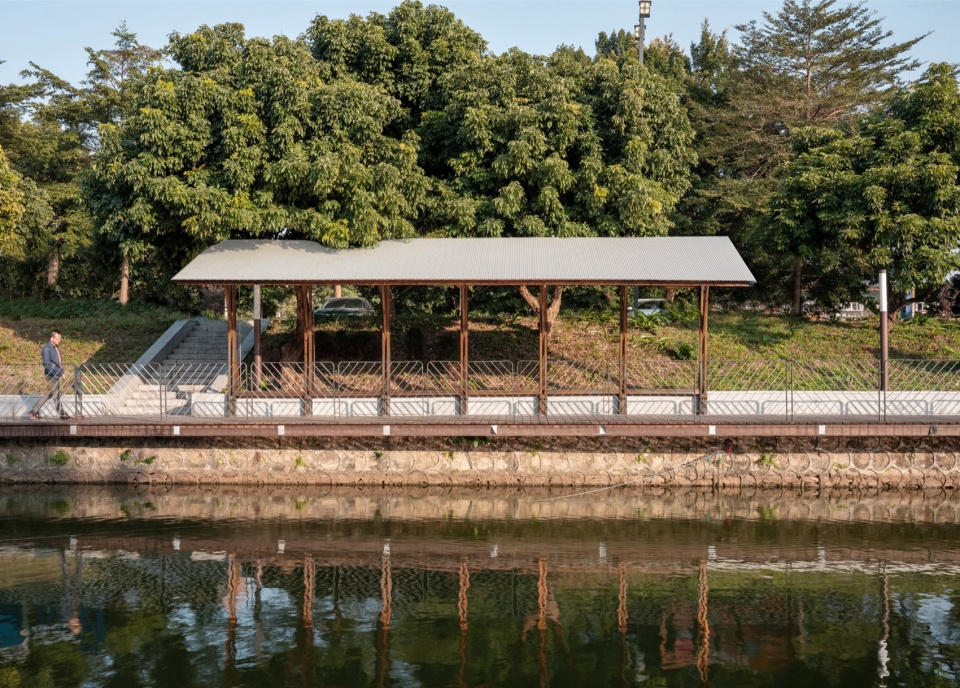
▼长亭之间,between the pavilions
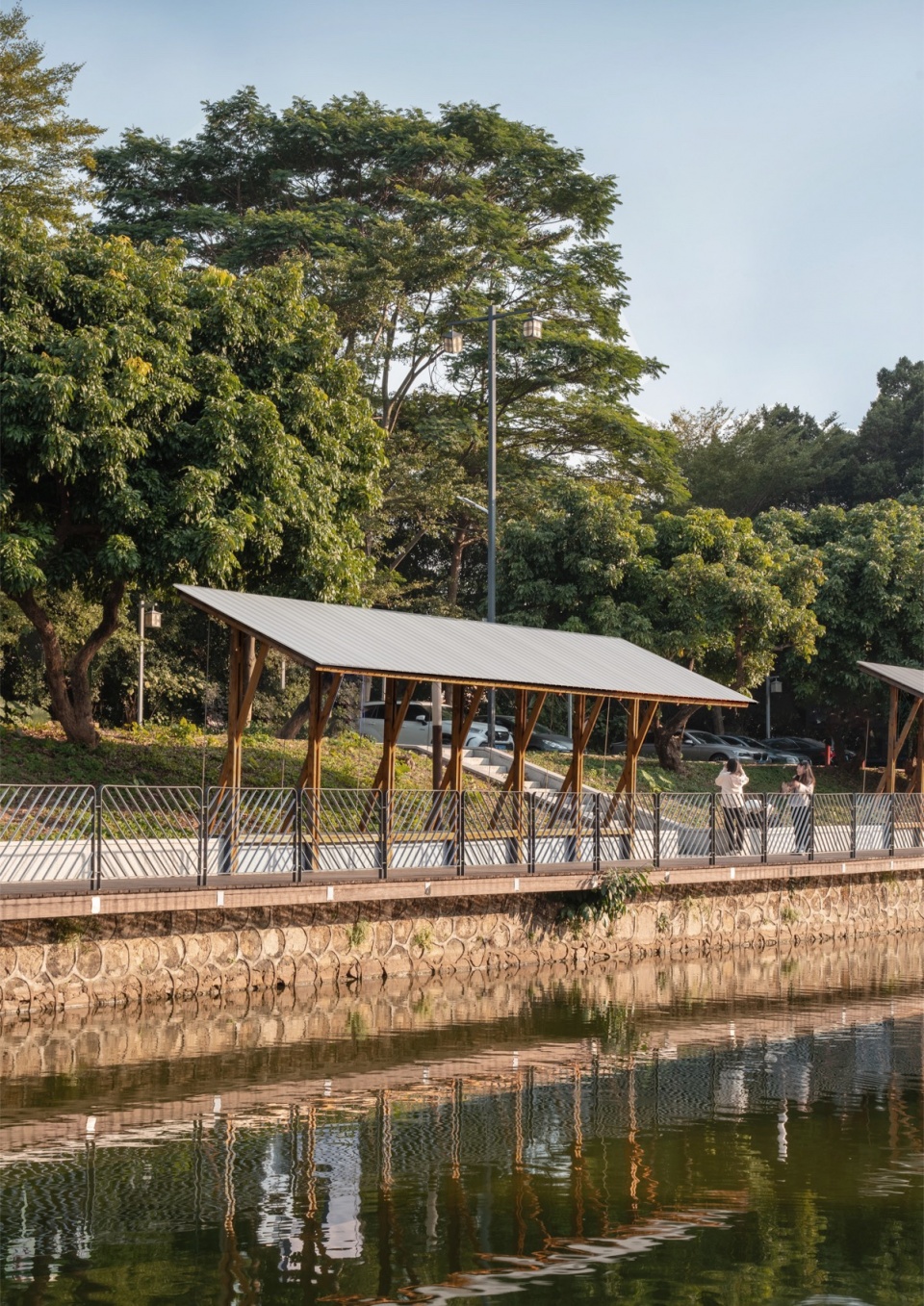
▼亭的构造细节,details of the pavilion
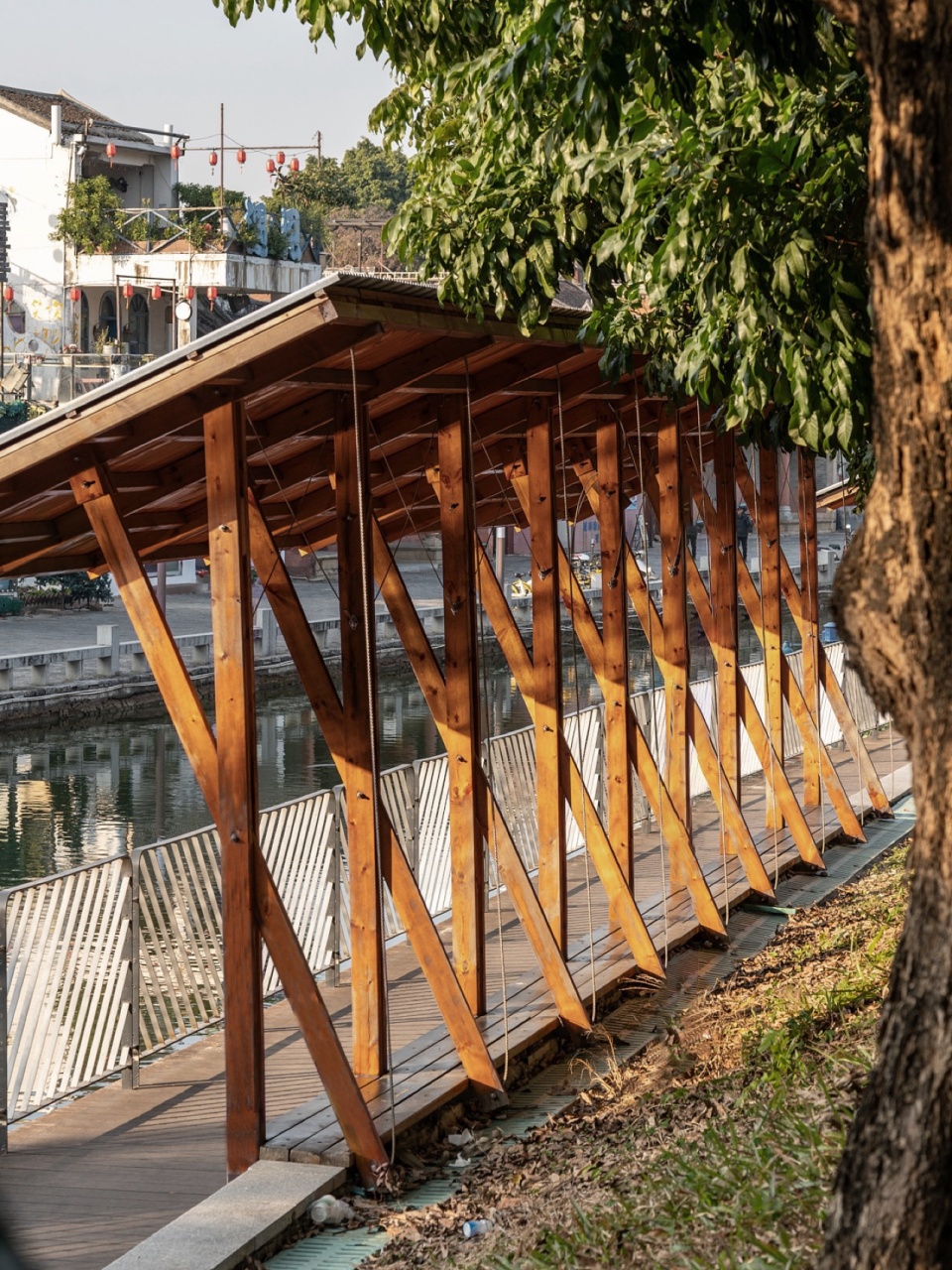
在廊道的具体实施中,除了满足为村民提供友好通行空间的需求,也需尊重其保护水体的意愿。基于此,我们利用现有堤岸挡墙作为边界,并悬挑步道微微探出,形成轻盈的边界效果。整体建造的细节层面没有进行过多修饰,基本选择了最常规的材料与连接方式。这种选择除去成本的考量,也带着一点天真未凿,放大着功能性的直观呈现,消除了与场地日常的生涩感。
▼依托于原有堤岸的步道,pathway utilizing the existing embankment wall
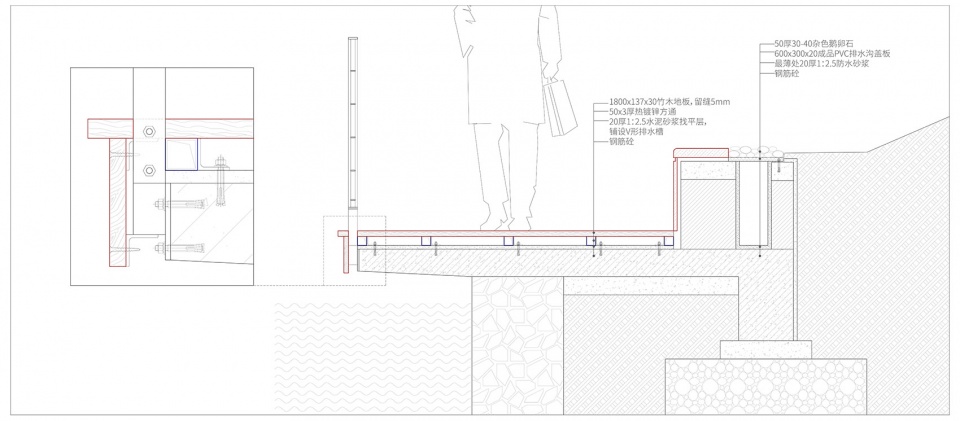
▼亭子细节,pavilion details
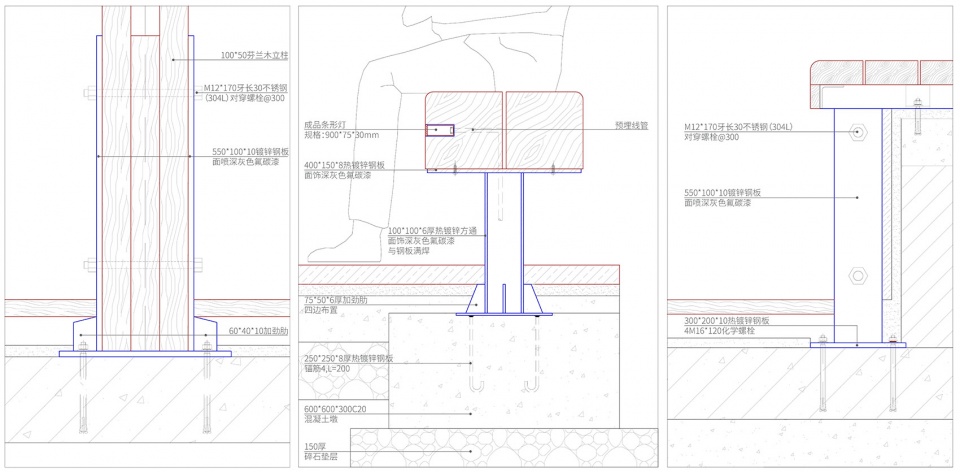
During the walkway construction, we aimed to provide a friendly passage for villagers while respecting their desire to protect the water body. To achieve this, we used the existing embankment wall as a boundary and slightly extended the walkway over the water, creating a light and floating edge. The construction details were kept simple, using conventional materials and connections. This approach, driven by cost considerations, also reflects a sense of simplicity, emphasizing functionality and reducing any sense of artificiality in the daily use of the space.
▼微微悬挑的步道,slightly cantilevered pathway
相较于我们其他的项目,这次设计中的诸多选择并没那么纠结,过程更坚定,也少了几分置之不答。各种机缘巧合,让我们多次回到这里,曾经的繁弦急管、红飞翠舞已逐渐式微,但更贴切的相聚还依然活跃,时间也留下气口,让下坝坊渐渐别开生面。几年来,一塘之隔的长亭,木柱已有点斑驳,座椅也被磨出痕迹,但因大概还是有几分可观,亭下的人往来依旧。这里始终是居民们的一席之地,带着天真无邪的水汽,来到这里的人,每天能看到水,水也能看到他。
Compared to our other projects, the decisions in this design were less fraught, and the process was more decisive. Various coincidences brought us back to this place multiple times. The once bustling and lively atmosphere has gradually faded, but more intimate gatherings still thrive, and time has allowed Xiaba to transform gradually. Over the years, the pavilion has seen its wooden columns become slightly weathered, and the seats have worn, but it remains a place of interest, with people still wandering. This place continues to be a haven for the residents, filled with a pure, watery atmosphere. Those who come here can see the water every day, which also reflects them.
▼从西岸回看长亭的社区生活,community public spac
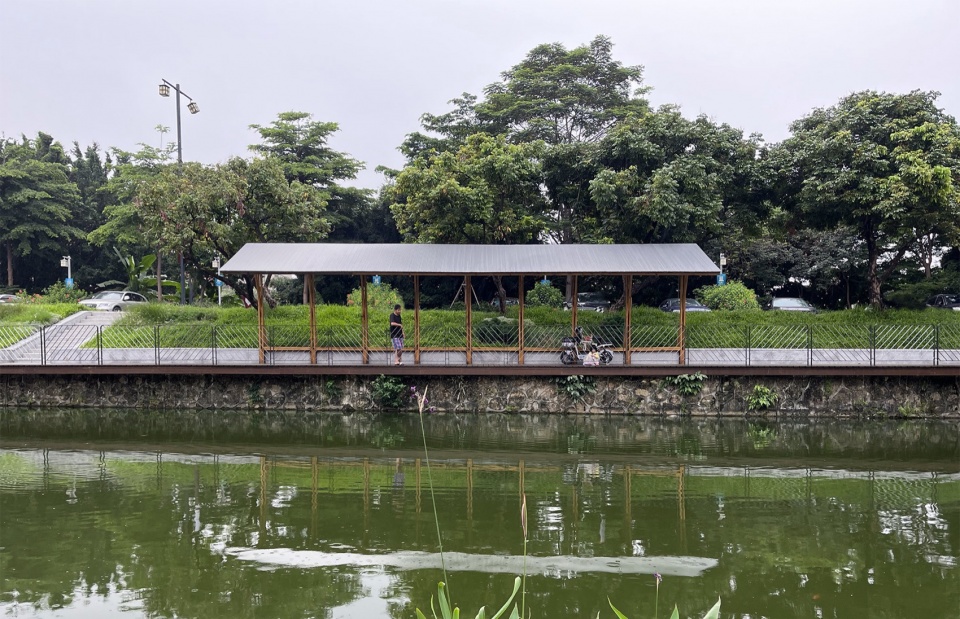
▼东岸成为公共空间的延续,east bank becomes a continuation of public space
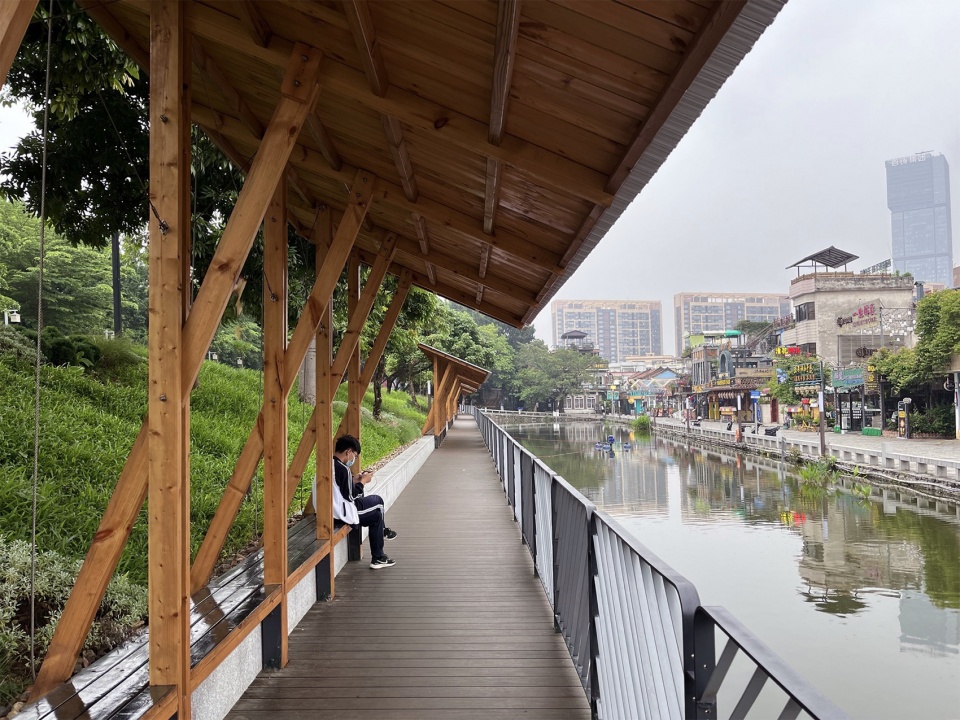
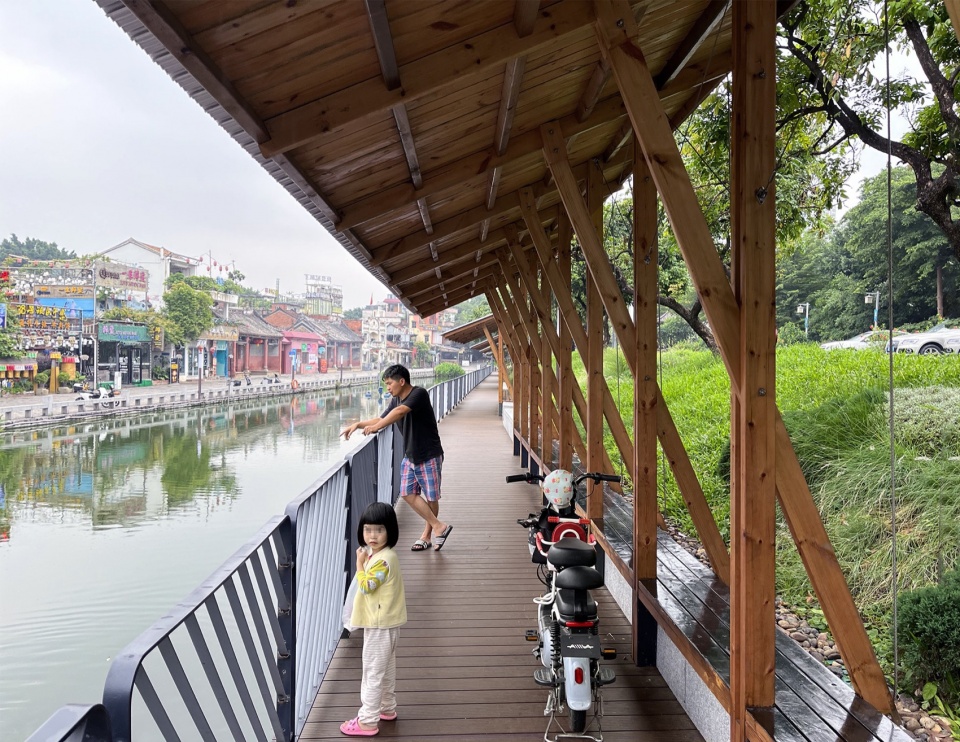
▼檐下视角的社区日常,community daily scene under the eaves
© XSVISION SPACE