2025年大阪世博会沙特阿拉伯王国国家馆 / Foster + Partners
沙特阿拉伯王国国家馆现已向公众开放。该馆由Foster + Partners建筑事务所设计,位于大阪梦洲水岸地带,整体空间体验呼应沙特城镇的探索之旅,为游客打造一个沉浸式的参与环境,感受这个王国尚未被世人熟知的奇迹。该馆具有高度的可持续性与包容性,在设计之初就考虑到其未来的遗产价值,目标是达到日本绿色建筑评估系统CASBEE的最高等级(S级),并实现运营阶段的零碳排放。
The Kingdom of Saudi Arabia Pavilion for Expo 2025 Osaka has opened to the public. Designed by Foster + Partners and located on the Yumeshima waterfront, the Pavilion creates a spatial experience that echoes the exploration of Saudi Arabian towns and cities, while providing a setting for immersive engagement that connects visitors with the undiscovered wonders of the Kingdom. The highly sustainable and inclusive Pavilion has been designed with its legacy in mind as the project aims to achieve the Japanese green building rating system’s highest level (CASBEE S) and will be net zero operational carbon.
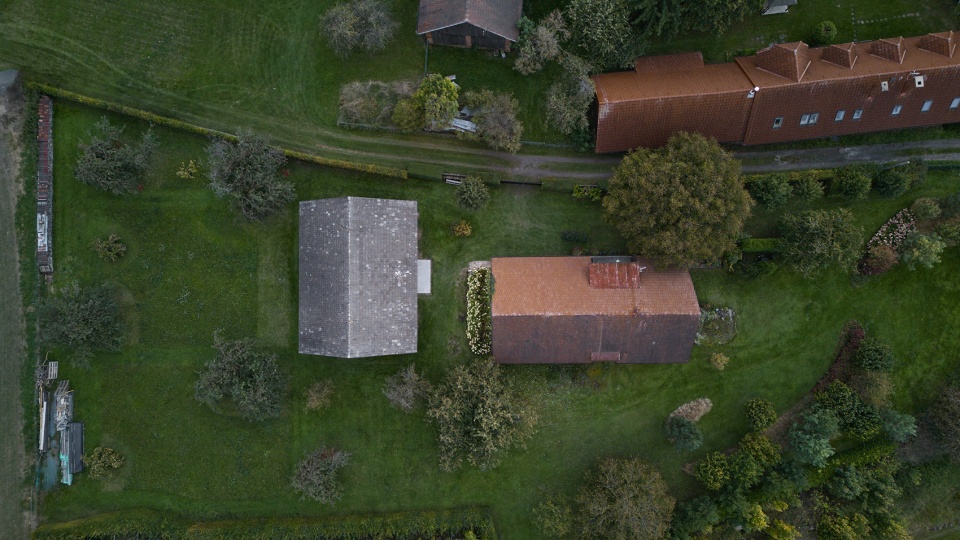
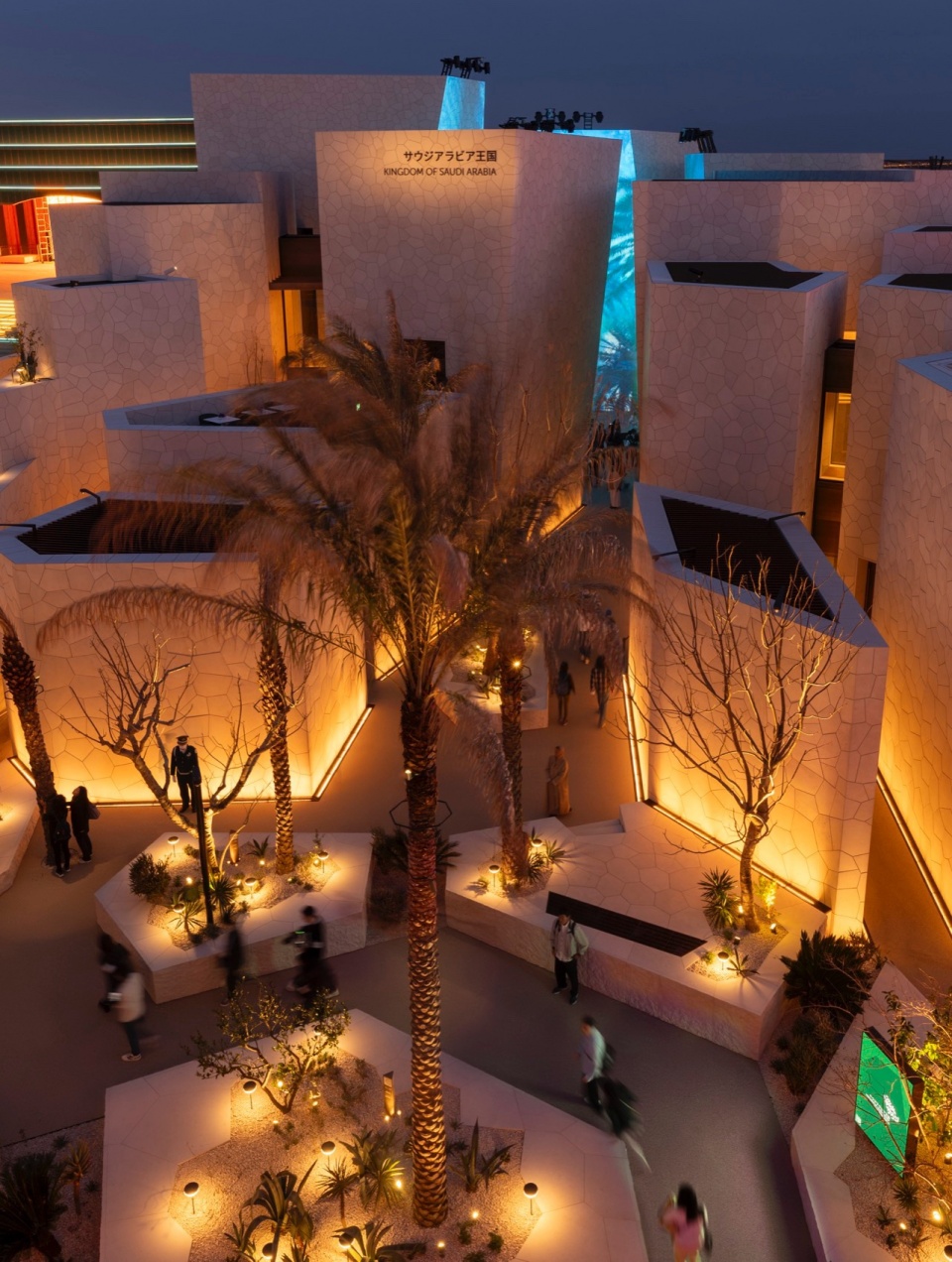
▼展馆的体量让人想起传统沙特村庄的有机形状,
The pavilion’s massing recalls the organic shapes of traditional Saudi villages
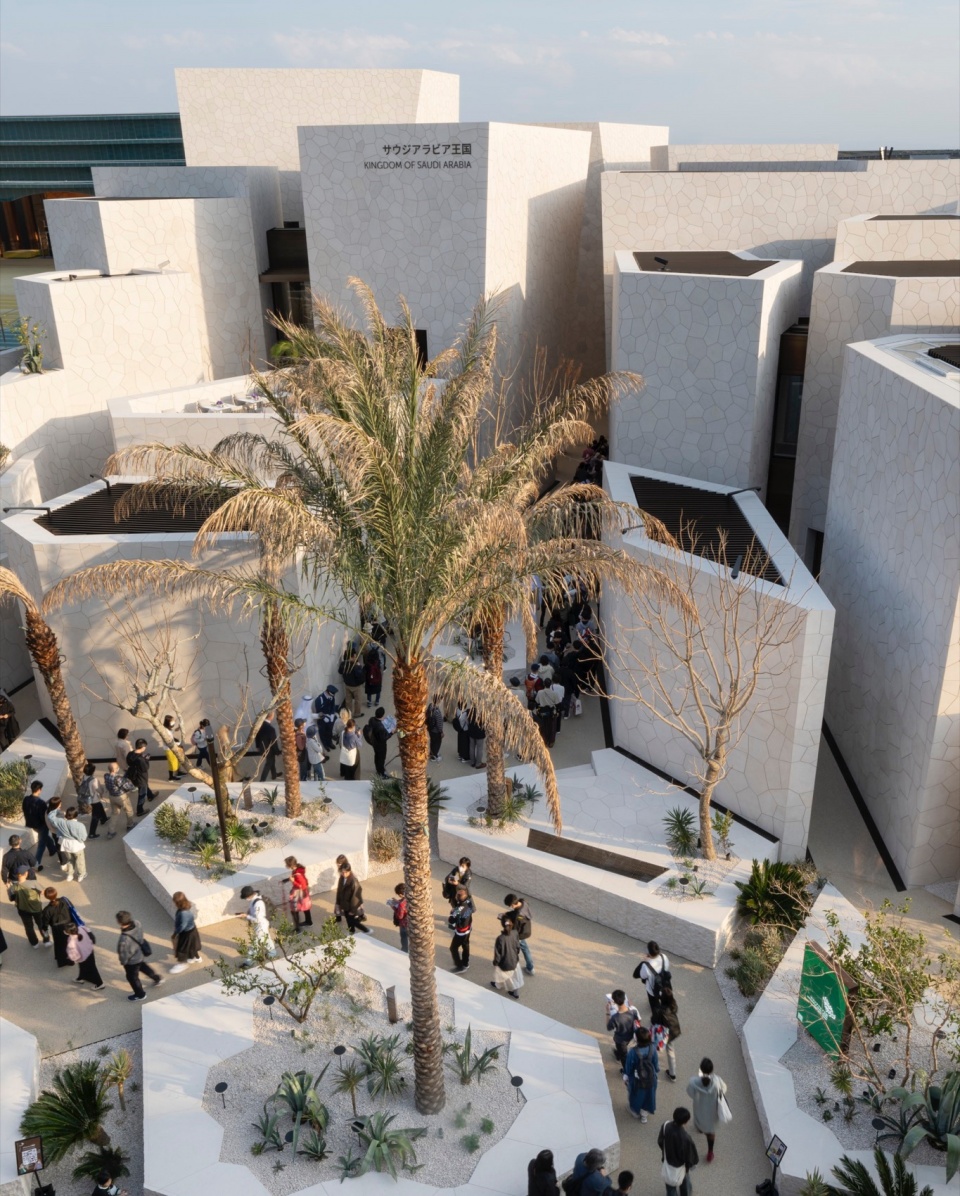
▼景观前院作为屏障,保护亭子免受更猛烈的北风的侵袭,The landscaped forecourt acts as a barrier to protect the pavilion from harsher northerly winds
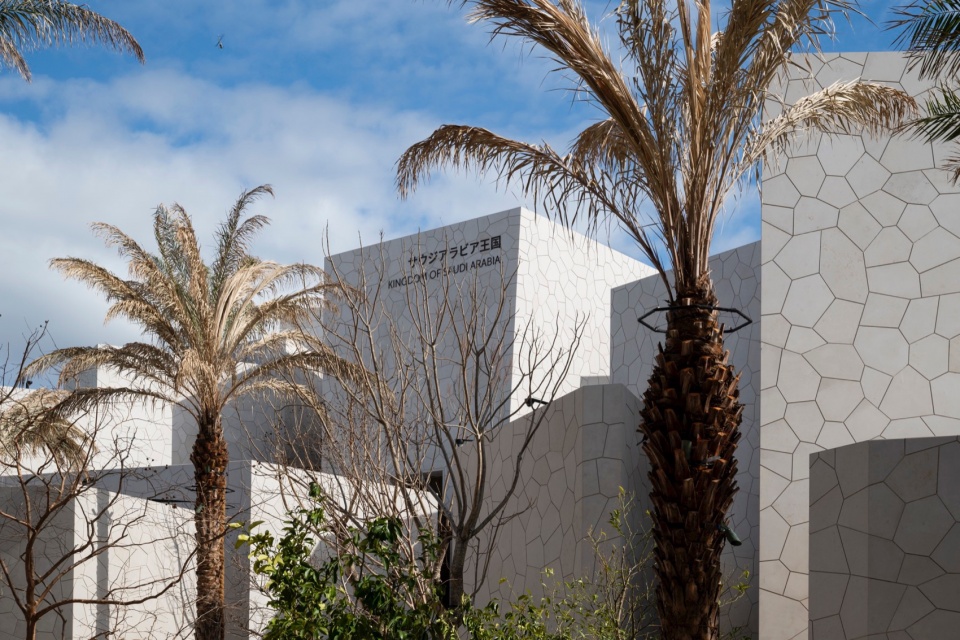
游客将从前院进入展馆,周围种植有原生沙特植物,并穿越狭窄街巷,最终抵达项目的核心——沙特庭院。该庭院在白天为游客提供静谧的沉思空间,夜晚则变身为表演与活动场所。从这里出发,游客可以探索由蜿蜒街道组成的“村落”,透过窗户与门洞进入一系列沉浸式空间,这些空间由Foster + Partners与Journey团队(59 Productions与Squint/Opera)紧密协作设计。展馆向沙特建筑遗产致敬,唤起场所感,为游客呈现沙特街道日常生活与城市肌理的一瞥。
Visitors enter the Pavilion through the forecourt, planted with native Saudi Arabian flora, and travel through narrow streets that lead to the Saudi Courtyard, which is the beating heart of the scheme. The Courtyard allows for moments of quiet reflection during the day and transforms into a venue for performances and events at night. From here, visitors are invited to explore a ‘village’ of meandering streets, with windows and doorways into a series of immersive spaces, designed in close collaboration with Journey (59 Productions and Squint/Opera). The project honours the Saudi’s architectural heritage, evokes a sense of place, and provides visitors with a glimpse into the daily life and urban fabric of the Kingdom’s streets.
▼游客被邀请探索蜿蜒街道的“村庄”,通过窗户和门进入一系列沉浸式空间,
Visitors are invited to explore a ‘village’ of meandering streets, with windows
and doorways into a series of immersive spaces
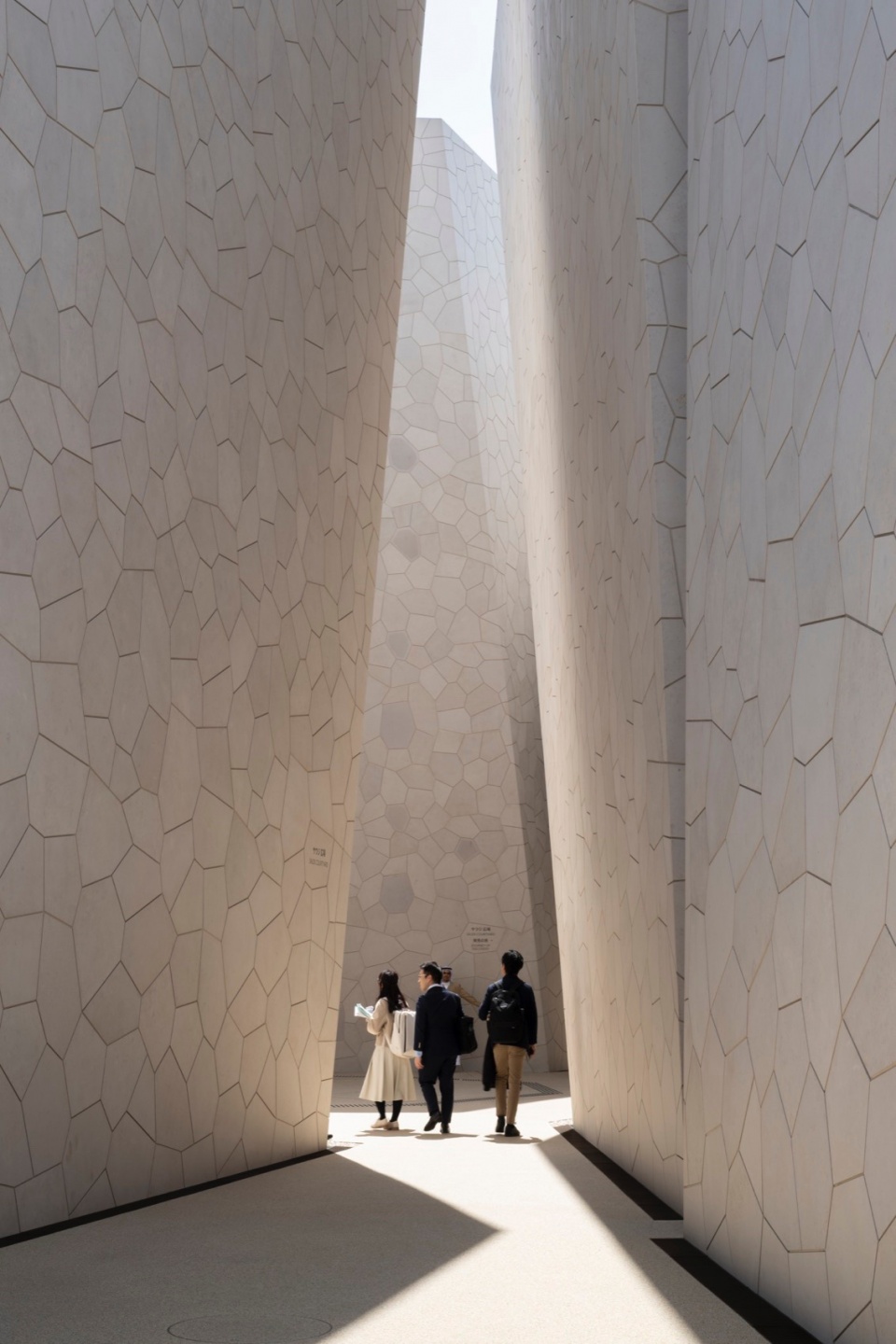
▼沉浸式空间是与Journey (59 Productions和Squint/Opera)密切合作设计的,Immersive spaces have been designed in close collaboration with Journey (59 Productions and Squint/Opera).
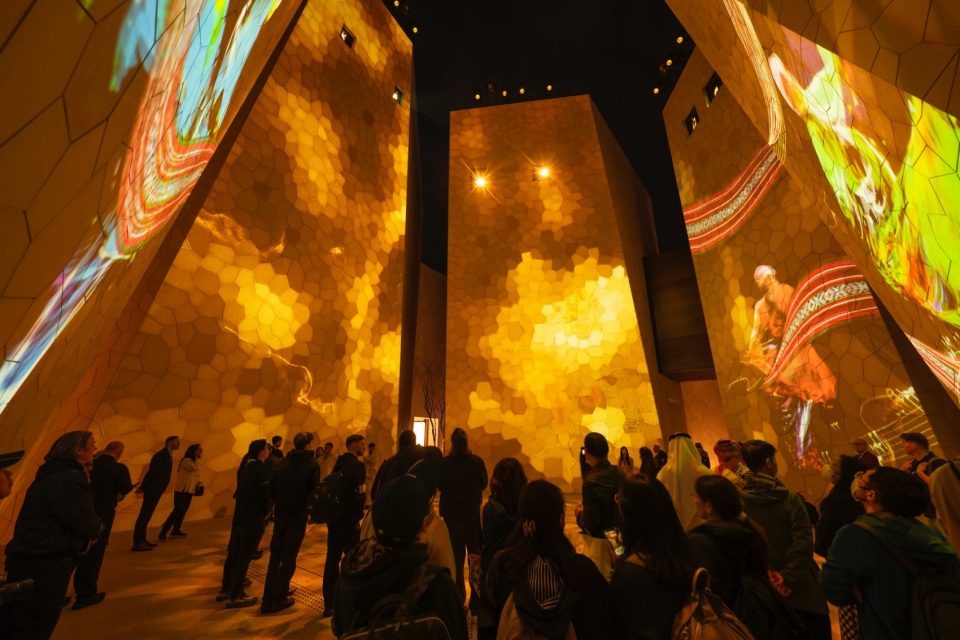
▼庭院在晚上变成了表演和活动的场所,The courtyard transforms into a venue for performances and events at night
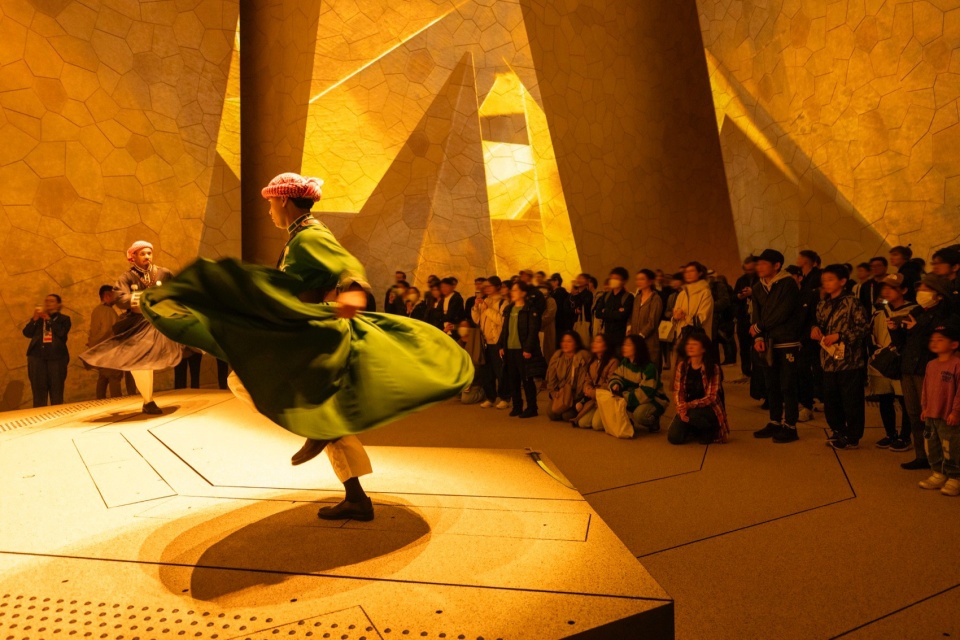
▼沉浸式空间是与Journey (59 Productions和Squint/Opera)密切合作设计的,Immersive spaces have been designed in close collaboration with Journey (59 Productions and Squint/Opera)
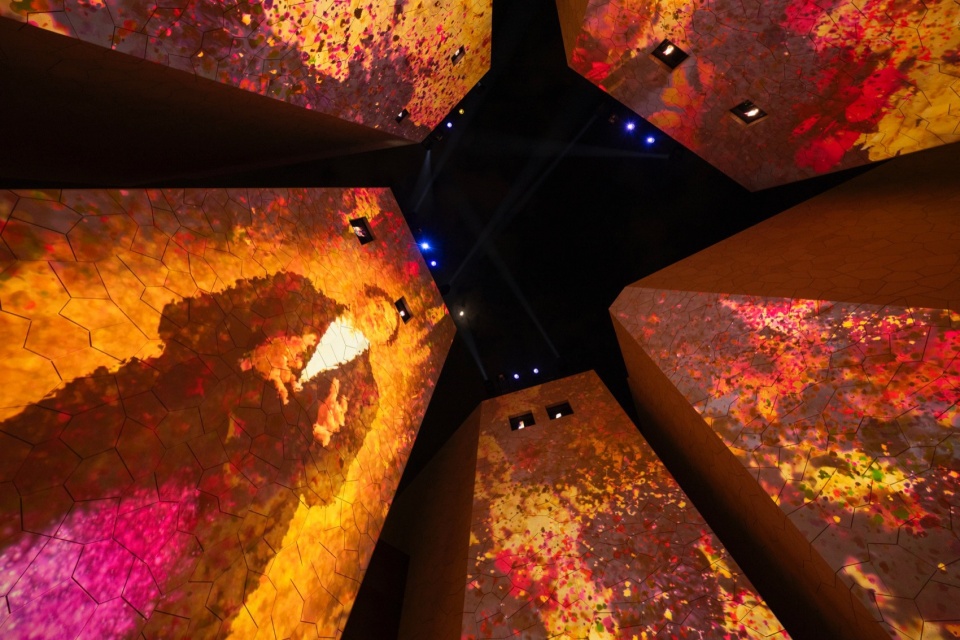
沙特馆的体量呼应传统沙特村落的有机形态,设计团队在方案发展过程中引入了计算流体动力学模拟,使来自西方的凉风能够在夏季高温时流入街道。在四月与十月较凉爽的月份,前院的景观设计还能抵御来自北方的强风。
The Saudi Pavilion’s massing recalls the organic shapes of traditional Saudi villages. The practice’s design developed these concepts and has been carefully crafted using computational fluid dynamics simulations, to allow cool winds from the west into the streets during the height of summer. In the cooler months of April and October, the landscaped forecourt acts as a barrier to protect the pavilion from harsher northerly winds.
▼展馆创造了一种空间体验,与沙特阿拉伯城镇的探索相呼应,The pavilion creates a spatial experience that echoes the exploration of Saudi Arabian towns and cities
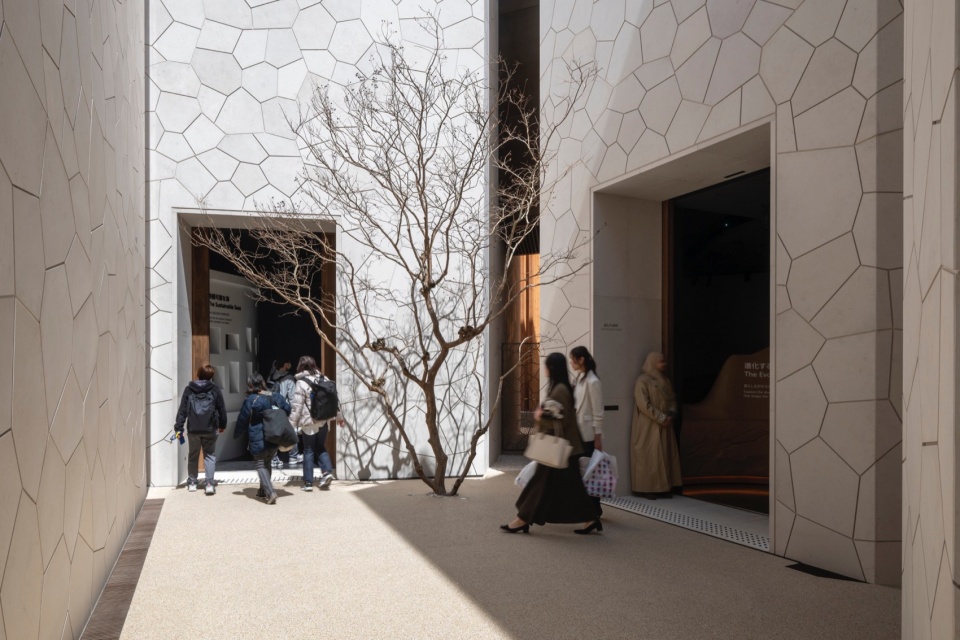
▼游客被邀请探索蜿蜒街道的“村庄”,通过窗户和门进入一系列沉浸式空间,Visitors are invited to explore a ‘village’ of meandering streets, with windows and doorways into a series of immersive spaces
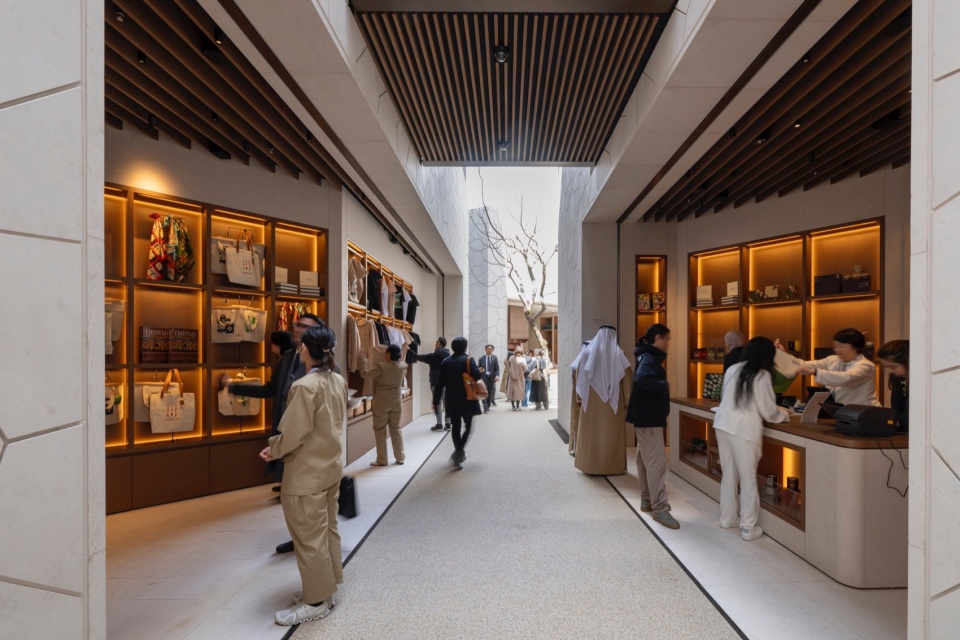
可持续性亮点Sustainability
·沙特馆是首个获得WELL健康与安全评级(HSR)认证的临时建筑。
·建筑采用低碳材料,并遵循沙特绿色倡议(Saudi Green Initiative)进行设计。
·节能照明系统与屋顶光伏发电技术为展馆供电。
·结构设计尽可能轻盈,以减少地基所需的混凝土量。
·创新的无缝制造与装配(DfMA)结构系统结合钢框架与预制钢梁混凝土楼板,实现抗震性与施工效率的平衡。
·外立面由轻质的沙特石材复合系统构成,便于拆解重组或根据未来地点的需求重新配置,兼具可变性与持久感。
· The Saudi Pavilion is the first temporary structure to receive the WELL Health and Safety Rating (HSR) certification.
· It is made from low carbon materials and designed in line with the Saudi Green Initiative.
· The Saudi Pavilion uses energy saving luminaires and incorporates rooftop photovoltaic technologies that generate electricity.
· It is designed to be as lightweight as possible, to minimise the amount of concrete for the foundations.
· An innovative, jointless DfMA-based (Design for Manufacturing and Assembly) structural system incorporates a steel moment frame and precast reinforced concrete slabs on steel beams, balancing ductile design for buildings in high-seismic zones with fast construction and quality control.
· The façade is made from a lightweight Saudi stone composite system and designed to be efficiently deconstructed and reassembled, or completely reconfigured, to meet different requirements in a future location. It has been designed and manufactured to give the appearance of permanence.
▼中央庭院允许人们在白天安静地反思,The central courtyard allows for moments of quiet reflection during the day
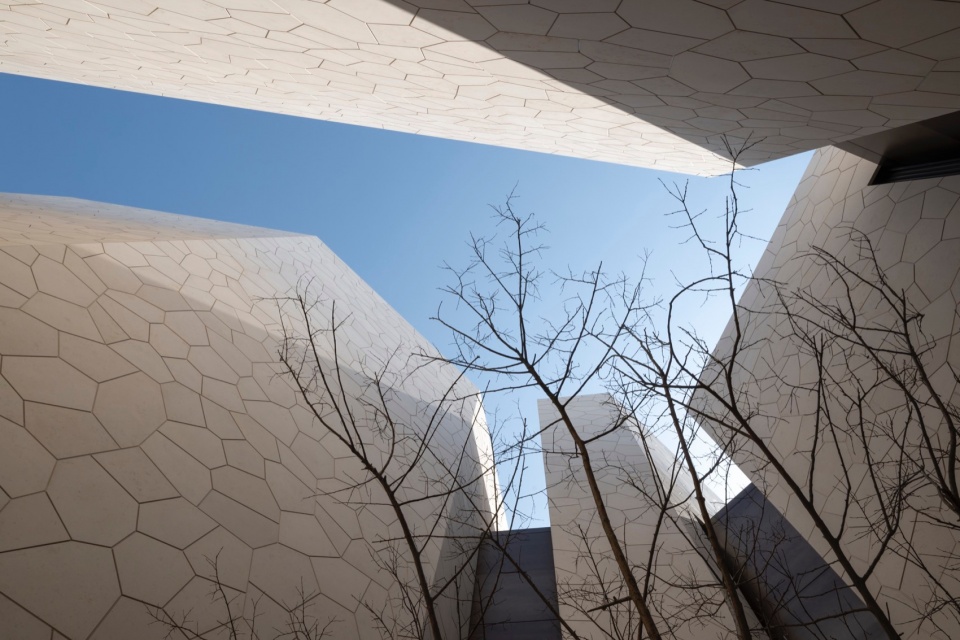
▼立面由轻质的沙特石材复合系统制成,可以有效地解构和重新组装,或者完全重新配置,以满足未来地点的不同需求,The façade is made from a lightweight Saudi stone composite system and designed to be efficiently deconstructed and reassembled, or completely reconfigured, to meet different requirements in a future location.
无障碍与包容性设计亮点Inclusive design
·入口坡道顺应场地高差,为所有游客提供统一入口。
·中心区域的沉降舞台可完全升起至地面,使所有表演者均可平等参与演出。
·观众席中设置有轮椅无障碍区域,确保所有人共同享受演出。
·餐厅设置有不同高度的座位区域,提供多样化的就餐选择。
·餐厅卫生间配备天轨式吊机,帮助行动不便者自主、尊严地使用设施,是日本首批此类设施之一。
·安静室遵循神经多样性设计原则,为需要减少感官刺激的访客提供宁静空间。
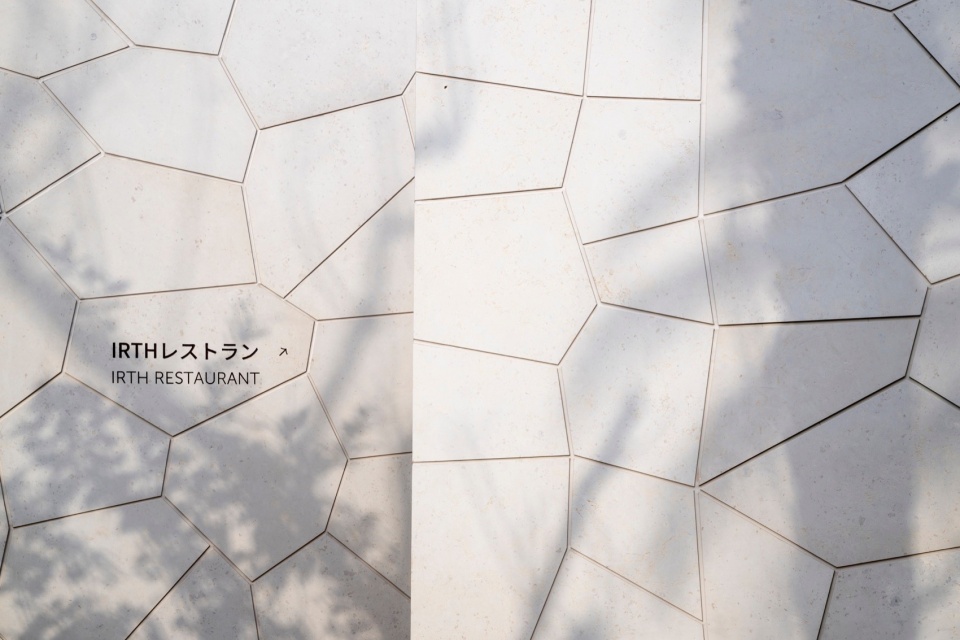
·所有标识均配有日文盲文、日文与英文对照文字。
· A ramped entrance accommodates the site’s gradient and provides a single entryway for all visitors.
· The sunken stage at its centre is fully retractable and can be raised to ground level, providing equitable participation for all performers.
· Wheelchair-accessible spaces are thoughtfully integrated amongst audience seating, so that everyone can enjoy performances together.
· The restaurant features innovative seating areas, which are at different levels to provide a range of seating options.
· The restaurant’s WC includes a ceiling track hoist, supporting dignified and independent movement for those who require additional physical assistance. This is one of the first facilities of its kind in Japan.
· A calm room aligns with neuro-inclusion principles and provides a quiet space for visitors who may need to take a break from sensory stimulation.
· All signage is in Japanese Braille, as well as written Japanese and English.
▼夜景,Night view
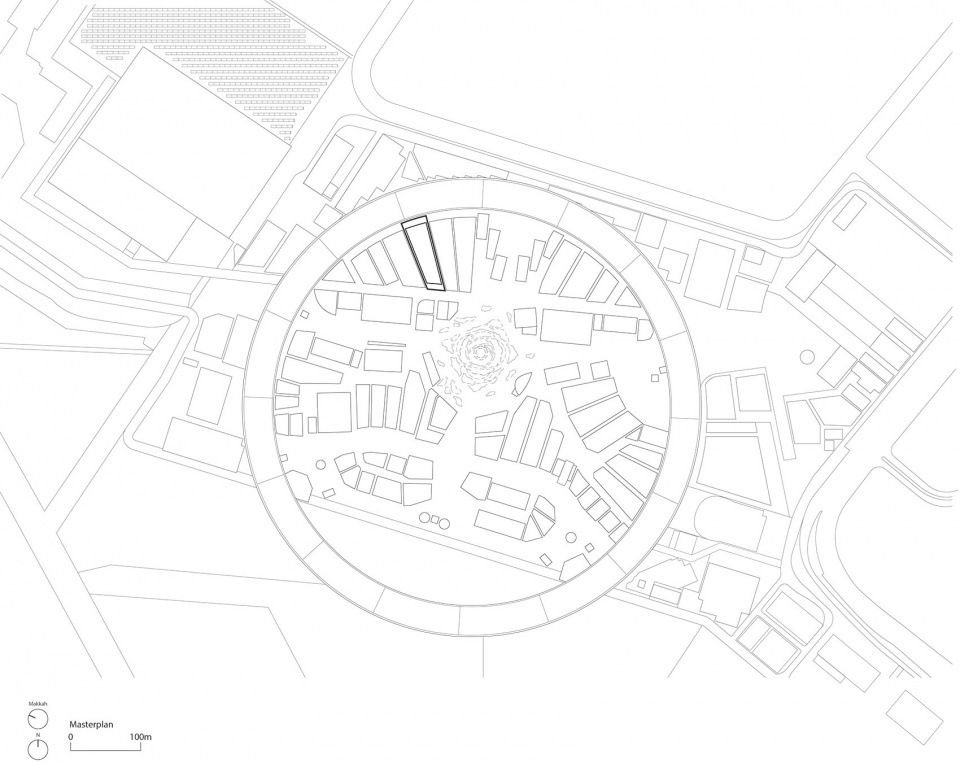
▼场地平面图,Site plan
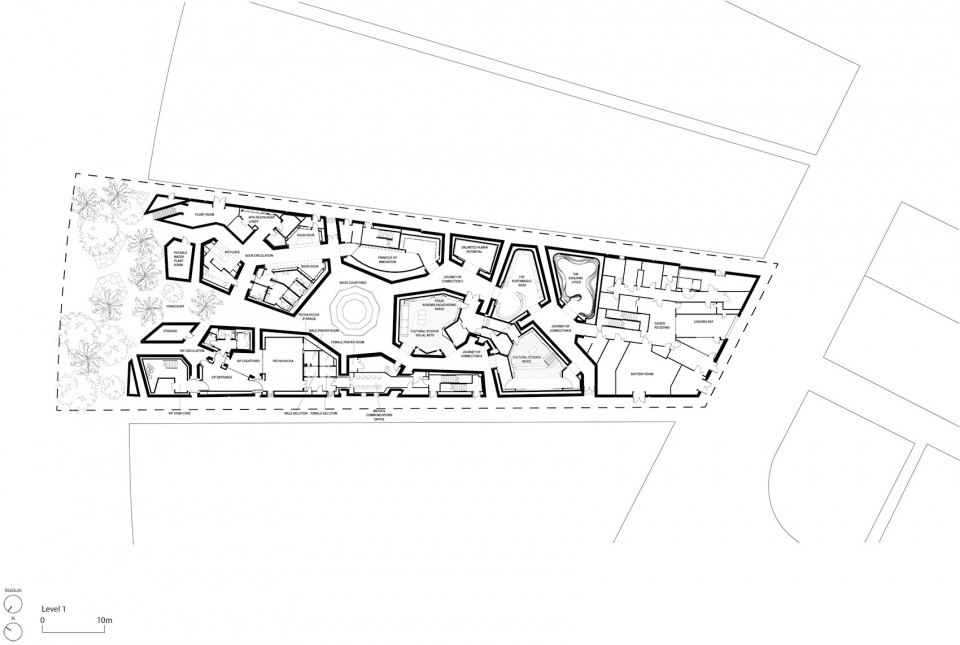
▼一层平面图,Level 1 plan
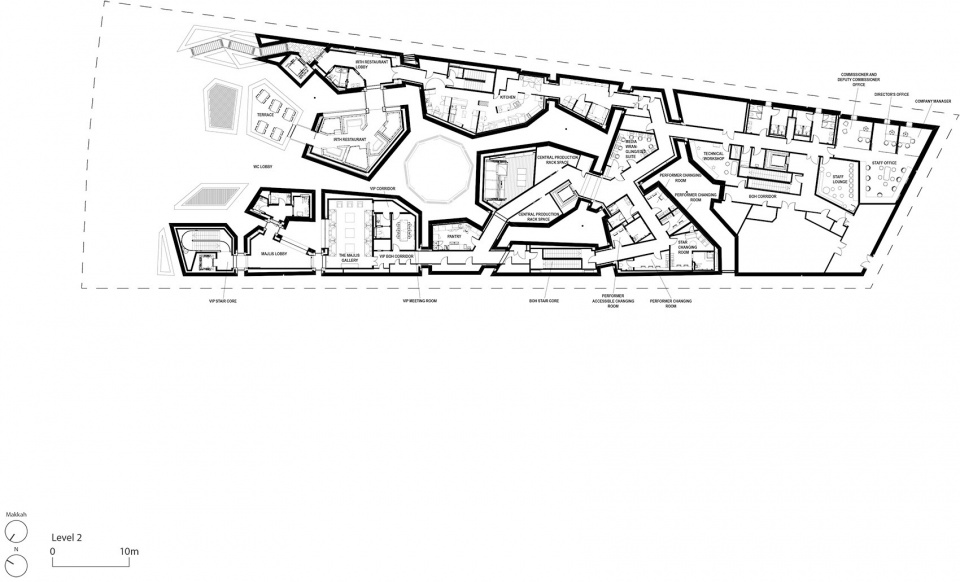
▼二层平面图,Level 2 plan
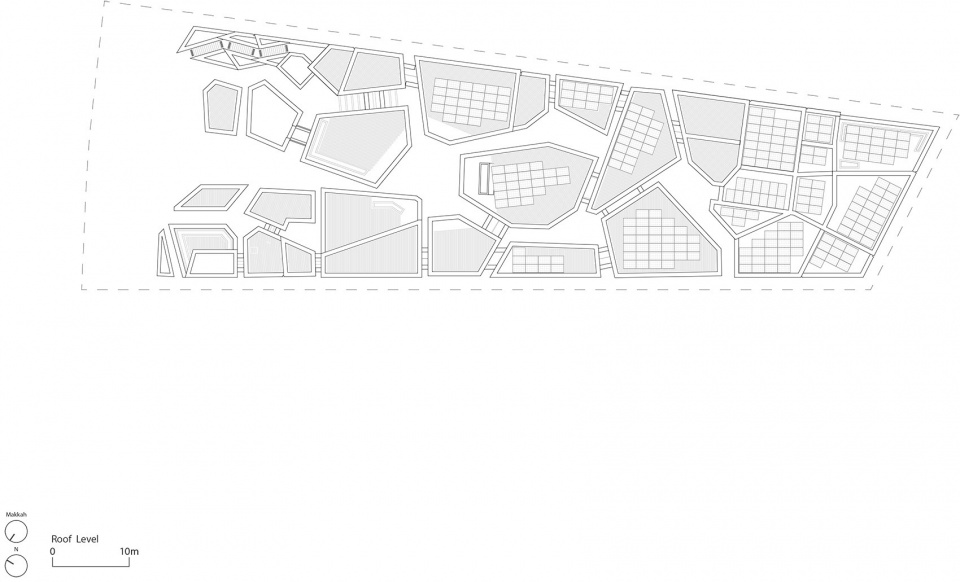
▼屋顶平面图,Roof plan
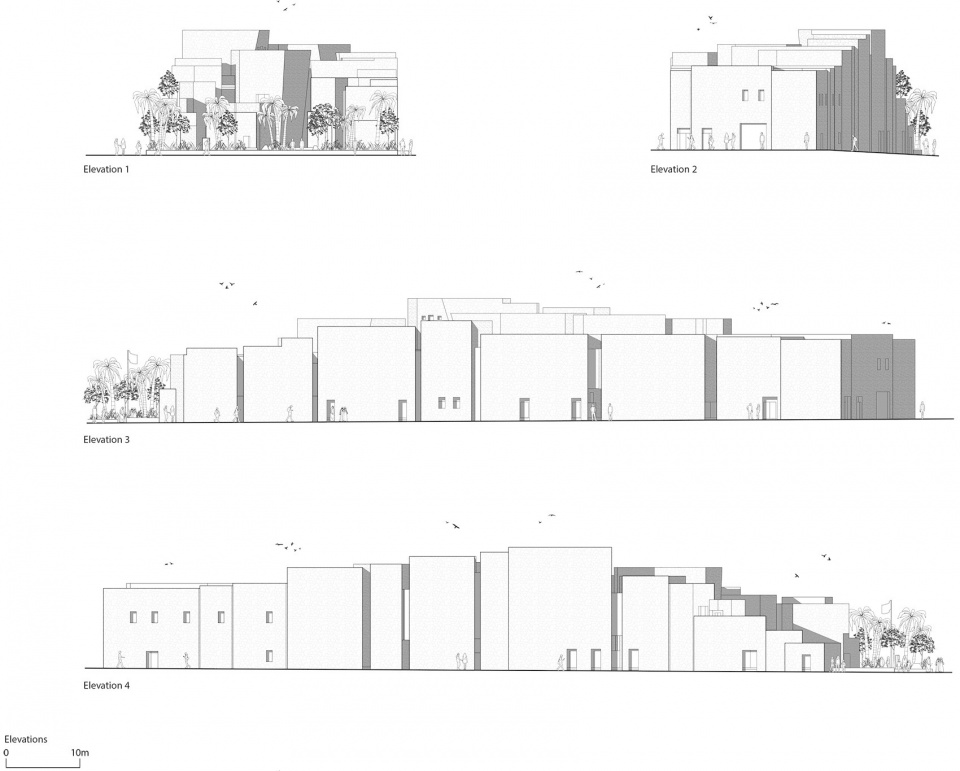
▼立面图,Elevations
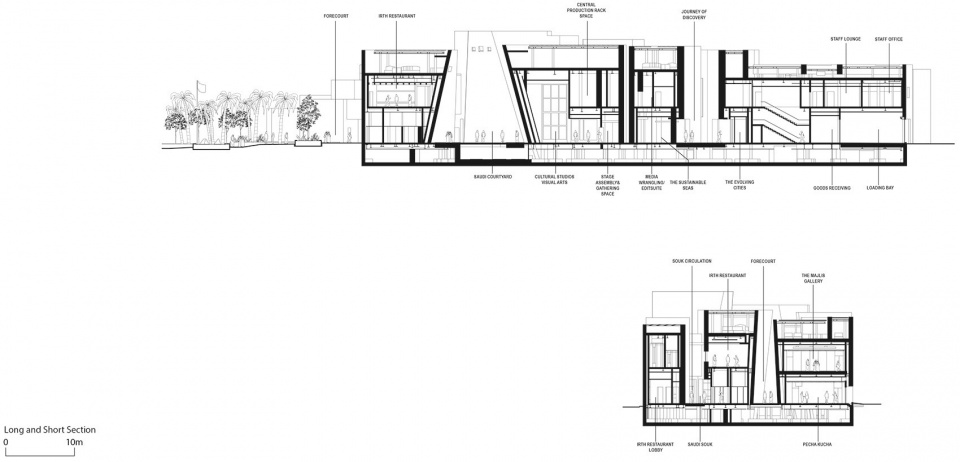
▼剖面图,Sections
Client: Kingdom of Saudi Arabia, Ministry of Culture
Appointment: 2022
Construction Start: 2024
Completion Date: 2025
Site Area: 3,505m²
Total Floor Area: 3,542.54m²
Number of Floors: 2
Height: 16.66m
Length: 103.7m
Width: 34.06m
Capacity: 23,100 visitors per day
Main Materials: The façade is made from a lightweight Saudi stone composite
Sustainability:
The pavilion has been designed to align with the Saudi Green Initiative
Operational net zero pavilion
Achieved the highest CASBEE rating = ‘S’ – design certificate
The pavilion is the first temporary structure to receive the WELL Health and Safety Rating (HSR) certification.
The pavilion has been designed to be dismantled and relocated after the Expo
100% of planting have been locally sourced Renewable generation on the rooftop Environmentally responsive design to create comfortable indoor and outdoor spaces
Client: Kingdom of Saudi Arabia, Ministry of Culture
Architect: Foster + Partners
Local Architect: Azusa Sekkei
Exhibition Designer: 59 Productions, Squint Opera
Foster + Partners Design Team Norman Foster Luke Fox
Tony Miki Nick Haddock Juan Zhang Farah Caswell
Wolfgang Muller Jiannan Luo Xiaonian Duan Yue-Qi Hou Mingchen Liu
Luigi Rodrigues Durando Chi Yen Fu
Xiaomin Zhang Ami Matsumoto Natasha Rieffel Alan Cheng Ken Ho
Nadia Saki Ioanna Nika Hang Sia Lorenzo Luzzi Sarah Abiad Caio Ribeiro Jiahao Syu Jordan Bizzell Pierre Zebouni
Main Contractor RIMOND Japan
Mechanical Engineers Azusa Sekkei
Cost Consultant:Turner & Townsend
Landscape Consultant Foster + Partners
Lighting Consultant Foster + Partners
Façade Consultant Front
Graphics & Wayfinding Designer Bright Dot Design
Food & Beverage Consultant Humble Arnold
People Moving Strategy Consultant Buro Happold
Construction Project Manager Black Engineering