麦积山游客服务中心,天水 / 朱小地工作室 + 北京市建筑设计研究院
群山环抱的麦积山一峰独秀,断崖之上自前秦以来石窟开凿的历史述说着施主的笃信和工匠的虔诚,遗留下的是佛教雕塑艺术精湛的旷世杰作。麦积山游客中心以红砂岩的外表、循环往复的态势、光影变幻的空间、丰富翔实的展示,建立起连接过去与未来的桥梁。
The Maiji Mountain, surrounded by mountains, stands out as a unique peak. The history of cave excavation since the Former Qin Dynasty on the cliff tells the story of the benefactor’s faith and the craftsman’s piety, leaving behind a masterpiece of exquisite Buddhist sculpture art. The Maiji Mountain Visitor Center has built a bridge connecting the past and the future with the appearance of red sandstone, a circular pattern, a space of changing light and shadow, and rich and detailed displays.
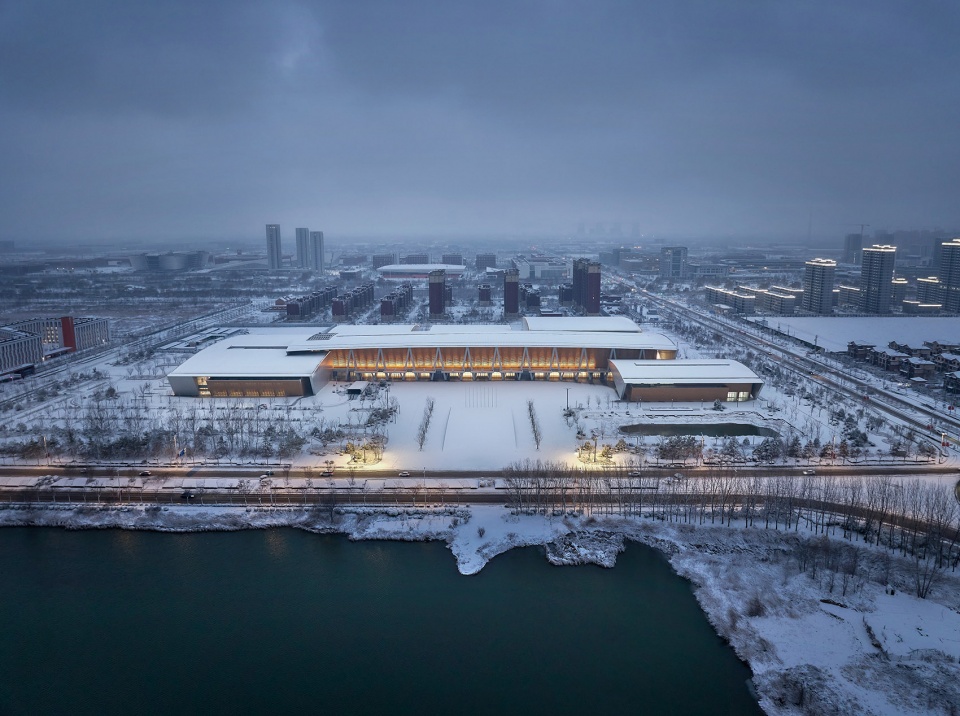
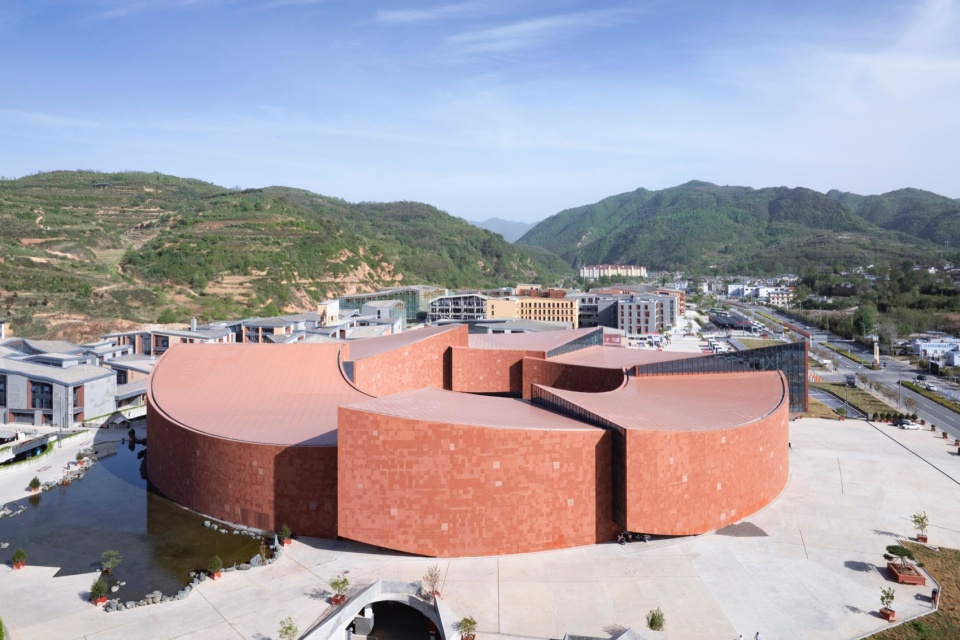
▼俯瞰游客服务中心,Top view
登上麦积山石窟崖壁上的栈道,远眺周围的群山,众多起伏的山峦形成的巨大的环形构造。在视线可及之处,还有几个类似于麦积山的山体结构,麦积山只是这种结构中最大的一个。虽然,群山横亘在大地之上,安然且稳重,但内在的能量聚集,形成了一坡接一坡、一环套一环的较量,最终在节点之处形成了断崖峭壁。
▼空间生成分析图,Mass process

Climbing onto the cliff roadway of Maiji Mountain Grottoes, one can overlook the surrounding mountains, which forms a huge circumambulatory structure with numerous undulating peaks. Within sight, there are several mountain structures similar to Maiji Mountain, and Maiji Mountain is just the largest of these. The mountains stretch across the earth, calm and steady and form a series of rivalries, one slope after another and one ring after another, ultimately forming steep cliffs at the nodes.
▼南侧鸟瞰,South aerial view
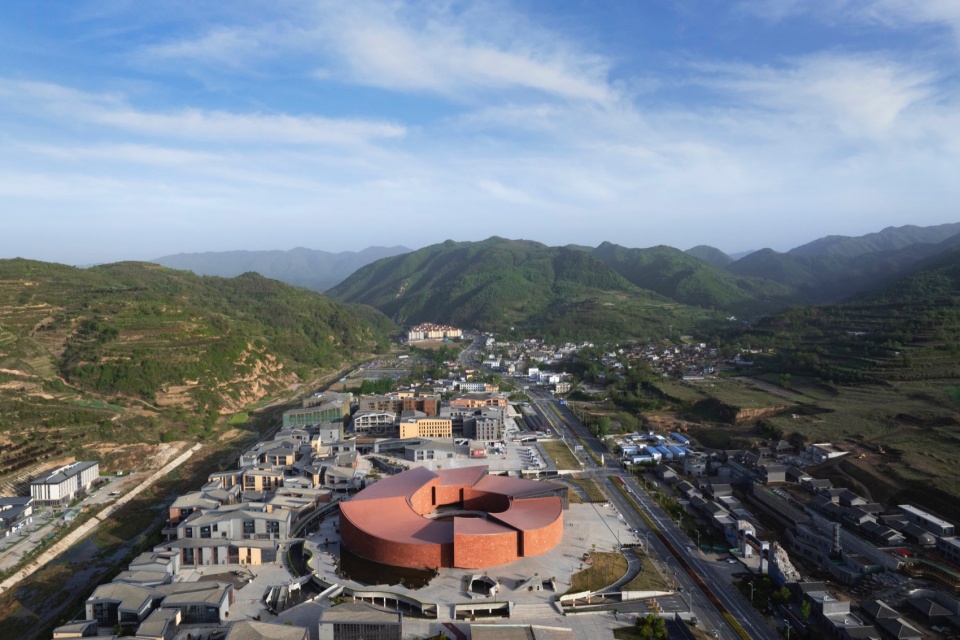
▼雨后南侧鸟瞰,South aerial view after rain
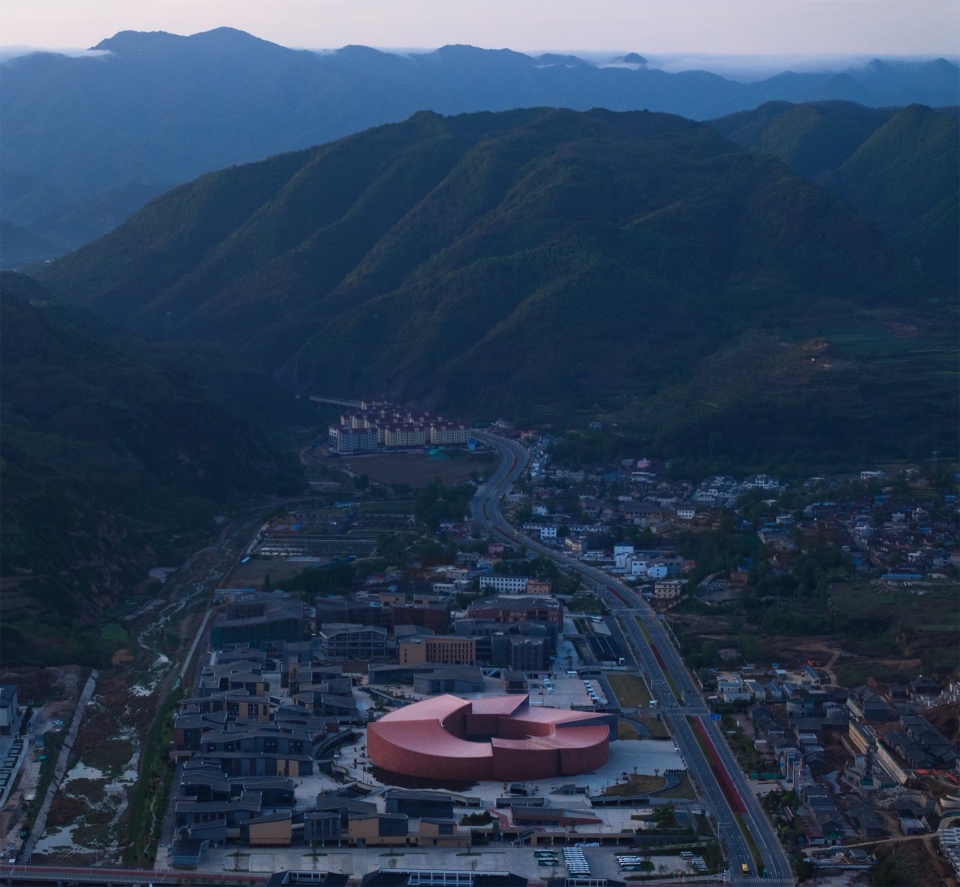
麦积山石窟及周边历史遗迹是古代中原地区与古代西部地区长期交融与汇合的历史见证。在这个过程中,传入的佛教与中原地区原生文化发生碰撞,相互作用,并对国人的精神生活产生了深远影响。
The Maiji Mountain Grottoes and surrounding historical relics are historical witnesses of the long-term integration and convergence between the ancient Central Plains region and the ancient western region. In this process, the introduced Buddhism collided and interacted with the original culture of the Central Plains, and had a profound impact on the spiritual life of countrymen.
▼西侧鸟瞰,West aerial view
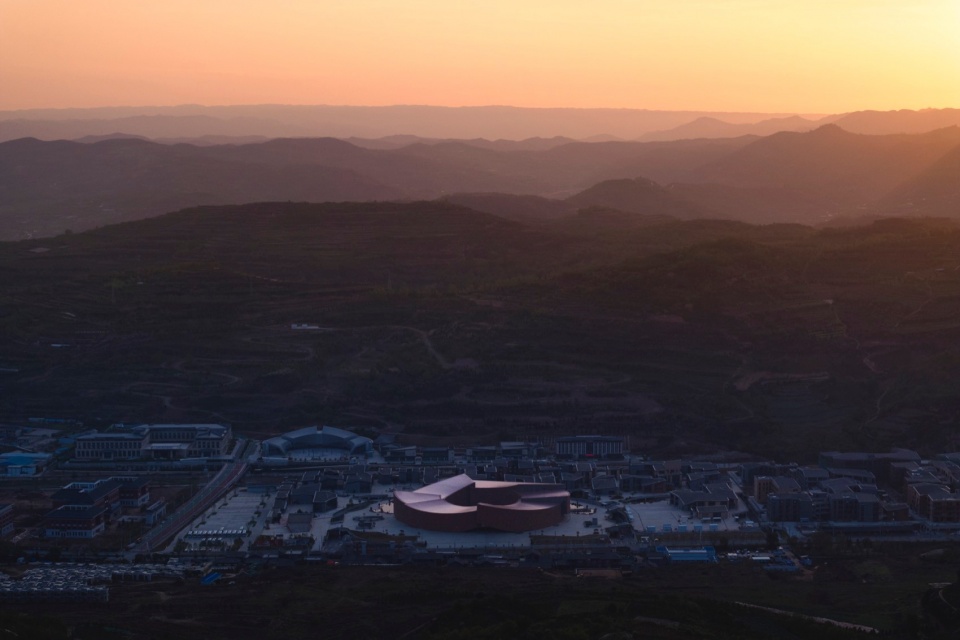
探讨麦积山文化及艺术的意义首先要思考佛教的影响,设计便由此开始。环形结构是人类意识觉醒后被用于仪式性空间和纪念性场所最常见、最原始的一类空间形态,它与佛家的轮回观念相对应。一切有生命的东西如不寻求“解脱”,就永远在“六道”中生死相续,无有止息。当然,这些观念及注解在历史长河中经过文化交融发生变化,尤其是在与汉民族原生文化产生交流及融合的过程中,甚至在现代化的过程中,它已经超越佛教本来的意义,有了更加当代性的解读,这将预示着可持续发展的现实主义力量并作用于我们的生活体验。
To explore the significance of Maiji Mountain culture and art, we must first consider the influence of Buddhism, and design begins from here. Circumambulatory structures are the most common and primitive form of space used for ceremonial and commemorative purposes after the awakening of human consciousness, corresponding to the Buddhist concept of reincarnation. All living things, if they do not seek ‘liberation’, will forever be in the cycle of life and death in the ‘Six Paths’, with no end. Of course, these concepts and annotations have undergone changes through cultural integration in the long river of history, especially in the process of communication and integration with the native culture of the Han ethnic group, and even in the process of modernization. They have surpassed the original meaning of Buddhism and have a more contemporary interpretation, which will foreshadow the realistic power of sustainable development and affect our life experience.
▼南立面,South facade
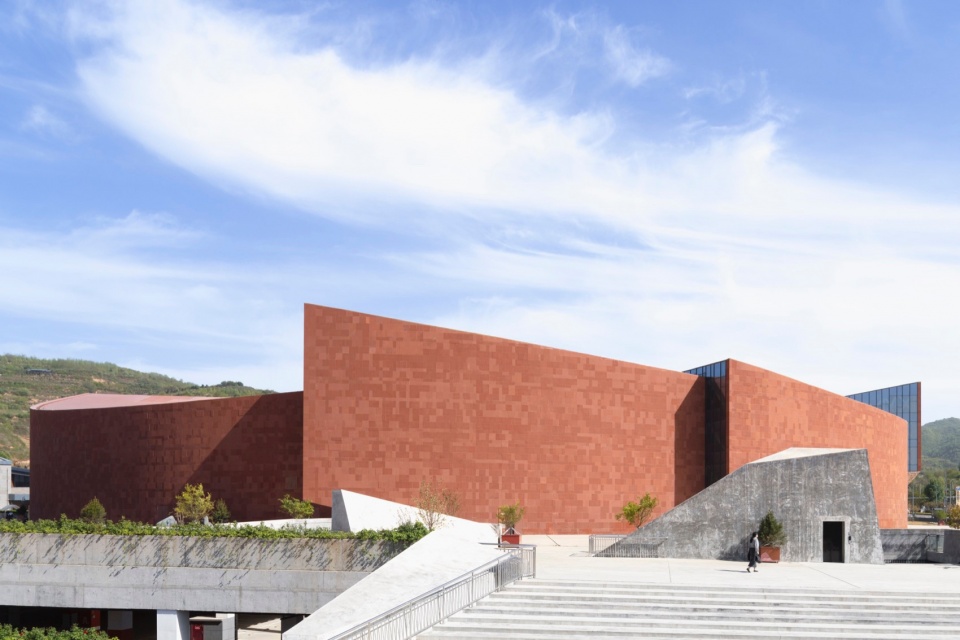
▼西侧景观,West side landscape
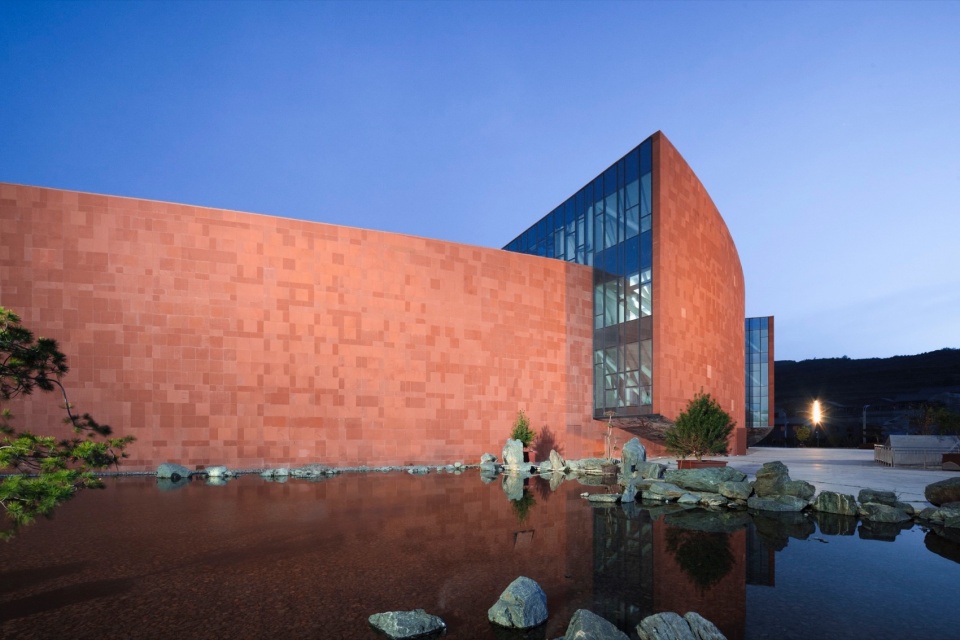
▼东南侧景观,Southeast landscape
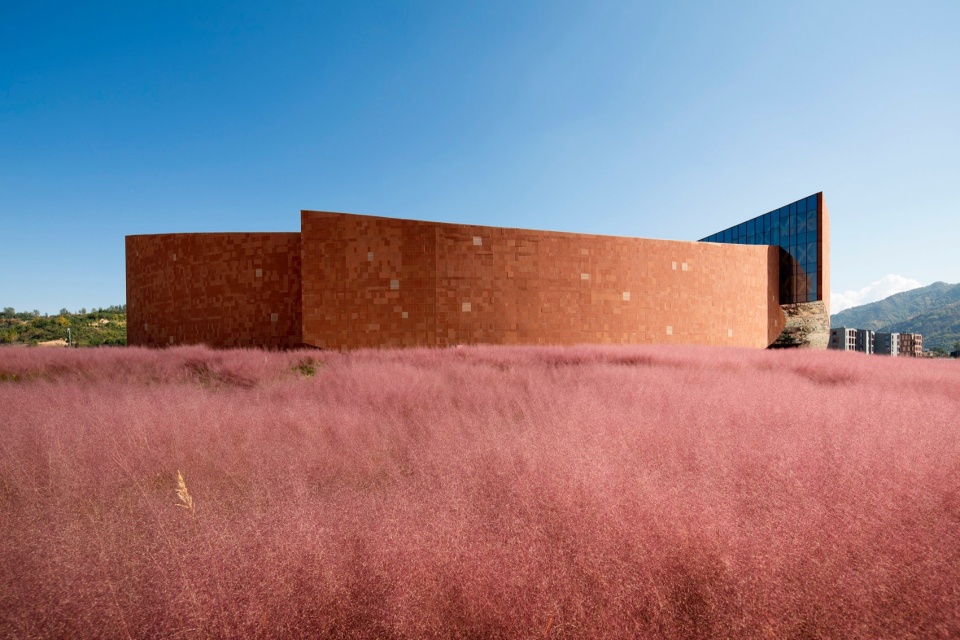
环形空间是建筑体验的基本感受,同时将周边自然环境的山势起伏融于整个造型之中,促使人文情怀和环境力量叠加形成具有当代精神的能量场,是具有环境力量的公共空间参与者,并将这种态势漫延到整个场地设计中。
The annular space is the fundamental feeling of the architectural experience. Meanwhile, the undulating mountain terrain of the surrounding natural environment is integrated into the overall design, enabling the humanistic sentiment and the power of the environment to overlap and form an energy field with contemporary spirit. It acts as a participant in the public space with environmental power, and extends this momentum throughout the entire site design.
▼主入口立面,Main entrance facade
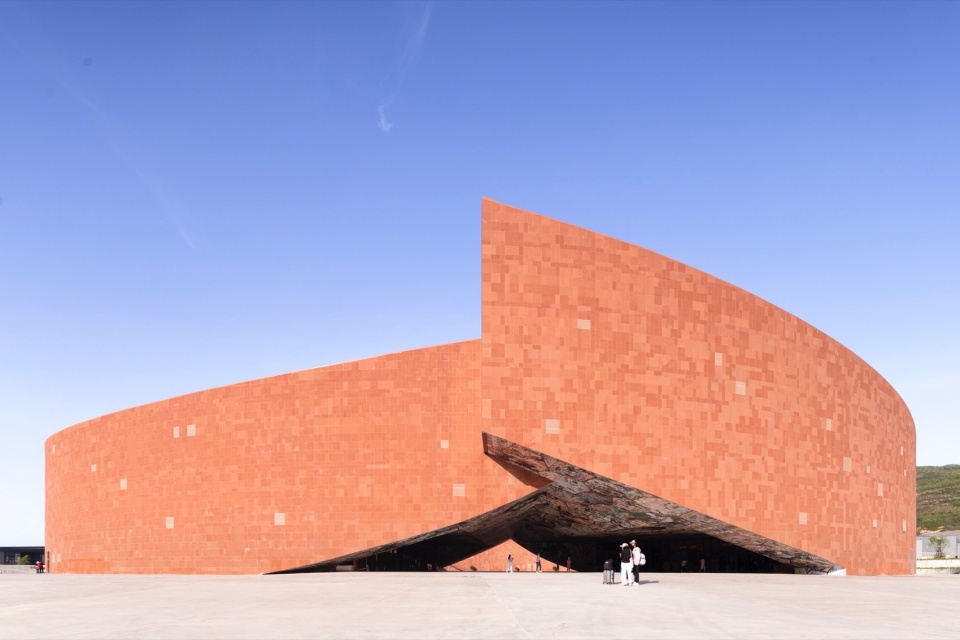
▼北立面,North facade
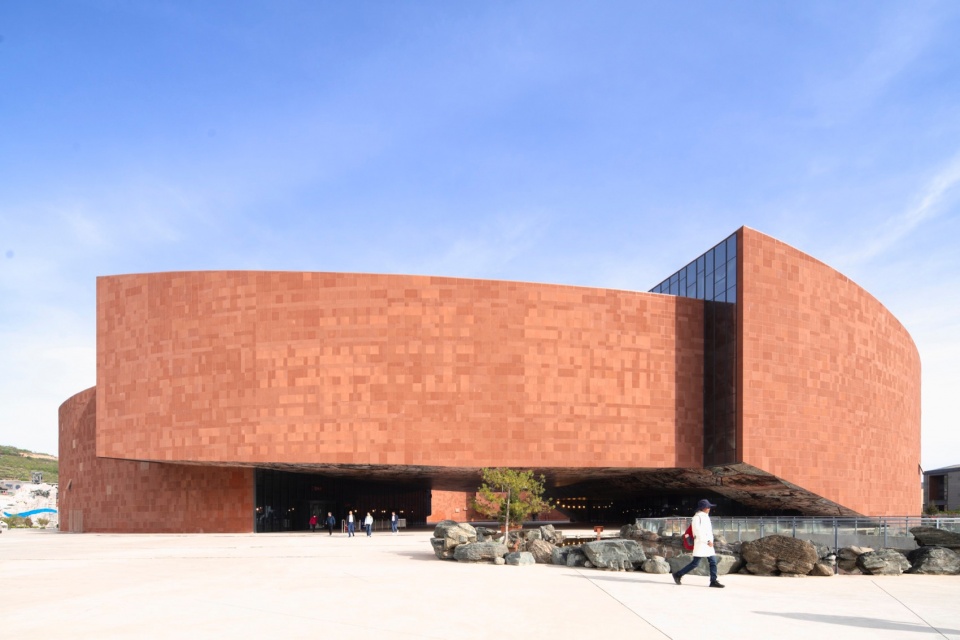
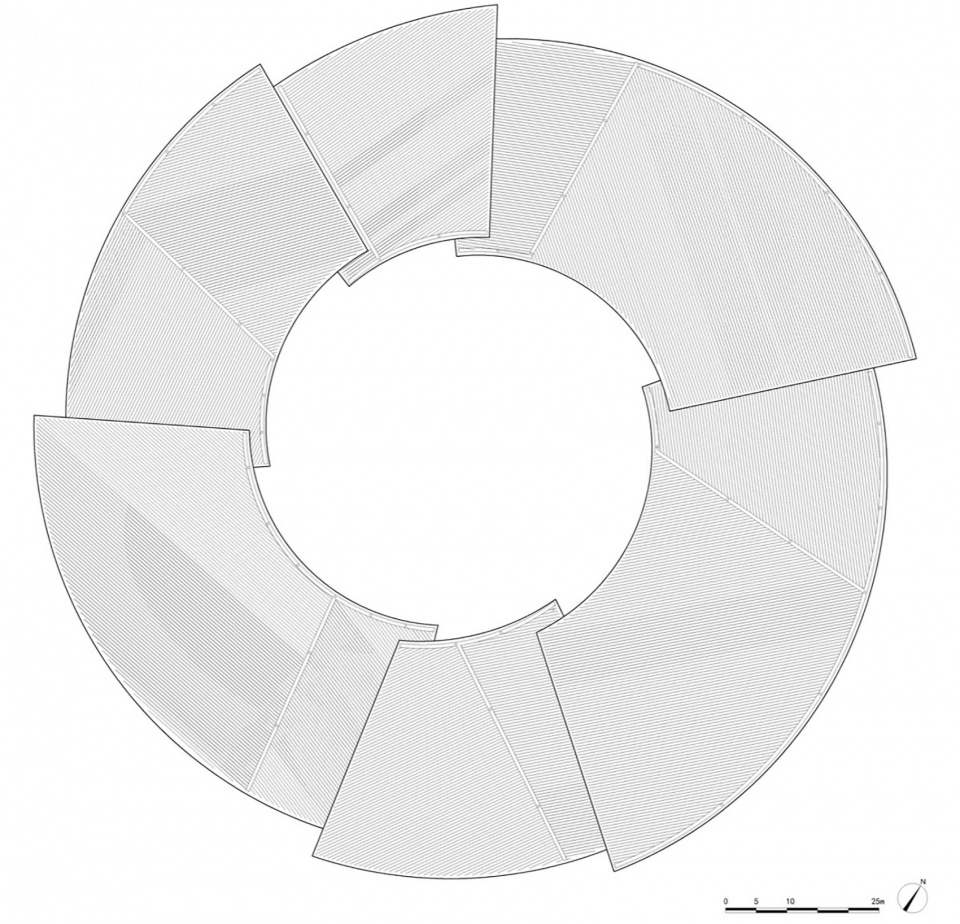
环形结构有分解为6个体量,且均是梯形造型,相互穿插在一起。在体型交界处出现了“缝隙”,在外面可视为造型的节点,而在内部则形成了室外光线的开口,光线以一种神秘的力量照进建筑中,并成为引导观众从一个空间走向下一个空间的召唤。游客中心的各项展示功能,正是在这样的空间编排下,不断展开的。
The circumambulatory structure is divided into six volumes, all of which are in trapezoidal shapes and interpenetrate each other. “Gaps” appear at the junctions of the volumes. From the outside, these can be regarded as the nodes of the shape, while inside, they form openings for outdoor light. The light shines into the building with a mysterious power and serves as a summons that guides the audience from one space to the next. The various exhibition functions of the visitor center unfold continuously under such spatial arrangements.
▼庭院出口大悬挑,Big cantilever
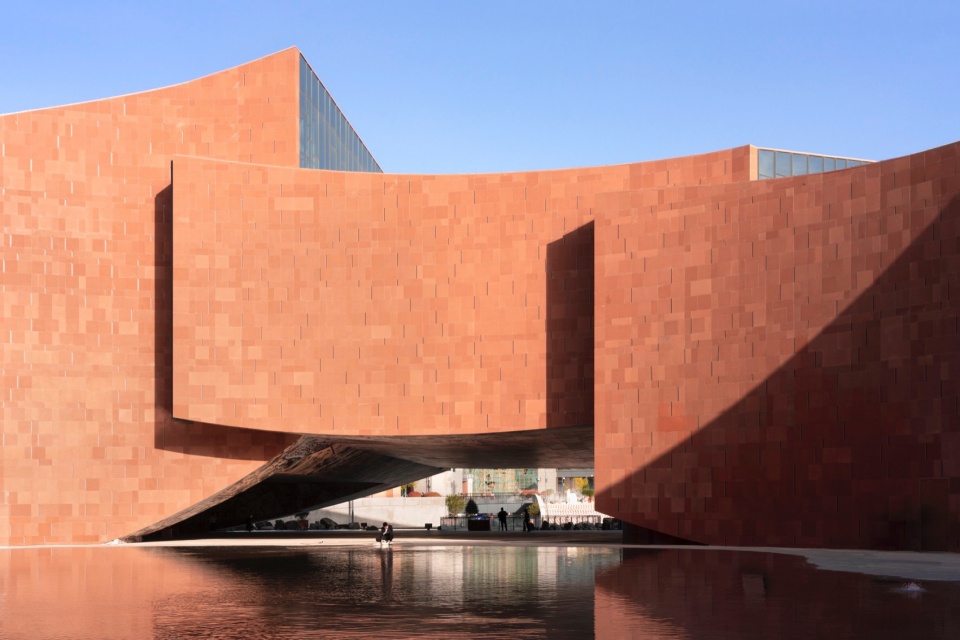
▼游客中心主入口,Main entrance
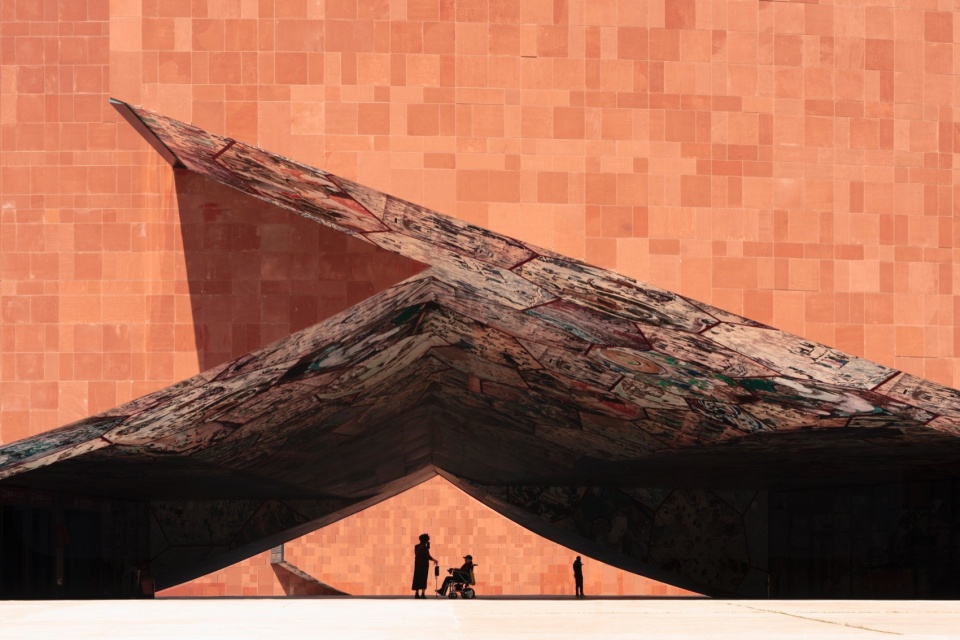
▼中心庭院水景,Central courtyard waterscape
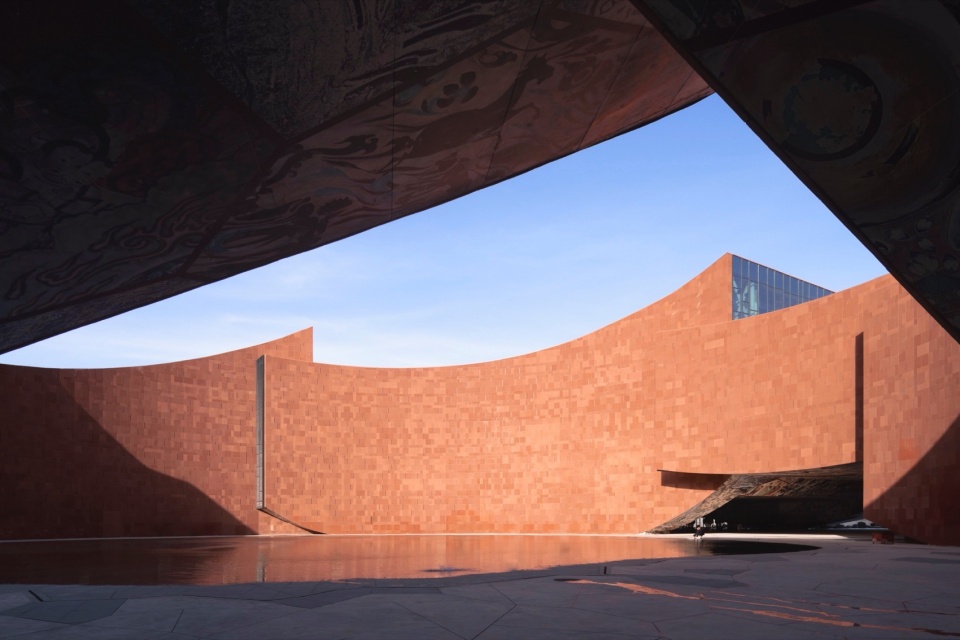
▼中心庭院水景,Central courtyard waterscape
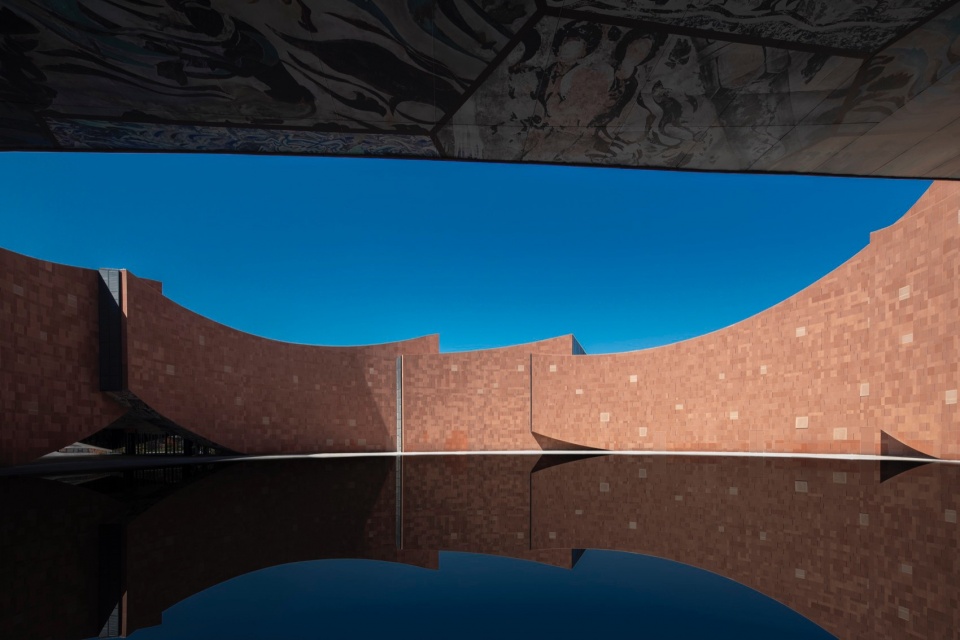
建筑的室内空间正是在这样的特殊的光线引导下展开的,建筑的主入口面向西侧道路,在两个体量相撞下,形成拱起的灰空间。这里可以直接看到环形结构中的庭院,顶部是由金属板彩绘吊顶呈现的麦积山石窟中的壁画内容,色彩既鲜艳又古朴,让人感到扑面而来的文化气息。
The interior of the building is unfolded under such special light guidance. The main entrance of the building faces the west side road, and under the collision of two volumes, a gray space is formed. Here, you can directly see the courtyard in the circumambulatory structure, with the mural content from the Maiji Mountain Grottoes presented by a metal plate painted ceiling at the top. The colors are both bright and quaint, giving people a strong cultural atmosphere.
▼中心庭院水景,Central courtyard waterscape
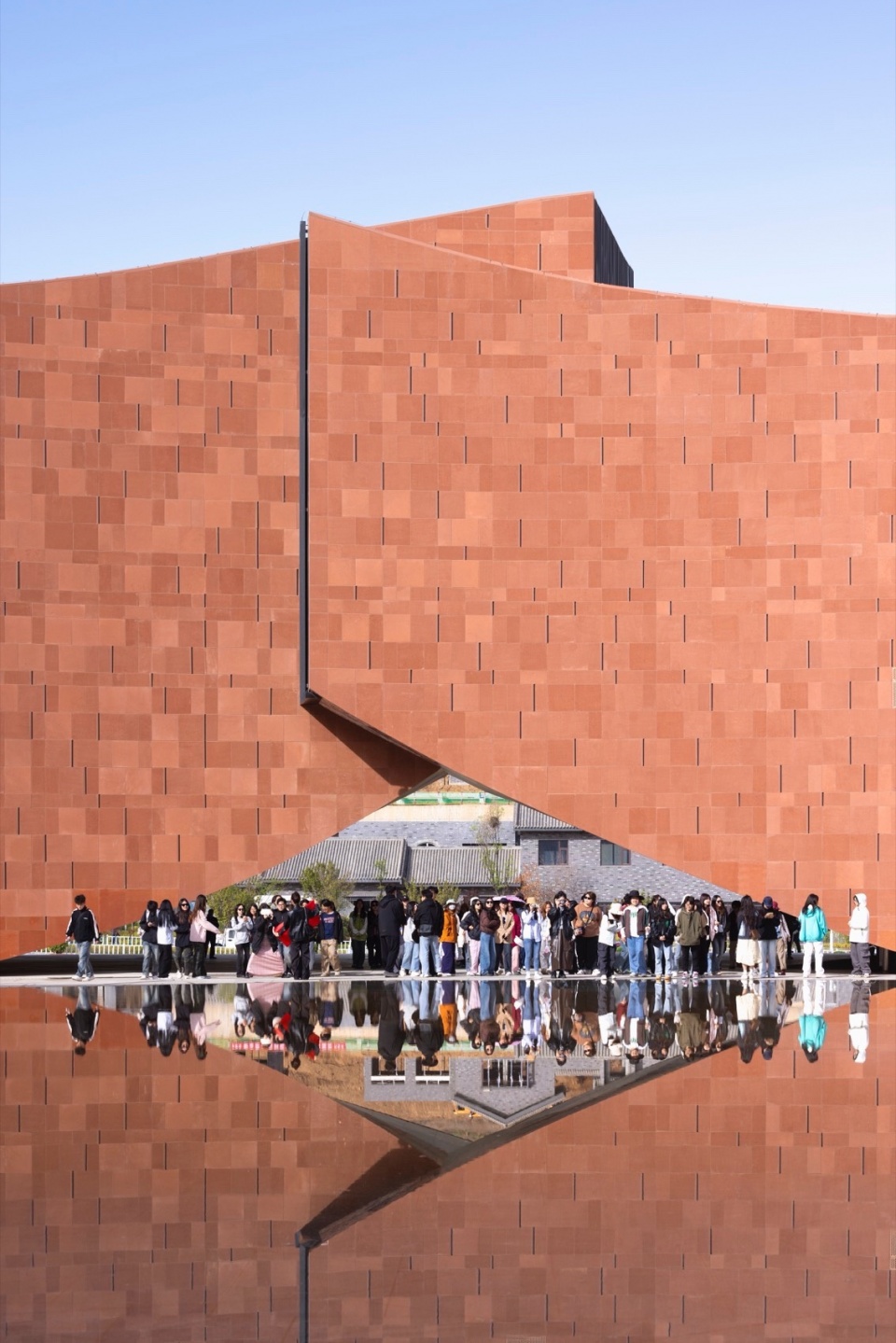
▼游客中心主入口,Visitor center main entrance
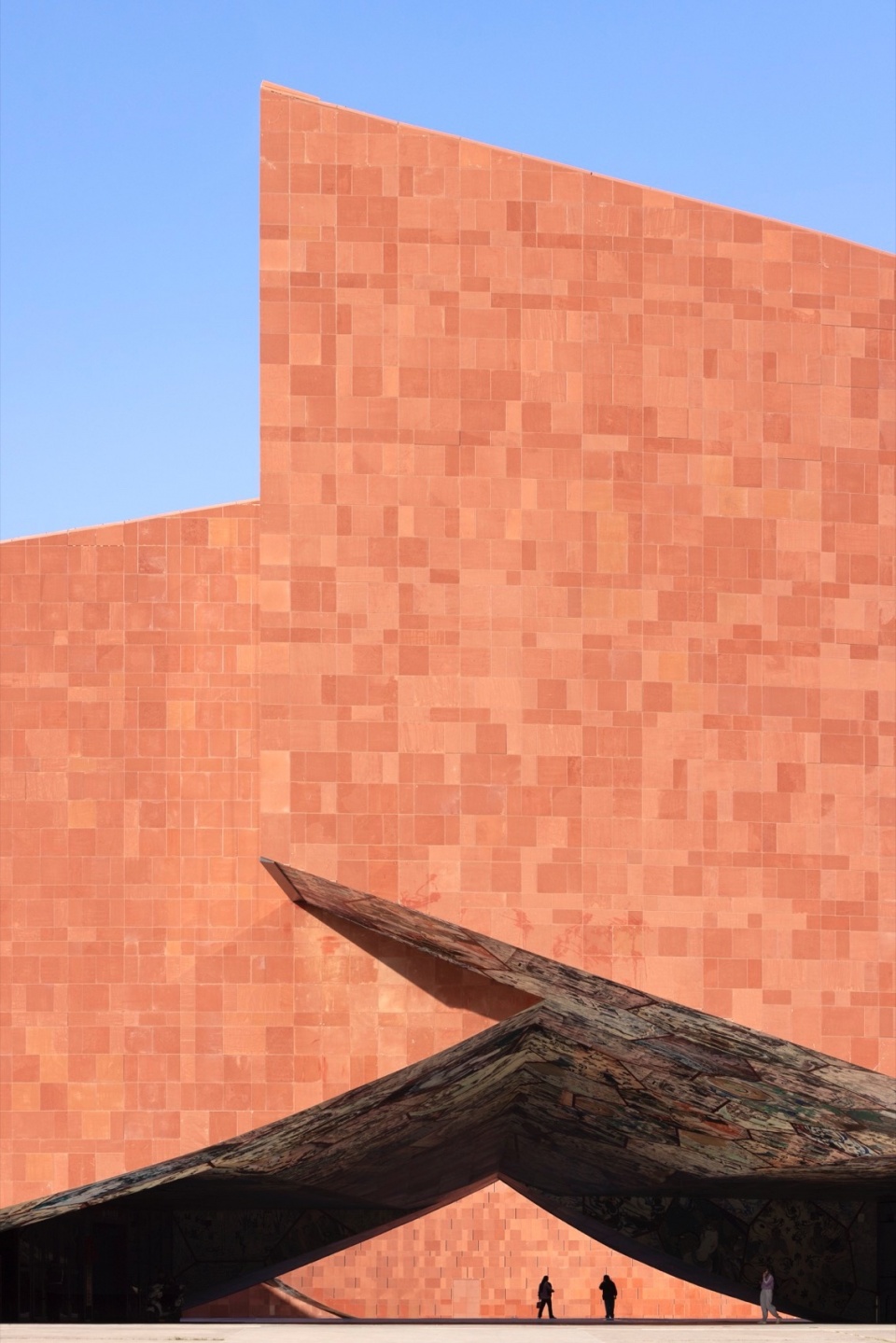
从此进入游客中心的室内,顺时针方向沿缓坡前行,首先是接待空间,然后依次是数字麦积山前厅、5D数字影厅、演绎中心前厅、展览休闲区、最终到达文创中心,共计六个主题空间,同时该空间也是出发前厅的上空,至此完成动线的闭环。
From here, you enter the interior of the center and walk clockwise along the gentle slope. First, there is the reception space, followed by the Digital Maiji Mountain front hall, 5D digital cinema, performance theater front hall, exhibition and leisure area, and finally the cultural and creative center, totaling six themed spaces. At the same time, this space is also above the departure front hall, completing the closed-loop of the circulation.
▼入口集散服务大厅,Entrance distribution service hall
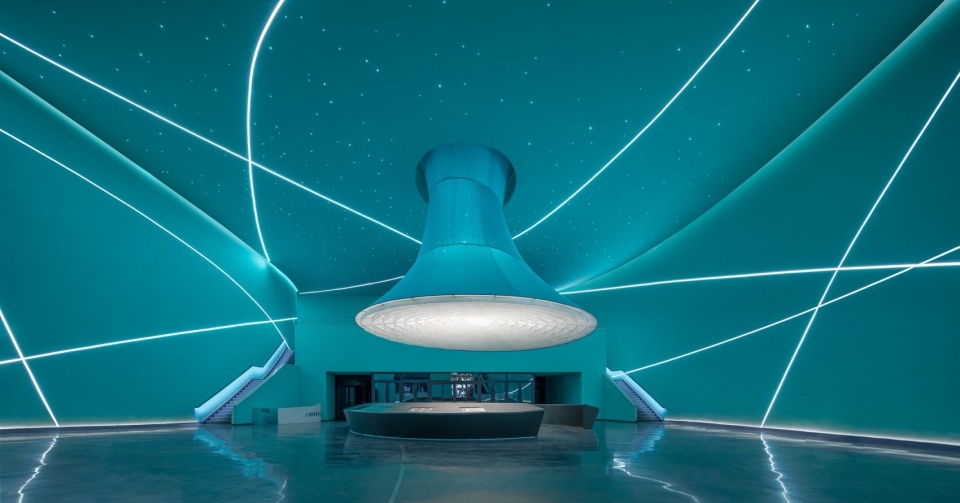
▼数字麦积山前厅,Digital exhibition lobby
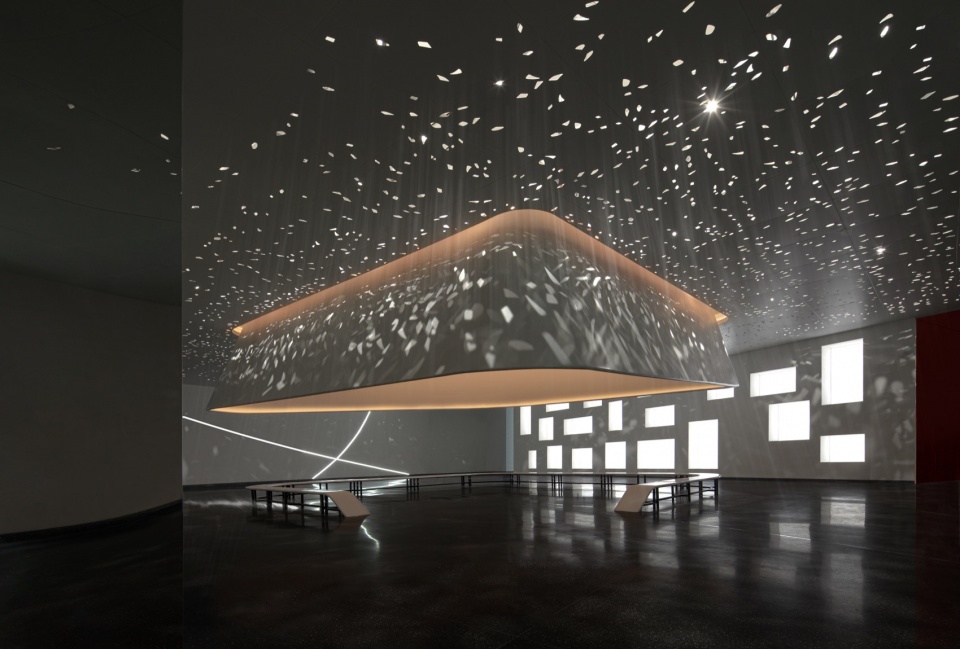
▼5D数字球幕影厅,Digital dome theater
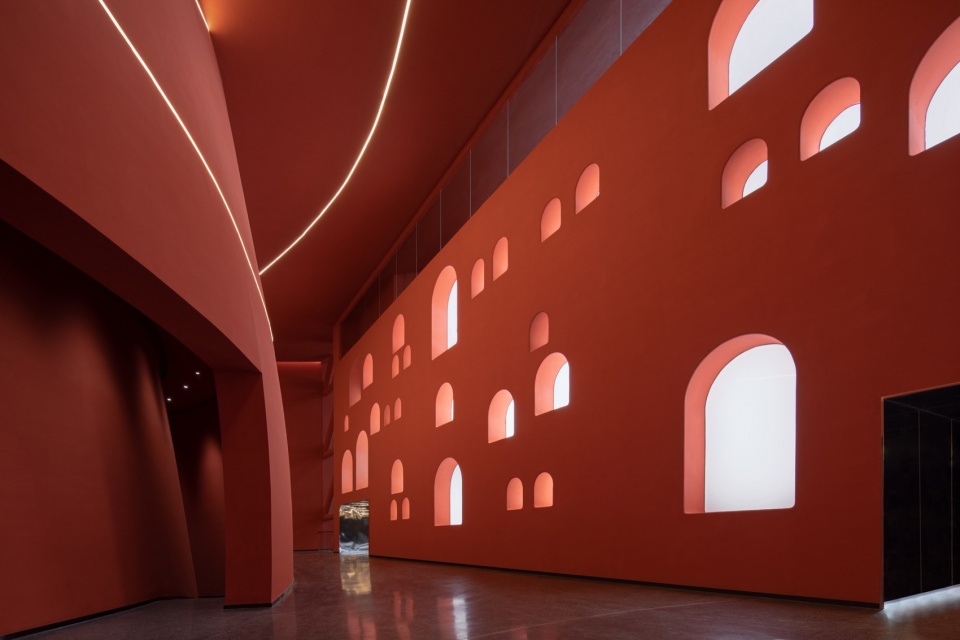
▼休闲服务及互动大厅,Leisure service and interactive lobby
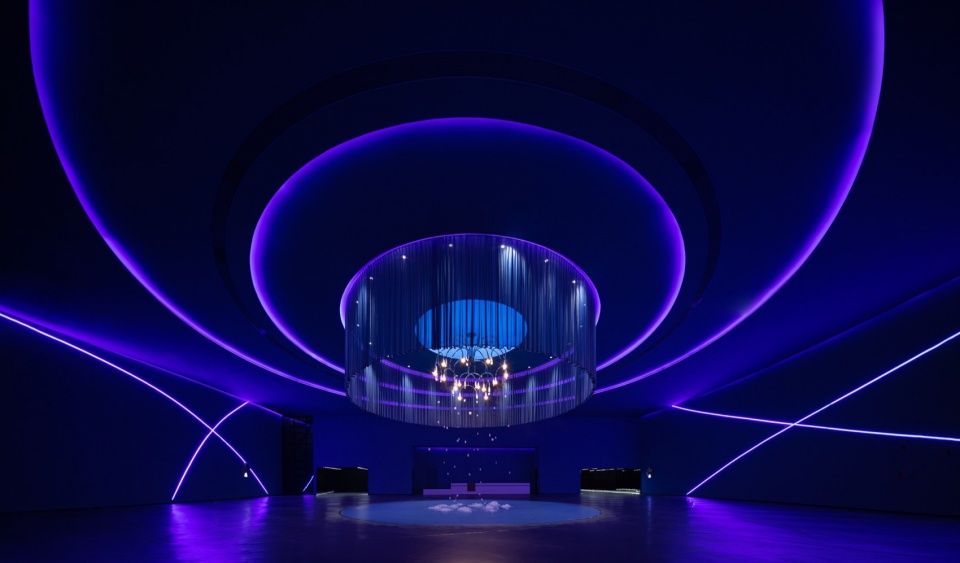
室内空间最大的特色就是六个相对封闭且巨大的无柱空间由6个梯形筒体分隔而成、其中四个筒体是起结构支撑和抗震作用,每个筒体中布置了各种的服务空间。六个可以自由布局的空间和色彩灵感源于河西走廊东段中原文化对佛教文化的兼容并蓄。
The biggest feature of interior is that it consists of six relatively enclosed and huge column free spaces separated by six trapezoidal cores, four of which serve as structural support and seismic resistance, with various function spaces arranged in each core. The six freely arranged spaces and colors are inspired by the harmonious integration of Central Plains culture in the eastern Hexi Corridor with Buddhist culture.
▼中心庭院夜景,Central courtyard night view
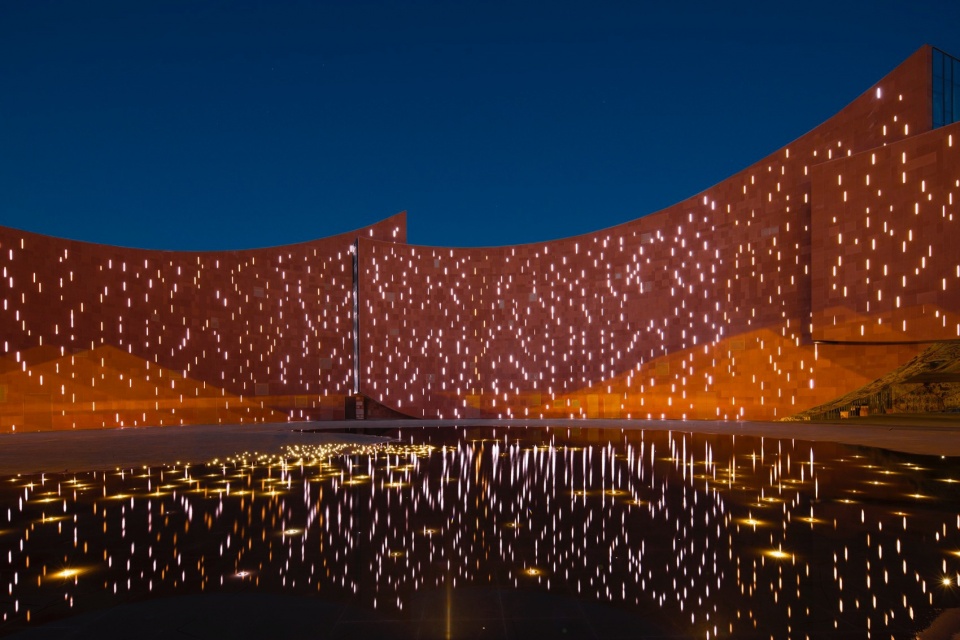
▼中心庭院夜景,Central courtyard night view
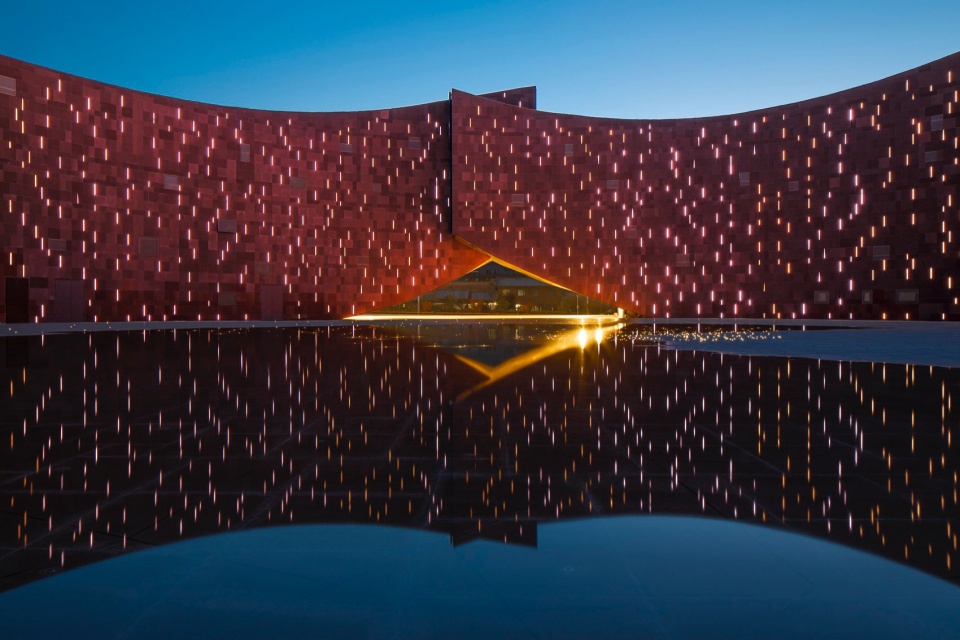
环形没有明显的棱角和缺口,是一种完美形状,具有很强的包容性,没有明确的方向性和边界限制,能容纳和接纳各种事物。就像佛教以宽广的胸怀接纳众生,建筑的环形也象征着对不同文化、不同背景游客的包容,提供一个和谐共处的空间。
There are no obvious edges or corners in the ring-shape, it is a perfect shape with strong inclusiveness, no clear directionality or boundary limitations, and can accommodate and accept various things. Just as Buddhism accepts sentient beings with a broad mind, the shape of the building also symbolizes inclusion for tourists from different cultures and backgrounds, providing a space for harmonious coexistence.
▼中心庭院,Central courtyard
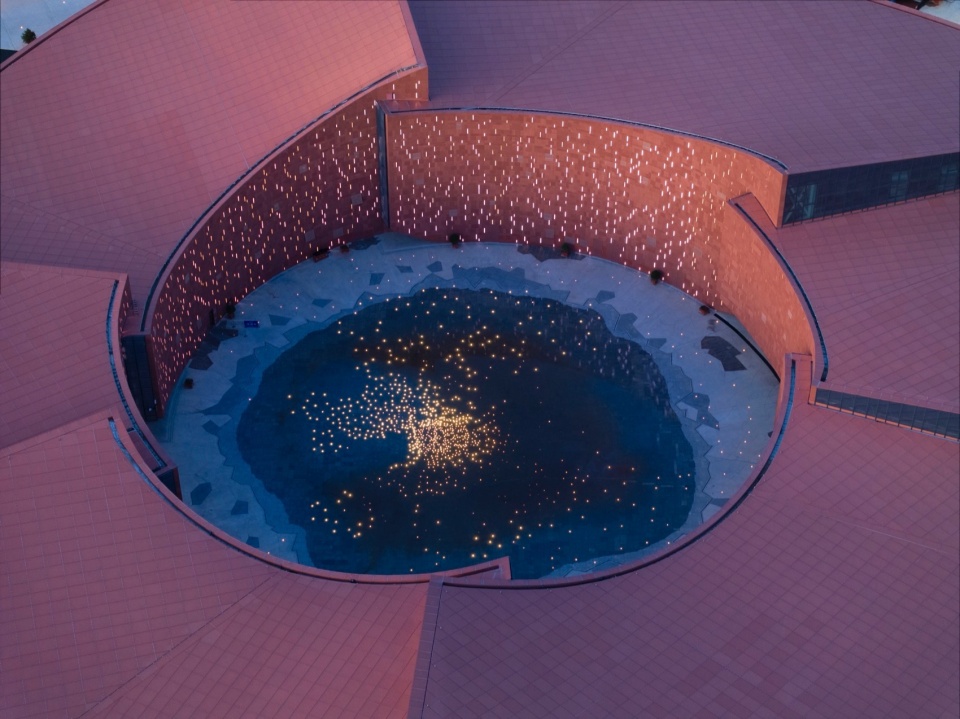
环形的流畅线条给人一种柔和、舒缓的感觉,能让人内心平静,仿佛置身于喧嚣尘世之外,营造出与佛教修行所追求的宁静氛围相契合的环境,让游客在进入服务中心时,能感受到内心的安宁。为游客之间的交流互动创造了良好条件,极大提升了游客的游览体验,成为兼具文化底蕴与现代功能的标志性建筑。
The fluent toroidal streamline gives a soft and soothing feeling, which can make people feel calm inside, as if they are outside the hustle and bustle of the world, creating an environment that is in line with the peaceful atmosphere pursued by Buddhist practice, allowing tourists to feel inner peace when entering it. It has created favorable conditions for communication and interaction among tourists, greatly enhancing their travel experience and becoming a landmark building that combines cultural deposits and modern functions.
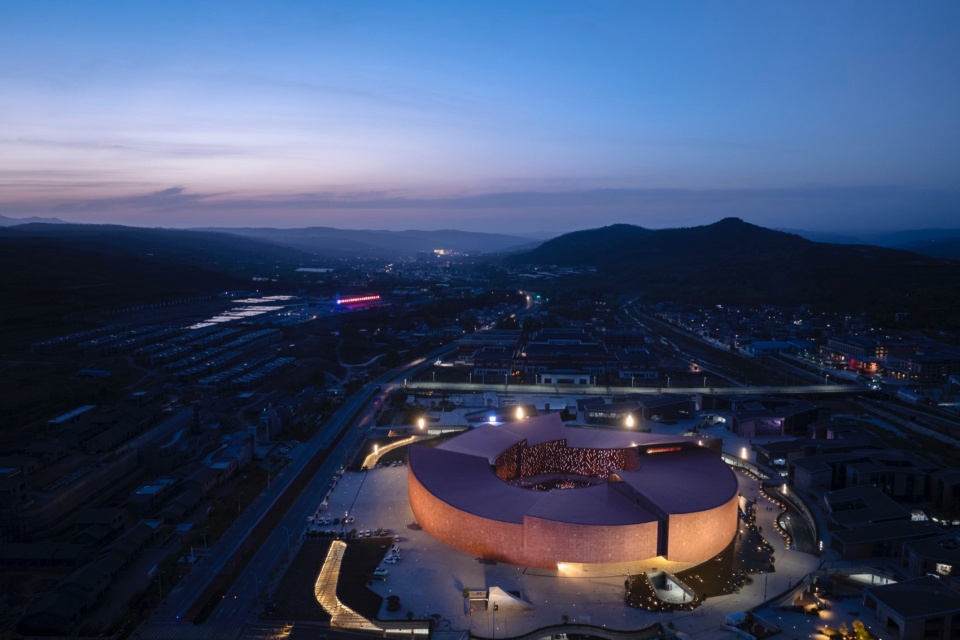
▼夜景鸟瞰,Night aerial view
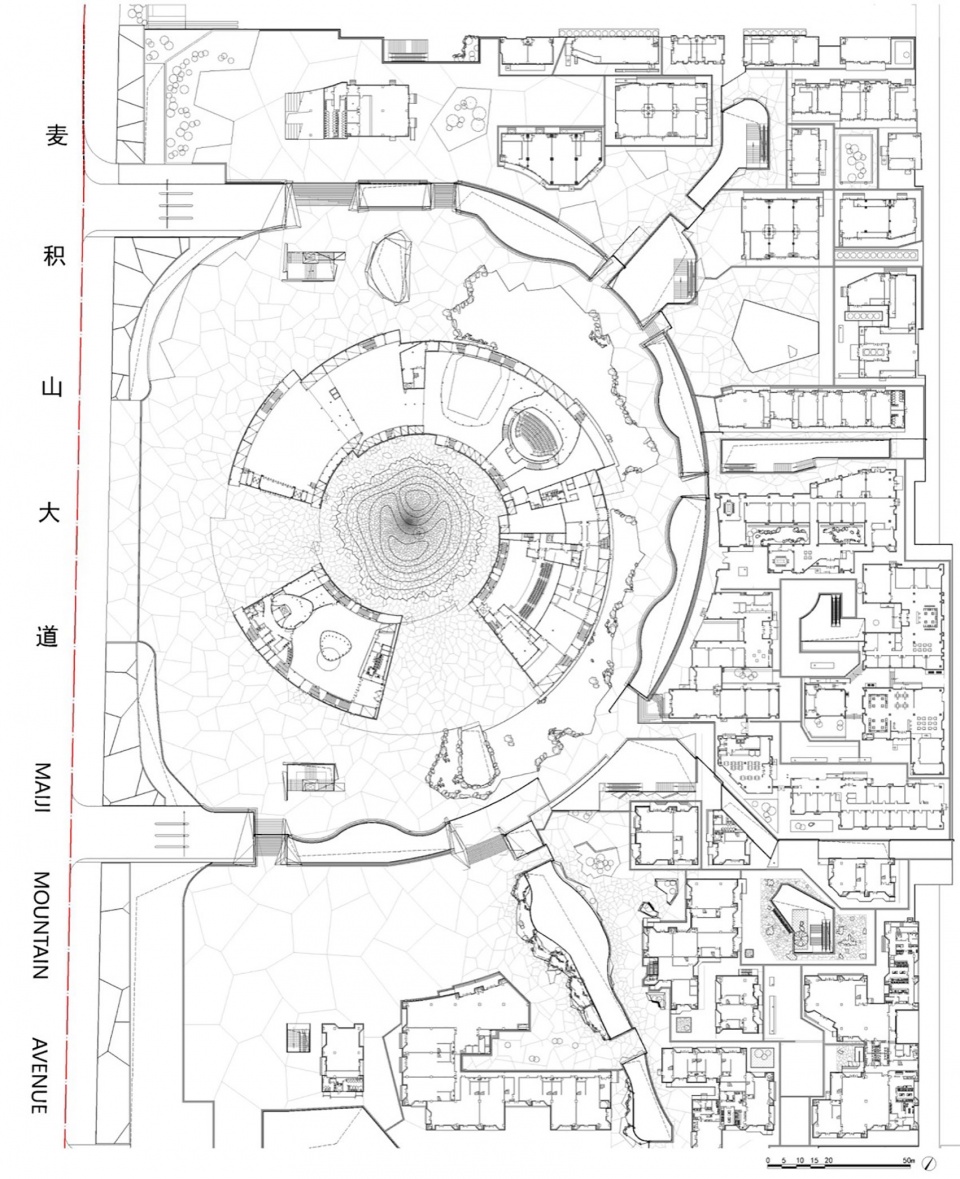
▼总图,Site plan
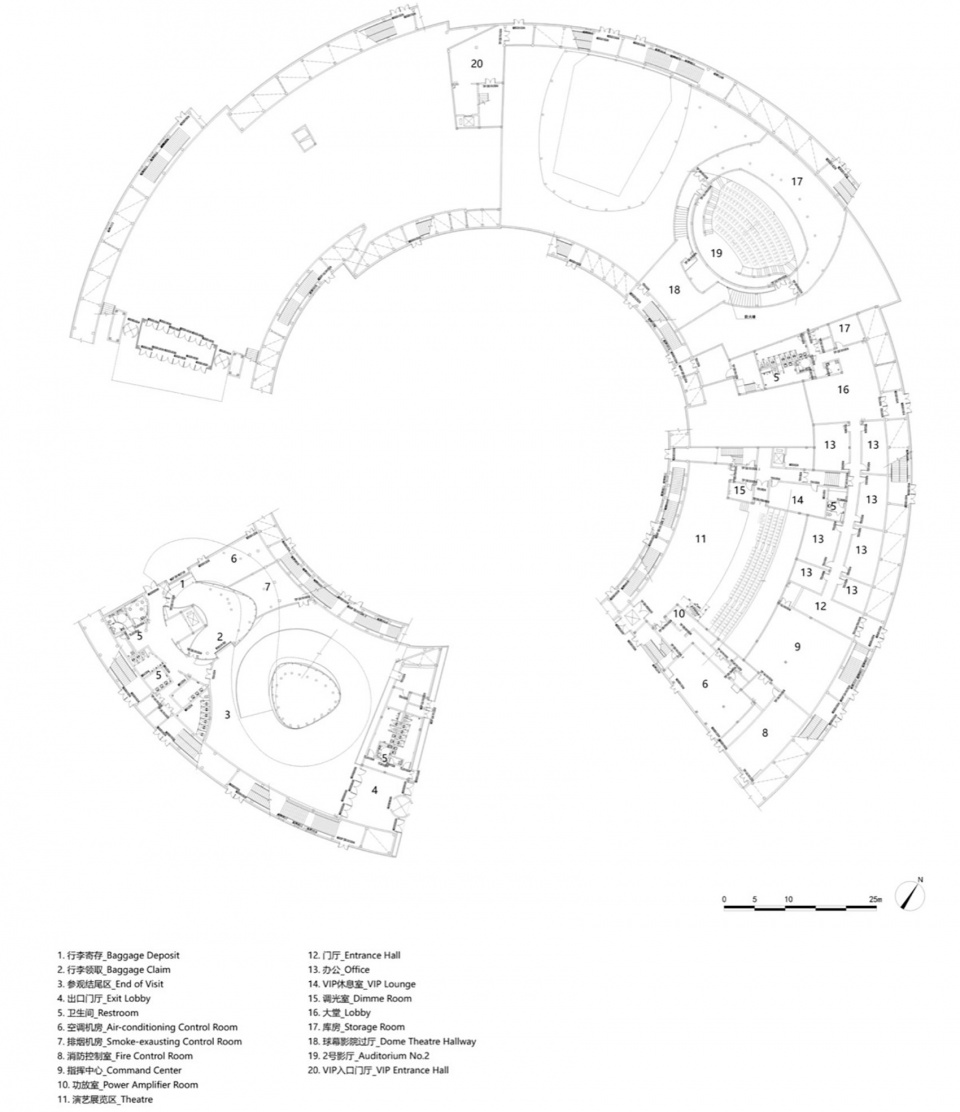
▼首层平面图,Ground floor plan
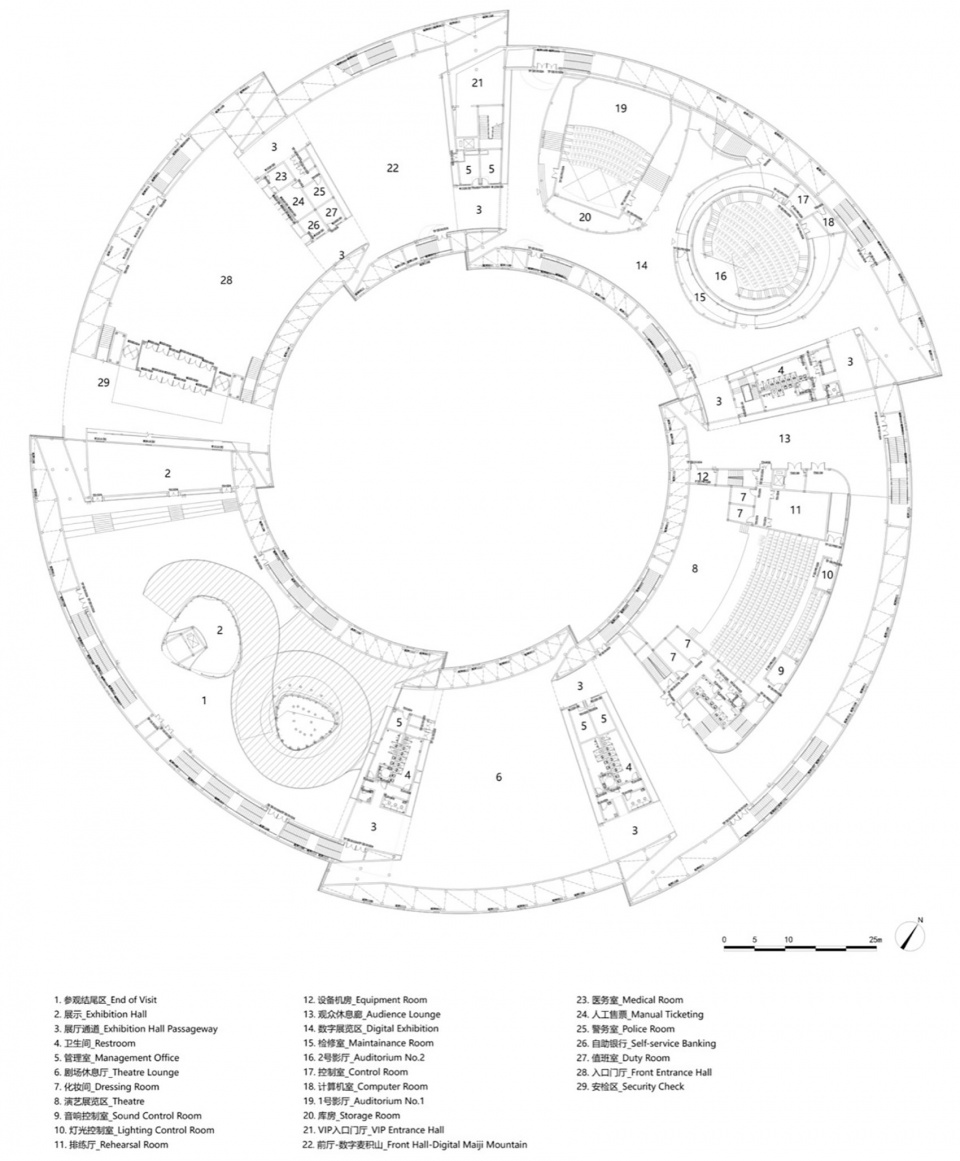
▼夹层平面图,Mezzanine plan
▼屋顶层平面图,Roof plan
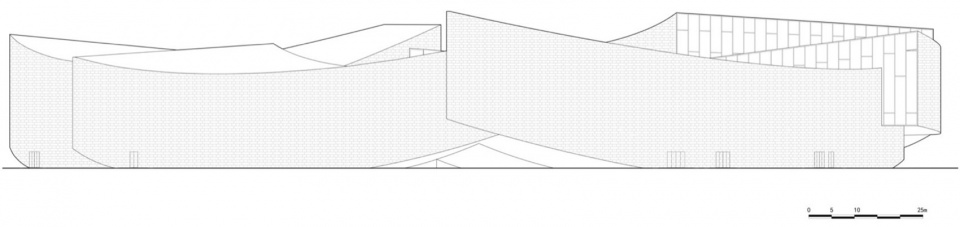
▼立面图1,Elevation 1
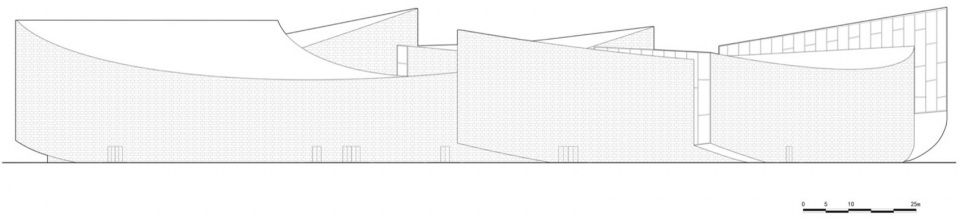
▼立面图2,Elevation 2
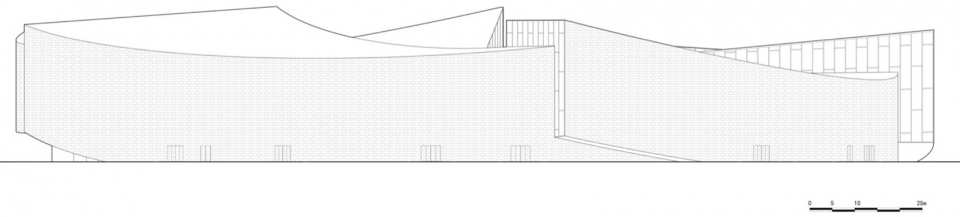
▼立面图3,Elevation 3
▼立面图4,Elevation 4
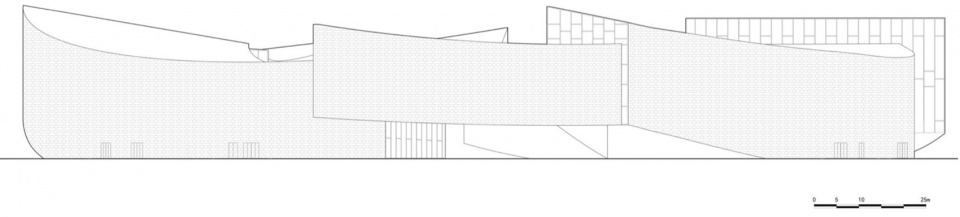
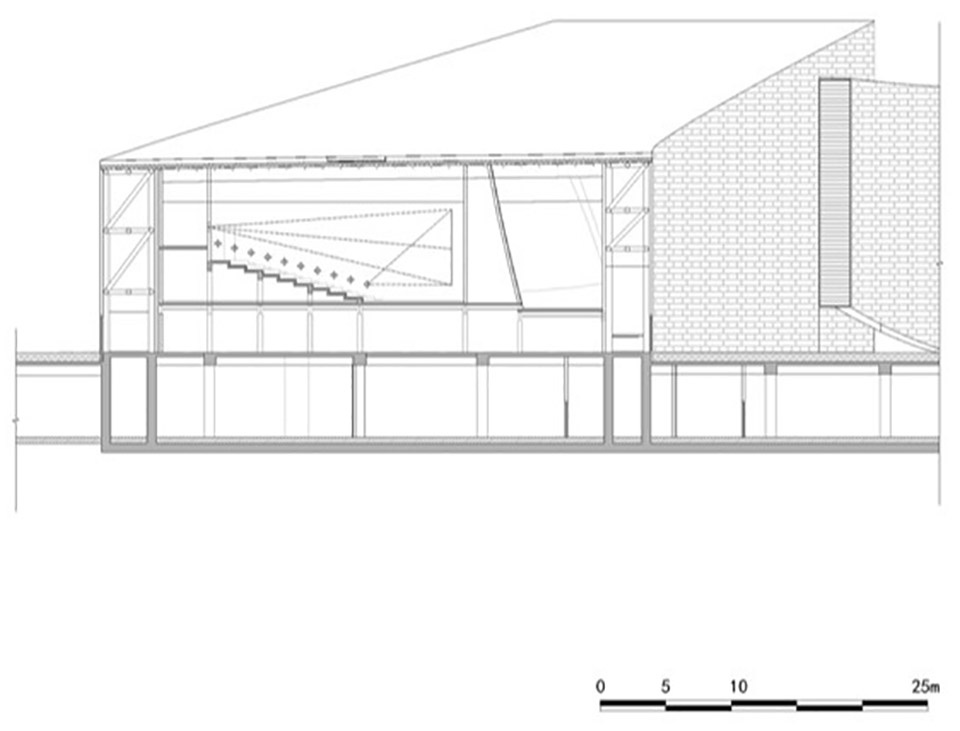
▼剖面图1,Section 1
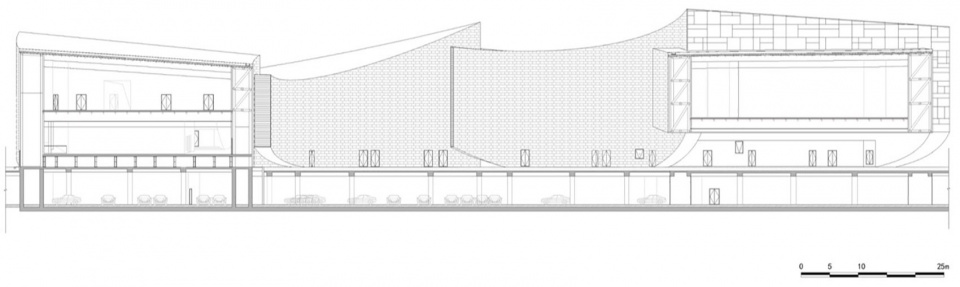
▼剖面图2,Section 2
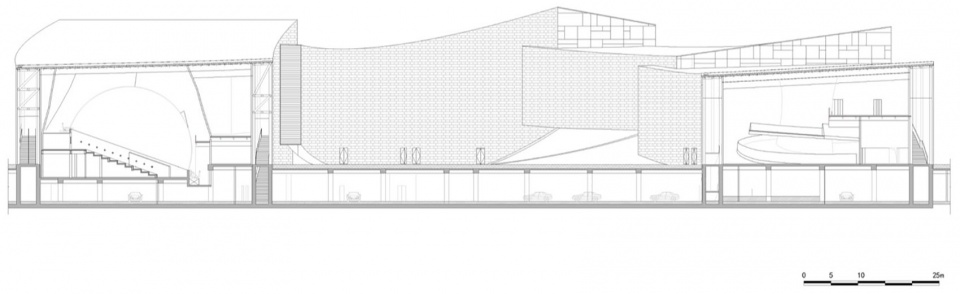
▼剖面图3,Section 3
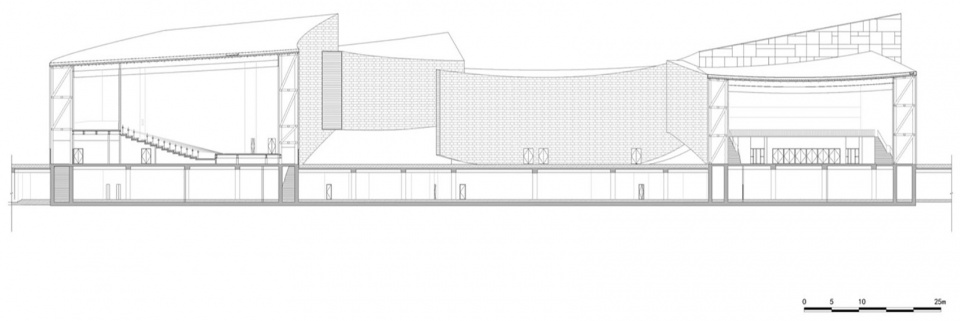
▼剖面图4,Section 4
Time: 2016-2024
Area: 16,154㎡
Type: cultural
Status: completion
Location: Tianshui, Gansu, China
Client: Tianshui Maijishan Cultural Tourism Development Co., Ltd
Design Firm: ZXD Architects + BIAD
Chief Architect: Zhu Xiaodi
Design Team:
Architecture: Dawei Wang, Hua Fan, Zaijian Zhang, Jian Wang, Xiang Li, Xiaoyong Cui, Zheng Zhang, Wei Jiang, Yiwei Li, Yuanyuan Song, Kun Liu, Haonan Wang, Wenjuan Fan, Wenjing Liu, Yanan Cheng
Structure: Yi Yang, Keyu Gai, Shaoxue Tang, Qing Geng, Chunyang Song, Zhongyi Zhu (design director)
Equipment: Liang Sun, Jie Li, Peng Liang, Guocheng Zhao, Jiecong Liu, Hanlin Shi, Pengfei Bai
Electrical: Wei Liang, Xu Wang, Yang Gao, Shuochen Liu, Lingli Wang
Interior Design: ZXD Architects + Wu Yanming Studio
Landscape: BIAD + Green Alliance (Beijing) International Engineering Design Co., Ltd
Lighting Design: Tsinghua University Planning and Design Institute Co., Ltd. Zhe Wu, Li Tang
Photography: ©Arch-Exist ©Xiangdong Wang ©Hanmo Vision
Video: ©Arch-Exist ©Wu Yanming Studio
Video Editing: Zhepeng Zhang