覔书店深圳大运天地店 / MOC DESIGN OFFICE
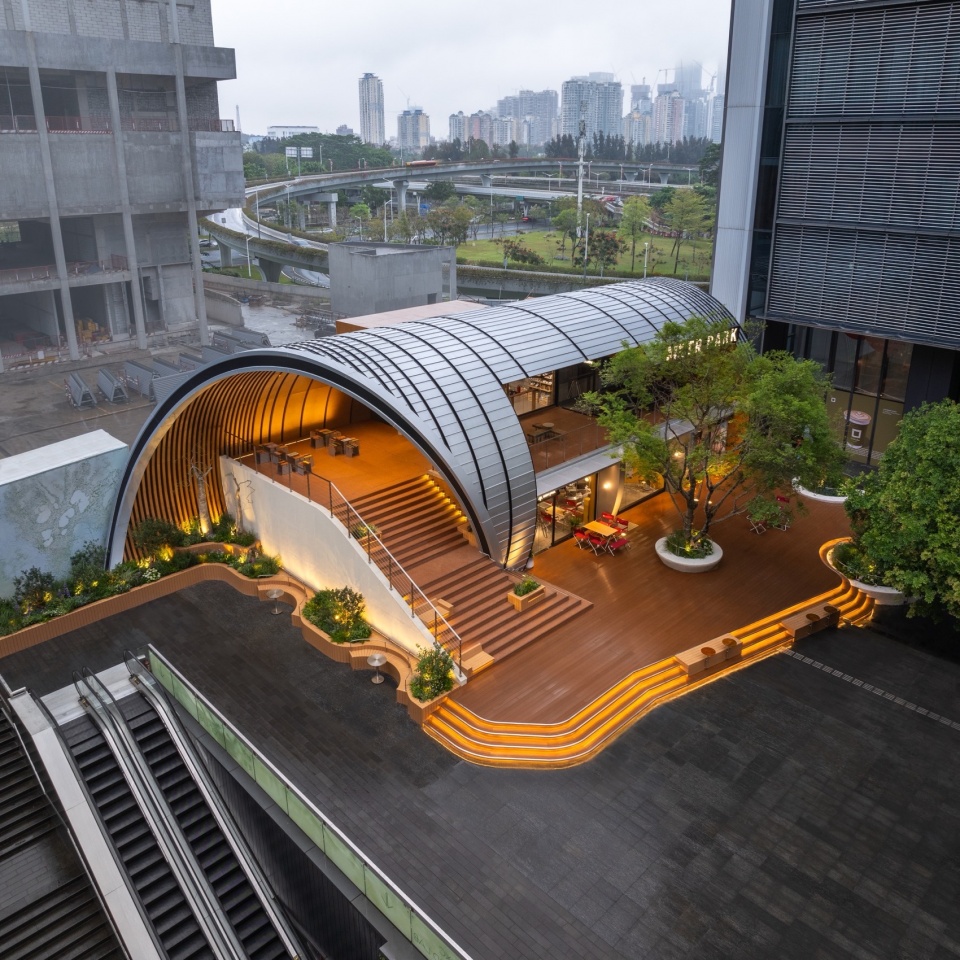
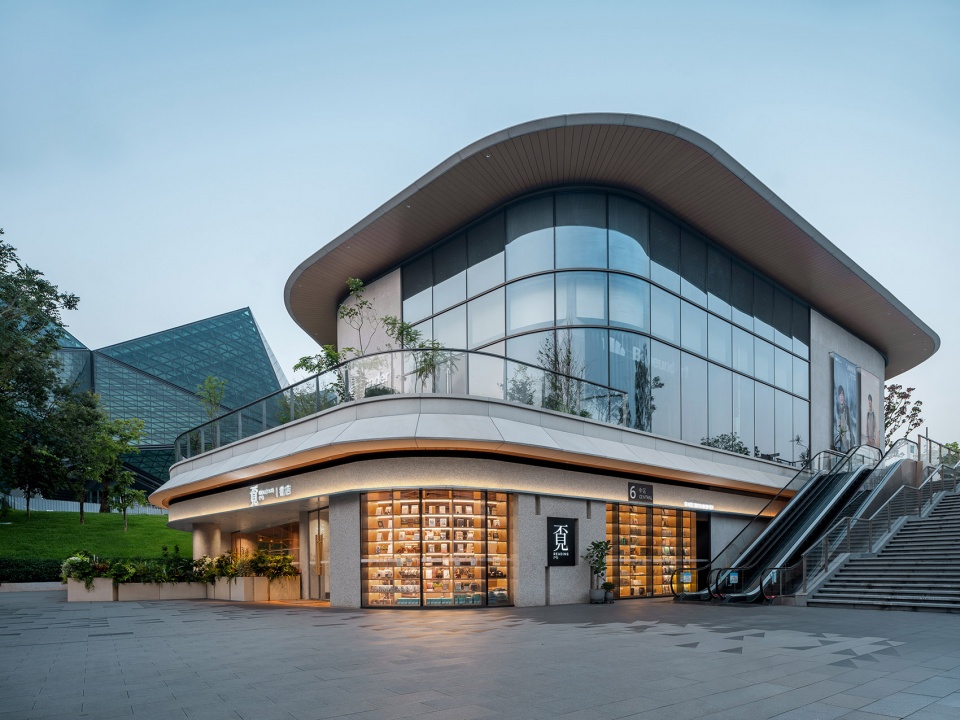
在深圳大运天地商业街区的滨水河岸交汇处,覔书店以“庭院式文化容器”的形态融入年轻化的商业肌理。
At the waterfront intersection of Shenzhen’s Dayun Tiandi commercial district, Mi Bookstore integrates into the youthful urban fabric as a “courtyard-style cultural container.”
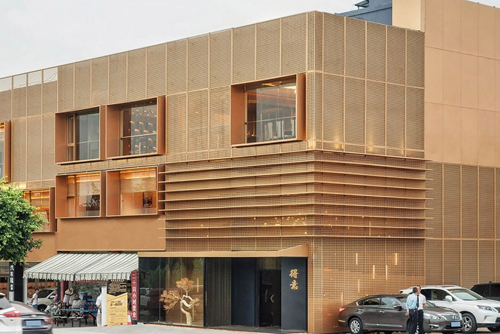
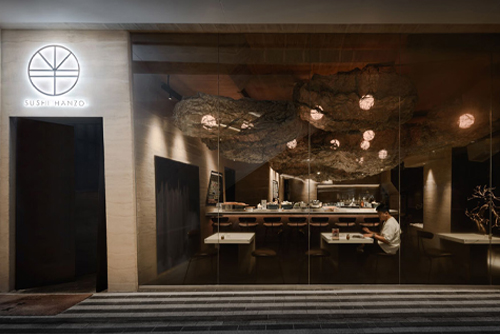
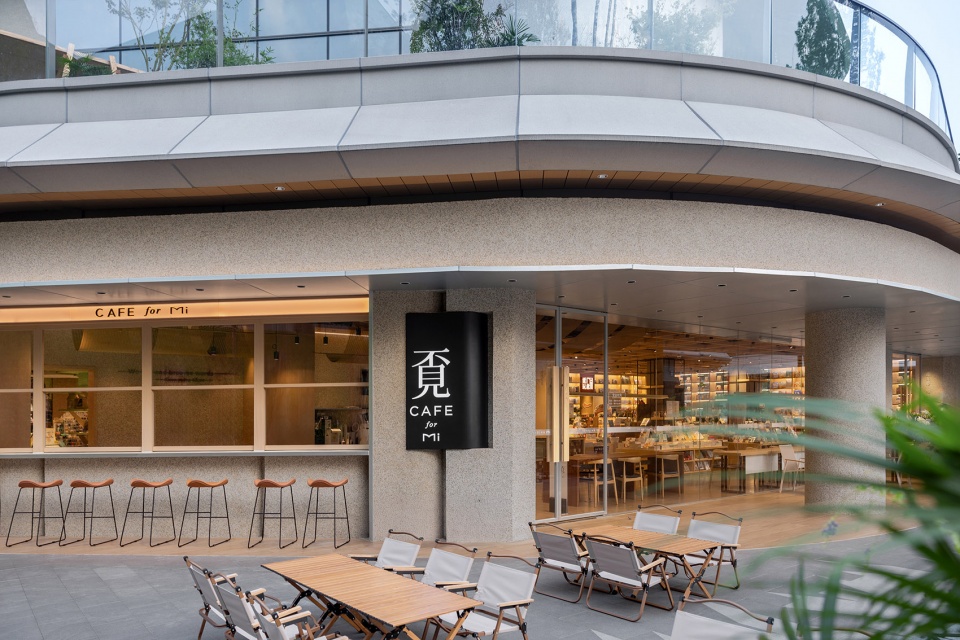
▼书店外观,exterior of the bookstore
▼书店外观,exterior of the bookstore
设计师设计师以《园冶》”巧于因借,精在体宜”的造园哲学为蓝本,将自然渗透、文化叙事与商业逻辑交织,构筑一处兼具阅读体验与公共休闲共处的场景。
The designer, guided by the gardening philosophy of “ingenious adaptation to context and refined spatial propriety” from Yuanye (The Craft of Gardens), interweaves natural permeability, cultural narrative, and commercial logic to create a space that harmoniously coexists as both a reading sanctuary and a public leisure destination.
▼书店外摆区域,outdoor area of the bookstore
01 场所精神的诠释Interpretation of Place Spirit
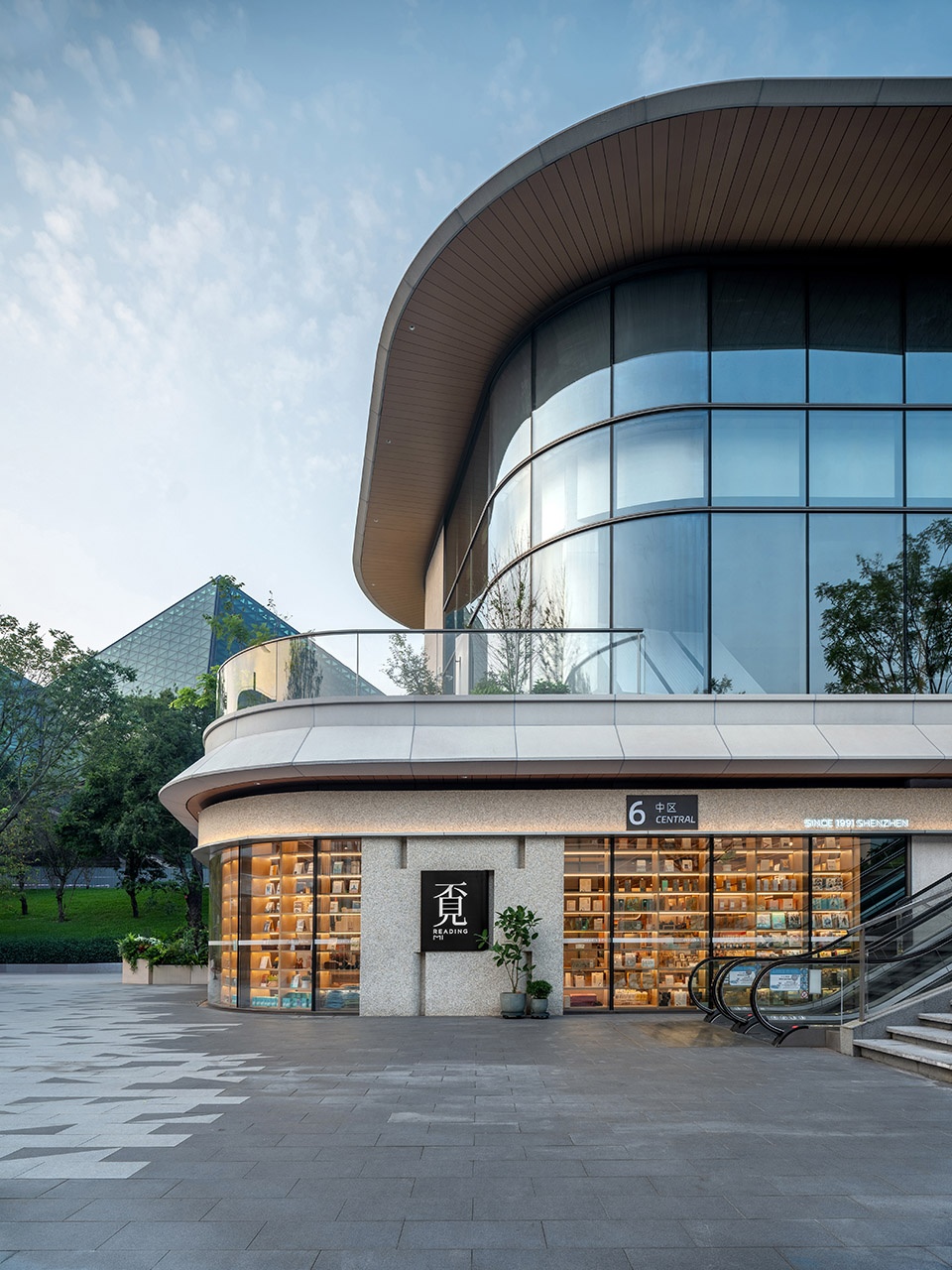
项目位于商业内街与自然景观的交界处,设计师引入水洗石外立面回应庭院氛围,以谦逊的姿态衔接商业街区的动态人流与庭院的静谧氛围,使书店成为城市与自然的诗意媒介。
Located at the threshold between commercial interiors and natural landscapes, the design employs a washed aggregate concrete facade to echo courtyard aesthetics. This humble material mediates the dynamic flow of urban crowds and the tranquility of the adjacent garden, transforming the bookstore into a poetic conduit between city and nature.
▼引入水洗石外立面,employs a washed aggregate concrete facade
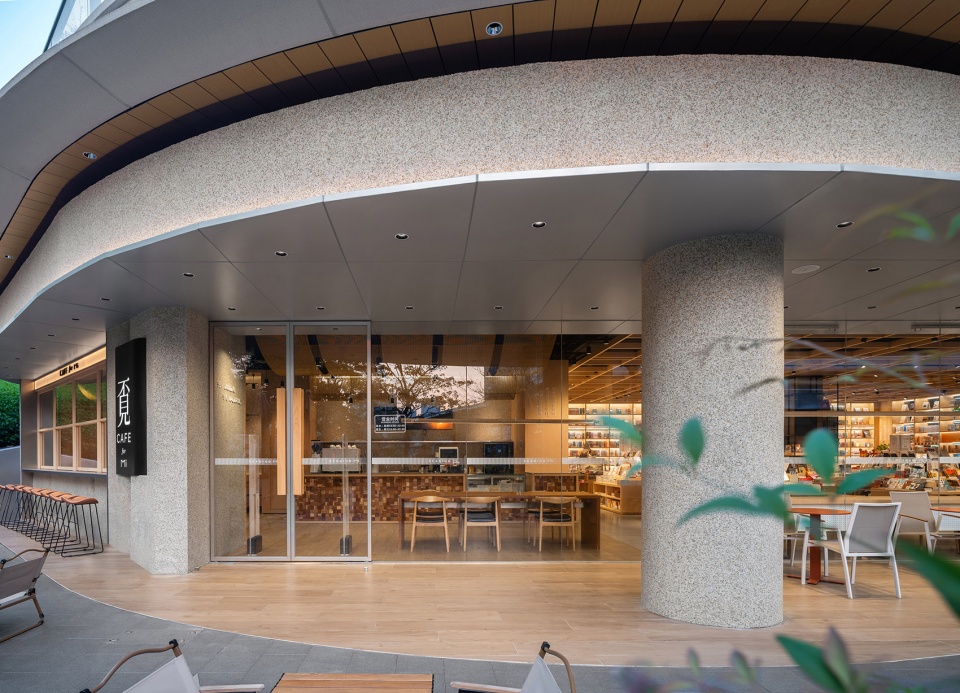
水洗石外墙与木纹挑檐的进退组合,既延续了商业街区的现代质感,又以局部内退的灰空间形成过渡带——通透的玻璃幕墙系统消隐了室内外界限,使视觉向绿植景观自然延伸,与商业内街形成柔和的过渡。
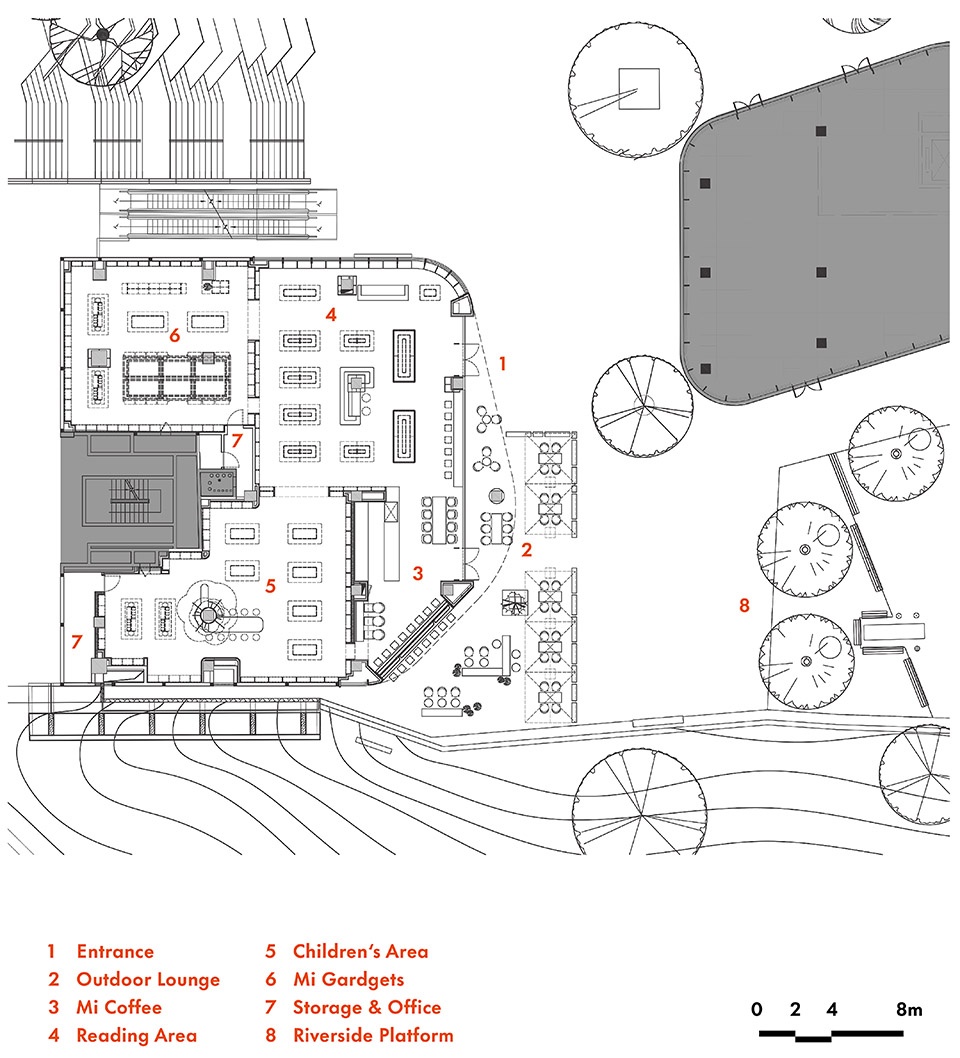
▼平面图,plan
The interplay of the textured concrete facade and wood-grained cantilevered eaves crafts a modern yet transitional gray zone. A transparent glass curtain wall dissolves physical boundaries, visually extending interior sightlines toward lush greenery while softly harmonizing with the commercial streetscape.
▼使书店成为城市与自然的诗意媒介,transforming the bookstore into a poetic conduit between city and nature
02 幕帘叠影里的时光印记
Temporal Imprint in Layered Curtains
Temporal Imprint in Layered Curtains
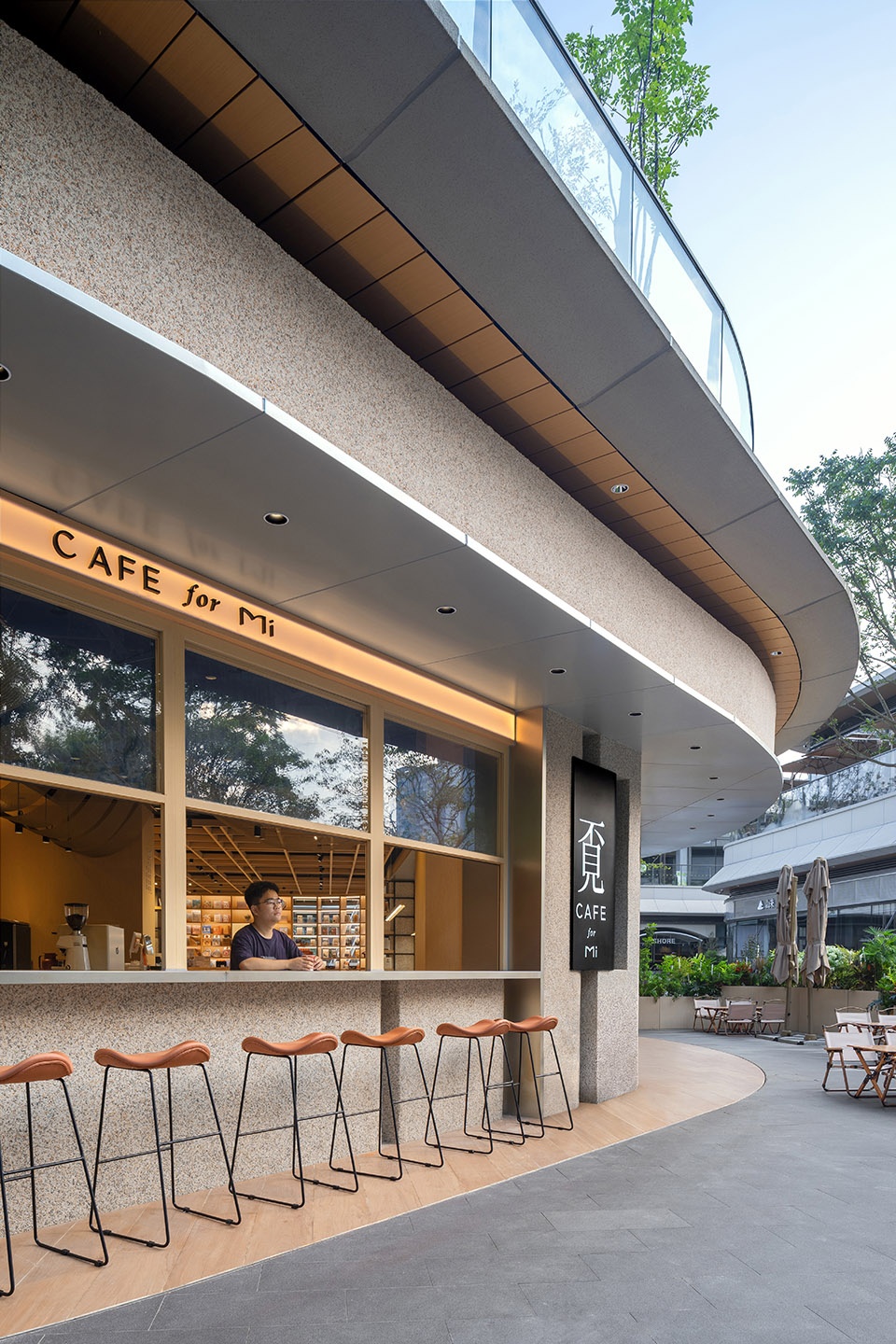
设计师将入口一侧的幕墙改造为咖啡对外景观高坐区,与户外庭院相连。木质的窗框将河岸景观分解为连续景观切片,随晨昏光线变化呈现不同时段下的画面。
The entrance-side curtain wall is reimagined as a raised café viewing zone, connected to an outdoor courtyard. Timber-framed windows dissect the riverside landscape into sequential vignettes that shift with daylight.
▼将入口一侧的幕墙改造为咖啡对外景观高坐区,the entrance-side curtain wall is reimagined as a raised café viewing zone
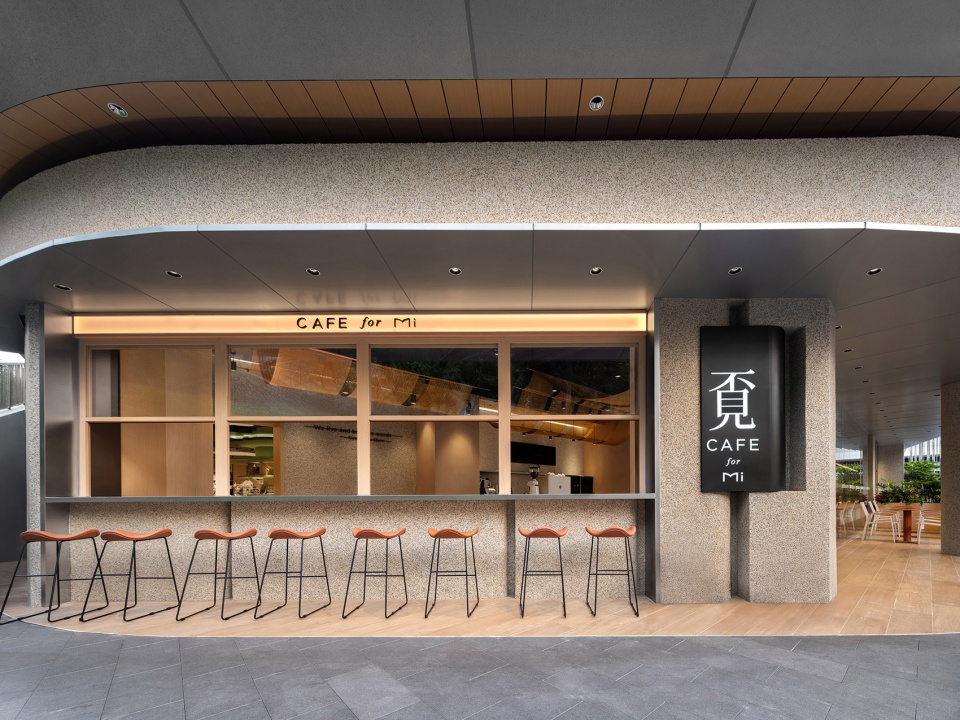
▼与户外庭院相连,connected to an outdoor courtyard
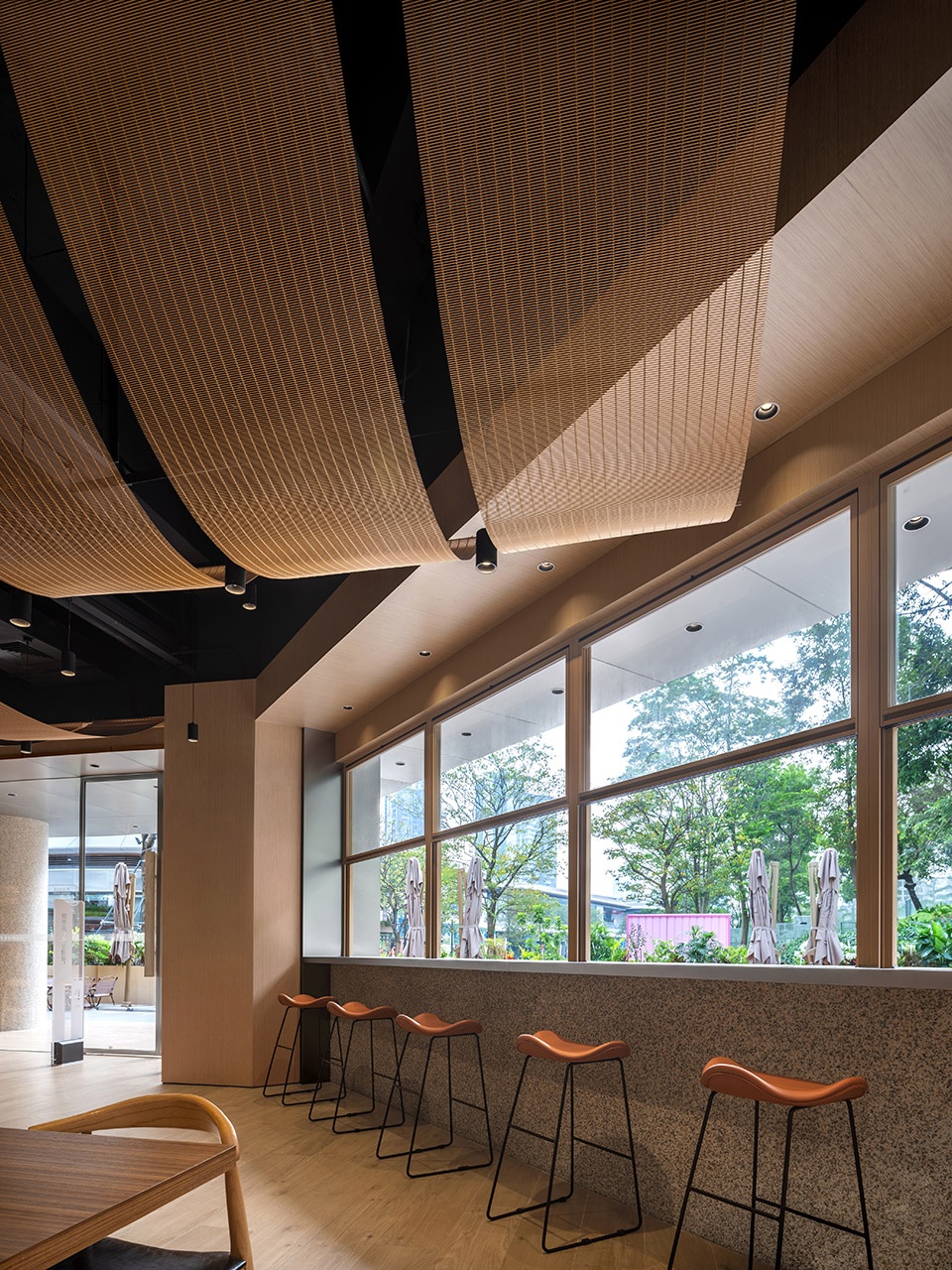
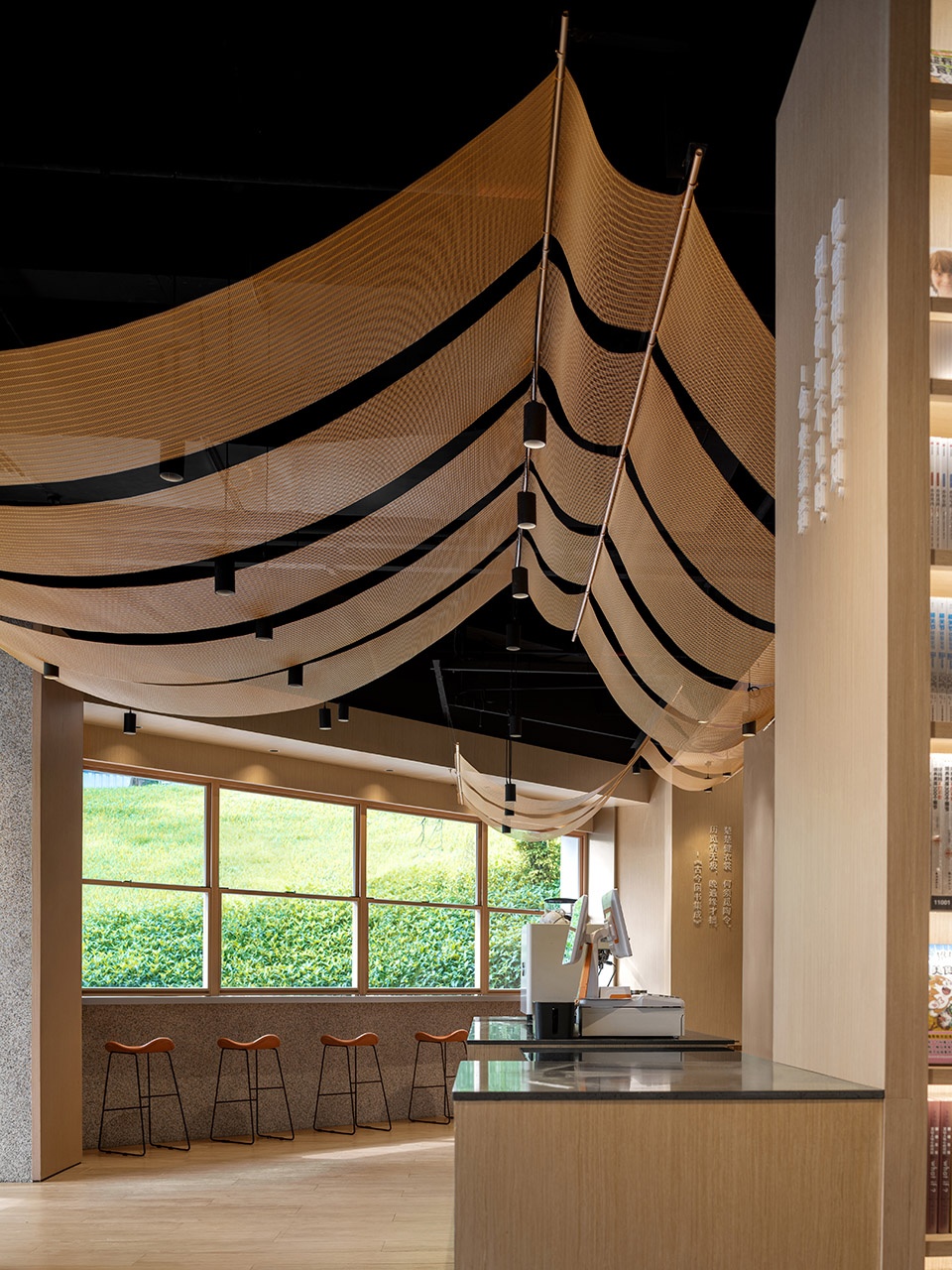
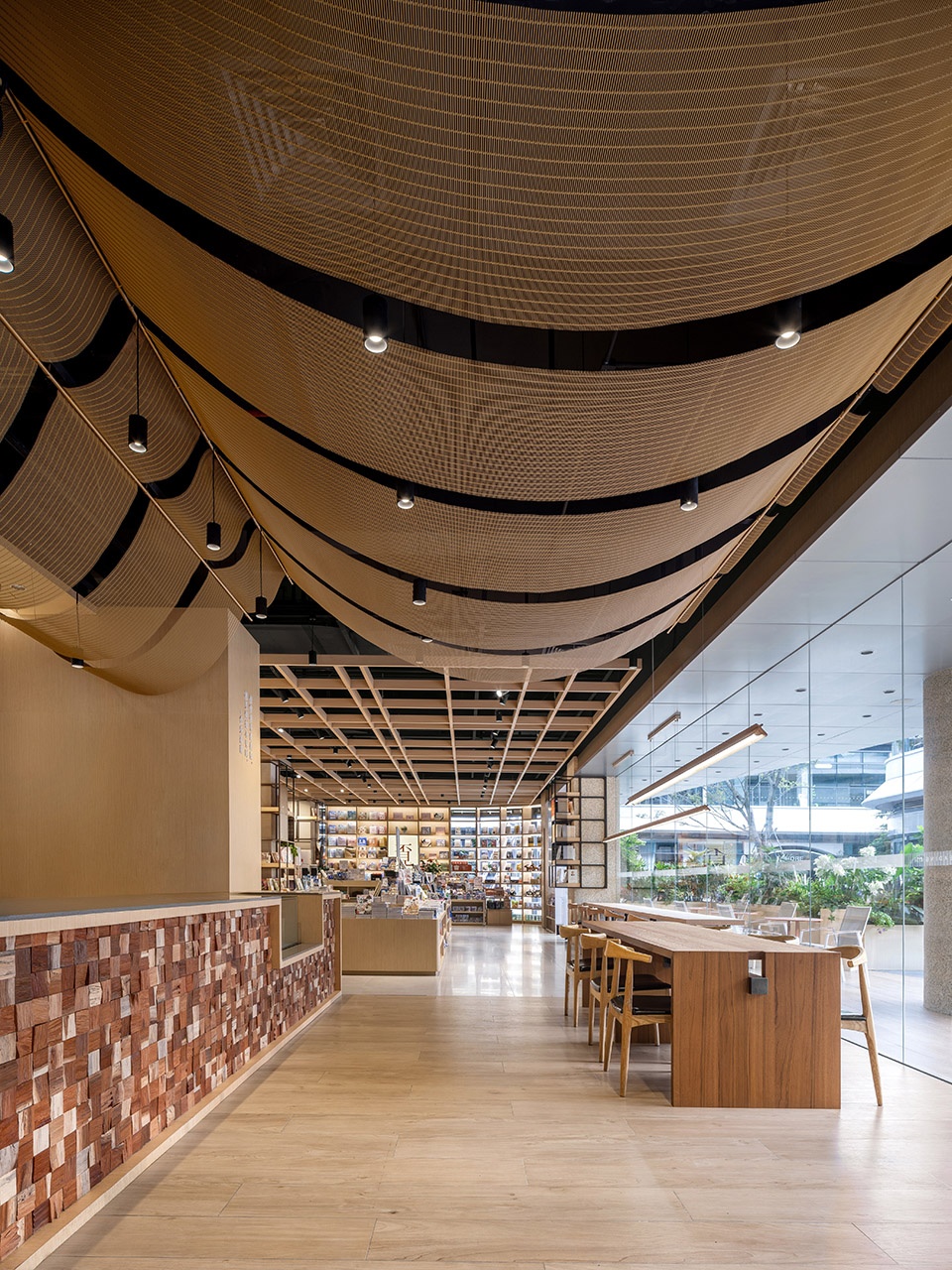
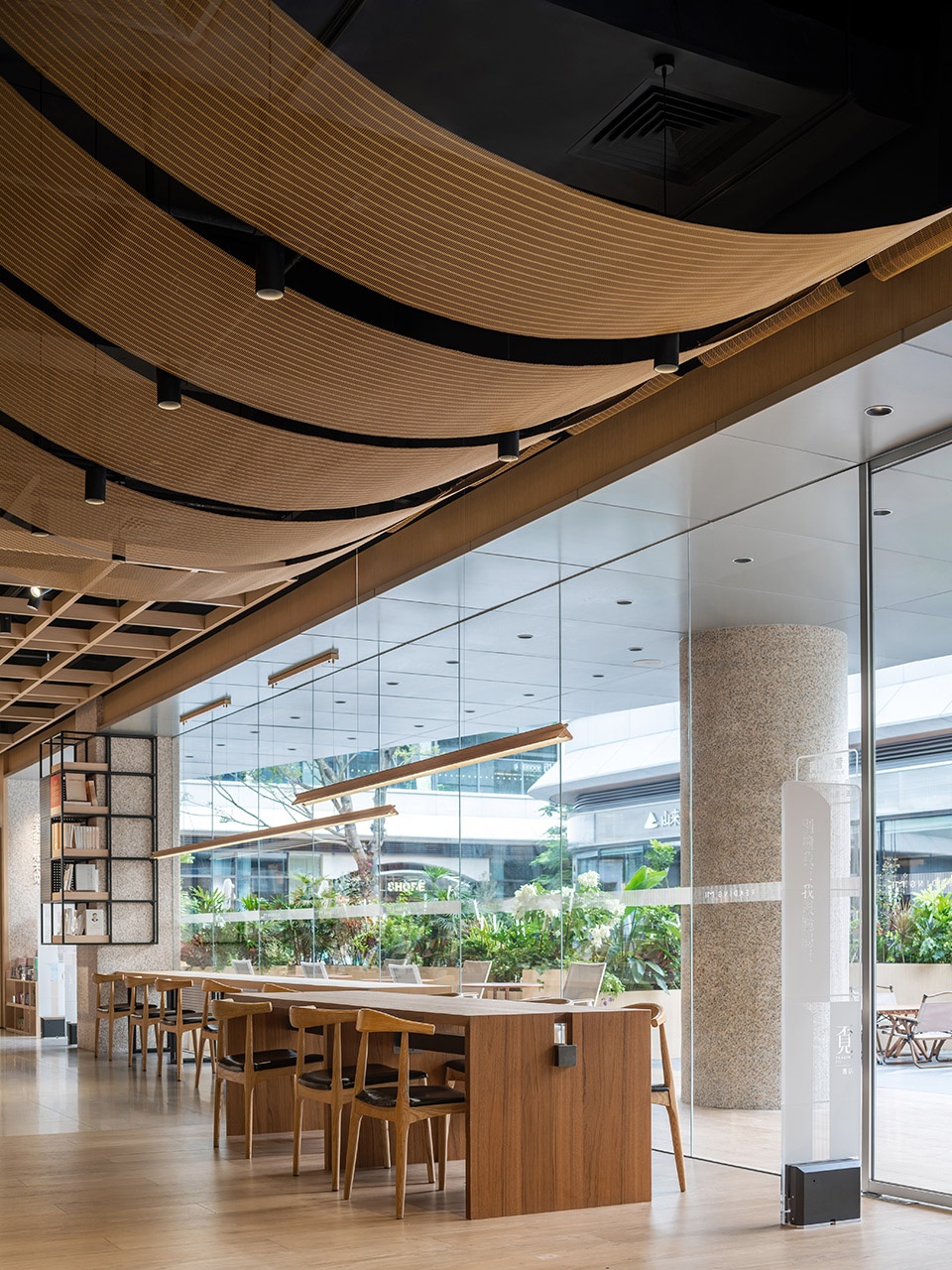
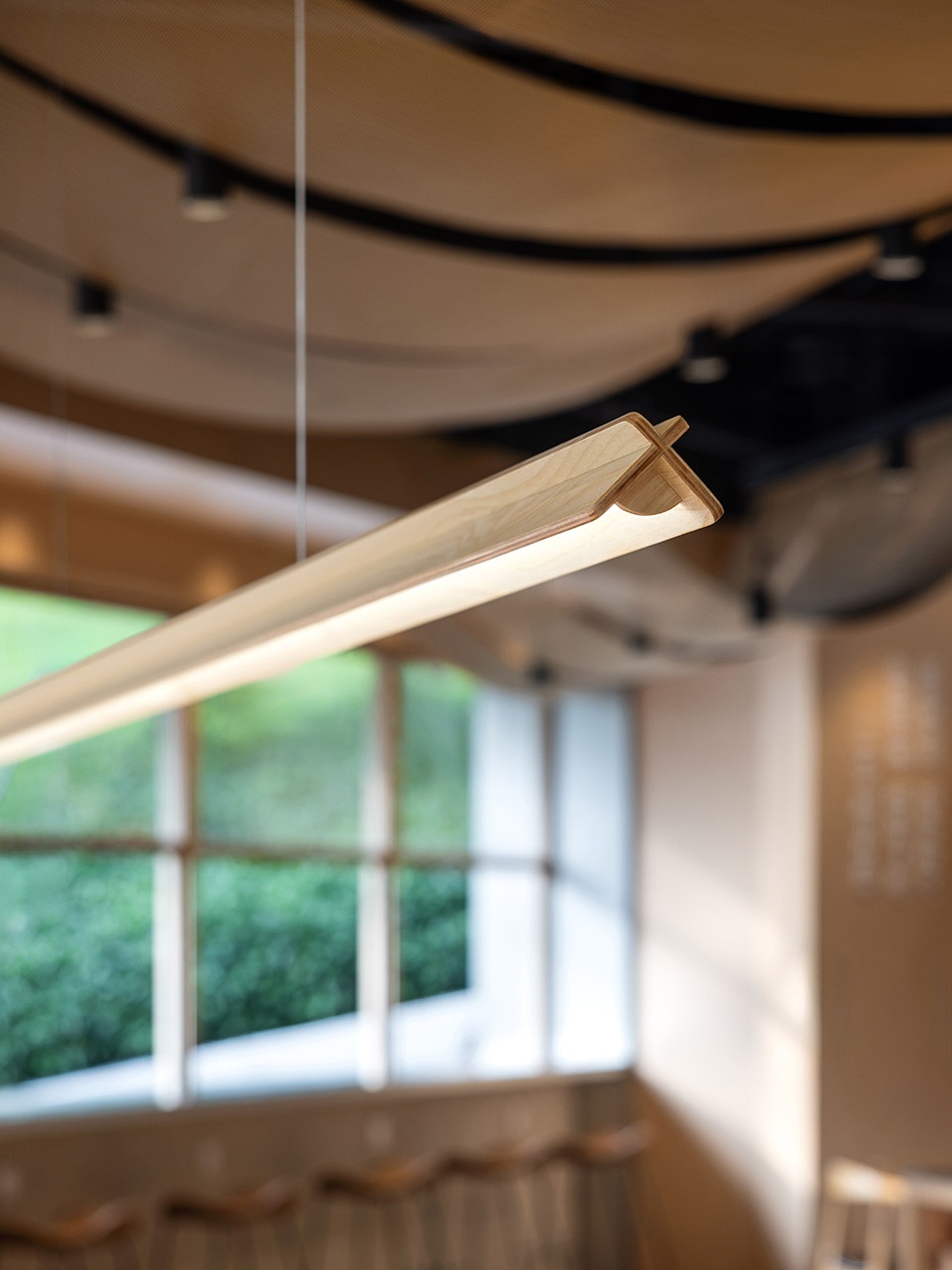
空间顶部悬吊定制金属网帘,编织肌理形成独特的空间韵律。
Suspended from the ceiling, custom-crafted metal mesh curtains generate a unique spatial cadence through their intricately woven texture, establishing an architectural poetry of light and shadow.
▼空间顶部悬吊定制金属网帘,custom-crafted metal mesh curtain suspended from the ceiling
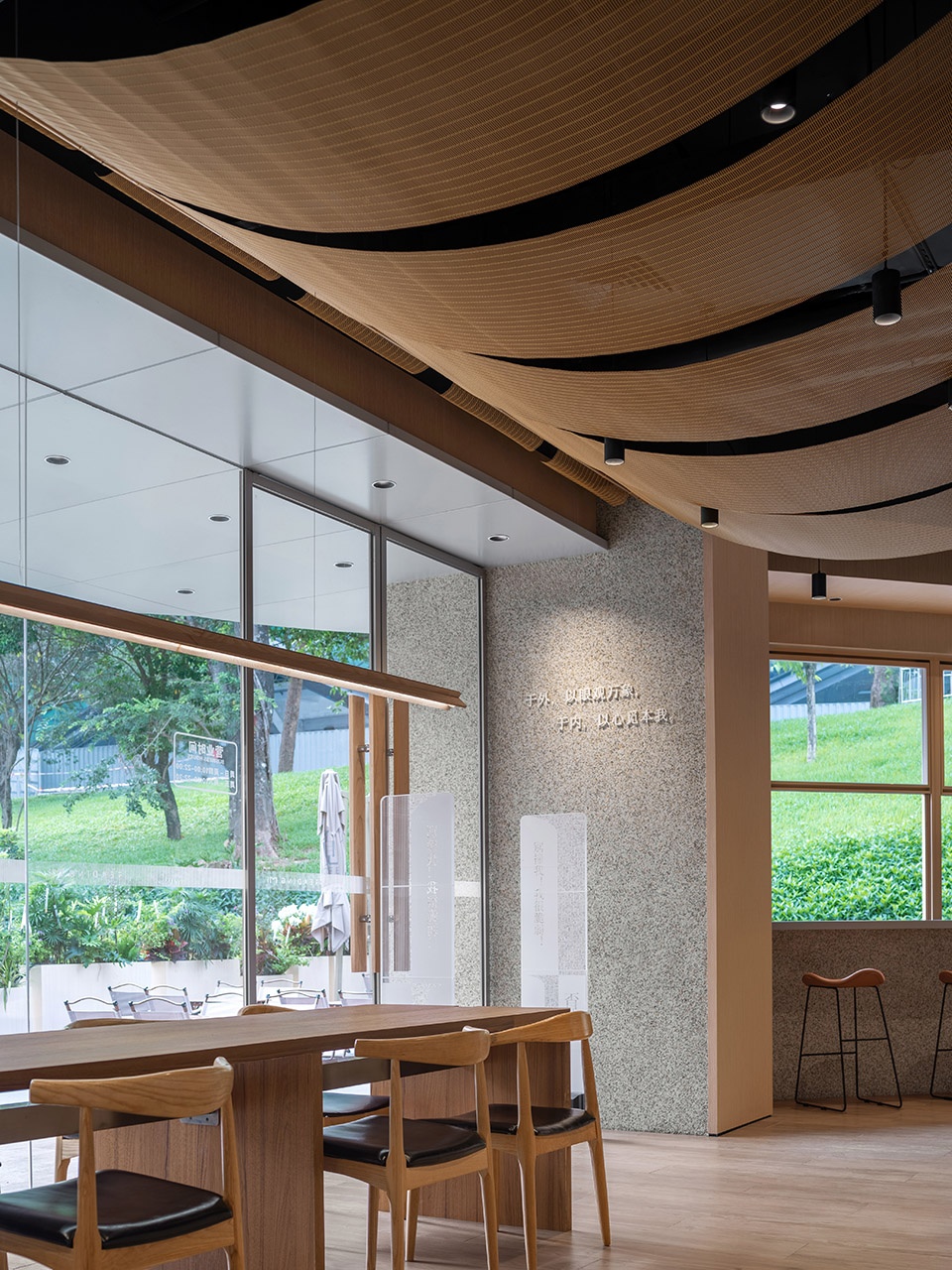
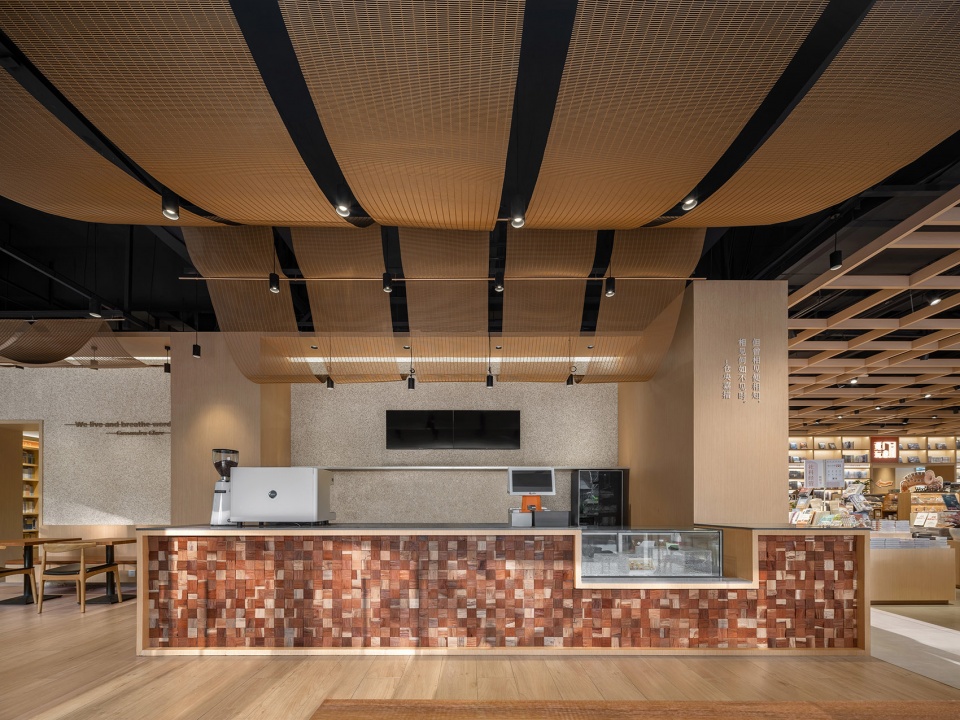
幕帘下吧台的木质切片凝固着树木生长轨迹,与窗外四季更迭的植被形成生命周期的对话。
Beneath the metal mesh curtain, the growth rings fossilized within the bar counter’s wooden cross-sections embody static life, engaging in a silent dialogue with the vegetation beyond the window—a conversation spanning arboreal memory and cyclical renewal.
▼幕帘下吧台的木质切片,the bar counter’s wooden cross-sections under the metal mesh curtain
▼空间顶部悬吊定制金属网帘,custom-crafted metal mesh curtain suspended from the ceiling
03 书巷童径里的自然启蒙Natural Enlightenment in Book Alleys
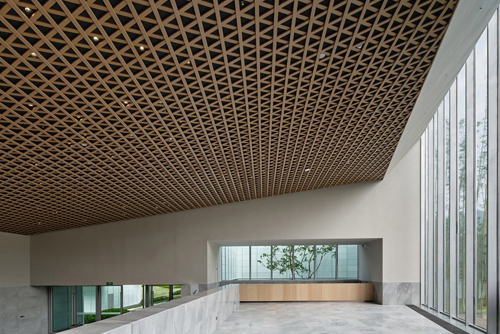
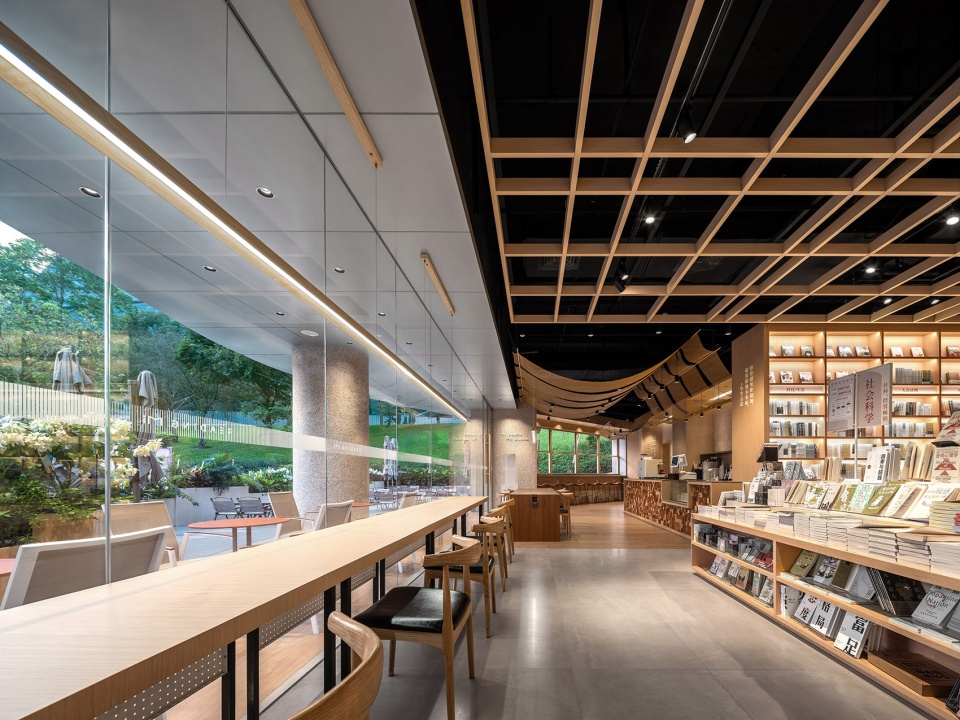
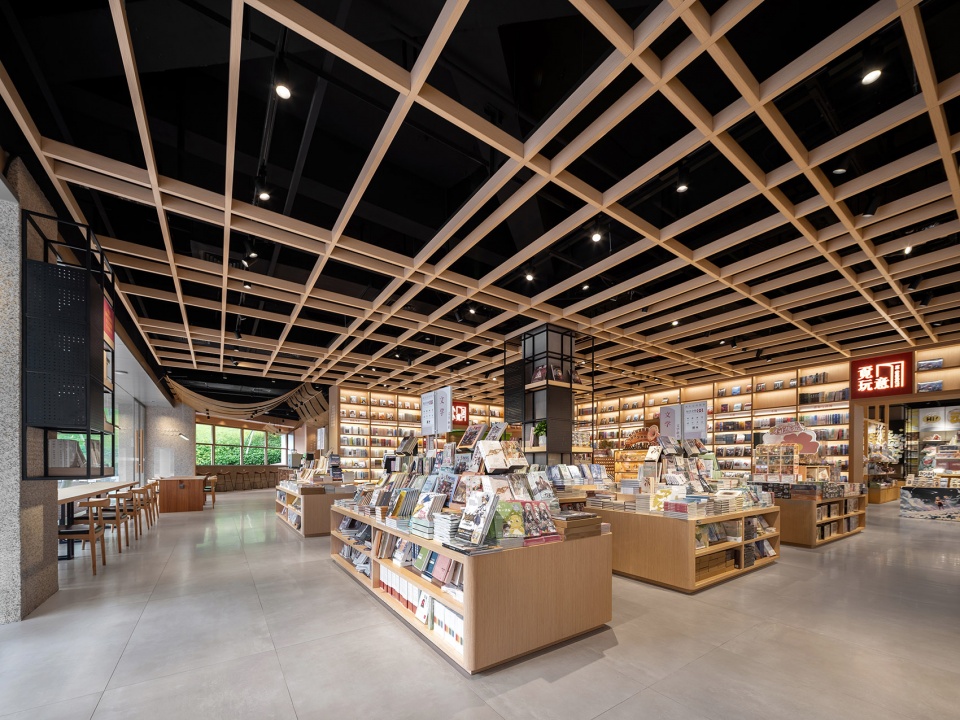
与咖啡区相邻的图书区,设计师以通过疏密渐变排布的木质框架天花构筑视觉韵律。
Adjacent to the café, the book zone features a wooden ceiling grid with density-modulated rhythms.
▼疏密渐变排布的木质框架天花,a wooden ceiling grid with density-modulated rhythms
下方书架的排布与天花格栅形成垂直对话:模数单元构成竖向支撑构成书架,并在其中设置了通往各个功能空间的入口。这种虚实相间的构造,既满足书籍分类陈列的功能需求,又使书架在空间中形成虚实交错的“书巷”路径。
▼轴测图,axonometric
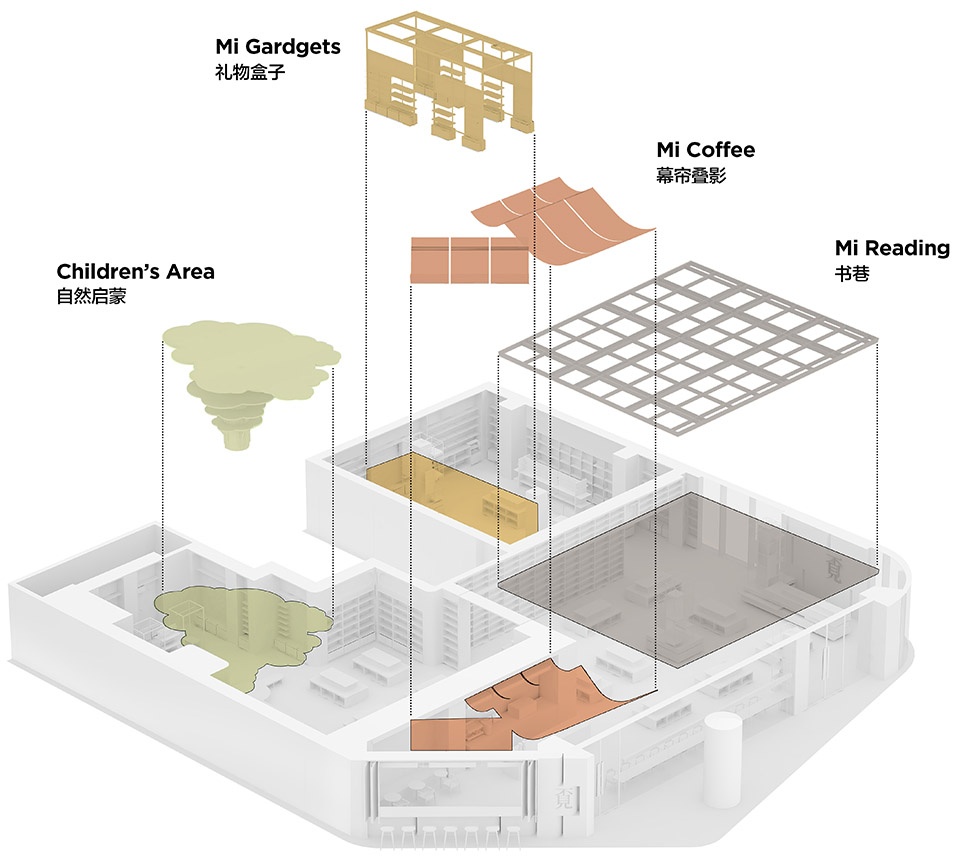
The shelving system below engages in a vertical dialogue with the ceiling grid: modular units form vertical structural supports while incorporating access points to adjacent functional zones. This interplay of solid and void structure not only fulfills functional requirements for categorized book displays but also creates interwoven “book alley” pathways that link adjacent spatial zones.
▼形成虚实交错的“书巷”路径,creates interwoven “book alley” pathways
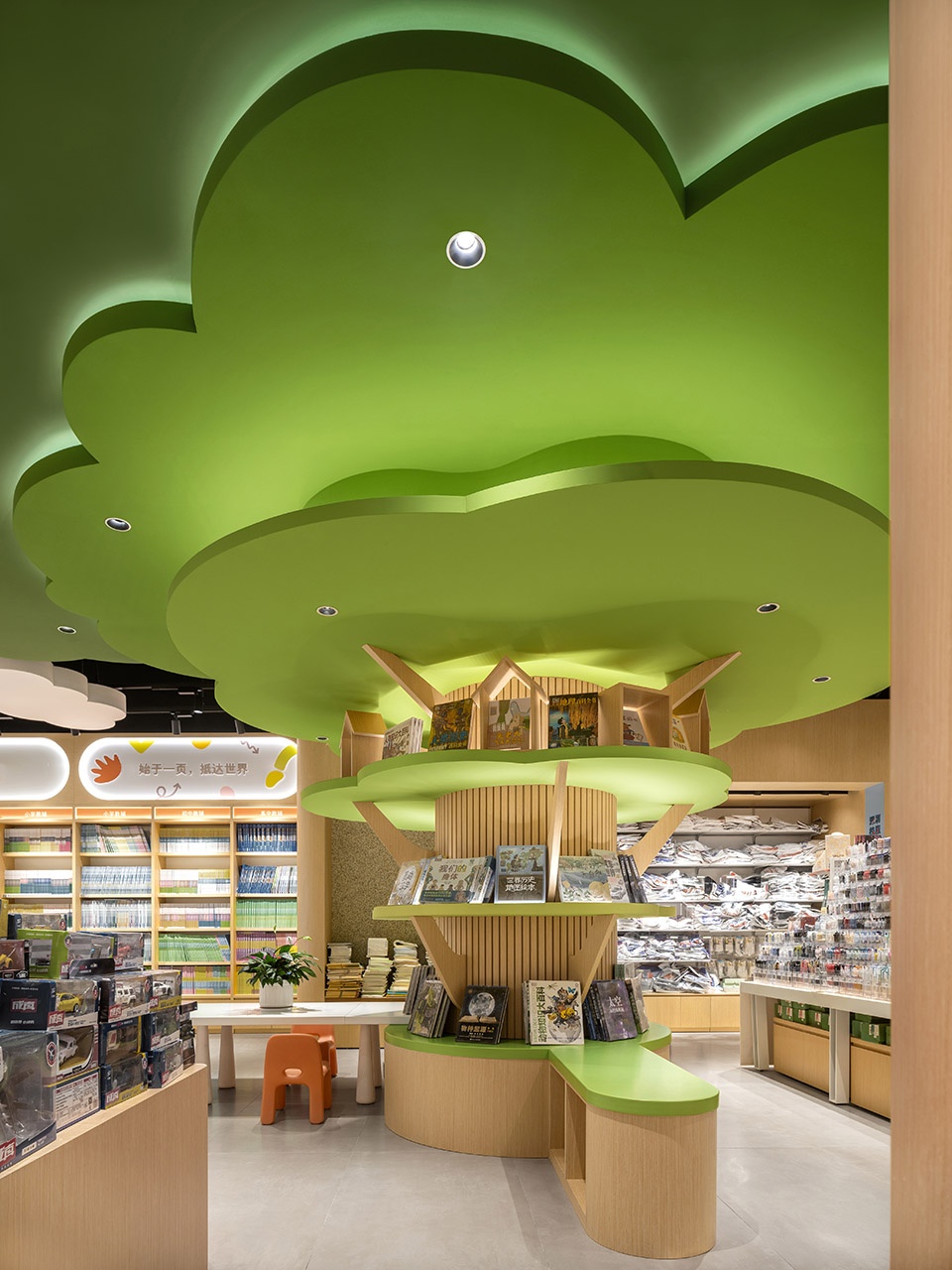
儿童区的设计回应以滨河绿意,通过层叠的弧形绿色层板将树木形态抽象化的引入室内,与窗外绿植形成互文。
The children’s zone responds to the riparian greenery through layered curved green panels that abstractly introduce arboreal forms into the interior, establishing a dialogic interplay with the exterior vegetation.
▼儿童区,the children’s zone
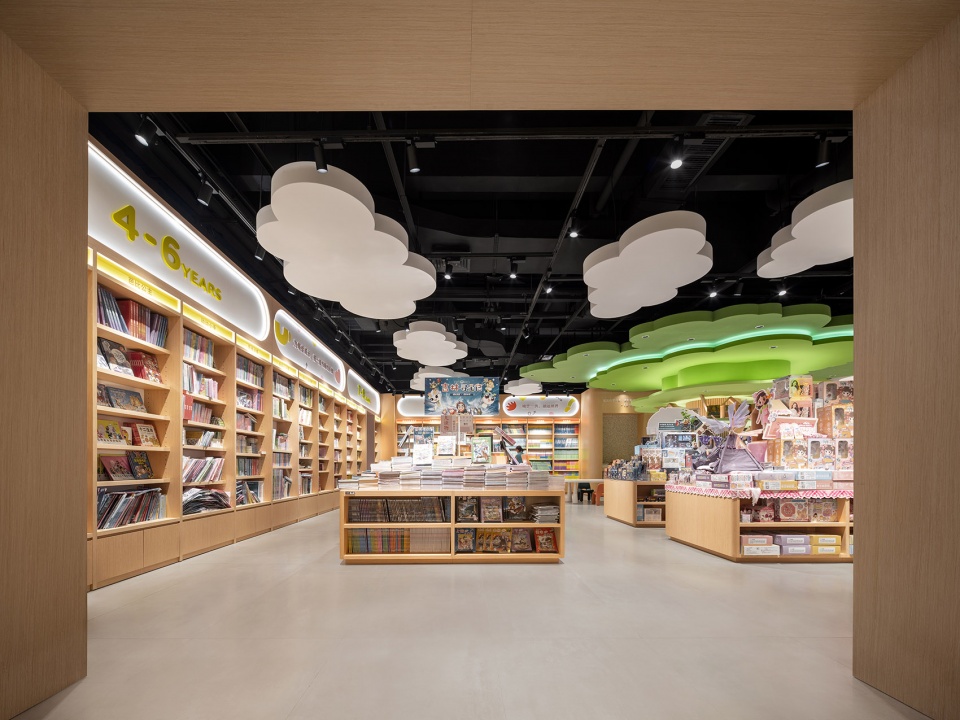
▼儿童区,the children’s zone
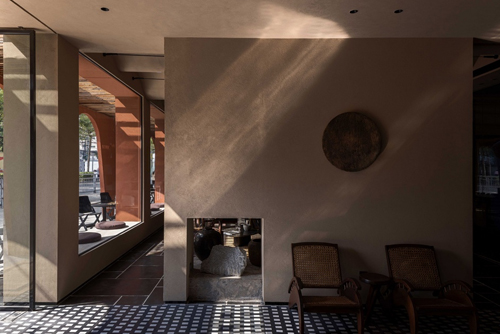
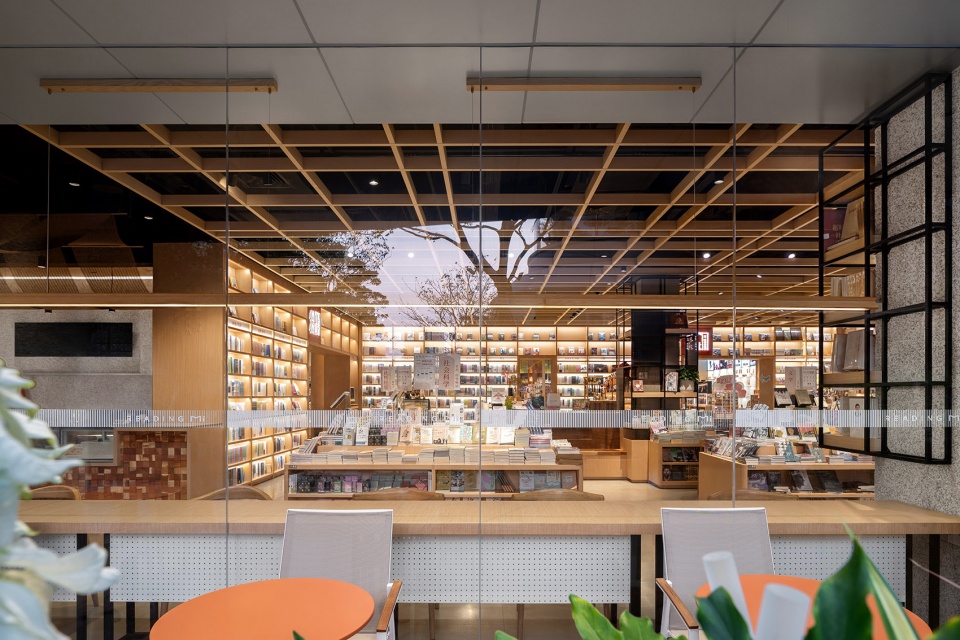
以书为媒的空间编织,最终形成商业活力与自然生态的双向滋养——当读者静坐于木质长桌前,通透的玻璃幕墙使书页间的文字与窗外的婆娑树影,共同构成流动的文化场域。材质、视线与功能的交织,让书店成为衔接城市繁华与自然诗意的精神容器。
The spatial weaving mediated by books ultimately cultivates a symbiotic nourishment between commercial vitality and natural ecology. As readers linger at timber tables, the transparent glass curtain wall merges printed words with quivering foliage shadows, co-creating a fluid cultural field. The interweaving of materiality, sightlines, and programmatic functions transforms the bookstore into a spiritual vessel bridging urban dynamism and natural poetics.
▼共同构成流动的文化场域,co-creating a fluid cultural field
Project Name: Mi Reading at Dayun Tiandi Branch, Shenzhen
Lead Designer: Yang Zhenyu
Design Team: Liang Ningsen, Wu Xiuwei, Wu Xinhong
Design Period: May 2024 – June 2024
Location: Dayun Tiandi, Longgang District, Shenzhen
Area: 650 ㎡
Materials: Washed aggregate concrete, textured plaster, wood veneer panels, ceramic tiles, wood-look floor tiles, metal mesh curtains, sandblasted stainless steel
Client: Mi Reading
Photography: Nie Xiaocong