Fiskebar餐厅,巴塞罗那 / Isern Serra
Fiskebar是Grupo Tragaluz的新餐厅,这是一家诞生于巴塞罗那的重要餐饮集团,由Tomás Tarruella领导,目前在巴塞罗那和马德里均设有分店。本次委托旨在将北欧港口的美食文化引入巴塞罗那皇家海事俱乐部(Real Club Marítimo de Barcelona)顶层,这是位于老港(Port Vell)的地标性场所。
Fiskebar, the new restaurant of Grupo Tragaluz, an important restaurant group born in Barcelona, directed by Tomás Tarruella and with premises in Barcelona and Madrid. The commission consists of bringing the gastronomic culture of the ports of northern Europe to the penthouse of the Royal Maritime Club of Barcelona, an iconic place in the city located in the Port Vell.
▼空间概览,overall view of the space
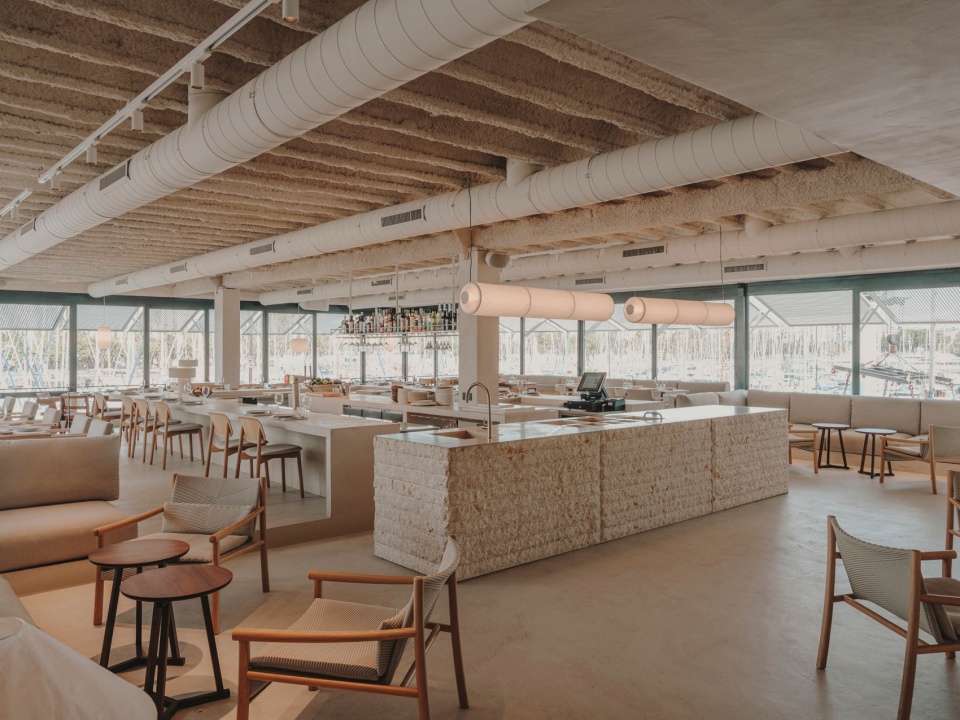
该餐厅灵感源自北欧港口附近的渔民酒吧,以“冷吧”形式供应海鲜为核心,同时不忘其所处的地中海与巴塞罗那港口环境。北方之海,南方之光。室内设计宁静而温暖,以北欧线条勾勒,突显港口环境与巴塞罗那及蒙锥克山的城市天际线。
The restaurant is born from a Nordic concept, the fishermen’s bars near the ports, a cold bar for fish as the central axis and without forgetting the environment in which we find ourselves, the Mediterranean Sea and the port of Barcelona. The sea of the north and the light of the south. A serene, warm, architectural interior, with Nordic lines that highlight the environment in which it is located, the port next to the skyline of Barcelona and Montjuic.
▼餐厅灵感源自北欧港口附近的渔民酒吧,the restaurant is born from a Nordic concept, the fishermen’s bars near the ports
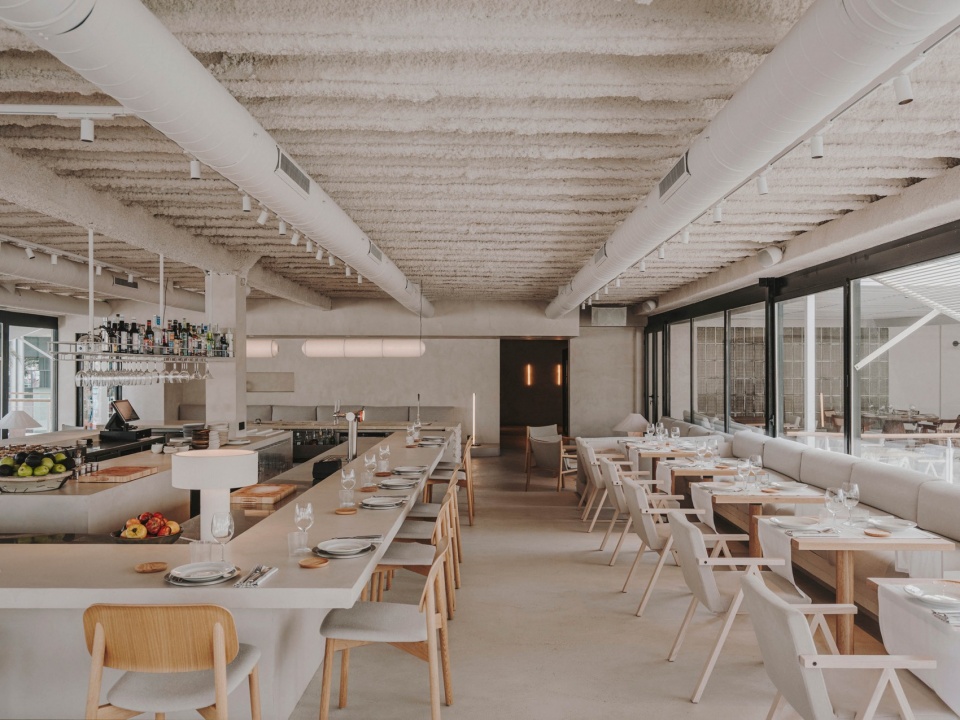
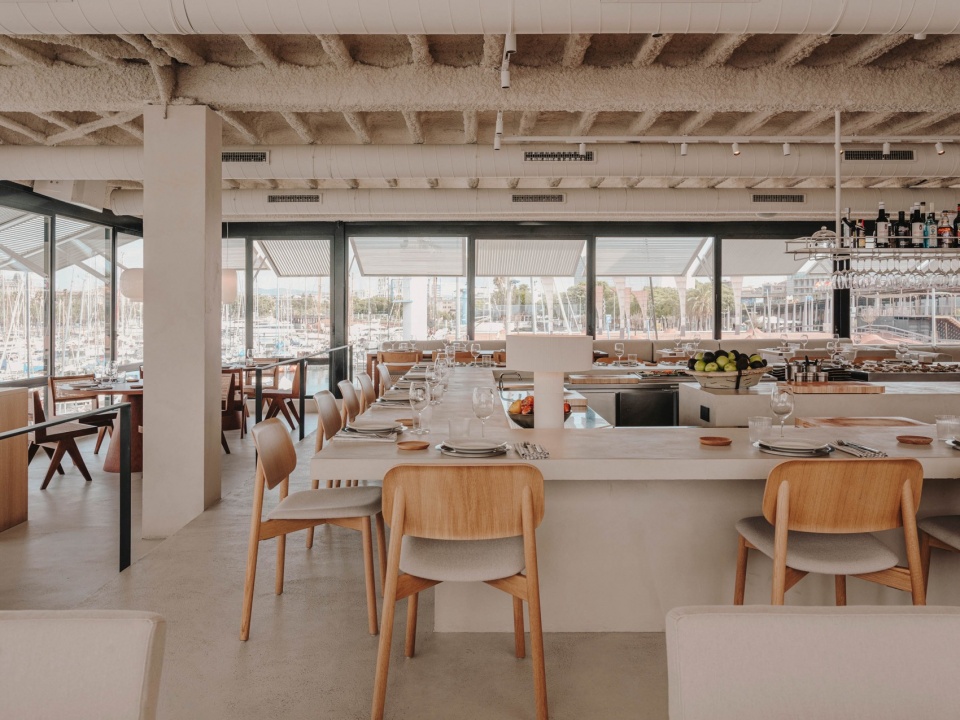
简约却不失细节。Fiskebar源自一个质朴、真实、充满材质感的北欧概念。美感通过手工艺得以放大,选用天然石材,元素极简,追求真实。极简主义结合自然物件的温度。由设计与工艺共同缔造的真实感。量身定制的家具、主吧台采用奶油象牙色大理石,以及工作区中央吧台与长凳等构成整体。
Simplicity with detail. Fiskebar is born from a Nordic concept, raw, authentic and material. Beauty enhanced by craftsmanship, pure materials, rock, few elements and authenticity. Minimalism, with the warmth of objects from nature. Authenticity generated from design and craftsmen. Tailor-made elements such as the furniture, the main bar in ivory cream marble and the elements of work such as the central bar and the benches.
▼质朴、真实、充满材质感的北欧氛围,Nordic concept, raw, authentic and material
空间设计The space
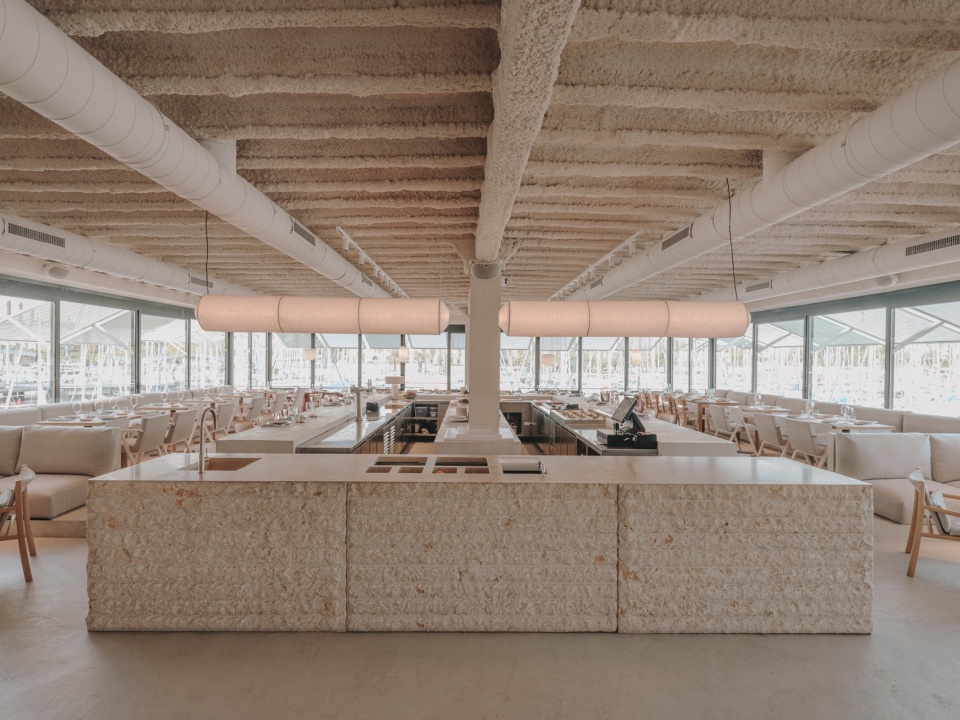
主入口位于Itaca步道,通过金属楼梯通向皇家海事俱乐部的顶层。Andrew Trotter设计的壁灯照亮了入口与户外区域。主厅是一个通透的玻璃体量空间,吧台为核心与活动的主轴。空间的“皇冠之珠”是一座由三块石材拼接而成的大理石吧台,迎接宾客之余,也展现手工之美与不完美的魅力。
The main entrance is on Paseo de Itaca via metal stairs that lead to the RCM’s penthouse. Sconces by Andrew Trotter illuminate the entrance and exterior areas. The main room is a glazed volumetric space where the bar is the central axis and dynamiser of the activity. The jewel in the crown is the marble bar, made up of three blocks of stone that greet you and remind you of the beauty of craftsmanship and imperfection.
▼吧台为核心与活动的主轴,the bar is the central axis and dynamiser of the activity
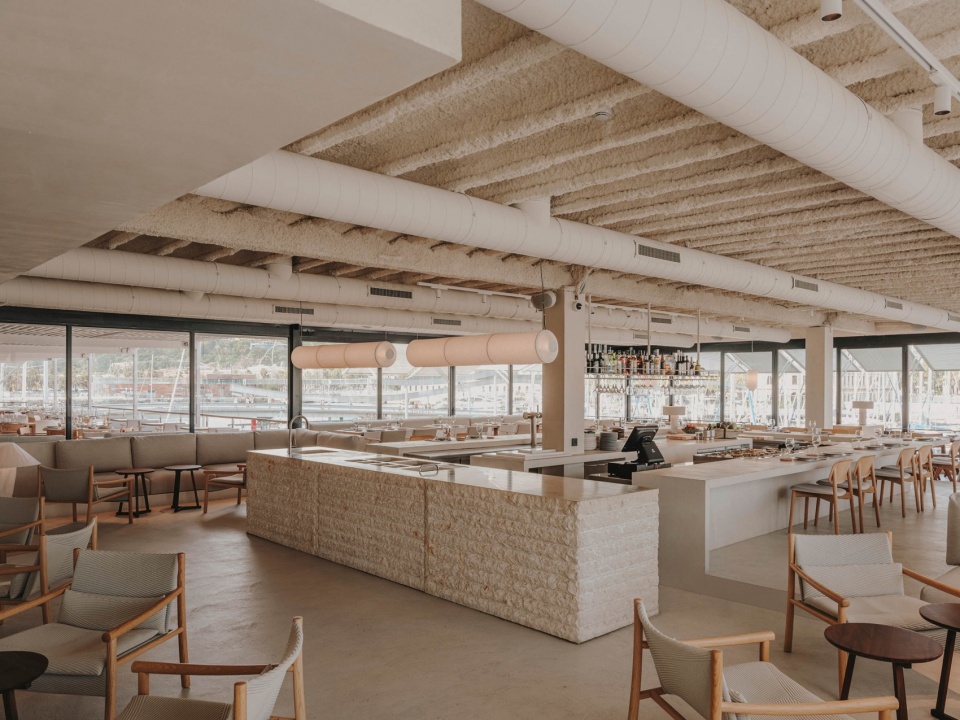
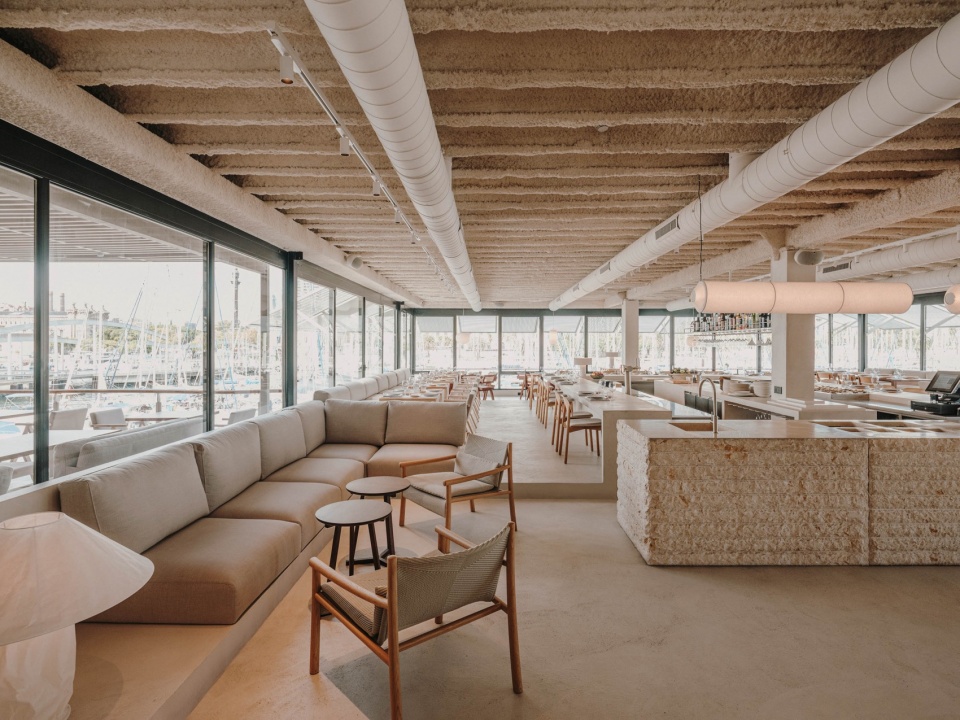
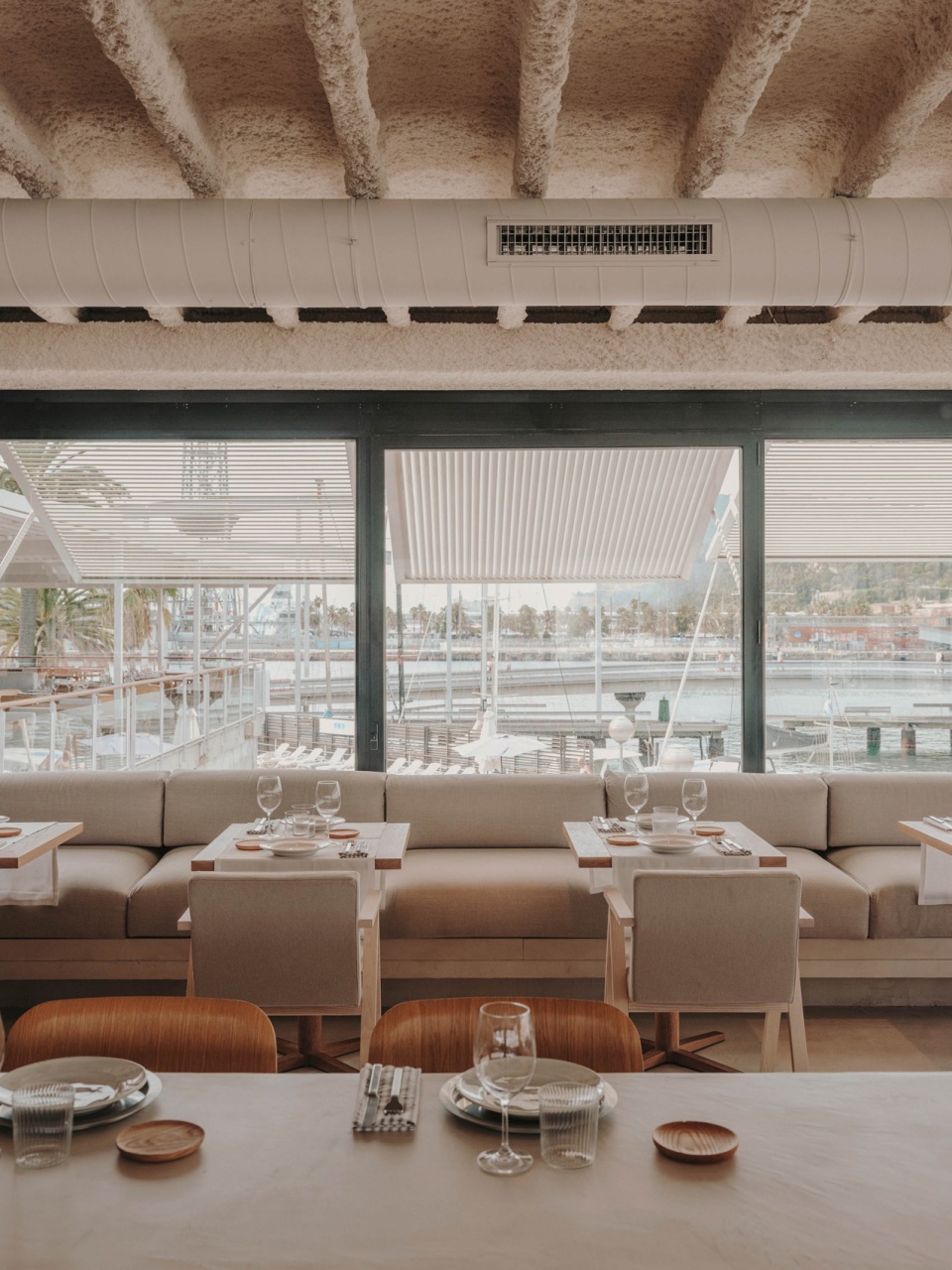
步入空间,首先是配有低沙发、小茶几、台灯及Arper的Kata扶手椅的休闲区,可在此先享用饮品,再移步用餐。整体空间追求单色调与温暖氛围,以凸显一幅“风景画”——即周围的海港景色。为达成这一效果,我们将原有空间完全“剥离”,保留结构,转化为开放格局。为解决声学问题,天花板使用喷射纤维素覆盖原有的波纹石棉板,并整体涂以统一色调。所有天花上的技术与装饰性构件(如拉索、通风口、酒瓶架等)亦以相同色调整合入天花平面。
On entering, we are greeted by a lounge area with low sofas and small tables, with their corresponding table lamps and Kata armchairs by Arper, where we can have our first drinks before going to the table.
The space seeks to generate a monochromatic and warm atmosphere to highlight a single painting, its landscape. To achieve this, we completely undressed the rooms, leaving the structure visible and leaving them as open-plan rooms. To solve sound problems, the ceilings are covered with a cellulose projection on the iron beams already projected with uralite and a dye is applied in the same colour as the colour defined in the room. All the technical and decorative elements hanging from the ceiling, such as tensioners, air vents, bottle racks and others, are integrated into the upper plane using the same chromatic tone.
▼配有低沙发、小茶几、台灯及Arper的Kata扶手椅的休闲区,lounge area with low sofas and small tables, with their corresponding table lamps and Kata armchairs by Arper
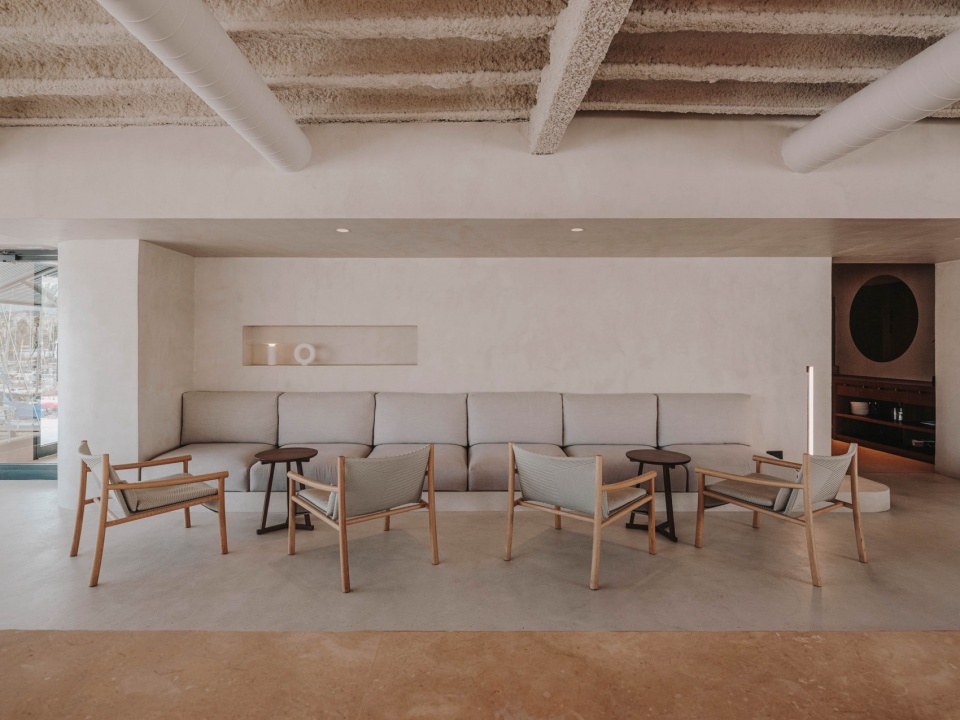
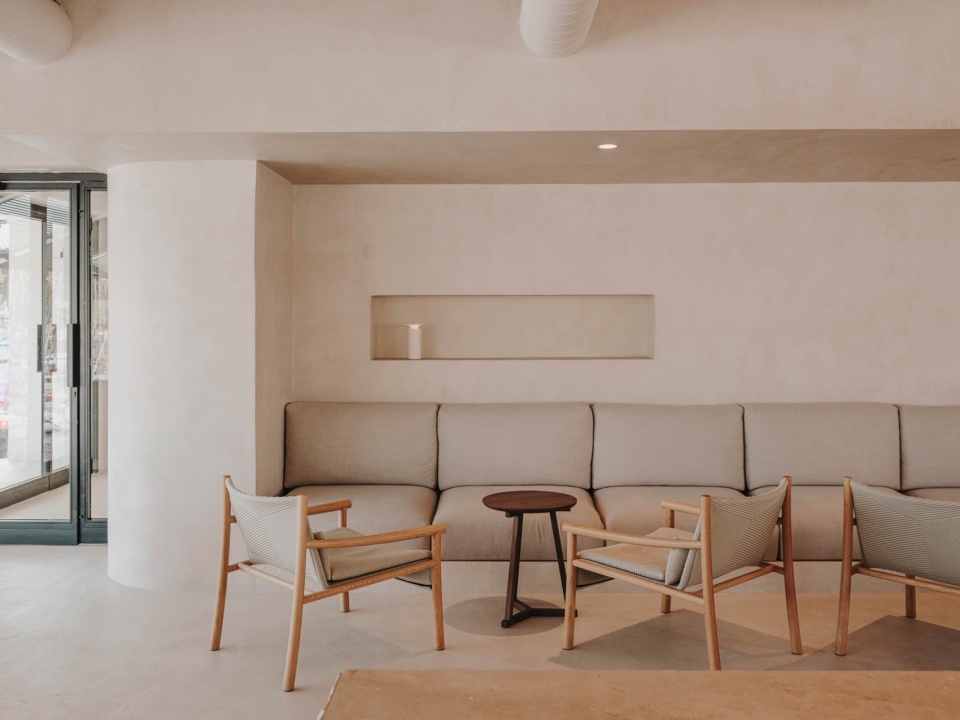
▼低沙发,low sofas
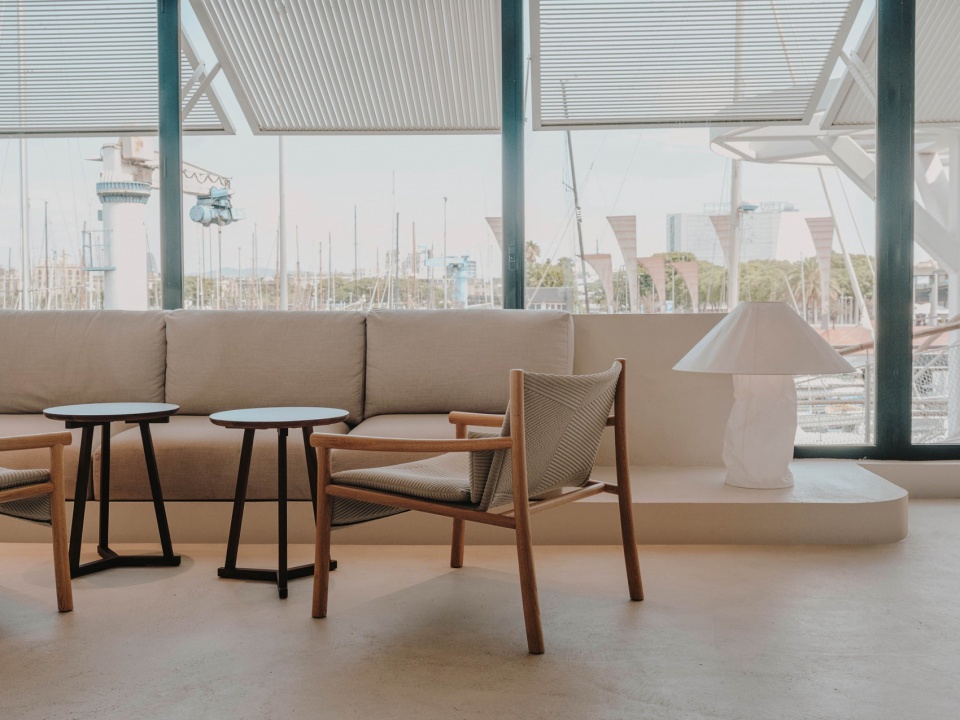
▼入口空间细部,details of the entrance area
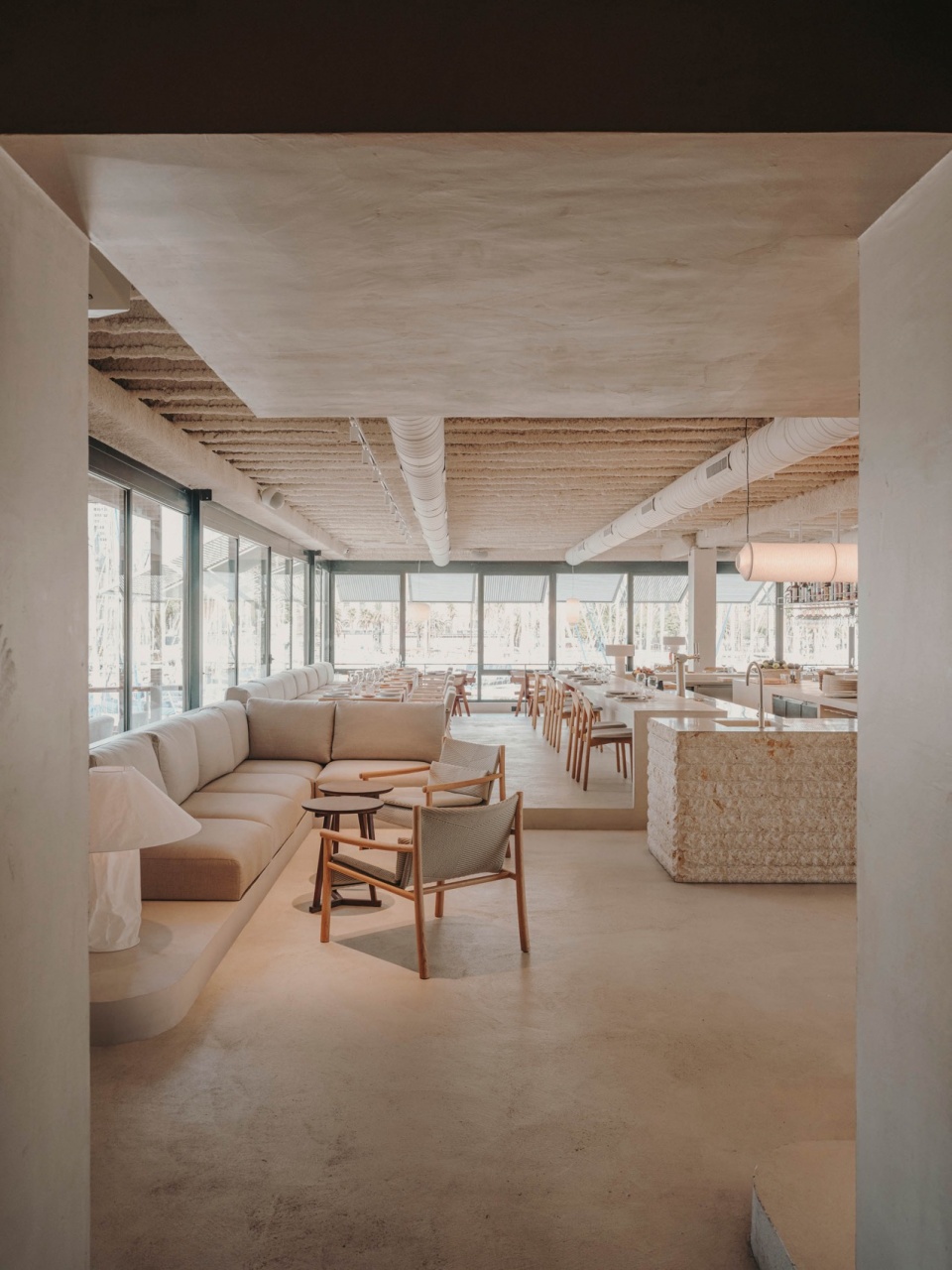
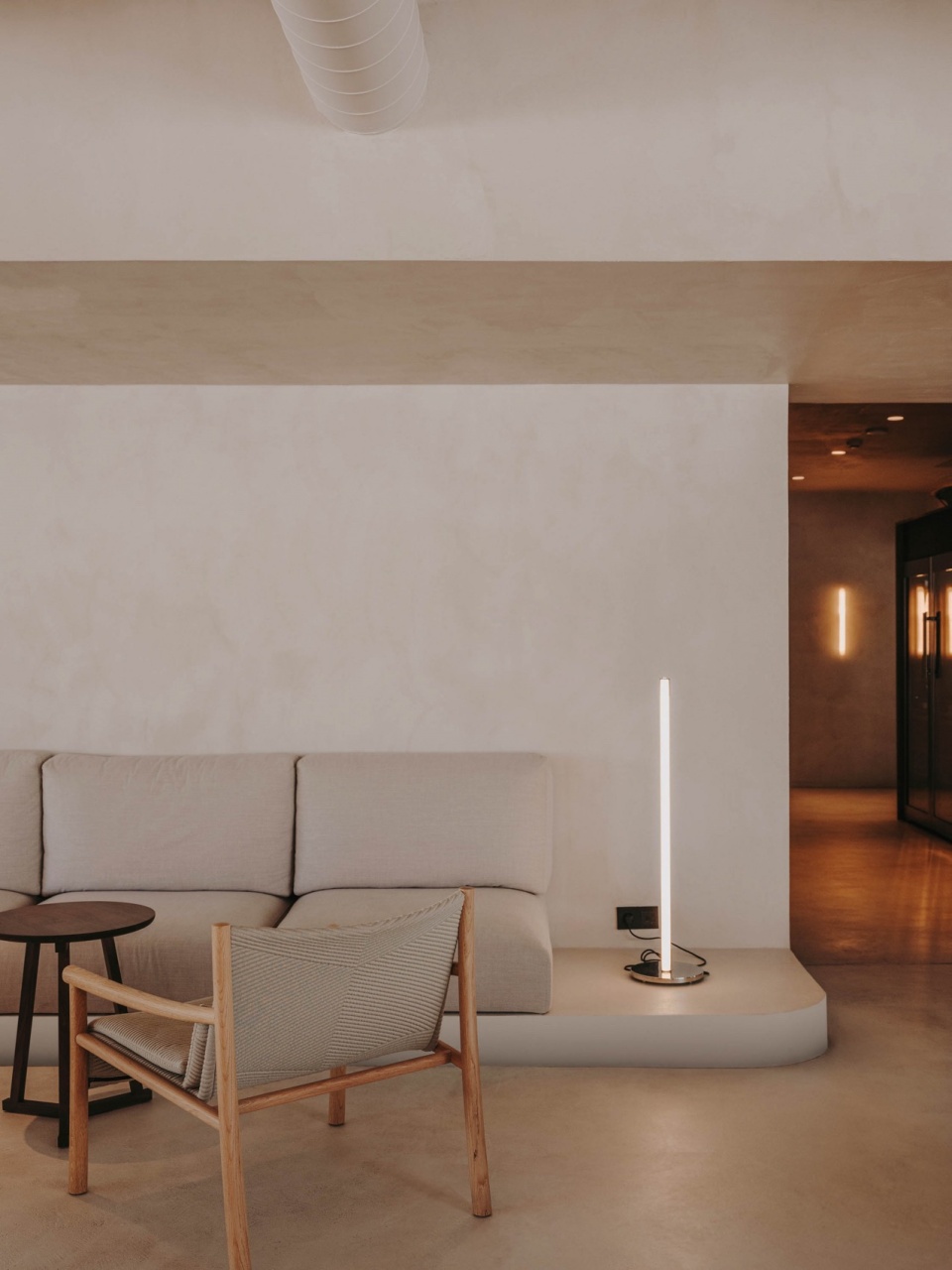
▼细部,details
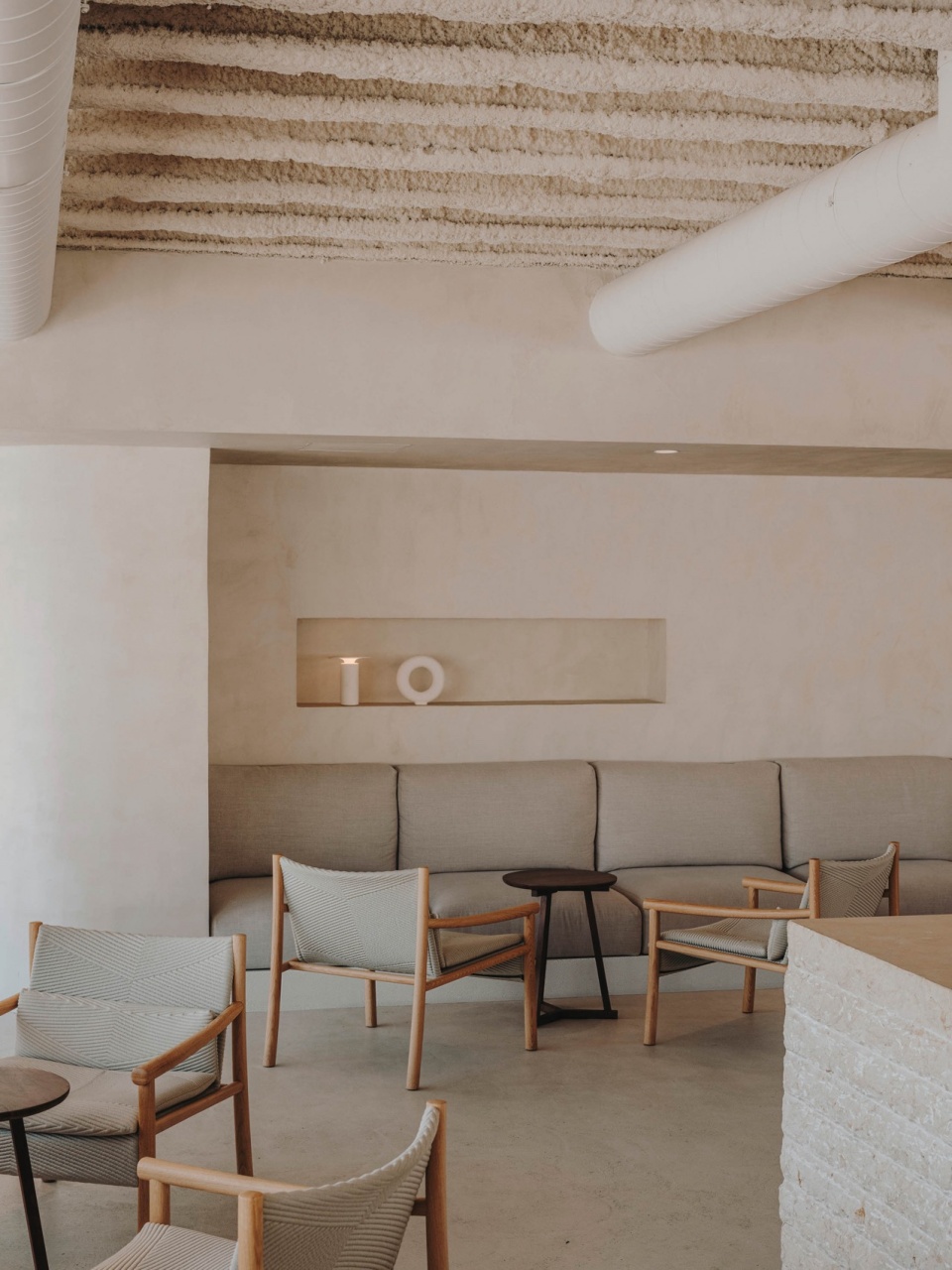
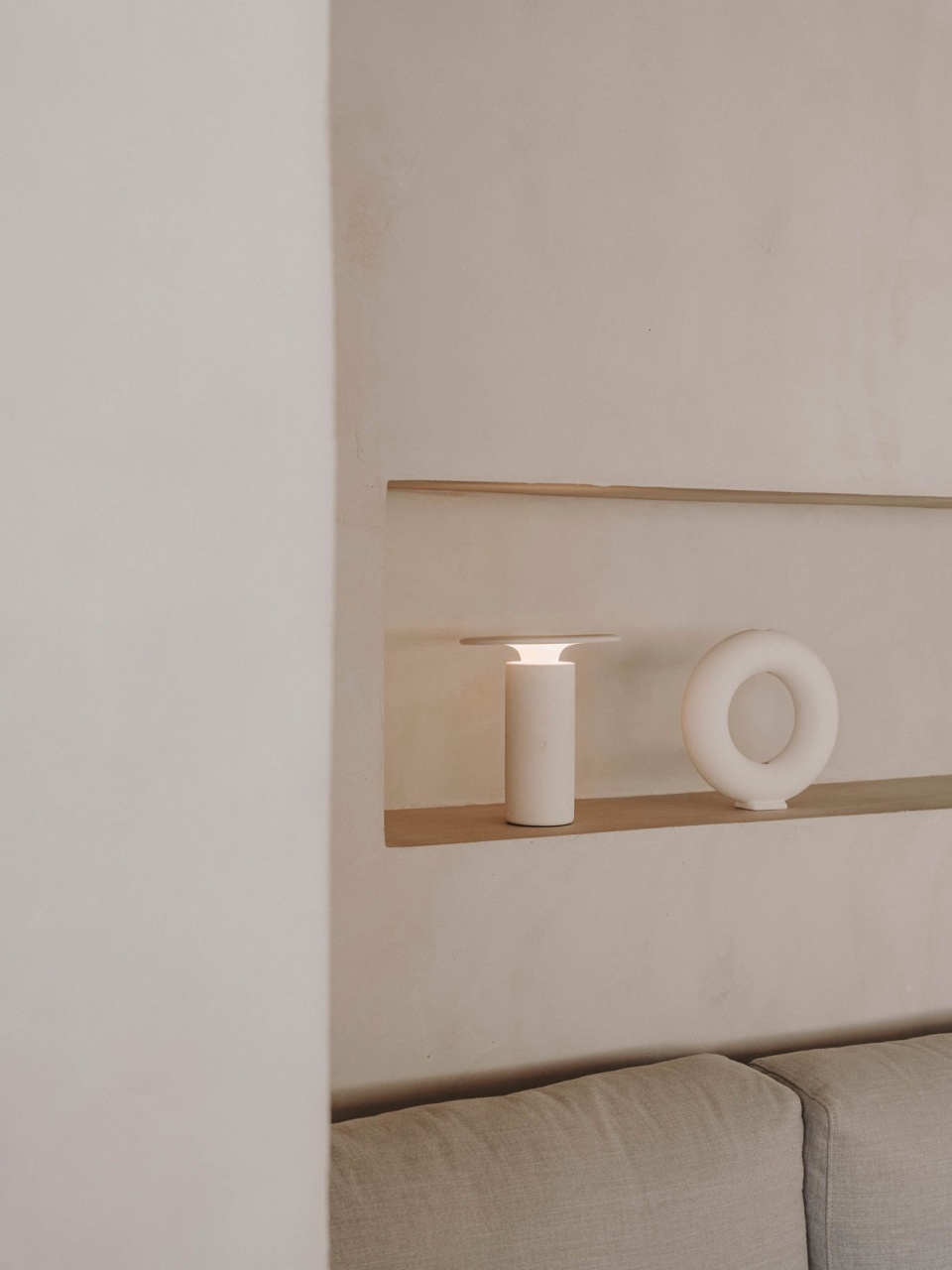
▼沙发座位区,sofa seating area
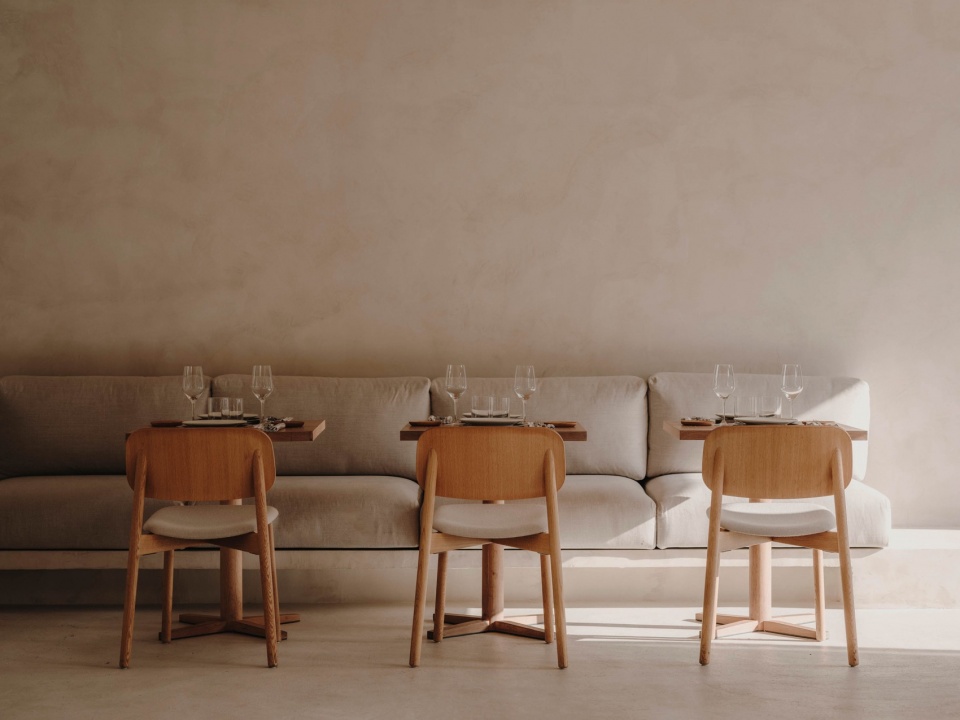
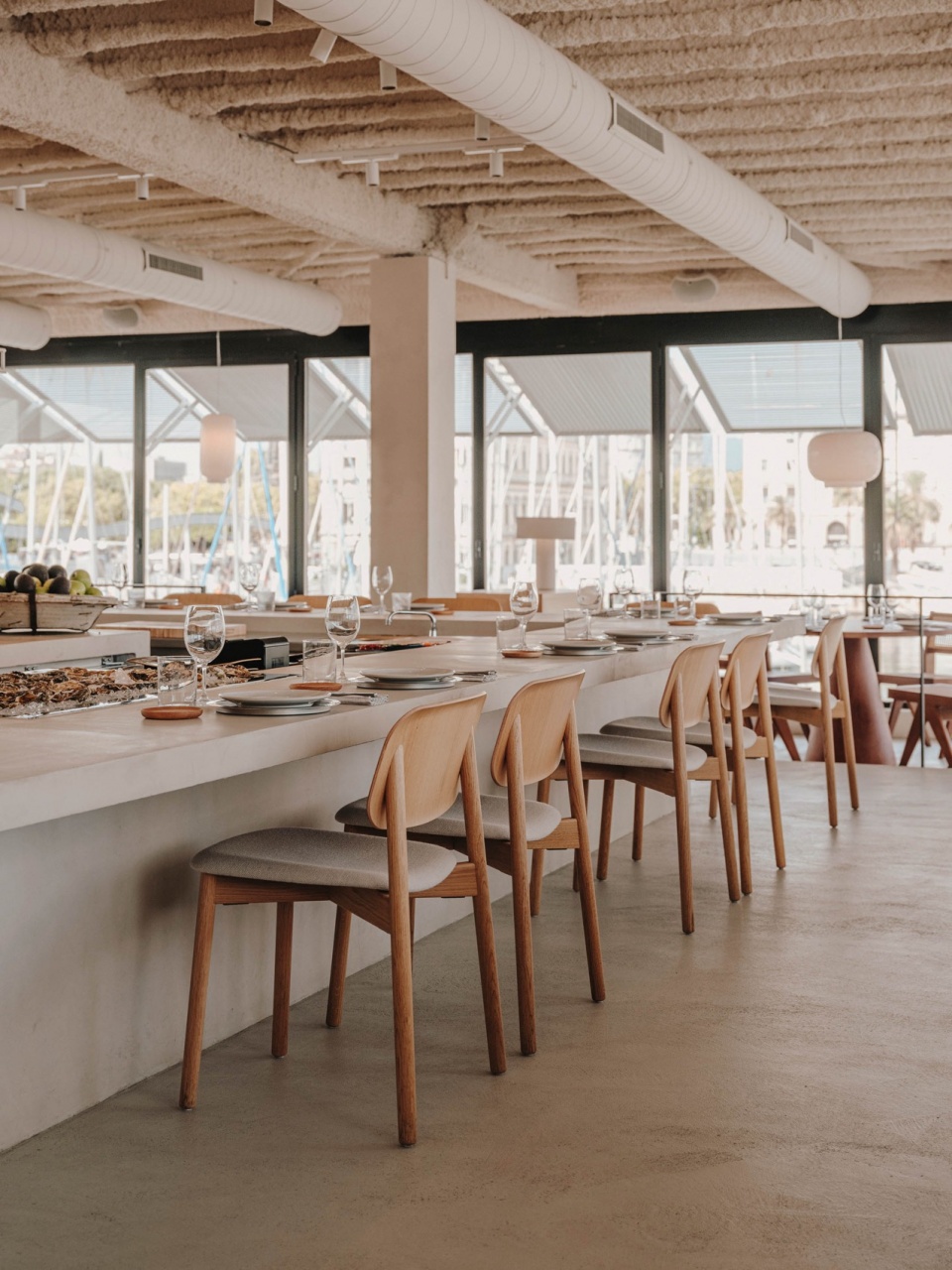
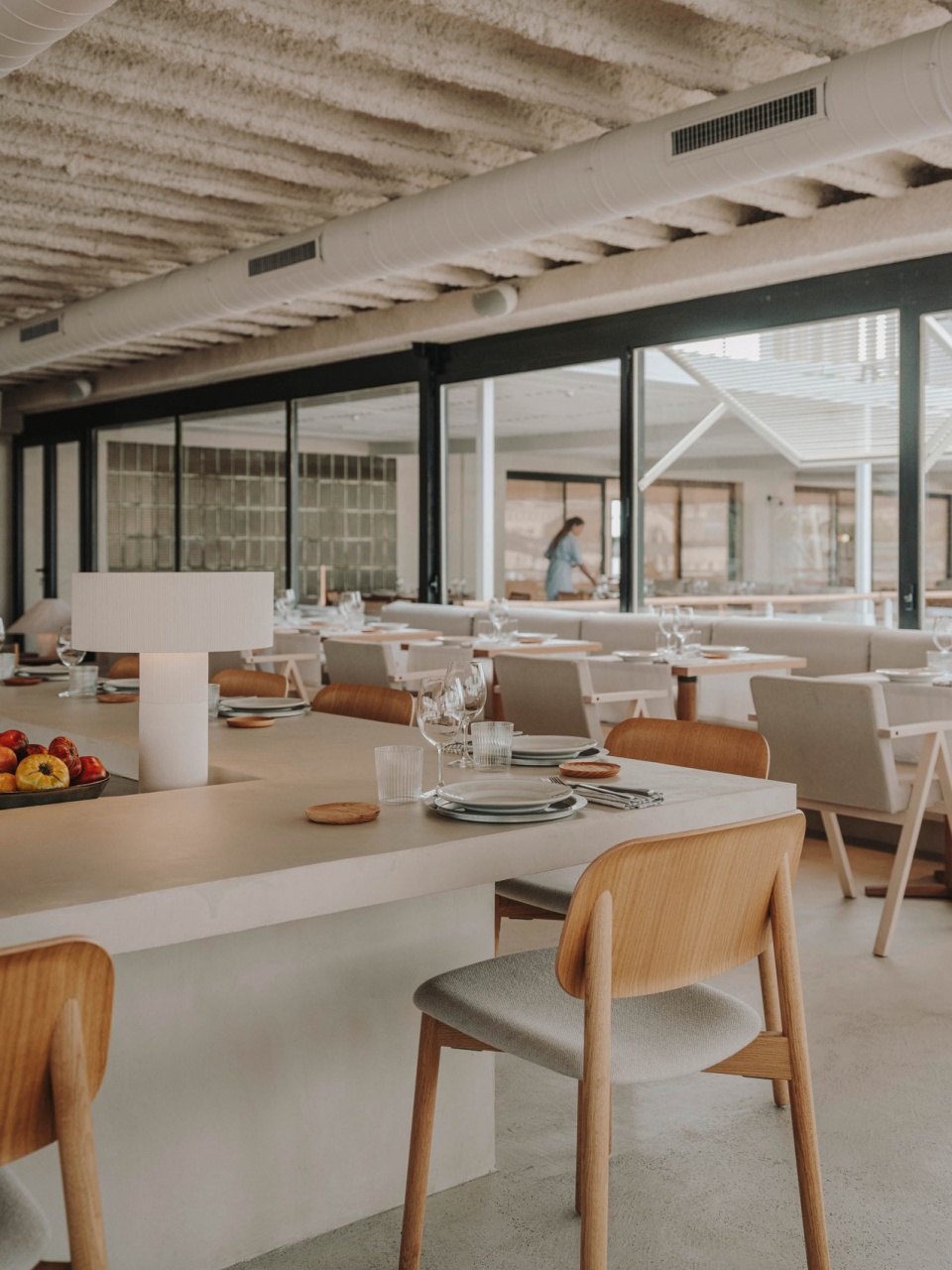
空间中设有两种不同高度的长凳,以适应不同使用方式。前区为休息区,后区为就餐区,配有实心橡木桌与Linteloo出品的软包餐椅。此区域地面抬高,使就餐区的座位高度与工作吧台持平,方便客人边观看菜品制作边用餐。该吧台以微水泥饰面,与室内建筑构成融合,成为空间核心,构建流线并组织空间。吧台配套的橡木色座椅及此区域的餐桌均来自HAY品牌。
Two benches with different heights depending on their use. As mentioned above, a first area acts as a lounge and a second dining area has the first tables made of solid oak from the restaurant, accompanied by upholstered chairs from Linteloo. In this area we find ourselves higher, so that the bar seating is at the same height as the work bar. In this way, the diner can watch the preparation of the dishes and the tasting at the same time. This bar finished in microcement is integrated into the architecture of the room and becomes its central axis, articulating the space, completing it and generating a circulation around it. The oak-coloured chairs that accompany the bar, like the tables in the same area, are from the HAY brand.
▼围绕吧台的就餐区,seating area around the bar counter
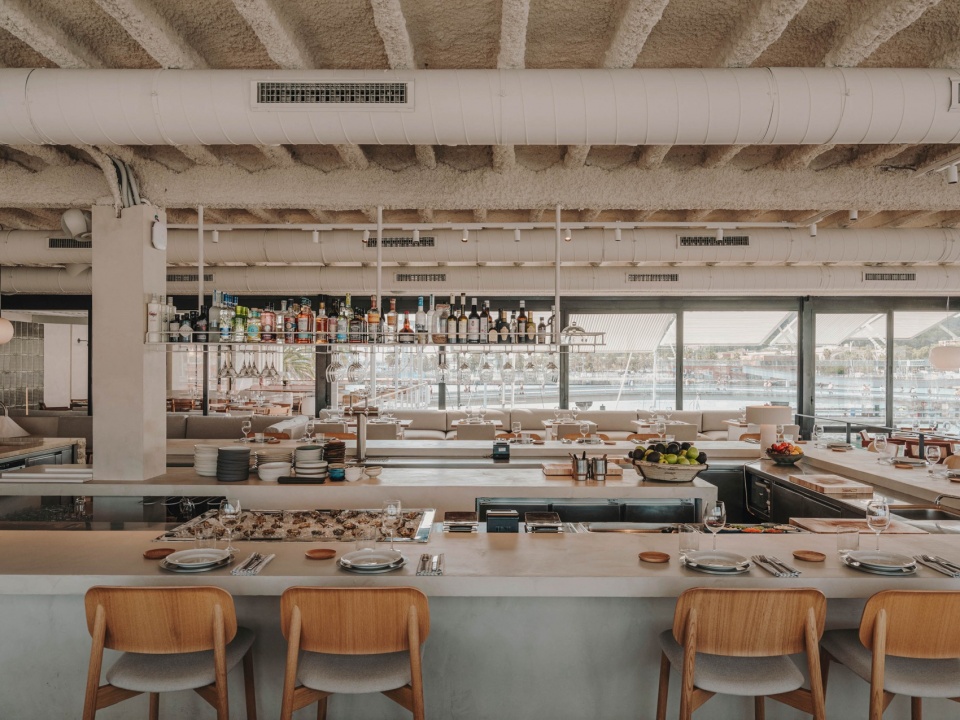
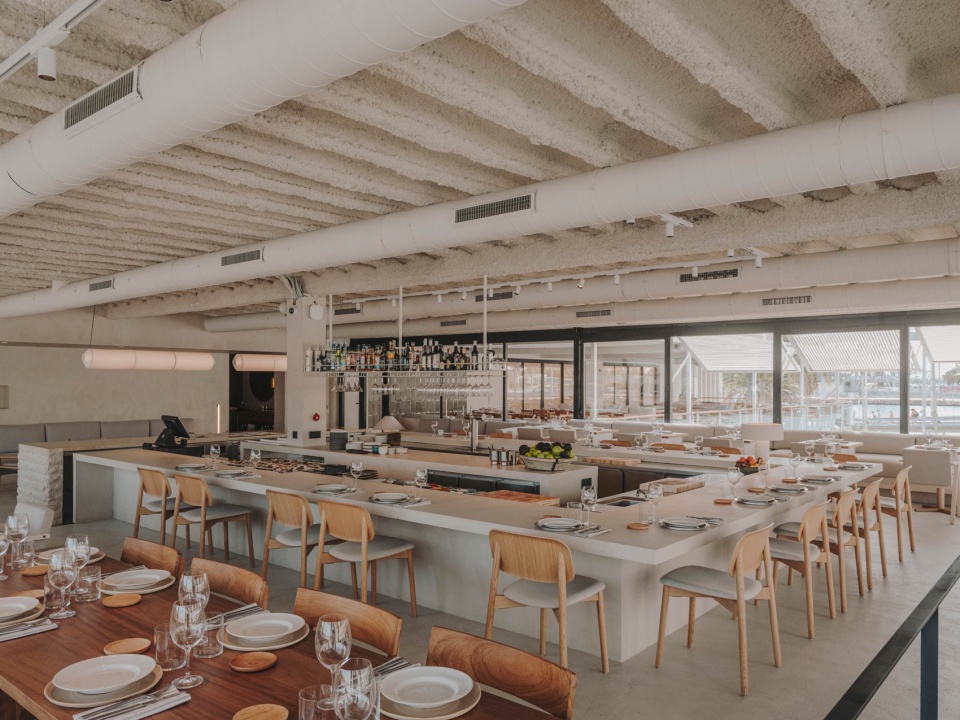
▼就餐区,seating area
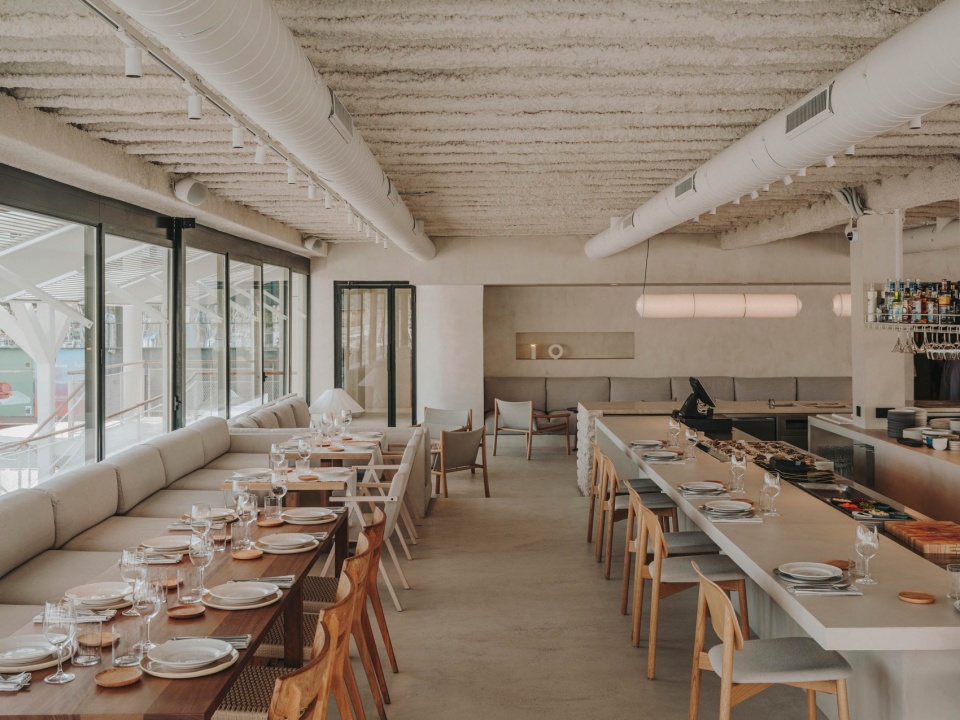
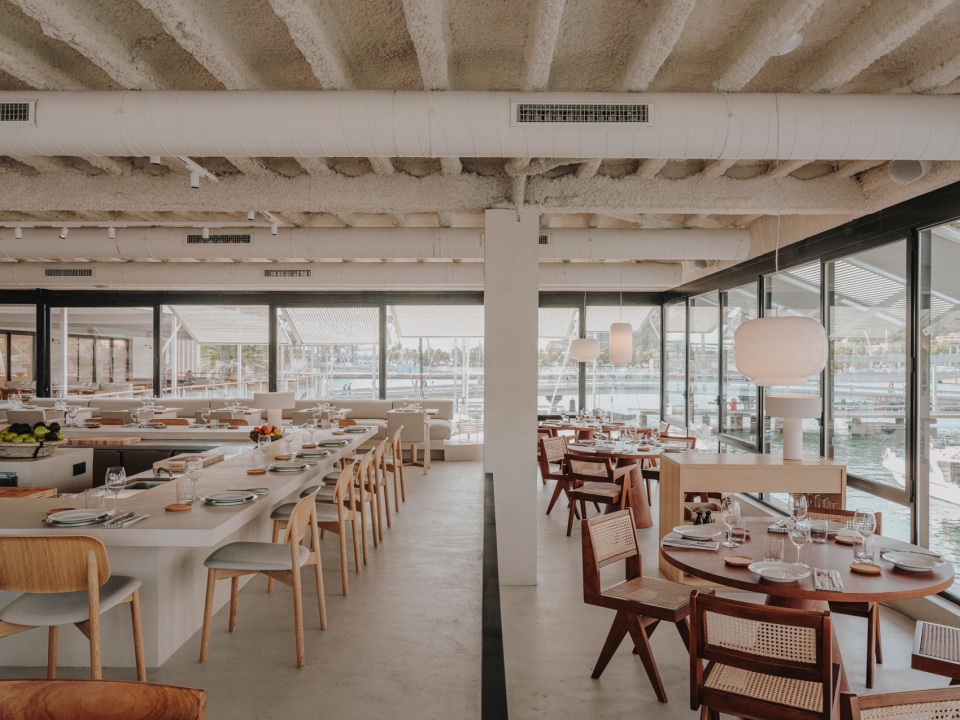
▼就餐区细部,details of the seating area
▼空间细部,details of the space
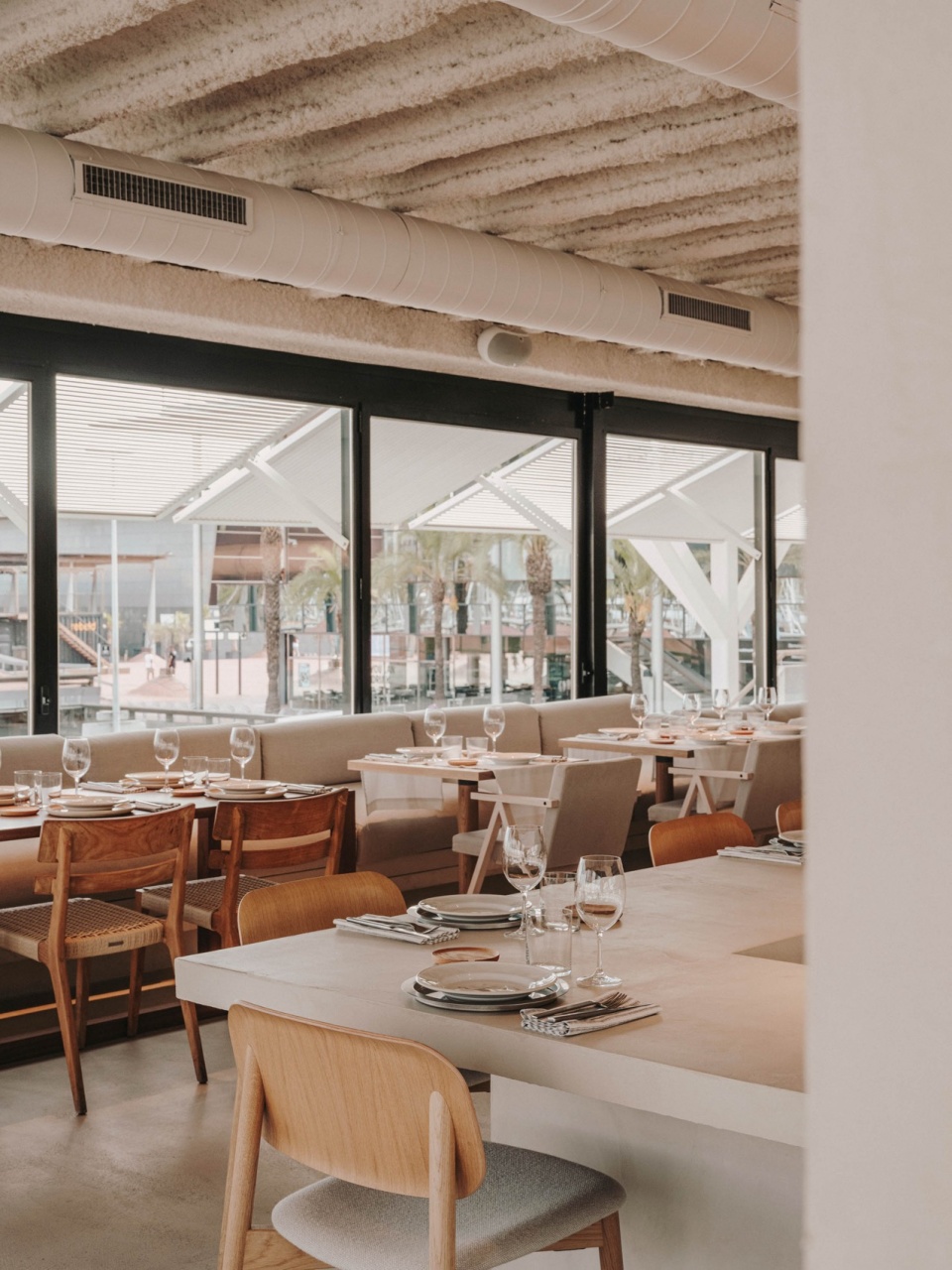
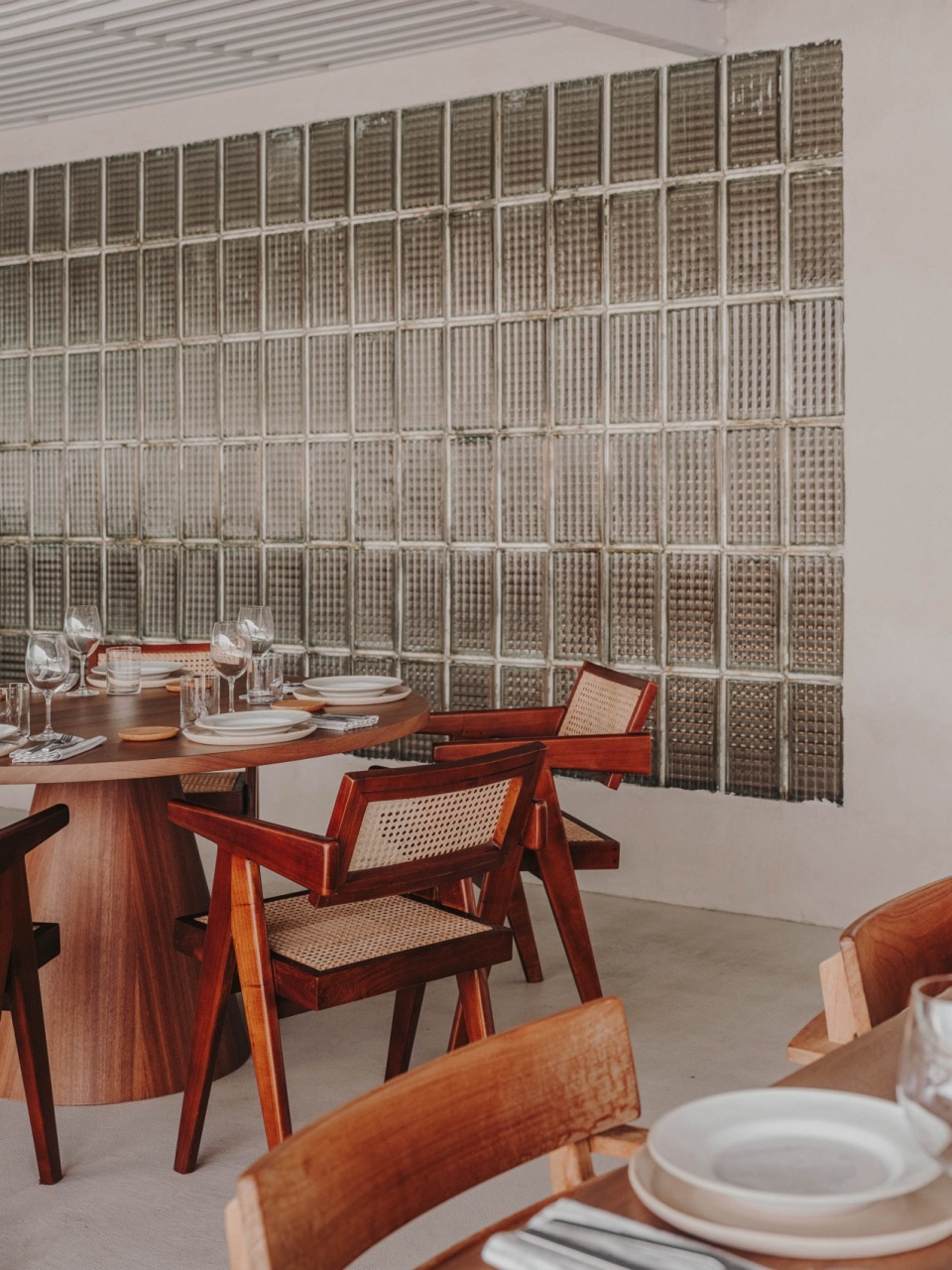
5至6人小组的餐桌区域采用圆形胡桃木桌,木材染色以配合染为“昌迪加尔棕”的椅子,这是一种源自五十年代末的风格。所有餐桌由Carpintería J. Vidal定制设计与制作。夜幕降临,照明成为主角。主厅入口设有Ingo Maurer设计的Lampampe纸质台灯,为客人营造温馨氛围。空间中另有Classicon的Tube落地灯与Guido Balin为Mirabobo设计的Topuro灯。石材主吧台上方悬挂Santa & Cole出品的纸质Teiko吊灯,营造出自然材质的轻盈与温暖。其余区域配有Pottery Project出品的陶瓷台灯,如Terra,以及可户外使用的Nais充电灯,亦置于咖啡桌上。通用照明采用LedsC4的灯轨系统,而最后一组用餐区则采用Foscarini出品的白色Couchin Reverse灯,因玻璃幕墙反射而产生“满月”般的视觉效果。
The last zoning of tables for groups of 5 or 6 persons is done with circular tables made of stained walnut. The stain was determined once the chairs were stained in dark Chandigarh brown, a style from the late fifties. The tables that accompany this venue are custom designed and produced by Carpintería J. Vidal. The lighting takes centre stage at nightfall. Lampape by Ingo Maurer, a light, paper table lamp, welcomes us as we enter the main room. This area is also accompanied by the Tube by Classicon and the Topuro, a lamp by Guido Balin for Mirabobo. The central bar counter in stone is enhanced by Teiko pendant lamps by Santa & Cole, also finished in paper to give lightness and the warmth of natural materials. The rest of the bar has ceramic table lamps by Pottery Project such as the Terra and on the coffee tables the Nais, battery lamps that have also been placed outdoors. The general technical lighting is by means of LedsC4 tracks and in the last zoning the Couchin Reverse lamps by Foscarini in white com, create a special effect by multiplying in the reflection of the crystals that surround the room; they remind us of the full moon.
▼石材主吧台,the stone main bar counter
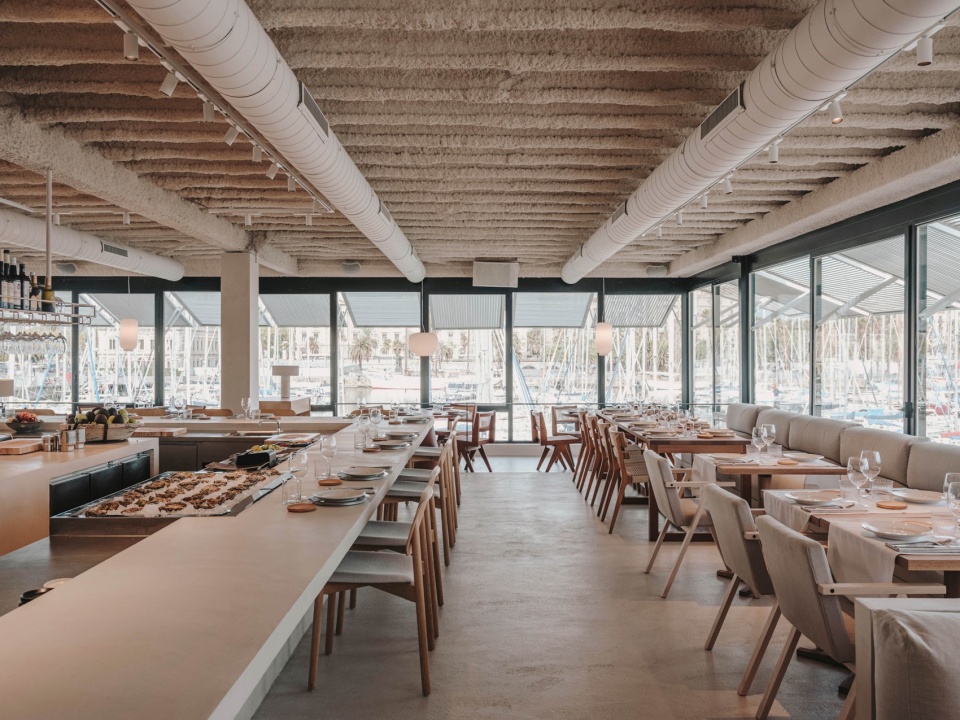
▼Santa & Cole出品的纸质Teiko吊灯,paper Teiko chandelier produced by Santa & Cole
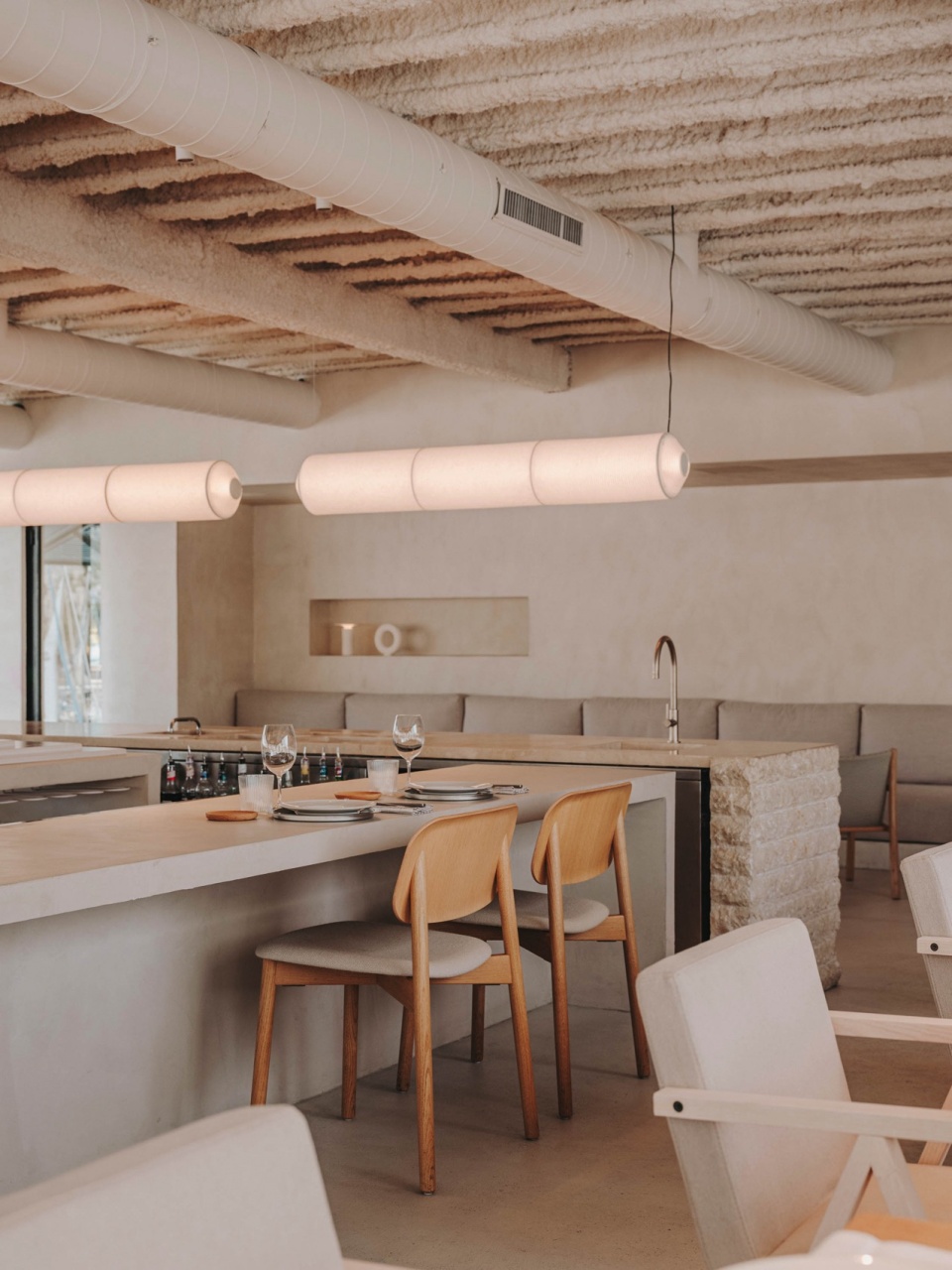
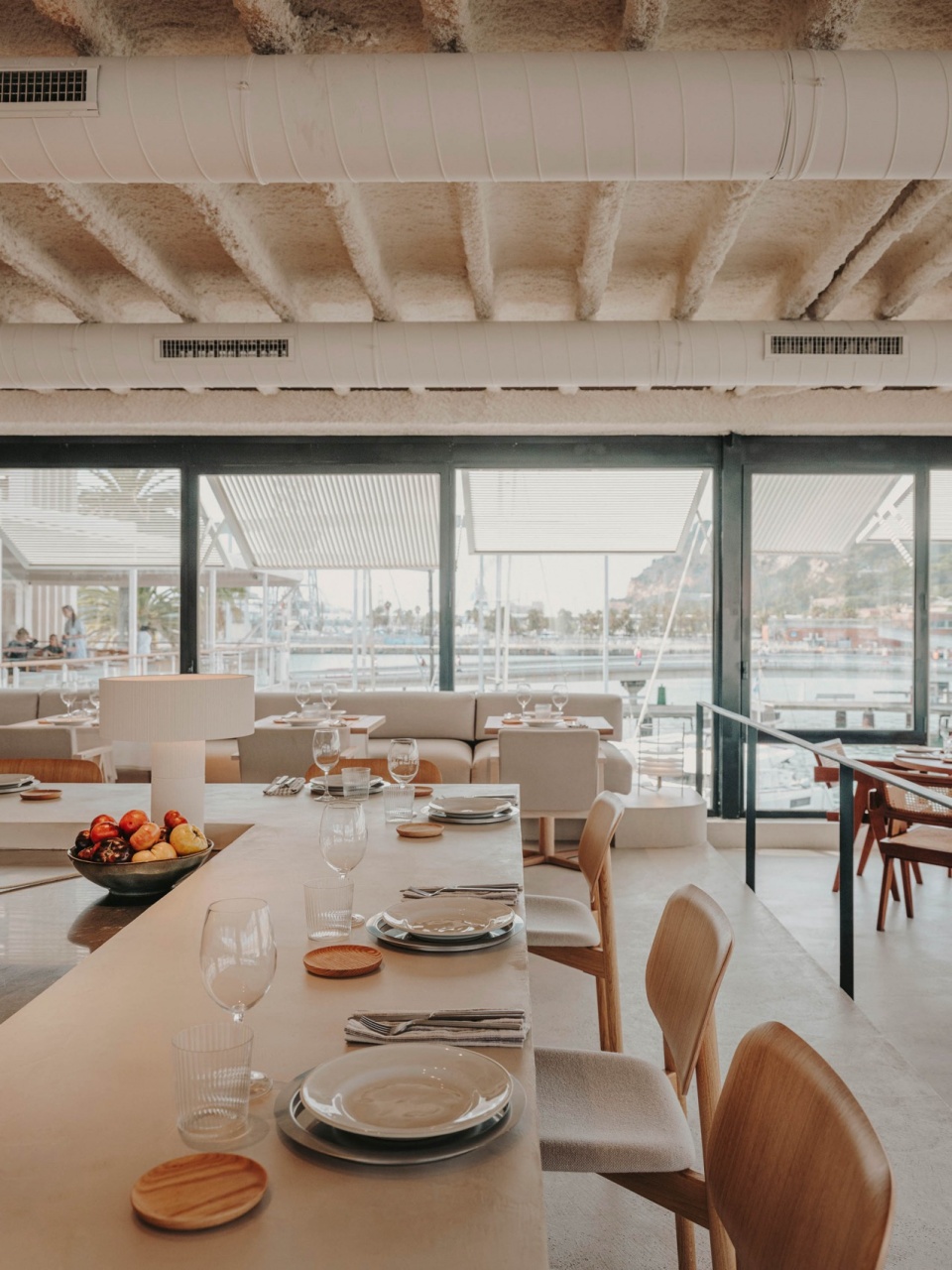
▼空间细部,details of the space
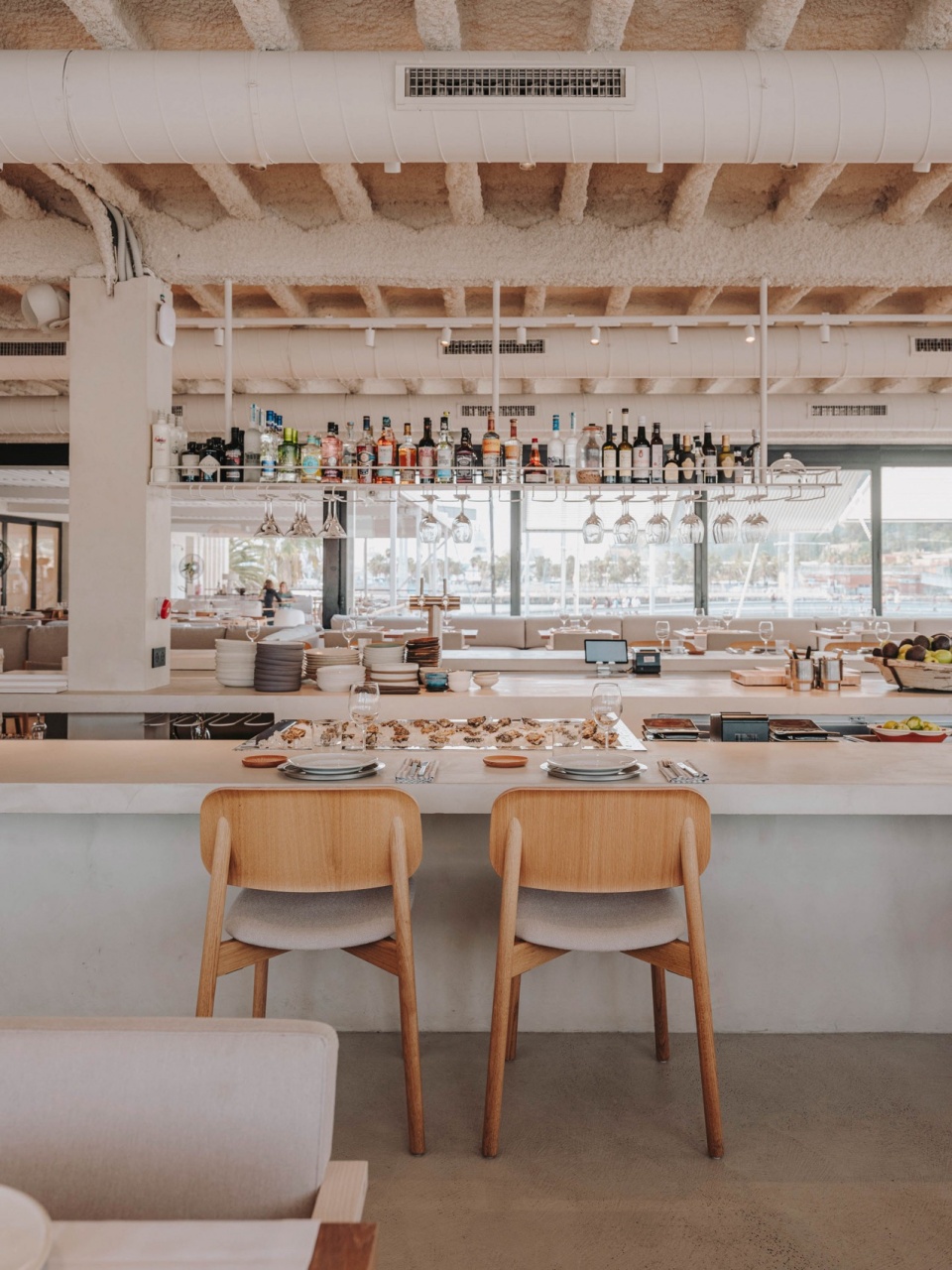
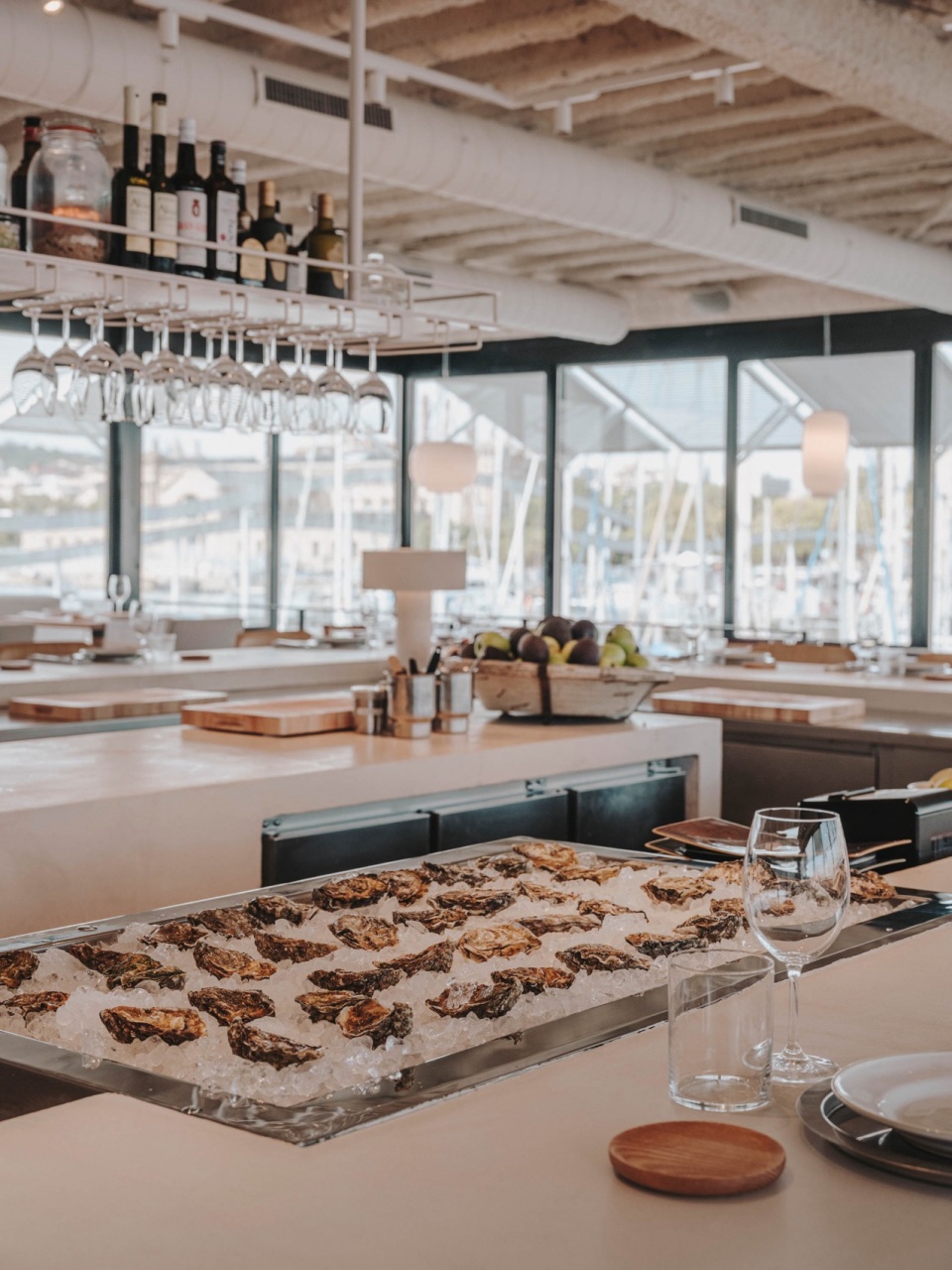
▼细部,details
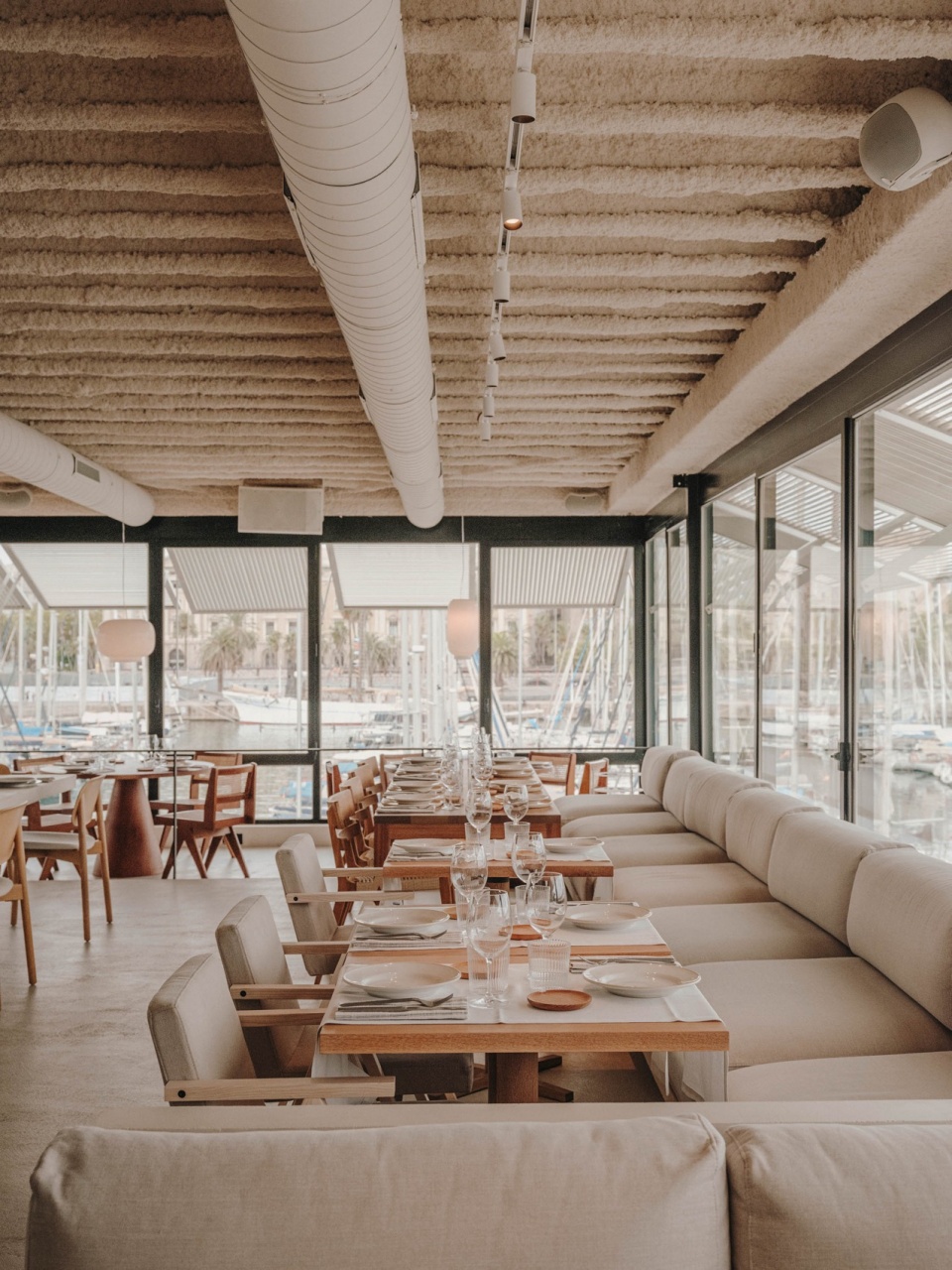
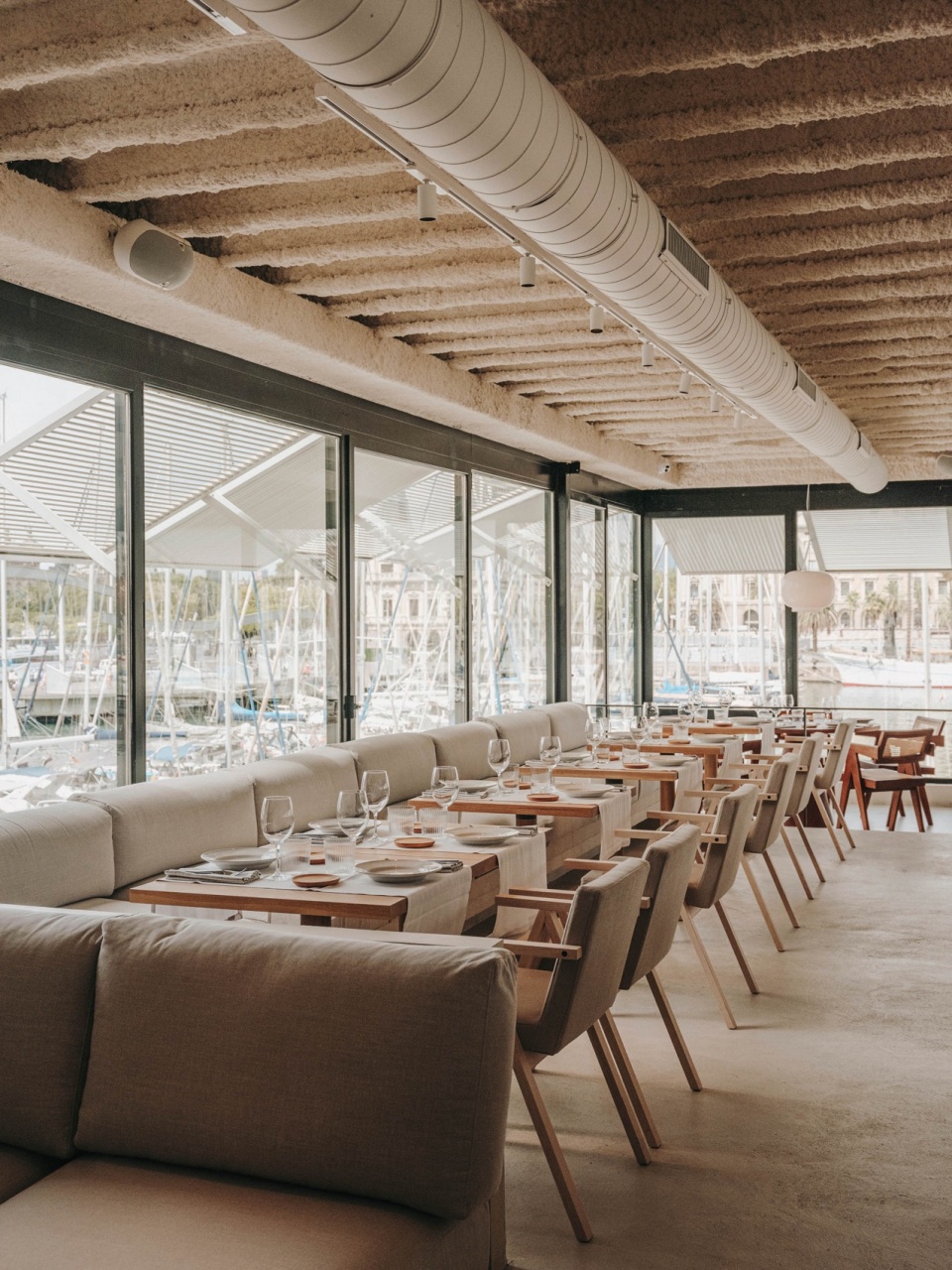
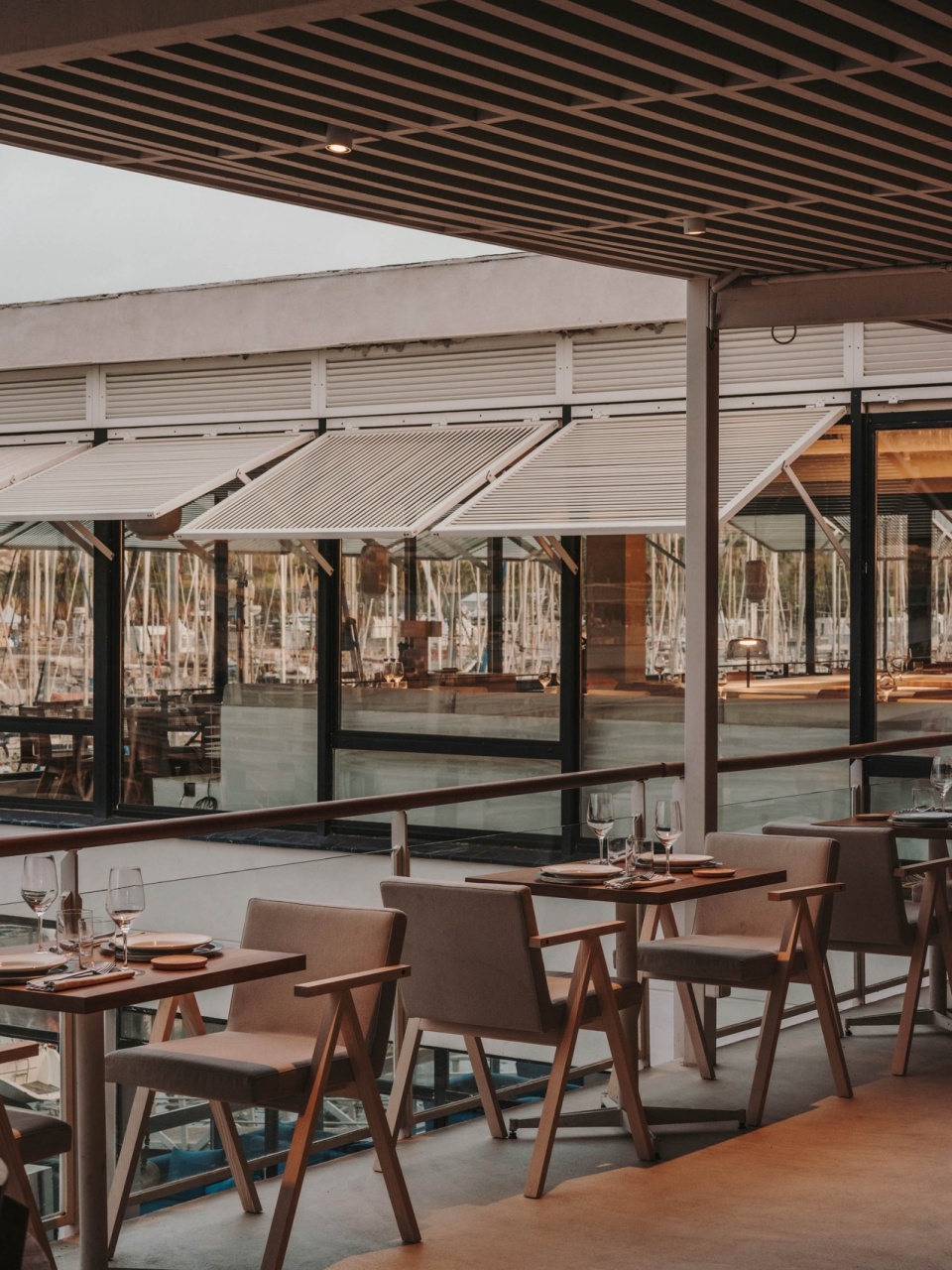
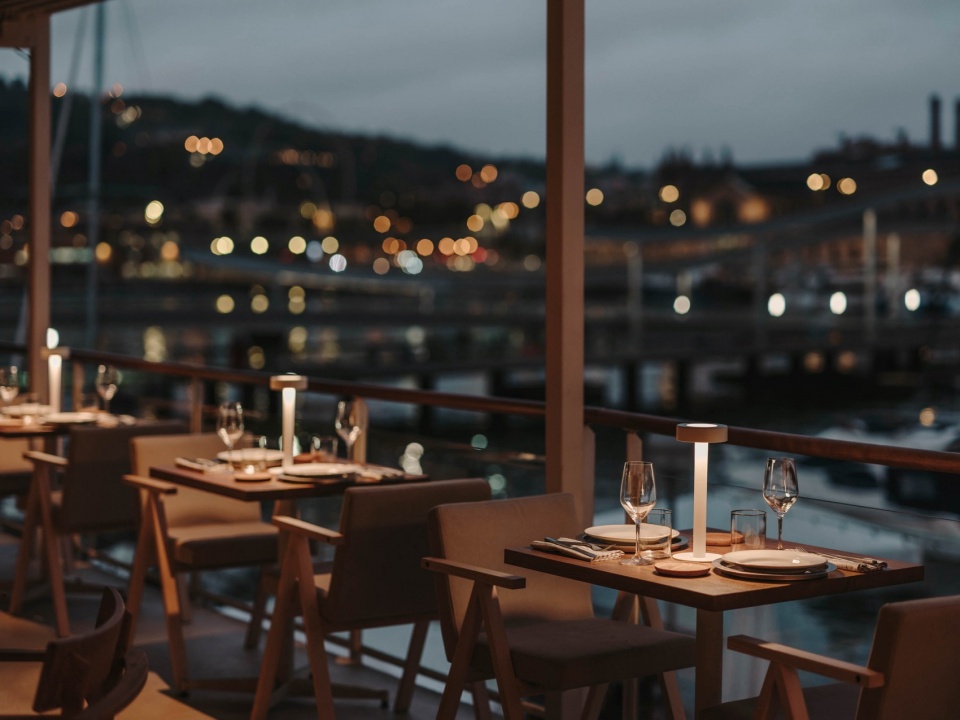
户外露台与主厅面积相同,布局中设有中央休息区,将空间划分为两组就餐区及一圈沿栏杆布置的用餐区,适合正面观赏日落。圆形Iroco木桌配有带扶手的Paralel de Point椅,而长桌与双人桌则交替配置无扶手款。北欧风格植物划分区域,赋予空间生机与活力。照明设计中,Davide Groppi设计的SHOJI庭院灯与Pottery Project出品的Nais陶瓷灯尤为突出。
The outdoor terrace, which is the same size as the main room, is zoned with a central lounge that divides the space into two table areas and another perimeter table area on the railing from which to observe the sunsets from the front. The circular Iroco tables for groups are accompanied by Paralel de Point chairs with armrests and the rectangular group tables or tables for two without armrests, which alternate. The Nordic vegetation zonifies and brings life and dynamism to the space. In this case, the SHOJI garden floor lamps by Davide Groppi and the Nais ceramic lamps by Pottery Project.a stand out as a lighting project.
▼户外露台区域,the outdoor terrace
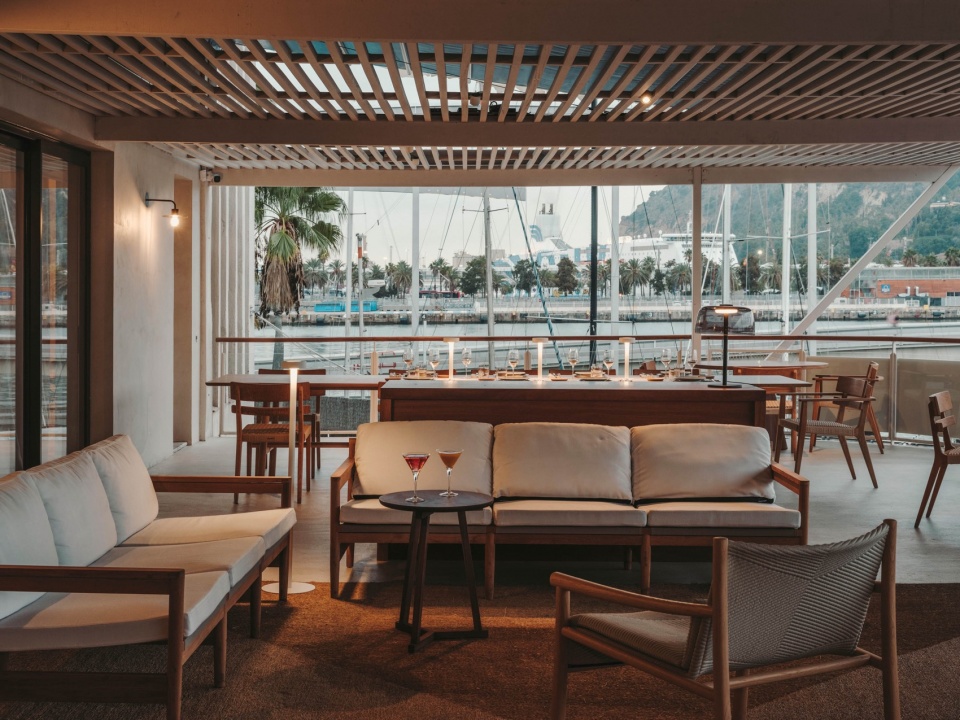
▼户外区域细部,details of the outdoor space
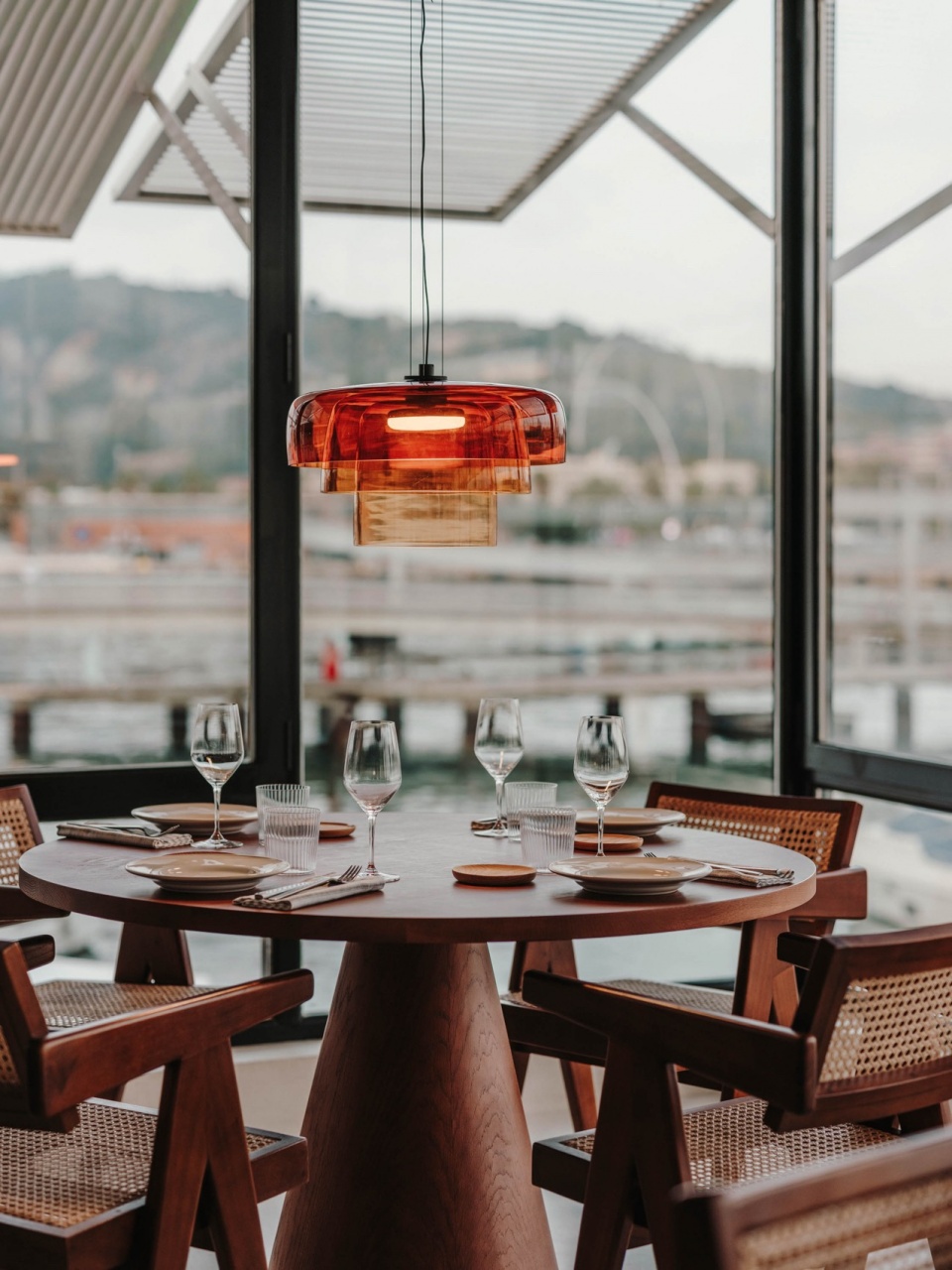
▼胡桃木圆桌,walnut wood round table
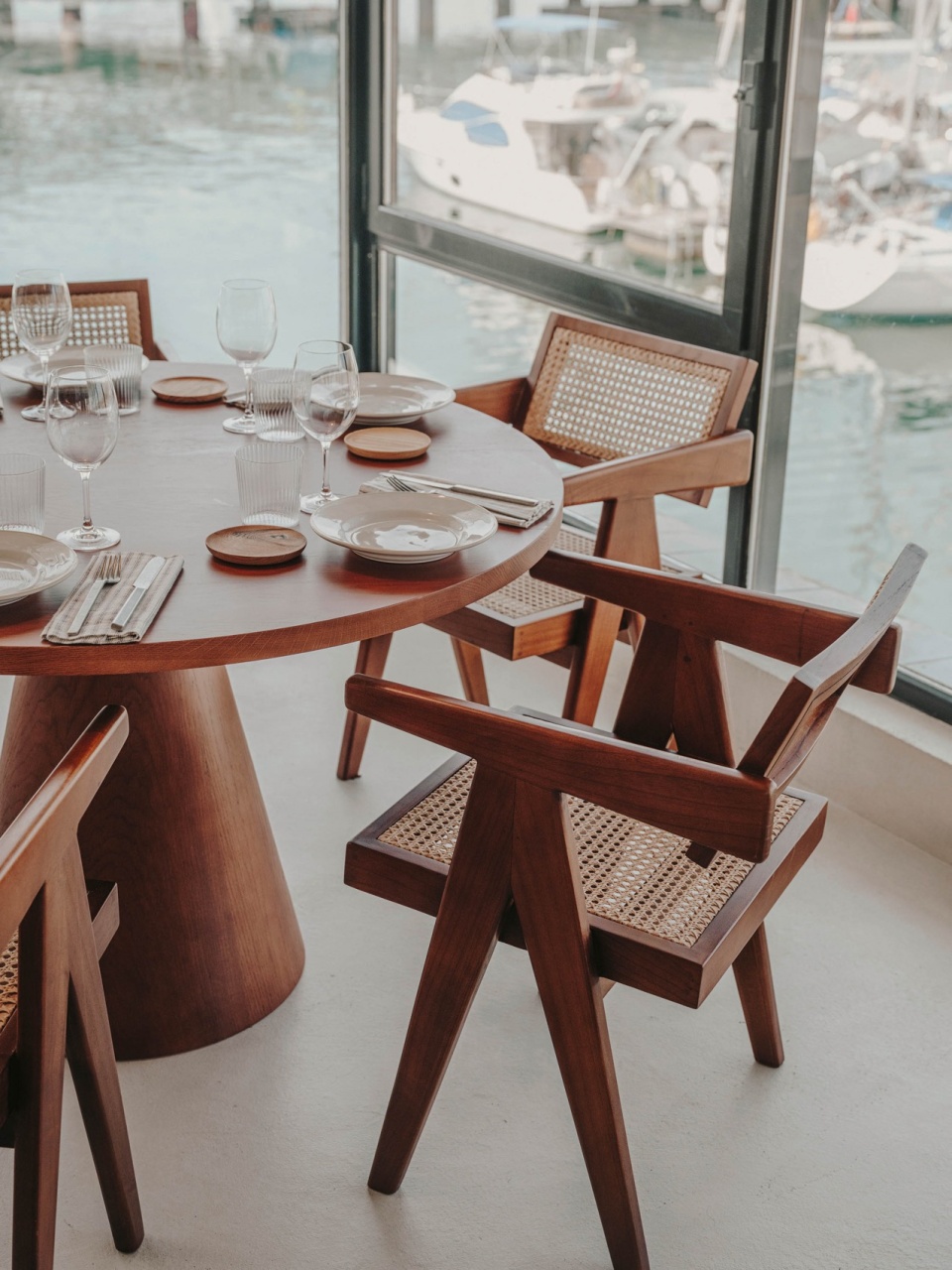
另一间房间打开连接两侧露台,如同一个“半户外”空间,采用相同的两盏Teiko吊灯保持设计连续性。此处的高吧台以微水泥收面,搭配同样材质打造的吧台、置物架及沙发等砌筑家具,共同构成建筑整体风貌。空间设计上尽量通透灵活,便于举办团体用餐或活动。露台作为室内的延续,与周边环境构成过渡,家具也保持一致风格。
A second room opens onto the two terraces. It is almost an outdoor room, where the high bar is also highlighted with the same two Teiko lamps by Santa & Cole to give continuity to its design. The bar finished in micro-mortar is one more element of the architecture, together with the bar, the shelves and the sofa, also made of masonry and finished in micro-mortar. These are the elements that give character to the room, as it is intended to be very diaphanous and flexible to receive group meals and events that require its function. The terraces are the continuation of the interior and a transition with the surroundings, the furniture follows the same narrative in all its spaces.
▼户外露台区域,outdoor terrace
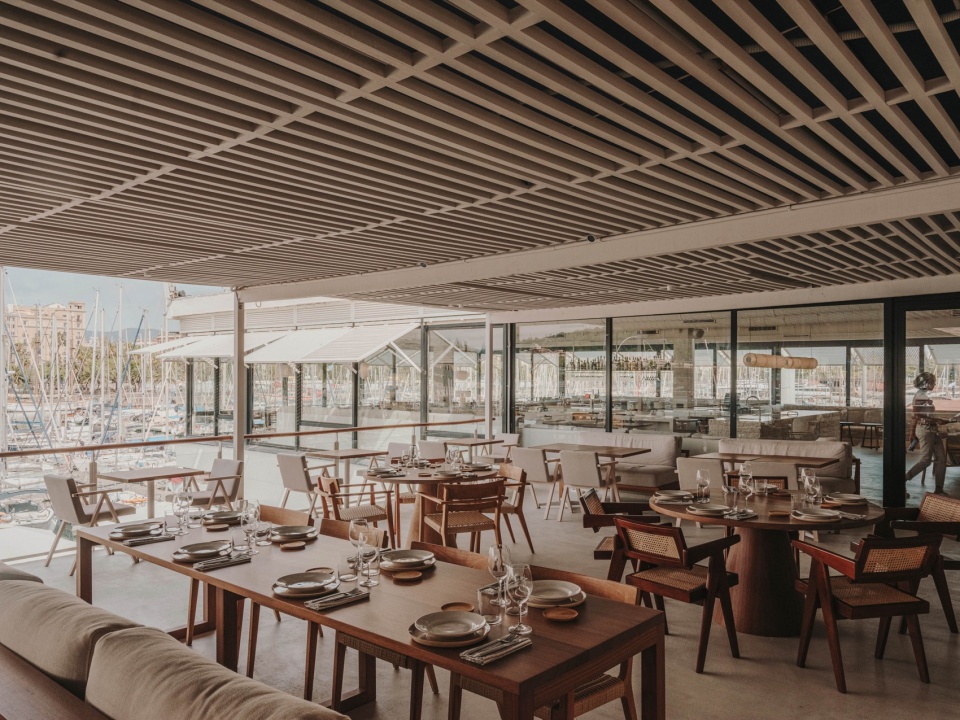
▼餐厅与码头,restaurant and ships
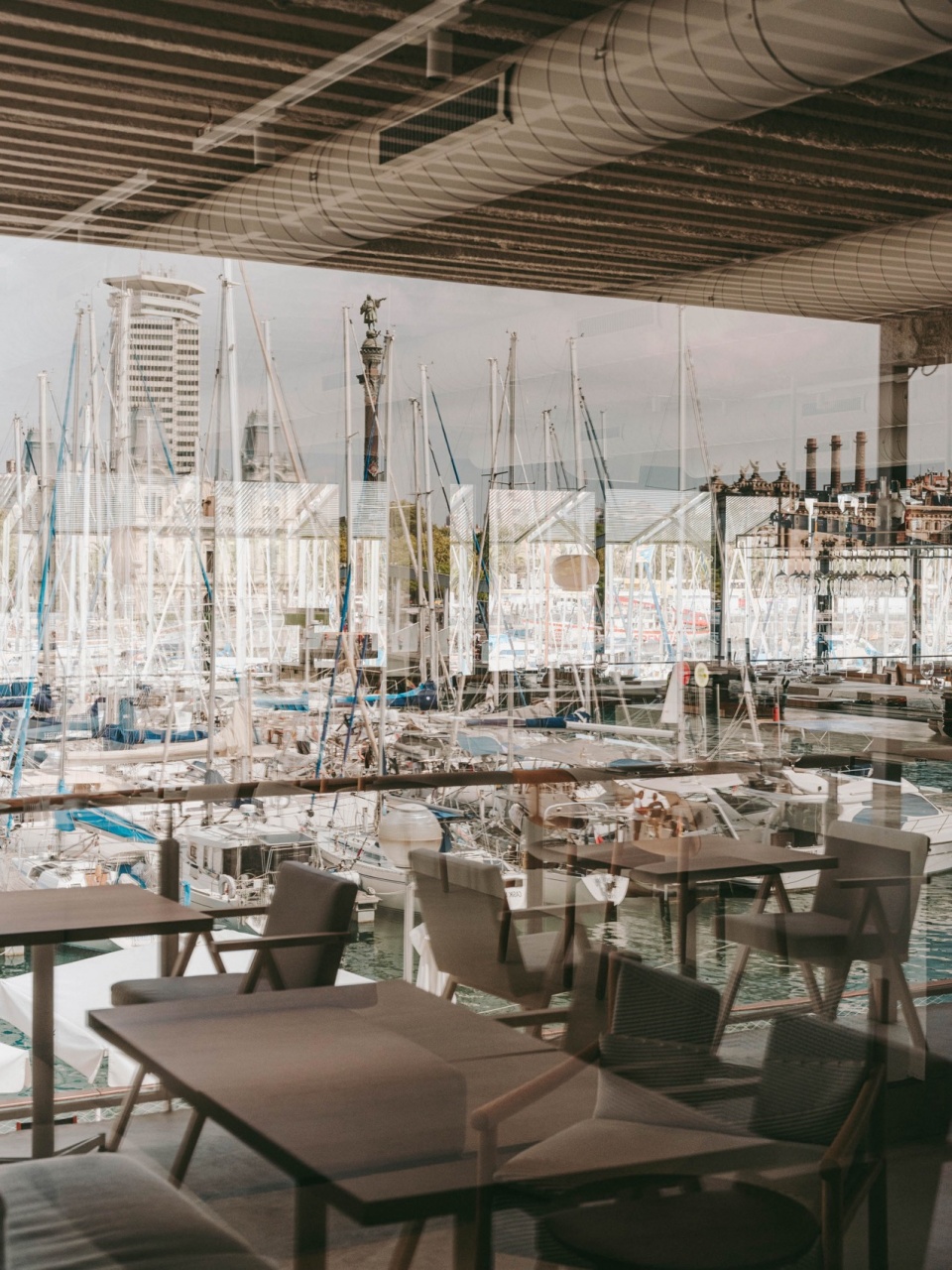
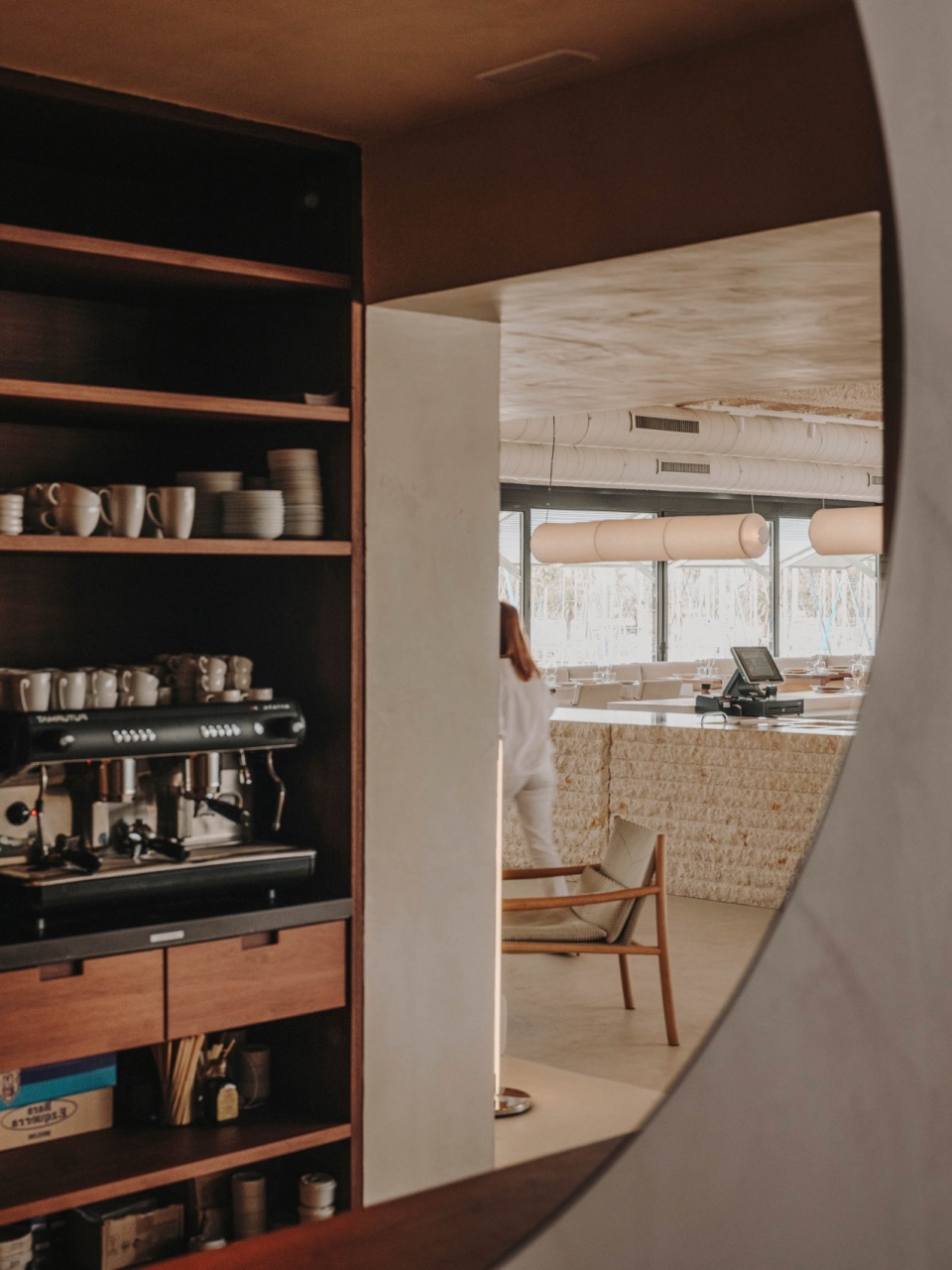
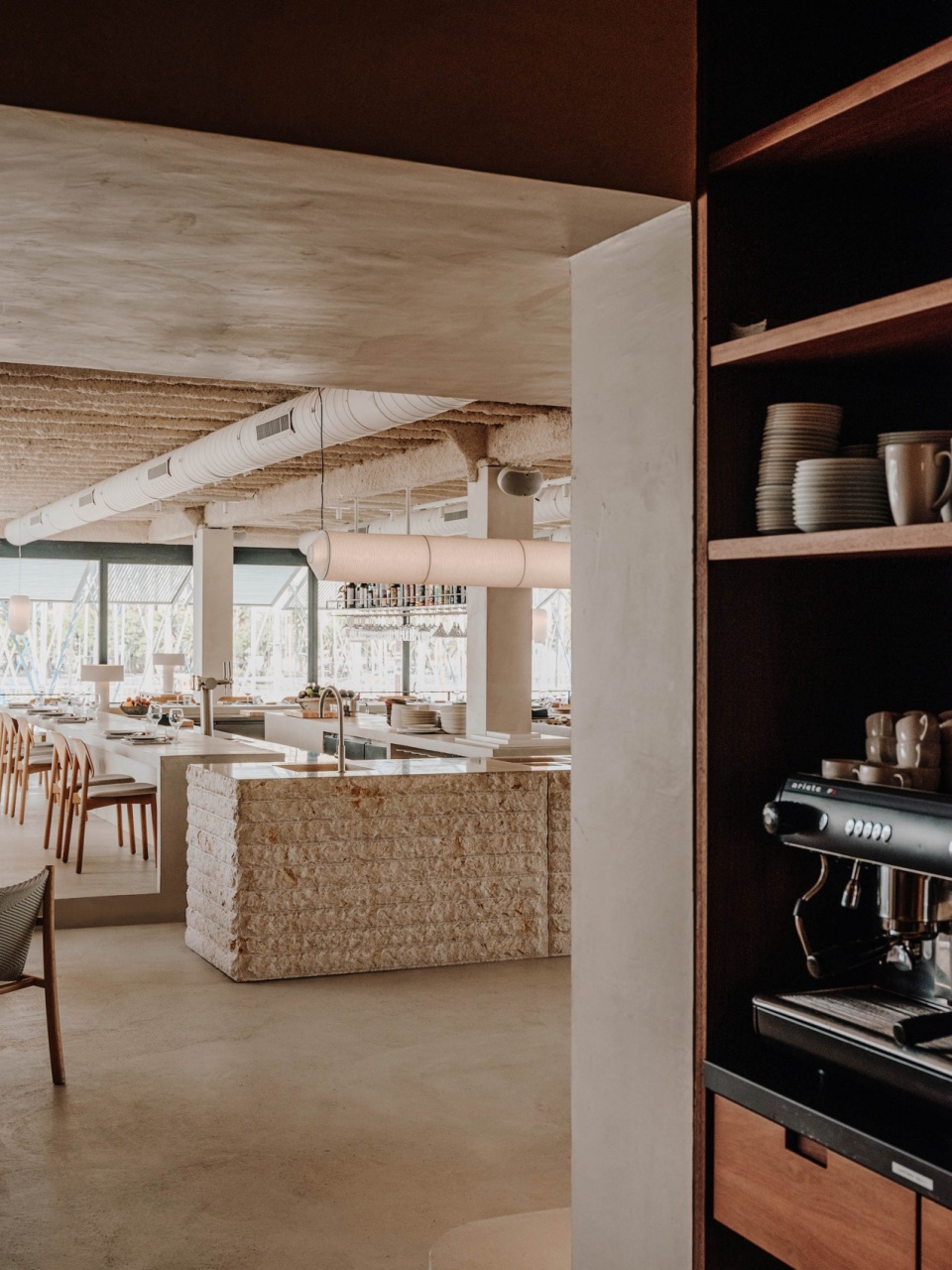
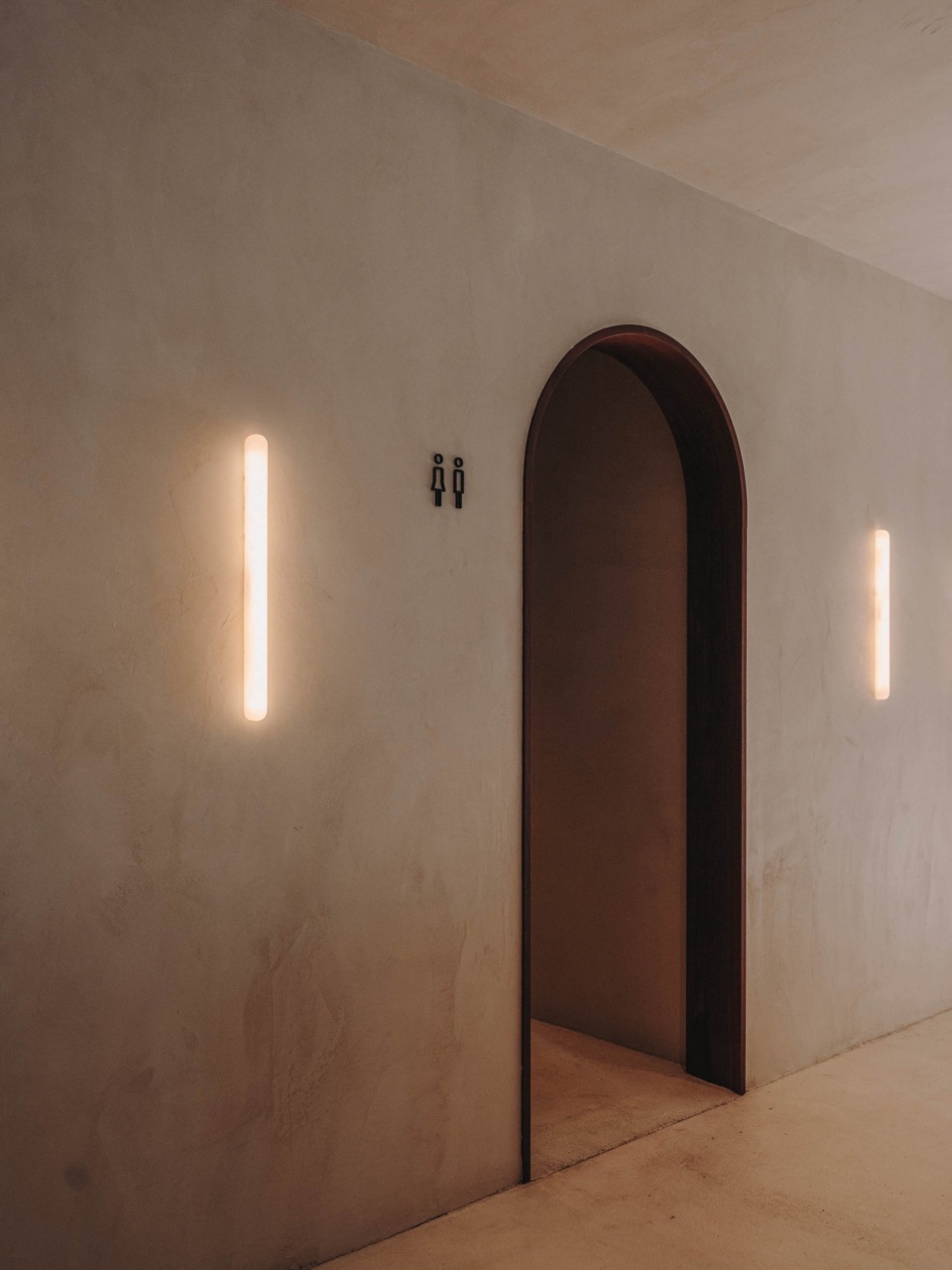
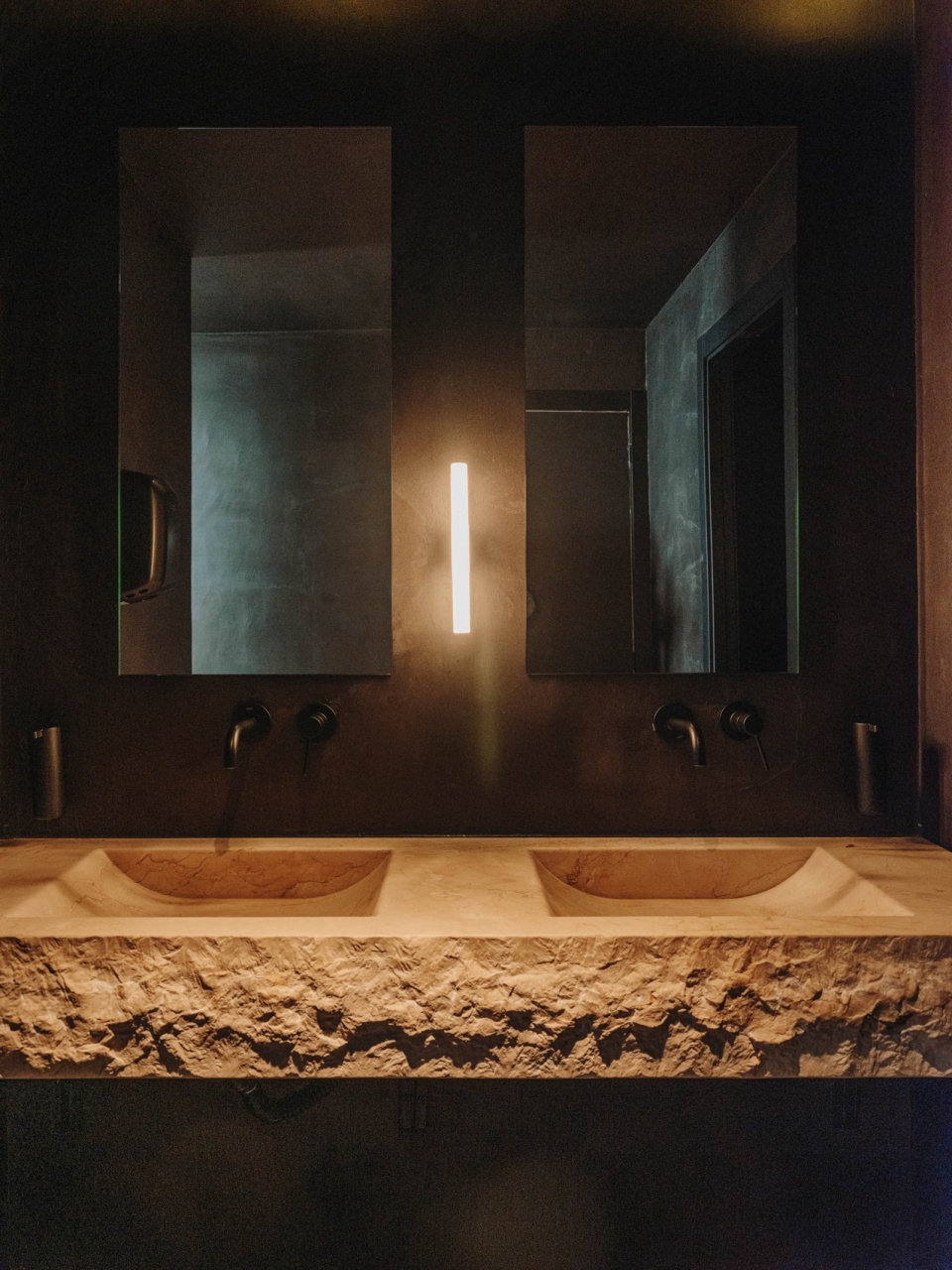
空间中央轴线为入口走廊,设有员工与服务区,并可通向俱乐部的第二个私人入口。由Contain Studio设计的雪花石膏灯标示出通往洗手间与两间房间的路径。走廊中的技术柜与服务区统一采用深色胡桃木饰面,形成整体包裹,赋予走廊统一性与性格。洗手间入口为一拱门,同样采用染色胡桃木包覆。黑色卫生间内设有与主厅相同石灰石材质的雕刻洗手台,进一步强化空间统一性。
In the central axis is the entrance hall, an area for the warriors and service where the second, private access from the club is also located. Alabaster linestras from Contain Studio mark the access to the bathroom and the two rooms. The technical cupboards and the warriors are made with the same darkened walnut finish, thus generating a panelling that integrates the whole and gives character to the corridor. Access to the bathroom is through an archway also covered in this darkened walnut wood. The dark bathrooms highlight the hand washbasin made of scoriated stone with the same material as the bar in the central room, a limestone.
▼员工与服务区入口,entrance area for the warriors and service
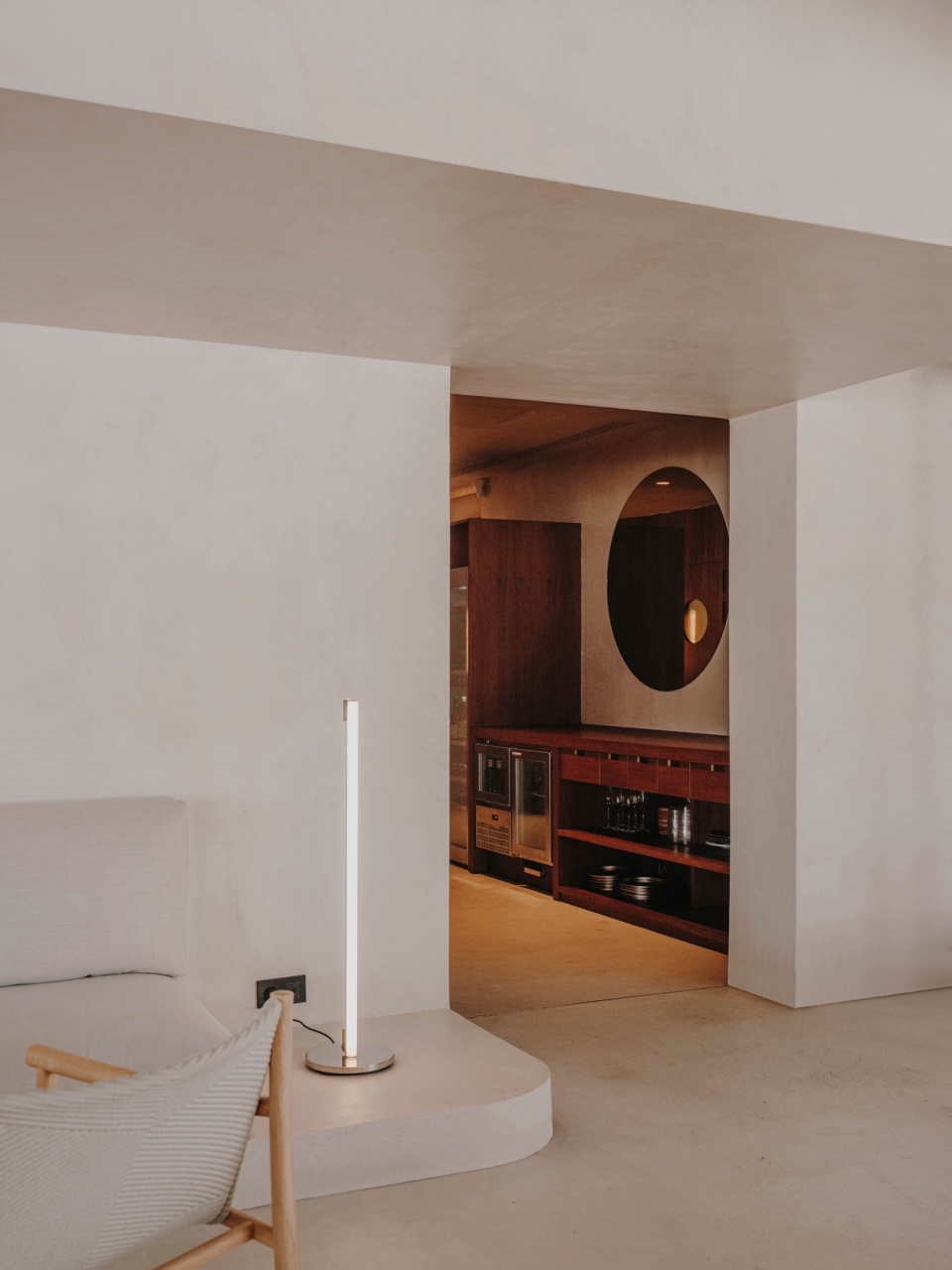
▼深色胡桃木饰面,dark walnut veneer
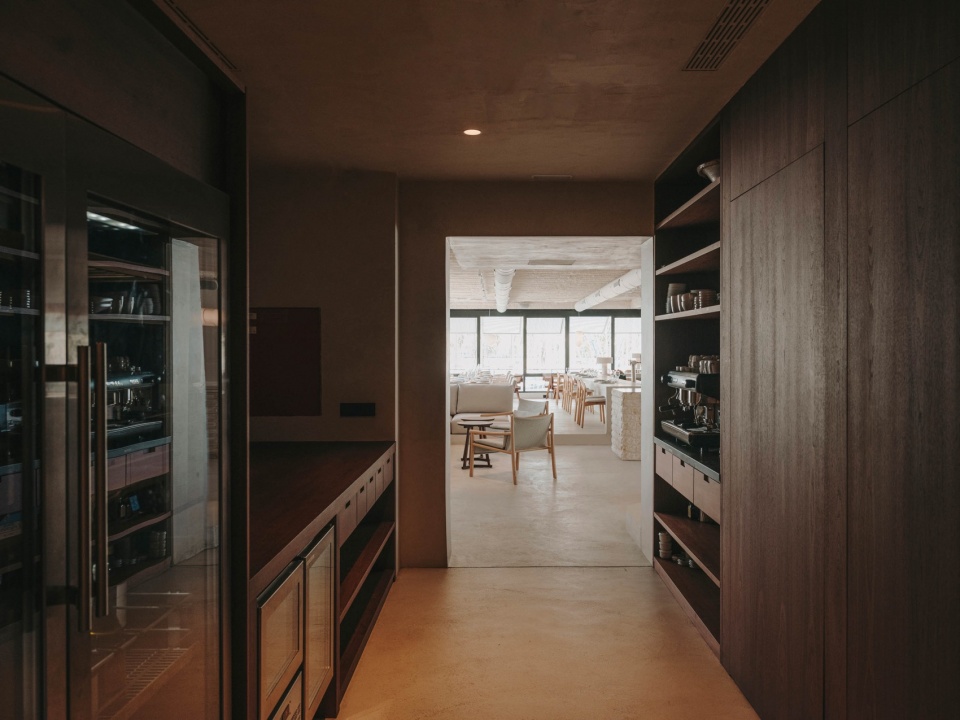
▼细部,details
▼卫生间,toilets
本空间灵感来自“fiskeskur”,丹麦语意为“渔夫小屋”,通常是架于海边高台的结构,鱼与海风在其中成为主角。Fiskebar敞开向海,与风景与船只融为一体。在此,客人可于栈桥边、海水之畔,伴着烤鱼、生蚝与葡萄酒,沉浸于温暖而放松的海洋氛围中。
The space is inspired by the fiskeskur, Danish for fishermen’s hut. These are elevated constructions by the sea where fish and the sea breeze are the protagonists. Fiskebar opens up to the sea and blends in with the landscape and the boats. In the restaurant you can enjoy the relaxed maritime atmosphere by the jetty, next to the water, with grilled fish, oysters and a glass of wine in a warm atmosphere..
▼夜景,night view
Autores: Isern Serra
Team Leader: Anna Mandri
Fotografía: Salva Lopez
Constructor: Tegola Rosso SL
Cliente: Grupo Tragaluz