临港集团南大数智绿洲,上海 / Gensler
由Gensler操刀设计的临港集团南大数智绿洲,正崛起为上海宝山区打造”科创中心主阵地”的核心引擎。作为南大智慧城数字化转型的标杆项目,这座融合”科创+生态+生活”三位一体的现代化园区,不仅承载着临港集团”区区合作、品牌联动”的战略使命,更在重塑上海北部产业版图的进程中扮演着关键角色。
As a prime project in the digital transformation of Lingang Nanda Smart City, this modern complex integrates “technology + ecology + lifestyle” into a cohesive work community. It not only embodies Lingang Group’s strategic vision of “cross-district collaboration and brand synergy” but also plays a pivotal role in reshaping the industrial landscape of Lingang.
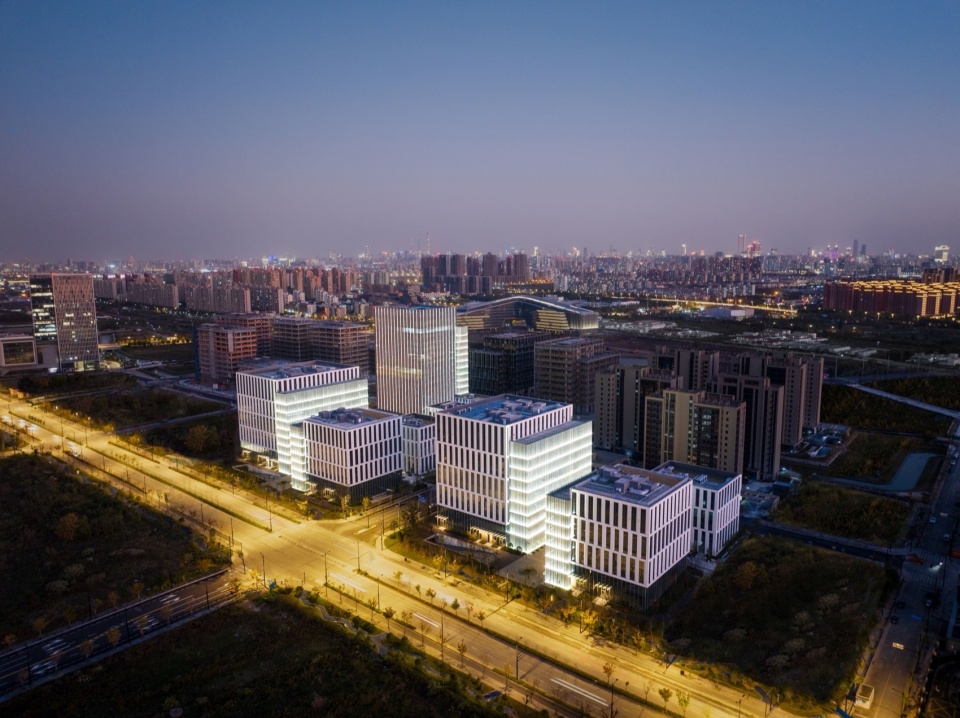
▼项目鸟瞰,aerial view of the project
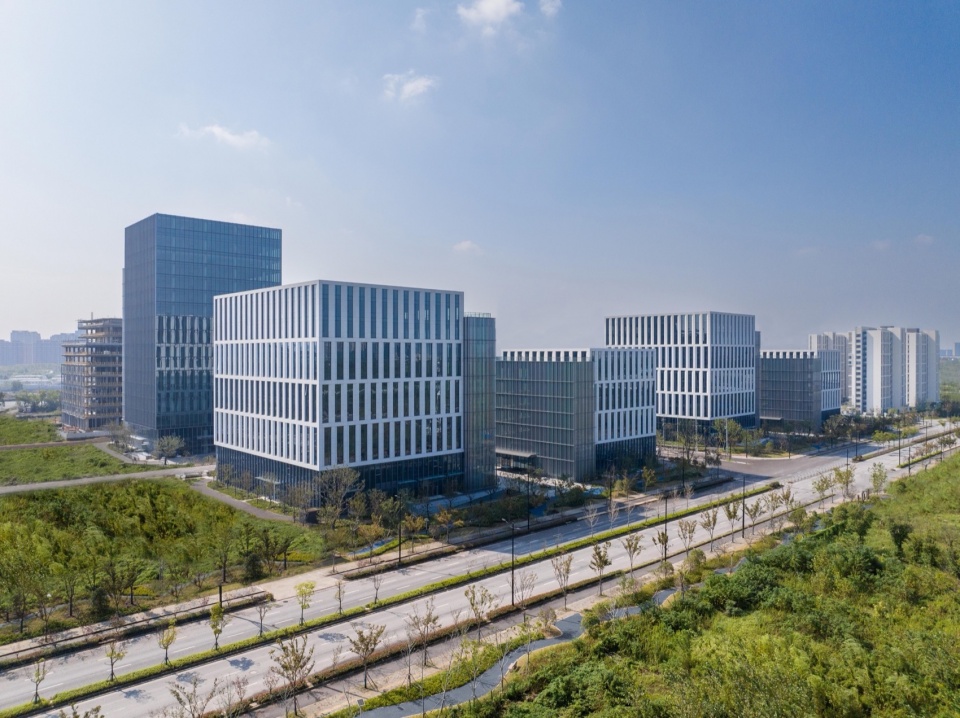
项目坐落于南大智慧城西南象限产业先行区,这一区域正从传统工业基地向”上海科创中心主阵地”加速转型。凭借轨交15号线南大路站TOD枢纽的区位优势,园区构建起”30分钟长三角创新圈”的交通网络。Gensler的设计充分呼应了这一区位使命,通过建筑集群的协同效应,吸引人工智能、数字科技等前沿企业入驻,助力宝山打造”北转型”战略下的产城融合示范区。
Located in the southwestern quadrant of Nanda Smart City’s pioneering industrial zone, the project sits in an area transitioning from a traditional industrial base to a “primary hub for technological innovation” in Shanghai. Leveraging the TOD (Transit-Oriented Development) hub at Nanda Road Station on Metro Line 15, the park establishes a “30-minute Yangtze River Delta innovation circle” transportation network. Gensler’s design aligns perfectly with this locational mission, utilizing clustered buildings to attract cutting-edge enterprises in artificial intelligence and digital technology, thereby supporting Baoshan’s “Northern Transformation” strategy to create a model of industry-city integration.
▼项目概览,overall of the project
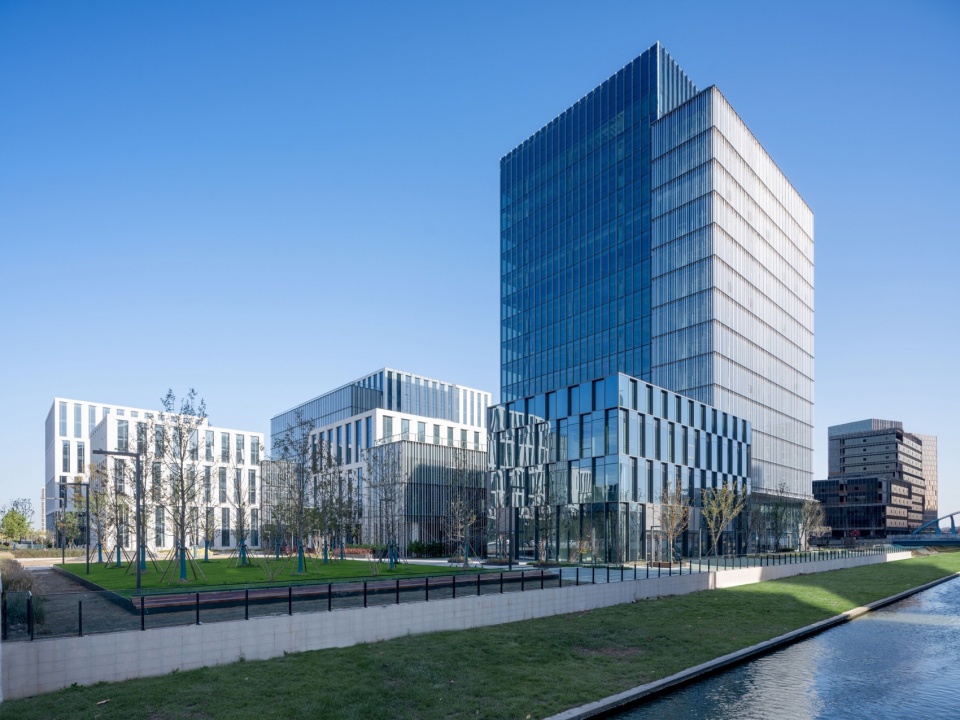
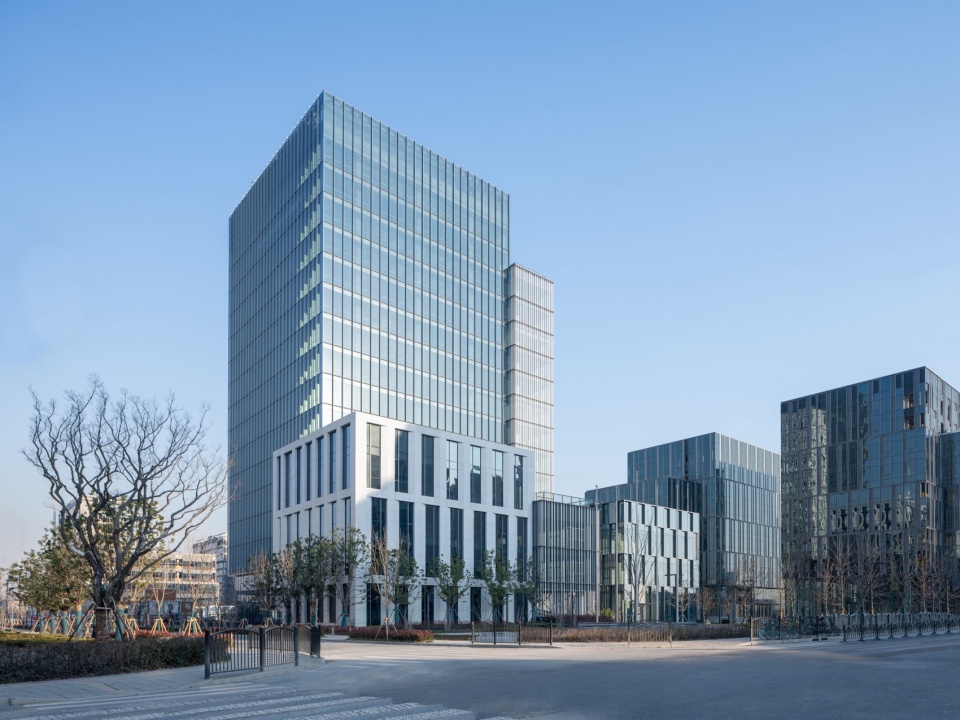
▼立面,facade
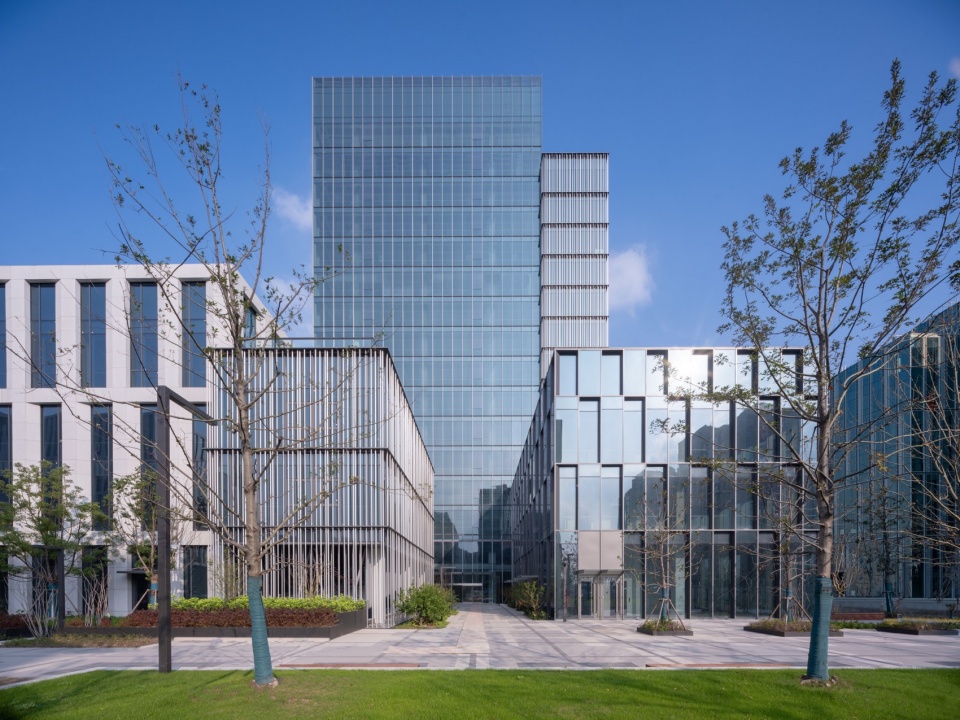
创新空间规划理念Innovative Spatial Planning Concept
Gensler提出的”协作式组团”设计理念将园区划分为三大功能分区:创新研发区、商务办公区和生活服务区。其中,创新研发区采用错落有致的多层次建筑布局,通过降低建筑密度释放更多绿地空间,营造出”公园融入办公”的独特环境。设计巧妙结合场地东西向线性公园的自然优势,将绿化景观延伸至整个开发区域,最终形成”公园中的办公”这一创新空间形态。
Gensler’s “Collaborative Clusters” design philosophy divides the park into three functional zones: innovation and R&D, commercial office spaces, and lifestyle amenities. The innovation and R&D zone features staggered volumes that reduce building density, freeing up space for greenery and creating a “park-infused office” environment. The design cleverly incorporates the natural advantages of the east-west linear parks, extending green spaces into the development to form “offices in a park.”
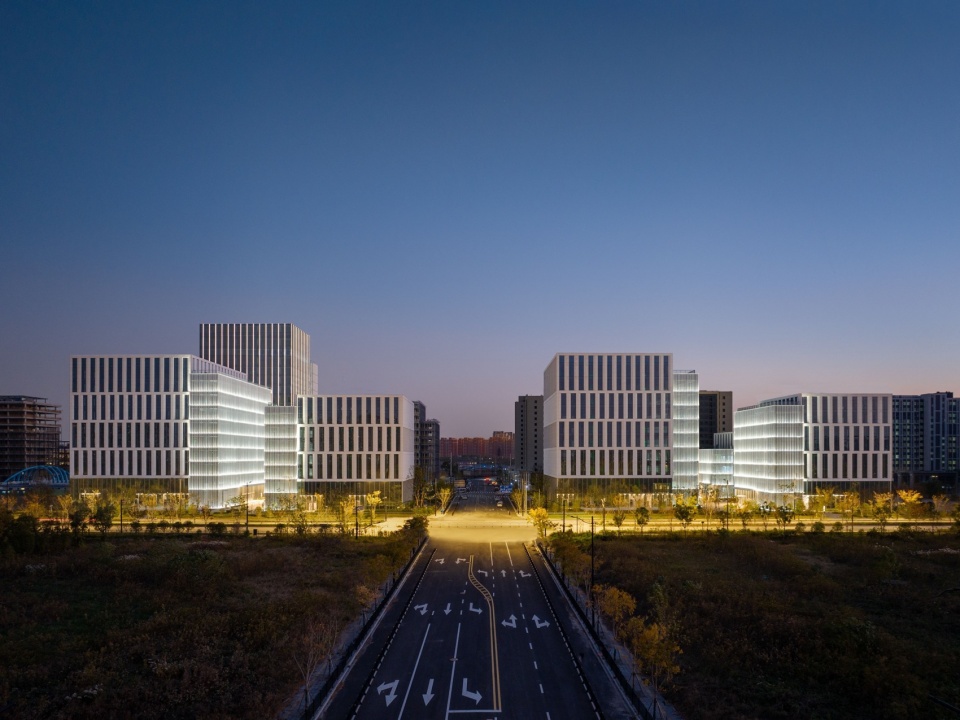
▼街景,street views
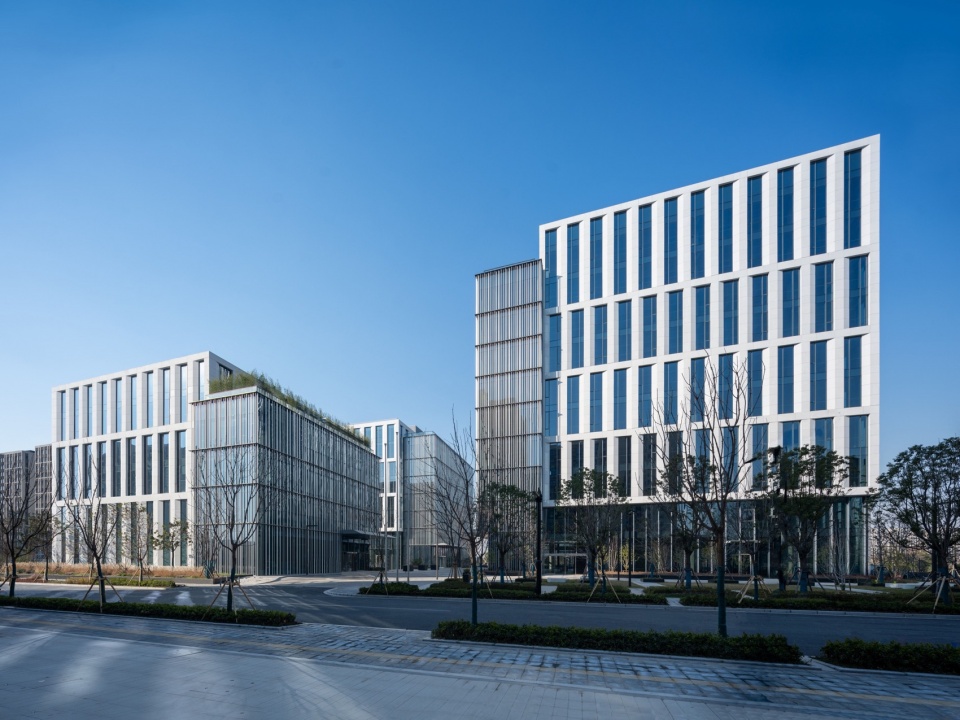
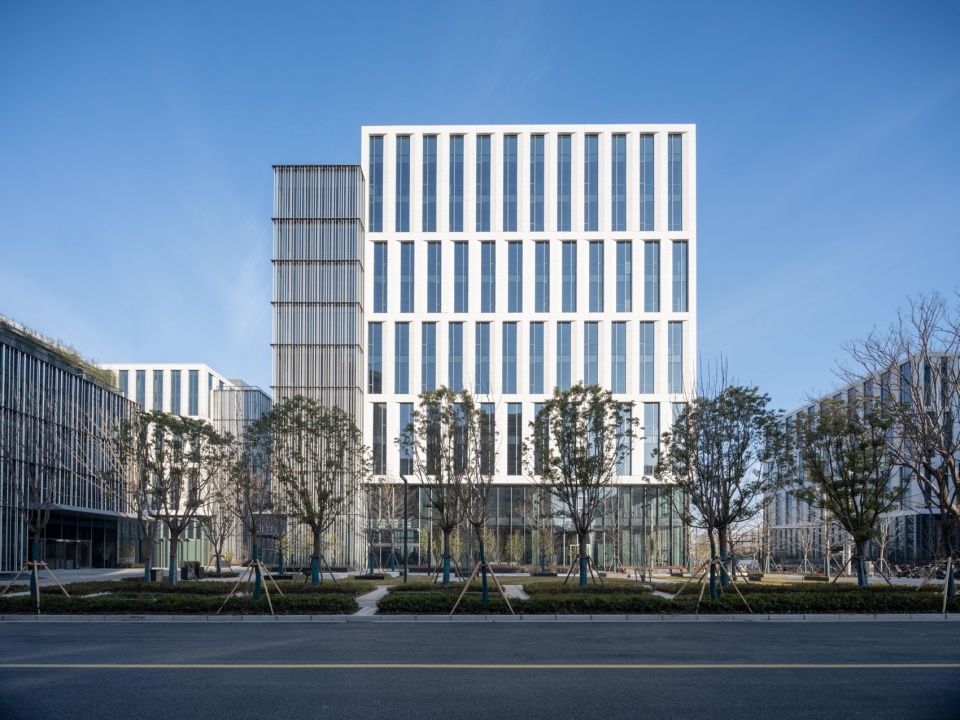
▼外观,exterior view
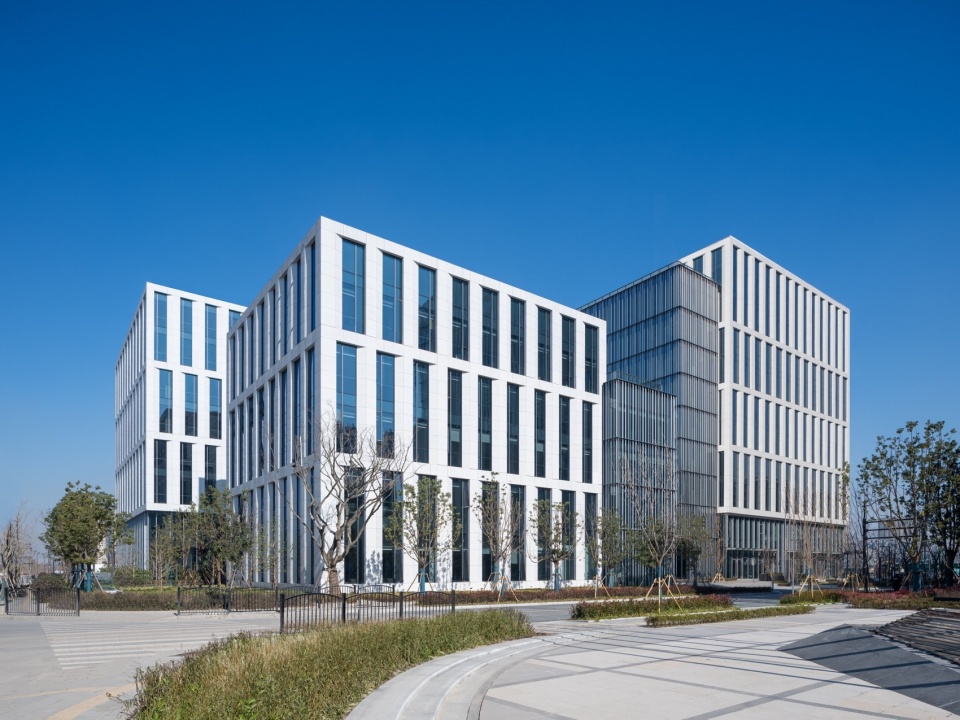
从规划布局视角看,九栋办公楼被划分为三个鲜明组团,每个组团适配三种不同规模的办公单元——涵盖办公塔楼(1900-2650平方米)、高层办公别墅(1200-1450平方米)及低层办公别墅(500-1000平方米),全面覆盖不同体量企业的空间需求。这种空间组织模式贯彻”市场需求响应式”设计思维,使建筑形态与市场趋势、用户诉求深度咬合。
From a programming perspective, the nine office blocks are strategically grouped into three distinct clusters, each offering three carefully calibrated floorplate sizes to suit varying tenant needs—ranging from the Office Tower (1,900–2,650 sqm) to the Higher Office Villa (1,200–1,450 sqm) and the Lower Office Villa (500–1,000 sqm). This spatial configuration embodies a demand-responsive design approach, ensuring the architecture is intrinsically aligned with market dynamics and user requirements.
▼立面,facade
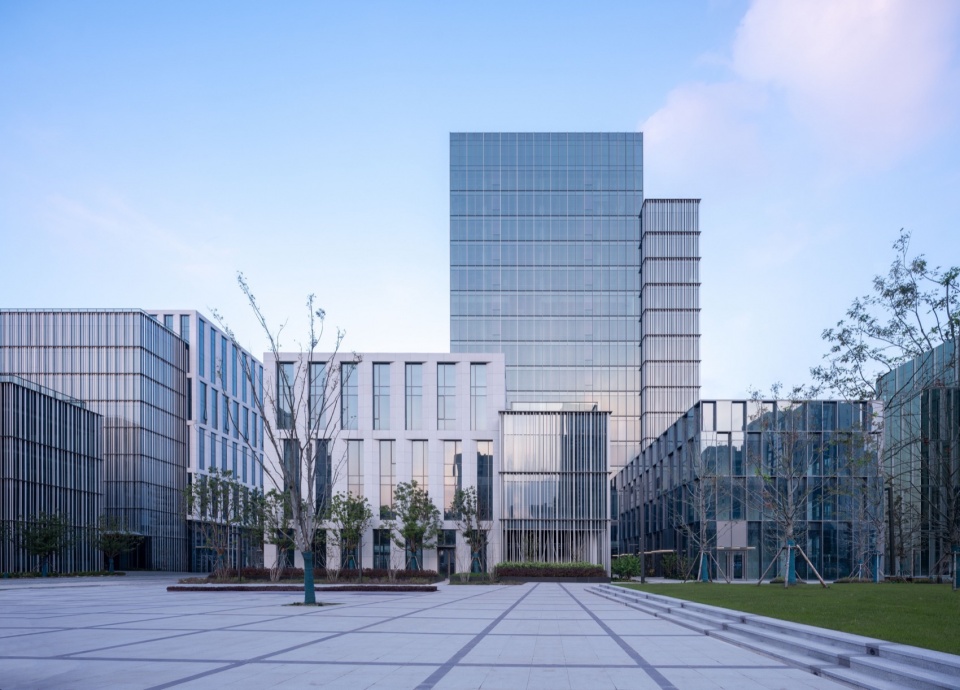
▼组团内部,interior of the cluster
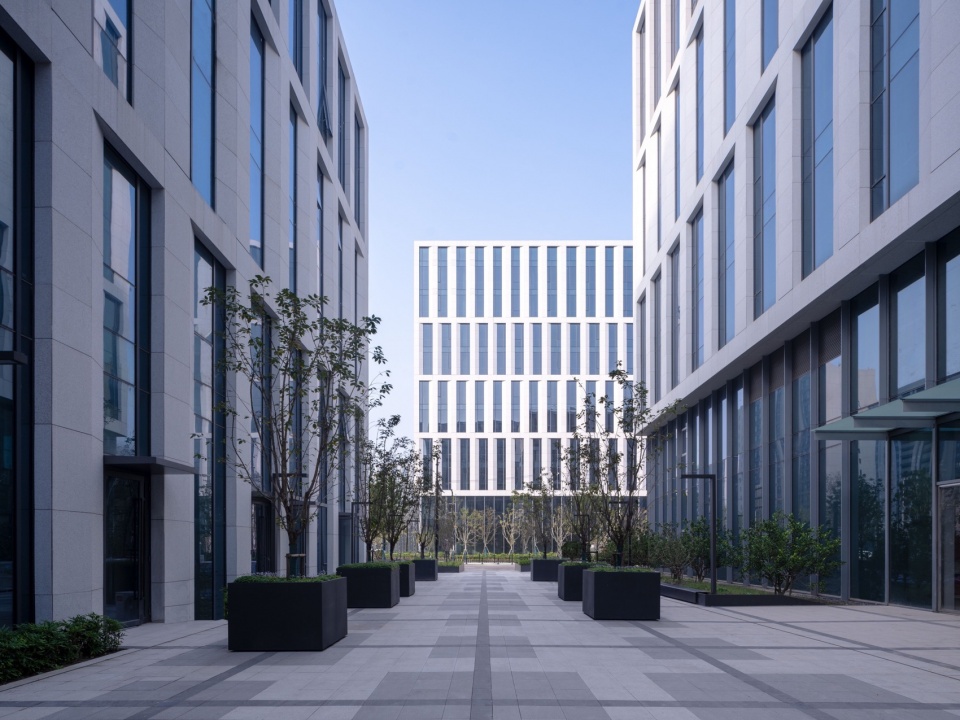
这种组团策略还有效减少了车流量——通过将原本九栋办公楼各自独立的车道,整合为每三栋办公楼共享一条车行通道的系统。这种共享式交通基础设施不仅使各组团的主入口得以沿同一道路段落集中布局,从而优化车流动线并提升空间整体性,同时也为绿化空间的最大化创造了条件。
This cluster strategy also reduces vehicle traffic by replacing individual access roads for each of the nine blocks with a shared system—each cluster groups three blocks to share a single vehicle access route. This shared infrastructure further consolidates main entrances along a unified road segment, enhancing traffic flow and spatial coherence. Green spaces can be maximized also.
▼立面细部,details of the facade
生态与人文设计特色Human-Centric Design
这种亲自然设计(Biophilic Design)显著提升员工福祉与创新效率,完美契合高科技企业对人才吸引力的需求。在建筑美学上,设计师运用参数化设计的金属构件打造建筑立面,既隐喻园区的高科技基因,又向宝山曾作为钢铁工业重镇的历史致敬。主入口的悬挑结构形成”科创之门”的视觉意象,与中央公园景观轴线遥相呼应,这种新旧对话的设计语言,象征着区域从”制造”向”智造”的历史性跨越。
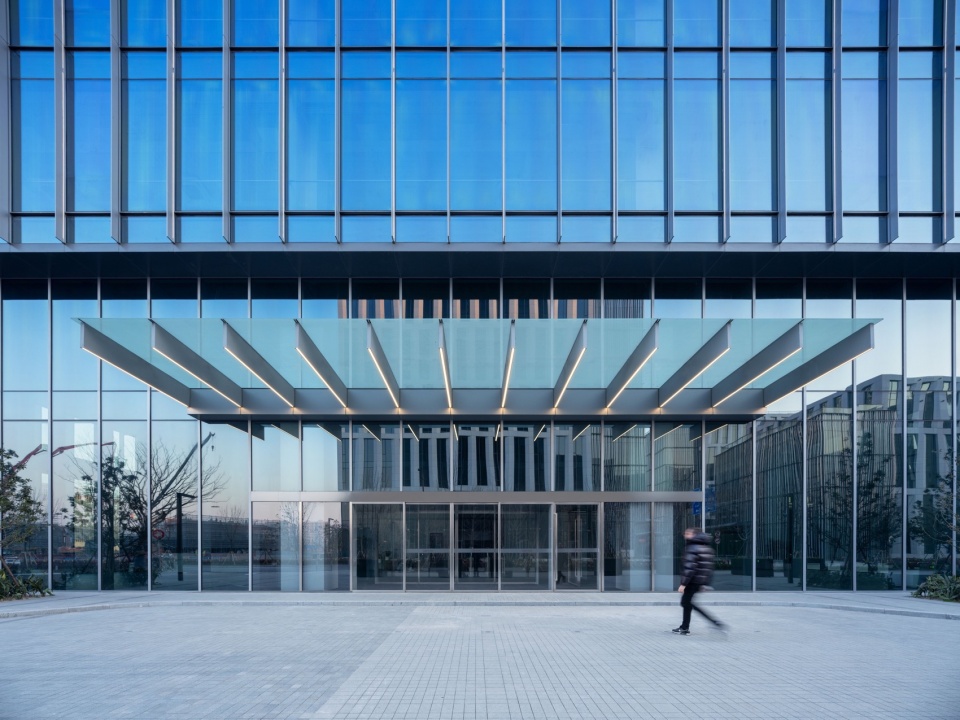
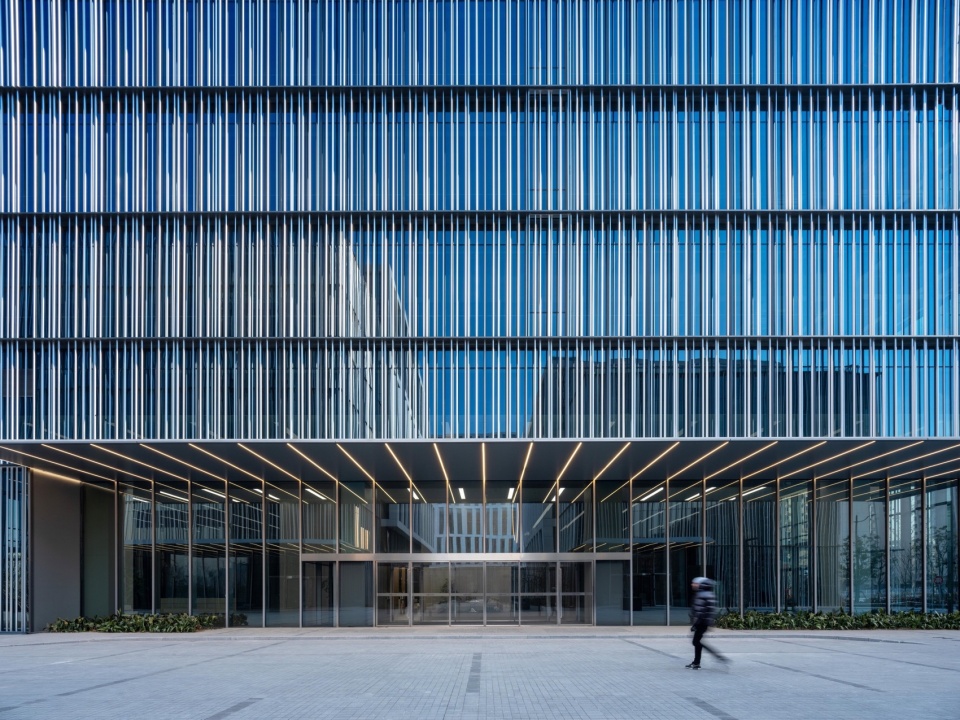
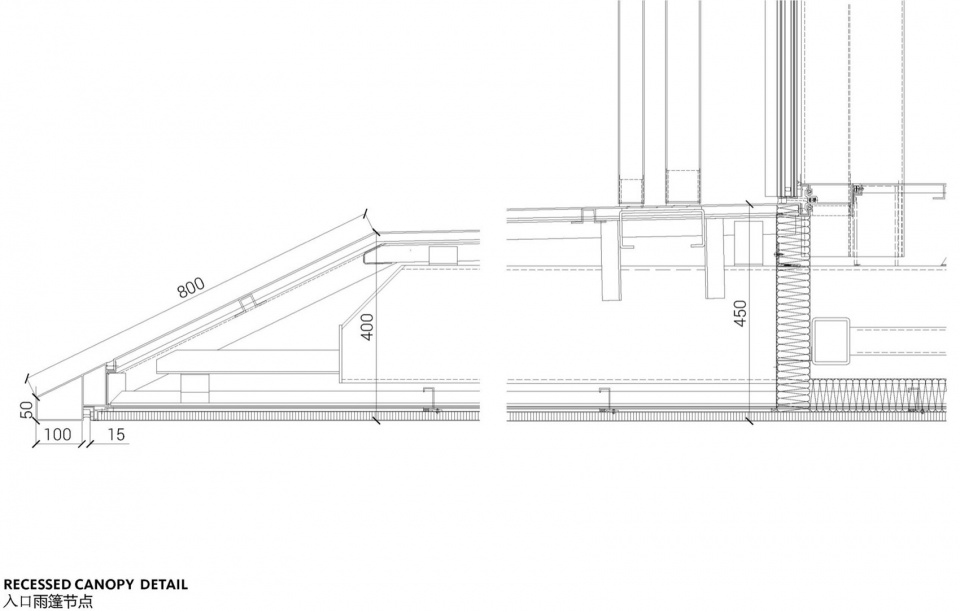
The human-centric design significantly enhances employee well-being and innovation efficiency, perfectly meeting the talent attraction needs of high-tech companies. Architecturally, parametric metal components adorn the facades, symbolizing both the park’s high-tech DNA and paying homage to Baoshan’s history as a steel industry powerhouse. The cantilevered structure at the main entrance forms a “Gateway to Innovation,” visually aligned with the central park’s landscape axis. This dialogue between old and new symbolizes the area’s historic shift from “manufacturing” to “intelligent manufacturing.”
▼组团C立面,facade of the cluster C
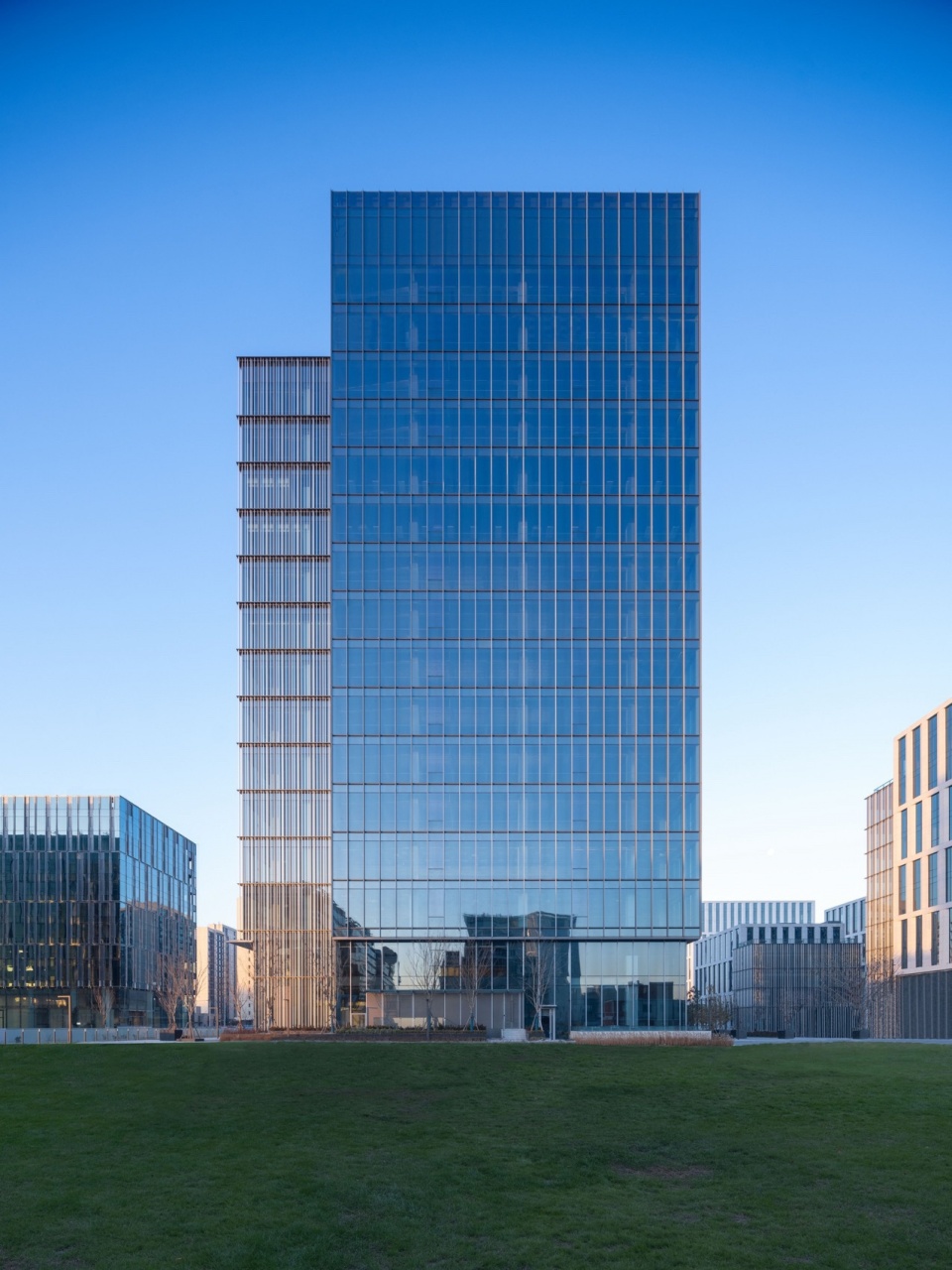
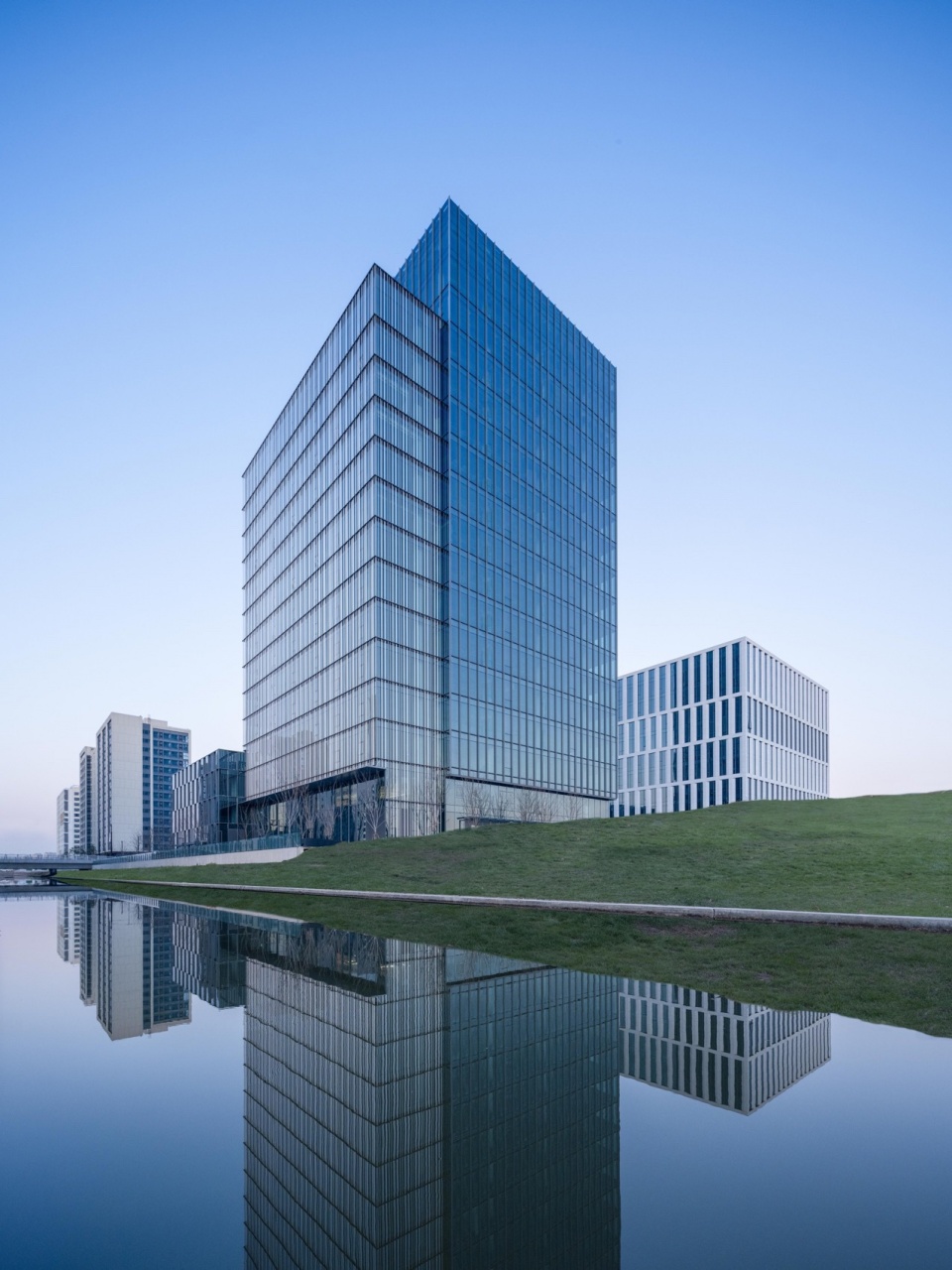
▼沿河视角,view along the river
▼入口雨棚,entrance canopy
立面设计Facade Design
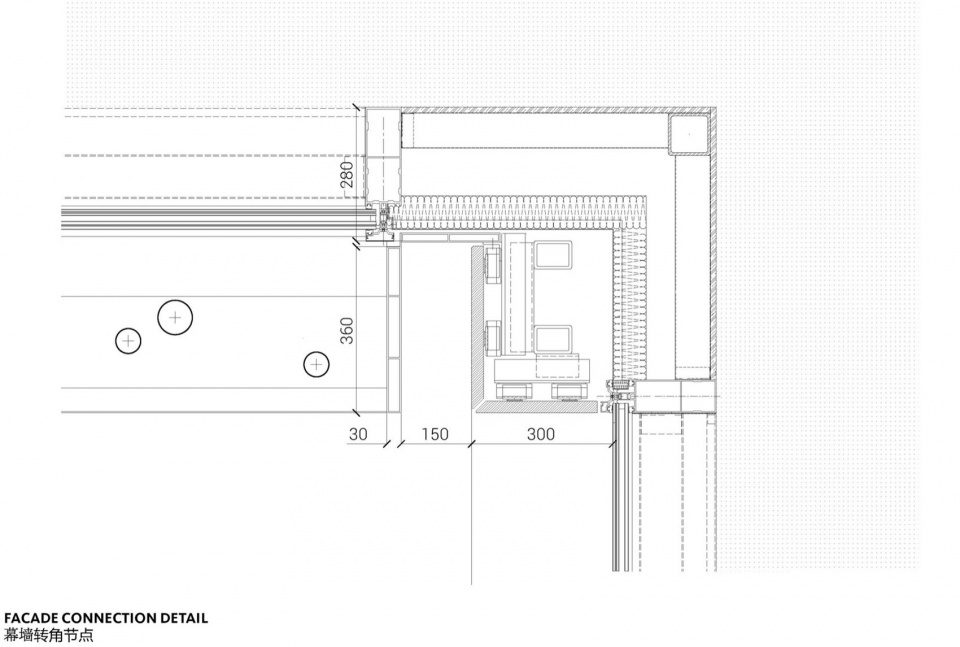
立面设计巧妙融合当地的工业遗产基因——其前身为宝山钢铁厂的历史记忆,与当代科技美学语言,赋予建筑独特的历史纵深与未来感。为协调大体量建筑的视觉尺度并强化整体性,设计采用三种差异化立面语言统一整个办公组团:石材肌理立面、双层金属杆件立面与垂直鳍片立面。
The facade design echoes the region’s industrial heritage—rooted in its former life as part of the Baoshan Steel Plant—while infusing modernity through a tech-forward identity and look. To balance scale and visual cohesion, three distinct facade typologies unify the office cluster: a stone-clad facade, a dual-skin metal-rod facade, and a vertical fin facade.
▼立面设计巧妙融合当地的工业遗产基因,the facade design echoes the region’s industrial heritage
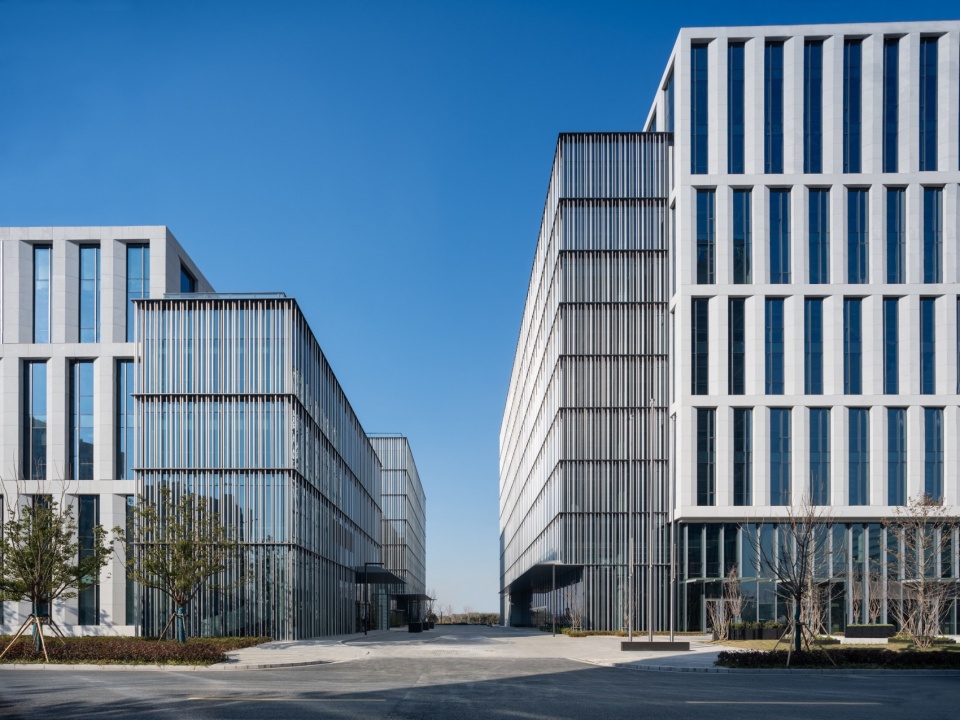
▼入口,entrance
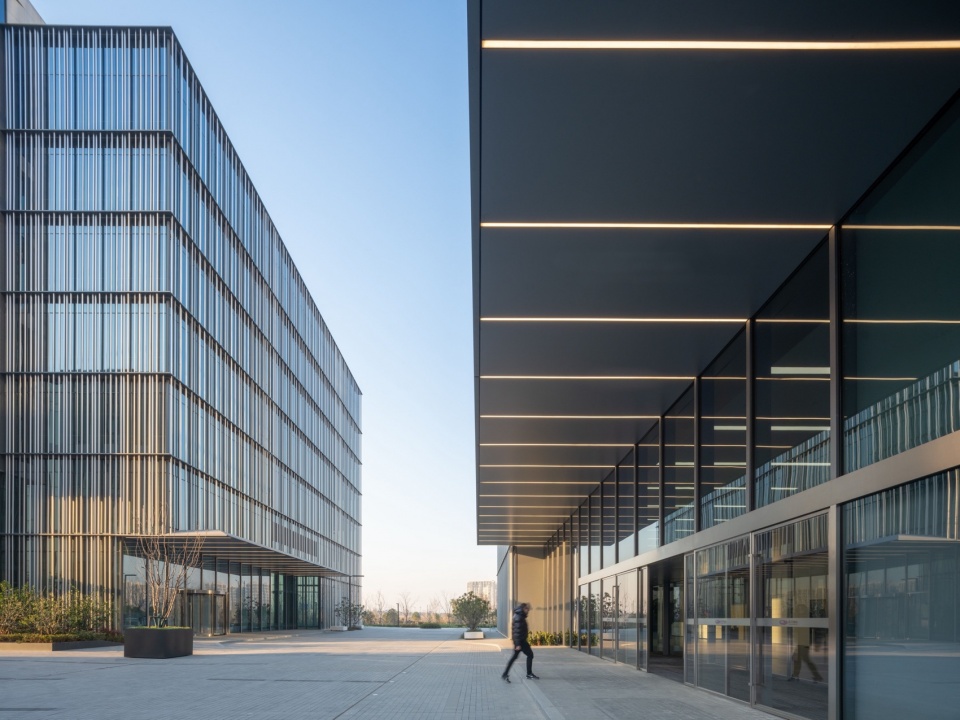
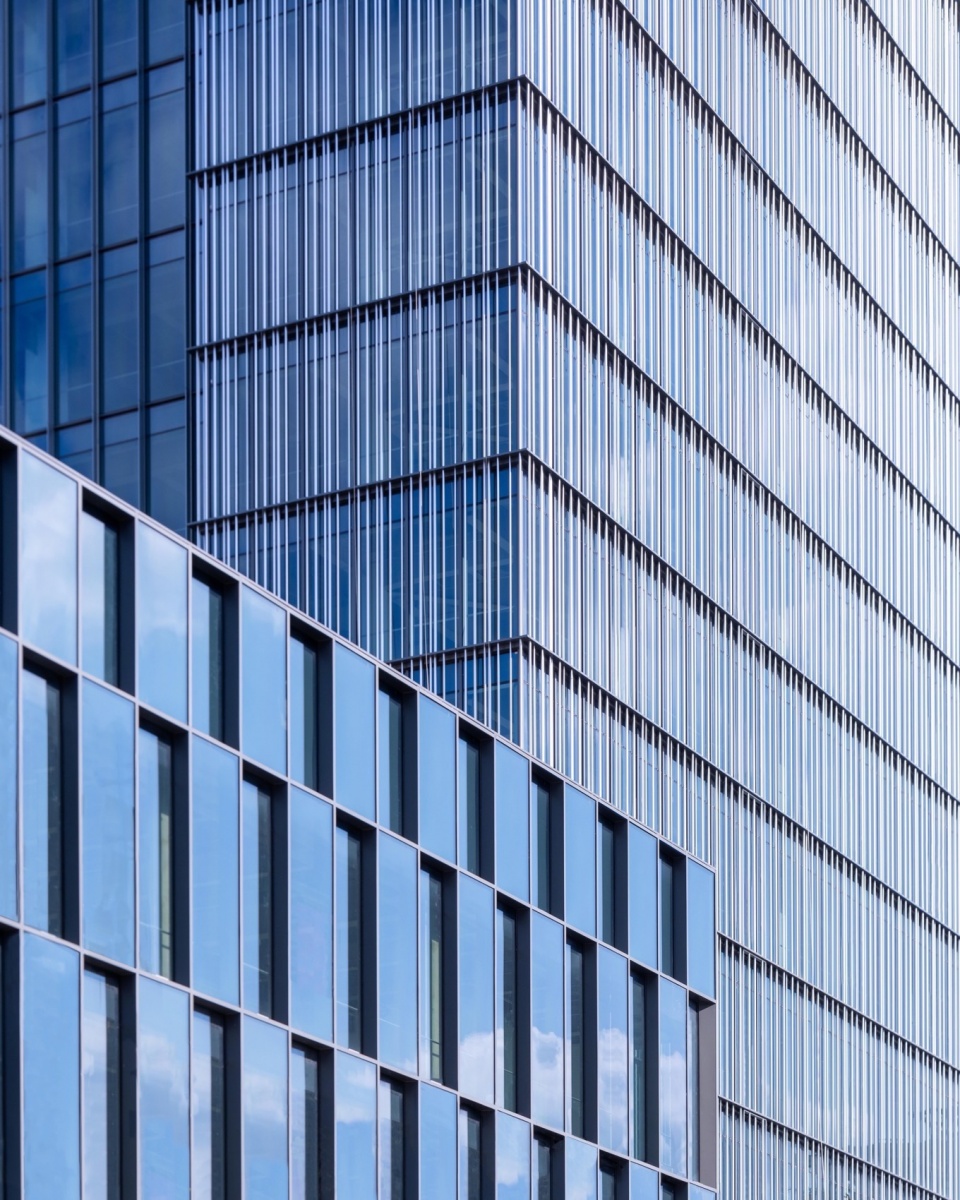
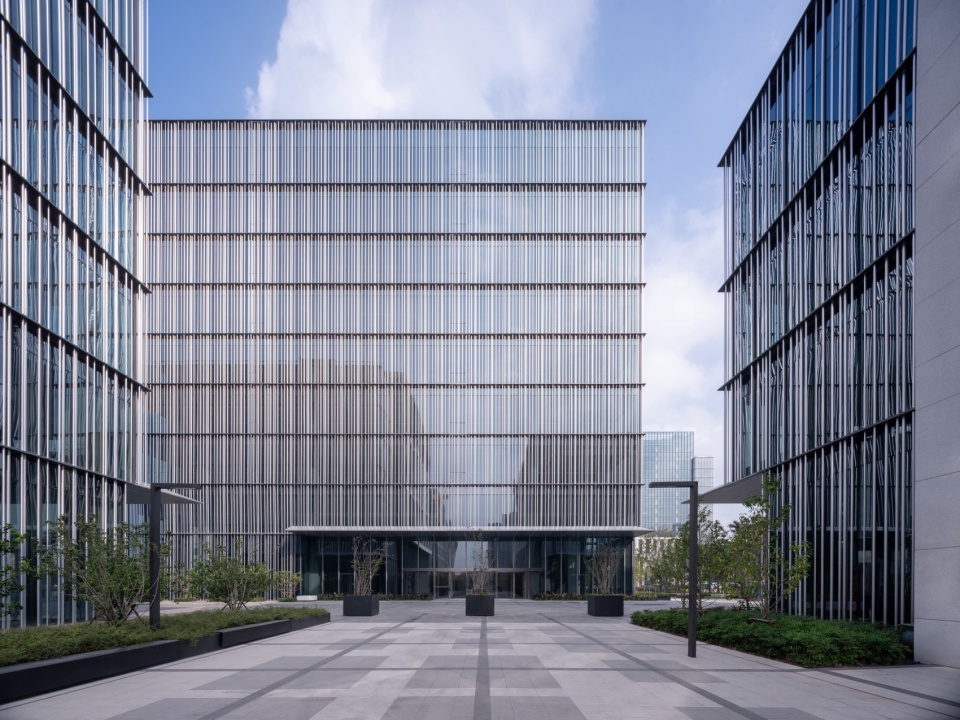
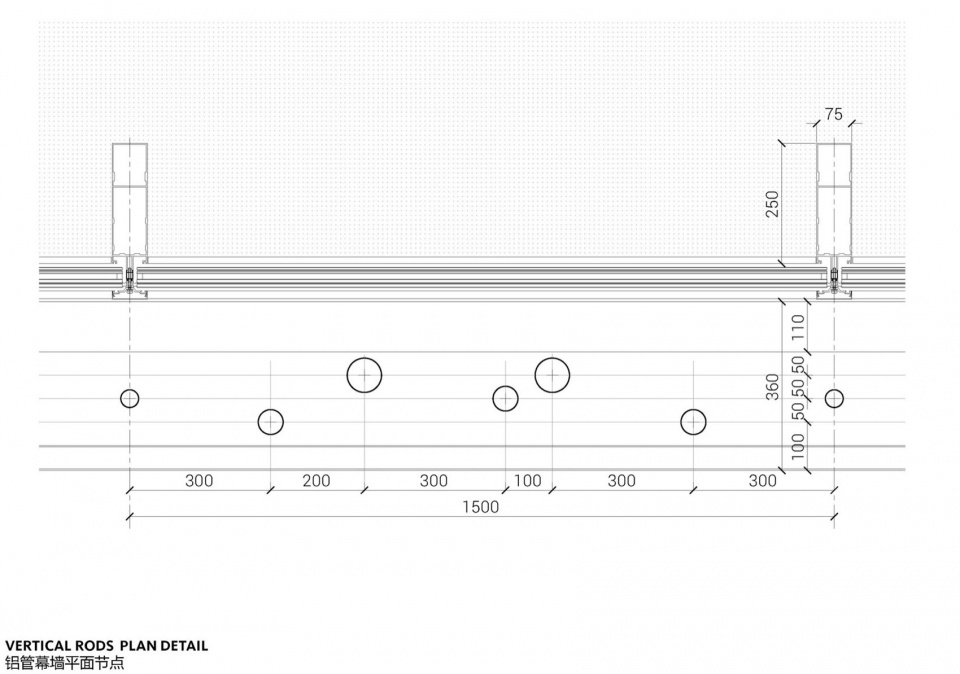
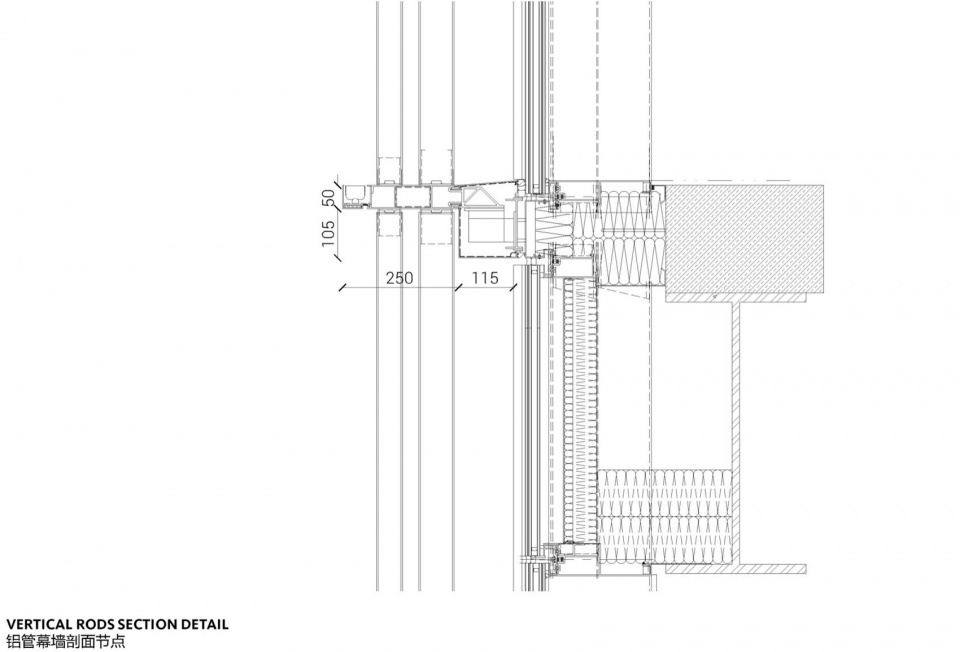
最具标志性的双层立面系统尤为瞩目:定制化排列的三种不同直径金属杆件,以圆角阳极氧化工艺处理,镶嵌于玻璃幕墙前。这些金属杆件如同精密的光线过滤器,通过动态反射巧妙平衡自然采光与视觉舒适度——既过滤强烈眩光,又确保室内光线通透。每处办公组团主入口两侧均设置该立面系统,形成强烈的视觉锚点与序列感,营造出庄重而友好的到达体验。
The most striking features a dual-skin system: vertical metal rods (three varying diameters, arranged in a custom pattern) set against a glass curtain wall. Rounded and anodized, these rods reflect light dynamically, balancing visibility for occupants with striking visual impact—softening harsh glare while preserving interior daylight. Positioned on the side of each office cluster’s main entrance, they create a cohesive visual anchor and a welcoming arrival sequence.
▼双层立面系统,the dual-skin system
▼入口雨棚,entrance canopy
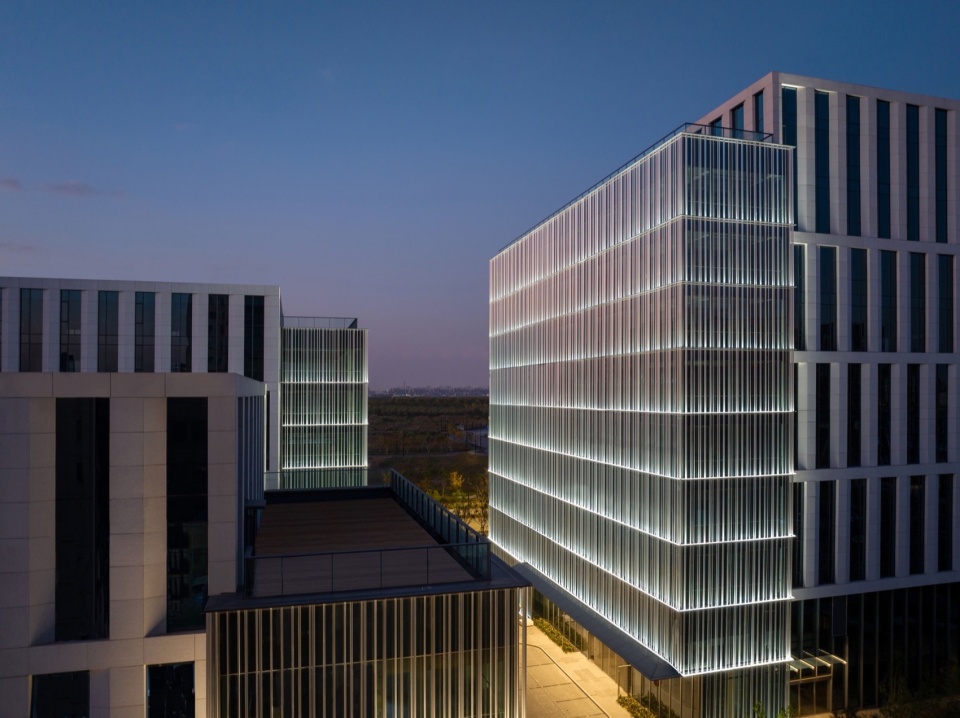
夜幕时分,集成式智能照明系统激活立面动态光影,以科技感十足的光影演绎,将工业时代的粗犷质感与数字时代的精密创新凝练成一场跨越时空的对话。
Integrated facade lighting amplifies this effect at night, casting dynamic illumination that underscores the project’s innovative ethos, merging the past’s industrial grit with the future’s technological precision.
▼夜景,night view
科技展示空间Core Technology Exhibition Space
园区的核心是一座多功能中庭枢纽,其玻璃幕墙内嵌动态LED屏幕,实时展示科研数据或艺术内容,成为内外视觉焦点。夜间,外立面的发光金属棒阵列如同”数字瀑布”,强化了园区的未来感。
At the heart of the park lies a multifunctional atrium hub. Its glass curtain walls embed dynamic LED screens that display real-time research data or artistic content, serving as an internal and external visual focal point. At night, the illuminated metal rod arrays resemble a “digital waterfall,” amplifying the futuristic ambiance.
▼立面夜景,night view of the facade
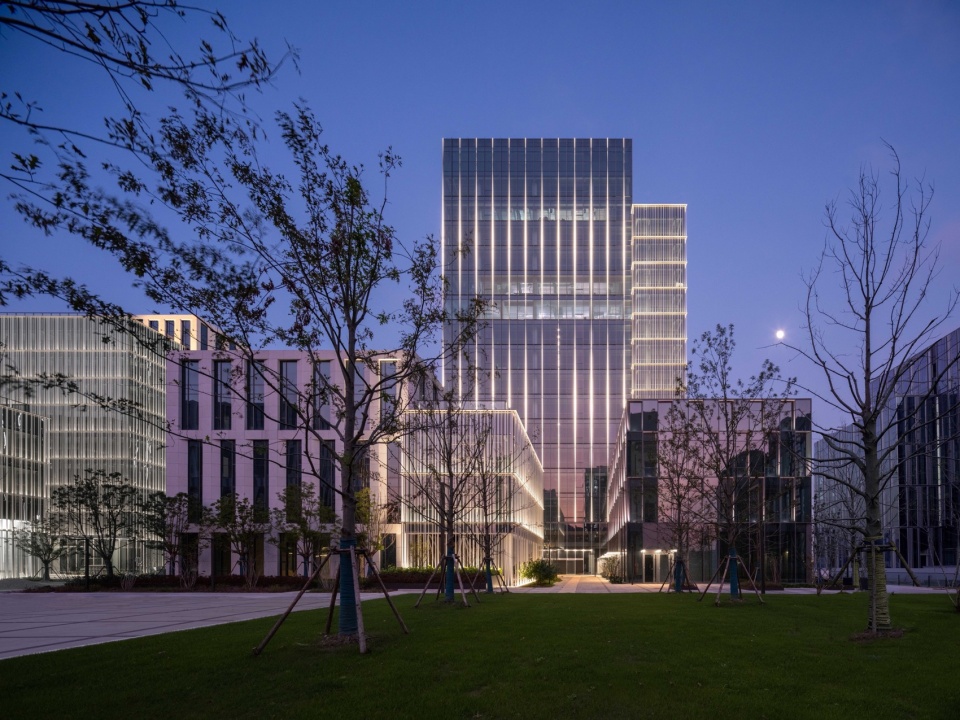
▼组团内部夜景,night view of the interior of the cluster
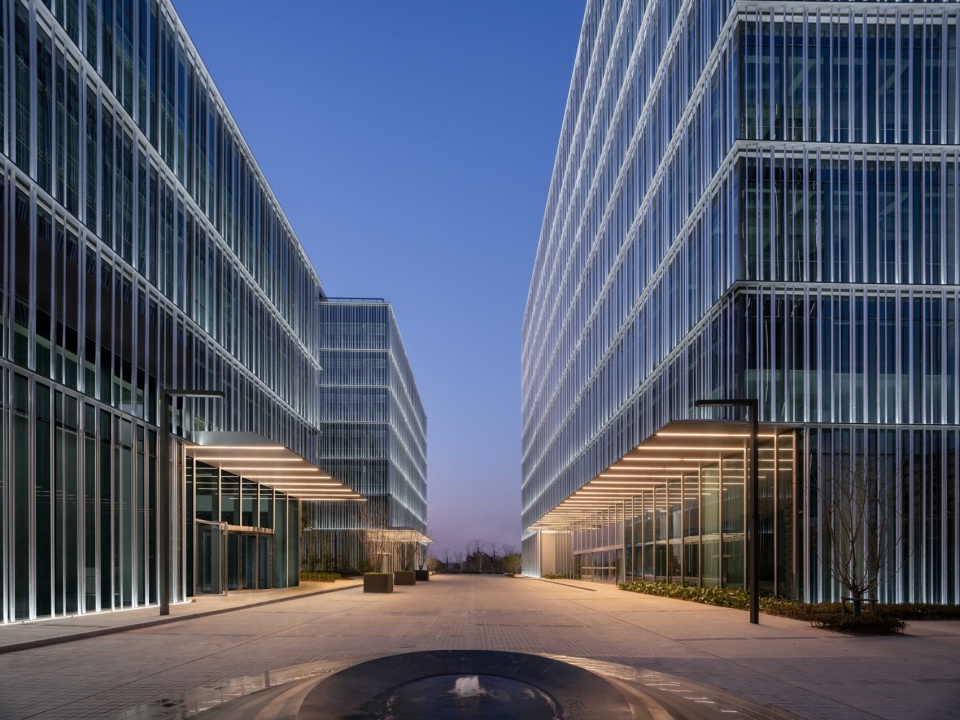
产业生态与配套服务Industrial Ecosystem and Supporting Services
园区以数字经济为核心,重点布局人形机器人、生命健康等战略性产业,成功引进捷瑞肯(智能装备)、太初科技(AI算法)、承葛医药(精准菌群移植企业)等领军企业,并与上海大学共建通用智能机器人研究院,打造集技术研发、成果转化、产业孵化于一体的创新生态链。
The park centers on the digital economy, strategically focusing on humanoid robotics and life sciences. It has attracted leading enterprises such as Jieruiken (intelligent equipment), Taichu Tech (AI algorithms), and Chenge Medicine (precision microbiota transplantation), while co-establishing the General-Purpose Intelligent Robotics Research Institute with Shanghai University. This initiative aims to forge an integrated innovation ecosystem encompassing technology R&D, achievement transformation, and industrial incubation.
▼鸟瞰,aerial view
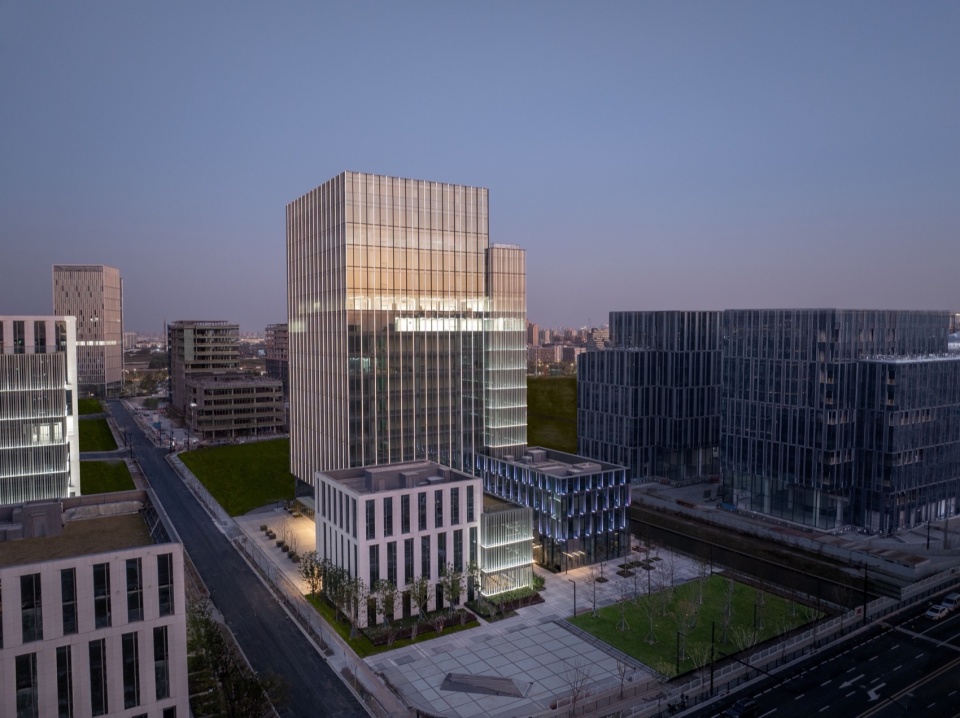
▼夜景,night view
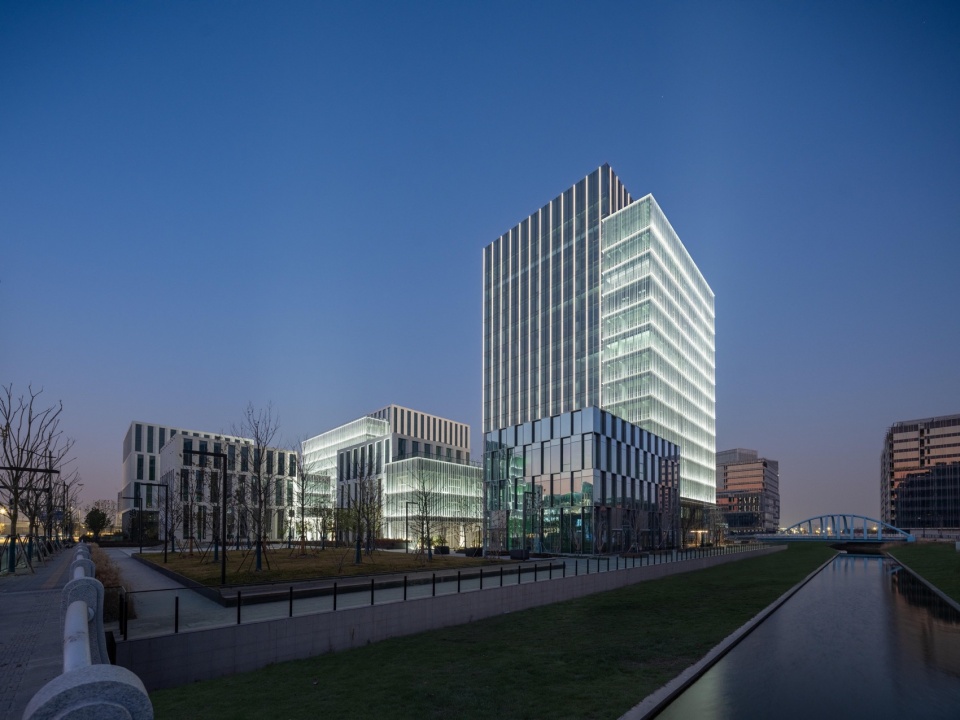
未来展望与区域价值Future Prospects and Regional Value
南大数智绿洲不仅是建筑与自然的共生体,更是产城升级的催化剂。Gensler通过空间叙事将宝山的工业记忆转化为创新动能,其设计既服务当下高科技企业的协作需求,亦为上海北部新区树立了可持续发展的标杆。当中央公园的绿色脉络与错落有致的研发集群全面交融时,这里将成为人才、技术与资本汇聚的”绿洲”,驱动长三角数字经济的下一轮增长,为全球科创园区的发展书写独具特色的东方篇章。
The Nanda Digital Intelligence Oasis is more than a symbiosis of architecture and nature—it is a catalyst for urban-industrial advancement. Gensler’s spatial narrative transforms Baoshan’s industrial legacy into innovation momentum, addressing the collaborative needs of today’s high-tech firms while setting a sustainable development benchmark for northern Shanghai. When the green veins of the central park fully intertwine with the staggered R&D clusters, this oasis will converge talent, technology, and capital to drive the next wave of growth in the Yangtze River Delta’s digital economy, inscribing a distinctive Eastern chapter in the global innovation park playbook.
▼夜景鸟瞰,aerial views at night
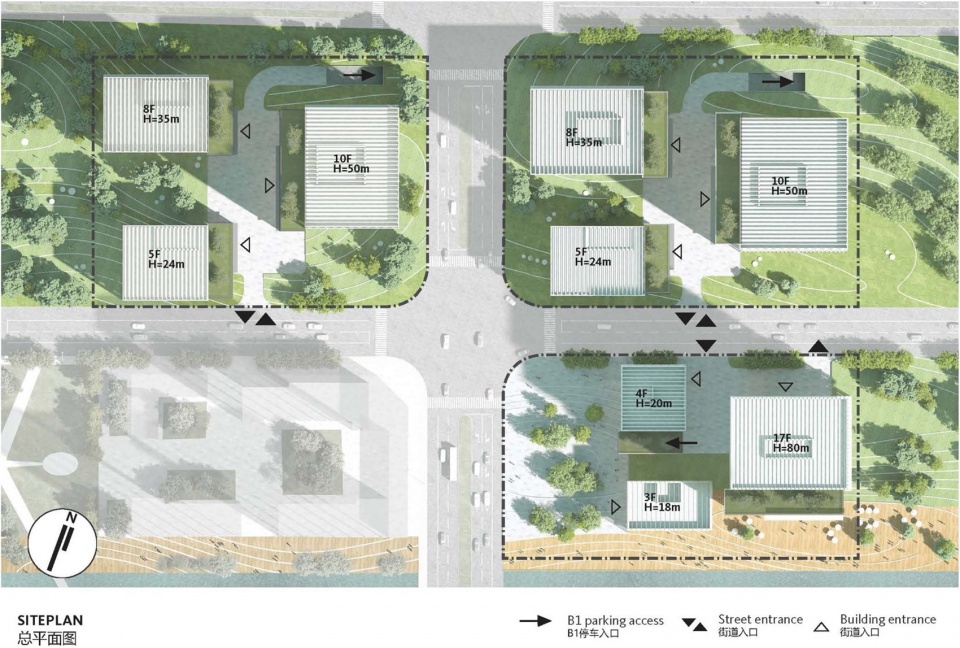
▼总平面图,site plan
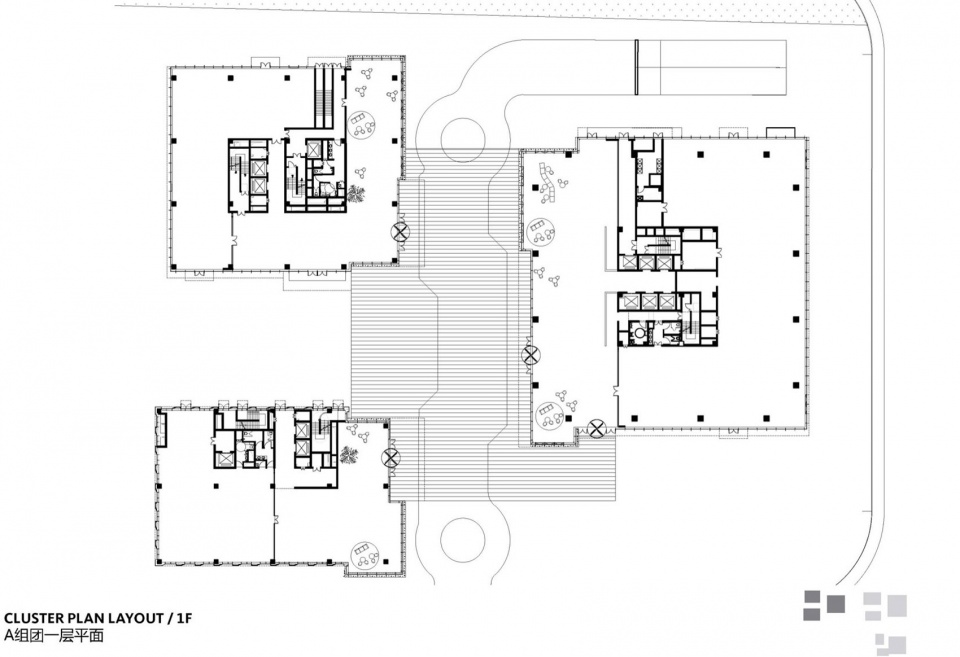
▼A组团一层平面图,cluster A plan layout / 1F
▼A组团二层平面图,cluster A plan layout / 2F
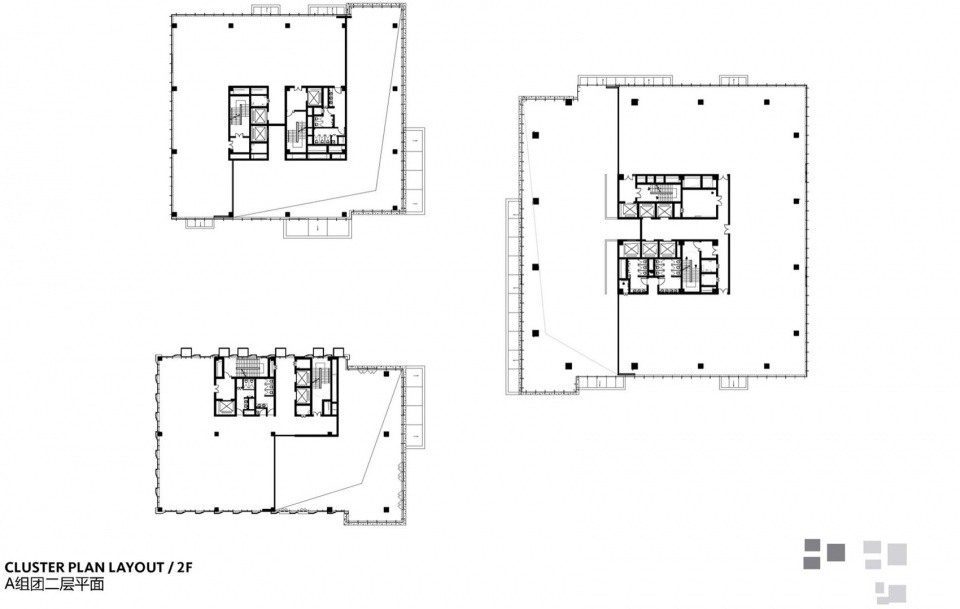
▼A组团露台层平面图,cluster A plan layout / top floor
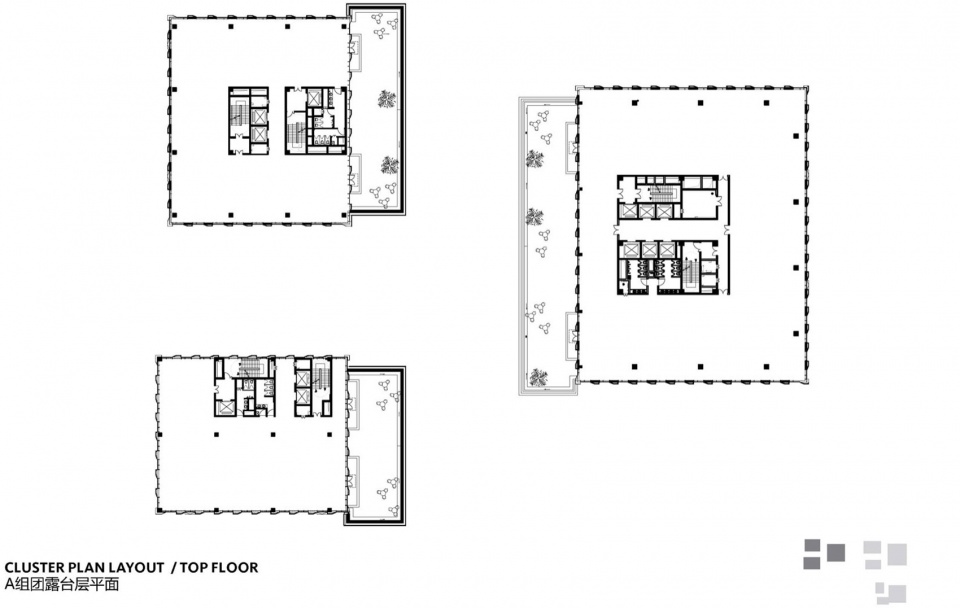
▼A组团标准层平面图,cluster A plan layout / typical floor
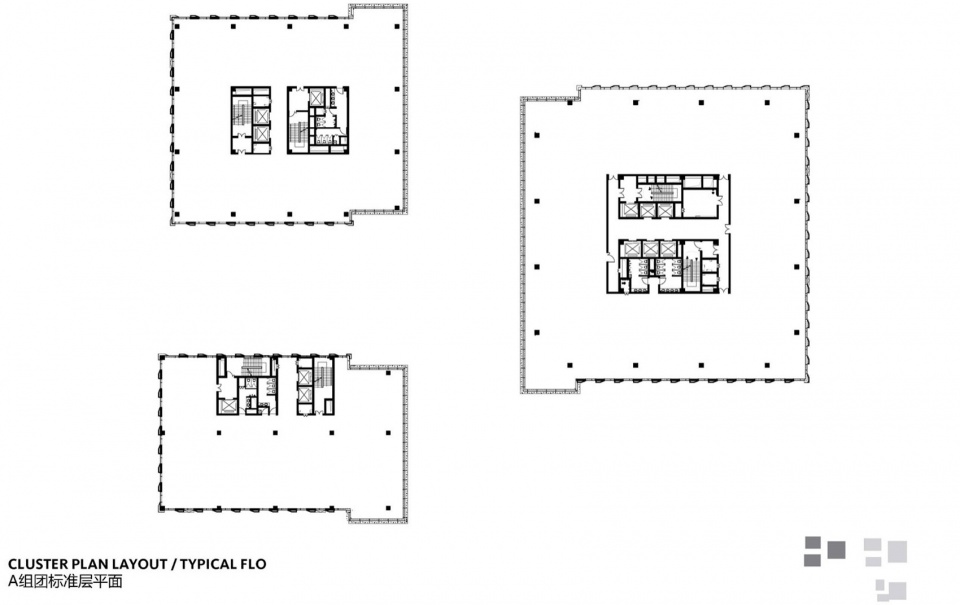
▼C组团一层平面图,cluster C plan layout / 1F
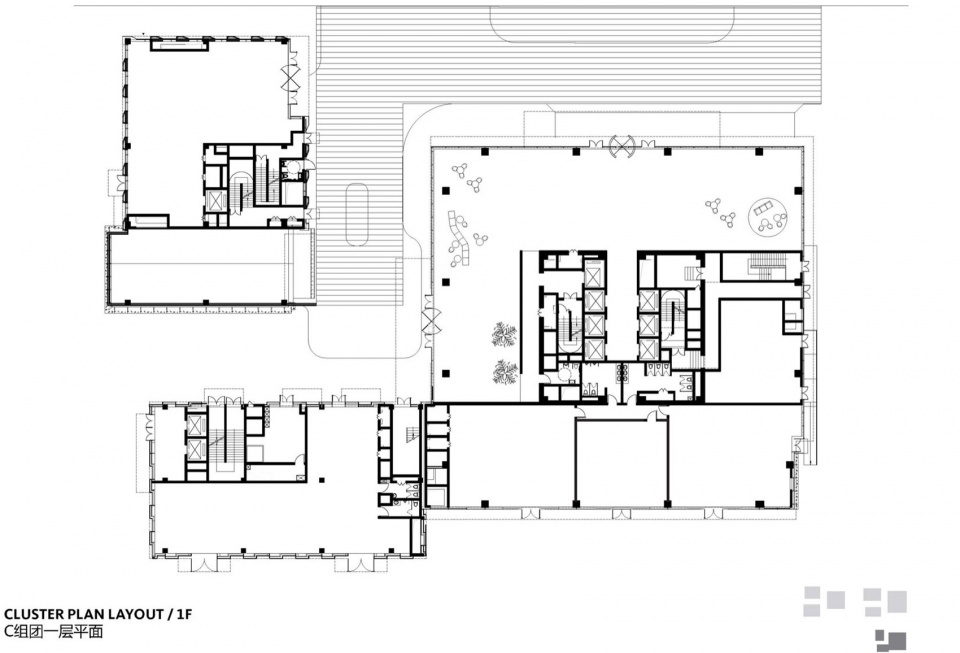
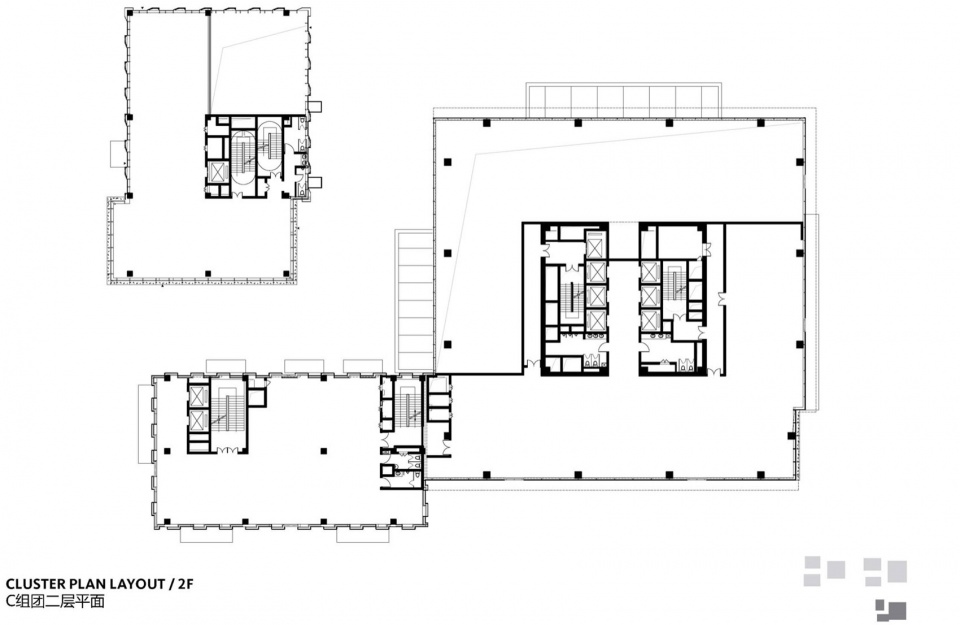
▼C组团二层平面图,cluster C plan layout / 2F
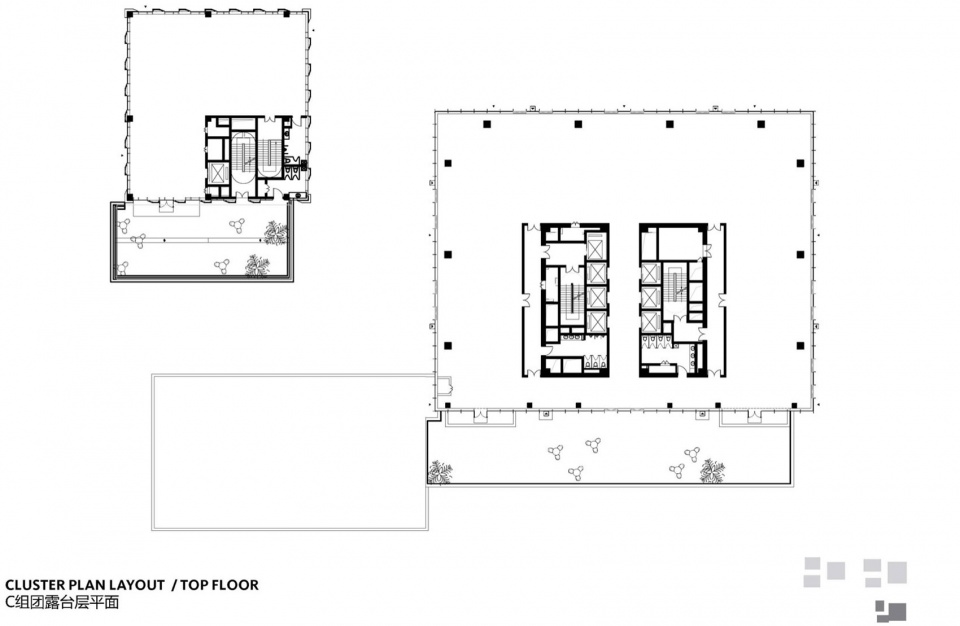
▼C组团露台层平面图,cluster C plan layout / top floor
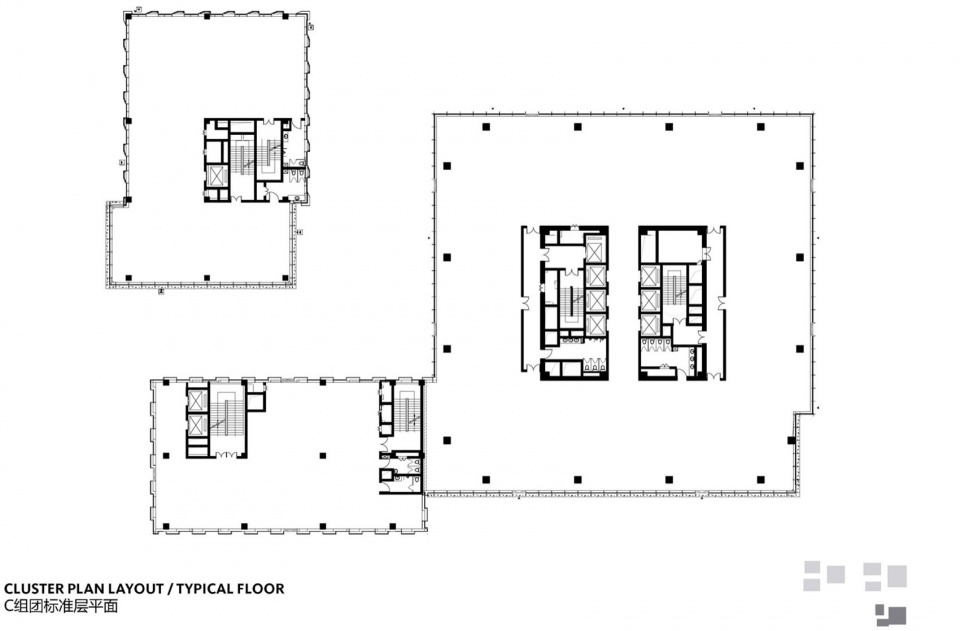
▼C组团标准层平面图,cluster C plan layout / typical floor
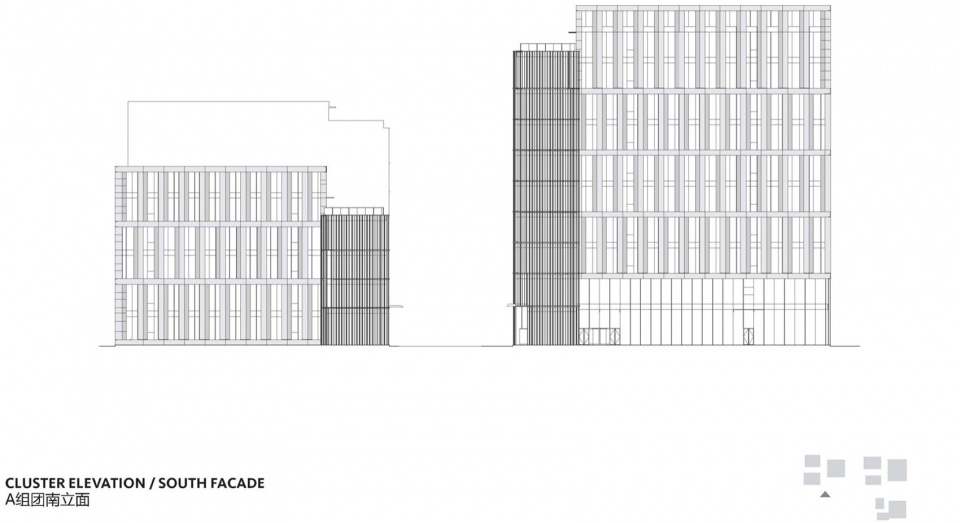
▼A组团南立面,cluster A elevation / south facade
▼C组西立面,cluster C elevation / west facade
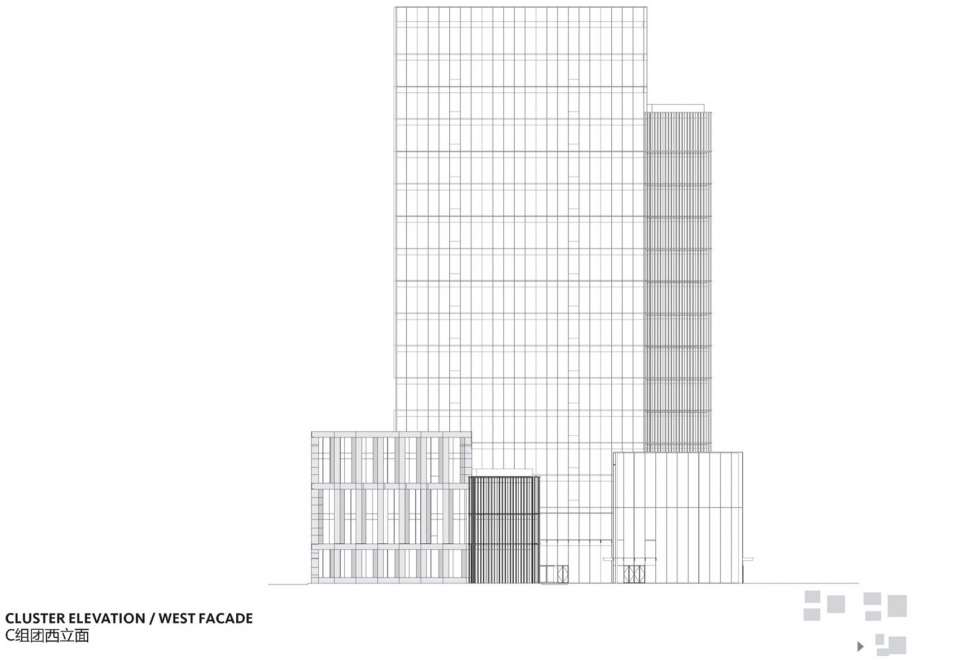
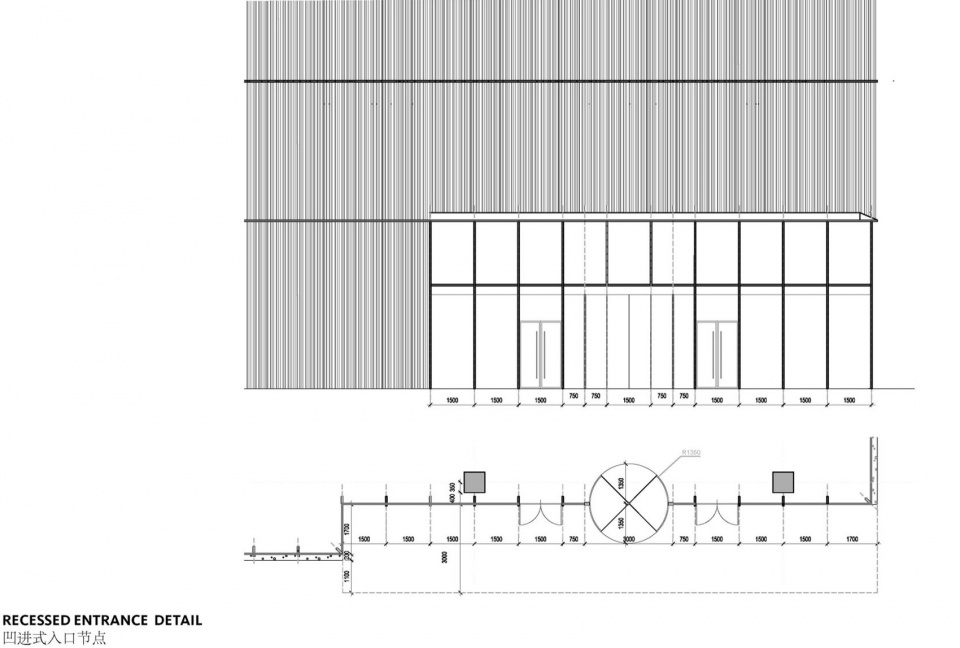
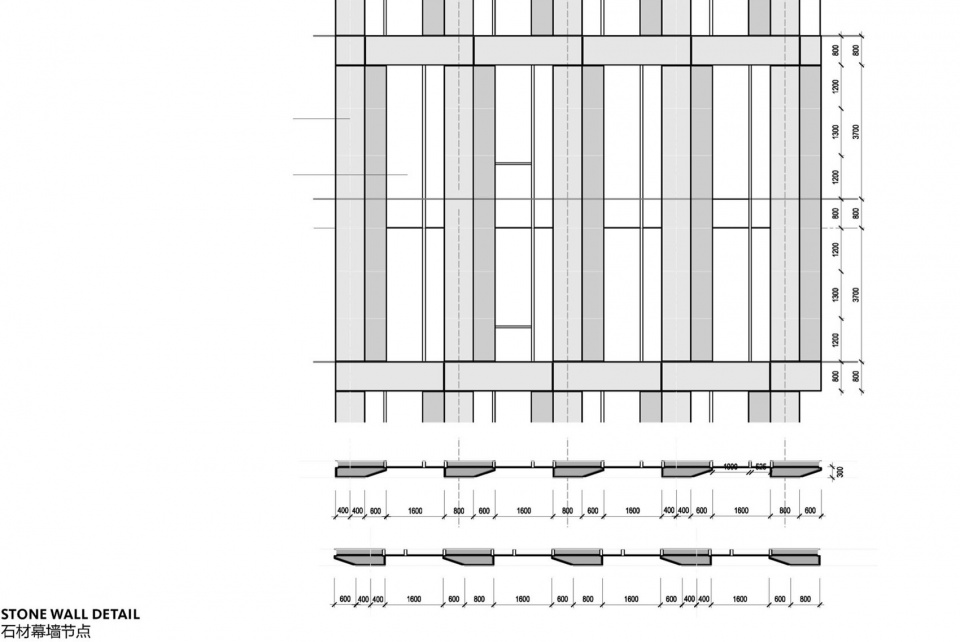
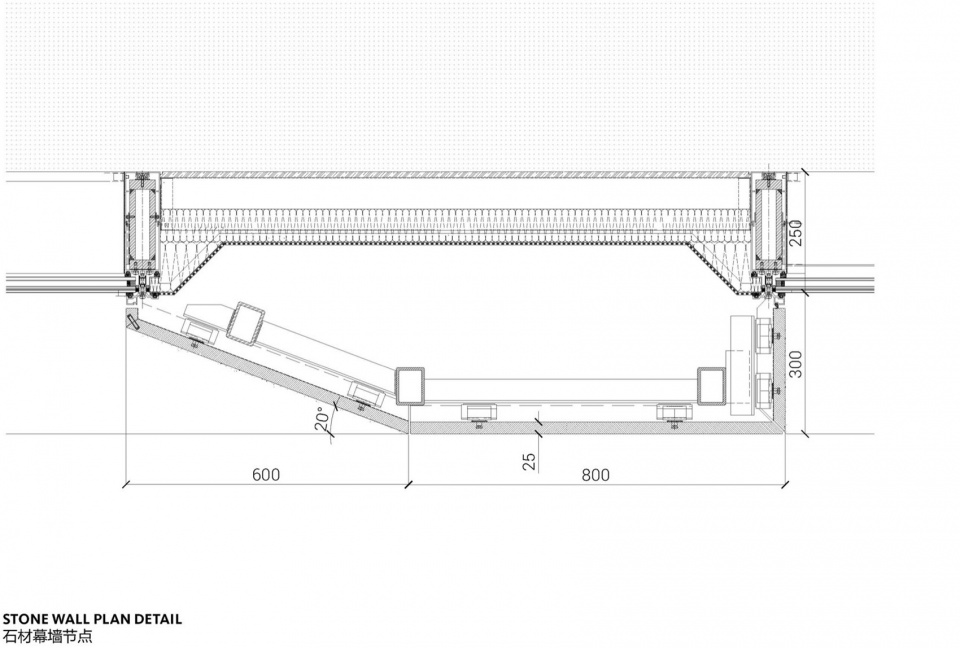
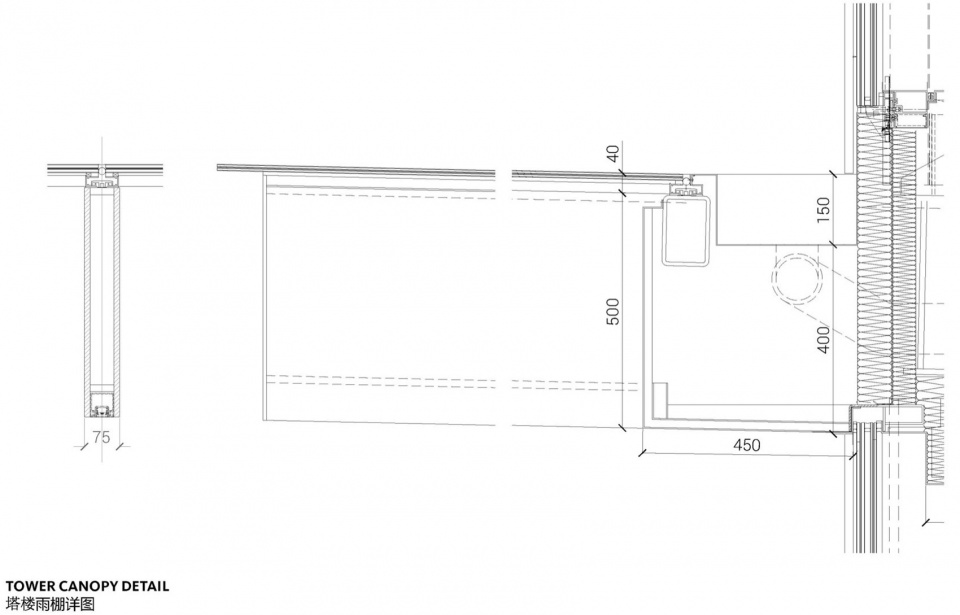
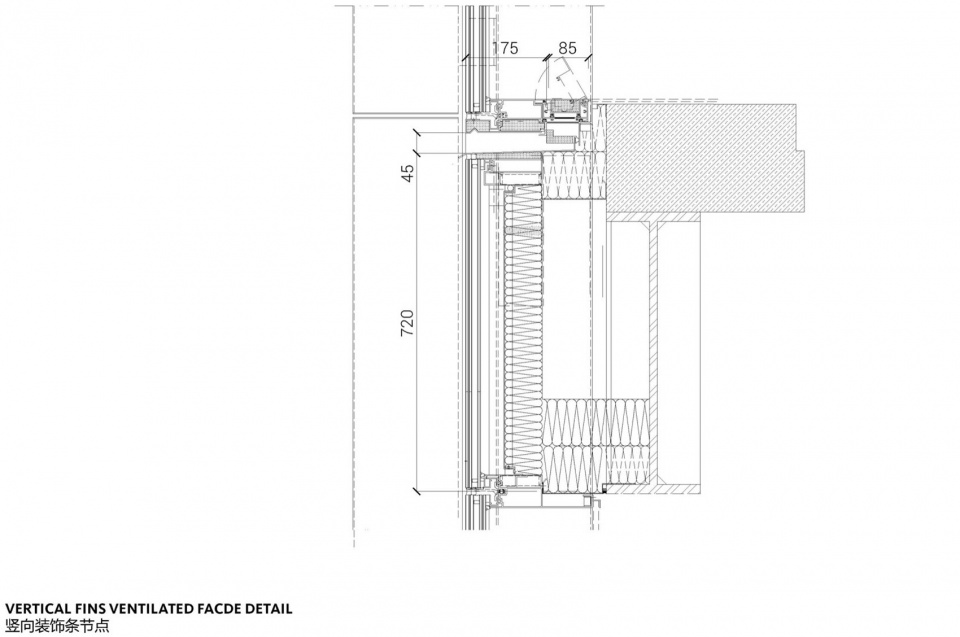
▼细部节点,construction details
项目信息
PROJECT INFORMATION
Project Name: Lingang Group Nanda Digital Intelligence Oasis
Location: Shanghai, China
Year Completed: March 2025
Site Area: 100,000 SM
Architecture Design: Gensler
Design Team: Ludwik Kaizerbrechtm, Jack Wu
Photography: RAWVISION STUDIO
Developer: Shanghai Lingang Technology & Innovation City Economic Development Co., Ltd.