BROM乡村住宅,加拿大 / AtelierCarle
为共同工作开展一种批判性实践
For a critical practice of the common work
本项目立足于对乡村住宅建筑中可持续议题的批判性探讨。这一方法深植于基地语境之中:一处位于魁北克东部山区湖畔、由同一家族世代居住近百年的庄园。在此类委托背景下,设计旨在围绕干预行为开展文化层面的反思,同时回应魁北克乡村景观不断变化的现实。我们有必要以哲学意义上的批判视角重新审视建筑美学,将当代建筑的定位,不仅仅归于对普世环境问题的回应,更回归于对本土文化产物与共同建筑遗产的再认识。
This project is grounded in a critical approach to sustainability issues related to residential architecture in rural areas. This approach is embedded in the site’s context: a prestigious estate that had been occupied by the same family for nearly a century, located on the shores of a lake in the Eastern Townships region. In relation to this type of mandate, the aim was to develop a cultural reflection on the intervention, considering the constant transformation of Quebec’s rural landscape. It is important to uphold a critical perspective on aesthetic approach, in the philosophical sense of the term, in order to reposition contemporary architecture — not solely in relation to universal environmental concerns, but in relation to what is considered a product specific to our culture, our shared body of work.
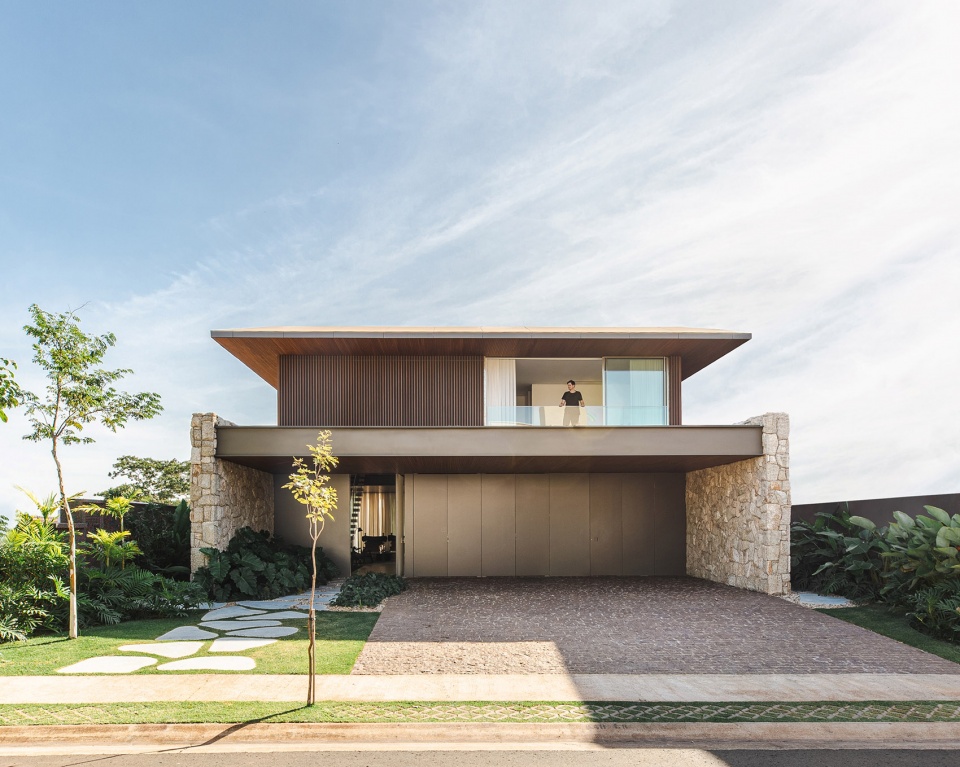
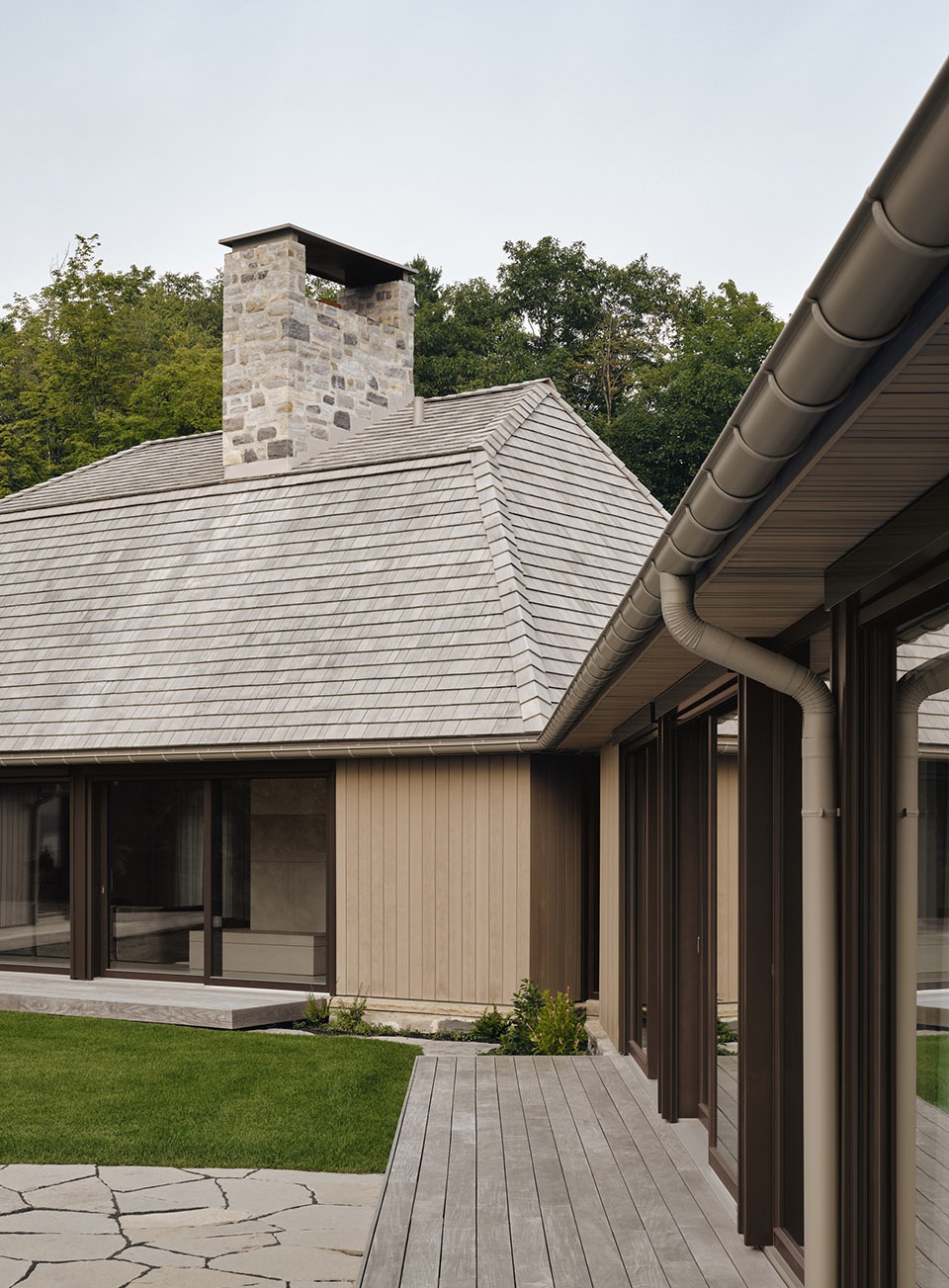
▼住宅外观,exterior of the residence
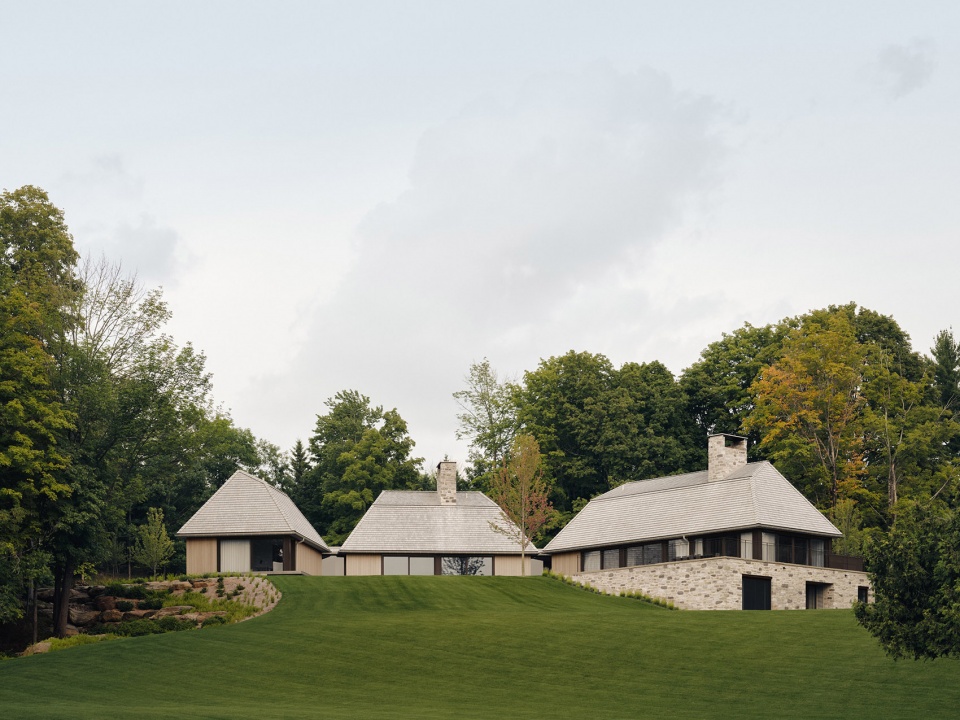
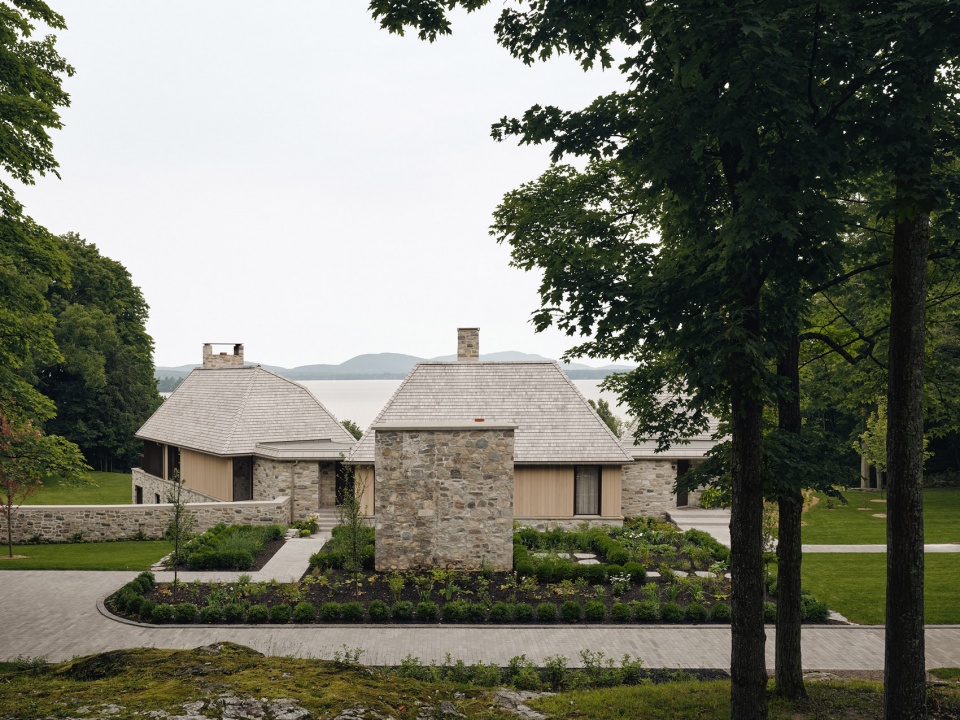
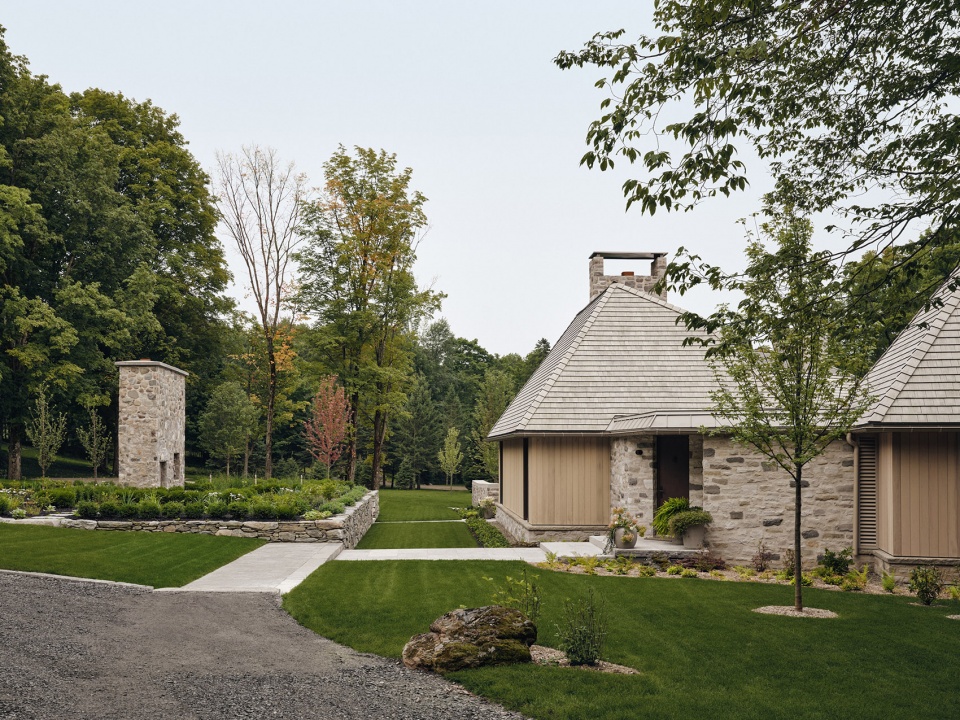
▼住宅外观,exterior of the residence
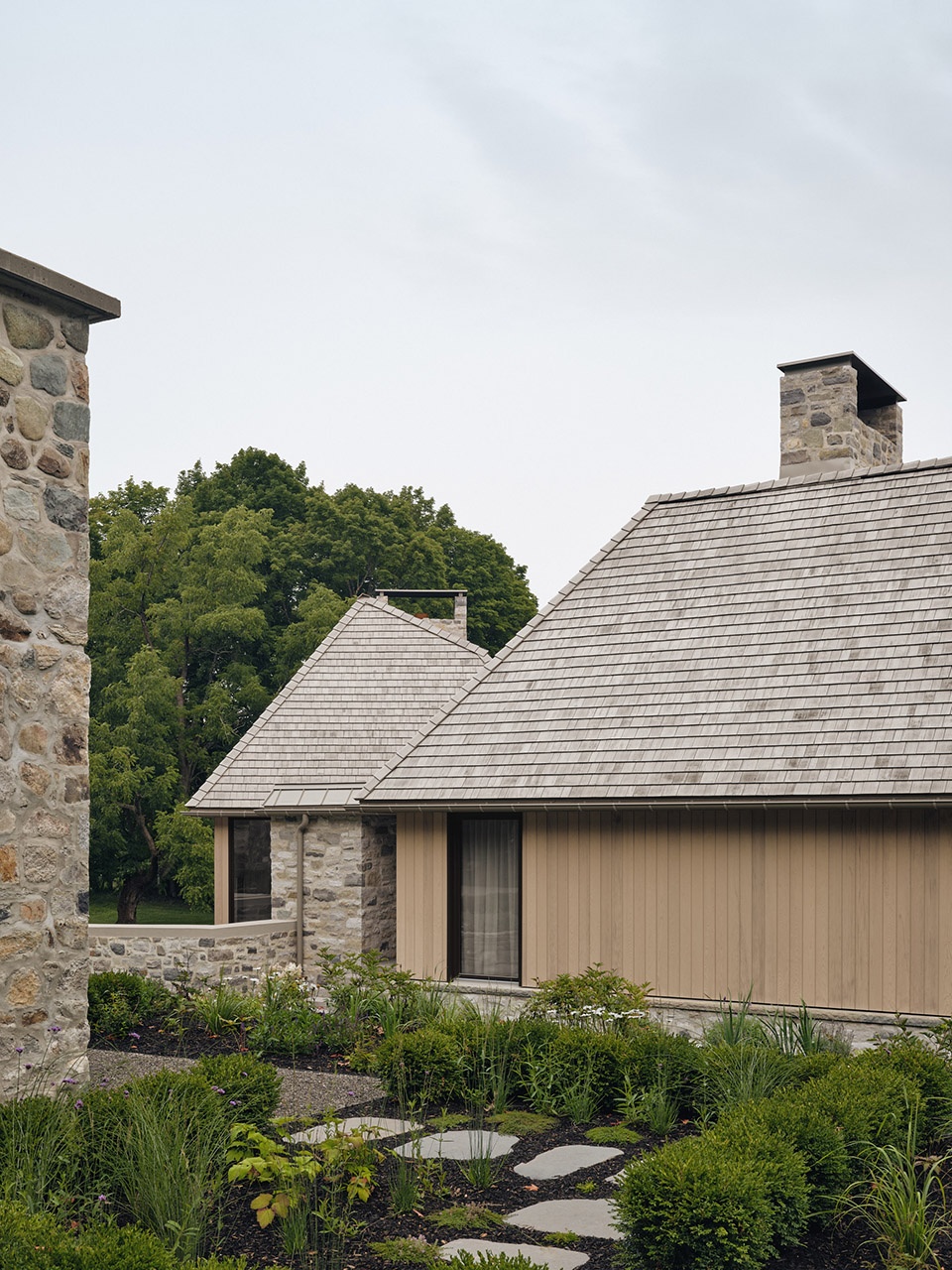
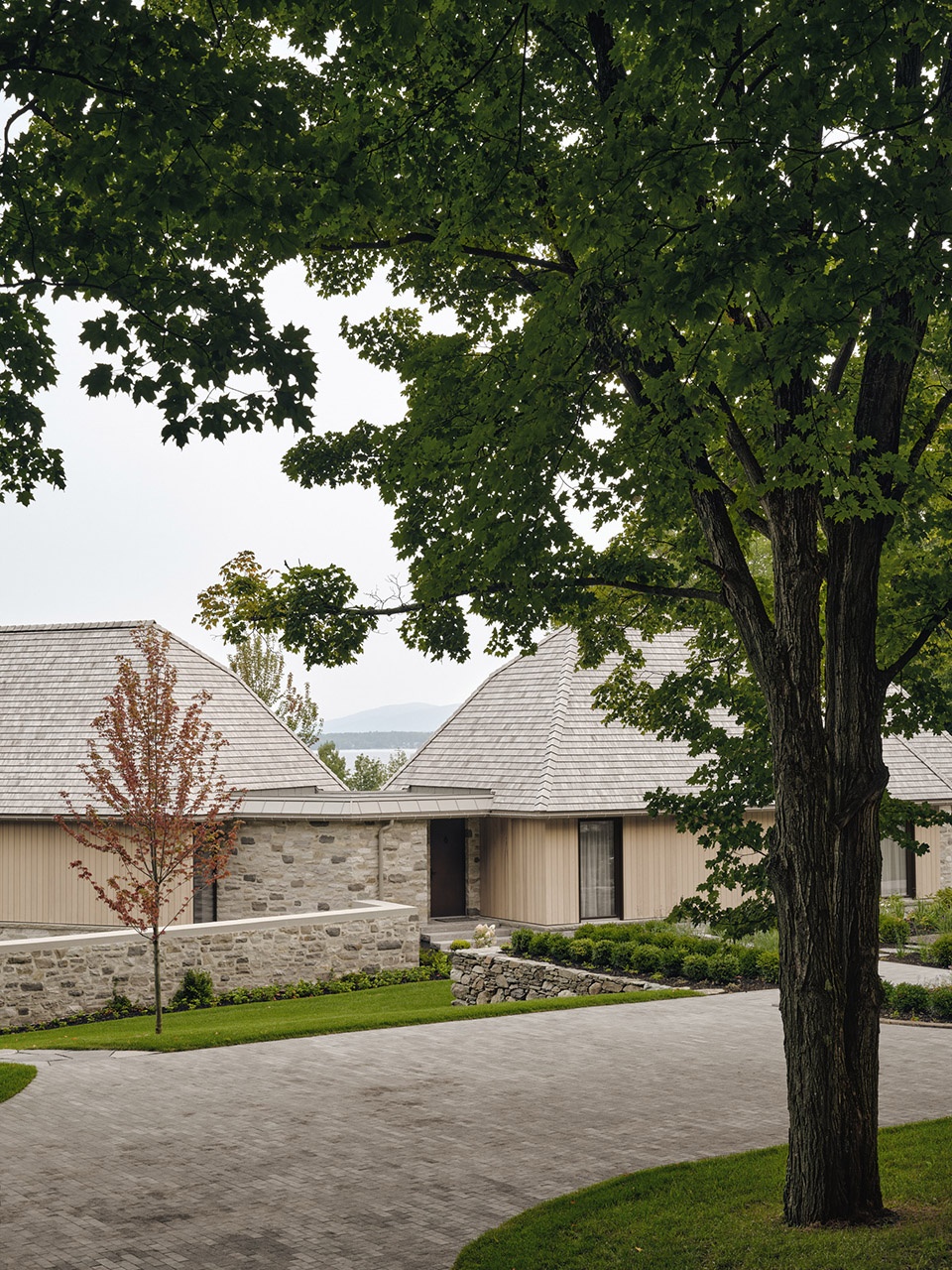
▼乡村住宅,country residence
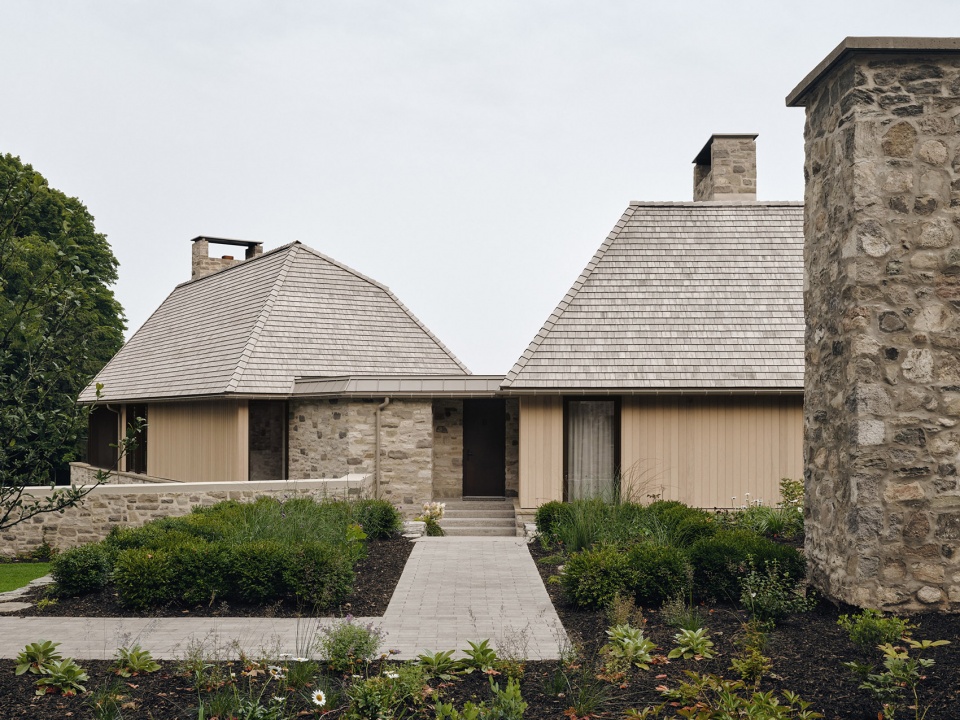
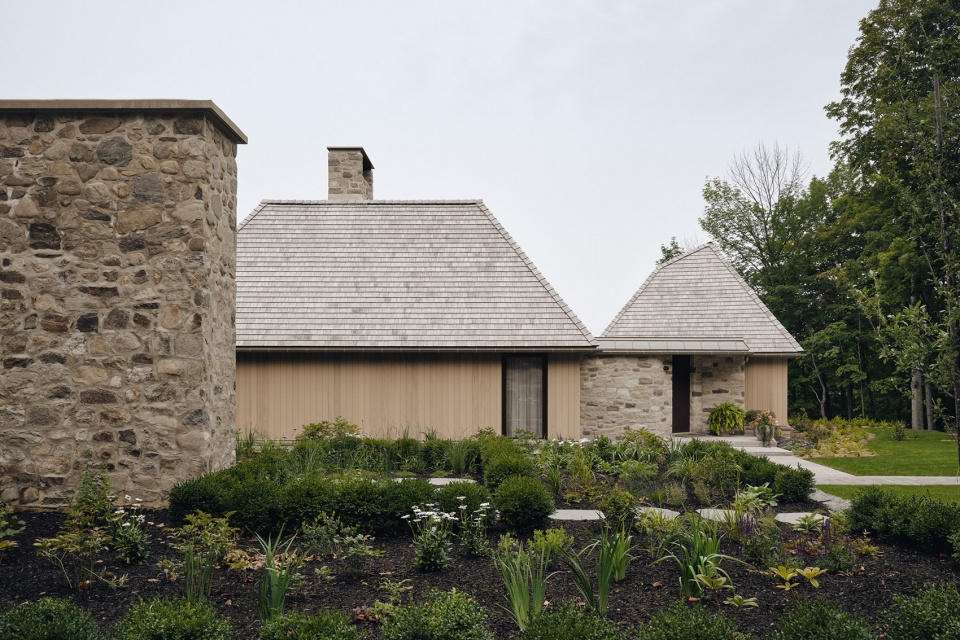
场地植入:记忆的义务
Implantation – The duty of memory
业主对空间使用的宏大设想,加之原有建筑(20世纪初的木结构、碎石墙体)年久失修,使得项目最终未采取完全保留的方式,而是发展出一种更贴合场地语境的更新型概念路径——即在原址上新建一栋住宅。这一转向使建筑语言摆脱了自我指涉的惯性,重新植根于历史语境之中。设计尝试将建筑嵌入特定的文化延续链条中——尽管它具有一定的个体性——而非将其孤立于时间之外。
The scale of the occupancy program desired by the client, combined with the deterioration of the existing building (a wooden structure from the early 20th century with rubble stone walls), necessitated moving away from the preconception of total conservation to instead adopt a renewed conceptual approach, one more specifically rooted in the site — resulting from the construction of a new building on the property. In doing so, the focus was shifted away from a self-referential architectural language, detached from the site’s historical context. The goal was to situate the proposal in time and embed it within a kind of cultural continuum, however specific it might be.
▼植入场地记忆,implantation of local memory
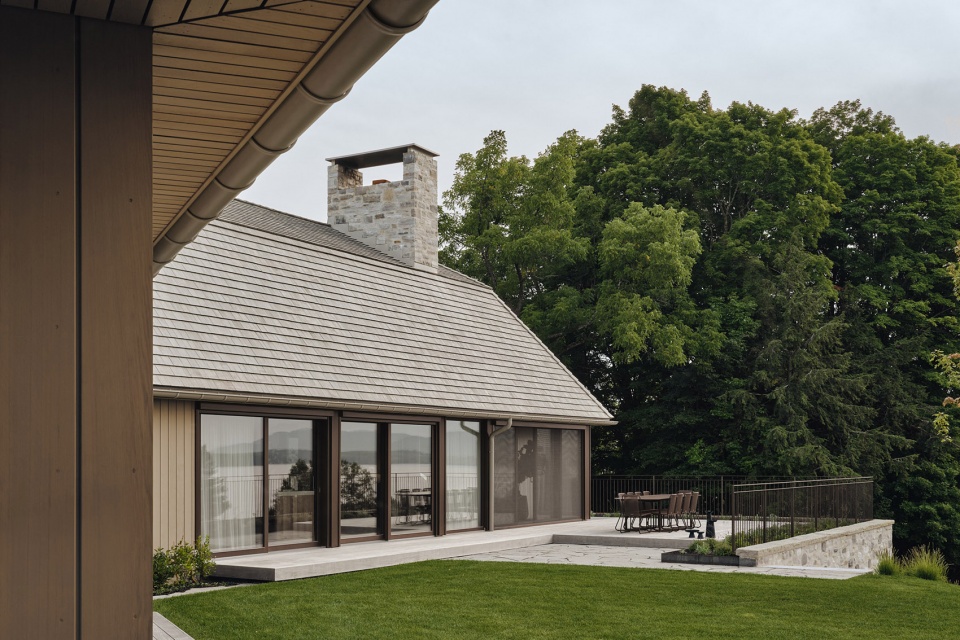
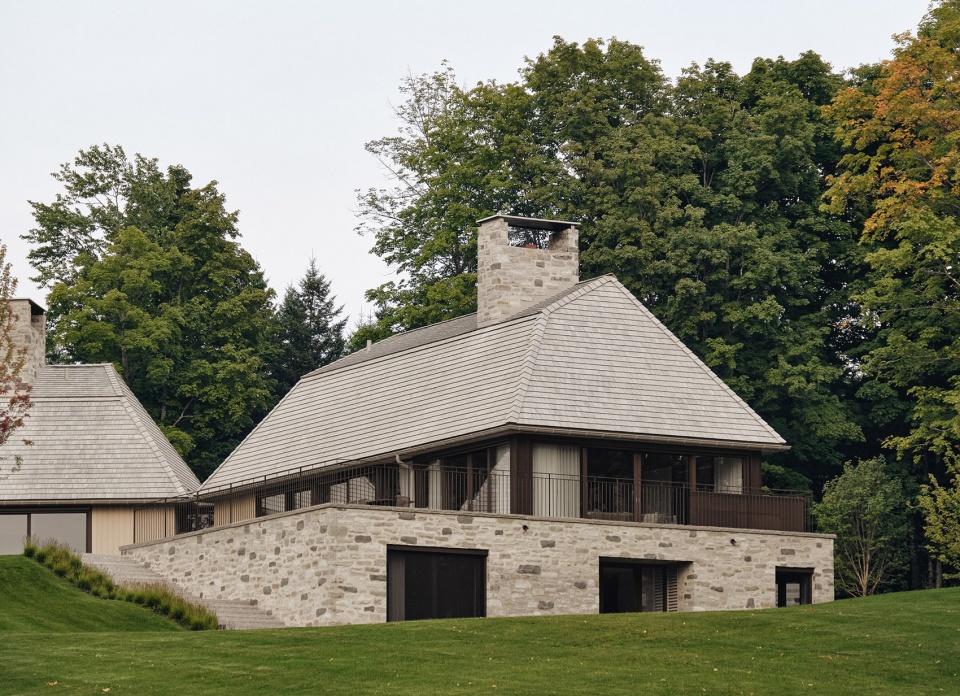
这一策略使建筑设计得以扎根于现实,而非游离于某种参照体系之上,即使该体系再细腻也如此。那些脆弱而无形的现存要素,成为新建筑生成的根基,引导我们重新思考真正的“持久性”为何。材料与形式不再源于审美的预设,而是在现实中逐步成型,并作为文化锚点中的意义载体而显现。项目的植入方式由此成为一段对话的起点。为保留原住宅中仍具有稳定性的部分,其地基与烟囱被完整保留,进而确立了新建筑的具体布局策略。新建筑的入口路径需穿越旧屋遗迹——这是一种细微而有力的“记忆行为”,构成了对基地的抵达仪式。场地上的其他附属建筑也被保留下来,并纳入整体景观设计体系中。
This approach places architectural design within reality rather than a referential framework, however subtle it may be. The existing elements—fragile and immaterial as they are—become the foundation for architectural development, prompting a reflection on what truly constitutes durability. Here, material and form do not emerge from aesthetic preconceptions; rather, they take shape within reality, revealing themselves as meaningful and sensitive markers of cultural anchoring. The project’simplantation establishes the groundwork for this dialogue. In an effort to preserve what remained stable from the existing structure, the foundations and masonry chimney of the former residence were retained, shaping a specific siting strategy. As a result, entry to the new building involves passing through the remnants of the old one—a kind of subtle act of remembrance, a duty of memory—which defines the arrival at the property. The secondary buildings on the site have been preserved and incorporated into the overall landscape design.
▼保留原地基及烟囱,preserve the foundation and masonry chimney
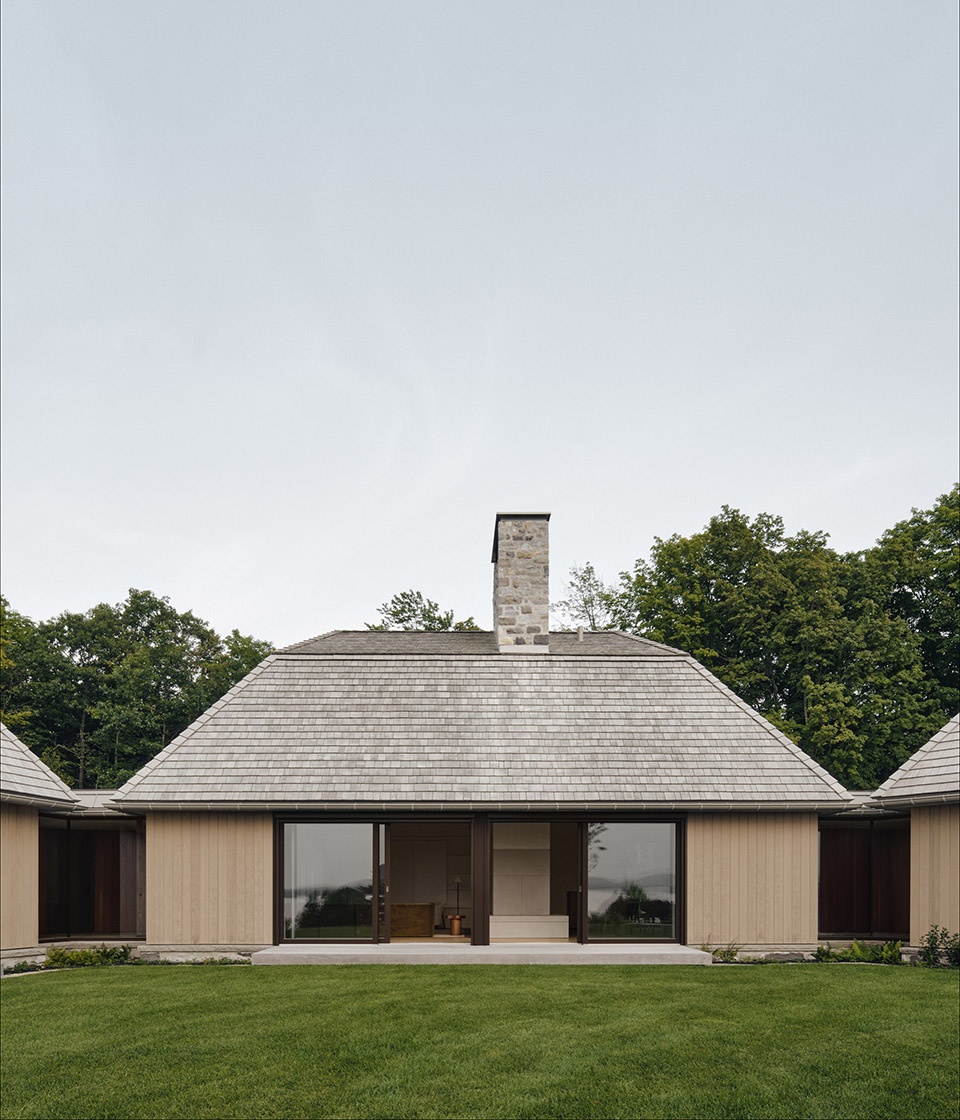
这一构型在新与已逝之间建立起概念对话,揭示出石材在地基建构中的恒久性与木构在乡村建筑中短暂性的对比——一种常在施工过程中被忽视的脆弱材料史。
This new configuration, conceptually establishing a dialogue between the new and the disappeared, reveals the enduring nature of stone in relation to foundation work versus the ephemeral character of wooden frameworks in the construction of rural architecture: a fragile material history that is often trivialized in the construction process.
▼建筑与场地之间的对话,dialogue between building and context
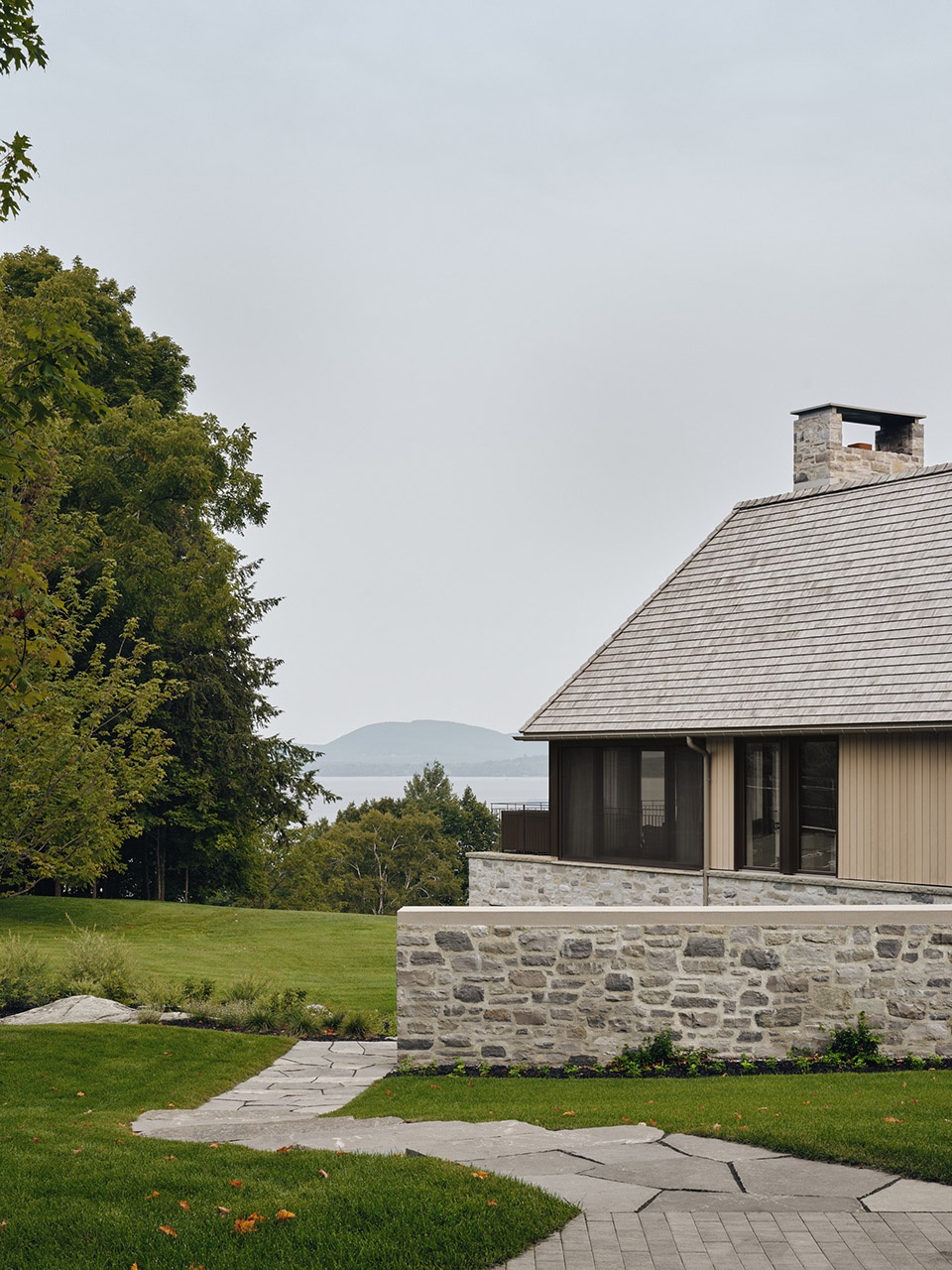
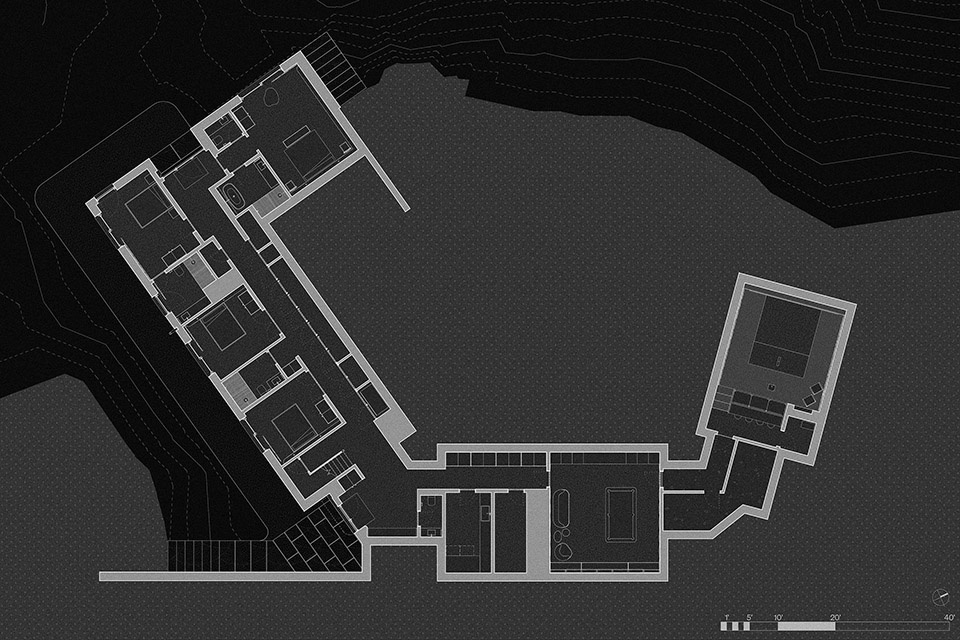
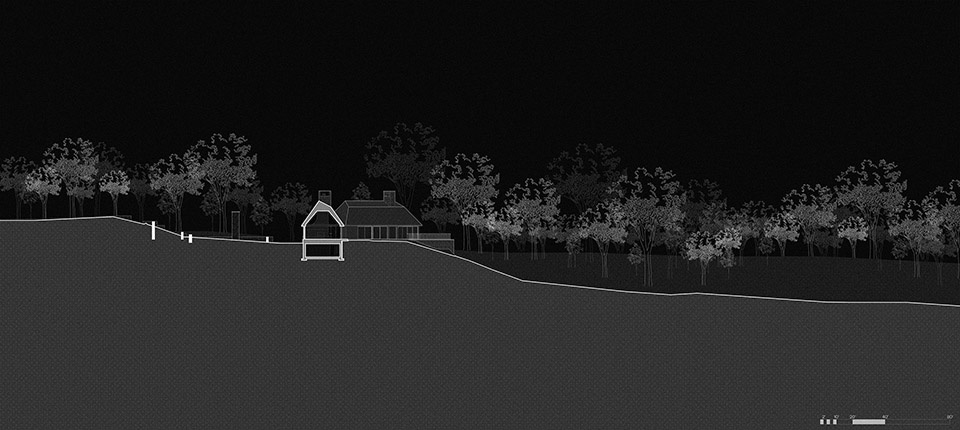
建筑的植入策略也顺应了场地现有的地势坡度,使得新建筑得以拥有地下空间,并在下层设置挑高全层的房间布局。地面层各空间则因贴合地势而自然形成内外的顺畅衔接。
The implantation, also related to a slope present on the site, allows for the creation of a basement and provides a full-height level for the rooms on this floor. The ground floor also benefits from the same relationship to the site throughout the spaces, thus offering a fluid transition between the interior and the exterior.
▼建筑的植入也顺应了场地现有的地势坡度,the implantation also related to a slope present on the site
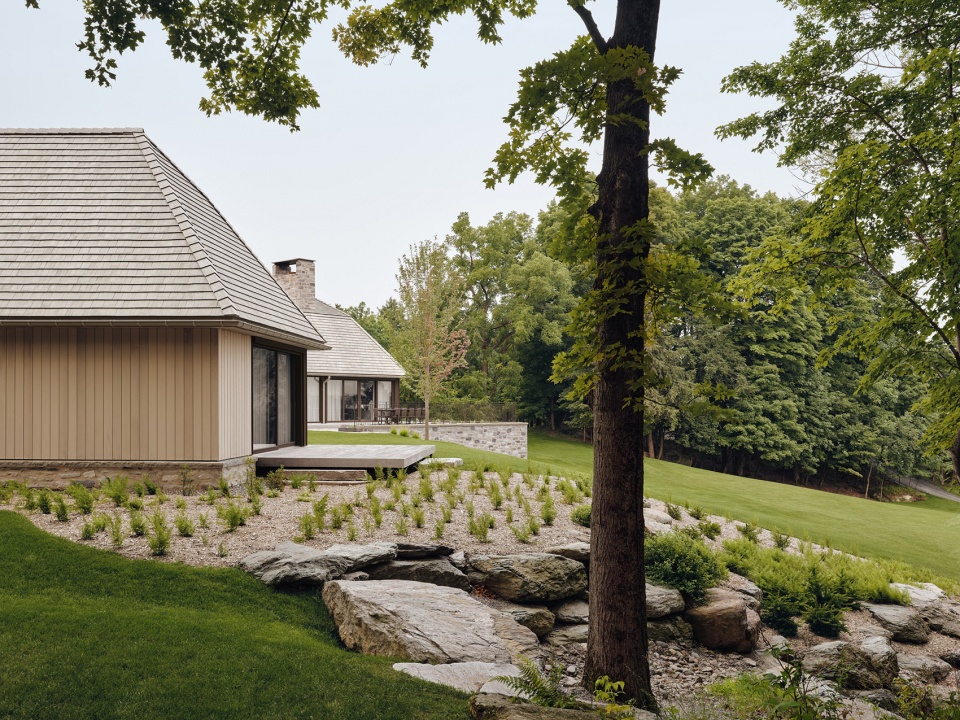
建筑分体与景观材料的延续
Fragmented structures – Landscape and material permanence
项目使用石砌地面与地基,建立起与历史之间的感知联系,模糊了场地占据的两个时间维度。新建筑由三组相互连接的体量组成,通过体量拆分的方式弱化整体尺度,借此呼应19世纪乡村建筑更为亲近的比例特征。在面对较大体量的使用需求时,仍力图延续该地区原有的场地使用模式。
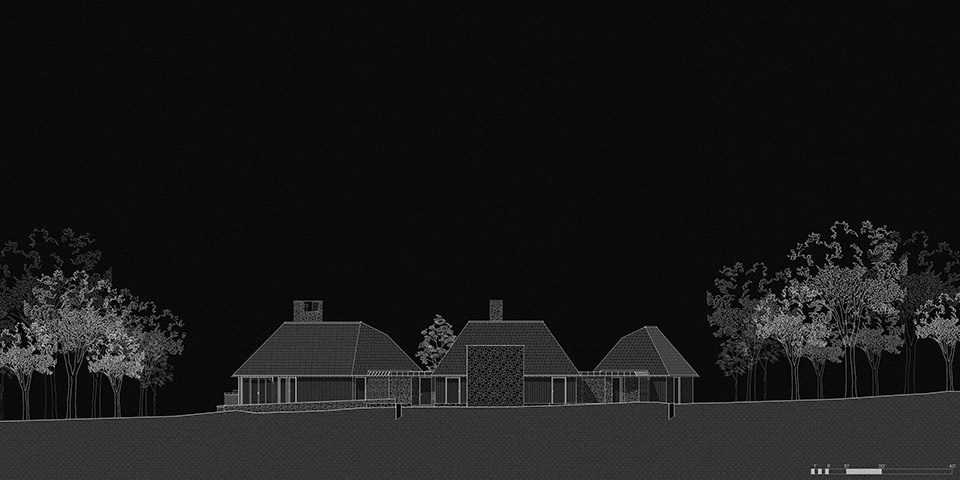
The use of masonry for the floors and foundations of the new intervention establishes a perceptual link with the past, blurring the two temporalities of the territory’s occupation. The freestanding development, configured in three contiguous buildings, breaks the scale of the new layout and refers to proportions more akin to those of 19th-century rural architecture. The intervention thus seeks to maintain a mode of territorial occupation specific to this region, despite the scale of the requested program.
▼新建筑由三组相互连接的体量组成,configured in three contiguous buildings
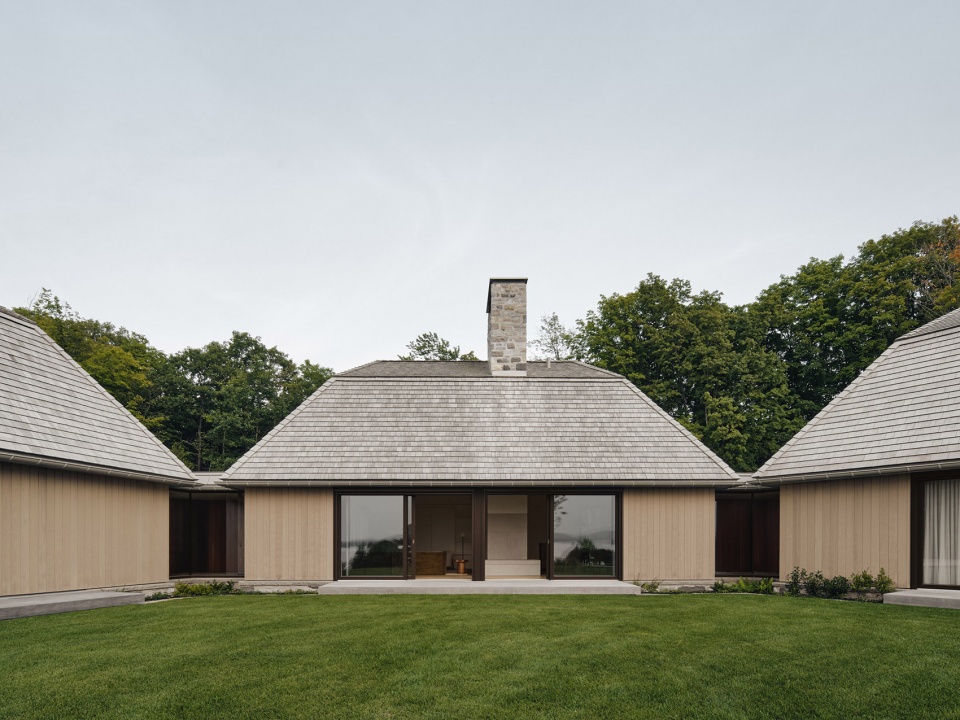
新住宅的两个出入口体量采用石材覆面处理,延续旧有结构中经久耐用的构件语言,并形成了清晰的美学与材料连续性。新建的挡墙围绕核心体量展开,划定了三个亭式单元的发展轴线。石材从墙体延伸至室内空间,与更轻柔的材料形成自然过渡。
Two volumes containing the entrance halls of the residence are designed with stone cladding, thus providing aesthetic and material continuity with the enduring components of the old structure. New retaining walls are articulated around these core volumes, defining the axes for the development of the three pavilions. The masonry of these volumes extends into the interior, offering a smooth transition to more delicate materials.
▼石材从墙体延伸至室内空间,the masonry of these volumes extends into the interior
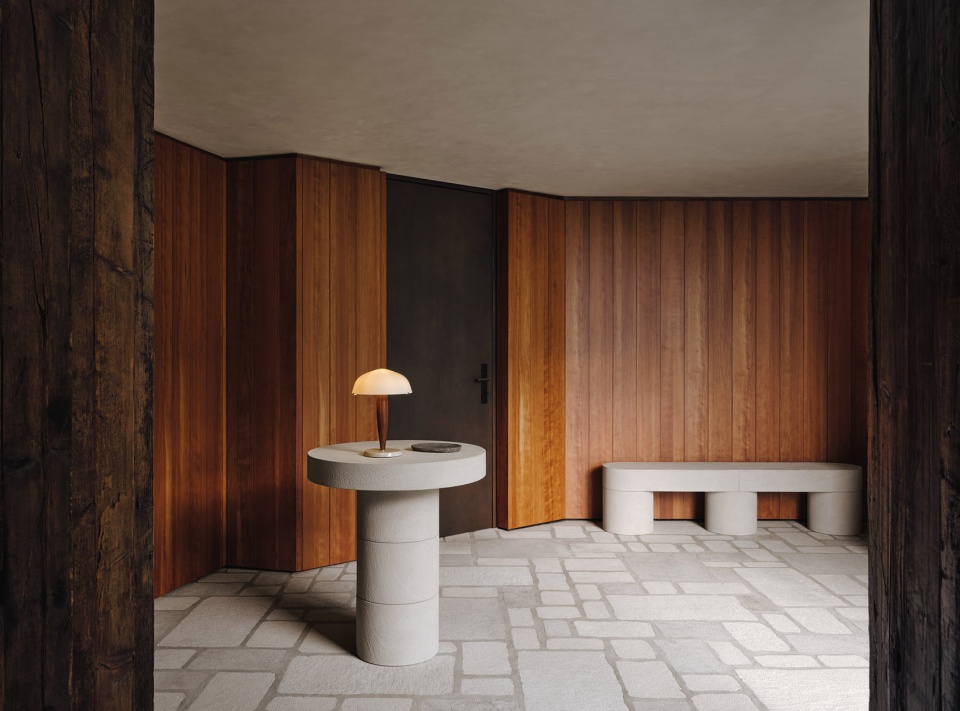
▼石材从墙体延伸至室内空间,the masonry of these volumes extends into the interior
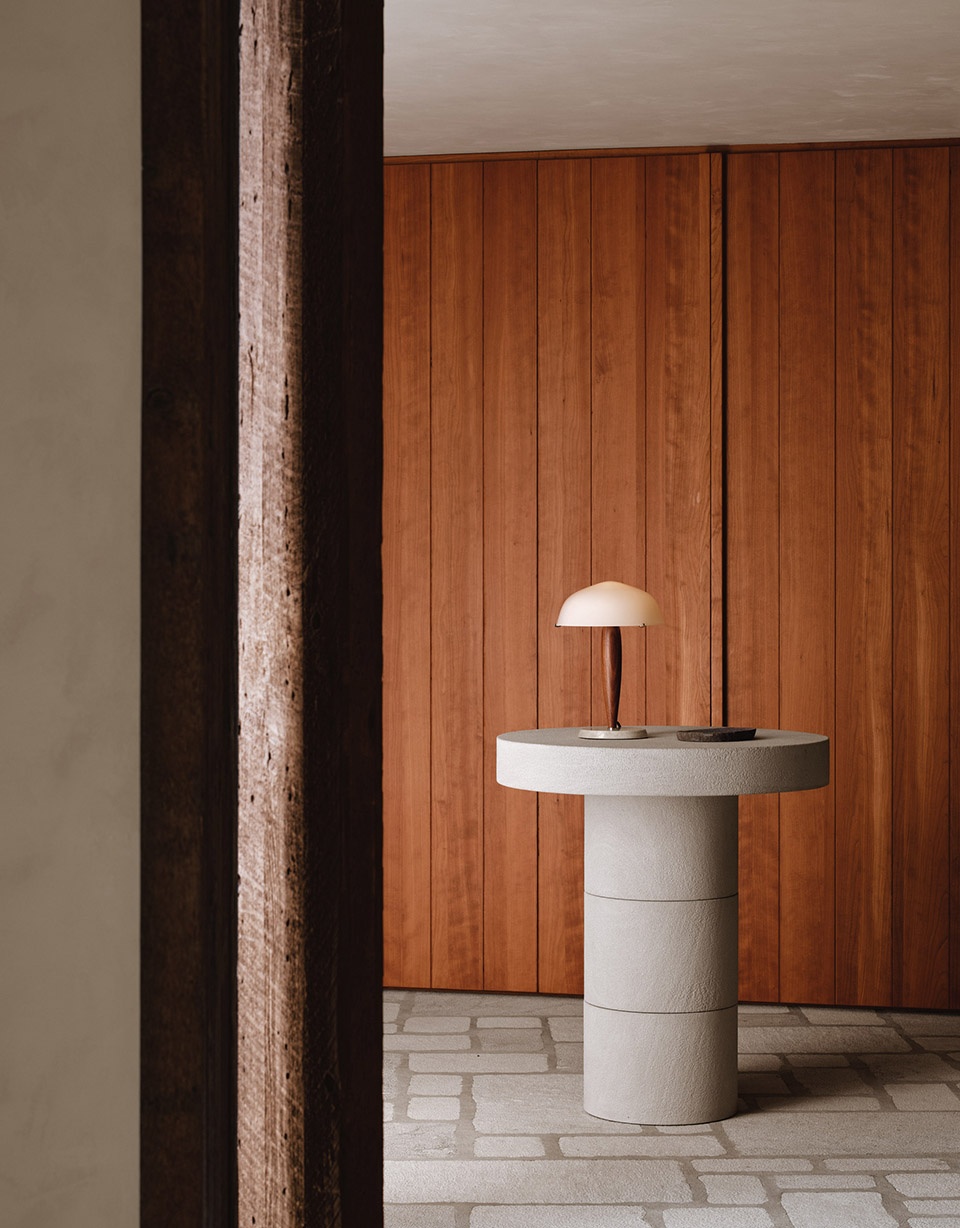
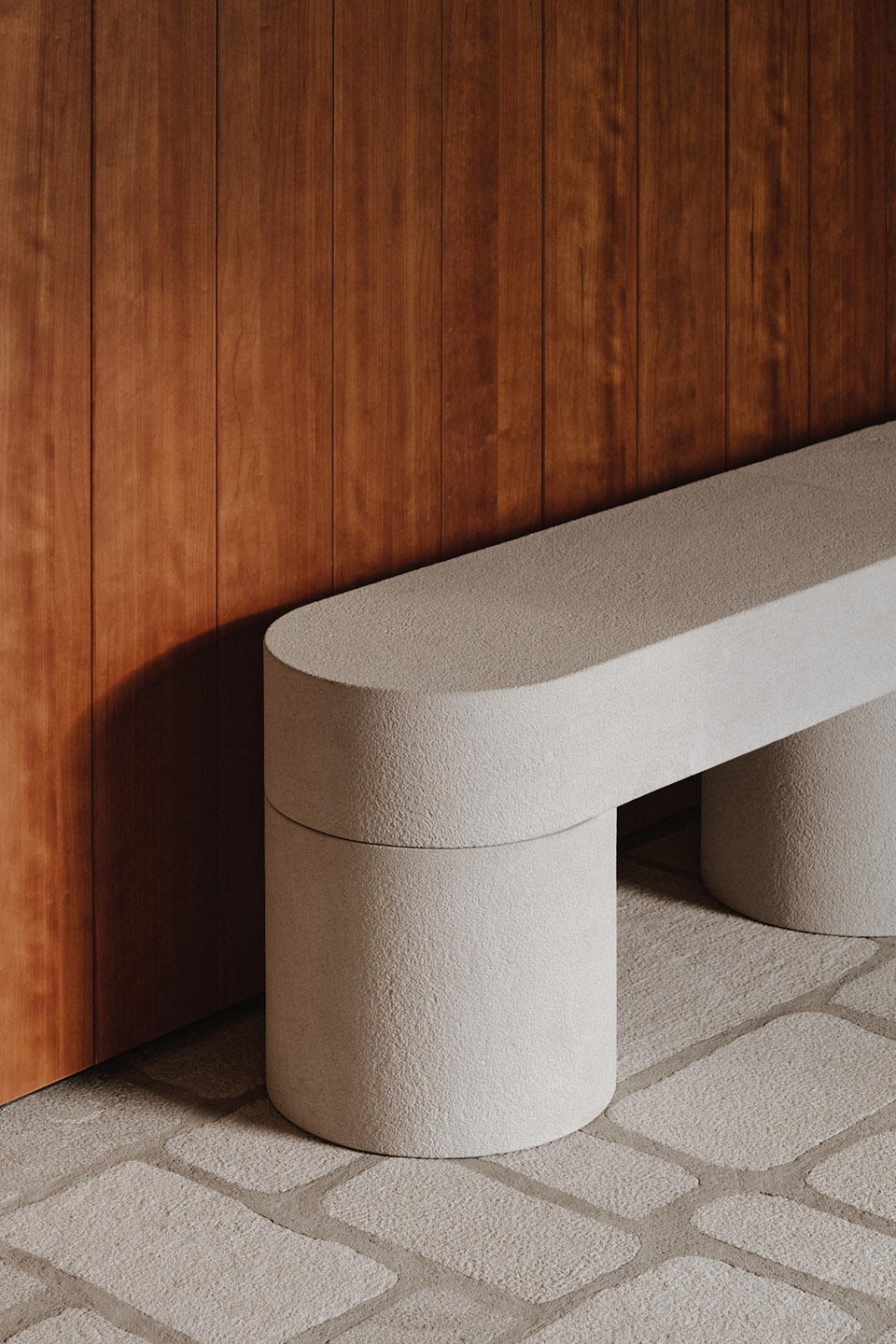
▼家具细部,furniture detail
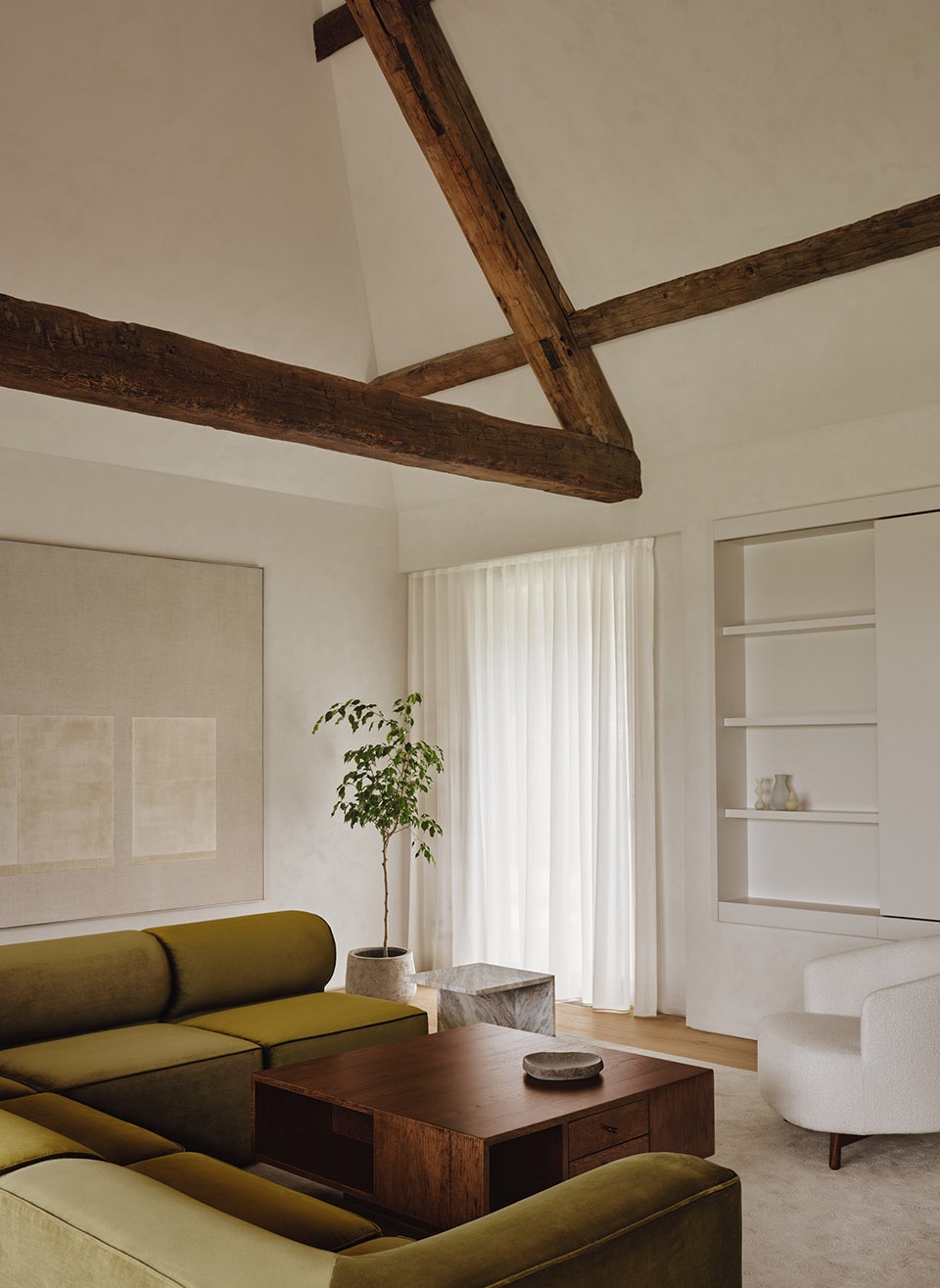
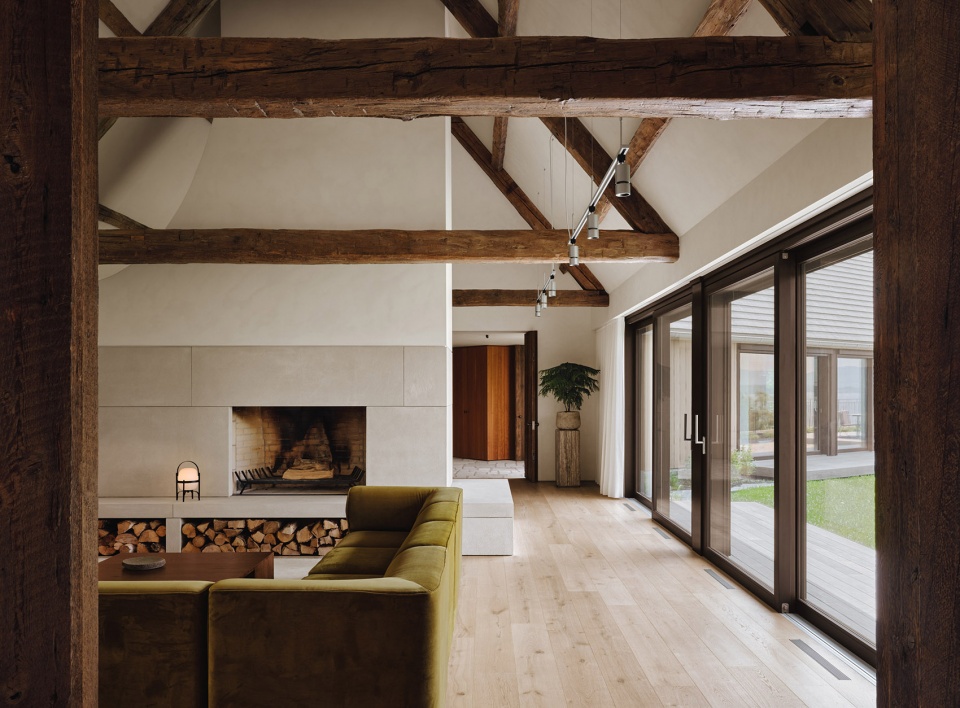
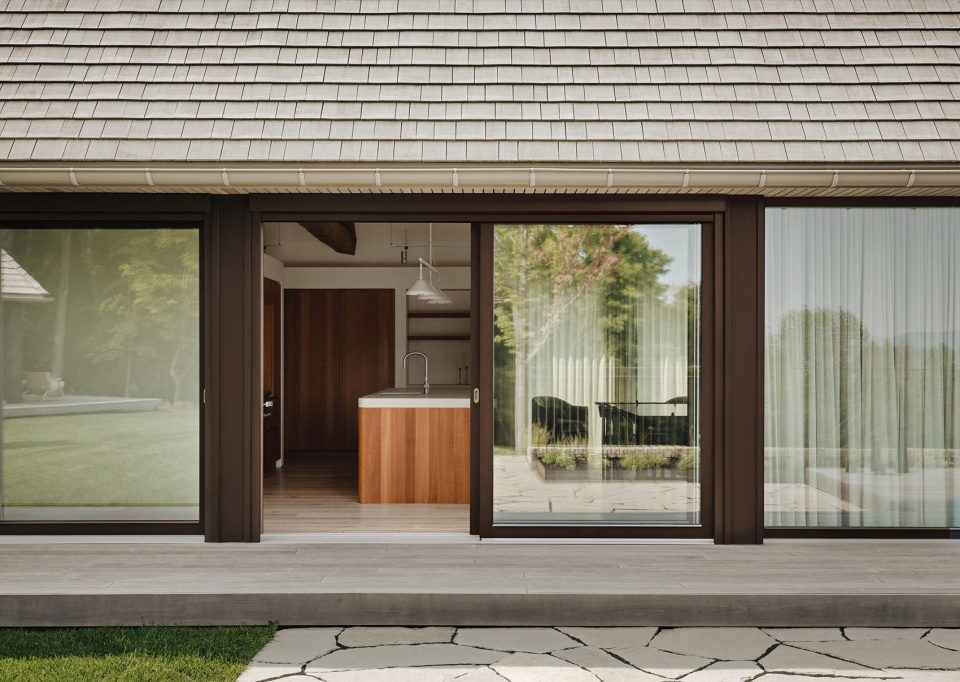
地面以上的结构由金属框架、木材与再生木梁组合构成。四坡雪松屋顶的比例较高,主导了整个建筑构图,同时呼应了周边宏伟的地貌特征——即从场地可远眺的蒙特雷吉山丘(Monteregian Hills)。建筑开窗成为其与场地关系中的关键分野:殖民地风格建筑中,窗户往往作为立面语言构图的一部分,而非服务于景观关系。相对而言,本项目中慷慨的开口设计并非仅仅作为建筑语言的要素,而是与地景之间建立直接关联的方式。
The above-ground structural components are a combination of metal frames, wood, and exposed beams made from reclaimed wood. The four-sloped cedar roofs have high proportions and dominate the composition. They reference the surrounding monumental landscape of the Monteregian Hills, which is visible from the site. The fenestration constitutes the true point of rupture in the relationship to the place: that of an American colonial architecture, self-referential in nature, where the windows are arranged as part of a façade composition rather than in relation to the landscape. In contrast, the proposed architecture aims to integrate with the landscape. In a way, the generous openings of the new project are not merely components serving the architectural language, but a direct link to the structure of the landscape.
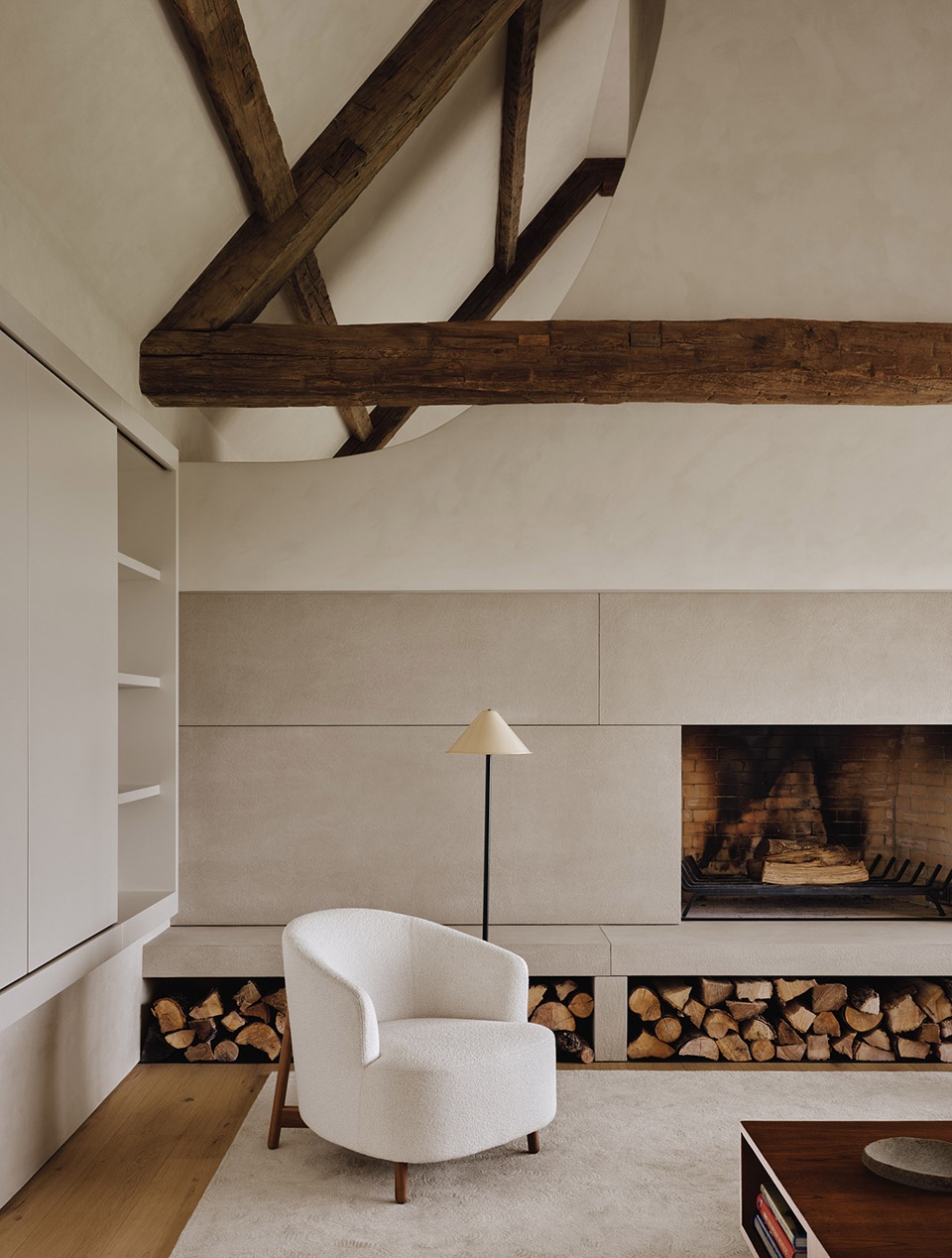
▼支撑屋顶的再生木梁,exposed beams made from reclaimed wood
▼支撑屋顶的再生木梁,exposed beams made from reclaimed wood
▼窗户作为立面语言构图的一部分,the windows are arranged as part of a façade composition
室内空间:悬浮的时间感
Interiors: Suspended temporality
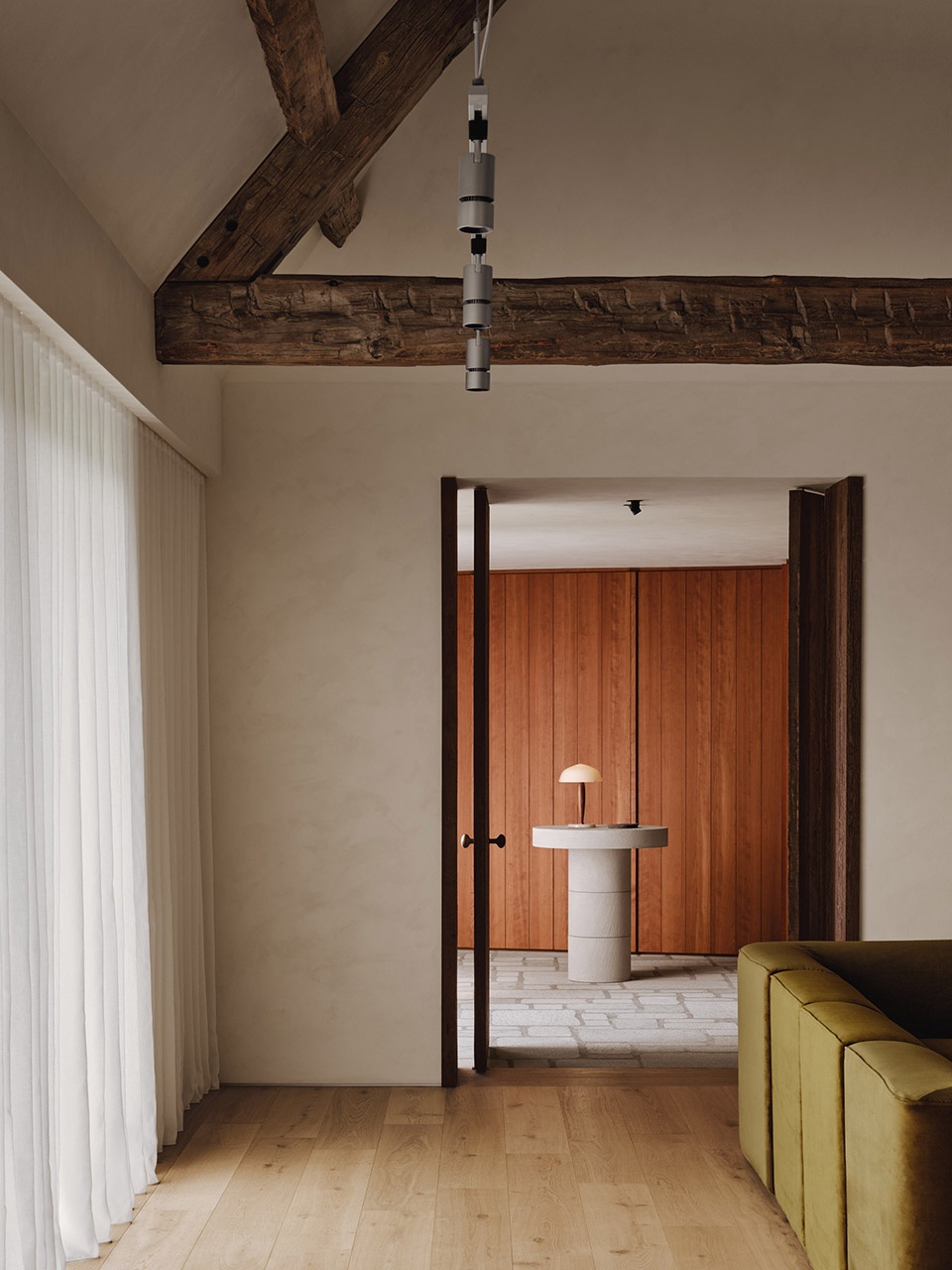
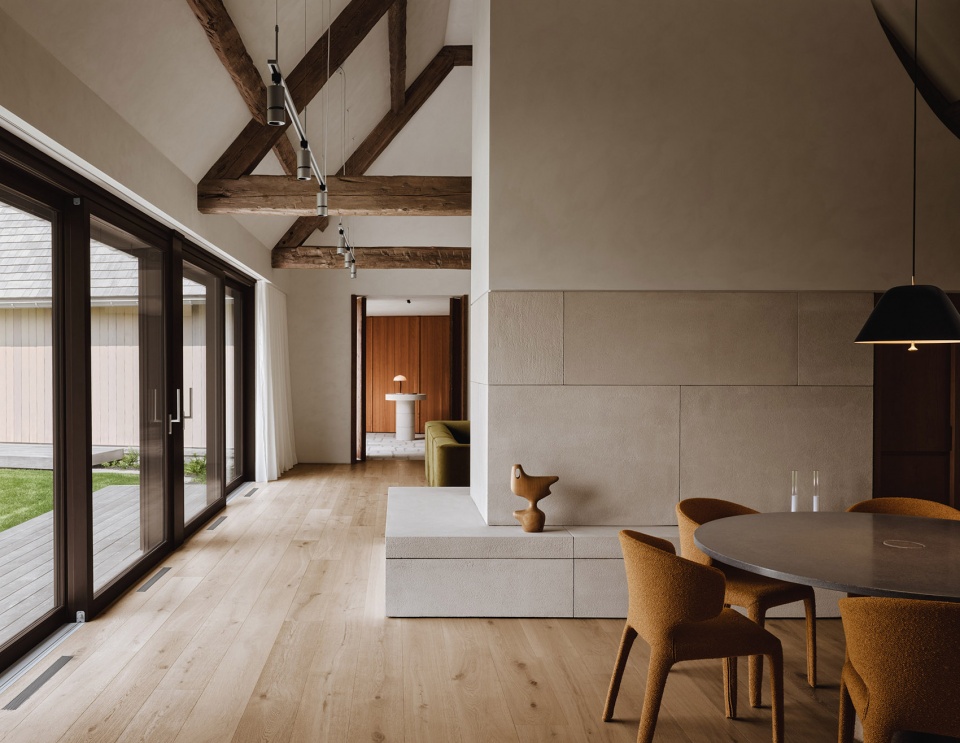
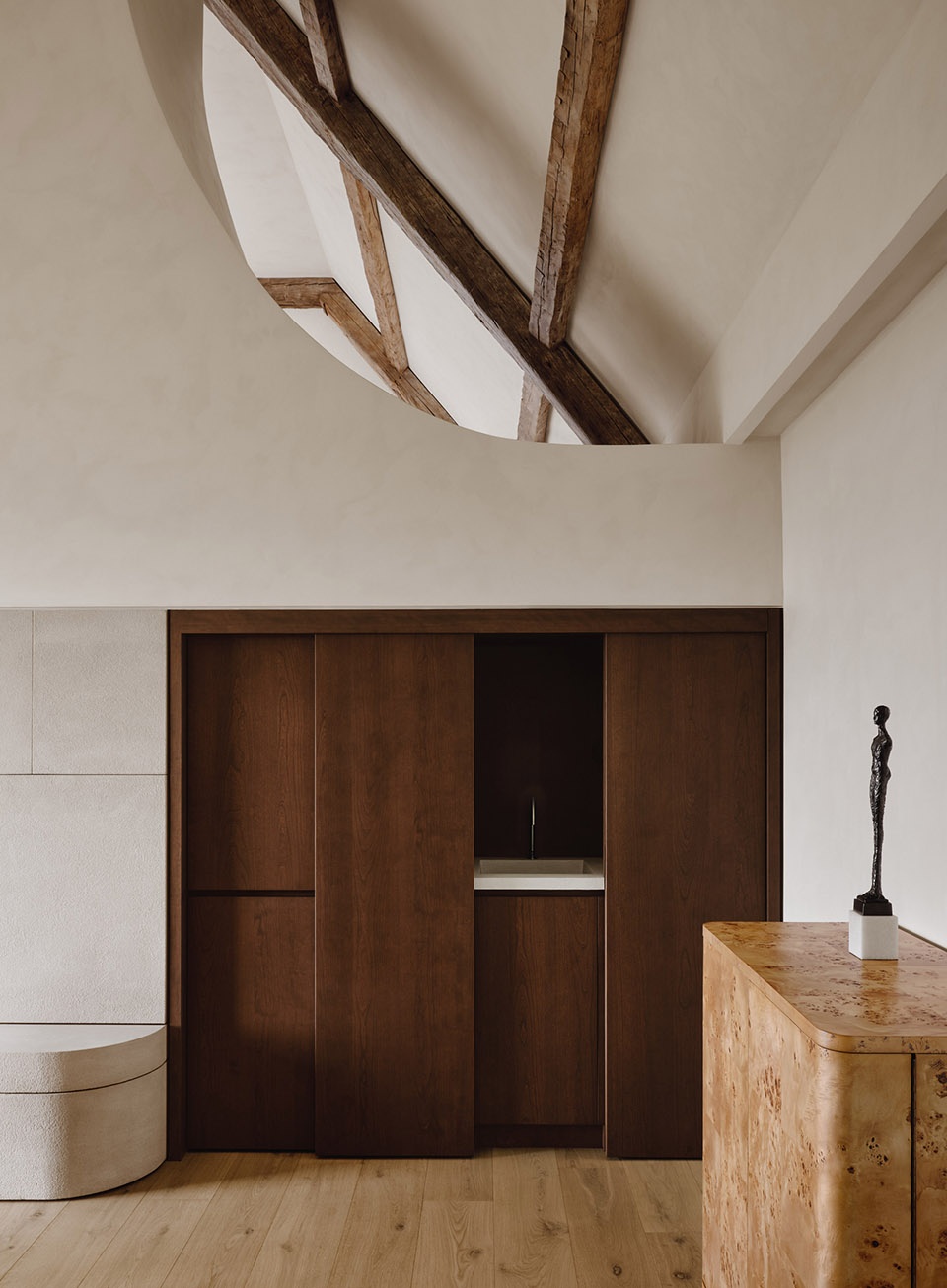
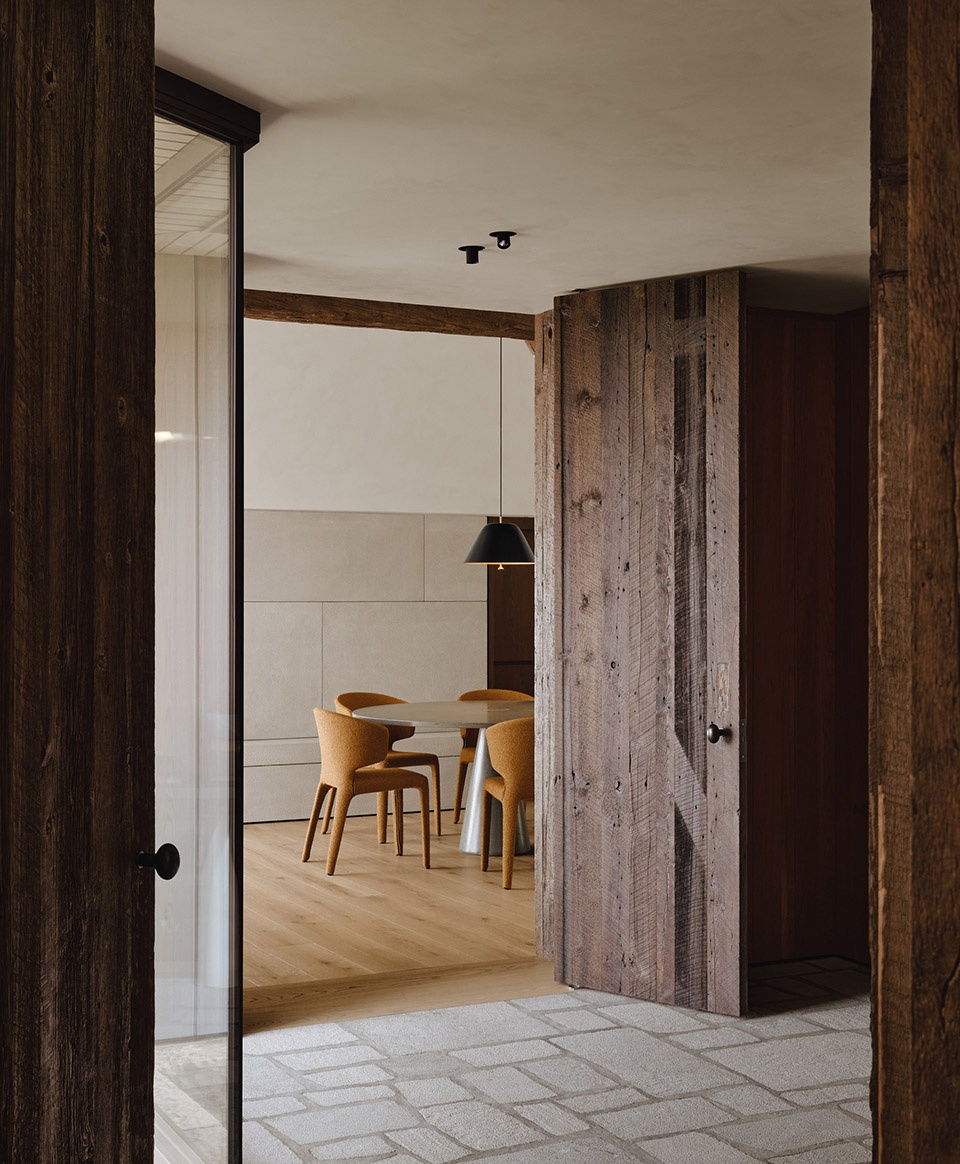
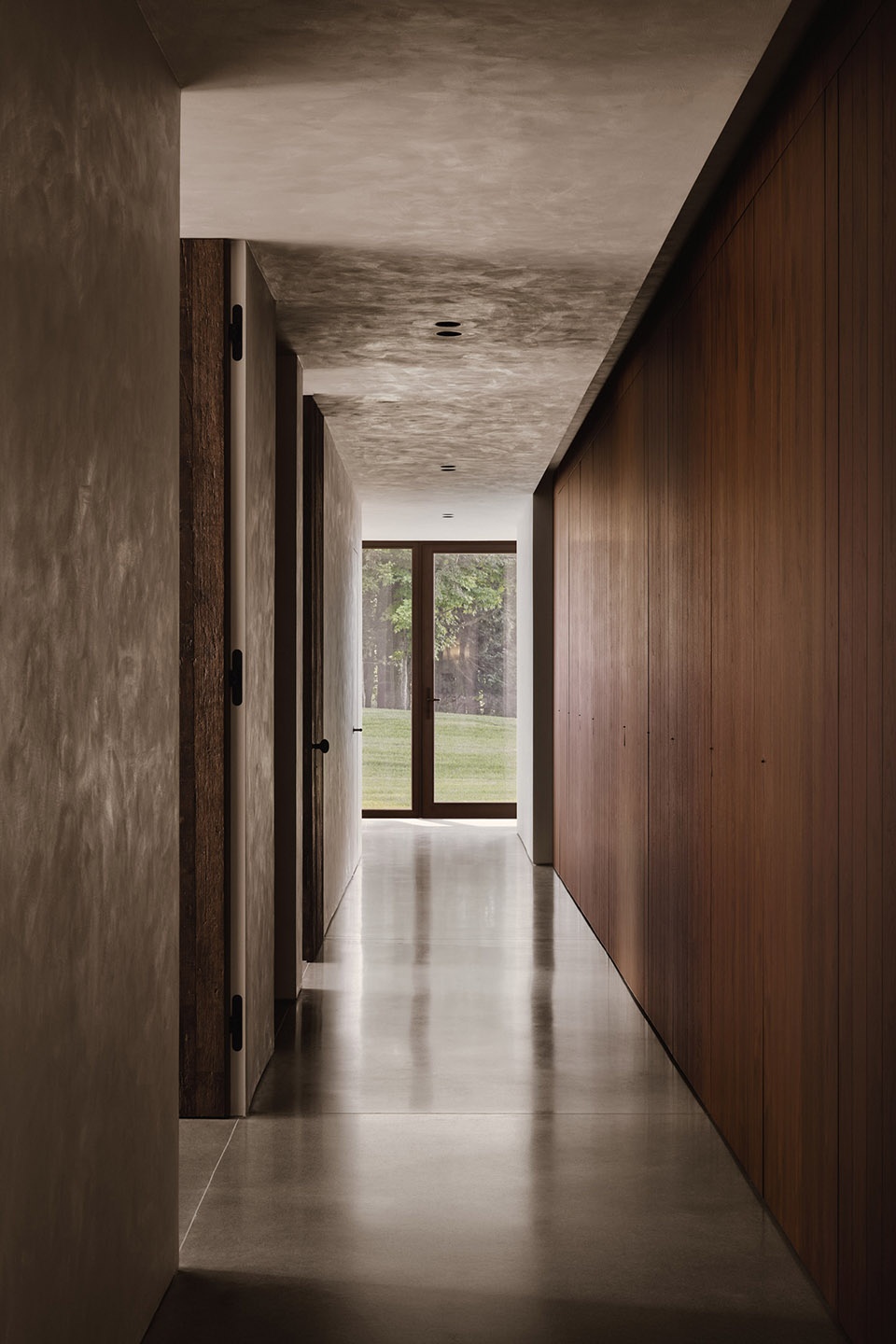
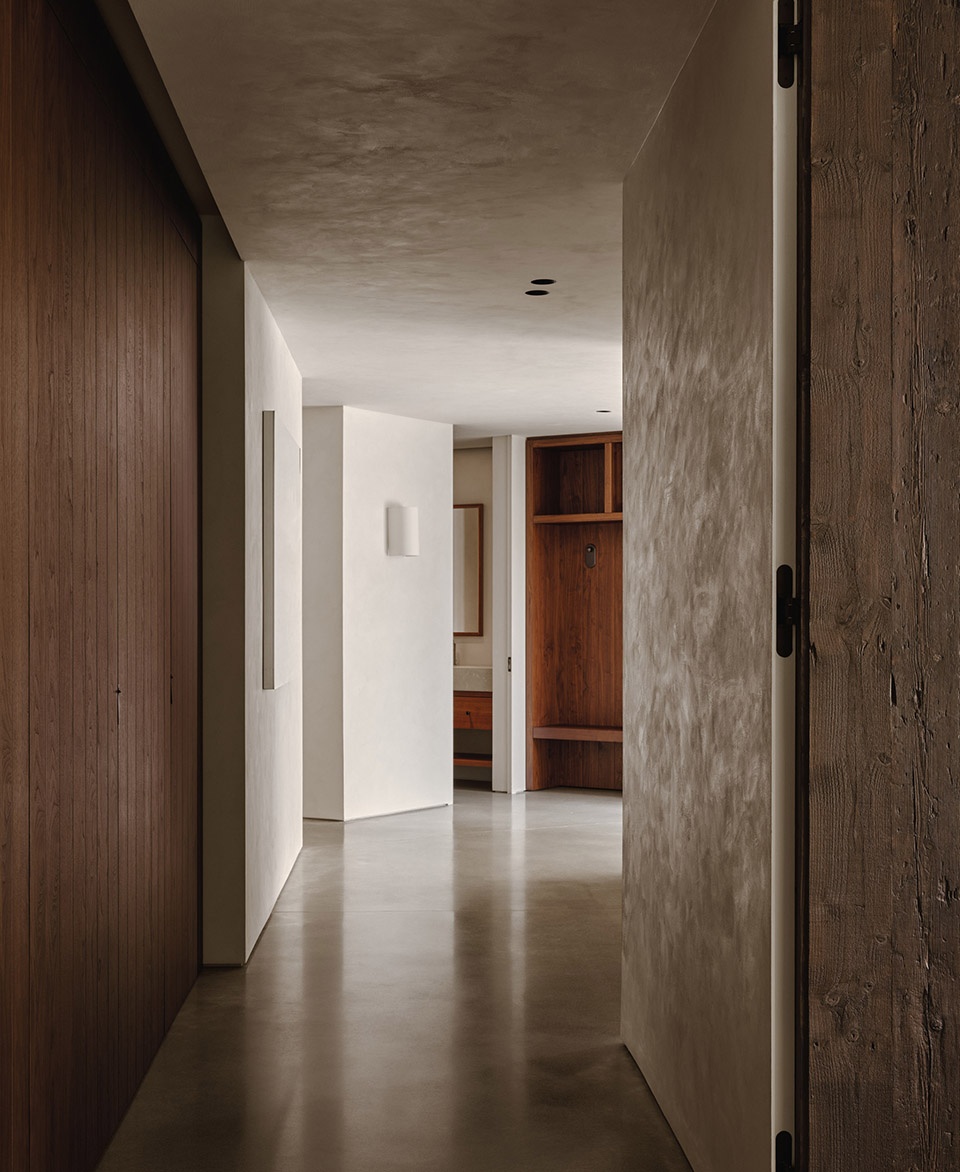
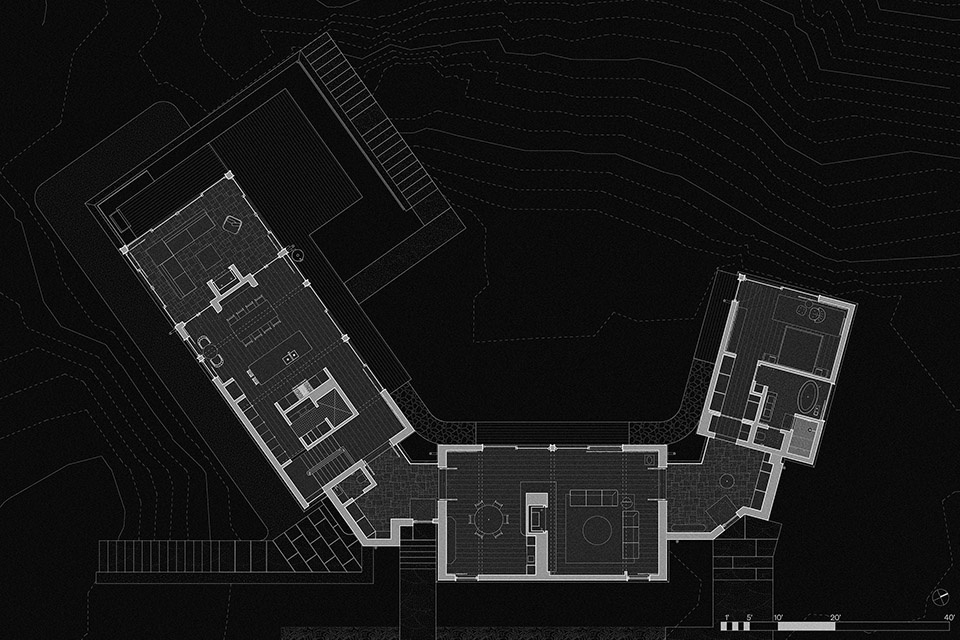
地面层的平面结构呈现出连续性序列,回归简单空间的分布逻辑,并强调水平延展性以呼应场地景观。空间之间通过大面积的再生木材门扇分隔,即使体量在外部呈现出分离感,室内依然保持流动与连续性。地面层大部分空间均设为“教堂式”挑高空间,屋顶木梁也经过再加工以适配新的结构逻辑。
In plan, the spaces on the ground floor are organized in a continuous sequence, returning to a distribution of simple spaces where horizontality is prioritized, thus reflecting the landscape. Divided by large doors made of reclaimed wood, the plan offers fluidity to the spaces, despite the fragmentation of the volumes, which is perceptible from the outside. Most of the spaces on the ground floor are designed as cathedral volumes, with reclaimed beams adapted to the new structural constraints of the project.
▼“教堂式”挑高空间,cathedral volumes
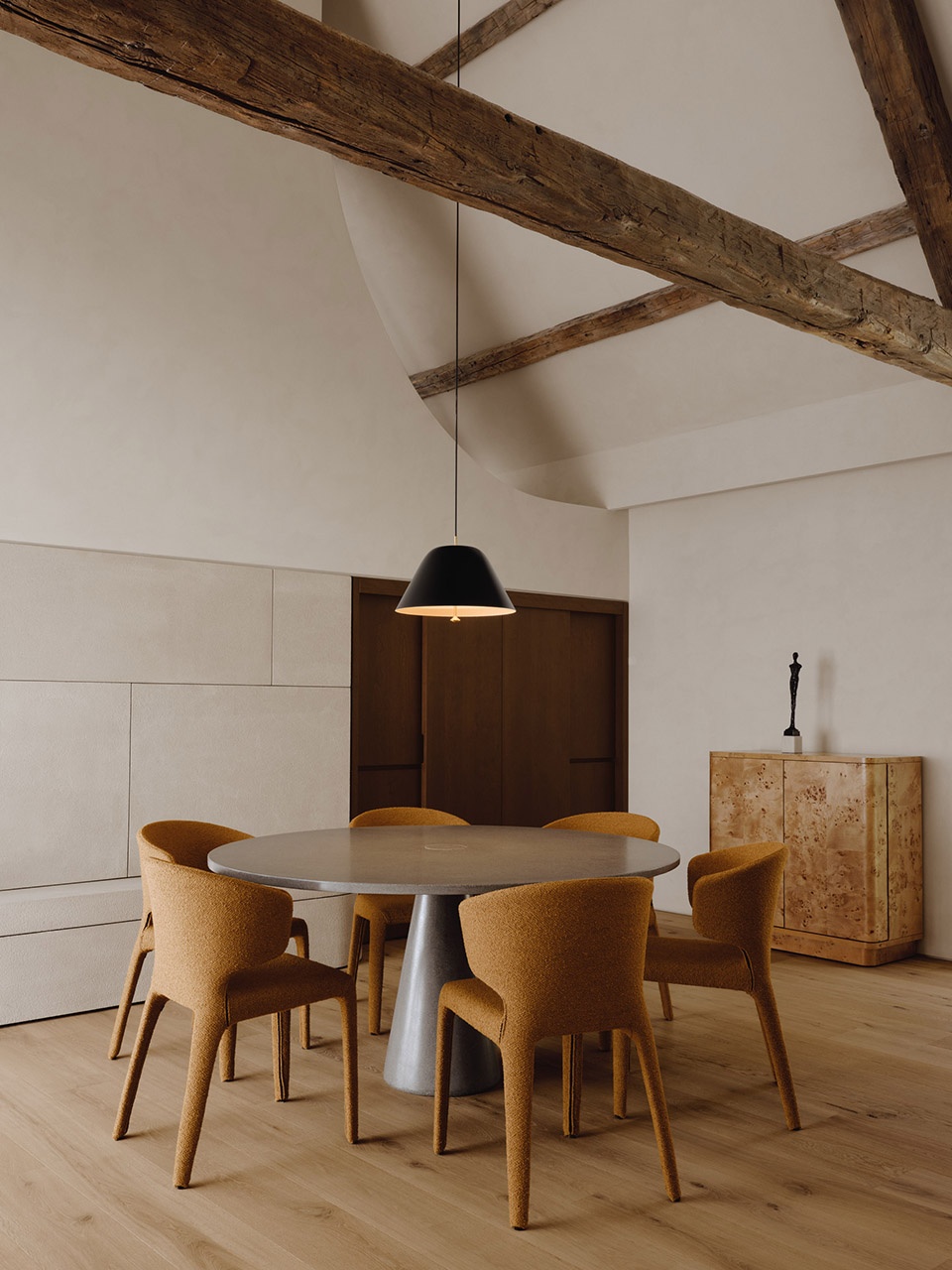
▼再生木材门扇,large doors made of reclaimed wood
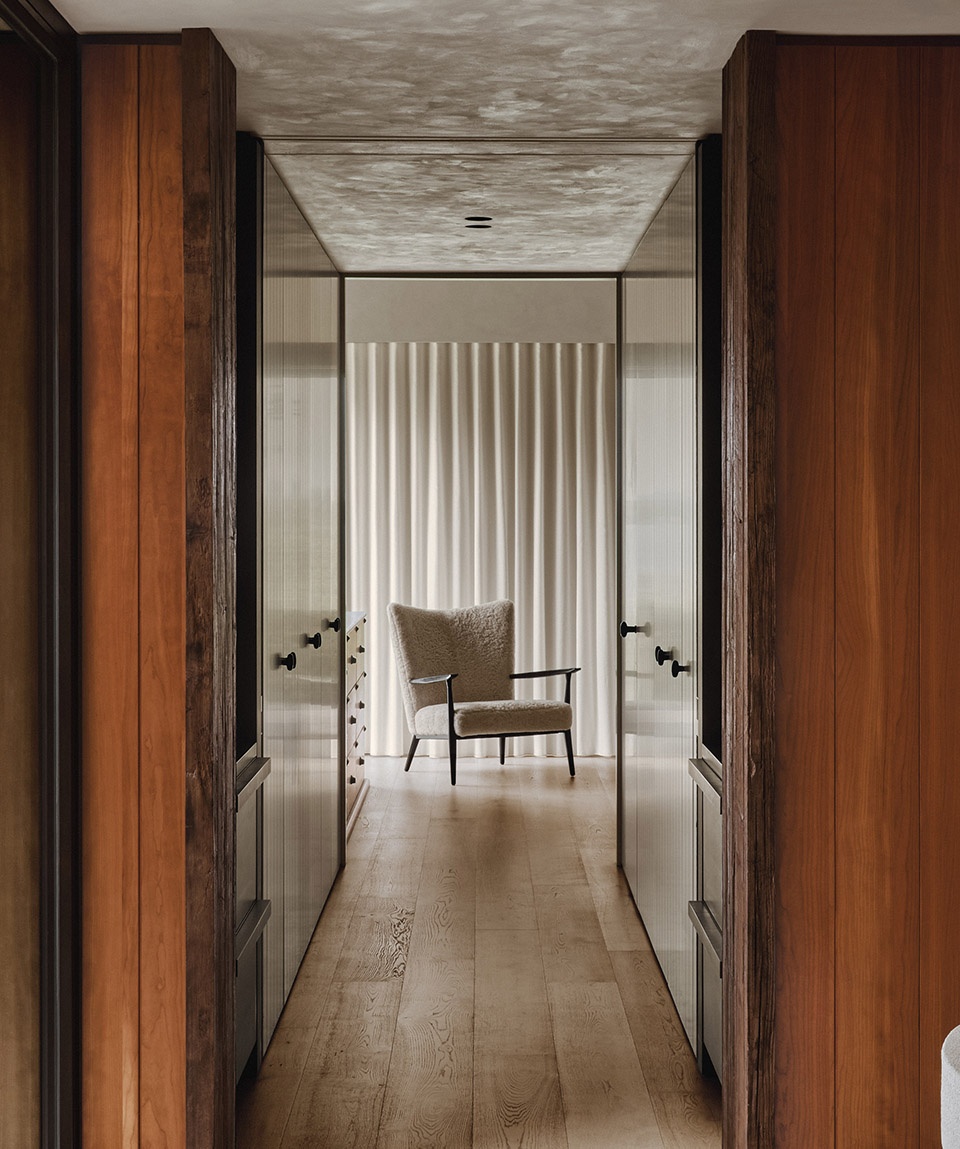
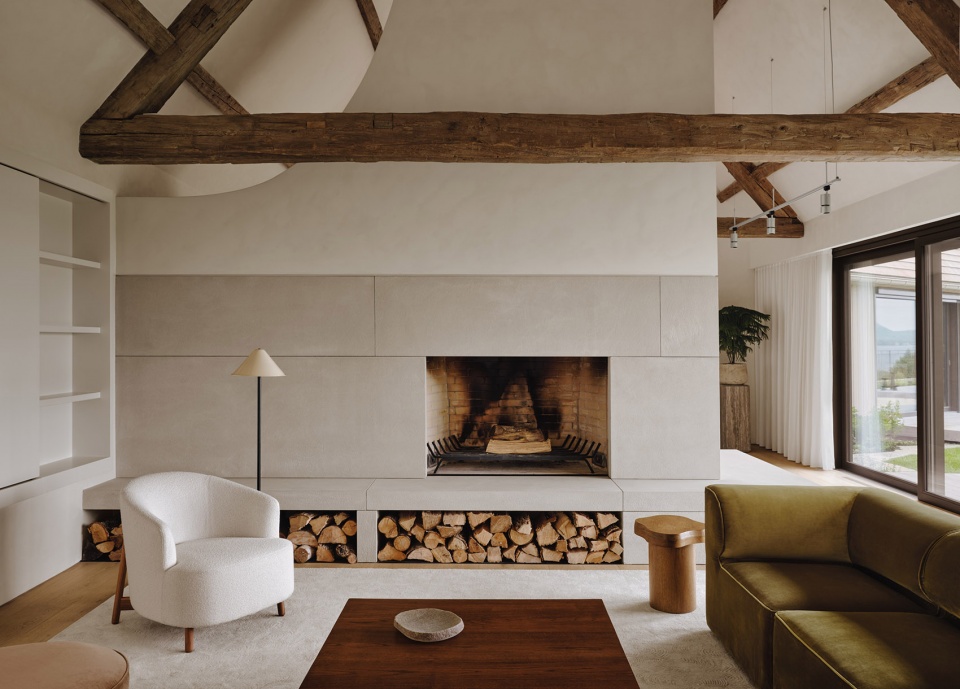
石材作为空间构成的主旋律,将空间牢牢锚定于基地之中,并延续该宅邸脆弱历史中的物质痕迹,同时提供了高热惯量的整体热环境,其热源则由地热系统供能。
Stone, the leitmotiv in the deployment of spaces, grounds them in the site, prolongs the material traces of the fragile history of this property in the Townships, and provides a homogeneous thermal mass for all the interior spaces, powered by a geothermal system.
▼石材作为空间构成的主要材料,use stone as the main material for the space
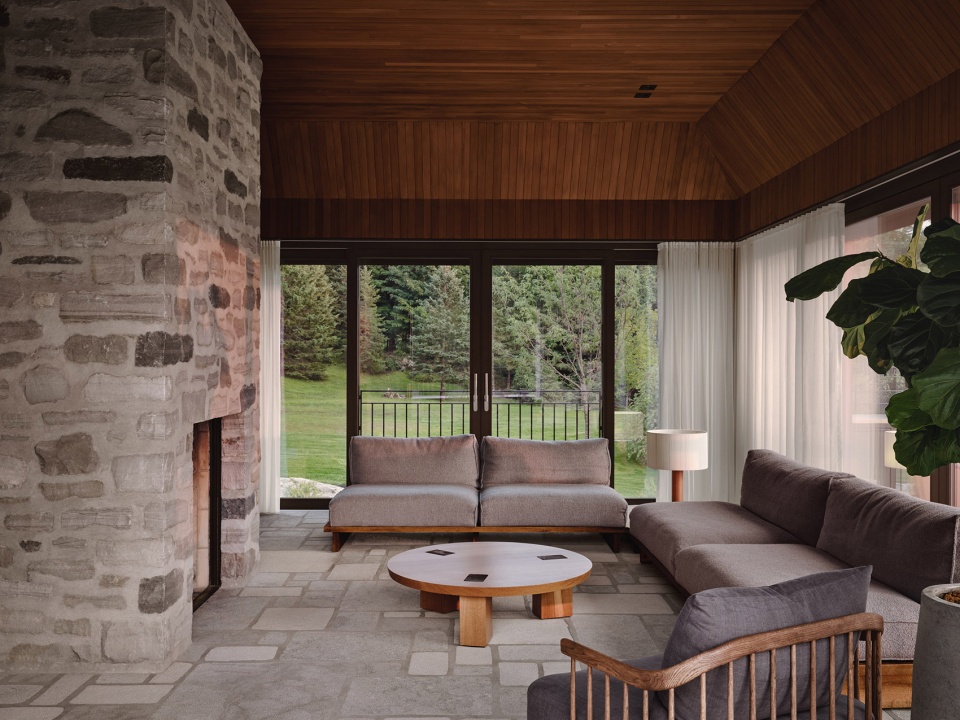
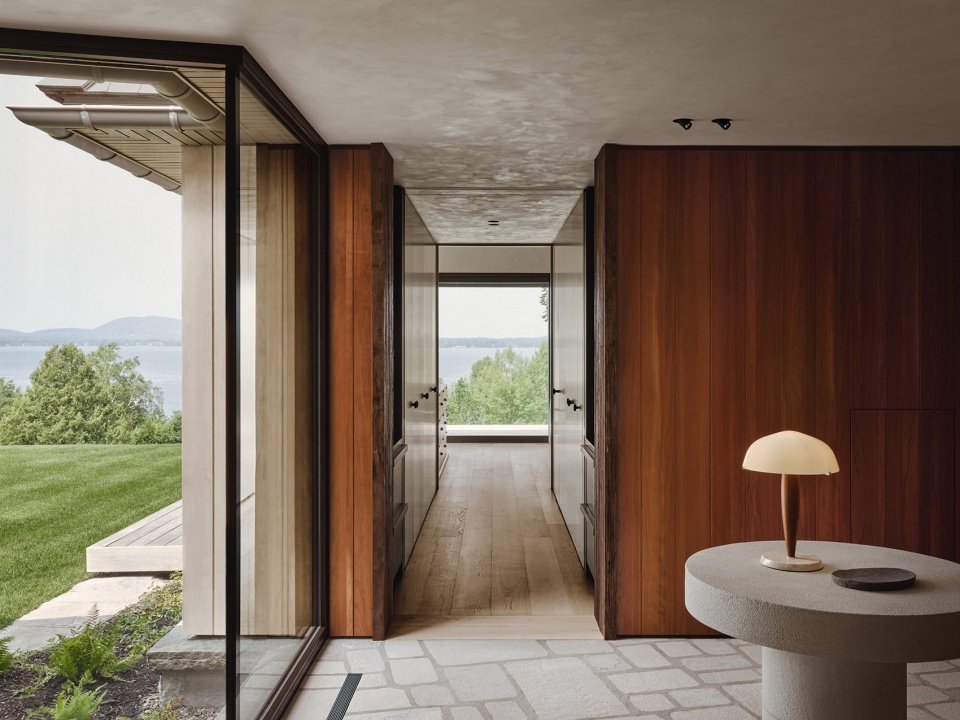
▼石材作为空间构成的主要材料,use stone as the main material for the space
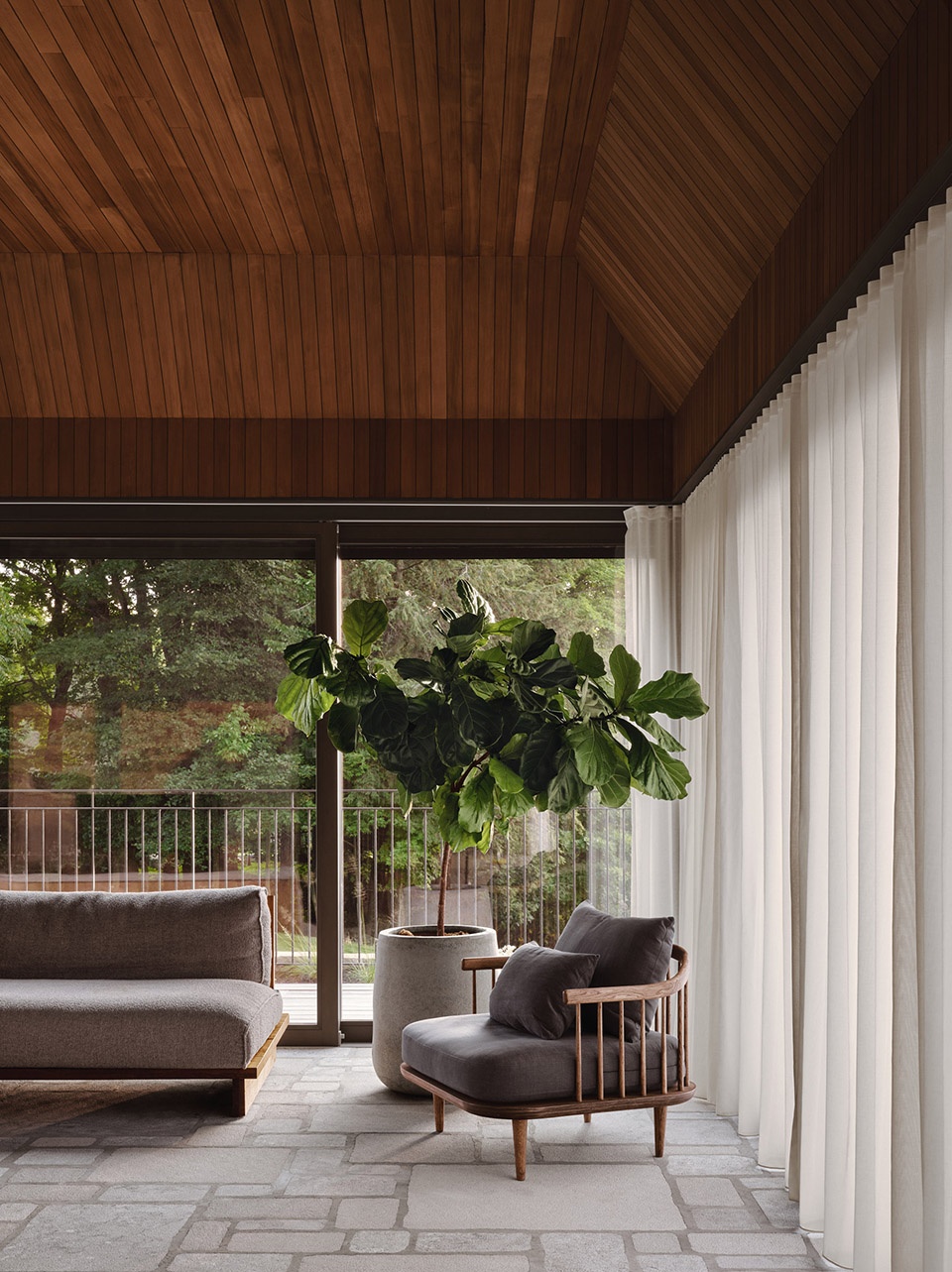
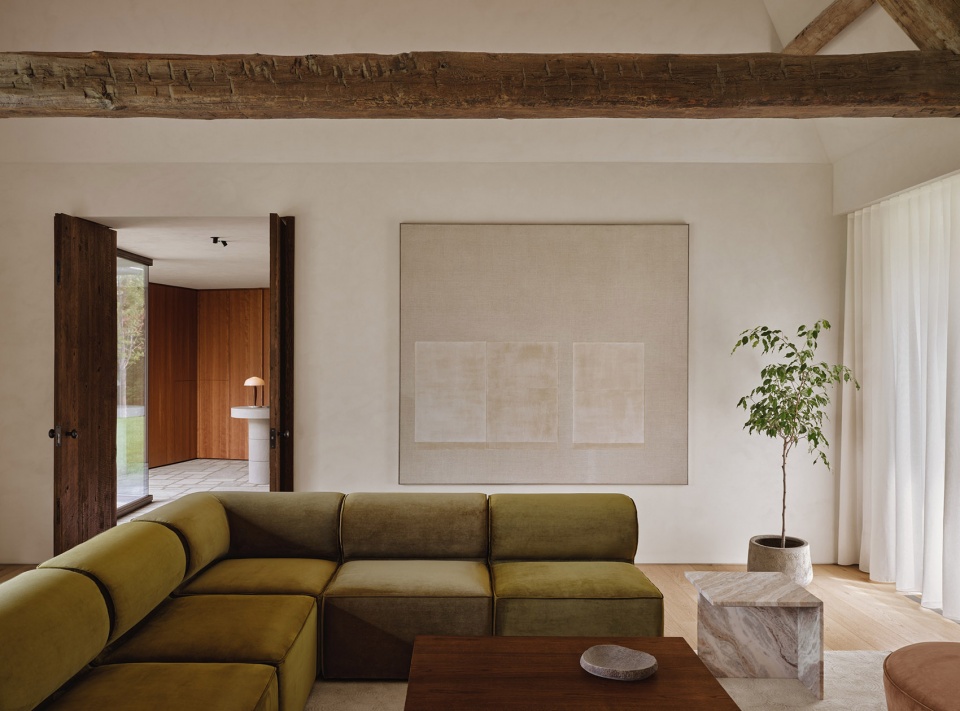
材料与家具的选择使空间风格悬浮于新与旧、现在与过去之间。室内饰面基本不使用任何非自然材料,优选低挥发性有机化合物、具备耐久性的天然建材。
The choice of materials and furniture places the character of the spaces in an aesthetic situated between the old and the new, between the past and the present. Few materials other than natural components are used for the interior finishes, chosen for their durability and low emissions of volatile organic compounds.
▼新旧结合的空间风格,an aesthetic situated between the old and the new
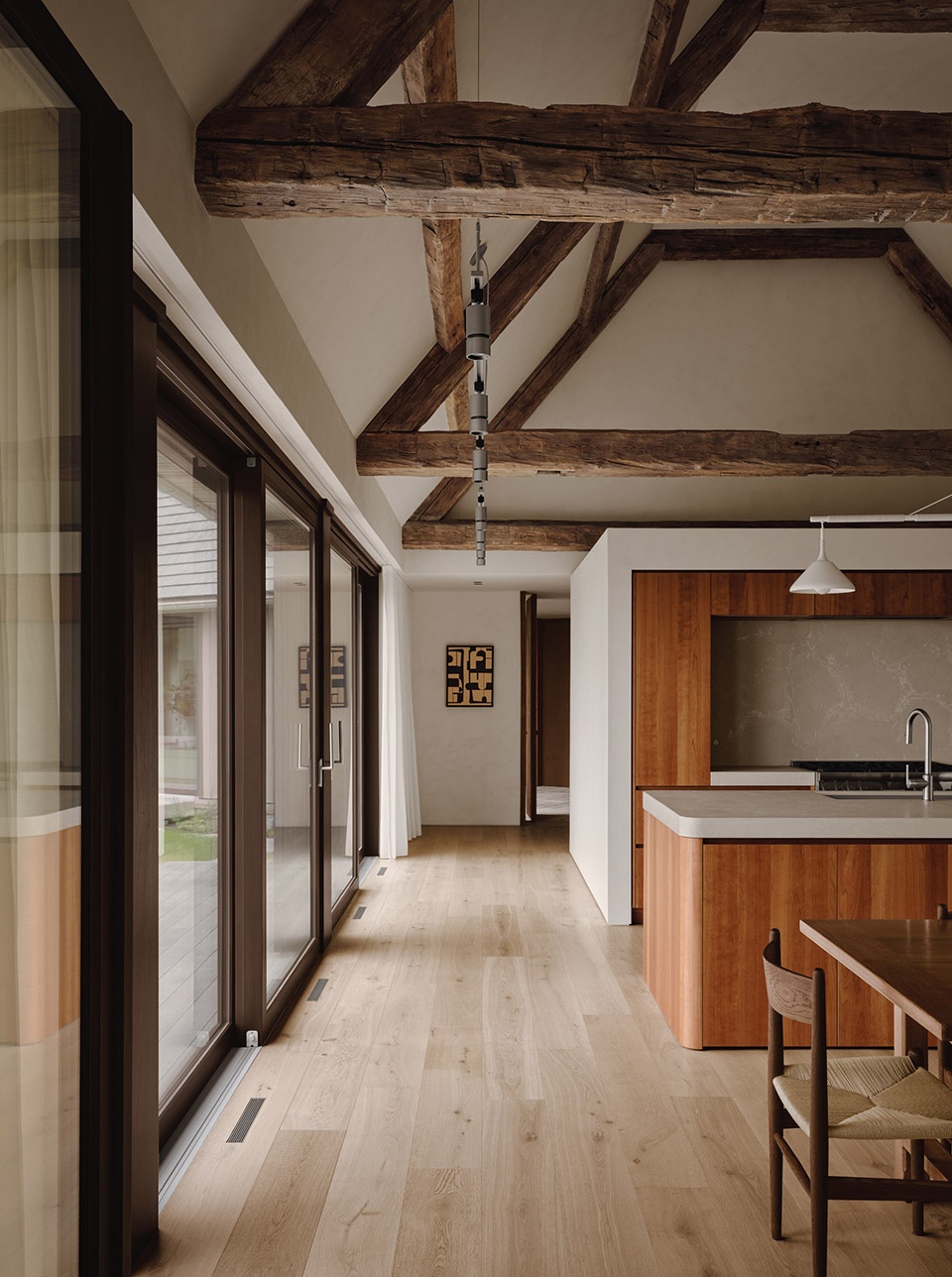
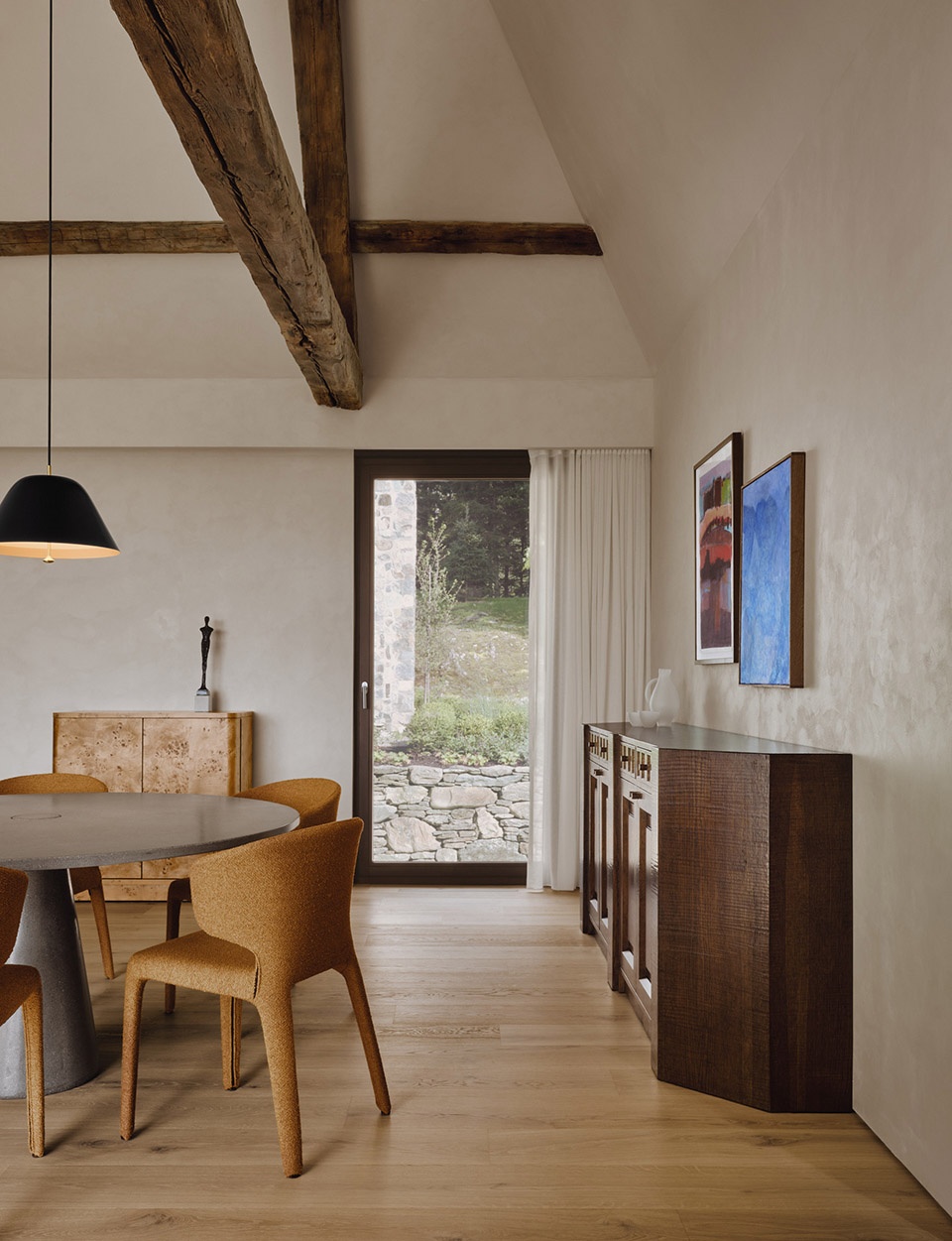
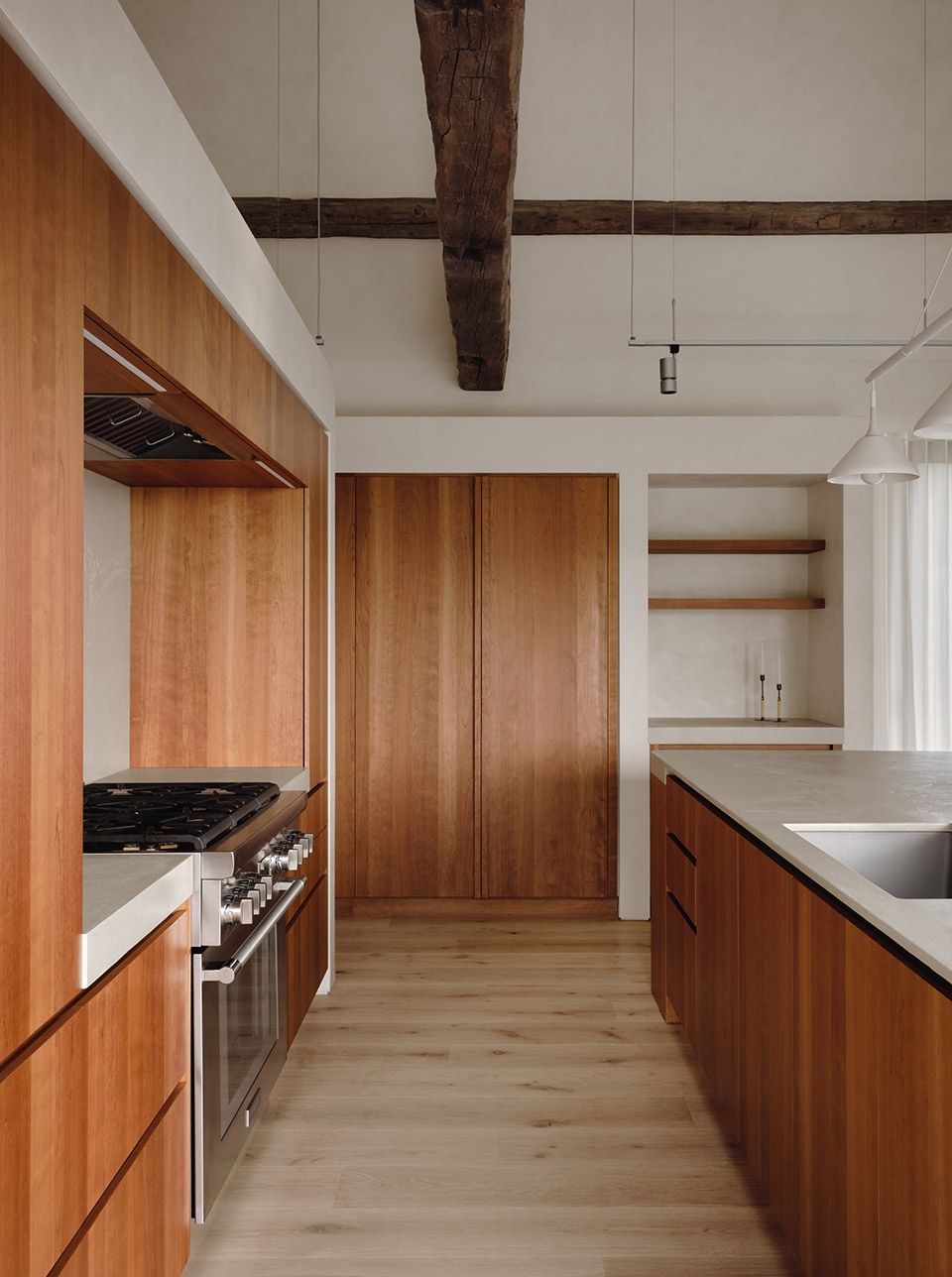
▼厨房及餐厅,kitchen and dining hall
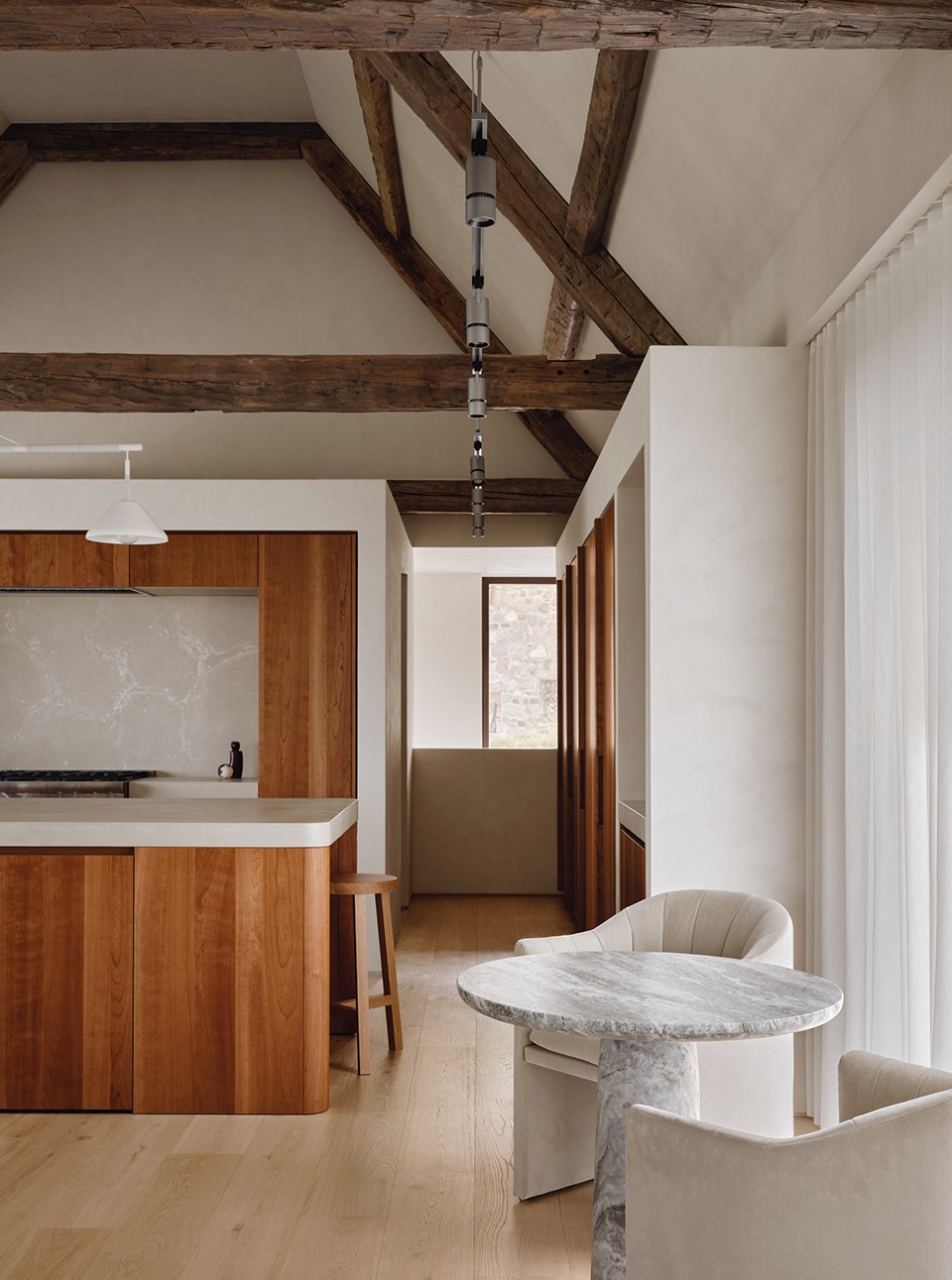
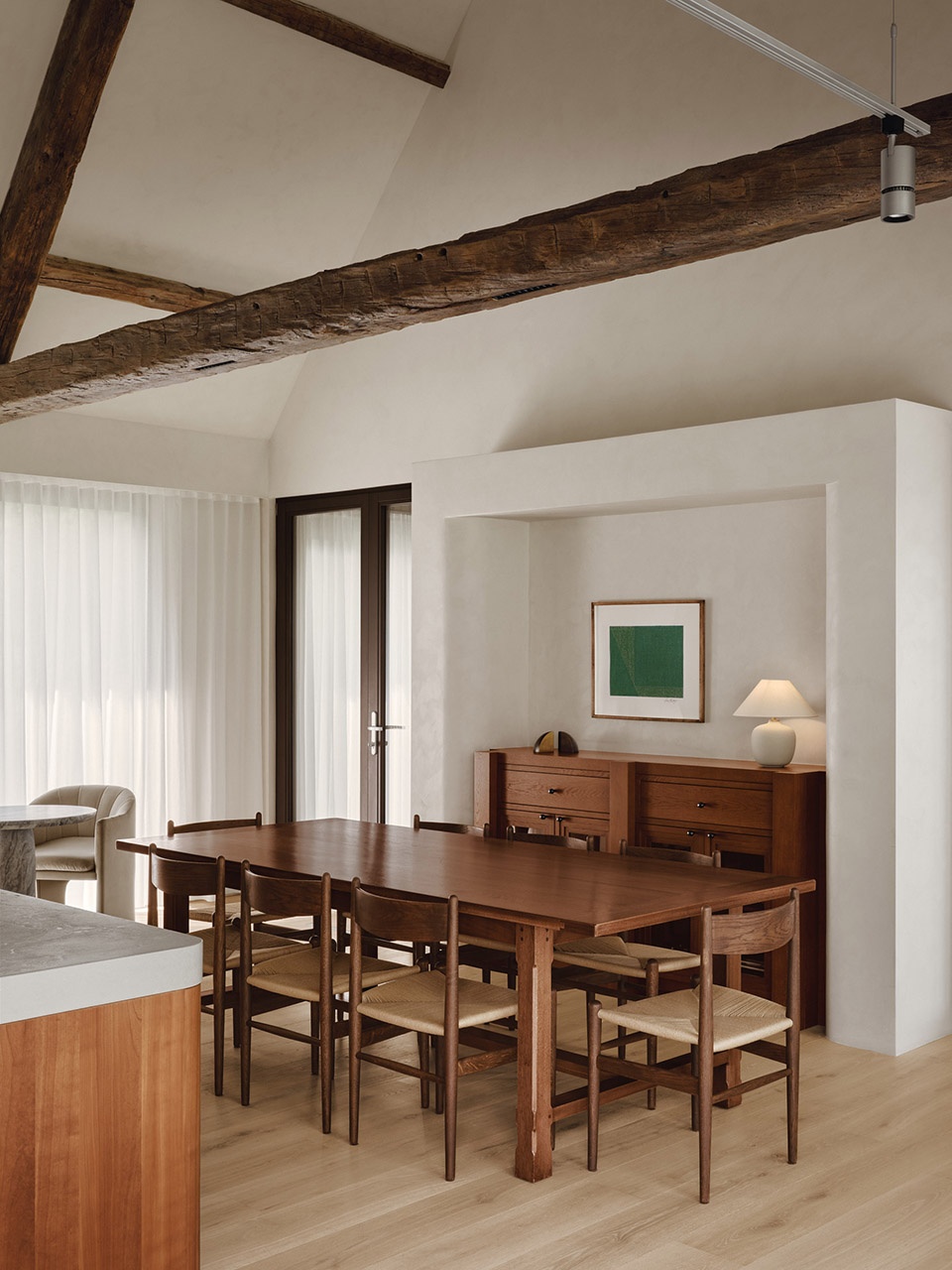
正如建筑设计模糊了“前”与“后”的时间边界,室内氛围也延宕了“家”的身份认同,使得居住体验跨越时间,在从内向外的空间维度中建立起一种持久的场所感。此类项目的干预往往伴随着过度消费与功能构件的拆除浪费,而本项目试图在整体上延续“可保留之物”的生命周期,延续已然存在的材料与结构。
In the same way that the architectural development ‘blurs’ the before and after, the atmosphere of the interiors suspends the identity of the experience of one’s own home, establishing a sense of permanence in the built environment over time, from the inside to the outside. Interventions related to this type of project are too often characterized by an overconsumption of goods and even by the dismantling of viable components. This project’s approach as a whole extends the life cycle of what can be preserved, of what is already there.
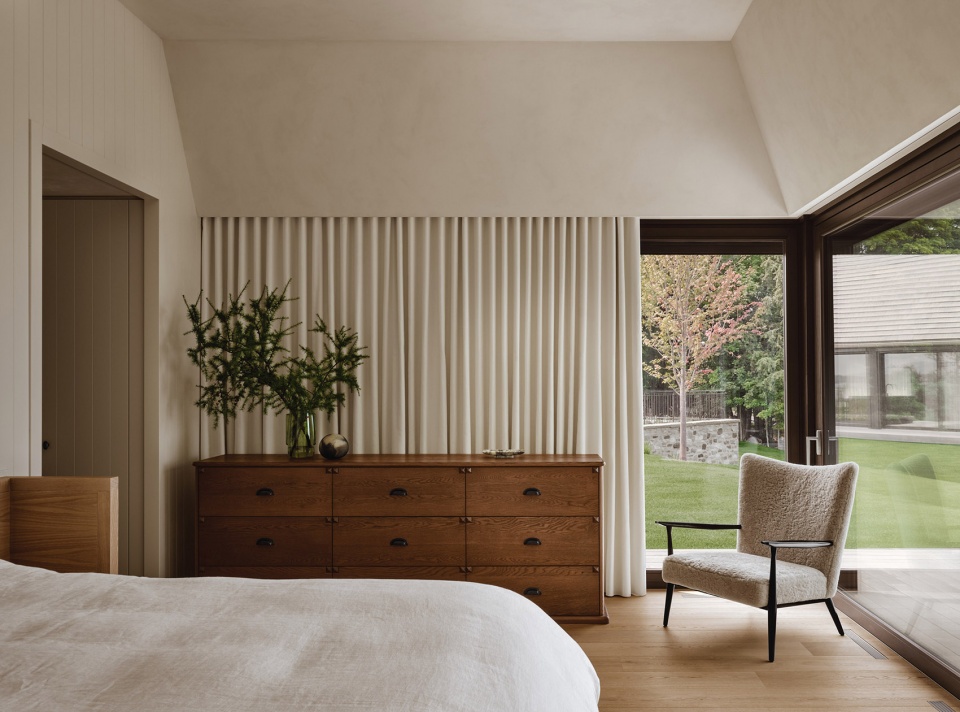
▼卧室区域,bedroom
▼卫浴区域,bathroom
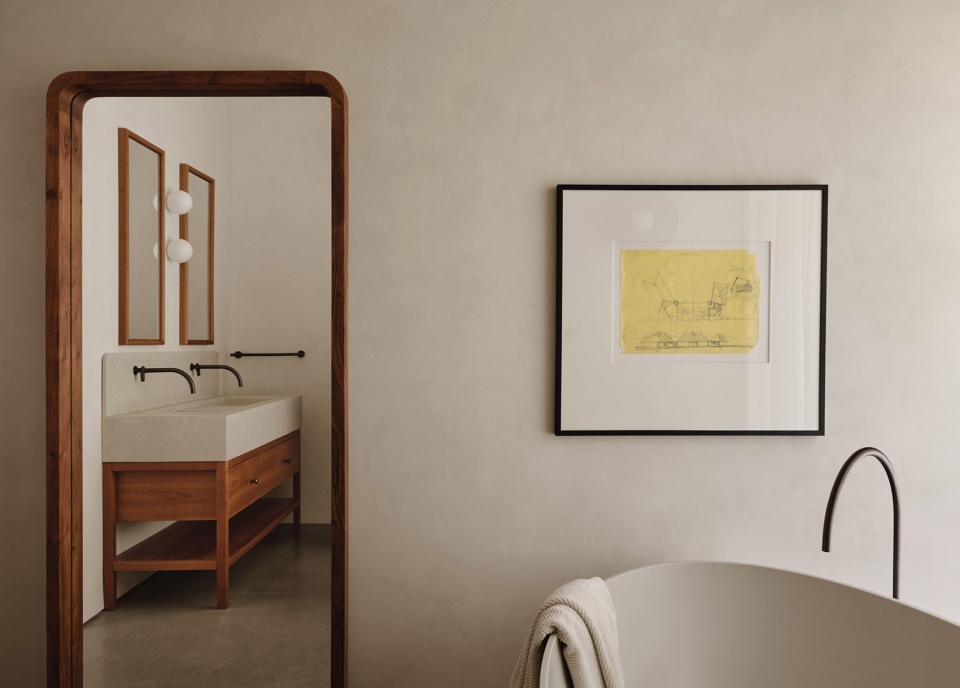
▼卫浴区域,bathroom
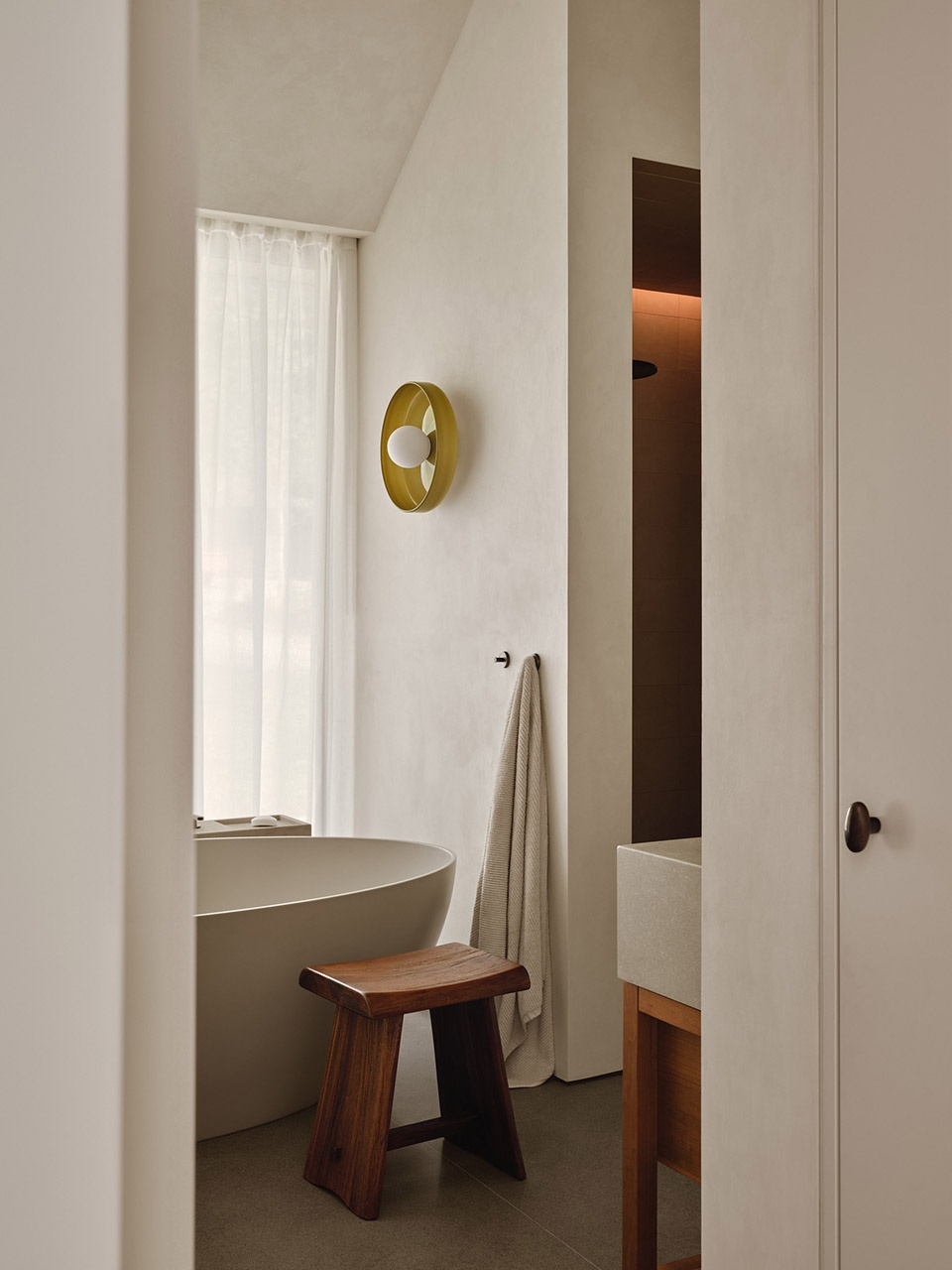
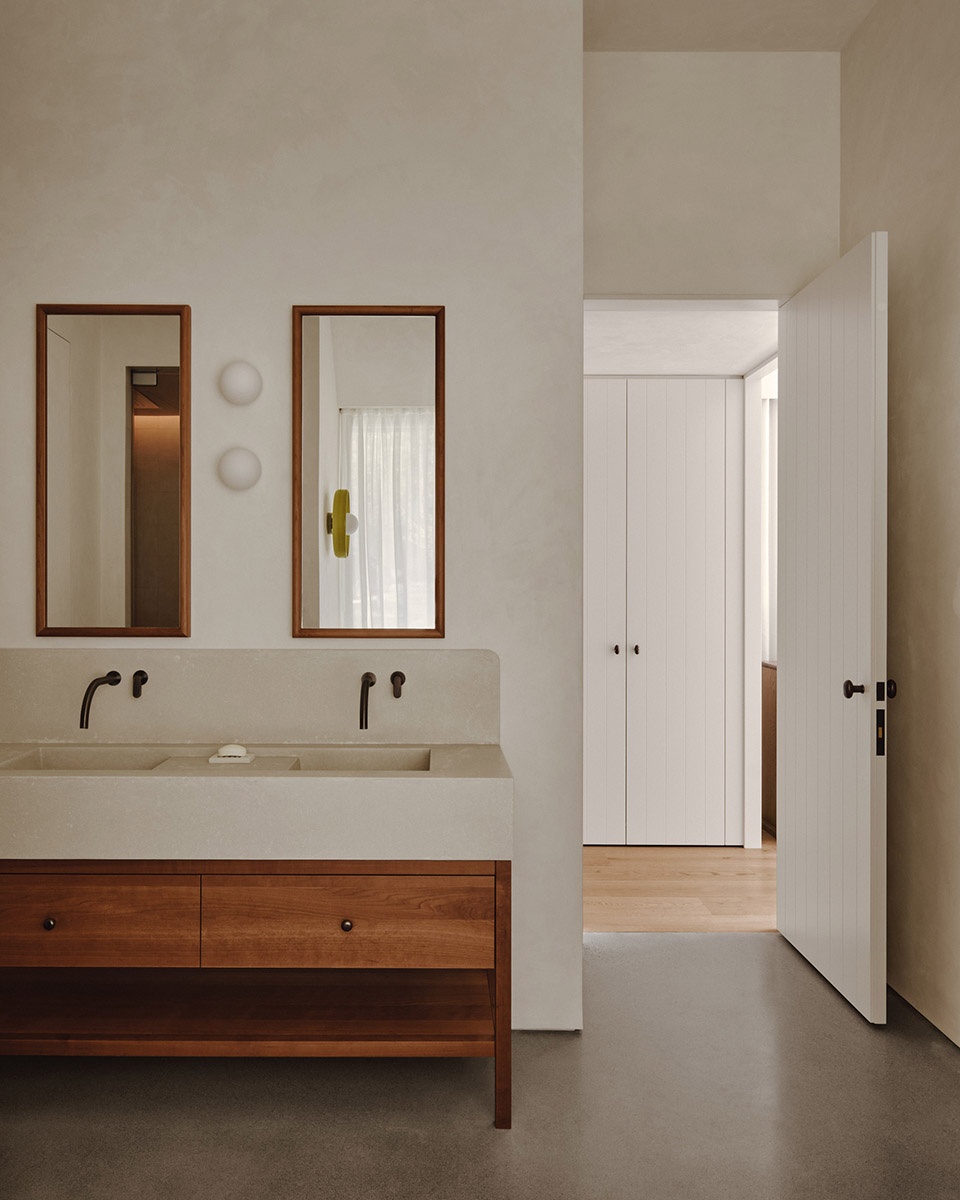
▼楼梯区域,staircase
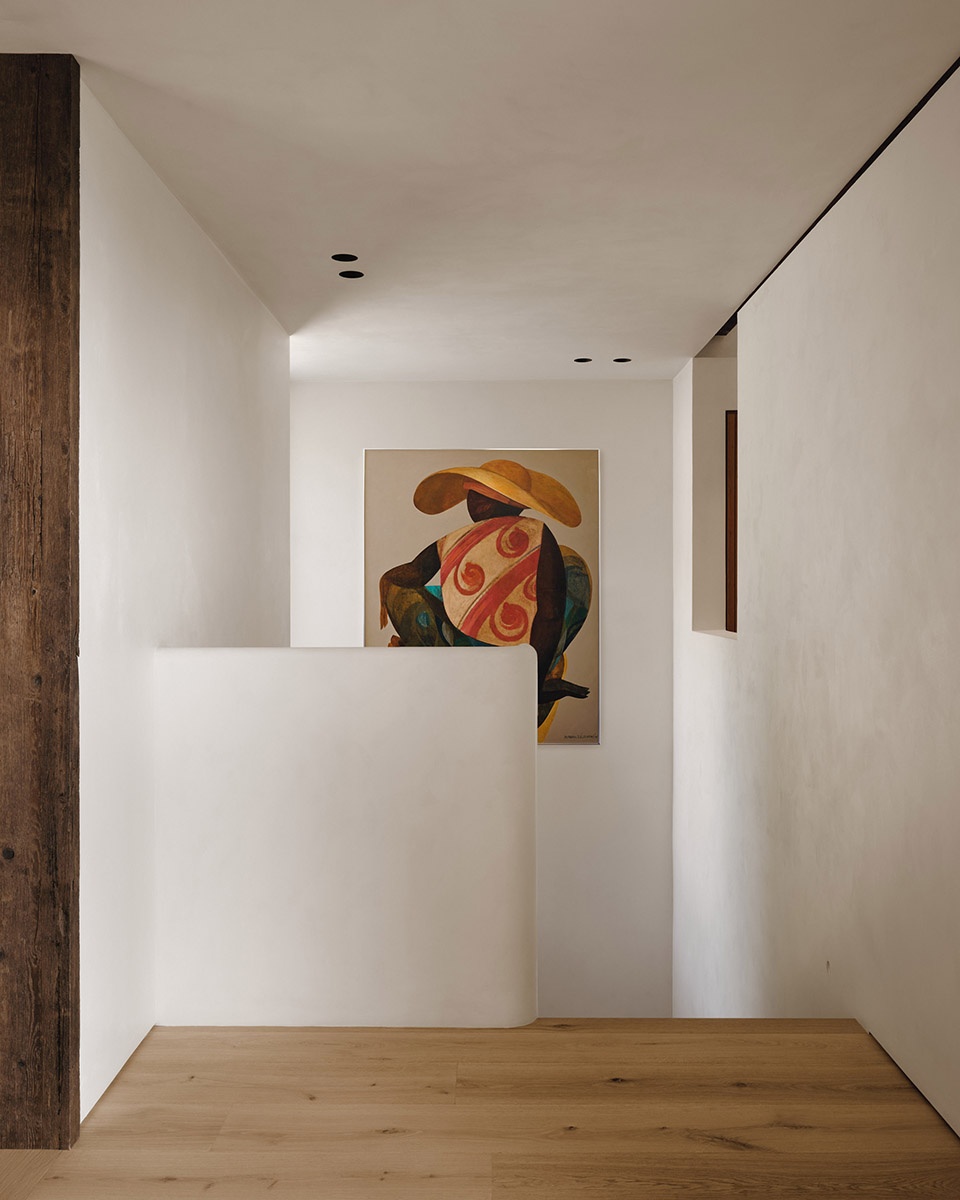
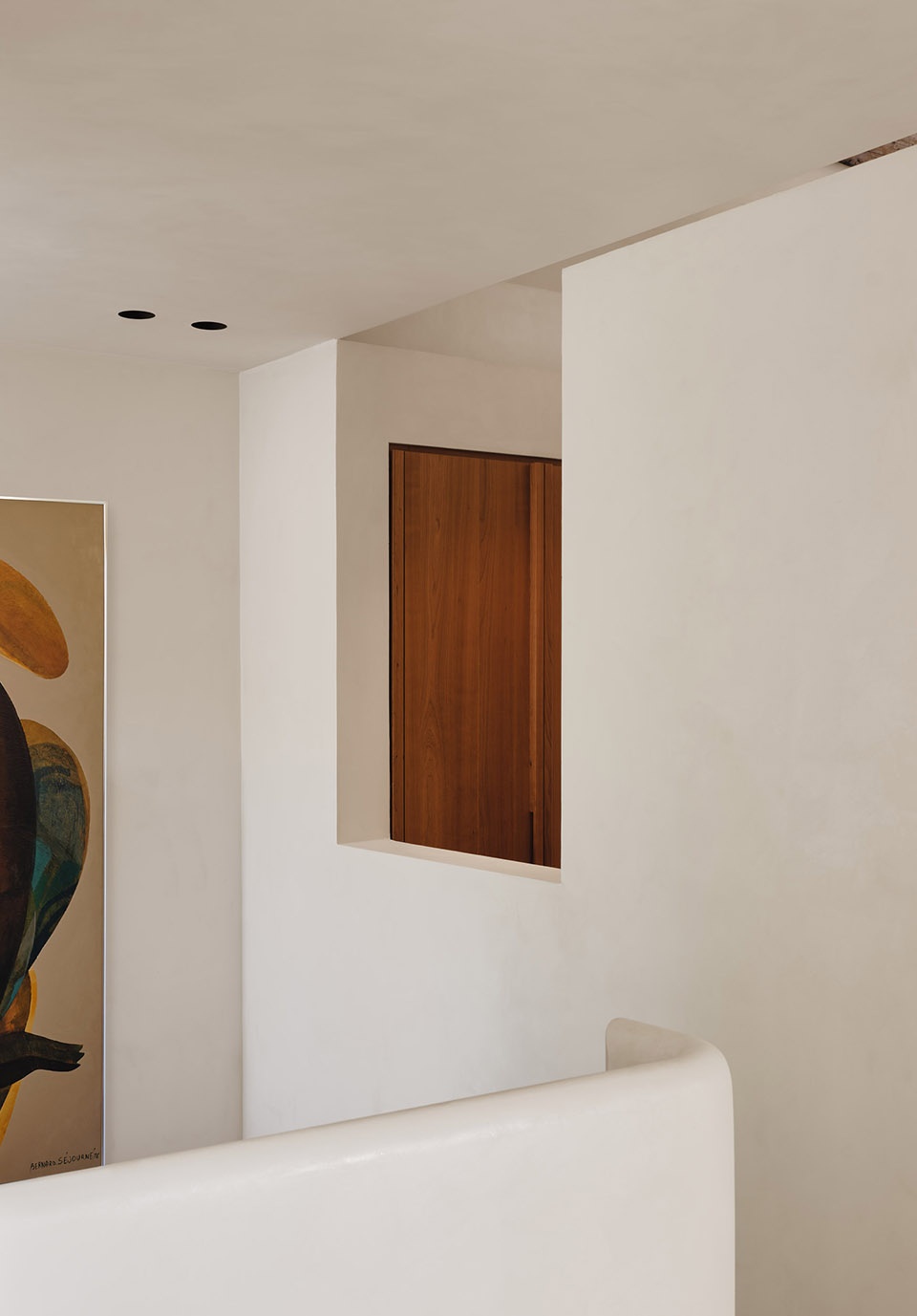
▼未经修饰的墙面,Unfinished walls
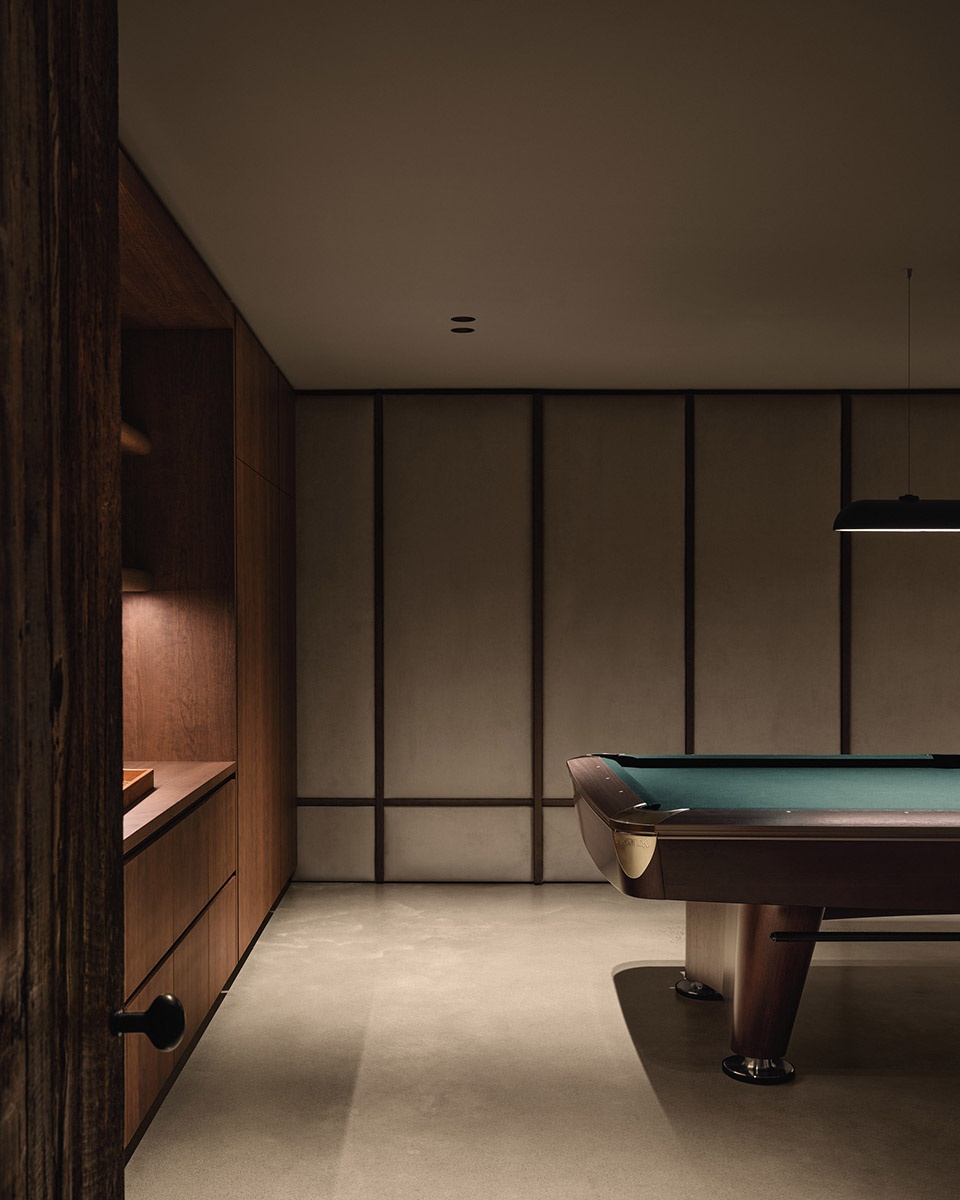
▼台球室,billiard room
本项目以敏感的方式回应时间轴的存在,构筑出一种参与文化建构的建筑地景。它不仅为我们的乡村世界带来有意义的改变,也为我们共同的生活福祉作出贡献。
In summary, this project weaves sensitive relations with the timeline, thus creating an architectural landscape that participates in our culture; it somehow contributes to the transformation of our rural world, our common well-being.
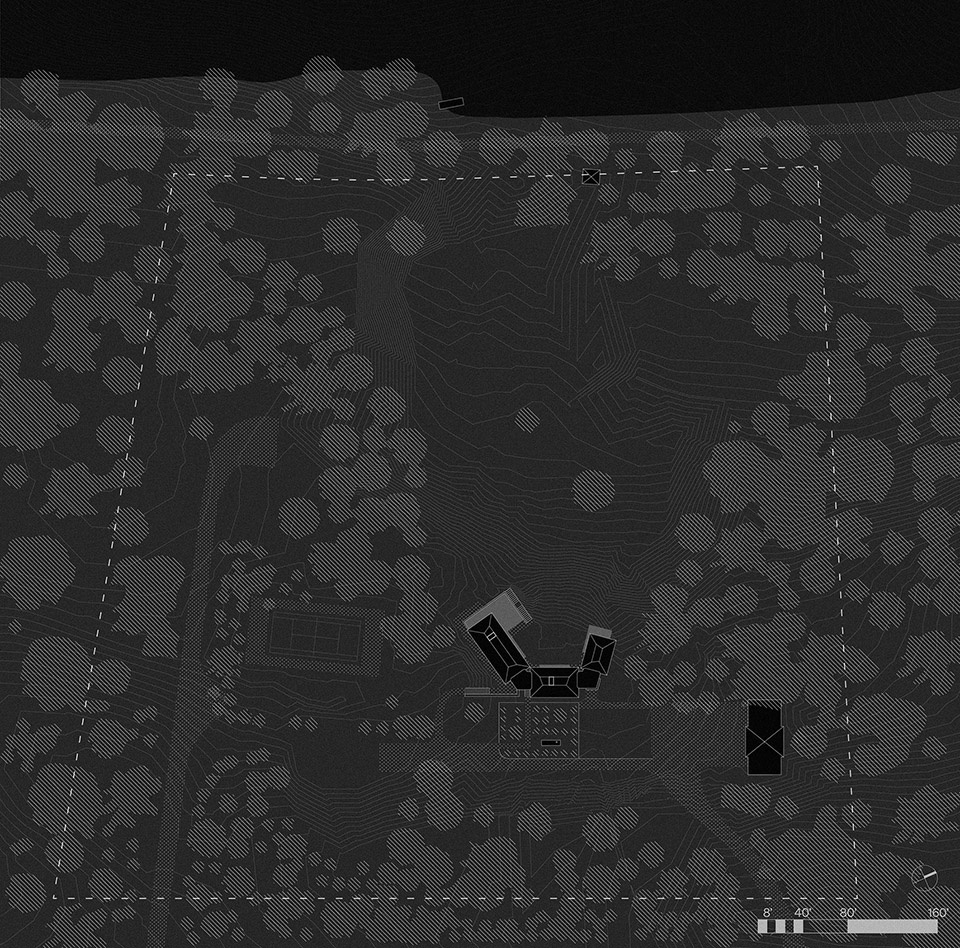
▼场地平面,site plan
▼一层平面,ground floor plan
▼花园层平面,garden level plan
▼立面图,elevation
▼剖面图,section
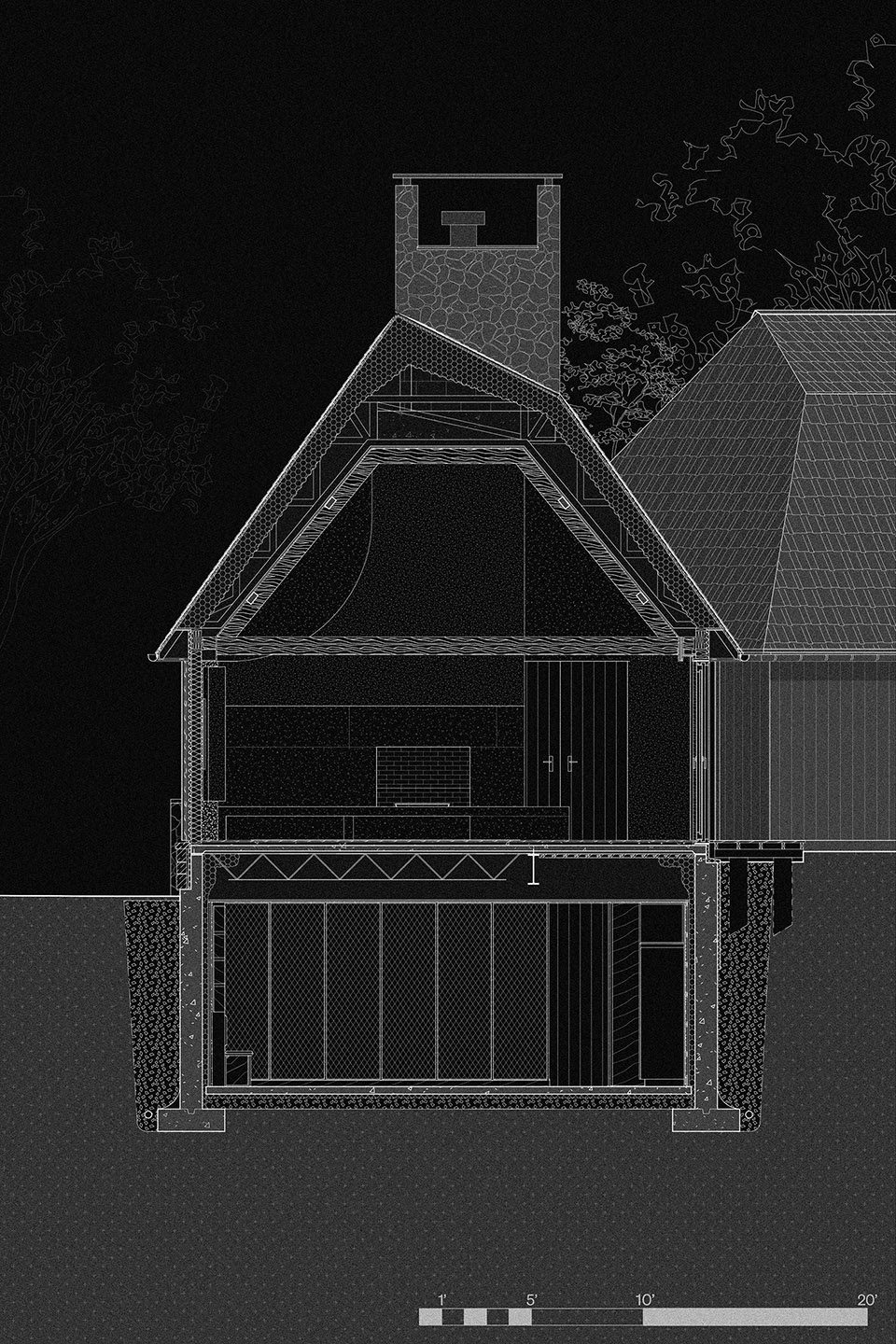
▼剖面大样,section detail
Location: Eastern Townships, Quebec, Canada
Year of completion: 2024
Area: 692 m2 / 7 450 pi2
Team: Alain Carle / Founding architect
Isaniel Lévesque / Project architect & int. design Baptiste Balbrick / M. Arch
James Jabbour / M. Arch
Sarah Mei Mousseau / Technologist
Camille Denis / Styling
General contractor: BBD Construction
Structural engineer: VCMa
Mechanical engineer: Antoine Assaf ing.
Landscape architect: Oscar Hacche
Exposed reclaimed wood structure: Taylor Lukian
Masonry: Maçonnerie Sutton (+ Carrière Ducharme)
Shingles & exterior siding: Groupe Sidex
Windows: Gaulhofer
Cabinetmaker: La Clef de Voûte
Lighting: Sistemalux & Lumenpulse
Floors (wood): Unik Parquet
Floors (concrete): Atelier B
Counters: Béton Johnstone
Custom furniture: Élément bois
Photo credits: Alex Lesage http://alexlesage.com