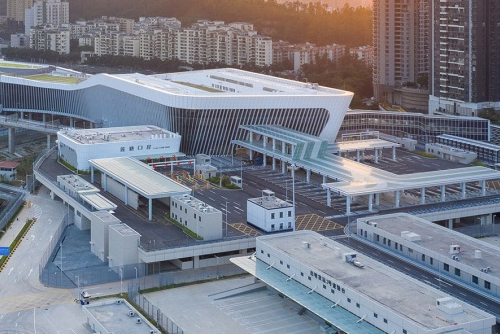
中国科学技术大学中校区学习园地,合肥 / 合木建筑工作室
基础设施切割形成的边角地Infrastructure-Defined Leftover Site
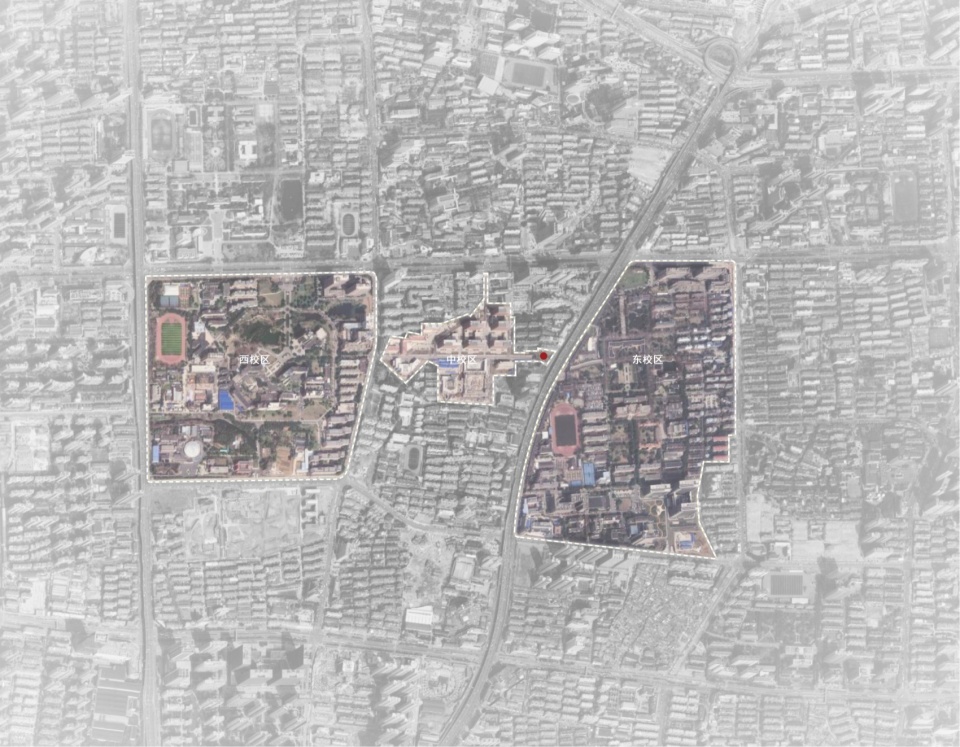
本项目选址所在的中国科学技术大学中校区,功能配置是以住宿和体育场馆为主。校方有意补充一些供学生自主学习、活动、交流的多功能场所,在用地紧张的情况下选中了校区最东端的一处“遗忘角落”。
The project is located at the Central Campus of the University of Science and Technology of China (USTC), where dormitories and sports venues dominate. To provide students with multifunctional spaces for self-directed learning, activities, and communication, the university selected an overlooked corner at the easternmost edge of the campus.
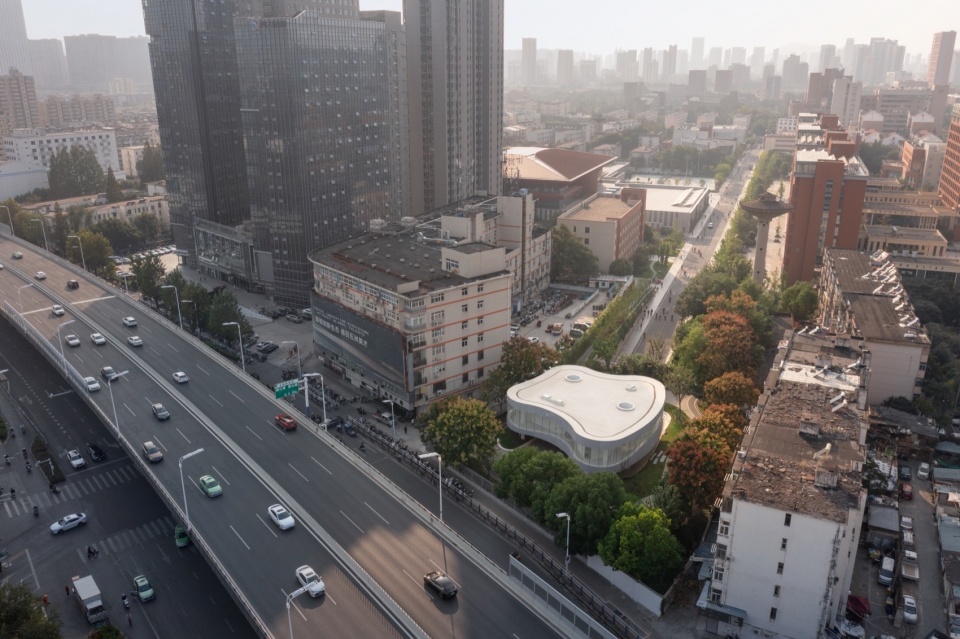
▼学习中心鸟瞰图,Aerial View of the Learning Center
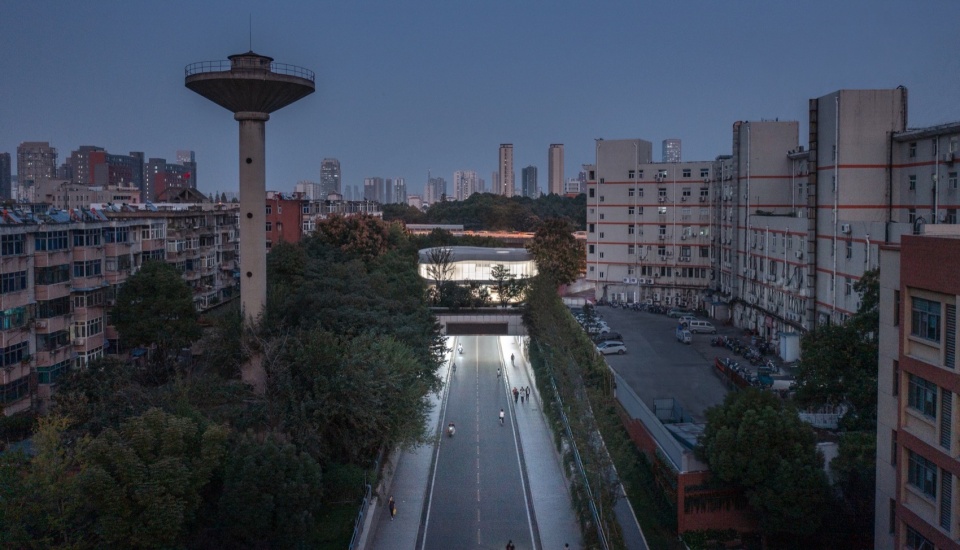
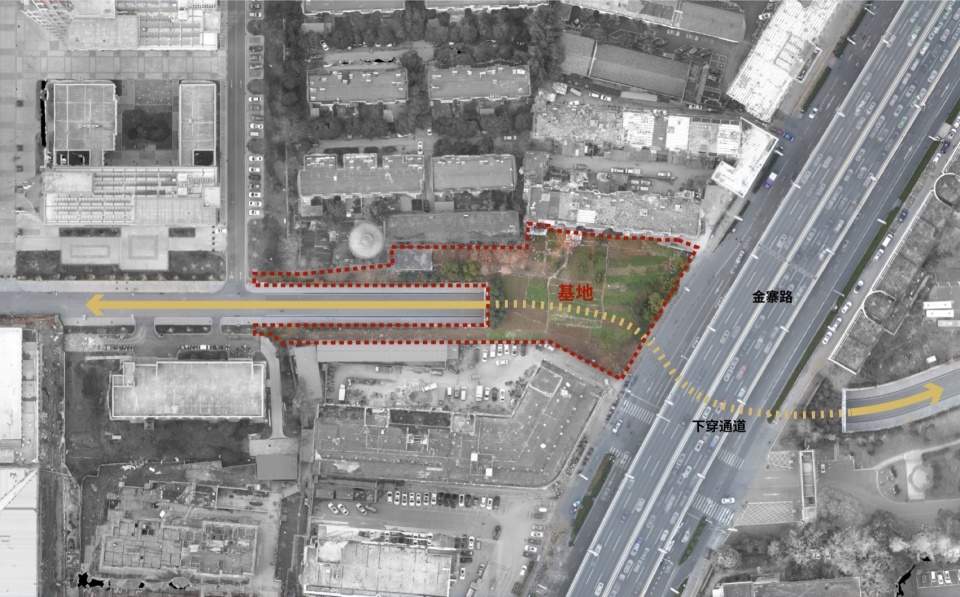
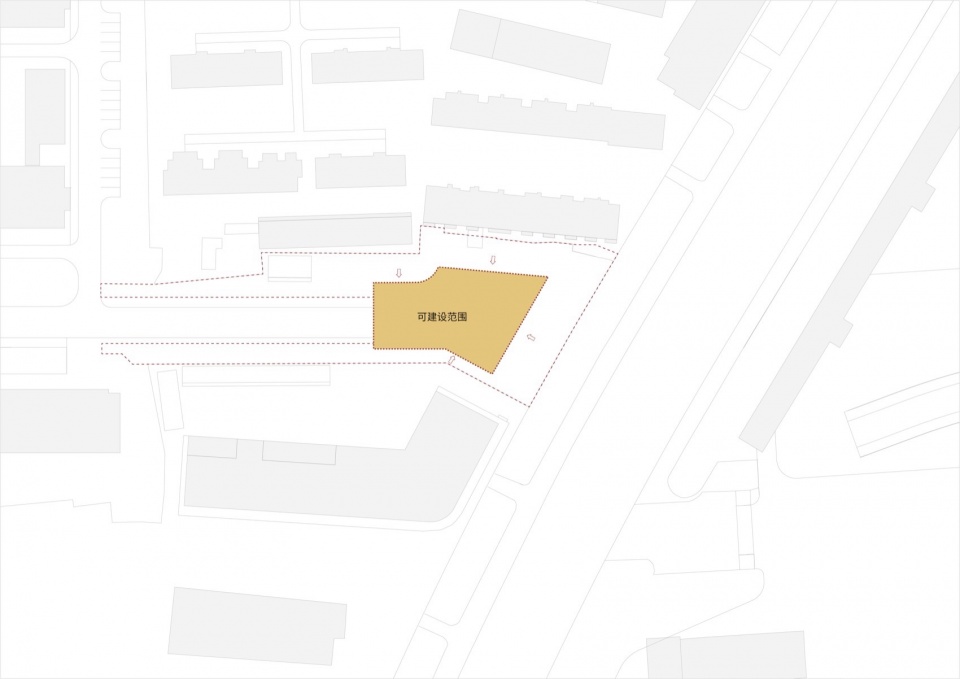
这块校园边角地的东、南、北三面为校园边界围墙。基地南侧为商业楼,北侧紧邻住宅楼,东侧贴临带有高架快速路的城市主干道。更为复杂的情况是,用地下方为横穿城市干道联系东、中校区的下穿通道。
This irregular plot is bordered on three sides by boundary walls: to the south by a commercial building, to the north by a residential block, and to the east by a major arterial road with an elevated expressway. More complex is the underground tunnel underpass beneath the site, which links the East and Central Campuses by passing beneath the city road.
▼中国科学技术大学中校区学习园地,Learning Center – USTC Middle Campus
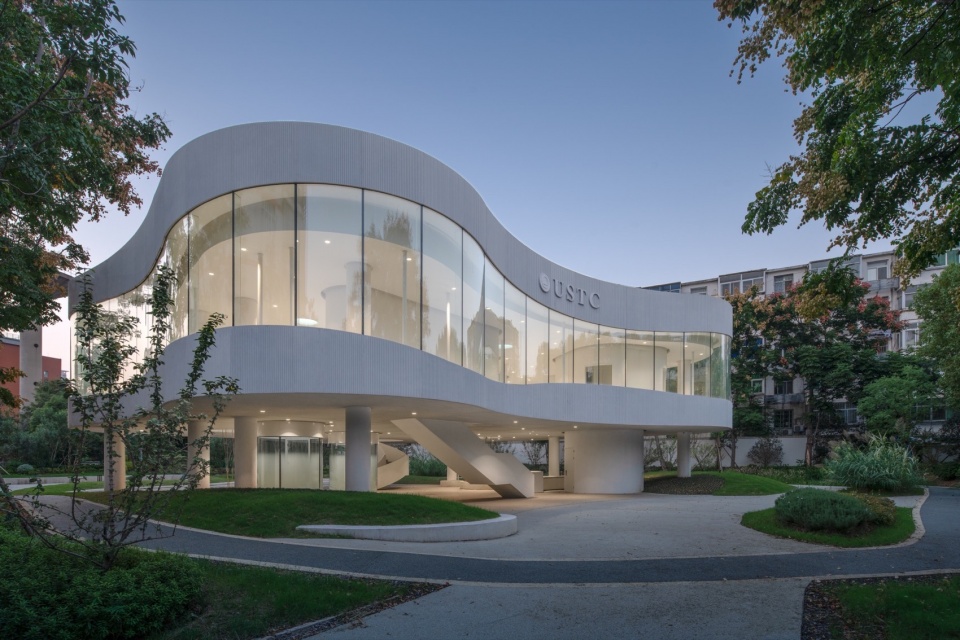
交通基础设施对城市肌理的肢解、割裂也是显而易见的。此处在2013年隧道完工后即采取了封闭措施。当我们首次踏入基地时,发现这里被北侧住宅楼的居民破墙进入作为种菜、养鸡使用,孤立的角落成为了邻里共用的小菜园。
Urban infrastructure inevitably fragments and disrupts the existing fabric. Since the tunnel underpass was completed in 2013, the plot had remained fenced off. When the architects first visited the site, they found that residents from the northern housing block had breached the wall to plant vegetables and raise chickens — transforming the isolated corner into a shared community garden.
▼中国科学技术大学中区学习中心,Learning Center – USTC Middle Campus
校园与城市的连接点Connecting Campus and City
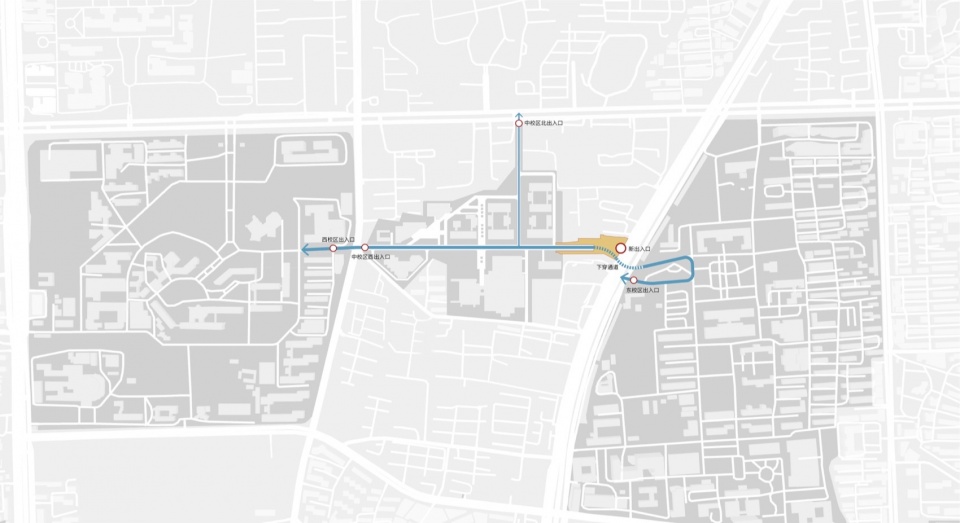
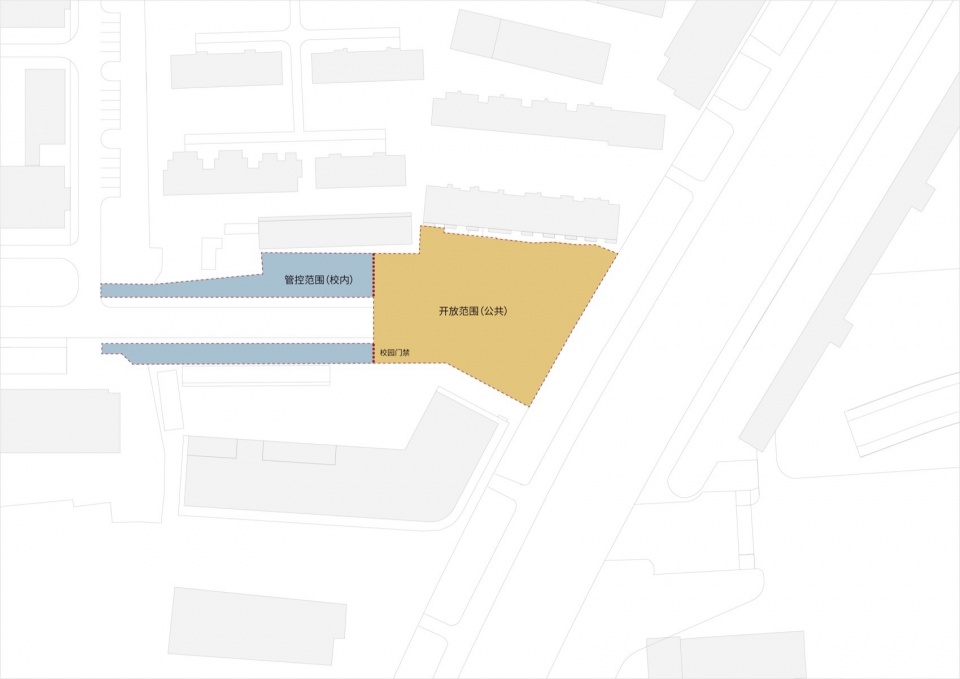
我们的思考从城市和整体校园出发。通过借助这次置入功能性建筑和场地营造的机会,流线上将此处设定为中校区与东侧城市道路的连接点——新增的中校区出入口,方便师生的日常出行。进一步,设计从空间资源分配的角度考虑,对用地的权属做出突破性探讨:取消围墙,退后管控边界,将这里作为大学展示性的入口开放区,也有机会成为周边居民和路人日常休闲的口袋公园。
▼场地设计策略,Site Design Strategy

The design starts with an urban-scale perspective. By inserting a functional building and reworking the circulation, this corner is redefined as a connector between the Central Campus and the eastern city road—creating a new entrance for daily use. From a broader spatial strategy, the design challenges conventional boundaries by removing the fence and setting back the campus perimeter. This allows the area to serve as a public-facing gateway and a pocket park, accessible to both students and local residents .
▼学习中心鸟瞰,Aerial View of the Learning Center
▼学习中心鸟瞰,Aerial View of the Learning Center
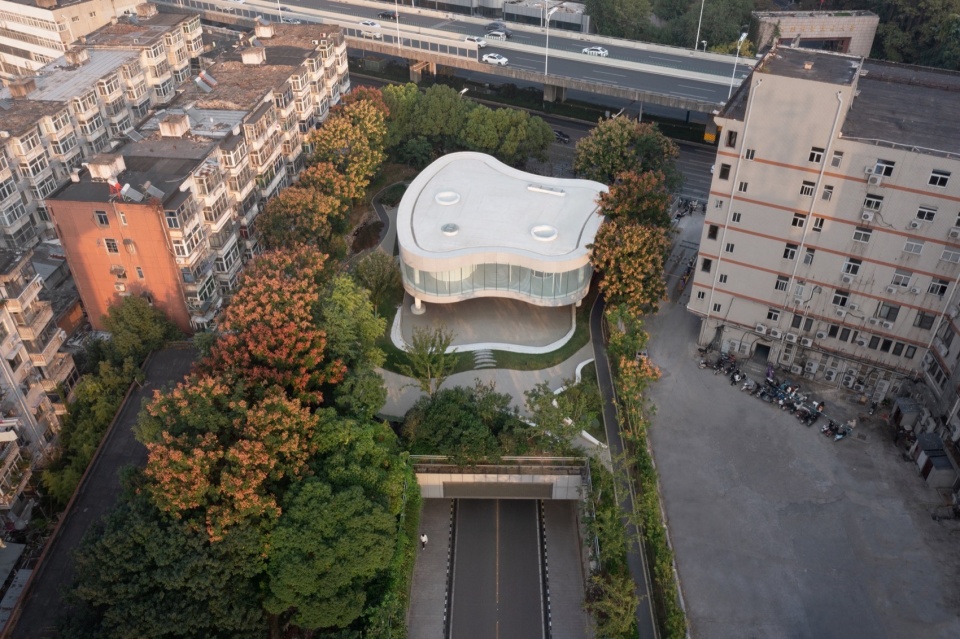
又因基地处在中校区的中轴线上,且下穿通道之上的地面标高较高,在建筑的形体和外观的设计上有意提高其识别性,使其与周围相对复杂的城市背景有所不同,成为小区域内的标志物。
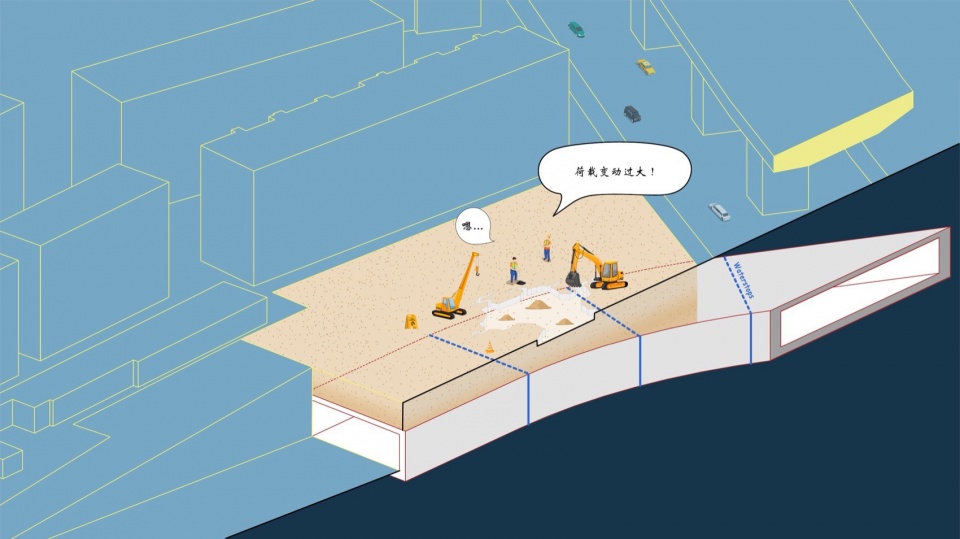
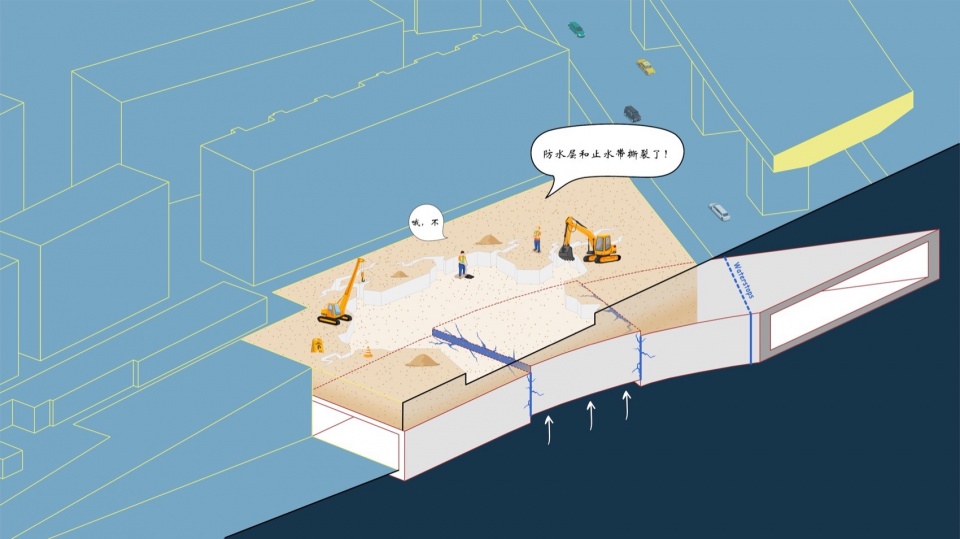
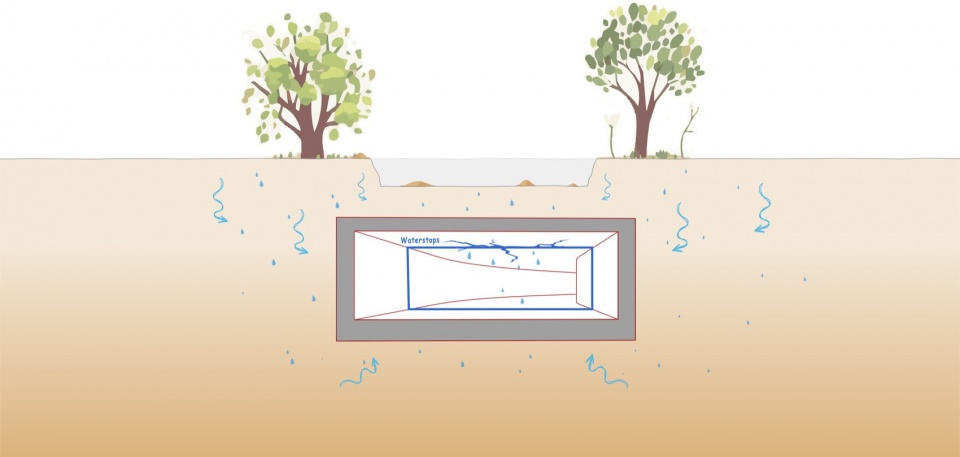
▼结构保护示意图,Structural Protection Diagram
Located along the central axis of the campus and above the tunnel underpass, the building’s form and visibility are deliberately enhanced to stand out from the surrounding urban clutter, establishing a local landmark.
▼学习中心鸟瞰,Aerial View of the Learning Center
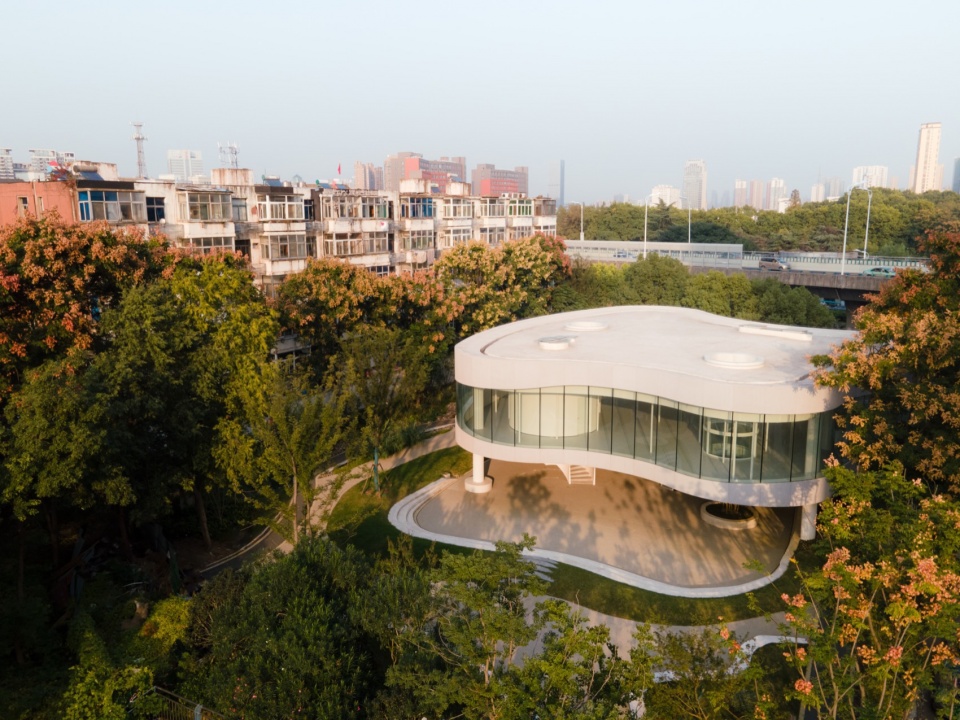
隧道界面上的架空体量Elevated Volume Above the Tunnel Interface
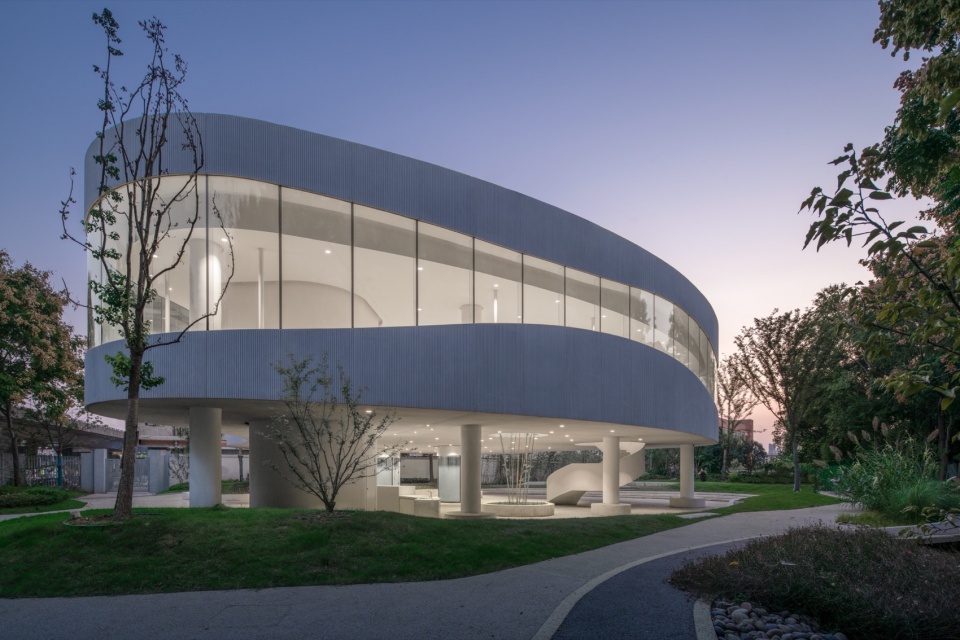
建筑本身的设计,我们选择了一种非常规的形状——平面轮廓为曲线的体量,由此曲线与周边边界形成的剩余空隙比较积极,具有流动的引导性,而非消极的夹缝。
After exploring a series of physical models, the final design adopts an unconventional volume with a curved footprint. These curves create active, fluid spaces along the boundary, rather than passive residual gaps.
▼中国科学技术大学中区学习中心,Learning Center – USTC Middle Campus
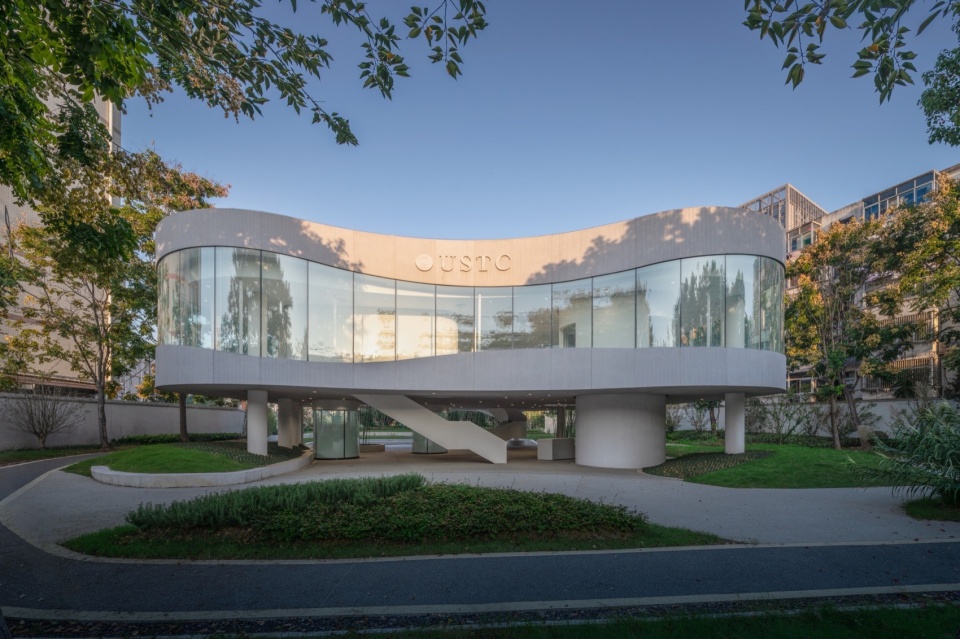
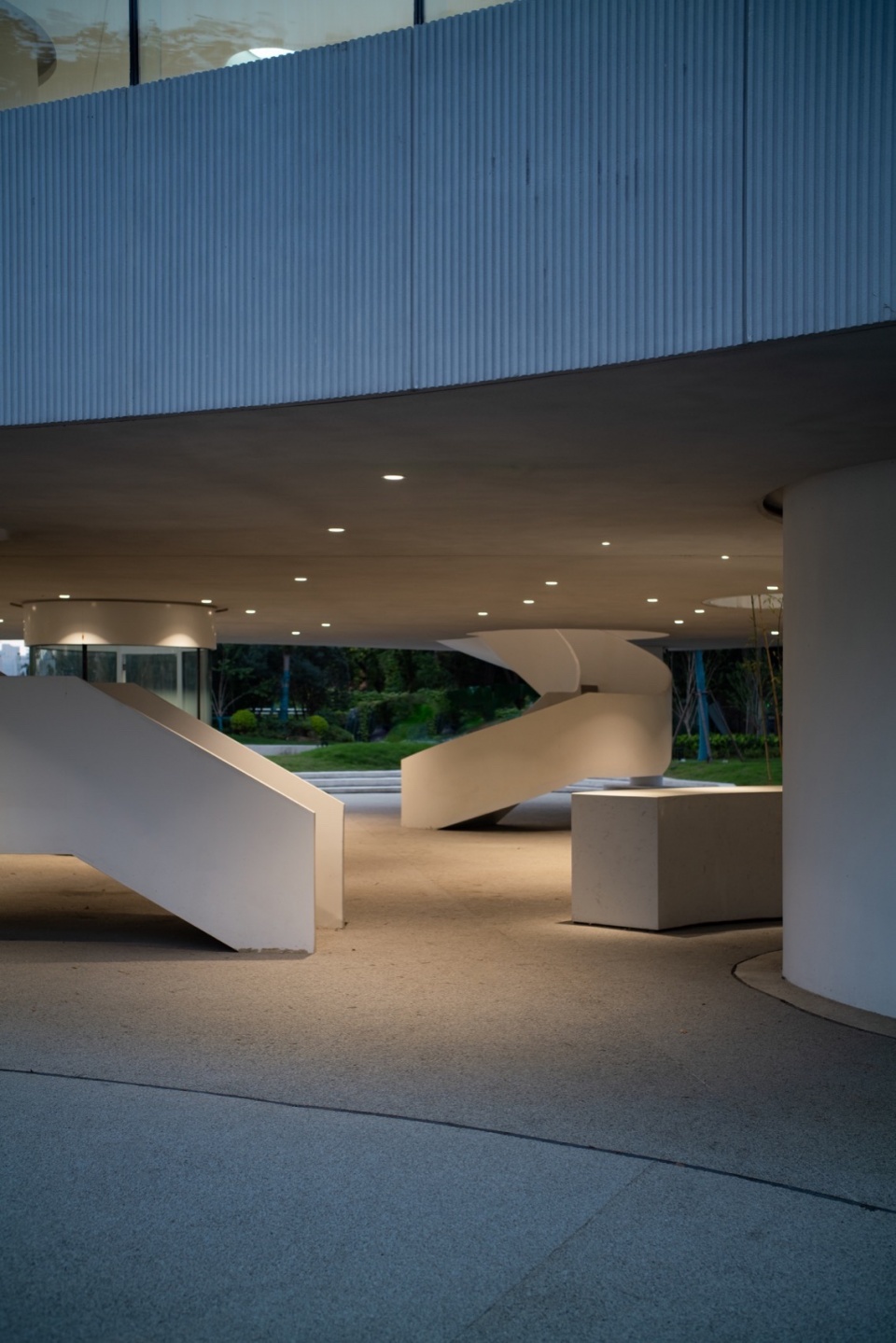
体量抬升、底部架空,使东侧城市道路到校园保持连贯的地表,建筑在绿化环境包围中犹如一个巨型的亭子,城市道路上的行人可顺畅得从建筑的下方到达场地的最西端,即隧道有顶部分的最西侧去眺望校园。架空区域的地面做微微下沉,成为绿化环境包围的空间聚集点。
The building is elevated, with an open ground floor that preserves a continuous surface between the eastern urban road and the campus. Surrounded by landscaped greenery, it resembles an oversized pavilion. Pedestrians can pass underneath the structure, reaching the western edge of the tunnel underpass cover to gain views of the campus. The slightly sunken ground beneath the elevated mass becomes a gathering point for informal outdoor activities.
▼架空体量与开放底层,Elevated Volume and Open Base
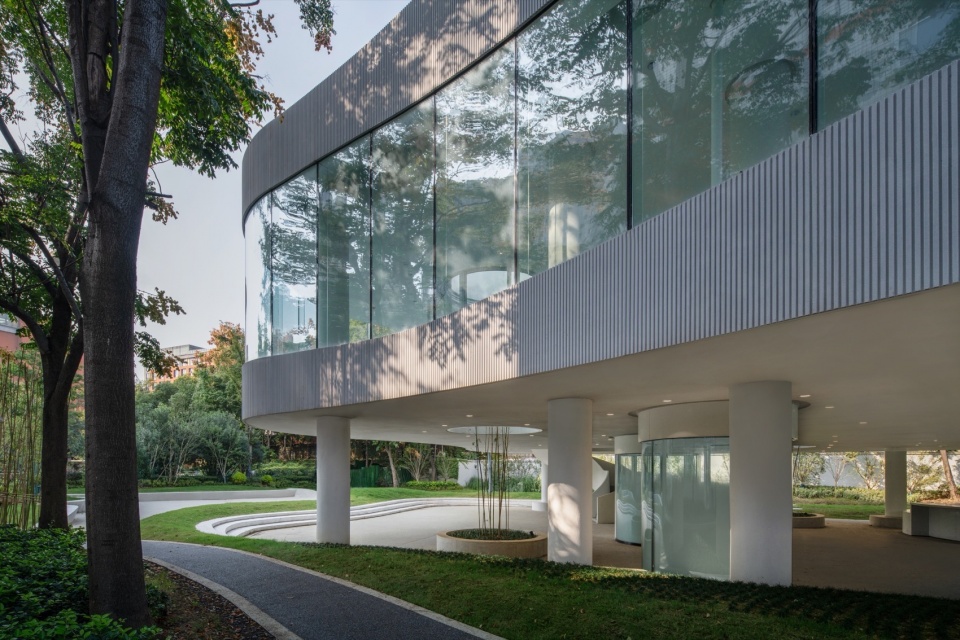
结构策略与城市策略、空间策越的整合Structural Strategy Integrated with Urban Logic
在技术实现的角度,在既有下穿通道之上如何新建房屋是首先要解决的难题。另外,下穿通道有三段厢涵单元在基地范围之内,过多土方移动造成厢涵单元的浮动会引起断缝处止水带破裂,从而引发下穿通道的漏水问题,这也是不允许发生的。
The primary technical challenge was how to build on top of the existing tunnel underpass. Within the site are three box culvert segments; excessive earthwork could disturb them and damage the waterproof joints, leading to leaks—an unacceptable risk.
▼中国科学技术大学中区学习中心,Learning Center – USTC Middle Campus
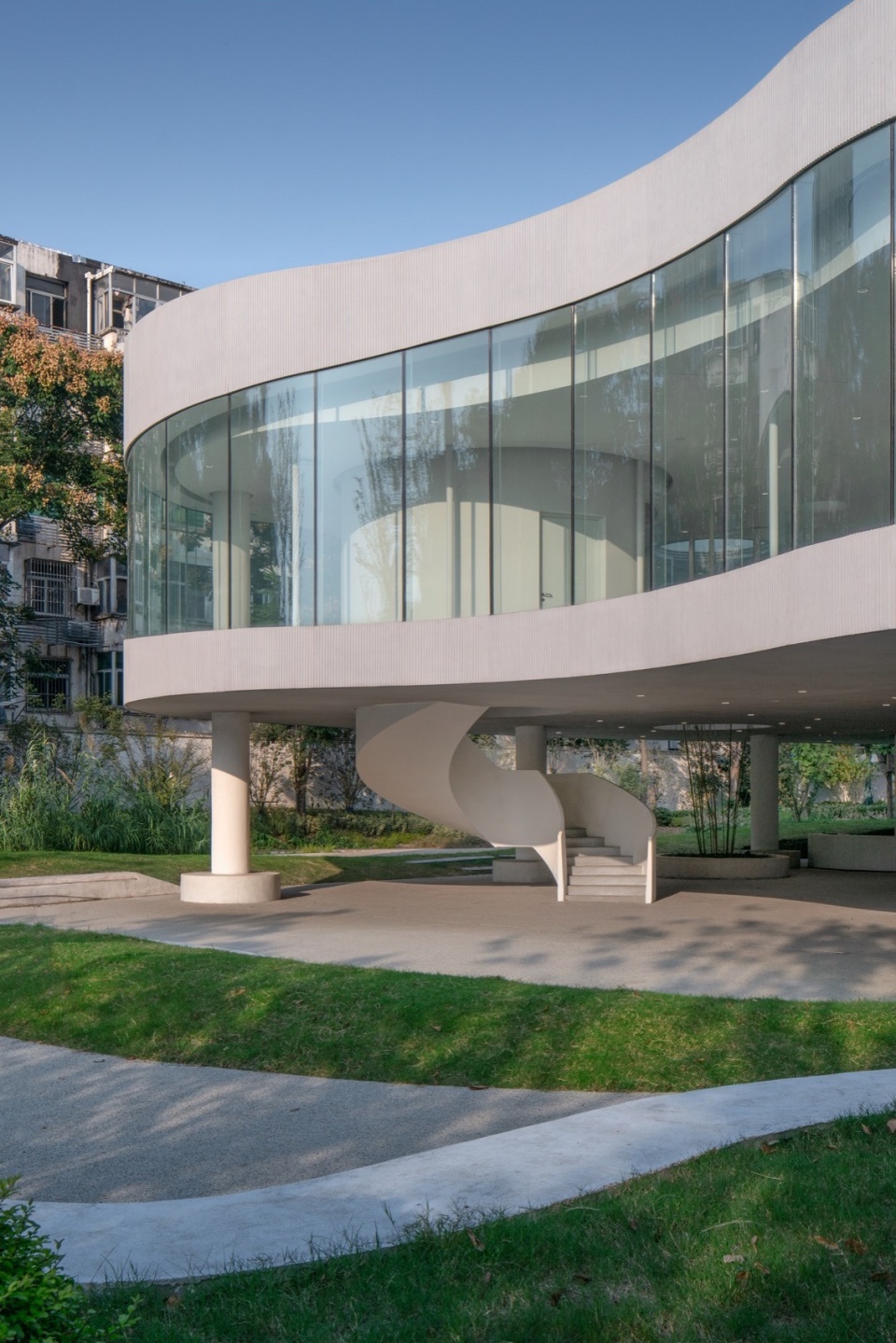
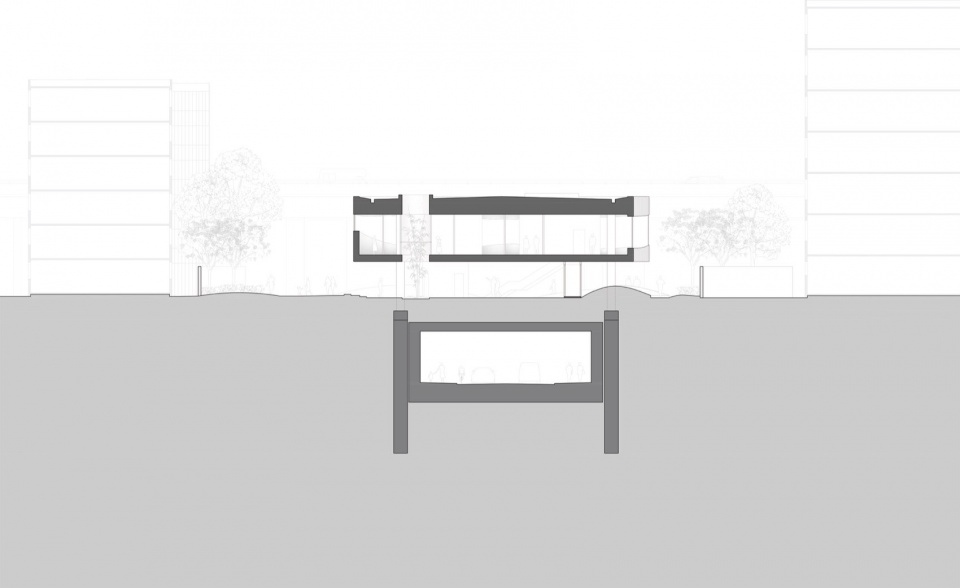
经多种方案比较,同时在下穿通道原设计单位的全力配合下,借用隧道两侧支护桩作为新建筑的基础,成了最优的解决方案。首层架空的空间策略对地面土壤的扰动最小,只布置面积极小的胶囊自习室和设备管理房,这与技术上的限定非常吻合。
After comparing multiple schemes, and with full support from the original tunnel engineers, the optimal solution was to reuse the tunnel’s soldier piles as the foundation for the new structure. The open ground-floor design minimizes disturbance to the soil and accommodates only compact elements like capsule study rooms and equipment rooms, perfectly aligning with technical constraints.
▼中国科学技术大学中区学习中心,Learning Center – USTC Middle Campus
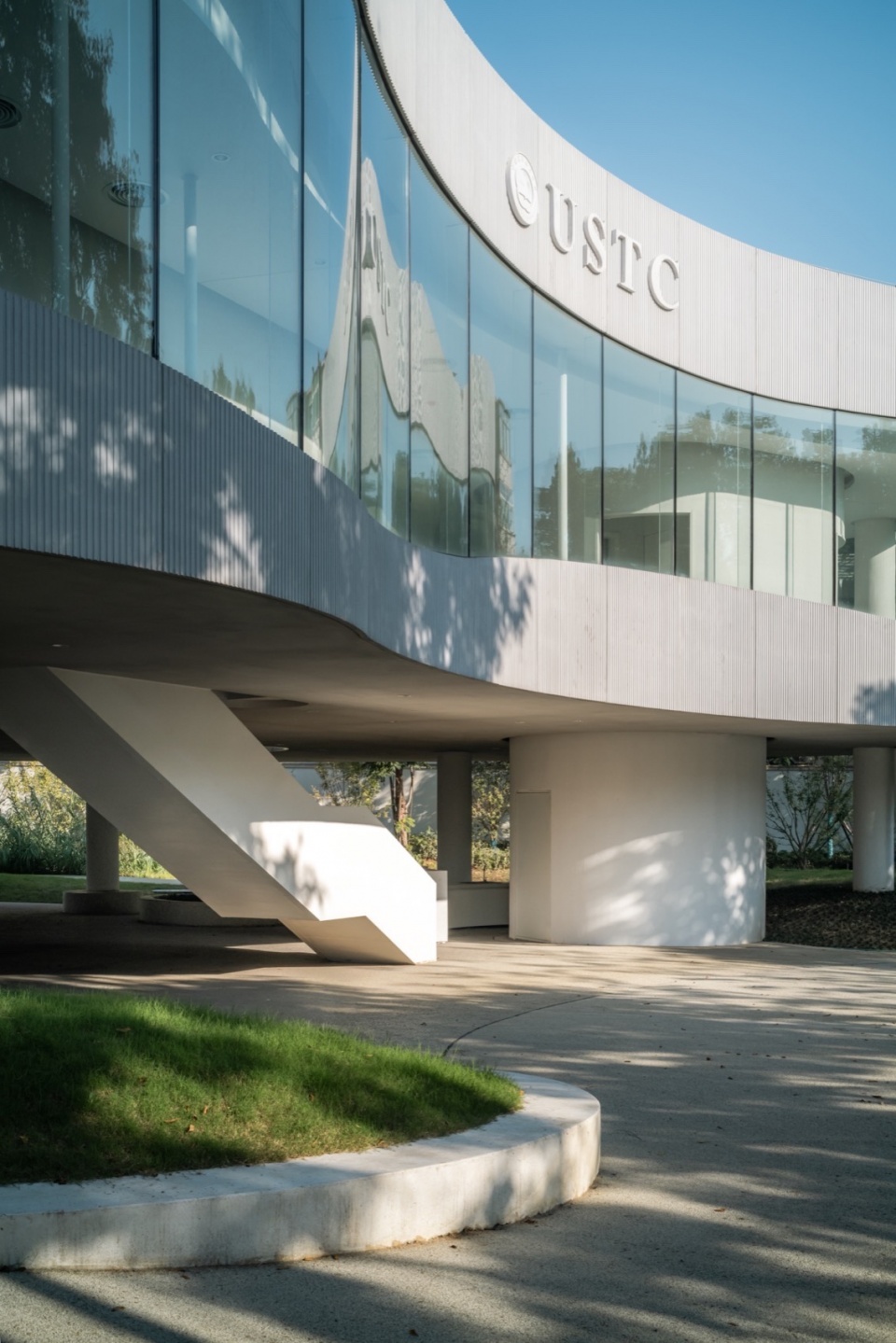
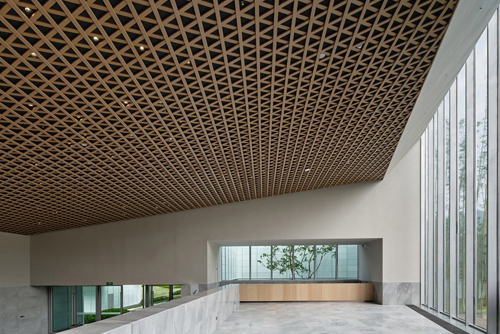
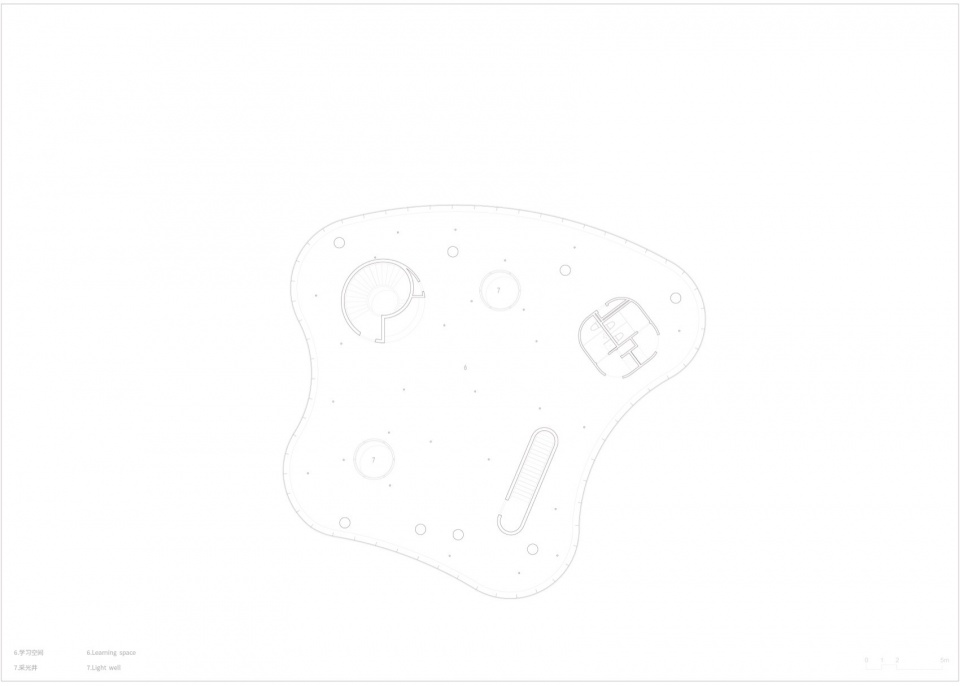
二层为主要的室内使用空间,只设置必要的功能盒子(卫生间、楼梯间),以开放的通用空间适应非正式学习和多种不同的使用场景。与之对应的结构的策略是,二层顶部由4根工字钢大梁来解决18米多的跨度问题。二层的楼板由均匀分布的吊柱吊挂实现,这种结构形式保持了空间的通透性;细小尺度的吊柱与人、与使用场景互动,有机会产生偶发的趣味性。
The second floor houses the main indoor program. It contains only essential service boxes (toilets, stairs), while the remainder is an open, multipurpose learning space. Structurally, the second-floor roof is supported by four large steel I-beams spanning over 18 meters, while the floor slab is suspended by evenly distributed hanging columns. This approach maintains spatial transparency, and the slender columns interact with users and activities, creating opportunities for unexpected moments of playfulness.
▼中国科学技术大学中区学习中心,Learning Center – USTC Middle Campus
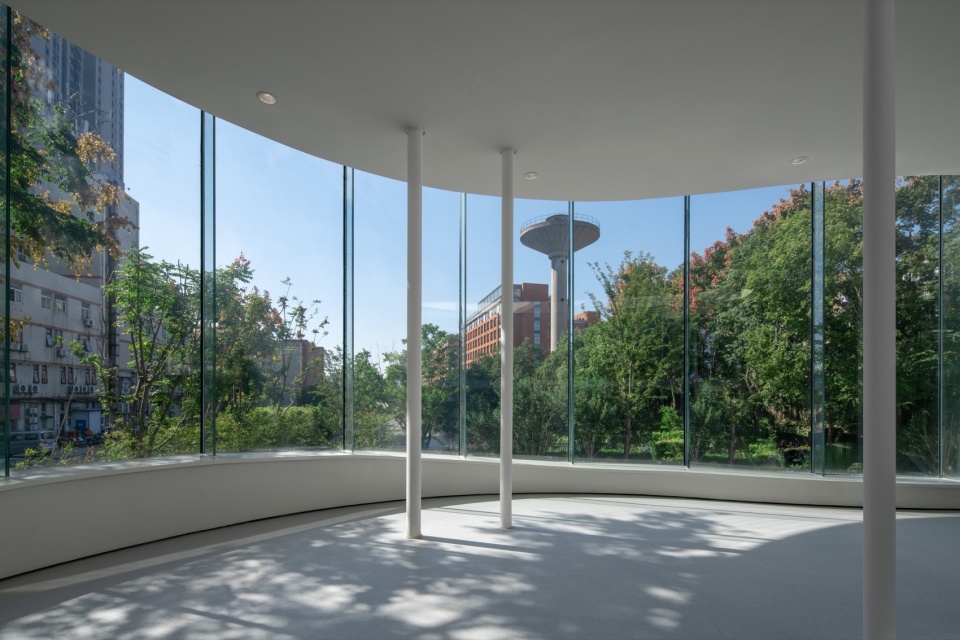
是亭亦是塔A Pavilion and a Beacon
二层平面中的两个光井,为二层内部和首层架空层摄取来自顶部的阳光,同时兼顾自然通风和消防排烟的要求。这样的设计操作也得以获得建筑外立面不设置开启窗扇的可能性,能够更好得隔绝来自邻近的高架快速路、居民楼、商业楼的噪音干扰。
Two vertical light wells bring daylight and natural ventilation to both floors, while also meeting fire safety requirements for smoke exhaust. This design allows the façade to remain as a continuous glass band without operable windows, effectively reducing noise from the adjacent expressway, residential blocks, and commercial buildings.
▼采光井为室内引入自然光,Light Wells Bring Natural Light into Interior
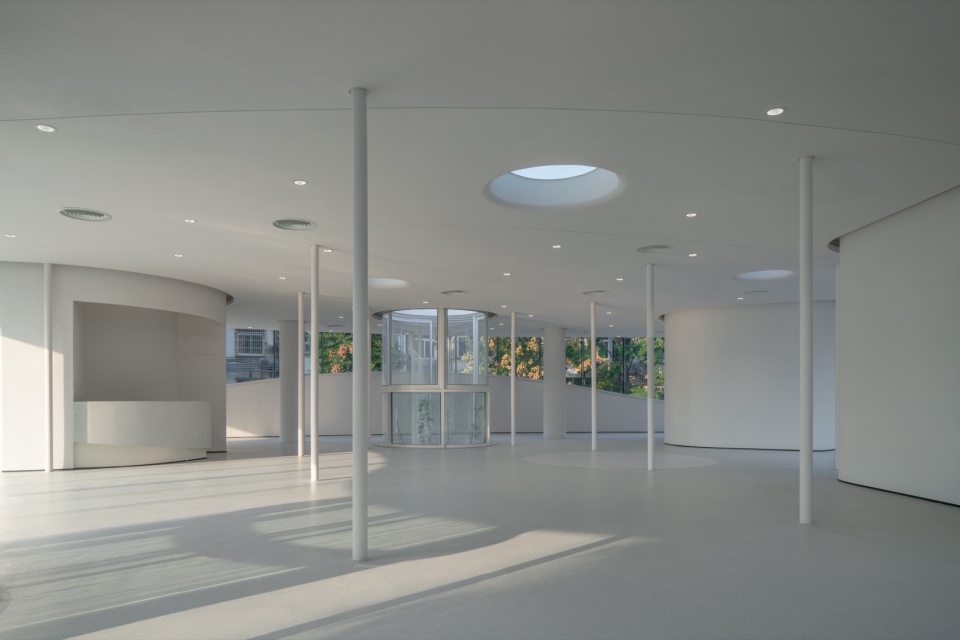
▼采光井为室内引入自然光,Light Wells Bring Natural Light into Interior
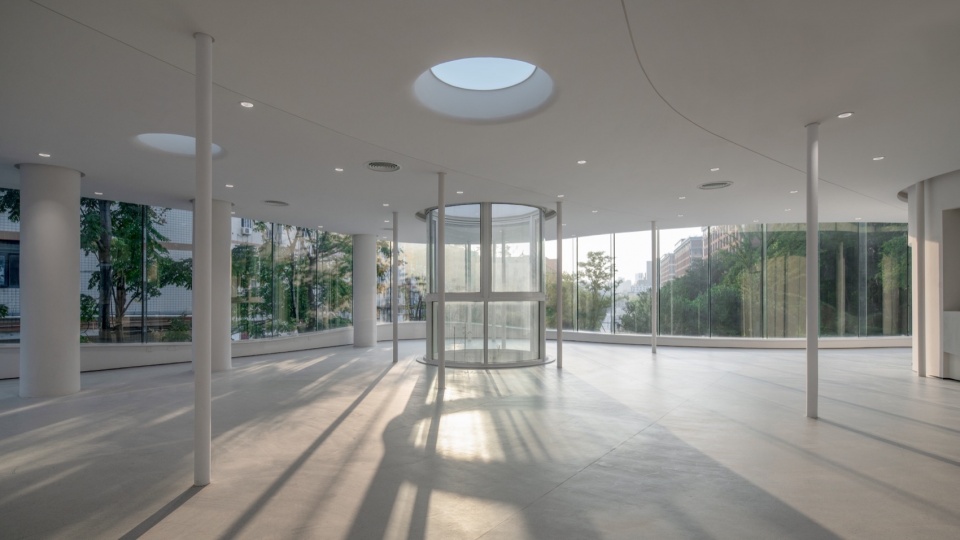
▼学习中心室内,Learning Center Interior
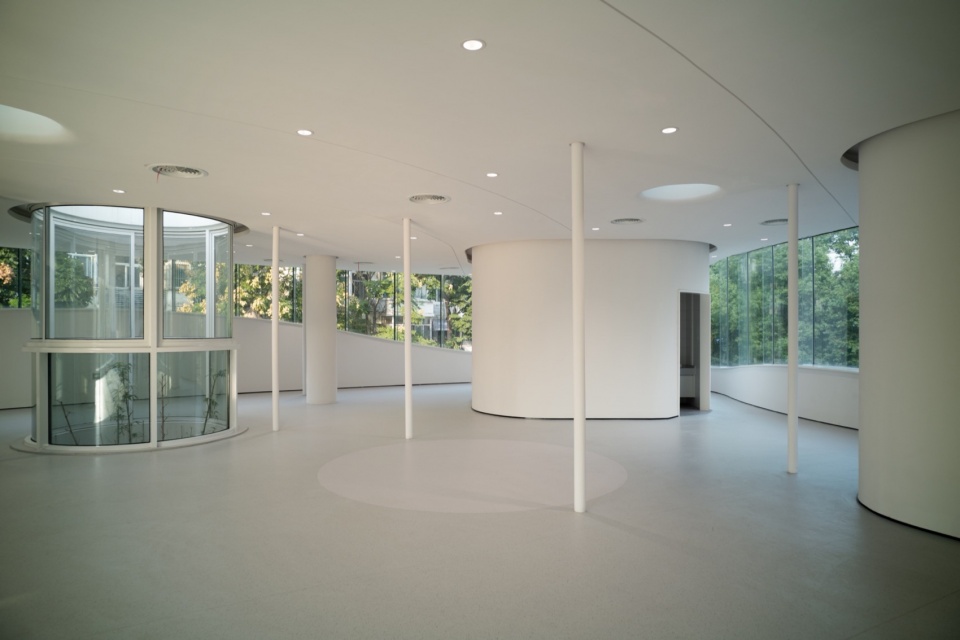
▼学习中心室内,Learning Center Interior
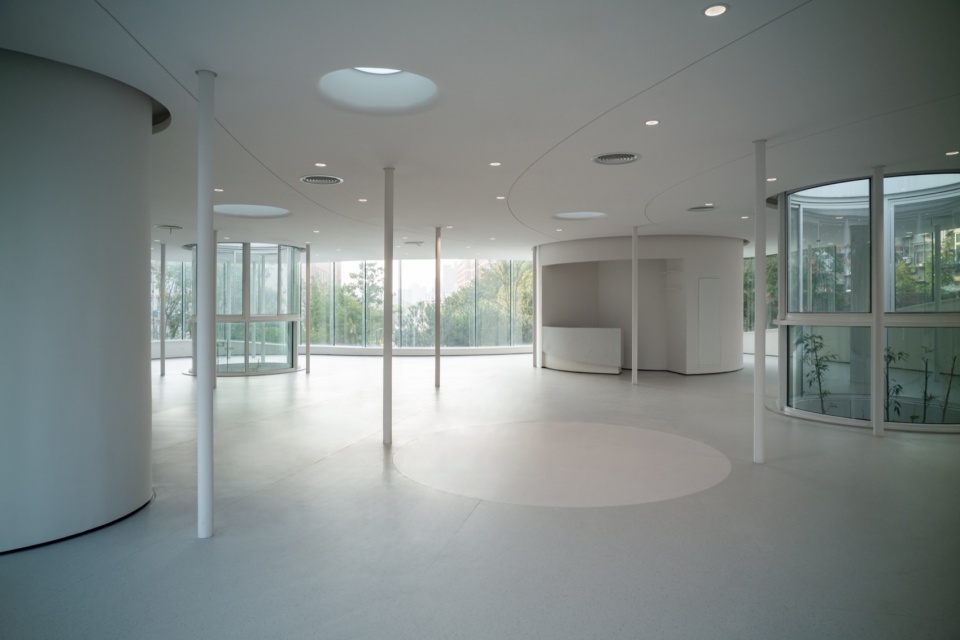
▼采光井为室内引入自然光,Light Wells Bring Natural Light into Interior
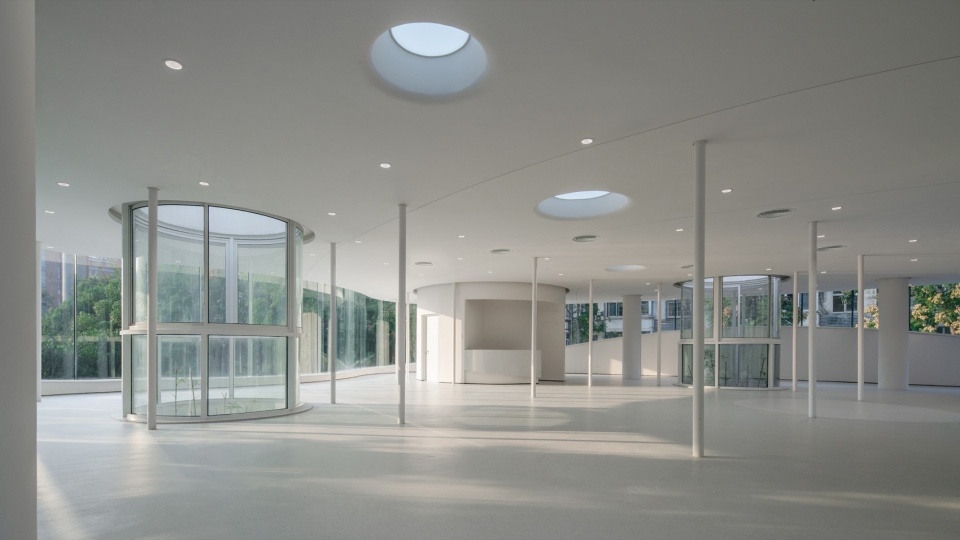
▼二层的空间通透性,Spatial Openness on Second Floor
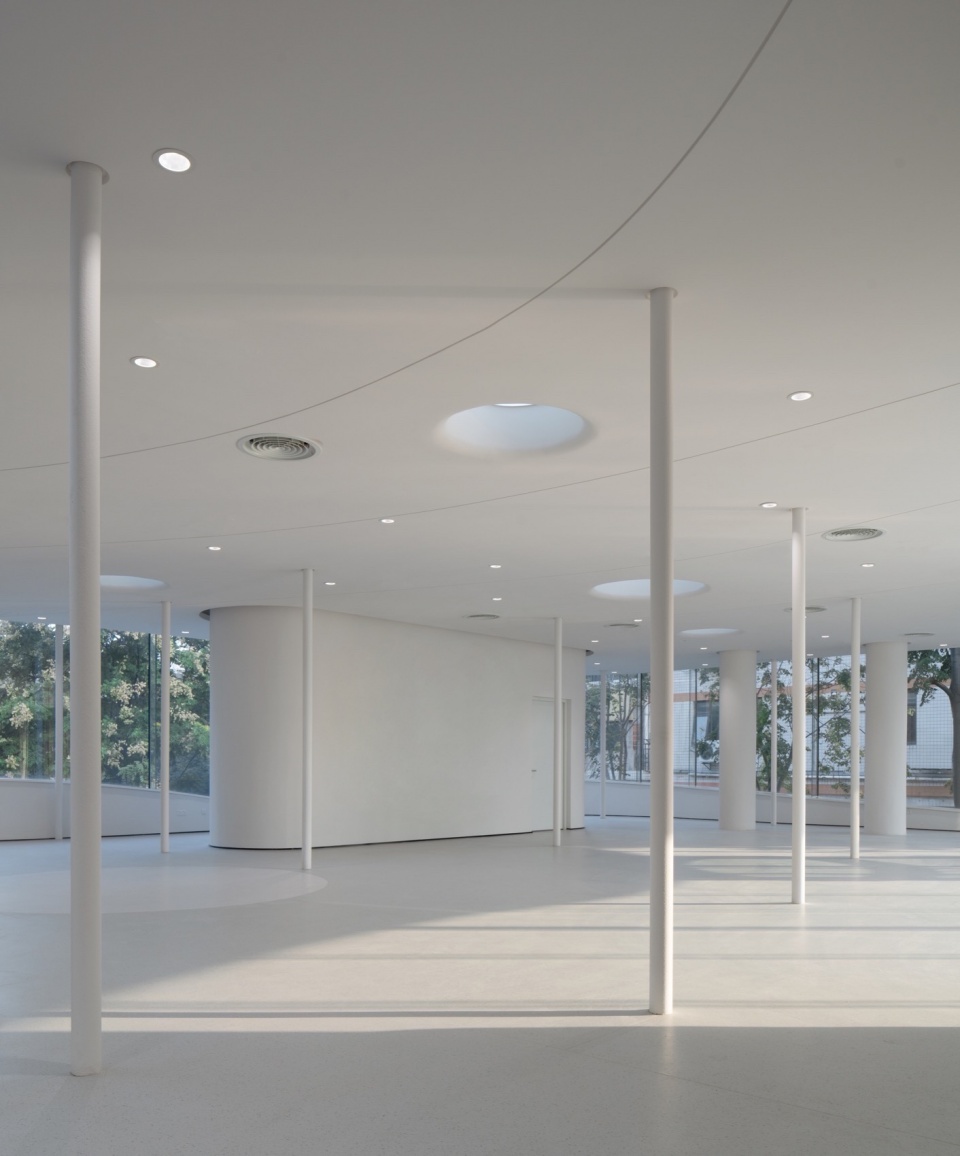
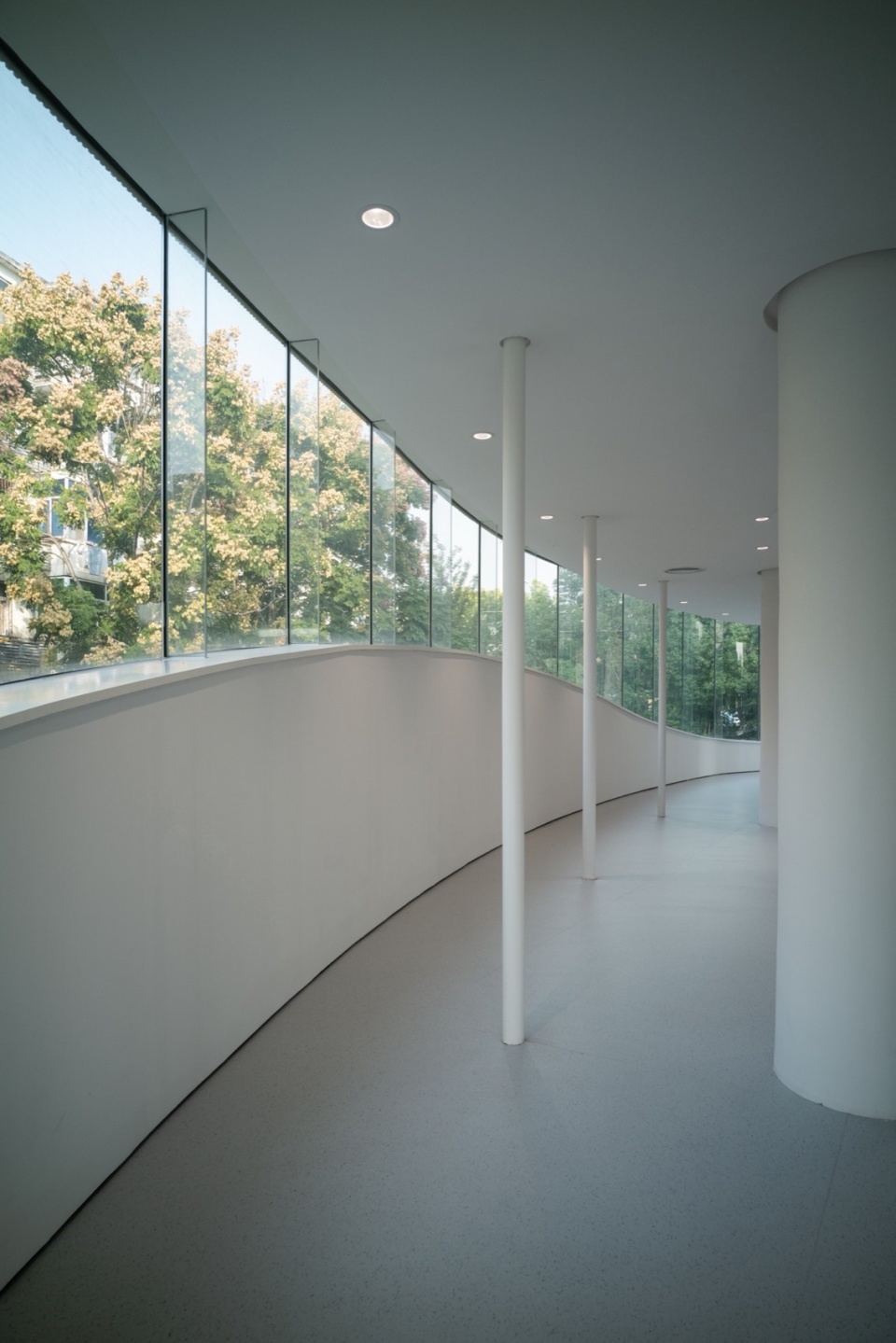
立面连续的玻璃将二层形体分为上下两部分,室内所见是连续不断的城市和绿化景象,犹如置身于至高处的风景亭之中。夜晚灯光亮起,加以同学们的学习场景,这里将成为中校区中轴线的一座灯塔。
The continuous glazing splits the second-floor mass horizontally. Inside, uninterrupted views of greenery and the cityscape create the feeling of being in an elevated pavilion. At night, the building glows with light and student activity, becoming a small lighthouse along the campus axis.
▼从室内眺望东校区校门,View of East Campus Gate from Interior
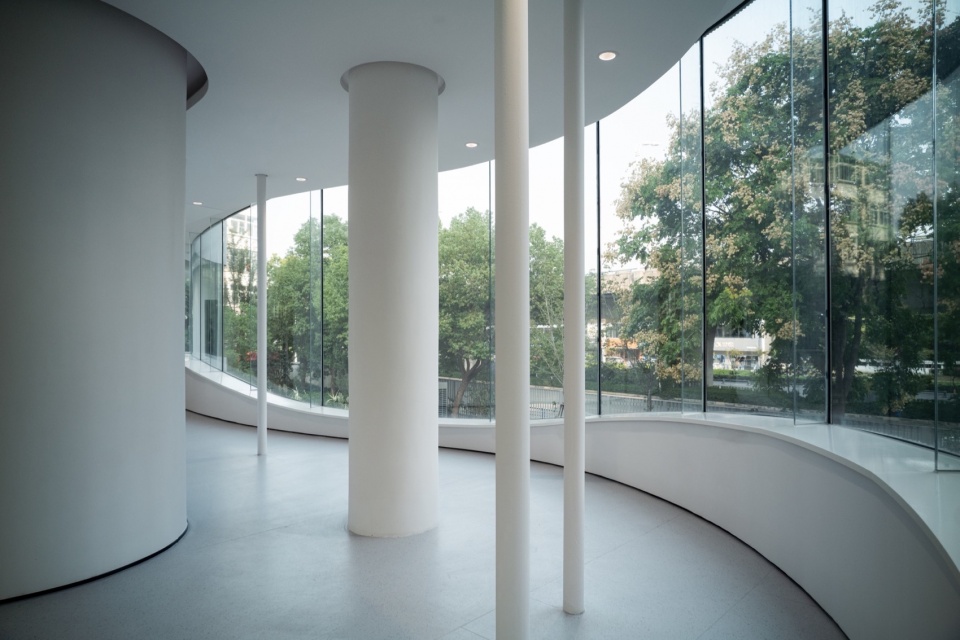
▼中国科学技术大学中区学习中心,Learning Center – USTC Middle Campus
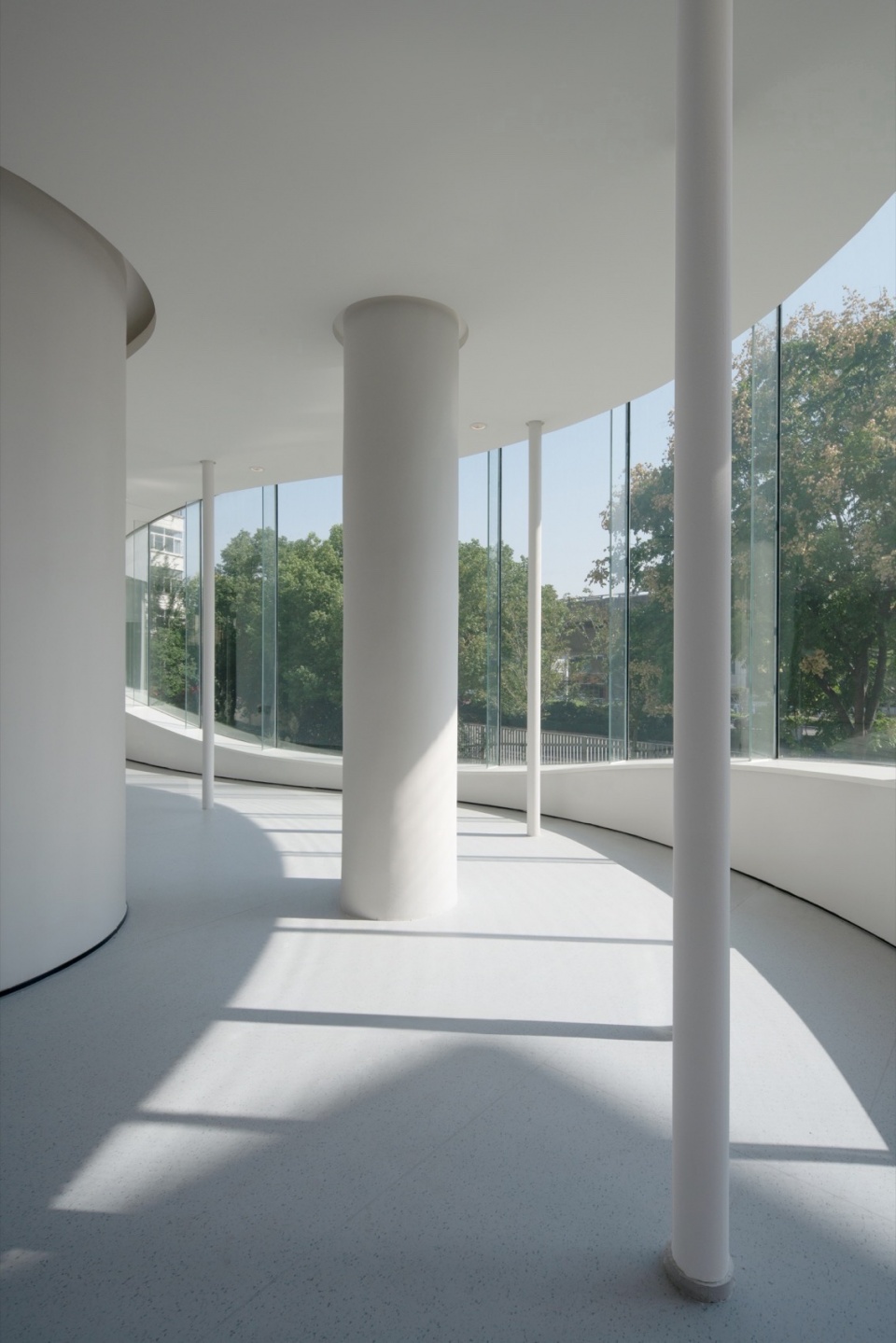
▼室内与连续绿化空间相连,Interior Opens to Continuous Greenery
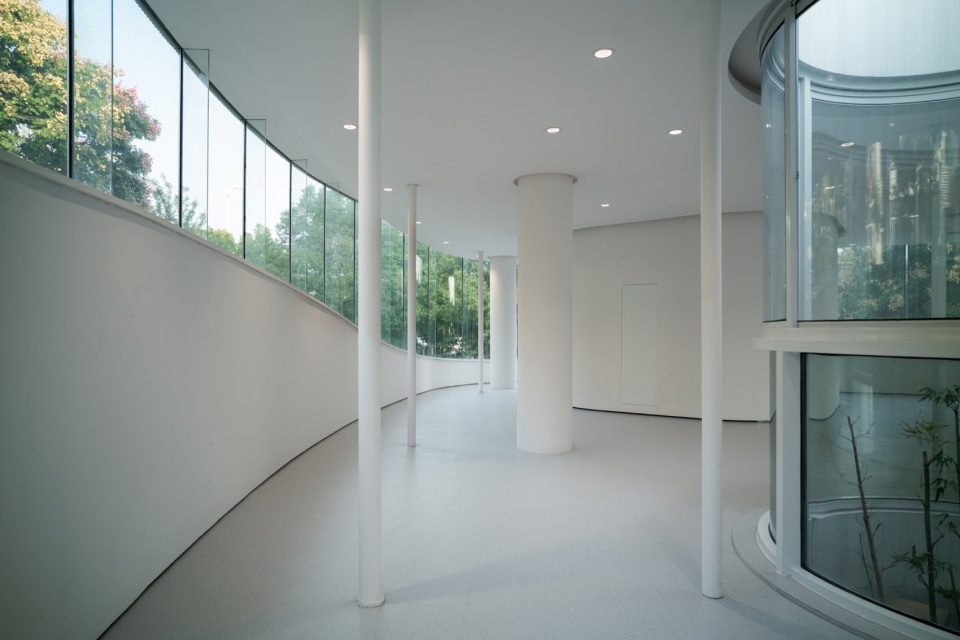
▼室内与连续绿化空间相连,Interior Opens to Continuous Greenery
场所的结构The Structure of the Place
项目完成一年有余,在接近尾声的阶段,建筑的使用功能发生变化,以学生非正式学习、交流的空间将转变为科技相关的展示空间;另一个未竟的遗憾是,项目跨越新冠疫情的始末,过程中校园边界是否打开的问题未再做探讨。
The project was completed over a year ago, and as it nears its final stages, its function has shifted from an informal student learning and communication space to a technology exhibition space.
▼中国科学技术大学中区学习中心,Learning Center – USTC Middle Campus
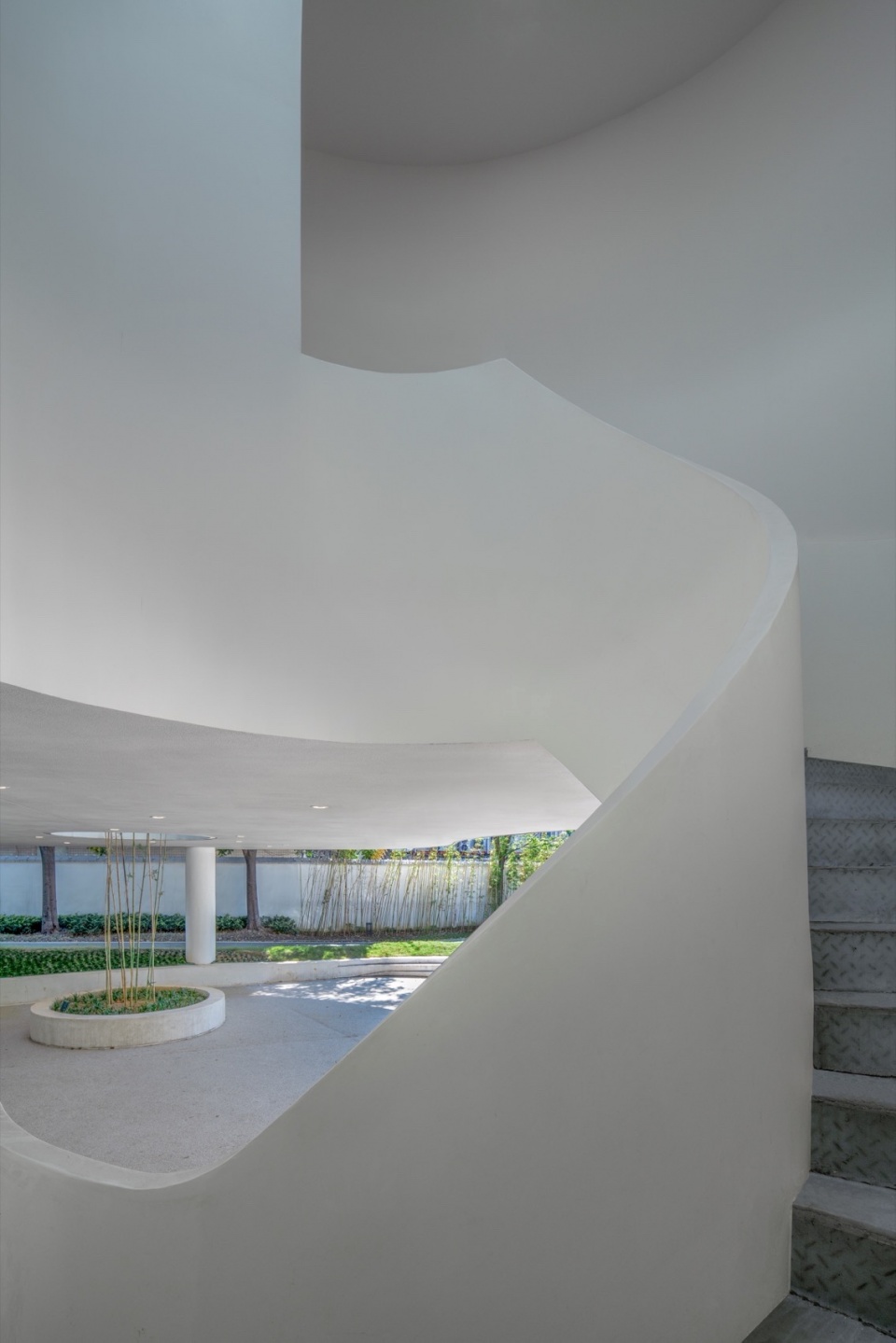
▼中国科学技术大学中区学习中心,Learning Center – USTC Middle Campus
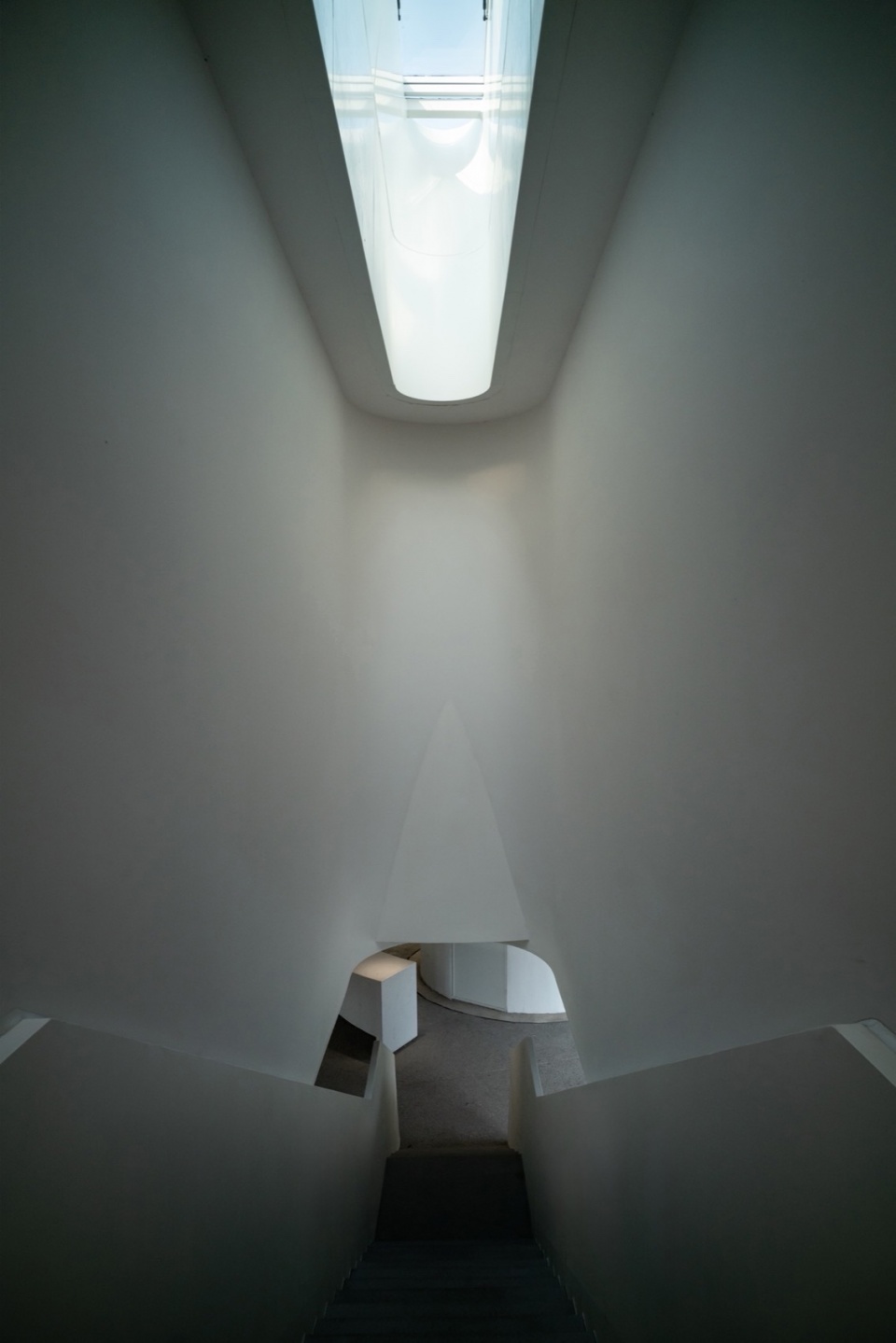
但我们认为,这些变动并不影响它成为城市肌理构成的积极要素。以城市和校园空间结构为思考的基点,以基地限制引发的结构概念,最终导向的结果是建立一个场所的结构,它所塑造的空间框架并不随功能的变化而变动。
However, we believe that these changes do not affect its role as a positive element of the urban fabric. Rooted in urban and campus spatial logic, and shaped by site-specific structural constraints, the project ultimately establishes the structure of the place—a framework that transcends programmatic changes.
▼中国科学技术大学中区学习中心,Learning Center – USTC Middle Campus
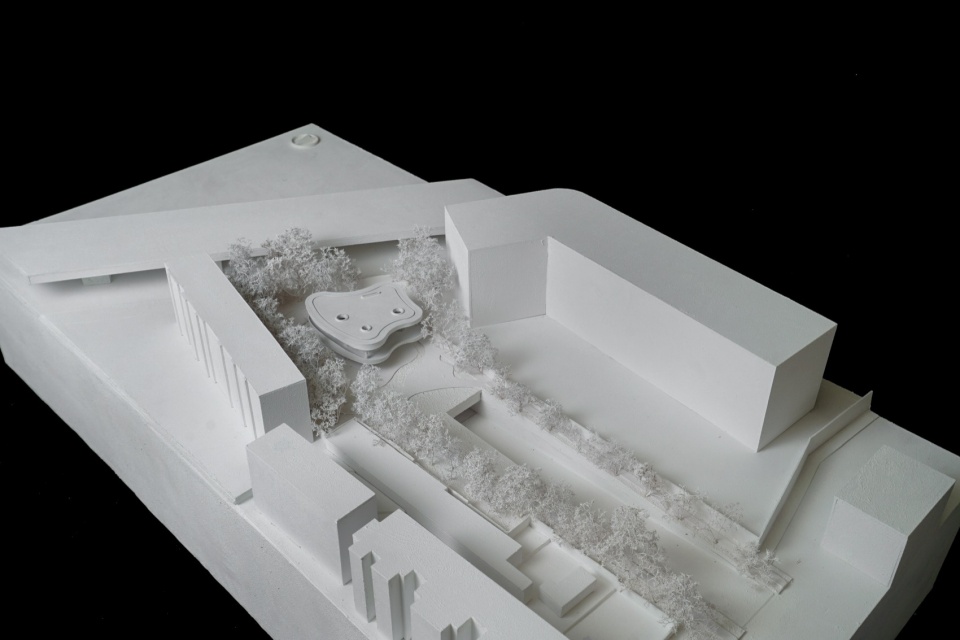
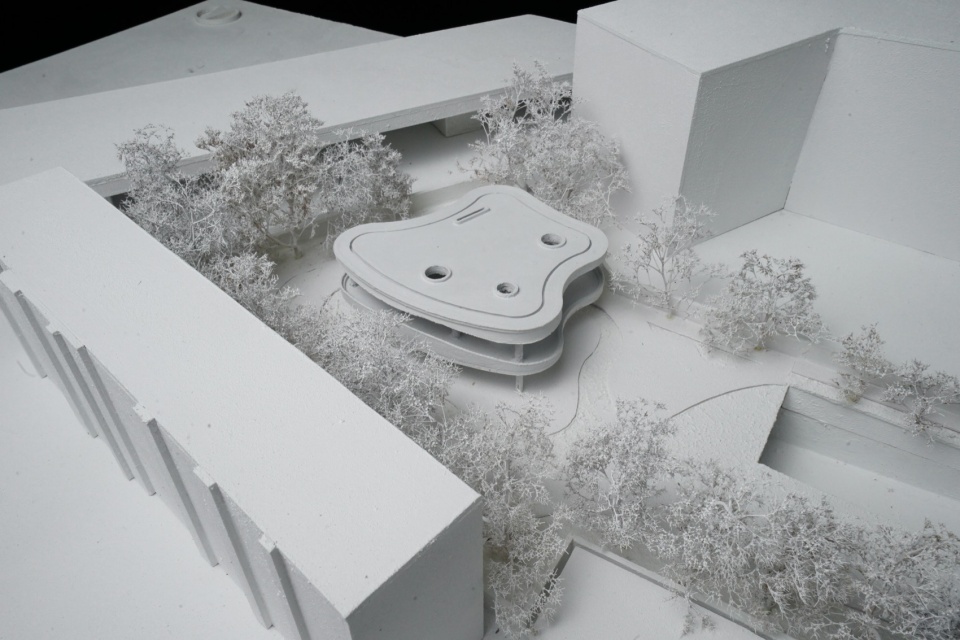
▼学习中心模型,Model of the Learning Center
▼学校分区卫星图,Satellite Map of Campus Zones
▼基地范围图,Site Boundary Map
▼基地位置,Site Location
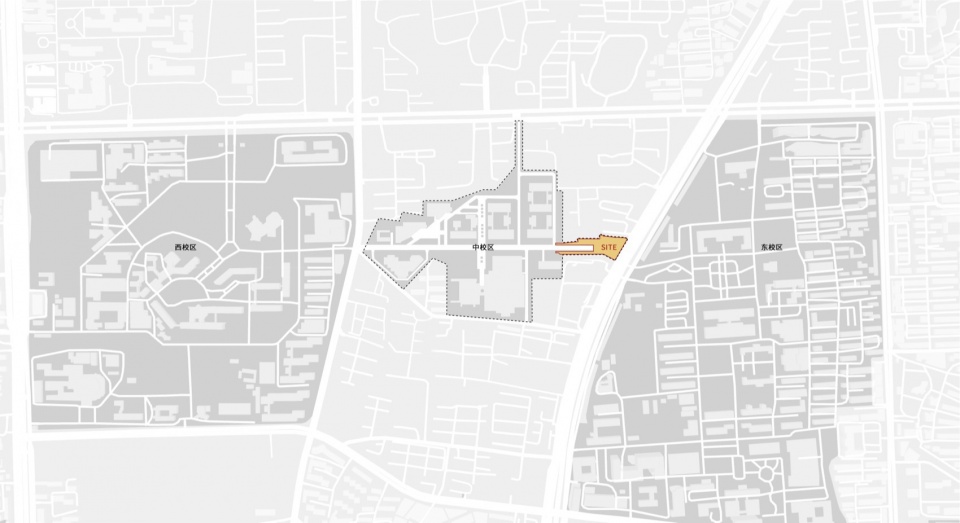
▼流线分析图,Circulation Diagram
▼可建设范围分析图,Construction Feasibility Analysis Diagram
▼校园管控范围示意,Campus Boundary Diagram
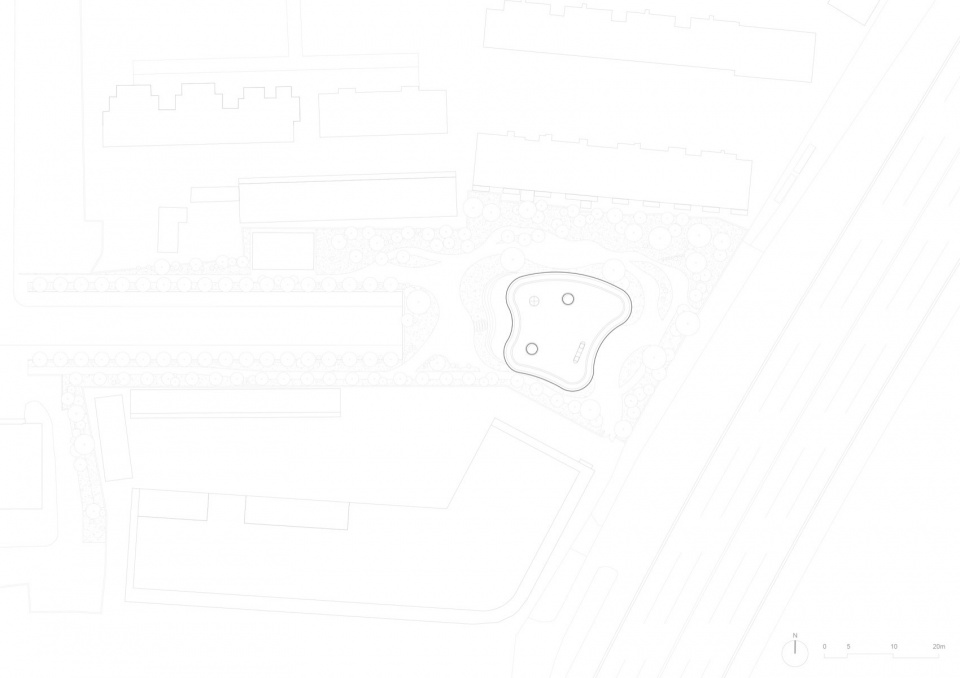
▼总平面图,Site Plan
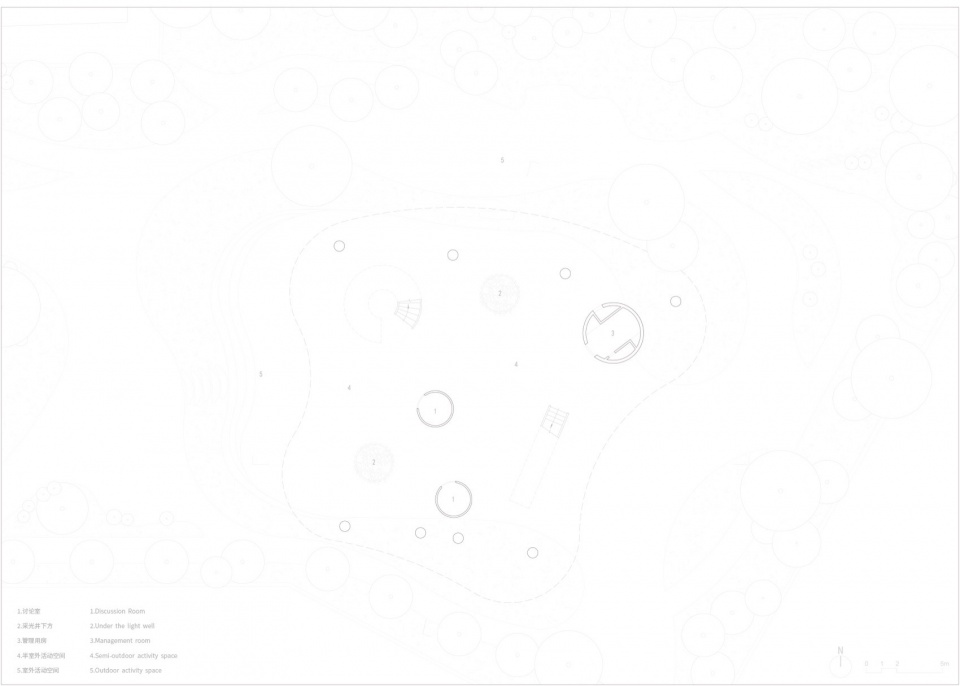
▼首层平面图,Ground Floor Plan
▼二层平面图,Second Floor Plan
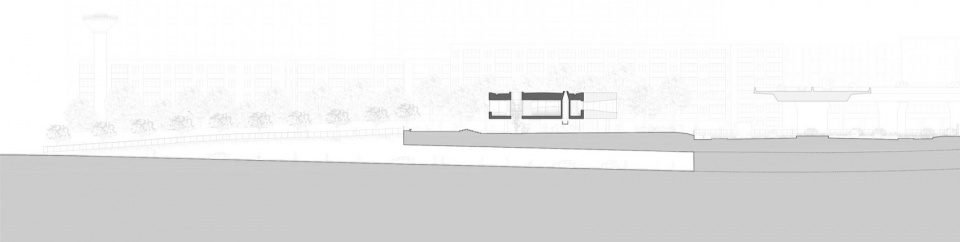
▼东西场地剖面,East-West Site Section
▼南北剖面,North-South Section Diagram
▼隧道构造关系图,Tunnel Structure Diagram
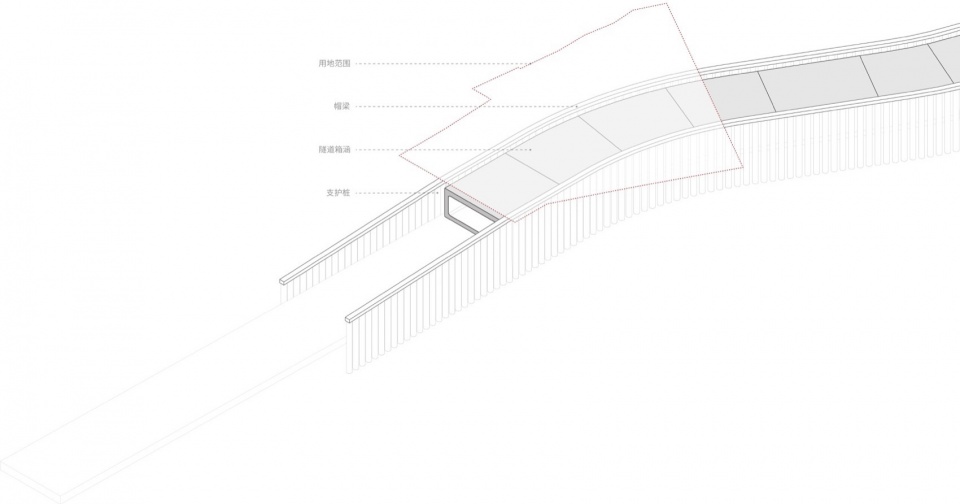
▼剖面概念图,Section Concept Diagram
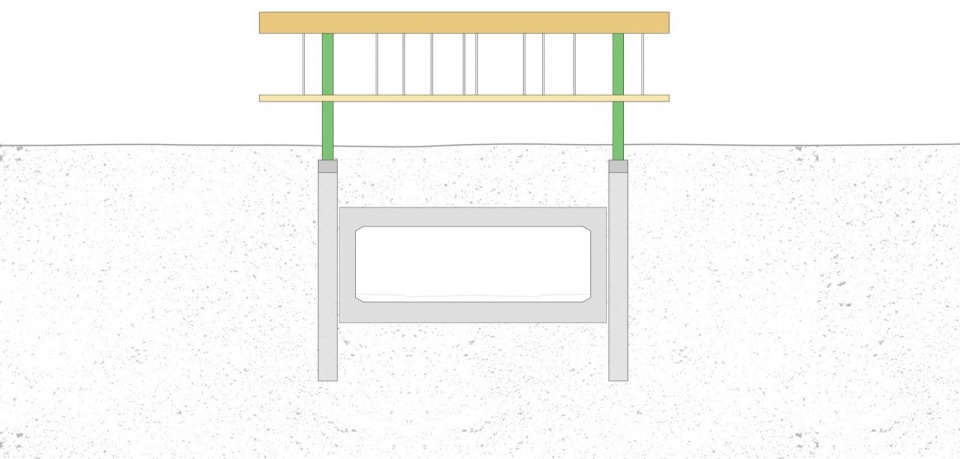
▼结构示意图,Structural Illustration
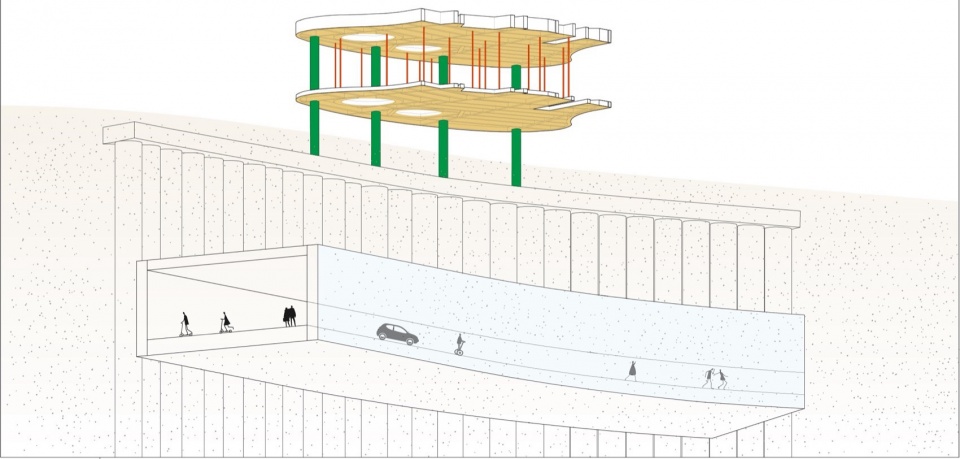
▼箱涵剖面,Culvert Section Diagram
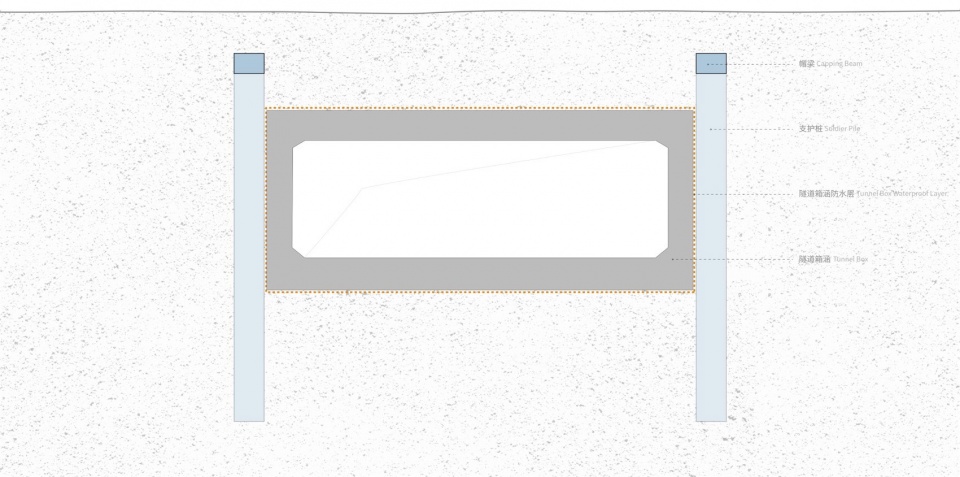
▼结构保护示意图,Structure Protection Illustration
项目概况
PROJECT FACTS
Project Name: Learning Center, Central Campus of University of Science and Technology of China
Client: University of Science and Technology of China
Building Area: 1,100 m²
Site Area: 4,008 m²
Location: Shushan District, Hefei, Anhui Province, China
Design Period: 2019–2021
Construction Period: 2021–2025
CREDITS
Architectural Design: Heimat Architects
Principal Architects: ZHANG Dong Guang, LIU Wenjuan
Design Team: ZHOU Ying, WANG Xiao, MENG Chao, LIANG Rongseng, ZHANG Yihan (Drawing), MA Tianyang (Drawing), ZHANG Wenjing (Drawing)
Structural Design: LIU Su / Beijing Shouang Structural Studio
Structural Consultant: MENG Xianchuan
Construction Drawings (Main Structure): China IPPR International Engineering Co., Ltd.
Design Team: ZHAO Xixi, MENG Huachao, QIN Yali, ZHANG Yifan, WANG Wan, QIN Yuqiang, HUANG Ruixiao
Construction Drawings (Foundation): Hefei Municipal Engineering Design and Research Institute Co., Ltd.
Design Team: ZHANG Xingqi, GU Yongtao
Interior Design: China IPPR International Engineering Co., Ltd.
Design Team: ZHANG Kai, ZHANG Qiang
Landscape Design: Shanghai Landscape Architecture Design & Research Institute Co., Ltd.
Design Team: WU Min, DU Weixuan
Construction: Zhong’an Zhengkai Construction Holding Group Co., Ltd.
Landscape Construction: Anhui Wanlou Construction Engineering Co., Ltd.
Photography: Schranimage, WEI Wei