阿里巴巴西溪园区C区景观设计,杭州 / ASPECT Studios
ASPECT Studios 自豪地发布一个开创性的项目——位于杭州的阿里巴巴西溪园区C区,该项目在自然环境与建筑环境的融合方面树立了新的标准,通过打造一系列郁郁葱葱的亲生物空间,可容纳30,000人。这一作品致力于在复杂的城市环境中,树立将沉浸式自然景观融入建筑的设计新标准。作为未来城市发展的典范,它体现了ASPECT Studios 致力于打造自然系统与人文空间相融合的场所,激发社会活力,促进生物多样性,并增强生态韧性。
ASPECT Studios is proud to announce the opening of a groundbreaking project that establishes new standards in the integration of the natural and built environments. Alibaba Xixi Campus (Park C) in Hangzhou serves the needs of a community of 30,000 people by providing a network of lush, biophilic spaces. This work strives to set a new standard for integrating immersive, nature-based landscapes within complex built environments. As a blueprint for future urban developments, it exemplifies ASPECT Studios’ commitment to designing places where natural systems and human-centered spaces converge, fostering social vibrancy, biodiversity, and ecological resilience.
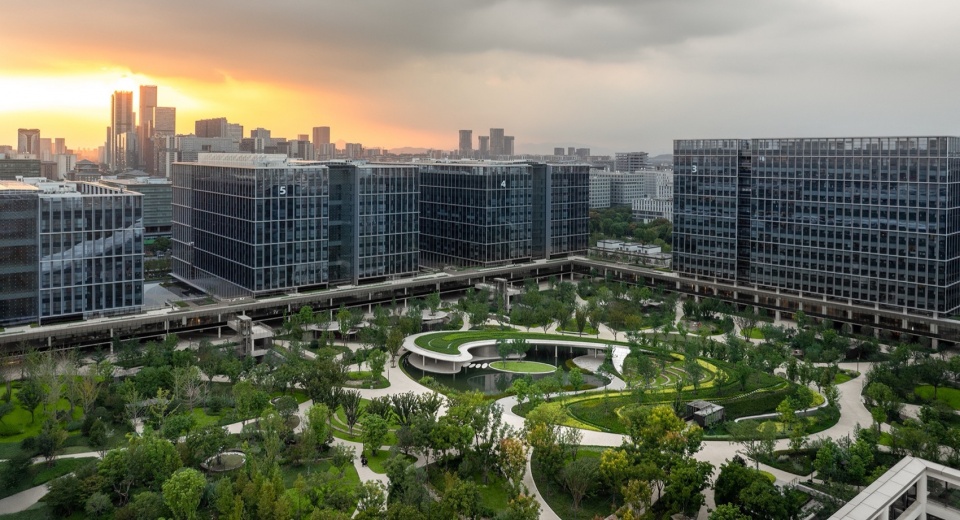
▼鸟瞰,aerial view
ASPECT Studios设计总监Stephen Buckle表示,C区象征着亚洲对城市环境中复杂、多层次自然环境的日益重视。“这个项目代表了亚洲复杂建筑环境潜力的动态转变,拥抱城市环境中自然系统的动态美。”
Stephen Buckle, Design Director of ASPECT Studios, said Park C symbolises a growing appreciation in Asia for complex, multilayered natural environments in urban settings. “This project represents a dynamic shift in the potential of the complex built environment across Asia, embracing the dynamic beauty of natural systems in the urban environment,” he said.
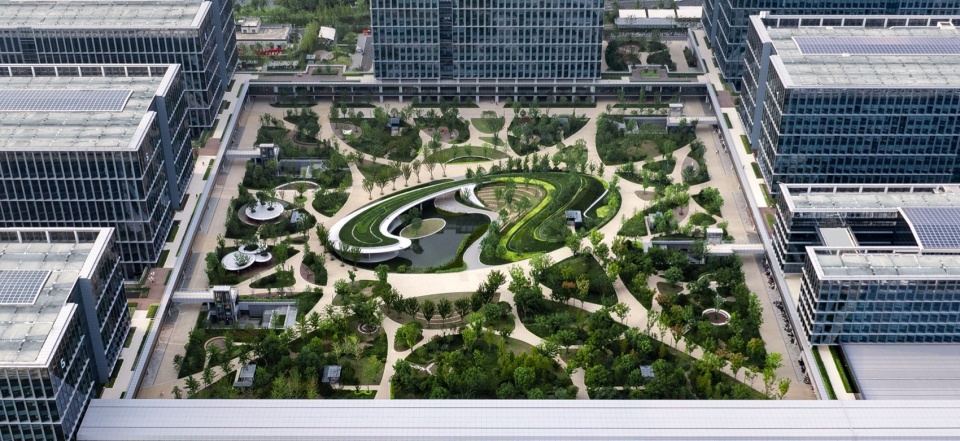
▼顶视图,top view
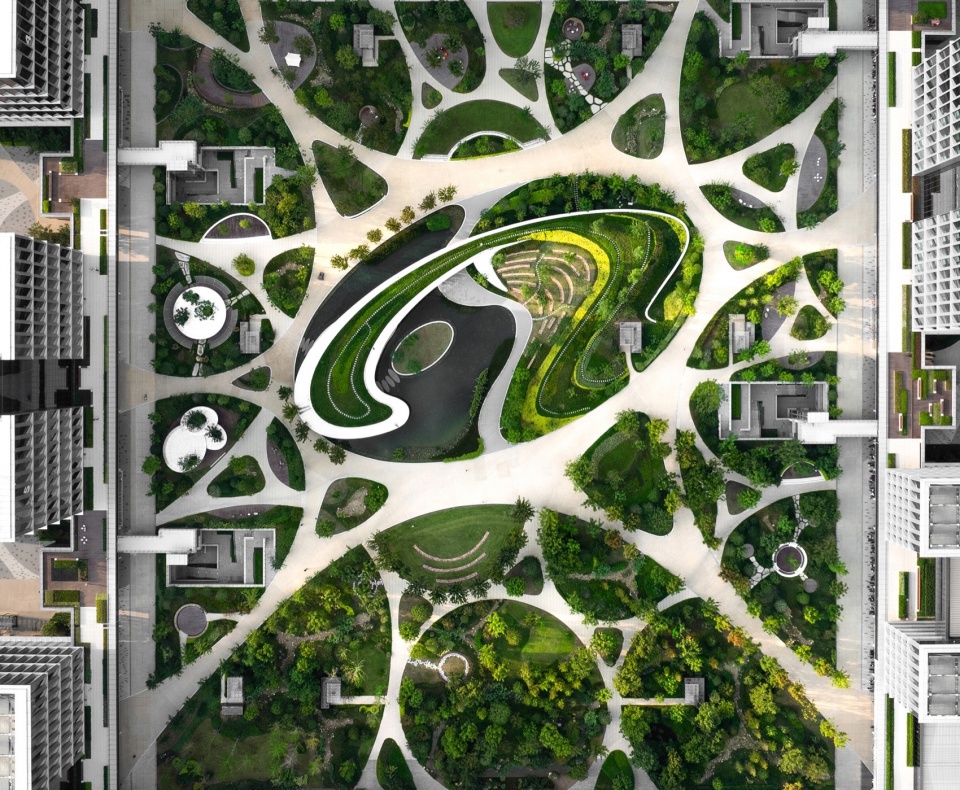
灰色之上的绿色 Green on grey
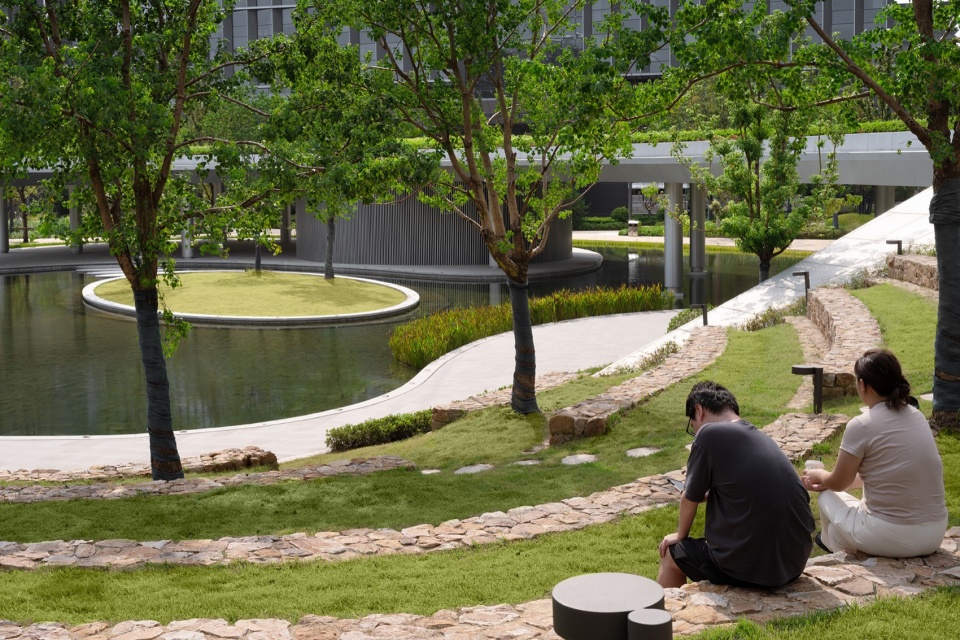
C区的占地面积26公顷,其独特之处在于,整个公园完全建在一个多层平台结构之上。通过复杂的工程解决方案、优化的土壤深度、创新的水回收循环系统以及适应性种植策略,这里成功打造了一个生机勃勃的自然庆典空间。
▼分析图,analysis diagram
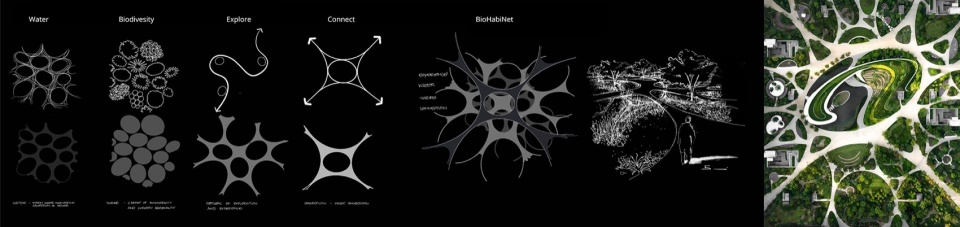
The 26-hectare Park C is remarkable for being built entirely atop a multistorey podium structure. Sophisticated engineering solutions, optimised soil depths, innovative water harvesting systems and adaptive planting strategies have enabled the creation of a flourishing celebration of nature.
▼顶视图,top view
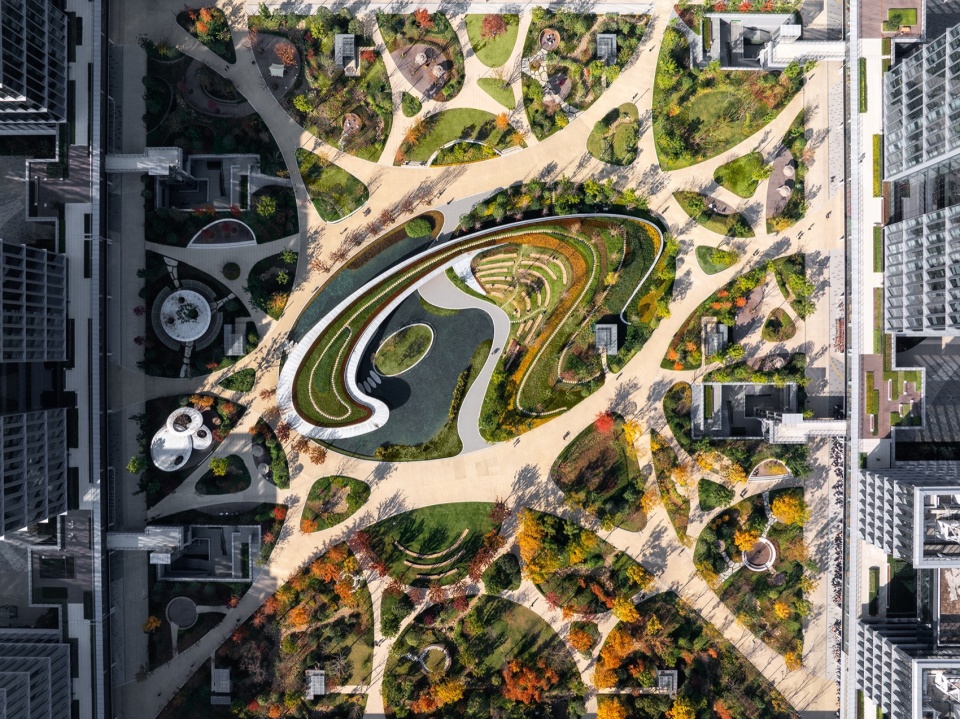
▼秋日景观,autumn view
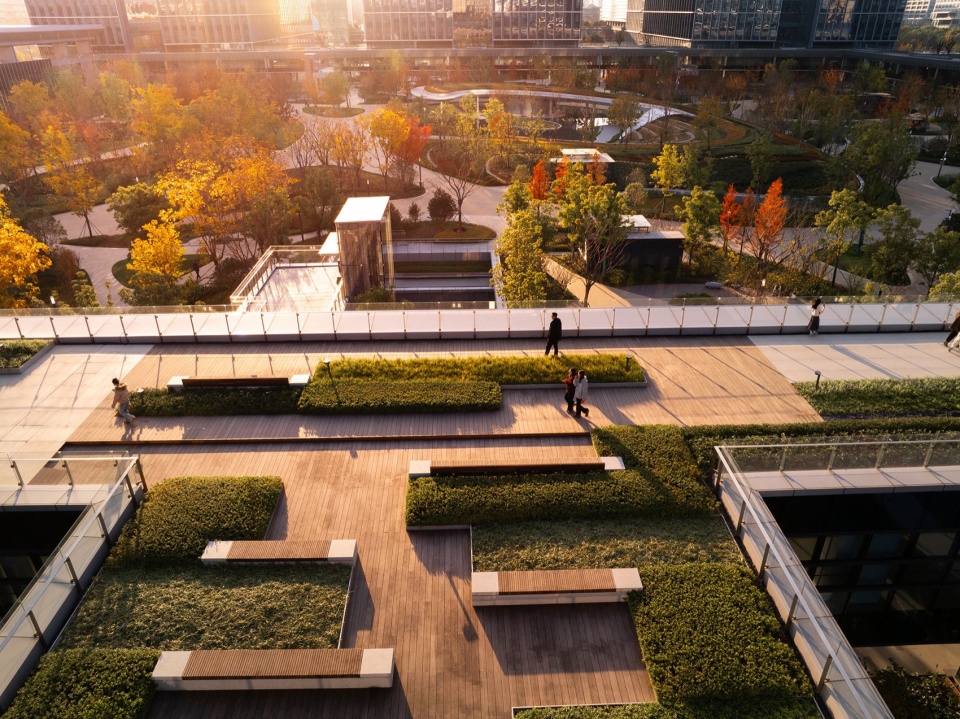
▼步道与绿植,walkway and landscape
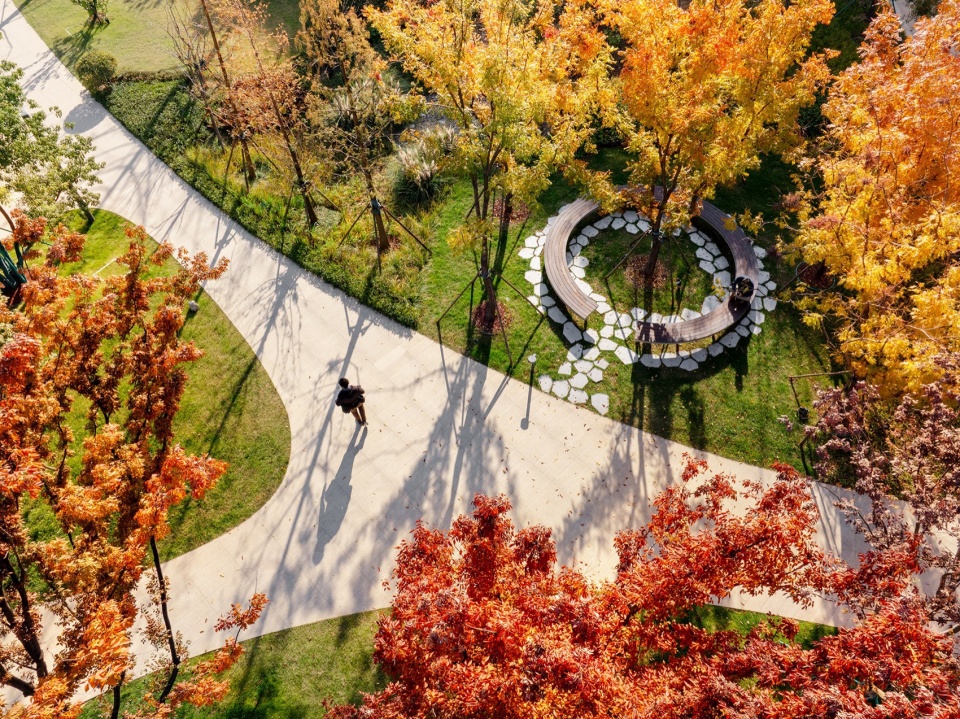
▼半鸟瞰,half aerial view
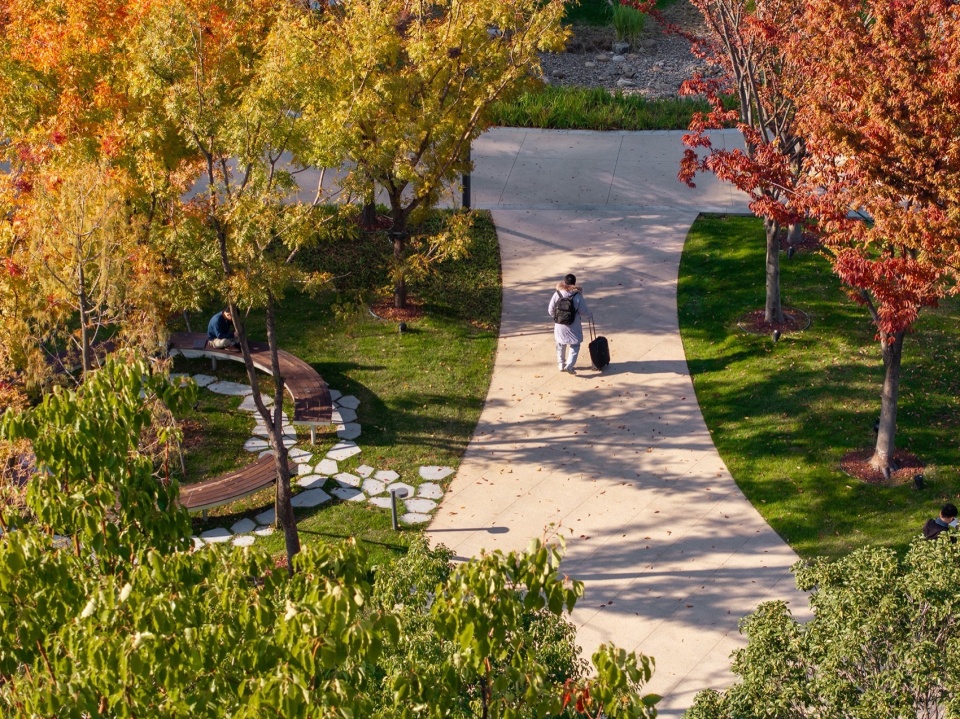
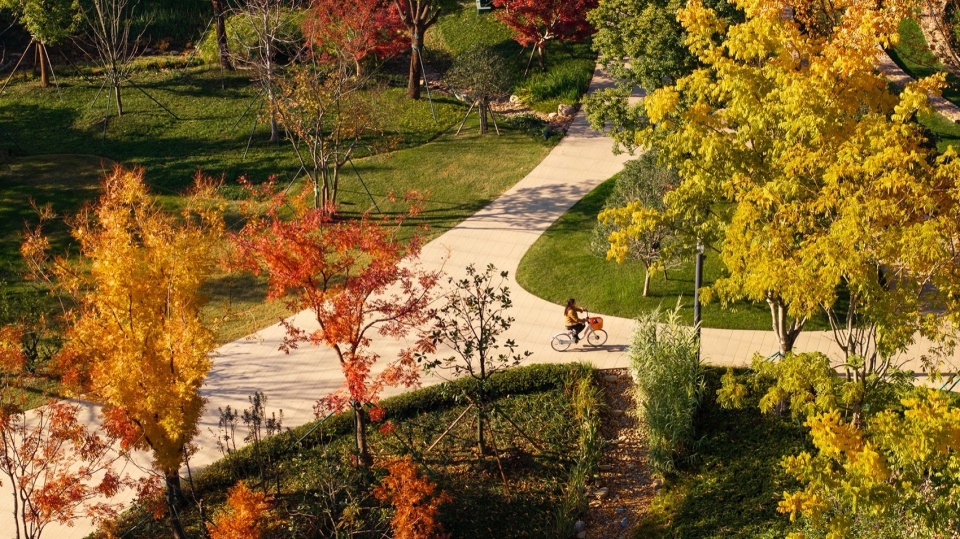
这座公园不仅仅是绿色的,更是一个真正具有生物多样性的空间,为鸟类、蝴蝶和其他传粉昆虫提供了繁荣生长的栖息地。自建成以来的短时间内,鹤鸟、蜻蜓、青蛙和小鸟已在公园的水道中安家,展示了景观设计在复杂城市环境中平衡人与自然需求的力量。
The park is not simply green. It is a genuinely biodiverse space that hosts thriving and growing communities of birds, butterflies and other pollinators. In the short time since its completion, crane birds, damselflies, frogs and finches have taken up residence in the park’s waterways, demonstrating the power landscape architecture can have in balancing the needs of people and nature in complex urban environments.
▼顶视图,top view
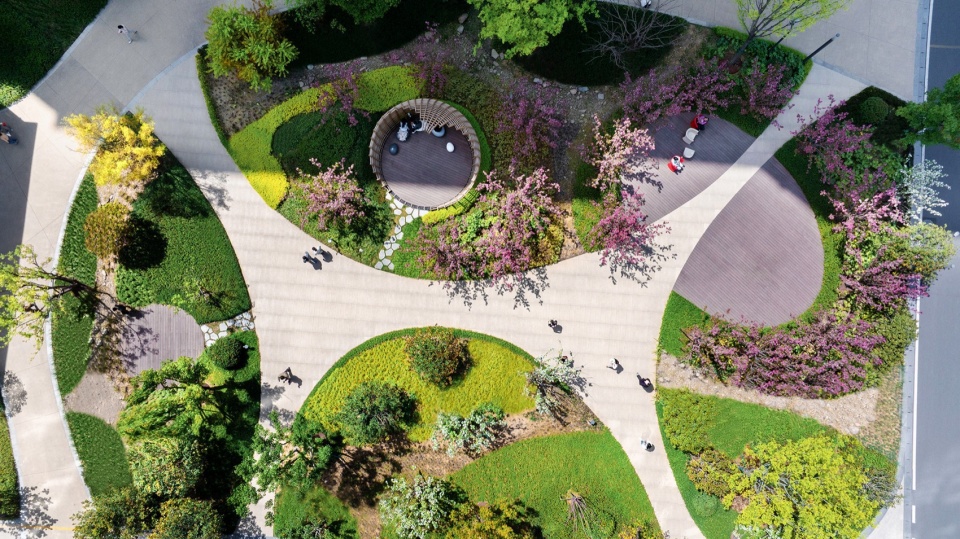
▼景观小品,landscape structure
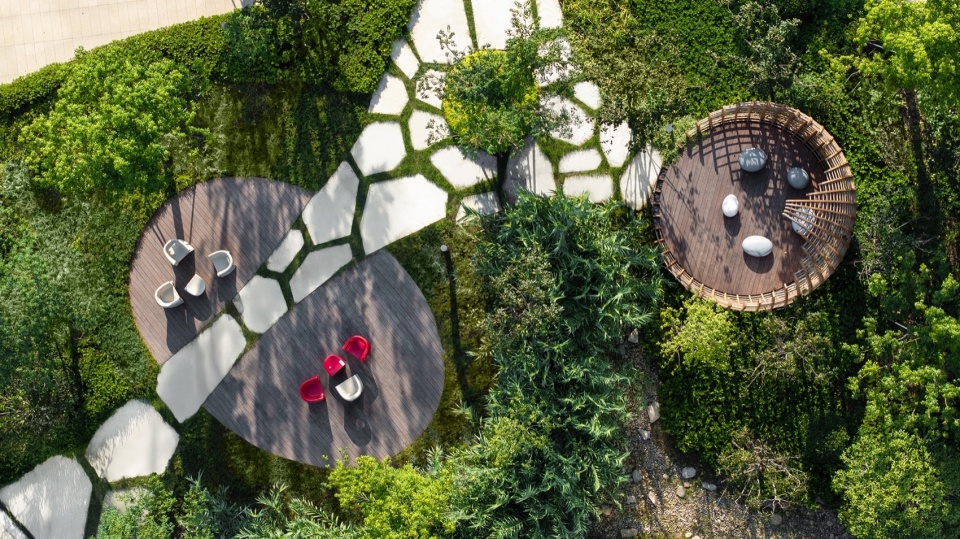
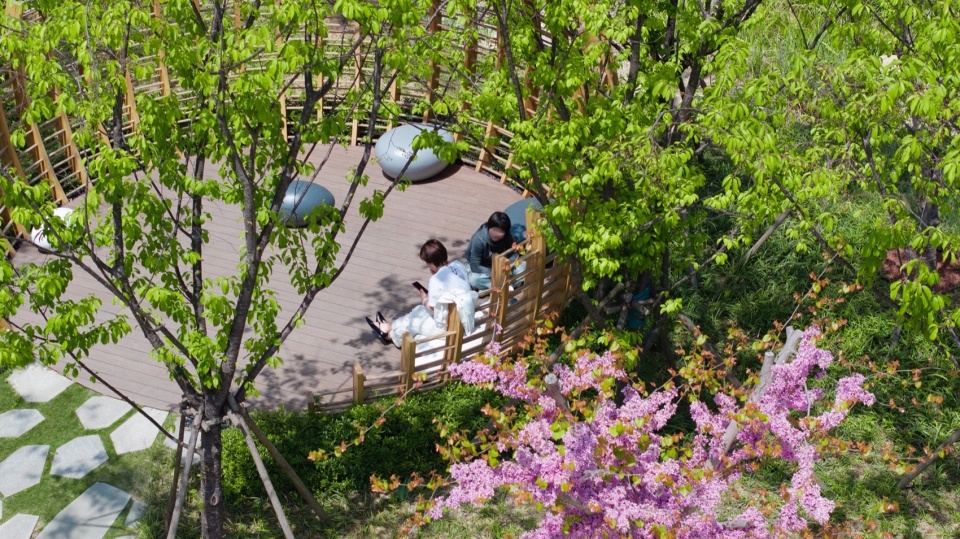
▼景观小品,landscape structure
水系的编织Weaving water
通过对雨水的算法分析 ,ASPECT Studios精心设计了一系列生物洼地和雨水渠道,形成了贯穿整个园区的“脉络”网络,收集雨水并将其引入中央湖泊。这一系统模仿自然中的水系,减缓、过滤并吸收径流,降低洪水风险并补充地下水。
Using an algorithmic analysis of stormwater, ASPECT Studios carefully designed a series of bio-swales and stormwater channels that form a network of “veins” throughout the campus, capturing water and feeding it into the central lake. This system, which mimics those found in nature, slows, filters and absorbs runoff, reducing flood risk and replenishing groundwater.
▼生物洼地和雨水渠道,bio-swales and stormwater channels
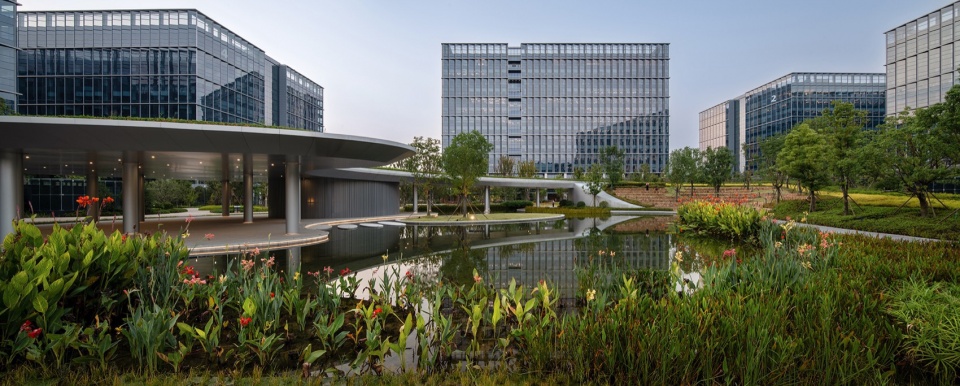
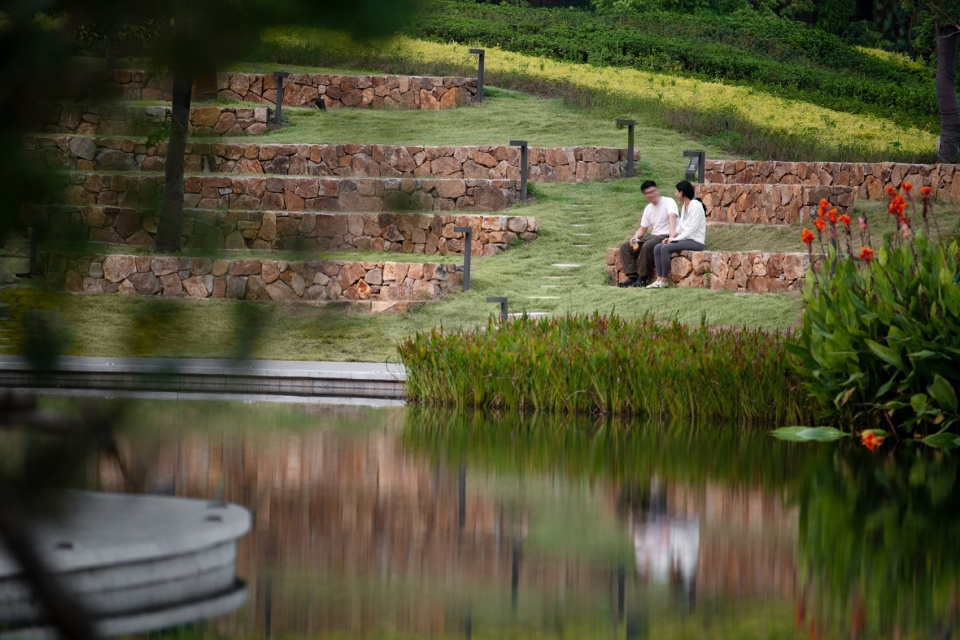
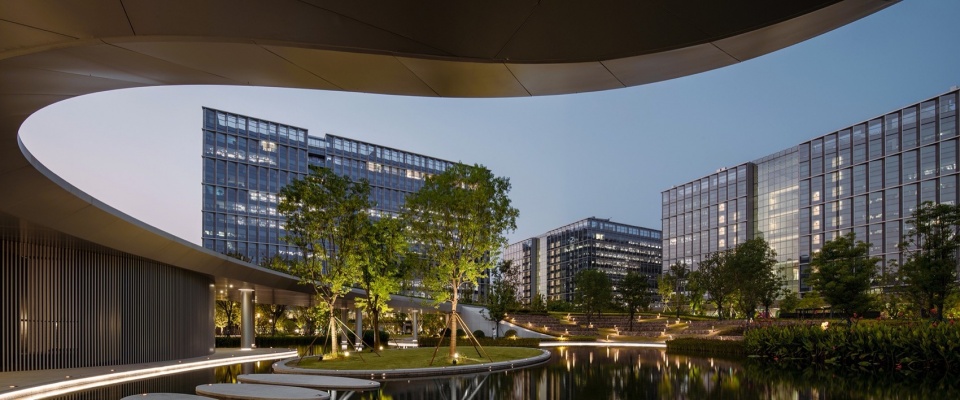
中央湖泊既是雨水蓄水池,也是灌溉水源,在干旱时期为公园提供支持,同时成为社区和活动计划的核心。湖泊中央设有一座亭子,亭子从水面上方和侧面延伸,形成一个露台,让人们能够有亲水的机会。通过将水融入设计的基础理念中,水作为一种自然资源得到了保护,同时增强了园区的韧性和生态性能。
The central lake serves as both a stormwater reservoir and an irrigation source, supporting the park through drier periods, while also being the centrepiece of the community and event program. At its heart sits a pavilion that sweeps above and alongside the water, creating a terrace that brings people close to the water and each other. By integrating water into the foundational thinking of the design, water is protected as a natural resource, and resilience and ecological performance is improved.
▼中央湖泊既是雨水蓄水池,也是灌溉水源,the central lake serves as both a stormwater reservoir and an irrigation source
以人为本的空间A place for people
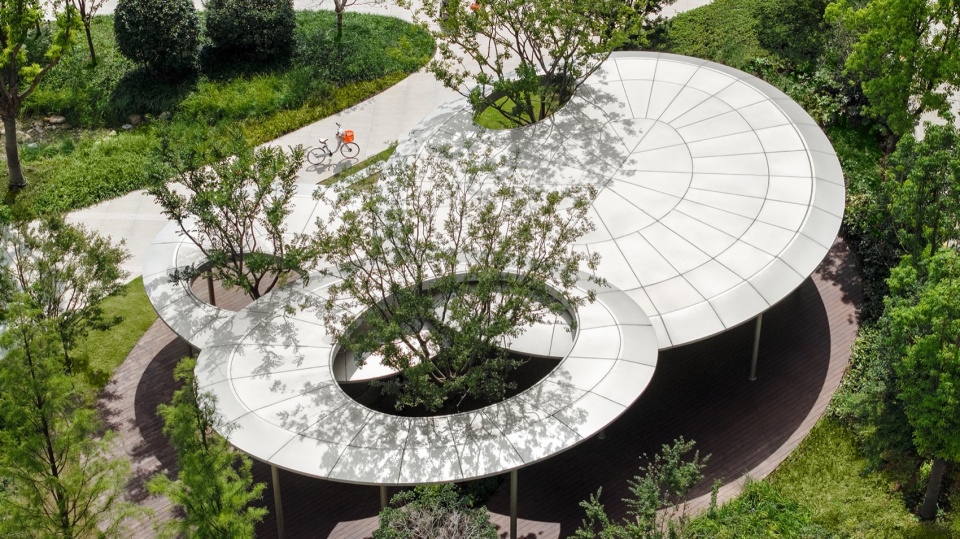
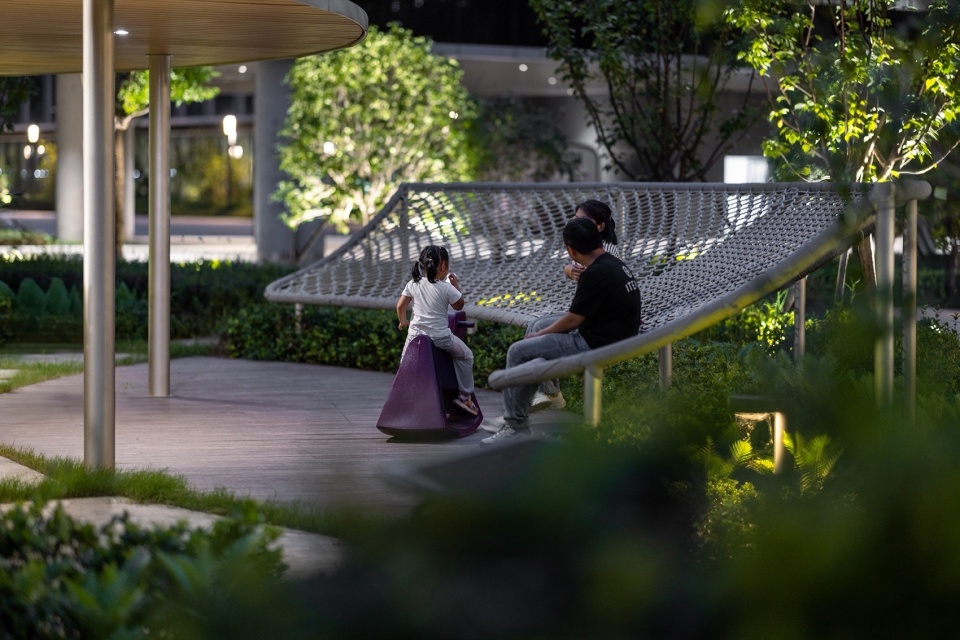
园区景观设计的核心是一种人文主义设计哲学——旨在通过多样化的体验、增强的连通性以及提升的幸福感来改善人们的日常生活。设计优先考虑了使用者的个人和集体需求,营造了一种包容且充满活力的氛围,使人们能够以支持个人和职业成长的方式工作、放松和互动。这一愿景通过开放且易于进入的空间得以实现,这些空间鼓励运动、探索和协作。通过人流、活动模式和阳光分析,校园内 strategically 布置了几个漂浮的建筑元素,即“光环顶篷”,为整个公园提供遮荫、庇护和视觉标识。
At the core of the campus landscape is a humanistic design philosophy—one which attempts to improve people’s daily lives through diversity of experience, improved connectivity, and enhanced wellbeing. The design prioritizes the individual and collective needs of its users, fostering an inclusive, dynamic atmosphere where people can work, relax, and interact in ways that support both their personal and professional growth. This vision is realised through open and accessible spaces that encourage movement, exploration, and collaboration. Strategically positioned across the campus based on population flow, movement patterns and sunlight analysis, several floating architectural elements—or “halo canopies”—provide shade, shelter and a visual identity for the park as a whole.
▼开放且易于进入的空间,open and easily accessible space
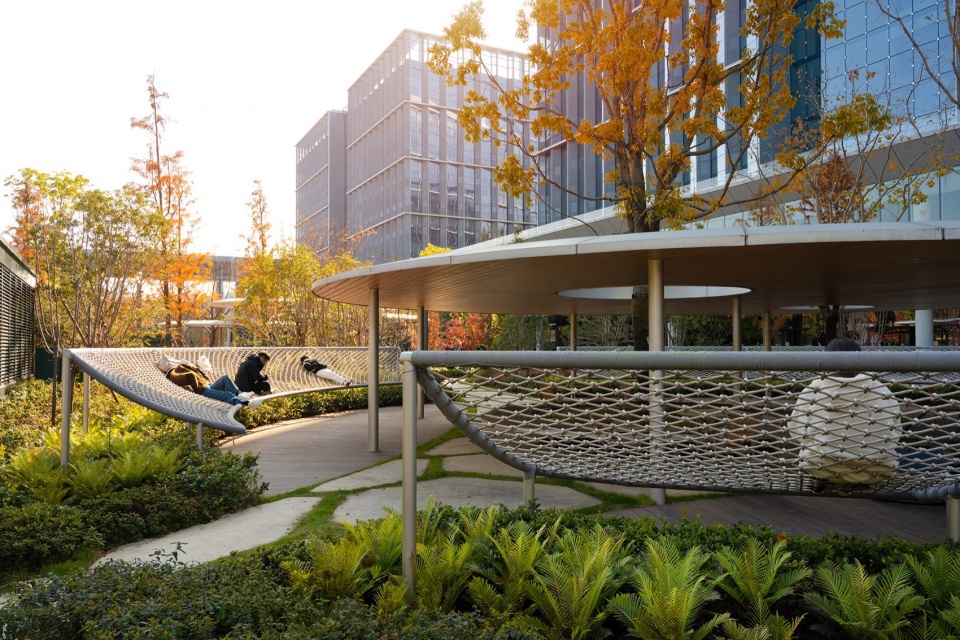
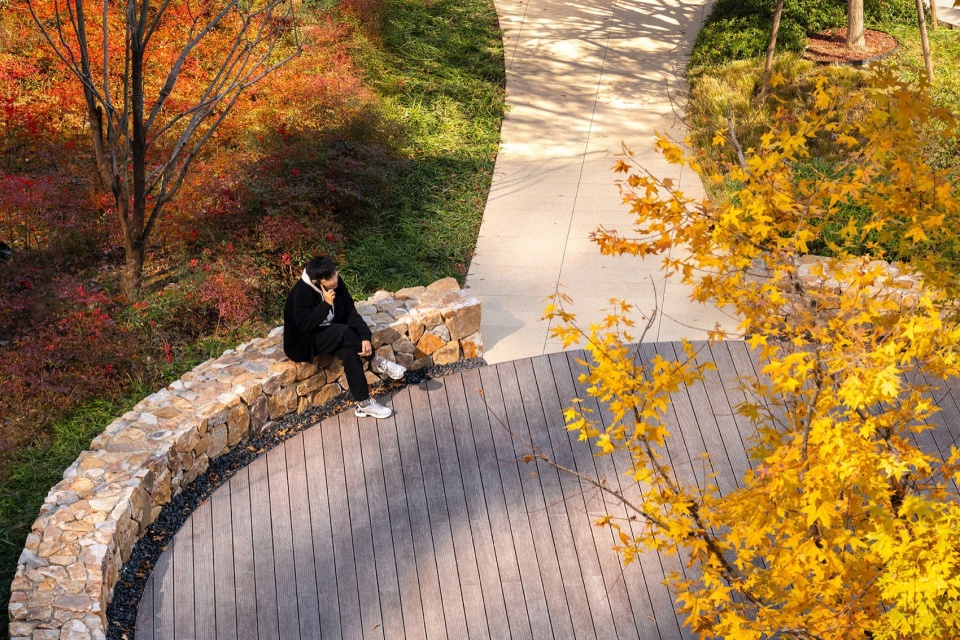
▼多样化的体验,diverse experiences
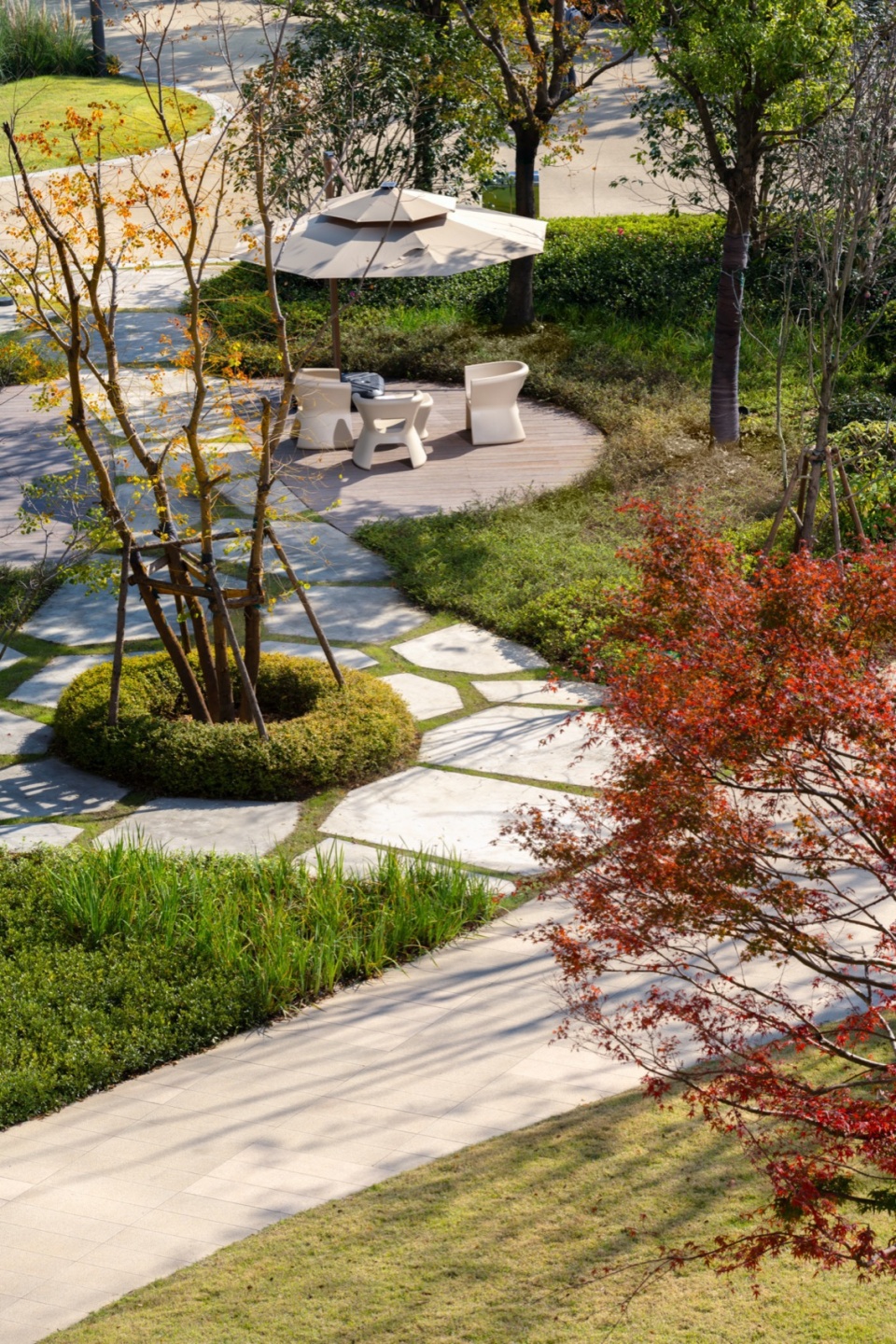
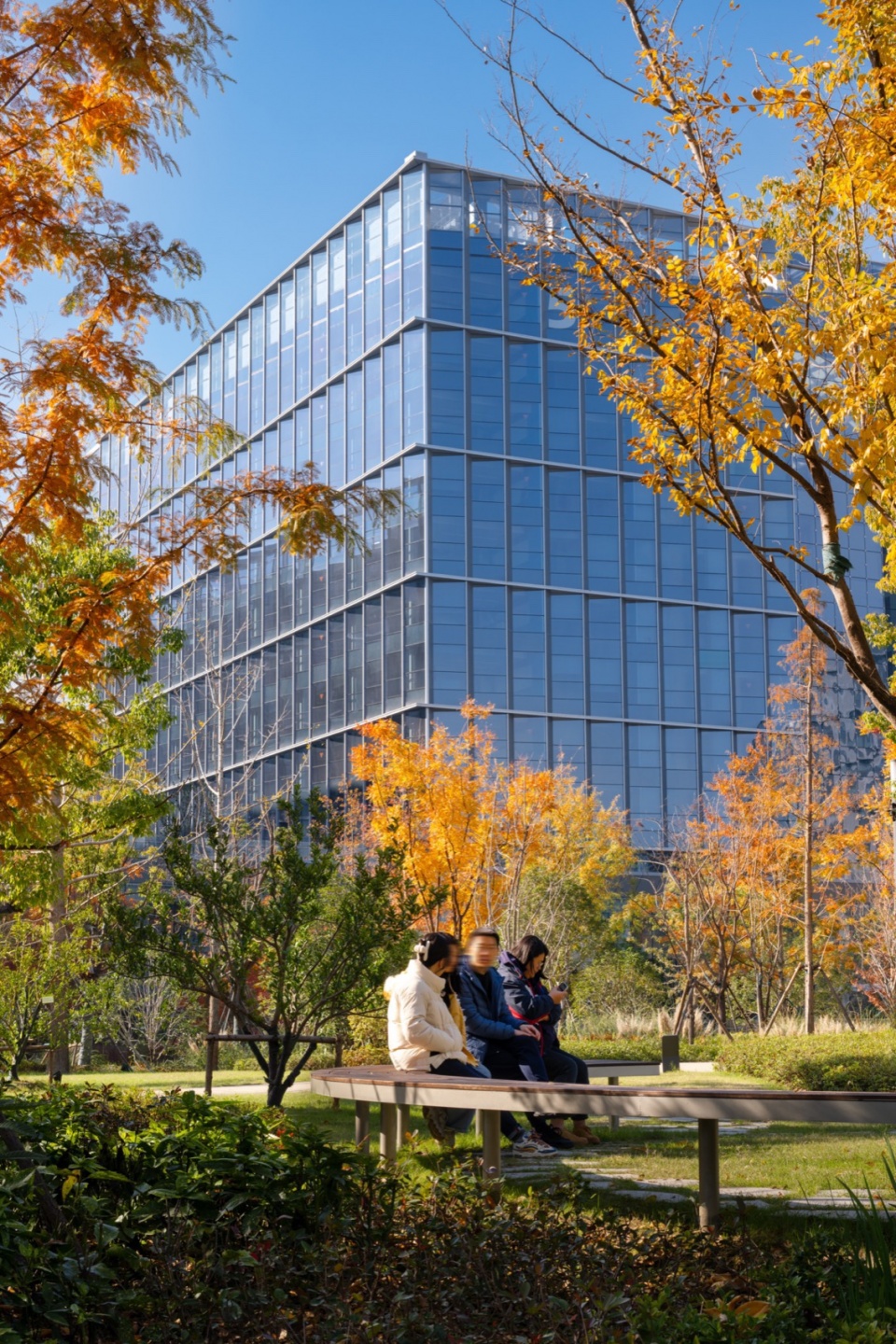
▼水岸,waterfront
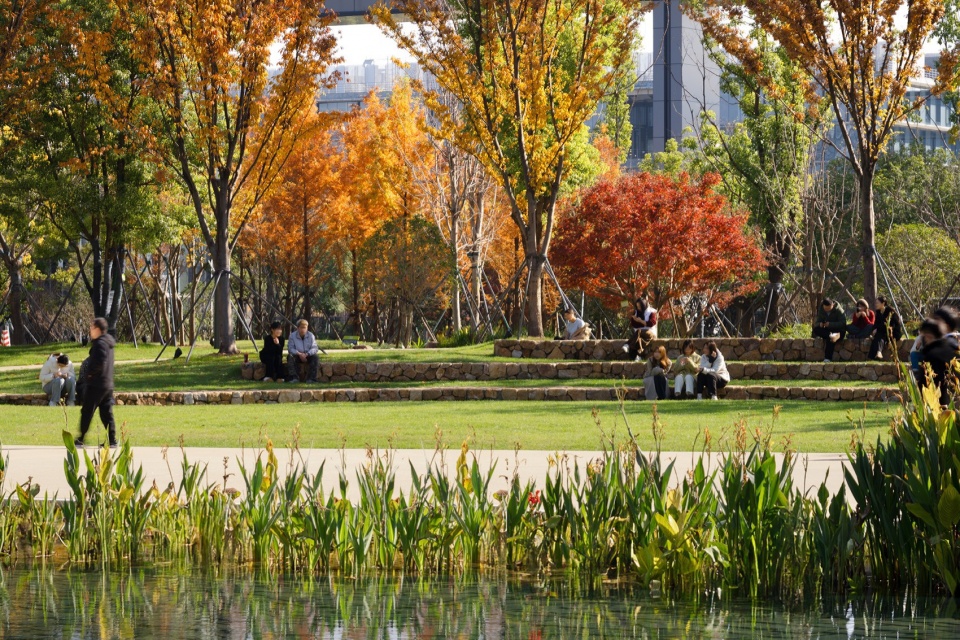
▼细部,details
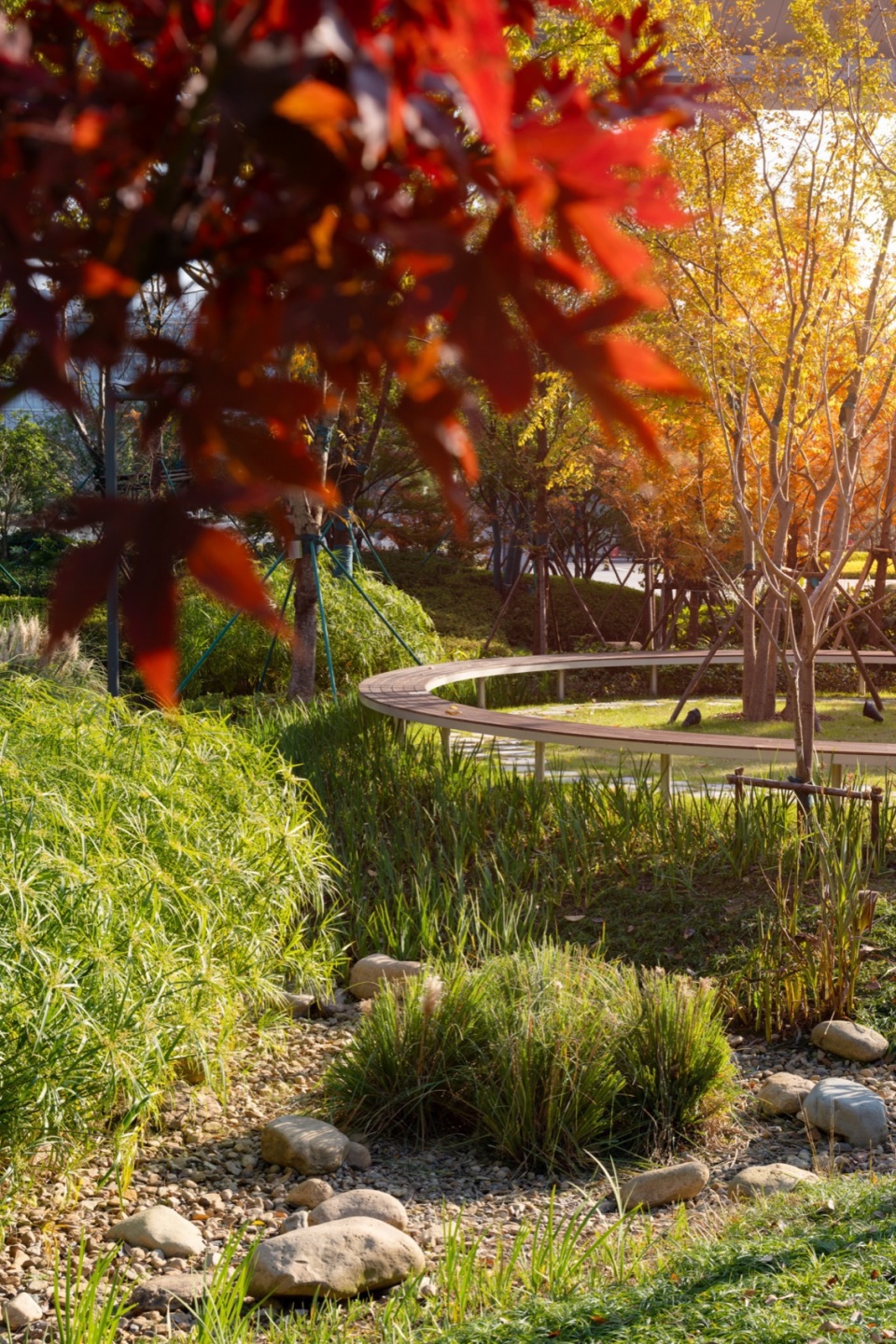
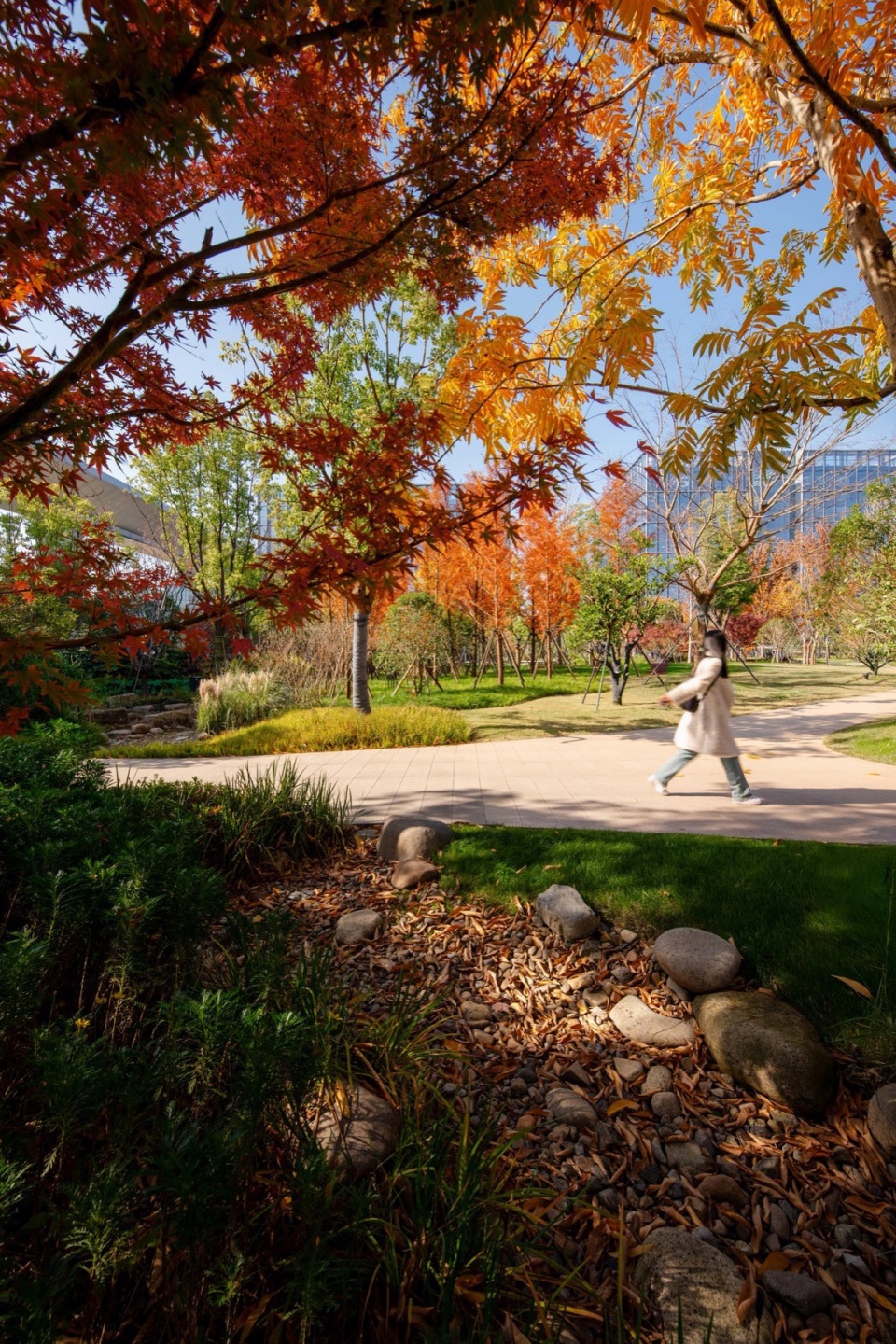
生物栖息网络(BioHabiNet)The BioHabiNet
设计的核心理念是“生物栖息网络”(BioHabiNet),这是一个基于证据的设计框架,整合了生物多样性、可持续水系统、栖息地以及以社区为导向的空间。该项目:
—建立了一个适应本地微气候的校园生物多样性生态系统(Bio)
—为野生动物和人类创造了一个健康的栖息环境(Habi)
—打造了一个有机的、细胞状的互联网络(Net)
BioHabiNet框架旨在为复杂城市环境中的未来发展提供一条路径,其基础是对自然系统的动态管理。这种将水、生物多样性和人视为优质建筑环境设计关键要素的理念,可以轻松应用于其他地区。
▼分析图,analysis diagram
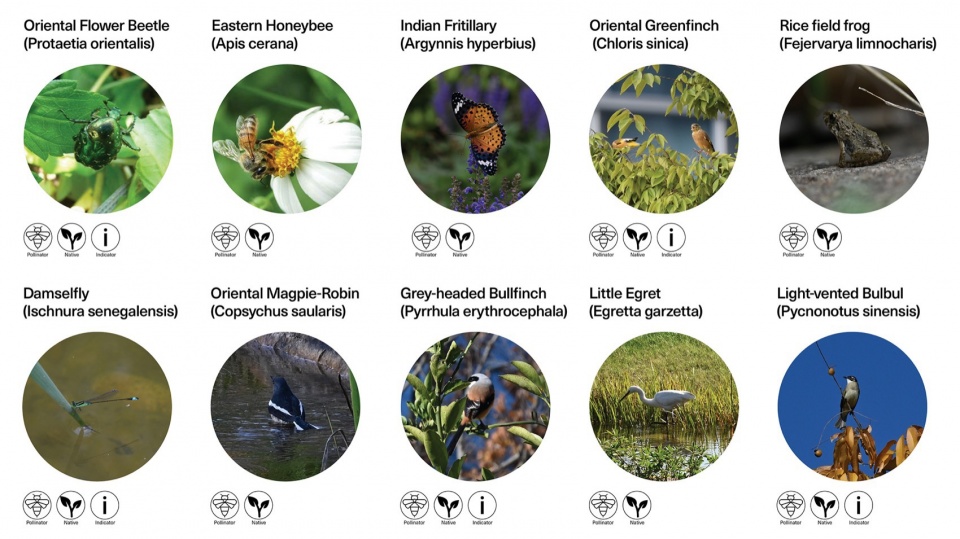
Central to the design was the “BioHabiNet” concept, an evidence-based design framework that integrates biodiversity, sustainable water systems, habitats, and community-oriented spaces. The project:
— Establishes a biodiverse ecosystem across the campus that responds to the local microclimate (Bio)
— Creates a healthy habitat for both wildlife and people (Habi)
— Forges an organic, cellular series of interconnective networks (Net)
The BioHabiNet framework was devised to provide a pathway for future developments in complex urban environments that are based on dynamic curation of natural systems. This thinking—which values water, biodiversity and people as key elements of good built environment design—could easily be applied elsewhere.
▼多样化的层次与植被,diverse layers and vegetation
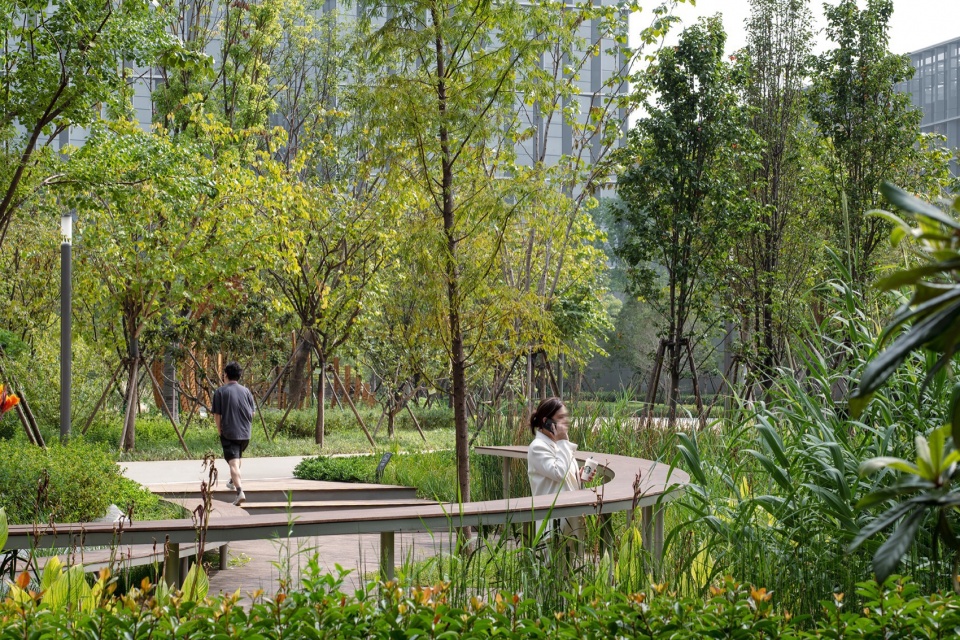
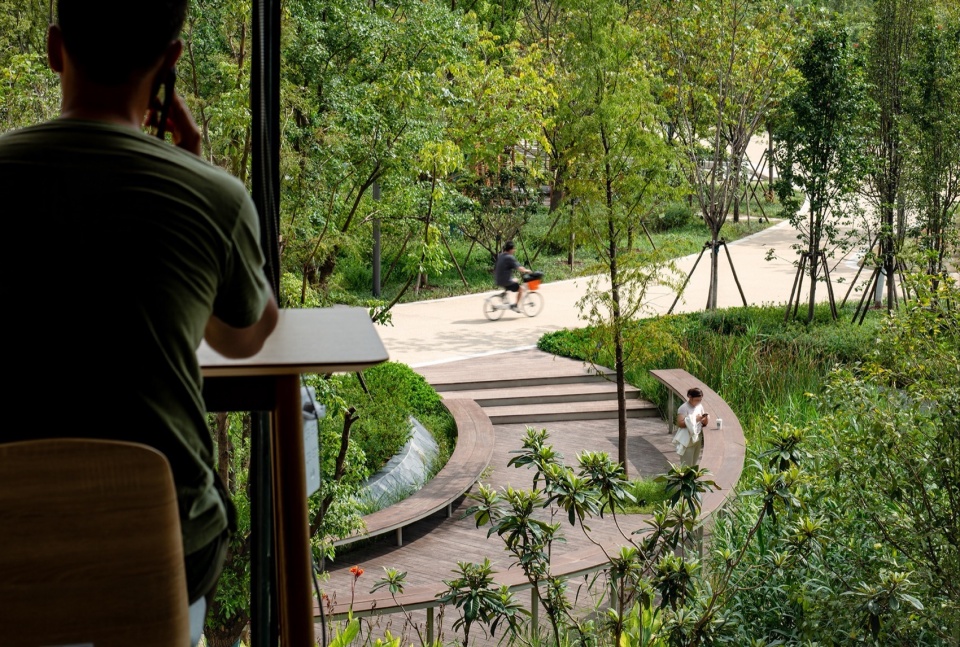
▼优美的自然,beautiful nature
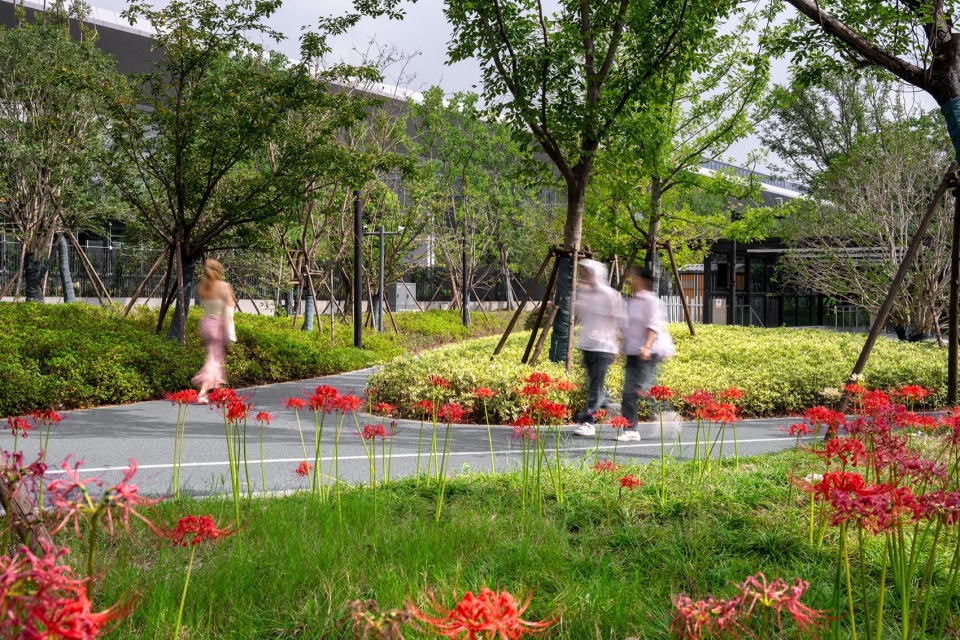
▼湖畔露台,waterfront terrace
树立新标杆Setting new standards
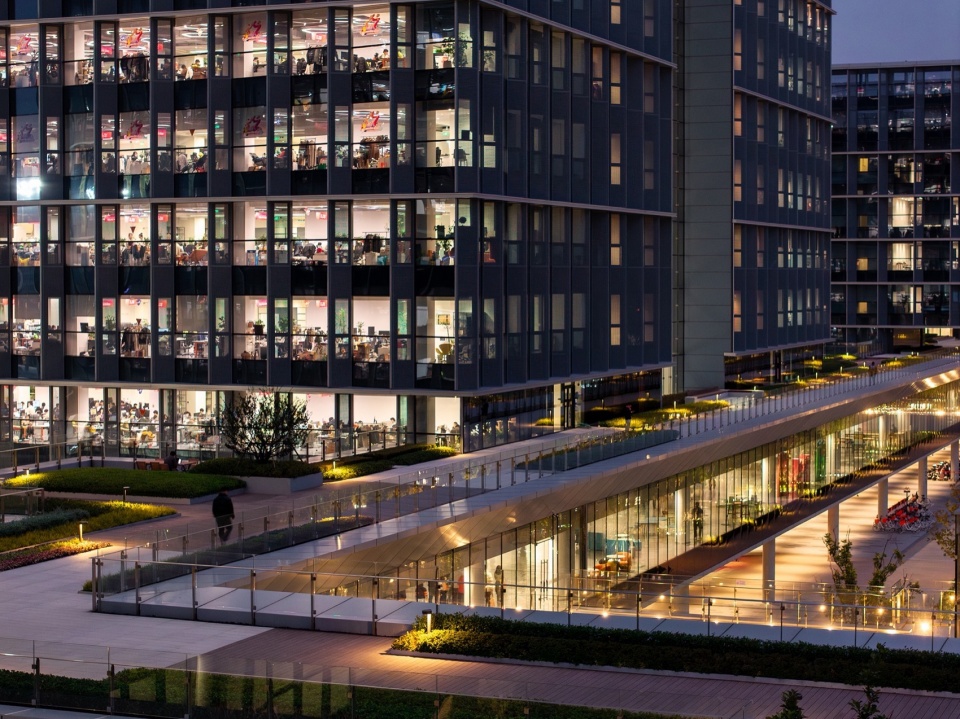
阿里巴巴西溪园区(C区)不仅仅是一个工作场所的景观。它试图在复杂的多层建筑环境中,为城市韧性、自然系统的整合以及以人为本的设计树立新的标杆。
The Alibaba Xixi Campus (Park C) is more than a workplace landscape. It is an attempt to set new standards for urban resilience, the integration of natural systems, and human-centred design within the confines of a complex multi layered build environment.
▼夜景,night view
▼细部夜景,detailed night view
项目信息
业主:阿里巴巴
项目地点:杭州市余杭区文一西路969号
景观设计:ASPECT Studios
景观构筑物:ASPECT Studios
景观设计总监:Stephen Buckle
团队成员:杨紫晨、许宁吟、冯海宁、陈娟、 马圣诞、施胜凯、冯睿珂、雷颖异、杨杰云、廖萌、蔡佩菱、张红辉、傅星晨
景观施工图设计单位:杭州园林设计院
建筑设计:株式会社日本设计
摄影师:王文杰
Client: Alibaba
Location: 969 Wenyi West Road, Yuhang District, Hangzhou
Landscape Architect: ASPECT Studios
Landscape Structures: ASPECT Studios
Principal Landscape Architect: Stephen Buckle
Design Team: Ann Yang, Sam Xu, Haining Feng, Ella Chen, Christina Ma, Kevin Shi, Karen Feng, Cherry Lei, Jay Yang, Lemon Liao, Pigeons Chua, Honghui Zhang, Lauren Fu
Landscape LDI: Hangzhou Garden Design
Architectural Design: Nihon Sekkei
Photographer: Wang Wenjie