从“永安之心”到“永安学堂”,云南 / 创盟国际
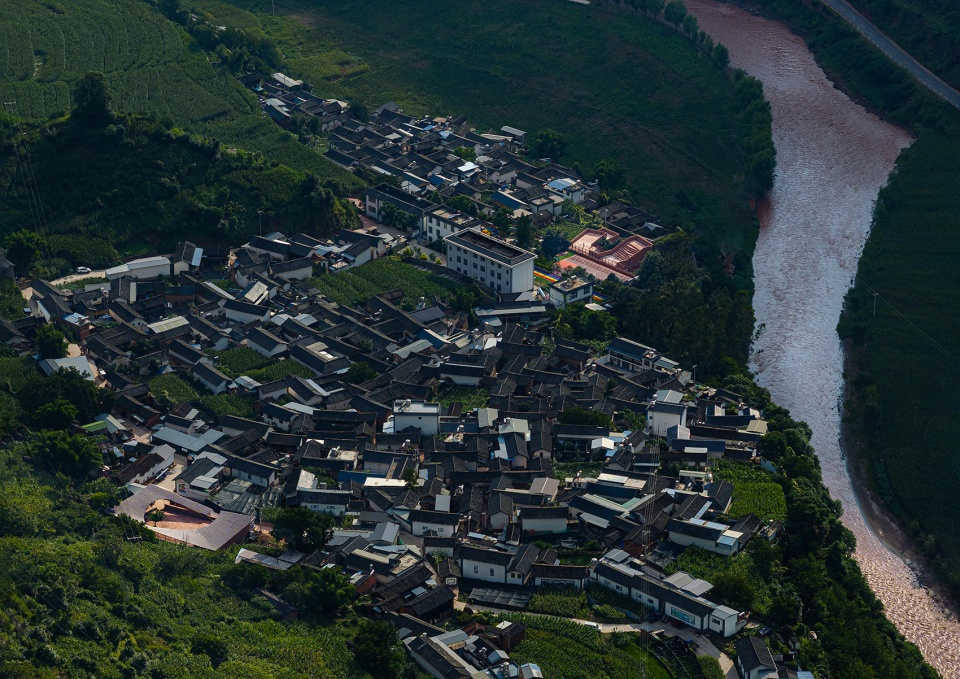
永安村,位于云南大理云龙县,是典型的高原山地聚落,村落空间沿山势展开,上村与下村之间高差近300米,交通不便。村庄长期面临基础设施薄弱、教育资源失衡、公共空间缺失与集体信任断裂等复合性问题。自2018年起,同济大学建筑与规划团队持续介入,以“规划引领—场所营造—机制嵌入”的策略,开展跨尺度、多阶段的空间更新实验。
Yong’an Village, located in Yunlong County, Dali, Yunnan, is a typical highland settlement. The village unfolds along the mountain terrain, with an elevation difference of nearly 300 meters between the upper and lower clusters, making transportation inconvenient. For a long time, the village has faced a complex set of challenges: weak infrastructure, imbalanced educational resources, a lack of public space, and fractured collective trust. Since 2018, the architectural and planning team from Tongji University has been continuously engaged in the area, adopting the strategy of “planning guidance — place-making — institutional embedding” to conduct cross-scale and multi-stage spatial renewal experiments.
▼场地鸟瞰,Aerial view of the site
在这一进程中,两个关键空间节点逐渐明确:“永安之心”聚焦村庄治理体系,“永安学堂”则拓展至教育文化维度。前者以空间回应协商、共识与日常交往之需,后者探索学校与村庄共享机制与边界协商的可能。两者共同构成村落公共性的空间再生路径。
▼场地平面图,Site plan
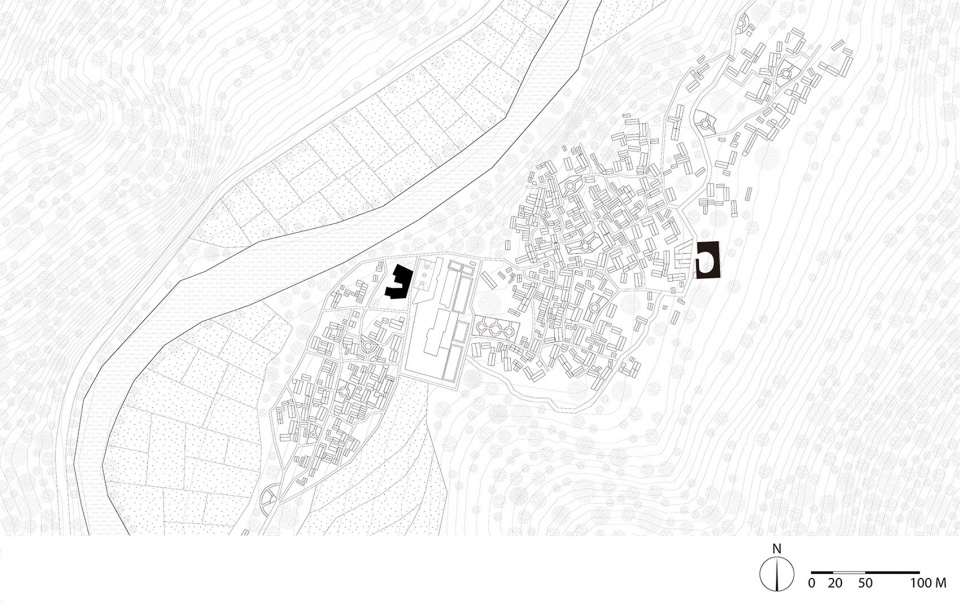
In this process, two key spatial nodes gradually took shape: the “Heart of Yong’an,” focusing on the governance system of the village, and the “Yong’an Academy,” extending into the dimensions of education and culture. The former responds to the needs of negotiation, consensus, and everyday encounters, while the latter explores the possibility of shared mechanisms and boundary negotiation between the school and the village. Together, they form a pathway for regenerating the village’s publicness through space.
▼建筑鸟瞰,Aerial view of the building
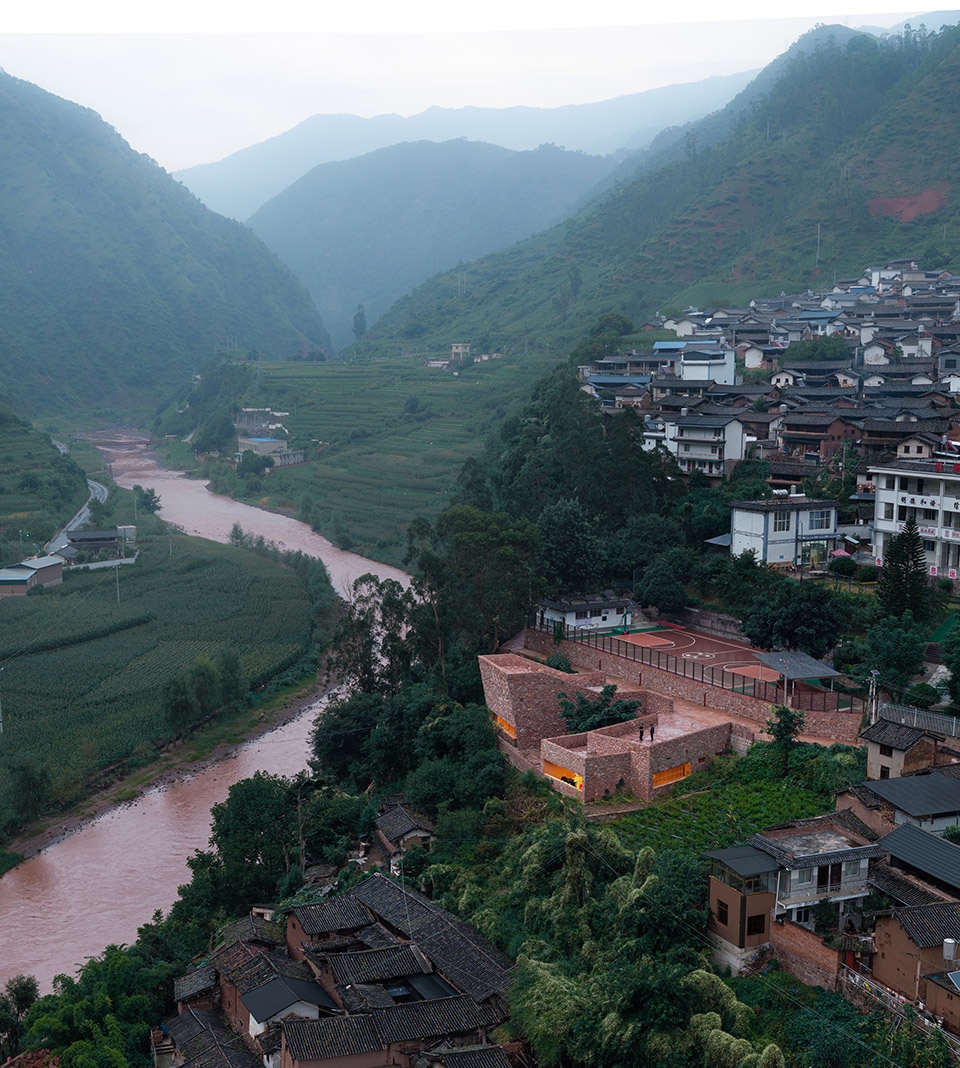
永安之心:治理的空间基座 The Heart of Yong’an: Spatial Foundation for Governance
作为回应村庄治理空间缺位的起点,“永安之心”于2021年落成于上村台地。场地原为村民路径交汇之处,设计采用“外方内圆”构型生成半围合庭院,中心保留原生榕树,回应地方“围树而聚”的集体记忆。
As the starting point to address the absence of governance spaces, the “Heart of Yong’an” was completed in 2021 on the upper village terrace. The site was originally where villagers’ paths converged. The design adopted a “square outside, circle inside” configuration to form a semi-enclosed courtyard, with a preserved banyan tree at the center, evoking the local collective memory of “gathering around the tree.”
▼永安之心庭院 ,Yong’an Heart Courtyard
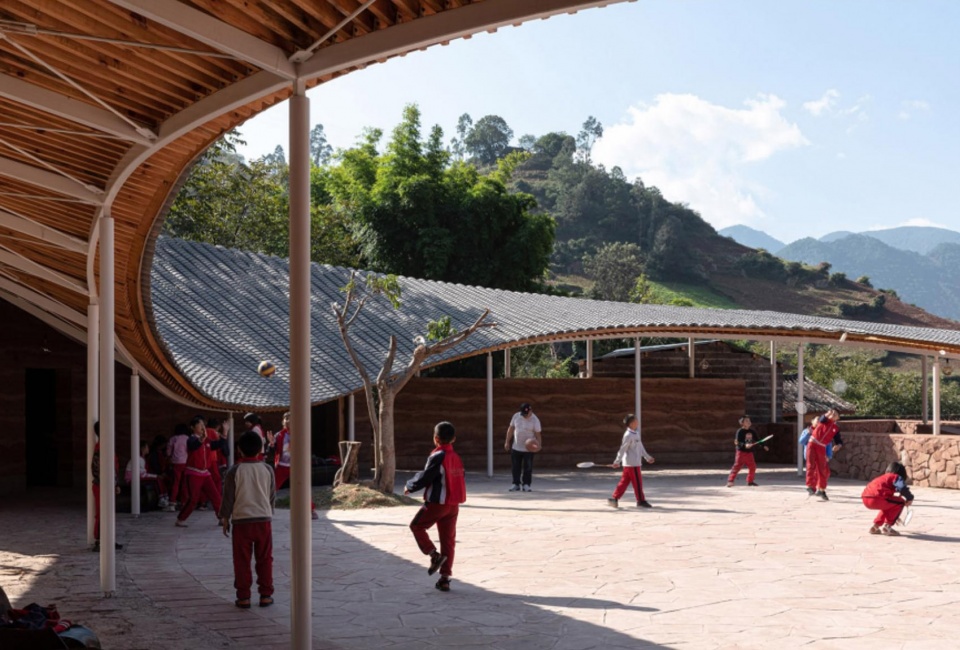
建筑以夯土墙体、干砌片石台基及轻钢曲面屋面组合建构,采用就地材料与村民熟悉的低技工艺,通过数字几何控制实现“非在地的在地性”,最大限度降低技术门槛与建造成本。
The building was constructed with rammed earth walls, a dry-stone base, and a lightweight steel-curved roof. Using local materials and low-tech methods familiar to villagers, and guided by digital geometry, the design realized a form of “localized non-locality,” lowering technical thresholds and construction costs.
▼为村落生活生成新的连续界面 ,Generates New Continuous Interfaces & Social Rhythms for Village Life
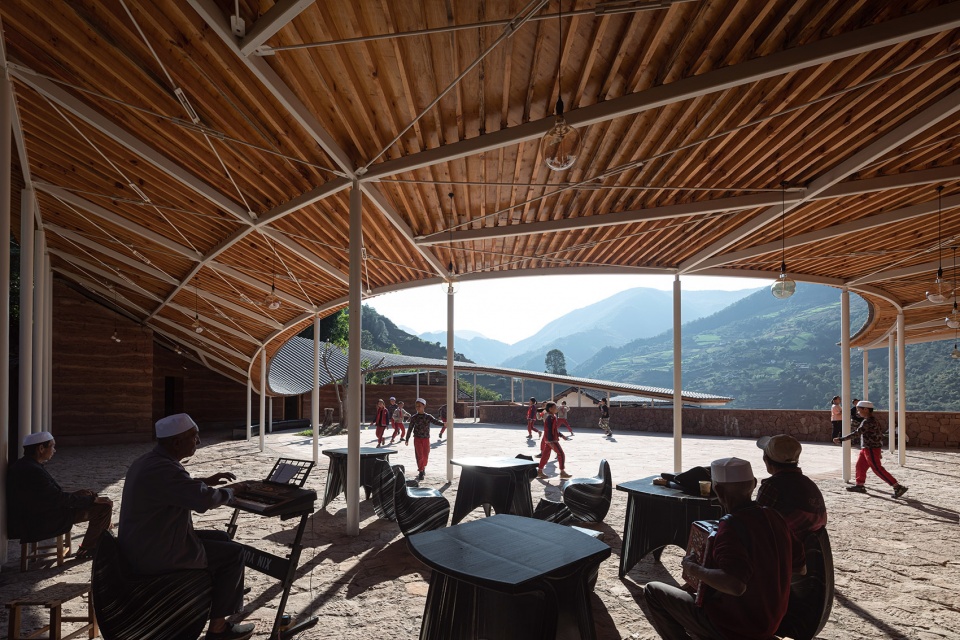
院落用于议事、放映、共餐等公共活动,空间延展出山体边缘的“悬浮长廊”,连接上村各居住组团,并嵌入微尺度停留节点,为村落生活生成新的连续界面与交往秩序。“永安之心”不仅是物理空间的建造,更成为村庄重建公共性与协商机制的容器。
The courtyard is used for meetings, film screenings, and communal dining. Extending outward, a “floating corridor” projects from the mountain edge, connecting residential clusters of the upper village while embedding micro-scale resting nodes. This generates new continuous interfaces and social rhythms for village life. The “Heart of Yong’an” is not merely a physical construction but also a container for rebuilding publicness and negotiation mechanisms in the village.
▼鸟瞰永安之心 ,Bird View of Yong’an Heart
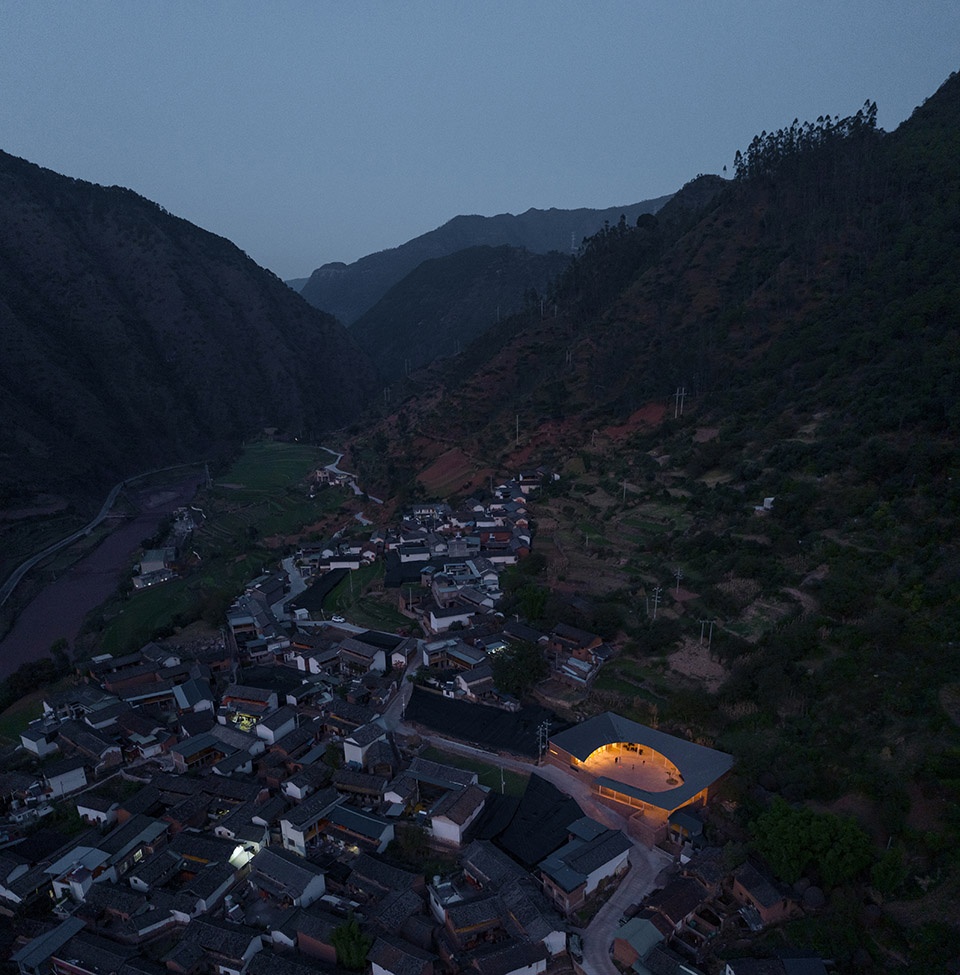
随后启动的“永安学堂”则面向学校与社区之间的结构性断裂,尝试以空间和机制双重手段,重建教育与公共文化的协同体系。其所面对的核心问题是:在制度尚未抵达的乡村语境中,建筑是否可能作为一种先行介入,构建可持续的教育—文化复合型公共场所?
Launched after the Heart of Yong’an, the Yong’an Academy addresses the structural disconnection between school and community, attempting to rebuild a collaborative system of education and public culture through both spatial and institutional means. At its core lies the question: In rural contexts where formal institutions have yet to arrive, can architecture serve as an initial intervention to construct a sustainable education–culture hybrid public space?
▼从永安村望向永安学堂,Looking at Yong’an Academy from the village
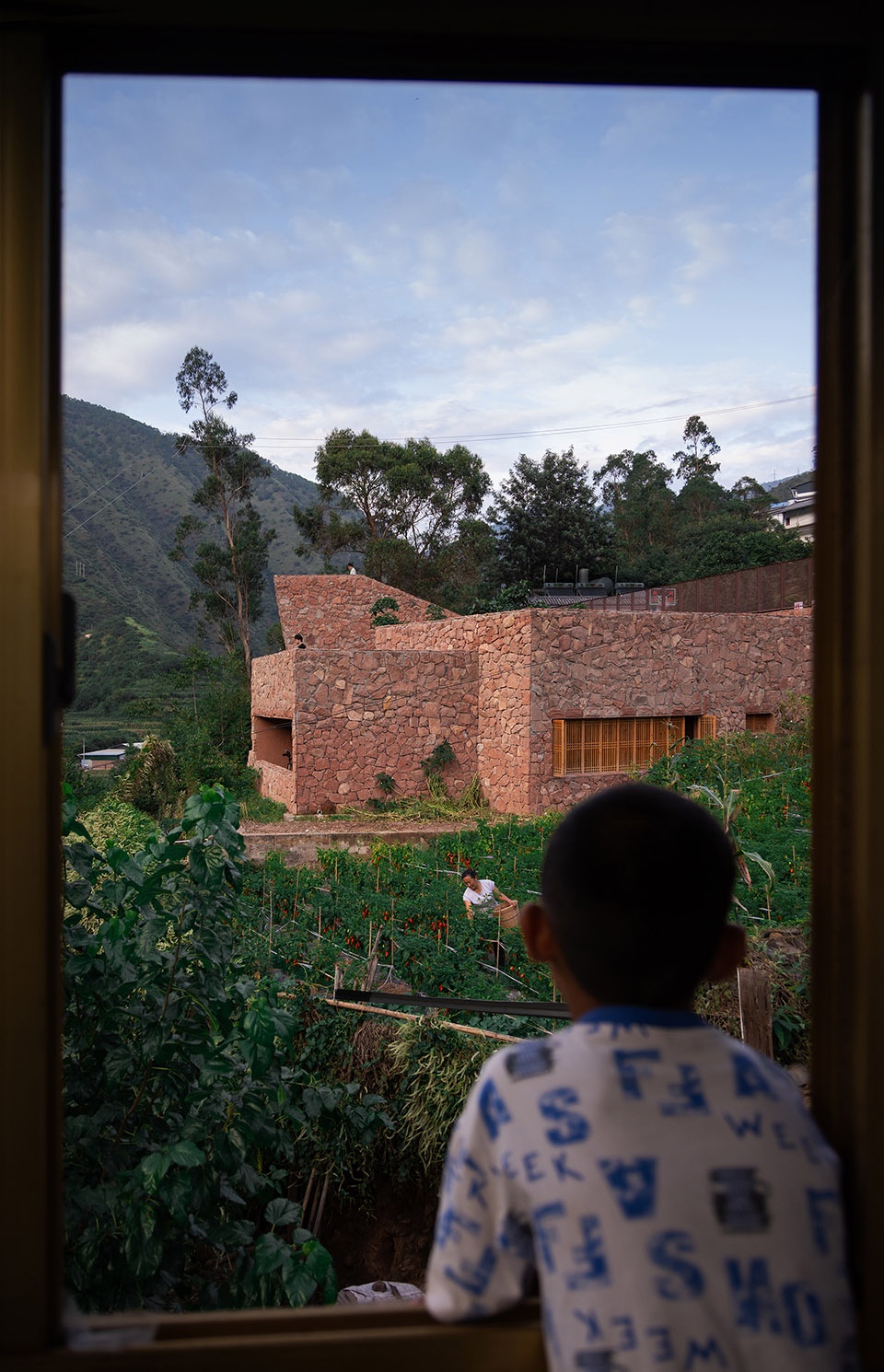
从边界模糊处切入:学校与村庄之间的协商空间 A Fuzzy Boundary: School–Village Negotiation
永安完全小学是区域内唯一的基础教育设施,但其服务对象、空间资源与文化功能却被高度限制在校园围墙之内,难以辐射更广泛的村落公共需求。与此同时,村庄内部也缺乏除学校之外的任何文化性空间,家长、村民、返乡青年均缺少日常聚合与交流的物理载体。
Yong’an Primary School is the only educational facility in the region, yet its services, spatial resources, and cultural functions are confined within the campus walls, unable to meet the wider public needs of the village. Meanwhile, the village itself lacks any cultural space outside the school, leaving parents, villagers, and returning youth without a place for gathering and communication.
▼鸟瞰永安学堂 ,Bird View of Yong’an Academy
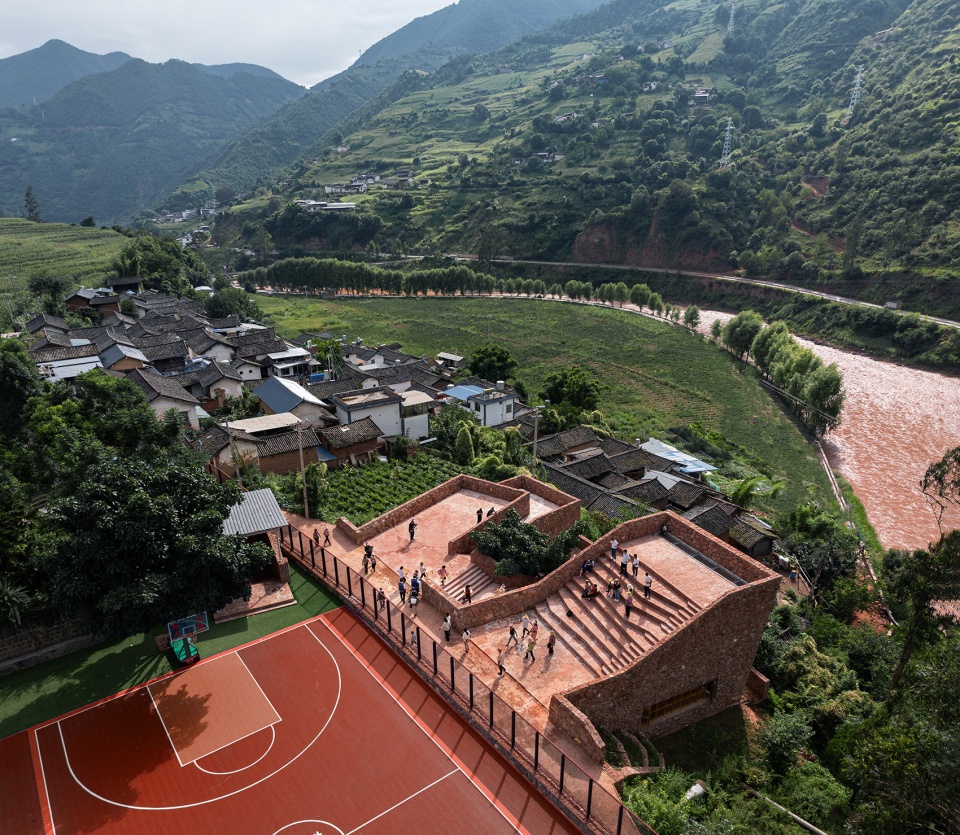
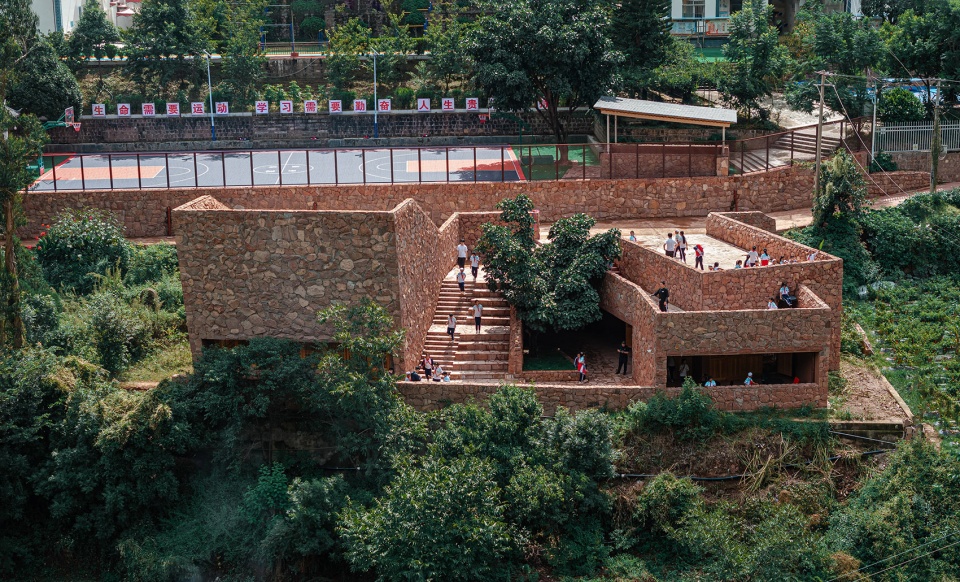
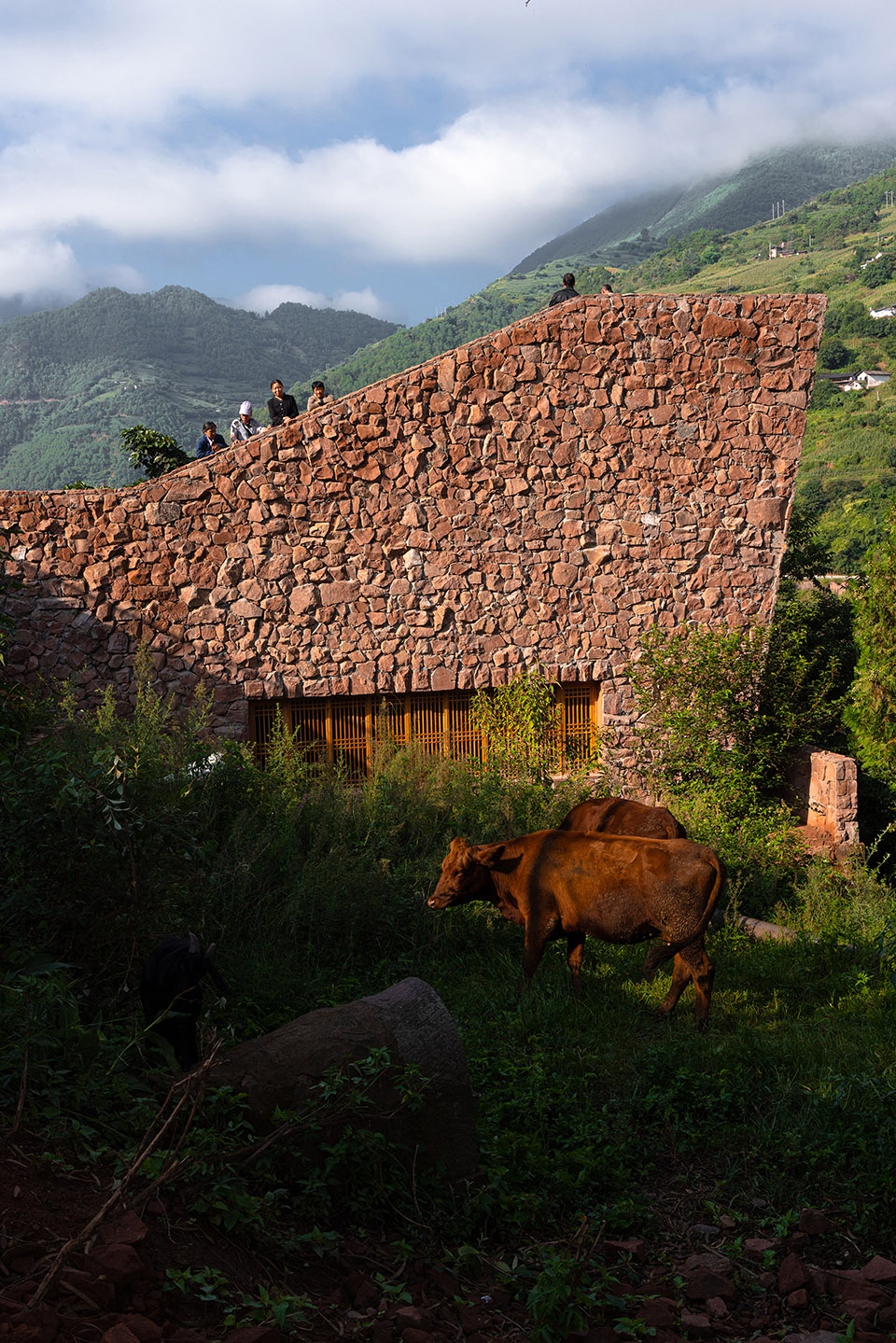
学堂选址于校园西北角的一块坡地上,地形复杂但邻接学校主出入口与通往后山的路径。设计团队将其视作一处“边界模糊带”——不隶属于学校,也不明确归属社区,却天然具备打通二者的空间潜力。学堂由此成为重构“校园—村庄—社会”三重网络的切口与触媒。
The Academy is sited on a sloped plot at the northwest corner of the campus, adjacent to both the school’s main entrance and a path leading to the back mountain. The design team identified this as a “fuzzy boundary zone”—neither wholly belonging to the school nor clearly to the community, but naturally endowed with the potential to bridge the two. The Academy thus became a catalyst for reweaving the “school–village–society” network.
▼重构“校园—村庄—社会”三重网络,Reweaving the “School–Village–Society” Network
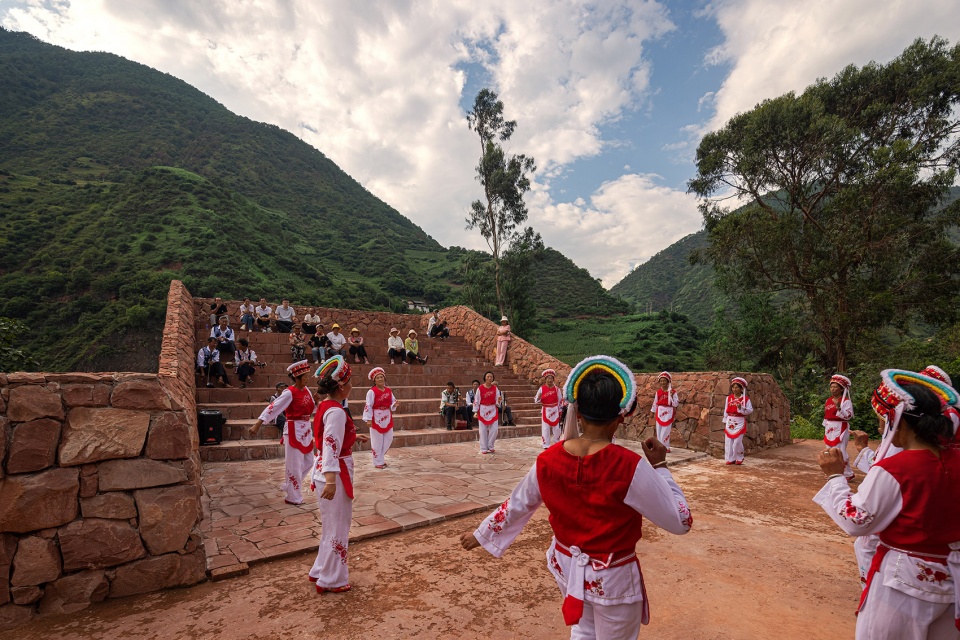
地形生成秩序:榕树中心与台地逻辑 Spatial Order from Terrain: Banyan as Center, Platforms as Logic
场地中央保留了一棵原生榕树。围绕其树冠与根系,建筑空间以三级平台形式展开:第一级平台与村道平接,承载日常集散与等候功能;第二级平台抬升约四米,构成兼具讲演、课程、展演的多功能舞台;第三级平台则顺势延展至后山,为生态教育、自然观察等提供开放可能。
At the site’s center stands a preserved banyan tree. Around its canopy and roots, the architecture unfolds across three platforms: the first aligns with the village road, functioning as a gathering and waiting area; the second rises about four meters, forming a multifunctional stage for lectures, classes, and performances; the third extends toward the back mountain, opening possibilities for ecological education and nature observation.
▼永安学堂大榕树和庭院 ,The banyan tree and the courtyard of Yong’an School
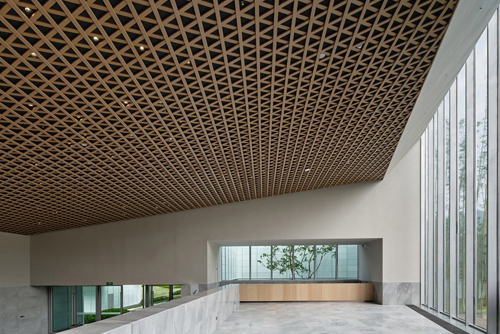
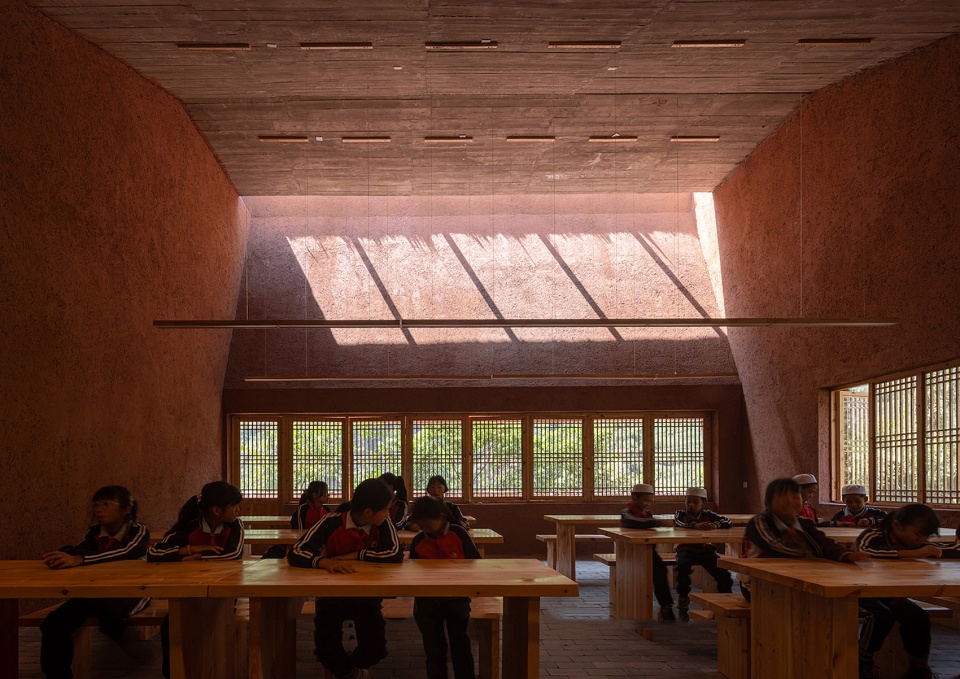
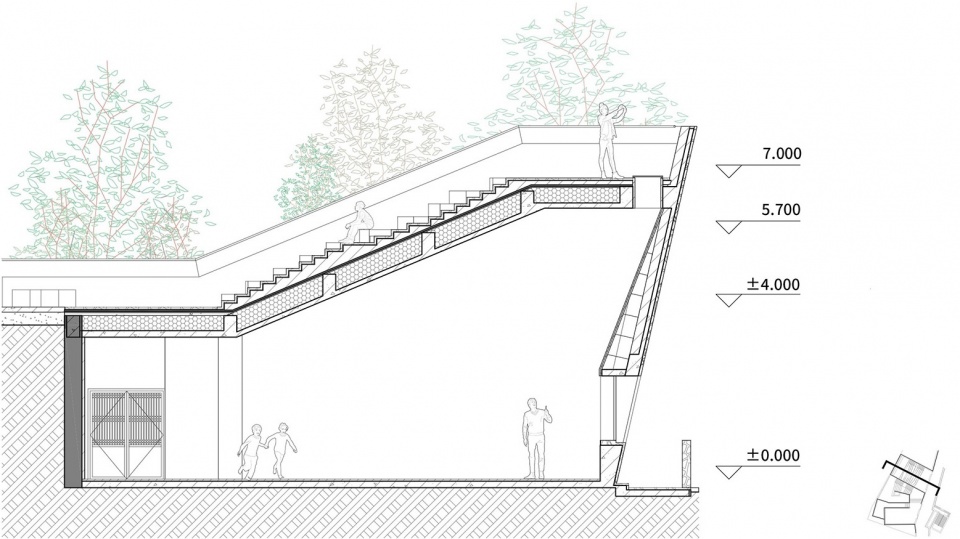
多功能教室空间位于学堂最外侧体量之中,正好处于建筑最高点观景台的下方。屋面顺应平台高差向上升起,形成带坡度的顶部轮廓,使整个教室如同嵌入山体般自然抬升,回应了由村道至后山的三级平台秩序。高侧窗引入柔和天光,光线沿着斜面滑入室内,在红土质感墙面与木质屋顶上投下流动的光影,随着时间推移不断变化,为室内活动带来清晰的节奏感与时间性体验。
▼多功能教室剖透视, The multifunctional classroom section perspective
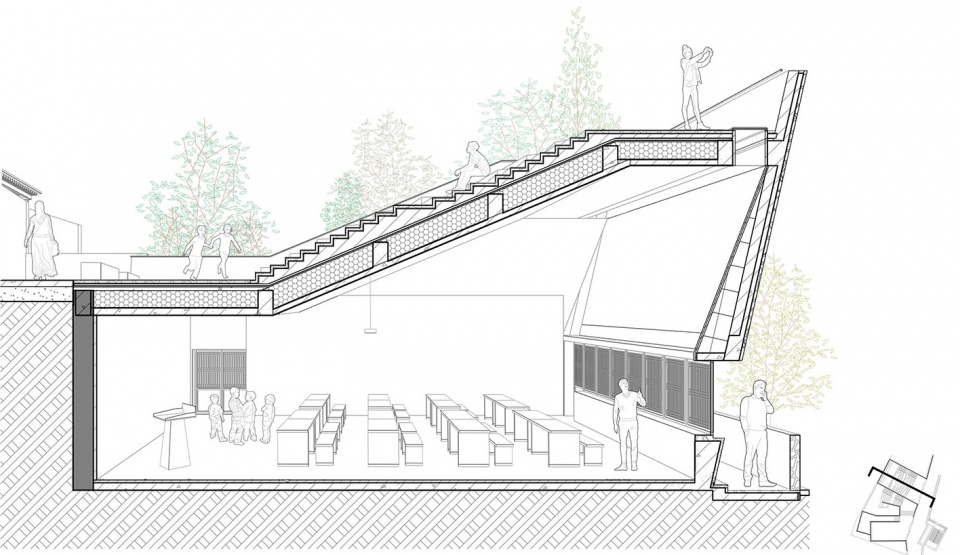
The multifunctional classroom is housed in the outermost volume, directly beneath the rooftop viewing platform at the highest point. The roof rises with the platform sequence, creating a sloping silhouette that integrates naturally into the mountain, resonating with the three-tiered order from road to hillside. Soft daylight filters through clerestory windows, sliding across rammed-earth walls and wooden ceilings, casting shifting shadows that give rhythm and temporality to the interior.
▼多功能教室, The multifunctional classroom
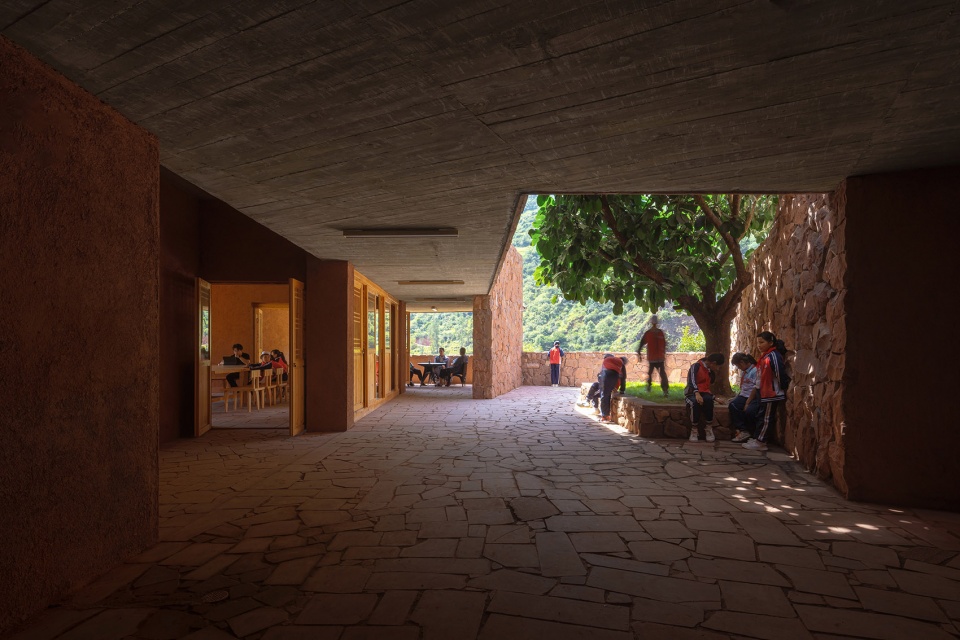
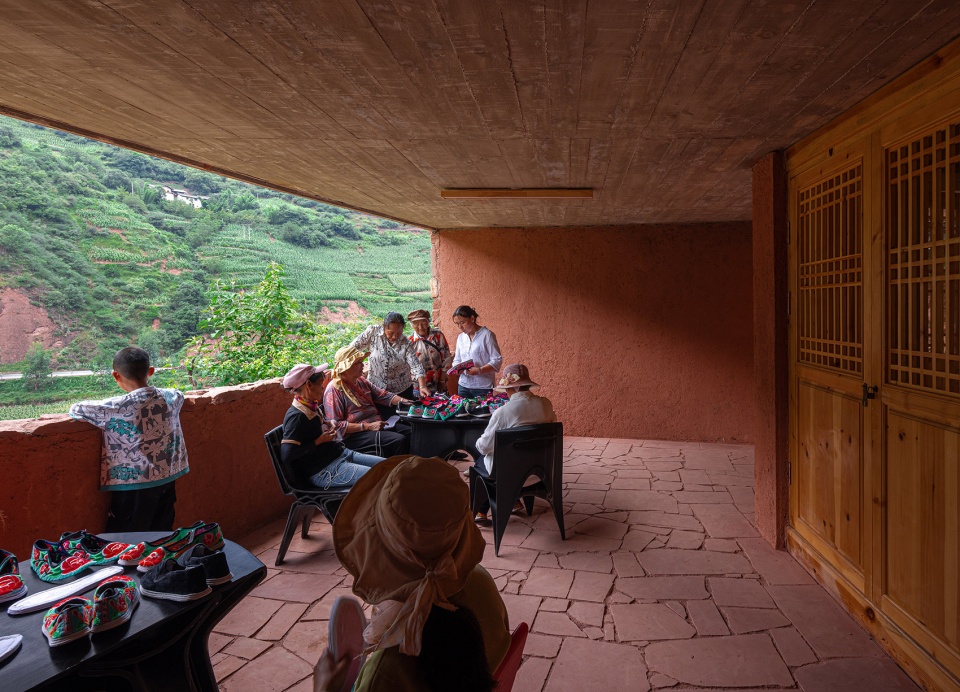
空间组织以“递进—交错—渗透”为逻辑,在高差与路径引导中生成多维活动节点。这一设计策略不再依赖封闭围护与单一功能空间的划分,而是借助场地特征激发新的公共性构成模式,实现教学活动、社区集会与村民参与的共场并置。
The spatial organization follows a logic of “progression—interweaving—permeation,” generating multidimensional activity nodes through level changes and path guidance. Instead of relying on enclosed boundaries or singular functions, the design uses site characteristics to stimulate new forms of publicness, enabling classrooms, community gatherings, and villagers’ participation to coexist.
▼户外教学互动, outdoor classroom
▼村民参与活动,Villagers’ participation
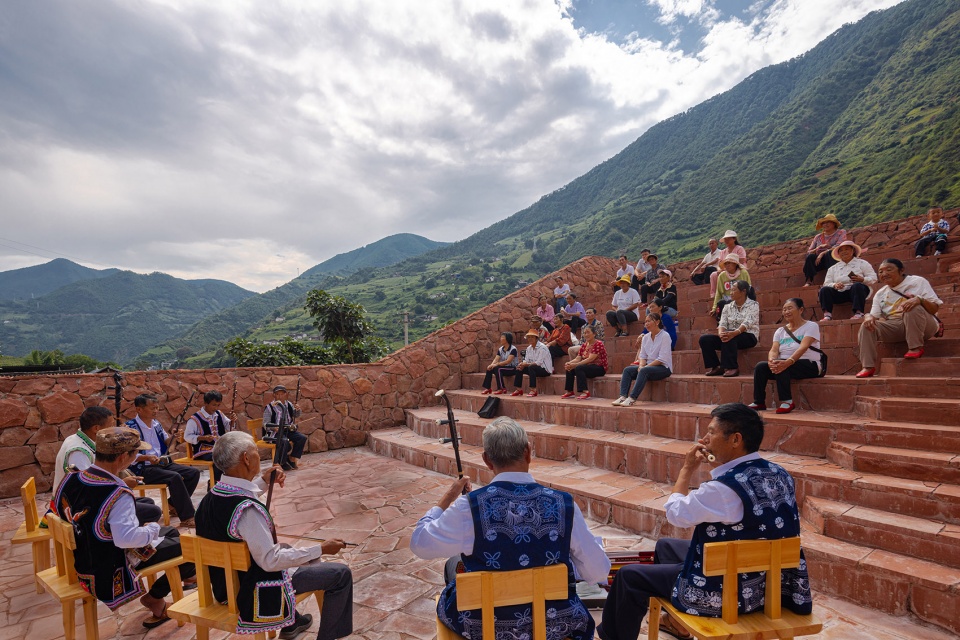
▼社区集会,Community gatherings
建构策略:材料逻辑与施工机制的双向协同 Construction Logic: Materials and Mechanisms in Synergy
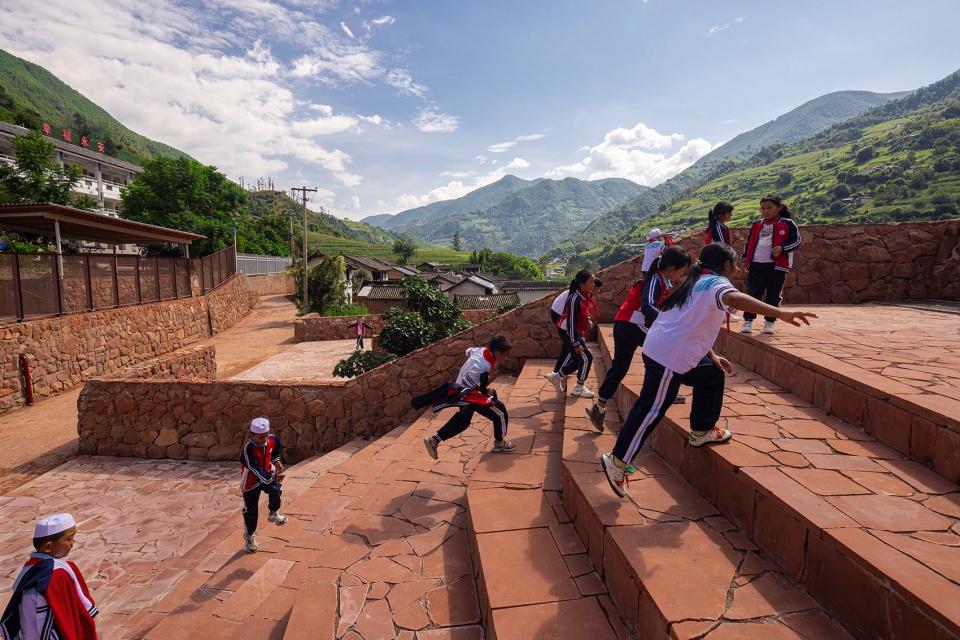
在材料系统上,项目采用本地红砂岩毛石与红泥墙为主要围护材料,回应区域红色地貌特征;同时在结构关键部位采用钢筋混凝土框架,完成防震、跨层与跨度要求的技术支撑。墙体以传统夯筑工艺完成,建筑构件尽可能利用原地拆除的石料,实现材料循环与工艺延续的共生体系。
The Academy employs local red sandstone rubble and red rammed-earth walls, echoing the area’s distinctive geology. Reinforced concrete frames were used in structural key points for seismic and spanning requirements. Materials were recycled from demolished local structures, creating a symbiosis of resource circulation and craftsmanship continuity.
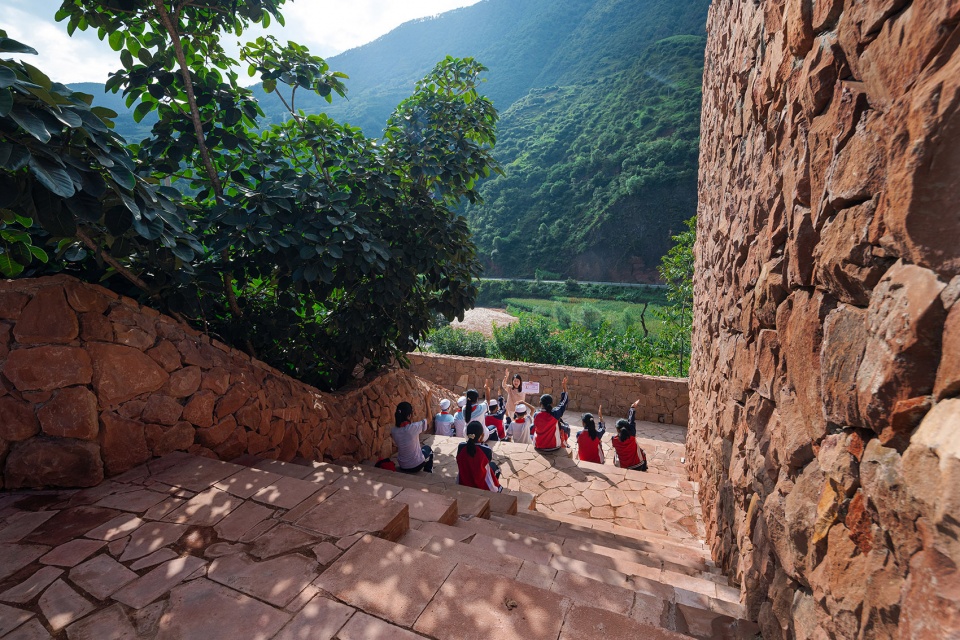
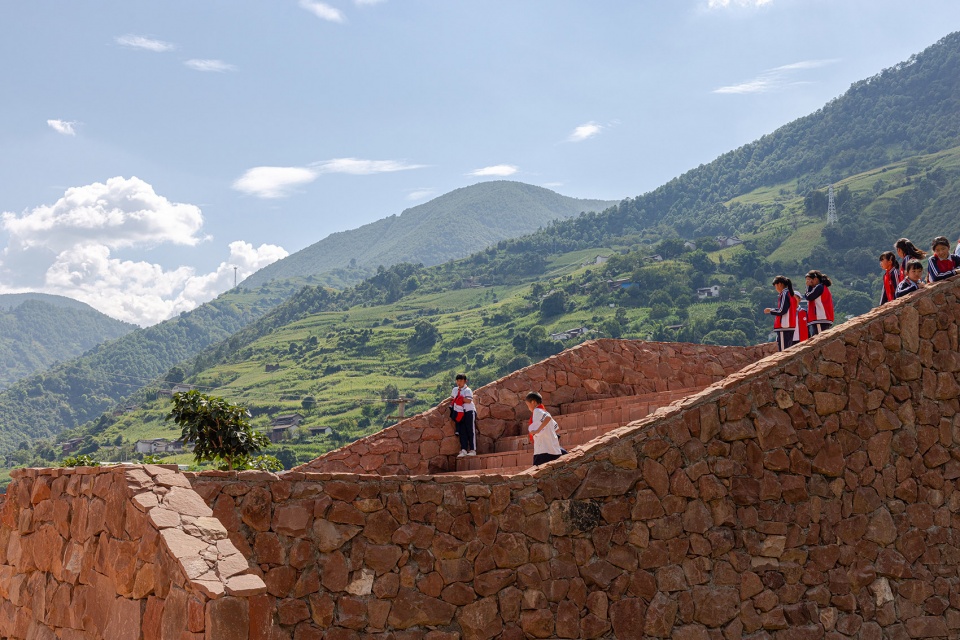
▼学生们在红砂岩毛石平台玩耍, Students playing on the local red sandstone platform
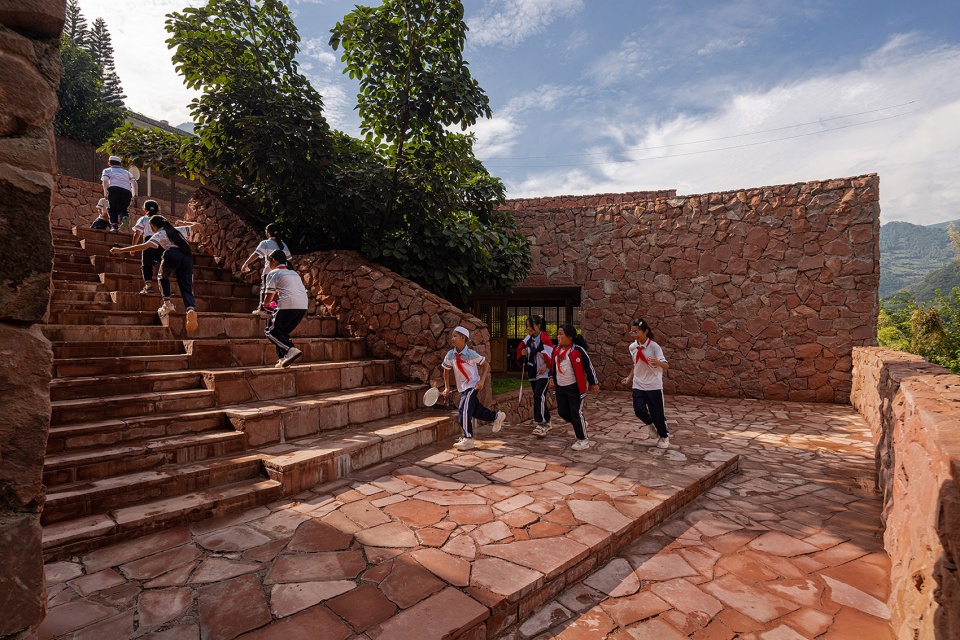
整个建造过程以本地工匠为主体,设计团队在施工阶段通过参数化构造简图与模具优化,完成传统工法与现代建构逻辑之间的协同转译。这种“低技介入 + 数字导引”的协作机制,不仅保障了施工精度,也在潜在层面提升了村庄自我更新的可持续能力。
Local craftsmen carried out the construction, supported by parametric diagrams and optimized molds from the design team, translating traditional methods into contemporary logic. This “low-tech intervention + digital guidance” ensured precision while enhancing the village’s capacity for self-renewal.
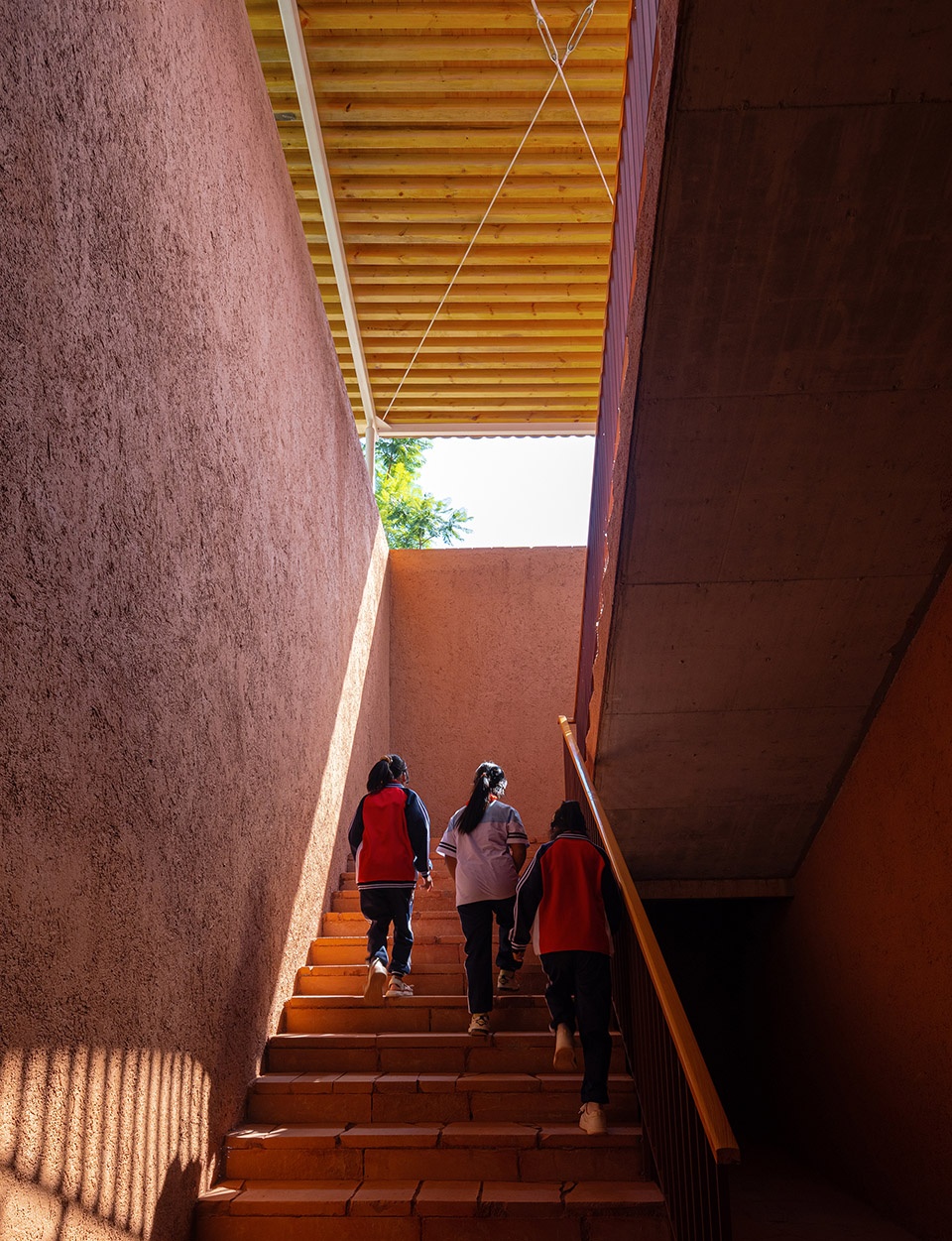
▼通往操场的楼梯 ,The stairs leading to the playground
时间策略与制度设定:多主体共治的空间模式 Temporal Strategy and Institutional Setting
学堂的核心创新不止于空间组织,更在于其以时间为轴构建使用权结构。白天服务学校课程体系与远程教育,夜间与周末则由村委、社区组织或志愿团队申请使用,用于农技讲座、文化活动、展览放映等。团队在设计之初即引入“协商性空间运营机制”,通过:
-弹性隔断与模块家具的配置逻辑
-可控门禁系统与照明策略
-共治式管理协议(学校+村委+村民代表)
Beyond space, the Academy’s innovation lies in structuring its use along a temporal axis. During weekdays, it serves school curricula and distance learning. In evenings and weekends, it is available to the village committee, community groups, and volunteer teams for agricultural lectures, cultural events, exhibitions, and screenings. At the outset, the design incorporated a “negotiated space management mechanism,” including:
-Flexible partitions and modular furniture,
-Controllable access and lighting systems,
-Co-governance agreements among school, village committee, and resident representatives.
▼室外平台和台阶 ,Outdoor platform and stairs
实现不同使用群体、使用时段与使用尺度之间的动态适配。该机制体现出一种“空间—制度—信任”三位一体的公共性建构路径,使空间不只是可用,更是可管理、可持续、可共享的。
This enables dynamic adaptation across user groups, time slots, and scales, forging a triadic path of “space—institution—trust.” The Academy is thus not only usable but also manageable, sustainable, and shareable.
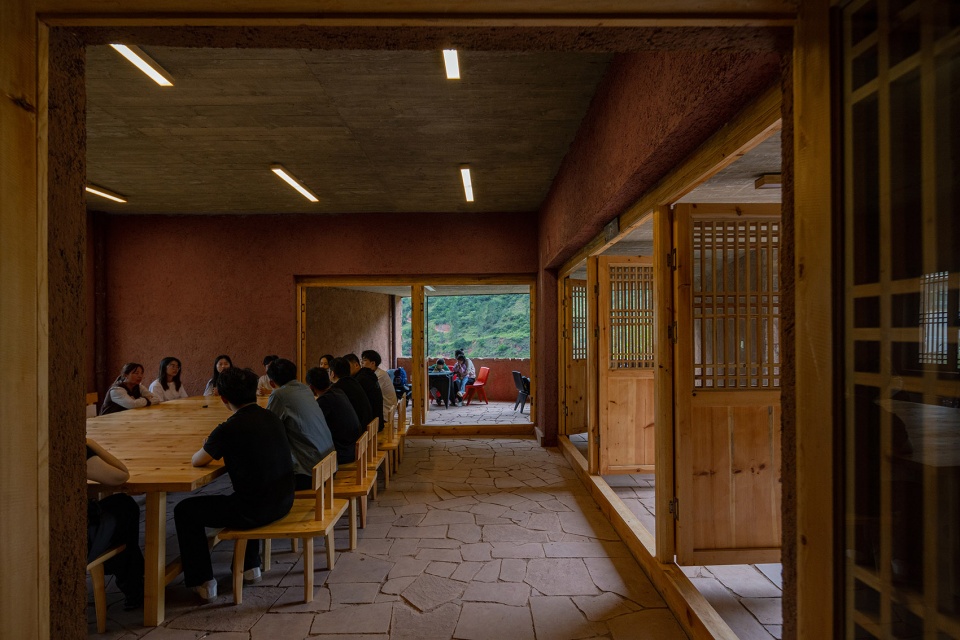
▼会议室, meeting room
结语:建筑如何成为公共性的生成器? Conclusion: Architecture as a Generator of Publicness
“永安学堂”并不以体量、形态或造价标榜“创新”,它的意义在于:在一个资源边界尚未被完全制度化的乡村背景中,通过空间的微介入,机制的精设计与建构系统的可操作性,激活一套真正嵌入日常的公共文化循环。
The Yong’an Academy does not claim innovation through its form, size, or budget. Its significance lies in showing how, in rural contexts where institutional resources remain absent, modest spatial interventions, carefully designed mechanisms, and pragmatic construction systems can activate a genuine cycle of everyday public culture.
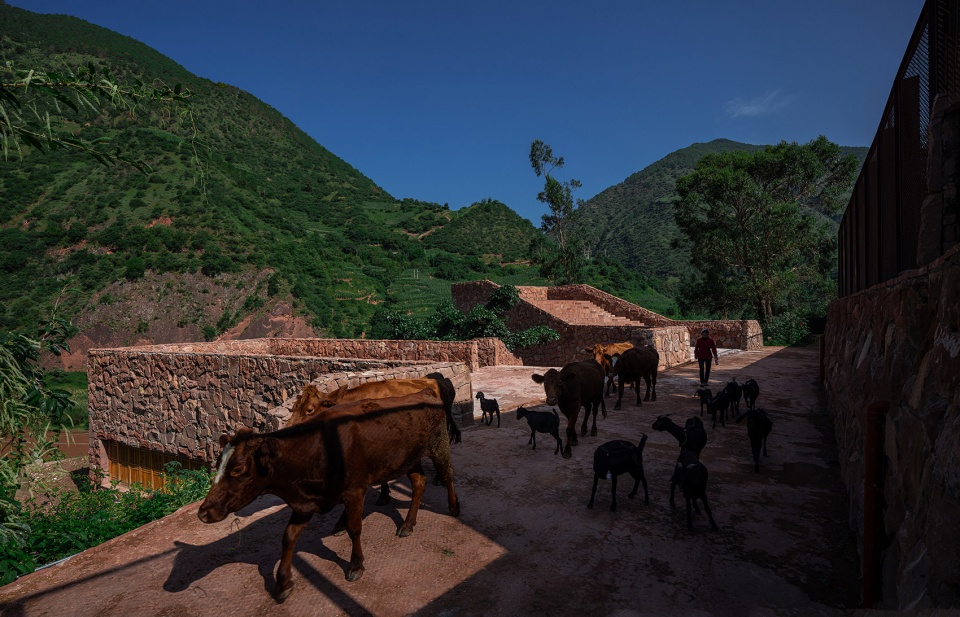
▼通向永安学堂的村路 ,Path to Yong’an academy
所谓“可持续的乡村未来”,并非仅指生态技术或建筑能效,更应是一种能被社区不断使用、理解、维护并赋予意义的空间实践过程。在制度资源尚未抵达之处,建筑是否能作为一种先行的社会结构生成体?永安学堂作为一个微型但真实的样本,给出了积极回应。它不是结果,而是过程的开端。
A “sustainable rural future” should not be limited to ecological technologies or building efficiency. More importantly, it must be a process of space-making that communities can continuously use, understand, maintain, and imbue with meaning. In places where formal structures have yet to take root, can architecture itself act as a proto-social institution? As a modest but real prototype, the Yong’an Academy provides a positive response—not an end, but the beginning of a process.
▼微介入乡村空间,Modest spatial interventions
双节点协同:空间、机制与信任的共构 Dual Node Collaboration: The Co-construction of Space, Mechanisms, and Trust
“永安之心”与“永安学堂”分别作为治理与教育的空间节点,以路径、视线、共享机制彼此连接。从“能聚起来”到“能用起来、常用起来”,两者构成一个渐进式的公共性生成体系。这种空间实践不止于形制的营造,更在于机制可持续、情感可归属、信任可生成。在一个面临持续人口流失与制度空转的乡村中,这样的共构逻辑,为村落的可持续未来提供了一种更具弹性的可能。
Together, the “Heart of Yong’an” and the “Yong’an Academy” function as complementary nodes of governance and education. Linked through paths, sightlines, and shared mechanisms, they form a progressive system for generating publicness—from enabling people to “gather together” to ensuring spaces are “usable and used.” This approach goes beyond spatial form, embedding mechanisms, belonging, and trust, offering a resilient possibility for the future of villages facing depopulation and institutional stagnation.
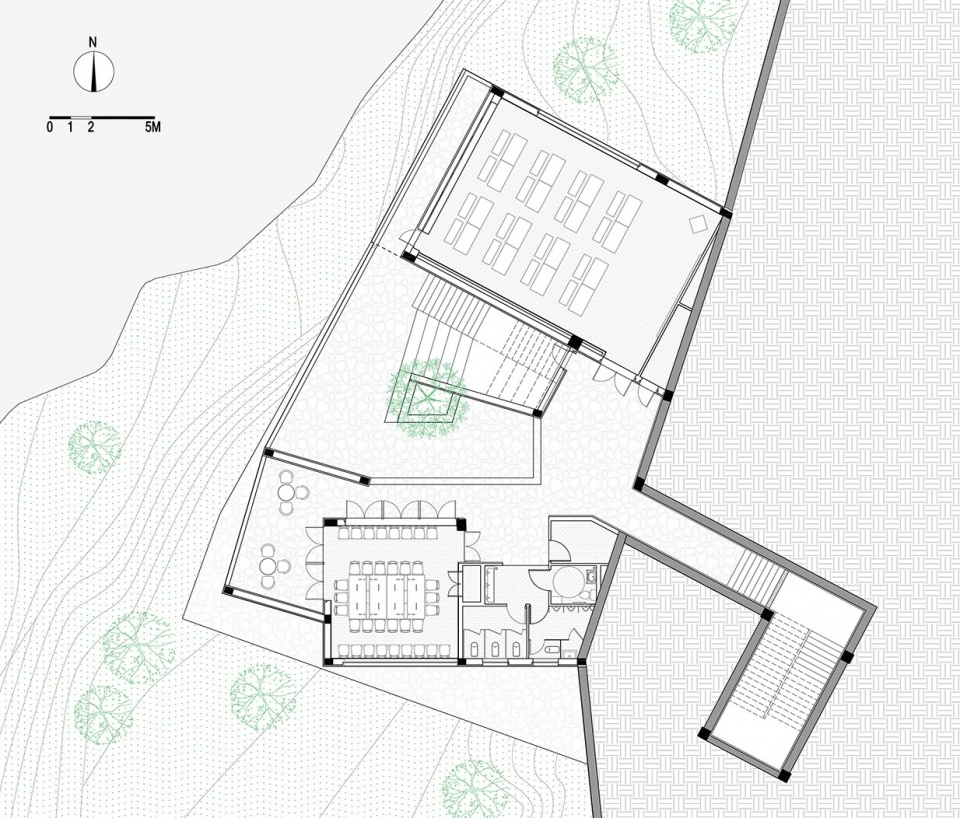
▼首层平面,Ground floor plan
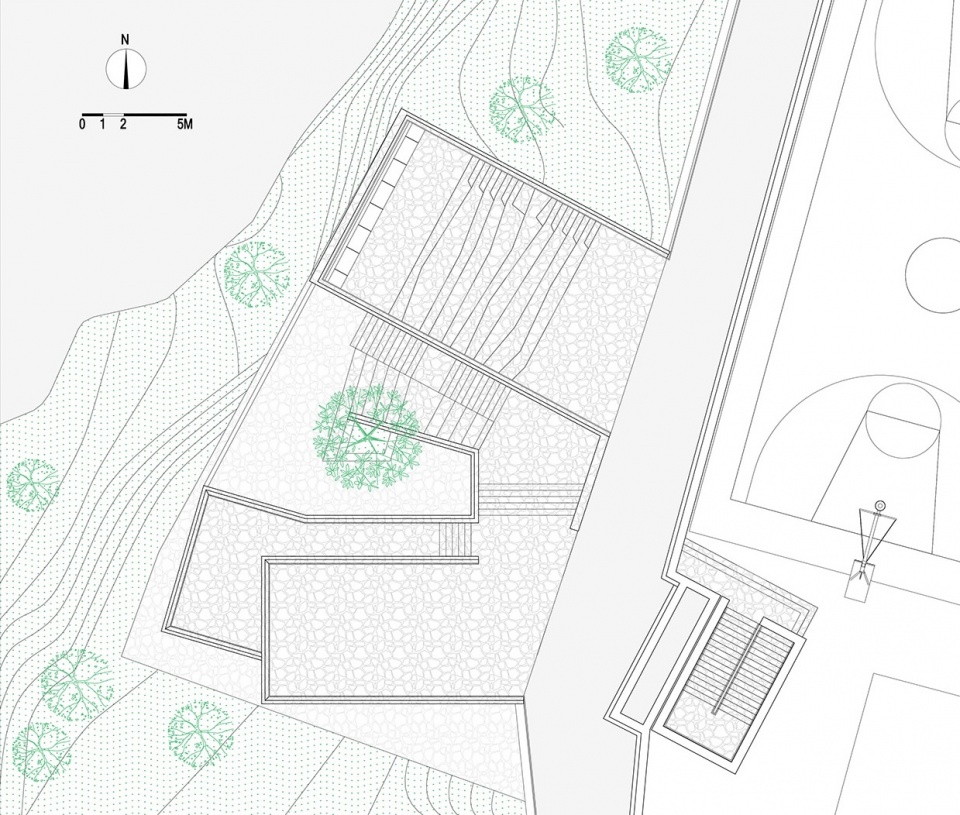
▼二层平面,Second floor plan
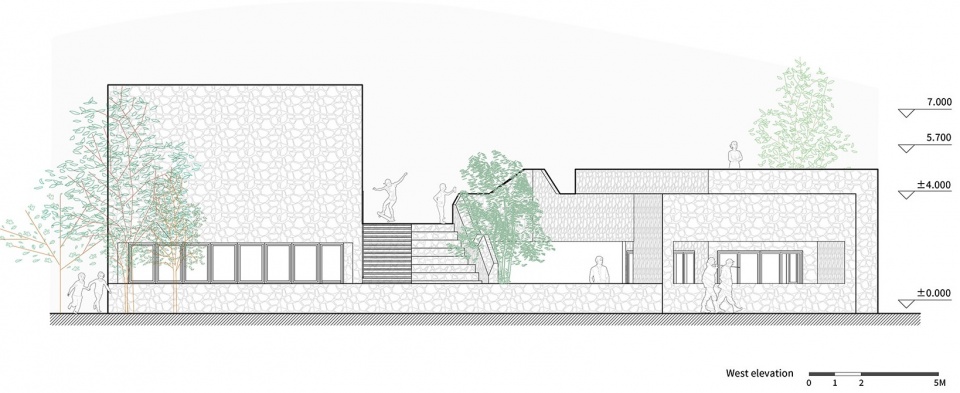
▼西立面,West elevation
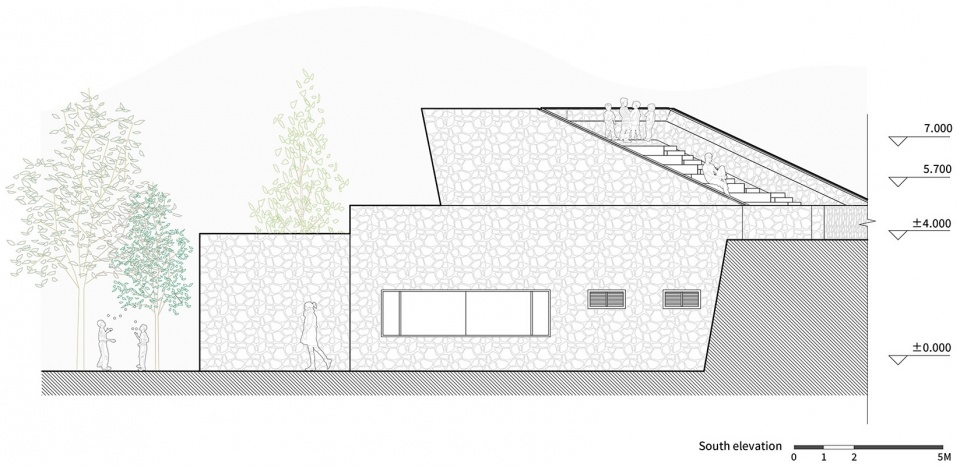
▼南立面,South elevation
▼剖面,Section
项目信息
Project Information
Project Name: Heart of Yong’an / Yong’an Academy
Location: Yong’an Village, Yunlong County, Dali, Yunnan Province
Chief Architect: Yuan Feng (Tongji University)
Project Architect: Gao Weizhe
Design Team: Wang Ju, Hu Yingzi, Kang Qian, Xie Xingjie
Structural Design: He Tiansen, Wang Rui, Chen Wenhao
MEP Design: Zhao Shiguang, Shi You, Zhang Ying, Gu Chunfeng
Design Unit: Tongji Architectural Design & Research Institute (Group) Co., Ltd., Chuangmeng Studio
Client: Tongji University Poverty Alleviation Office, Yong’an Village Committee
Design Period: 2019–2020 (Heart of Yong’an), 2022–2023 (Yong’an Academy)
Construction Period: 2020–2021 (Heart of Yong’an), 2023–2024 (Yong’an Academy)
Building Area: 930 sqm (Heart of Yong’an), 860 sqm (Yong’an Academy)
Photography: Arch-Exist