曼哈顿东岸海岸防洪建设项目,纽约 / BIG
这条全长2.25英里的防洪体系——“曼哈顿东岸海岸防洪建设项目”(East Side Coastal Resiliency Project,简称 ESCR)——随着东河公园关键区域的开放,已实现重要阶段性成果。项目被构想为沿东河滨水区展开的“公园群岛(parkipelago)”,通过一系列相互连接、抬高的绿地,同时发挥防洪屏障与公共活动空间的双重作用,为周边的下东城社区提供全新的公共设施。
The 2.25-mile flood protection system dubbed the East Side Coastal Resiliency Project (ESCR) has reached a major milestone with the opening of key areas of East River Park. Conceived as a “parkipelago” of interconnected parks along the East River waterfront, the project creates a series of elevated green spaces that double as flood barriers while offering new public amenities for the surrounding Lower East Side neighborhood.
▼项目鸟瞰,aerial view of the project
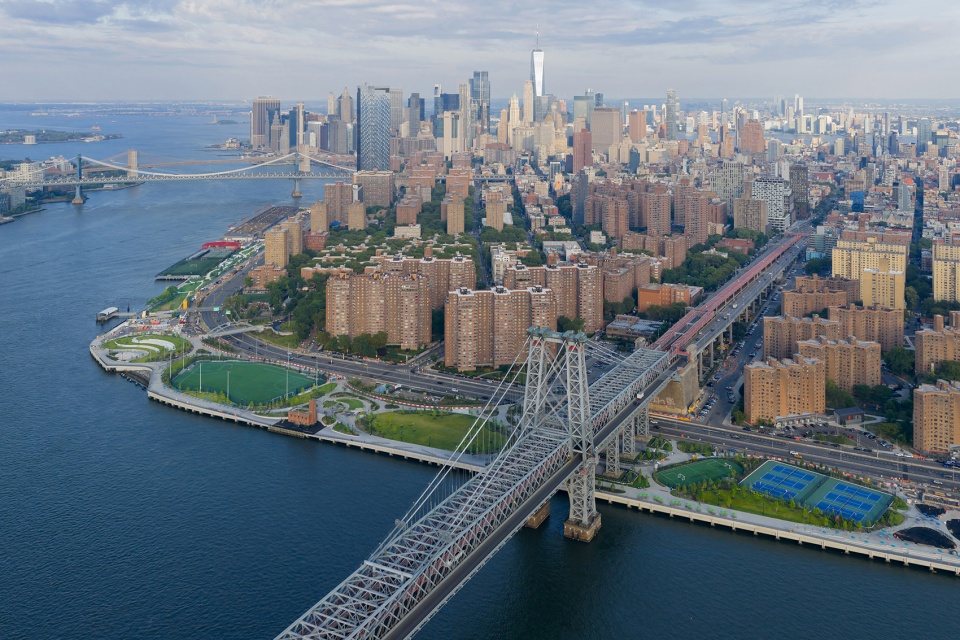
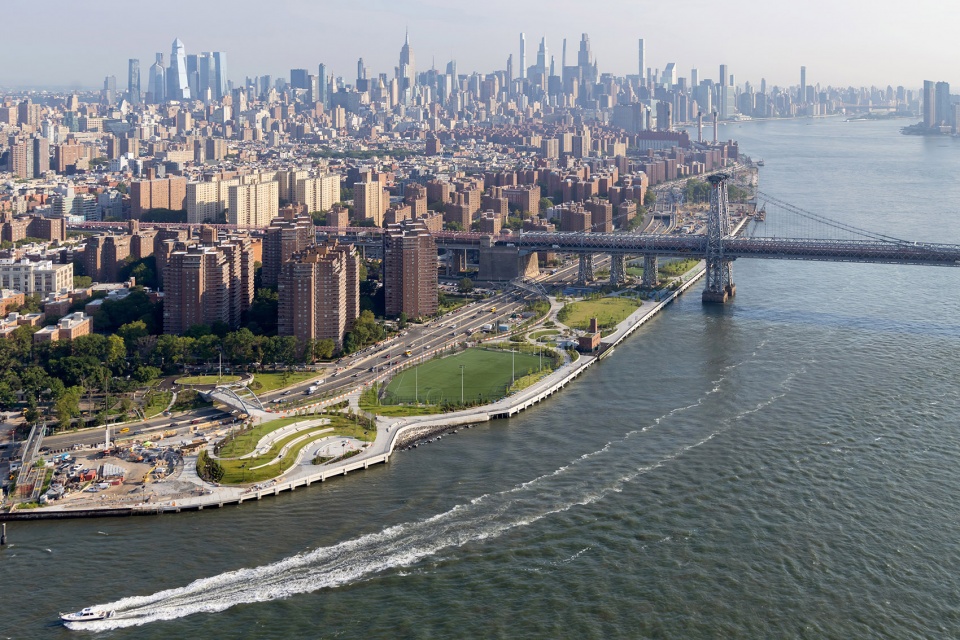
▼项目鸟瞰,aerial view of the project
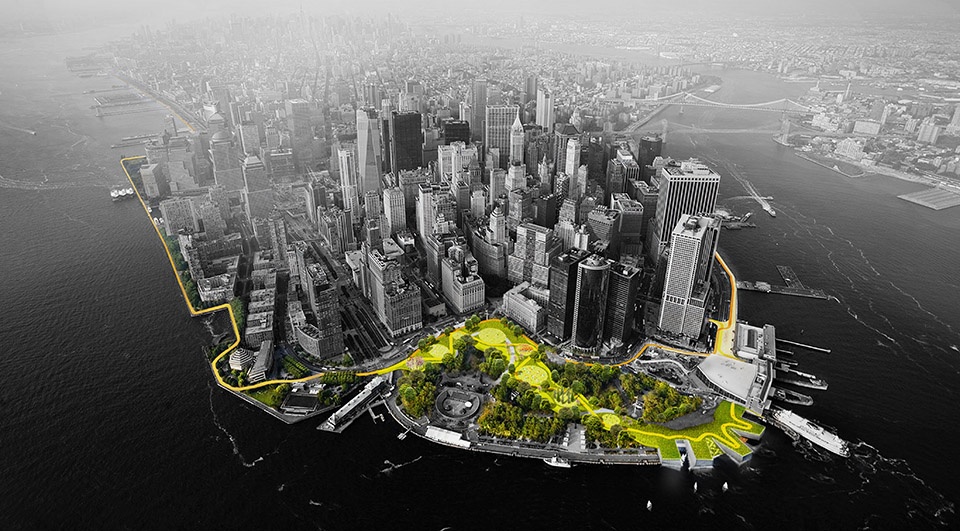
该项目由纽约市设计与建设局(NYC DDC)牵头,BIG-比亚克·英格尔斯事务所、MNLA(Mathews Nielsen 景观建筑事务所)、ONE Architecture & Urbanism、AKRF以及下东城居民共同参与设计,总投资达14.5亿美元,范围自蒙哥马利街至东25街。项目延续了2014年在飓风“桑迪”之后提出的“BIG U”构想——沿曼哈顿打造10英里连续的防护性公园与公共空间体系,旨在保护超过11万名纽约居民免受未来风暴潮与潮汐型洪水的侵害。
▼“BIG U”构想,BIG U Scheme
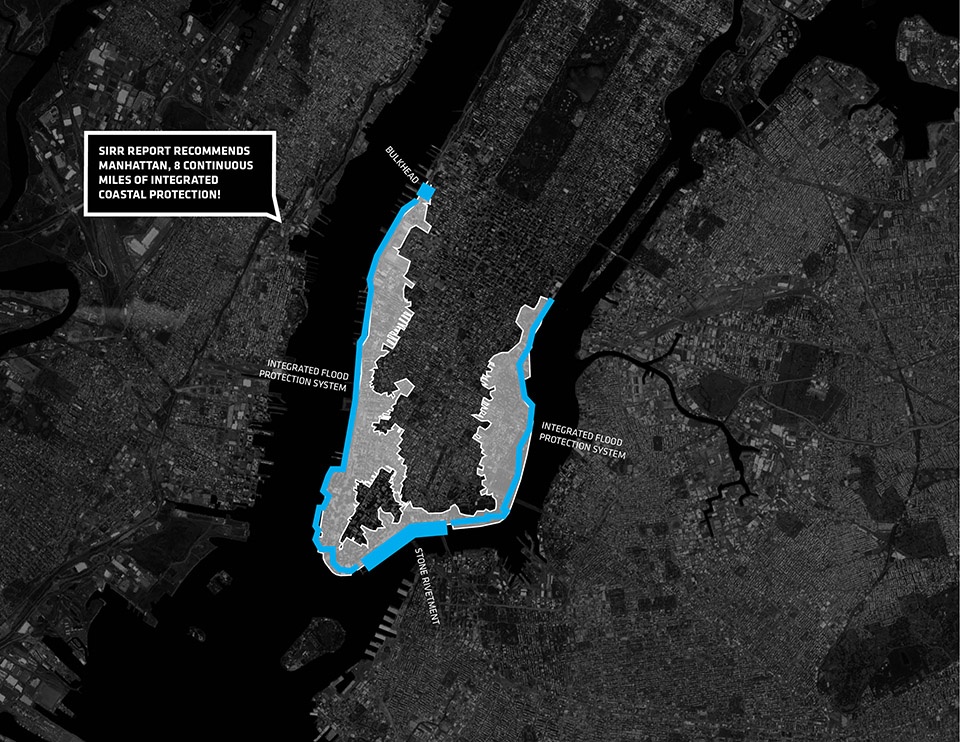
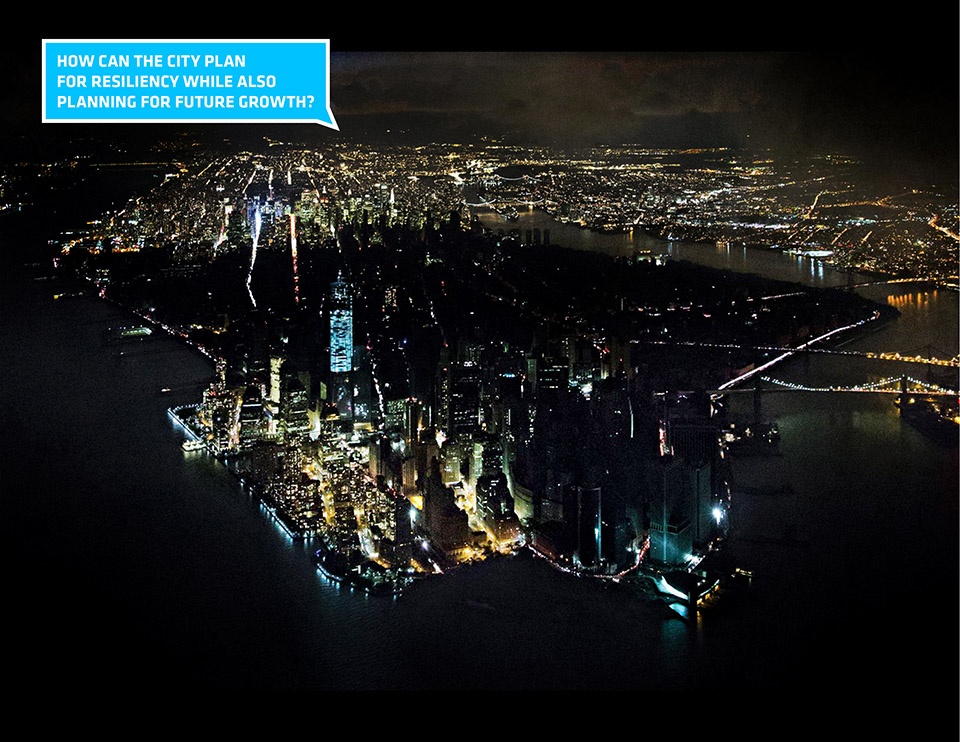
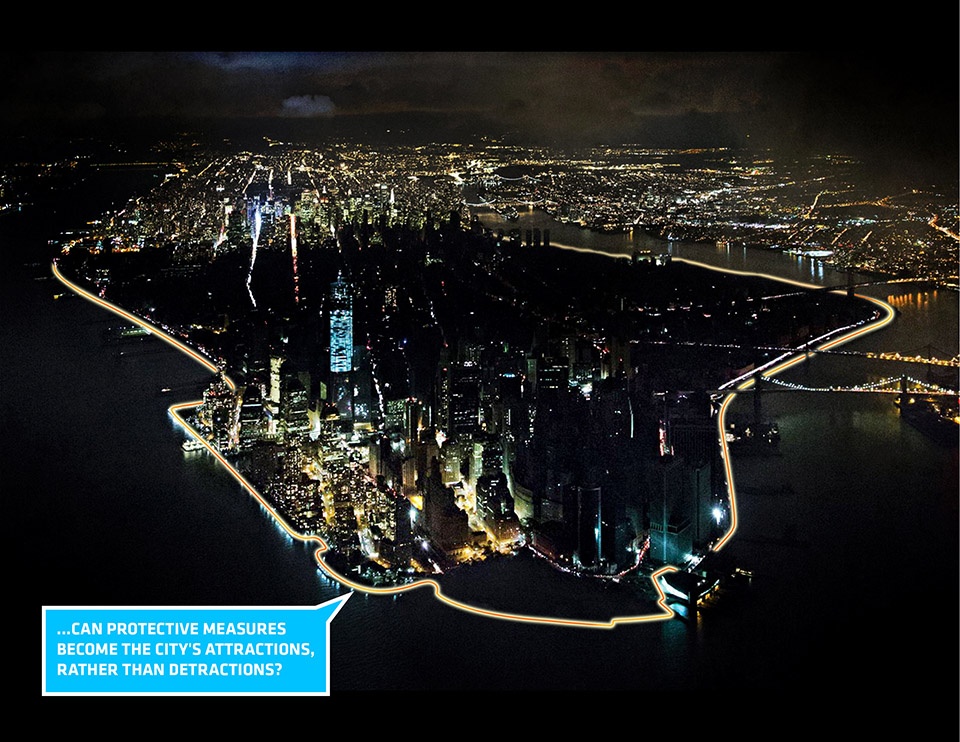
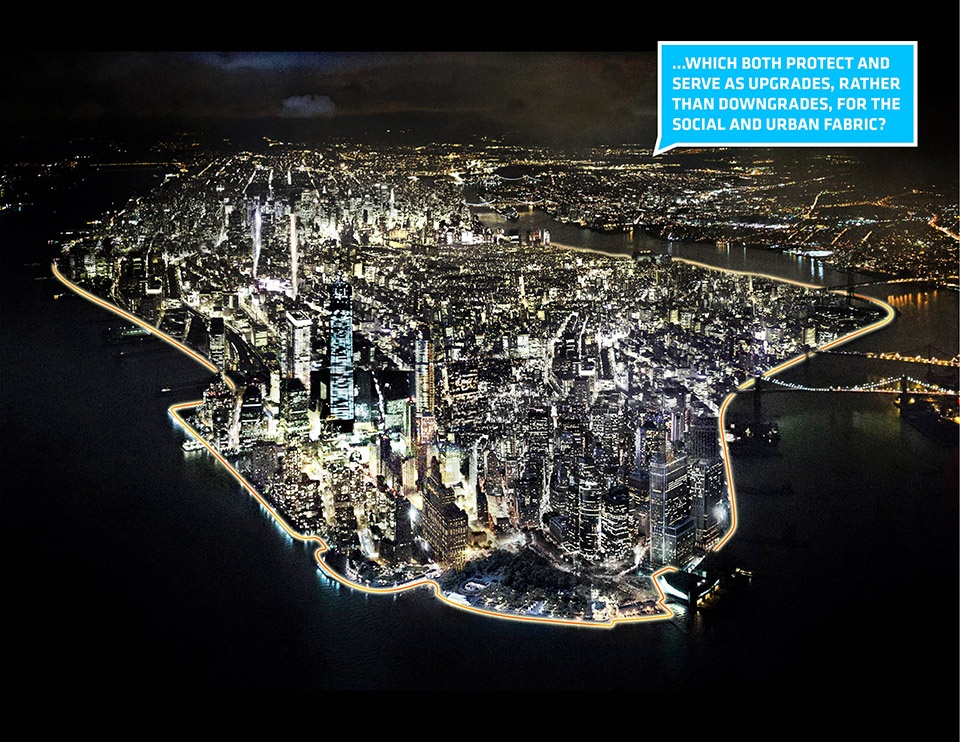
Developed under the leadership of the NYC Department of Design and Construction (NYCDDC) and designed by BIG-Bjarke Ingels Group, Mathews Nielsen Landscape Architects (MNLA), ONE Architecture & Urbanism, AKRF, and residents of the Lower East Side, ESCR is a $1.45 billion coastal protection initiative spanning Montgomery to East 25th Streets. Following the original 2014 BIG U vision for 10 continuous miles of protective park and public realm in the wake of Superstorm Sandy, the project is designed to safeguard more than 110,000 New Yorkers from future storms and tidal flooding.
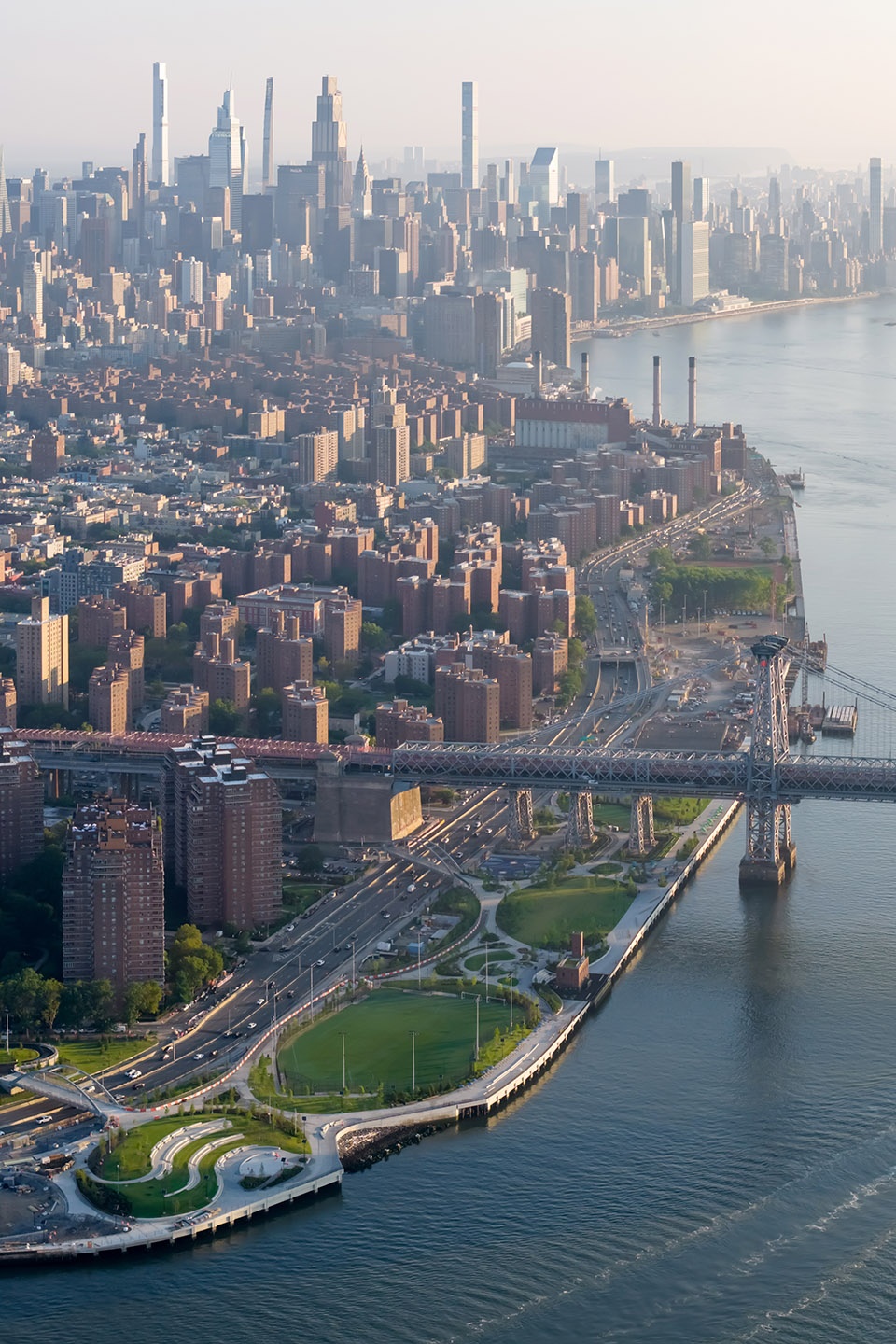
▼项目鸟瞰,aerial view of the project
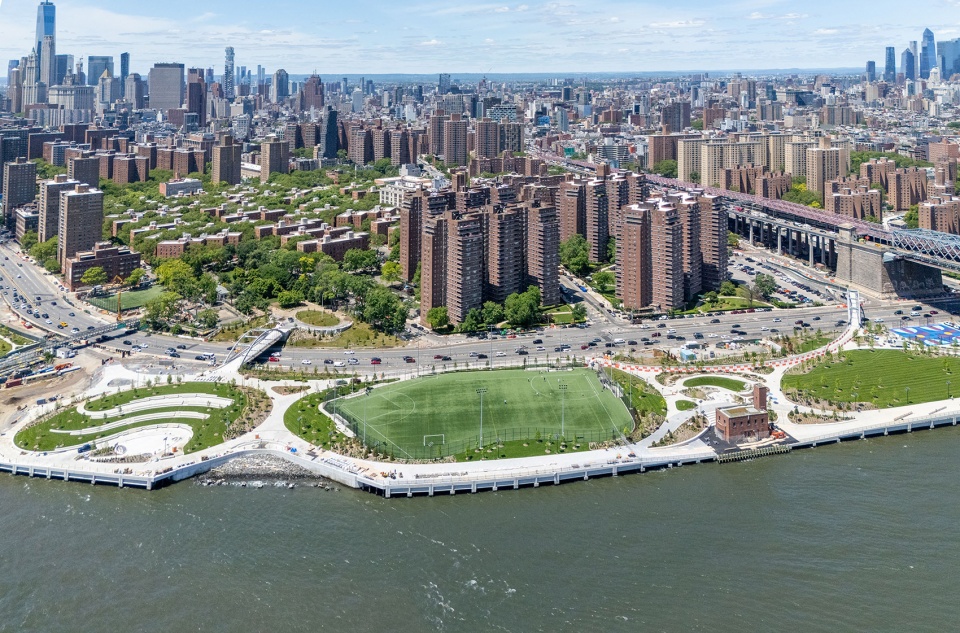
▼连续的防护性公园与公共空间体系,continuous miles of protective park and public realm
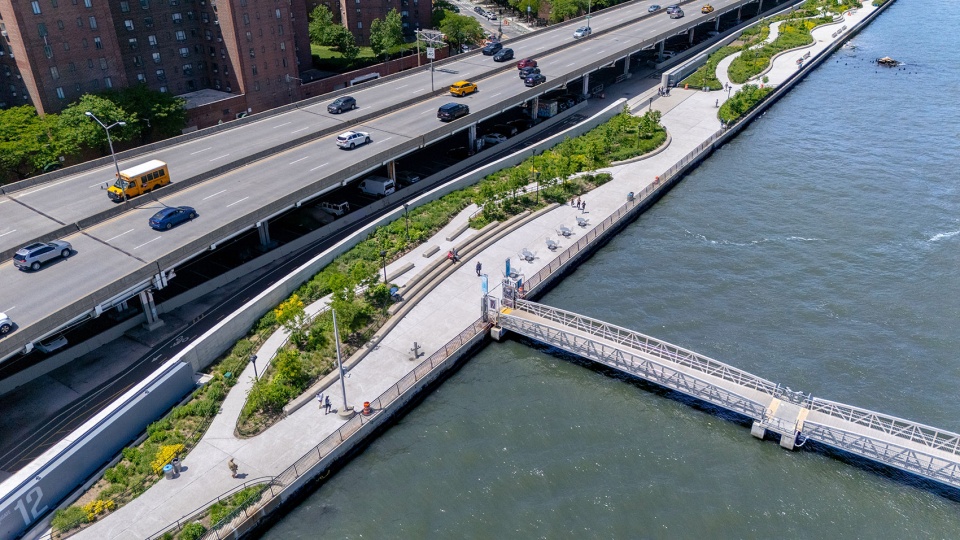
ESCR位于FEMA划定的百年一遇洪泛区内,通过将防洪墙、滑动闸门、堤坡桥(bridging berms)以及抬高的公园地形整合成一条连续的防护带,来保护关键基础设施——其中包括一座重要的抽水站、一座为曼哈顿下城大片区域供电的变电站,以及多所学校与图书馆。ESCR不只是“挡水”的工程,它也展示了基础设施如何同时成为开放、可达的公共空间——在提升韧性的同时改善日常城市生活。
▼概念示意图,concept diagram
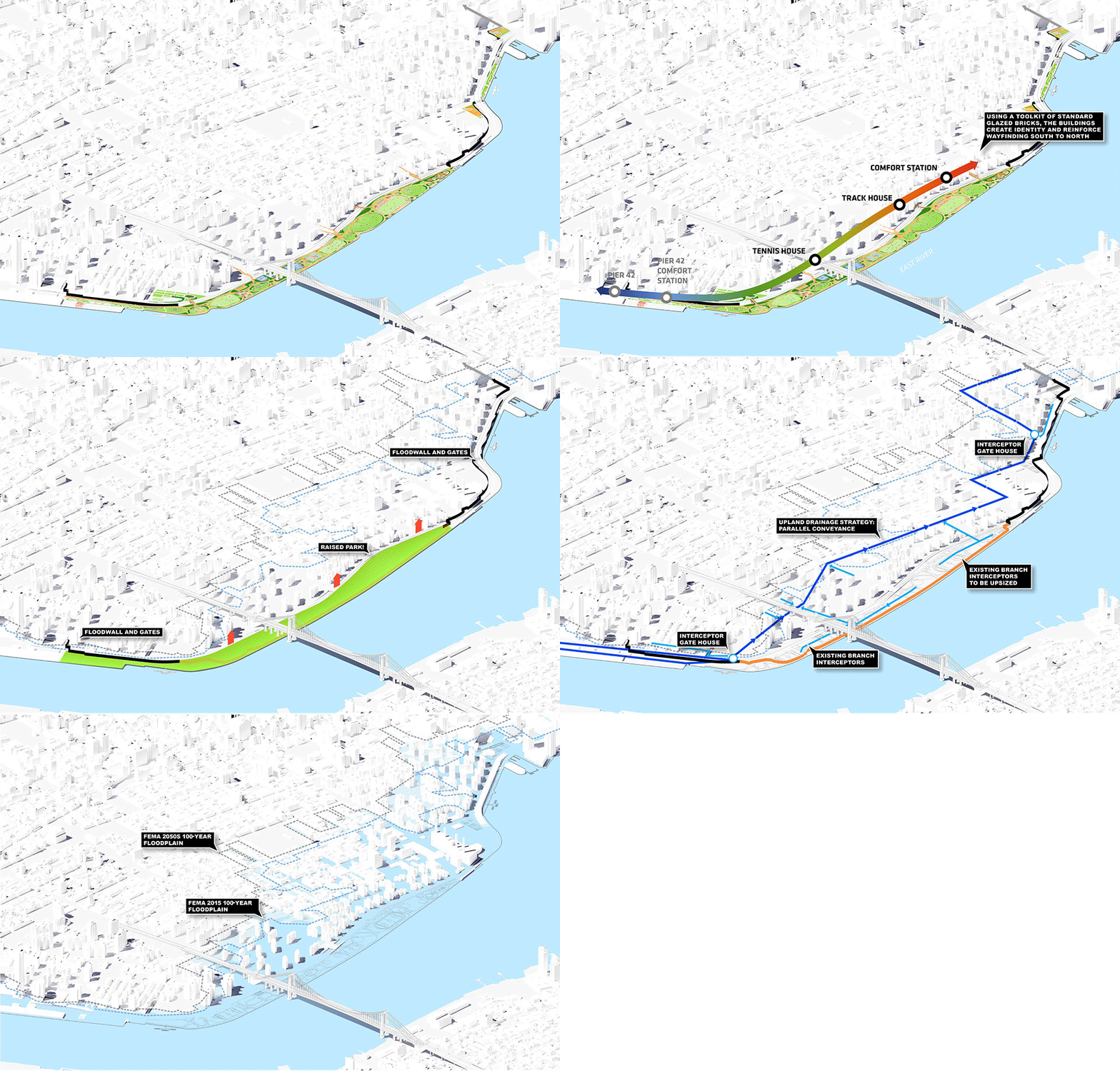
Located within the FEMA 100-year floodplain, ESCR integrates floodwalls, sliding gates, bridging berms, and elevated parkland into an unbroken protective system that shields critical infrastructure – including a major pump station, an electrical substation powering much of Lower Manhattan, and numerous schools and libraries. More than a barrier, ESCR is a model for how infrastructure can double as active and accessible public space – strengthening resilience while enhancing daily life.
▼改善日常城市生活,enhancing daily life
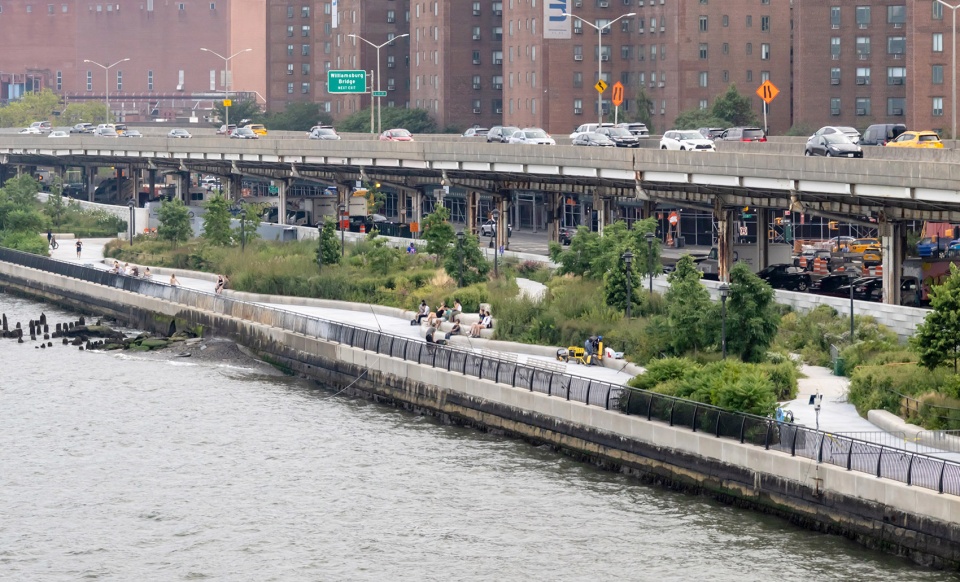
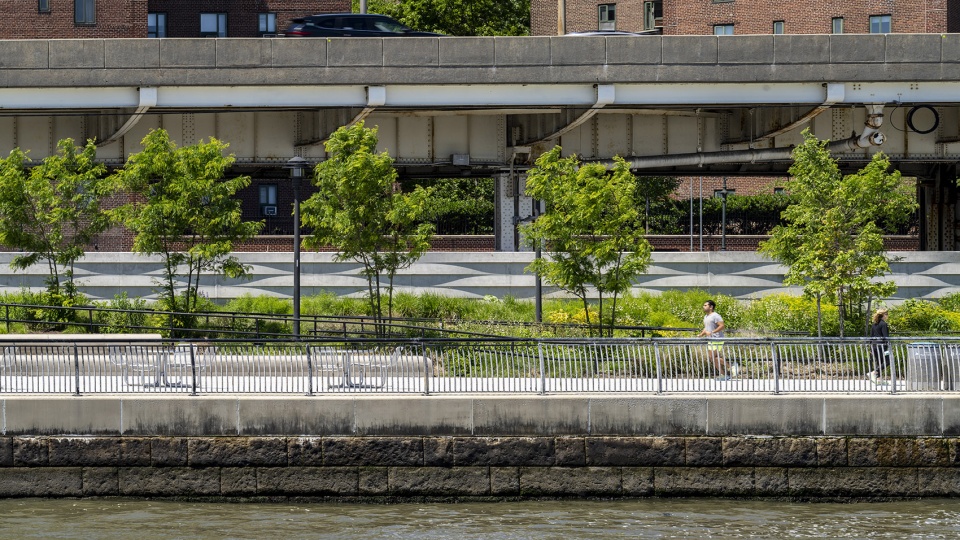
▼开放、可达的公共空间,active and accessible public space
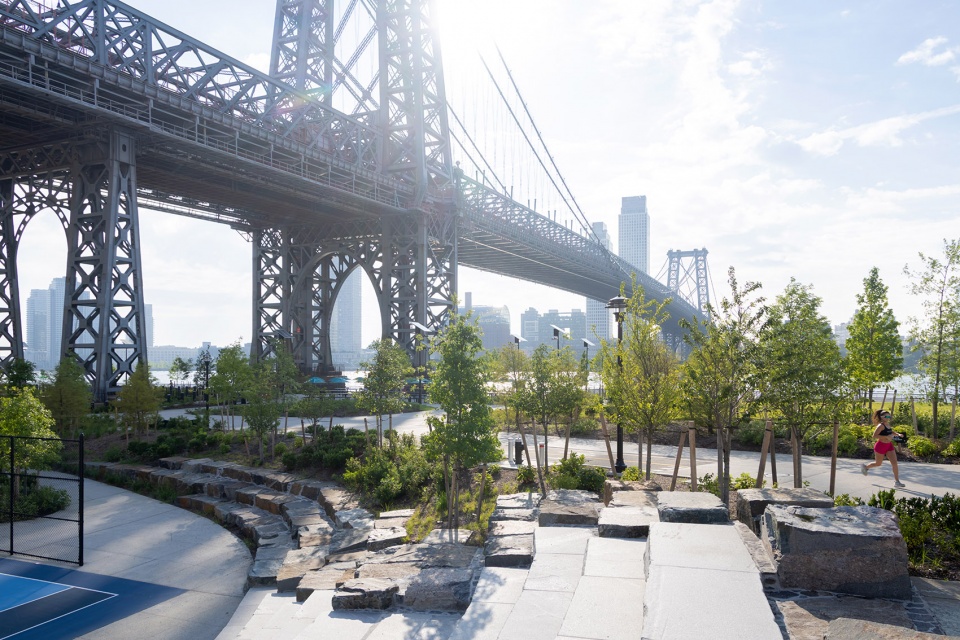
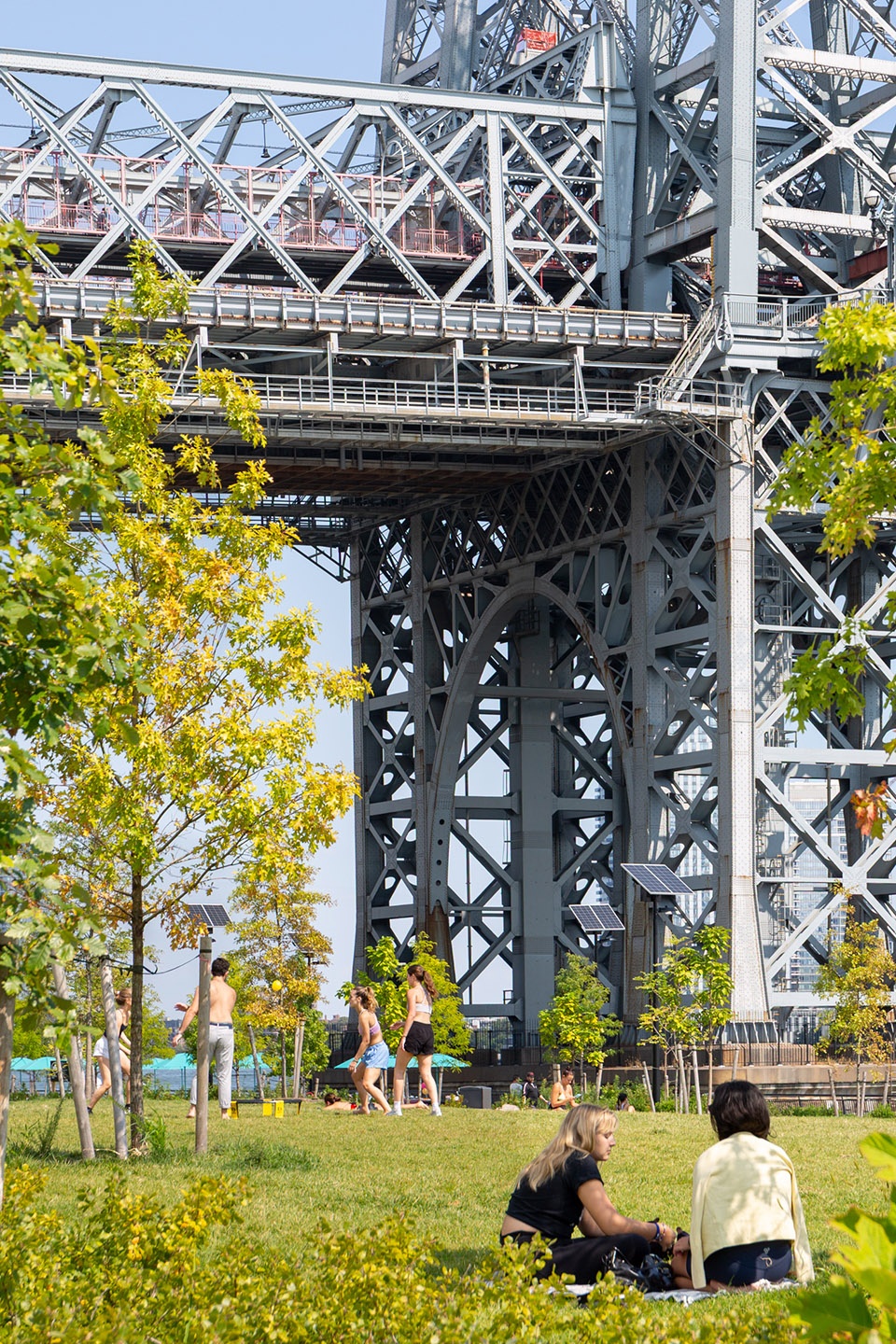
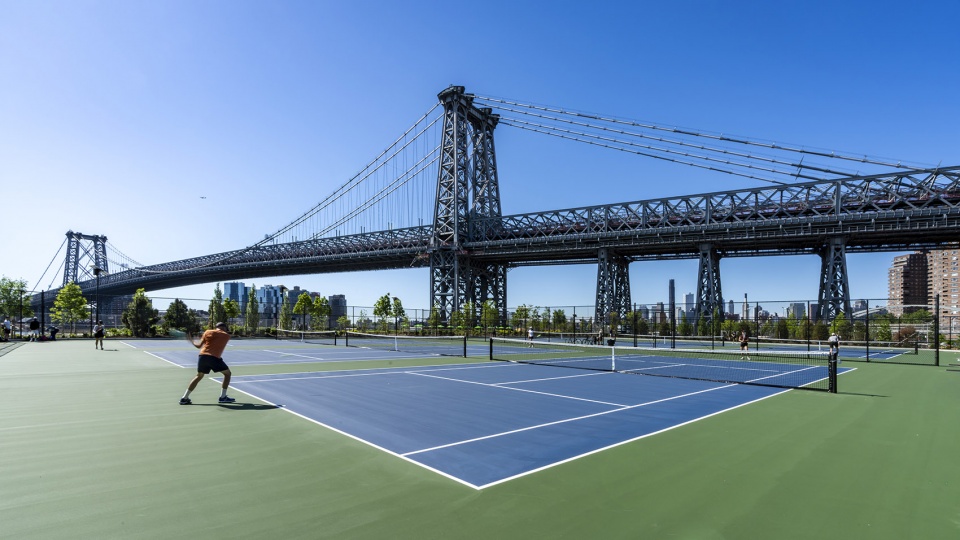
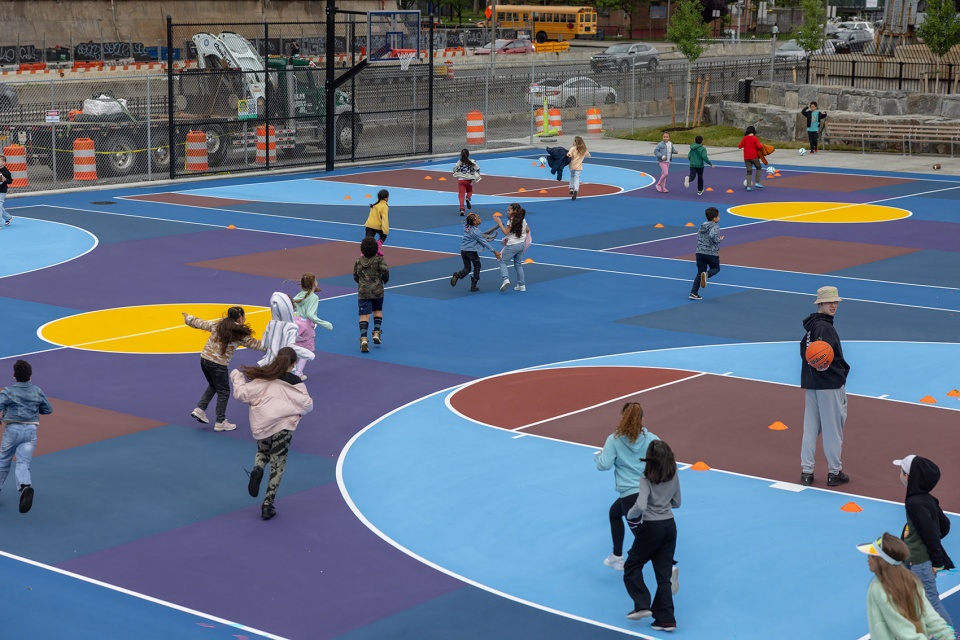
2024年完成第一阶段后,沿岸的改造继续推进,东河公园靠近威廉斯堡大桥的多个重要区域重新向公众开放。公园整体平均被抬高约8-9英尺,以形成关键的防洪高程,同时新增了600株乔木、超过21,000株灌木、草本与多年生植物,以增强滨水生态与岸线稳定性。公园还新设篮球场、网球场、野餐与烧烤区、多功能草坪、草坡休闲区、自然探索与戏水空间、新的露天剧场、加长的滨河步道,以及位于德兰西街和Corlears Hook公园的两座新行人桥。
▼渲染动画,rendering animation
Following the completion of ESCR’s first phase in 2024, the coastal redevelopment continues with the reopening of several major sections within East River Park around the Williamsburg Bridge. Elevated an average of 8-9 ft to provide vital flood protection, the park has been infused with 600 new trees and over 21,000 shrubs, grasses, and perennials – strengthening the shoreline and enhancing ecological character. The park also features new basketball and tennis courts, picnic and BBQ areas, a multi-use turf field, grassy lawns, dedicated zones for nature exploration and water play, a new amphitheater, an extended esplanade, and two new pedestrian bridges at Delancey Street and Corlears Hook Park.
▼沿岸公园,riverfront park
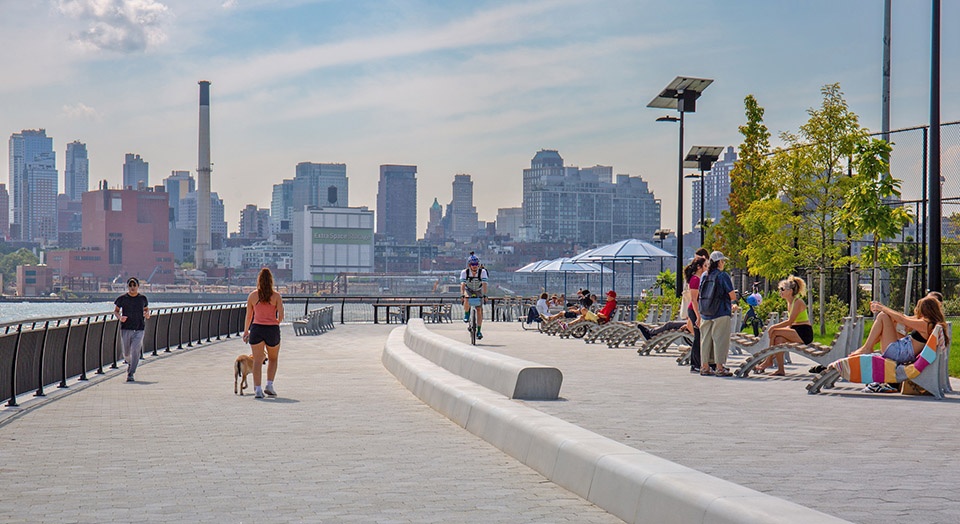
▼滨河步道,riverfront esplanade
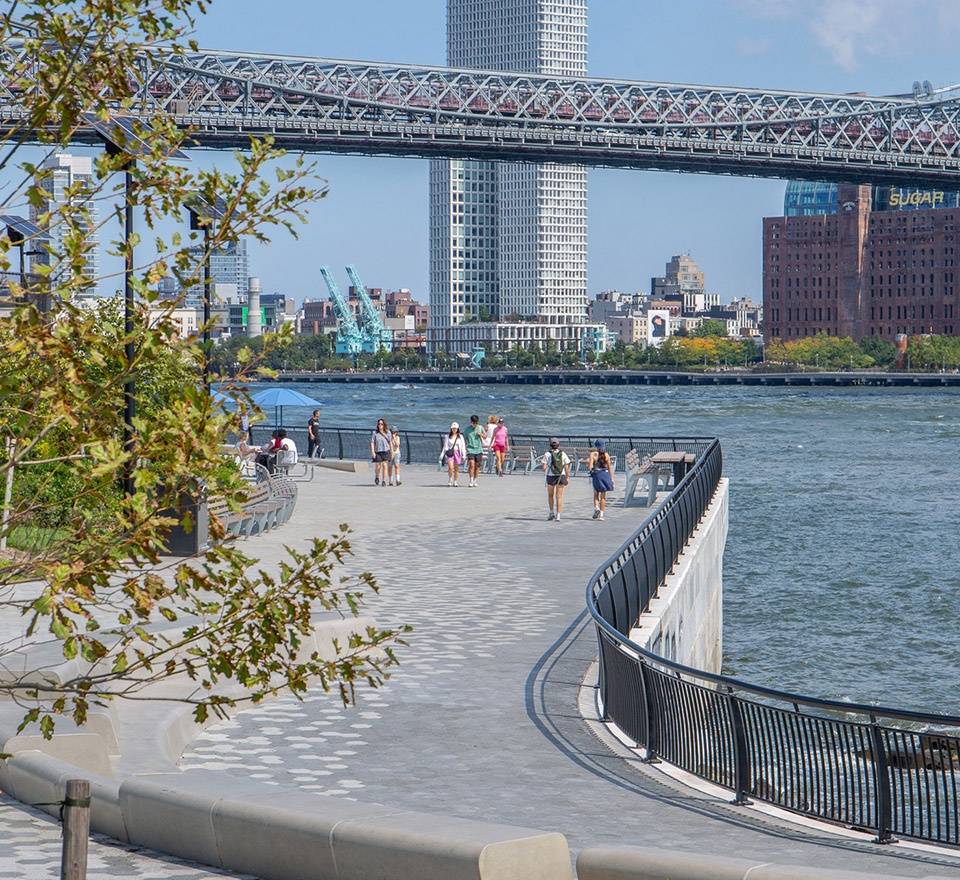
▼创造更好的休闲场所,create better recreational opportunities
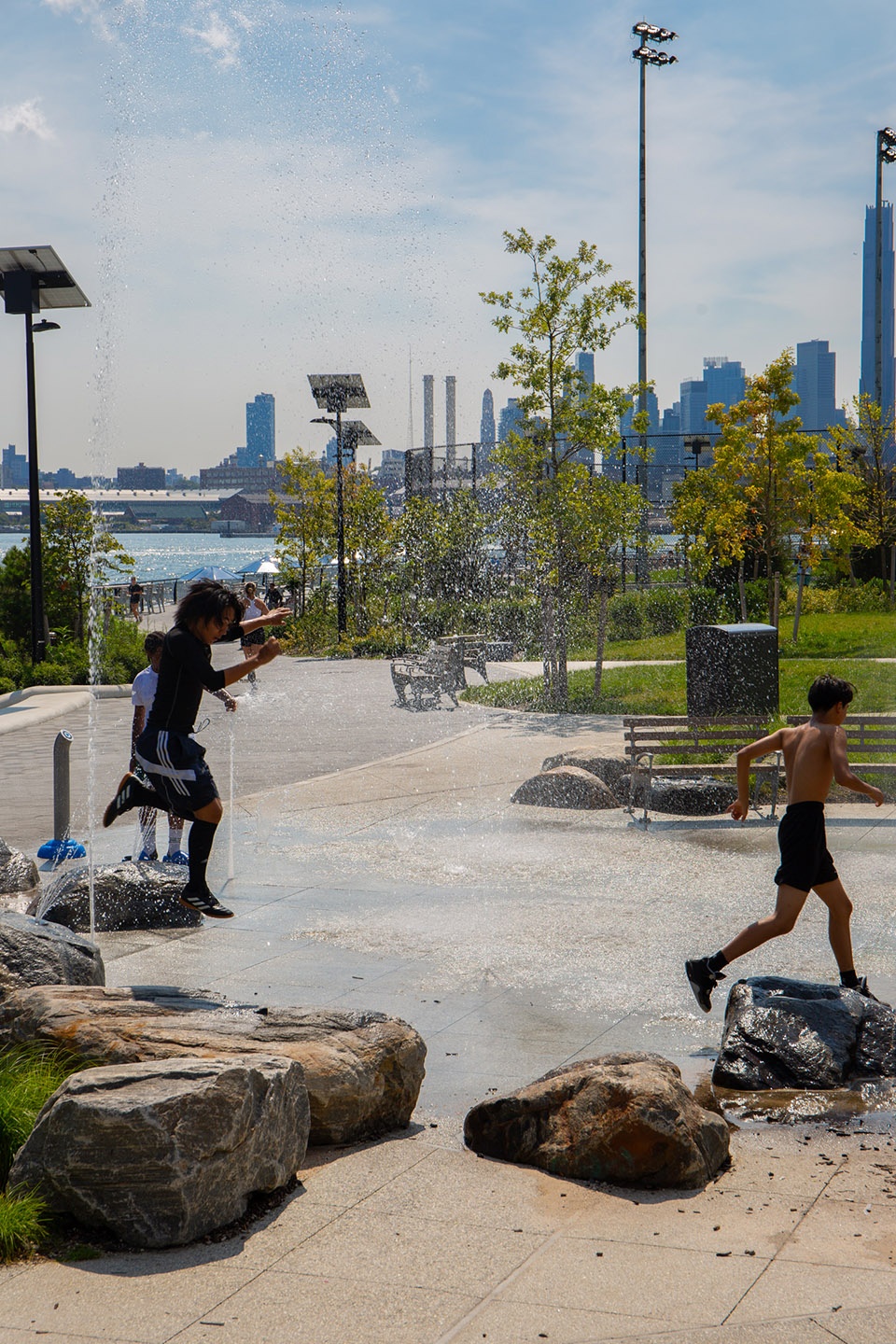
▼充满活力的运动场所,create energetic sports field
在东23街与C大道(Avenue C)作为ESCR北端入口位置,坐落着新建成的“Solar One环境教育中心”。该建筑由BIG携手纽约市经济发展公司(NYCEDC)、Gilbane建筑公司、TYLin(前 Silman)、Cosentini、MNLA等团队共同完成。作为纽约市首座从零开始集成光伏发电与电池储能的建筑,这座6409平方英尺、木饰面的建筑取代了原有的Solar One建筑——后者在飓风“桑迪”期间,因南至34街范围断电而为当地居民提供了重要的太阳能充电支持。如今,这座两层的中心进一步扩大了Solar One在全市范围内开展环境教育、培训与技术支持的使命,内设可灵活使用的教室,可为纽约市公立学校K-12阶段提供STEM课程,也能承办社区活动。
Standing as the northern gateway to ESCR at East 23 Street and Avenue C is the new Solar One Environmental Education Center – designed by BIG with the NYC Economic Development Corporation (NYCEDC), Gilbane Building Company, TYLin (formerly Silman), Cosentini Associates, MNLA, and others. As the city’s first building to include ground-up solar photovoltaics and battery storage, the 6,409-sq-ft timber-clad facility replaces the former Solar One building, which became a vital refuge during Hurricane Sandy by providing solar charging power to local residents when the grid failed south of 34 Street. Today, the two-story center expands Solar One’s mission to deliver environmental education, training, and technical assistance across New York City, including flexible classrooms for K-12 STEM educational programming for NYC Public Schools and community events.
▼教育中心鸟瞰,aerial view of the education center
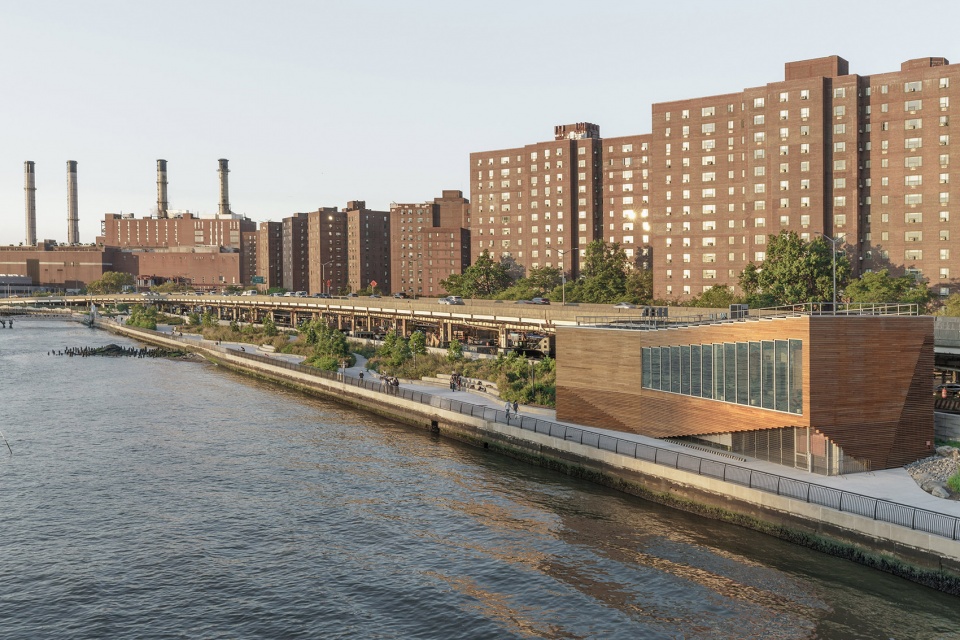
建筑外立面采用FSC认证的木格栅,屋面满铺光伏板,并配有电池储能系统;在结构上尽量减少混凝土用量,仅在防洪高程范围使用混凝土,上部空间采用轻质、可回收的钢结构。教室被整体抬高至海拔19英尺,底层的储物空间采用可渗水的金属格栅围合,以便在风暴期间让洪水自由通过。室内大面积落地窗可以眺望东河、布鲁克林与皇后区,同时采用三层玻璃与防鸟玻璃,减弱紧邻FDR高架路带来的噪声。教室与ESCR内一系列连贯的露台与花园直接相连,将真实的滨水环境转化为沉浸式的学习场景。
Defined by FSC-certified timber slats on the exterior, a roof fully clad in photovoltaic panels, and a battery storage system, the building minimizes the use of concrete – employing the material only at the flood level while incorporating lightweight, recyclable steel in the spaces above. The classrooms are elevated 19 ft above sea level, with ground-level storage areas enclosed by permeable metal grating, allowing water to flow freely during storm events. Inside, floor-to-ceiling windows frame sweeping views of the East River, Brooklyn, and Queens, while triple-glazed, bird- friendly glass mitigates sound from the adjacent FDR Drive. The classrooms seamlessly connect to a promenade of connected terraces and gardens within ESCR, creating a real-world learning experience right at the edge of the East River.
▼教育中心外观,exterior of the education center
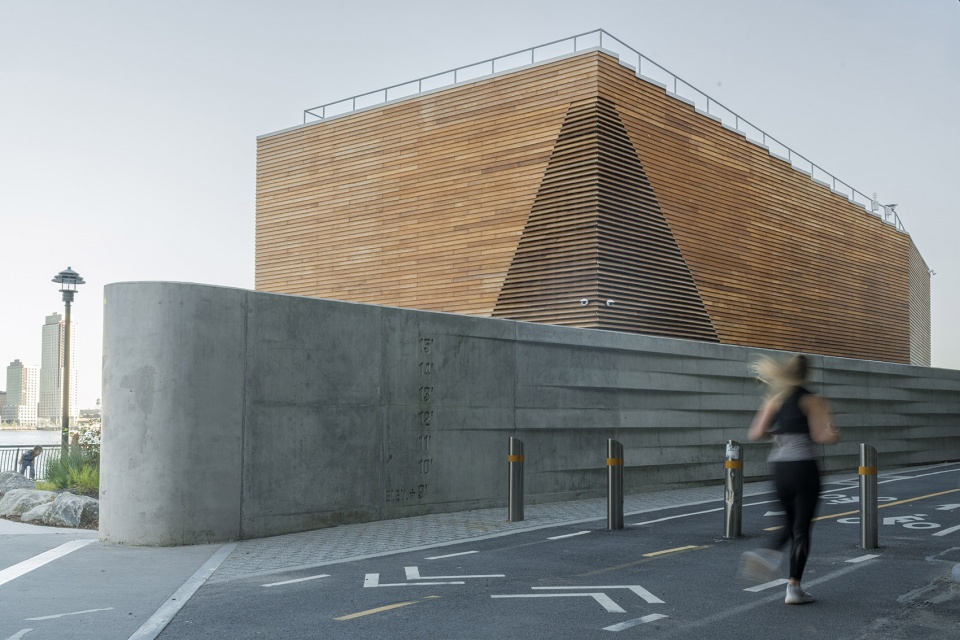
中心通过一组21kW的太阳能光伏与电池储能系统供能,在停电情况下也有潜力保持对周边居民的支持能力。作为ESCR的“感叹号”,它与长达1340英尺的新防洪墙、滑动防洪闸门以及具备防洪韧性的护岸共同构成关键节点,这些措施将为周边地区提供抵御海岸洪水的保护。该中心正按LEED银级认证目标推进,既是现代防洪建筑的示范,也是气候适应教育的载体。
The center generates energy via a 21kW solar array with battery storage, allowing it to potentially stay open to support nearby New Yorkers in the event of power outages. As the exclamation point of ESCR, the building neighbors 1,340 ft of new flood barrier wall, sliding flood gates, and flood resilient embankments – resiliency measures implemented to protect neighboring areas from coastal flooding. On track for LEED Silver certification, the Solar One Environmental Education Center stands as both a model for modern flood protection and a learning tool for climate adaptation.
▼防洪墙,flood barrier wall
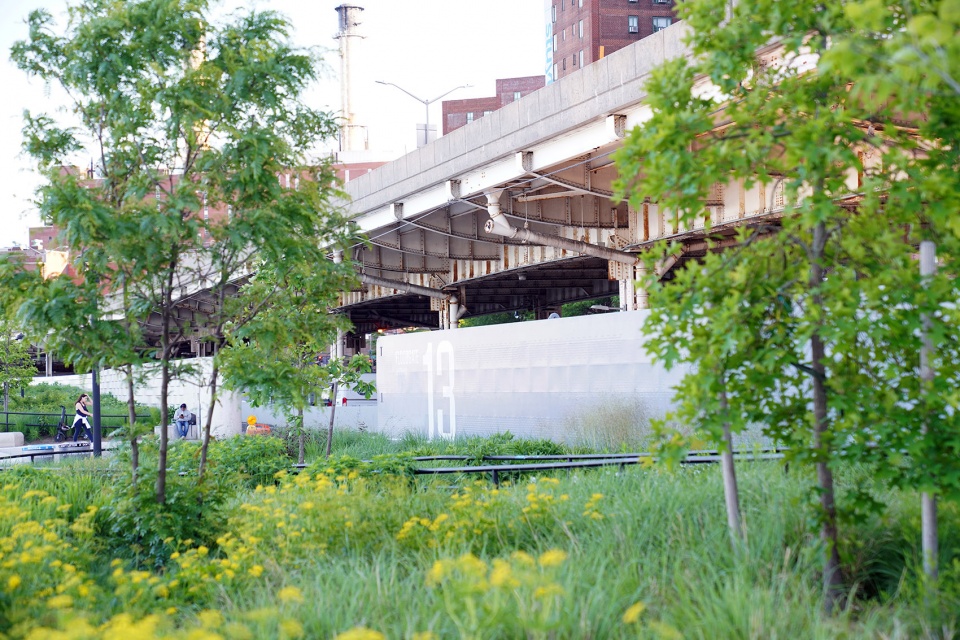
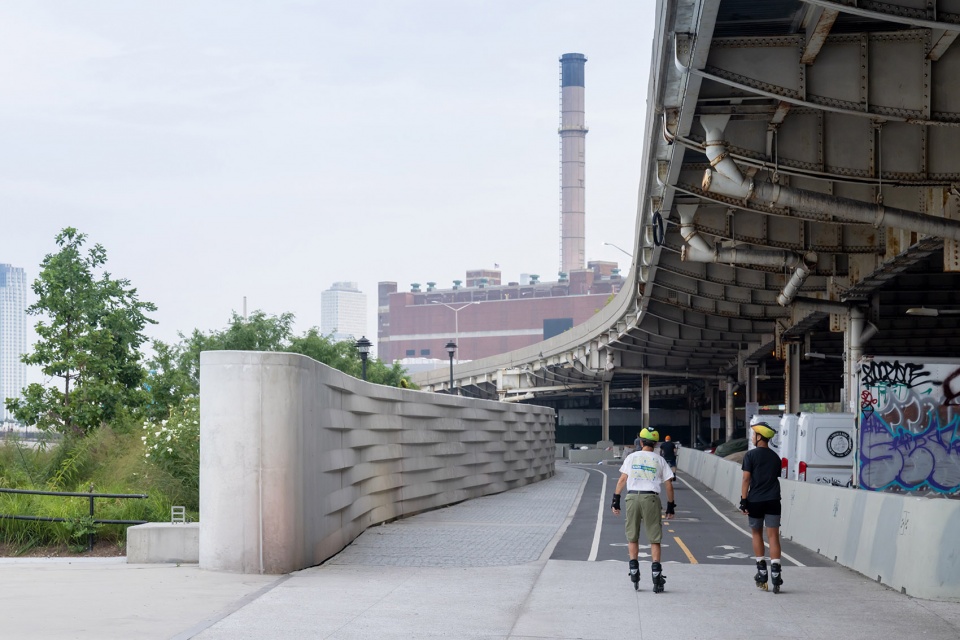
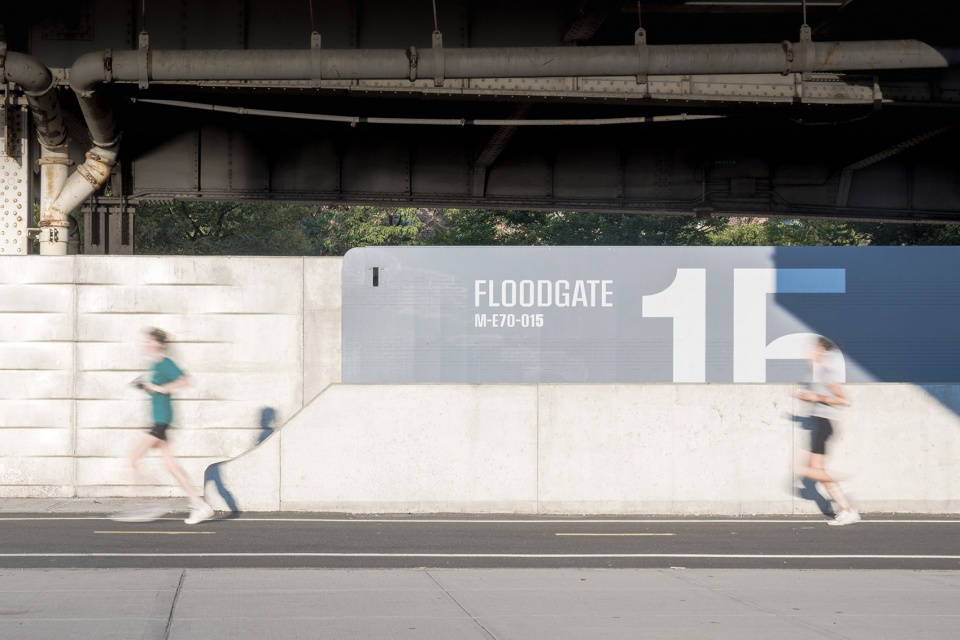
这些韧性建设还在向南延伸:BIG还正与Turner & EE Cruz联合体、SCAPE景观事务所、Arcadis合作,设计“炮台公园城北/西部韧性项目”(North/West Battery Park City Resiliency Project,NWBPCR),范围从South Cove一直到翠贝卡的North Moore Street。多个项目连成一体,将共同构建一条连续的、具备气候韧性的滨水带,为曼哈顿下城的未来几代人提供安全保障。
These resiliency efforts continue south, where BIG is also designing the North/West Battery Park City Resiliency Project (NWBPCR) with Turner & EE Cruz Joint Venture, SCAPE Landscape Architecture, and Arcadis – running from South Cove to North Moore Street in Tribeca. Together, these linked initiatives will form a continuous, climate-resilient waterfront that safeguards Lower Manhattan for generations to come.
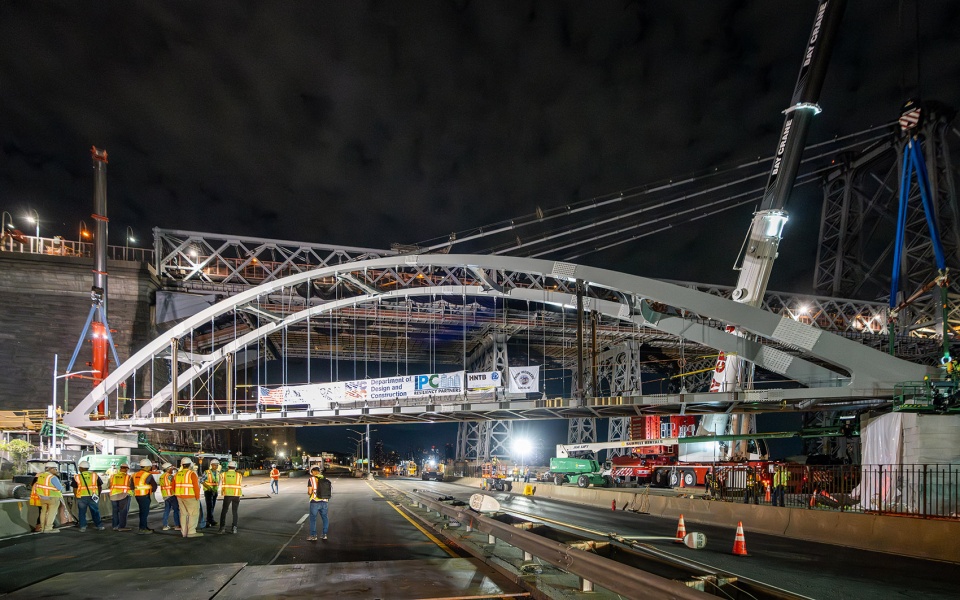
▼施工过程,construction progress
▼概念鸟瞰,concept aerial view
Name: East Side Coastal Resiliency
Size: 69,700,000 sq ft
Location: New York , New York, United States
Client: City of New York | NYC Department of Design & Construction
Collaborators: MNLA, ONE Architecture & Urbanism, AKRF & KSE, Arcadis, Jacobs, Hardesty Hanover, Siteworks, Wesler Cohen, Hazen & Sawyer, Pentagram, Hortus Environmental Design, FHI Studio, Starr Whitehouse, James Lima Planning + Development
EAST SIDE COASTAL RESILIENCY BIG TEAM
Partner-in-Charge: Bjarke Ingels, Beat Schenk, Daniel Sundlin, Kai-Uwe Bergmann
Project Director: Jeremy Alain Siegel
Project Manager: Stephanie Hui, Andreas Buettner
Project Architect: Kate Cella
Project Designer: Autumn Visconti, Simon David, Nicole Passarella
Technical Director: Benjamin Caldwell, Margaret Tyrpa
Project Team: Adam Robert Poole, Agnieszka Majkowska, Alejandro Guadarrama, Andreea Vasile Hoxha, Ania Podlaszewska, Aslan Taheri, Athena Morella, Benjamin DiNapoli, Chao-Wei Wesley Chiang, Daniele Pronesti, Deborah Campbell, Douglas Breuer, Douglass Alligood, Emily Bauer, Emmett Walker, Erik Kreider, Fiona Lu, Gabriel Hernandez Solano, Gaurav Sardana, Guillaume Evain, Isela Liu, Jakub Kulisa, James Donaldson, Jamie Maslyn Larson, Jessica Jiang, John Sng, Jonathan Steffen Hein, Jonathan Ong, Jordan Felber, Juan David Ramirez, Juan Diego Perez, Kalina Pilat, Kalliopi Caroline Bouros, Kam Chi Cheng, Kathleen Cella, Kayeon Lee, Kelly Neill, Kurt Nieminen, Lisbet Christensen, Mai Lee, Malcolm Rondell Galang, Manon Otto, Margaret Kim, Mateusz Wieckowski-Gawron, Maxime Le Droupeet, Max Moriyama, Mo Li, Morgan Mangelsen, Nandi Lu, Nasiq Khan, Nicholas Potts, Oliver Siekierka, Robert Ryan Harvey, Ruicong Tang, Sang Ha Jung, Seo Young Shin, Tammy Teng, Taylor Burgess, Taylor Fulton, Taylor Hewett, Terrence Chew, Thomas McMurtrie, Tracy Sodder, Veronica Acosta, Vincenzo Polsinelli, Wells Barber, Will Campion, Yaziel Juarbe, Yixin Li, Ziyu Guo
![[荒野之家 #134-145#]-秘境树屋营地,武汉 / 个个世界 + 先进建筑实验室](https://www.iecwww.com/uploads/images/20251105001/20251105001001.jpg)