长沙国际会议中心,长沙/景观
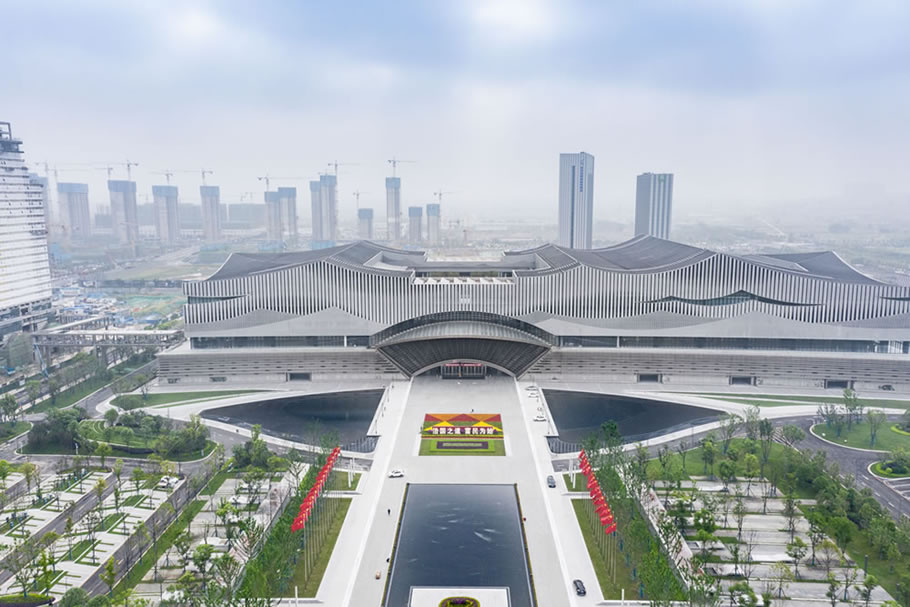
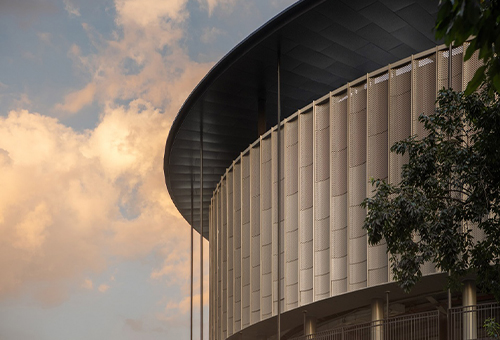
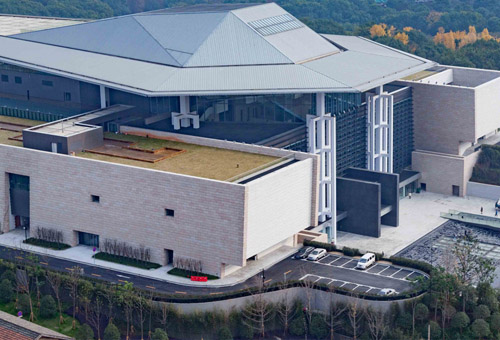
长沙国际会议中心总建筑面积约16.9万㎡,建筑高度46.8米。项目对标杭州G20峰会主会场、上合峰会青岛国际会议中心等地标性项目,着力建设既能举办大型会议又能满足日常经营需求的国际会议中心,由誉为“ 中国馆之父“的中国工程院院士何镜堂担任总设计师。
The total construction area of Changsha International Conference Center is about 169000 square meters, and the building height is 46.8 meters. The project targets landmark projects such as the main venue of the G20 summit in Hangzhou and the Qingdao International Conference Center of the Shanghai Cooperation summit, and strives to build an international conference center that can not only hold large conferences but also meet daily business needs. He Jingtang, an academician of the Chinese Academy of engineering known as the "father of the Chinese Pavilion", serves as the chief designer.
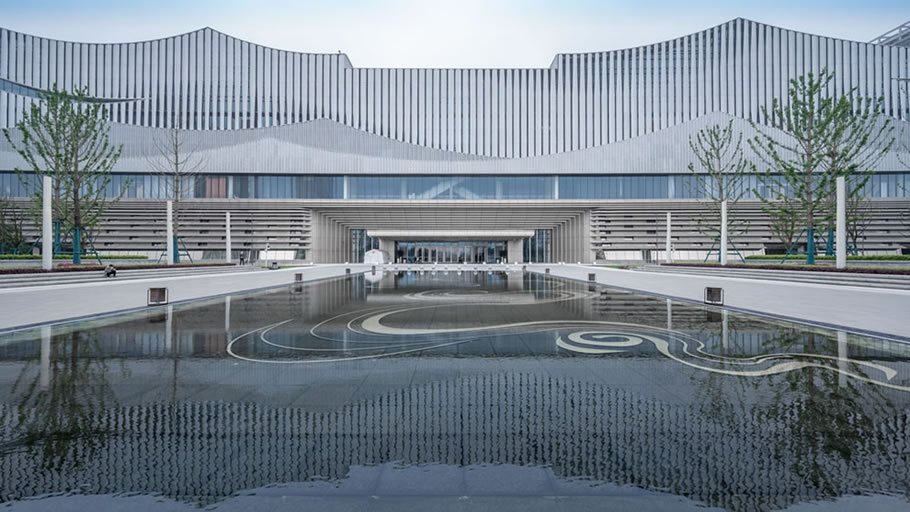
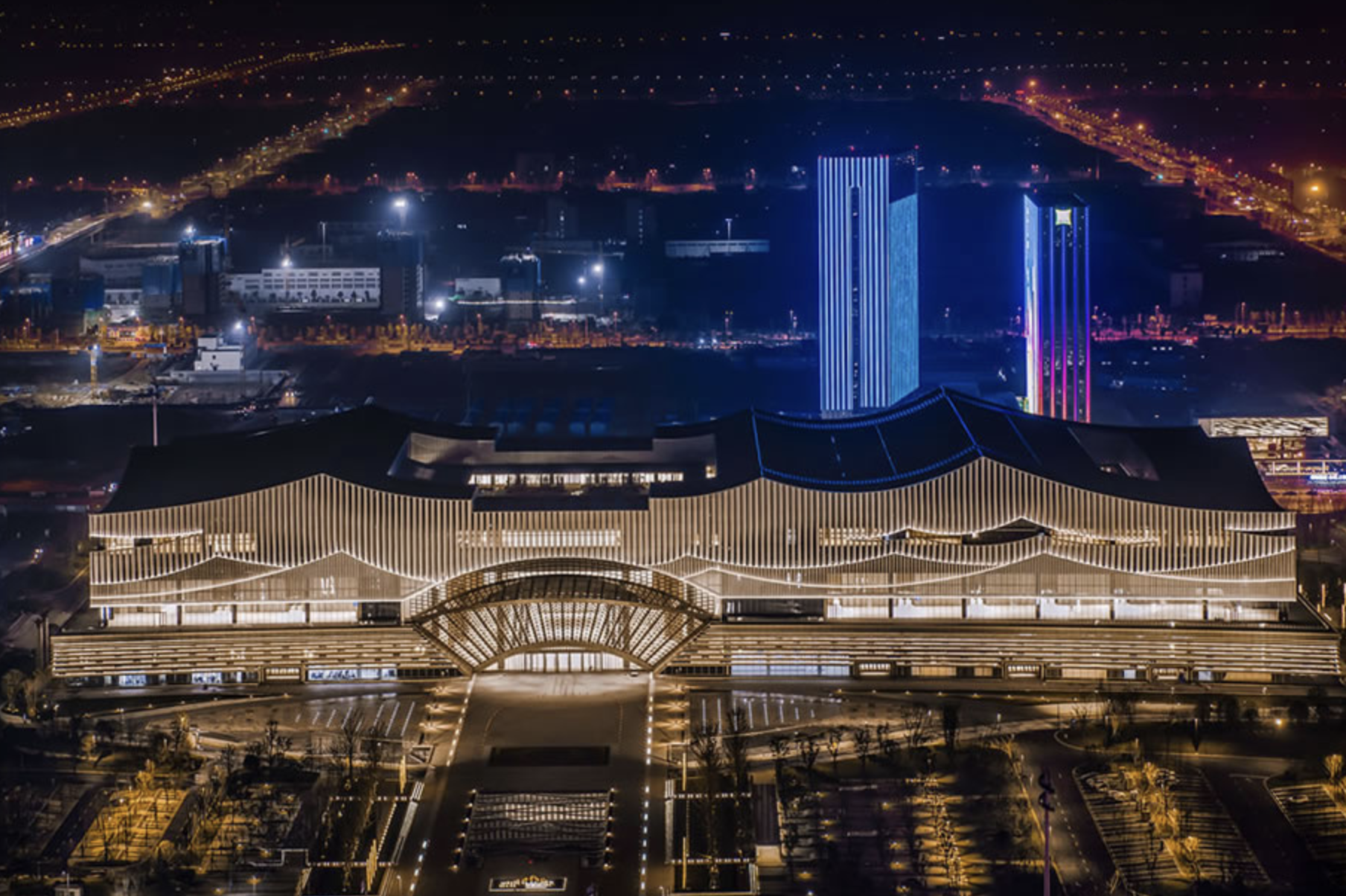
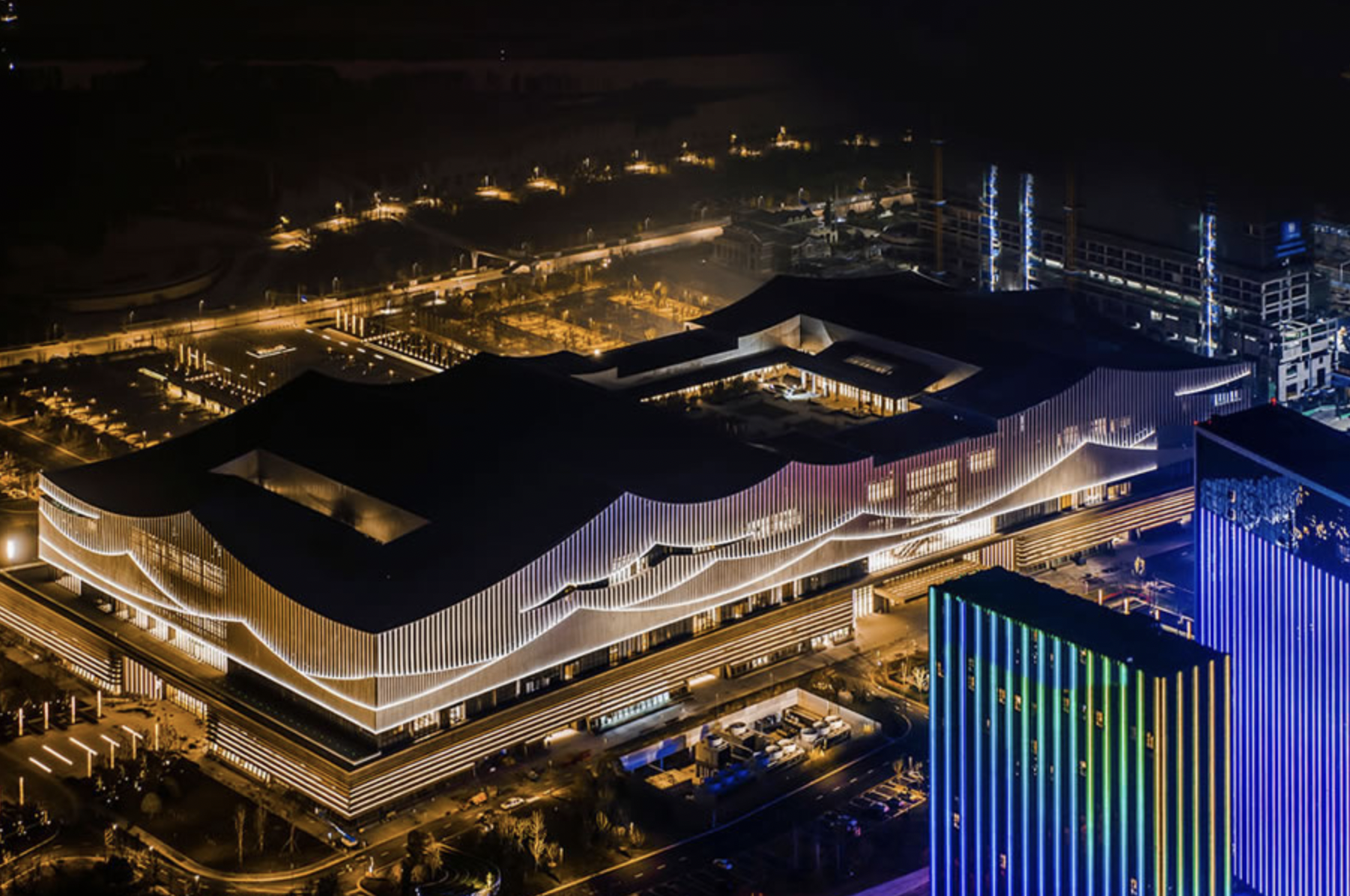
建筑立面风格借鉴中国山水画“虚实相生”、 “远近结合”、“粗细用笔”的表现手法,结合传统建筑坡屋顶的灵动造型曲线,形神兼备诠释中国文化内涵。借鉴古 琴曲与国画《潇湘水云》中山水的灵动与飘逸并结合浏阳河、磨盘洲和高铁新城突显“山水洲城”长沙城市风貌。
The architectural facade style draws lessons from the expression techniques of Chinese landscape paintings, such as "the combination of emptiness and reality", "the combination of distance and distance", "thick and thin pen", and combines the flexible modeling curve of the traditional building slope roof to interpret the connotation of Chinese culture in both form and spirit. Learn from the flexibility and elegance of mountains and waters in guqin music and traditional Chinese painting "water and clouds in Xiaoxiang", and combine Liuyang River, mopanzhou and high-speed rail new city to highlight the urban style of Changsha, a "city of mountains and waters".
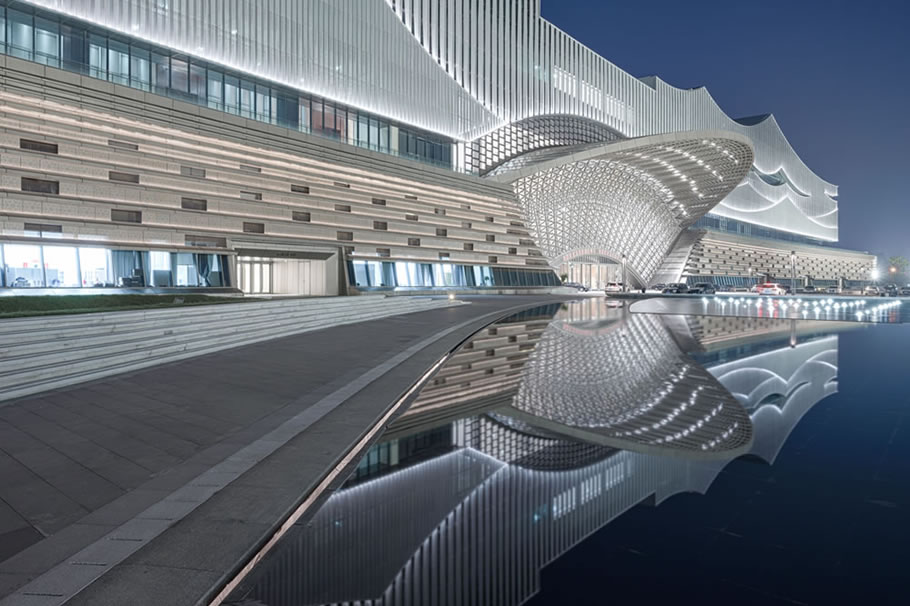
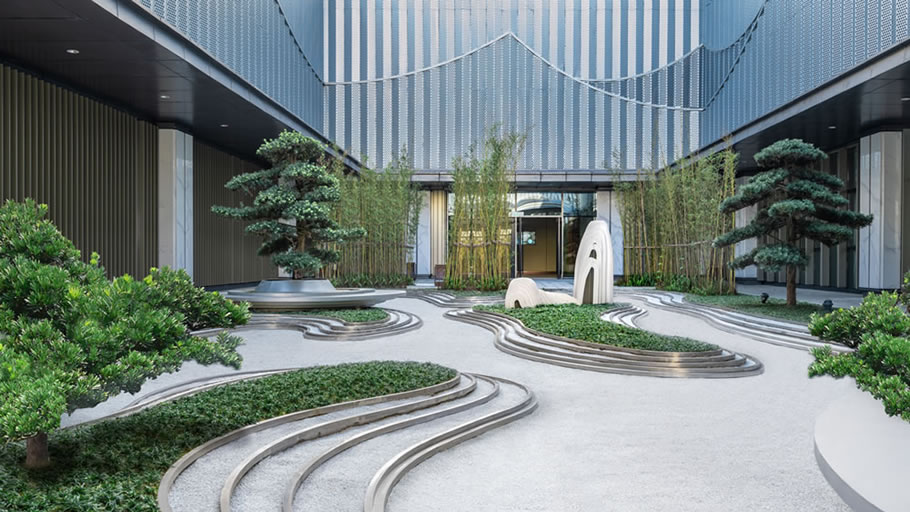
景观设计寻求城市、自然与场地的共生原则,用功能空间和城市对话。在沿浏阳河一侧,以特有的尺度和空间纯度,构建一个富有山水画境的界面。描摹一幅极致空远的山水画卷,与潇湘长沙对话,与世界对话。入口分为东西南北四个入口,每个入口空间元素既区别又统一。设计语言延续建筑反弧形天际线,秩序和谐、造型灵动,形神兼备地诠释山水画境的内涵。
Landscape design seeks the symbiosis principle of city, nature and site, and uses functional space to talk with the city. On the side along Liuyang River, with unique scale and spatial purity, an interface rich in landscape painting is built. Describe an extremely empty landscape painting, talk to Xiaoxiang, Changsha and the world. The entrance is divided into four entrances, East, West, north, South, and each entrance has different and unified spatial elements. The design language continues the anti arc skyline of the building, with harmonious order, flexible shape, and both form and spirit to interpret the connotation of landscape painting.
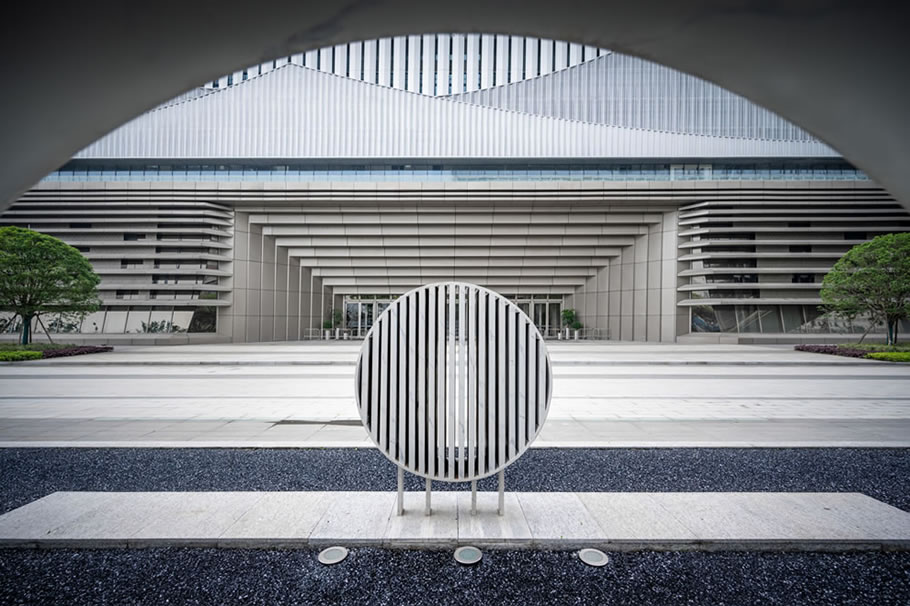
设计分析
design analysis
在设计前期,设计师通过不断探索与研究,面临着以下挑战:
①景观作为城市公共空间的有机部分如何完美应对户外多项功能 ;
②如何将公共活动与人文体验结合得更好,使场地变得灵动活力并兼具多样性;
③如何建立内部场地与周边环境的关系,使之整体统一,并有机衔接建立建筑与外部交通;在非峰会时市民参与、休闲等功能需求,完成与城市中轴公园与滨河风光带的的功能对接。
④在大量的交通停车需求占用大面积绿地空间,如何增加场地的生态性,并建立使用者对场地的信息,构建一个具有代表性或标识性的场所。
In the early stage of design, designers are faced with the following challenges through continuous exploration and research:
① As an organic part of urban public space, how to deal with outdoor multiple functions perfectly;
② How to better combine public activities with humanistic experience, so as to make the venue flexible, dynamic and diverse;
③ How to establish the relationship between the internal site and the surrounding environment, make it unified as a whole, and organically connect the building and the external traffic; During the non summit period, citizens' participation, leisure and other functional needs will be connected with the functions of the urban central axis Park and the riverside scenic belt.
④ When a large number of traffic parking needs occupy a large area of green space, how to increase the ecological nature of the site, establish users' information on the site, and build a representative or iconic place.
设计理念
Design concept
依托建筑的设计理念及风格,本项目景观设计以“月满星城 山水潇湘”为设计理念。我们寻求城市、自然与场地的共生原则,用功能空间和城市对话。在沿浏阳河一侧,以特有的尺度和空间纯度,构建一个富有山水画境的界面。描摹一幅极致空远的山水画卷,与潇湘长沙对话,与世界对话。
Relying on the design concept and style of the building, the landscape design of the project takes "the moon is full, the city is full, and the landscape is Xiaoxiang" as the design concept. We seek the symbiosis principle of city, nature and site, and use functional space to talk with the city. On the side along Liuyang River, with unique scale and spatial purity, an interface rich in landscape painting is built. Describe an extremely empty landscape painting, talk to Xiaoxiang, Changsha and the world.
入口空间
Entrance space
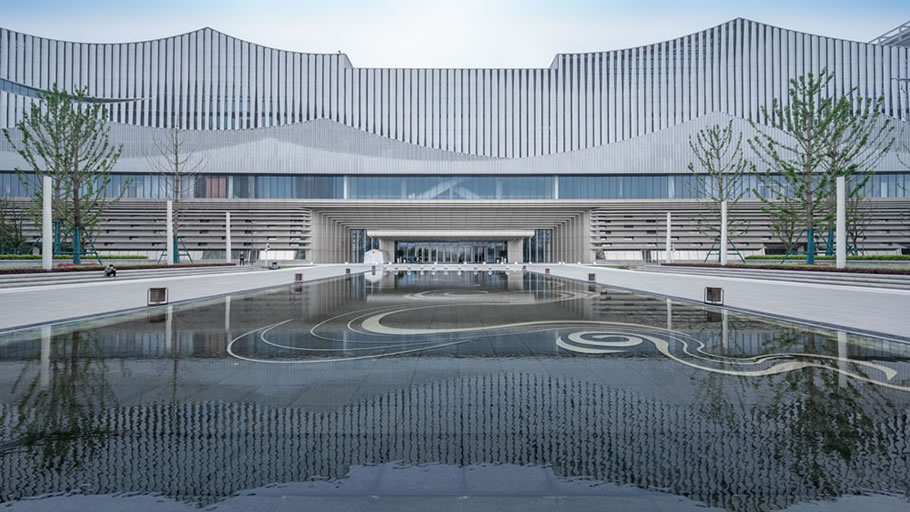
入口分为东西南北四个入口,每个入口 空间元素既区别又统一。 西入口水景倒映建筑形态,与建筑月门 相互呼应、相辅相成,形成阴晴圆缺的景观 变化,营造情景交融之美,以“山水灵韵” 的意境开篇。设计语言延续建筑反弧形天际 线,秩序和谐、造型灵动,形神兼备地诠释 山水画境的内涵。 景观长廊与林下休闲空间,在满足非峰 会时市民参与的需求同时与建筑形成虚实关 系,共同构成整体空间和景观结构。 东入口运用中国代表性的文化符号—祥 云,打造“大国华章”的尺度呼应。 南入口应用“书卷”的元素,加入中非 地刻,丰富铺装形式,传递着“翰墨东方” 的文化内涵。 北入口利用传统“框景”的手法,延续 南入口“书卷”理念,从南至北如一幅徐徐 展开的书卷,打造“礼著风华”的空间感受
The entrance is divided into four entrances, East, West, north, South, and each entrance has different and unified spatial elements. The waterscape at the west entrance reflects the architectural form, which echoes and complements the moon gate of the building, forming a landscape change of cloudy and sunny, creating a beauty of blending feelings and scenes, and starting with the artistic conception of "landscape aura". The design language continues the anti arc skyline of the building, with harmonious order, flexible shape, and both form and spirit to interpret the connotation of landscape painting. The landscape corridor and the leisure space under the forest, while meeting the needs of citizens to participate in the non summit, form a virtual real relationship with the building, and jointly constitute the overall space and landscape structure. The east entrance uses auspicious clouds, a representative cultural symbol of China, to create a scale echo of "a great power". The south entrance applies the element of "scroll" and adds Chinese and African ground carvings to enrich the pavement form and convey the cultural connotation of "calligraphy East". Using the traditional "frame view" method, the north entrance continues the concept of "book" of the south entrance, like a slowly unfolding book from south to north, creating a spatial feeling of "etiquette and elegance"
核心功能空间
Core function space
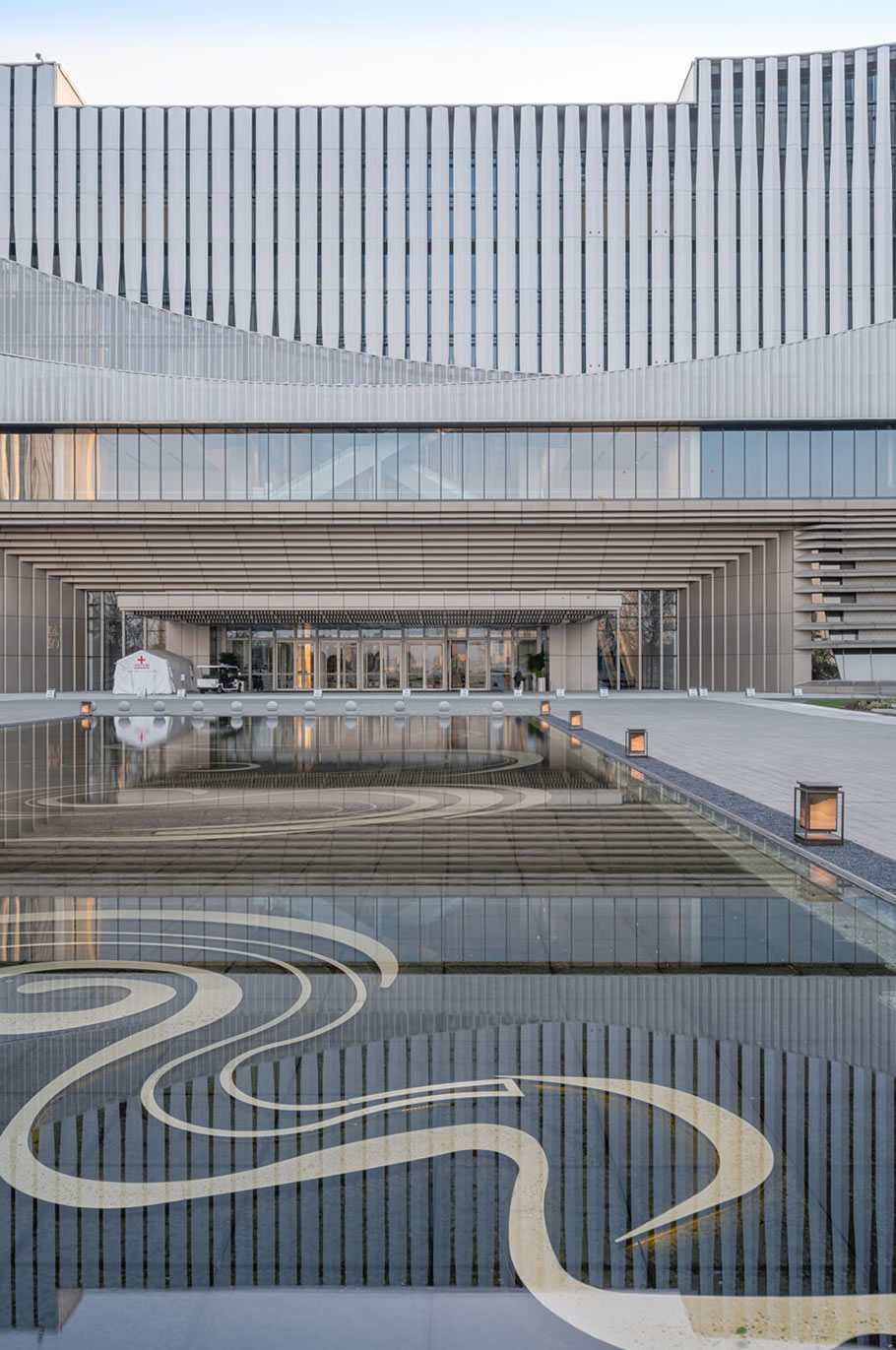
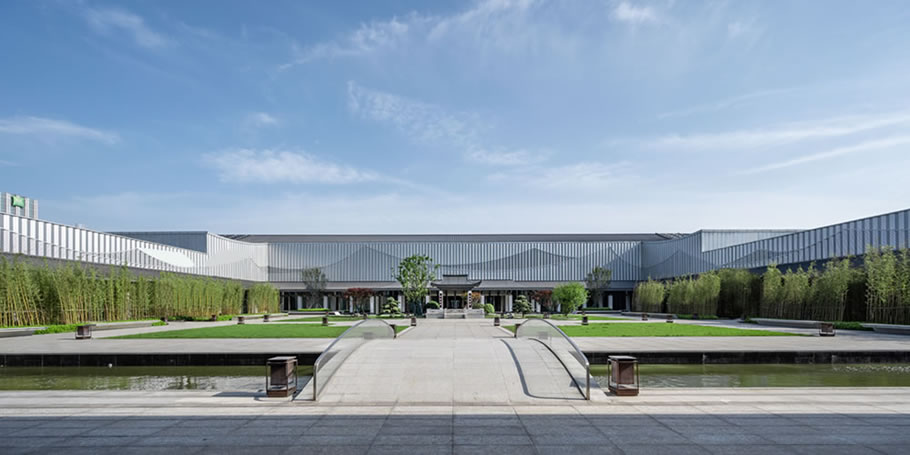
以岳麓书院为切入点,延承岳麓书院的中轴对称布局与纵深多进的院落形式形成均质体量、平行并置的空间序列,体现书院礼序和湖湘印记。 整体结构形成水 - 桥 - 亭的三重礼序,彰显礼仪大国威仪气势的同时具备私属园林道法自然的人文意蕴。中心空间参照赫曦台的“凸”字形结构,以巍然的“四梁八柱”建筑形制为背景,形成中心空间的内聚之势。细节设计将湖湘特色的象纹、瓦、水纹等主要元素抽象、融合,彰显地域属性,打造变化强烈的文化精神。
Taking Yuelu Academy as the starting point, the central axis symmetrical layout and the deep courtyard form of Yuelu Academy form a homogeneous volume, parallel and juxtaposed spatial sequence, reflecting the ritual order of the academy and the imprint of Hunan. The overall structure forms a triple ritual sequence of water, bridge and pavilion, which shows the prestige of a ceremonial power and has the humanistic meaning of private gardens imitating nature. The central space refers to the "convex" structure of hexitai, with the majestic "four beams and eight columns" architectural form as the background, forming the cohesion of the central space. The detail design abstracts and integrates the main elements of Huxiang characteristics, such as image patterns, tiles, water patterns, etc., highlights regional attributes, and creates a strong cultural spirit of change.
其他重点空间
Other key spaces
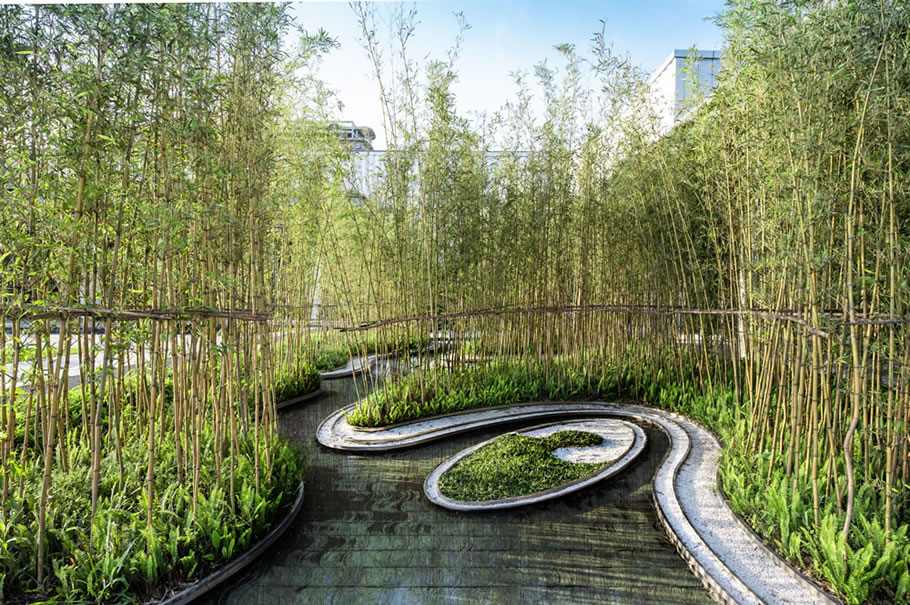
增加中非友谊林,提升政治高度。表达我们对和平、友谊、进步的共同希望和企盼,进一步增进中非间的相互了解和互信。
Increase the Sino African Friendship forest and raise the political level. Express our common hopes and aspirations for peace, friendship and progress, and further enhance mutual understanding and trust between China and Africa.
辅助空间
Auxiliary space
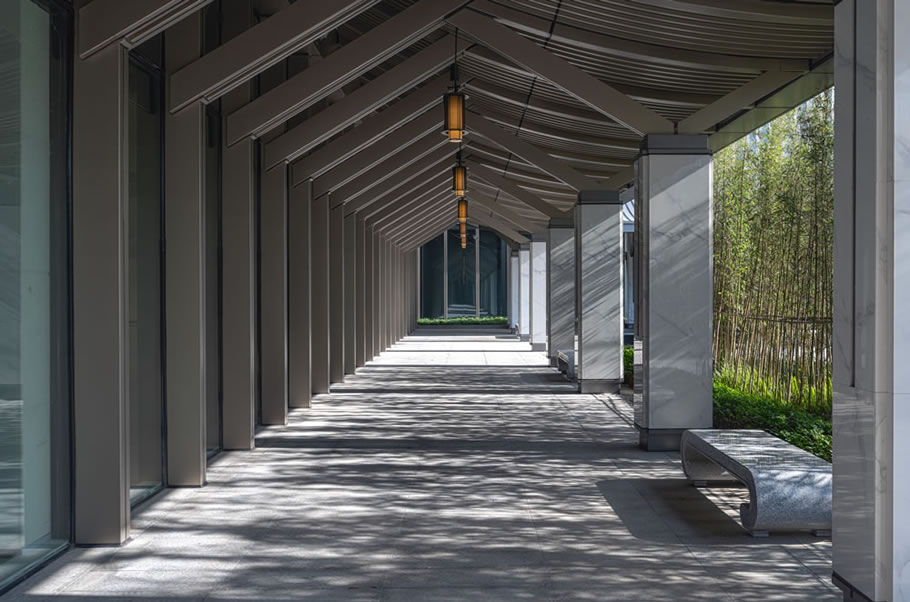
考虑户外临时展场空间的运用。 户外临时展场空间为承接户外展会,短期内可能要迅速进行场地的扩张。以满足展会的要求,需综合规划户外空间供不同类型、不同大小的展会使用。
Consider the use of outdoor temporary exhibition space. In order to undertake outdoor exhibitions, the space of outdoor temporary exhibition hall may be expanded rapidly in the short term. In order to meet the requirements of the exhibition, it is necessary to comprehensively plan the outdoor space for different types and sizes of exhibitions.
总体感受
Overall feeling
项目作为高效的会议中心及城市标志,在满足国际会议中心未来交流、体验、开放的发展模式的同时兼备不同类型的文化活动空间功能,营造多元性、多样化的空间体验,共同定义长沙高铁新城的地域新名片,创造一个具有高度识别性的高端国际会议中心。 项目通过“中国 - 湖湘 - 长沙”的本土语言像世界发声,向世人展示出一个充满湖湘传统韵味、具有鲜活生命力的国际化山水洲城新形象。
As an efficient conference center and city symbol, the project not only meets the future exchange, experience and open development mode of the International Conference Center, but also has the space functions of different types of cultural activities, creates diverse and diversified space experiences, jointly defines the new regional business card of Changsha high-speed railway new city, and creates a highly recognizable high-end international conference center. The project speaks like the world through the local language of "China Hunan Changsha", showing the world a new image of an international Shanshui island city full of traditional charm of Hunan and with fresh vitality.
本项目不仅作为政治、文化、信息、知识等传播与沟通的桥梁,也会促进商贸文化交流,成为城市经济发展的引线,同时作为长沙城市符号而存在,代表着长沙对外交流的新高度。项目在何镜堂院士设计的建筑加持影响力基础上,同时是未来中非会议会场,作为未来重要政治场地背景下,项目必然作为热点焦点呈现在人们视野下,对周边区域的整个地块带动、开发商品牌的的打造、乃至作为整个长沙城市新名片都具有里程碑意义。引用我比较认可的一位波普艺术代表人物安迪 • 沃霍尔的观点(20 世纪 60 年代风靡欧美的视觉艺术运动波普艺术最著名开创者之一):认为艺术与金钱挂钩,因此应该努力把艺术商业化。商业化的精髓在于时代性、活力与价值的体现,众人认可欢迎的空间艺术设计才是最合适的。在现代城市公共空间强调大众行为交往的环境景观设计中,公共空间功能的丰富多样,与周边环境在功能上的连续是激活公共空间的重要元素之一。我们旨在通过长沙国际会议中心的公共景观艺术设计形成城市功能的有机组成部分,特别是浏阳河、中轴公园一带,让公众参与其中,人与公共空间互动的活跃,进而激活城市空间活力。历史和文化是社会生活长期沉淀影响的折射,将空间地域历史、文化融入到公共空间中,无疑提高空间的凝聚力和空间认同感。我们强化长沙“山水洲城”的城市记忆,充分发掘利用城市的历史文化资源,特别是岳麓书院,构建发挥城市文化的独特性,适应城市发展需求,并不断创新,从发展的地域特色中提炼出国际特色。
This project will not only serve as a bridge for the dissemination and communication of politics, culture, information, knowledge, etc., but also promote the exchange of Commerce and culture, become the leader of urban economic development, and exist as the symbol of Changsha City, representing a new height of Changsha's foreign exchange. On the basis of the architectural support and influence designed by academician he Jingtang, the project is also the venue of the future China Africa Conference. As an important political venue in the future, the project will inevitably be presented in people's vision as a hot focus, which is of milestone significance to the whole plot drive of the surrounding area, the building of the developer's brand, and even as the new business card of the whole Changsha City. Quoting the view of Andy Warhol, a representative figure of pop art I relatively agree with (one of the most famous founders of pop art, a visual art movement that swept Europe and the United States in the 1960s): I believe that art is linked to money, so we should strive to commercialize art. The essence of commercialization lies in the embodiment of the times, vitality and value. The most appropriate space art design is recognized and welcomed by all. In the environmental landscape design of modern urban public space, which emphasizes the interaction of public behavior, the rich and diverse functions of public space and the functional continuity with the surrounding environment are one of the important elements to activate public space. We aim to form an organic part of urban functions through the public landscape art design of Changsha International Conference Center, especially around Liuyang River and central axis Park, so that the public can participate in it, and the interaction between people and public space is active, so as to activate the vitality of urban space. History and culture are the reflection of the long-term precipitation of social life. Integrating the history and culture of space into public space will undoubtedly improve the cohesion and spatial identity of space. We strengthen the urban memory of Changsha's "shanshuizhou city", make full use of the city's historical and cultural resources, especially Yuelu Academy, build and give play to the uniqueness of urban culture, meet the needs of urban development, and constantly innovate to extract international characteristics from the regional characteristics of development.