天府药市零号店,四川 / UN-GROUP未集建筑
天府药市作为彭州城市级品牌,是一次对彭州的中医药产业资源进行价值再造,它整合了彭州中医药资源和中医药文化,并结合当代设计语言和商业逻辑,将其转化为可规模化的新消费品和可复制的新消费业态,实现中医药的生活化、美学化、体验化,让千年药乡的传统文化与产业底蕴成为“新国潮“。
As a city-level brand for Pengzhou, Tianfu Medicine Market represents a reinvention of the region’s traditional Chinese medicine (TCM) resources. It brings together Pengzhou’s herbal medicine assets and cultural heritage, integrating contemporary design language and retail logic to create scalable new consumer products and replicable commercial formats. This transformation makes TCM more accessible, aesthetic, and experiential, turning the millennia-old medicinal culture and industrial foundation of the “Land of Herbs” into a vibrant “New National Trend.”
▼项目鸟瞰,Aerial view of project
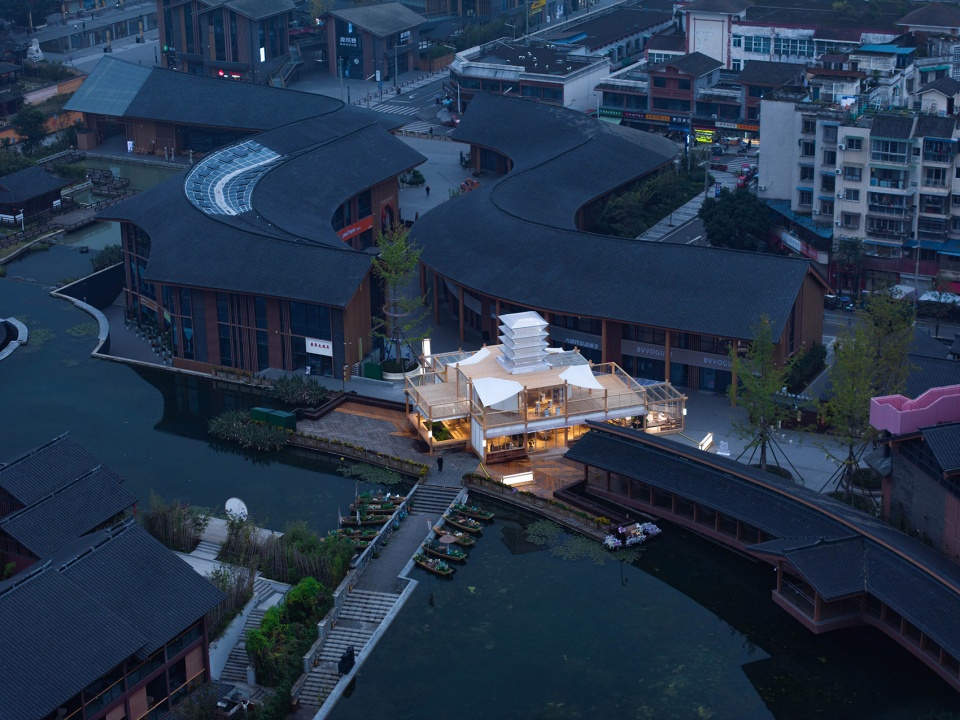
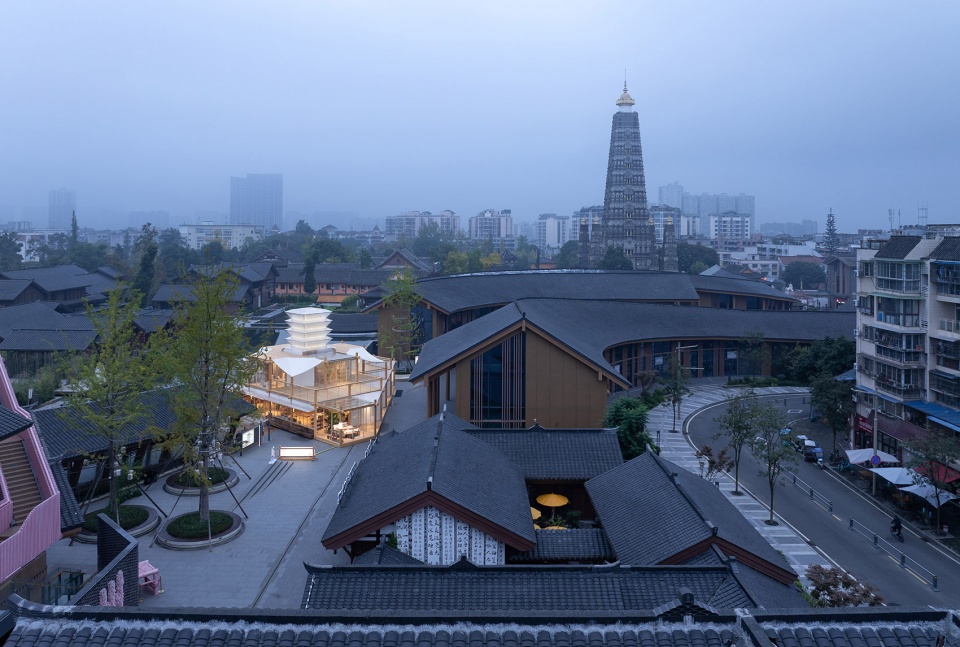
▼项目半鸟瞰,Half-aerial view of project
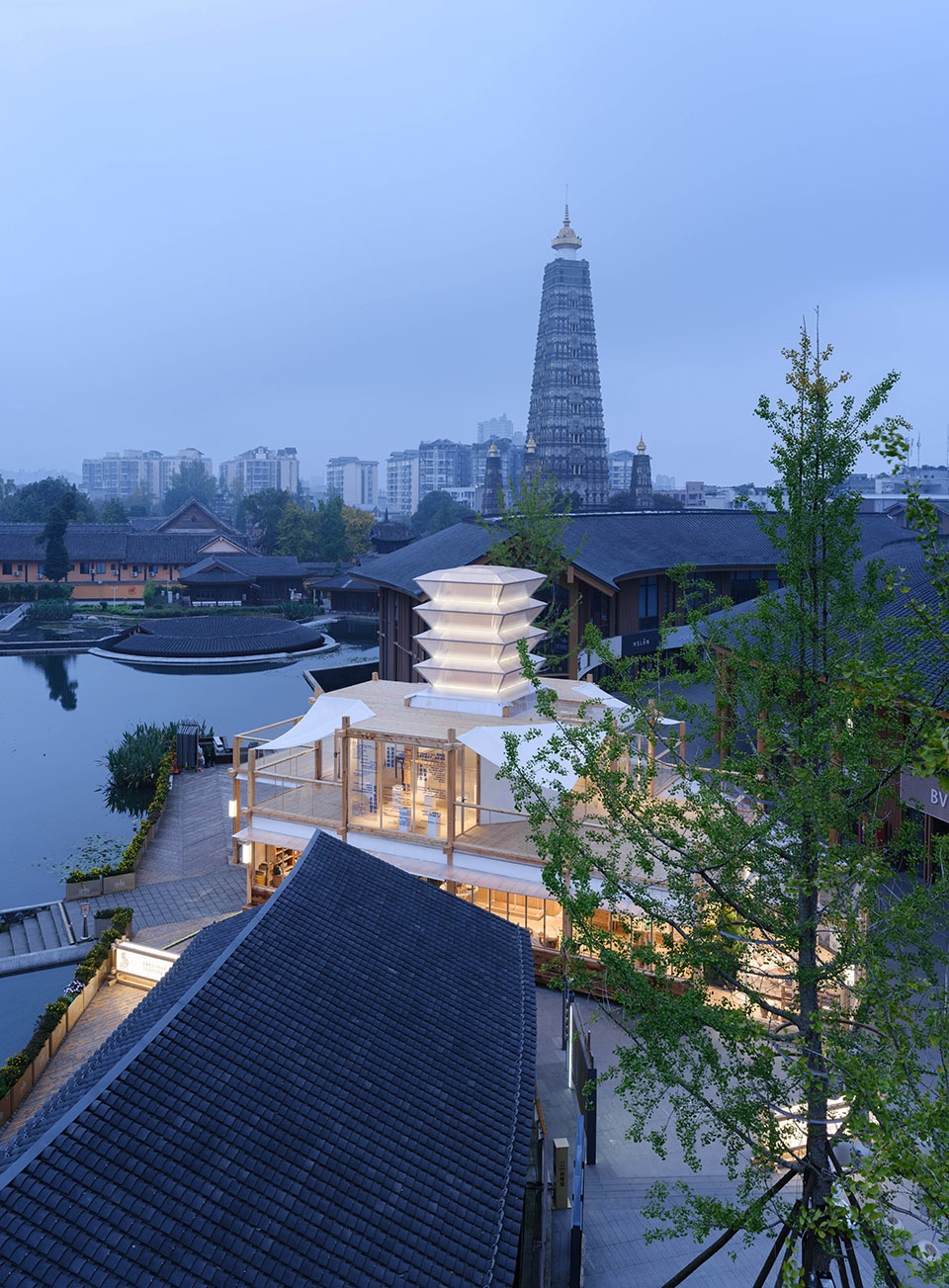
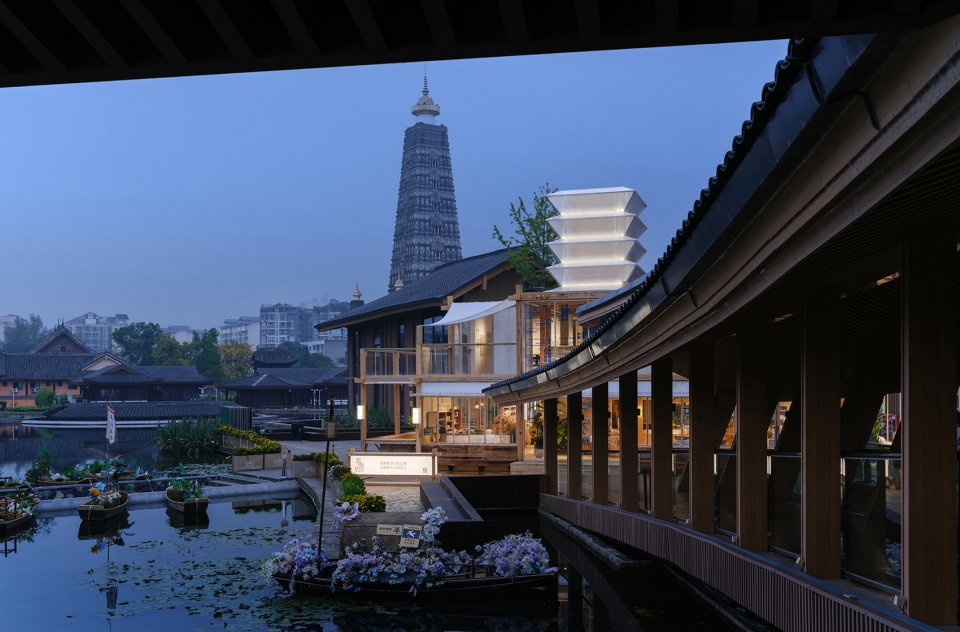
零号店选址位于彭州市龙兴集的中心商业广场,紧邻具有千年历史的龙兴寺,同时也是串联起在地城市生活方式的交往中心。零号店作为天府药市品牌对外展示的首张名片,既是展示和售卖在地好物的连接器,也是对现有中医药产业强制造弱消费的现状进行价值瓶颈突破的转换器,同时还是未来天府药市品牌系统化和规模化打造的孵化器。
▼总图关系,Site relationship
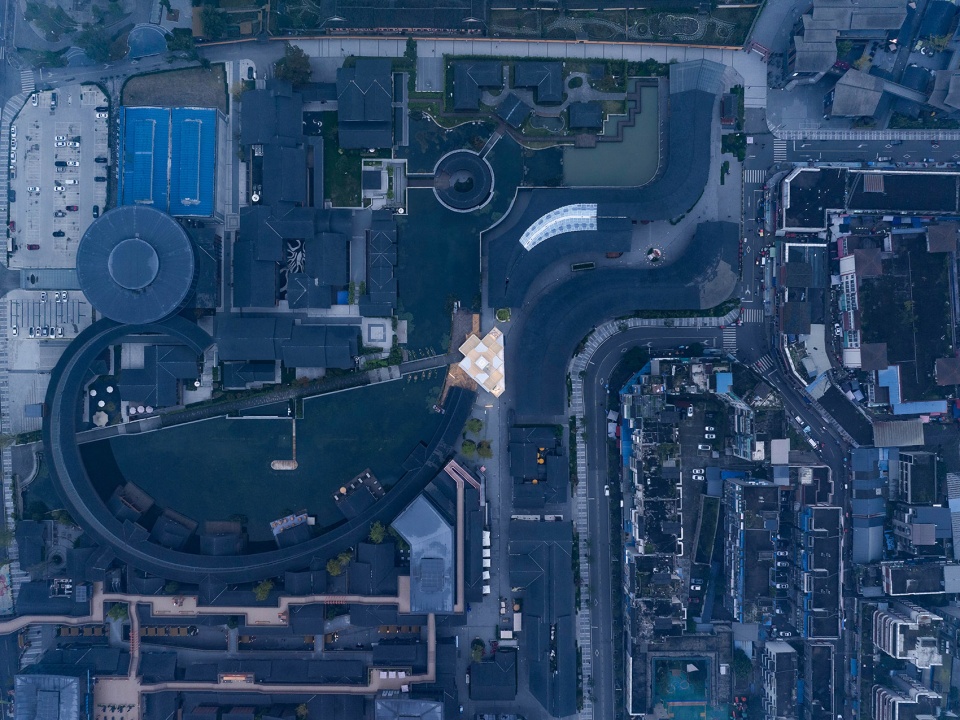
Located in the central commercial square of Longxingji, Pengzhou, Store Zero sits adjacent to the centuries-old Longxing Temple and serves as a social hub connecting local urban lifestyles. As the first physical expression of the Tianfu Medicine Market brand, Store Zero acts not only as a connector for displaying and selling local products but also as a converter to overcome the existing imbalance between strong manufacturing and weak consumption in the TCM industry. Moreover, it functions as an incubator for the brand’s future systematic and scalable development.
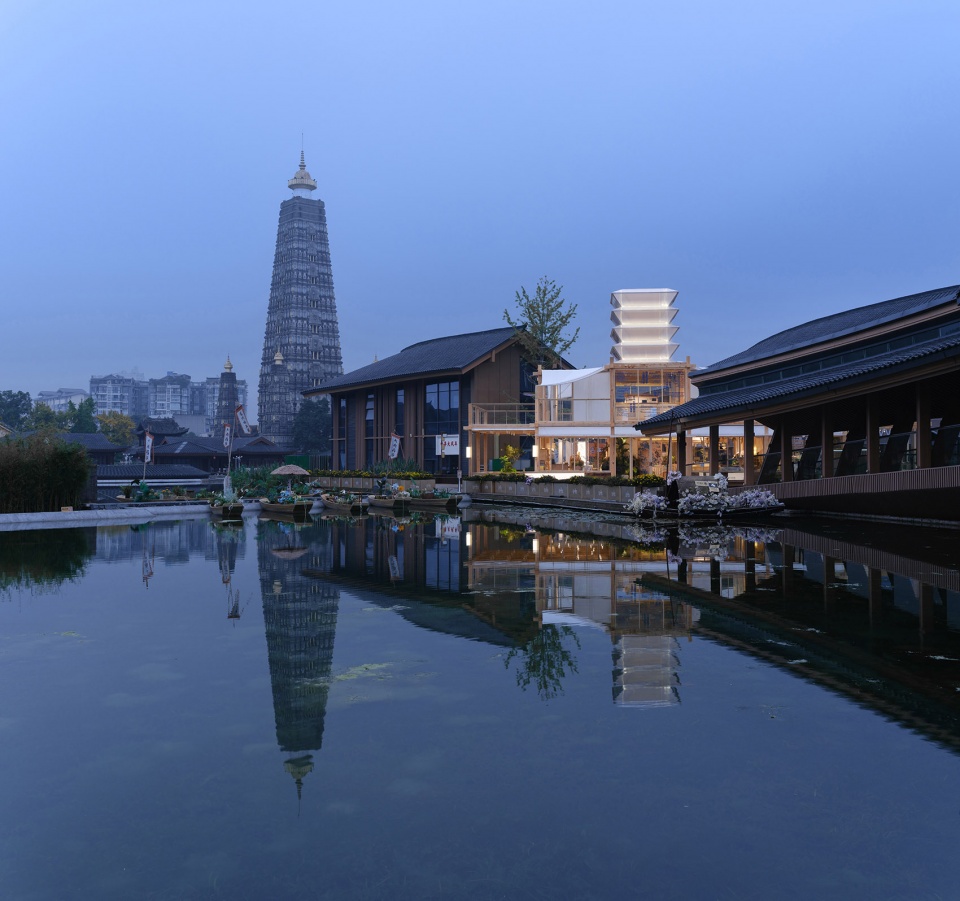
▼与龙兴寺交相呼应,Interaction with Longxing Temple
▼水景视角,Waterscape view
由于场地位置和周围建筑物的物理距离较为紧张,加之项目从设计到竣工开业只有30天的时间,我们从项目开始就需要直面建造过程中的调整灵活度和高效性这一问题。因此,概念始于将【药市】浓缩为一个可复制可延申的单元化正方体模块【集合】,形成一个内部整体开敞而具有秩序层次的空间体系,并通过和主体街区的街道形成45度角的关系,创造了多个城市转角,既增加了室内向外的橱窗展示面,也活跃了和周围建筑以及人行道路的界面关系。
▼整体搭建示意,Illustration of the building construction
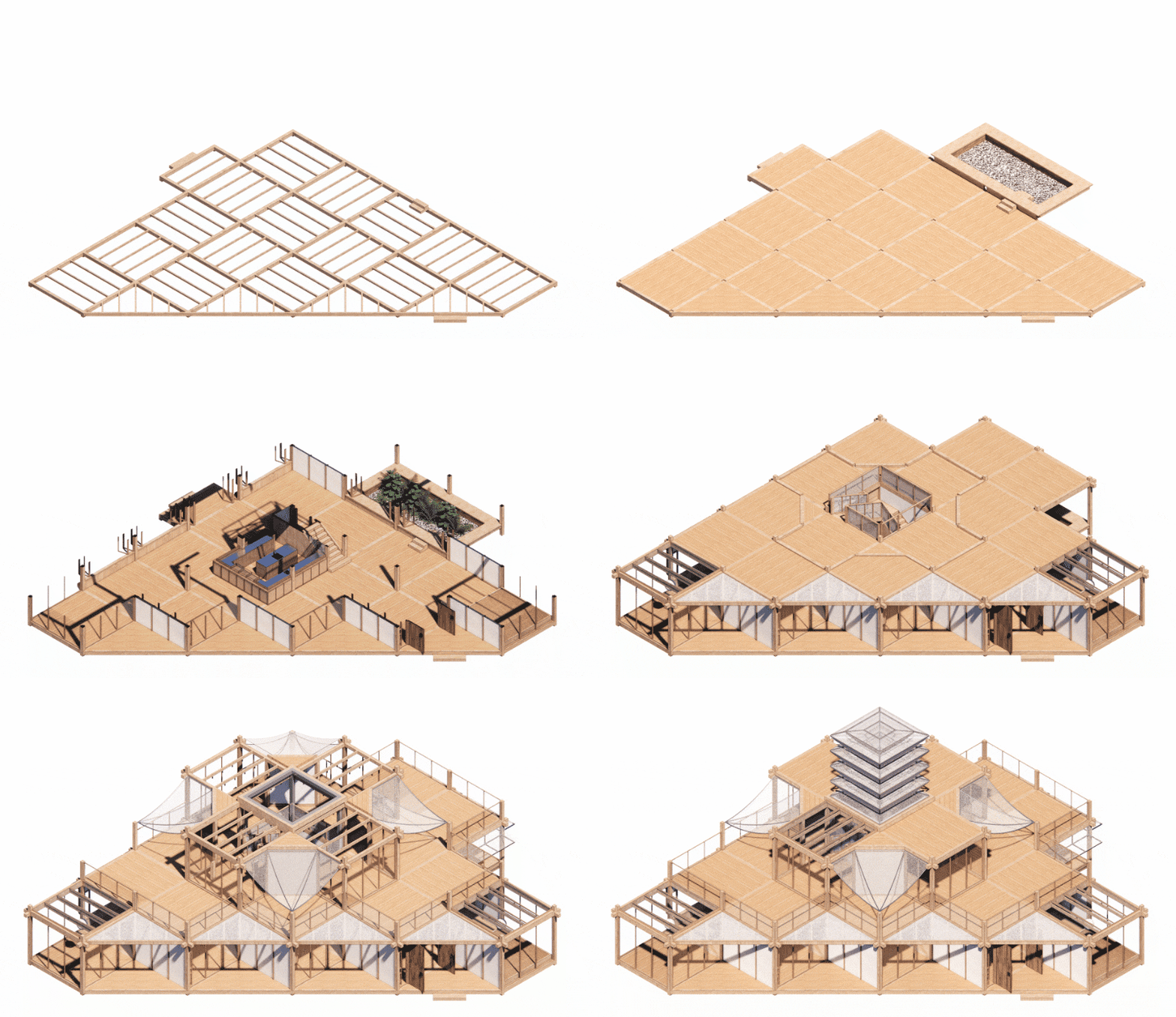
Given the tight physical constraints of the site and its surroundings, along with a strict 30-day timeline from design to completion, the project demanded flexibility and efficiency in construction from the outset. The concept begins by condensing the idea of a “medicine market” into replicable and expandable cubic modules—referred to as the “collection.” This creates an open yet orderly interior spatial system. By rotating the layout 45 degrees relative to the main street, multiple urban corners are formed, enhancing both the indoor visibility through street-facing windows and the dynamic interaction with adjacent buildings and pedestrian pathways.
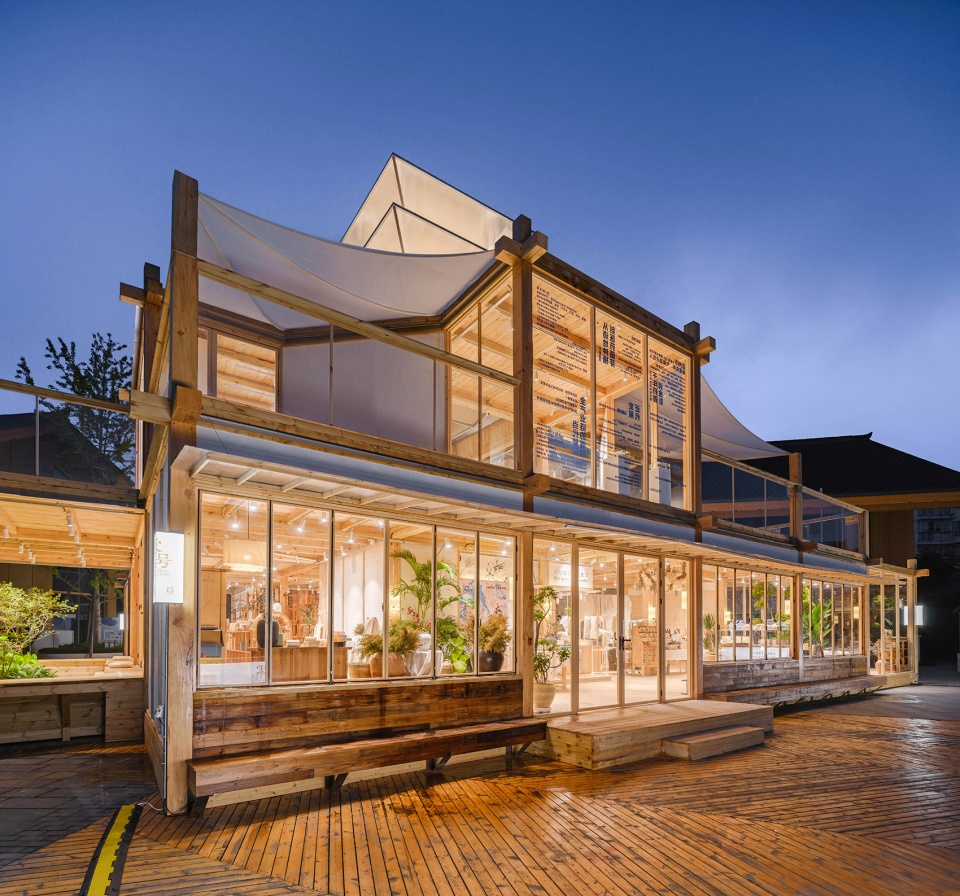
▼沿街界面,Street frontage
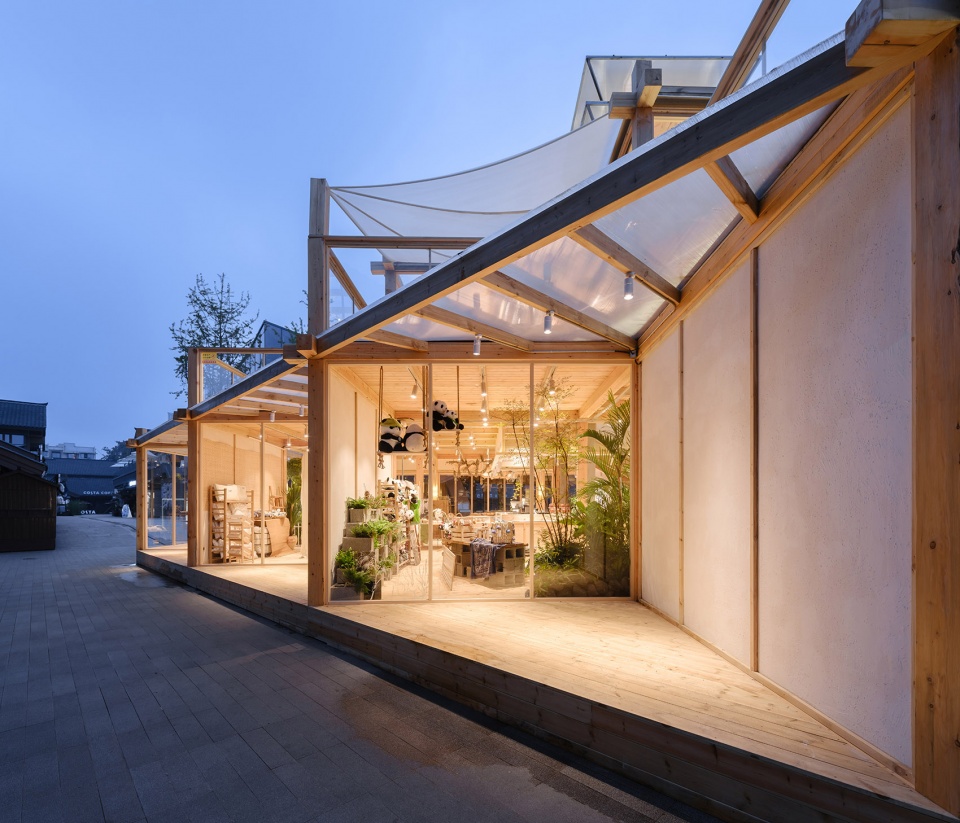
▼微型百草园,Miniature herb garden
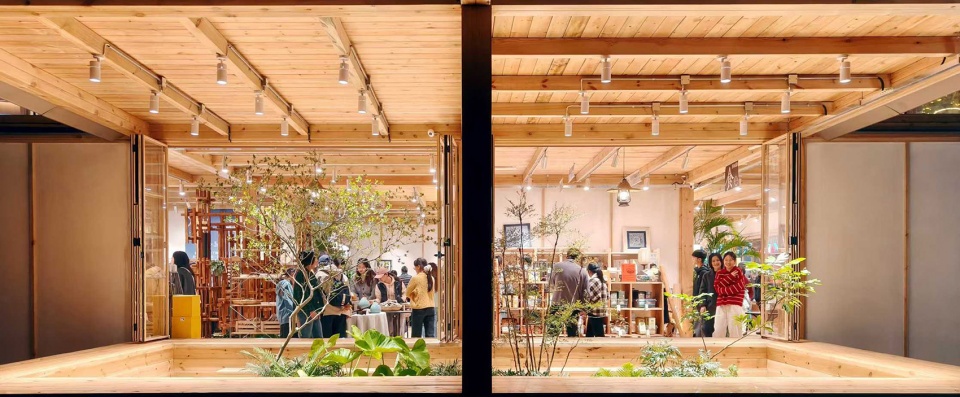
▼微型百草园,Miniature herb garden
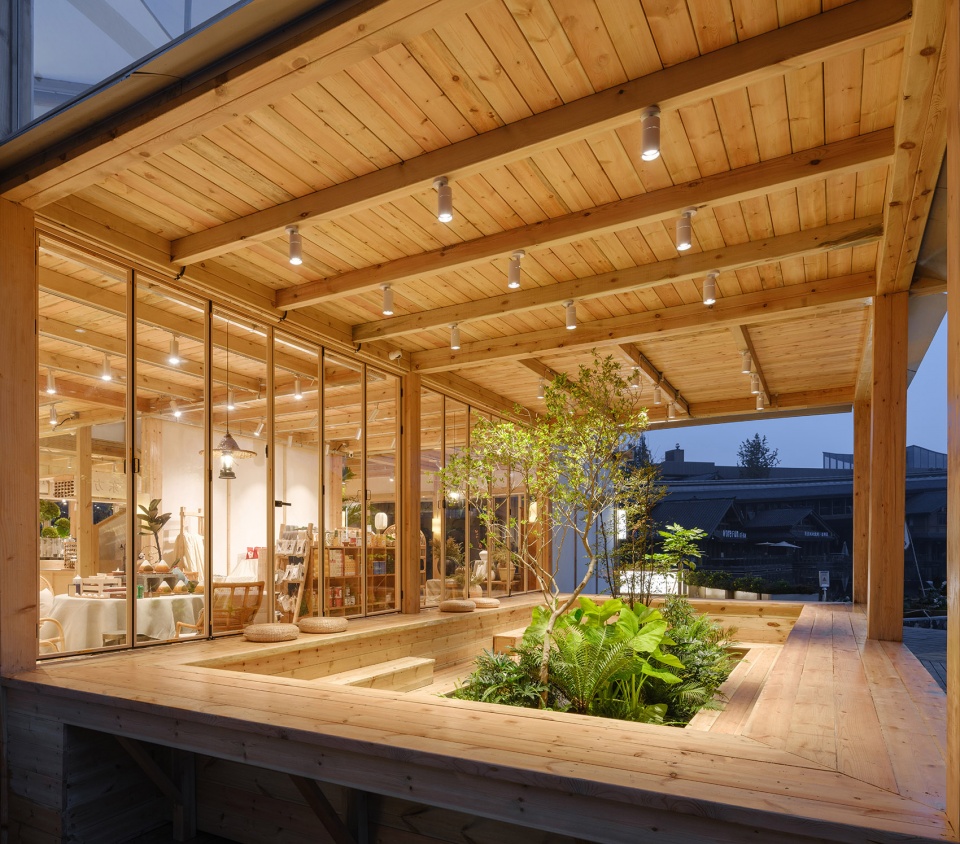
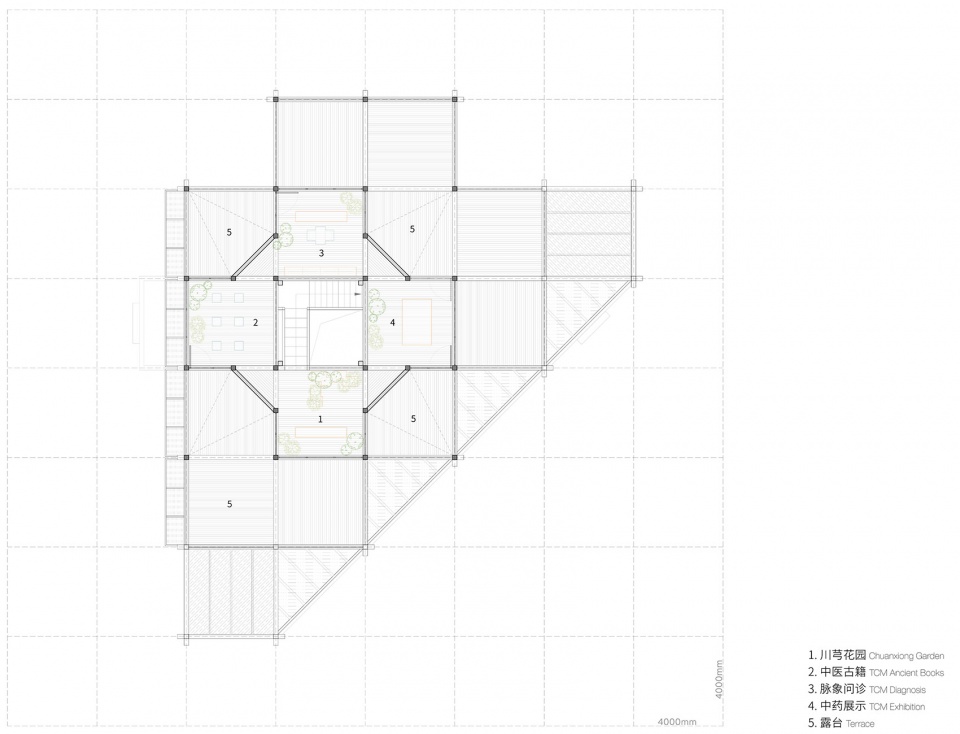
在首层的每一个模块化单元中,我们全景化展示了将中医药文化融入到日常生活方式的多种可能性:饮食、睡眠、气味、修身、养性;来自彭州本土各个地方的在地中医相关产品因此被同时分类和相互串联起来,形成了一种天府药市的全新场景化体验。同时在二层,我们还引入了对彭州中医药历史、中草药原材料的一系列文化展示,使得体验者具有更全面的科普性和互动性认知。
Within each modular unit on the ground floor, we present a panoramic view of how TCM can be integrated into various aspects of daily life—diet, sleep, scent, wellness, and mindfulness. Local TCM products from across Pengzhou are categorized and interconnected, offering a new, scenario-based experience of Tianfu Medicine Market. On the second floor, cultural exhibits on Pengzhou’s TCM history and raw herbal materials provide visitors with an engaging and educational understanding of the tradition.
▼入口吧台区,Entrance bar area
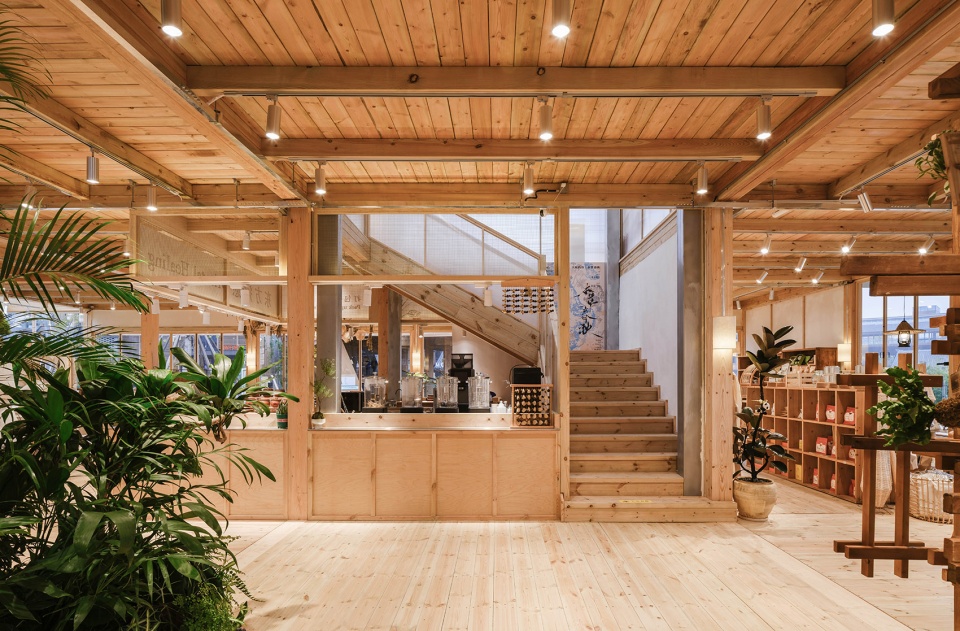
▼室内陈列区,Store display area
▼室内美陈区,Interior décor zone
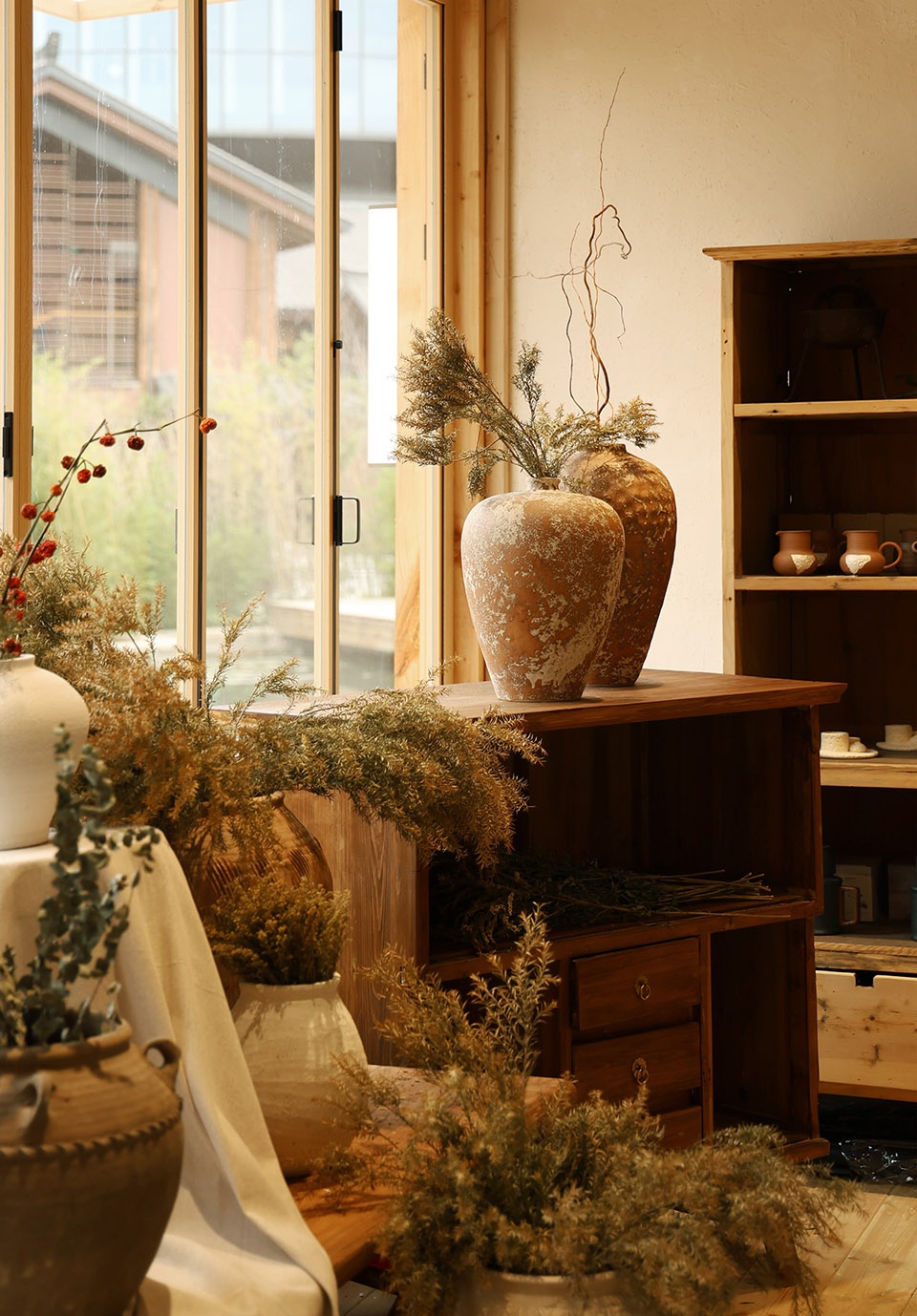
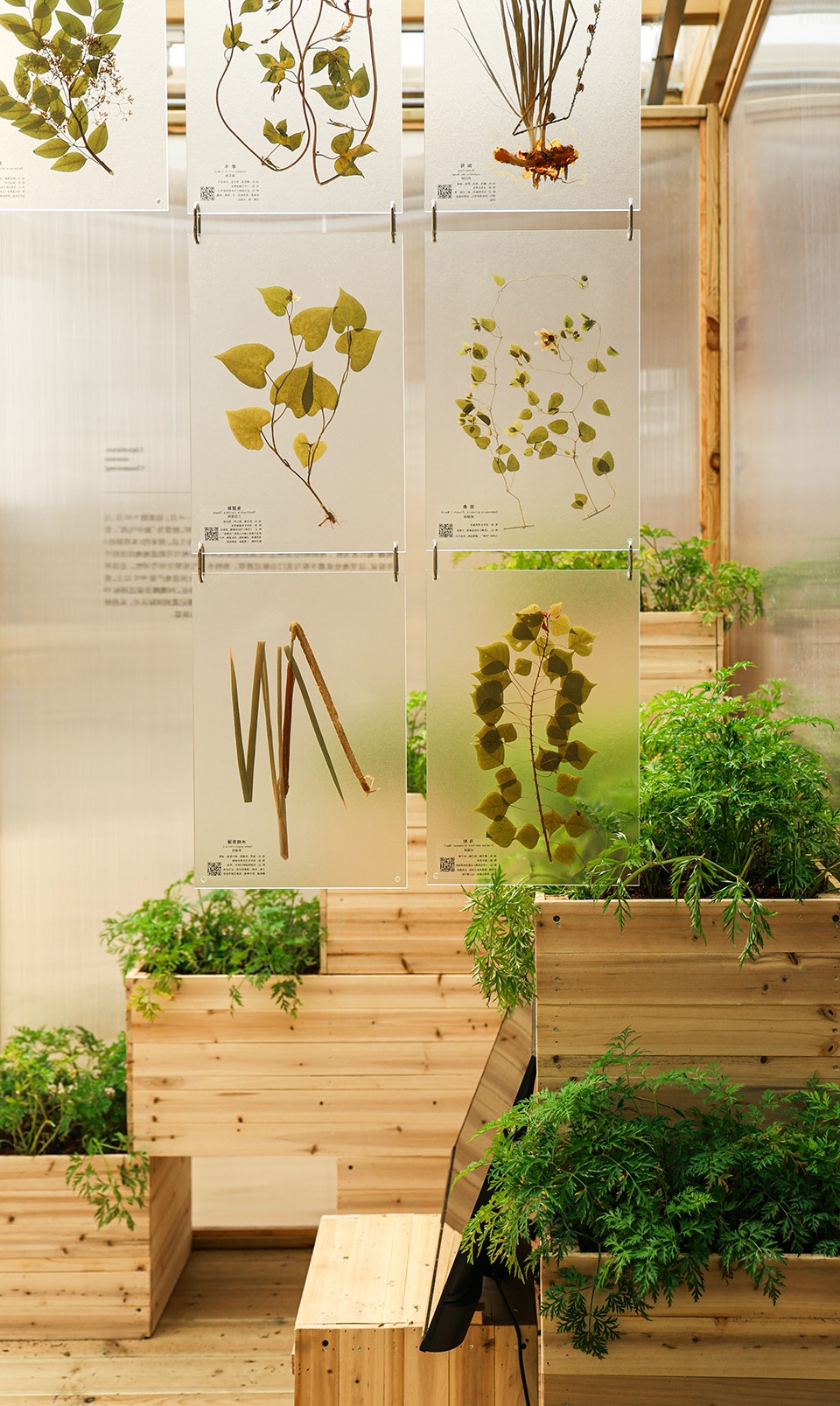
▼室内花园,Interior medical herb garden
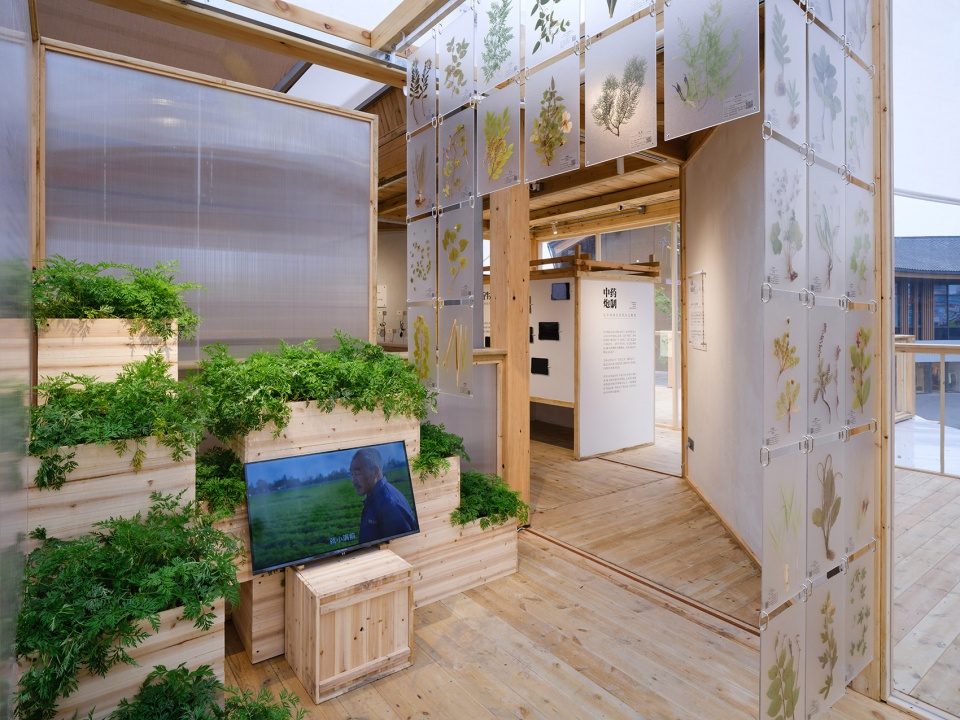
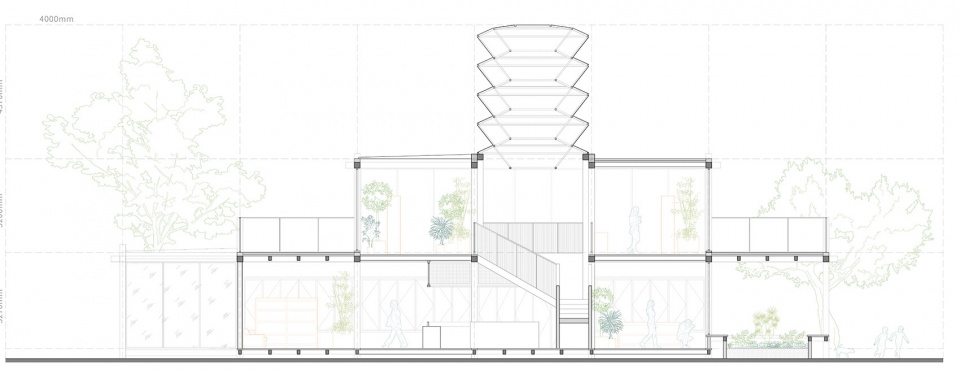
在结构和材料上,我们希望通过木结构的建构方式塑造建筑空间本体,表达自然、真诚地建造方式,使得建筑结构、空间、与功能形成一个直接表达的整体。在相邻的单元,我们将木梁与防腐木地面的铺设形成90度错位,使得整体开敞的室内空间增加了一份节奏感。面向沿街面,我们有意地增加了多道实体墙面,既作为室内上墙的展陈预留条件,也和沿街的橱窗面形成了一种两面性的秩序。
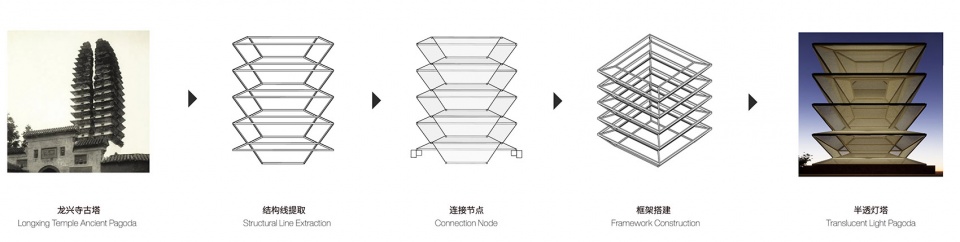
▼塔顶装置分析图,analysis of the spire assembly
In terms of structure and materials, we adopted a timber construction system to shape the architectural space, reflecting a natural and honest approach to building. This allows the structure, space, and function to form an integrated and directly expressive whole. In adjacent modules, the wooden beams and preserved timber flooring are arranged at 90-degree angles to each other, introducing a sense of rhythm into the open interior. Along the street-facing side, we intentionally added multiple solid walls, which serve both as display surfaces and create a dualistic order alongside the large showcase windows.
▼二层露台,Second-floor terrace
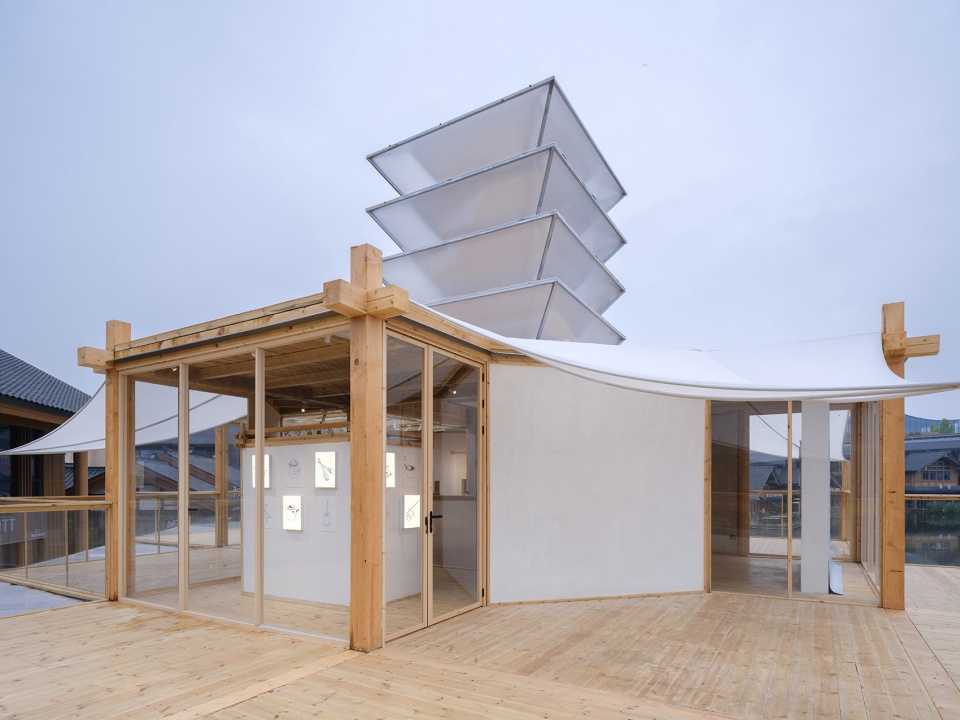
▼塔冠装置内部结构,Internal structure of the spire assembly
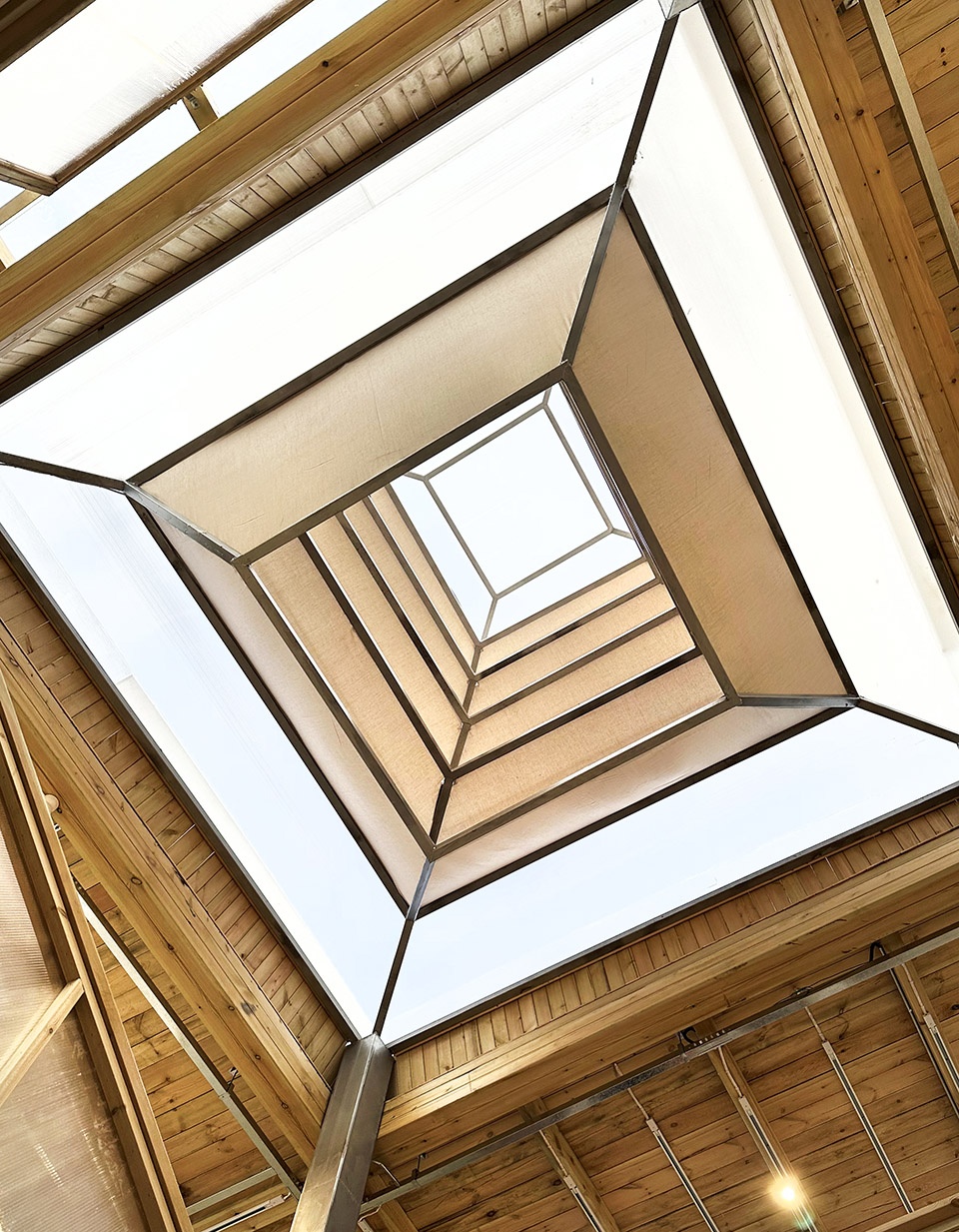
值得一提的是,受到龙兴寺曾经矗立的千年古塔的灵感启发,我们利用更为透明轻盈的材料语言对其进行了转译,在零号店建筑顶层设置了一处内外双层的塔冠装置。它与现有龙兴寺塔遥相呼应,试图唤起一种全新的与历史对话的方式,同时在晚上,它也是点亮周围的一座灯塔。
▼单元分析图,Unit analysis diagram
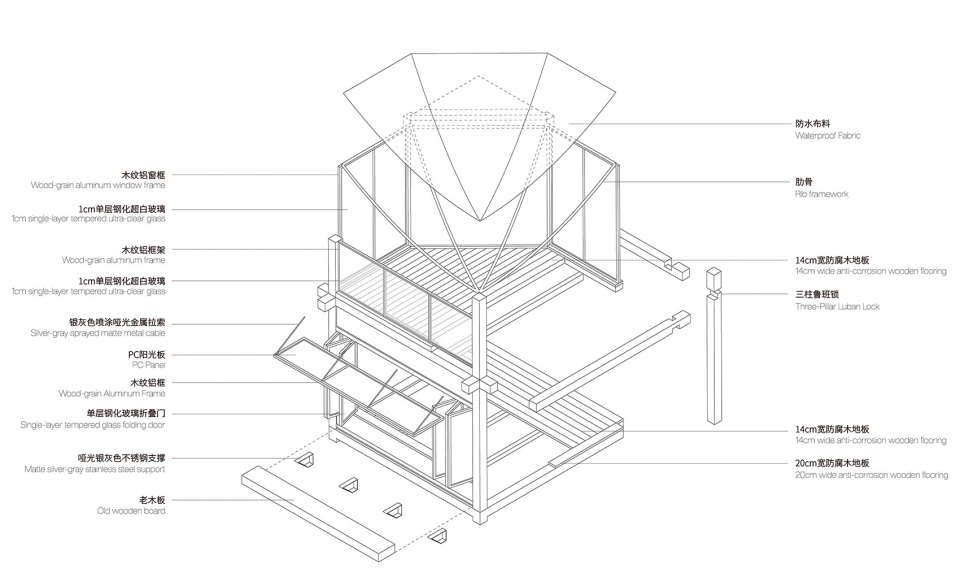
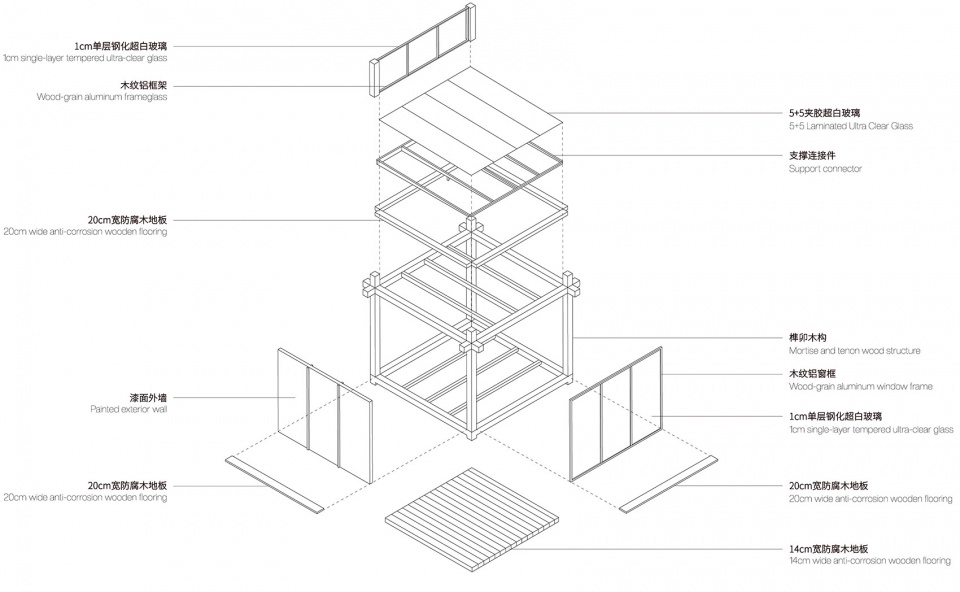
Notably, inspired by the millennia-old pagoda that once stood at Longxing Temple, we reinterpreted its form using a more transparent and lightweight material language. A double-layered crown-like installation was placed atop the Store Zero, echoing the existing pagoda of Longxing Temple and evoking a fresh dialogue with history. At night, this structure glows like a beacon, illuminating its surroundings.
▼首层平面图,First floor plan
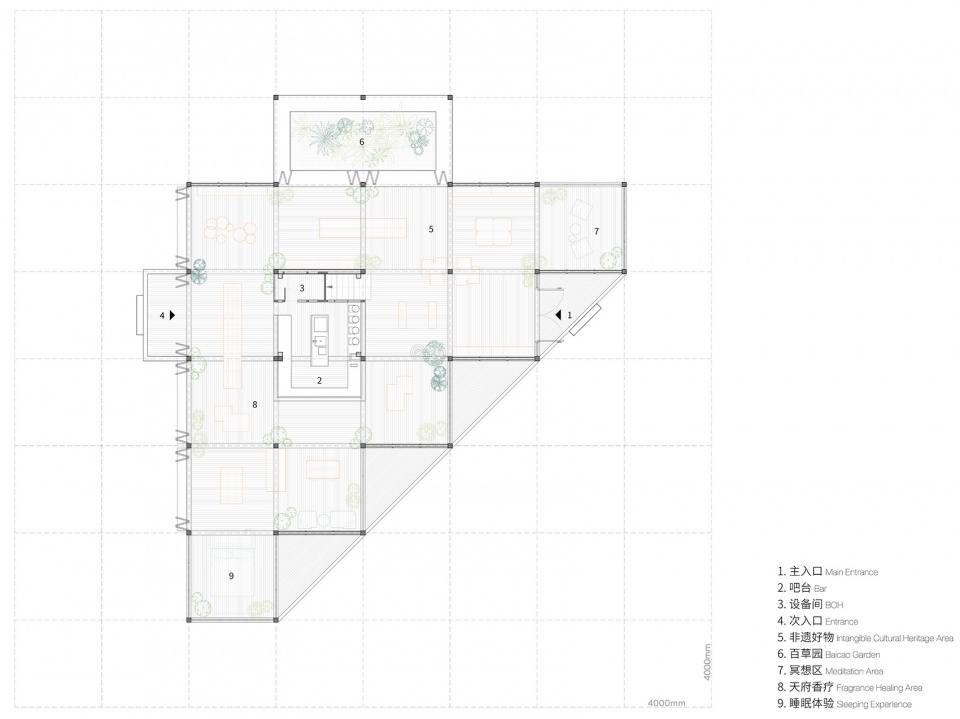
▼二层平面图,Second floor plan
▼剖面图,Section