Robert Badinter中学,法国 / Coldefy & Relief Architecture
法国建筑事务所Coldefy与Relief Architecture合作,完成了可容纳650名学生的Robert Badinter中学,它是法国北部第一所采用木框架结构建造的学校。该校位于一处原铁路编组场地,紧邻城市火车站,距离市中心步行约十分钟。新学校的设计与选址是城市更新项目的一部分,旨在打造一个集约的公共交通枢纽,并辅以充满活力的城市公共设施。学校位于城市沃邦城防工事护城河的旧址,场地中还包含称为catiches的地下白垩岩采坑——在施工前必须将其填充以稳定地基。
French architecture studio Coldefy, in collaboration with Relief Architecture, has completed the 650-pupil Robert Badinter Secondary School, the first timber-framed school in northern France. The school is located on a former railyard site, adjacent to the city’s train station and a ten-minute walk from the town centre. The design and location of the new school is part of an urban renewal project that seeks to create a consolidated public transportation hub complemented by lively civic amenities. Located on the site of the city’s Vauban fortifications moat, the site also contained catiches – subterranean chalk quarries – which had to be filled in to stabilise the ground prior to construction.
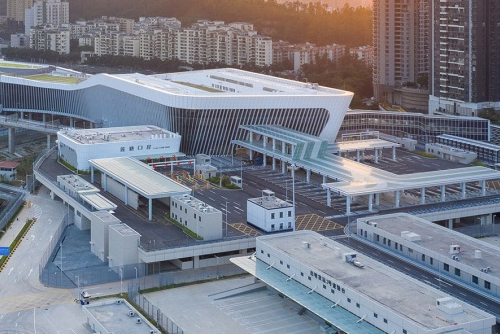
▼项目概览,Overview of the project
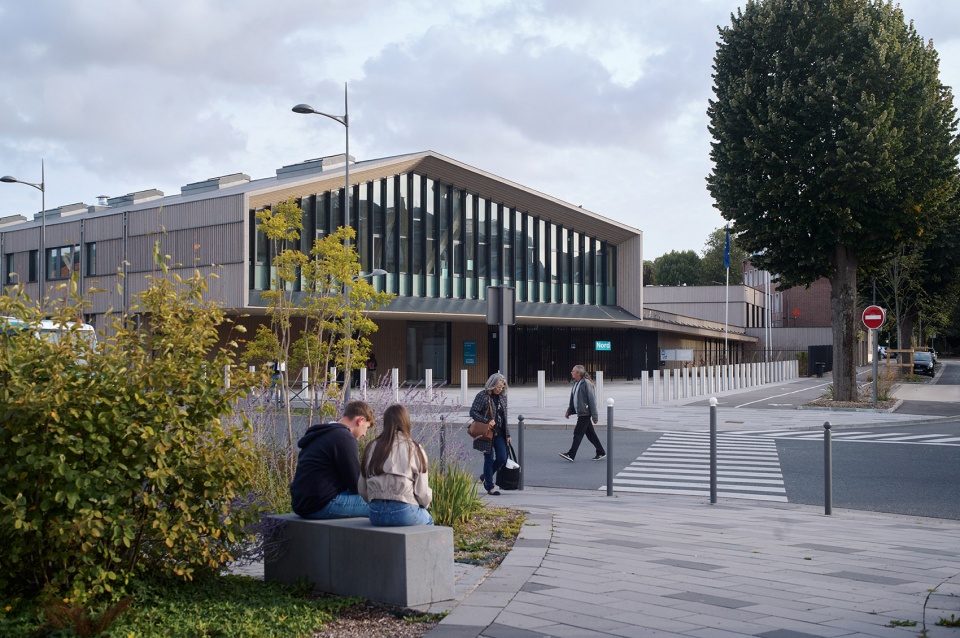
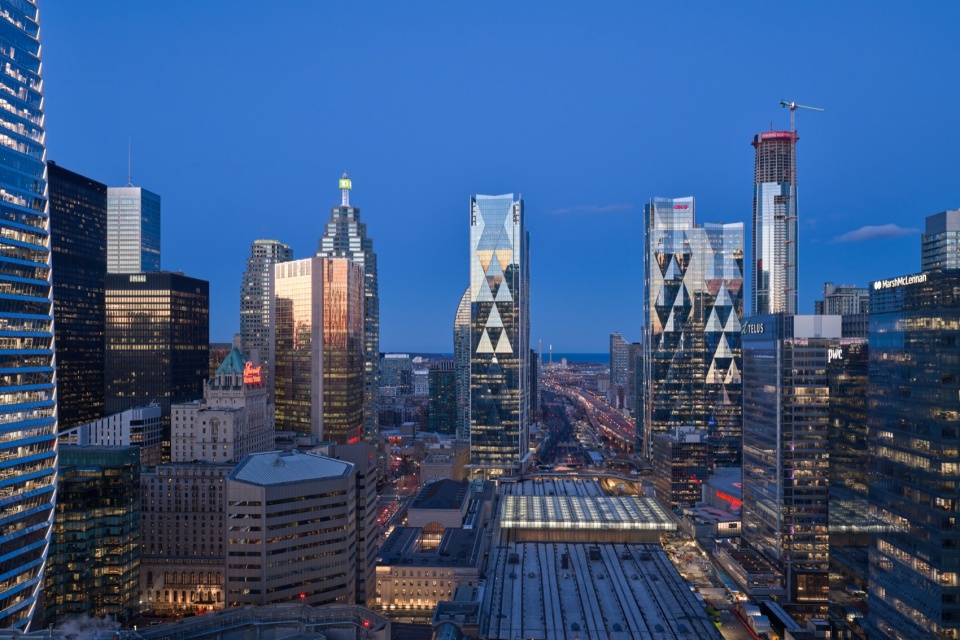
▼位置紧邻城市火车站,Adjacent to the city’s train station
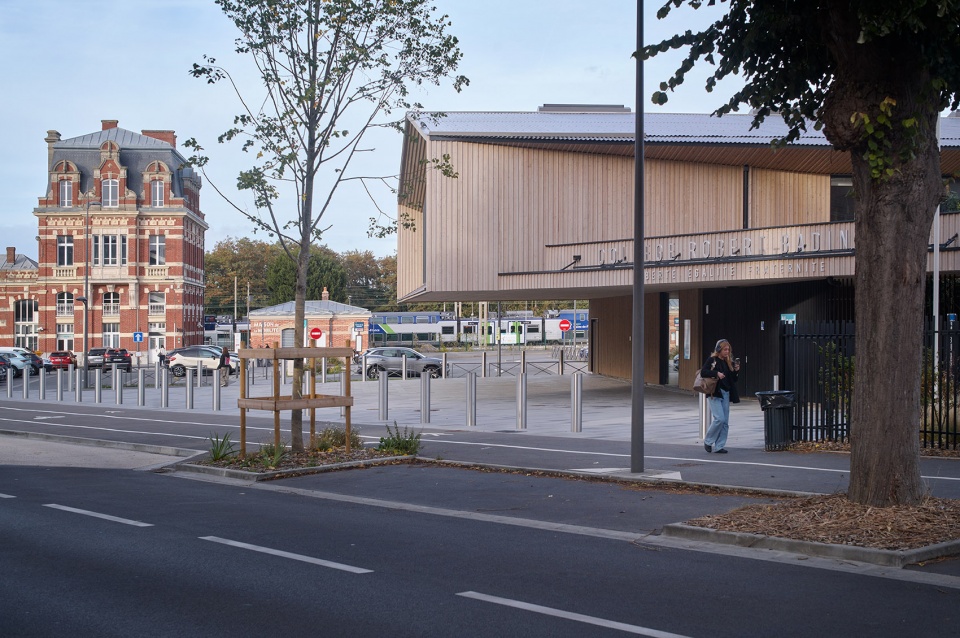
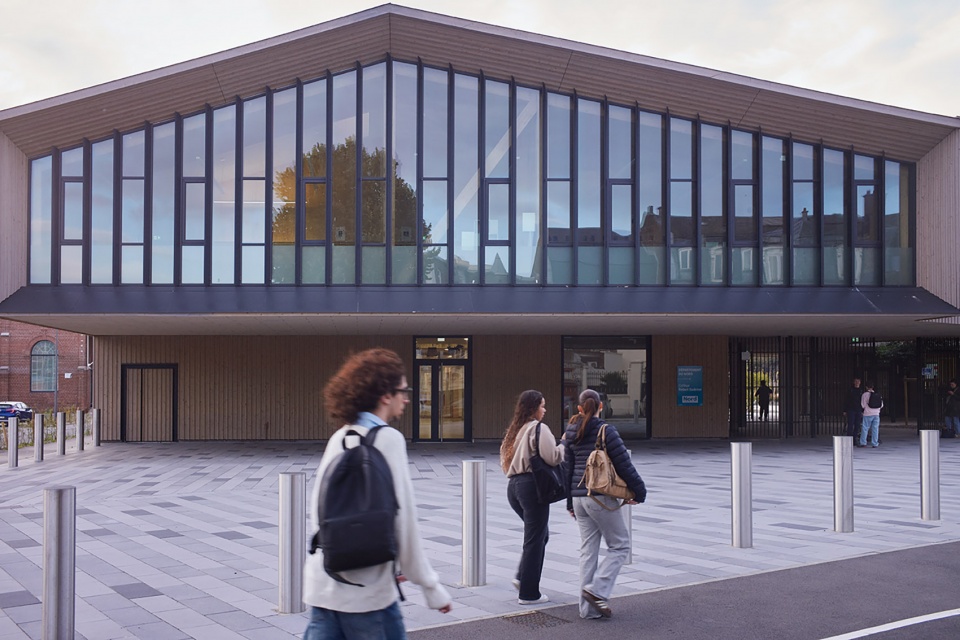
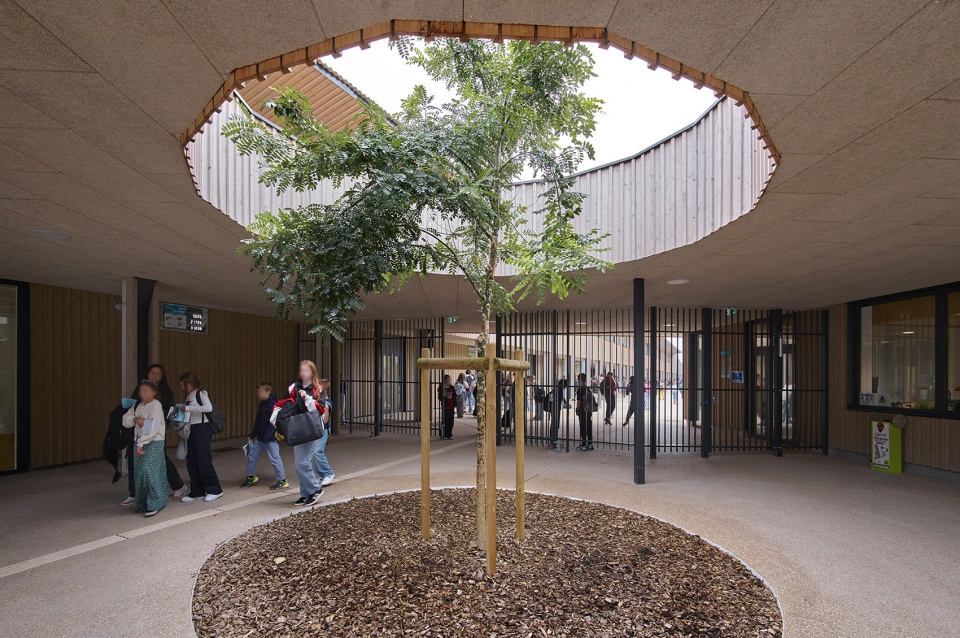
该建筑被设计为一座公共地标,其主要的悬挑体量面向建于 1858 年的火车站,并以一个宽敞的木质门廊标示学校入口,门廊朝向城市敞开,随后将学生引导至操场,从公共领域逐渐过渡到受保护空间。门廊屋顶的一处开洞用于保留场地原有的一棵树,象征性地将新建筑扎根于其环境中。这座两层的教学楼与一排贯穿整个场地长度的现有树木平行布置,成为更大范围城市再生的一部分,有助于塑造清晰的街道界面。较低的体量包含食堂和教职工用房,并通过一片景观区域与街道保持退让。
Designed as a public landmark, the building’s main cantilevered volume faces the 1858 train station and marks the entrance to the school with a generous timber porch that opens toward the city, before funnelling students through to a playground, gradually transitioning from public realm to protected space. A cut-out in the porch roof accommodates a pre-existing tree, symbolically rooting the new structure in its context. This two-storey teaching block lies parallel to a row of existing trees that runs the full length of the building plot and helps to create a well-defined streetscape as part of the wider urban regeneration. A lower volume contains a canteen and staff accommodation and is set back from the street with a landscaped area.
▼学校入口,Entrance of the school
▼建筑立面格栅,Facade timber screening
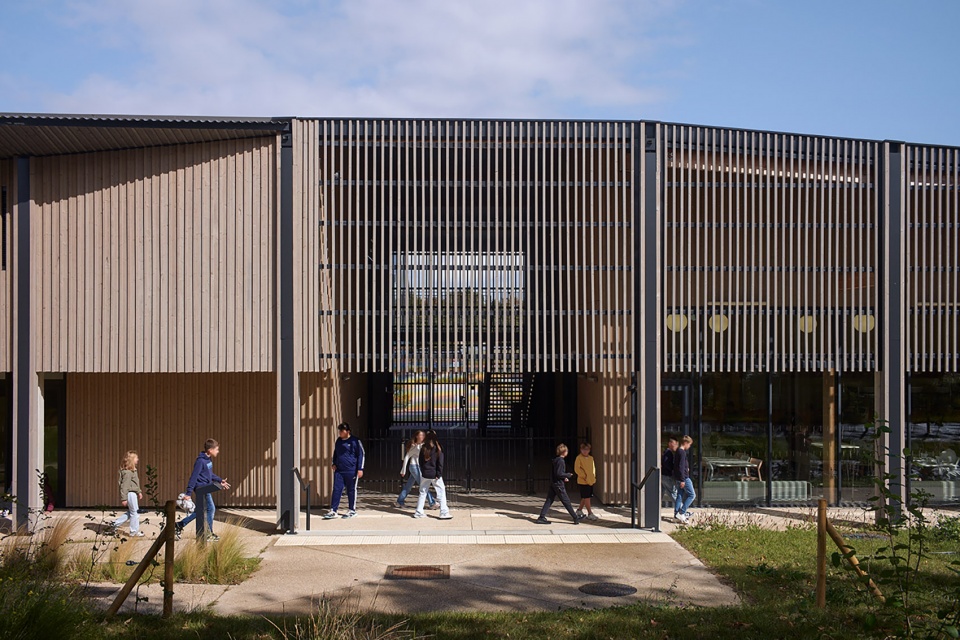
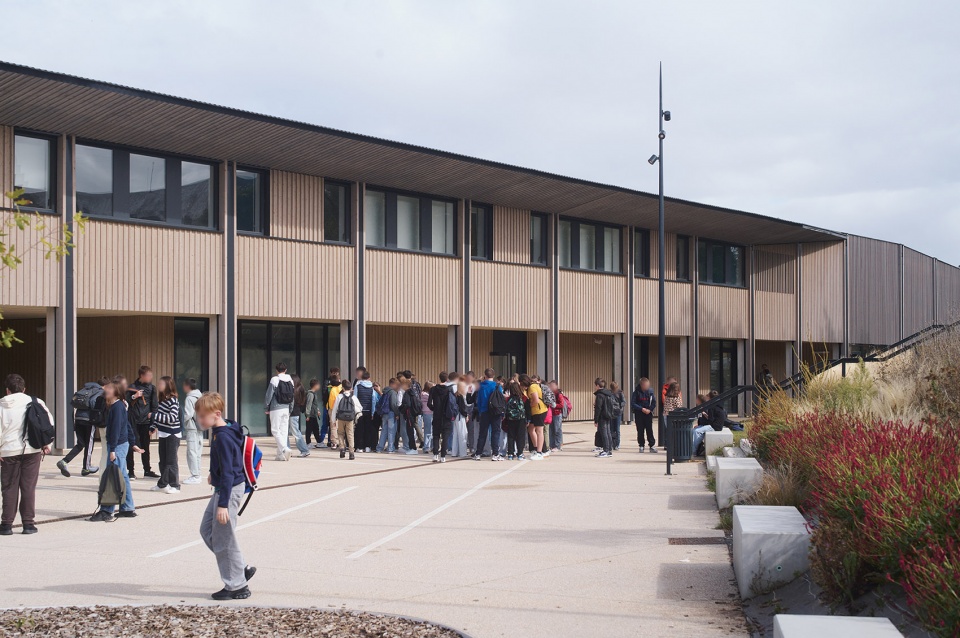
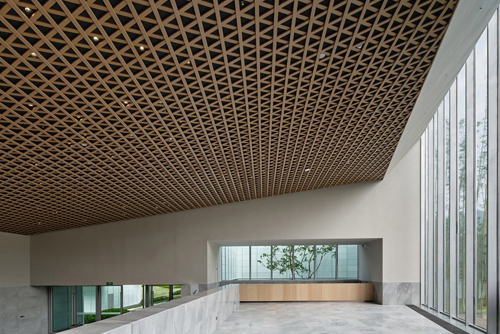
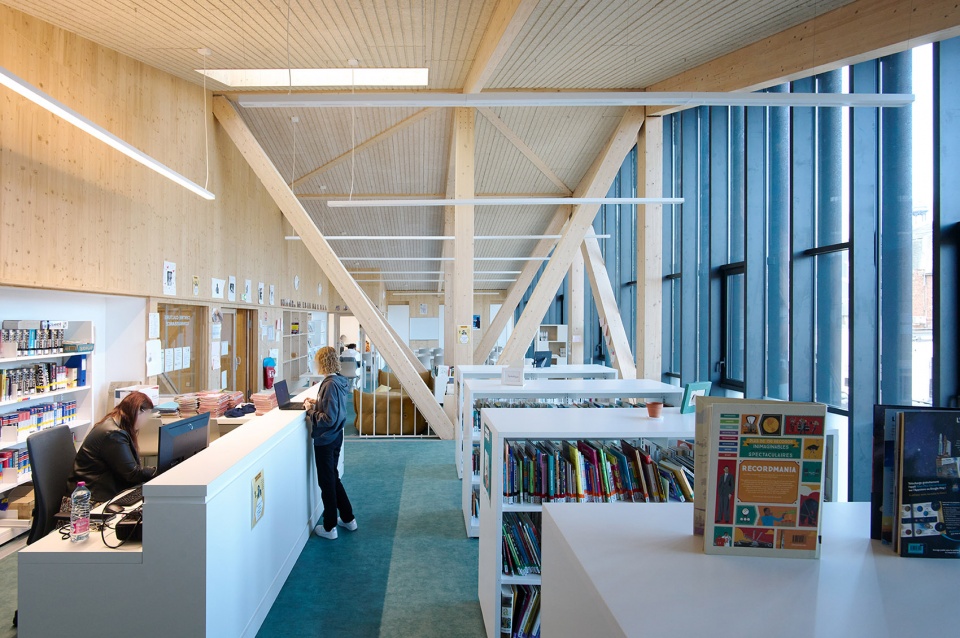
两座体量共同围合出一个庭院,其中包含操场、带跑道的运动场,以及一个拥有 40 个车位的教职工停车区。主楼的错动双坡屋顶参考了工业遗产,与传统铁路大厅相呼应,同时借助其可持续、坚韧的木结构呈现出现代建筑的特征。室内主教学楼包含一个 80 座的知识与文化中心,可从街道进入,并可在非上课时段向当地社区开放使用。其木质内饰呼应学校温暖、自然的材料调性,营造平静的学习与协作环境。
Together, the two blocks enclose a courtyard incorporating a playground, sports fields with a running track, and a 40-space staff parking area. Referencing industrial heritage, the main building’s offset double-pitched roof echoes traditional railway halls while asserting a contemporary character with its sustainable and resilient timber structure. Inside, the main teaching block includes an 80-seat Knowledge and Cultural Centre that is accessible from the street and which can be used by the local community outside of school hours. Its timber interiors echo the school’s warm, natural material palette and provides a calm environment for study and collaboration.
▼沿街立面,Street perspective
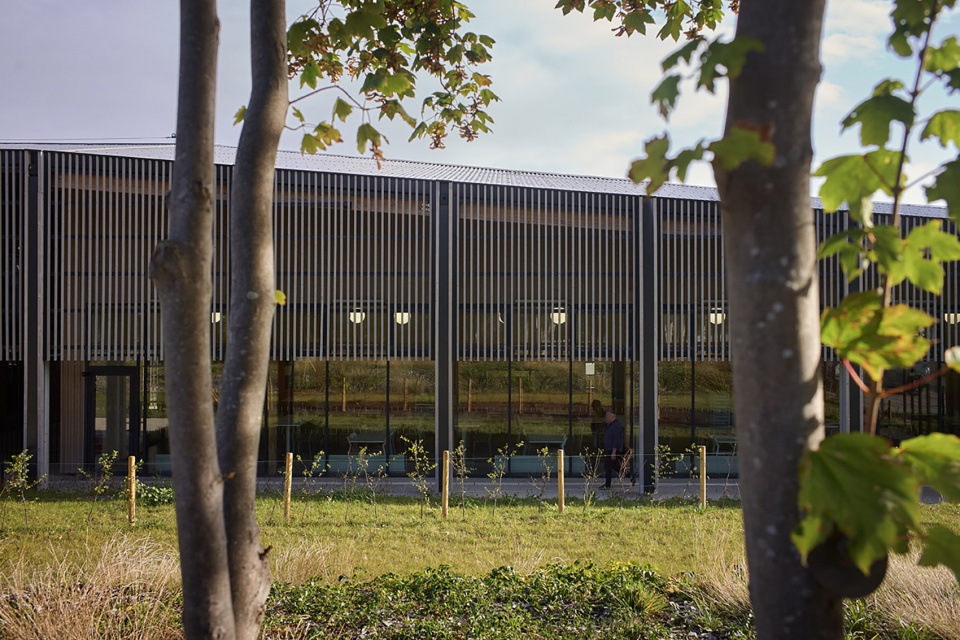
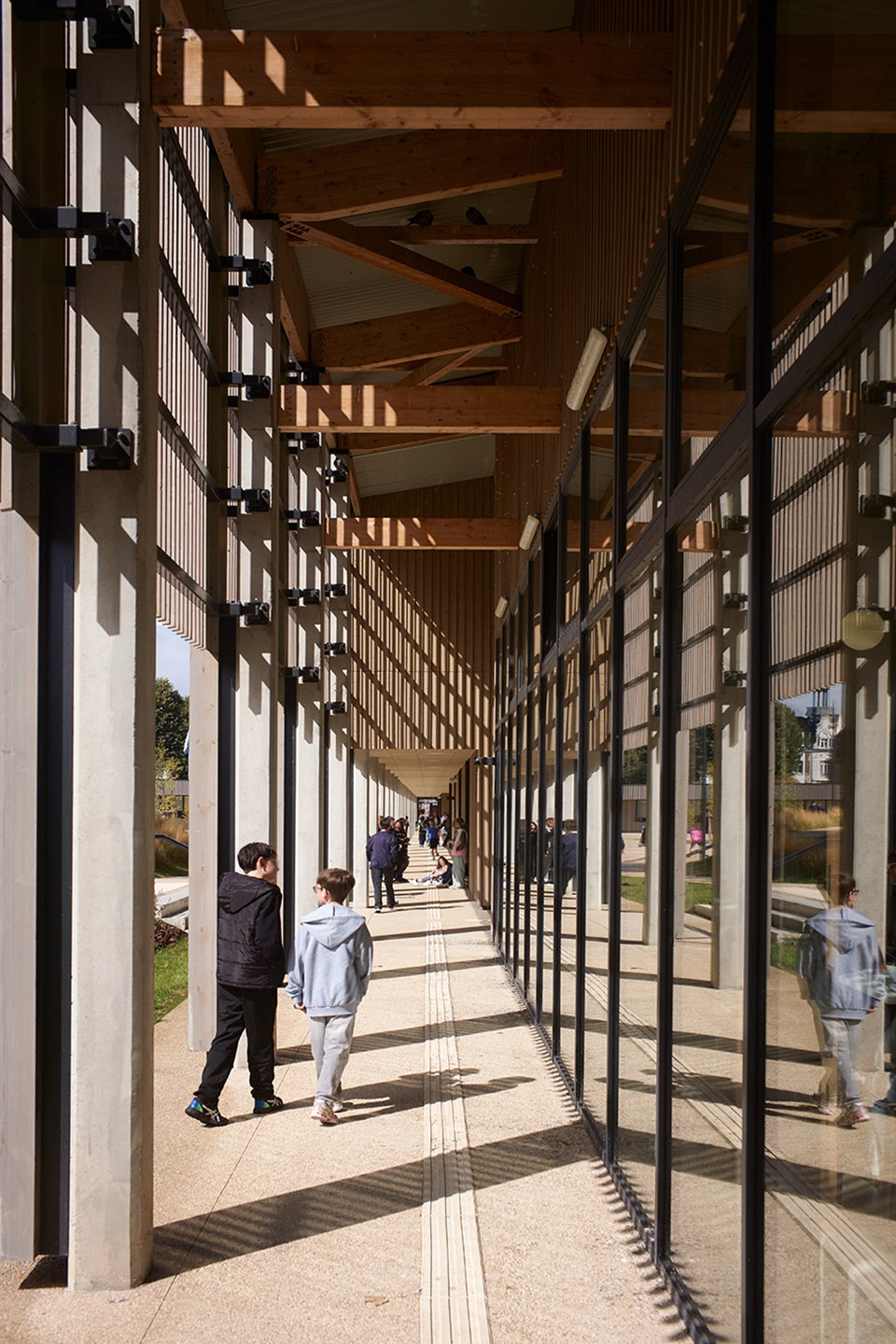
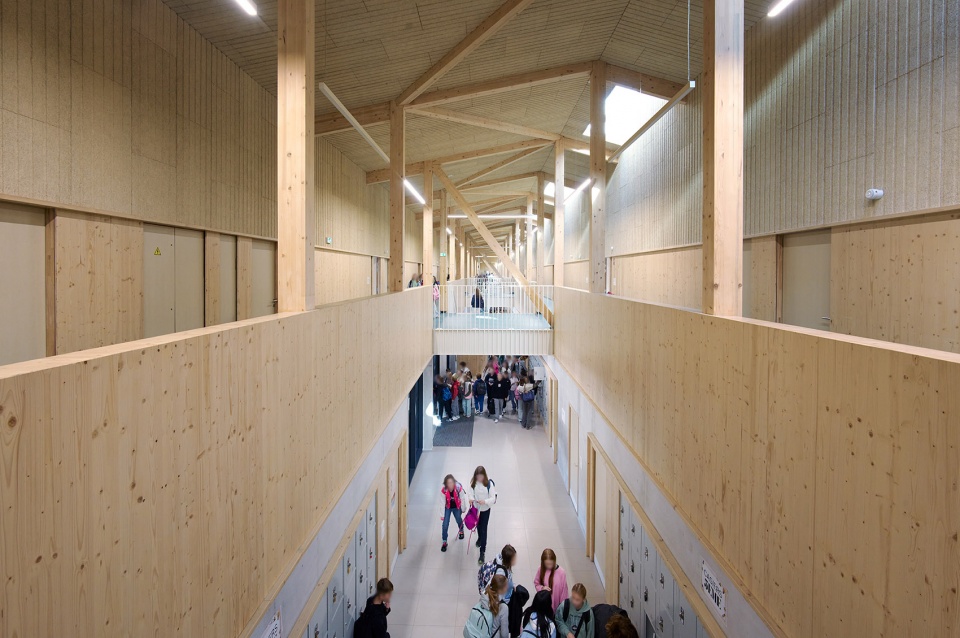
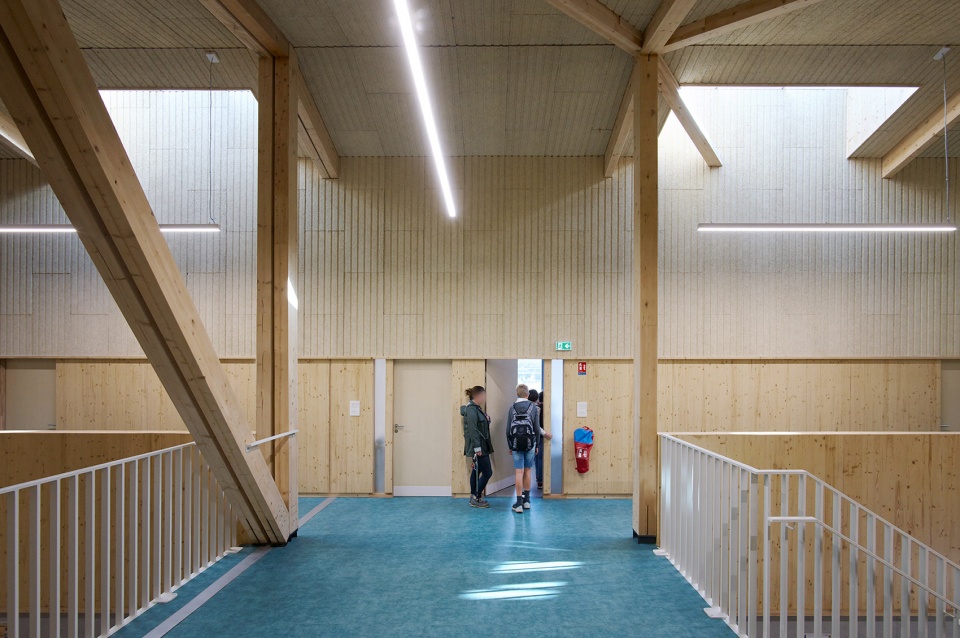
学校采用贯穿上下层的通高开放式大厅概念,教室与教职工设施分布于两层,并设有一处上层阳台,可俯瞰下方中央的双层通高中庭。天窗为流通区域带来柔和漫射光,在课间形成富有当代气息的自然采光共享空间。一层的连廊为教学空间、餐厅、教职工区与有顶操场之间提供了遮蔽的室外连接,成为一个共享的社交空间,实现由户外到室内的渐进过渡。大面积的南向屋檐提供被动式遮阳,可减少夏季炫光与太阳热增益。
The school features a floor-to-ceiling open hall concept, with classrooms and staff facilities spread across both floors and an upper-level balcony overlooking the central double height hallway below. Skylights diffuse soft light into the circulation areas, creating a naturally lit shared space with a contemporary feel for movement between lessons. A covered walkway on the ground floor creates a sheltered outdoor connection between the teaching spaces, cafeteria, staff areas, and a covered playground, becoming a shared social space that enables gradual transition between the outside and inside. A large, south-facing roof overhang provides passive shading and reduces glare and solar gain in the summer months.
▼门廊中保留的原生树木,preserved existing tree
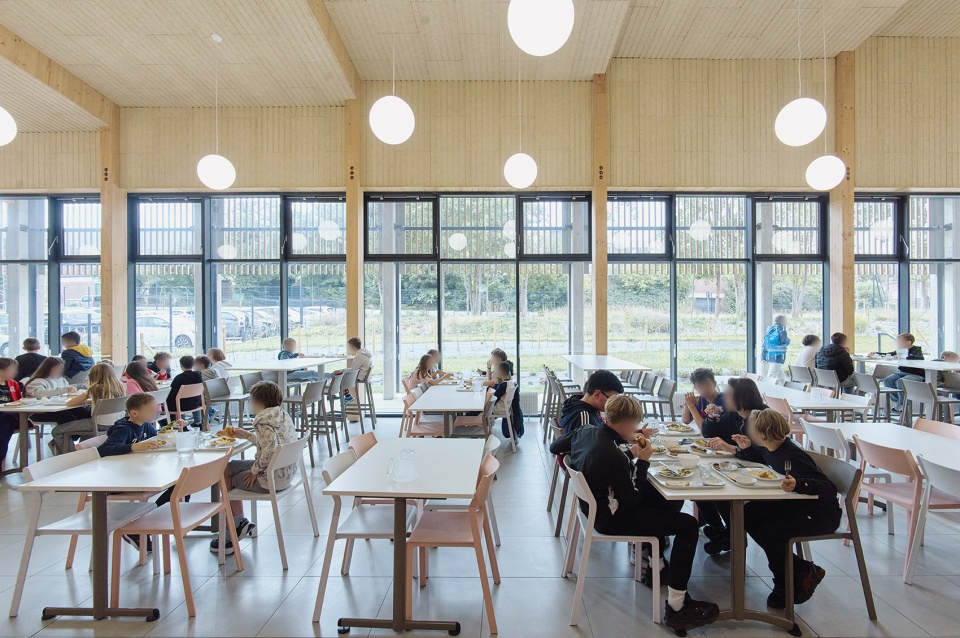
这座单层的餐厅体量面向景观花园敞开,玻璃立面让学生在午餐时间与自然相连。即便是位于场地后方、隐蔽布置并大量植绿的停车区,也考虑了长期的适应性,未来可作为补充体量以完成整个街区。立面设计反映了学校的内部布局,并根据朝向和功能调整开敞或私密程度,而木质覆层则强调了学校模块化建造的特点。
The single-storey cafeteria block opens onto landscaped gardens, with a glass frontage that connects students to nature at lunchtime. Even the parking area, discreetly positioned at the rear of the site and heavily planted, has been designed with long-term adaptability in mind, and could eventually accommodate an extension to complete the urban block. The elevation reflects the school’s internal layout and responds to orientation and function to allow for either openness or privacy, while the timber cladding embraces the modular nature of the school’s construction.
▼遮阳连廊的光影关系,light along the shaded walkway
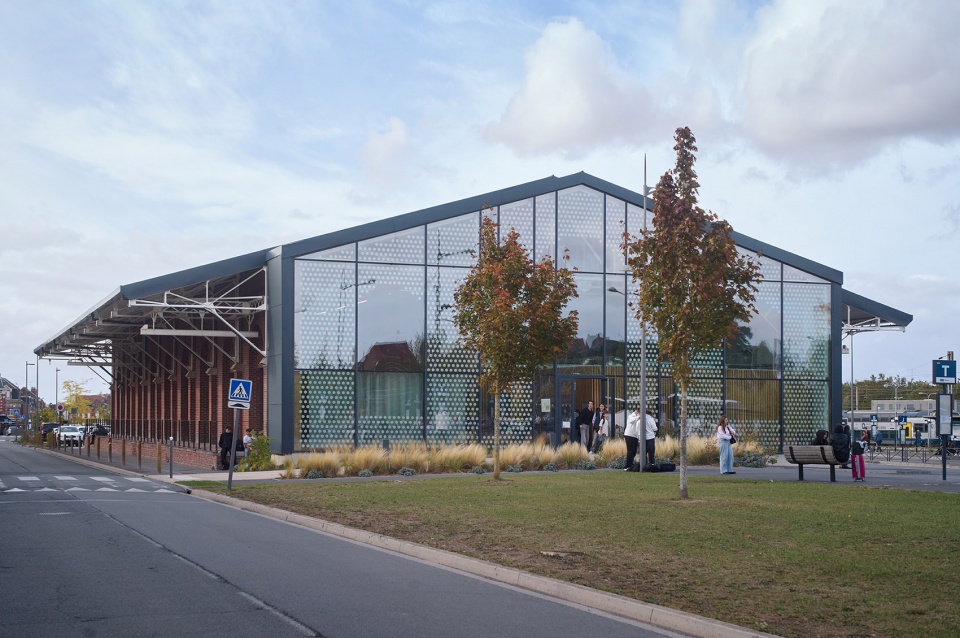
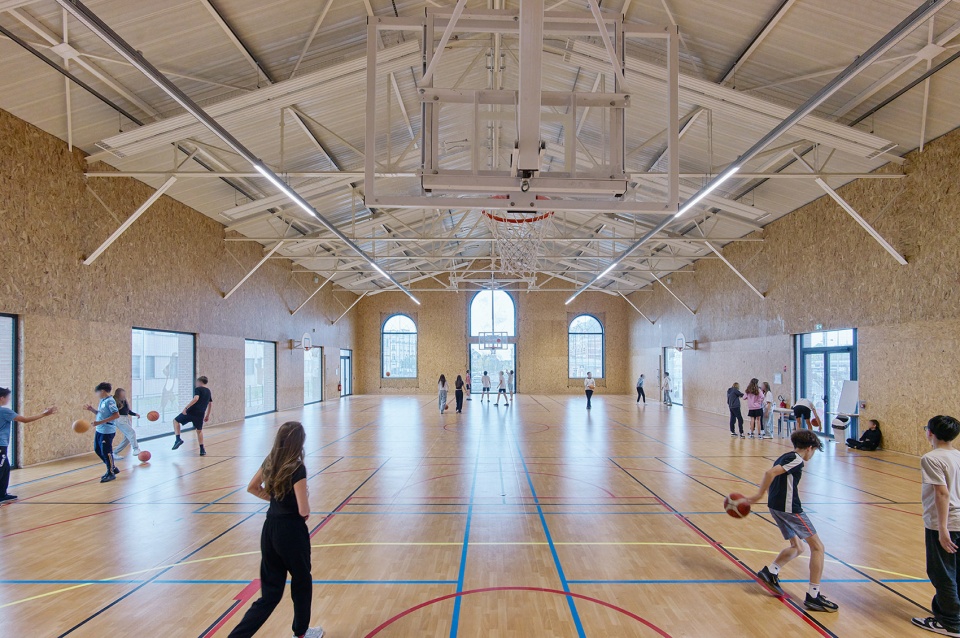
在街道对面,Coldefy与Relief共同改造了一座剩余的火车棚建筑,该棚建筑原宽 30 米、长 150 米,建于 1906 年。其高挑的空间被改造成一座 934 平方米的多功能体育馆,拥有精细修复的红砖外立面与充满光线的当代室内空间,内部覆以OSB板,同时保留优雅的铁桁架。为了最大化其公共属性,这座体育馆在非上课时段向更广泛的社区开放。
Across the street, Coldefy and Relief collaborated on a retrofit of the remaining portion of a 30 metre wide train shed, which was 150 metres long when completed in 1906. The structure, with its generous clear height has been transformed into a 934 square metre multi-purpose sports hall, featuring a meticulously restored red brick exterior and a contemporary light-filled interior clad in OSB panels, while revealing its elegant iron trusses. To maximise its public function, the sports hall is open to the rest of the community outside of the school hours.
▼多功能体育馆,sports hall
▼图书馆,library
该项目在法国 HQE(高环境质量)体系中获得“卓越级”认证,并持有低碳建筑证书,为教育建筑树立了可持续设计的高标准。项目采用生物气候设计方法,其节能特征包括:使用本地颗粒燃料的生物质锅炉,满足设施 80% 的供暖需求;光伏板提供 15% 的电力需求;以及一个雨水收集系统,可满足卫生间用水量的最高 50%。
Certified ‘Excellent’ under France’s High Environmental Quality (HQE) certification system, and holding a Low Carbon Building certificate, the project sets a high standard for sustainable design in an educational setting. Taking a bioclimatic approach to design, energy-efficient features include a biomass boiler fuelled by locally sourced pellets, which covers 80% of the facility’s heating needs, photovoltaic panels that provide 15% of its electricity demand and a rainwater harvesting tank that covers up to 50% of the water needed for bathroom facilities.
▼餐厅,canteen
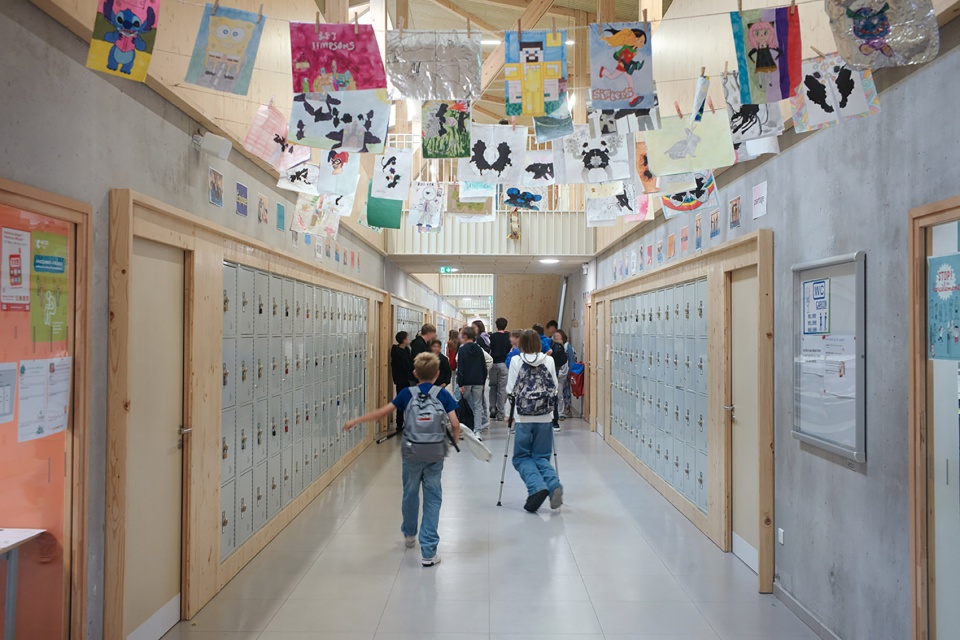
▼储物柜,locker
▼交通公共空间,transportation corridor
Project team
Architect:Coldefy
Associate Architects:Relief Architecture
Client:Département du Nord(North Department of France)
Landscape Consultant:Urbania