东坡乐事——半弧岭驿站,惠州 / 上海交通大学奥默默工作室
场地:弧线织就的诗意栖居Site: A Poetic Dwelling Woven by Arcs
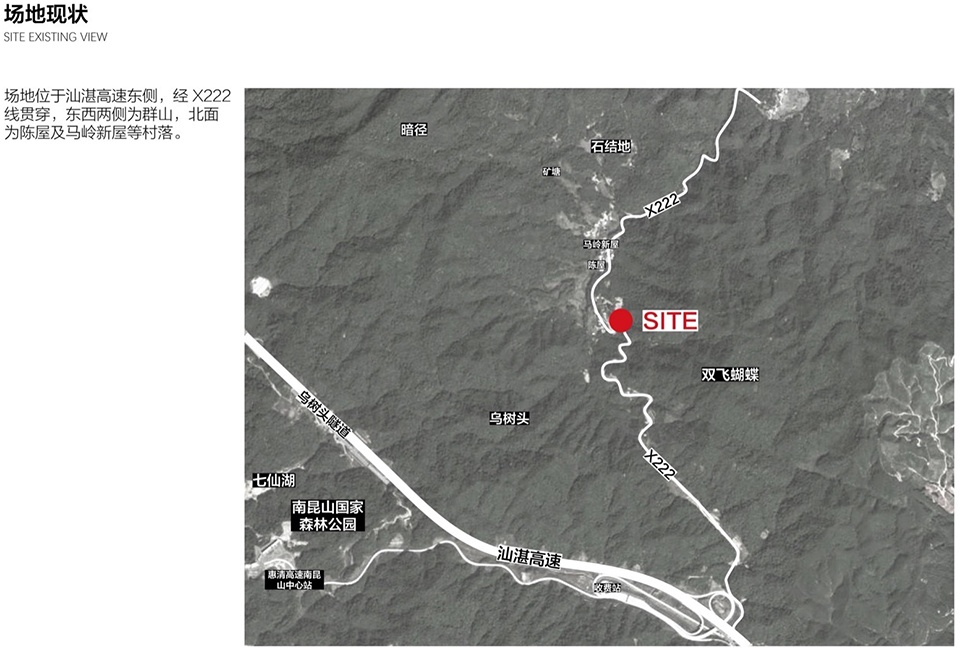
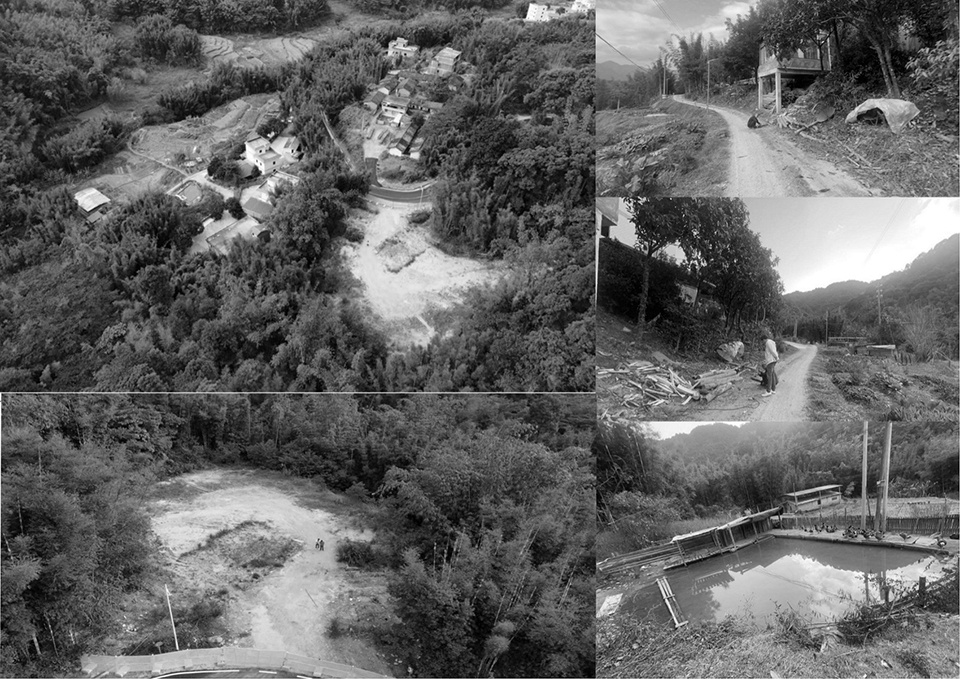
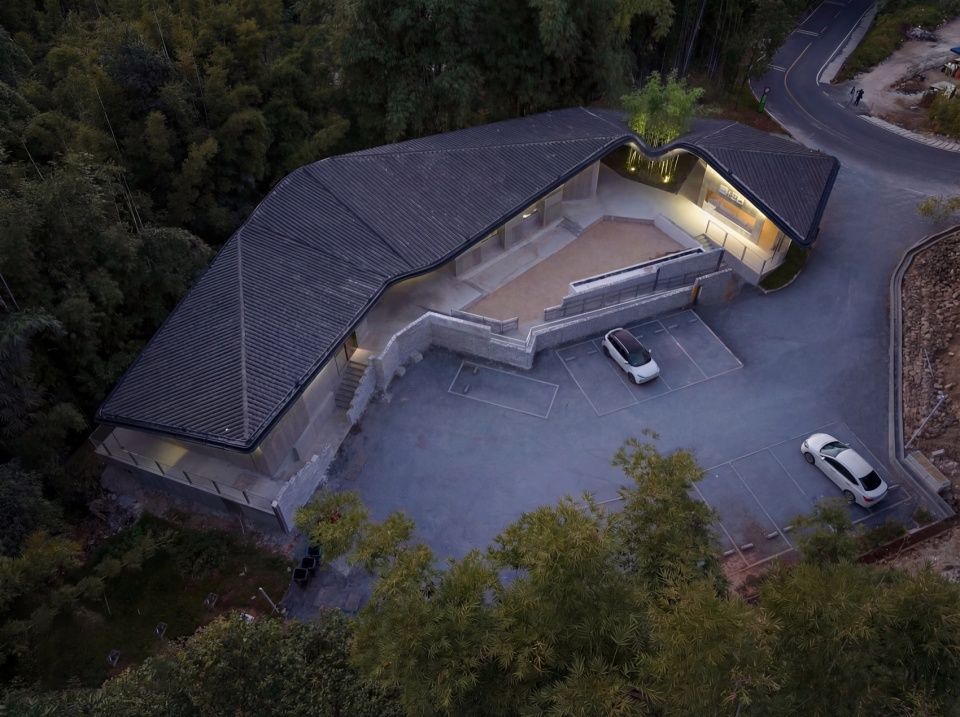
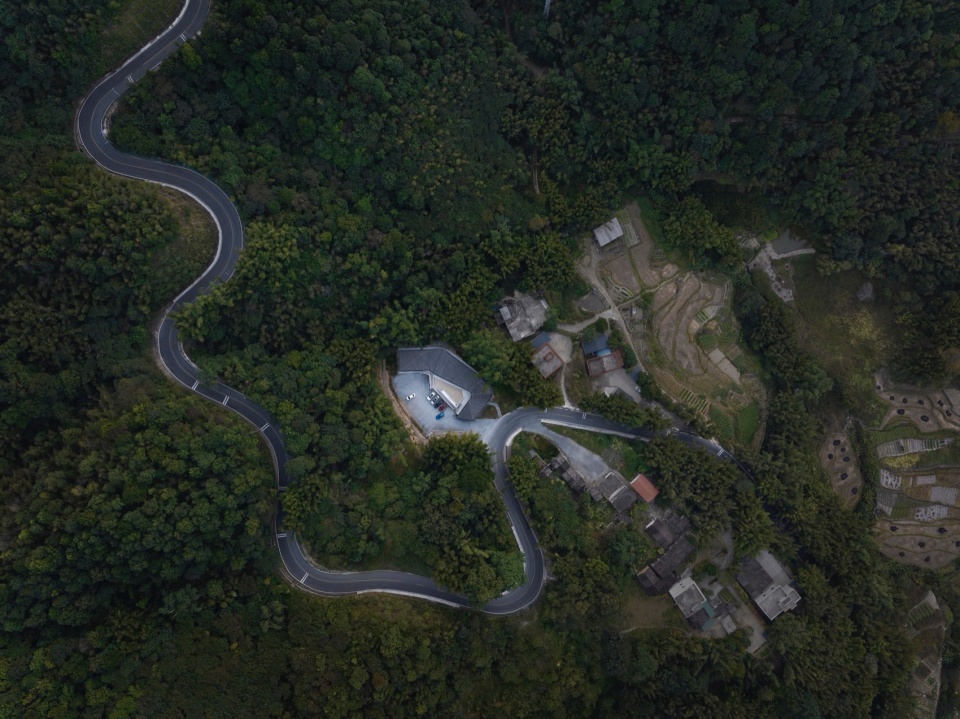
驿站坐落于半弧岭一处发卡弯头,场地条件极具挑战性:一侧紧邻道路,另一侧则是陡坡与茂密竹林。巧妙利用这一特殊地形,将建筑沿弯道弧线展开,既顺应了道路走向,又通过悬挑设计化解了陡坡的高差。竹林环抱形成的天然屏障,为驿站营造出”隐于山野”的静谧感,而穿透屋面的风铃木则成为视觉焦点,在险峻中注入灵动生机。
▼场地卫星图,site location
▼场地照片,site photograph
▼场地剖面分析,site section analysis
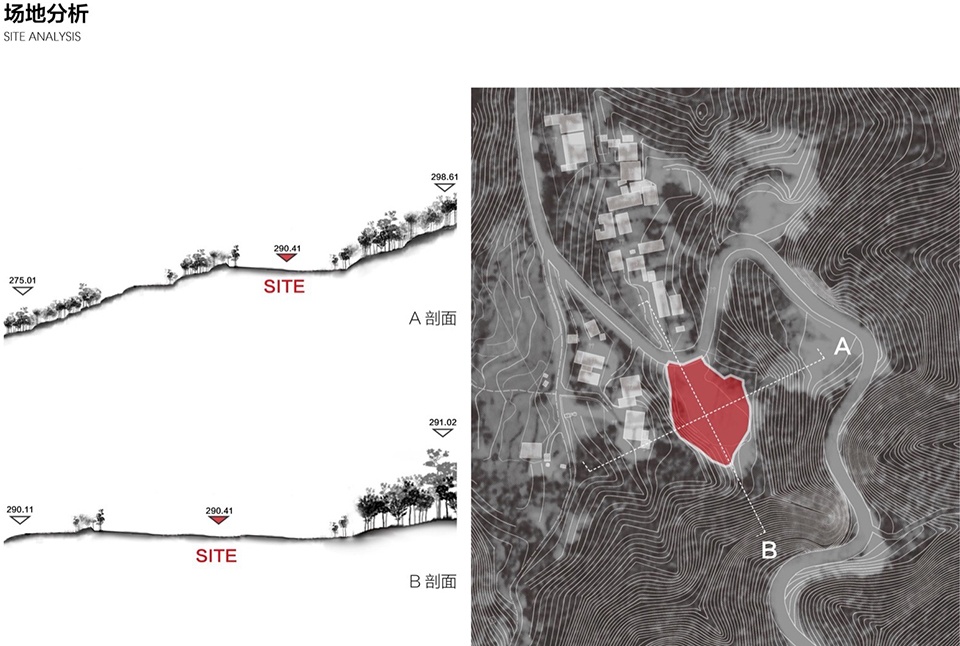
The post station is nestled at a hairpin bend of Banhu Ridge, where the site conditions are highly challenging: adjacent to a highway on one side and flanked by steep slopes and dense bamboo forests on the other. By cleverly leveraging this unique terrain, the building unfolds along the curve of the bend, not only conforming to the alignment of the highway but also resolving the elevation difference of the steep slopes through cantilever design. The natural barrier formed by the surrounding bamboo forests endows the post station with a serene ambiance of “being hidden in the mountains”, while the golden trumpet tree piercing through the roof serves as a visual focal point, infusing vitality into the rugged landscape.
▼实景照片,photo
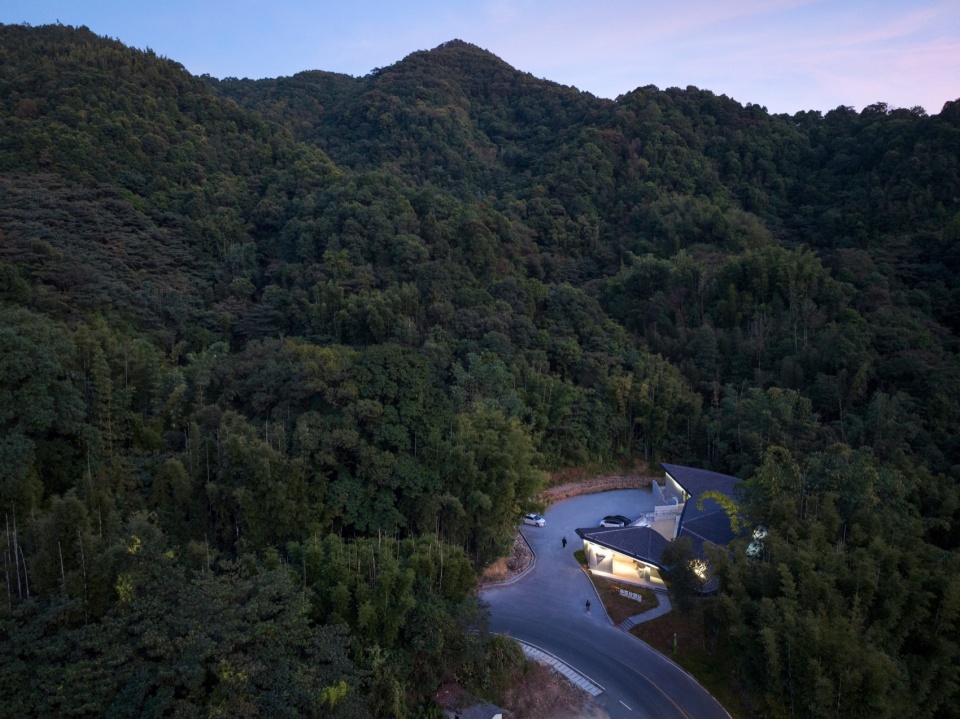
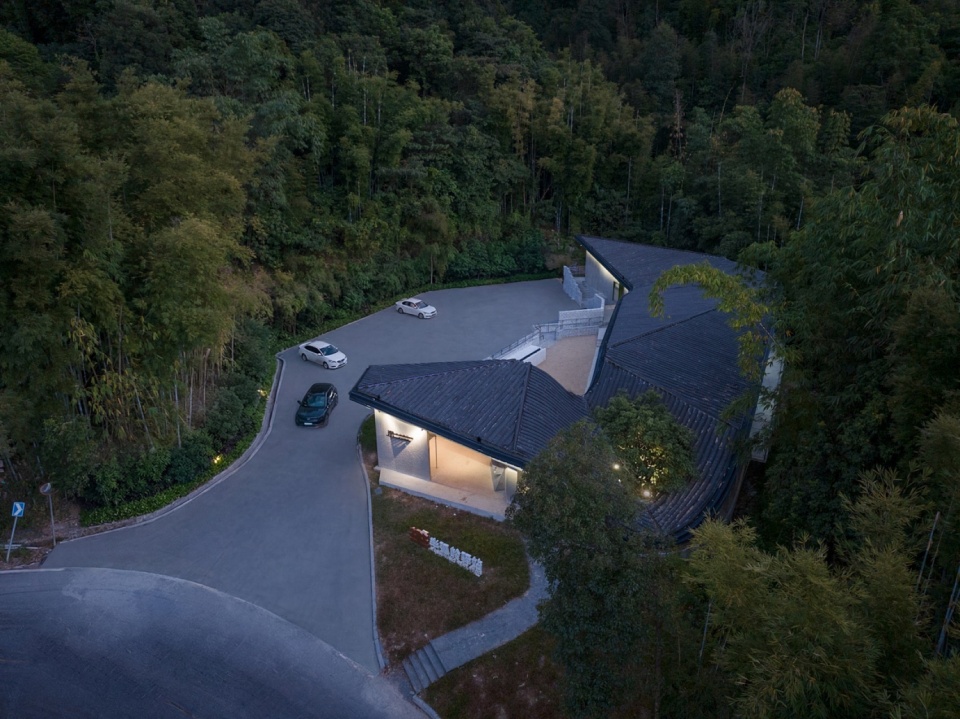
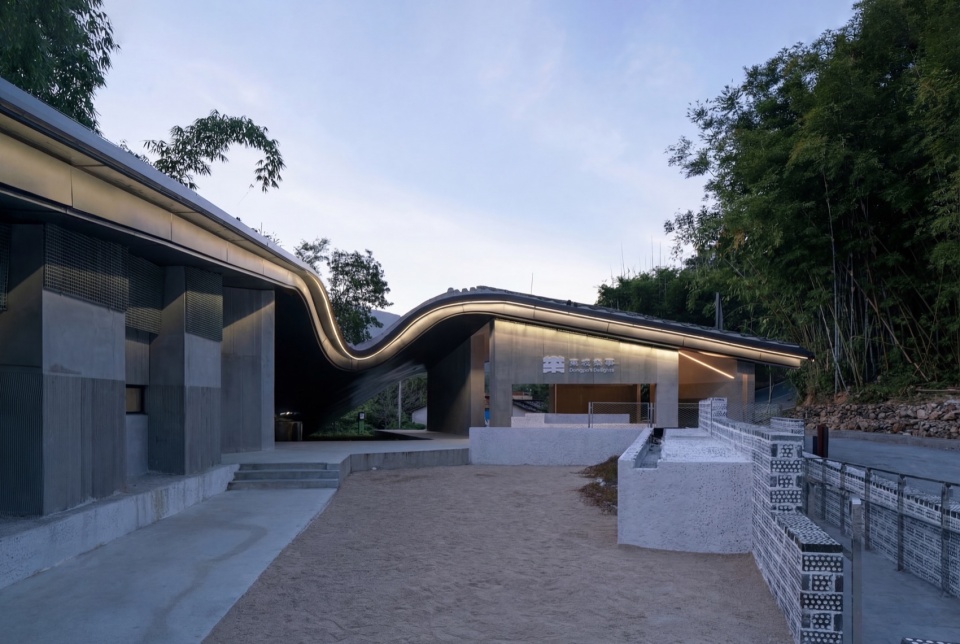
▼入口夜景,night view of the entrance
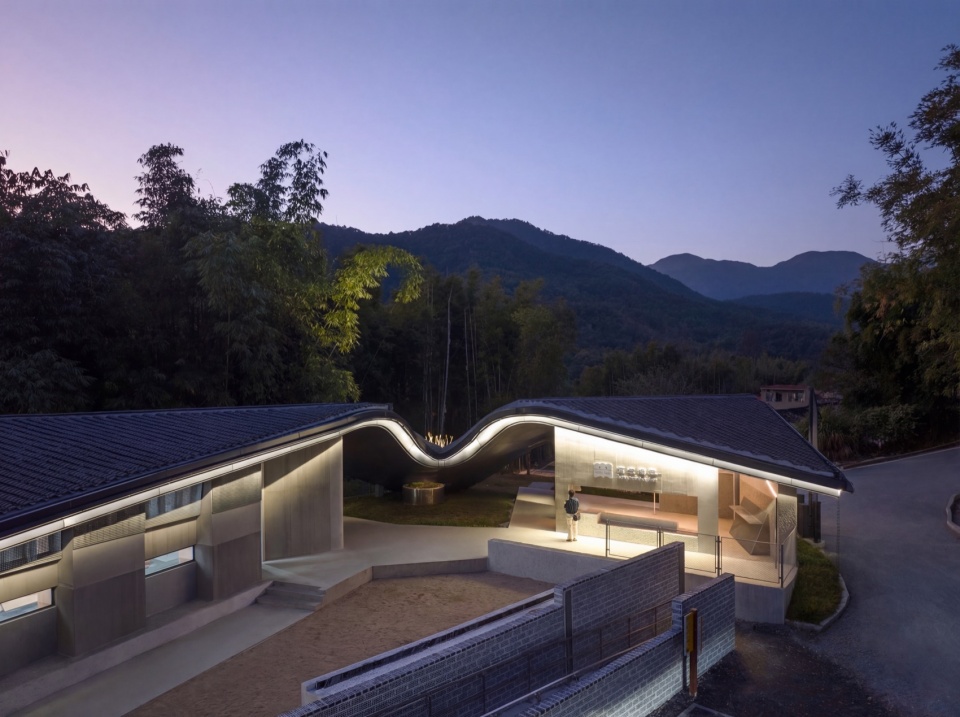
▼入口,entrance
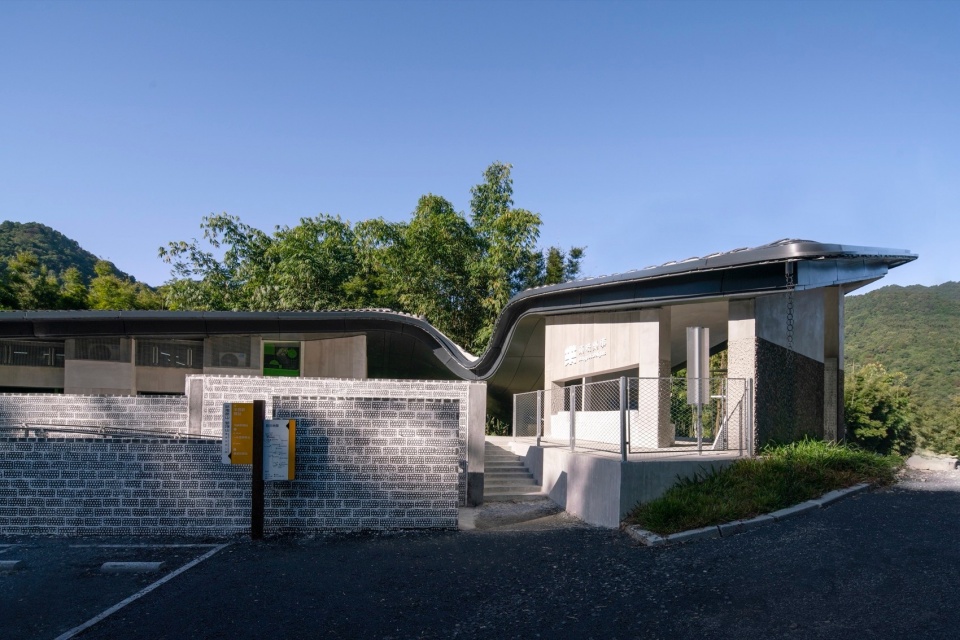
功能:山水间的停云小筑Function: A Cloud-Nesting Lodge Amidst Mountains and Rivers
这座悬于半弧岭发卡弯头的驿站,宛如东坡笔下遗落的一阕小令。它以弯月般的弧线轻轻挽住山道,一侧承接风尘仆仆的骑行客,一侧隐入苍翠欲滴的竹林深处。
Perched at the hairpin bend of Banhu Ridge, this post station is like a lost short lyric penned by Su Dongpo. Curving like a crescent moon, it gently embraces the mountain path—welcoming weary cyclists on one side and nestling into the lush depths of the bamboo forest on the other.
▼实景照片,photo
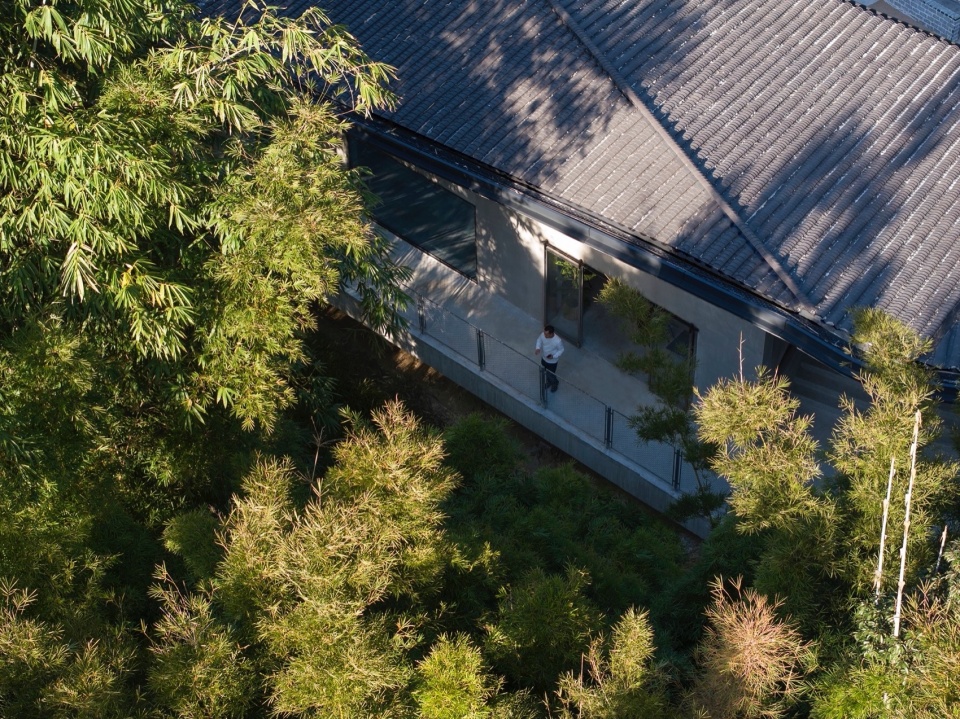
三个坡屋顶如流水般相接,托起人间烟火——骑行停靠点洒落着工具碰撞的清脆声响。
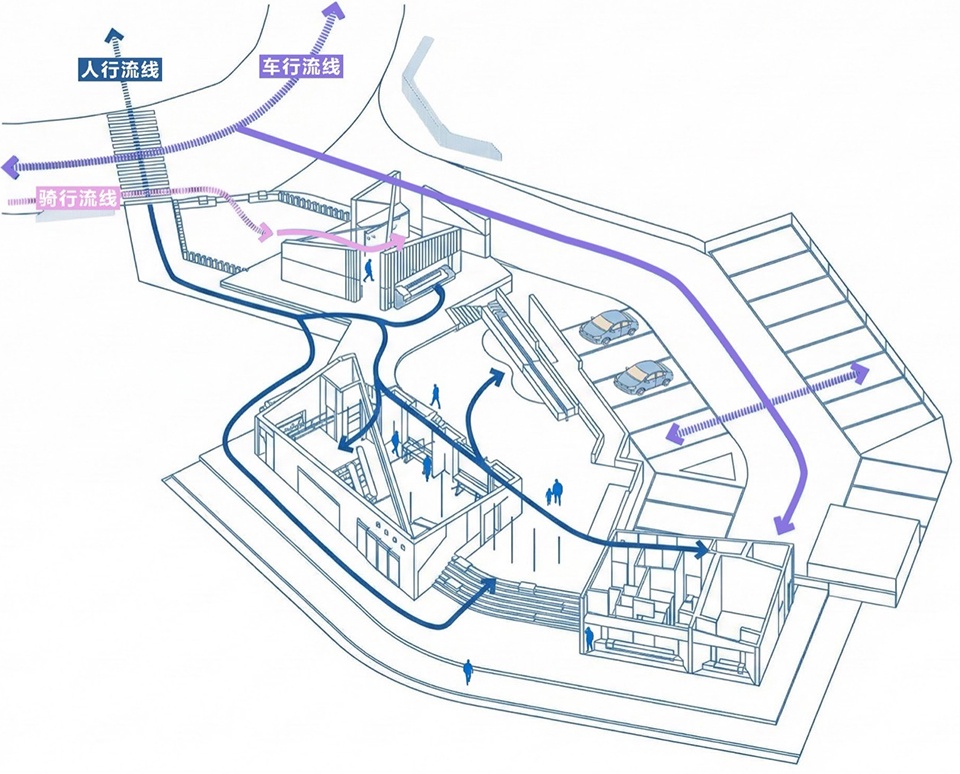
▼流线功能,circulation and program diagram
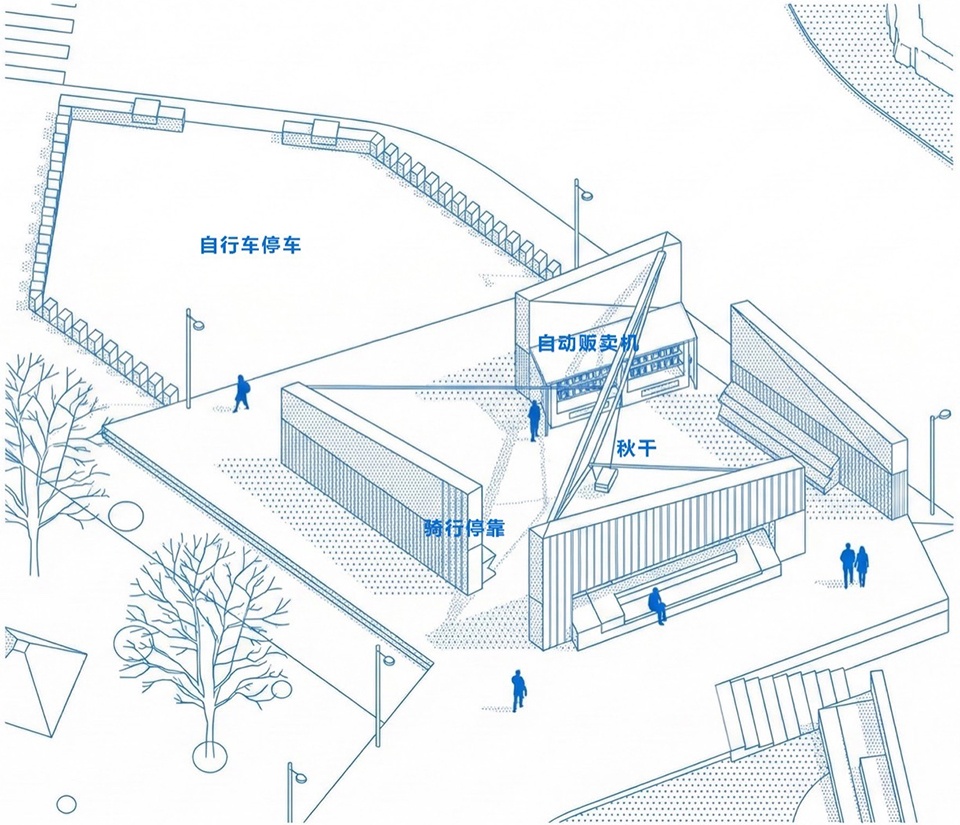
▼轴测功能(骑行停靠点),axonometric program diagram (bike parking)
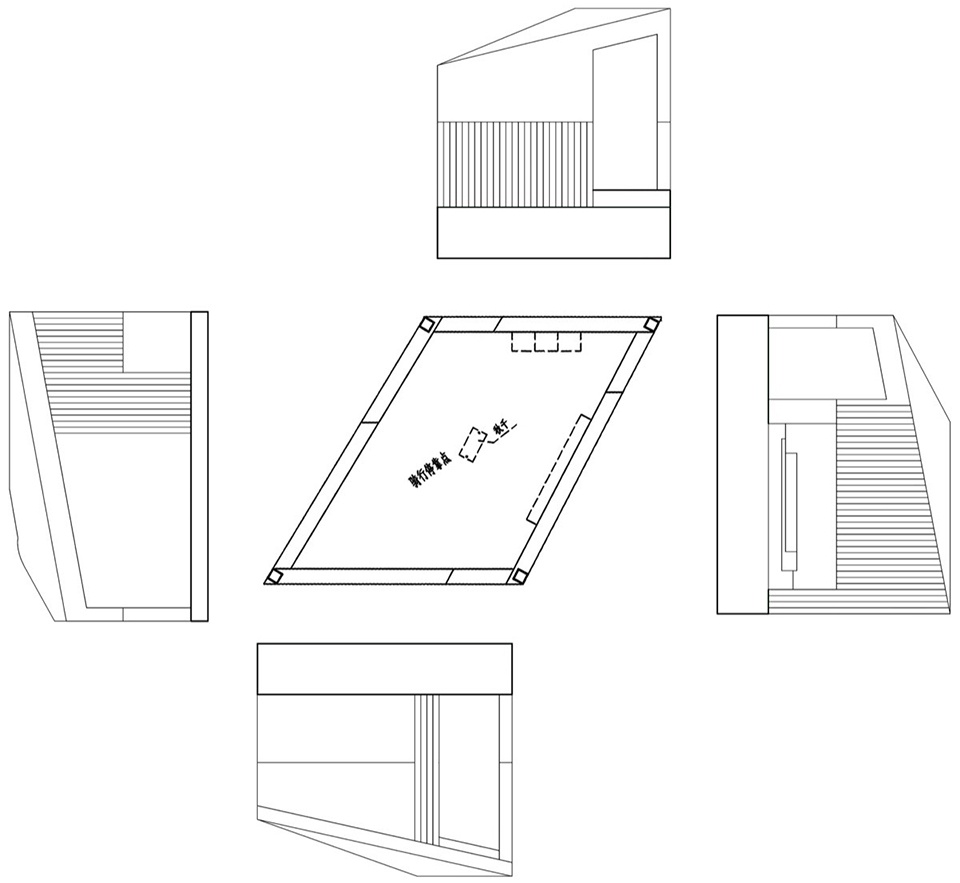
▼立面展开图(骑行停靠点),elevation development (bike parking)
Three sloping roofs connect seamlessly like flowing water, supporting the vibrancy of human life: the bicycle parking area resonates with the crisp clink of tools.
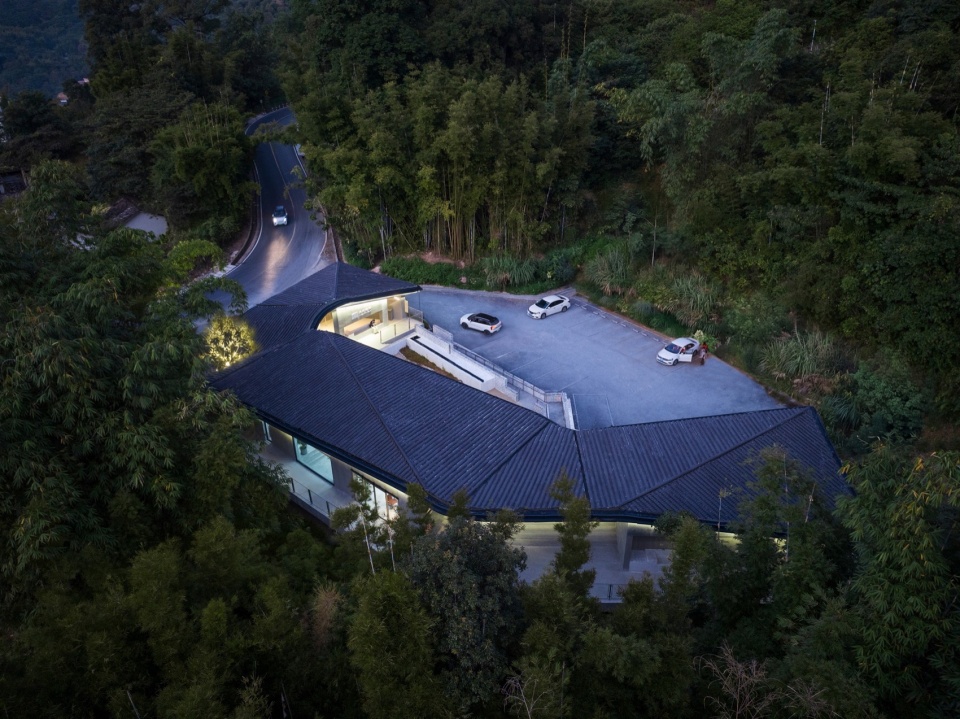
▼鸟瞰图,aerial view
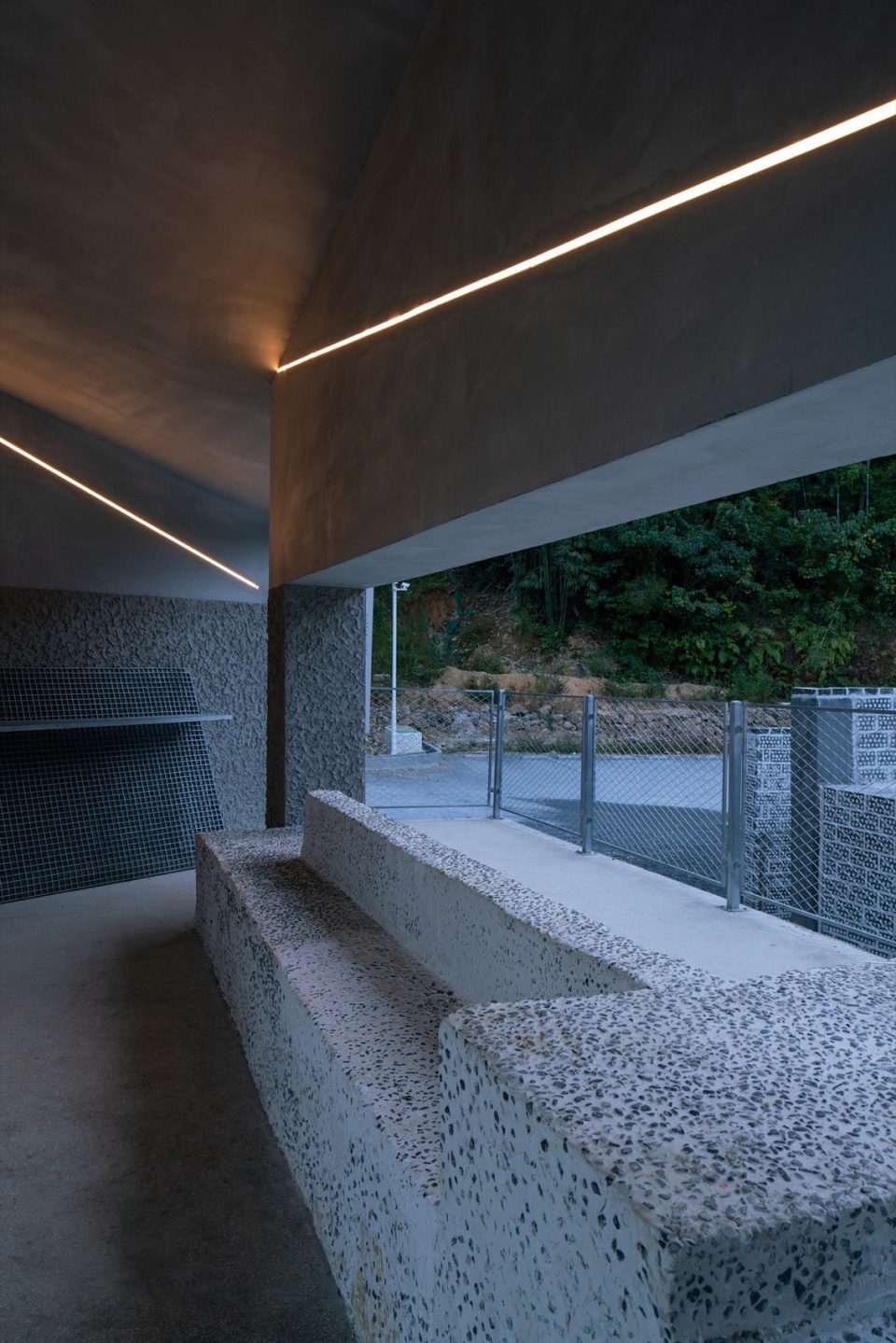
▼骑行停靠点,bike parking
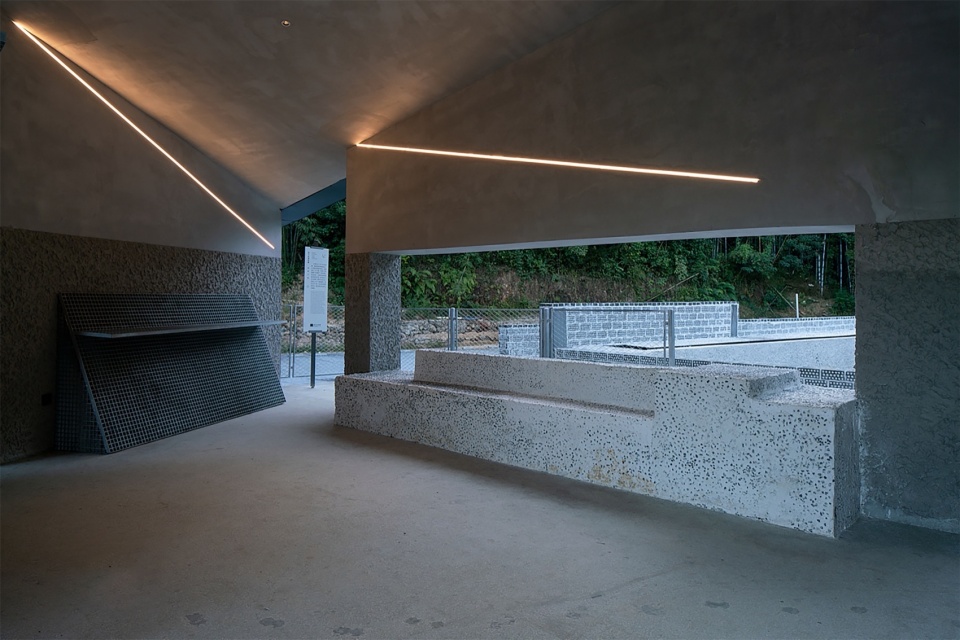
▼骑行停靠点,bike parking
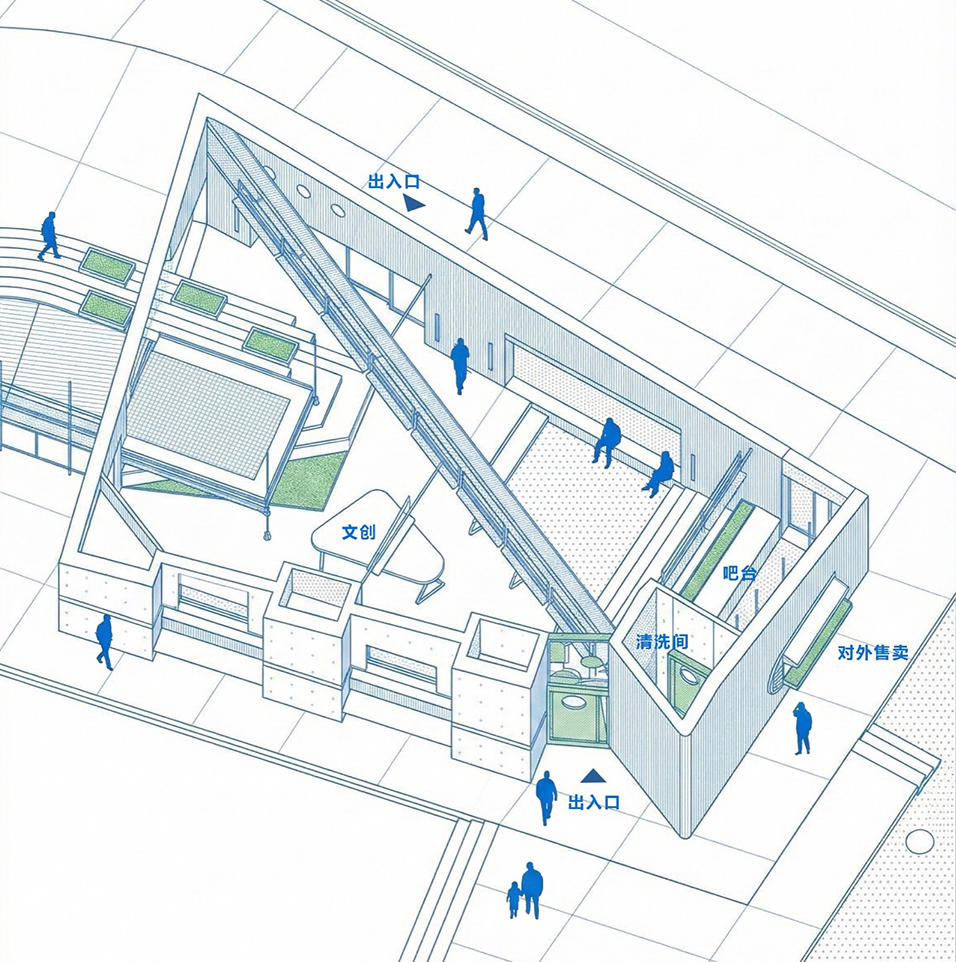
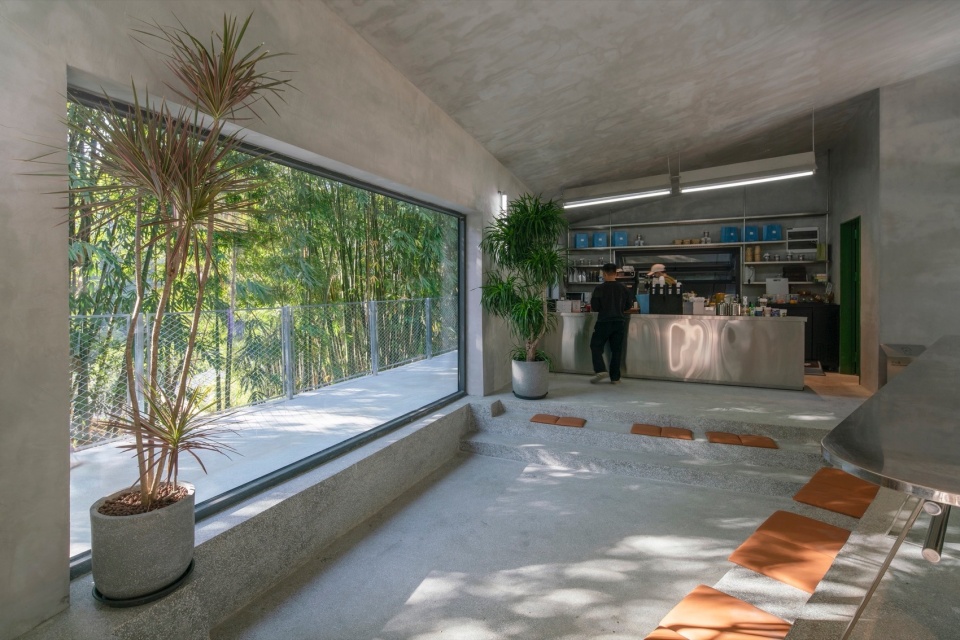
咖啡区的玻璃杯映着竹影与远山,而隐蔽的卫生区则如谦逊的侍者,默默守护着体面。
▼轴测功能(咖啡),axonometric program diagram (café)
▼立面展开图(咖啡),elevation development (café)
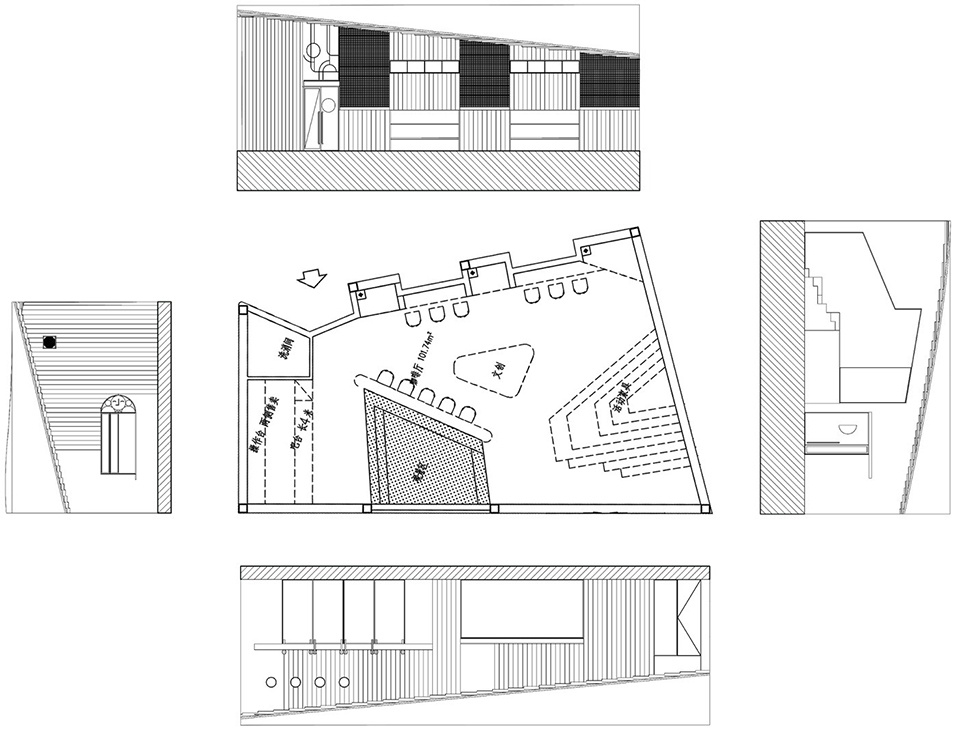
In the coffee area, glass cups mirror the bamboo shadows and distant mountains, while the discreet sanitation facilities stand like unobtrusive attendants, quietly preserving comfort and decency.
▼咖啡,photo of the cafe
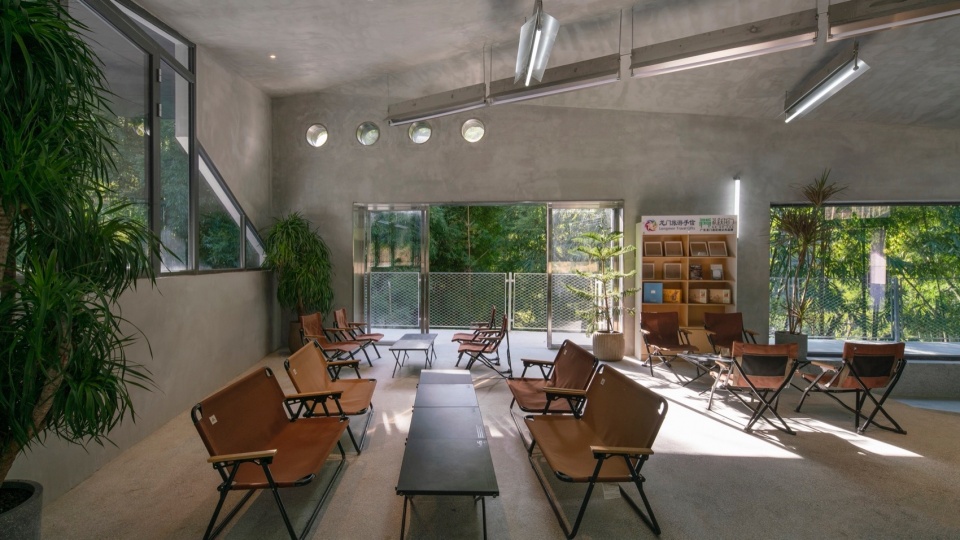
庭院一棵风铃木从屋面破空而出,枝叶在月光下沙沙作响,恍若箫声袅袅。材料是凝固的乡愁:混凝土粗粝的肌理里藏着惠州村落的记忆,小青瓦的曲线是岭南山水绵延的呼吸。
▼轴测功能(庭院),axonometric program diagram (courtyard)
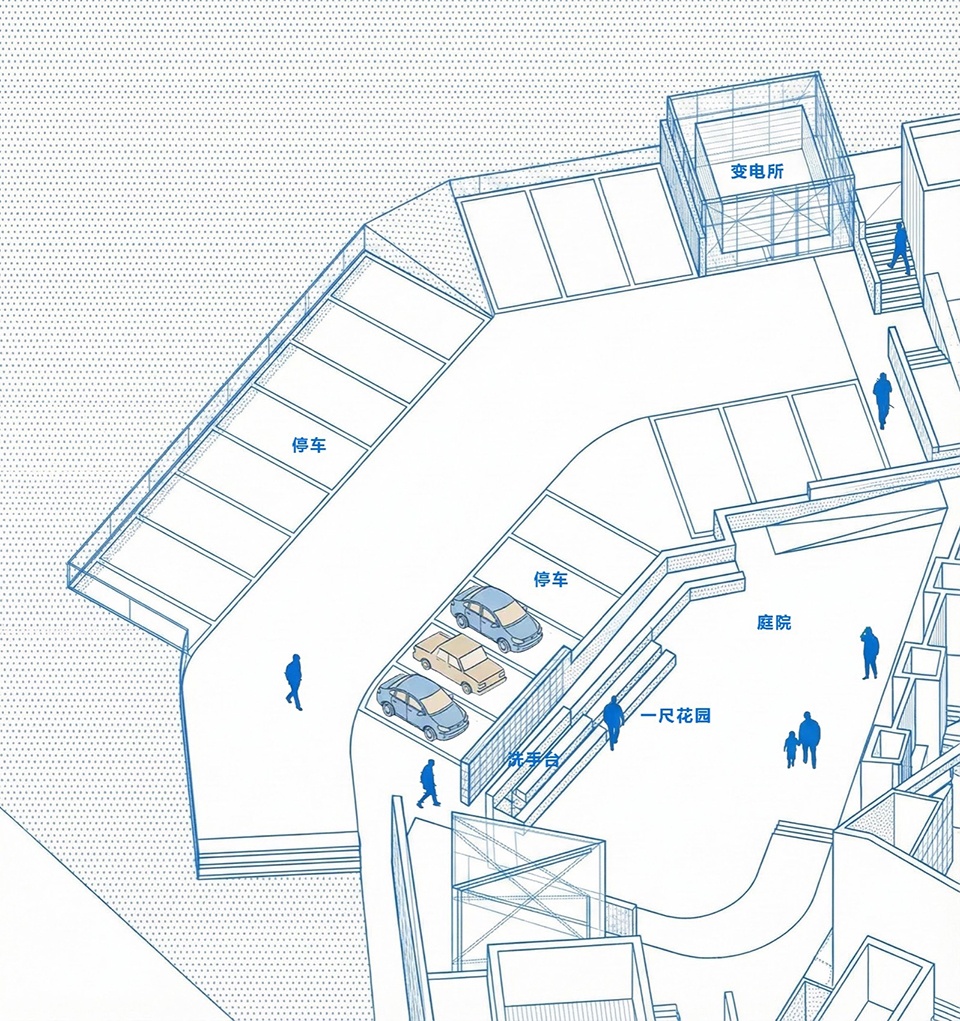
A golden trumpet tree in the courtyard bursts through the roof; its leaves rustle softly under the moonlight, as if the melodious notes of a vertical bamboo flute linger in the air. The materials embody frozen homesickness: the rough texture of concrete holds the memories of Huizhou’s villages, and the curves of traditional blue tiles echo the undulating rhythm of Lingnan’s landscapes.
▼庭院,courtyard
观景台:人们在此小坐,看峡谷梯田在云雾中若隐若现,仿佛时光在此打了个弯,与千年前的东坡遥相颔首。这驿站终究不只是驿站——它是山径上的一个逗号,让匆忙的过客在此停视线:框景成诗的山水长卷
On the viewing platform, visitors sit leisurely, watching the canyon terraces loom faintly amidst the clouds and mist. It feels as if time has curved here, nodding in silent greeting to Su Dongpo from a thousand years ago. This post station is ultimately more than just a post station—it is a comma on the mountain trail, inviting hurried passers-by to pause and gaze: a landscape scroll framed into poetry.
▼观景台,viewing platform
近观,风铃木的枝叶从混凝土屋顶的缺口中探出,月光筛过叶隙,在地上洒落细碎的光斑,宛如一曲无声的箫乐。竹影婆娑,在镂空的混凝土墙面上摇曳,似有隐士正挥毫泼墨,以疏影写意。
▼观景视线分析,view corridor analysis
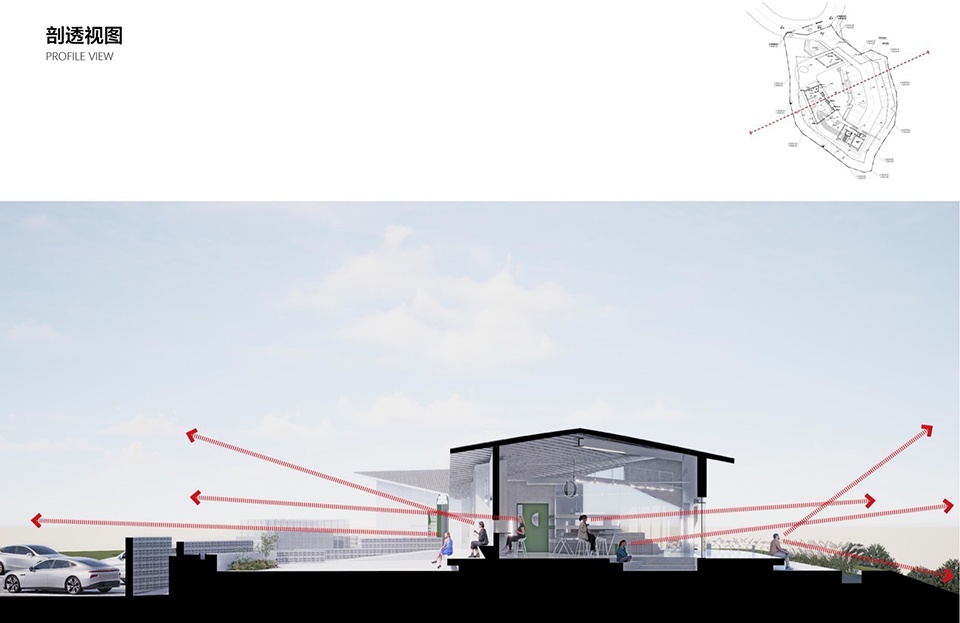
From a close-up view, the branches and leaves of the golden trumpet tree protrude through the opening in the concrete roof. Moonlight filters through the foliage, casting dappled light on the ground like a silent flute melody. Bamboo shadows dance gently on the perforated concrete walls, evoking the image of a hermit wielding a writing brush, creating freehand brushwork with delicate shades and shadows.
▼实景照片,photo
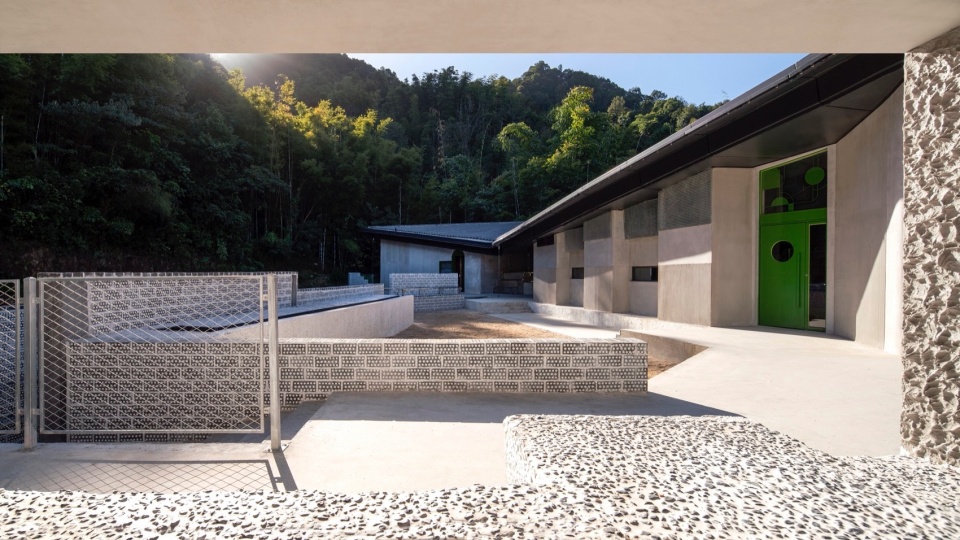
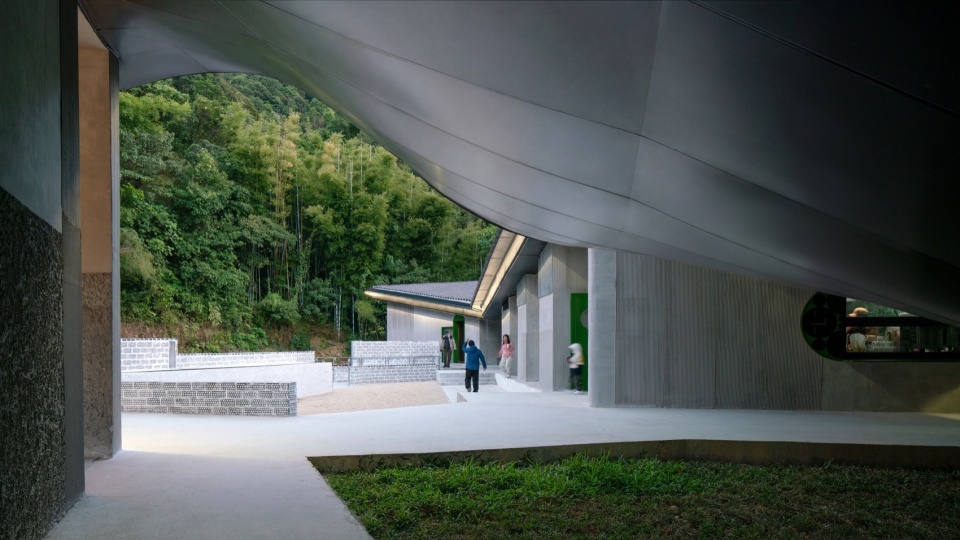
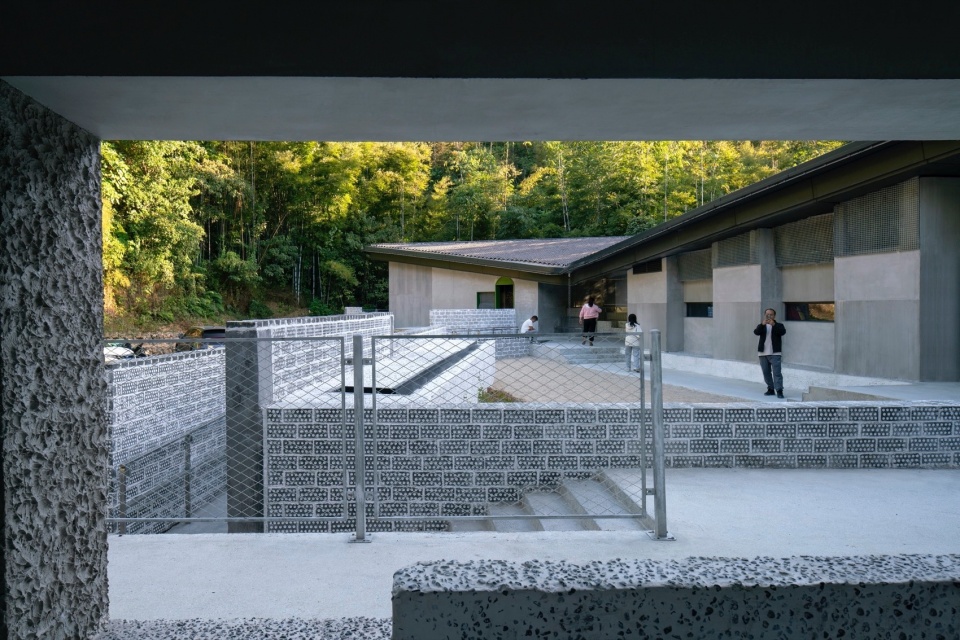
从驿站门窗洞口往外看,院落便成为框中的景观,人流的走动也就成为框中的动态元素
Looking out through the doors and windows of the post station, the courtyard becomes a framed landscape, where the movement of people adds dynamic elements to the scene.
▼实景照片,photo
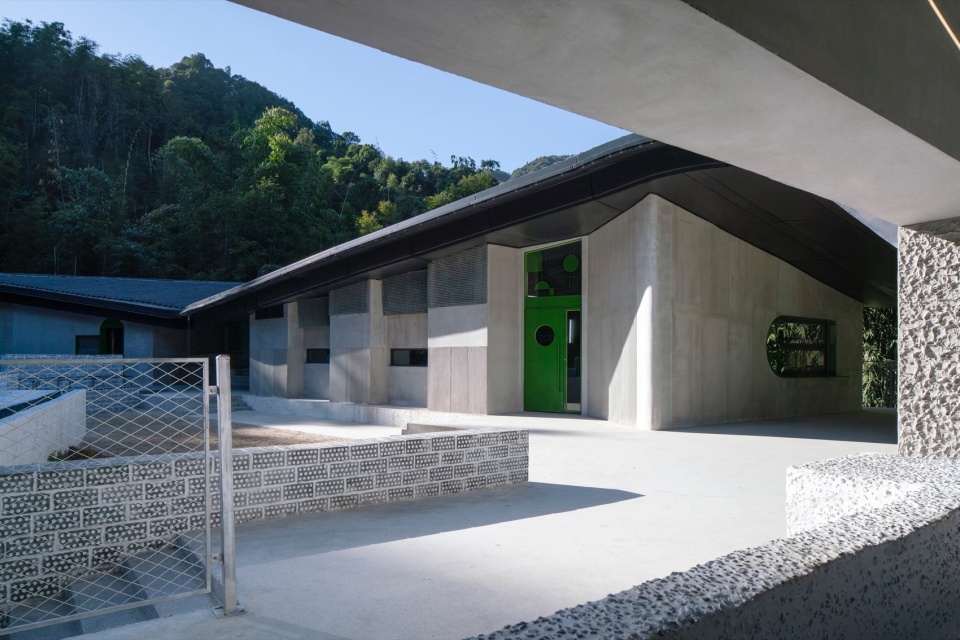
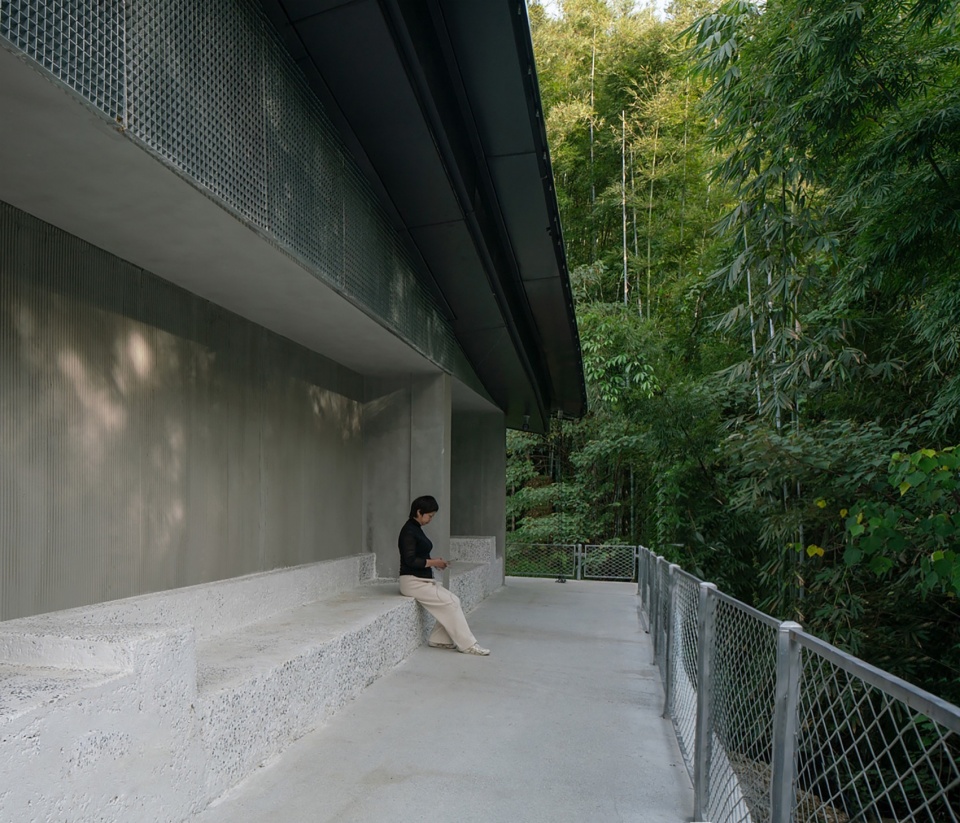
后院观景台,竹林摇曳,向外延申的挑檐与两侧墙体自然的形成取景界面,或站或坐,置身其中仿佛也是自然中的一员。
On the backyard viewing platform, bamboo sways gently in the breeze. The overhanging eaves extending outward and the walls on both sides naturally form a framing interface. Whether standing or sitting, visitors feel as if they have become an integral part of nature.
▼观景平台实景照片,viewing platform, photo
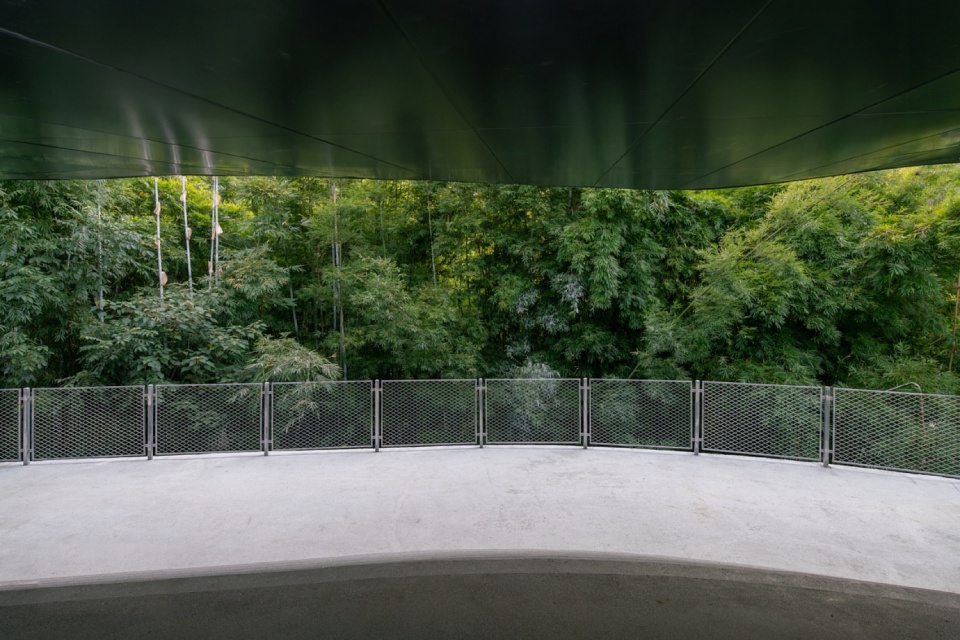
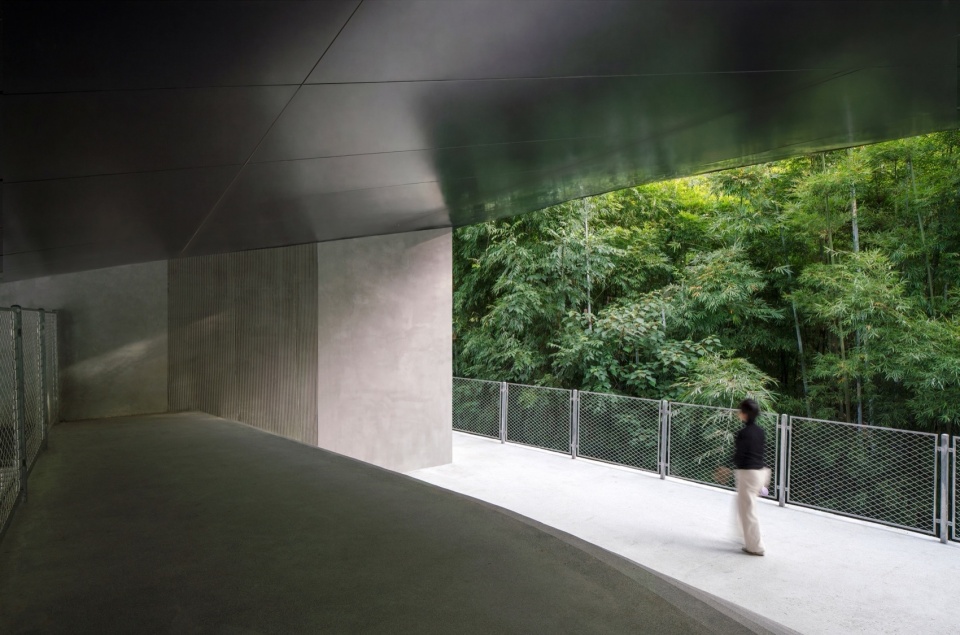
远眺,农人如豆,耕牛如点,云雾起时,又化作米氏云山的留白。骑行客凭栏而立,看山岚从指间流过,恍惚间竟不知是人在观景,还是景在观人。
In the distance, farmers appear as tiny figures and plough oxen as mere dots against the land. When mist rises, the scenery transforms into the blank space of Mi Fu’s cloud-and-mountain paintings. Leaning against the railing, cyclists watch mountain mists drift through their fingers, losing themselves in a trance where it is impossible to tell if they are viewing the scenery or becoming part of it.
▼鸟瞰照片,aerial photograph
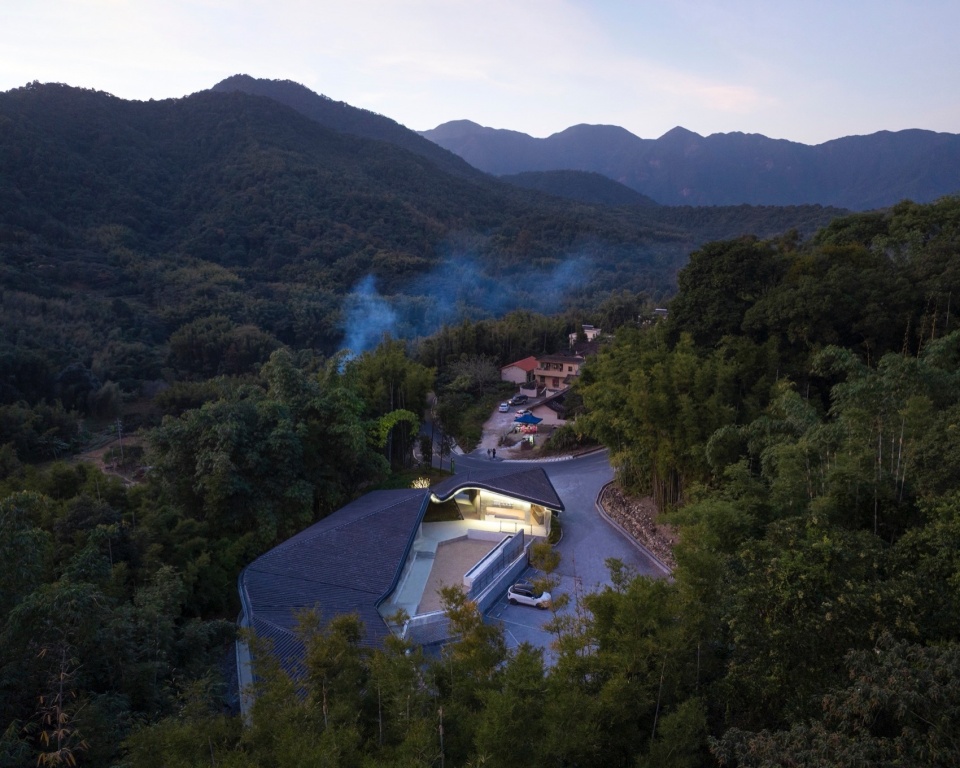
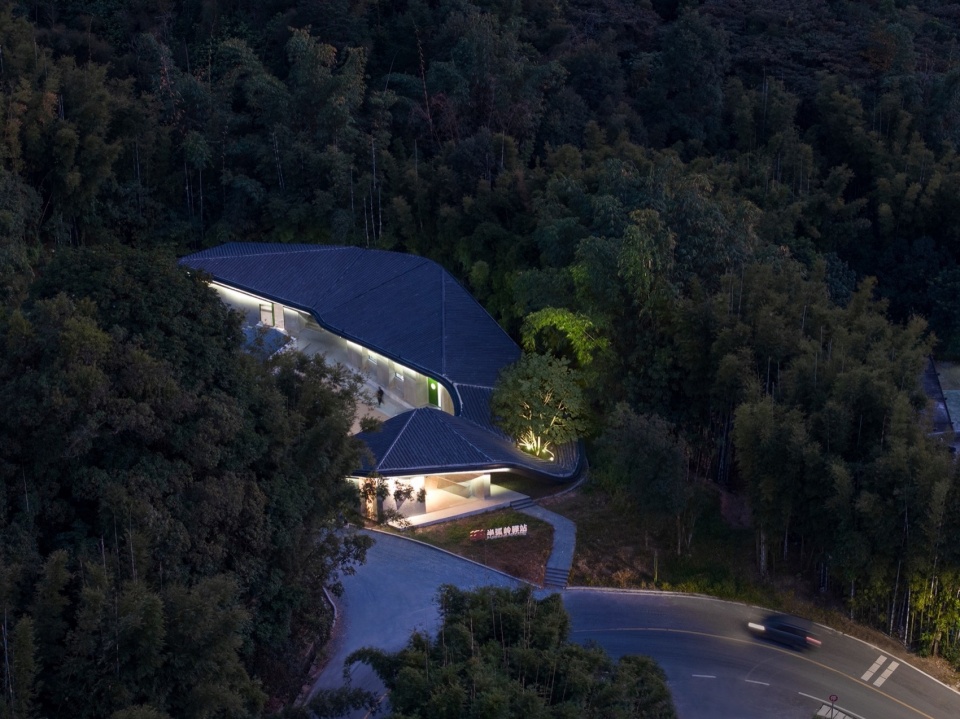
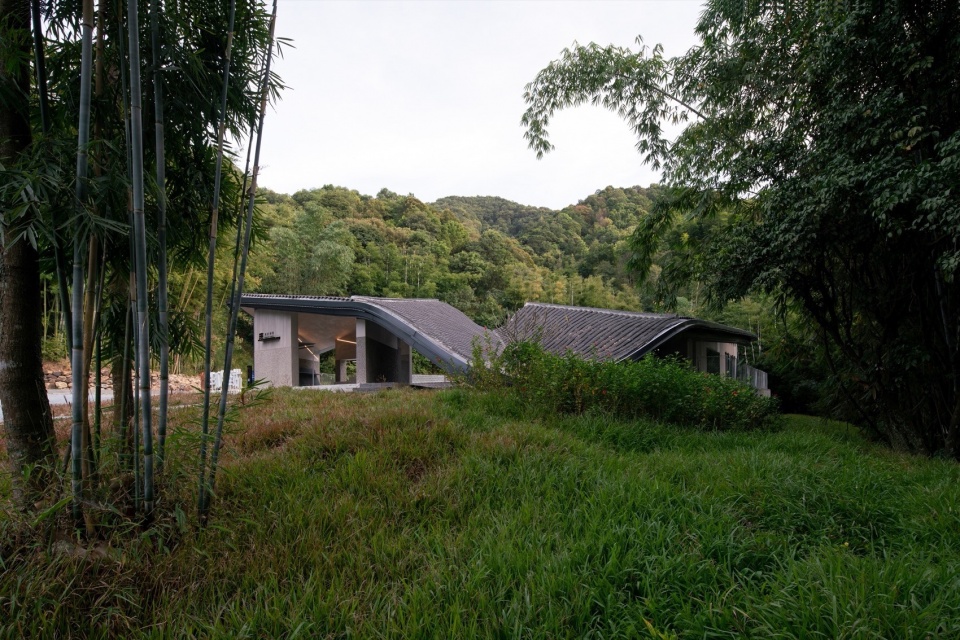
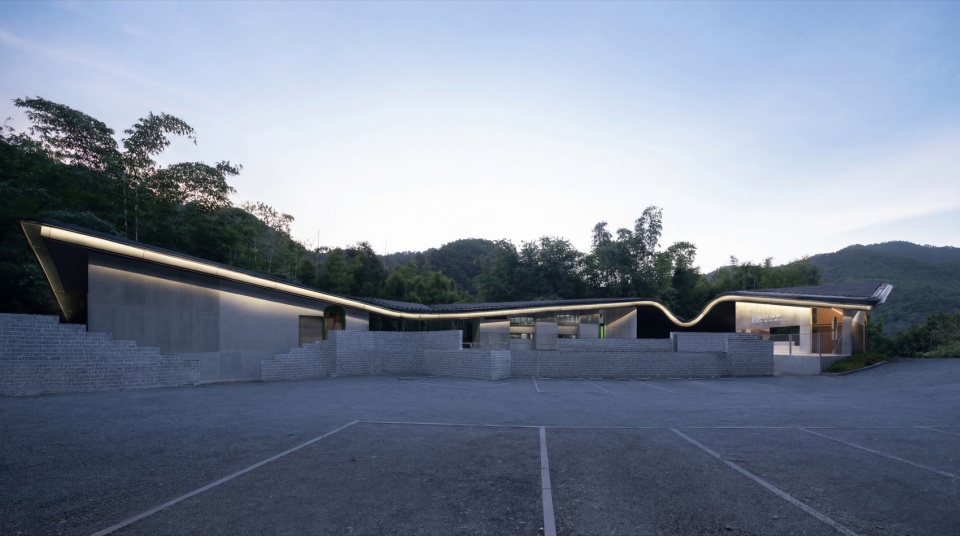
回望,驿站的弧线屋顶与发卡弯道彼此呼应,仿佛山径在此打了个结,系住一片停云。暮色里亮起的檐角灯,像悬在黛色山峦间的星子,为夜归人温着一盏暖光。
Looking back, the curved roof of the post station echoes the hairpin bend, as if the mountain path has tied a knot here, holding a cluster of lingering clouds. As dusk falls, the eave lights flicker to life like stars hanging over the dark green mountains, keeping a warm glow burning for those returning home at night.
▼回望驿站,looking back to the station
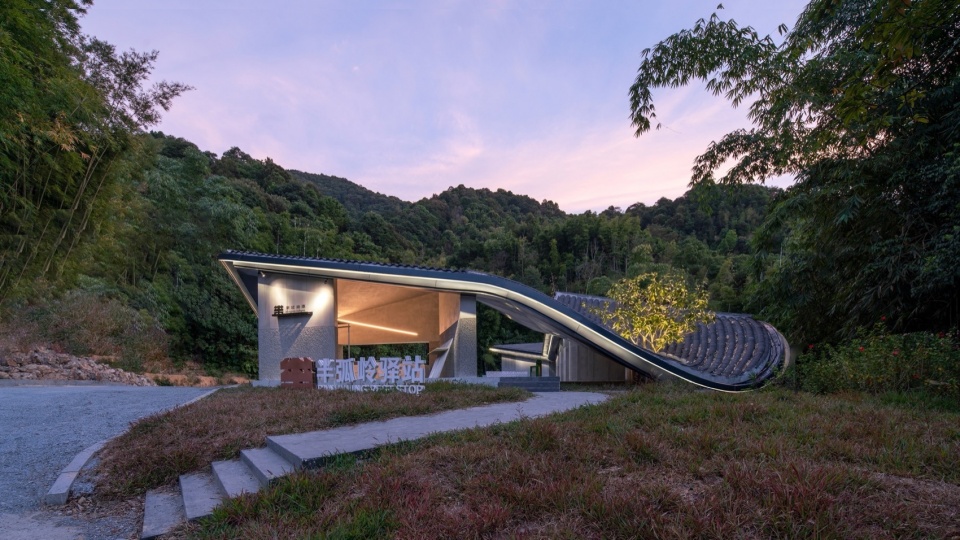
在地建构Contextual Construction
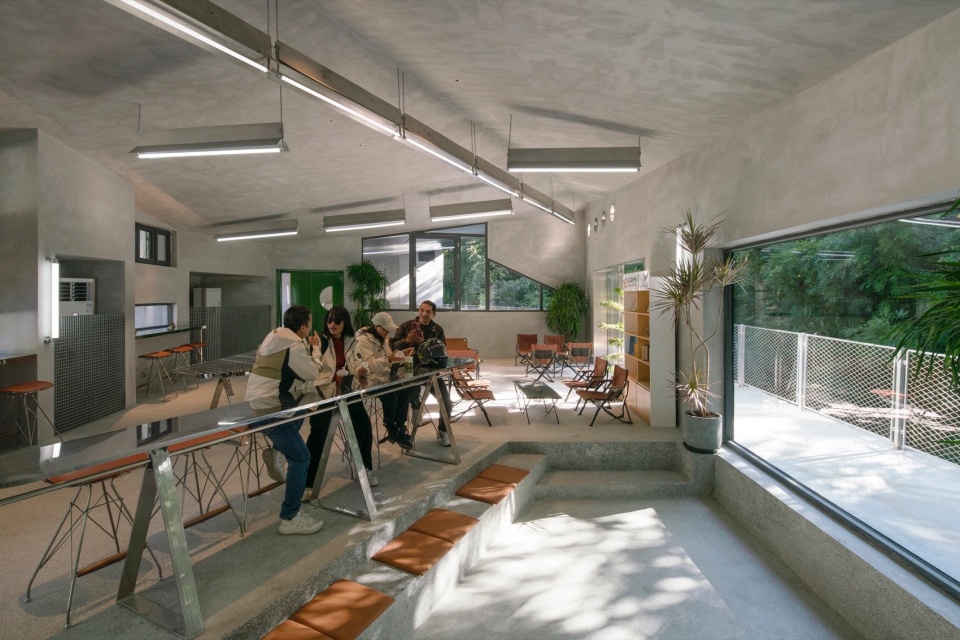
室内家具建构化,采用灰色金属台面+三角钢结构支架的组合,搭配粗糙的混凝土墙面,强化了材质碰撞的趣味。
▼细部建构设计总览,construction detail overview
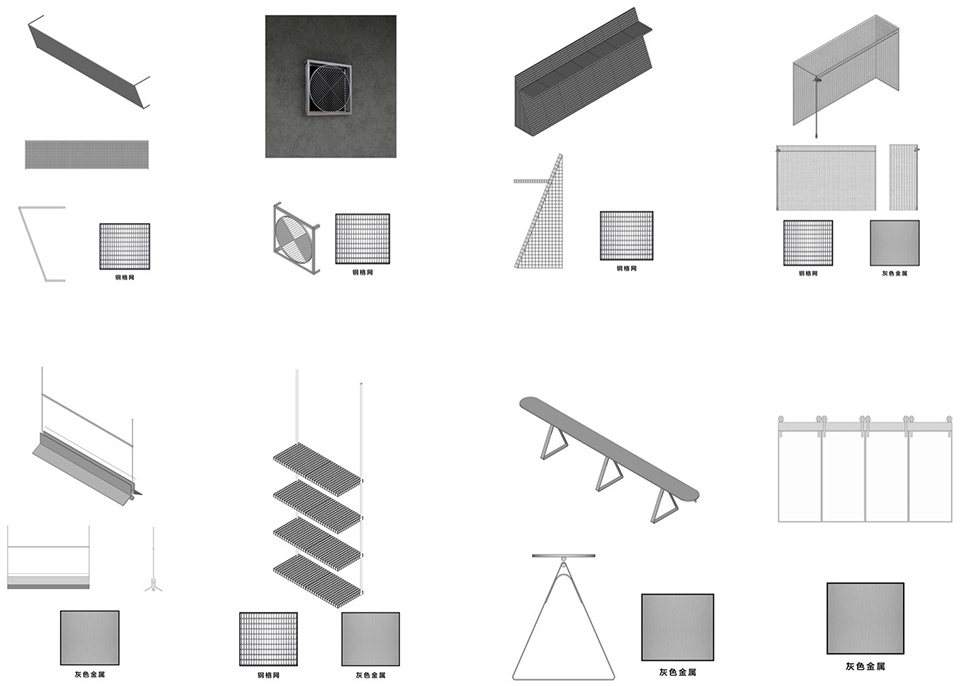
▼家具亮点设计,furniture design highlights
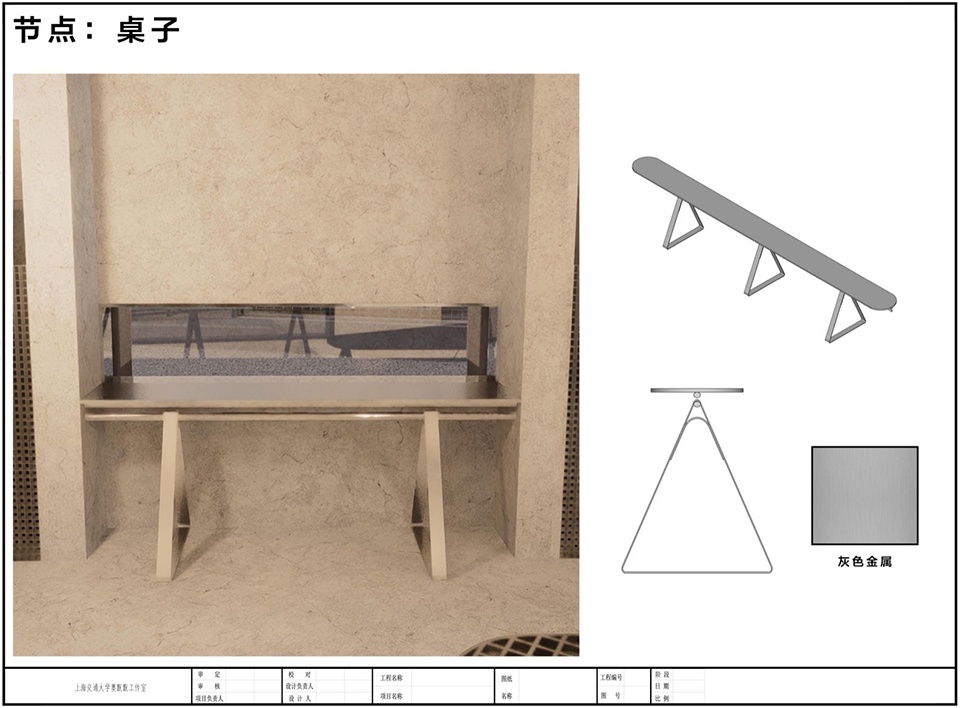
The interior furniture is designed with a tectonic aesthetic, featuring a combination of grey metal tabletops and triangular steel structure supports. Paired with the rough concrete walls, this reinforces the intriguing interplay of contrasting materials.
▼室内咖啡照片,interior café, photo
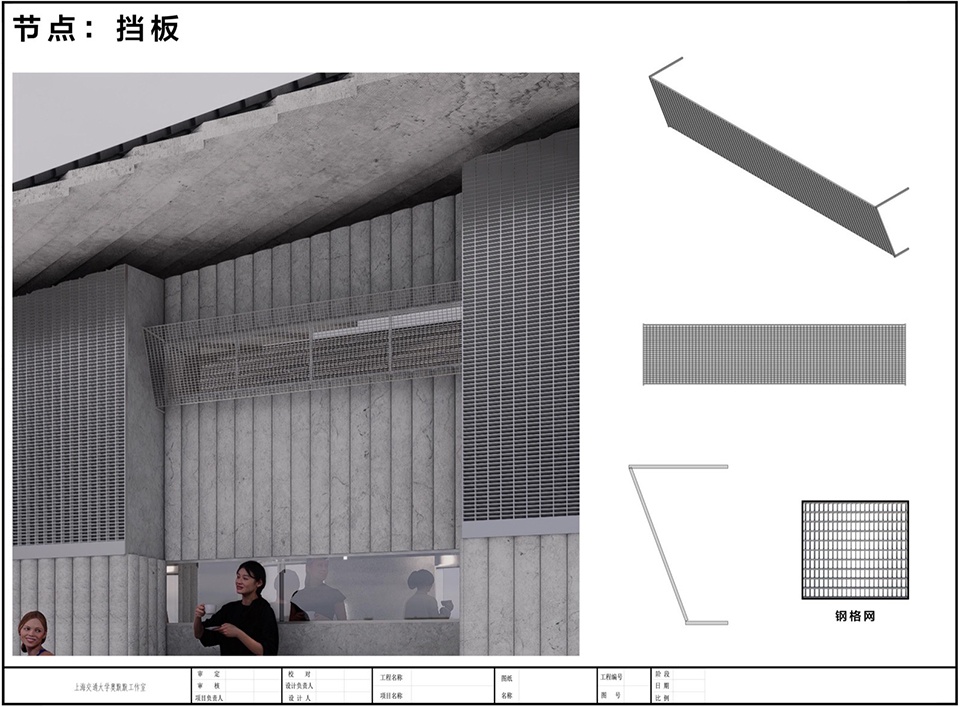
立面上的门窗与排风机口建构化,门窗设计结合绿色涂料+镜面不锈钢+玻璃,在混凝土墙面上形成视觉焦点,融入荒野的自然色彩;排风机口嵌入竖向纹理的清水混凝土墙面,以钢格网+金属框架的工业风设计,与混凝土的粗犷形成对比。
▼分析图,analysis diagram
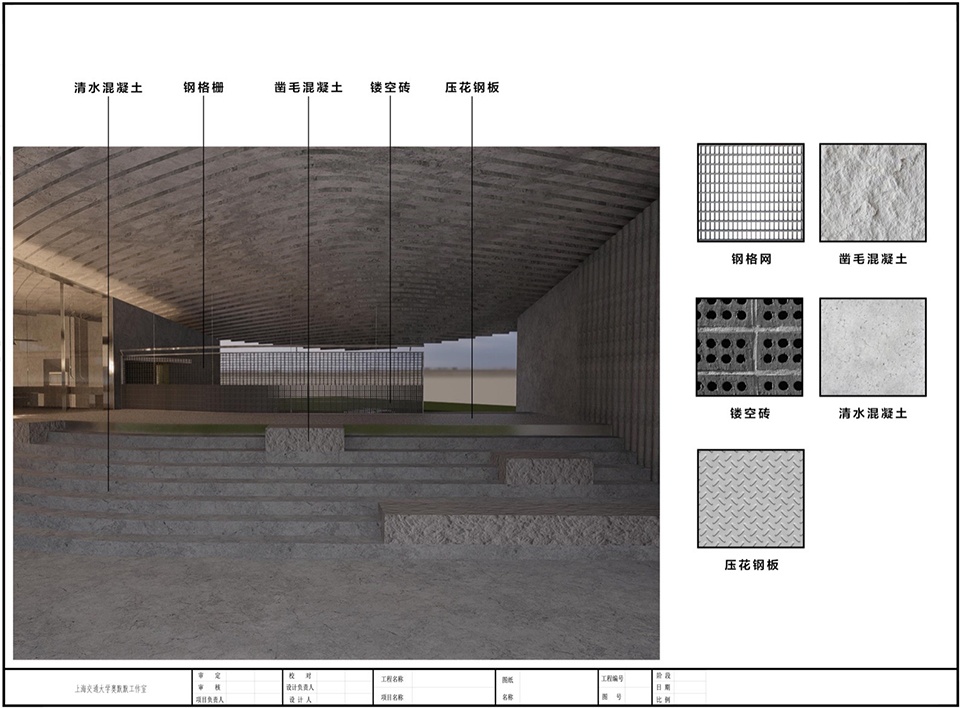
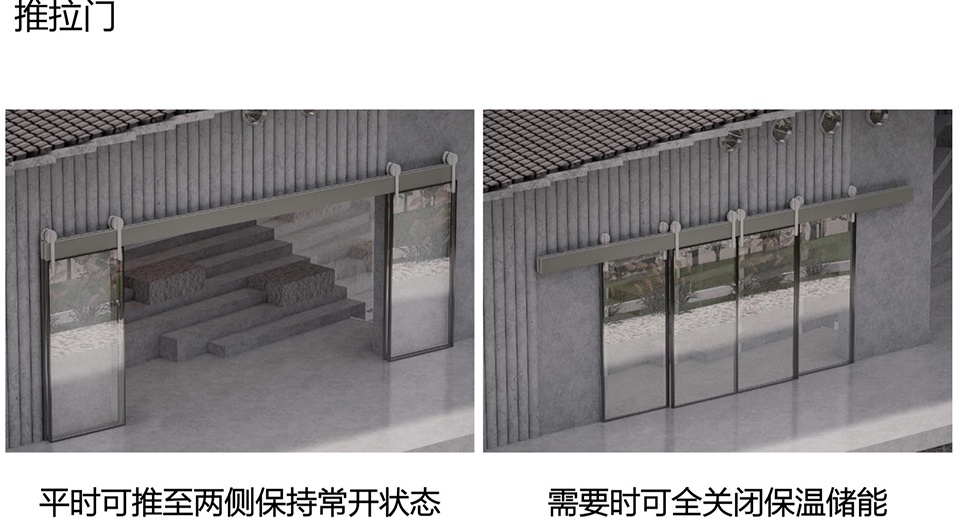
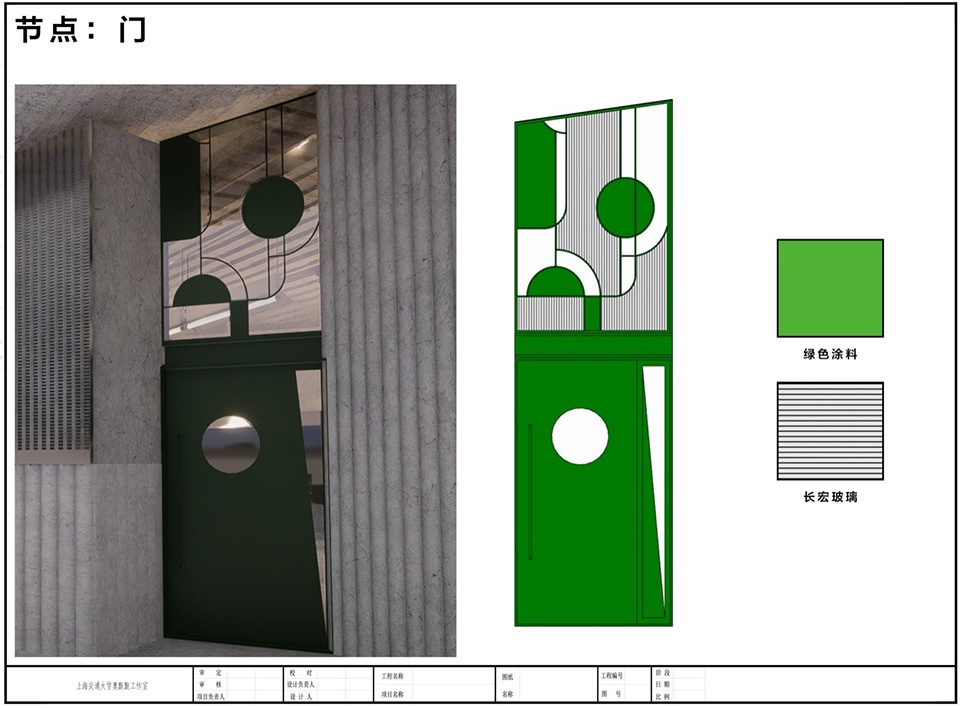
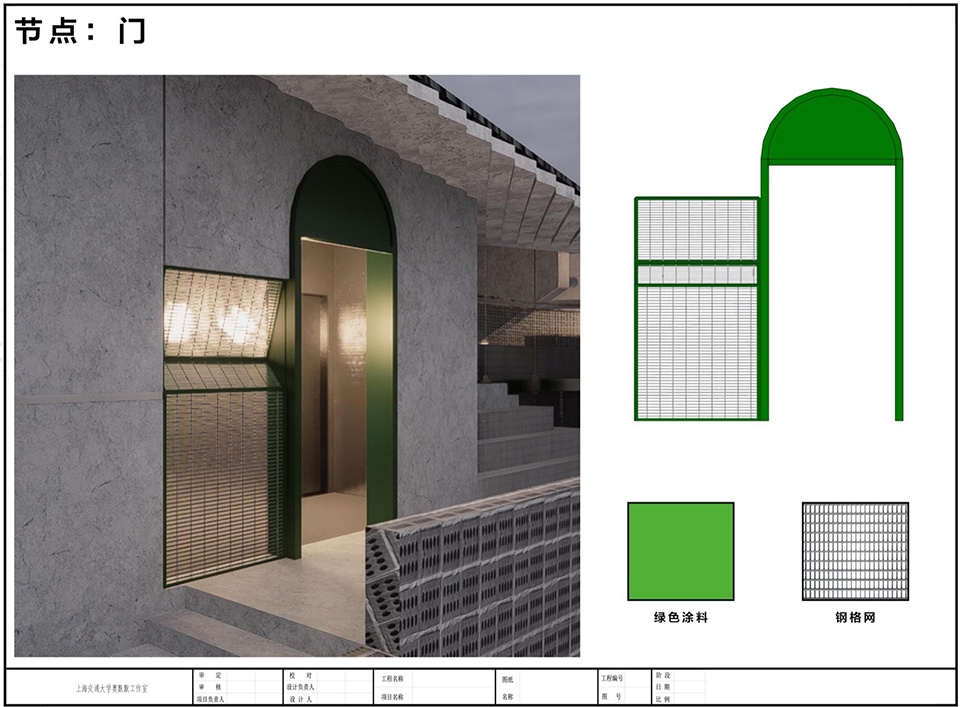
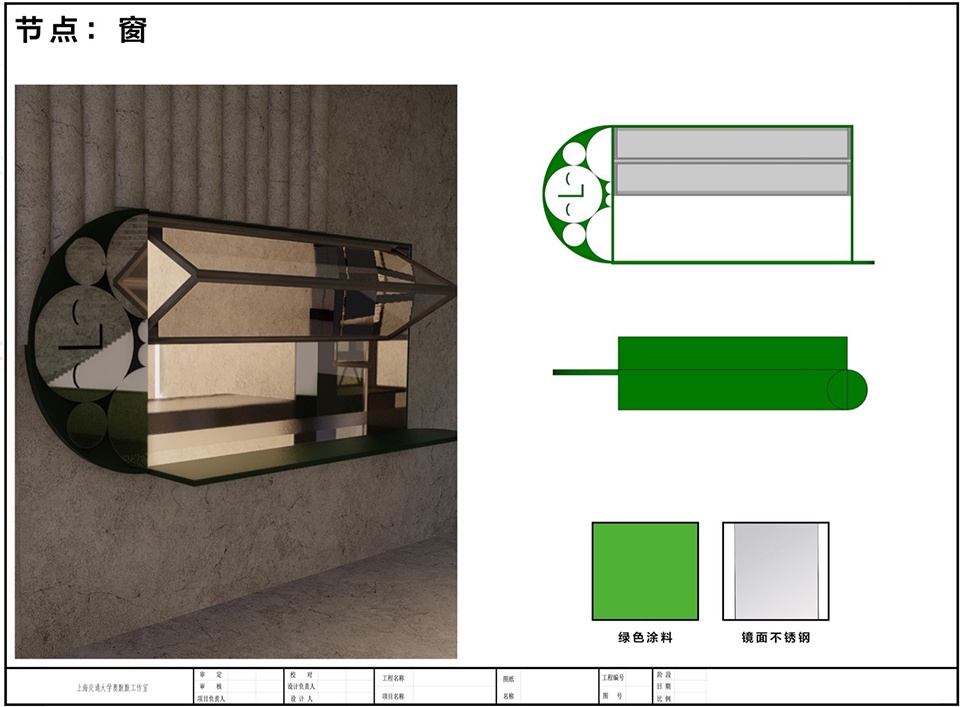
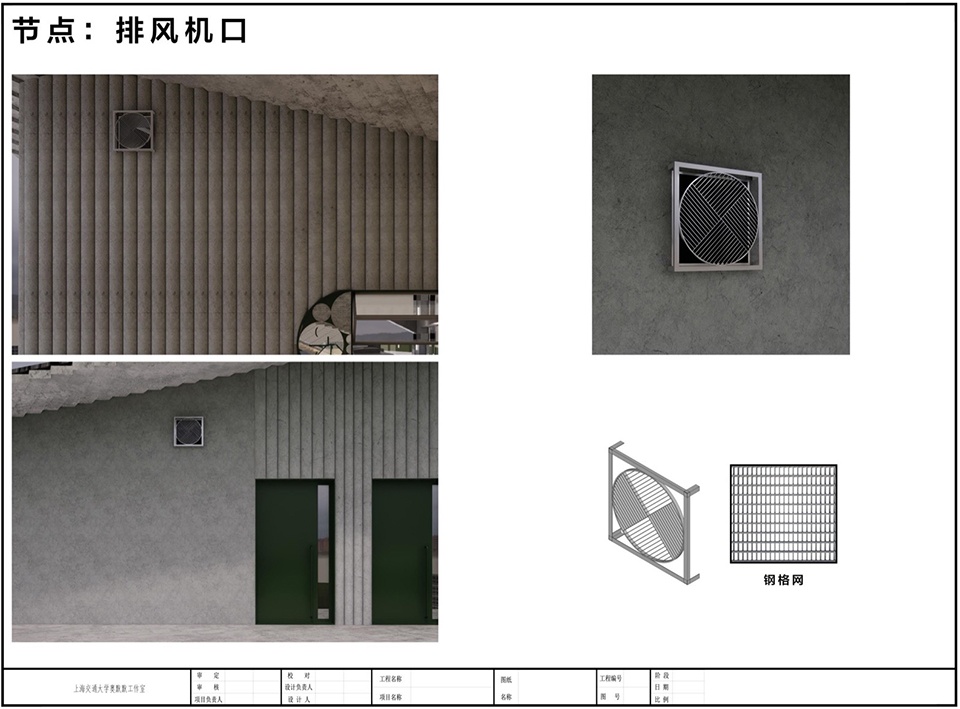
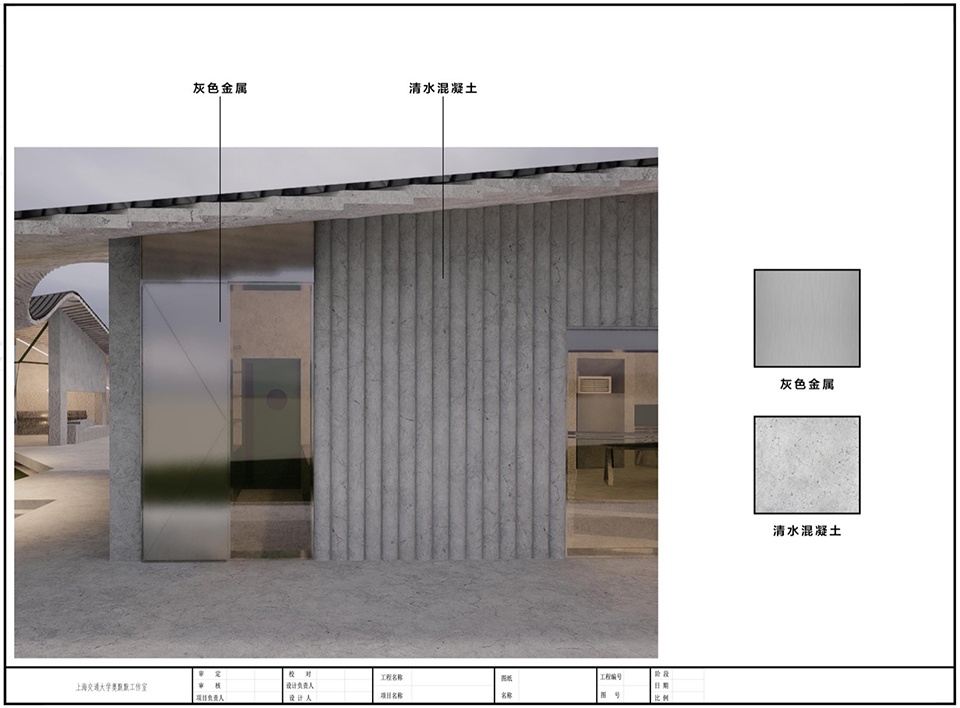
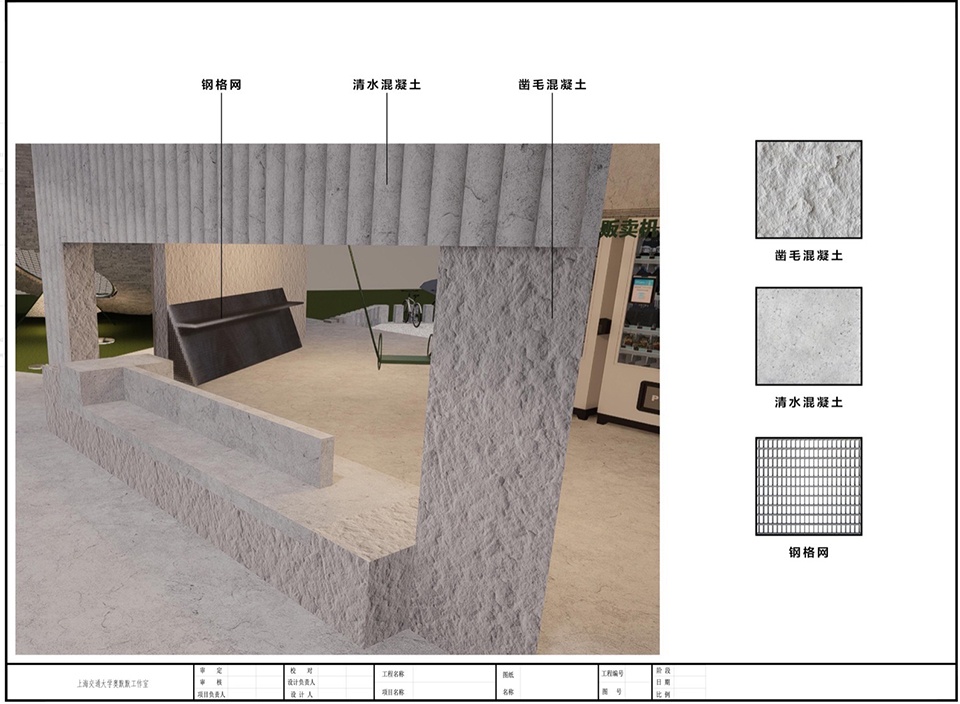
The doors, windows, and exhaust outlets on the facade are also treated with tectonic intent. The doors and windows integrate green paint, mirror-finish stainless steel, and glass, creating visual focal points on the concrete walls that blend harmoniously with the natural hues of the wilderness. The exhaust outlets are embedded in the vertically textured fair-faced concrete walls, adopting an industrial style with steel grids and metal frames that form a striking contrast with the ruggedness of the concrete.
▼建筑灰空间照片,architectural grey space, photo
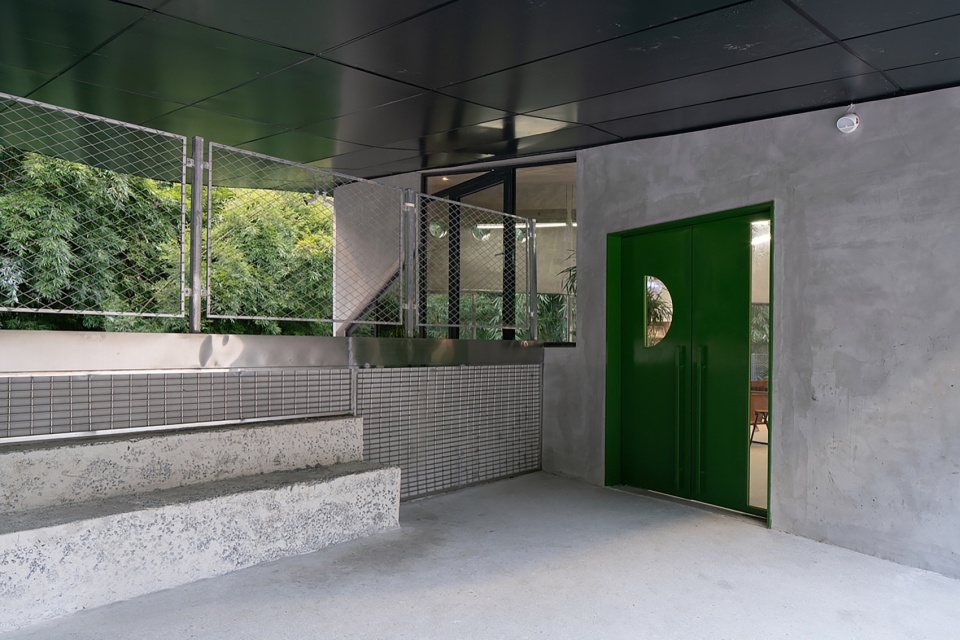
▼建筑灰空间照片,architectural grey space, photo
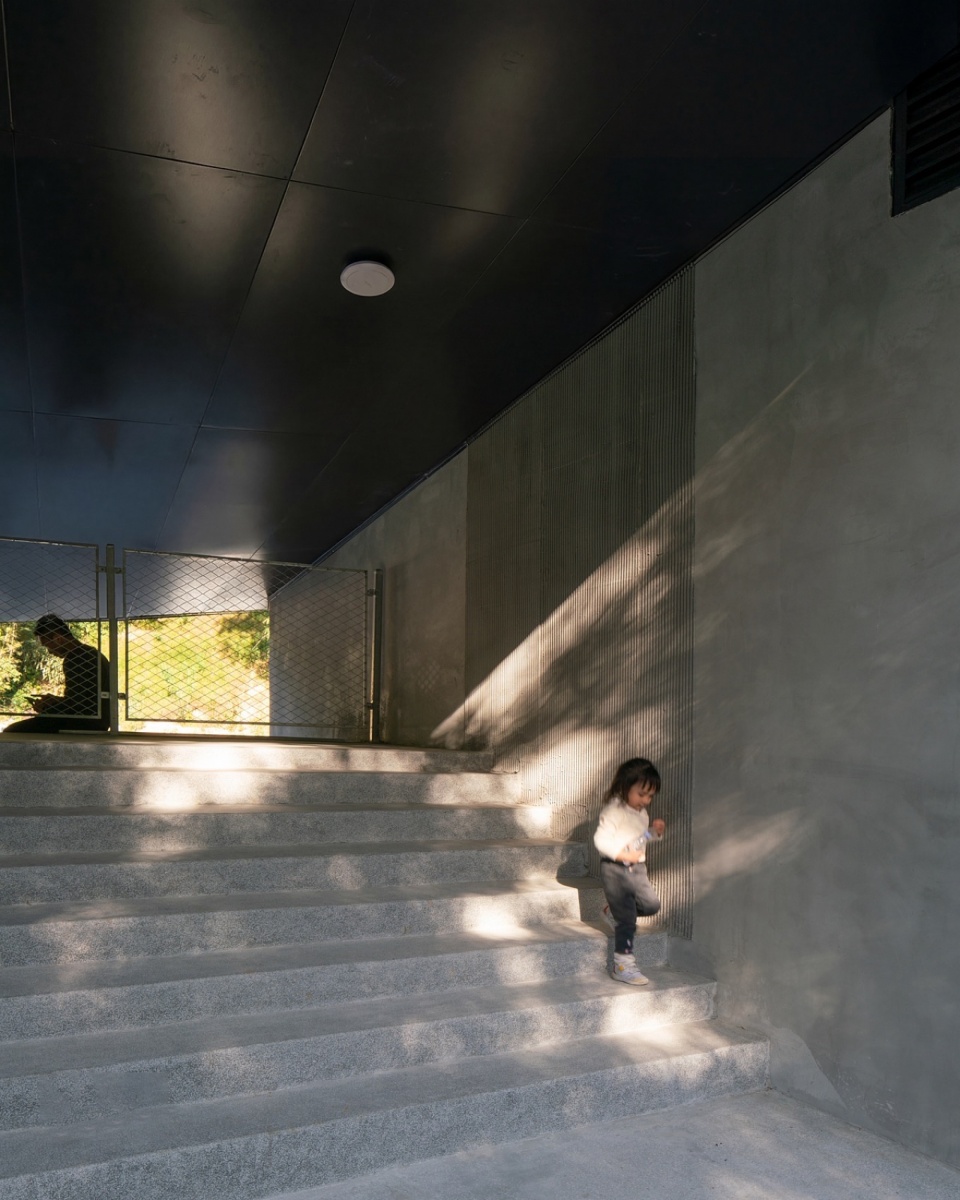
结尾Epilogue
月光在混凝土上
弯成一道微笑的弧
驿站是东坡遗落的酒盏
盛着整个宋朝的箫声
骑行者卸下星辰
把车铃系在风铃木梢
看竹影在竖纹墙面上
练习瘦金体的笔画
我们啜饮咖啡如饮月色
弧线在唇边荡漾
当小青瓦接住坠落的音符
才知道 那支箫
一直吹在
月光的弧度里
Moonlight bends into a smiling arc
On the concrete surface
The post station is a wine cup lost by Su Dongpo
Holding the flute melodies of the entire Song Dynasty
Cyclists unload the stars from their shoulders
Tie their bicycle bells to the top of the golden trumpet tree
Watch bamboo shadows practice the strokes
Of the Slender Gold calligraphy on the vertically textured wall
We sip coffee as if drinking the moonlight
Arcs ripple on our lips
When the blue tiles catch the falling musical notes
We finally realize
That flute has been playing all along
Within the curve of the moonlight
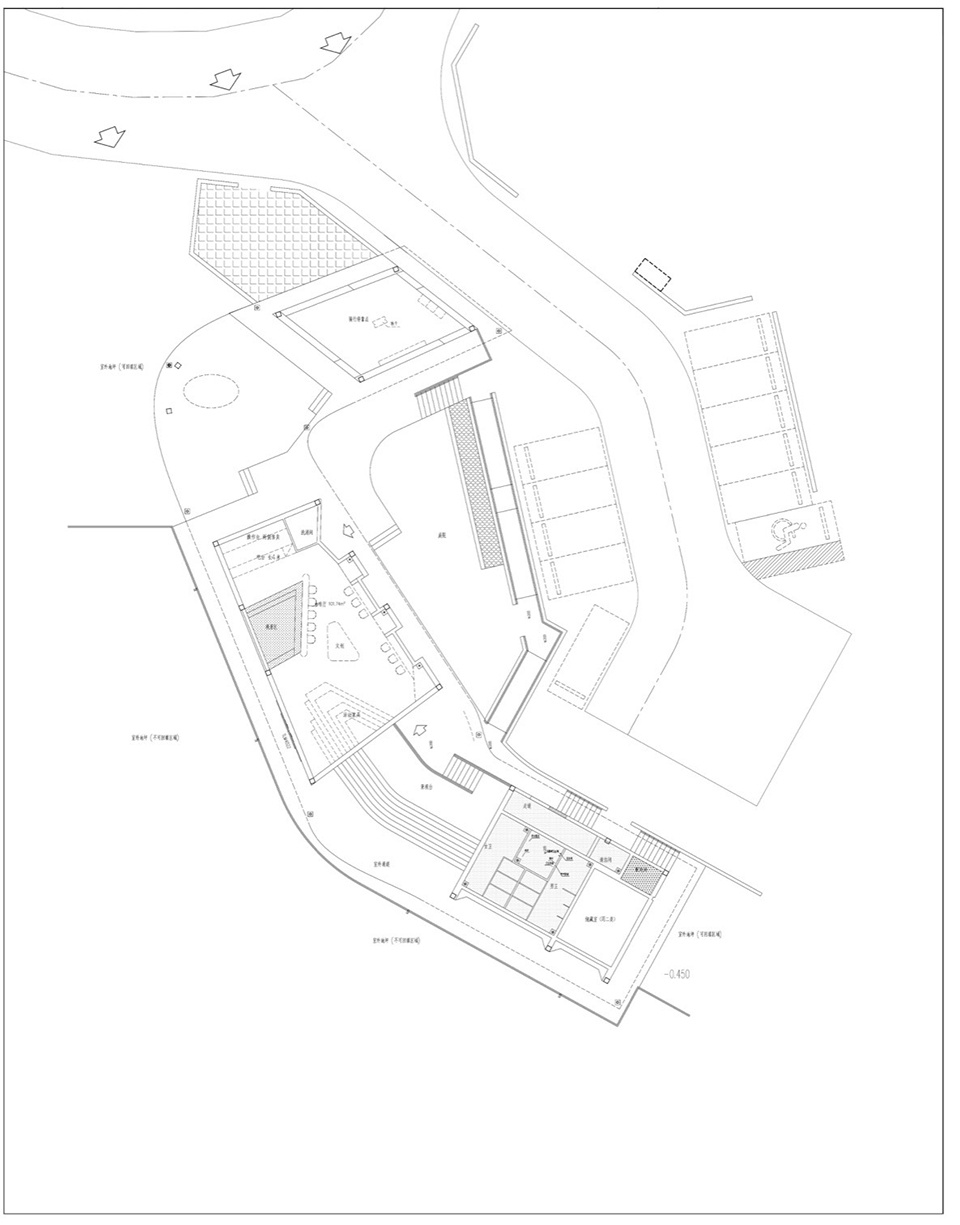
▼总平面图,master plan
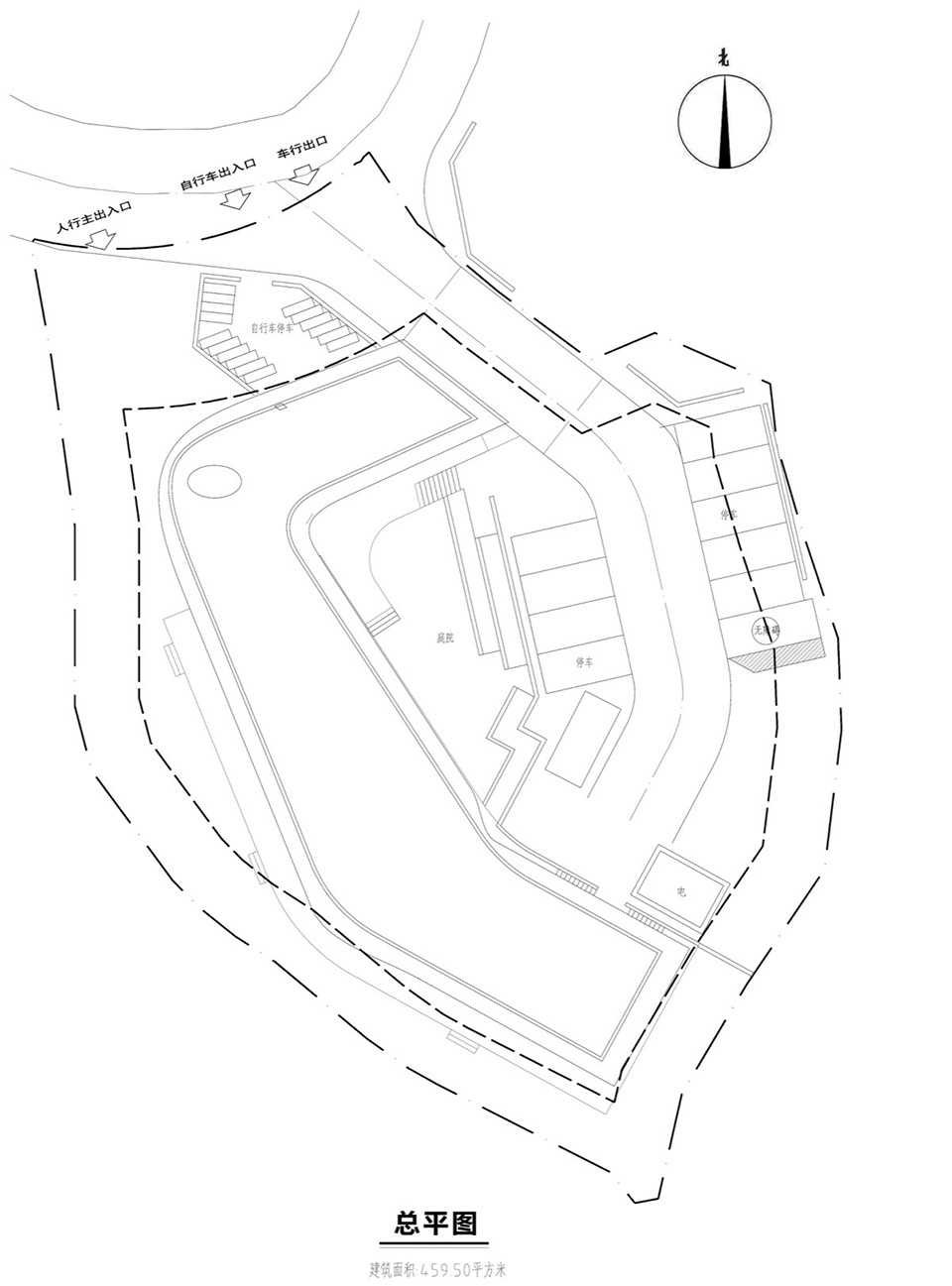
▼平面图,floor plan
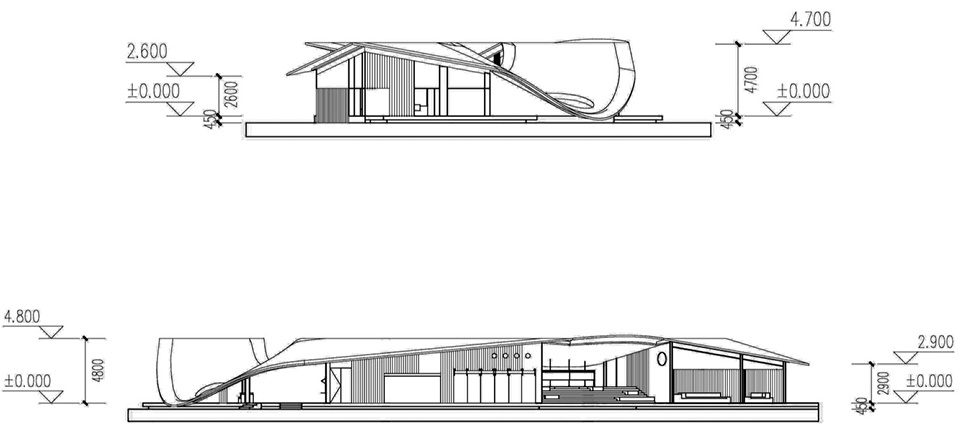
▼立面图,elevations
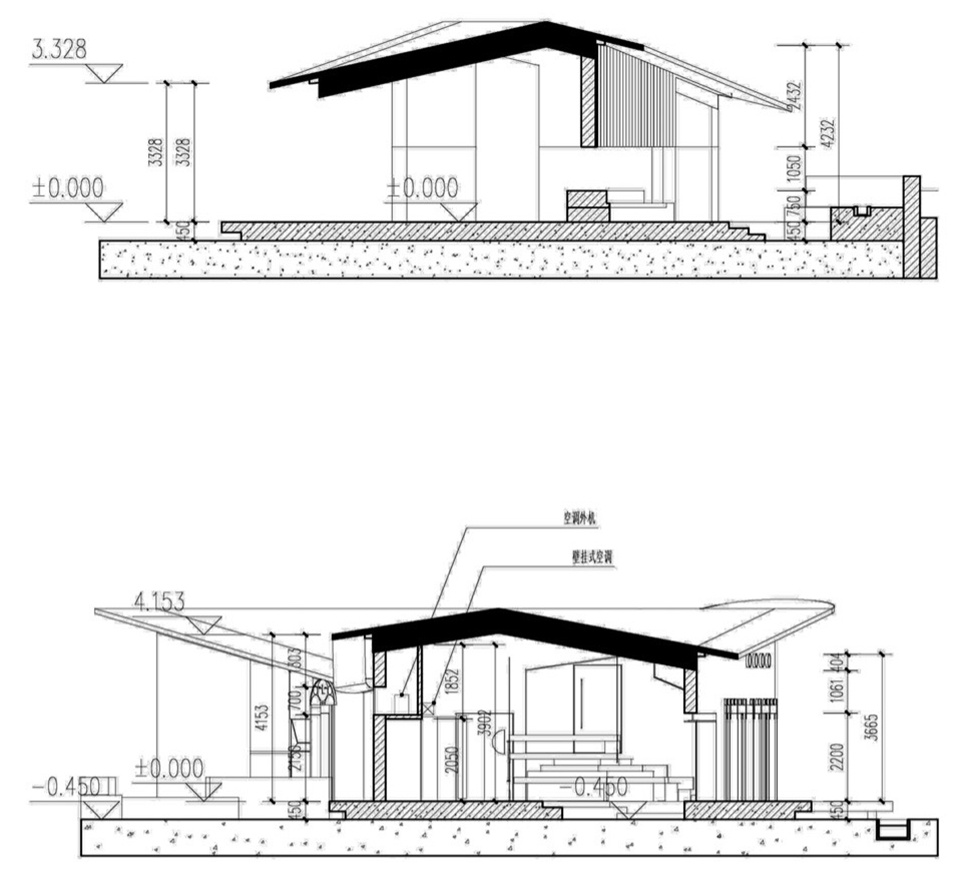
▼剖面图,sections
项目信息
完整项目信息
Project Information
Full Project Details
Project Name: Dongpo’s Delights – Banhu Ridge Post Station
Project Location: Huizhou, Guangdong
Client: Huizhou Huanshanliang Investment & Development Co., Ltd.
Design Firm: AOMOMO Studio, Shanghai Jiao Tong University
Lead Designer: Zhang Hai’ao
Design Team: Li Di, Xu Hang, Li Yihang, Pan Wenqi, Wu Changlong, Zhang Minghui, Yang Ge, Zhu Jingwen, Li Zhuoyang
Detailed Construction Design Firm: China State Construction Shanghai Design & Research Institute Co., Ltd.
Detailed Construction Design Team: Jiang Juan, Wang Xiaoye, Lou Ye, Song Hanyu, Zhang Jinlai, Guo Yanjie, Lu Yan
Constructor: CSCEC 5th Construction South China Co., Ltd.
Planning Firm: Shanghai Fengyuzhu Cultural Technology Co., Ltd.
Chief Planner: Lü Ningjue
Planning Coordinator: Lü Jingxuan
Implementation Manager: Zhang Jingwei
Project Management: Zou Kefei, Yan Jiarun, Jiang Minshun
Visual Design Firm: jpgdesign
Building Area: 460 m²
Design Period: January 2025
Completion Time: December 2025
Photography: Octopus Architectural Photography
Copy Editor: Pan Wenqi