明洞站酒店,首尔 / Yong Ju Lee Architecture
该项目位于首尔高密度的城市核心区,明洞站酒店在形态生成上并未以外部环境为起点,而是从内部功能体系本身出发。微型住宿单元的空间密度与功能整合决定了建筑的整体构型与形式原则。这一策略建立了一种独立的建筑语言,使建筑在表达上不依赖于具体场地或周边环境条件。
Located in the dense urban core of Seoul, Hotel Myeongdong Station takes the internal program itself, rather than the external context, as the starting point of its form-making. The spatial density and functional integration of the micro-accommodation units determine the overall configuration and formal principle of the building. This strategy establishes an autonomous architectural language, independent from the site or surrounding conditions.
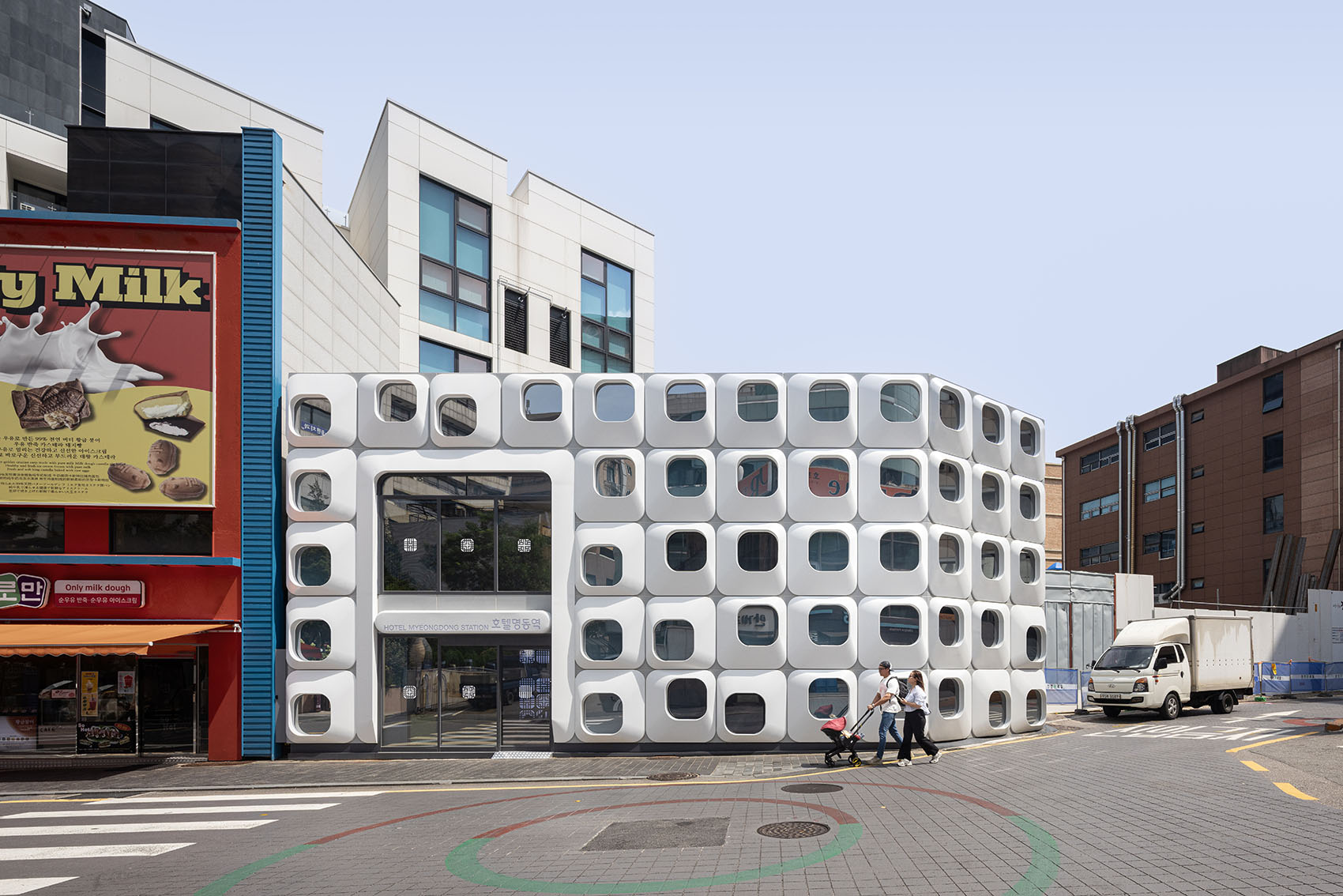
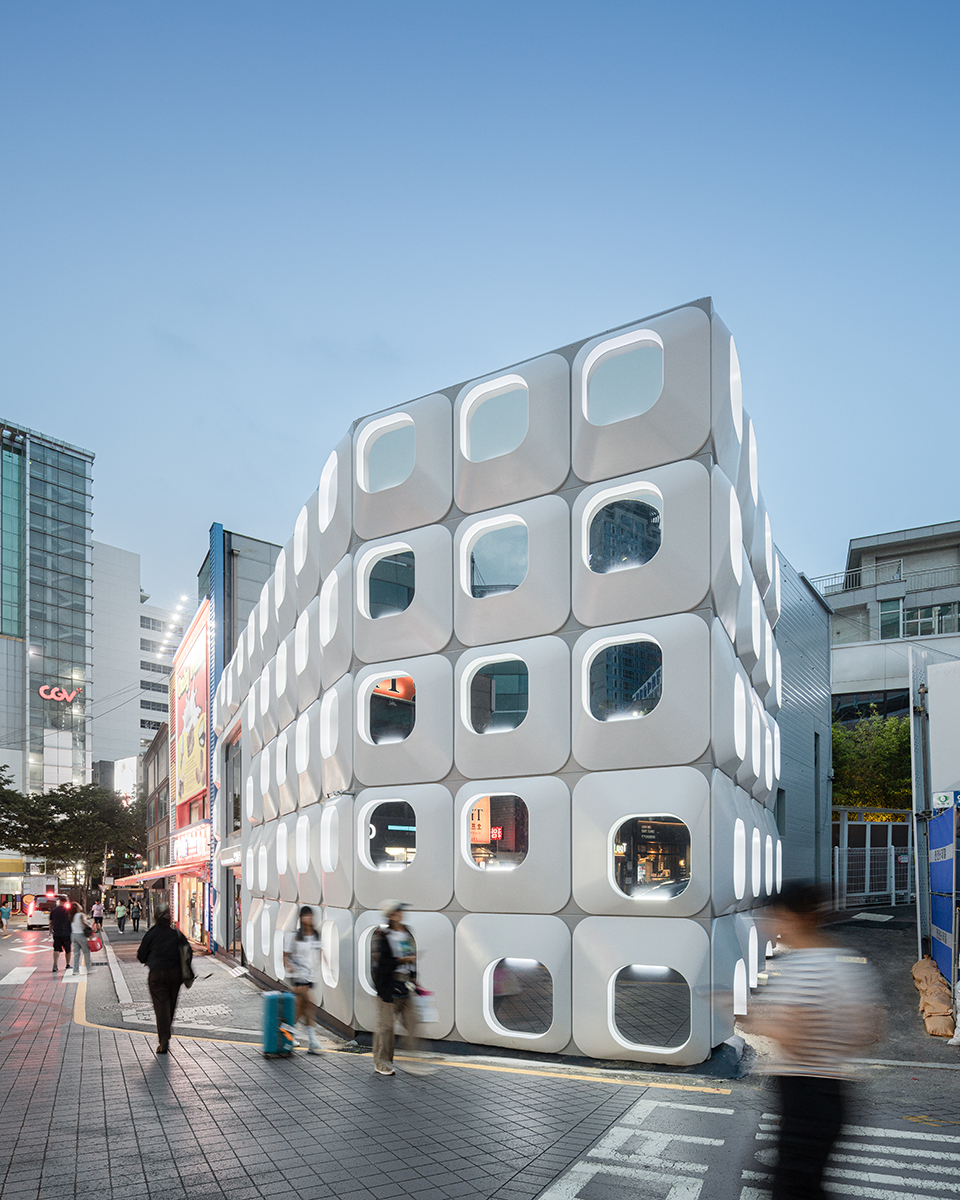
▼建筑外观,Building exterior
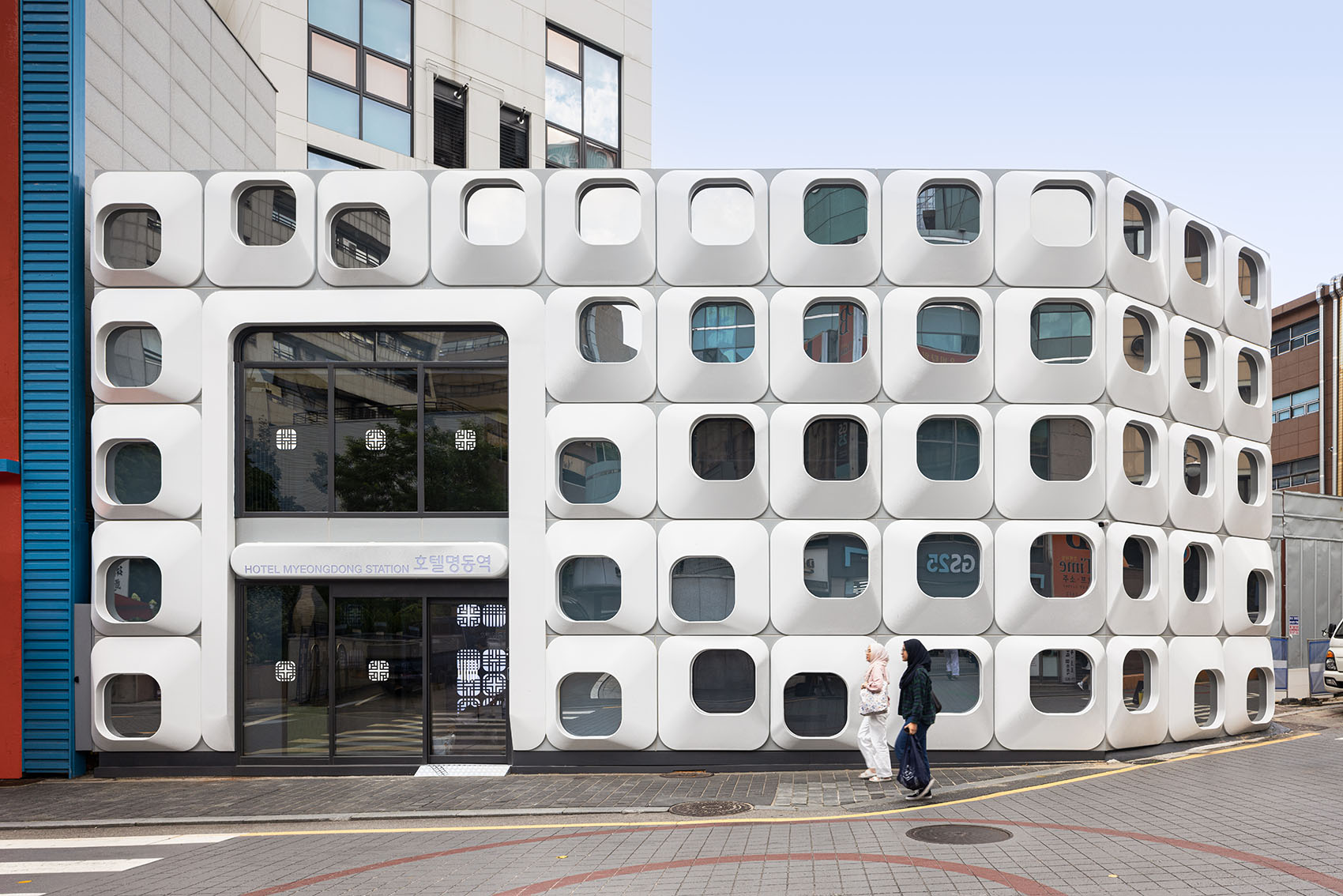
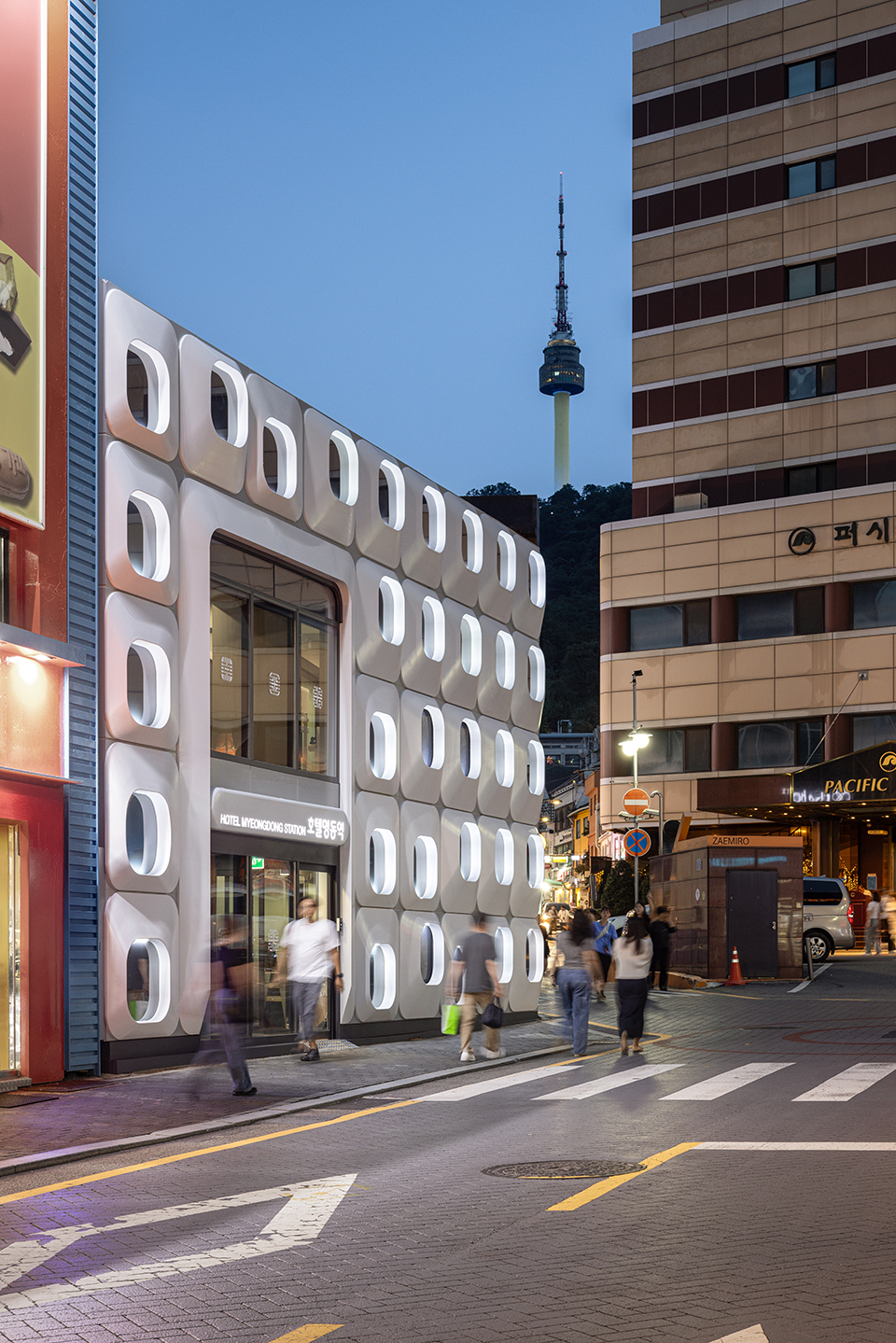
▼街角近景,Street corner close view
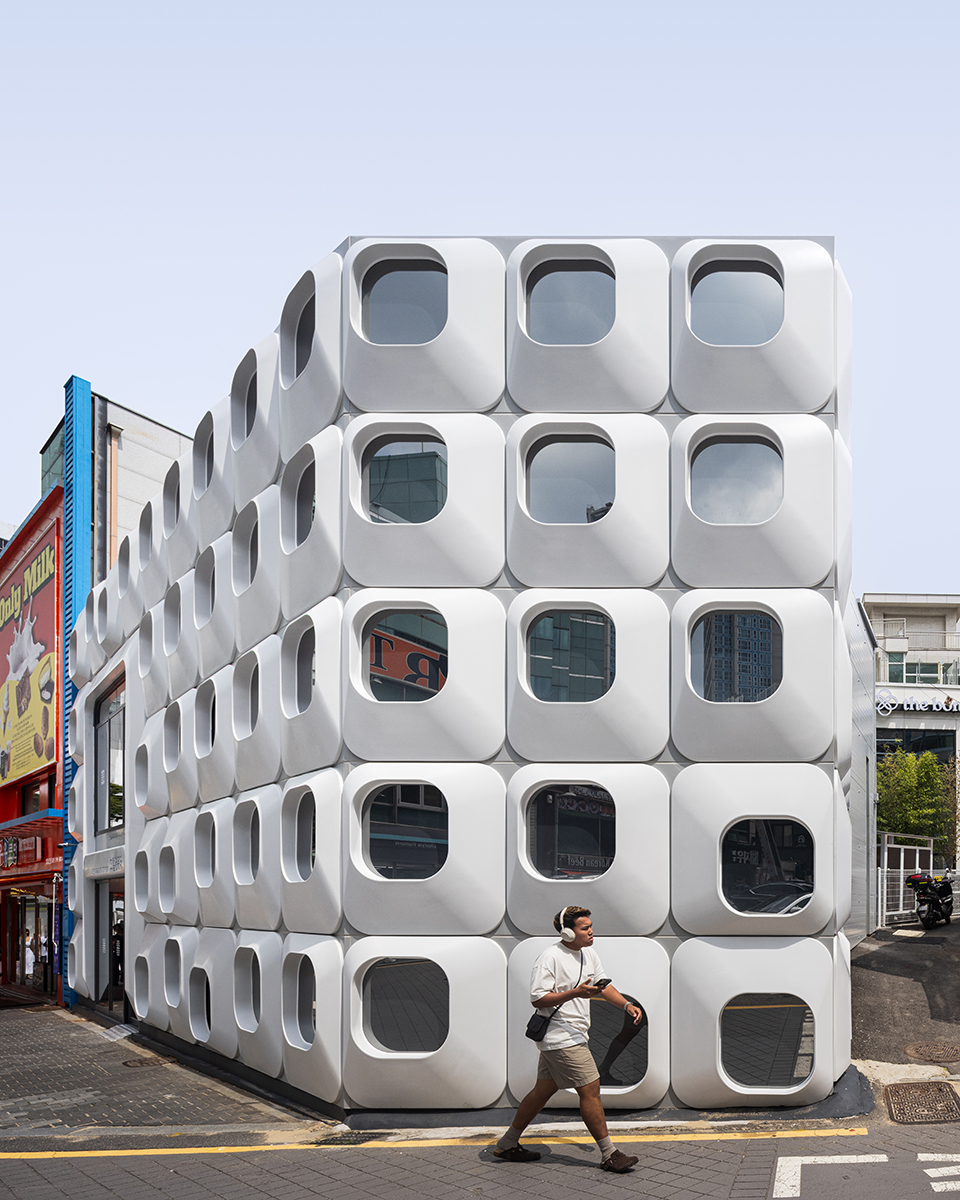
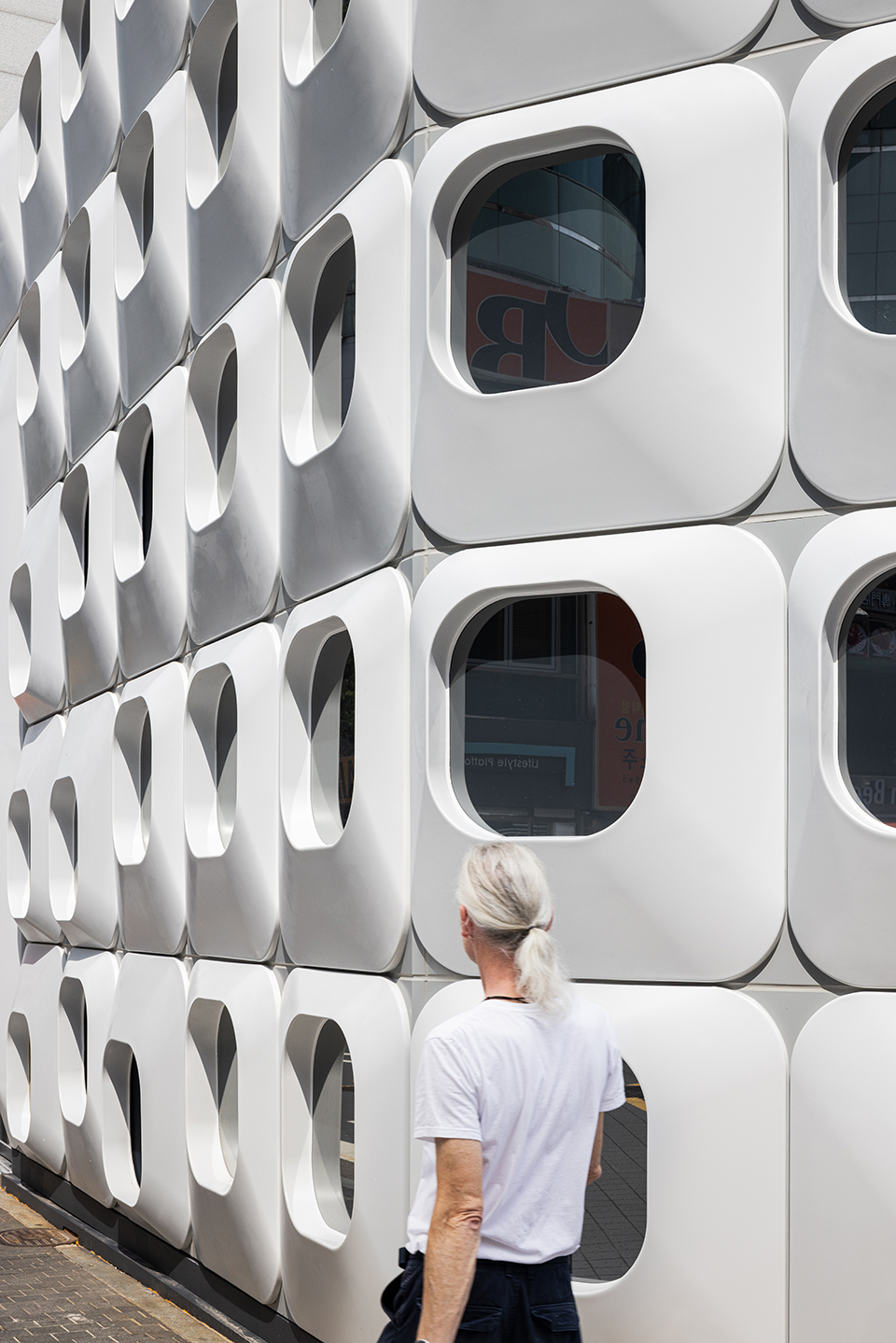
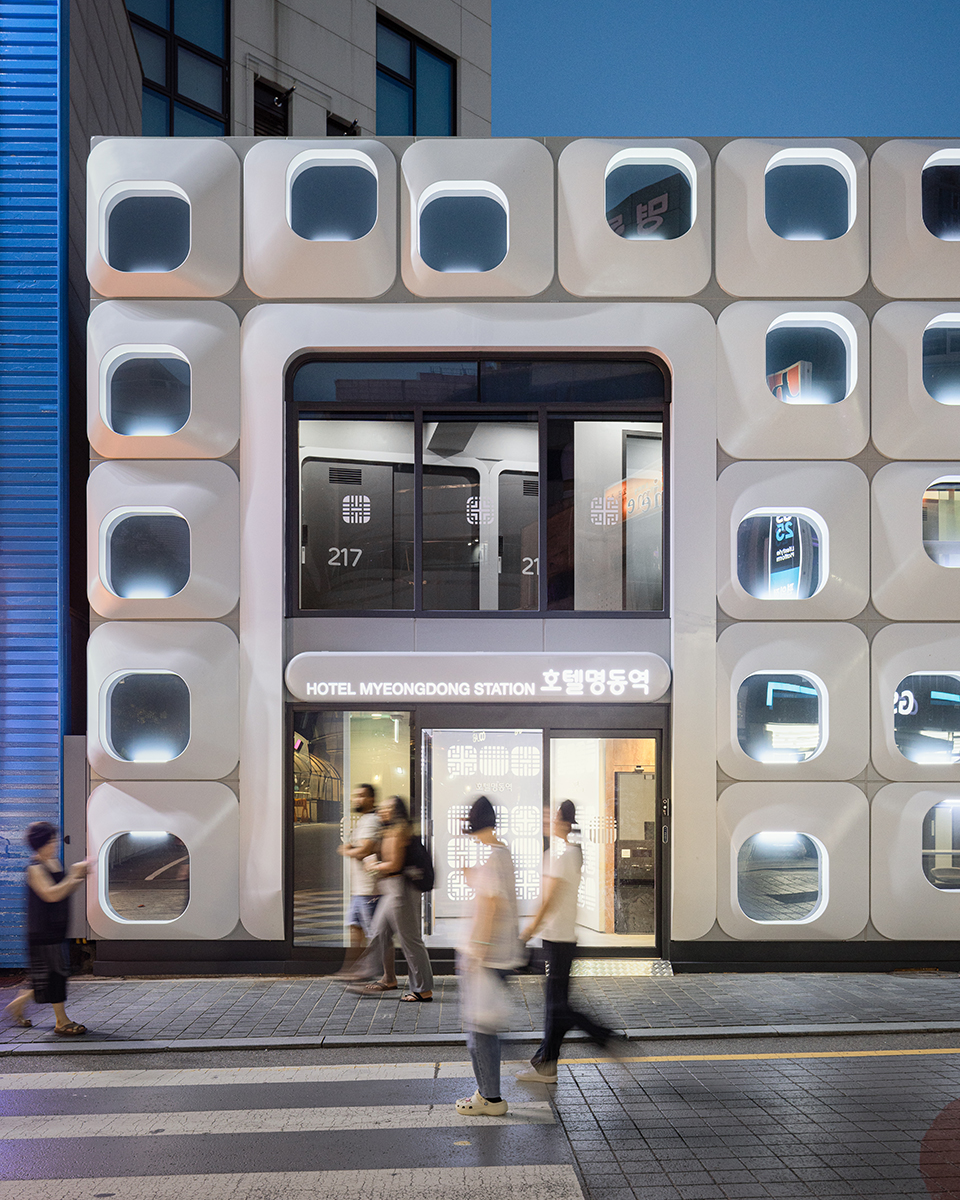
▼酒店入口,Hotel entrance
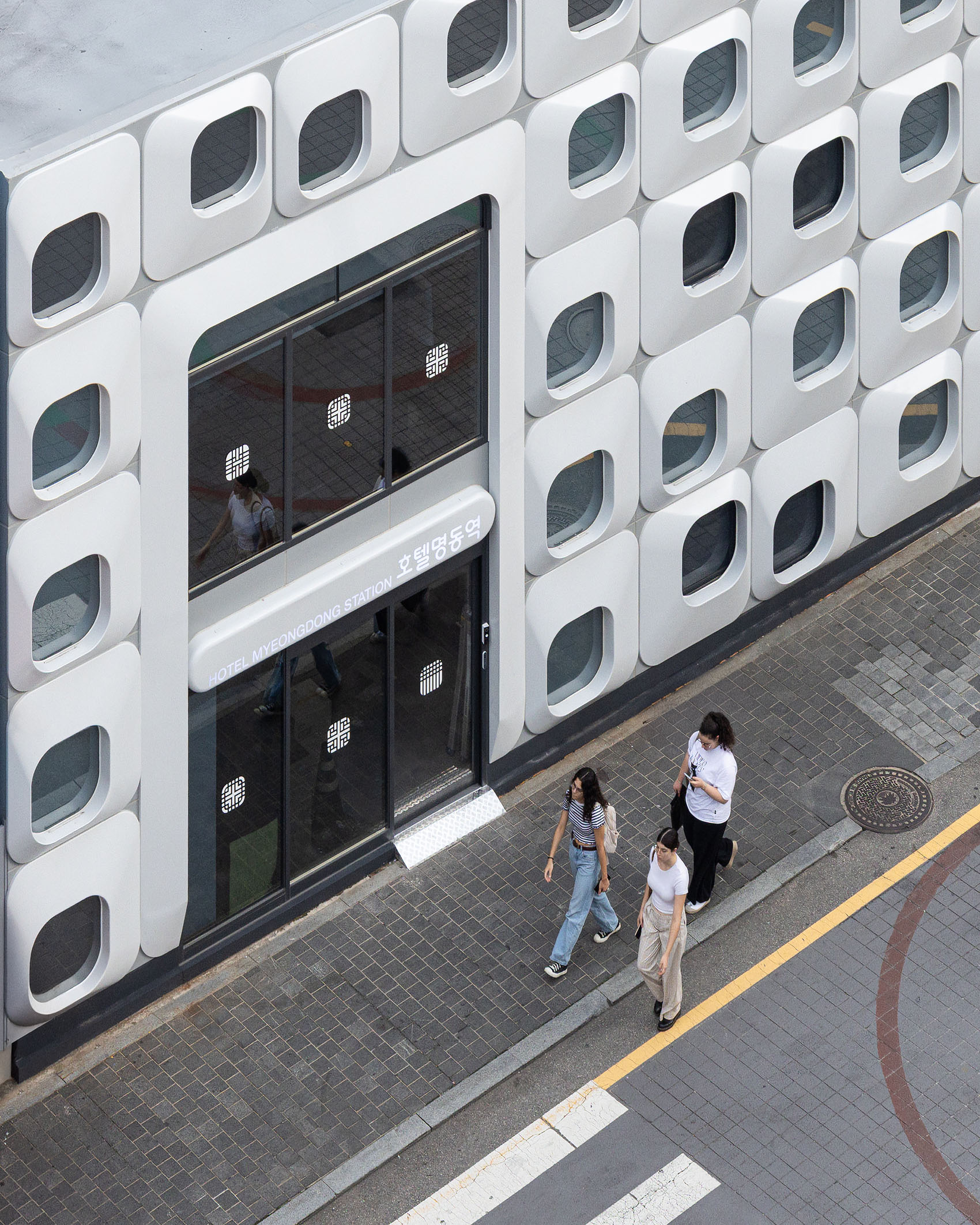
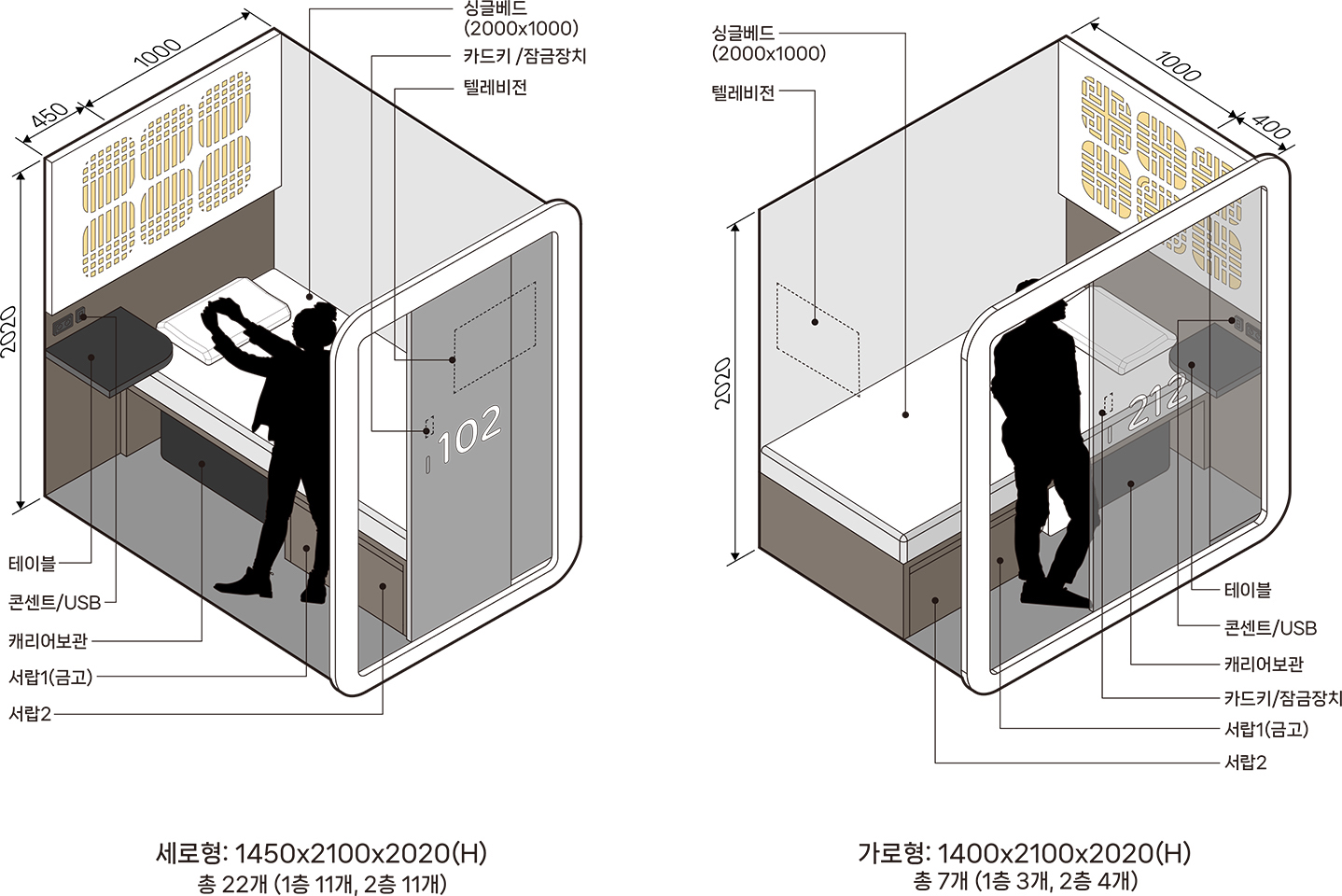
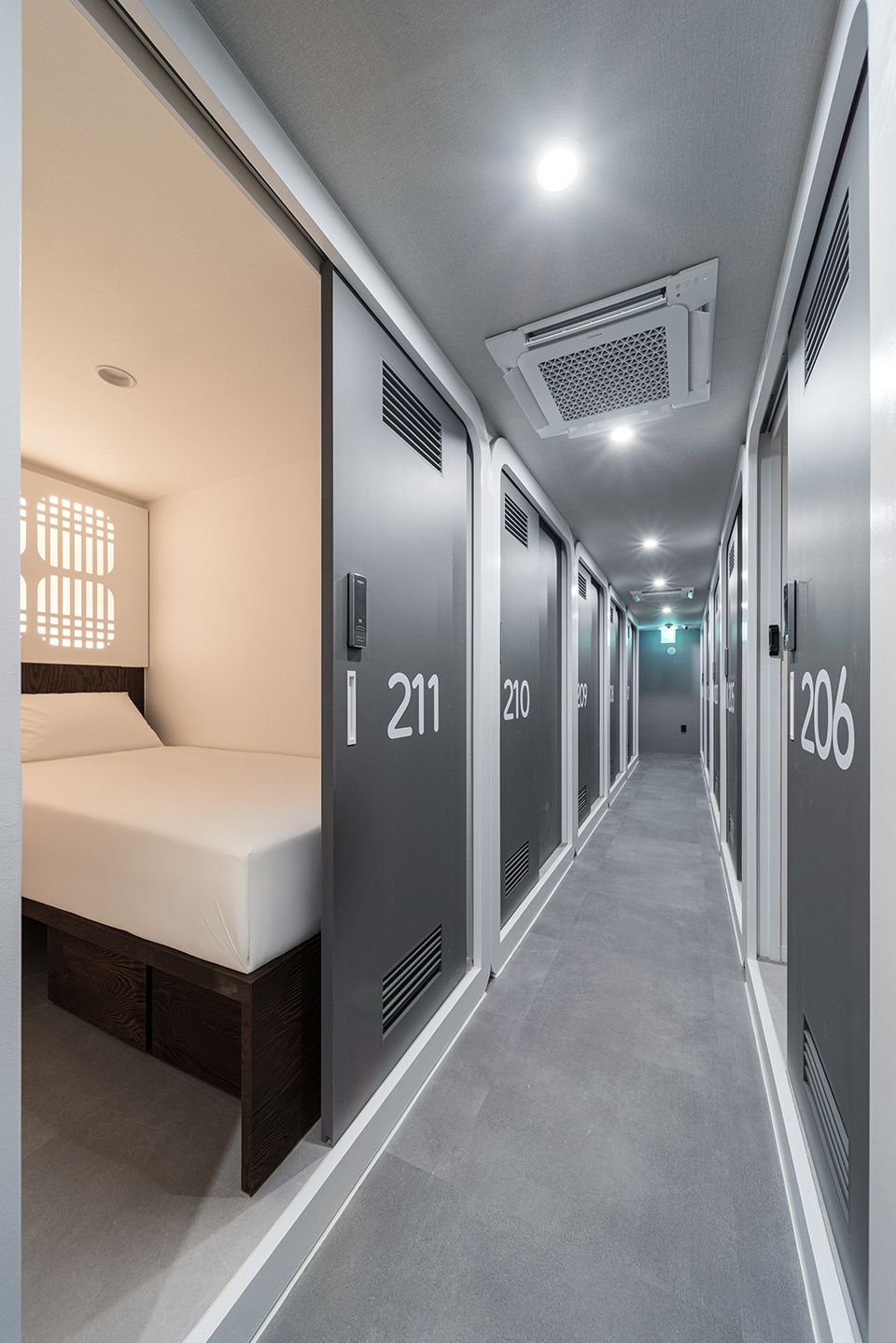
项目首先通过定义一种紧凑的模块化单元形态展开设计,该单元整合了床位、储物、桌面与卫生功能。每个单元均以空间效率与功能层级为核心进行设计,最终形成两种构成相似的类型,并沿中央走廊重复布置,共计二十九个单元。单元与公共空间之间的流线组织旨在优化住宿体验,而可重复的空间模式使功能与形式融为统一的系统逻辑。
▼单元模块示意,Unit diagram
▼楼层组织示意,Floor diagram
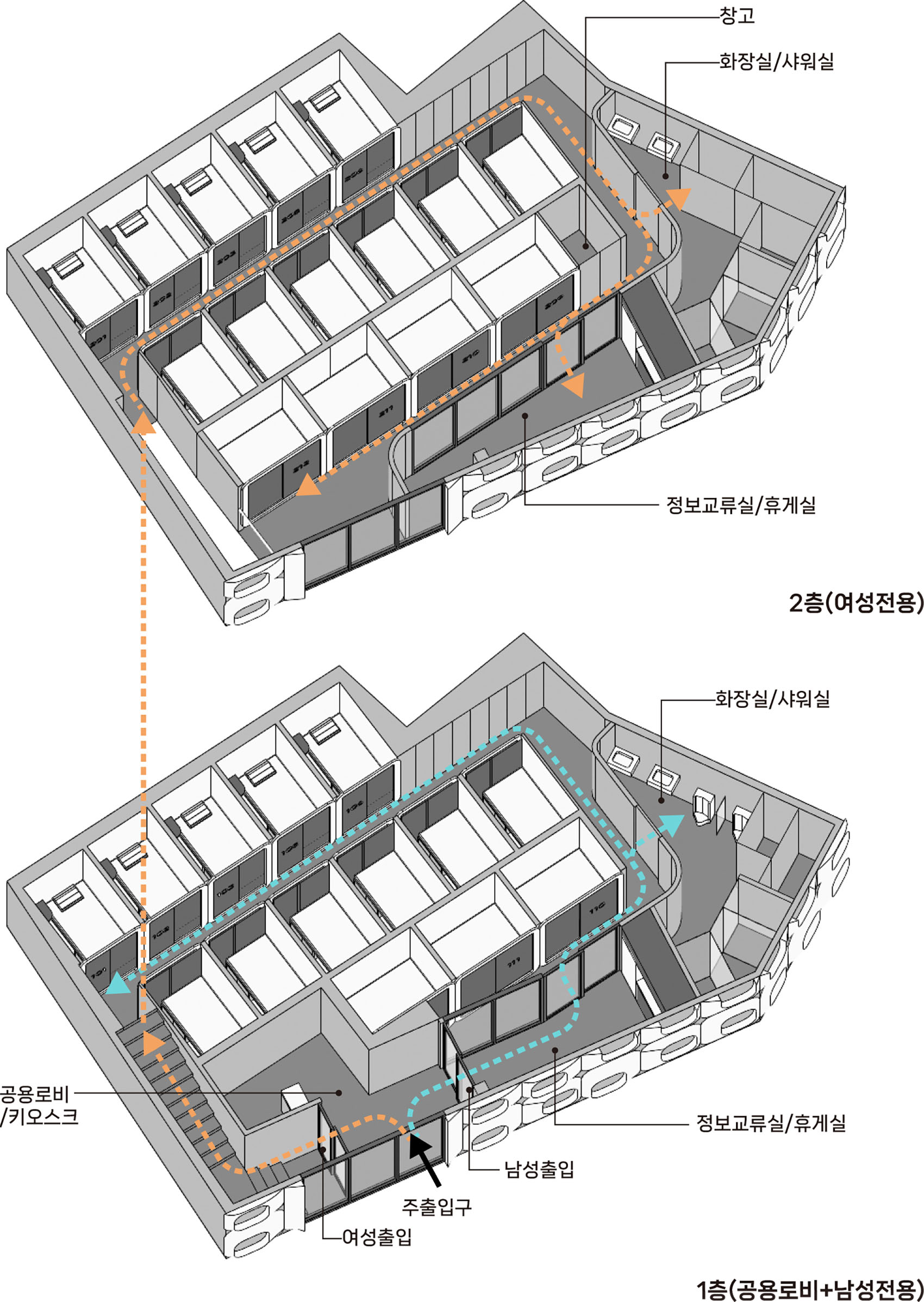
The project began by defining the form of a compact modular unit integrating bed, storage, table, and sanitary functions. Each unit was designed with a focus on spatial efficiency and functional hierarchy, resulting in two variations of a similar composition, and a total of twenty-nine units are arranged repetitively along a central corridor. Circulation between the units and communal spaces was organised to optimize the experience of the stay, while the repeatable pattern allows function and form to merge into a single systemic logic.
▼前台,Reception
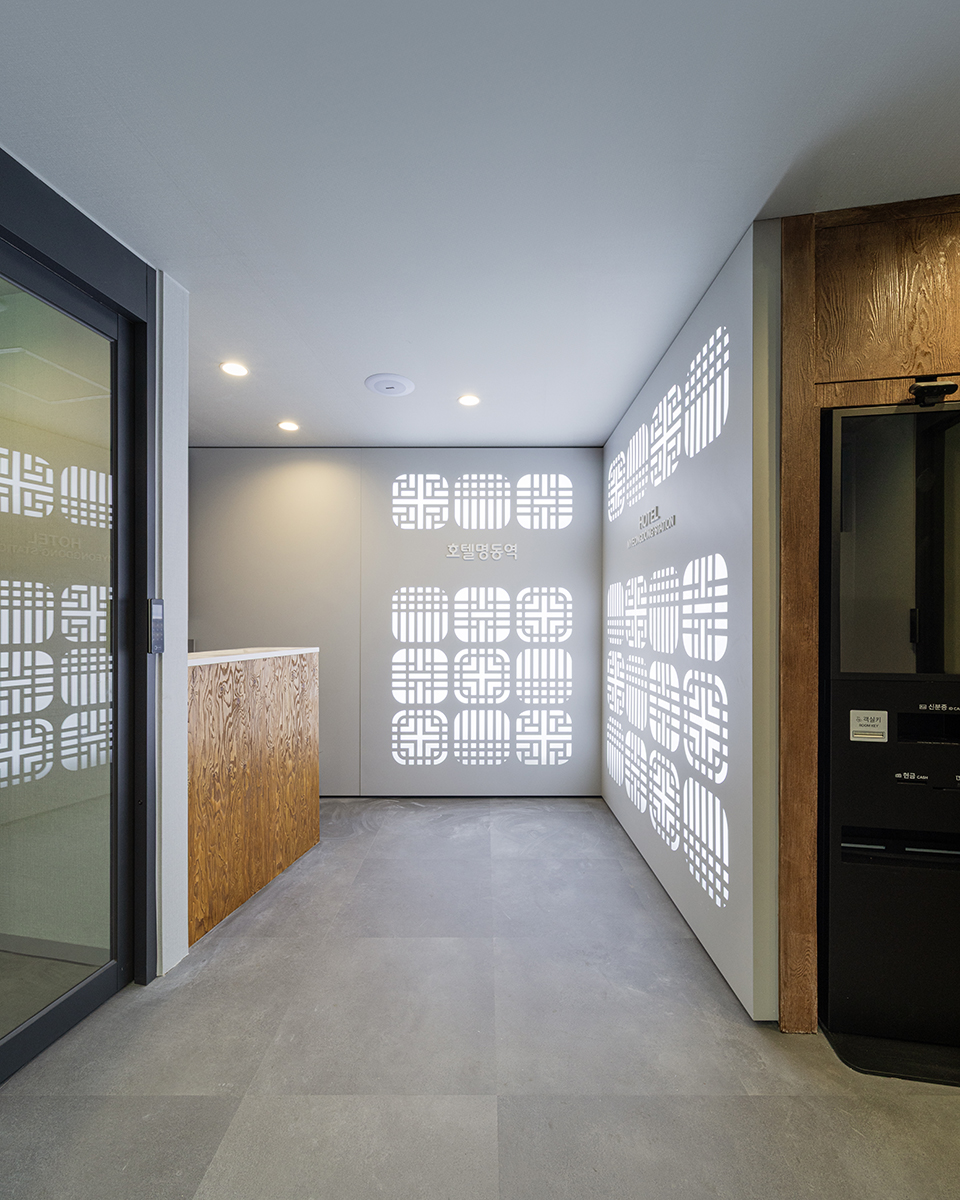
▼公共空间,Public space
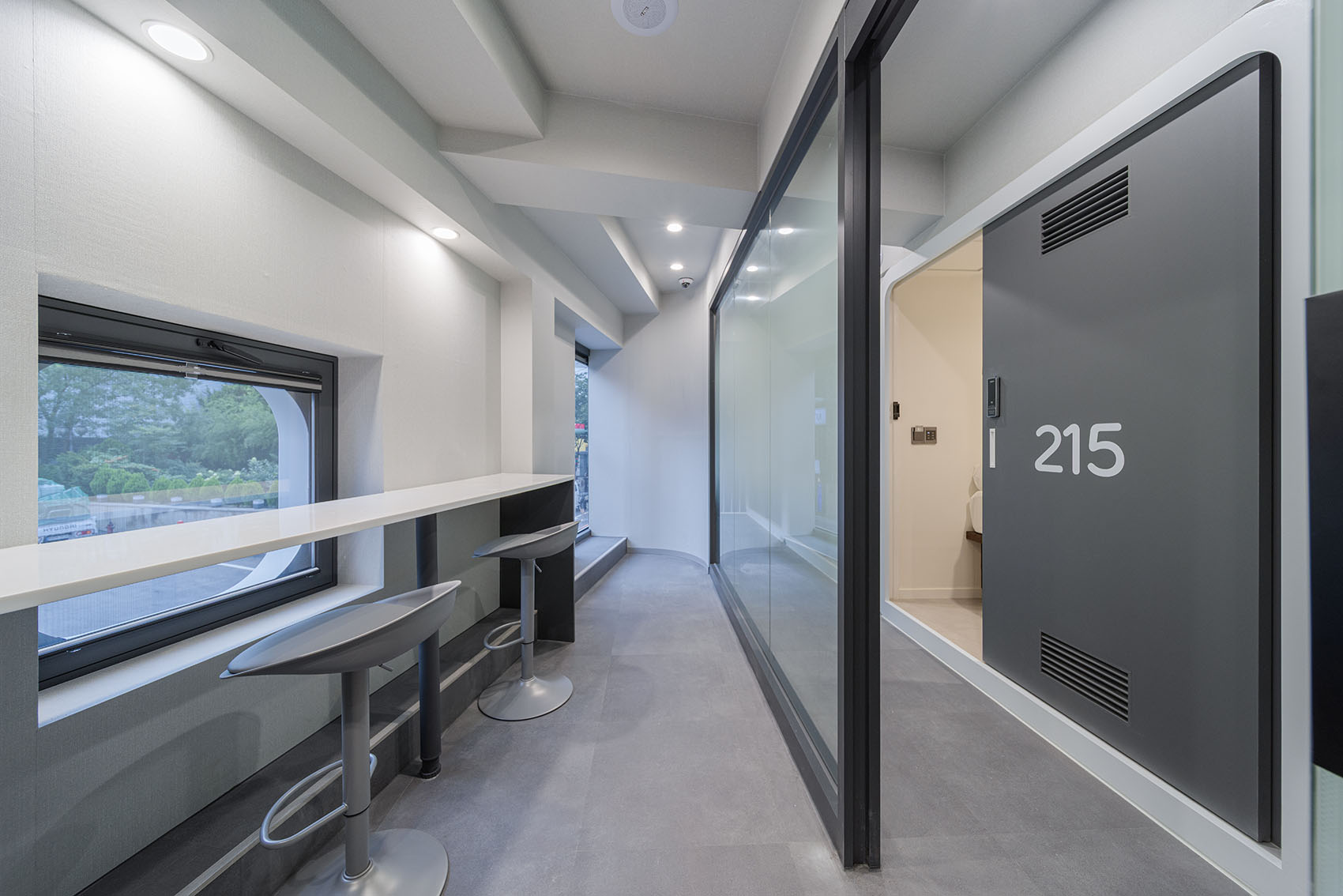
▼标准住宿单元门前,Accommodation module front view
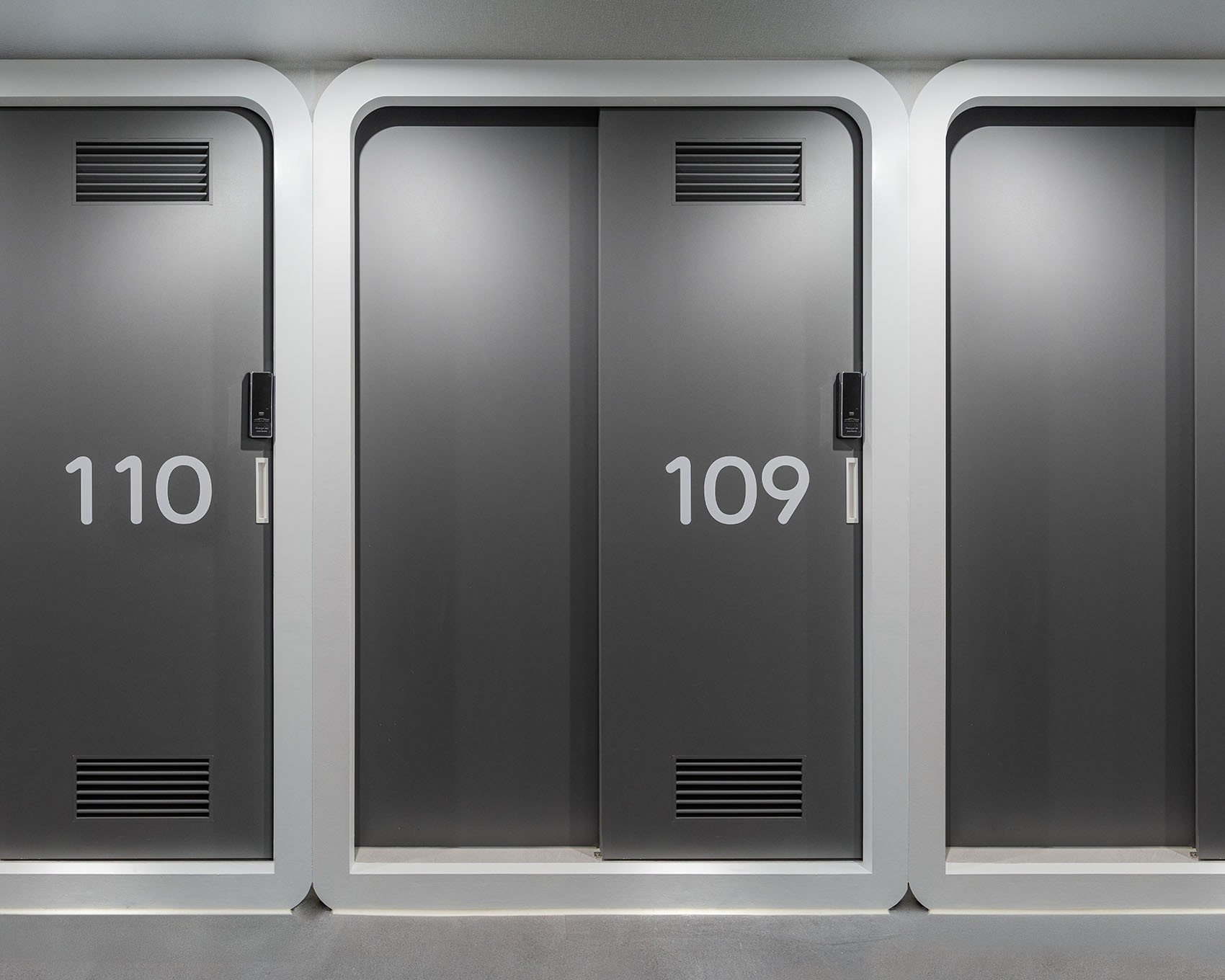
▼客房空间与走廊,Guest room and corridor
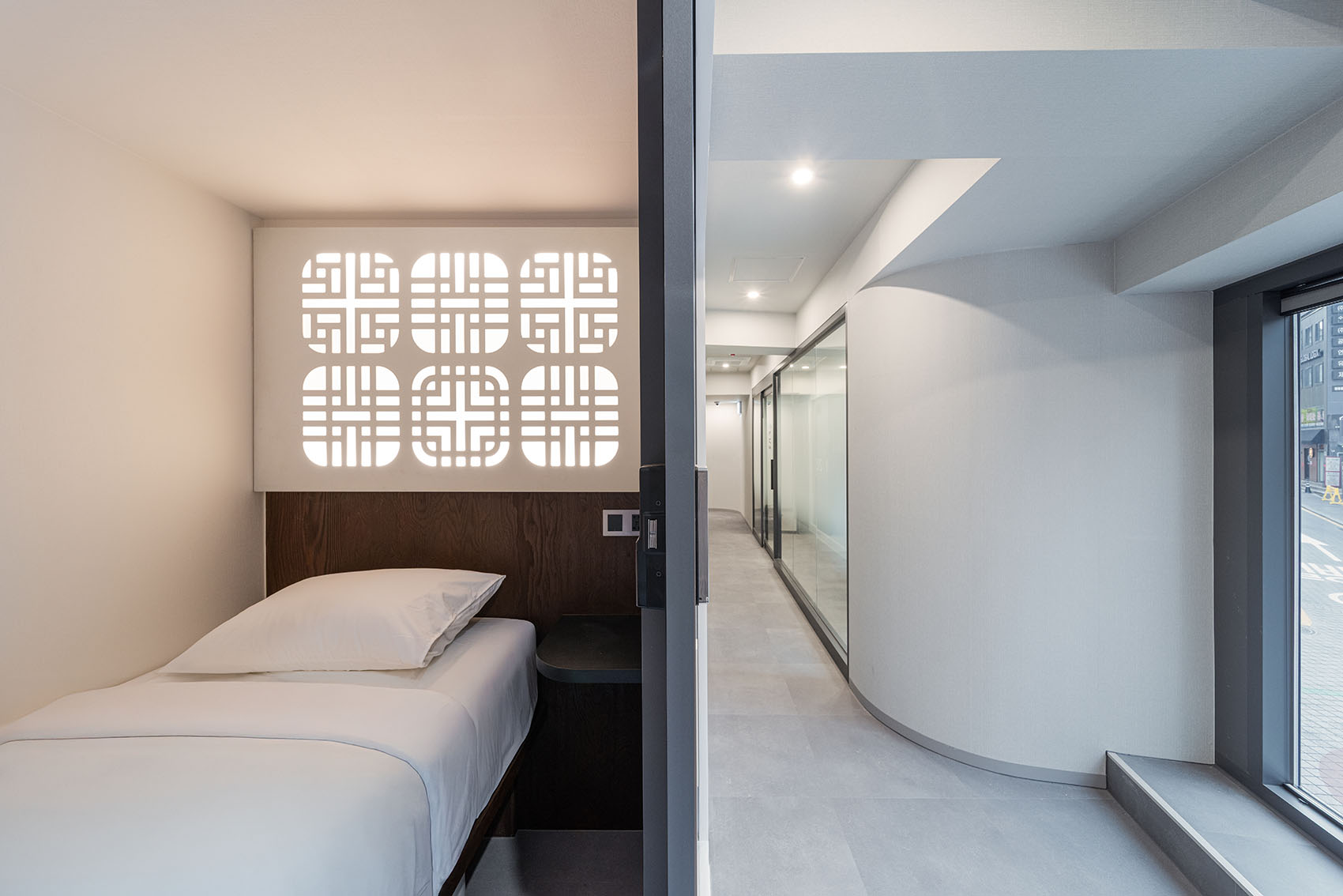
▼走廊,Corridor
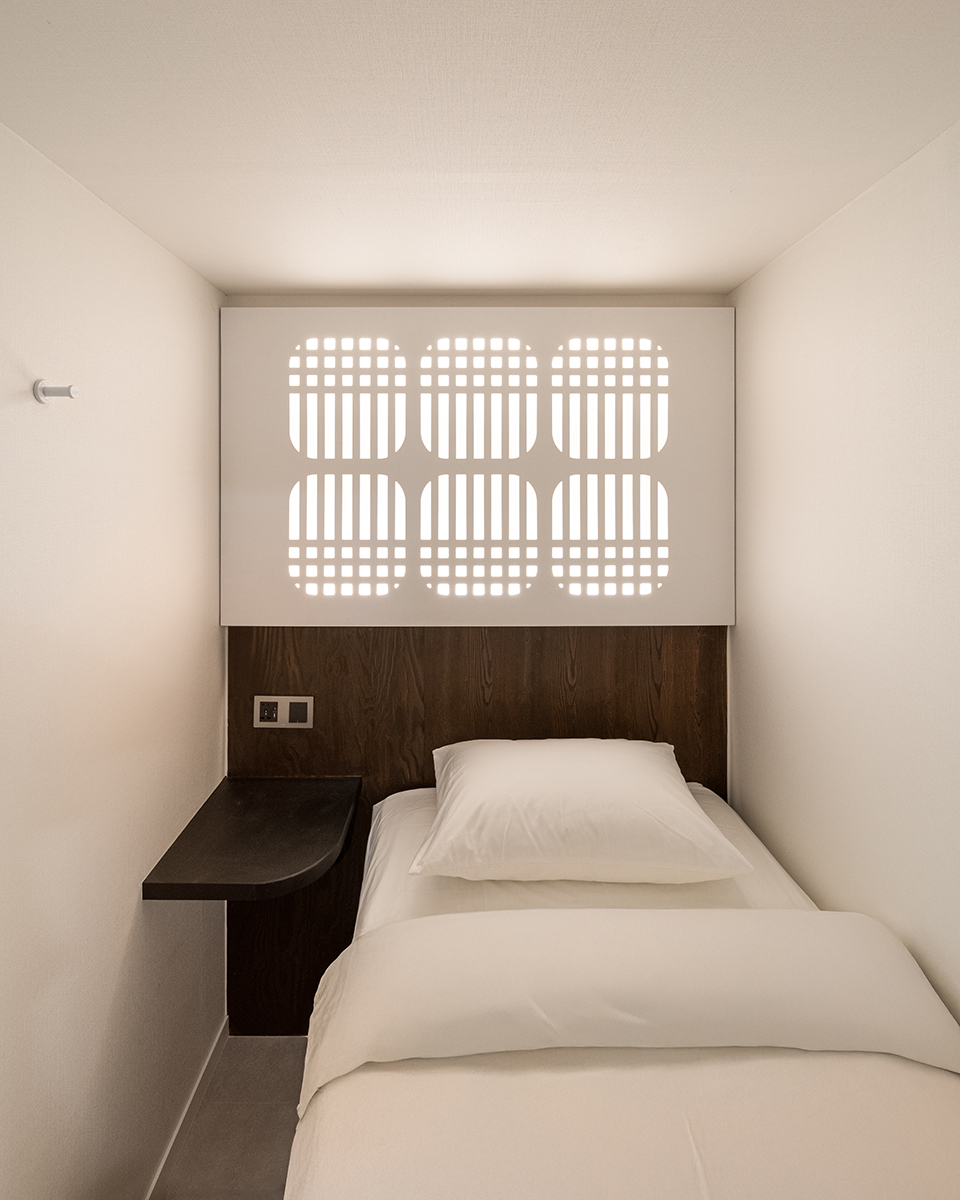
▼客房室内空间,Guest room interior
最初的设计源于基于AI的形态生成实验,但这些实验并非作为自主的形体方案,而是被用作测试可容纳项目功能体量的可视化工具。真正的设计过程始于对采光、睡眠朝向以及储物动线等功能变量的研究。因此,最终形成的建筑外壳并非装饰性的附加,而是由单元的重复与叠加自然生成的结果。
▼初始AI形态提案,Initial AI proposal
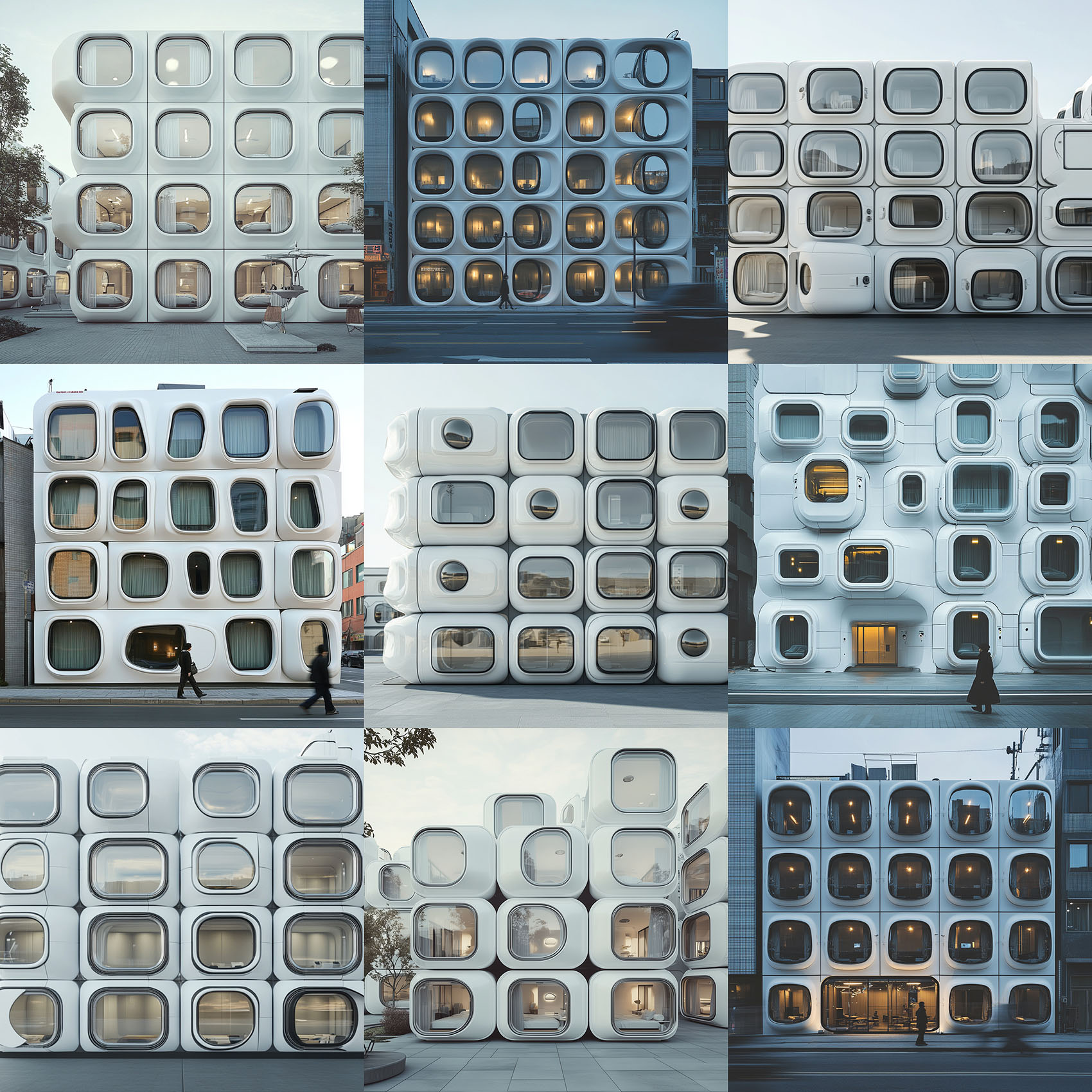
The initial design originated from AI-based formal generation experiments, though these were used not as autonomous shape proposals but as visual tools to test volumetric possibilities accommodating the program. The actual design process began with programmatic variables such as lighting, sleeping orientation, and storage circulation. Consequently, the completed envelope is not an ornamental addition but the result of the repetition and stacking of units.
▼建筑立面板,Building facade
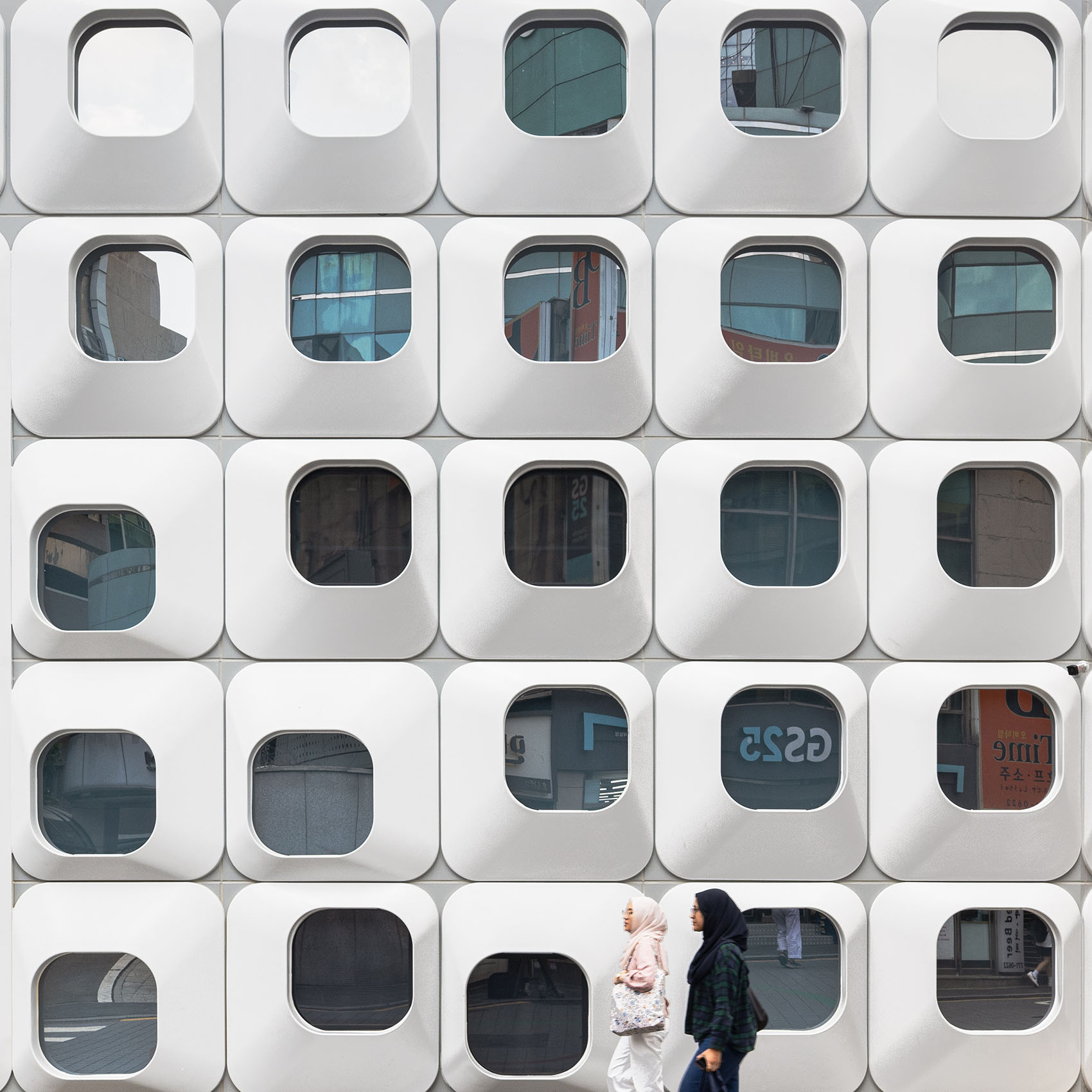
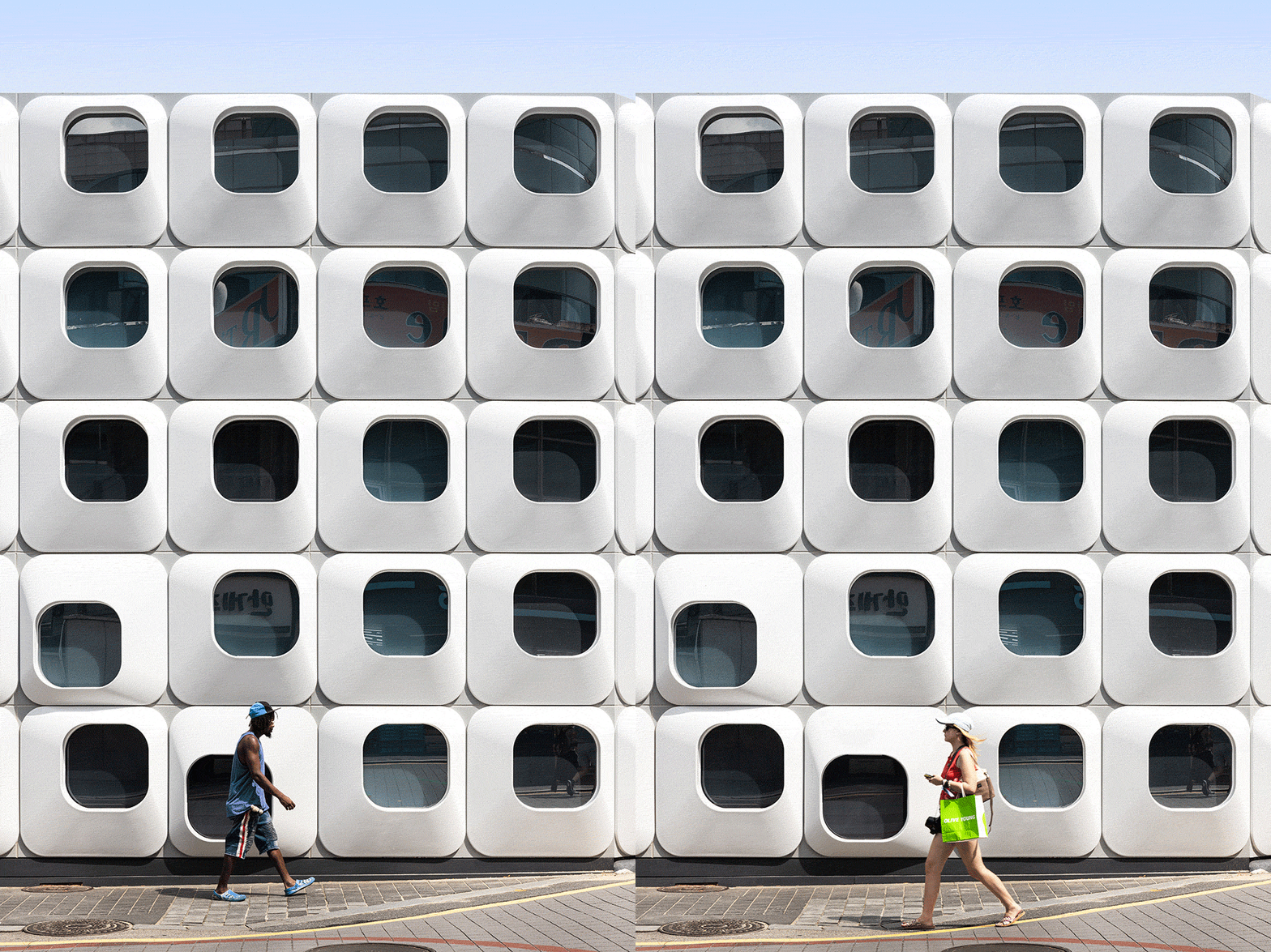
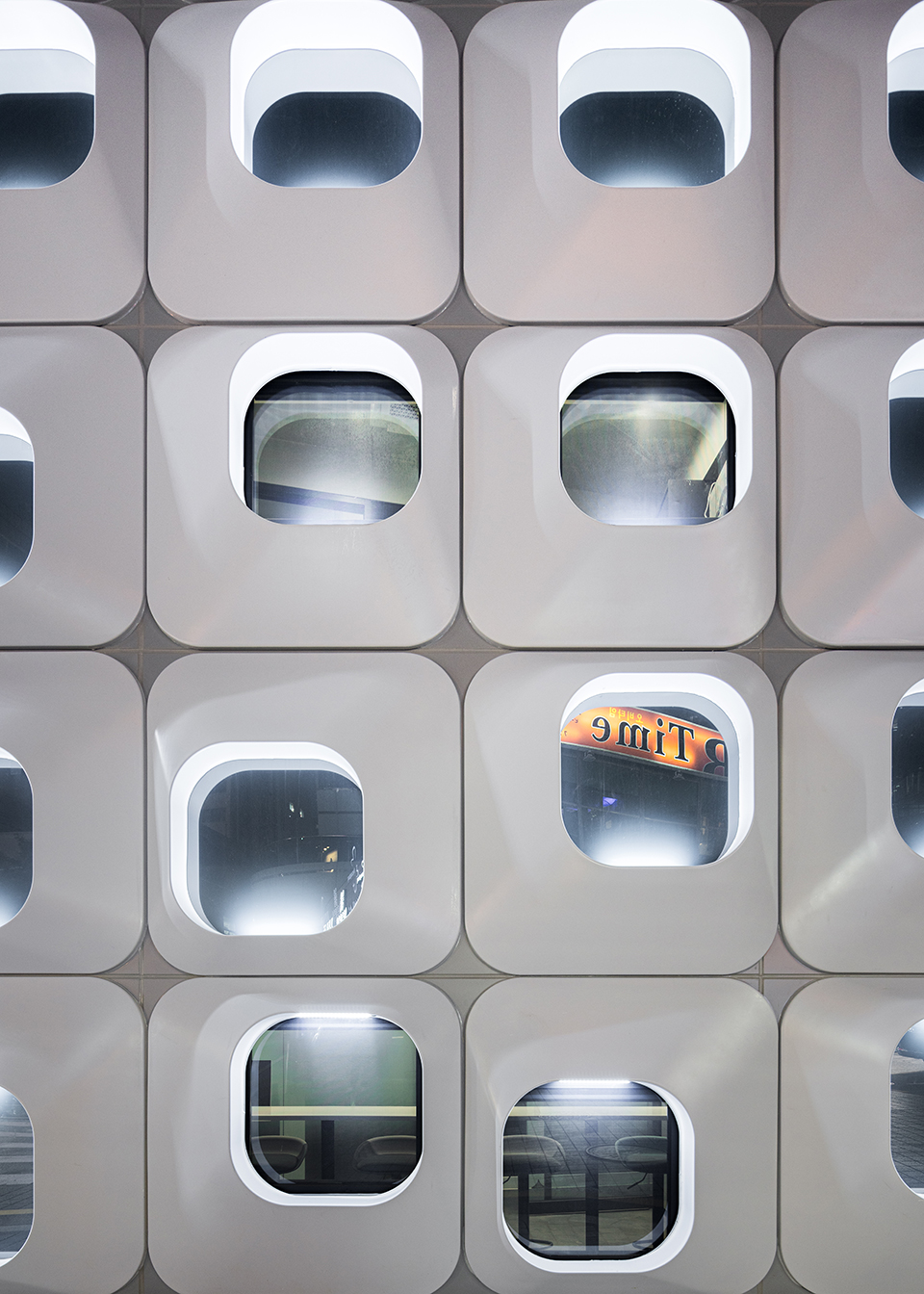
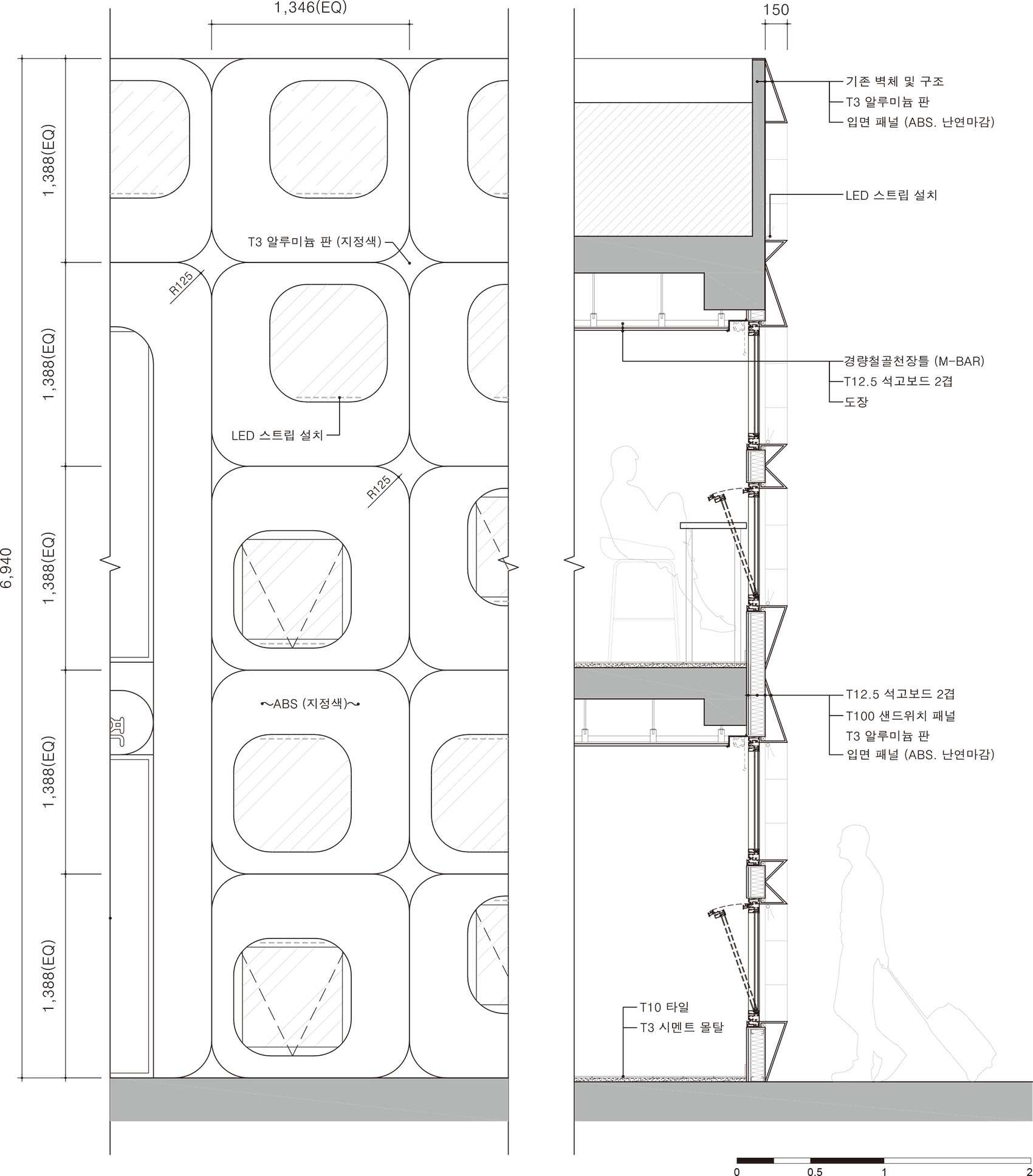
每个住宿模块都是一个紧凑的生活单元,整合了睡眠、休憩、储物与工作等功能。其中,床头板采用源自传统纹样的重复图案,不仅作为装饰元素,也在空间中调节光线与视线关系。建筑外立面由弧形ABS板构成,通过两种类型面板的旋转与重复排列形成富有节奏感的立面。每块面板均基于三维模型制作CNC加工模具,再通过真空吸塑成型,并进行防火处理后安装于铝制框架之上。
▼立面板系统示意,Panel diagram
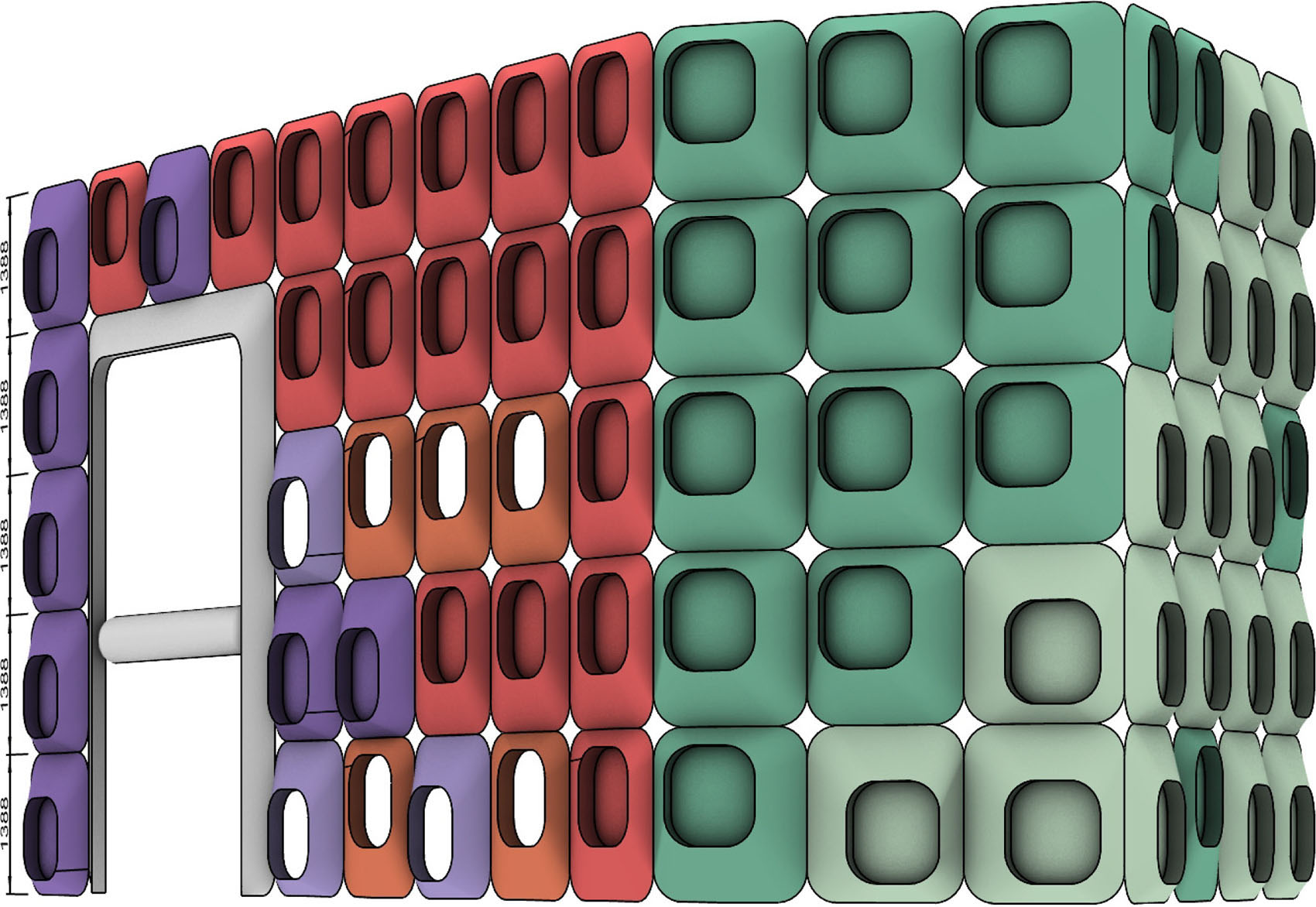
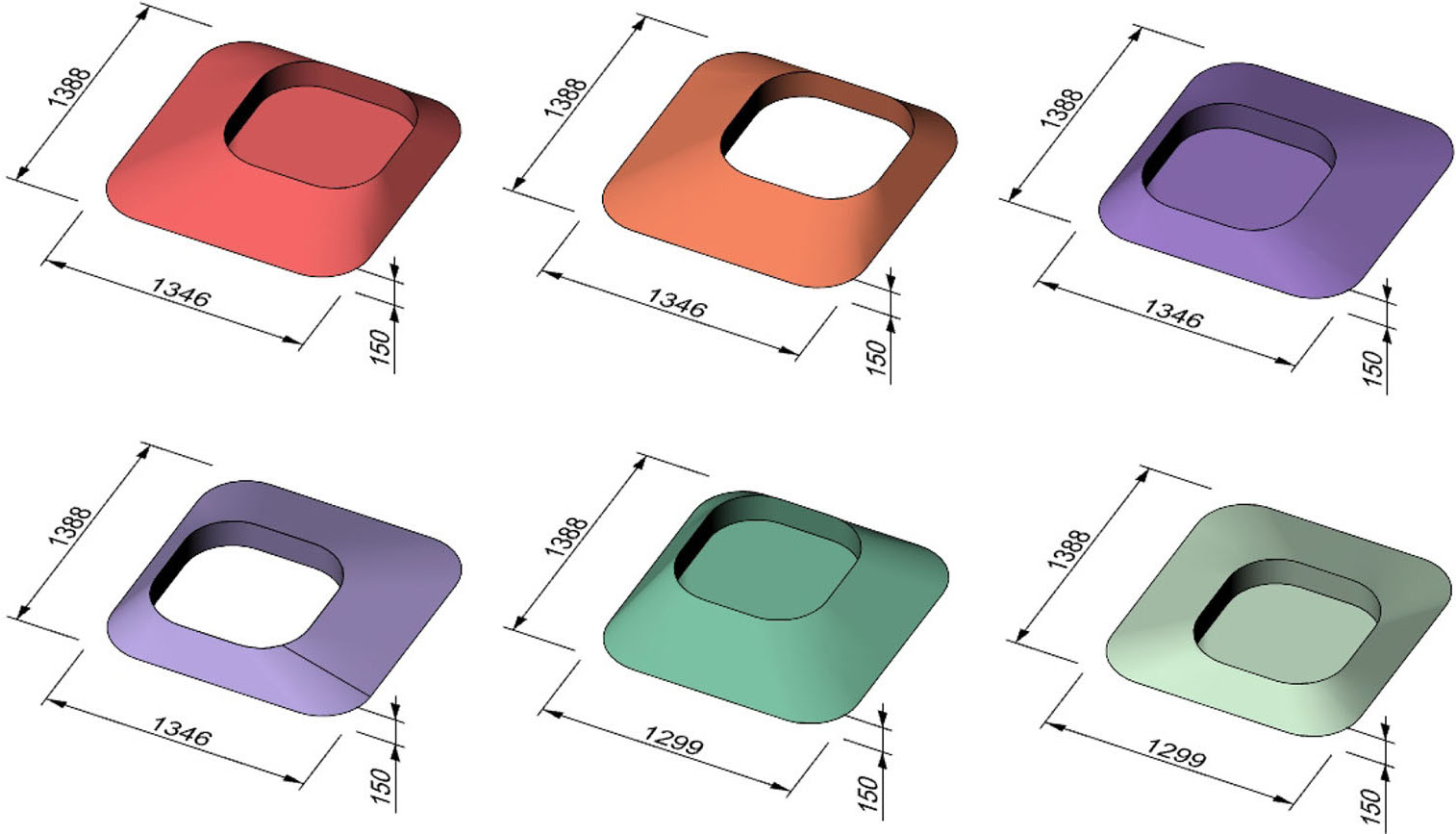
Each accommodation module is a compact living unit integrating functions for sleeping, resting, storage, and working, and the headboard panel, derived from repetitive patterns inspired by traditional motifs, extends beyond decoration to mediate light and views. The building envelope consists of curved ABS panels, arranged through rotation and repetition of two types to create a rhythmic façade. Each panel was fabricated using CNC-machined dies based on 3D modeling, then vacuum-formed, fire-retardant finished, and mounted onto an aluminum frame.
▼ABS立面板近景,ABS facade panels close view
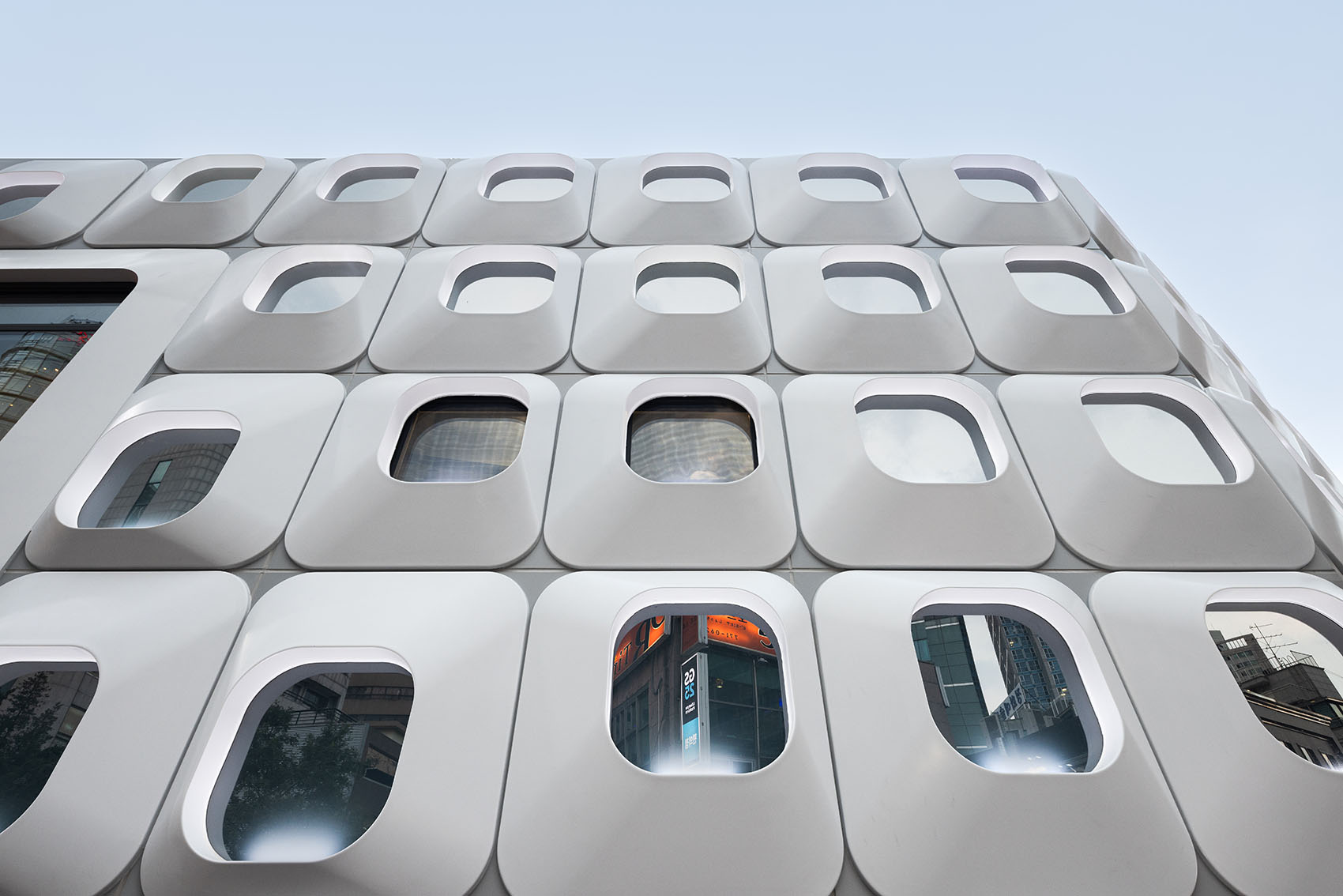
▼ABS立面板细部,ABS facade panels detail
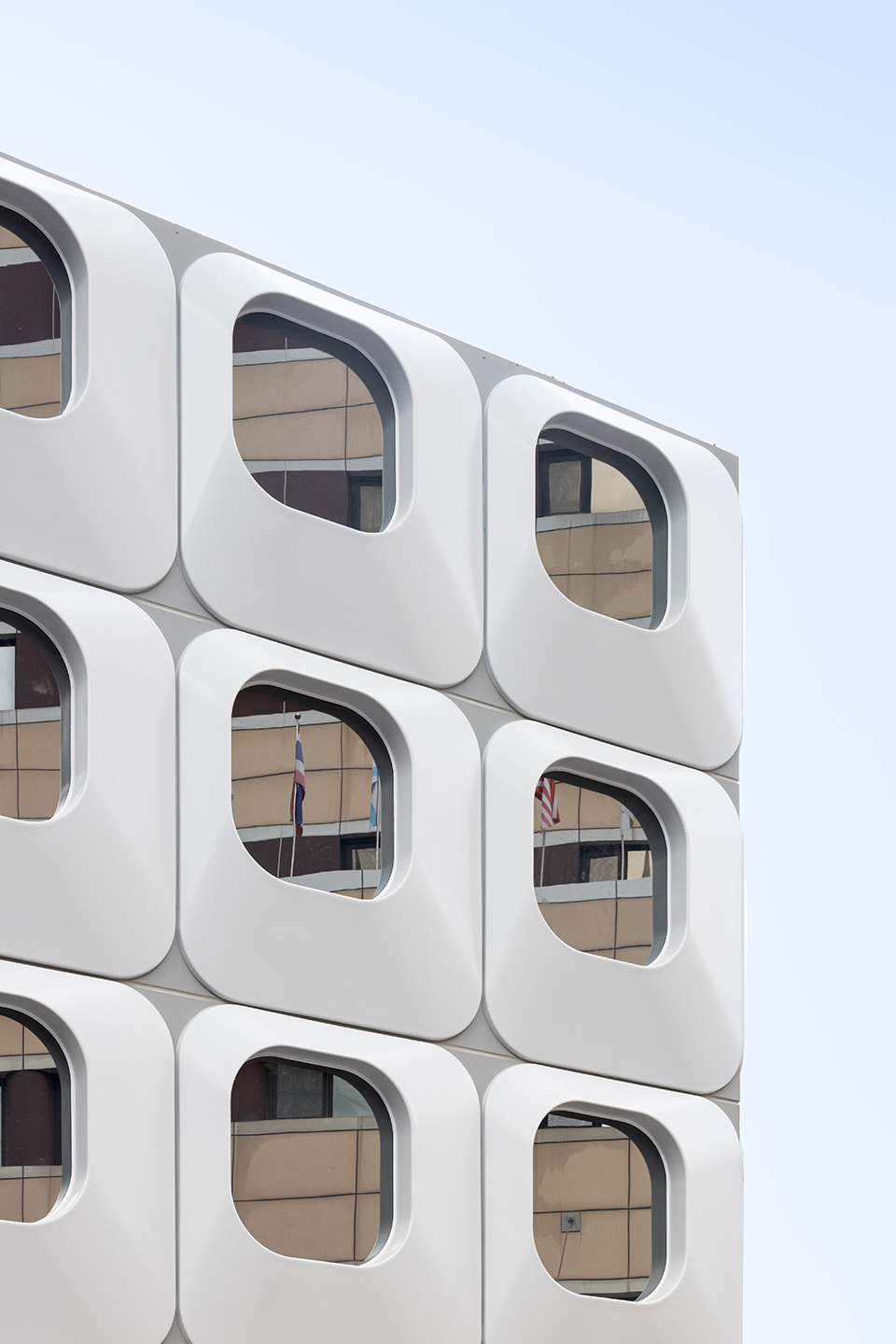
▼夜景概览,Exterior overview at night
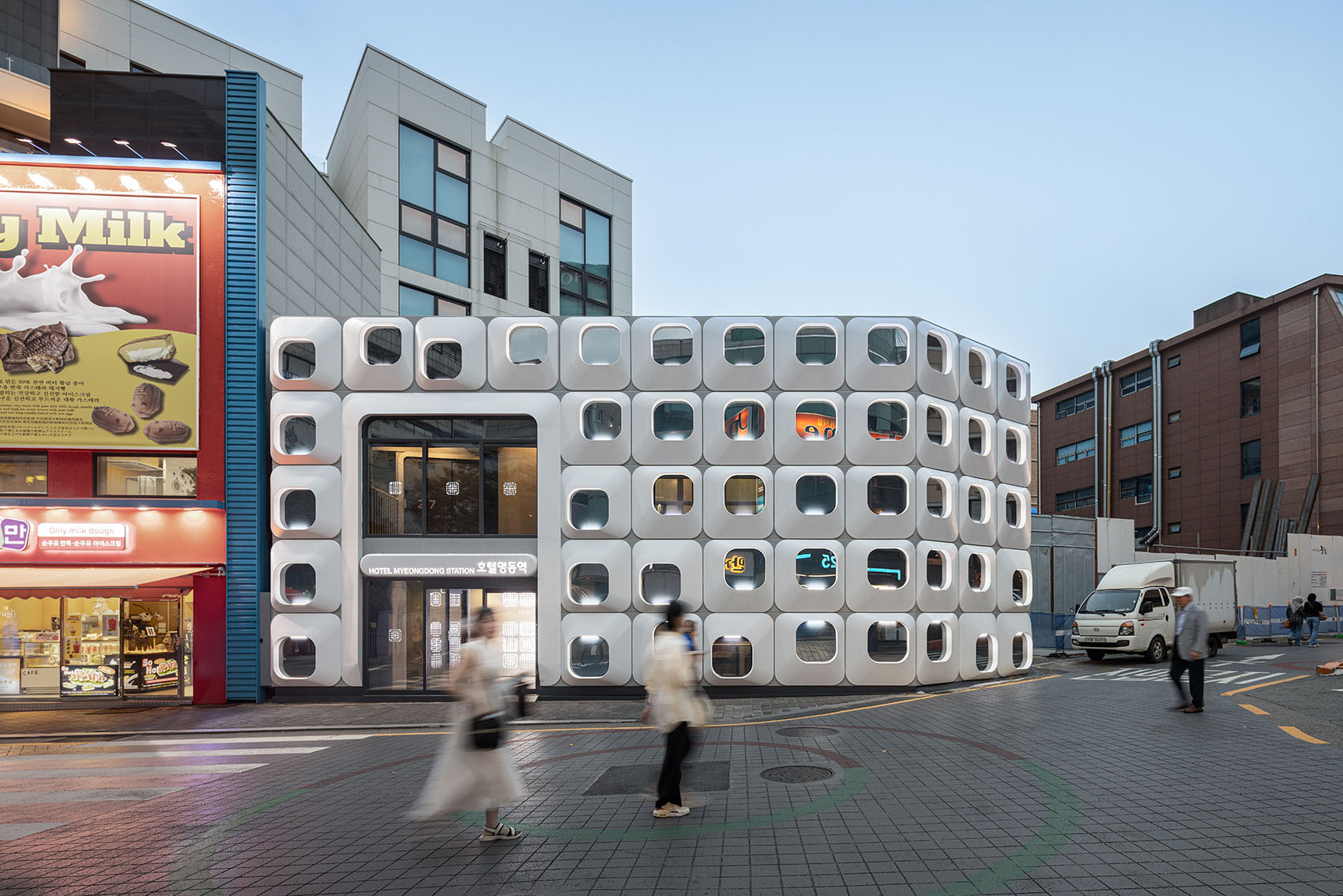
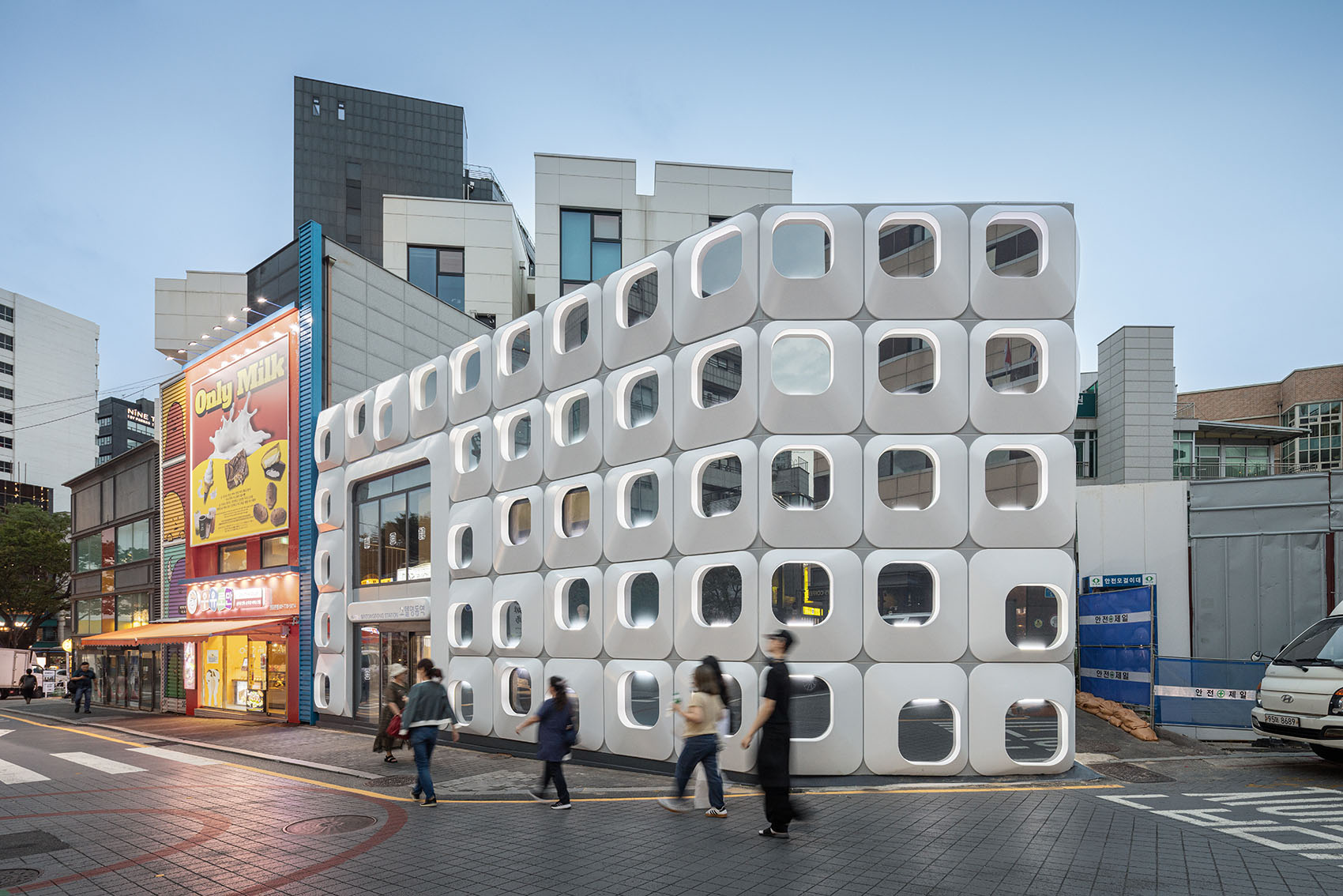
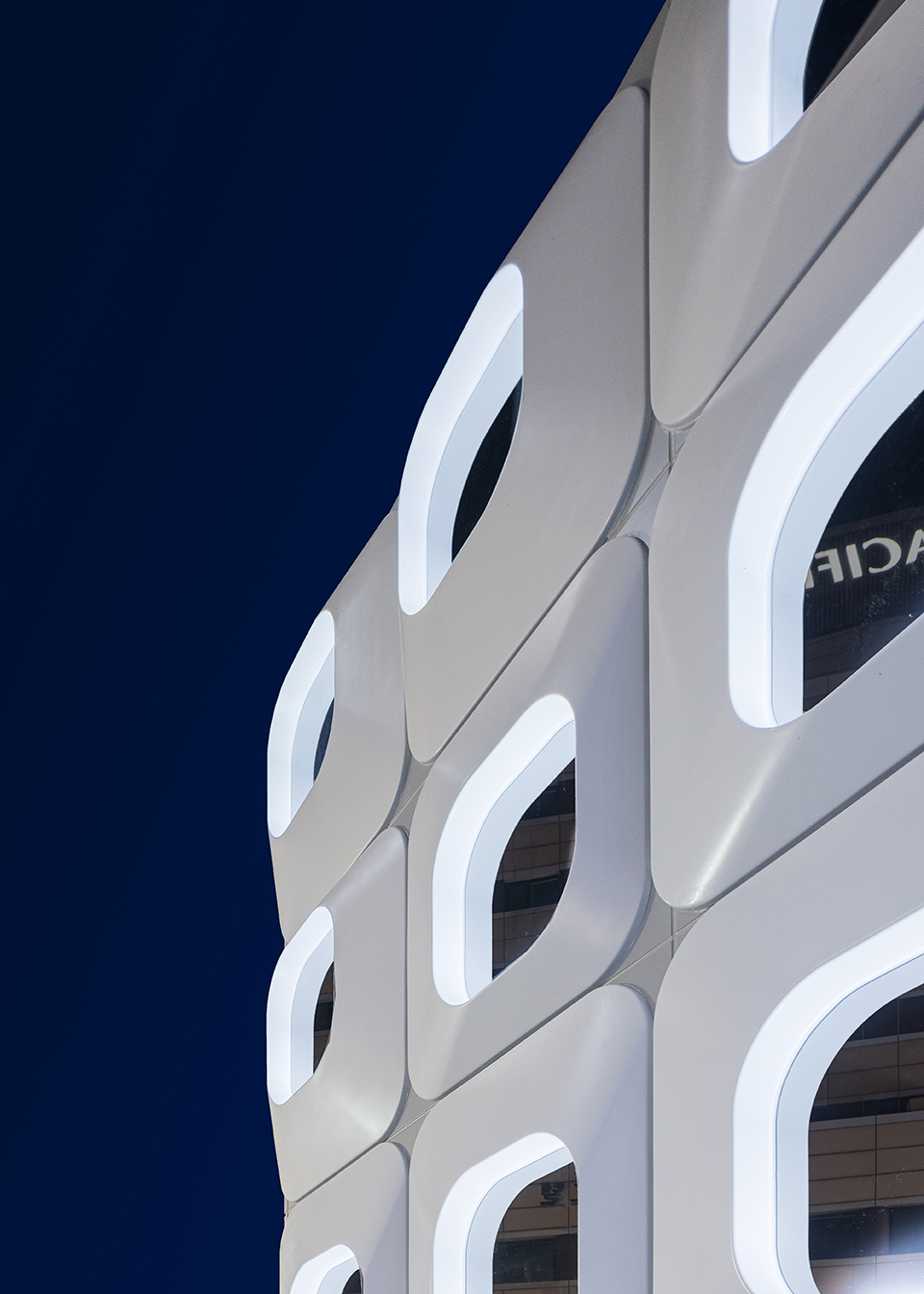
▼夜晚立面,Building facade night view
▼夜晚立面细部,Facade detail at night
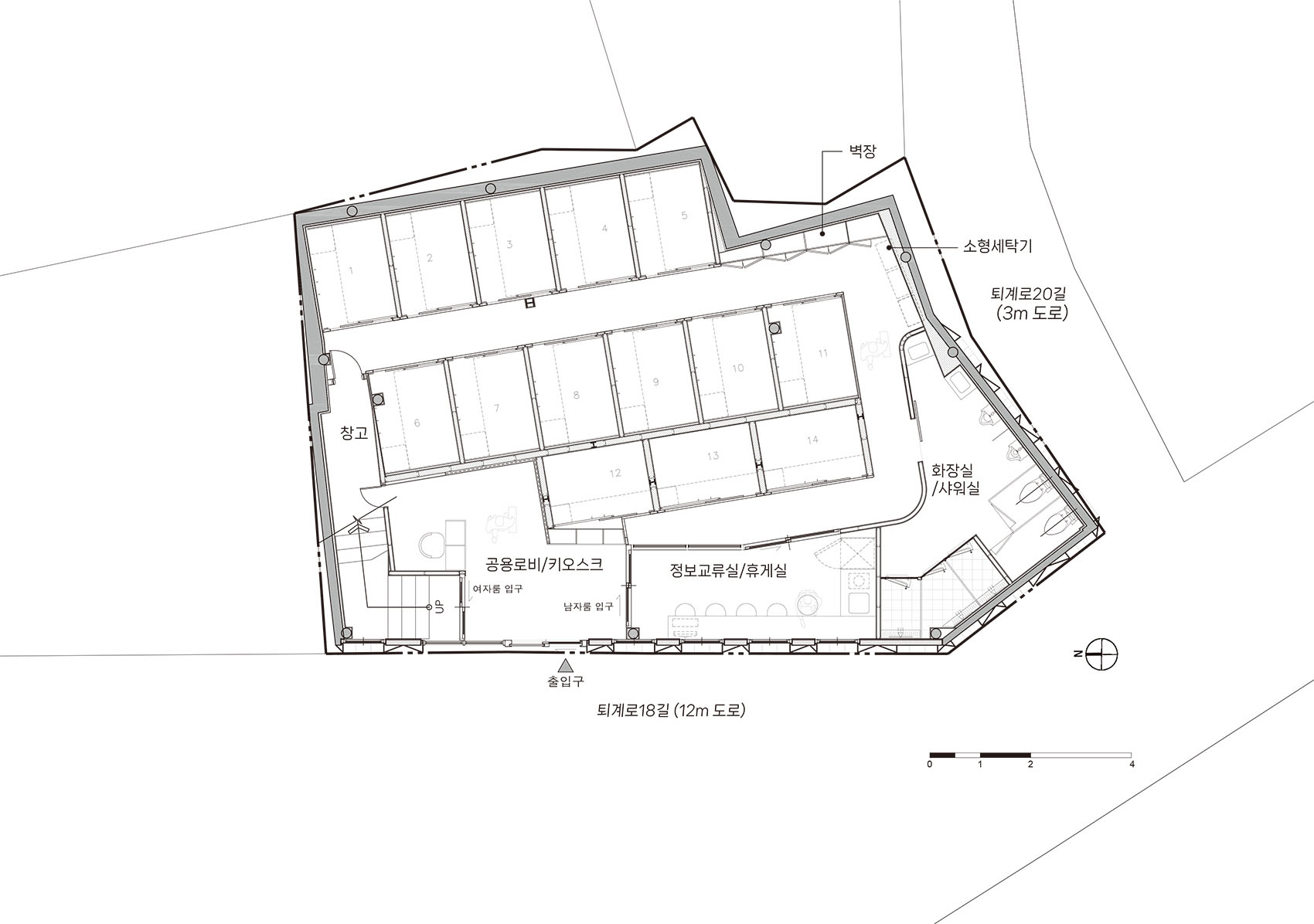
▼一层平面图,1st floor plan
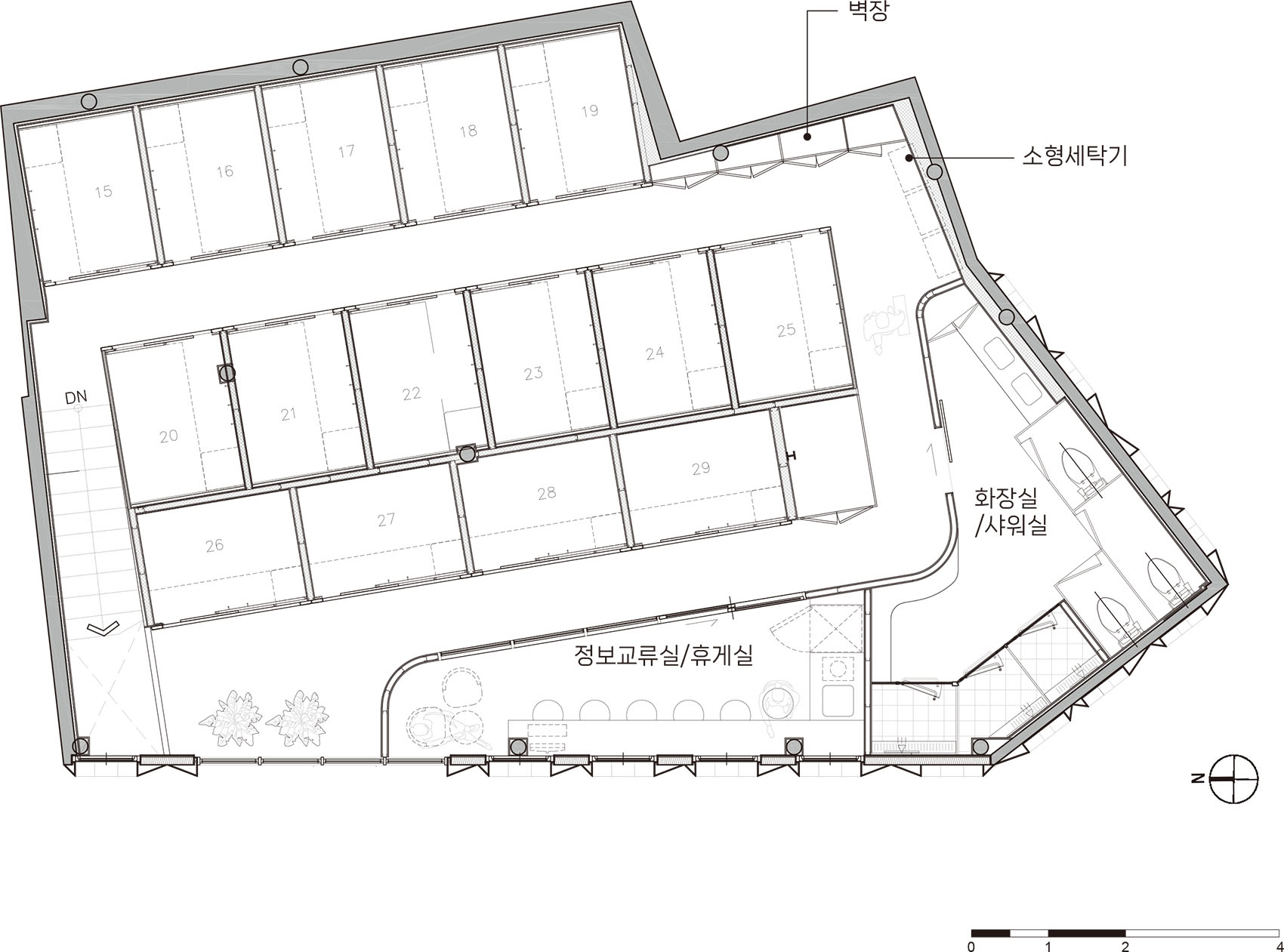
▼二层平面图,2nd floor plan
▼立面与剖面细部,Elevation and section detail
Project name: Hotel Myeongdong Station
Architect: Yong Ju Lee Architecture (Yong Ju Lee)
Design team: Dohoon Kim, Dajeong Son
Location: 13, Toegye-ro 18-gil, Jung-gu, Seoul
Programme: Tourist Accommodation Facility (Hostel)
Site area: 129.3 ㎡
Building area: 112.59 ㎡
Gross floor area: 214.52 ㎡
Building scope: Two stories
Height: 2.5m
Building to land ratio: 87.08 %
Floor area ratio: 165.91 %
Structure: Steel Frame + Cement Brick Structure
Exterior finishing: Fire-retardant ABS + Composite Panel
Interior finishing: Painting and Wallpaper Finish
Coding and Fabrication: Sunjin Plus
Design period: 2025.1. ~ 2025.3.
Construction period: 2025.4. ~ 2025.9.
Construction budget: 600,000,000 won
Client: Janghak Lee, Sanghoon Lee
Photo: Jihun Bae