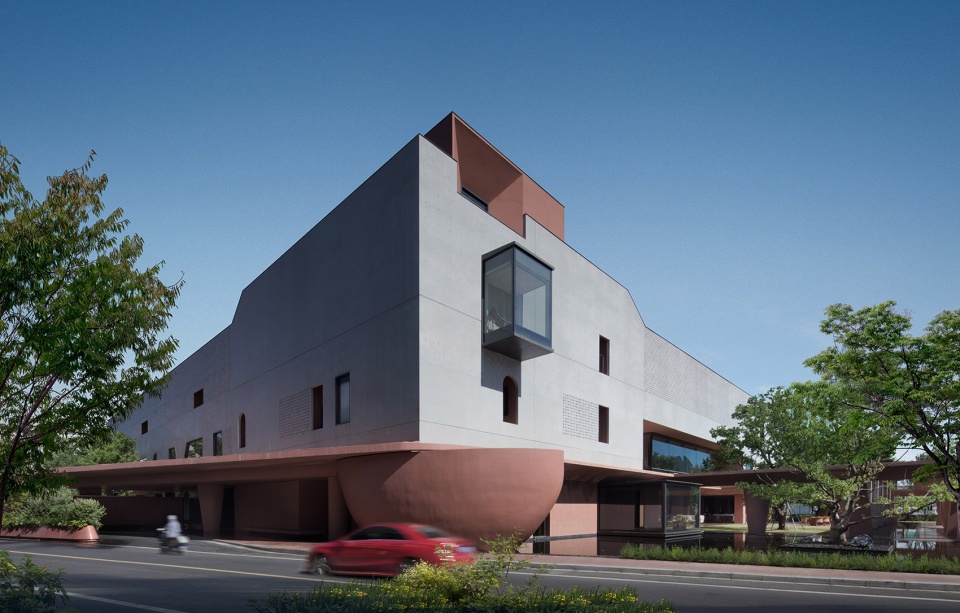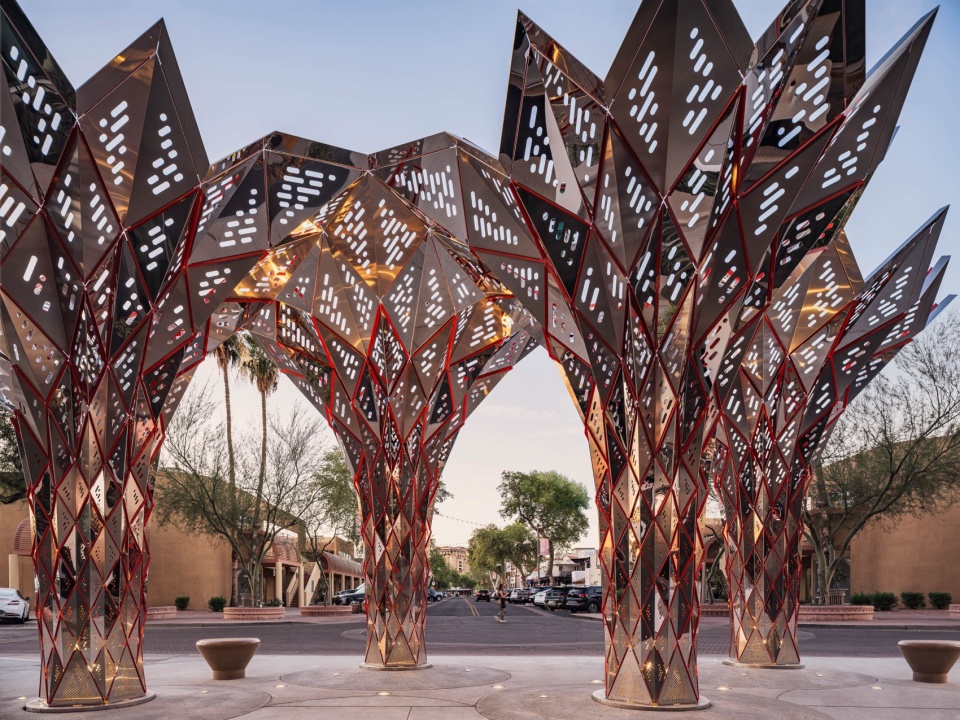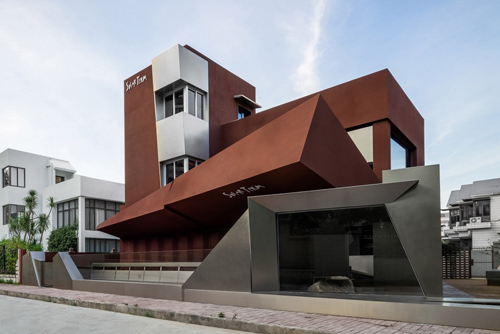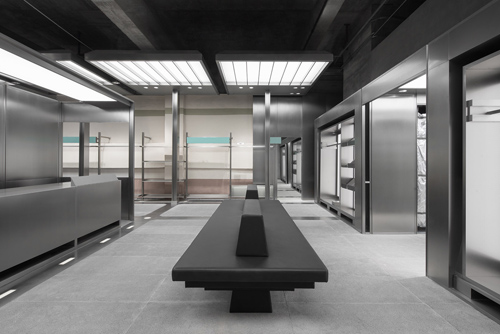
杭州和盛大厦 / 九米设计
引言:与城市对话 Introduction: Dialogue with Cities
杭州和盛大厦位于上城区钱塘智慧城核心地带,地处九盛路与九和路交汇处,前身为琪奥制造厂区,是杭州市“新制造业计划”背景下具有标杆意义的改造项目。我们将原本封闭、低效的传统厂房,转型为开放、共享、智能的现代化产业园区。项目不仅实现了空间功能的根本重塑,也完成了从单一制造基地向城市公共节点的价值跃升。
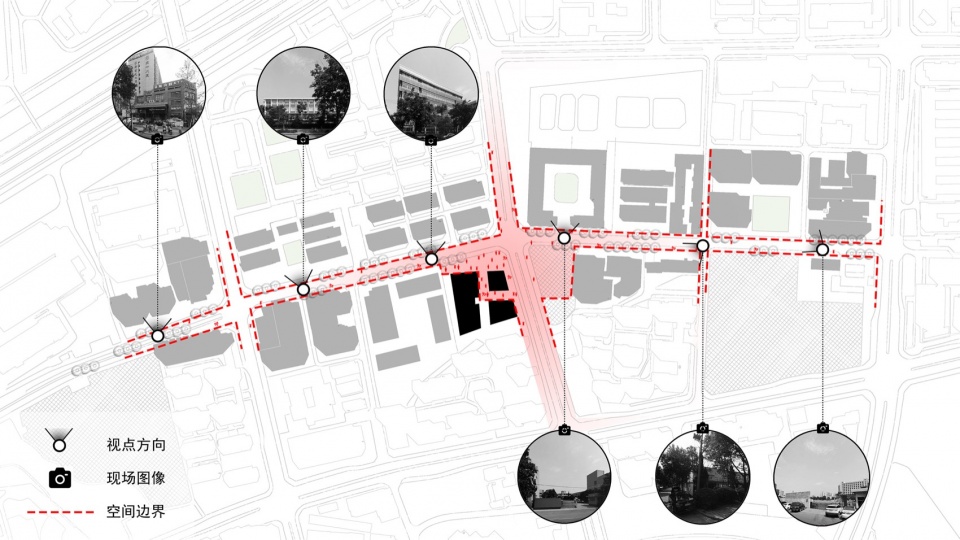
▼城市界面分析,Urban interface analysis
Hangzhou Hesheng Building is located in the core area of Qiantang Smart City in Uptown, at the intersection of Jiusheng Road and Jiuhe Road. It was formerly Qiao Manufacturing Plant, which is a benchmark transformation project under the background of “New Manufacturing Plan” of Hangzhou City. We will transform the originally closed and inefficient traditional factory buildings into open, shared and intelligent modern industrial parks. The project not only realizes the fundamental reshaping of spatial functions, but also completes the value leap from a single manufacturing base to an urban public node.
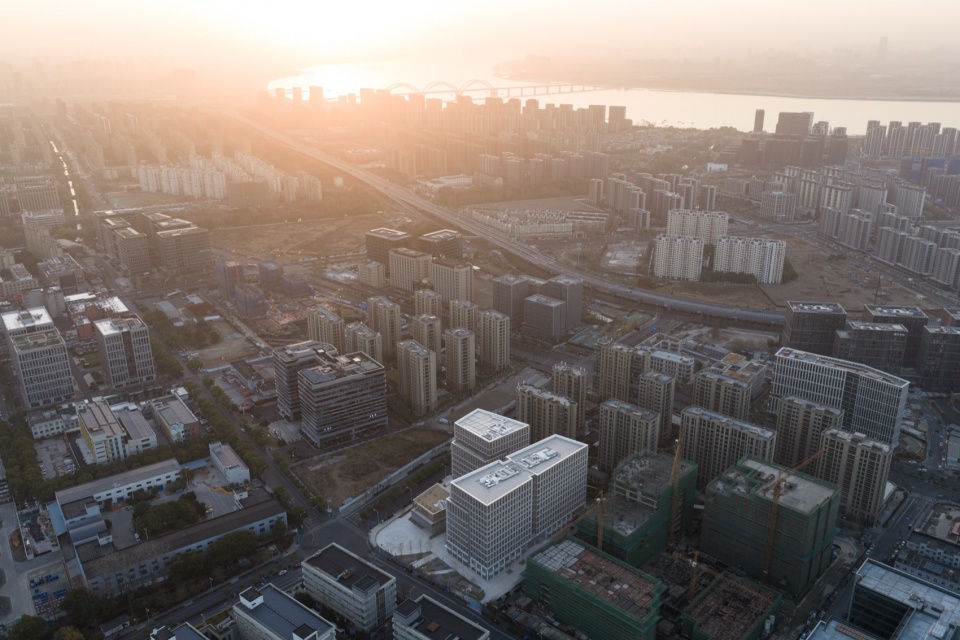
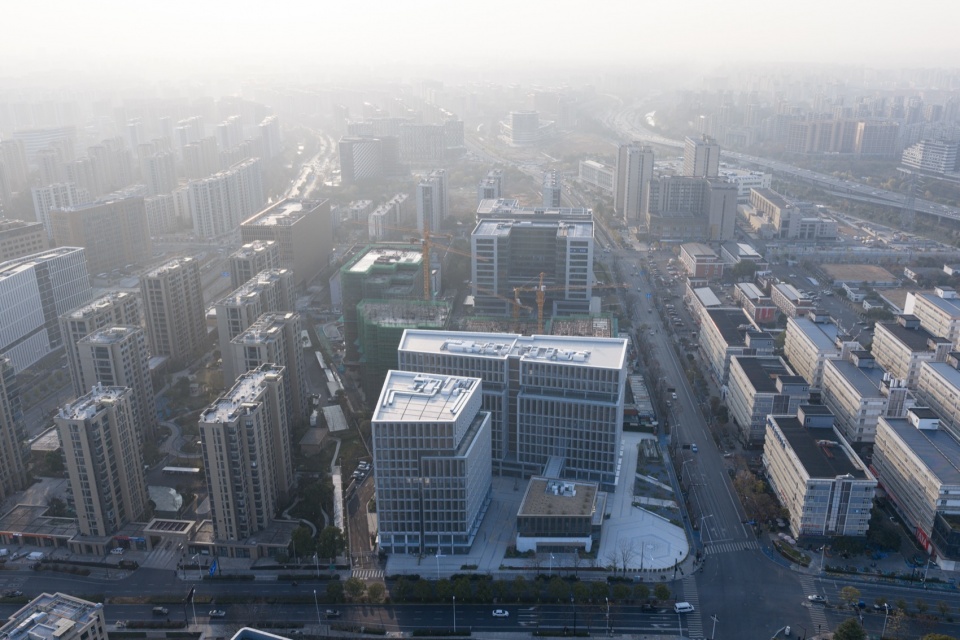
▼项目鸟瞰,Aerial View of the project
规划愿景:企业给城市的“留白” Planning vision: the “blank space” that enterprises give to the city
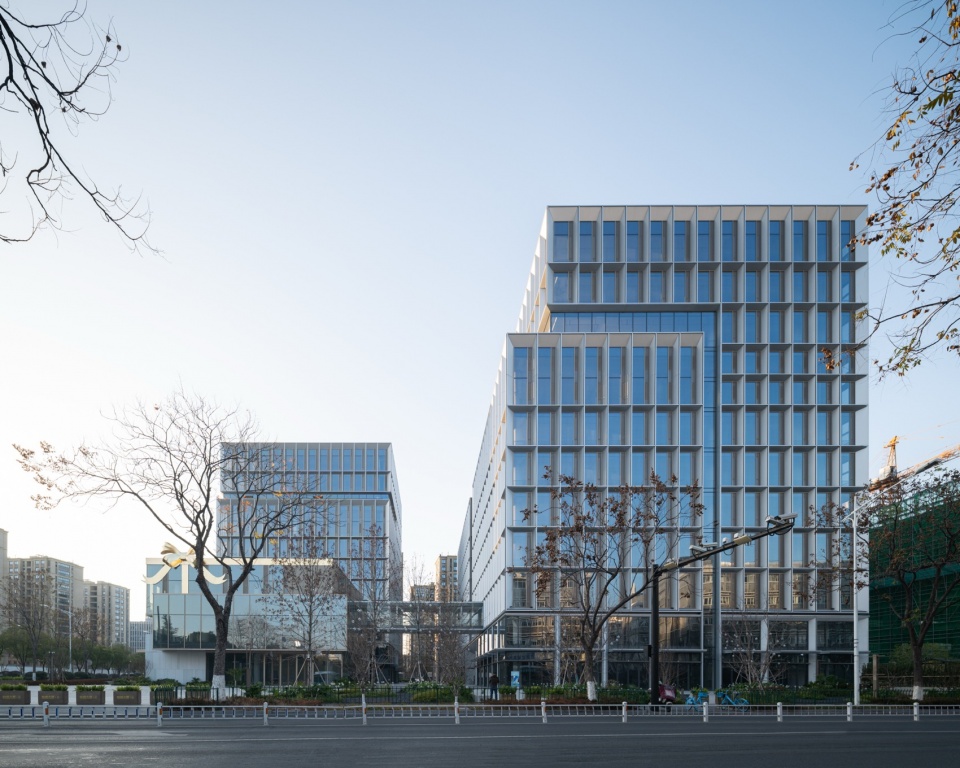
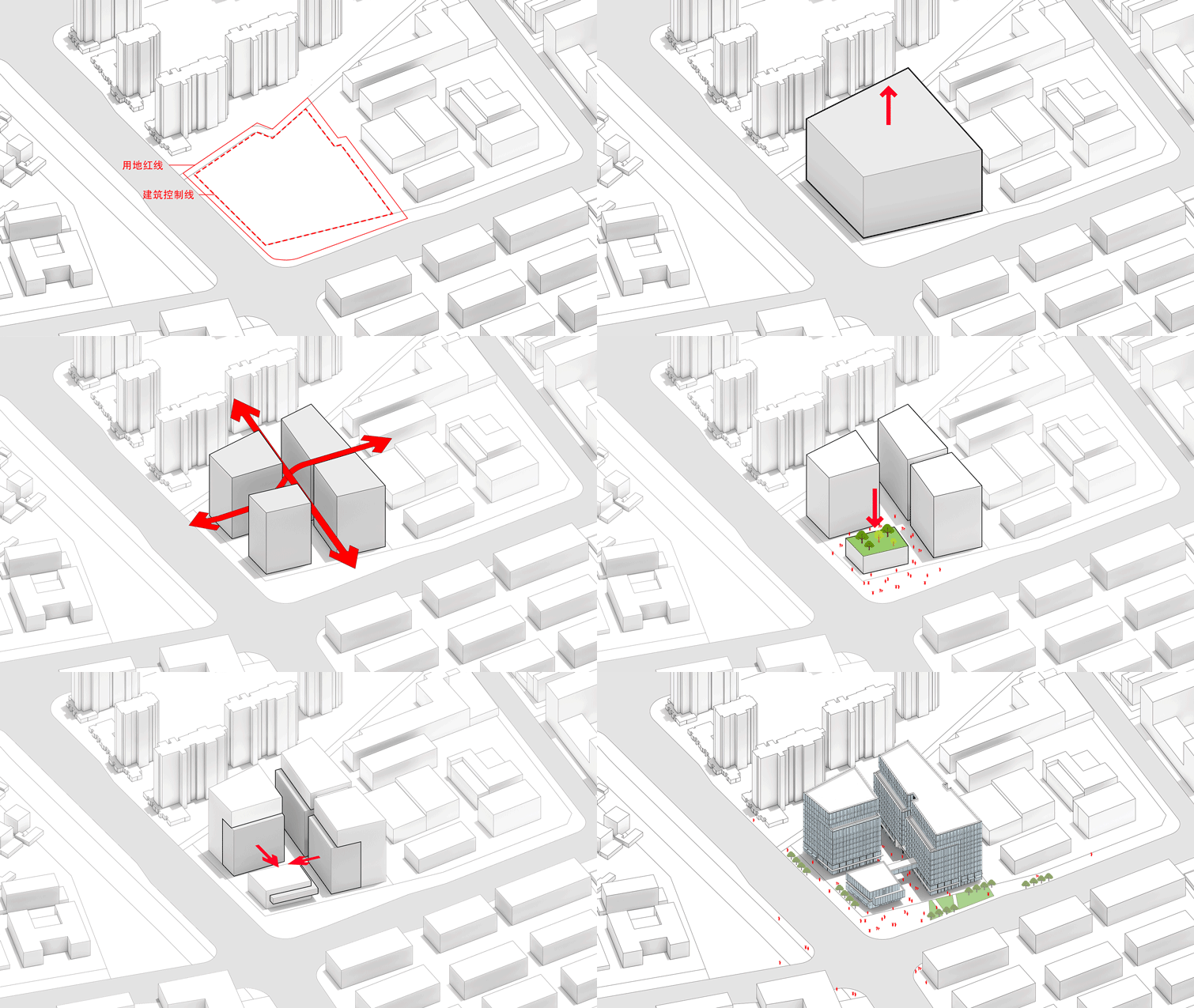
周边地块大多紧贴红线而建,对城市呈现出防御的姿态。本设计则以“内退包容、裁剪缝合”为核心理念,回应这一现状。设计生成遵循清晰的逻辑:首先,基于场地条件与容积率要求,确立整体建筑体量;随后,沿十字轴线对体量进行“象限剖分”,将大体量消解为三个尺度亲和、体块独立的单元;继而,通过“街角降低”策略,主动退让出城市公共空间,在繁忙的十字路口塑造出一片开放的入口广场;最终,借助体量的错动与连廊的缝合,将各单元重新整合为一个既独立又统一的建筑群落。这一过程,不仅是一次严谨的形式生成,更是对城市公共性的自觉建构与主动回应。
Most of the surrounding plots are built close to the red line, presenting a defensive posture to the city. This design is based on the core concept of “retreat, inclusion, cutting and sewing” to respond to this situation. Design generation follows a clear logic: first, based on site conditions and volume ratio requirements, establish the overall building volume; then, along the cross axis of the volume of “quadrant division”, the bulk of the resolution into three scales of affinity, volume independent units; then, through the “corner reduction” strategy, actively yield out of the city public space, in the busy intersection to shape an open entrance square; Finally, with the help of volume dislocation and corridor stitching, the units are reintegrated into an independent and unified building community. This process is not only a rigorous form generation, but also a conscious construction and active response to urban publicity.
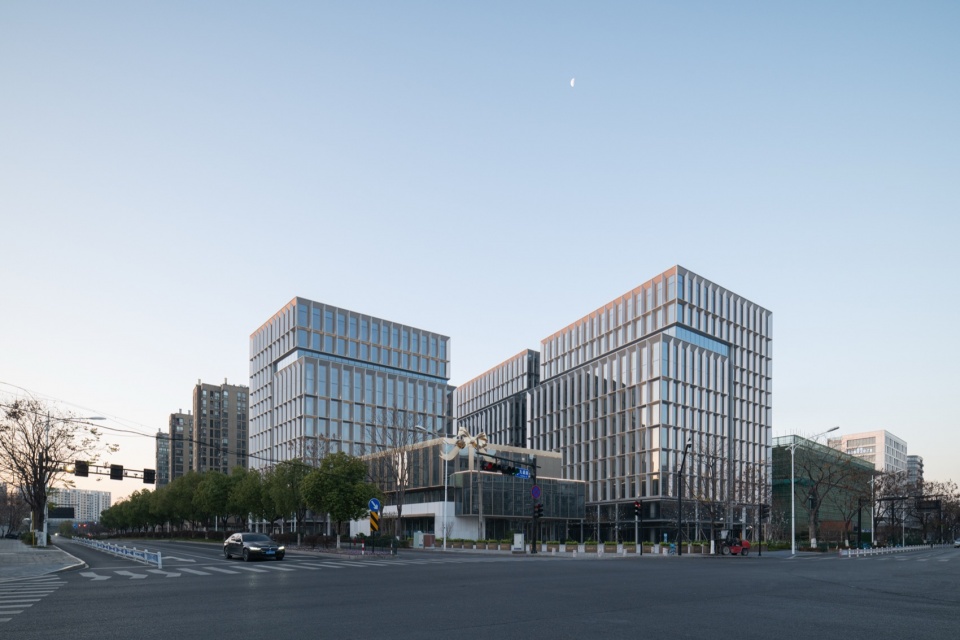
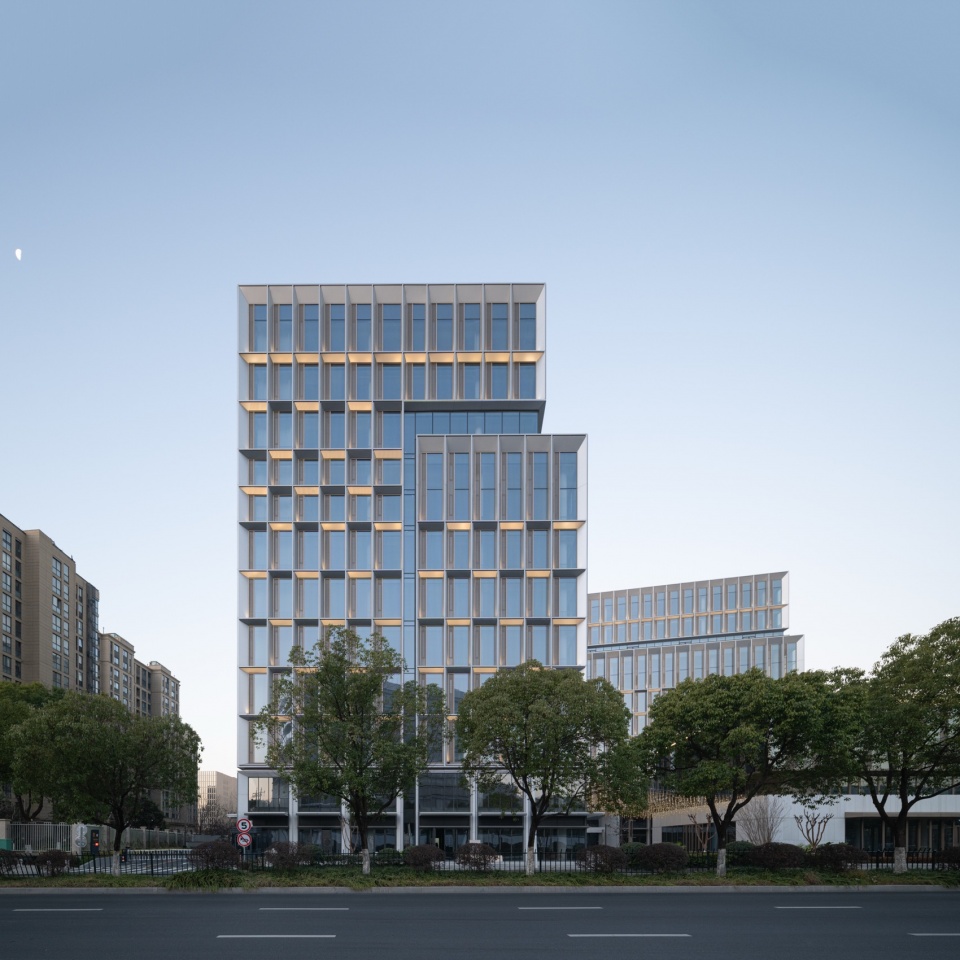
▼建筑外观,Building appearance
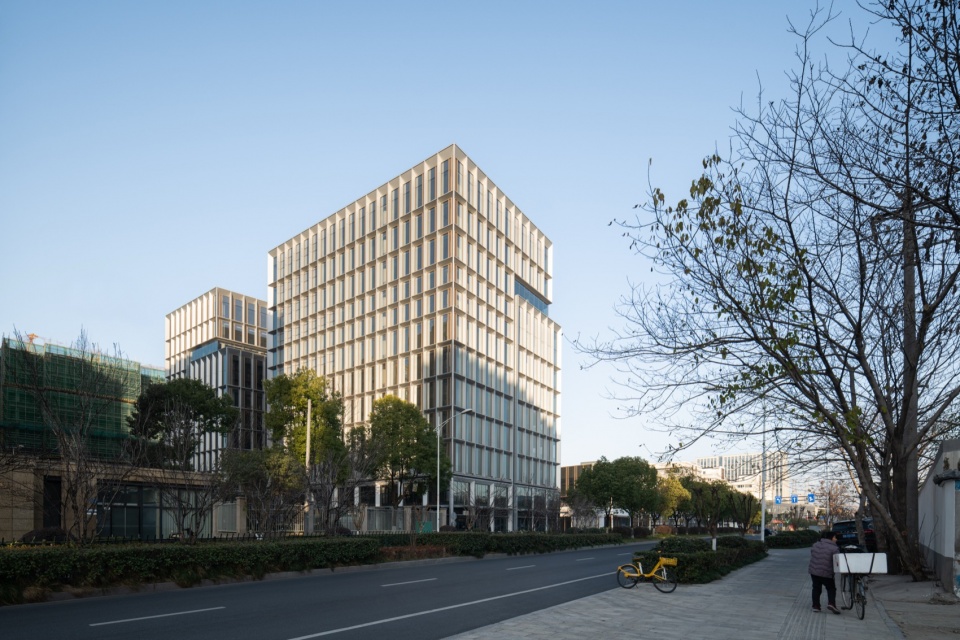
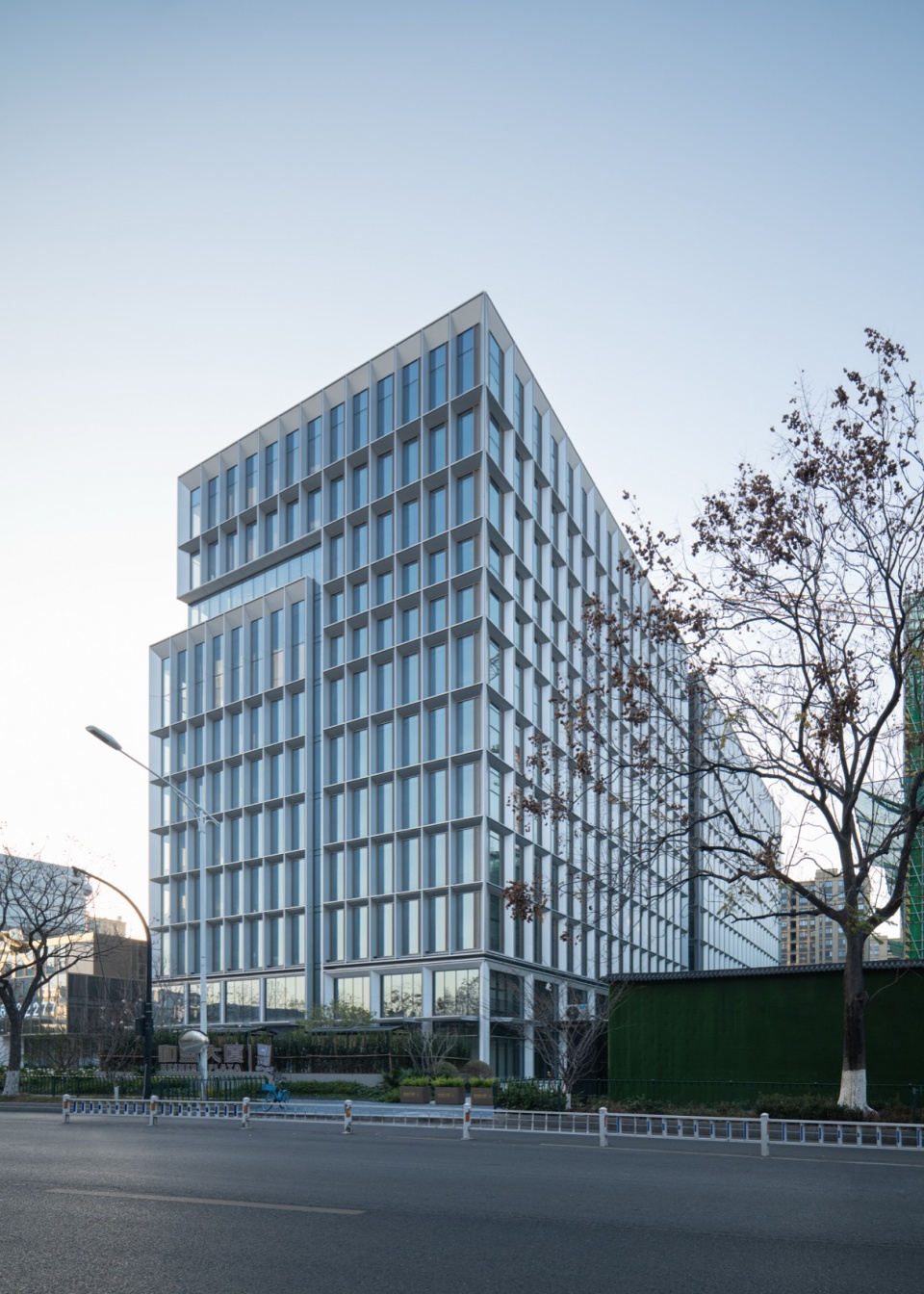
▼立面街景,Facade street view
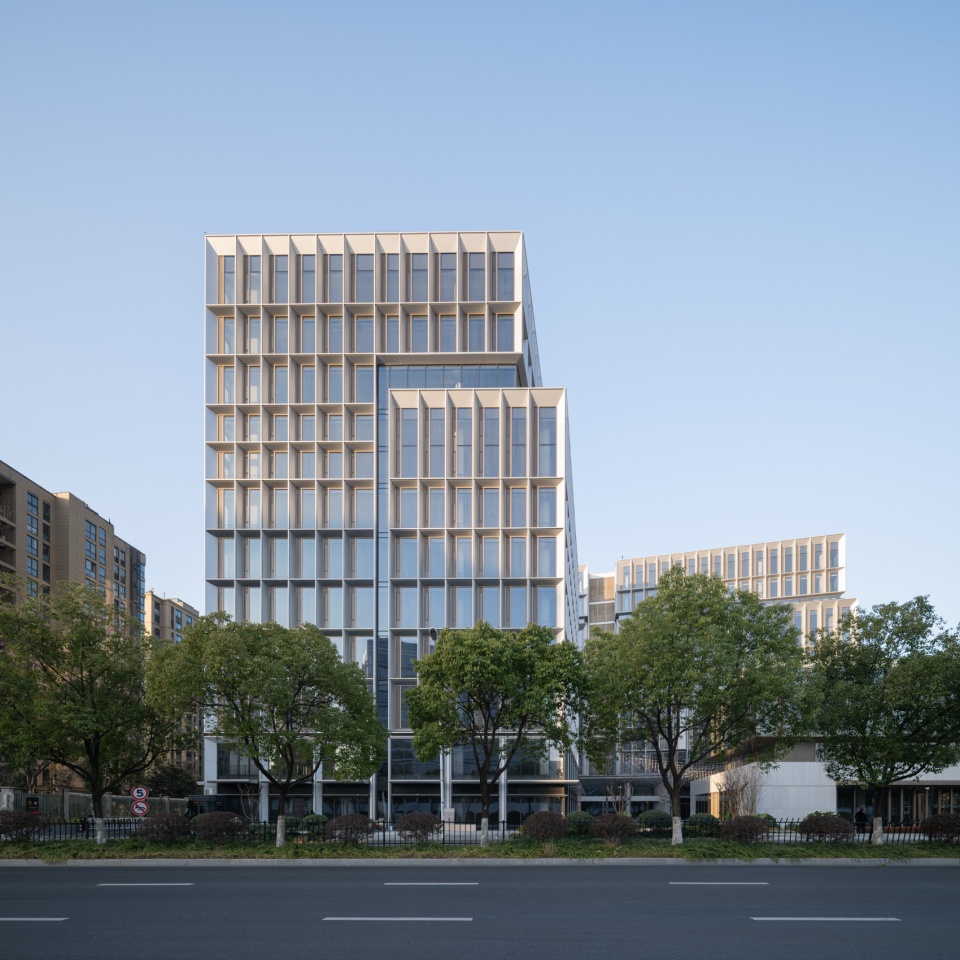
▼立面,Facade
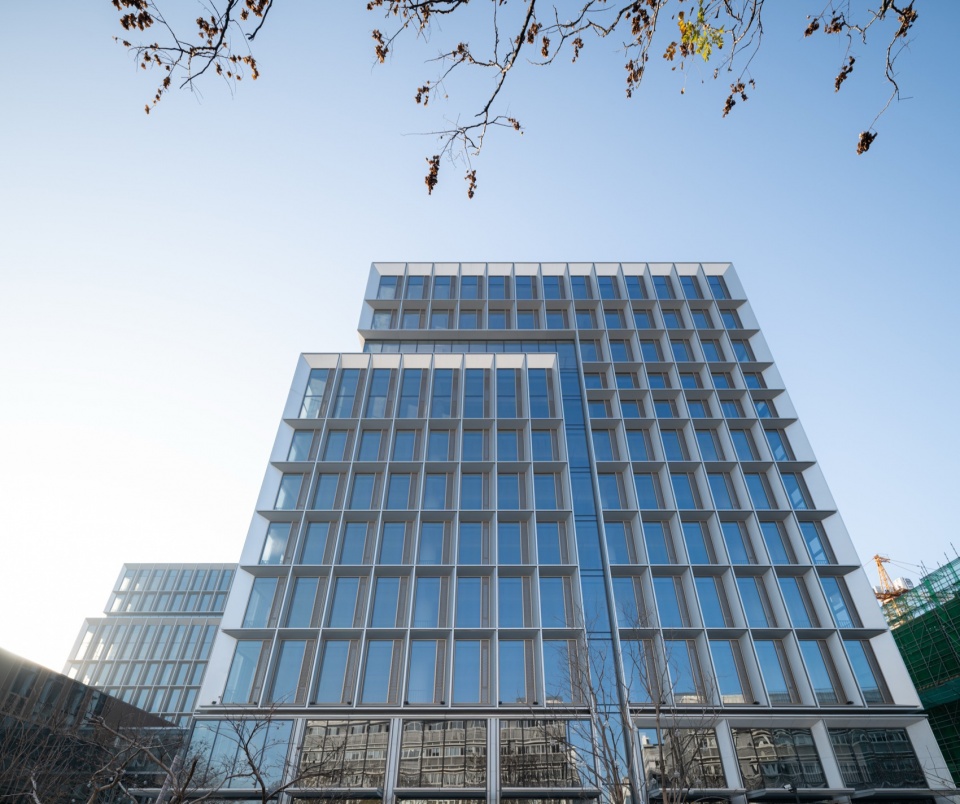
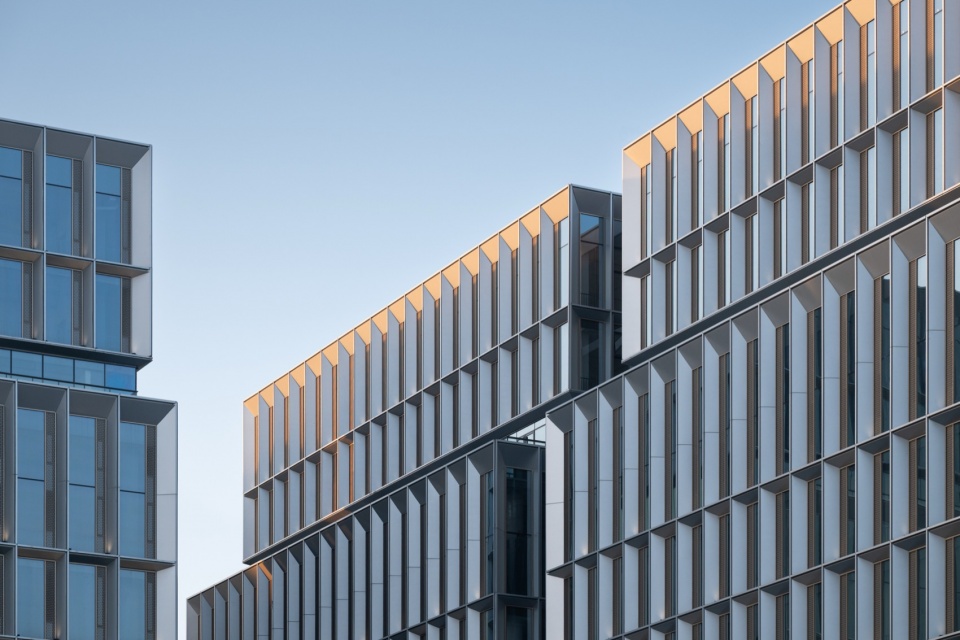
▼光影中的明暗渐变,The gradual change of light and shade in the scene
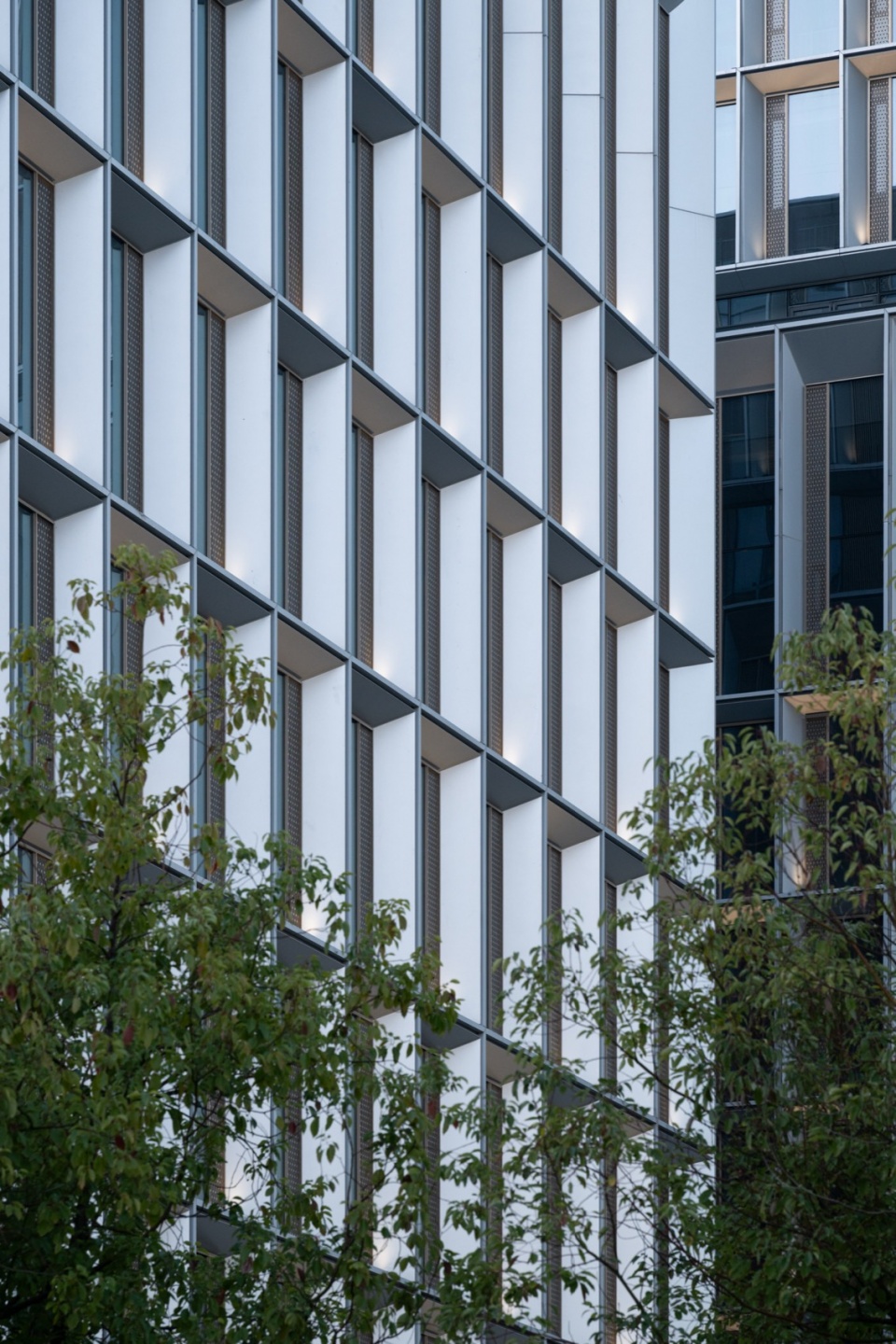
▼立面材料细部,Facade material details
界面:一座主动“打开”的建筑 Interface: An Active “Open” Building
从城市空间边界的视角审视,项目于多个关键节点建立起视点方向,由此生成若干面向城市的观察界面。通过这些界面,建筑与城市之间形成丰富的视觉对话。其空间边界的界定,不再是于围墙或栅栏,而是借由绿化、退台、广场等柔性元素,构筑起具有渗透性的边界,最终实现“界而不隔、分而不离”的城市空间意境。
▼概念生成,concept generating
From the perspective of urban spatial boundary, the project establishes viewpoint directions at several key nodes, thus generating several city-oriented observation interfaces. Through these interfaces, a rich visual dialogue is formed between buildings and cities. The boundary of its space is no longer defined by walls or fences, but by flexible elements such as greening, retreat, square, etc., to construct a permeable boundary, and finally realize the artistic conception of urban space of “boundary without separation, division without separation”.
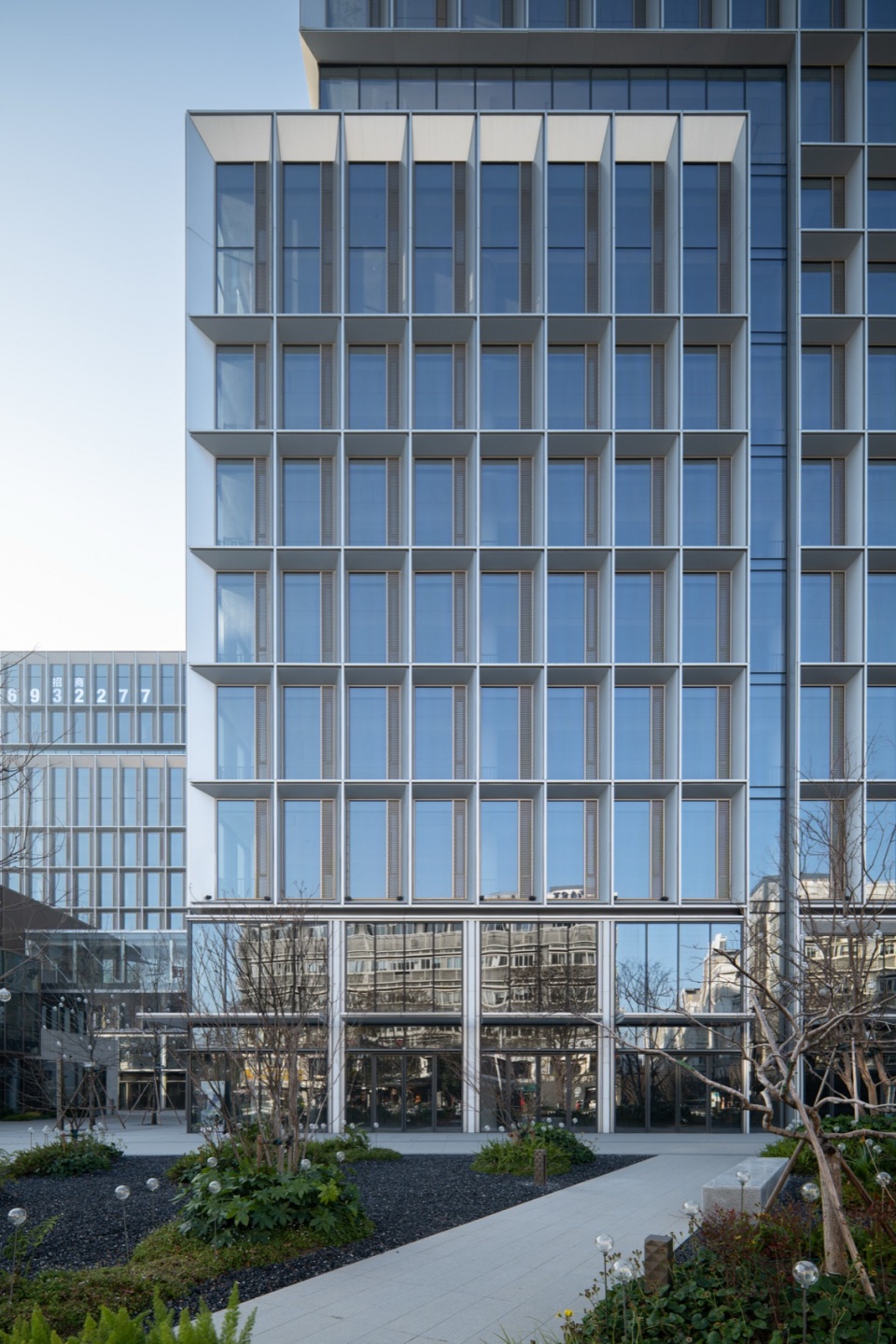
▼竖向韵律,Vertical Rhythm
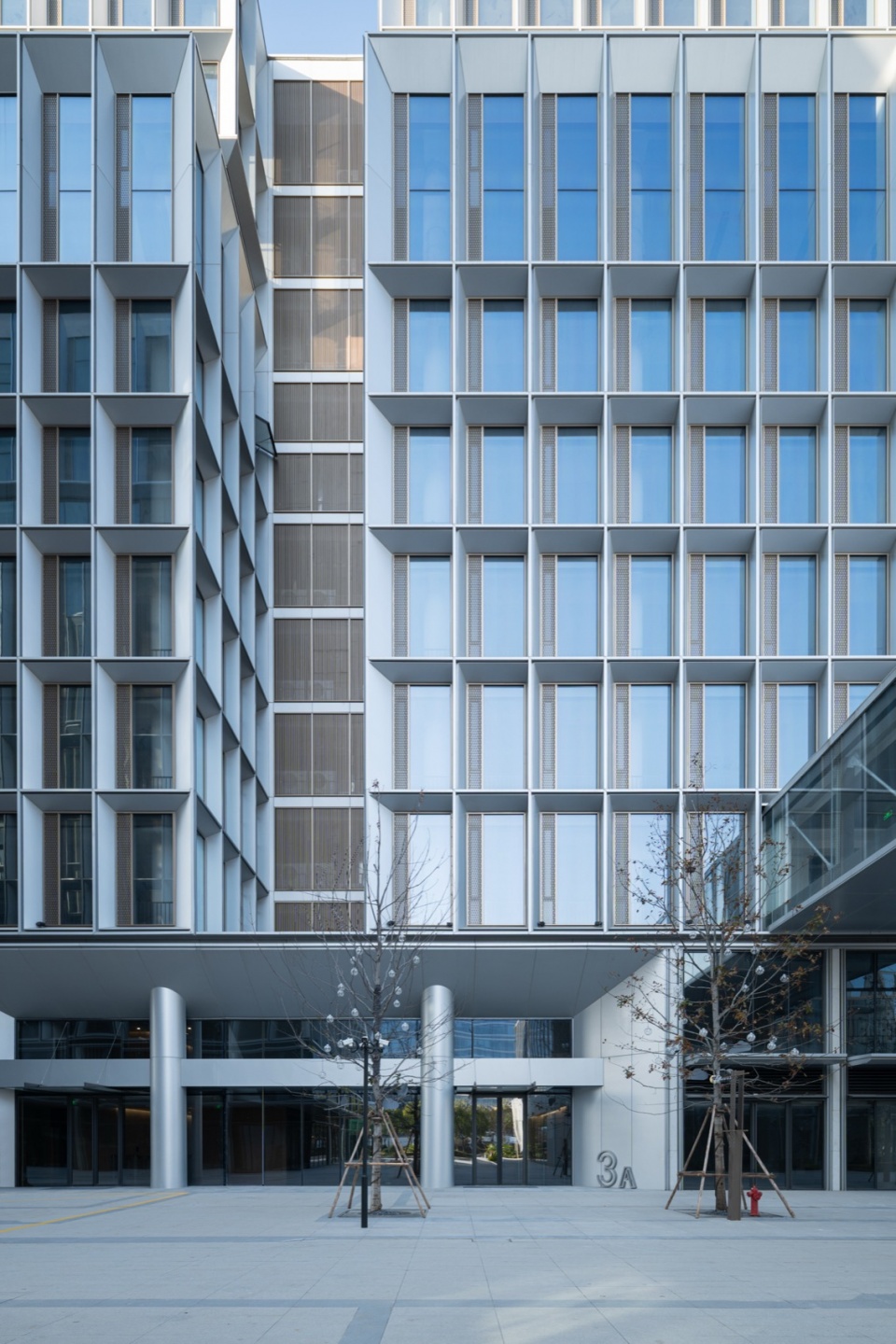
▼入口,Entrance
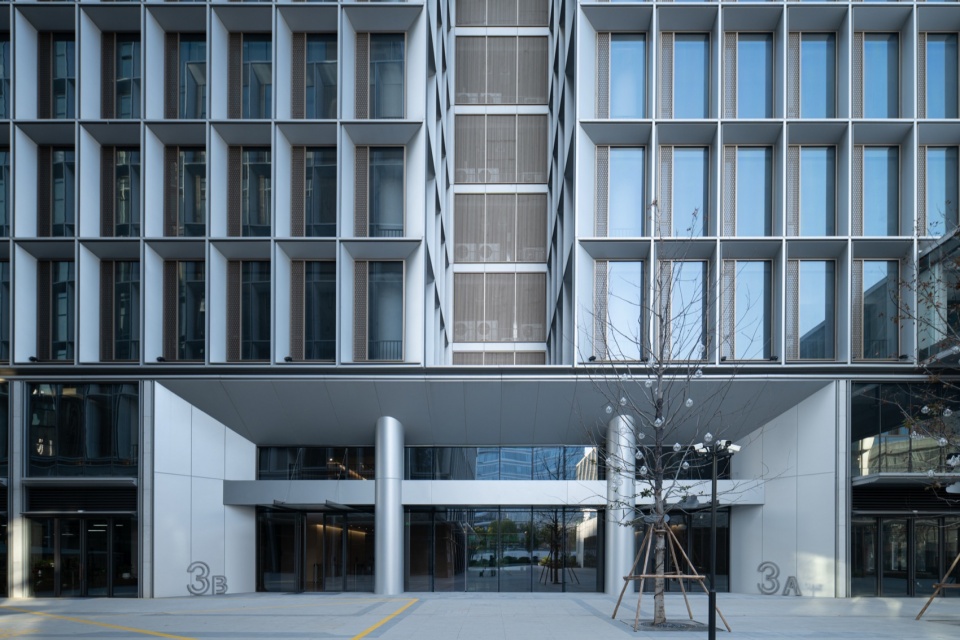
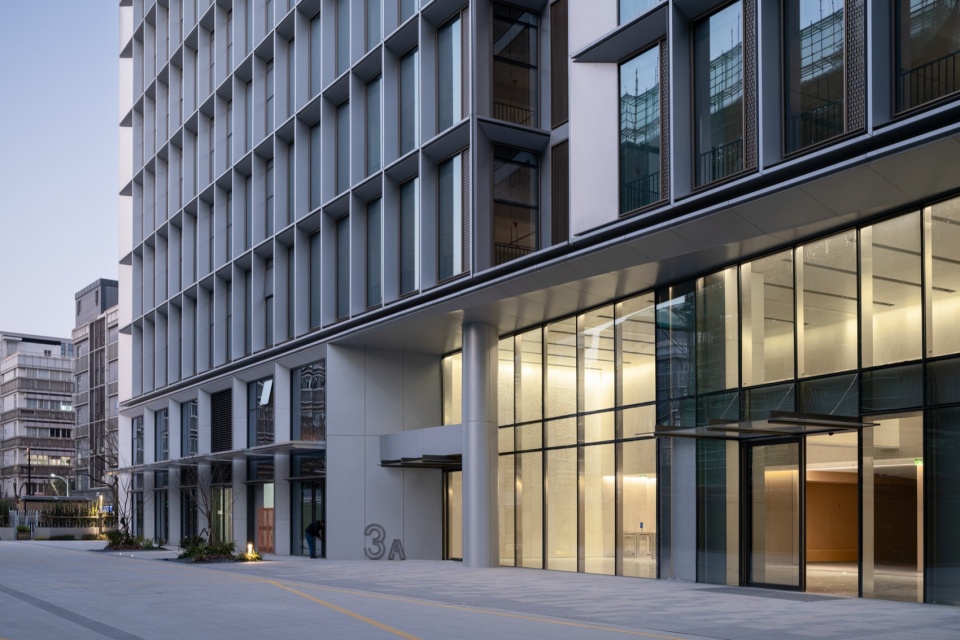
▼入口局部,Entrance area
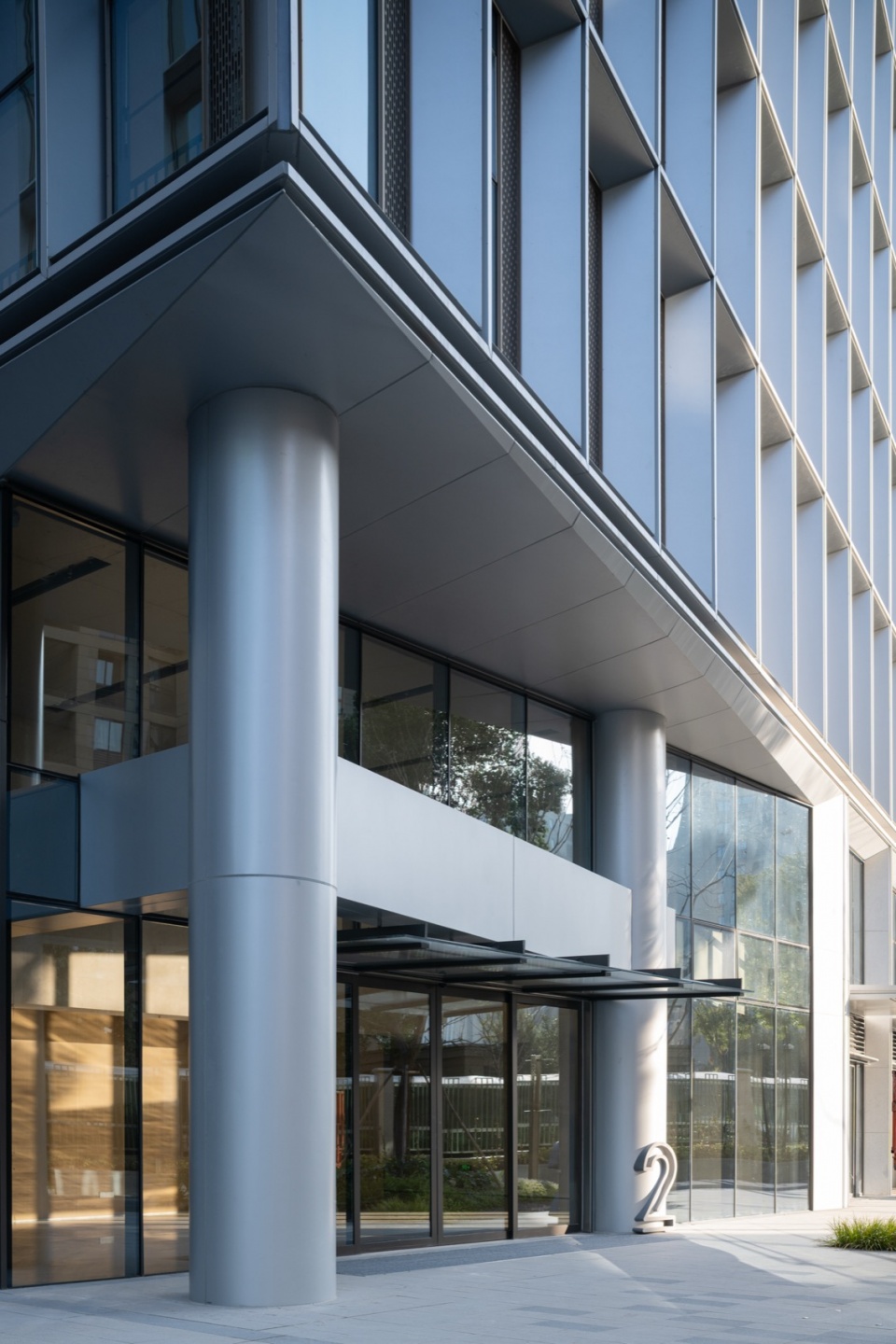
设计中,“十字轴动线”不仅是对内部流线的优化,更是对外关系的重新梳理。两条人行入口分别指向城市街道,轴线贯穿场地,拉通主楼东西向,形成一条可穿行的公共路径。这意味着,建筑不再是封闭的“孤岛”,而是开放的“桥梁”——它邀请城市进来,也引导内部向外延伸。
▼轴测鸟瞰图,Axonometric aerial view
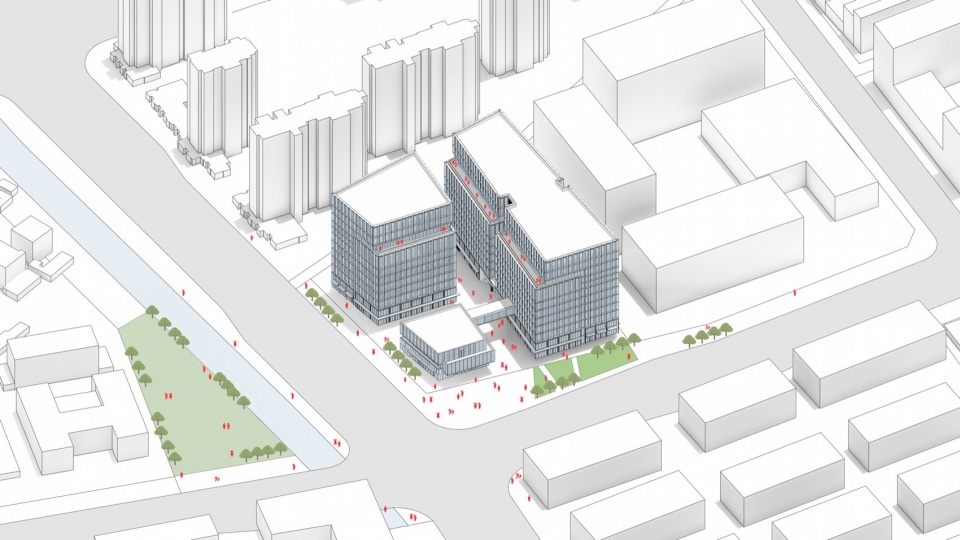
In the design,”cross axis moving line” is not only the optimization of internal streamline, but also the re-combing of external relations. Two pedestrian entrances point to the city streets, respectively, and the axis runs through the site, opening the east-west direction of the main building to form a passable public path. This means that buildings are no longer closed islands, but open bridges-inviting cities in and guiding the interior outward.
▼望向内街,Look into inner street
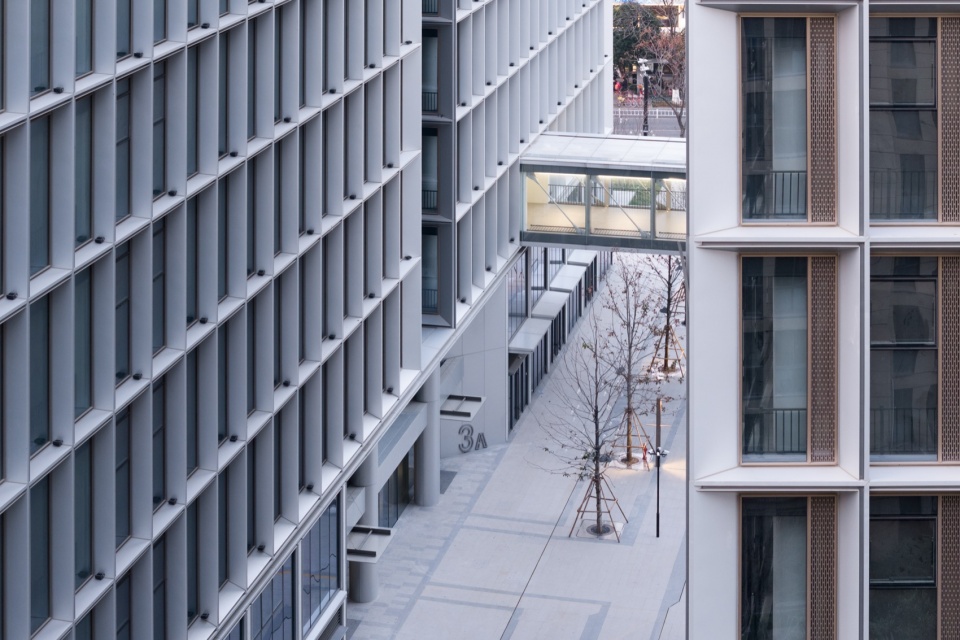
▼内街,Inner Street
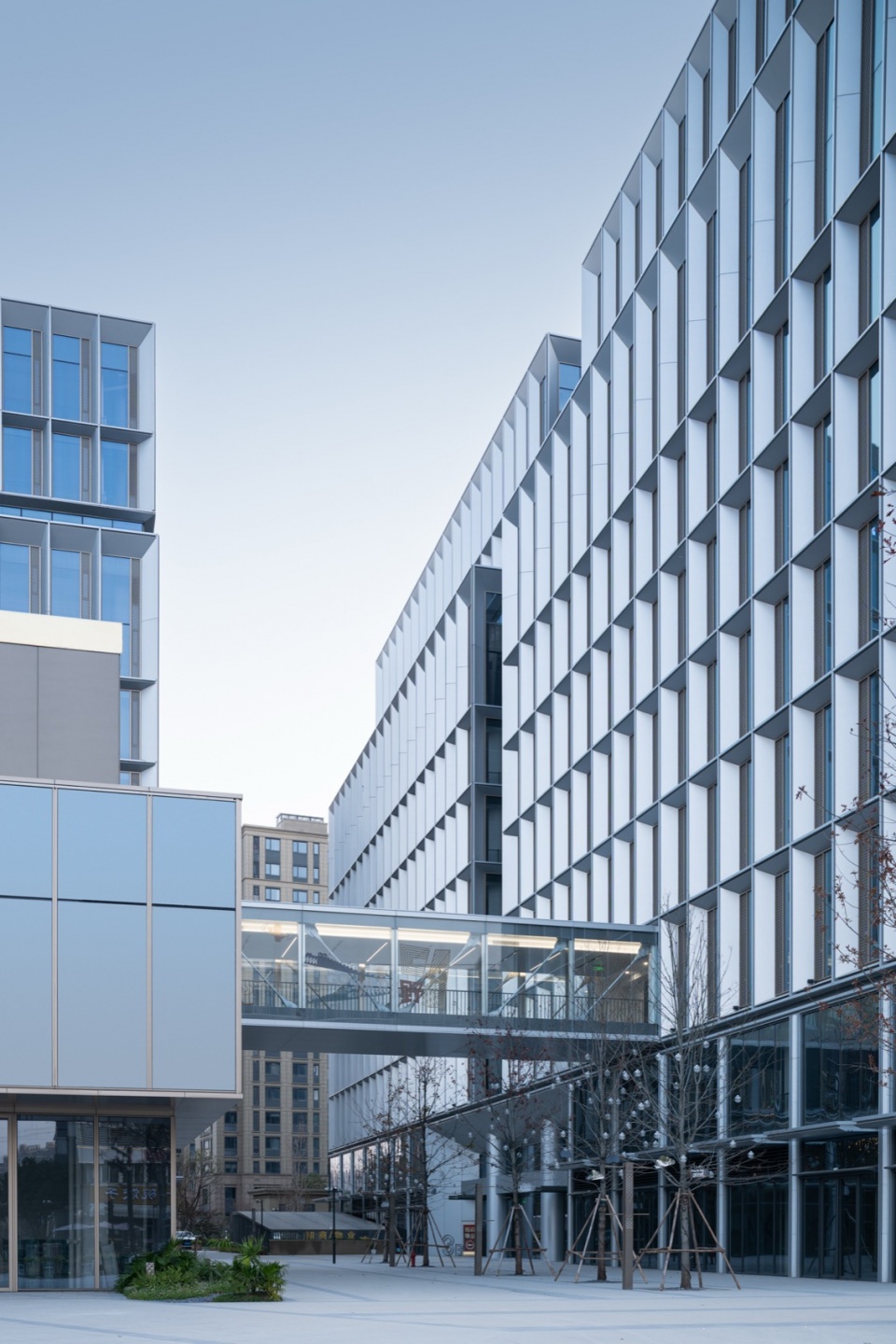
立面:工业记忆的转译 Facade: Translation of Industrial Memory
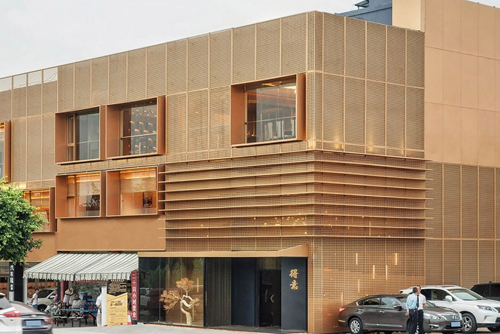
建筑立面采用高度克制而精准的设计语言。贯穿全高的竖向单元格肌理,如同铺陈开来的韵律网格,赋予建筑以垂直的挺拔感与韵律美。每一单元均遵循模数化设计,玻璃与穿孔铝板交替嵌入,既满足内部空间的采光与遮阳需求,也在日影推移间刻画出变幻的光影表情。
The facade uses a highly restrained and precise design language. The vertical cell texture running through the whole height, like a rhythmic grid laid out, gives the building a sense of vertical straightness and rhythmic beauty. Each unit follows a modular design, with glass and perforated aluminum panels alternately embedded to meet the lighting and shading needs of the interior space, as well as to depict changing light and shadow expressions during the passage of the sun.
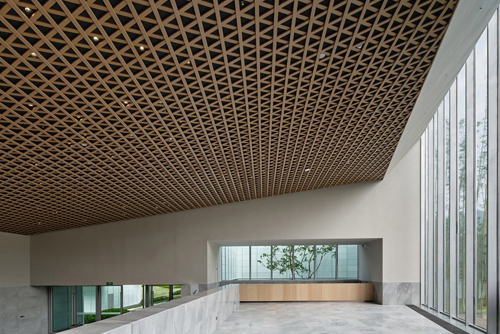
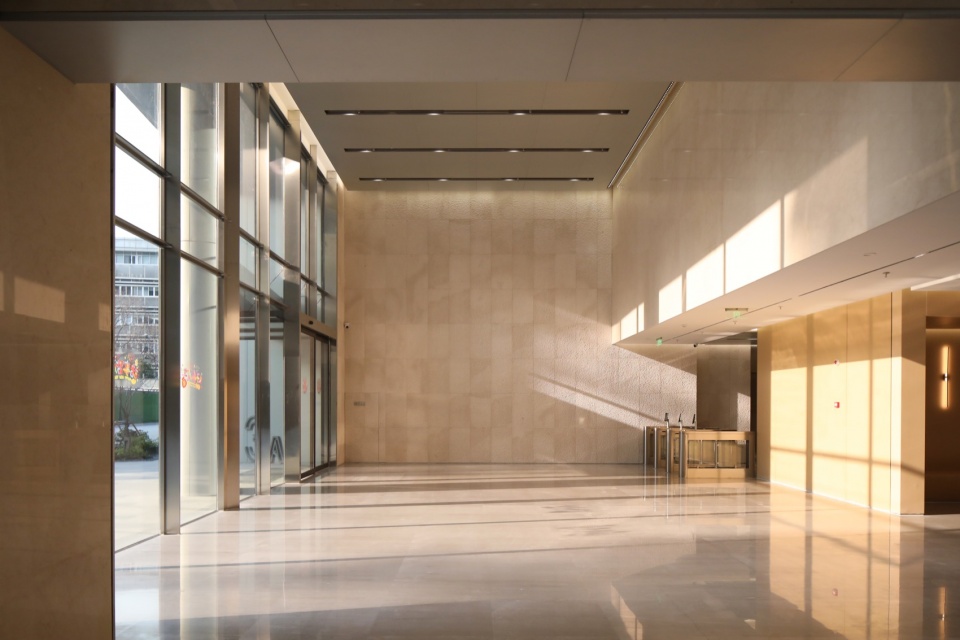
▼大厅,Hall
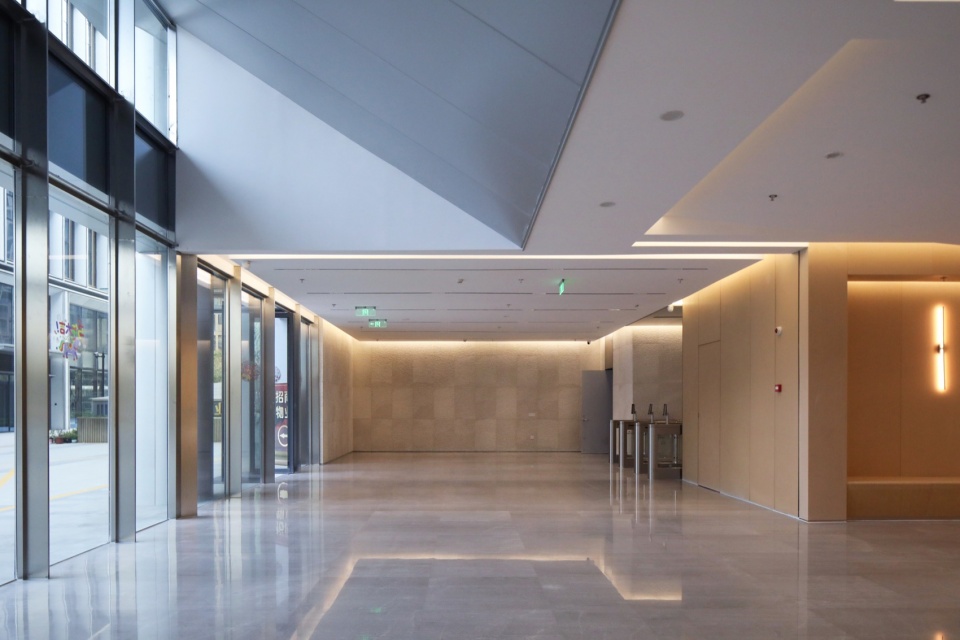
这一竖向肌理,是对传统工业“格栅式”外墙的现代抽象;穿孔铝板,既是功能性的遮阳构件,也成为工业美学的显性符号;斜拉杆连廊,在承重之外,亦构成了视觉的焦点。它们共同沉淀为一种工业的诗意——不刻意复刻旧厂房的形态,却延续了工业建筑的生成逻辑:模数化、重复性、结构的坦诚表达。而暖色铝板的介入,恰到好处地打破了这一冷峻秩序,为理性的建筑立面注入一抹温度与张力。
This vertical texture is a modern abstraction of the traditional industrial “grilled-style” exterior wall; perforated aluminum plates are both functional sunshade components and dominant symbols of industrial aesthetics; inclined tie rods and corridors, in addition to load-bearing, also constitute the focus of vision. They precipitate together into an industrial poetry-not deliberately reproducing the form of old factory buildings, but continuing the logic of industrial architecture: modularization, repetition, and frank expression of structure. The intervention of warm aluminum plates breaks this cold order just right, injecting a touch of temperature and tension into the rational building facade.
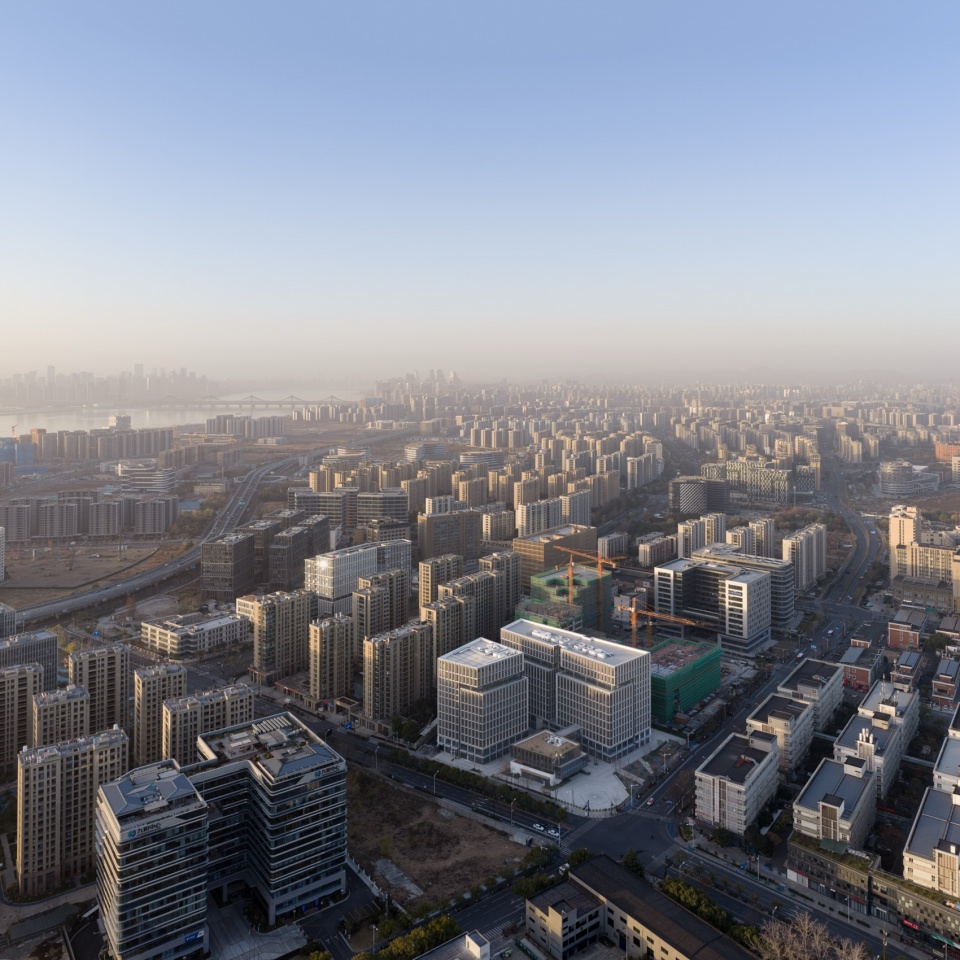
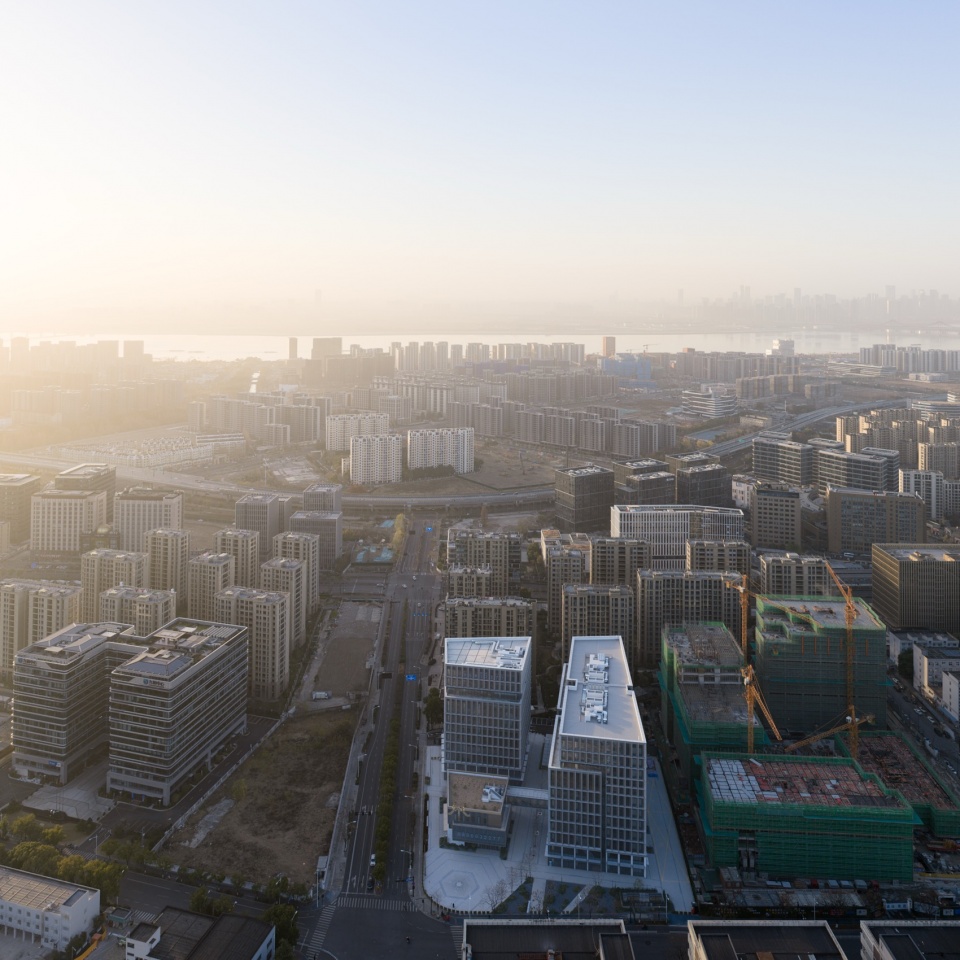
▼全景鸟瞰,Panoramic Bird’s-Eye View
结语:更新即重构 Conclusion: Update is Reconstruction
“共享”是和盛大厦的核心标签,但它不止于“门开着”——更在于空间是否真正具备让人停留的能力:广场是否有人愿坐?动线是否鼓励偶遇?停留是否足够舒适?
和盛大厦的意义,在于重新书写城市的多重关系——人与城市、工业与生活、记忆与未来。它是一次空间善意的实践,也是一次工业记忆的转译:将旧厂房的逻辑,转译为当下的语言;更是一次共享语法的探索——在钱塘智慧城的十字路口,它让建筑本身,成为一个关于开放、共生与温度的故事。
“Sharing” is the core label of Hesheng Building, but it is not only “door open”_more about whether the space really has the ability to let people stay: is there anyone willing to sit in the square? Does the line encourage chance encounters? Is the stay comfortable enough? The significance of Hesheng Mansion lies in rewriting the multiple relationships between people and cities, industry and life, memory and future. It is a practice of spatial goodwill, but also a translation of industrial memory: translating the logic of the old factory building into the current language; it is also an exploration of shared grammar_at the crossroads of Qiantang Smart City, it makes the building itself a story about openness, symbiosis and temperature.
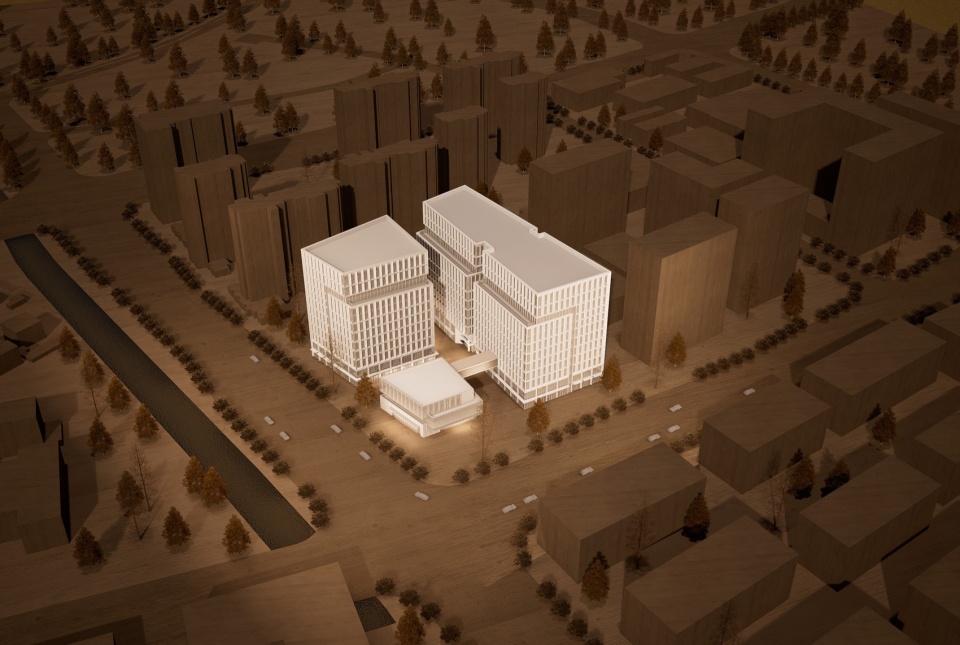
▼模型,model
项目信息:
Project Information:
Project Name: Hangzhou Hesheng Mansion
Project Location: Hangzhou, Zhejiang
Completion year: 2025
Building area: 53754㎡
Construction unit: Hangzhou Qiao Garment Co., Ltd.
Architectural Design: 9M Design
Landscape Design: Zhejiang Qingkun McCann Landscape Design Co., Ltd.
Interior Design: Hangzhou Jiuweike Building Technology Co., Ltd.
Photography: Right Angle Architecture Photography