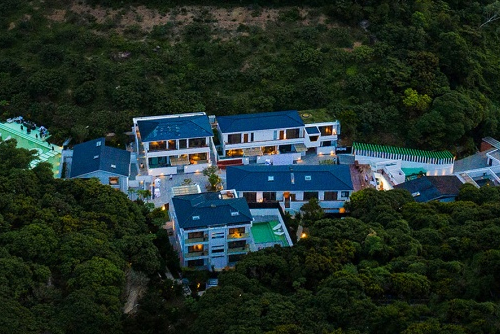
南书院,安徽黄山 / 来建筑设计工作室
缘起Origins
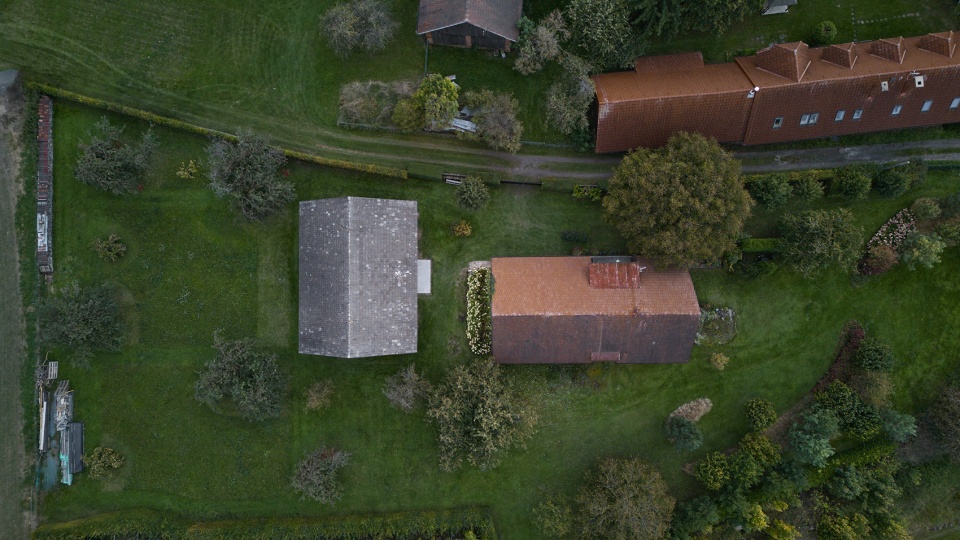
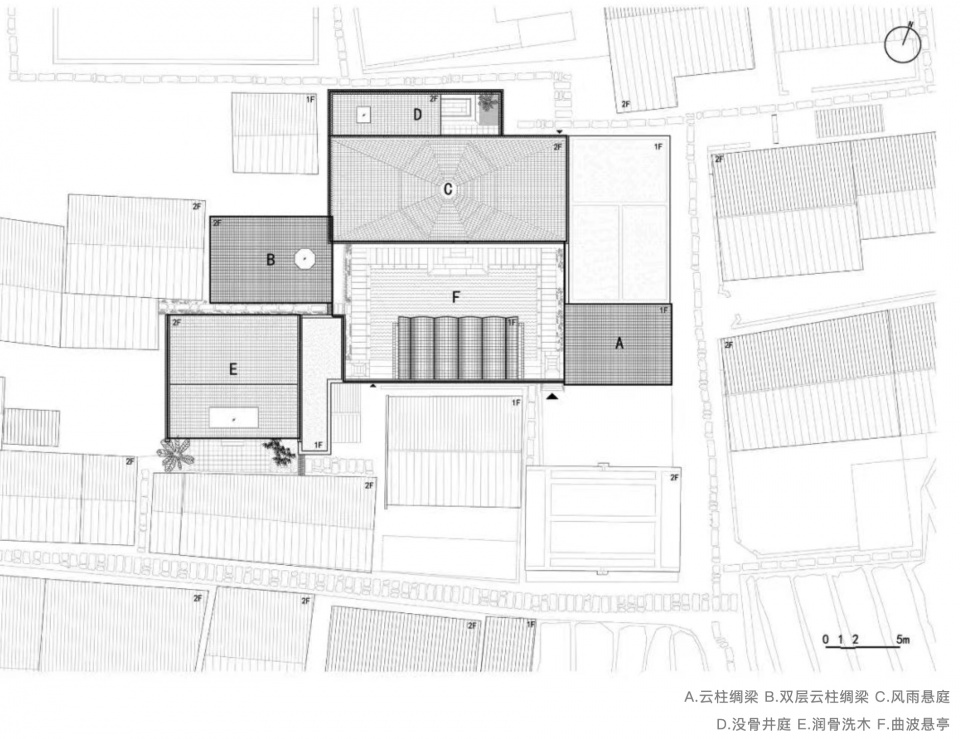
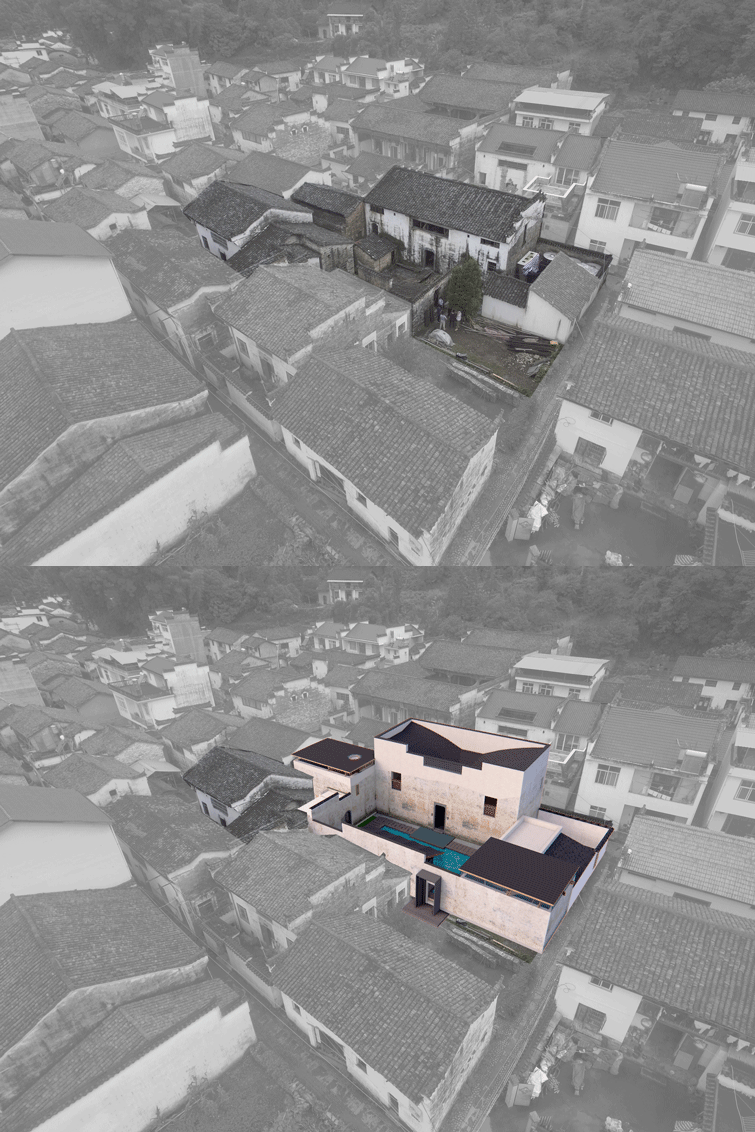
南书院位于徽州地区的一座传统村落之中,由两户农宅及其附房收储而来,基址面积600㎡,被周围民居的界墙所限定。建筑均由原址修建而成,围绕一座水庭院错落布置。设计基于中国传统建筑木构架以“线”为形的特征,结合书画艺术中的“骨法”,创造出新的结构形式,并引入光、风、雨等自然要素,呈现出生动的空间气韵。
Located in a traditional village in the Huizhou region, Courtyard G was transformed from two farmhouse residences and their outbuildings. The site, covering 600 m², is defined by the boundary walls of surrounding dwellings. The buildings were reconstructed on-site, arranged in a staggered layout around a water courtyard. Based on the “linear” characteristic of traditional Chinese timber frames and the concept of ” Bone Method ” from calligraphy and painting, the design creates a new structural form. By introducing natural elements such as light, wind, and rain, it presents a vivid ” Spiritual Rhythm ” within the space.
▼总平面图,master plan
▼改造渲染图,Revised renderings
骨法Bone Method
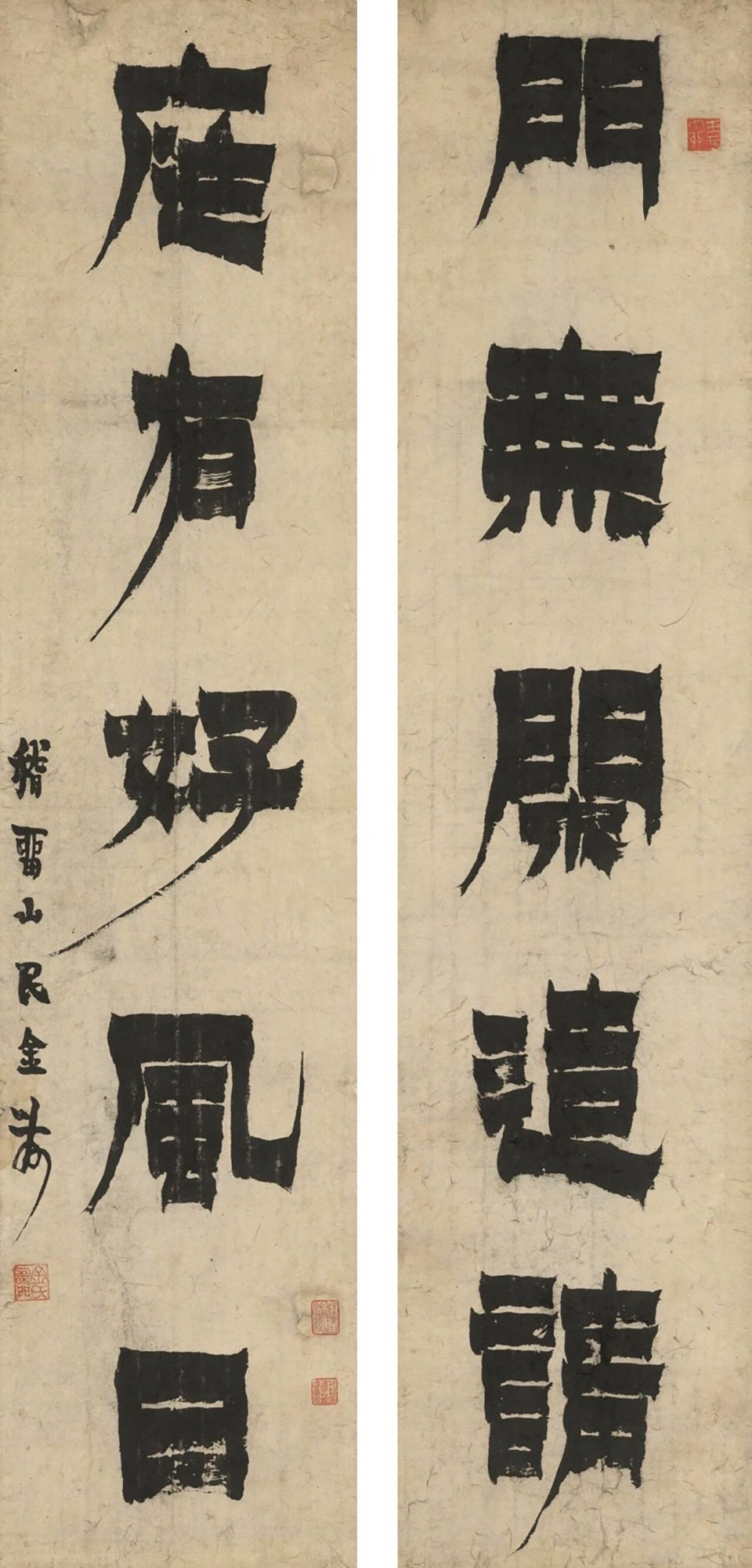
“骨法”一词来源于中国传统的书论和画论。南北朝时期谢赫提出评画的“六法”,其一为气韵生动,其二即为骨法用笔。东晋卫夫人在《笔阵图》中言:“善笔力者多骨,不善笔力者多肉。”以书写而成的线条为外在表现的“骨”,决定了一幅书画作品的品格与精神。
当代中国本土性建筑之“骨”,在物质层面与建筑的结构部件重合,在形式层面沿承了中国传统木构建筑的线条特征。尽管中国古代的木构建筑营造多受限于宗法和礼序,使得建筑的艺术表现远不如园林那样自由多彩,但现代的建造技术,却赋予建筑之“骨”以更大的空间创作自由度。从二维的书画艺术创作到三维的建筑空间艺术创作,我们该如何以“骨法”的线条语言,传达中国笔墨的力与势,气与动?
The term ” Bone Method ” originates from traditional Chinese painting and calligraphy theory. In the Southern and Northern Dynasties, Xie He proposed the “Six Principles of Painting,” where the first is “Spiritual Resonance” and the second is “Bone Method in Using the Brush”. Lady Wei of the Eastern Jin Dynasty noted in The Diagram of the Battle Array of the Brush: “Those talented in brushwork produce ‘bone’; those untalented produce ‘flesh’.” The “bone,” manifested through written lines, determines the character and spirit of a work.
In contemporary Chinese local architecture, the “bone” overlaps with structural components on a physical level and inherits the linear characteristics of traditional timber construction on a formal level. While ancient timber construction was often restricted by patriarchal and ritual hierarchies—making its artistic expression less free than that of Chinese gardens—modern technology grants the “bone” of architecture greater creative freedom. Moving from 2D art to 3D spatial creation, how can we use the linear language of ” Bone Method ” to convey the power, momentum, and vitality of Chinese ink wash?
▼清·金农 漆书,Qing Dynasty – Jin Nong – Lacquer Painting
新生 Rebirth
1.以风为骨的“风雨悬庭”|The “G Hall”: Wind as the Bone
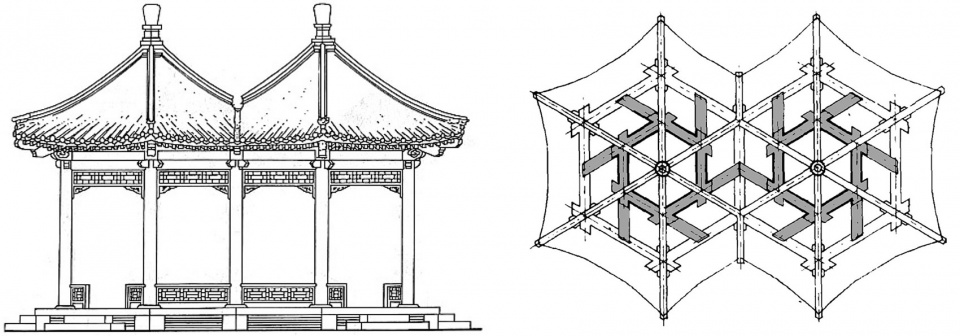
中国传统园林中五角亭或双六角亭的木结构,以层层收拢、旋转搭接的“爬梁式网架”,来完成中间高起的攒尖顶造型。其木构有一种自然旋转上升的态势,具有一种中心化升腾的空间气韵。
In traditional Chinese gardens, the timber structure of pentagonal or hexagonal pavilions uses a “crawling beam grid”—a layered, rotating, and overlapping system—to achieve a central peaking roof. This structure possesses a natural upward spiral, creating a spiritual sense of centralized ascension.
▼爬梁式网架木构,Purlin-type network wooden structure
将这种“爬梁式网架”做法进行倒置,形成层层悬挂、层层旋转、层层缩小的倒尖顶,这是来建筑设计工作室的公共艺术作品“风骨亭”。
▼“风雨悬庭”木构轴侧图,“G Hall” wooden structure side view drawing
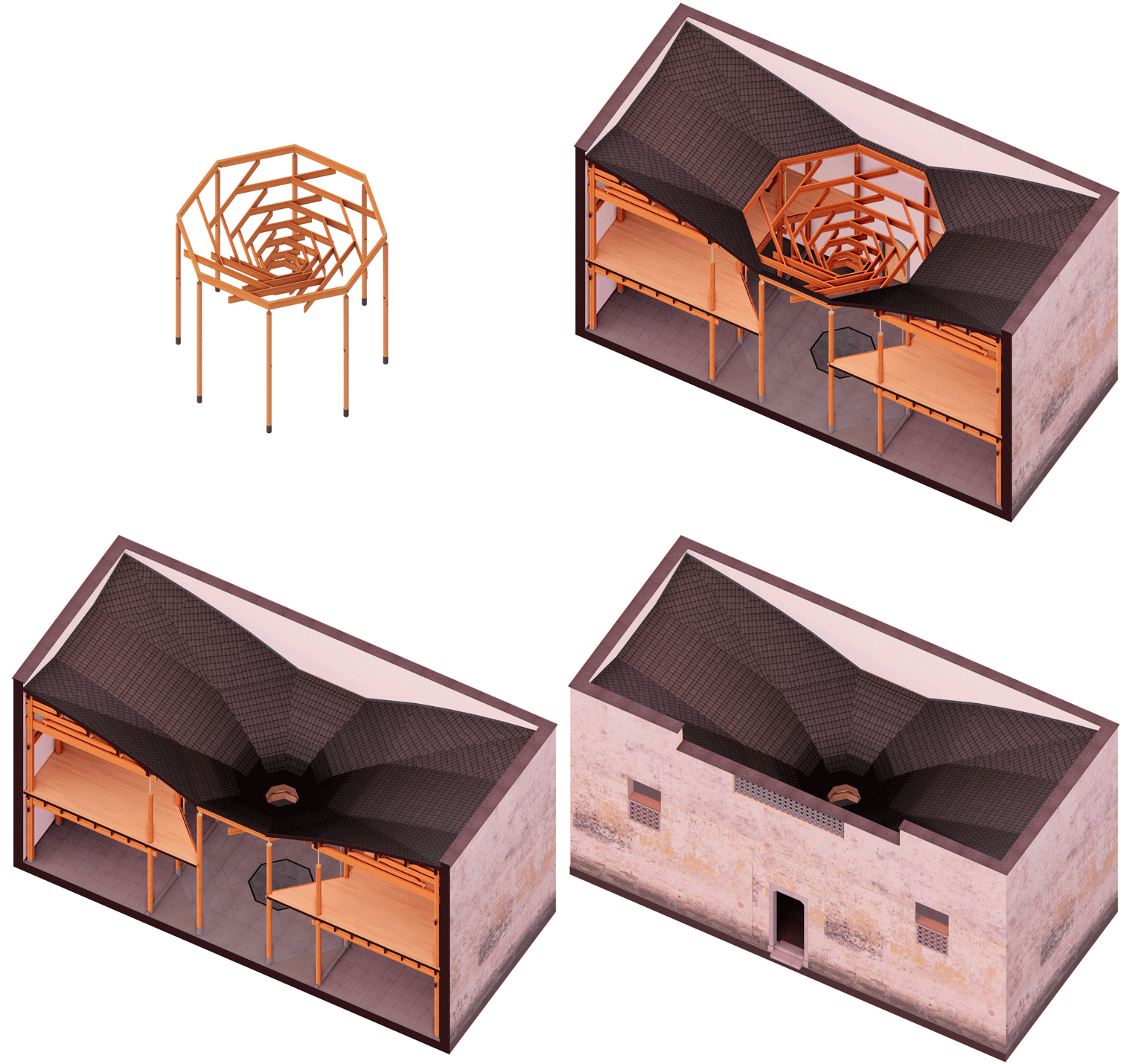
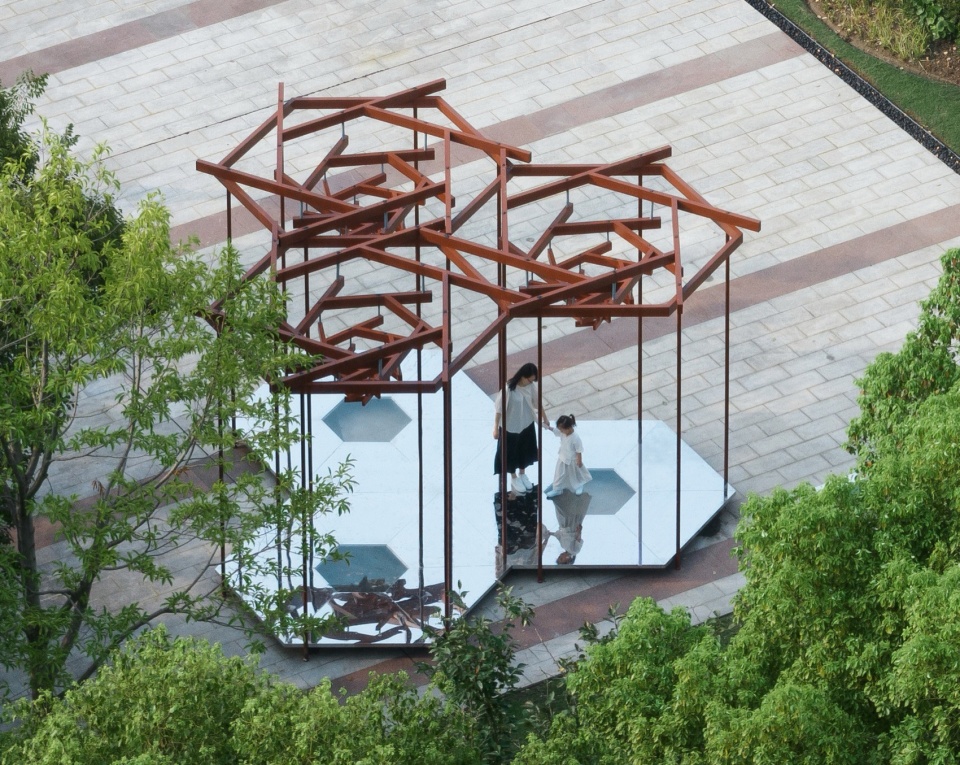
By inverting this “crawling beam grid,” the design creates a downward-pointing roof that layers, rotates, and shrinks inward. This is the public art piece ” Pavilion G” by Atelier LAI.
▼公共艺术装置“风骨亭”,Public art installation ” Pavilion G”
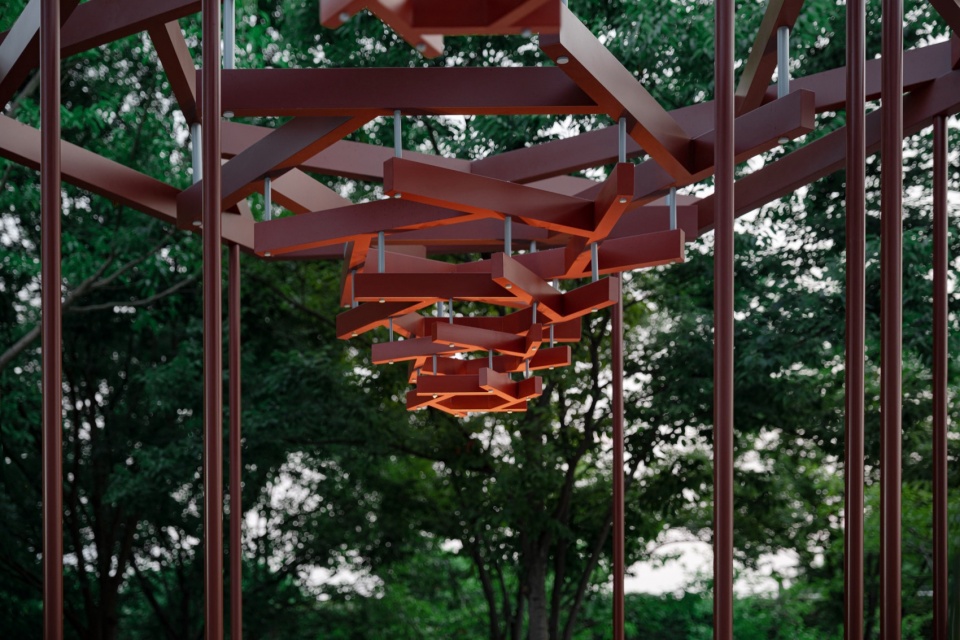
在南书院中,以“风骨亭”置入高墙围合空间的中庭,屋面沿着倒尖顶的漏斗形外缘向围墙延伸,覆盖整个空间。平面为正八边形的“风骨亭”,其轮廓介于天圆与地方之间,以虚体的形式嵌入实体的建筑体量中,汇聚来自屋面的雨水,将徽州传统民居天井“四水归堂”的形制升格为“八水归堂”,从而获得脱离于日常的精神性。
▼传统徽州民居的四水归堂,The “Four Streams Returning to the Central Pool” feature of traditional Huizhou-style residences
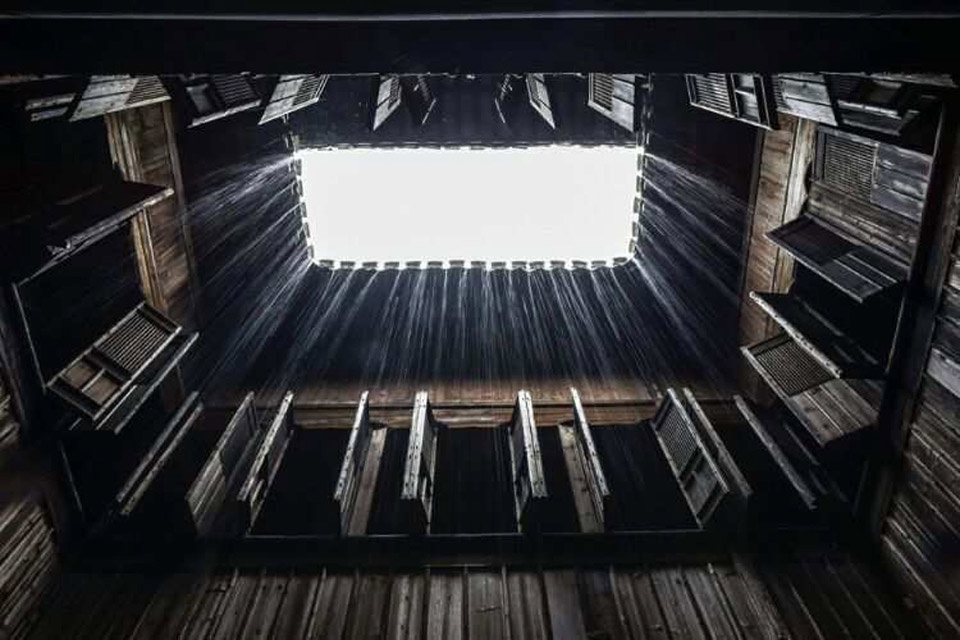
In Courtyard G, this pavilion is placed in the central courtyard enclosed by high walls. The roof extends from the funnel-shaped edge of the inverted peak toward the perimeter walls. The octagonal plan serves as a liminal form between “Round Heaven and Square Earth,” embedded as a void within the solid architectural mass. It collects rainwater, elevating the traditional Huizhou “Si Shui Gui Tang” (water from four sides returning to the hall) to “Ba Shui Gui Tang” (water from eight sides), achieving a spirituality detached from the everyday.
▼“风雨悬庭”的八水归堂,”Courtyard G” – The Eight Streams Flowing Back Together
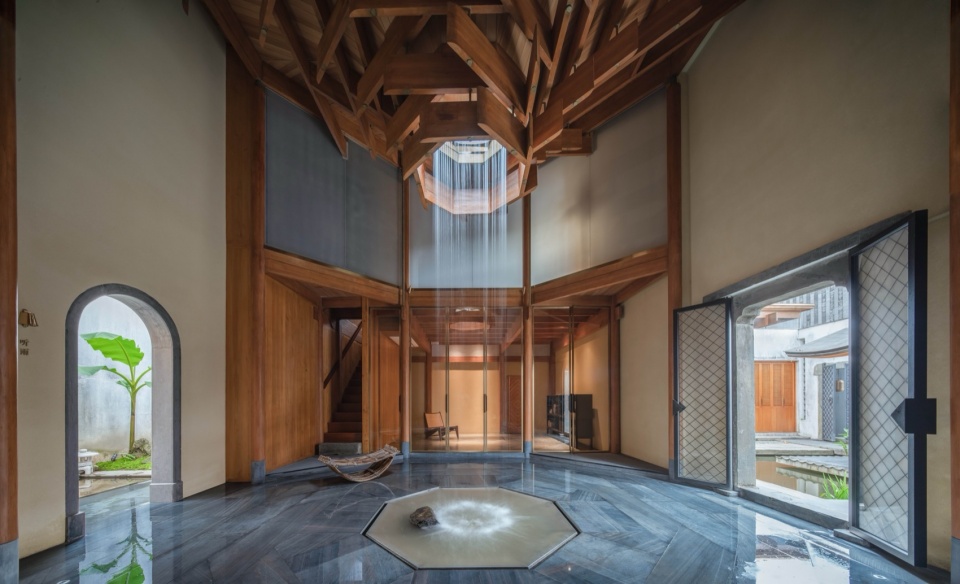
▼“风雨悬庭”,”Courtyard G”
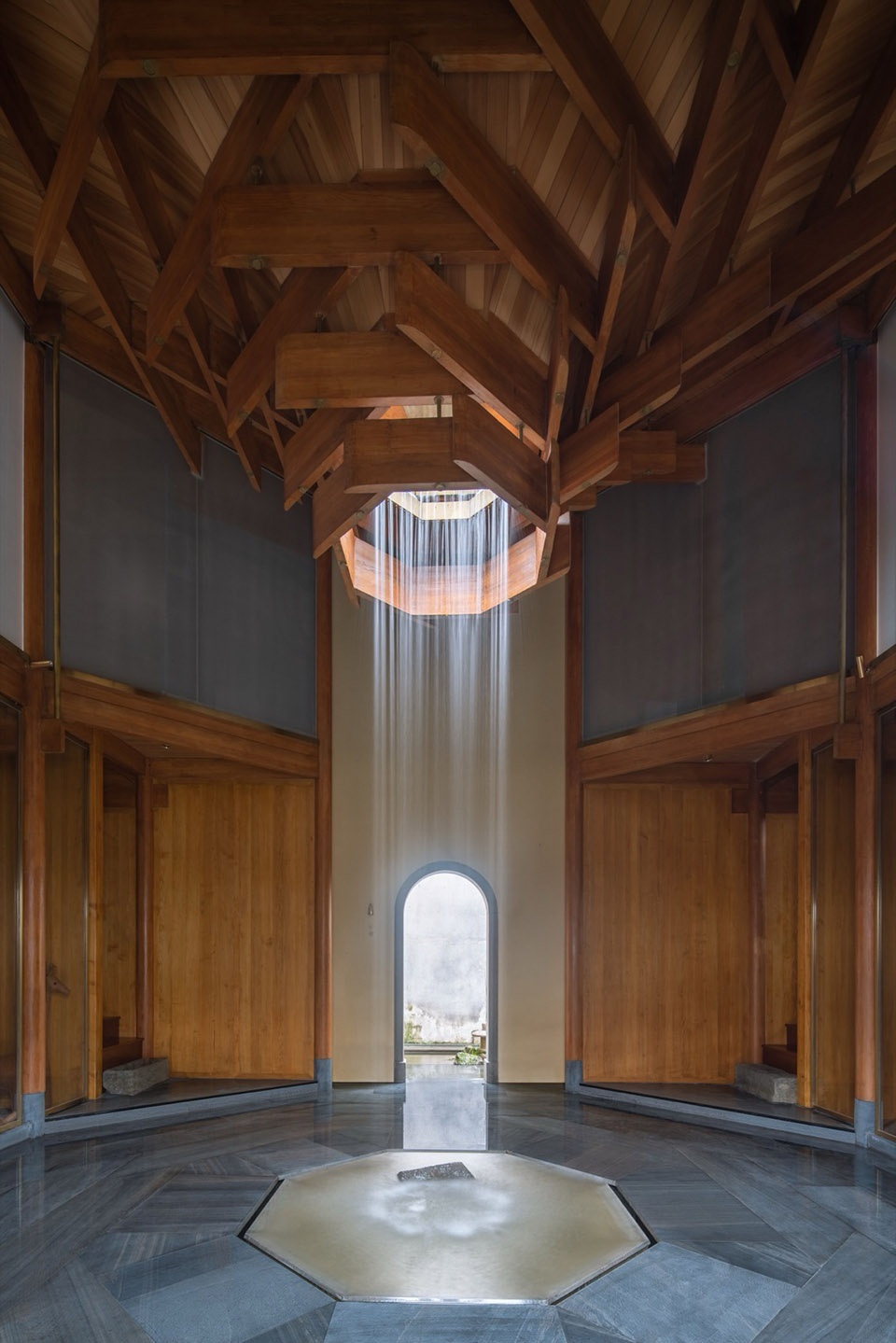
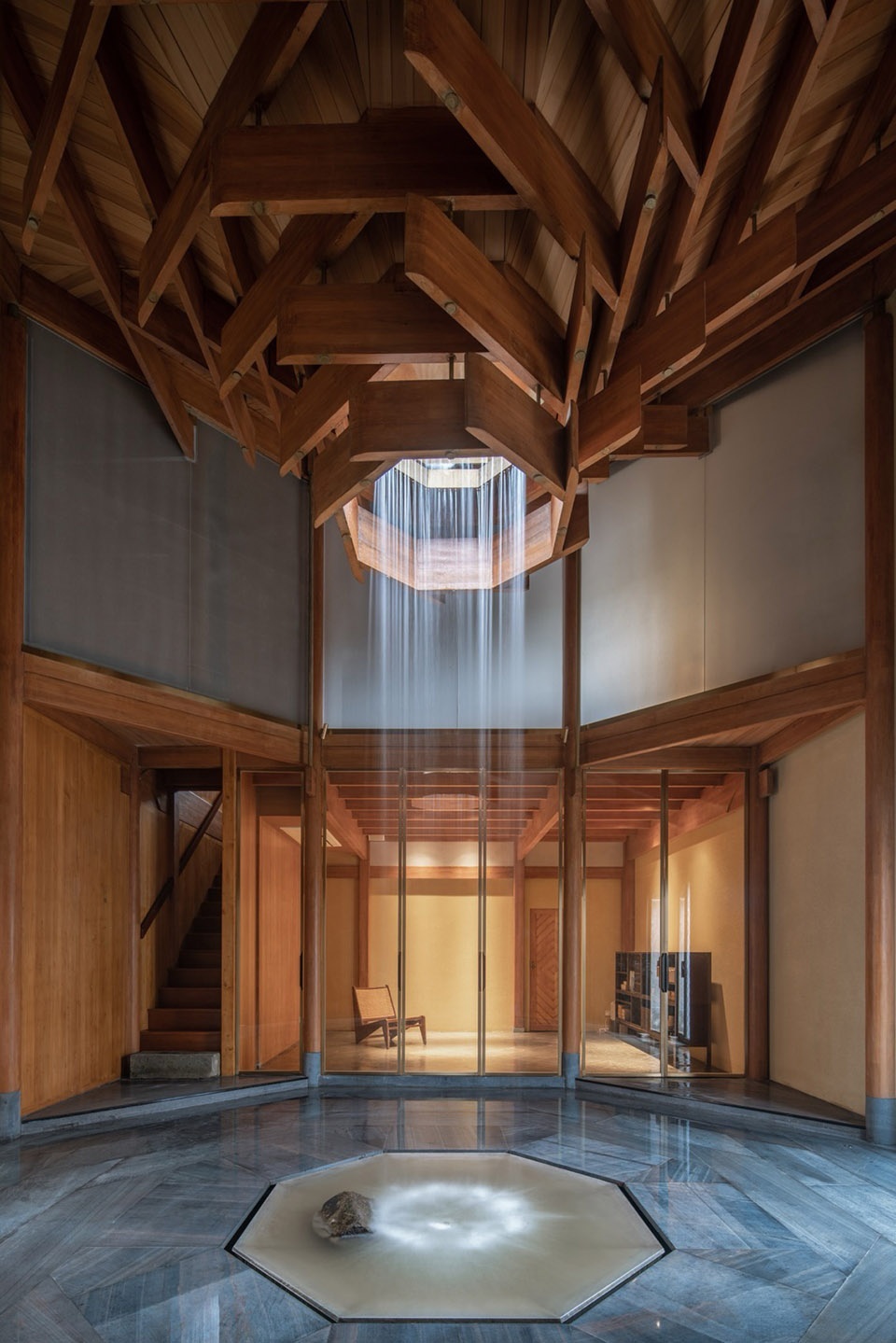
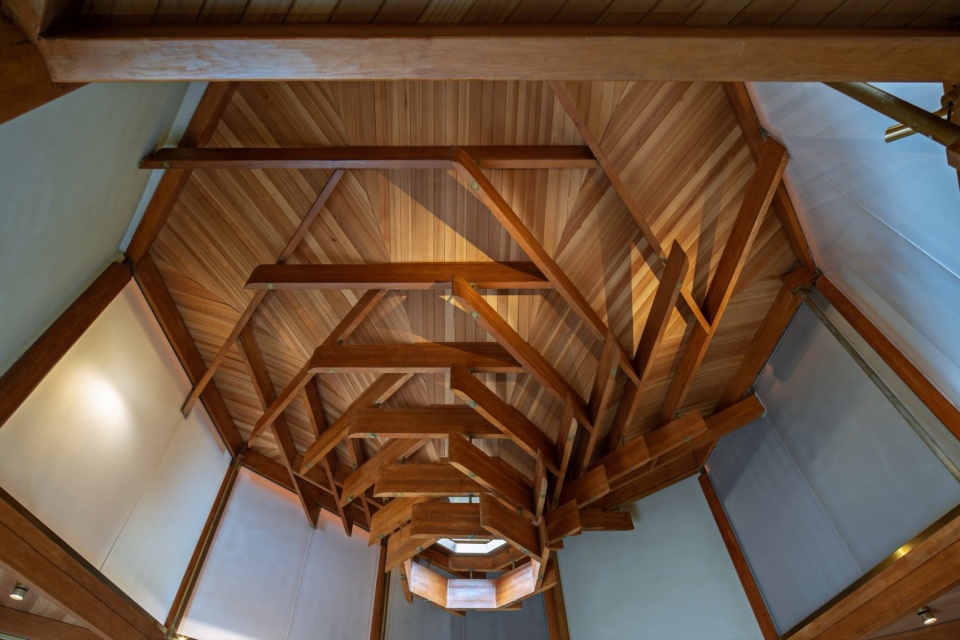
倒尖顶的木构线条层层旋转、层层巧借、层层聚拢,悬于地面之上,将风收纳,将水注入,将光显形,奠定这座建筑立于天地之间的基本姿态,是为“风雨悬庭”。
▼“风雨悬庭”木构图, timber structure design
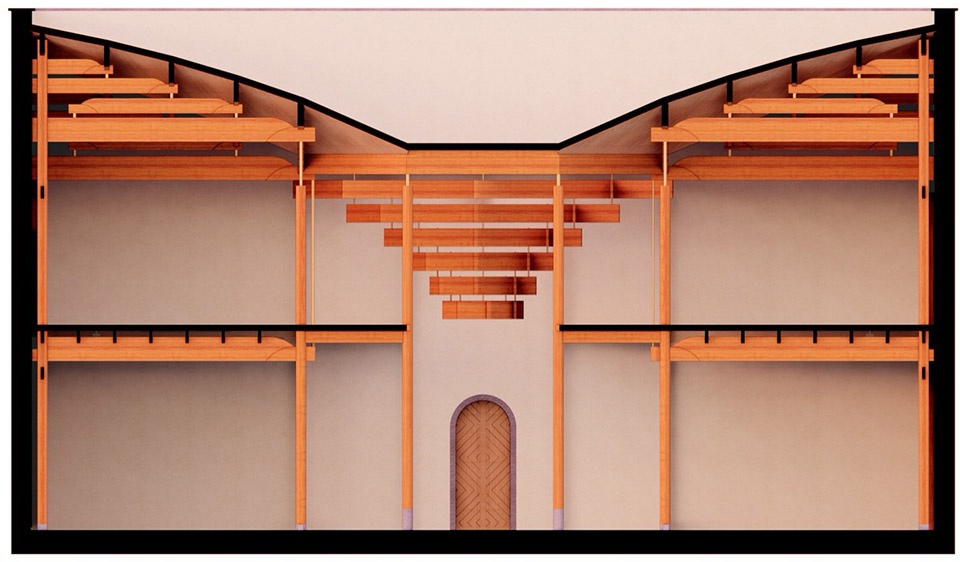
▼“风雨悬庭”木构图,section view
The timber lines of the inverted peaked roof rotate, leverage, and converge layer by layer. Suspended above the ground, it captures the wind, channels the rain, and gives form to the light—establishing the fundamental posture of this architecture between heaven and earth. This is the “G Hall”.
▼“风雨悬庭”仰视,looking up to the “Courtyard G”
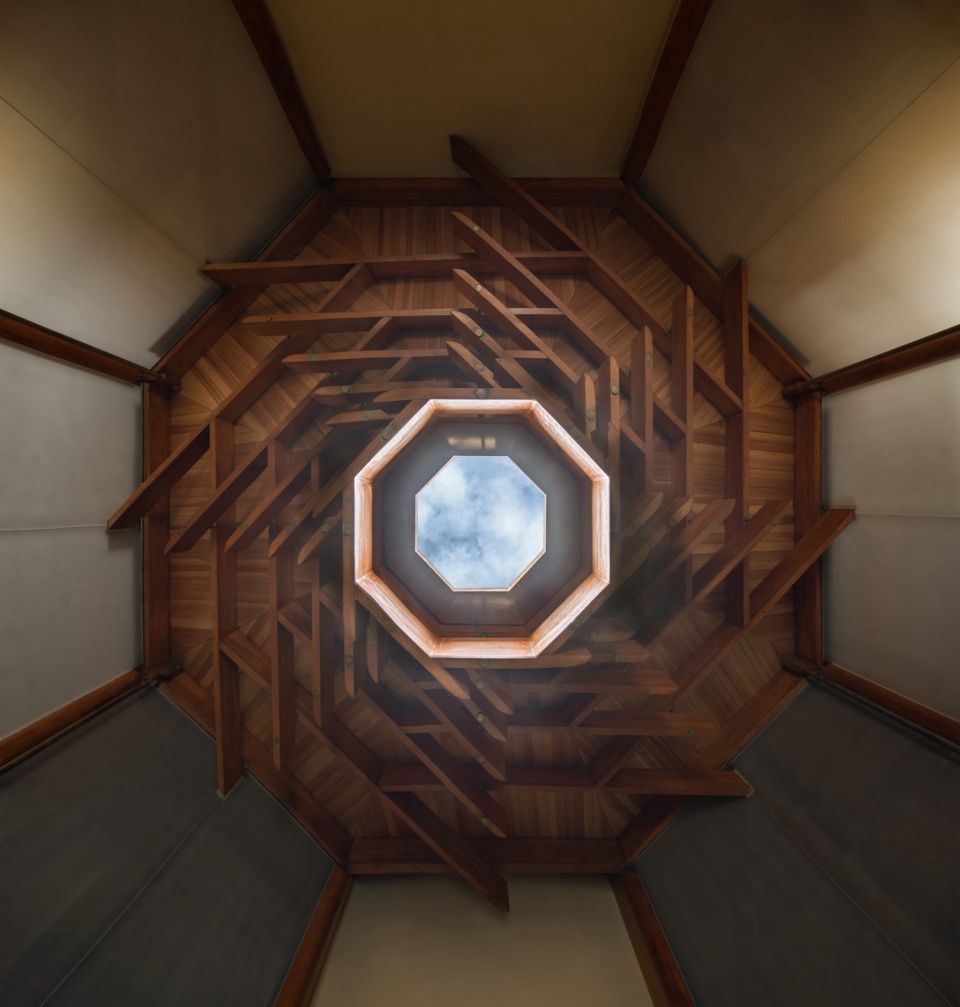
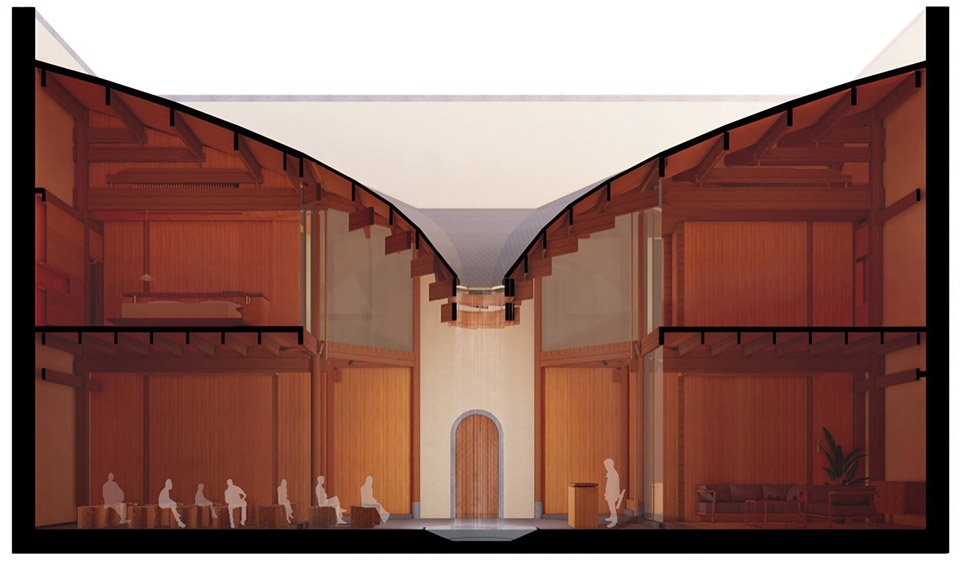
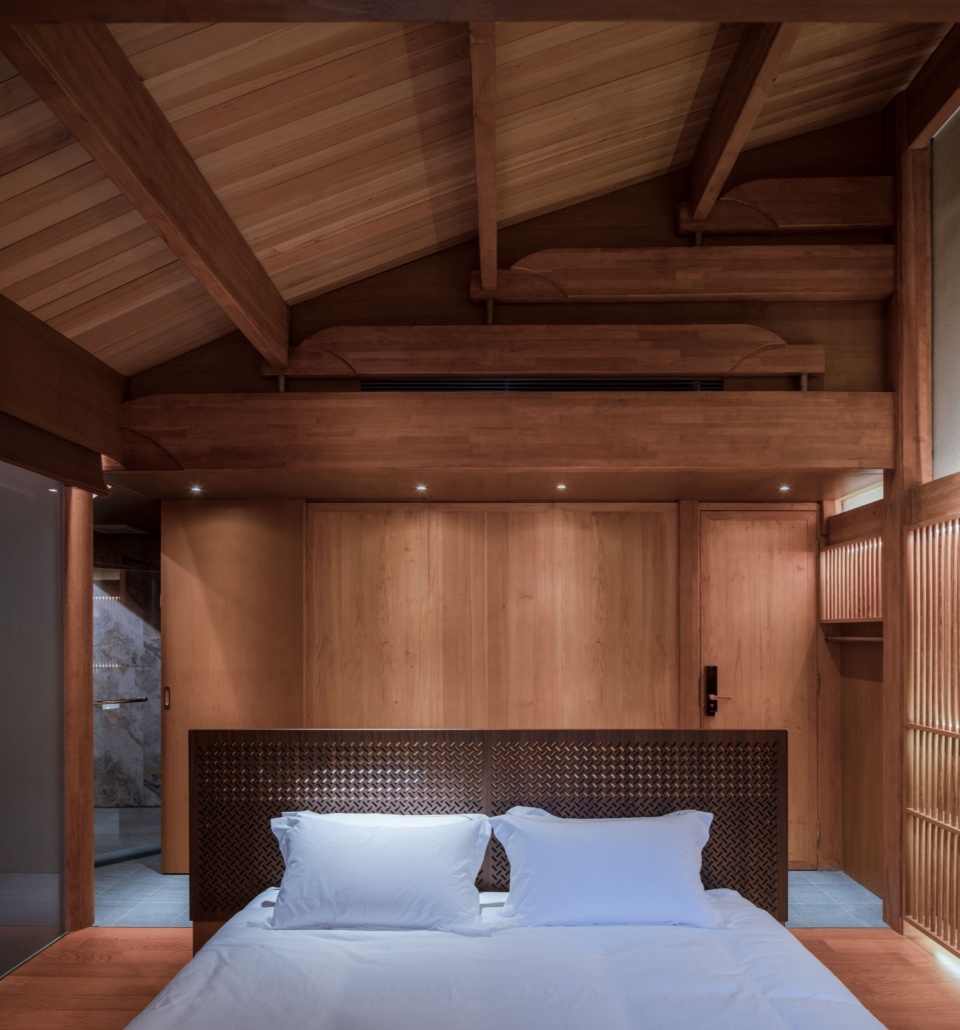
以“风雨悬庭”为建筑的精神核心,在一层形成了两侧可以连通的开放的讲学之所,二层被分隔成相对独立的两个空间,为卧榻和休憩之用。
With this pavilion as the spiritual core of the building, the first floor serves as an open lecture hall accessible from both sides. The second floor is divided into two relatively independent spaces for sleeping and relaxation.
▼二层卧室照片,Photo of the second-floor bedroom
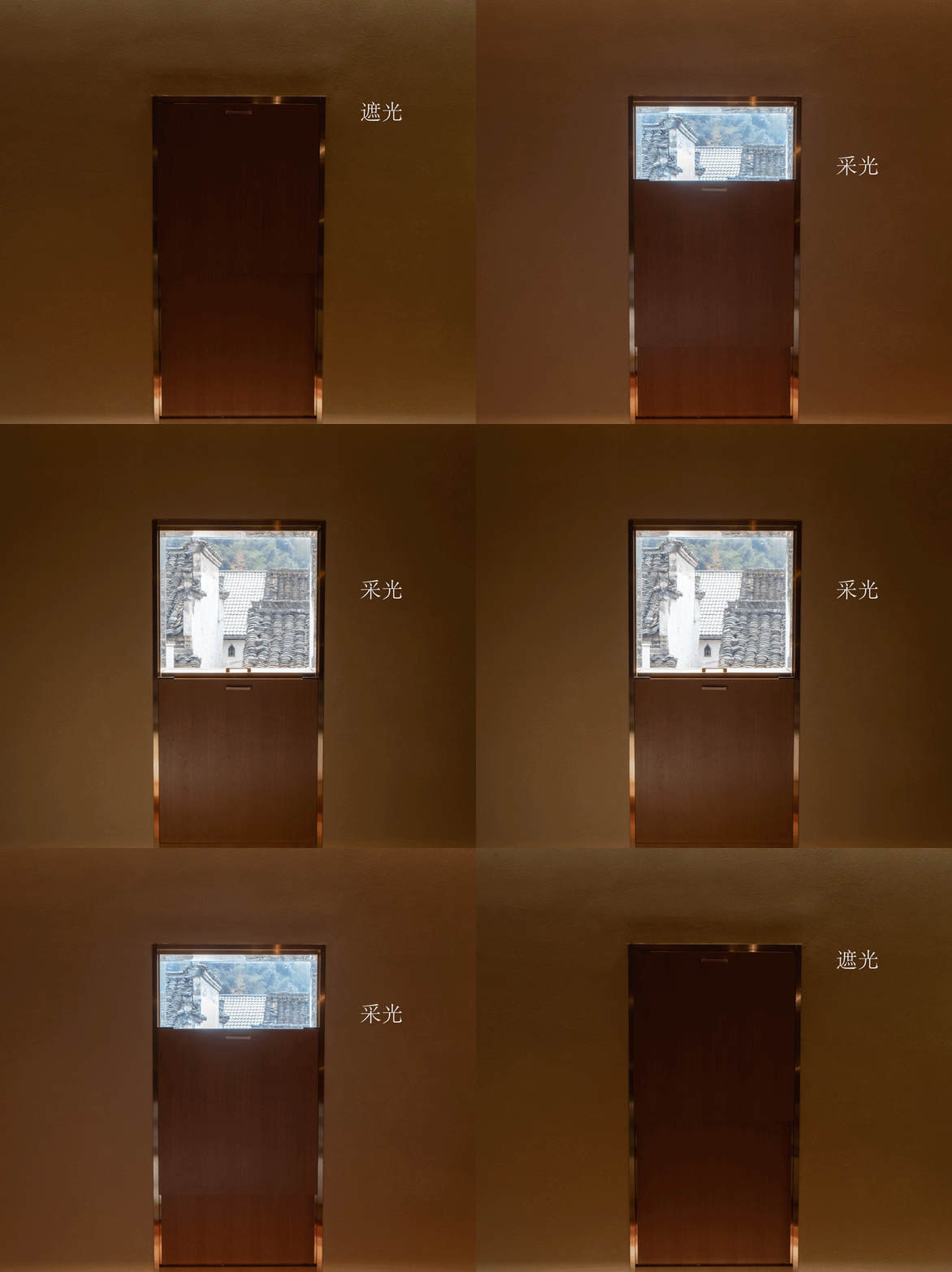
徽州民居普遍开窗很小,因此设计了一款提拉窗,将采光、通风、遮光的不同需求,在同一套窗的机构中解决。
While traditional Huizhou residences typically feature very small windows, this design introduces a custom-made sash window. This mechanism integrates the diverse needs for lighting, ventilation, and shading into a single unified system.
▼二层提拉窗,Second-floor sliding window
2.以松为骨的“云柱绸梁”|The “G Roof”: Pine as the Bone
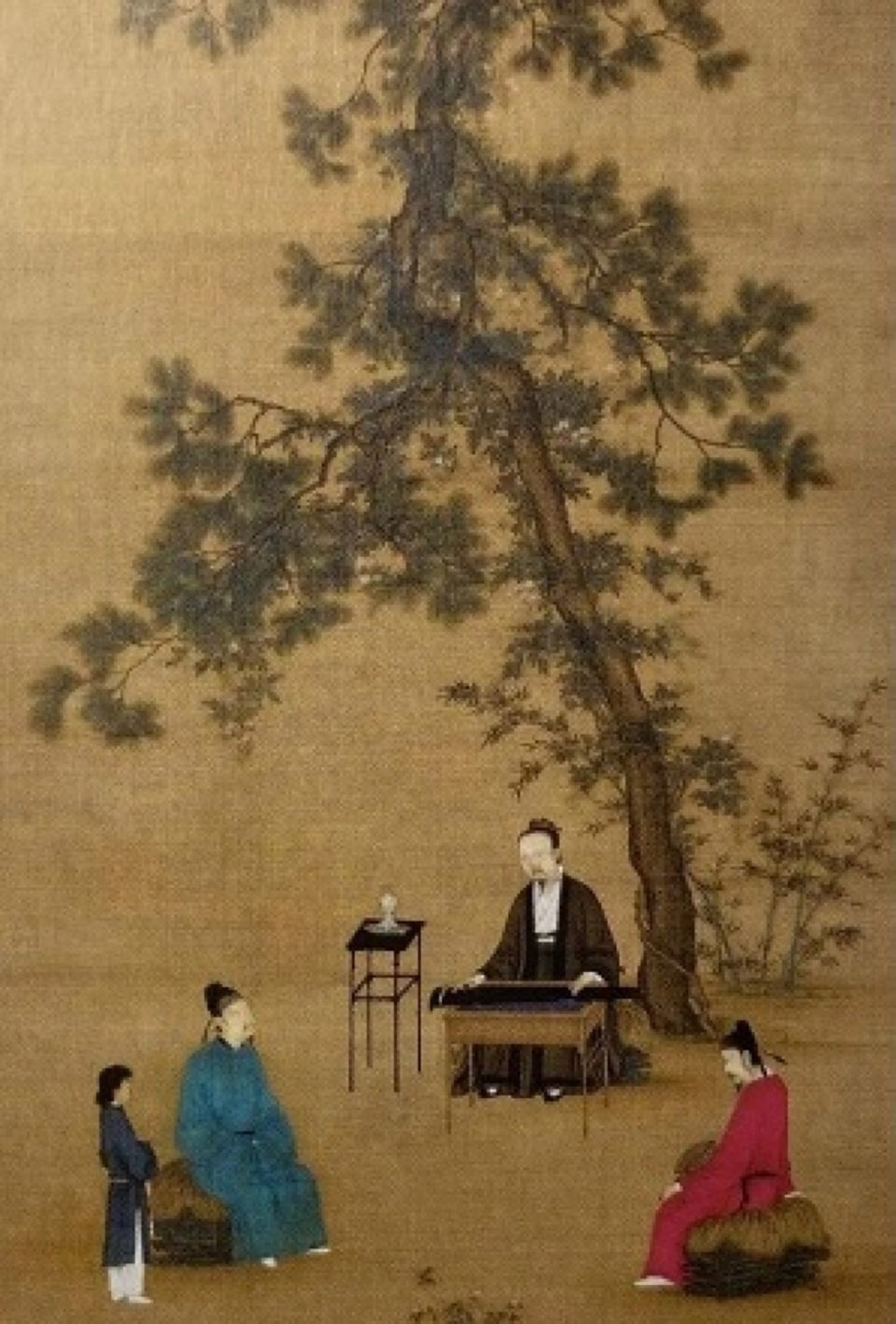
“云柱绸梁”是入口第一栋建筑,始于对一幅宋画的空间还原——《听琴图》。将一棵松“树”作为该建筑的结构,立于由建筑外墙所限定的5×7m围格中部,便得到了“云柱绸梁”的原型。
This structure originates from a spatial restoration of the Song Dynasty painting Listening to the Qin. By using a pine “tree” as the structure within a 5×7m frame, the prototype of “G Roof” was born.
▼宋·赵佶《听琴图》,Song Dynasty – Zhao Ji “Listening to the Violin”
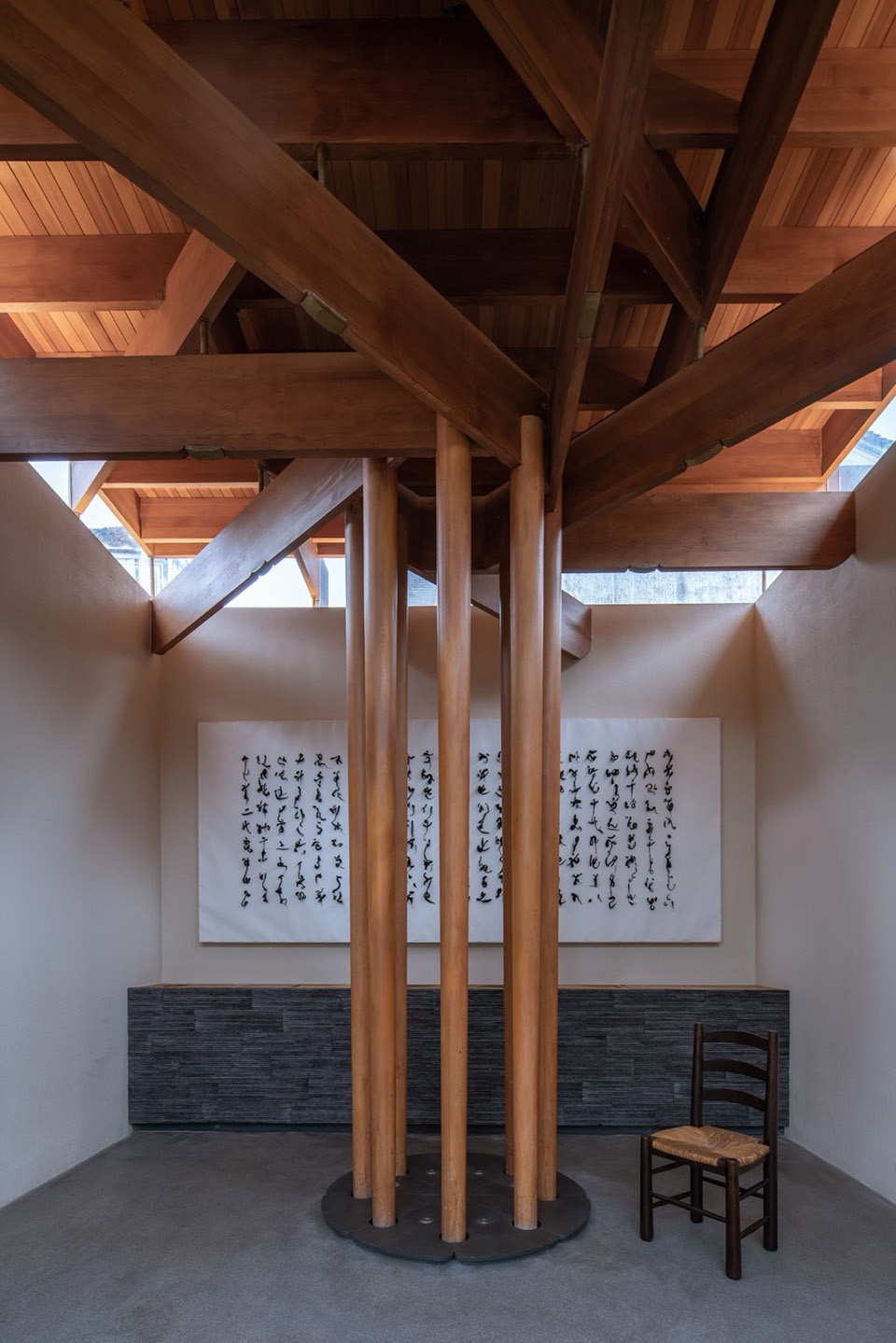
八颗细柱松散地立于花瓣状石质柱础之上,支撑起八片木梁,八片木梁呈旋转放射状从八根柱子飞出,搭接在四周的墙壁,形成稳定的框架。但屋顶的重量并未直接落在这八片梁上,而是借着已有的八片梁,再支撑起八片梁,同样旋转放射而出。梁的一头用细柱落于四周围墙顶部,另一头互相嵌套通过细柱借力于下梁。屋顶通过这种梁的互承和借力,完成了对于空间的覆盖。
Eight slender columns stand loosely on petal-shaped stone bases, supporting eight timber beams that radiate and rotate outward to meet the walls. The roof’s weight does not rest directly on these; instead, a second tier of eight beams is supported by the first, also radiating outward. One end of a beam rests on the perimeter wall via a slender post, while the other nests into the lower beam. This mutual-bearing system covers the space. The gaps between the two overlapping layers allow light to seep through, like the sound of a Qin weaving through silk beams. The columns are no longer mere structures; they become imagination—light, wind, and melody.
▼“云柱绸梁”轴侧图,Axonometric drawing of “G Roof”
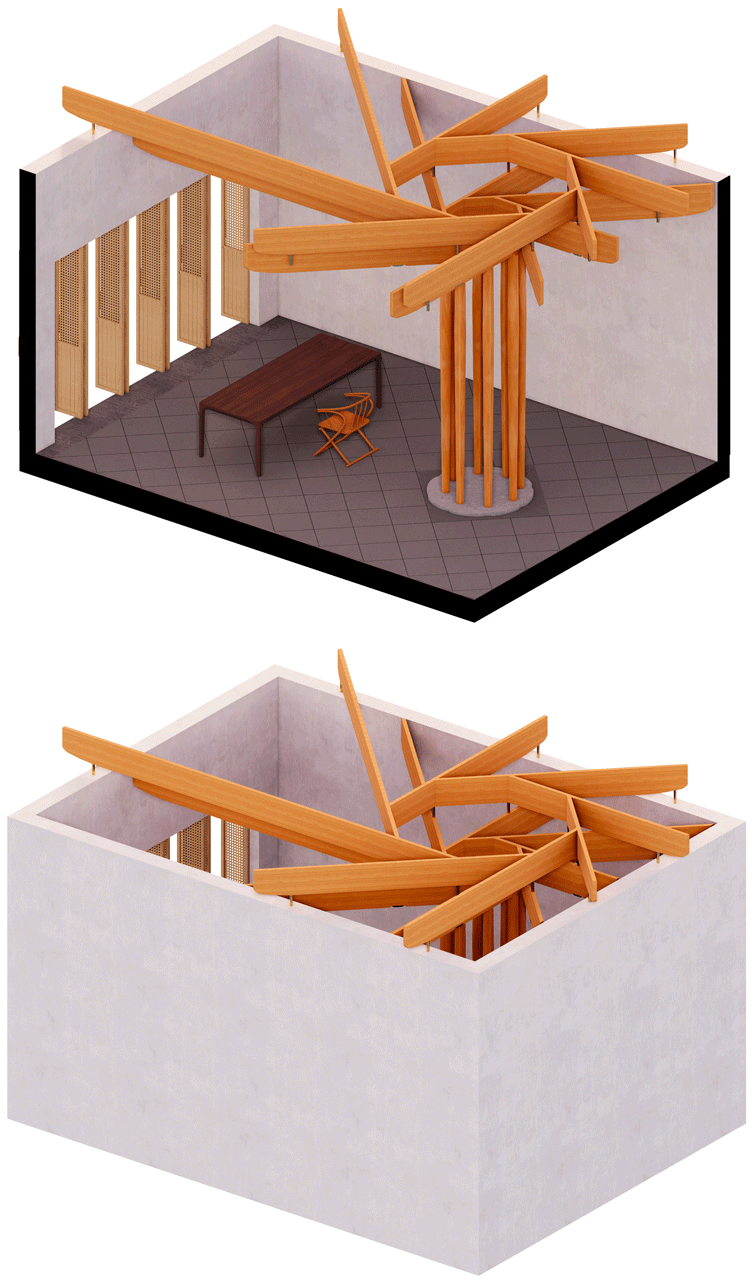
两层梁互借错动叠加,上下产生空隙,恰好让光线渗入,犹如画面中琴声在绸梁间穿梭。光线完成了对于结构的描边。柱子不再是结构,而是光,是风,是琴声的想象。这种“云柱绸梁”的骨架,直接作为空间线条的形式呈现出来。
▼“云柱绸梁”剖透视,Cross-Section View
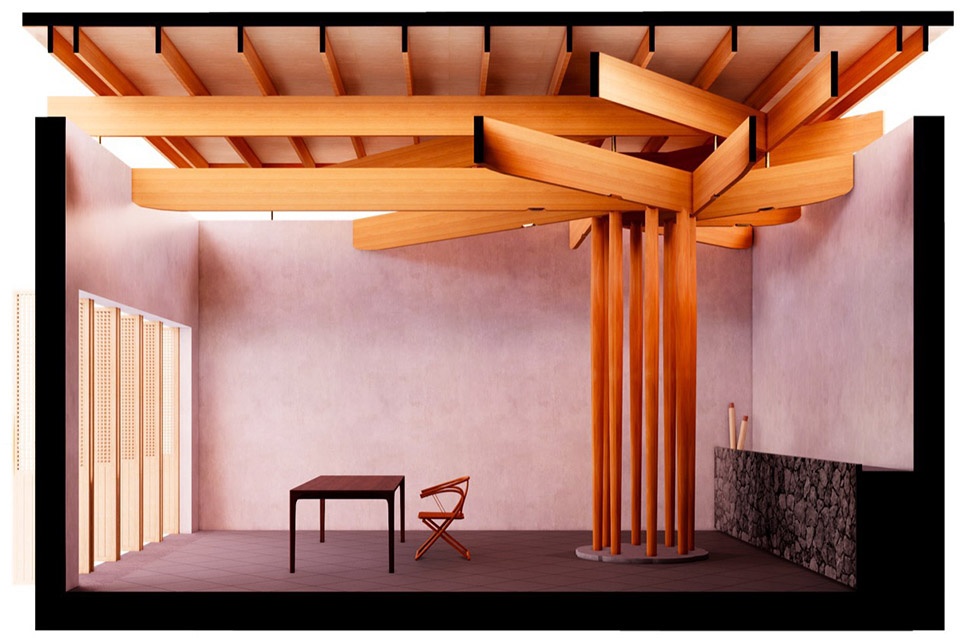
The two layers of beams shift and overlap, leveraging off one another to create interstitial gaps. These openings allow light to filter through, much like the melodies of a Qin weaving between “silk beams.” Here, light acts as the stroke that outlines the structure. The columns cease to be mere structural elements; instead, they transform into light, wind, and the imagination of music. The skeleton of “G Roof” is thus manifested directly as the linear form of the space.
▼“云柱绸梁”,”G Roof”
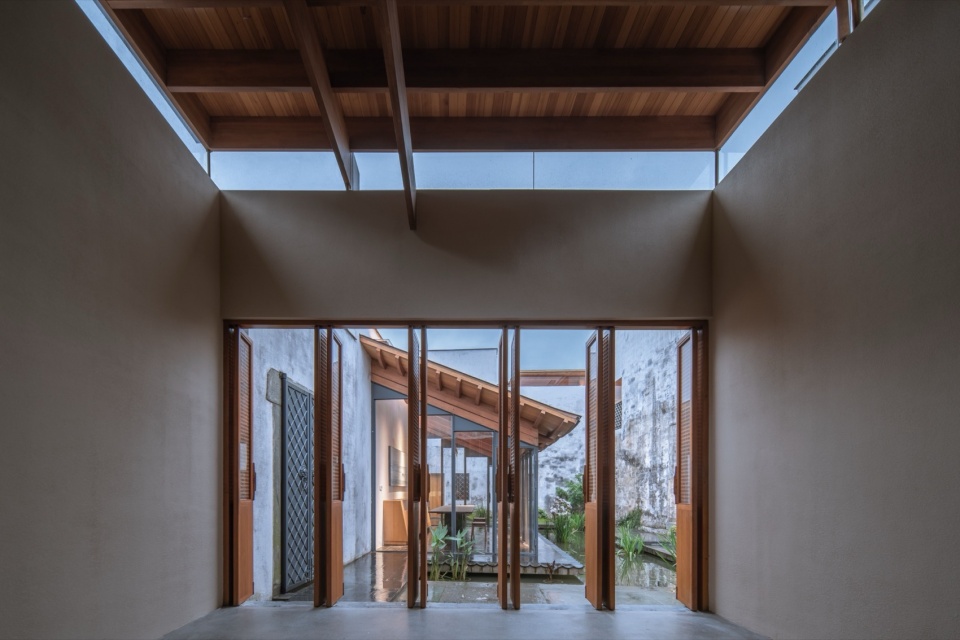
▼“云柱绸梁”向外看,”G Roof” Looking Outwards
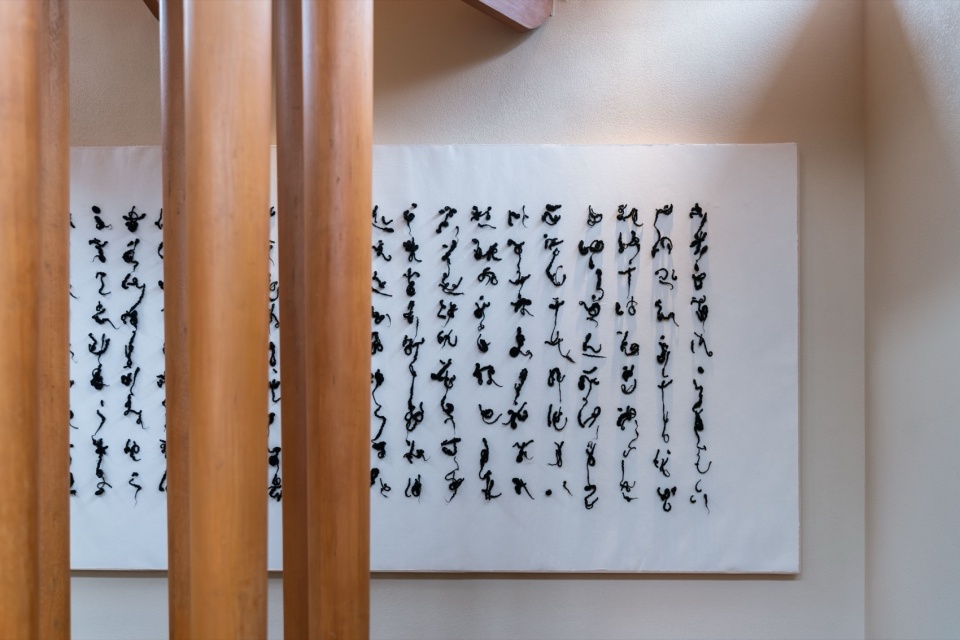
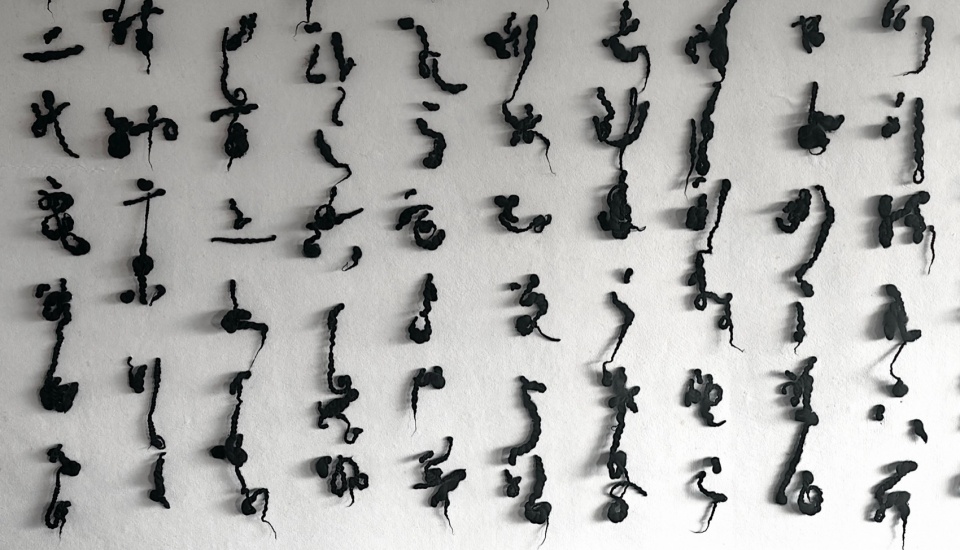
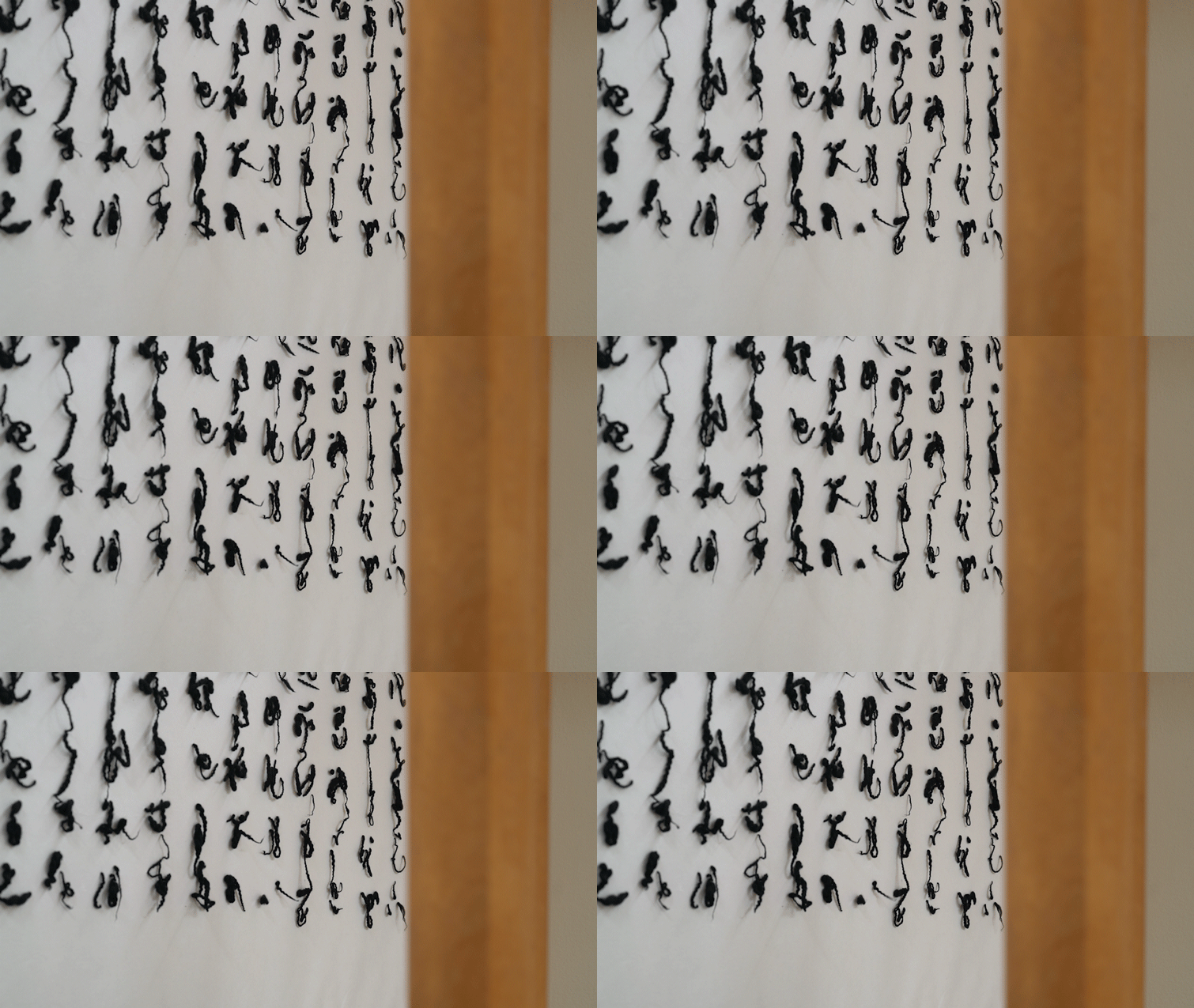
为了让云柱绸梁的书房原本静态的空间骨法更加灵动,特地邀请了青年艺术家程晓芳,为这个空间创作了一份纤维艺术作品《抄经计划·仓颉》。将“说文解字叙”的内容用一种空间编织的方式,让文字跃然纸上,随风摇曳,对空间进行了点题。
To animate the originally static “spatial bone method” of this study, young artist Cheng Xiaofang was invited to create a fiber art installation titled Sutra Copying Plan: Cangjie. By weaving the content of the Postscript to Shuo-wen Jie-zi into a spatial tapestry, the characters leap from the “page” and sway with the breeze, serving as the poetic finishing touch to the room.
▼艺术作品“抄经计划·仓颉”,Artwork “Copy Text Project – Cangjie”
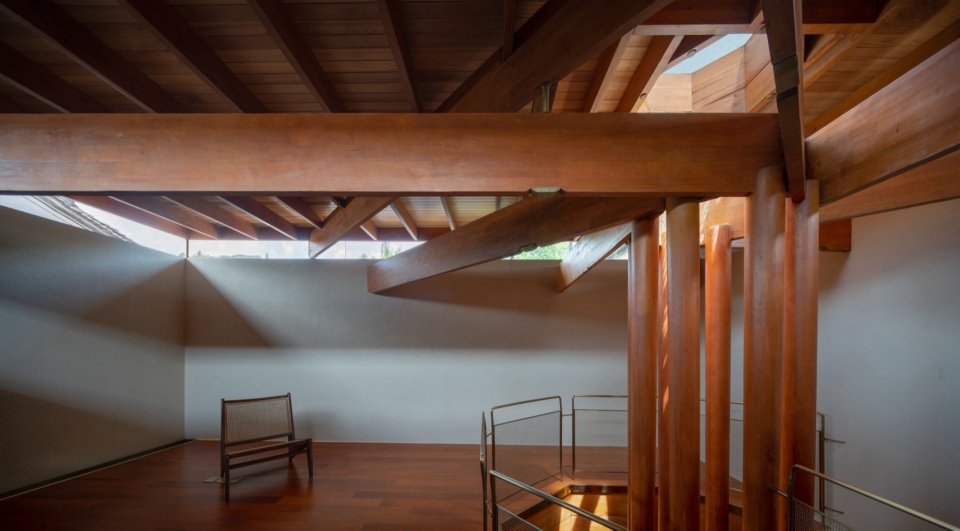
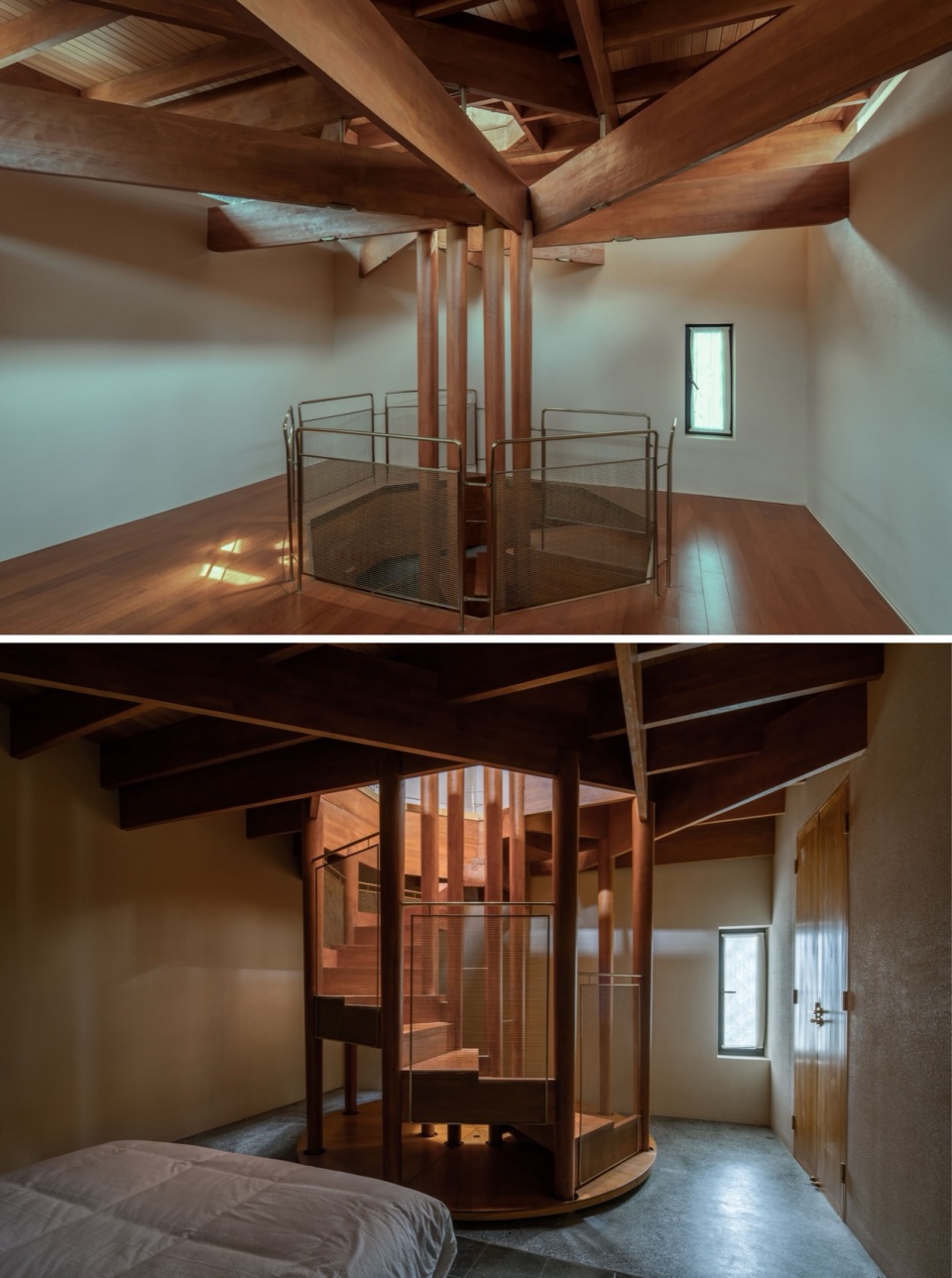
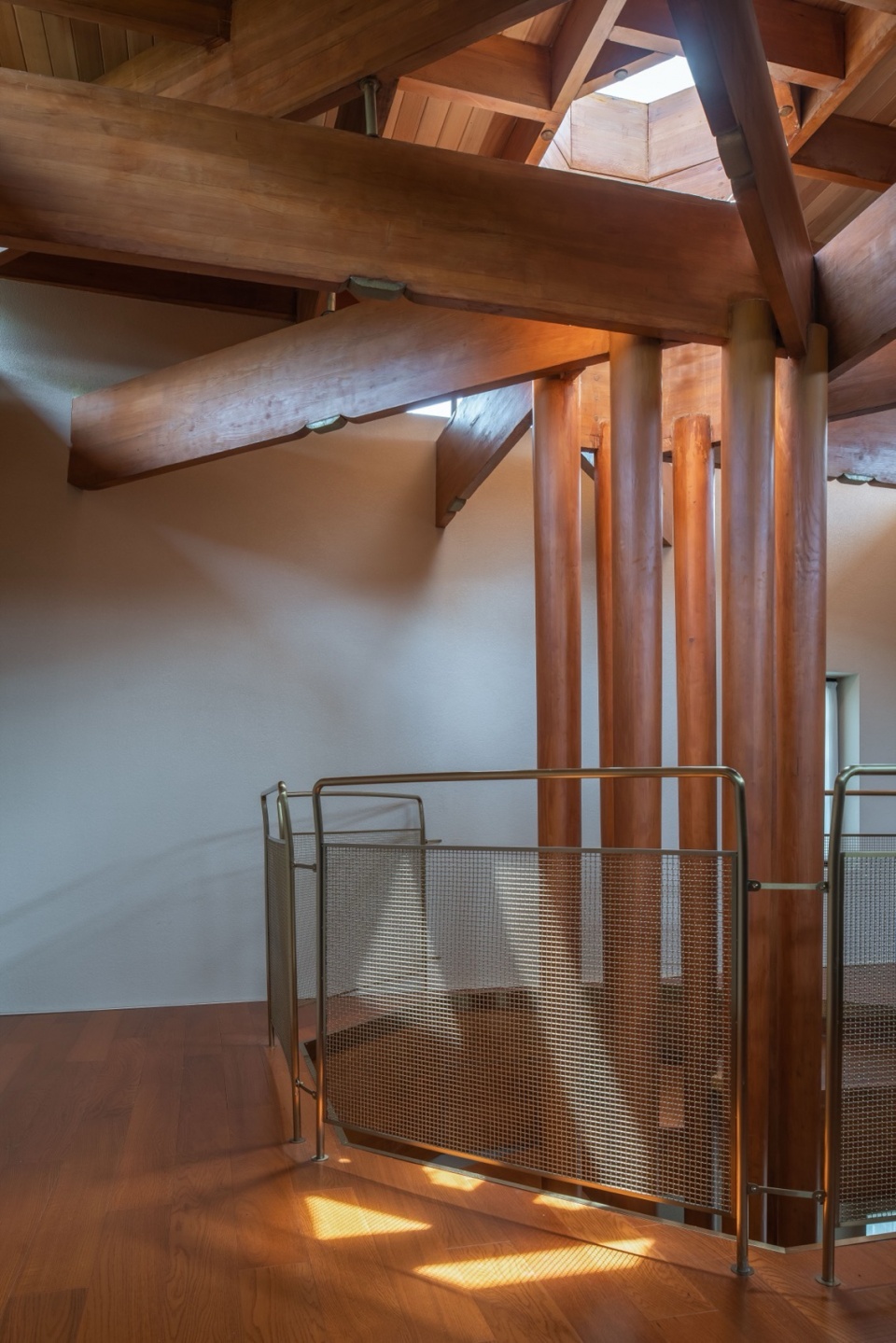
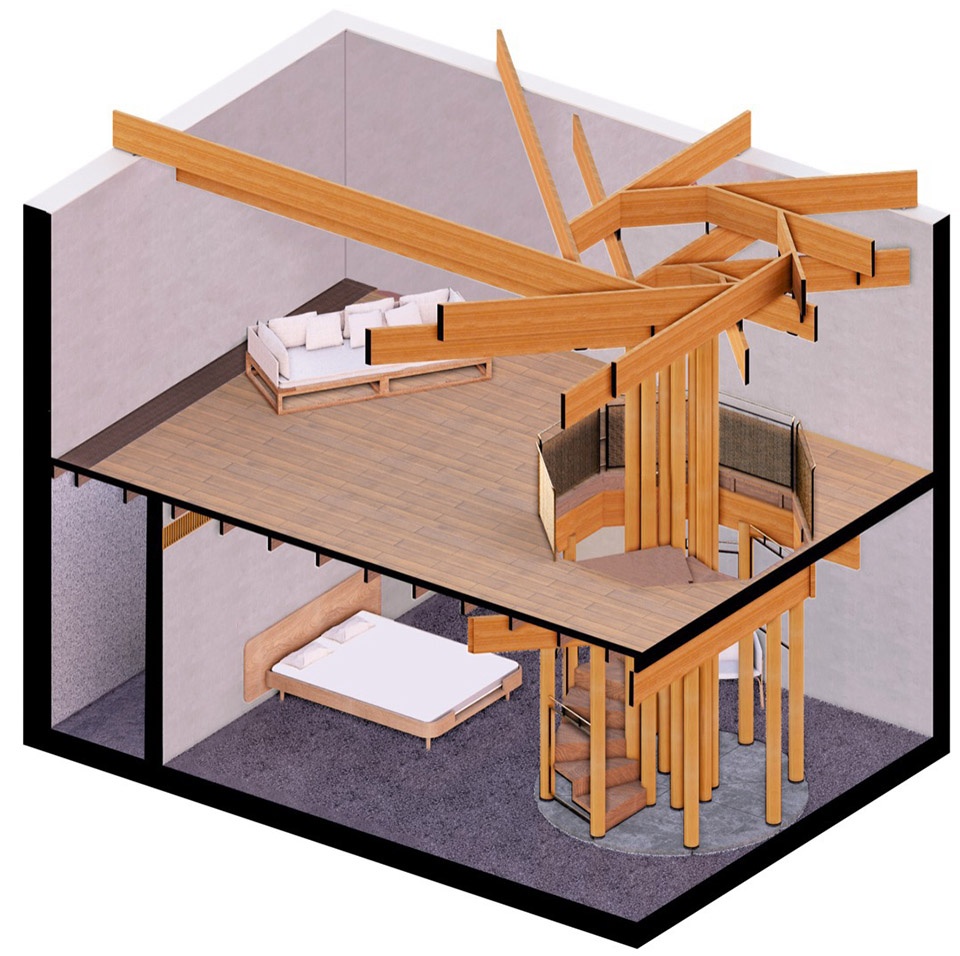
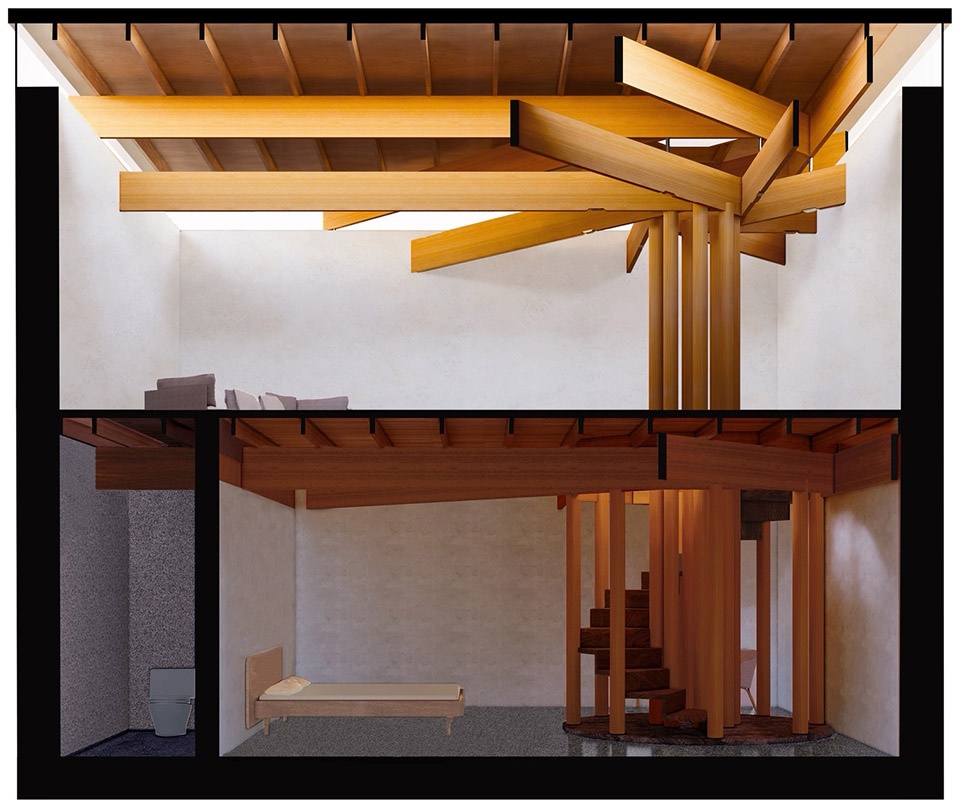
将“云柱绸梁”的结构原型进一步向上延伸和发展,成为双层的客房:底层阴翳沉静,作为寝房,二层明亮疏松,作为书房。云柱上下贯通,光和气韵从屋盖的缝隙中渗入,弥漫在书房,再顺着云柱渗漏到一层。八颗细柱外围再增加八颗外柱,用于承托楼板和楼梯,楼梯环抱着云柱,盘旋而上。
The structural prototype of “G Roof” extends further upward to form a duplex guest room: the lower level is dim and serene, serving as the bedroom; the upper level is bright and airy, functioning as the study. The cloud columns run vertically through both floors, allowing light and spiritual rhythm to seep through the roof crevices, fill the study, and eventually trickle down to the ground floor along the columns. Eight additional outer columns encircle the inner eight slender ones to support the floor slabs and the staircase, which spirals upward, embracing the cloud columns.
▼双层“云柱绸梁”上下层照片,Photos of the double-layer “G Roof” from top to bottom
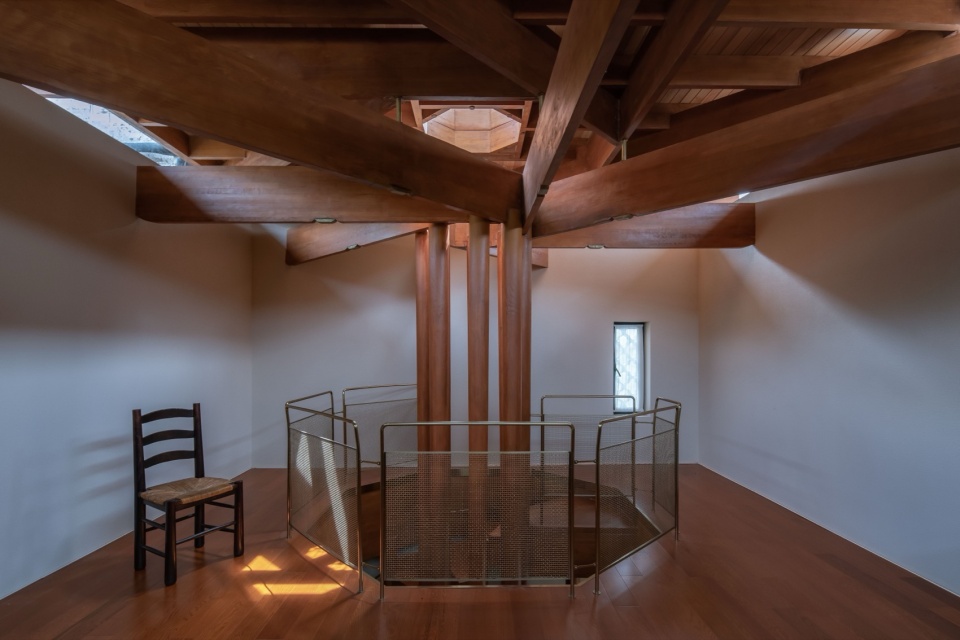
▼上层照片,upper floor
▼双层“云柱绸梁”上下层照片,axonometric drawing of the double-layer
▼双层“云柱绸梁”剖透视,Cross-sectional view of double-layer “G Roof”
3. 悬梁为骨“曲波悬亭”|The ” Pavilion ~~~”: Suspended Beams as the Bone
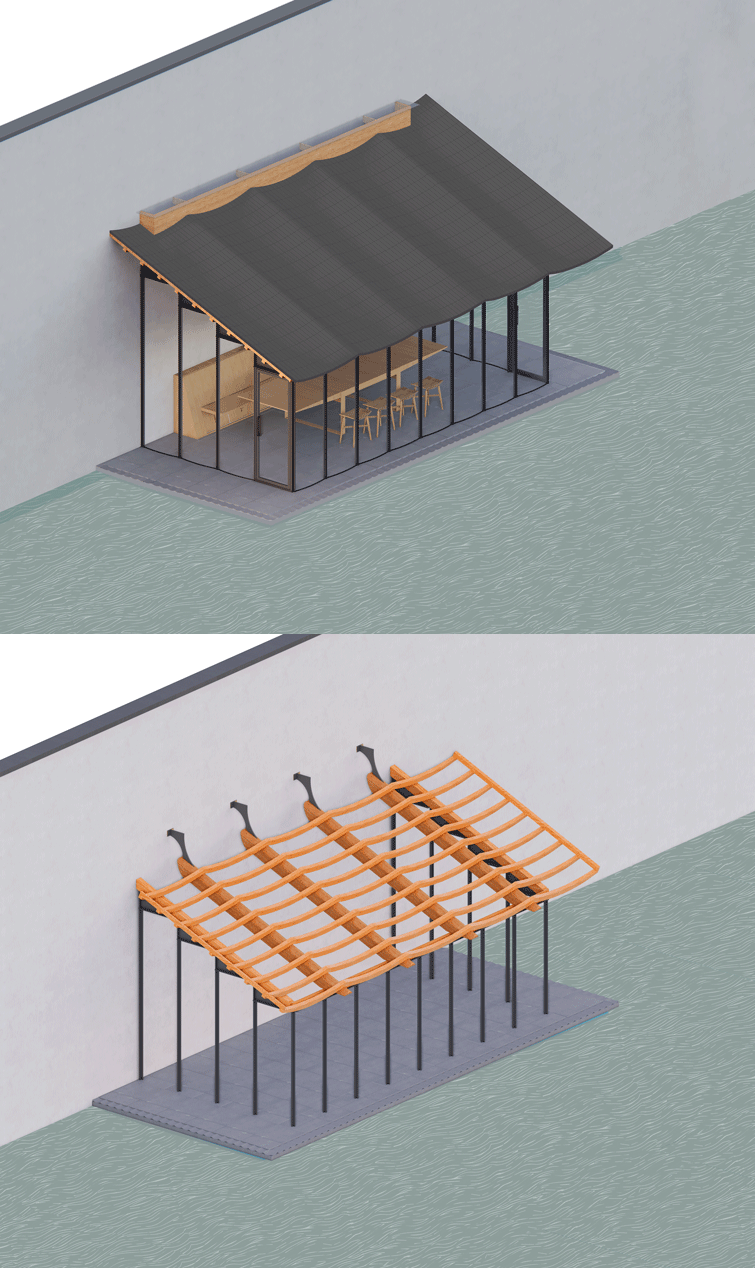
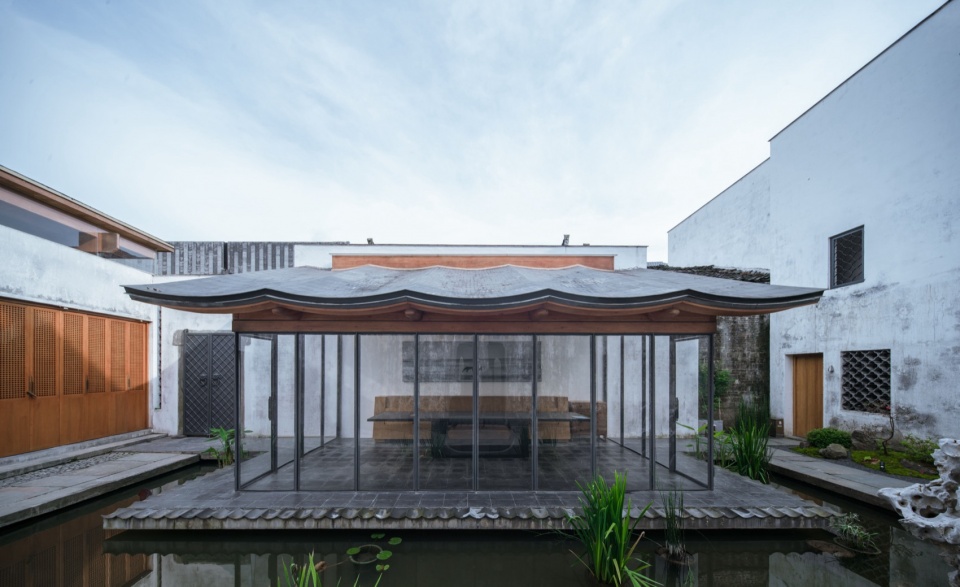
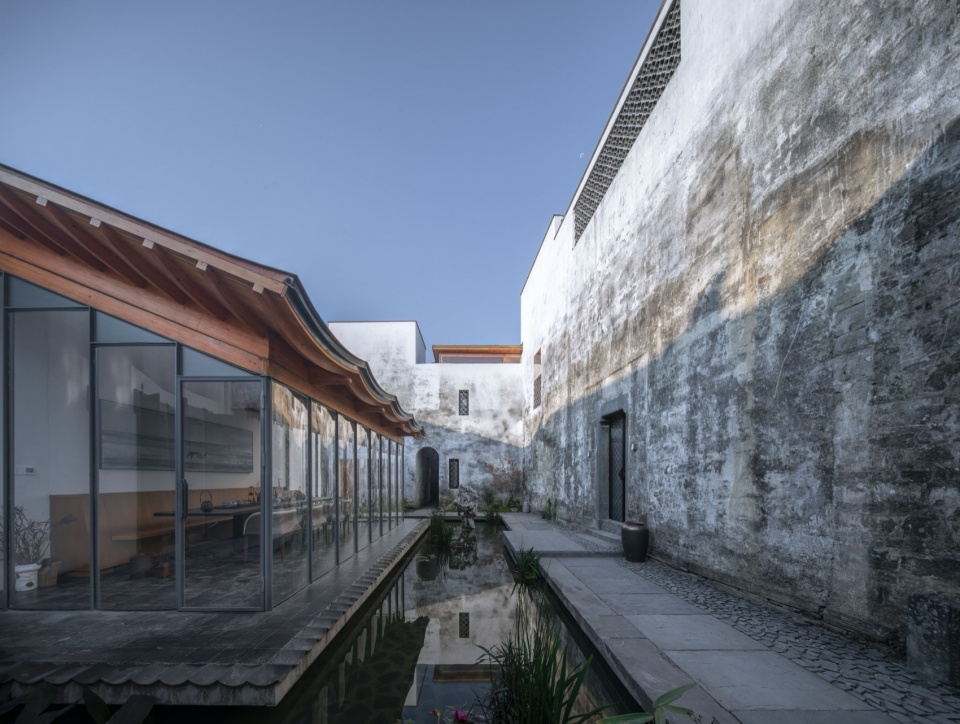
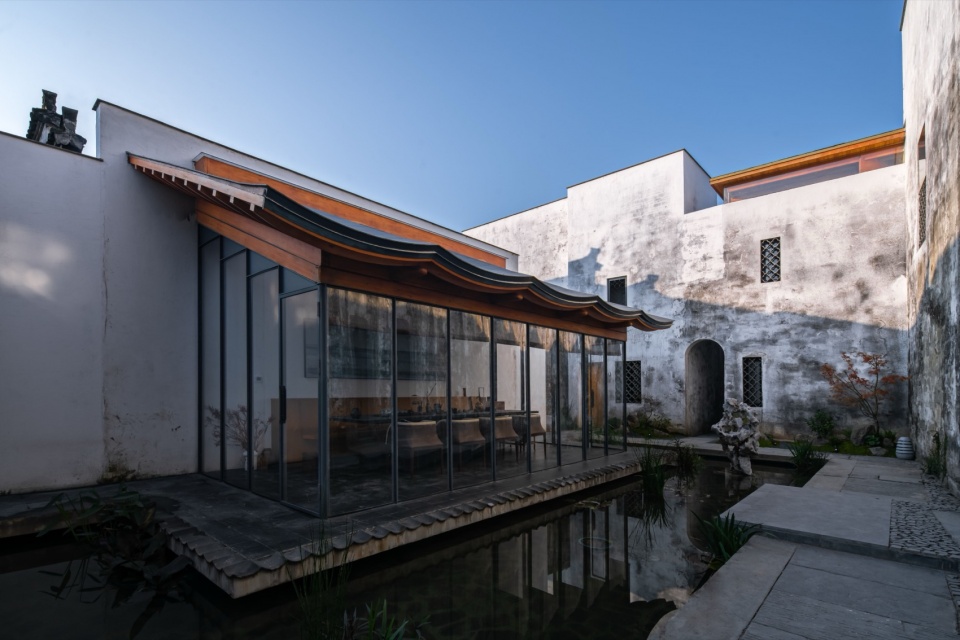
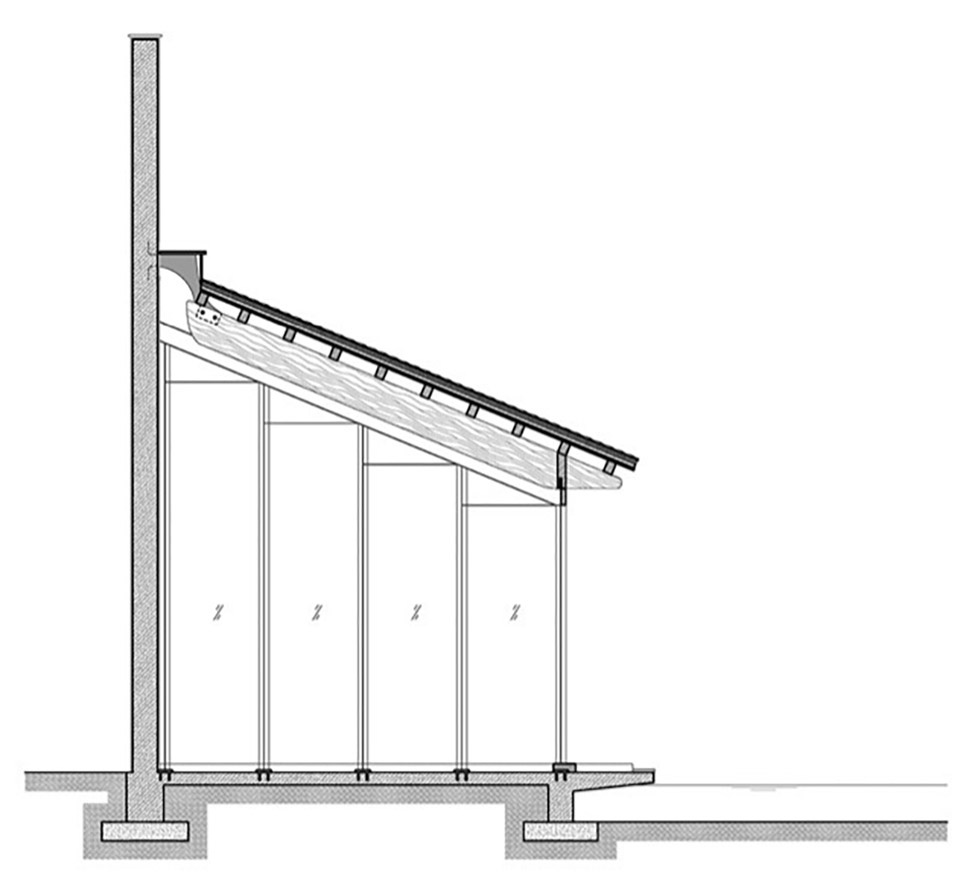
在整体的谋篇之中,四周高墙围合的中央庭院整理为水庭,在水庭南墙边悬立一亭,三面环水,通透轻盈,伫立于水面之上。亭子的结构借助南墙,将大梁一头勾搭在墙上,一头通过十字形的细钢柱立在地面。大梁仿佛无柱支撑而悬浮于水上,称为 “悬梁”。
▼“曲波悬亭”剖透视,”Pavilion ~~~” Cross-sectional View
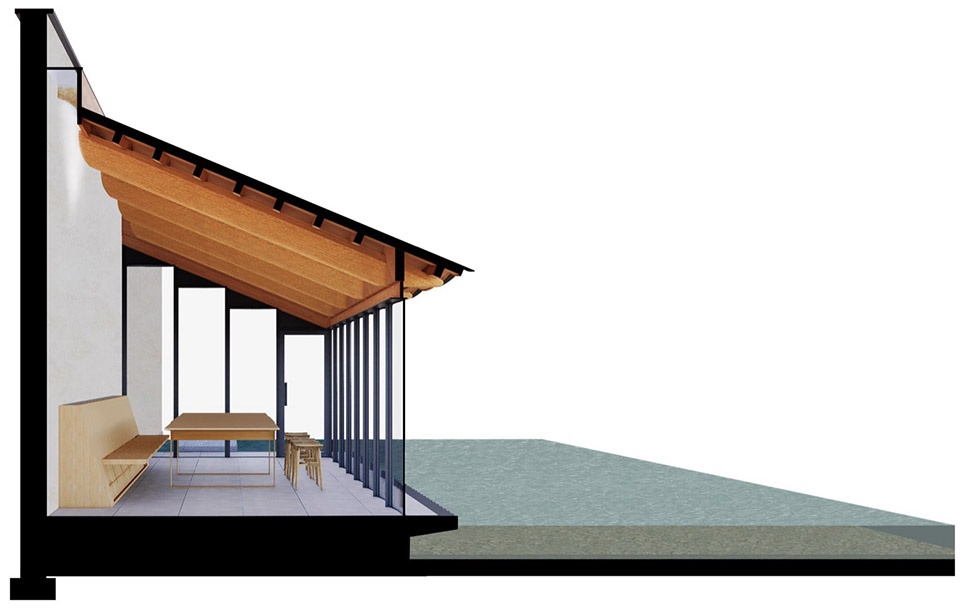
In the master plan, the central courtyard is organized as a water garden. A pavilion stands suspended by the southern wall, surrounded by water on three sides—transparent and light. One end of the main beam is hooked onto the wall, while the other is supported by a slender cross-shaped steel column. The beam appears to float over the water without support, hence the name “Suspended Beam.” Secondary beams curve downward following gravity, making the roof ripple like waves.
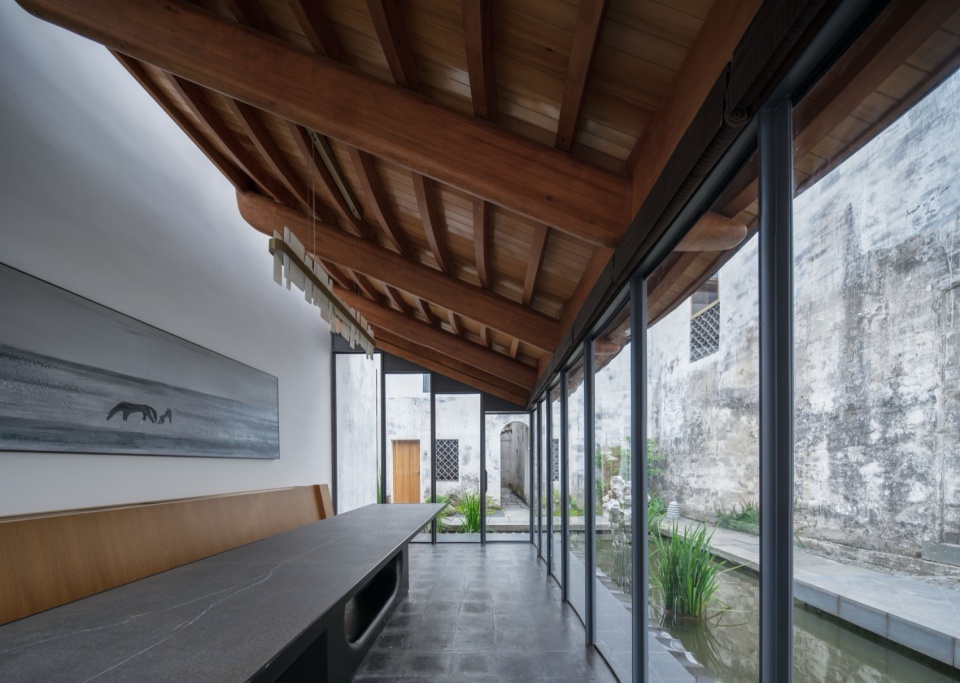
▼“曲波悬亭”室内照片,interior of the “Pavilion ~~~”
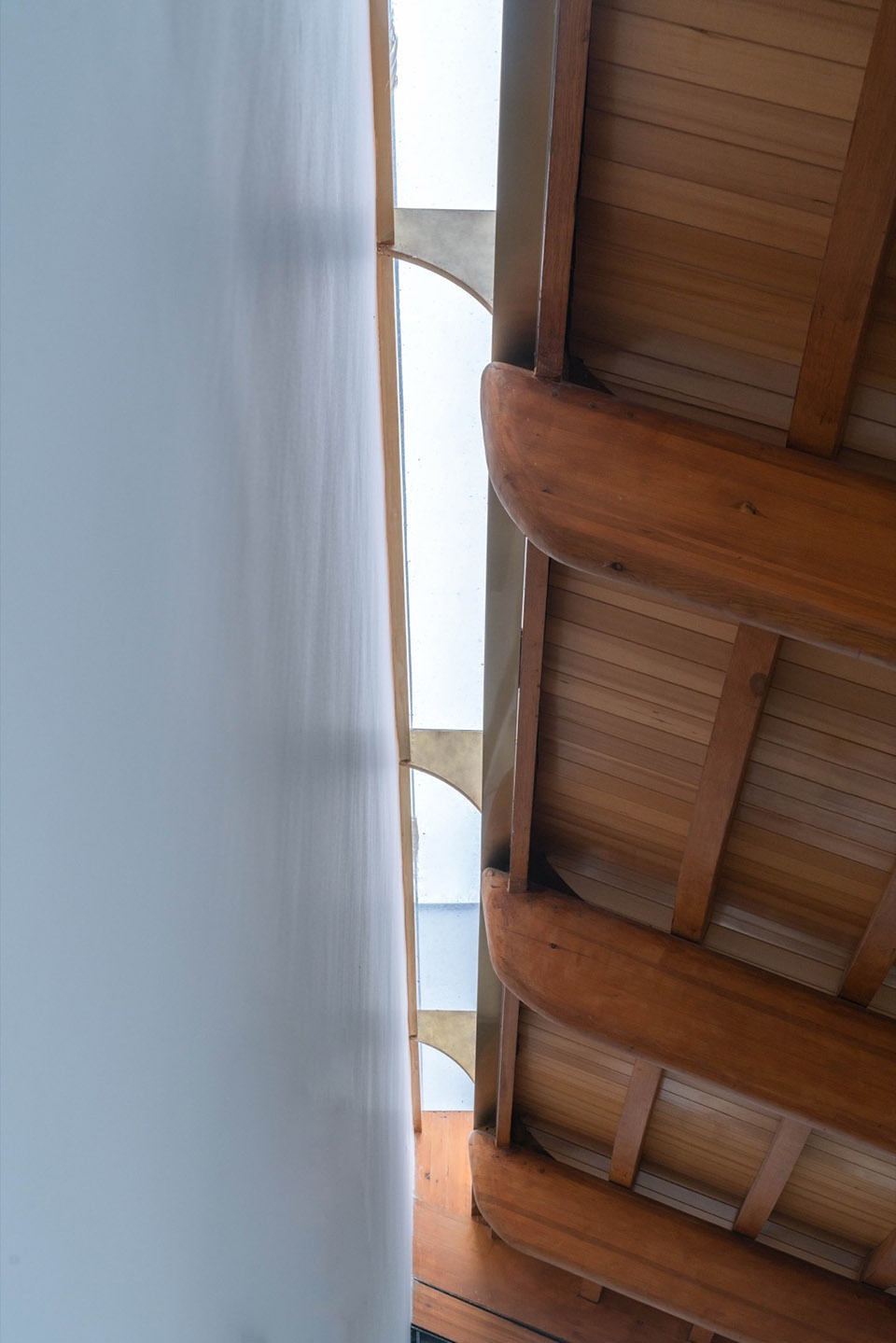
悬梁跟南墙并未粘接,而是通过一个纤细的钢件脱离于墙面,随着光线顺着南墙渗透,这种“悬梁”的意味更加明确,一细一粗,一搭一离,形成一种举重若轻的悬骨之清气。
The suspended beam is not directly attached to the southern wall; instead, it is detached via a slender steel fastener. As light permeates along the wall, the essence of this “suspended beam” becomes even more pronounced. The contrast between the slender and the thick, the connection and the detachment, creates a serene aura of “suspended bone”—an architectural feat of carrying a heavy load with feather-light elegance.
▼“曲波悬亭”细部照片,Detail photo of “Pavilion ~~~”
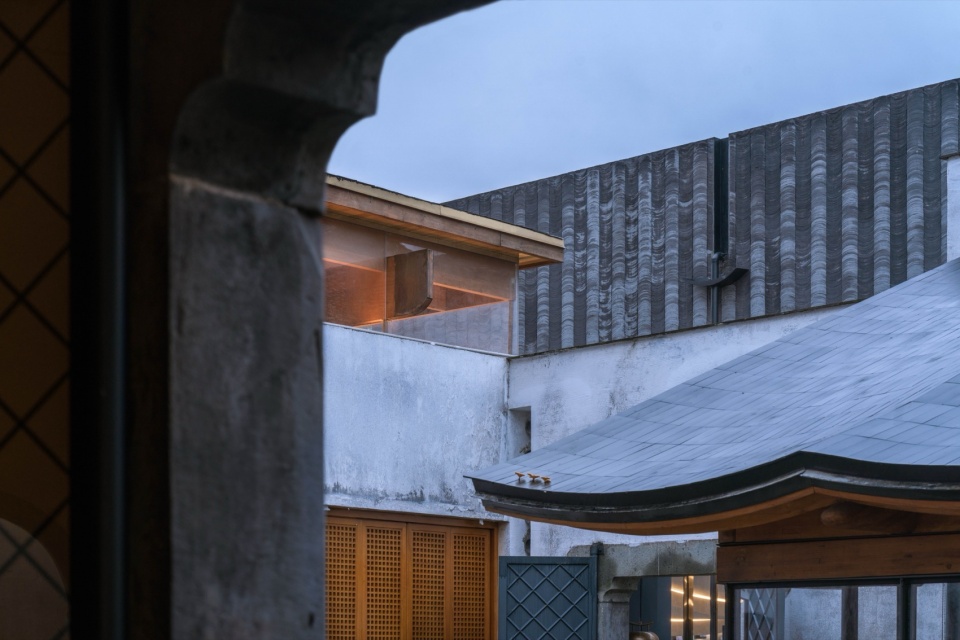
承托屋顶的次梁搭接在主梁之间,顺重力之势向下弯曲。弯曲的次梁使得屋面也如水波般弯曲,顺水导流。
Secondary beams supporting the roof are nested between the main beams, curving downward following the natural pull of gravity. These curved secondary beams give the roof a wave-like undulating form, which naturally guides the drainage of rainwater.
▼“曲波悬亭”木构轴测图, timber structure axonometric drawing
▼“曲波悬亭”,“Pavilion ~~~”
▼“曲波悬亭”,“Pavilion ~~~”
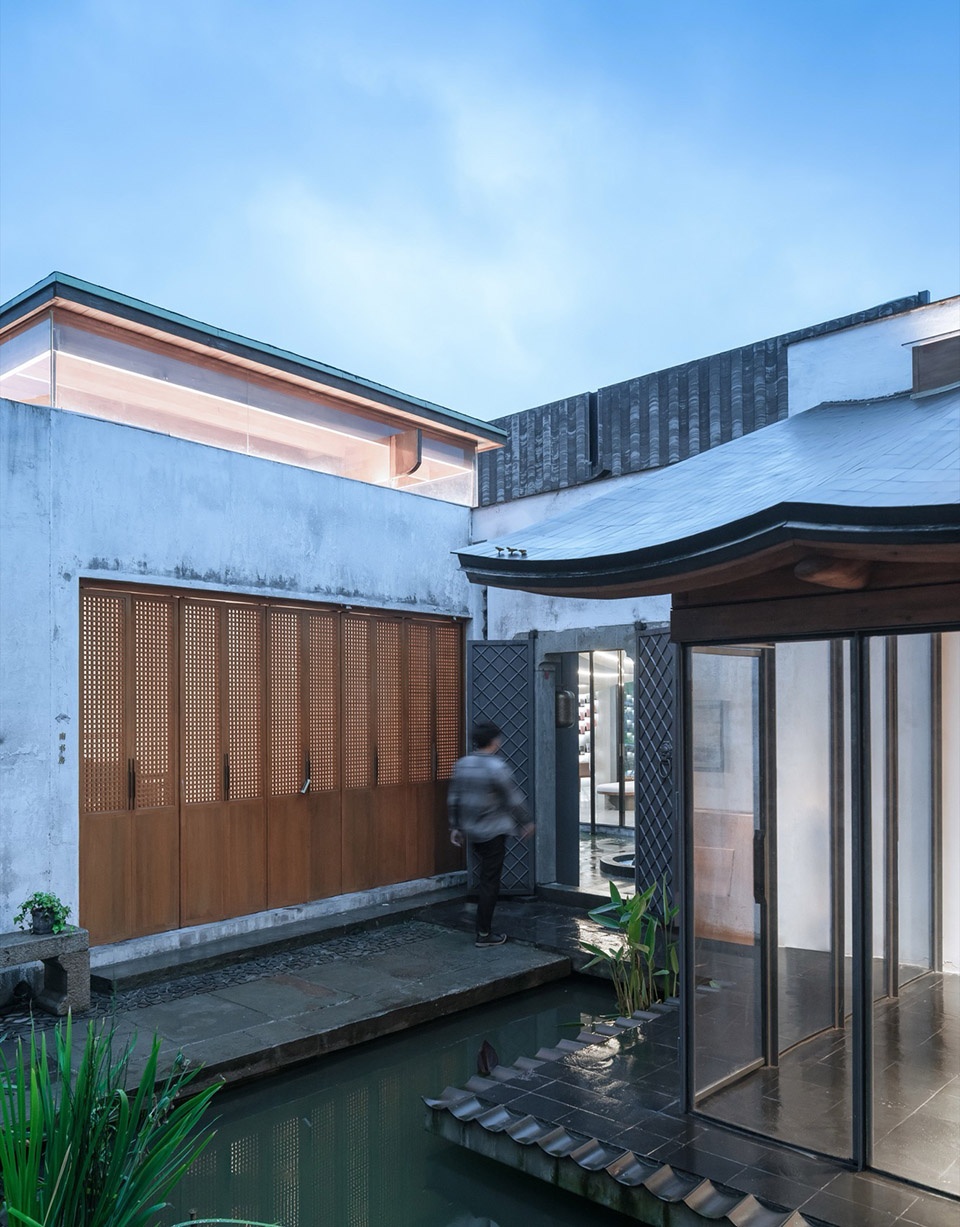
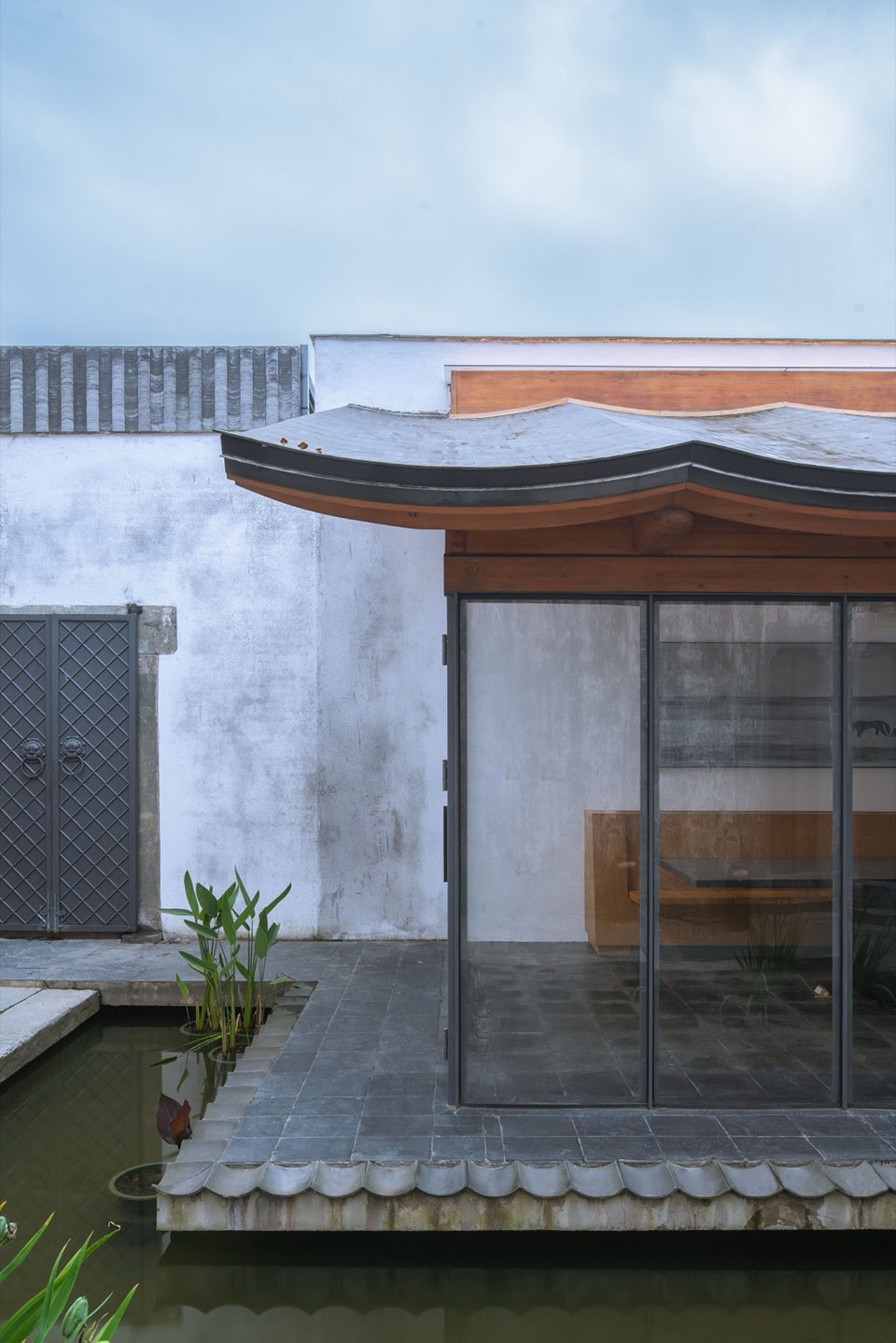
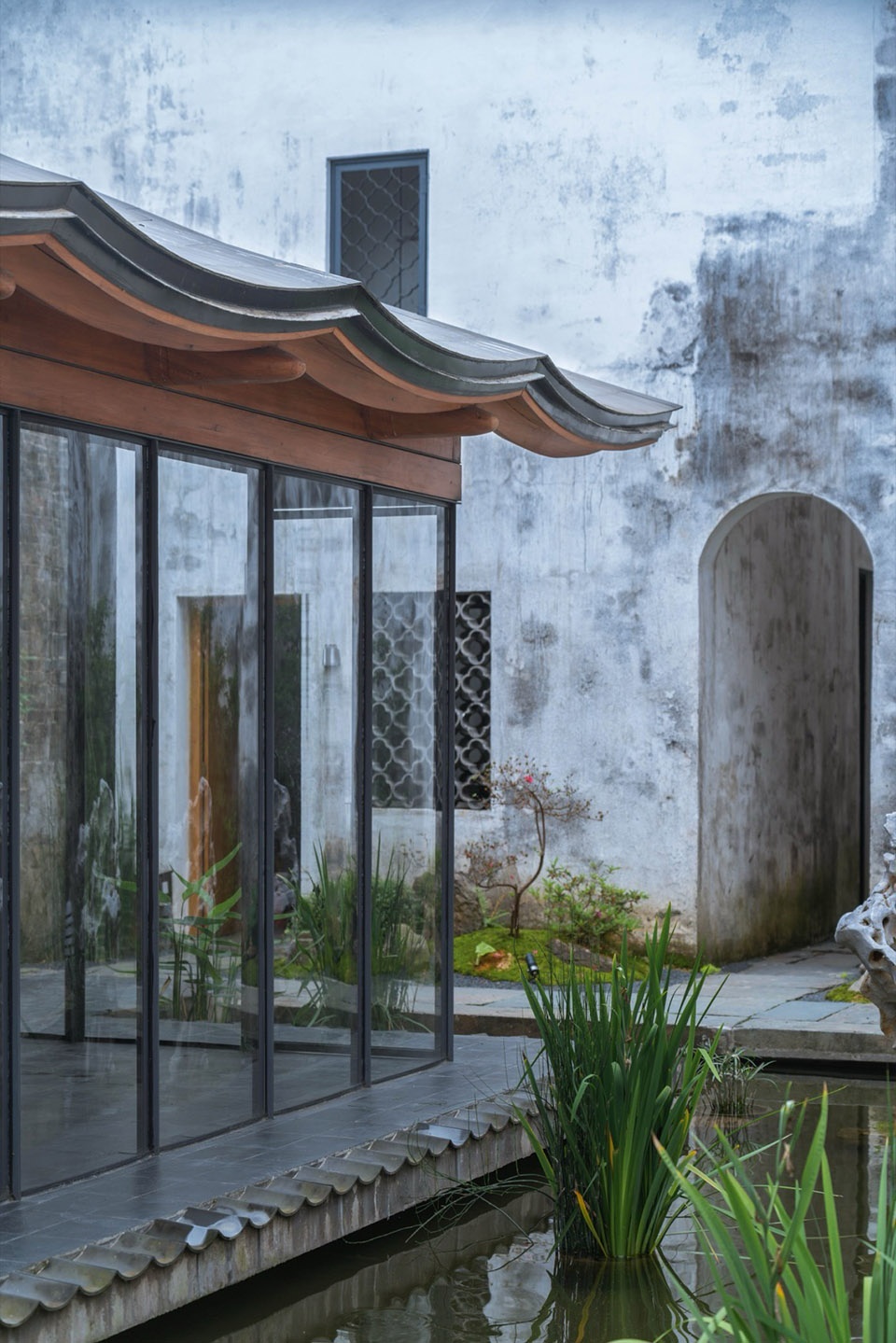
▼“曲波悬亭”室内照片,interior view of the “Pavilion ~~~”
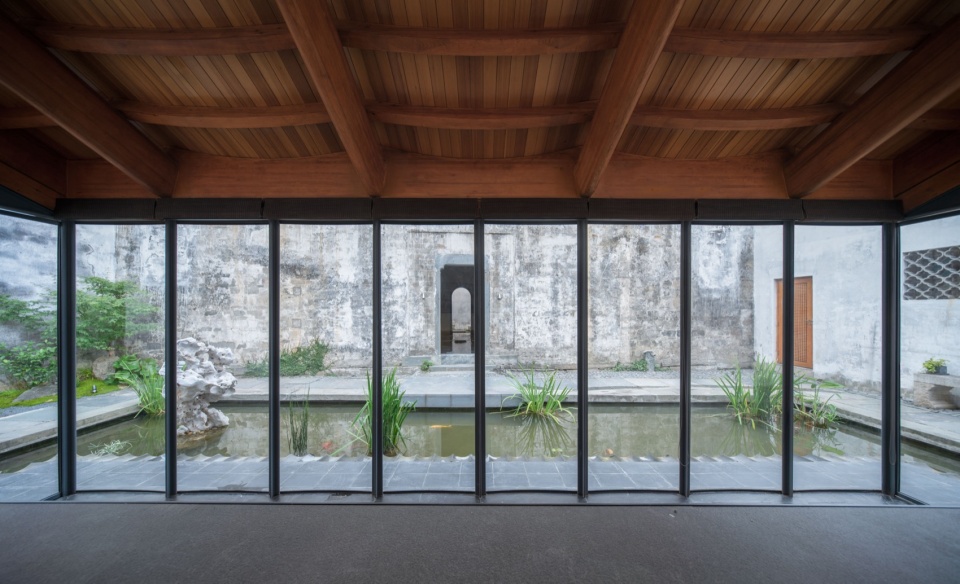
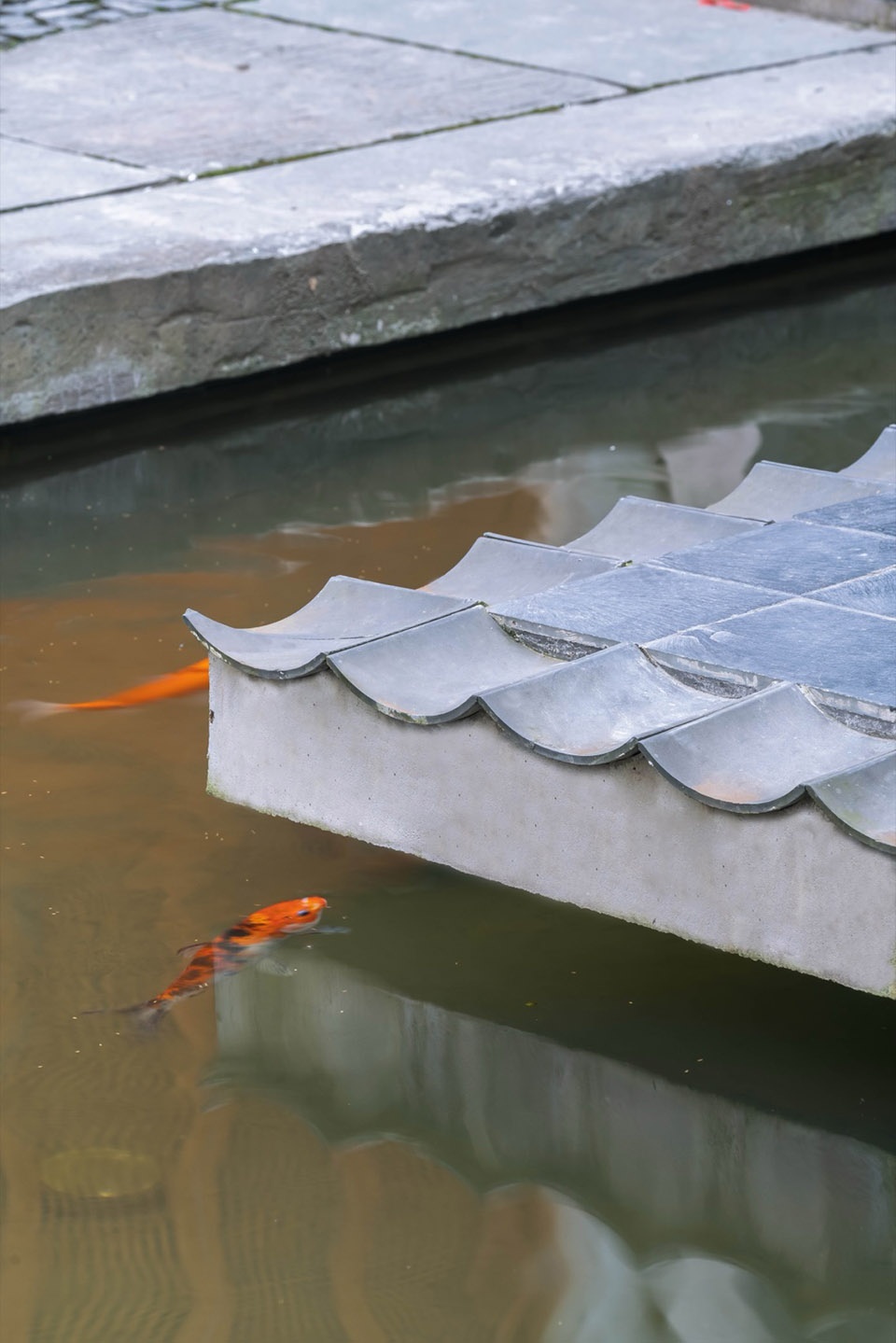
平台边缘的瓦片衔接水面,是用更小尺度的弯曲描边。多种尺度的弯曲多次回溯,回应着水波的形态。
The tiles at the edge of the platform meet the water’s surface with even finer, small-scale curves. These multiple scales of curvature echo one another, responding rhythmically to the shifting patterns of the water ripples.
▼“曲波悬亭”室外照片,exterior view of the “Pavilion ~~~”
▼“曲波悬亭”平台细部照片,details of the platform of the “Pavilion ~~~”
4. 老房子的“润骨洗木”|“Washing Wood House”
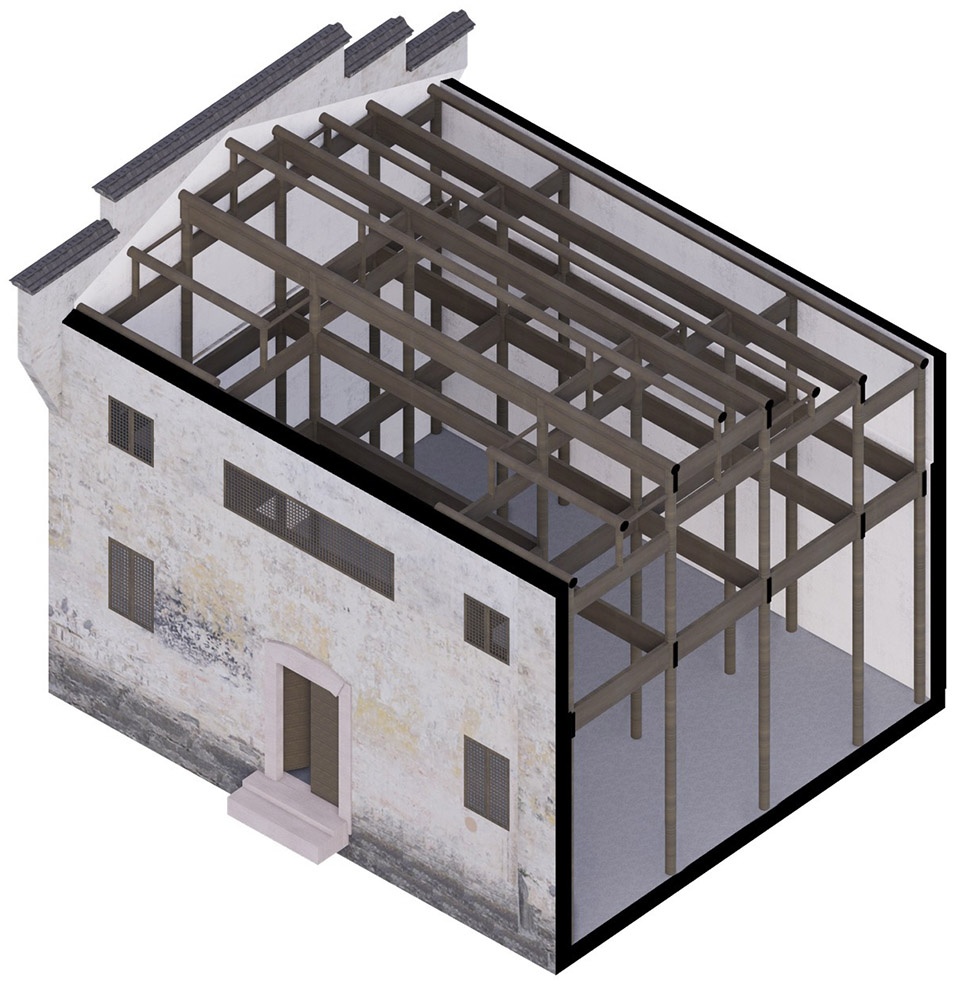
庭院的西南侧,有一栋保存较为完好的老房子,设计保留了原有的穿斗式木构,并没有置入新的现代木构。但老木头因年久失修早已氧化成了黑色,使得原本就昏暗的空间,气氛更加沉重。采用现代化学技术,在不破坏结构性能的前提下,将黑色的木柱洗成原木色,再罩面隔离,防止进一步氧化。处理后的木构色泽温润,润骨洗木,让本已昏昏老去的老屋焕发出含蓄而温婉的气息。一种润骨的新生,因保留了老屋的木构格局,有种拙朴的古意,成为全局重要的“留旧”。
▼原状轴侧图,Original axial view
▼“润骨洗木”改造前,“Washing Wood House” before renovation
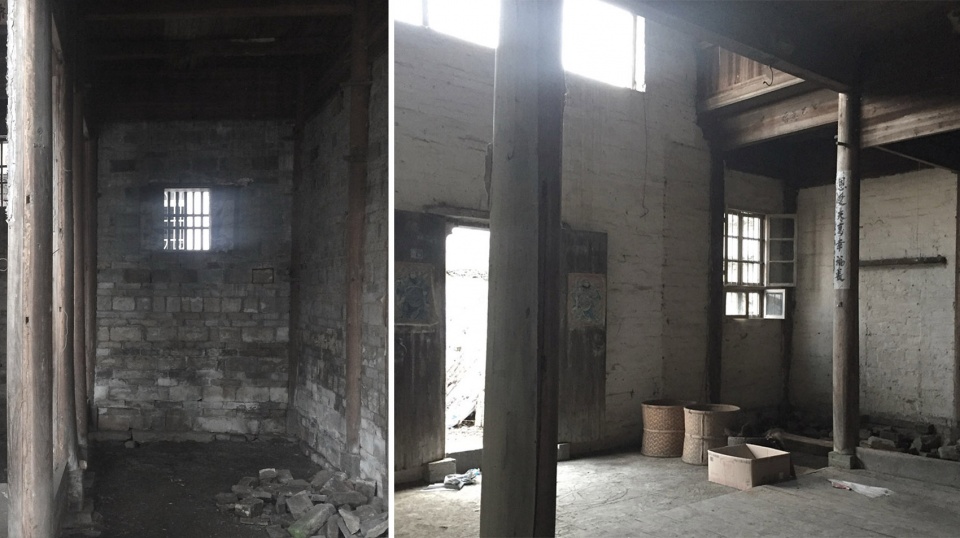
In the southwest, a well-preserved old house retains its original Chuan-dou timber frame. Over time, the wood had oxidized to black, creating a heavy atmosphere. Using modern chemical techniques, the black columns were “washed” back to their original wood color without damaging their structural integrity. This process, “Nourishing the Bone and Washing the Wood,” gives the aged structure a warm, subtle, and graceful glow—a “rebirth of the bone” that preserves the primitive antiquity of the original layout.
▼“润骨洗木”改造后,“Washing Wood House” after renovation
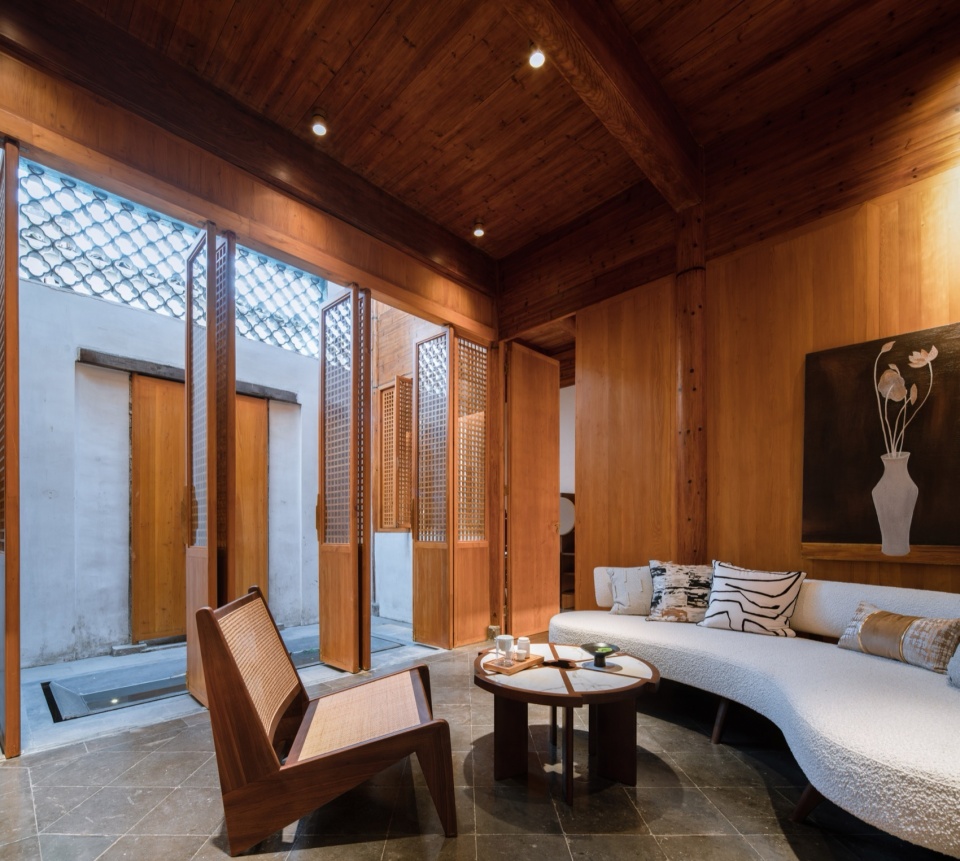
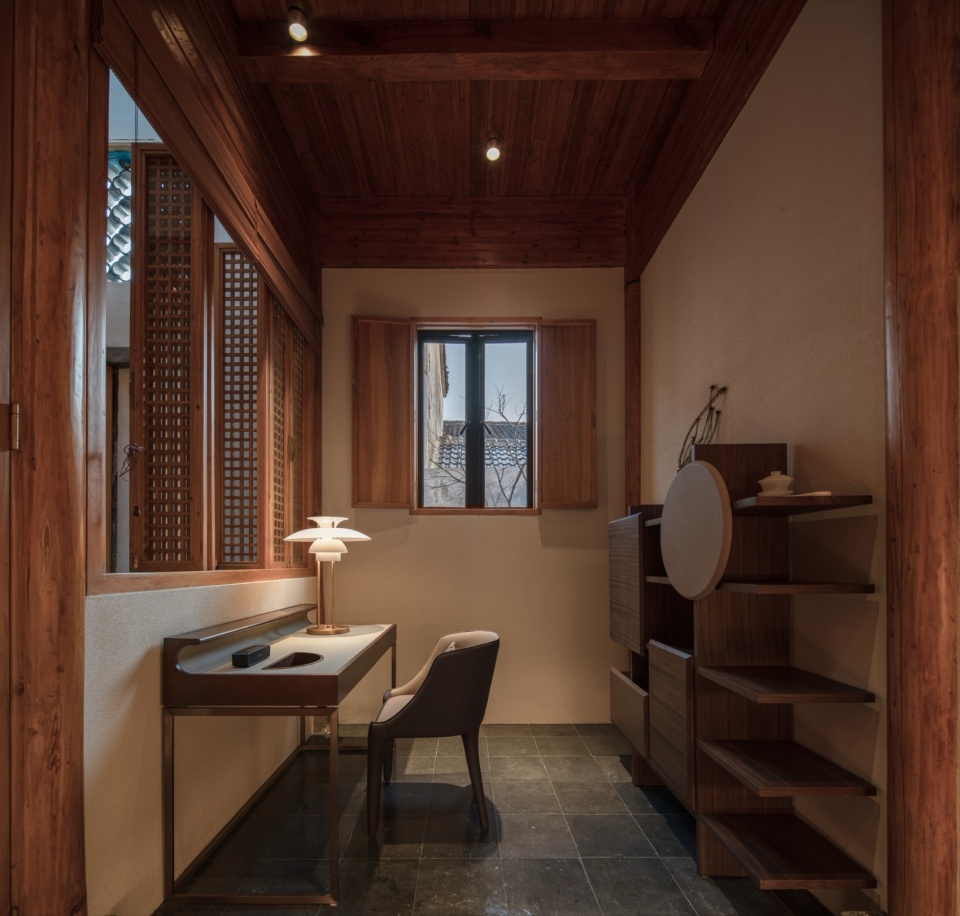
▼“润骨洗木”,“Washing Wood House”
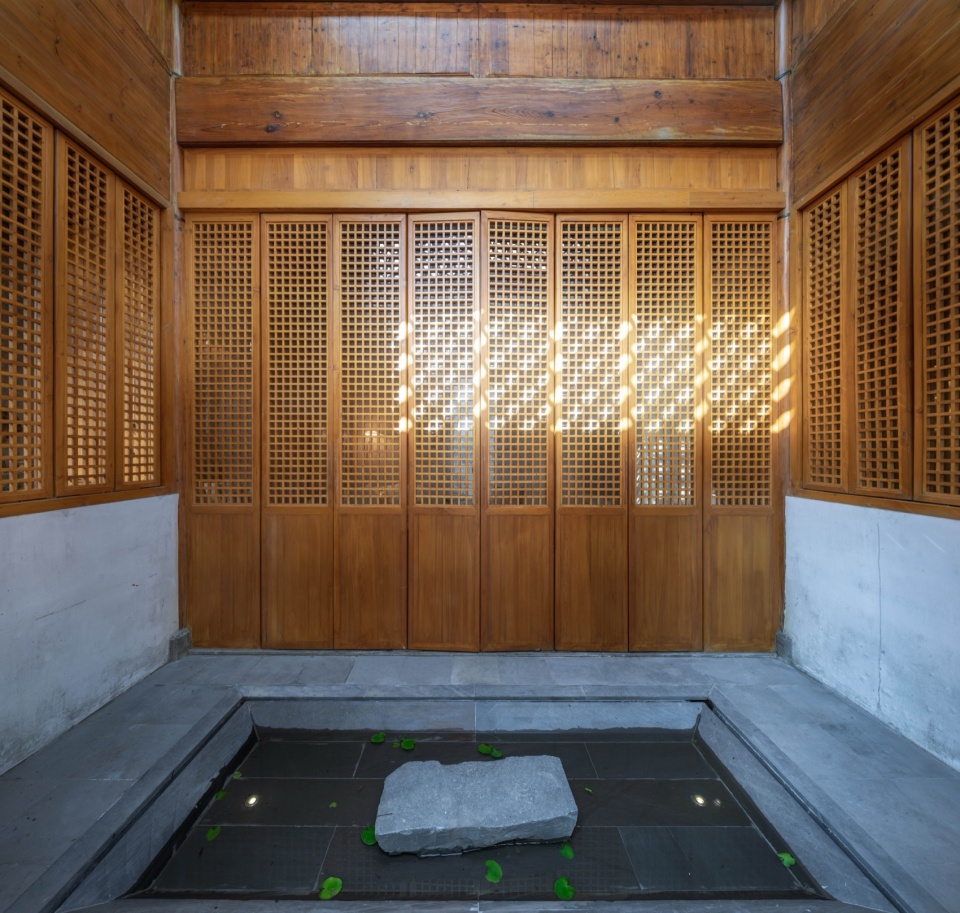
5. 新天井的“没(mò)骨井庭”|“Boneless Roof”
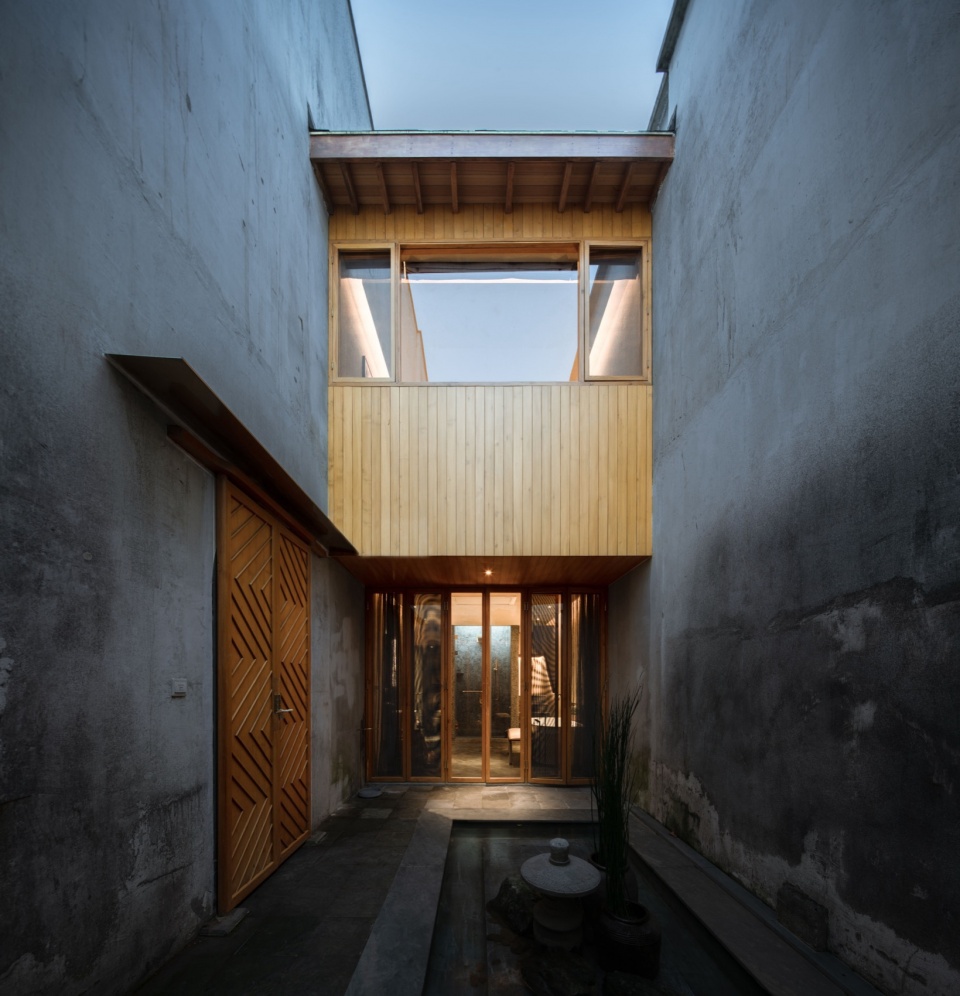
风雨悬庭的北侧后一进院子,是一座3 米宽,10 米深的窄小庭院,原本为老宅子的附房。空间狭小,围墙很高,不见天日。如此狭小高耸空间,不需用细腻而繁复的线条刻画,仅用一个木质光筒疏导气流即可。在这样一个小尺度的空间中,虽然只供容膝,却也能滋养水与光,沁润庭与院。
▼“没(mò)骨井庭”剖透视图,section view of the “Boneless Roof”
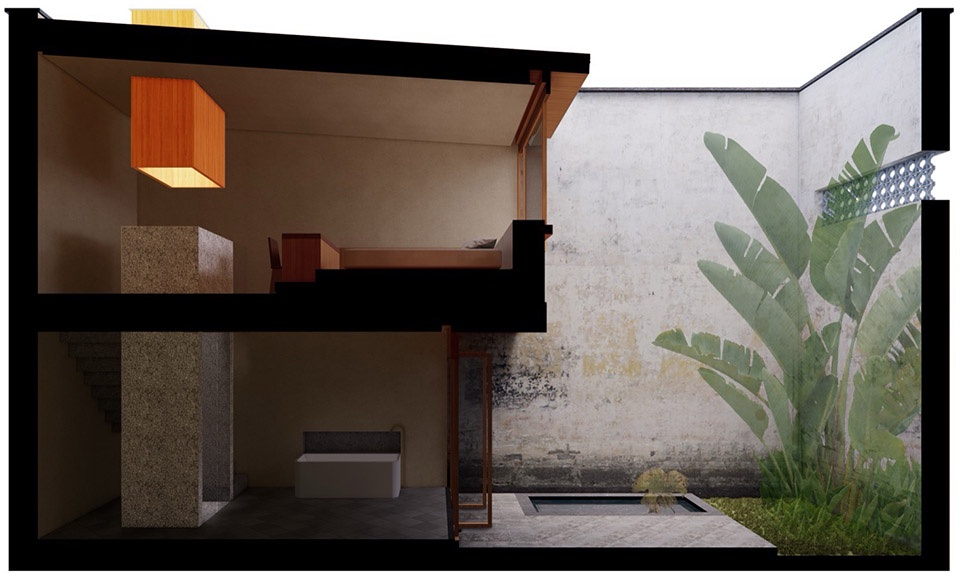
To the north of G Hall is a narrow courtyard (3m wide, 10m deep), formerly an outbuilding. Narrow and sunless, it required no complex lines. Instead, a simple wooden light-tube guides the airflow. In this small-scale space, even a “room for one’s knees” can nourish water and light, soaking the courtyard in serenity.
▼“没骨井庭”光筒,light tube of the “Boneless Roof”
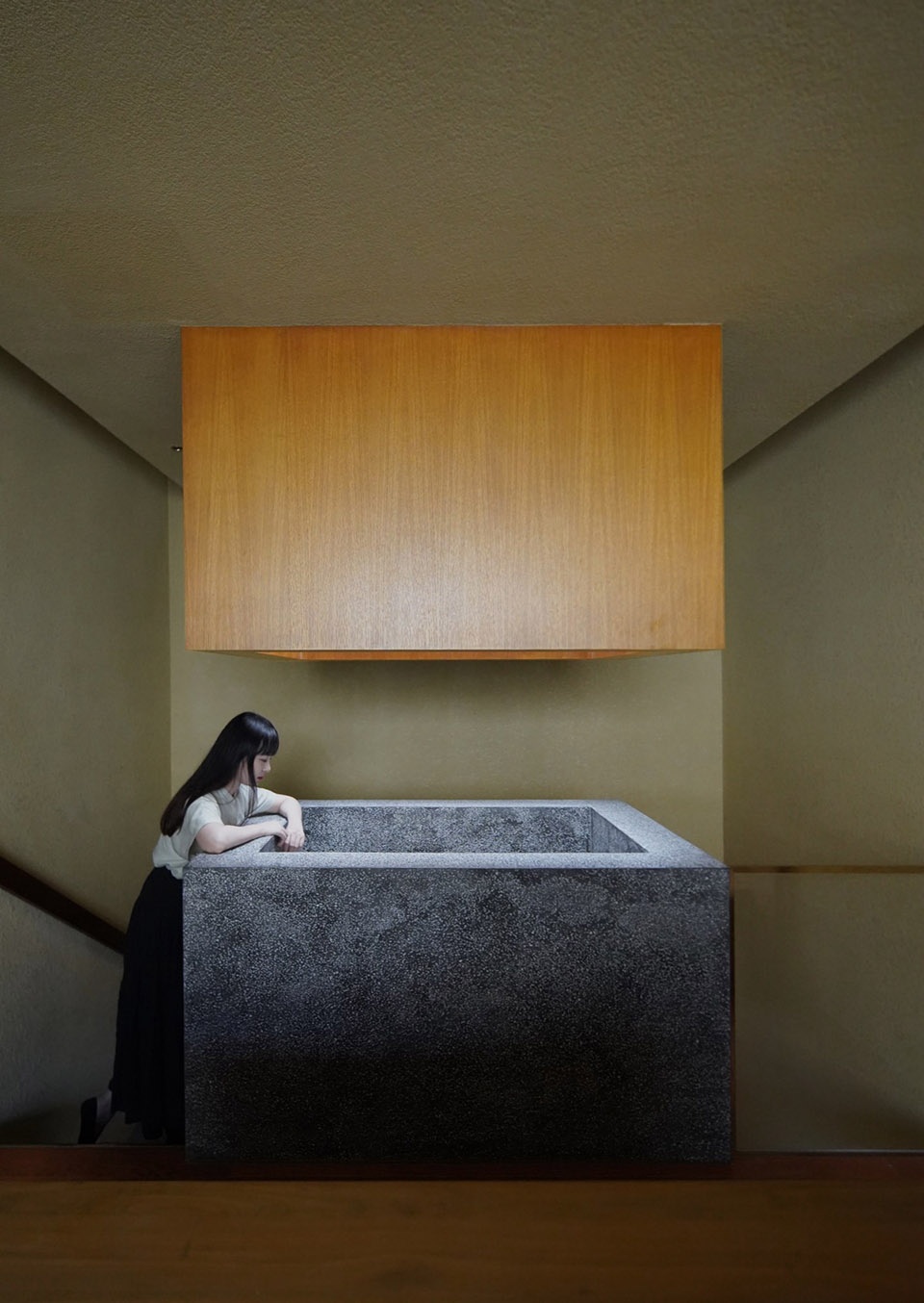
▼“没骨井庭”庭院,Courtyard of the “Boneless Roof”
结语Epilogue
笔墨的书写过程是三维运动,书写者的手臂在空中挥舞,如行云流水,毛笔的笔锋被联动着在纸面上留下线条,抑扬顿挫。后人便可以在留下的二维图像中,感受创作者的力量与技巧,甚至能够窥见创作者的品德与性格。
The process of ink writing is a 3D movement; the writer’s arm dances in the air like flowing water, and the brush tip leaves lines on the paper with rhythmic pauses. Future generations perceive the creator’s power, skill, and character through these 2D images.
▼细部,details
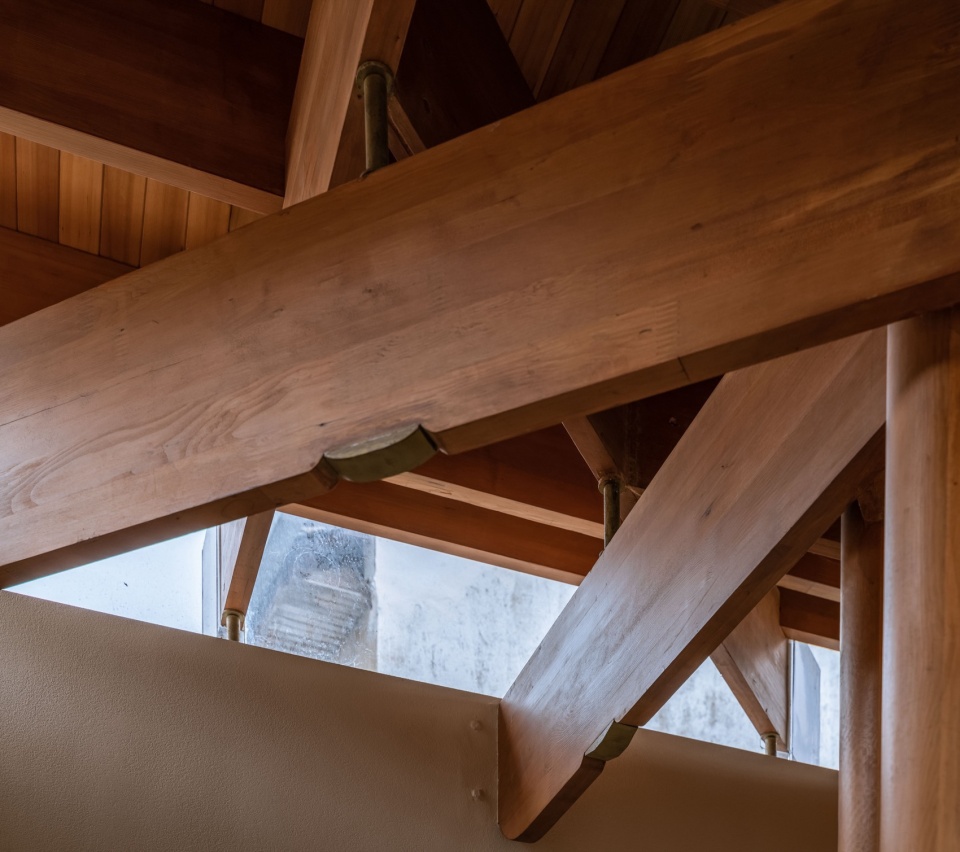
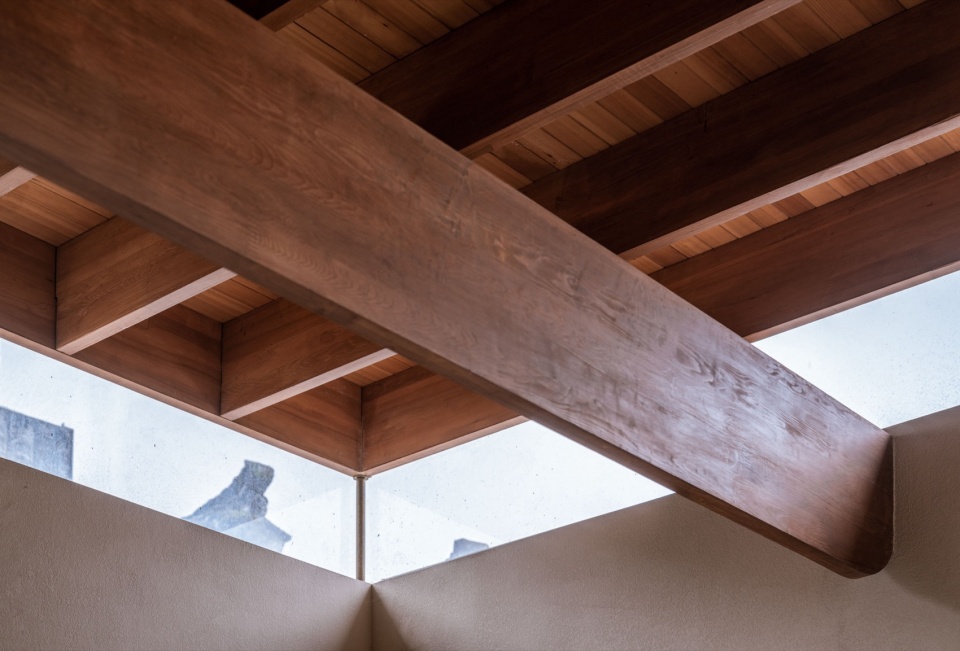
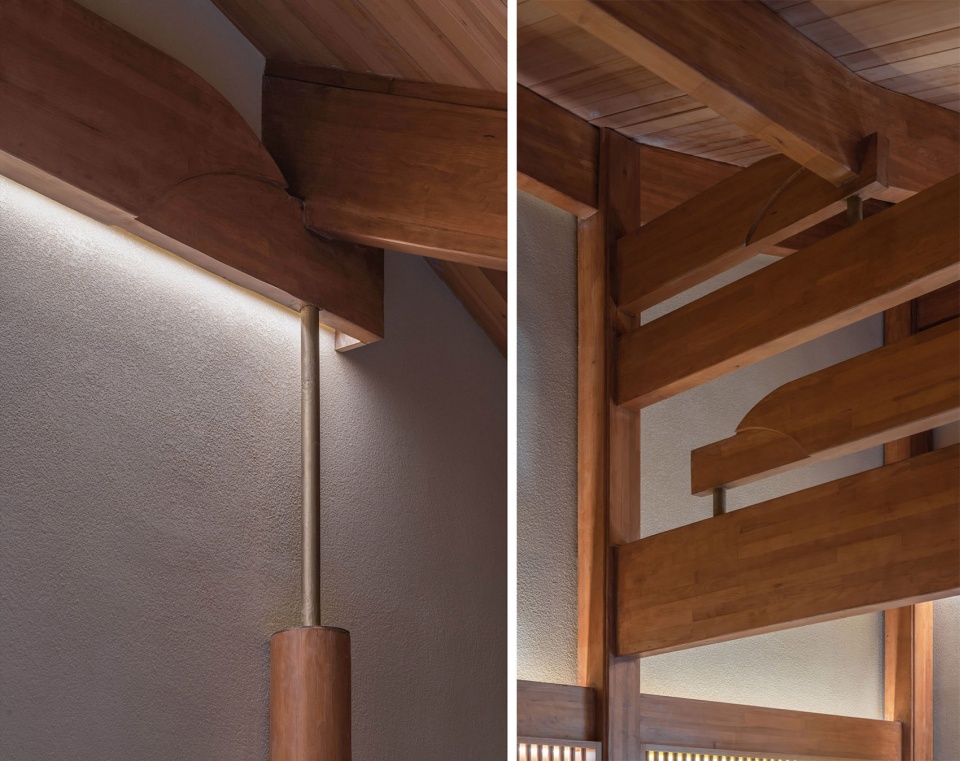
因此对于书写艺术的完整的审美,包含两部分:书写的过程以及留下的书迹。动静互相呈现,动态中人的谋划都凝固于静态的线条,静态的线条中能够去体悟动态的力与势。于是,此时此刻三维空间中人的情感、力量与互动,被定格为二维的线条,将此情此景永恒凝固。
Thus, the complete aesthetic of calligraphy includes both the process and the traces. Dynamics and stillness manifest each other. The emotions and interactions of people in 3D space are frozen into 2D lines, eternally solidifying the moment.
▼细部,details
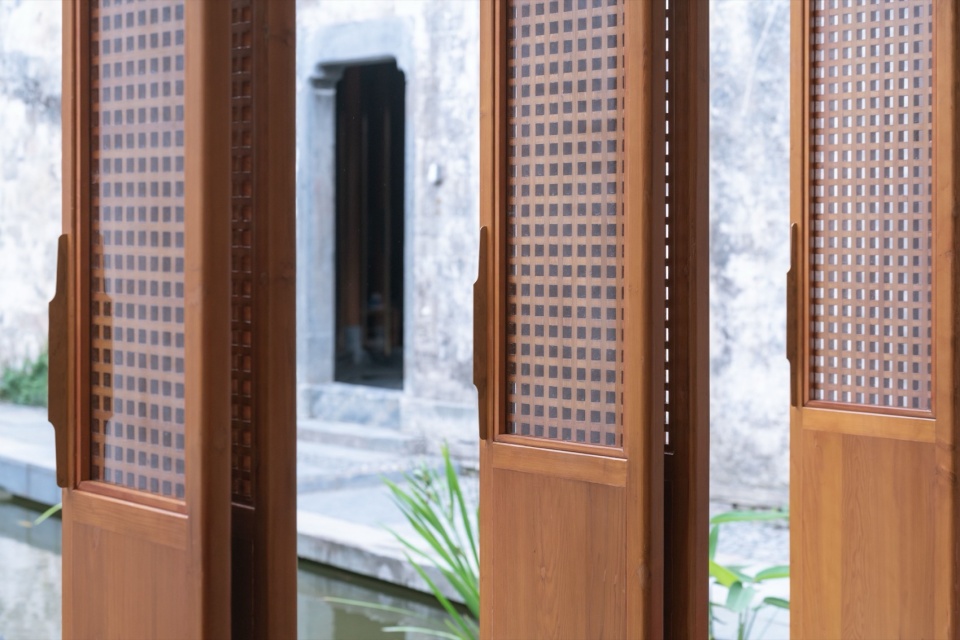
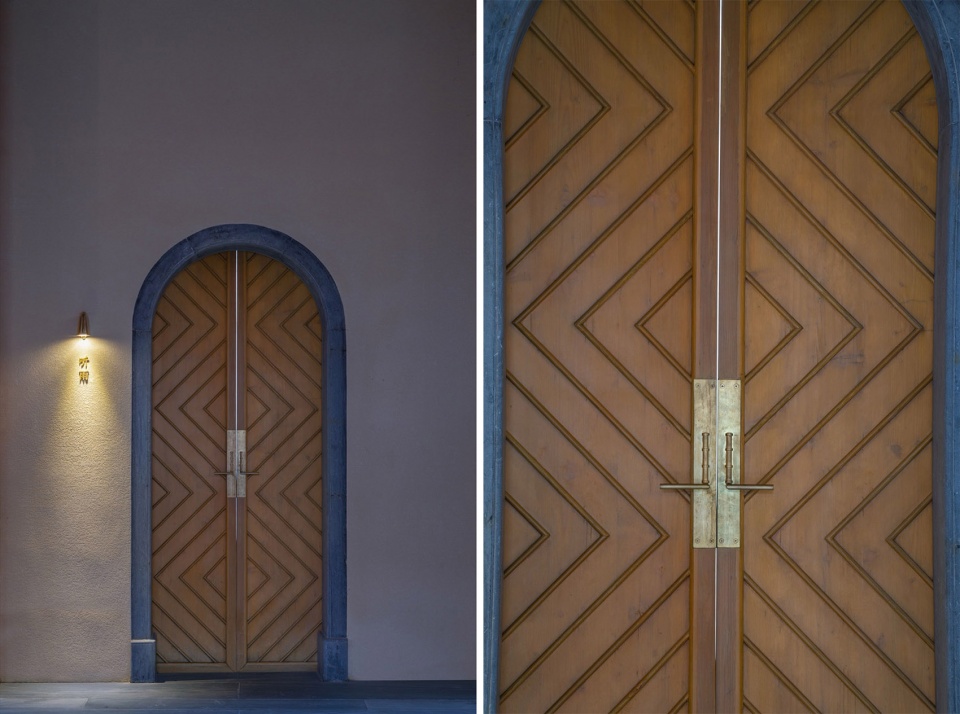
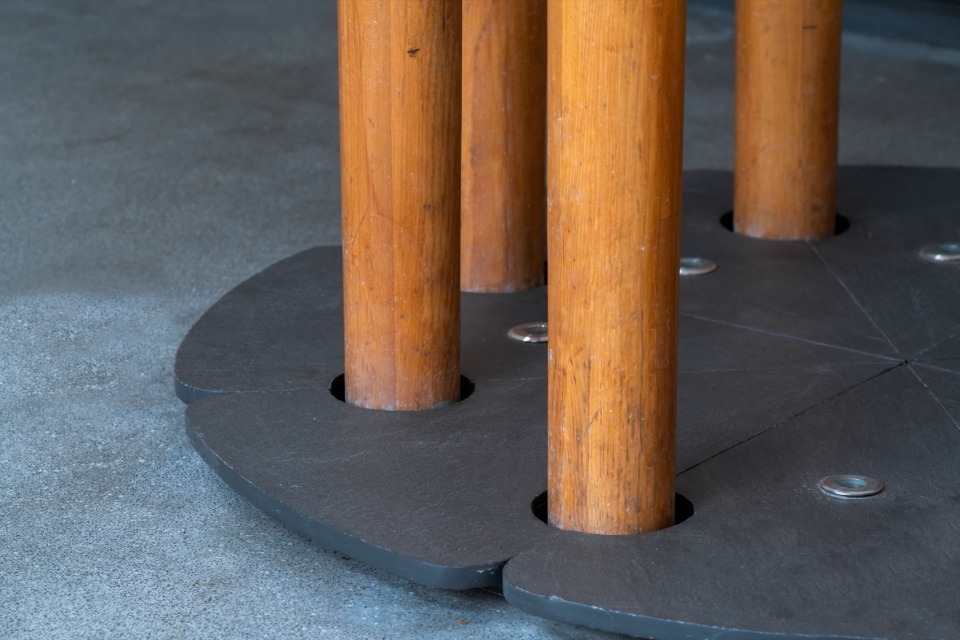
南书院的改造,在于“去皮留骨”,以结构之“骨”构建出空间的体态,“骨”成为力量与动势的核心。将原本沉沉如睡的老宅,迸发出新的空间气韵。
The renovation of Courtyard G lies in “removing the skin to retain the bone.” By constructing the spatial posture with the “bone” of the structure, the “bone” becomes the core of power and momentum. It allows the once-slumbering ancient residence to burst forth with a new spiritual rhythm.
▼细部,details
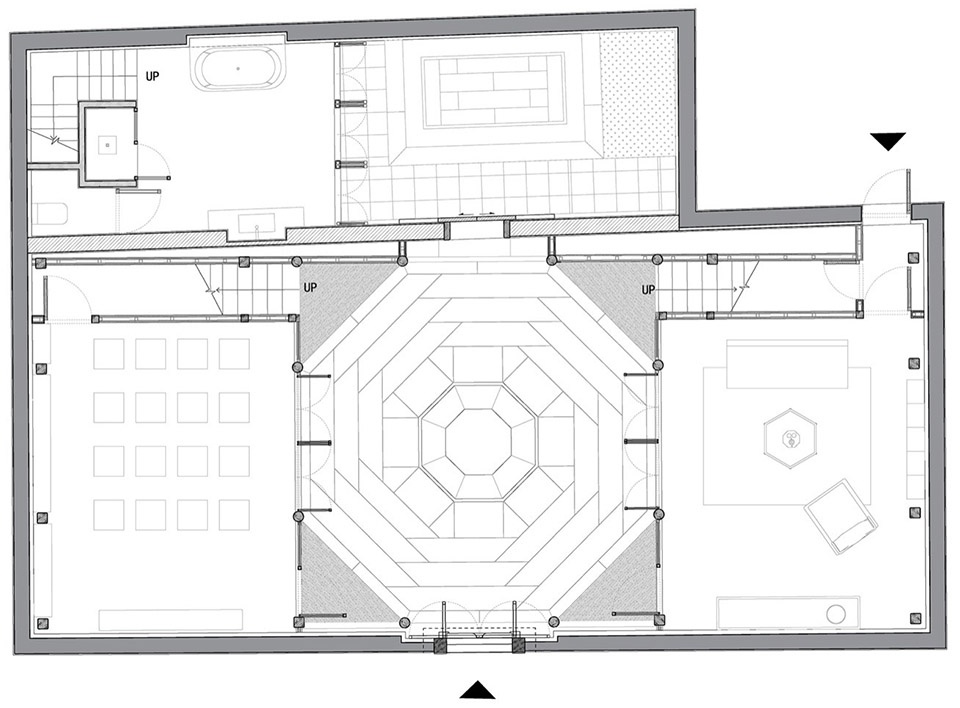
▼“风雨悬庭”与“没骨井庭”一层平面图,ground floor plan of the “G Hall” & “Boneless Roof”
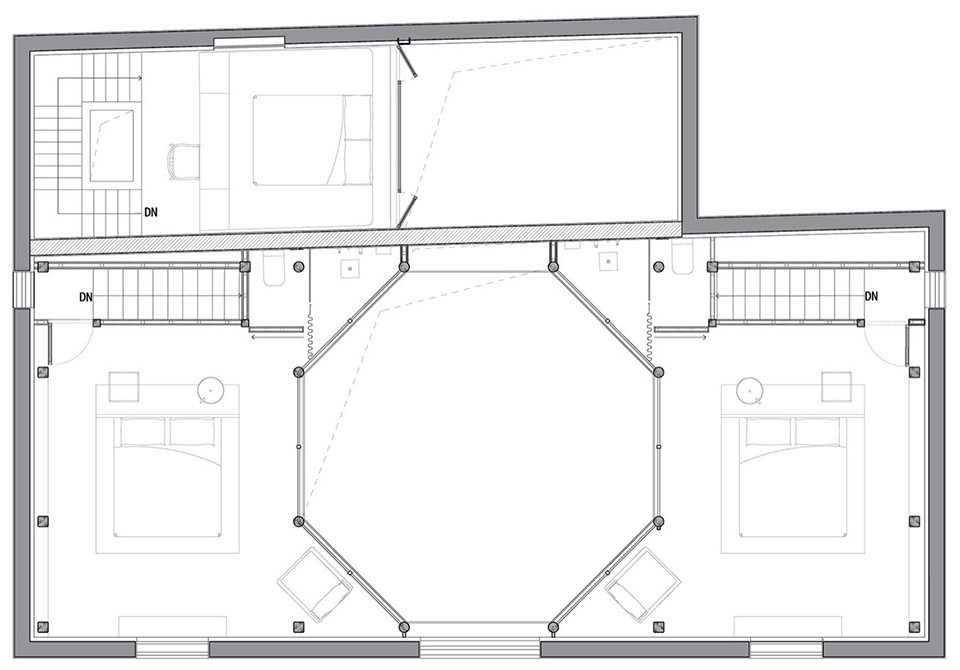
▼“风雨悬庭”与“没骨井庭”二层平面图,upper floor plan of the “G Hall” & “Boneless Roof”
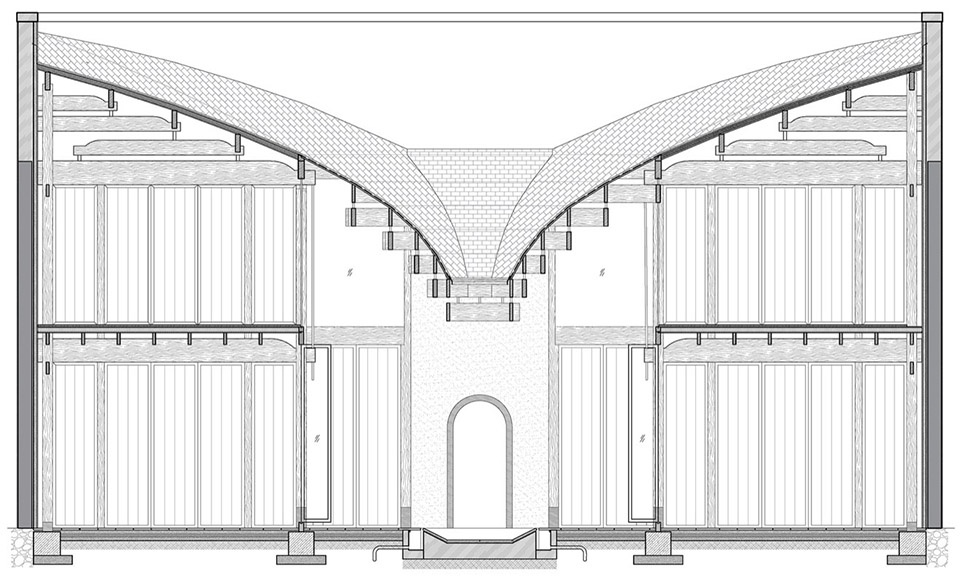
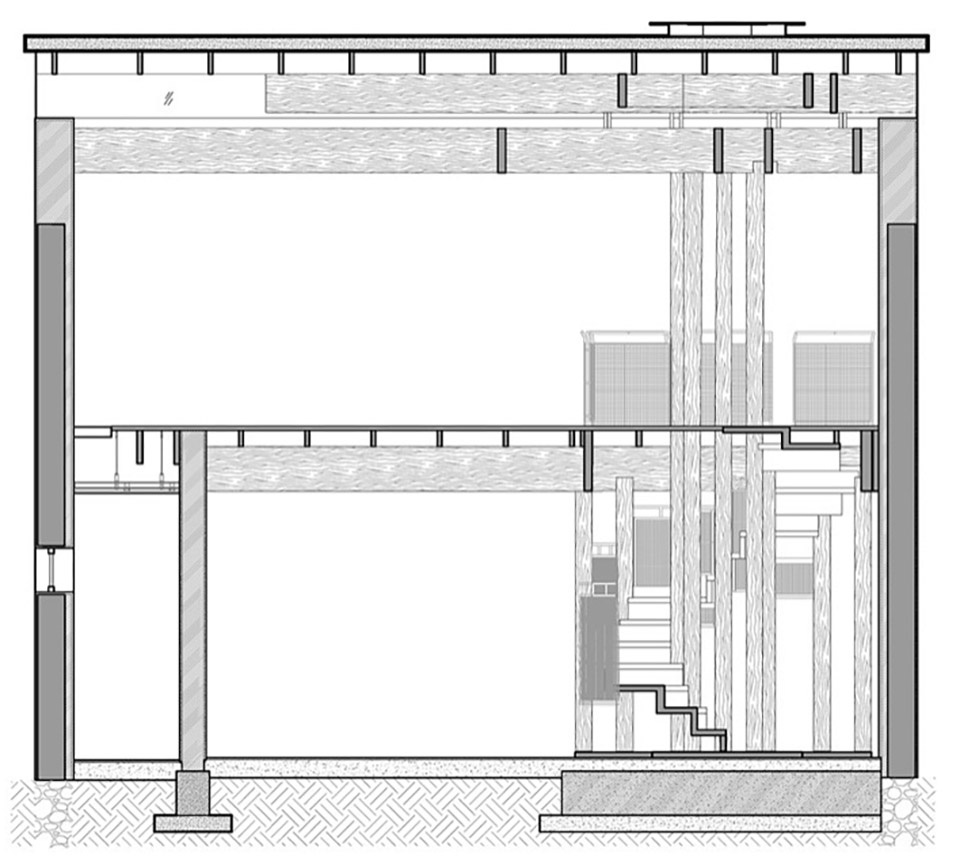
▼“风雨悬庭”剖面图,section of the “G Hall”
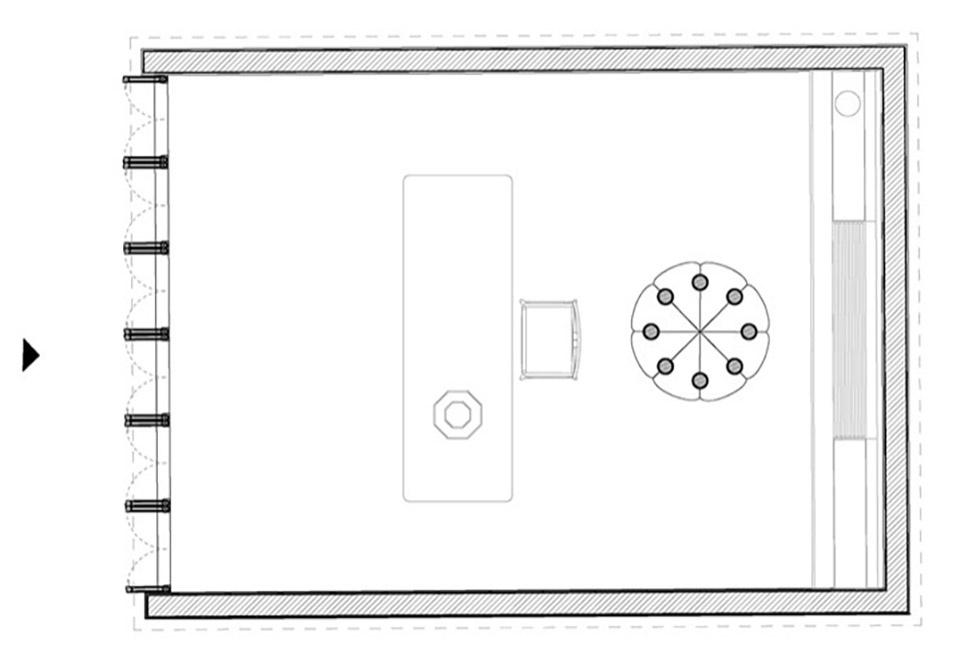
▼“云柱绸梁”平面图,plan of the “G Roof”
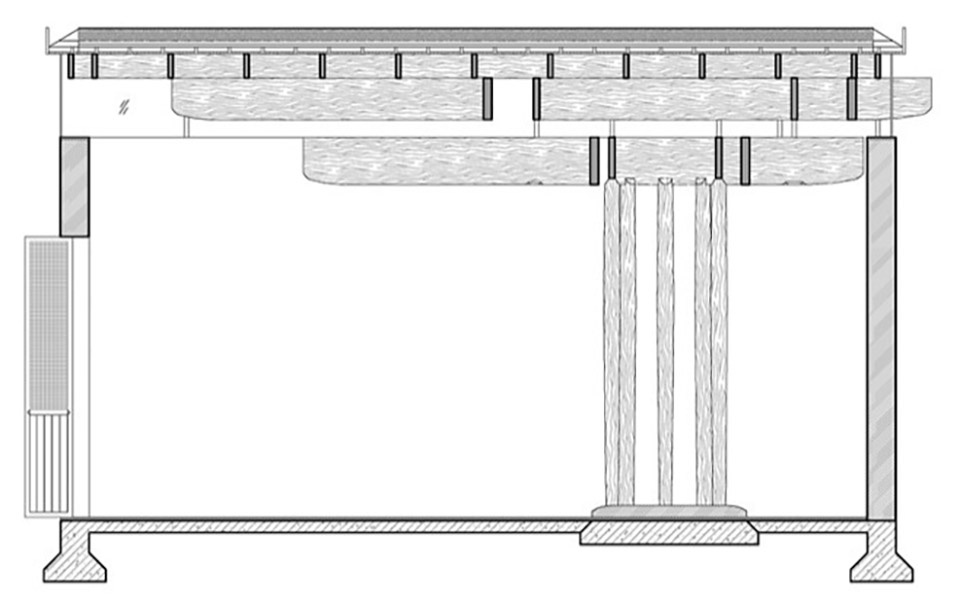
▼“云柱绸梁”剖面图,section of the “G Roof”
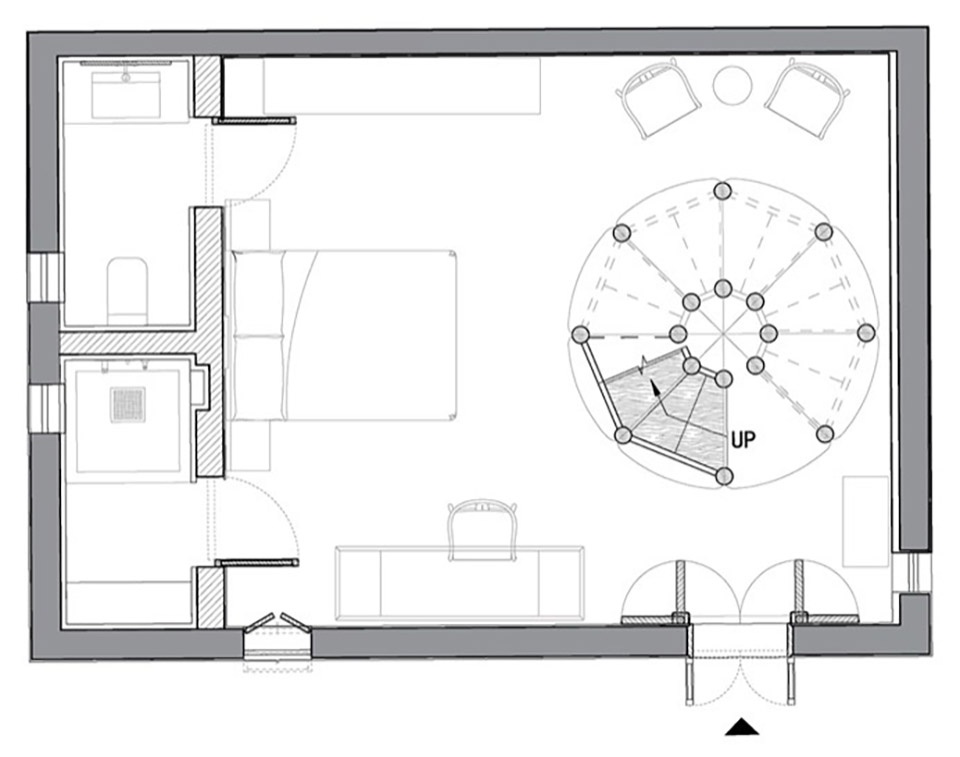
▼“云柱绸梁”双层客房一层平面图,ground floor plan of the “G Roof”- guest rooms
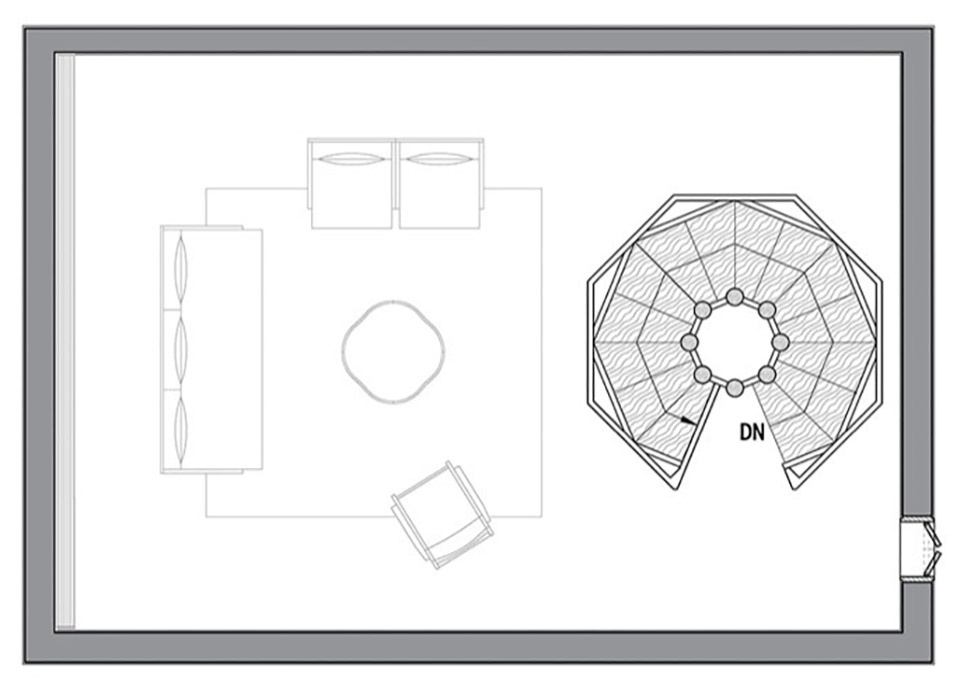
▼“云柱绸梁”双层客房二层平面图,upper floor plan of the “G Roof”- guest rooms
▼“云柱绸梁”双层客房剖面图,section of the “G Roof” – guest rooms
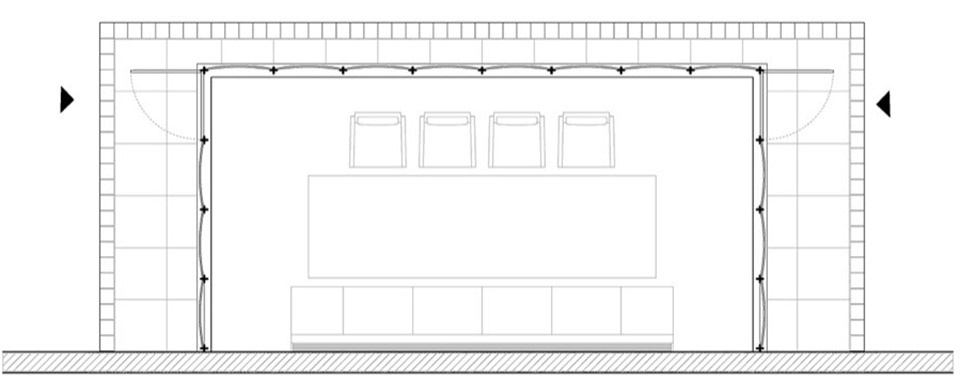
▼“曲波悬亭”平面图,plan of the “Pavilion ~~~”
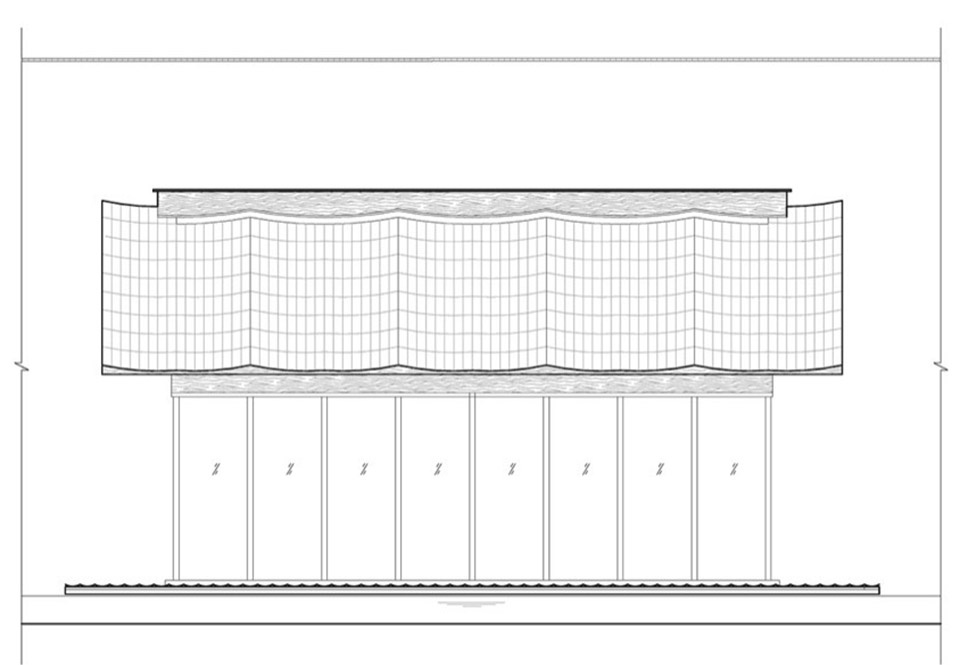
▼“曲波悬亭”立面图,elevation of the “Pavilion ~~~”
▼“曲波悬亭”剖面图,section of the “Pavilion ~~~”
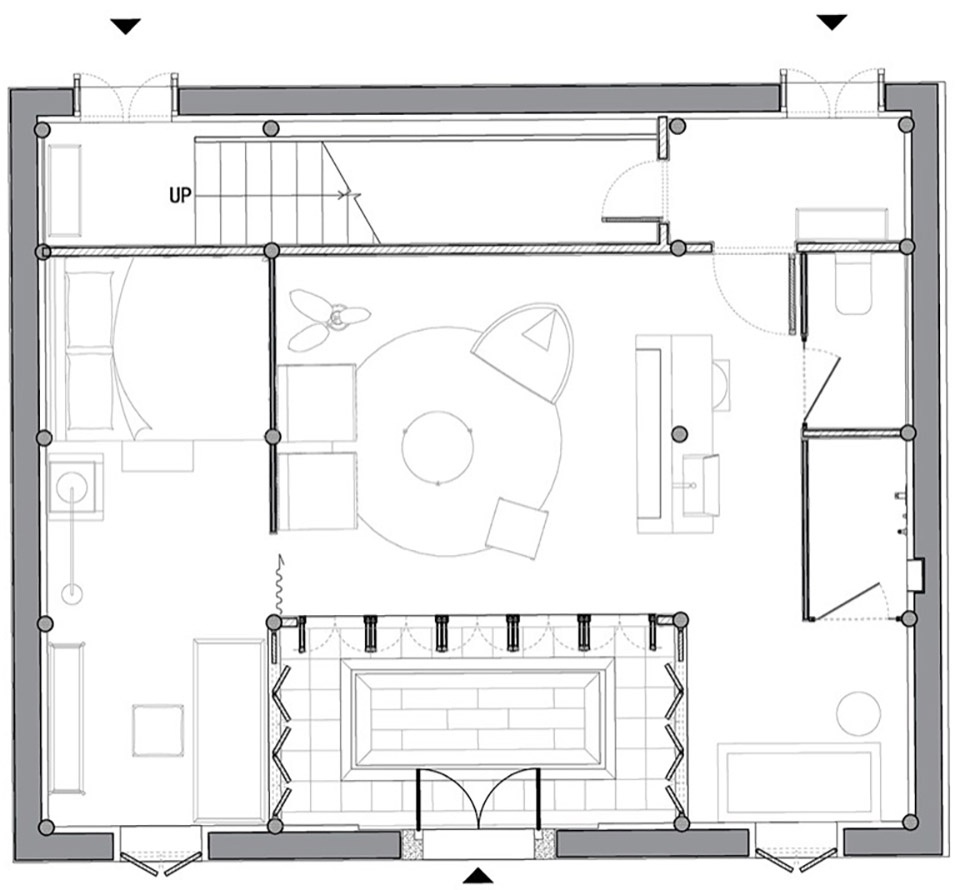
▼“润骨洗木”一层平面图,ground floor of the “Washing Wood House”
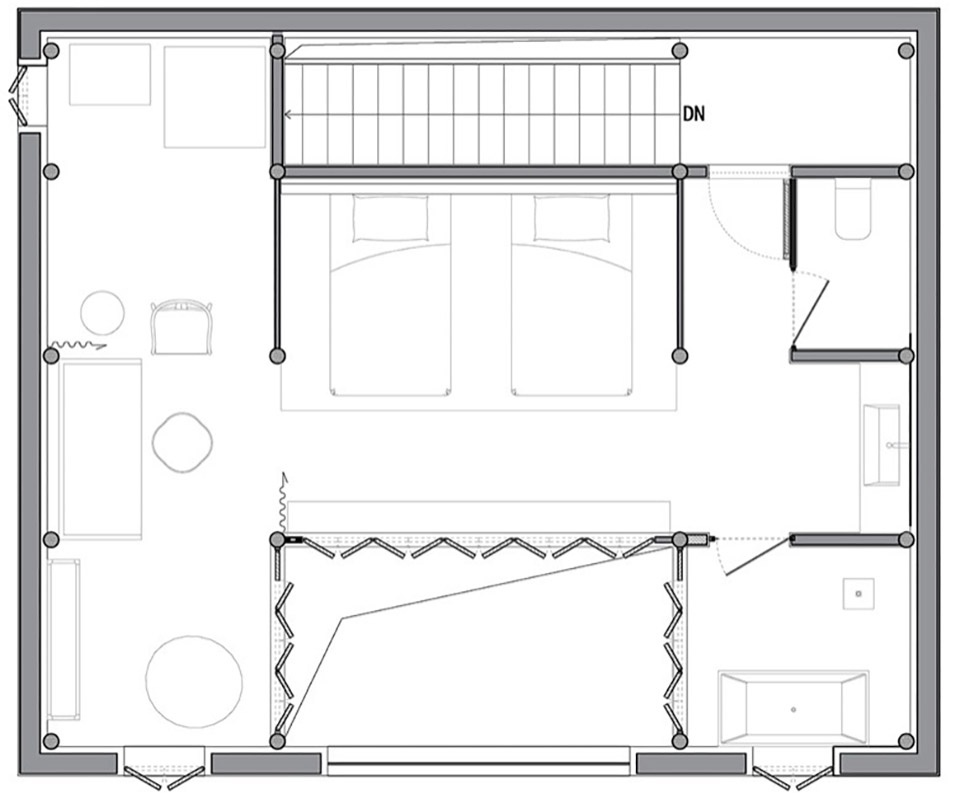
▼“润骨洗木”二层平面图,upper floor of the “Washing Wood House”
Project Name:Courtyard G
Client:Qimen Wannong Tourism Investment and Development Co. LTD.
Architects: Atelier LAI
Location: Shanli, Huangshan, An’Hui, China
Design Principal: Madao
Project Architect:Chen Yun
Design Team: Xie Jiachen, Zhang Jing, Kang Jin, Yuan Zheng, Xue Yuhong
Art Installation: Sutra Copying Plan·Cang Jie
Artist: Cheng Xiaofang
Structural Consultant: Zen Xuewei
Main Contractor: Anhui Hongben Construction Engineering co. Ltd.
Wood Construction:Shanghai Jieyue Construction Engineering Center
Interior Construction:Shanghai Maichang Construction co. Ltd.
Illumination Consultant: Shanghai Shanse Lighting Company, Ltd.
Photographs: Yilong Zhao
Structural System: wood structure
Site Area: 600m²
Floor Area: 550m²
Design Period: 2018.1-2020.10
Construction Period: 2018.7-2020.12