叠浪入馆-众美术馆设计,四川 / 介介工作室
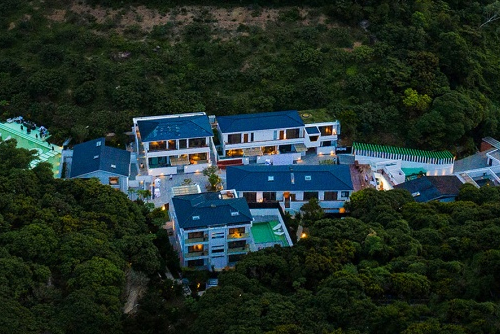
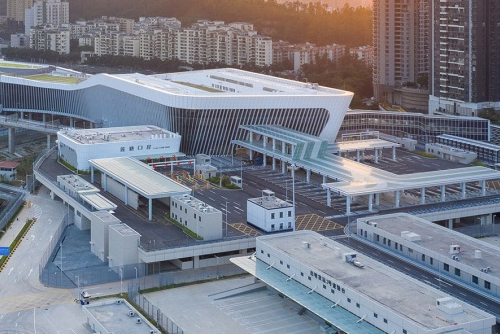
该项目位于西昌市听涛艺术小镇,紧邻邛海湿地公园。设计任务为将一座四层高的回迁房改造成一处美术馆,为当地提供一个兼具展览,举办活动的公共艺术空间。
The project is located in Tingtao Art Town, Xichang City, adjacent to Qionghai Lake Wetland Park. The design task is to transform a four-story resettlement building into an art museum, providing the local community with a public art space that serves both exhibitions and events.
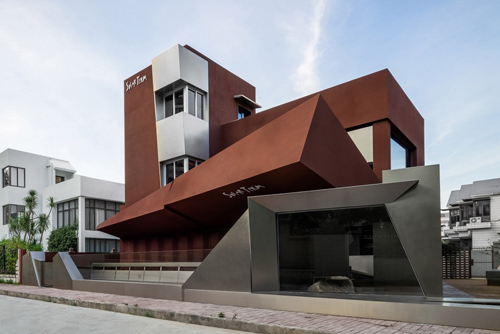
▼美术馆概览,Art Museum Overview
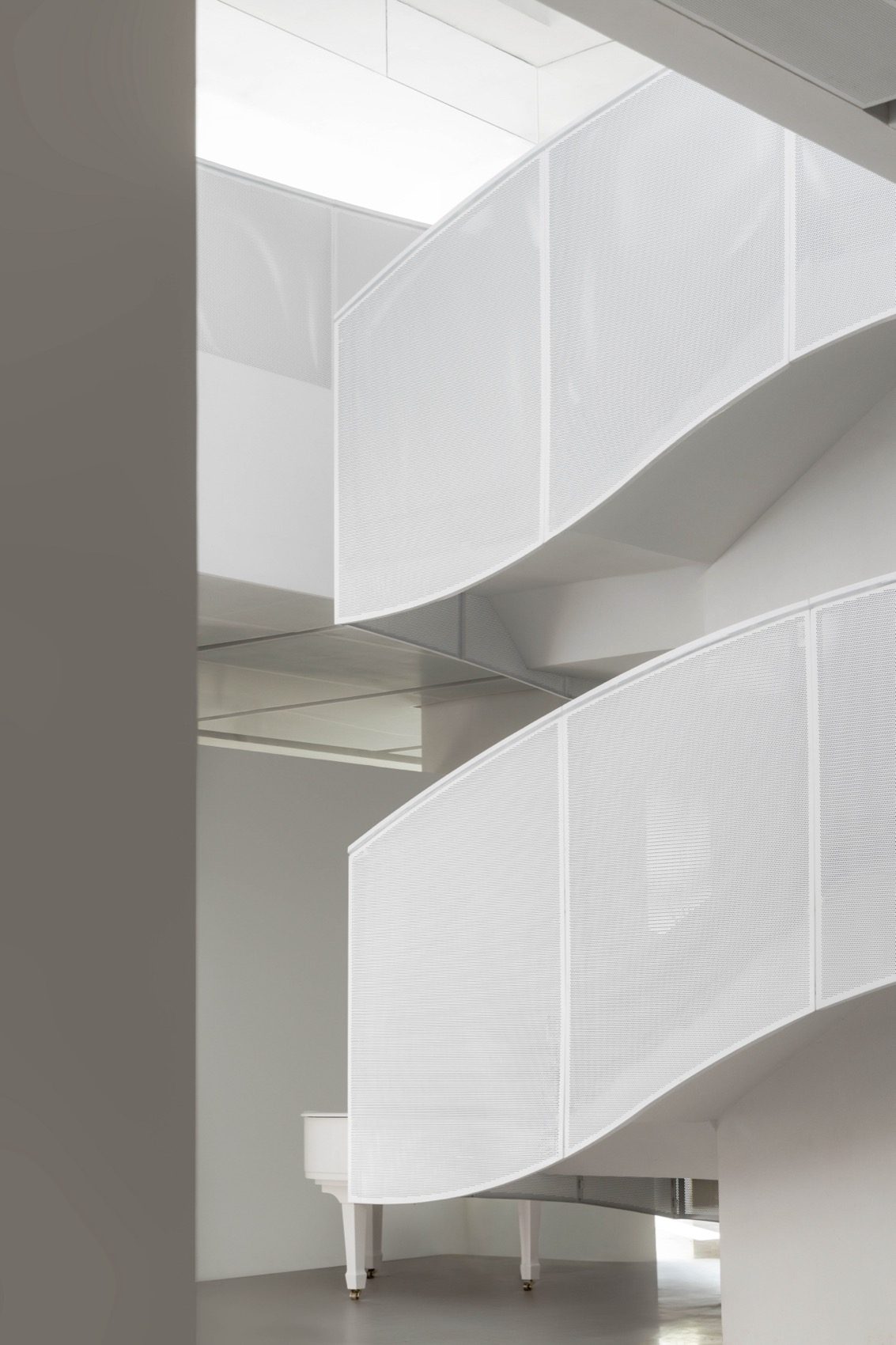
叠邛海浪进入到室内Overlapping Qionghai Waves Enter the Interior
邛海是这片场地的精神核心。为了让建筑与在地景观产生对话,设计也将邛海的“浪”叠入到了场地。因为原有建筑不能对其空间结构进行更改,在此基础上,我们便采用了轻介入的方式去塑造一个全新的视觉与空间体验。
Qionghai Lake is the spiritual core of this site. To establish a dialogue between the architecture and the local landscape, the design also “overlaps” the waves of Qionghai Lake into the site. Since the original building’s spatial structure could not be altered, we adopted a light-intervention approach to create an entirely new visual and spatial experience.
▼叠浪入室,
Overlapping Waves Entering the Room
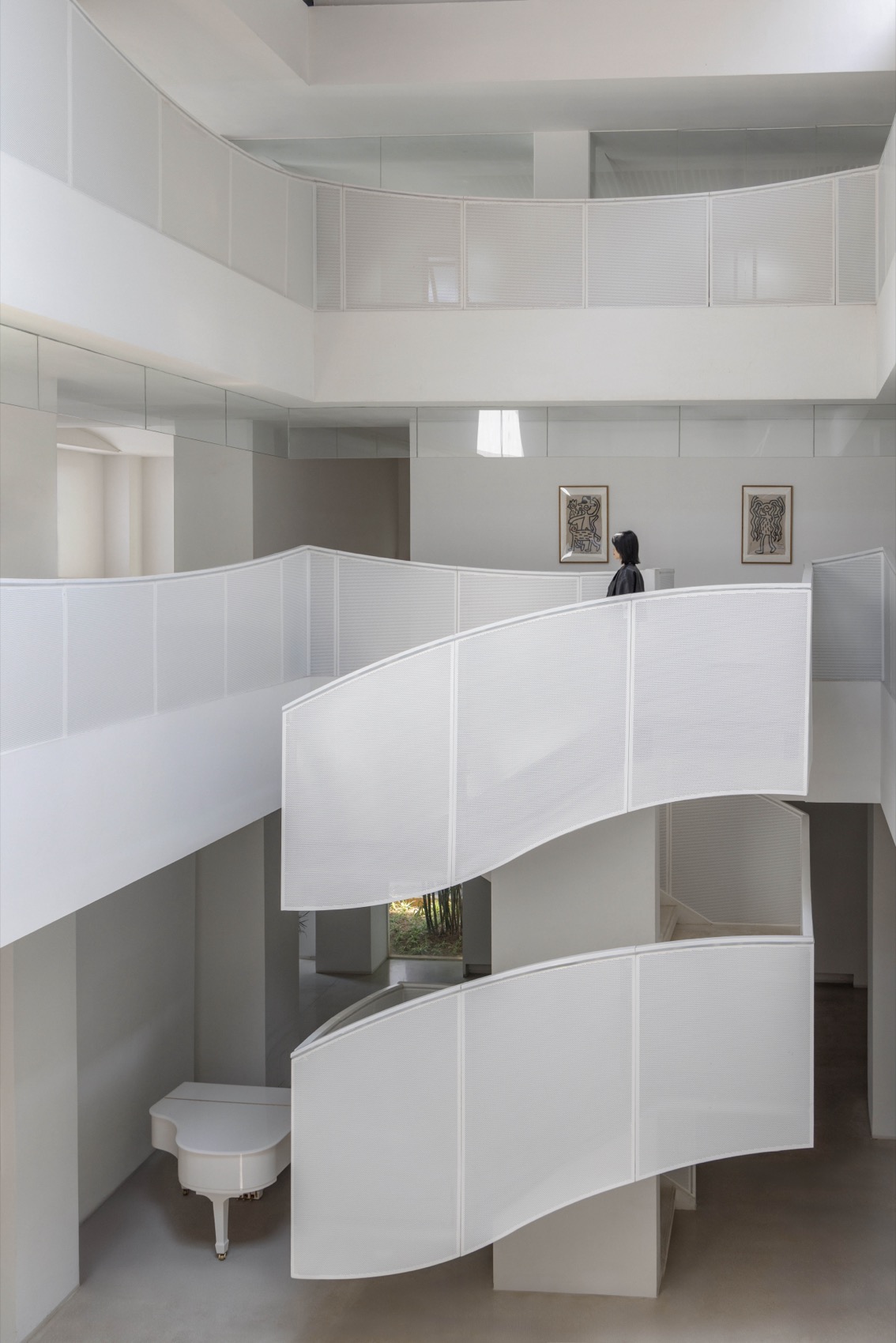
浪花:从楼梯到天光的整体塑形Spray of Waves: The Overall Shaping from Staircase to Skylight
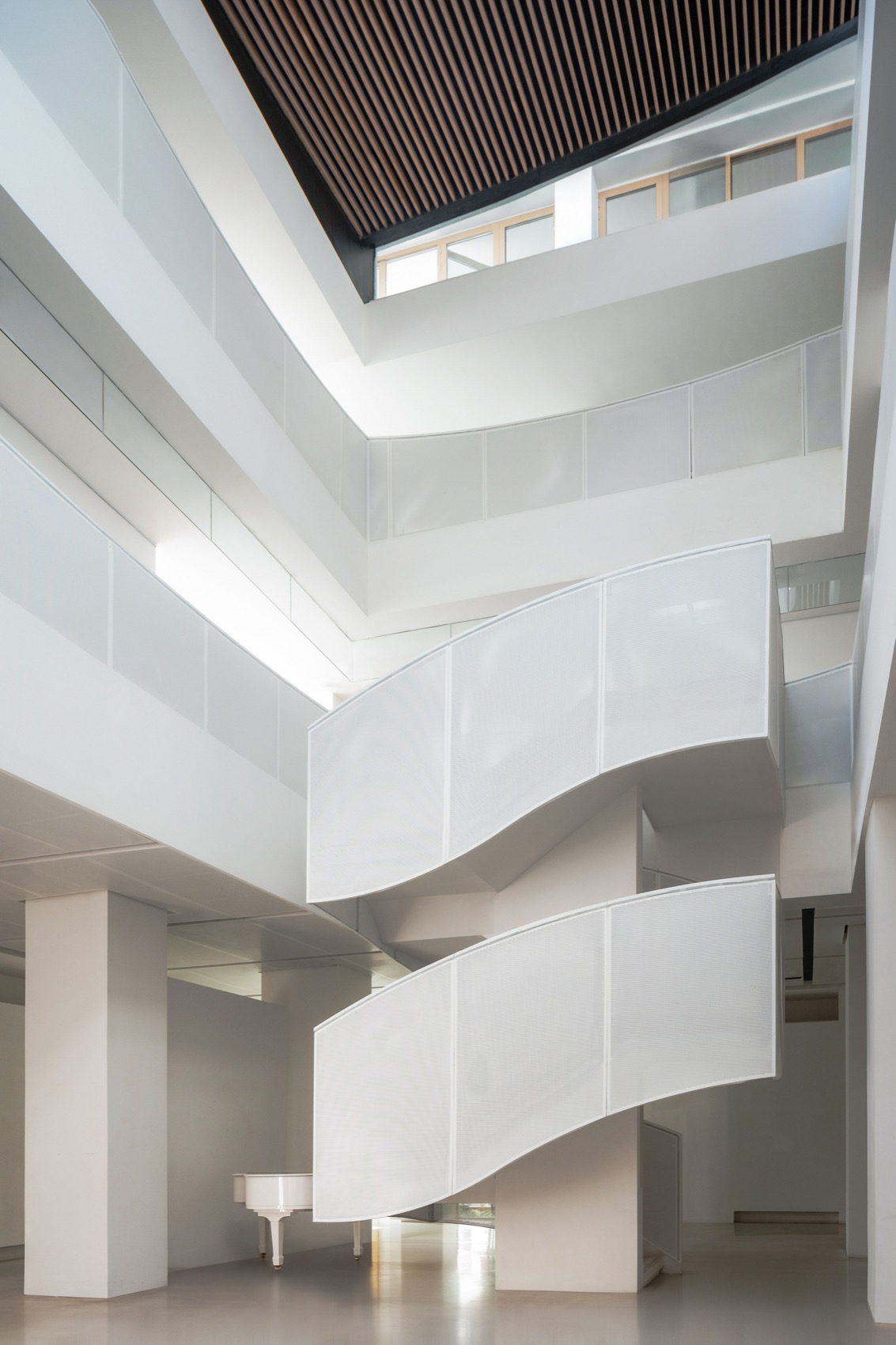
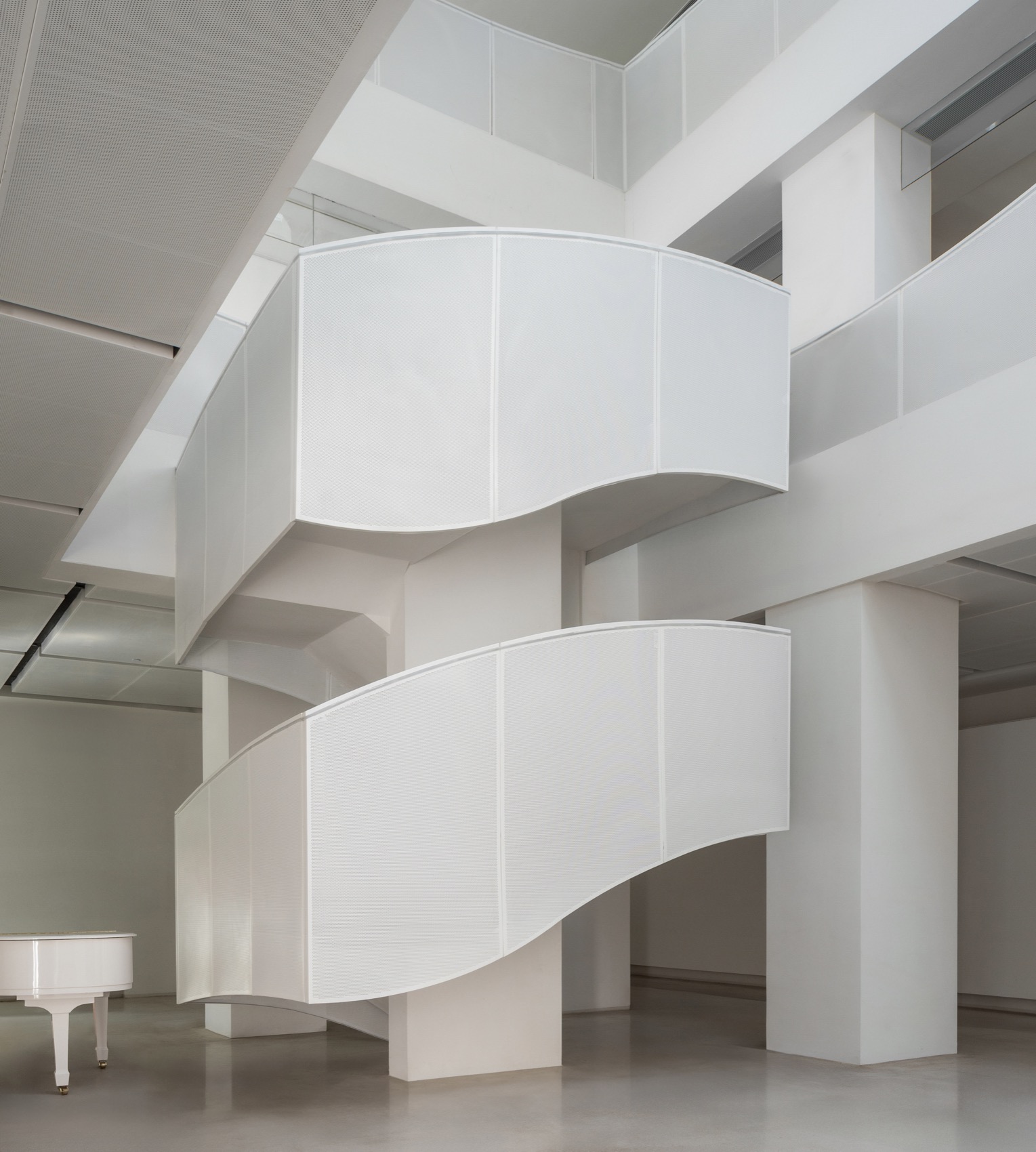
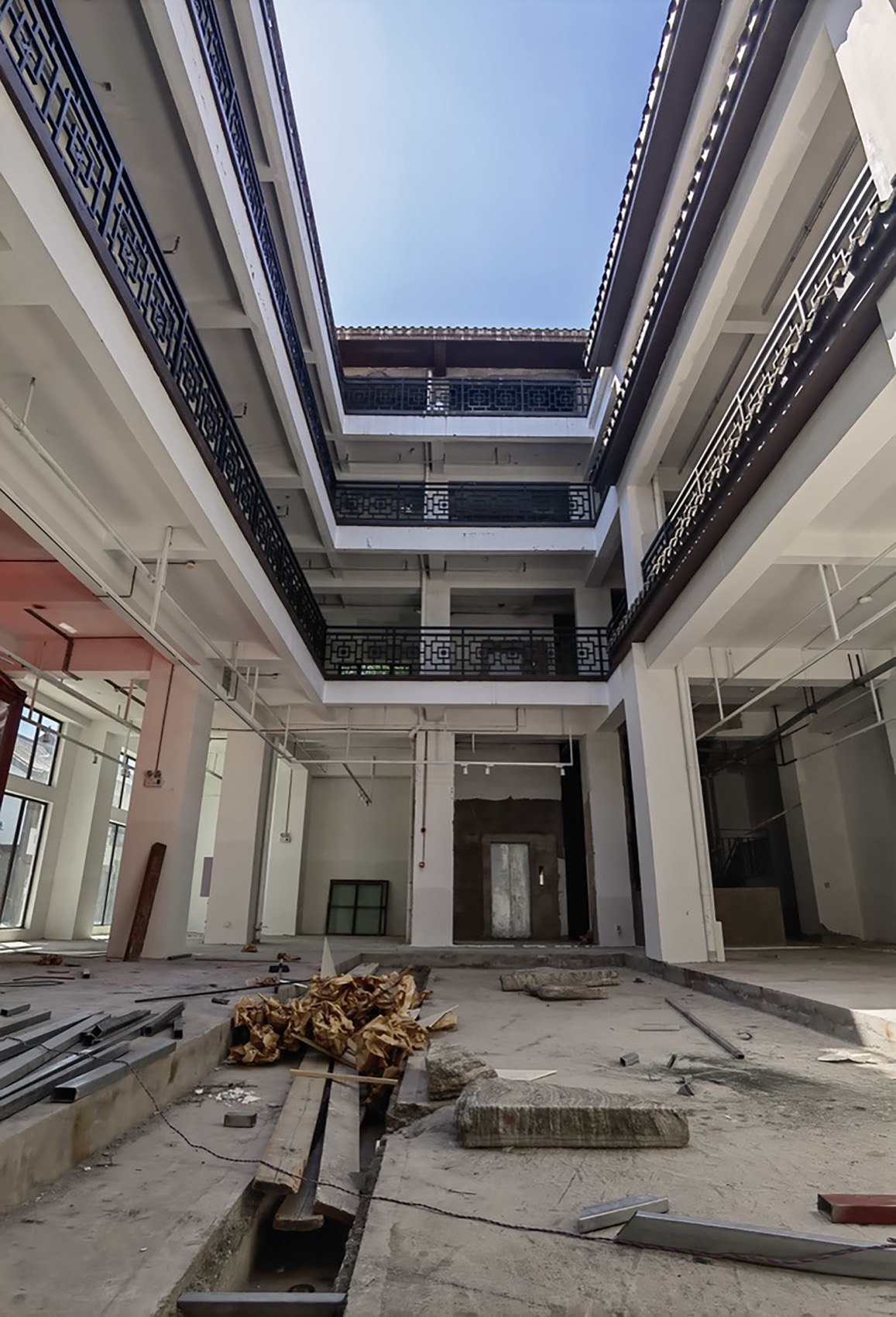
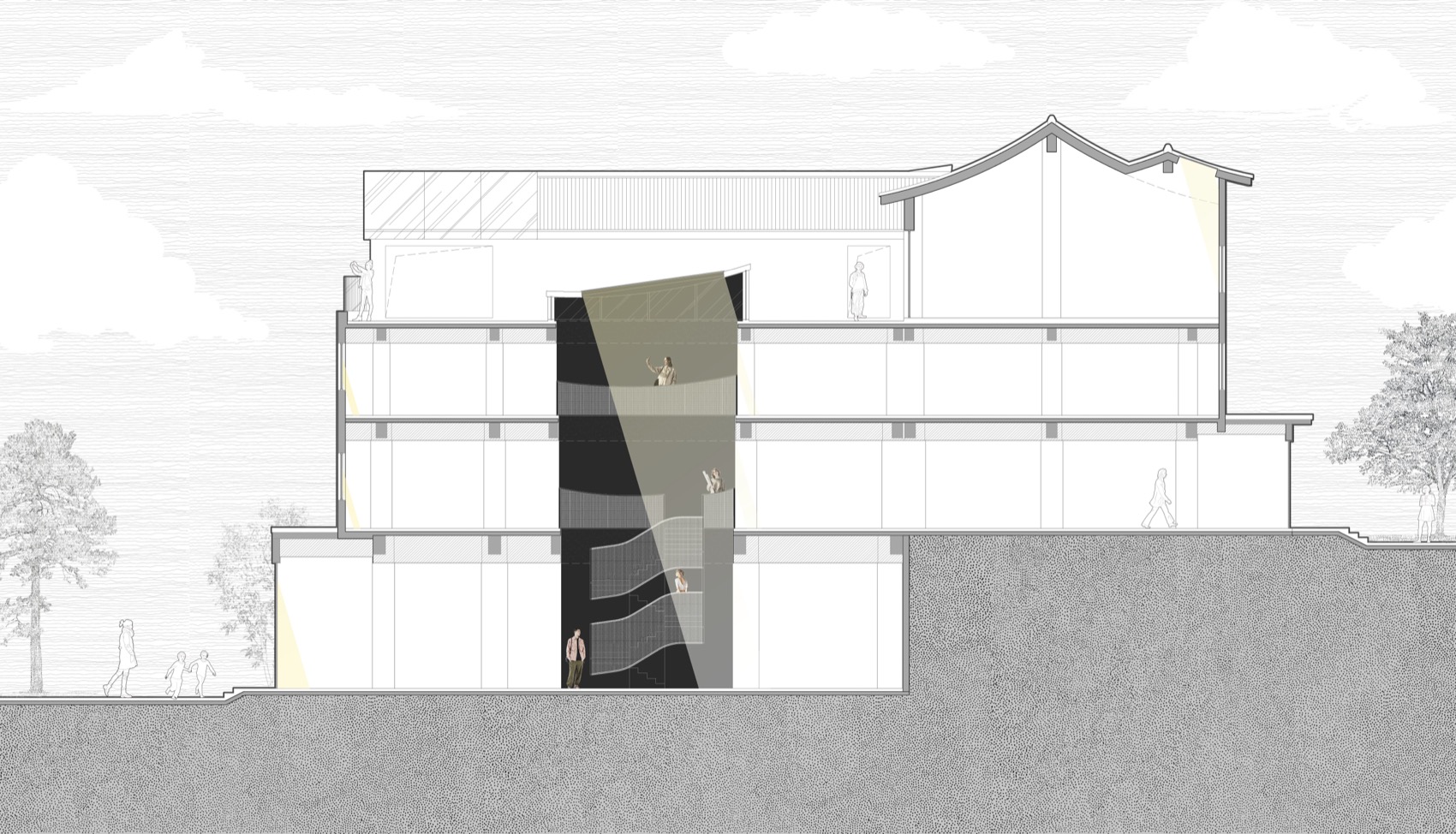
原建筑的中庭是一个开敞的天井区,我们在此加设了一部贯通二层的楼梯。楼梯扶手成为设计的发力点,从一层到二层,它逐渐演变为一道连续的弧形“浪花”造型。
▼改造前的中庭空间,
The Atrium Space Before Renovation
▼改造后的中庭空间,
The Atrium Space After Renovation
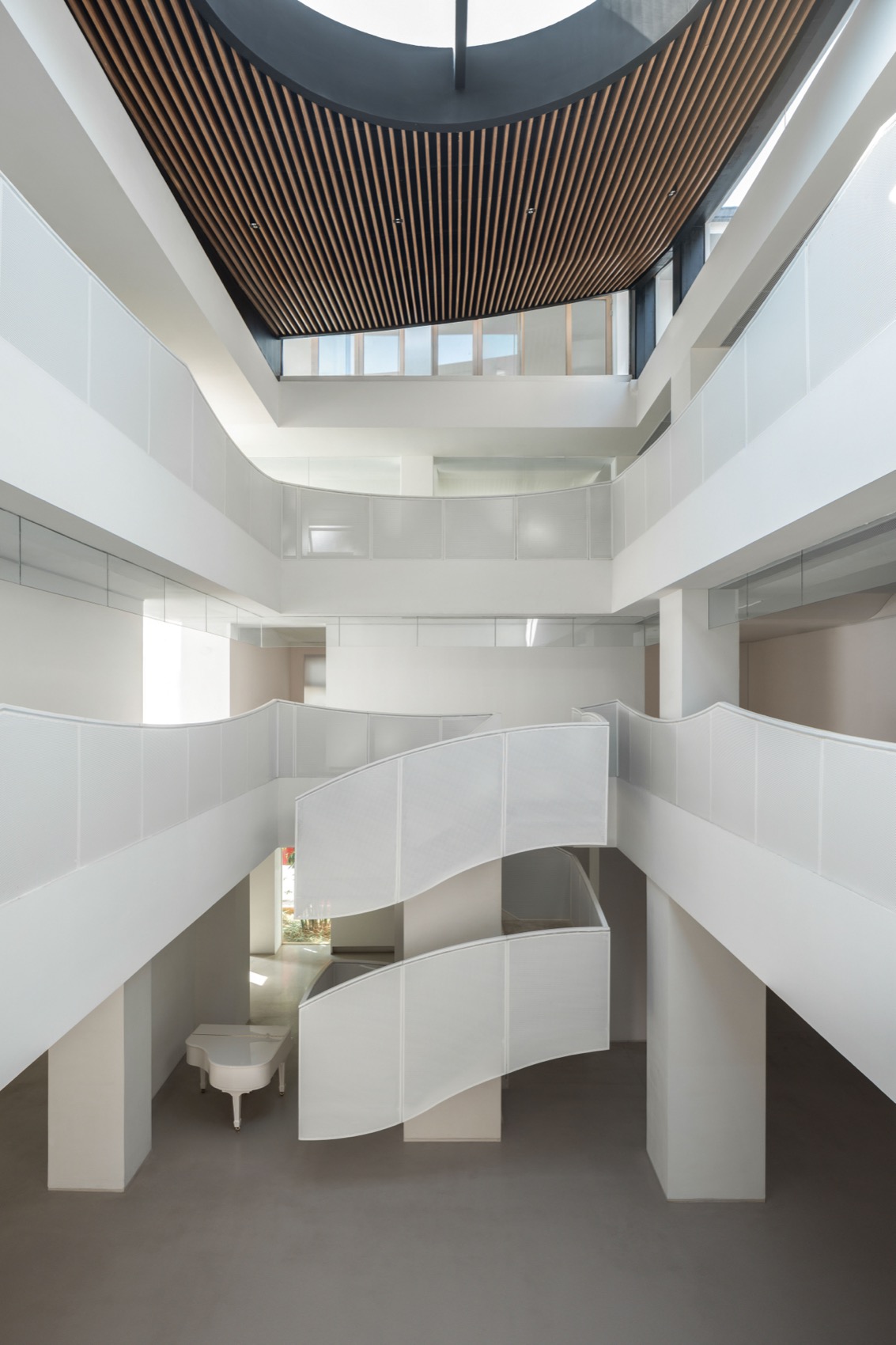
The original building’s atrium was an open courtyard area, where we added a staircase connecting the two floors. The handrail of the staircase became the focal point of the design — from the first floor to the second, it gradually transforms into a continuous curved “wave” shape.
▼浪卷起中庭,
Waves Curling Up the Atrium
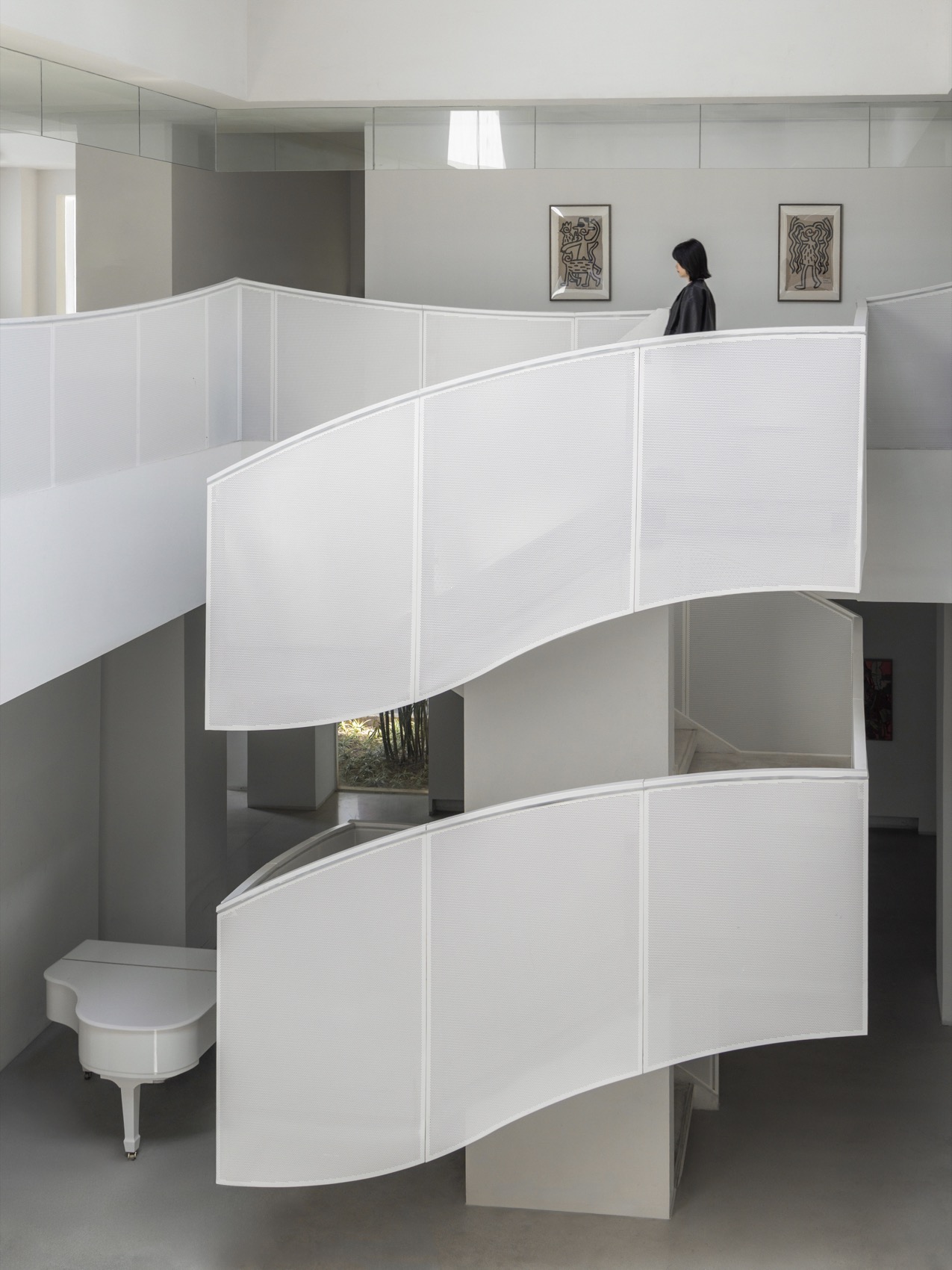
▼楼梯细部,Staircase Details
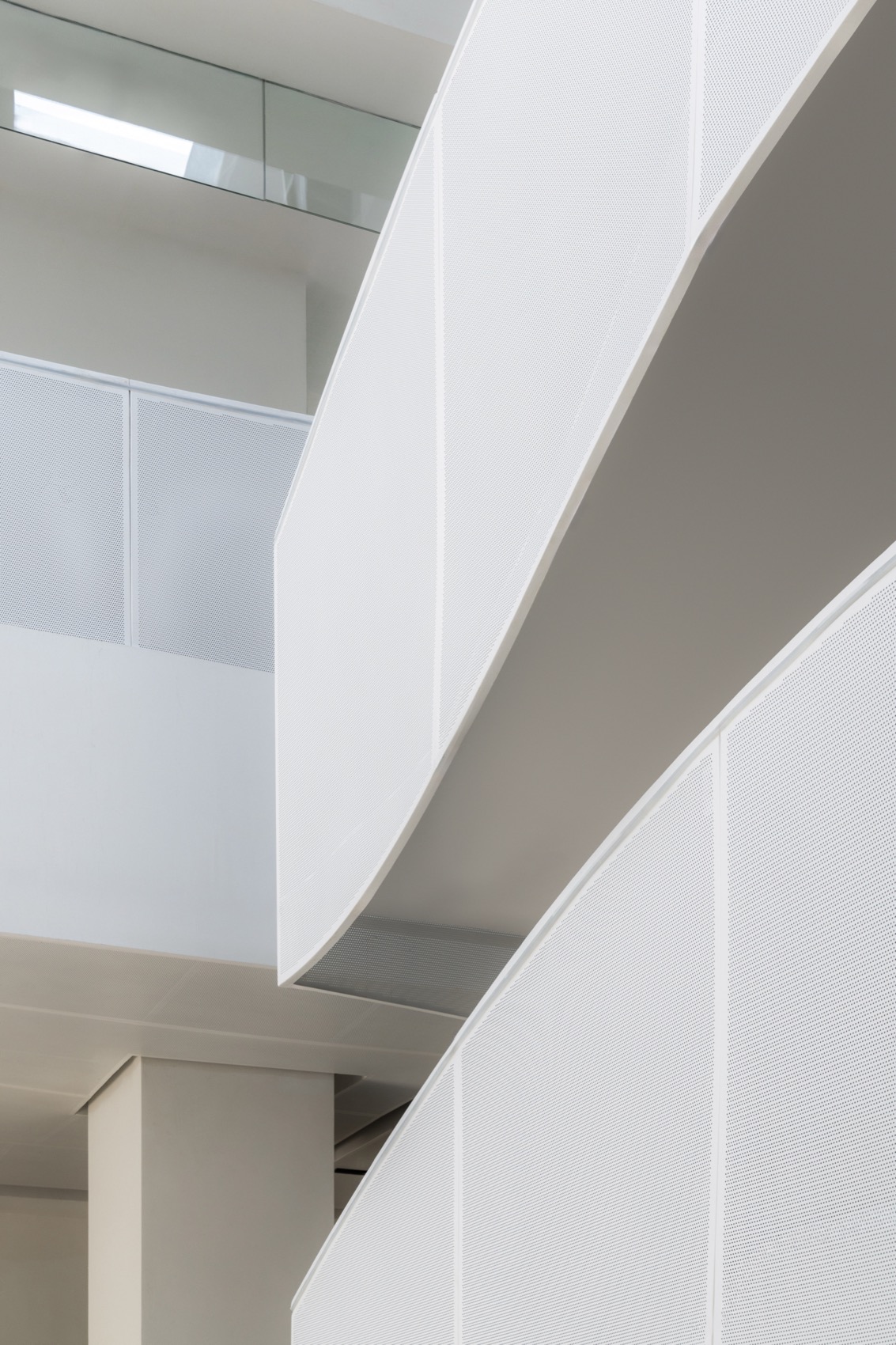
▼层叠的浪(栏杆),
Layered Waves (Balustrade)
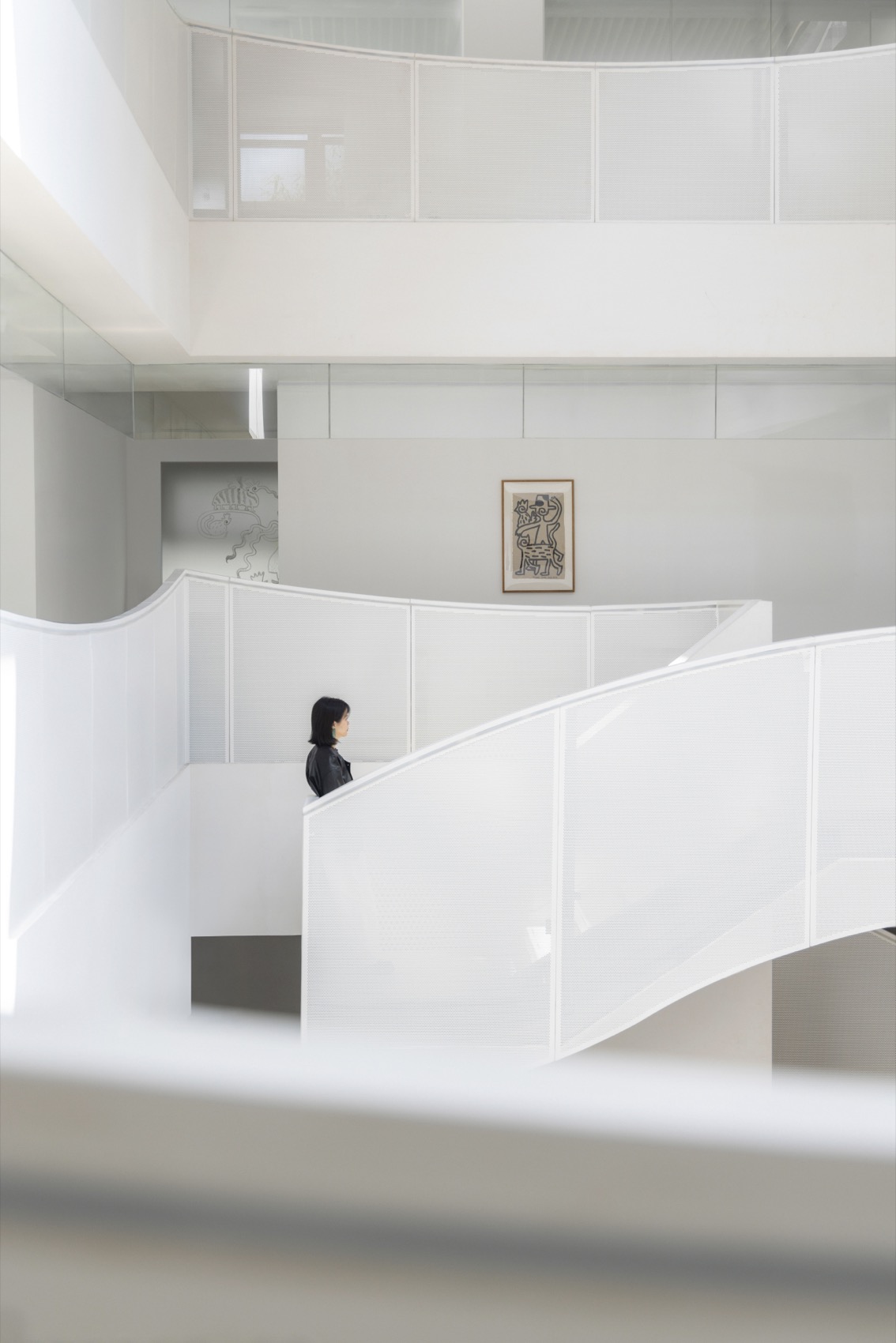
▼转角的栏杆,Corner Balustrade
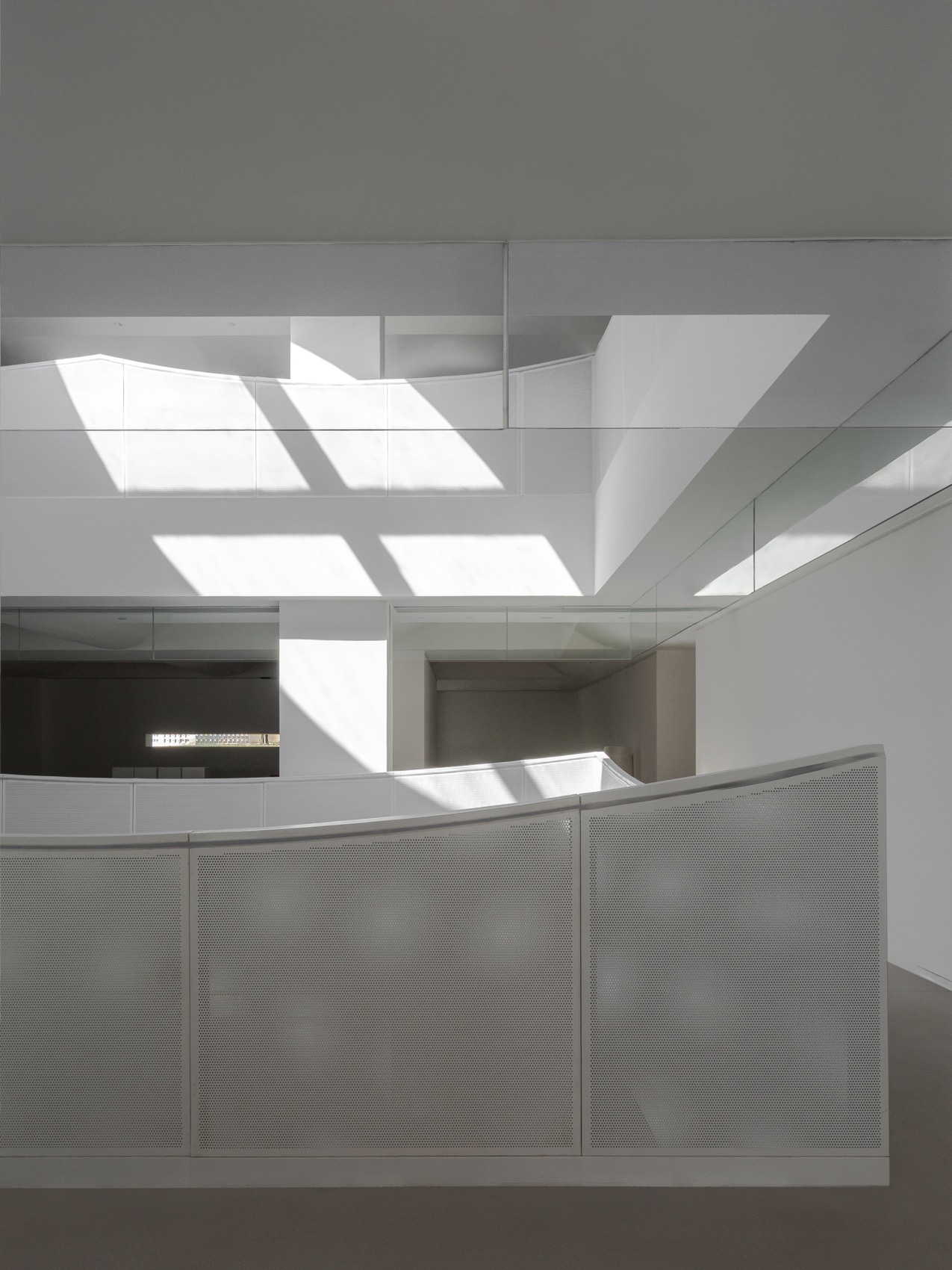
▼栏杆的形态,Form of the Balustrade
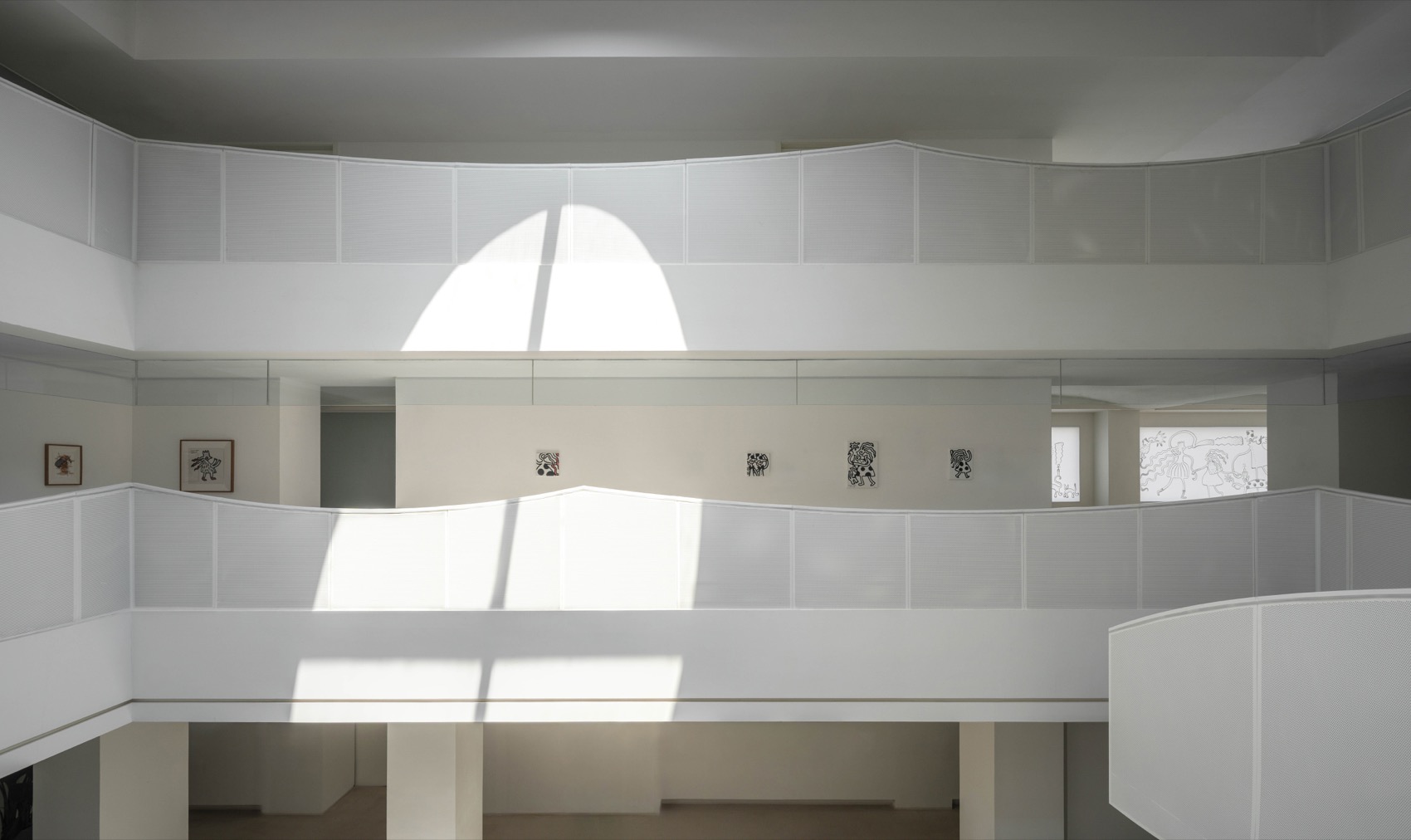
二楼的原层高受限,若吊平顶,净高将仅剩2.2米。我们采用波浪形的吊顶包梁,利用波浪的起伏空间走管道,在最低处仍保证了空间的舒适度。中庭区域的护栏同样延续了“浪”的语汇——弧形吊顶与层层叠落的波浪形栏杆护手共同编织出空间的高潮。
The original floor height on the second floor was restricted; if a flat suspended ceiling were installed, the clear height would be only 2.2 meters. We adopted a wavy suspended ceiling to encase the beams, using the undulating spaces of the waves to run the pipes, while still ensuring spatial comfort at the lowest points. The guardrails in the atrium area continue the “wave” vocabulary — the curved ceiling and the layered, cascading wave-shaped handrails together weave the climax of the space.
▼吊顶的浪与栏杆的围浪,The Waves of the Suspended Ceiling and the Enclosing Waves of the Balustrade
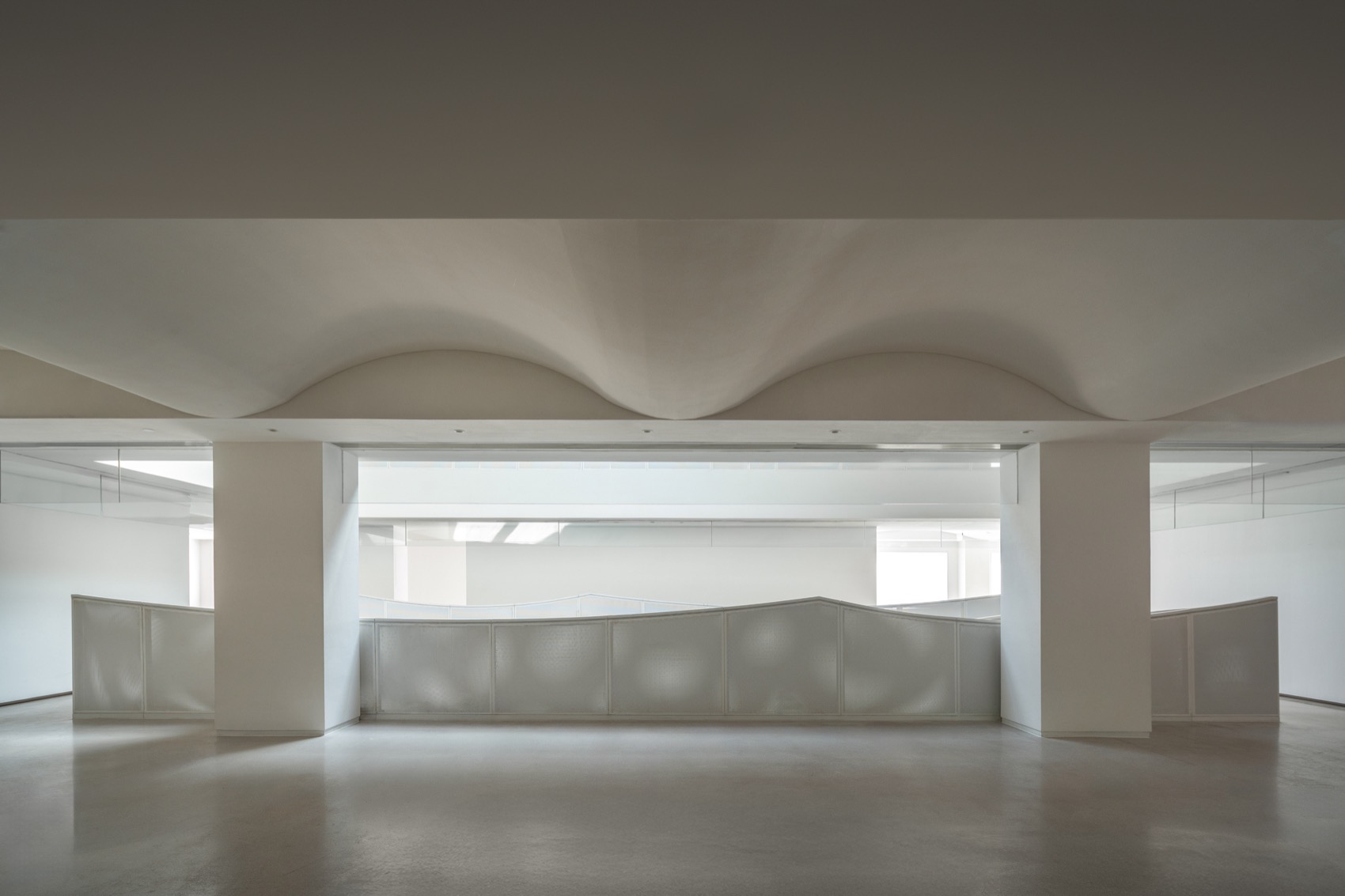
▼围浪,Enclosing Waves
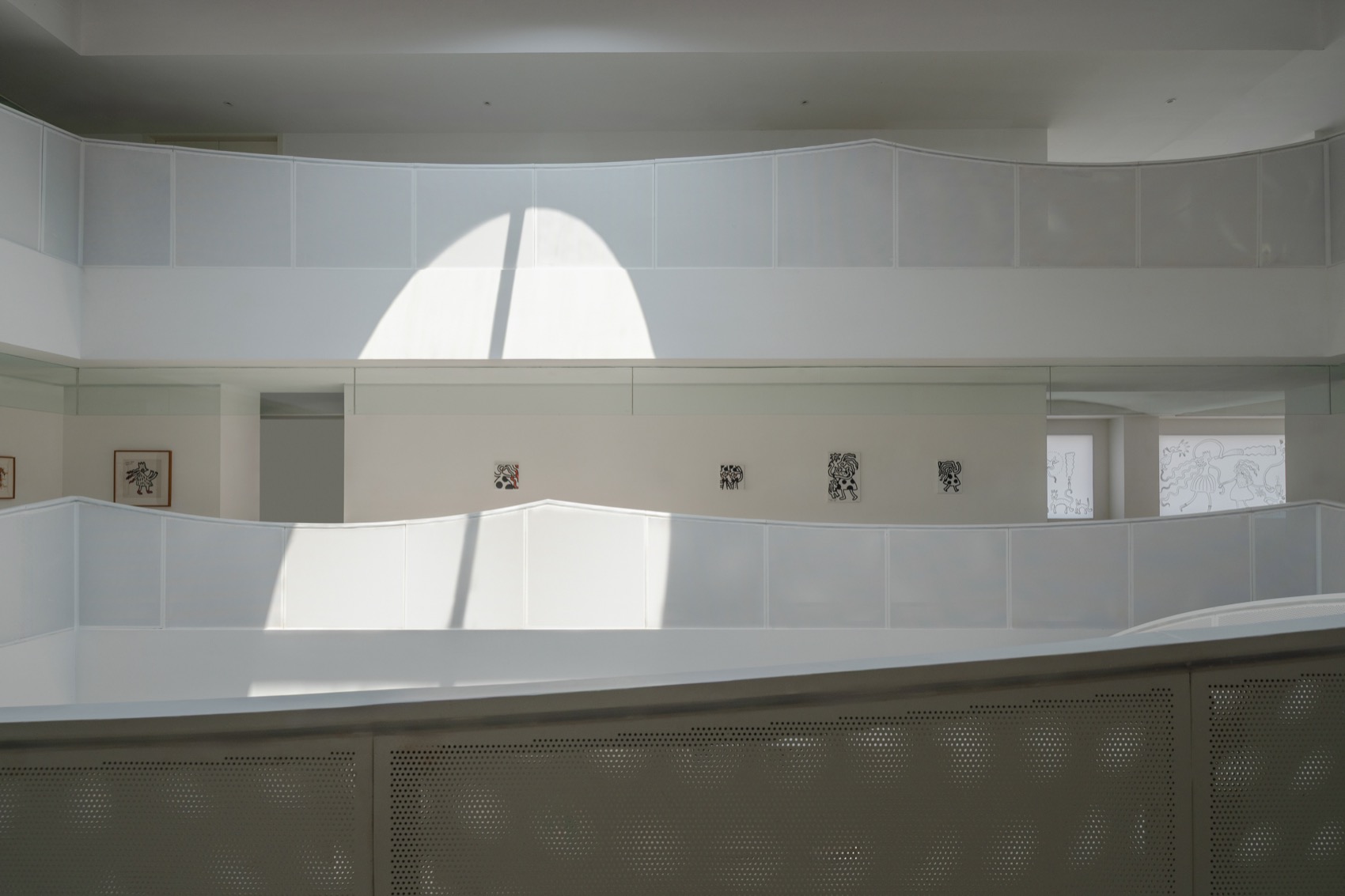
▼二层入口处的叠浪,Overlapping Waves at the Second-Floor Entrance
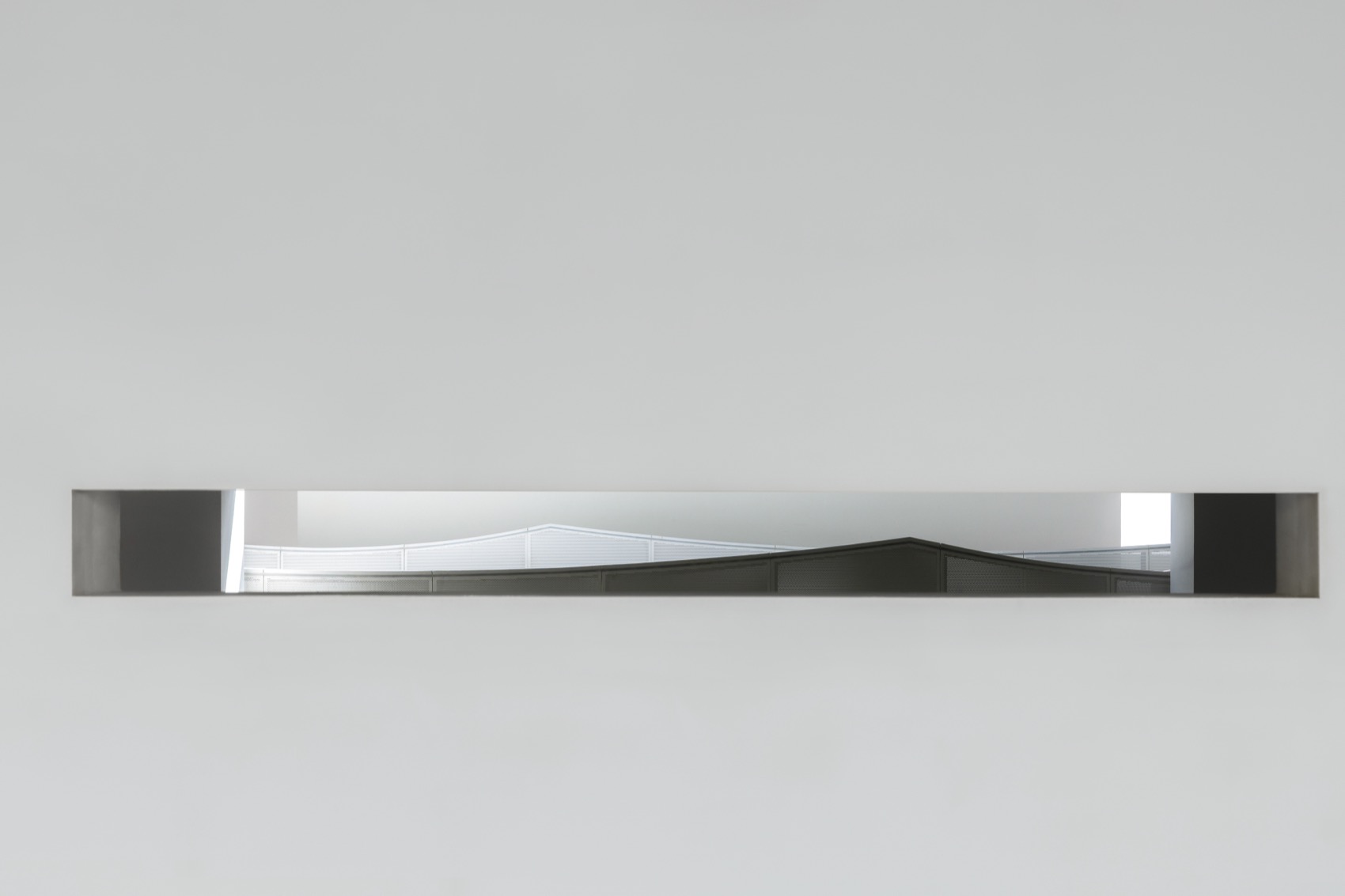
捕捉高原的光影Capturing the Light and Shadow of the Plateau
中庭顶部被一个三维曲面造型的采光天窗覆盖。天窗平面开有若干不规则的圆形洞口,让西昌充沛的高原阳光以不可预测的方式进入室内。随着一天中时间的变化,光圈的位置、形状乃至色温都不断游走,投射在水磨石地面上,为静态的白色空间注入了时间的刻度。
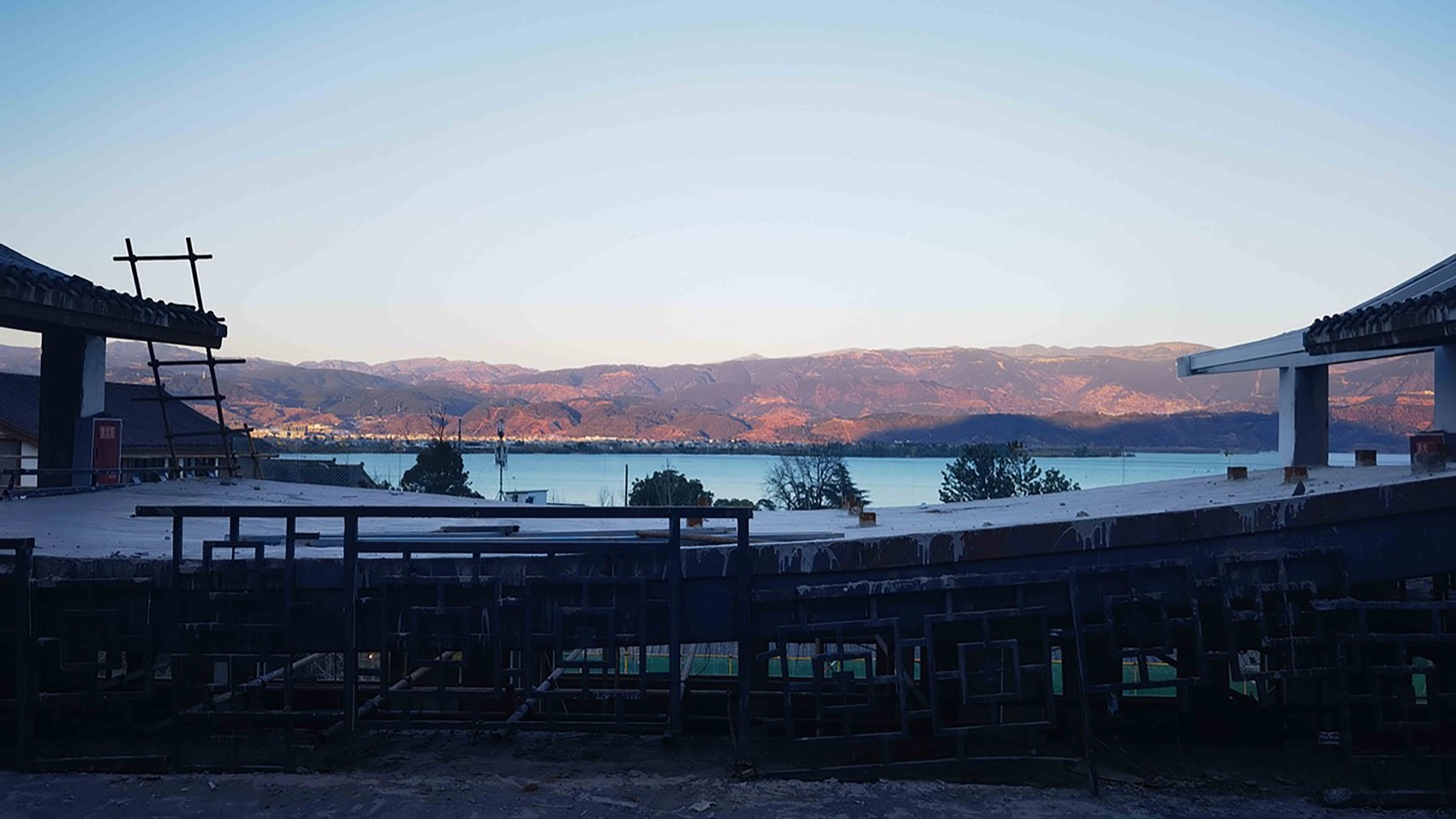
▼屋顶的浪截取远处的邛海,
The Waves on the Roof Frame the Distant Qionghai Lake
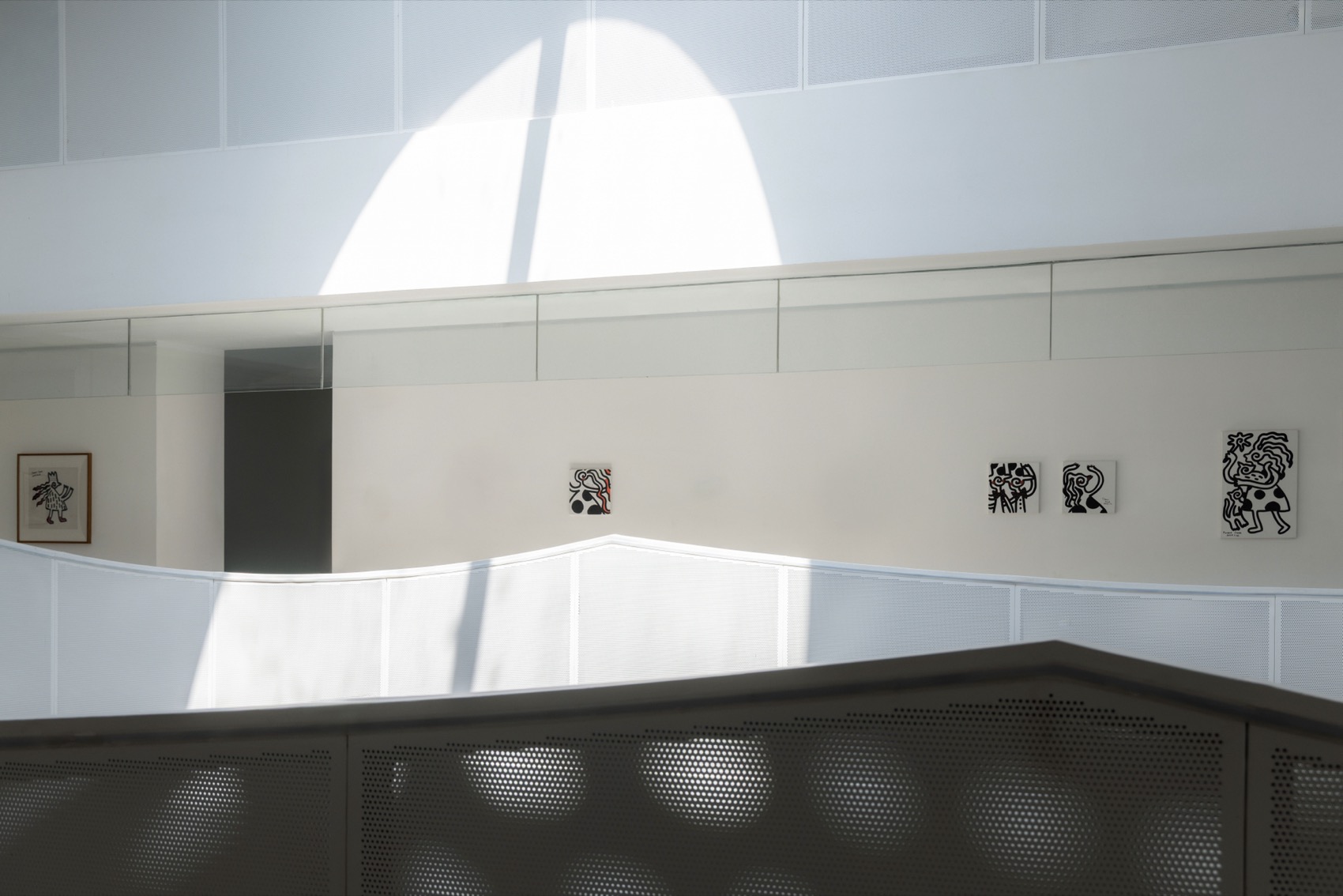
The top of the atrium is covered by a three-dimensionally curved skylight. Several irregular circular openings are cut into the skylight’s plane, allowing Xichang’s abundant plateau sunlight to enter the interior in unpredictable ways. As the time of day changes, the position, shape, and even color temperature of the light circles continually wander—casting onto the terrazzo floor and inscribing a measure of time into the static white space.
▼光,时间,浪,
Light, Time, Wave
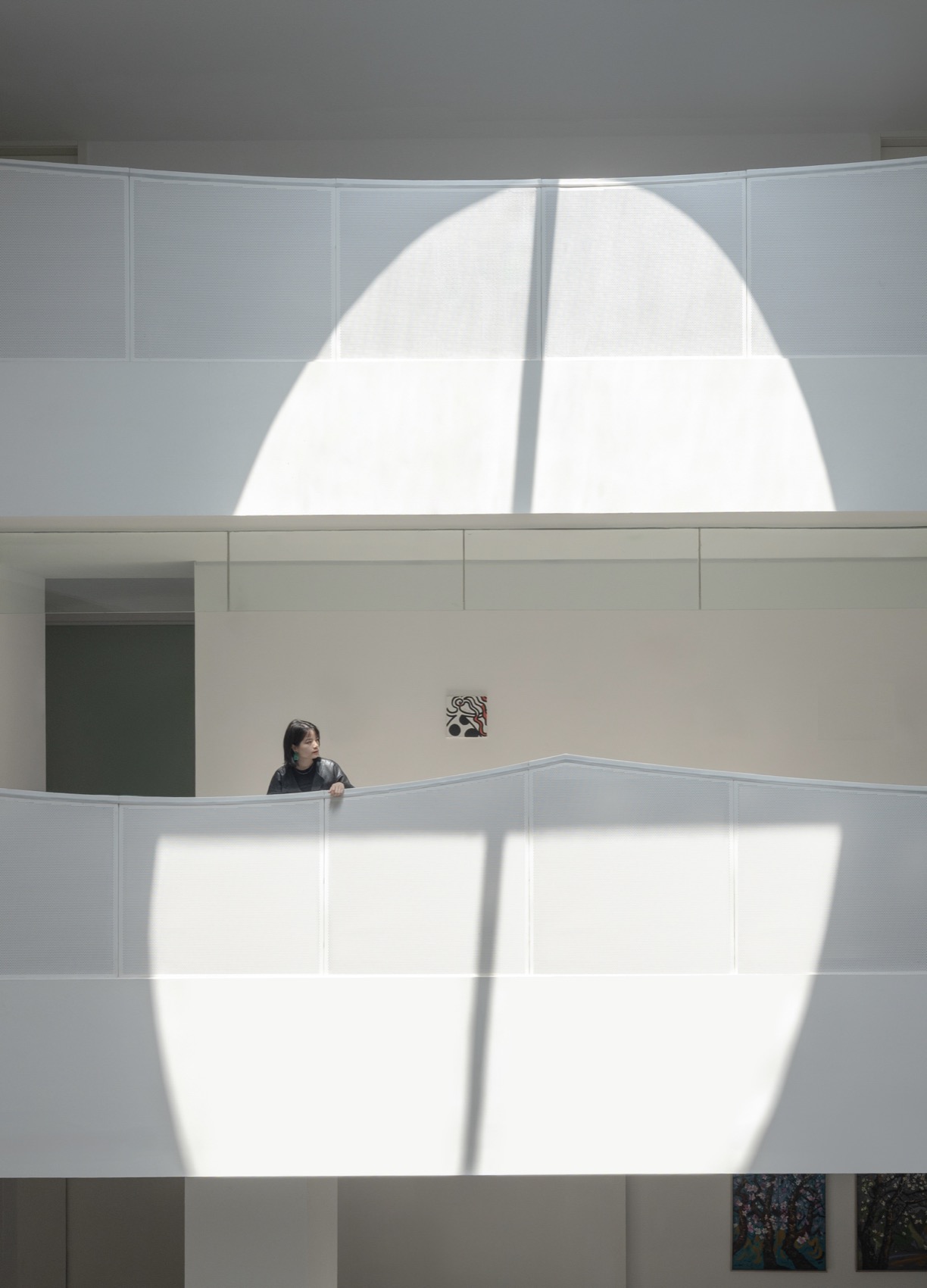
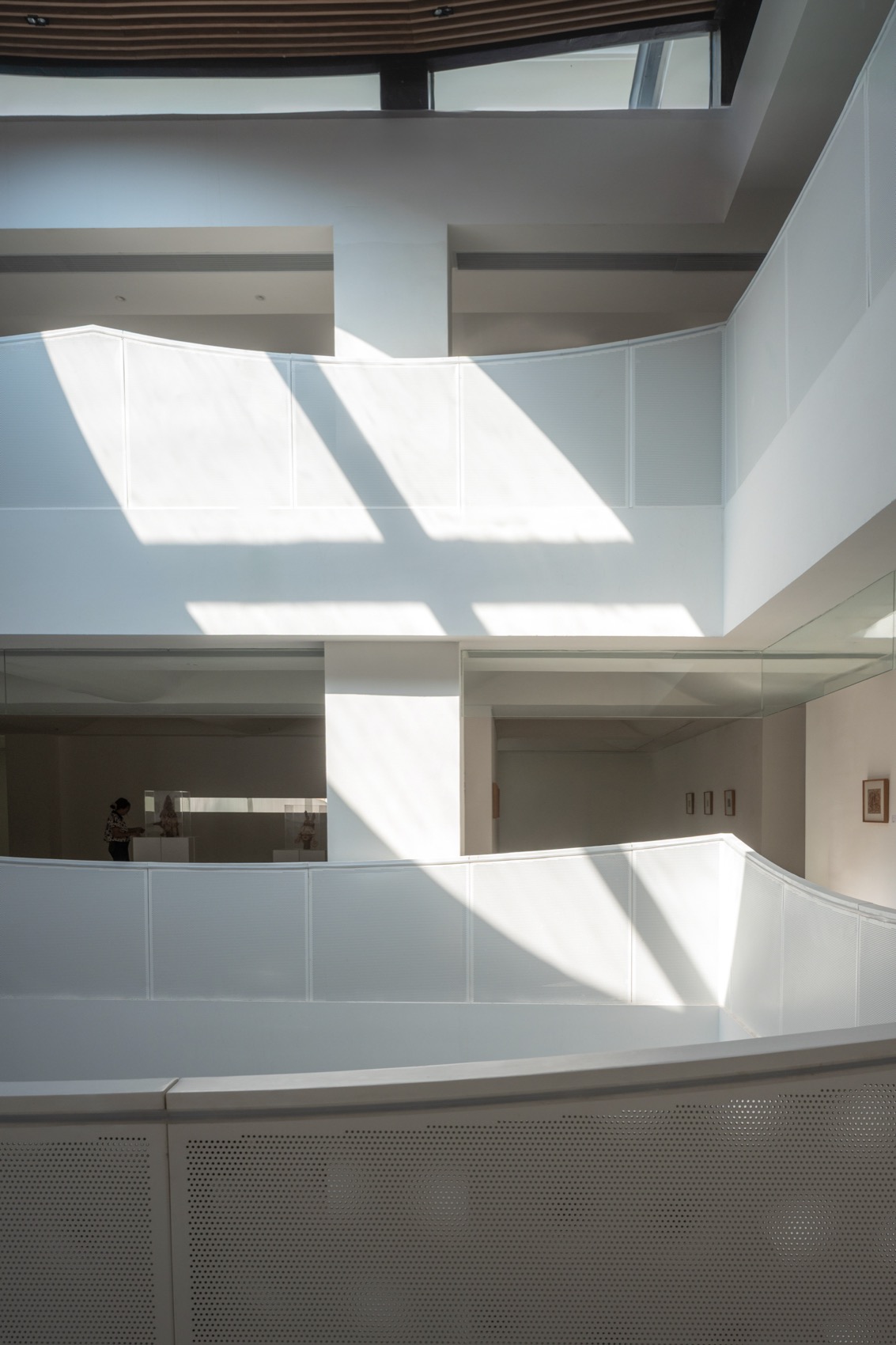
▼波浪栏杆与光斑共同塑造空间节奏,Wave-shaped balustrade and light patterns shaping the spatial rhythm
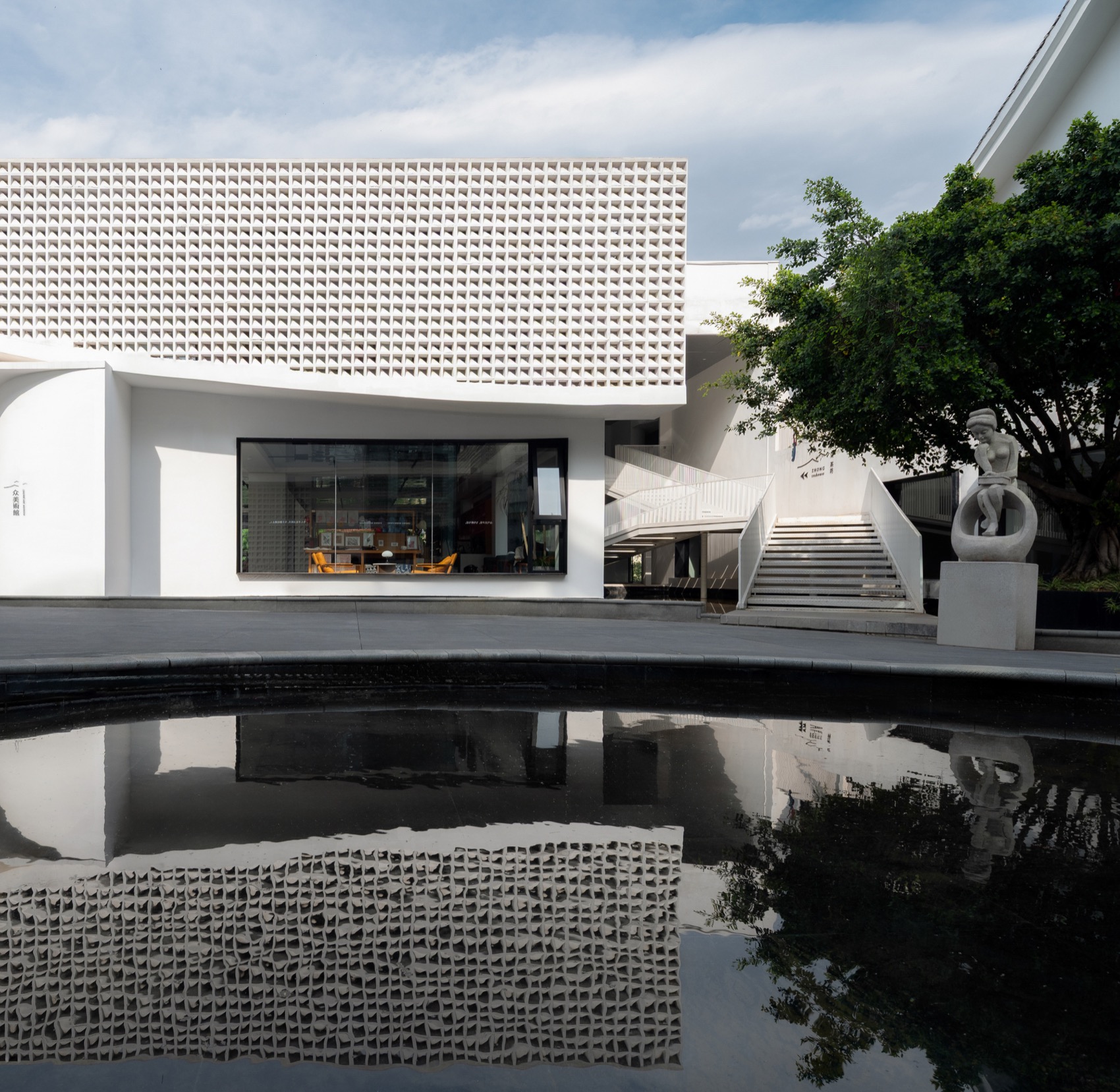
美术馆入口及四周增设了浅水面,人们需要穿过一座小桥,才能进入室内。这一动作不仅营造了入口的仪式感,也通过水面的反射与倒影,将浪的意向“拉”到了建筑脚下。
Shallow water surfaces have been added at the entrance of the art museum and around it. One must cross a small bridge to enter the interior. This gesture not only creates a sense of ritual at the entrance but also, through the reflection and mirroring of the water surface, “pulls” the wave imagery right to the foot of the building.
▼建筑外立面在水上的倒影,The Reflection of the Building’s Facade on the Water
结语Conclusion
这座美术馆是一个精巧的建筑装置。它将文字(“众”)、地景(邛海)、自然现象(阳光)转译为一套连续的空间操作。在这里,建筑不仅是光和艺术的容器,它自身也成为一件能够被阅读和体验的展品,这也是介介对类型转译的一次新尝试。
This art museum is a delicate architectural installation. It translates the written character (“众”), the landscape (Qionghai Lake), and a natural phenomenon (sunlight) into a series of continuous spatial operations. Here, architecture is not merely a container for light and art; it itself becomes an exhibit that can be read and experienced. This is also Jiejie Studio’s new attempt at typological translation.
▼剖面概念图,Conceptual Section Diagram
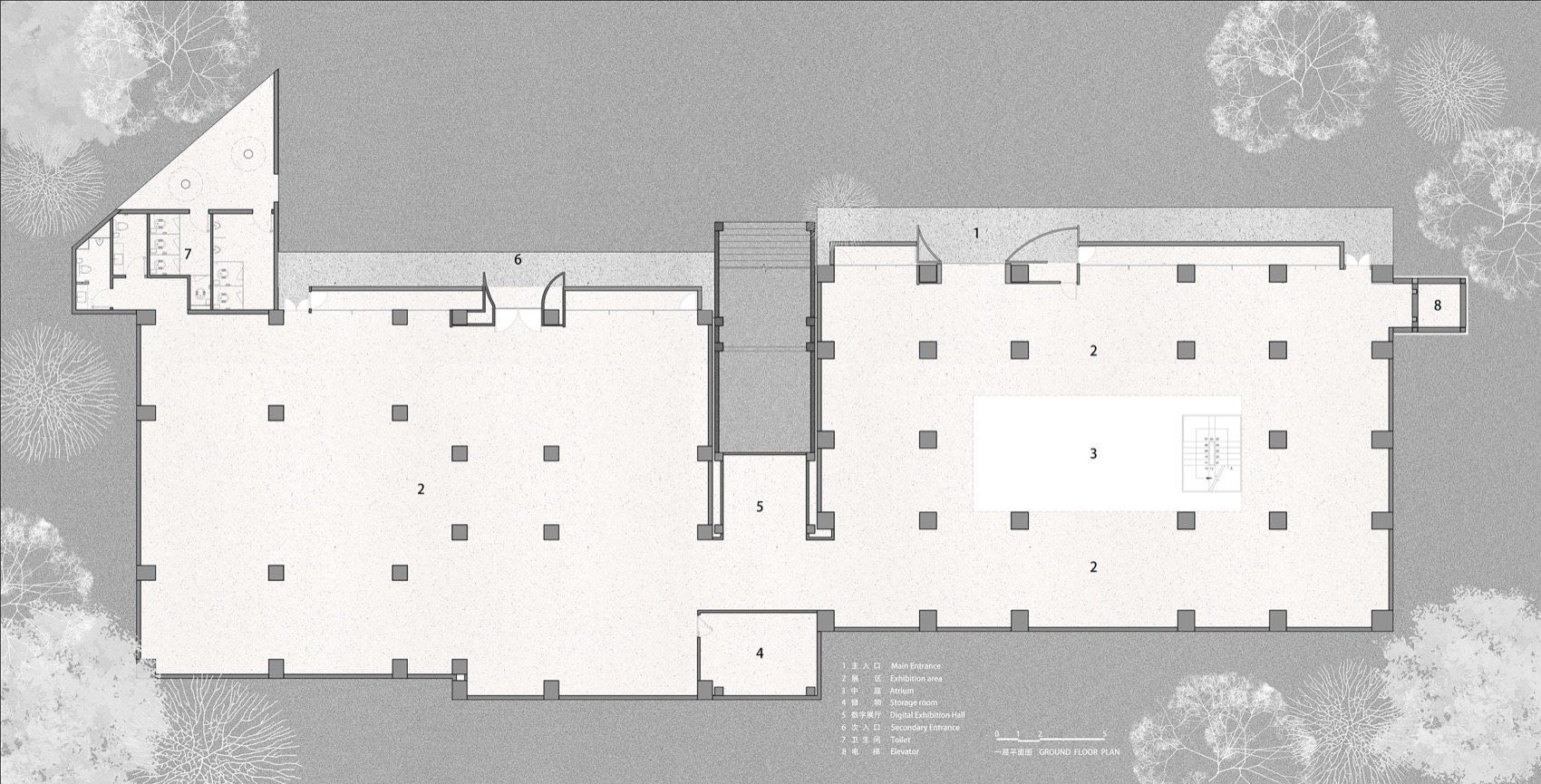
▼一层平面图,Ground Floor Plan
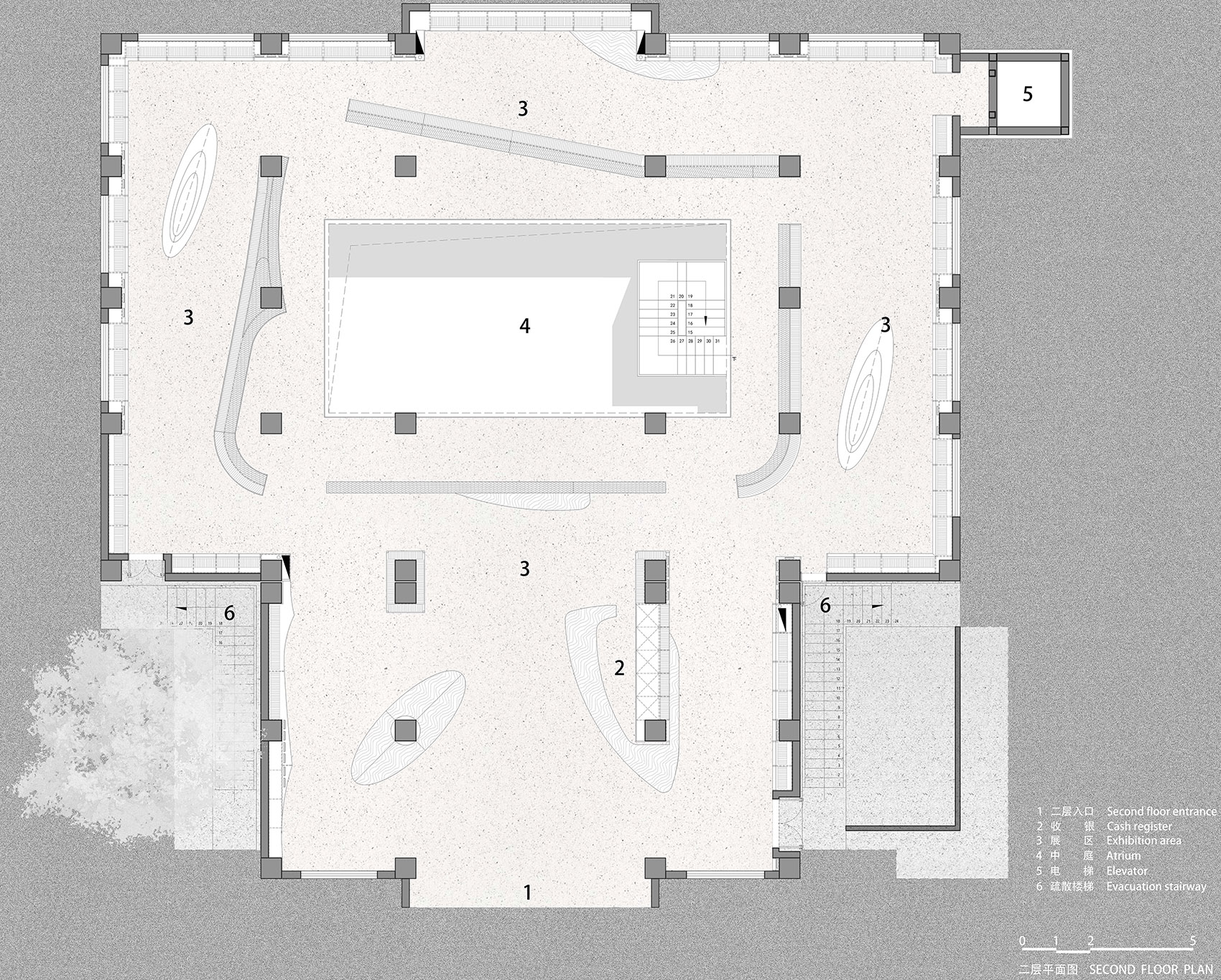
▼二层平面图,Second Floor Plan
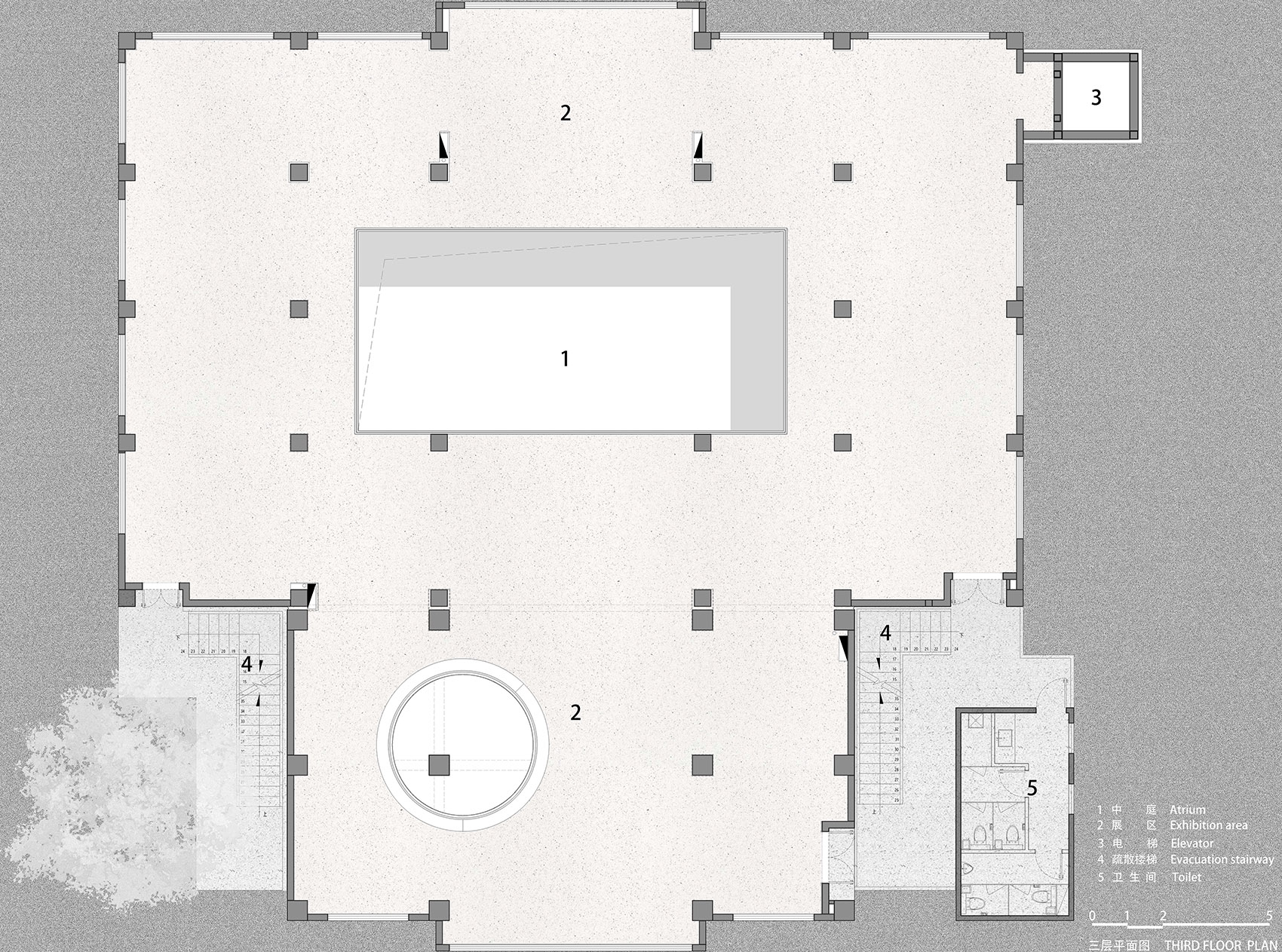
▼三层平面图,Third Floor Plan
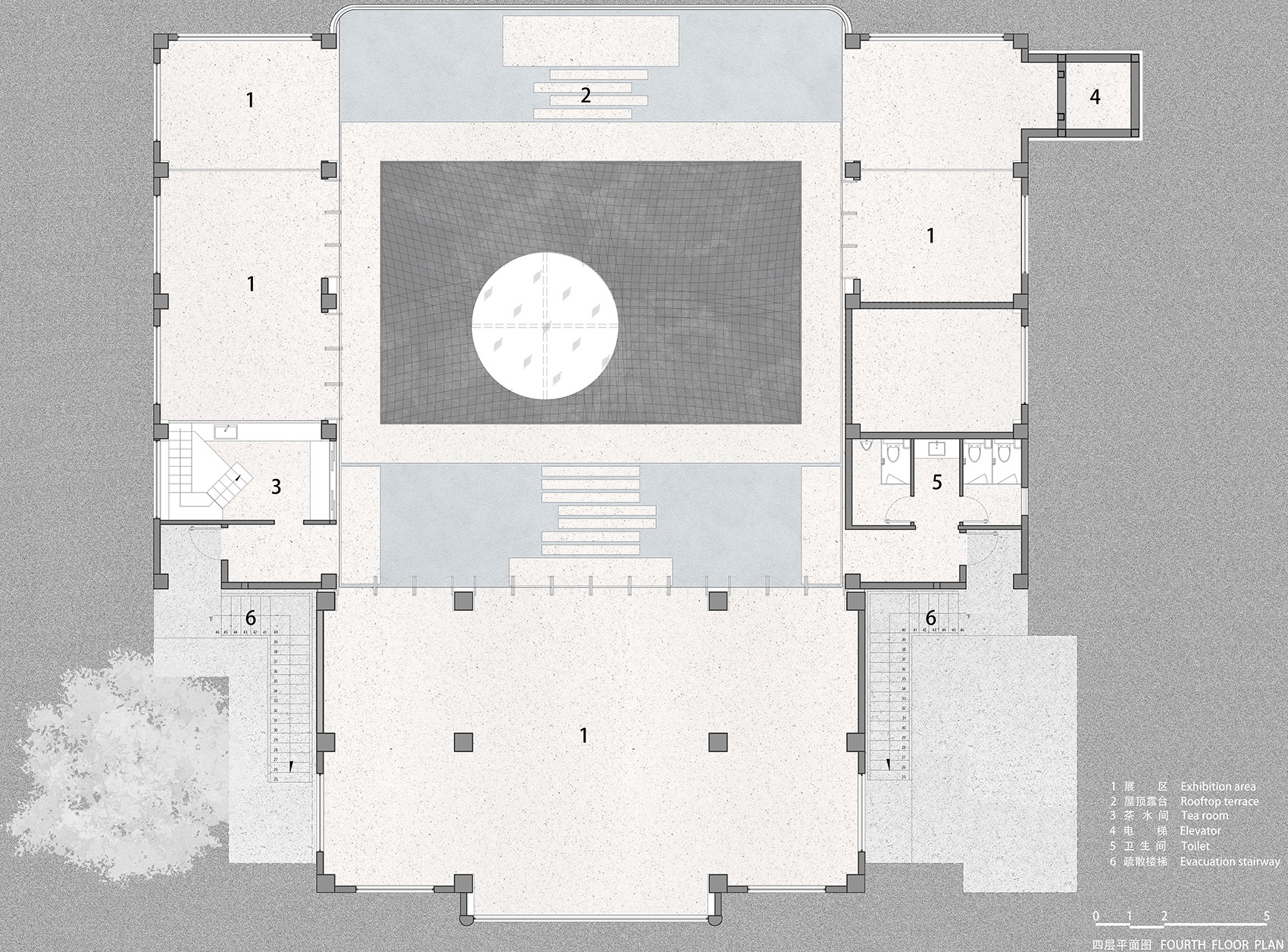
▼四层平面图,Fourth Floor Plan
Project Name: Zhong Art Museum
Project Address: Xichang City, Liangshan Prefecture, Sichuan Province, China
Project Type: Art Museum
Client: Liangshan Cultural Tourism Group
Design Firm: Jiejie Studio
Principal Designer: Ming Guanyu
Project Team Members: Cao Jincan, Zhang Xuan
Project Consultant: Wan Lu
Structural Consultant: Ma Zhigang
Photographer: Chill Shine / Qiuwen Sanying
Gross Floor Area: 3,000 m²
Design Period: June 2020
Completion Date: February 2023